Flavor Boulevard

We Asians like to talk food.
Subscribe

Archive for the ‘Vietnamese’

Second time at Lemon Grass

September 13, 2009 By: Mai Truong Category: California - The Bay Area, Vietnamese

We came back, and it was new. The menu is a laminated extensive list. The construction was finished. The booths are filled. The space was lushed with soothing 80’s music. The dishes were brought out one after another all too quickly.

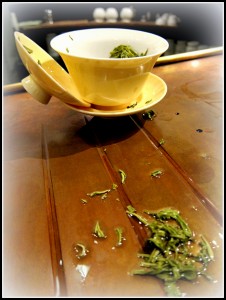
Appetizer 1: tôm chiên cốm (fried shrimp coated with crispy green rice, pictured above). Little seasoning is added, the flavor relies on the shrimps’ freshness and the cốm‘s natural confection. Pure novelty. The shrimps come in flock of five.

Appetizer 2: mango salad. Here’s my guess: a squirt of lemon, a pinch of sugar, a half-ripe mango (to keep the crunchy but not so much the sour), a pinch of sesame seeds for colors, and again, five rosy boiled shrimps for protein. It’s refreshmunchtastic.

Entree 1: bò lúc lắc (shaken beef). I don’t know who came up with the name “shaken beef”. It’s translated all too literally, or were the beef chunks trembled with fear? I’d feel pretty shook up too if I were brined, pierced with a skewer, and turned side to side like crazy on a hot grill. Great meat, flavorful onion and bell pepper. The red rice looks inviting but resides on the plain side, as gac gives only color but little taste.

Entree 2: bò cuộn tôm nướng (grilled beef-rolled shrimp). Don’t you just love how the chargrilled red meat and seafood are balanced with pickled carrots and daikon, cucumber, tomatoes, and a cup of fluffy white rice sitting neatly on two curly lettuce leaves? A little bit of crushed peanuts and chopped scallions for boost, although the beef rolls are quite brackish themselves. Notice there are 5 shrimps.

Entree 3: bò lá lốt (grilled ground beef wrapped in lolot leaves). Instead of using grape leaves like the Persians, the Laotians and the Vietnamese wrap their meat in the tangy, somewhat bitter lolot leaves. Like champagne, it might not taste amazing to an objective thinker, but it’s popular. Something that a good authentic Vietnamese restaurant has for the ones in need of a reminder of a taste at home.

Enjoy our lunch we did. A good looking restaurant with tender price.

Address: Lemon Grass Vietnamese & French Cuisine
1143 Story Road, San Jose, CA 95122

Recall: First time at Lemon Grass
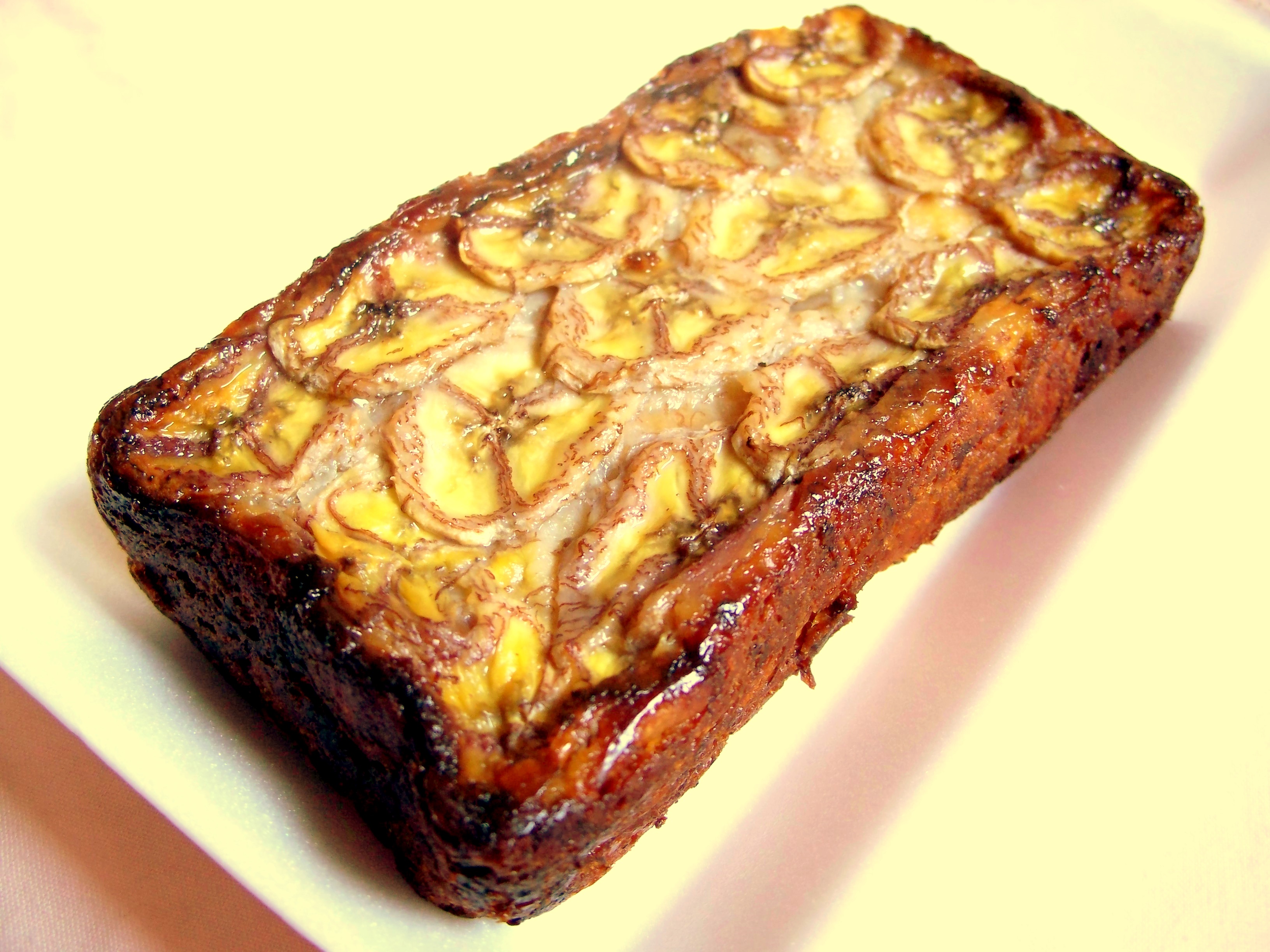
Recipe for bánh chuối nướng (Vietnamese banana bread pudding)

August 25, 2009 By: Mai Truong Category: RECIPES, sweet snacks and desserts, Vietnamese


Compared to other Vietnamese sandwich shop goodies, banana bread pudding is relatively easy to make at home, perhaps because of its strong connection with Western desserts. The ingredients contain bread, milk, rum, and vanilla, but at the end of the day, the tropical note of banana plays the key role.

Ingredients:
– 1 bunch of banana ~ 7-8 fingers, preferably Chuoi Su cultivar (also known as Chuoi Xiem, Pisang Siem, Siusok, Kluai Namwa Daeng)
– 1.5 loaves of old stale bread (the pullman loaf to make sandwiches)
– Rum (1 tbs for every 300g of banana) (optional)
– 2 cups milk
– 2 cups coconut milk
– 2 eggs
– 1 1/4 cups sugar
– 4 tbs melted butter
– 1 tbs vanilla (optional)

Use an 8-inch (20-25 cm) cake pan, at least 2 inches (5 cm) thick so that the bread pudding has enough room to rise. Grease the pan.

Slice bananas (in any direction) and mix lightly with rum. Powder the banana with a little bit of sugar if you want the banana to turn red after baking. If you don’t like rum, just slice the banana.

The bread: you can keep or trim off the bread rind, which would slightly change your bread pudding’s firmness. Either way, dip the bread slices into a mixture of milk, coconut milk, beaten eggs, sugar and vanilla. Squeeze the bread enough to rid it of too much liquid. This is an important step, the cake would be dry if it’s too squeezed, and fall apart if it’s too wet.

Layering:
Method 1: alternate 1 layer of bread (~1.5 cm/half inch thick), 1 layer of banana, another layer of bread, etc. until reaching the rim of the pan. Try to have room for a layer of banana on top. Firmly and evenly press the layers down so that the baked cake won’t be too spongy or crumbly.
Method 2: mix banana with soaked bread, fill up the pan with the mixture and have 1 layer of sliced banana on top. The result will be a finer texture.

Bake at 175C (350F) or until golden. Quick check: stick a small chopstick/toothpick deep into the bread pudding and pull it out, if the chopstick/toothpick is dry, the banh is done. It usually takes 25-30 minutes.

References:
Playing With My Food
Liên (Tú, Đăng’s Mommy)’s blog
vietbao.vn

Rice noodle day in Banh Hoi Chau Doc, Bellaire

July 06, 2009 By: Mai Truong Category: Houston, noodle soup, Southern Vietnamese, Texas, Vietnamese

Vietnamese places usually don’t appear on the web, why? Because they already paid for ads on Vietnamese newspapers and radio station. Of course the ads are in Vietnamese. There are a little over 30,000 Vietnamese in Houston. It’s amazing how such a small community can sustain its numerous restaurants, with customers primarily themselves. I think I’ve said the word “Vietnamese” enough times for the month. But let me say it one more. Vietnamese must really like to eat out.

So we found a new address in one of the newspapers. We arrived past lunch time, so it felt as if we rented out the whole place. The hostesses seem to be enjoying their leisurely afternoon snack as well, they sat at a nearby table watching TV with us. A flat screen on the wall with documentary films about Vietnam.

Anyway, let’s start with an appetizer.

This is for 3 people to share. Each bánh bèo (water fern bánh) is like a really thin mini rice-pancake, steamed instead of fried, topped with dried shrimp powder, scallions, and guess what, mung bean paste (once again, Mr. Mung Bean won the competition and became Paste of Choice). The final and most important touch is the nước mắm (fish extract sauce). Bánh bèo, like other Central Vietnamese dishes, cannot go without nước mắm. I’m not exactly sure what the coconut milk is doing there. The thinner the pancake is, the harder it is to eat with chopsticks, or any kind of utensils you can think of, because it’s slippery and fragile like jello. But only the thinnest kind is the best kind. Too thick, and all there is is a block of utmost boring rice pudding. So, I’d say these were above average. Onto the main course.

Bánh tầm bì thịt nướng (bánh tầm with shredded pork skin () and grilled pork). I’m confused by the Vietnamese naming system sometimes, there’s not much “bánh”-ness about this cold udon-like noodle. Authentically it should be shorter and fatter. They really gave us a behemoth bowl here, filled with noodle, peanuts, sliced pork skin (), and veggie, but only one skewer of pork! A little blackened. Good pork though. Can crispy-edge grilled pork ever not taste good?

Bánh canh cua (bánh canh with crab). Yet another rice noodle variation, strangely named “bánh”. I think this restaurant uses the same type of noodle for the soup and the grilled pork dish above. The orange color is from gạch cua (something under the crab shell whose English name I know not). The mysterious substance supposedly is stirred in frying pan until gooey and gives the broth a natural sweetness. I’m not big on sea crawlers. My mom likes it.

Bánh hỏi thịt nem nướng (bánh hỏi with grilled pork and grilled nem – a kind of pork sausage). It’s among the more expensive dishes in Saigon and the abroad, but cheap in the provinces where it was first made. The intricate nets of rice vermicelli gives the tongue a fun texture. Chopped scallions swiftly stir-fried with olive oil and a tad salt gives the sleek taste. Generous sum of sliced cucumber, bean sprout, pickled carrots and the backyard herbs counterbalances the carcinogenic charred and brined meat. Nước mắm is also a must. This plate rightfully makes the restaurant’s name.

Bánh hỏi Châu Đốc

Lunch for three: Bánh bèo tôm cháy: 4.95, bánh canh thịt cua: 6.95, bánh hỏi thịt nem nướng: 9.95, bánh tầm bì thịt nướng: 7.95. Total: $29.80.
Address: 10800 Bellaire Blvd, Houston, TX 77072.

If I recall correctly, the menu does have brief English descriptions, and the young waiter seemed more comfortable speaking English than Vietnamese.

Banh mi run

July 05, 2009 By: Mai Truong Category: California - The Bay Area, sandwiches, sticky rice concoctions, Vietnamese

You know how school kids don’t get tired of peanut butter sandwich even if they eat it every day for lunch? Well, every time I catch the BART down to Fremont, it’s hard to pass up the chance to stop by Huong Lan Sandwich in Milpitas for a fresh crusty loaf, or many of those banh mi’s – a week’s supply for lunch.

When in California, be liberal. The store has diversity. Above is packages of bánh bèo (white) and most likely bánh bột lọc (leaf-wrapped). Many kinds of cookies, crackers, shrimp chips, and other snacks unknown to ubercmuc. Below is the real goodies: nice warm bánh bao (steamed pork bun), bánh cốm (the bright green flat thing), bánh giò (leaf-wrapped pyramid), and mini bánh chưng (the squares).

Here’s the square unwrapped and cut in four. The pork is fatty, which is not quite right, but nonetheless it’s well done. So the story goes as follows: in a competition among the princes in ancient Vietnam, the king asked all the princes to find an exceptionally good food. The youngest prince, having no money and little power, couldn’t afford fancy stuff like ginseng and who knows what in the woods, so with the advice of a god in his dream, he took sticky rice, meat, and mung bean to make a bánh, wrapped in lá dong (Phrynium placentarium), and boiled for hours. The bánh is a green square, symbolizing the square Earth, pork – the animal, and mung bean – the plants. So I suppose fatty or lean pork doesn’t really matter to the story. After all, we have some really chubby animal, not just skinny ones. Mung bean seems to be Vietnamese’s favorite legume, just like red bean is to the Japanese. Perhaps because it’s good as a paste (in both sweet and savory bánh), a powder (on xôi), whole beans (in sweet deserts like chè), and as an ice cream flavor.

Don’t let size tricks you. Half of this mini bánh chưng definitely made a filling breakfast, the whole thing would be too filling. And if you’re too full you wouldn’t be able to eat a nice crusty bánh mì for lunch… uhm hmm…

Look at all that pickled carrots and radish. It’s a balanced meal. I usually get bánh mì thịt nướng (grilled pork), but that is proven quality, so this time gà nướng (grilled chicken) is up for test. I should stress that no matter what the filling is, a banh mi can never go wrong. You can put just soy sauce and a banana in it, and it would still be yummy. Something about the crusty, flaky bread that makes everything better. Back to the chicken. Well, it’s not dark meat, and it’d take some serious brining to make white meat flavorful. So let’s put it gently, I’ll be loyal to grilled pork.

Hương Lan must be a chain, or it’s just a name sandwich-makers like. They’re everywhere in this area, but I believe every store has a different touch to it. Here they put peanuts and nước mắm in the grilled pork bánh mì. The more flavors the merrier. Address: 41 Serra Way #108, Milpitas.

Oh, the end of the story is, the youngest prince, proved to be the wisest, was chosen for the crown. 🙂

Lemon Grass of San Jose

July 03, 2009 By: Mai Truong Category: California - The Bay Area, Vietnamese

The nice thing about Berkeley is it’s about an hour away from San Jose, where Little Saigon is with all the good old Vietnamese food. The sad thing is Berkeley is *cluttered*, no space for parking, hence it’s impractical to have a car, hence if you want to go to San Jose, you can either get on and off five buses for a decent cost and risk missing your stops, or get a zipcar and have to bite your nails over how many hours you should spend hunting for food at the expense of the car, or quickly get over 25 years of age and rent a car at the local Enterprise, Hertz, and the like. Or hope that a friend with a car likes you and Vietnamese food enough to make the drive.

Because one Bánh Cuốn Tây Hồ mysteriously didn’t exist where Google Maps say it is, and another was closed, we ventured to Lemon Grass on Story Road for a Vietnamese lunch. It looks nice on the outside, and the inside too. I would go as far as saying this is how I’d like a Vietnamese restaurant to look, a notch above the common phở houses. Yelp’s reviewers don’t seem to approve of it, but arguably for the wrong reason. Yes, the service was slow, but the food was good. When rating a restaurant, food quality comes first. Just look how the lady immersed herself in the sensation of the hot pot.

We ordered bánh cuốn hồ Tây and cơm sườn nướng (rice grilled pork chop). The bánh cuốn turned out to be no bánh cuốn

… just layers of soft rice sheets, eaten with nuoc mam pha, cha lua, and sprinkles of fried shallot. It’s bánh ướt (“wet banh”), no more, no less. If you’re interested in meat, don’t order it. Even though the shrimp tempura is good.

Order cơm sườn nướng instead! So, this could just be my craving for meat in an almost meatless, vegetarian, health conscious city where you can’t find a steak house, but this was the best grilled pork chop I’ve had in years! Sweet, salty, marinated, juicy, charred, aromatic, the flavor seeps throughout the meat. It’s not one of those huge chunk of pork you get at a supposedly upscale diner that only looks good on the outside but tastes like hay on the inside. If I didn’t have to retain some dignity in front of strangers, I’d have picked the bone.

Address: Lemon Grass Vietnamese & French Cuisine
1143 Story Road, San Jose, CA 95122

Update: more food during Second time at Lemon Grass
Recipe for Bánh ú tro (Vietnamese-adapted jianshui zong)

June 30, 2009 By: Mai Truong Category: Chinese, RECIPES, sticky rice concoctions, sweet snacks and desserts, Vietnamese

The recipe calls for a lot of prep time (up to a year!), and the products are little triangular pyramids sold for $3.75 a bunch at sandwich shops. But hey, if you can make bánh ú tro, you can enjoy it any time of the year without having to wait until the Fifth of Lunar May.

1. Ash water

Use the fine, soft ash from burnt coal, dissolve in water. The common ratio is 50 grams of ash for every liter of water, but it varies depend on how strong the ash is and how strong you want your banh to be. Let the ash collect at the bottom, leaving a clear solution. Sift the solution to get rid of dirt and coal bits.
You can use lime powder instead of ash. White lime gives bánh ú tro the natural green hues of wrapping leaves, red lime gives them reddish amber hues. The mixing ratio is 20 grams/liter for lime powder.

2. Sticky rice

– Use 1-year-old sticky rice. Such grains are more powdery than new sticky rice. Wash sticky rice with cold water, then soak in ash water overnight or until the grains break easily when you press them between two fingers. Soaking time varies with different ash types and grain types, but beware that grains soaked for too long can make the banh smell like ash.
– After the grains are done soaking, rewash them thoroughly with water and let dry.

3. Sweet filling

Traditional bánh ú tro doesn’t have filling and is eaten with honey or sugar. But bánh ú tro with fillings are arguably tastier than their plain counterparts, and here are a few filling ideas:
Mung bean paste: split and peeled mung beans are washed and cooked until tender, mashed while it’s still hot and mixed with sugar. The bean-sugar ratio varies to your likings.
Red bean paste: soak red beans in water overnight to soften them. Wash, cook until tender, mash. In a skillet, add 1 tbs oil and 200g brown sugar for every 500g red bean, stir on low heat until all sugar dissolves. Let cool.
Grated coconut: boil water and sugar with ratio 1:1 on low heat , stir frequently until all sugar dissolves. Pour the syrup into grated coconut and mix until it becomes a soft sticky ball.

4. Wrapping bánh ú tro

– Use bamboo leaves (about 5-6 cm wide and 30 cm long) or banana leaves cut into similar size. Wash the leaves clean and let dry.
– Bend one end of a leaf into cone shape. Use 2-3 leaves to increase the banh size.
– Put in 2-3 teaspoons of sticky rice for the plain kind. Or 1 tsp sticky rice, followed by 1 tsp filling, then 1 tsp sticky rice on top for the sweet kind.
– Wrap the remainder of the leaf tightly around and over the cone until all faces are covered.
– Tie it up with a nylon string. Then tie every ten banh into a bunch with a long string to easily pull in and out of boiling water.

5. Boiling bánh ú tro

– Cover the bottom of a large pot with banana leaves or bamboo leaves to keep banh from sticking to the metal.
– Arrange banh in the pot. Pour water. Water level should be at least 4 inches above the banh. Make sure banh stay submerged the whole time, you can cover banh with a big sieve and a weight on top to keep banh from floating up.
– Boil banh for 45 minutes to an hour (after the water starts boiling). Add more water if the level gets too low.

Submerge cooked banh in cold water for 10 minutes to aid cooling, then hang them dry. Well made ones can last 2-3 weeks at room temperature.

Recipe translated from source.

Recipe for bánh bía (Vietnamese-adapted Suzhou mooncake)

June 14, 2009 By: Mai Truong Category: Chinese, RECIPES, sweet snacks and desserts, Vietnamese

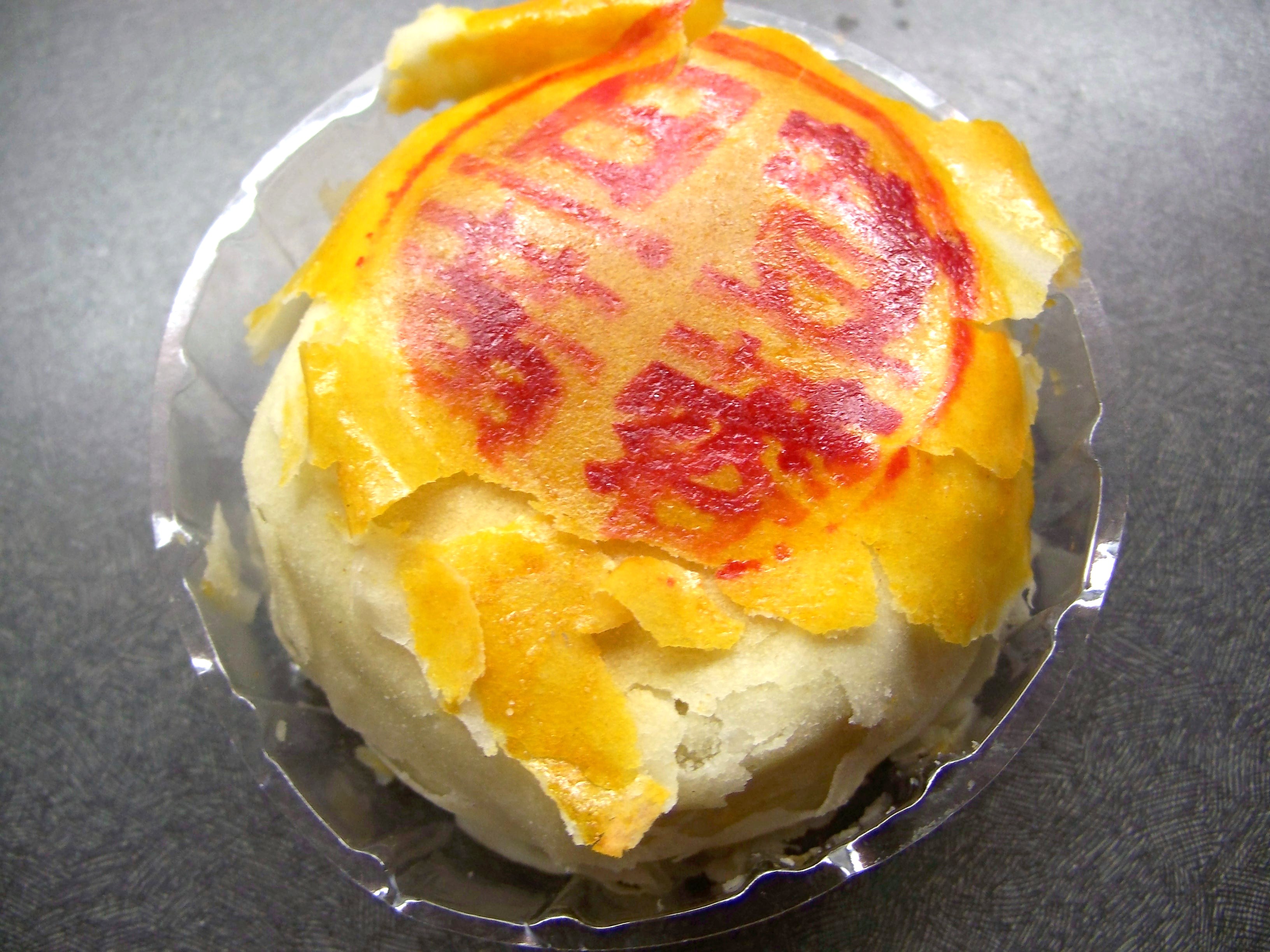
If you just want to enjoy a piece of sweet flaky mooncake, Vietnamese sandwich stores and bakeries are the place to go. If you have plenty of time at hand and little trust for unknown kitchens, then hit the market to find these ingredients for a batch of 12 bánh bía:

1. The skin dough

– 375g all purpose flour (Pillsbury preferred)
– 110g confectioner sugar
– 80g corn/canola oil
– 100ml coconut milk (Chef’ Choice preferred)
– 50ml water.

Add flour, sugar, oil and coconut into a mixing bowl, then slowly add water while kneading until the dough is smooth. Don’t need over 2 minutes or the dough would be too hard to flatten later. Cover with cling wrap and let the dough sit for 1 hour. Divide into 12 balls afterwards.

2. The inner layer dough

– 125g tapioca flour
– 95g wheat flour
– 110g corn/canola oil

Mix the flours and oil together. Do not knead. Let sit for 1 hour, then divide into 12 balls.

3. Bean paste filling with durian flavor and salted egg yolk

– 400g mung bean (peeled and split)
– 300g sugar
– 1 cup oil
– 1 tbs maltose sugar
– 1 tsp baking soda
– 1/4 cup wheat starch (the type used for potsticker)
– 200g durian flesh (ground up in a food processor)
– 12 salted eggs
– 1 slice of ginger
– rice wine

Separate the egg yolks from the whites, wash with cold water, then soak the yolks in rice wine and finely chopped ginger for about 30 minutes. Take the yolks out the wine mixture and quickly soak them in vegetable oil. Finally, bake the yolks on aluminum foil in 300F for 10 minutes.

Soak the mung beans in water and baking soda until they soften. Rinse them with cold water, steam, wait until the beans cool to make a fine paste with the food processor.
In a non-stick pan, simmer the bean paste with 200g sugar, 2 tbs maltose, and 1/4 cup oil over low heat. In another pan, mix 1/2 cup oil with 100g sugar to make caramel on low heat. It should be golden brown, or the pastry filling would be bitter.
When the sugar has caramelized, pour the bean paste into it and mix until there is no visible sugar. Add 1/4 cup of oil and wheat starch and continue simmering. Lastly, add durian paste and stir until the bean mixture no longer sticks to the utensil. Let the paste cool and divide it up to 12 portions.

4. The egg wash

– 1 egg, room temperature
– a pinch of salt (kosher salt preferred)
– 1 tbsp water
– 1 tsp sesame oil
– 1 tsp cashew oil
– 1 tsp dark corn syrup

Mix all ingredients into a blend.

5. Make the cake
– Flatten each ball of skin dough, then use it to wrap the ball of inner layer dough (like a dumpling). Keep the dumplings moist until all 24 balls of skin dough and inner layer dough are paired up.
– Gently flatten each dumpling into oval shape about 2mm thick, roll the sheets into Swiss-rolls.
– Repeat the flattening process with the Swiss rolls, then let the dough balls rest for 15 minutes. Make sure that during this process the skin dough always covers the inner layer dough, or the pastry will have a rough surface after baking. If the dough is too tough, let it sit for 5-10 minutes. Do not exert too much force while flattening.
– Flatten the dough balls again into disks, and use them to wrap up the balls of bean paste (each with an egg yolk inside).
– Preheat oven to 400F
– Bake the pastries for 15 minutes, then take them out to brush egg wash on one side, and continue baking for another 10 minutes.
– Let the pastries cool and oil release for a few days.

6. Eat the cake
(Caution: it may be too fatty and sweet to eat whole, one quarter at a time is the usual safe quota)

Recipe translated from source.

Tags:

100 years a nation’s soul food

January 28, 2009 By: Mai Truong Category: noodle soup, Opinions, Vietnamese

Eight interesting facts about pho: (picked and translated from source)

1. During 1908-1909, steam boats were a popular means of transportation from Hanoi to other cities in the North, and pho started out as a vendor food sold in numbers at river ports. From 1930, pho was popular in the cities, some pho restaurant in Hanoi served until 4 AM.

2. Originally there was only pho with well-done beef. Rare beef was a latter innovation, and only became dominant after 1954.

3. Within the first decade when pho was popular, many cooks tried to add different twists and turns to the dish, however, not all could satisfy the public taste. A few variations that we don’t see today are pho in the Jean de Puis neighborhood (Hang Chieu, Hanoi) with sesame oil and tofu (1928), pho gio (rolls of sliced beef), pho Phu Doan with ca cuong extract(*).

4. Chicken pho first appeared in 1939, when beef was not sold on Wednesday and Friday, and there was no fridge.

5. Pho sot vang is a nice mix of Vietnamese and French cuisine: the chunks (not slices) of beef are seasoned and stewed in wine (vang), then added atop the pho. (This is the first time I’ve heard of this type of pho)

6. Pho did not migrate to the South until 1954 – when the Geneva treaty was signed and Northerners migrated to the South to escape the rule of Communists. This is the historical mark of pho spreading all over the country.

7. Southern pho, easy-going and generous like the Southern Vietnamese, have add-ons that its Northern brother didn’t think of: bean sprouts, fresh herbs, a little sugar in the broth, hoisin sauce and hot sauce.(**)

8. A few famous Pho restaurants in Vietnam (that I’ve seen in Houston and California, but I’m not sure if they are the real deal): pho Tàu Bay (“airplane”) (Hanoi, 1950)(***), pho Thìn (Hanoi, 1955), pho Hòa-Pasteur (Saigon, 1960).

* I had this extract once in a bowl of bun moc, just a drop, literally, and it’s so strong it killed the broth and my appetite. The only other time I had something to that effect was when I dunked sushi in wasabi.
** Pho shacks in the North still hesitate to serve all these condiments today, which in my opinion is quite understandable. The veggies only clutter the soup and get you full more quickly. The sauces only overpower the natural broth (which already has at least a dozen different ingredients), and distract you from the real taste of pho.
*** The first owner of pho Tau Bay did not name it so. A friend gave him a pilot helmet, which he really liked and wore often. Customers then started calling him “ong tau bay” (Mr. Airplane) (?!) and the name stuck.

Tags:

Linh Son Pagoda’s banh for the Lunar New Year

January 25, 2009 By: Mai Truong Category: Comfort food, Houston, sticky rice concoctions, Texas, Vietnamese


Linh Son pagoda, Houston, click on the image to see more pictures of the pagoda.

Linh Son pagoda, Houston. Click on the image to see more pictures of the pagoda.
Although not all Vietnamese living oversea can take a day off to go to the pagodas on the first day of Tet, many manage to keep the tradition. Of course there is no strict requirement that one has to be looking at and praying to the Buddha at a certain day, for a certain amount of time, or with a certain prayer. Tet is not a religious based tradition. But many Buddhist and even non-Buddhists like to go to the pagodas on the first day of Tet to have a peaceful start of the new year, to feel spiritually lightened (hopefully enlightened as well) and pure on the important day. Many also choose to eat no animal product on this day, as it’s the new spring and every creature deserves to be happy and live in peace. Nonetheless, vegan restaurants are somewhat scarce in the conservative town, places with banh chung banh tet for sale don’t generally make the vegan version, and to deprive a Vietnamese of banh chung banh tet on a Tet’s day is somewhat cruel. So the pagodas take on the precious task.


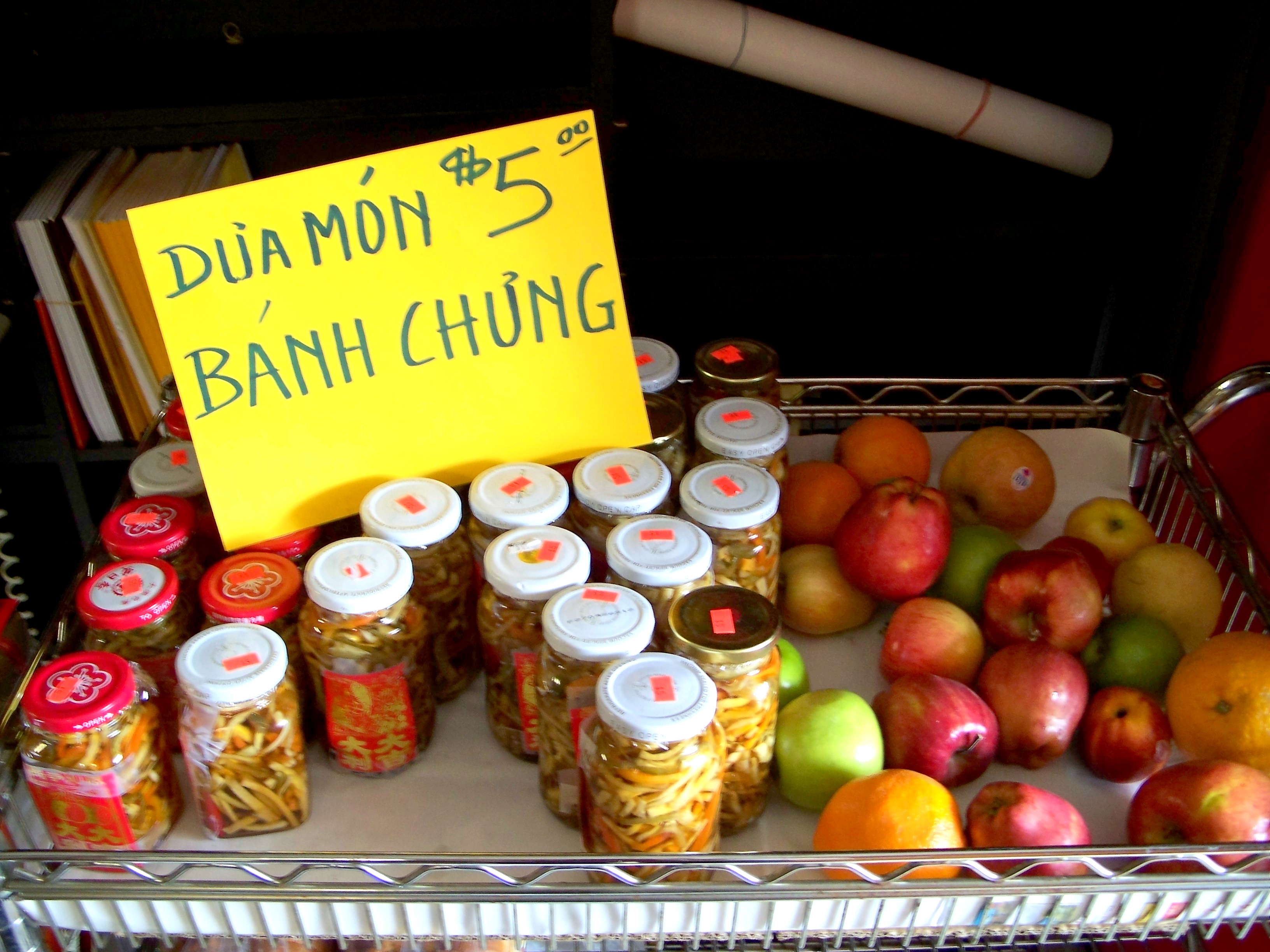
Dua mon is pickled vegetables, here packaged in jars, and apparently on sale for $5? I believe I haven’t had dua mon. I’m not big on veggies in vinegar-sugar-salt mix, the only exception to me is pickled bean sprout (dua gia). But perhaps because every house during Tet is so overabundant with meat and glutinous rice, the dua being a bit tart, a bit sweet, crunchy, and light is a nice change in both taste and texture. In fact, with its economic nature and longevity, a big jar of dua on its own makes Tet in poor households.


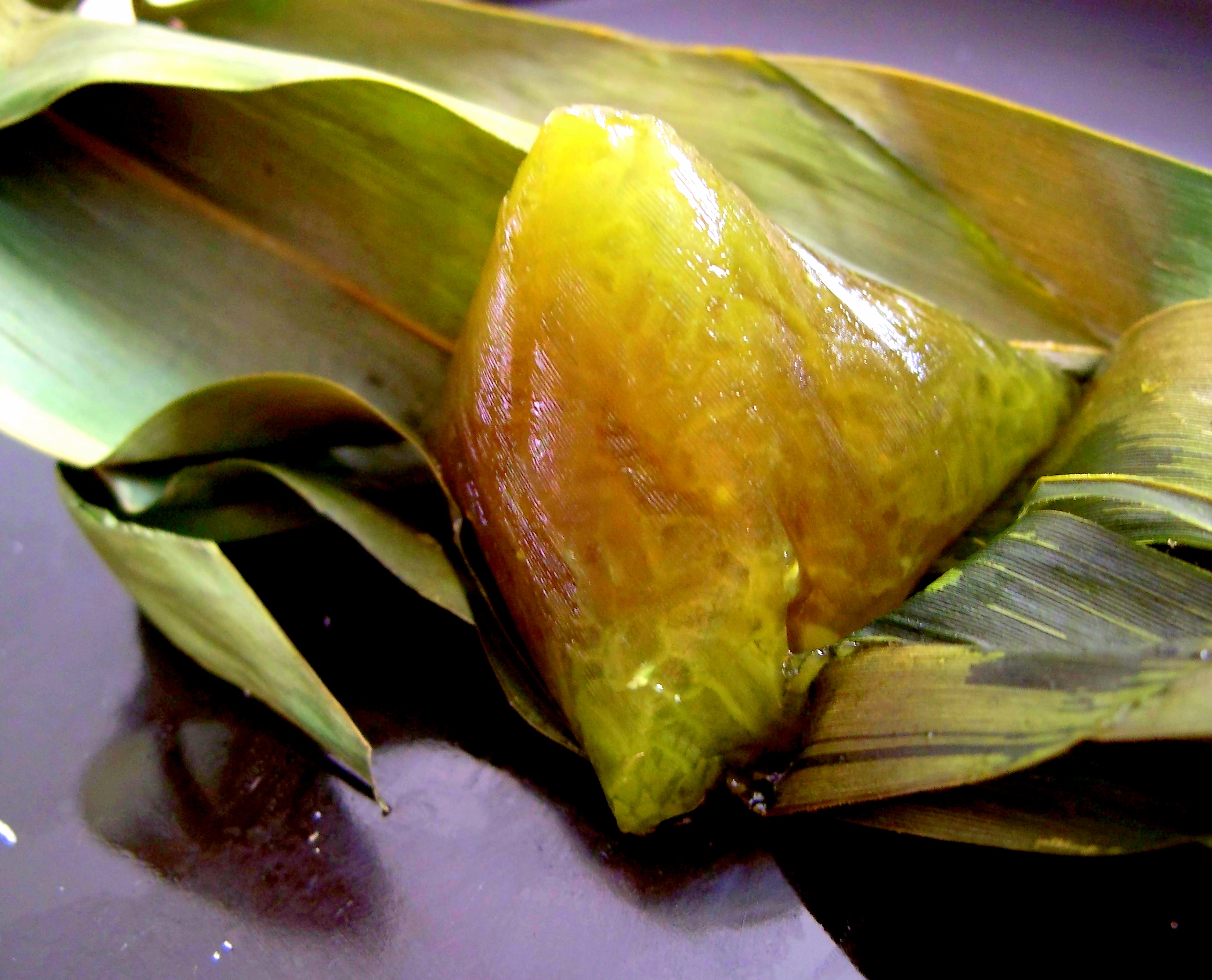
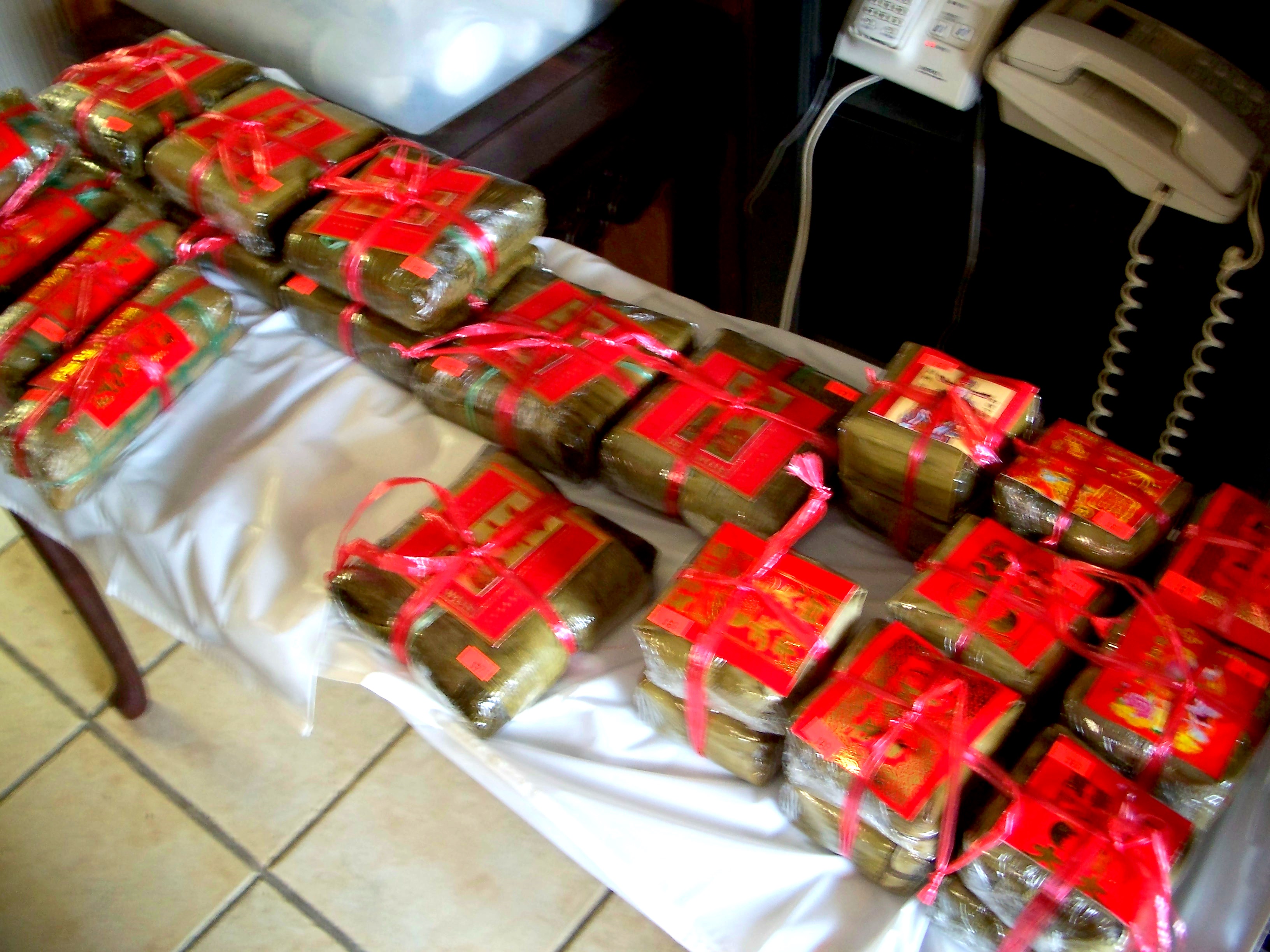
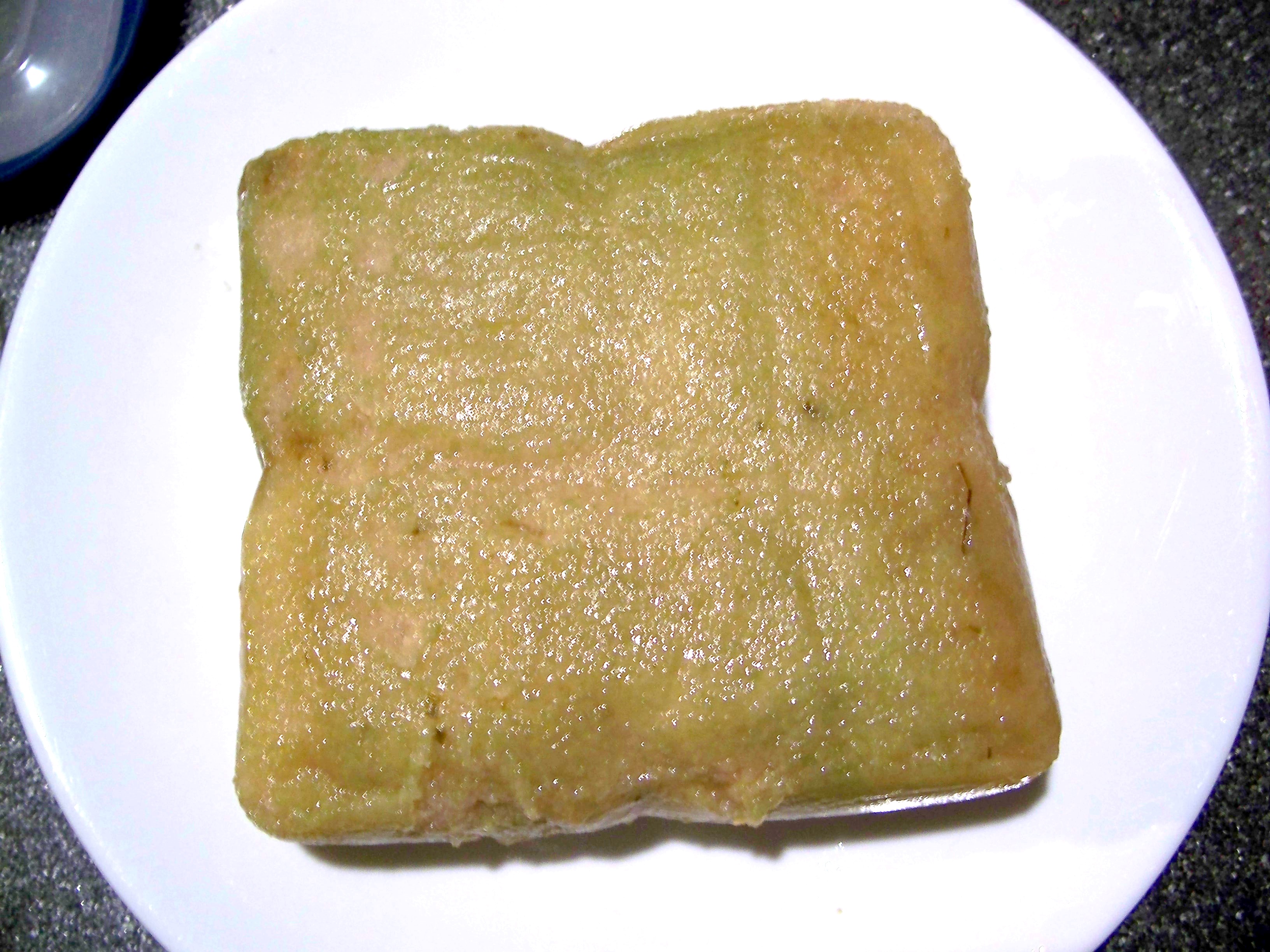
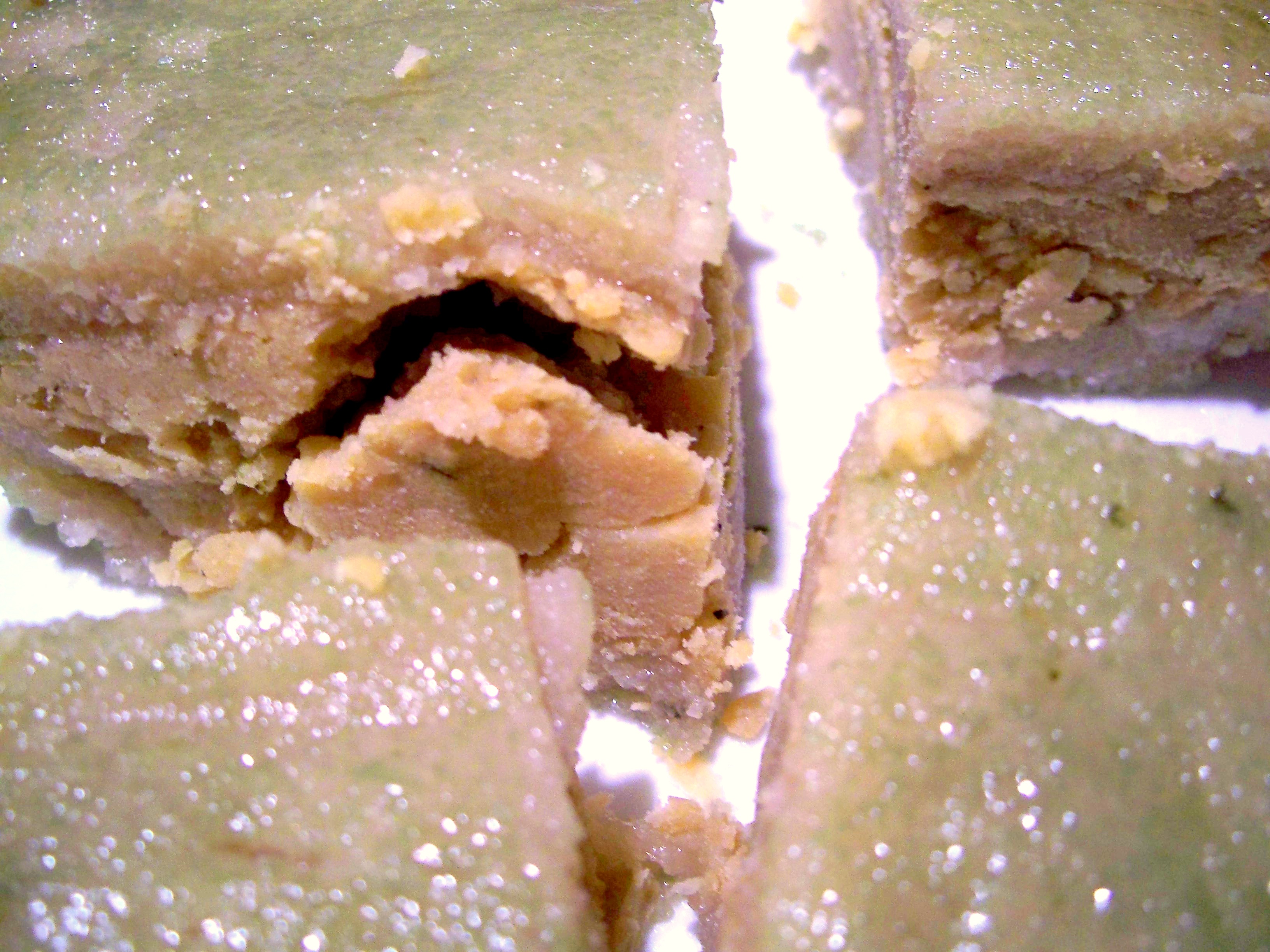
Back to the star of Tet food. The square ones are banh chung, the cylindrical ones are banh tet. Banh chung is wrapped in dong leaves, banh tet is wrapped in banana leaves (theoretically). Banh chung declothed:


and quartered:


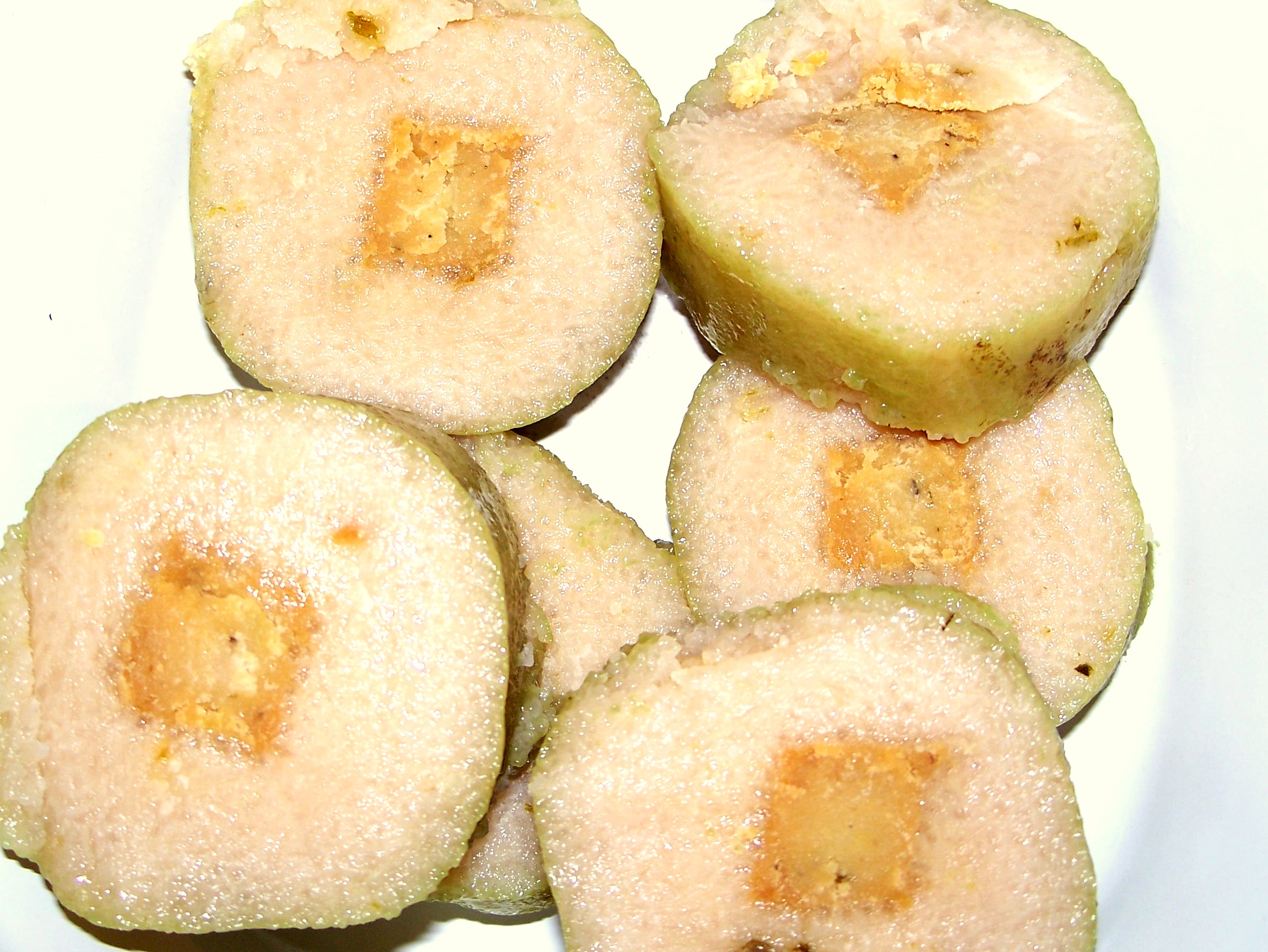
Mother got to the banh tet before I did, with a knife. I was 5 minutes too late to grab the camera. So here, in all gruesomeness, six “khoanh” of banh tet:


If you’re wondering, yes, their basic structure, except for the shape, is the same. Thick coat of glutinous rice outside, simple mung bean paste inside, since these are vegan banh made and sold at the pagoda. The meaty version of banh chung has lean pork amidst the bean paste, and that of banh tet has fatty pork. The outermost rim of glutinous rice is somewhat greenish yellow, naturally dyed by the leaves wrapping them and the long cooking process, in which they are submerged in water for hours. Banh chung was born in the North of Vietnam over 2000 years before Jesus was born, and especially made for Tet and Tet only. It even has a myth to explain its symbolism. Banh tet was its little brother, made for easy cooking and carrying, more popular in the South, available in one form or another all year long. The rice layer is soft and gummy, the bean paste middle is a little salted and sweetened. It’s vegan, but it doesn’t lack flavor. It’s really really heavy though. One khoanh of banh tet for breakfast and I was full from 10AM until 7PM! I would have been starved otherwise, classes all day, and school cafeterias don’t serve vegan food. That means if you like to keep yourself reasonably full, with 6 bucks you are full for 3-6 days of banh tet, and 4-8 days of banh chung. Pretty good huh?

Afterschool treats

January 20, 2009 By: Mai Truong Category: sweet snacks and desserts, Vietnamese

First day of school is exciting. After a long break, we got up early again, felt motivated, felt ready to be hardworking. This may be the only day in the semester we get up early by choice, but let us not stress that. We checked our emails to see if the professor is in town and will hold class. Yes he is. He even came on time and commented on the president’s inauguration speech, not that there is much to comment. We hung around the undergraduate lounge, tried to read, but we were still in web-surfing mode. Our friends saw us for the first time after 5 weeks, some said they built a fence over the break, some said some said they shouldn’t have drunk so much the night before, some expected this to be an easy last semester. The usual day, the usual bunch. Our professor asked us what on earth is going on with our other professor, from whom we hadn’t heard since our last email 2 weeks ago, so we truthfully said we have no idea. We heard, but couldn’t focus during the lecture, mind wandering what should we blog about today. We forgot to bring lunch because we felt so motivated in the morning. We had only 1 class today from 12:45-2:00, but we were hungry.


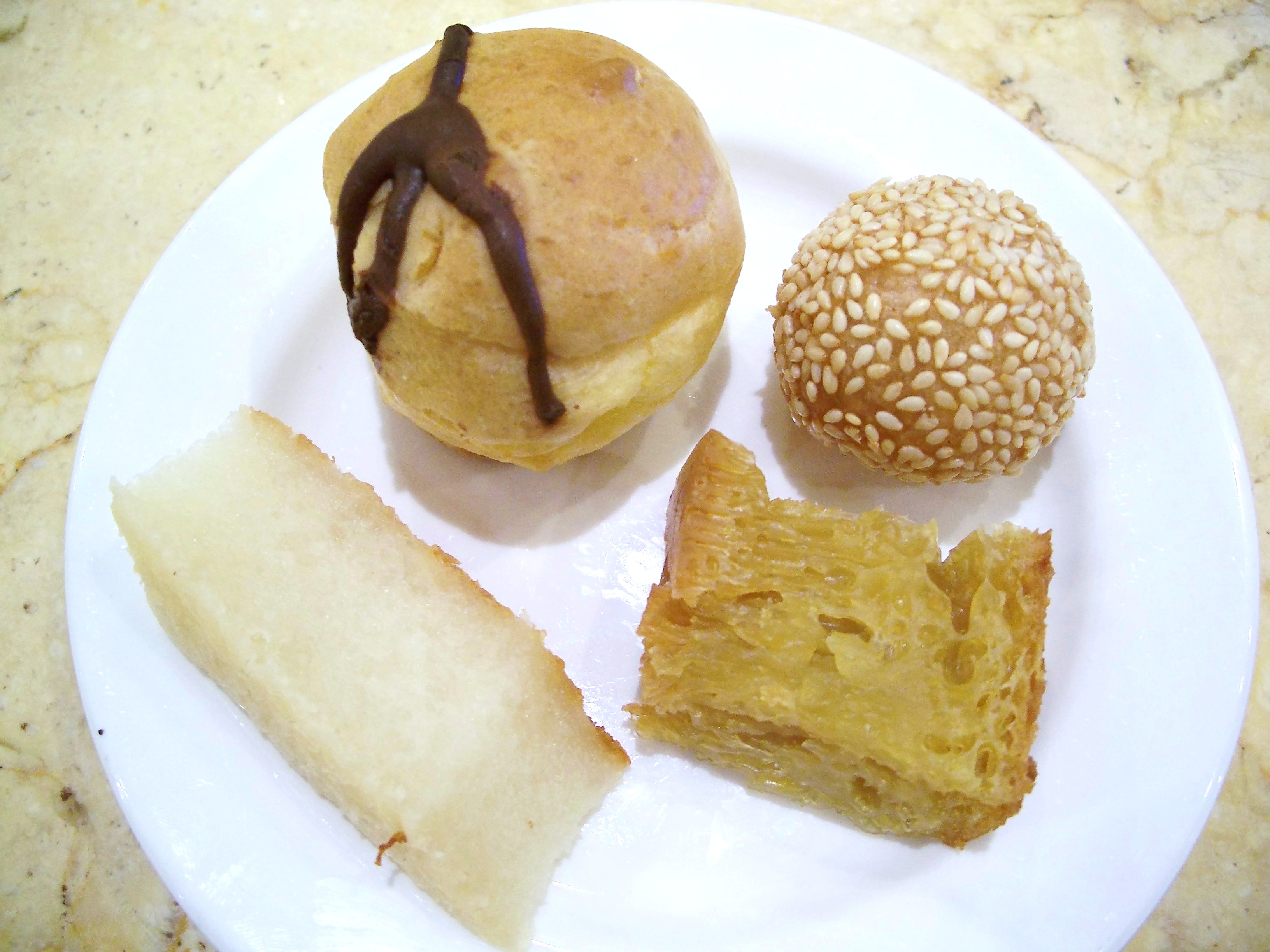
School kids in Vietnam have vendors waiting for them outside the school gate. As soon as they get out, they swamp the vendors’ modest environs. Clockwise from bottom southwest:

banh khoai mi nuong (baked cassava banh): white, firm, sleek, sweet. Too sweet, maybe? Easily tiresome after a few bites.

banh su kem (chou à la crème – cream puff): avec du chocolat pour la présentation seulement. More chocolat et less pastry would have been nice. Too little creme inside. But I do prefer these bite-sized hollow balls to monstrous orange-sized puffs in Vietnamese boulangeries.

banh cam (“orange” banh): sesame ball is the commonly identification in America, which obviously makes more sense than “orange” balls, when the balls contain absolutely no orange or citric element. Perhaps it refers to orange the color, eh? Or the shape? Another item seriously shrunk after immigration. It was actually the size of a small orange when it was in Vietnam. Sugared bean paste inside, deep fried flour shell outside. Best freshly made. Soon afterwards, the crunch leaves and each bite is a stream of oil. The thinner the shell is, the less oily the ball is. Average snack.

banh bo nuong (toasted banh bo): so… is beef (like pho bo, you know…), but fear not, this dessert does not contain animal product, much less animal flesh. Why call it bò? Perhaps because it looks like cow tripe? Who knows. Just leavened rice flour. I can’t tell if it has sugar or whatever else. It’s just light. Fluffy, lightly sweet, lightly sour. Untoasted banh bo is white like a feather ball. Toasting is supposed to strengthen both the texture and the taste. I had never liked it, because of the sourness, and I don’t now.

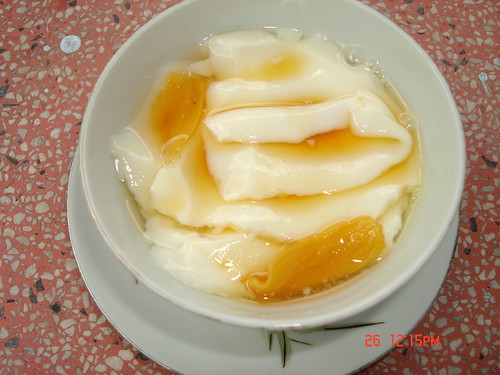
This is what the dessert selection at Kim Son has become after they stopped serving dau hu nuoc duong (soft tofu in sugar water). Do I regret not eating from vendors when I could? Maybe. I don’t know most street foods, don’t know who make them best, don’t know how differently they taste compared to their Americanized cousins. But wherever it is, however it’s made, dessert is like the first day of school, not too much of a celebration in its honest self, simple or extravagant, it’s a delight we all look forward to.