Flavor Boulevard

We Asians like to talk food.
Subscribe

Archive for the ‘Vegan’

Vegan out at Cha-Ya

September 15, 2012 By: Mai Truong Category: California - The Bay Area, Japanese, sweet snacks and desserts, Vegan

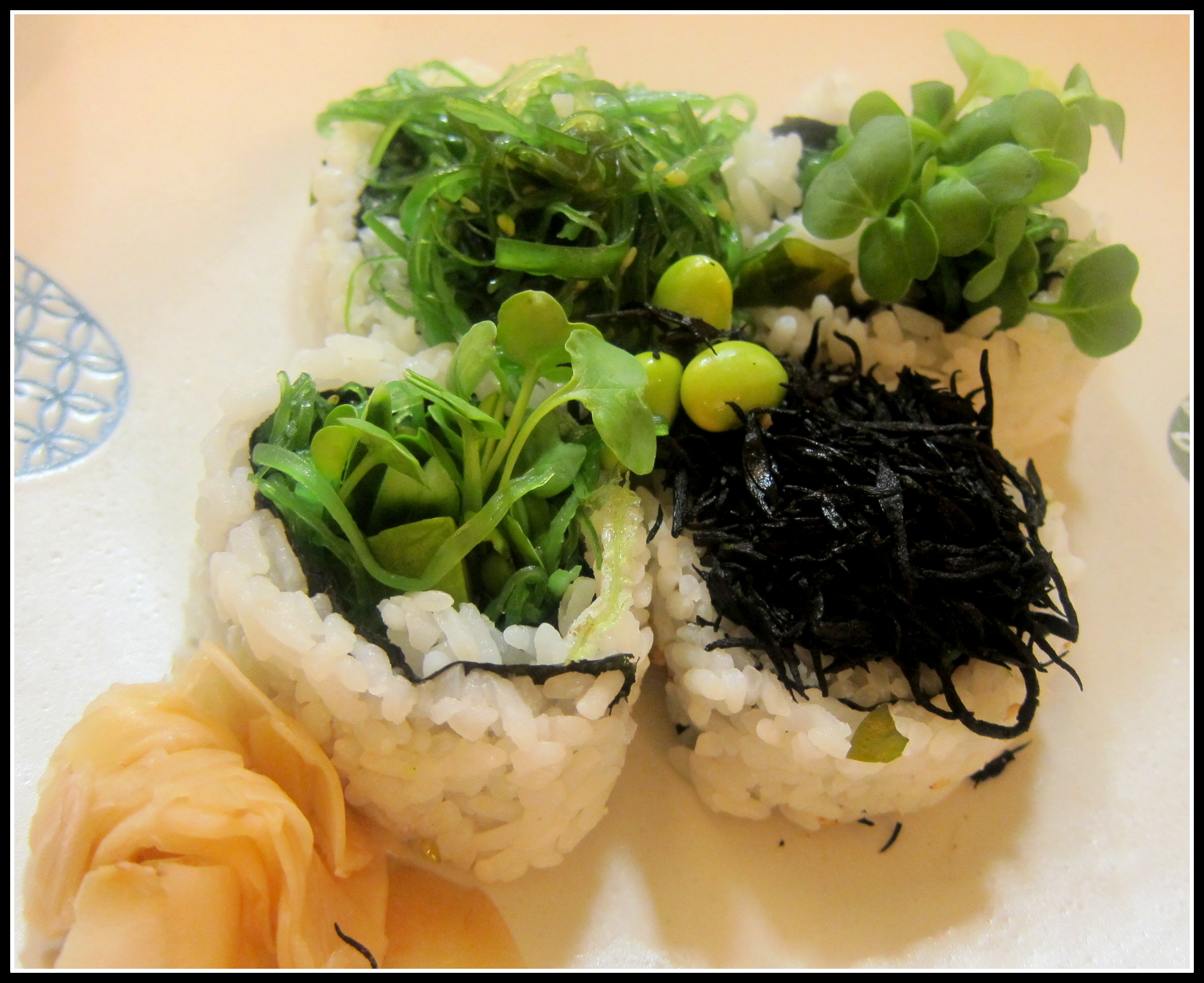
Summer Green Roll – avocado, cucumber, kaiware sprout, wakame and hijiki. Alissa scooped wasabi like it was green tea ice cream, but I like this one just as it is: plain, fresh and light.

It’s been a long time since I last either wrote about food or ate anything that I could write about. The occasional rainfalls during the drought of takeout Chinese are so-so hu tieu and com suon somewhere in the Ranch 99 complex, and homemade soups, lovely but no hot news. Vegetable intake has been limited to shibazuke from Berkeley Bowl, homemade kimchi, and toasted seaweed (seaweed counts, doesn’t it?). Before leaving for her trip, Cheryl fed me her black chicken soup, brown rice, tau yew bak (similar to thit kho but with soy sauce instead of fish sauce) and, like a loving sister, concerned looks and advice on how I should feed myself healthy meals. I agree with her one hundred percent, but all planned menus for the next day fluttered their wings away as I run from class to class and get home only wishing to relax. Cheryl is married. I entertain the idea that I live like a single guy. A single guy that could not have looked more forward to a vegan dinner with some old friends.

After much debate we decided on a simple kampyo roll, a big fluffy summer green roll (that we each stuffed into our mouth in one bite to prove our manliness(*)), a Cha-Ya roll, a tempura stuffed eggplant, a gyoza and vegetable soup, and three desserts.
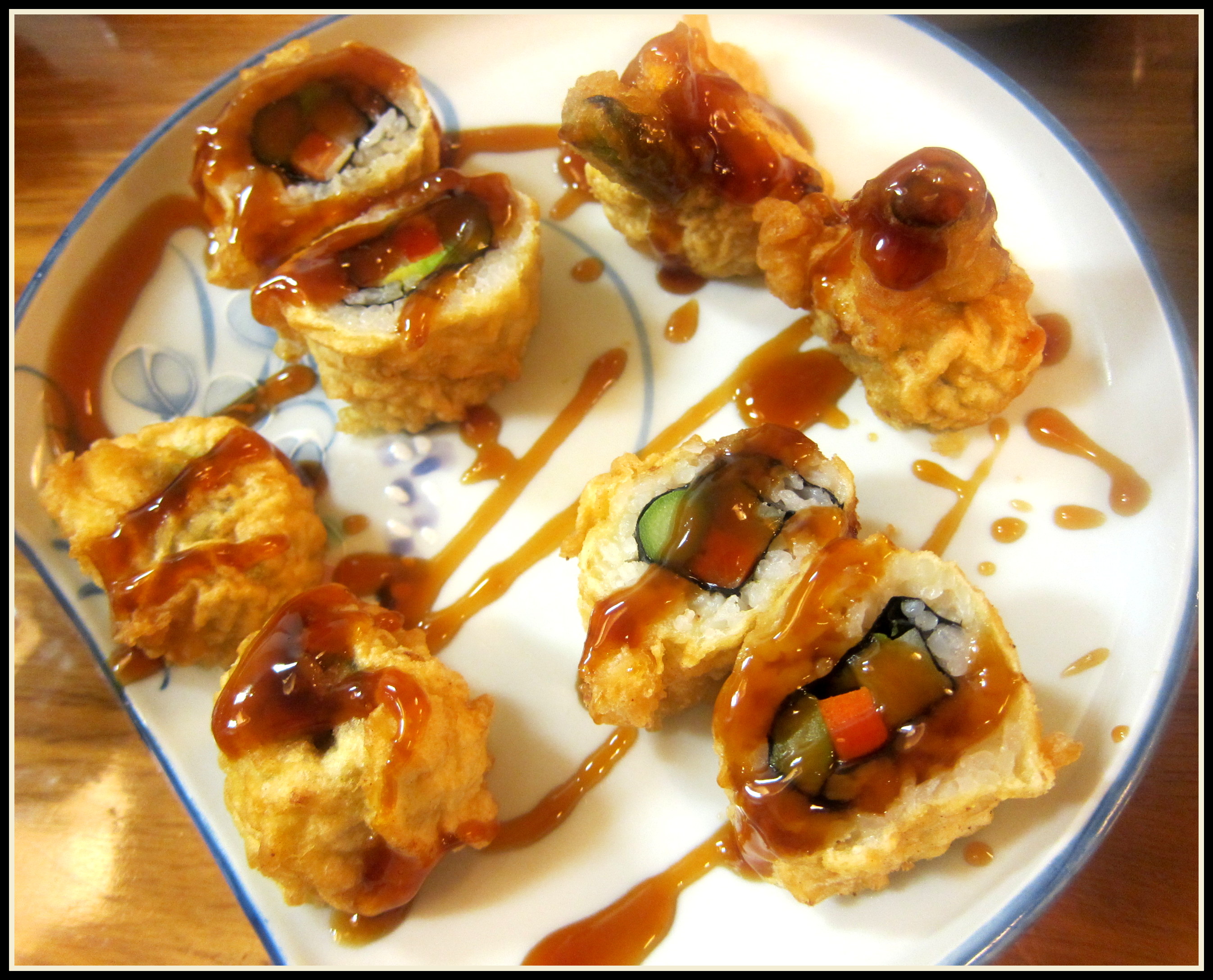
Cha-Ya Roll – avocado, yam and carrots, tempura roll with sweet soy sauce.
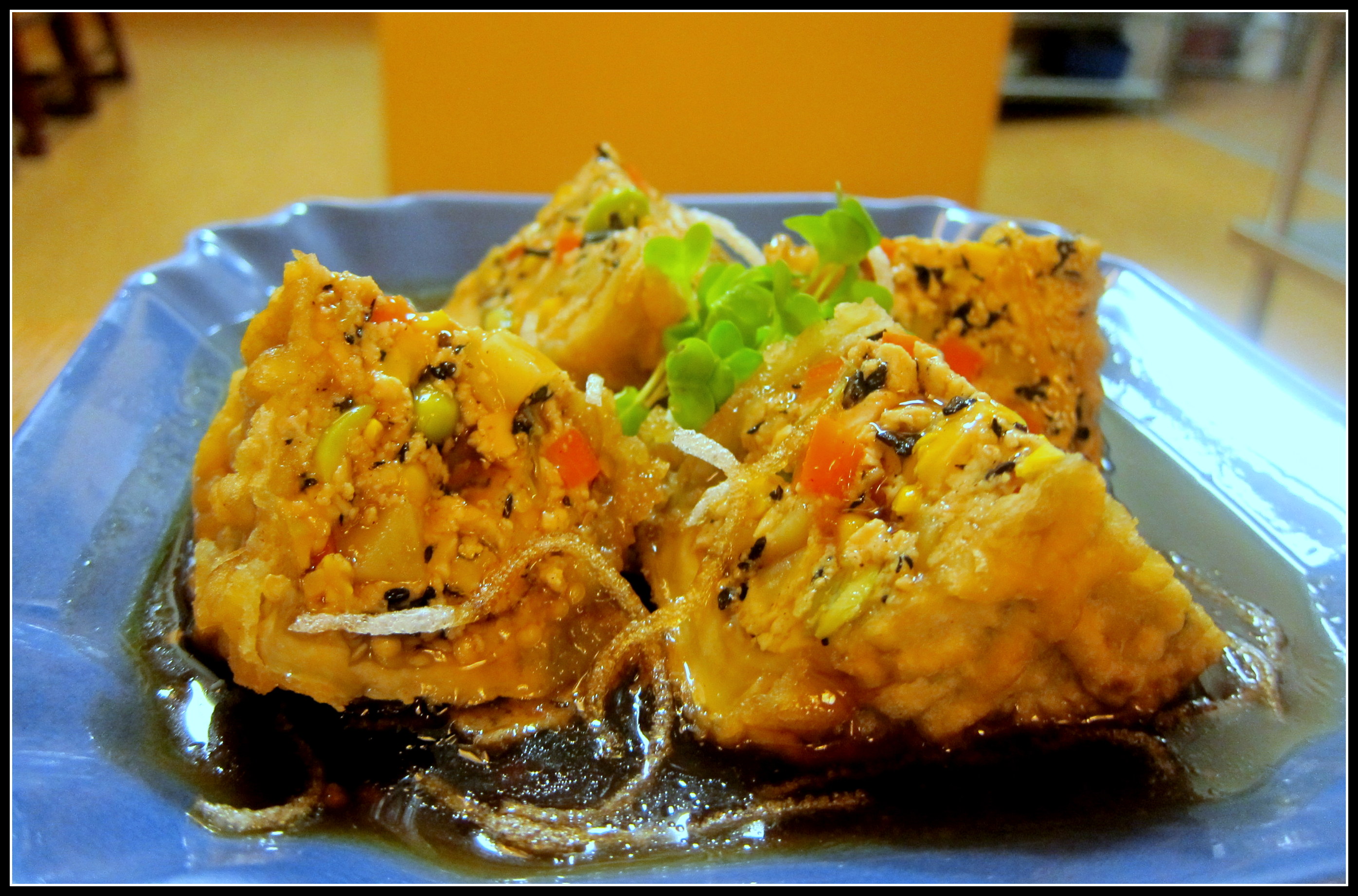
Tonchi Nasu – tempura stuffed eggplant with setsuma potato, corn, tofu, hijiki, soybean and carrot
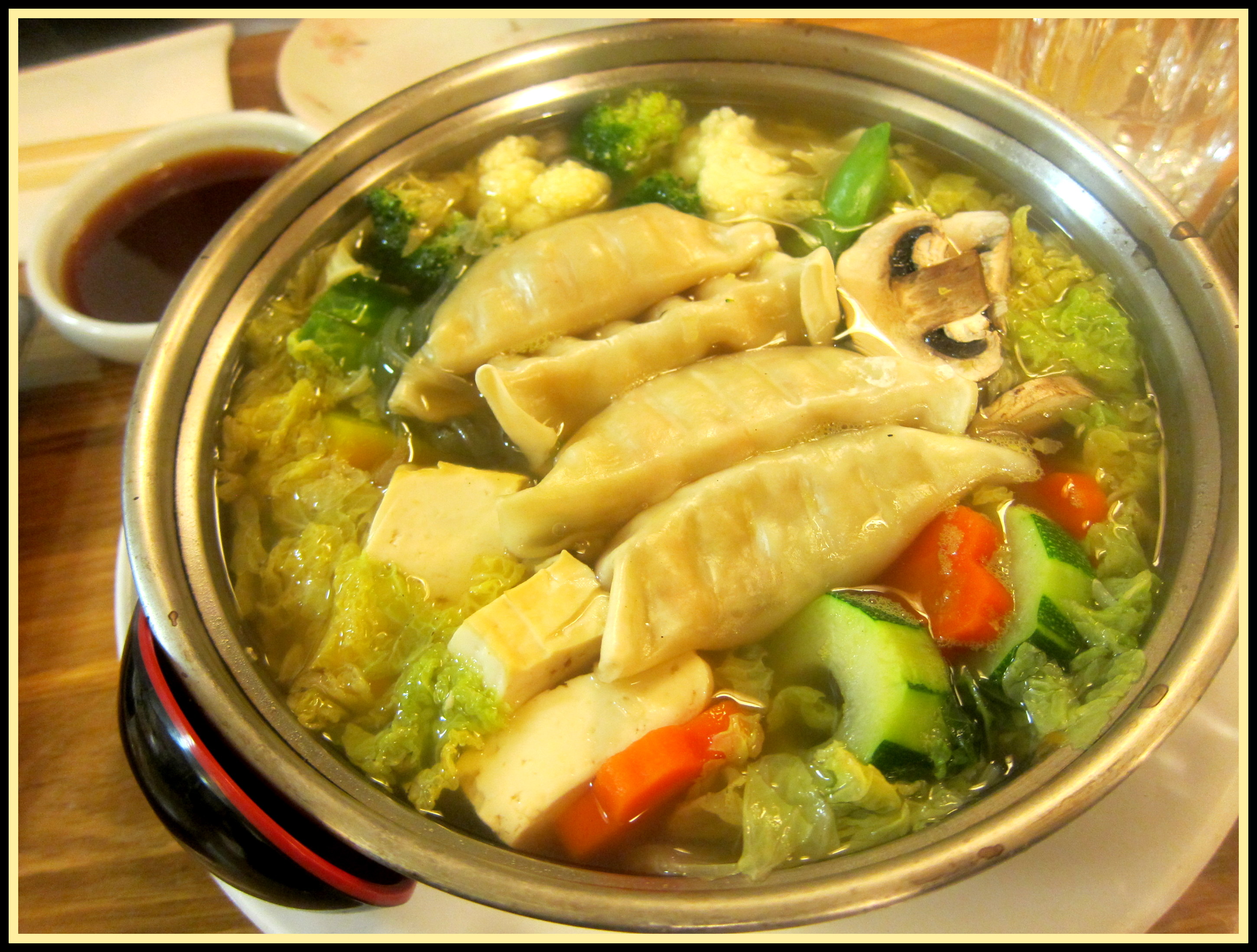
Taku Sui – gyoza soup with tofu, broccoli, zucchini, napa cabbage, snap peas, asparagus, cauliflower, silver noodles and mushrooms in a light broth – I like this a lot!
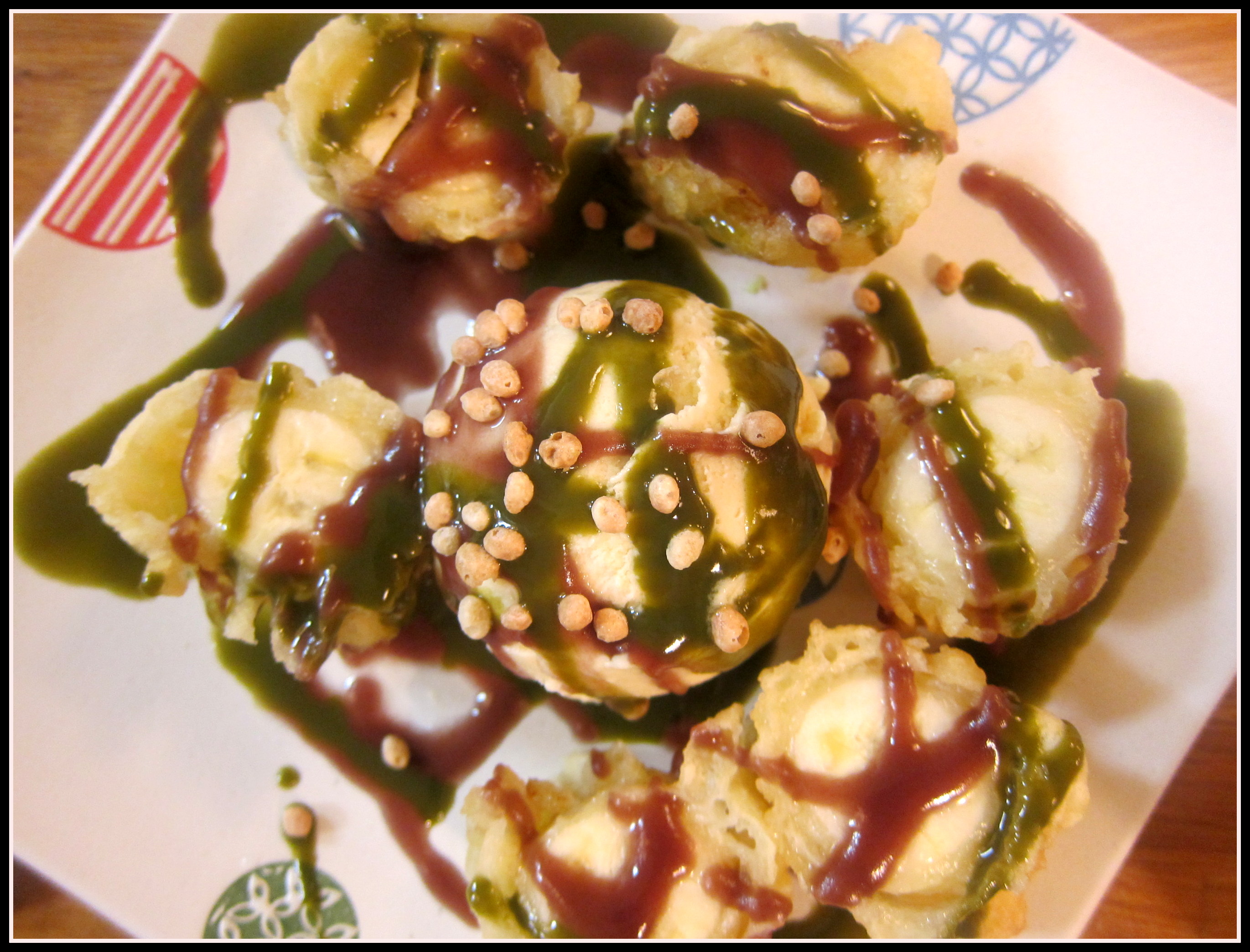
Yellow Moon – tempura banana with a scoop of soy ice cream, drizzled with green tea sauce and red bean sauce

The Yellow Moon is just the tempura banana, the soy ice cream is listed as a separate dessert, but we shameless girls requested a scoop of ice cream with the banana. The Cha-Ya staff is so nice. 😉 This tempura banana is not oily like the deep fried banana desserts at Thai restaurants, the batter is light and plain. It gives you the impression of healthy foods.
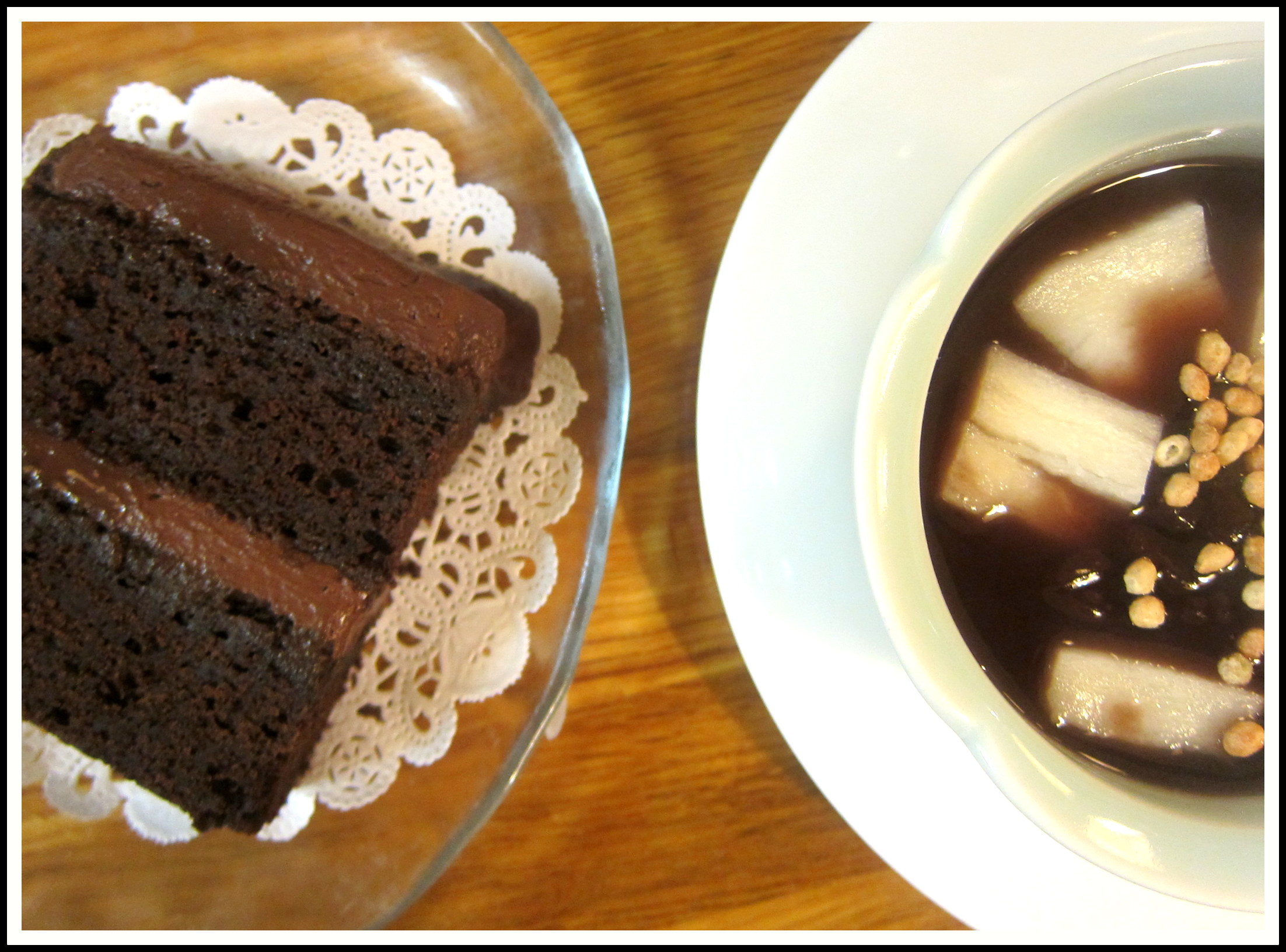
Vegan chocolate cake (left) and Oshikuro (right) – plain white mochi in gooey red bean sauce. The red bean is a bit too sweet, but I like it still. The cake is like a soft brownie, not at all dry and lifeless like normal vegan cakes.
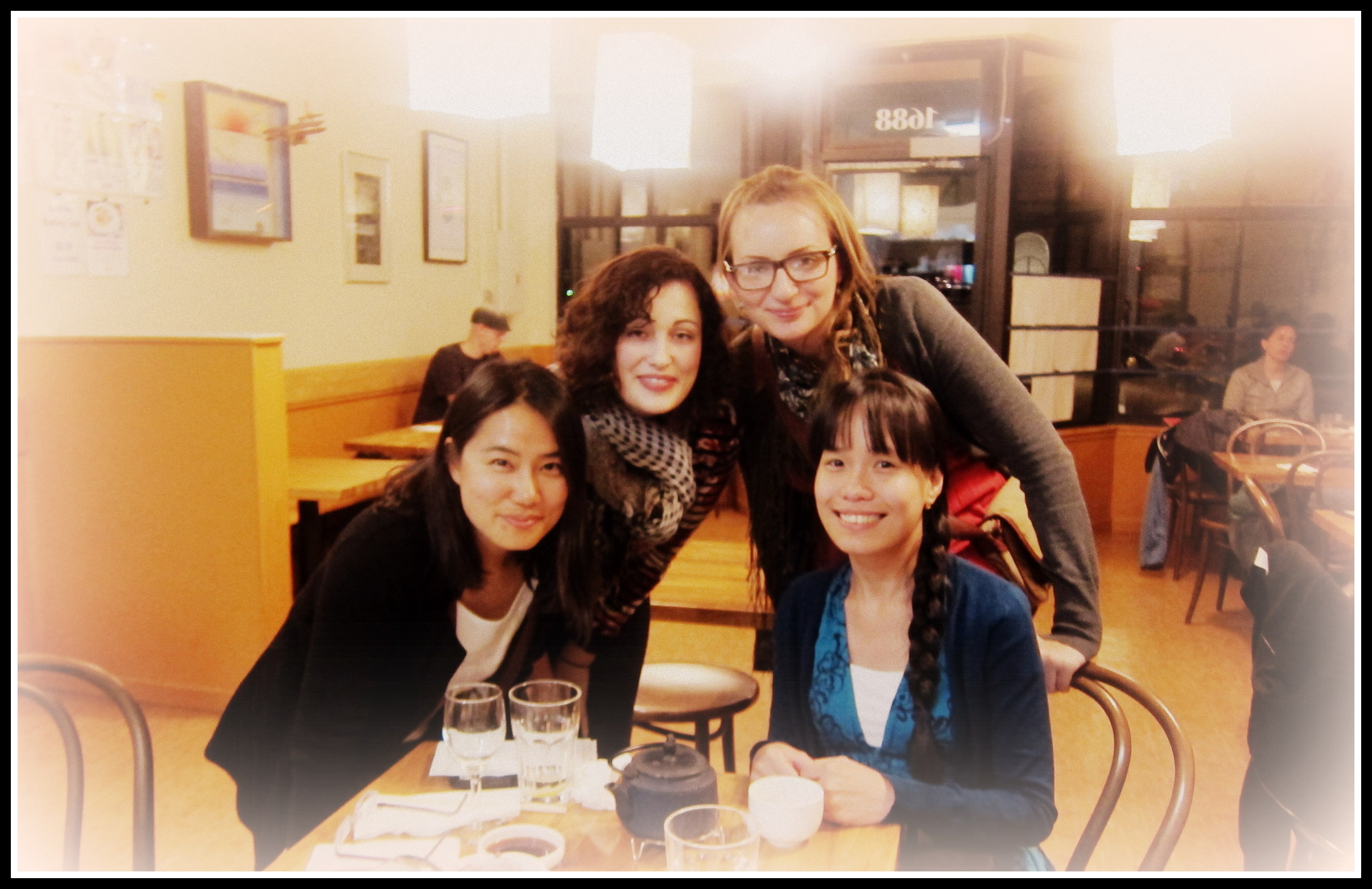
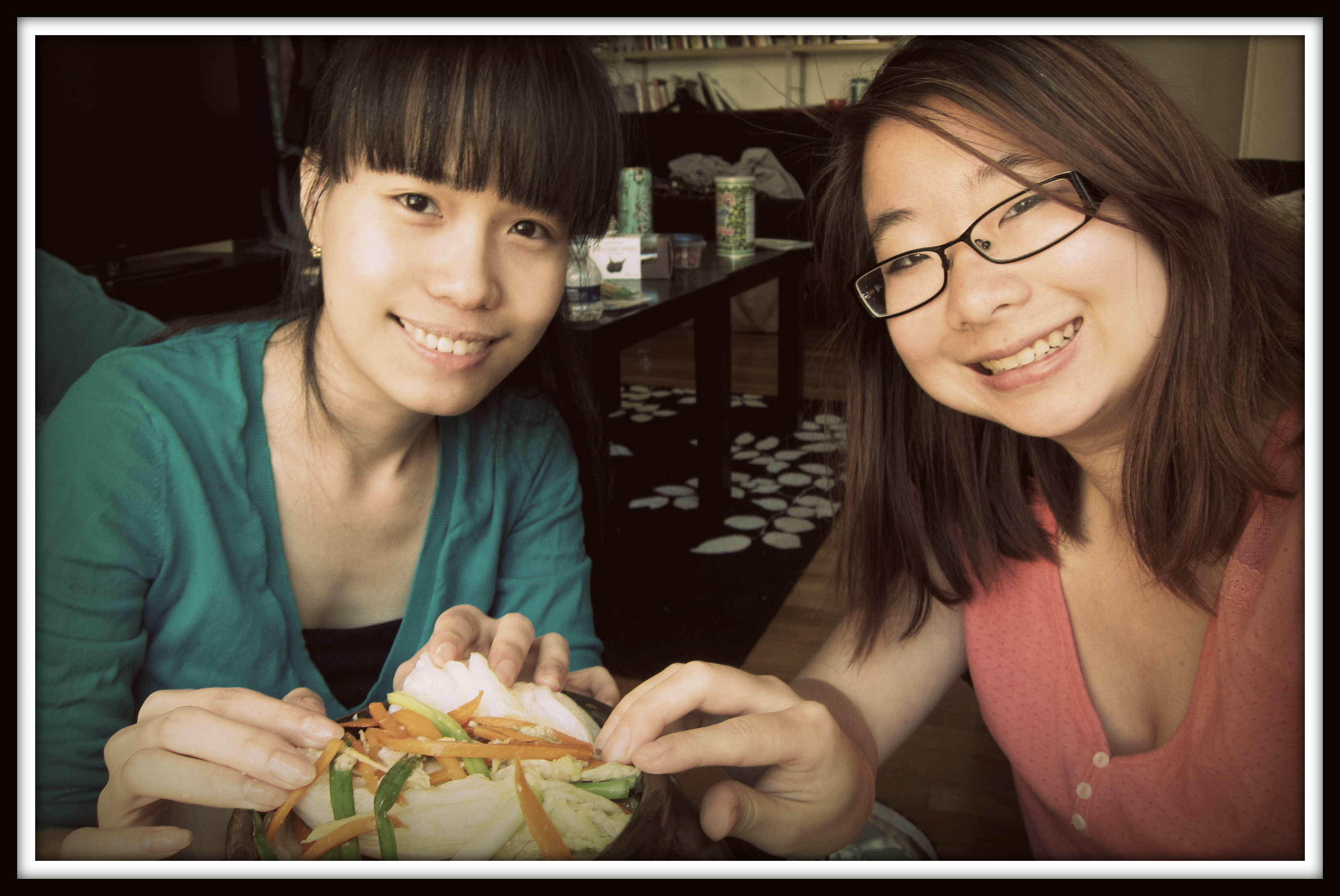
(*) In case you wonder, a picture of us is to the right.

Address: Cha-Ya Vegetarian Japanese Cuisine
(North Berkeley)
1686 Shattuck Avenue
Berkeley CA 94709
(510) 981-1213
Dinner for four: roughly $90 – Kinda expensive now that I think about it…
More Peach? Make Peach Sauce.

August 06, 2012 By: Mai Truong Category: American, Fruits, RECIPES, Vegan

[…] now the hand is coming back. And I think that has a lot to do with food. Farming is gonna be hip again and people are going to think about the things they’re contributing to society.
[…] Hopefully what this is leading to is people learning to shop like all good chefs do: We go and get all the best [stuff] and come home and figure out what we’re gonna make. Italy became cool in the gastronomic world in the ’70s because people went there and the what-the-[stuff] moments or the holy-[stuff] moments were never based on truffles or super-intense technique. It was more like, “God, this is spaghetti and zucchini, and it’s this good?” It was because there was no noise in it. It was spaghetti and garlic and zucchini in season.

– Mario Batali, Batali Beat, Lucky Peach Issue 3, 2012 –

No doubt Lucky Peach is not big on sensoring rough language (I’m old fashioned, so I bleeped them out myself), but the point is with all these new cooking shows, chefs have attained celebrity status (Now the Bay Area has its own cooking show: The Big Dish), and for a really brief moment, I had thought about becoming a chef. On the way to Teance I see this culinary school, and as if I hadn’t had enough on my plate already, I memorized the name and Googled it when I got home. I seriously thought about taking a class. Thank goodness it costs a little more than I expected.

Cooking school is not the best route to chef-dom, though, because “not a single chef I interviewed said that culinary school made any difference in either hiring decisions or an individual employee’s success,” said Mark Wilson (Should You Go to Culinary School? (Maybe, But Probably Not)).

As one chef put it, and I can’t remember who(!), it goes something like this: “if you want to be a chef, you got to ask yourself: do you truly love washing dishes?

I don’t.

So that’s that. Now I choose the easy route: I’m a chef in my own kitchen, and to follow the trend, I’ll attempt to cook with the season. How do I know what’s in season? I go to the grocery store and see what’s most abundant (not necessarily what’s cheapest, because the out-of-season may look so sad that they’re on ridic sale). For now, it’s peach.


Basic Peach Sauce (adapted from Mario Batali’s Basic Tomato Sauce)
(make 2 cups)

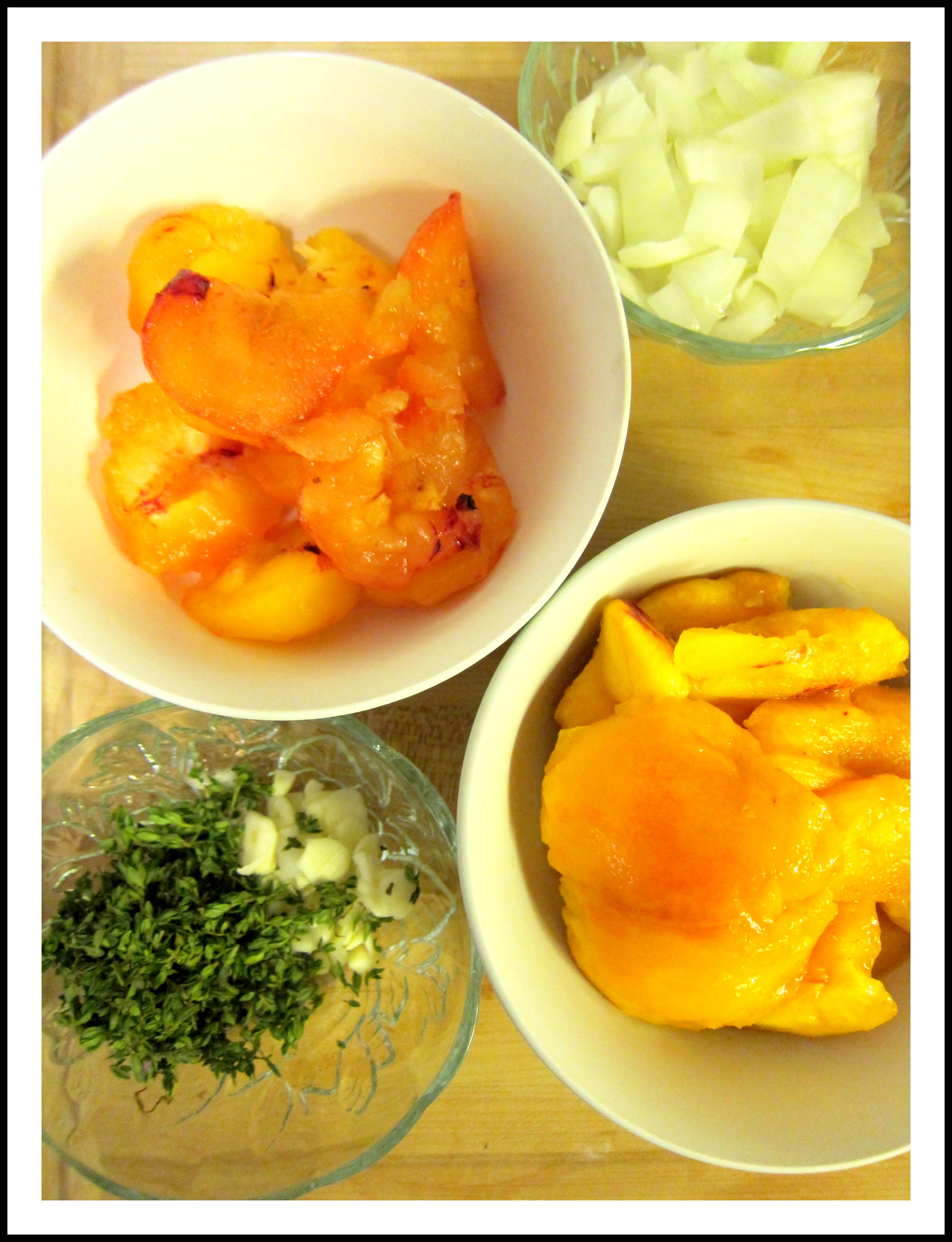
– 3 peaches (let it ripe until it’s a little mushy), peeled, pitted and mashed by hand
– 4 plums, peeled, pitted and mashed by hand
– 1 onion, diced
– 4 cloves of garlic, thinly sliced
– 1/4 cup olive oil
– 2 tbs chopped fresh thyme leaves (I use lemon thyme, it makes the whole room aromatic!), or 1 tbs dried thyme
– salt

In a 3-qt saucepan, heat the olive oil over medium heat, add garlic and onion, saute until soft and slightly brown. Add thyme.
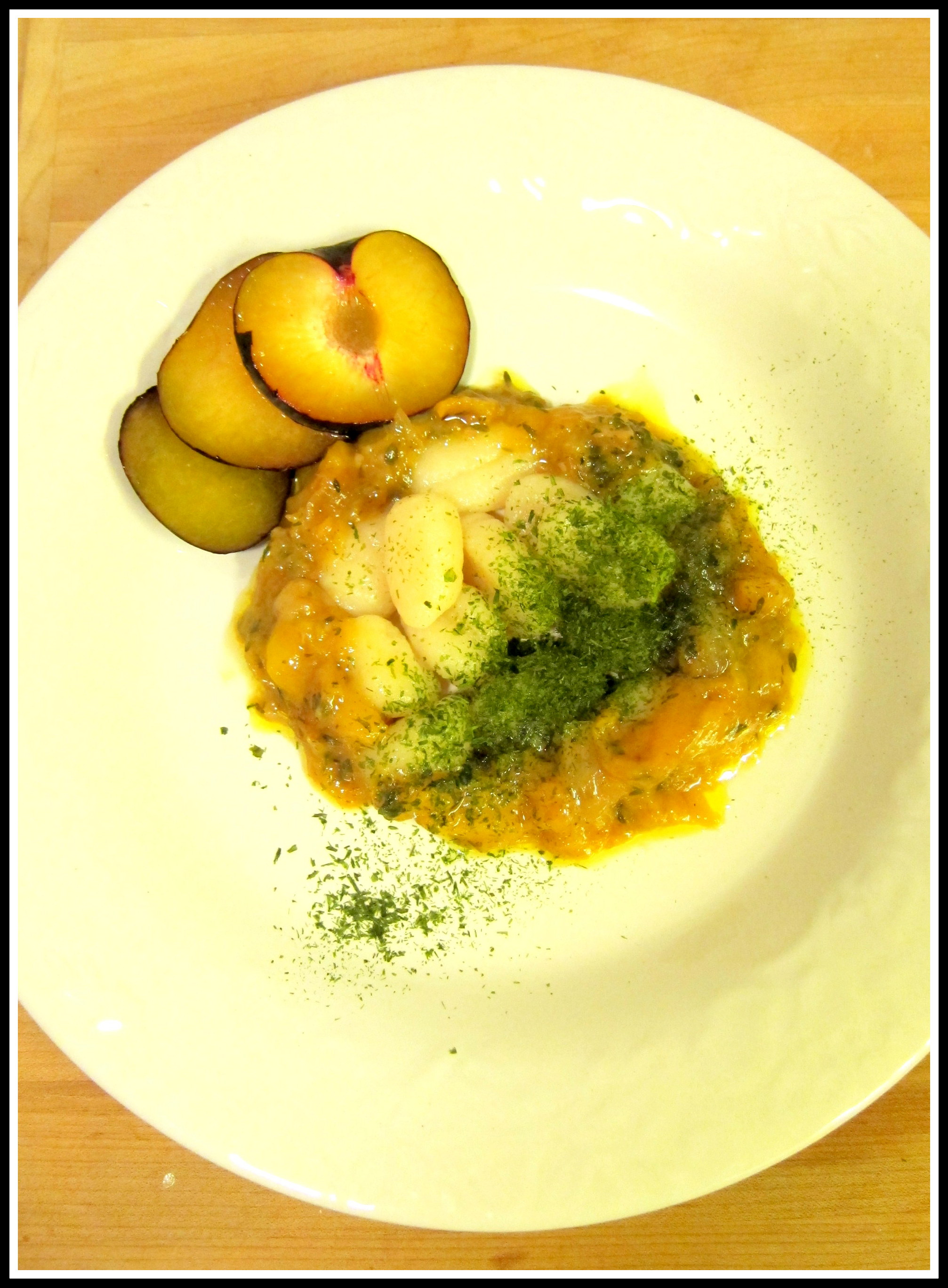
Add peach and plum, bring it to a boil. Simmer for about 30 minutes, stir often (the peach likes to stick to the bottom). Season with salt and serve. (I use it with sweet potato gnocchi)
According to Batali: “this sauce holds for 1 week in the fridge or up to 6 months in the freezer“.

This is my third and last session with peach this season, the first two are Peach Mul Naengmyeon and Bouquet Peach Gyoza.

Tags: , ,

For the Summer: Gyoza with Fruits and Flowers

August 03, 2012 By: Mai Truong Category: Fruits, RECIPES, savory snacks, Vegan, Vietnamese


What can you do with 24 squash blossoms?

Twenty-four is too few for squash blossom canh, a clear soup that Mom used to make when I was little. The flower is the only thing of a pumpkin plant (squash blossom in Vietnam is pumpkin blossom) that I didn’t mind eating (I hate pumpkin). The flowers perish too quickly that American grocery stores almost never carry them(*). That scarcity, I can only guess, also raises them to the exotic level that makes the modern American restaurants include the word in their menu around this time of the year (summer squash blossom season) and feature a mere 3-5 flowers on a plate amidst the more common vegetables like zucchini and cauliflower. The craze has been around for at least a decade, Carolyn Jung said, and I don’t see it wilt away anytime soon.

Although I dislike the place at first because it’s always too crowded, Berkeley Bowl gradually grew on me. It started when I realized, after many years away from Vietnam and living just a bit inconveniently far from the Asian markets, that I haven’t seen certain grocery items for ever, for example, woodear mushroom (nấm mộc nhĩ) and straw mushroom (nấm rơm). Then one day I ran into them at Berkeley Bowl. I was like, oh? they have that here?! It’s a great moment. One where you reunite with old friends, and if we should speak in grand terms, it reminds me to appreciate growing up in Vietnam and in my family, the lack of either component would have resulted in a much, much poorer experience with food.

Sometimes that great feeling clouds my better judgment. You know, when people dig out a picture of their middle school gang from a notebook, buck teeth and silly hair or whatever, they feel compelled to put it on Facebook. When I saw the squash blossoms at Berkeley Bowl, I felt compelled to get them home. Not that I knew what to do with them or had time to cook them.


Mom suggested stuffing them with ground pork. I’ve had them stuffed with cheese and batter-fried. But it’s summer. Peaches are in season. This something I make with squash blossoms should taste light and fresh like the flowers it bears.

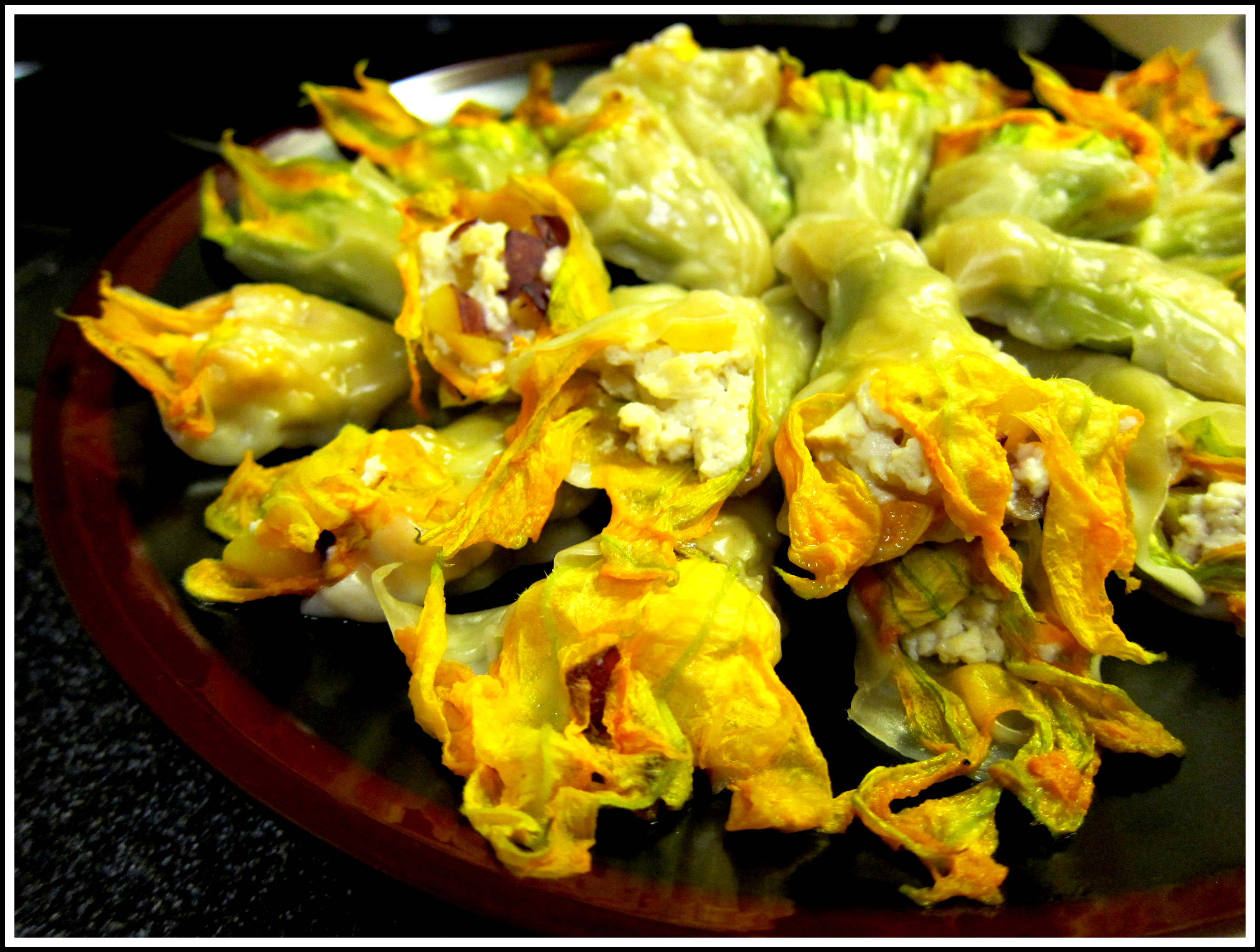
Bouquet Nectarine Gyoza
– Squash blossoms (the male blossoms, because they’re big enough to stuff)
– medium firm white tofu
– gyoza skin (wrappers)
– 1 yellow nectarine, diced (If you use peach, peel off the skin because peach has fuzz)
– sugar, salt, pepper to taste
– a steamer

Rinse the squash blossoms under cold water, peel off the dark green spikes at the base. Also break off the stem, if there’s any.
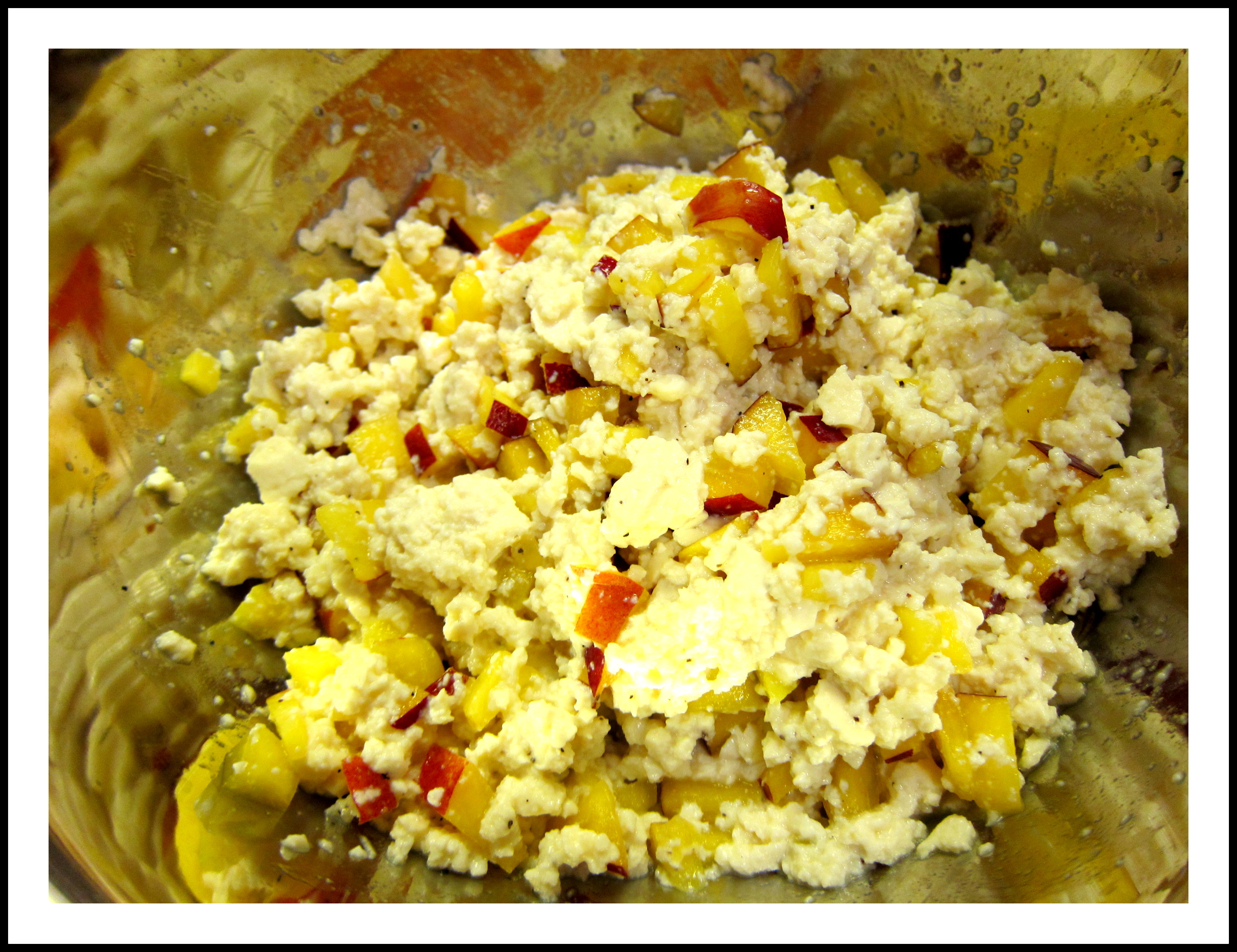
Mash the tofu by hand while mixing it with the diced nectarine. Add salt, sugar and pepper to taste.
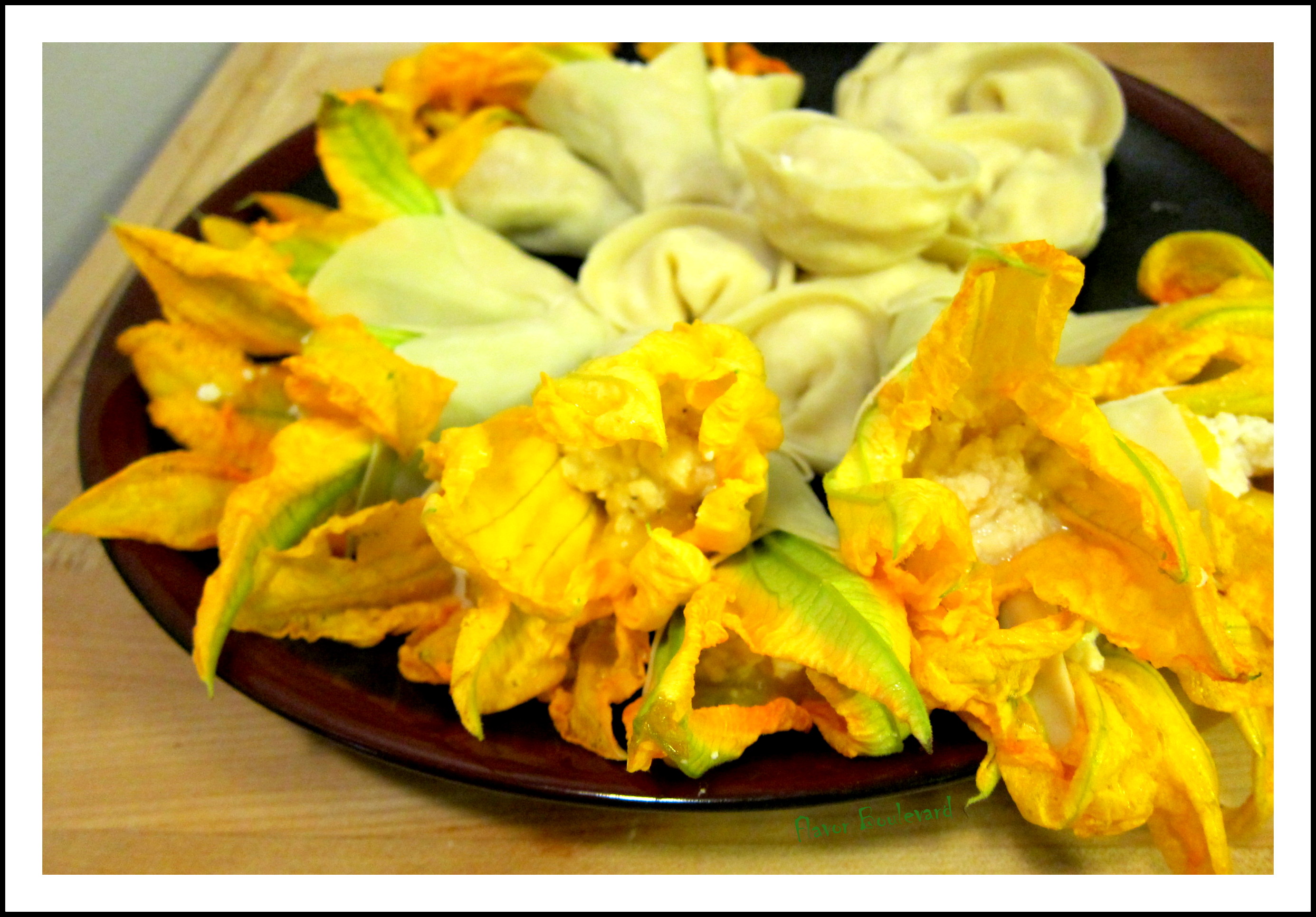
Gently stuff the nectarine-tofu mix into the squash blossom.
Wrap a gyoza skin outside the blossom, leaving at least the top half of the petals exposed.
Steam until the gyoza skin turns translucent (5-10 minutes). The flower petals will wilt but still retain their color and the bottom half should still be a tad crunchy.
Take out and let cool.

UPDATE: pan-fried these to make them taste better (albeit less healthy  :-D)


(*) Every website I’ve looked claims that squash blossoms can only stay fresh in the fridge up to 2 days under precise condition. Well, what you see in the picture “pre-steamed gyoza” are squash blossoms after 8 days in the fridge.

Recipe for bánh dầy đậu – Vietnamese mung bean mochi

July 23, 2012 By: Mai Truong Category: Northern Vietnamese, RECIPES, sticky rice concoctions, sweet snacks and desserts, Vegan


When I’m home, Little Mom pampers me with her food and sweeps me out of her kitchen, except when I open the fridge to snack, because her mind fixes on the idea that if she lets me touch the stove, I only make a mess. She’s right. Not to toot my own horn but when I’m home, I’m a lazy mess. So when I said Mom, let’s make bánh dầy đậu, she threw her hands up, said oh my sky there’s no more room in the fridge, made the bean paste herself, and only let me play with the dough. 😉

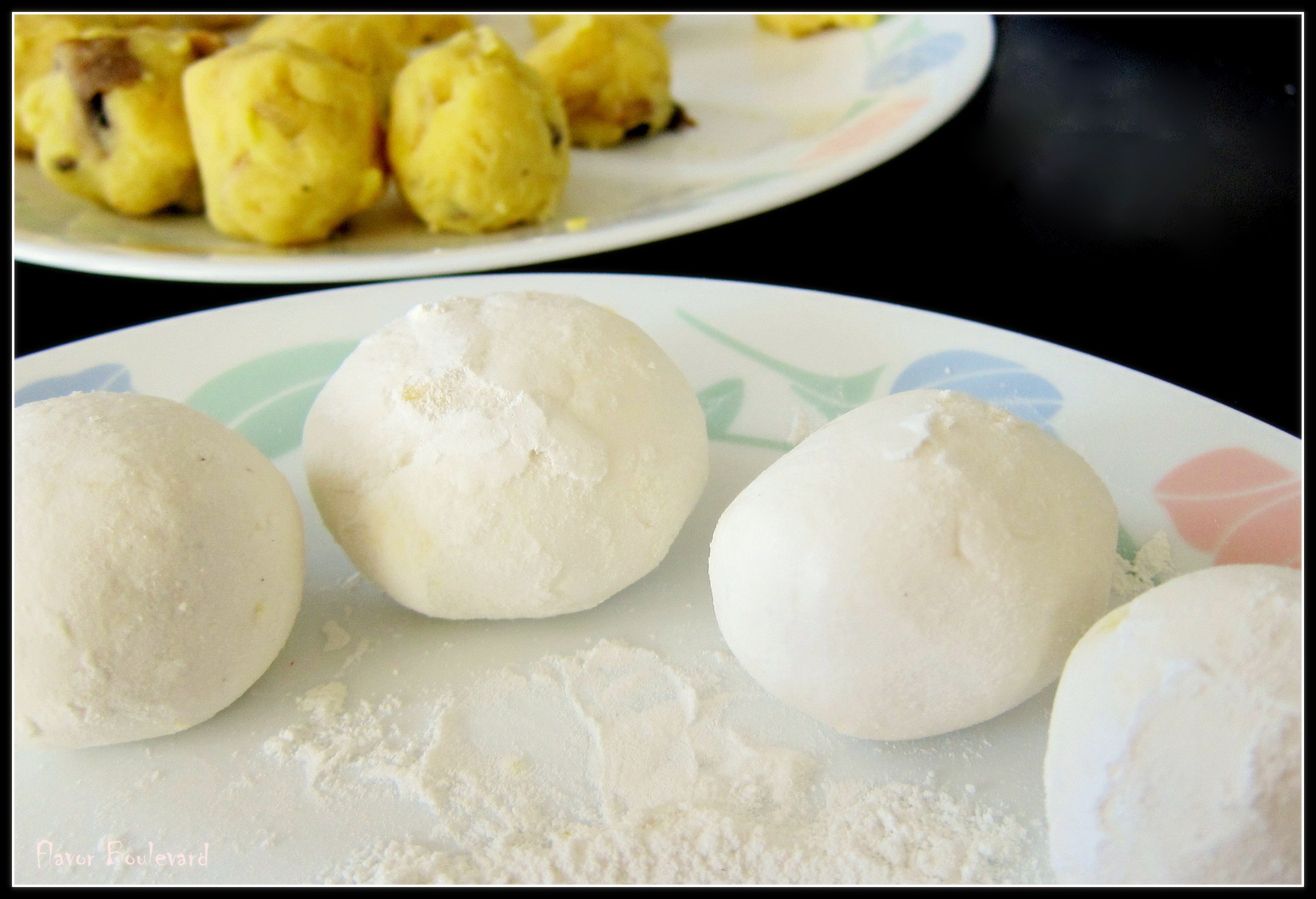
The mung bean paste filling is really the most important part of the Vietnamese mochi (similar to the Japanese mochi, but it’s 100% Vietnamese): you want it slightly savory, slightly sweet, and mashed. Little Mom is the queen of seasoning, so that part was flawless. My job was to knead the dough and roll up them balls. At least I didn’t have to pound steamed sticky rice into oblivion. I was kneading while watching TV with Mom. I was kneading when she sectioned her bánh bao dough into balls. I was still kneading when she wrapped the pork and egg inside the bánh bao dough. More kneading makes the mochi skin softer. After kneading, the rest was a breeze.


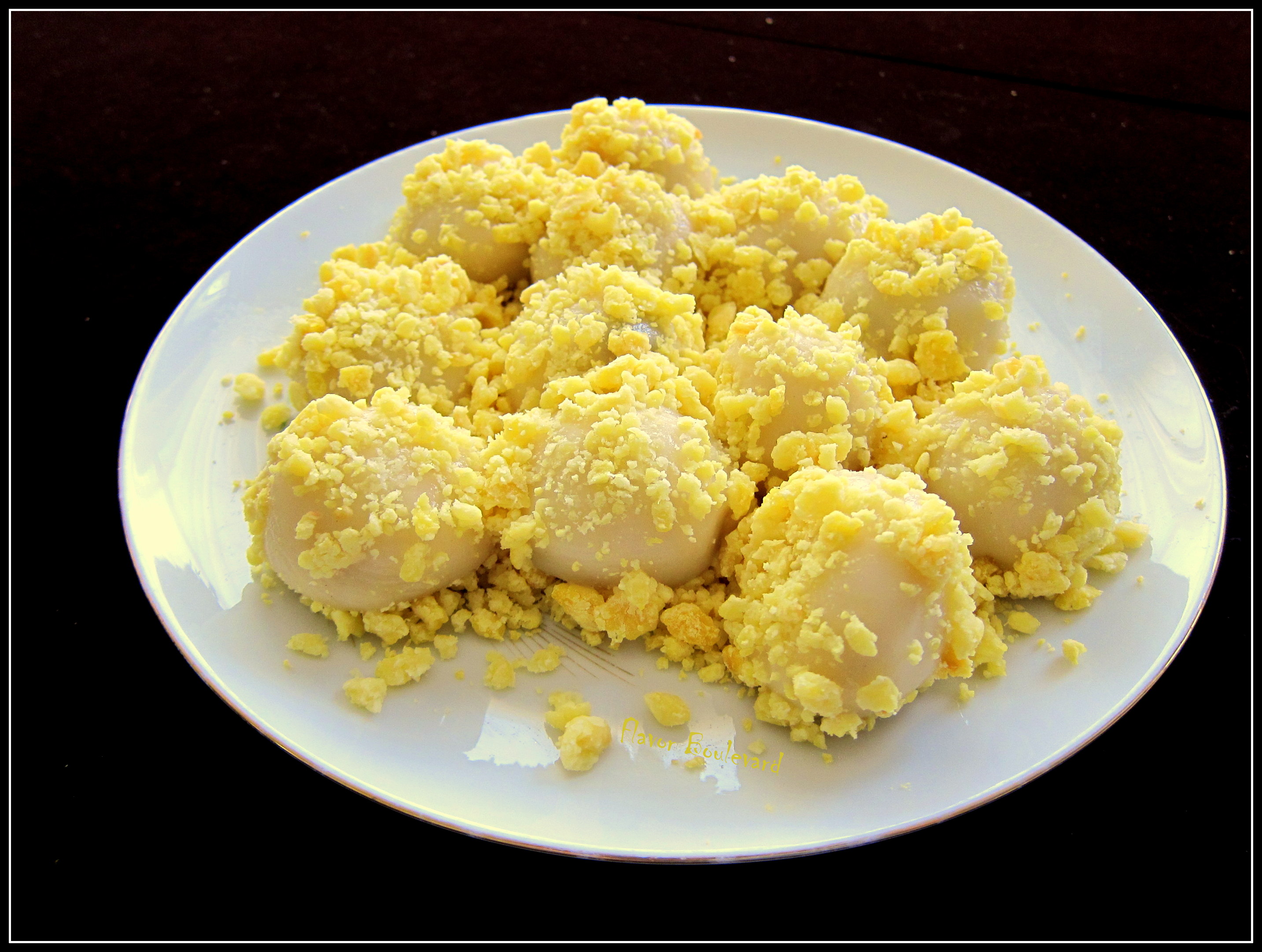
Bánh dầy đậu (pronounced kinda like |beng yay dou|) – Vietnamese mung bean mochi:

(Make 12 mochi)
– 250 g dried split mung bean (~ 2 cups), soaked overnight and deshelled
– 2 cup sticky rice flour
– 1 cup warm water
– 1 cup sliced mushroom
– salt and sugar to taste

The filling:
After soaking the mung bean overnight, wash away the green peel outside, we only want the yellow seed. Boil the mung bean until it’s tender. Mash the cooked bean.
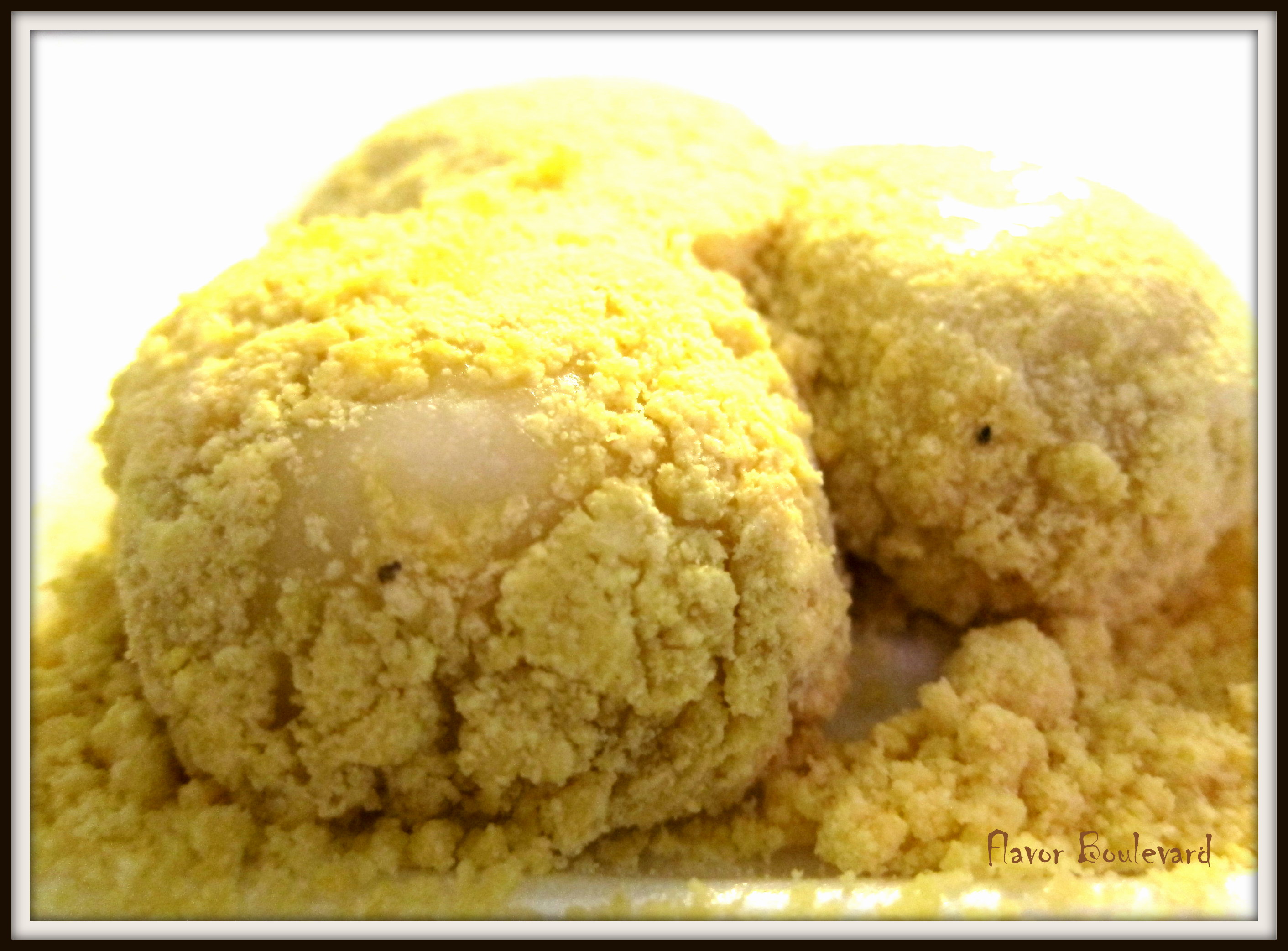
Set aside 2 cup of mashed bean, let it dry and crumble to make mung bean powder.
Sautee mushroom, add the remaining mashed bean while sauteeing, add salt and sugar to taste. Let cool.
Make 12 small balls.

The mochi skin:
Pour water into the the rice flour while mixing with your hand. You should stop when the mix feels smooth but not liquidy. Add more water if the dough breaks.
Knead for at least 30 minutes.
Divide into 12 balls, flatten each into a small disk.

The complete mochi:
Put the mung bean ball into the middle of the skin, wrap it up, make sure that no bean leaks out. Drop the mochi in boiling water and cook until they float to the surface. Cook for another 2 minutes just to make sure.
Roll the still hot mochi balls in mung bean powder. Let them cool.

Enjoy with a cup of Buddha’s Hand oolong. 🙂

Sandwich Shop Goodies 21 – Bánh dầy đậu (Vietnamese mung bean mochi)

July 11, 2012 By: Mai Truong Category: Houston, Northern Vietnamese, One shot, sticky rice concoctions, Vegan


Legend said the first ever bánh dầy (pronounced |beng yay|) was a flat thick bun of cooked-and-pounded sticky rice, white and chewy and not recommended for dentures. The prince, taught by a Bodhisattva in his dream, made it to represent the sky, and bánh chưng to represent the earth. I don’t think the sky is chewy, but I really like it when it’s white. I also like banh day with silk sausage a lot. But somewhere along the history of Vietnam, somebody gave banh day a mung bean filling, softened the dough (which means more pounding for the sticky rice), rolled it into the size of a pingpong ball, and coated it with mung bean powder. I can NEVER get enough of this thing.

$2 for 3. Found at: Alpha Bakery & Deli (inside Hong Kong City Mall)
11209 Bellaire Blvd # C-02
Houston, TX 77072-2548
(281) 988-5222

Unfortunately, I love them so much that the store-bought version just doesn’t do it for me. With Little Mom’s help, a batch has been made. A recipe is on the way. (UPDATE: the recipe is here.)

Previously on Sandwich Shop Goodiescudweed sticky rice (xôi khúc)

Kitchen hour: Make White Baechu Kimchi

July 01, 2012 By: Mai Truong Category: Korean, RECIPES, Vegan


Yesterday is momentous. Here we are, making kimchi. Is that a big deal? Yes. There’s a joke that if you’re gonna get married into a Korean family you’d better learn how to make kimchi. It’s just pickled vegetables, but it has an entire nation behind its back (and a pretty proud one at that), so you can’t mess with it and expect something good to happen. So here we are, jotting down the recipe from Lucky Peach Issue 2, going to Koreana, buying a clay jar to show that we mean business. Glass jars are so… see-through? (And no, there’s no Korean wedding that I know of… for now. Maybe Kristen will shoot me an invitation to her big day next month with Park Hyunbae and now she’s just using the delicious drama Kimchi Family as an excuse, and I’m her Guinea pig. :-D)

But yeah, for now, Kimchi Family is the main reason to our story. It’s a Korean food drama, and it’s delicious. Not only do they show tasty pictures of kimchi glistering and steaming under the sun beam, they make food making seem peaceful! It’s not like Food Network competition stuff where all you see are burly husky men (and unfortunately, women) with glowing red face running like mad in the kitchen with a clock ticking to death, a host rushing out 300 words per minute, knives and flames flaring up everywhere. Nah, Kimchi Family shows two sisters gently mixing and stuffing kimchi into jars, telling stories in their gentle voice and ending their scene always with a gentle smile. Between them and the competition chefs, we think they look cooler. So we bought a clay jar to make kimchi.

DAY 1
Step 1: Wash the clay jar with salt and water, wipe dry. Actually, we didn’t do Step 1 until after we finished Step 6, but anyway.


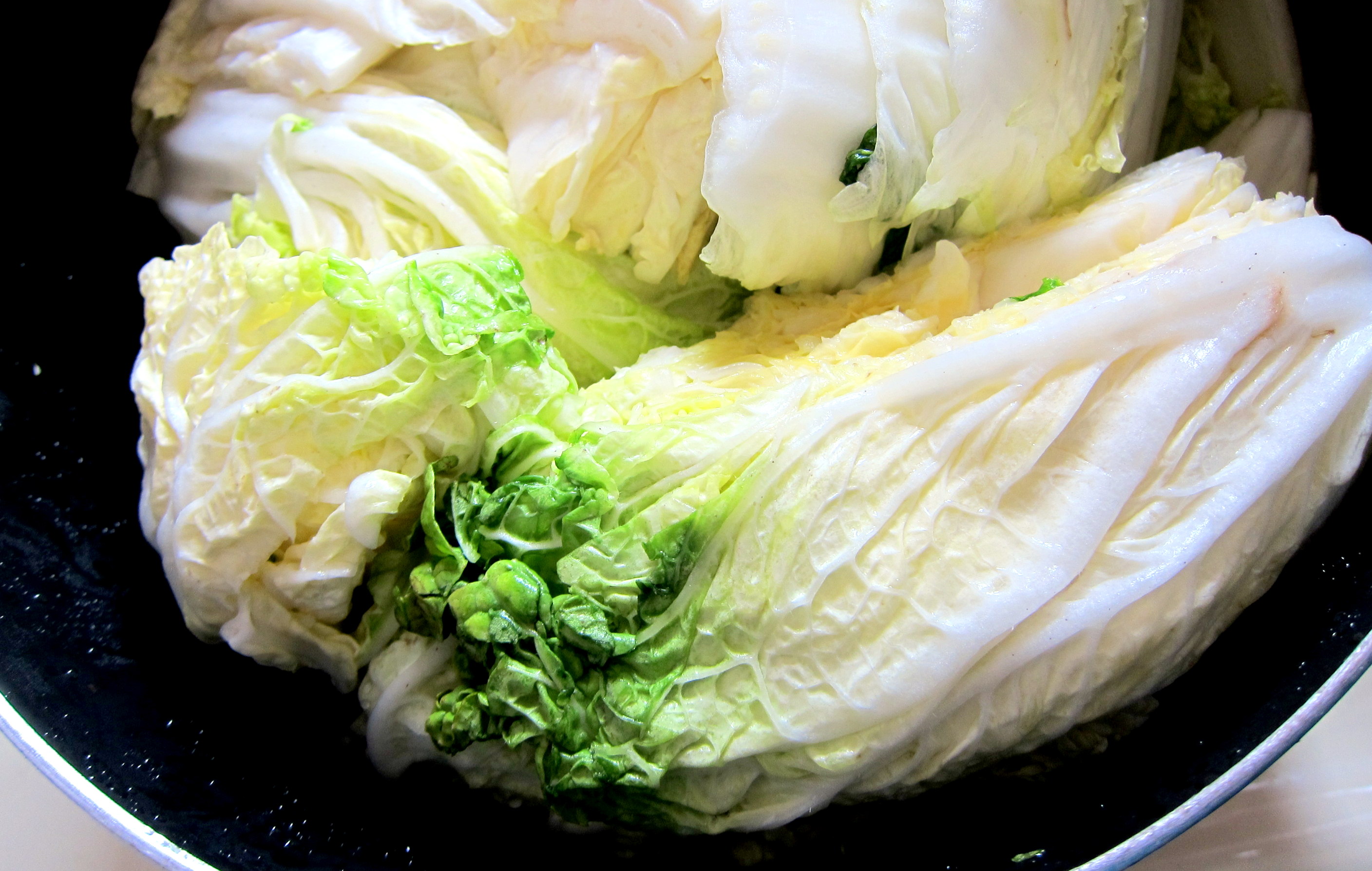
Step 2: Wash, peel off funny-looking leaves from the napa cabbage. Cut it up and mix the parts with salt and sugar. Let the bundle sleep in the fridge overnight. (How should you cut it up? Dave Chang said in his Lucky Peach recipe to cut into 4 quarters length-wise, then into 2-inch pieces, but his recipe calls for the oh-so-American glass jar. The movies usually show grandmas stuffing chili sauce in between the leaves of the whole cabbage, so romantically we guess we shouldn’t even cut it up, but we chose the mid-ground: 4 quarters length-wise, then halve them, so 8 pieces total.)

DAY 2


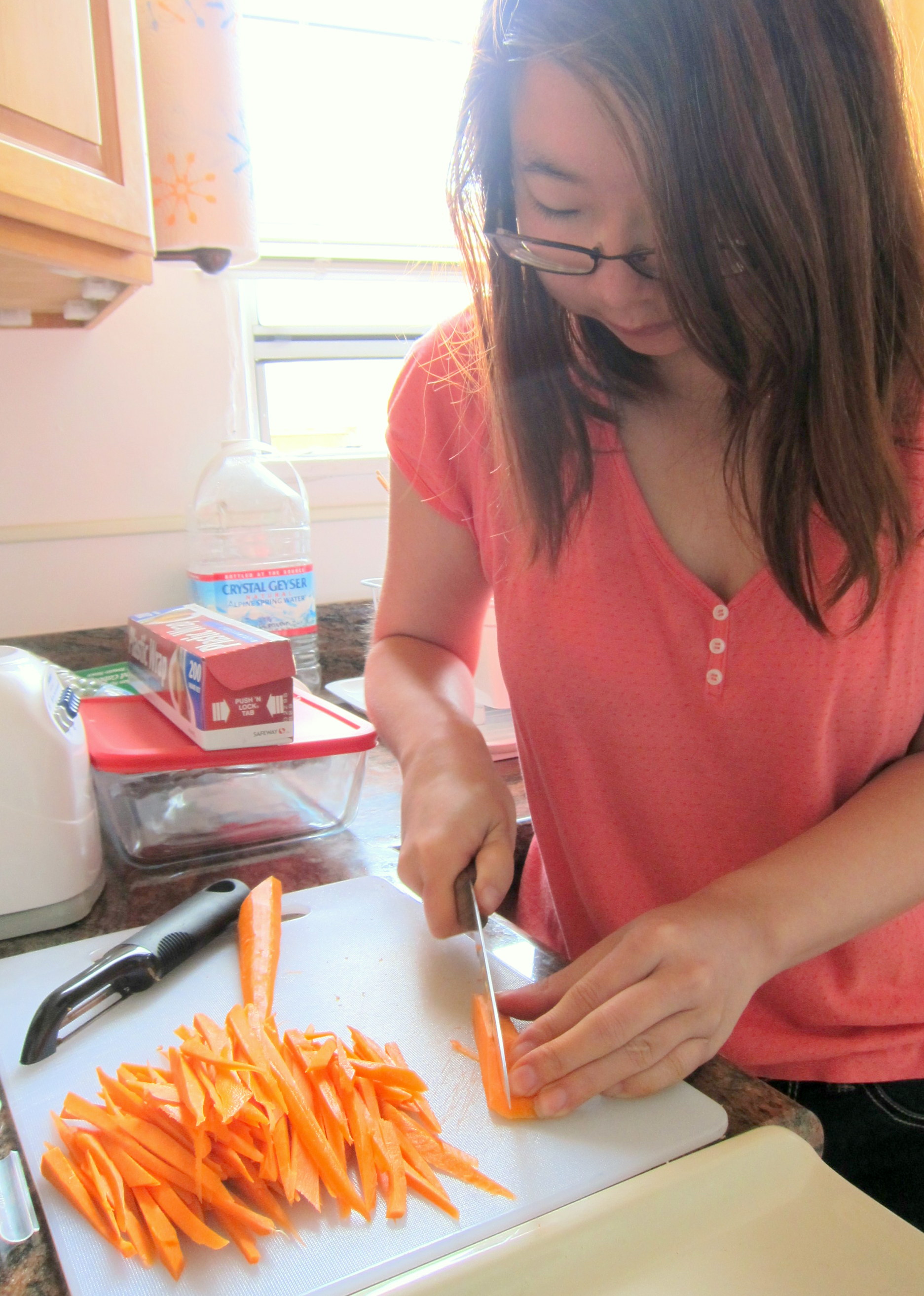
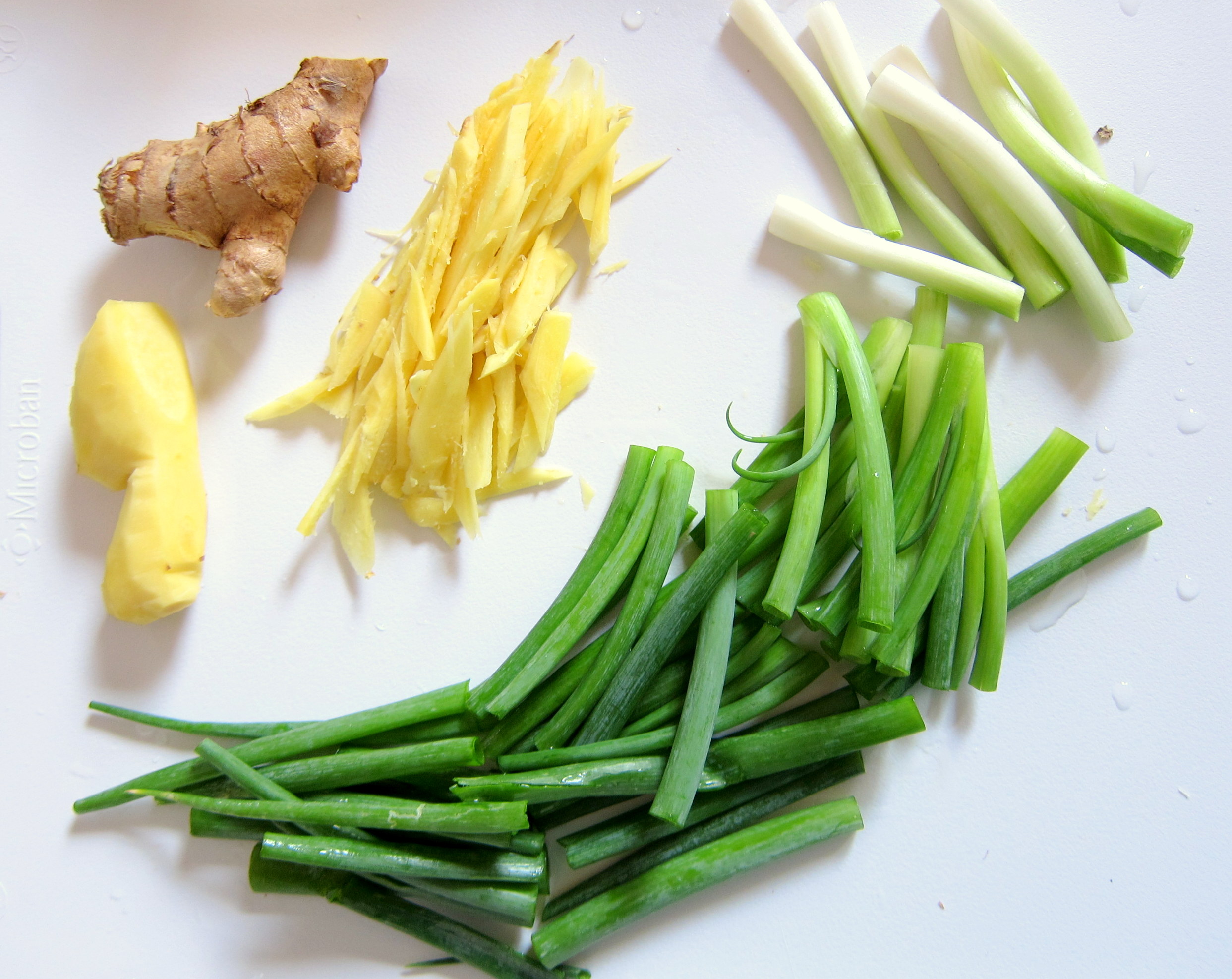
Step 3: Julienne carrots, julienne ginger, cut green onion into 2-inch-long sticks.
Step 4: In a juicer, blend together garlic, ginger, and corn syrup.
Step 5: Mix garlic-ginger-syrup sauce with soy sauce and vinegar.
Step 6: Drain the napa cabbage from its salty water.


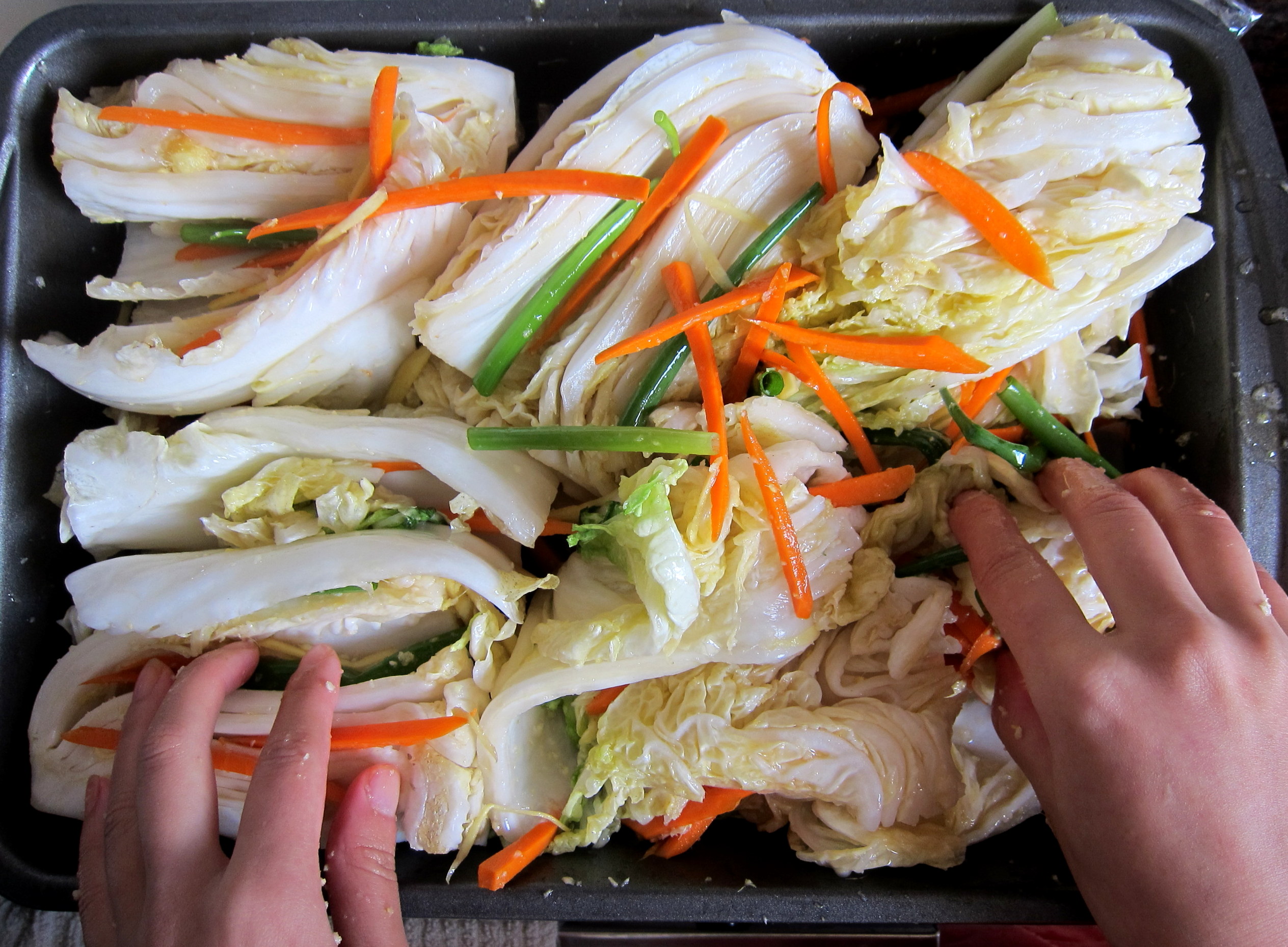
Step 7: Rub the sauce in Step 5 into every crevice of the brined cabbage, mix green onion and carrots for colors.


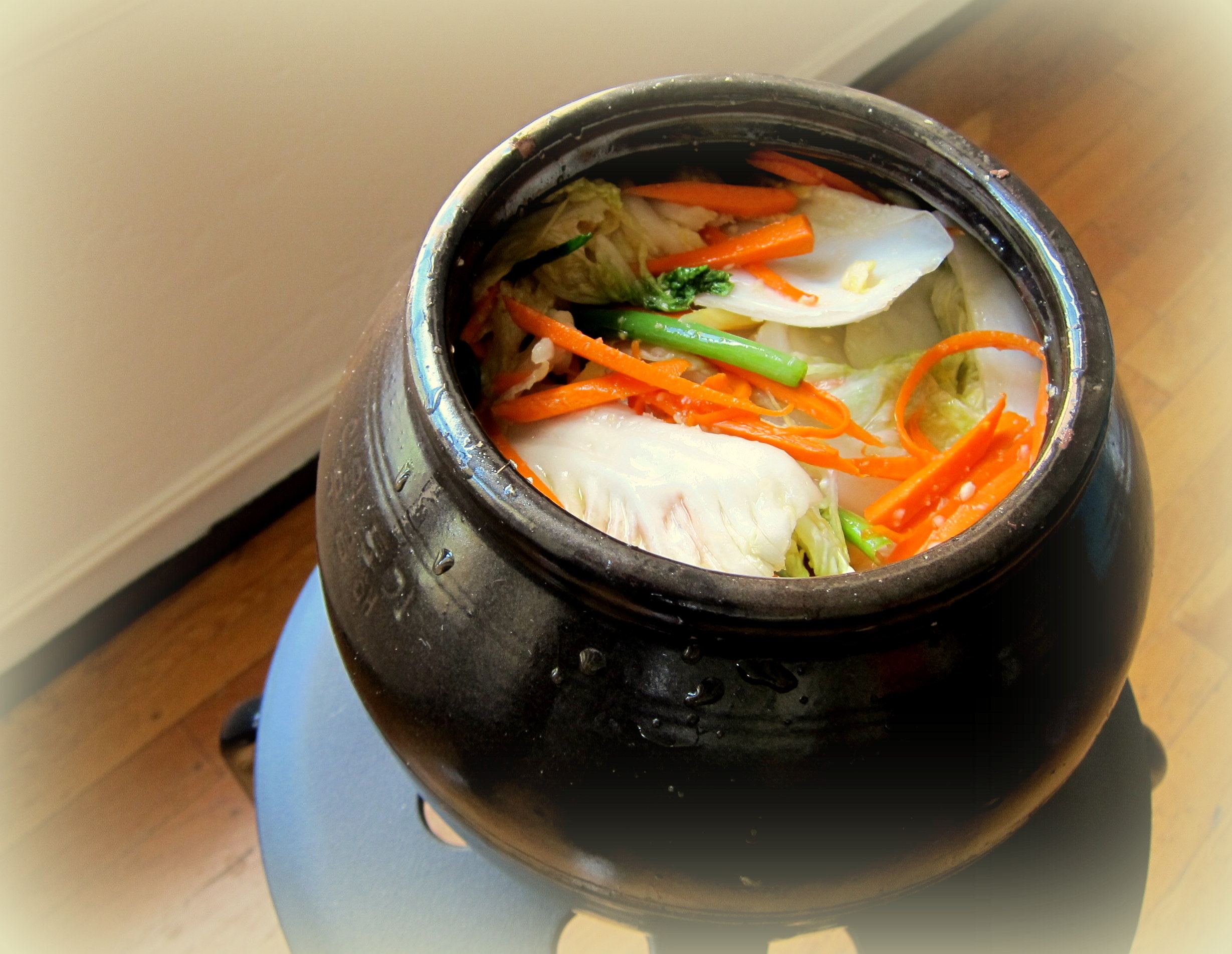
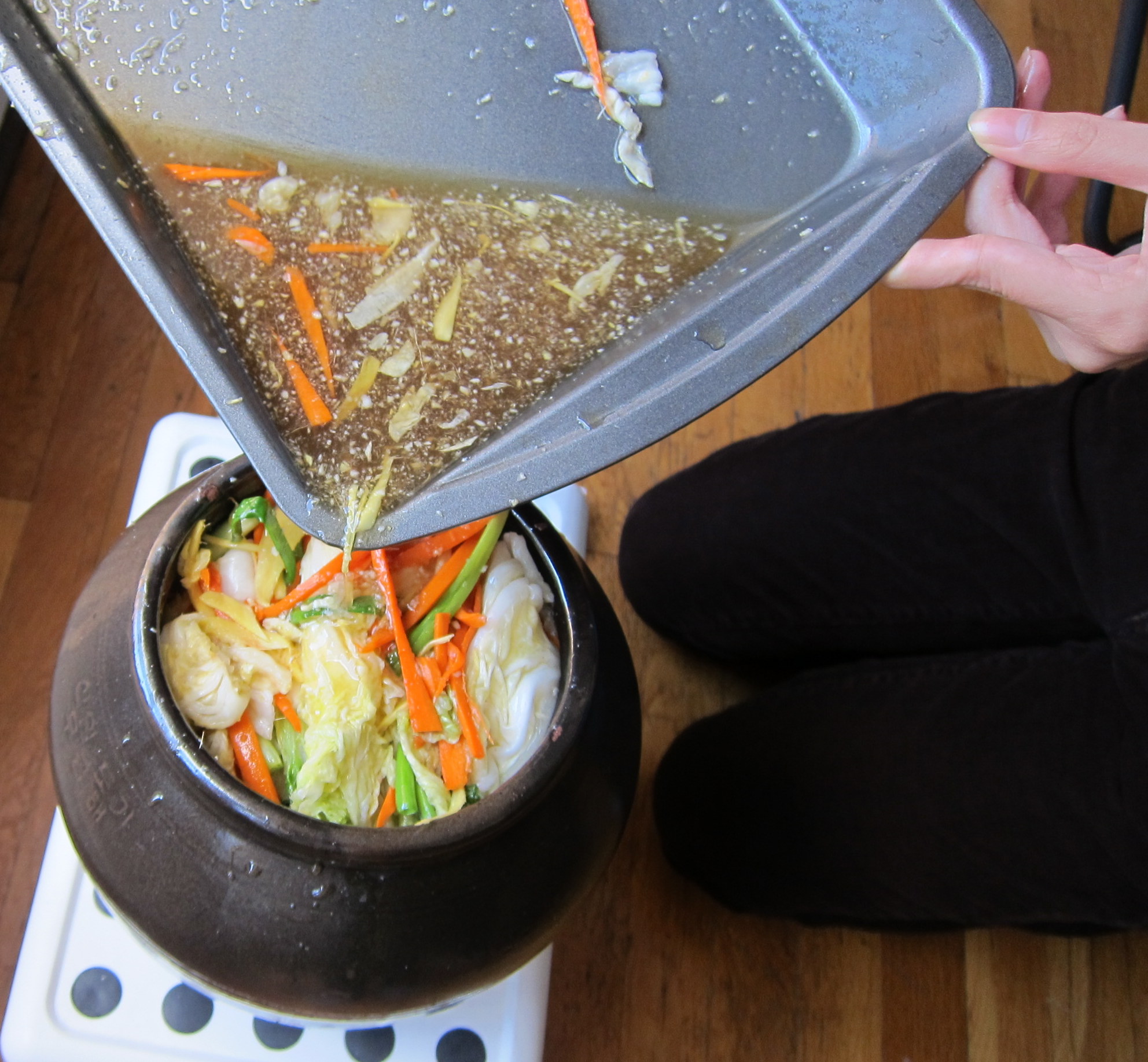
Step 8: Stuff the vegetables into the jar and pour the sauce on top.


Step 9: Smile and take a picture.

Now let’s wait 7 days and hope that the kimchi will turn out well. If it does, the ingredient list with all precise measurements will be updated. If not, there’ll be some massive cleaning up to do, but you won’t hear about it.

Tags:

The last of June – Gregoire

June 30, 2012 By: Mai Truong Category: California - The Bay Area, French, sandwiches, Vegan


Few Berkeley residents, minus the homeless people (I think), haven’t at least heard of Grégoire. Everyone I’ve talked to has eaten here, even my freshman students. Technically I also have, but only for desserts. Somehow the menu on the days that I looked never struck lightnings on me. I might have been looking on the wrong days. Then I stopped treking this part of town for over 6 months, minus a trip to Imperial Tea Court that turned out somewhat disappointing, which shot me back to Fourth Street. When the whole tea business got serious, I kinda started eating to subsist more than to eat. I stopped actively hunting for special things. I don’t think of restaurants anymore. Chinese fried rice has been a staple for the last 7 days, with intermissions of frozen pizza and ramen. That reminds me, Berkeley Bowl no longer carries Sapporo Ichiban, and I’m mad. Of course, if delicious-sounding food just rolls up to me, I’d take it. Like today, we’re close to Grégoire, and Grégoire (finally) has something that caught my eye.


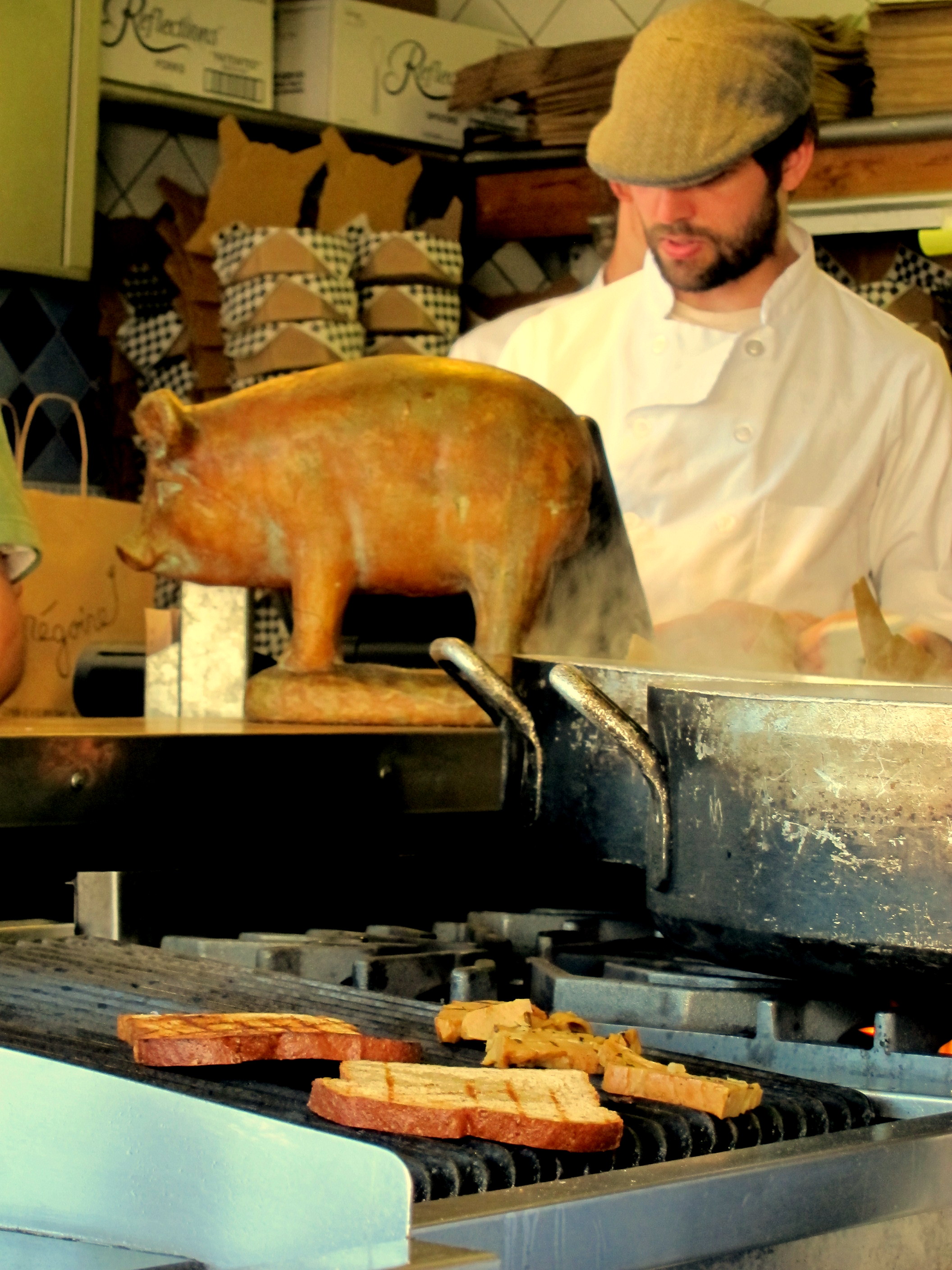
My lunch gleaming on the grill.


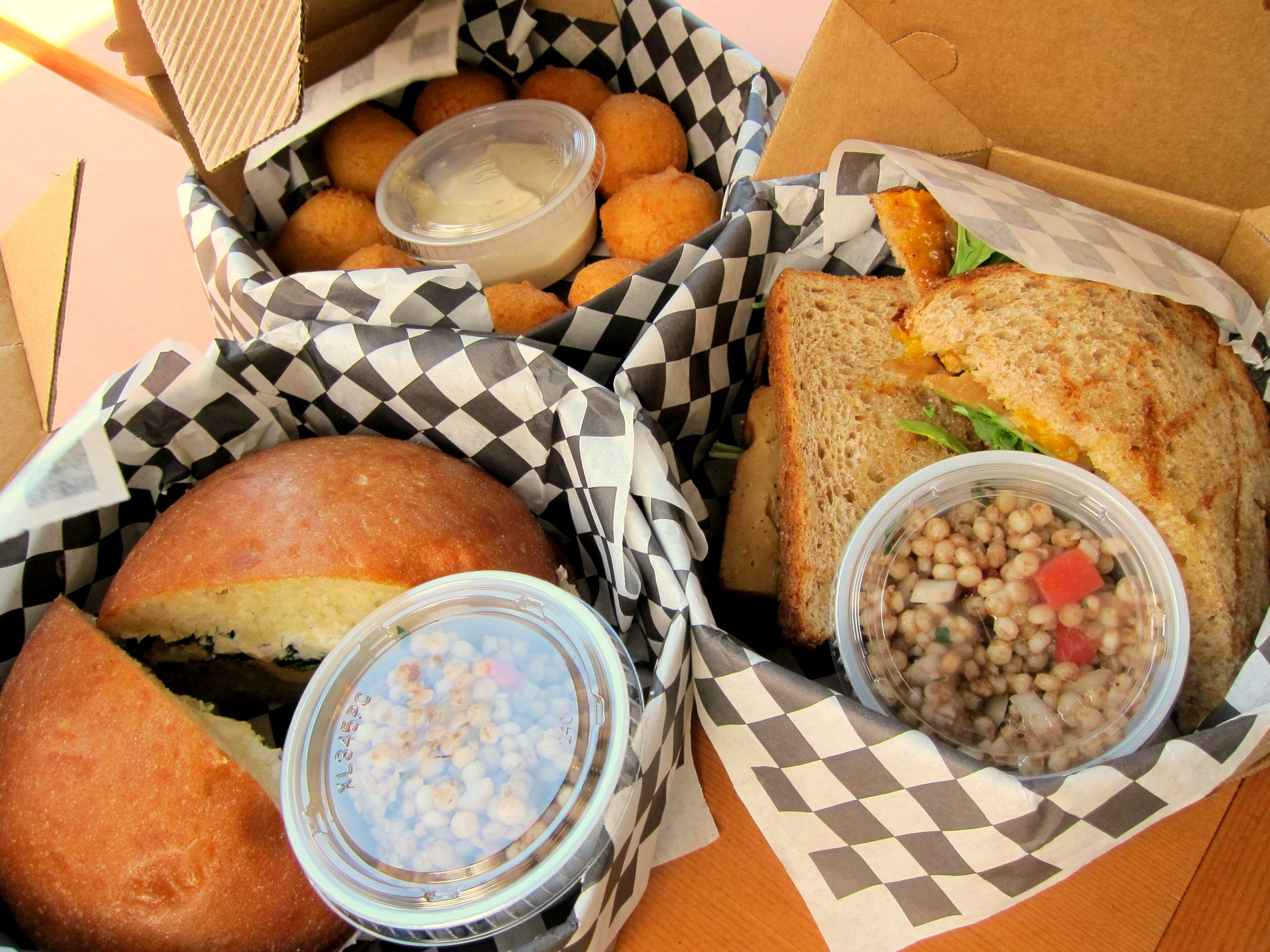
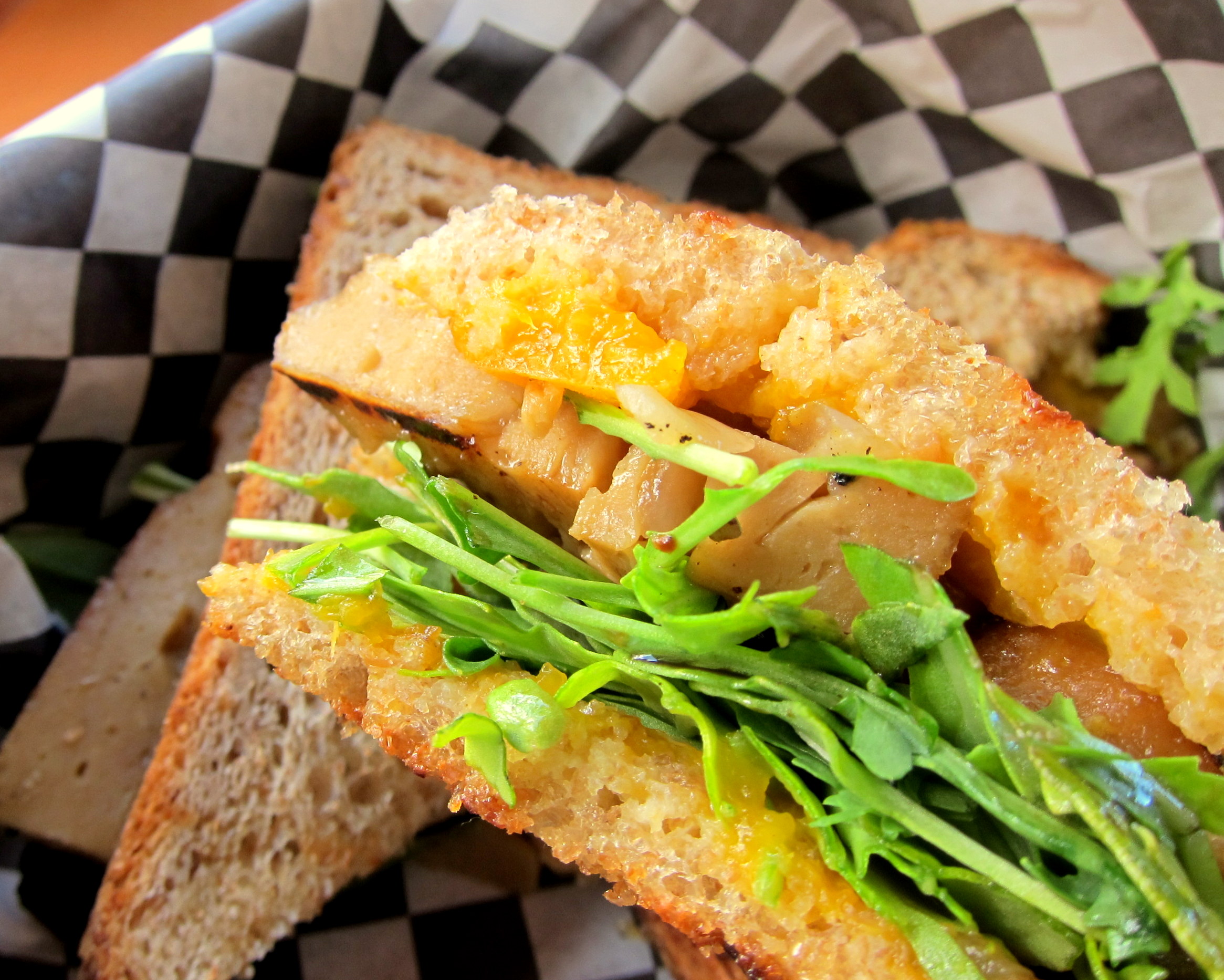
Stephen’s marinated grilled house-made seitan with apricot compote & arugula on grilled wheat bread ($7). Guess I’m attracted to savories with fruits.

The best part is, this month’s menu will be changed tomorrow. Today’s the last day of June. My seitan sandwich and I were destined for each other today.

Address: Grégoire
2109 Cedar Street
Berkeley, CA
(510) 883-1893

Tags:

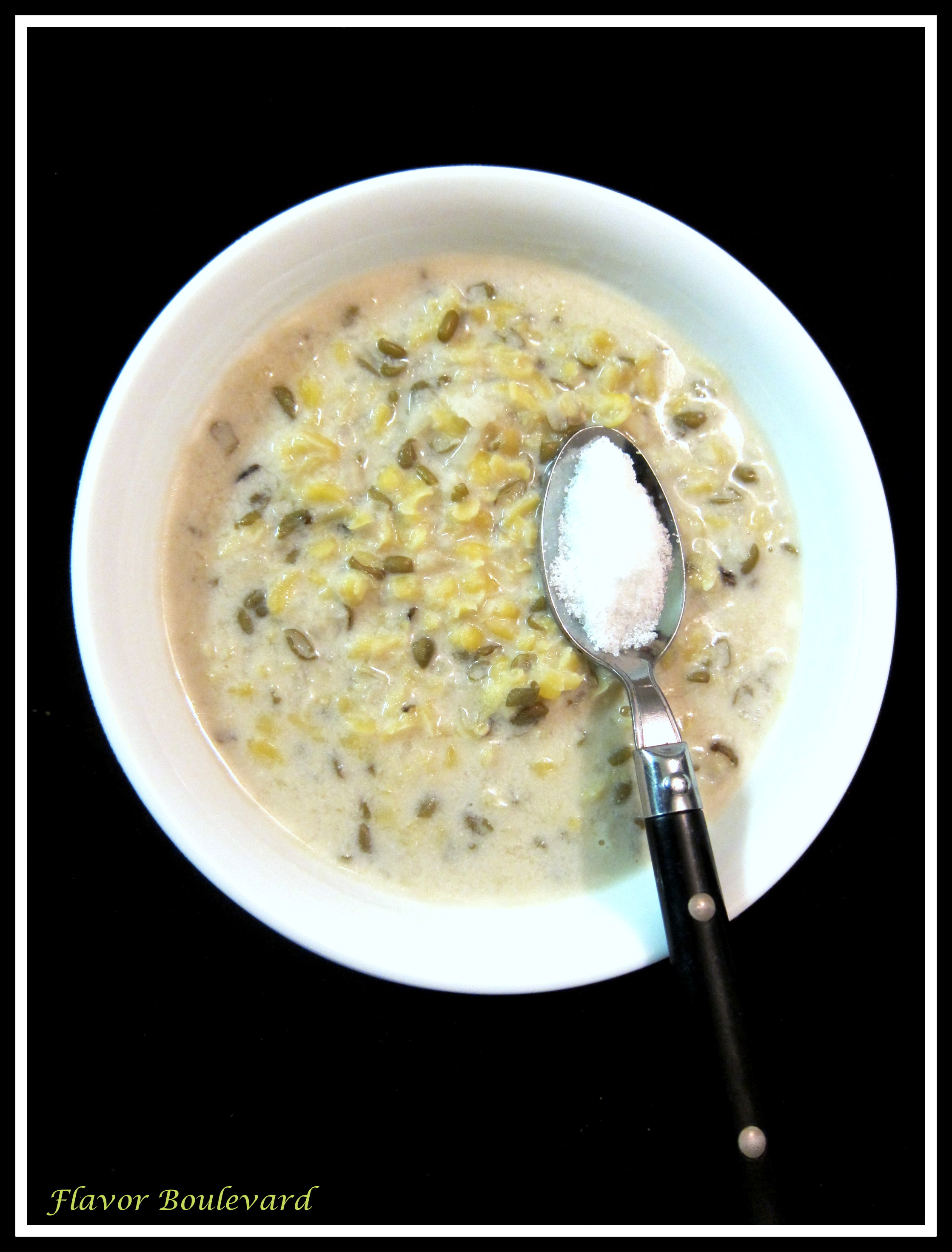
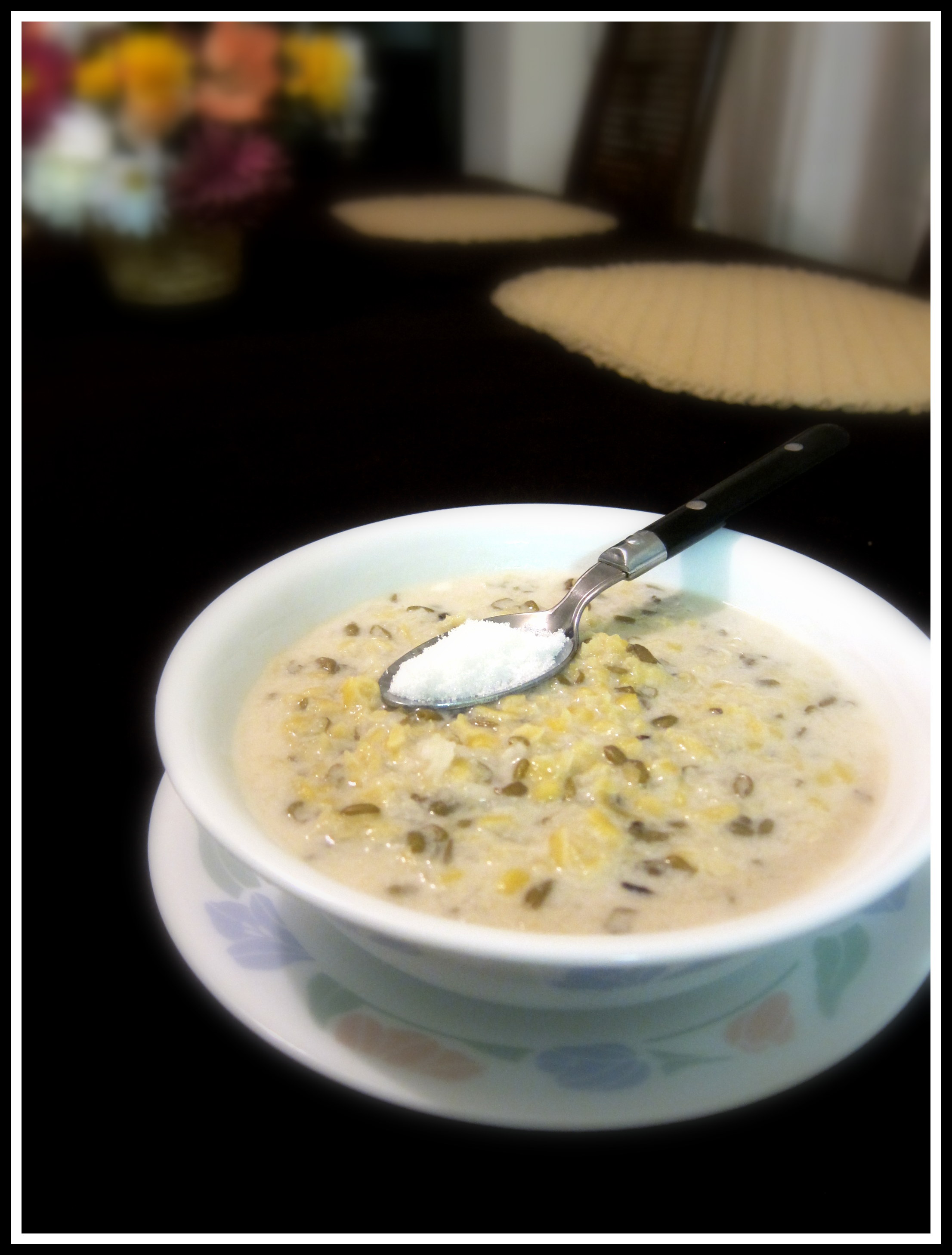
Mung bean porridge

May 24, 2012 By: Mai Truong Category: Comfort food, RECIPES, Southern Vietnamese, Vegan


Rice porridge was my enemy.

In elementary years, I got a fever about once every month. Aside from feeling tired and having weird dreams when the fever got high, I didn’t really mind that, but my mom did. She was so worried she wouldn’t sleep for days, not until my temperature went back to normal. And she made sure that I ate my rice porridge. She made rice porridge with ground pork and rice porridge with fish, she added vegetable, she seasoned it perfectly, and I still hated every spoon of it. I hated the texture of rice porridge: mushy and textureless. I hated both thick porridge and watery porridge(*). Every porridge meal was a battle between Mom and me, and I always lost, which deepened my aversion to porridge even more. But there were happy days when I actually liked my fever porridge and didn’t need my mom to prod: it was mung bean porridge on those days.

Actually, there’s rice in mung bean porridge, too, but the mung bean skin makes the porridge all nuttier and better. Then it’s a sweet porridge (just rice, mung bean and sugar, no meat), so that’s doubly better. Health-wise, mung bean is a cooling food(*), which would help alleviating the fever and digesting. Little Mom says that the Central Vietnamese eat mung bean porridge with cá kho tiêu (small caramelized pepper braised fish) instead of sugar, I can see that being tasty, and I can imagine substituting the fish with myulchi bokkum (멸치 볶음, dried fried anchovies) for availability. But I’ve found another way to heighten the mung bean porridge experience while keeping it vegan:

I dip toasted rice cracker into the porridge. We had leftover rice crackers from a lunch of rice cracker and pork rolls. There I was sitting, slurping and chewing my porridge, and staring at the stack of crackers, and it just came. Now you get crunchy, airy, nutty, sweet, sesame-y, toasty, liquidy, all in one bite. 😉

(*) These days I can tolerate watery porridge, but I still avoid the thick kind.
(**) I wrote a brief section on the cooling vs. heating effect of food in the post Benefits of Tea.


The Recipe: Childhood Love Mung Bean Porridge (8 servings)

— 250 g mung bean (halved but not shelled)
— 1/2 cup rice
— 1.2 l (42 fl oz) water (less water for thicker porridge)
— 1 can coconut milk
— sugar (as much as you want)
— toasted sesame rice cracker (as much as you want)
Soak the mung bean overnight to soften it. In a pot, cook rice, mung bean and water until the grains turn mushy. Add coconut milk and bring it to a boil. Serve warm with toasted rice crackers.

Party like spring harvest time

May 19, 2012 By: Mai Truong Category: California - The Bay Area, Drinks, sweet snacks and desserts, Vegan


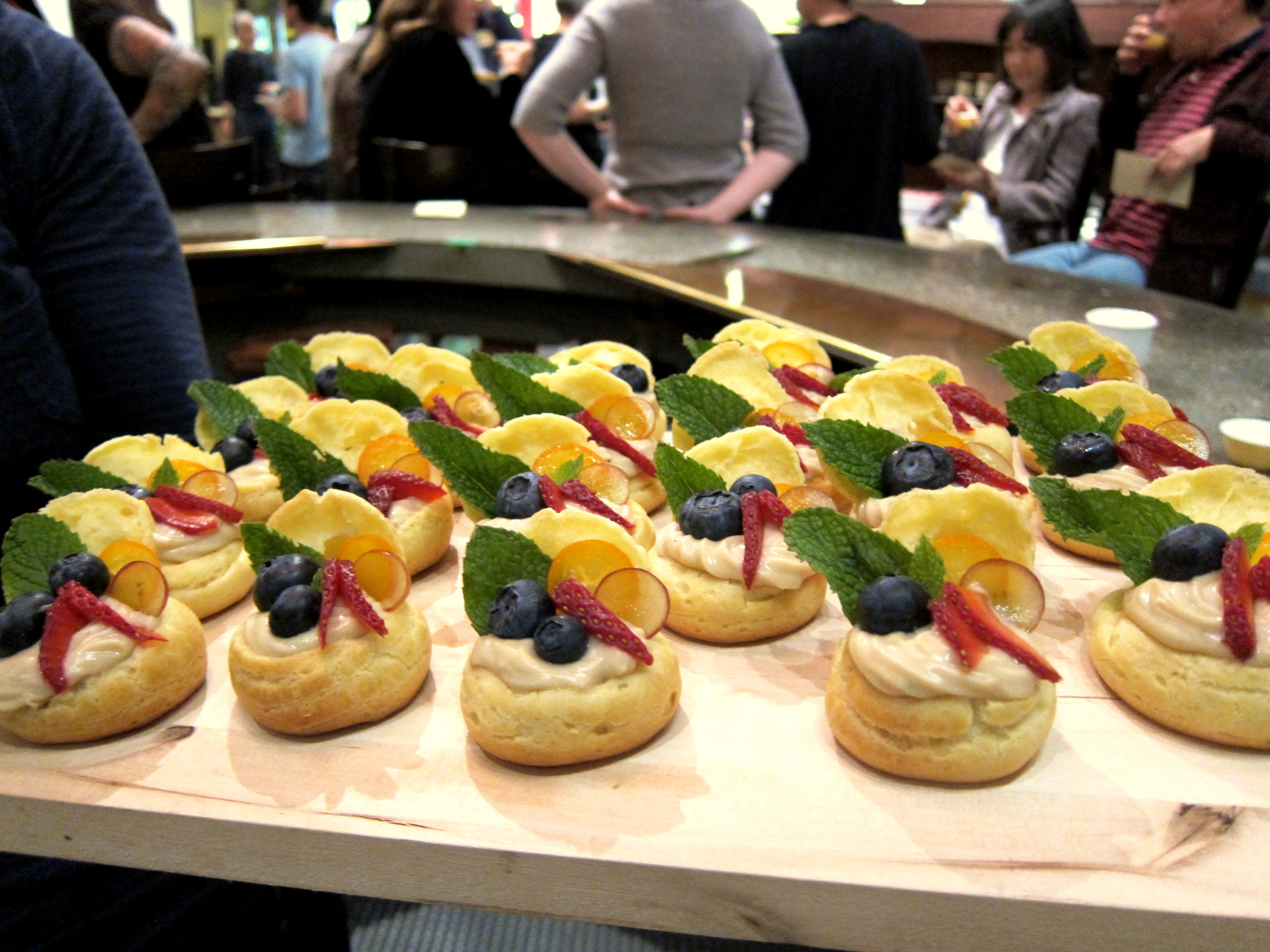
And eat an amazing cream puff. (Cream puffs >>>>>>>>>>>>>>> Cupcakes) Click to see my post on the Spring Harvest Tea Party at Teance tonight. We drank some eye-opening teas, literally and figuratively.

Chewy dried banana

May 16, 2012 By: Mai Truong Category: Fruits, One shot, Southern Vietnamese, sweet snacks and desserts, Vegan


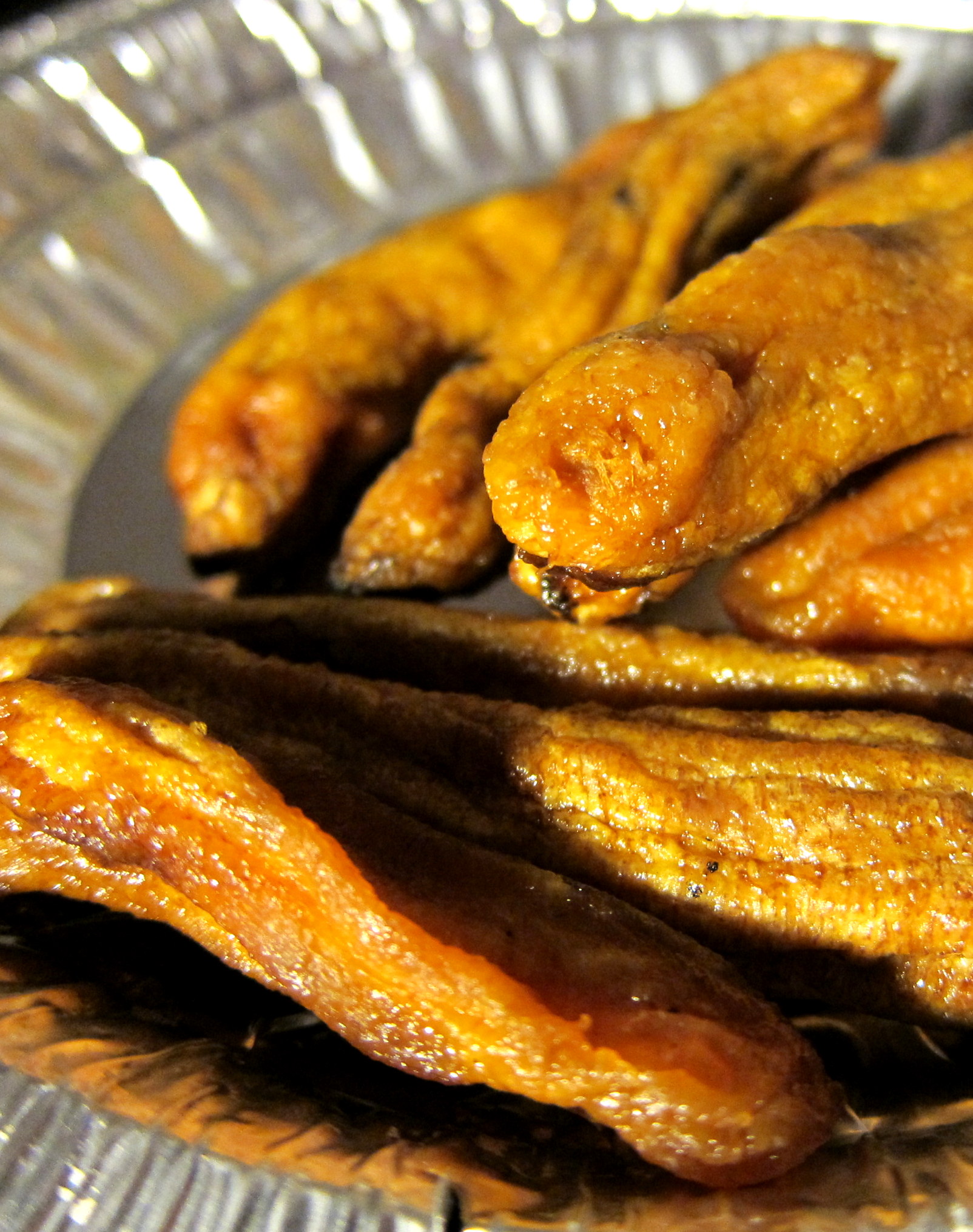
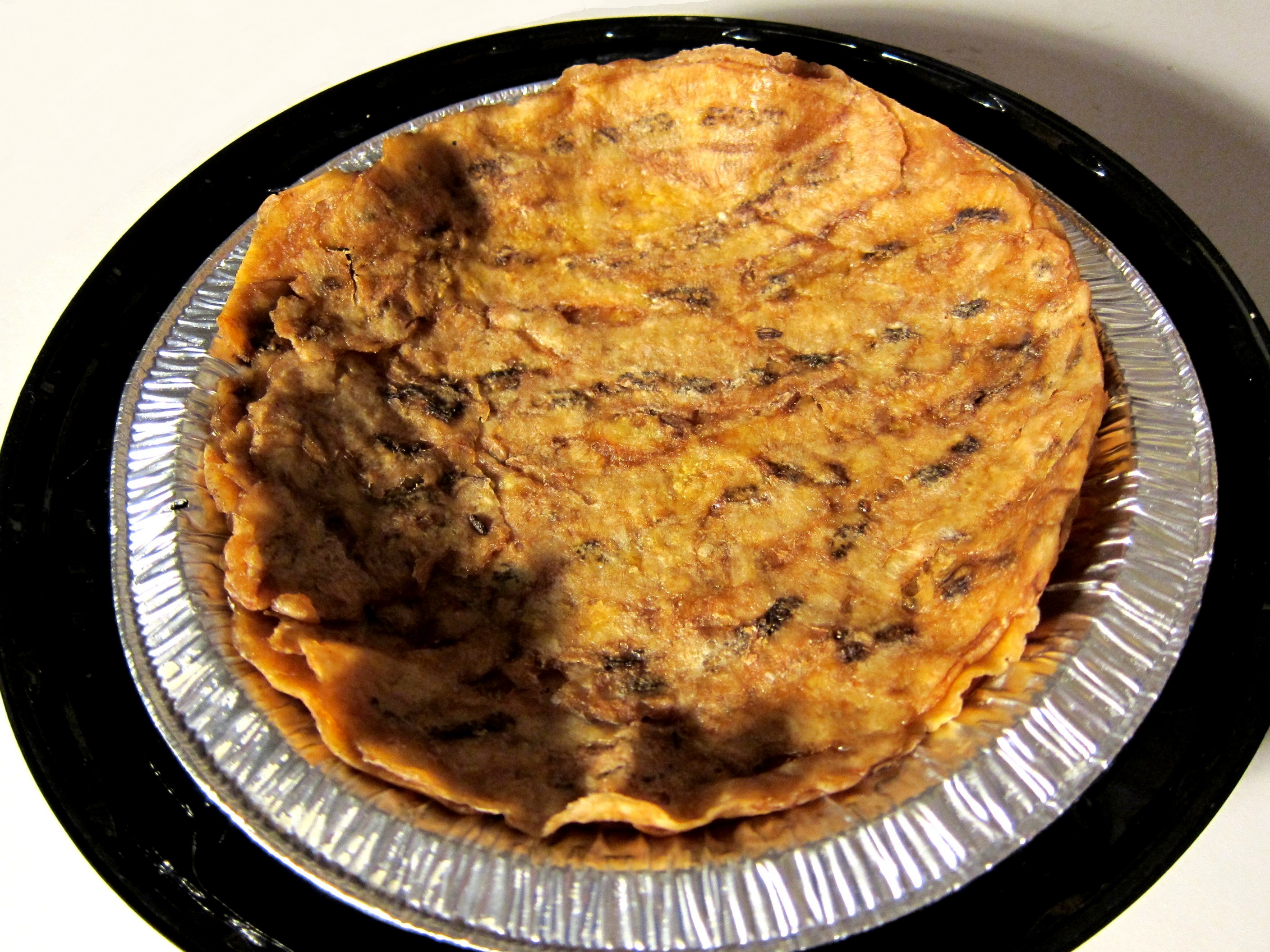
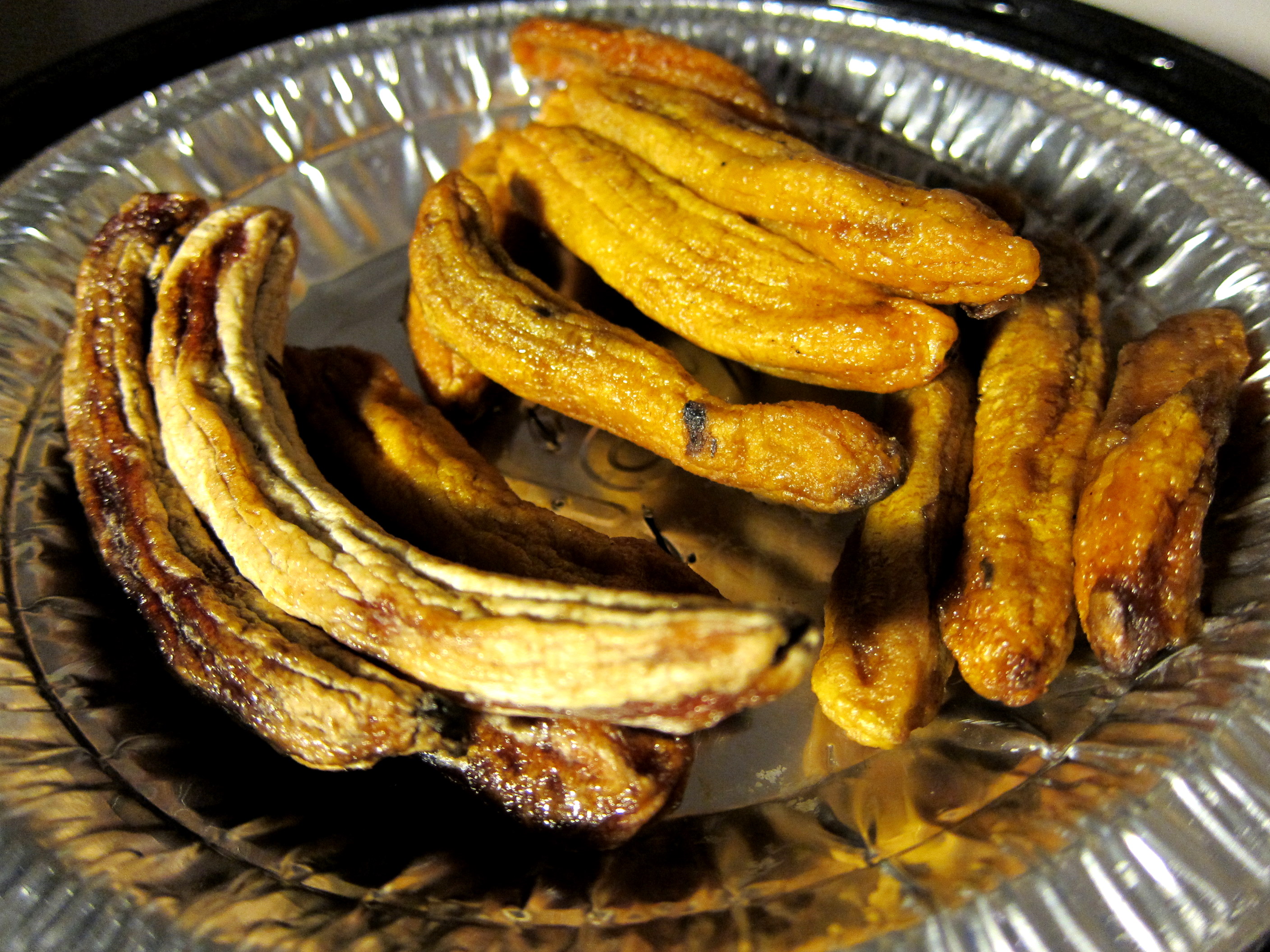
They aren’t banana chips. Those are crunchy, not very sweet, and make you thirsty. These are chewy and packed with honey sweetness. They’re as addicting as soft-baked chocolate chip cookies and as healthy as dried blueberries. At least I like to think so when I nibble twenty of them in one go.


Chewy dried bananas come in many shapes and sizes. Some were pressed into flat sheets (3-5 bananas to make a sheet), laid on bamboo panels and dried under the sun. Cà Mau is known for this kind of chuối khô, the main ingredient of the other 101 banana snack things in the South, e.g., banana candies.


Other bananas are dried whole, and they turn into finger-long wrinkly banana fingers. Eurasia Delight sells two kinds: the normal chuối khô – more caramel looking, shinier, sweeter, shorter and chewier, the “organic” chuối khô – whiter, dryer, longer, not as good.

Flat or whole, I see a pot load of potential for these dried bananas in both the savories and the desserts. [To be continued]

Tags: