Flavor Boulevard

We Asians like to talk food.
Subscribe

Archive for the ‘Vegan’

Sasa no Yuki – Ten courses of tofu
June 25, 2015 By: Mai Truong Category: Flavor Japan, Japanese, The more interesting, Travel, Vegan

Sasa-no-Yuki-tokyo-collage
sasanoyuki-menu-jun2014
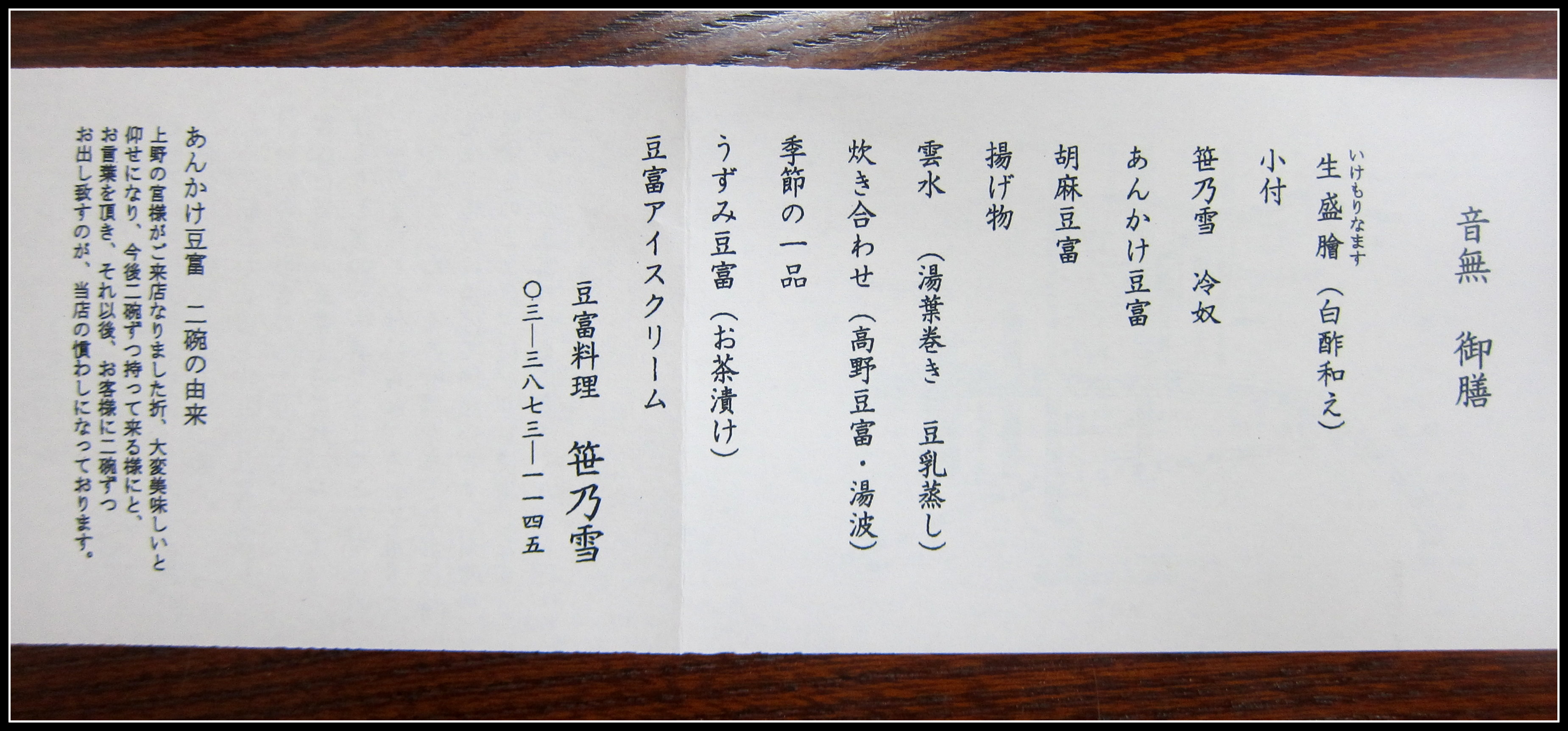
This is ten courses of tofu. Without jisho.org(*), I can’t read half of it, the hostess speaks only a minimal amount of English to me and mostly just smiles, my company simply tells me that this is the menu. There’s little necessity to go further anyway, they probably think, the joy is in eating the courses and not in knowing what it is, since I’m just a foreigner who most likely eats here only once.
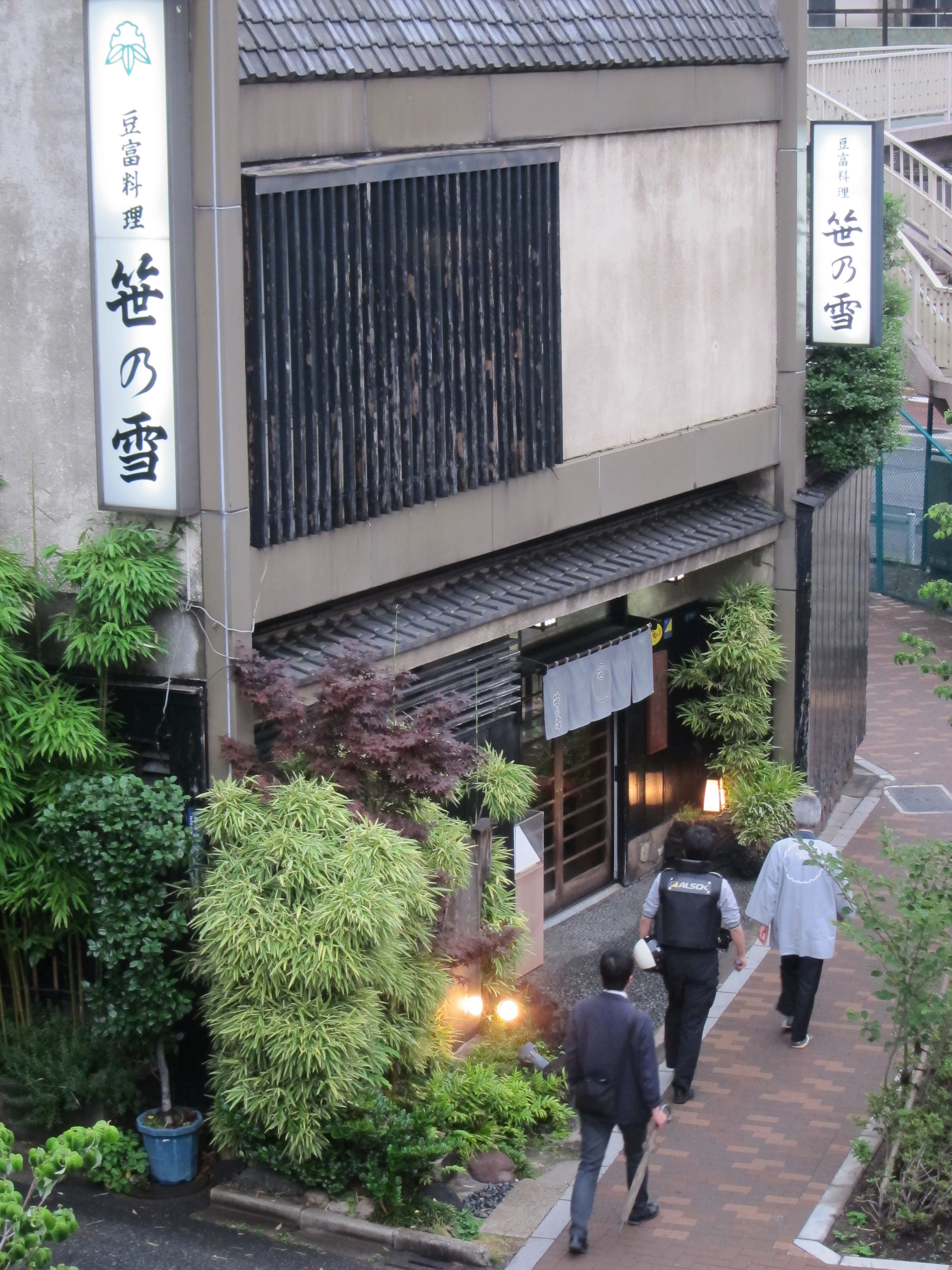
sasa-no-yuki-tokyo
And they’re right… This stylish restaurant, Sasa no Yuki, is not quite for a student’s everyday dining, the cheapest lunch course (Uguisugozen, 6 dishes) is 2200 yen (~$22). But I keep the slip of paper, and I will remember what everything is called!
sny-ikemorinamasu
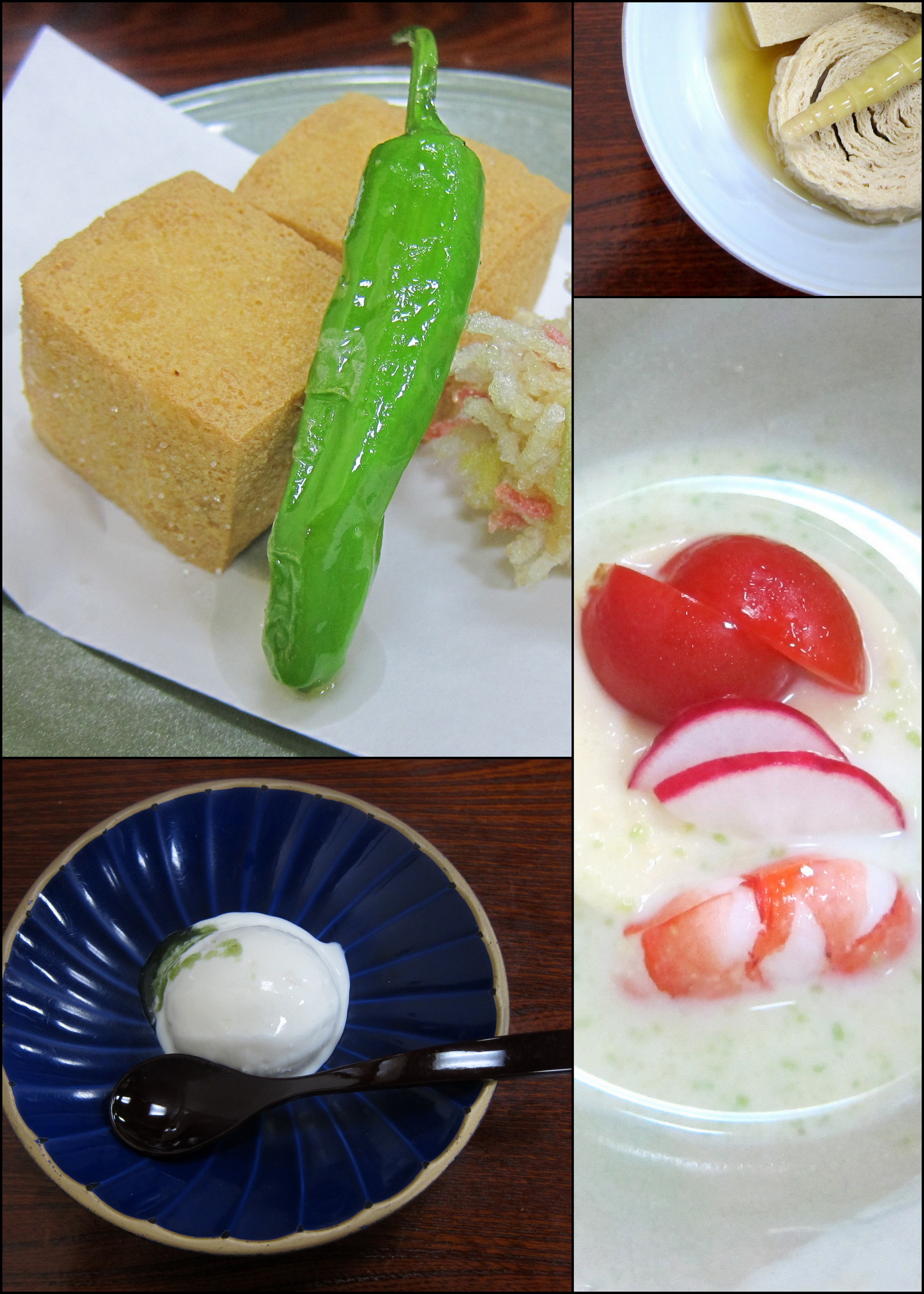
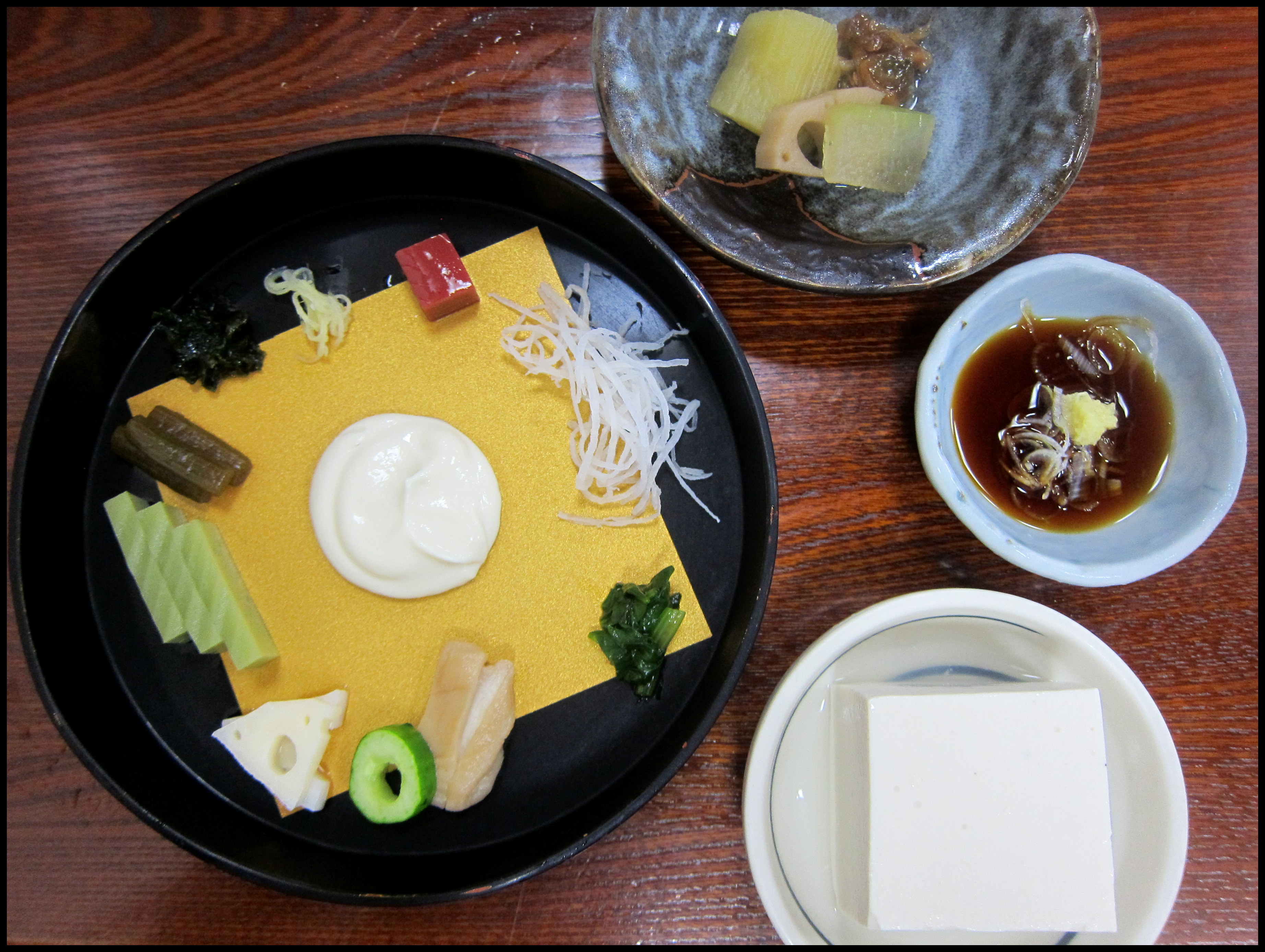
First 2 courses: ike mori namasu (生盛膾) – vegetable (and jelly) assortment with a tofu dipping sauce, and sasanoyuki (笹乃雪) – a block of cold white tofu. Don’t underestimate the tofu block, it’s uncooked, extremely pure and actually tastes like soybean.
sny-ankaketofu-gomatofu
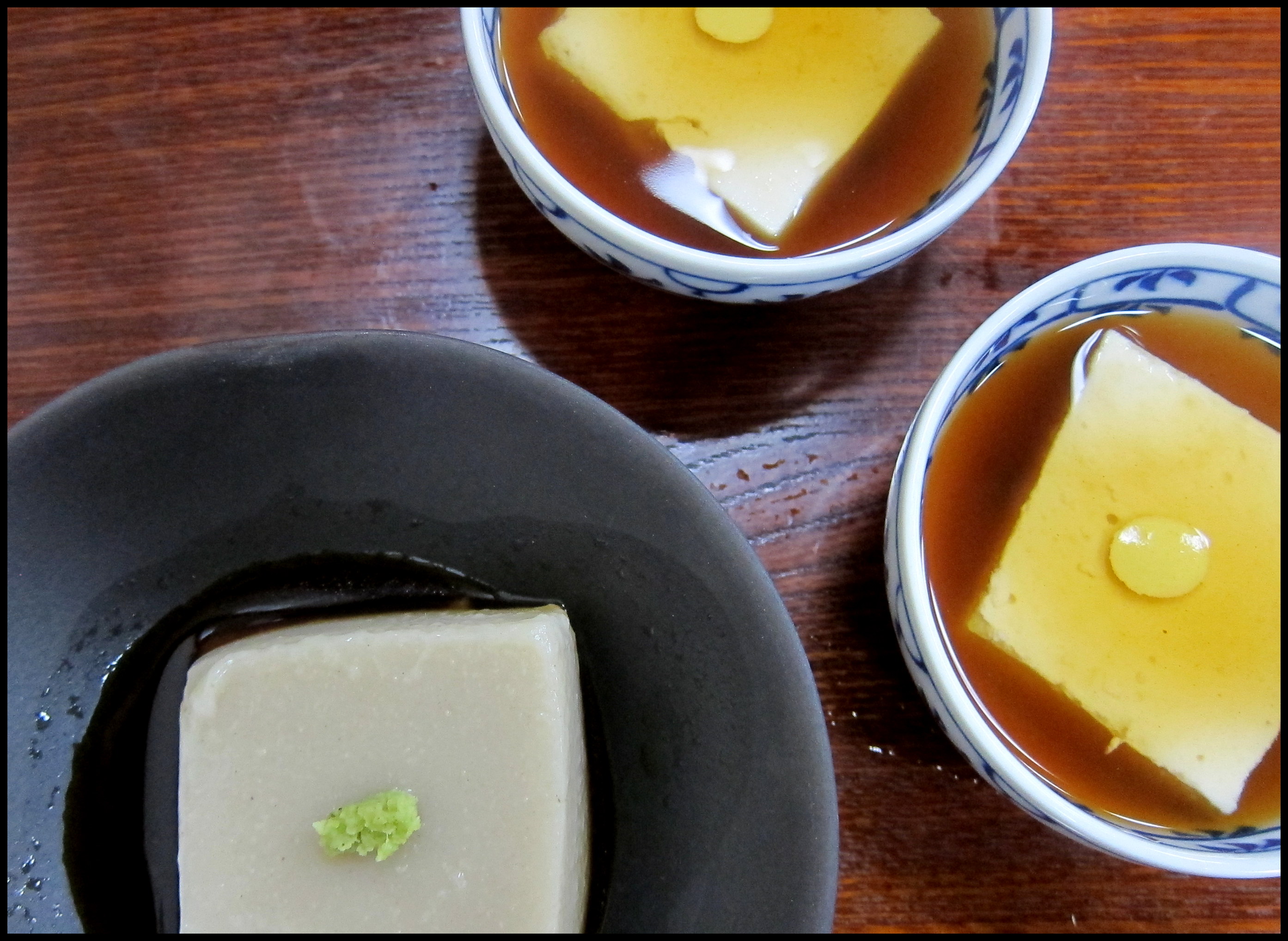
Third and fourth courses: ankake tofu (あんかけ豆富)* – tofu in a slightly sweetened soy-flavored sauce with a dash of mustard, and goma tofu (胡麻豆富) – tofu made with sesame and arrowroot.
Ankake tofu is said to be Sasa no Yuki’s signature dish, originated more than 300 years ago. Unfortunately, it is also my least favorite.
sny-agemono
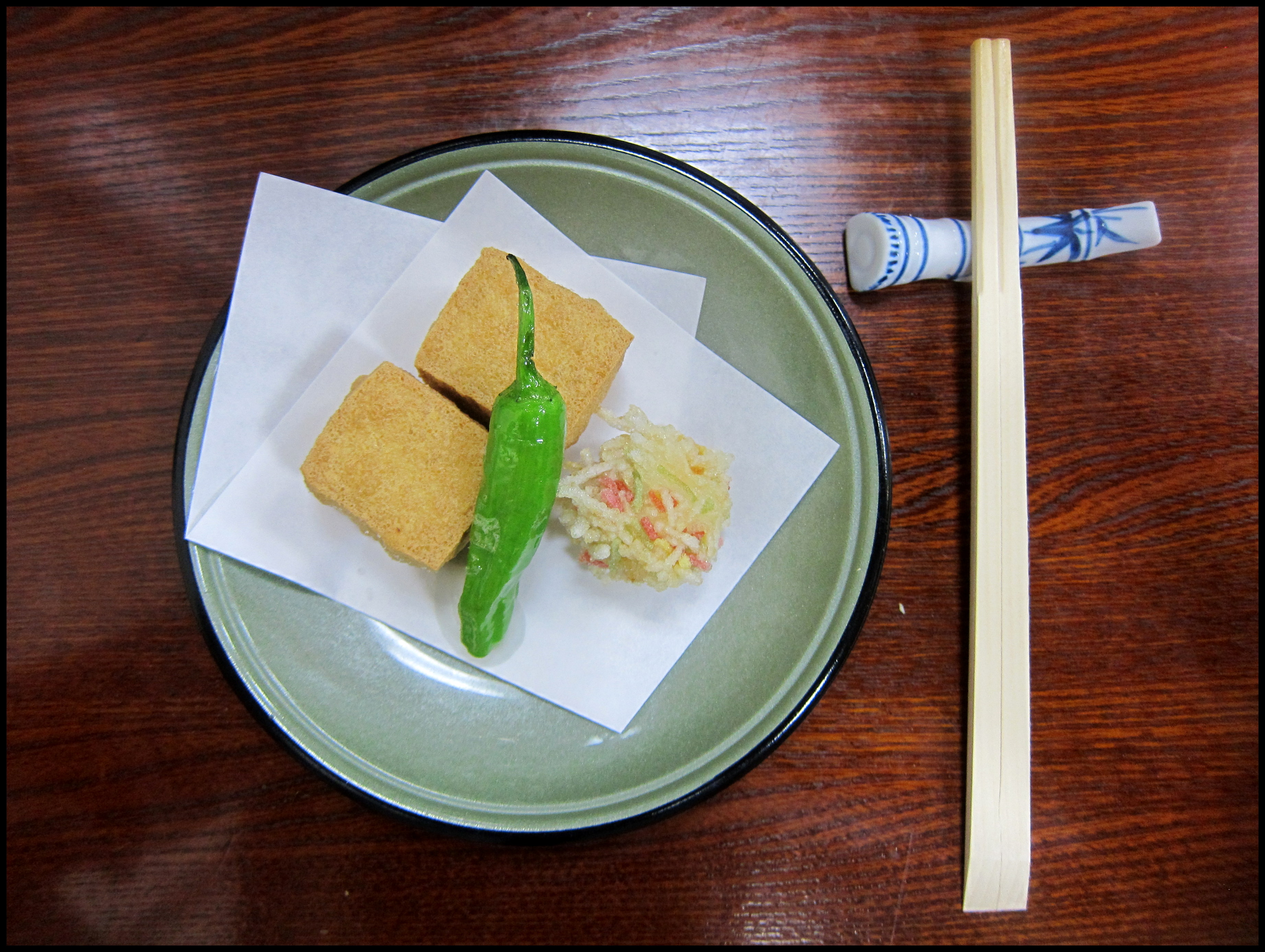
Fifth course: agemono (揚げ物), which means fried food in general. In this case, it’s deep-fried tofu and a ball of deep-fried rice cracker or something. A satisfying contrast after all the cold, homogenous blocks.
sny-takiawase-kouyatofu-yuba
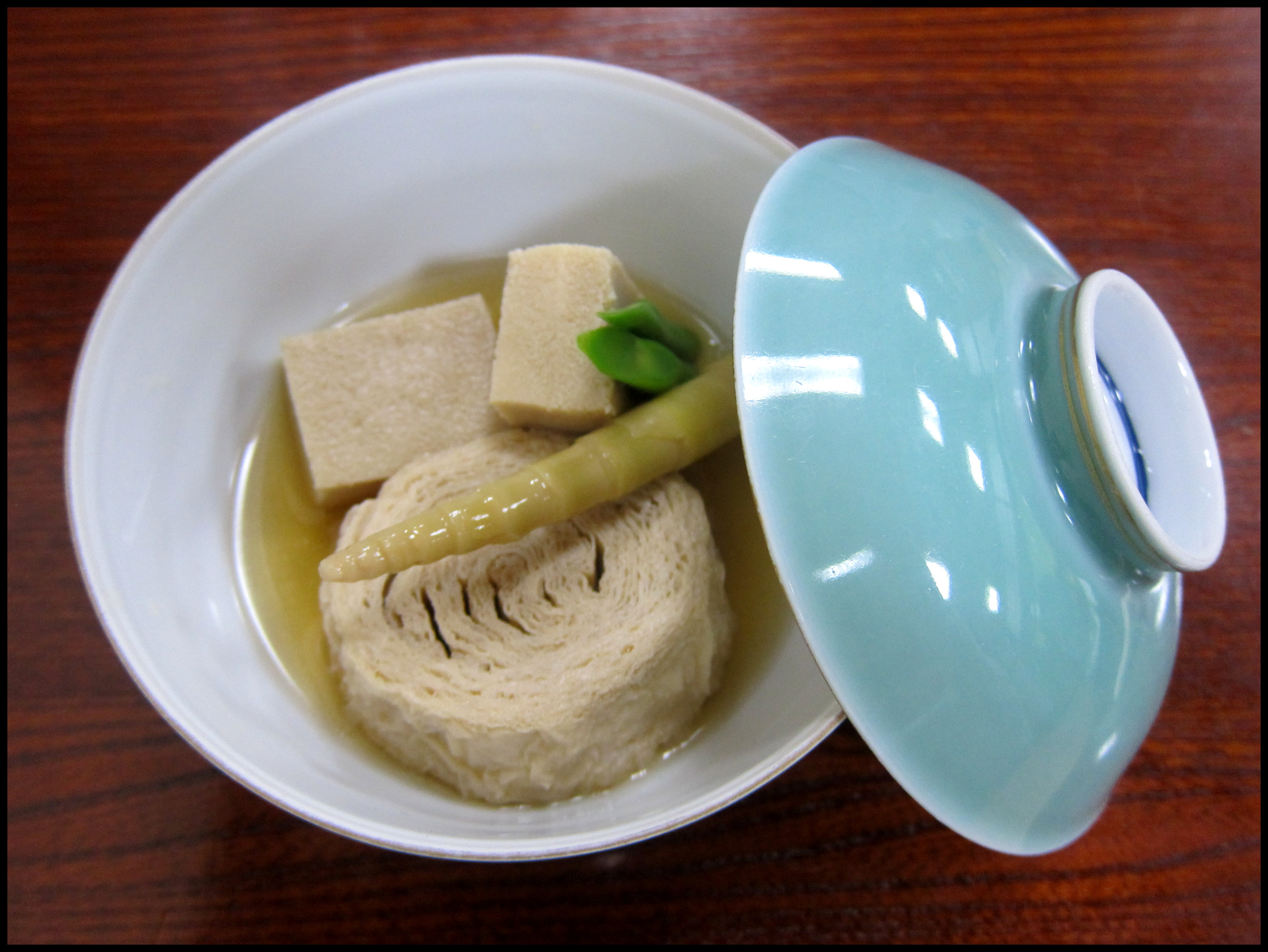
Sixth course: yuba (湯波) – tofu skin, and kouya tofu (高野豆富) – freeze-dried tofu. Both taste airy and a little sandy.
sny-unsui
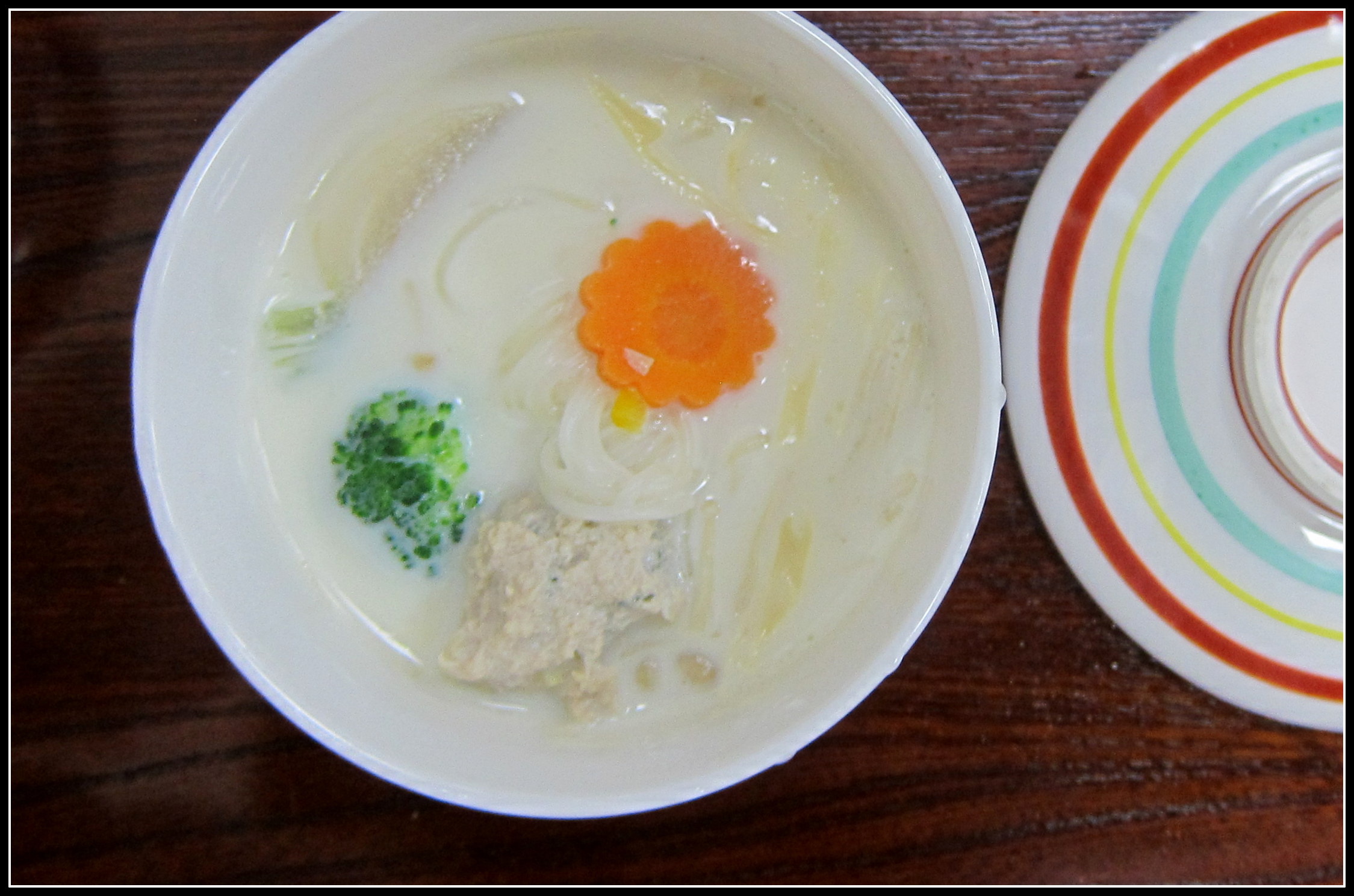
Seventh course: unsui (雲水)** – a noodle soup, but entangled in the noodle are yuba strips, and the broth is lightly seasoned soy milk. It’s served warm. Extremely satisfying, light but flavorful, full of varieties but harmonious. This soup costs 700 yen by itself. Highly recommended.
sny-kisetsu-no-ippin
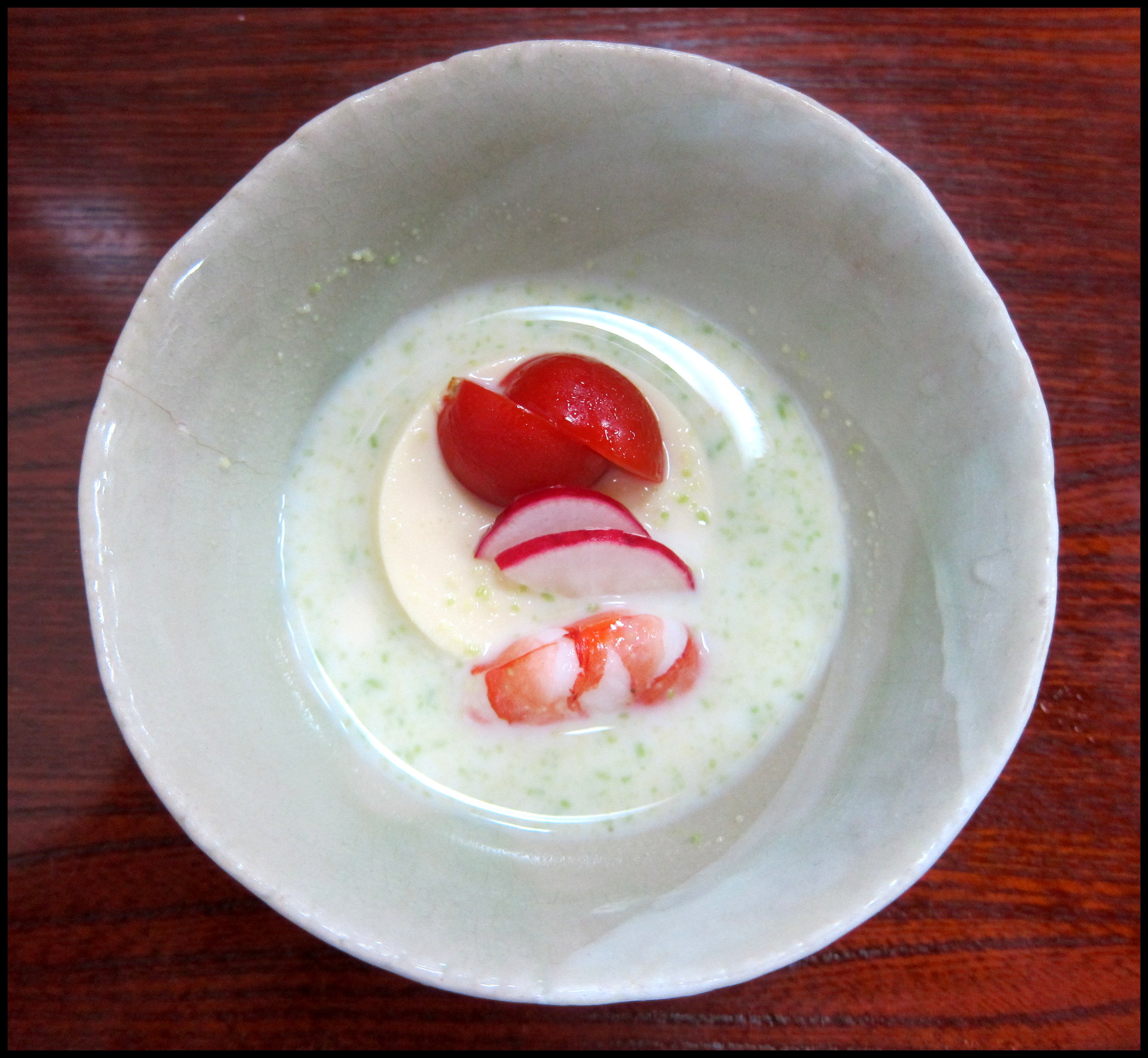
Eighth course: soft tofu in a cold broth, shrimp and veggie. On the menu, it’s known as “kisetsu no ippin” (季節の一品), which means “a product of the season”. Also one of my favorites.
sny-uzumitofu-ochazuke
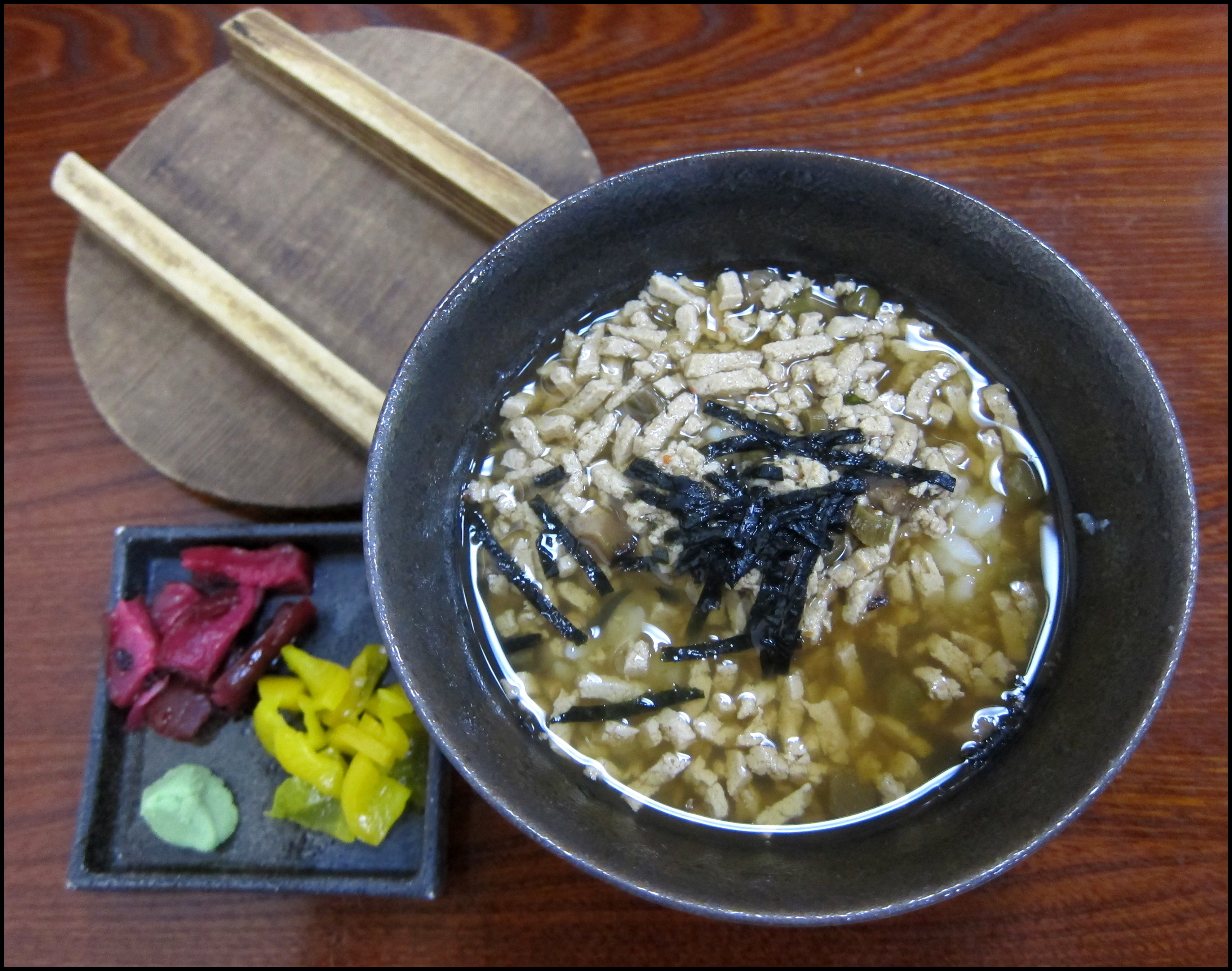
Ninth course: uzumi tofu (うずみ豆腐) or also called ochadzuke (お茶漬け) – rice with seasoned tofu in hot broth.
sny-tofu-icecream
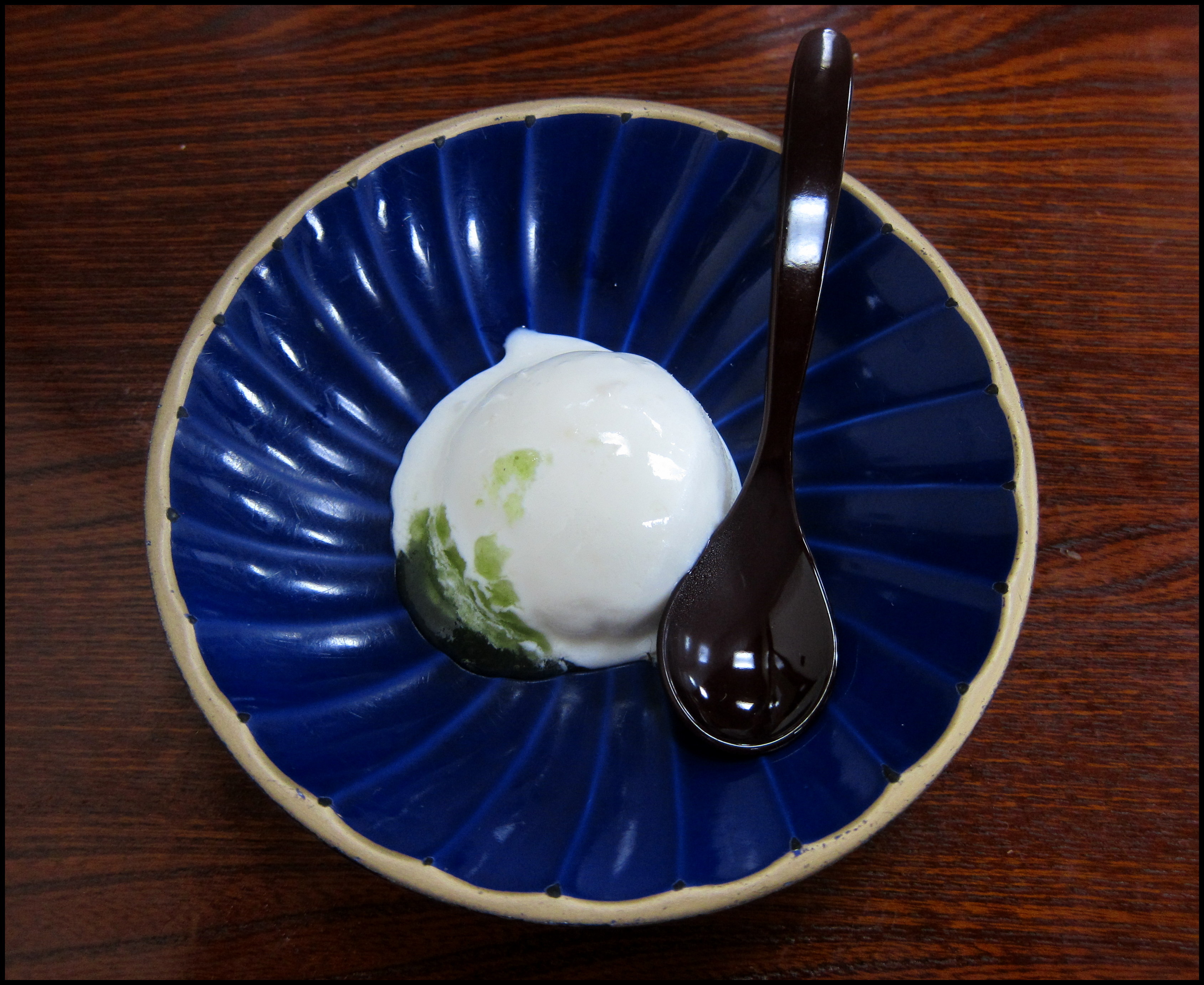
Dessert: tofu ice cream. Can it go wrong? Never.
sasa-no-yuki-interior
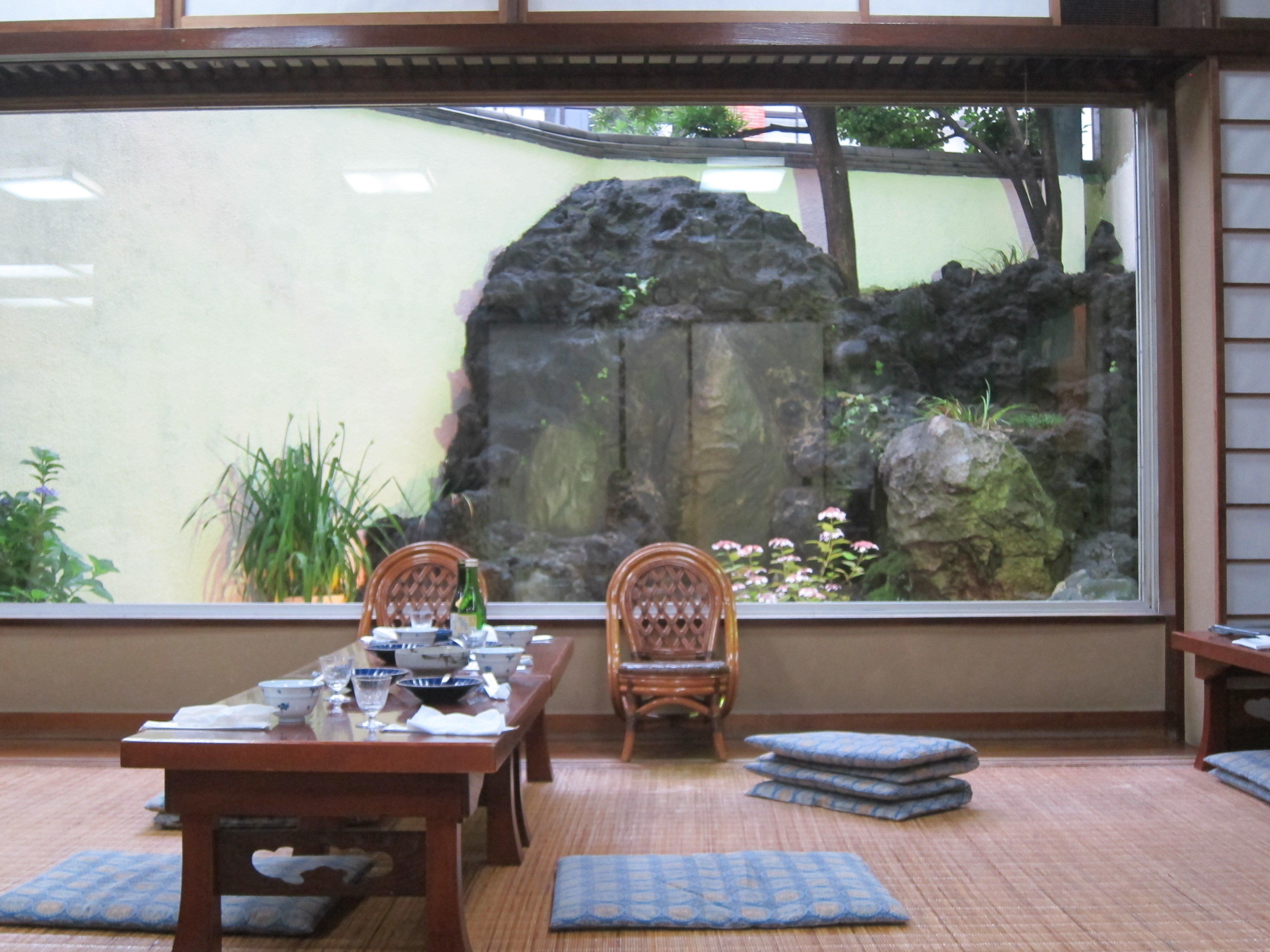
The 10-course meal, otonashigozen, costs 5000 yen. It is perfect for the hot, wet Tokyo summer. It makes you feel light and clean. It’s a lesson about the aesthetics of simple things. It also teaches you that this comforting life is ephemeral, because moments later, you will exit the restaurant into the pouring rain. Everything is fleeting, including your dry, happy self.

Address: Sasa no Yuki – somewhere near Uguisudani station, Tokyo.
This restaurant is featured everywhere on the internet, you wouldn’t have any problem finding it. Japan Times has an in-depth review about the restaurant (which started in the Edo period!):

“If you really want to know the taste of tofu, put a piece on freshly cooked rice and eat it. Then you can tell,” says Okumura [Sasa no Yuki’s president and tofu master], who usually enjoys tofu with no toppings while drinking wine or beer. “The taste of soy protein is strong enough to blend beautifully with a simple bowl of rice.”

Okumura also observed, it has become a rather luxurious experience these days — because there is so little tofu fit to be eaten this way.

Though so simple in principle — relying merely on high-quality soy beans, good water in which to soak and boil them, and nigari (bittern) to cause coagulation — tofu has now mostly fallen foul of profit-oriented mass production to the point that many people may never have tasted the authentic stuff, Okumura says. “Nowadays, we are one of only a few shops still making tofu in the traditional way.”

A Japanese friend of mine once lamented the exact same thing while eating tofu straight from its plastic-film-covered white plastic minitub, which he bought from a nearby market.

———————————————————————————————-
Guest post by C. from Katsushika.

Foodnote:
(*) Even with a dictionary, Sasa no Yuki’s menu is difficult to read. They use different writings for some of the words, such as 豆富 instead of 豆腐 for tofu, and 湯波 instead of 湯葉 for yuba.
(**) “Unsui” is cloud (un) and water (sui), which also means a wandering monk.

Tags: ,

one shot: Pluots in season

June 24, 2015 By: Mai Truong Category: California - The Bay Area, Fruits, One shot, Vegan

pluot-2015
Years of slouching at the computer and frozen pizzas have finally shown in my belly. The realization came when I bought a dress the other day without trying on, and if I grew just another quarter of an inch, the button would fly (… could it just be poor design? T__T). In any case, midnight pizza will have to go.

The problem: when you know you shouldn’t have something, you want it more. Every night, the hunger looms over me like a bright full moon….
The solution (maybe): pluots are in season again! YAAAAAAAAYYYY!!!!

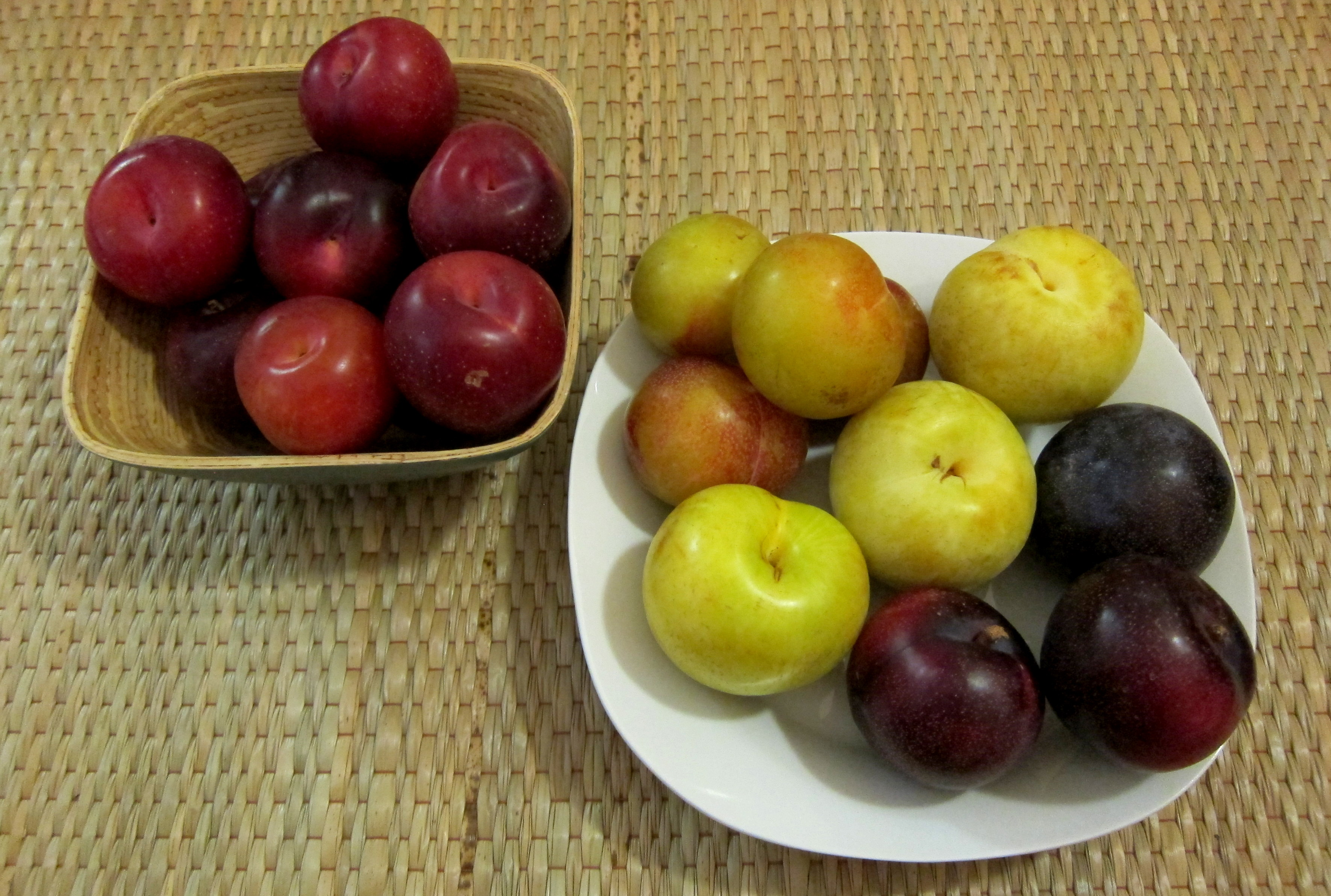
Pictured is 4 point something pounds of pluots. From darkest to lightest color: Flavor Royal, Eagle Egg, Tropical Plumana, and Golden Treat. (づ ̄ ³ ̄)づ

PLANT in Itaewon

September 02, 2014 By: Kristen Category: Comfort food, Flavor Abroad: Boulevard-ing in Seoul, Korean, Travel, Vegan

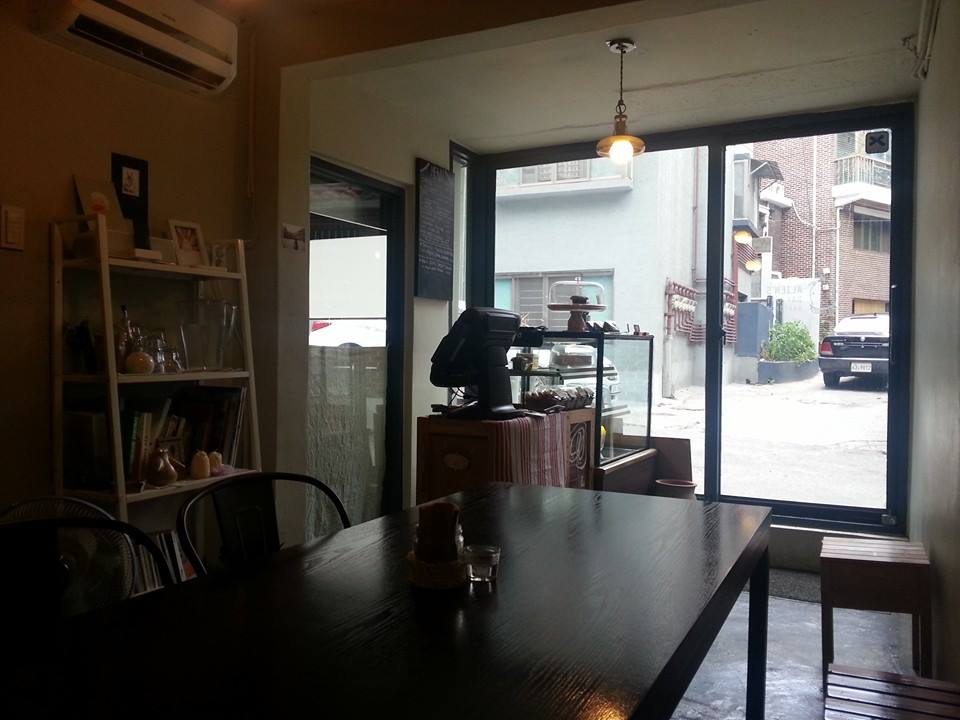
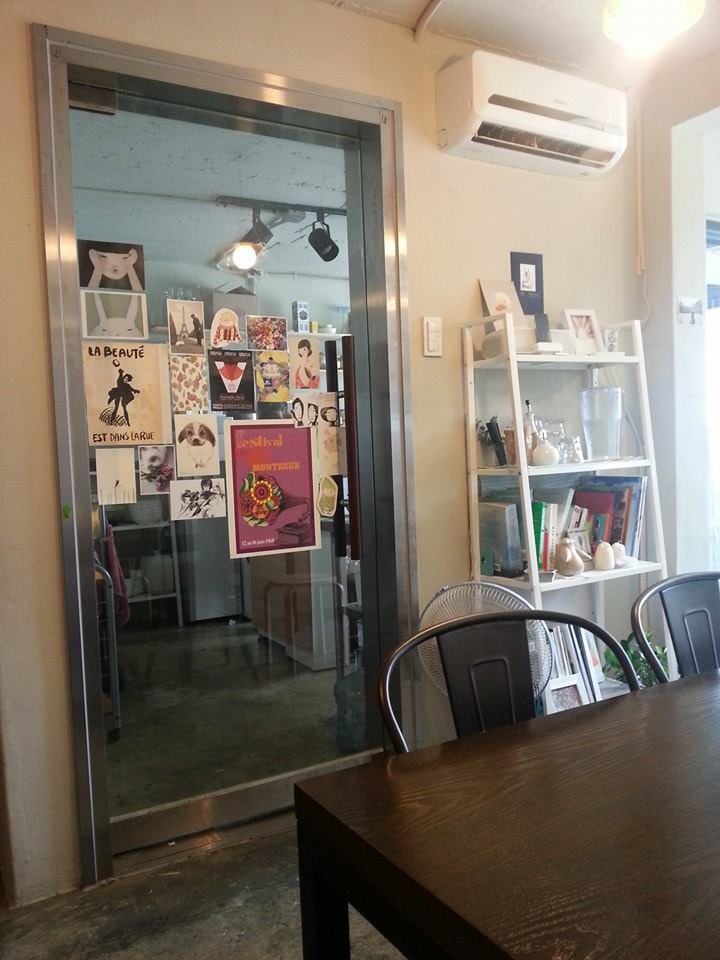
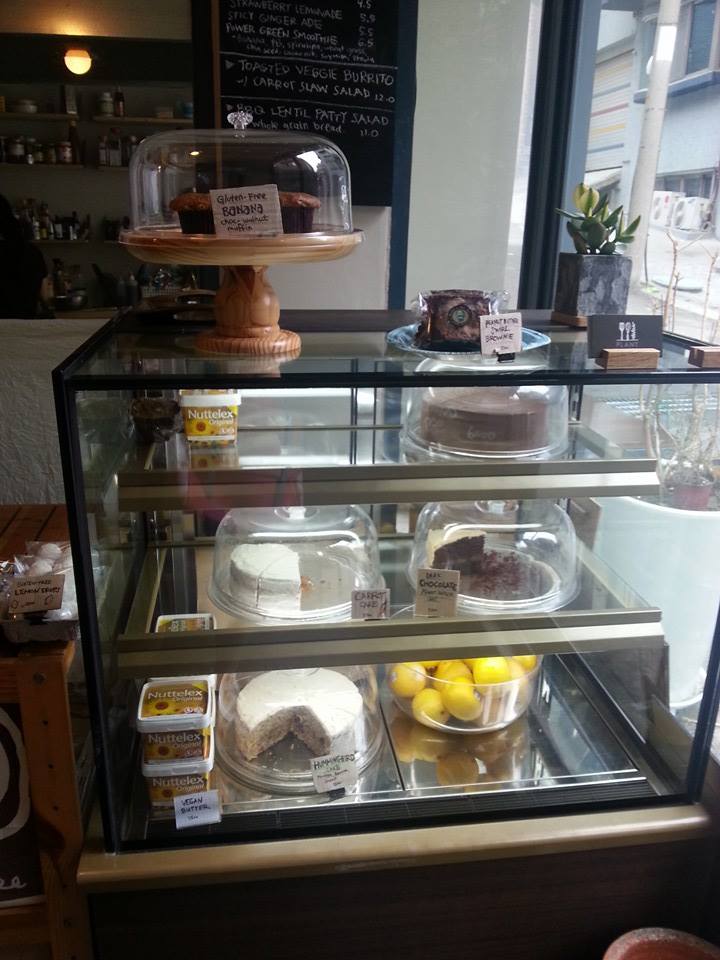
It has been a little over 2 weeks since I have arrived in Seoul, although it feels alternatively like I’ve only just arrived here and like I have been here for ages! I have to be honest in writing that I still feel homesick at times and that adjusting is a little more difficult when I realize that I’ll be staying in Seoul for a longer time period than just a vacation. I just began Korean language classes and may potentially audit a course with my faculty advisor at Ewha so I think the routine of being a student will help me to feel more settled. Of course, my partner and his family have been so supportive as well and I feel so lucky to have them because otherwise I would be even more of a nervous wreck than I already am! I supposed I should move on to the food though…this time, I am profiling a restaurant that I ate at over the summer with a friend. The restaurant’s name is PLANT and it is located in Itaewon, an area of Seoul that is particularly known for being foreigner-friendly. I knew of the restaurant through the owner’s food blog, Alien’s Day Out, which I had been following for a while! The restaurant is entirely vegan and while I normally am not drawn to vegan restaurants, the food porn on the blog has had me hooked. After a year of being tortured by those amazing photographs, I finally had the opportunity to go to the restaurant and try it. 10438992_10152441365190733_1806854670800582791_n The restaurant is super cute with comfortable cushions on the back wall and despite its small size, it is super cozy and just the embodiment of cute. 10303879_10152441365275733_5931183127998558142_n 10388648_10152441365565733_5180804222809846540_n 1525023_10152441365405733_5807953518272144772_n The chef and blogger’s specialty is desserts, but I found myself drawn more to the savory dishes, but that is solely because I am just now a cake or heavy dessert person. Which is not to say that these desserts weren’t amazing, because they definitely were! It’s just that I would always pick amazing savory foods over amazing desserts! In any case, the food here was simply amazing and definitely lived up to my expectations! We began with some drinks:

Soy milk tea (right) and strawberry lemonade (right)

Soy milk tea (right) and strawberry lemonade (right)

My lactose-intolerant body was very happy for the soy milk tea. The strawberry lemonade was perfect for a hot and humid Seoul summer. As for the food, this is where I was really blown away. Between my friend and I, we ordered as much of the menu as possible and seeing that there are two savory choices that rotate every day, we got both:

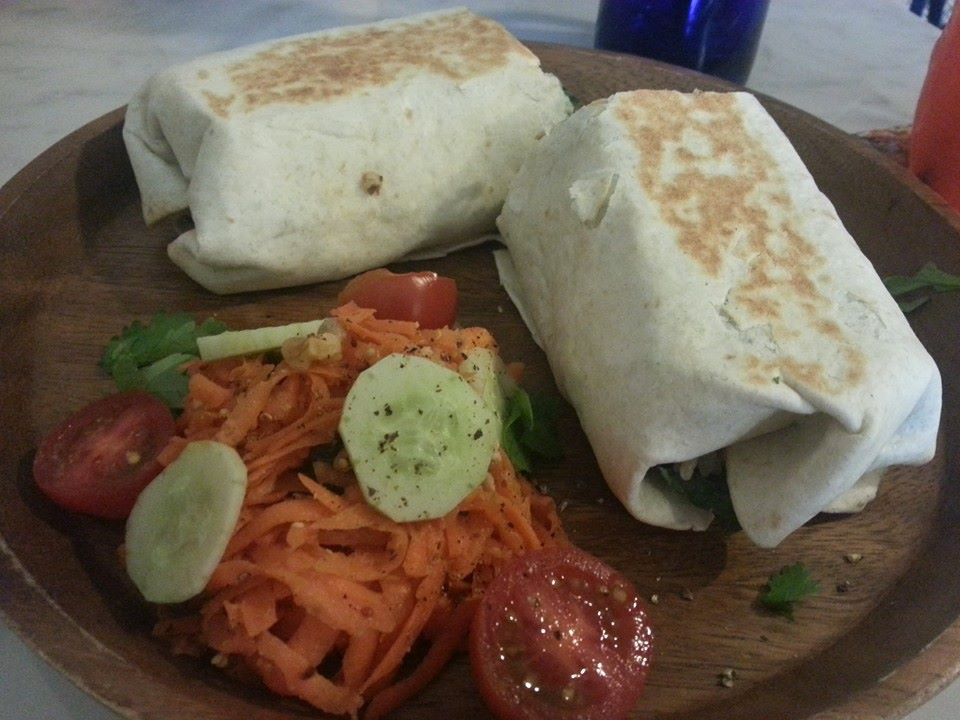
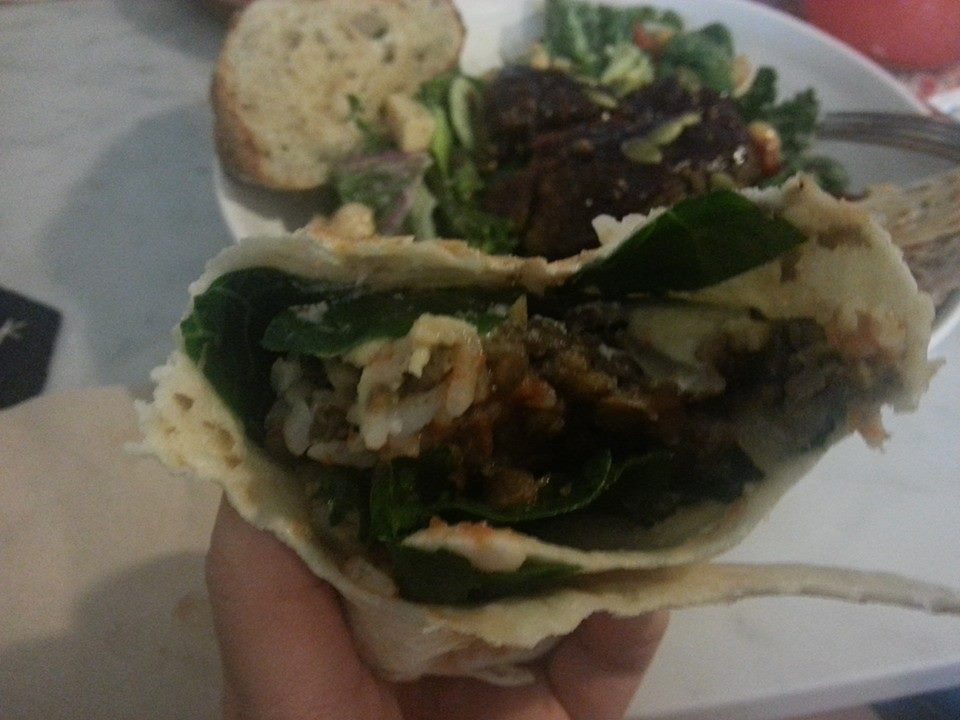
Vegan burrito

Vegan burrito

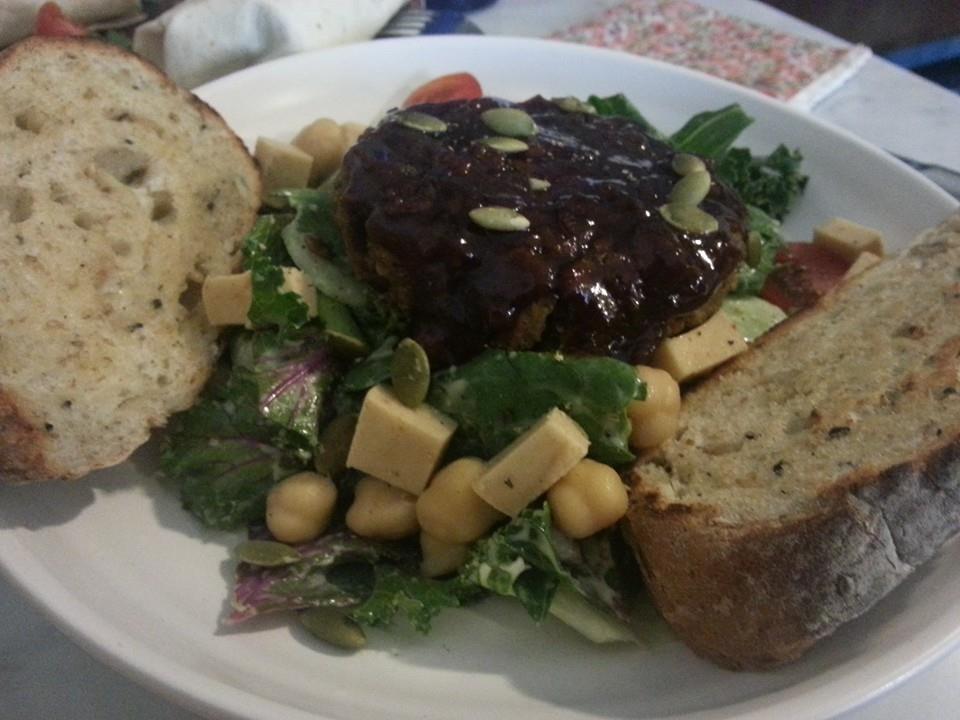
Lentil burger salad

Lentil burger salad

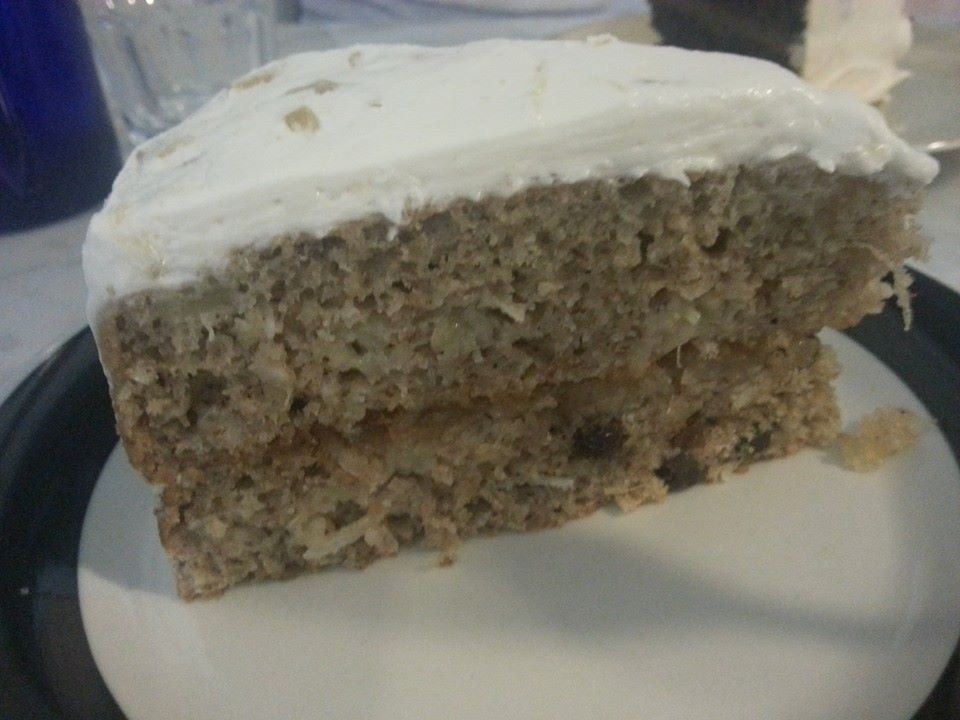
I have to admit that my mind is a little fuzzy and I cannot remember what was inside the burrito, but I did manage to take a photograph of the innards: 10363810_10152441366365733_817639050780328110_n I was blown away by both the burrito and the salad, but between the two, I think the salad stole the day for me. The lentil burger was smothered with a sauce that tasted very similar to a barbecue sauce and it was so rich that I felt as if I was eating a meat burger. I wanted more burgers despite being stuffed. The dressing was amazing as well: it tasted like a Caesar dressing and the little pieces of tofu(?) had the texture of foie gras terrine – smooth, rich, buttery, and just melts in the mouth. YUM. And on top of that, crusty bread. The non-vegan in me craved some butter and salt on top of the bread, but I was happy noshing on the bread on its own. Even though I was full after the feast, we could not skip out on desserts, especially since I have been tantalized by so many photographs of delicious desserts. We had two slices of cake: dark chocolate peanut butter cake and hummingbird cake, which consists of pineapple, banana, and coconut. YUM YUM YUM. I am not a chocolate cake person but I enjoyed this cake, especially that peanut butter frosting. If I could, I would eat an entire jar of it. As for the hummingbird cake, the fruitiness fit my style more and I love the dried bits of fruit inside.

Dark chocolate peanut butter cake

Dark chocolate peanut butter cake

Hummingbird cake

Hummingbird cake

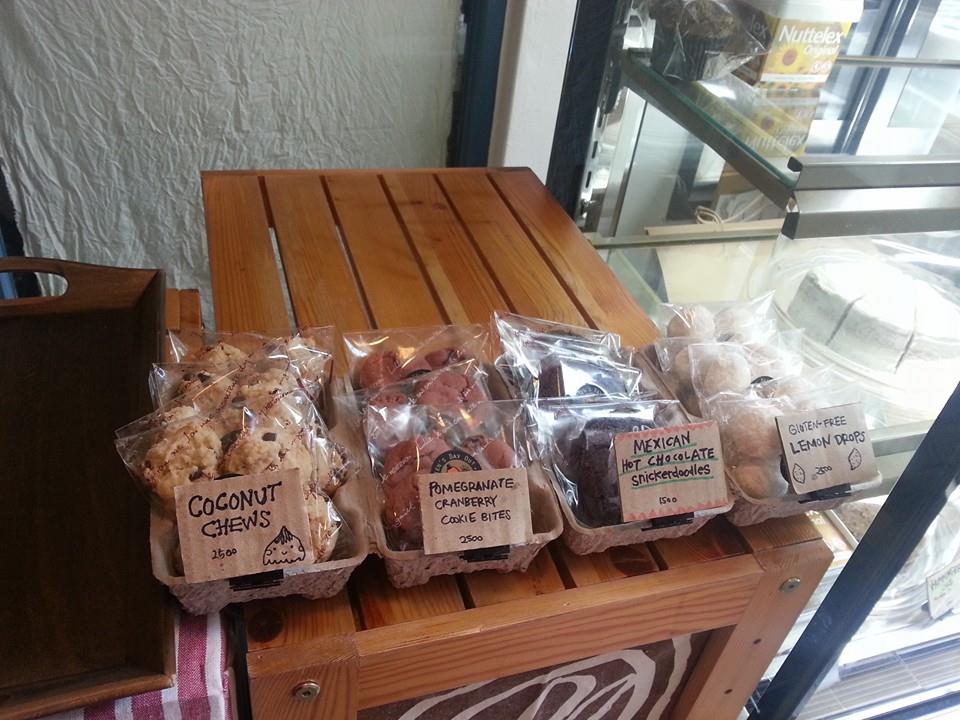
The food was so good that we got some little snacks to take out! We ended up noshing on them a few hours later while lounging on the top of Namsan Tower! 10441366_10152441365465733_2432992531667197389_n My favorite were the Mexican Hot Chocolate Snickerdoodles – it ended up being the most popular among me, my friend, and my partner. The coconut chews were a close second and they tasted like coconut macaroons. The pomegranate cranberry cookie bites received mix reviews, but I liked the tartness of the little cookie. The gluten free lemon drops were not liked by my friend and partner – the taste was described as “weird,” but I still enjoyed them, although I would agree that the Mexican Hot Chocolate Snickerdoodles stole the show. They were perfect though to sustain us after our trek to Namsan through the rain.

High-fiving the Seoul mascot!

High-fiving the Seoul mascot!

Rainy day view

Rainy day view

SO much rain

SO much rain

Judy and Loving Live Treats

December 16, 2013 By: Mai Truong Category: American, California - The Bay Area, Food product, sweet snacks and desserts, Vegan

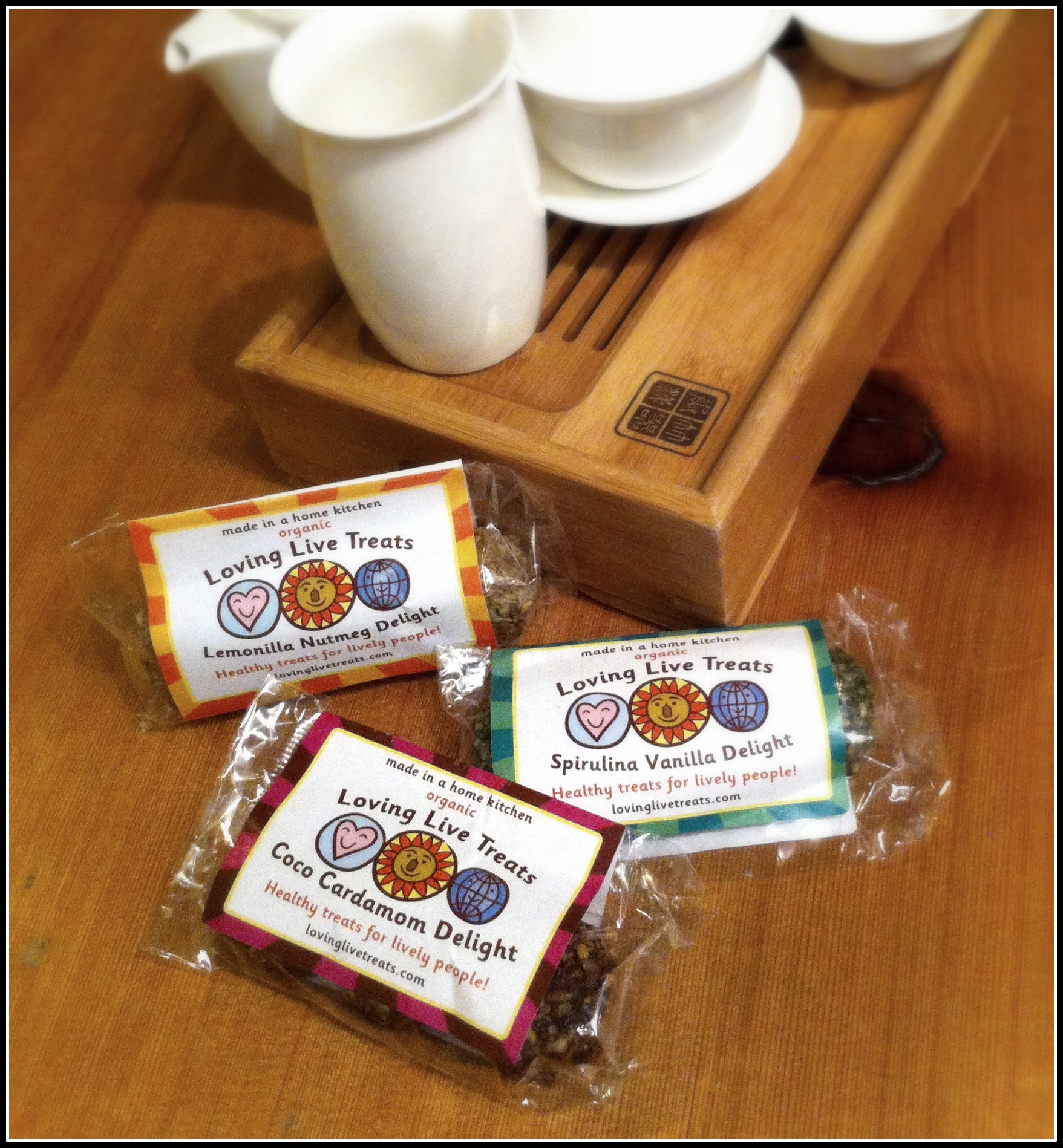
lovinglivetreats-3flavors
I met Judy in early November. I happened to sit down next to her at Teance, when she was just about to leave and I had just arrived. For some reason, Judy offered me a small, homemade cookie to try. The cookie was interesting, and so is Judy. We exchanged business cards.

With this post, I’m going to risk sounding like a sarong-wearing 62-year-old white-male yoga preacher [there are many of them in Berkeley, sometimes they start talking to you on the street and make everybody uncomfortable], because you know what, some philosophies are beautiful and there’s nothing wrong with appreciating them. With that said, if your patience runs low on the subjects of philosophy, spiritual growth or simply good feelings in general, skip ahead to Part II.

Part I – The Story behind the Treats

After September 11, 2001, Judy Fleischman moved from Oregon to New York, began training as a healthcare chaplain.

“I was on the go a lot,” said Judy. “I needed to bring food with me so that I wouldn’t go broke. In Oregon I got introduced to raw foods, so I started experimenting with making raw healthy snacks to keep me going… Snacks that weren’t just a sugar crash.”

After making batches of these raw, vegan treats with sprouted seeds for herself, she began sharing them with family and friends and began to feel what she called “the gift of giving”.

“Now when I think of the word ‘healthy’, it’s not just the food but the relationship with the people and the ingredients,” Judy said.

Judy’s inspiration stemmed from wagashi – petite, graceful Japanese sweets for tea ceremony that appeal to all five senses, and the philosophy of “mindful eating” in zen training, which she explains as knowing “the difference between a craving and real nourishment”.(*)

In the midst of working as a healthcare chaplain and interacting with stressed people, Judy felt that the treats she made were “wholesome”, and that she “had the urge to share and give to others”, so she started making single packagings to give them out to people at farmers’ markets. As part of the Sensing Wonder group, she was also giving out cups of iced jasmine tea at the Imagine Circle. The more she gave, the more fulfilling she felt.

Loving Live Treats “sprouted from this personal transformation and interaction with the community” to become what Judy hopes to be a mean to sustain her livelihood. Economically, we all need to make a living; spiritually, Judy appreciates and finds it enriching to be able to share what she makes with others – a way of life that she wants to pursue and believes that many others do. That’s why the cookies are wrapped in packages of three – one can surprisingly satiate your hunger (I was amazed myself, considering each is only 0.6 oz [about 17 grams]!), and there are two more to share with friends.

Or share with strangers. Over a month ago, Judy randomly shared it with me, a complete stranger. Somehow, we create new friendships that way, however temporary. Loving Live Treats from start to finish revolves around friendship, whether it was momentarily like the interaction with people at the Imagine Circle, or long-term like with Rodney Alan Greenblat, the artist who designed the label. Perhaps partly because it revolves around friendship, that Judy is happy when she makes them. That happiness shows in the treats, from the playful, childlike label inwards.

lovinglivetreats-packaged
Part II – The Treats

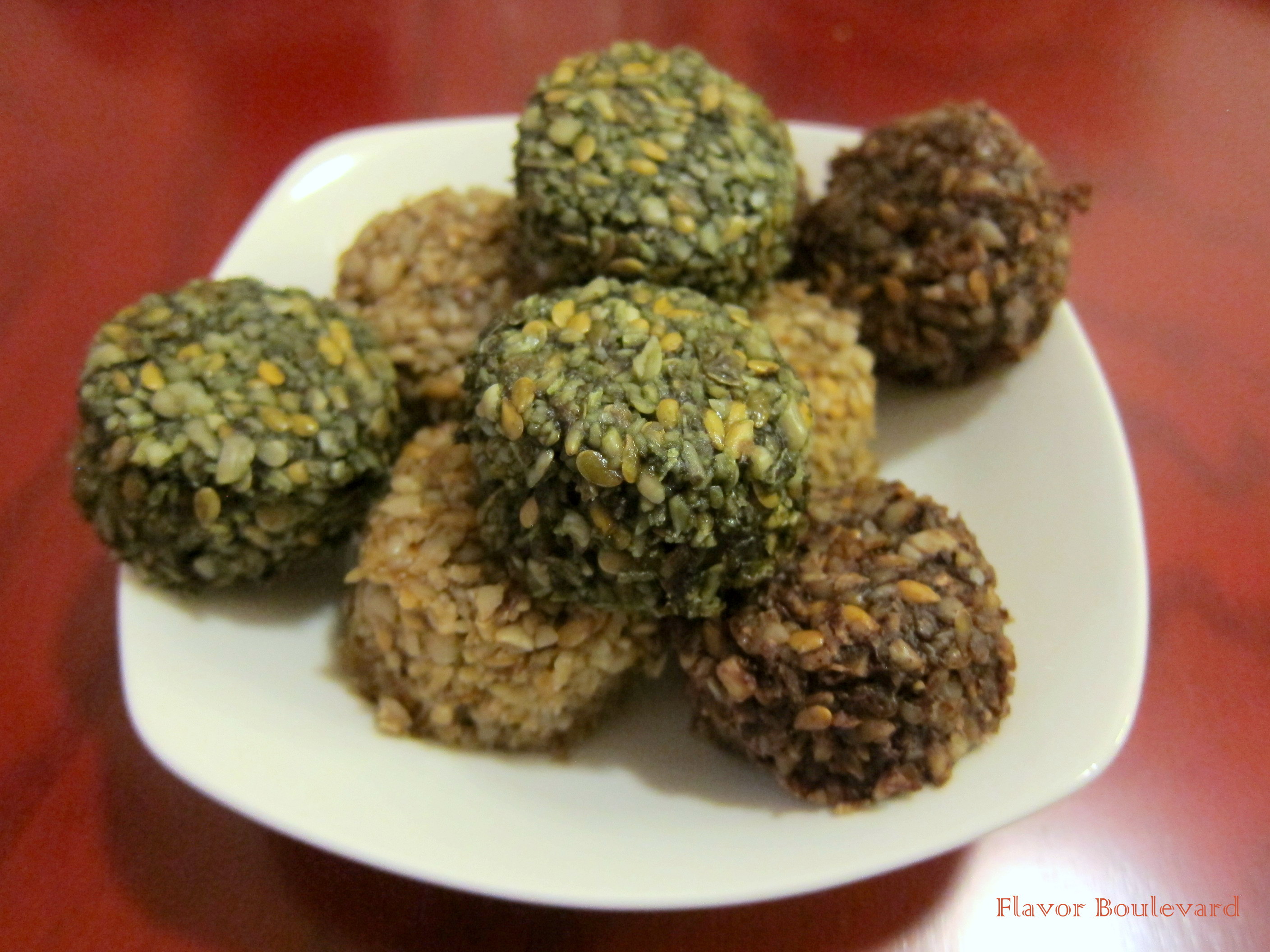
Sprouted sunflower and golden flax seeds, coconut, agave nectar, Himalayan salt, low-temperature dehydrated and compressed into circular cubes (if you know a better word for this shape – not “cylinder”!, please tell me ^_^). There are three different flavors: lemon-vanilla-nutmeg, spirulina-vanilla, and cacao-cardamom. My personal favorites are the Coco Cardamom and the Spirulina (sorry, Nutmeg!), but they’re all precious actually, and the differences are about as pronounced as those between Chinese oolongs and Taiwanese oolongs. That’s the point – nothing too sweet, nothing too strong, just little seeds cozily nudged together. Satisfying on their own and a delicate but reassuring accompaniment to tea.

They’re the opposite of a chocolate chip cookie, which gives you instant satisfaction and an even bigger craving five seconds later. Recently, I watched this Japanese movie “I Wish” by director Hirokazu Koreeda (the Japanese title is Kiseki (奇跡)**), there’s a small detail that I can’t forget: the boys’ grandfather made karukan (a sweet rice-flour sponge cake), at first the older brother thought it wasn’t sweet enough, but Grandfather wouldn’t change his way. Near the end of the movie, the older brother gave a piece to his younger brother. The younger boy also found it “mellow”, i.e., a little bland. Afterwards, when the grandfather asked the older brother what his younger brother thought of the karukan, he smiled and replied “he’s still young”.

When I have an ice cream craving, and I have it ALL the time, admittedly I don’t always reach for an LLT Lemonilla Nutmeg. Like the younger brother in Kiseki, I’m still wet behind the ears when it comes to appreciating the finer things. But when I do reach for an LLT, I get surprised every time – it gratifies in the most pleasant way possible.

–/–

Loving Live Treats by Judy Fleischman: can be ordered for home delivery from GratefulGreens.com, found at the monthly Bay Area Homemade Market, and soon to be served at Teance and Asha Tea House (Berkeley).

–/–

FOODNOTES:

(*) According to the philosophy of mindful eating, there are six types of hunger – eye hunger, mouth hunger, nose hunger, stomach hunger, cellular hunger mind hunger and heart hunger. My guess is to satisfy a craving means you satisfy only one type of hunger, whereas real nourishment satisfies all six.

(**) For now, you can watch Kiseki here. You know how after watching some movie, someone would ask “did you like it?”, and all you can honestly say is “hmmm…”? Well, Kiseki is that kind of movie. It’s not loaded with laughters or gunshots or flying dragons or tear-jerking moments, but let it sit for a few days and the sweetness slowly steeps throughout your veins. Like the grandfather’s mellow karukan.

Monkey diary – three days as a fruitarian

June 19, 2013 By: Mai Truong Category: Fruits, Opinions, Vegan

Plagued by the reality of industrial farming described by Michael Pollan, I’ve decided to try a fruit-and-seed diet, which would consist of only things that can be harvested without killing the plants. At first I thought it would be pretty restrictive, but a lot of vegetables are fruits: tomato, cucumber, bittermelon, bell pepper, chayote, green beans, eggplants, etc. Cereal is the hard part. I wasn’t sure if I should include corn, rice, wheat and other grains in my experiment because technically they can be harvested without killing the plants, but in reality the plants are killed after the harvest. The same goes for soy beans. Then I figure the industrial farms also kill tomato and cucumber plants after harvesting, and my experiment is geared toward whether I can survive on only fruits and seeds, so restricting to heirloom produce is “beyond the scope of our study”.

Bought $29.72’s worth of avocados, navel oranges, blueberries, plums, cultured coconut milk (i.e., coconut yogurt), and bananas from Berkeley Bowl.

– First day –
Brunch: one plum, one avocado smoothie. Snacks: blueberries. Work from home. At about 4 pm I was doing ok, then I saw UmamiMart‘s picture of crispy golden fried gyoza on Facebook and my stomach started feeling a little empty, so I had to snack on a banana and some toasted coconut chips. Dinner: white rice with muối mè (salt-sugar-sesame mix), one orange and one cup of coconut milk yogurt. I was excited to open the coconut milk yogurt but quickly regretted buying it: the sour taste mixed with the familiar coconut smell, which has been hardwired in my brain as sweet and rich, made me instinctively think that this coconut milk has gone bad. It was only an instinctive reaction, I told myself, and managed to finish the whole cup. The chocolate flavor didn’t help very much. There are still 3 cups in the fridge, I wasn’t sure if that’s enough to get me used to the taste.
Later that evening, I fixed a bowl of rice cereal with soy milk.

– Second day –
Brunch: blueberries and one avocado smoothie. Work from home. I was so busy I didn’t even feel hungry until 7:30 pm. Dinner: vegan instant ramen, rice with muối mè, one fresh cucumber and one banana. I didn’t have any room left for dessert, but around 11 pm I ate an orange and a plum. I began thinking that this fruit only diet is pretty efficient time-wise.

– Third day –
Breakfast: one banana. Didn’t have time to pack lunch because I had to rush to the bus stop, only to find the bus arrive 20 minutes later (the bus is supposed to arrive every 10 minutes). At school, I was thinking of the alternatives around campus but couldn’t come up with anything except Jamba Juice and the avocado smoothie at UCafe. Just my luck, UCafe was closed that day, and the only thing I ever like from Jamba Juice is their fresh-squeezed orange juice, which certainly won’t fill me up for lunch. So I caved. I bought 2 chocolate donuts from King Pin Donut. After I ate one of them, I felt dizzy.
Dinner: a can of corn (I couldn’t even put butter into it), two bananas, one avocado smoothie, one plum. I felt full but it’s the weird kind of full where I felt tired and hardly satisfied, as if something was lacking. (Of course something was lacking! It’s called protein.) In fact I felt so tired I couldn’t do anything productive for the rest of the night.

– Fourth day –
Breakfast: one plum. I was debating whether I should continue this experiment and finally decided that it’s fruitless to die of malnutrition now. So I bought an egg and chicken sausage muffin from Julie’s Cafe. It’s the worst egg muffin ever but it revived me. Two minutes after I finished the muffin, I felt a rush of energy spreading to my fingertips and my vision got clearer (no way the body can process food that fast?!). I could just be imagining all this but the point is I didn’t feel so tired anymore.

A few conclusions I can draw from this experiment:

1. Fruitarianism is not sustainable for me, when I work 12 hours a day and has no motivation to cook. There are not enough cooked options in what I can buy, I’m too picky about taste, and fresh fruits alone are not enough.

2. Fruitarianism is not economically practical. Fresh fruits go bad way too quickly. My bananas are spotty 4 days after I bought it from the store. (Now I have a theory to explain why Berkeley Bowl is ALWAYS so crowded everyday: people with a lot of free time go there to buy a tuft of salad just enough for three meals in one day, then they go back the next day and repeat. That way their produce stays fresh.)

3. Assuming that I’m human, I should accept my fate as an omnivore instead of eating like a cockatoo. It’s advantageous because human can survive if one type of food vanishes, but it’s disadvantageous because human needs many types of food to healthily survive.

4. A diet where the human restricts itself to one type of food is not healthy for the environment. If everybody starts eating only fruits and nuts, the demand will soar, the scientists and the farmers will start thinking of ways to enhance the plants’ production even more than they already have, the soil will be overworked, trees with no fruits or inedible fruits will be killed to give land to orchards, farm animals like chicken and cow will go extinct because raising them will no longer be profitable. Something that started out as harmless as a fruitarian diet will inevitably harm many species if too many people adopt it. (Not to mention that after some time, supply will surely exceed demand, the price per unit will drop, overproduction will lead to even more overproduction just like the story of corn and milk.)

5. June is stone fruit season, which is unfortunate for me because I don’t like peaches and plums are neither filling nor tidy to eat (every bite guarantees at least one squirt in some direction, usually forward and up by 30 degrees). Had it been apple season this experiment would have lasted longer.

6. I wonder if I can survive on avocados alone. That stuff is amazing.

Tinh Luat restaurant – thoughtful vegan food

May 26, 2013 By: Mai Truong Category: Houston, Vegan, Vietnamese

tinh-luat-sugarcane-juice
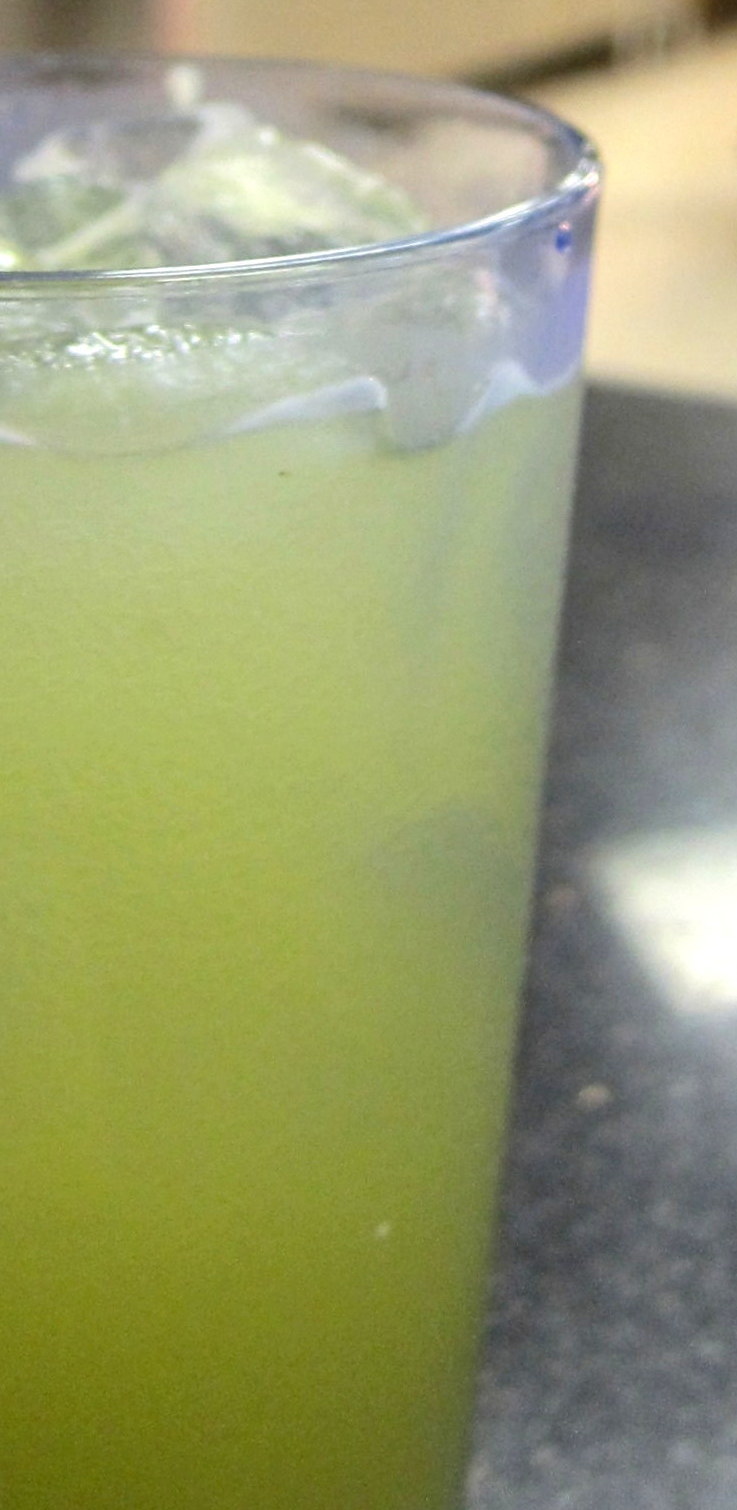
In this unassuming restaurant, I found the best sugarcane juice I’ve ever had.

When the waiter asked if we would like three glasses of fresh-squeezed(*) sugarcane juice for the table, only my dad was persuaded. The waiter was quite earnest too, he insisted that it was good and that it would induce no extra cost (the meal is buffet-style for a modest $8.99/person, roughly the cost of a bowl of pho in Berkeley). However, the sugarcane juices I’d had before, although good, were soon too sweet, and for a hot summer day I find sugar particularly less appetizing than plain water, so I declined.

Immediately after I took a sip from my dad’s glass, I changed my mind. I asked the same waiter for a glass, he laughed at me of course, “Told you it was good!”. It was not sugary, but sweet in a vegetal way, somewhat like an intensified goji berry tea. My dad ordered a second glass for himself.

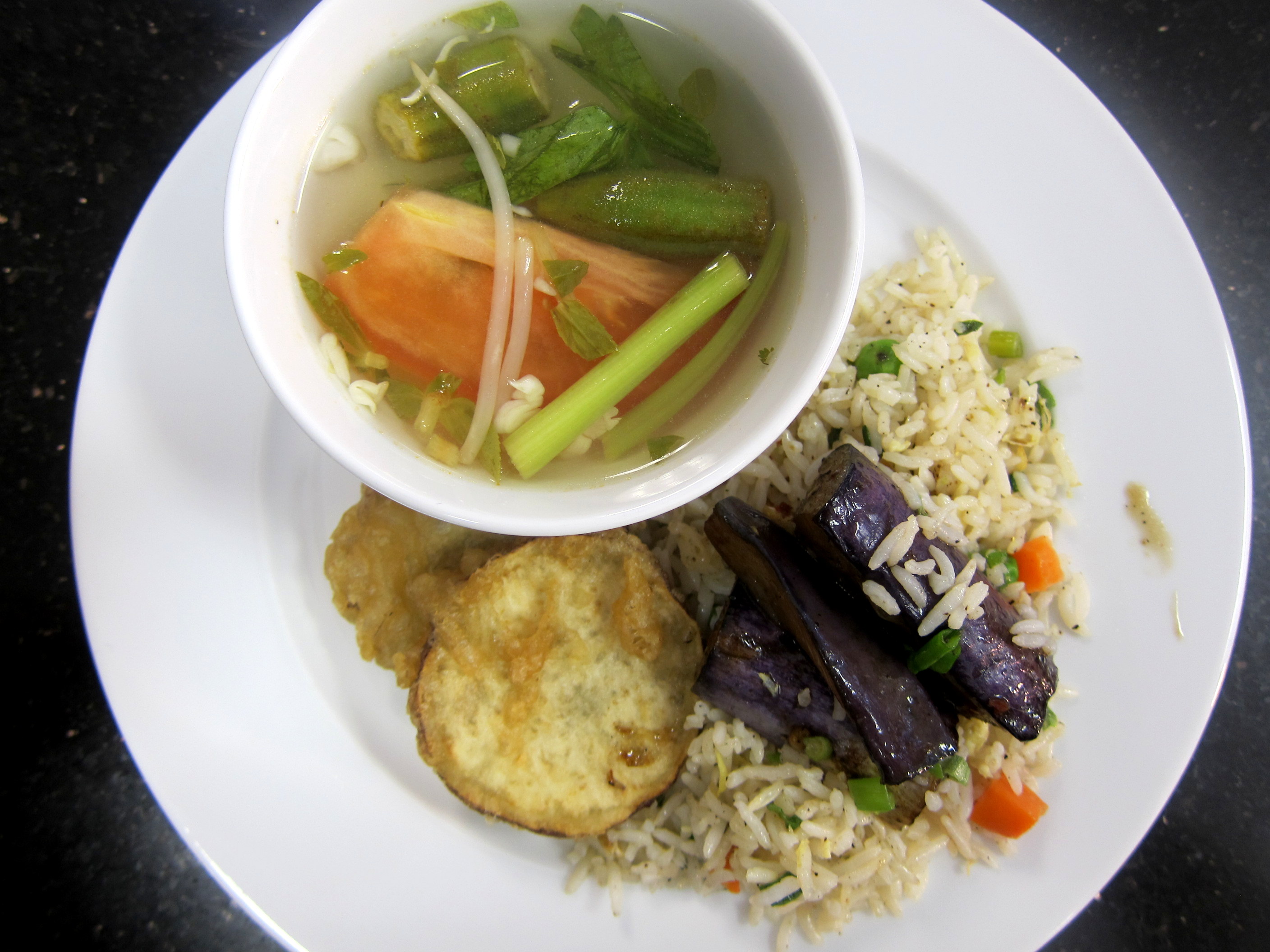
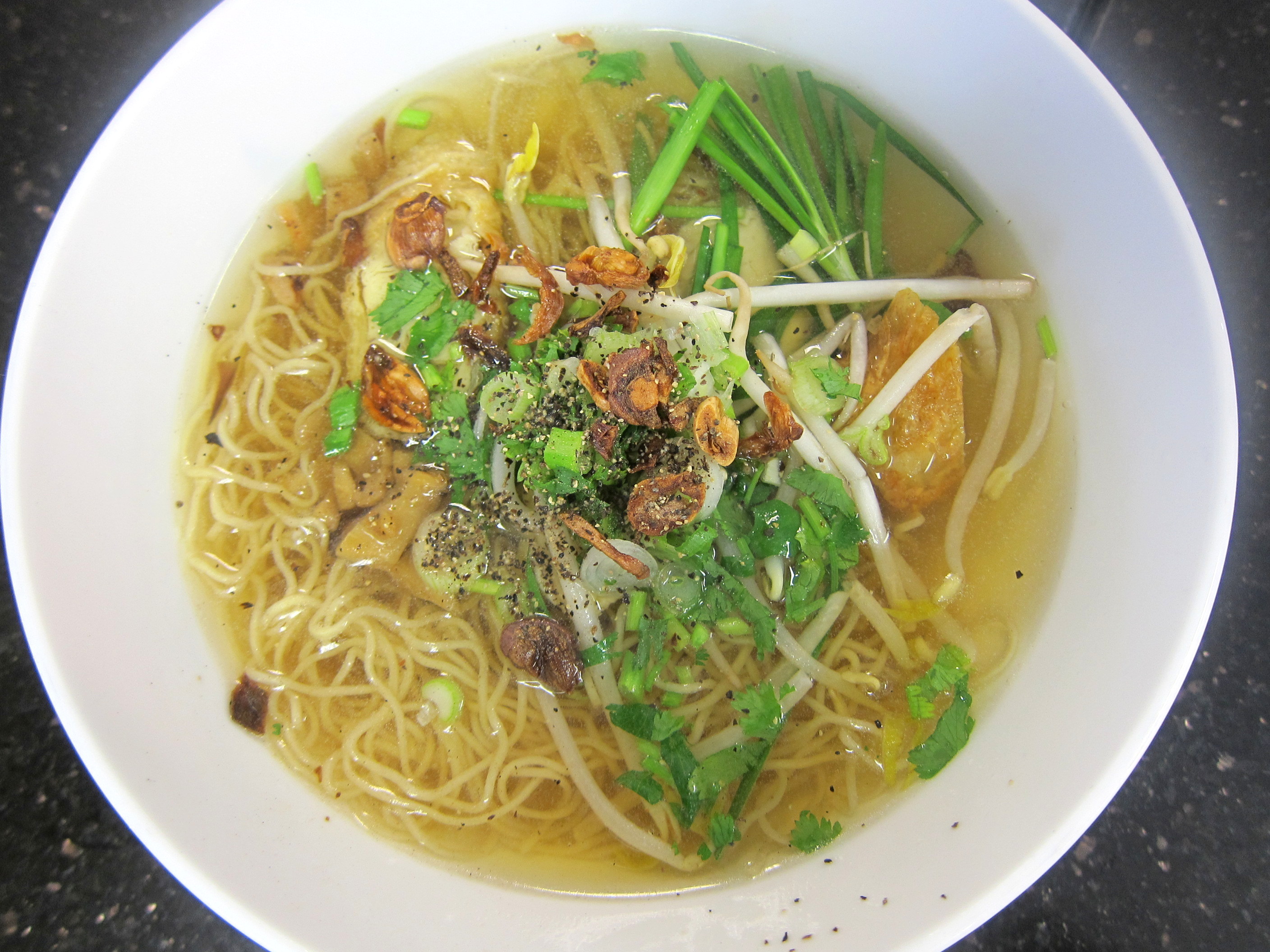
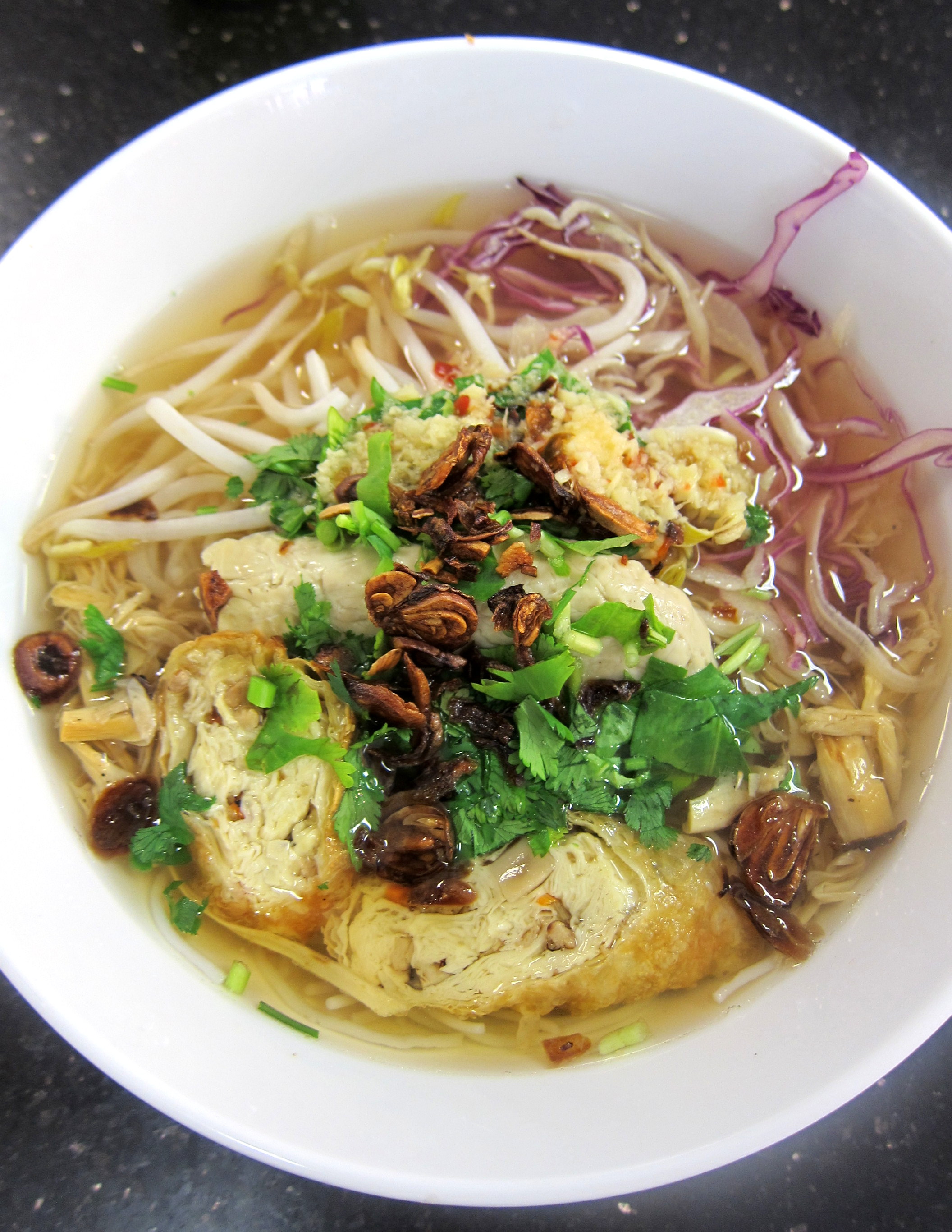
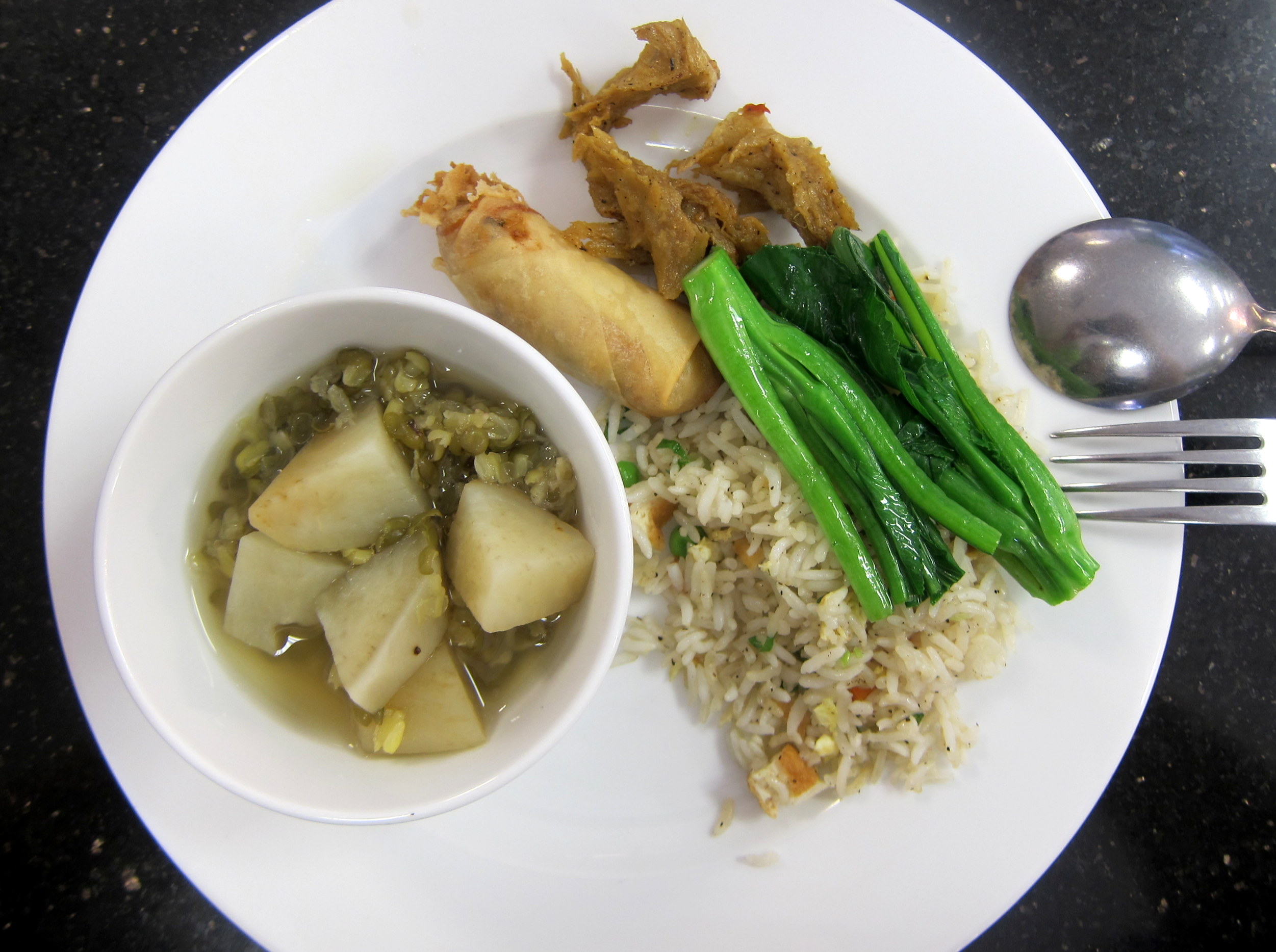
The restaurant, operated under the name of Tinh Luat Buddhist Temple and by Vietnamese buddhists, serves exclusively vegan food. Besides the usual vegan fried rice, noodles and stirfries, their vegan soups are surprisingly flavorful. In fact, I liked all of their soups. Mom got a “mì giác ngộ” (“enlightening noodle soup”), which she said tasted similar to a braised duck noodle soup. My bún măng (bamboo shoot noodle soup) was a bit heavy on the ginger but contained enough variety to entertain the eater. The canh chua (sour soup) was refreshing, and my favorite, a taro and mung bean soup, was slightly sweet, very nutty and cool enough to transport you from summer into late fall(**).

Canh chua - with tomato, okra, rice paddy herb and beansprout

Canh chua – with tomato, okra, rice paddy herb and beansprout

Mi giac ngo ("enlightening noodle soup")

Mi giac ngo (“enlightening noodle soup”)

Bun mang - with bamboo shoot, seitan, beansprout and rice noodle

Bun mang – with bamboo shoot, seitan, beansprout and rice noodle

Taro and mung bean soup

Taro and mung bean soup

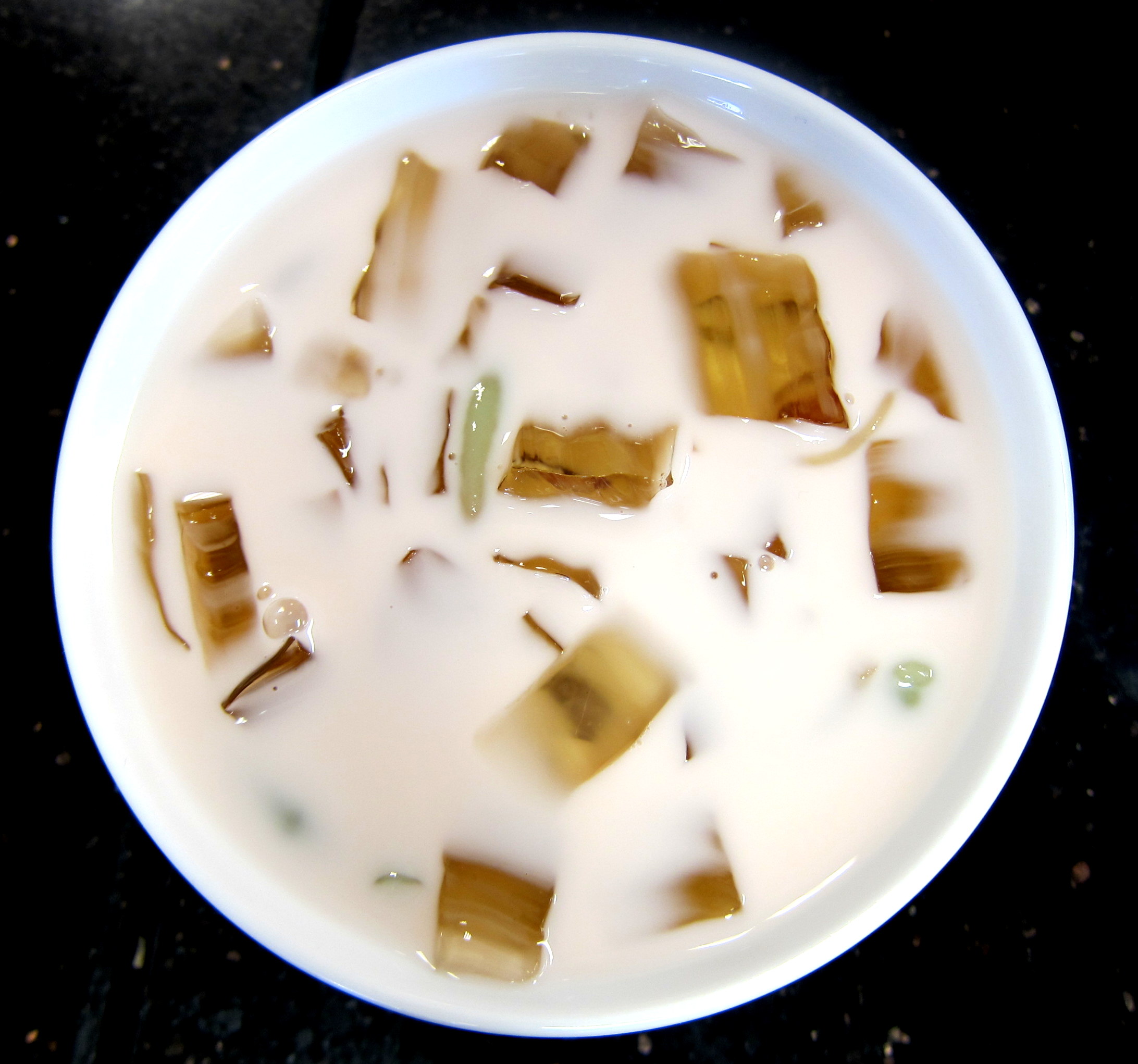
Dessert - jelly coconut che

Dessert – jelly coconut che

The restaurant is clean, the staff prompt and friendly, the price comfortable for retired elders and social workers, the menu so aptly designed in tune with the season – Tinh Luat restaurant overflows with consideration for its patrons. I’m eager to come back in the winter.

Address: Tịnh Luật Vegetarian Buffet
11360 Bellaire Blvd #380,
Houston, TX 77072
(281) 564-1839

(*) What verb do you use to describe the act of running the sugarcane stalks through a machine to extract their juice into a cup?
(**) I was reading this short Texas recipe book and got a bit confused: why does a hot place like Texas host such hot foods like chili? Wouldn’t you want to cool yourself down instead of heating yourself up to as hot as the air you sit in?

Tags:

Revisit Gather

May 22, 2013 By: Mai Truong Category: American, California - The Bay Area, Vegan

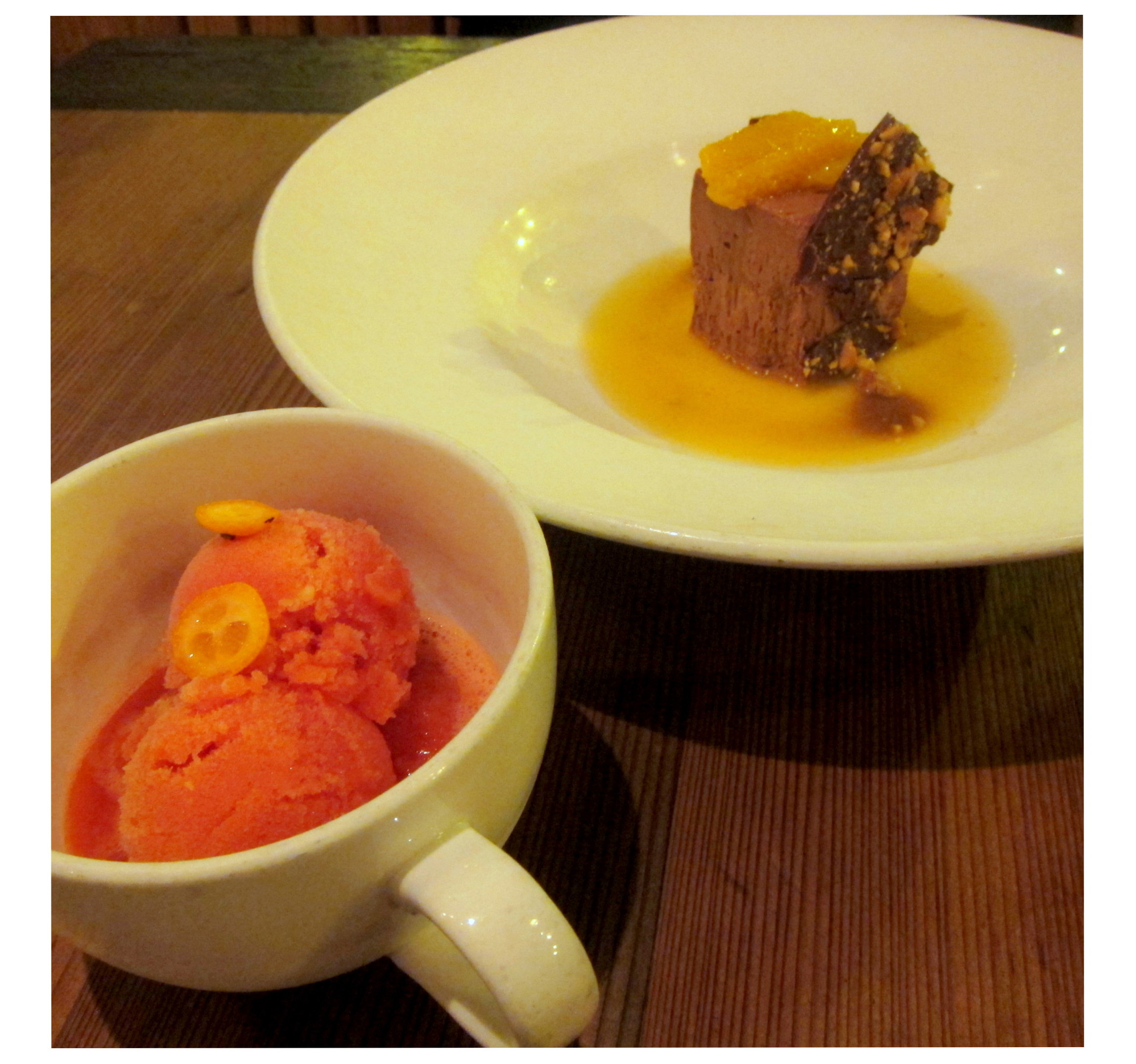
gather-dessertsLet me first get this off my chest: I hate restaurants with low lighting (e.g., Burma Superstar and Bistro Liaison), red lights (e.g., Thanh Long and Mission Chinese), and yellow lights (Gather). Why can’t we have nice white neon lights? I don’t go there to film romantic dinner scenes or deal drugs under the table. I go there to eat food, I want to be able to see the true colors of what I’m eating, and I want to take good pictures of them. Is that really too much to ask?

Okay. On to the next business. A lot of people ask me what my favorite restaurant in Berkeley is. I can’t answer that. It’s like asking me who’s my favorite friend. But if you ask me where I would take someone out to dinner, I have a few cards to deal depending on what that person likes. If they like grilled meat and interesting food, I recommend Ippuku. If they’re vegetarian, I take them to Gather.

That said, unlike the consistently good Ippuku, Gather gives me ups and downs. My first experience with Gather in March 2010 was lovely (minus the terrible lighting). Subsequent visits were unmemorable, except for an oversized French toast that was way too sweet to finish even half. Just as I started to think meh another one bites the dust, Gather wows me with a few incredible dishes to prompt a write-up. That, and I think I should at least try to have some colored pictures of its food to complement my black-and-white review last time.

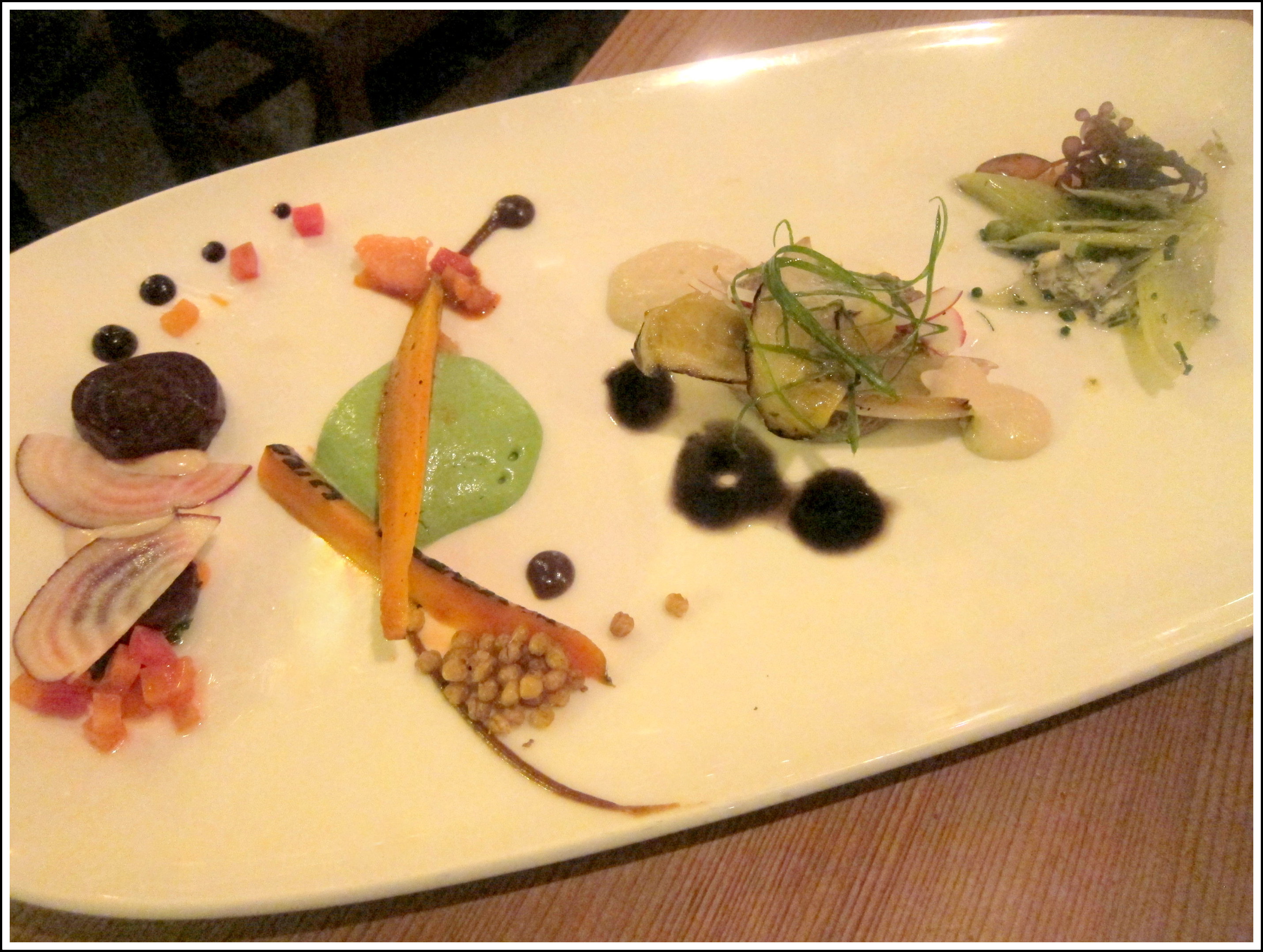
Vegan charcuterie ($18) From left to right: Beet with citrus, almond and olive; Carrots with smoked cashew, dates, hay and wheat berries (the fresh hay gives the green color); Mushroom, spring onion, endive, radish, ash, nukazuke; Fennel, kumquat, green garlic and seaweed.

Vegan charcuterie ($18)
From left to right: Beet with citrus, almond and olive; Carrots with smoked cashew, dates, hay and wheat berries (the fresh hay gives the green color); Endive on mushroom puree with spring onion, ash and radish nukazuke; Fennel with kumquat, green garlic puree and seaweed.

The seaweed that was paired with the fennel was of the Sargassum type, where a bite into the champagne-grape-like bubbles releases a burst of seashore flavor that did not belong. The purees are balanced and exceptional, with a floral hint of high-quality olive oil.

That reminds me, at Gather, bread and olive oil is available only upon request; of course, we requested, not just once but twice. The first time, our waiter brought us 4 slices, we finished it in a jiffy, the second time, he brought 8 slices. 😀 He was also incredibly patient when I asked “what gives the green color?”, “which one is the nukazuke?” and a dozen other questions. You know, the typical annoying foodie behavior.

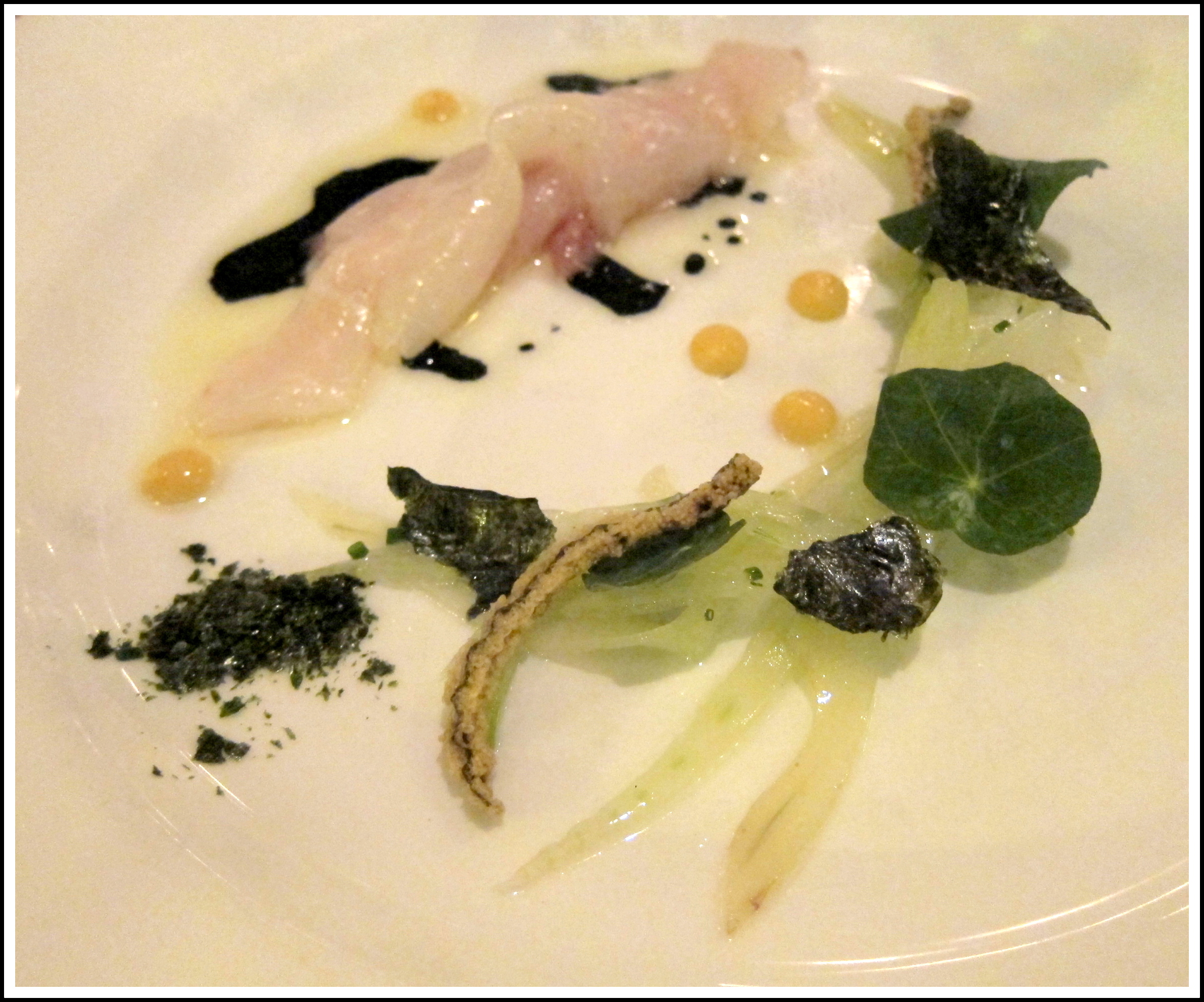
Sea lettuce smoked kampachi ($15) - with squid ink, Meyer lemon, green almond and sake lees.  Texture-, taste-, scent-wise, a Perfect Dish.

Sea lettuce smoked kampachi ($15) – with squid ink, Meyer lemon, green almond and sake lees.
Texture-, taste-, scent-wise, a Perfect Dish.

This dish has everything I like: kampachi, squid ink, seaweed, citrus. The sea lettuce is mild and crunchy, the fish chewy, the squid ink, olive oil and lemon juice engage the plant kingdom and the animal kingdom in a harmonious dance in circle.

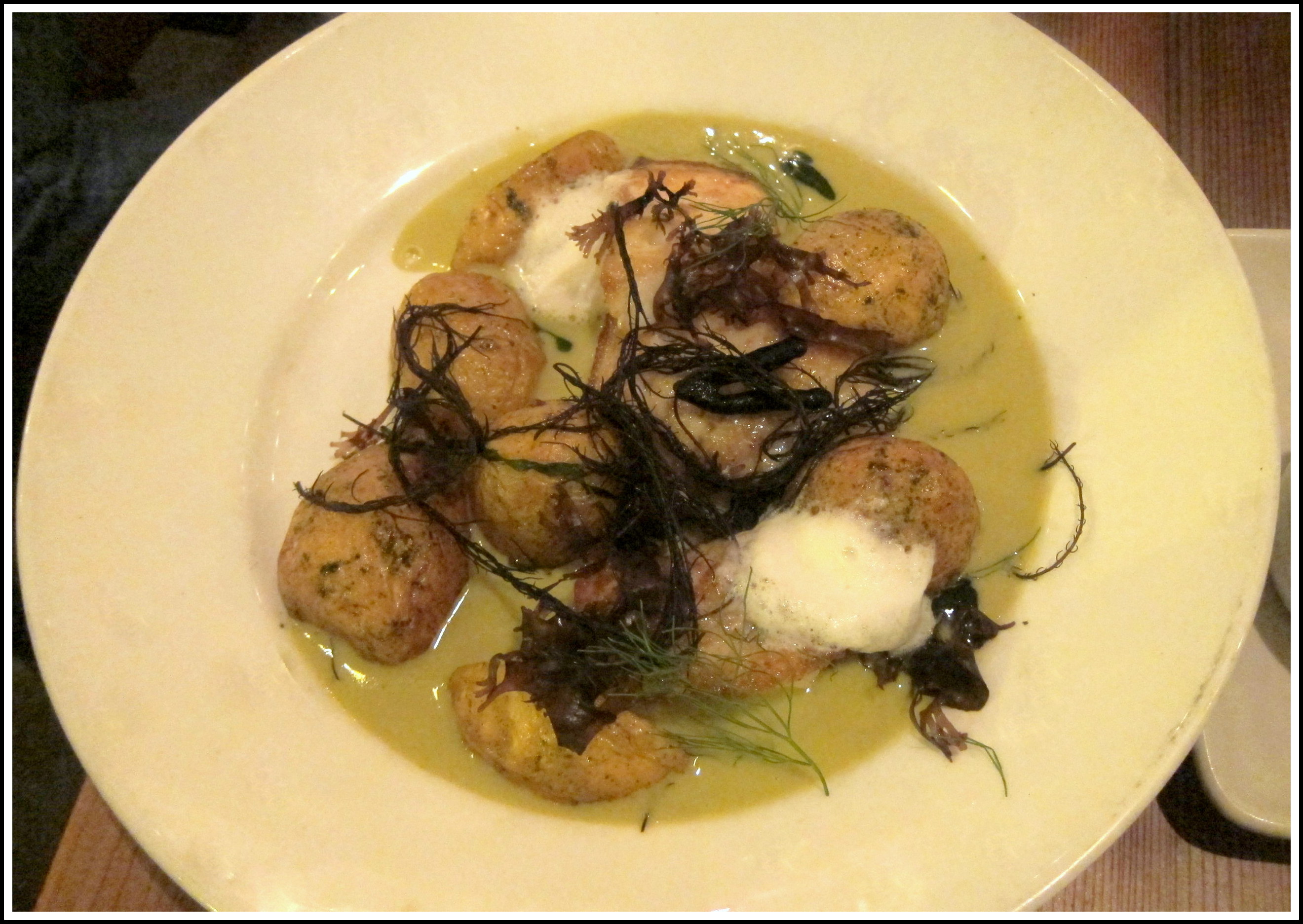
Ling cod in oyster veloute, with Yukon potato and seaweed.

Lingcod in oyster veloute, with Yukon potato and seaweed.

The design is a rocky shore with seaweed, fish and foam, I get that. But just because the plate depicts the sea, it doesn’t mean it should taste like the sea. The potato is too salty. The seaweed, once again, needs more prep work to tone down the seaside taste. But the lingcod filet was perfectly pan-fried, crispy on the outside and moist inside.

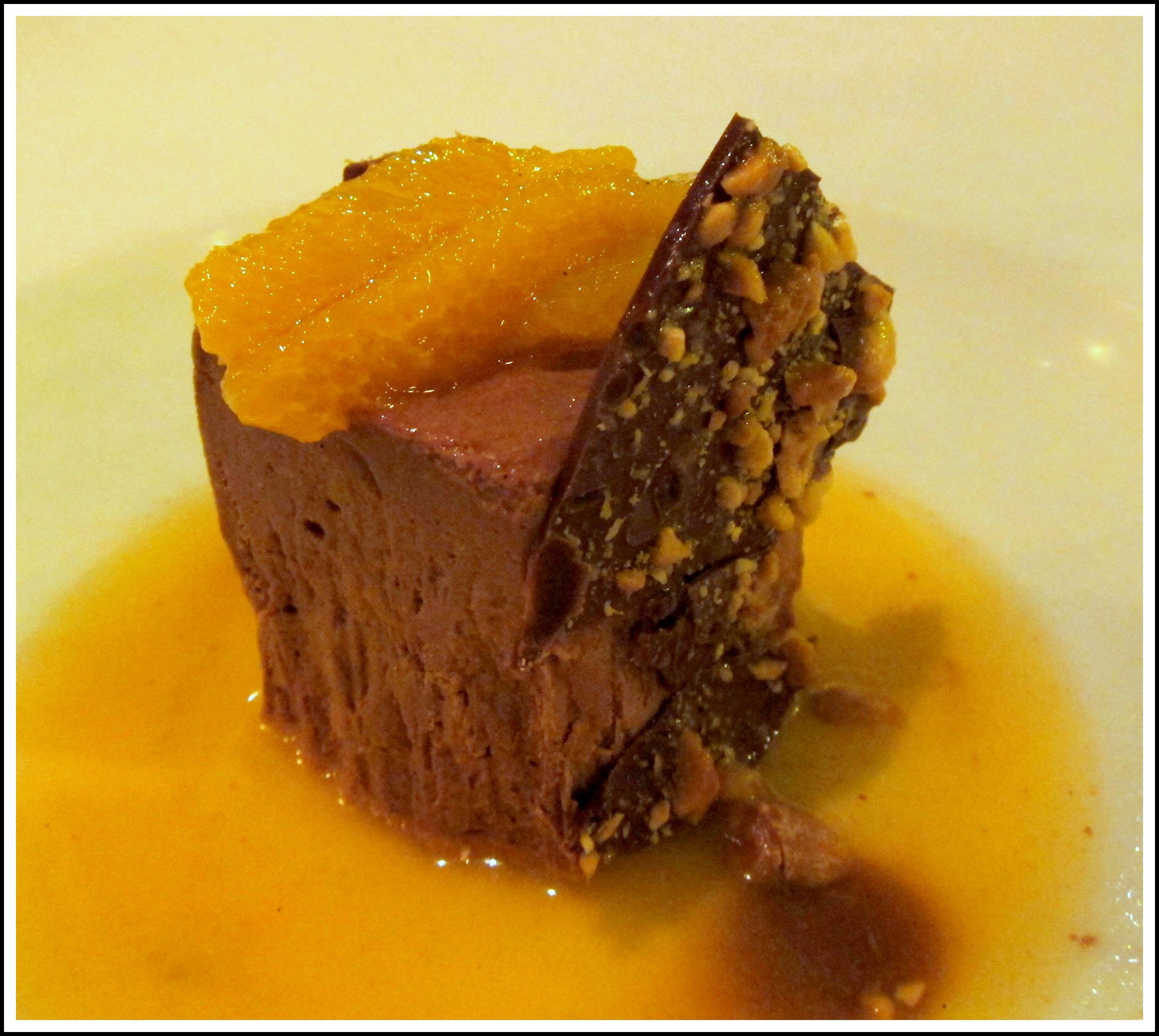
Chocolate semifreddo ($9) - with orange brodo, caramel, peanut and cardamom. Another perfect dish.

Chocolate semifreddo ($9) – with orange brodo (orange sauce), caramel, peanut and cardamom.
Another perfect dish.

Of course, we wouldn’t go without desserts, and the desserts at Gather show a great deal of restraint: not too sweet, not too chocolatey to overwhelm the cardamom scent, not too tart either. I like that kind of balance. That night, my friend and I were most drawn by the sea lettuce smoked kampachi and the lingcod precisely because of their balance. Although Gather’s execution of seaweed left much to be desired, the “vegan charcuterie” also remained a reliable inspiration.

Address: Gather
2200 Oxford Street
Berkeley CA 94704
(510) 809-0400
www.gatherrestaurant.com

One shot: Avocado smoothie

May 19, 2013 By: Mai Truong Category: Drinks, One shot, sweet snacks and desserts, Vegan, Vietnamese

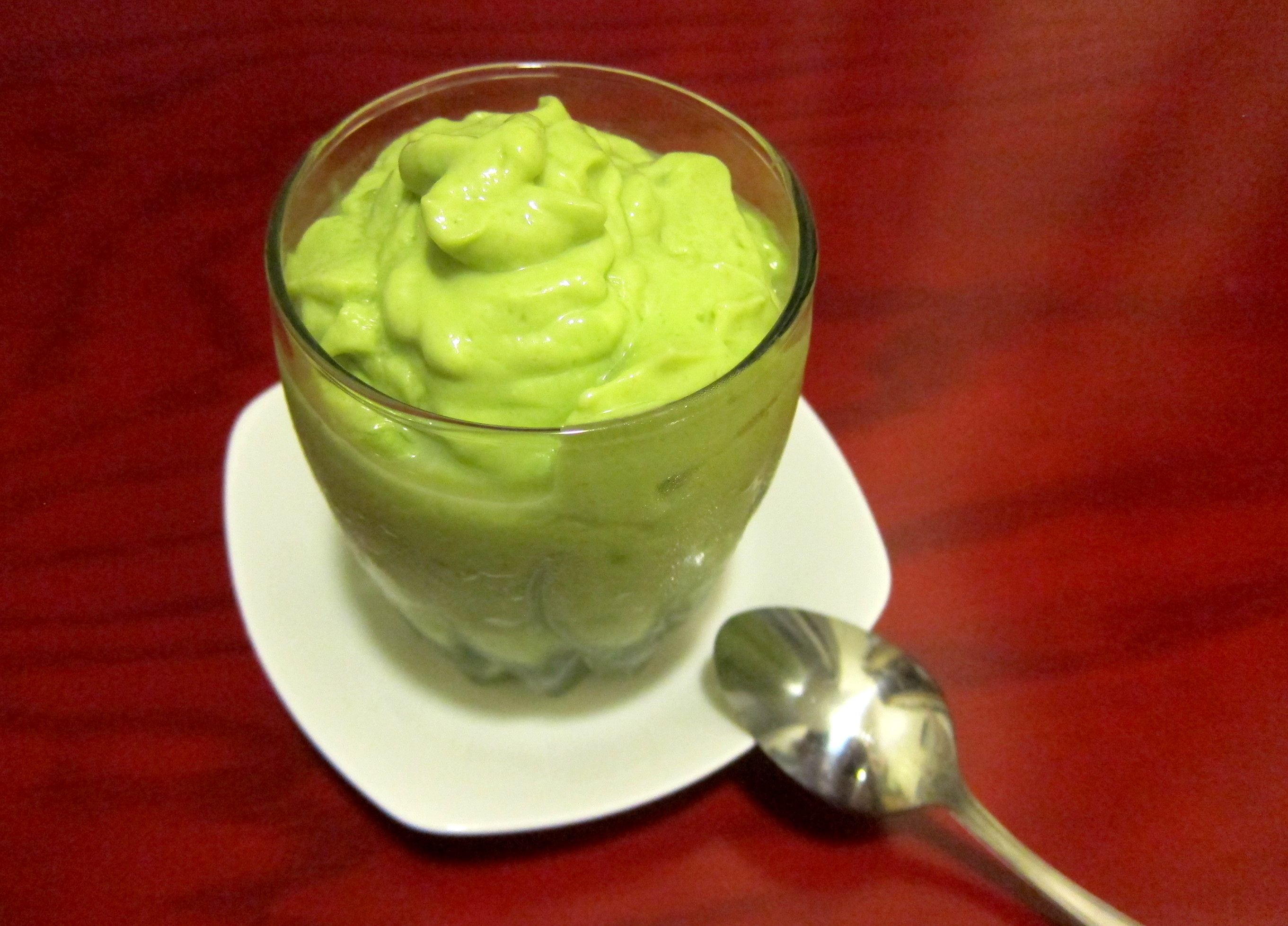
avocado-smoothie
This post is for the Vietnamese expats in particular and anyone who thinks of the avocado as a fruit (to be eaten as a fruit, not a vegetable). In America, people tend to think of avocado in guacamole terms or as a meat substitute in sandwiches. If you think avocado for dessert is weird, shall we talk about your pumpkin pie? 😉

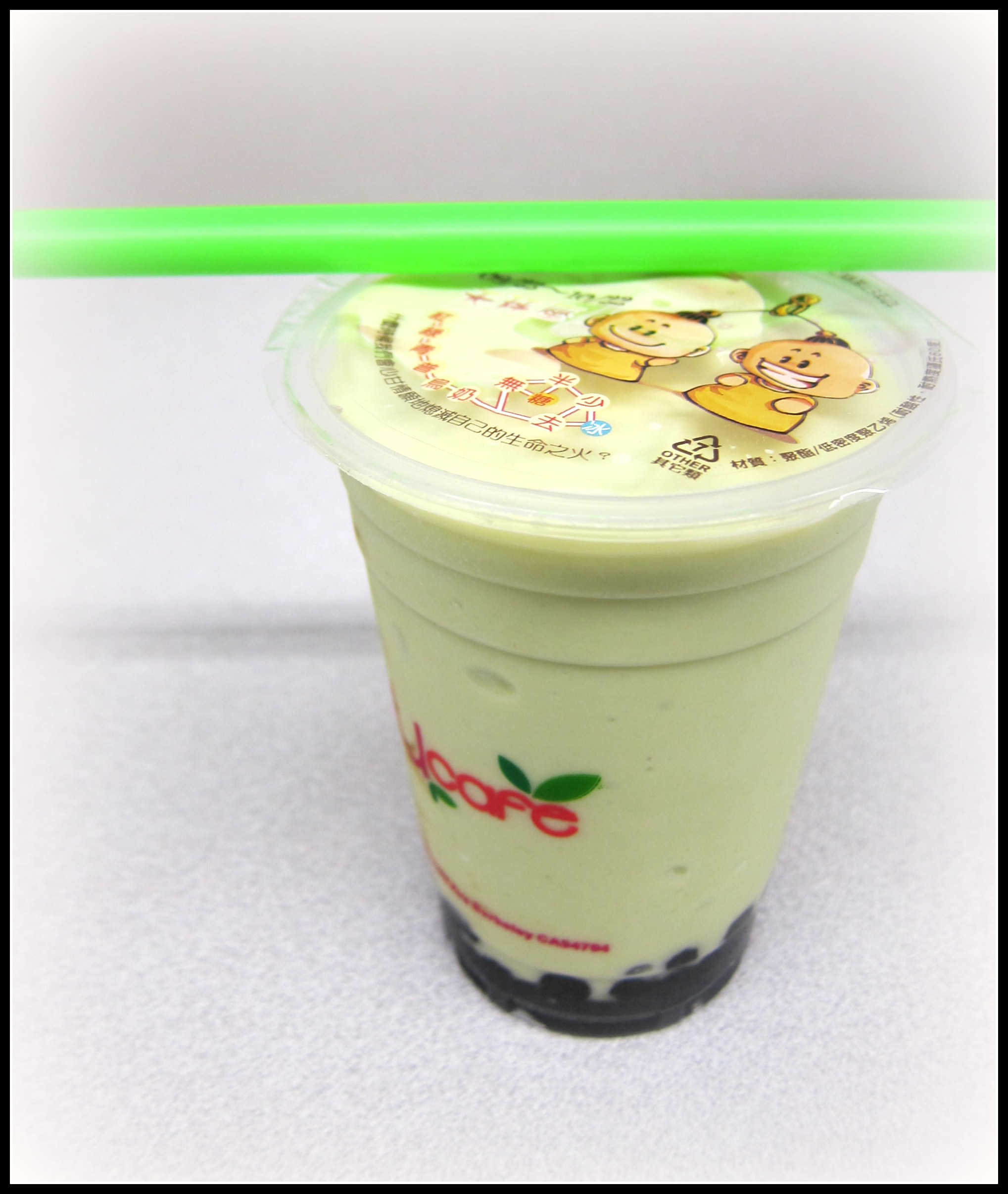
Ever since the day I saw the option of “avocado smoothie” at UCafe, I’ve had 3-5 avocado smoothies every week. Drinking each smoothie with boba was like looking through old photographs and reliving the beautiful days. The avocado is healthy, but that’s not why I like it. It’s the best option when I’m too tired to chew, want something mildly sweet and cold, and when the weather is too hot for meat and carbs. It replenishes my soul and keeps me alive through the summer humidity that accumulates in my tin-roof office building. I regret that I had not eaten more avocados in Vietnam, where the fruit is as big as my whole hand from wrist to middle finger tip and as luscious as molten chocolate cake.

ucafe-avocado-smoothie
I love the avocado smoothie at UCafe, but after a while it proves too expensive: a regular 12-oz cup, which costs nearly $4, contains only half an avocado. Berkeley Bowl sells palm-sized avocados (which they label as “extra-large”) for $1.69 each. So I bought a blender to make my own smoothie.

This is probably the first and only time I use my blender because cleaning a blender is not my favorite activity, and because I prefer smashed avocado than blended avocado (the ice dilutes the taste). Still, who knows when the blender might be handy again.

Recipe for avocado smoothie: (1 serving)
– 8 cubes of ice
– 1 large avocado
– 2 teaspoons of sugar
Blend and serve.

One bite: Harusame soup at Cha-Ya

March 23, 2013 By: Mai Truong Category: California - The Bay Area, Japanese, noodle soup, One shot, Vegan

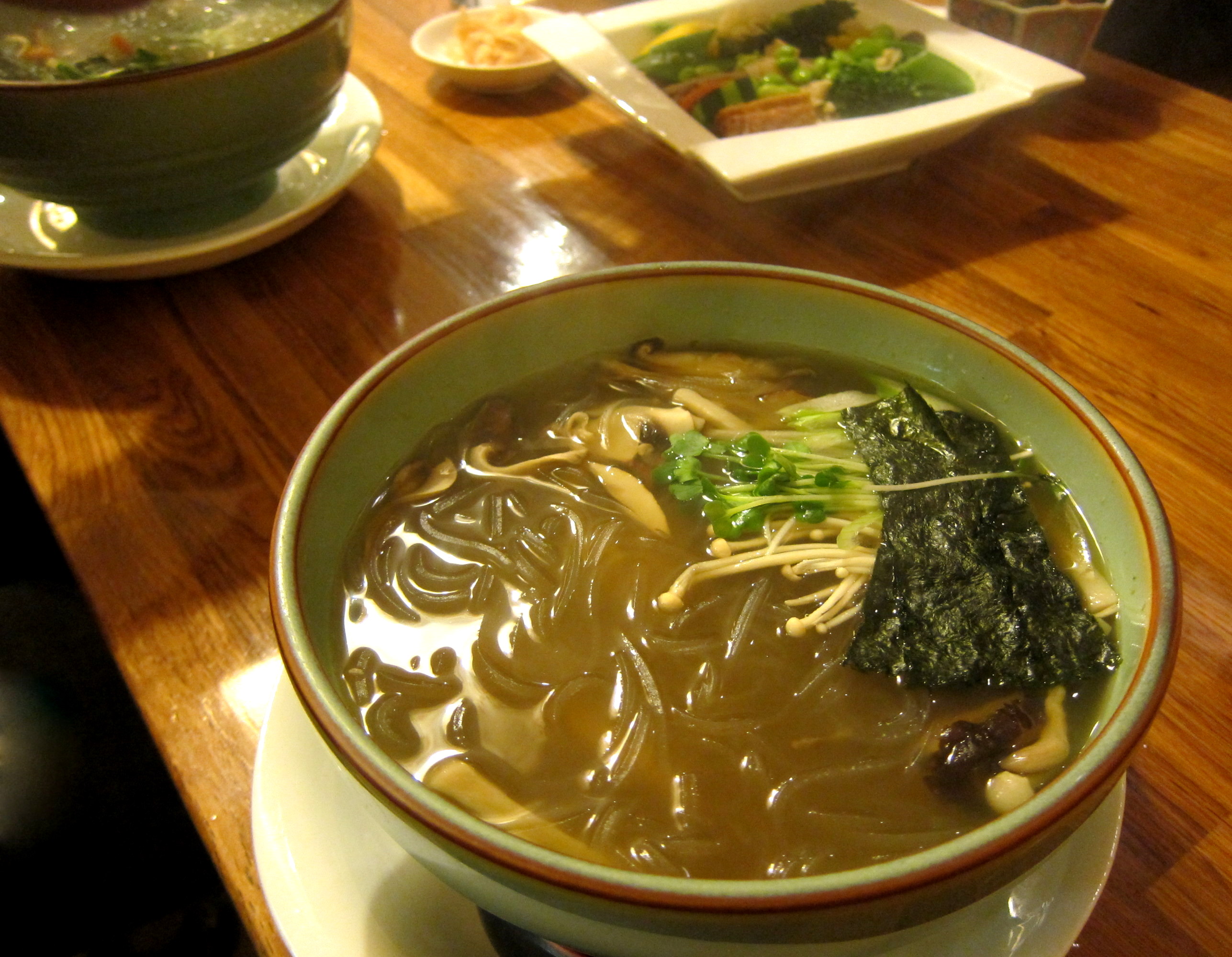
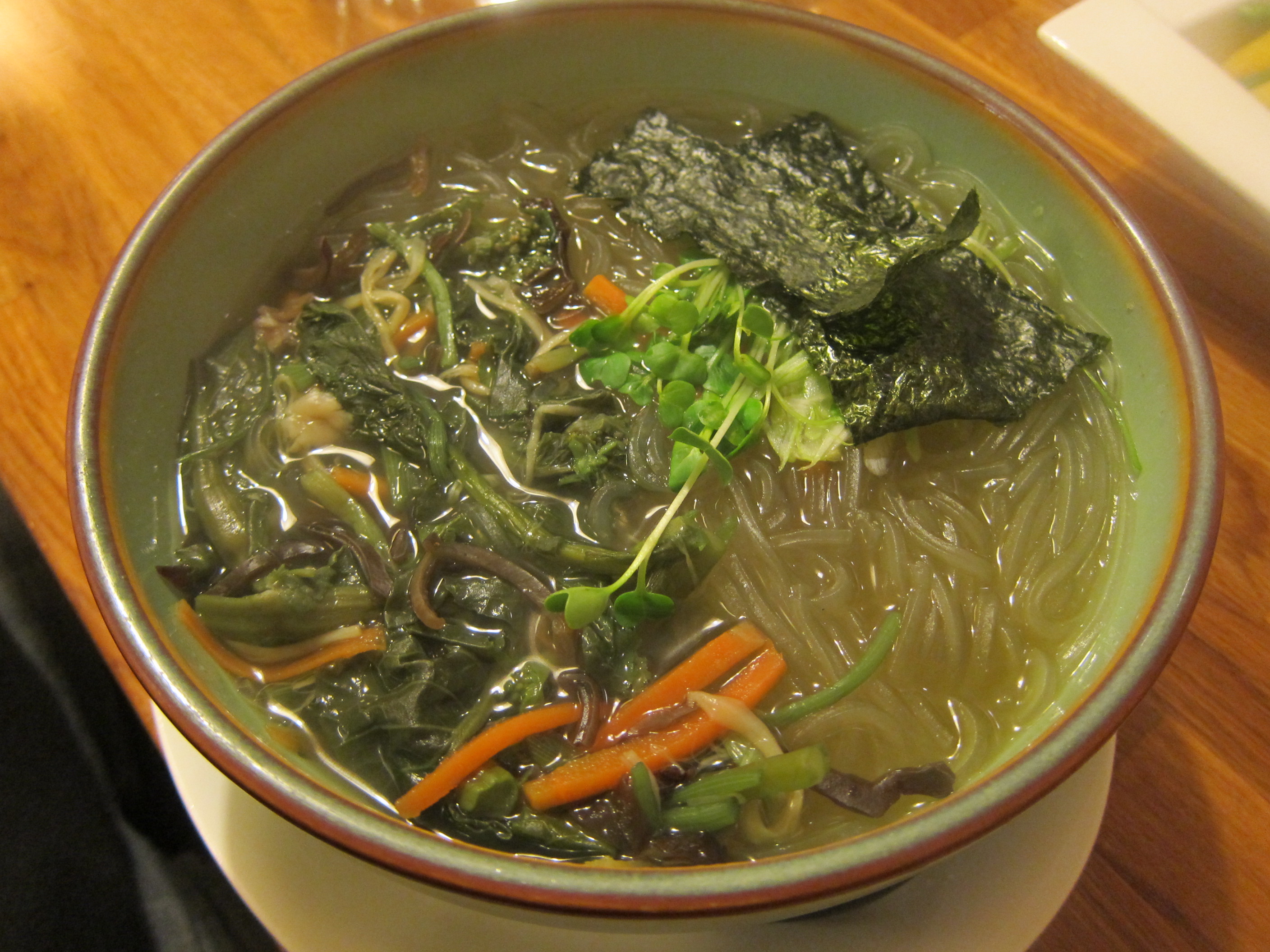
Kinoko harusame ($8.50) - potato starch glass noodle soup with mushroom (shimeji, eryngii, enoki, hiratake (oyster mushroom), portobello mushroom and shiitake.

Kinoko harusame (~$8) – potato starch glass noodle soup with mushroom (shimeji, eryngii, enoki, hiratake (oyster mushroom), portobello mushroom and shiitake.

Japanese glass noodle (harusame 春雨) is different from Vietnamese glass noodle: it’s made from potato starch (instead of mung bean starch or canna starch), it’s much thicker (like a spaghetti, whereas Vietnamese glass noodle is like a capellini), and it has a softer chew.

With that vegan broth sweetened by mushroom, it was comforting.

Until you finish that monster of a bowl, and you feel so full that it’s no longer comfy unless you unbutton a button or two.

Sansai harusame - potato starch glass noodle soup with bracken, bamboo shoots, carrots, woodear mushroom and some kinds of greens

Sansai harusame (~$8) – potato starch glass noodle soup with bracken, bamboo shoots, carrots and woodear mushroom

I don’t think I’ll ever get hungry thinking about Cha-Ya (does anyone ever get hungry for vegan food?), but I’d never turn it down when someone suggests Cha-Ya either. I get full and feel healthy when I go there. What more can I ask for from this little place?

P.S.: My previous experience at Cha-Ya was a little more elaborate than a bowl of noodle soup, and was just as comforting. 😉

Tet of a Buddhist Vietnamese expat

February 10, 2013 By: Mai Truong Category: Festivals, Vegan, Vietnamese

tet-2013
Mother said “you shall not eat meat on the first day of Tet“. And I said “yes, Mom.”

It has been our family tradition that the first day of the lunar year is a vegan day. It’s not unique to our family of course, most Vietnamese Buddhists eat vegan on certain days of the lunar calendar, the number of days depend on the amount of devotion to practice the precept of not killing. To refrain from all of the festive food is also a step to train the mind against the worldly temptations. Normally, that would be difficult if I were at home, given the excess of pork sausage loaves, braised pork and eggs, banh chung banh tet, roast chicken, fried spring rolls, dumplings, et cetera. But I’m here by myself, it’s like expatriation on top of expatriation. To refrain from meat has never been so easy. 😉

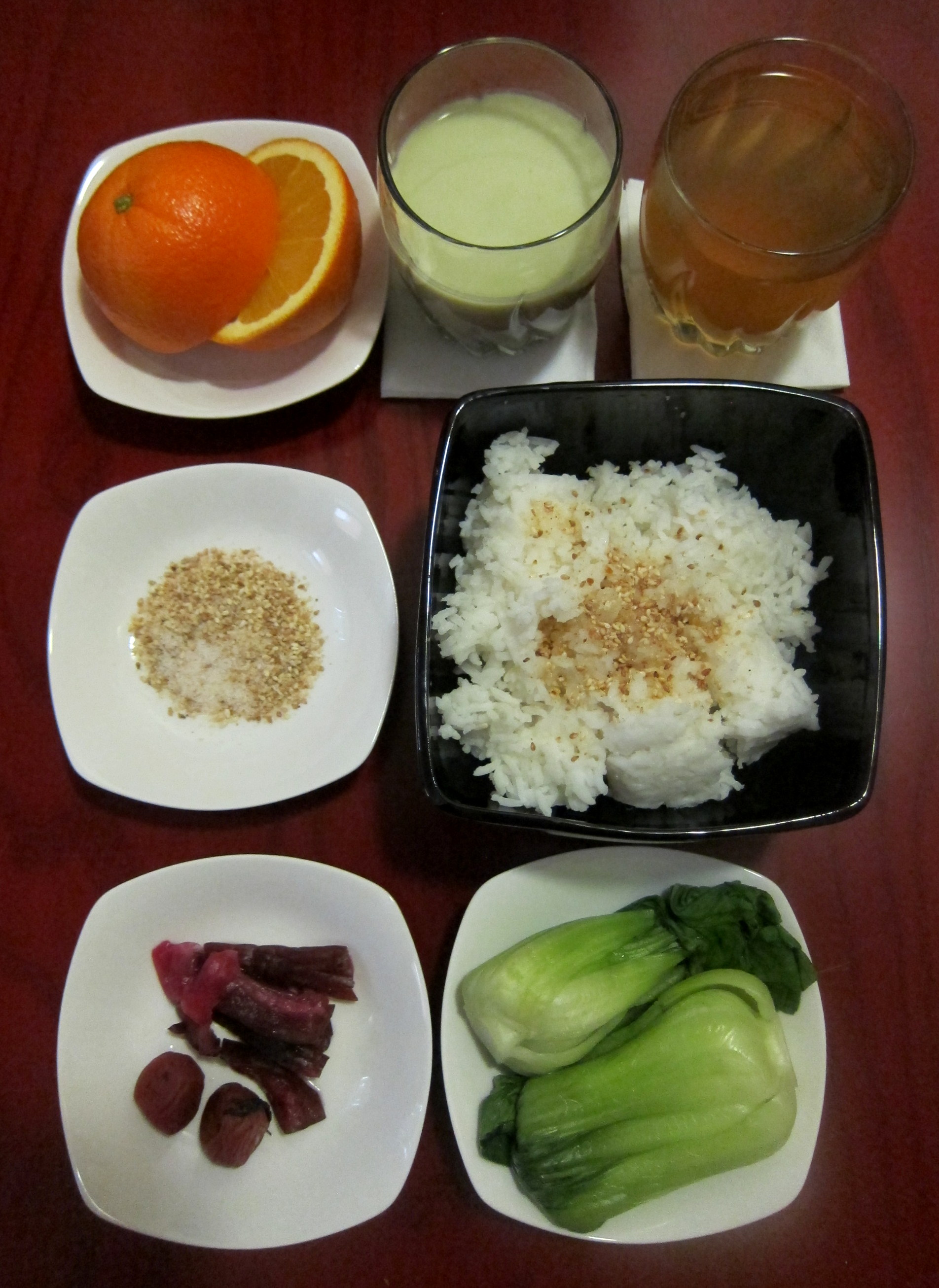
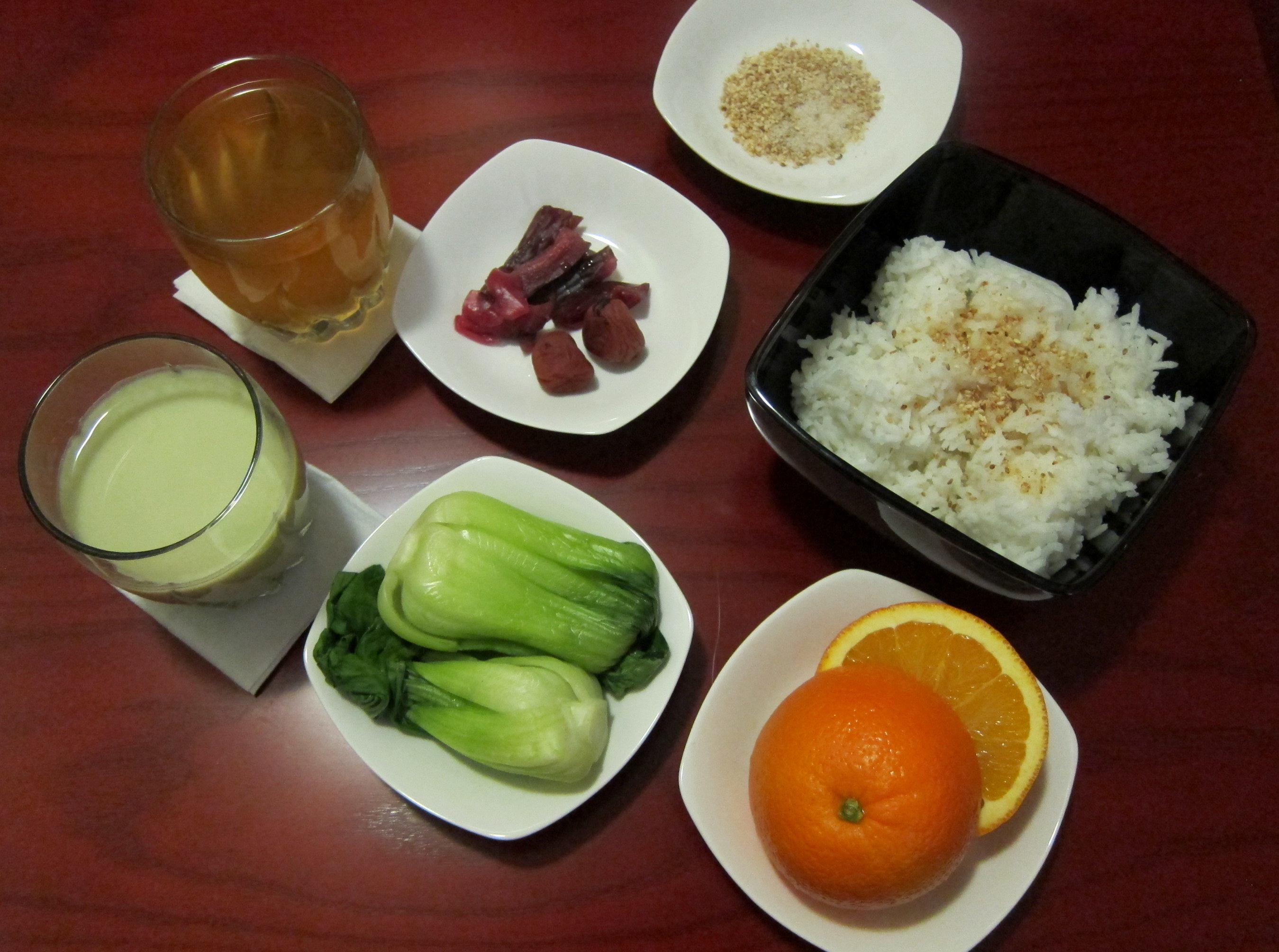
My quick and simple vegan lunch: steamed rice with muối mè (a mix of sesame, salt and sugar, similar to furikake but Vietnamese 😉 ), steamed bok choy, shisozuke umeboshi (salted plum with pickled shiso leaf) and pickled cucumber (a kind of tsukemono), an orange, a cup of mung bean milk from Banh Mi Ba Le and a cup of rose water. (In my recent San Jose trip, I found out that Chinese people take a particular liking to the bok choy outside the food realm. They make huge glass (or plastic?) bok choy that resembles chubby gold fish, except green and white, to put on pedestals for house decorations. Pretty cute, actually!)

vegan-lunch-on-first-day-of-Tet
Rose water is the simplest way to healthily flavor your water that I learned from a friend: pour dried rosebuds (easily found as an herbal tea at any tea shop) into cold water, let the water be for a while, drink, refill the water. I use a small sieve to filter the rose petals when I pour my glasses and to keep the rose in the water pitcher, but eating a few petals wouldn’t hurt. I thought about making little temaki (rice cone wrapped in toasted seaweed) but that might taste too salty with all the pickles and muối mè.

vegan-snacks-for Tet
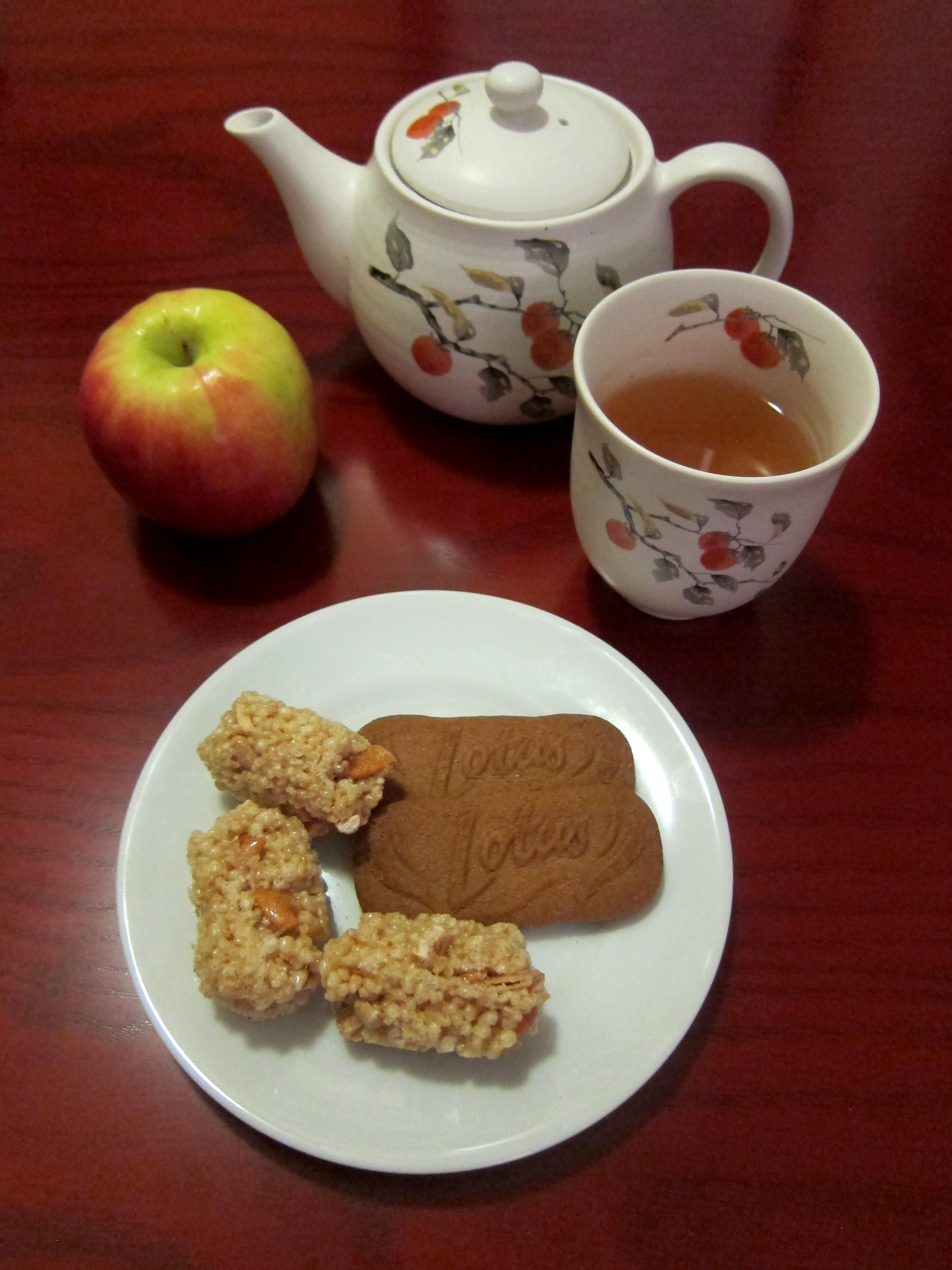
Snacks: vegan Biscoff cookie given to us by Abbot Thich Huyen Viet at the Lien Hoa Buddhist temple in Houston (these are surprisingly tasty!), a Pink Lady appleMiyaki Komedawara okoshi (basically, peanut and rice sweets) and a pot of Vietnamese lotus green tea.

banh-u-tro
For dinner, I’ll probably have a few bánh u tro (sticky rice ash dumpling with red bean filling) and a packet of Vifon Vietnamese vegan instant noodle, then wait until 00:01 am to have a bowl of Dreyer’s double fudge brownie ice cream. 😉 (That’s right, refraining from ice cream is still difficult…) Happy Lunar New Year!