Flavor Boulevard

We Asians like to talk food.
Subscribe

Archive for the ‘sweet snacks and desserts’

Mid autumn and the moon cake

October 04, 2009 By: Mai Truong Category: California - The Bay Area, Chinese, Opinions, savory snacks, sweet snacks and desserts, Vietnamese


That time of the year has come. Time for the first midterm exam of the undergraduates, and the first exam-grading party of the graduate students. Time for looking back and asking what have I been doing since school started, beside avoiding my advisor for fear of his question “how is the research going?”. Time for kids to buy lanterns, if you’re in Vietnam, and for adults to return home, if you’re in Korea. Time for Walmart, Michael’s, Kroger and the gang to pull out a full display of Halloween and Thanksgiving colors. Time for Asian expats to savour their mooncakes.


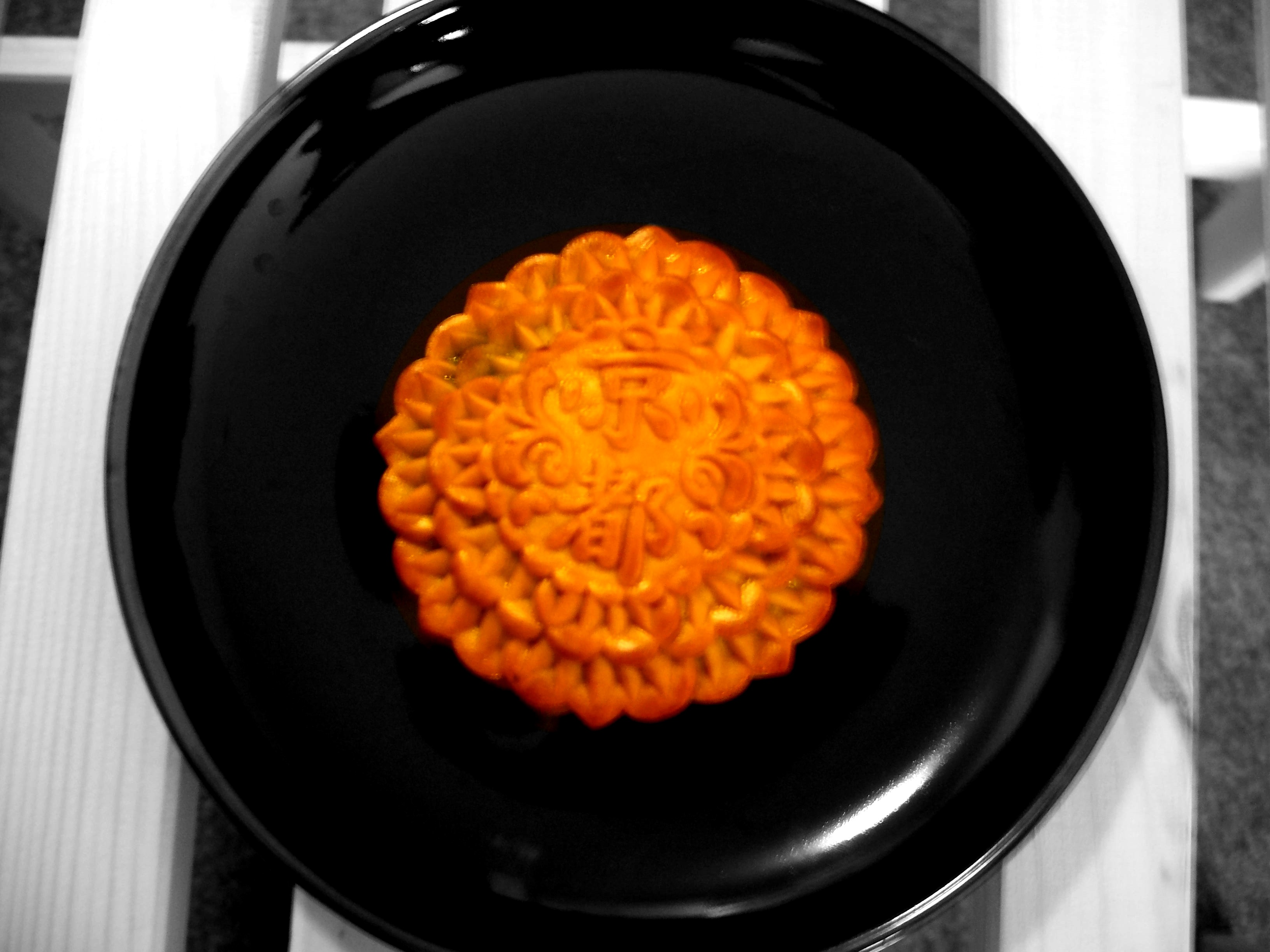
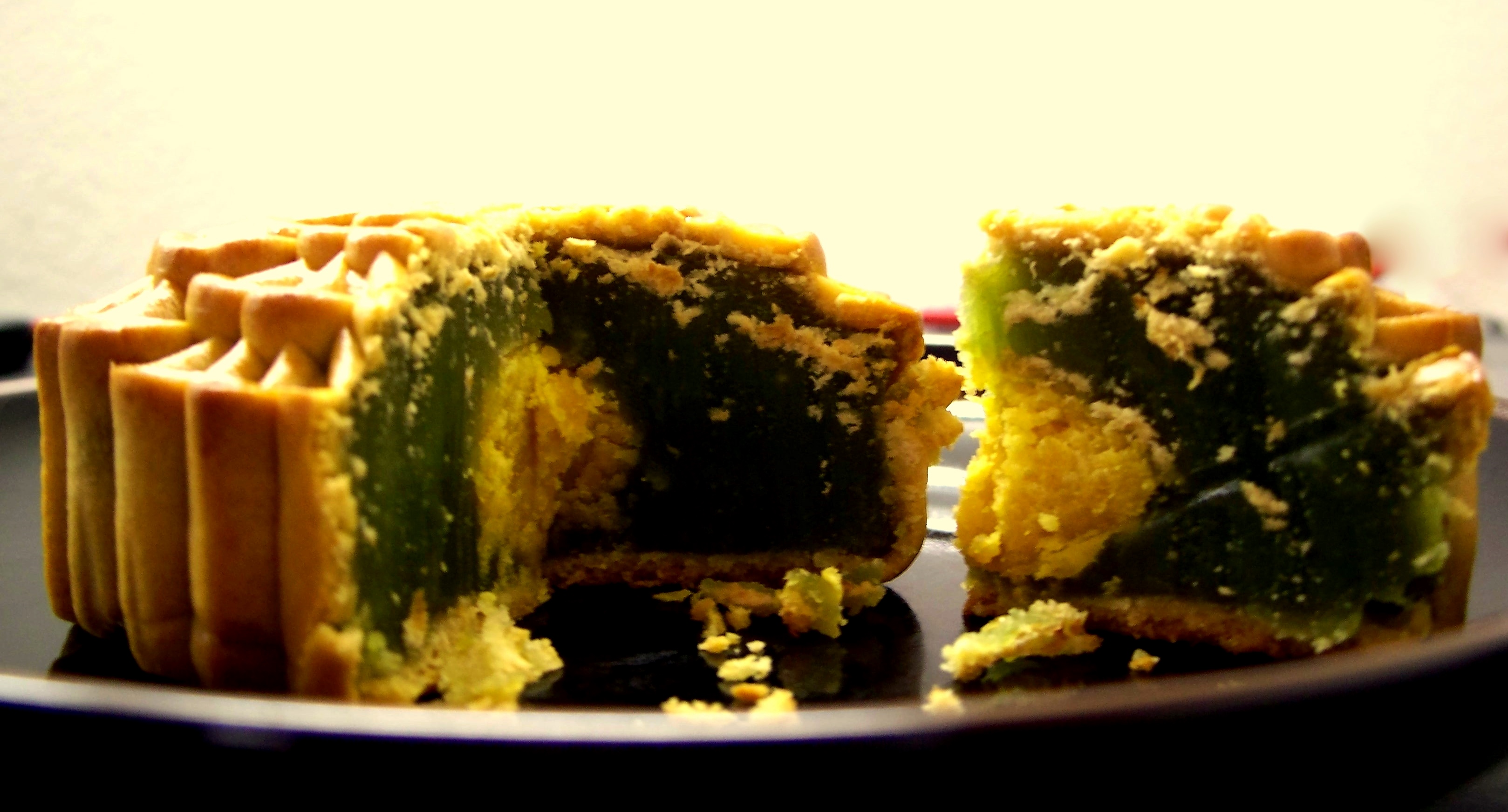
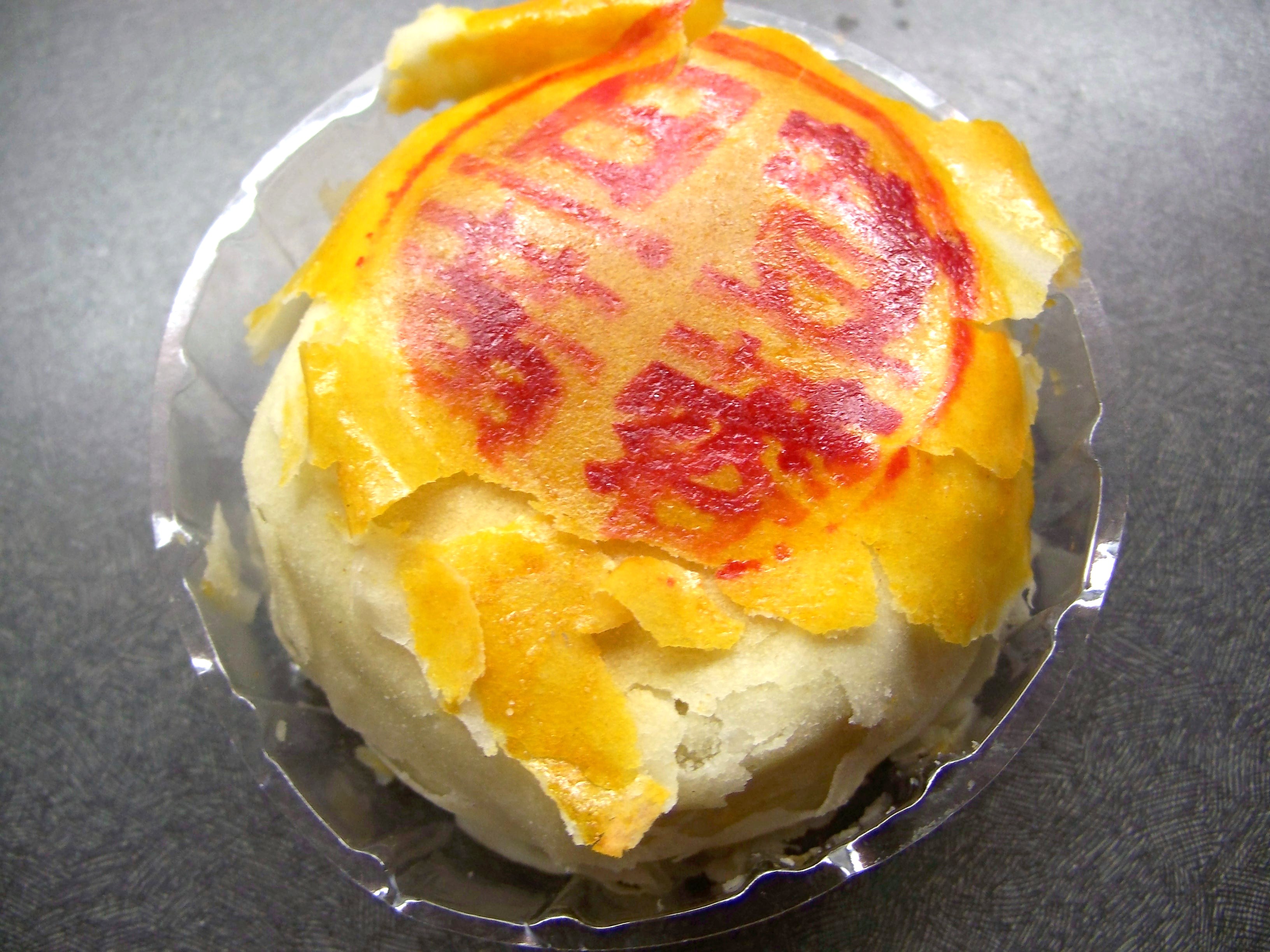
It isn’t called “mooncake” for no reason. There’s a moon inside the cake. A bright deep yellow egg yolk, salted to perfection. I always eat this last, putting the whole ball in my mouth and slowly eroding it away. The background of the “moon” can be anything, from assorted nuts and lap cheong to sweetened bean paste. Kinh Do churned out the green tea version (nonexistent in Saigon when I was there 5 years ago). Talk about 2-in-1 convenience, now you don’t have to drink tea while eating mooncakes anymore.

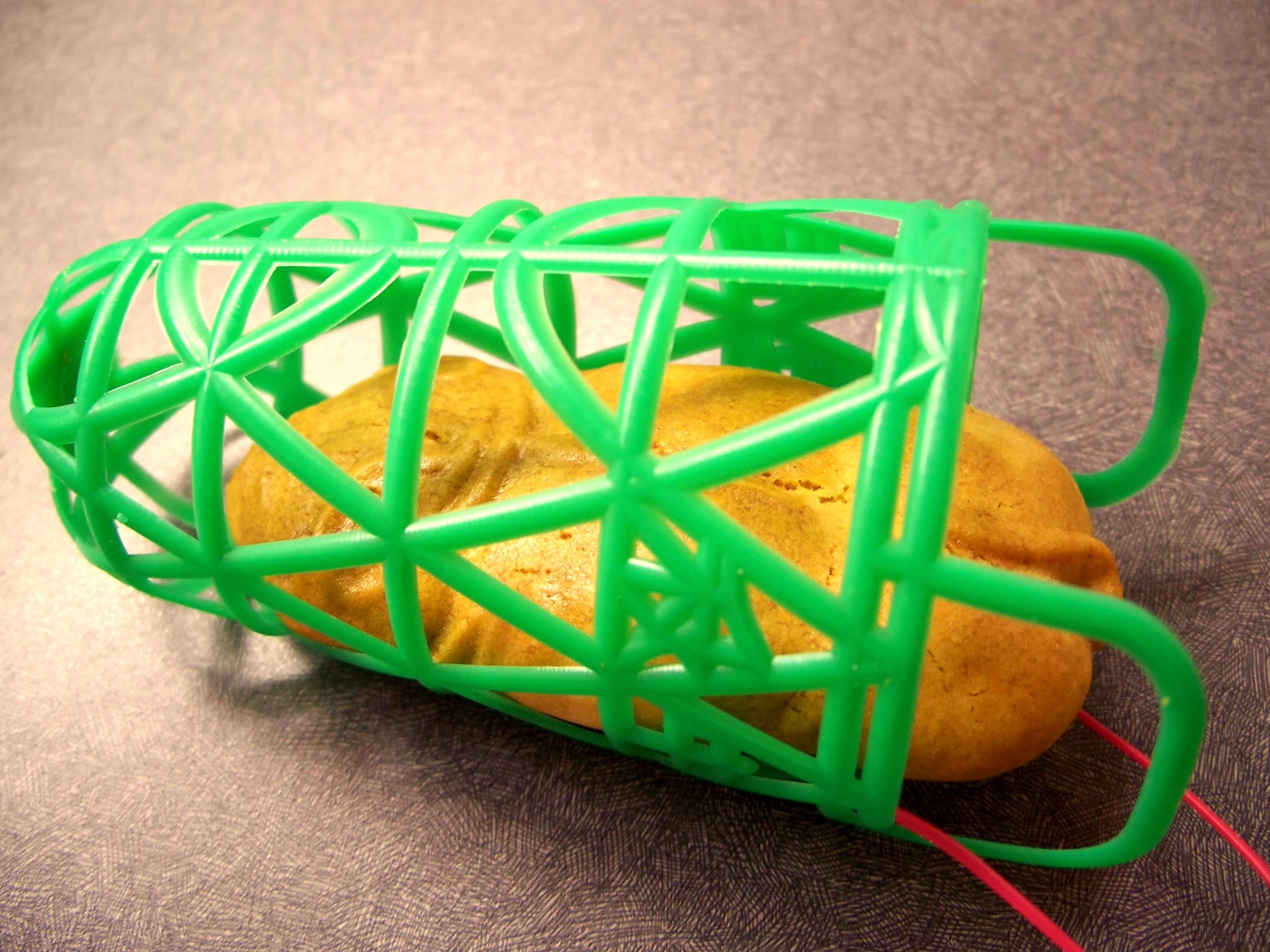
Some prefer the crust to the ubersugary filling. I’m one of them. So they make the dough into shapes of little piglets. My officemate and I laughed so hard the other day when we found out that both the Singaporeans and the Vietnamese do that, although in different ways. Vietnamese people have the baby pigs surrounding a mommy pig, herself a big mooncake with all the stuffing and egg yolks inside. The Singaporeans make it easy for kids to take their piggy around:


I always find it hard to eat the piggy. It’s like eating a gummy bear, you know, should you decapitate him first, or attack from below?
Do other Asian countries have piggy mooncake too?

Recipe for bánh chuối nướng (Vietnamese banana bread pudding)

August 25, 2009 By: Mai Truong Category: RECIPES, sweet snacks and desserts, Vietnamese


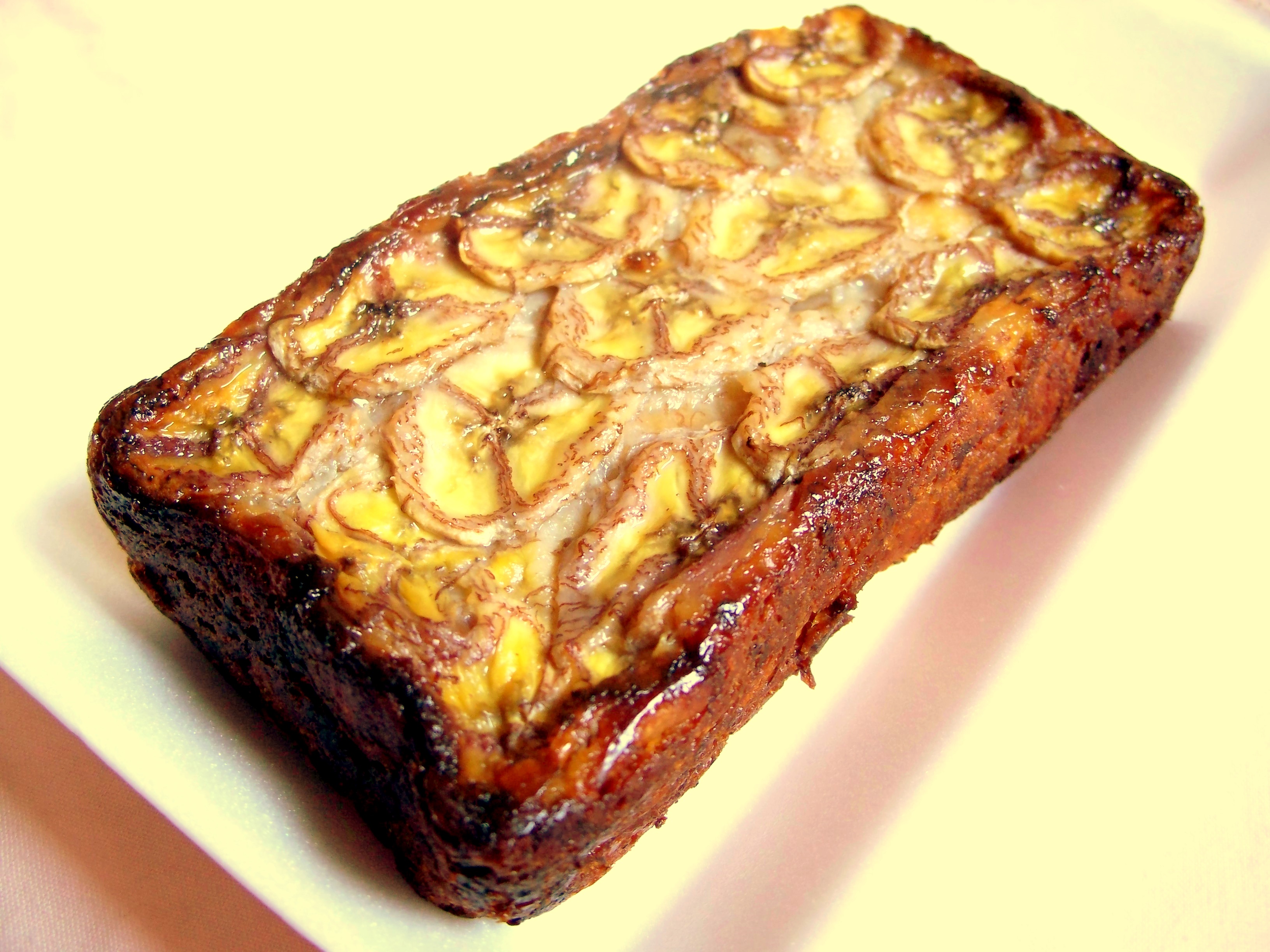
Compared to other Vietnamese sandwich shop goodies, banana bread pudding is relatively easy to make at home, perhaps because of its strong connection with Western desserts. The ingredients contain bread, milk, rum, and vanilla, but at the end of the day, the tropical note of banana plays the key role.

Ingredients:
– 1 bunch of banana ~ 7-8 fingers, preferably Chuoi Su cultivar (also known as Chuoi Xiem, Pisang Siem, Siusok, Kluai Namwa Daeng)
– 1.5 loaves of old stale bread (the pullman loaf to make sandwiches)
– Rum (1 tbs for every 300g of banana) (optional)
– 2 cups milk
– 2 cups coconut milk
– 2 eggs
– 1 1/4 cups sugar
– 4 tbs melted butter
– 1 tbs vanilla (optional)

Use an 8-inch (20-25 cm) cake pan, at least 2 inches (5 cm) thick so that the bread pudding has enough room to rise. Grease the pan.

Slice bananas (in any direction) and mix lightly with rum. Powder the banana with a little bit of sugar if you want the banana to turn red after baking. If you don’t like rum, just slice the banana.

The bread: you can keep or trim off the bread rind, which would slightly change your bread pudding’s firmness. Either way, dip the bread slices into a mixture of milk, coconut milk, beaten eggs, sugar and vanilla. Squeeze the bread enough to rid it of too much liquid. This is an important step, the cake would be dry if it’s too squeezed, and fall apart if it’s too wet.

Layering:
Method 1: alternate 1 layer of bread (~1.5 cm/half inch thick), 1 layer of banana, another layer of bread, etc. until reaching the rim of the pan. Try to have room for a layer of banana on top. Firmly and evenly press the layers down so that the baked cake won’t be too spongy or crumbly.
Method 2: mix banana with soaked bread, fill up the pan with the mixture and have 1 layer of sliced banana on top. The result will be a finer texture.

Bake at 175C (350F) or until golden. Quick check: stick a small chopstick/toothpick deep into the bread pudding and pull it out, if the chopstick/toothpick is dry, the banh is done. It usually takes 25-30 minutes.

References:
Playing With My Food
Liên (Tú, Đăng’s Mommy)’s blog
vietbao.vn

Recipe for Bánh ú tro (Vietnamese-adapted jianshui zong)

June 30, 2009 By: Mai Truong Category: Chinese, RECIPES, sticky rice concoctions, sweet snacks and desserts, Vietnamese

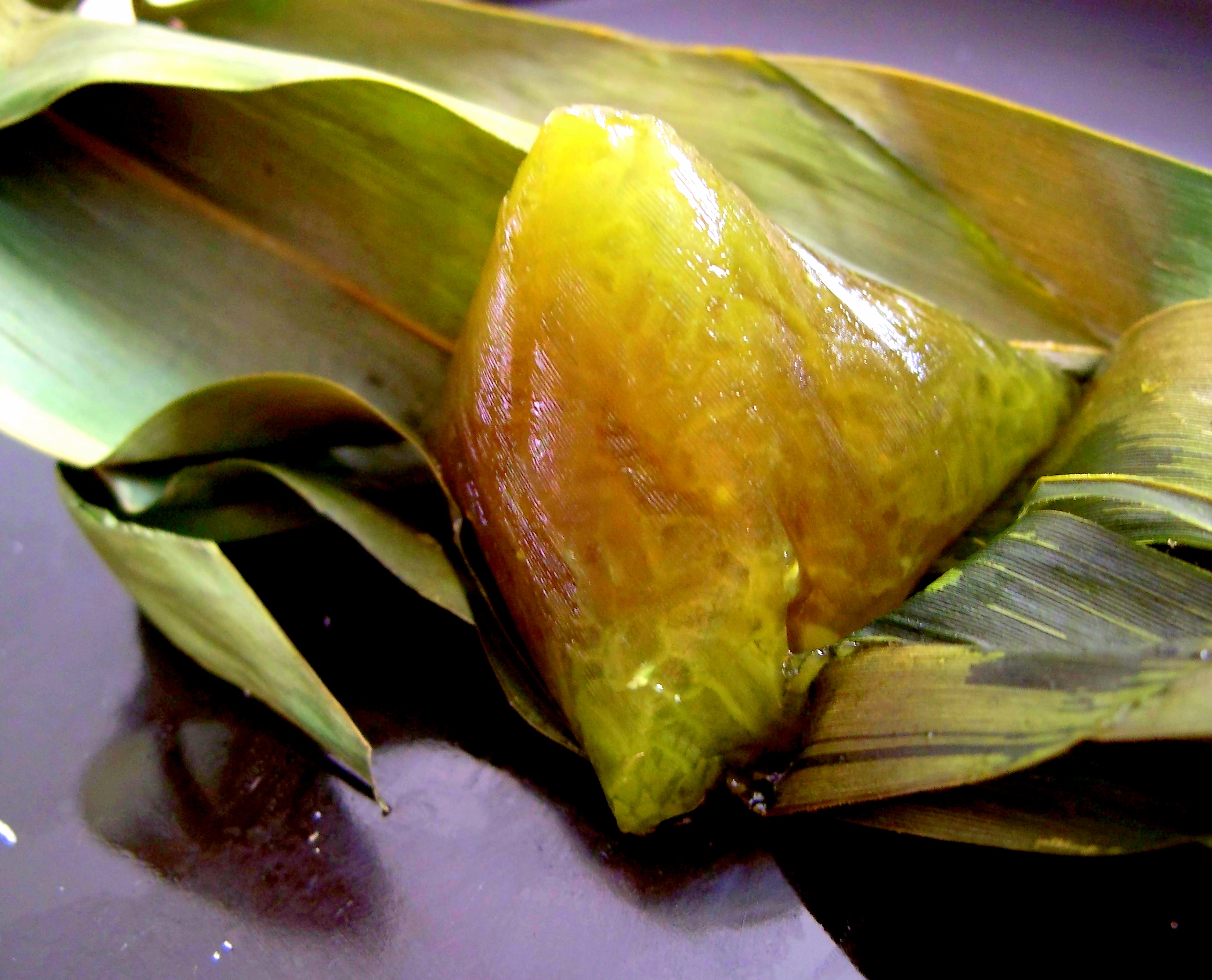
The recipe calls for a lot of prep time (up to a year!), and the products are little triangular pyramids sold for $3.75 a bunch at sandwich shops. But hey, if you can make bánh ú tro, you can enjoy it any time of the year without having to wait until the Fifth of Lunar May.

1. Ash water

Use the fine, soft ash from burnt coal, dissolve in water. The common ratio is 50 grams of ash for every liter of water, but it varies depend on how strong the ash is and how strong you want your banh to be. Let the ash collect at the bottom, leaving a clear solution. Sift the solution to get rid of dirt and coal bits.
You can use lime powder instead of ash. White lime gives bánh ú tro the natural green hues of wrapping leaves, red lime gives them reddish amber hues. The mixing ratio is 20 grams/liter for lime powder.

2. Sticky rice

– Use 1-year-old sticky rice. Such grains are more powdery than new sticky rice. Wash sticky rice with cold water, then soak in ash water overnight or until the grains break easily when you press them between two fingers. Soaking time varies with different ash types and grain types, but beware that grains soaked for too long can make the banh smell like ash.
– After the grains are done soaking, rewash them thoroughly with water and let dry.

3. Sweet filling

Traditional bánh ú tro doesn’t have filling and is eaten with honey or sugar. But bánh ú tro with fillings are arguably tastier than their plain counterparts, and here are a few filling ideas:
Mung bean paste: split and peeled mung beans are washed and cooked until tender, mashed while it’s still hot and mixed with sugar. The bean-sugar ratio varies to your likings.
Red bean paste: soak red beans in water overnight to soften them. Wash, cook until tender, mash. In a skillet, add 1 tbs oil and 200g brown sugar for every 500g red bean, stir on low heat until all sugar dissolves. Let cool.
Grated coconut: boil water and sugar with ratio 1:1 on low heat , stir frequently until all sugar dissolves. Pour the syrup into grated coconut and mix until it becomes a soft sticky ball.

4. Wrapping bánh ú tro

– Use bamboo leaves (about 5-6 cm wide and 30 cm long) or banana leaves cut into similar size. Wash the leaves clean and let dry.
– Bend one end of a leaf into cone shape. Use 2-3 leaves to increase the banh size.
– Put in 2-3 teaspoons of sticky rice for the plain kind. Or 1 tsp sticky rice, followed by 1 tsp filling, then 1 tsp sticky rice on top for the sweet kind.
– Wrap the remainder of the leaf tightly around and over the cone until all faces are covered.
– Tie it up with a nylon string. Then tie every ten banh into a bunch with a long string to easily pull in and out of boiling water.

5. Boiling bánh ú tro

– Cover the bottom of a large pot with banana leaves or bamboo leaves to keep banh from sticking to the metal.
– Arrange banh in the pot. Pour water. Water level should be at least 4 inches above the banh. Make sure banh stay submerged the whole time, you can cover banh with a big sieve and a weight on top to keep banh from floating up.
– Boil banh for 45 minutes to an hour (after the water starts boiling). Add more water if the level gets too low.

Submerge cooked banh in cold water for 10 minutes to aid cooling, then hang them dry. Well made ones can last 2-3 weeks at room temperature.

Recipe translated from source.

Down the Aisles -1: Endangered species chocolate

June 25, 2009 By: Mai Truong Category: sweet snacks and desserts

Follow up on my previous chocolate review, this time in a much better mood as I’ve settled at the new school. New city, getting further behind in blogging.

Deep forest mint: dark with mint (72%): what do you expect, well… it’s like eating your toothpaste, only more unyielding. It’s not bad, but a little sweetness would be nice. You know how you picture a humid, colorful setting damped with flavors and warmth when you hear “deep forest”? This chocolate doesn’t taste at all tropical. It’s cold, harsh, dry, it flushes your sinus with strength. I prefer mint chocolate ice cream. I shouldn’t score this one.

Wolf: dark with cranberries and almonds: crunchy, crunchy, little bar, almond, chocolate, there you are… no trace of cranberries though. What else is there? Have I lost taste for dark chocolate? Perhaps. It is 70% in any meaning you can think of. Pass.

Sea otter: smooth milk (48%): little sweet treat. My new favorite. 48% seems to be the best medium, not too bitter, not too sugary, not too hard, not too soft. I can eat it all day long. What is it like? Sleeping in on a rainy day – you just keep wanting more. 9/10.

Grizzly bear: dark with raspberries (70%): it’s really not that that much different from the wolf, if you forget about almonds for a moment. Good for passing time. 7/10.

Bat: I didn’t know that bat was among the endangered species. Anyways, the bat tastes like the grizzly bear, 70% is 70% everywhere, regardless of species. Points? 7/10 (surprise!)

For 2.79 I can either get an animal or 3 bars of IKEA chocolate with 30 cents left over, which taste (and sound) delicious. The animal bars will make you feel like you’ve done something good for the world. IKEA choklad will make you feel like you’ve done something good for yourself. Take your pick.

Next on Down the Aisles: Mo’s Bacon Bar and Hibiscus sorbet

Recipe for bánh bía (Vietnamese-adapted Suzhou mooncake)

June 14, 2009 By: Mai Truong Category: Chinese, RECIPES, sweet snacks and desserts, Vietnamese

If you just want to enjoy a piece of sweet flaky mooncake, Vietnamese sandwich stores and bakeries are the place to go. If you have plenty of time at hand and little trust for unknown kitchens, then hit the market to find these ingredients for a batch of 12 bánh bía:

1. The skin dough

– 375g all purpose flour (Pillsbury preferred)
– 110g confectioner sugar
– 80g corn/canola oil
– 100ml coconut milk (Chef’ Choice preferred)
– 50ml water.

Add flour, sugar, oil and coconut into a mixing bowl, then slowly add water while kneading until the dough is smooth. Don’t need over 2 minutes or the dough would be too hard to flatten later. Cover with cling wrap and let the dough sit for 1 hour. Divide into 12 balls afterwards.

2. The inner layer dough

– 125g tapioca flour
– 95g wheat flour
– 110g corn/canola oil

Mix the flours and oil together. Do not knead. Let sit for 1 hour, then divide into 12 balls.

3. Bean paste filling with durian flavor and salted egg yolk

– 400g mung bean (peeled and split)
– 300g sugar
– 1 cup oil
– 1 tbs maltose sugar
– 1 tsp baking soda
– 1/4 cup wheat starch (the type used for potsticker)
– 200g durian flesh (ground up in a food processor)
– 12 salted eggs
– 1 slice of ginger
– rice wine

Separate the egg yolks from the whites, wash with cold water, then soak the yolks in rice wine and finely chopped ginger for about 30 minutes. Take the yolks out the wine mixture and quickly soak them in vegetable oil. Finally, bake the yolks on aluminum foil in 300F for 10 minutes.

Soak the mung beans in water and baking soda until they soften. Rinse them with cold water, steam, wait until the beans cool to make a fine paste with the food processor.
In a non-stick pan, simmer the bean paste with 200g sugar, 2 tbs maltose, and 1/4 cup oil over low heat. In another pan, mix 1/2 cup oil with 100g sugar to make caramel on low heat. It should be golden brown, or the pastry filling would be bitter.
When the sugar has caramelized, pour the bean paste into it and mix until there is no visible sugar. Add 1/4 cup of oil and wheat starch and continue simmering. Lastly, add durian paste and stir until the bean mixture no longer sticks to the utensil. Let the paste cool and divide it up to 12 portions.

4. The egg wash

– 1 egg, room temperature
– a pinch of salt (kosher salt preferred)
– 1 tbsp water
– 1 tsp sesame oil
– 1 tsp cashew oil
– 1 tsp dark corn syrup

Mix all ingredients into a blend.

5. Make the cake
– Flatten each ball of skin dough, then use it to wrap the ball of inner layer dough (like a dumpling). Keep the dumplings moist until all 24 balls of skin dough and inner layer dough are paired up.
– Gently flatten each dumpling into oval shape about 2mm thick, roll the sheets into Swiss-rolls.
– Repeat the flattening process with the Swiss rolls, then let the dough balls rest for 15 minutes. Make sure that during this process the skin dough always covers the inner layer dough, or the pastry will have a rough surface after baking. If the dough is too tough, let it sit for 5-10 minutes. Do not exert too much force while flattening.
– Flatten the dough balls again into disks, and use them to wrap up the balls of bean paste (each with an egg yolk inside).
– Preheat oven to 400F
– Bake the pastries for 15 minutes, then take them out to brush egg wash on one side, and continue baking for another 10 minutes.
– Let the pastries cool and oil release for a few days.

6. Eat the cake
(Caution: it may be too fatty and sweet to eat whole, one quarter at a time is the usual safe quota)

Recipe translated from source.

Tags:

Down the Aisles -2: Bittersweet

February 26, 2009 By: Mai Truong Category: Opinions, sweet snacks and desserts

Ten weeks after sending off the application to grad school, including 2 weeks of anxious waiting and roller-coaster cycling of hopefulness and hopelessness, the first result I got back is a rejection. How to handle a rejection? You don’t, you just ignore it. It wasn’t a bad moment, to be honest. In some way it was relieving, no more waiting from that school. It’s been restless for the last two weeks. I’ve heard friends getting acceptance and rejection, I’ve thought about the embarrassment, and the choices I have in the worst scenario. Switching to med school would take at least one year to study for the MCAT, another to apply and hang around worthlessly, another 4 in grad school (in the case of acceptance), perhaps 2-3 years of residency (if graduated), which totals to 8-9 years, about the same time length to professorship (if everything goes well). Or I could be a bum, but Chris had assured me that I wouldn’t make it. Judging from my GRE scores, I have little belief that my MCAT score would be impressive, multiple choice tests and I aren’t buddies.

But, those were just negative thoughts in the dark hours. I still have classes, movies, and chocolate for self-indulgence. And all the cheesy appreciation for the support from parents and professors, which I consider quite personal(ly valuable) and would spare you from. However, I will disclose my other personal stuff, which has to do with chocolate. Thanks to Mudpie, I’m now racing with time in consuming 9 bars of chocolate, or 22.7 oz (645 g) of chocolate liquor, water-filtered beet sugar, cocoa butter, soy lecithin, vanilla, and flavors. It will help you overcome any depression initiated by academics. So here goes.

Zebra (70% cocoa, dark chocolate with orange): feel smooth, aromatic right after opening the wrapper, a little bitter, easily melt in hand, not as orange as expected, the bitterness is not noticeable when let melt in mouth. No orange peel pieces visible like Valrhona’s dark with orange. Score: 7/10.

Koala (70%, smooth dark with cherry): same bitterness with subtle sweet from cherry, almost unnoticeable taste of cherry except for the smell, pleasant, like lying on the grass at night, a very genteel experience suitable for those who don’t like dark but have to eat it anyway. Score: 7.5/10. On second thought, it’s like talking to an old man, there’s some grumpy bitterness, but there is definitely something sweet and cute.

Lion (35%, smooth milk chocolate): definitely a little too sweet, better to let melt on your tongue than to chew, as the sugar splash is intense. Maybe I’m just too accustomed to dark chocolate. The silky feel makes it reside a level above Hershey’s. Score:6/10 for perfect achievement in ordinary. Suitable for unadventurous nibblers.

Dolphin (48%, milk chocolate with cherry): pieces of cherries inside, do not melt on hand, firm, confident, lingering, suave, take a bite and you’d feel like you’re bathed in milk and wrapped in velvet. Very sensational, yet very assertive. Perfect touch. Score: 9/10.

The Endangered Species chocolate producers donate 10% of the net profits to help species and habitat, so their taste is moved up a notch for me. My ambition is to try all of their collection, to collect for myself the wrappers with animals and their story inside. I’ve also mastered the skill of rewrapping the bars. They look like new.

Next on Down the Aisles: more Endangered Species Chocolate

DISCLAIMER: I received no free product or monetary gift in exchange for this review.

Afterschool treats

January 20, 2009 By: Mai Truong Category: sweet snacks and desserts, Vietnamese

First day of school is exciting. After a long break, we got up early again, felt motivated, felt ready to be hardworking. This may be the only day in the semester we get up early by choice, but let us not stress that. We checked our emails to see if the professor is in town and will hold class. Yes he is. He even came on time and commented on the president’s inauguration speech, not that there is much to comment. We hung around the undergraduate lounge, tried to read, but we were still in web-surfing mode. Our friends saw us for the first time after 5 weeks, some said they built a fence over the break, some said some said they shouldn’t have drunk so much the night before, some expected this to be an easy last semester. The usual day, the usual bunch. Our professor asked us what on earth is going on with our other professor, from whom we hadn’t heard since our last email 2 weeks ago, so we truthfully said we have no idea. We heard, but couldn’t focus during the lecture, mind wandering what should we blog about today. We forgot to bring lunch because we felt so motivated in the morning. We had only 1 class today from 12:45-2:00, but we were hungry.


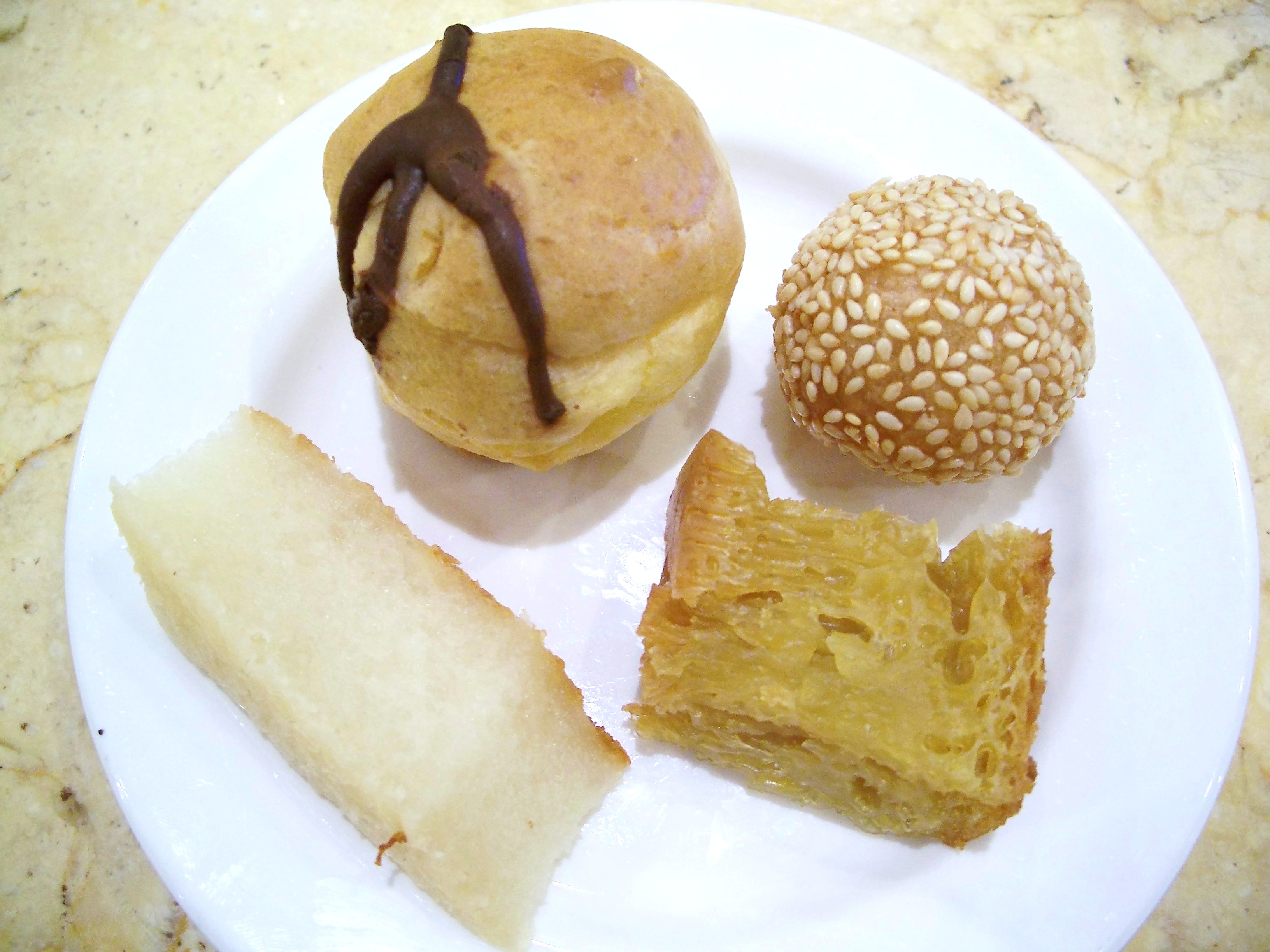
School kids in Vietnam have vendors waiting for them outside the school gate. As soon as they get out, they swamp the vendors’ modest environs. Clockwise from bottom southwest:

banh khoai mi nuong (baked cassava banh): white, firm, sleek, sweet. Too sweet, maybe? Easily tiresome after a few bites.

banh su kem (chou à la crème – cream puff): avec du chocolat pour la présentation seulement. More chocolat et less pastry would have been nice. Too little creme inside. But I do prefer these bite-sized hollow balls to monstrous orange-sized puffs in Vietnamese boulangeries.

banh cam (“orange” banh): sesame ball is the commonly identification in America, which obviously makes more sense than “orange” balls, when the balls contain absolutely no orange or citric element. Perhaps it refers to orange the color, eh? Or the shape? Another item seriously shrunk after immigration. It was actually the size of a small orange when it was in Vietnam. Sugared bean paste inside, deep fried flour shell outside. Best freshly made. Soon afterwards, the crunch leaves and each bite is a stream of oil. The thinner the shell is, the less oily the ball is. Average snack.

banh bo nuong (toasted banh bo): so… is beef (like pho bo, you know…), but fear not, this dessert does not contain animal product, much less animal flesh. Why call it bò? Perhaps because it looks like cow tripe? Who knows. Just leavened rice flour. I can’t tell if it has sugar or whatever else. It’s just light. Fluffy, lightly sweet, lightly sour. Untoasted banh bo is white like a feather ball. Toasting is supposed to strengthen both the texture and the taste. I had never liked it, because of the sourness, and I don’t now.

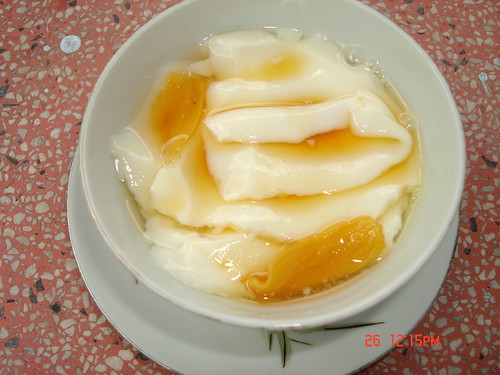
This is what the dessert selection at Kim Son has become after they stopped serving dau hu nuoc duong (soft tofu in sugar water). Do I regret not eating from vendors when I could? Maybe. I don’t know most street foods, don’t know who make them best, don’t know how differently they taste compared to their Americanized cousins. But wherever it is, however it’s made, dessert is like the first day of school, not too much of a celebration in its honest self, simple or extravagant, it’s a delight we all look forward to.

Sweet New Year began with chè

January 01, 2009 By: Mai Truong Category: Comfort food, Houston, sweet snacks and desserts, Texas, Vegan, Vietnamese

We heard dapples of fireworks last night, other than that, everything was normal. TV had the usual shows, roads had the usual cars, the usual air, the feeling of a usual day. Isn’t that strange? New Year came quietly in this town, but with all the bombing and protesting around the world, I suppose a quiet peaceful New Year’s Eve is a nice New Year’s Eve. No champagne, no confetti, no wishes, no counting down. We slept.
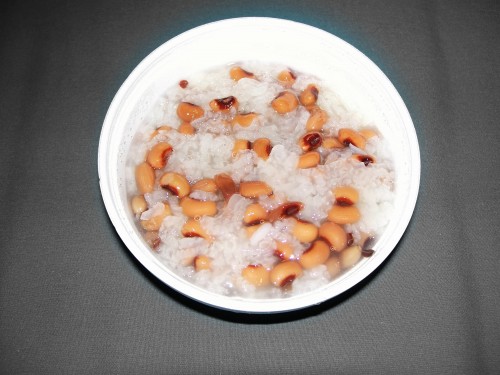

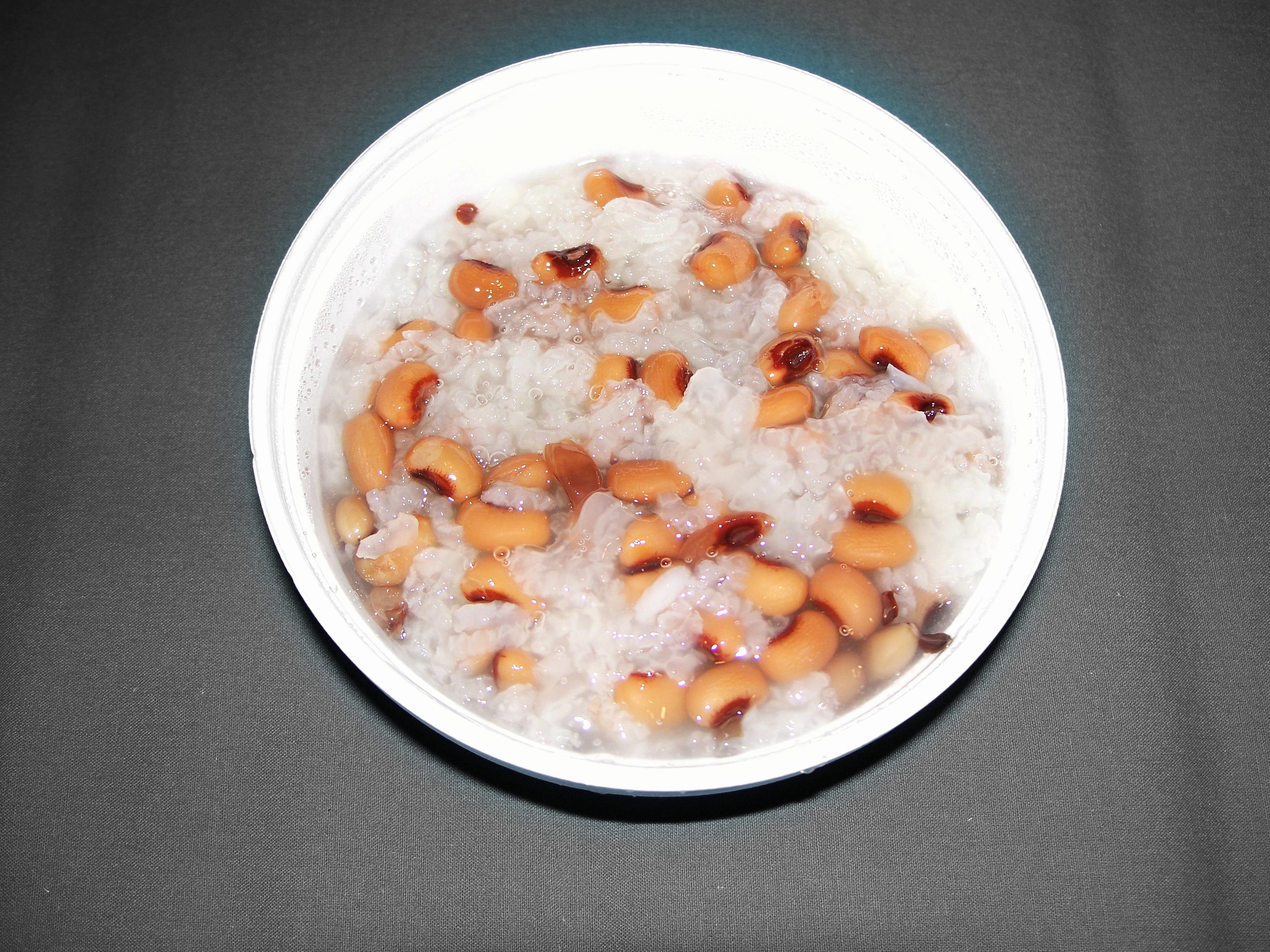
But how about some black eyed pea? 🙂 Not only is it a traditional American New Year’s food, it always appears in a baby’s first (and most important) birthday in Vietnam (quite a connection, I know… but a good bean, isn’t it?). The word “đậu” for bean, or pea, has the same spelling with the word for passing (an examination), chè is a dessert, so chè đậu trắng is a sweet food of good luck for the beginning of something. Cooked until soft, washed with cold water, the hard “black eye” part of the testa taken off, then cooked again with sticky rice and preferably brown sugar, the beans melt in your mouth. In an average pot of che dau trang, you see the sticky rice makes a gluey protection of the beans, the seed coat is still just a tad chewy, your jaws and tongue will enjoy a mix of texture. This might be exclusively enjoyable for those with an eye on texture food, myself included. In a good pot of che dau trang, you can see each grain of sticky rice and each shapely pea, but each spoon will only give you a sweet, nutty, almost homogeneous mixture. Oh, can’t forget the slightly salty, thick and fat coconut milk, of course. Coconut milk makes everything aptly better.
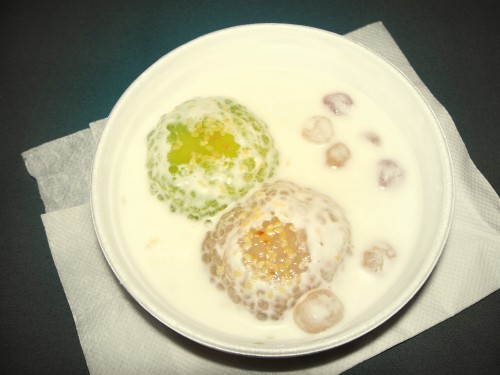

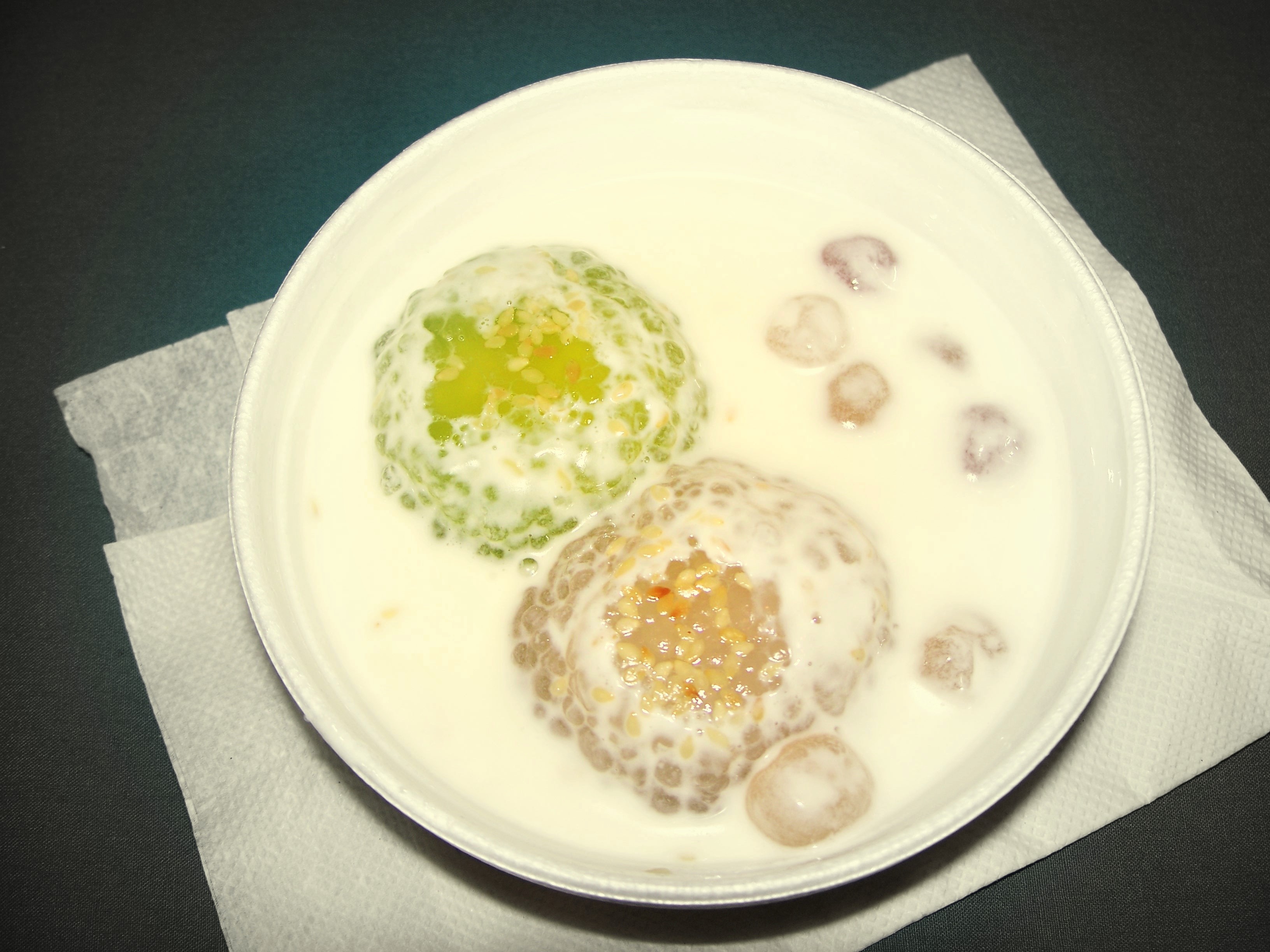
Coconut milk sneaked in here too… A small cup of chè bột báng (tapioca chè) from Lee’s Sandwiches. The big pink and green balls have mung bean paste inside, the little ones are your usual tapioca marbles in bubble tea (only slightly bigger and not dark brown). There is no sticky rice, but there is a teaspoon of pan-dried sesame seeds atop. Chewy and sweet is the main theme che bot bang shoots for. It’s pretty light.
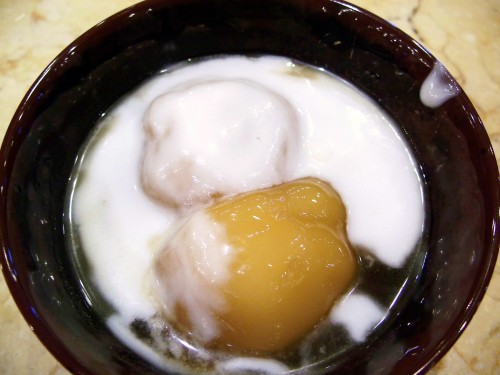

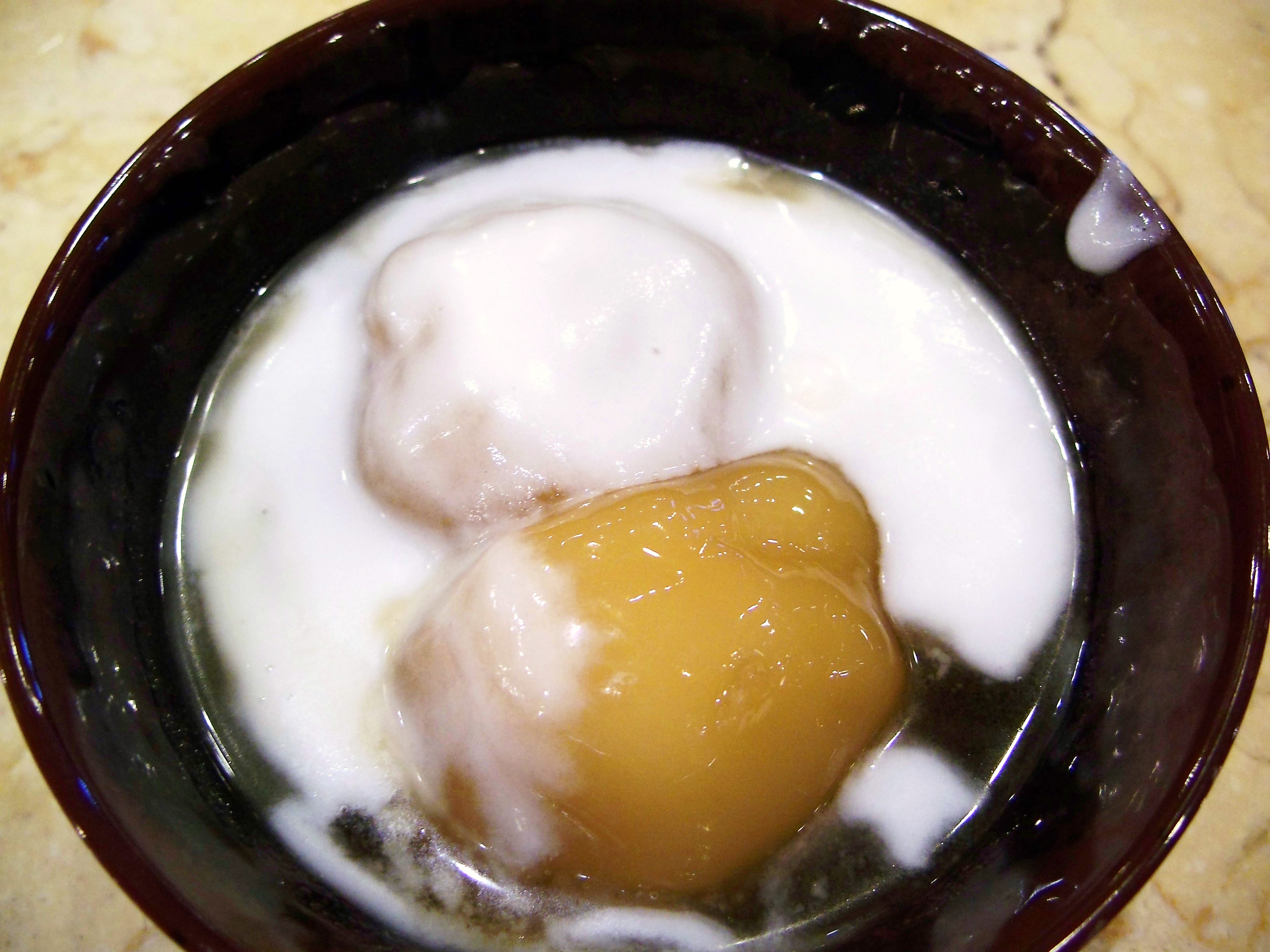
Che is a vegan snack. Sticky rice, bean and coconut are about the main ingredients in any kind, some have fruits or roots, but eggs and milk stay out of this business. So how many variations of che do you think there are? Quite a few, actually. Chè bắp (corn), chè bột báng (tapioca), chè bột khoai, chè củ năng (water chesnut), chè củ mài (a kind of yam), chè chuối (banana), chè đậu xanh (mung bean), chè đậu đen (black bean), chè đậu đỏ (azuki bean), chè đậu trắng (black eyed pea), chè hạt sen (lotus seed), hạt mít (jack fruit seed), chè hạnh nhân (chesnut), chè nhãn (longan), chè khoai lang (sweet potato), khoai môn (taro), khoai mì (cassava root)…, and many others I haven’t tried. Are there similar desserts in other countries? I don’t know, but certainly not in the US, where people say ew to soy milk (and not to raw clams). Kim Son, quite to my disappointment, has stopped serving che dau trang for some while, but still has chè trôi nước, another familiar dessert of the Vietnamese, especially in the North, where some call it bánh trôi, as it’s a ball floating in sugar liquid. Such simple name is made simpler, pronunciatively, by the Southerner, when they turn it into chè xôi nước: xôi – sweet sticky rice (the coat of the ball is indeed made of sticky rice flour), in nước – (sugar) water. The stuffing is, surprise surprise, Mung Bean Paste. Sweet outside, mild and nutty inside. A beast to work your jaw. Doesn’t it remind you of banh it? Sprinkle some sesame seeds and spoon in coconut milk for a homey taste of the countryside.

Off to a well-seasoned new year, everyone! 🙂

Remember, Blue Danube Cafe

September 06, 2008 By: Mai Truong Category: California - The Bay Area, sweet snacks and desserts


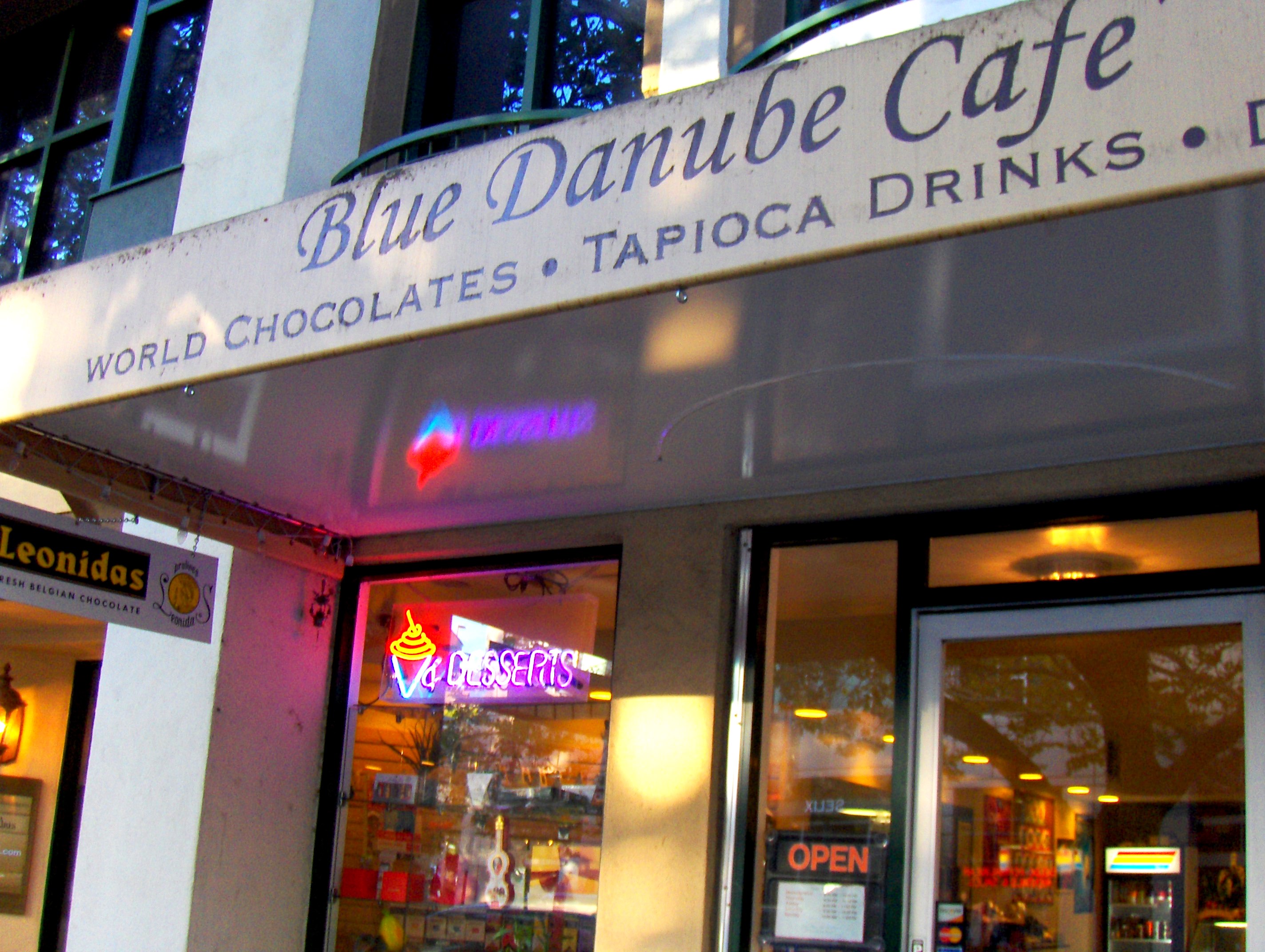
Let me say this before I forget: chocolates need to have simpler, more absentminded-friendly names. Back to my introduction. As much as I enjoy reading the menu ahead to know what I’m getting into before stepping into a place and stepping out in silent indifference, I have a thing for places I just happen to find. Actually I don’t remember how I found this place. Was it a short walk from one of our dinner spots? Was it online? I doubt it was online because it doesn’t quite exist online yet (not to be confused with restaurants of similar names in San Francisco and all). Anyway, we went there, we saw a guy sitting at one of the coffee tables with his laptop who informed us “She’s busy but she’ll be out in a minute,” we did some sightseeing along the glass cabinets of chocolate. I did marvel at their collections of chocolate truffles and the like, but perhaps my stomach has grown bigger so it prefers something bigger than little bitty truffles. My gaze stopped at the cakes. Chocolate cakes of course. (I don’t know how old Penhryn was, but I was surprised to see that people on yelp went there for the bubble tea and not the chocolate. To me that’s like going to college to have parties. At the shop the bubble tea was way in the back and the chocolates were everywhere. Maybe they believe in affirmative action?. I digress…)

We are pretty indecisive when it comes to chocolate. We stood there, we stared, we discussed, we were close to tossing coins had we had coins. The lady came out from the back and sold some chocolate for another lady who arrived after us, meanwhile we were still trying to decide what to get. They all looked inveigling. But we were full from dinner and we had more desserts at home than we could eat, so we got only 2 pieces of cakes, whose names I can’t remember now.


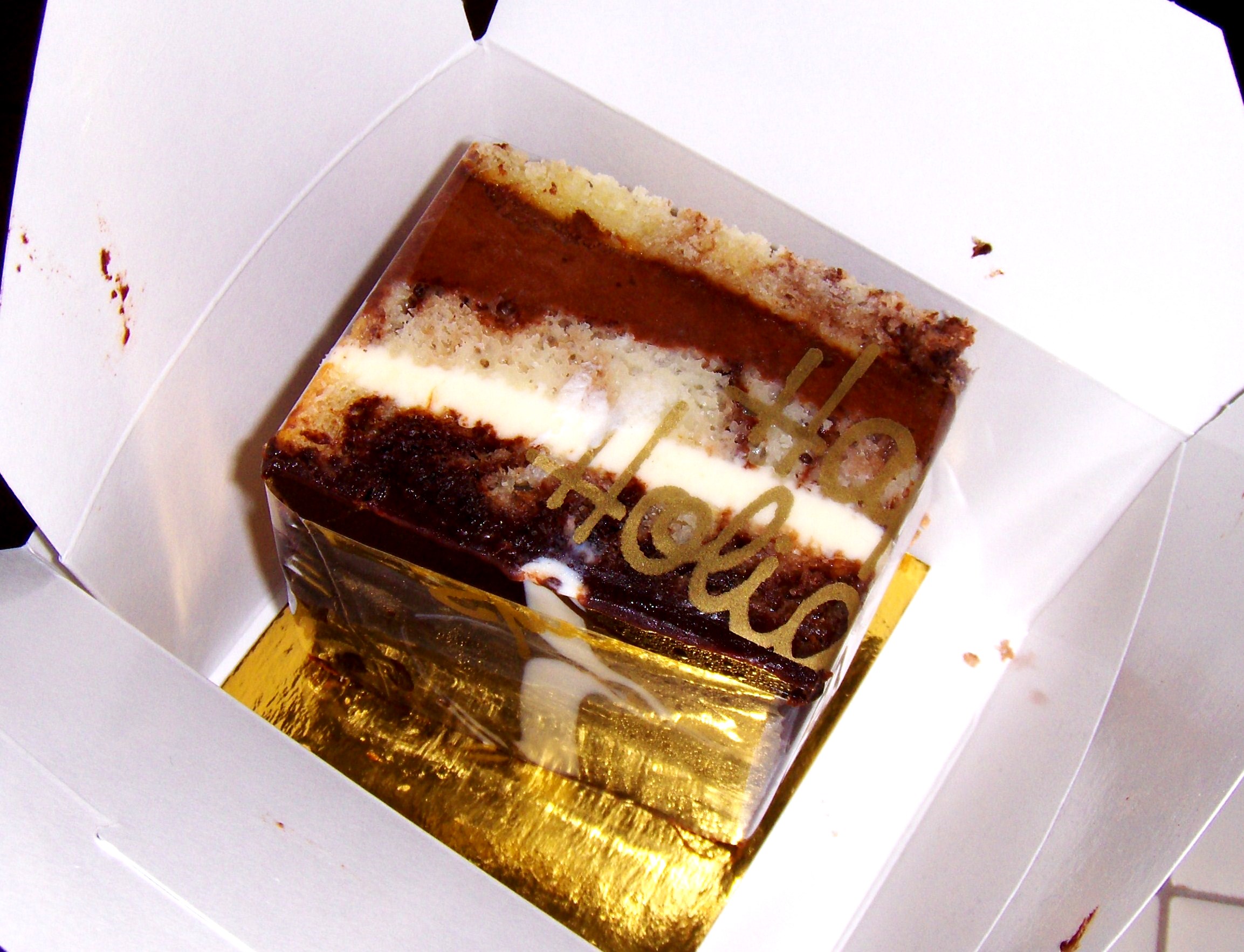
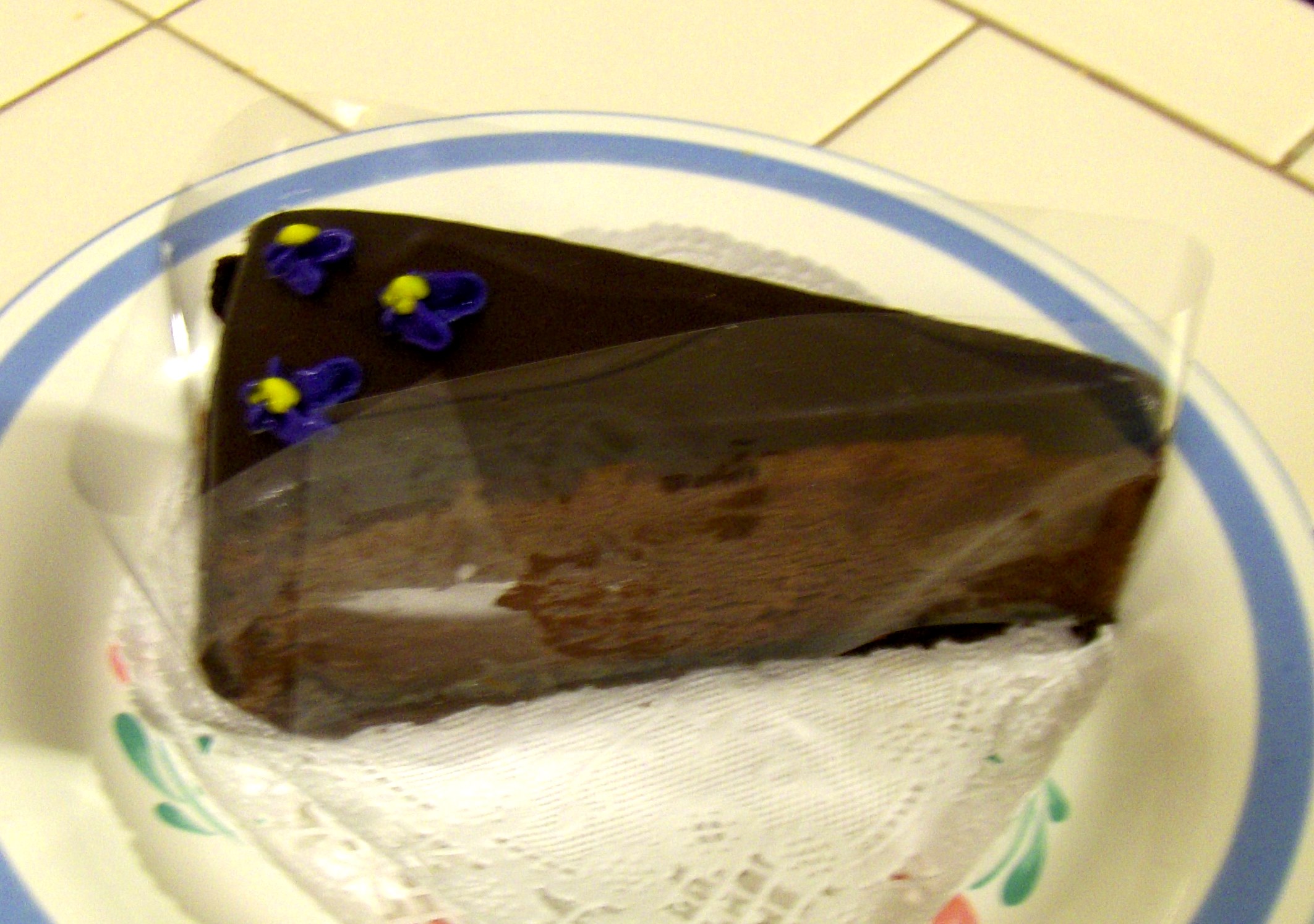
This one was something ganache something. 😛 Getting that overweight son out of that box without smashing it was a demanding task, lemme tell ya.


This one was violet something. I remember the violet part because the flowers on top were purple icing. Maybe there was a hint of raspberry in dark chocolate? I can’t remember. If you’re in Palo Alto, take a walk downtown and make a swift turn into this place and take notes of the names of what you get. I’m no connoisseur to remember rococo names and all, so this is the only name I can think of for these species: Spoon-licking Good.

Address: Blue Danube Cafe
165 University Avenue
Palo Alto, CA 94309
(650) 321-5588

Tags:

Rosie’s Pho – part 2

July 27, 2008 By: Mai Truong Category: sweet snacks and desserts, Texas, Vietnamese

The pho was good. The broth was beefy and the noodle was brothy. Every twirl you manage to pick up with the pair of disposable bamboo chopsticks was worth inhaling a deep breath for the flavor to soak your taste buds and dally with your turbinate. The tripe and the sweet onion rings texture-wise taste about the same to me (see, tripe tastes just fine!), which is good, since I’m soft-tongued and those little zings of spiciness can easily bring me to tears. Tendon and Flank were, frankly, tender, but still a good change of texture from the lean brisket consistency and the rice noodle naivete.

Rosie’s Pho does not serve just pho. It serves a whollota things. Mudpie once amusedly predicted that one day its menu will include pizza and hamburgers. But no, it has stopped expanding, at a menu large enough that I had to carouse over for 5 minutes to find my order amidst various noodle and rice dishes. But my dad didn’t take that long, and he didn’t even have glasses on. So here’s his order:

Grilled beef chunk steak served over rice. Don’t you just love the colorful display? I have no idea what the sauce to the side was, he didn’t have it with his rice, and I was busy snouting in my soup, so I didn’t remember to chopstick a taste, until now. My take is soy sauce with ground peanuts, but please let me know if you have a guess at what it is.

Another shot close up. I just really like the colours, the flowery arrangement, the inviting variety. We see fresh cucumber, tomato, lettuce, onion; we see stir fried bell pepper, more onion; and we see grilled marinated beef, and very little rice. The Vietnamese dishes here are so Americanized that meat overpowers everything. Anyway, dad said he remembered the beef here used to be more tender. Maybe the chef was a little occupied with my humongous USS Pho, and chunky beef got overcharred. Sorry for the hype over the colours.

But we have desserts to make up for it. 🙂

I know, that is not the most dazzling presentation. We had to ask for to-gos, because we sat there too long to let the dust food settle before ordering dessert, and ended up running out of time. In the plastic cup is green tea ice cream, which tastes extremely like banyan pandan leaf (lá dứa) to me. My favorite. I can come here just for this ice cream. Avocado bubble tea and chocolate Capuccino bubble tea were pleasant endings as well. What else can you expect?

Lunch for three with desserts costs a total of $36, tip and tax included. (I kinda miss dining in Vietnam, no tip and tax there.) And we were rolling out filled to the brim.

Address: Rosie’s Phở – Asian noodle soup
2001 Texas Ave S #300
College Station, TX 77840
(979) 680-8580