Flavor Boulevard

We Asians like to talk food.
Subscribe

Archive for the ‘sweet snacks and desserts’

Ice cream and potato chips

May 17, 2012 By: Mai Truong Category: One shot, RECIPES, sweet snacks and desserts


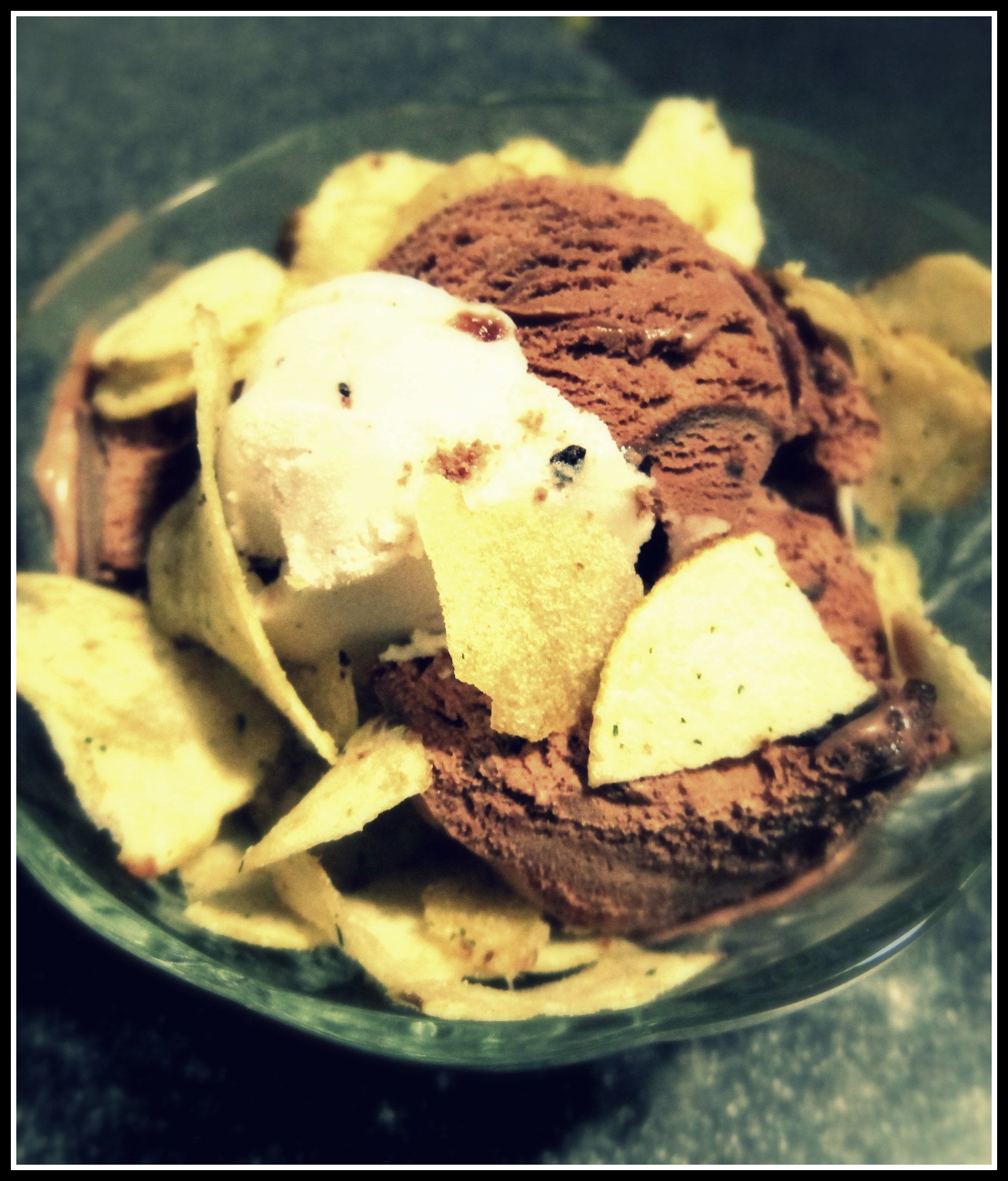
– 2 scoops Dreyer’s Double Fudge Brownie ice cream
– 1 scoop Ben & Jerry’s Cherry Garcia froyo
– A handful of potato chips
Use the potato chips to scoop the ice cream. They may break, in which case lick your finger and get a spoon.

Chewy dried banana

May 16, 2012 By: Mai Truong Category: Fruits, One shot, Southern Vietnamese, sweet snacks and desserts, Vegan


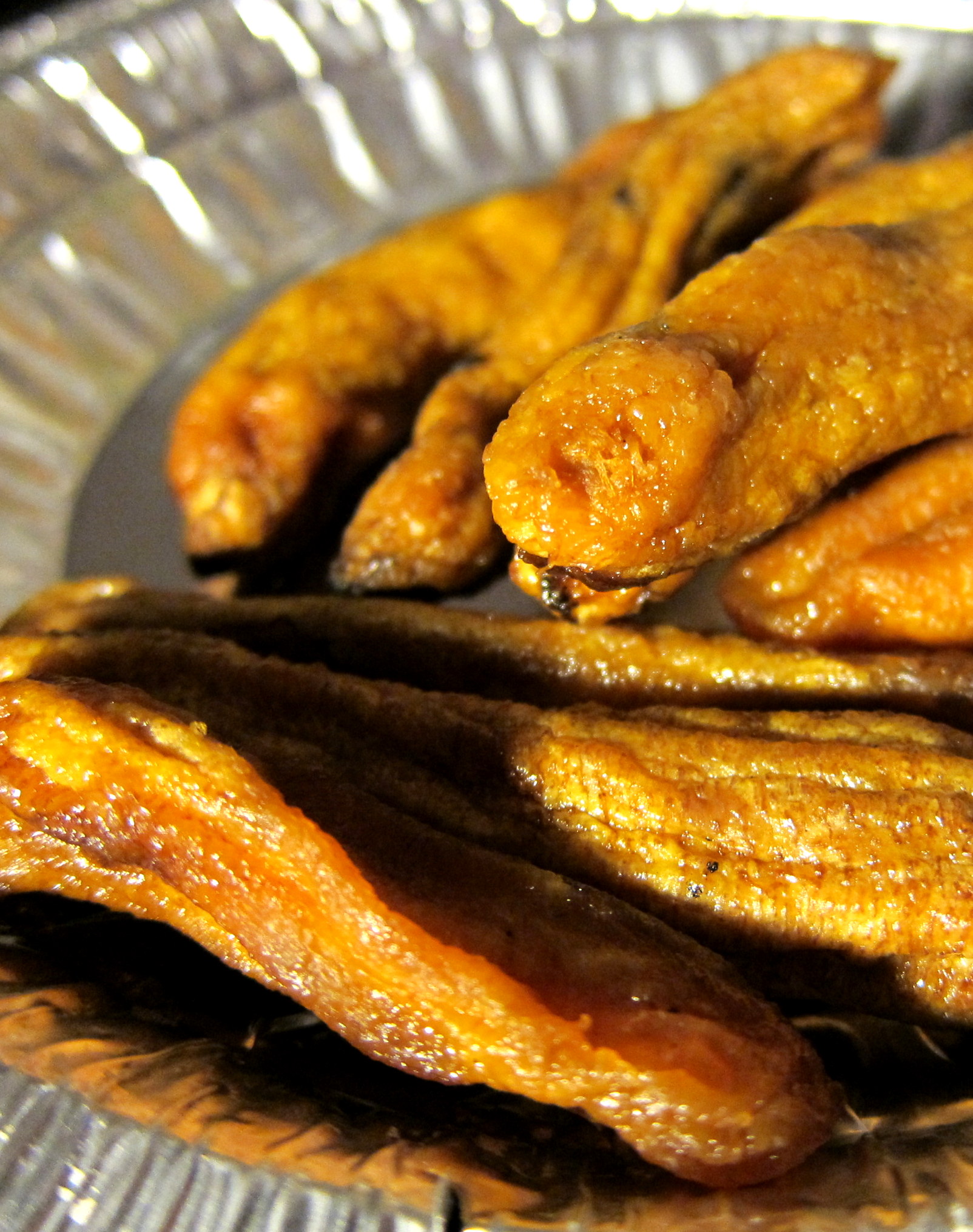
They aren’t banana chips. Those are crunchy, not very sweet, and make you thirsty. These are chewy and packed with honey sweetness. They’re as addicting as soft-baked chocolate chip cookies and as healthy as dried blueberries. At least I like to think so when I nibble twenty of them in one go.


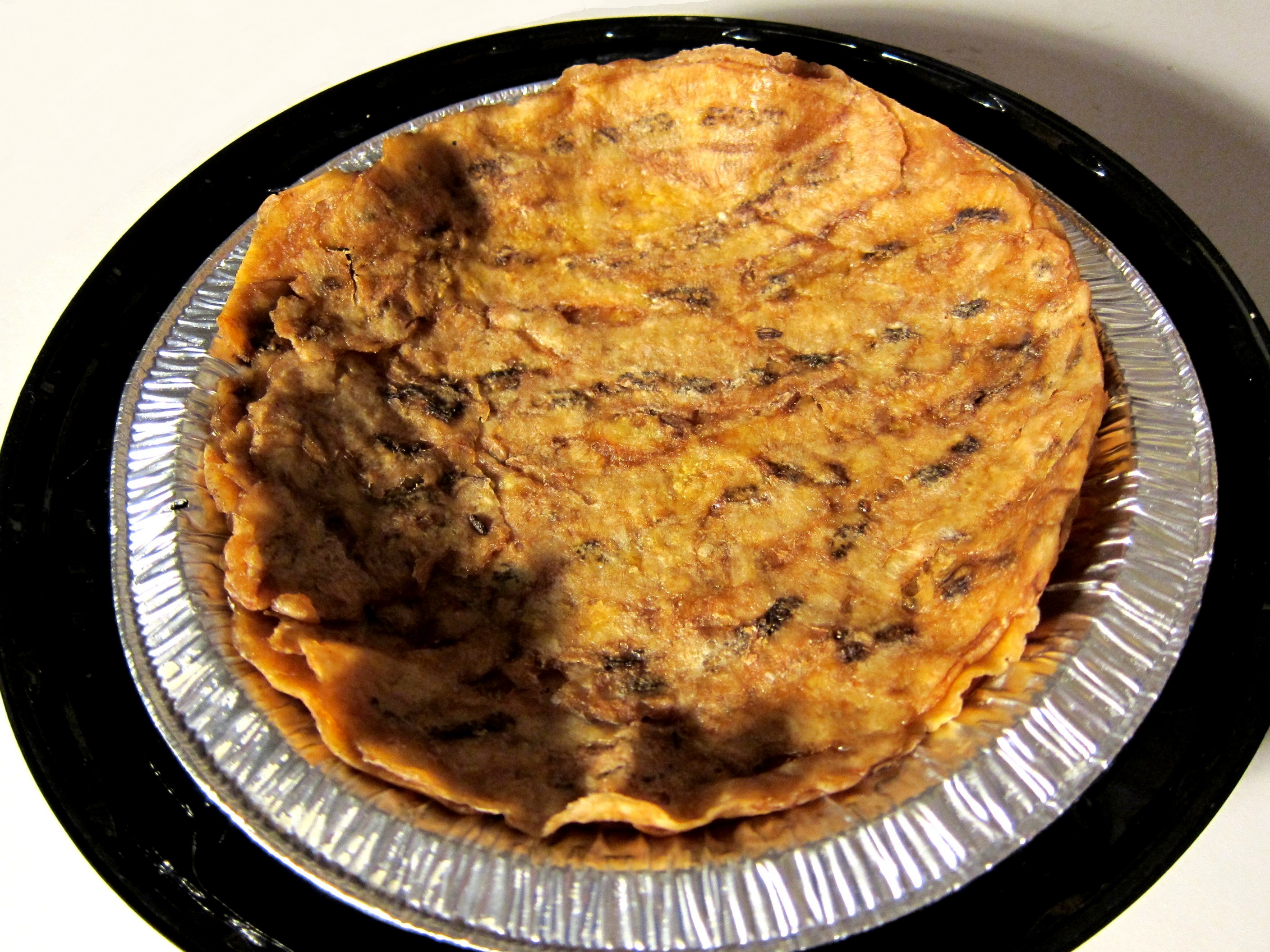
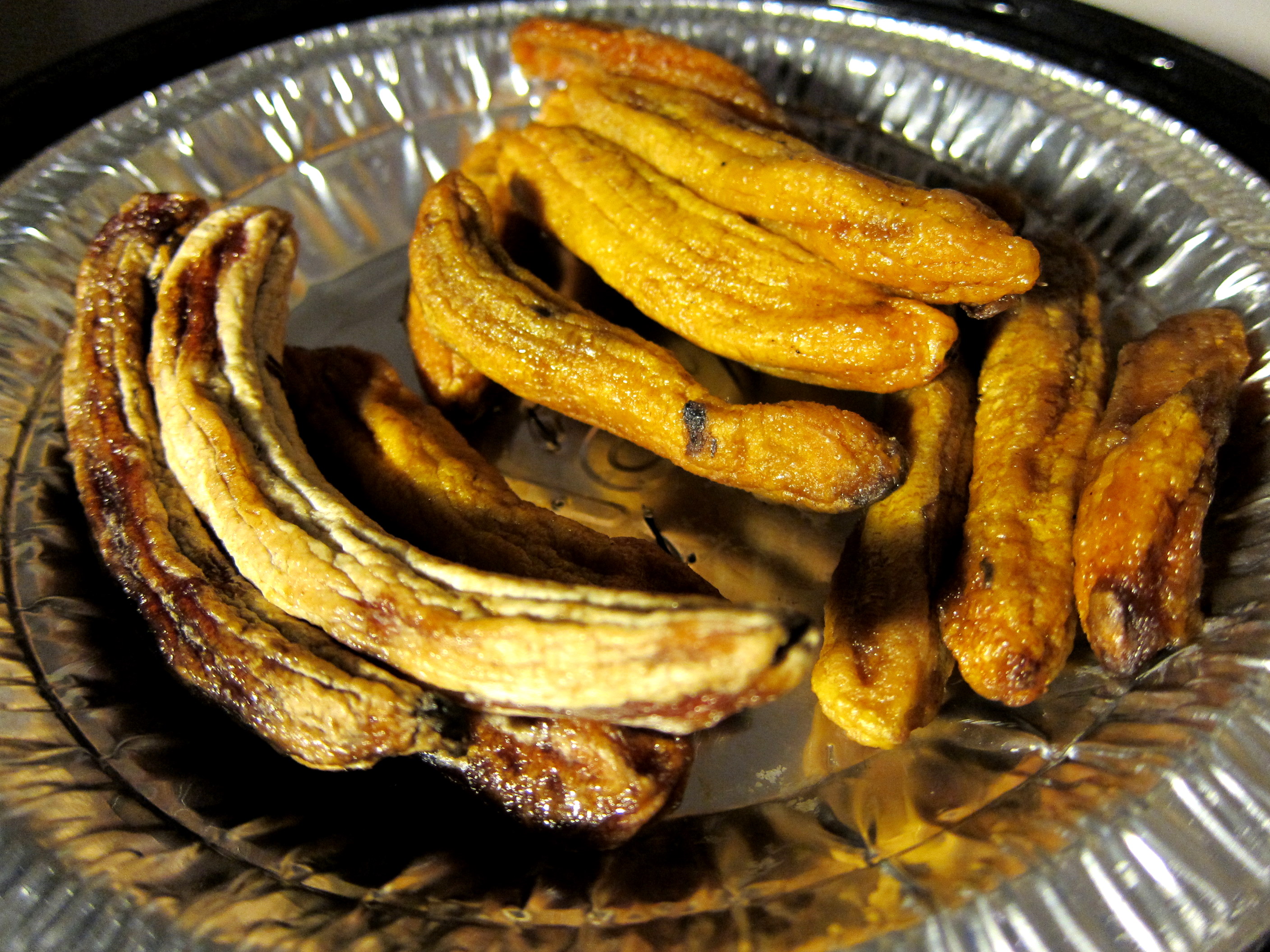
Chewy dried bananas come in many shapes and sizes. Some were pressed into flat sheets (3-5 bananas to make a sheet), laid on bamboo panels and dried under the sun. Cà Mau is known for this kind of chuối khô, the main ingredient of the other 101 banana snack things in the South, e.g., banana candies.


Other bananas are dried whole, and they turn into finger-long wrinkly banana fingers. Eurasia Delight sells two kinds: the normal chuối khô – more caramel looking, shinier, sweeter, shorter and chewier, the “organic” chuối khô – whiter, dryer, longer, not as good.

Flat or whole, I see a pot load of potential for these dried bananas in both the savories and the desserts. [To be continued]

Tags:

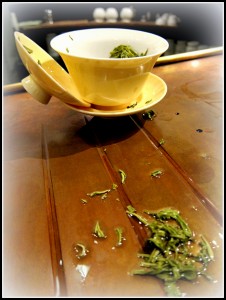
Pre-rain Dragon Well from the Lion Peak

May 07, 2012 By: Mai Truong Category: California - The Bay Area, Drinks, sweet snacks and desserts, Vegan


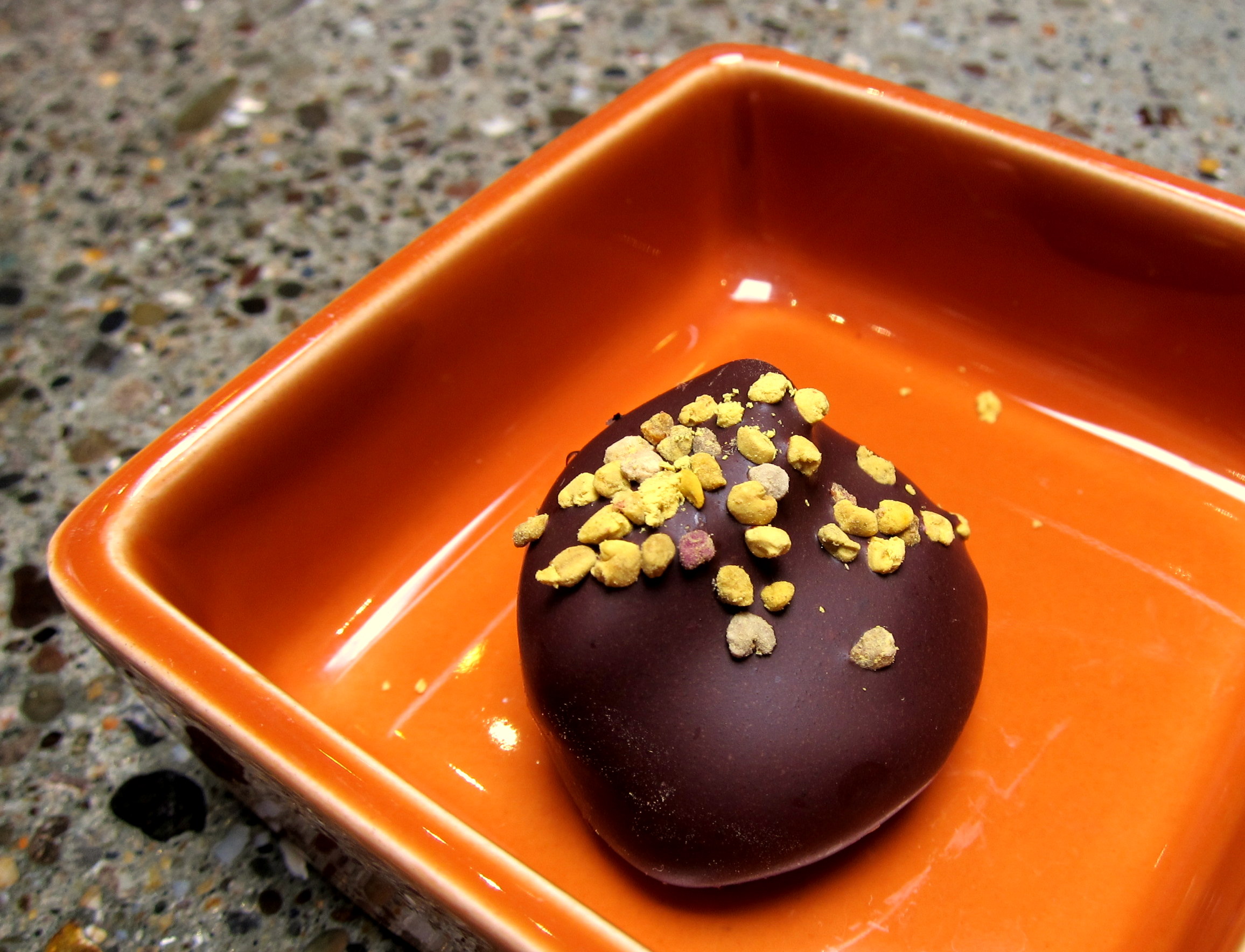
The best (known) green tea of China. The cream of the cream of the crop. I feel sophisticated just drinking it. Paired with a tangerine bee pollen truffle and I almost hear little cherubim playing the lyre.
You can read the whole story in my journal Tea & Mai. I’m off to dance in my head.

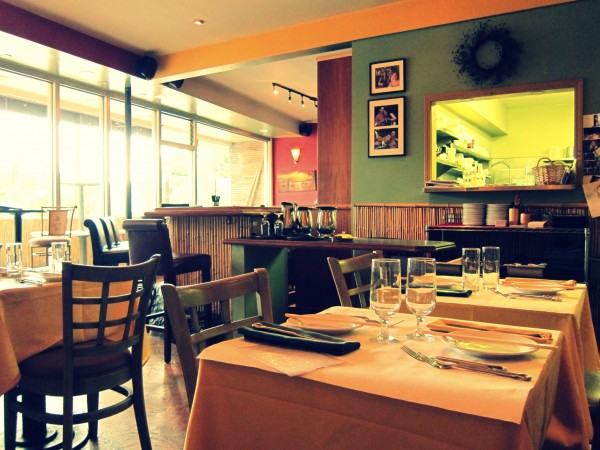
Vanessa’s Bistro, sweet and savory the Vietnamese way

May 04, 2012 By: Mai Truong Category: California - The Bay Area, sweet snacks and desserts, Vietnamese


“You girls know how to eat”, our hostess smiled at us, the check attached. Ten things. At a tapas place like Vanessa’s Bistro where everything sounds tasty, I’d say we did a pretty good job narrowing down our choices, and we asked for the house recommendations only three times. All rendered success.

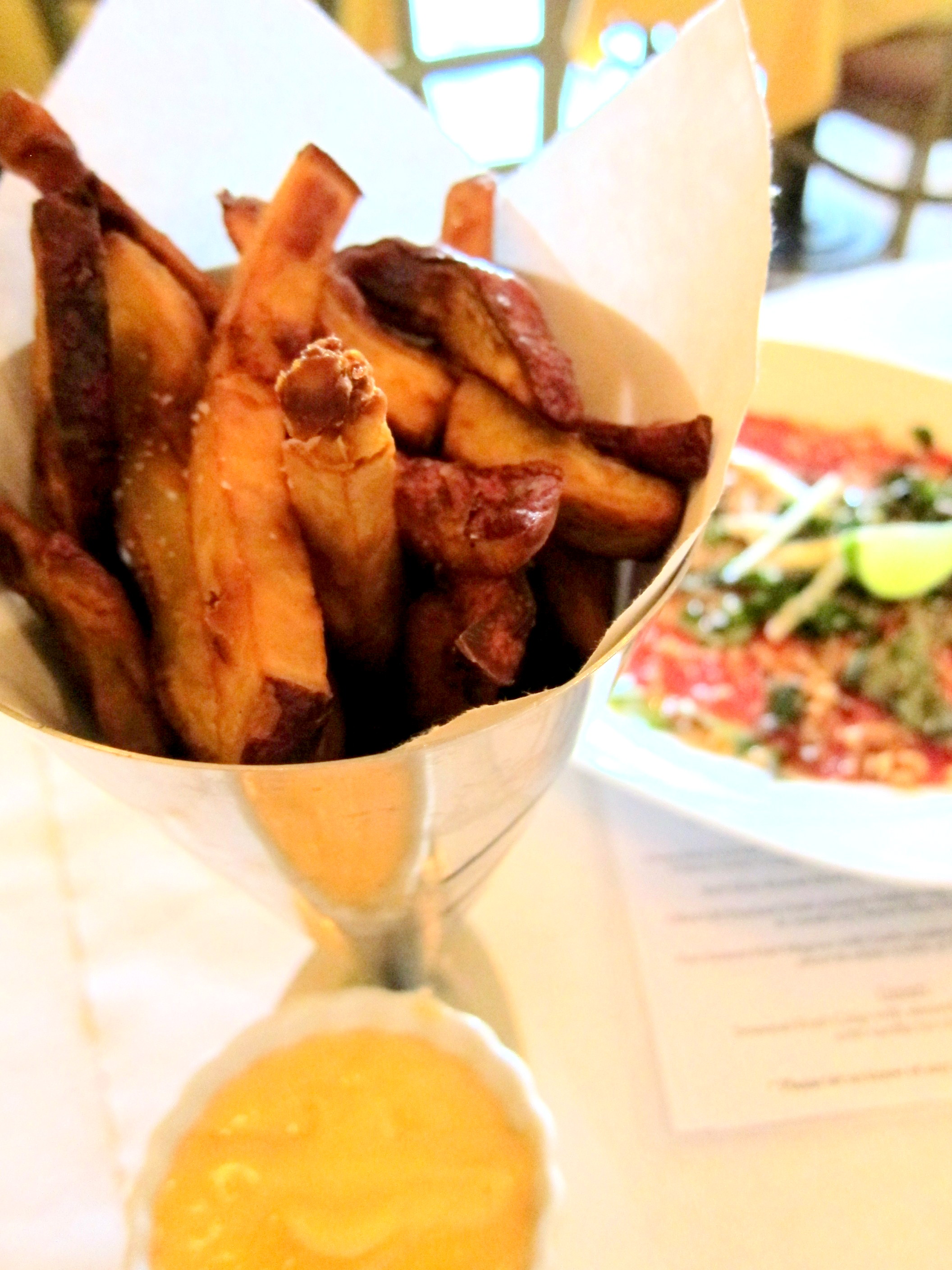
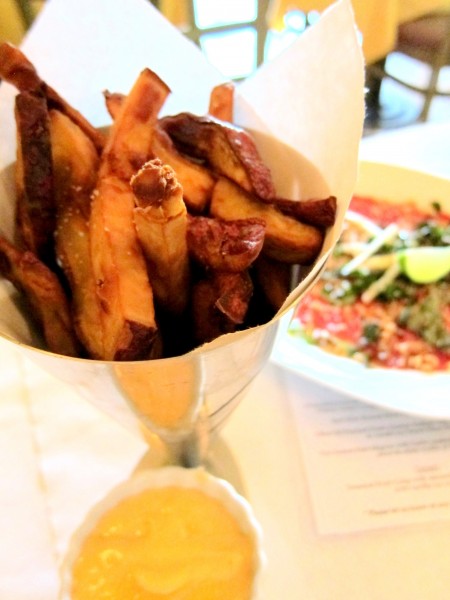
The first decision was the easiest: we’d got to get the sweet potato fries. Neither mushy like their orange cousins nor mealy like the white kinds, these Okinawan sweet potatoes, or purple yams, are sturdy in texture and just gently sweet. With or without the ginger aioli, they were loved. The small plates also stood alone splendidly, not that their dipping sauce came short.
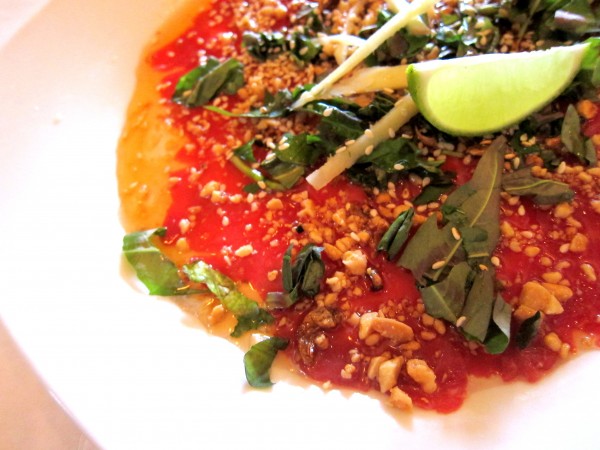

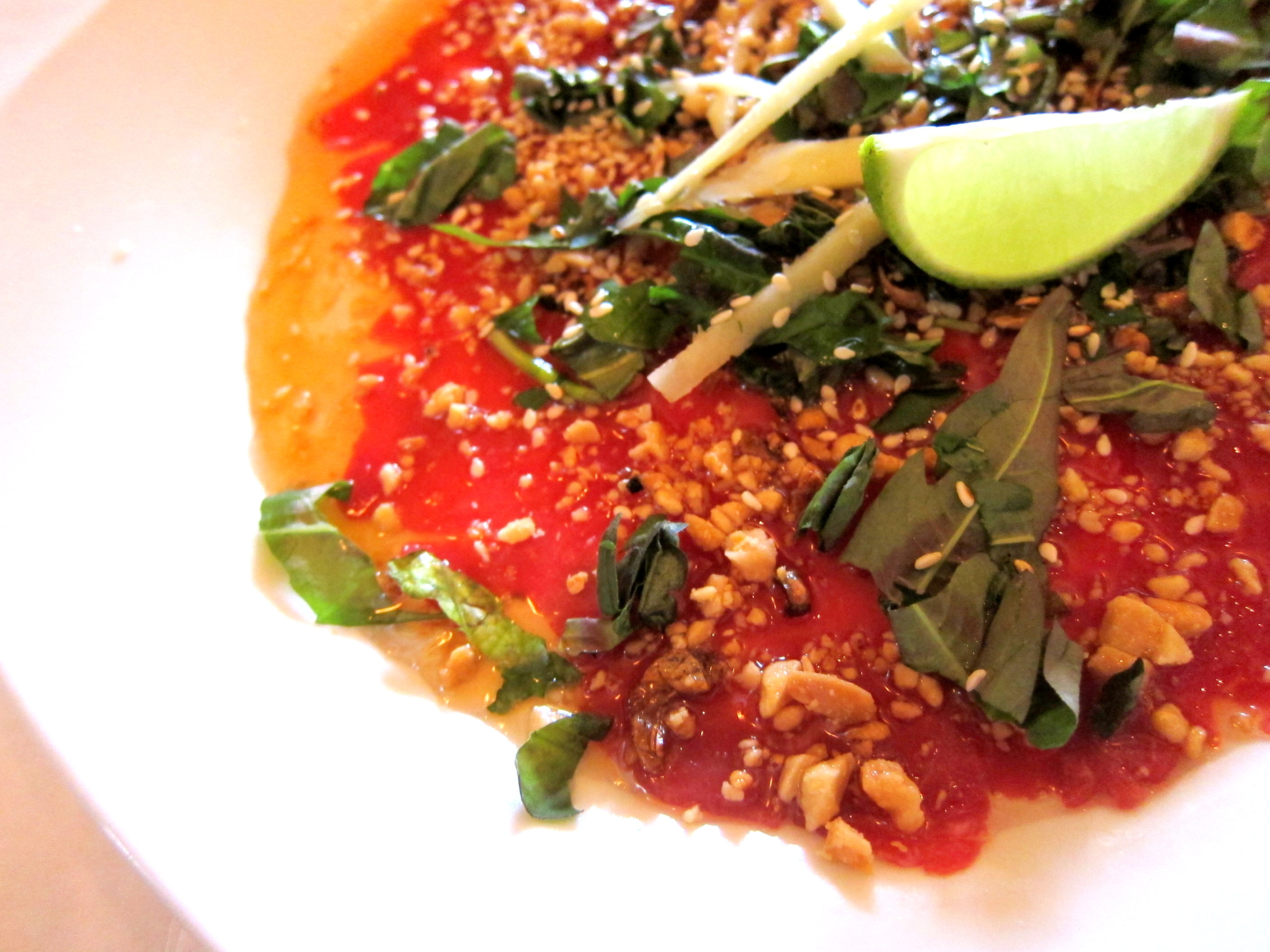
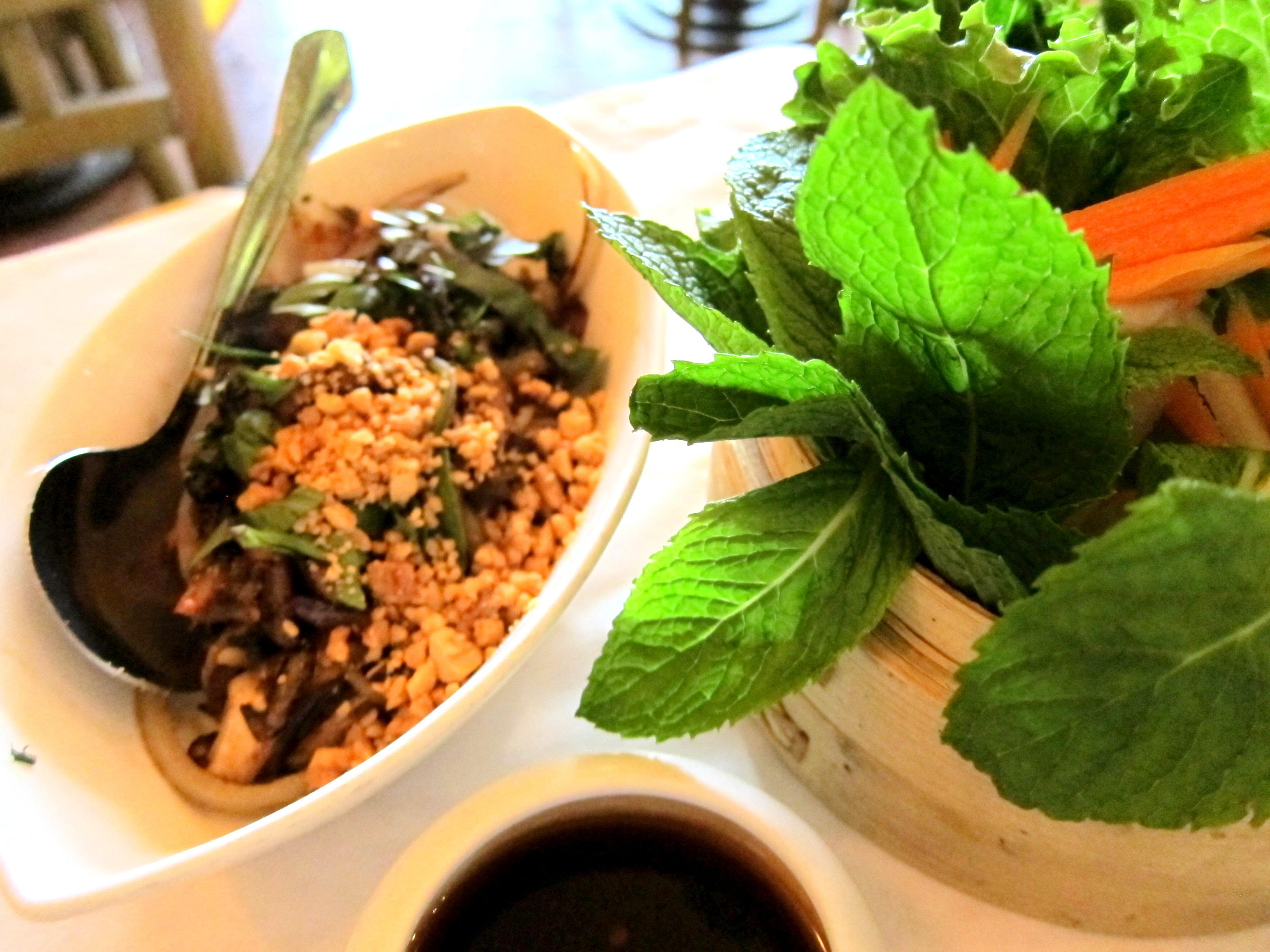
Black pepper cured filet carpaccio with roasted peanuts, fried shallots and Asian mint (húng quế). A twist on the classic Vietnamese bò nhúng dấm (carpaccio with vinegar) bò tái chanh (carpaccio with lime). (Thanks for the correction, Linh-Dang!)
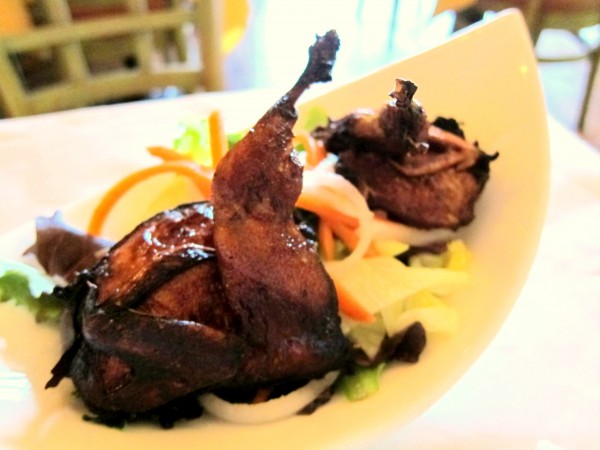

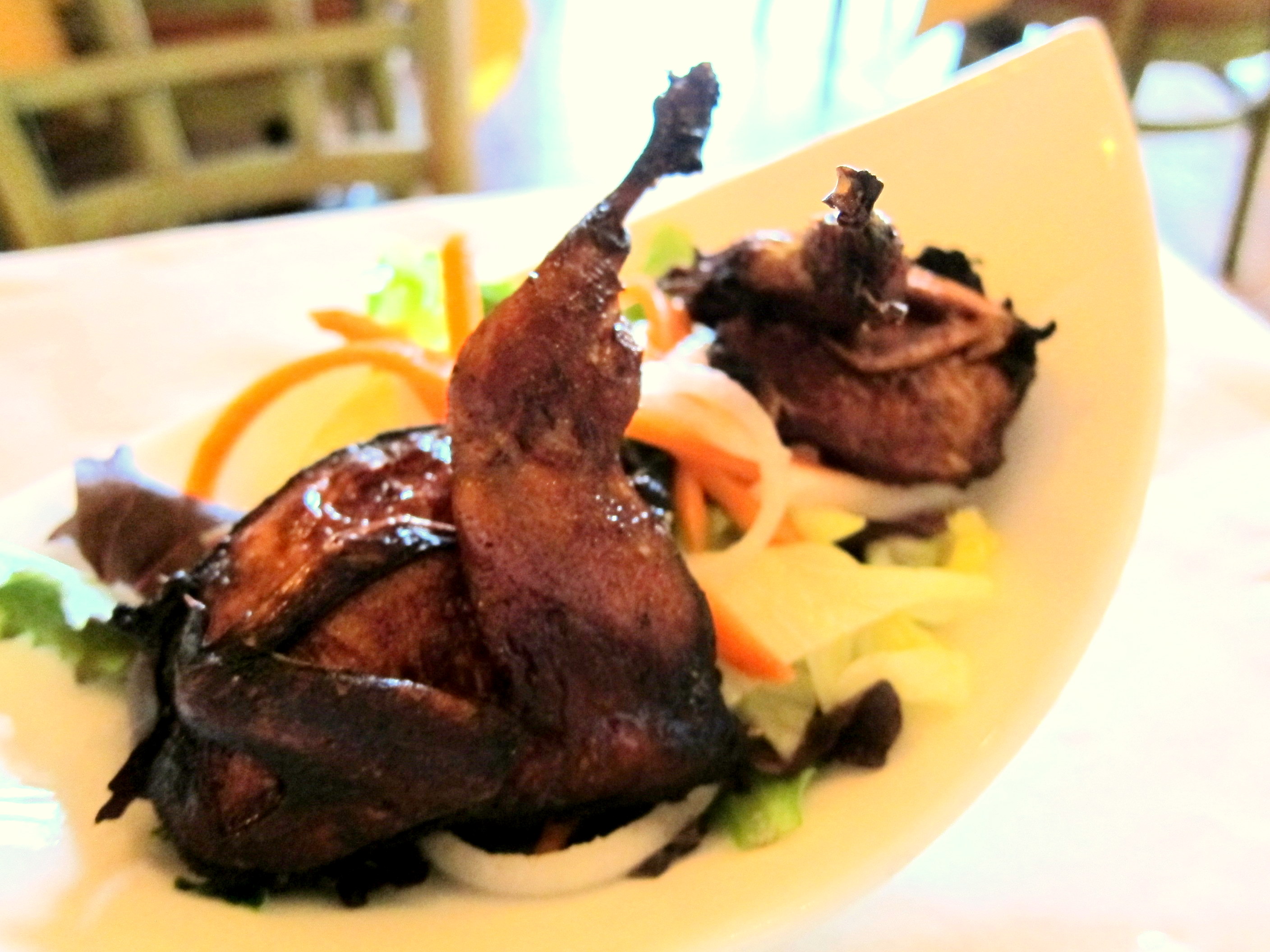
Crispy quail marinated in five spices and honey, with a light mixed fish sauce. Classic Vietnamese.
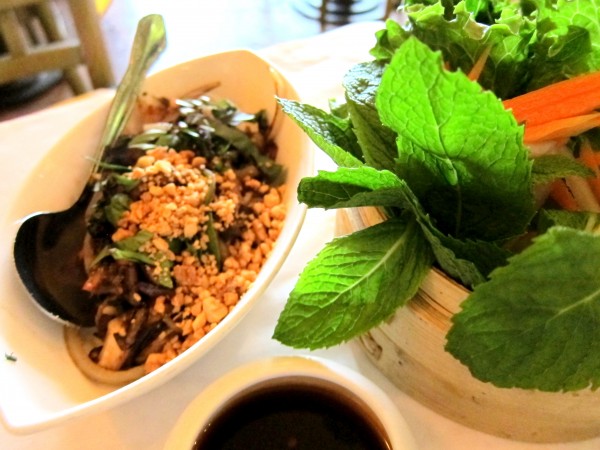

Doesn’t look like much but it’s my favorite of the night: Maple Leaf duck confit lettuce wraps with mushroom, onion and roasted peanuts; a sweet, slightly zesty black bean sauce for dipping. The pickled radish and daikon carry a gentle fruity note, had our hostess not been so busy with the other tables I would have asked her what kind of vinegar they used to pickle.
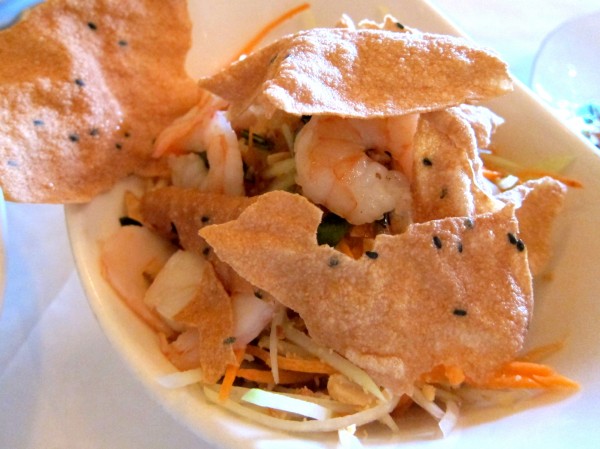

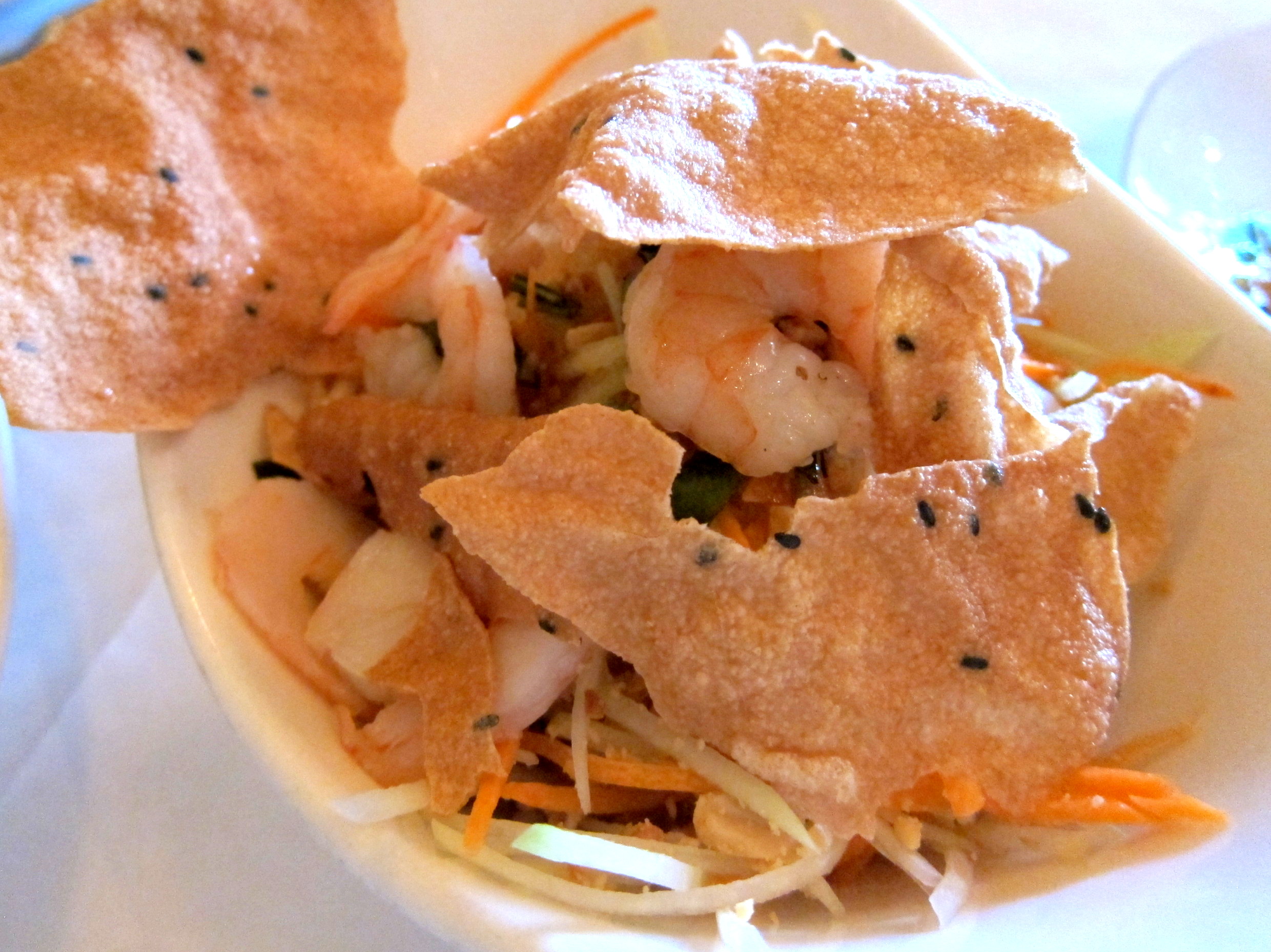
Green papaya salad with poached prawn, roasted peanuts and Asian mint. A hint of fish sauce. Pieces of sesame crackers, substituting for the traditional shrimp crackers or rice crackers.
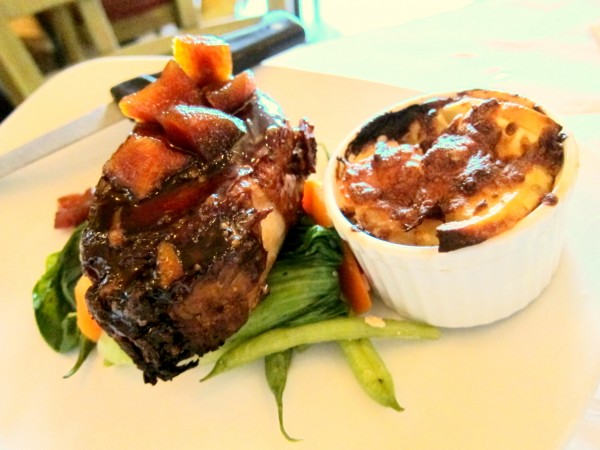

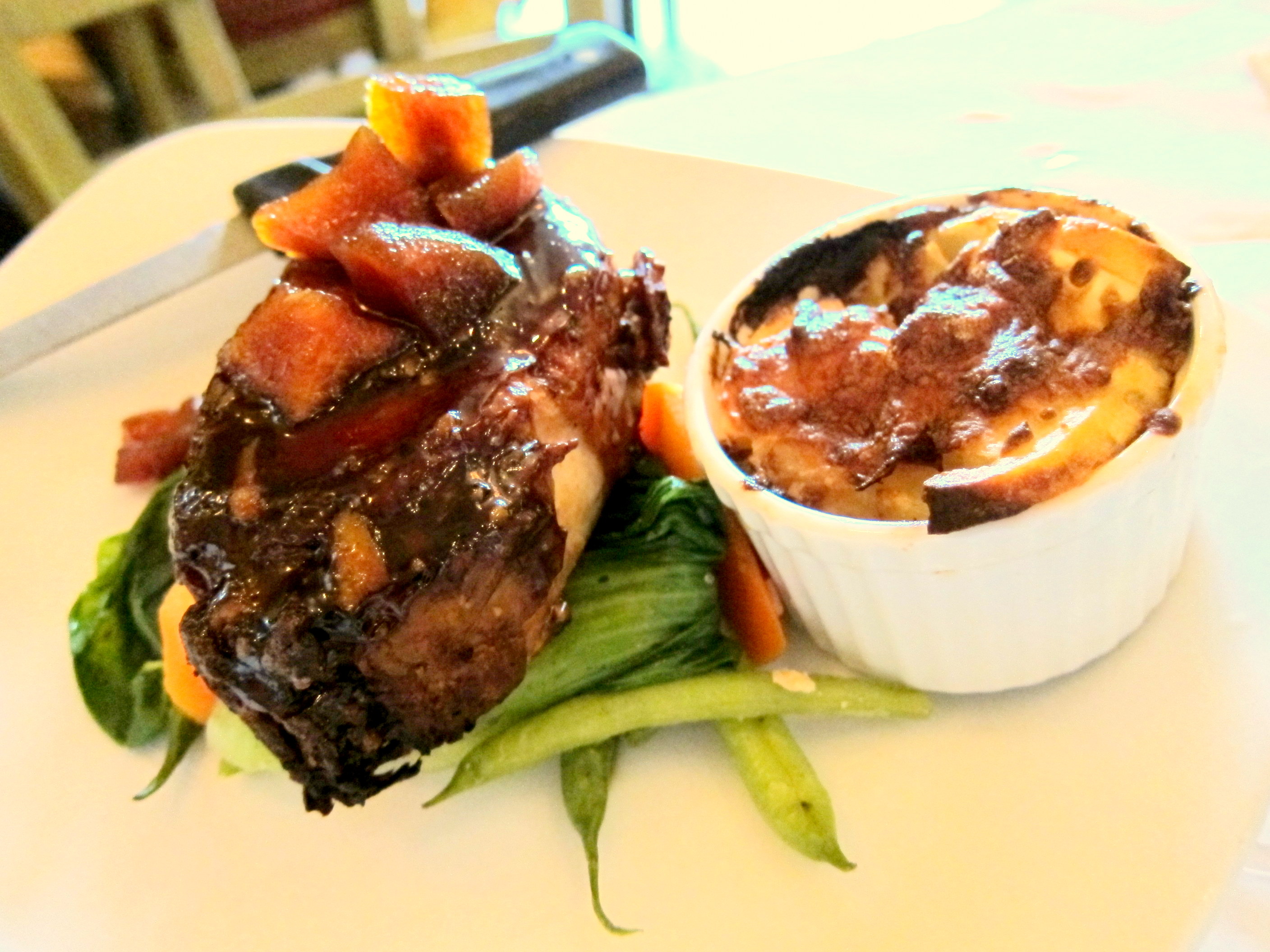
Pork loin marinated in molasses and slow roasted to a crusty outside, unfortunately a tad dry inside, topped with a lovely Fuji apple chutney and accompanied by an average potato gratin.
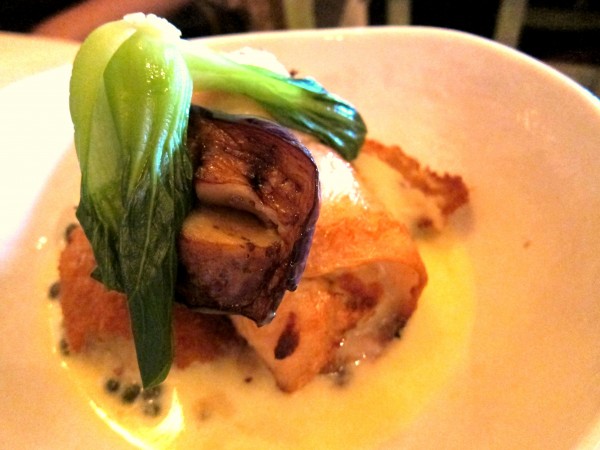

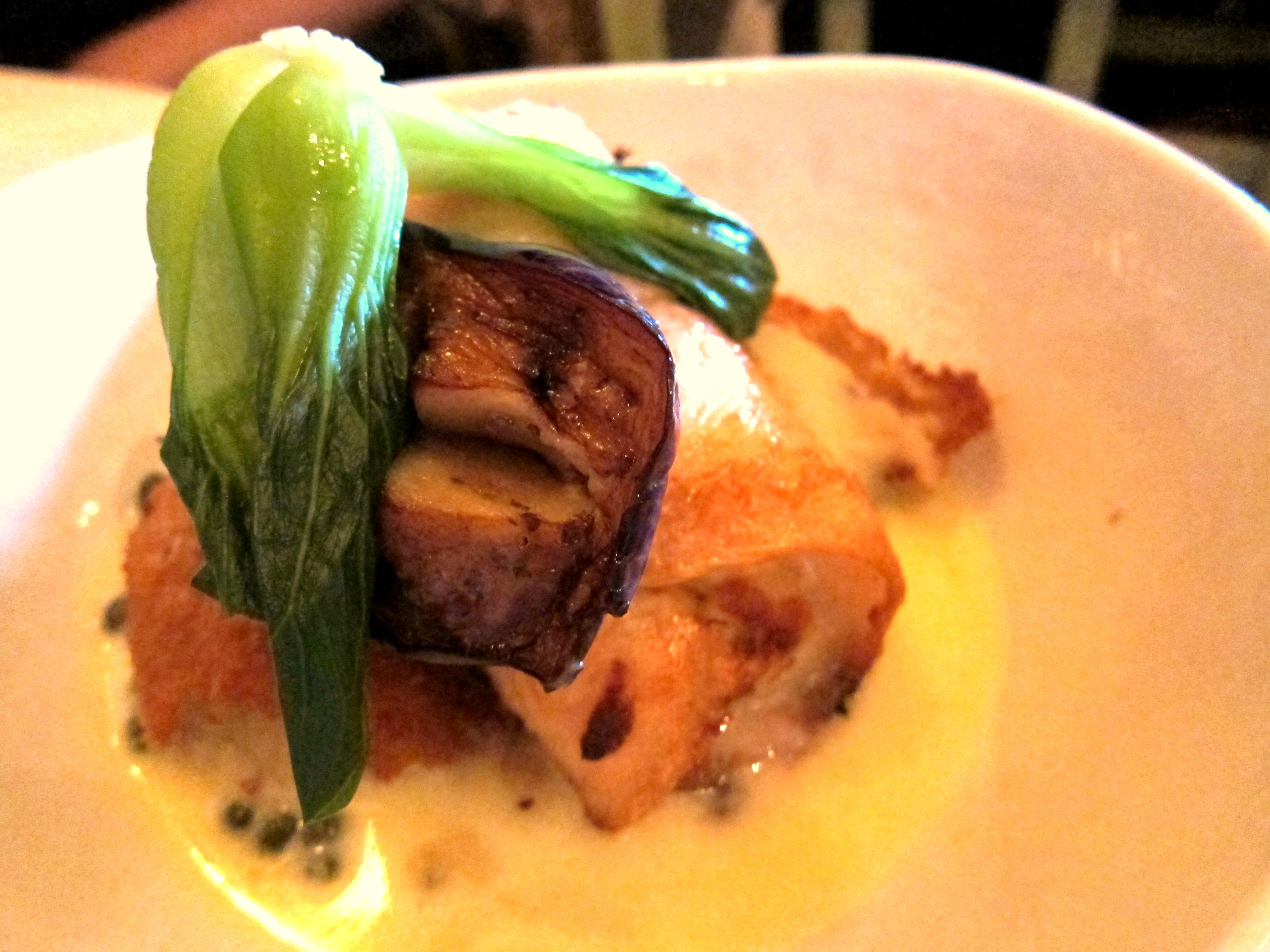
Dungeness crab and mozzarella rolled in an oven-baked petrale sole filet, which was dressed in a lemon caper beurre blanc. The accompanied potato croquet is nothing to write home about, but we left no trace of the fish roll. It’s a Vanessa’s Special that doesn’t get served every night, we’re told.
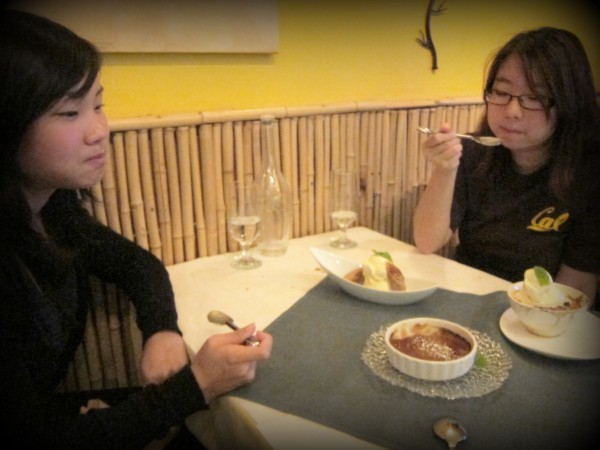
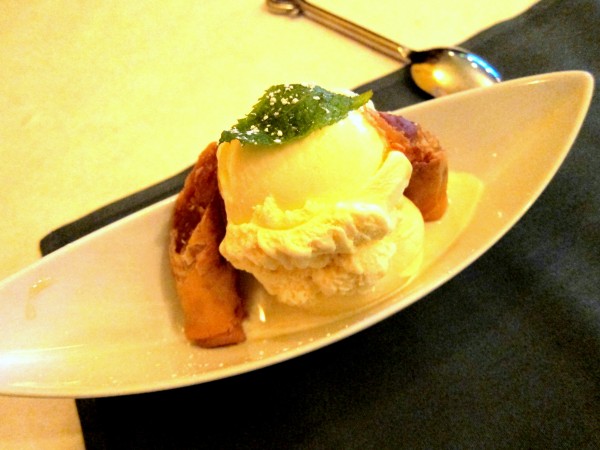
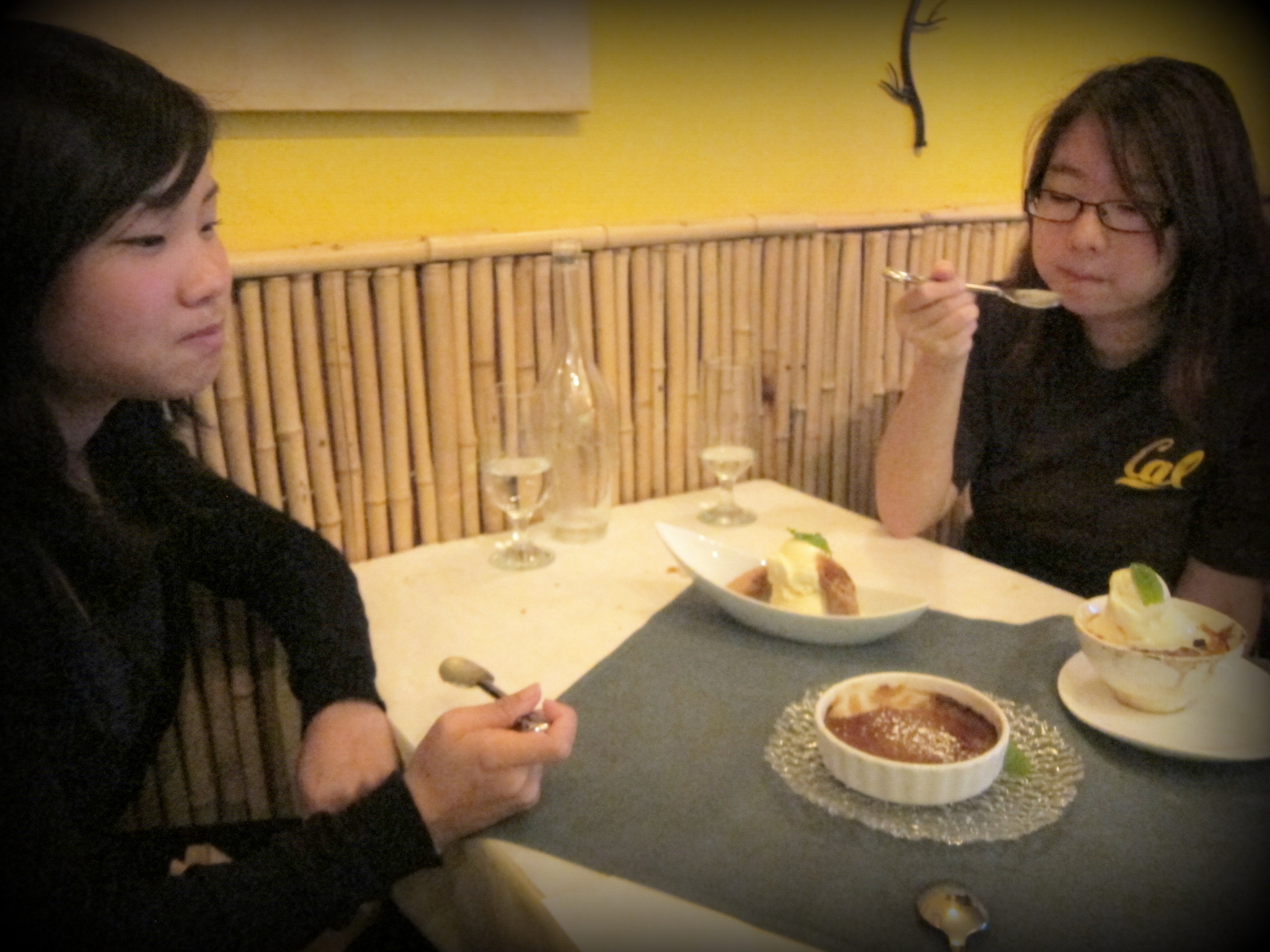
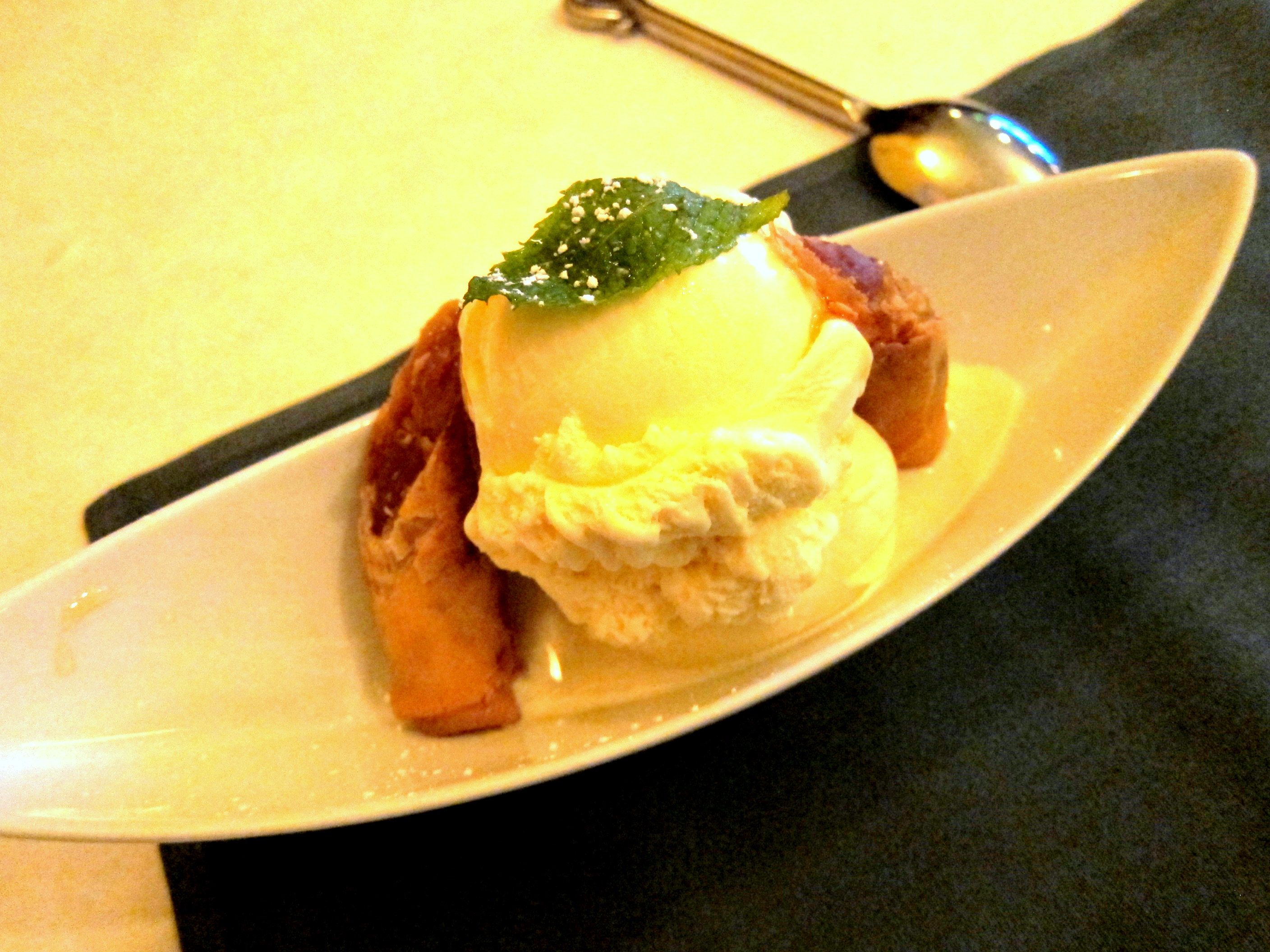
And desserts, of course. Fuji apple and coconut eggroll with vanilla ice cream. Good ol’ comfort.
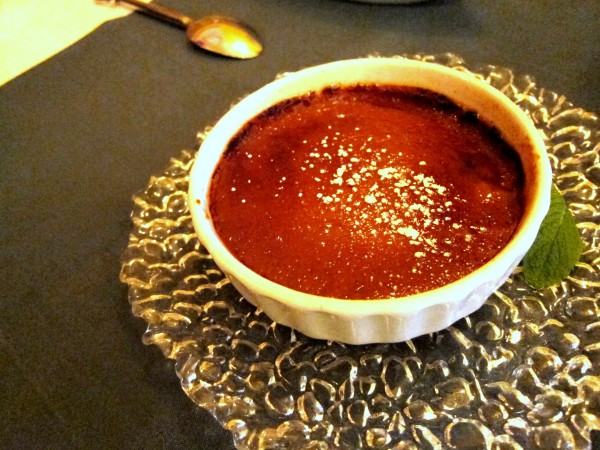

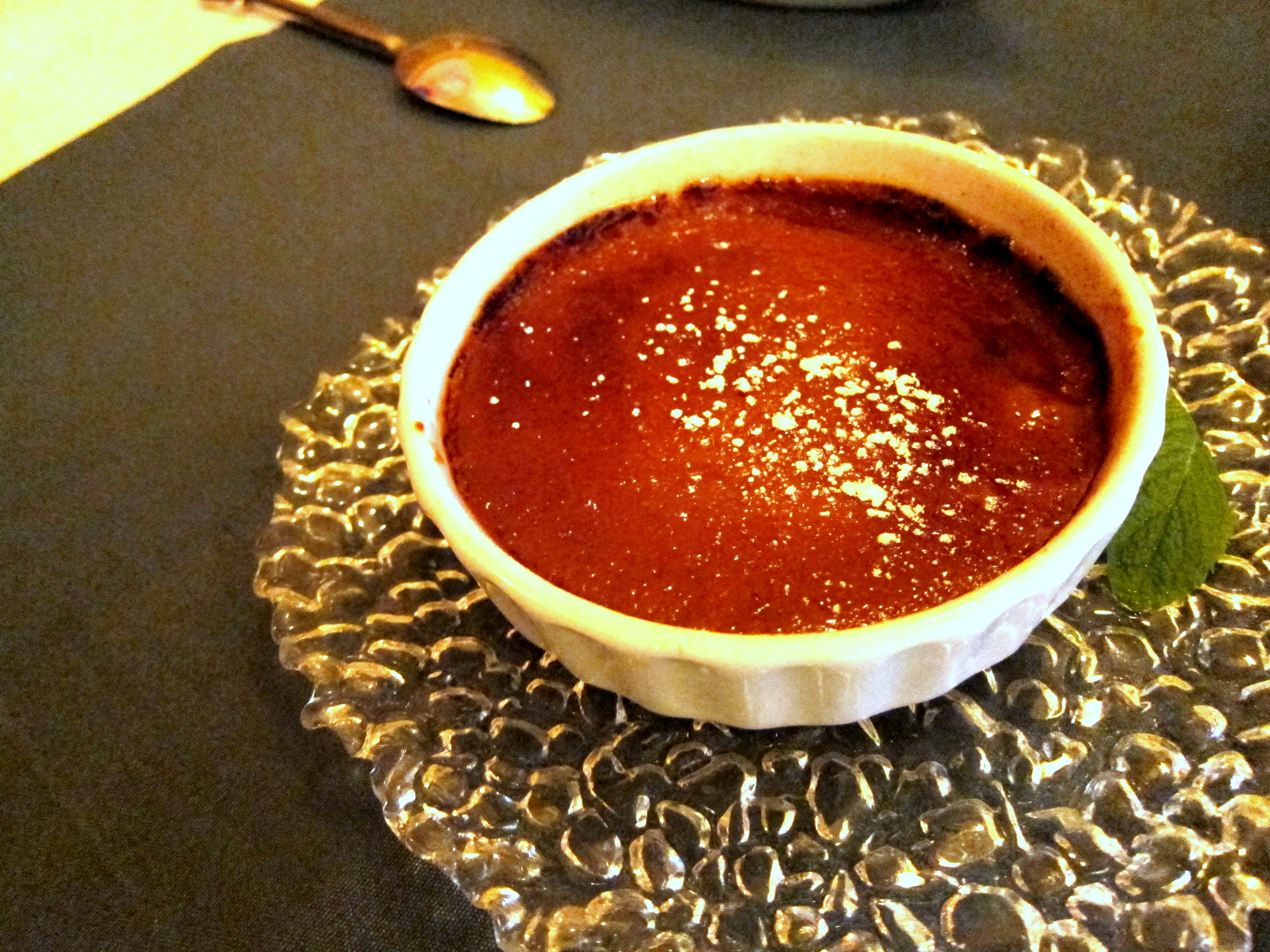
A ginger molasses creme brulee. Charming at first bite but quickly grew too rich.
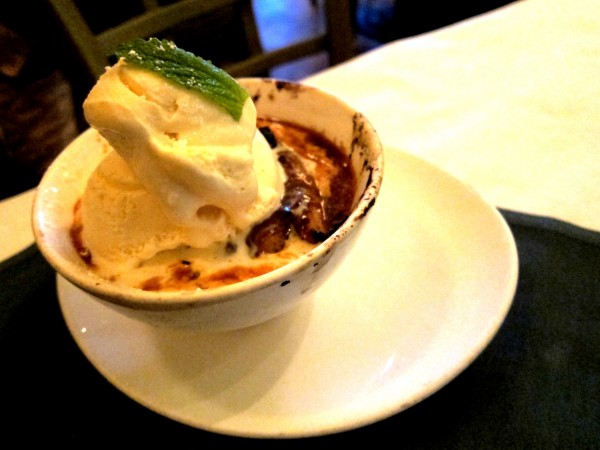

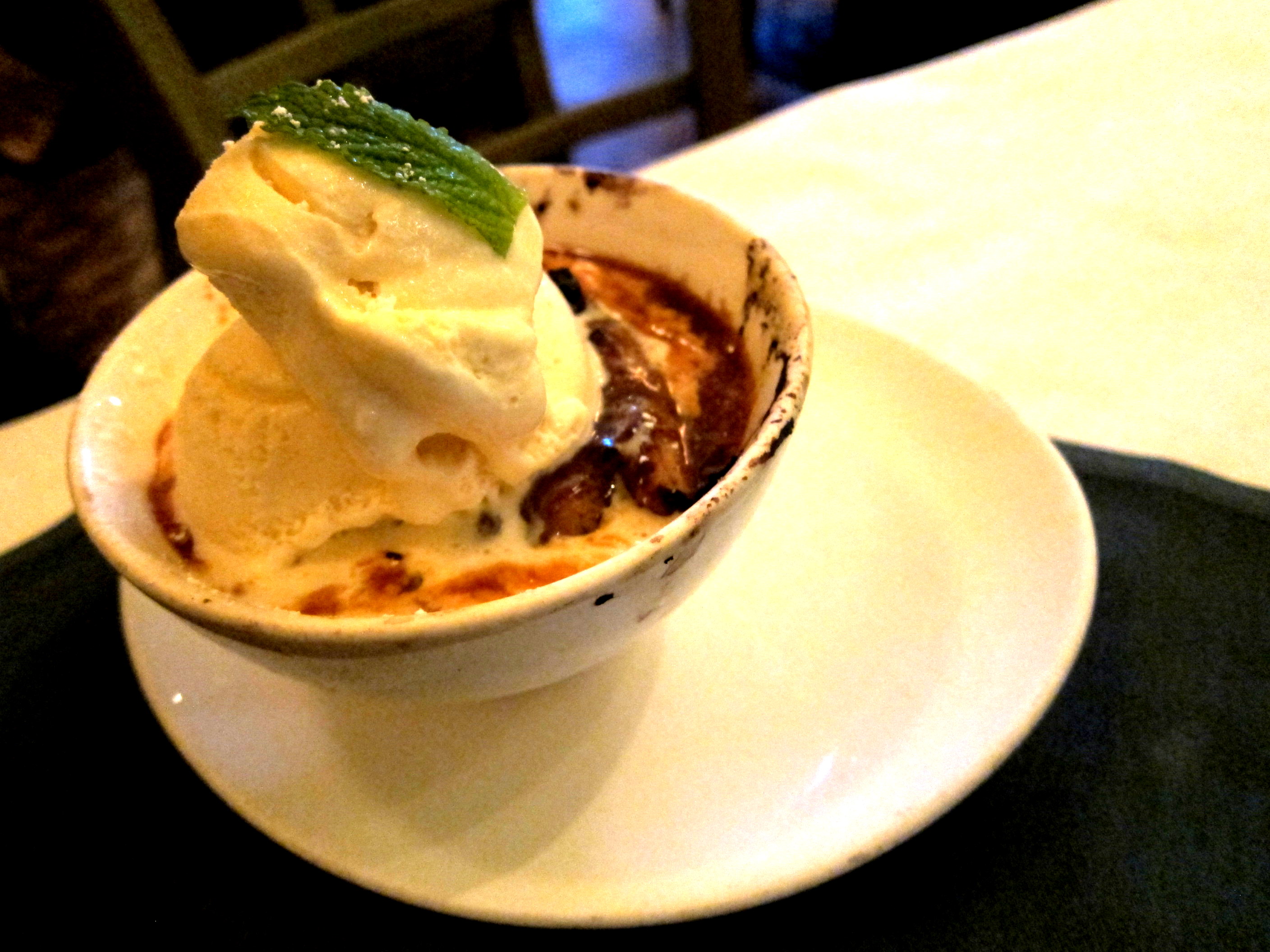
Banana, raisin and peach bread pudding with vanilla ice cream. Good ol’ comfort once again.


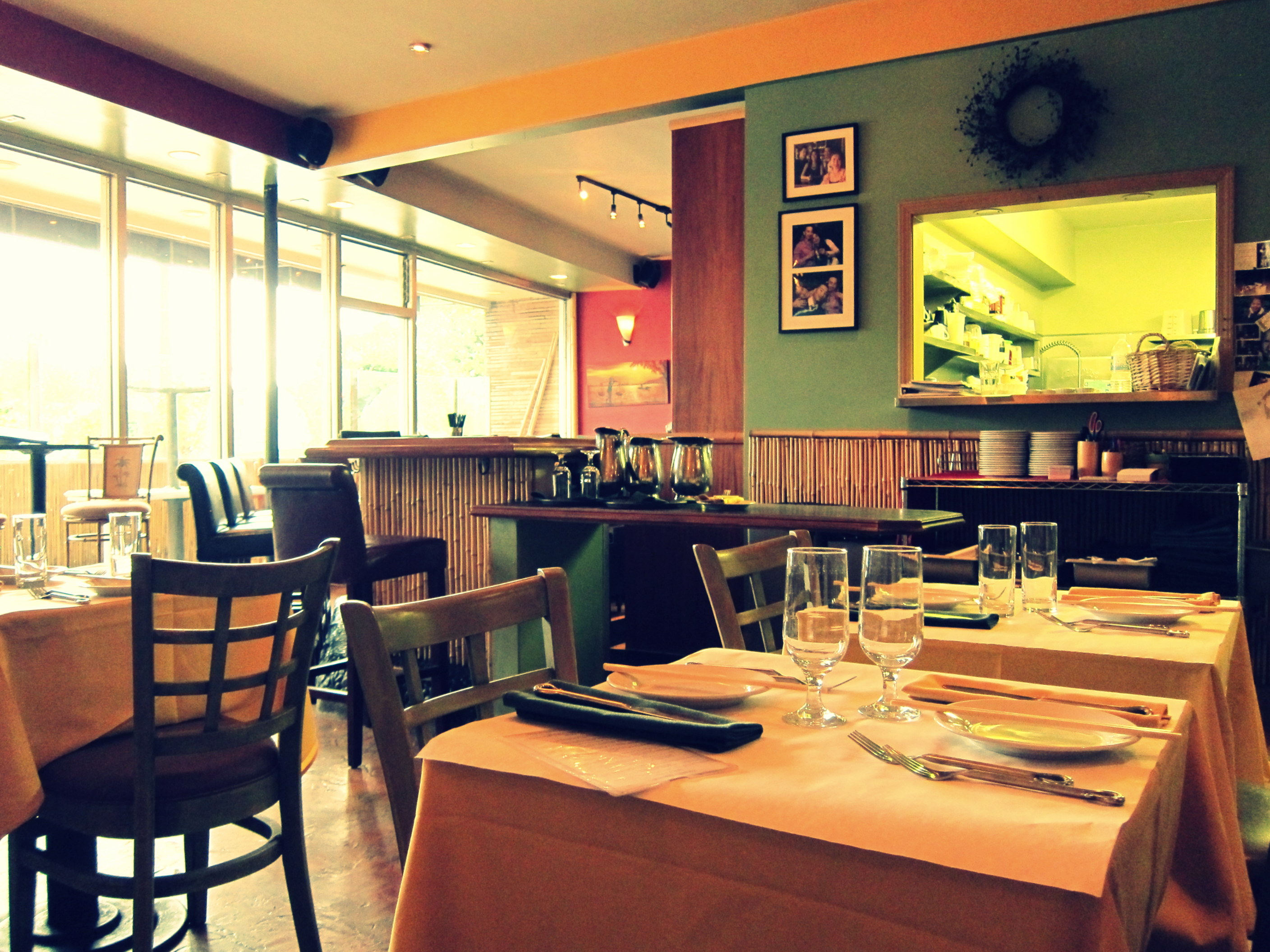
It’s been a while since I’ve dug into Vietnamese food, mostly because I’m afraid of getting less than I expect. The same thing happens to my Chinese, Korean and Japanese friends with their respective cuisine: we compare the “authentic” stuff at the restos with what our mom makes or what we remember eating in our motherland, and we shrug. Now Vanessa’s Bistro didn’t disappoint. It doesn’t dwell on authenticity, then again, the nature of Vietnamese cuisine speaks mix-and-match. The restaurant looks Western but it smells Vietnamese. The plates and their names are dressed up in French but the core ingredients ring familiar tunes. Everything is sweet and savory. We intentionally ignored the more Vietnamese shaken beef (bò lúc lắc) and claypots to have room for innovations, and innovations we got, but it’s nice to see that the roots are still there. 🙂

Address: Vanessa’s Bistro
1715 Solano Ave
Berkeley, 94707
(510) 525-8300
www.vanessasbistro.com
Dinner for three (ladies): $97.89

Himalayan Flavors and the mango art

April 24, 2012 By: Mai Truong Category: California - The Bay Area, Comfort food, sweet snacks and desserts, Vegan


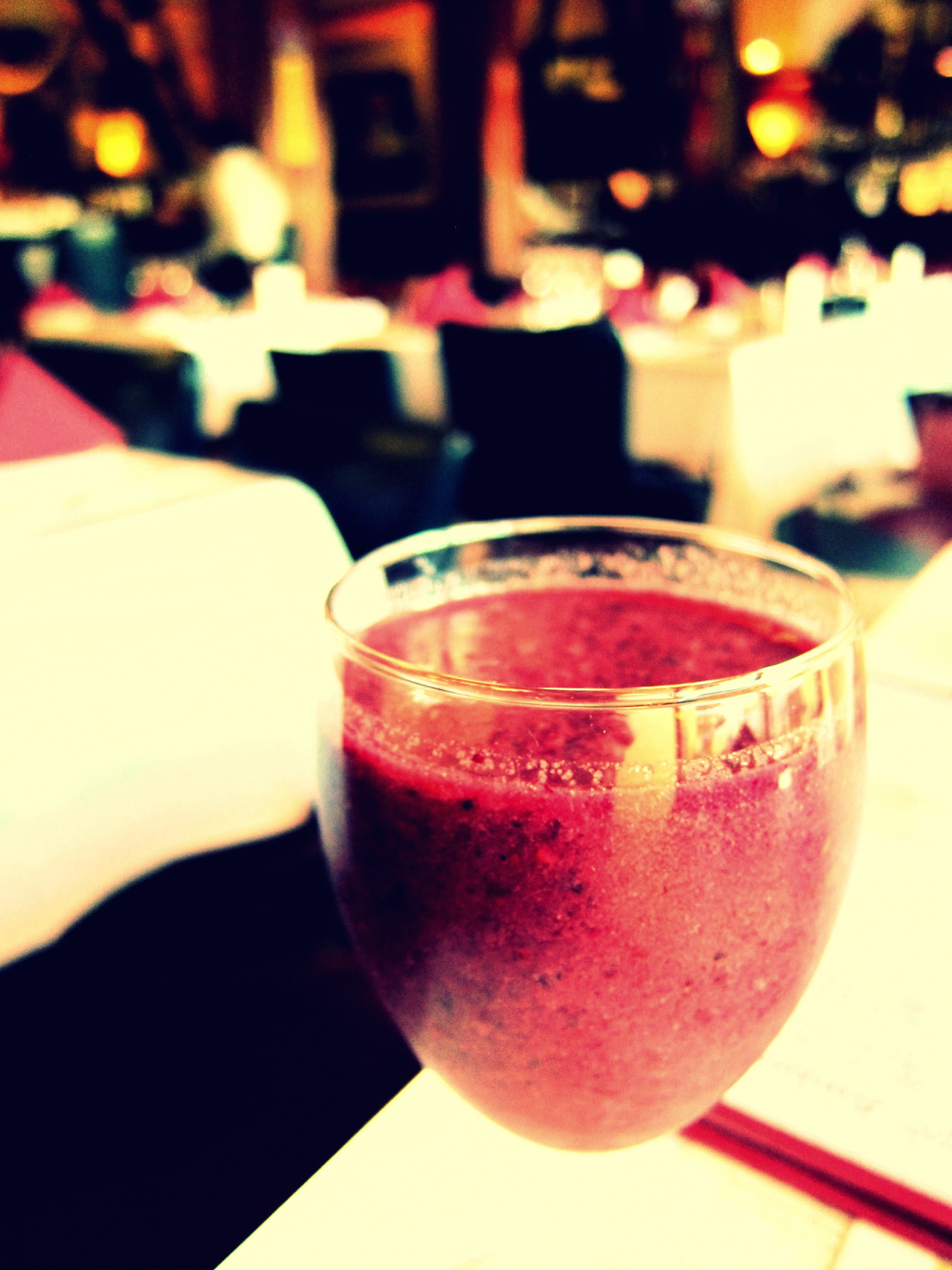
Last year I had a great meal at Himalayan Flavors, starting with a reddish purple smoothie whose ingredients I no longer remember and can’t find anywhere on their current menu, and ending with a mango dessert. The owner is Nepalese, so technically, the food is Nepalese, which is too similar to Indian for me to discern because I haven’t had much of either. A quick Google search renders over 6 million results, but the actual number of differences between Nepalese and Indian foods are few and easy enough to remember:

  • Nepalese cooks use no cream/curd, so their gravies are thinner and more watery than Indian gravies.
  • In Nepalese dishes, green vegetables are chopped up and stir-fried, like in Chinese cooking, except for the cumin. In Indian dishes, the green vegetables are turned into paste (like saag paneer (spinach and soft cheese), the best of which I’ve had is at Aslam’s Rasoi, but that’s a different story).
  • Nepalese cooks do not use sugar to flavor the savory dishes.

Source: Binaya Manandhar


In more details:
[…] Rajesh Karmacharya, owner of Cumin restaurant (recent winner of a Michelin Bib Gourmand award), explained that Nepalese curries are generally based on tomatoes, not yogurt or coconut milk, as in India. Nepalis also use fewer and milder spices than Indians. A standard Nepalese masala (spice mixture) contains cumin, coriander, ginger, garlic, fenugreek and jimbu, an aromatic grass that resembles chives. Hotness comes from chilies or a berry called timur, similar to Szechwan pepper.

The influence of China and Tibet is apparent in the popularity of noodles, bamboo shoots, soybeans and momos — small steamed or sauteed dumplings filled with meat or vegetables. Momos became the most popular street food in Katmandu after Tibetan refugees opened stalls there in the 1960s. […]
Source: The Chicago Tribune

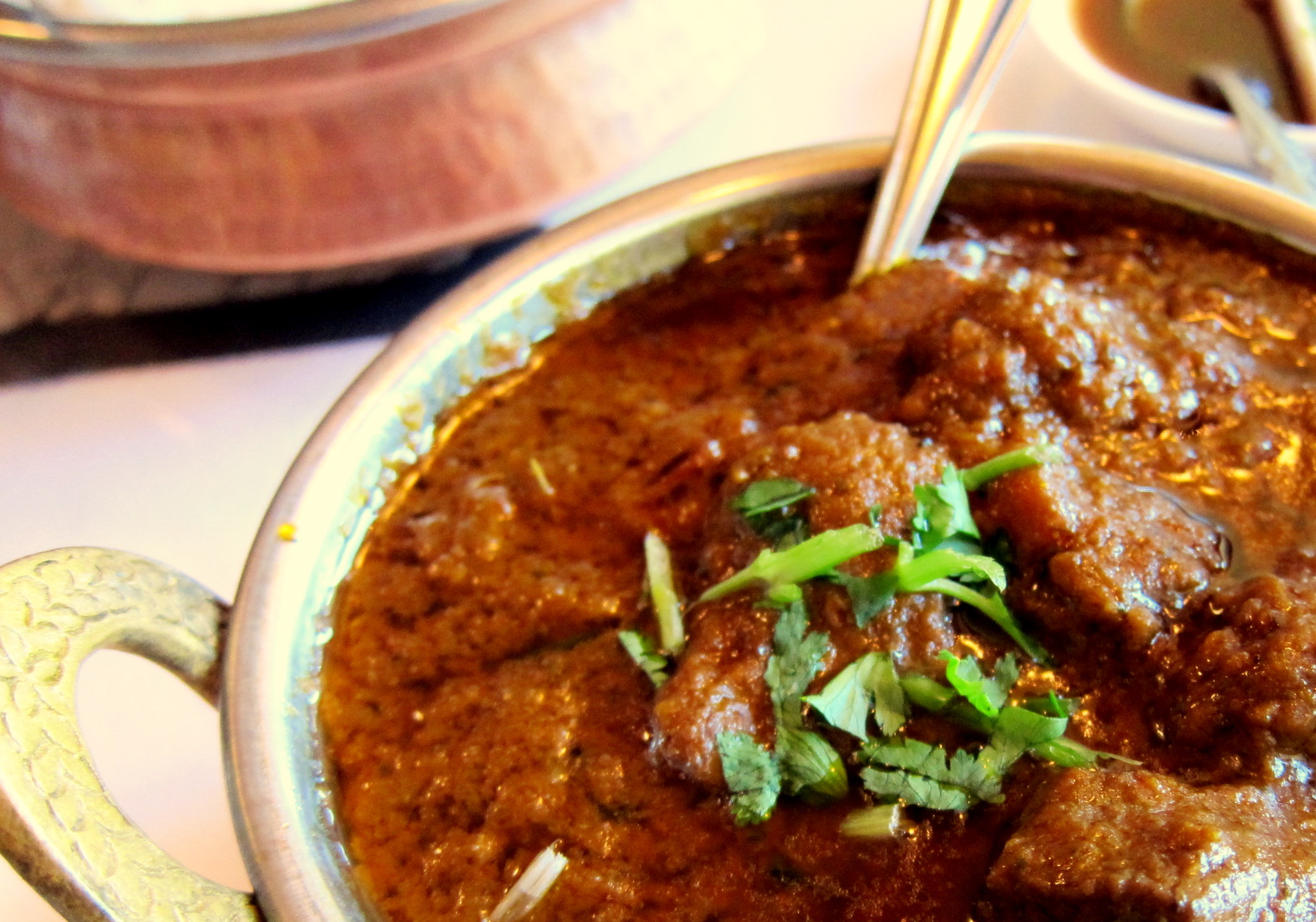
Indeed, what the owner suggested to us in our most recent visit were vegetable thukpa (a noodle dish with a little bit of thin broth) and aloo tama bori (sauteed potatoes and vegetables), both have bamboo shoots and tomato, neither are spicy or sweet, and neither are pasty. The lamb tarkari (a kind of curry stew described in detail as “boneless lamb pieces cooked in Himalayan Flavors special sauce herbs and spices”) is also quite mild.


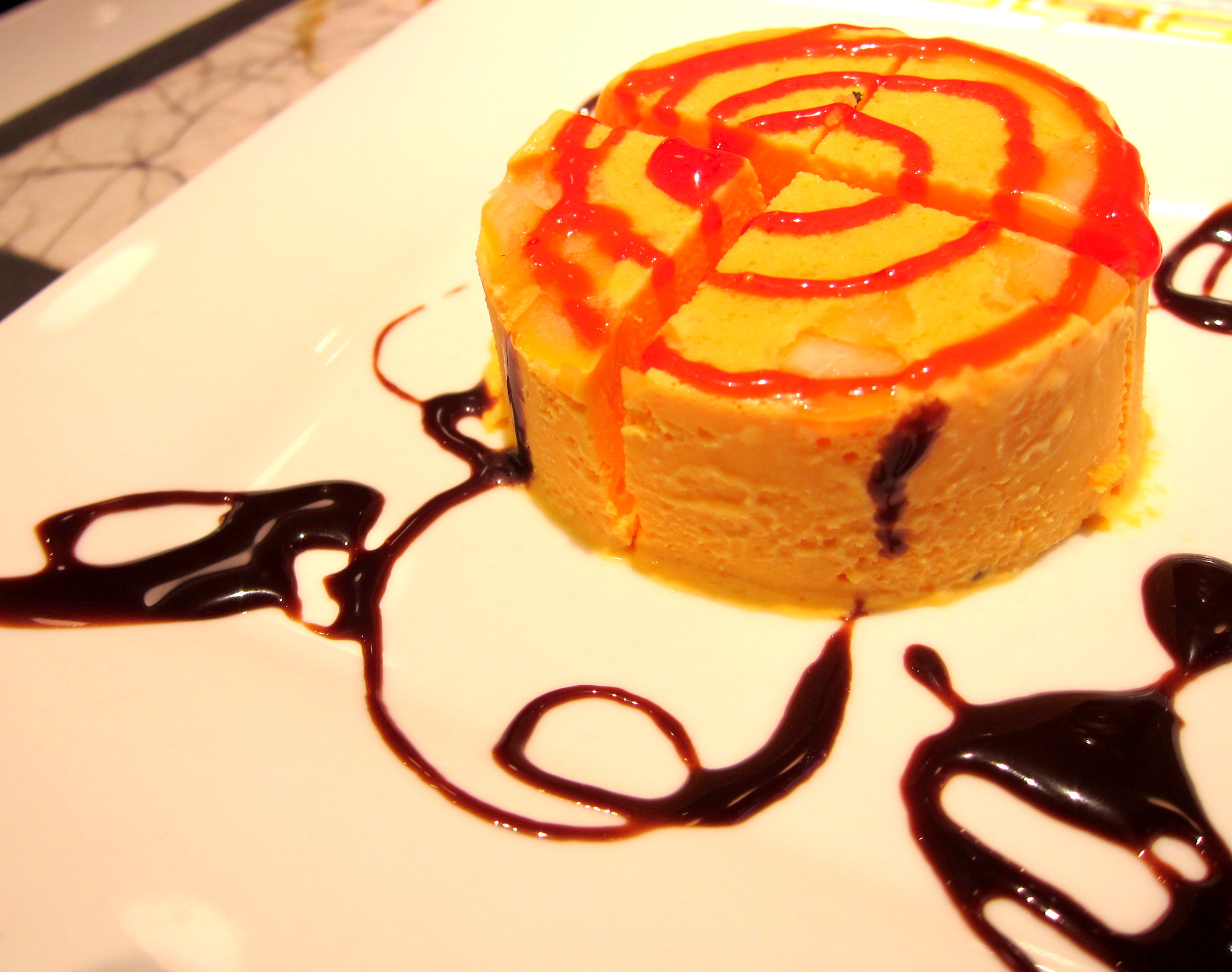
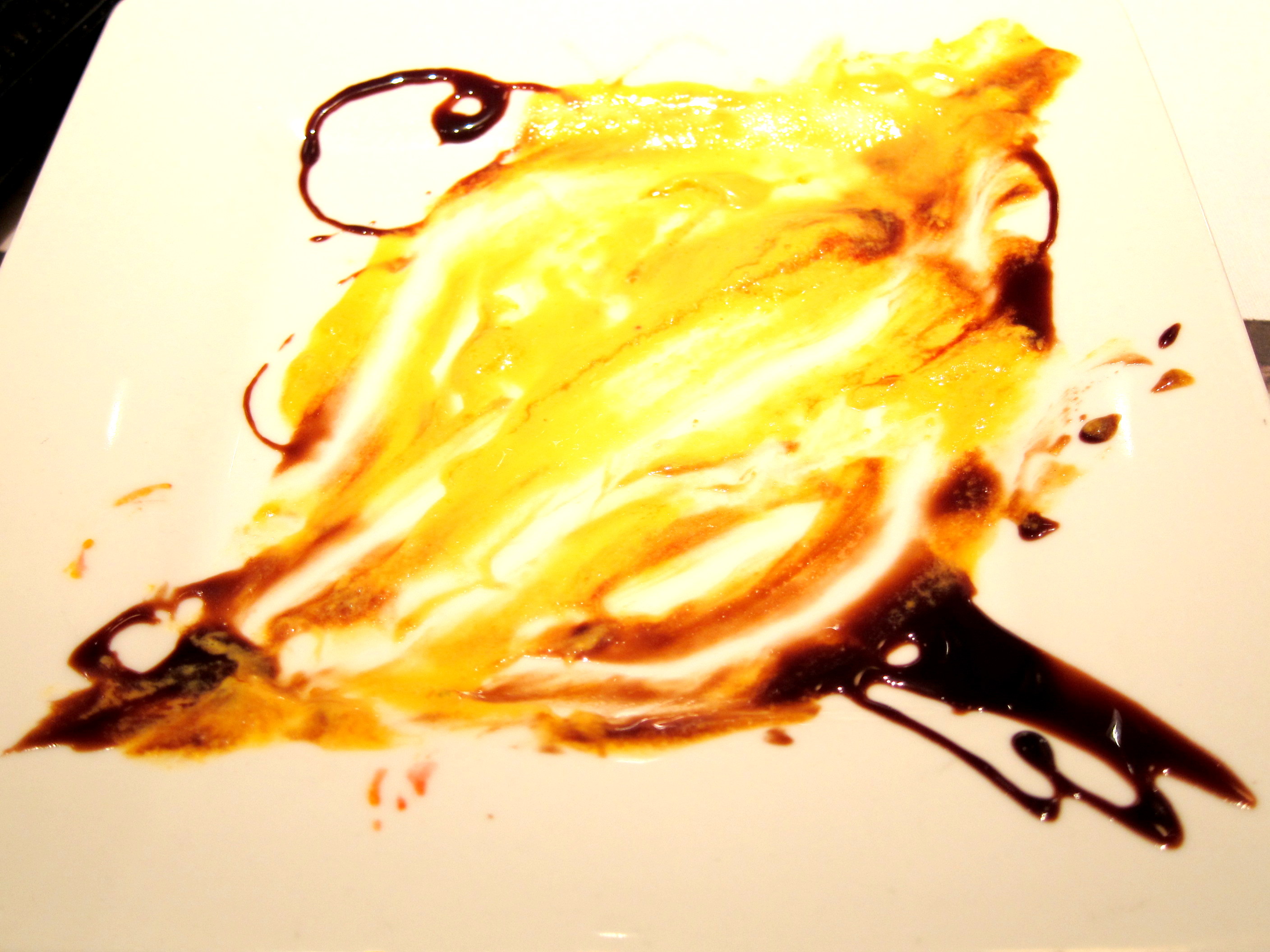
But like most restaurants that I like, Himalayan Flavors scored me in because of their desserts. I knew we got something mango the first time, and its goodness never left me, so I came back. This time the presentation changed from an ice cream block with red syrup drizzled on top and chocolate syrup on the side to a shovel of yellow snow with almond shavings, but it is still mango kulfi. And I still love it. Here’s a memoir of the first mango kulfi (with chocolate):


It’s my art. Don’t you criticize. 😉
Ah, this time, I forgot to check the bar for the smoothies, I wonder if they still make only one kind each day. Just a reason for me to come back.

Address: Himalayan Flavors
1585 University Ave
Berkeley, CA 94703
(510) 704-0174

Goma mushi manju (black sesame button)

April 21, 2012 By: Mai Truong Category: Houston, Japanese, One shot, sweet snacks and desserts, Vegan


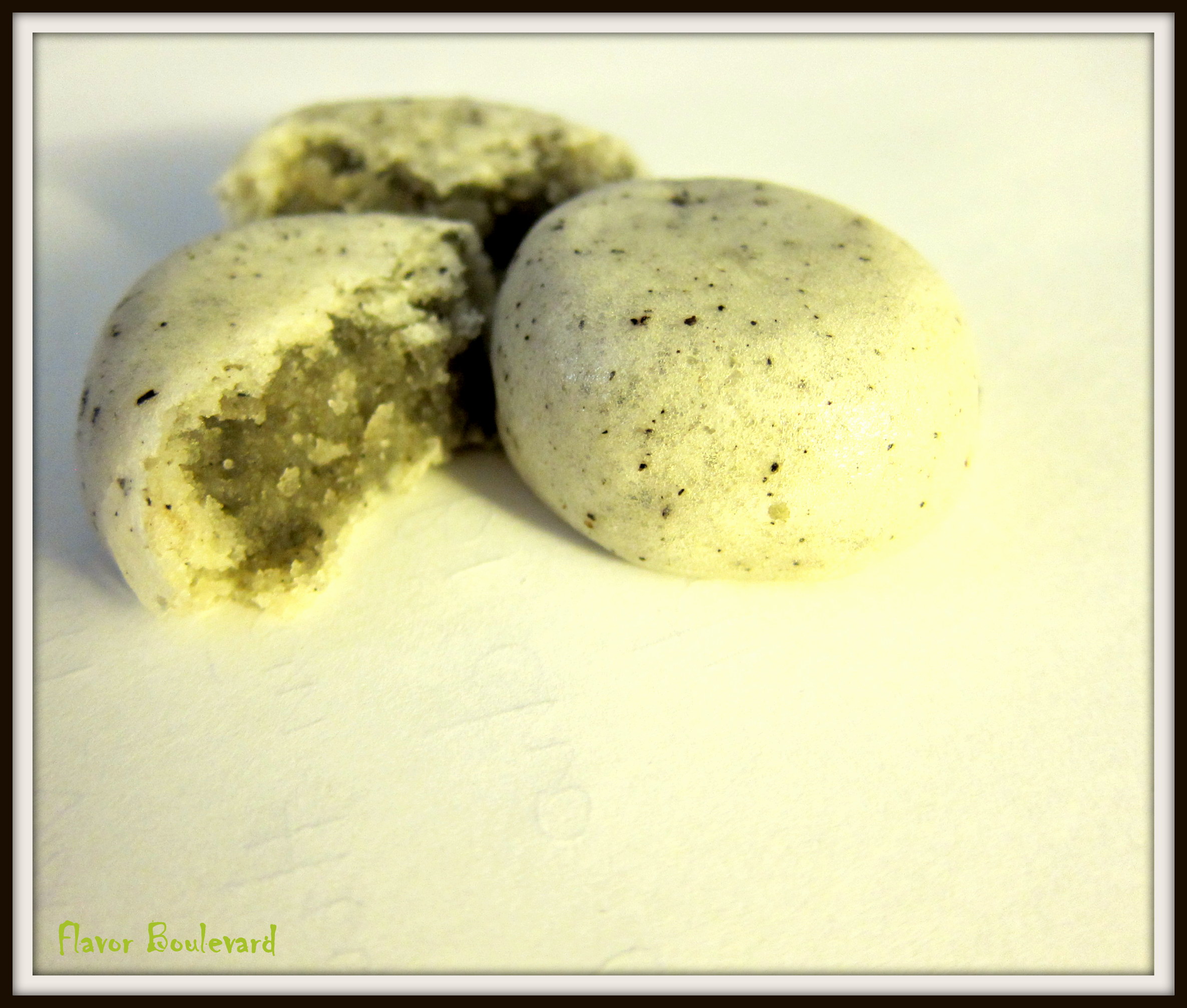
Technically, ごま蒸し饅頭 (goma mushi manjuu) means Steamed Sesame Bun (as a friend told me), but I’m a firm believer that proper nouns, i.e., names, cannot be translated without losing some of their meaning. Since there is no sufficient translation already, I might as well make the English name suitable to describe the object instead of sticking to the literal translation. Hence, to distinguish these little buns from the gazillion of buns in the Far East, I shall call them “buttons”.

Flaky, multi-super-thin-layered dough. Semi-sweet black sesame paste. Adorable, in every sense of the word.

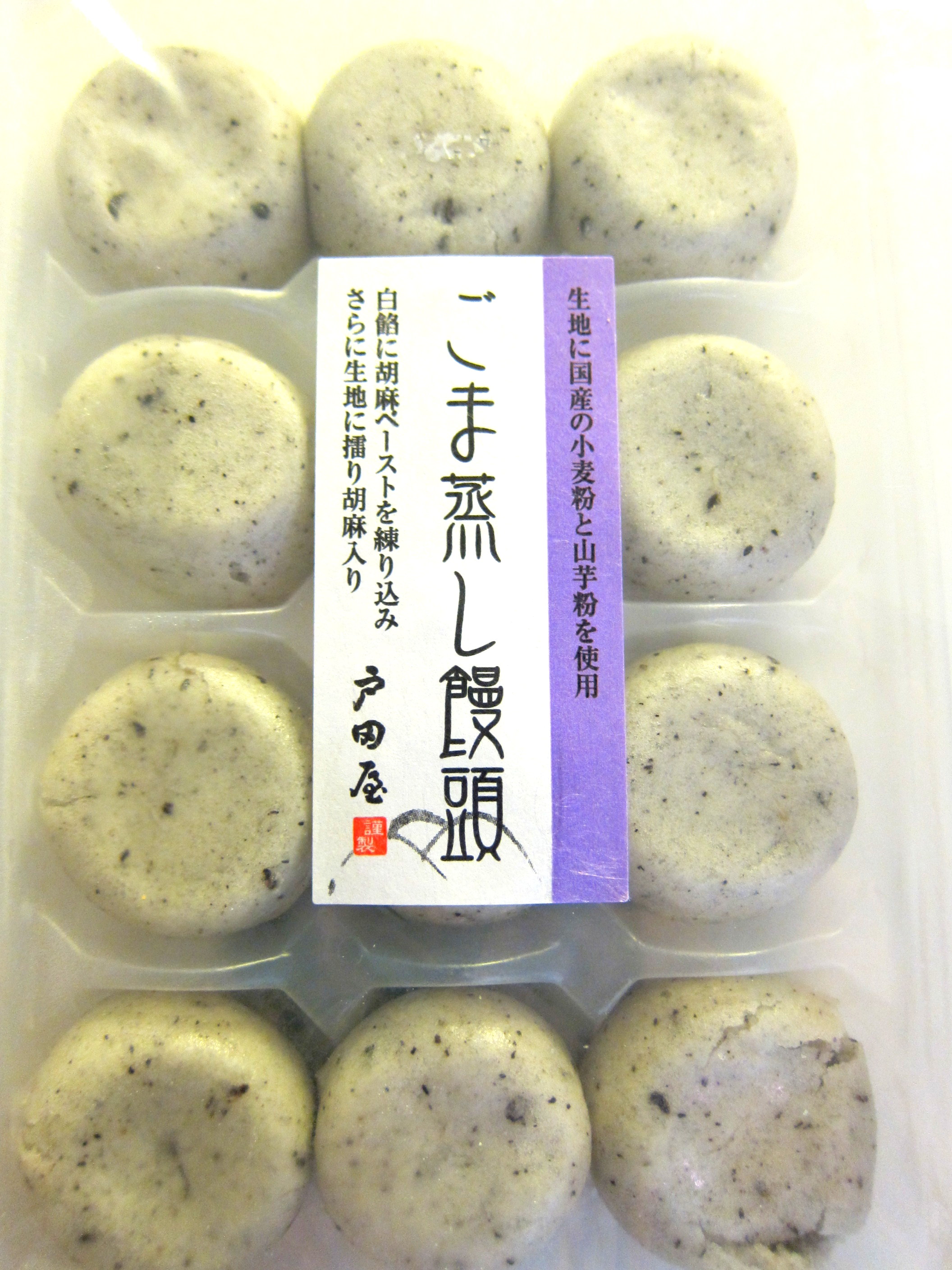
Here’s the label, for those who can read Japanese:


From Super H Mart, Houston, 12 buttons for $3.

Sencha and yomogi mochi

April 16, 2012 By: Mai Truong Category: California - The Bay Area, Drinks, Japanese, sticky rice concoctions, sweet snacks and desserts, Vegan

The third pairing of mochi and Japanese green tea. Perfect!


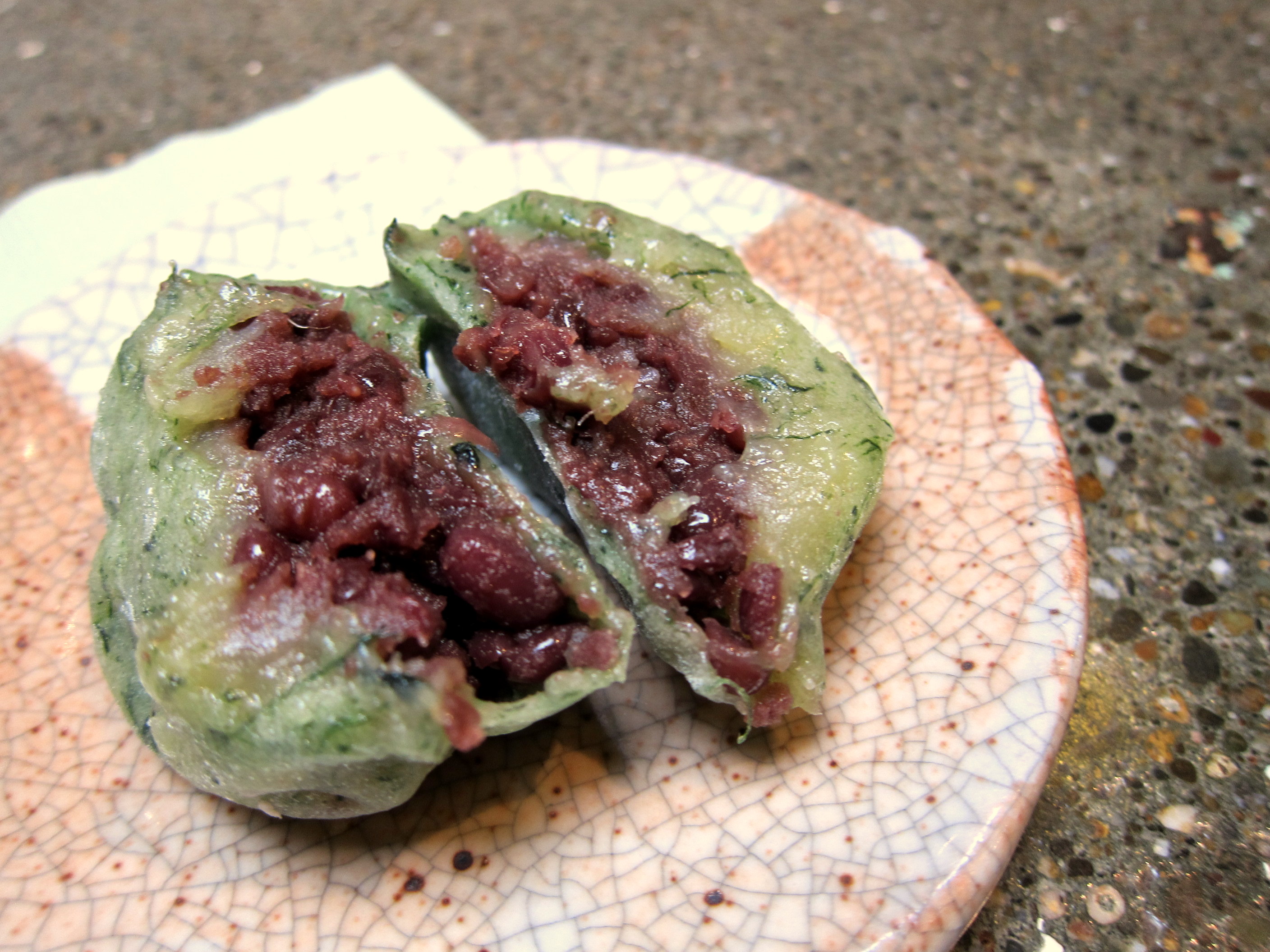
Yes, finally a mochi that goes perfectly with sencha. Yomogi (Japanese mugwort), julienned into tiny strings and mixed with the mochi dough, gives the mochi a clean, refreshing taste, which reminds me of the tip of a Vietnamese bánh ít or a bánh ít gai (*).

However, what struck me was the filling: red bean and sweet potato paste. The red bean is the main factor, the sweet potato is only at the top, closest to the doughy coat. The azuki sweetness subdues the fishiness (umami) of sencha, and the sencha bitterness subdues the sweetness. Is this why the Japanese use azuki for their desserts so often?

Why didn’t the sencha – matcha-mochi pair work as well? The matcha mochi also has azuki paste, but I think the orange juice and the walnuts distracted me. The yomogi clarifies the taste in a more floral and less bitter way than the matcha; and like saffron, sometimes a spice’s presence isn’t noticeable, but its absence would be. Anyways, this pair also shows that a simpler mochi can be a better mochi.

(*) Like mochi, bánh ít has a sticky rice dough with fillings, which can be sweet (coconut) or salty-sweet (mung bean paste). Unlike mochi, it’s all wrapped up in leaves, and it’s about 4 times bigger than a mochi. Shape-wise, mochi is most similar to bánh quy, whose green color (should) comes from pandan leaf. Similarly, the black color of bánh ít gai comes from the thorn leaf (ramie leaf), but the other ingredients are the same.

This post also appears on Tea and Mai

P.S. Sencha is interesting. It’s bitter at first and gets nutty later. It tastes odd at first because it’s not what you would expect from a drink, but the more you drink it, the more you’re attracted to it.

P.P.S. Yomogi mochi is also called “kusa mochi” (grass mochi). So Ms. Yuri Vaughn the mochi artist for Teance calls it “yomogi grass mochi”, which made me think that yomogi was a grass.

Matcha and kabocha mochi

April 06, 2012 By: Mai Truong Category: California - The Bay Area, Drinks, Japanese, sweet snacks and desserts, Vegan

Another pairing of Japanese tea and Japanese snack. A bowl of matcha is supposed to suffice your daily vegetable need because you’re actually consuming the leaves themselves, in powder form.


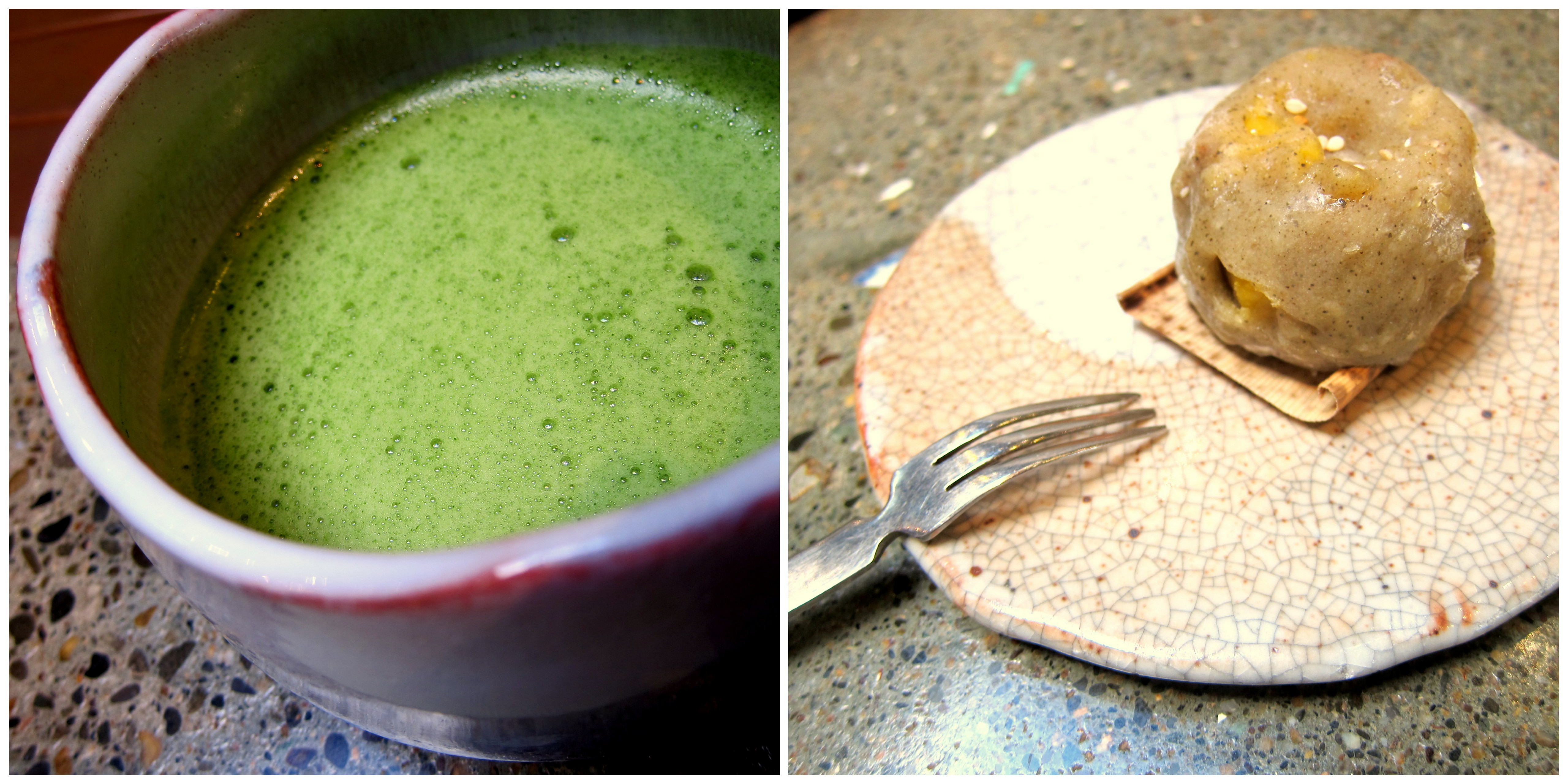
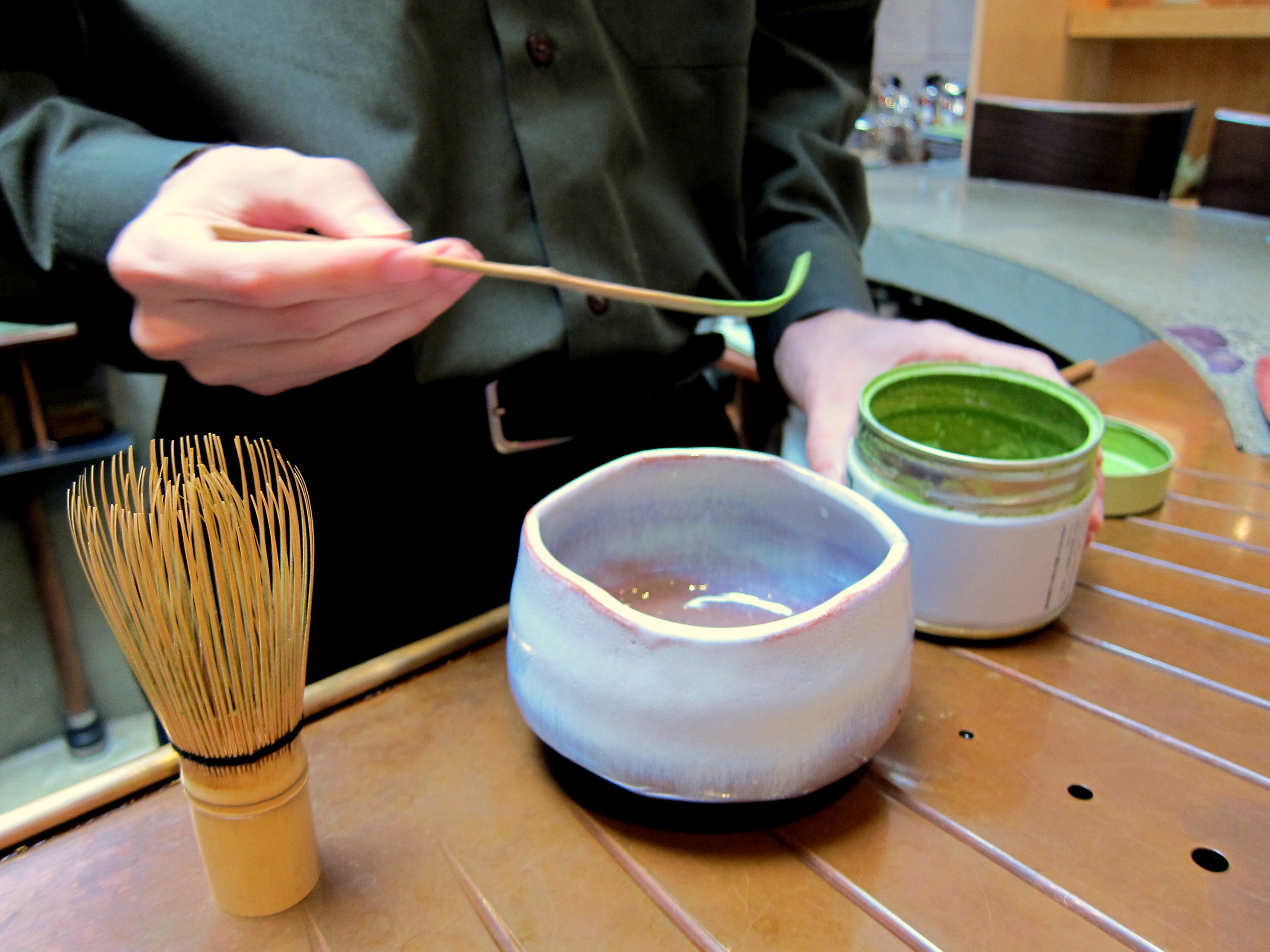
Matcha is served in a bowl. Mix water (205 F) with the matcha powder using a whisk, whose look reminds me of a yard broom in Vietnam, and there is no steeping time to watch out for, which I like. The whisk makes the tea foam up. The lady sitting next to me said that the foam turns her off visually, but actually the foam adds an interesting dimension to the tea. For one, it abates the seaweed taste because the foam is a cushion layer between the tea and the palate, preventing the palate to fully experience the tea. Secondly, together with the powder, it enhances the nuttiness of the tea. Near the end of the bowl, when there is more powder, the tea is extra nutty, akin to mungbean milk.


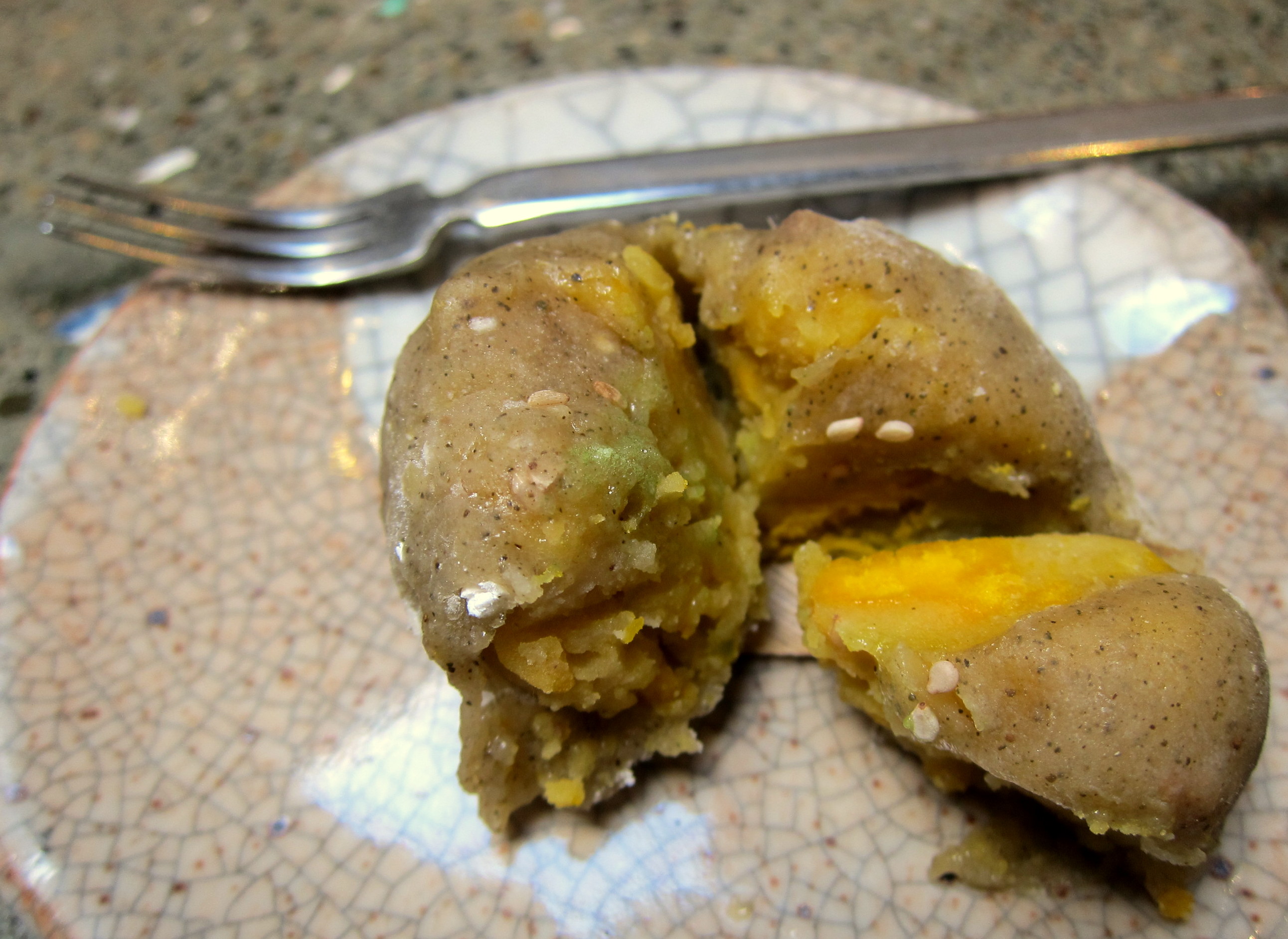
Unfortunately, this nuttiness does not enhance the nuttiness of the kabocha mochi but competes with it. The mochi this time has a hojicha-flavored coat and a filling of cinnamon, walnut and kabocha (a kind of winter squash, also known as the Japanese pumpkin). Contrary to my hesitance, the cinnamon was too faint to be detected (no, I don’t like cinnamon), and the mochi is mild overall. It is not too sweet.


Instead of being steamed-dried like other Japanese teas, hojicha is roasted in porcelain over charcoal, so the green tea becomes much milder than sencha. The kabocha is similar to a plain, grainy, white sweet potato in both taste and texture. (The red mushy sweet potato is sweeter than the white kind.) Because both the tea and the snack are grainy, matcha-kabocha mochi is not a good match together, although I really like them both separately.

A better pairing would be matcha with matcha mochi, and sencha with hojicha-kabocha mochi, because you want something sweet tempered by something a tad bitter, and something clear with something nutty. Nonetheless, I still think that sencha is an entree tea, not a dessert tea. So the hojicha-kabocha mochi would be better enhanced by something strong in fragrance like jasmine green tea.

This post also appears on Tea and Mai

Sencha and Mochi

March 19, 2012 By: Mai Truong Category: California - The Bay Area, Drinks, Japanese, sweet snacks and desserts, Vegan


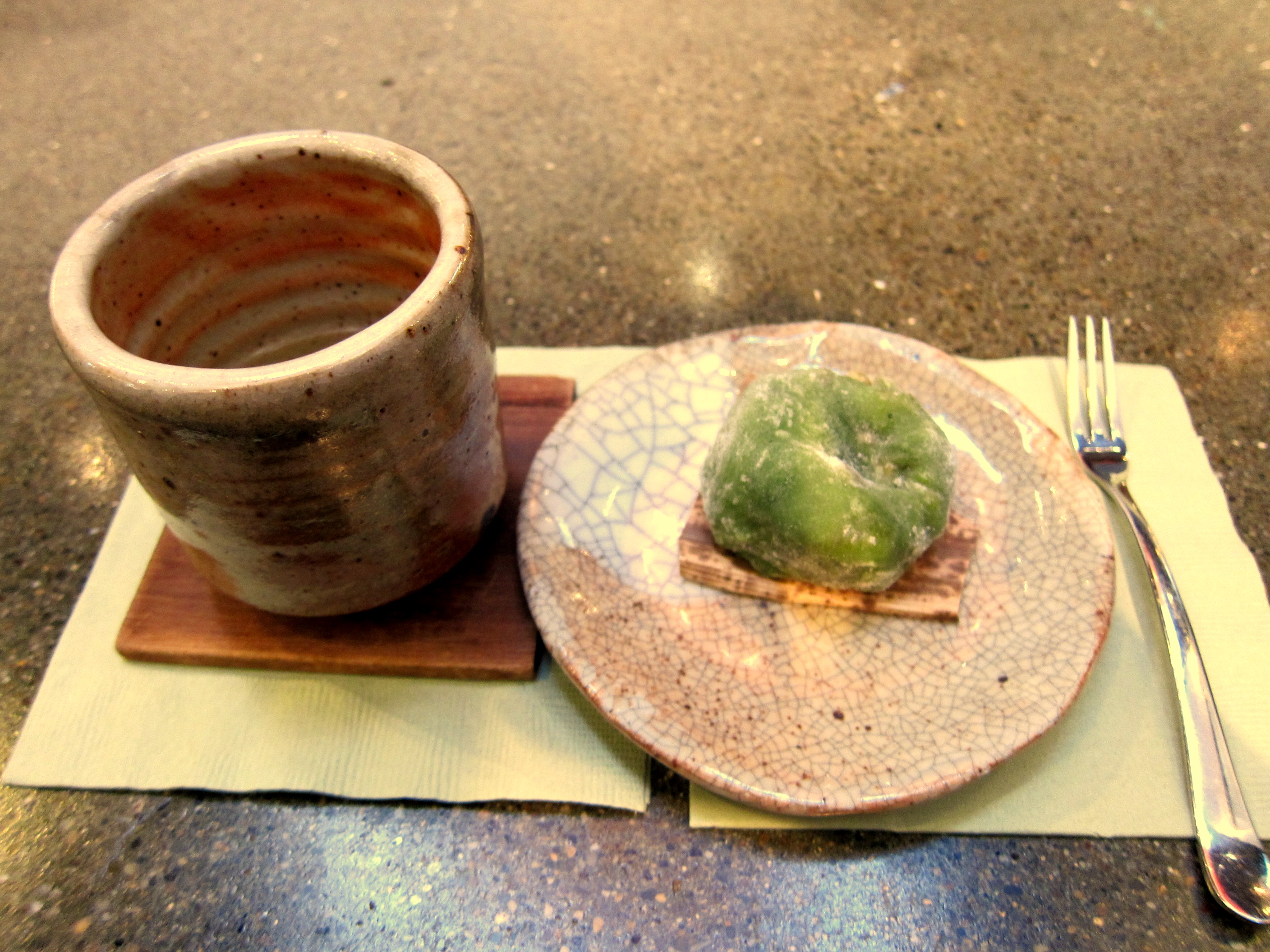
Sencha in yunomi, a typical Japanese thick, tall teacup, whose name I’ve yet to find out, accompanied by a matcha mochi, whose fillings include: satsuma sweet potato, red bean paste, orange juice and walnuts. (Thanks Masaaki for telling me the name of the cup in Japanese.)

The mochi, handmade and delivered by a mochi lady every week to Teance, is refreshing both in look and in taste. The green tea flavored chewy coat is cool and light. The filling, although dominated by red bean, is not too sweet. I opted for one with less nuts because I didn’t think that I would want such contrast in texture. The mochi lady is a small, timid Asian lady, who smiled so happily when I described her mochi as “refreshing”, and who showed me that I should dip my fork into tea or water before cutting the mochi so that it would not be sticky. Yes, it worked, the fork went straight through with such ease. Now it makes sense why we can chew without the mochi sticking to the teeth.

This is my second time having sencha, if we don’t count the time I had genmaicha at Ippuku (genmaicha is lower-grade sencha with roasted rice), and the seaweed taste of sencha has grown on me. However, I am not convinced that the sencha is a good match for the mochi. Both are good by themselves, but I think the sencha should be an entree tea, not a dessert tea. Its seaweed taste would enhance something savory. A mochi would fare much better with a light, floral tea that isn’t too dry, like Yellow Gold, Royal Courtesan, or Darjeeling First Flush.

Sidenote: this sencha at Teance is the hand-picked Yakichi sencha, named after the farm “founded by Mr. Shimooka[…]. Yakichi sencha is an eight-time Ministry of Agriculture award winner, and also the winner of the highest agricultural award, the Imperial Prize. […] This traditional Japanese tea is shade grown (kabuse) in the mountains above Uji.” (description from Teance webpage)

Meghan explained to me that shade grown leaves are of higher quality because when the plant is shaded, it has to produce more chlorophyll to balance the lack of sunlight, resulting in a greener leaf (or maybe a darker green leaf?). According to The Tea Detective, “the increased green chlorophyll pigment changes the natural balance of caffeine, sugars, and flavanols in the leaf. It also increases L-theanine, an amino acid found naturally in tea, that adds a unique vegetal quality to the flavor, and helps counteract some of the stimulant effects of caffeine, thus having a relaxing effect on the body, yet an alert state of mind. Photosynthesis reduces L-theanine and increases tannins, the compounds responsible for teas astringency.” Basically, kabuse (shade grown tea) is sweeter, less bitter, and less dry.

Address: Teance Fine Teas Store
1780 Fourth Street
Berkeley, CA 94710
510-524-2832
Money matter: the mochi is $4 each. A little pricey, but somehow it seems reasonable to me.

This post also appears in Tea and Mai

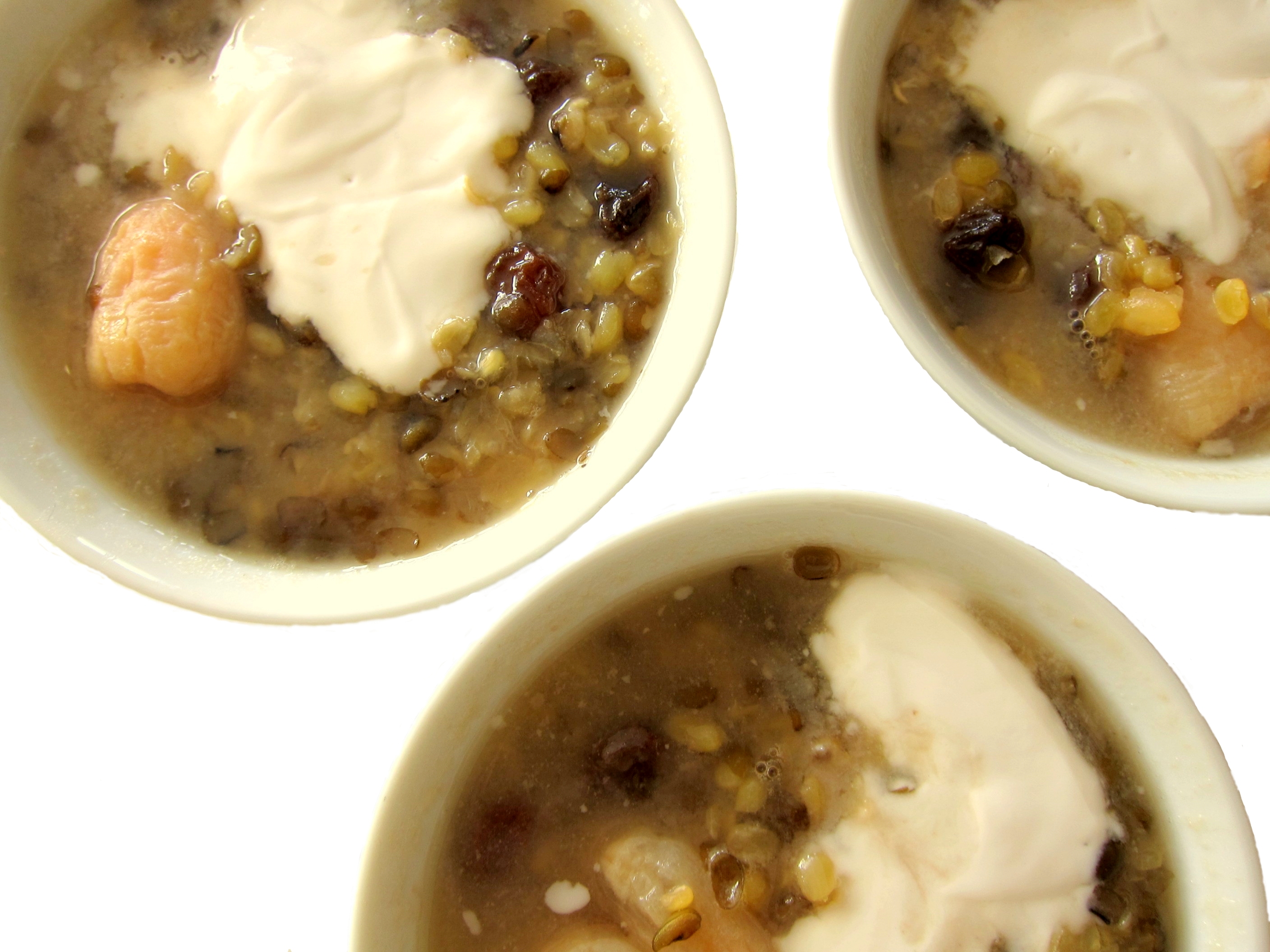
Lychee and mung bean che (Chè đậu xanh trái vải)

January 24, 2012 By: Mai Truong Category: RECIPES, sweet snacks and desserts, Vegan, Vietnamese


This dessert requires no skill in the making, but it ranks way up in the chè hierarchy, topping taro che and my own banana tapioca pudding. Beside the fact that Little Mom invented it, I always like things with lychee. 😉

Because everyone’s sweet tooth differs, it doesn’t make sense to have a fixed recipe for this simple dessert. One package of halved mung bean (with the green skin on), 1 can of whole lychee, 1 can of coconut milk, raisins, sugar and water are all there is to the pot.

The mung bean need to be soaked in water overnight to soften and cook faster. The coconut milk and the syrup from the lychee can are mixed with water to cook the bean. More or less water depends on how thick you like your chè; the more liquidy chè served cold, which I prefer, is suitable as a palate cleanser after a big meal, and the thicker version is best as a midday snack. When the mixture boils and the bean becomes soft enough to dissolve in your mouth, add raisins and sugar to taste. Wait until it boils again to add the lychees, and you’re done cooking.

If the famous Chinese imperial consort Yang Guifei could have a taste of this chè, I’m sure it’d become her favorite dessert. 😉 Happy Tết! May the Year of the Dragon be sweet for everyone!