Flavor Boulevard

We Asians like to talk food.
Subscribe

Archive for the ‘Opinions’

Summer Festival in Concord

August 17, 2012 By: Mai Truong Category: Japanese, Opinions, The more interesting

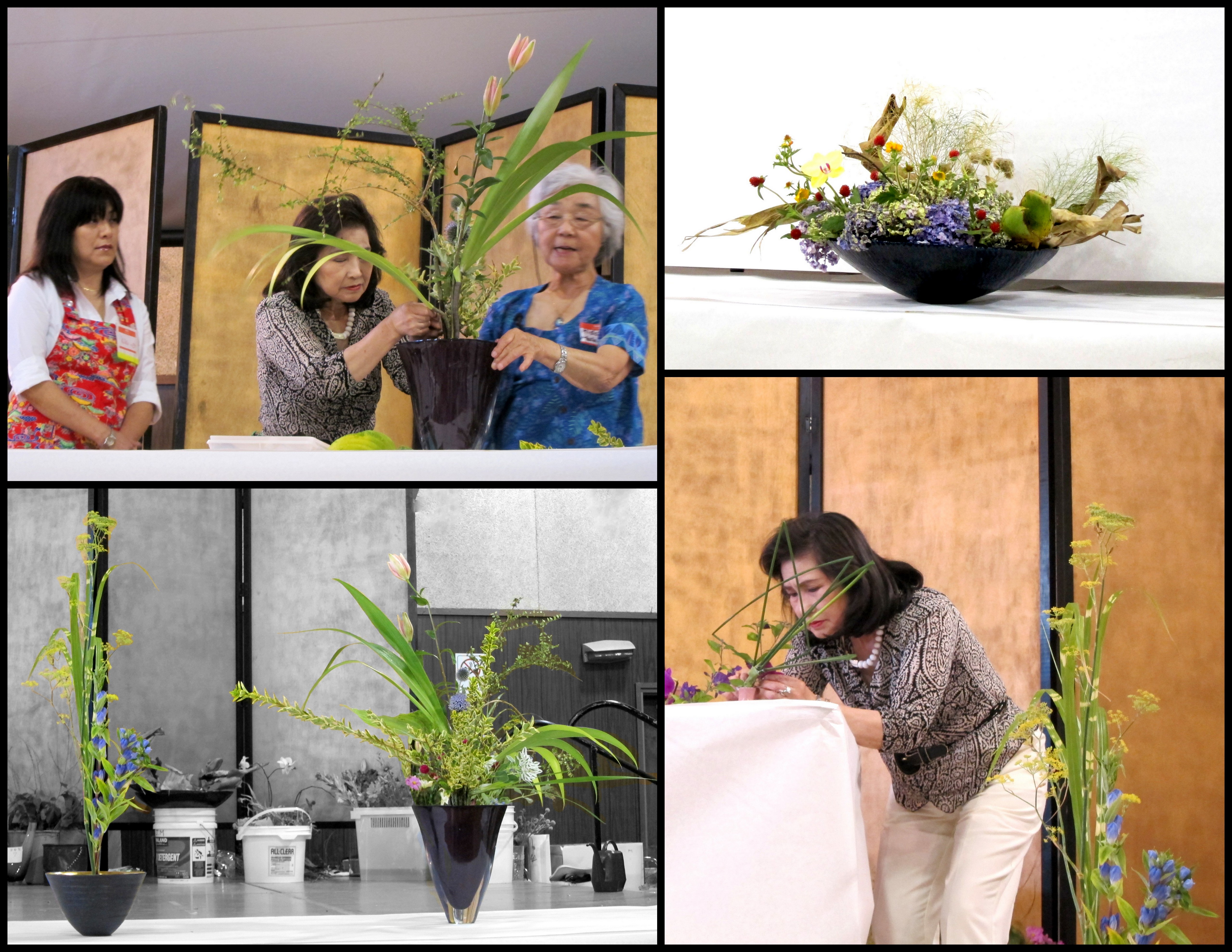
Clockwise from top left: Master Hideko Metaxas (in blue) and two assistants arranging an example of Rikka Shofutai; a free-style arrangement in honor of the victims and the philanthropists in the Tohoku Tsunami 2011; an Ikenobo sensei arranging a free-style display; Shoka (left) versus Rikka (right)

Learn something new everyday. At the Japanese American Summer Festival in Concord this year, I absorbed an hour of Ikenobo ikebana art, which is really, really, really rudimentary, but at least now I know that the Rikka style involves nine elements, and the Shoka style three elements (heaven, earth and man).

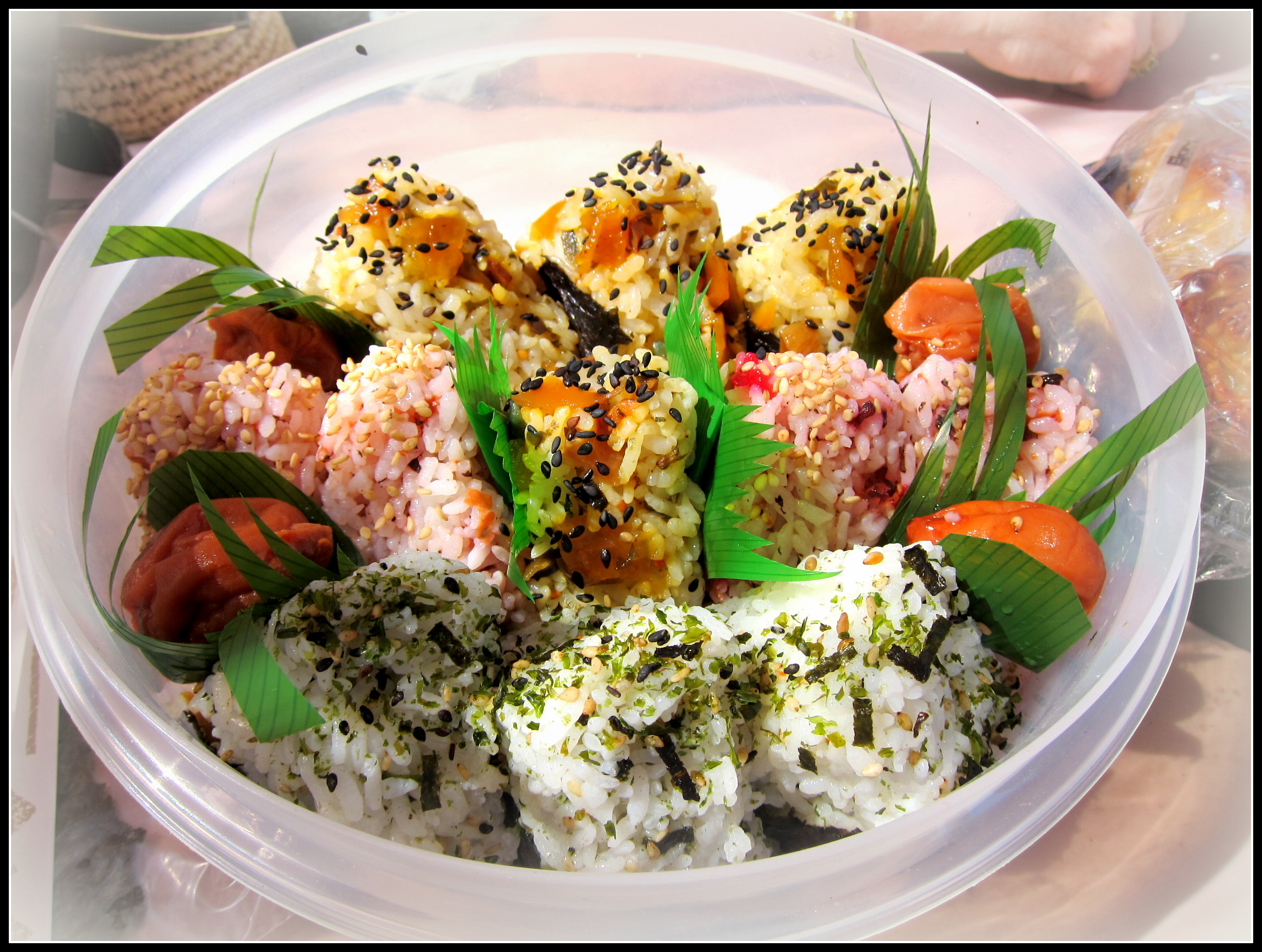
That day was also the first I’ve heard of the “Three Friends of Winter”ย sho chiku bai (pine, bamboo and plum), and this astonished me because 1. I’d never encountered any old Chinese things that my mom hasn’t told me about, and 2. it involves plum blossom, which is my name. There’s no way I wouldn’t know that my name is part of a trio that appears in Asian arts and folklores at lunar new year time. My memories must have been failing. ๐Ÿ™ Anyhow, Nancy made a beautiful onigiri box that follows the sho chiku bai theme:

Homemade sho chiku bai onigiri by Nancy Togami: white onigiri with aonori and sesame (sho), yellow onigiri with fukujinzuke (chiku), and pink umeboshi onigiri (bai)

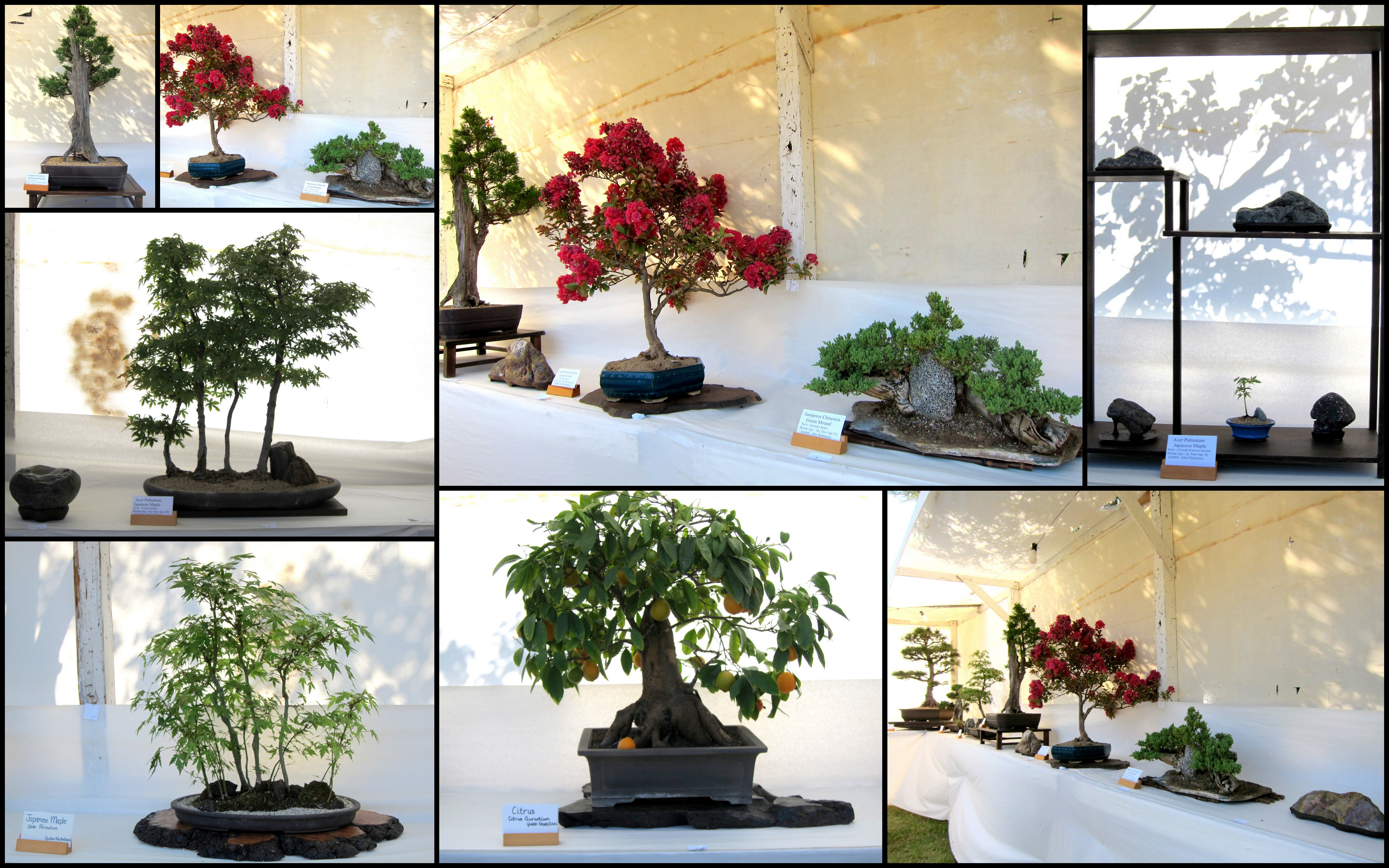
The rice balls, particularly the fukujinzuke ones (soy sauce pickles), go oh so well with the teriyaki chicken sold at the festival. For $5 you get a quarter of a chicken, either white or dark meat. I chose dark meat of course, a big juicy leg and thigh, but the white meat that Nancy picked also looked gleaming. Kenji-san went with 8 skewers of beef teriyaki for $8. We noshed while listening to the taiko drum performance. In the 110-degree heat, I tried not to stare at the kids swooshing their shaved ice, diverted my thoughts instead to the juniper and Japanese maple bonsai.


Mom is an avid believer against potted plants and caged birds, and I don’t even support cutting grass. But these miniature trees are undeniably works of art.

That said, if Mom and I were given one of these, first thing we do is removing the tree from the pot and digging it a nice warm hole in our front yard. ๐Ÿ˜‰

Com tam at a tiny joint in Oakland Chinatown

August 14, 2012 By: Mai Truong Category: California - The Bay Area, Comfort food, One shot, Opinions, Vietnamese

A guy waved a bottle in front of me. “Nesquik?”, he asked. I shook my head no thanks. Five seconds after he walked away, I realized my stupidity. I missed a free bottle of Nesquik! I don’t remember drinking Nesquik for the past 15 years, or ever, but I know what it tastes like, and I like chocolate. Why did I say no?!

Because I live in Berkeley. One thing Berkeley trains you very well for is saying no. Each time you walk pass a homeless man or woman, whether he or she asks for spare change or curses you off or shouts “nice dress”, you silently say no. Each time an activist steps up to you and says “Hi how’s it going? Would you have a minute to talk about …?” and you can barely tell what it’s about because he or she squeezes those two sentences in the hundredth of a second you lift your foot, you say no, usually with a smile because you feel bad. So you prepare this automatic respond when a stranger sticks something under your nose: No thank you. And you end up missing the free Nesquik.

But Berkeley also makes you nicer. And it’s not because the hippies convince you about world peace or anything. First it’s because you travel by bus. The bus always comes late, and not everyone sitting next to you has showered in the past 30 days, so you learn patience. Second, it’s because, as the saying goes, “it’s Berkeley, you can do anything“, and people, including you, wouldn’t bat an eye, so you learn acceptance. Then there’s the protests (boy do Berkeley students love protests, although those never yield any result beside some kid ending up behind a police car). I could list a dozen other reasons. But mostly,ย it’s because you see everybody from every corner of the world. My first encounters with the Serbian, Iranian, Bosnian, Tibetan, Korean, Japanese, Eritrean, Ethiopian people, and the smell of marijuana all happened in Berkeley. And those encounters (except the marijuana) quickly became friendships.

So I used to get a little uneasy, and I’m ashamed to admit this because I know it’s mean, when I saw Chinese people selling Vietnamese food. Here’s what I think: they don’t make it right, so they shouldn’t call it Vietnamese food. (I’m disturbed when Vietnamese people sell bad Vietnamese food too, because that’s disrespecting your own people.) And I avoided Vietnamese restaurants owned by Chinese. But when I strolled all over Oakland Chinatown last week, there were some occasional raindrops, the sky was grey, it was getting cold, and I just visited the Japanese Buddhist Church for the O-bon festival. All of those things put me in an exceptionally good mood. Although I set out to find Vietnamese snacks, it quickly became clear that I wasn’t going to find any, so when I walked by a window sign of “banh mi, bun bo Hue, banh canh” and a list of other Vietnamese staples, I caved.

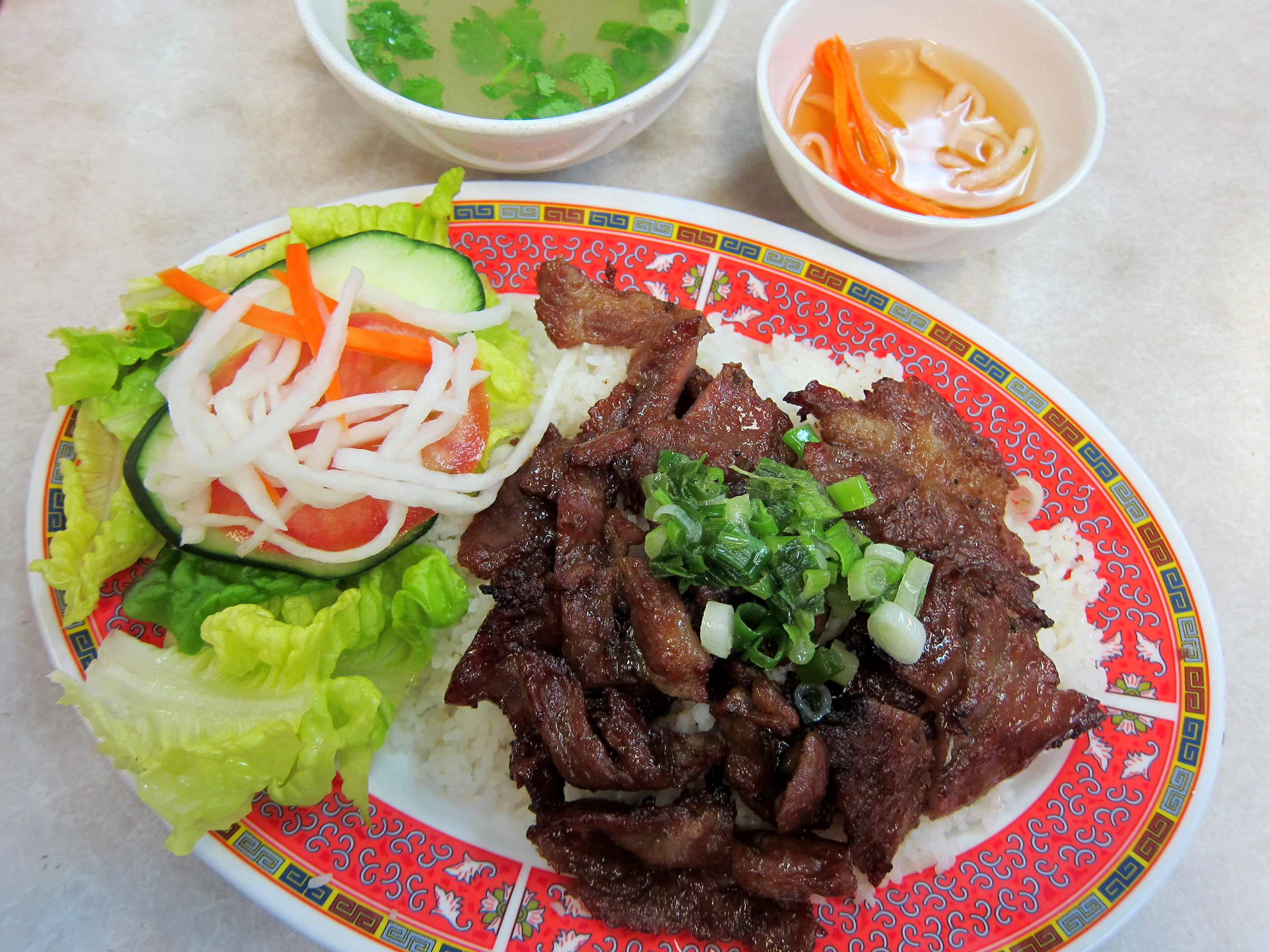
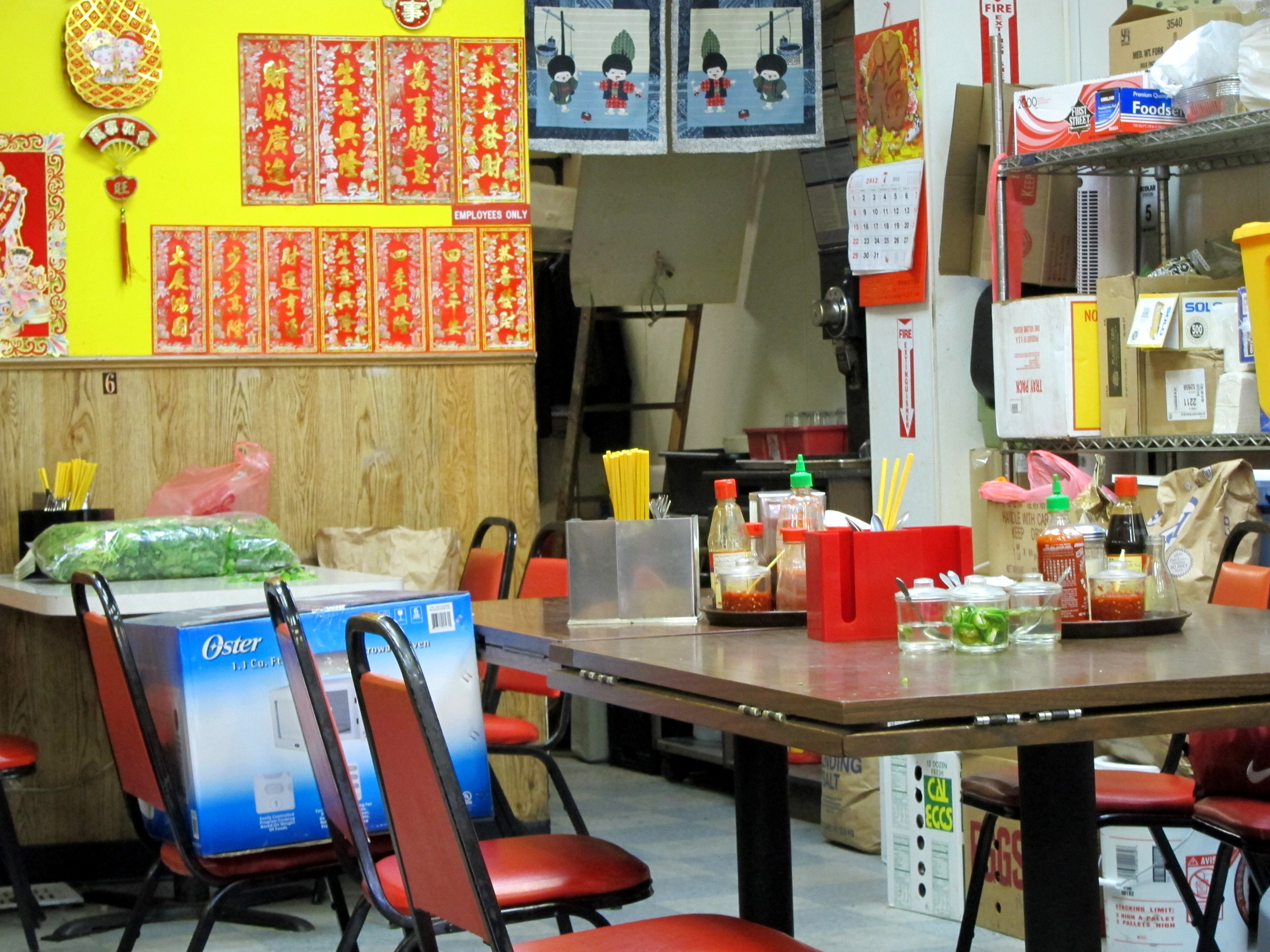
Five minutes later, I ordered a cฦกm tแบฅmย (broken rice) with grilled pork “for here”. The lady pointed me to Table 2 (Let’s refer to her as Lady 2 from now on, many ladies worked at this joint). I put down my bags.

Then she exchanged a couple of words including “xiรจ xiรจ” to a couple sitting at Table 4. Yep. It’s Chinese people selling Vietnamese food.

Well, that’s okay, I diverted my gaze to the TV, Lady 2 also made herself a bowl of noodle soup and watched a Vietnamese movie while eating. It was hard to hear the TV because the following things happened during the course of my dinner: a customer dashed out into the street while Lady 2 shouting after him in Vietnamese to tell him to run slower, Table 4 chatted loudly in Chinese upon his return, Vietnamese customers coming in to buy banh mi and cha lua to go (the only dine-in people were Chinese and me), and as I scooped up the few last spoons of rice, a fight broke out outside, which caused Lady 2 and everyone else rushing to the street. I had to stop Lady 2 to pay, her eyes still directed a yearning gaze door-ward.


When I told my mom about the fight, she suggested against going back to such place, who knows when the fight will take placeย in the restaurant. I see her point, but I think I’d risk it. The com tam, and that includes the grilled pork, the broken rice, the nuoc mam and the pickled carrots and daikons floating in it, was beyond perfect. ๐Ÿ™‚

Price: $6.75
Address: Ba-Lรช Deli, Coffee, Restaurant
812 Franklin St (between 8th and 9th St.)
Oakland, CA
(510) 465-3522

Alone in the Kitchen with an Onion

July 20, 2012 By: Mai Truong Category: Book, Opinions, RECIPES, Review of anything not restaurant


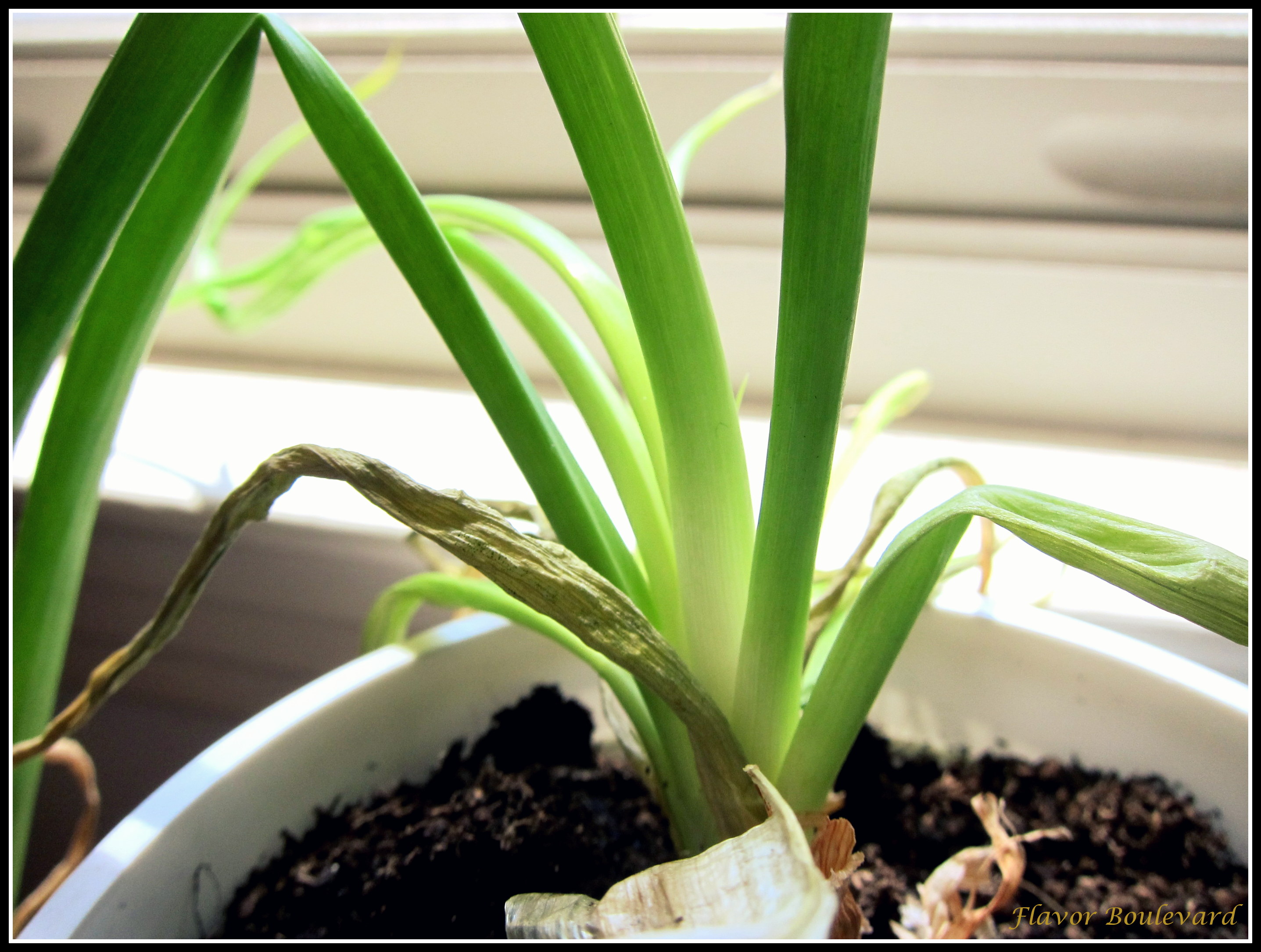
One of my onions grew a plump white sprout.

So plump that I couldn’t bring myself to throw it out. I left it alone for a week.

Then two weeks.

Then three weeks.

It kept getting taller and plumper. At some point the unthinkable thought of throwing it out became the unthinkable thought of letting it die. For a thing trying so hard to live on nothing, what kind of creature am I to thwart its life? So I placed it in a clean container that used to contain prunes, put in some soil leftover from another plant that I’ve long transfered the custody to my mom for its better chance of survival, and poured in water. I told my mom about it, but she said don’t have high hope. I wasn’t hoping for anything, I just wanted to give it what it wants: soil and water. I placed the pot outside during the day and took it in at night so that it doesn’t get cold. The sprout grew, turned green, and another leaf came out. Then I took a trip home for two weeks, thinking that the onion, having a watery body, should be okay without watering for two weeks.

When I came back, I saw the prettiest thing I’ve ever seen of an onion: several skinny green long stalks sprouting out, tall and cheerful. Thank you for surviving, Onion. You make the apartment alive.

I’m not complaining that I’m living alone. I chose this studio apartment instead of sharing because I was looking forward to living alone all my college years. My college roommates were nice people, I don’t dislike them. One girl was there for maybe 2 weeks total the entire year we shared the dorm room, I liked her. There are just songs I want to turn the volume up to for hours on end, meals I wanted to eat while watching a movie on the computer, times to laugh or cry without explaining to two quizzical and not necessarily empathetic eyes. Times to do crazy dance. Times to burn stuff in the microwave and send the alarm screaming. I was tired of asking for and giving explanations. The best thing about living alone is that you can do whatever you want.

The worst thing about living alone is that you can do whatever you want. The only thing I’ve cooked for myself since February is garlic scrambled egg and rice. I skip lunch everyday. I thought I was bad. But Ann Patchett stuck to her Saltine diet for months: “I ate slices of white cheese on Saltines with a dollop of salsa, then smoothly transitioned to Saltines spread with butter and jam for dessert. I would eat as many as were required to no longer be hungry and then I would stop. […] Day after day, month after month, I stuck to my routines like a chorus girl in the back row.” Actually, maybe her diet has more variations than mine. But you get the point. Dining alone means dining with the person who you want to hide and to expose to the world at the same time, the person that only you know.

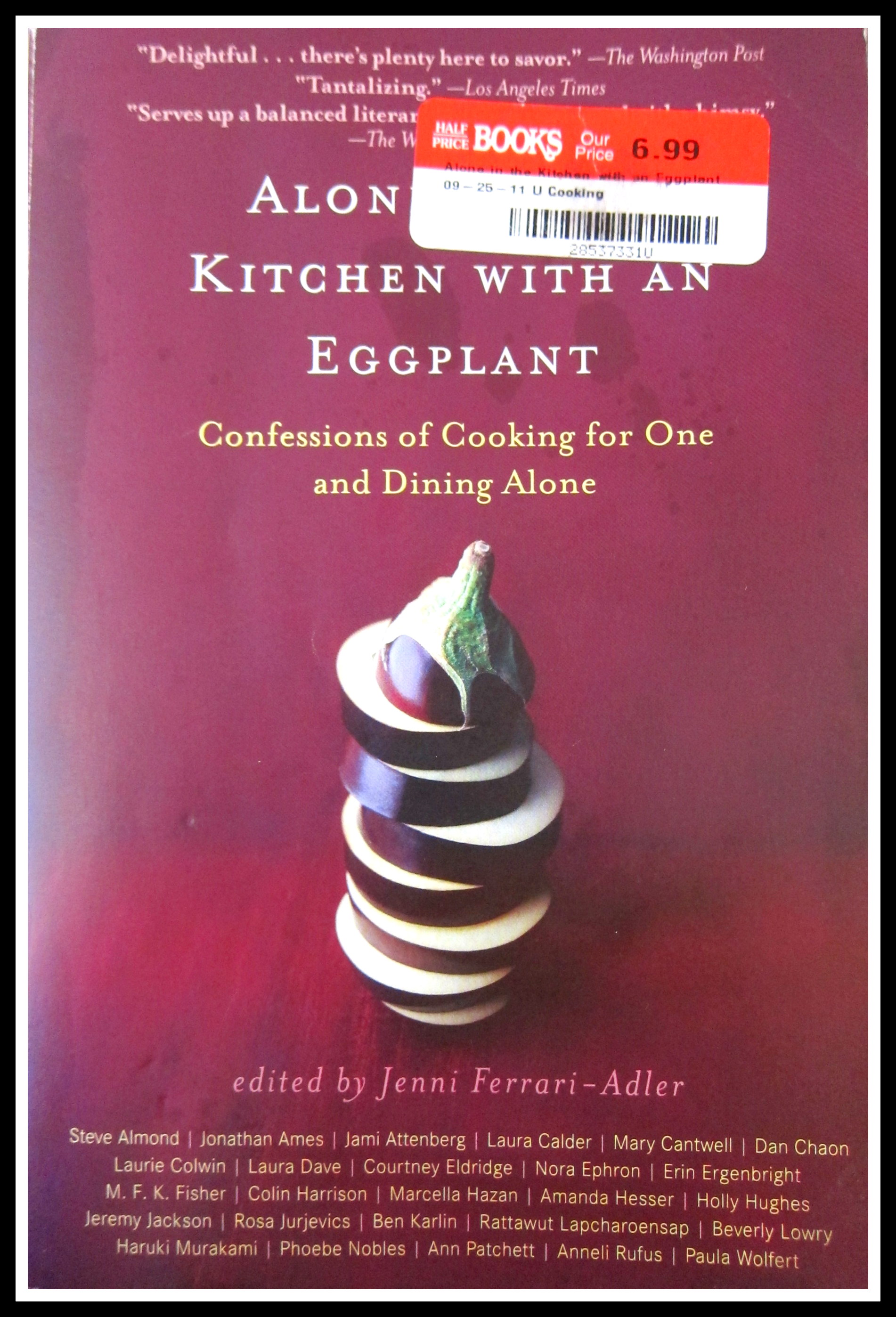
That person takes many forms, and that person goes through many phases, some pleasant, some weird, most are captured in the collection Alone in the Kitchen with an Eggplant. The beans and cornbread phase (Jeremy Jackson), the asparagus phase (Phoebe Nobles), the chili phase (Dan Chaon), the instant noodle phase (Rattawut Lapcharoensap) (I’ve gone through this phase my self – Sapporo Ichiban, original flavor – until Berkeley Bowl rearranged their aisles and I couldn’t find the packages for weeks, I contemplated boycotting Berkeley Bowl). There’s eating alone with glory, enthusiasm (Mary Cantwell, Dining Alone), a sense of self-declaration, independence, defiance (Jami Attenberg, Protective Measures), most often for a lady at a restaurant, and usually in the first days of eating alone. There’s eating alone to observe (Colin Harrison, Out to Lunch), to indulge (Anneli Rufus, White-on-White Lunch for When No One is Looking), to be relentlessly particular about your food and give no room for compromise (Erin Ergenbright, Table for One). These things happen when one has been eating alone for a long time, and accept it.

There’s happy eating alone because of a desperate need to escape the everyday hustle (Holly Hughes, Luxury), the joy is temporary like fireworks. There’s sad eating alone with a boiling thirst for companions (Laura Calder, The Lonely Palate). Then there’s the mellow eating alone because of permanent solitude, and although feeling lonely to the bones, in some way the lone diner religiously ties himself to that loneliness as if he couldn’t live without it, his repetitive meal is his only and last company. “What does an introvert do when he’s left alone? He stays alone.” (Jeremy Jackson, Beans and Me)

The person with whom I dine the most, me, has taken all of these forms. I found that amusing and sad, but to make things worse, I saw my friend in Haruki Murakami’s The Year of Spaghetti, “[tossing one handful of spaghetti after another into the pot] like a lonely, jilted girl throwing old love letters into the fireplace”. Eating alone is like dressing yourself when you’re invisible, you know you should make it good, but you wonder if it’s worth the hassle. Is that why the masked superheroes never change their outfit?

I noticed my onion doesn’t like direct sunlight, and it needed more soil, so today I went to a garden store begging for a plastic bag of soil. (I thought about digging up a cup from the neighborhood at night, but that wouldn’t sit right.) On the bus, I sat across from a boy, 12 years old he said, just far enough that he didn’t notice me watching him eat and close enough to see that it was gomiti in a loose broth with bits of carrots and green bellpeppers. Then I realized the book forgot one kind of eating alone: eating alone among a lot of people who aren’t eating. What do you feel then?


Garlic Scrambled Eggs over Rice (serves one for 3 meals)
– 4 cups rice
– 8 eggs
– 1/2 clove garlic, thinly sliced
– 1 tsp salt
– 2 tbs sugar
– 1 tsp oil

Cook rice. Oil the pan. Brown the garlic(*). Break and scramble the eggs. Add sugar and salt. Serve on or mix with rice.

(*) I used to add onion too, until Onion sprouted into a friend.

Food and film: Bread of Happiness and Kimchi Family

June 14, 2012 By: Mai Truong Category: Film/TV, Japanese, Korean, Opinions, Review of anything not restaurant


Movies are food for the eye (and ears, and brain, or whatever else you like). I watched Bread of Happiness on the plane ride from Houston back to SFO, and it made me happy that whole day. It also strengthened my resolve to study Japanese. The breads shown in this movie don’t seem particularly complicated, their presentation doesn’t sparkle, but they perfectly suit the gentle atmosphere that flows through the plot: looking at the steam rising as you break a fresh loaf in half, you can smell a sincere love.

Something that I learned from the main guy, a baker, in Bread of Happiness: do you know the literal meaning of “compagnon”?

Also designed to make you feel all warm and fuzzy inside, the Korean drama Kimchi Family hits the spot on days when I feel down (and also when I’m eating my cup noodles). It’s another string of small stories of how food made with heart can touch people’s lives in positive ways. If you don’t watch it for the plot, watch it for the kimchi! So many kinds of kimchi that I haven’t thought of being possible before. You can watch it on Hulu.com.

Kimchi Family has a lovely song that I can’t find the lyrics anywhere: “Take a drink. This drink is not alcohol, this drink is our mother’s tears, this drink is our father’s sweat…” UPDATE: Thanks to the author of Following KPop, I now have the lyrics of the drinking song, printed below.

Tonight I actually cried watching its 8th episode. But at least I was at home. Forย Bread of Happiness, aish, I had to sink into my seat so that the guy sitting next to me didn’t see my eyes turning all red…

๋ฐœํšจ๊ฐ€์กฑ ๊ถŒ์ฃผ๊ฐ€ ๊ฐ€์‚ฌ (Fermentation Family – Drink Offering song lyrics from Daum Music)
Listen to the song on YouTube and sing along ๐Ÿ™‚

Hangeul์žก์ˆ˜์‹œ์˜ค~ ์žก์ˆ˜์‹œ์˜ค~
์ด ์ˆ  ํ•œ์ž” ์žก์ˆ˜์‹œ์˜ค
์ด ์ˆ ์€ ์ˆ ์ด ์•„๋‹ˆ๋ผ
์šฐ๋ฆฌ ๋ชจ์นœ ๋ˆˆ๋ฌผ์ด์˜ค
์šฐ๋ฆฌ ๋ถ€์นœ ๋•€์ด์˜ค๋‹ˆ
์“ฐ๋‹ค ๋‹ฌ๋‹ค ํƒ“๋ง๊ณ 
๋งˆ์Œ์œผ๋กœ~ ์žก์ˆ˜์‹œ์˜ค ๋ช…์‚ฌ์‹ญ๋ฆฌ~ํ•ด๋‹นํ™”์•ผ
๊ฝƒ~์ง„๋‹ค๊ณ  ์„œ๋Ÿฌ๋งˆ๋ผ
๋ช…๋…„ ์‚ผ์›” ๋ด„์ด ์˜ค๋ฉด
๋„ˆ๋Š” ๋‹ค์‹œ ํ”ผ๋ ค๋‹ˆ์™€

๊ฐ€๋ จํ•œ ์šฐ๋ฆฌ ์ธ์ƒ
๋ฟŒ๋ฆฌ์—†๋Š” ๋ถ€ํ‰์ดˆ๋ผ

์žก์ˆ˜์‹œ์˜ค~์žก์ˆ˜์‹œ์˜ค
์ด~์ˆ  ํ•œ~์ž” ์žก์ˆ˜์‹œ์˜ค

์˜ค๋™์ถ”์•ผ ๋ฐ์€ ๋‹ฌ์—
๋‹˜ ์ƒ๊ฐ์ด ์ƒˆ๋กœ์›Œ๋ผ
๋‹˜๋„ ๋‚˜๋ฅผ ์ƒ๊ฐํ•˜๋‚˜
๋‚˜๋งŒ ํ™€๋กœ ์ด๋Ÿฌํ•œ์ง€

์ƒˆ๋ฒฝ์„œ๋ฆฌ ์ฐฌ๋ฐ”๋žŒ์—
์šธ๊ณ ๊ฐ€๋Š” ๊ธฐ๋Ÿฌ๊ธฐ์•ผ

๋‹˜์— ์†Œ์‹ ์•Œ์•˜๋”๋‹ˆ
์ฐฝ๋งŒํ•œ ๊ตฌ๋ฆ„ ์†์—
๋นˆ์†Œ๋ฆฌ ๋ฟ์ด๋กœ๋‹ค

Romanizationjabsushio jabsushio
i sul hanjan jabsushio
i sulreun sulri anira
uri mochin nunmulrio
uri buchin ttamioni
seuda talda tatmalko
maeumeuro jabsushio
myeong sasibri haetanghoaya
kkot jindago seoreomara
myeong nyeon samwueol
bomi omyeon
neoneun tasi piryeoniwakaryeonhan uri inseng
bburiobneun bupyeongchora

jabsushio jabsushio
isul hanjan jabsushio

otongchuya balkeun tarae
nim senggaki saelowuora
nimdo nareul senggakhanda
naman hollo ireohanji

saebyeokseori chanbaramae
ulgokaneun kireokiya

nimae soshik aratteoni
changmanhan kureum sokae
binsori bbuniroda

TranslationHave some, have some
Have a cup of this wine
This wine is not wine
This wine is our mother’s tears
This wine is our father’s sweat
Don’t say it’s bitter or sweet
Have a taste with your heart
Don’t be sad
The myeongsasibri rose buds fall
When spring arrives next year
you will bloom once againOur pitiful life
is like a floating rootless weed

Have some, have some
Have a cup of this wine

The paulownia tree
in the bright fall moon
reminds me of my wife
and saddens me
Does my wife think of me?
Or am I alone in this thought?
In the morning’s cold frost,
the wild goose cries and leaves

I hope for news of my wife
The overflowing clouds
are empty of noise

Ice cream friendly

May 29, 2012 By: Mai Truong Category: Houston, Japanese, Opinions


Aside from opening a little bit late on Sunday (11:30 am), the Tokyo One at Westchase is a lovely place. Three things that I have now associated with Tokyo One, although I probably shouldn’t, since they kinda belong to the ukiyo (floating world) more than to the permanents:
1. A beautiful peach-colored water lily in the mini pond creek artificial water thing surrounding the building
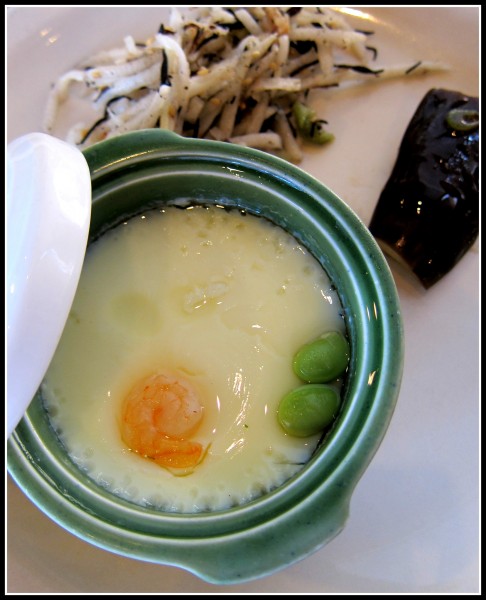
2. Perfect silky chawanmushi (pictured)
3. The gentle (the gentlest I’ve ever heard) but persistent recommendation of Sean, our server, for ice cream. We were full to the brim, but I gave in after he asked us for the second time if we would like some ice cream (as if I could ever turn down icecream 8)). I’m happy that he insisted, the plum ice cream with plum bits was great, and green tea ice cream is always good. We finished two scoops, Sean came back and asked if we’d like some more. Honest to goodness, I wanted to say yes.

Address: Tokyo One at Westchase
2938 W Sam Houston Pkwy South
Houston, TX 77042
(713) 785-8899
Buffet lunch for three: $51.93
Ah, food-wise? Good tempura, good gyoza, good fish, good rice, etc.

9 tips to make your food post interesting

April 29, 2012 By: Mai Truong Category: Opinions

Recently I’ve received an increasing number of requests to guest-post on my site, which makes me ecstatic, but it also sets me in a difficult position to evaluate what is interesting. Of the millions of food blogs out there, what makes yours interesting? It’s you. Your voice, your emotions and your own experience with the food can set your post miles above a recipe that I can find just 0.2 seconds after I google its name. I’m no professional blogger, but I’ve read a fair share of food blogs, and from the ones that I keep returning to, I’ve learned and formed my own set of guidelines on how to write a post (which I try to follow, sometimes more successful than others).

In general, recipe posts have more room for personal stories, and they also comprise the most common type of food blogs (small sample: of the top 50 food blogs on Delish, 43 are recipes), so these guidelines are more geared toward recipe blogging than reviews. I’m gonna skip the photos, although they’re important, they’re the varnish and the writing is the wood.

1. Write statements with specific details, geographically and historically. Let’s say you want to write about grilled catfish. You need an opening sentence. Your first thought is “When it comes to catfish, there are many American dishes. They are mouthwatering and delicious.” These two sentences sound choppy and unimpressive, so you can remodel them into “Our American cuisine has no shortage of mouth-watering dishes with catfish, such as Catfish Tuscany and Catfish Gumbo.” Then you give more background details to it: in which regions in America are these dishes most common, who usually like them; or give a more personal touch: do you have a childhood story related to one of these catfish dishes, how did you come to like catfish or fish in general, etc.

2. Be confident with your opinions, but respect your readers. You’re not trying to give a lecture, you’re just telling a story. Sometimes a confident statement may sound a little bit too direct and confrontational. For example, “you should eat catfish because it is healthy” sounds like an order, but softening it to “my mother always tells me to eat catfish because it is healthy” offers not only consideration but also a personal story and a third opinion (your mom’s), which gently boosts the credibility of your statement. The use of “you” should be minimal, unless you want to make it sound like a conversation, which you should.

3. Give reasons. Why is catfish good for health? Include scientific facts if possible. Include your grandmother’s experience is even better: 1. It’s personal; 2. It’s most likely universal, somehow all grandmothers think the same; 3. It’s proven with time.

4. Tell a story. How did you come up with this recipe? How is your recipe different from other recipes of grilled catfish? Basically, what makes your recipe unique? What have you discovered while making this recipe, using this product, or eating this dish? James Boo and his co-writers on The Eaten Path tell some of the best stories.

5. How flexible is your recipe? Can I use brown rice instead of basmati rice, pork bone instead of beef bone, or blueberries instead of raisins? For a review, how adaptable is the dish or the product? Can it be eaten any time of the day, any season of the year? What kind of beverage would it go well with? What changes can/should be made if I want to make it for my grandmother’s cousin who has dentures and is fond of duck tongue?

6. Tell us about the result. What do you think about your recipe after you eat it? Is it perfect? Did it give you a split second of enlightenment? Is there anything you should have done differently or is there anything you would like to experiment next time you make it? Will you make it again? Did your best invention give you the worst stomachache the following day? Did anyone beside you eat it, if so, what did they think? The answers to these questions add personality to your post and complete your story.

7. Google is your best friend. And like with your best human friend, you should prepare to spend a lot of time with Google. There are already a lot of information out there, simply reciting the first link you find is not going to make your post any better than that link. What the reader needs is all of that information in one place, so that they can quickly go back and look up for it as needed. I spent 2 days browsing through 50 pages of articles on the ash sticky rice dumpling (bรกnh รบ tro), most are copies of one another, to get enough information for my post. The more inclusive your post is, the more useful it is for the reader. Your reader is spending their valuable time to read your post, so you have to invest your time to research before you write.
Also make sure to cite your sources. Citation doesn’t take away your expertise, it proves it.

8. Be funny. This point is always mentioned in every blogging to-do list, and it’s the hardest point to follow. How can you be funny? I try, but I don’t know if I’ve ever succeeded because nobody has ever told me that I’m funny. But here’s a trick I’ve learned from noodlepie: you can be funny by referencing funny things. Use the built-in links to your advantage. Those who bother to click on them, get the hidden jokes.

9. Be open about yourself. Be personal. If you don’t want the world to know about you, maybe you should set your blog private, or blog in your head. Besides, the world is not out to get you, unless you’re a serial killer on Interpol‘s wanted list who also enjoys seeking out the most authentic pad thai in the States, in which case you probably shouldn’t blog about where you just had lunch… (or maybe you should?)

To sum it up, a good blogging tone is confident, respectful and open. Content-wise, be informative. Ask yourself while writing: have I learned something new? If you don’t learn anything new while writing your post, that means you haven’t done enough research and your post is useless. Even if you think of the entire post all by yourself in one go, there are always numbers and statistics that you can add to bolster your arguments, or fun facts to make your baked potato not so trivial, or new words that you procure from thesaurus.com to avoid repeating yourself. If you learn something new while writing your post, chances are your readers will learn something new from your post, and that newly acquired knowledge will prompt them to think of your blog as a valuable source, and they will come back.

This post was written after an allnighter. Now the author has learned what her third alarm, which she always sleeps through, sounds like.

Recipe versus Review

April 26, 2012 By: Mai Truong Category: Opinions


Today I make a list to re-evaluate my blogging life.

Recipe posts:
Pros:

  • A lot of room for personal story
  • A lot of control with pictures: position, setting (decoration, utensil, plating), lighting, time (time of the day, amount of time for taking picture), camera equipment (unless you’re brazen and bring a tripod into the restaurant, some people do that, and I know some people who dislike people who do that)
  • Single product – cost efficiency
  • No partner necessary, although a helpless victim test subject friend might be useful
  • Almost always a good result
  • Experiment: you can do things a thousand times, talking about your experiments also makes a good story (example: tofu misozuke experiment by Oanh and Linh-Dang at Rau Om)
  • Relevance to readers: high – almost everyone can follow a recipe if they want to

Difficulties:

  • Finding the ingredients
  • Setting up and cleaning up: the nightmares untold tales
  • Making your recipe unique
  • Cooking – the kitchen is a battlefield

Review posts:
1. Restaurant reviews:
Pros:

  • Everything is set up and cleaned up, you don’t have to lift a finger except to eat.
  • Possible interview/friendship with the chefs – I’ve yet to attain this level, but professional food bloggers like the Food Gal Carolyn Jung do it all the time, and information from/about the chefs adds credibility to the post.
  • If the restaurant is just average, it’s good practice to hone your writing skill because you have to think of something to write out of nothing.


Difficulties:

  • You have to eat a lot, have a lot of friends who tolerate your behavior, or go to one restaurant multiple times. ย It may upset your boss (due to the time you spend eating) and/or your bank account.
  • Less time for pictures: annoy inconvenience your dining partner(s), unless they’re also food bloggers.
  • Pictures can be either very good or very bad, depending on the plating and the lighting, which are totally out of your control.
  • You have the same pictures as everyone else who go to the same restaurant (or the same type of restaurant, because every bowl of grilled pork vermicelli looks just like the first google image you find)
  • Mental debate: how nice should you be? Too nice –> your reviews are no good, and you risk hyping up the restaurant, then someone goes there, they don’t like it and you lose your credentials. Too critical –> nobody likes you.
  • Availability/relevance to readers: very limited –> low traffic
  • Hard to think of a personal story when you review the 67th Korean restaurant, which has the same menu as the 43rd and the 66th.

2. Product reviews:
Pros:

  • Availability/relevance to readers: medium to high, a large number of people can buy the same thing you buy, thanks to globalization
  • Cost: pretty cheap, and you don’t produce anything –> no prep work, no cleanup, no time spent making it
  • Flexibility: high – pictures can be taken any time, anywhere, anyhow
  • Single product – no partner necessary
  • There’s room for personal story, e.g., how you run into this product. Although this is hard to come up with times after times when your objective is simply to eat every Ben and Jerry ice cream flavor there is.
  • Room for facts: show off your expertise (at the very least, in googling). This also greatly expands your knowledge in “related fields”. I learn more Chinese looking up the Suzhou mooncake than if I ever try to just sit down and learn Chinese.
  • Possible interview with the producers: always an eye-opening experience

Difficulties:

Conclusion: for these past 4 years I’ve chosen the worst possible kind of food blogging… And I shall not change.
Did I miss anything in the list?

Bรกnh bรจo tips from Mrs. Tแปฑ

March 28, 2012 By: Mai Truong Category: Central Vietnamese, Houston, Opinions, RECIPES, Vietnamese


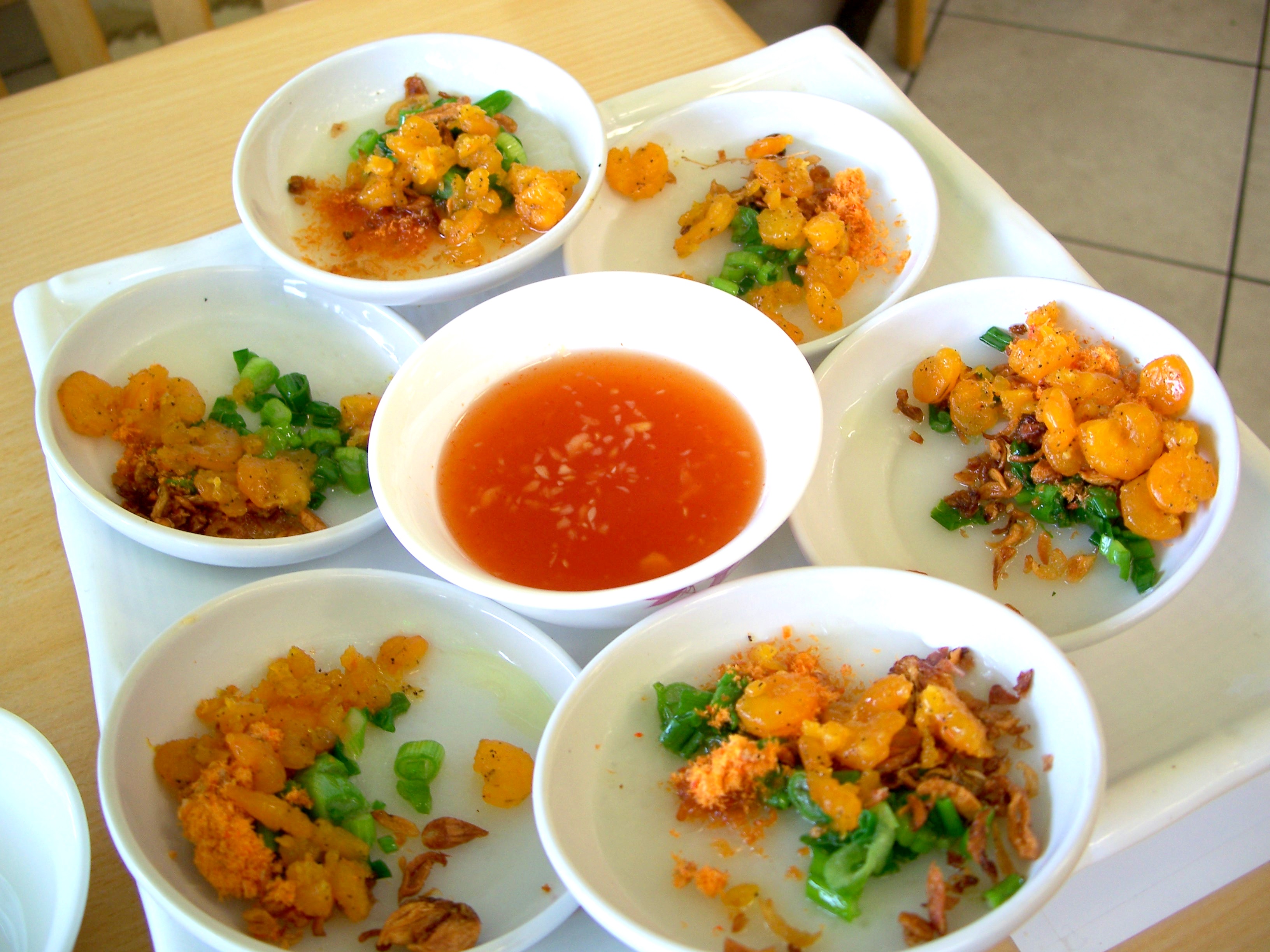
A couple of millimeters thin, chewy, savory, bรกnh bรจo, the waterfern-shaped appetizer, is as familiar to the Vietnamese dining tables as crab cakes to Americans. But not everyone makes it at home because it takes more time than its worth: make the rice flour batter, steam the banh, make the toppings, mix the fish sauce. In fact, I’ve had homemade bรกnh bรจo only once, and it was at my friend’s family restaurant. That said, there are skilled and dedicated grandmas who insist on making everything from scratch for the bestย bรกnh bรจo. One of them is Mrs. Tแปฑ, and Little Mom happened to see one episode of her cooking show on TV last week.

So below are some tips on bรกnh bรจo from Mrs Tแปฑ, collected from the show Nghแป‡ Thuแบญt Nแบฅu ฤ‚n Bร  Tแปฑ (The Cooking Arts of Mrs Tแปฑ) on Global TV Houston.

1. Texture:
The thinner bรกnh bรจo is the better bรกnh bรจo. Of course, resilience is a must, it should not be as chewy as a mochi, but it should have enough strength to hold itself together as the eater picks it up with chopsticks. How to make a thin but resilient bรกnh bรจo? Heat the bรกnh bรจo plates (or molds)* in the steamer before pouring in the batter and steaming the bรกnh. I suspect that this preheating helps cook the batter evenly in all directions, instead of having the bottom cold and cooking it with steam from only the top surface during the first few moments.

2. Toppings:
Bรกnh bรจo of the South has savory mung bean paste for topping, and bรกnh bรจo Huแบฟ usually has pan-dried shrimp (tรดm chแบฅy), which blogger Tran Ngoc Kha translated asย cotton shrimp for its fluffy texture. Fresh shrimp** (with head, legs, shell, everything) goes without saying: while peeling off the shell, you can keep the gแบกch, a substance located in the head of the shrimp that becomes reddish orange when cooked, to sweeten and fatten the toppings***. How to make the shrimps dry and fluffy? Microwave the peeled shrimps so that the meat is red, plump, and has a spring to it. Then pound the shrimps to break up the bodies, but not to a paste. And fry it on high heat with constant shuffling.

But bรกnh bรจo can also be topped with pork rind. To make the pork rind, Mrs. Tแปฑ would slice the skin off the pork belly, boil it, cut into thin strips, refrigerate them, and finally deep fry them. The refrigerating step prevents the fat from shooting everywhere while frying. How to tell when the skin is refrigerated long enough? If you bend the strip and it gives a loud, clean snap, it’s done.

Then there is also topping made with bean paste, meat and tapioca, seen on bรกnh bรจo in Quแบฃng Nam ฤร  Nแบตng. The better tapioca flour (bแป™t nฤƒng) is not the white powder straight from the bag, but that which is pan-dried to really rid of moisture. How to know when the flour is dry enough? Mrs. Tแปฑ puts either a pandan leaf or a piece of a banana leaf into the wok as she constantly stirs the flour, the heat from the flour vaporizes the moisture in the leaf, when the leaf dries up and becomes crunchy, the flour is done.

(*) Bรกnh bรจo should be made in mini shallow cups (like sauce cups) made of porcelain. The molds are convenient but render a metallic taste, the bรกnh bรจo would be too thick and oily because the molds have to be greased before steaming.
(**) Some places serve up bรกnh bรจo tรดm chแบฅy with packaged dried shrimp (tรดm khรด). Never go there.
(***) Crabs have more gแบกch than shrimps, so gแบกch cua (gแบกch from crabs) is more well-known in Vietnamese cooking. In Japanese, gแบกch cua is indeed kanimiso, the brownish grey substance that is a mix of the crab’s internal organs (brain, liver, pancreas, intestine, eggs, etc.). Good stuff. ๐Ÿ™‚

Tags:

The new kid in the block

February 22, 2012 By: Mai Truong Category: Drinks, Opinions


Introducing a new site I’m working on: Tea and Mai. ๐Ÿ™‚

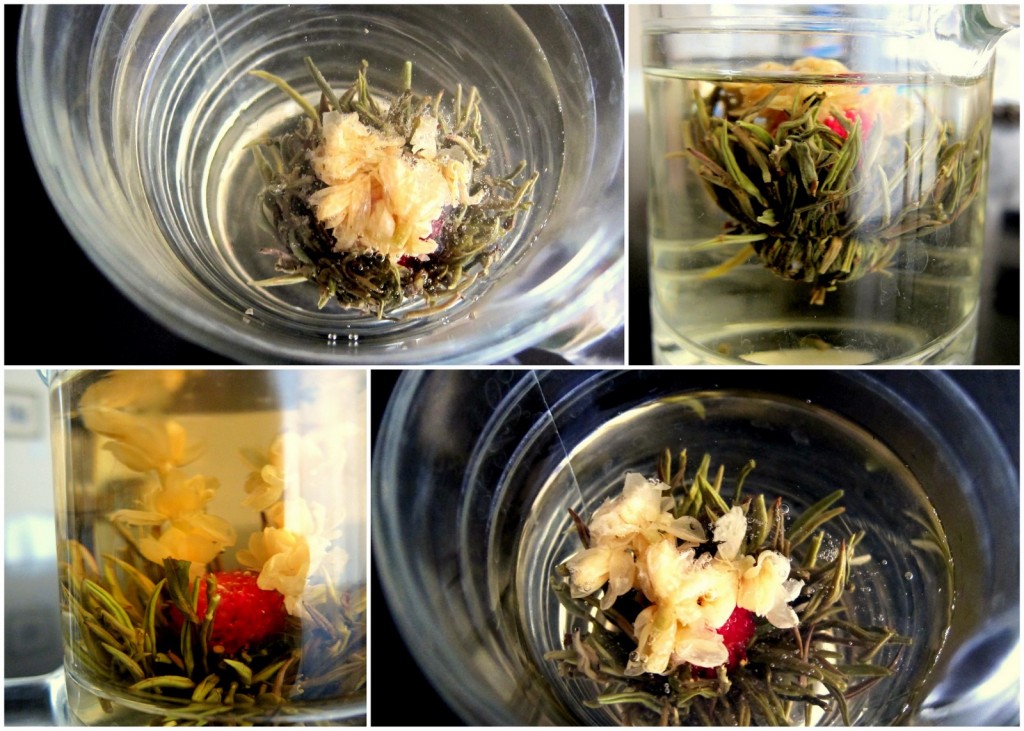
Now that I’m regularly attending a tea class and seriously inspired to learn about tea, I figure that I should write down what I learn instead of trying to memorize everything in vain. Consider it also my little contribution to the environment by going paperless. ๐Ÿ˜‰ Why make a new site? Because I don’t want to turn Flavor Boulevard into chock-fulls of yellow-tinted drinks. On relevant occasions there will be posts shared on both sites though, such as this one in the picture above: a post on a fewย Blooming Teas.

Tags: ,

Four-minute Vienamese tea talk, in Korean

February 17, 2012 By: Mai Truong Category: Drinks, Opinions, University & Cafeteria, Vietnamese

… with English subtitles. It’s no secret that I’ve been into tea recently, and the interest is going to last for a while. Just in time for my mini-presentation in the Korean class, the topic was open, and I chose tea. Vietnamese tea, to be precise. Neither my Korean is good enough nor my tea knowledge is broad enough to give a more detailed slideshow, but it’s a start. Both will come, in time. ๐Ÿ™‚

The title of the slideshow is “Vietnamese Tea”. I have no idea how bad my Korean pronunciation is, so I’ll just pretend that I don’t sound all *that* bad. ๐Ÿ˜‰ I can understand myself, with the subtitles. ๐Ÿ˜‰

Korean script: (thanks to Yookyung unni for her major help with the translation)

์ฐจ๋ฅผ ์ข‹์•„ํ•ฉ๋‹ˆ๊นŒ?
๋ฒ ํŠธ๋‚จ ๋ฌธํ™”์—๋Š” ์ผ๋ณธ๊ณผ ๊ฐ™์€ ๋‹ค๋„ ๋ฌธํ™”๋Š” ์—†์ง€๋งŒ, ์ฐจ๋ฅผ ๋งˆ์‹œ๋Š” ๊ฒƒ์€ ์Œ์•… ์—ฐ์ฃผ, ์ฒด์Šค ๋†€์ด, ์‹œ ์“ฐ๊ธฐ, ๊ทธ๋ฆผ ๊ทธ๋ฆฌ๊ธฐ์™€ ๊ฐ™์€ ์ผ์ข…์˜ ์ทจ๋ฏธ ์ƒํ™œ์ด๋‹ค.
์•„์นจ์ด๋‚˜ ์ €๋…์— ํ˜ผ์ž ์ฐจ๋ฅผ ๋งˆ์‹œ๋Š” ๊ฒƒ์€ ๋งˆ์Œ์„ ์ˆœํ™”์‹œํ‚ค๊ณ  ์ž์‹ ์˜ ๋ณธ์„ฑ์„ ๋ฐ›์•„๋“ค์ด๋Š” ๋ฐ ๋„์›€์ด ๋œ๋‹ค. ์ด๋Ÿฌํ•œ ์ ์—์„œ ๋ฒ ํŠธ๋‚จ ์‚ฌ๋žŒ๋“ค์ด ์ฐจ๋ฅผ ๋งˆ์‹œ๋Š” ๊ฒƒ์€ ํ•œ๊ตญ์˜ ์„ ๋น„๋‹ค๋ก€์™€ ์œ ์‚ฌํ•˜๋‹ค.
์นœ๊ตฌ๋“ค๊ณผ ํŽธ์•ˆํ•œ ๋Œ€ํ™”๋ฅผ ๋‚˜๋ˆŒ ๋•Œ์—๋„, ์ฐจ๋ฅผ ๋งˆ์‹œ๋ฉด ์ข‹๋‹ค.
๋ฒ ํŠธ๋‚จ์—์„œ๋Š” ์†๋‹˜๊ป˜ ์กด์ค‘ํ•˜๋Š” ๋งˆ์Œ์„ ํ‘œ์‹œํ•˜๊ธฐ ์œ„ํ•ด (ํ•ญ์ƒ) ์ฐจ๋ฅผ ๋Œ€์ ‘ํ•œ๋‹ค.
๋ฒ ํŠธ๋‚จ ์ฐจ ๋ฌธํ™”์—์„œ๋Š” ์ฐจ๋ฅผ ๋งˆ์‹œ๋Š” ๋ถ€๋ถ„๋ณด๋‹ค๋Š” ์ฐจ๋ฅผ ๋งŒ๋“œ๋Š” ๊ฒƒ์— ์ค‘์ ์„ ๋‘”๋‹ค. ๋ณดํ†ต ๋ฒ ํŠธ๋‚จ ์‚ฌ๋žŒ๋“ค์€ ํ‰์ดํ•œ ๋ง›์˜ ์ฐจ๋ณด๋‹ค๋Š” ๊ฝƒ์ด ์ฒจ๊ฐ€๋œ ์ฐจ๋ฅผ ์„ ํ˜ธํ•˜๊ณ , ๋…น์ฐจ์™€ ๊ฐ™์€ ๊ฐ€๋ฒผ์šด ๋ง›์˜ ์ฐจ๋ณด๋‹ค๋Š” ํ™์ฐจ์™€ ๊ฐ™์€ ๊ฐ•ํ•œ ๋ง›์˜ ์ฐจ๋ฅผ ์„ ํ˜ธํ•œ๋‹ค. ๋ณดํ†ต ๋…น์ฐจ์—๋Š” ํ–ฅ์„ ์œ„ํ•ด ์Ÿˆ์Šค๋ฏผ์ด๋‚˜ ๊ตญํ™”๋ฅผ ์ฒจ๊ฐ€ํ•˜์ง€๋งŒ, ๊ฐ€์žฅ ๊ท€ํ•œ ์ฐจ๋Š” ์—ฐ๊ฝƒ์„ ์ฒจ๊ฐ€ํ•œ ์ฐจ์ด๋‹ค. ์ด ์—ฐ๊ฝƒ์ฐจ๋Š” ์˜ค์ง ๋ฒ ํŠธ๋‚จ์—๋งŒ ์žˆ๋‹ค.
์—ฐ๊ฝƒ์ฐจ๋Š” ์—ฐ๊ฝƒ์˜ ์ˆ˜์ˆ ์„ ๋…น์ฐจ์— ์„ž์–ด ํ–ฅ์„ ๋‚ด๊ณ , ์ด๋ฏธ ํ–ฅ์ด ์šฐ๋Ÿฌ๋‚œ ์ˆ˜์ˆ ์„ ์ œ๊ฑฐํ•œ ํ›„ ๋‹ค์‹œ ์ƒˆ๋กœ์šด ์ˆ˜์ˆ ์„ ์„ž๋Š” ๊ณผ์ •์„ ๋‹ค์„ฏ ๋ฒˆ์—์„œ ์ผ๊ณฑ ๋ฒˆ ๋ฐ˜๋ณตํ•จ์œผ๋กœ์จ ๋งŒ๋“ค์–ด์ง„๋‹ค. ํ‚ฌ๋กœ๊ทธ๋žจ์˜ ์—ฐ๊ฝƒ์ฐจ๋ฅผ ๋งŒ๋“ค๊ธฐ ์œ„ํ•ด์„œ๋Š” ์•ฝ 2000์†ก์ด์˜ ์—ฐ๊ฝƒ์ด ํ•„์š”ํ•˜๊ณ , ์ด ์—ฐ๊ฝƒ๋“ค์€ ํ•ด ๋œจ๊ธฐ ์ „์— ์ˆ˜ํ™•ํ•ด์•ผํ•œ๋‹ค. ์ด ๊ณผ์ •์„ ๋๋‚ด๋Š” ๋ฐ๋Š” 2์ฃผ์ •๋„์˜ ์‹œ๊ฐ„์ด ๊ฑธ๋ฆฌ๊ธฐ ๋•Œ๋ฌธ์—(๊ฑธ๋ฆด ์ˆ˜ ์žˆ๊ธฐ ๋•Œ๋ฌธ์—), ์ด ์ฐจ๋Š” ๋งค์šฐ ๋น„์‹ธ๊ณ  ํฌ์†Œํ•˜๋‹ค.
์—ฐ๊ฝƒ์ฐจ์˜ ํ–ฅ์€ ์Ÿˆ์Šค๋ฏผ ์ฐจ์˜ ํ–ฅ์ฒ˜๋Ÿผ ์ง์ ‘์ ์ด๊ณ  ๊ฐ•ํ•˜์ง€ ์•Š์ง€๋งŒ, ๋‹ฌ์ฝคํ•˜๋ฉฐ ์€์€ํ•˜๊ฒŒ ์ง€์†๋œ๋‹ค. ์—ฐ๊ฝƒ์€ ์ง„ํ™ํƒ•์—์„œ ์ž๋ผ์ง€๋งŒ, ๊ทธ ํ–ฅ๋•Œ๋ฌธ์— ์ˆœ์ˆ˜ํ•จ์„ ์ƒ์ง•ํ•œ๋‹ค. ๊ทธ๋ž˜์„œ ์‚ฌ๋žŒ๋“ค์€ ์—ฐ๊ฝƒ์ฐจ๋ฅผ ๋งˆ์‹œ๋ฉด ์ข€ ๋” ์ˆœ์ˆ˜ํ•ด์ง€๊ณ  ์ •์งํ•ด์งˆ ์ˆ˜ ์žˆ๋‹ค๊ณ  ๋ฏฟ๋Š”๋‹ค.
์ฐจ๋ฅผ ๋งˆ์‹ค ๋•Œ์—๋Š” โ€œ๋ฏ™”ํ•˜๊ณ  ์—ฐ๊ฝƒ์˜ ์”จ ํ•˜๊ณ  ๊ฐ€๋ฒผ์šด ๊ณผ์ž (ํŽ˜์ด์ŠคํŠธ๋ฆฌ)๋ฅผ ๊ณ๋“ค์—ฌ ๋จน๋Š”๋‹ค.
๋ณดํ†ต ํ•œ๊ตญ๋‹ค๊ธฐ๋„ ์ผ๋ณธ๋‹ค๊ธฐ๋„ ์˜ค์ฐฏ์ž”์ด ์žˆ์ง€๋งŒ ๋ฒ ํŠธ๋‚จ๋‹ค๊ธฐ๋Š” ์‚ฌ์ฐฏ์ž”์ด๋‚˜ ์œก์ฐฏ์ž”์ด ์žˆ๋‹ค.
๋ฒ ํŠธ๋‚จ ์‚ฌ๋žŒ๋“ค์—๊ฒŒ ๋‹ค๊ธฐ๋Š” ์กด๊ฒฝ์‹ฌ๊ณผ ์‚ฌ๋ž‘์„ ํ‘œํ˜„ํ•˜๊ธฐ ์œ„ํ•œ ์„ ๋ฌผ๋กœ ์ข‹๋‹ค. ์šฐ๋ฆฌ(๋‚˜์˜) ํ• ์•„๋ฒ„์ง€๊ป˜์„œ ๋Œ์•„๊ฐ€์‹œ๊ณ , ๊ฐ€์กฑ์ด ๋ฏธ๊ตญ์œผ๋กœ ๊ฑด๋„ˆ์˜ฌ ๋•Œ, ์šฐ๋ฆฌ(๋‚˜์˜) ์–ด๋จธ๋‹ˆ๋Š” ํ• ์•„๋ฒ„์ง€์˜ ๋‹ค๊ธฐ๋งŒ์„ ๊ฐ€์ ธ์˜ค์…จ๋‹ค.
๋‚˜๋Š” ๋ฒ ํŠธ๋‚จ์˜ ์ฐจ์— ๋Œ€ํ•ด ๋” ๋ฐฐ์šฐ๊ณ  ์‹ถ๋‹ค. ๋‹น์‹ ์€ ์–ด๋–ค๊ฐ€? ๋‹น์‹ ์€ ์–ด๋–ค ์ข…๋ฅ˜์˜ ์ฐจ๋ฅผ ์ข‹์•„ํ•˜๋Š”๊ฐ€?

This post also appears in Tea & Mai.

Tags: ,