Flavor Boulevard

We Asians like to talk food.
Subscribe

Archive for the ‘One shot’

Sandwich Shop Goodies 6 – bánh dừa (coconut sticky rice stick)
July 15, 2010 By: Mai Truong Category: California - The Bay Area, One shot, savory snacks, sticky rice concoctions, Vegan, Vietnamese


If anything can be called the Vietnamese granola bar, it’s bánh dừa.

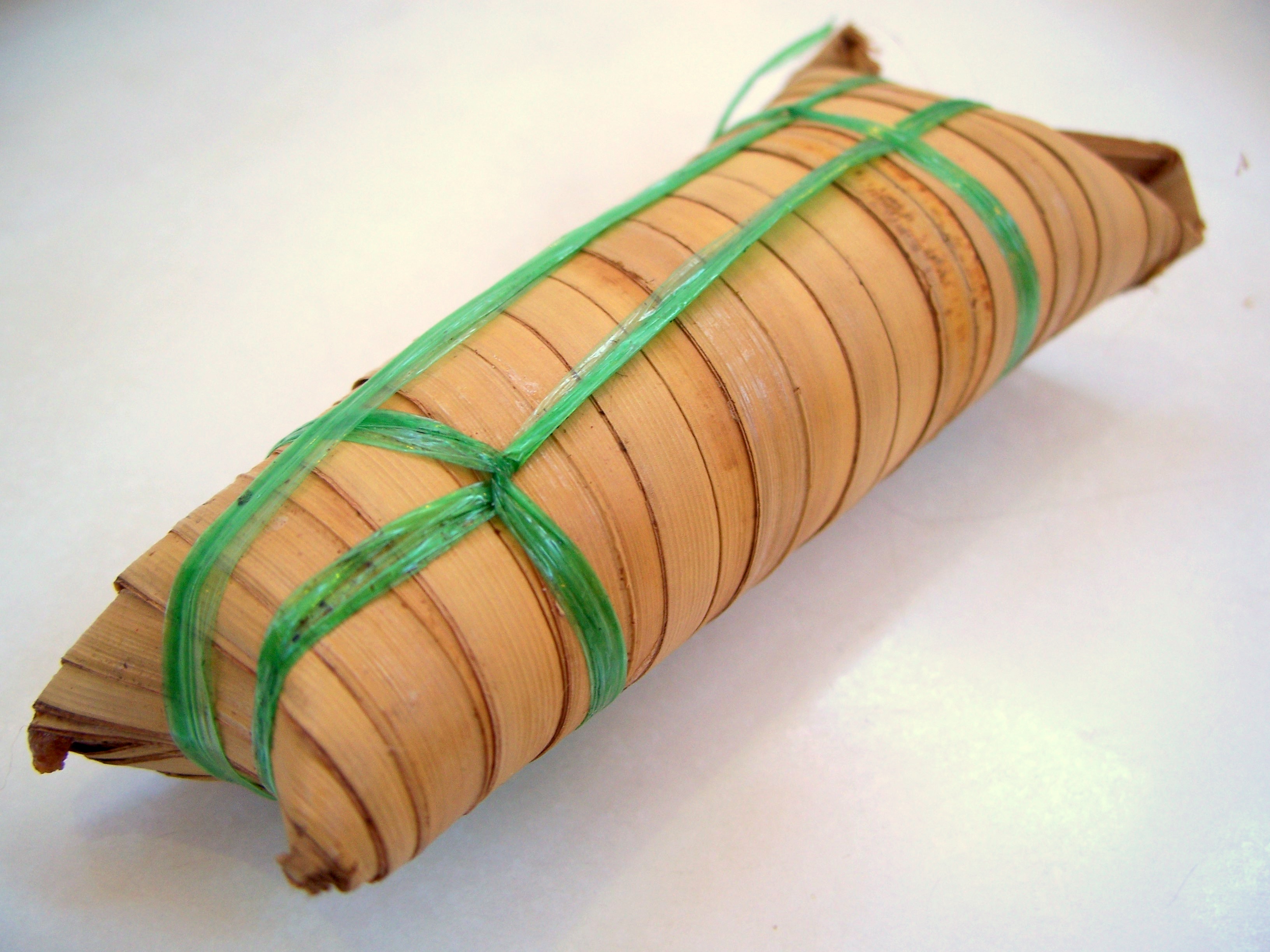
Coconut bánh. The simple name lends room for innocent confusions with the French Coco au Miel, the Malaysian kuih binka gandum, the coconut cookies, and a whole flock of other Vietnamese coconut treats also known as bánh dừa (with some additives like “grilled”, “honeyed”, or “lemon”). People of the deep south don’t get too fancy with names: when the bánh has coconut milk mixed with sticky rice and is wrapped in coconut leaves, it has every right to be call a coconut bánh. Besides, children identify it by the unique look.

A stiff, almost cylindrical case, as long as a palm and almost two fingers wide, is made from wrapping one single young coconut leaf around hours of training, to protect the glutinous rice and bean paste core for days in the tropics’ heat. The one I bought stays good for two weeks in the fridge, unwrapped.
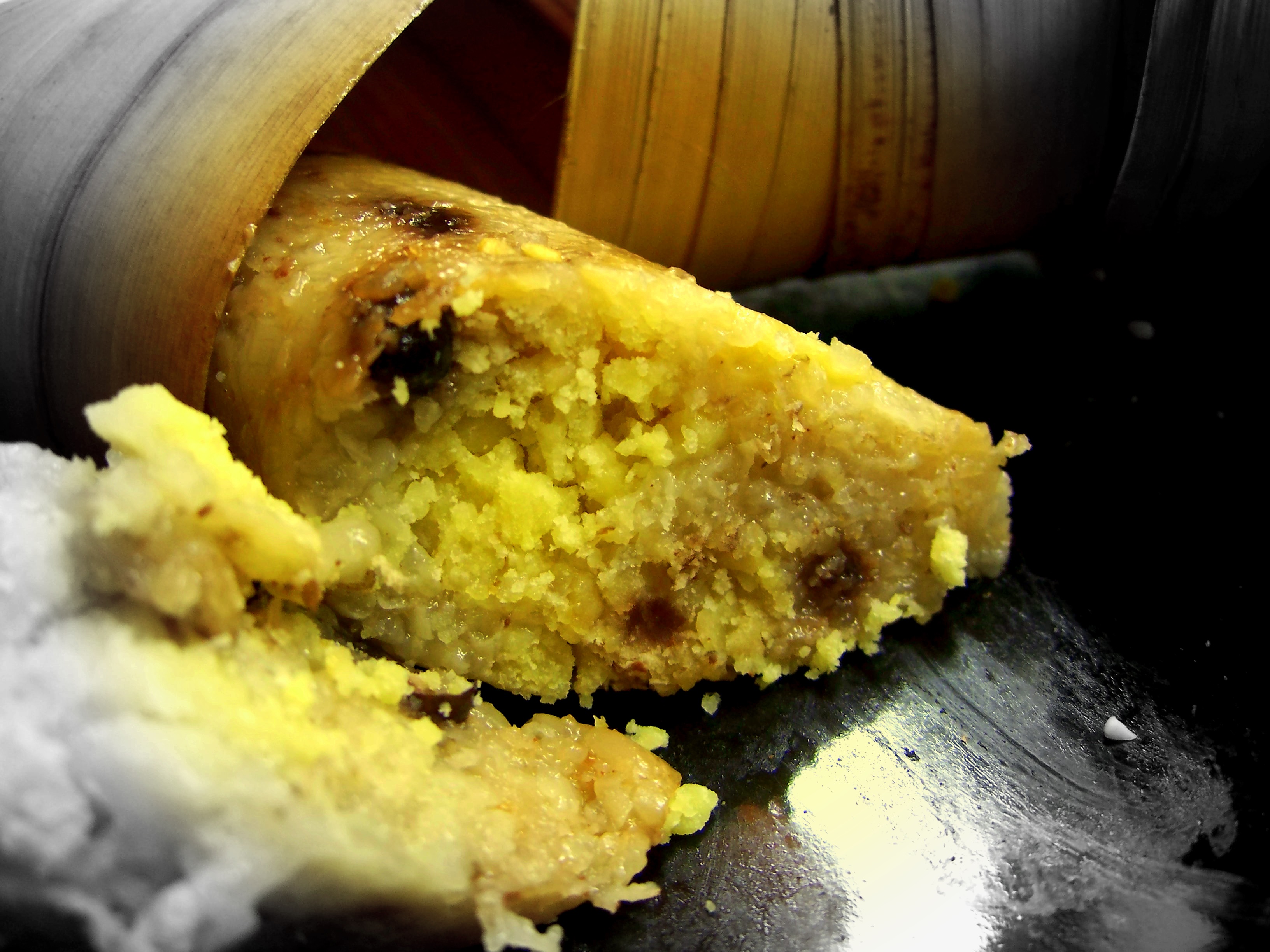

Such longevity expectedly costs a good deal of skill and time. Wax sticky rice, a special cultivar in Vĩnh Long known for its gumminess and fragrance, is soaked in water at midnight. The banh makers wake up at 4am to wash the sticky rice as carefully as six to seven times to get rid of bran and dirt, the first step to delay spoilage. Washed sticky rice is then air dried, while the banh makers squeeze coconut milk out of grated coconut and wrap up the leafy tubes, which could turn an ugly wilting purple unless put in the shade. Dried sticky rice is mixed with coconut milk, salt and sugar, sometimes black beans, into a gooey mess to be portioned into the tubes. The first one third of the tube is sticky rice, then comes mung bean paste or half a ripe banana, and more sticky rice to fill up the tube. I will forever be puzzled by how to make the sweet filling perfectly in the middle of the sticky rice layer. There is also no clear instruction on how to tie up the banh with a string, but rest assured that there are many ways to get it wrong. If the string is too tight, sticky rice can’t rise and your bánh dừa is one dry stick. If the string is too loose, water vapor seeps in while steaming, your bánh dừa becomes half-porridge and spoils fast.

By 7am all wrapping is done, banh makers throw their sticks, now strung together in small bundles, into the boiling steamer for a solid 5 hours. The steam water is often mixed with alum to keep the case’s healthy yellow color, but too much alum can make the banh turn sour. At noon, fresh bánh dừa is ready for the markets.
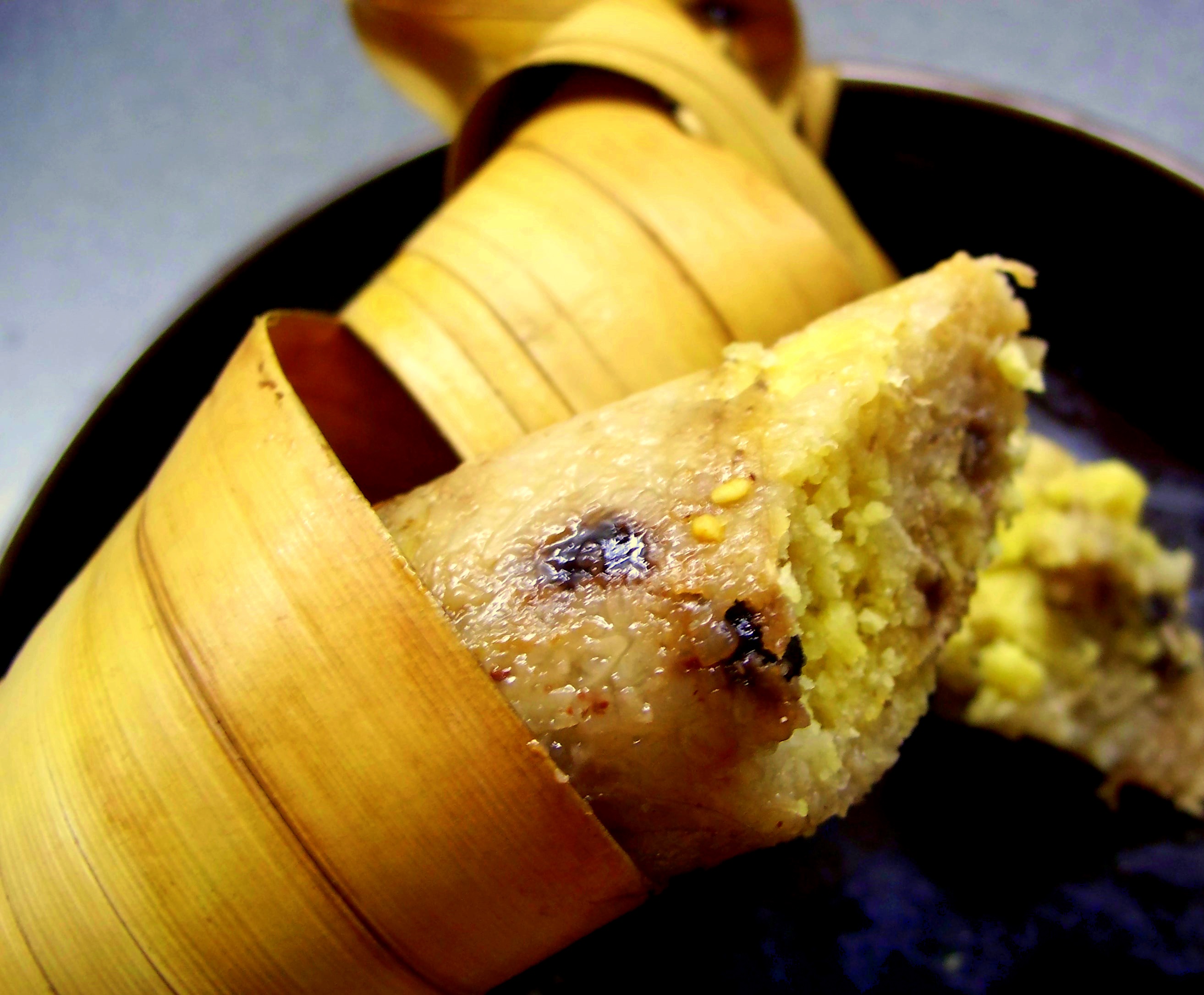

Holding the light and compact banh in hand, I picture country kids of the Mekong Delta stick these coconut sticky rice sticks in their pockets and school bags for an early morning in the rice paddies, an afterlunch snack, a quick filler while running around with the kites. The coconut leaf unwraps swiftly with no effort, reveal a firm and chewy, fatty and nutty, salty and earthy treat that requires no reheating  or refrigerating. Some may see it as merely a miniature bánh tét, but the coconut leaf gives bánh dừa its signature fragrance and a deserving separation from the banana leaf wrappers.

Bánh dừa is cheap. Ten years ago the Southern Vietnamese villagers sold them for 500VND a stick. Inflation brings it up to 2000VND these days, roughly 11 US cents.  The ones in San Jose banh mi stores cost one wild buck each, but they often lie on the counter unnoticed for who knows how long. “Posh” customers don’t go for the leafy wrapped treats when plastic and styrofoam and colorful packaging look more sanitized. City kids are not attracted to these because they don’t scream chocolate and sugar. Like the old country ham of North Carolina, bánh dừa has fallen out of the trend, and most of their makers have long put away the steamers for something more profitable.

I had a bánh dừa for dinner today. How much longer will its kind stay in the market to compete against the Western sweets? I don’t know.

————————–

Got it from: Kim’s Sandwiches
(in the Lion Supermarket area)
1816 Tully Rd 182, San Jose, CA 95111
(408) 270-8903

—————————
Previously on Sandwich Shop Goodies: bánh khảo/bánh in
Next on Sandwich Shop Goodies: bắp hầm (Vietnamese whole kernel grits)
Sandwich Shop Goodies 5 – Bánh khảo (bánh in)

July 11, 2010 By: Mai Truong Category: California - The Bay Area, Northern Vietnamese, One shot, sticky rice concoctions, sweet snacks and desserts, Vegan, Vietnamese


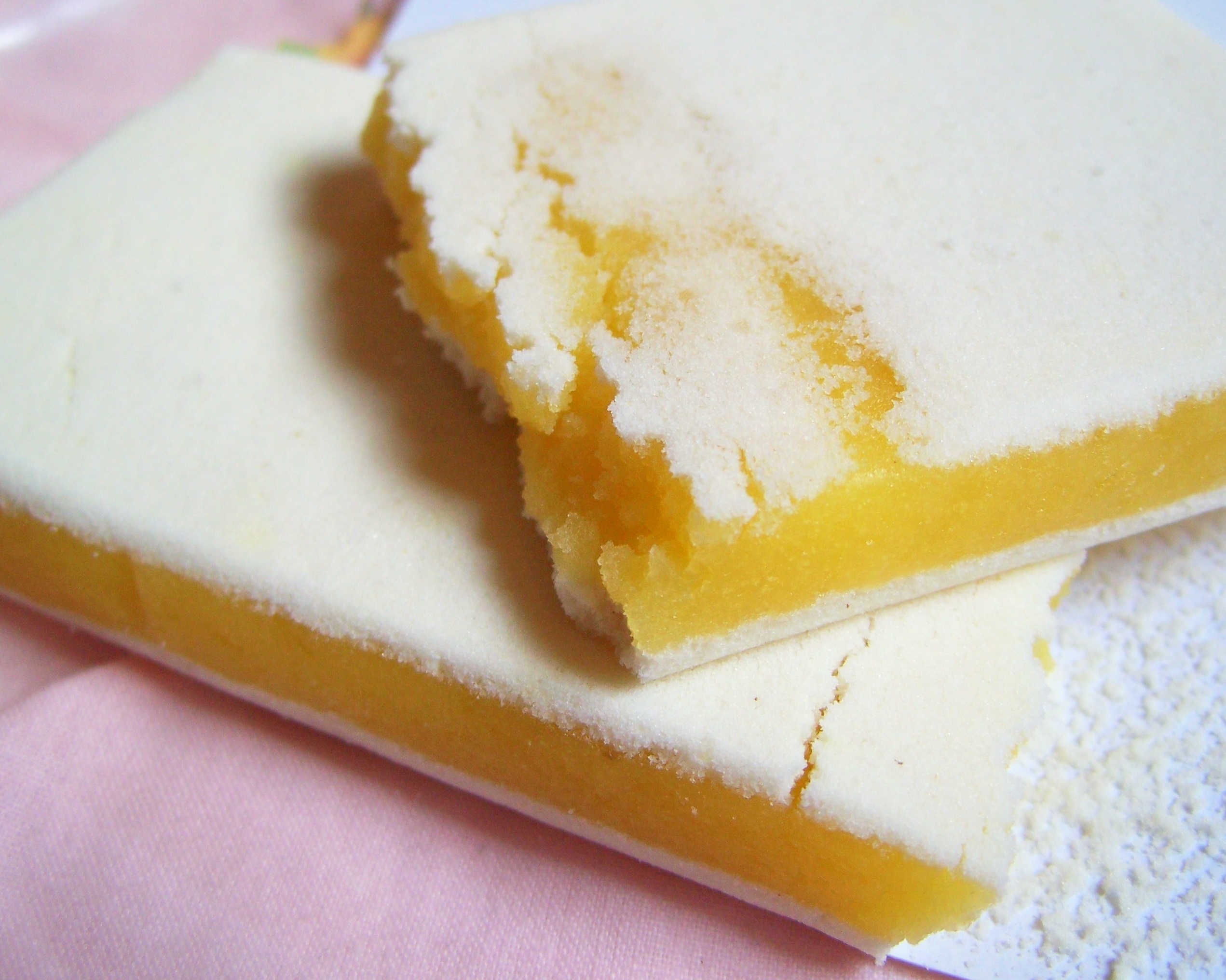
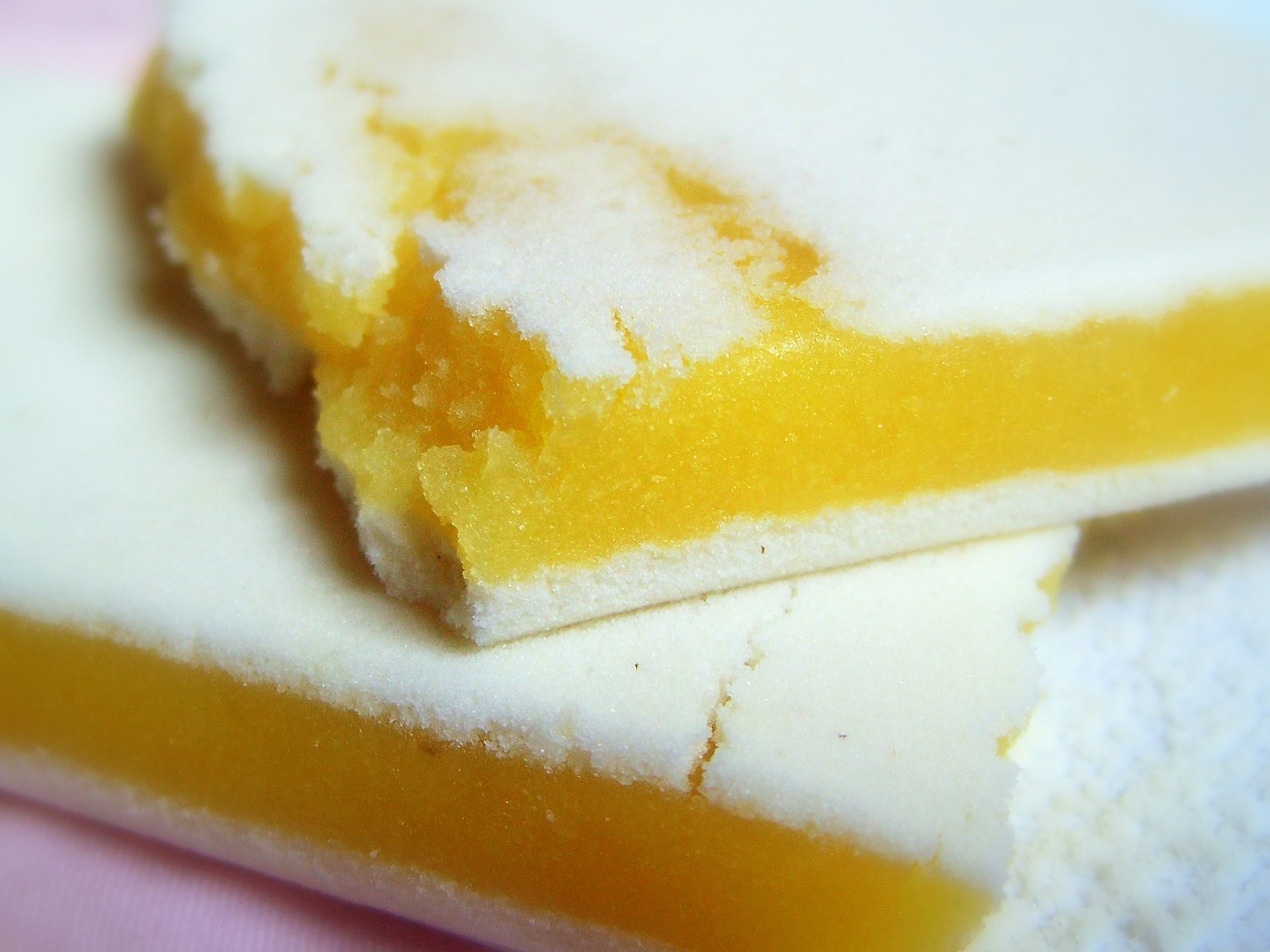
It looks just slightly bigger than a chocolate bar, and about as thick. It has three thin layers, one bright yellow sandwiched between two whites, like a rectangular slice of hard boiled egg. The humble appearance of bánh khảo, like so many other Vietnamese old school treats, masks tremendous creativity and skill of the country’s villagers.

And so little is known about it. Some just say it came from the Chinese immigrants, others believe it’s a special fare of the Tày, an ethnic group in the second-farthest-north-border province Cao Bằng, where Chinese influence seeps through the forests and mutates with a mountainous feel. All we know is when you go to Cao Bằng, you get a bar of “pẻng cao” (bánh khảo) for 1000VND (less than 6 US cents), whose middle layer can either be sweet with peanuts and honey, or savory with sliced fatty pork.


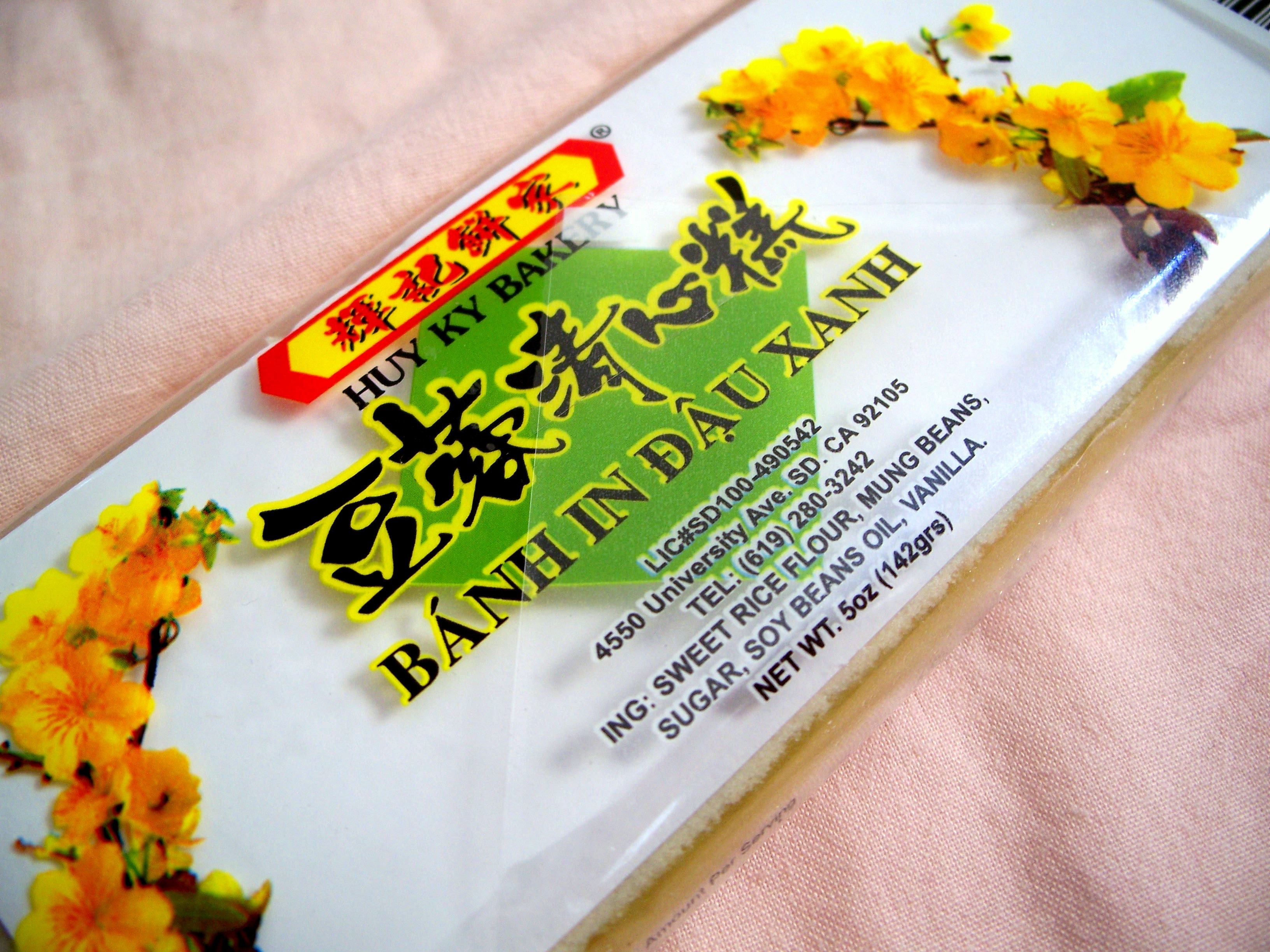
The savory kind is a staple to the Tày people. The flour from roasted sticky rice grains, let sit overnight, mixed with sugar and pressed into a thin sheet,  somehow can stay good for a whole month. Its light weight makes a good dry snack to pack for long trips in the mountains. But when it goes south to the Red River Delta and all the way down to Saigon, pork slices and peanuts give way to the all time popular mung bean paste. Bánh khảo looses savoriness and gains homogeneity. It becomes bánh in nhân đậu xanh.


Chewy and grainy. Not too sweet, rather mild. To be eaten slowly between sips of tea to avoid coughing or throat irritation. That’s the nature of two layers of sandy white sticky rice flour sandwiching one of bright yellow mung bean paste, like a rectangular slice of hard boiled egg.

Dull sidenote: not the stuff you’d want to make at home with roasting and grinding and pressing, when it costs 2 bucks and a quarter at any Vietnamese sandwich shops in San Jose, Kim’s for example.

Previously on Sandwich Shop Goodies: sweet corn xôi
Next on Sandwich Shop Goodies: bánh dừa (coconut sticky rice stick)

Sandwich Shop Goodies 4 – Xôi bắp (sweet sticky rice and corn)

July 04, 2010 By: Mai Truong Category: California - The Bay Area, Comfort food, One shot, sticky rice concoctions, Vietnamese


Every morning at six, sometimes five thirty, my dad went to the market with my mom’s grocery list, and on the way back picked up something fresh for my breakfast. He had to be extra early if we wanted xôi that day, because the warm morsels folded up in banana leaves wouldn’t last past six thirty. Sweet xôi was a popular morning food, until they started putting in lap xuong and pork floss and turned it too close to a lunch thing. But our xôi lady, and later her daughter, never made anything but sweet sticky rice in their loyal steamers. Every morning, sitting on a plastic stool and head half-covered by the cone hat, they surrounded themselves with three or four shining aluminum wok-like basins on the low table, neatly cut squares of banana leaves, old newspaper and rubber band in the side basket. Those aluminum basins often had peanut xôi, black xôi (which actually looked purple), and one other speciaux du jour. My mom was so concerned with my health that she would pick off all the peanuts if my dad got the peanut xôi, and I got really bored with black sticky rice and sweetened bean paste, so there was no telling what I would get for breakfast. On rare occasions it was corn. My favorite.

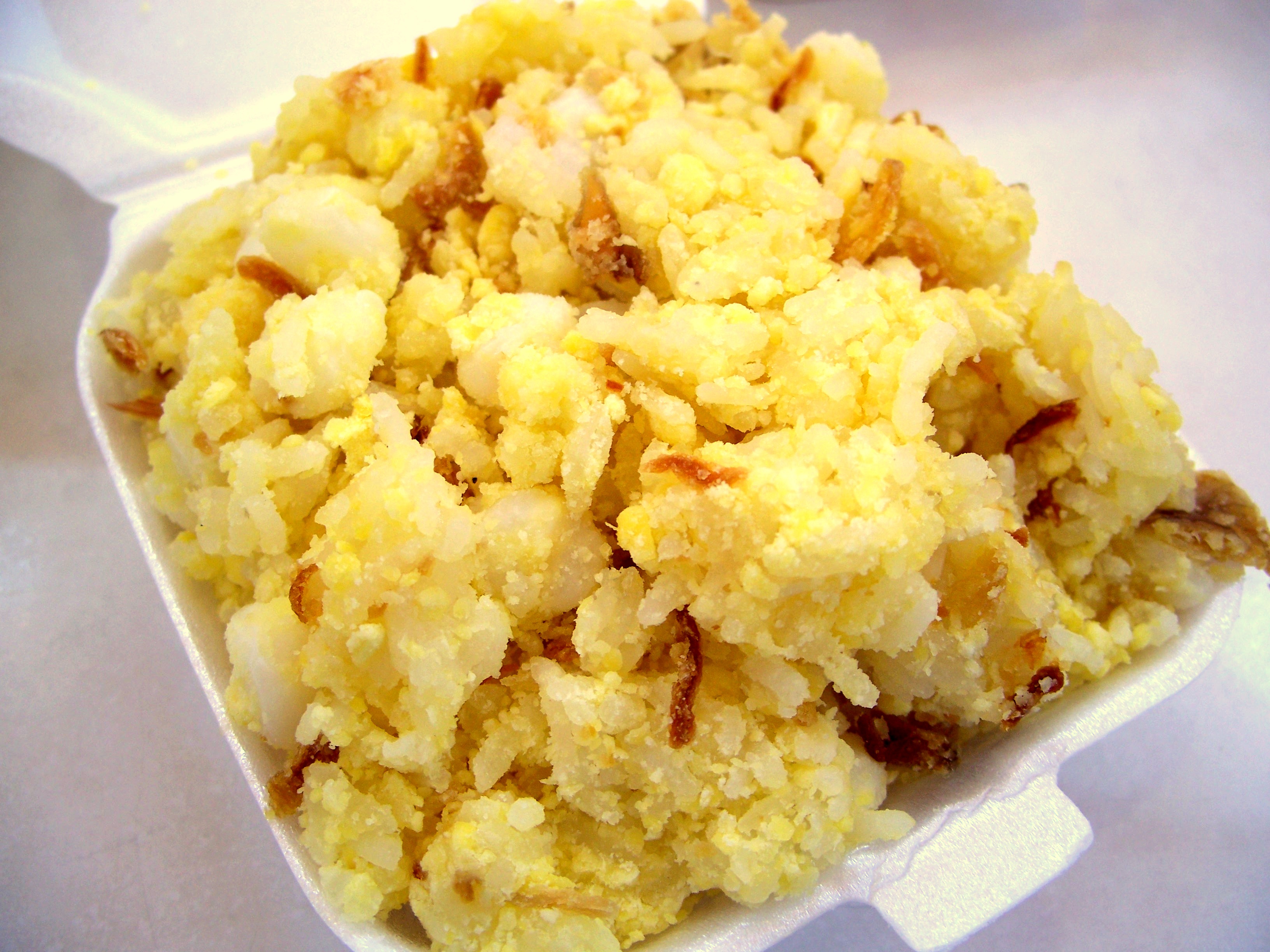
Without the seed coat and the yellow tip, each kernel was all soft, white and plump, must be twice its natural size. The sticky rice too was gummy, hardly discernible from the corn. I’d try to eat all the sticky rice first and save my precious puffs for last. Our xôi lady always covered the white palmful with mash mung bean, a big spoon of sugar, and a pinch of fried shallot. Arguably the fried shallot tempered the “sweetness” of this xôi, but it’s not as crucial as sugar and sweetened mash bean. Something I didn’t realize until years later.

We moved sometimes at the end of sixth grade, then again, this time across the Pacific, at the end of eleventh grade. My chance of eating corn xôi dropped like the housing market in Detroit. Partly because the cling wrapped stuff on styrofoam plates doesn’t at all look like Ms. Điệp’s warm morsels. So you can imagine my excitement when I saw it at Kim’s Sandwiches, not wrapped up but in aluminum trays behind the counter. Sure, they put it in styrofoam boxes when you order, but that’s still better. I got two for five dollars.

It might have been bad timing. I blamed it on our late morning arrival: xôi is best when it’s just thirty minutes out of the steamer, cool enough not to burn yet warm enough to keep the sticky rice gummy and moist. Our xôi was cold and dried up. But it was also bland. Lack of sugar in corn xôi made it un-corn-xôi-like. The grains and kernels were coated with mung bean powder, not mash, hence we got a heap of powder-coated grains and kernels instead of corn xôi. This is the Northern Vietnamese style, but frankly it’s incomparable with the Southerners’ sweet twist.

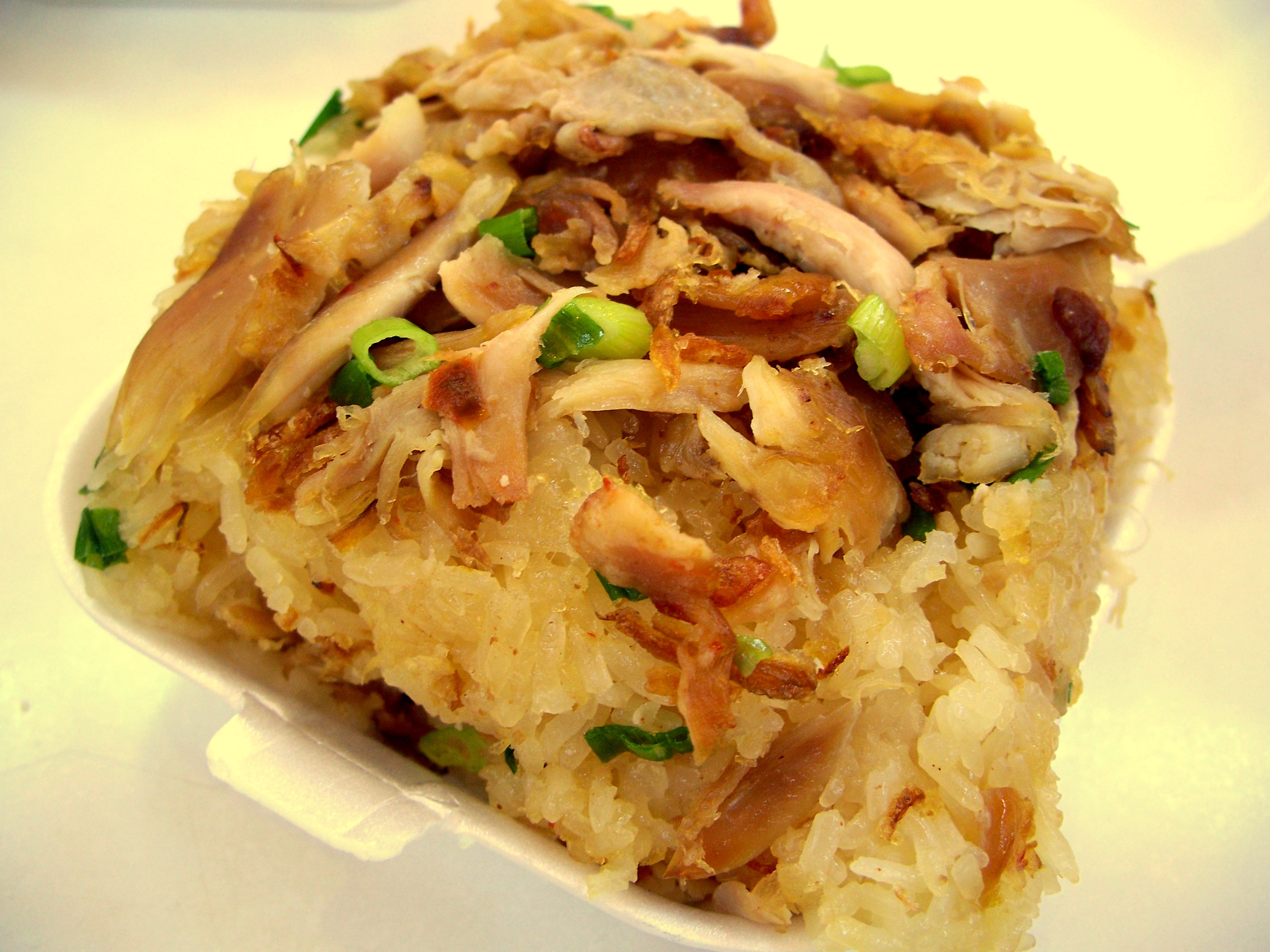
On a brighter note, Kim’s Sandwiches’ savory xôi, with roasted chicken and green onions, proved worthy of toothwork. Although the sticky rice was also cold and dried up, the meat was plenty and flavorful to boost.


On an even brighter note, the corn xôi was well-salvaged by a sugar dispenser and a microwave.

———————————————————————————————–

Xôi bắp and xôi gà ($2.50 each) from Kim’s Sandwiches
(in the Lion Supermarket area)
1816 Tully Rd 182, San Jose, CA 95111
(408) 270-8903

Previously on Sandwich Shop Goodies: bánh ú tro
Next on Sandwich Shop Goodies: bánh khảo/bánh in

Def’ly not a Brazil day

July 02, 2010 By: Mai Truong Category: American, California - The Bay Area, Comfort food, One shot, sandwiches

The yellow-and-green parrots ain’t seein’ da Cup this year. I was overjoyed. Seriously, best news to start the day since summer began. To celebrate I walked half a mile down Shattuck and hit Brazil Cafe for the first time (my students strongly recommend their tritip sandwiches). You know, kinda like warriors in the old day eating their defeated enemy’s liver or sum’. It’s supposedly opened today 11am – 9pm. I got there at 11:45, but they were closed, grief-stricken perhaps?

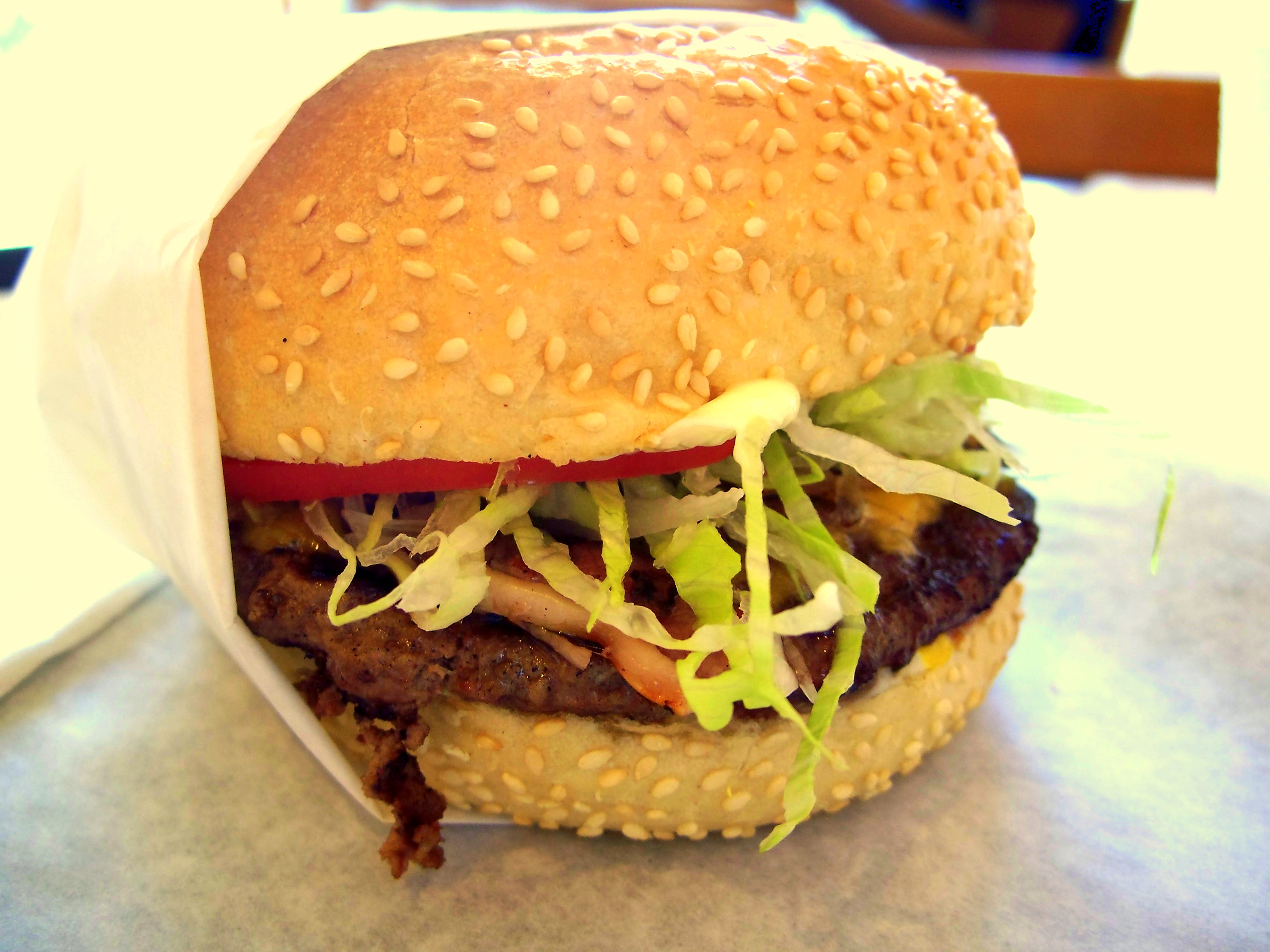
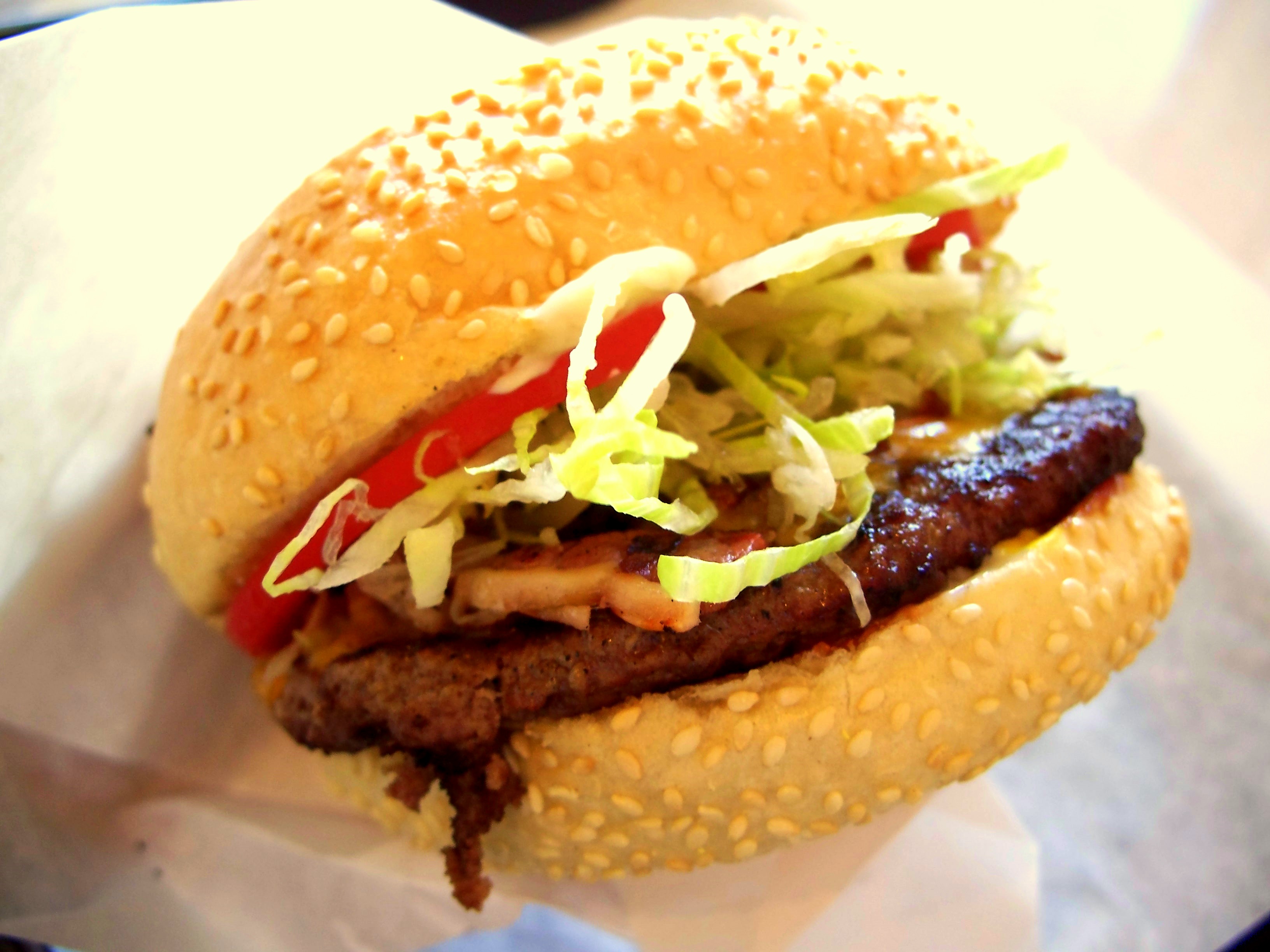
Feeling pretty defeated myself, I swung by Bongo Burger on Center St. and scored a bacon bun in revenge. They say they’re proud to serve Niman Ranch, and I say I’m proud to refuse the alluring offer of Miss Cashier to pay extra for fries. $6.04 for a third pound burger and water only, please.

The problem with big burgers like these is that they don’t fit in my mouth. I nibbled around like a squirrel on a tough nut,with melting cheese stringing from side to side and lettuce shreds falling like autumn leaves. Part of the problem is with the bun. So freaking puffy! When you go to McDonald’s and Burger King they give you these tired soft breads that stick flat to the patty like white on rice, and nothing falls off as long as you got a good grip on the bun. Here it’s like fresh-out-of-the-oven bread. Warm and crusty and pillowy and bready.

The bacon was the opposite. Thick and chewy like spiral ham. Nothing like the smoking crispy strips sizzled in lard they show on ads. All good though. Even better, they didn’t sneak in any pickles, so I didn’t have to pick any out.

Now I’m full for the rest of the day.

In the orange spirit, it’s time for a clementine.

Sandwich shop goodies 3 – Bánh ú tro (Vietnamese-adapted jianshui zong)

July 01, 2010 By: Mai Truong Category: California - The Bay Area, Chinese, Comfort food, One shot, sticky rice concoctions, sweet snacks and desserts, Vegan, Vietnamese

It’s been two weeks, but better late than never. After I read Jessica’s zong zi post on Food Mayhem, images of amber tedrahedra just wouldn’t leave me alone. I talked to my mom about them, and I could hear her voice crackle with sweet memories over the phone. We haven’t had these sweet little things for years. We used to eat them by the dozens every lunar May. Like most Saigonese, we didn’t do anything huge to celebrate Tet Doan Ngo, but bánh ú tro was too scrumptious a tradition to pass.

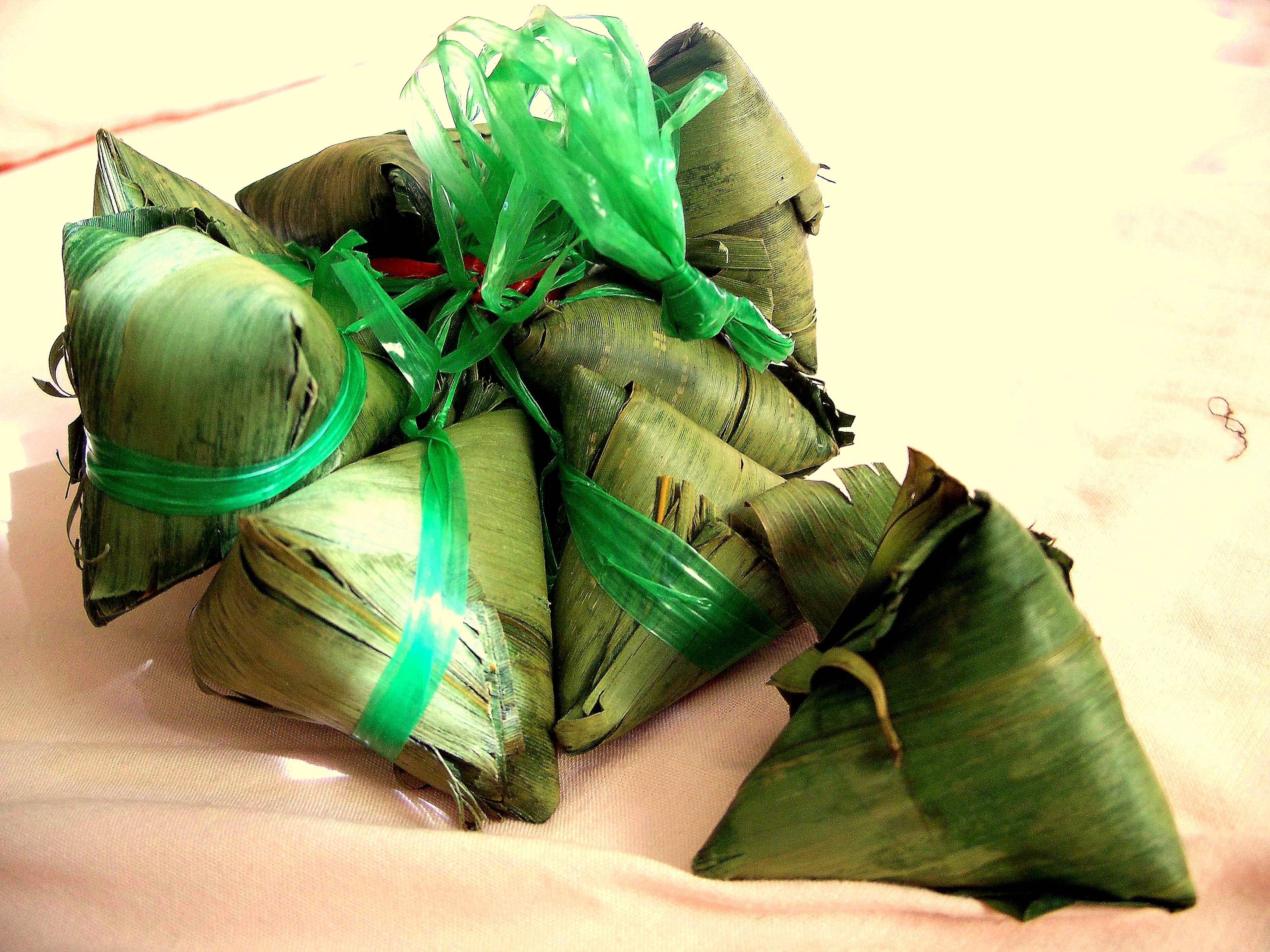
Each pyramid is just a little over an inch tall, whichever way you roll it. It’s unclear whether the traditional zongzi grew smaller when Chinese immigrants share the recipe with their Vietnamese neighbors, or only the dessert zongzi (jianshui zong) is favored by the locals over savory types. Most Vietnamese have also long dissociated this sticky rice snack with the Chinese reason behind Duanwu festival, if not to assign the Fifth of Lunar May to commemorate the death anniversary of Vietnam’s legendary Mother Âu Cơ, kill off bad bugs, make ceremonial offerings to family ancestors, or simply bathe in the summer solstice’s endless sunlight. Whatever meaning someone chooses to celebrate (or not celebrate) Duanwu (Đoan Ngọ in the Vietnamese language), he can enjoy bánh ú tro all the same. And if he lives in Hội An, there’s a big chance he actually participates in making them too.

The people of Hoi An don’t make a living with bánh ú tro year round, but they keep the tradition with earnest. Within four days, 1st-4th of lunar May, everybody makes bánh ú tro. The fifth day, everybody eats bánh ú tro. The sixth day, things get back to normal. In Saigon’s markets, bánh ú tro start showing up a week or two before the Fifth, and disappear right after, my mom recalled. So when I told her that I was going to search for them after I read Jessica’s post, she said “fat chance”.

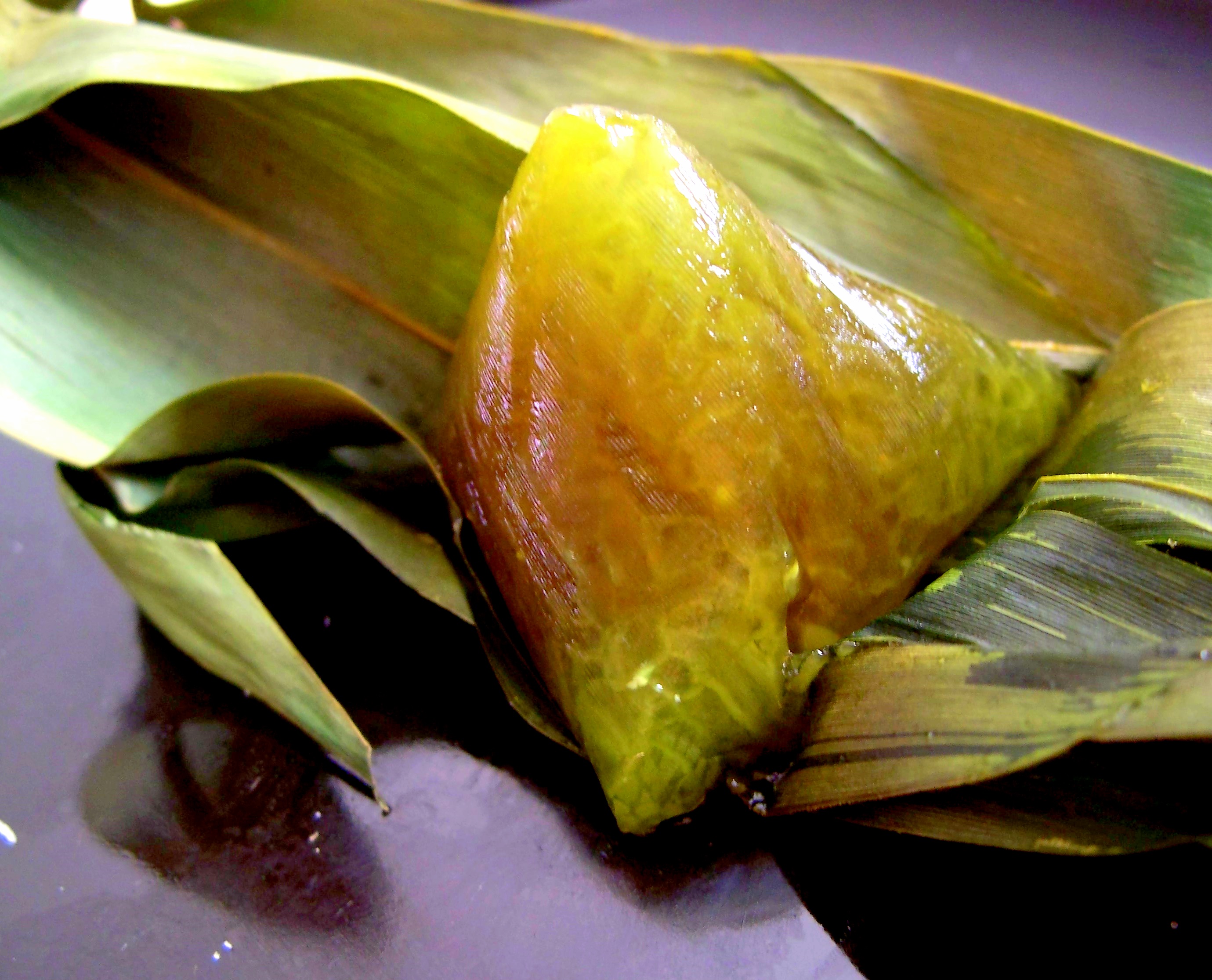
Why such rarity? After all, bánh bía, also adapted from the Chinese and also originally made just for one specific festival, shines its face all year long in every bakery and sandwich shop these days. Well, the recipe for bánh ú tro turns out to be real hard, and it’s not just the wrapping stage. The best bánh ú tro, according to Hoi An banh makers, must be wrapped with “kè” leaves from the mountains of Huế. The cleanly washed sticky rice is soaked in sesame ash water overnight (sesame plant burnt into ashes, mixed with water and sifted through sand). The ash water turns sticky rice grains into semi-powder form, giving bánh ú tro a clear amber look and a strangely light texture, unlike any other sticky rice concoctions. No wonder “ash” (tro) is part of the banh’s definitive name. (If you look at jianshui zong recipes, you’ll find lye water or alkaline water listed. More correct terms perhaps, but the horrid image on Wikipedia’s page on lye takes away my appetite. “Ash” even has a romantic ring to it, and this banh is made for a poet after all.) A bit of alum is put in the ash water to somehow keep each banh from falling apart.

Now of course sesame plants aren’t growing in everyone’s backyard to burn, so just any coal ash would do, as long as you sift the ash water carefully to avoid big pieces of charcoal in your sticky rice. Some different source suggests ash from mangrove firewood, dissolved in water for a month, but it seems to be just another grandmother’s special recipe varying by the regions. After soaking the rice for 1-3 nights, take it out and wash with cold water again.

The wrapping leaves, too, vary from place to place. Kè leaf is obviously not the most popular, as bamboo leaf and reed leaf, in their slender shape and earthy fragrance, do the job just as well. Banana leaves can be cut into wide strips to imitate bamboo leaves. Skilled banh makers can also control the colors: older leaves give darker hues,  substituting ash with white lime paste(*) lets bánh ú tro have the natural green shades from the leaves, while red lime paste causes a reddish amber shine.

Nonetheless, there exists a common wisdom regardless of ingredients: burn an incense stick when you drop the banh into water for boiling, when the incense burns out, the banh is done. Usually that takes four hours.

Let cool, bánh ú tro is more firm than chewy. There you can still see silhouettes of individual grains on the outside, but each banh is a solid tedrahedron of defined edges and uniform texture. It unwraps easily, parallel thread marks of bamboo leaf veins imprint on the smooth and fulfilling surfaces. It’s hardly sticky, unlike bánh ít and bánh dầy (also made from sticky rice). And it’s light. The banh’s are tied together in bundles of ten, and I can eat all ten in one sitting. (I can hardly finish one bánh ít in one sitting.) Funny, “ít” means “small in quantity”, and “ú” means “chubby”.

The traditional bánh ú tro of the North and Central Vietnam is just that, a plain chunk, good by itself to some and must be accompanied by honey or sugar to others. Then with time it got a sweetened red bean paste filling. Then a sweetened mung bean paste filling. Then a sweetened grated coconut filling. I grew up eating the red bean kind every year and thought it was the only kind. So I jumped at the first bunch I saw at Kim’s Sandwiches last Sunday, twelve days after the Fifth of Lunar May. The bunch was tied together by green nylon strings. I hurried home, unwrapped, took a bite. My mom called.
– Mom, I found them!
– Really?!?! How are they?
– Good, but why’s there no bean paste?!

Should’ve gotten the red string bunch instead.

———————————————————————-

Bánh ú tro ($3.75/10 pieces) from Kim’s Sandwiches
(in the Lion Supermarket area)
1816 Tully Rd 182, San Jose, CA 95111
(408) 270-8903

(*) Lime paste is used to eat with betel leaves and areca nuts.

Click here for a recipe of bánh ú tro (Vietnamese zong zi)

———————————————————————–

Previously on Sandwich Shop Goodies: bánh bía (Vietnamese adapted Suzhou mooncake)

Next on Sandwich Shop Goodies: corn xôi

Pho Danh – Making a name

June 27, 2010 By: Mai Truong Category: Comfort food, Houston, noodle soup, One shot, Texas, Vietnamese


Chain means reliability. Berkeley’s snobbish take against big franchise and corporations plays to my blogging advantage, but there always lies the uncertainty. It could be a very good looking, cozy little restaurant with quaint menus, and mediocre food. They could have a long line of people waiting in the cold to be seated, and mediocre food. Somehow people sitting about you are all hyped up by the new raw or vegan order, but you just can’t enjoy yours because it’s mediocre food. When a business is the only of its name, there’s just no guarantee that it’s palatable to everyone, no matter how many stars it gets on Yelp or votes by the locals. Franchise takes care of that. I don’t know how. But I haven’t met anyone who doesn’t objectively like Burger King, Subway, Yogurt Land, KFC, et cetera (I say “objectively” because taste buds can be clouded by health conscience, religious reasons and who knows what). Some Vietnamese businesses, though still in much smaller scale, have also established their chain names. For banh mi, we almost always go to Lee’s Sandwiches or Huong Lan. For cha lua, we trust Gio Cha Duc Huong. When we’re in Houston, we go to Phở Danh to slurp noodle soups.


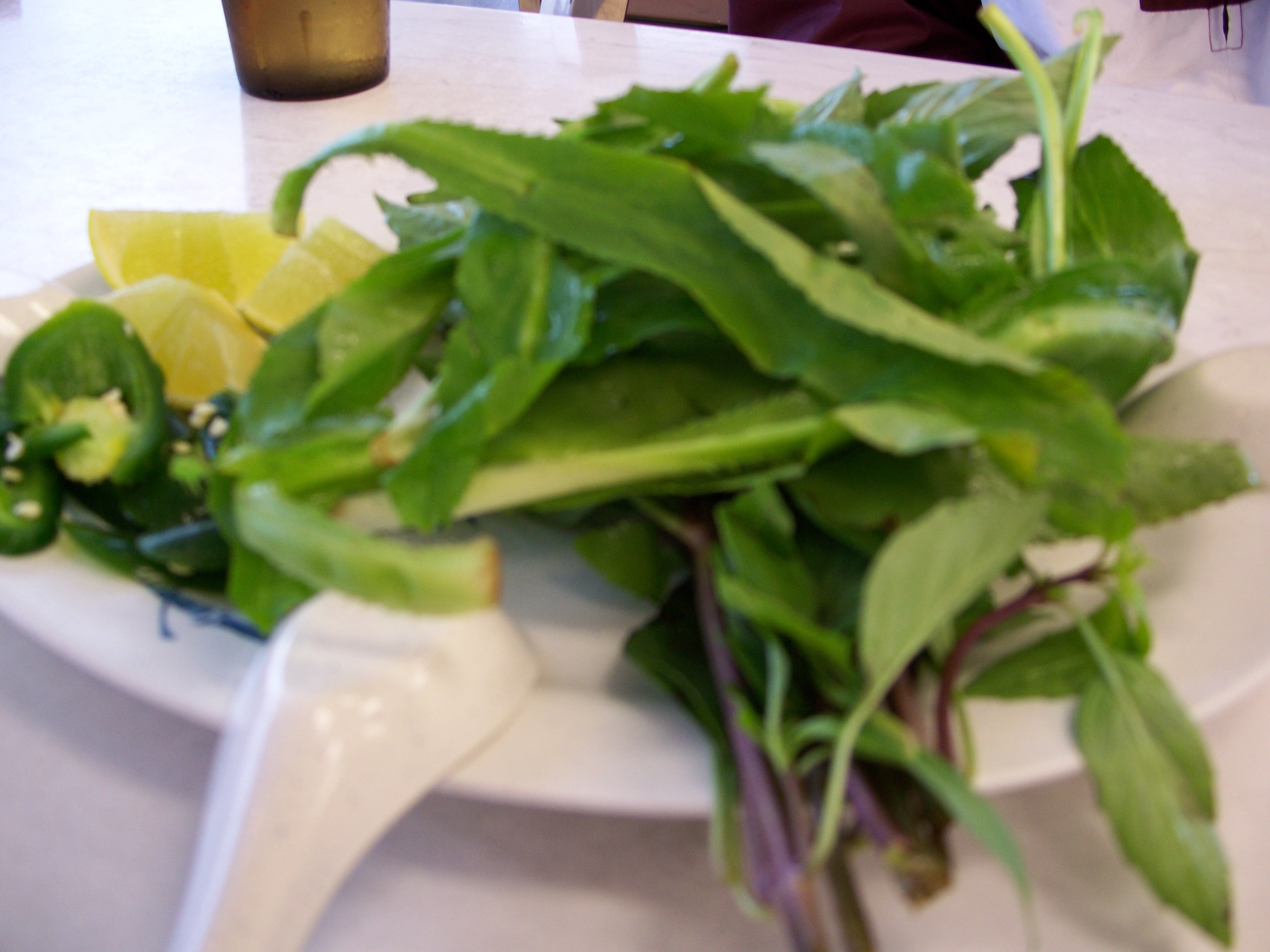
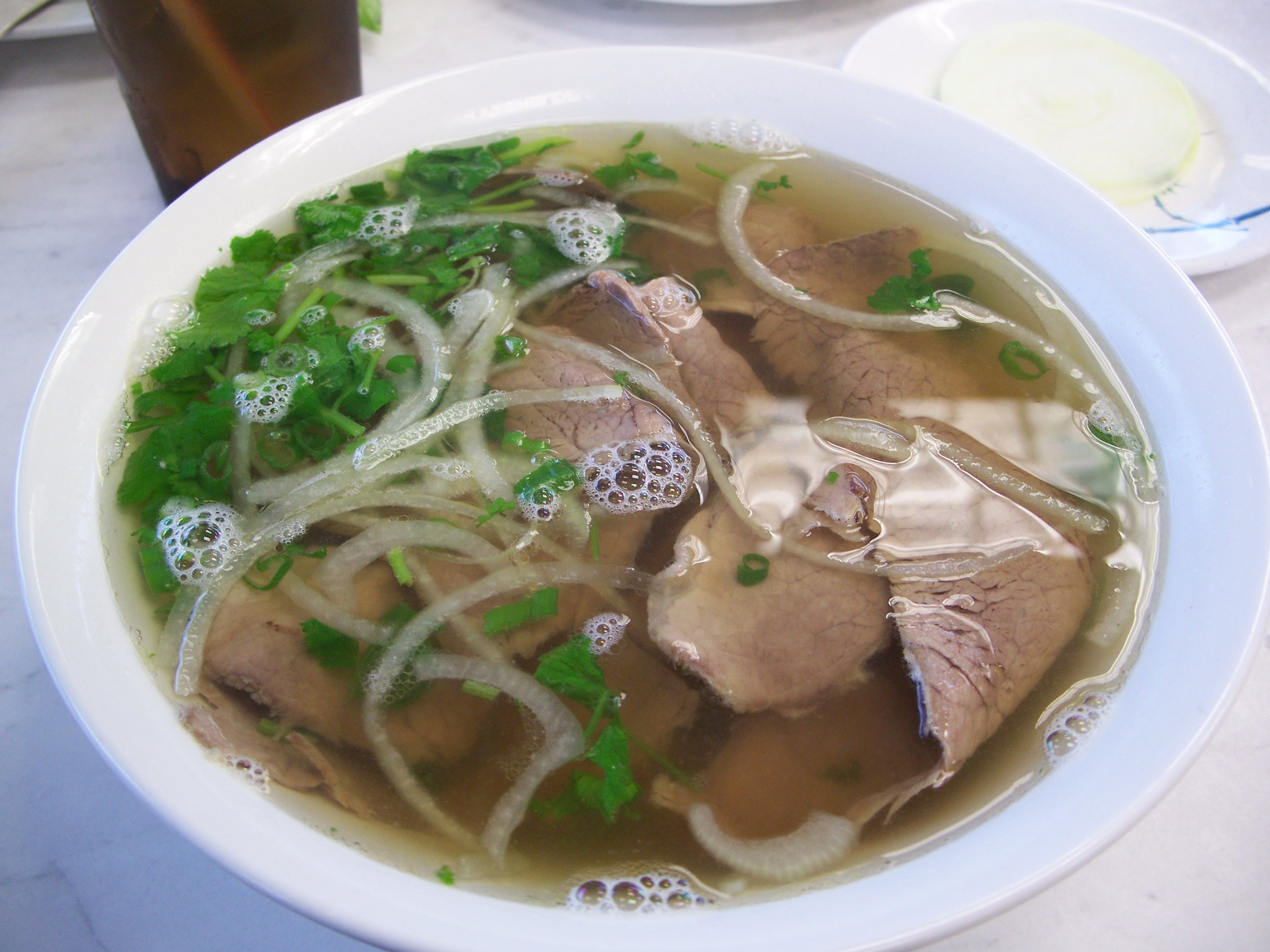
All three locations in Houston have the same silvery ambiance: white walls, glass door, formica tables, simple chairs, bright lights, white melamine dishware. We always get the same things here: pho bo tai for Dad, pho bo chin for Mom and me.

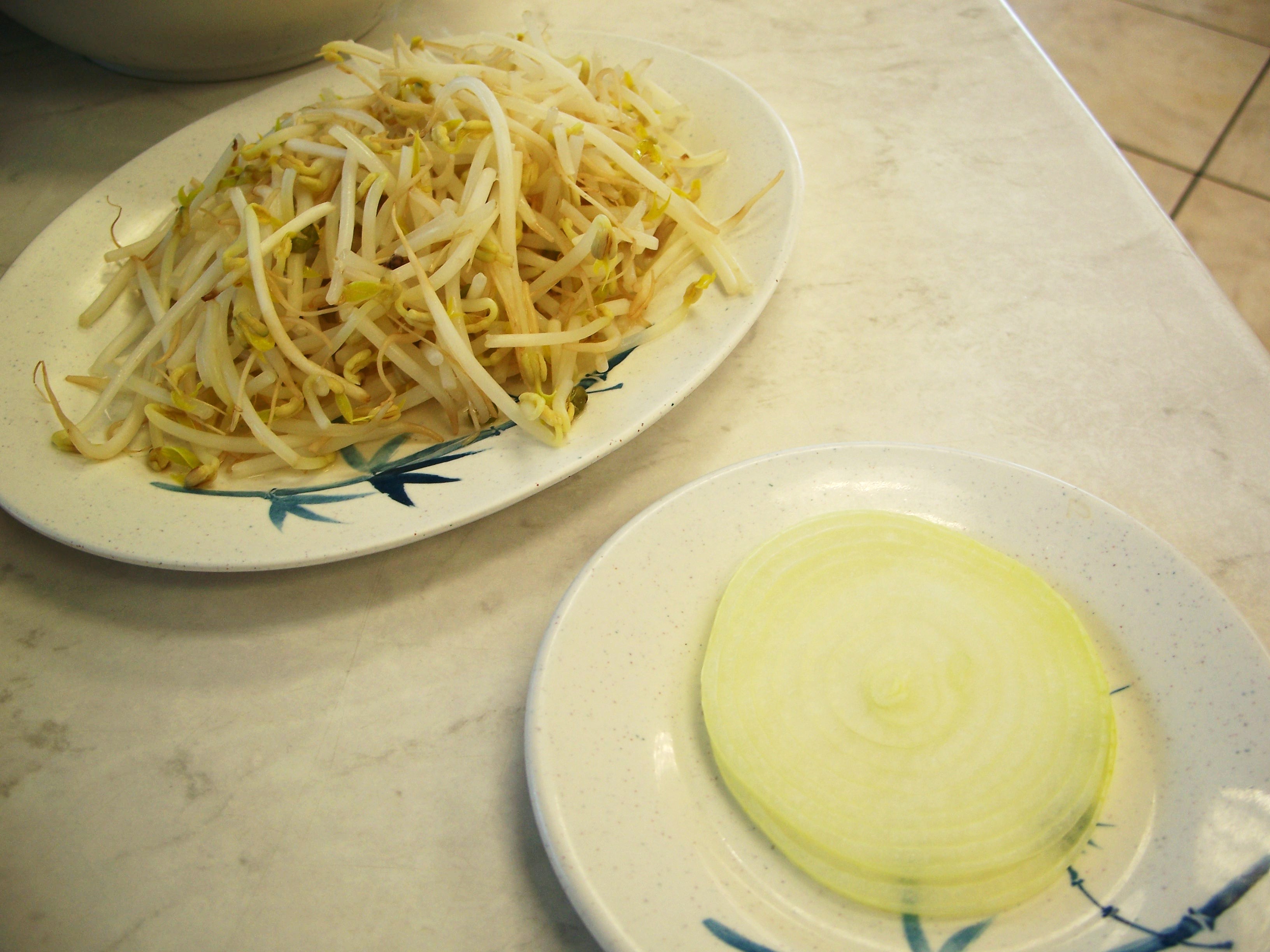
Mom always asks for extra giá trụng, blanched bean sprouts. And Dad always asks for hành dấm, pickled onion. Both are free.


He never asks for hành dấm anywhere else, making me wonder if it’s some special thing of Pho Danh. Vinegar and sugar soften the onion’s pungent flares, but keep it crisp and clean. I submerge it into the steaming broth. Dad savors it alone, one ring at a time.


Pho Danh in Texas

3 locations in Houston:
– 11209 Bellaire Blvd – (281) 879-9940
– 13480 Veterans Memorial Drive‎ – (832) 484-9449
– 11049 FM 1960 Rd‎ – (281) 890-4011

1 location in Austin:
– 11220 North Lamar Boulevard, Austin, TX‎ – (512) 837-7800‎

Tags:

Sandwich Shop Goodies 2 – Bánh bía (Suzhou mooncake)

June 14, 2010 By: Mai Truong Category: California - The Bay Area, Chinese, Comfort food, One shot, Southern Vietnamese, sweet snacks and desserts, Vietnamese


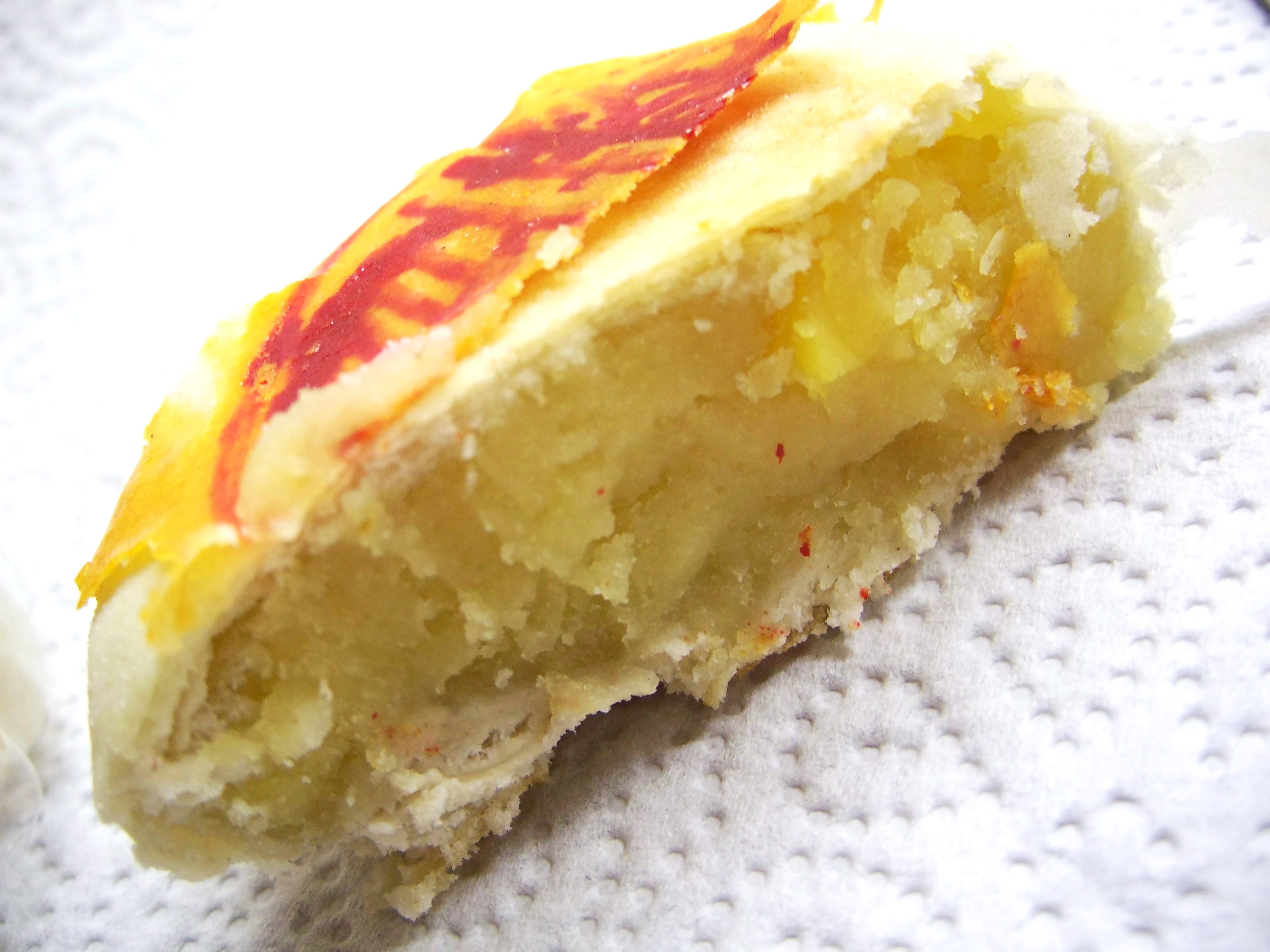
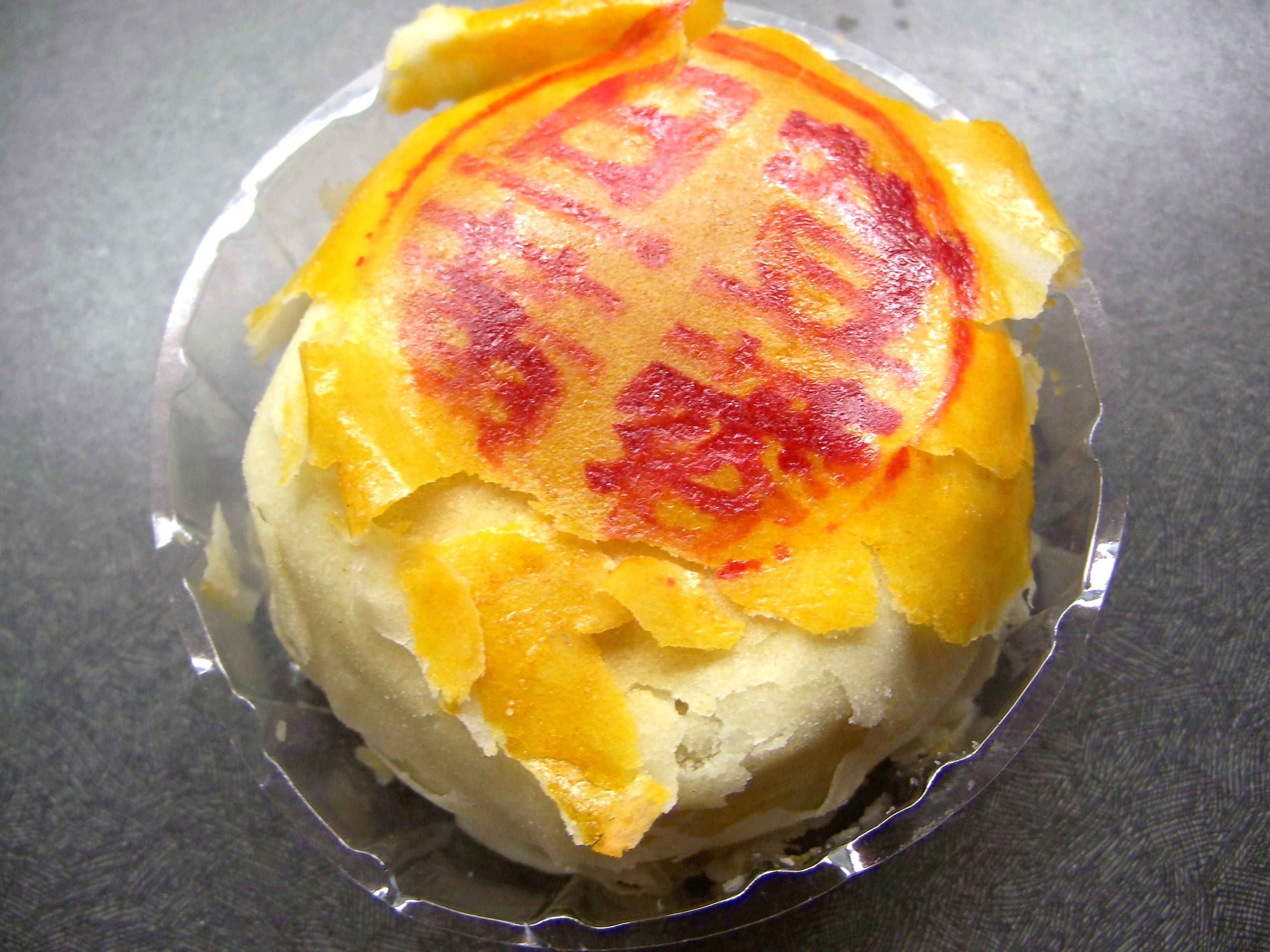
In the middle of bright yellow paste lies a crimson orange ball. The egg yolk. Salted and dried up to the size of a cherry. Or should we say it is the moon, at its fullest on the fifteenth day of the eighth lunar month each year.

Roughly 650 years ago, it was a bright moon for the Ming Dynasty, but not so bright for the Yuan Dynasty. The Mongolian rulers’ defeats started from a full moon day of August 1368, when the capital Dadu (present day Beijing) was captured by Zhu Yuanzhang and his Han Chinese insurrection armies. Zhu Yuanzhang then rose to the throne as the first king of the Ming dynasty, and he made sure that the Mid-Autumn Festival, which coincides with the end of the harvesting season, was celebrated throughout the country. As the story goes, such revolutionary victory could not have happened without them little mooncakes.

They were secret means of distributing messages among the resisting forces. Words were printed on each mooncake as a simple puzzle. Each mooncake in a package of four was then cut into four pieces, and the sixteen parts were arranged in a particular way to form the entire message. Afterwards, the cakes were eaten and the trace erased. I don’t know what they would do if a hungry kid got hold of a piece.

Although people aren’t sharing secret information anymore (as if anything could remain secretive under the communist watch), the mooncakes still have imprinted words on top and still come in packages of four.


The most popular kind of mooncakes have elaborate designs with golden brown crust, originating from Guangzhou. Other kinds more or less are spin-off versions of the Suzhou-style mooncake with a simple round shape, no design, flaky skin which can be peeled off by the layers, and no need for a mooncake mold.

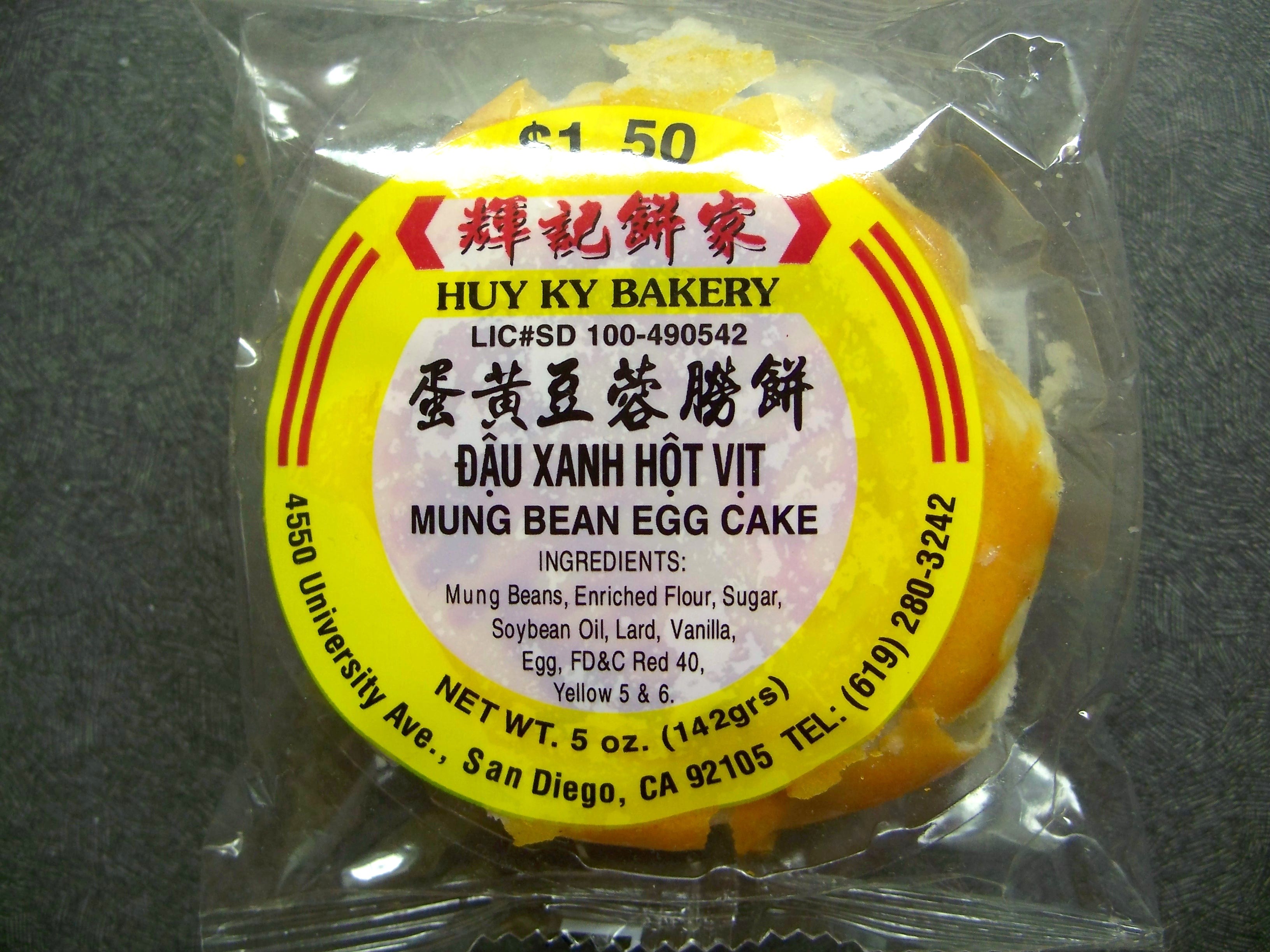
When the Chinese immigrants settled in the Mekong delta, they introduced the round, flaky mooncakes, referred to as “pía” in Teochew dialect, to the southern Vietnamese, who quickly adopted the recipe and the trade to make it a regional specialty, the Soc Trang‘s pía. “Pía” means “bánh”, things made with flour, but the innocuous southerners took it as a name, and started calling the flaky mooncakes bánh bía. Unlike the Cantonese mooncake that is only eaten during the Chinese Mid-Autumn festival, bánh bía gets served year round, bought as gifts from travelers to Soc Trang, featured in the Khmers’ moon festival Oc Om Boc in October, and individually packaged for sale at $1.50 a piece in Vietnamese sandwich shops in San Jose.


The recipe, too, has slightly departed from its Suzhou originals. If the Chinese counterparts often contain lotus seed, red bean paste, nuts, and sometimes pork for savoriness, the Soc Trang version stays homogeneous with either mung bean paste or taro paste, which can be flavored with lard and durian to the likings. But whatever goes inside, the doughy, flaky skin of bánh bía is the unchangeable feature, distinguishing it from all other pastries.

Each pía needs two kinds of dough: the “skin dough” and the inner layer dough. The skin dough on the outside, made of flour, water and canola oil, gains its elasticity and smoothness from a little kneading, while the inner layer dough has only flour and oil and is left unkneaded to keep it thick and chewy. Later the two kinds are flattened together to make the crust, but with the inner layer dough always contained inside the skin dough, otherwise the banh bia would have a coarse surface. After baked half way, the pía is taken out and glossed some egg wash over its upper side. When fully baked, they shine a ripe yellow invitation, ready to be stamped “longevity”, “harmony”, or some other character in red.

The whole process, from making the filling paste to baking, can take up a whole day. Buying it at the store takes two minutes. If you don’t count driving time.

Address: Huong Lan Sandwiches #4
41 Serra Way, Suite 108 (across the parking lot from New East Lake Seafood)
Milpitas, CA 95035
(408) 942-7777
Monnday – Sunday: 6am – 9pm

Click here for a recipe of bánh bía (Vietnamese-adpated Suzhou mooncake)

Previously on Sandwich Shop Goodies: bánh gai (thorn leaf sticky rice bun)

Next on Sandwich Shop Goodies: bánh ú tro (Vietnamese-adapted jianshui zong)

Sandwich Shop Goodies 1 – Banh gai (thorn leaf bun)

June 09, 2010 By: Mai Truong Category: California - The Bay Area, Northern Vietnamese, One shot, sticky rice concoctions, sweet snacks and desserts, Vegan, Vietnamese


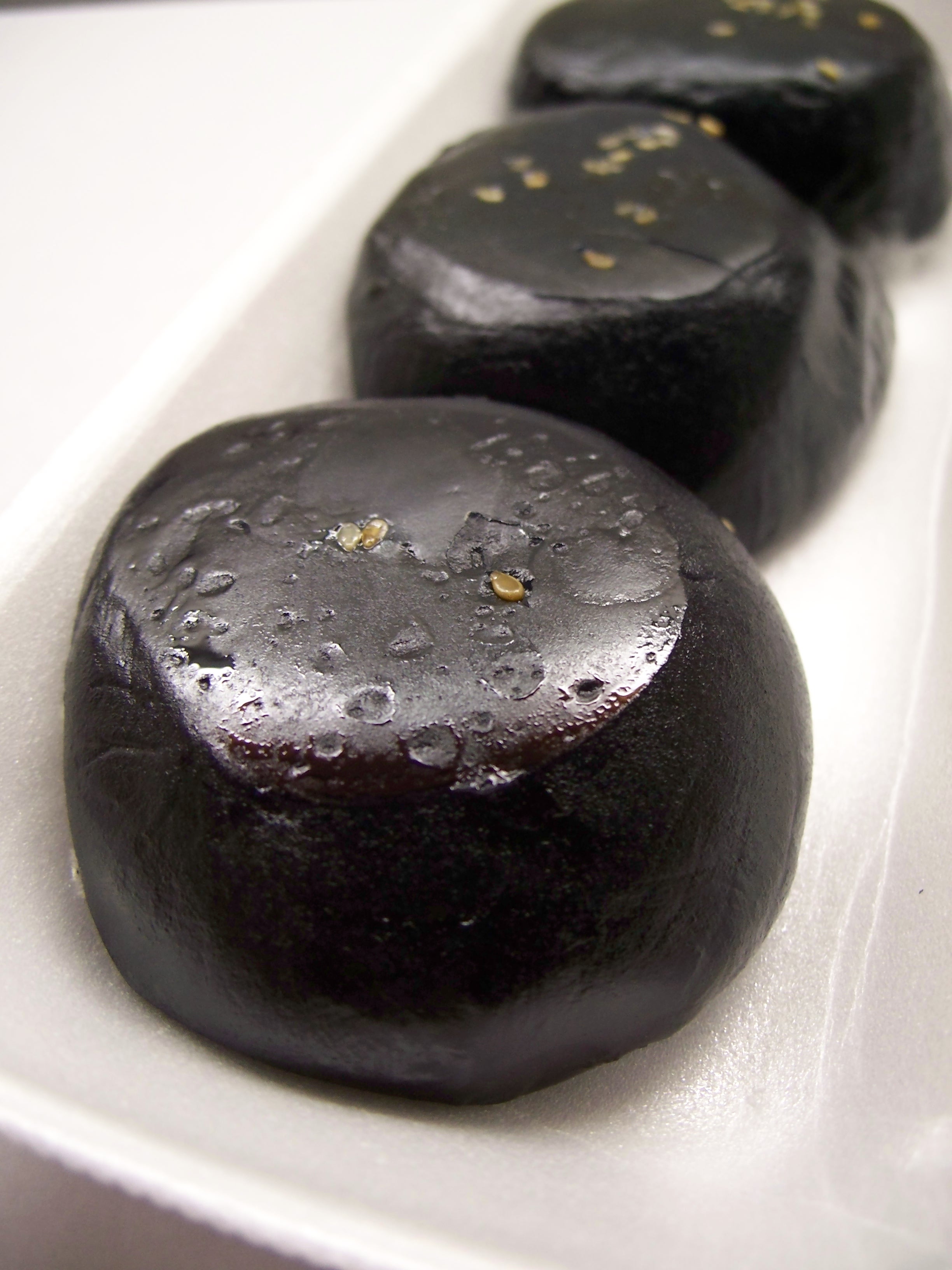
Sitting still, it looks like a rock. It is sweet with a hint of lard. It is chewy with a weak crunch, similar to a lasagna’s crust. The smooth, thick black skin shines like lacquered wood, but possesses an almost clear and cool embrace of jello. Though closely related to the superglutinous and mud-heavy banh it, banh gai takes it light.

The same everenduring stuff of Vietnamese villagers’ creations are thrown together, wrapped and steamed in banana leaves: sticky rice flour, water, mung bean paste, sugar. If you make it in cone shape and let the sugar brown the flour naturally, you get banh it. Go the extra mile of picking, chopping, sun-drying, boiling, and grinding the ramie leaves to a black powder that you would mix with your sticky rice flour in a 1:10 ratio, then after the fire settles you get banh gai.


Actually, you get the skin of banh gai. The thorny ramie leaves with silver underside give the black buns their color and trademark names, “thorn leaf banh it” (bánh ít lá gai), “thorn leaf banh” (bánh lá gai), or, most economically, “thorn banh” (bánh gai). But as proof of their everversatile imagination with ingredients, the villagers of North Vietnam mix the mung bean paste with shredded coconut, lotus seed, ground peanut, winter melon (bí đao) for crunchiness, and translucent cubes of pig fat or vegetable oil for a mild saltiness.


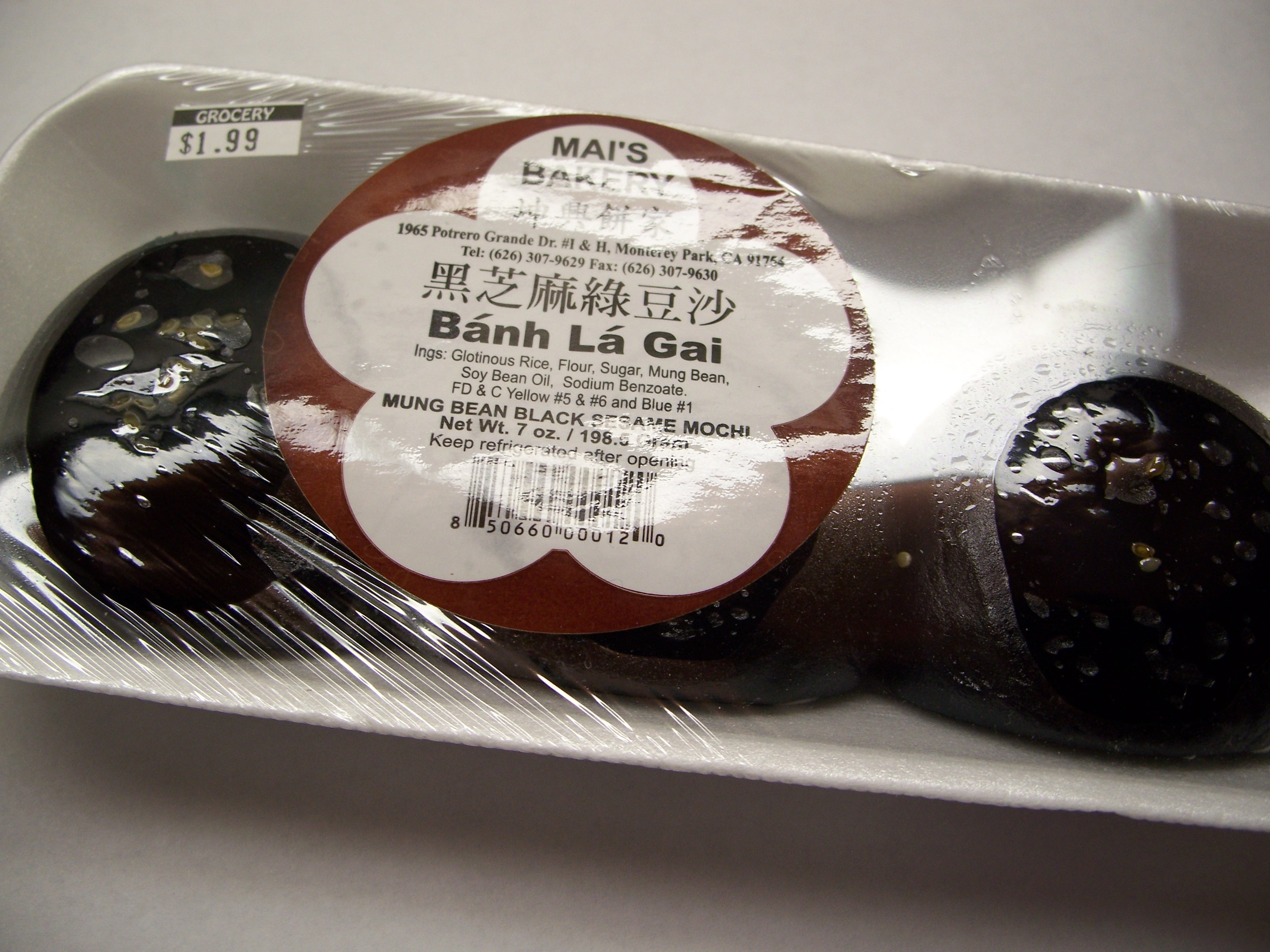
The thorn leaf buns sold in package of three for $1.99 at CD Bakery & Deli don’t have fat cubes, peanuts, and pieces of winter melon. They are wrapped with plastic instead of banana leaves. They are labeled “mung bean black sesame mochi”. They contain yellow and blue (?) food colorings. But I like their slightly sweet, slightly crunchy, slightly cool black skin.

After a week at room temperature, they get white mold. Perhaps, it is to match the white sesame seeds on top.

Address: CD Bakery & Deli (in the Lion Market plaza)
1816 Tully Road, #198
San Jose, CA 95122
(408) 238-1484
Open 7 days 8am – 8pm

Something else from CD Bakery: sugarcane juice

Next on Sandwich Shop Goodies: bánh bía (Vietnamese-adapted Suzhou mooncake)

Steak Search 3 – Prime Spot

May 28, 2010 By: Mai Truong Category: American, California - The Bay Area, One shot


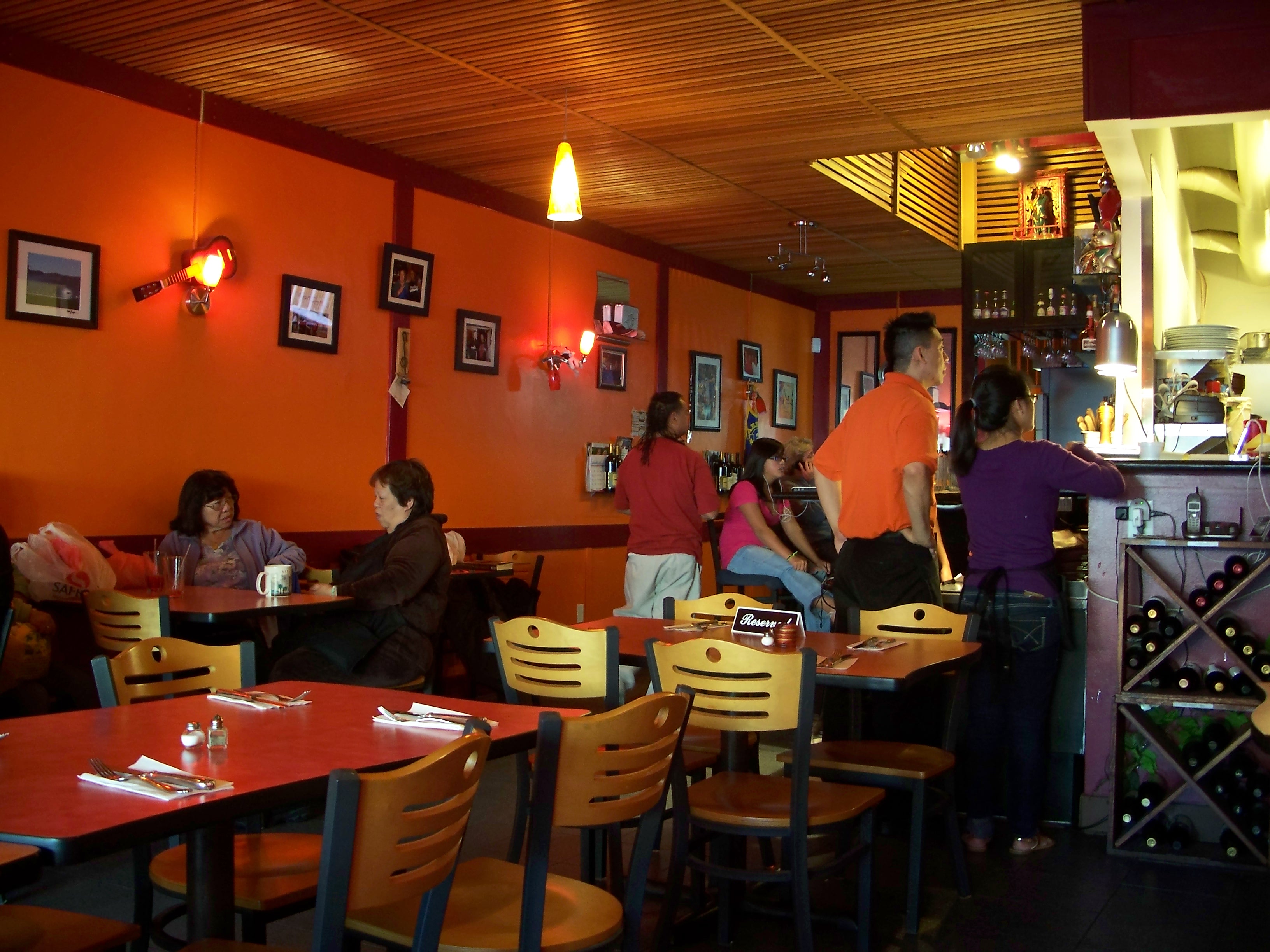
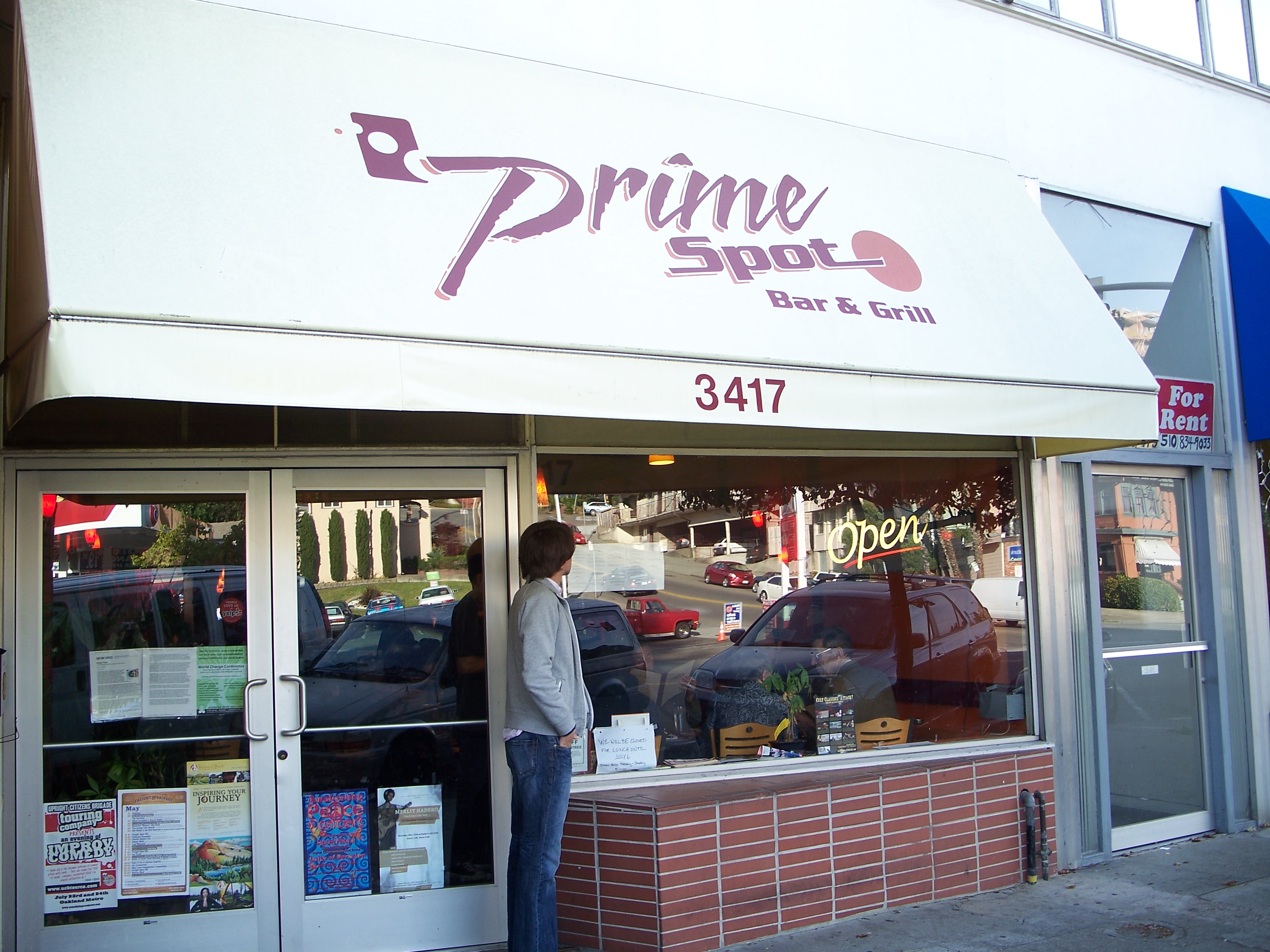
Saturday. The usual question comes up: what’s for dinner? It’s been well over three weeks since I last “slashed down a cow” (to quote Makiawa), so I feel just to insist on a chunky slab of red meat. The next question is where. Yelp’s list of steakhouse in Berkeley has six suggestions, but Hana Japan Steakhouse is not really a “steak house” with only two things of beef amidst a ton of chicken and seafood. Kincaid’s? Well, we’ll wait for an occasion to spend $33 on a petit filet mignon, which is already beside the point of tasty and cheap steak (that you can eat without feeling bitter in the mouth). So this week it is Prime Spot, just a few hundred feet north of The Alley.


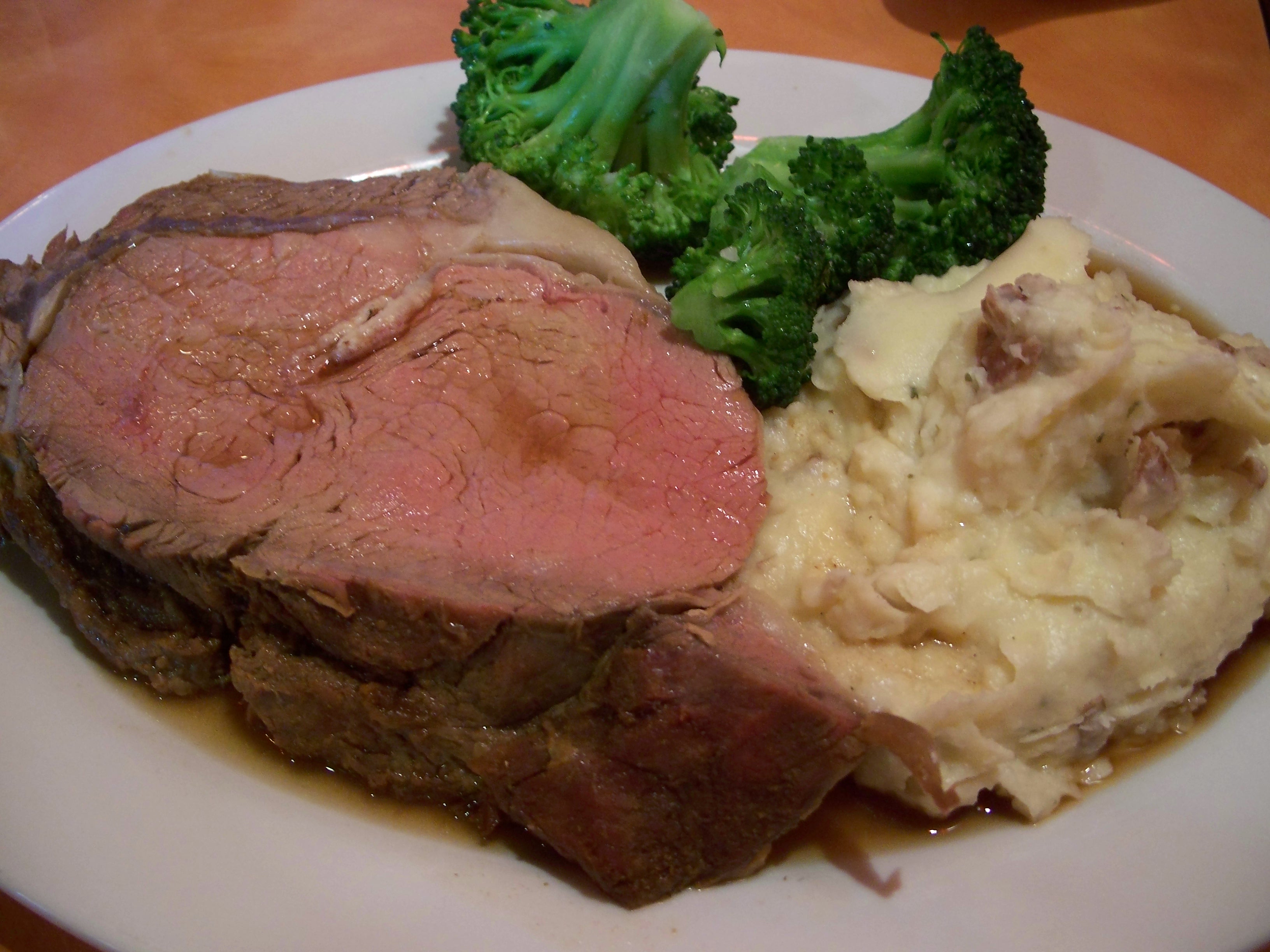
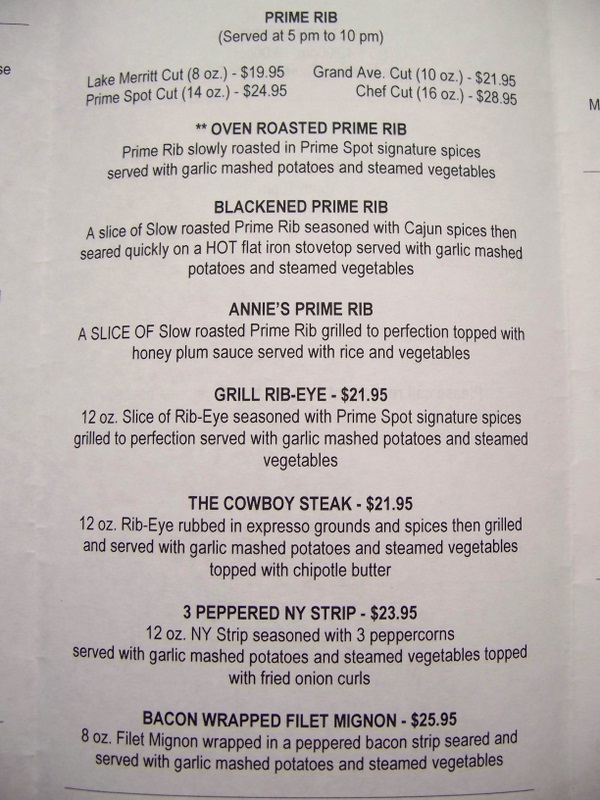
Here’s my two cents guess: their thing is the prime rib, so they name it “Prime Spot”. Or maybe they’re just that confident about their stuff. We’ll see. We ask for one Grand Ave. Cut of Oven Roasted Prime Rib to share, and a side of steamed veggie to lessen the cheapskates’ guilt. Five minutes later, the 10 oz slab of pink velvet arrives luke warm and dripping wet. When I cut a piece, it feels like slicing cheesecake. The meat is unexpectedly tender. Garlic mashed potato bathed in steak juice, like ice cream, is expectedly yummy.

What surprises me is the amount of food. Ten ounces does not sound like a lot when I think of times I’ve eaten a pound of steak by myself (and felt like my tummy would burst and my back would break, but that’s not the point). It turns out two people can get pleasantly full on just ten ounces. Must be the potato and broccoli. Not having too much on our plate works out well because the meat gets kinda dull as it gets cold, and just when we can’t take it anymore, we don’t have anymore to take.


Previously on Berkeley Steak Search: Buckhorn Grill (Emeryville)


Address: Prime Spot Bar & Grill
3417 Grand Avenue
Oakland, CA 94610
(510) 268-1840

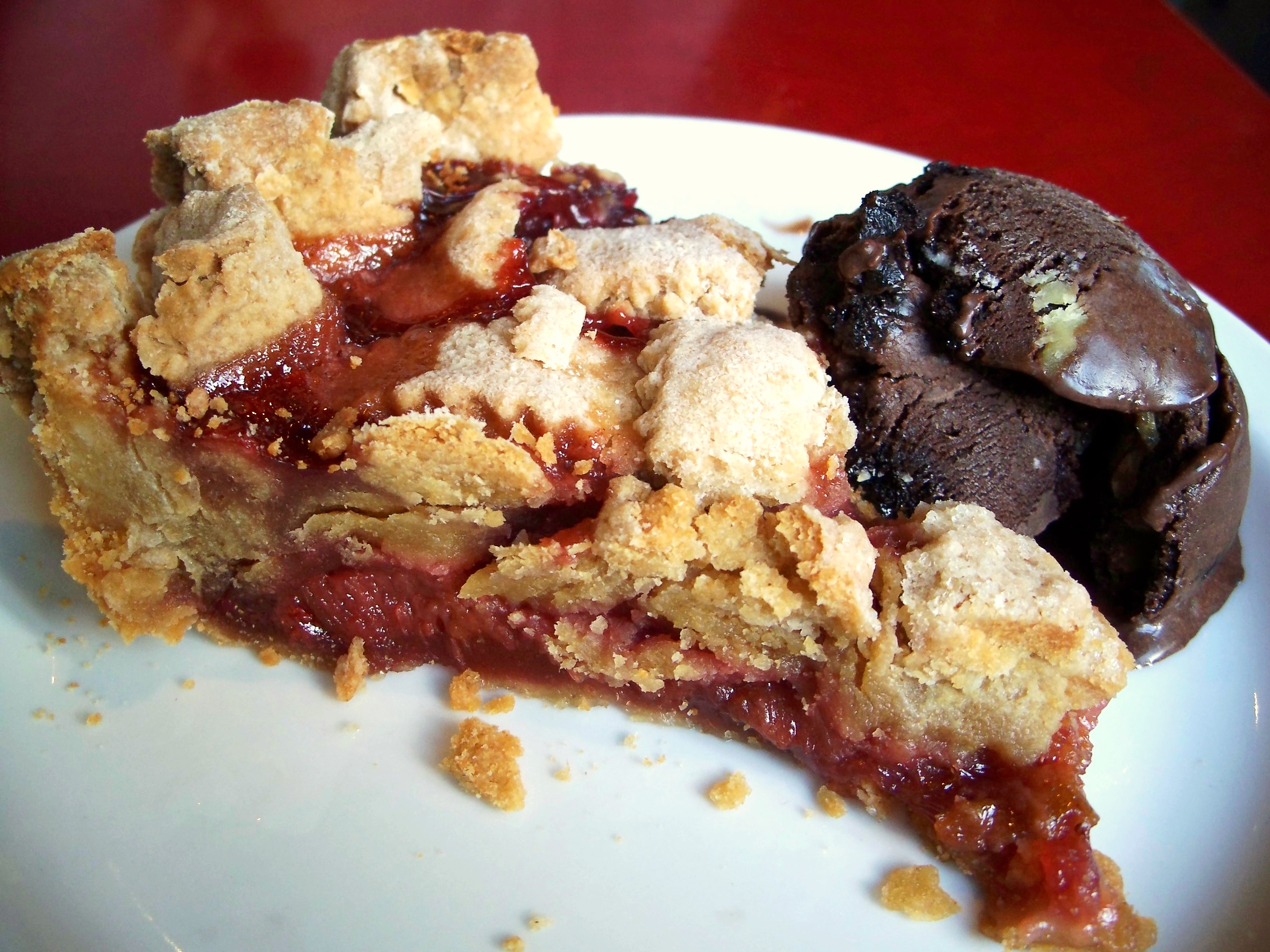
I do feel guilty for eating so much meat, though. With friends, movies, and my own empathy for animals rubbing it in everyday, I find the American steak less and less enjoyable (that is to say, bulgogi is still too good to give up :-D). So upon leaving Prime Spot, I redeem my conscience with a hot slice of strawberry rhubarb pie and a scoop of mud slide ice cream at the vegan Herbivore. Few things can be better.

Vegan strawberry rhubarb pie and mud slide ice cream at Herbivore (Oakland)

Tags:

Steak Search 2 – Buckhorn Grill

May 10, 2010 By: Mai Truong Category: American, California - The Bay Area, One shot


Not too long ago I came upon Monica Eng’s essay Morality Bites, and I vowed to cut down on meat. Well, I’ve been keeping my words, just not all of them: I cut meat. And eat it too. Two weeks ago I entrusted myself on an alphabetical quest for the best steak within ten miles of Berkeley, starting with The Alley. This week, Buckhorn is up to the chopping board.


Okay. So it is a chain. A meat-up version of Burger King. Bigger plates, bigger menu, bigger service (they offer catering), big customers. As of today, Buckhorn Grill has opened only seven locations in the Bay Area, so I think we can excuse myself for bucking off my no-chain rule to blog about them. Of course it’s not really that qualified to be in the steakhouse category, there ain’t no sirloin, T-bone, or filet mignon. All it has is tri-tip, or triangular steak, a boneless cut from the bottom sirloin, with charcoaled rim and lotsa salt.


Mudpie opted for the regular 6-oz platter at $12.95, while I headed down the 10-oz Dad’s Cut at $15.95. Talk about glutton embarrassment. The only difference is a slice of tri-tip. The Bay Area health-conscious trend shows up here in big chunks of grilled squash, carrot, and asparagus. Yes, if you’re gonna eat meat, make sure you doubly expand your tummy for a lot of veggie, too, then cement it with mashed potato and gravy. Actually the carrot is quite delicious, the dried skin and gummy inside  remind me  of a beautifully grilled sweet potato. Meanwhile, the black cup of meat dripping looks attractive, but it’s just too light to accentuate the airy bread.


And look at that knife! Its blade is as wide as the gravy pool. It could kill a bull, much less a tri-tip.

So is it the best tri-tip on the planet? It’s tasty, but I think I can get better at Sbisa, for a much cheaper price (all you can eat at $8.25). That said, next time I get a craving I’d order a 2-lb whole tri-tip for $20, and unbuckle the belt.

Address: Buckhorn Grill (in the Emeryville Bay Street Mall)
5614 Bay St (at Shellmound St)
Emeryville, CA 94608
(510) 654-2996

Previously on Steak Search: The Alley (Oakland)

Next on Steak Search: Prime Spot (Oakland)