Flavor Boulevard

We Asians like to talk food.
Subscribe

Archive for the ‘Korean’

To Hyang – The flavors of earth
September 18, 2011 By: Mai Truong Category: California - The Bay Area, Comfort food, Korean


Recently, someone asked me how often I cook, I said not often at all, I spend most of my time at school trying either to speak some foreign language or to tell the computer to understand my version of its language. I cook maybe once a week, very simple stuff, like boiled bok choy. He then questioned the credibility of my taste. “Can you taste as well as someone who cooks a lot?” I believe so. I might not have the knowledge to make the dish or to fix its shortcomings, but fermenting the grapes doesn’t help an oenophile judge his wine. However, that got me thinking about what I would do if I had time to cook. I would like to work in a restaurant kitchen. It’s okay if I have to peel shrimps all day, I simply would like to look and learn from the inside. I’ve even picked out the place I want to work at: To Hyang.

Because I’d like to learn how to make kimchi, soybean paste, pickled bellflower, fried dry anchovies, and maybe infused soju from a Korean lady. Of course there are recipes online, which I tend not to read because they are too precise. But I’ve just heard too many good things about To Hyang, including Chef Im’s selection of various aging sauces, pickles, and garden plants, that I want to infiltrate her kitchen.
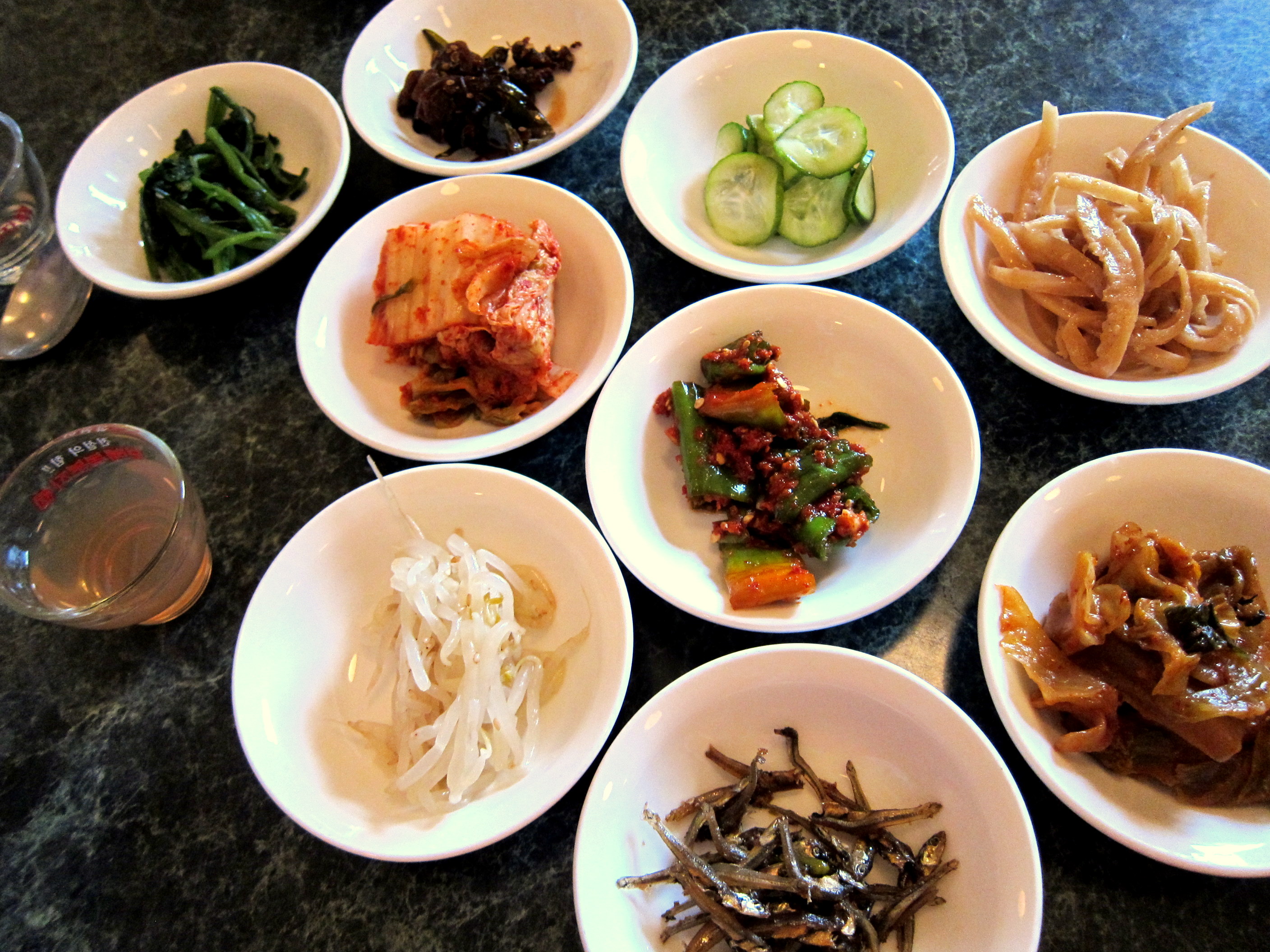
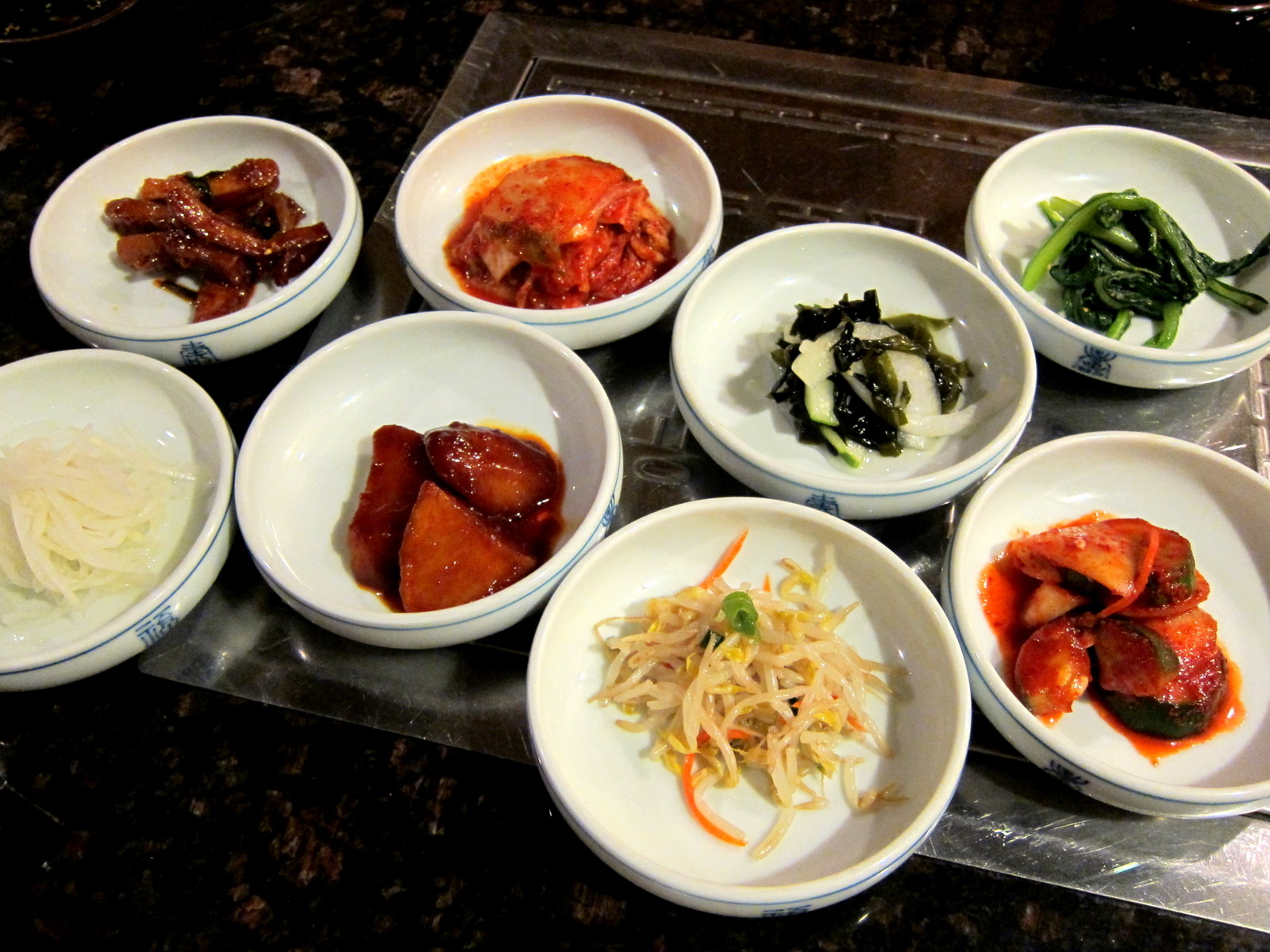
To Hyang - Dinner begins, banchan and a cup of persimmon infused soju
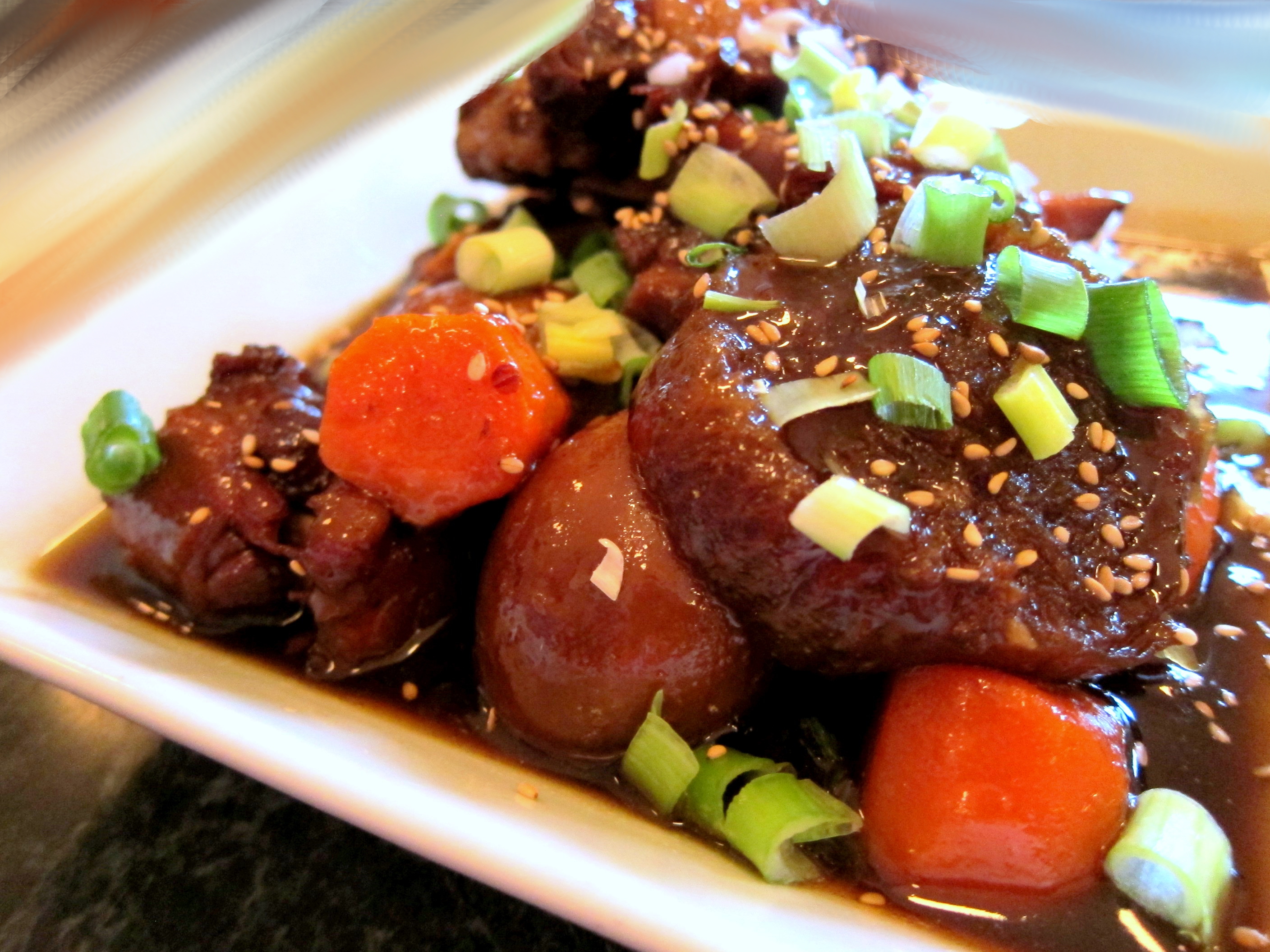

Not to mention her so gori chim (소 꼬리 찜, $18.99). Braised oxtail in a sweet, thick sauce with hard boiled eggs. Magnificent hard boiled eggs. The egg white got just the right springiness after the braise. The yolk wakes up memories of my mom’s thit kho trung for the Lunar New Year feasts. Though no doubt loved by everyone, this simple combination is not served often enough in restaurants, and when it is served, the portion is not enough for the whole table, especially a table with me. I can never have enough eggs simmered in a braised meat sauce.
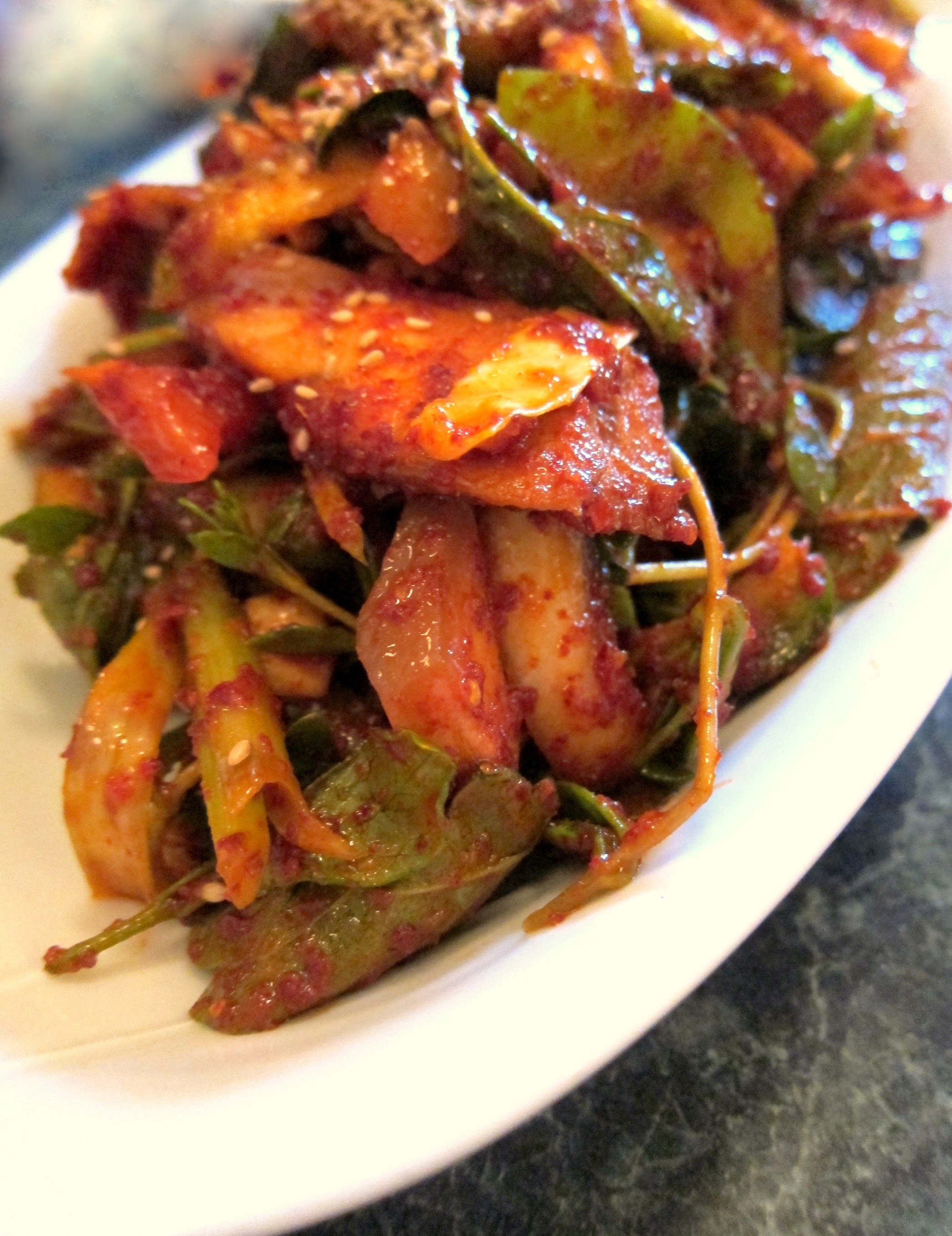

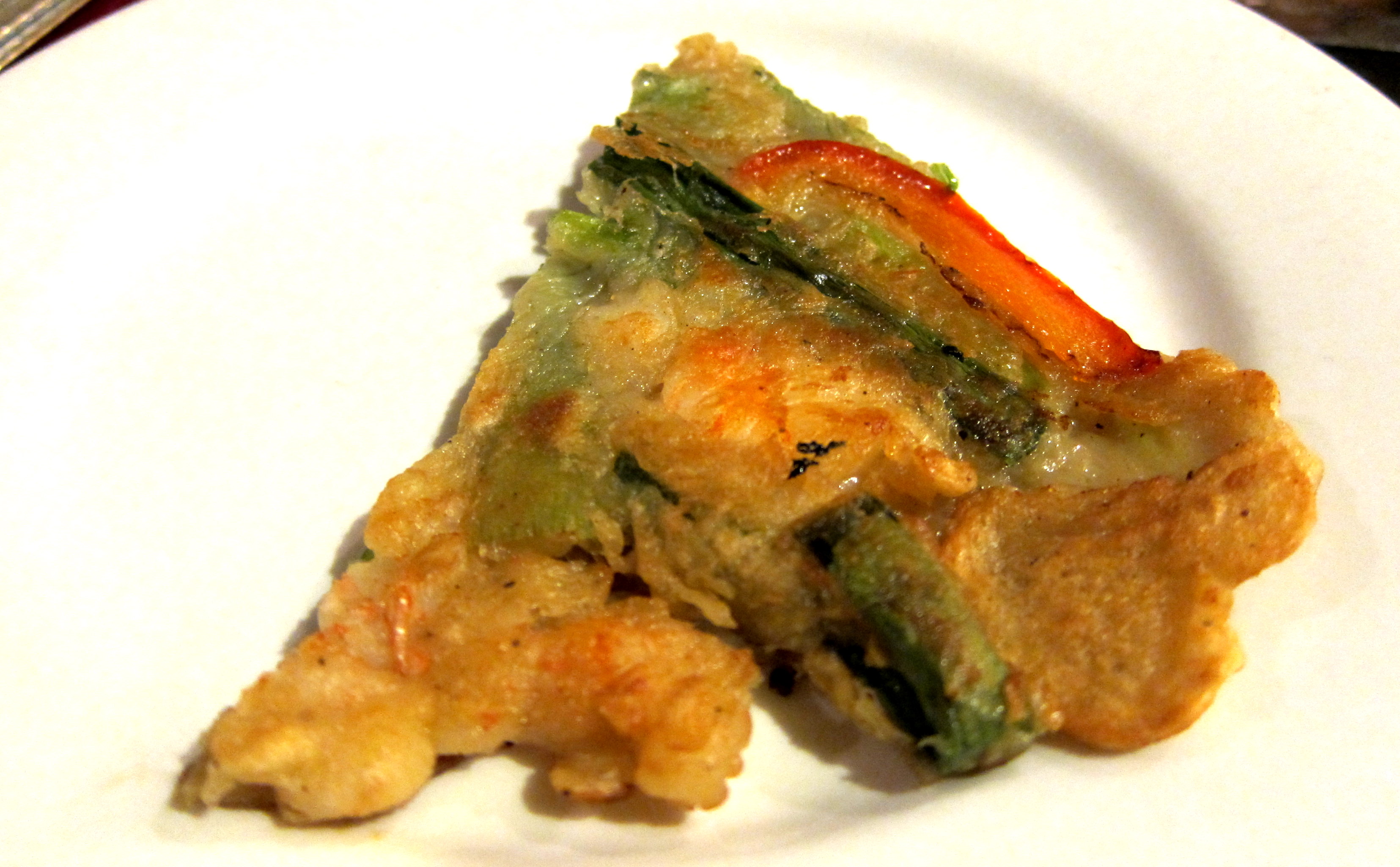
The rest of To Hyang’s fixed menu is fairly standard of a Korean establishment, with kimchi jeon, soondubu, and bibim nangmyeon among others. A few recommendations from Chef Im’s daughter are the hand pulled noodle soup kalguksu, which we did not get, and the pork belly kimchi salad samgyeopsal muchim (삼겹살 무침, $15.99), which we did get.

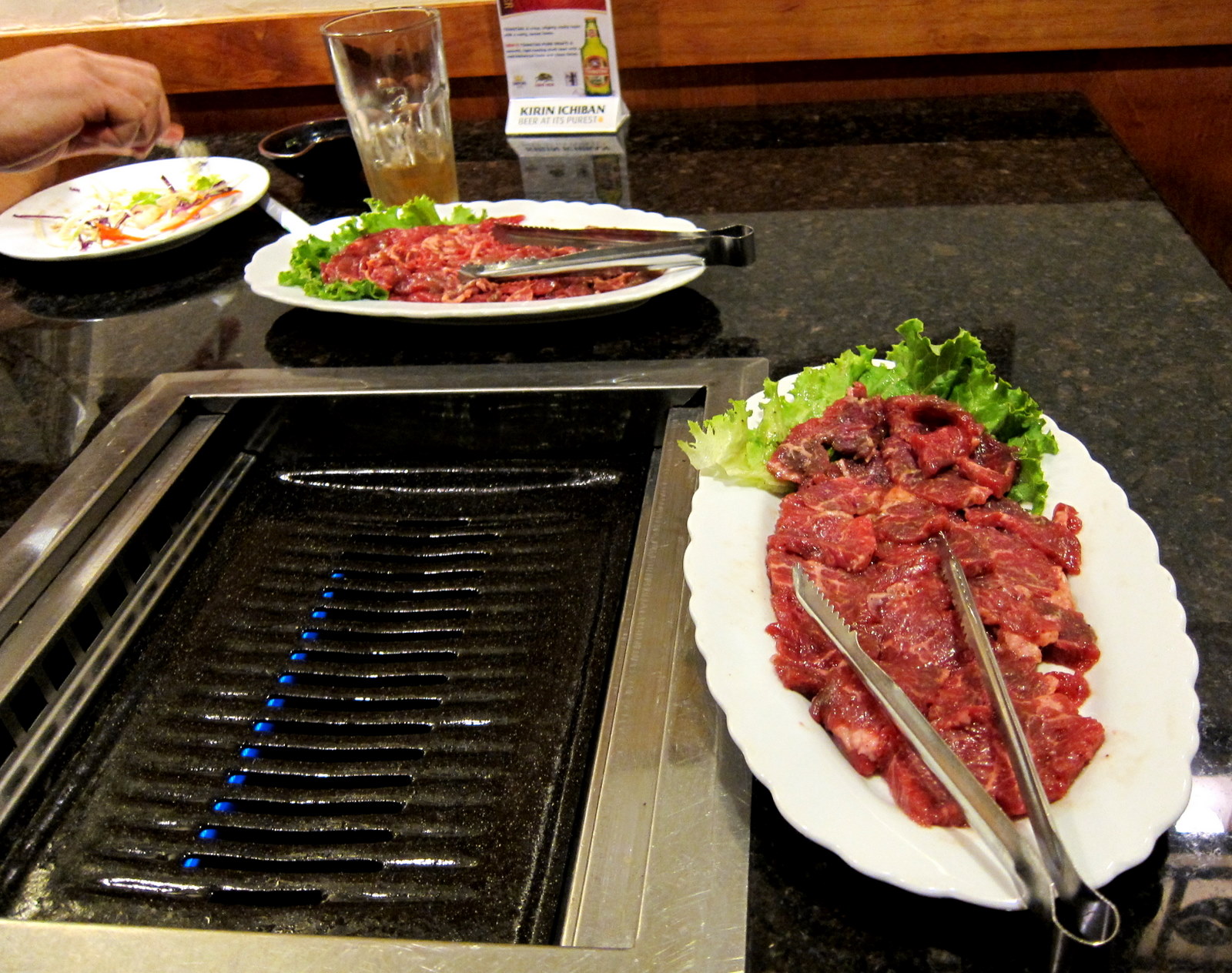
It looks like a fiery truck load of paprika accidentally got dumped onto the plate, but it’s served cold, the pork belly is succulent as always, and the heat dissipates as quickly as it hits. It’s refreshing like mint ice cream.

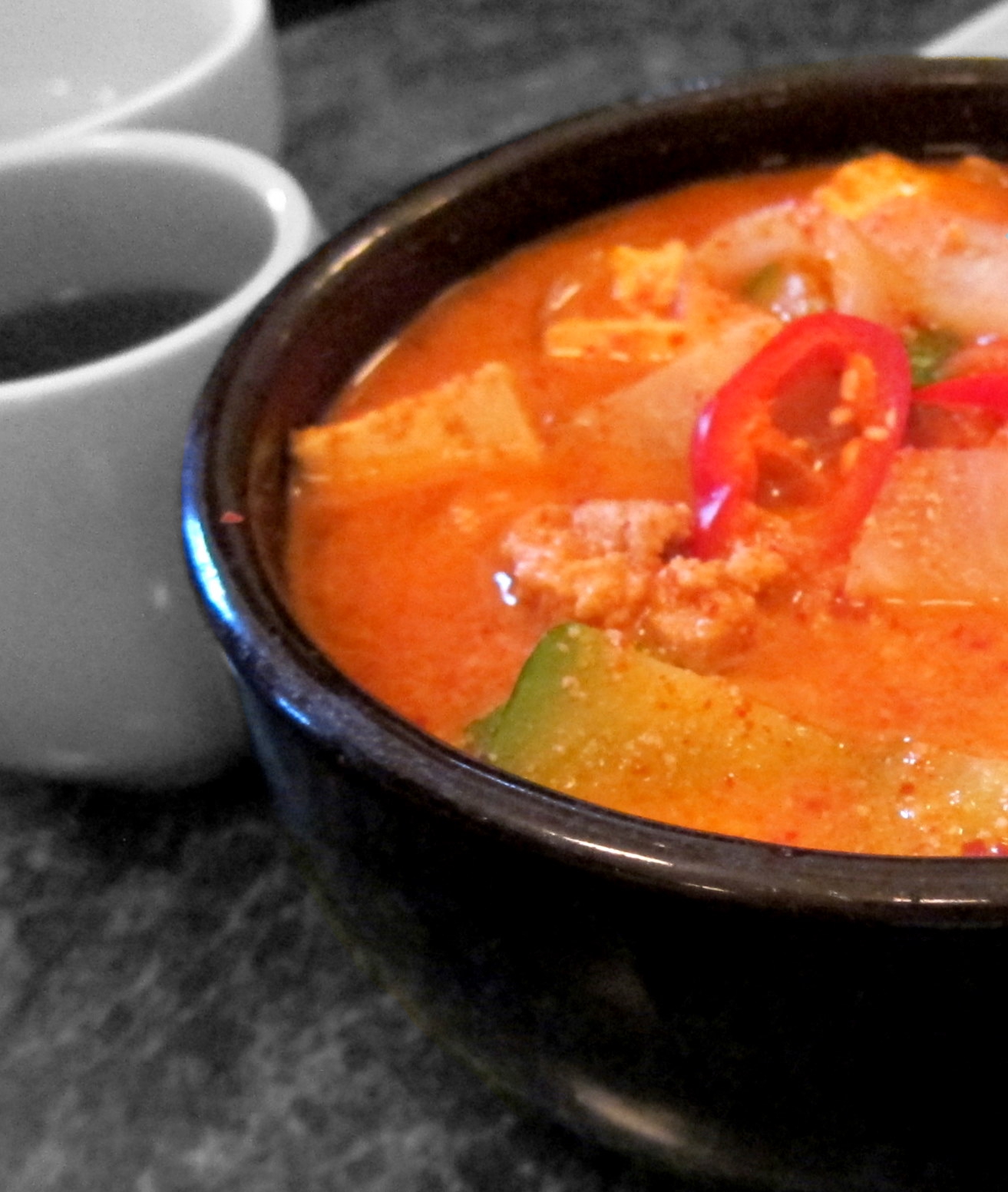
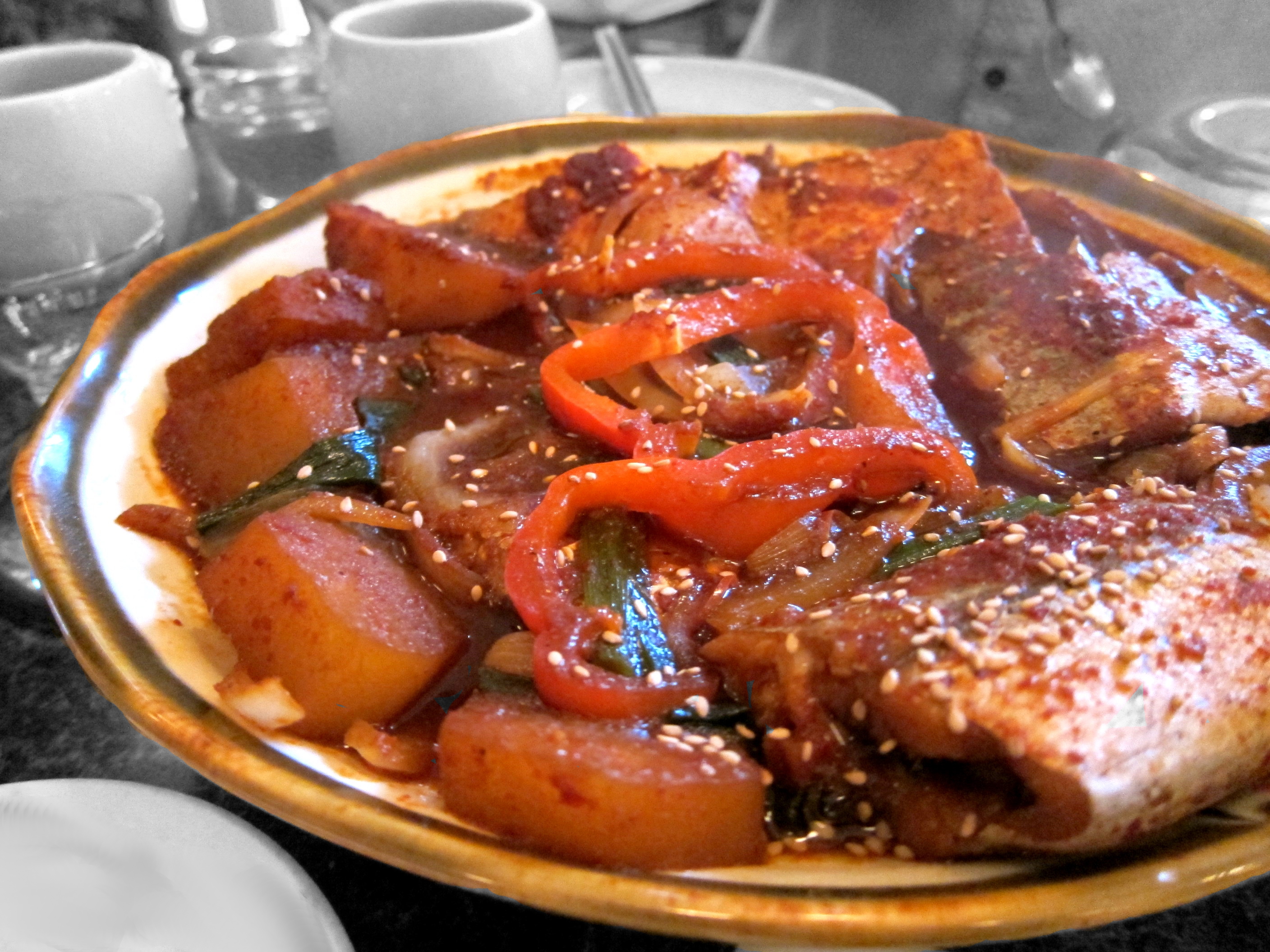
On the left wall hangs a white board, hand scribbled, of the special du jour, the soju cocktails, and a list of house infused sojus ($15 each bottle). For the processed meat lovers (me), there’s budae jjigae (부대찌개), hot dogs and spam in a gochujang and kimchi soup. For the fish egg lovers (me), there’s al jjigae (알 찌게), a hefty lot of pollock roe in a mildly spiced stock with tofu ($15.99). For the fish lovers (not quite me), there’s kalchi jorim (갈치 조림), meaty beltfish and potato simmered in ganjang, garnished with bellpepper and white sesame ($15.99). With bones. So make sure to try this in the presence of an Asian if using chopsticks to pull off the flesh without disrupting the 200-bone fish skeleton is not your forte. I’m a useless exception of my race though, I still get bones dig in my throat even now.
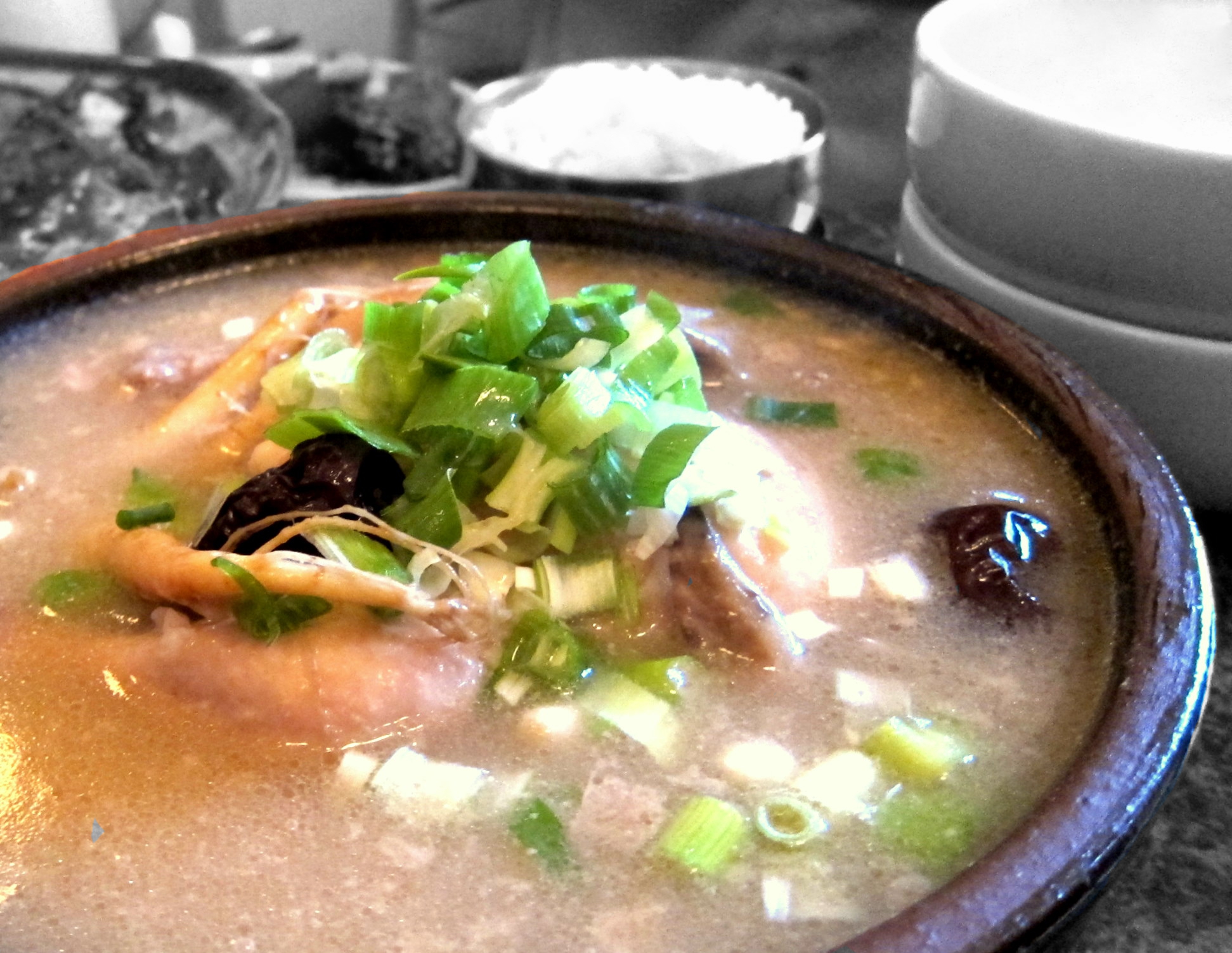

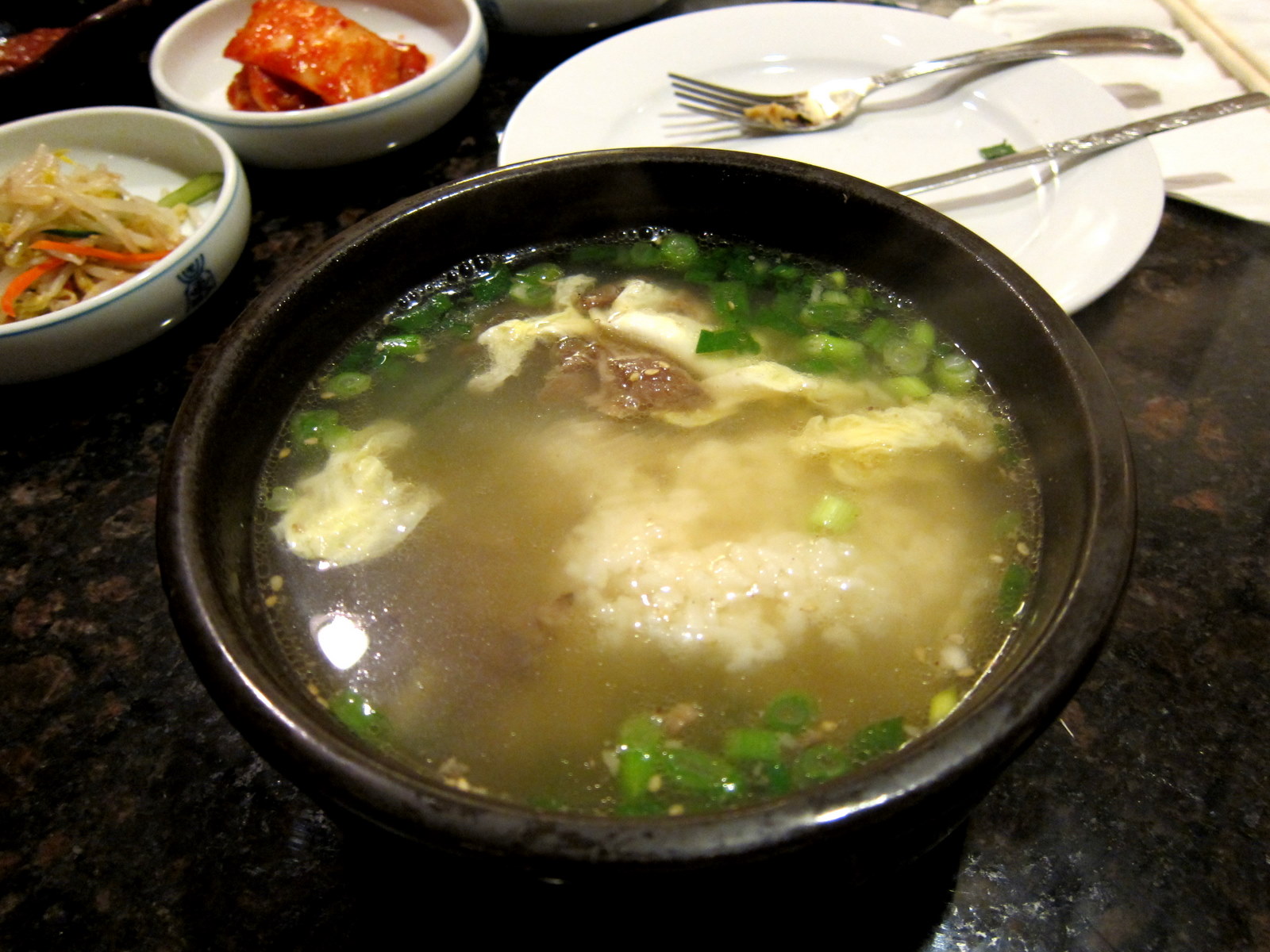
So I prefer to go with the big bones, like chicken. At To Hyang, I first learned the proper (Korean) way to eat the chicken in the samgyetang (삼계탕, $22.99): put salt and pepper onto a plate (or any available surface), and dip a piece of chicken into it.
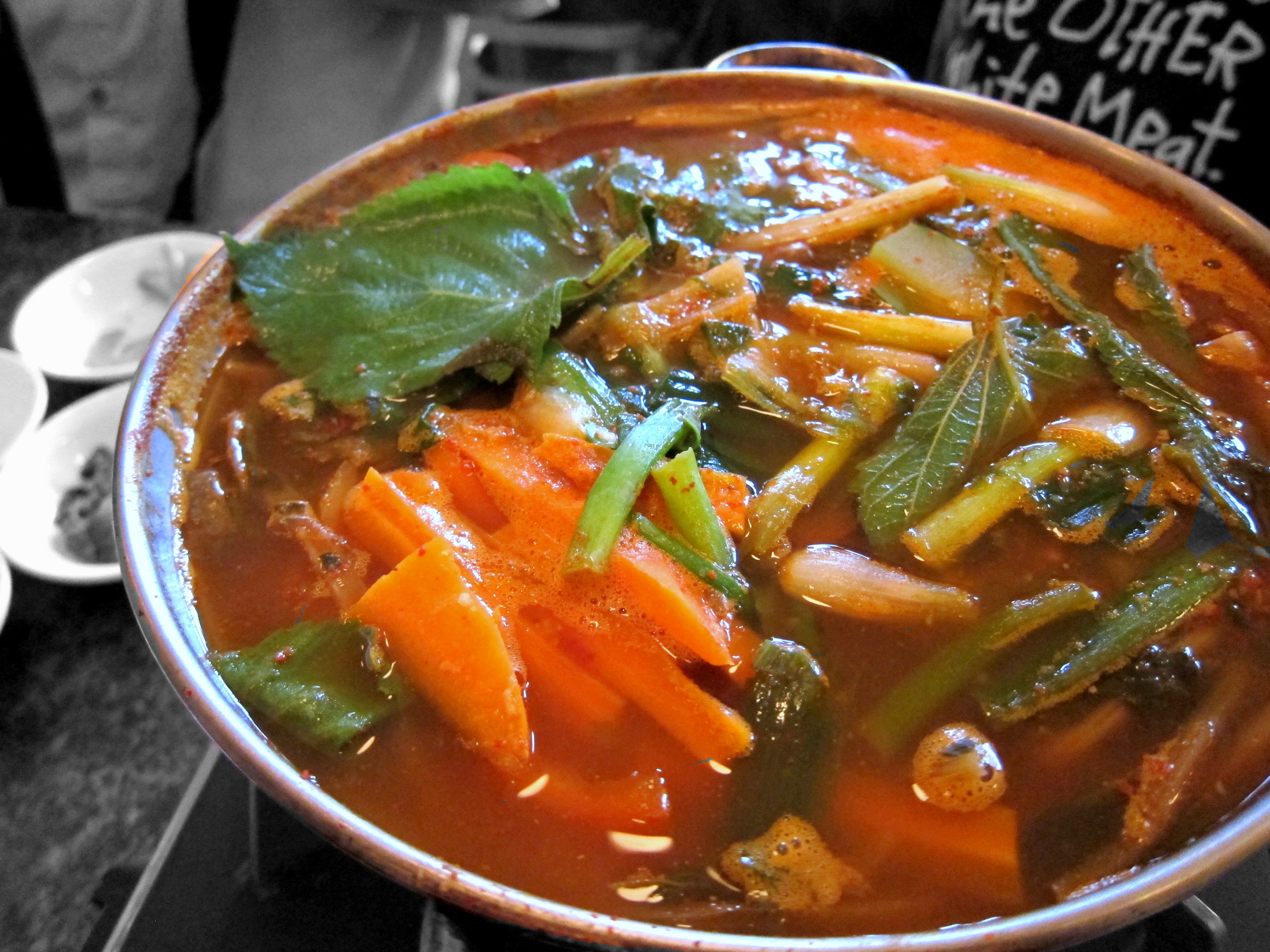

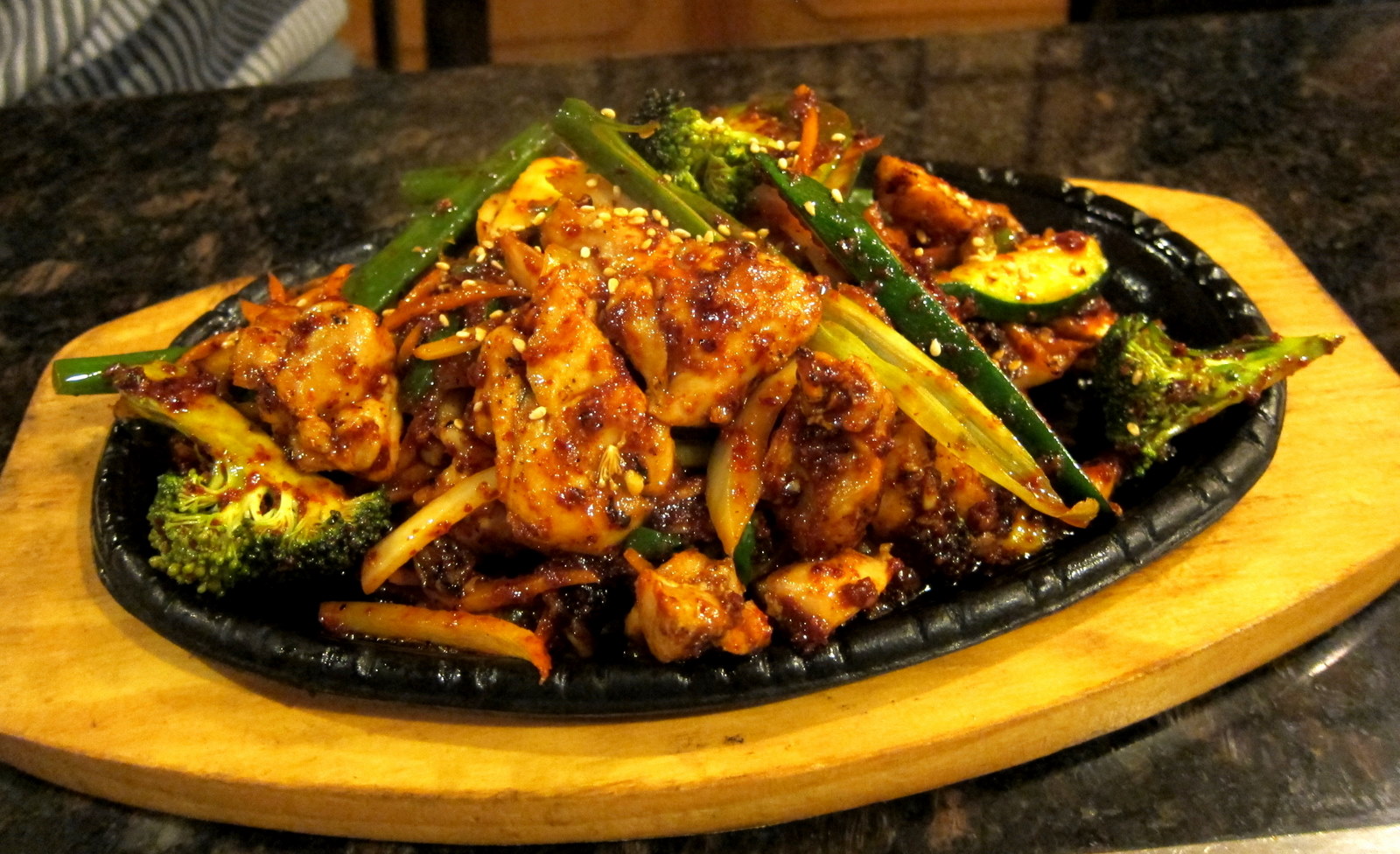
Although my dining company was more impressed with the spicy bubbling kamjatang (감자탕, pork rib stew with potato and greens, $13.99), and although the lack of the sam (ginseng) flavor in the samgyetang did leave me a bit unsatisfied, in hindsight that porridge-like soup, plain and fatty, is a perfect soothing finish to recover the tastebuds, which were numbed from too much chili powder. It also reflects just the character of To Hyang itself. In today’s tumultuous gastrosphere where everything is mixed with everything else and everyone is making a big deal about this or that food movement, this little Inner Richmond restaurant keeps a modest profile, no website, no long line in front (yet), a recent picture of our lady with Anthony Bourdain on the wall. Chef Im keeps her kitchen in order by herself, making food for the patrons the same way she’s made for her daughters, and preserving the “to hyang” (토향), the earthy flavors.

Address: To Hyang (토향)
3815 Geary St
San Francisco, CA 94118
(415) 668-8186
(Now only opened for dinner)
Lunar August 15

September 12, 2011 By: Mai Truong Category: Korean, One shot, sweet snacks and desserts, Vegan


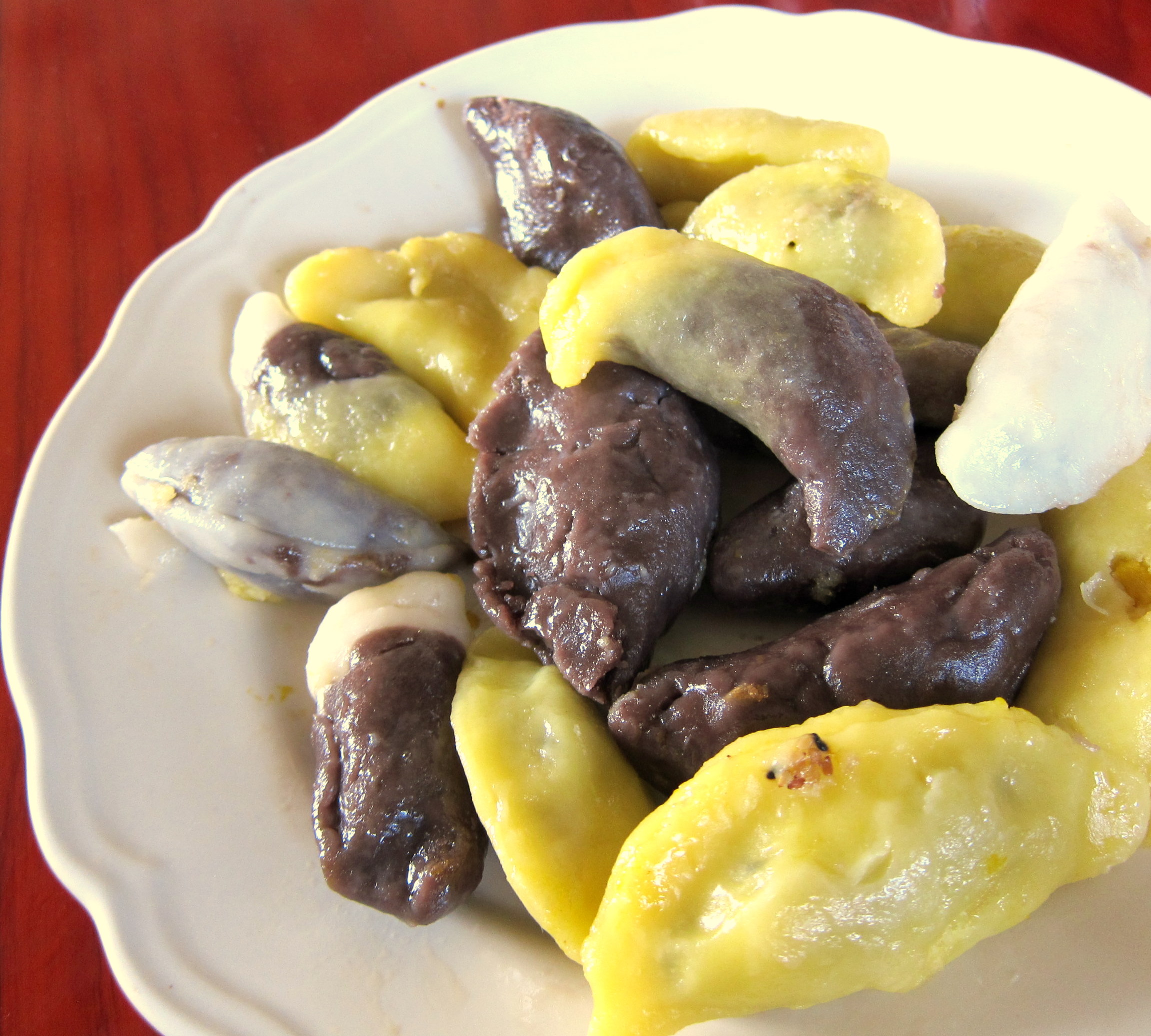
Yesterday Yookyung and I made songpyeon (송편), japchae, bindaetteok (mung bean pancake), dotorimuk (도토리묵 acorn jelly) and 5 kinds of jeon (battered fried vegetables and seafood in this case). Actually, Yookyung prepared everything, I was just making a few bad looking songpyeon and flipping some jeon in the skillet, but I felt so Dae Jang Geum. 😛 What did I contribute to the festive dinner? Four baked red bean mooncake. Yookyung liked them. 🙂

Then in my Korean class this morning, Chang seonsengnim gave each of us two songpyeon, smaller than our homemade version but prettier, one filled with sweetened sesame seed and the other with mung bean paste. Life’s good.

Songpyeon is kinda like bánh dẻo (literally, “chewy cake”) bánh ít trần in Vietnam, steamed, chewy, and a tad sticky, but because they’re so much smaller than bánh dẻo bánh ít, they don’t get repetitive and overdosing as quickly. They’re also not as dense as the baked mooncakes. They’re cute.
Happy Chuseok! Happy Trung Thu! 🙂

Tags:

Namu and Authenticity

September 04, 2011 By: Mai Truong Category: California - The Bay Area, Korean, Opinions, Won't go out of my way to revisit


My Lucky Peach finally made it home. It took only one month from the time I placed the order, and just when school started and me getting buried beneath ten miles of homework. But I’ve taken a peek every now and then at its colorful albeit tiny pictures of ramen (this first issue is all about ramen) and gorged in the fourth article while waiting for the bus. This is the bad thing about food magazines (or anything serial and food related, except cookbooks): it’s so easy to read it’s addictive, I can’t even fall asleep reading it, then I get sleep deprived. So I never buy them. But Lucky Peach is different: it’s recommended by a friend, subsequently ordered by two other friends, all of whom have highly experienced and respectable tastes; what I can do? I haven’t finished the entire thing, but the fourth article is a good one. Good enough to console myself for surrendering to peer pressure. In hindsight, it’s one of the highlights of the lunch we shared at Namu. (Not that the magazine is in any way related to Namu, Rob just showed it to us while we were eating at Namu.)

The other two highlights were some kind of pickled onion and the gochujang (고추장) for the bibimbap. The pickled onion, the best of the four kimchi/pickle varieties, tasted crisp, thorough, and to the point; the gochujang was nutty with a light fruity hint. Namu also had the presentation going for it: from the sparsely spaced tables tucked along the walls to the petite tea cups and blue-and-white serving bowls, the whole place uttered cuteness. The main courses, however, sparked more discussion than compliments among us four, mainly surrounding authenticity.

Of course, Namu is not about “authentic”. It is Chef Dennis Lee’s “cutting edge new California” interpretation with a Korean influence, evident by the appearance of english muffins and tortilla alongside kimchi relish. Depending on your definition of authenticity, authentic Korean food may be hard to come by 8000 miles from Korea, but the authentics can evolve (as they have always been), and I’m all for fusing ingredients to spread the scope of an ethnic cuisine. In fact, I wish Namu had fused more ingredients together. It’s not the english muffin, the tortilla or the chorizo that made me skeptical looking at the menu, it’s the lonely and repetitive incorporation of kimchi in almost every single dish.

There is a whole lot more to Korean food than kimchi, and baechu kimchi at that. Simply adding the fermented cabbage on a hamburger bun or laying it next to the steak doesn’t give the dish any more Korean background than adding sausage making it German. Namu would be more accurately described as “cutting edge new California with kimchi”.


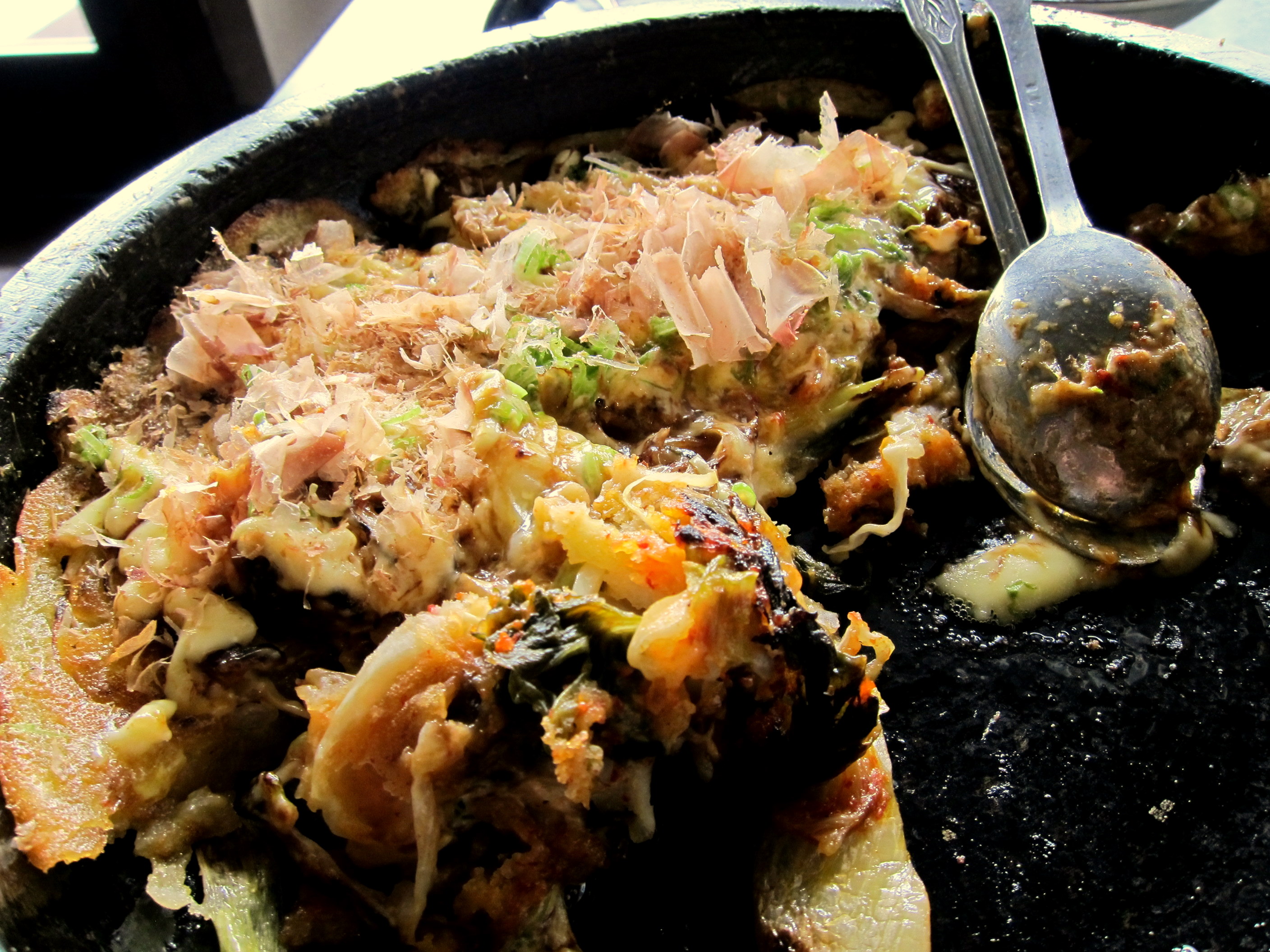
The other unsettling point for me was the available choices. We went as Korean as we could, which was easy because there were only two Korean dishes on the menu, and got kimchi fried rice, dolsot bibimbap and two sizzling okonomiyaki, not because it sounded the most interesting but because Japan is right next to Korea. Now, bibimbap, although loved by many non-Koreans and as representative of Korean menus in America as McDonalds representative of America outside America, seems a bit lackluster as a “restaurant” item. It’s not wild enough to be “California”, and it’s not complicated enough to be “Korean”. Not to mention that our hostess mixed the rice so much for so long that there was barely any time left for the rice crust to form, or perhaps the dolsot wasn’t hot enough. The kimchi fried rice didn’t convince me. The okonomiyaki, made Korean by the kimchi touch, erred on the salty side but was arguably the best piece of the three.

Would we have had more excitement had we tossed the Korean concept and gotten the loco moco or the egg sandwich? But without the Korean concept, what makes the Namu brunch different from the other hundreds one could get in the Inner Richmond? I’m not sure.

The Koreans make good pho

August 11, 2011 By: Mai Truong Category: California - The Bay Area, Korean, noodle soup, Vietnamese


Every time I ride the bus on Telegraph, Kang Nam Pho stands out to me like a supernova. (There are these “sorta” cosmologically important exploded stars that have been on my mind for quite some time now, which is an excuse for the sparse blogging of late.) I’ve seen Chinese-owned pho places, but they never have a Chinese name. Pin Toh on Shattuck, which used to be Phở Hòa, has pho cooked by Chinese chefs, but it’s a Thai diner (talk about incognito). In my American pho encounters, Kang Nam Pho is the first instance of a Korean-owned Vietnamese diner with a Korean name. They even put the whole “Phở” with accents on their white-on-red sign, next to “강남 윌남국수” (Kang Nam Wilnam guksu, i.e., Kang Nam Vietnamese Noodle). I like this place already.


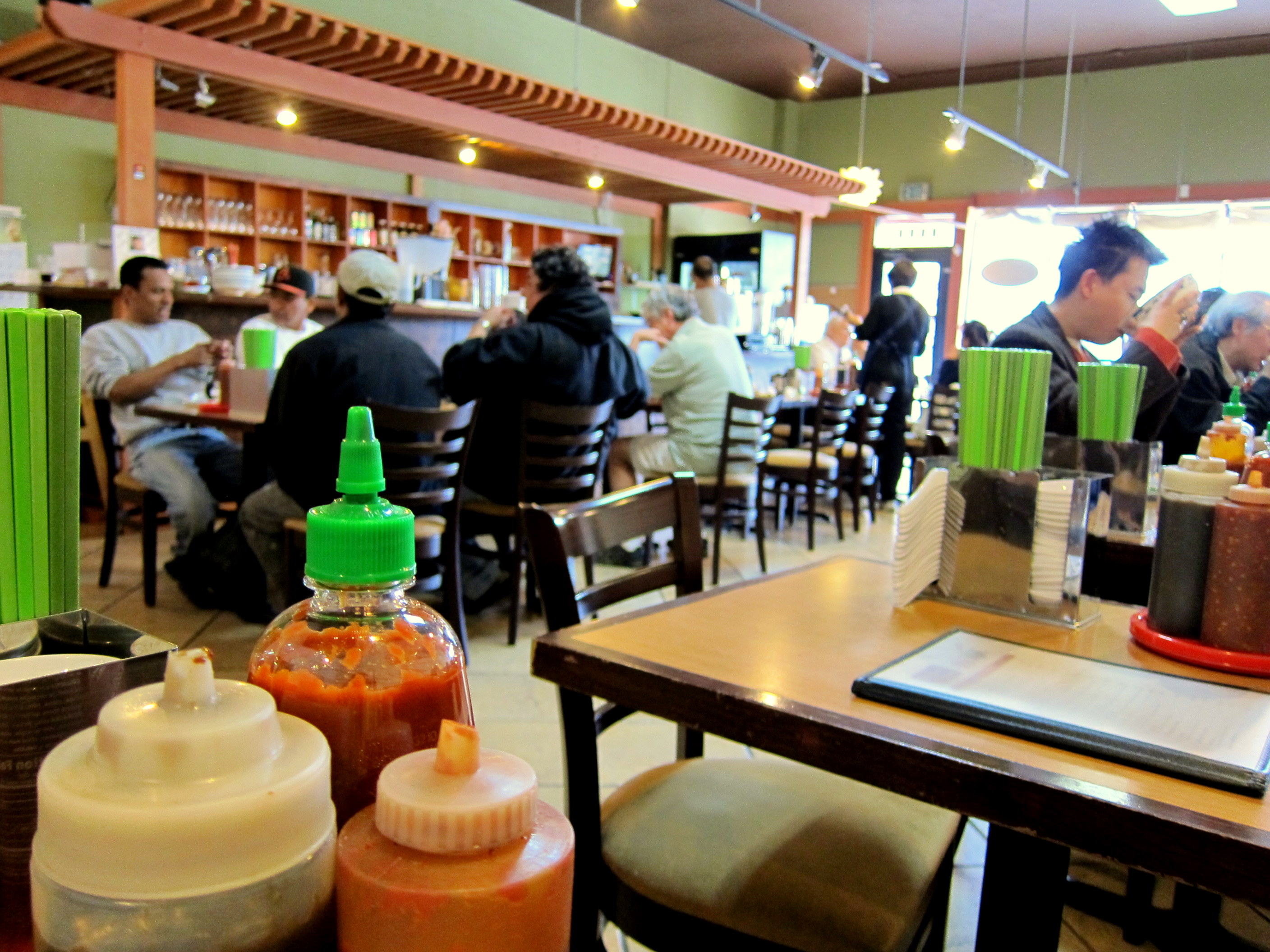
Their menu is also all in Vietnamese, again, with complete accents albeit some misspellings; there is English description under each name and very little Korean. I vaguely remember bibimbap and bulgogi at some bottom corner of a page, but Kang Nam has things that even a common pho joint wouldn’t always have, such as hủ tíu Nam Vang (kuy teav Phnom Penh) and bò kho (noodle with beef stew). The tables are even equipped with green chopsticks, hard-to-eat spoons and sauce bottles. If only the customers didn’t flock every table that day and keep the ladies moving like shuttles in a loom, I would have asked what inspired them to make the place even more Vietnamese than a Vietnamese would, for better and for worse (the spoons…).


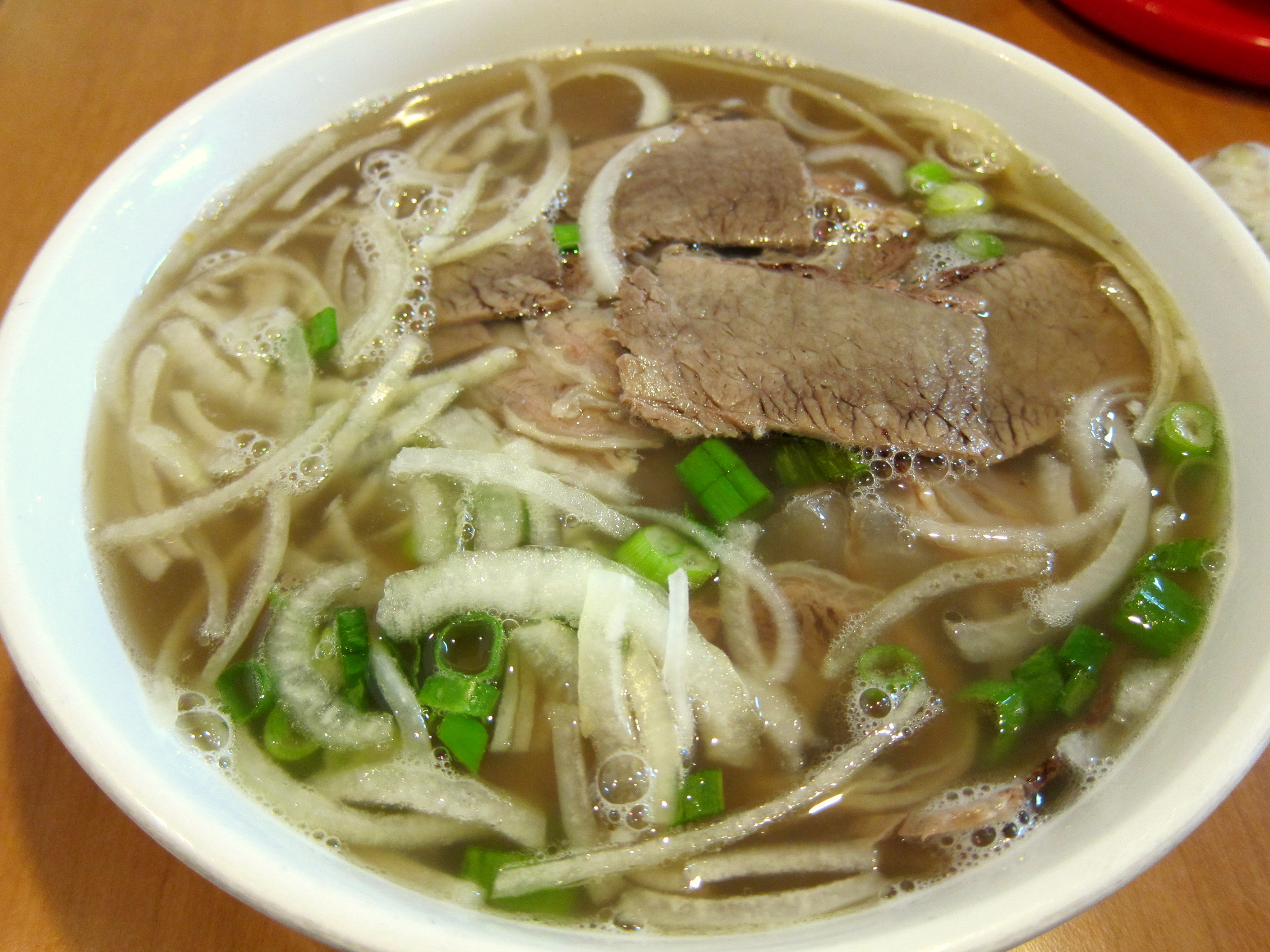
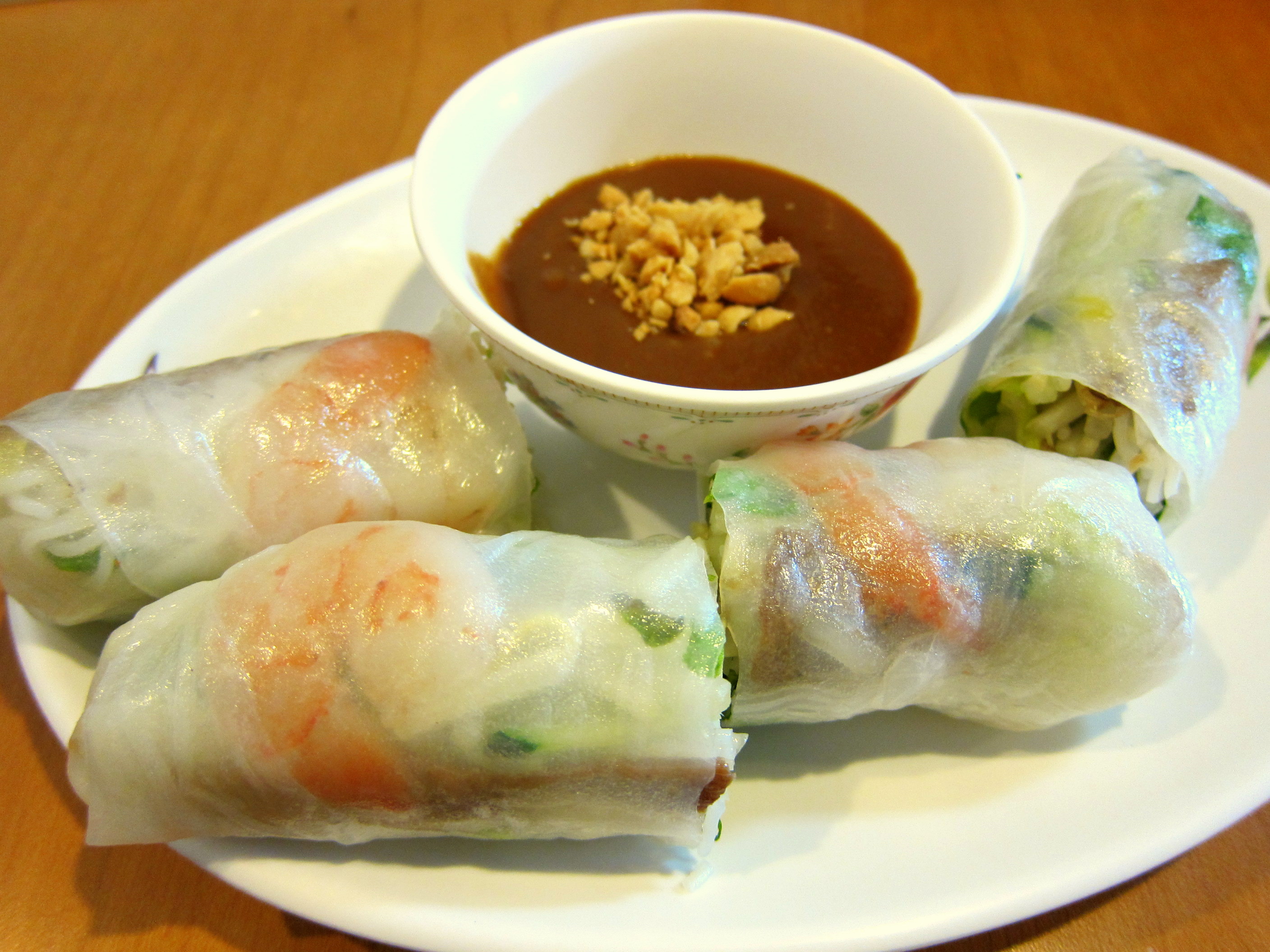
After ordering the inevitables, gỏi cuốn to start and phở chín nạm gầu gân sách (brisket, tendon, tripe) to fill, I followed the usual practice of a lone diner: pull out a book and pretend to read while eavesdropping on my neighbors. However, just barely 3 minutes into opening the book, the summer rolls arrived. Casting aside my literate facade, I started rearranging the roll halves for a good pic when the noodle soup swiftly got placed in the way. They did it fast. That’s how pho should be: you got a pot o’ broth, cooked meat, and blanched noodle ready, an order comes, they all go into a bowl. It shouldn’t take more than one minute. The problem is with me: too little time for a good picture and unable to decide what to eat first. The pho won. The rolls wouldn’t get soggy waiting.

This is one of the best pho I’ve ever had (mom-made pho not included). Deep and subtly sweet broth, chewy noodles, lots of tripe and tendon. A clean aftertaste and a warm broth until the last morsel. Little Mom, a frequent pho craver albeit a picky patron, would like this pho. Why didn’t they struct their business a little closer to campus so that I could come here for lunch? Would they serve blanched beansprout or pickle onion if I ask for it? Next time…

Whenever I ride the bus on Telegraph, I contemplate pulling a stop request for a bowl. Perhaps I’ll go tonight in the name of celebrating Little Mom’s birthday. 😀 We’re Vietnamese, but just to go along with this post’s blending spirit: 생일축하해, 엄마! 🙂


Address: Kang Nam Pho House
4419 Telegraph Ave
Oakland, CA 94609
(510) 985-0900

UPDATE: A 5-second roaming on the ‘net reveals that the Koreans like pho (I’m not surprised, they have plenty of beef based noodle soups) enough to make Korean pho restaurants, and generally Korean pho broths are described as more bland (if disliked) or more clean and fresh (if liked) than Vietnamese pho. For Kang Nam, I side with the latter. Which reinforces the consistency of my pho style. Those who have eaten pho with me often shake their heads at my indifference toward the sauces and the herbs: I don’t put veggies into my pho (not a single leaf), and I don’t adulterate my broth with Sriracha or the black bean sauce. I like my pho pure: beef and noodle. More Korean pho samplings are necessary before I can confirm the difference. When the supernovae start making more sense, the new quest will start. But is this quest possible in the Bay Area?

This post is submitted to Delicious Vietnam #16, August edition, hosted by Chi Anh from Door to My Kitchen.

Touring the Super H Mart food court

May 30, 2011 By: Mai Truong Category: Comfort food, Houston, Korean


This has nothing to do with this post, but I want to say it anyway: I’ve been home for two weeks and Little Mom’s been making sure that everyday I eat breakfast, lunch, dinner, fruits, mid day snacks, late night snacks, and more snacks. “Stock up for the rest of the year cuz you don’t eat at school. I know you,” she says. 😀 I get sleepy if I’m constantly full –> now I’m sleepy all day –> now I can’t blog. On the note of abundance, this post is about 4 kiosks in the food court of the Memorial Super H Mart, where my parents will most likely frequent for a quick tasty lunch after buying the kimchis and the myulchi bokkeum.


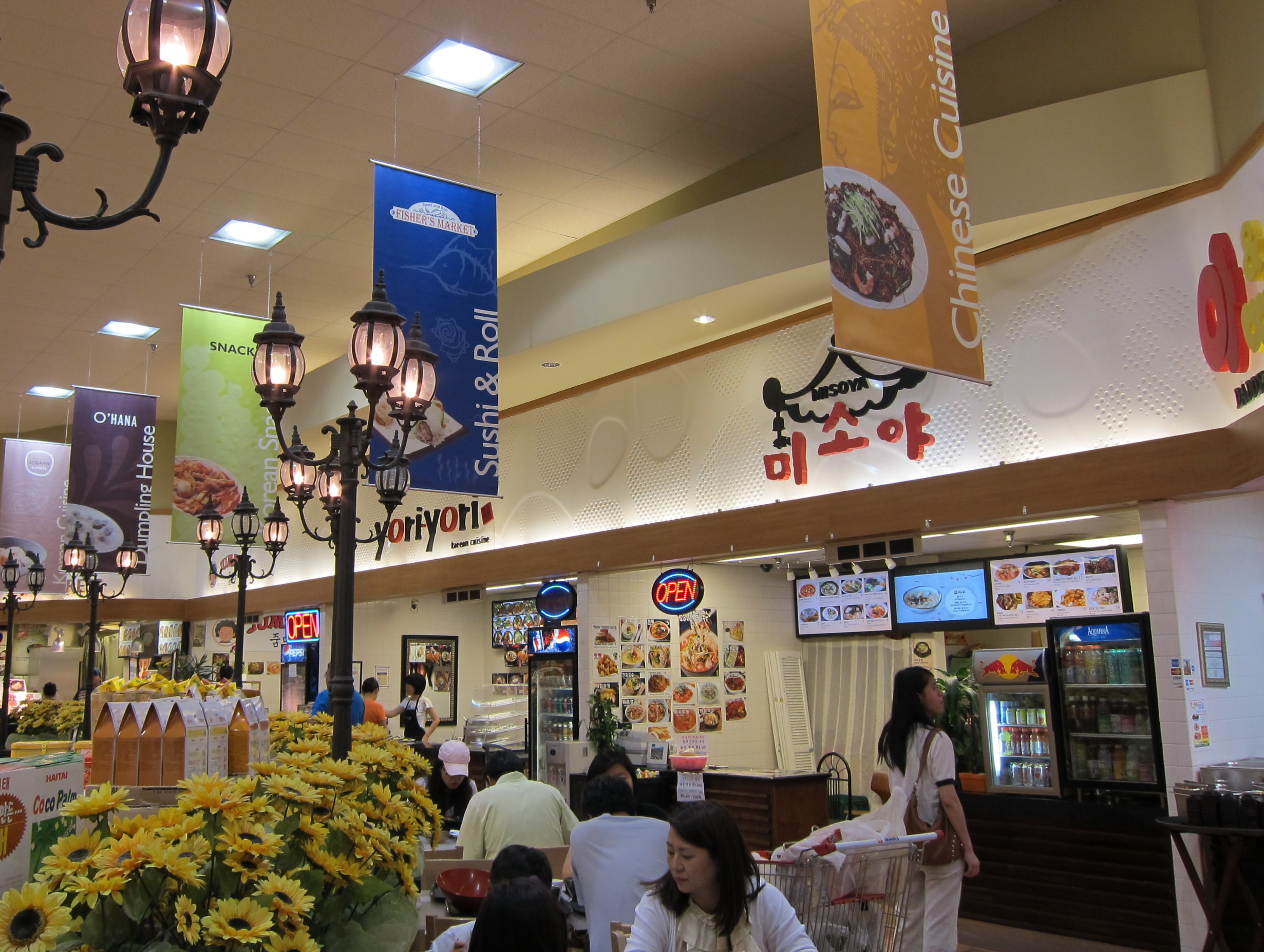
The food court makes a wavy strip at the right end of the store, starting with Tous les Jours at the door and ending with a kiosk selling kimbab (김밥) near the kimchi section far back, the tables sealed from the view of passing shoppers by a strategic row of potato sacks and artificial sunflowers. I didn’t stand long enough in front of each kiosk to read everything cuz I feel bad facing the cashier (and possibly the owner) for too long without ordering, but it appears that almost every menu more or less has the same common Korean dishes (like bibimbap (비빔밥) and galbi tang (갈비탕)). Being in a food court made us feel soup-inclined, kinda like how we opt for phở when we want a quick fill, I guess.


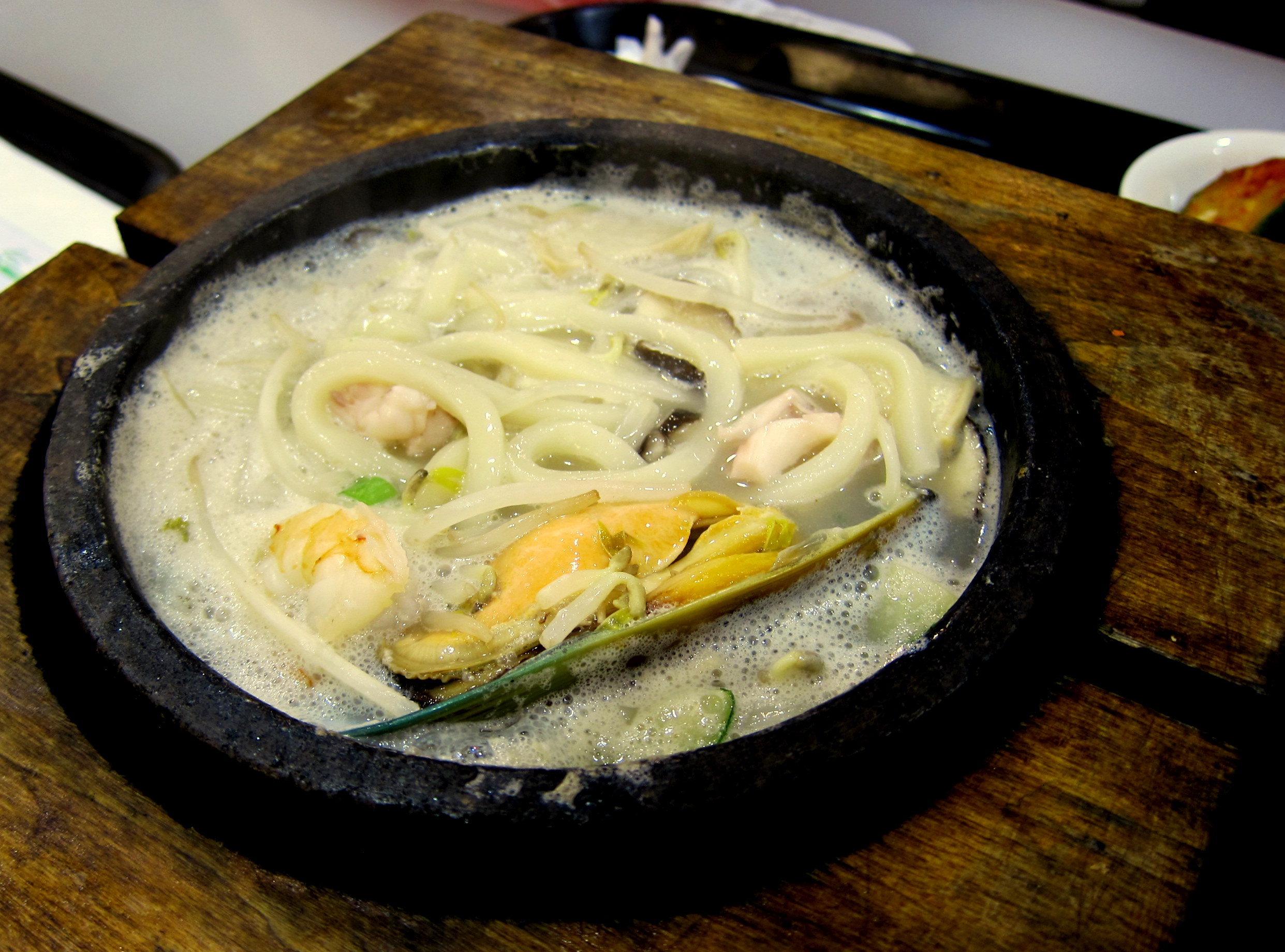
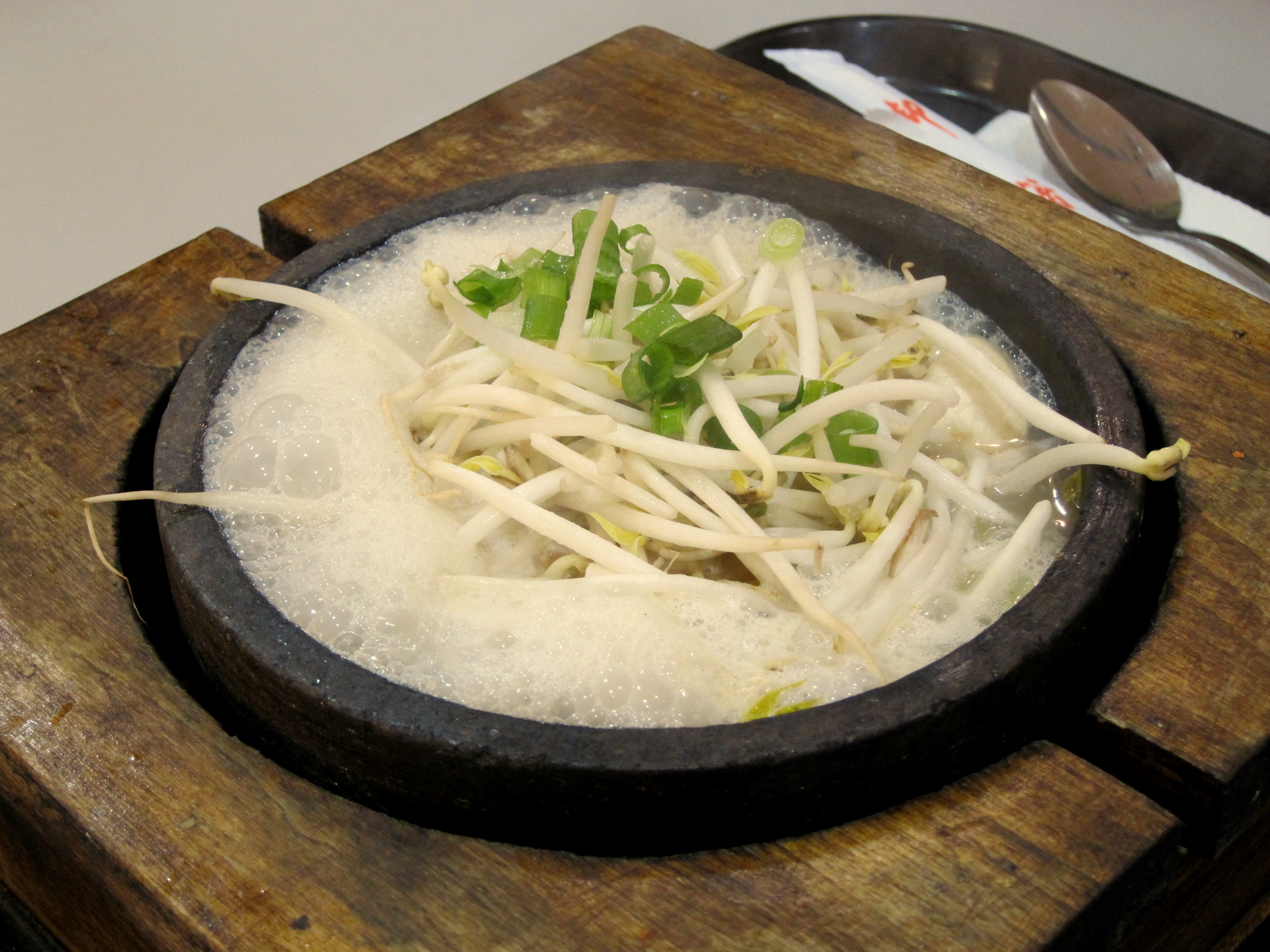
The non-spicy seafood noodle soup (#24, $8.11) from Sobahn Express (also signed as Bibijo(?!)) was ordered next to last but ready first. ‘Tis my first time seeing a stone bowl embedded in a wooden box. The box must have helped containing the heat longer cuz it was at least 20 minutes into eating and Little Mom was still blowing at every bite. It’s a good choice for her cuz she always likes it hot and the seasoning was just right to her taste.


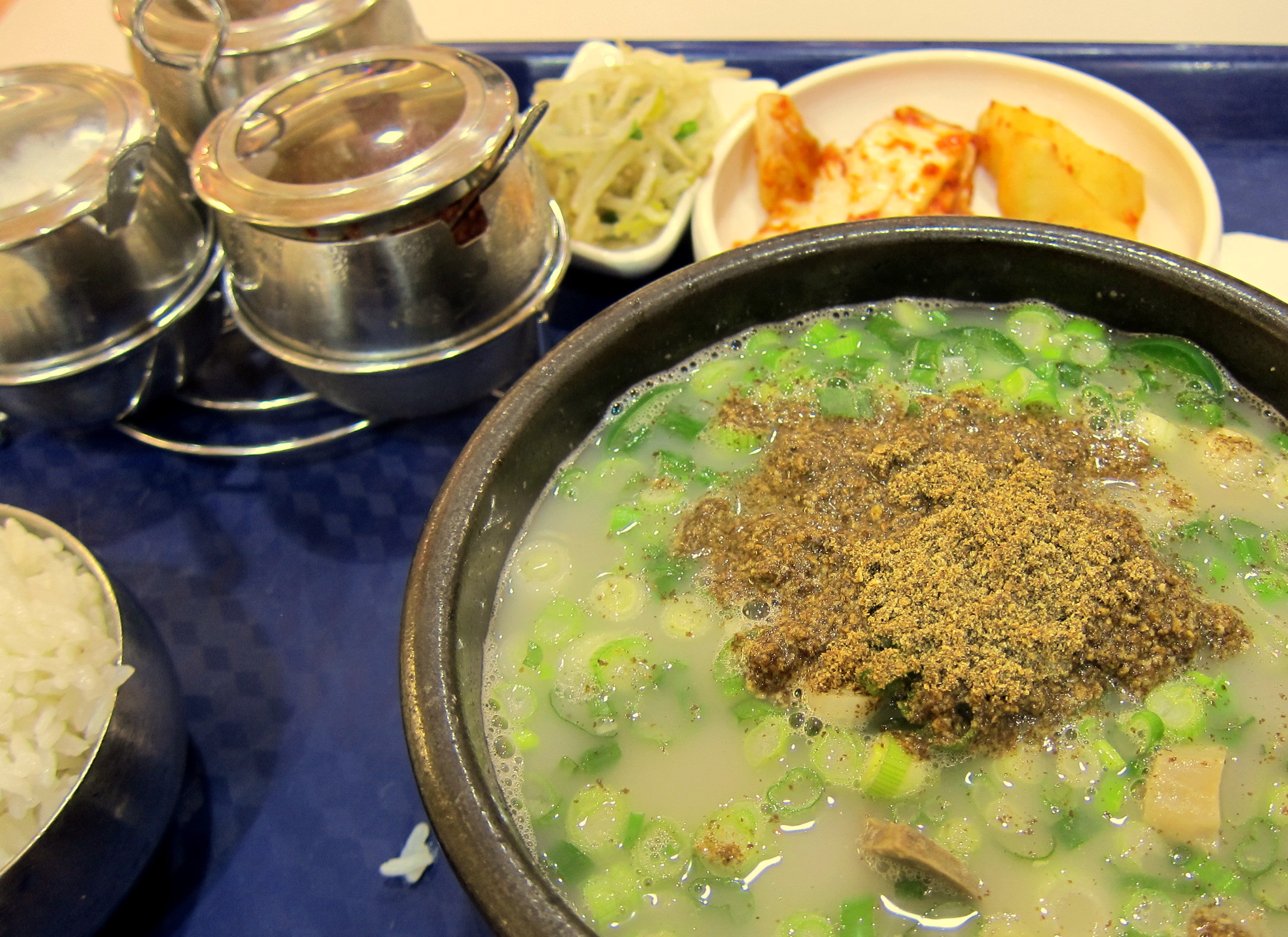
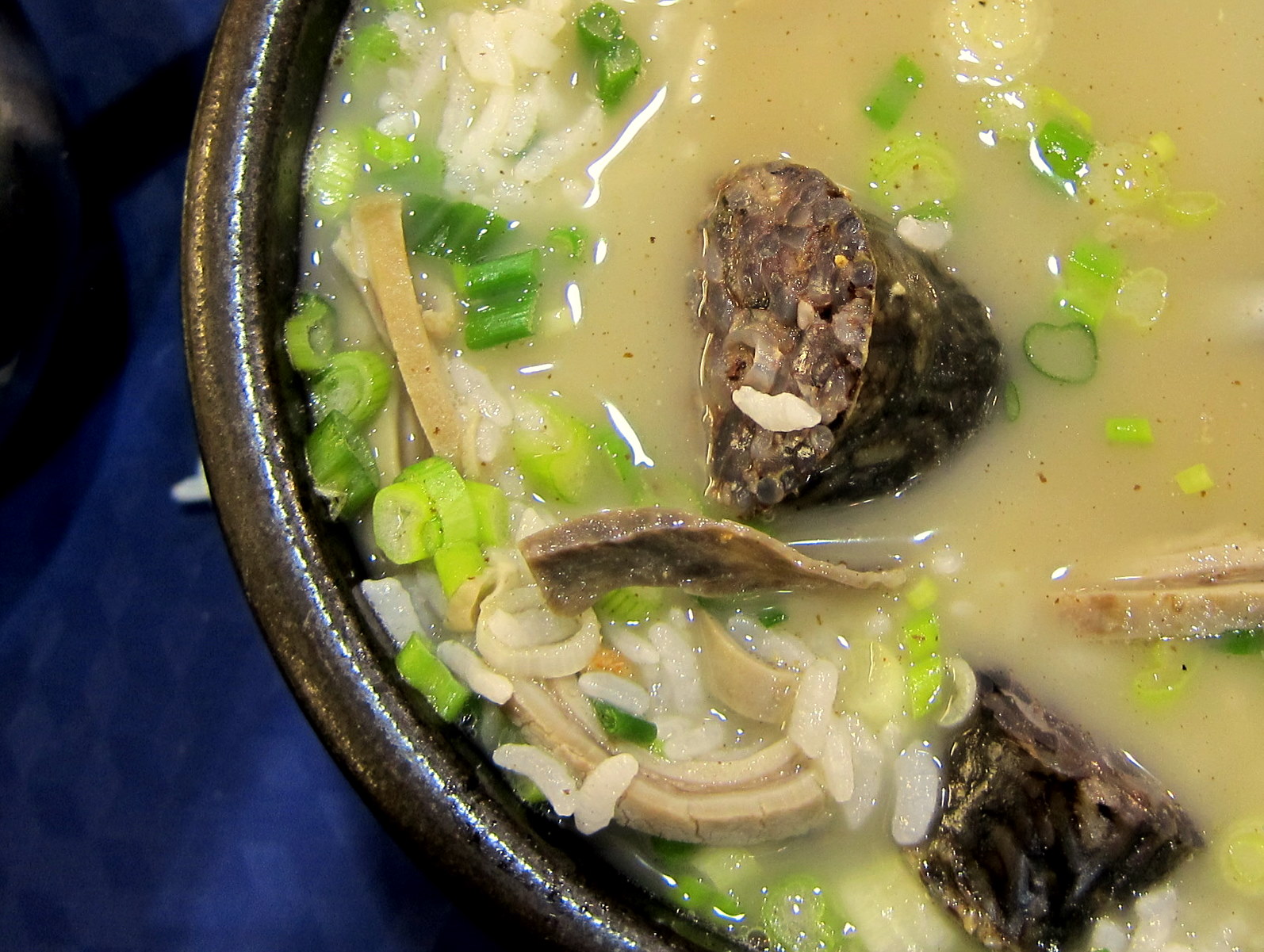
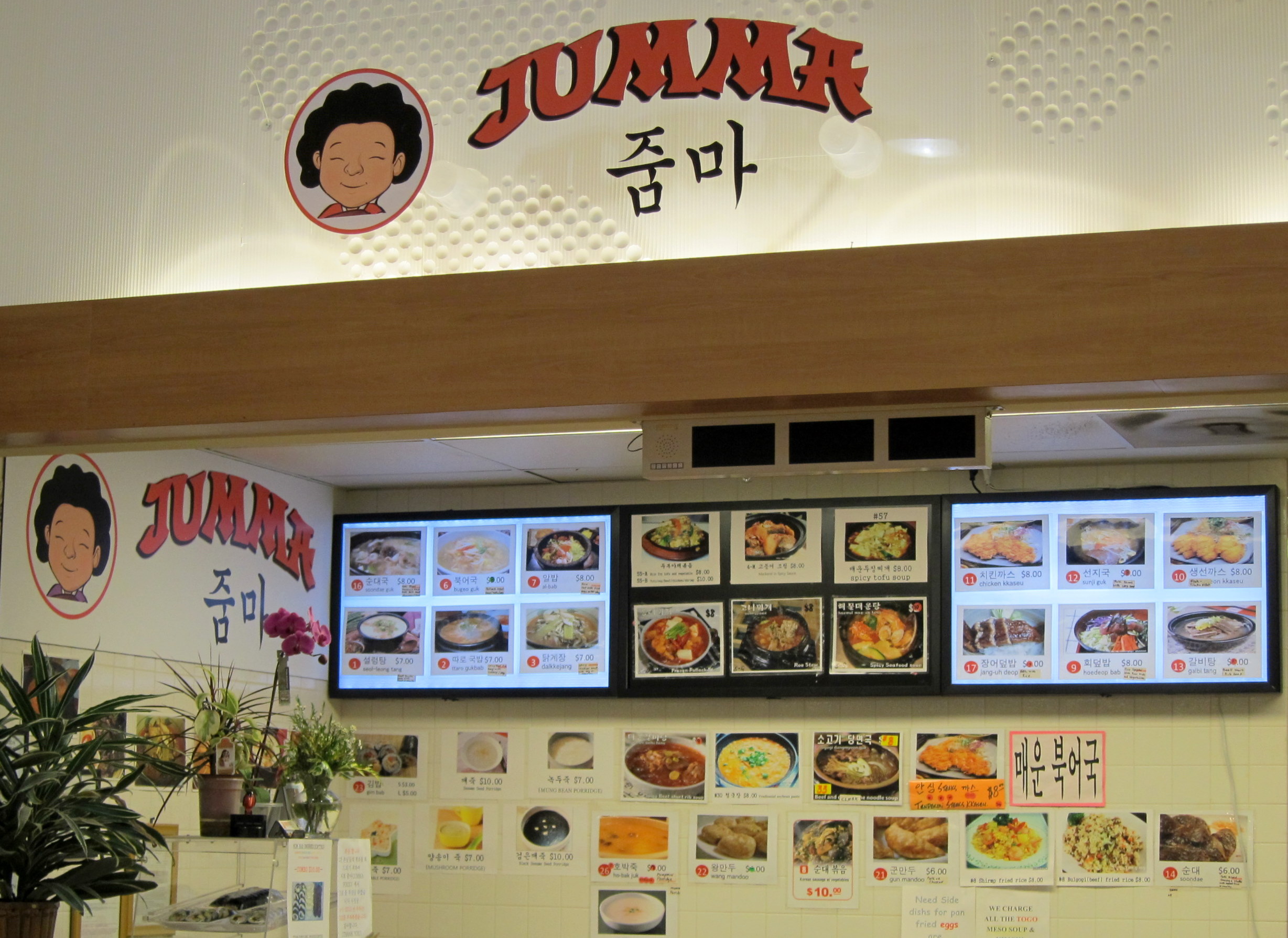
My soondae guk (순대국) ($8.66) from Jumma was ordered last and ready second. It came topped with a hefty scoop of some brown powder that looks like ground pepper and tastes like tea. It has a bland bone stock that tastes like sul lung tang (설렁탕), to which I added a few teaspoons of salt and kimchi juice. There’s no dangmyeon (당면) in the soup like sul lung tang though; I just dumped the rice into the soup. With the pig intestine and liver (yum :-D) in thin slices and the soondae (순대) in chunks, it became sorta like a bowl of Vietnamese cháo lòng (innard porridge), a street nosh for the late night drunks and the market ahjummas.


Close-up of the soondae: blood sausage stuffed with dangmyeon. It’s grainy and pretty bland.


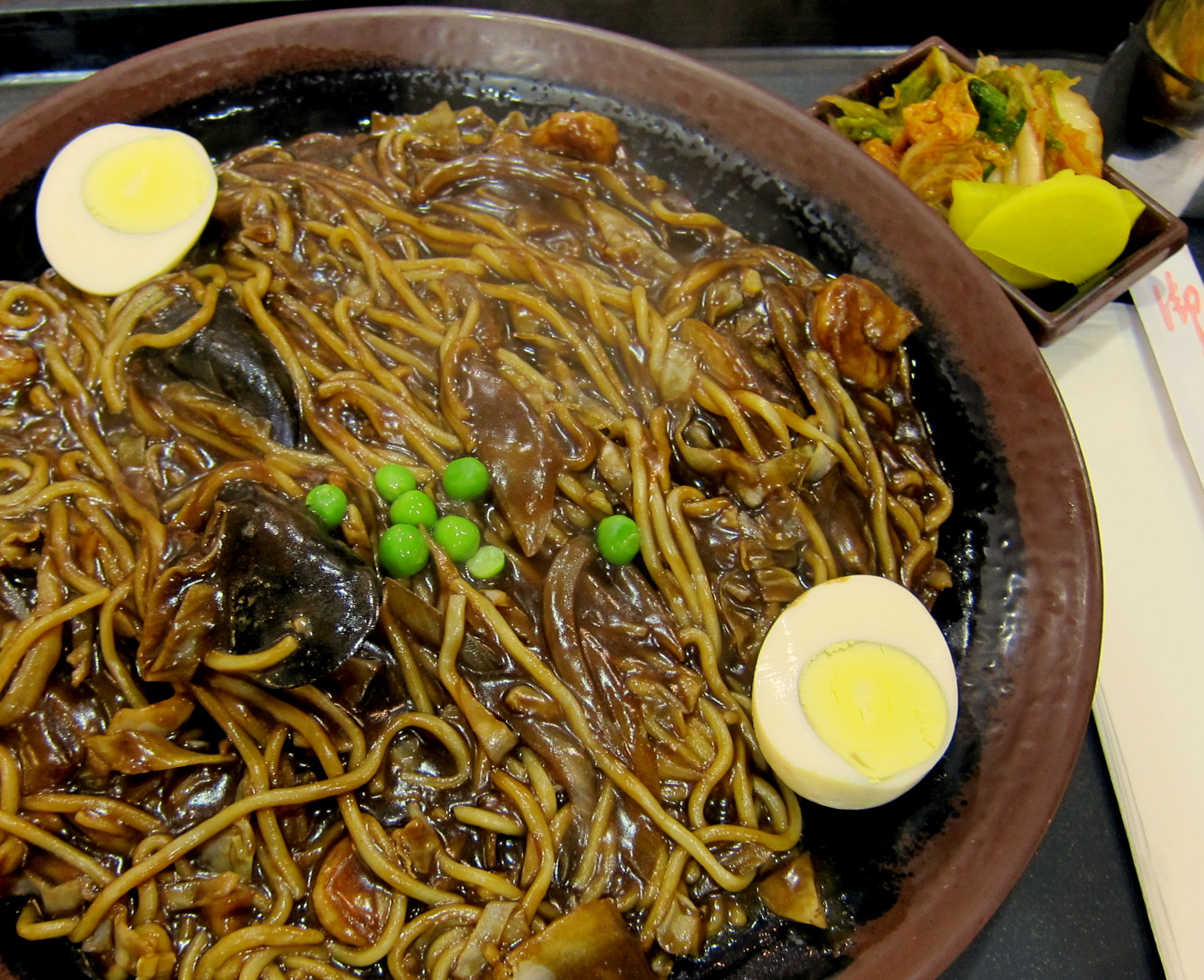
Bi had to wait for his food for so long I thought they forgot him. But the wait was totally worth it, his samsoon jajangmyeon (삼순 자장면) ($12.99) from Daddy & Daughter was the best of the three. The black soybean sauce (jajang (자장)) is sweet and thick but not fatty. Now I know why they make it look so good in dramas: it really is good. Better than chowmein and pad thai. (Once upon a time I idiotically ordered my very first jajangmyeon at a Chinese restaurant whose name I won’t say, it was so boring I had to stop after 3 bites. It goes to say that if you can’t make an ethnic dish as good as or better than the people of that ethnicity, then don’t tarnish its name by making it. Considering that jajangmyeon originates from China, it goes to say that if you can’t make your own ethnic dish as good as or better than the people of another ethnicity, then you might as well stop making it.)


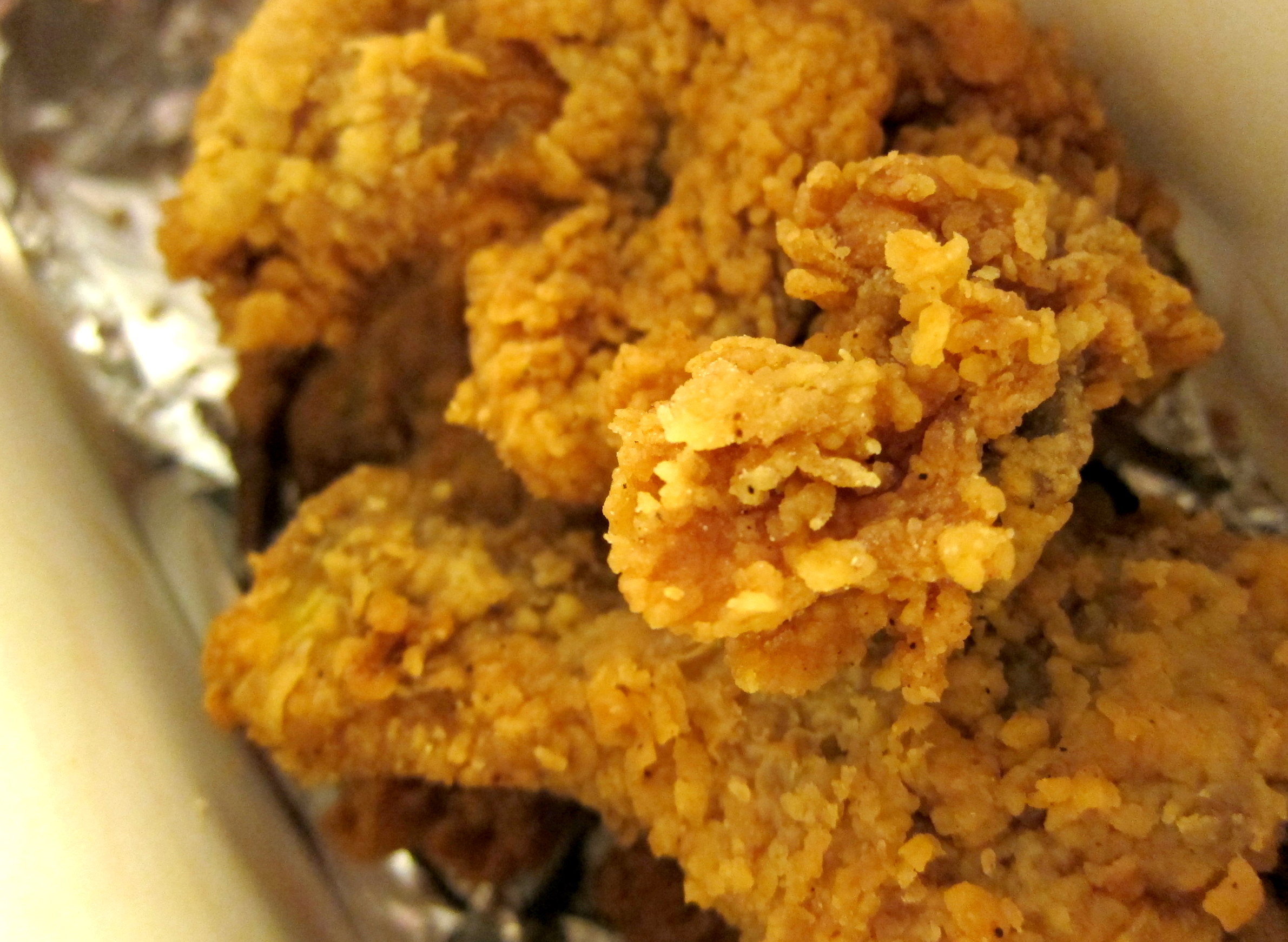
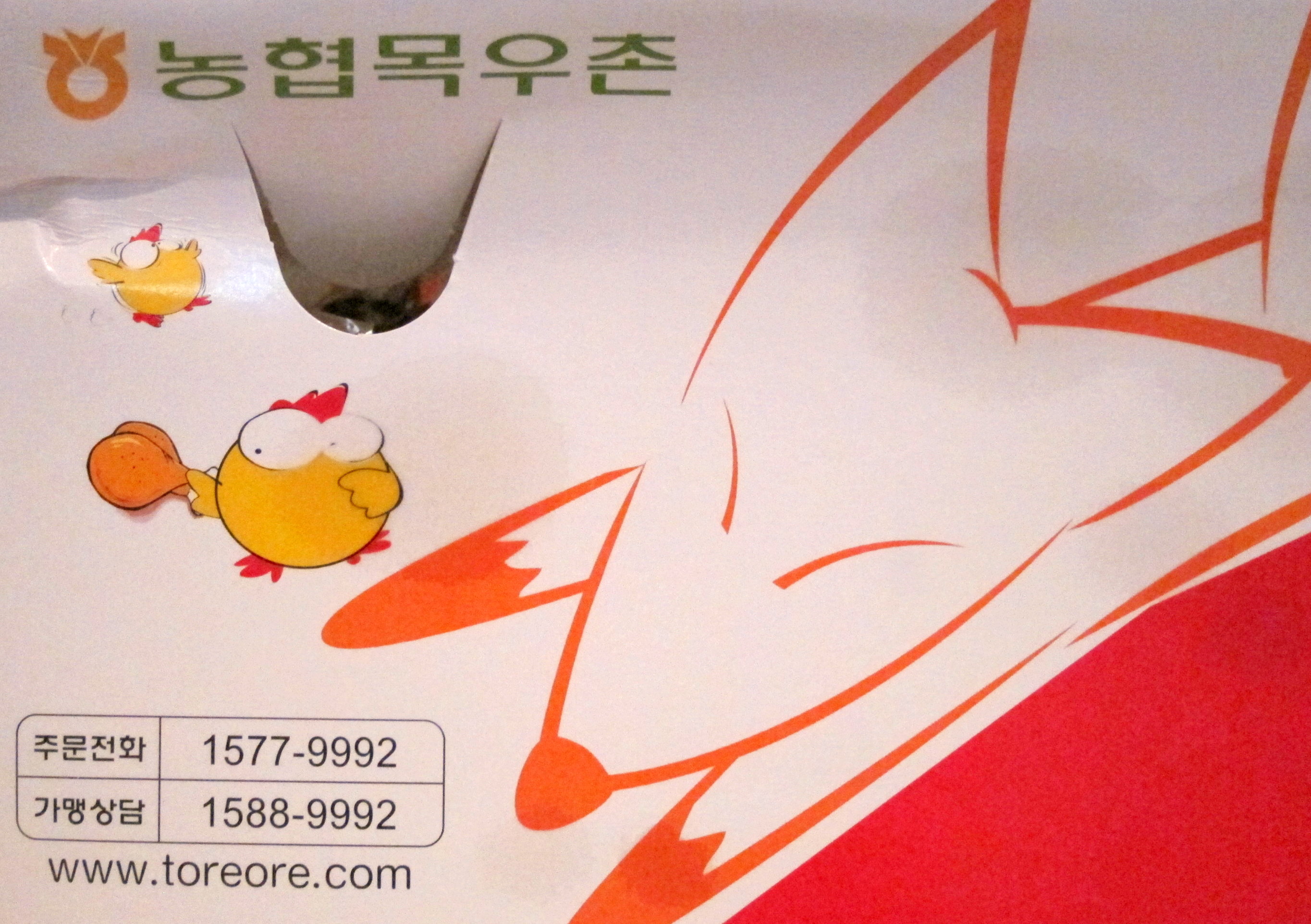
I like places like Toreore: upfront and simple about what they dish out. There are 8-10 choices of fried chicken and you need to decide if you want 7 ($8.65) or 14 pieces, but we always stick to the non-spicy kind and that leaves us one option: garlic soy sauce chicken. It ain’t no OB Chicken Town but sure is better than KFC. Mom liked the sweetness, Bi liked the juiciness, I liked that they liked it.


These Korean fried chickens have cute pictures, too. 😀


The place is crowded with the continuous flow of families and carts pre- and post-shopping but the people are quiet. The tables are not squeaky clean but a quick tissue wiping would do. Foods are served on blue plastic trays and the kimchi isn’t top notch, but you’re not paying 18 bucks a meal. The Super H Mart food court is the best among the food courts I’ve been to in terms of both taste and atmosphere. As Little Mom says, we feel at home because the shoppers here share a similar culture, yet we can also talk comfortably because the neighboring tables don’t share our language.

Address: Super H Mart food court
1302 Blalock Road
Houston, TX 77055

A Haiku in College Station

April 05, 2011 By: Mai Truong Category: Comfort food, Japanese, Korean, noodle soup

Afternoon leaves fall,
family of three gathers
by hot noodle soups.


How d’ya like my first ever haiku, inspired by a linner (lunch/dinner) at Haiku? 😀 5-7-5 syllables (not on, though), with kigo (seasonal reference) and kireji (cutting word) too… You can’t say I didn’t try.
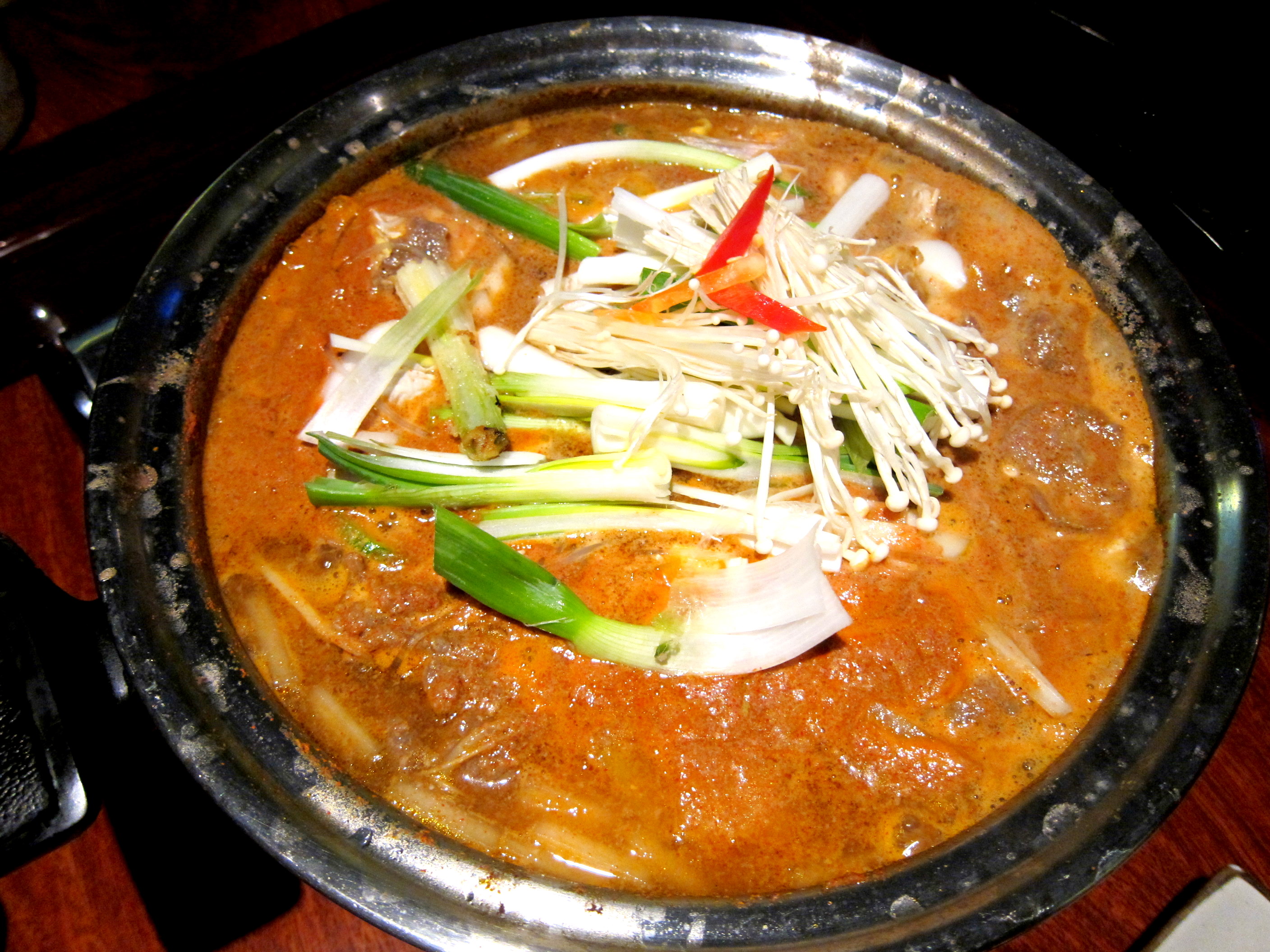

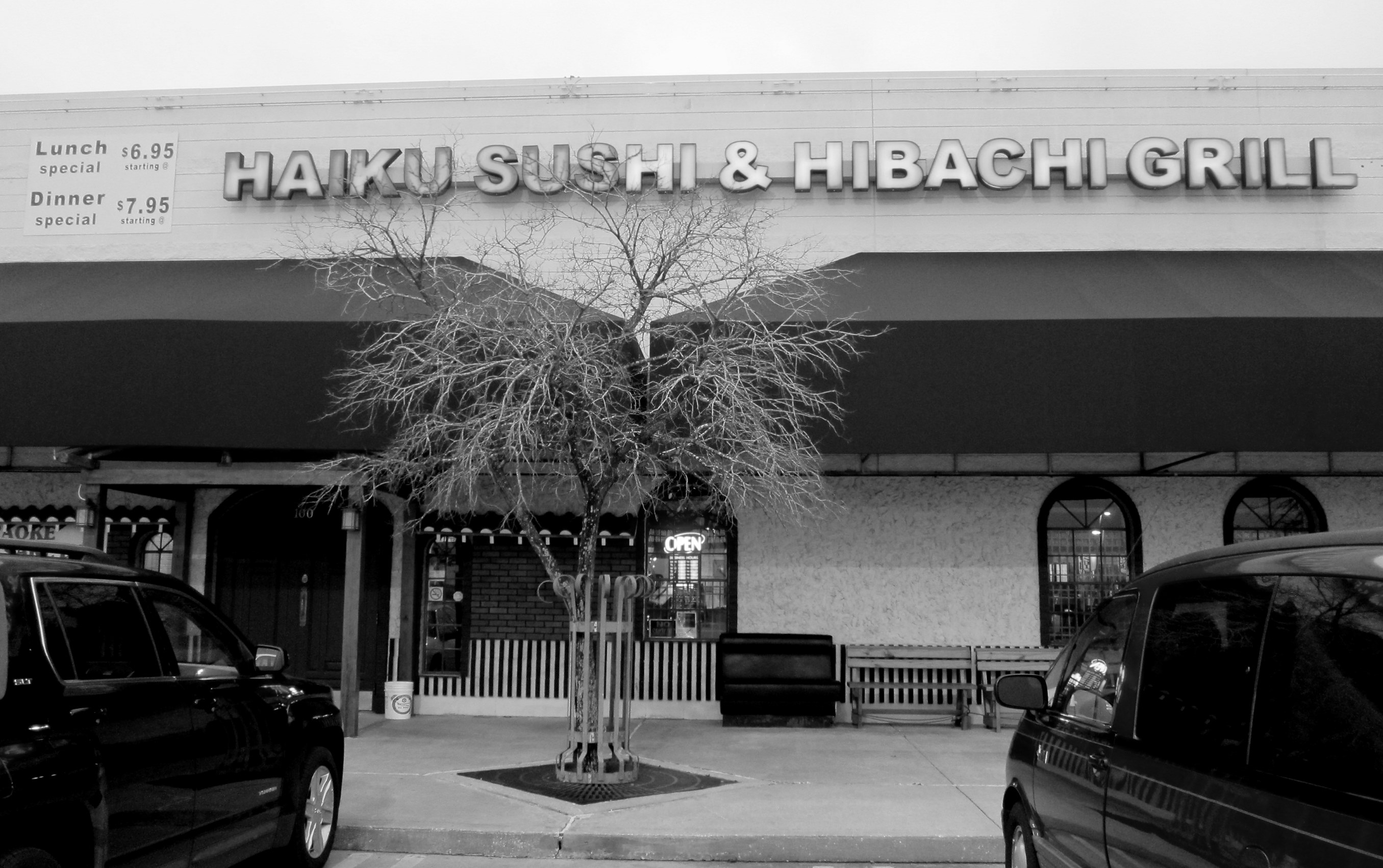
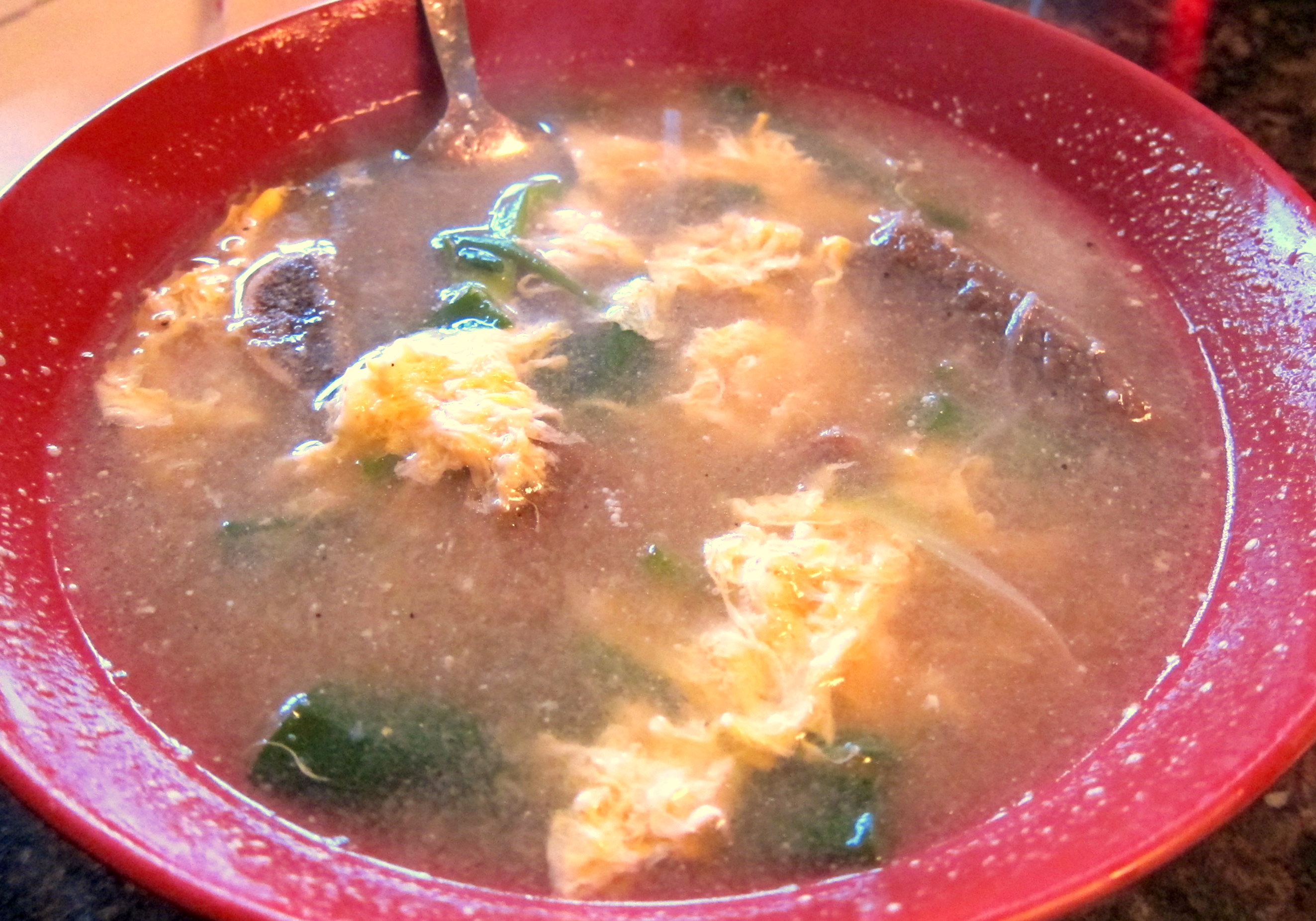
This was the easiest Japanese/Korean restaurant we could get to while driving on University. It’s more Japanese than Korean, evident from the short section of bibimbaps and whutnot among everything sushi. Seeing how this weather cries for soups, Mom decides on some piping kalbi tang (갈비탕). It’s not as oomphing good as the one I had at Bi Won in Santa Clara, just how many Koreans live in College station after all (*), but it sure is satisfying with loads of egg in a beef bone stock.


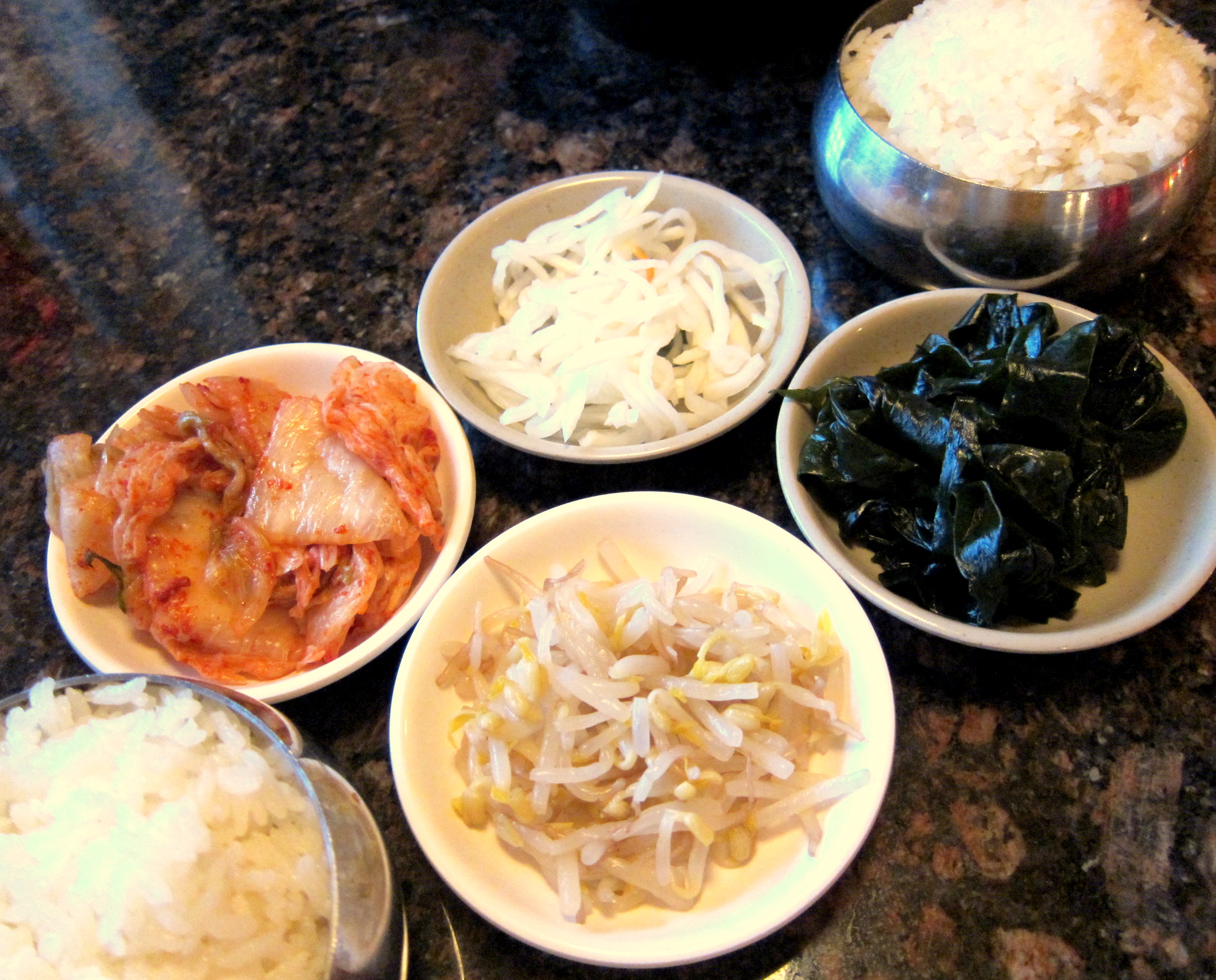
The basic banchan set (clockwise from left): baechu kimchi, shredded kohlrabi, sigeumchi namul (시금치 나물) (blanched spinach), and kongnamul (콩나물) (boiled soybean sprouts). Kimchi and rice go a long way.

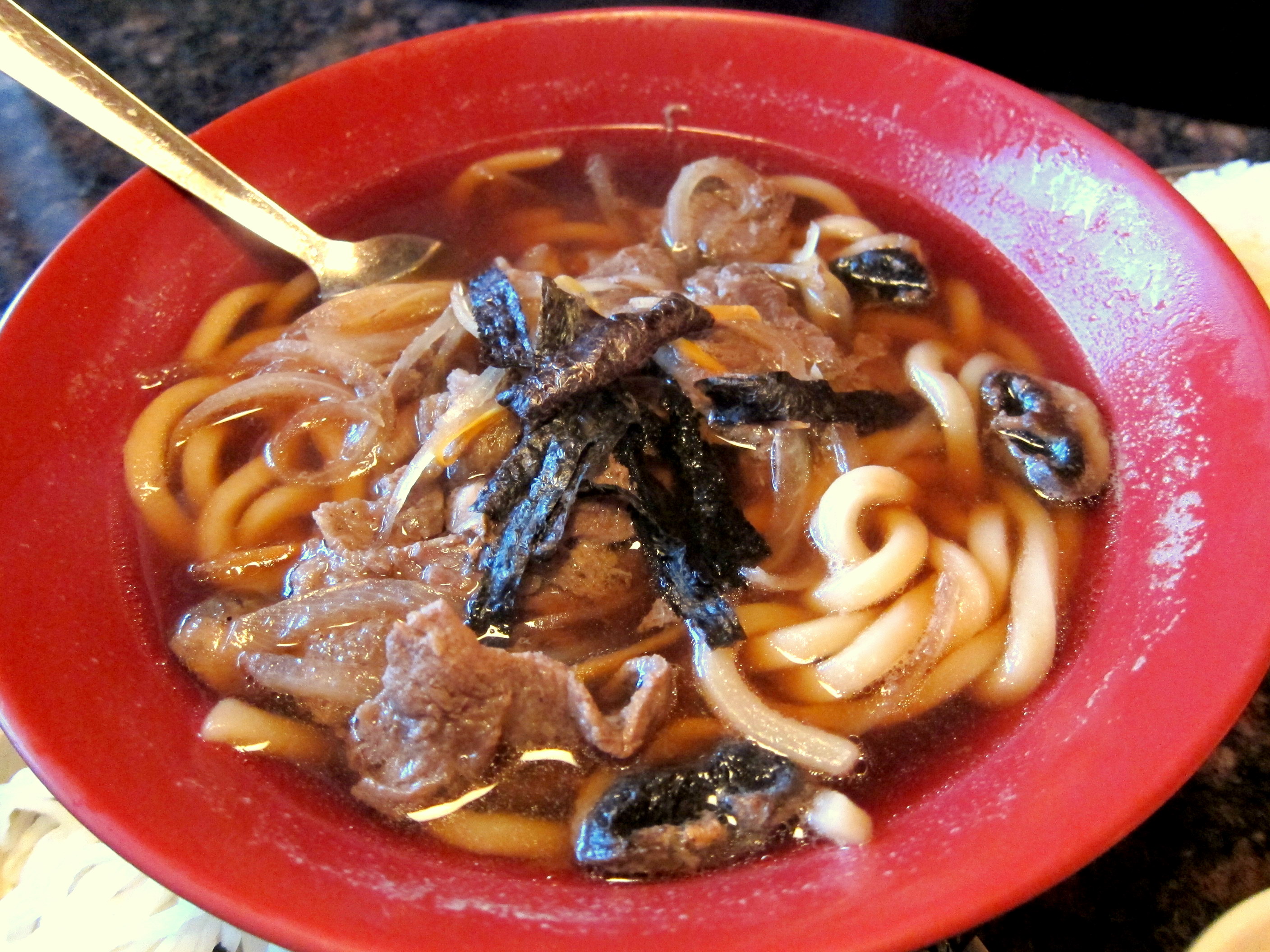
Dad and I side with more noodles than broth. Such as the chubby strings in the beef udon, where short strips of chewy black konbu (dried seaweed) and plump mushroom halves dominate the flavors.


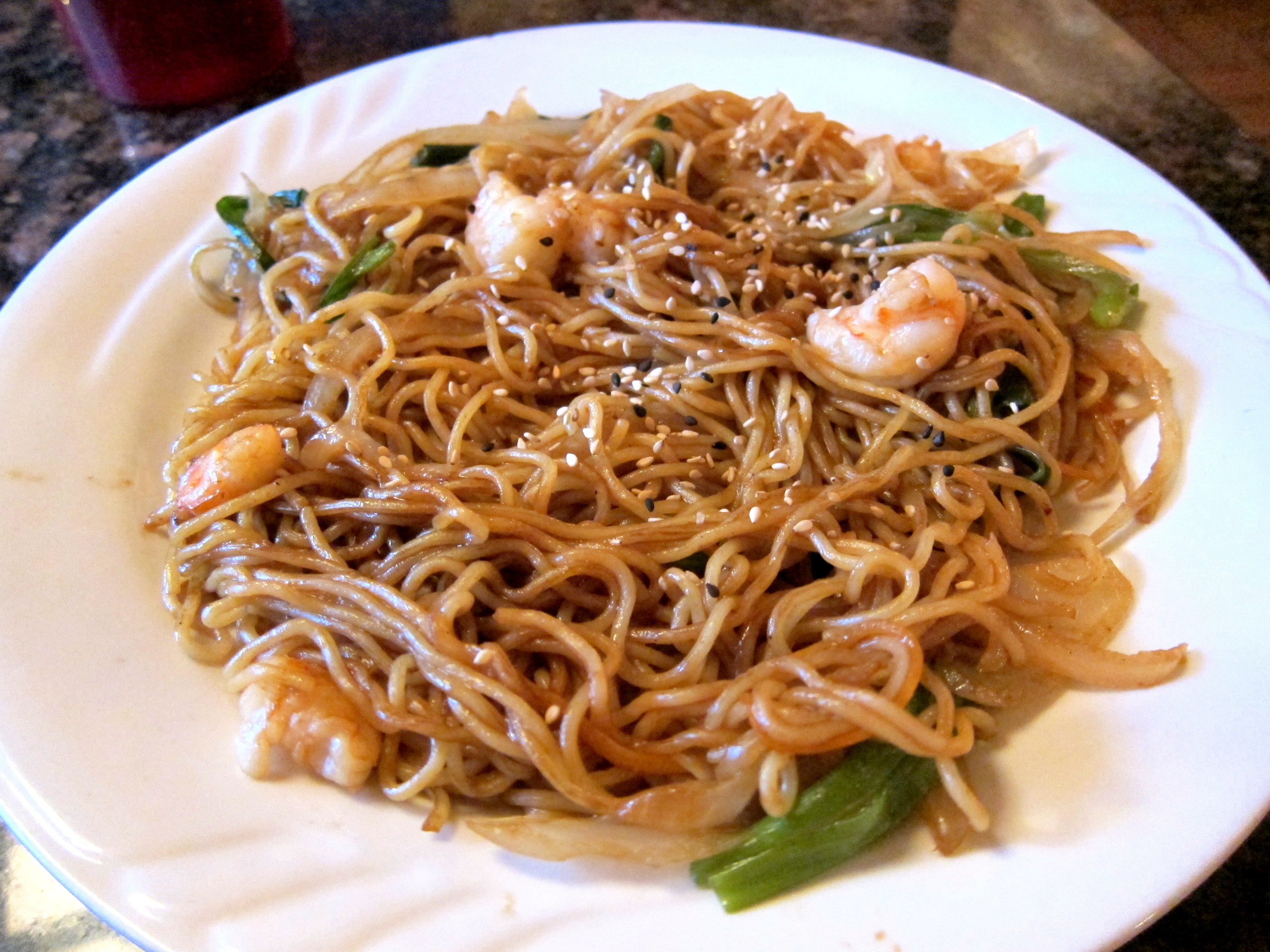
Or the al dente soba noodle stir-fried with shrimps and green onions, where sesame oil and tonkatsu sauce deliver a complete savory affair. Haiku’s yakisoba is as good as any yakisoba I’ve had, but it would have been even better if they’d tossed me double this portion. Maybe triple… I was hungry, ya know…


Address: Haiku Japanese Restaurant
607 E. University Drive, Suite 100
College Station, TX 77840
(979) 846-7900

Shrimp yakisoba: 9.99
Beef udon: 8.95
Kalbi tang: 11.99

Total: $33.48

(*) The answer is 1026, or 1.51% of the city population, according to the 2000 census. For comparison, the Korean population counts 1916, or 1.9% in Berkeley, and 1780, or 0.4% in Oakland, also in 2000.
Interestingly, Vietnamese counts only 274, or 0.4% in College Station, but the ratio of Korean to Vietnamese restaurants is 2:3. It’s awesome that people like pho, but yo Aggies, eat some kimchi and gogi too! Mkay?

Korea Garden on Long Point Road

February 28, 2011 By: Mai Truong Category: Comfort food, Houston, Korean


We were looking for a get-together location on New Year’s Eve, when we decided that since both of our families like Korean food, it’d be good to let Ms Baker try it for the first time too. Houston’s West side houses many a place for a good bulgogi, concentrating on the section of Long Point that’s sandwiched between Gessner and Blalock, but we set our mind on Korea Garden. Half of us had been here several times, and we didn’t want any adventure on Ms Baker’s first impression, she’s a conservative. 🙂


It turned out her very first impression was curiosity: how did they manage to section 7 equal slices of the haemul pajeon (해물 바전)? It was a good jeon, however lay on the soggy side if compared to pancakes at Secret Garden and Casserole House. The banchan selection included some of our favorites: potato, seaweed, and sliced eomuk (어묵), although none appealed to the Americans at the table. The kimchis had quite a bit of chili, though.


So did the dak bokgeum (닭 볶 음 stir-fried chicken) that my dad fell for. That sneaky heat wouldn’t hit you right away.  Only half way through the heap of bird and veggie did he  turn to my mom and me with a tilted smile and a slight head shake: too spicy.


My mom and I knew better than ordering something with a chili pepper sign. So for soups we went. Her a gook bab (국밥 rice and sliced beef in warm beef broth), that was almost too bland.


And me a mandoo gook (만두국 dumpling soup), sweet and delicate but not really a tongue catcher.


The other side of the table ordered their regular bulgogi (불고기) and bulgalbi (불갈비), something that would never go wrong,


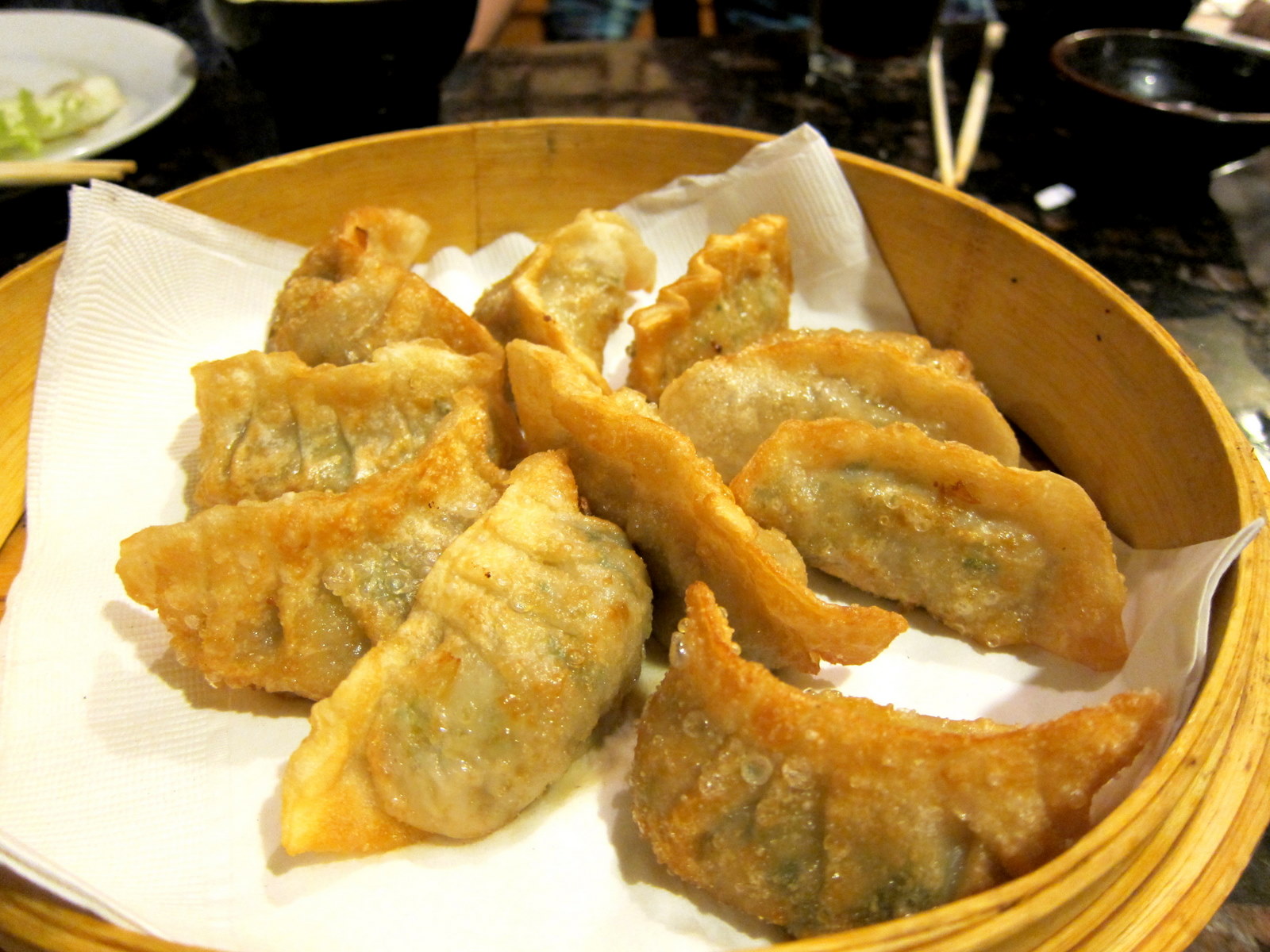
and a side of fried mandoo (만두), which looked irresistibly crunchy.


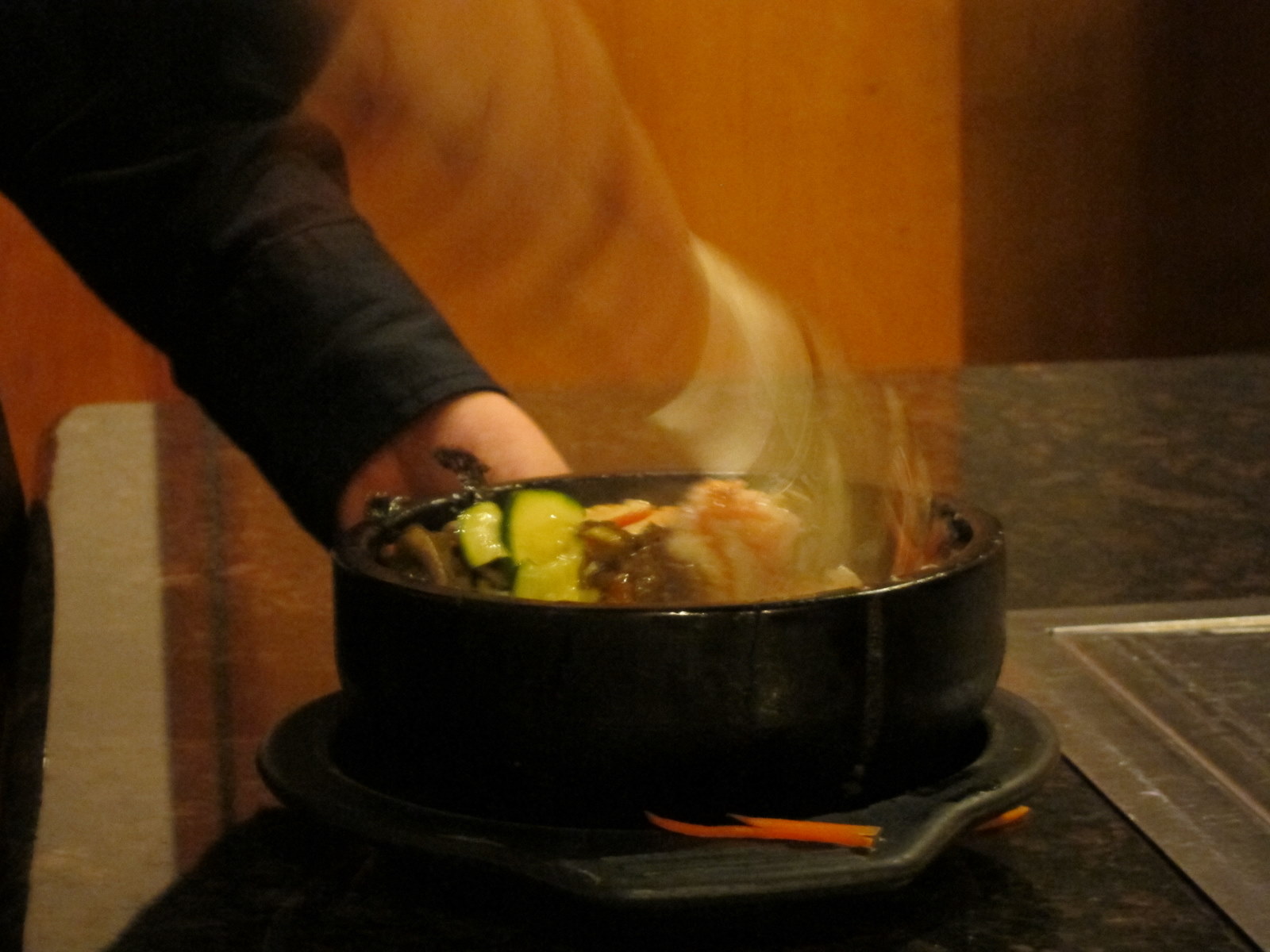
The staff was sweet, like this lady who mixed bibimbap (비빔밥) at amazing speed. Her wrist spun like a cotton candy machine. I don’t know how Ms Baker knew that dolsot bibimbap (돌솥 비뱜밥) is what a first timer should get, of if she knew, but I took it as a good sign that she scooped every last grain of rice.


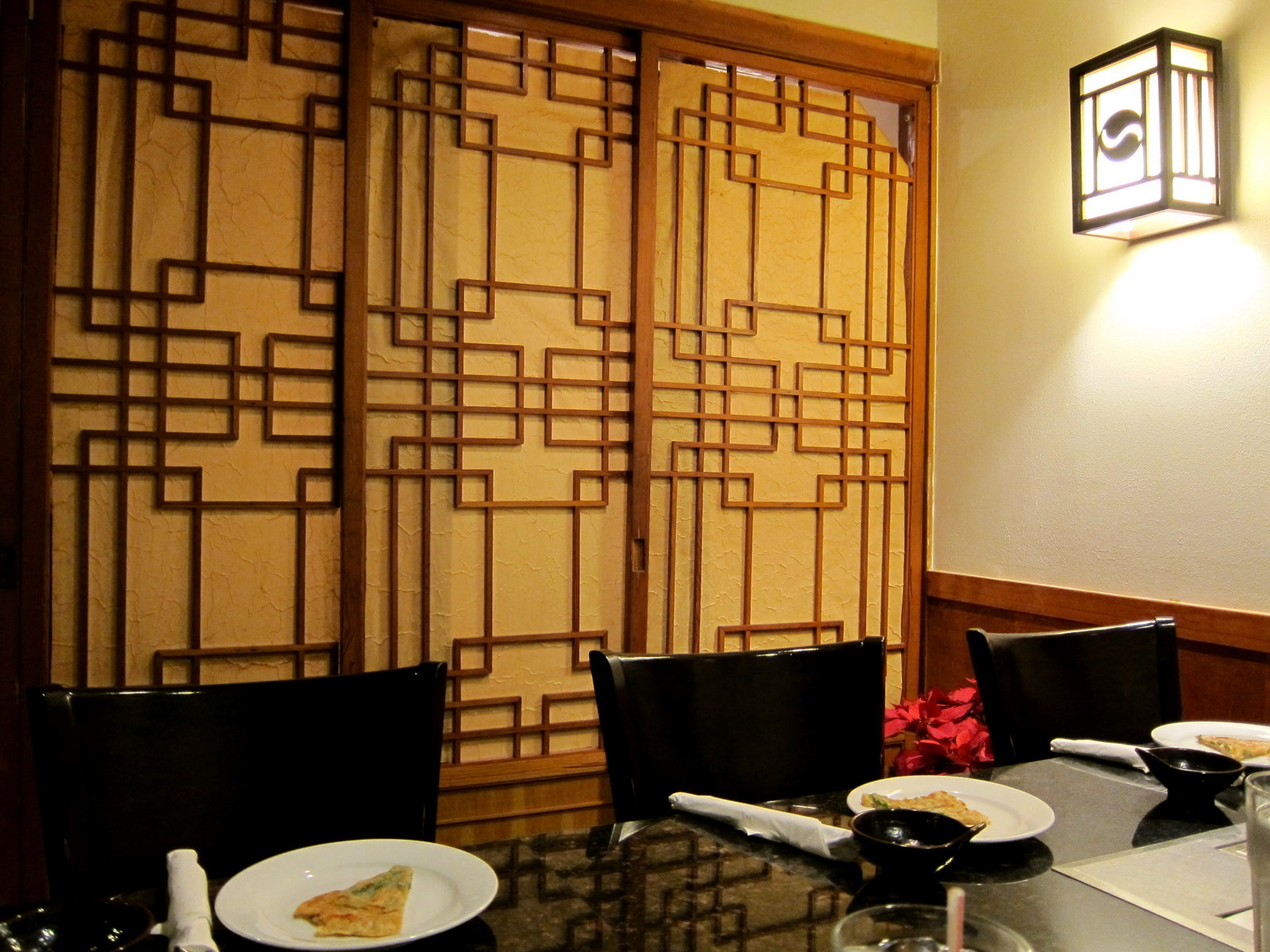
So here we sat in a room sectioned off from the others by shoji screens and chatted from 7:15 to 9:30 about all things from Jerry Brown to TiVo. We must have been the second to last to leave Korea Garden that night. Ms Baker’s first impression of Korean food was heartily filled with laughters. The price was hefty, as most Korean dinners are, but the family bonding between friends is priceless.

Address: Korea Garden Restaurant
9501 Long Point Rd, Ste. Z
Houston, TX 77055
(713) 468-2800
www.koreagardenhouston.com

Dinner for seven: $157.88

Casserole House – Jeongol in Oakland

February 18, 2011 By: Mai Truong Category: California - The Bay Area, Comfort food, Korean


If you’ve had Vietnamese hot pot and liked it, you’d like the Korean hot pot better. If you haven’t had Vietnamese hot pot, try it, and then try jeongol (전골 Korean hot pot), and then you’d like jeongol better. There goes my motherland loyalty, but Vietnam has bánh cuốn and gỏi cuốn, so I’m not too worried.

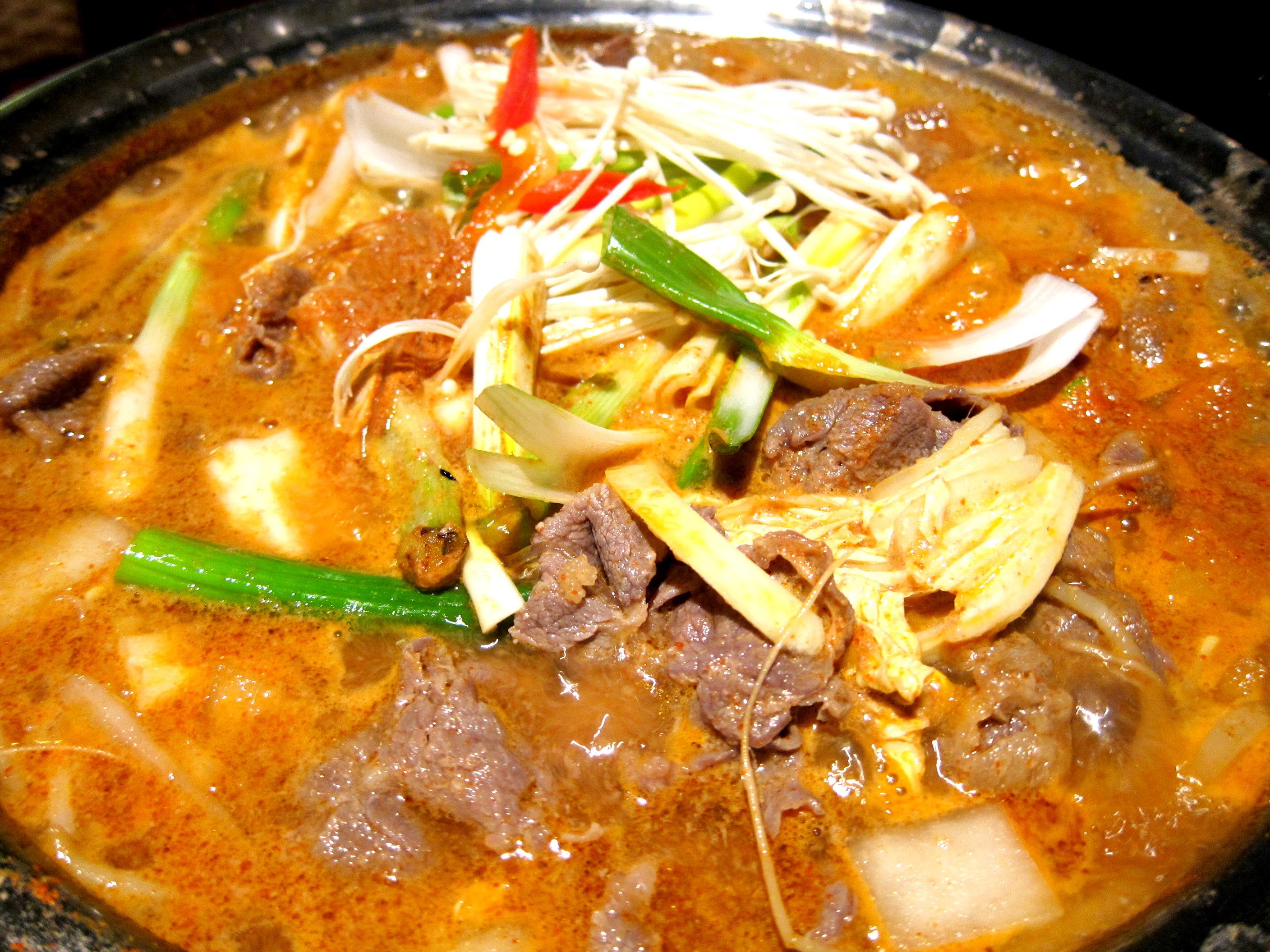
Lots of beef, lots of mushroom, green onion, bean sprout, tofu, cucumber, cabbage all snuggling in a pasty sunny broth. The pot is more like a deep tray on a gas stove, and the bubbling conglomeration is like a spoiled teenager threatening to run away from home. The bulgogi junggol comes to us wild and daring. We ladle right in.


Casserole House has these big bright pictures on the wall of beef, spam, vegetables, and seafood neatly arranged in a round dish or bobbing in broth. The real stuff in action also hides some tteokbokki (떡) for chew and dangmyeon (당면) for engtanglement with the enokitake that just wait to drip the broth between the plates or fling a fortunate dot onto your shirt. I don’t know why they would call jeongol “casserole”, the word brings to mind a square glass dish with crispy-top green beans swearing hot from the oven, which, as yummy as it is at Thanksgiving, is far less exciting than a hot pot. (As a guy said in a Super Bowl ad, “it’s where the action is”.)


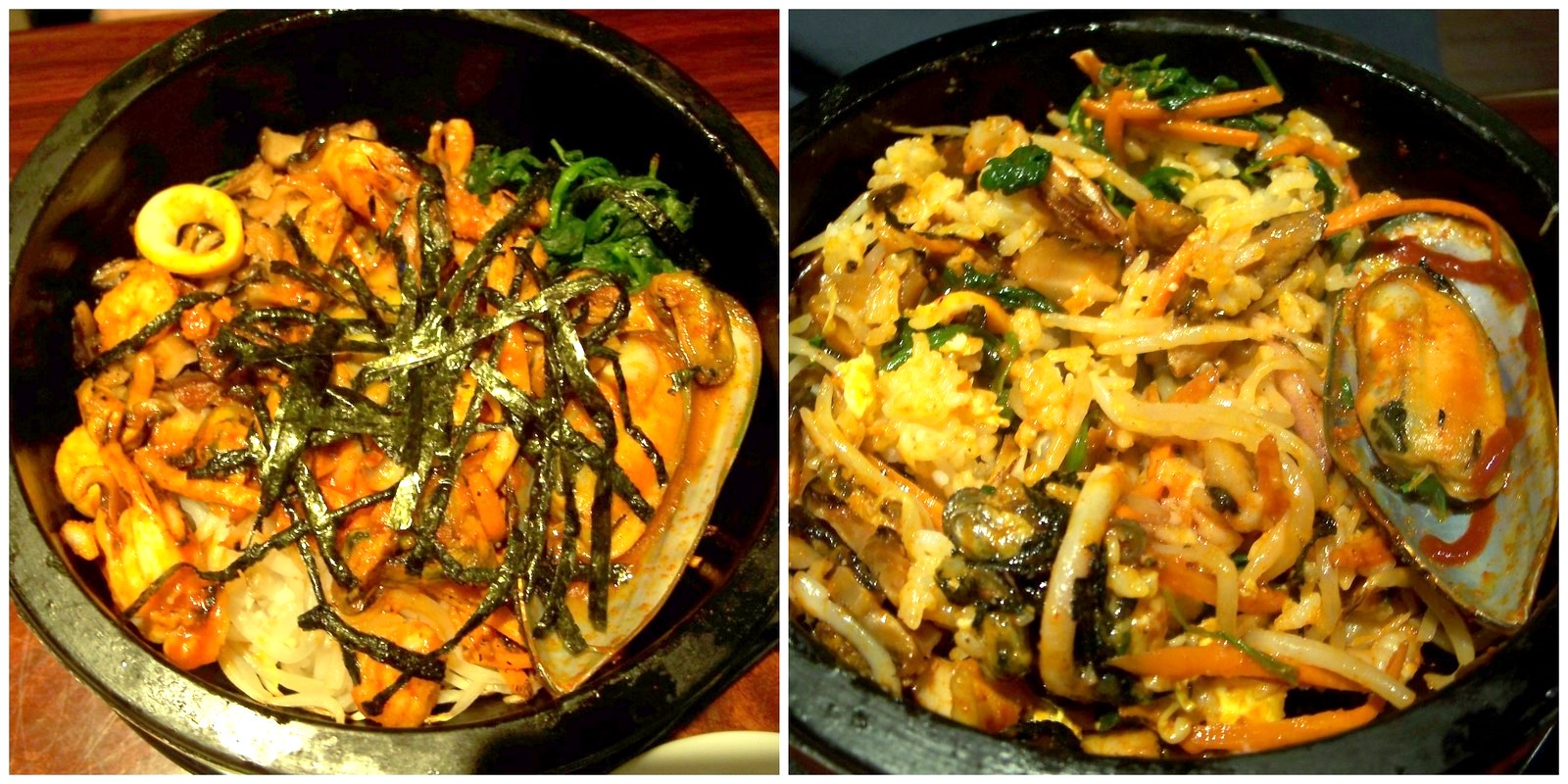
Like true Americans, we didn’t get jeongol the first time we ate at Casserole House. It’s not a mistake per se, because the seafood bibimbap had quite some scrumptious crust and chewy squid for kicks, and if you scan over my favorite post list, you’d know I have a soft spot for pig feet.


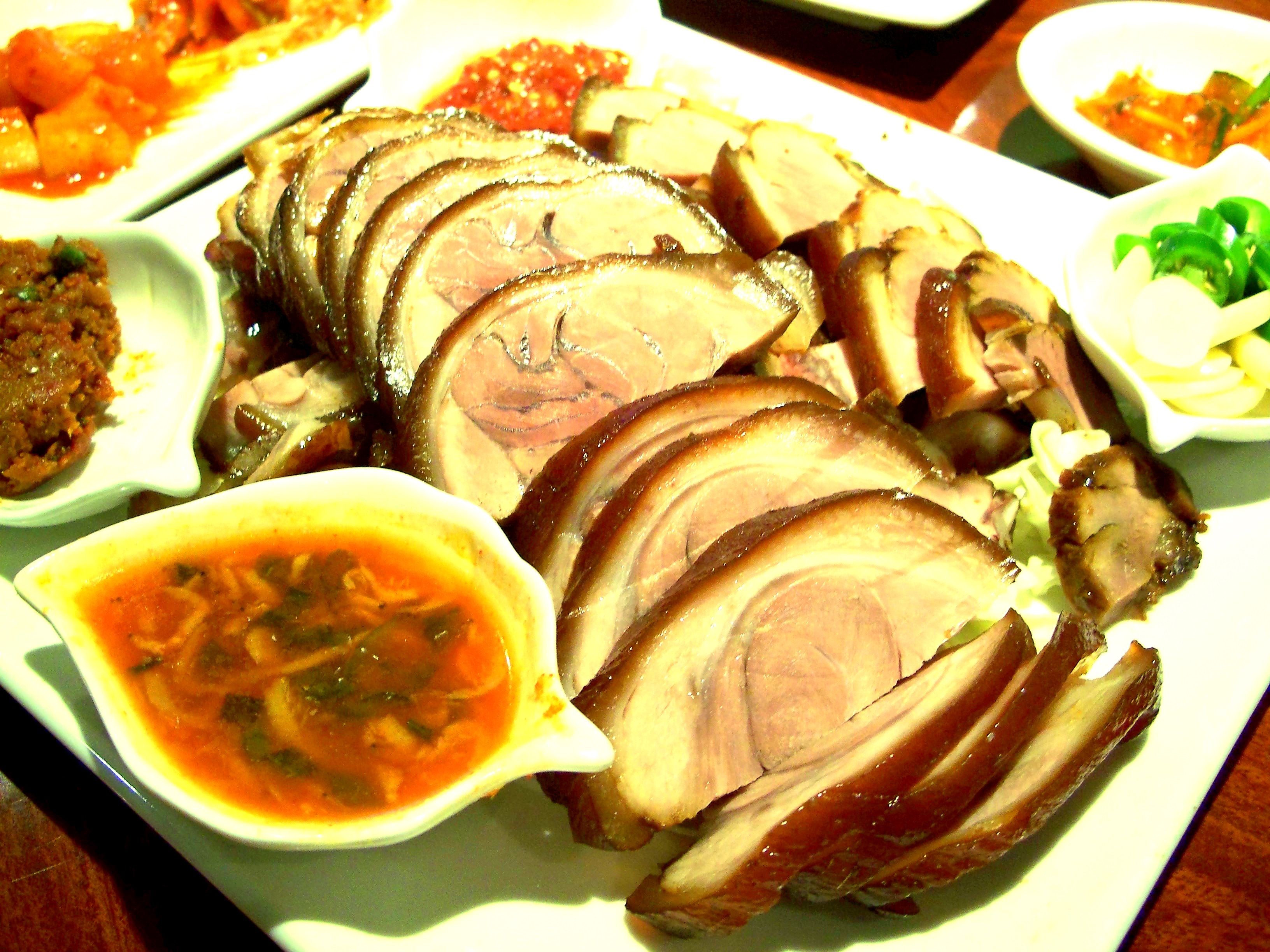
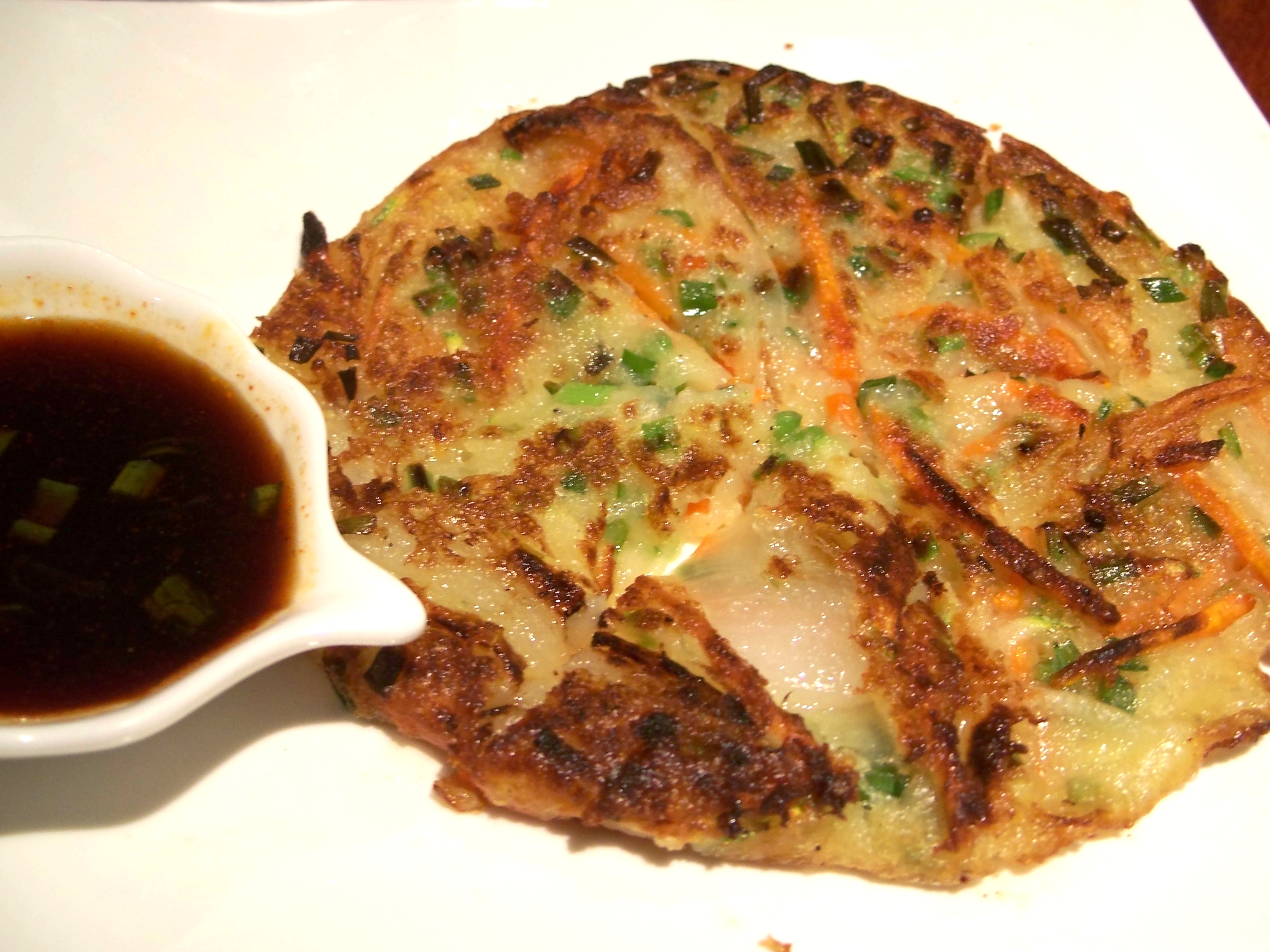
But the pig feet at Casserole House aren’t very soft. Jokbal (족발) is a cross between boiled and roasted, the skin is taut, hardened to nearly a crunch, the meat takes every chance to get stuck in your teeth. I like it. I wrap one or two slices in a lettuce leaf and smear on a chopstick’s tip of doenjang. I lick a taste of saeu jeotkal (새우 젓갈), but objectively speaking, Vietnamese nước chấm is better :-D. And seriously, for $17.95 the plate has enough meat to feed five people, if they also clean out the banchan and order an extra pajeon.


Speaking of money, I haven’t seen jokbal on any other menu, so it’s a must-get here. But there are three reasons to get out of the bibimbap comfort zone and get the jeongol while you’re at Casserole House: 1. it’s in the name, 2. despite it costing a scary $29.95 each scary pot, it’s enough for 3-4 people to share, 3. it’s metal-chopstick-licking good.


And when you’re there next year on Jan 22-25, make sure you wish the ladies a happy new year. They’re sweet, like the sikhye (식혜) they give us for dessert. I drank Mudpie’s cup, too.

Address: Casserole House (right next to Sahn Maru)
4301 Telegraph Ave
(between 43rd St & 44th St)
Oakland, CA 94609

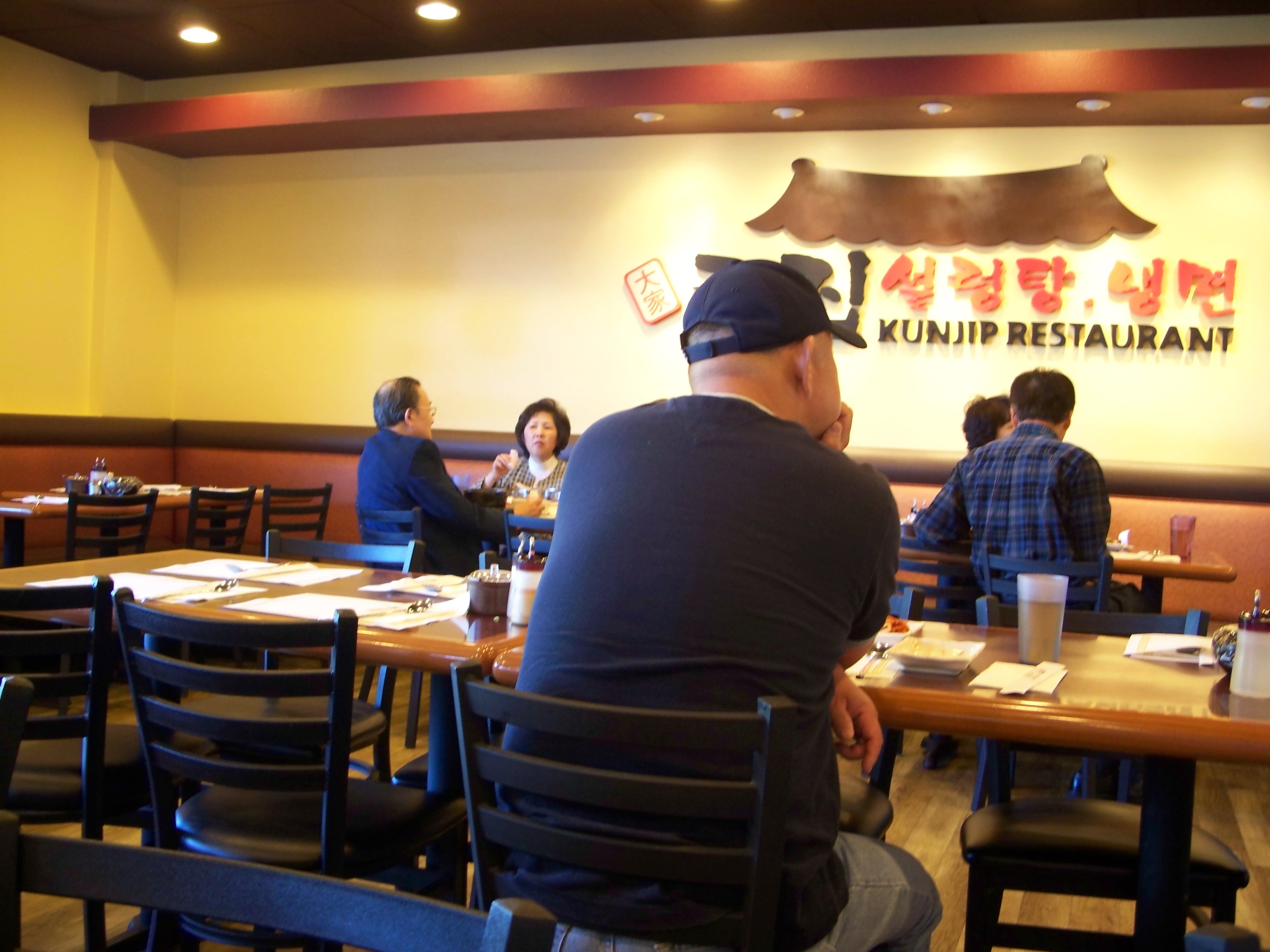
Sul Lung Tang at Kunjib Restaurant

November 26, 2010 By: Mai Truong Category: California - The Bay Area, Korean, noodle soup


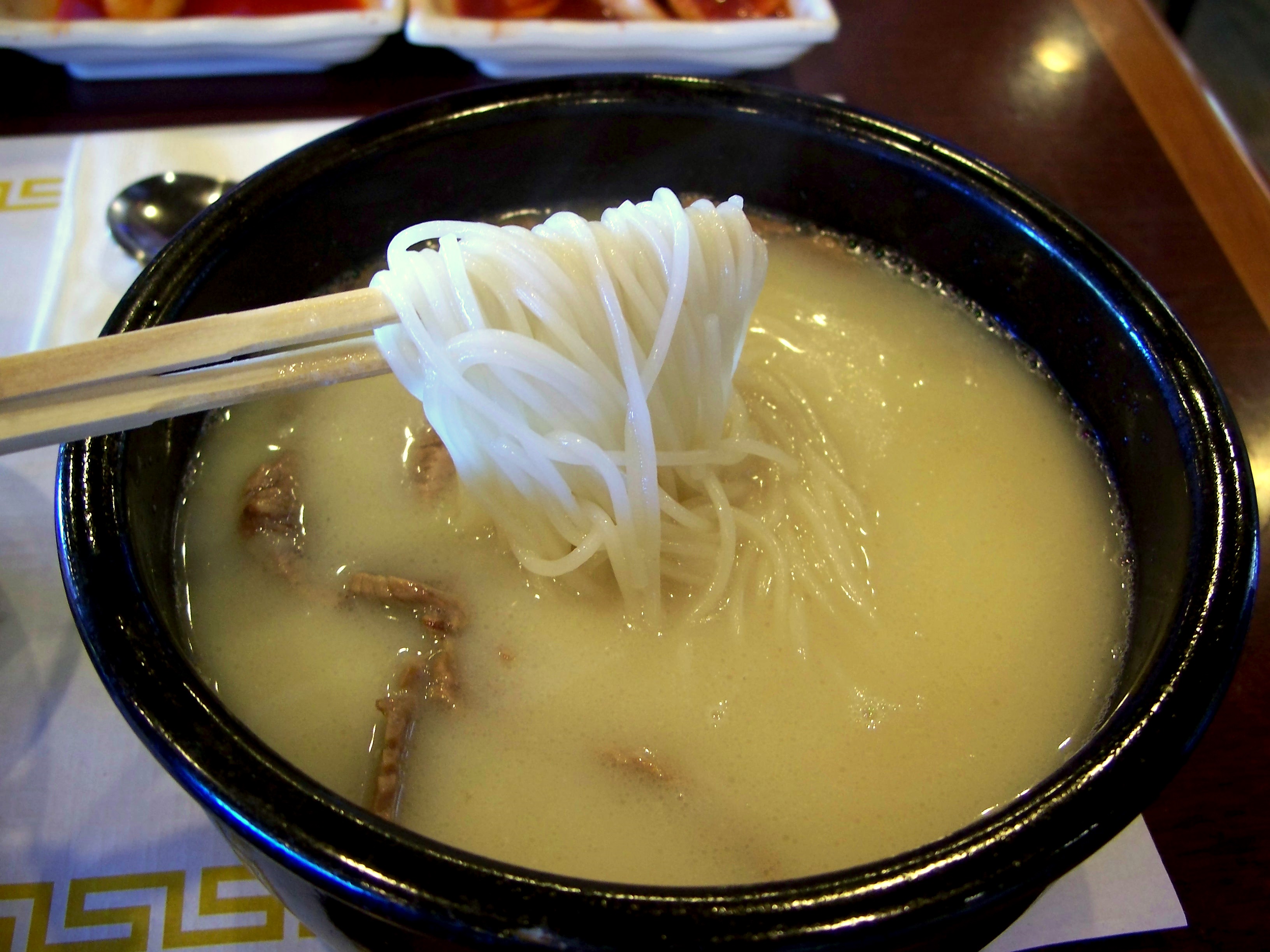
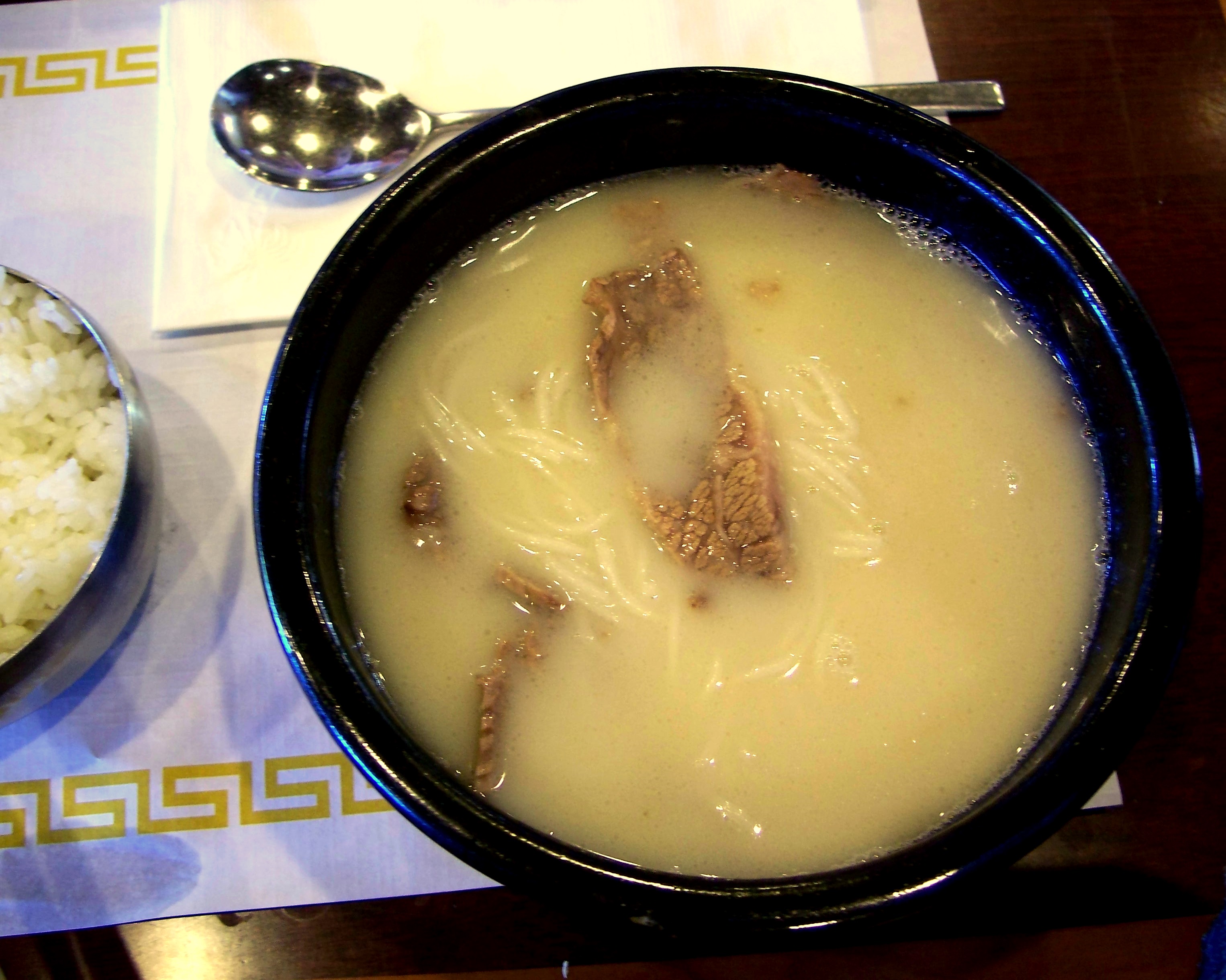
The black stone bowl brought out, fuming. The milky ivory broth pulses inside, playfully revealing strips of browned beef. Dig a little deeper, my chopsticks find supple strands of white, thin as spaghetti and slick as bubble tea. I submerge the metal spoon into the liquid, the cream parts and congeals. I take a sip.

A few months ago a friend recommended Kunjib as a Korean restaurant unlike any I had been to, and indeed it is. The moment we walk in, the hostesses greet us with twittering an nyong ha sye yo and something that I can only guess to mean “table for two, right?”. I wish I had memorized the phrase list from Sura before coming here, but our waitress quickly realizes that we are different from their other customers and switches to near perfect English. Regardless, I’ll sign up for Korean 1 in the fall semester, I’ve already gotten the Hangul alphabet sorta down. 😉


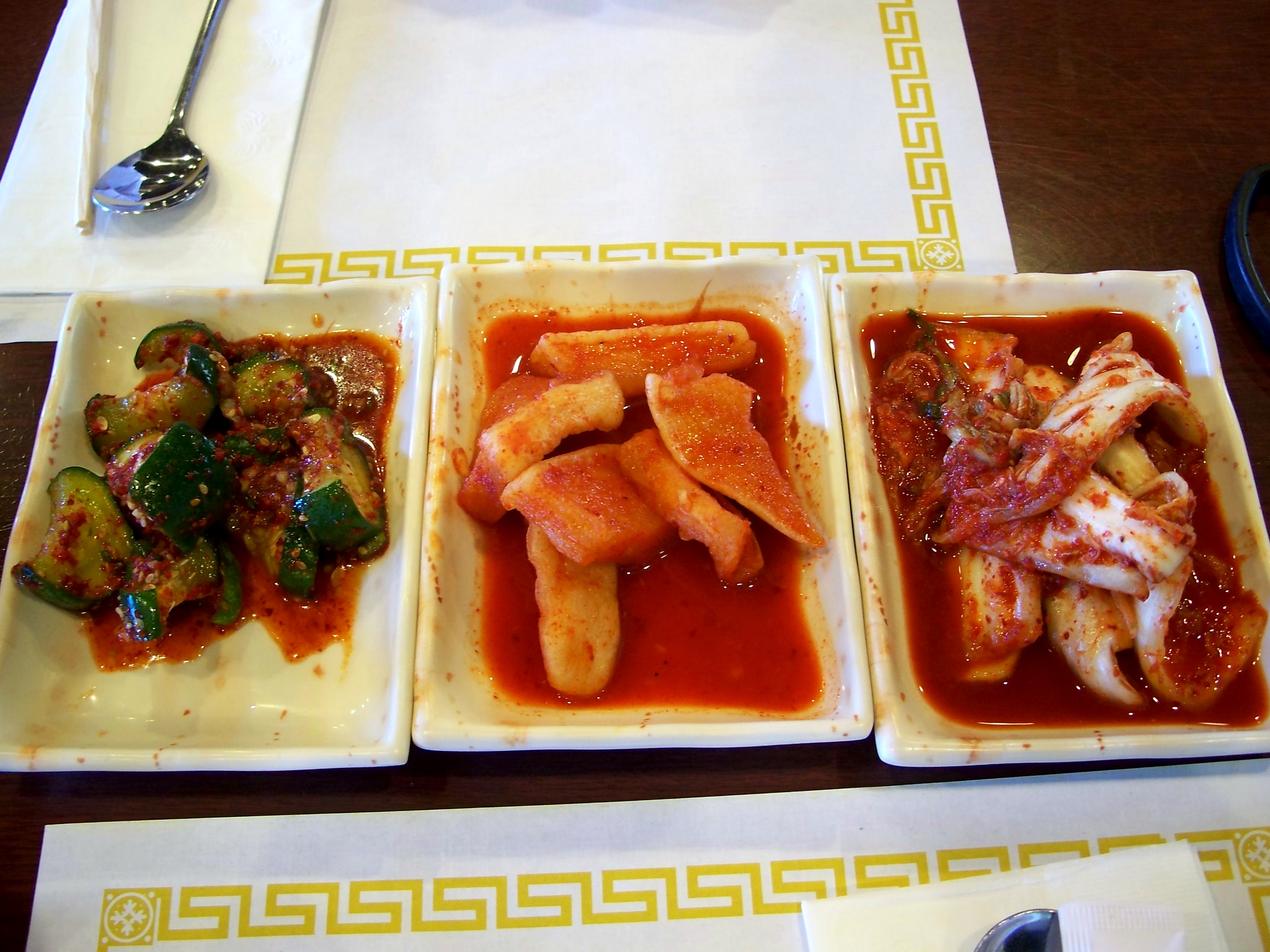
Kunjib is a restaurant of few and focus: white plates, square bamboo chopsticks, tables set connected in straight rows, little decoration, a corner wall TV tuned to Korean channels, icy cold corn tea, a menu of 11 dishes, a set of 3 kimchis.


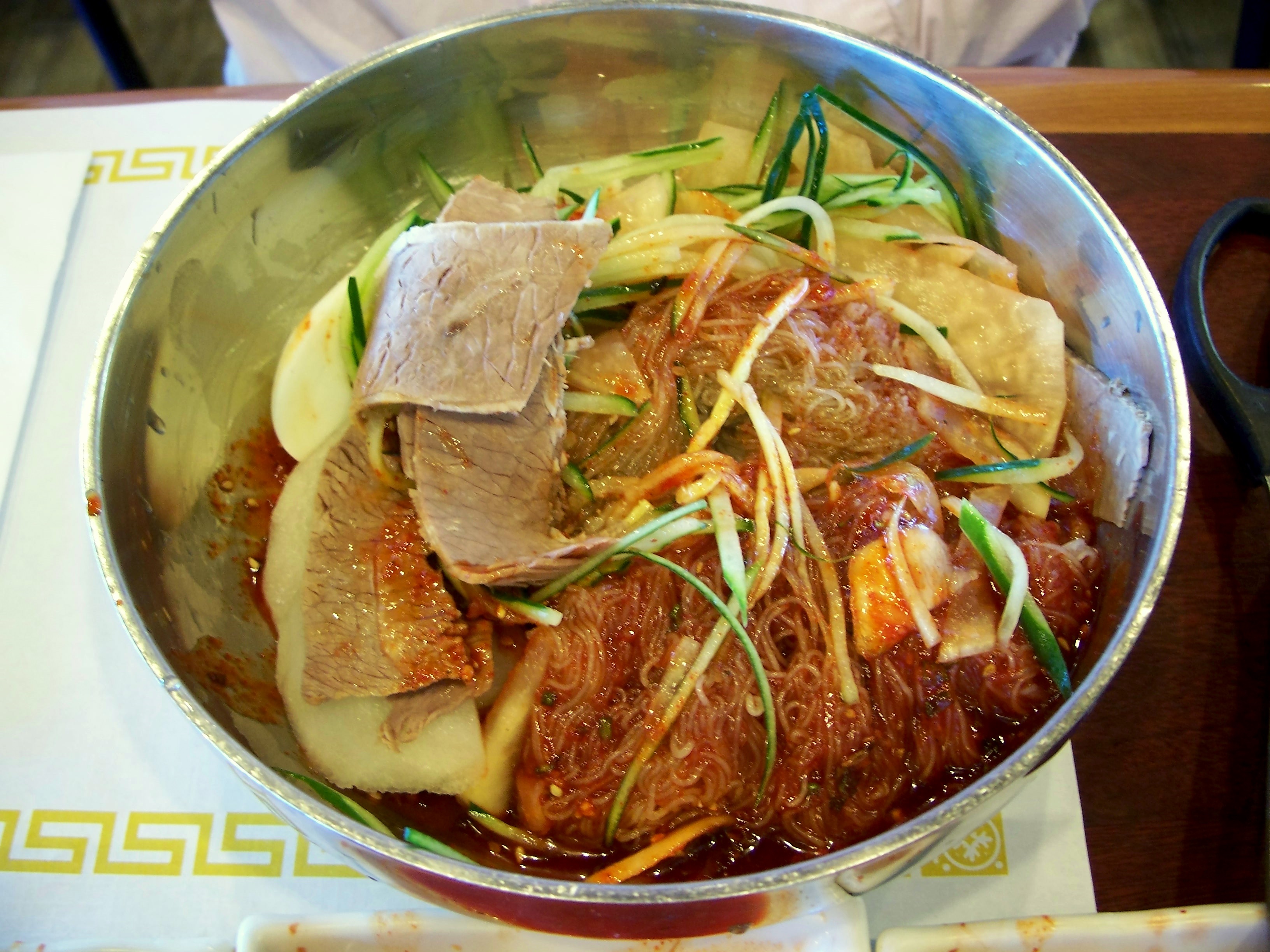
The kimchi here is spicier than those I’ve had before – there is still some leftover in my fridge after eating one or two pieces with rice each day for a week. The bibim naengmyeun (비빔 냉면 mixed cold noodle) is also ladened with gochujang (고추장), its color as crimson as the eclipsed moon. Our waitress instructs us to use a pair of scissors to snip the buckwheat noodles into mouth-sized bundles, and Mudpie deftly mixes up the meat and sliced vegetables with the same enthusiasm used to reserved for only dolsot bibimbap.


So with all the chili pepper galore on the table, I don’t expect my sul lung tang (설렁탕 ox bone soup) to be mild. I submerge the metal spoon into the liquid, the cream parts and congeals. I take a sip.


It’s pure bone marrow and collagen in liquid form. It’s as thick as whole milk diluted in water, and as savory as white rice. There is a whispering sweetness in the broth, detectable only when you drink it by itself and vanishing as soon as you get to the noodle or the meat. I love the noodle in galbi tang (갈비탕), but the noodle in sul lung tang clouds my palates.

In the end, sul lung tang is a soup of subtlety, so should I learn to like it in its purest form, or should I add salt?


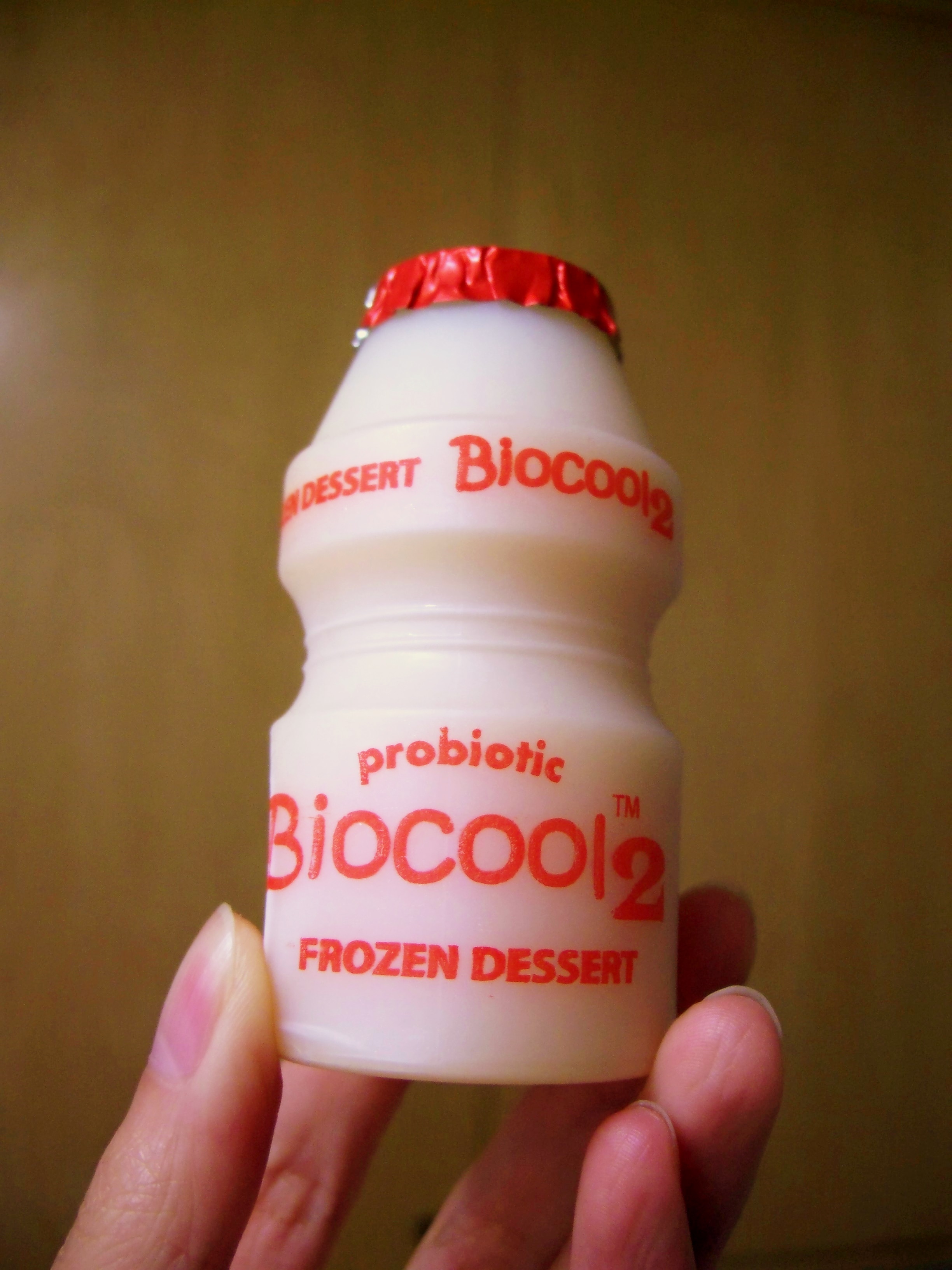
After fierce cold noodle and shy beef soup come teeny tiny bottles and the check. Back of bottle says “Frozen Dessert: Biocool 2 – Win Soon Inc., South Gate, CA 90280. 62ml (2.1 fl.oz).” To Mudpie, the white flow “tastes like SweeTarts“; to me it sings liquid yogurt: a little fruity, a little tart, a little milky. Pretty good. Mudpie claims Koreana sells the exact same baby bottles.

Address: Kunjib Restaurant
1066 Kiely Blvd
Santa Clara, CA 95051
(408) 246-0025

Do you like it when things change?

November 18, 2010 By: Mai Truong Category: California - The Bay Area, Korean, noodle soup, Opinions

This past weekend I found out that my favorite sushi house has replaced their usual corn tea with green tea, and my favorite Korean restaurant has changed name.


Berkel Berkel is now Cho Korean B.B.Q. The Berkel Berkel sign is still outside, the wooden door is still there, the paper lanterns are still there. But the old man is not. The familiar homey vibe is lost, drown in the blasting music and the attentive service of the hosts. I appreciate the smiles and the banchan and drinks brought to the table and the frequent check-ins for refills, but I miss getting my own kimchi and pouring my own tea from the kettle. I miss the old man behind the counter with his strong accent.


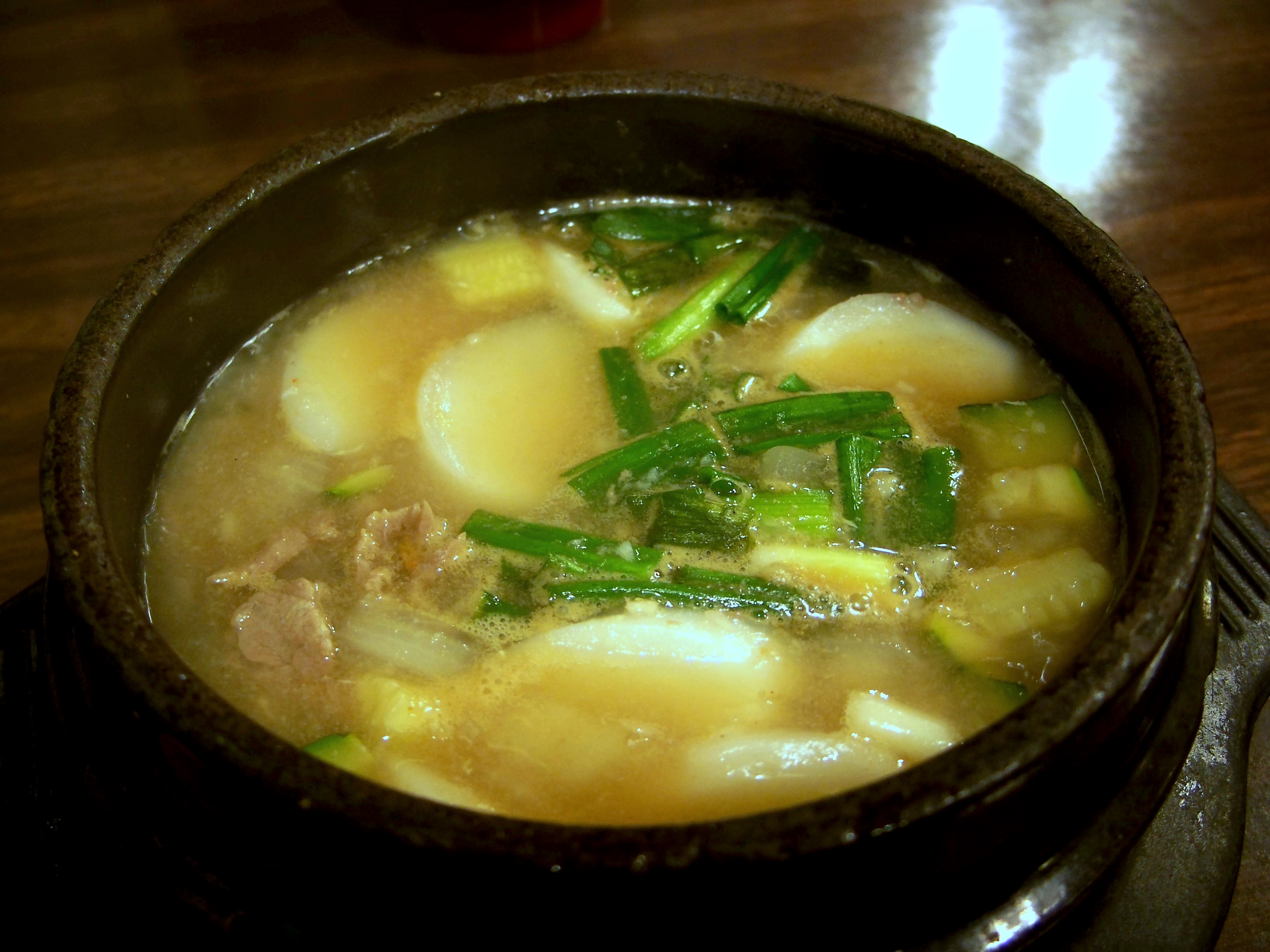
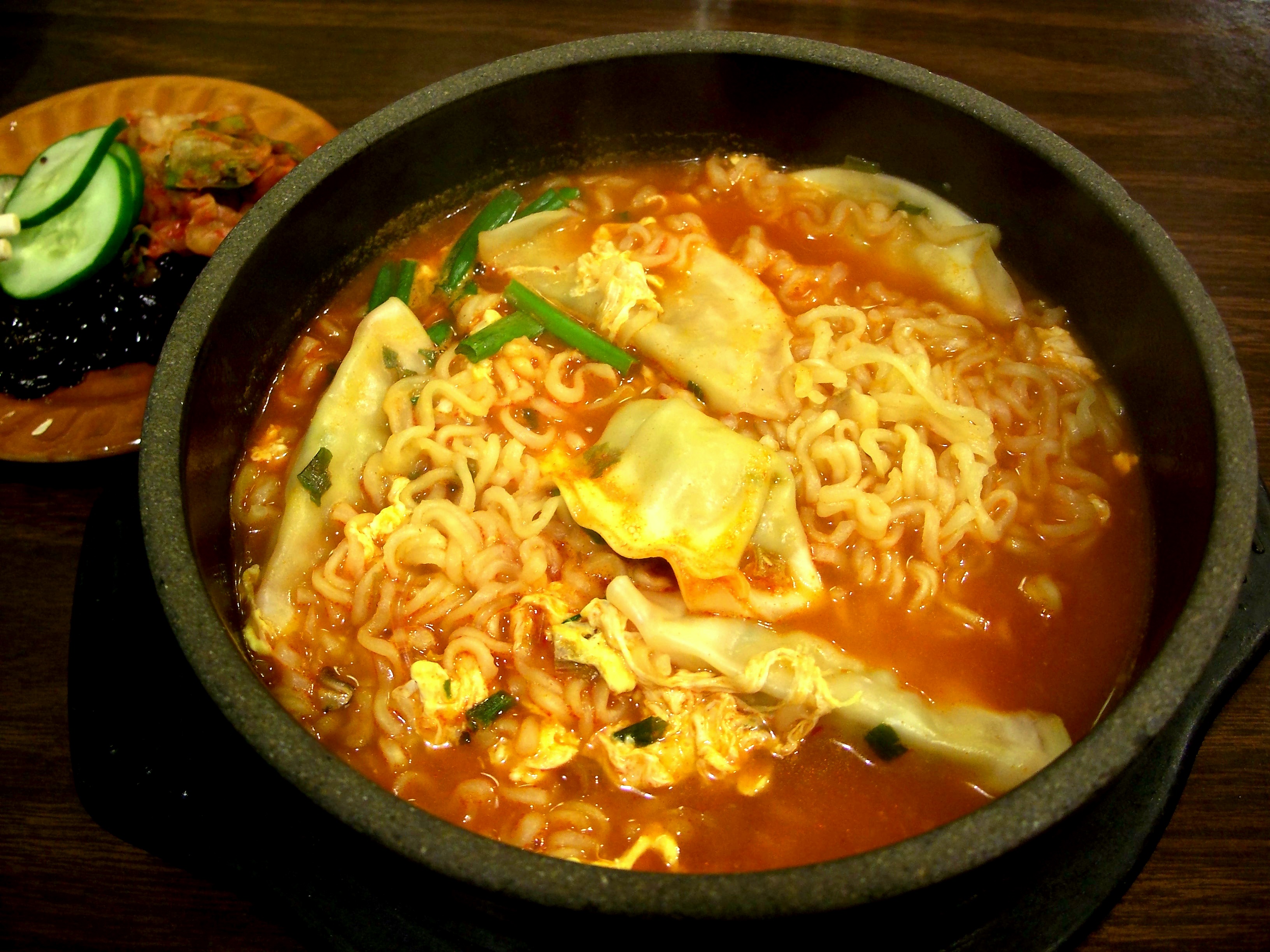
The kimchi selection is still the same: baechu, cucumber, and kongjaban (콩자반). Mudpie got bulgogi ddukbaegi (불고기 뚝배기 beef stew clay pot) with green onion, mushroom, and potato noodle in sweet broth. I got ramyeon (ramen) with dumplings. Being a tad spicy, once again my choice was less savory than Mudpie’s choice. Objectively, the food is still good for its price, but I wonder how my feelings for Cho would be different if I had not been to Berkel Berkel before. I do hope that Cho will flourish, just like our favorite Bánh Cuốn Tây Hồ in Oakland has changed for the better.

Things change. Feelings change. I change. I just wish that the things I hold dear will change with me so that together, we remain the same.

Dinner for two: ddukbul ($6.95) + ramyeon ($5.25) + tax = $13.00
They do take out orders, and open daily 10:30am-10:00pm, whereas Berkel Berkel closed on Sunday. 🙂

Address: Cho Korean B.B.Q. (former Berkel Berkel)
2428 Telegraph Avenue
Berkeley, CA 94704
(510) 981-1388