Flavor Boulevard

We Asians like to talk food.
Subscribe

Archive for the ‘California – The Bay Area’

one bite: Miyuki sweet

November 01, 2011 By: Mai Truong Category: California - The Bay Area, Japanese, One shot, sweet snacks and desserts


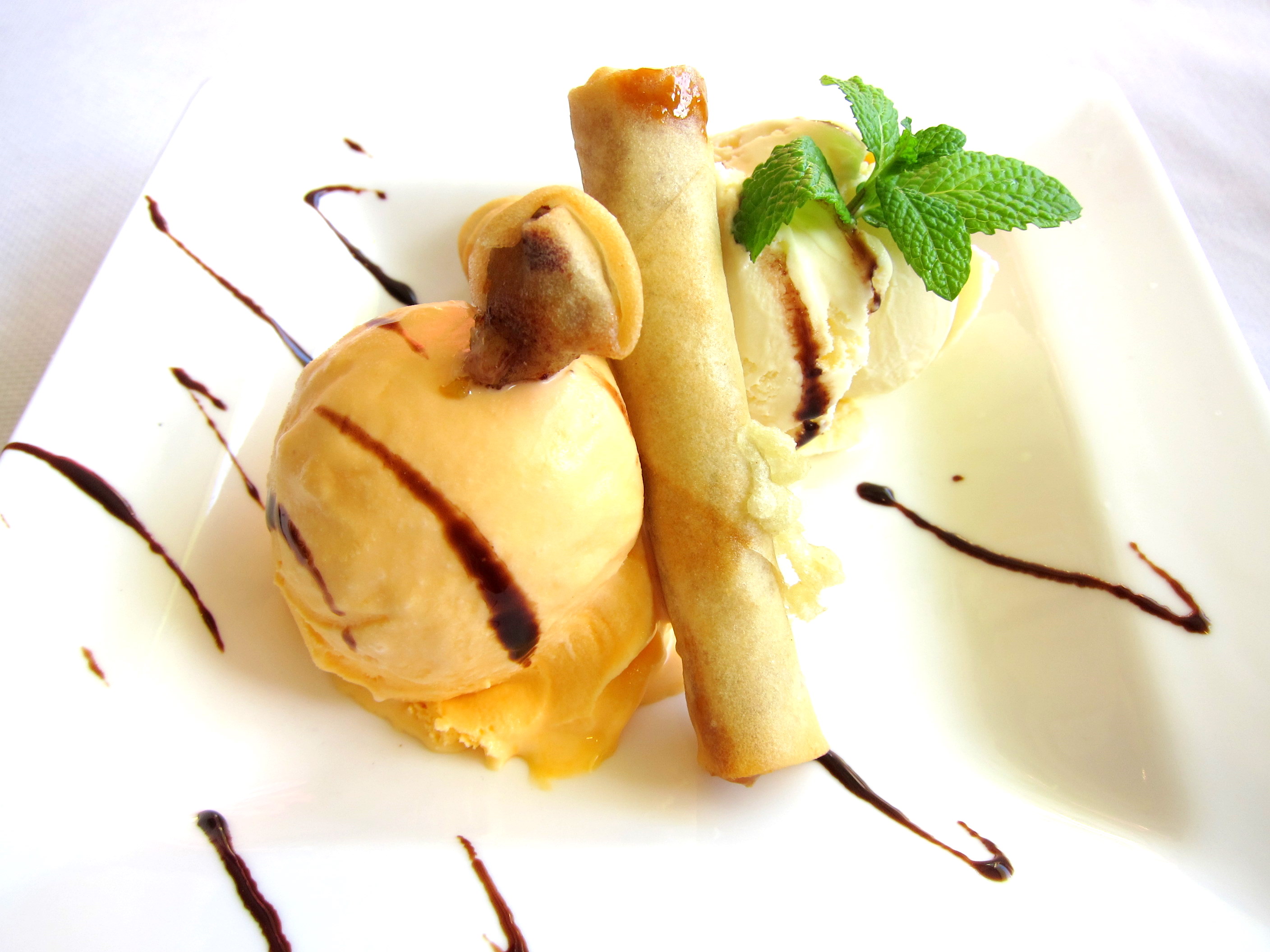
Who goes to a sushi and donburi house to get dessert? Me. It got it all. Tropical, fried, icecreamy, salty, nutty, fruity. It’s the dessert of Miyuki.

Miyuki sweet: eggroll filled with banana and pine nut to pair with vanilla and mango ice cream. Ah, and a dash of chocolate syrup, of course.

Address: Miyuki
1695 Solano Avenue
Berkeley, CA 94707
(510) 524-1286

More Asian post-rice desserts: banana “ice cream”, bean pudding and bean shaved ice

I had high expectation for Commis

October 13, 2011 By: Mai Truong Category: American, California - The Bay Area, Won't go out of my way to revisit


The difference between a bowl of ramyeon at Gomnaru and a six-course dinner at Commis is the ratio of satisfaction to expectation. This is how I rank my foods, which allows me to enjoy a Cheetos just as much as any prime ribs done well, perhaps even more. There are certain extremes, like the cafeteria at Berkeley and LBL, no matter how low I set my bar, they manage to wow me with their ability to ruin everything, including fried rice. Anyhow, I figured that it’s only respectful to the chefs that I go to a well applauded, top ranking restaurant with high expectation. But for Commis, I think my expectation was a bit too high.

The ingredients: fresh, interesting, nothing to complain about. The techniques: nothing I know enough to comment about. The combinations: hmm… An hour after dinner, Rob asked me: “How would you describe your dinner tonight in four sentences?” “Four?” “Three. Ask me again and I’ll say two.” The truth is I would rather sum it up in one: “I don’t remember”.

I can remember vividly the banh mi a vendor sold in front of my high school ten years back, the way its charred meatballs melted in my mouth, its yellow mayonnaise, its crumbs broke free into the motobike-exhaust-filled air. I can remember equally vividly the chicken crepe I bought a rainy night in Seattle four years back, the running warmth of its cheese, its springy softness, my frozen fingers. Just how was the poached egg, or the soup, or the dessert at Commis last Wednesday night? I can’t even remember what’s in the soup.


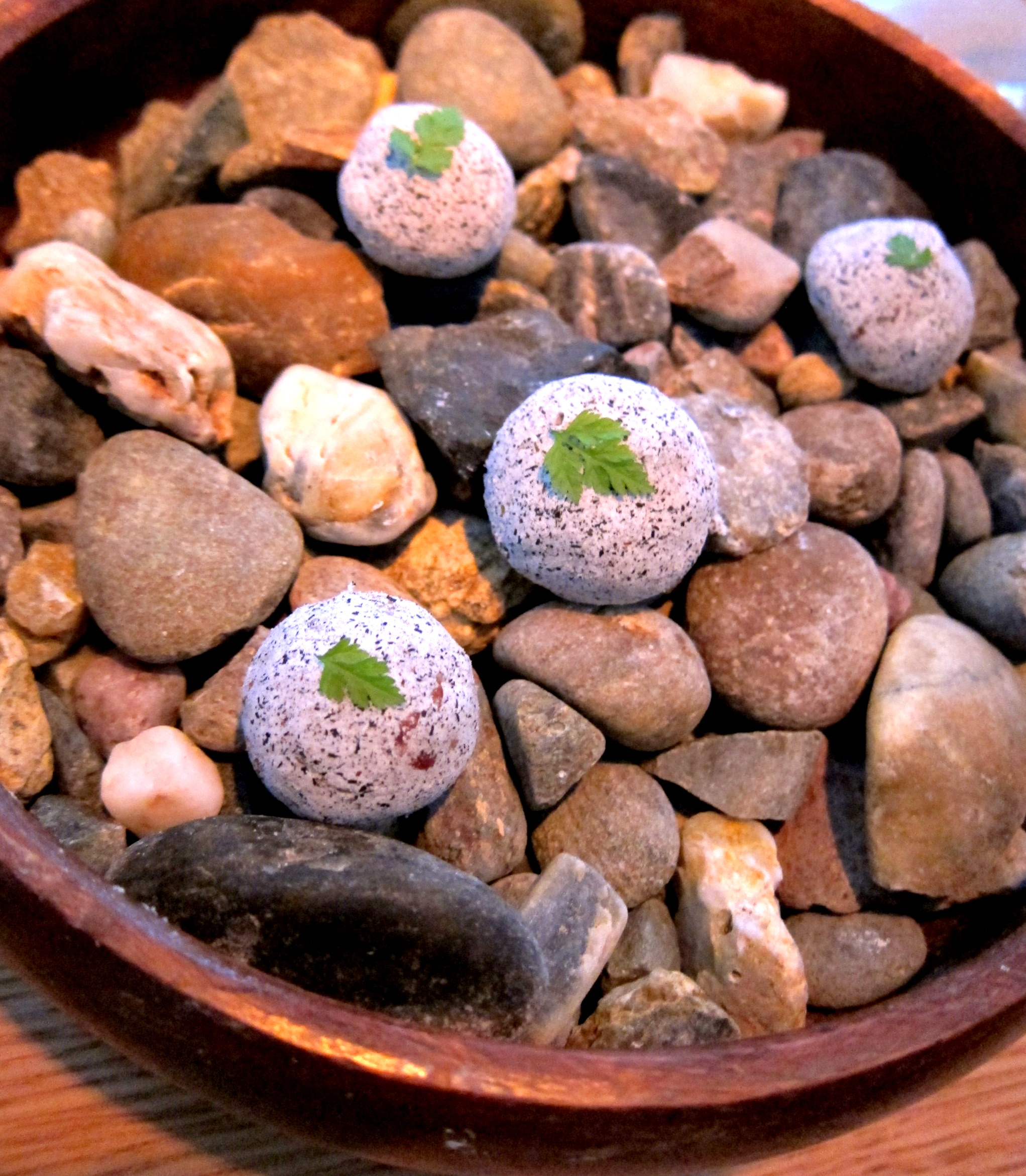
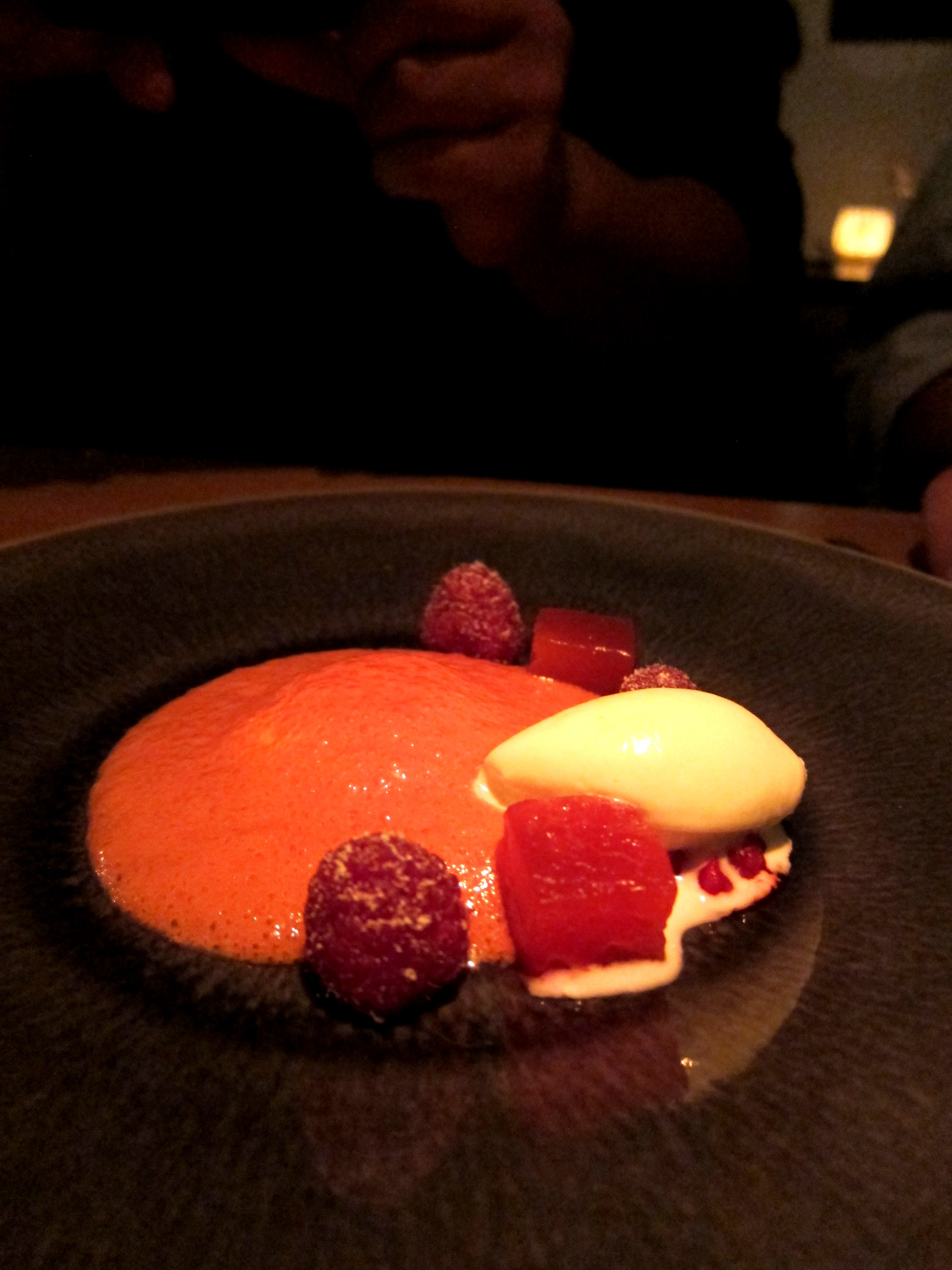
For every course, like at any fine restaurant, our hostess arrived with a gently toned, slurred-together string of ingredients, of which I could hear the first and the last words and consonants in between. I am not skilled enough to detect a sprinkle of tarragon just by tasting, so I base my judgement on the harmony. Scallop-like monkfish paired with grainy beans was the most discordant in texture, and its accompanying sauce was a bit too fishy and too salty. The opening cookie excited us in its rock-like appearance but hit a dry tune, I suspect a pebble size would be more palatable. The ending nectarine jelly invited little attention and tasted too sweet. Intermittently flared a few high notes, such as the dill weed‘s tanginess in a cauliflower-potato-salad combo, or the pistachio sauce tightened with a radish zest of horsegrass (one of these days I will find it on Google).


The most memorable piece of the night was a cucumber, green apple, and eucalyptus palate-cleanser. It was what it sounds like: a sorbet. The cucumber made a profound impression. I would trade the whole dinner for another shot glass of this. But the sorbet alone does not make the meal worth its hundred dollar value or make it stand out.

It was neither too good nor too bad. It was like a landscape painting with excruciating details and no focus. There could be a better night, but tonight’s impression was not enough to prompt a revisit, so there won’t be a better night. The next time I pass by Commis‘ signless glass door, I’ll just pass by.

Tags:

Little Kiraku on Telegraph

September 25, 2011 By: Mai Truong Category: California - The Bay Area, Comfort food, Japanese


Not so long ago, I got chuckled at for not having tried every single restaurant in my vicinity. There are excuses I could make, but the bitter truth is I’m lazy. At school, I try to arrange my schedule to minimize the distance between buildings. I tend to eat at places either really nearby or a bus ride away. The things in between require walking. I can walk. I don’t mind eating alone. I love wandering into a restaurant unplanned. But when I wake up at 8 on Sunday, I don’t think “oh feet, let us take a stroll six blocks uphill to have lunch at who knows where”. I stay in, (try to) work, and blog. I would never have discovered Kiraku without Teppei-san: a number of us gathered there for a farewell dinner before he and Roland took off to Korea.

This izakaya kind of thing is more enjoyable with more people. It means more dishes. All in little bitty plates. With seven of them, we covered most bases, from tsumami (starter) to shushoku after the beer and shochu.


We also covered the immobiles (vegetables), the legless (octopus), the two-legged (chicken), and the four-legged (pork). Now that’s a balance meal. 😀 Jonathan’s all-time favorite (the only thing that he remembered getting from last time) was the takowasabi, chopped octopus marinated with a rather gentle wasabi sauce, which simply looked slimy and tasted clean. Similar bits of octopus later showed up in the yaki udon, with katsuobushi on a basil pesto twist.


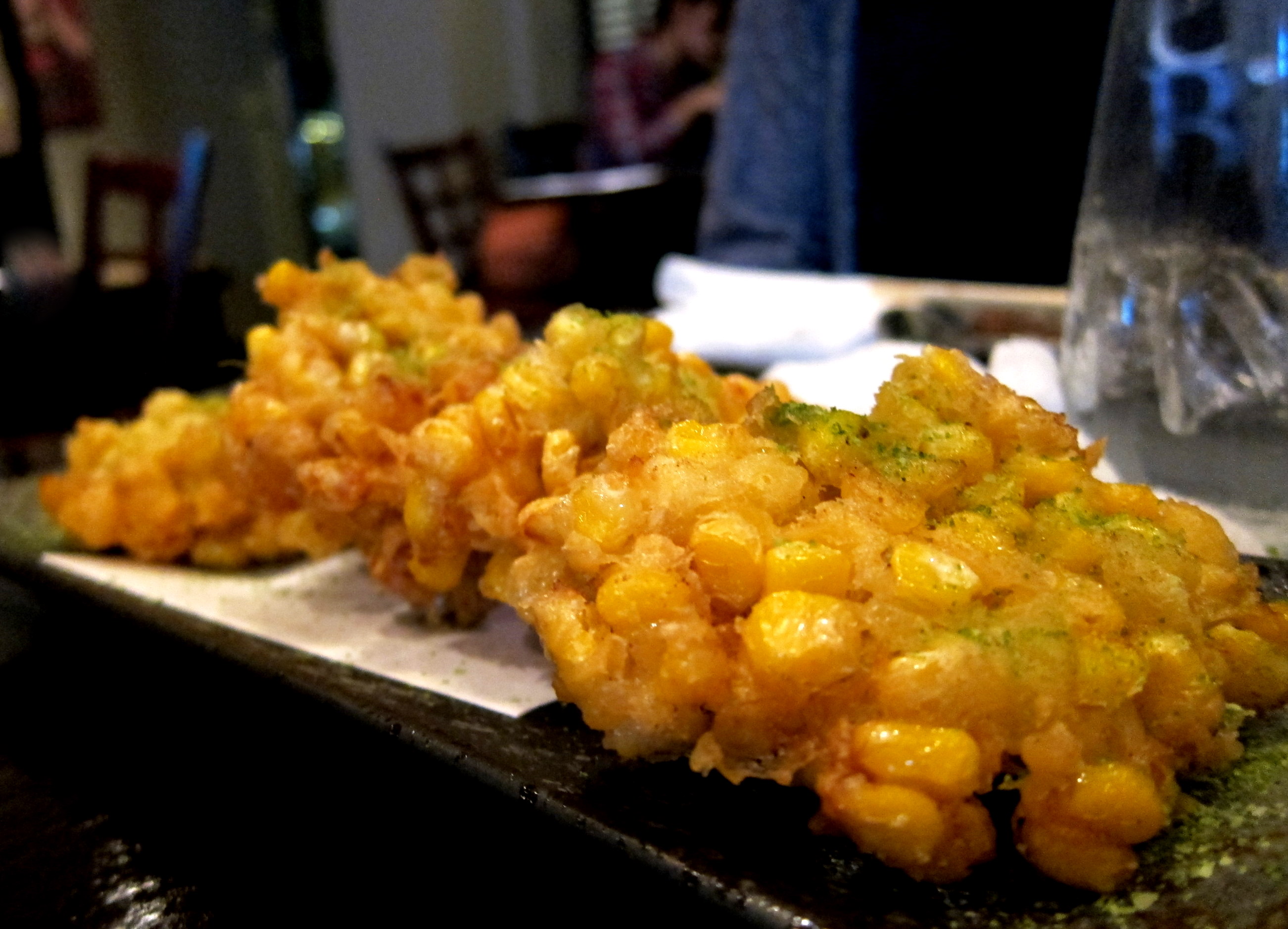
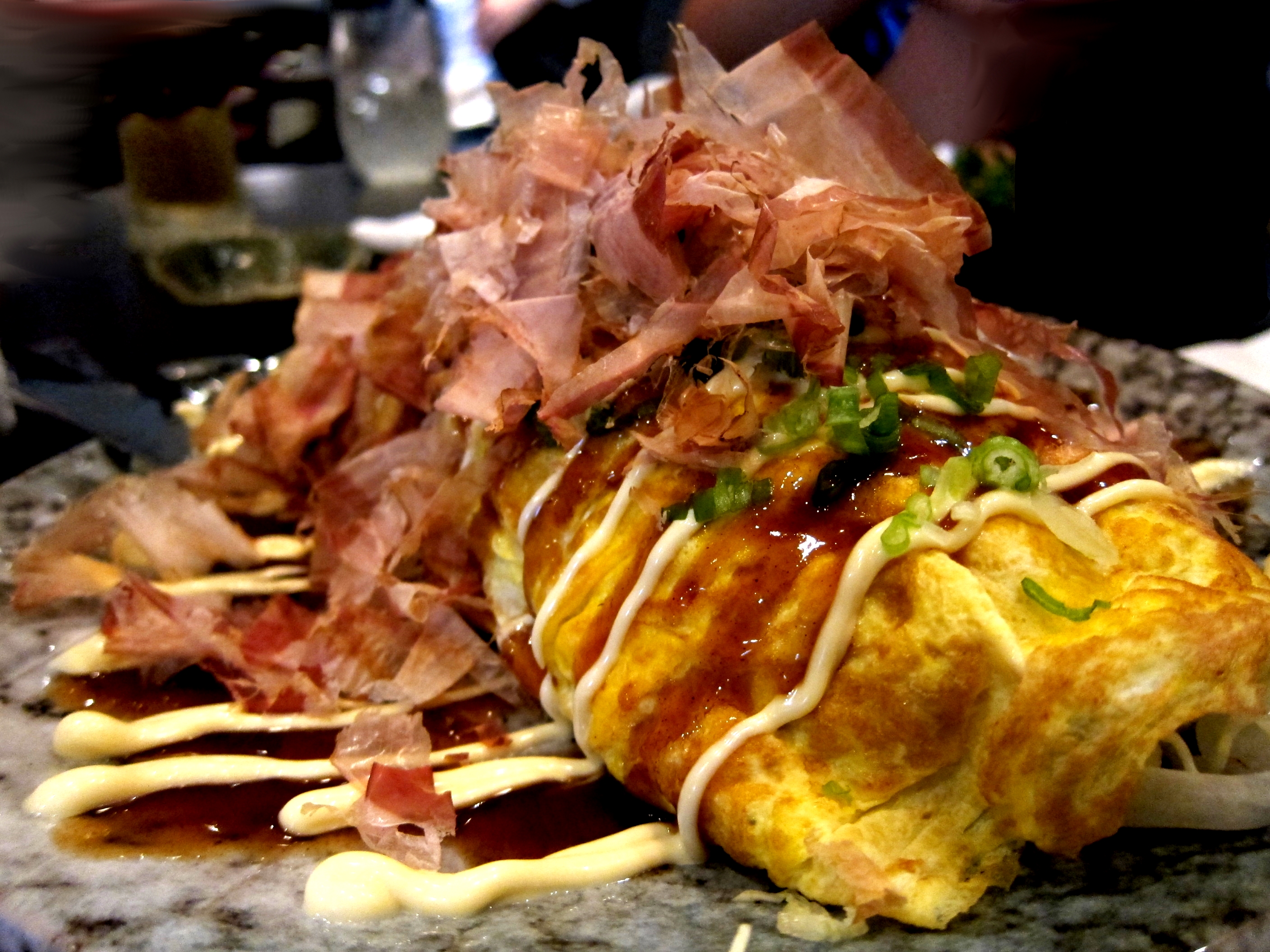
The chicken karaage (fried chicken) and the Kiraku ribs (pork spareribs with orange marmalade) settled the rumbly tummy splendidly. But my heart felt for the tomorokoshi no kakiage (corn fritters sprinkled with green tea salt) and the omelet salad served midway through the night. Its load of shredded cabbage , crunchy and pristine, freshened up the palates to welcome the occasional chunks of pork belly. Let me get some cereal real quick, I’m hungry writing about this thing.


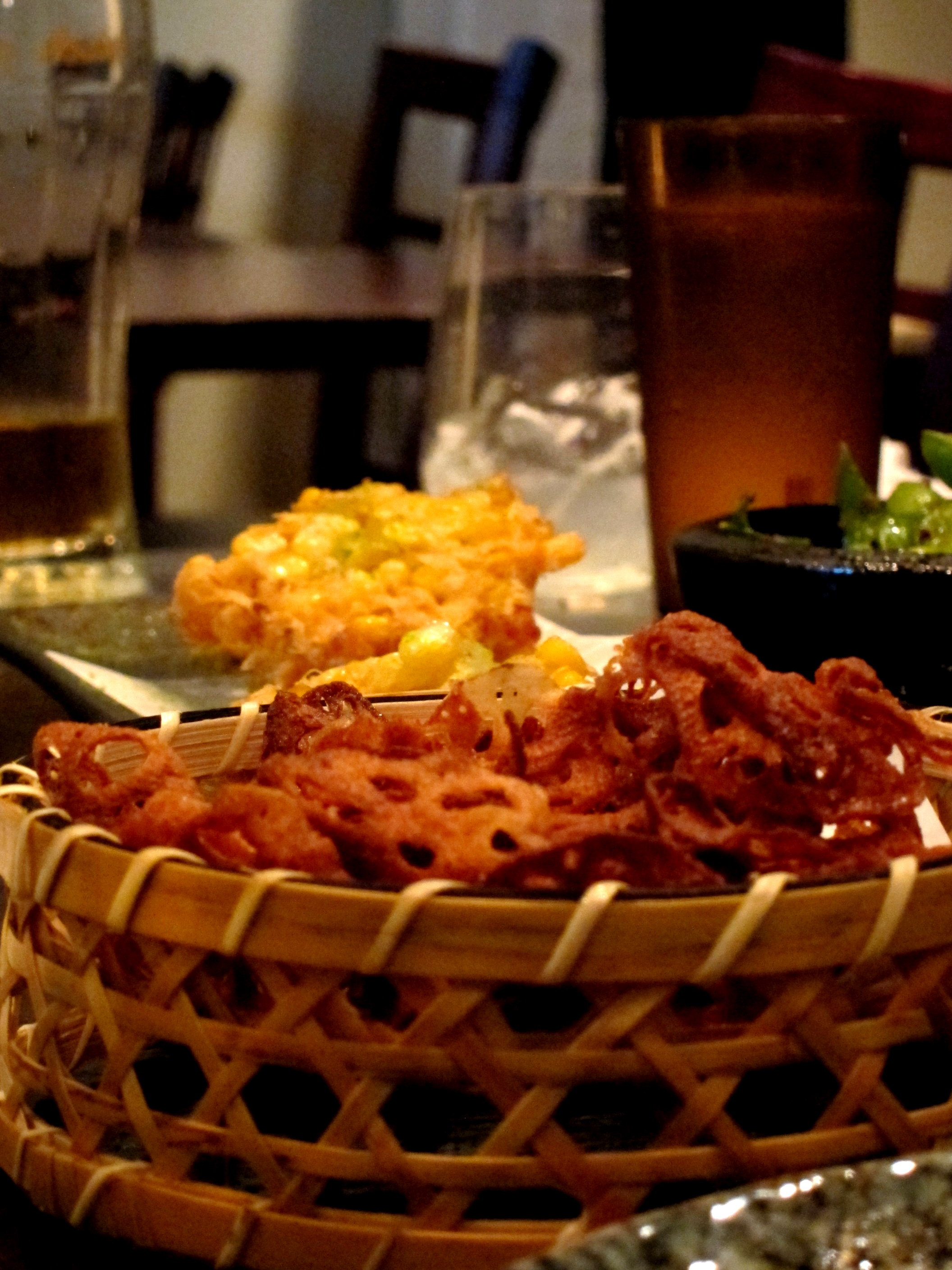
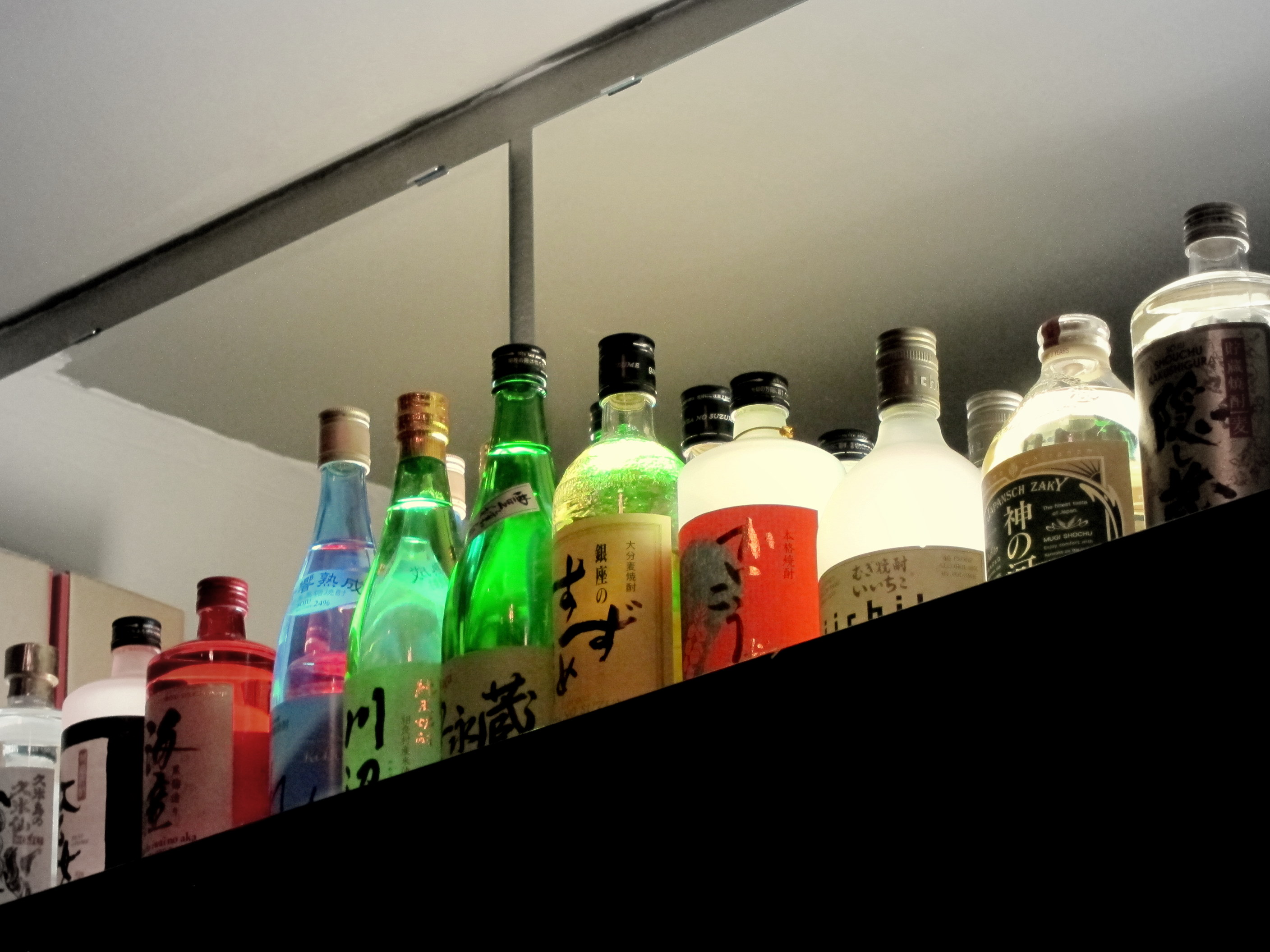
Towards the end, my tongue only remembered the crackling sweetness of the renkon chipusu (lotus root chips) moderately coated in celery salt. Though Teppei warned me that izakayas are more enjoyable for drinkers (and rightfully so, seeing their forty-some choices of sake, shochu, chuhai, and beer), I had plenty of fun downing my ramune and trying to get the marble out at the end. Kiraku is no tabehodai (“all you can eat”), it’s pricey for how little food we got, but so what, it’s as cute as a button. 🙂

Address: Kiraku
2566B Telegraph Avenue
Berkeley, CA 94704
(510) 848-2758

To Hyang – The flavors of earth

September 18, 2011 By: Mai Truong Category: California - The Bay Area, Comfort food, Korean


Recently, someone asked me how often I cook, I said not often at all, I spend most of my time at school trying either to speak some foreign language or to tell the computer to understand my version of its language. I cook maybe once a week, very simple stuff, like boiled bok choy. He then questioned the credibility of my taste. “Can you taste as well as someone who cooks a lot?” I believe so. I might not have the knowledge to make the dish or to fix its shortcomings, but fermenting the grapes doesn’t help an oenophile judge his wine. However, that got me thinking about what I would do if I had time to cook. I would like to work in a restaurant kitchen. It’s okay if I have to peel shrimps all day, I simply would like to look and learn from the inside. I’ve even picked out the place I want to work at: To Hyang.

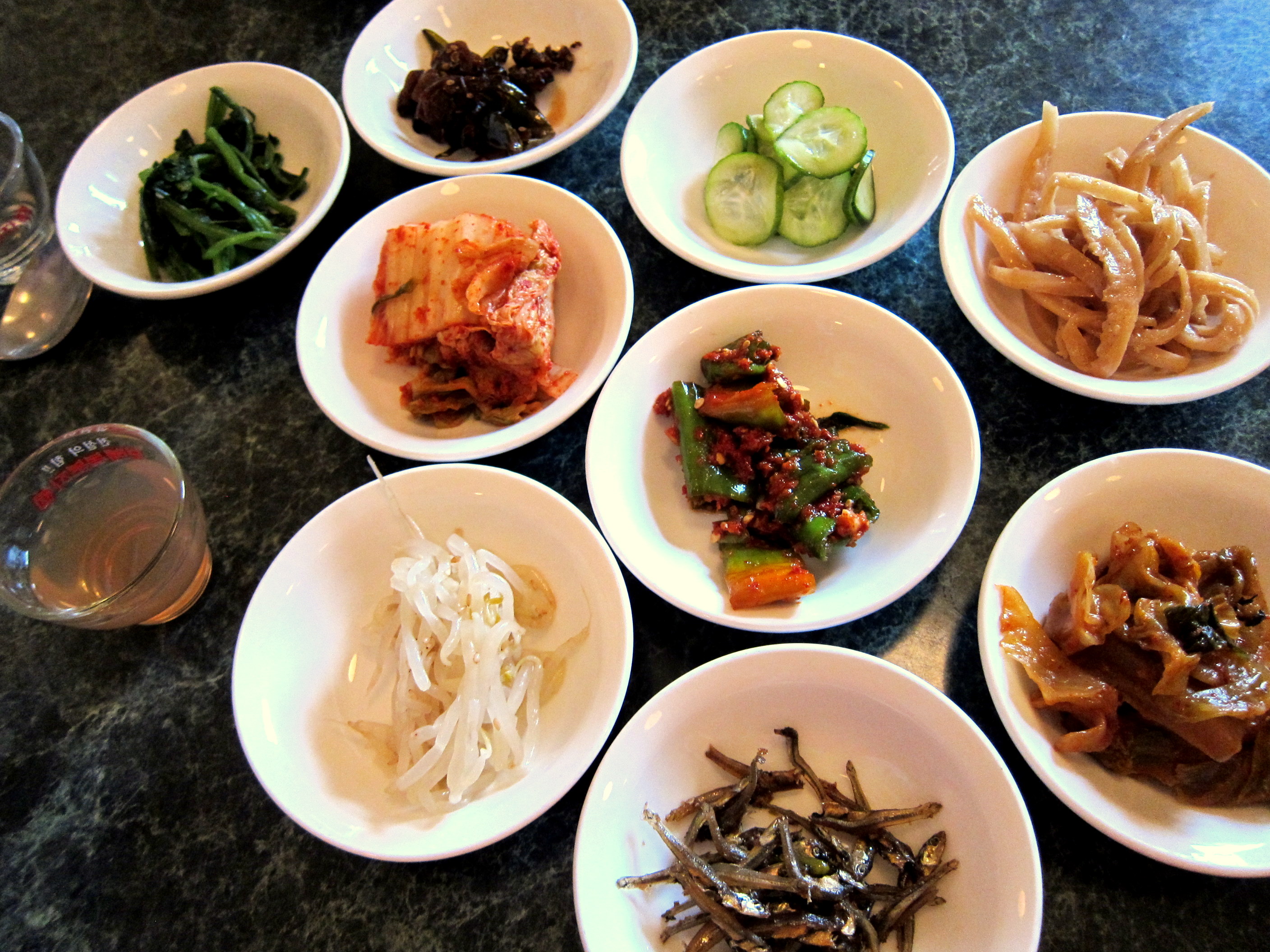
Because I’d like to learn how to make kimchi, soybean paste, pickled bellflower, fried dry anchovies, and maybe infused soju from a Korean lady. Of course there are recipes online, which I tend not to read because they are too precise. But I’ve just heard too many good things about To Hyang, including Chef Im’s selection of various aging sauces, pickles, and garden plants, that I want to infiltrate her kitchen.

To Hyang - Dinner begins, banchan and a cup of persimmon infused soju


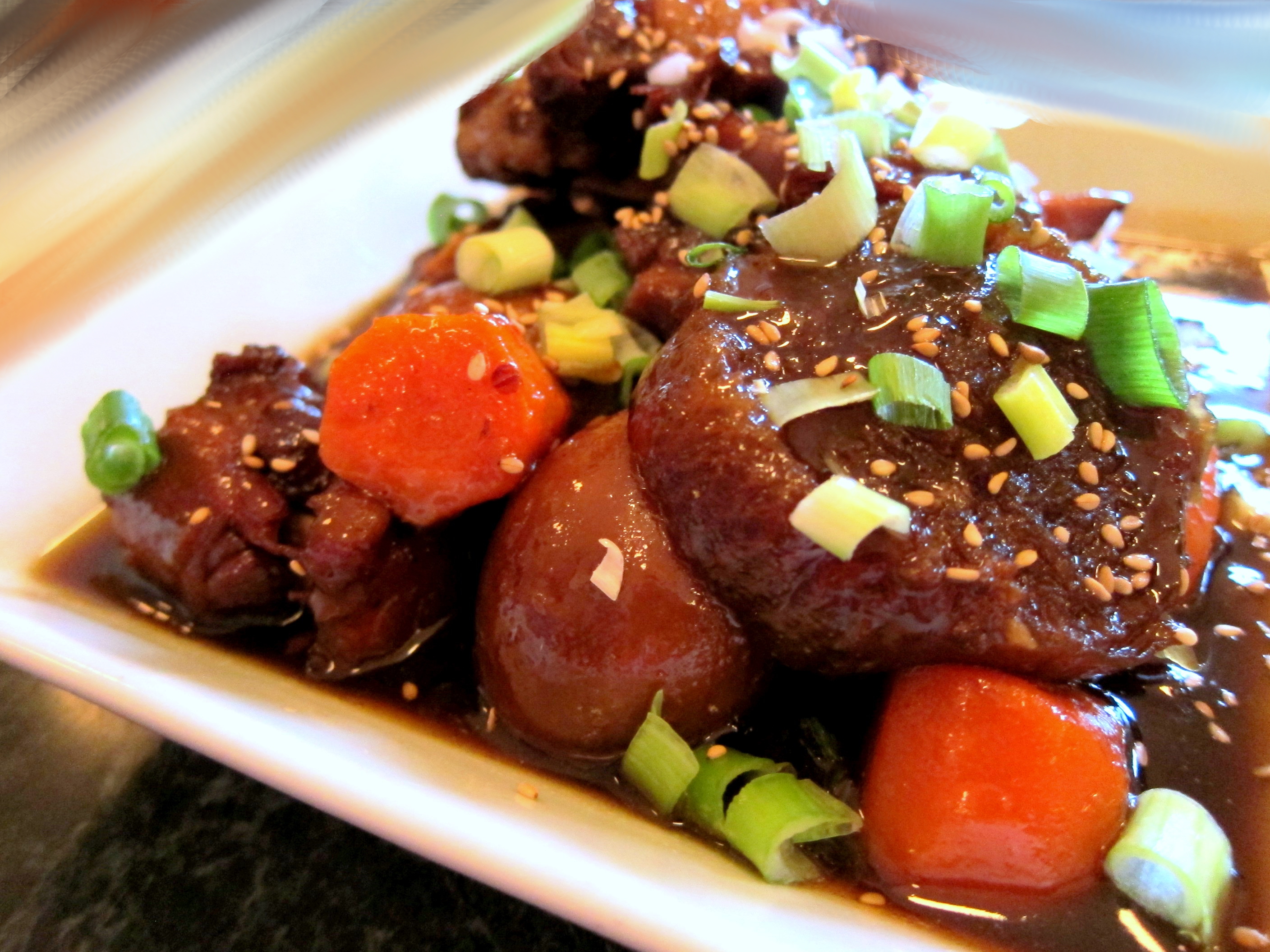
Not to mention her so gori chim (소 꼬리 찜, $18.99). Braised oxtail in a sweet, thick sauce with hard boiled eggs. Magnificent hard boiled eggs. The egg white got just the right springiness after the braise. The yolk wakes up memories of my mom’s thit kho trung for the Lunar New Year feasts. Though no doubt loved by everyone, this simple combination is not served often enough in restaurants, and when it is served, the portion is not enough for the whole table, especially a table with me. I can never have enough eggs simmered in a braised meat sauce.


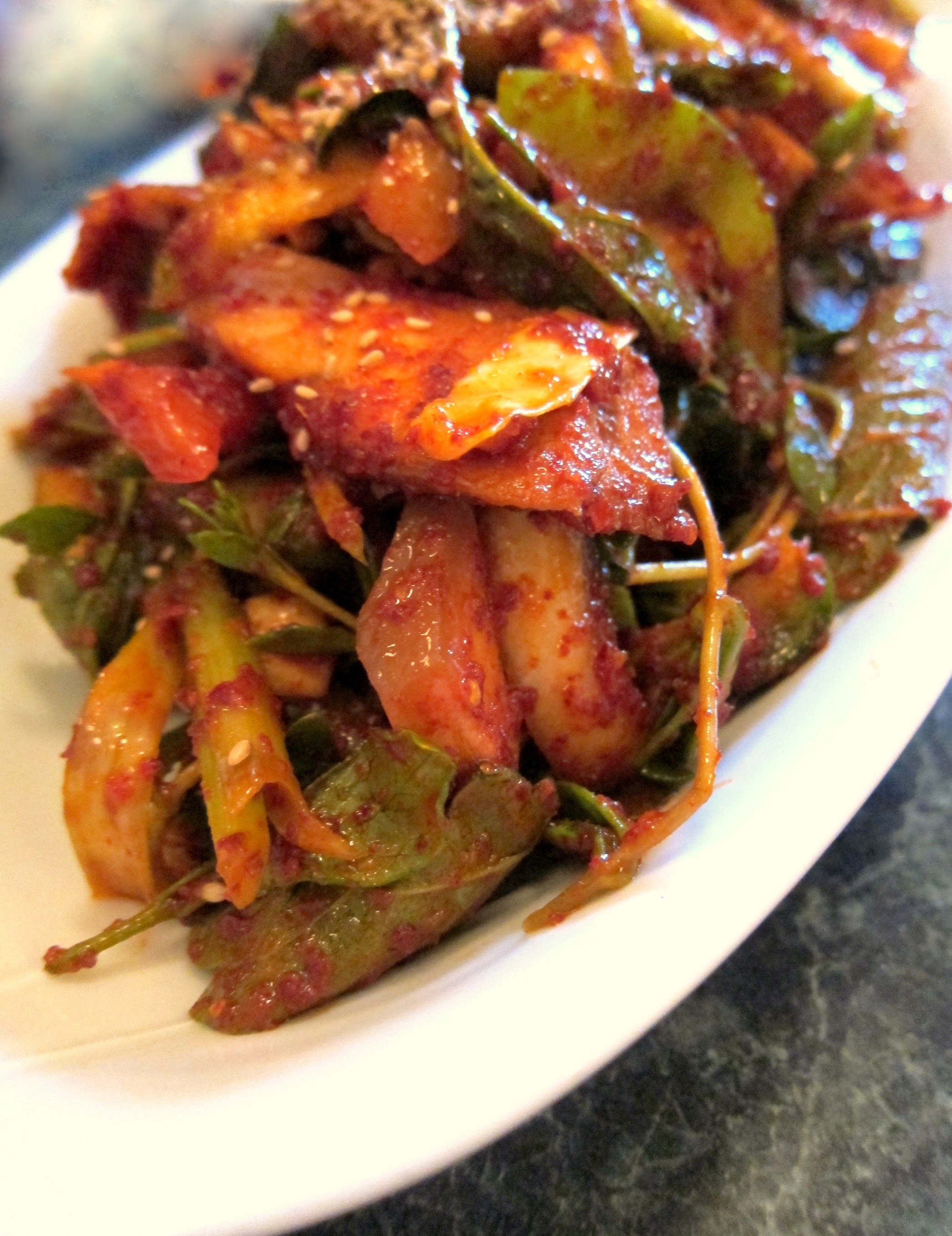
The rest of To Hyang’s fixed menu is fairly standard of a Korean establishment, with kimchi jeon, soondubu, and bibim nangmyeon among others. A few recommendations from Chef Im’s daughter are the hand pulled noodle soup kalguksu, which we did not get, and the pork belly kimchi salad samgyeopsal muchim (삼겹살 무침, $15.99), which we did get.


It looks like a fiery truck load of paprika accidentally got dumped onto the plate, but it’s served cold, the pork belly is succulent as always, and the heat dissipates as quickly as it hits. It’s refreshing like mint ice cream.

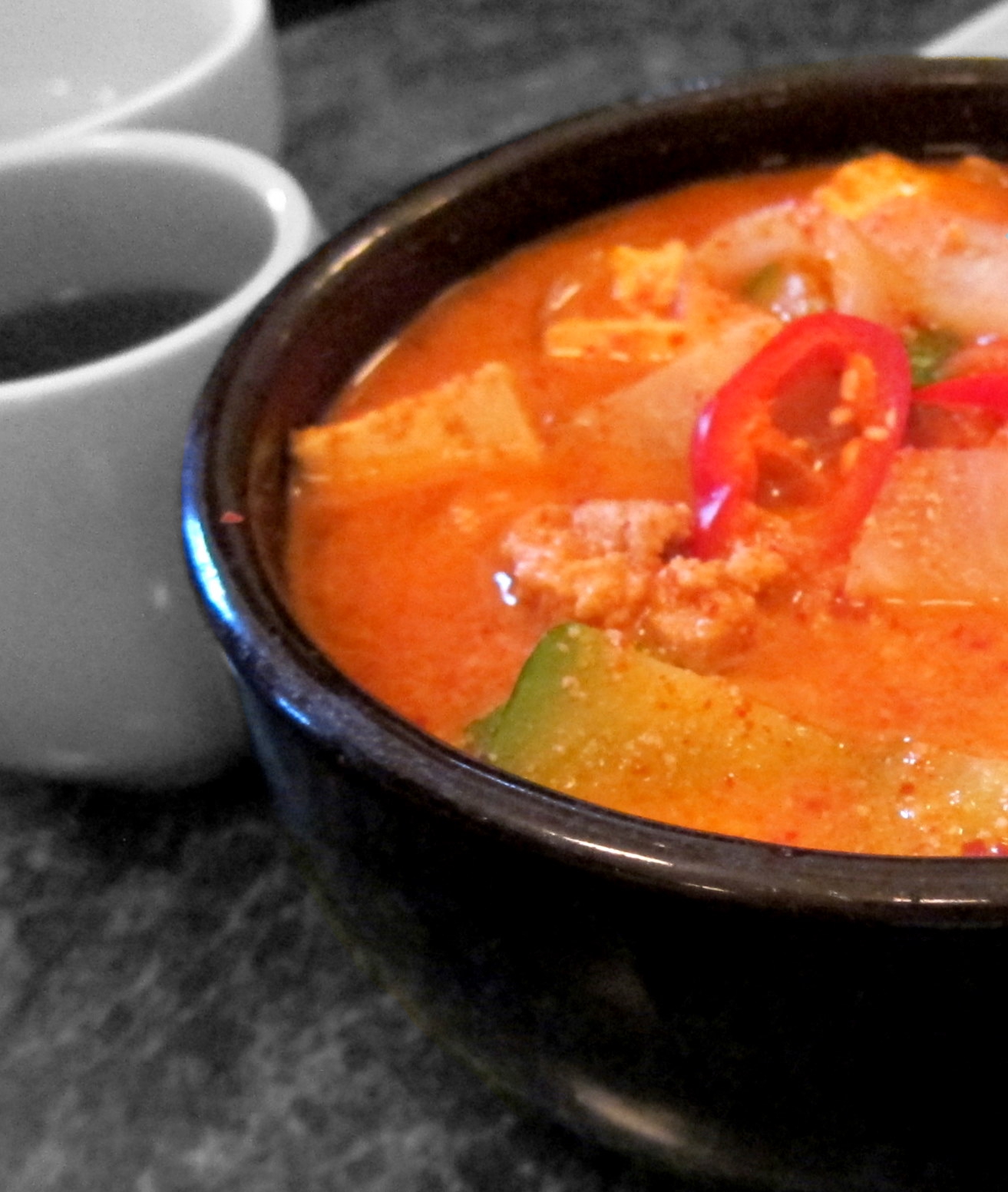
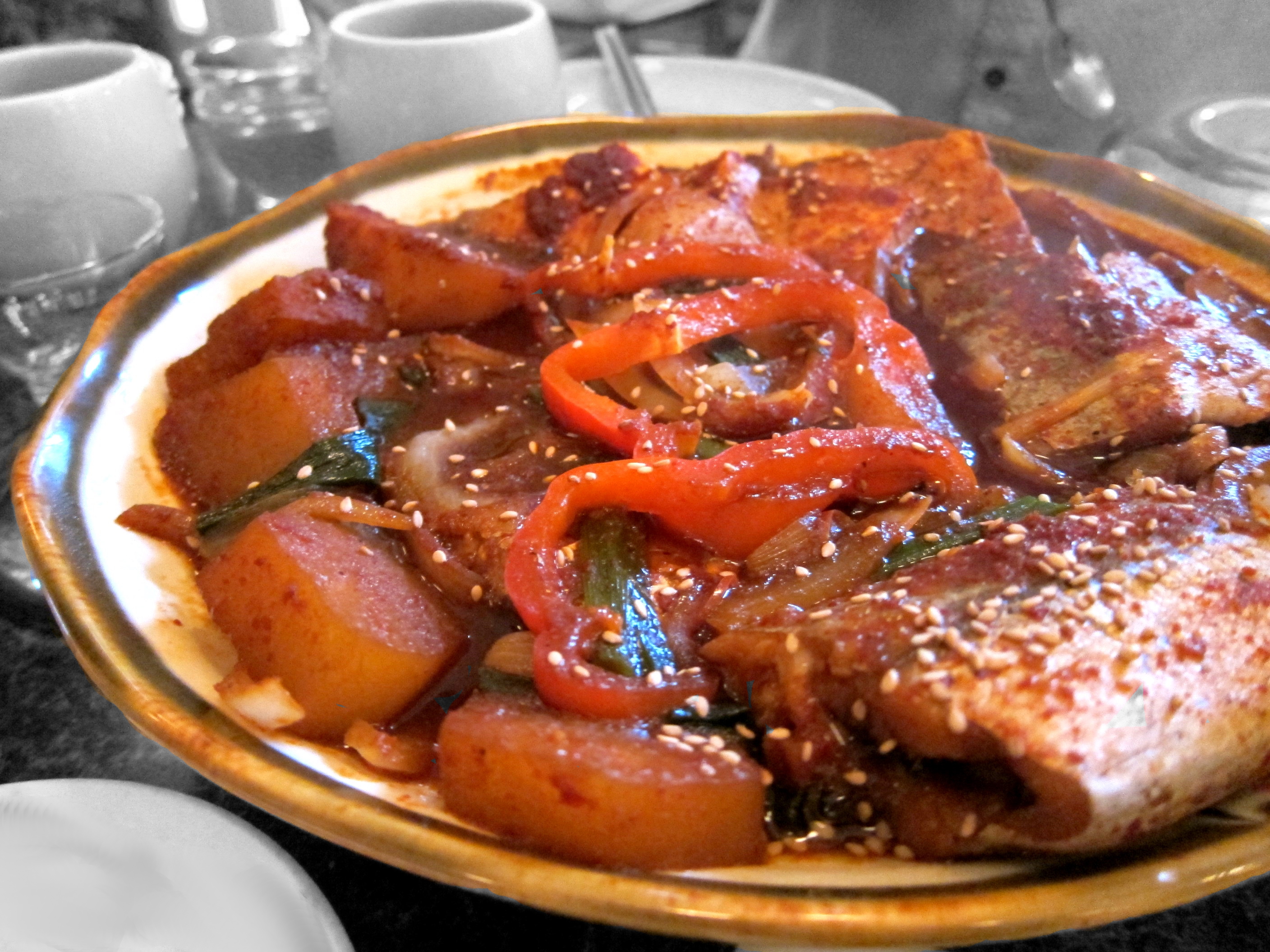
On the left wall hangs a white board, hand scribbled, of the special du jour, the soju cocktails, and a list of house infused sojus ($15 each bottle). For the processed meat lovers (me), there’s budae jjigae (부대찌개), hot dogs and spam in a gochujang and kimchi soup. For the fish egg lovers (me), there’s al jjigae (알 찌게), a hefty lot of pollock roe in a mildly spiced stock with tofu ($15.99). For the fish lovers (not quite me), there’s kalchi jorim (갈치 조림), meaty beltfish and potato simmered in ganjang, garnished with bellpepper and white sesame ($15.99). With bones. So make sure to try this in the presence of an Asian if using chopsticks to pull off the flesh without disrupting the 200-bone fish skeleton is not your forte. I’m a useless exception of my race though, I still get bones dig in my throat even now.


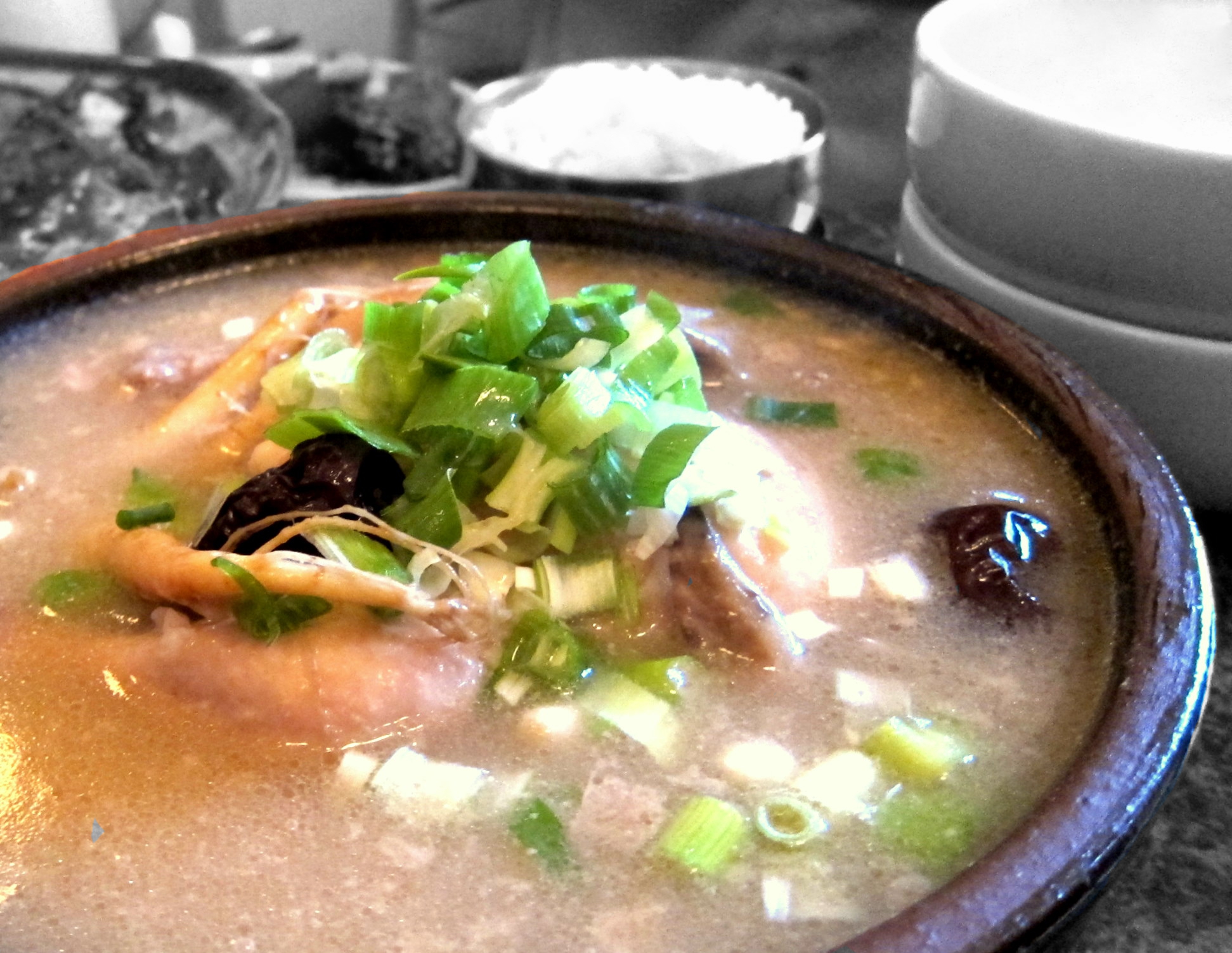
So I prefer to go with the big bones, like chicken. At To Hyang, I first learned the proper (Korean) way to eat the chicken in the samgyetang (삼계탕, $22.99): put salt and pepper onto a plate (or any available surface), and dip a piece of chicken into it.


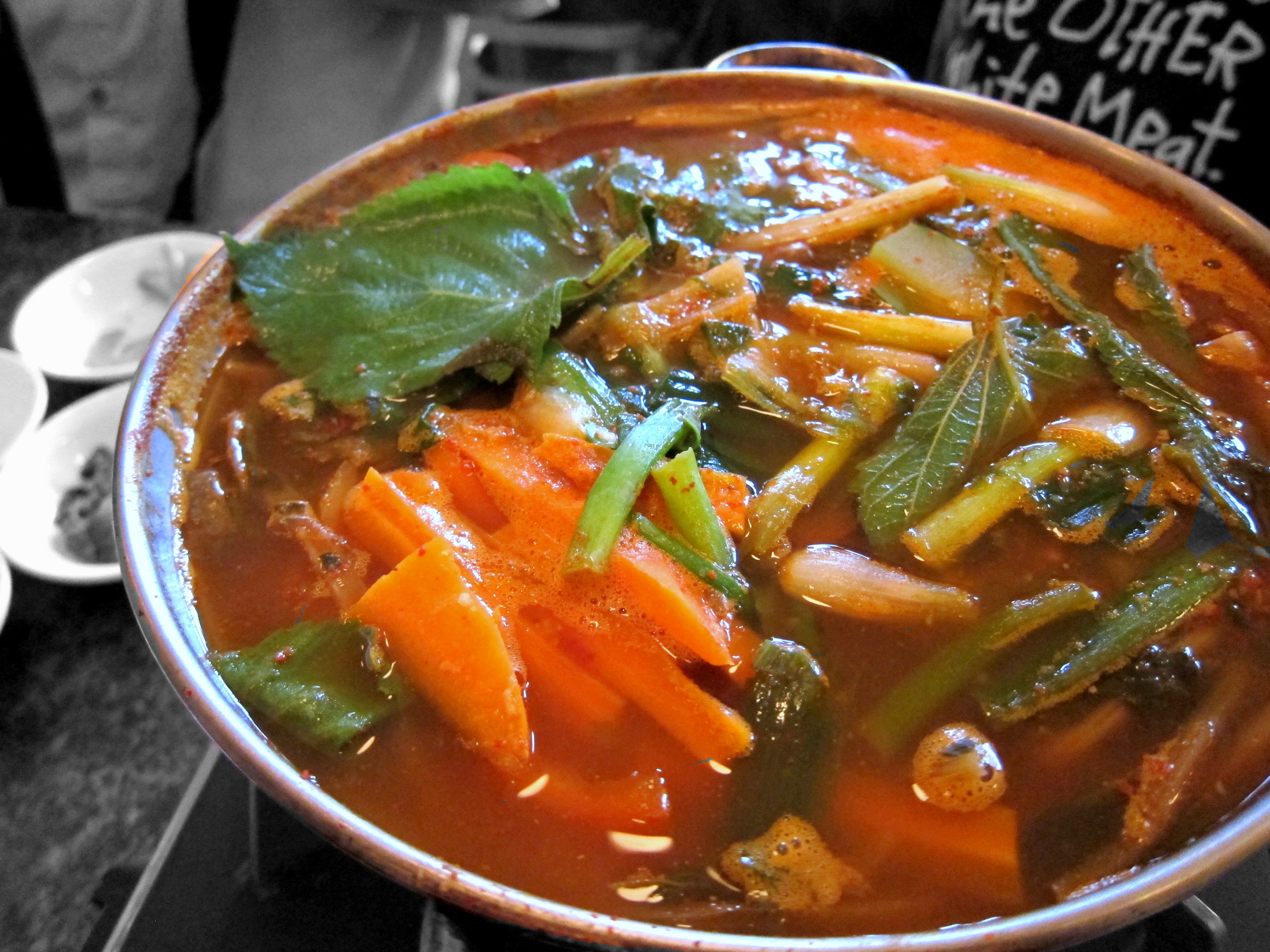
Although my dining company was more impressed with the spicy bubbling kamjatang (감자탕, pork rib stew with potato and greens, $13.99), and although the lack of the sam (ginseng) flavor in the samgyetang did leave me a bit unsatisfied, in hindsight that porridge-like soup, plain and fatty, is a perfect soothing finish to recover the tastebuds, which were numbed from too much chili powder. It also reflects just the character of To Hyang itself. In today’s tumultuous gastrosphere where everything is mixed with everything else and everyone is making a big deal about this or that food movement, this little Inner Richmond restaurant keeps a modest profile, no website, no long line in front (yet), a recent picture of our lady with Anthony Bourdain on the wall. Chef Im keeps her kitchen in order by herself, making food for the patrons the same way she’s made for her daughters, and preserving the “to hyang” (토향), the earthy flavors.

Address: To Hyang (토향)
3815 Geary St
San Francisco, CA 94118
(415) 668-8186
(Now only opened for dinner)

House of Prime Ribs is the solution…

September 13, 2011 By: Mai Truong Category: American, California - The Bay Area, Comfort food

… to my skinniness.

If there’s a place I should frequent to quickly improve my willow look and strengthen my Texas tie, it’d be the House of Prime Ribs on Van Ness Avenue. I might have lived in the Bay for too long and hung out with too many vegetarian, environmentally conscious, ethical-eater friends that sometimes the thought crosses my mind; except I always feel extremely hungry on my vegan days so I don’t think I can give up cookies and ice cream. Thankfully, I also have a number of fleischliebend friends who keep me from straying by putting me face to face with a slab of tender, juicy red meat. All ethical thoughts begone, I helplessly grabbed the knife and fork.

I actually got a gasp, a deep sigh and a disapproving look from my company when I asked that my prime rib be medium. The men asked for “as raw as possible” because they wanted to “taste the meat”. Men… I could taste my medium meat just fine.

The second difference between their dinner and mine is the size. There are four sizes (and a kid size with milk and ice cream, which kinda sounds attractive to me :-P); I got the smallest size, of course. They got the second largest and the largest (the King Cut), which qualify for an extra slice of meat if they so desire after finishing the first cut. The King Cut is 27 ounces, with a bone, wider than my spread hand and roughly one inch thick.

The third difference is the condiment. They smothered their rare prime ribs with horseradish cream sauce, making a dreamy cleansing beef sashimi; I eat my meat pure in its own juice.

The last difference is the accompanying drink. They paired their meal with a red Zinfandel, I paired mine with water. (Who can taste the meat now. :-P)

But that’s about it. There is not much room to wiggle in your order. There’s a choice between creamed spinach and creamed corn, which was added when there was the salmonella scare among the spinaches, but everyone recommended the creamed spinach anyway. Then there’s a choice between baked and mashed potato, and as long as one of us got the baked potato, we got to watch the waiter mix and dump a dollop of sour cream onto the potato in just the amount of time that he says “first we fluff, then we stuff”. I like that I don’t have to think much when I come here, simply set the carnivore loose and enjoy.

But in all honesty the meat isn’t the best part of the meal, it’s the salad with the house celery salt dressing and the vegan breadstick that come before the meat. Besides, I was sufficiently full after the salad.

At the end of the King Cut, Mike skipped the bone (which I think is the best part) and gently downed another slice of beef. I admire the American appetite.

We did do dessert, and if you must ask, the strawberry in the strawberry shortcake was better than the shortcake, which, being a few hairs too dense, was one of two slight disappointments for me at the House. The other is the 45 minutes spent at the bar despite having a reservation. Either the House likes efficiency and semi overbooks, or they’re being considerate enough to give us a wait in preparation for the gargantuan meal. In return, I got to watch the barmaid and reassured myself that I can never be one. 🙂

Address: House of Prime Rib (open for dinner only)
1906 Van Ness Ave.
San Francisco, CA
(415) 885-4605

Dinner with Rau Om

September 06, 2011 By: Mai Truong Category: California - The Bay Area, Japanese, Vietnamese


Early September. Monday night. An adorable meal that combines various elements of two Far Eastern cuisines. The parts harmonize, the mixture represents a cuisine of its own: the kind that you can only find in a home kitchen and enjoy with friends in the living room. We sit on the floor, we share twelve courses plus some, we listen to a record of traditional Vietnamese instrumental, we drink chrysanthemum tea in wine glasses. We talk fooding. We feel luxury, “like the wealthy landlords of the old days” as Dang put it. 🙂 A dinner with Oanh and Dang, the Rau Om lady and man, is fine dining without the frilly designed plates, the crisp white napkins, and the pompous lighting. Each of the twelve courses has just enough twists to wow us while retaining enough familiarity to comfort us. But what I like the most about Rau Om creations is the way Oanh and Dang use one country’s familiar ingredients in the other country’s familiar dish, surprising (at least) me with the compatibility and similarities between the two cuisines. It’s the fusion of the authentics.

My ladies and gentlemen, the September 5th Japanese-Vietnamese (+ a little Korean) dinner by Hoang-Oanh Nguyen and Linh-Dang Vu-Phan of Rau Om:
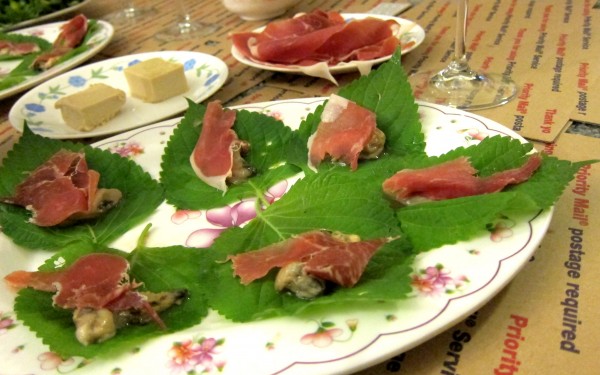

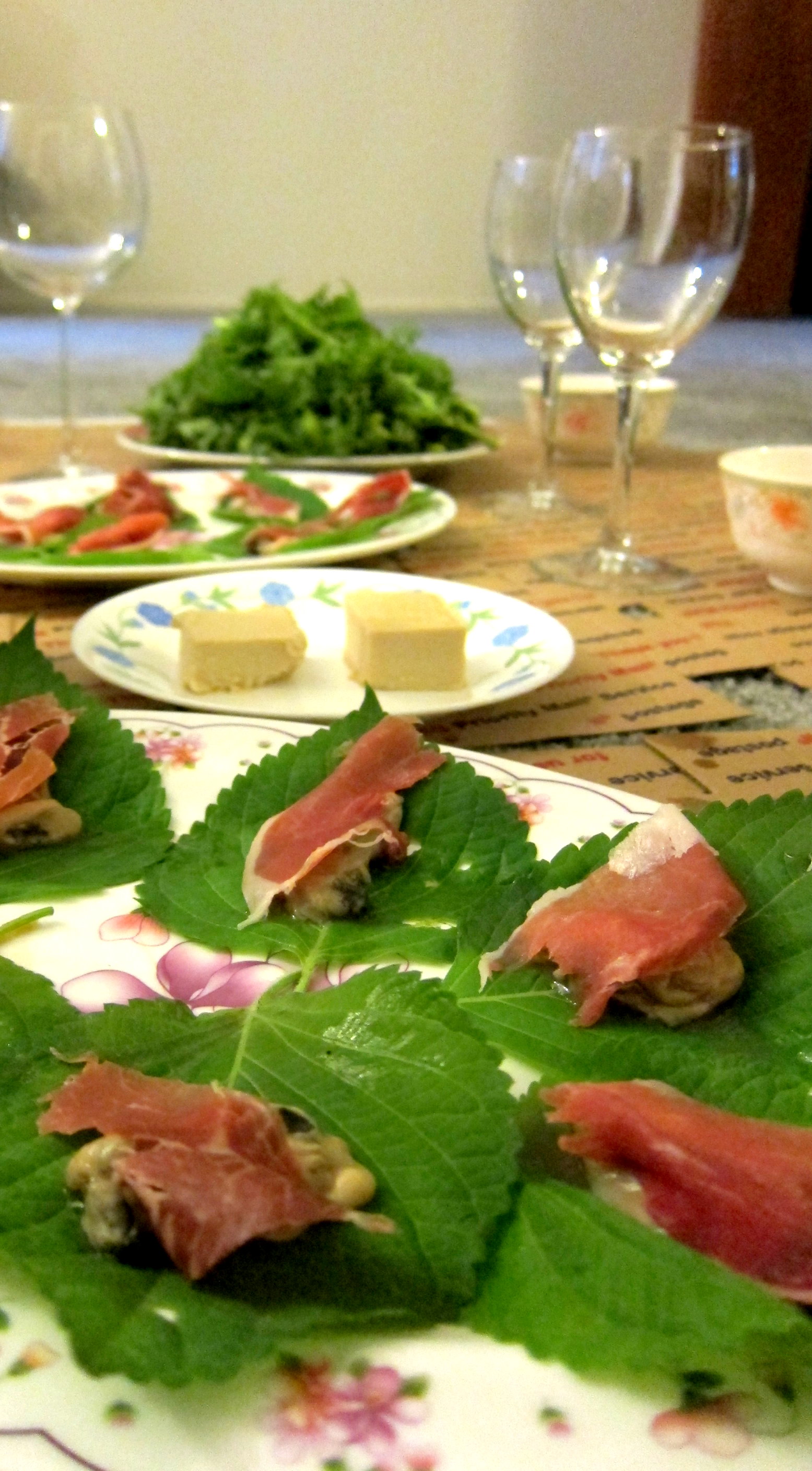
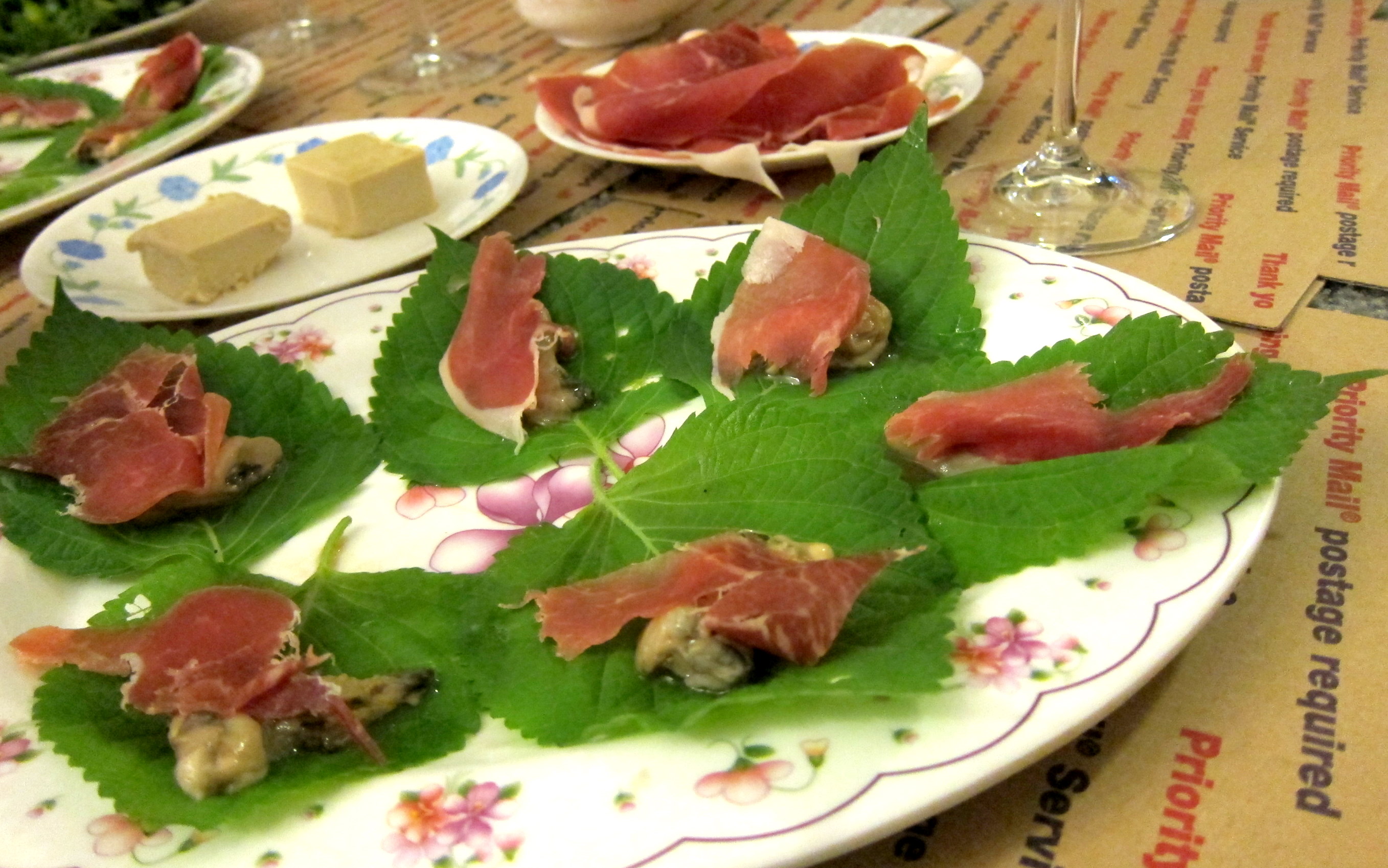
On the foreground is No. 1 – Bossam-styled Oyster con Prosciutto: the oyster was low-temp-cooked (read: “semi-cooked”) at 48°C for 20 minutes in bossam (보쌈) broth in a closed jar, rendering a literally melt-in-the-mouth texture while its fishiness is subdued by the tangy sesame leaf and the briny prosciutto.
In the background are two blocks of No. 2 – Tofu Misozuke, tofu wrapped in miso for at least 2 months. It’s creamy, briny, accented with a herbal afterthought. It’s cheese, but vegan, and better than cheese because the taste evolves in your mouth. We were also introduced to Rau Om’s experimental Kombu Tofu Misozuke, tofu misozuke wrapped in miso and kelp for a less salty but more aged taste.
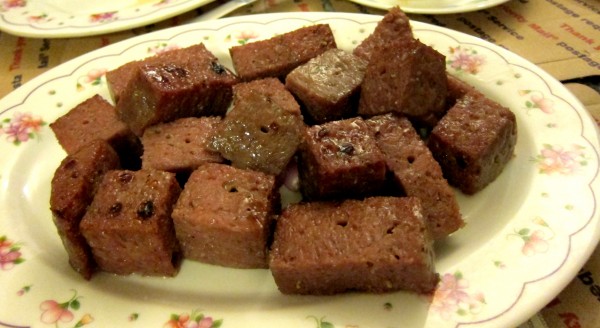

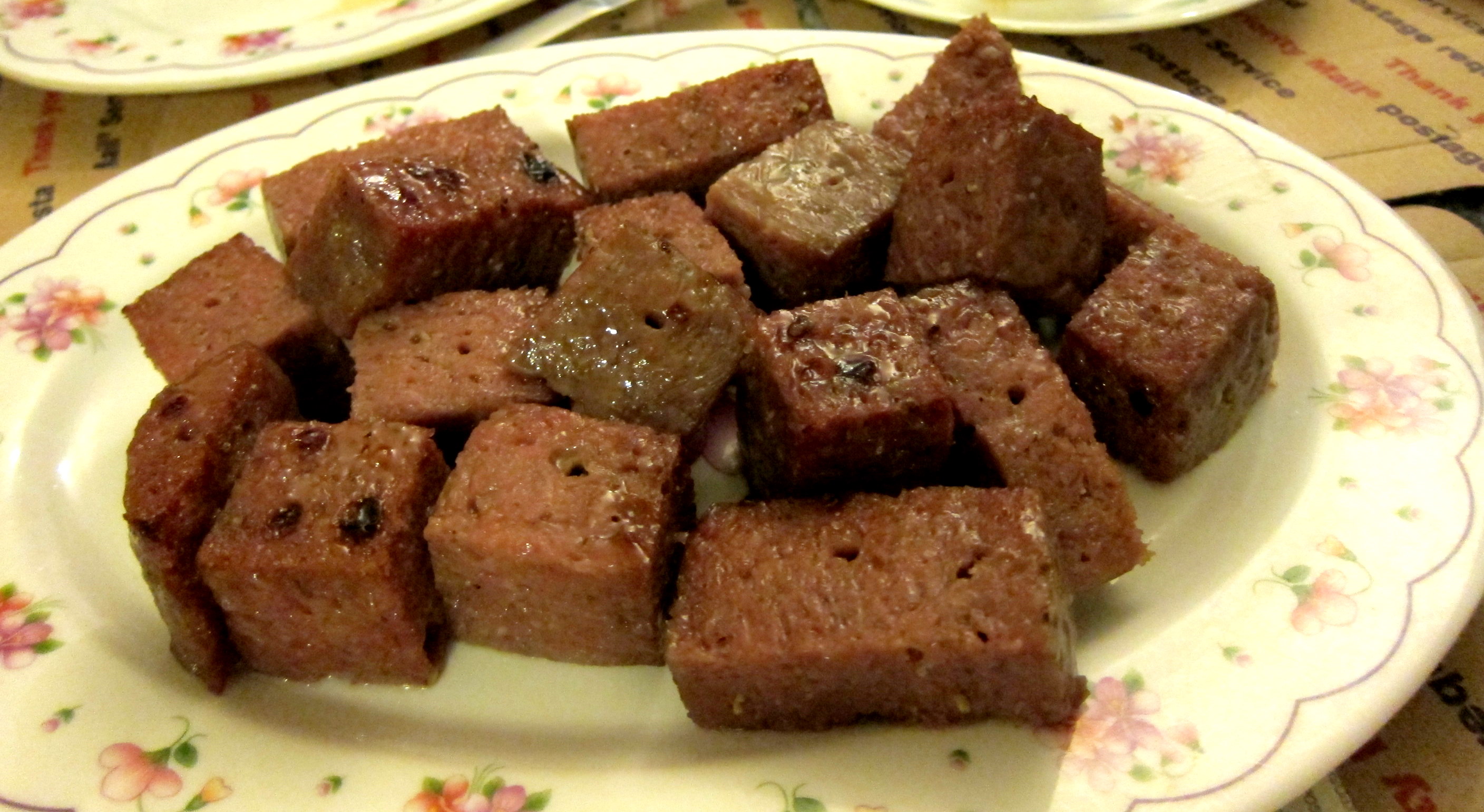
No. 3 – Grilled Lamb Nem. I’ve tried Rau Om beef nem before, fresh and fried, and this lamb version sings a better tune for me. The texture is smooth (they use less pork skin here), grilling keeps them moist, both the lamb scent and the sourness of cured meat are subdominant.
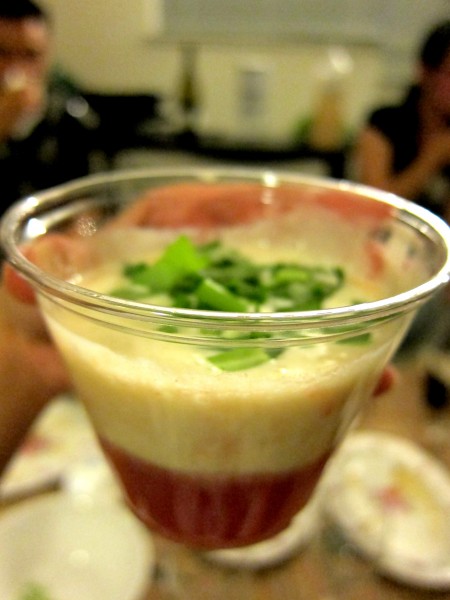

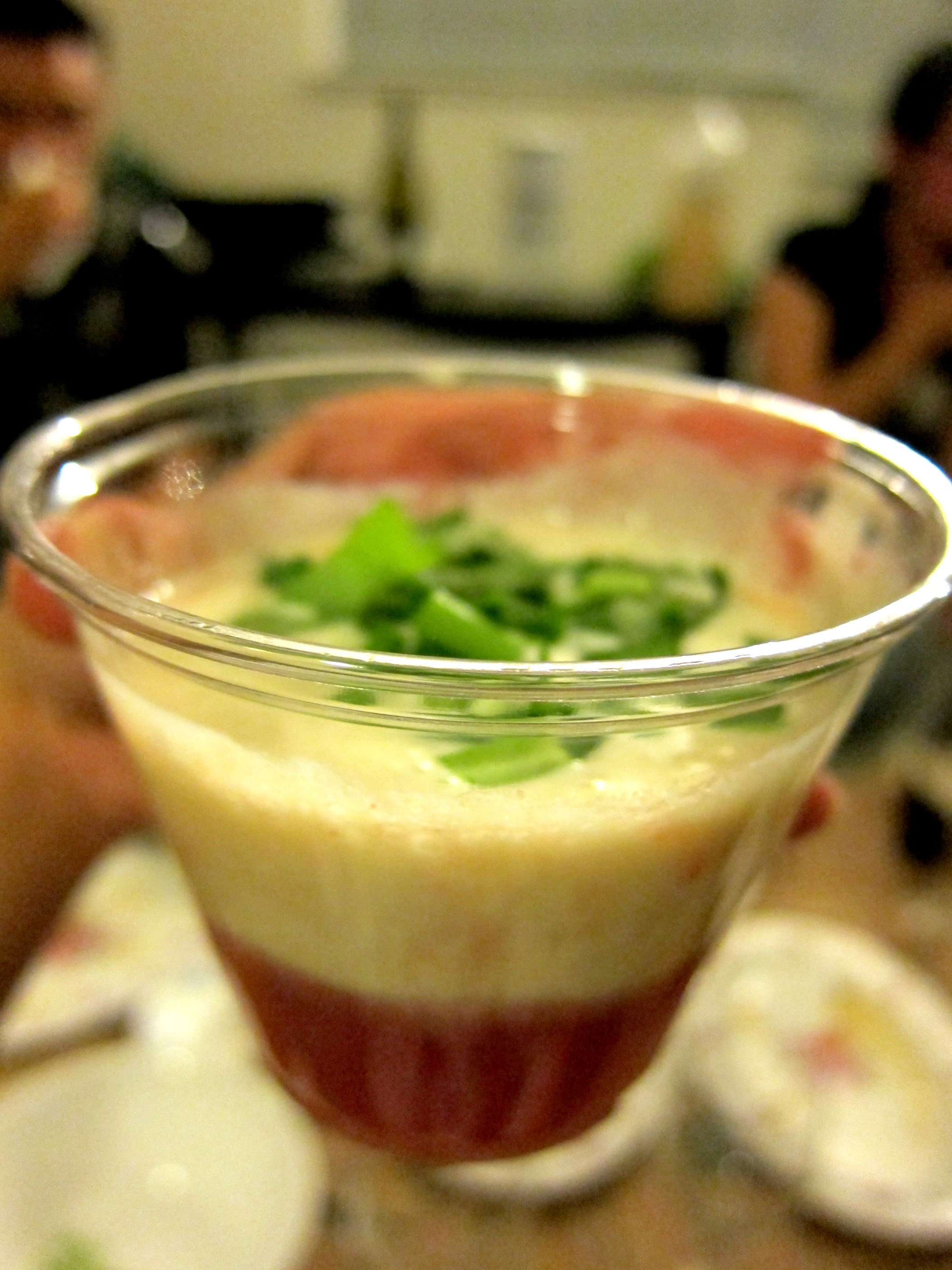
The intermezzo No. 4 – Chilled Tomato Soup topped with Yuba Cream. The frothy soy based cream makes all the fireworks. This soup is the epitome of refreshment. I wanted more.
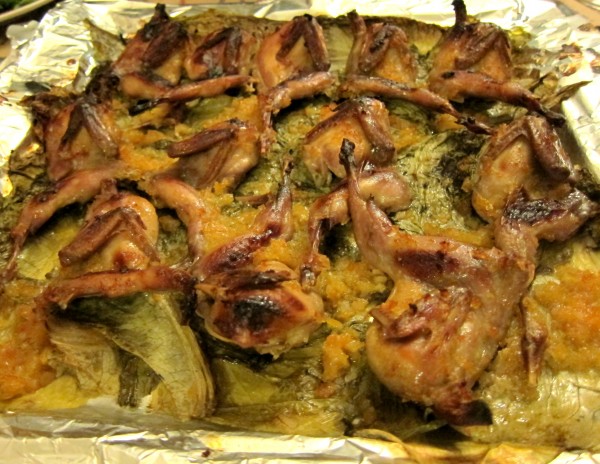

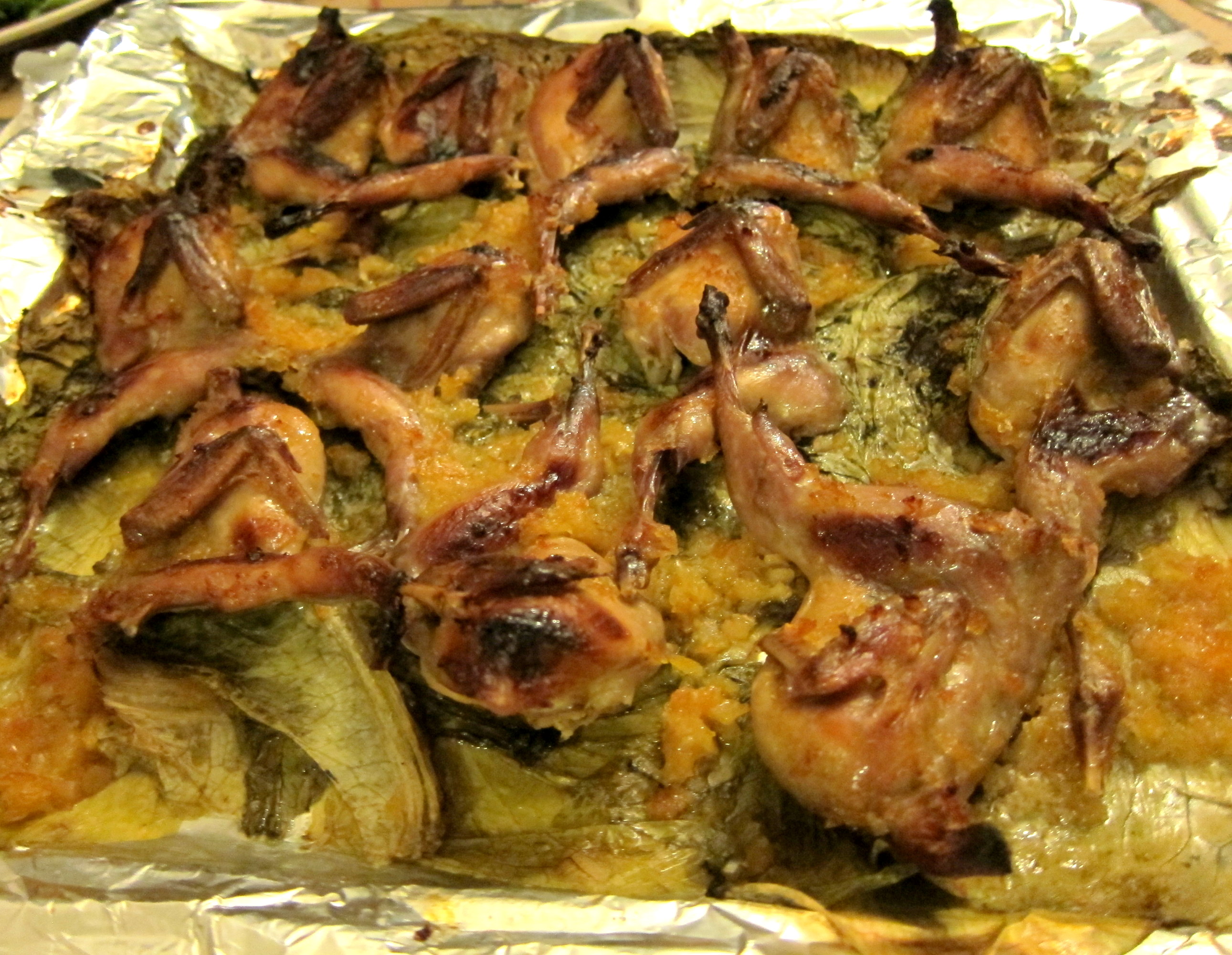
No. 5 – Salted Kumquat Quail, grilled on a bed of lettuce to keep it juicy. The kumquat scent so subtly infuses the bird that all we can feel is a clean herbal flavor, not salty, not fatty, just l(r)ight.
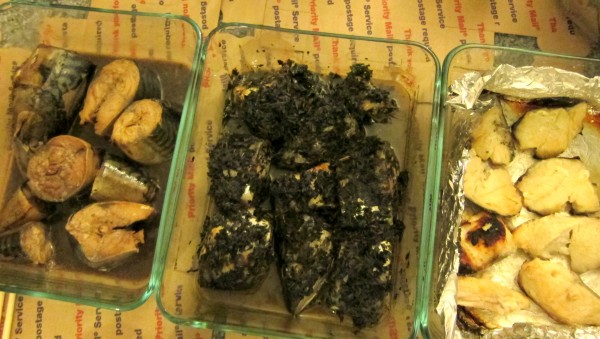

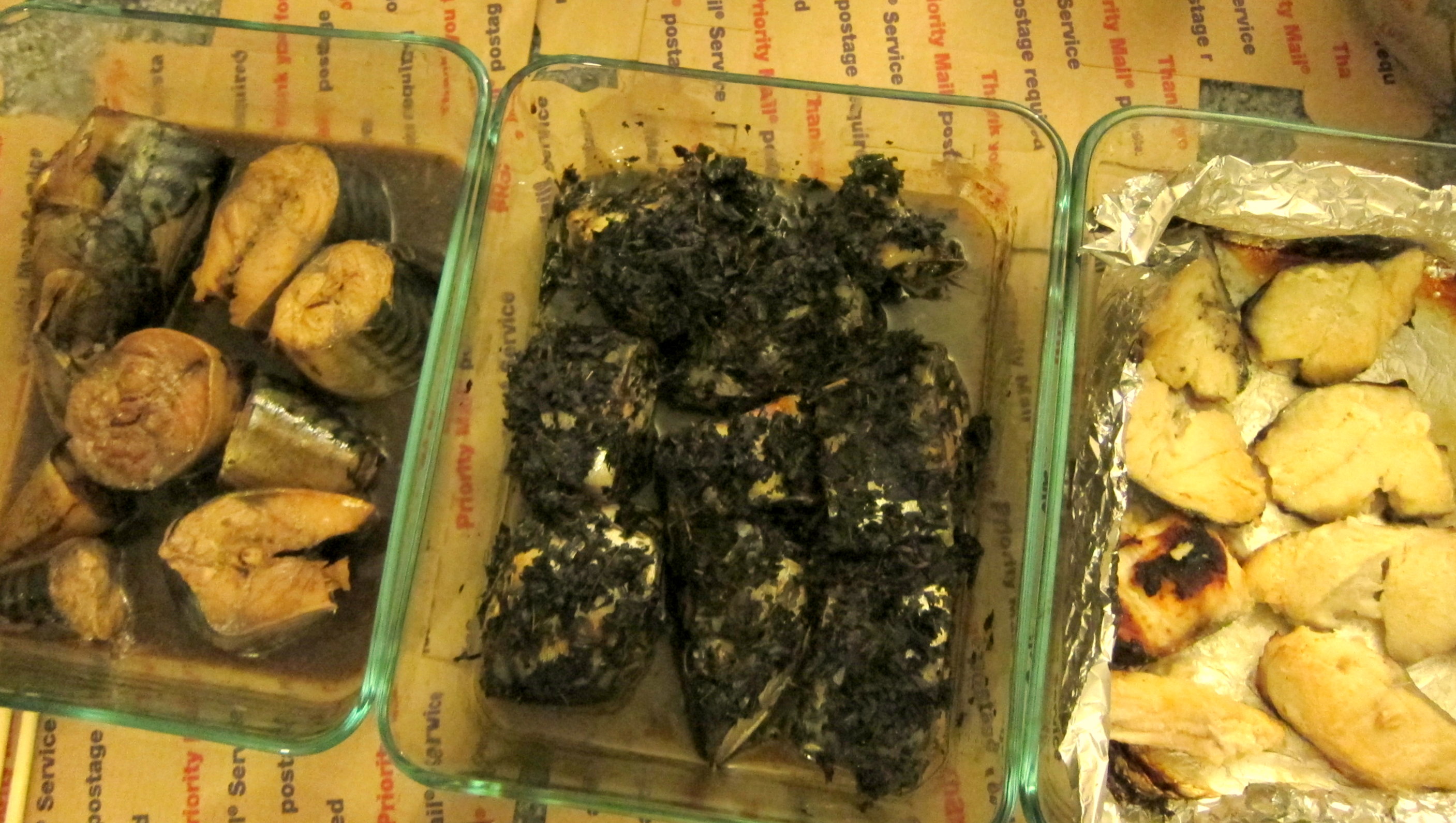
From right to left, because we’re going Japanese, No. 6, 7, and 8 – Sake Kasu Grilled Cod, Mackerel braised with Green Tea Leaves, and Mugicha Mackerel (mackerel braised in barley tea). The braised mackerels, minus the tea, are done in the traditional Vietnamese way (cá kho) with coconut water, sugar and fish sauce. The green tea leaves add a sharp crunch for textural contrast, and once again, the herbal touch dominates the tastes. Personally, I have a soft spot for a lot of coconut water and sugar in a braised dish, but that might prevent the tea from shining through in this case, and at least one of us ranked the braised mackerels top of the list, so Oanh and Dang must be on the right track. 🙂 Tea aside, the fish also got served with the best pickle ever: green cantaloupe in a mild chilipepper and vinegar sauce.  The pickle zest makes the sweetest pair with the mugicha mackerel plumpness.
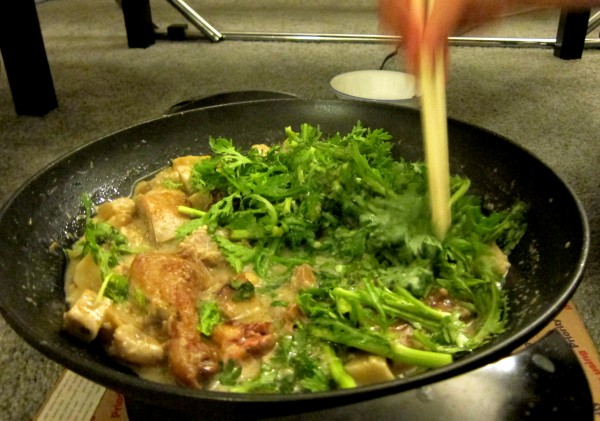

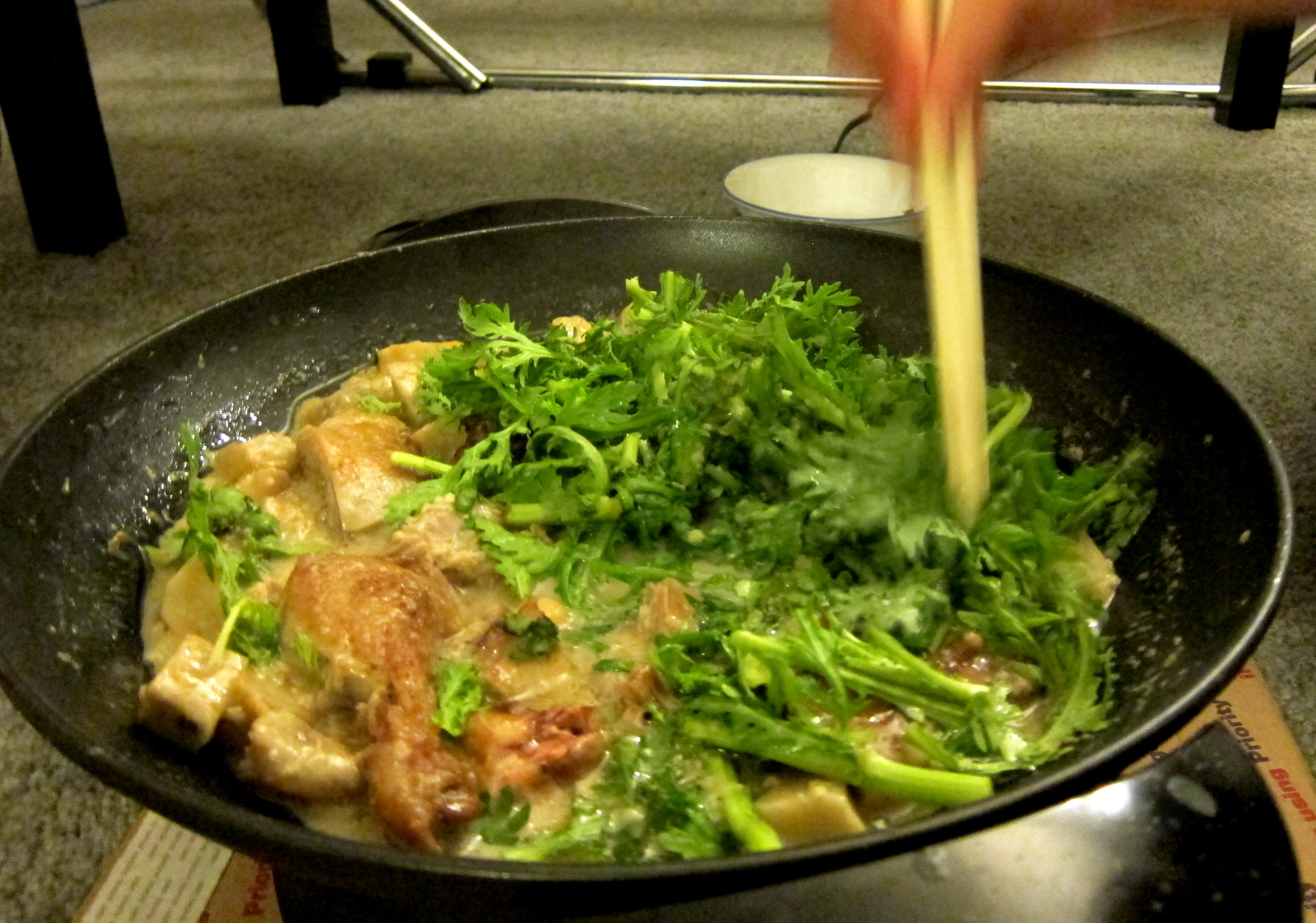
No. 9 – Tofu Misozuke Duck: a twist on the Vietnamese lẩu vịt nấu chao (duck hotpot with fermented tofu), where the chao (fermented tofu with rice wine and salt) is replaced by the tofu misozuke, which is less salty and biting than chao but still as rich. I love the chrysanthemum greens (tần ô or cải cúc) soaked in this thick sauce.
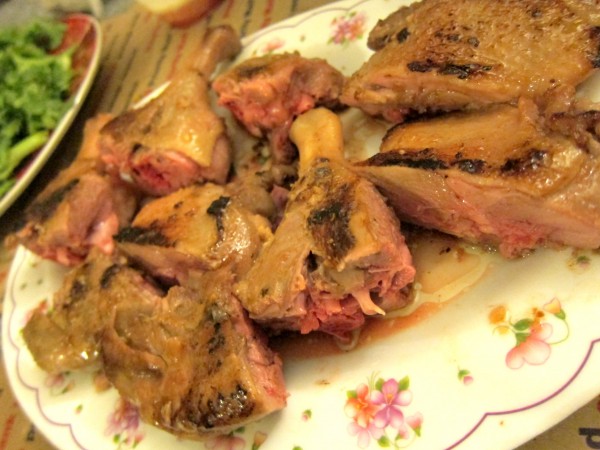

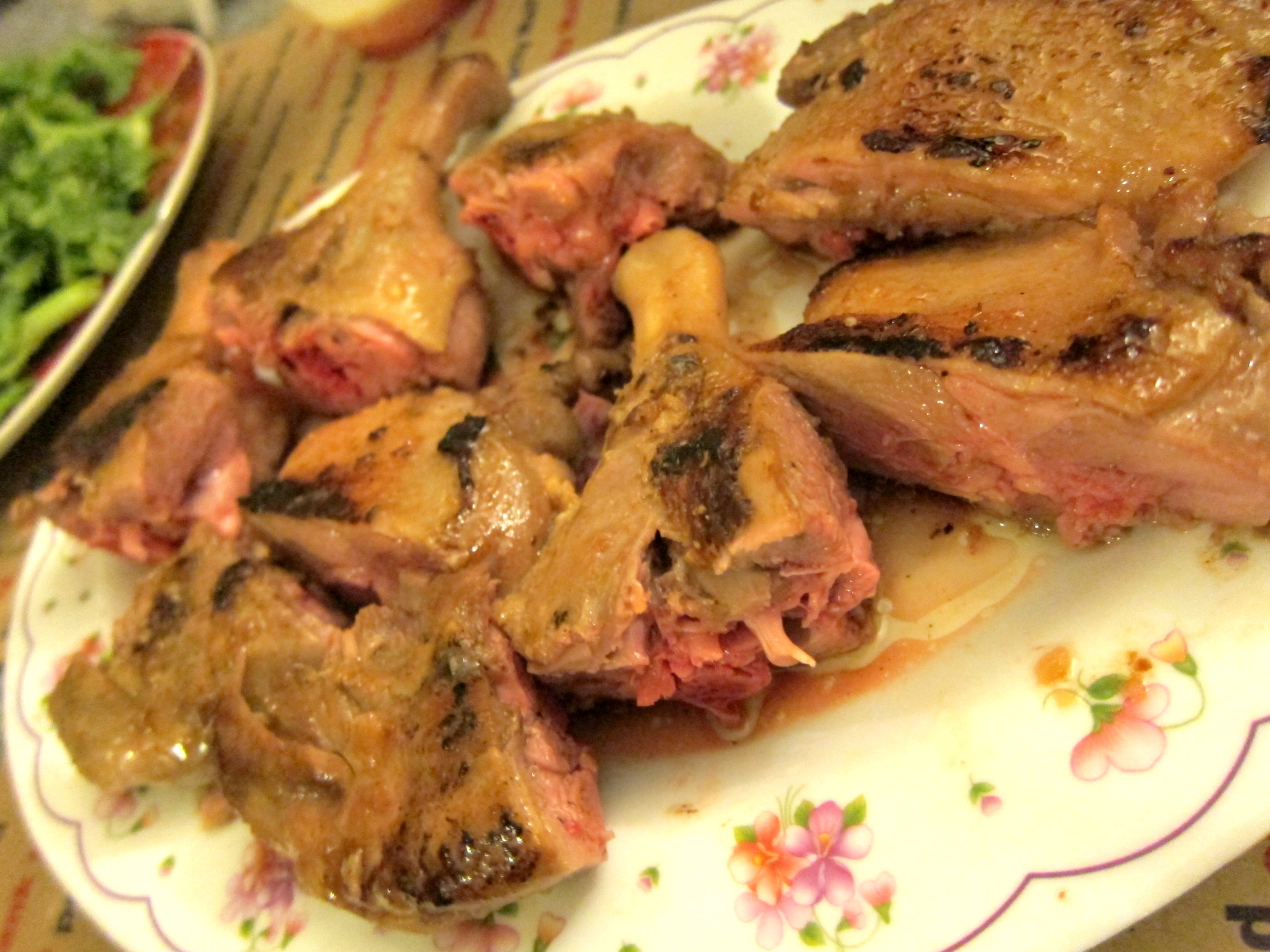
No. 10 – Sous-vide Chao Duck: this time the duck is marinated with chao and cooked sous-vide until pink, then quickly pan-fried for a charred skin. (Side note: The Western palates are accustomed to treating duck breast like steak, but the Vietnamese never eat duck anything less than well done.) Biting into these succulent thighs and legs is like falling onto a giant bed of pillows, y’know wadda mean? 😀
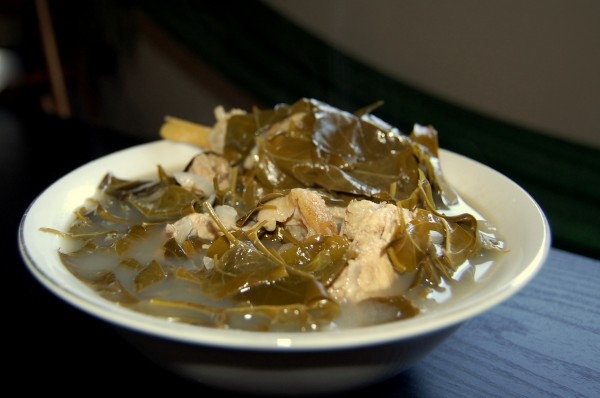

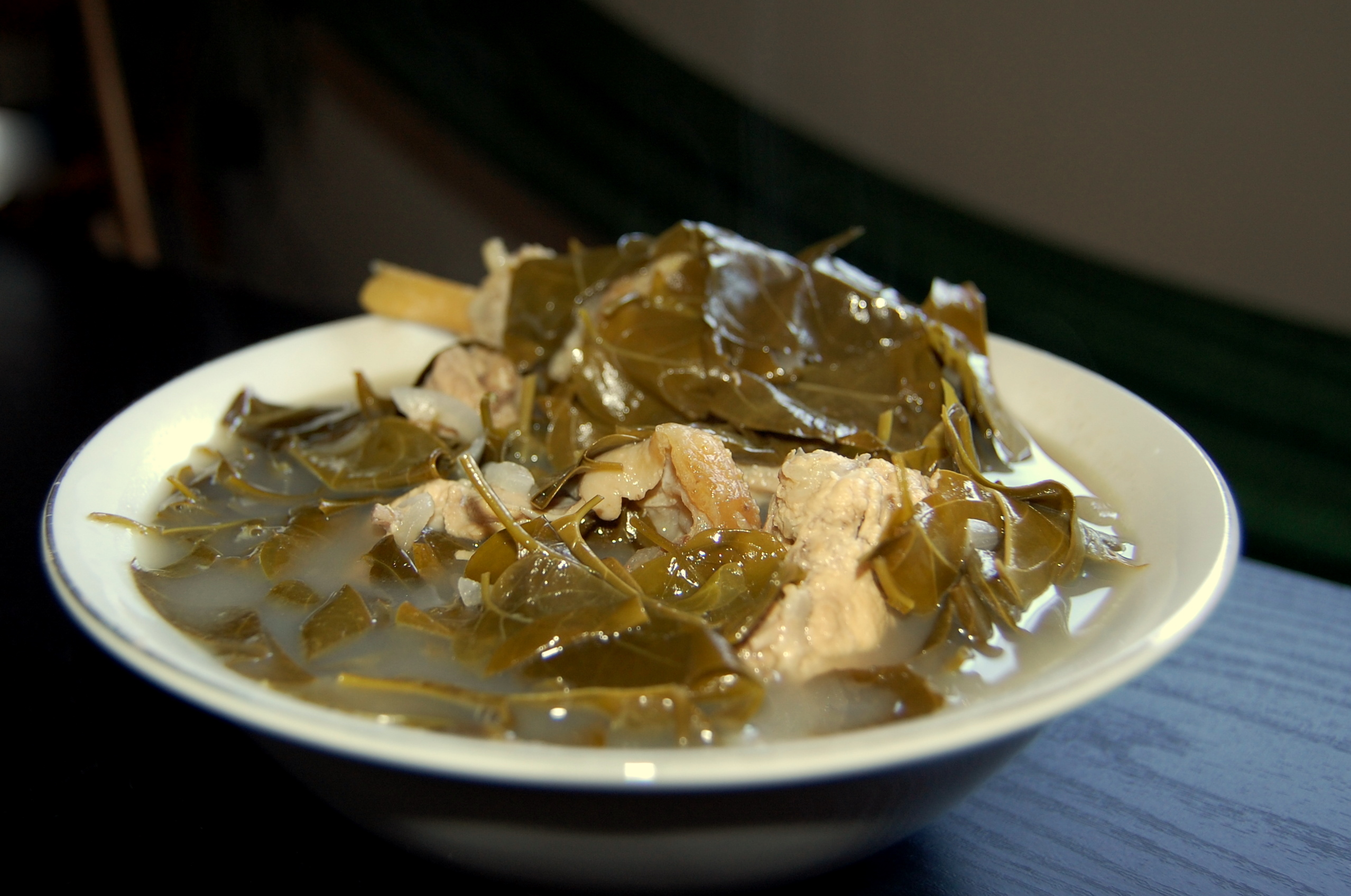
No. 11 – La Giang Sour Soup with chicken (Picture courtesy of Rau Om). Lá giang is the leaf of the Aganonerion polymorphum plant, which has a gentle sourness (as opposed to the piercing sourness of tamarind or dracontomelon (sấu) that is typically used in the Vietnamese canh chua). Ending the meaty main courses with a refreshing sour soup is brilliant, and this simple bi-gredient sour soup is pure genius.
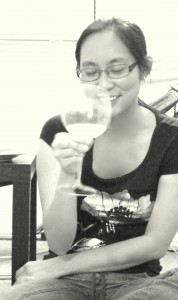
Oanh Nguyen, the mastermind behind the elaborate dinner

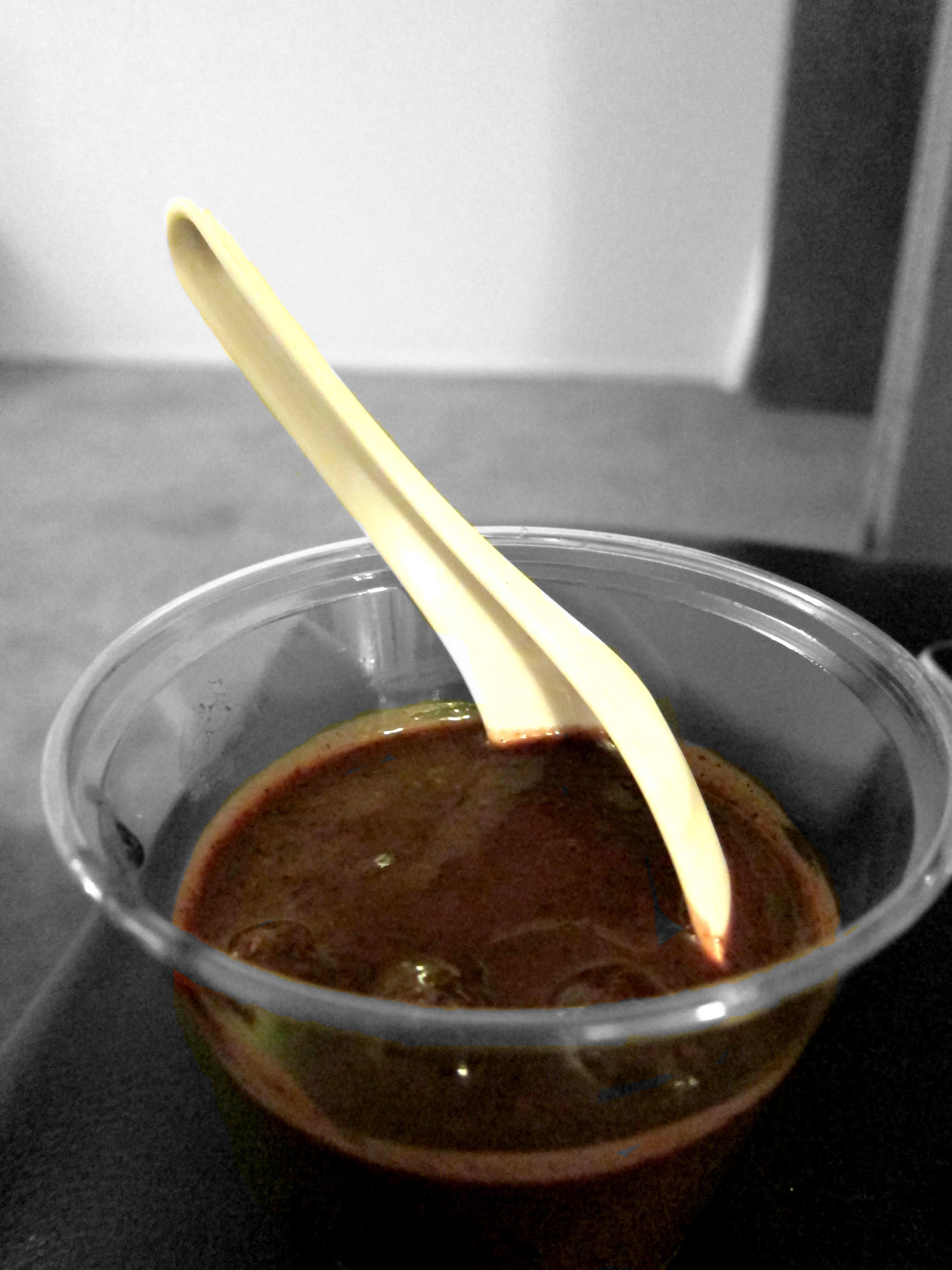
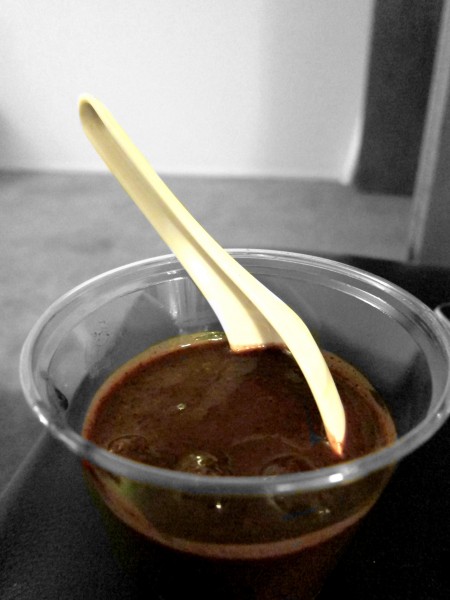
No. 12 – Black Amazake served warm: Rau Om signature Japanese dessert made from Vietnamese black sticky rice (nếp than). The sweetness and the fragrant come directly from the cooked rice, no sugar is added, no grated ginger for flavor, a couple of dried longans garnish the amazake for texture. By itself, the amazake has a smooth porridge-like consistency dappled with the occasional stiffened rice bits.

We pair the meal with chilled sikhye (식혜) and red wine; for the postlude come fresh jujube and lychee to accompany whole chrysanthemum tea and homemade salted kumquat drink. How could we go home when such goodness keeps on flowing?

On one hand, I can’t wait for the day Oanh opens her first restaurant and I’ll get her autograph. On the other hand, I won’t be able to enjoy these relaxing dinners with Oanh when she’s busy with a restaurant. The selfish Mai feels torn. 🙂

——————————————————-
For detailed recipes, visit the Rau Om blog.

——————————————————-
This post is our contribution to the September Edition of Delicious Vietnam, hosted by Phuoc from Phuoc ‘n Delicious. 🙂

Namu and Authenticity

September 04, 2011 By: Mai Truong Category: California - The Bay Area, Korean, Opinions, Won't go out of my way to revisit


My Lucky Peach finally made it home. It took only one month from the time I placed the order, and just when school started and me getting buried beneath ten miles of homework. But I’ve taken a peek every now and then at its colorful albeit tiny pictures of ramen (this first issue is all about ramen) and gorged in the fourth article while waiting for the bus. This is the bad thing about food magazines (or anything serial and food related, except cookbooks): it’s so easy to read it’s addictive, I can’t even fall asleep reading it, then I get sleep deprived. So I never buy them. But Lucky Peach is different: it’s recommended by a friend, subsequently ordered by two other friends, all of whom have highly experienced and respectable tastes; what I can do? I haven’t finished the entire thing, but the fourth article is a good one. Good enough to console myself for surrendering to peer pressure. In hindsight, it’s one of the highlights of the lunch we shared at Namu. (Not that the magazine is in any way related to Namu, Rob just showed it to us while we were eating at Namu.)

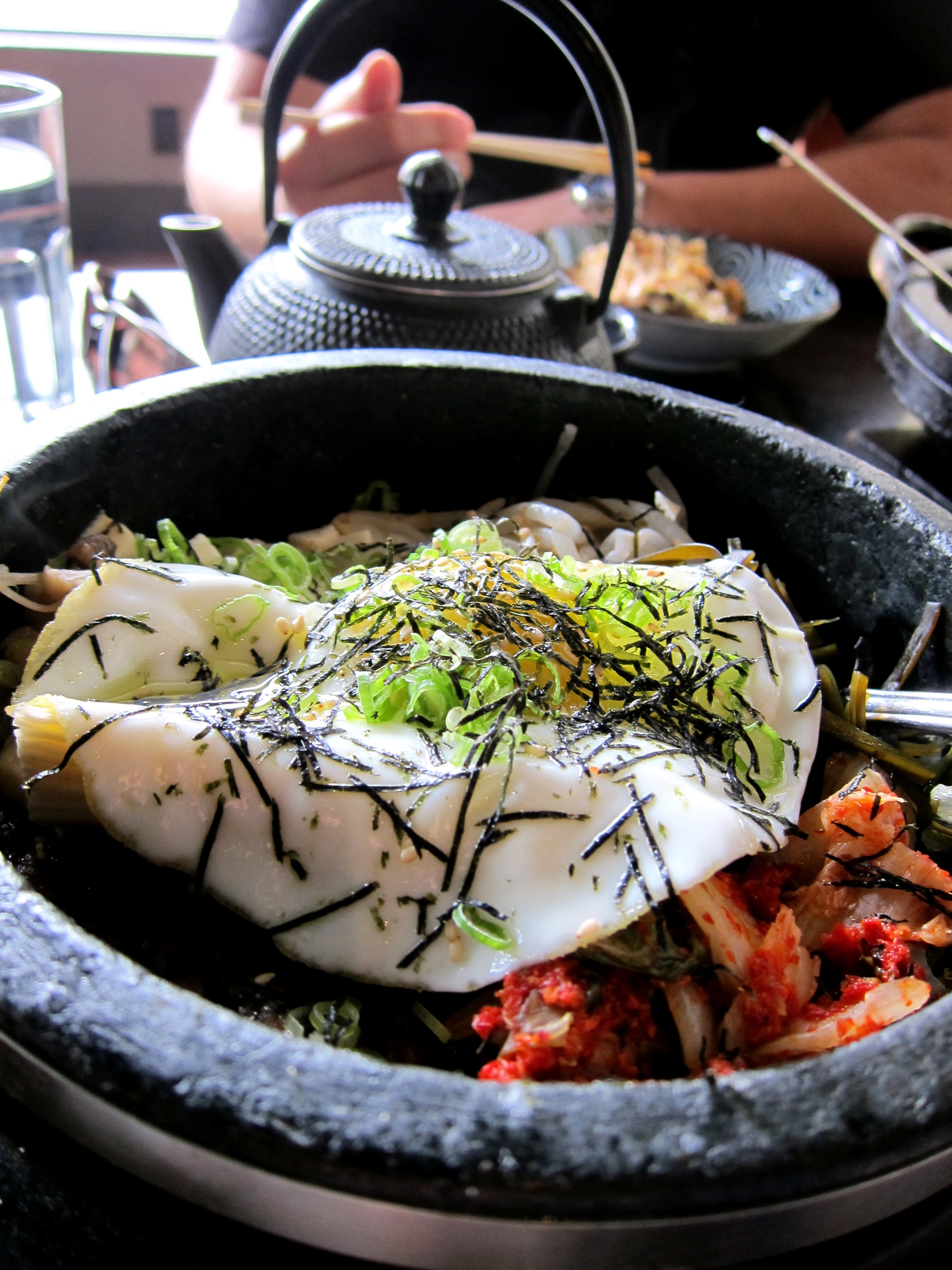
The other two highlights were some kind of pickled onion and the gochujang (고추장) for the bibimbap. The pickled onion, the best of the four kimchi/pickle varieties, tasted crisp, thorough, and to the point; the gochujang was nutty with a light fruity hint. Namu also had the presentation going for it: from the sparsely spaced tables tucked along the walls to the petite tea cups and blue-and-white serving bowls, the whole place uttered cuteness. The main courses, however, sparked more discussion than compliments among us four, mainly surrounding authenticity.

Of course, Namu is not about “authentic”. It is Chef Dennis Lee’s “cutting edge new California” interpretation with a Korean influence, evident by the appearance of english muffins and tortilla alongside kimchi relish. Depending on your definition of authenticity, authentic Korean food may be hard to come by 8000 miles from Korea, but the authentics can evolve (as they have always been), and I’m all for fusing ingredients to spread the scope of an ethnic cuisine. In fact, I wish Namu had fused more ingredients together. It’s not the english muffin, the tortilla or the chorizo that made me skeptical looking at the menu, it’s the lonely and repetitive incorporation of kimchi in almost every single dish.

There is a whole lot more to Korean food than kimchi, and baechu kimchi at that. Simply adding the fermented cabbage on a hamburger bun or laying it next to the steak doesn’t give the dish any more Korean background than adding sausage making it German. Namu would be more accurately described as “cutting edge new California with kimchi”.


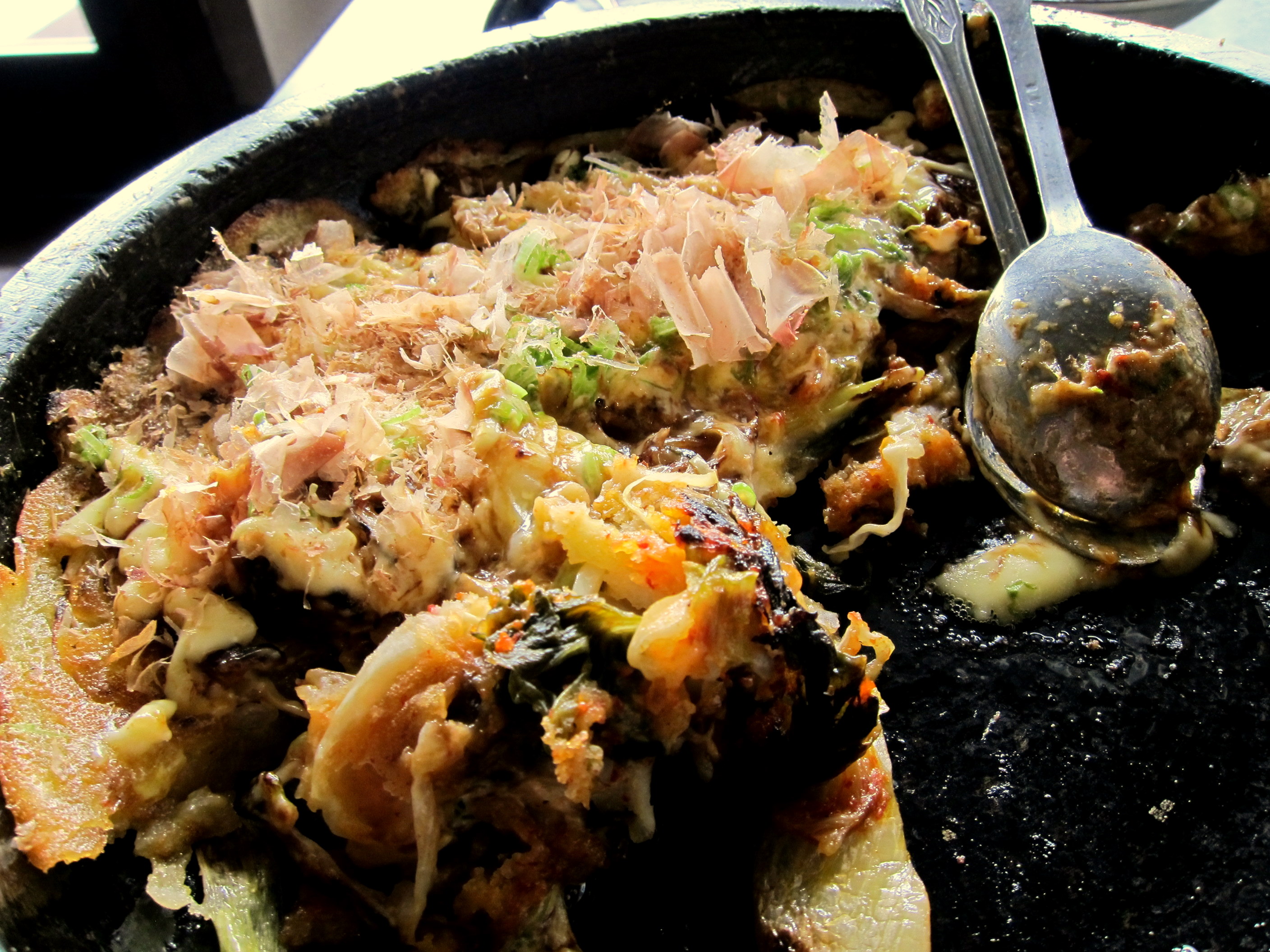
The other unsettling point for me was the available choices. We went as Korean as we could, which was easy because there were only two Korean dishes on the menu, and got kimchi fried rice, dolsot bibimbap and two sizzling okonomiyaki, not because it sounded the most interesting but because Japan is right next to Korea. Now, bibimbap, although loved by many non-Koreans and as representative of Korean menus in America as McDonalds representative of America outside America, seems a bit lackluster as a “restaurant” item. It’s not wild enough to be “California”, and it’s not complicated enough to be “Korean”. Not to mention that our hostess mixed the rice so much for so long that there was barely any time left for the rice crust to form, or perhaps the dolsot wasn’t hot enough. The kimchi fried rice didn’t convince me. The okonomiyaki, made Korean by the kimchi touch, erred on the salty side but was arguably the best piece of the three.

Would we have had more excitement had we tossed the Korean concept and gotten the loco moco or the egg sandwich? But without the Korean concept, what makes the Namu brunch different from the other hundreds one could get in the Inner Richmond? I’m not sure.

SF SF Fest

August 21, 2011 By: Mai Truong Category: California - The Bay Area, Festivals


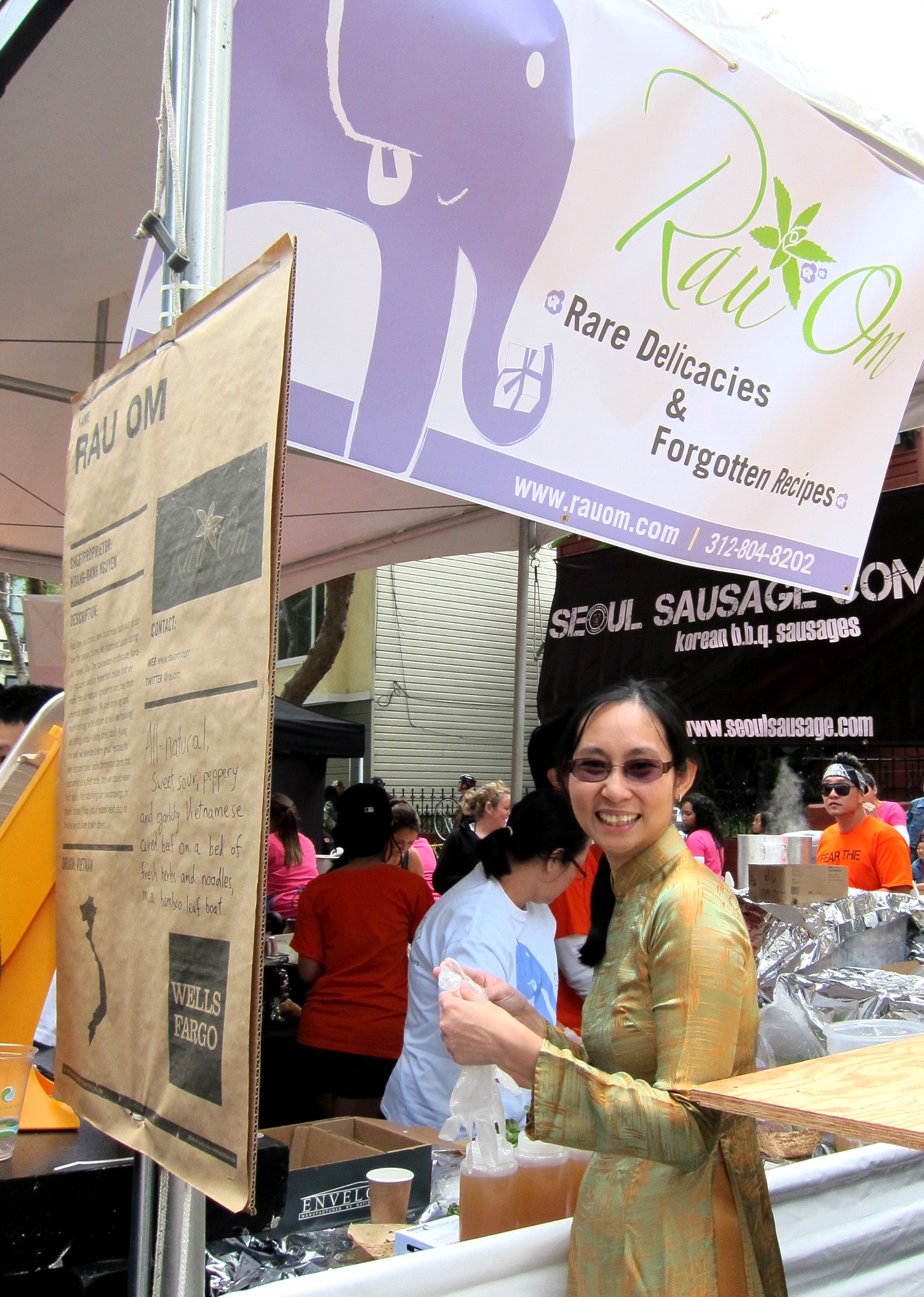
Here’s the tongue twister of the day: SFSSFSFFFS, or “Saturday Food Snippets at San Fran Street Food Fest on Folsom Street“. I can’t swim, but I dived into this sea of people in the name of friendship: to meet fellow food bloggers Oanh and Dang of Rau Om for the first time. There was much struggle. Lots of aggressive walking, cutting through undeterminably long lines, being repeatedly separated from comrades, and flavoring my dress with beef juice. But there were joyous moments too. One was when I found Bob and Rob at the Commonwealth booth, sipping a watermelon gazpacho. Another was when some lady gave me her extra watermelon gazpacho. Lunch time started.


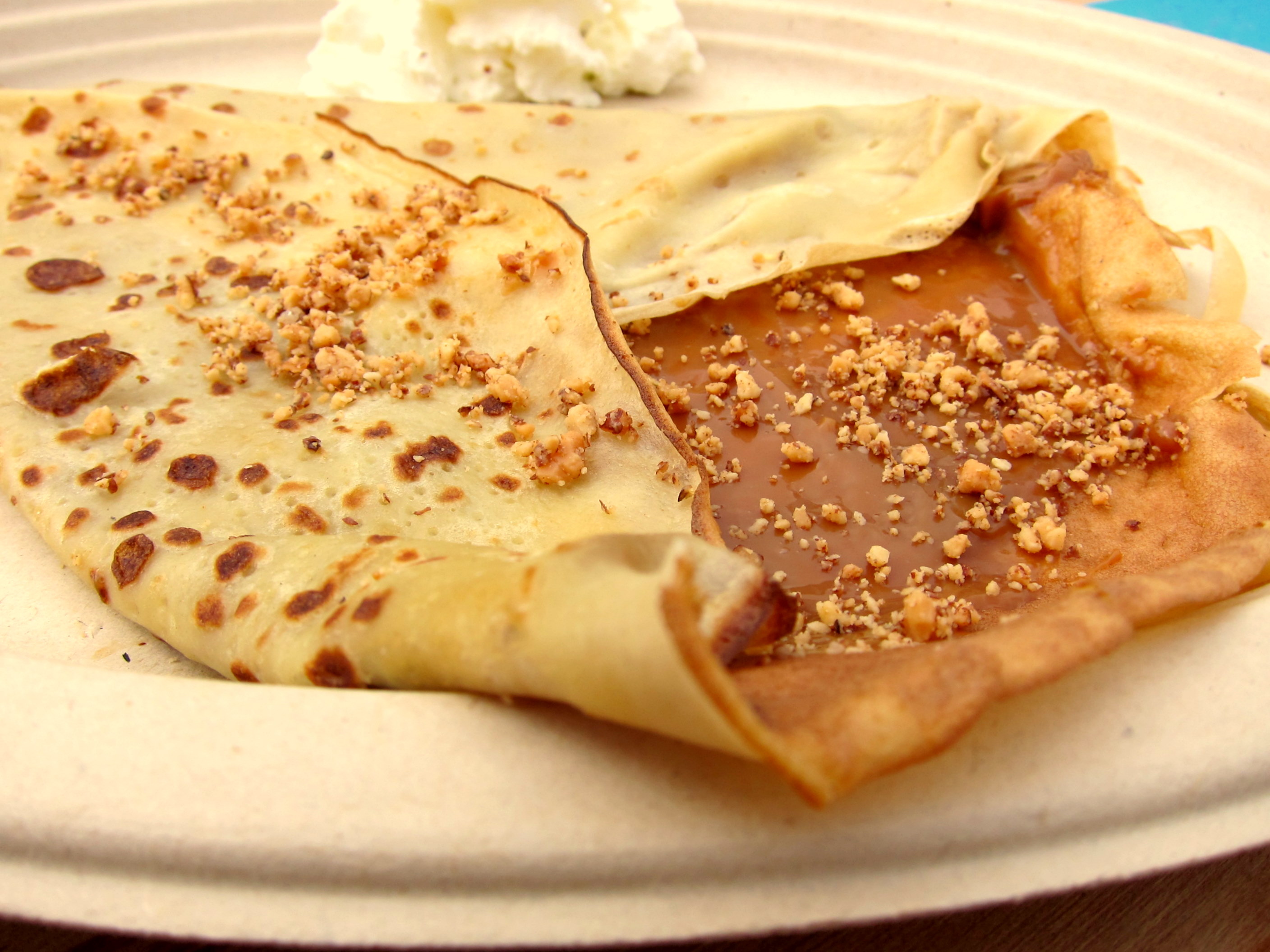
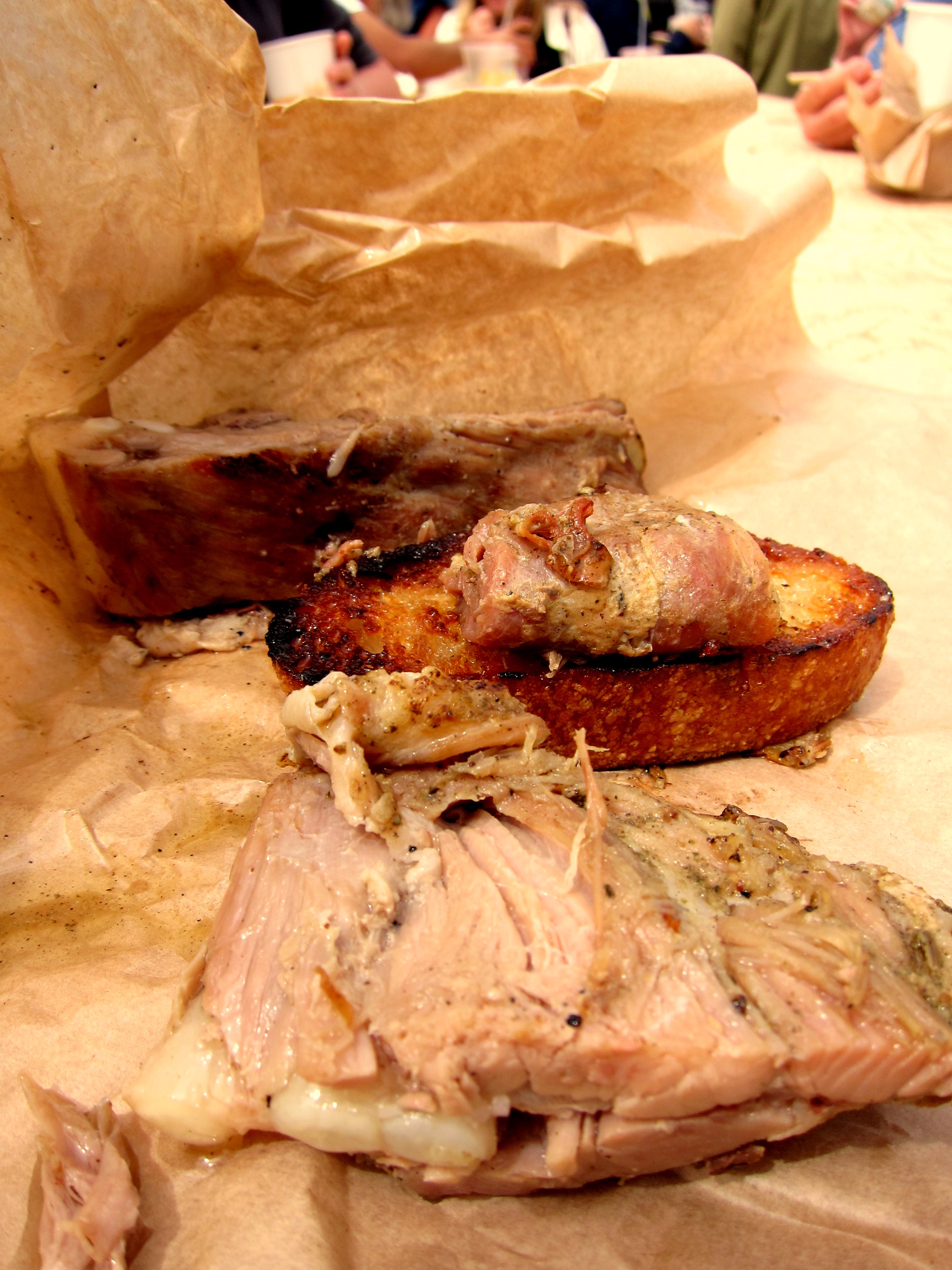
Or so we thought. Thirty minutes in the sea of people and no food except for the gazpacho, I told Yookyung that the bloody long queues were our destiny and it would be fatal trying to look for a stall with no line. Seconds after, Yookyung found Delicioso Creperie, which had no line. Defeated, I hopped into the short line of its adjacent neighbor, Il Cane Rosso, and succumbed to the $8 Tuscan-style grilled spareribs & garlic bruschetta.


The spareribs dripped on me. My dress is now salty and fatty. But I liked the cartilage still. The bruschetta was too soaked in the salty fatty meat grease, filling but unimpressive. Victoria voted Yookyung’s choice, the crepe con cajeta ($5), the better of the two for good reason: sweetened caramelized milk with peanuts and cherry whipped cream. So far, one thumps up, one thumbs down (four thirds thumbs up if we count the gazpacho because only one of us liked it).

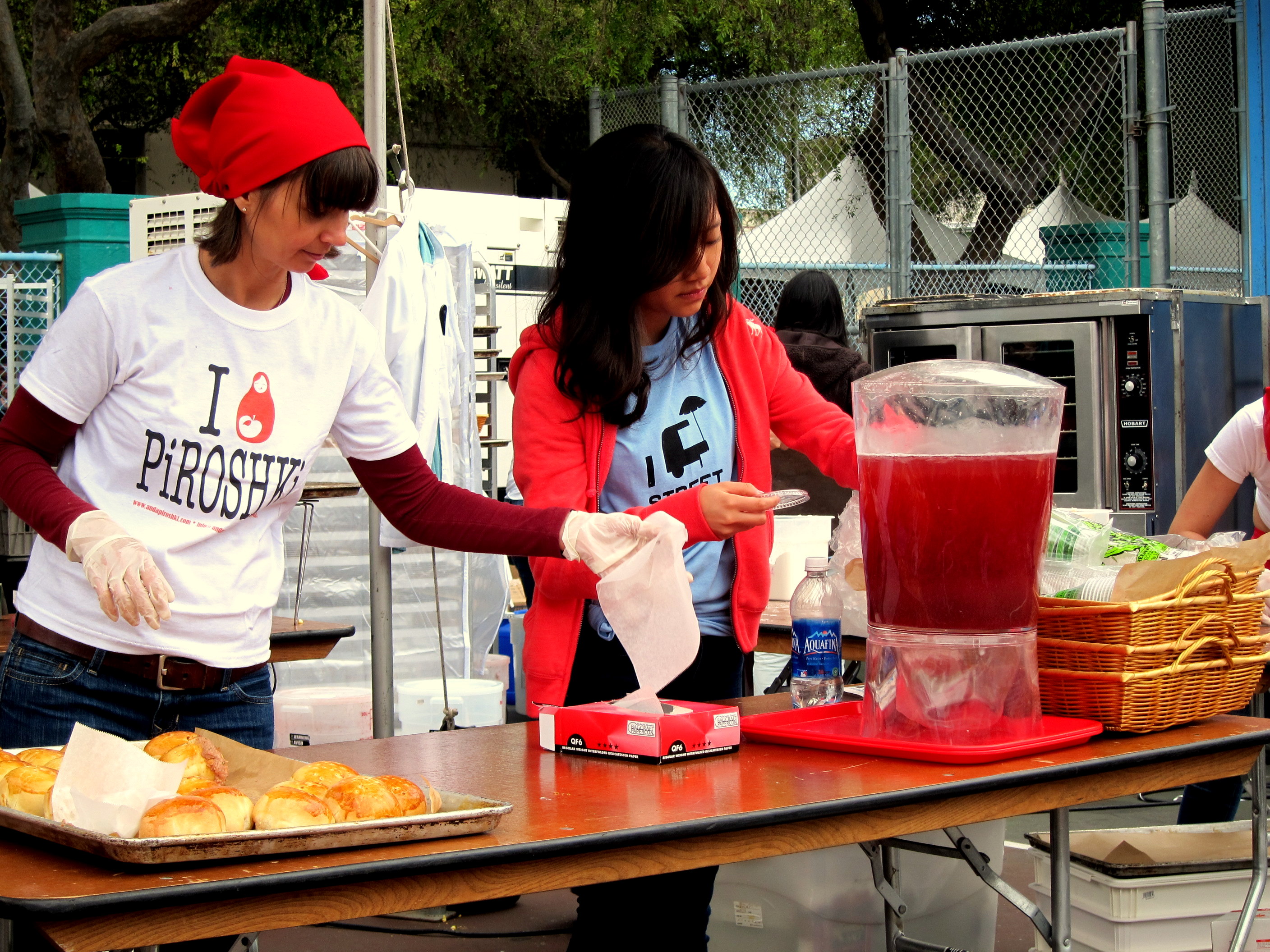
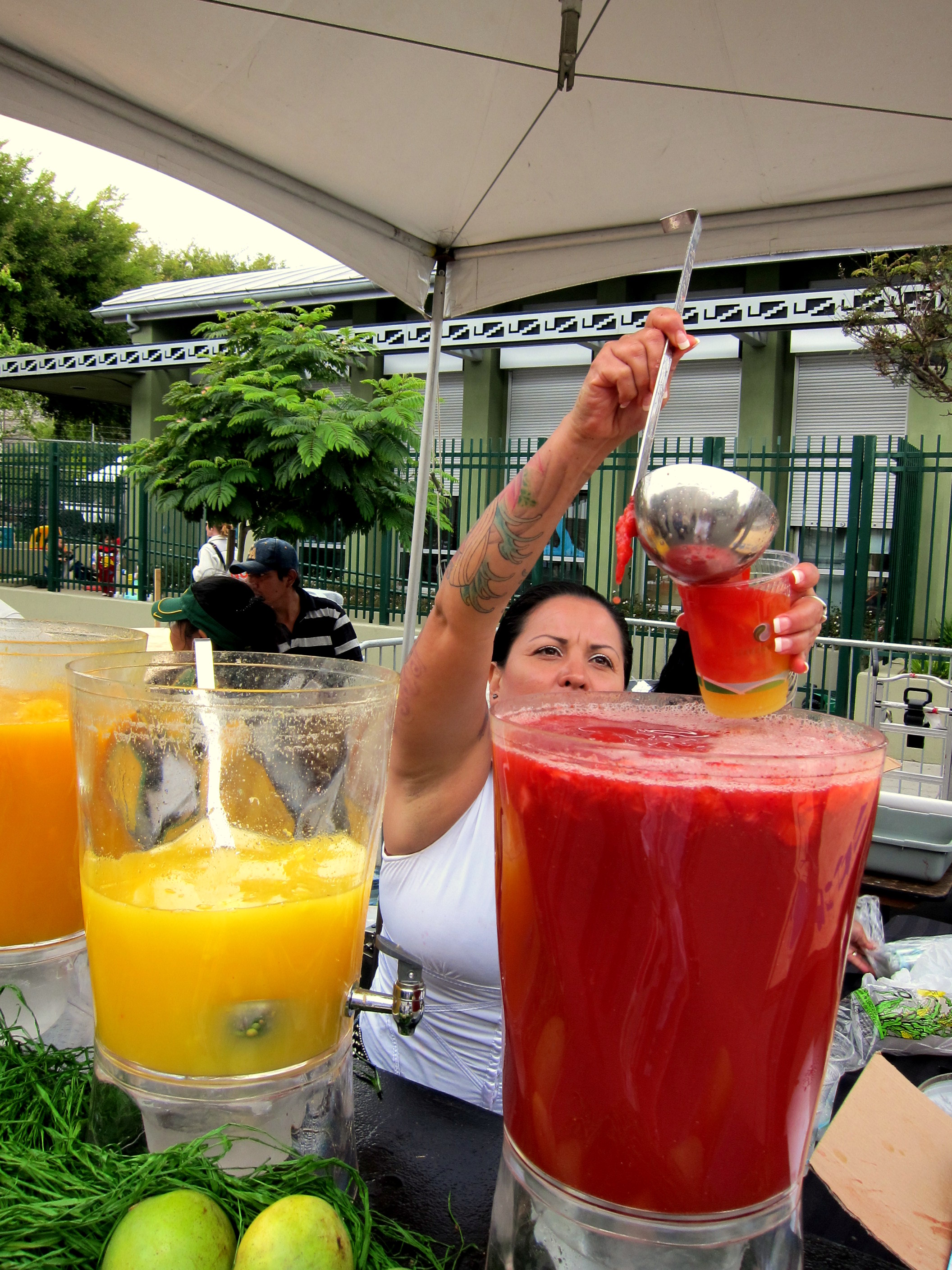
Anda Piroshki hostesses preparing beef piroshki and kompot (strawberry and cherry juice)

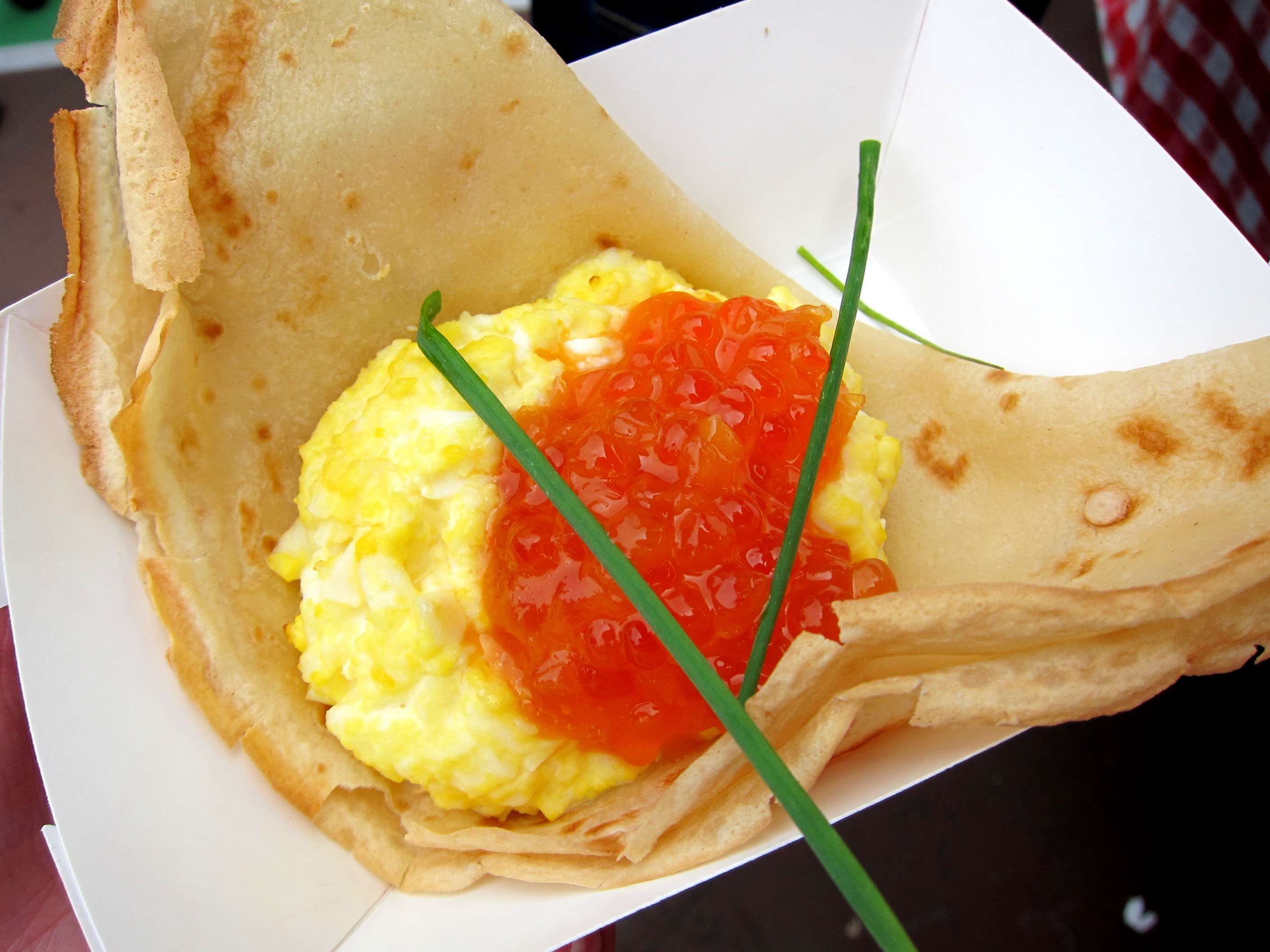
Anda Piroshki was out of potato piroshki ($3), so we forked into a beautiful yellow and orange blini & red caviar ($8) instead.


The crepe is fine, the cold mashed egg is fine, let’s just say that the caviar tastes like boiled fish eye. Normally I like fish eyes, and someone I know would agree with me, but when this popping-boba-like orange capsule burst its fishy, salty and fatty substance out into the (chicken) egg, my taste buds involuntarily cringed. Victoria, however, said that she might just get it again after she had adjusted to the taste. But we already got to the front of the Onigilly line.


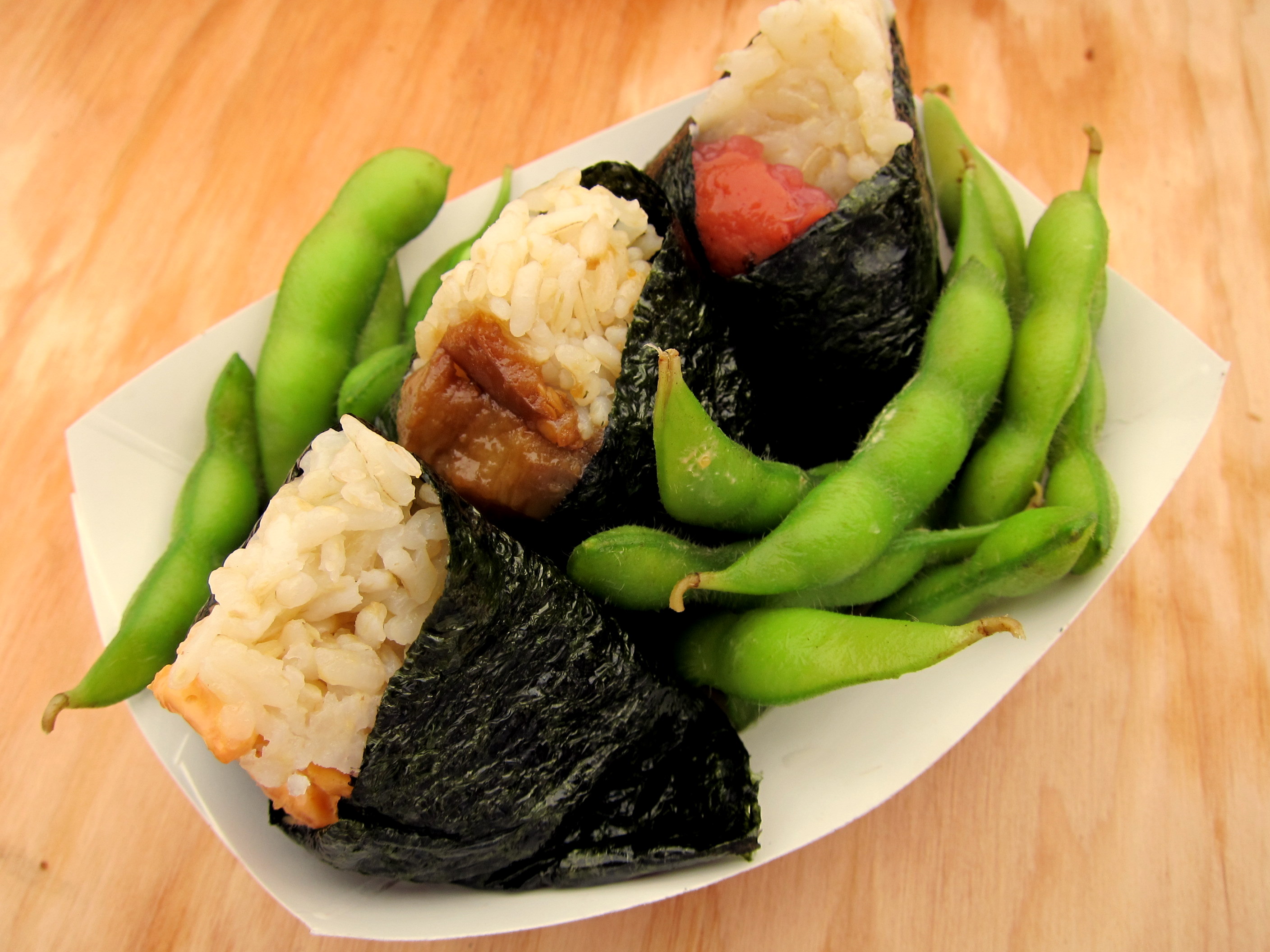
I don’t know why they write Onigilly when its more common romanization (in mangas) is onigiri, but the Japanese “r” and “l” are the same anyway. The “samurai snack” advertisement surely caught on. The big pack (3 onigiri and edamame for $8) was perfect for us: each gets a flavor: ume (salty plum), spicy shrimp, and eggplant. Again, Vic adored the rice ball. I paid dearly for my salt(y plum) intake: my mouth was in a drought. To be exact, I paid $4 for a cup of juice.


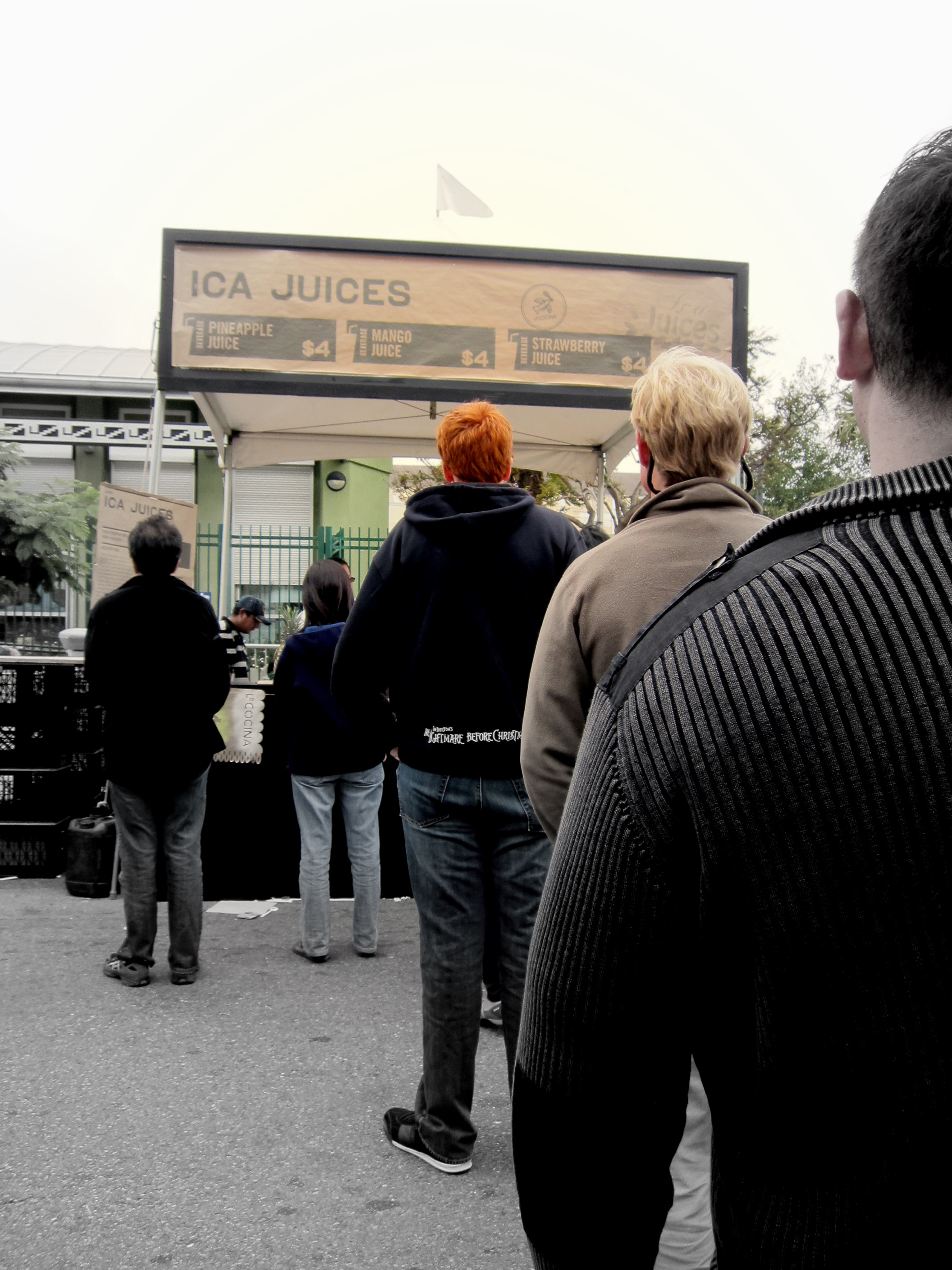
If that doesn’t prove my despair, how’s this: I probably might have cut in line, because Vic noticed that the line for Ica Juices grew exponentially long seconds after we stood in. It was good juice no doubt. Pineapple and strawberry mixed. Hydration and vitamins replenished. So rejuvenated we felt that we contemplated kicking five-year-olds off the tire swing and the hammock for a nap. Surely we can pass as eight-year-olds. 🙂
But guess what we did after conquering our thirst: we tasted salt. Sal de Vida had a salt booth, and we asked for sample. Garlic salt? Yum. Thirsty? Natürlich.


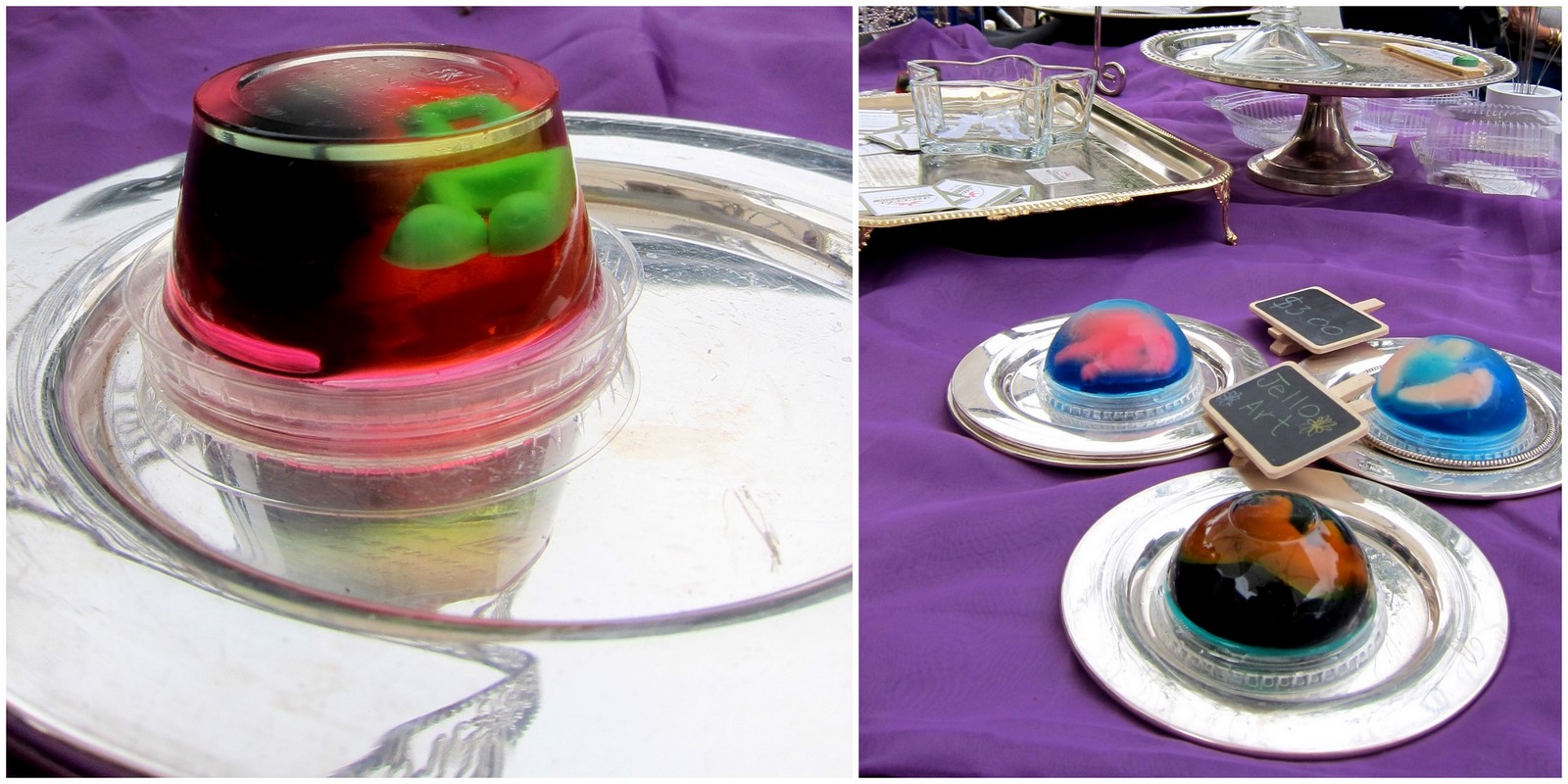
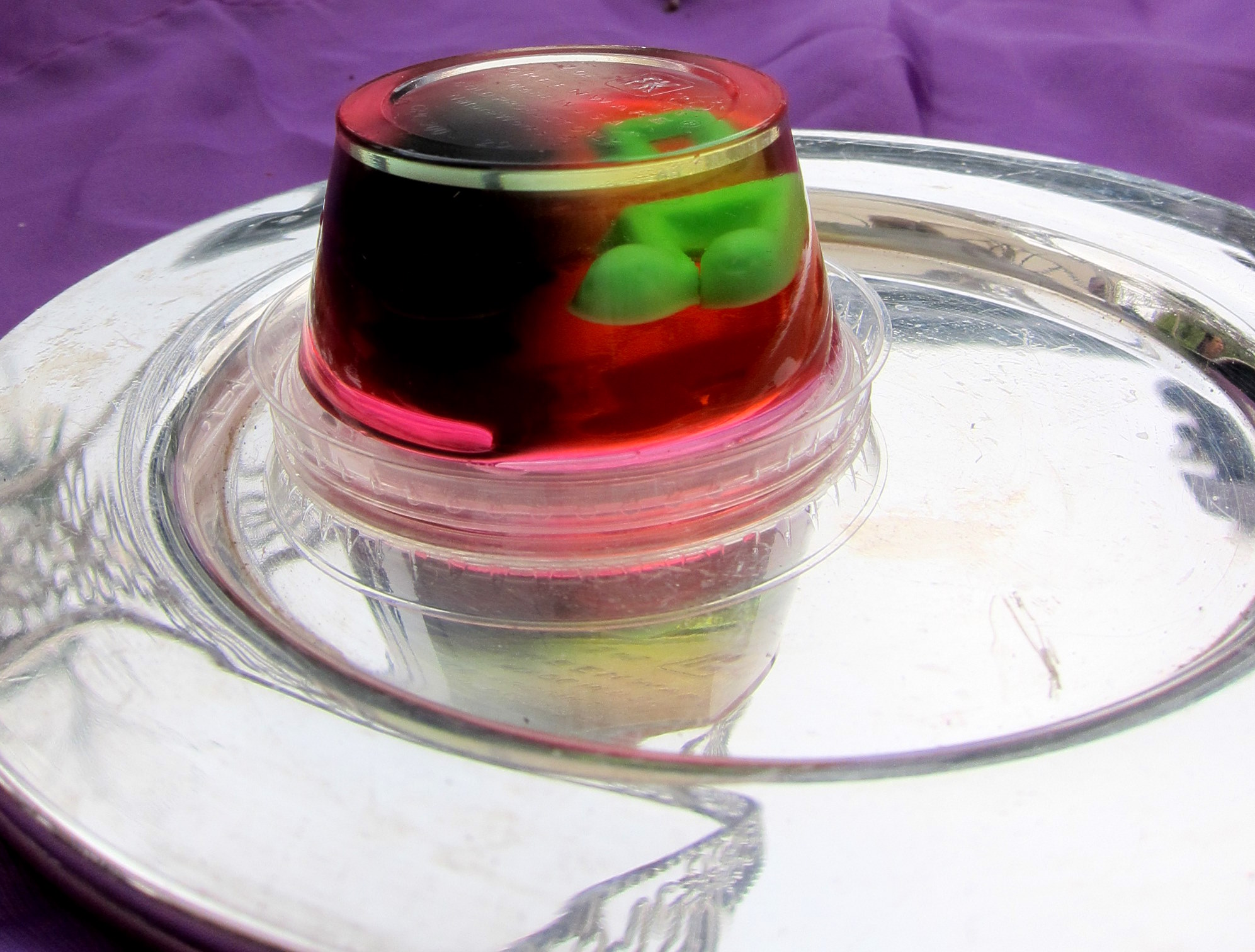
Not all buys were as endearing as the juice, unfortunately. There were two regrettable purchases, which I can reason my way out of the guilt but not quite. The first was a $3 jello cup with an orange lion in green gelatin, strawberry and cherry flavored, from Sweets Collection. My excuses: I was taking pictures of them, other people were too, but other people didn’t buy any of them, a little girl was standing the booth, the jello was good looking, the work put into making these animal shapes kinda justifies the obnoxious cost. And Vic liked it.


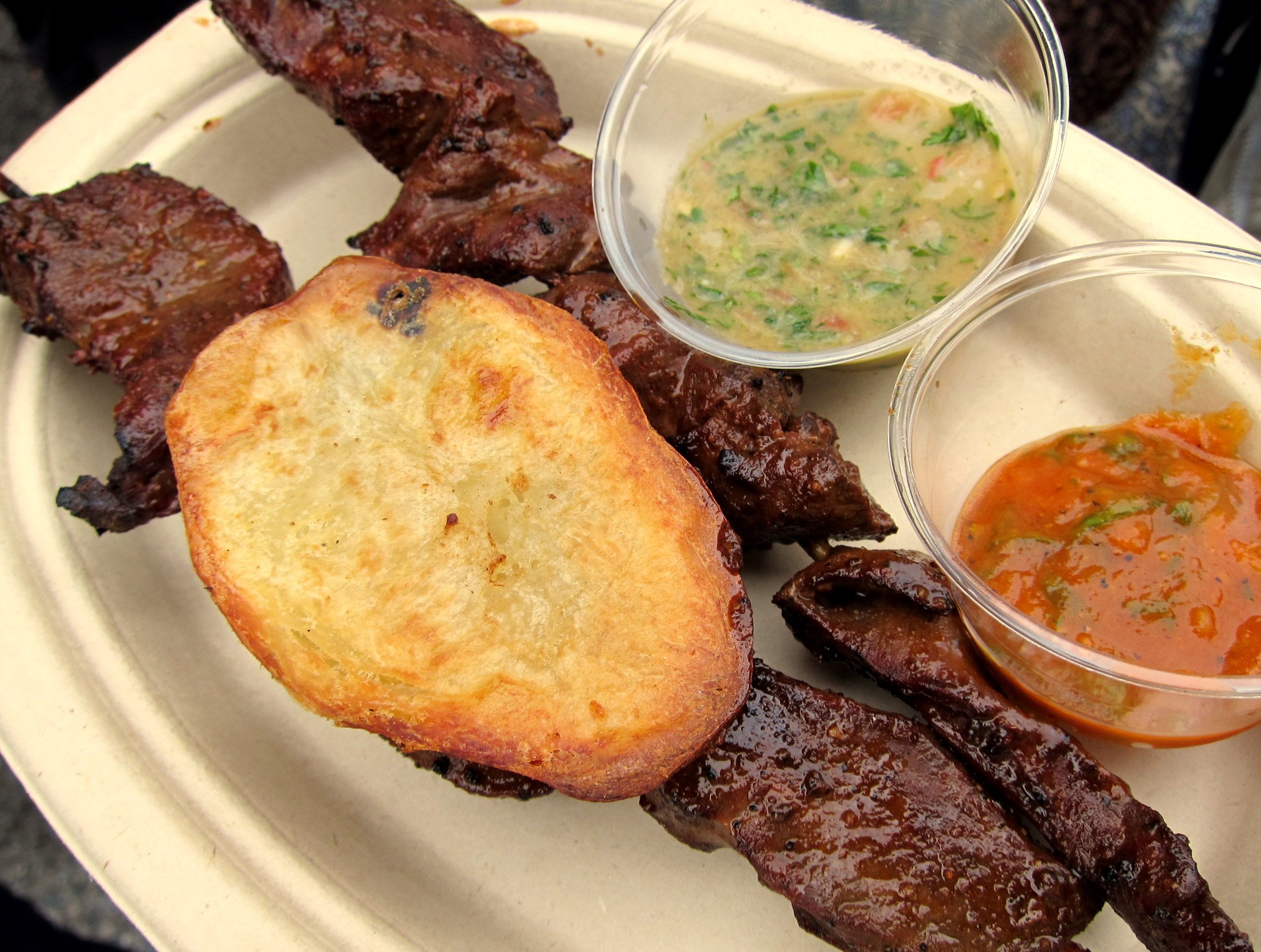
The second regrettable purchase was grilled beef heart (antichuchos de corazon, $8) from Sabores del Sur. Vic refused to share because the heart texture doesn’t sing to her, so here I was left to my own device with two chunky skewers and a fried potato wedge. The dipping sauces were nothing to write home about. The heart texture sang too soft a tune to win over the muddled chile seasoning. My excuse: Bob told me about it, and organ meat is music to my ears.


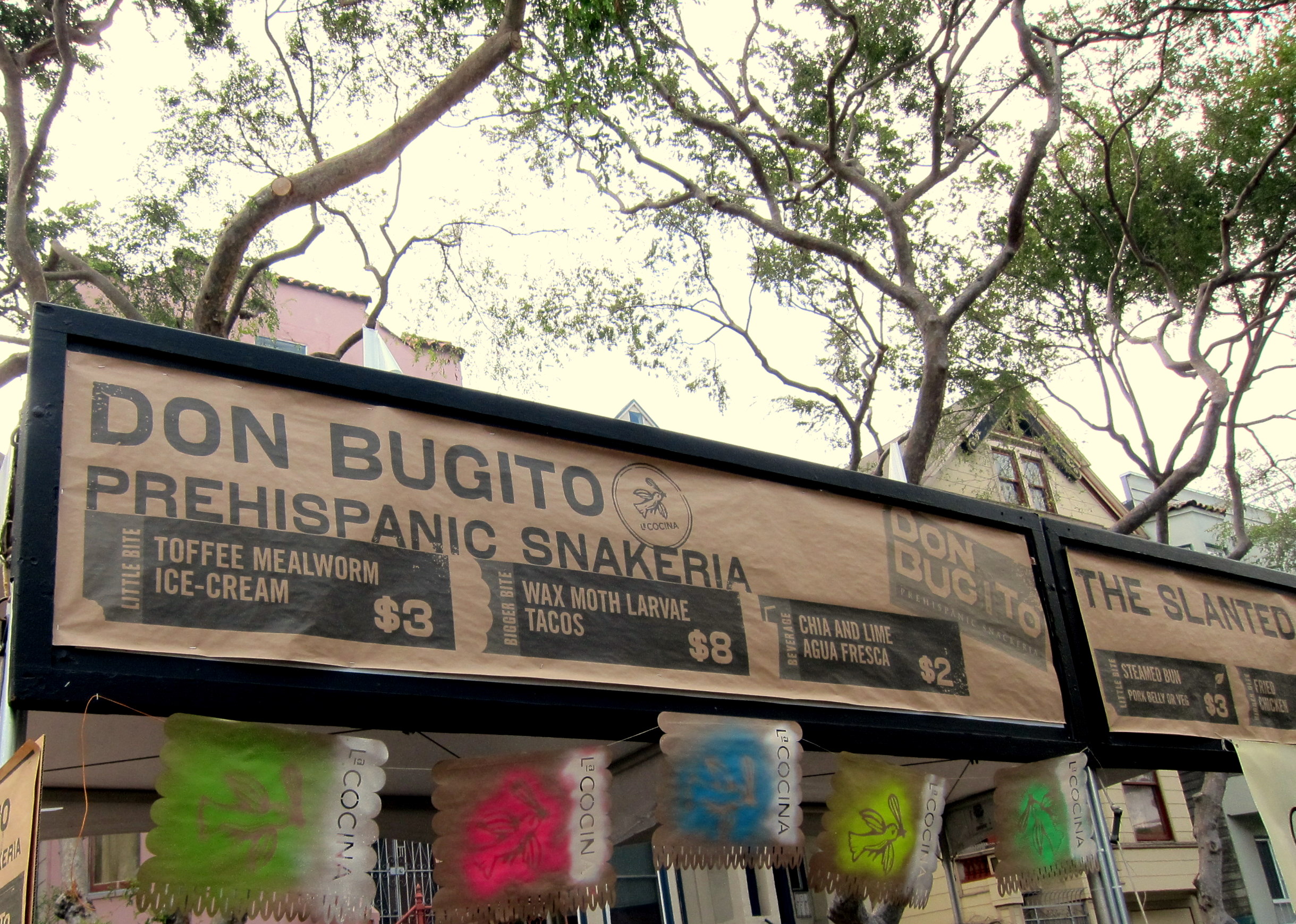
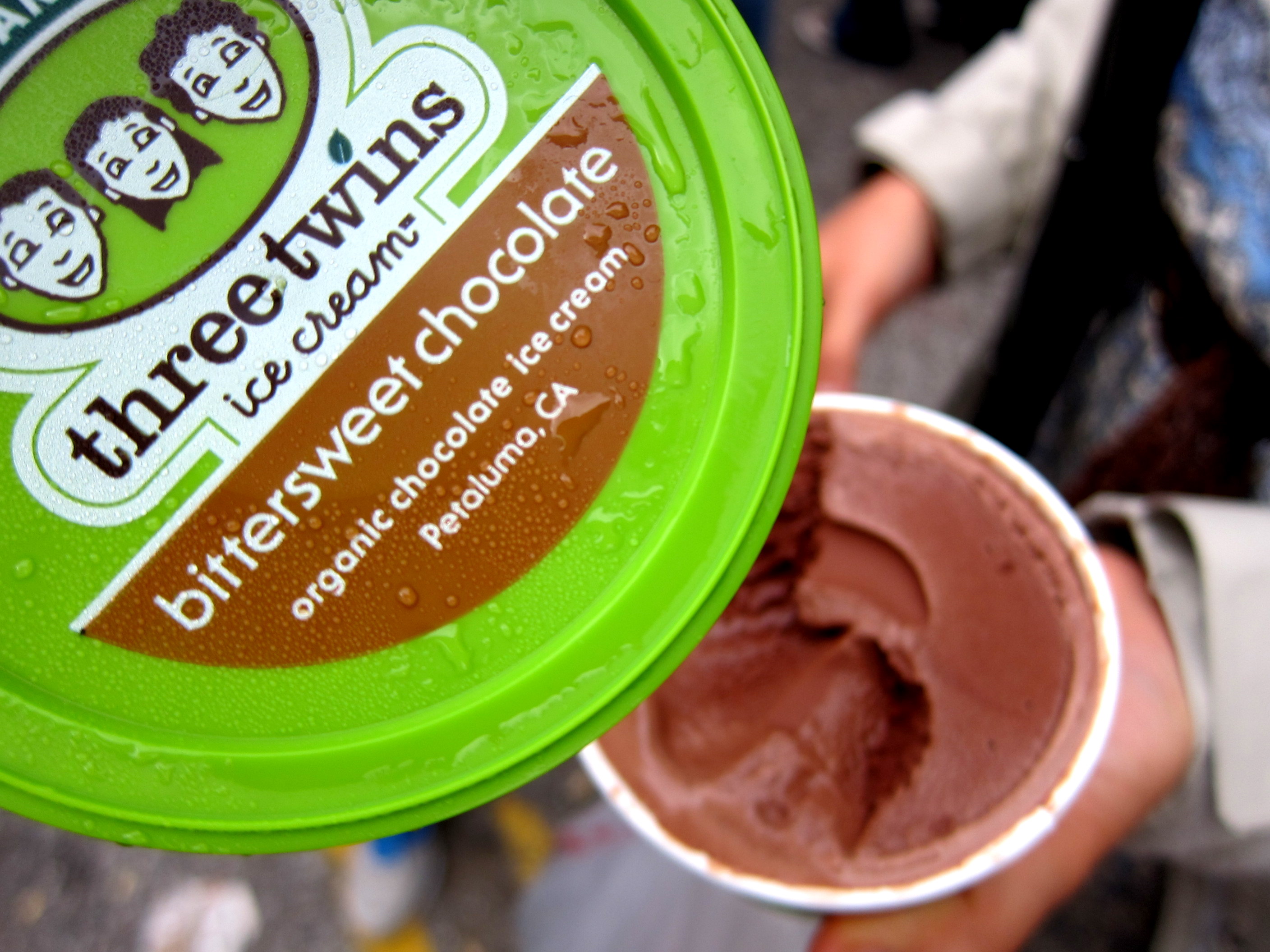
There could possibly have been another regrettable purchase, but we’ll never find out because Don Bugito sold out their toffee mealworms, and “toffee mealworm ice cream” ($3) became vanilla ice cream ($3). Who would pay three for a vanilla scoop when you can pay two for a chocolate scoop? A “bittersweet chocolate” scoop at that. Exceedingly rewarding. From the Three Twins.


I admire Yookyung. She did not even once stray from her vegetarian path in the middle of this meatbound grotesque. In an unrelated passing comment, she said that the people in the (densely packed) fenced-off lot queuing for beer are like chickens. Just a thought.

For more details on the Fest, read Bob Fukushima’s coverage on his blog. His is quite the essay on street food culture of The Mission. 🙂
Battles won: 4. Battles tied: 5. Battles lost: 2.
Casualty: a dress.
A word to Mr. Rizzi the Global Eater: how come you didn’t see me? I was walking right there in the middle of all these other Asian girls the whole time! 😀

The Koreans make good pho

August 11, 2011 By: Mai Truong Category: California - The Bay Area, Korean, noodle soup, Vietnamese


Every time I ride the bus on Telegraph, Kang Nam Pho stands out to me like a supernova. (There are these “sorta” cosmologically important exploded stars that have been on my mind for quite some time now, which is an excuse for the sparse blogging of late.) I’ve seen Chinese-owned pho places, but they never have a Chinese name. Pin Toh on Shattuck, which used to be Phở Hòa, has pho cooked by Chinese chefs, but it’s a Thai diner (talk about incognito). In my American pho encounters, Kang Nam Pho is the first instance of a Korean-owned Vietnamese diner with a Korean name. They even put the whole “Phở” with accents on their white-on-red sign, next to “강남 윌남국수” (Kang Nam Wilnam guksu, i.e., Kang Nam Vietnamese Noodle). I like this place already.


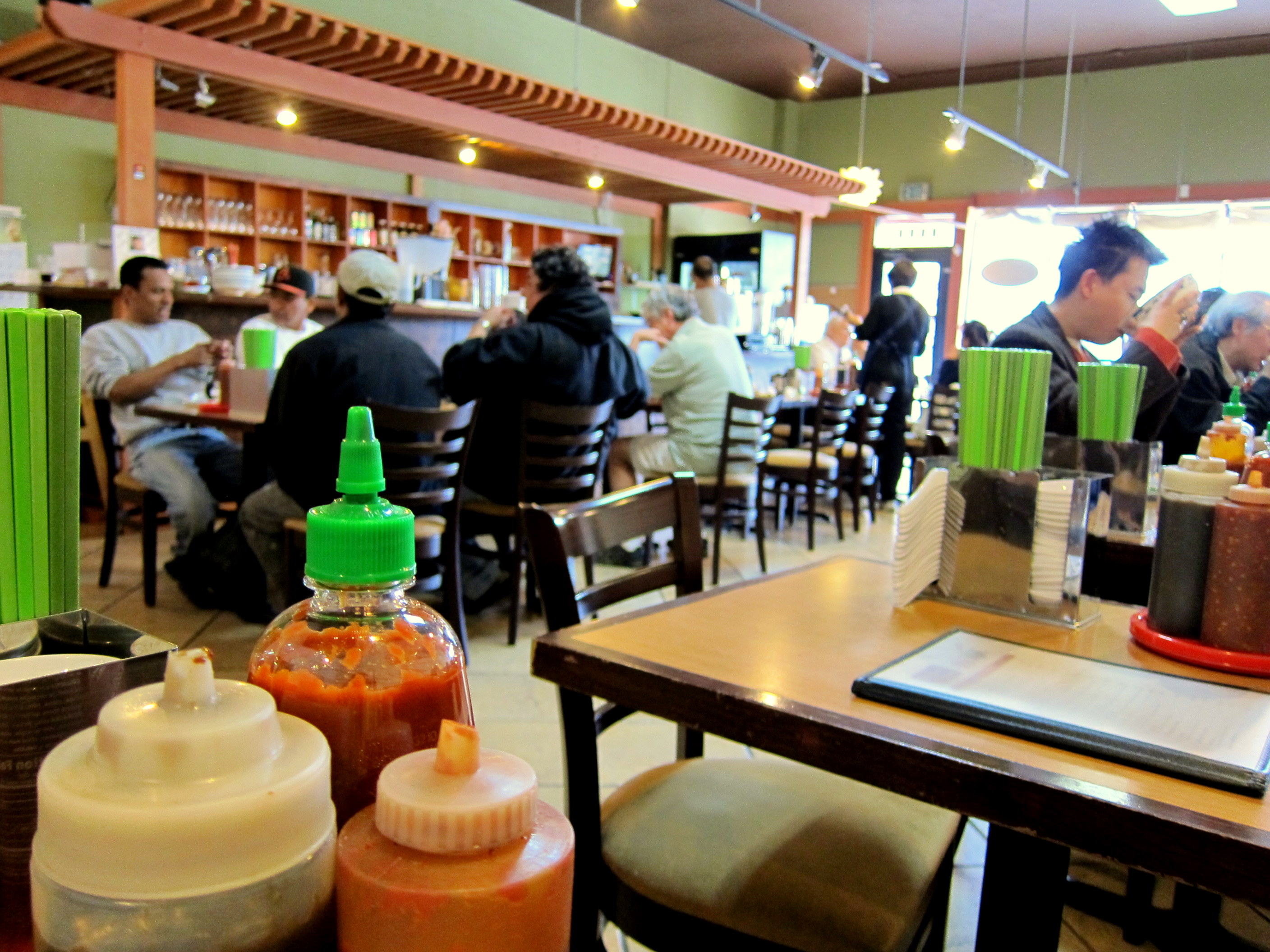
Their menu is also all in Vietnamese, again, with complete accents albeit some misspellings; there is English description under each name and very little Korean. I vaguely remember bibimbap and bulgogi at some bottom corner of a page, but Kang Nam has things that even a common pho joint wouldn’t always have, such as hủ tíu Nam Vang (kuy teav Phnom Penh) and bò kho (noodle with beef stew). The tables are even equipped with green chopsticks, hard-to-eat spoons and sauce bottles. If only the customers didn’t flock every table that day and keep the ladies moving like shuttles in a loom, I would have asked what inspired them to make the place even more Vietnamese than a Vietnamese would, for better and for worse (the spoons…).


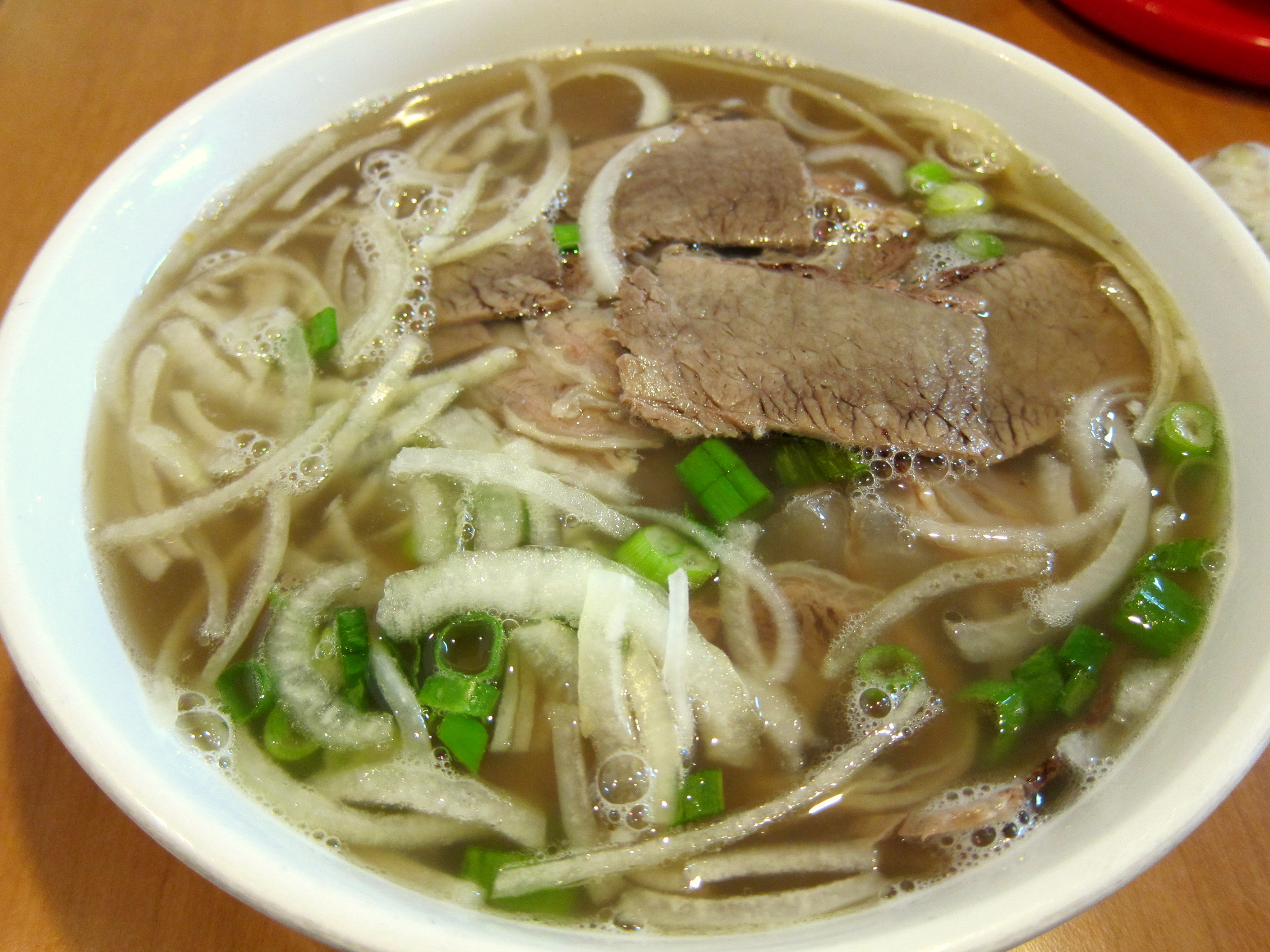
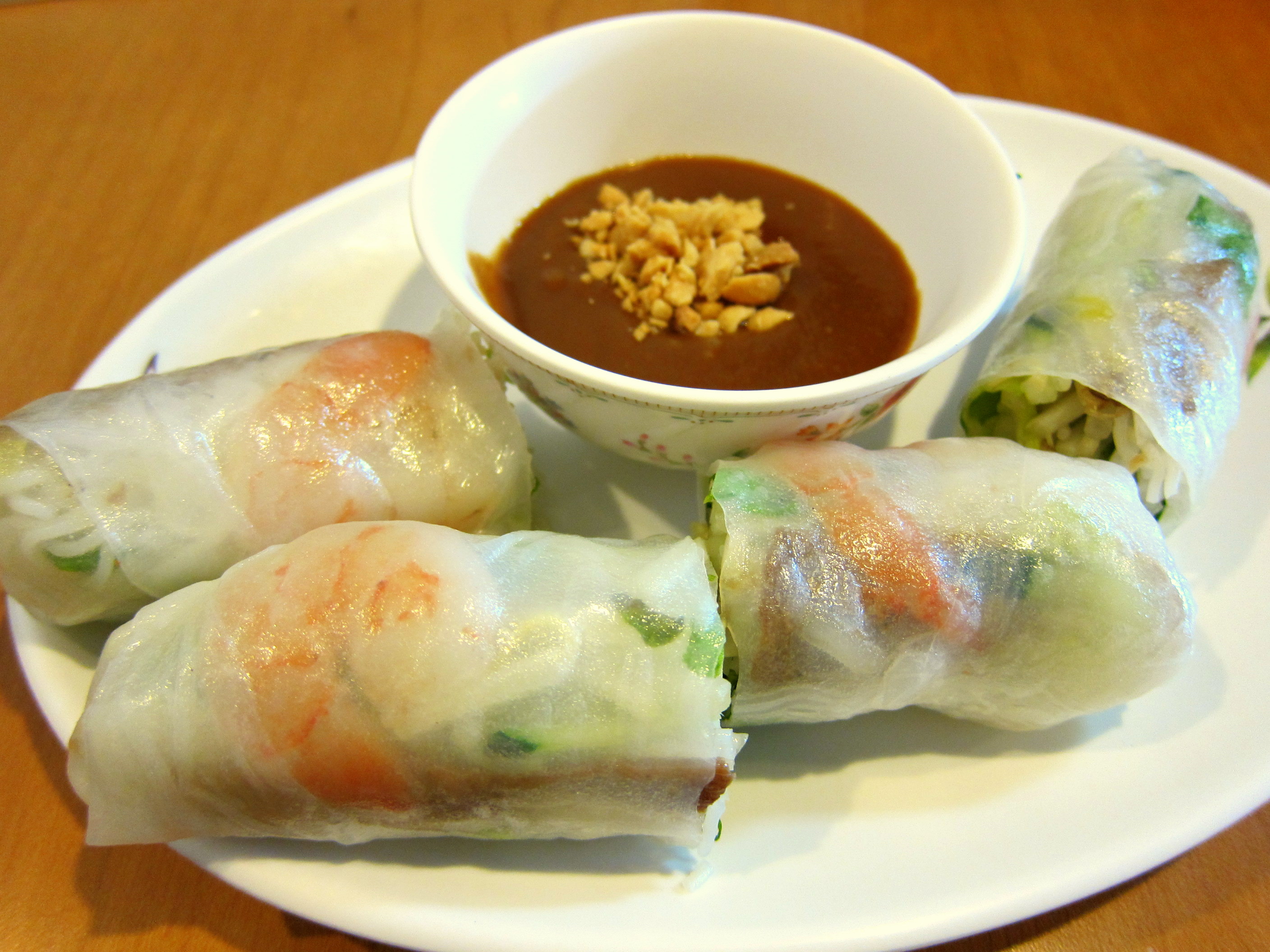
After ordering the inevitables, gỏi cuốn to start and phở chín nạm gầu gân sách (brisket, tendon, tripe) to fill, I followed the usual practice of a lone diner: pull out a book and pretend to read while eavesdropping on my neighbors. However, just barely 3 minutes into opening the book, the summer rolls arrived. Casting aside my literate facade, I started rearranging the roll halves for a good pic when the noodle soup swiftly got placed in the way. They did it fast. That’s how pho should be: you got a pot o’ broth, cooked meat, and blanched noodle ready, an order comes, they all go into a bowl. It shouldn’t take more than one minute. The problem is with me: too little time for a good picture and unable to decide what to eat first. The pho won. The rolls wouldn’t get soggy waiting.

This is one of the best pho I’ve ever had (mom-made pho not included). Deep and subtly sweet broth, chewy noodles, lots of tripe and tendon. A clean aftertaste and a warm broth until the last morsel. Little Mom, a frequent pho craver albeit a picky patron, would like this pho. Why didn’t they struct their business a little closer to campus so that I could come here for lunch? Would they serve blanched beansprout or pickle onion if I ask for it? Next time…

Whenever I ride the bus on Telegraph, I contemplate pulling a stop request for a bowl. Perhaps I’ll go tonight in the name of celebrating Little Mom’s birthday. 😀 We’re Vietnamese, but just to go along with this post’s blending spirit: 생일축하해, 엄마! 🙂

Address: Kang Nam Pho House
4419 Telegraph Ave
Oakland, CA 94609
(510) 985-0900

UPDATE: A 5-second roaming on the ‘net reveals that the Koreans like pho (I’m not surprised, they have plenty of beef based noodle soups) enough to make Korean pho restaurants, and generally Korean pho broths are described as more bland (if disliked) or more clean and fresh (if liked) than Vietnamese pho. For Kang Nam, I side with the latter. Which reinforces the consistency of my pho style. Those who have eaten pho with me often shake their heads at my indifference toward the sauces and the herbs: I don’t put veggies into my pho (not a single leaf), and I don’t adulterate my broth with Sriracha or the black bean sauce. I like my pho pure: beef and noodle. More Korean pho samplings are necessary before I can confirm the difference. When the supernovae start making more sense, the new quest will start. But is this quest possible in the Bay Area?

This post is submitted to Delicious Vietnam #16, August edition, hosted by Chi Anh from Door to My Kitchen.

The Hawker Fare take on Southeast Asian cooking

July 07, 2011 By: Mai Truong Category: American, California - The Bay Area


For a foodie, I dare say nothing beats dining with other foodies. Foodies want to try new places but have a fair assessment of the food, regardless of “the trend”. The food can be scraps and you’d still have a good time dissecting how that kind of scraps made its way into a diner. But more importantly, you’re not the only one taking pictures of food, your companions also remember what you got and write about it too. In his calm, knowledgeable, matter-of-fact way, Bob Fukushima beat me to writing about Hawker Fare today, which drives me to push this post ahead of the other thirty backlogged.

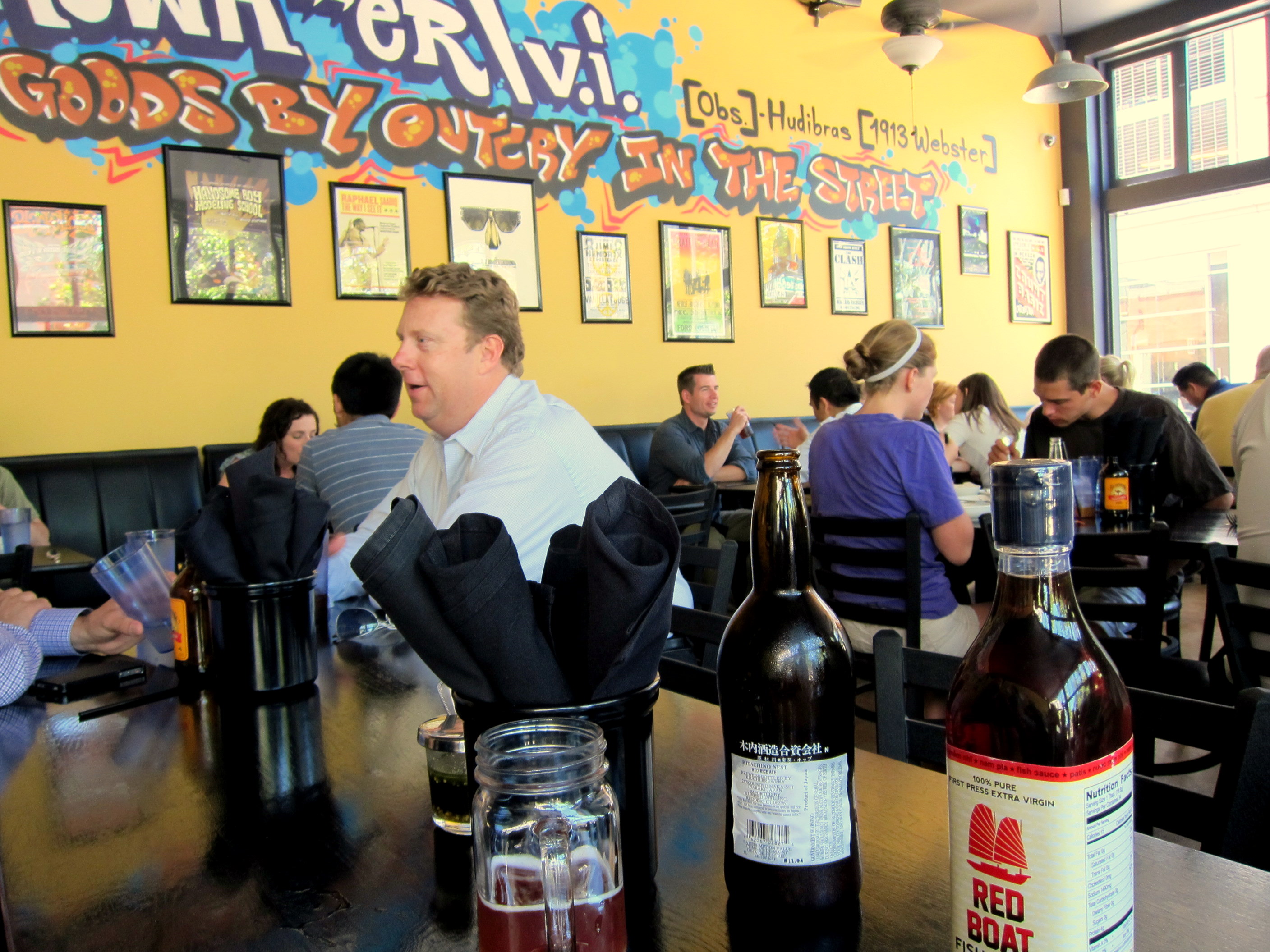
First, the credit must go to Robert Bergstrom for recommending this lunch spot in Oakland. He and Bob are barbecue buddies. How I got to know Rob is another post. We sat and chilled over rice bowls, among other things, for more than 2 hours; I could almost feel the sneer from the line of customers waiting to get seated. Hawker Fare opened in late May, why they have such busy lunch time is probably because of their off-the-norm, concise menu and accessible location (the corner of Webster and 23rd, paid parking lot right across the street).


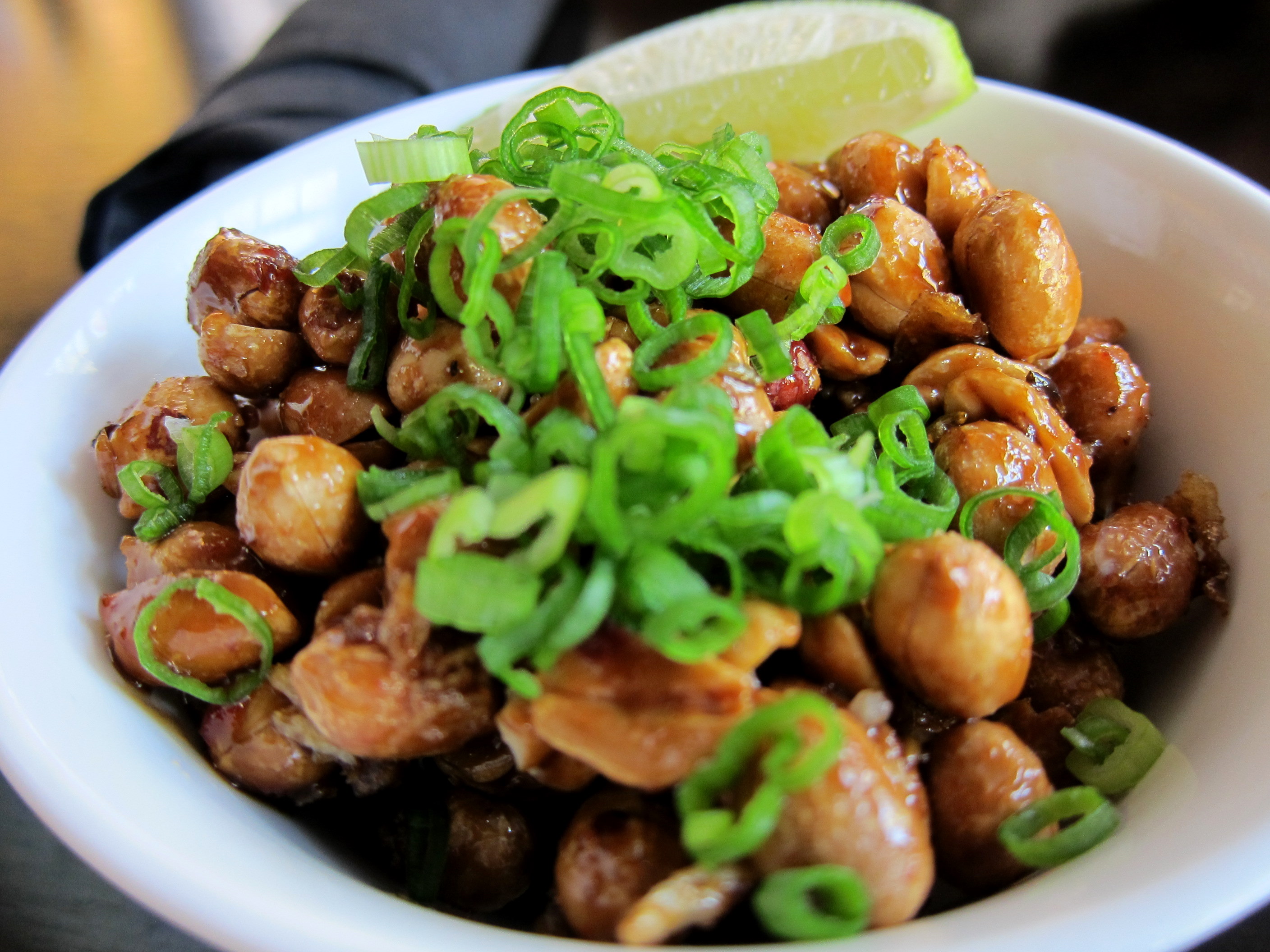
We started off the Asian-street-get-together way: peanuts with beer. No plastic blue stools and middle-aged lady fanning over a coal grill, though. I think I heard they said that the (Singha?) beer Hitachino Red Rice Ale was good, but I haven’t had beer since I was three, so I can’t comment. The Siamese Peanuts, though, is an interesting affair. Covered in a sweet, salty, and sticky mix of semi-spicy shrimp paste and chopped green onion, the nuts kicked in strong and went down dry. A drop of lemon juice gave them a soda feel on the tongue, which faded quickly, leaving you thinking “hmm, that was kinda weird?”.


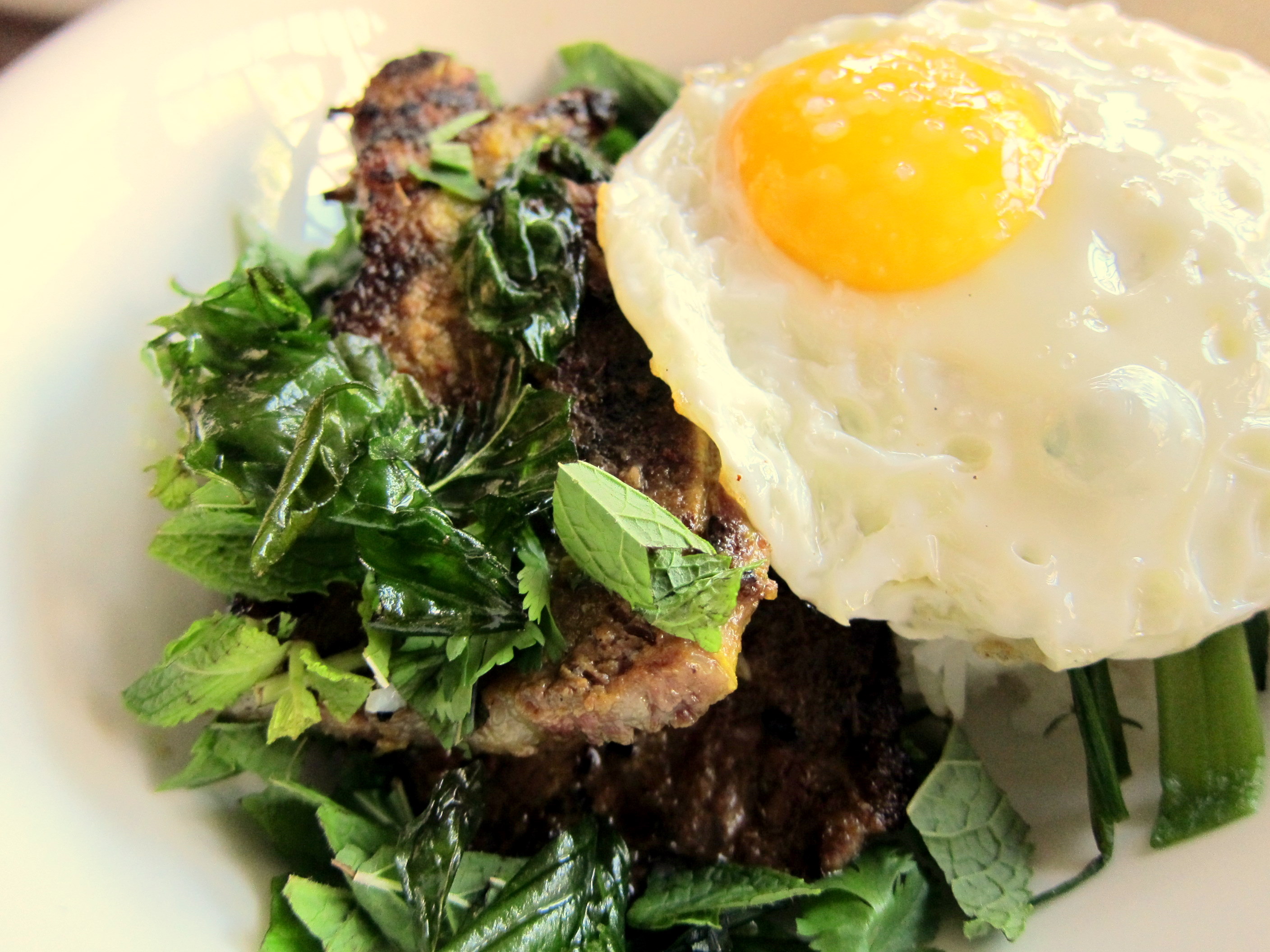
Bob seemed to enjoy his Beef Short Ribs, marinated in coconut milk, chargrilled, and served with loads of chopped herbs.


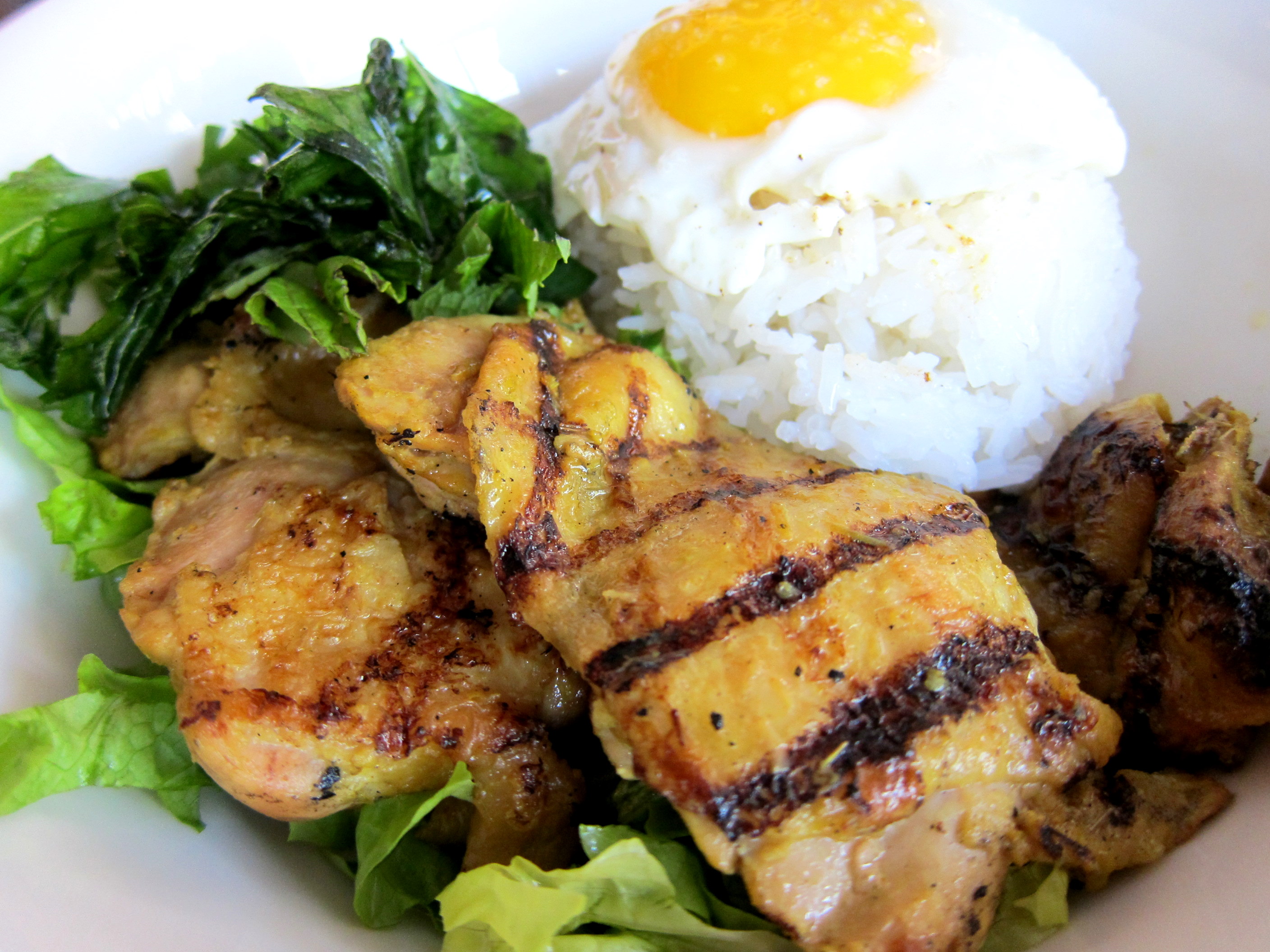
Rob was also happy with his Lemongrass Chicken, which was coupled with a strong tangy fish sauce mix. How could I tell? Well, one of the waitresses attempted to take away his unfinished bowl while he was talking, and he held it back. 😀


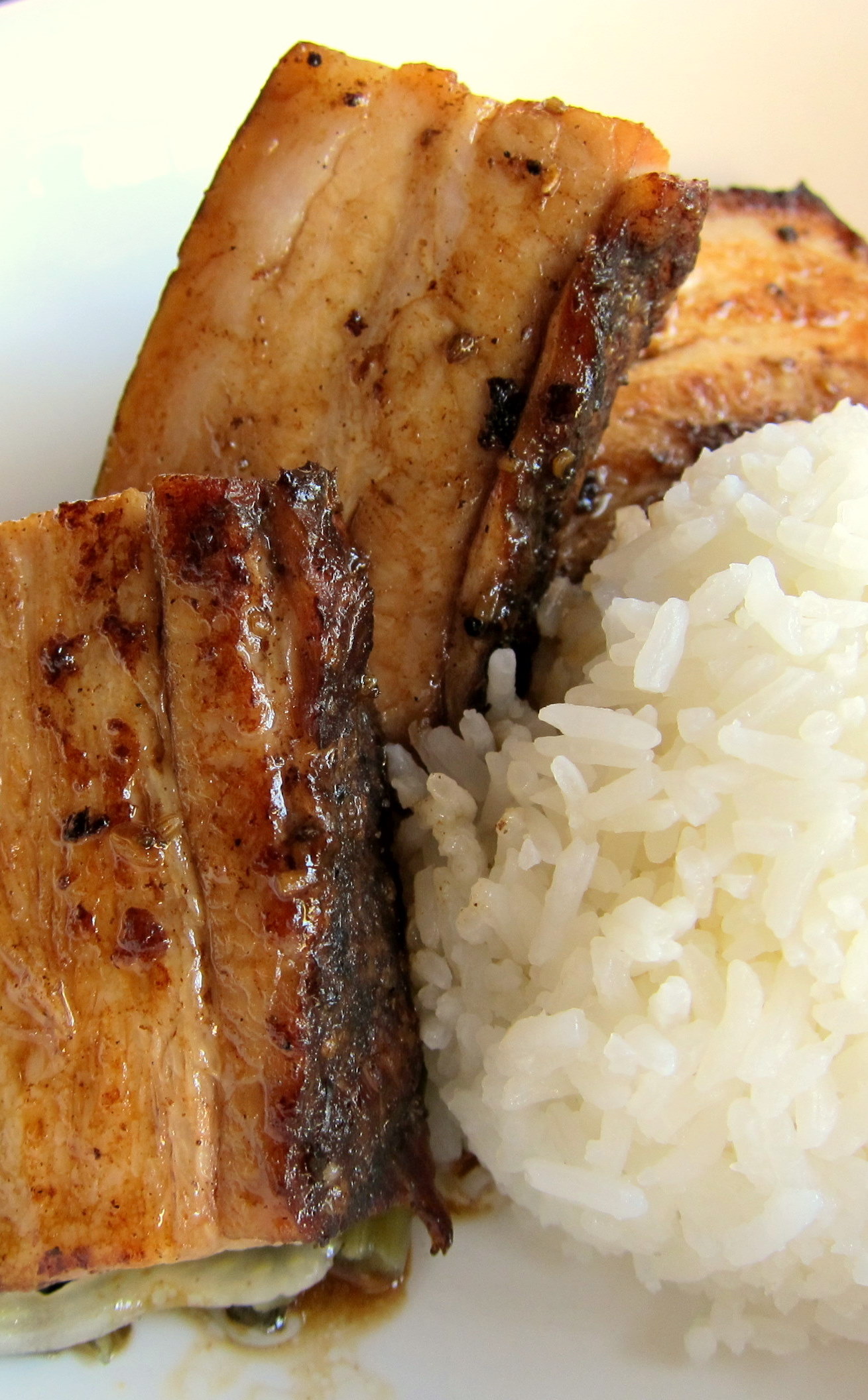
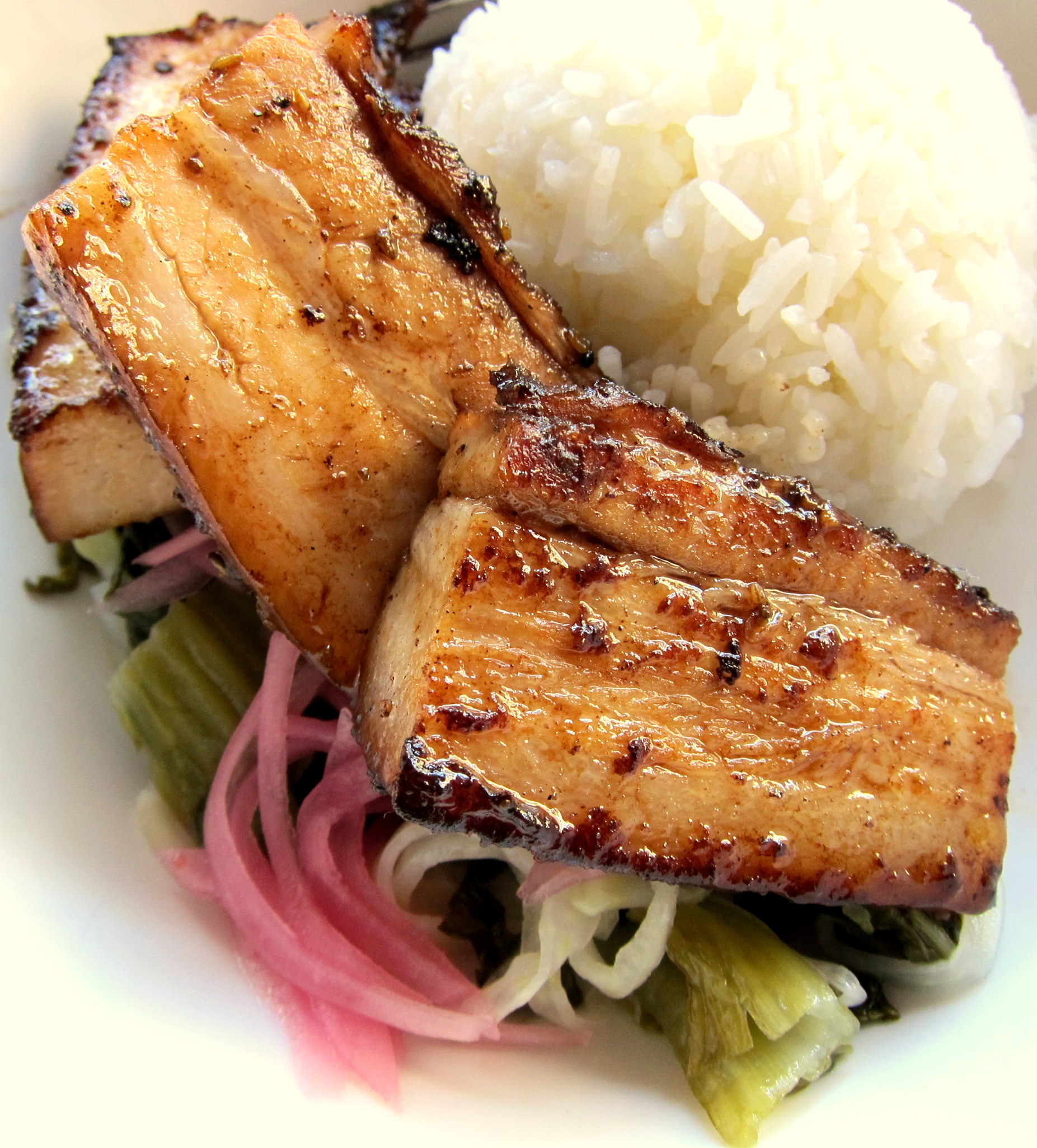
As for me, I knew what I wanted as soon as Rob suggested this place: the 24hr Pork Belly, “tom khem” style accompanied by pickled baby bokchoy, onion, and daikon. The three thick, mildly flavored chunks, though had a lot of fat, were neither fatty nor chewy. Their soft yet dense texture makes you want more than three. For a deeper taste, there’s the preserved vegetable mustard that looks almost like a normal brown peanut sauce, but I would prefer more sweetness instead. Guess I was expecting it to be similiar to the Vietnamese braised pork belly, and it wasn’t.


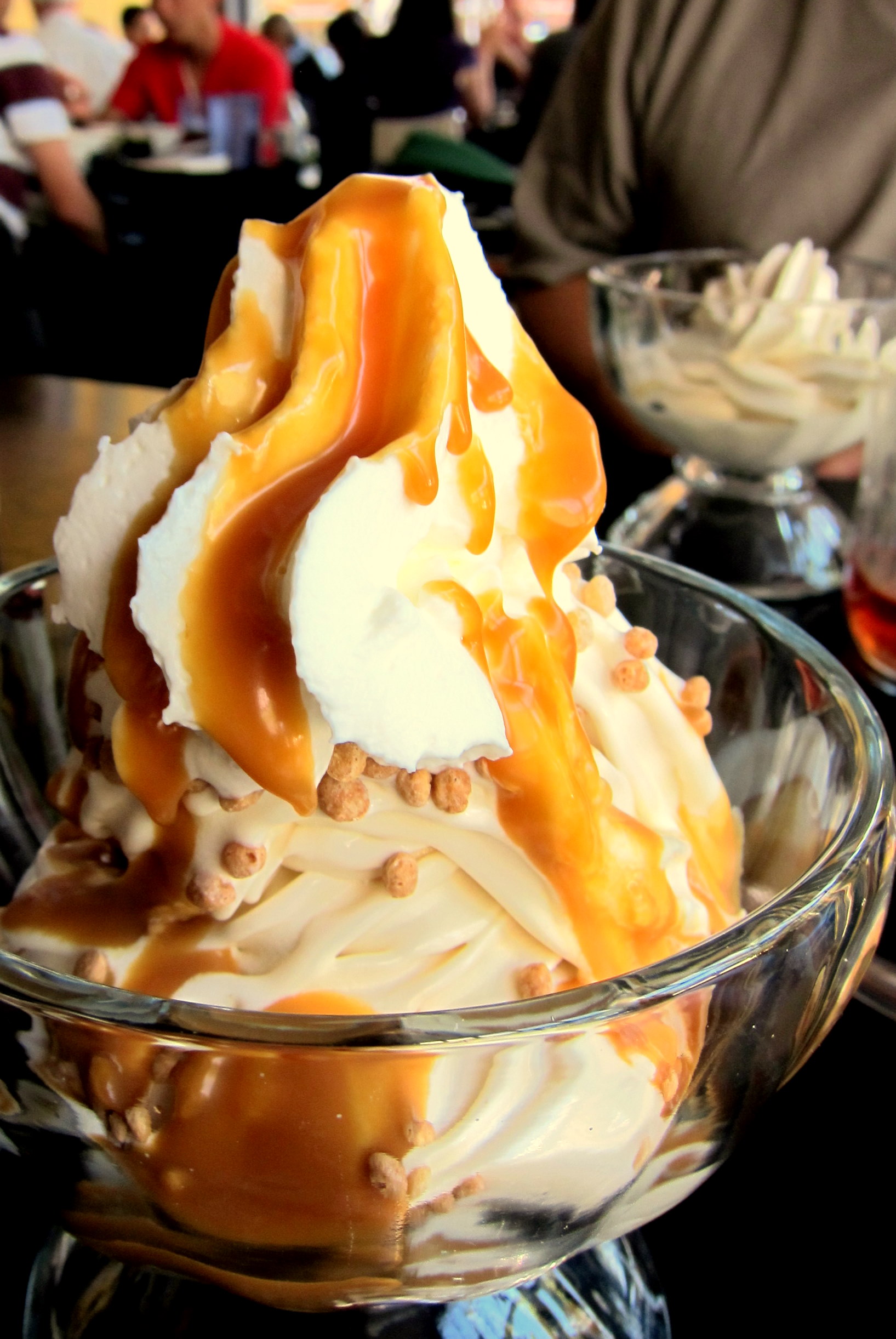
To wrap it up, we spooned into an “Affogato”-styled condense milk soft serve with Thai coffee and a salted caramel Sundae with red beans and puffed rice for crunch. If you like the quick melting, relatively warm feel of soft serves, Bob says this is the place to go. I think I like ice cream better.


Similarly, if you have an hour for lunch, you’re in downtown Oakland, and you want a somewhat refreshing touch on Southeast Asian cooking in a clean, decorated, English-speaking, Caucasian environment, this is the place to go. For $9, the rice bowls were a little scarce on the rice but efficient on the meat. They wouldn’t blow your mind, but they would make you satisfied, as long as you don’t expect them to blow your mind. And like Bob said, who you eat the meal with already decides half the success of the meal.

Head to Bob’s Brew and ‘Que for some mouth-watering pork and steaks. This guy freaking makes his own bullets, you bet he’s serious about meats. 🙂
Address: Hawker Fare
2300 Webster Street
Oakland, CA 94612
(510) 832-8896

Tags: ,