Flavor Boulevard

We Asians like to talk food.
Subscribe

Archive for the ‘California – The Bay Area’

Cao Nguyen in San Jose
June 29, 2010 By: Mai Truong Category: California - The Bay Area, Comfort food, Vietnamese


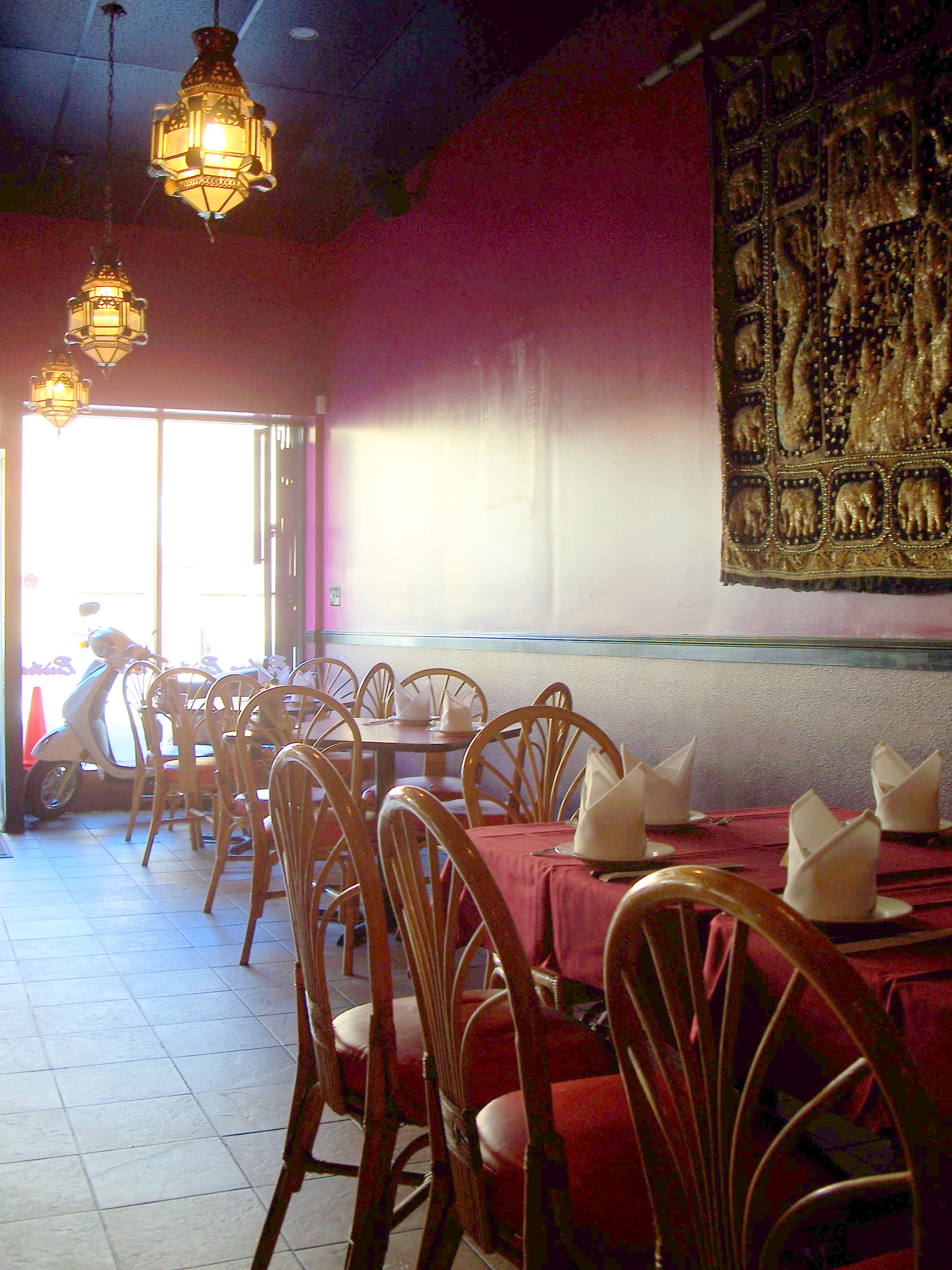
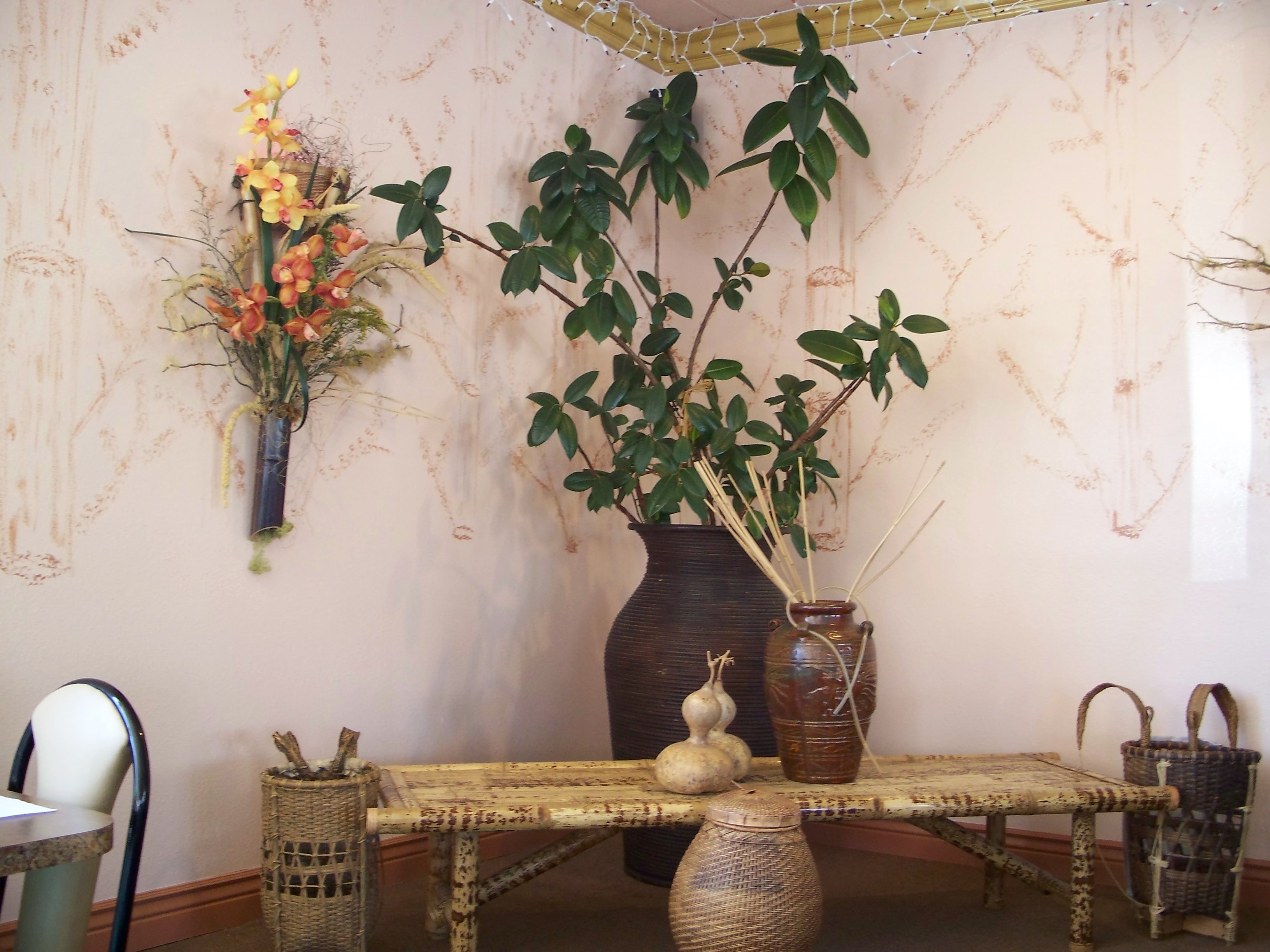
The literal translation is “highland”, but for most Vietnamese the word Cao Nguyên brings to mind images of eye-soothing green terraces, people of ethnic minorities in colorful traditional dresses and hoop and ring jewelries, dancing around the fire, drinking rice wine with a meter-long straw out of a communal urn, and simple but sturdy stilt houses above ground. In San Jose, Cao Nguyên restaurant has the decor up to theme with an urn and straws in the corner, and a painting of a highlander couple dressed in their most comfortable attire, a wrap from the waist down, by the fire. (This blog is rated G so I’m not gonna upload a picture of the painting.)
The menu, though, isn’t particularly highlandish. At first glance it is similar to most other Vietnamese restaurants, and diners here also order the similar things they always order: hot pots and noodle soups. But if we’re to say that Lemon Grass has more single-portion dishes (the way we always do at American restaurants) and Thảo Tiên‘s focus is Mekong Delta noodle soups, then Cao Nguyên is the place to go for family meals. Most dishes are for sharing among 4-6 people, and to eat with rice.
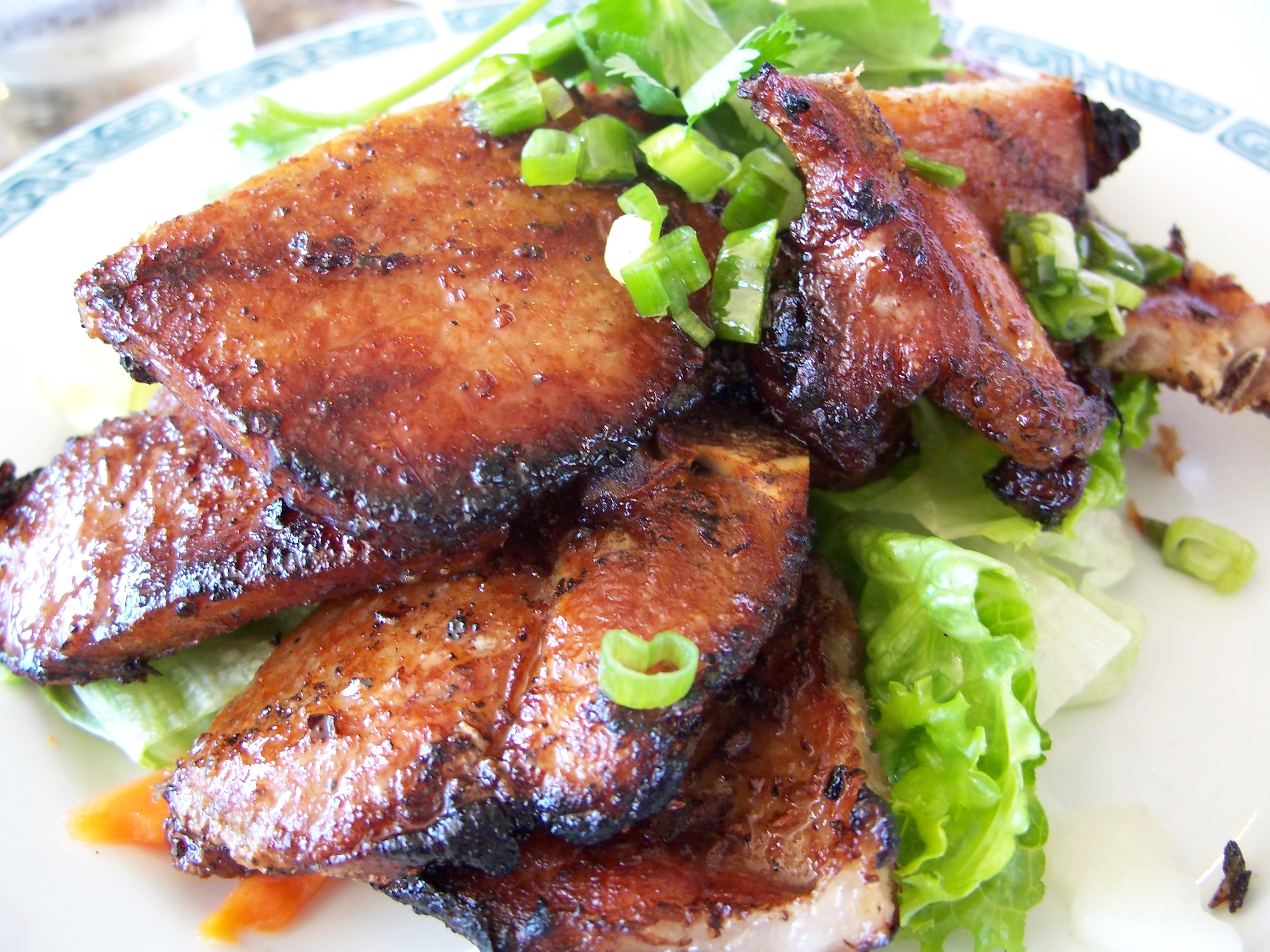

So share we did. It’s really quite cheap this way. An order of sườn nướng sả (lemongrass grilled pork chop) costs a slim $8.25, and is indeed enough for four even as the chops too are slim like Wasa knäckebröd. It’s not fatty, perhaps a tad dry, and there was no scent of lemongrass, but grilled pork is grilled pork, it’s just never bad.
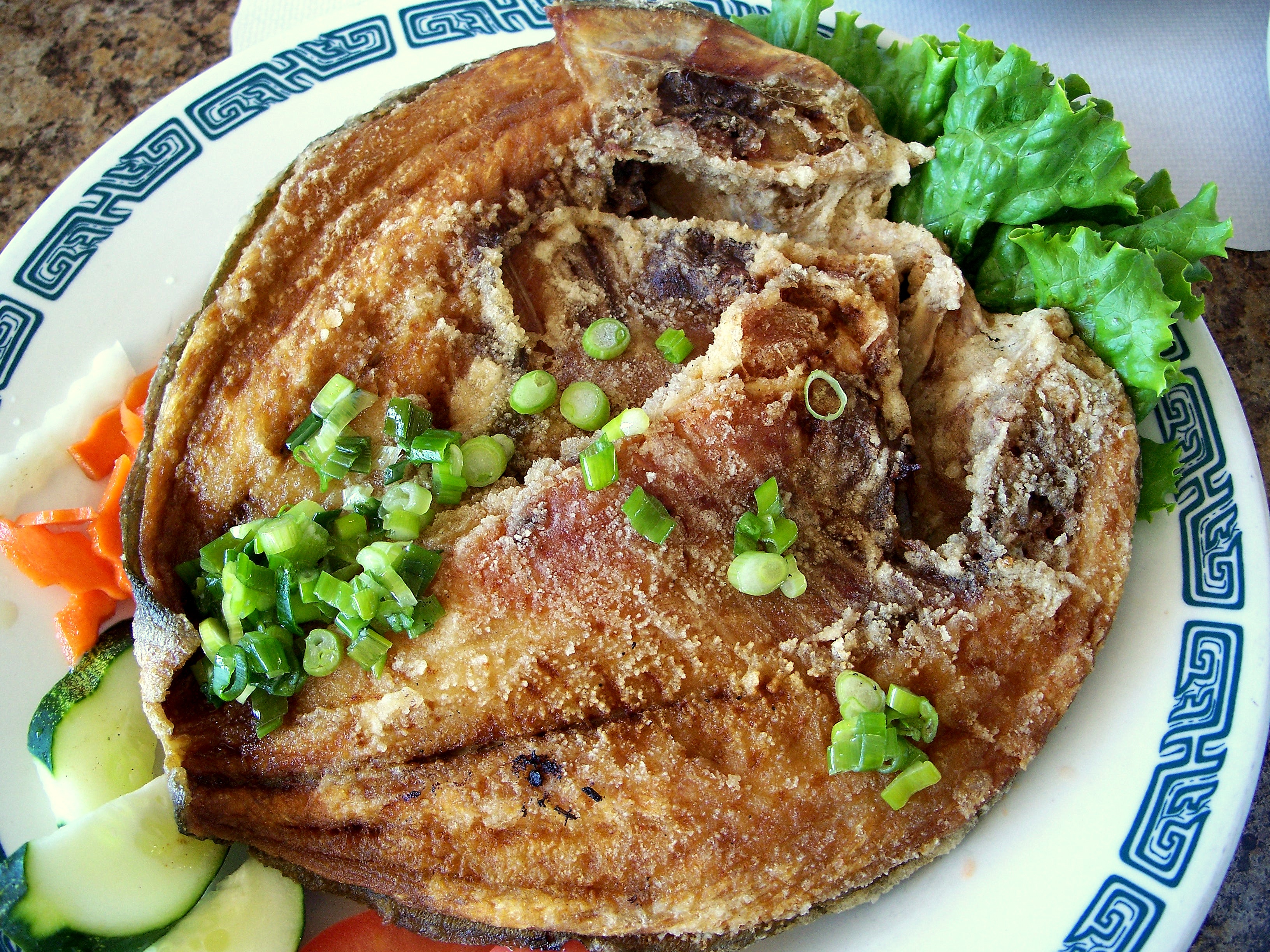

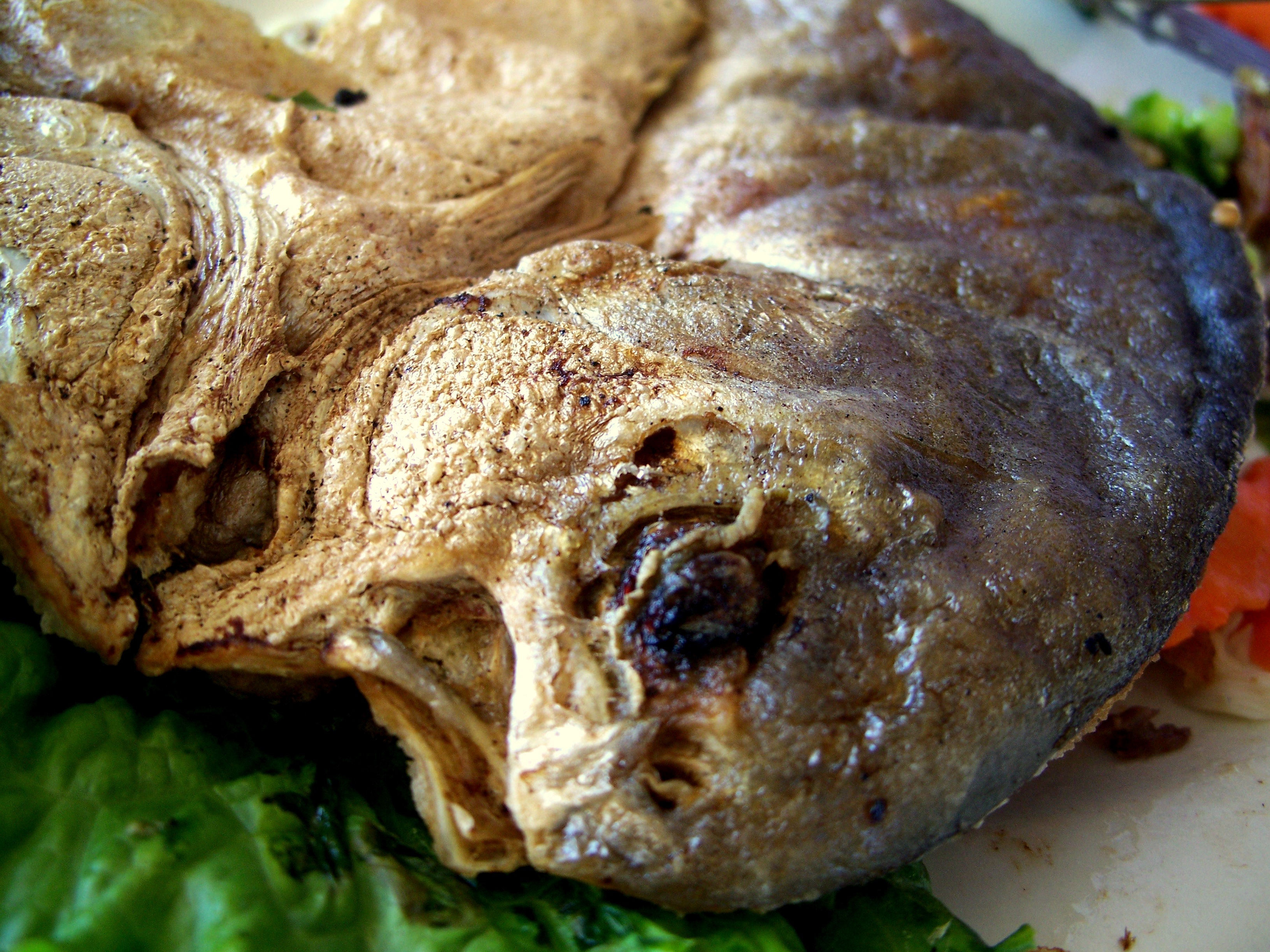
An order of cá chim chiên comes with nước mắm gừng in a wholesome bowl and some pickled vegetables for colors. The menu reads “pan fried Chinese pompano“, but not only the ca chim I know is pomfret, I’ve never seen ca chim split in half and flattened out on the plate like this, as it is already wide and flat by nature. What we had might not be ca chim after all. However, its extra crispy skin dipped in nước mắm gừng is more than enough to let the zoological tidbit slide. I even got to nibble the eyes. It was $8.95 well spent.
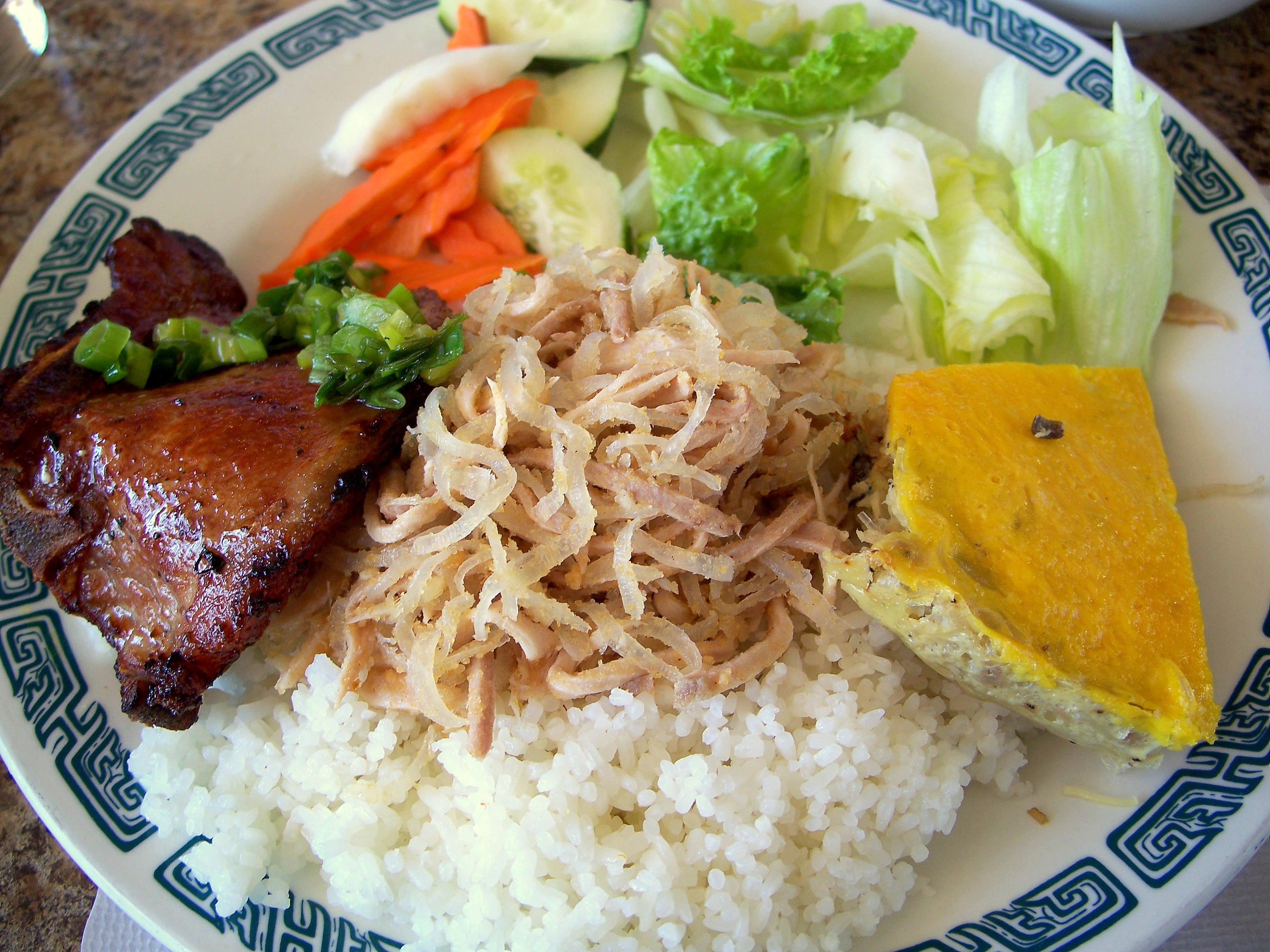

Just a few dimes down are the single-portion rice plates, such as this broken rice for $7.50. There’s that grilled pork chop again, sided by a heap of shredded pork skin (), whose chewy and grainy texture contrasts the spongy softness of ground pork and chopped cellophane vermicelli in a slice of golden yellow egg casserole (chả trứng). Somehow this combination is standard for broken rice, with sweet and savory nước chấm enhancing every grain.
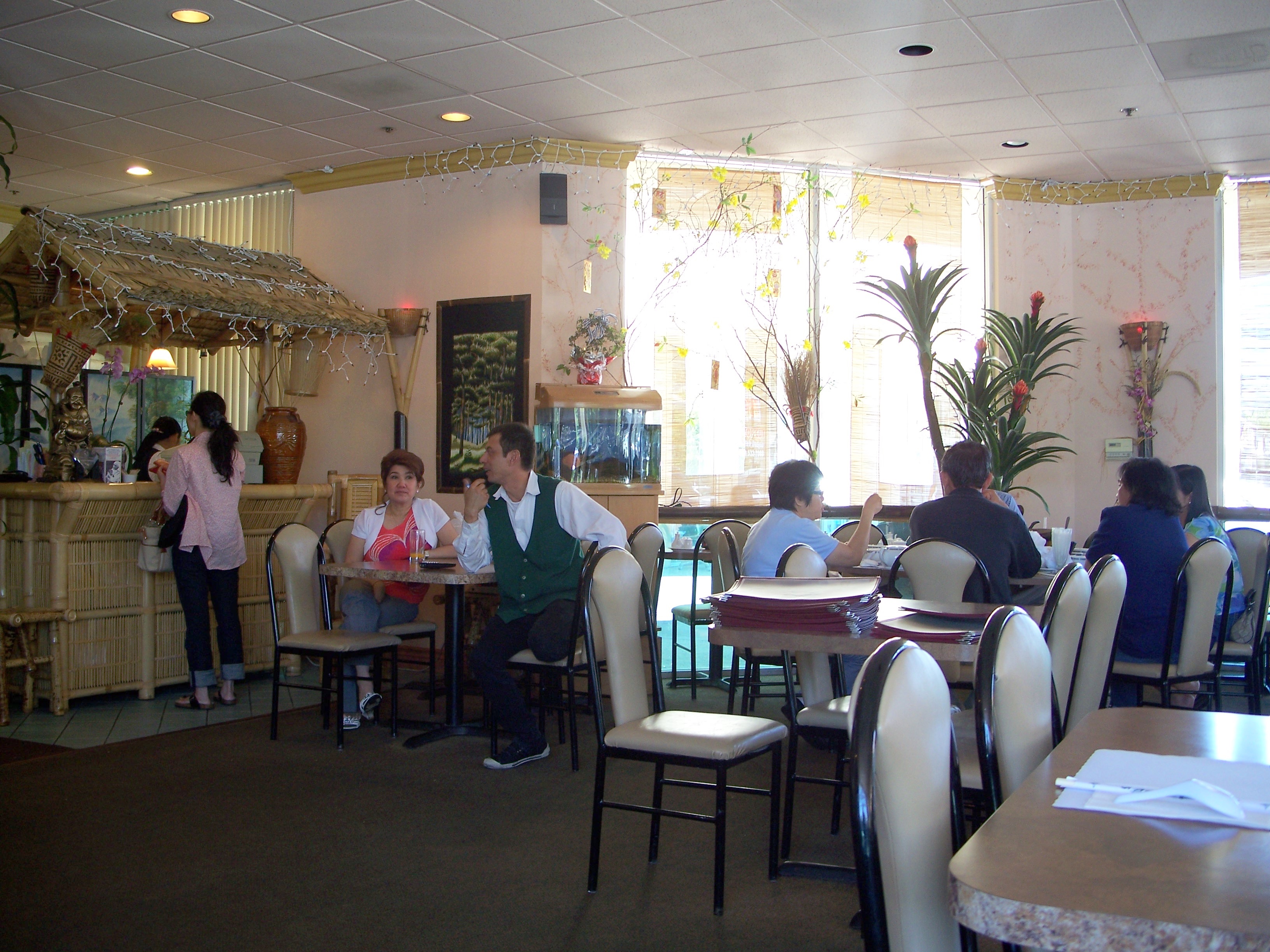

Although what we got were not excellent, the restaurant’s popularity speaks differently, and we too enjoyed our meal enough to consider a takeout next time we’re in the area. Just like the highlands and their inhabitants’ cultures, Cao Nguyen isn’t the best, but it has its values.
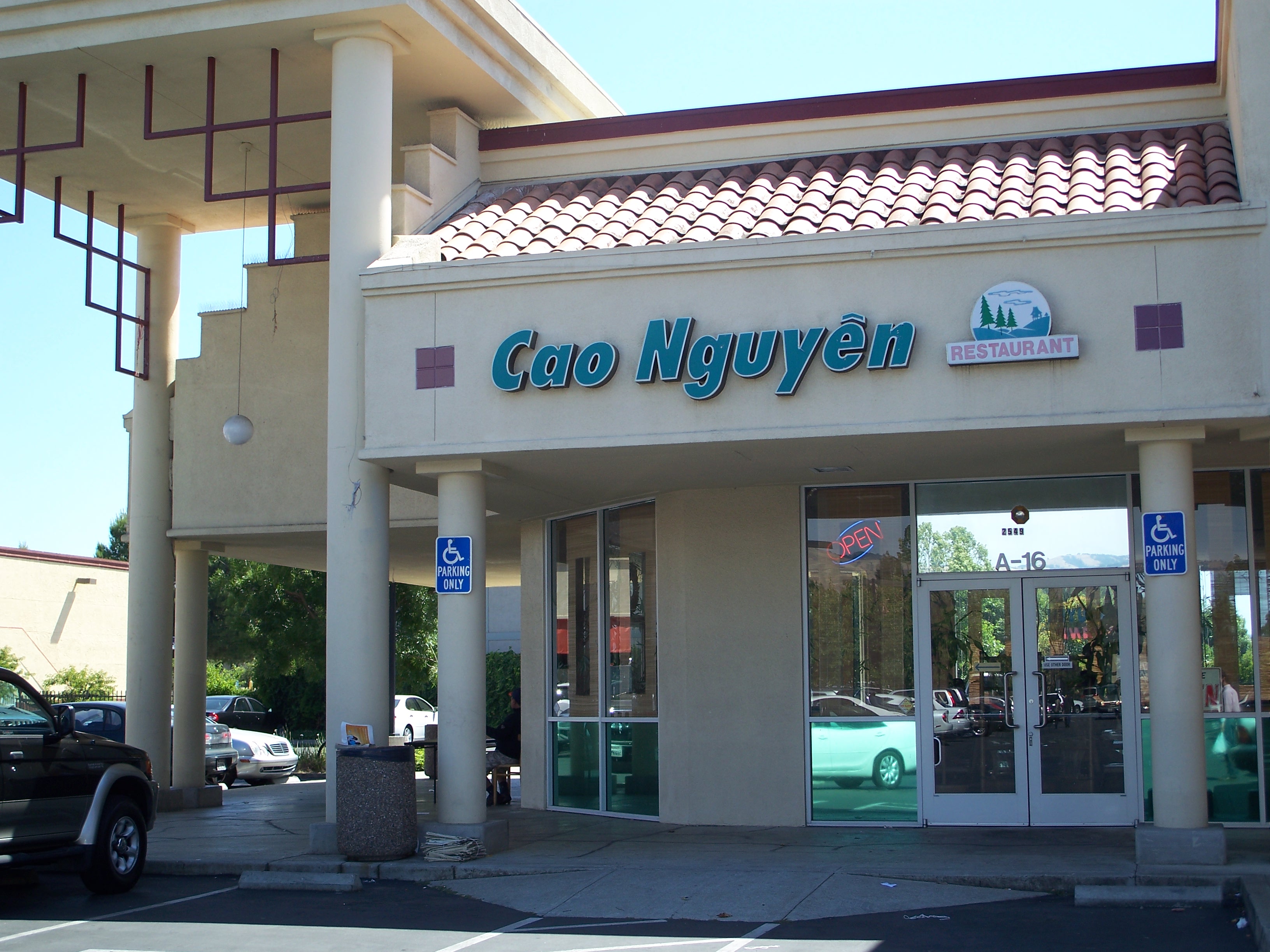

Address: Cao Nguyên Restaurant
2549 S King Road
San Jose, CA 95122
(408) 270-9610

Lunch for two and lotsa leftovers: $29.17

Other Vietnamese restaurants in San Jose:
Lemon Grass Vietnamese & French Cuisine
Thảo Tiên
Cao Nguyen Restaurant in San Francisco on Fooddigger
Bodega Bistro – Defining authenticity

June 24, 2010 By: Mai Truong Category: California - The Bay Area, Comfort food, Northern Vietnamese, Vietnamese


The laminated page has Goi Cuon next to Fritures de Calmars, Bo Luc Lac between Rossini style Tournedos and Agneau. Funny interlingual names like “Ap Chow Bo” and “Ap Chow Hai San” precede English descriptions of stir fries. Don’t bother google “ap chow”. Such innovative term doesn’t exist outside the menu of Bodega Bistro. Just like the dialogues between Jim and Huckleberry Finn, names like these can’t be understood unless you speak it out loud in your head. Ap chow is áp chảo, “press against the pan”, a Vietnamese way of saying pan fry. Why did the chef phonetically transform it into Chinese, while keeping Goi Cuon and Bo Luc Lac true to their original spellings? I don’t know, but I got a chuckle out of it.


The menu alone, however, didn’t strike me as anything unusual. This wasn’t the first time I had to decode a strange name for a familiar dish. Vietnamese menus tend to have such mix between trying to keep the Vietnamese name and (mis)translating it into some other language. The unusual thing was that our thought-to-be-Vietnamese waiter didn’t understand me when I said the dishes’ names in Vietnamese. Then I noticed Chinese songs blasting shuo shuo in the background. And Chinese conversations between the waiters. And, shame on Vietnamese restaurants, very good service.

More on the service part later. But I have a small grudge against Chinese restaurants dishing out Vietnamese food. It’s probably rooted in the powerless distress at the rice-paper-wrapped-and-fried spring roll confused with the Chinese egg roll, or the names of vegetables, fish, and New Year festival with the word “Chinese” attached to it, as if China were the whole Asia. Not that it’s the Chinese’s fault. To my mind, the Chinese have enough dishes of their own, they don’t need to adopt our recipes and innocently serve them without reference. Likewise, I feel slightly vexed by orange chicken and sweet-and-sour pork on Vietnamese menus, things that just mean to attract the safe eaters.

So as soon as I realized Bodega Bistro has a Chinese chef and Chinese staff, I sighed with disappointment. My expectation dropped. My appetite wilted. I didn’t come here for orange chicken and sweet-and-sour pork. Then I remembered that wasn’t what we ordered and just how wrong I was for doubting the place’s authenticity and sincerity. Chinese chef Jimmie Kwok of Bodega did specify that this is Vietnamese food, as he did his best to keep the original spellings, with the exception of “ap chow“.


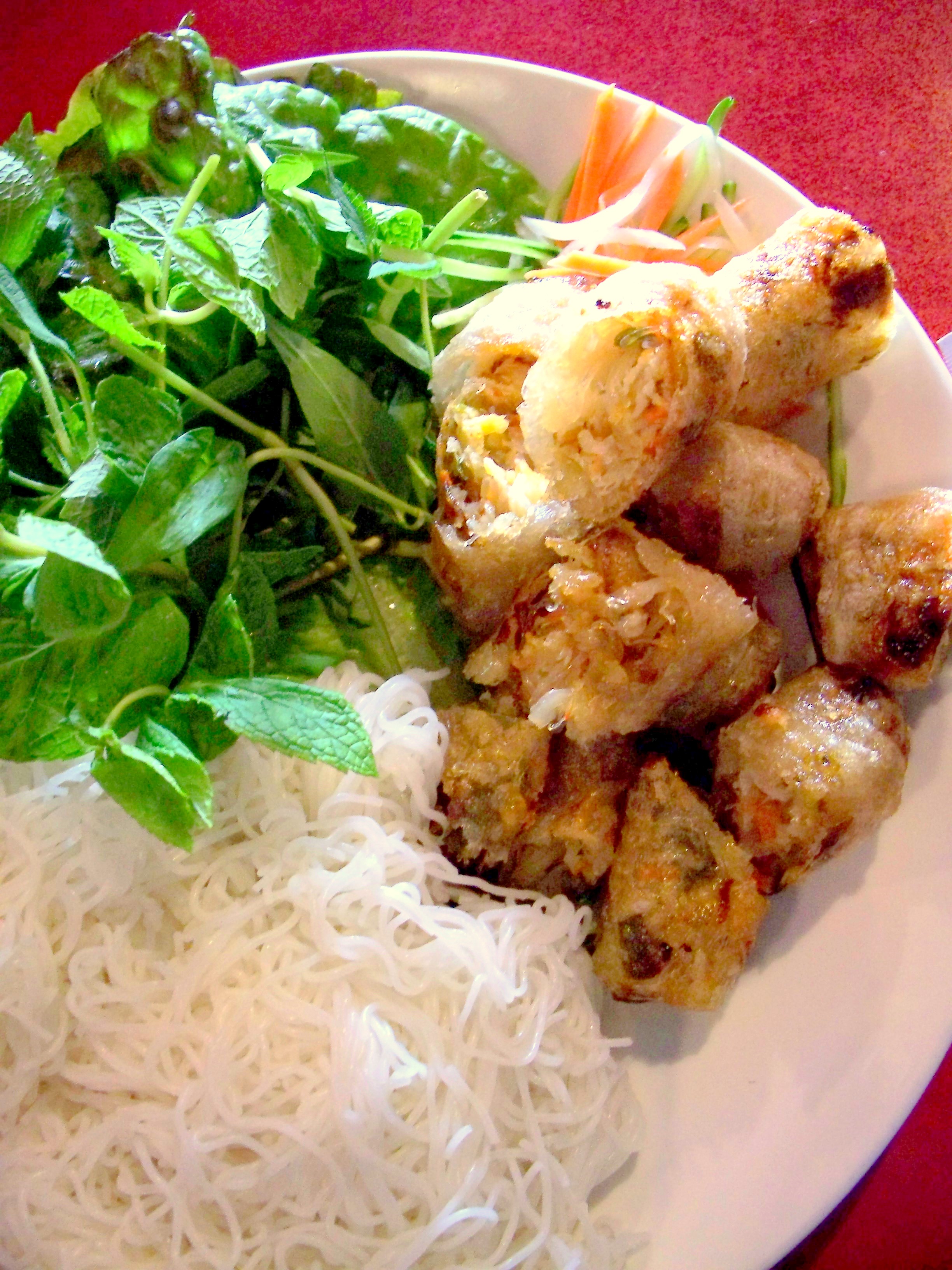
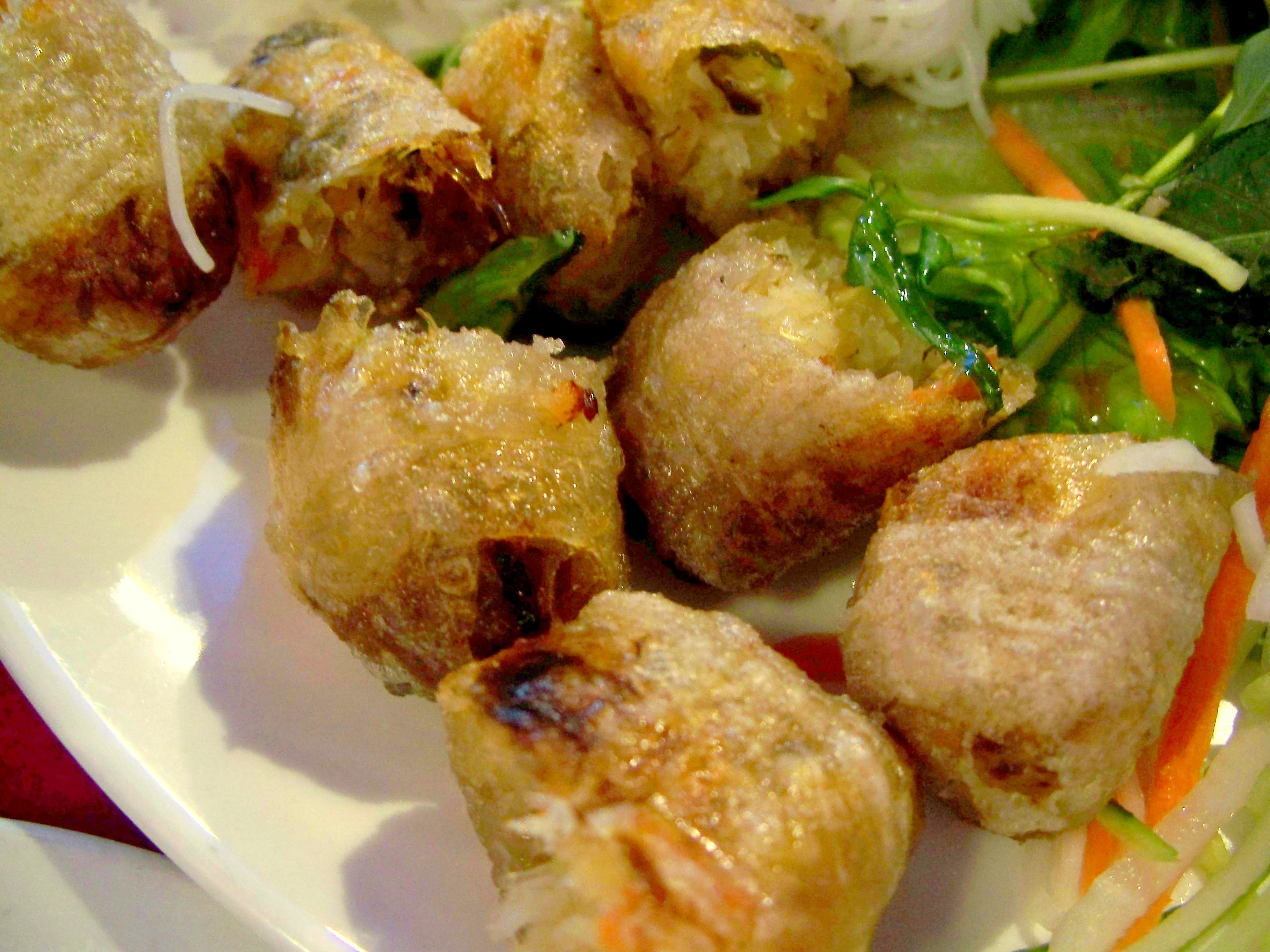
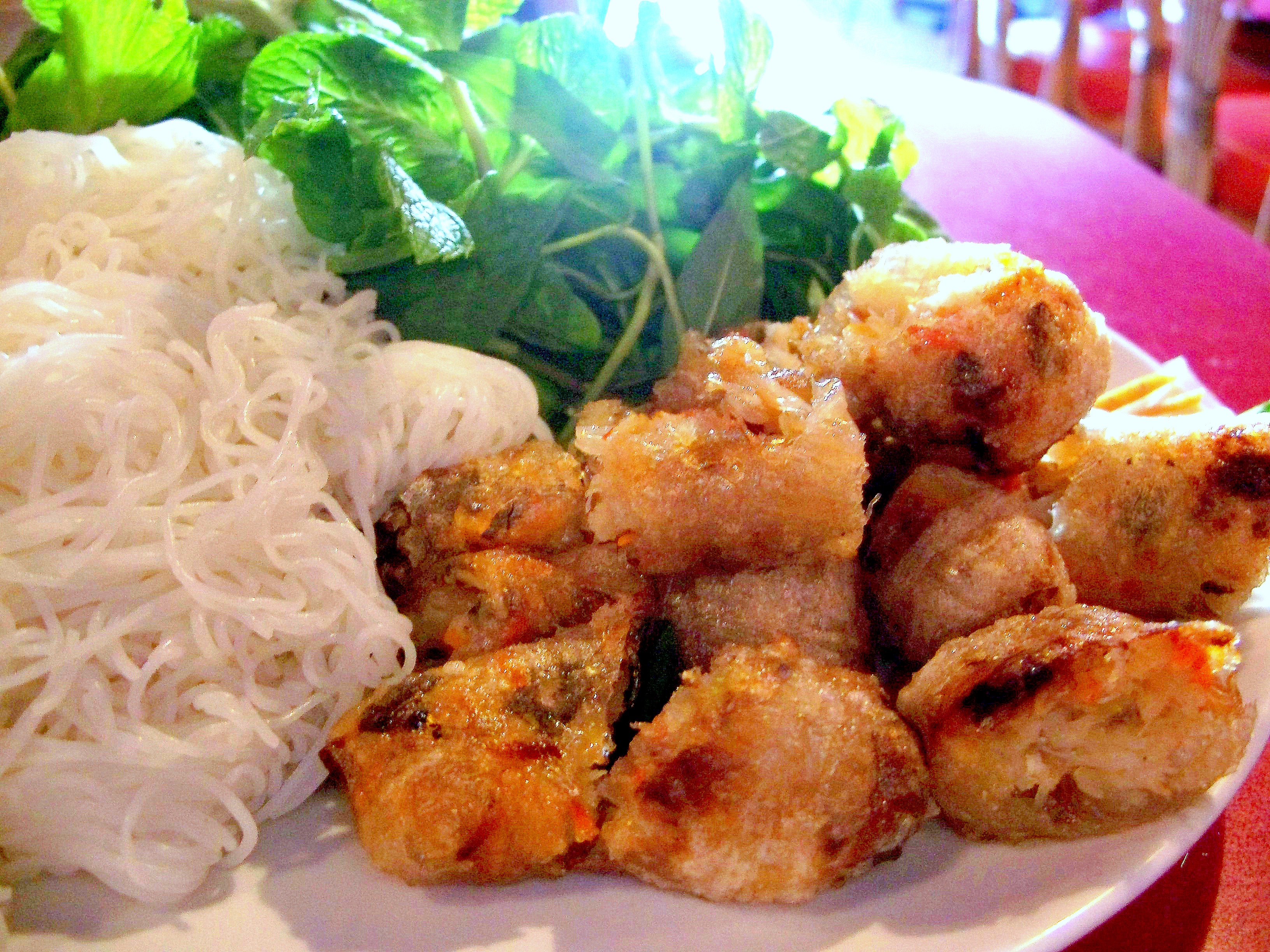
In fact, he kept more than just the spellings. He kept the flavor, the presentation, and the ingredients. Nem cua is wrapped in rice paper, stuffed with real crab meat, wood ear mushroom, and cellophane noodle (NOT cabbage, thank goodness), served with bún (thin rice vermicelli), rau sống (lettuce and mints), and a gargantuan bowl of nước chấm.


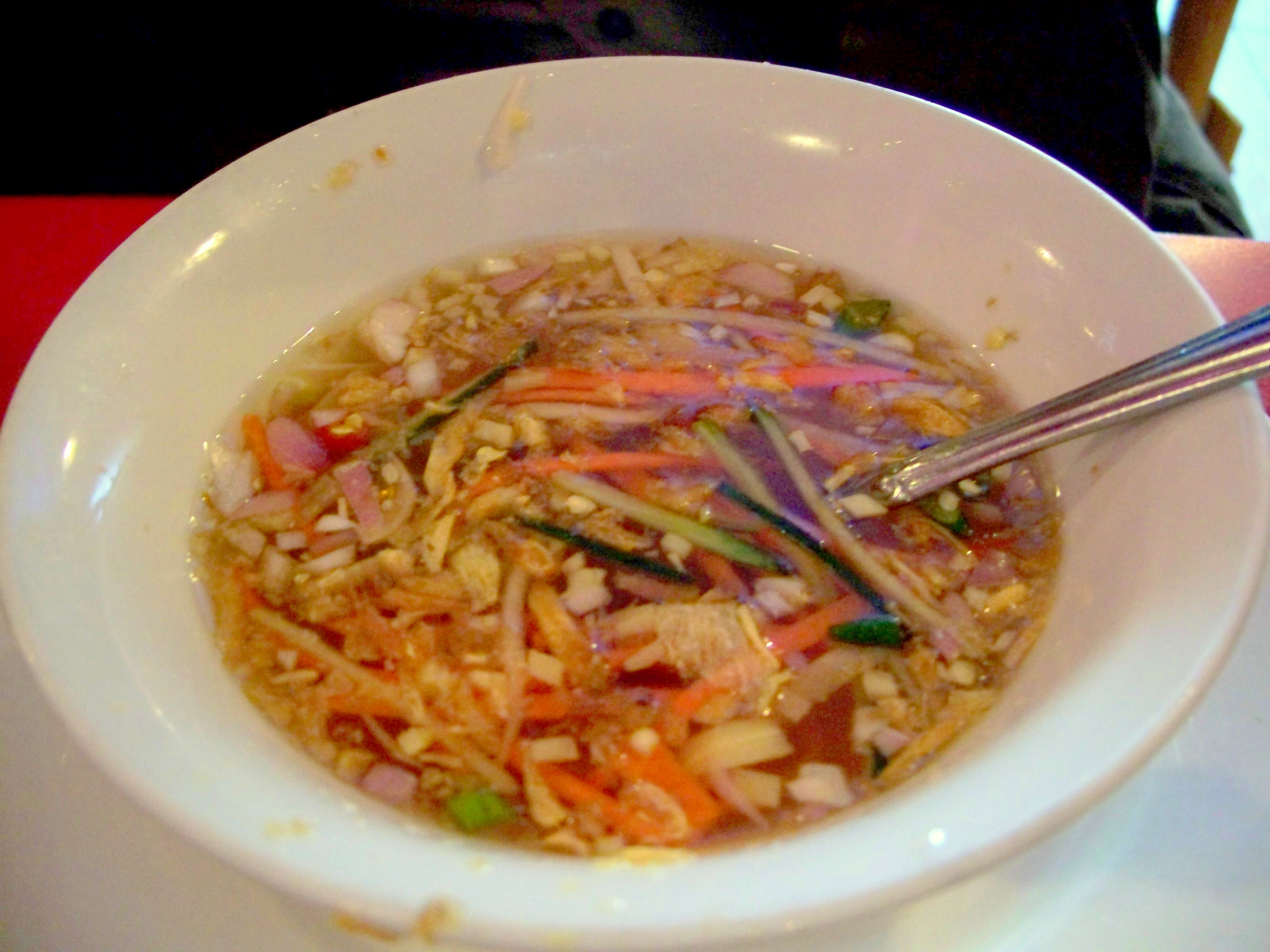
There are floating chili pepper seeds and garlic slices, strings of pickled daikon and carrots, subtle sugar and a squeeze of lemon to temper fish extract’s saltiness, and ginger to counter seafood. The clear sienna dipping liquid elevates the crispy crab rolls and coats the bland vermicelli in flavors. Rice vermicelli and nuoc cham trump pasta aglio e olio, if I may brag.


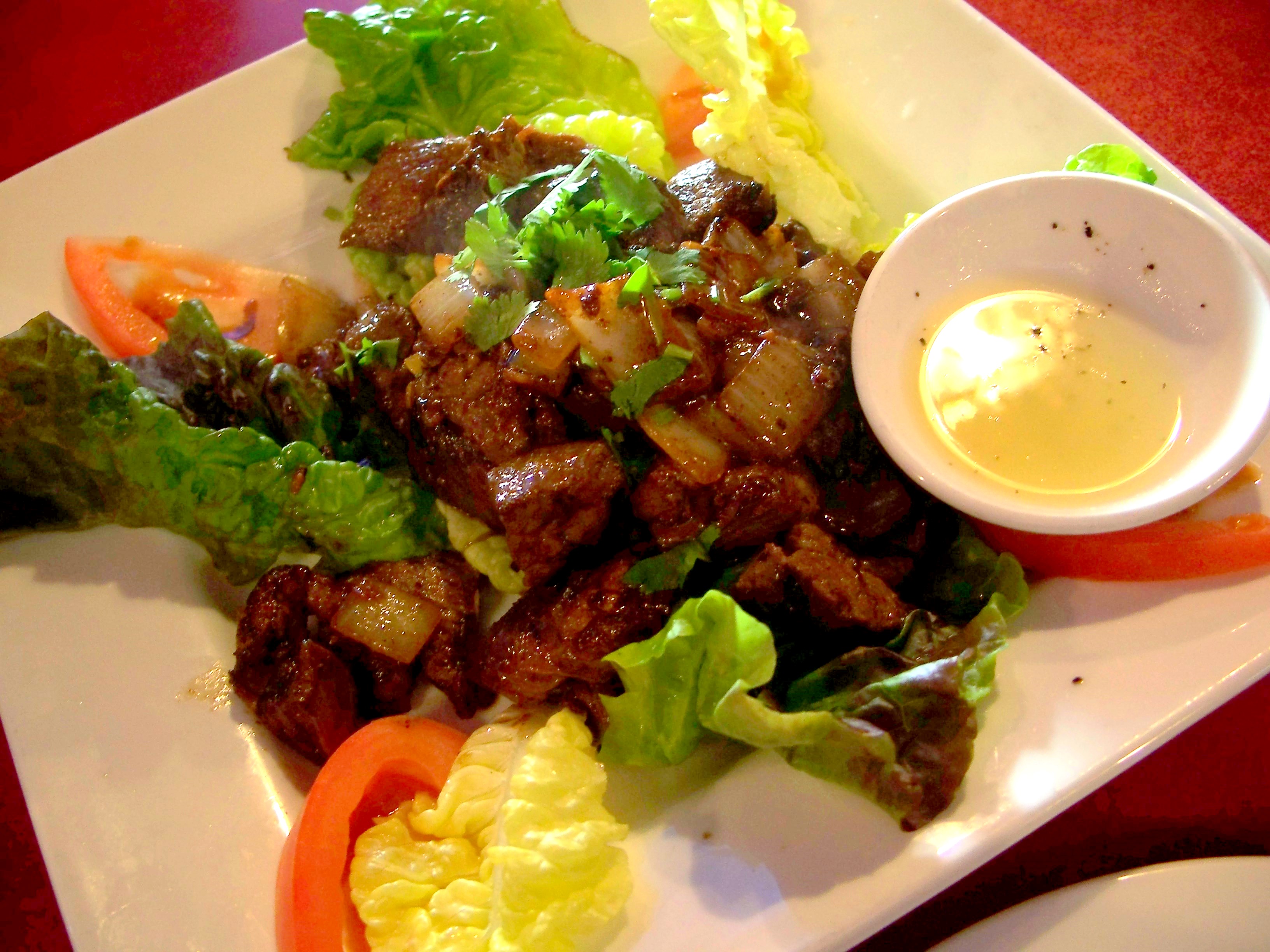
Just after we slurped clean the last twirl of noodles and sauce and erased all crispy crab rolls’ existence, a staff member came and politely replaced our plates with new ones for the second dish. (Yes, the very nice service I mentioned earlier.) It’s also nice that somehow the staff knew we were sharing and didn’t swarm the table with everything at once. The meat arrived when we were half full and wholly satisfied. Bo luc lac, commonly appear as “shaken beef”, sometimes “beef luk lak” (!), is like philly cheese steak, it simply can’t go wrong. But it can be underseasoned. I’m not sure if this is a difference between Northern and Southern recipes, or if the chef intentionally makes it edible without rice, but Bodega’s bo luc lac is more bland than Lemon Grass‘s bo luc lac. It’s soaked in a light salty wine-and-mushroom-like sauce, served with lemon juice, and it lacks the sweet-and-savory signature of Southern cooking. That aside, the tenderness is superb, and the onion bits melt like candies.


So just what makes authenticity? Is it the name? The ingredients? The cook’s experience? Certainly not the cook’s ethnicity. We came to Bodega looking forward to a Hanoi meal, and we left, looking forward to coming back.

Address: Bodega Bistro
607 Larkin Street
San Francisco, CA
(415) 921-1218
(a few blocks away from Herbst Theatre)

Dinner for two (including tax): $32.75

Down the Aisles 3: Ink stamper or potato?

June 18, 2010 By: Mai Truong Category: California - The Bay Area, RECIPES, Vegan

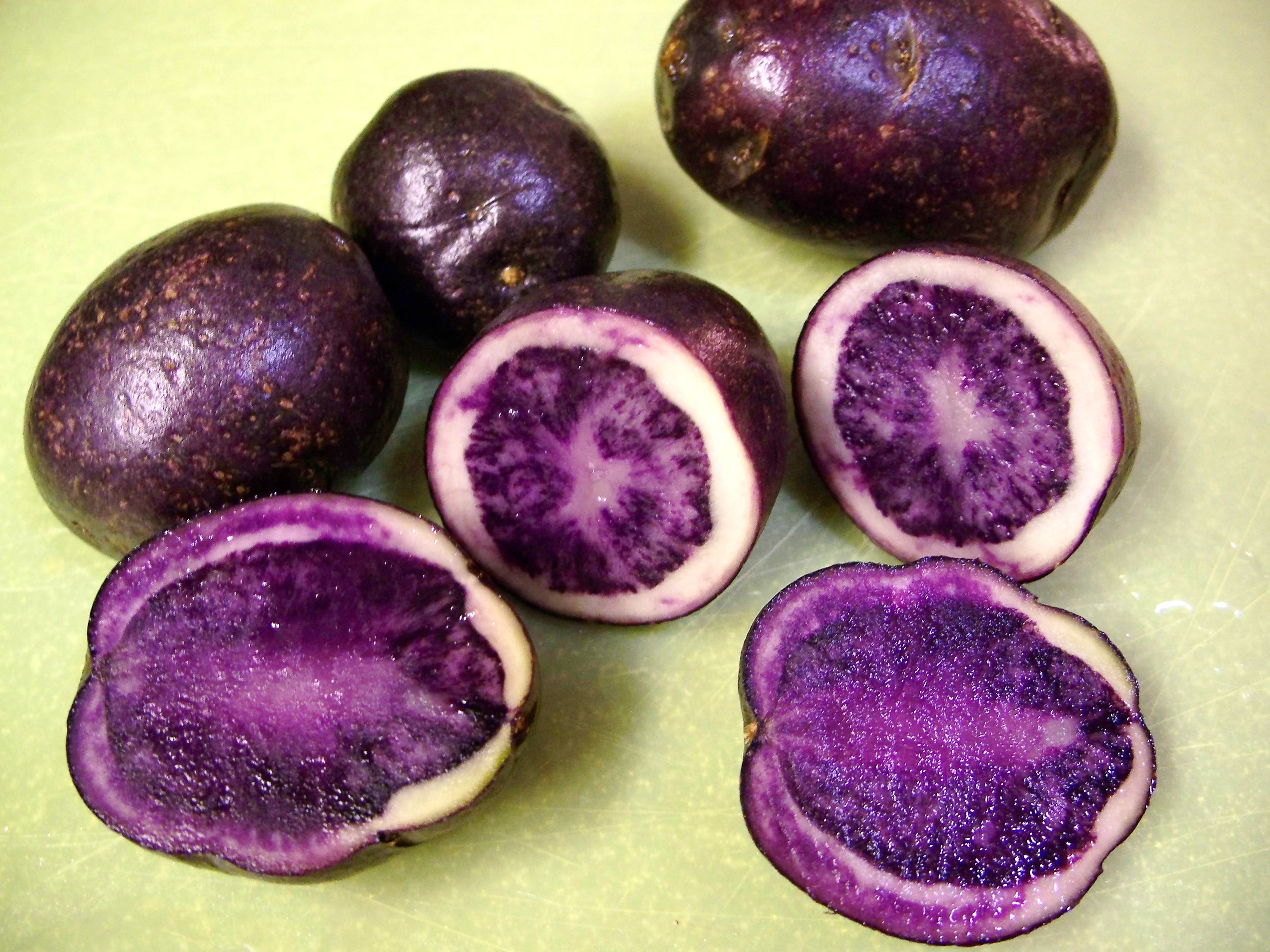
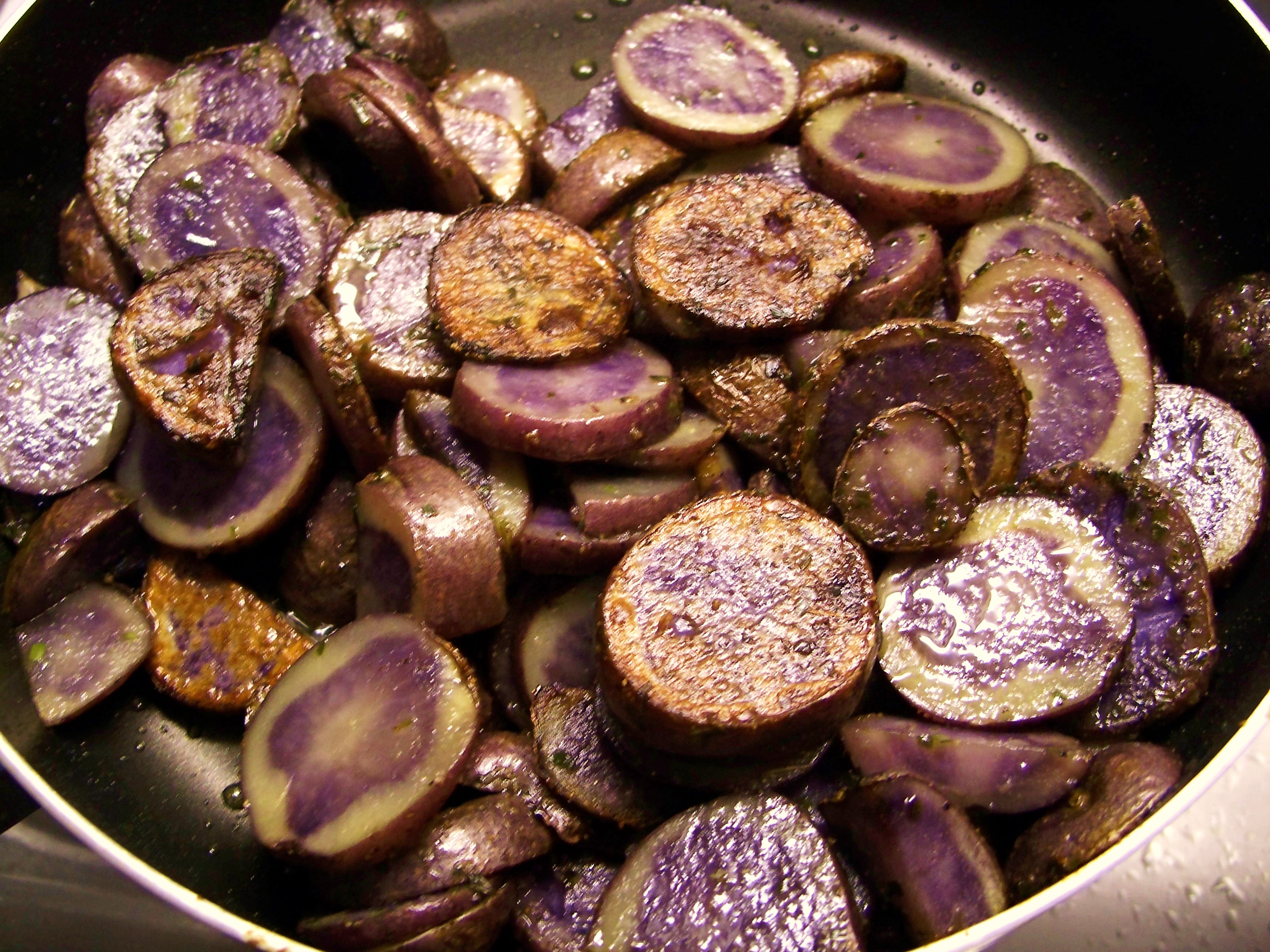
If you walk into my house you’re not gonna see many purple things. Truth is, I think purple is a picky color, even more so than pink. The wrong purple is tacky, the right purple rarely happens. But somehow all purple foods taste good (except eggplant). Purple cabbage, purple lettuce, beet, taro (mmm, taro ice cream), blueberry, purple spinach. Then I ran into purple potatoes at Lucky.


I bet you can carve your initials and use it as a stamper. At first I thought they are some cross between normal potato and beet, with the beet’s juicy crunch apparent whatever way you slice. Turns out it’s a mutation that causes production of the antioxidant anthocyanin, giving it the ink-stain color. So it’s all potato.


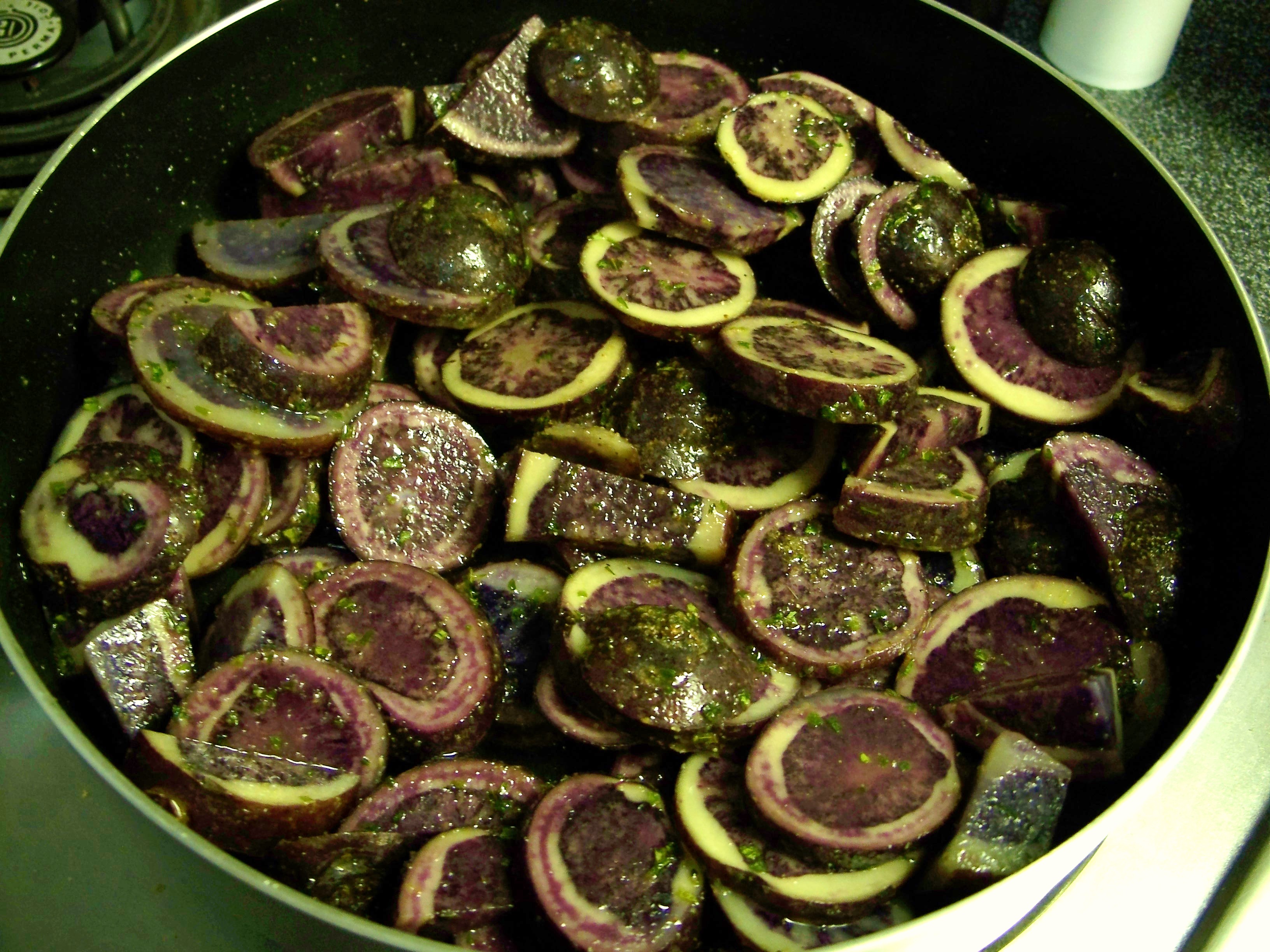
Mudpie the chef sliced them. Stir fry with salt, pepper, garlic powder, tarragon until golden.


Good stuff.

I couldn’t care less about sports, and the World Cup teams I root for aren’t wearing purple. But if you take a peek into my fridge, lotsa purple are there.

Previously on Down the Aisles: Magnolia’s Taro Ice Cream

Tags:

Resto-next-door Champa Garden

June 17, 2010 By: Mai Truong Category: California - The Bay Area, Comfort food, sweet snacks and desserts


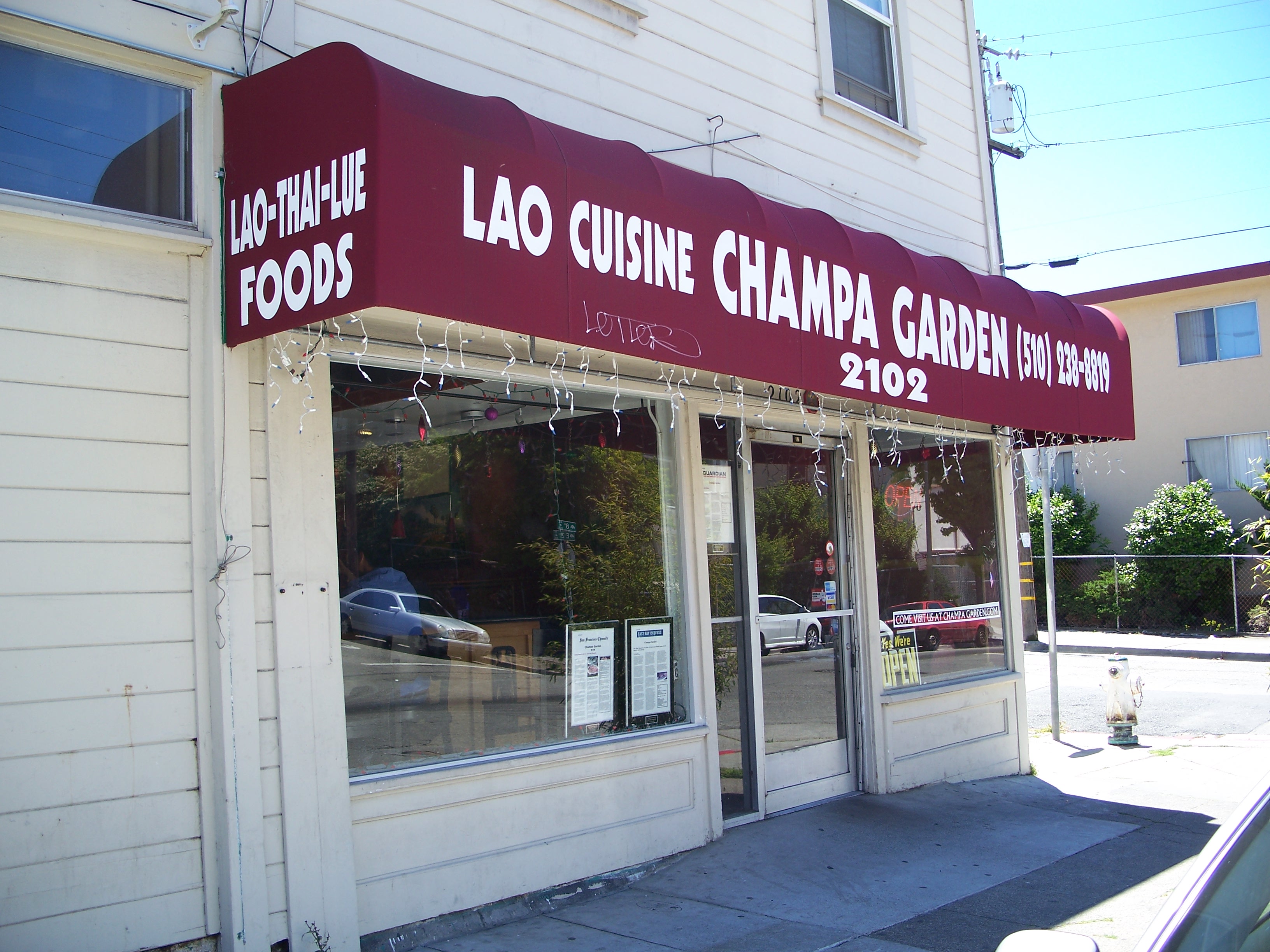
If you’re going to open a restaurant, where will it be? The city center where hungry passengers get on and off the subway station, a shopping mall where everyone gets the thirst for icy juice, the busiest street bordering campus, or a quiet neighborhood? If steaming delicious carts and baskets are literally a stone’s throw from your door in Vietnam, more often than not you need to wheel yourself a good ten minutes from home to burger joints and pizzerias here. There’s the eatery hub, then there’s the residential neighborhoods wrapping around it. So I could imagine how comfortable the folks living near 8th Street of East Oakland must feel, waking up on a lazy weekend midday. Hey, how about a bowl of kaow piak? Sure, Champa Garden‘s right across the street.

It’s utterly casual.

– How was the water?
– It’s good. Best water ever.
– Good. It’s my mom’s secret recipe.

So was the conversation between a young busboy and Mudpie at Champa Garden. In fact, he was the most talkative host in the diner. The others were nice, but they seemed to be mind-travelling in their own world. They spoke like falling leaves, looked at you with tired eyes, and smiled little. Their sweetness was saved in their food. In the brown sugar jar, for example.


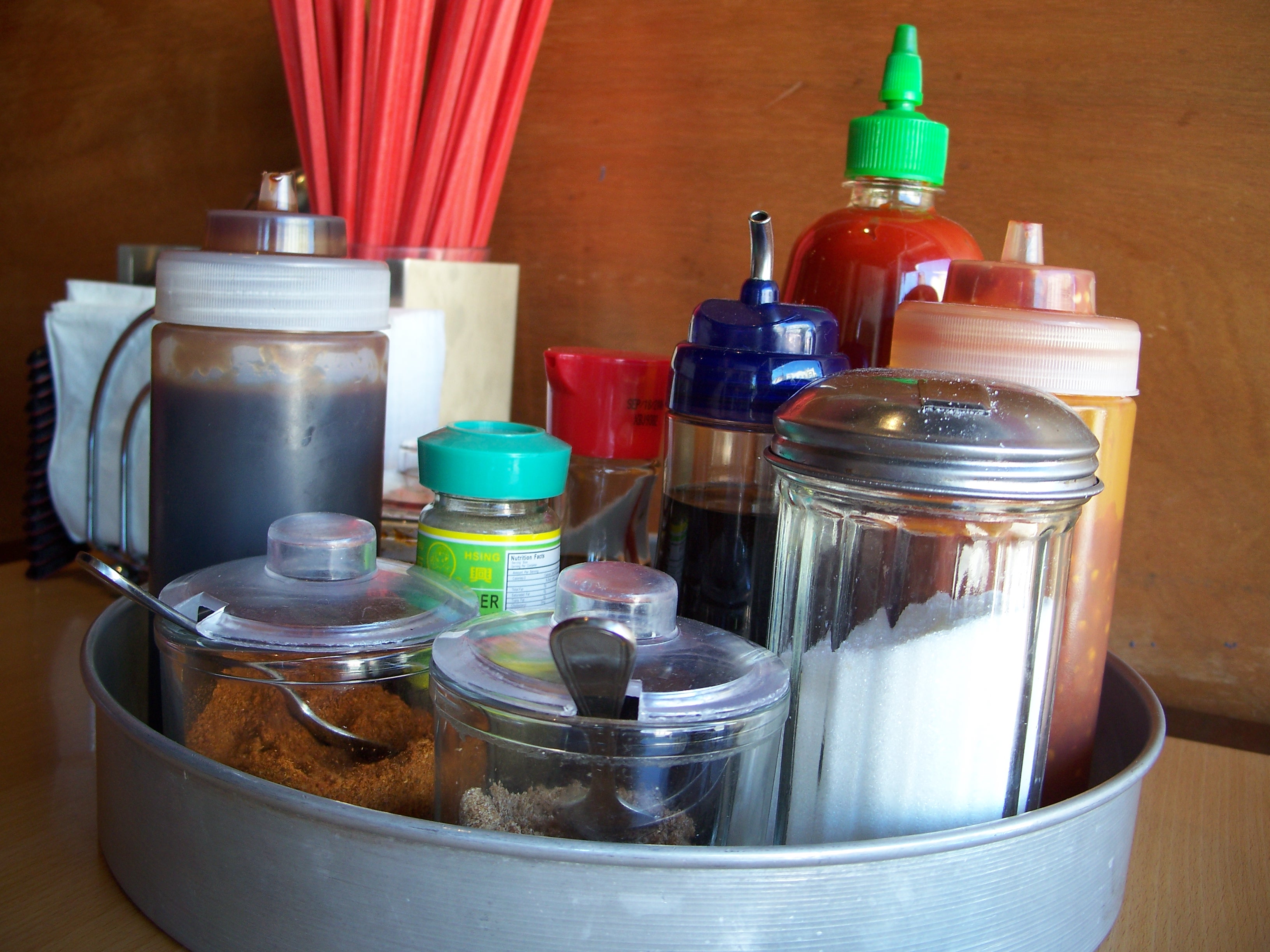
This is the biggest condiment tray I’ve ever seen. Probably to accommodate all three cuisines – Lao, Thai, and Lue – on the menu. I had to google “Lue” to find that it’s an ethnic group living in Laos and Thailand. There is only one dish attached to their name: the kaow soy, Lue’s noodle soup


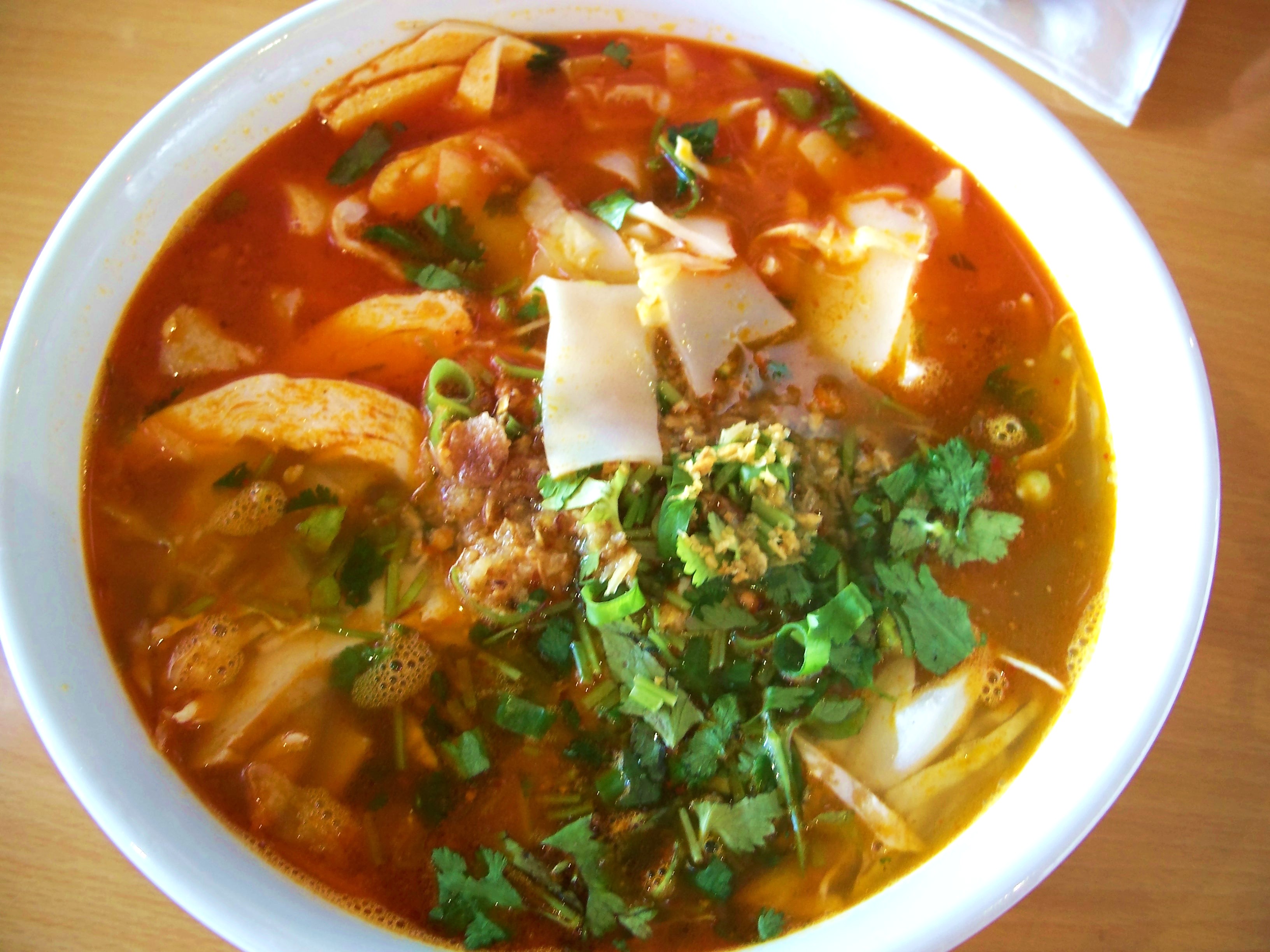
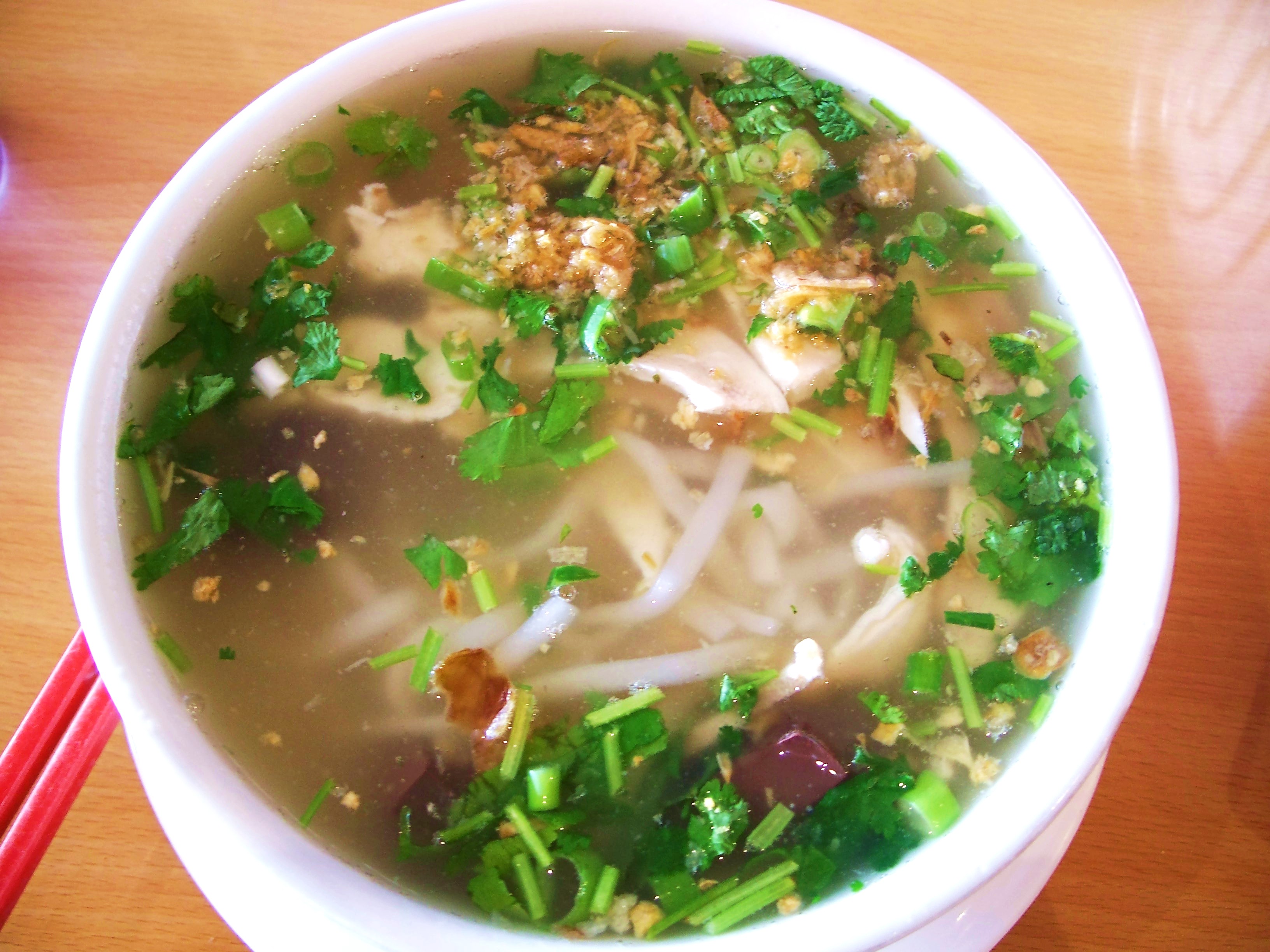
Unlike the Thai version with deep-fried egg noodle, this soup walks the line between phở and bún riêu of Vietnam. The hofun rice noodles, wide and thick, cling together like wet papers, and they keep coming! The chopped carnival of pork, scallion, cilantro, and pork rind are minute. That red broth is rather mild, nonetheless with a distinctive note of fermented soy bean sauce, not unpleasant, just “fermented”.


If you eat kaow soy before kaow piak, the kaow piak soup seems bland. Reverse the order, and you feel a sugary twist of Saigon’s hủ tíu and bánh canh. Sleek and chubby rice strings, chopped greens, fried shallot, white chicken, all the familiar faces. Pork blood is optional, and like jello, it hardly adds flavor. I like kaow piak‘s sweetness more than that other fermented note, while the chili kick in kaow soy charms Mudpie.

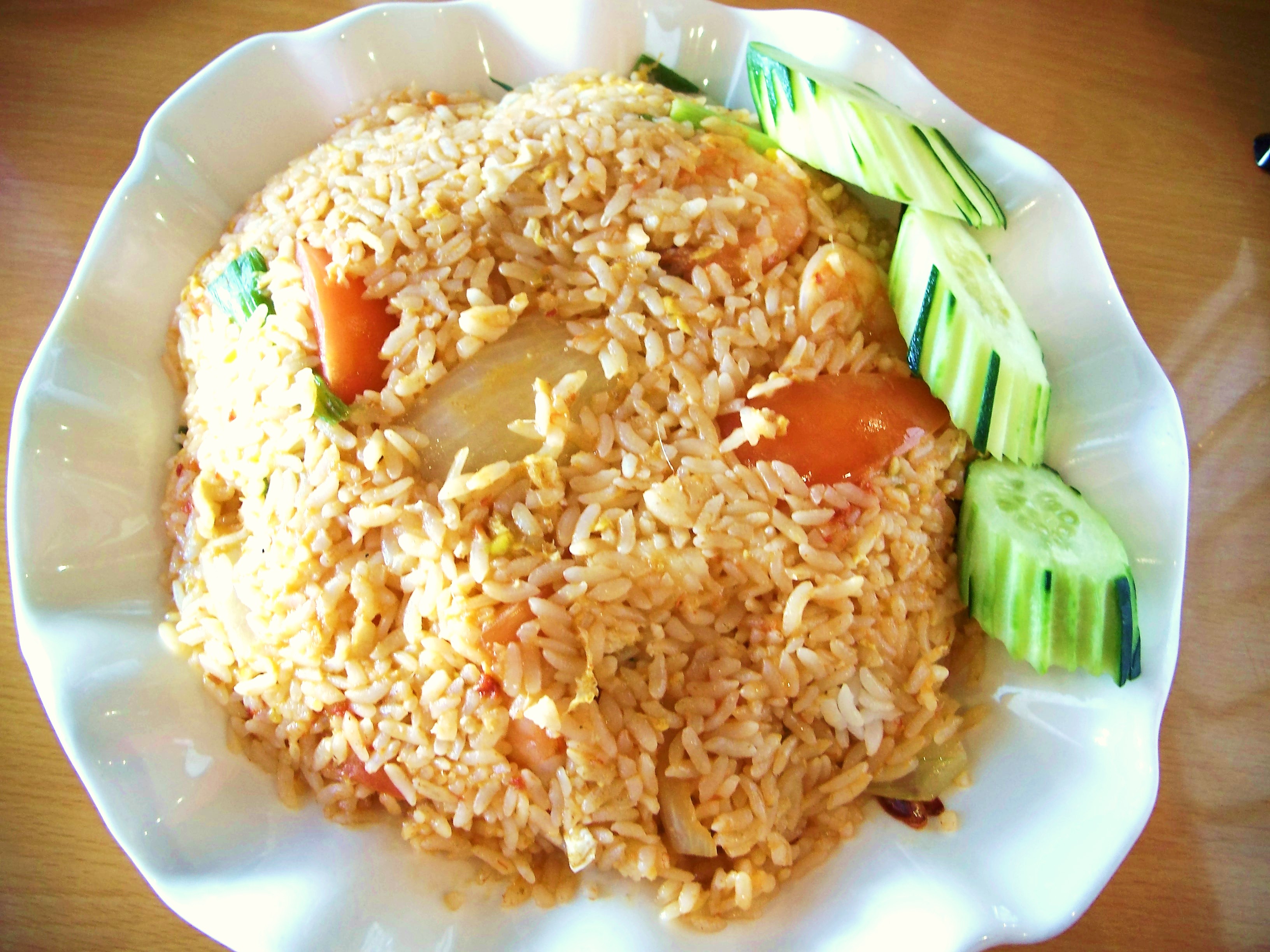
Just as the noodles, 5-6 bucks a bowl, satisfy local neighbors who wake up and walk in, Champa Garden has something on stove for the unadventurous, indifferent, playing-safe crowd: pad Thai and fried rice.


It’s just rice, shrimp, onion, tomato, green chive, and tom yum sauce. It’s just lunch. Is it worth 8 dollars? Maybe the amount, maybe not the taste. The Champa fried rice suits whoever chooses it for safety.

Then there is food for the novice diners who would catch bus 18 from Berkeley, sit through a forty-minute ride and walk up the hilly 8th street, just to check out the place recommended by their fellow foodies. These foreigners are interested in the unfamiliar names, try to taste as many plates as humanly possible, and would kill a bunny for a chance to peek into the kitchen.


Unfortunately, they aren’t allowed to go into the kitchen. I found the most awesome appetizer, I asked if I could see how they make it, and they politely shot me down.


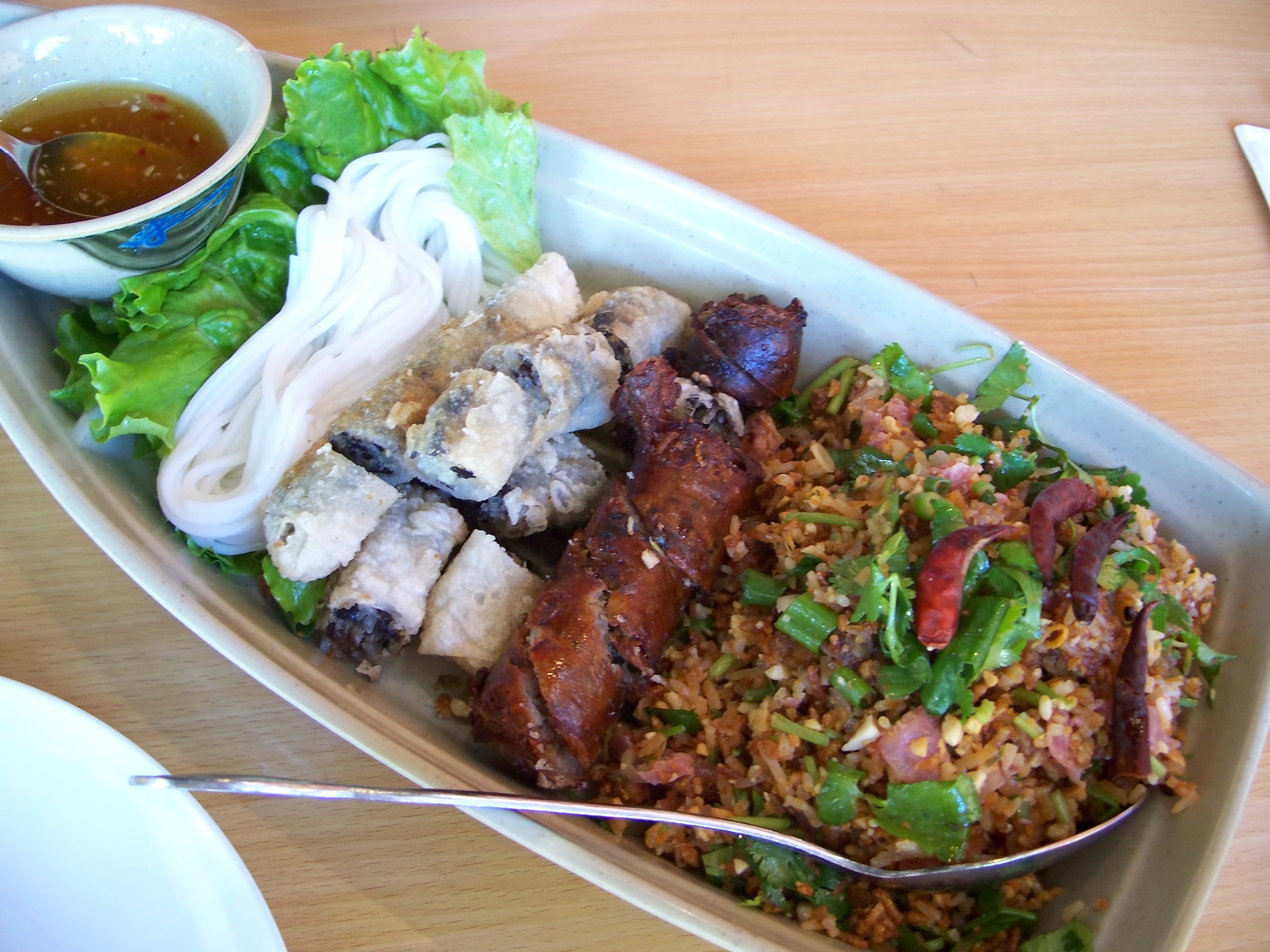
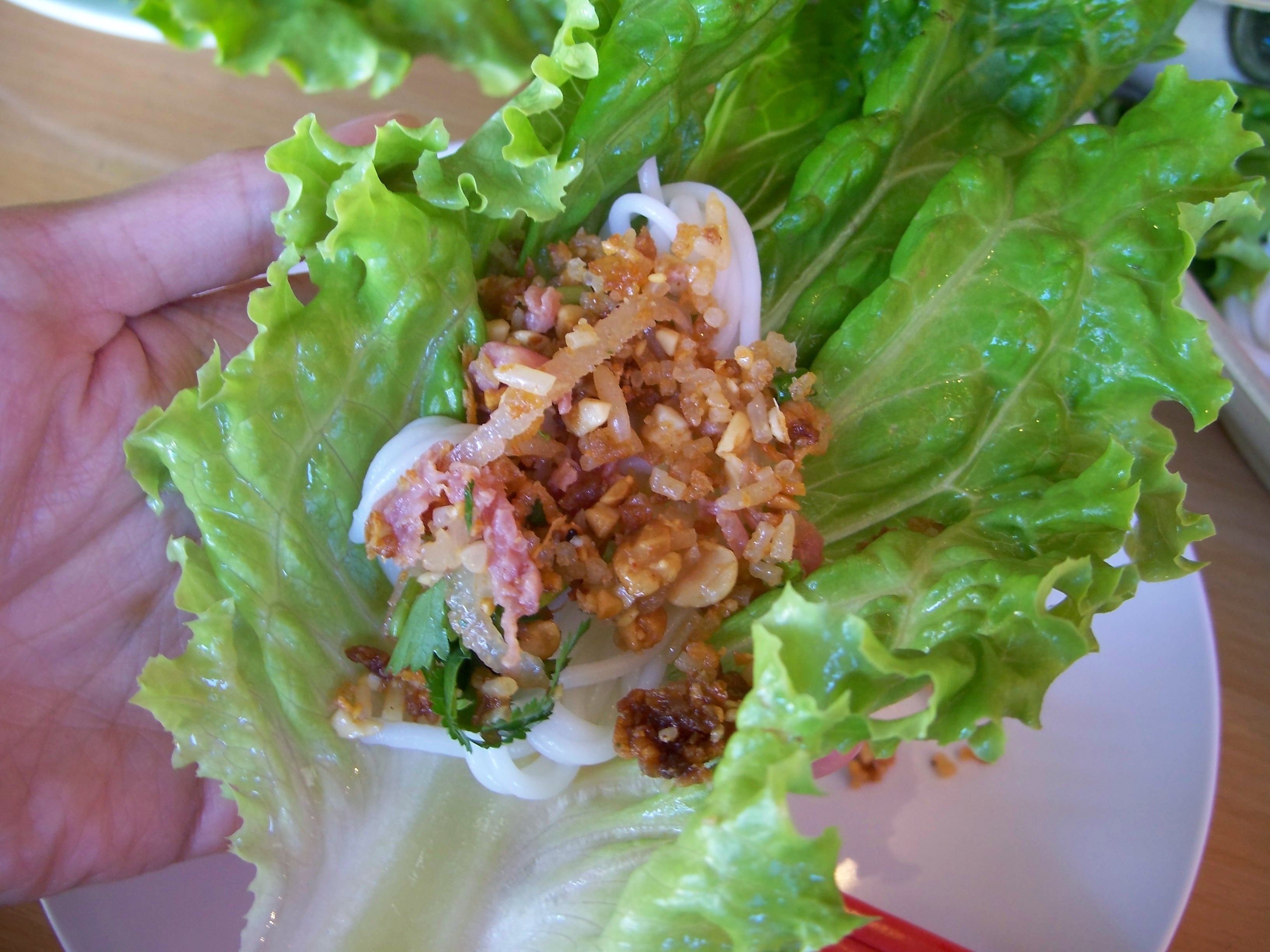
Nam kaow, crunchy fried rice with finely chopped up greens and spam, is seasoned to perfection. You wrap it in lettuce and dip into the garlic lime sauce (extremely similar to Vietnamese nước chấm), or you can avoid the mess and just eat it plain. There is nothing to complain about it. It comes in the sampler boat with Lao sausages and yor chiun (deep fried rolls of vermicelli, woodear mushroom and ground pork wrapped in rice paper), both are yummy but must bow to the nam kaow.


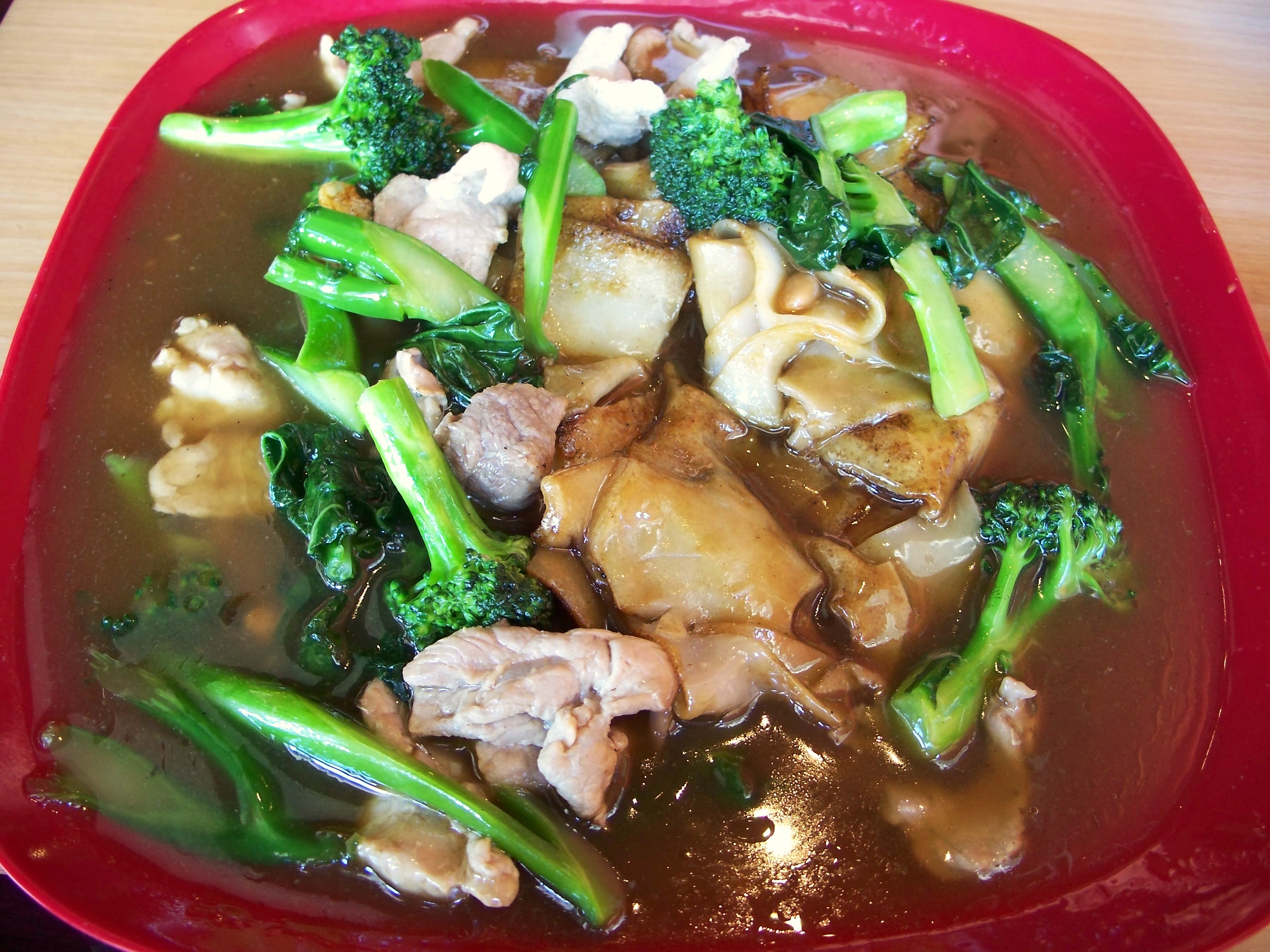
Just when we get mightily excited over a great start, the luck gets thin. For entree, lat na turns out just so so, borderlines boredom. You know that feeling when the food kinda sticks in your throat and just wouldn’t go down? Not that it really gets stuck, but somehow it prevents you from eating more. Thick sheets of rice noodle in a thick, sweet sauce does that. Just too thick. Perhaps a different kind of noodle would have been better, because the broccoli soaked in this sauce is pretty nice.


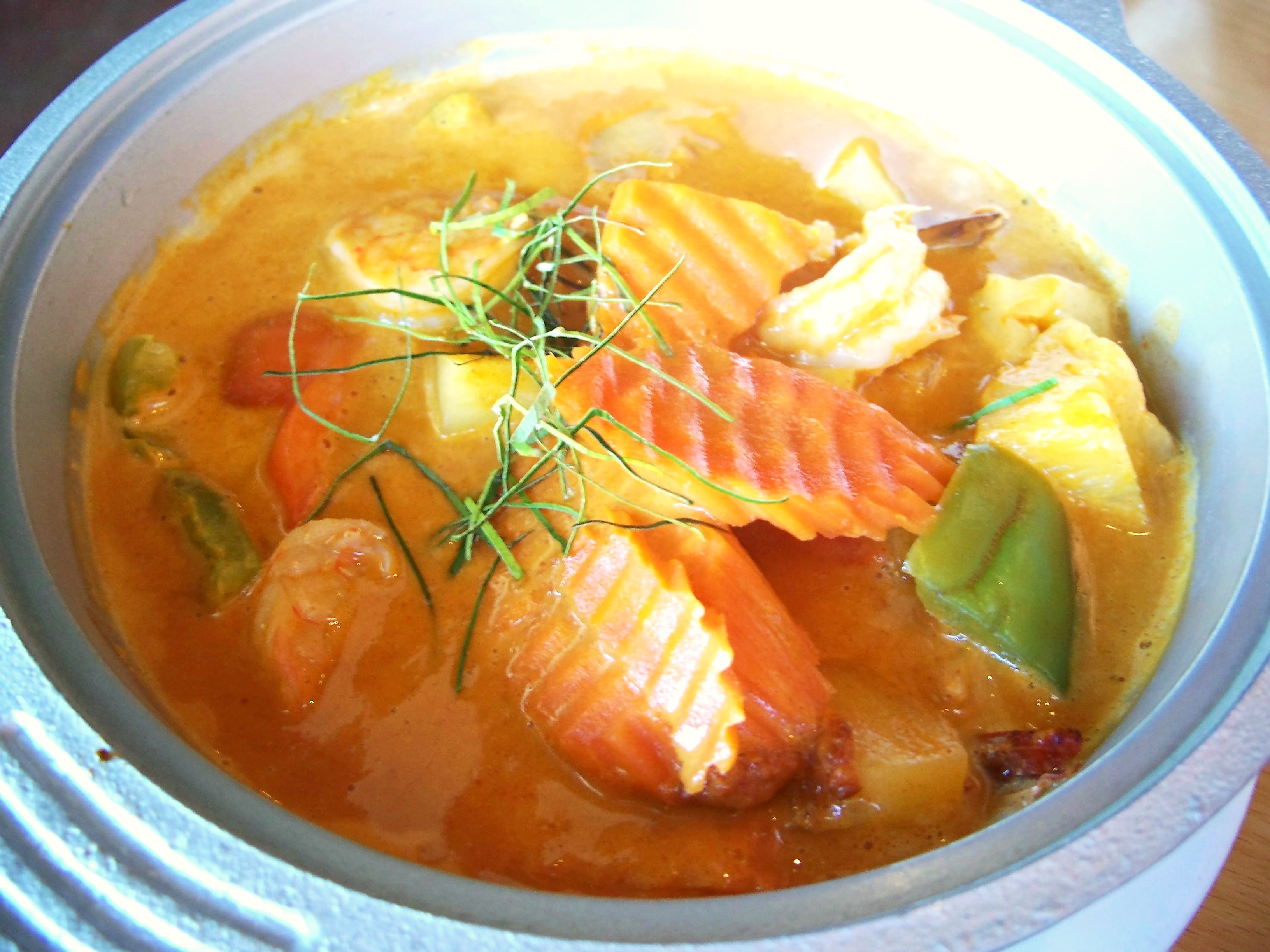
On a sweeter note, shrimp “claypot” fares well. There’s nothing clay pot about it, just shrimp, pineapple and veggie in, again, thick and sweet coconut curry sauce. Very coconuty.

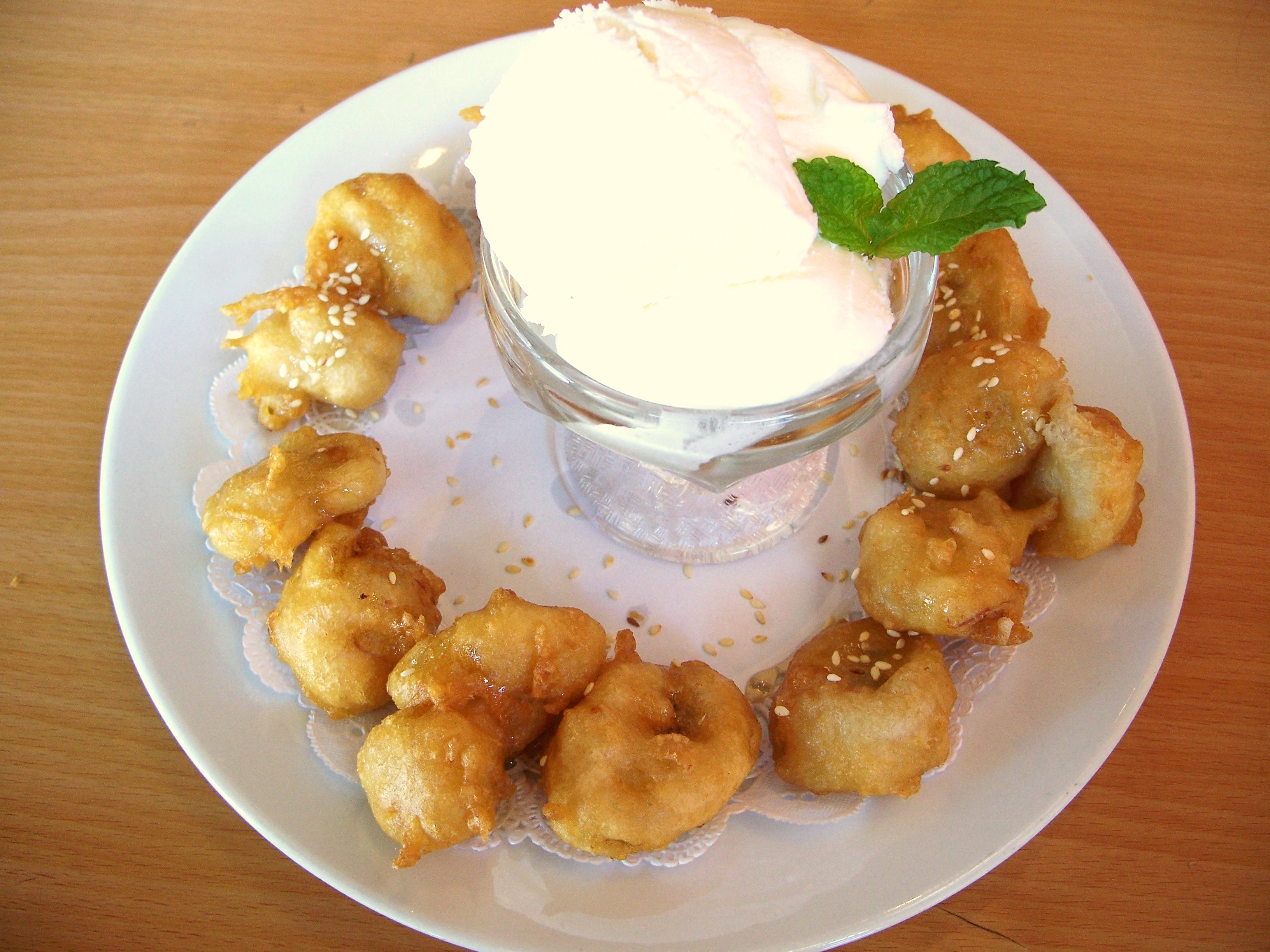
As if the whole course had not been sweet enough, the novice foodie stubbornly demands fried banana and coconut ice cream for dessert.

In hindsight, I could do without the fried banana. Battered, oily, crunchy pockets with mismatching sweet hot goo inside isn’t what I expected. But ice cream makes everything better. It’s not so coconuty as it is pineapple-y. It is, again, thick and sweet. But it clears the throat like nothing else.


So there, whether you’re a local on 8th street hungry for a warm breakfast near home, a safe eater, or a foodie seeking little-known edible gems, as long as you have a ten dollar bill and a sweet tooth, you’re guaranteed to roll out of Champa Garden full and smiling like a tangerine.

Address: Champa Garden (East Oakland)
2102 8th Avenue
Oakland, CA 94606
(510) 238-8819

Sandwich Shop Goodies 2 – Bánh bía (Suzhou mooncake)

June 14, 2010 By: Mai Truong Category: California - The Bay Area, Chinese, Comfort food, One shot, Southern Vietnamese, sweet snacks and desserts, Vietnamese


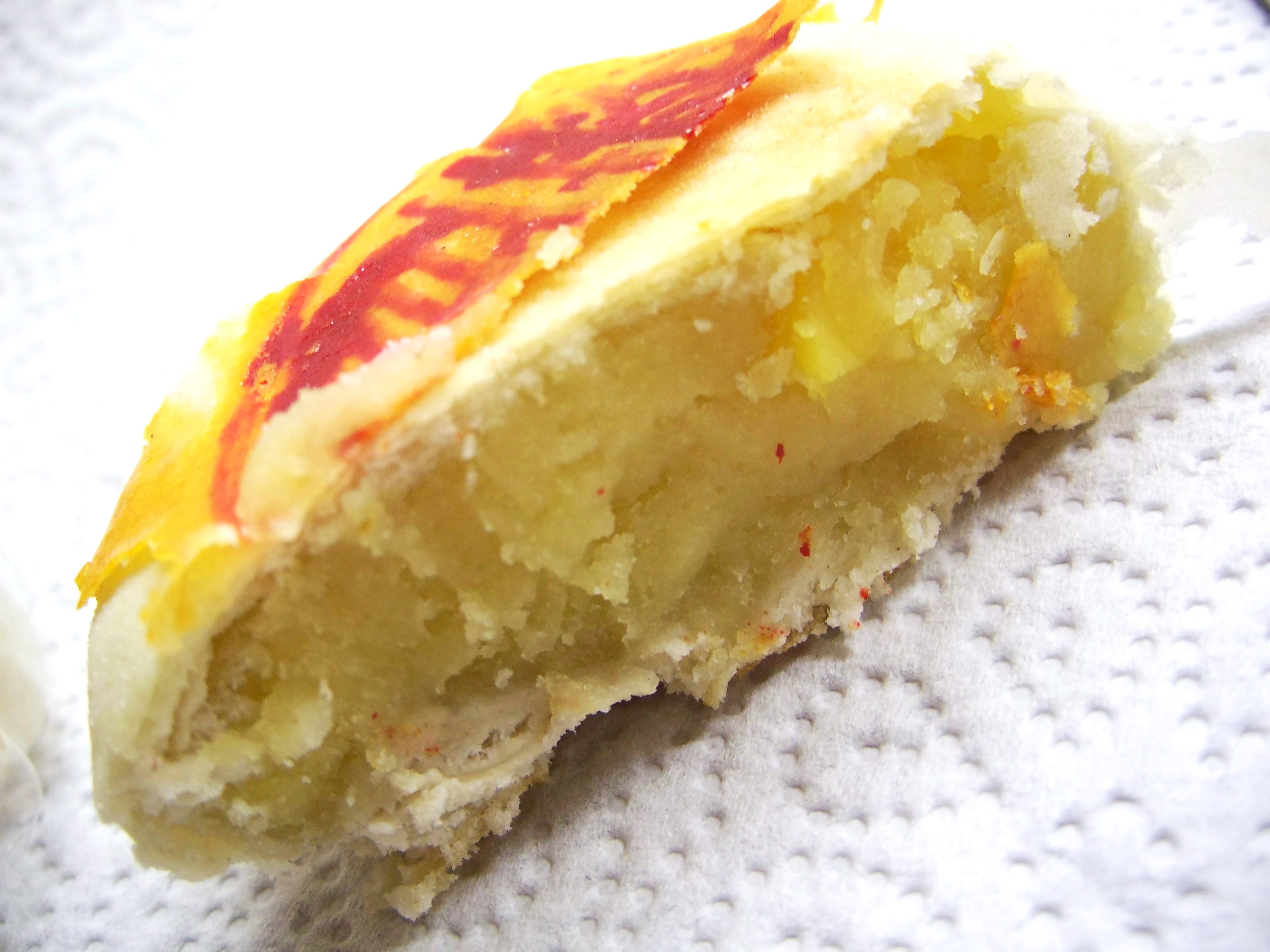
In the middle of bright yellow paste lies a crimson orange ball. The egg yolk. Salted and dried up to the size of a cherry. Or should we say it is the moon, at its fullest on the fifteenth day of the eighth lunar month each year.

Roughly 650 years ago, it was a bright moon for the Ming Dynasty, but not so bright for the Yuan Dynasty. The Mongolian rulers’ defeats started from a full moon day of August 1368, when the capital Dadu (present day Beijing) was captured by Zhu Yuanzhang and his Han Chinese insurrection armies. Zhu Yuanzhang then rose to the throne as the first king of the Ming dynasty, and he made sure that the Mid-Autumn Festival, which coincides with the end of the harvesting season, was celebrated throughout the country. As the story goes, such revolutionary victory could not have happened without them little mooncakes.

They were secret means of distributing messages among the resisting forces. Words were printed on each mooncake as a simple puzzle. Each mooncake in a package of four was then cut into four pieces, and the sixteen parts were arranged in a particular way to form the entire message. Afterwards, the cakes were eaten and the trace erased. I don’t know what they would do if a hungry kid got hold of a piece.

Although people aren’t sharing secret information anymore (as if anything could remain secretive under the communist watch), the mooncakes still have imprinted words on top and still come in packages of four.


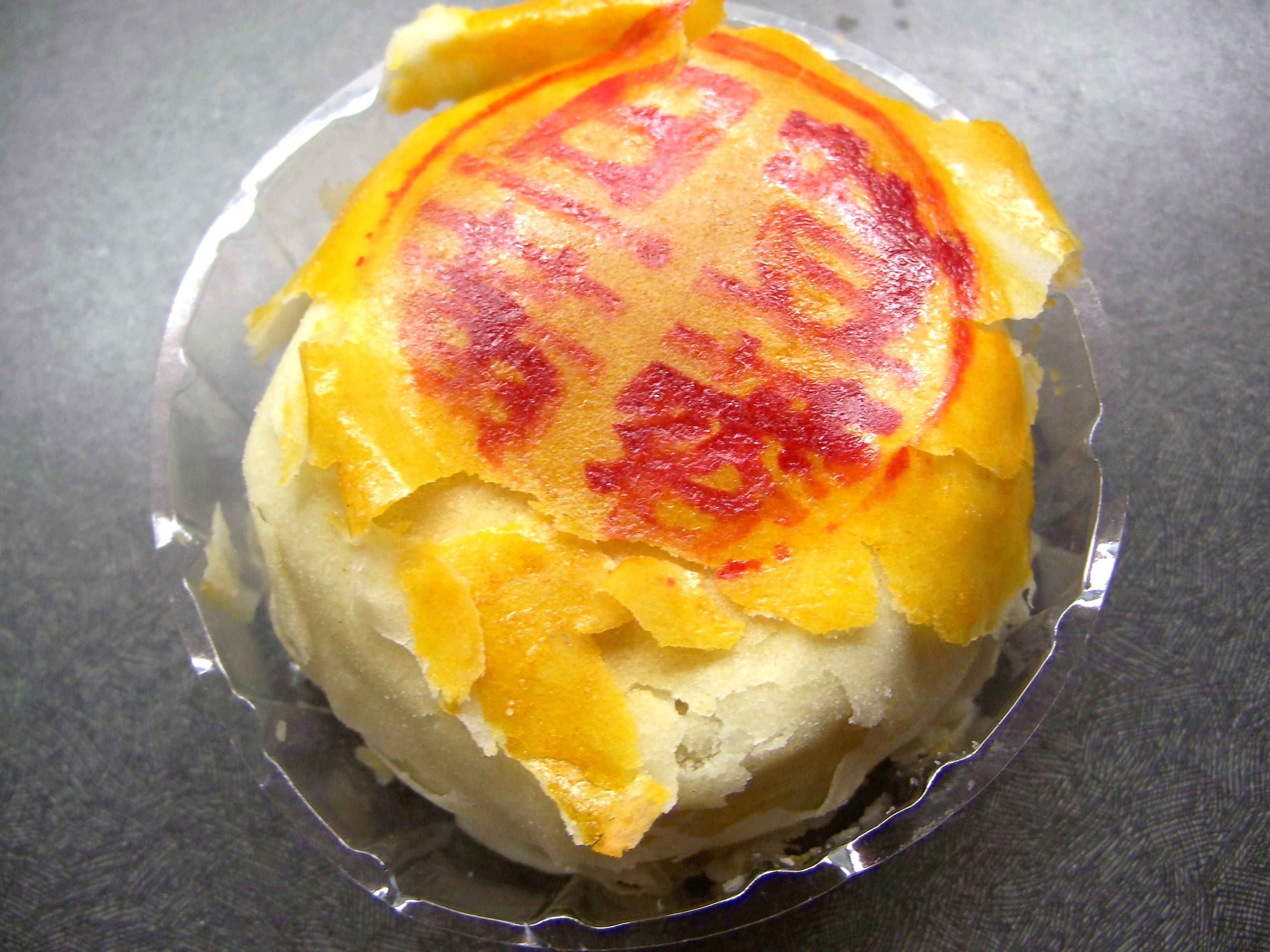
The most popular kind of mooncakes have elaborate designs with golden brown crust, originating from Guangzhou. Other kinds more or less are spin-off versions of the Suzhou-style mooncake with a simple round shape, no design, flaky skin which can be peeled off by the layers, and no need for a mooncake mold.

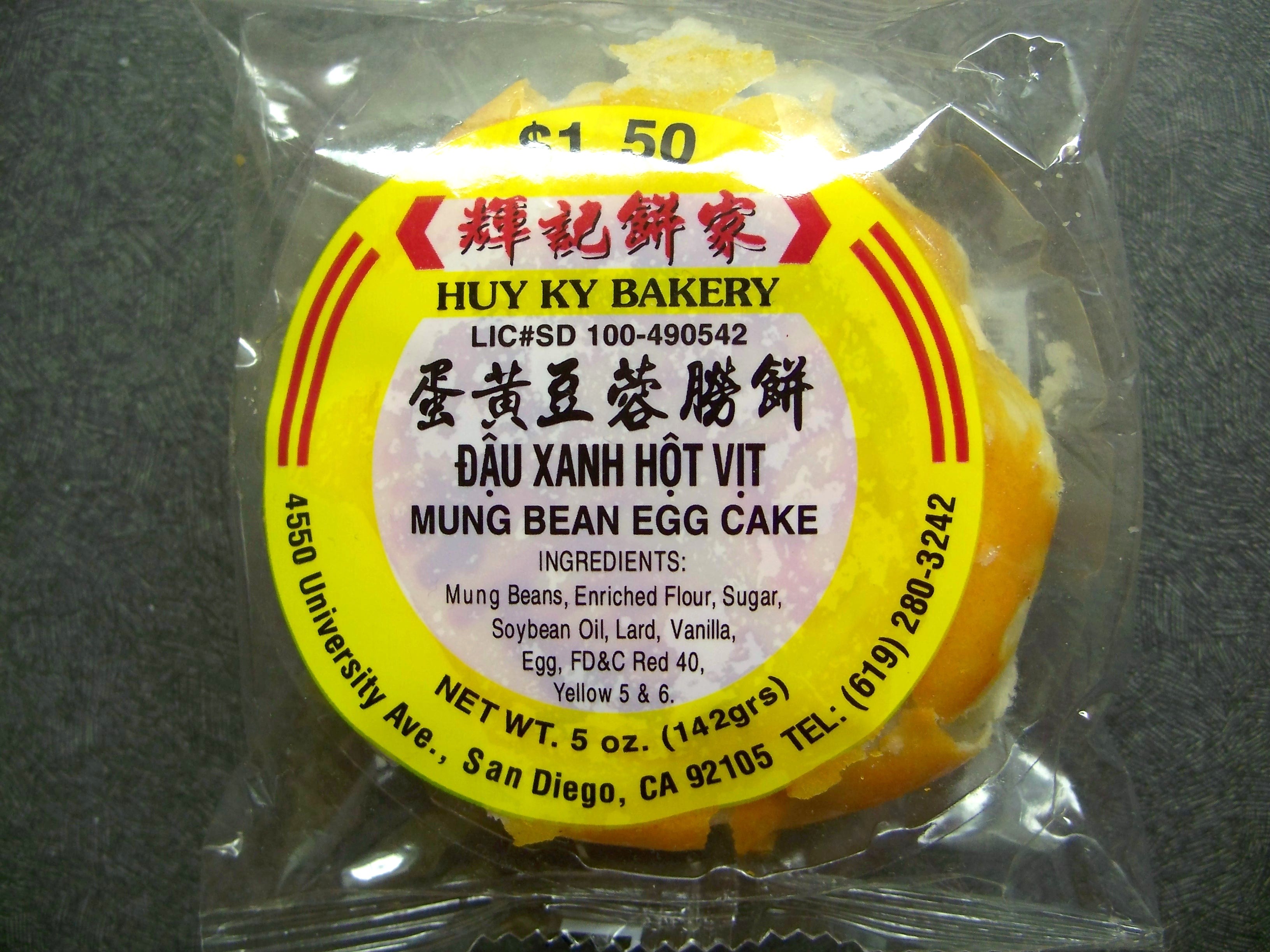
When the Chinese immigrants settled in the Mekong delta, they introduced the round, flaky mooncakes, referred to as “pía” in Teochew dialect, to the southern Vietnamese, who quickly adopted the recipe and the trade to make it a regional specialty, the Soc Trang‘s pía. “Pía” means “bánh”, things made with flour, but the innocuous southerners took it as a name, and started calling the flaky mooncakes bánh bía. Unlike the Cantonese mooncake that is only eaten during the Chinese Mid-Autumn festival, bánh bía gets served year round, bought as gifts from travelers to Soc Trang, featured in the Khmers’ moon festival Oc Om Boc in October, and individually packaged for sale at $1.50 a piece in Vietnamese sandwich shops in San Jose.


The recipe, too, has slightly departed from its Suzhou originals. If the Chinese counterparts often contain lotus seed, red bean paste, nuts, and sometimes pork for savoriness, the Soc Trang version stays homogeneous with either mung bean paste or taro paste, which can be flavored with lard and durian to the likings. But whatever goes inside, the doughy, flaky skin of bánh bía is the unchangeable feature, distinguishing it from all other pastries.

Each pía needs two kinds of dough: the “skin dough” and the inner layer dough. The skin dough on the outside, made of flour, water and canola oil, gains its elasticity and smoothness from a little kneading, while the inner layer dough has only flour and oil and is left unkneaded to keep it thick and chewy. Later the two kinds are flattened together to make the crust, but with the inner layer dough always contained inside the skin dough, otherwise the banh bia would have a coarse surface. After baked half way, the pía is taken out and glossed some egg wash over its upper side. When fully baked, they shine a ripe yellow invitation, ready to be stamped “longevity”, “harmony”, or some other character in red.

The whole process, from making the filling paste to baking, can take up a whole day. Buying it at the store takes two minutes. If you don’t count driving time.

Address: Huong Lan Sandwiches #4
41 Serra Way, Suite 108 (across the parking lot from New East Lake Seafood)
Milpitas, CA 95035
(408) 942-7777
Monnday – Sunday: 6am – 9pm

Click here for a recipe of bánh bía (Vietnamese-adpated Suzhou mooncake)

Previously on Sandwich Shop Goodies: bánh gai (thorn leaf sticky rice bun)

Next on Sandwich Shop Goodies: bánh ú tro (Vietnamese-adapted jianshui zong)

Sandwich Shop Goodies 1 – Banh gai (thorn leaf bun)

June 09, 2010 By: Mai Truong Category: California - The Bay Area, Northern Vietnamese, One shot, sticky rice concoctions, sweet snacks and desserts, Vegan, Vietnamese


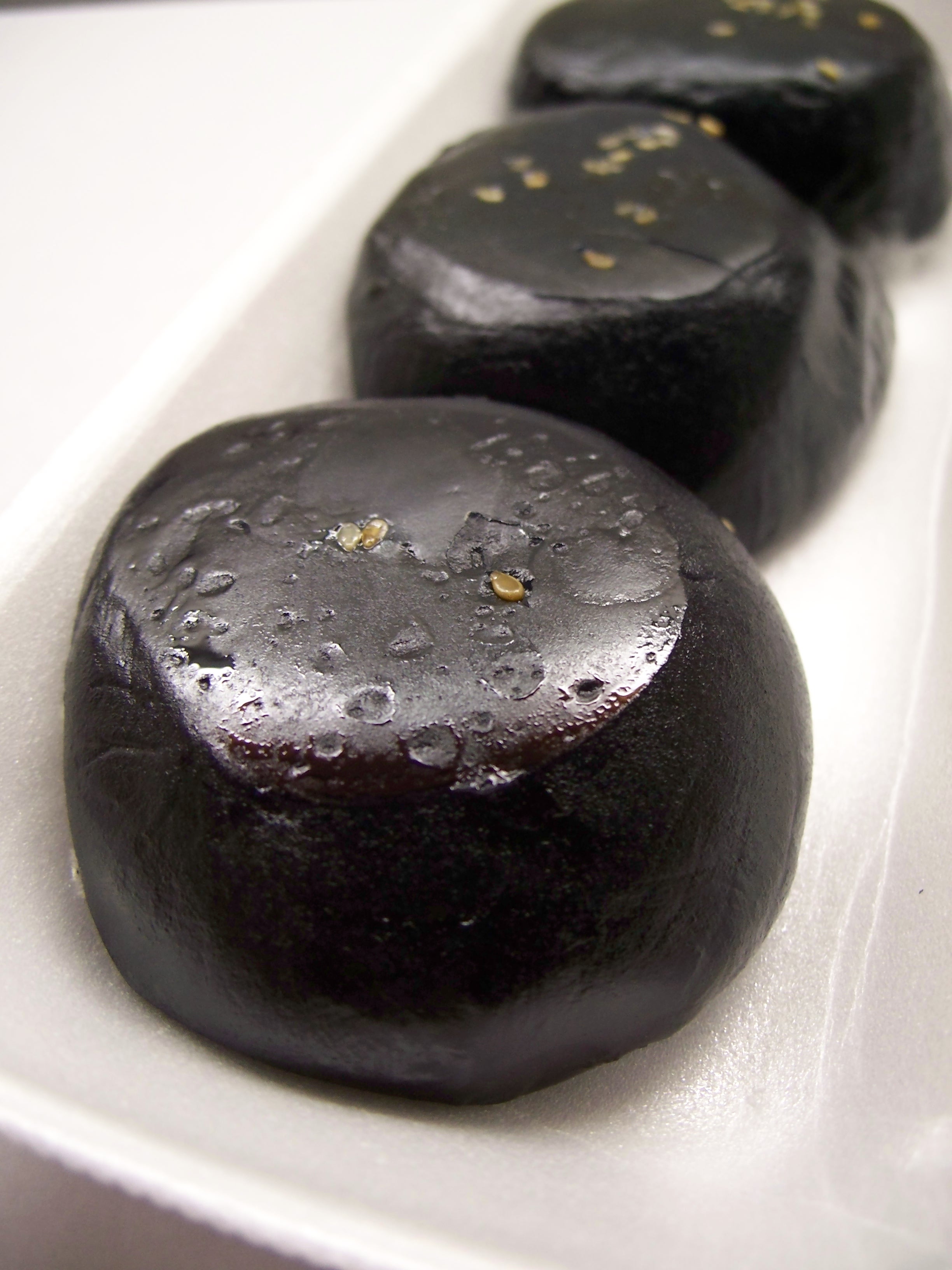
Sitting still, it looks like a rock. It is sweet with a hint of lard. It is chewy with a weak crunch, similar to a lasagna’s crust. The smooth, thick black skin shines like lacquered wood, but possesses an almost clear and cool embrace of jello. Though closely related to the superglutinous and mud-heavy banh it, banh gai takes it light.

The same everenduring stuff of Vietnamese villagers’ creations are thrown together, wrapped and steamed in banana leaves: sticky rice flour, water, mung bean paste, sugar. If you make it in cone shape and let the sugar brown the flour naturally, you get banh it. Go the extra mile of picking, chopping, sun-drying, boiling, and grinding the ramie leaves to a black powder that you would mix with your sticky rice flour in a 1:10 ratio, then after the fire settles you get banh gai.


Actually, you get the skin of banh gai. The thorny ramie leaves with silver underside give the black buns their color and trademark names, “thorn leaf banh it” (bánh ít lá gai), “thorn leaf banh” (bánh lá gai), or, most economically, “thorn banh” (bánh gai). But as proof of their everversatile imagination with ingredients, the villagers of North Vietnam mix the mung bean paste with shredded coconut, lotus seed, ground peanut, winter melon (bí đao) for crunchiness, and translucent cubes of pig fat or vegetable oil for a mild saltiness.


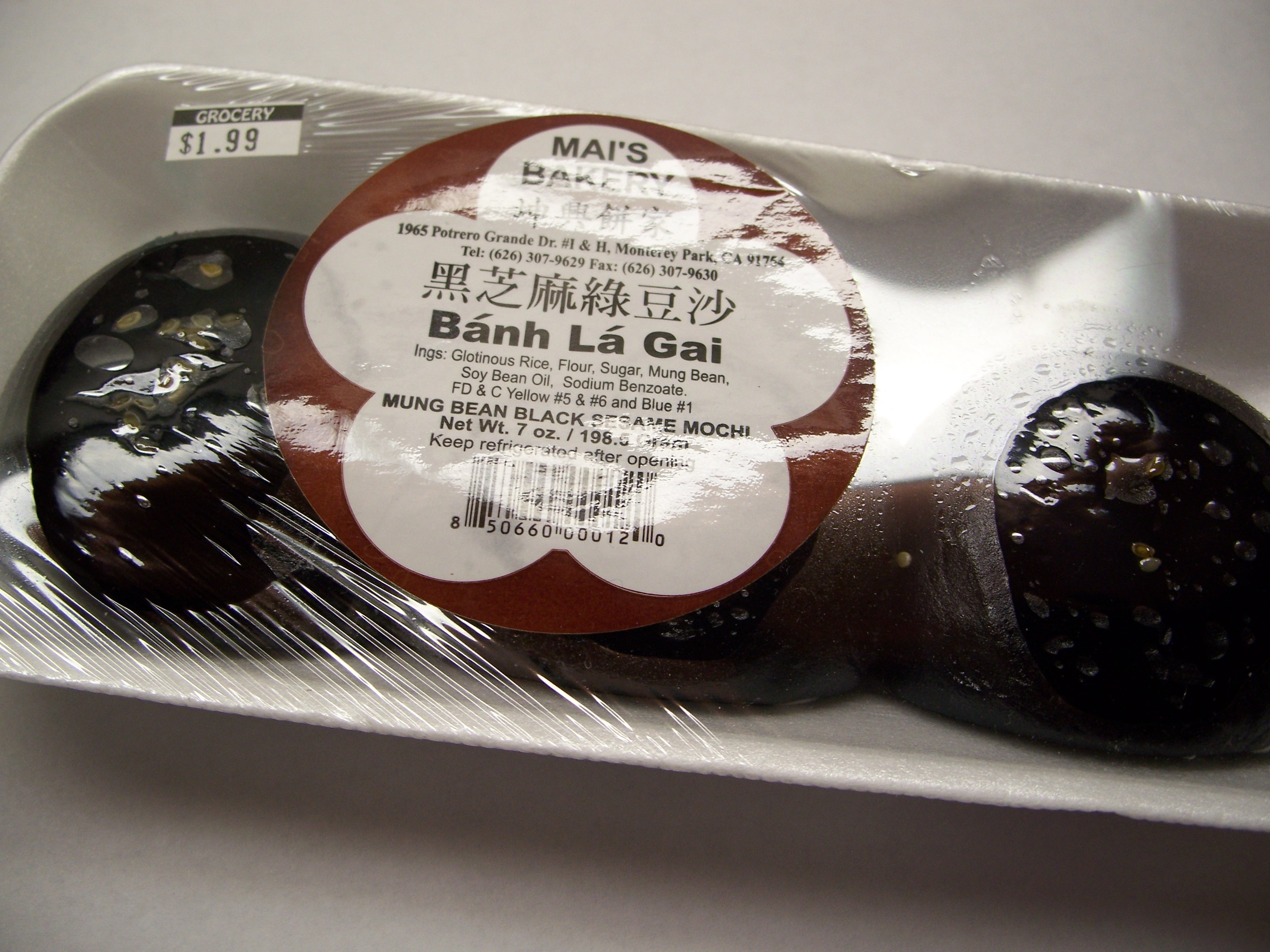
The thorn leaf buns sold in package of three for $1.99 at CD Bakery & Deli don’t have fat cubes, peanuts, and pieces of winter melon. They are wrapped with plastic instead of banana leaves. They are labeled “mung bean black sesame mochi”. They contain yellow and blue (?) food colorings. But I like their slightly sweet, slightly crunchy, slightly cool black skin.

After a week at room temperature, they get white mold. Perhaps, it is to match the white sesame seeds on top.

Address: CD Bakery & Deli (in the Lion Market plaza)
1816 Tully Road, #198
San Jose, CA 95122
(408) 238-1484
Open 7 days 8am – 8pm

Something else from CD Bakery: sugarcane juice

Next on Sandwich Shop Goodies: bánh bía (Vietnamese-adapted Suzhou mooncake)

Pieces of Copenhagen in Redwood City

June 07, 2010 By: Mai Truong Category: California - The Bay Area, Film/TV


I have a soft spot. If I like someone’s movies, I have to try their food too. Take Korean for example, I saw the actors eating bibimbap and ddeokbokki with so much joy I had to find and like them myself. Many months ago my friend Rashmi posted a link of this adorable short movie The Danish Poet, and now I’ve finally found Copenhagen. A Danish restaurant that I will frequent.


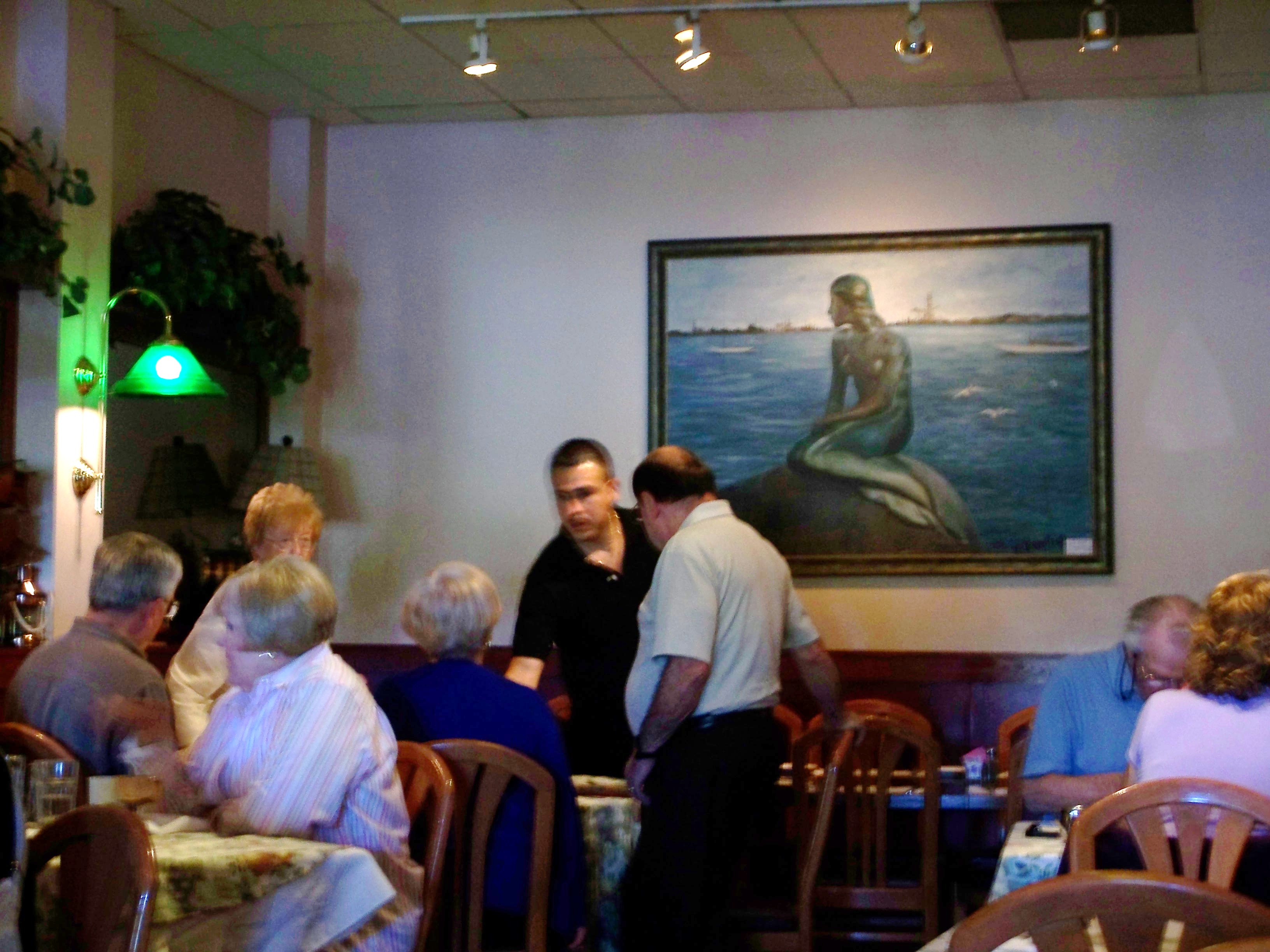
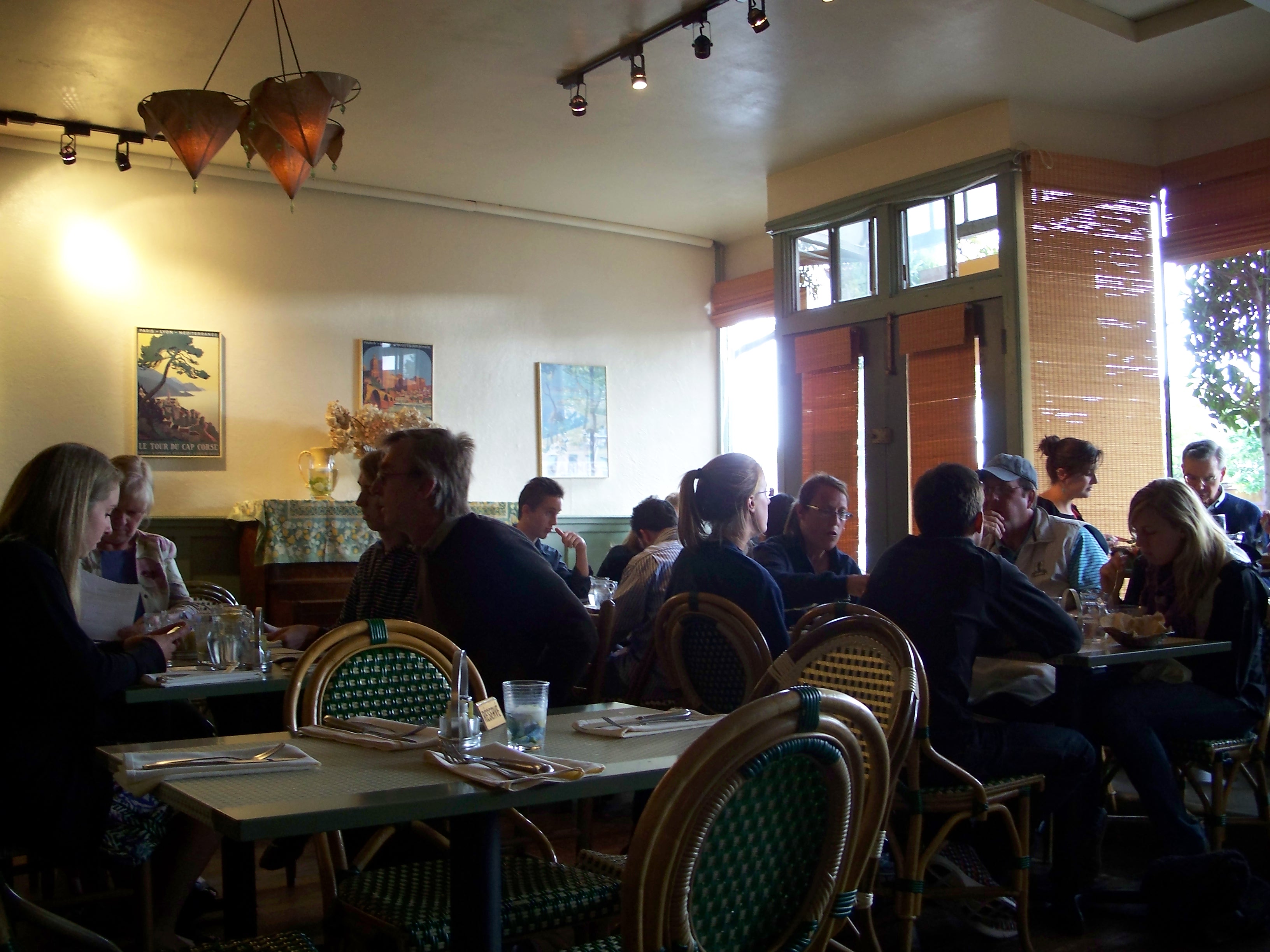
Most of the menu is above twenty, which doesn’t seem to bother the elderly ladies and gentlemen dining here. They sip their white wine, take small bites, talk with their backs straight and eyes observant. I always have to watch my pitch in this kind of casual expensive place. Thankfully, the food is plentiful.


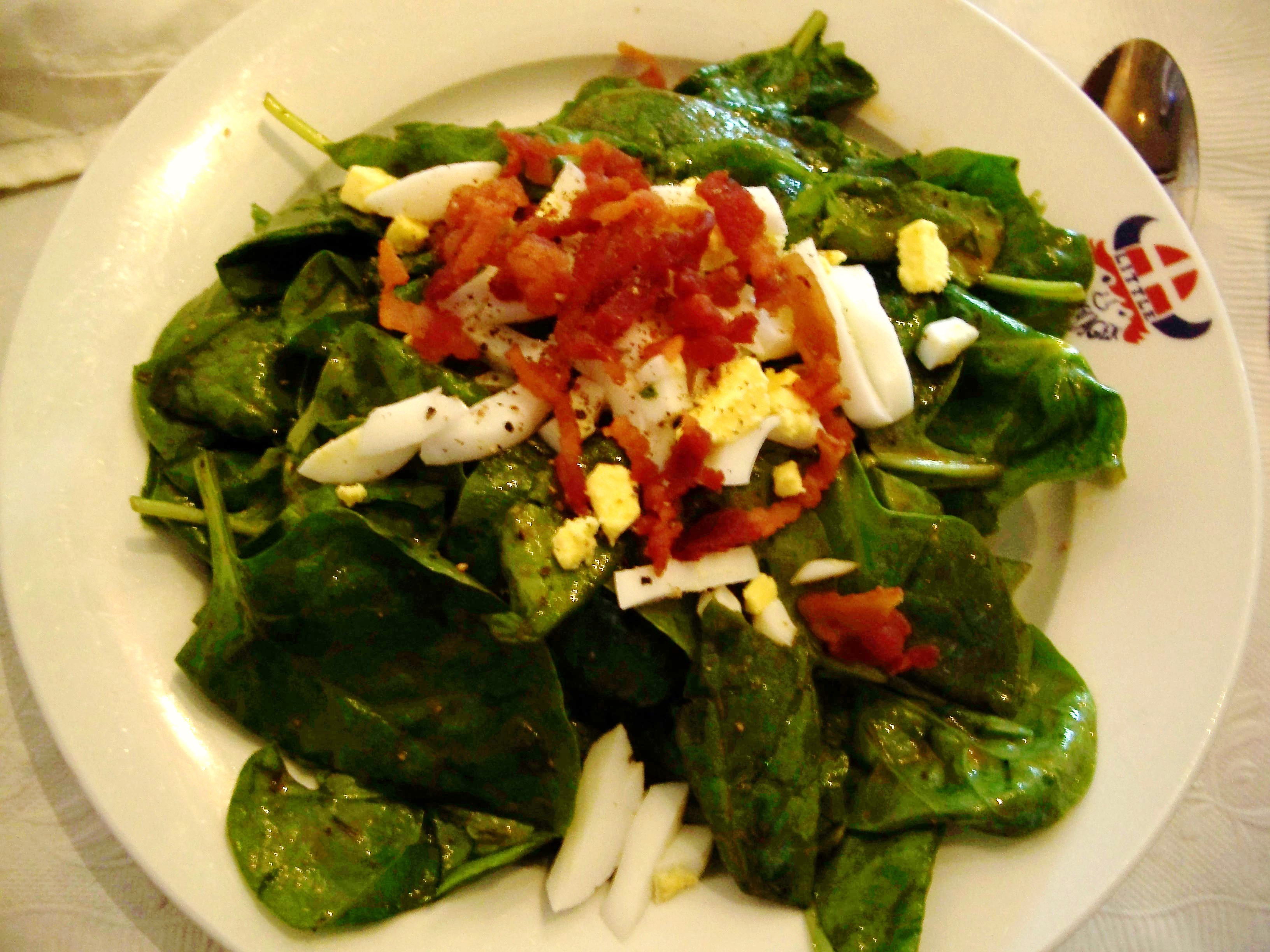
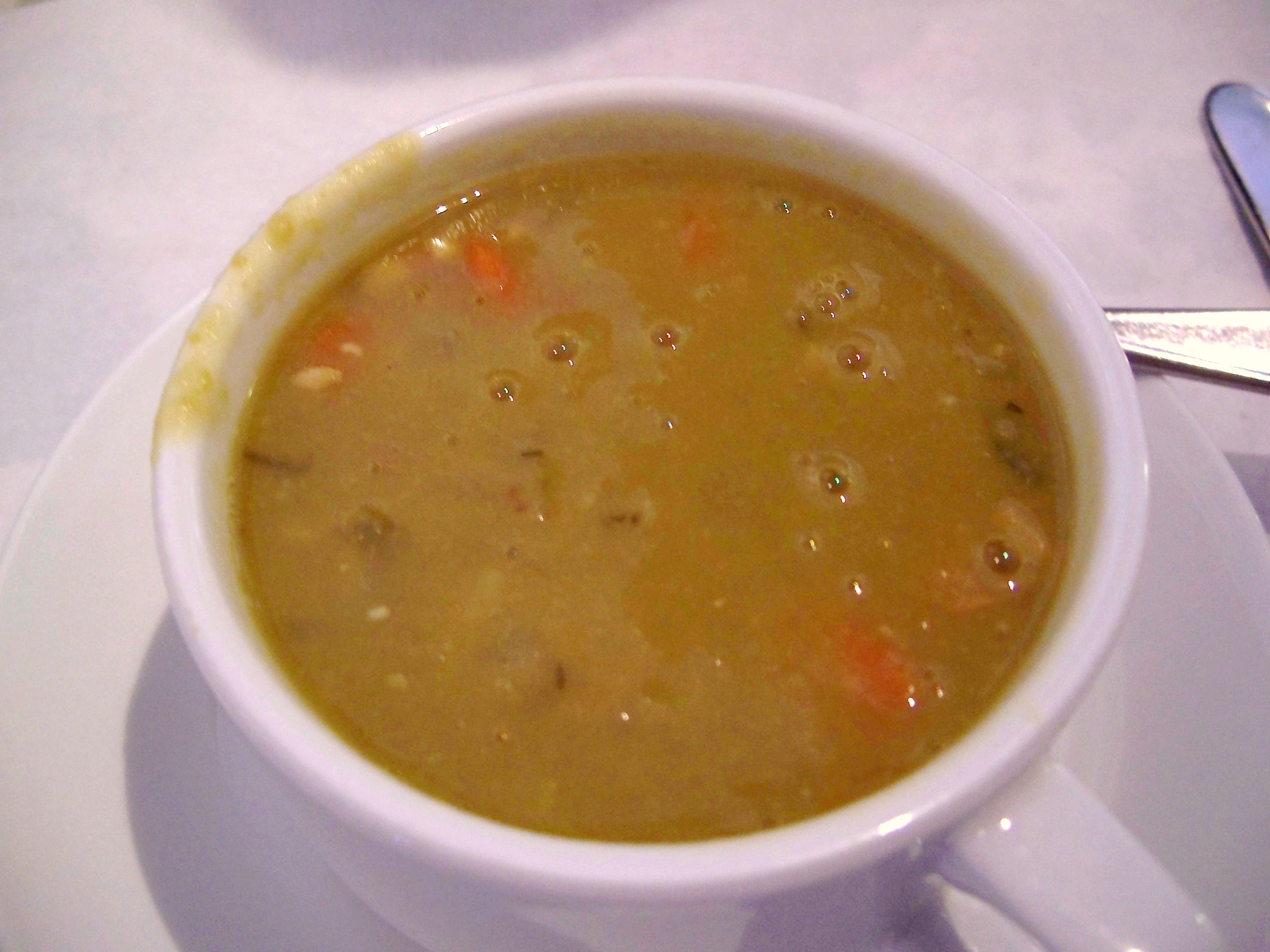
A choice of soups or salads precedes every entree. I like how they top my spinach salad with boiled eggs and bacon bits and very little vinaigrette. Split pea soup seems more popular than potato and leek soup and cream of mushroom soup, but as the staff said, they’re all good. I’m not crazy about mushy soups, but a small nutty cup paired with crusty baguette  makes a warm entrance for din-din.


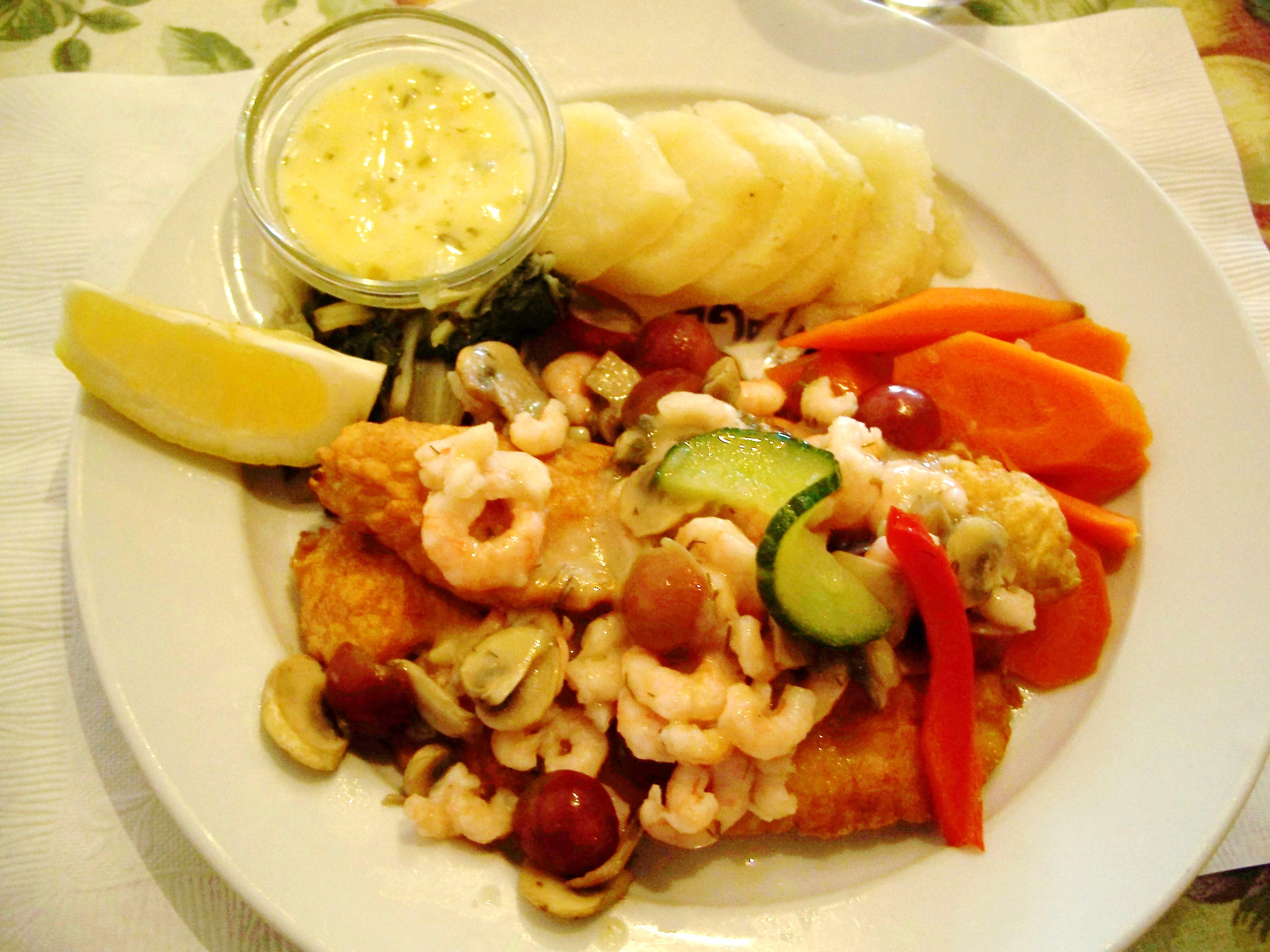
Two thin, Moselle style batter-fried red snapper fillets come out crisp hot, unfortunately topped with a rather cold batch of sauteed shrimps and mushroom. The shrimps felt a little watered-down and sea-ish, if that makes any sense. That aside, kudos for the grape halves, whose sweet juice complements the fried fish quite well. I also love the nutty buttery boiled potato and the overcooked mustard greens (cai be xanh) on the side.


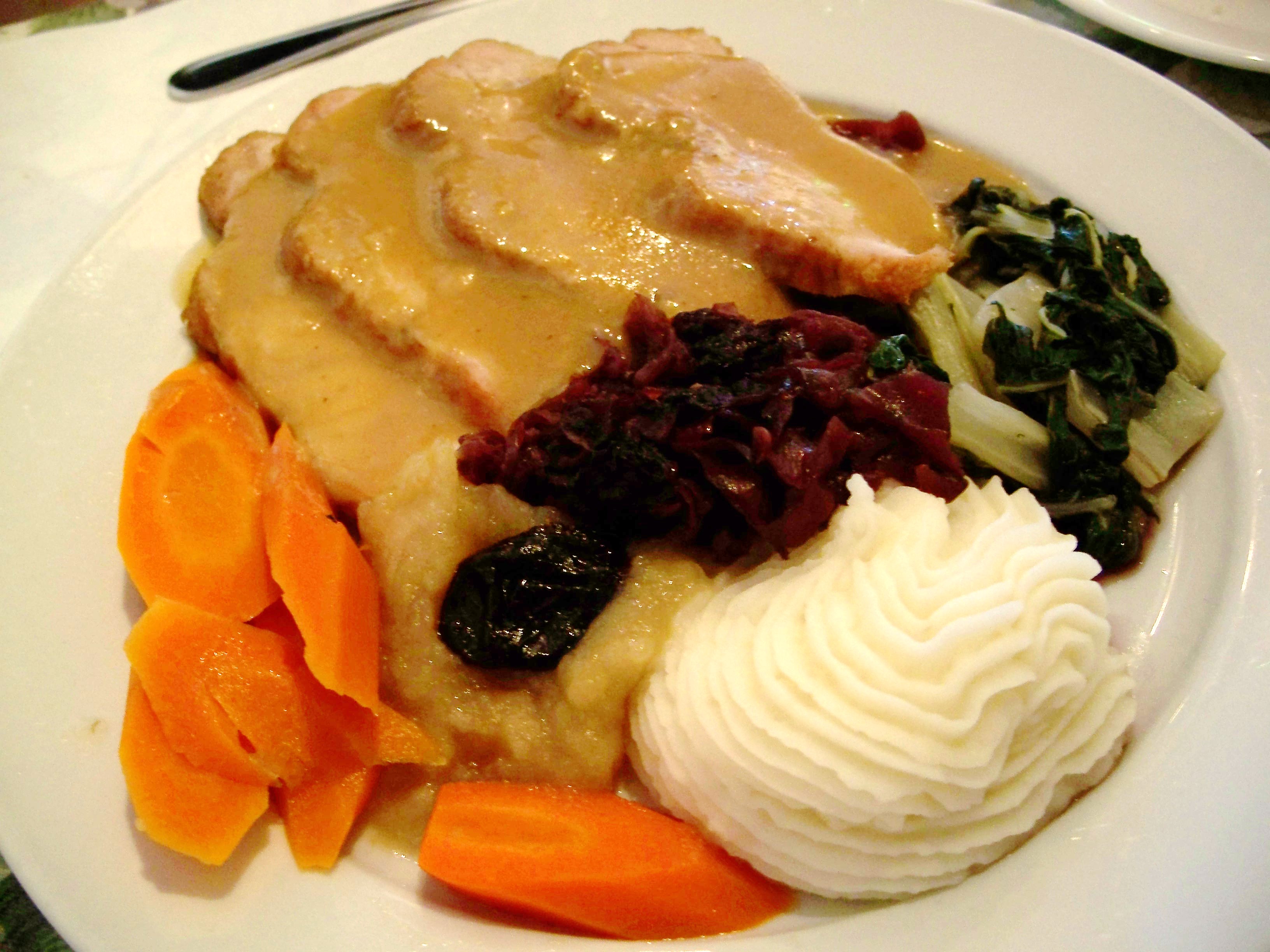
The Danish style roasted pork loin also comes with overcooked mustard greens and carrots, both overwhelmed by the red cabbage sauerkraut. The lonely prune is good for nothing. Deep drowned in gravy, those soft slices of paper white lean pork go exceedingly well with apple sauce – once again, the sweet-savory duet triumphs.


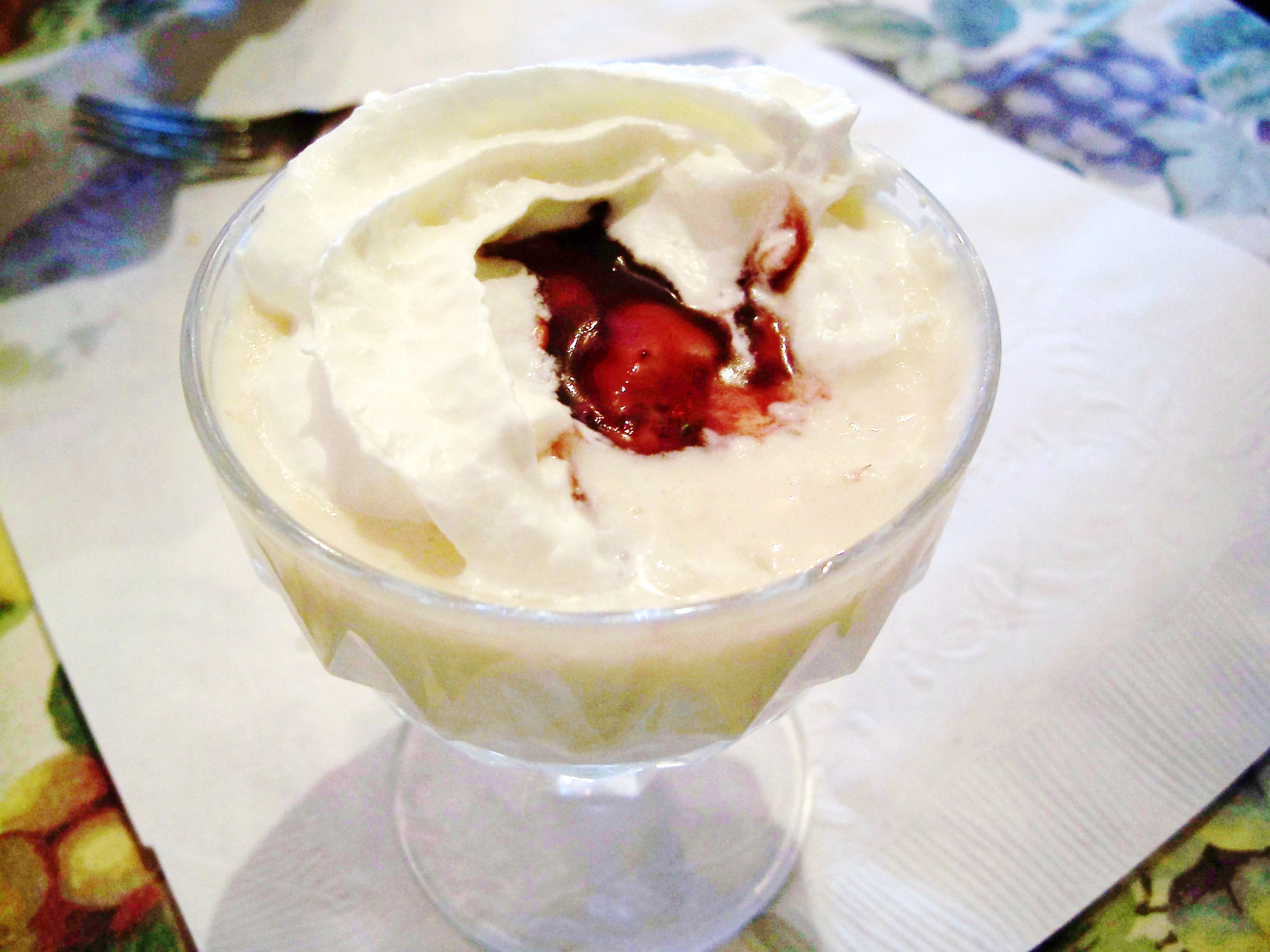
For completeness, we get dessert, which turns out a tad boring. The Danish rice pudding is a sad cup of white rice in some thick milky sauce, a few sparse raisins, topped with strawberry jelly and whipped cream. It’s like chè, but is too monotonic. That’s ok, it is cheap, only $3.75. Next time we’ll be happy with chocolate cake.


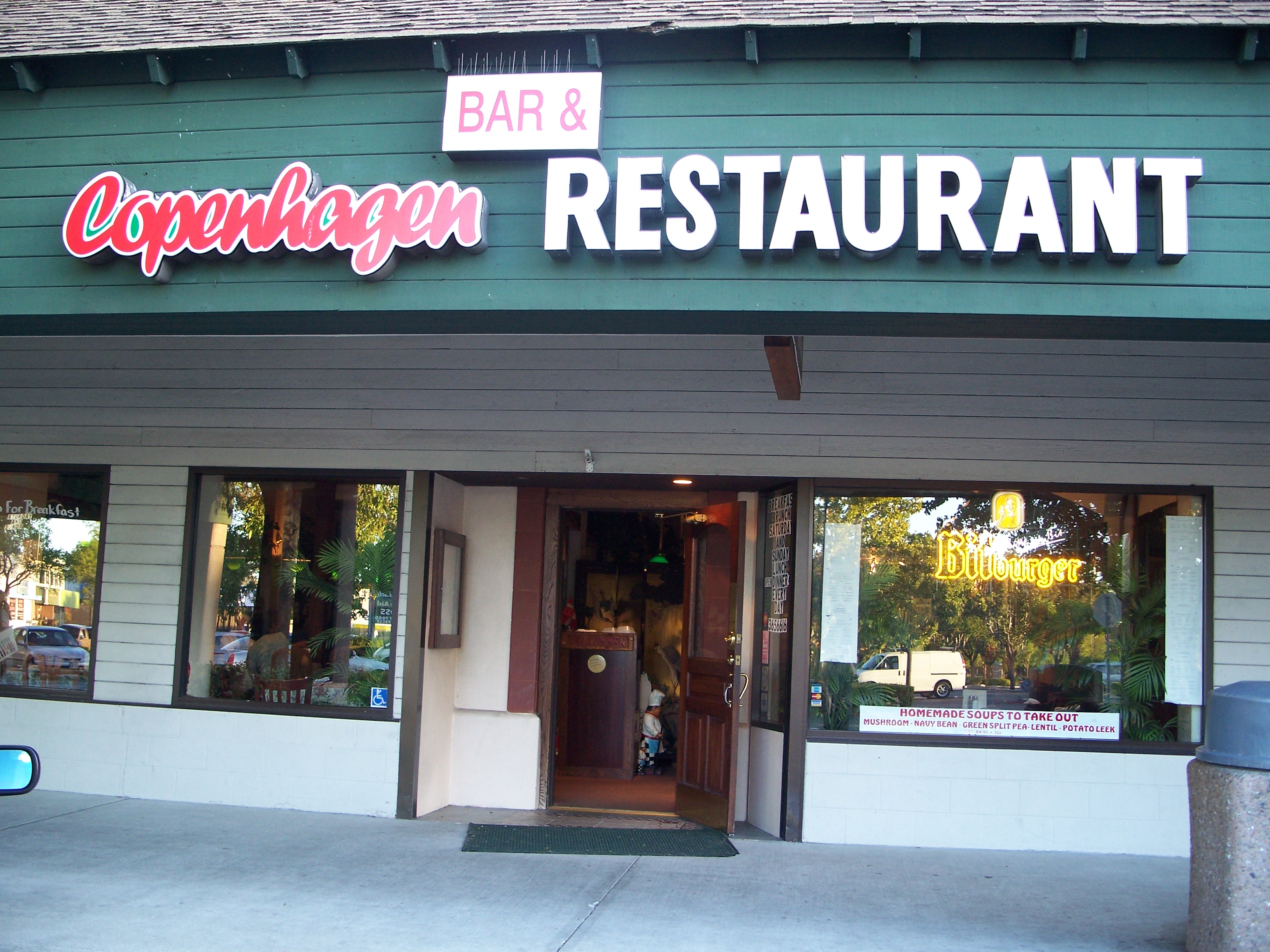
Address: Little Copenhagen Bar & Restaurant
356 Woodside Plaza
Redwood City, CA 94061

The silver shilling: Red snapper ($16.95) + Roasted porkloin ($16.95) + Rice pudding ($3.75) + tax = $41.13

Note:
This post is a secret ad for the 2007 Oscar winner for Best short animation, The Danish Poet. Just kidding. Enjoy the movie.

Belle La Note

May 31, 2010 By: Mai Truong Category: California - The Bay Area, French


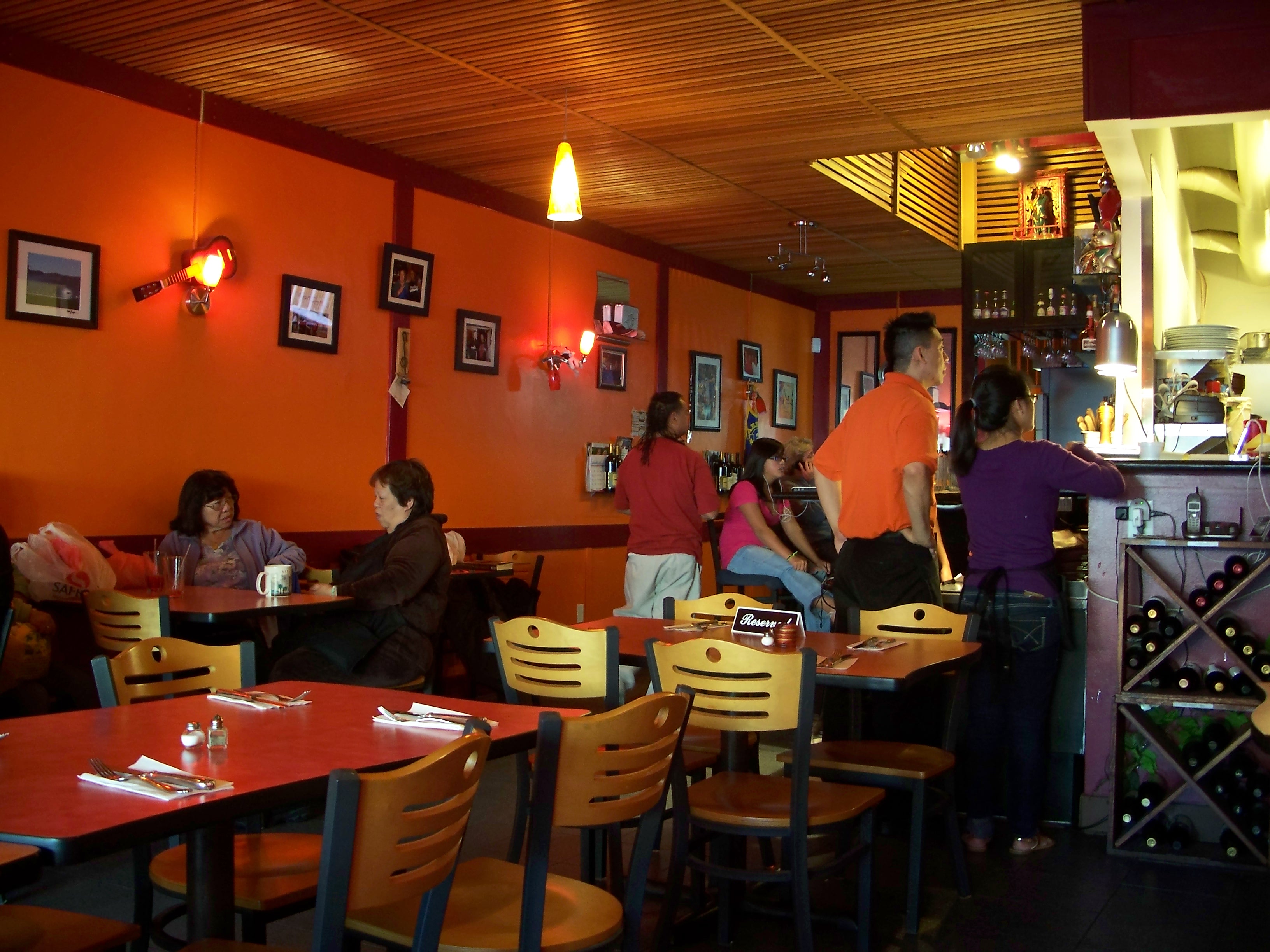
Summer has rolled around, and it’s time for the restaurants to get flocked with new college graduates and families. We didn’t make reservation last time we went to La Note, and we thought we would have had to wait for 55 minutes. Luckily somebody cancelled theirs, so we only waited for 10 minutes to be seated at a little table near an old piano and a giant fly, looking out to the beaming afternoon on Shattuck Avenue.


I’ve heard many good things about this cozy corner. I’ve walked past what I thought to be its main door countless times, wondering why the sign “Ferme” is always there and if La Note is ever opened. Finally, we’ve gotten behind those doors. We heard the girls giggling and commenting on its “cuteness”. We read the two-paged menu and saw the chalk board of daily specials. It feels bistroesque.


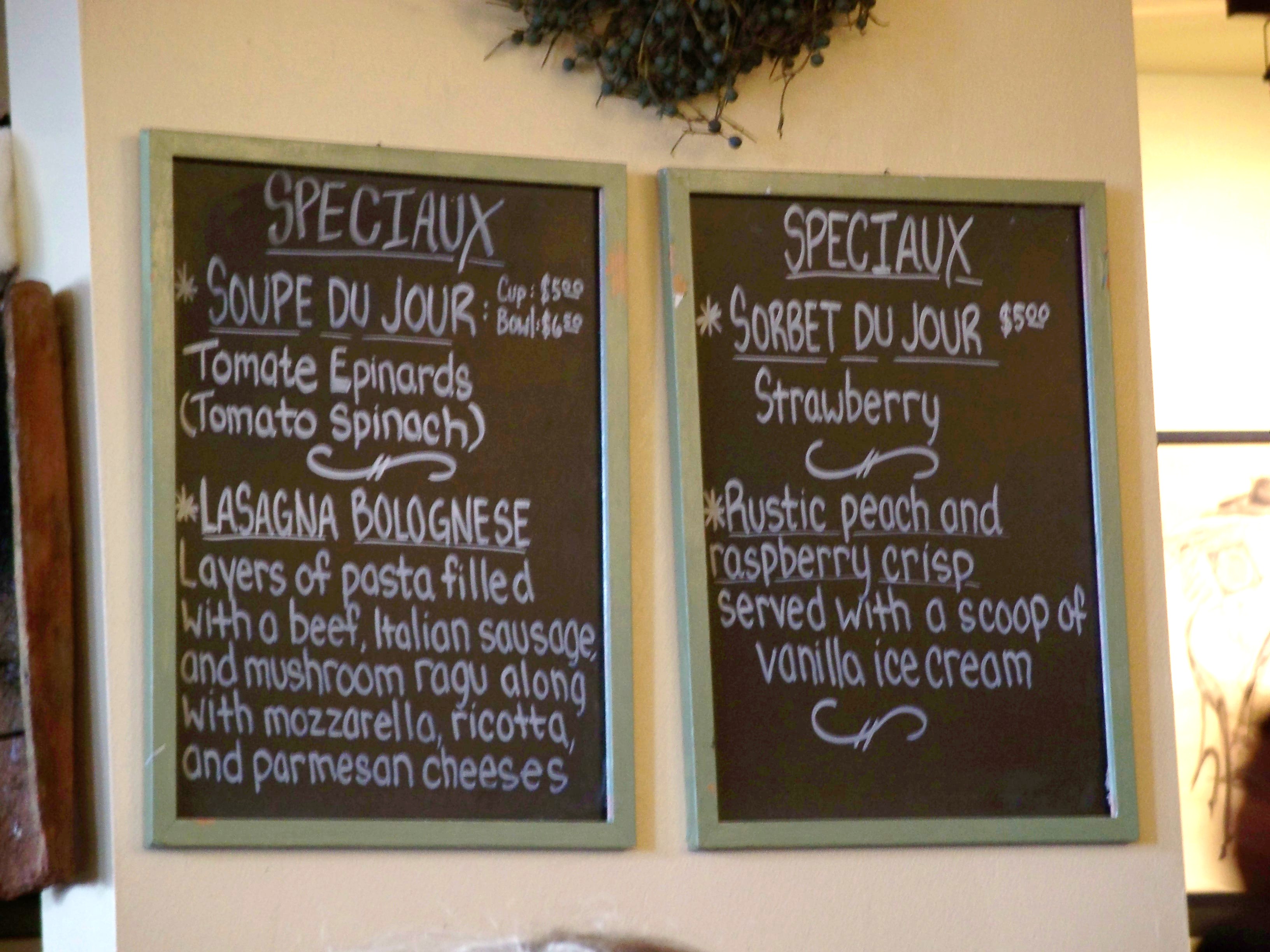
Somehow we ended up ordering lasagna at a French restaurant, but it was one of the specials. I’ve had some boring moments with lasagna before, so I didn’t expect much from this Lasagna Bolognese. However, the creamy layers of pasta made it gateau-like, there was very little tomato sauce, the finely grounded meat went unnoticed, and this Lasagna Bolognese sang a harmonious tune at $13.95.


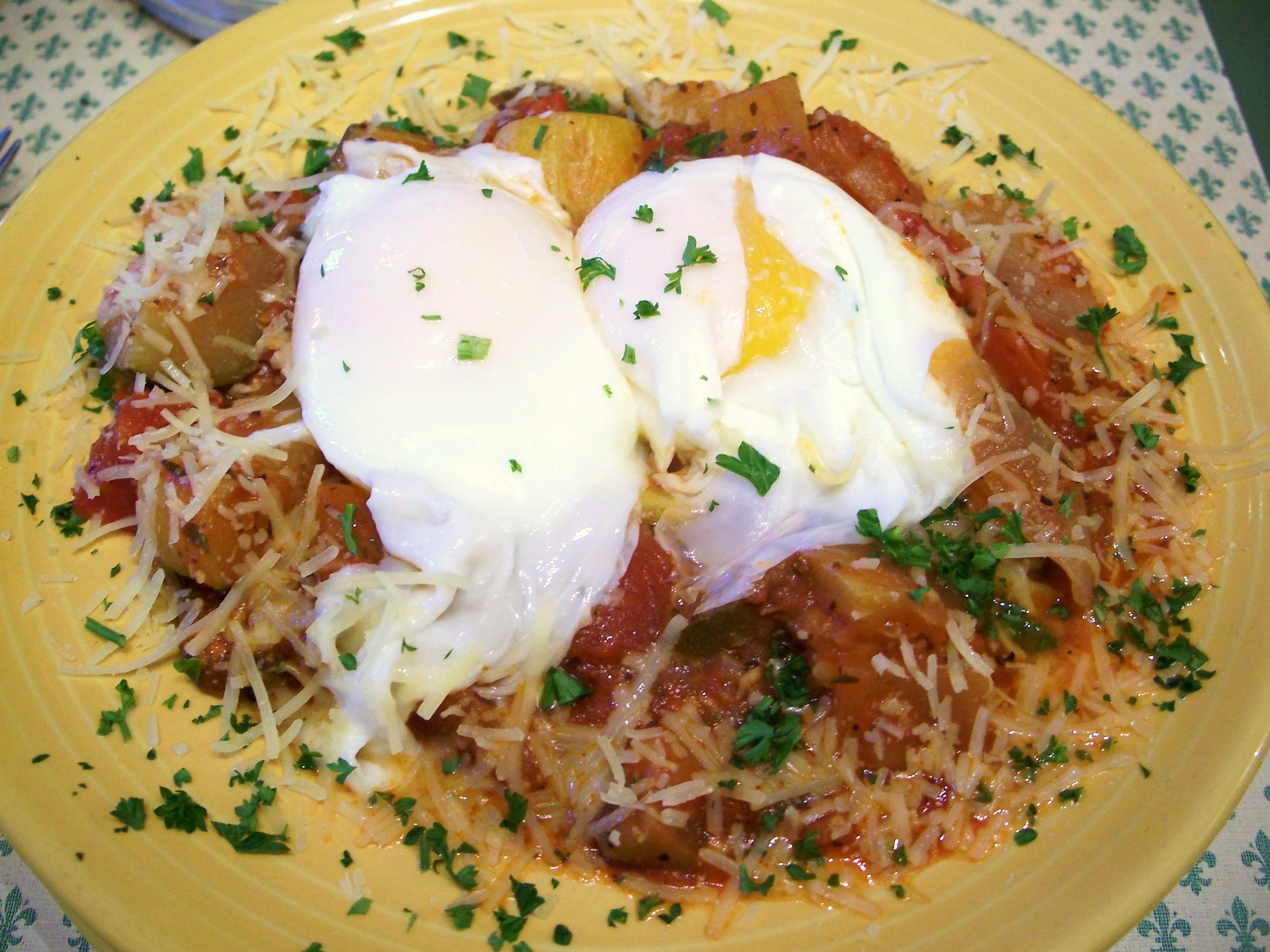
The Ratatouille Borghetti was a different story. From a Vietnamese viewpoint, vegetable stew over couscous felt like broken rice (cơm tấm) with tomato sauce overload. It was fresh, healthy, vegan if we hadn’t added two runny eggs for extra buttery glueyness. It was tongue-catching at the first few bites, then kinda fell into flat land. Well, we contented ourselves on paying $16.50 to feel good about eating vegetarian.

Overall, the lovely La Note didn’t pull out the oomph from me. Did I not pick the right dish? Should we have asked for the croques, the bagnats, or the meat du jour? Maybe next time.

Money matters: dinner for two + tax: $33.42

Address: La Note Restaurant (since 1997)
2377 Shattuck Avenue
Berkeley, CA 94704
(510) 843-1535

Steak Search 3 – Prime Spot

May 28, 2010 By: Mai Truong Category: American, California - The Bay Area, One shot


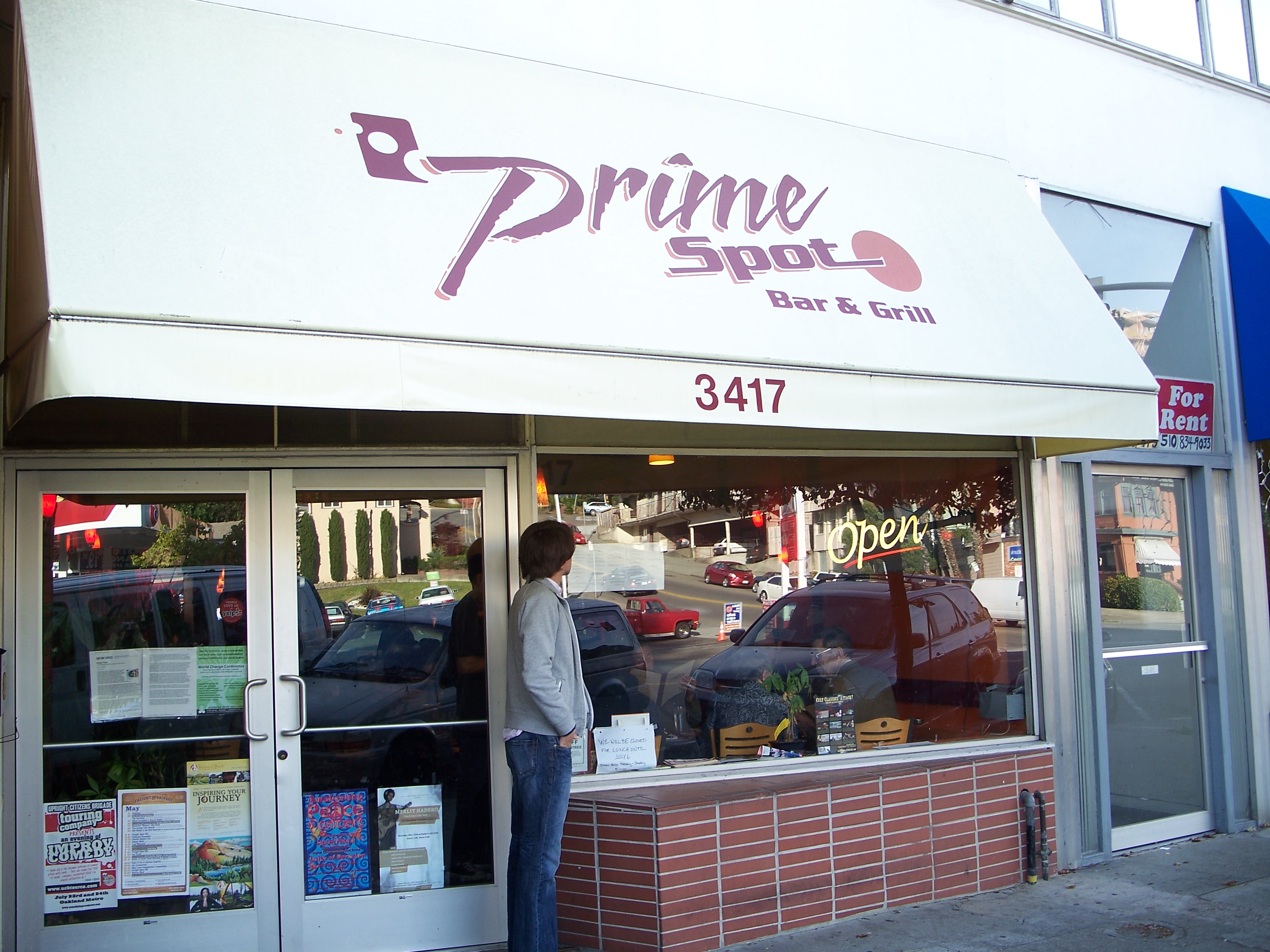
Saturday. The usual question comes up: what’s for dinner? It’s been well over three weeks since I last “slashed down a cow” (to quote Makiawa), so I feel just to insist on a chunky slab of red meat. The next question is where. Yelp’s list of steakhouse in Berkeley has six suggestions, but Hana Japan Steakhouse is not really a “steak house” with only two things of beef amidst a ton of chicken and seafood. Kincaid’s? Well, we’ll wait for an occasion to spend $33 on a petit filet mignon, which is already beside the point of tasty and cheap steak (that you can eat without feeling bitter in the mouth). So this week it is Prime Spot, just a few hundred feet north of The Alley.


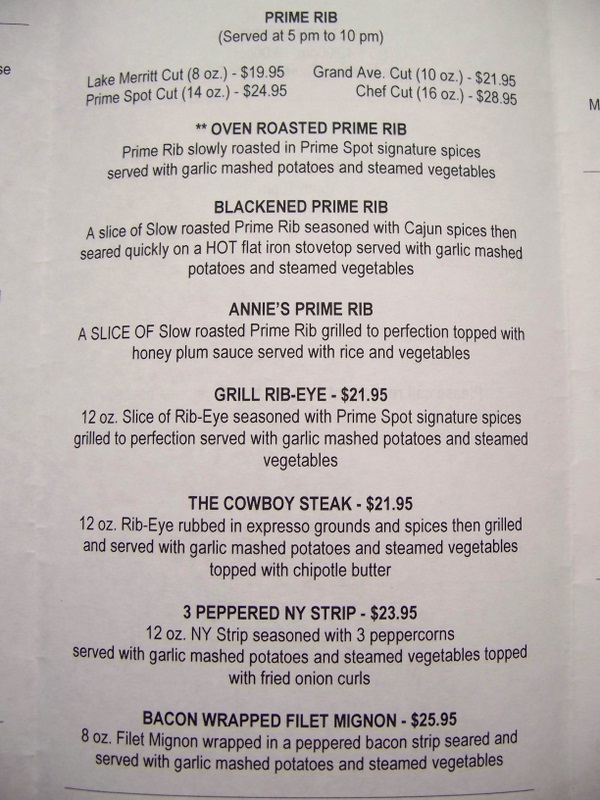
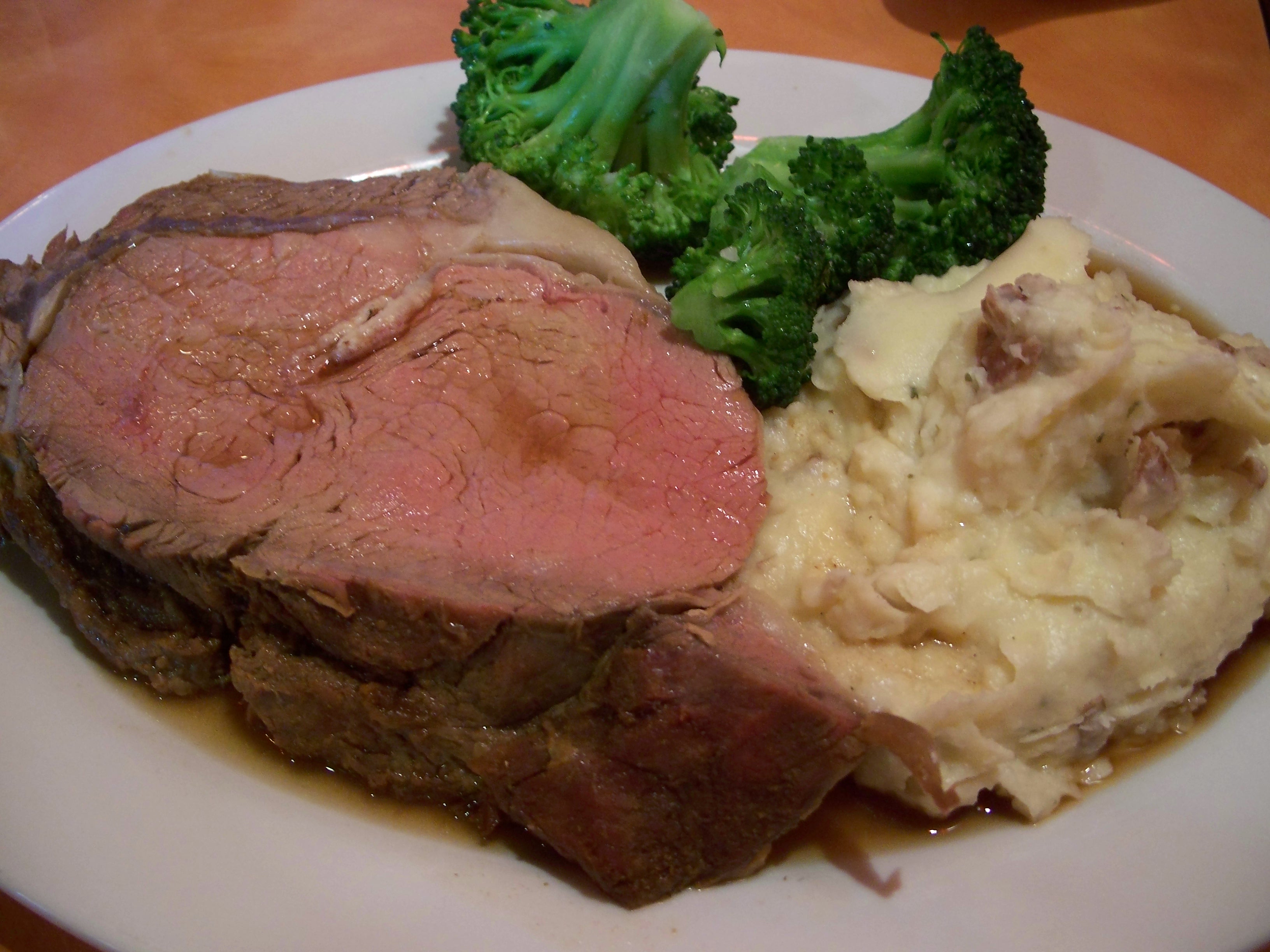
Here’s my two cents guess: their thing is the prime rib, so they name it “Prime Spot”. Or maybe they’re just that confident about their stuff. We’ll see. We ask for one Grand Ave. Cut of Oven Roasted Prime Rib to share, and a side of steamed veggie to lessen the cheapskates’ guilt. Five minutes later, the 10 oz slab of pink velvet arrives luke warm and dripping wet. When I cut a piece, it feels like slicing cheesecake. The meat is unexpectedly tender. Garlic mashed potato bathed in steak juice, like ice cream, is expectedly yummy.

What surprises me is the amount of food. Ten ounces does not sound like a lot when I think of times I’ve eaten a pound of steak by myself (and felt like my tummy would burst and my back would break, but that’s not the point). It turns out two people can get pleasantly full on just ten ounces. Must be the potato and broccoli. Not having too much on our plate works out well because the meat gets kinda dull as it gets cold, and just when we can’t take it anymore, we don’t have anymore to take.


Previously on Berkeley Steak Search: Buckhorn Grill (Emeryville)


Address: Prime Spot Bar & Grill
3417 Grand Avenue
Oakland, CA 94610
(510) 268-1840

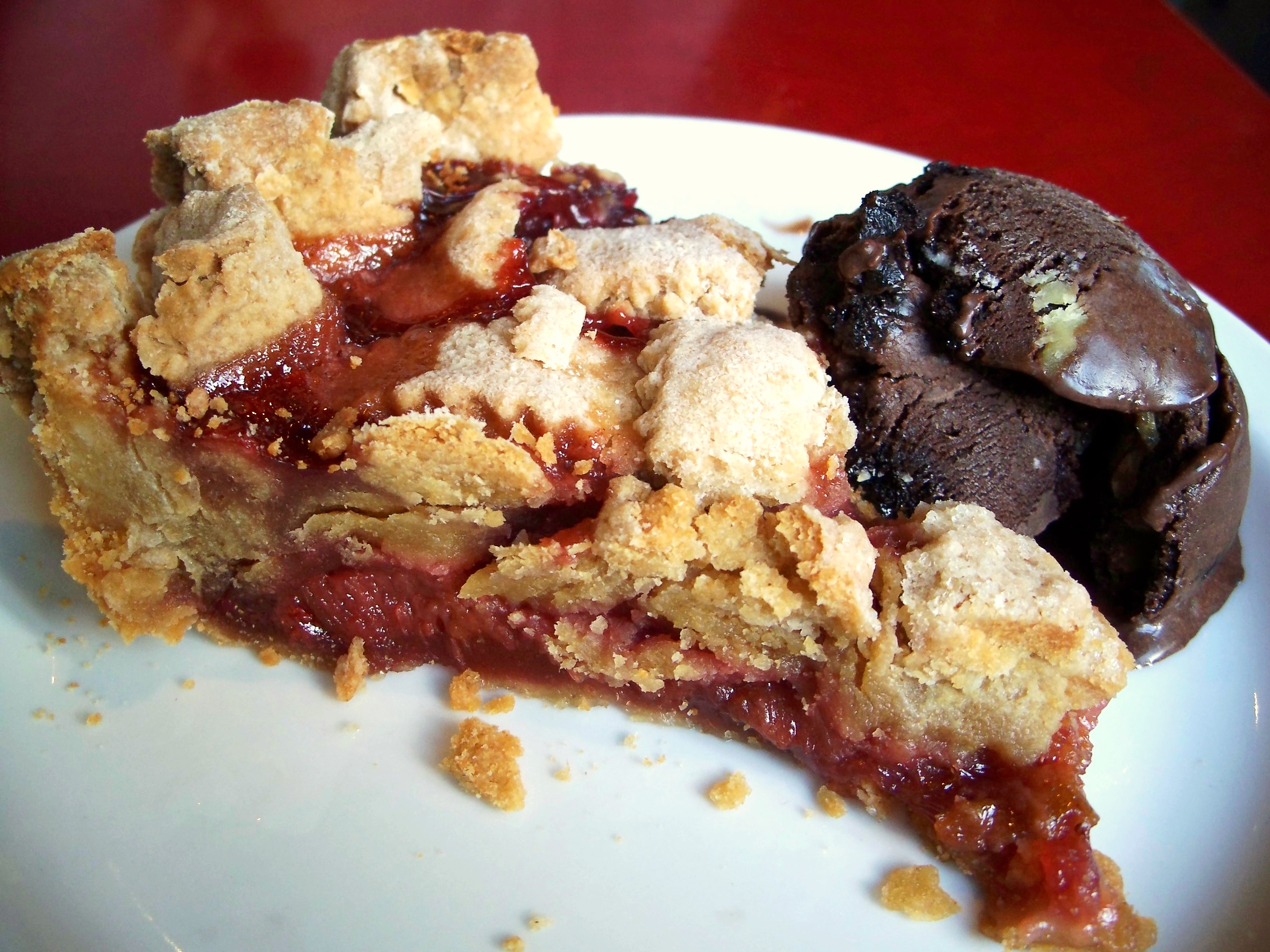
I do feel guilty for eating so much meat, though. With friends, movies, and my own empathy for animals rubbing it in everyday, I find the American steak less and less enjoyable (that is to say, bulgogi is still too good to give up :-D). So upon leaving Prime Spot, I redeem my conscience with a hot slice of strawberry rhubarb pie and a scoop of mud slide ice cream at the vegan Herbivore. Few things can be better.

Vegan strawberry rhubarb pie and mud slide ice cream at Herbivore (Oakland)

Tags:

Satsuki Bazaar on Channing Way

May 25, 2010 By: Mai Truong Category: California - The Bay Area, Festivals, Japanese, Opinions, savory snacks, sticky rice concoctions, sweet snacks and desserts


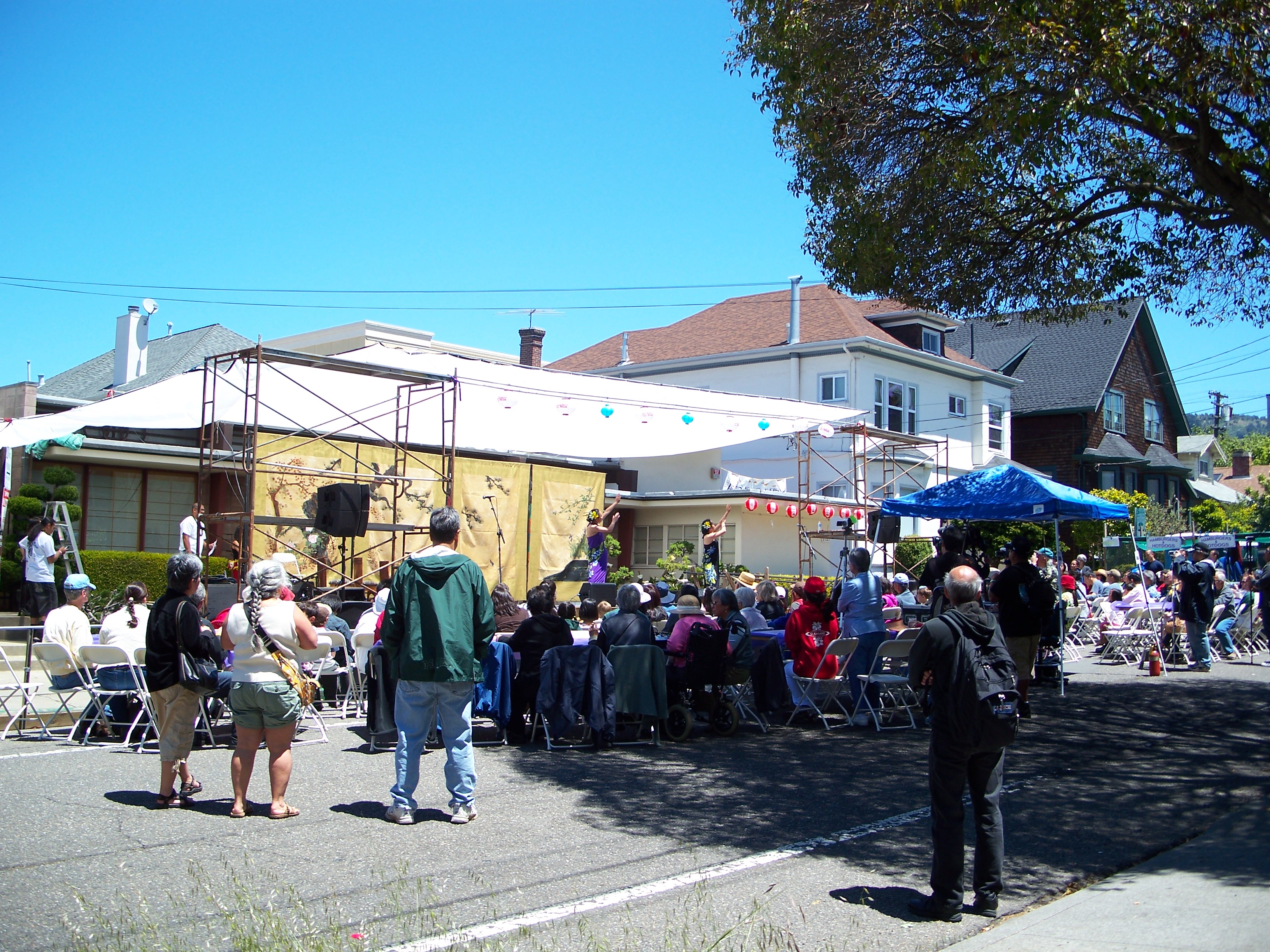
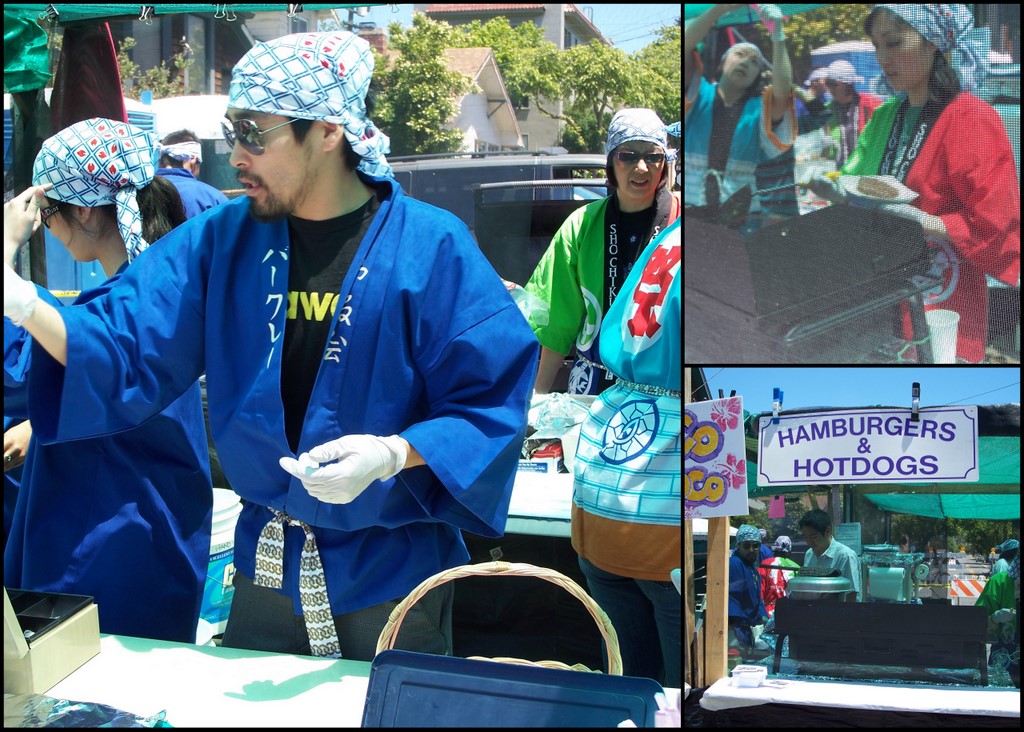
One blue-sky Sunday in May. A section of Channing Way, between Shattuck and Fulton, was blocked. Two girls draped in summery garments danced to joyous Hawaiian tunes on a sunlit wooden stage, surrounded by a small crowd of both familiar spectators and curious passing pedestrians. The seductive smell of grill beef got caught in the wind here and there.


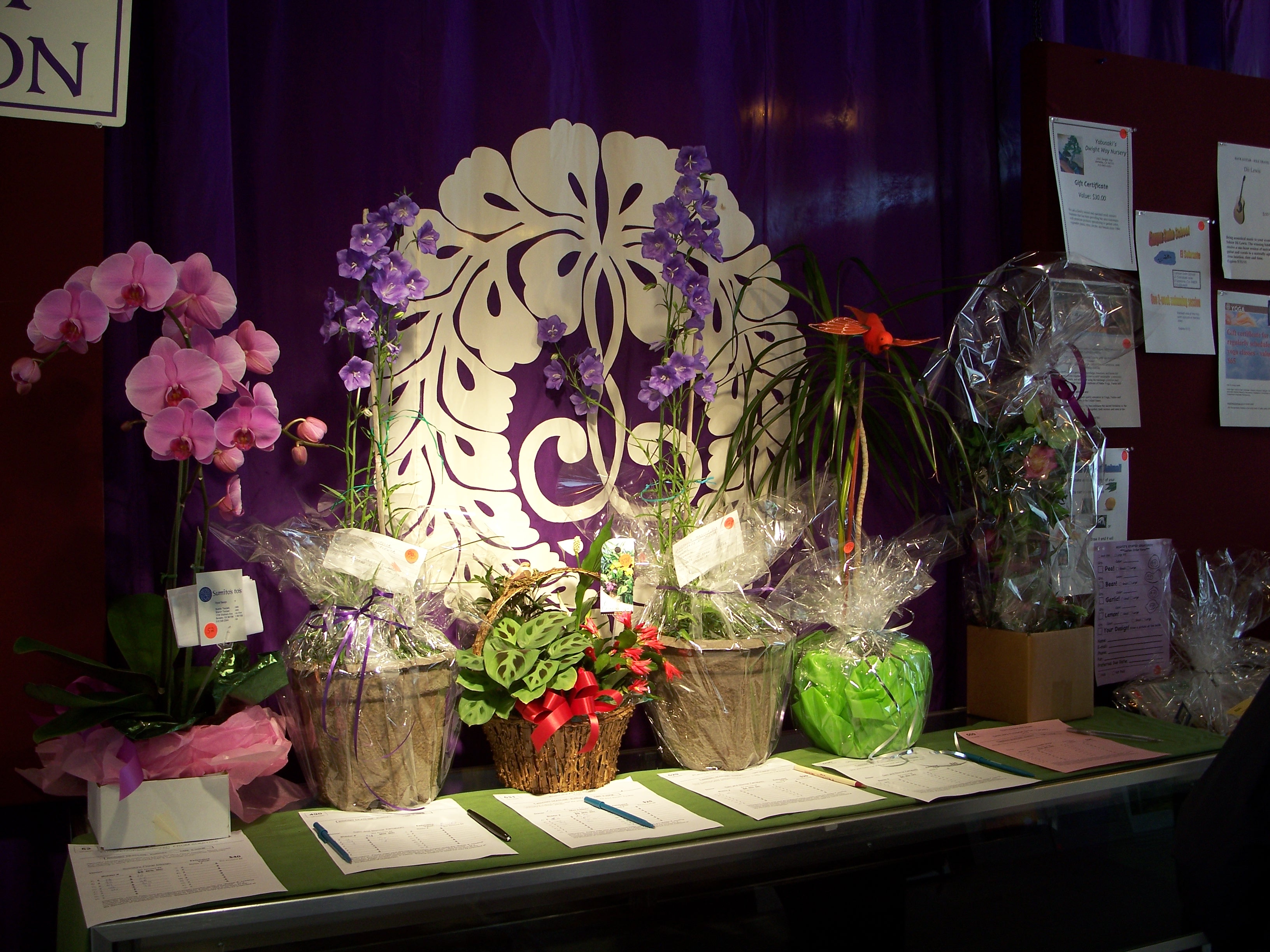
So it was the street front of the 61st annual Satsuki Bazaar and Arts Festival at the Berkeley Jodo Shinshu Buddhist Temple on Channing Way. Inside the temple, a multitude of items displayed for silent auction held visitors’ footsteps, starting with orchids, matted photos and paintings, gift cards to sushi bars and diving lessons…


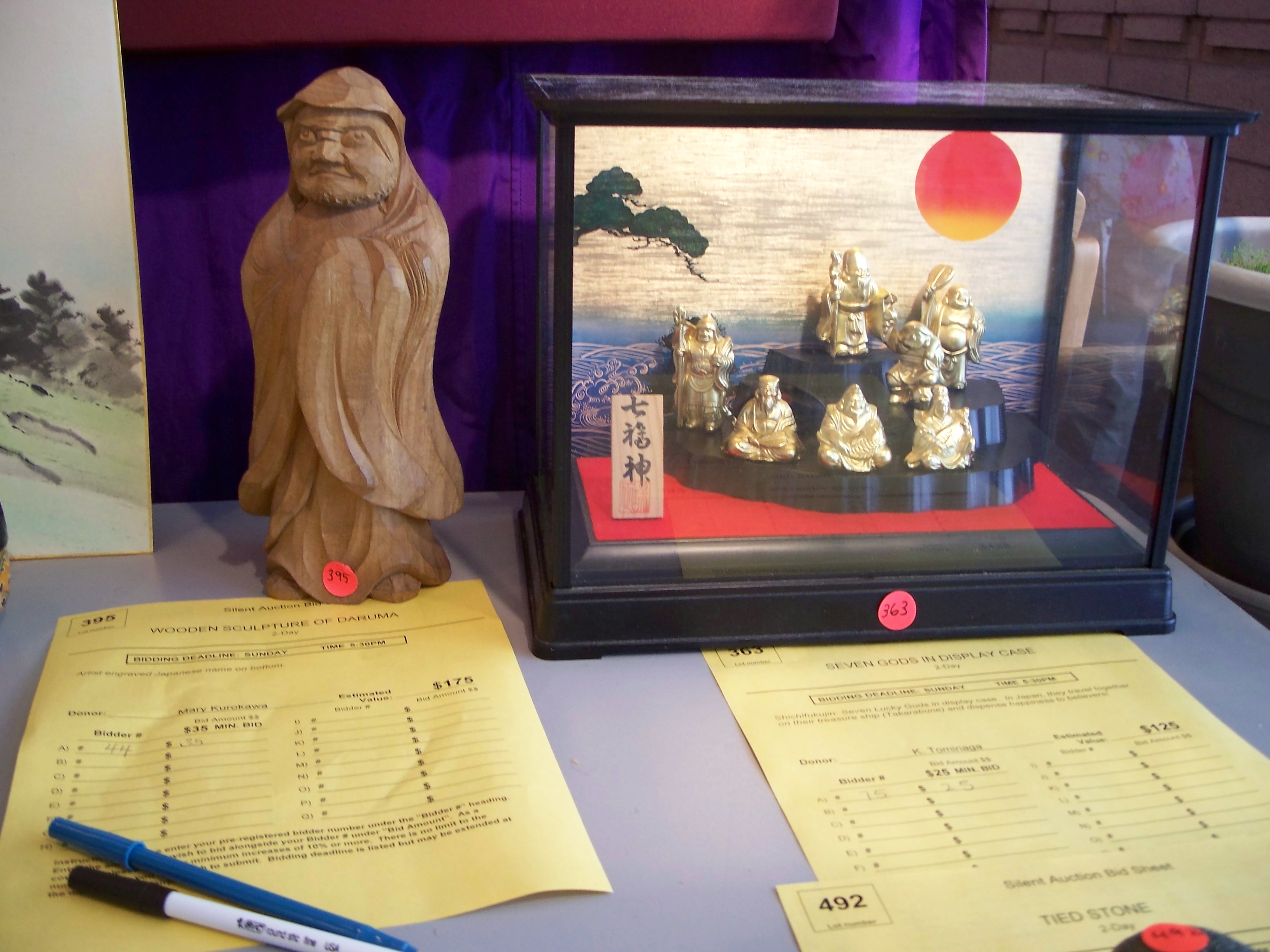
…to porcelain sets, stuffed toys, a wooden sculpture of Daruma, and Shichi Fukujin in a glass box.


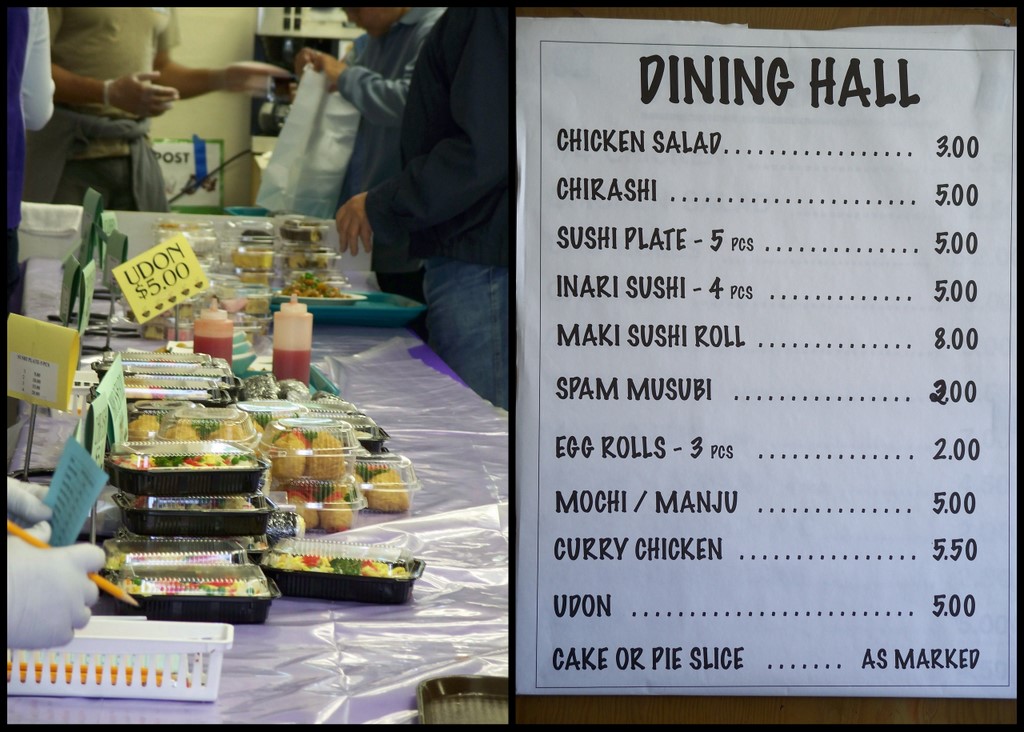
But few things can attract everybody like food. The “dining hall” was packed to the door like a beehive overflowed with nectar.


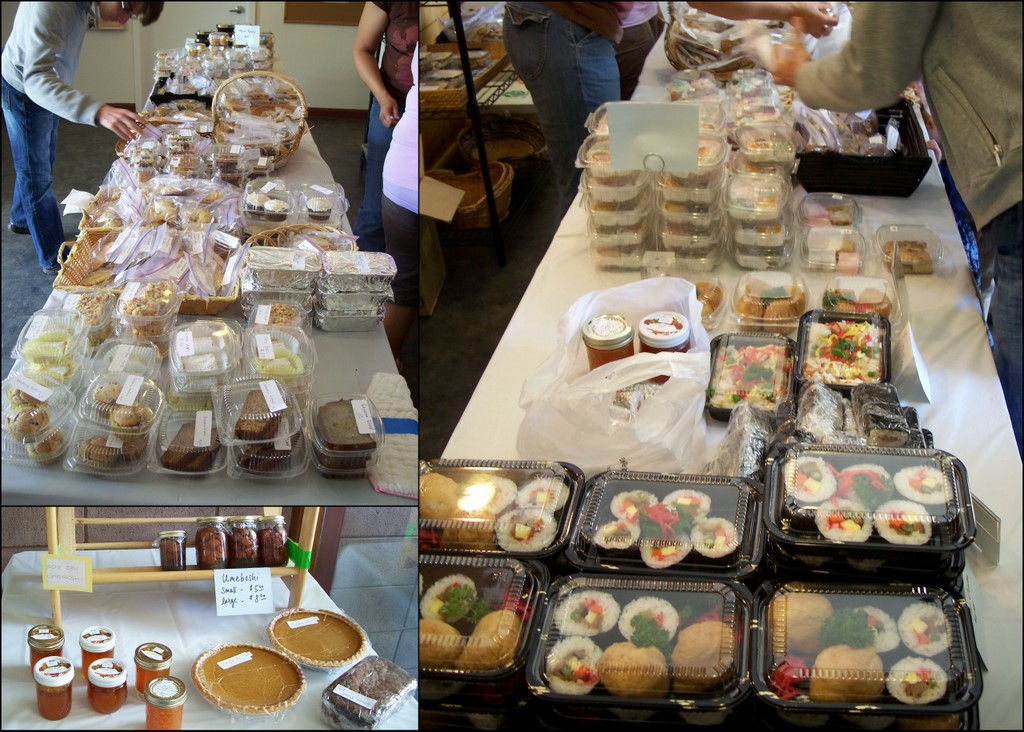
Every few minutes there were tiny old ladies weaving among the crowd with big trays of musubi and sweets from the dining hall to the “bakery”, a front desk covered with homemade edible goods, baked, rolled, fried, pickled, and jarred.


We just couldn’t help it. The umeboshi (pickled plum) was going fast at $5 per small jar and $8 per big one. Mudpie hungrily grabbed onto two jelly jars, kumquat ($4) and persimmon-pineapple-apricot ($5), which have the exact same color. Then we started loading pastries into our bag…


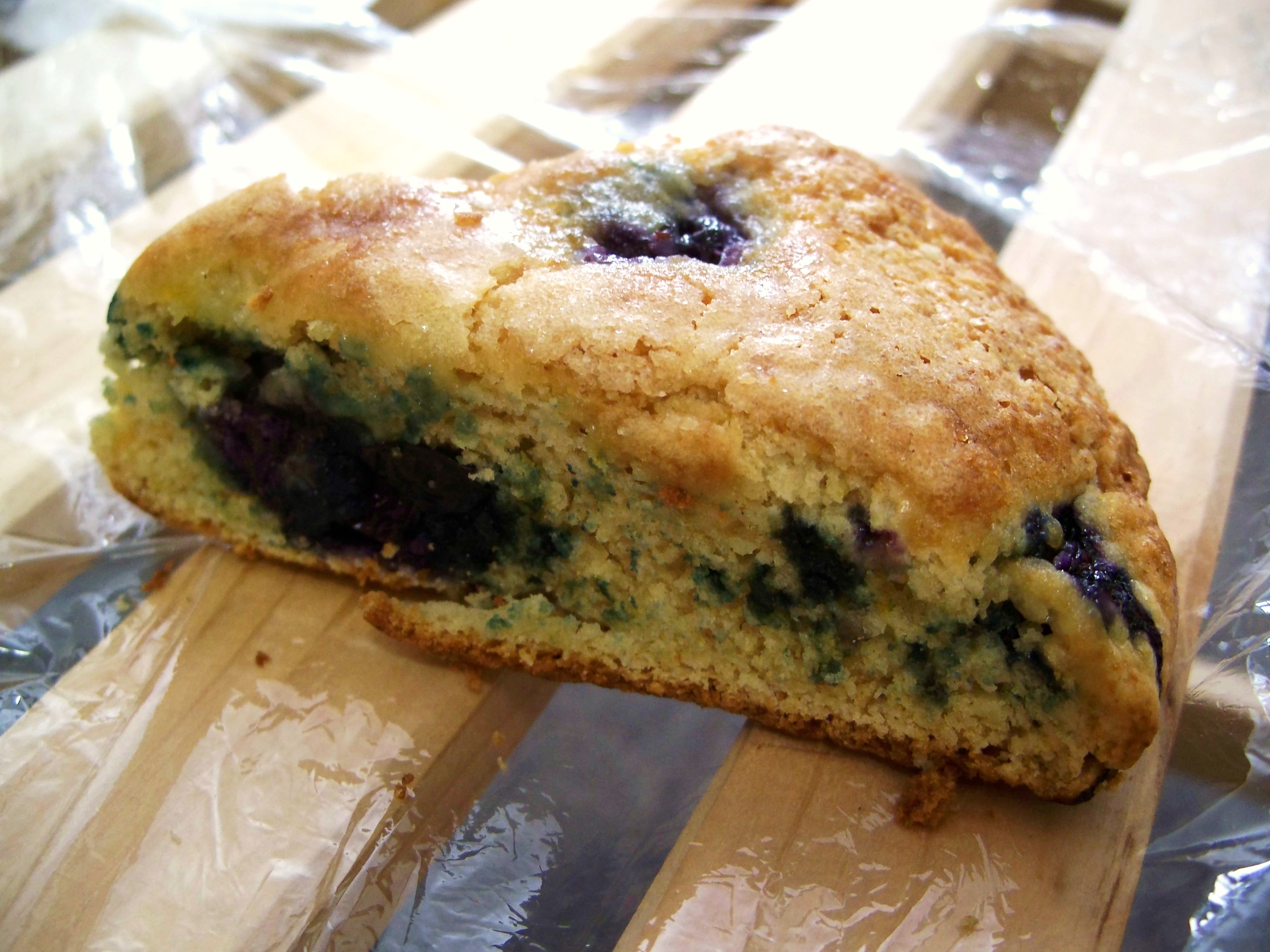
First came the blueberry scone, which tasted like wet sand, but we paid only one buck for it, can’t complain.


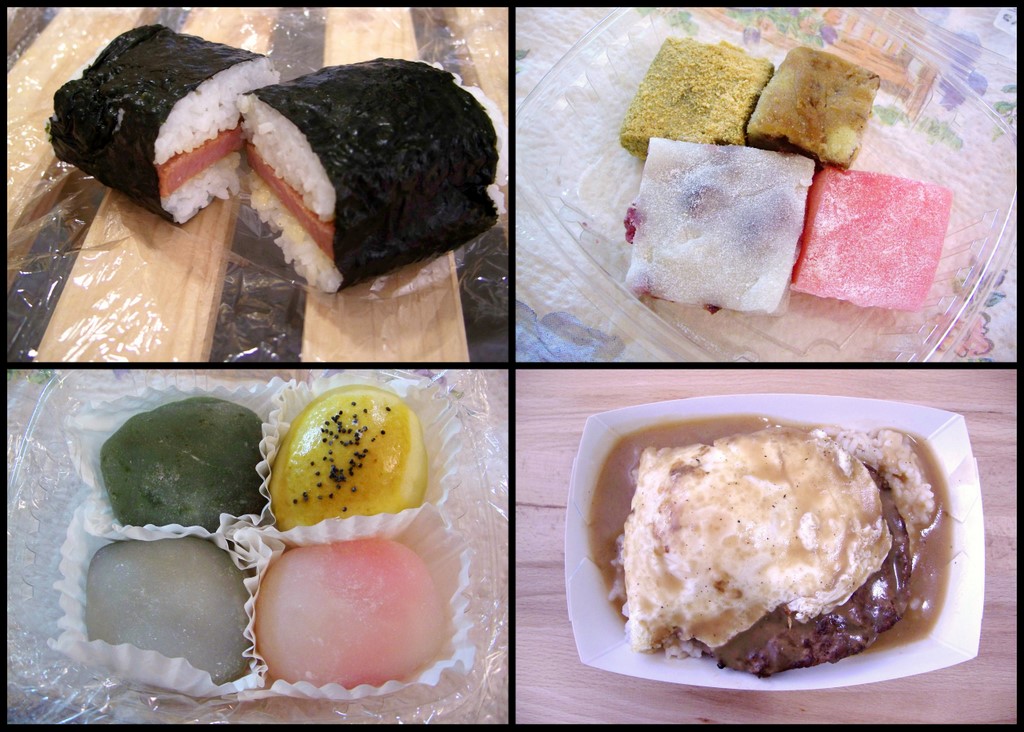
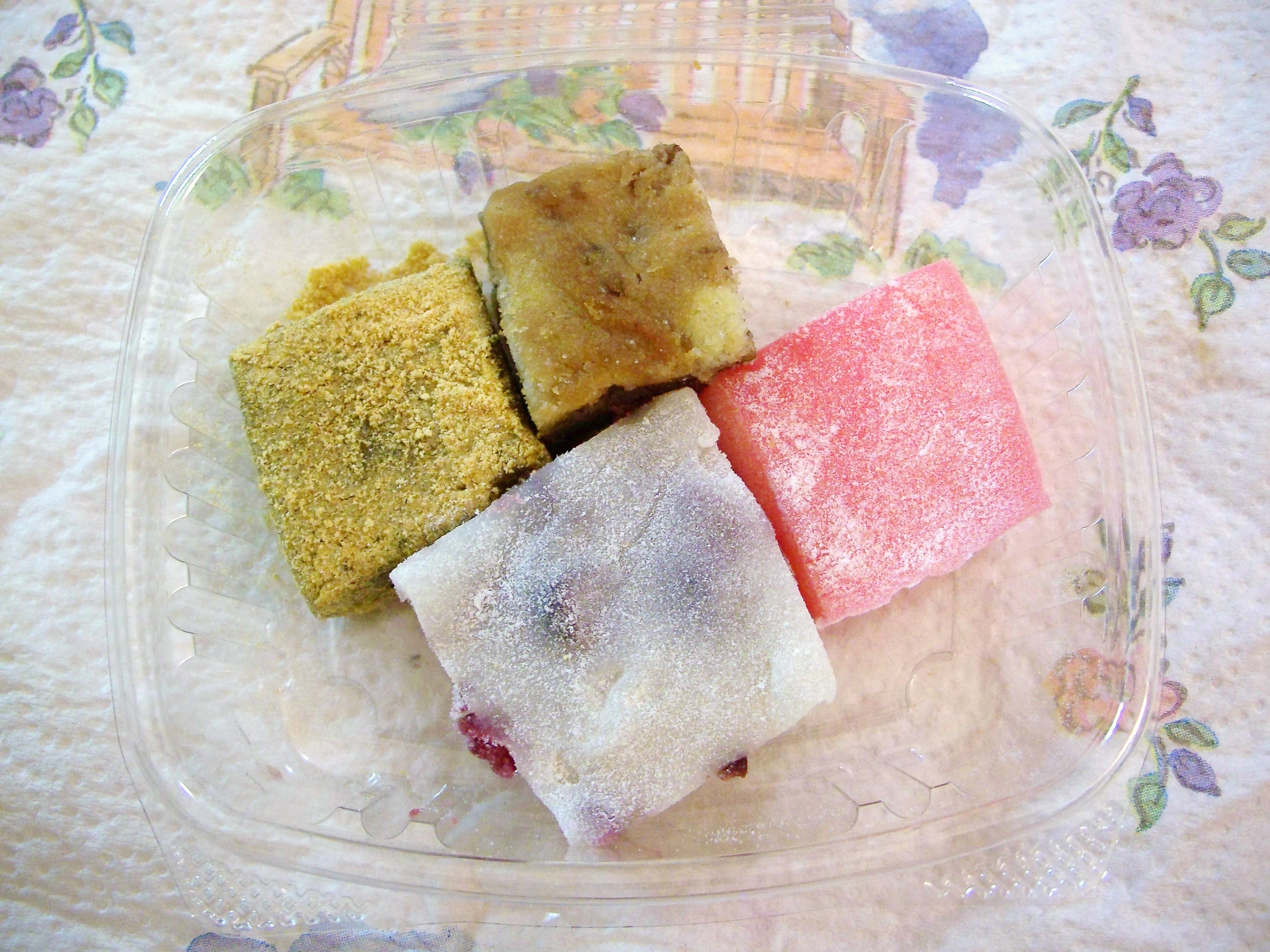
Then there were little squares of mochi (and a lonely piece of brown banana cake). Each square cost a buck too (and they are about 20 times smaller than the scone), but none was as good as the mochi cubes in front of Cafe Hana. Pretty scrumptious lonely piece of brown banana cake though.


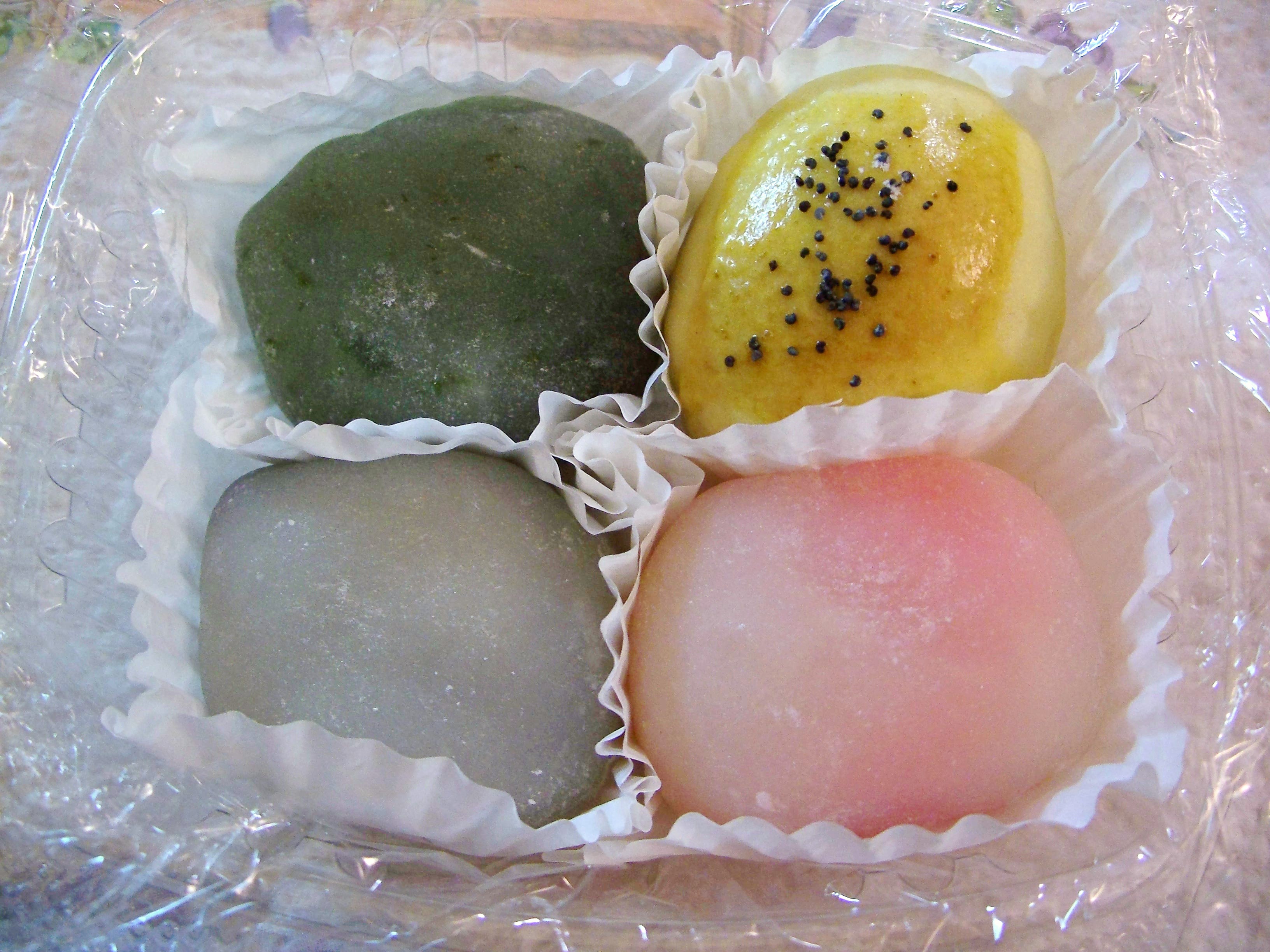
Now these are the real disappointment. The manju, mochi balls with red bean paste, looked so much better than they tasted. Is the yellow egg-shaped pastry dotted with poppy seed and filled with sweetened taro paste also a manju? Guess how much they were. $1.25 each. Sugar excess.


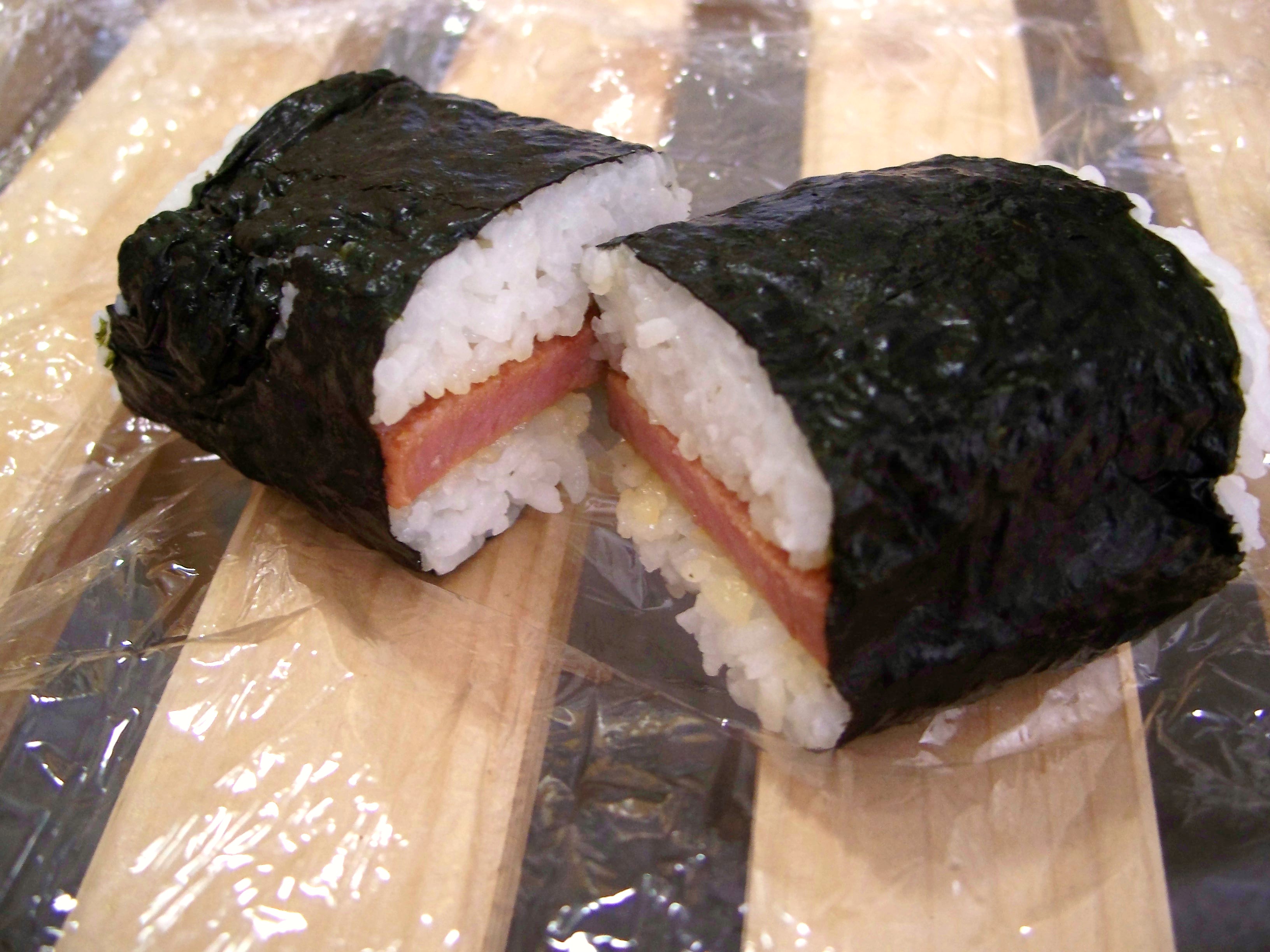
Fortunately the savory side is a greener pasture. The 2-dollar spam musubi hit the spot just right (processed meat always tastes so good after you reprocess it with sugar and soy sauce). The nori was mild, thick, and moist.


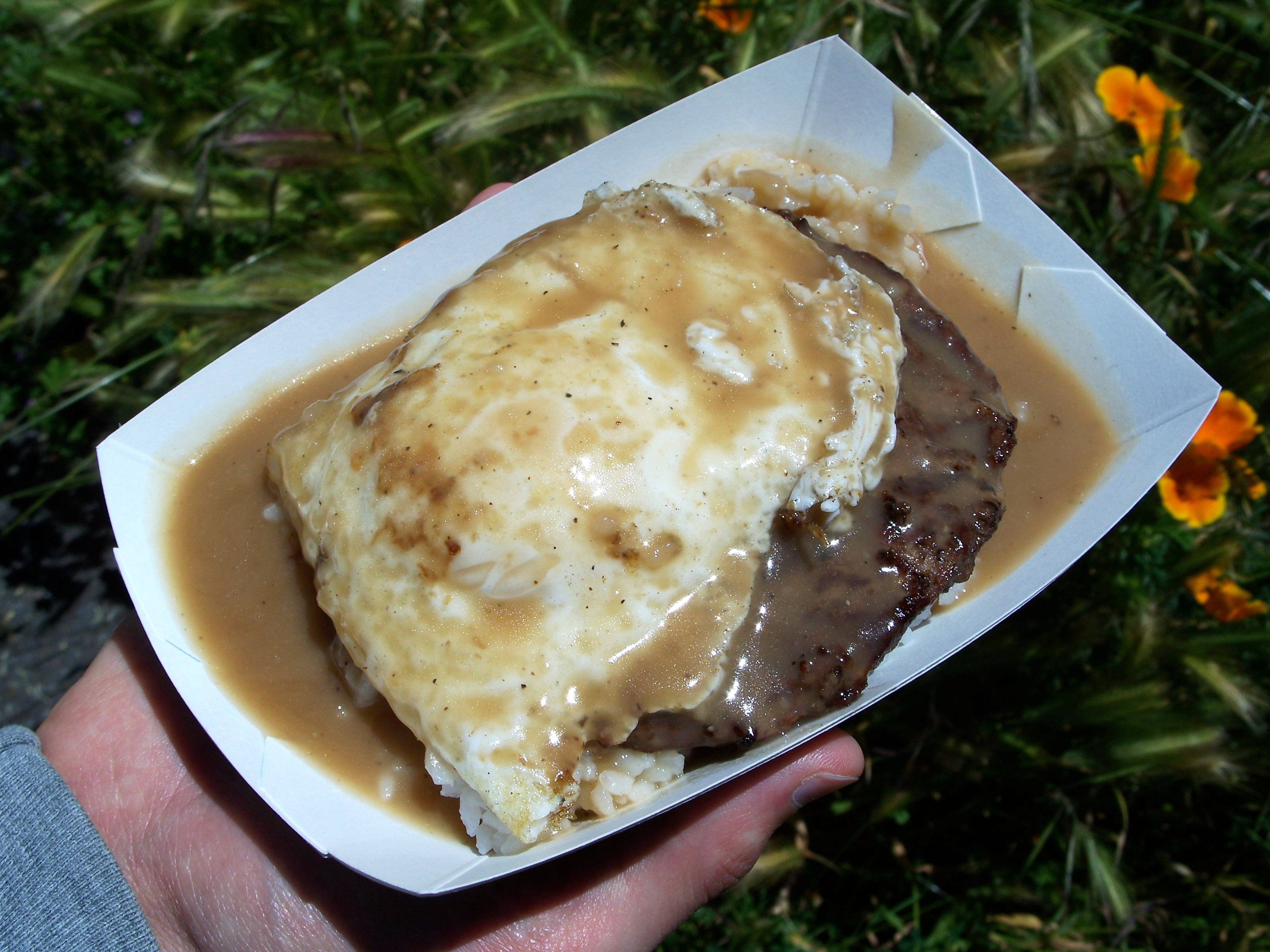
We top things off with a lustrous loco moco, a burger patty squatted on a bed of extremely moist short-grained rice, covered with a runny egg and a ladle of beef gravy. After one spoonful, Mudpie couldn’t stop thinking about it for the rest of the afternoon. The whole thing was like a peppery, creamy, rich butter boat. All for $5, and honestly it would be just as spoon-licking without the grilled meat.


And so I learned something new. At Vietnamese Buddhist pagodas, you can find only vegan food regardless of festive occasions or normal days. Here at a Jodo Shinshu Buddhist temple, there is plenty of meat, crackling and sizzling on one blue-sky Sunday in May.

61st Annual Satsuki Bazaar and Arts Festival, May 22-23, 2009
Berkeley Buddhist Temple
2121 Channing Way
Berkeley, CA 94704
(510) 841-1356

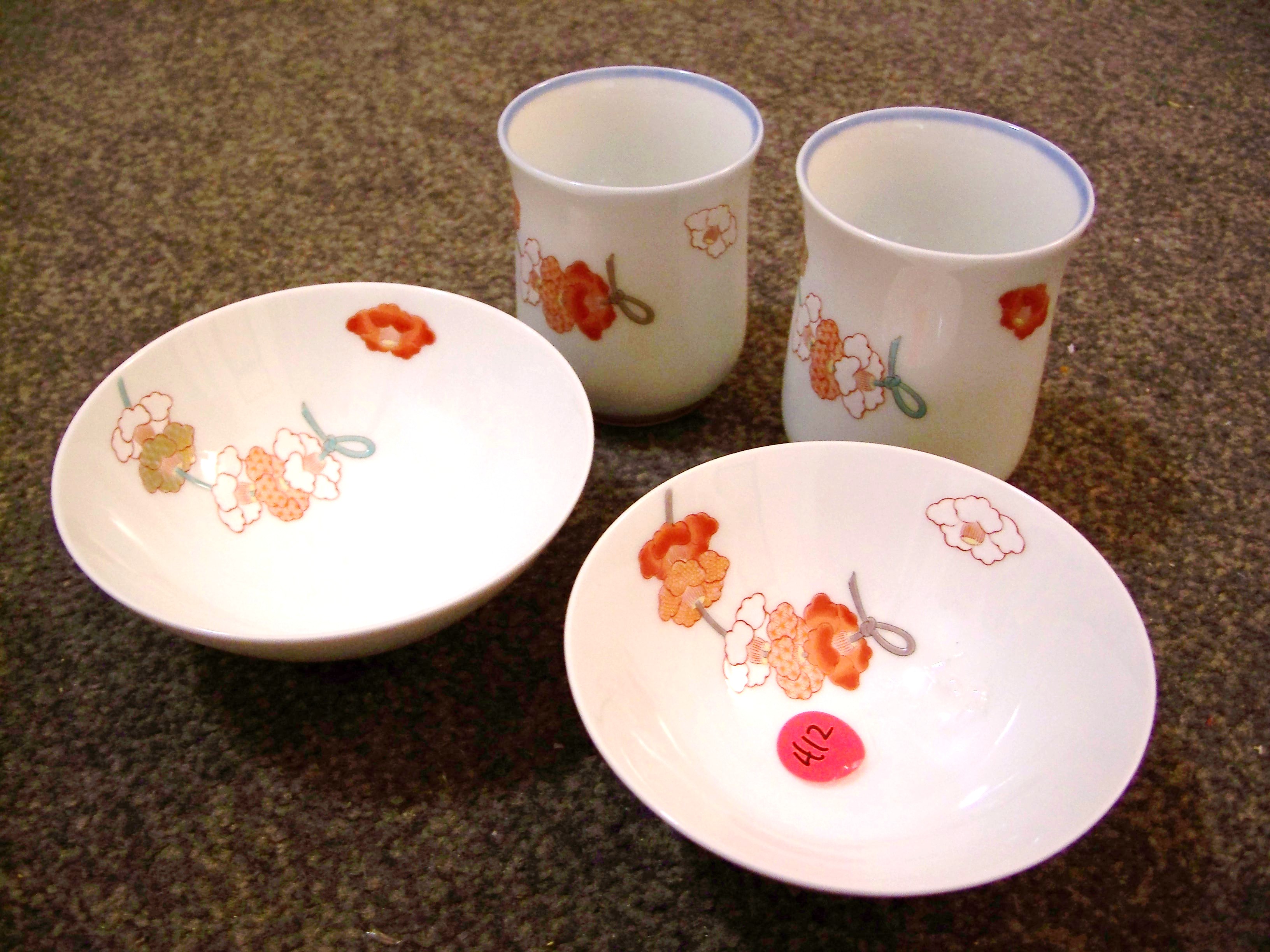
Update: I WON something in the silent auction: an adorable set of tea cups and tea bowls, notice the matching pairs with one tea cup slightly taller than the other. The visit was a success!