Flavor Boulevard

We Asians like to talk food.
Subscribe

Archive for the ‘California – The Bay Area’

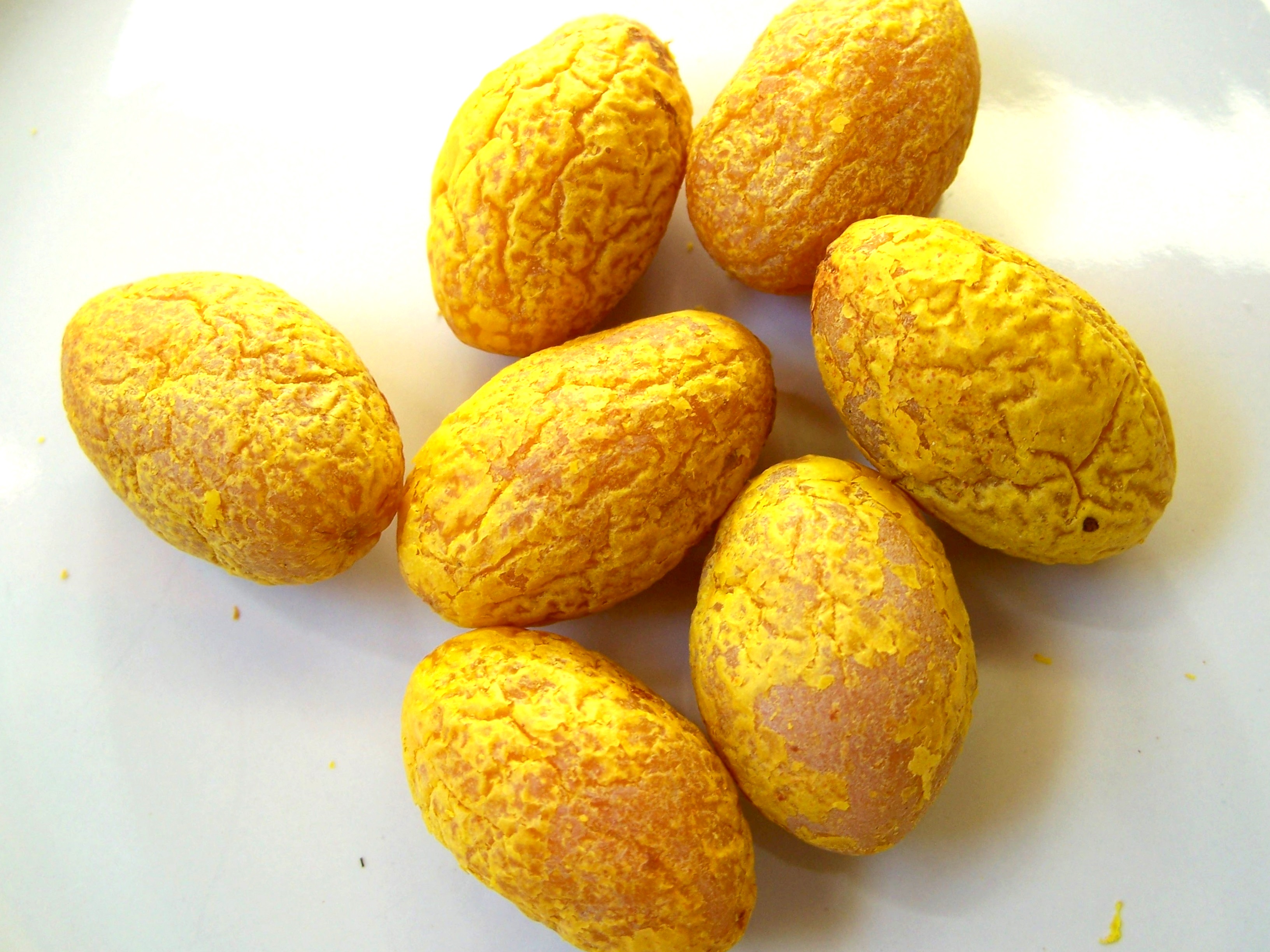
Candied cà-na (white canarium or Chinese olive)
March 12, 2011 By: Mai Truong Category: California - The Bay Area, Fruits, One shot, Southern Vietnamese, sweet snacks and desserts, The more interesting


It’s not the black stuff they throw on your pizzas or the green thing they toothpick on your sandwich. How many of us city kids have tasted the tartness with a tiny sweet afterpunch of this Mekong delta fruit? It’s addictive like fresh squeezed orange juice on a summer day. Speaking street tongue, it’s nature’s crack in oblong shape.

Eat ’em fresh with chilipepper salt, or candy them with sugar and heat, it’s how kids down South do it with the cà na they shake off from bushes on the riverbanks. And argue if you may, kids know tasty food. The shape is really the only link cà na has with the Western olive (Olea europaea), though it’s at least two times bigger. Does the name “cà na” mean anything?

“Cà” is tomato, and “na” is the northern word for sweetsop, two totally unrelated species to this ovoid fruit. So “cà na” is not a compound noun. I’m no etymologist but here’s my best guess: “cà na” |kah nah| is a shortened vietnamization of the Thai word “kanachai”, from which cultigen taxonomists derive the the scientific name “canarium”, a genus with about 75 species native to the tropics. The cà na we eat and love from those riverbank bushes belongs to the species Canarium nigrum (black canarium) and Canarium album (white canarium), or “trám đen” and “trám trắng” in pure Vietnamese. Another delta variety is Canarium subulatum, pointy at both ends and sappy like green bananas.

Words on the net claim that cà na‘s acidity is good when you have a cold, drink too much, or wants to lower your weight, thus not so recommended for skinny sticks like me. I’ve never popped a fresh one myself, but this is the most (and only) mouth-watering description I could find on the net (translated from the Vietnamese original):

Every year, in roughly August or September, when the Mekong flushes the paddy fields, the cà na trees bear their first fruits. What could be better than rowing a canoe downstream, then tying it to a cà na trunk base by the riverbank to cast your fishing net, and while waiting, dip a bursting green ripen fruit into chilipepper salt to soak your soul with its wild and clean sweetness?
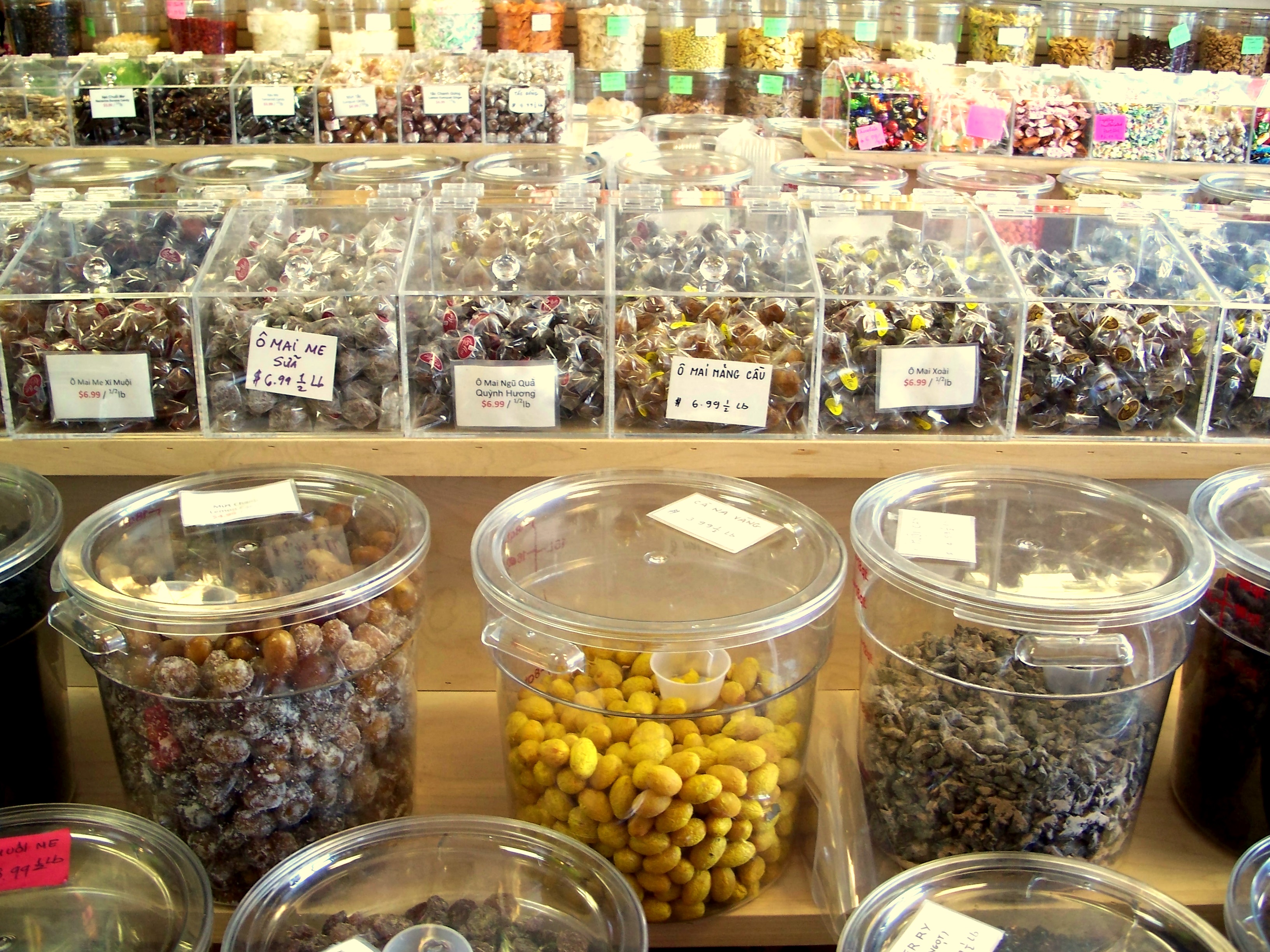

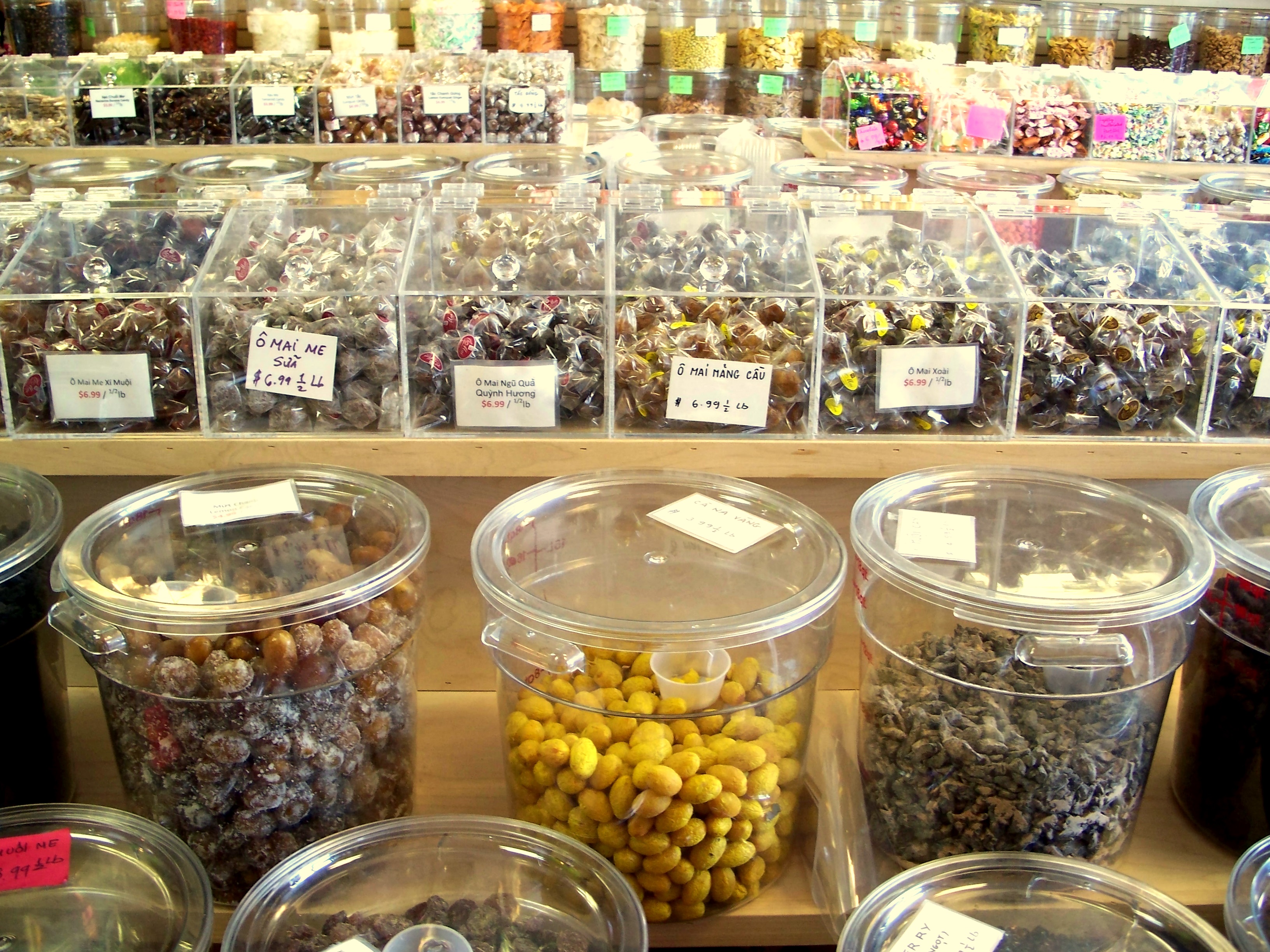
The first cà na‘s I’ve had are bright yellow with cracked skin, as big as a big green grape, resembling petrified dinosaur eggs, sold in glass jar among the ô mai and the salted plums.
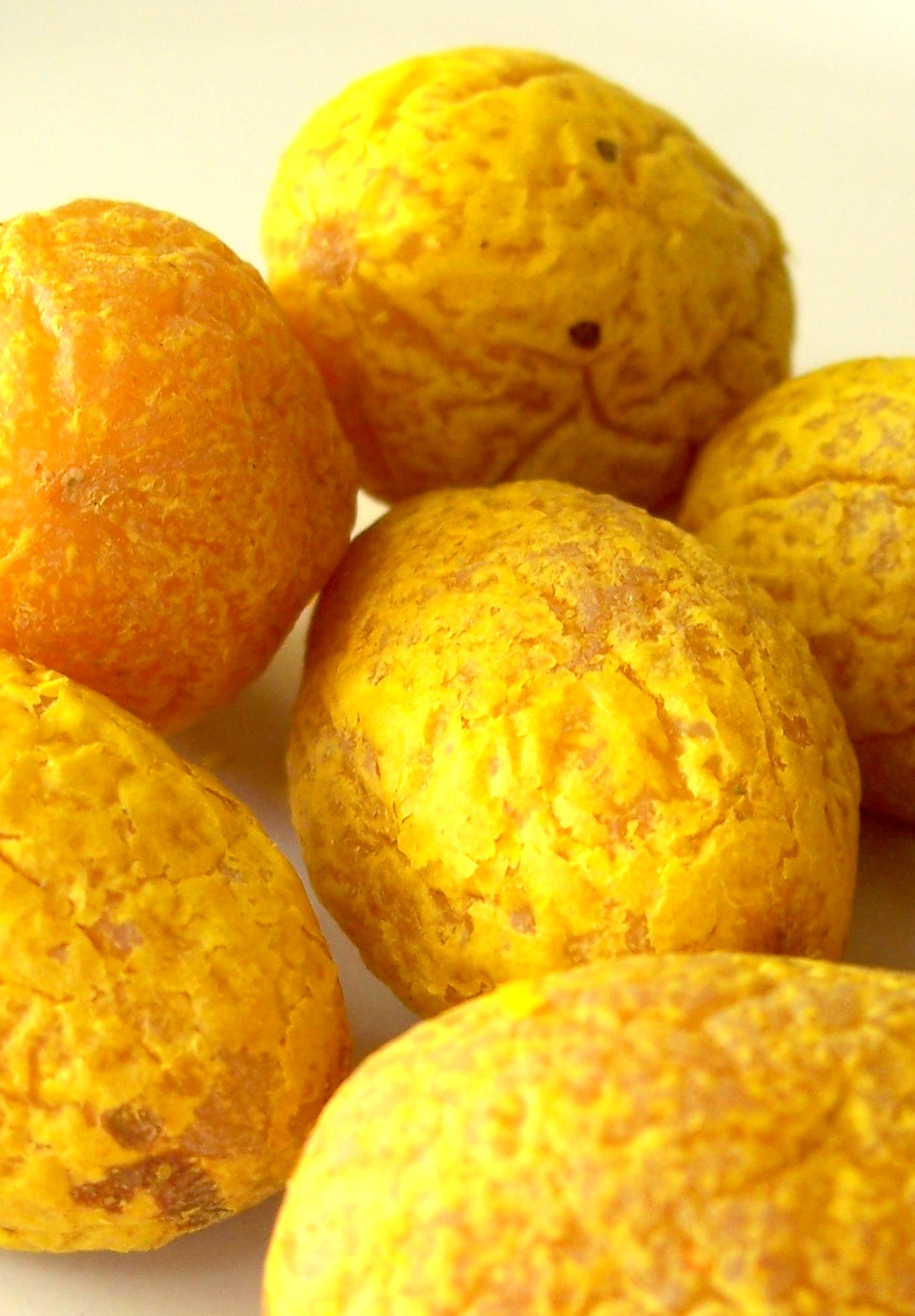

The first nibble must be executed with caution. It’s firm and sound, with one big hard seed. No wonder the folks at home call the American football the cà na ball: they look and feel the same, only smaller. The flesh is dense like an old coconut’s meat, sour like lemon leaves, yet sweet like licorice blended with a dash of sea salt. How they’re made is a mystery to me.

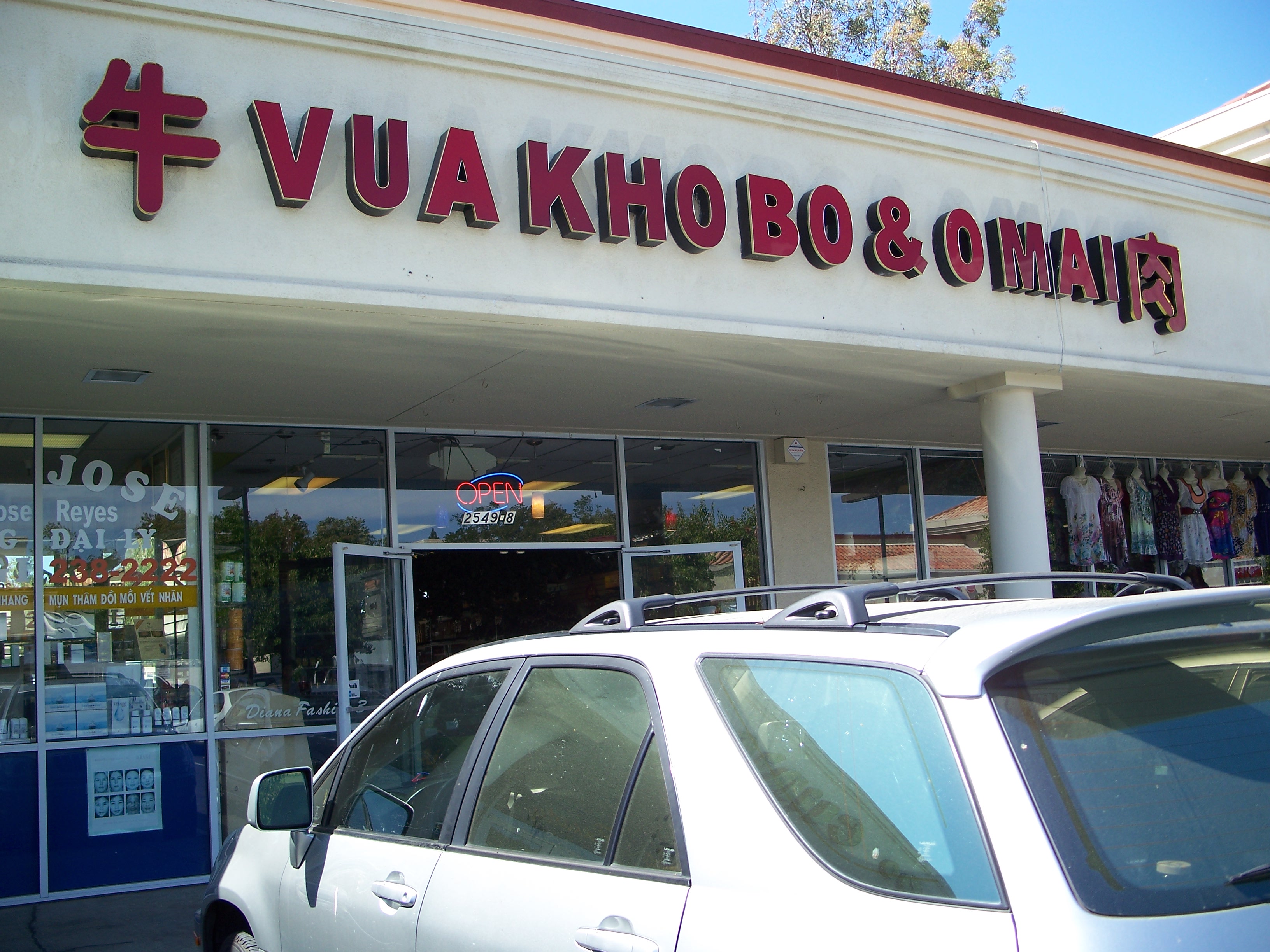
Address: Vua Khô Bò & Ô Mai
2549 S King Rd #A-B
San Jose, CA 95121
(408) 531-8845

Also from here, also fruitilicious:
1. banana tootsie roll
2. ô mai (spiced fruit ball)

Other informative links on the Chinese olives:
a list of different cultivars in China
Autumn olive


This post is submitted to Delicious Vietnam #11, March edition, hosted by The Culinary Chronicles. I’ll head to her blog for more yummy posts on Vietnamese food this month, and many thanks to the Ravenous Couple and Anh for creating this event!

A spot for beef stew (bò kho)

March 09, 2011 By: Mai Truong Category: California - The Bay Area, Comfort food, Southern Vietnamese


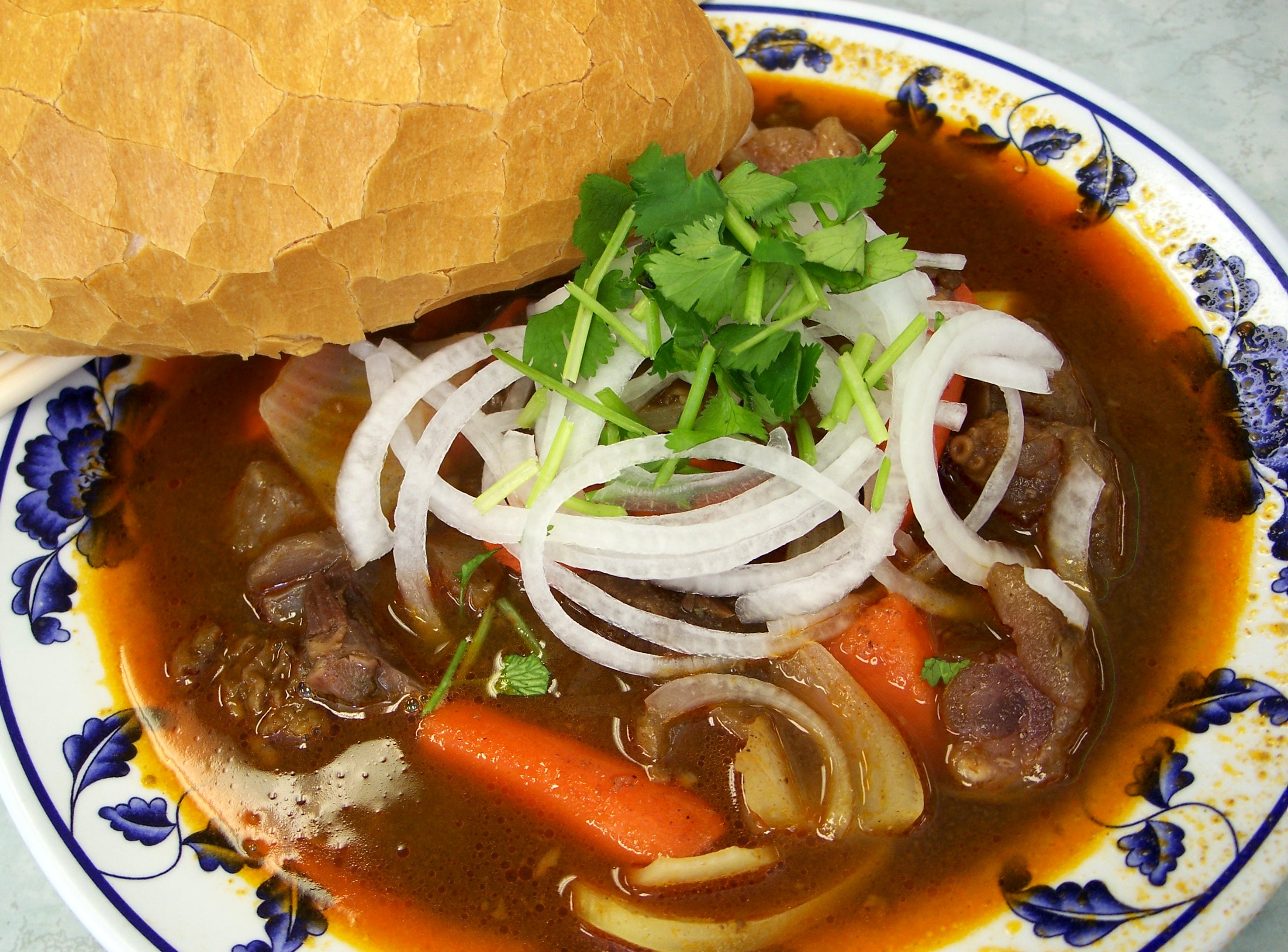
When Phở Hòa on Shattuck closed down, a part of me collapsed. No more bò kho? Granted that I can only have a bite or two in one sitting, or Mom would be worried about bò kho giving me a fever, it’s still comforting to know that a bowl of this supertender beef stew is only a few minutes walk away, or simply that it exists at a restaurant. Many a times I have seen Vietnamese restos, especially those in Houston, advertise bò kho on their menu but claim that they’re out of it when you order. So I felt in quite a shock fearing that bò kho has left me alone for good.

Then Mudpie, also a bò kho fan, found Phở Hà. We went and asked to make sure they have it. It’s no Berkeley, Phở Hà is in San Jose, but we’ll take what we can get.


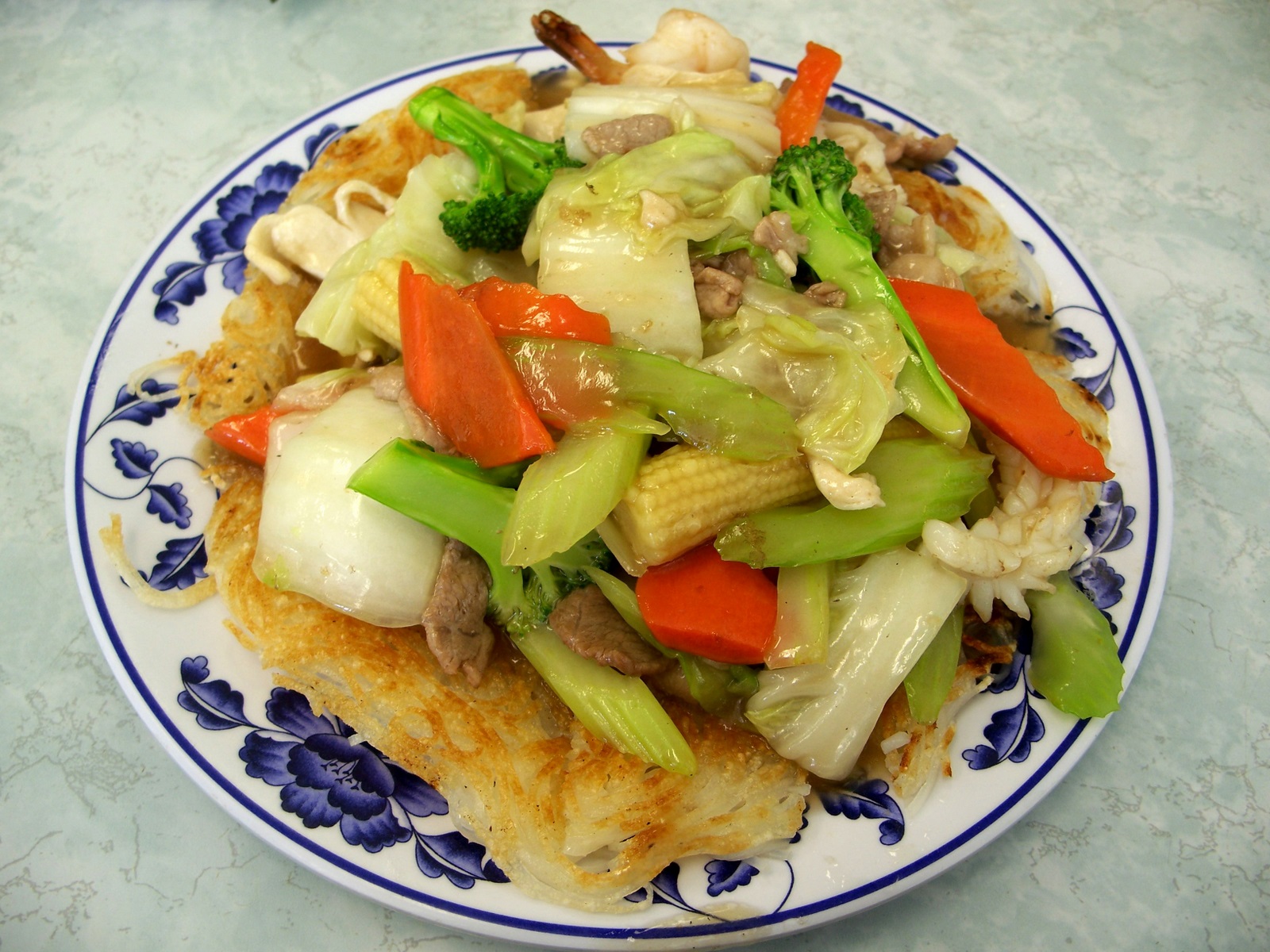
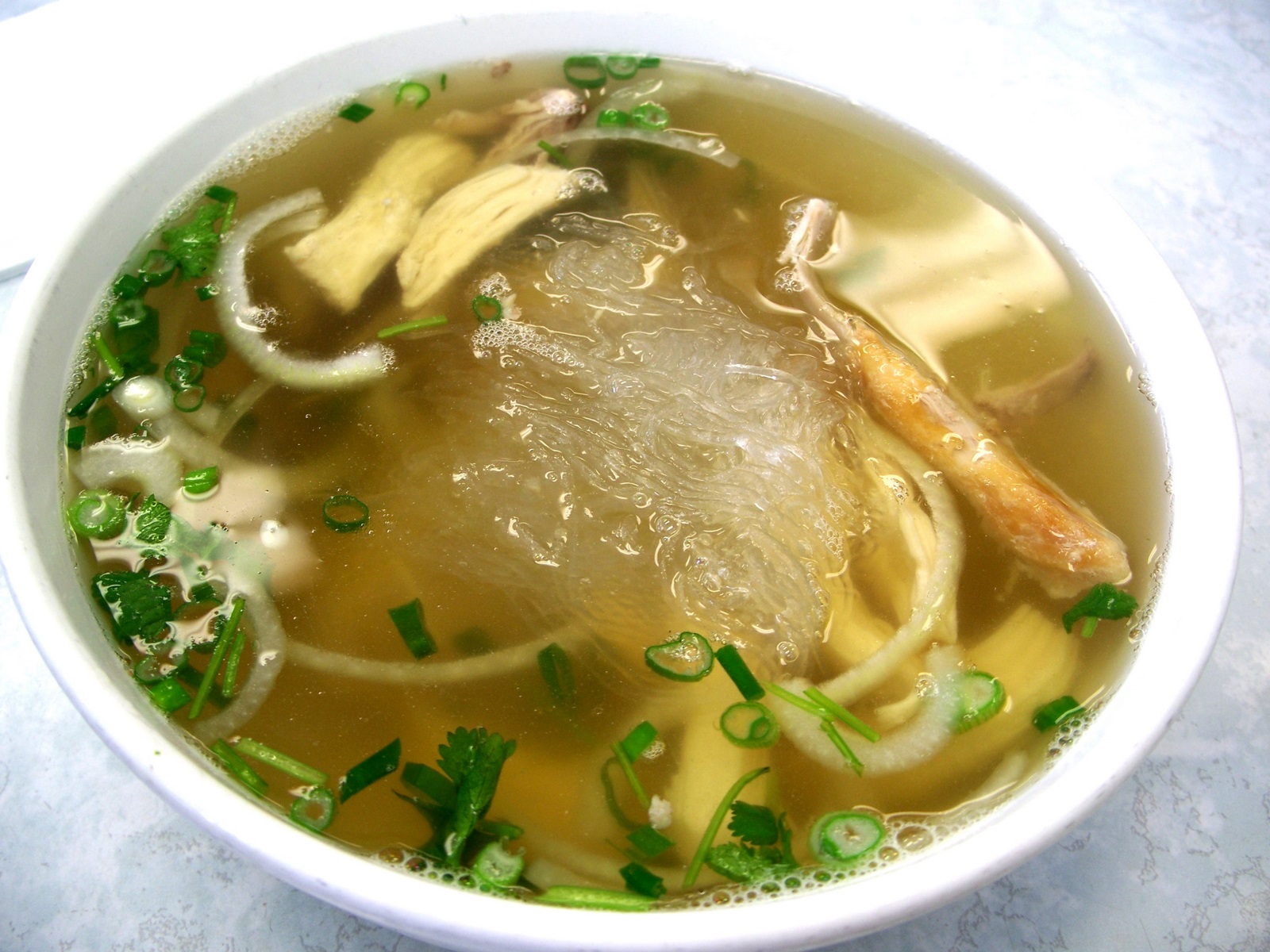
Their plastic bowls and utensils aren’t all that splendid. Their miến gà (cellophane noodle soup with chicken) is decent but their phở áp chảo (pan-fried rice noodle) is too overfilled with thick brown sauce to sing.


Nonetheless, we’ve come here for bò kho after all. And both Dad and Mudpie use up their whole loaf of crusty bread to wipe clean every last bit of that red, spice-ladened beefy juice. I’d say the trip ends well. 🙂

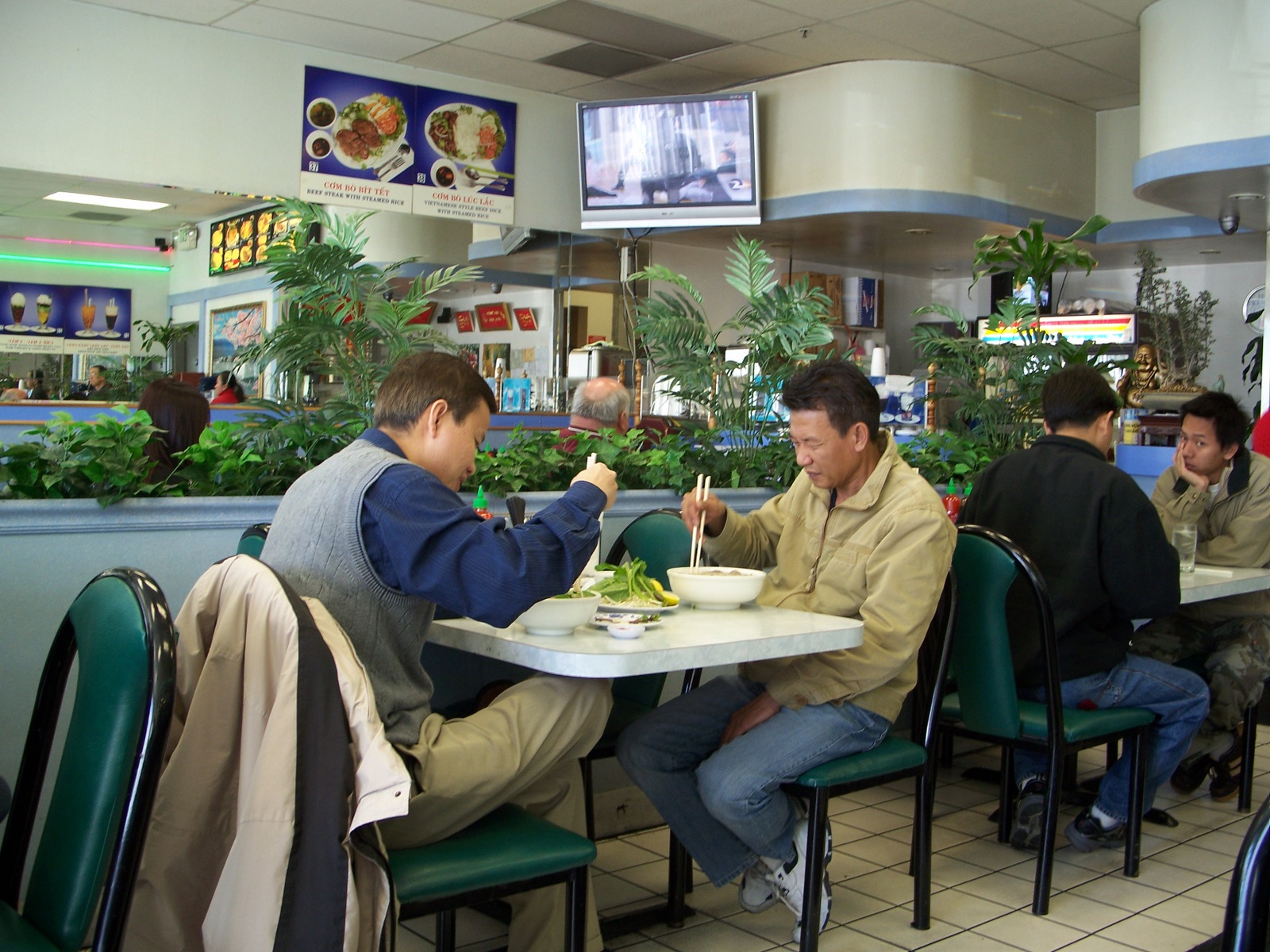
Author's disclaimer: these two men, who are leisurely enjoying the noodle soup, are NOT Dad and Mudpie

Address: Phở Hà (next to the Grand Century Mall)
951 McLaughlin Avenue
San Jose, CA 95122-2612
(408) 280-0381

Spicy balls of fruit and salt

February 26, 2011 By: Mai Truong Category: California - The Bay Area, Fruits, Review of anything not restaurant, Vegan, Vietnamese


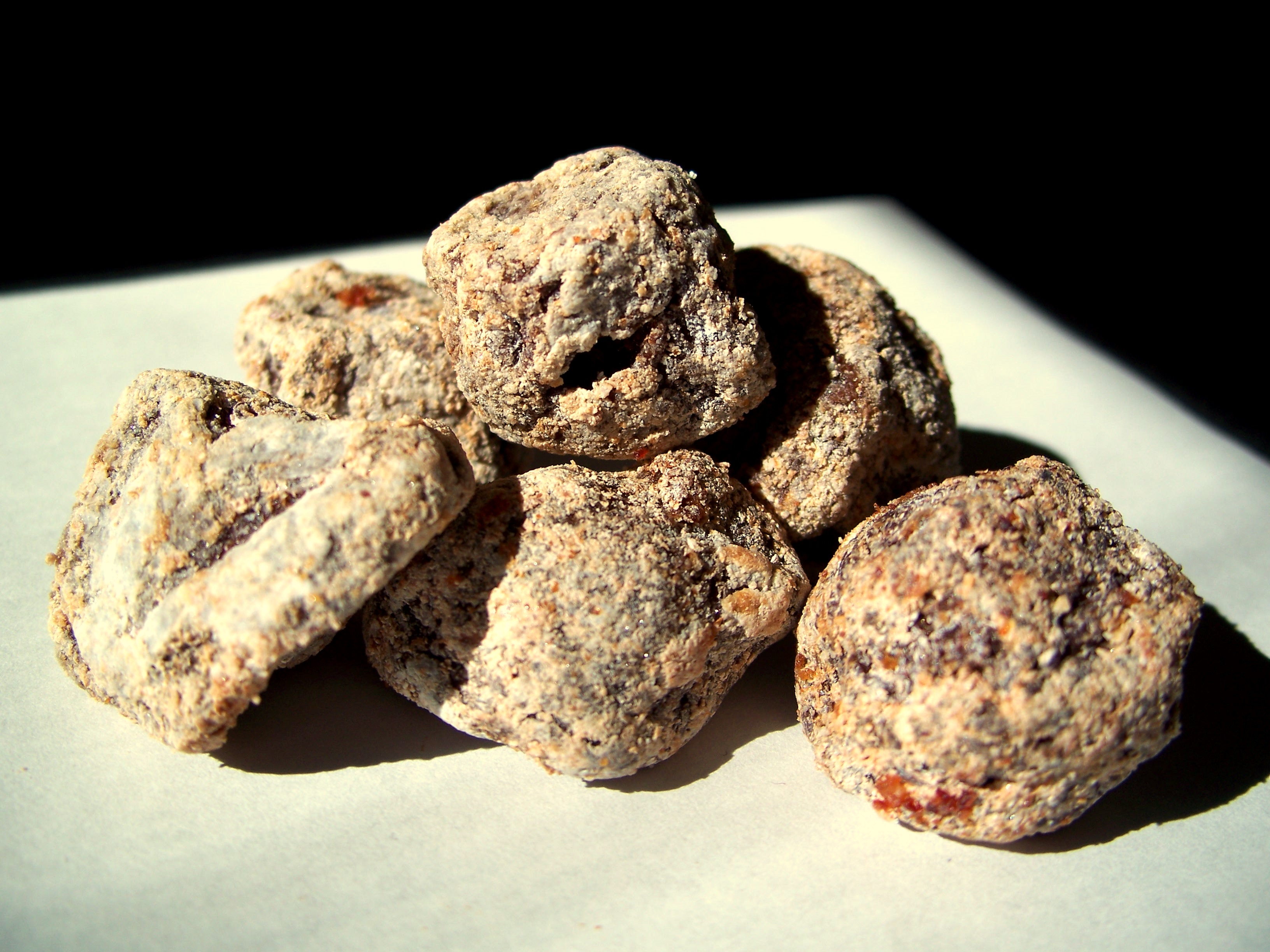
Let’s make it clear: ô mai |oh mai| is not xí muội |xi mui| (huamei), even if Wikipedia says so. The former is a cooked mixture of cut-up fruits, ginger, licorice and spices, the latter is a whole plum dried and salted.


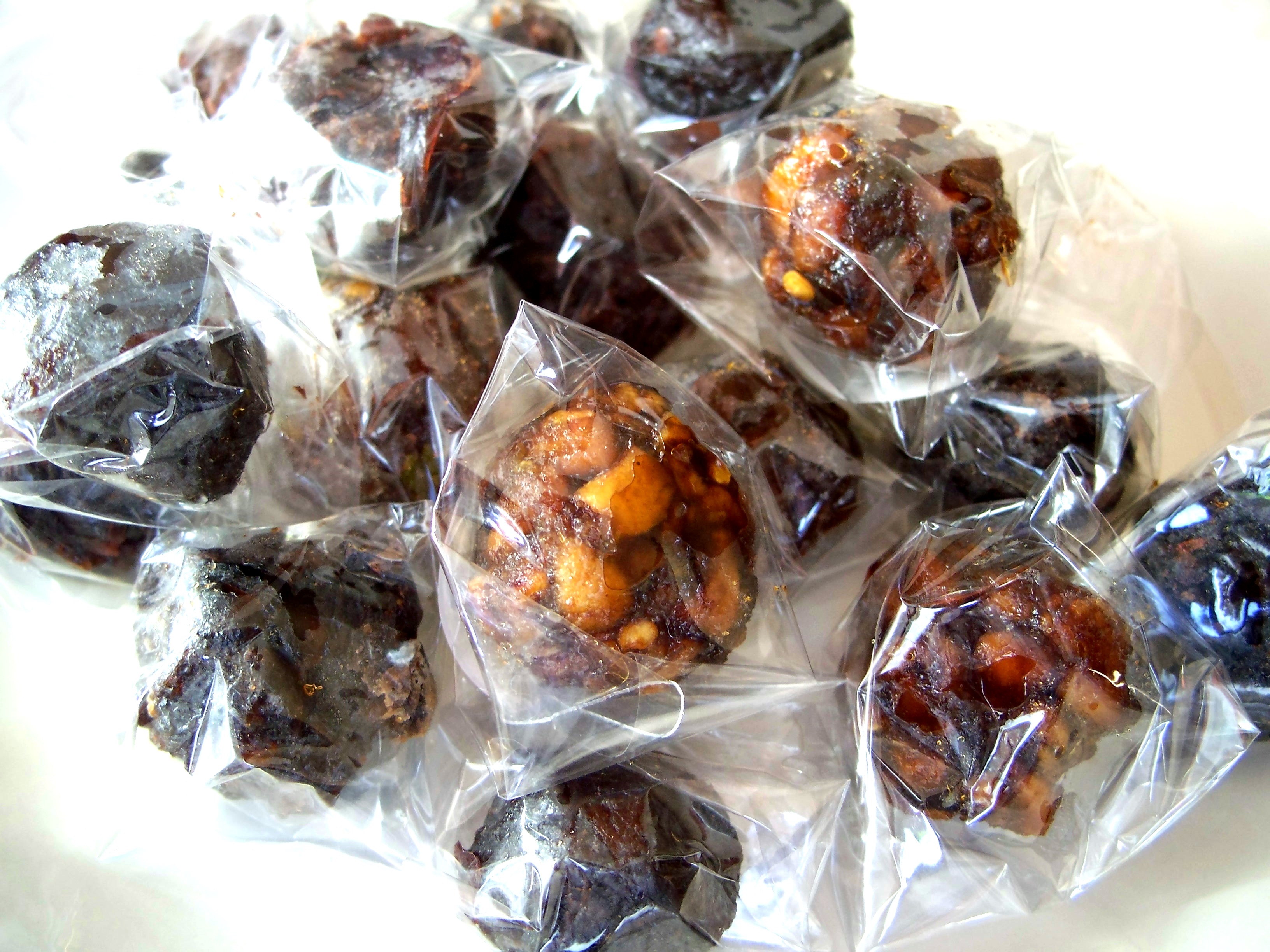
Now that’s settled, I got a bunch of ô mai from Vua Khô Bò & Ô Mai a while ago, all homemade or so the lady told. Guava, rose buds, sấu (no English name, it seems), mango, kumquat, cóc (golden apple), tamarind, and 5-fruit combo, 2 balls each at $6.99 per half pound. Sweet, spicy, chunky, velvety, gingery, tart, salty, it’s all there.

The downside: they all have the same wrapper, so except for the guava one which is extra chunky, I can’t tell which is which if my life depended on it.

And here’s some xí muội. Look more like rocks then edibles, doesn’t it? Americans like ’em not, but I find them lip-smacking good, one tiny nibble at a time.


Address: Vua Khô Bò & Ô Mai
2549 S King Rd #A-B
San Jose, CA 95121
(408) 531-8845

Also from here, also fruitilicious: banana tootsie roll

Tags:

My first taste of Battambang

February 22, 2011 By: Mai Truong Category: California - The Bay Area, Comfort food


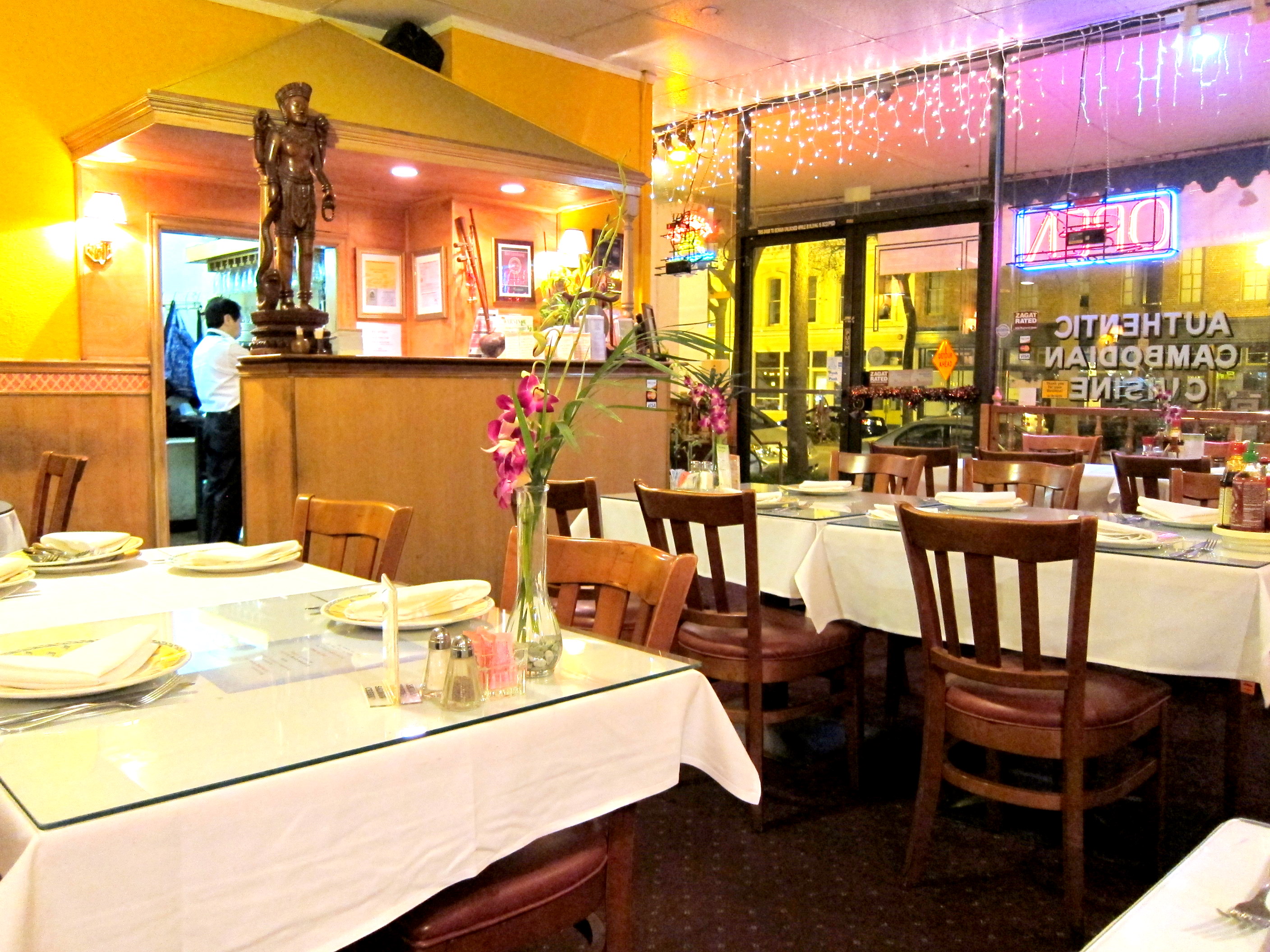
It happens on Broadway Street, Oakland. Dishes with names so hard to pronounce, ingredients and tastes so similar to Vietnamese food. I learn of the second largest city of Cambodia, smaller only than Phnom Penh. I share my first simple Cambodian dinner, complete with a salad, a meat, and a dessert.

Here’s a little language snippet: to Vietnamese people, salad is called “gỏi” |ghoy| in the South and “nộm” |nom| in the North. To my surprise, “nhorm” is its romanized name in Cambodia. Listening to the other customers at Battambang, Mudpie comments that Khmer and Vietnamese sound similar, to which I first protest, but perhaps it holds a grain of truth after all.

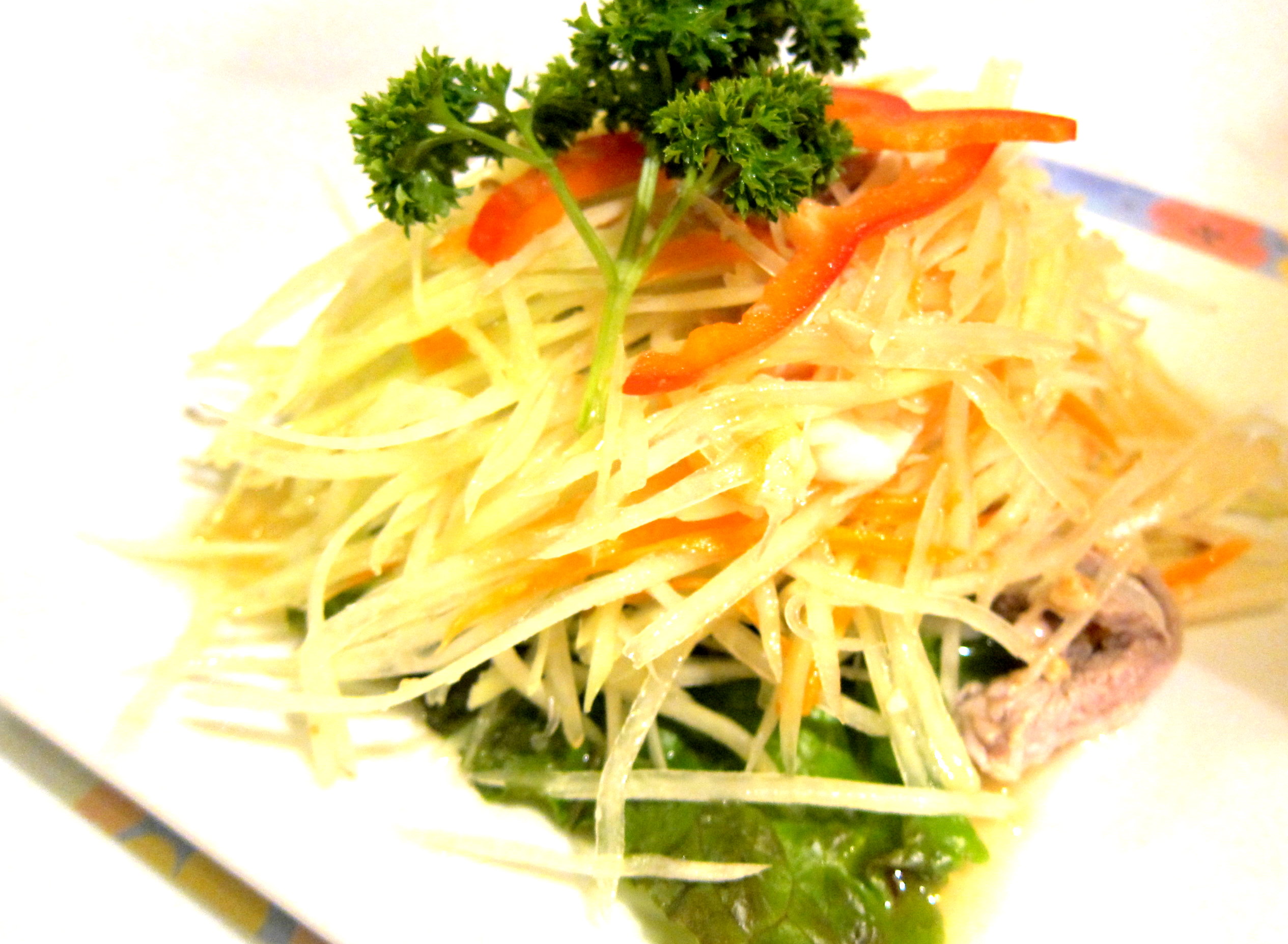
Here we have nhorm lahong. If there’s any salad that never goes wrong, it must be this green papaya salad of Southeast Asia. Delicate, raw, and soaking fruit shreds retain nothing but a tightening chew, the sweet lime dressing sends a quiet smell of fish extract. Battambang’s batch is a drop more watery than Dara’s som tum/tam mak hoong, on the plus side there’s plenty of sauce to make rice go quickly down the pipe.


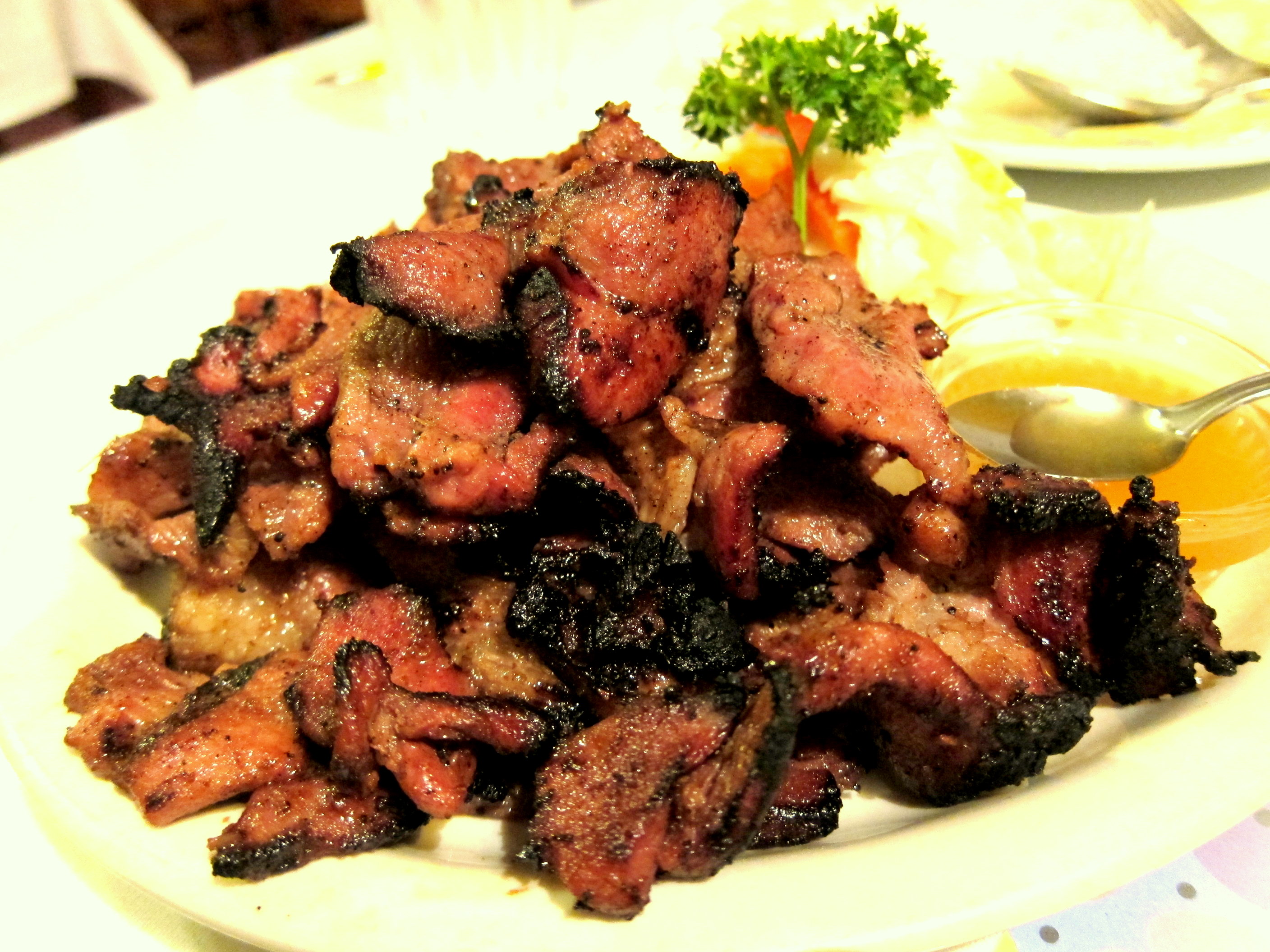
To make rice go even quicker comes sach chrouk aing. I don’t think I’ll be able to handle a full Khmer sentence of words like these, but now that I’ve known pork is sach chrouk and grilled is aing, I can survive in Cambodia ;-). Long version: sliced pork marinated with lemongrass, charbroiled, served with sweet lime nuoc mam and boiled cabbage on the side. Short version: godly.


Like at most family operated Asian restaurants, the check will be brought out before you can order dessert, but we don’t let that stop us from ending our dinner on a sweet note. The dessert menu stands next to the salt, pepper, sweeteners, and a slender vase of real orchids.


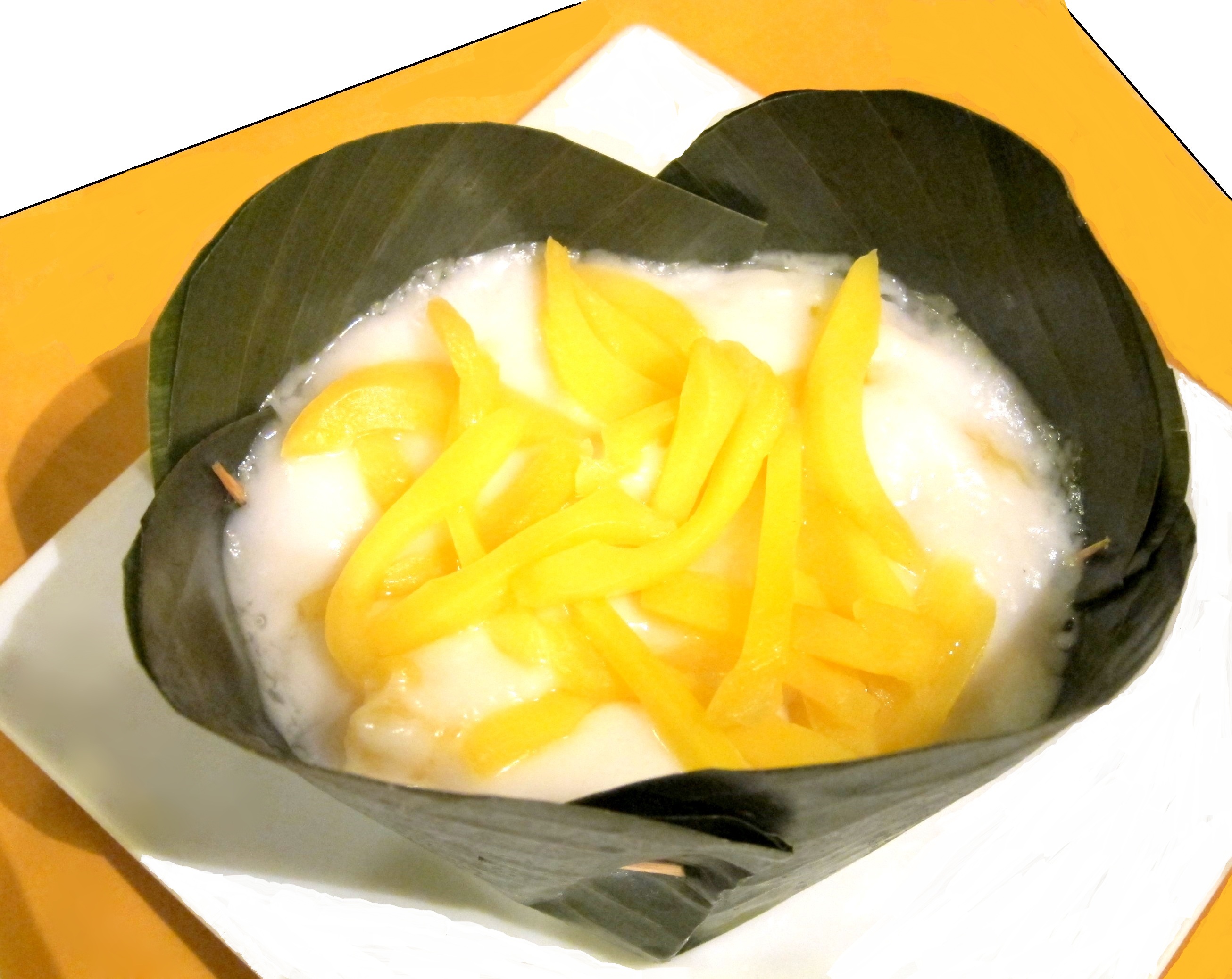
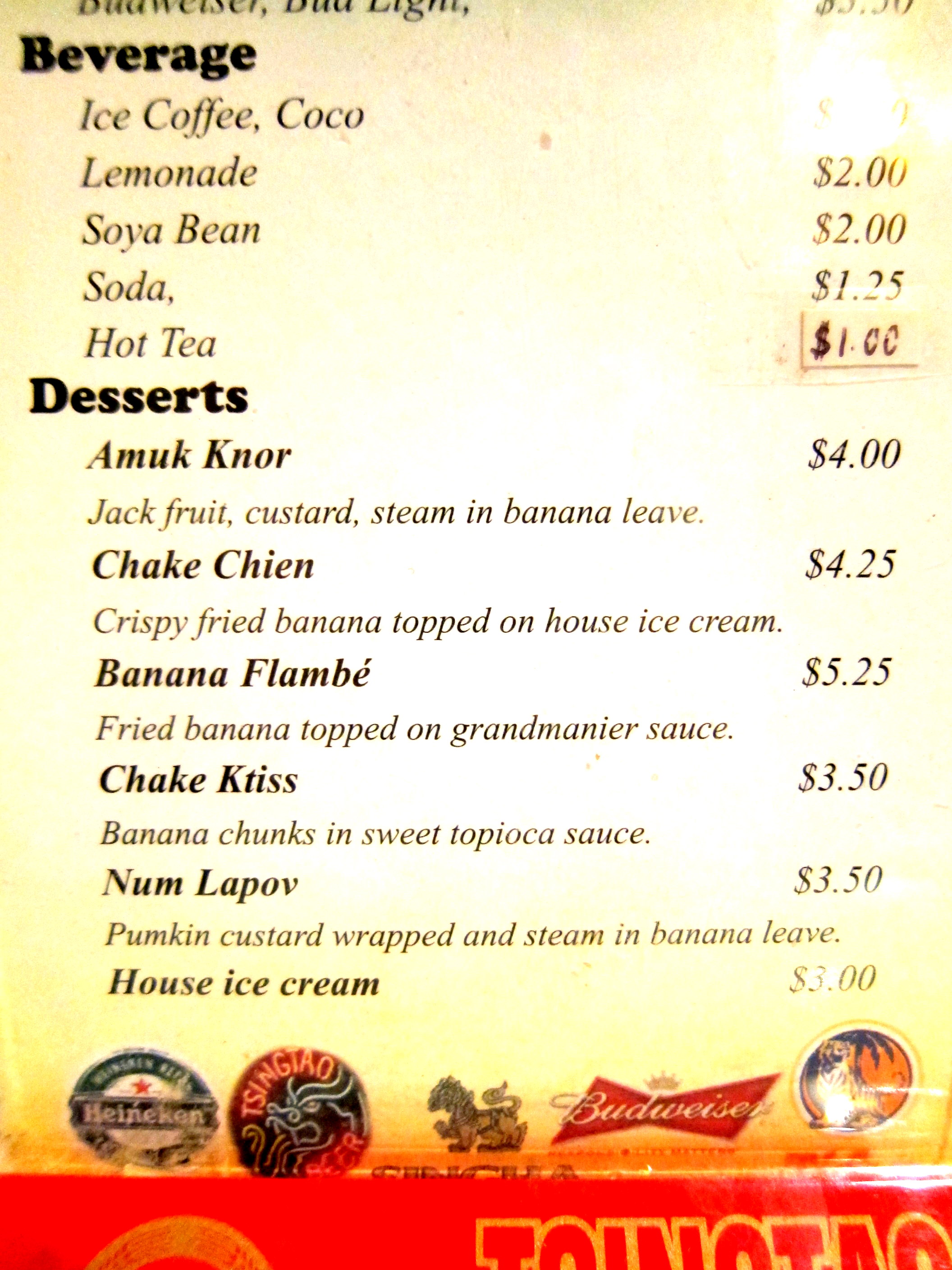
I ask our hostess to recommend either amuk knor or chake ktiss, and with no delay she says “Amuk knor for sure”. I then ask if it’s whole jackfruit or just some kind of paste or flavoring, and I must sound pretty stupid, the whole jackfruit is huge, at least as big as a 30lb turkey, but she (and you?) knows what I mean. Amuk knor is a kind of coconut milk custard with jackfruit slices, all steamed in a banana leaf cup. It breathes tropical and countryside, warm and mild. We scrape every corner of the leaf.


(I can only guess that chake ktiss is similar to chè chuối chưng).

Address: Battambang Restaurant
850 Broadway Street,
Oakland, CA 94501
(510) 839-8815

Battambang’s menu online
Money matter: $24.70 a dinner for two.

Casserole House – Jeongol in Oakland

February 18, 2011 By: Mai Truong Category: California - The Bay Area, Comfort food, Korean


If you’ve had Vietnamese hot pot and liked it, you’d like the Korean hot pot better. If you haven’t had Vietnamese hot pot, try it, and then try jeongol (전골 Korean hot pot), and then you’d like jeongol better. There goes my motherland loyalty, but Vietnam has bánh cuốn and gỏi cuốn, so I’m not too worried.

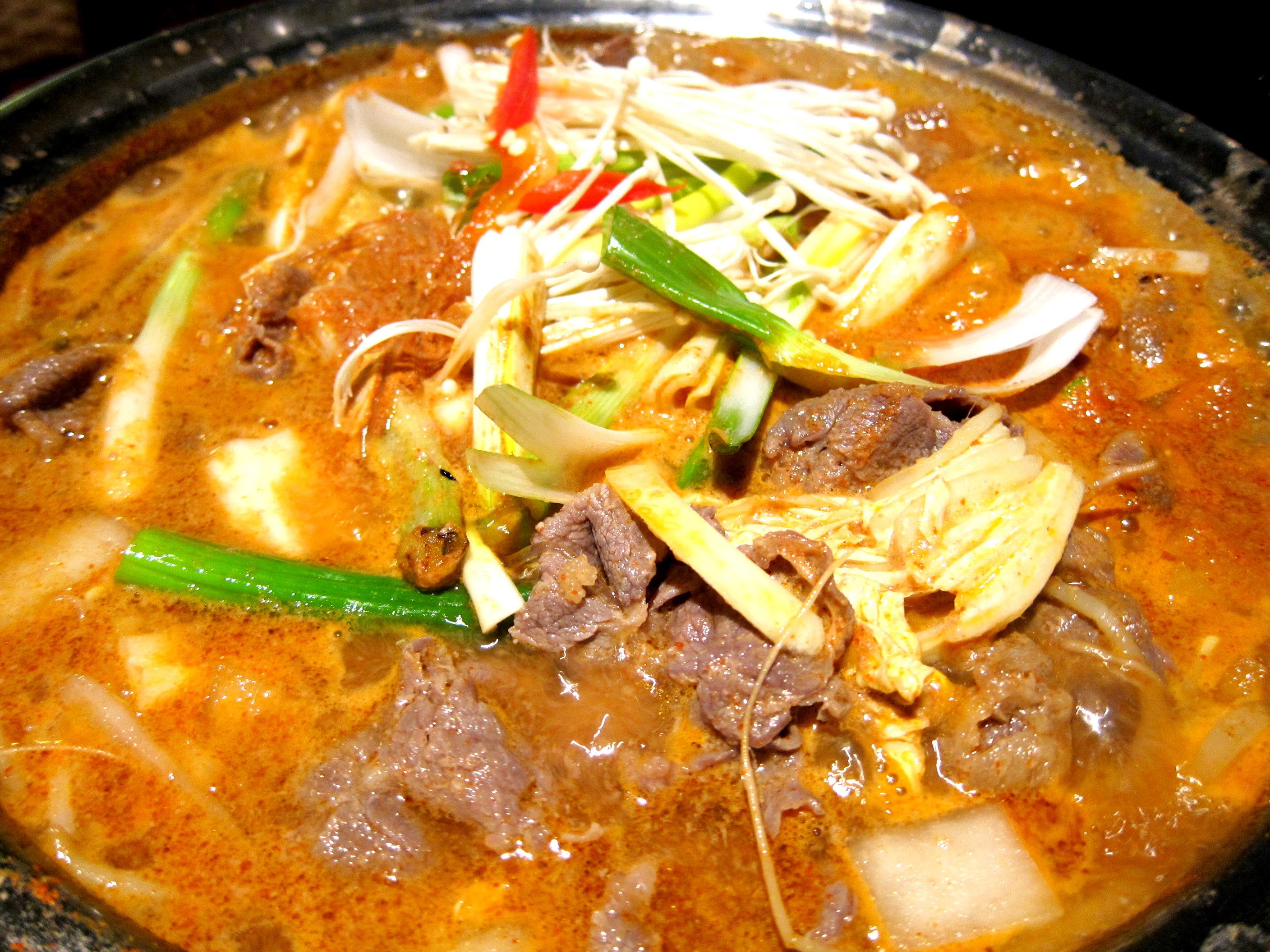
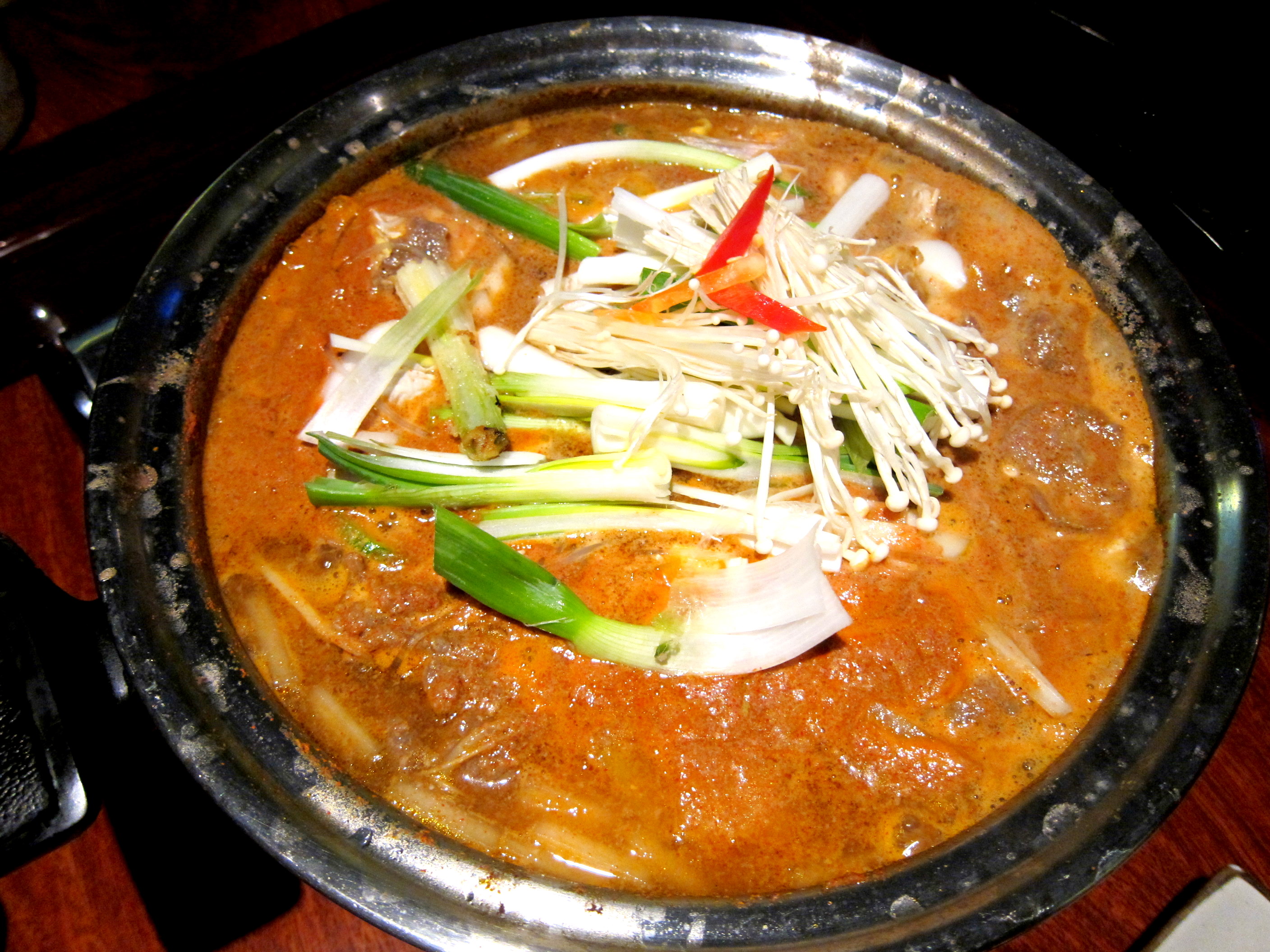
Lots of beef, lots of mushroom, green onion, bean sprout, tofu, cucumber, cabbage all snuggling in a pasty sunny broth. The pot is more like a deep tray on a gas stove, and the bubbling conglomeration is like a spoiled teenager threatening to run away from home. The bulgogi junggol comes to us wild and daring. We ladle right in.


Casserole House has these big bright pictures on the wall of beef, spam, vegetables, and seafood neatly arranged in a round dish or bobbing in broth. The real stuff in action also hides some tteokbokki (떡) for chew and dangmyeon (당면) for engtanglement with the enokitake that just wait to drip the broth between the plates or fling a fortunate dot onto your shirt. I don’t know why they would call jeongol “casserole”, the word brings to mind a square glass dish with crispy-top green beans swearing hot from the oven, which, as yummy as it is at Thanksgiving, is far less exciting than a hot pot. (As a guy said in a Super Bowl ad, “it’s where the action is”.)


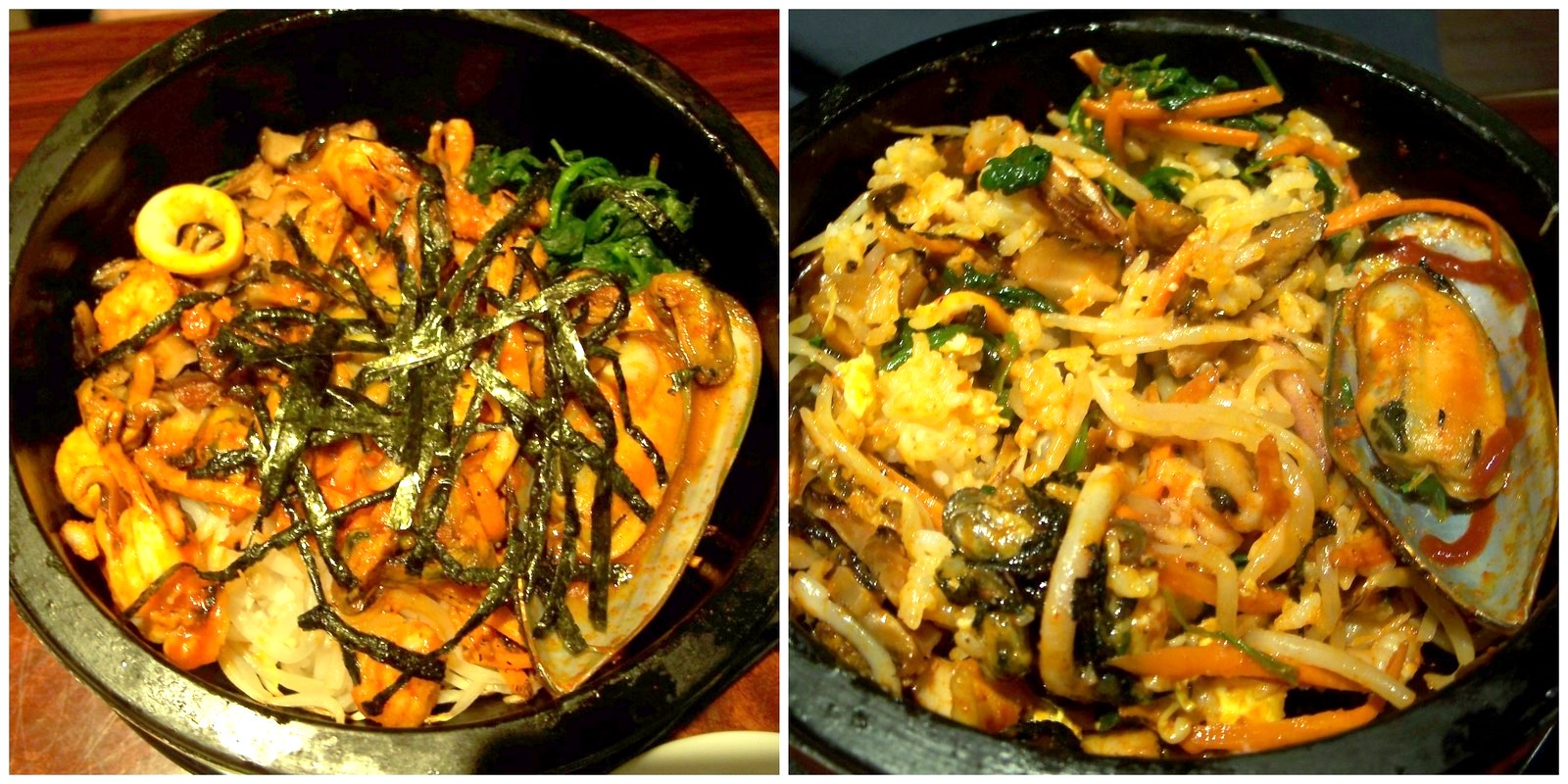
Like true Americans, we didn’t get jeongol the first time we ate at Casserole House. It’s not a mistake per se, because the seafood bibimbap had quite some scrumptious crust and chewy squid for kicks, and if you scan over my favorite post list, you’d know I have a soft spot for pig feet.


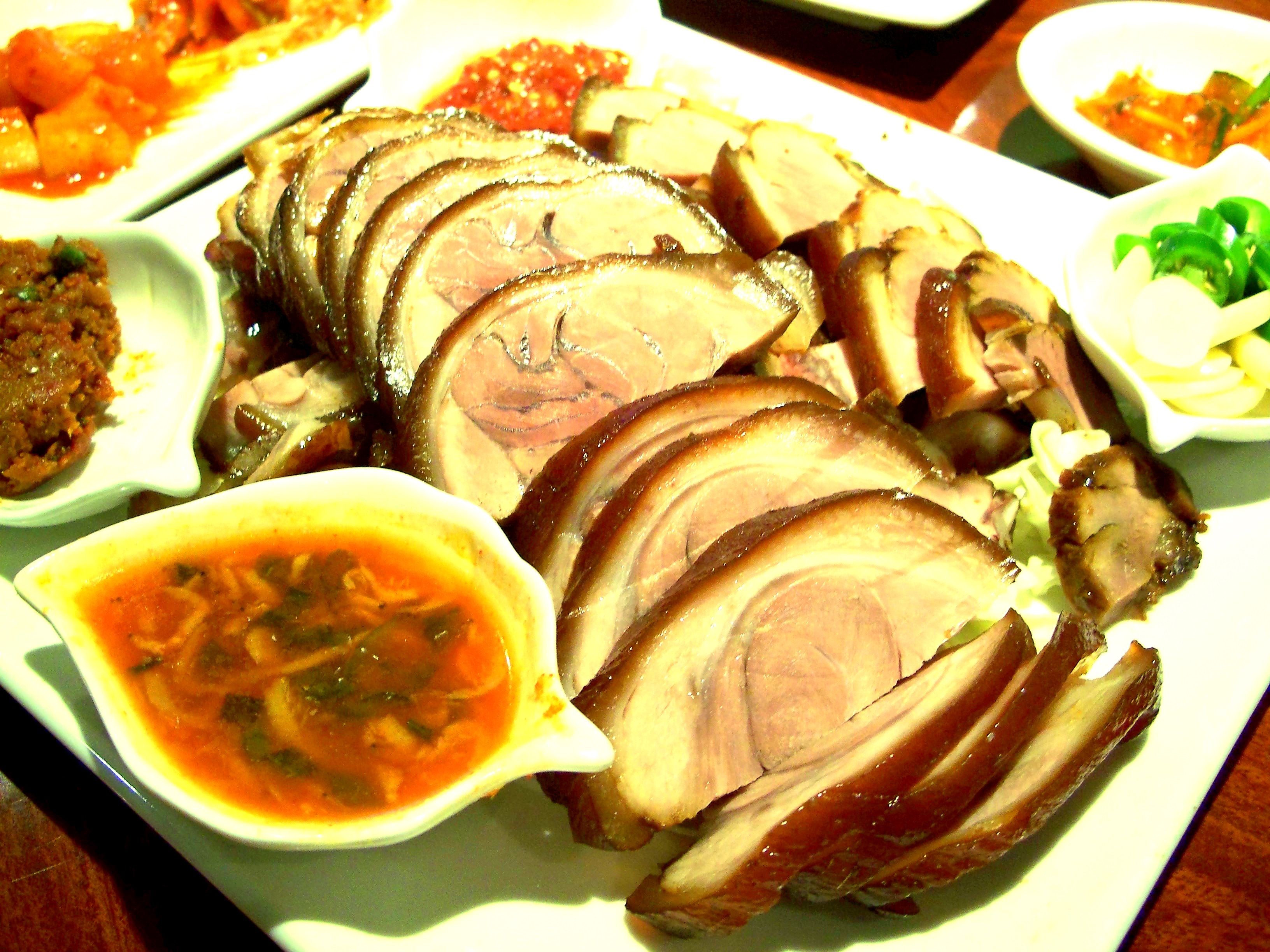
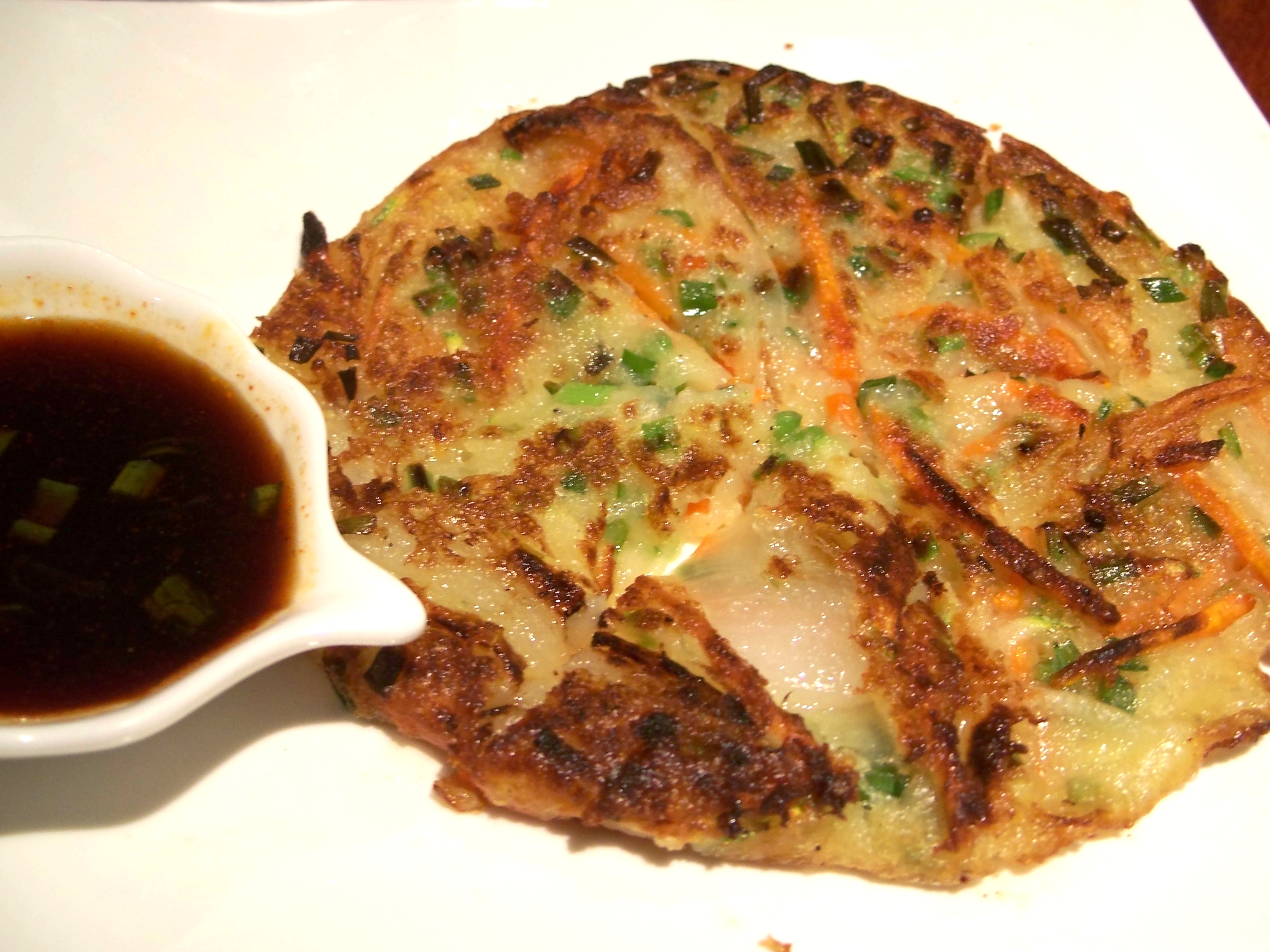
But the pig feet at Casserole House aren’t very soft. Jokbal (족발) is a cross between boiled and roasted, the skin is taut, hardened to nearly a crunch, the meat takes every chance to get stuck in your teeth. I like it. I wrap one or two slices in a lettuce leaf and smear on a chopstick’s tip of doenjang. I lick a taste of saeu jeotkal (새우 젓갈), but objectively speaking, Vietnamese nước chấm is better :-D. And seriously, for $17.95 the plate has enough meat to feed five people, if they also clean out the banchan and order an extra pajeon.


Speaking of money, I haven’t seen jokbal on any other menu, so it’s a must-get here. But there are three reasons to get out of the bibimbap comfort zone and get the jeongol while you’re at Casserole House: 1. it’s in the name, 2. despite it costing a scary $29.95 each scary pot, it’s enough for 3-4 people to share, 3. it’s metal-chopstick-licking good.


And when you’re there next year on Jan 22-25, make sure you wish the ladies a happy new year. They’re sweet, like the sikhye (식혜) they give us for dessert. I drank Mudpie’s cup, too.

Address: Casserole House (right next to Sahn Maru)
4301 Telegraph Ave
(between 43rd St & 44th St)
Oakland, CA 94609

Candied fruits for a candy Year of the Cat

February 03, 2011 By: Mai Truong Category: California - The Bay Area, Festivals, Fruits, sweet snacks and desserts, Vegan, Vietnamese


Its popularity might have declined over the years in Vietnam, but to the Vietnamese expats, mứt Tết remains one of the few links home to resurrect our new spring festival atmosphere on foreign lands. As far as I know these candied fruits are unique to the Vietnamese New Year (Tết), just like the tteokguk and the yakwa to the Korean Seolnal. They are holiday gifts to friends and family, offerings at the altars to ancestors and deities, little snacks for children, tea confections for adults, and vegan treats for those who refrain from eating meat at the year’s beginning.


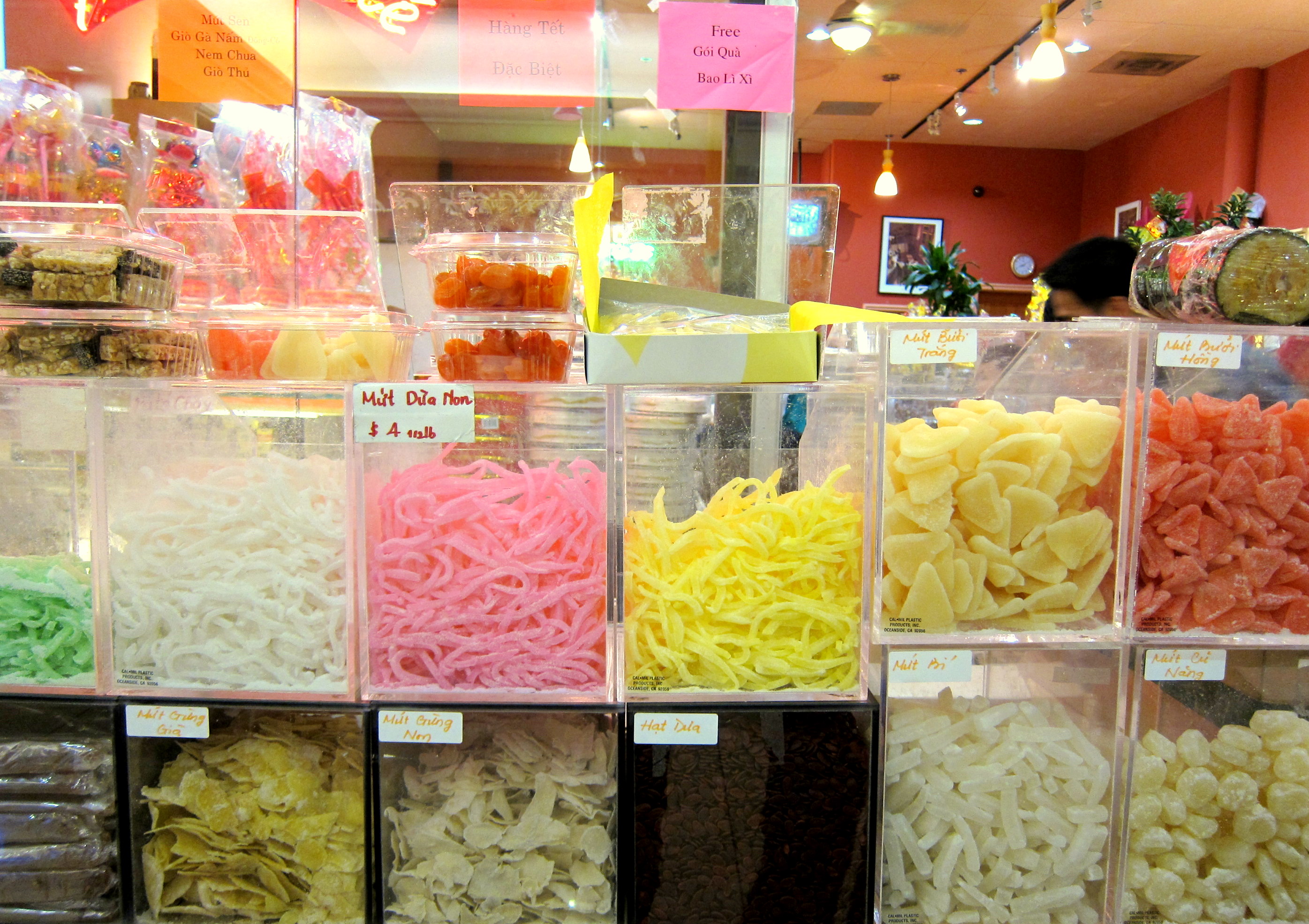
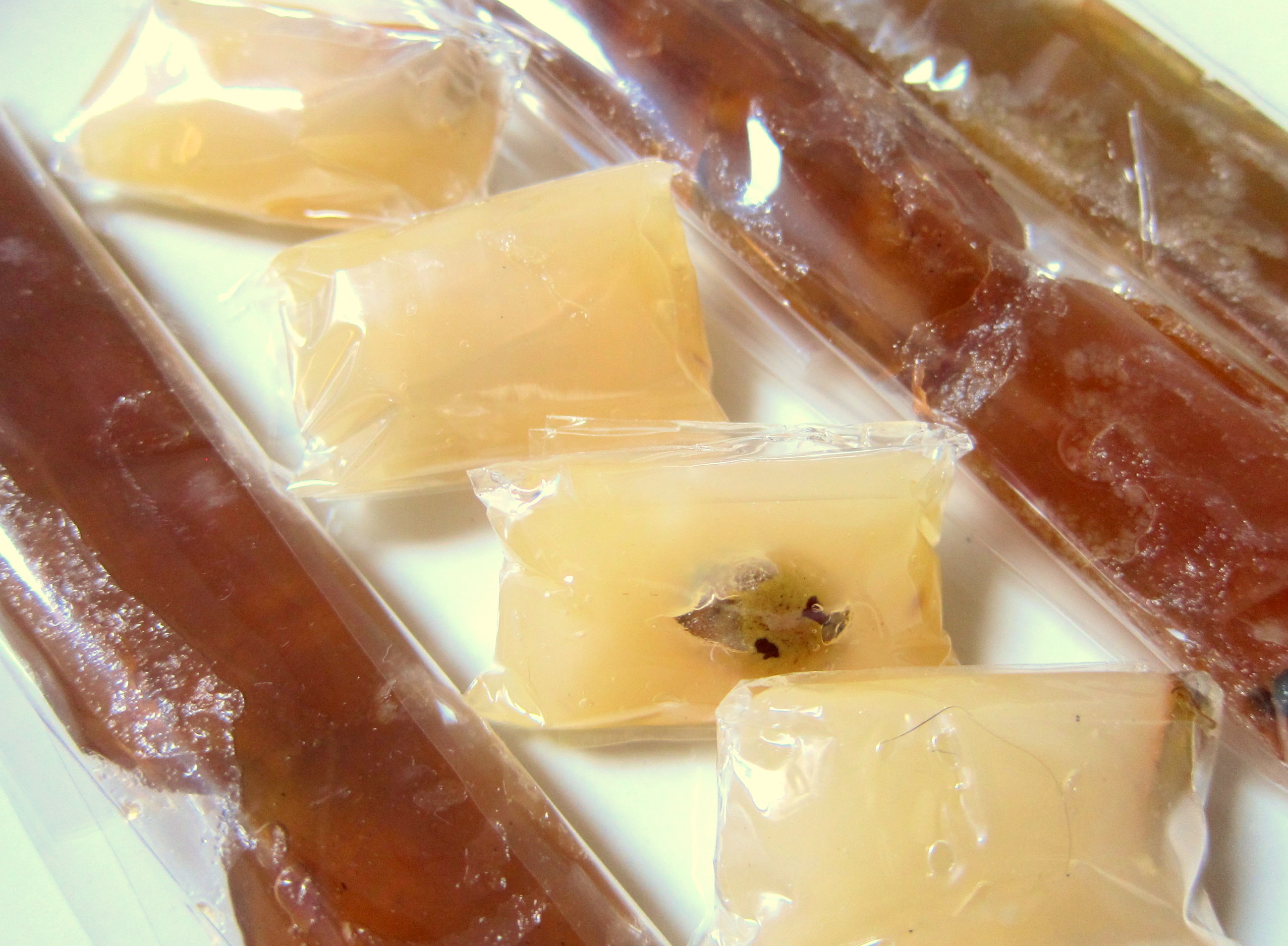
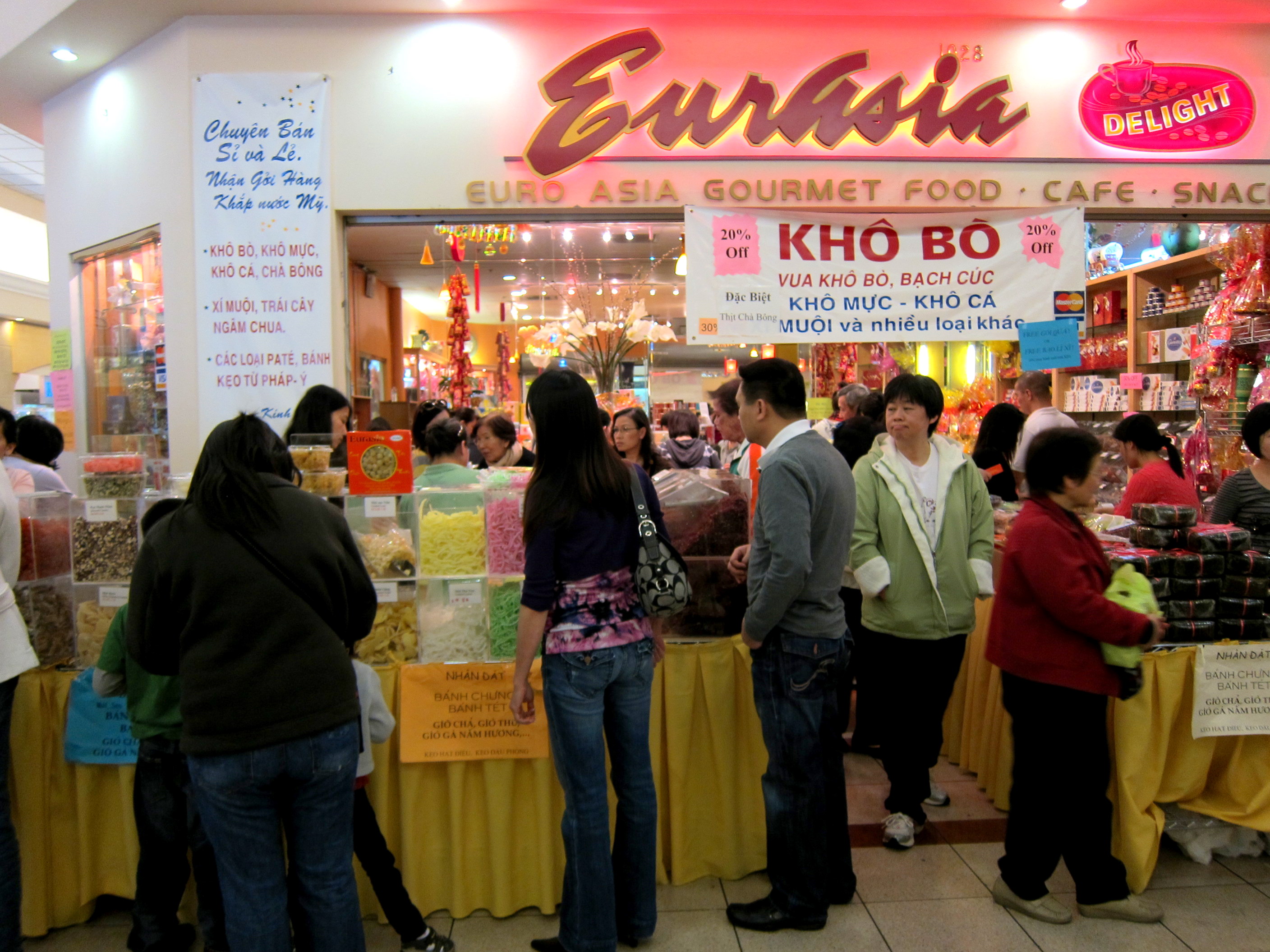
Mứt can be divided into two types: wet and dry. Visit any beef jerky (khô bò) and salted plums (xí muội) stores in Vietnamese shopping malls in the Tet season, you’d see a swarm of mứt in glass jars, the wet kinds wrapped in crunchy paper and the dry kind laying bare. The two most common wet mứt are tamarind (me) and soursop (mãng cầu). The former is kept in its scrawny form, with a few rope-like fibrous strings along the fruit’s length, which is to be discarded when eating, of course.


Tamarind mứt should be amber brown, chewy, and a little more sour than sweet. Tamarind is notorious for its medicinal effect, so be careful not to consume too many sticks at once. A similar chewy wet mứt is the soursop, but it’s always milkish white, doesn’t retain the fruit’s shape, and people tend to put too much sugar in the churning process.

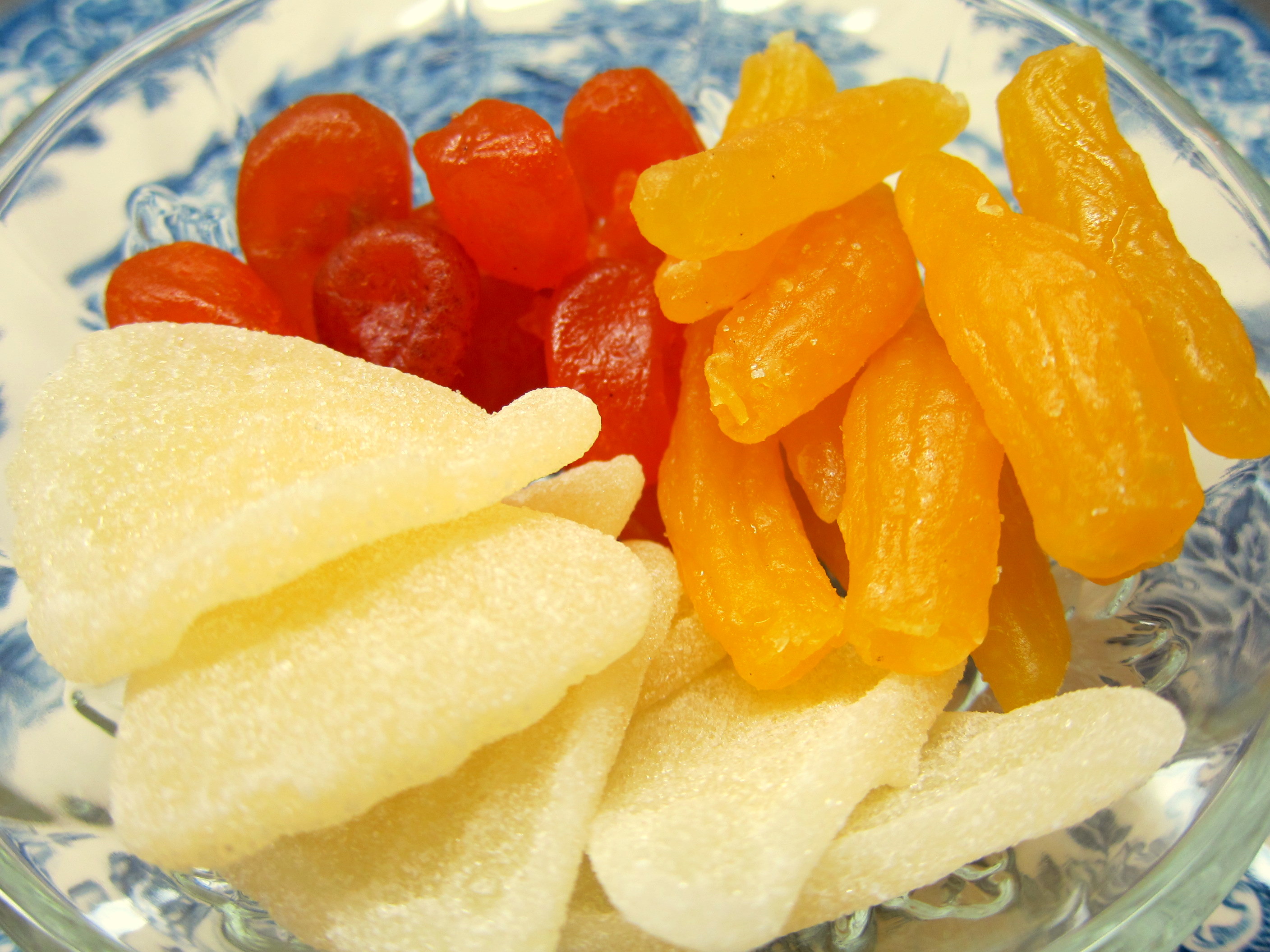
On the dry side you can find some twenty common kinds, spanning both fruits and non-fruits (nuts and roots): coconut, persimmon, lotus seed, tomato, ginger slice, carrot, winter melon, apple, lemon, guava, water chesnut, etc. I’m particularly fond of the crunchy, aromatic coconut ribbons which as a kid I liked to hold in my mouth for hours to melt off all but the coconut itself; but this year I refrained from buying them to try the other kinds instead.


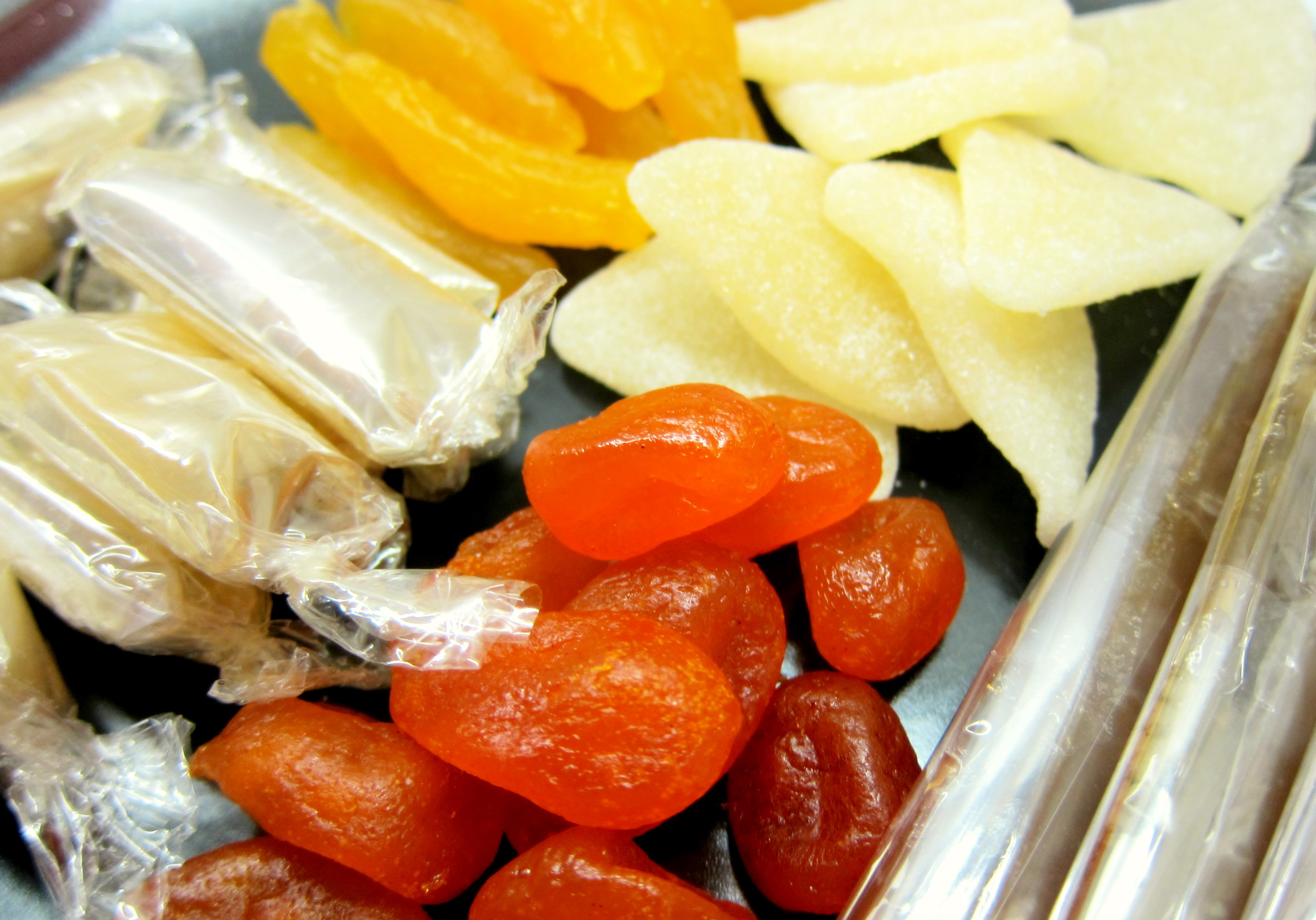
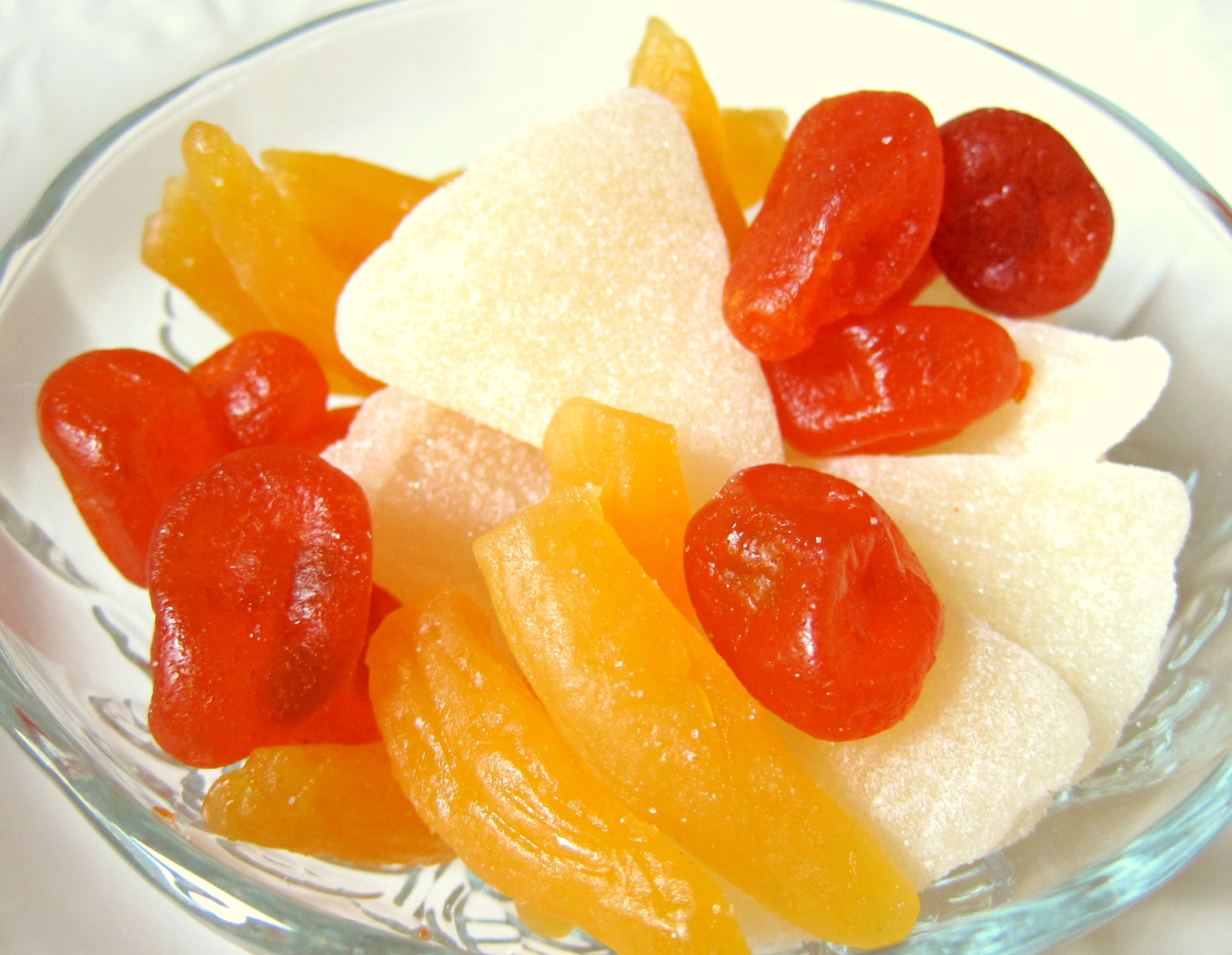
As advertised by the lady of the store, the scarlet kumquat mứt (mứt tắc) is “good enough to die for”. I’d say its texture is fresh, its color attractive, it’s not too killingly sweet (always a plus for these candied pieces), and it’s a thousand times better than the cherry they put in your hot fudge sundae. 😉 Word of mouth is it can help with digestion and lowering body temperature, and if you drink too much alcohol perhaps pack a few of these to detoxicate (or just don’t drink!).

The sweet potato mứt (mứt khoai lang) are warm yellow inch-long sticks without powder sugar coating, as dense as a medium boiled egg yolk and as sweet as the root itself. In a blind taste test, the first bite makes you think it resembles sweet potato, then the second casts some doubt because it’s denser and more consistent than sweet potato. It has the same medicinal effect as tamarind, but to a lesser degree.


Mudpie’s favorite of the five is labelled pomelo (bưởi), but it’s most likely the pomelo skin, sun-dried and pan-sweetened and powder-sugar-coated like American candies. It feels so light almost porous, the center has a subtle citrus pinch that would marry well a cup of hot chrysanthemum tea.

In the end, there’s no telling which kind of mứt everyone would like best, but there’s always some kind somewhere to each person’s liking. When you buy mứt, ask for a sample before settling on a 1-lb pound package, you can’t judge a mứt by its cover. Usually they cost $3-5 per half pound, and each little bite-size is packed with enough sugar that it’s best, though it may appear cheap, to buy $1-2 each kind, and buy many kinds. 🙂


Where I get my mứt this year: Eurasia Delight (inside Grand Century Mall)
1111 Story Rd Ste 1028
San Jose, CA 95122
(408) 293-1698

Tags: , ,

Popping boba for the new year

January 05, 2011 By: Mai Truong Category: California - The Bay Area, One shot, sweet snacks and desserts


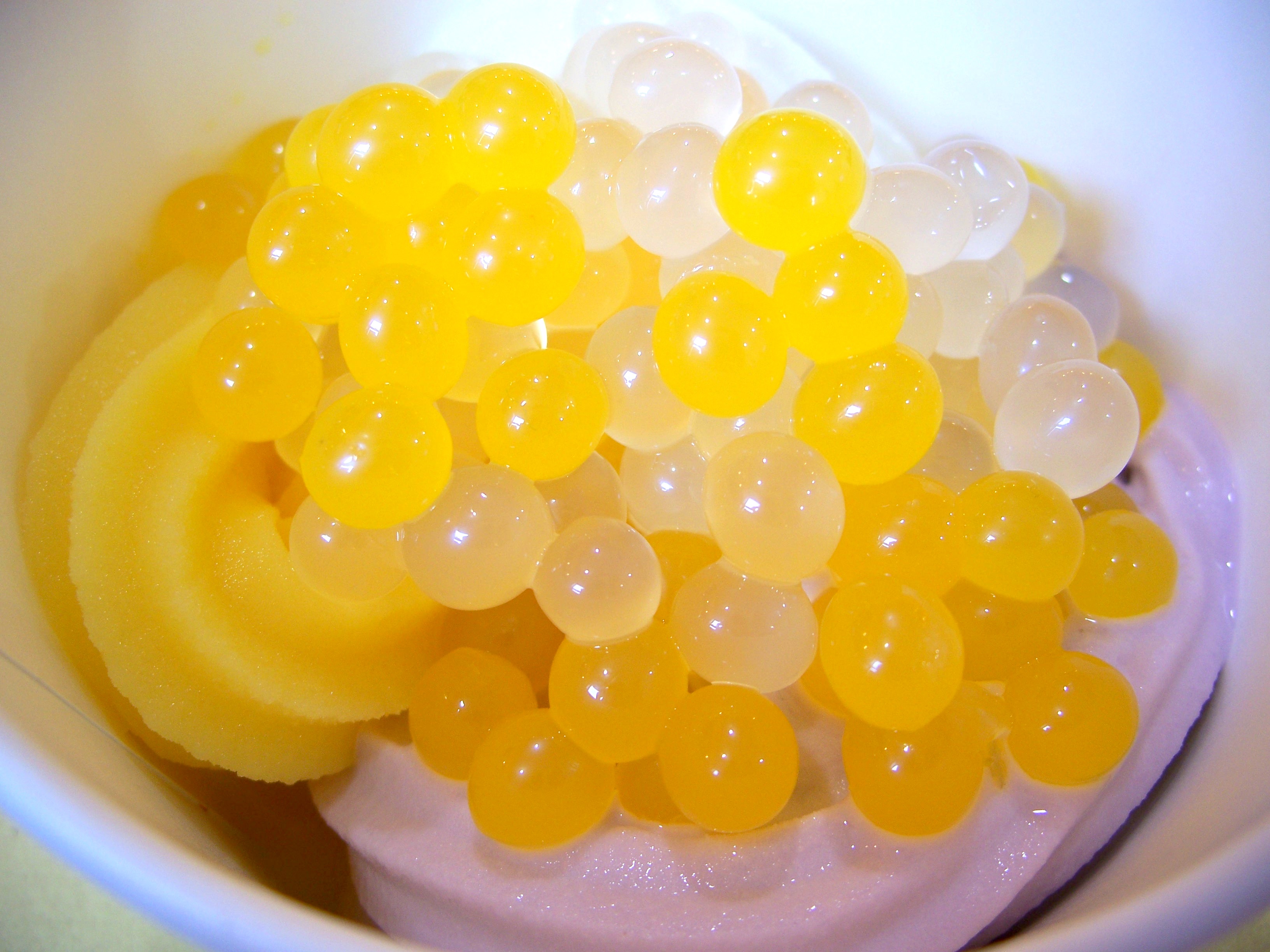
Forget the champagne, these tiny balls, each as big as a champagne grape, set off some pretty flavorful firework on the tongue.


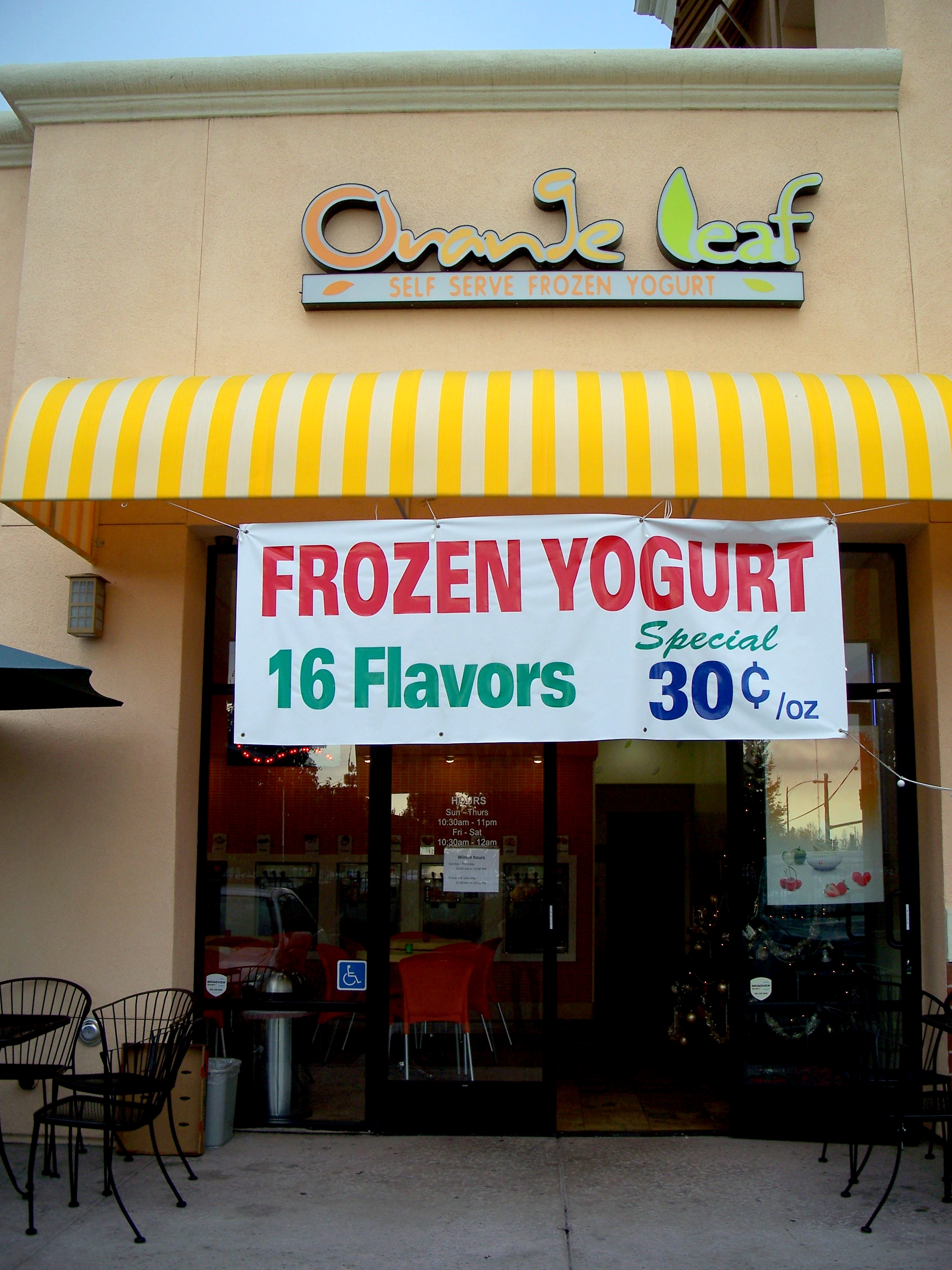
We’ve driven by this Orange Leaf many a time but always when we’re heading for some green waffle at Century Bakery. For some reason reasonable only to the designer’s aesthetics, there is a fence encompassing the vicinity of Orange Leaf and Lemon Grass, separating the two from the Grand Century Mall, even though they’re practically in the same block. Needless to say, the fence inconveniences anyone who parks in Grand Century lot and wants to go to Orange Leaf, or vice versa, because you gotta walk all around and out to the street and back in again on the other side of the fence. Nobody has attempted to climb. A lot more, like myself I’d imagine, have said the heck with it and gone to only one or the other. For us the 50/50 odds has disproportionately favored Grand Century in the past. Then one day Mudpie pouts and says “I want waffles and yogurt”.


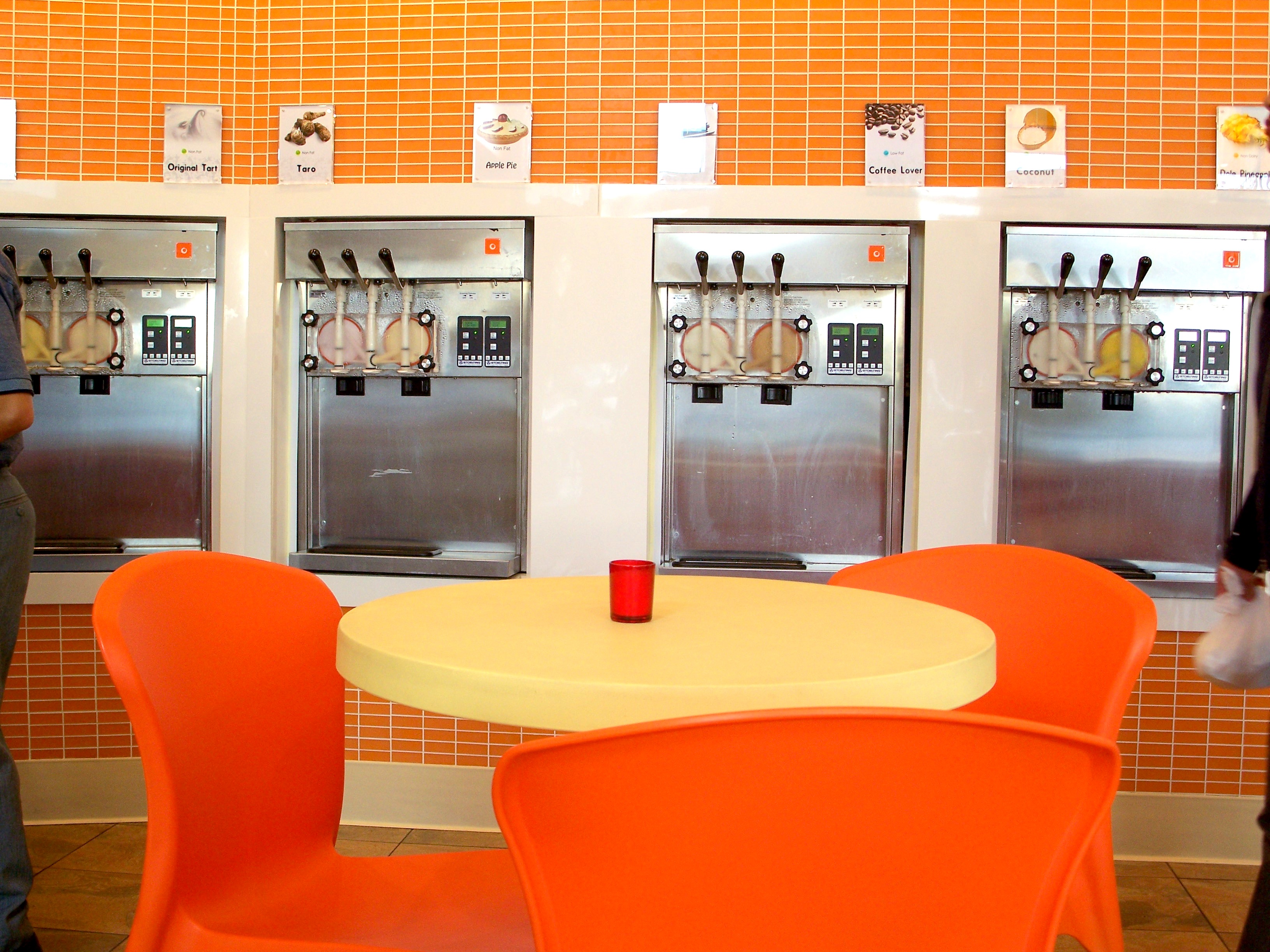
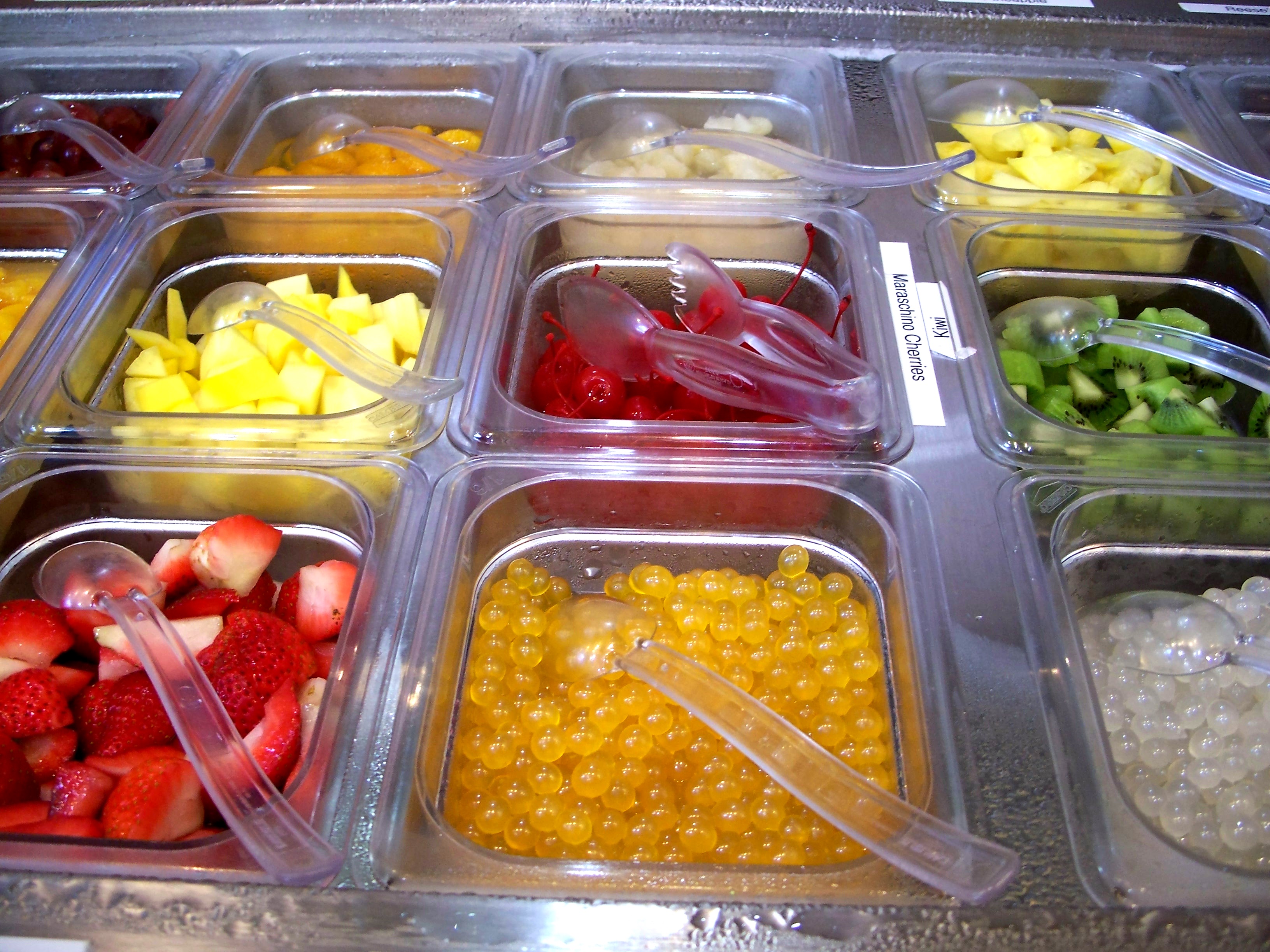
The setup at Orange Leaf is what you would expect at any frozen yogurt corner: clean dispenser stalls, small tables, light chairs, you make one leisure trip from the cups, passing the yogurt reservoirs, winding by the topping trays, stop at the scale to weigh your sweet snowy load and pay 30 cents for every ounce, then you take a cheap-colored plastic spoon and thank the cashier who has patiently (and likely out of boredom) observed you from the start. The yogurt selection has what I always go for: chocolate, coconut, and taro. (My number one, unwavered rule for fro-yo: no taro, no Mai. No exception.)


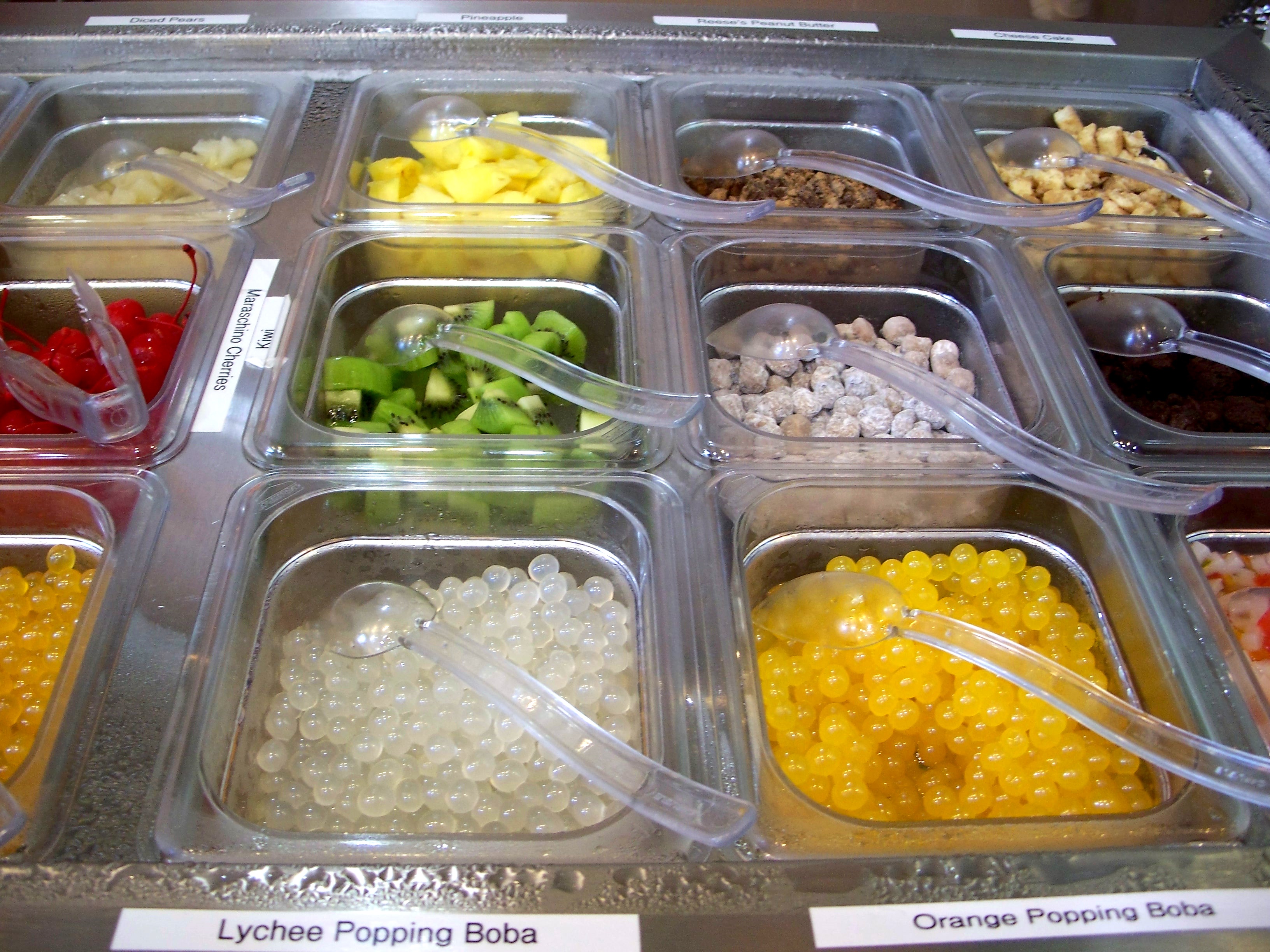
The toppings are for the most part the same as everywhere else: fresh fruits, cheesecake bite, brownie bite, coconut flake, cereal, gummy bear, chocolate chip, etc. But at the forefront something new catches my eyes: tiny, shiny, bouncy-looking perfect balls in yellow and white. Mudpie comes up as I scoop spoonfuls into my cup, “what are those?”


Fruity “popping boba” as they call them. They are so slightly smaller than the tapioca pearls (“boba” 波霸) in bubble tea, and certainly not made of tapioca. Not more than a couple of droplets are contained, with some leeway, inside a thin but chewy pouch. Like popping bubble wrap? How about popping one with your tongue and feeling a mini explosion of orange juice sweep over the fleshy terrain? It is pure joy that goes with any yogurt flavor. Color aside they look like ikura, but they taste better, hands down.

Where to find them: Orange Leaf (near Grand Century mall)
1143 Story Rd. Suite 190,
San Jose, CA 95122
(408) 289-8123

Show me the meaning of sashimi

December 26, 2010 By: Mai Truong Category: California - The Bay Area, Japanese


I don’t like the Backstreet Boys but when an apt title comes you gotta grab it. Last Sunday we were out celebrating ZuChu‘s birthday with her favorite: sashimi. I was fully expecting a glamorous meal since I’ve come to like smoked salmon and figured all thinly sliced raw fish must have that silky springiness too. Besides, there are those pictures of translucent peony and phoenix made out of fugu sashimi. The Japanese get you by the eye.


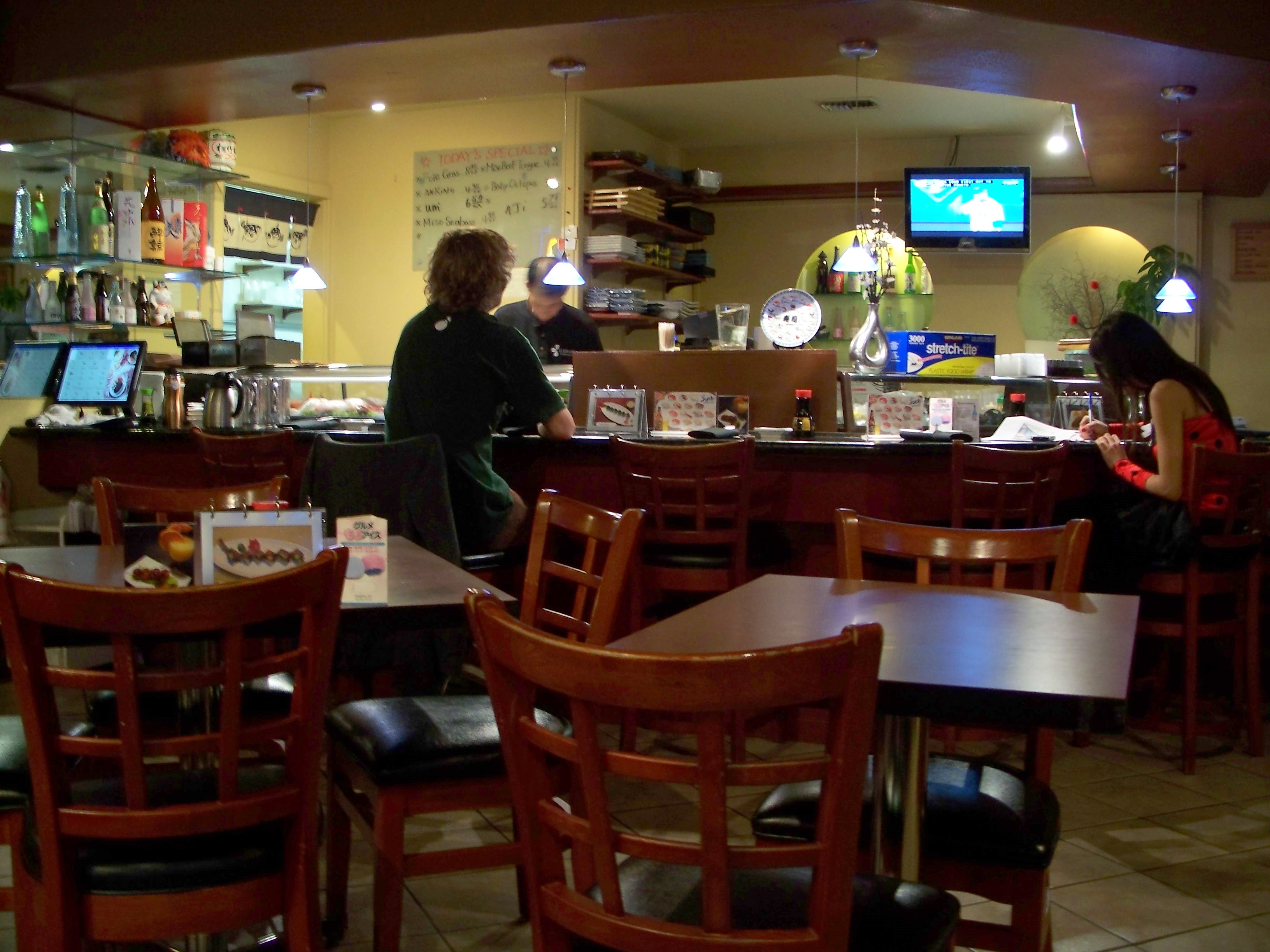
This modest stop on Shattuck has the biggest selection of fishy cold cuts in South Berkeley, with 13 individual kinds and 2 combo plates. Word of mouth is it also slices up the freshest, gruesomest sashimi around.


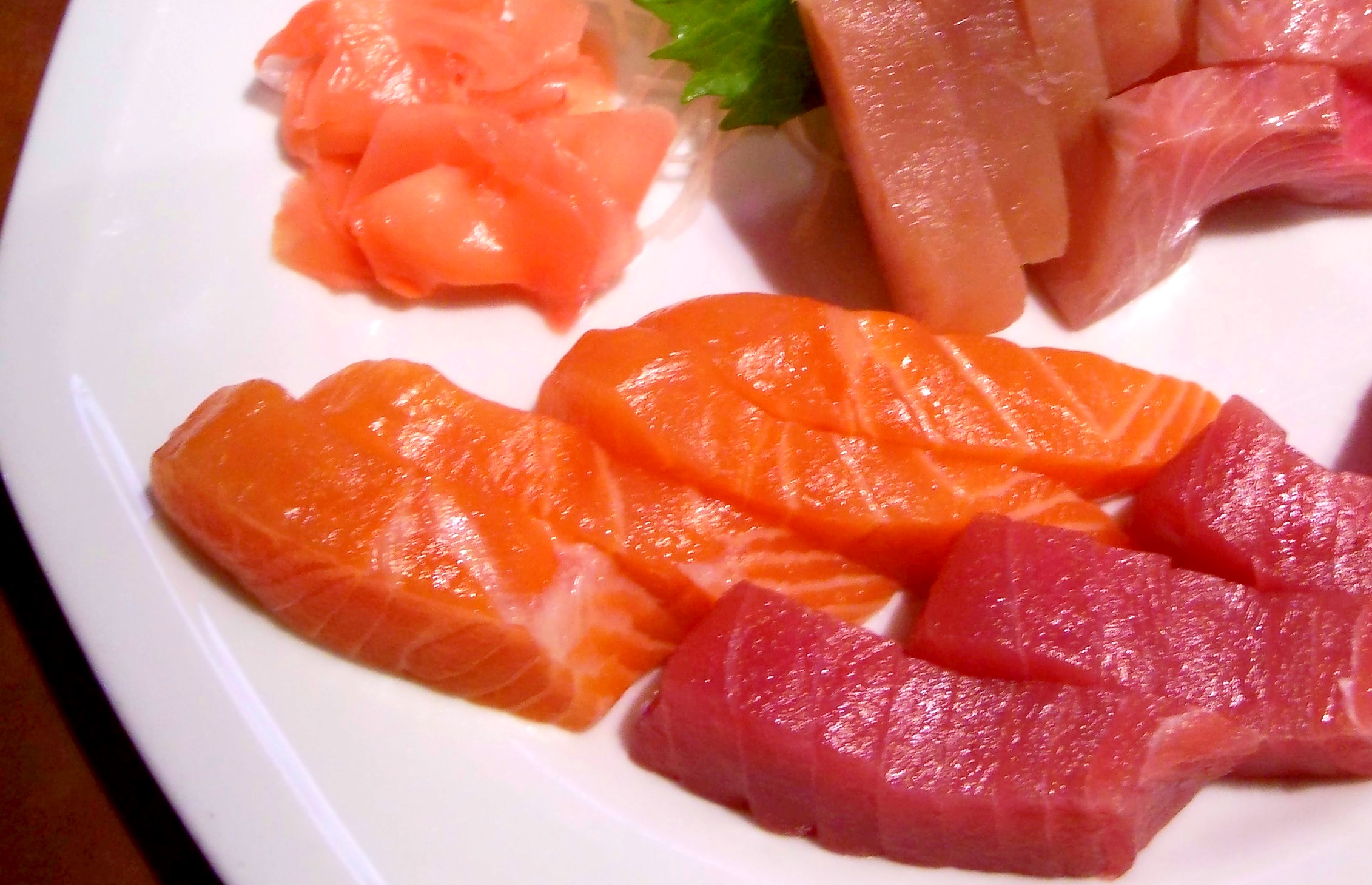
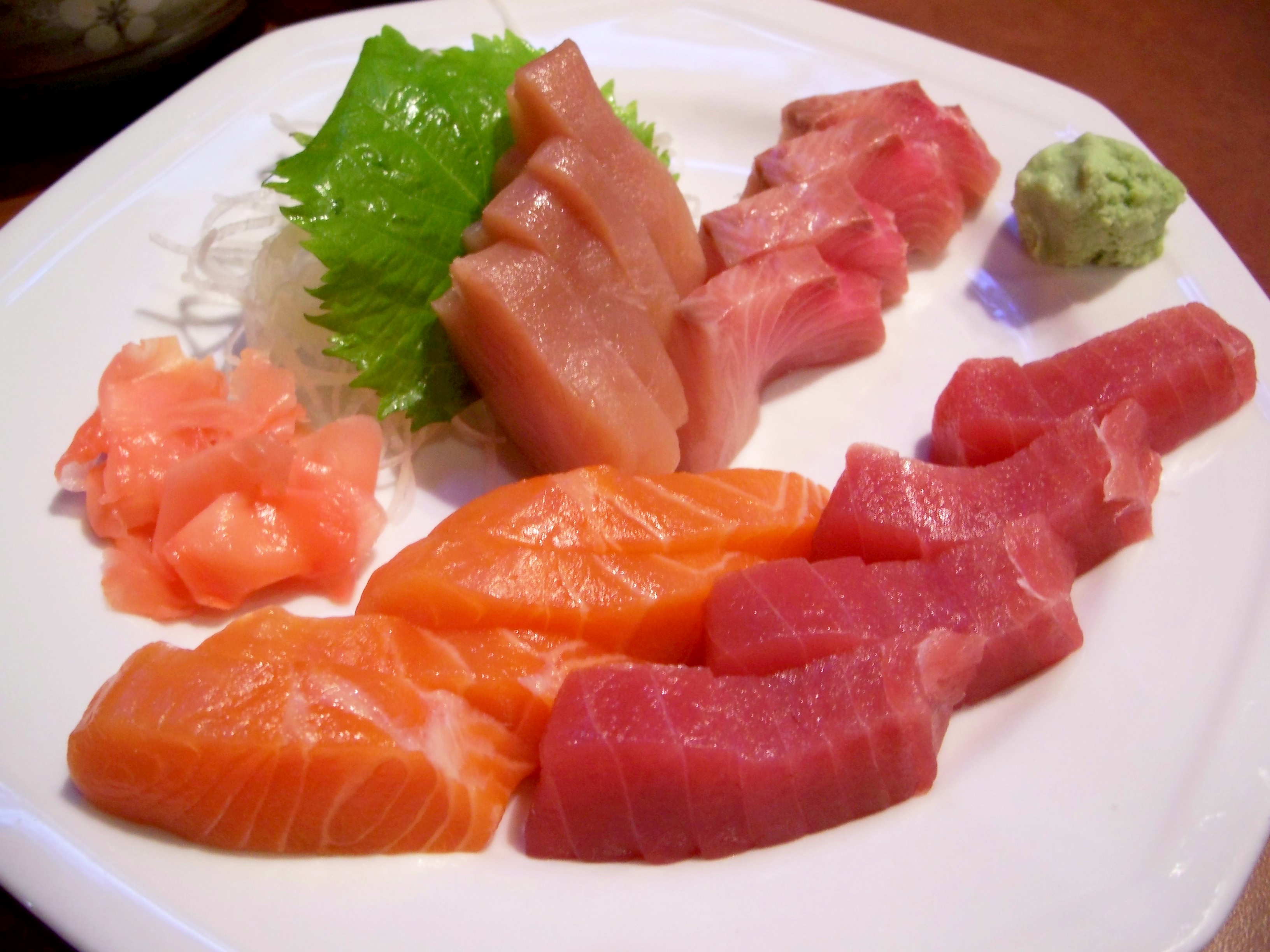
For $18.95 we preempt 16 chunks of maguro (tuna), shiro maguro (albacore, or “white tuna”), sake (salmon), and hamachi (yellowtail, but red meat). The salmon is best (just like La Bedaine’s smoked salmon, but thick). The tunas slide down my throat with some stickiness, as if stuff were crawling up… The hamachi fans apart into a string of cubes, each as bland and bare as the next. Suddenly I understand the presence of wasabi, but I don’t use it.
In the end, I don’t understand the thickness. It’s like eating a blob of gooey rubber, the more you chew the more you realize it’s not cooked, but once you try to swallow it it clings to your tongue. Soy sauce makes it twenty times better.


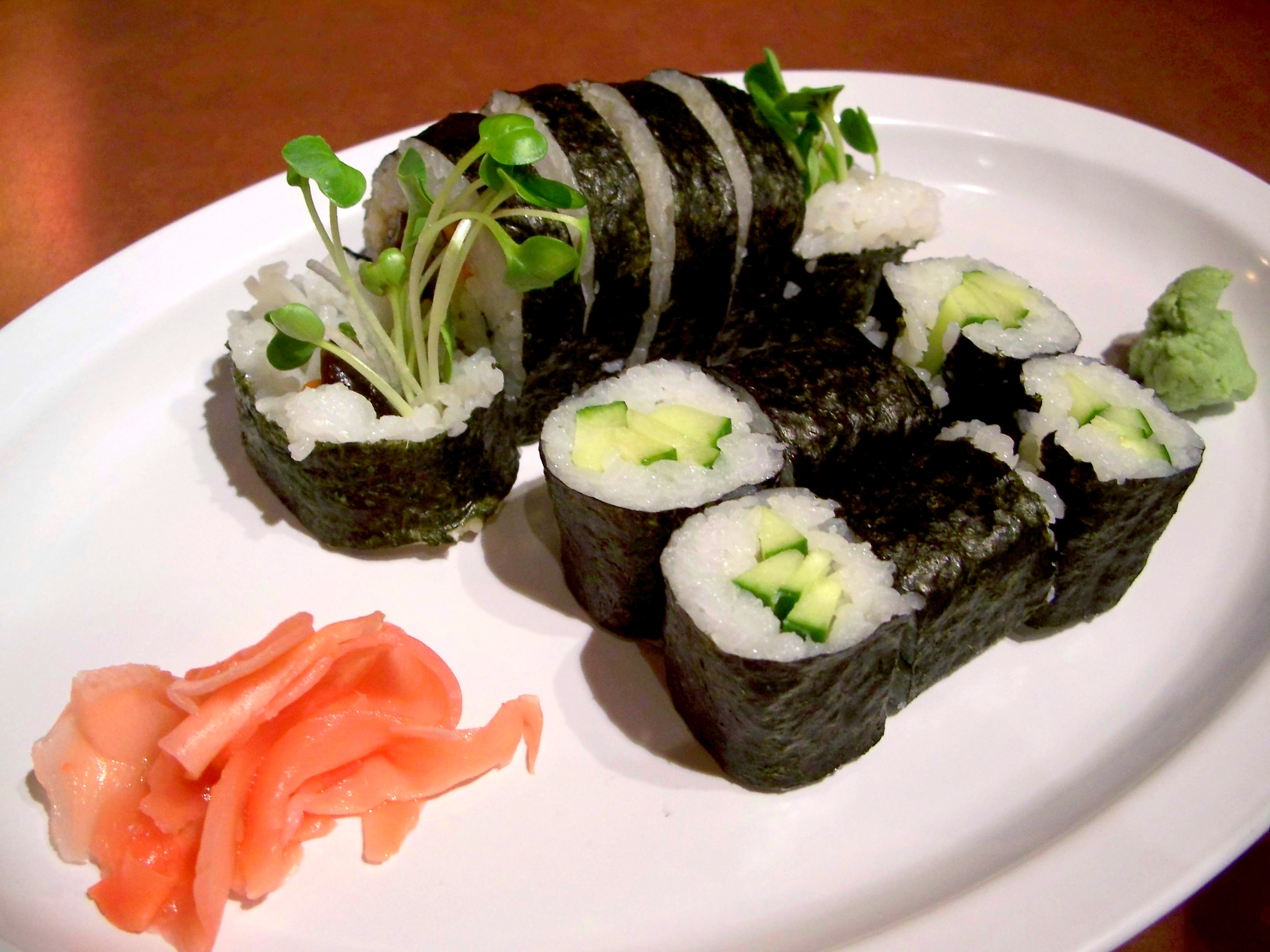
And I never felt happier eating veggie rolls. V8 (mushroom, cucumber, oshinko, gobo, kanpyo, avocado and daikon) – $4.95, and cucumber roll – $3.00.

Address: Sushi Ko Berkeley
64 Shattuck Square
Berkeley, CA 94704
(510) 845-6601

‘Cross country Day 2: Desert towns

December 24, 2010 By: Mai Truong Category: American, California - The Bay Area


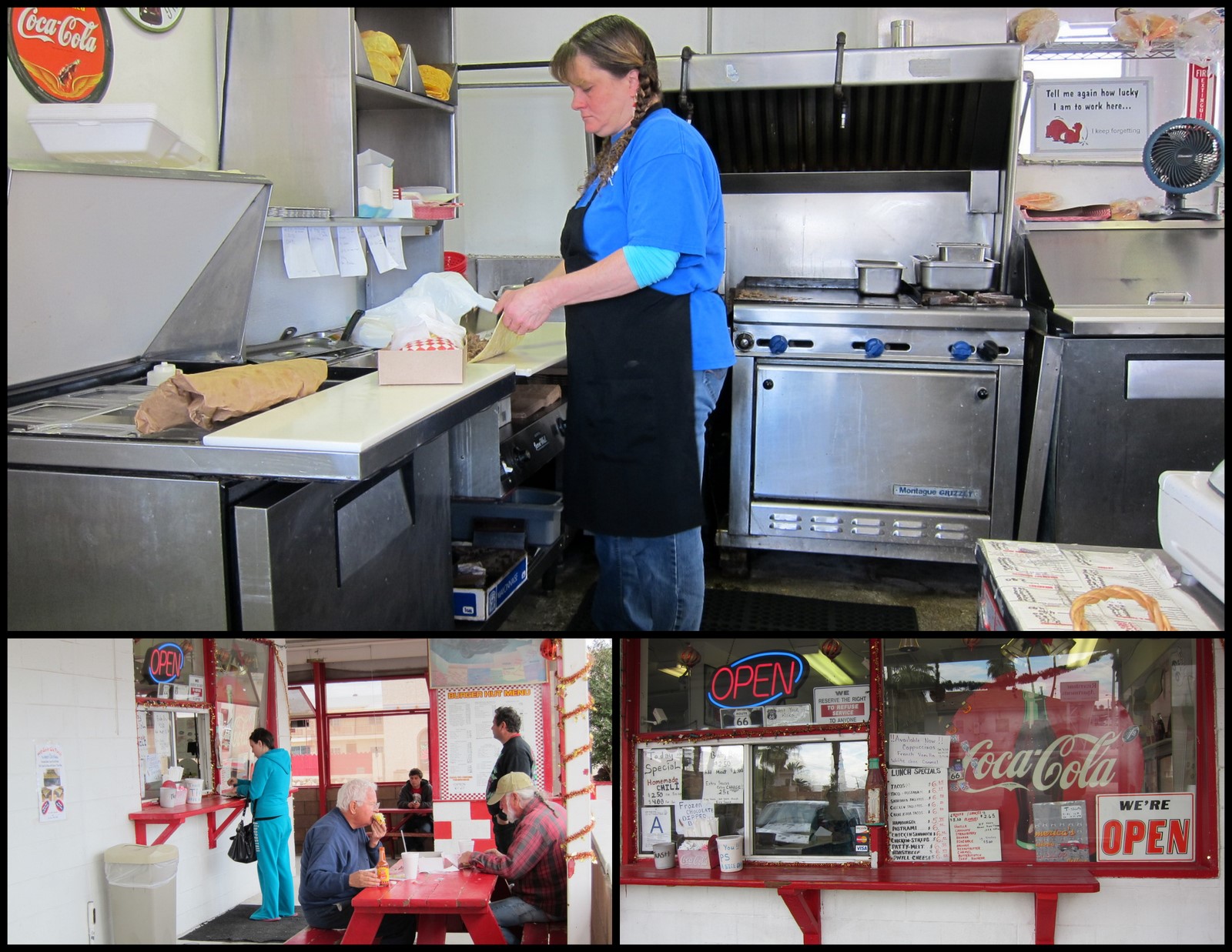
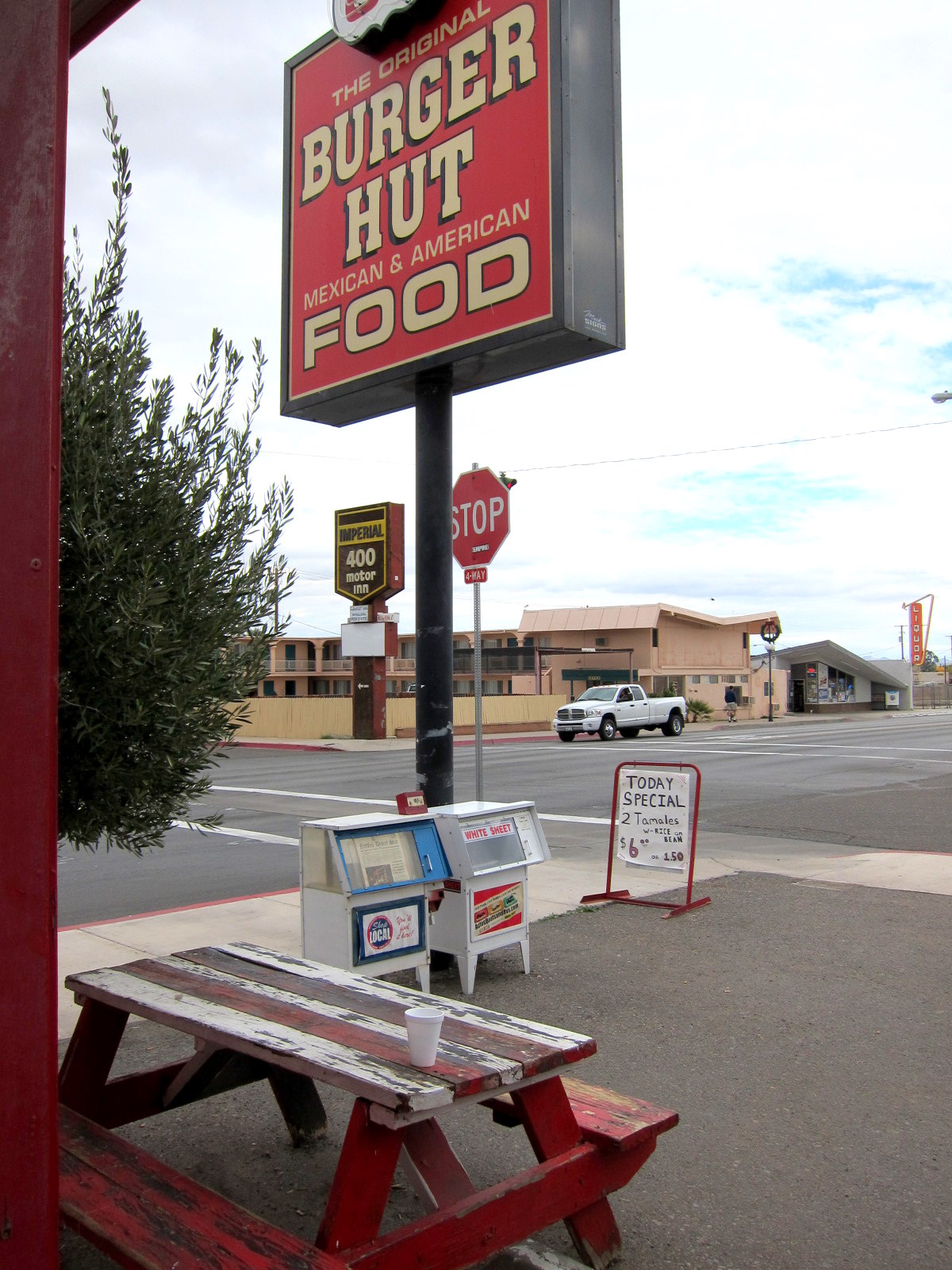
You may say it’s shabby, and in fact it is. The single restroom has a questionable floor, a toilet with enamel-cracked seat and a sign to forbid disposal of paper in the toilet, and a faded red door with a knob that doesn’t invite contact. On this windy Saturday late morning, a few pick-up trucks pull up, a few old, beer-bellied, bearded men in plaid shirts stand around to wait for their orders or chow down at the wooden tables and attached benches, crows and pigeons peck at the sandy surrounding parking lot, making this Original Burger Hut of Route 66 the most alive place in Needles.


This hut is not related to these huts. This hut is a rectangular kitchen with one sliding window for taking orders, occupied by two women, a quiet chef that swings between the stoves and the counter where she rolls burritos and boxes up food, and a stern cashier that also fixes drinks. It takes ages for the burgers to get out the window, then again with roughly 5000 residents, time seems to go by more slowly in this town.

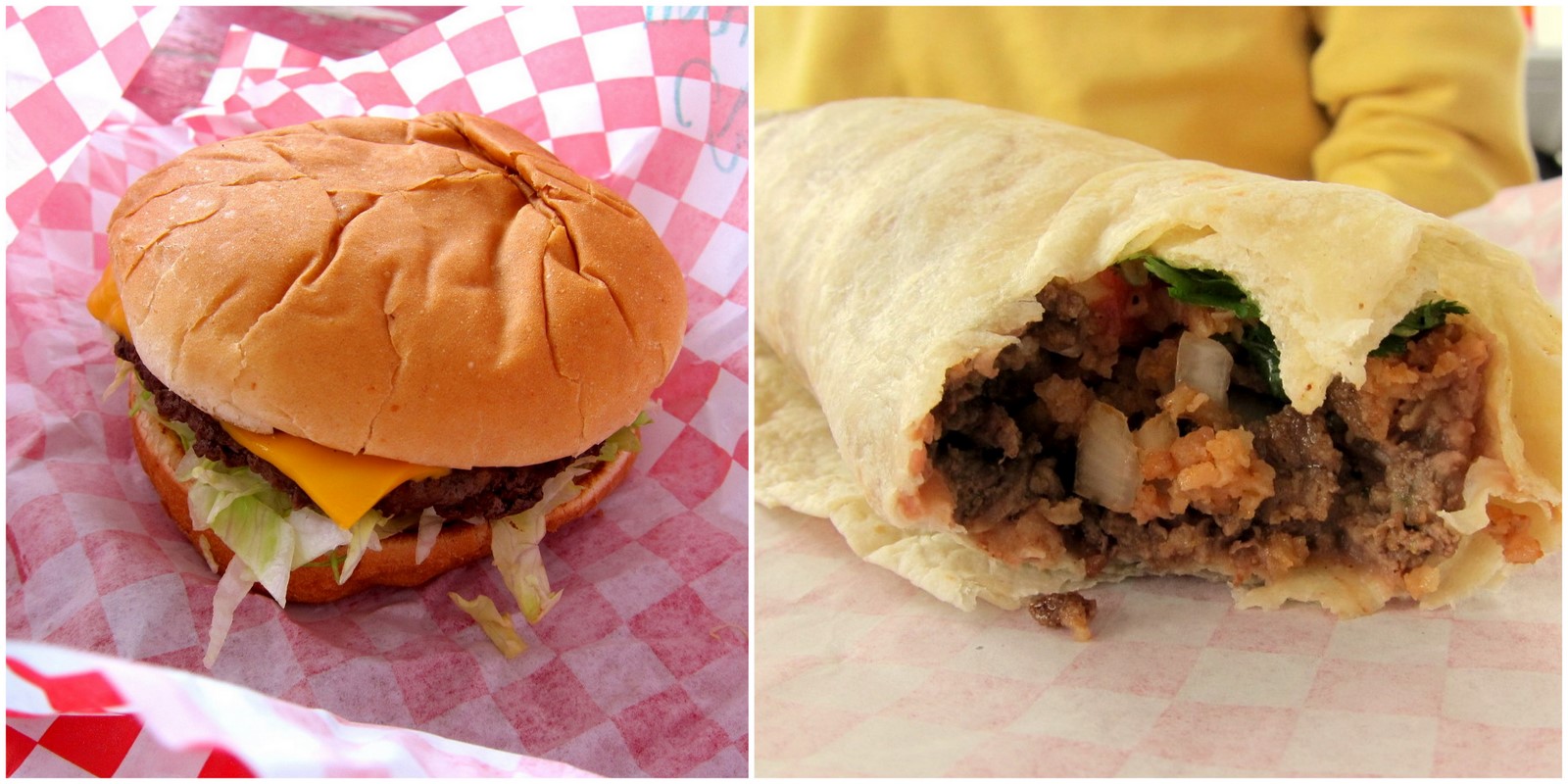
Their burgers are okay. At $2.90 with added cheese, it fills but not too much, like a burger you’d grill out at home casually every now and then. The same goes for their carne asada burrito. I save some bread for the birds, who appreciate it dearly.

We switch gear for dinner, as the long foggy drive through Flagstaff fogs up our will to eat out, especially when the Quality Inn in Winslow has a orderly-looking restaurant and lounge and very amicable staff.


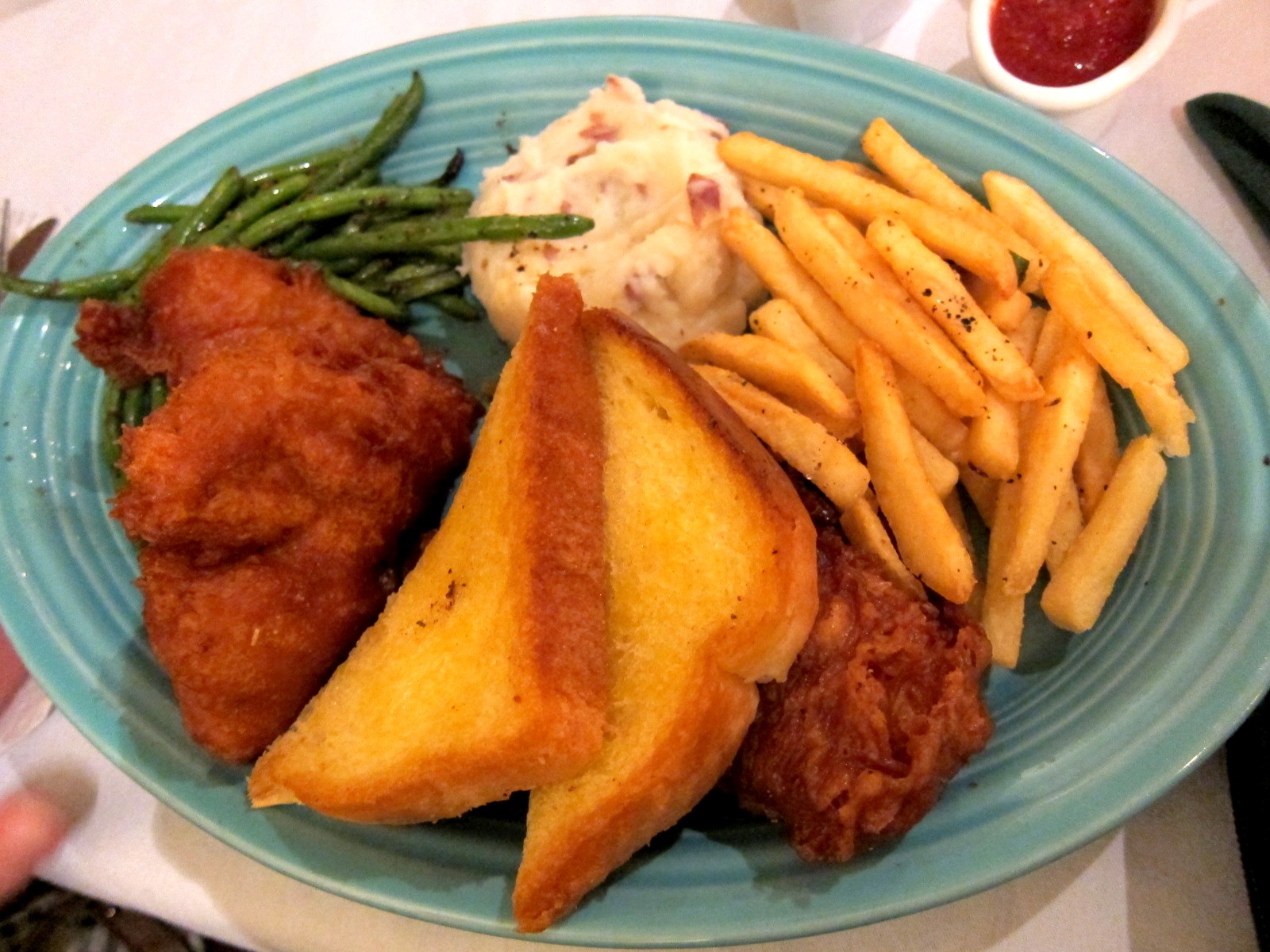
The golden crispy fish and chips ($7.99) with Texas toasts wow my mom, while my dad’s New York pork strips ($7.99) are well seasoned, albeit a little tough.


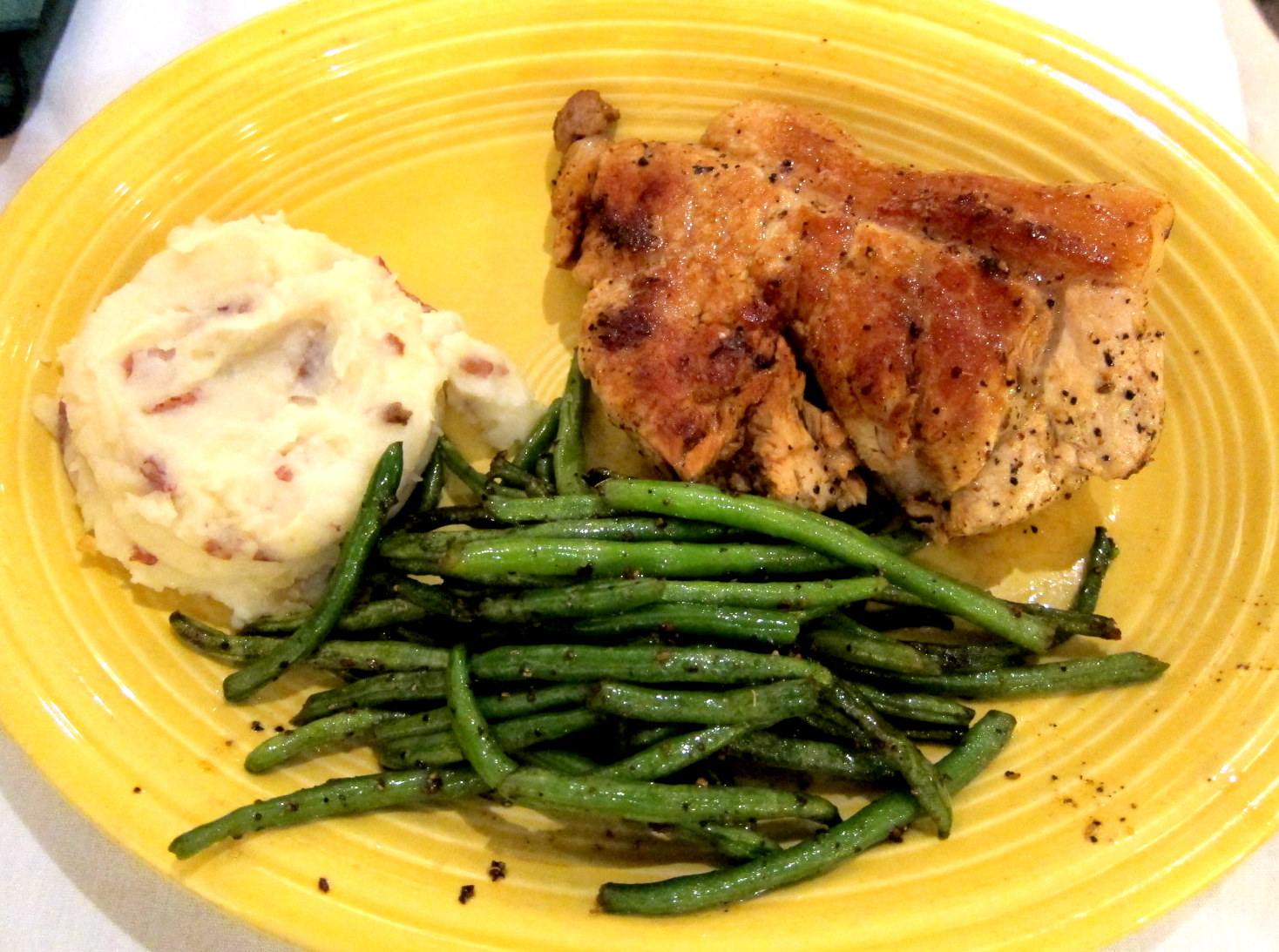
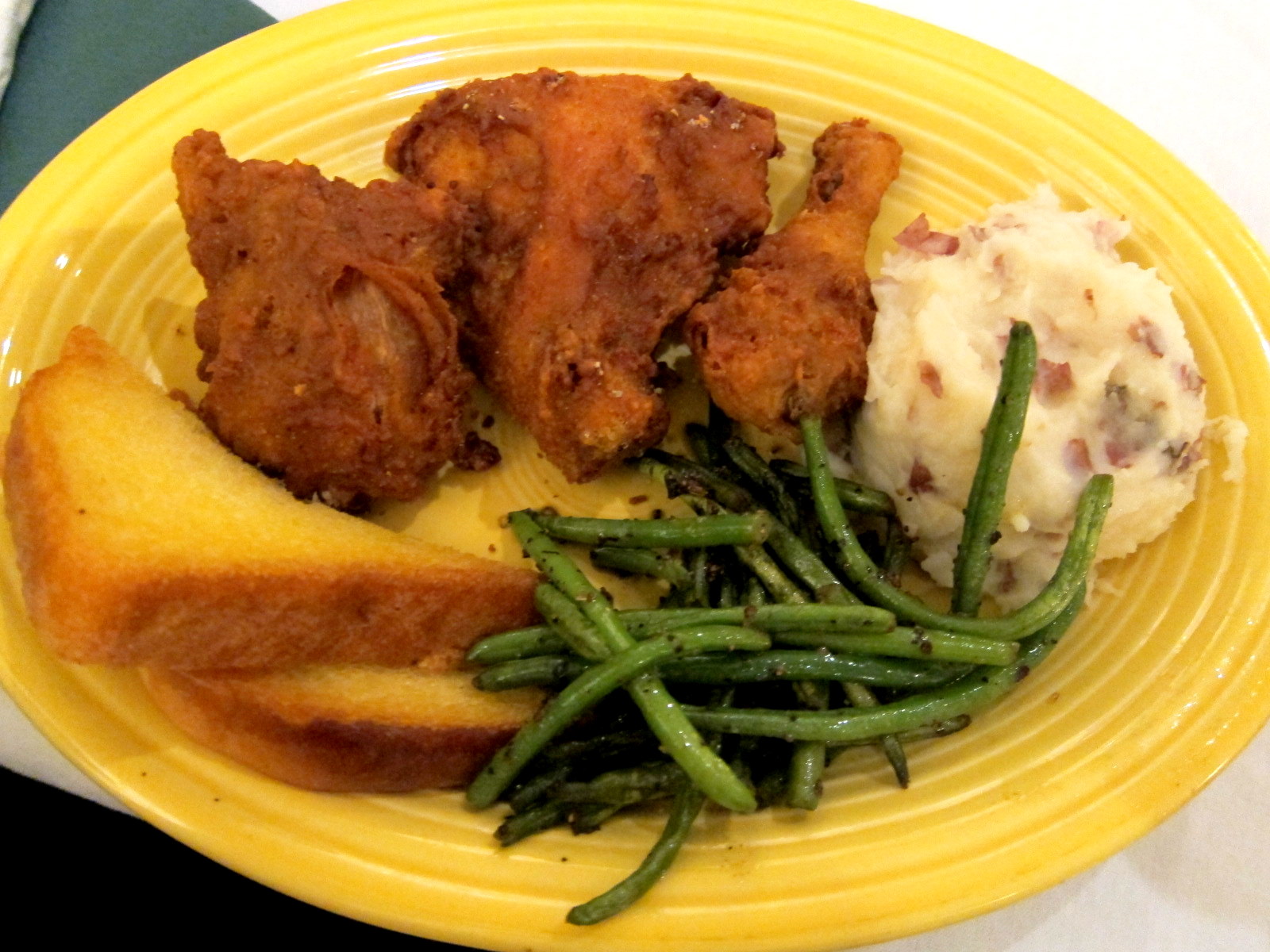
The heavily peppered haricot vert, which also comes with my honey stung chicken, is definitely worth the bucks.


From the name “honey stung chicken” ($8.99), I expect a roasted game, but golden battered fried chicken shows up in front of me. Although the fried chicken is good, it isn’t as satisfying when I’m not in the fried mood.


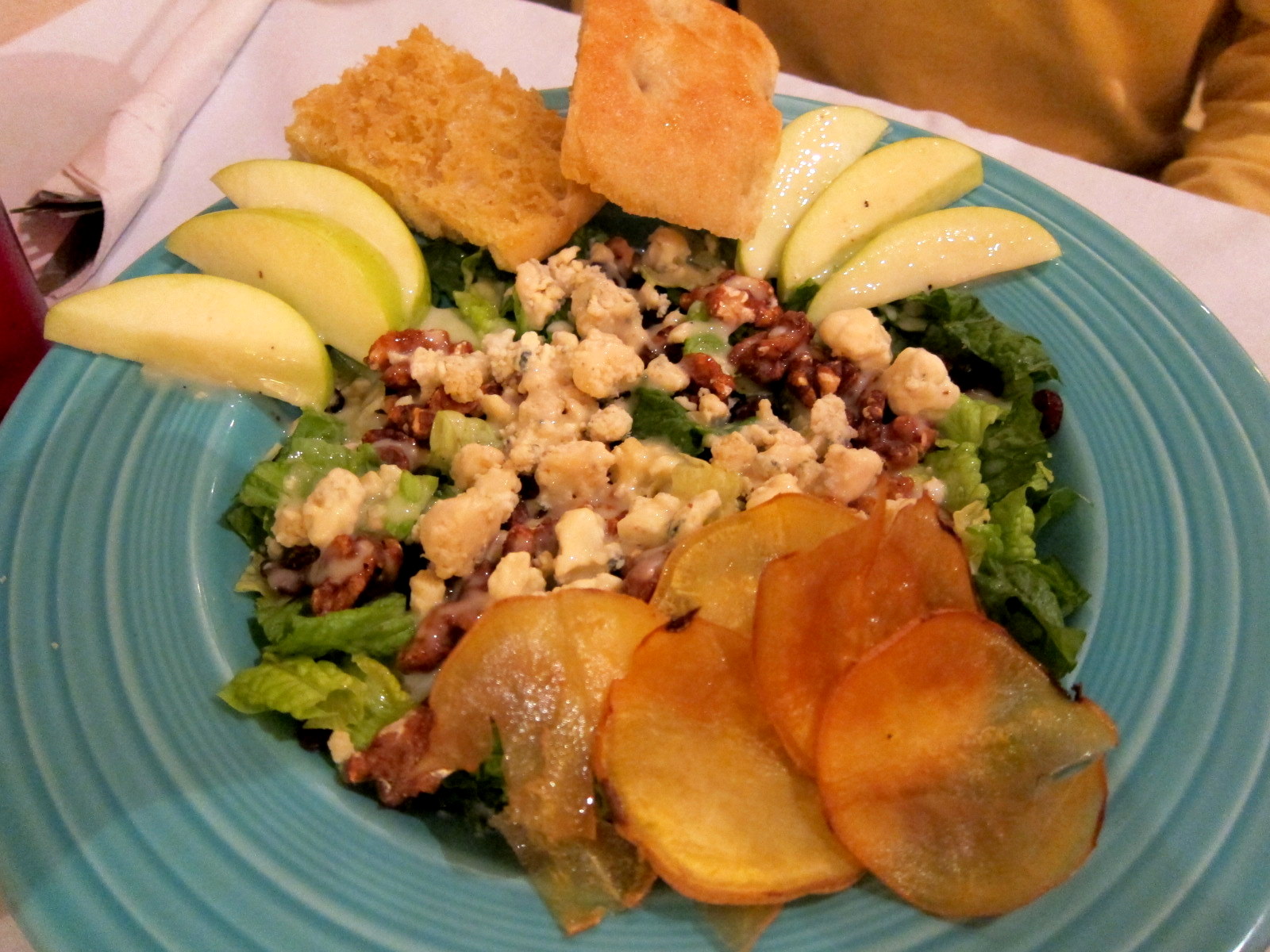
The closest-to-perfection is Mudpie’s harvest salad ($6.49), with walnut, cranberry, goat cheese, apple, and fried sweet potato chip. I wonder if the carnivorous side in me is starting to get old.


Address: Route 66 Burger Hut
701 West Broadway
Needes, CA 92363

DJ’s Restaurant & Lounge (inside Quality Inn)
1701 North Park Drive
Winslow, AZ
(928) 289-3274

Tags:

‘Cross country Day 1 – Down the West Coast

December 22, 2010 By: Mai Truong Category: American, California - The Bay Area


For the past few days we’ve been behind the wheels from dawn to dust, making our way across three time zones. In the first, we happen to stumble upon the best seafood restaurant in Salinas, or so they claim.


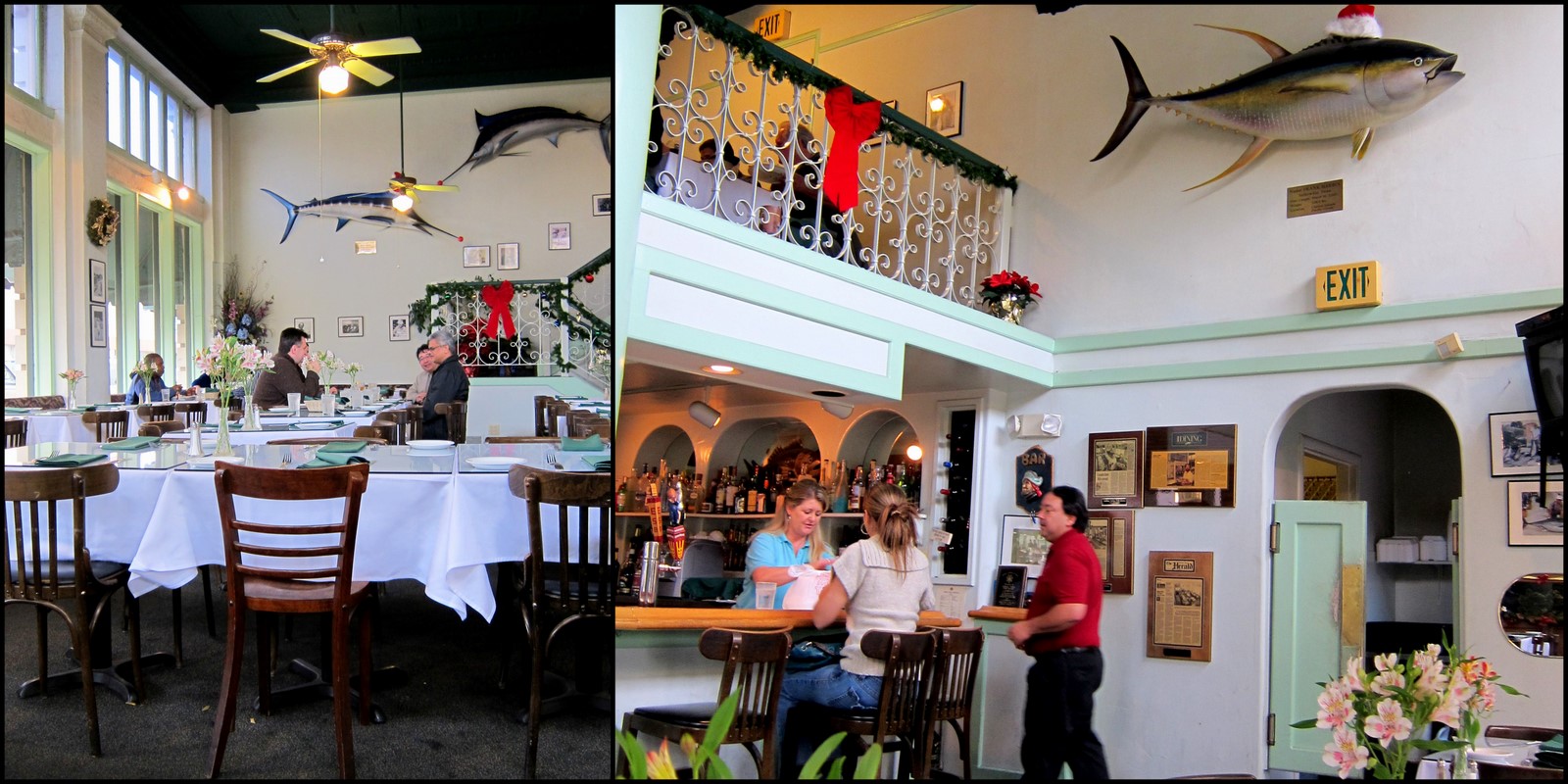
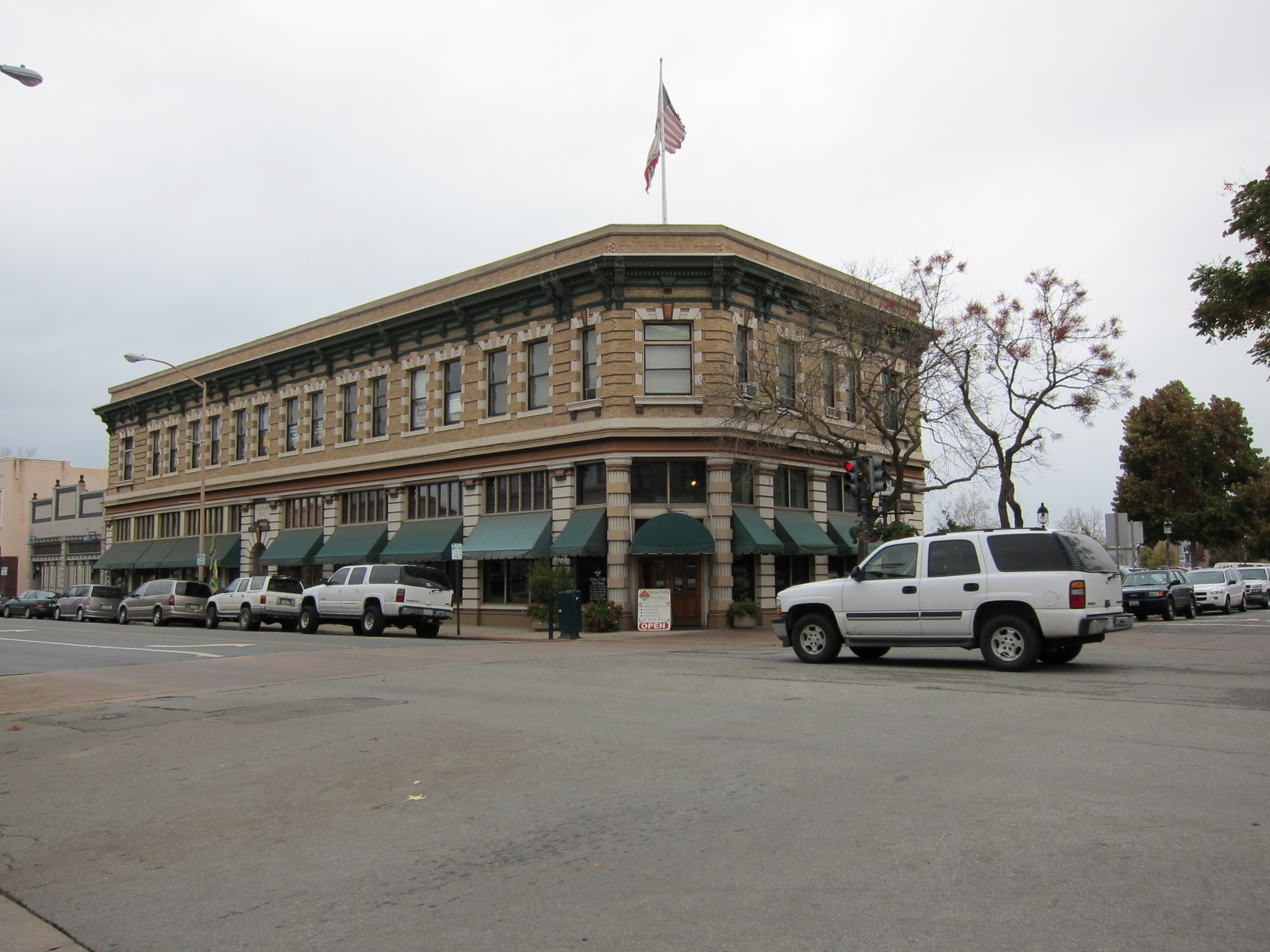
Sitting on a corner lot on Main Street in a peaceful little hometown of John Steinbeck and fewer than 150000 people, Salinas Valley Fish House looks homely attractive with an old-fashioned bistro touch. Little Mom instantly gives an approval nod as she walks into the spacious dining room, seeing fresh flowers on white cloth tables, and Santa hats on the fishes. It opens for lunch only during the week, good thing we drive by on a Friday.


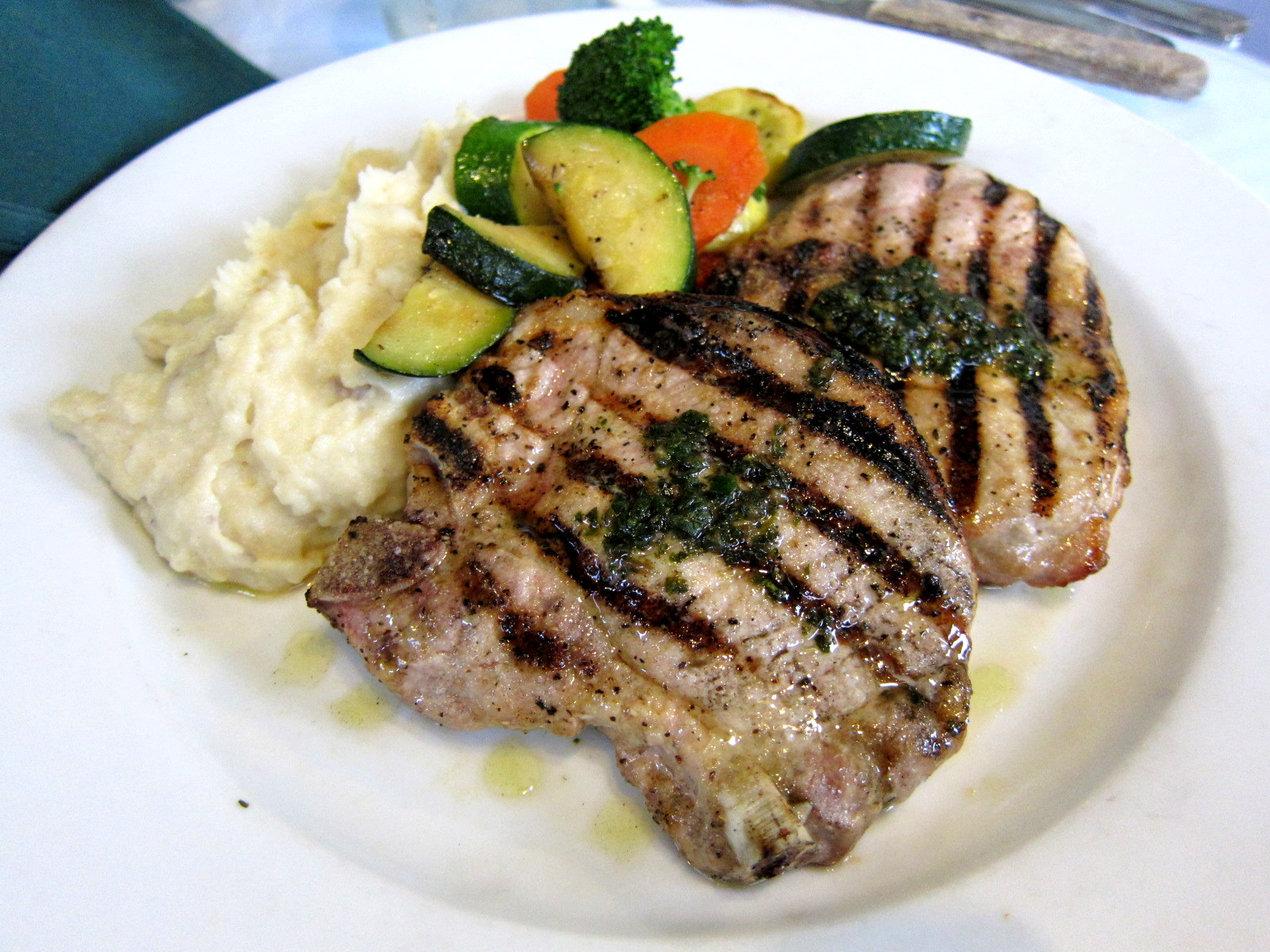
Despite being in a seafood restaurant in a seaside town, Little Mom fixates on an order of pork chop ($13.95), oak grilled, medium, no condiments. First time I see her liking a pork chop other than her (awesome) own. 🙂


Mudpie and I also set out for some grilled deals…


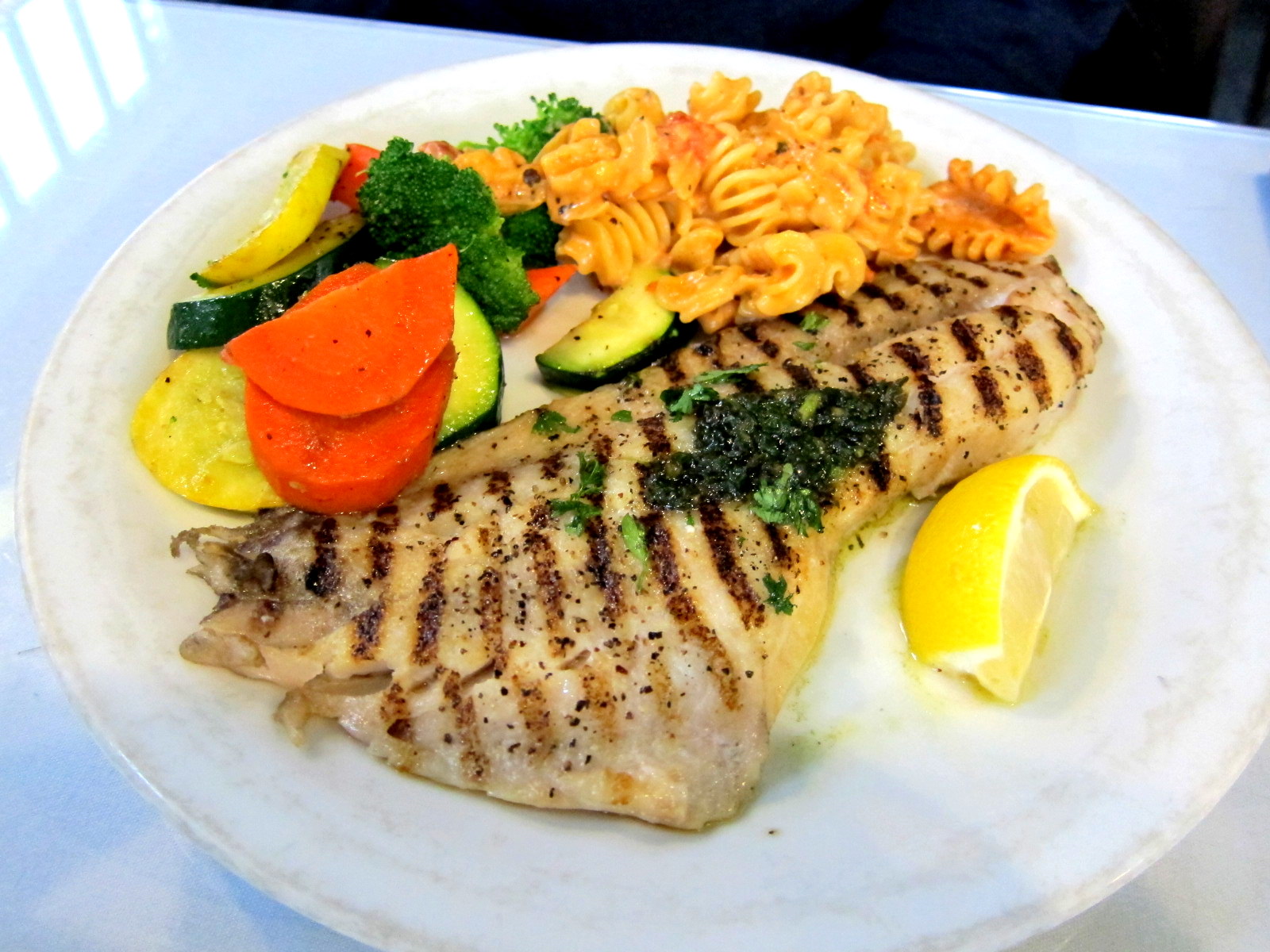
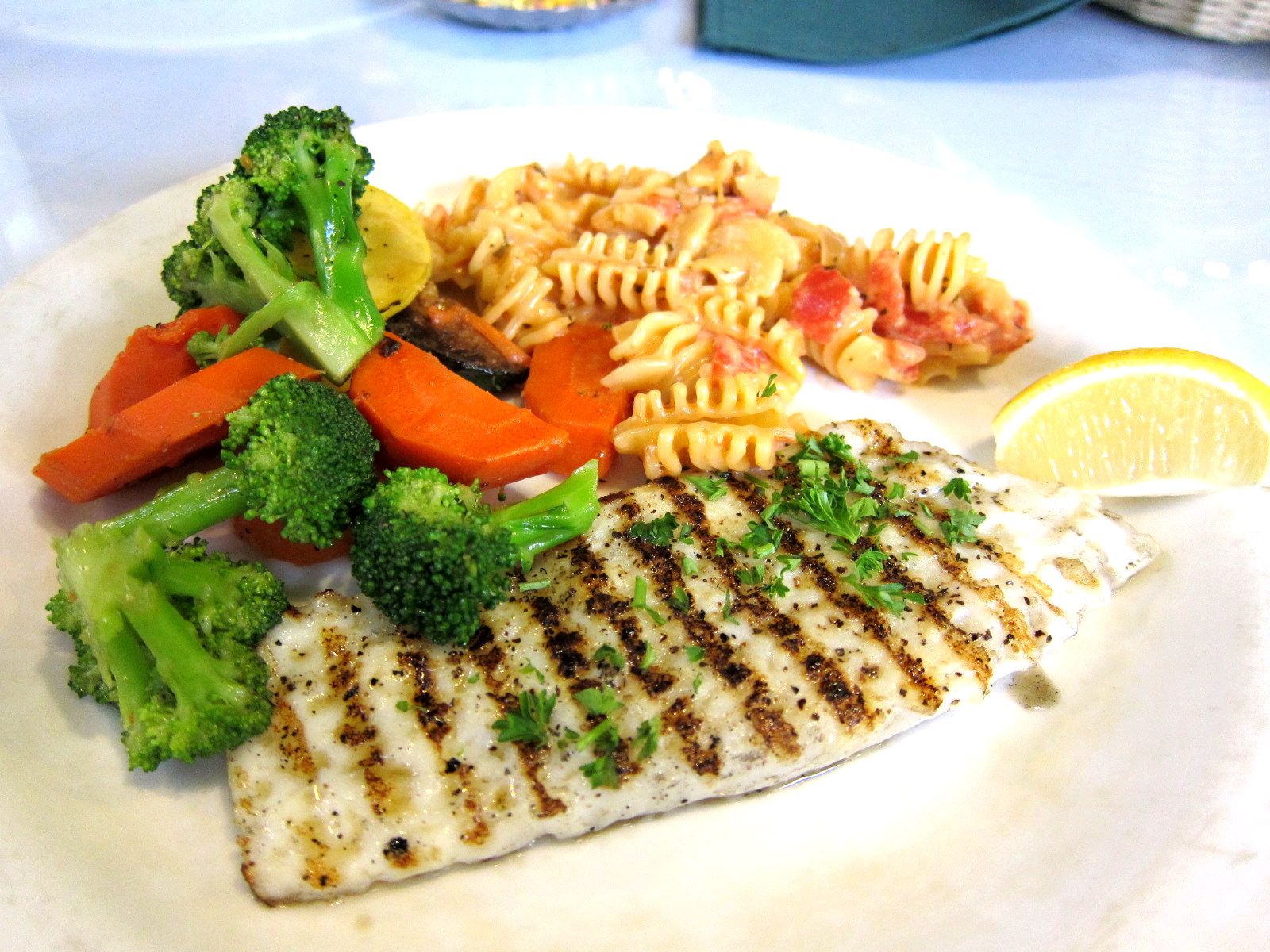
From the sea, a half order of snapper…


And a half order of calamari steak, which looks exactly the same as the snapper fillet. Mai prefers the squid’s soft yet springy and compact texture to the fish’s flakiness, while both has a lovely smoky touch of the grill.


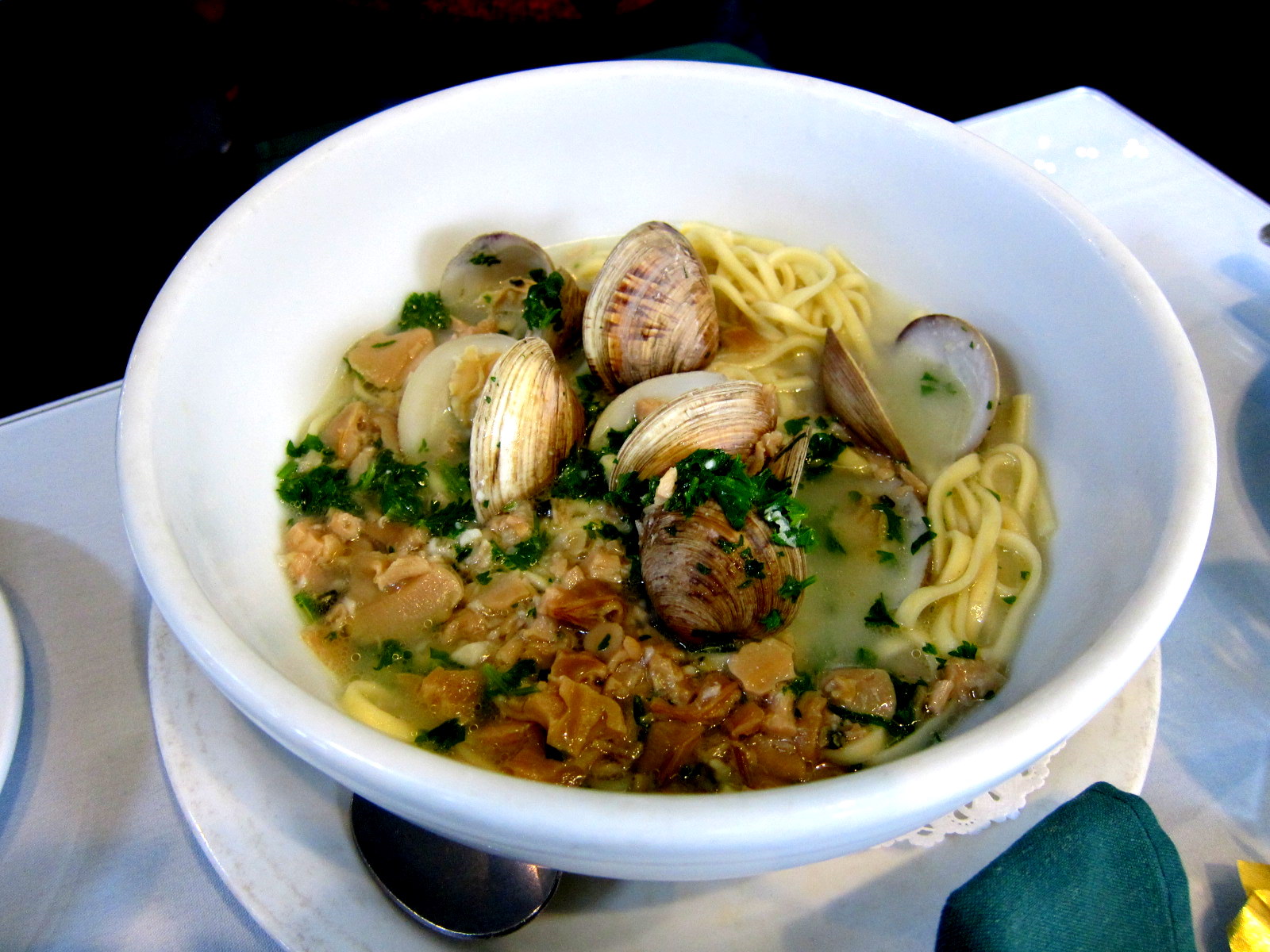
Dad branches out of the pack and goes for linguine lightly dressed in a butter garlic sauce with sauteed clam in shell ($13.95). The gentle chewiness pretty much hits the spot.

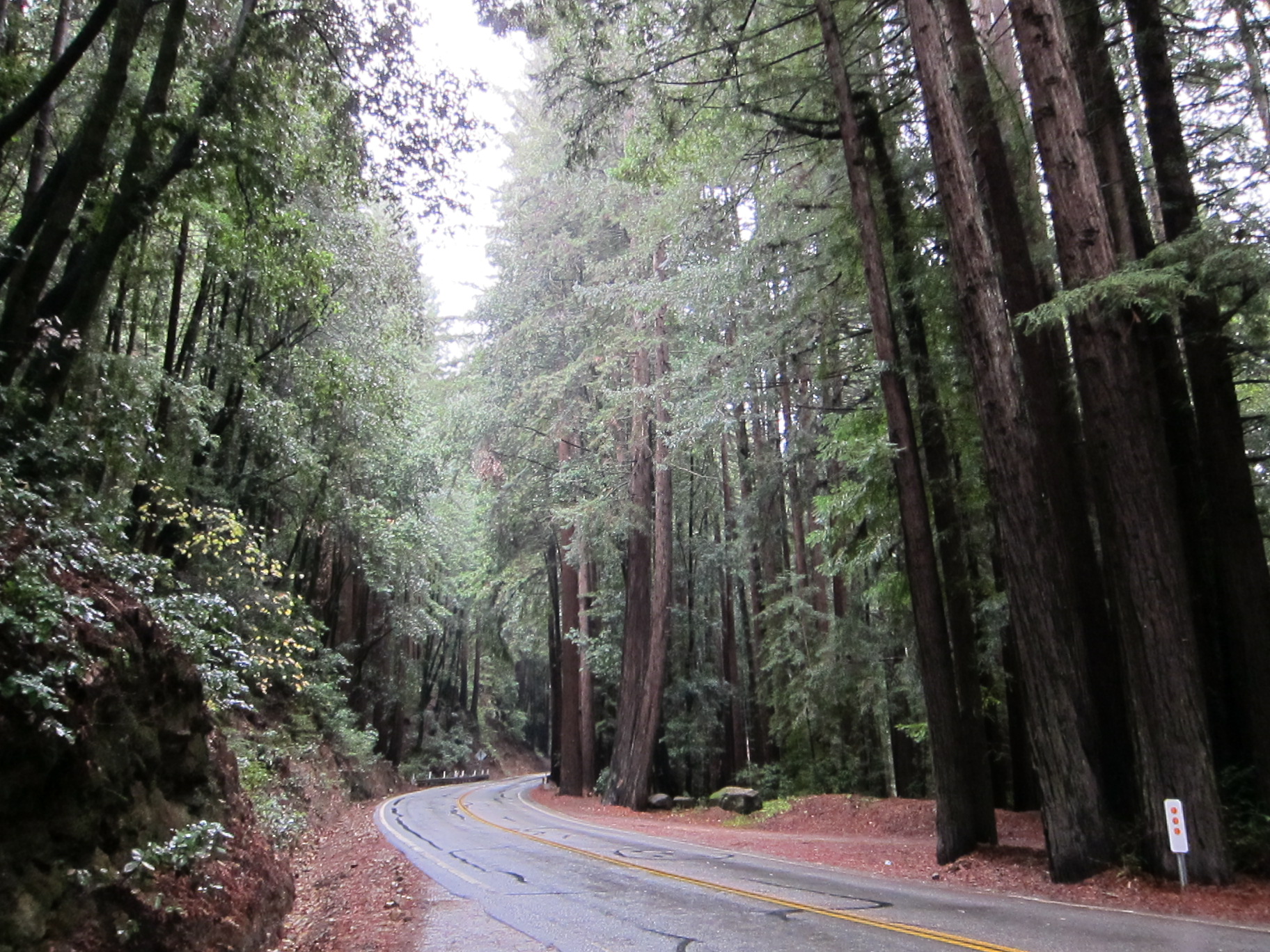
About an hour past our usual dinner time and a hopelessly lonely drive through the foggy and mountainous Los Padres National Forest, we reach Santa Clarita, make a few loops and turns to figure out the entrance to the parking lot of La Quinta Inn, and have no strength left to look for a dining exoticus. International House Of Pancakes sounds more appealing than anything else with a big sign visible from the highway.


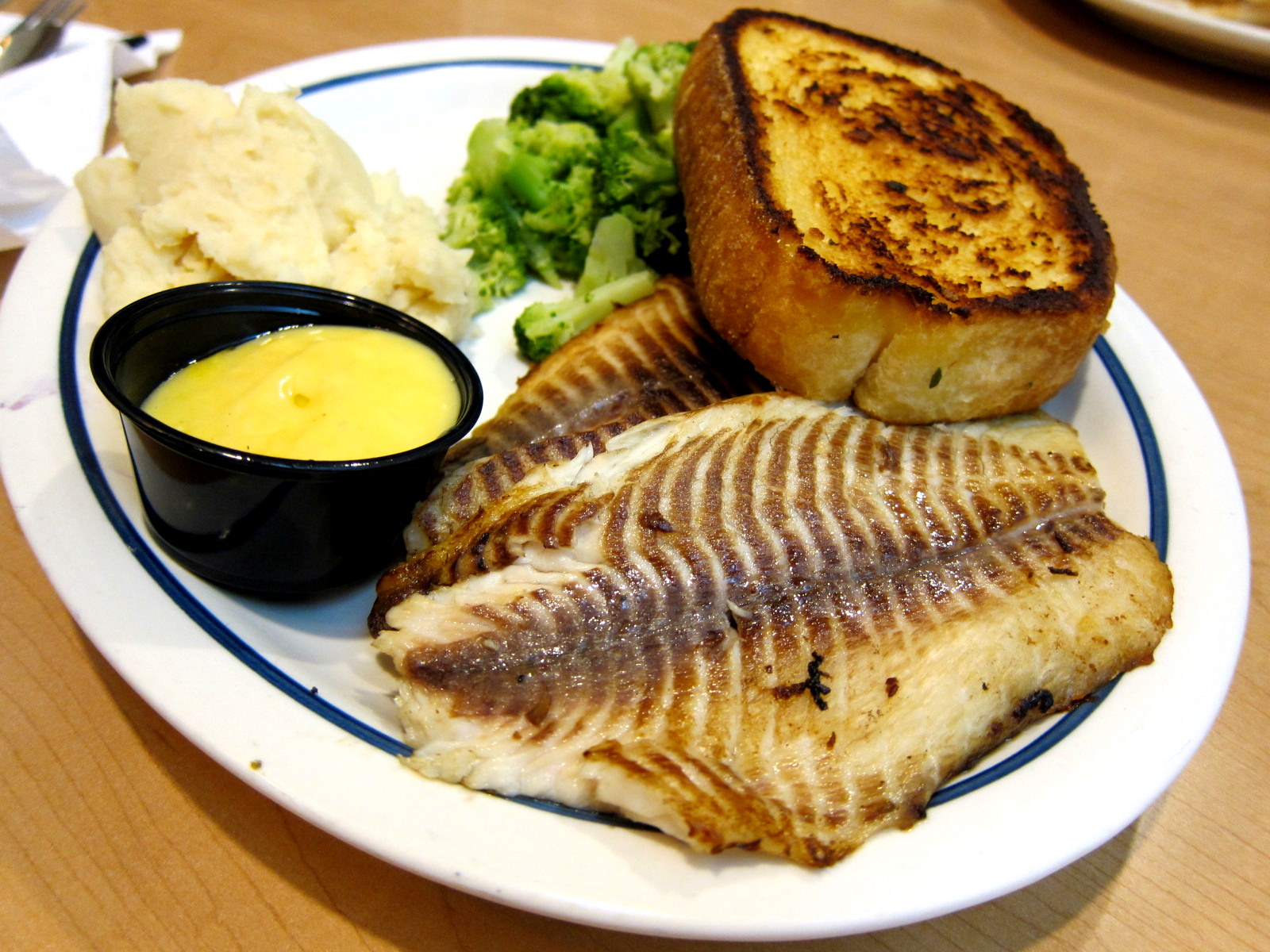
This time Little Mom turns around and orders a grilled tilapia, the new addition to IHOP menu. Understandably, it’s just alright. They don’t claim to be an IHOF anyway.


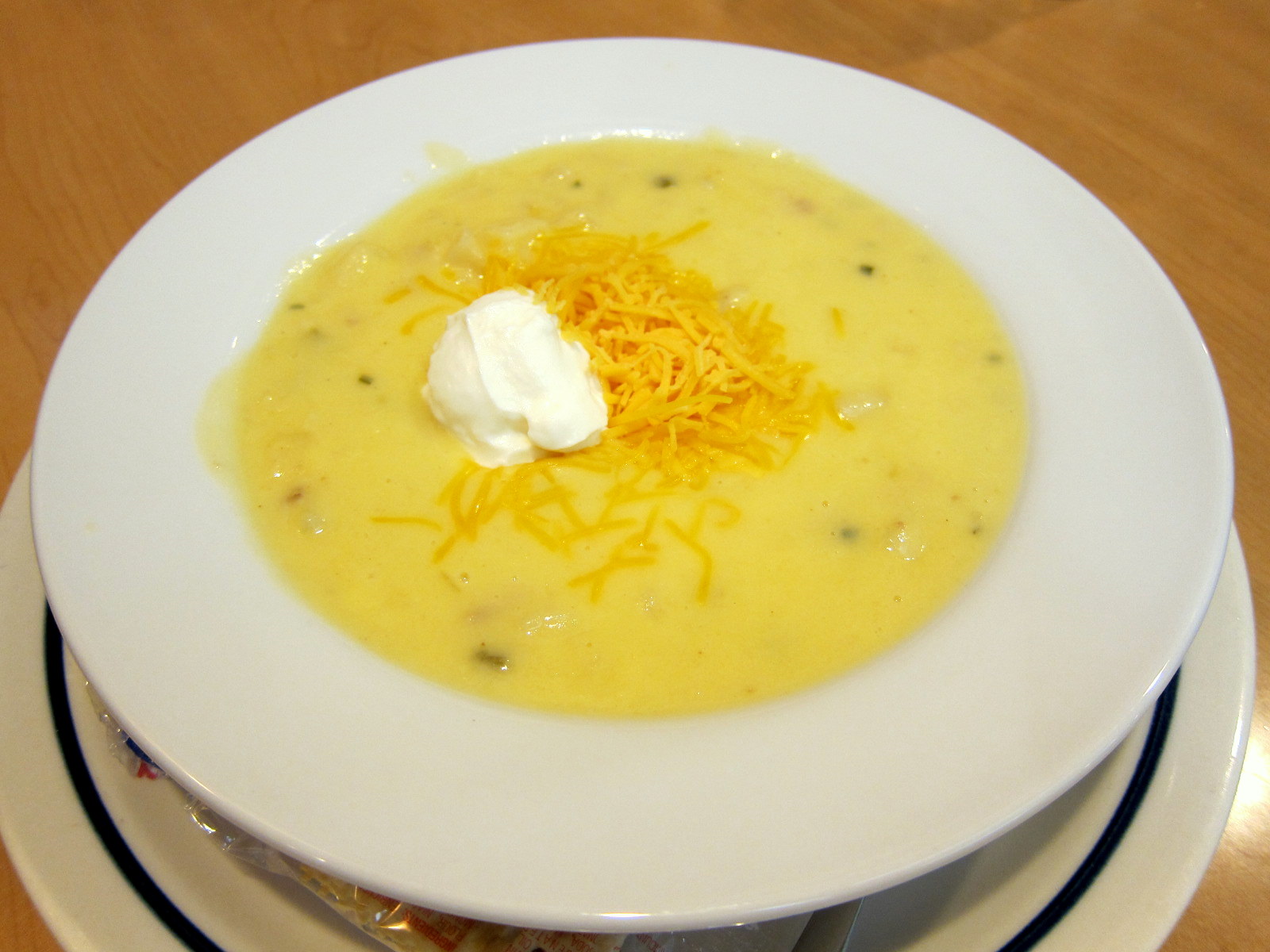
But she does get overwhelmed by the amount of food, including two crumbly buttery pieces of toasts and a cheesy potato soup, which Dad has to finish instead of his giant big steak omelette.


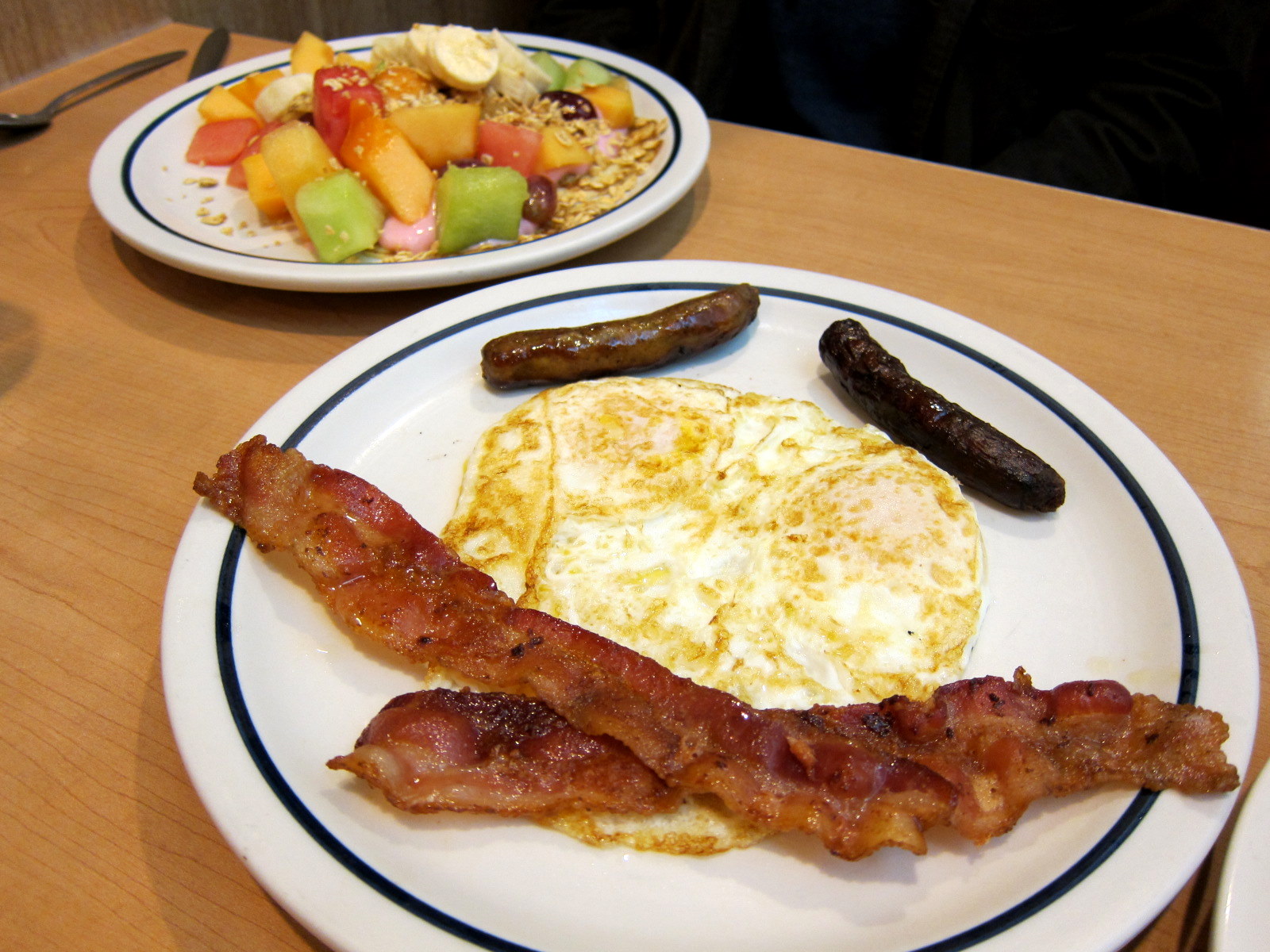
The other man in the quartet takes off more healthily on an International Crepe Passport with fresh fruit crepe, two bacon strips, two sausages, and two fried eggs…


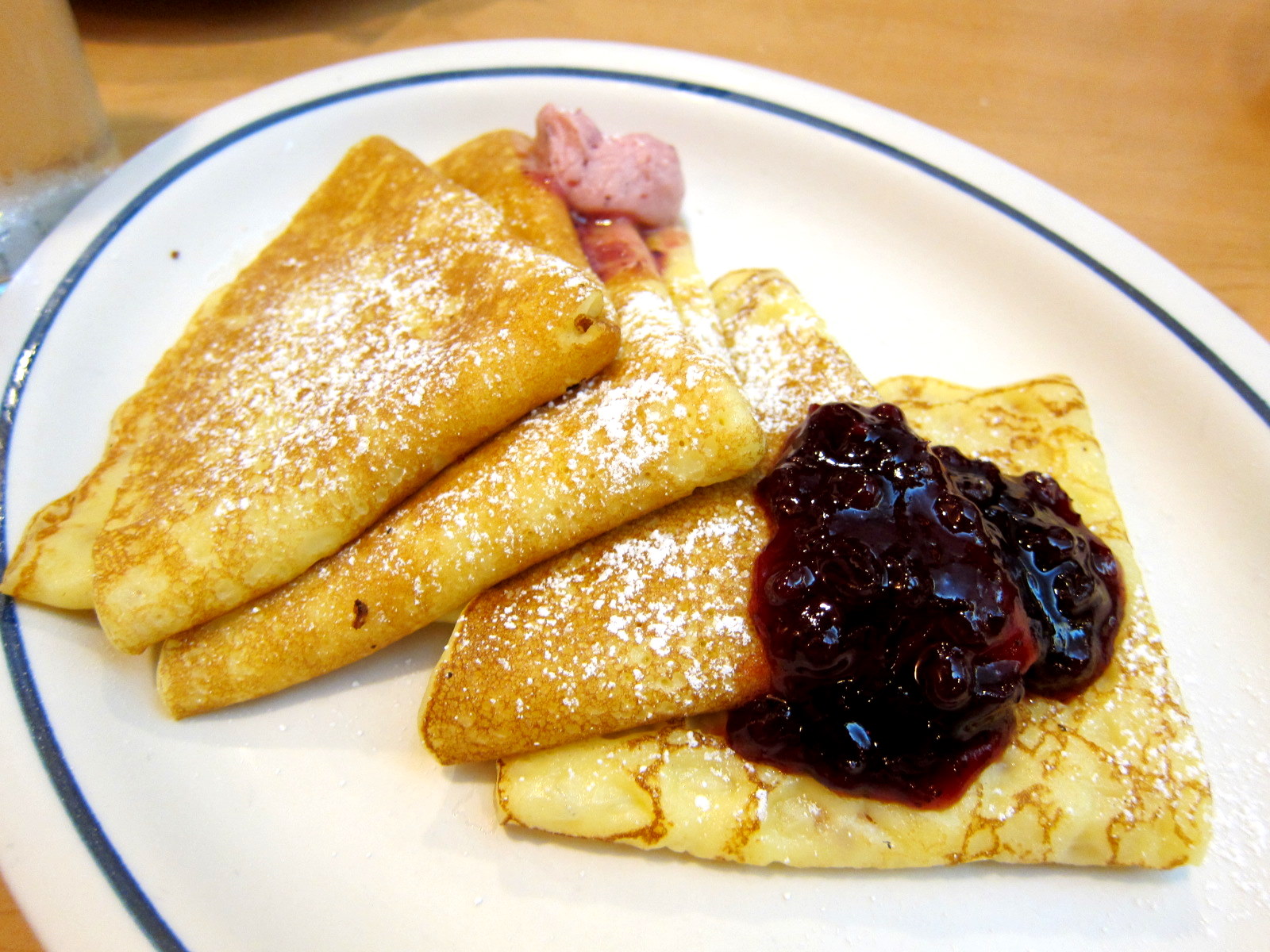
… while the usual meat-eater now opts for a vegetarian plate: four Swedish crepes with lingonberries and lingonberry butter. The crepes here are thicker than those at Millbrae Pancake House, and the butter is not as fruity either, but what counts at that hour is how it satisfies our rumbly tumbly. And it does. All 4 orders for $36.72 and 20 minutes wait.


Address: Salinas Valley Fish House
172 Main Street
Salinas, CA 93901
(831) 775-0175

IHOP
24737 Pico Canyon Rd.
Stevenson Ranch, CA 91381
(661) 254-1537

Tags: , ,