Flavor Boulevard

We Asians like to talk food.
Subscribe

Sasa no Yuki – Ten courses of tofu
June 25, 2015 By: Mai Truong Category: Flavor Japan, Japanese, The more interesting, Travel, Vegan

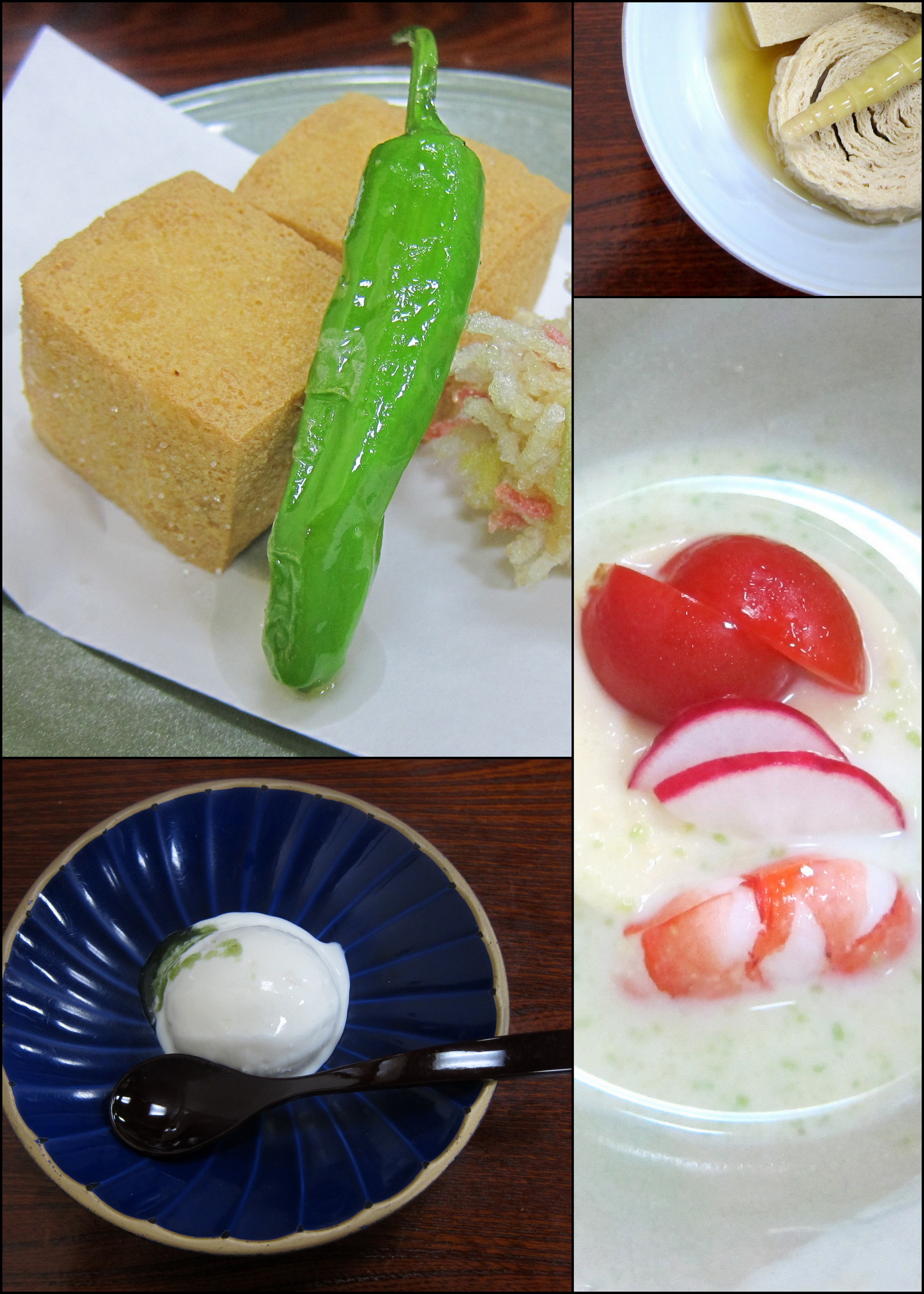
Sasa-no-Yuki-tokyo-collage
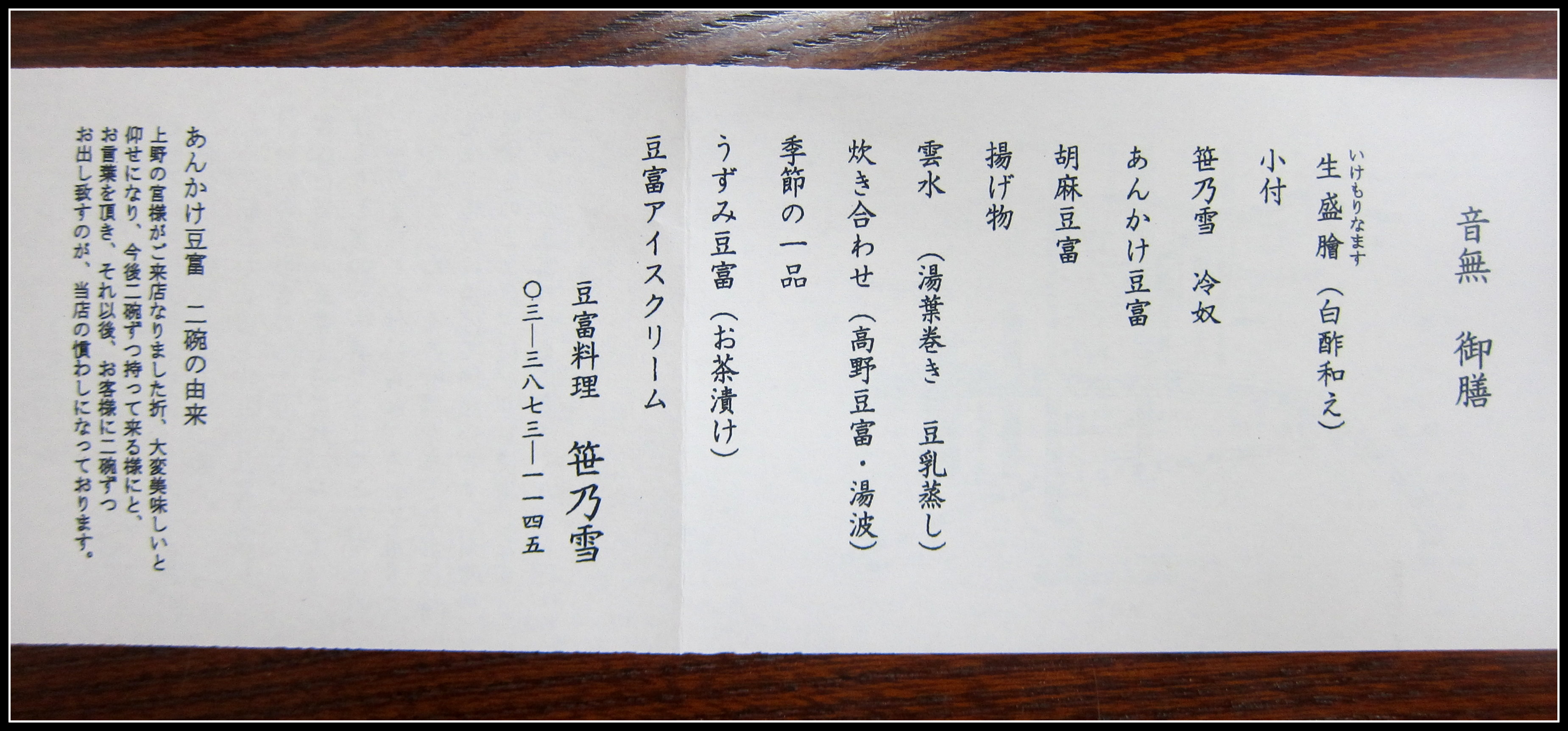
sasanoyuki-menu-jun2014
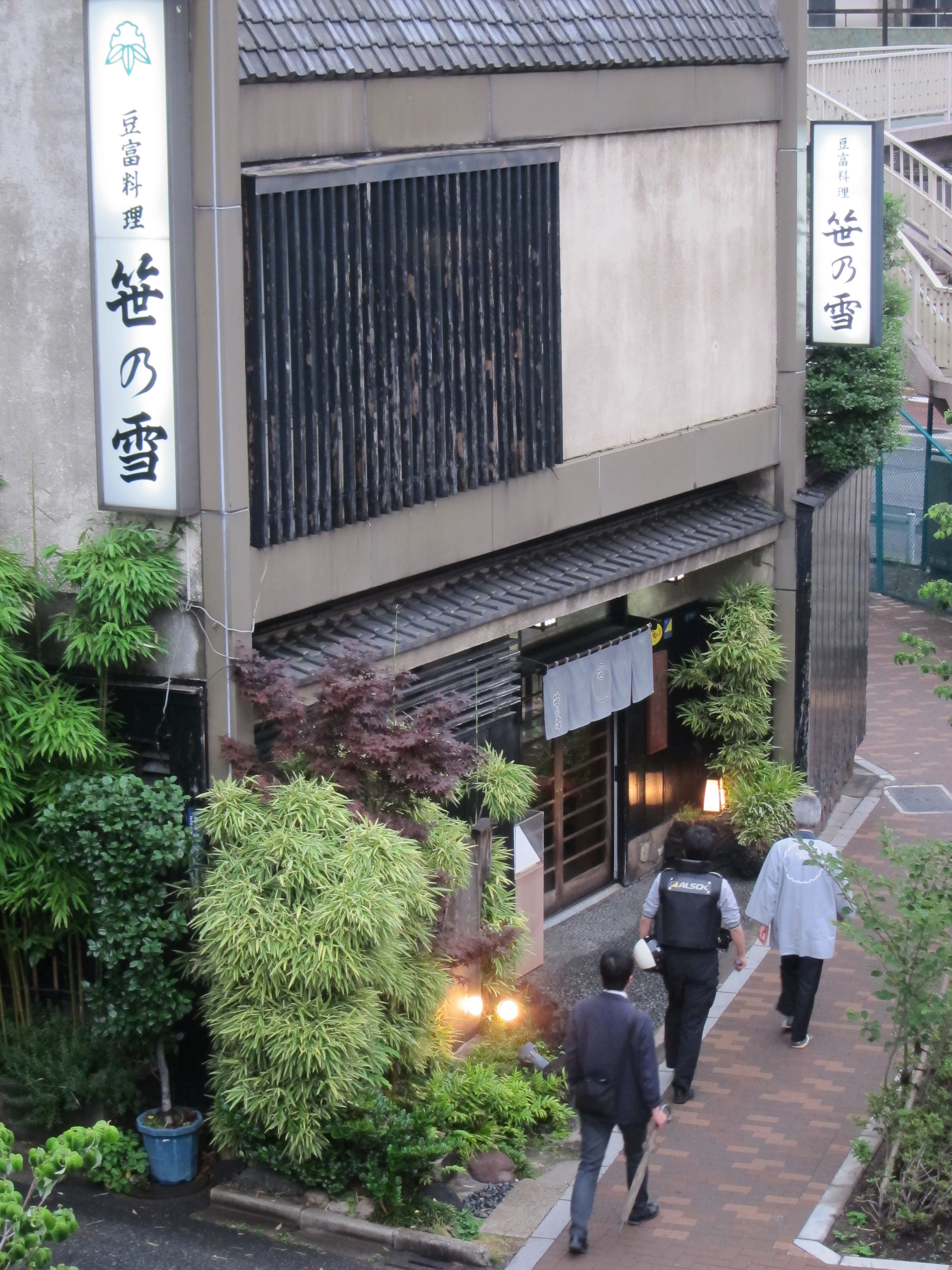
This is ten courses of tofu. Without jisho.org(*), I can’t read half of it, the hostess speaks only a minimal amount of English to me and mostly just smiles, my company simply tells me that this is the menu. There’s little necessity to go further anyway, they probably think, the joy is in eating the courses and not in knowing what it is, since I’m just a foreigner who most likely eats here only once.
sasa-no-yuki-tokyo
And they’re right… This stylish restaurant, Sasa no Yuki, is not quite for a student’s everyday dining, the cheapest lunch course (Uguisugozen, 6 dishes) is 2200 yen (~$22). But I keep the slip of paper, and I will remember what everything is called!
sny-ikemorinamasu
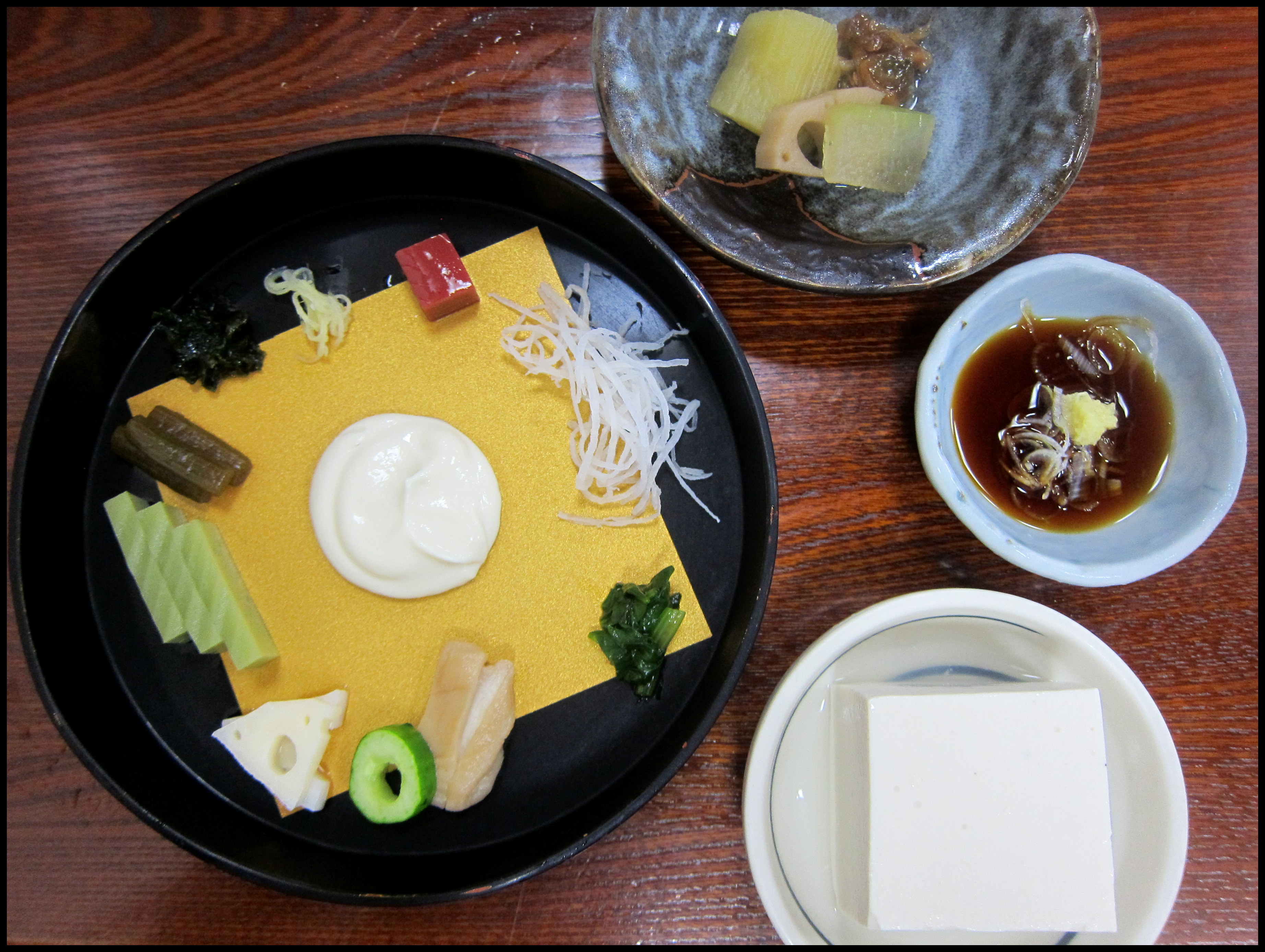
First 2 courses: ike mori namasu (生盛膾) – vegetable (and jelly) assortment with a tofu dipping sauce, and sasanoyuki (笹乃雪) – a block of cold white tofu. Don’t underestimate the tofu block, it’s uncooked, extremely pure and actually tastes like soybean.
sny-ankaketofu-gomatofu
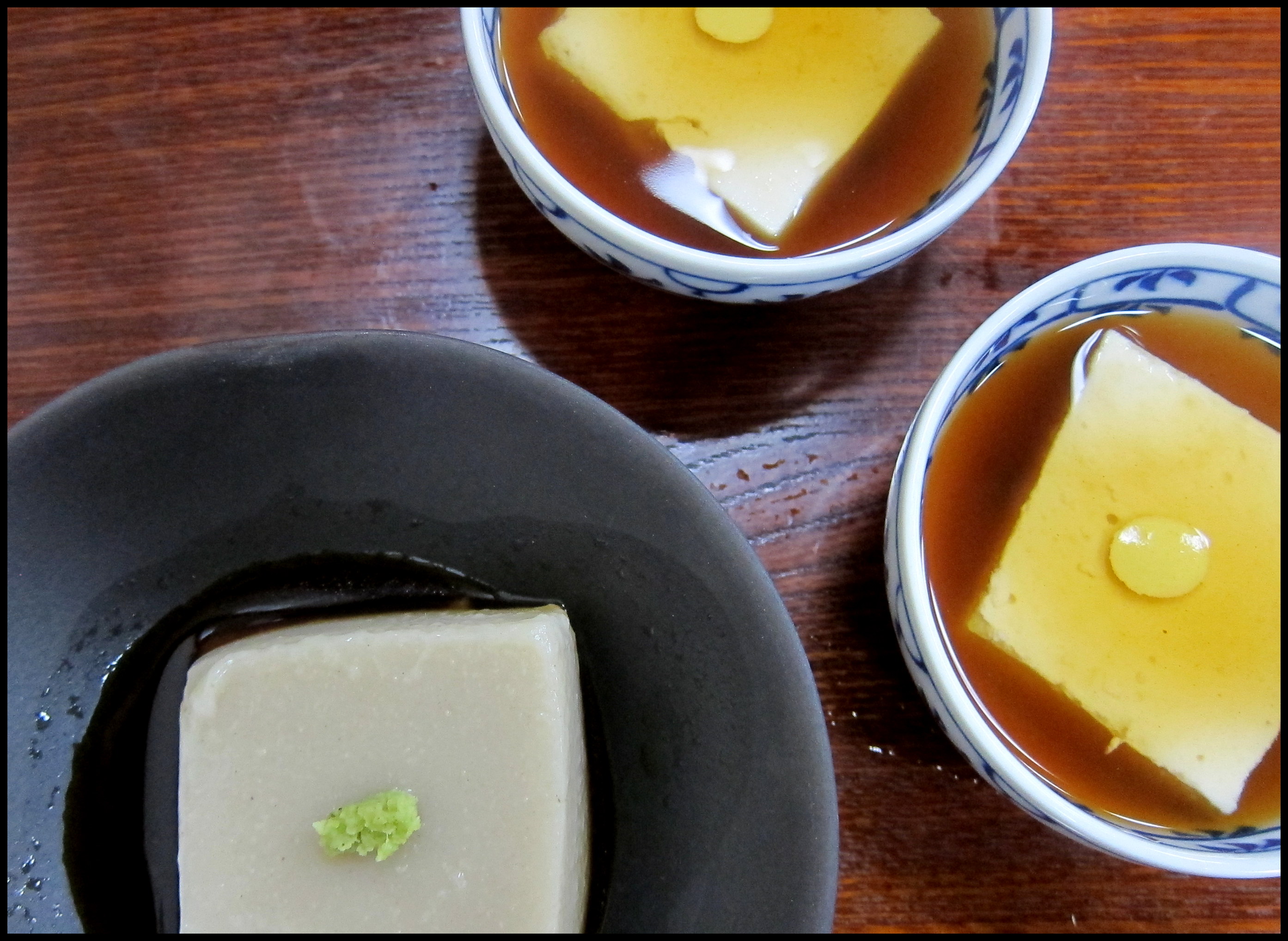
Third and fourth courses: ankake tofu (あんかけ豆富)* – tofu in a slightly sweetened soy-flavored sauce with a dash of mustard, and goma tofu (胡麻豆富) – tofu made with sesame and arrowroot.
Ankake tofu is said to be Sasa no Yuki’s signature dish, originated more than 300 years ago. Unfortunately, it is also my least favorite.
sny-agemono
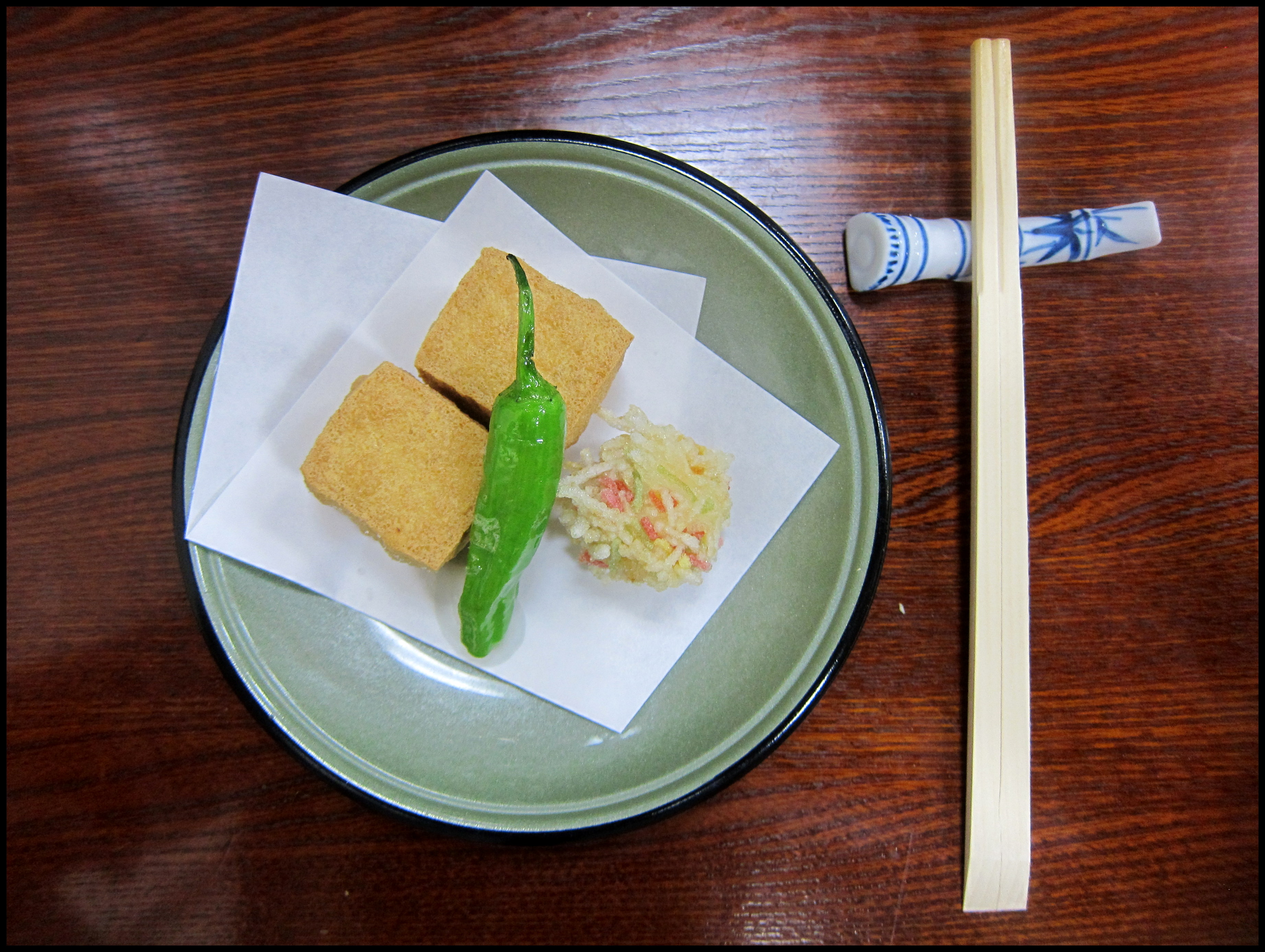
Fifth course: agemono (揚げ物), which means fried food in general. In this case, it’s deep-fried tofu and a ball of deep-fried rice cracker or something. A satisfying contrast after all the cold, homogenous blocks.
sny-takiawase-kouyatofu-yuba
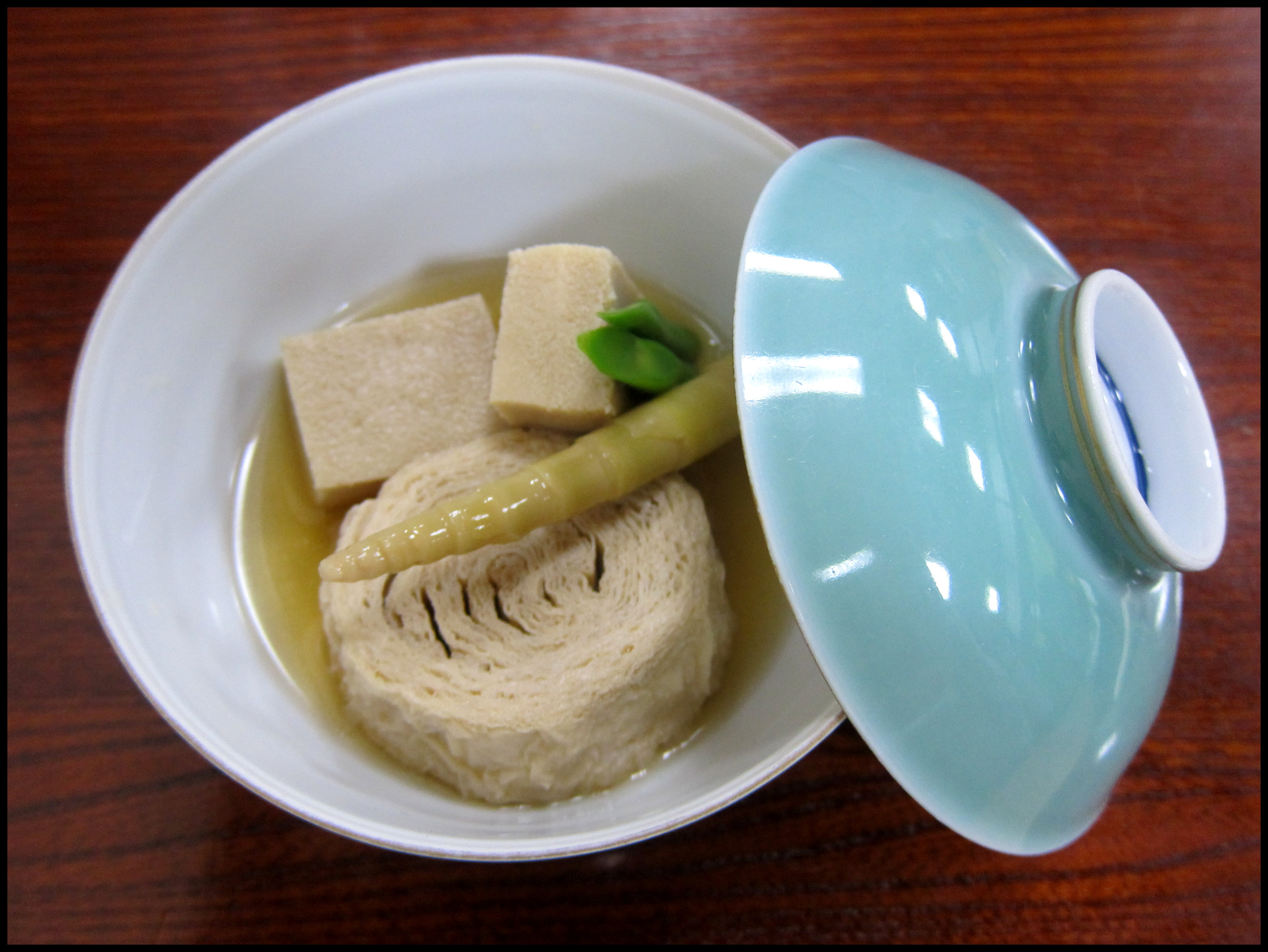
Sixth course: yuba (湯波) – tofu skin, and kouya tofu (高野豆富) – freeze-dried tofu. Both taste airy and a little sandy.
sny-unsui
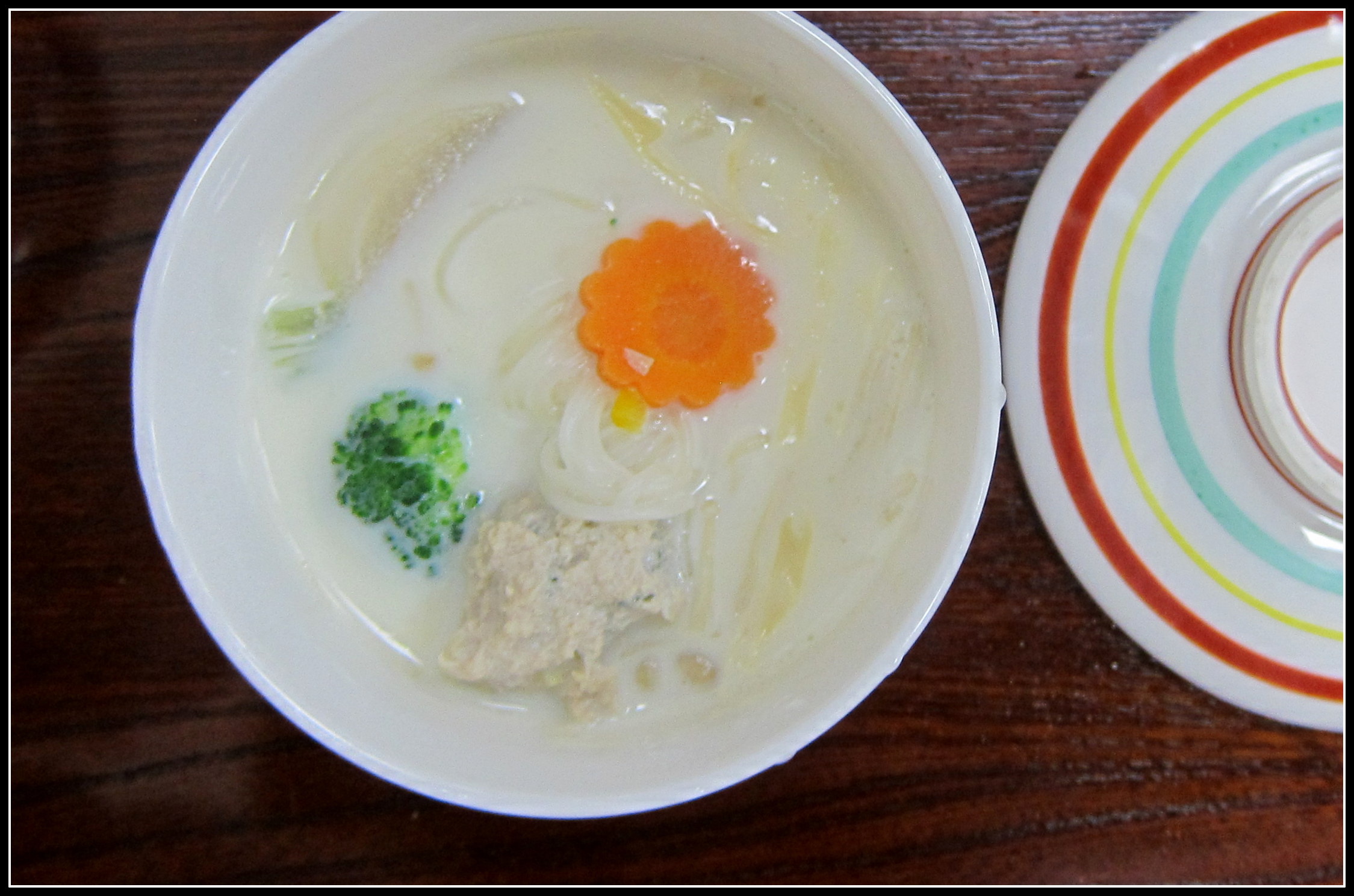
Seventh course: unsui (雲水)** – a noodle soup, but entangled in the noodle are yuba strips, and the broth is lightly seasoned soy milk. It’s served warm. Extremely satisfying, light but flavorful, full of varieties but harmonious. This soup costs 700 yen by itself. Highly recommended.
sny-kisetsu-no-ippin
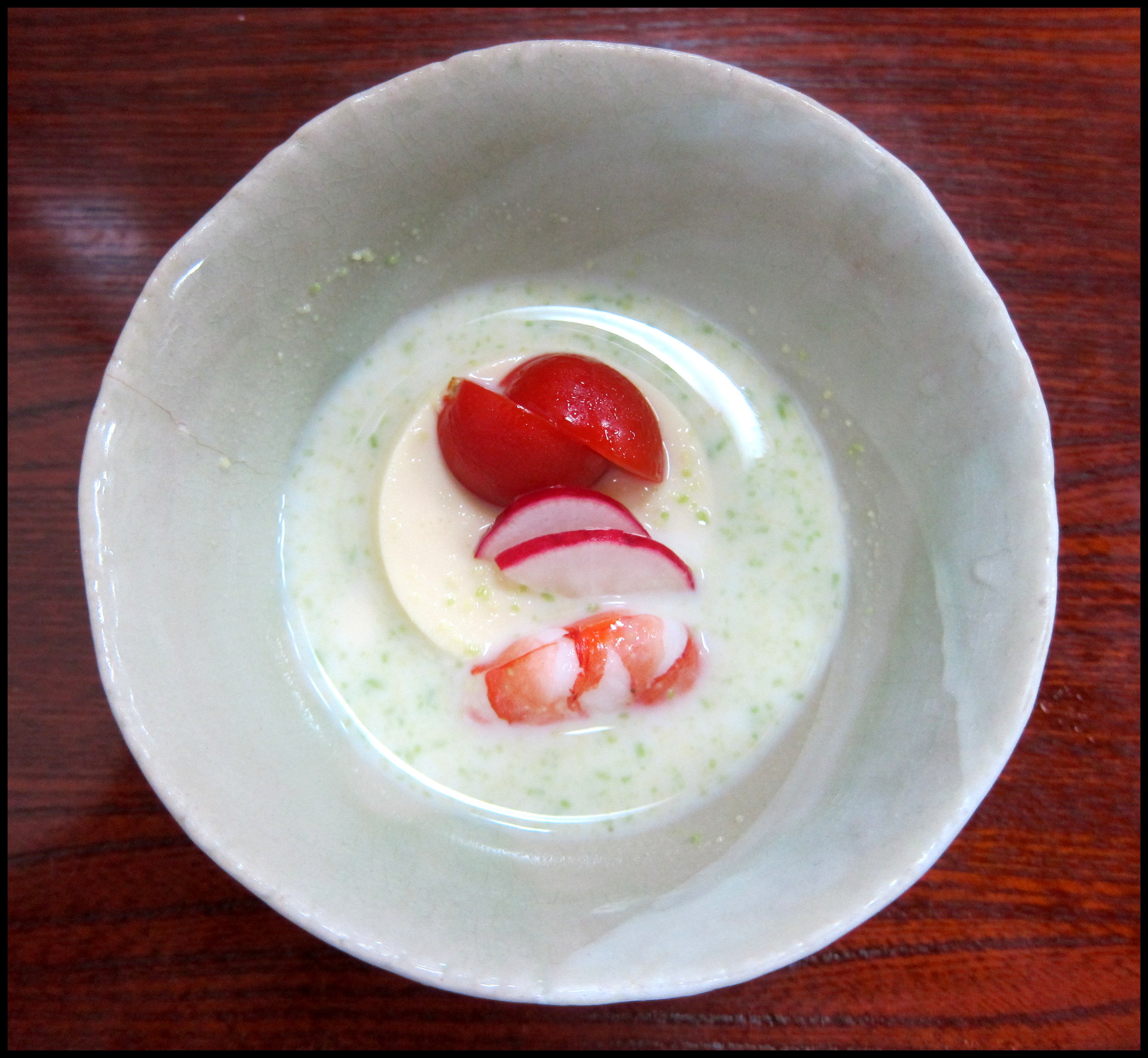
Eighth course: soft tofu in a cold broth, shrimp and veggie. On the menu, it’s known as “kisetsu no ippin” (季節の一品), which means “a product of the season”. Also one of my favorites.
sny-uzumitofu-ochazuke
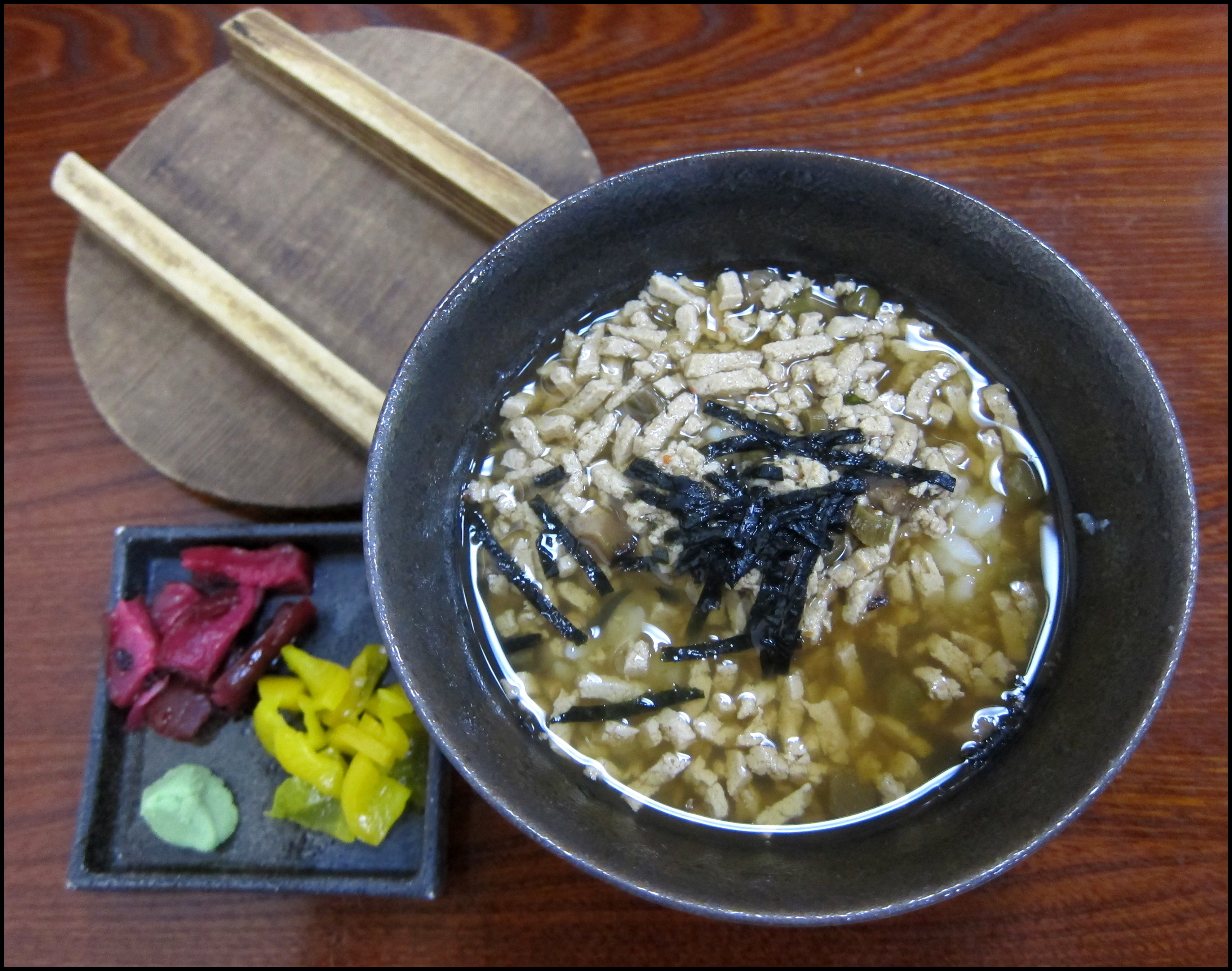
Ninth course: uzumi tofu (うずみ豆腐) or also called ochadzuke (お茶漬け) – rice with seasoned tofu in hot broth.
sny-tofu-icecream
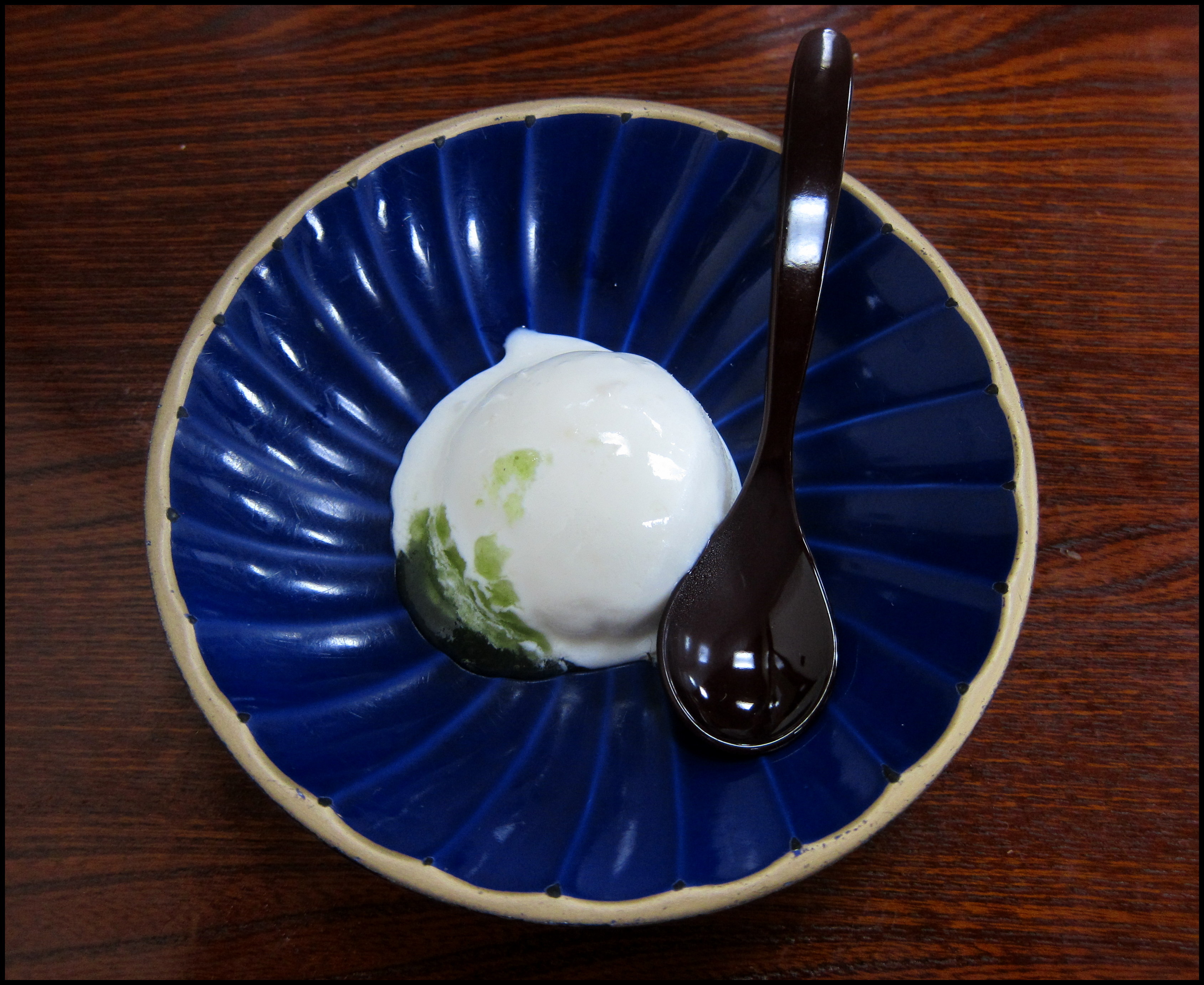
Dessert: tofu ice cream. Can it go wrong? Never.
sasa-no-yuki-interior
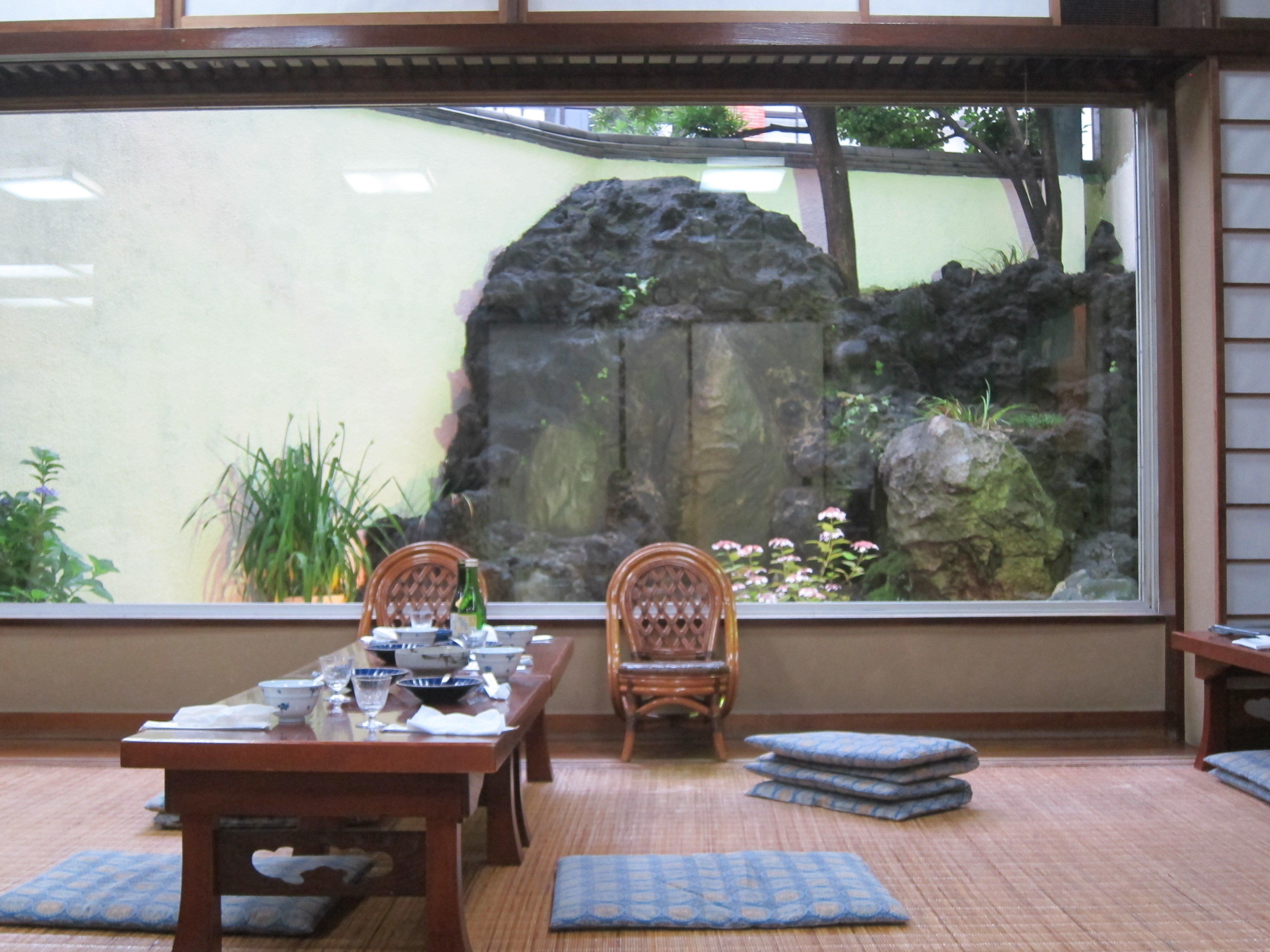
The 10-course meal, otonashigozen, costs 5000 yen. It is perfect for the hot, wet Tokyo summer. It makes you feel light and clean. It’s a lesson about the aesthetics of simple things. It also teaches you that this comforting life is ephemeral, because moments later, you will exit the restaurant into the pouring rain. Everything is fleeting, including your dry, happy self.

Address: Sasa no Yuki – somewhere near Uguisudani station, Tokyo.
This restaurant is featured everywhere on the internet, you wouldn’t have any problem finding it. Japan Times has an in-depth review about the restaurant (which started in the Edo period!):

“If you really want to know the taste of tofu, put a piece on freshly cooked rice and eat it. Then you can tell,” says Okumura [Sasa no Yuki’s president and tofu master], who usually enjoys tofu with no toppings while drinking wine or beer. “The taste of soy protein is strong enough to blend beautifully with a simple bowl of rice.”

Okumura also observed, it has become a rather luxurious experience these days — because there is so little tofu fit to be eaten this way.

Though so simple in principle — relying merely on high-quality soy beans, good water in which to soak and boil them, and nigari (bittern) to cause coagulation — tofu has now mostly fallen foul of profit-oriented mass production to the point that many people may never have tasted the authentic stuff, Okumura says. “Nowadays, we are one of only a few shops still making tofu in the traditional way.”

A Japanese friend of mine once lamented the exact same thing while eating tofu straight from its plastic-film-covered white plastic minitub, which he bought from a nearby market.

———————————————————————————————-
Guest post by C. from Katsushika.

Foodnote:
(*) Even with a dictionary, Sasa no Yuki’s menu is difficult to read. They use different writings for some of the words, such as 豆富 instead of 豆腐 for tofu, and 湯波 instead of 湯葉 for yuba.
(**) “Unsui” is cloud (un) and water (sui), which also means a wandering monk.
Tags: ,

One shot: lunch at Chano-ma Nakameguro

November 03, 2014 By: Mai Truong Category: Flavor Japan, Japanese, Travel

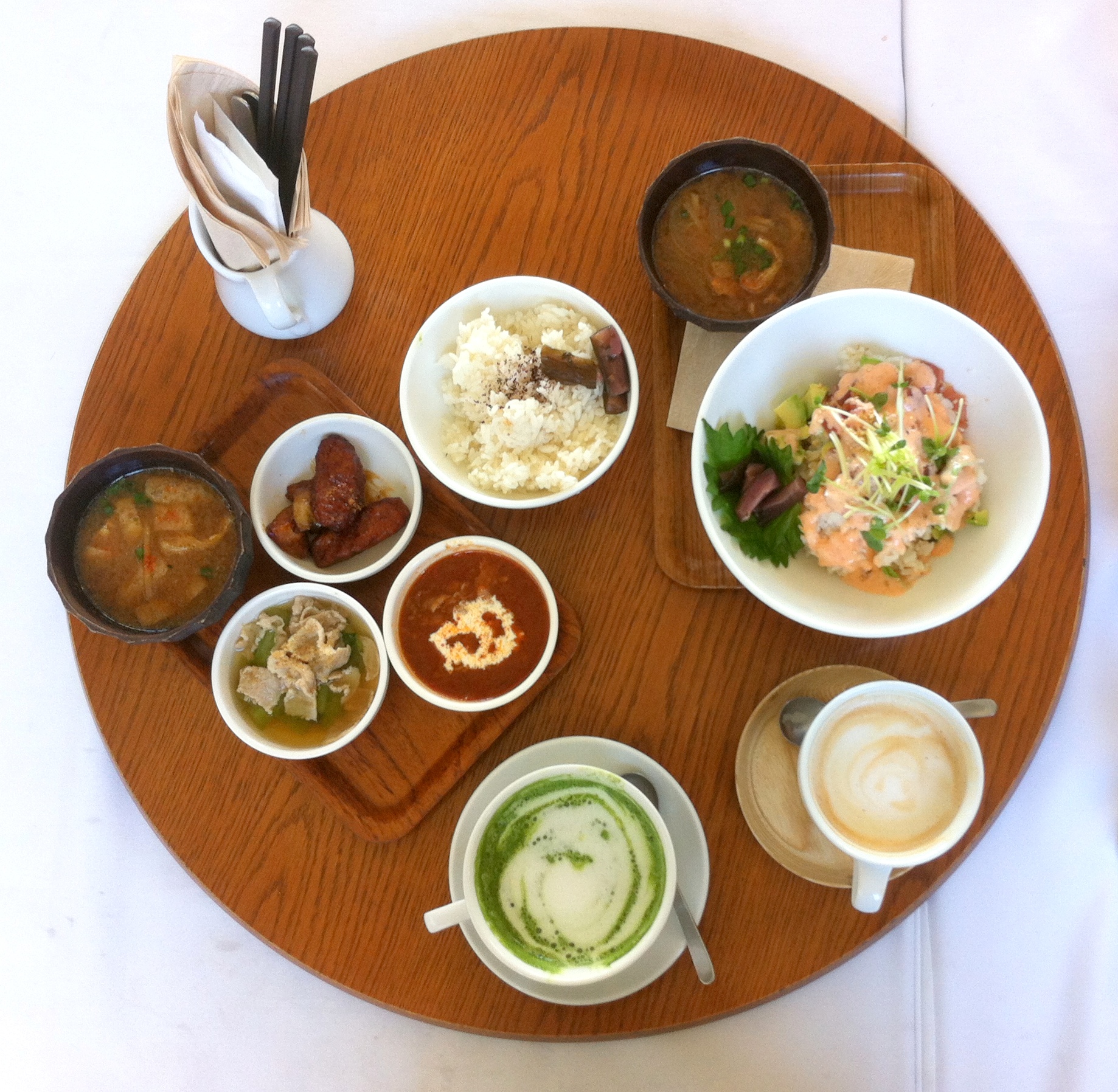
chano-ma-lunch
Comfy seating on white cushion, a tray of simple, delicious lunch, and a look out to the Meguro river. In the middle of Tokyo, there seems to be always little coves like this for a cozy, relaxing brunch.

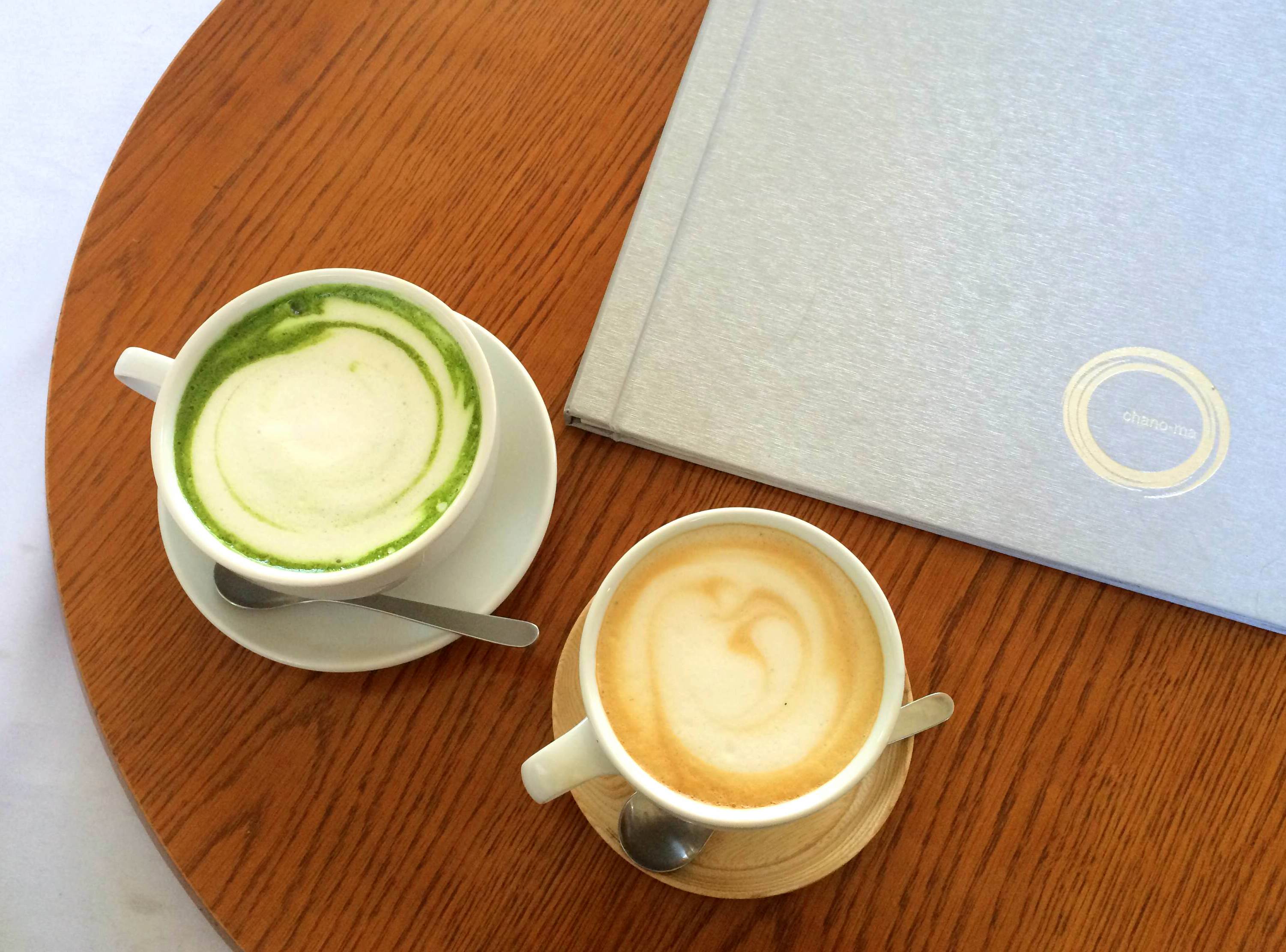
chano-ma-latte
The lunch set includes a nice big bowl of rice, soup, 3 sides of choice and dessert (or a finishing drink) for 1250 yen (~ 12 USD). The latte art may be wanting, but I’d rather dive into my matcha latte with no remorse than adoring little bears or cats too much to drink them. 😛

Address: Chano-ma at Nakameguro
〒153-0051 東京都目黒区上目黒1-22-4-6F
chano-ma webpage

——————————————————————
Guest blogged by C. from Katsushika.

Cafe Calaugh – why no cats came to me?

September 18, 2014 By: Mai Truong Category: Cafes, Flavor Japan, Japanese, Travel

Yesterday Kristen posted on Facebook pictures of cutie fluffy four-legged pals that walk all around her in a cat cafe. I’m so jealous, Kristen! My jealousy is as high as Mt. Fuji right now. You know the (almost) first thing I did when I went to Japan? I looked for a cat cafe.

cafe_calaugh_cat_stays_away
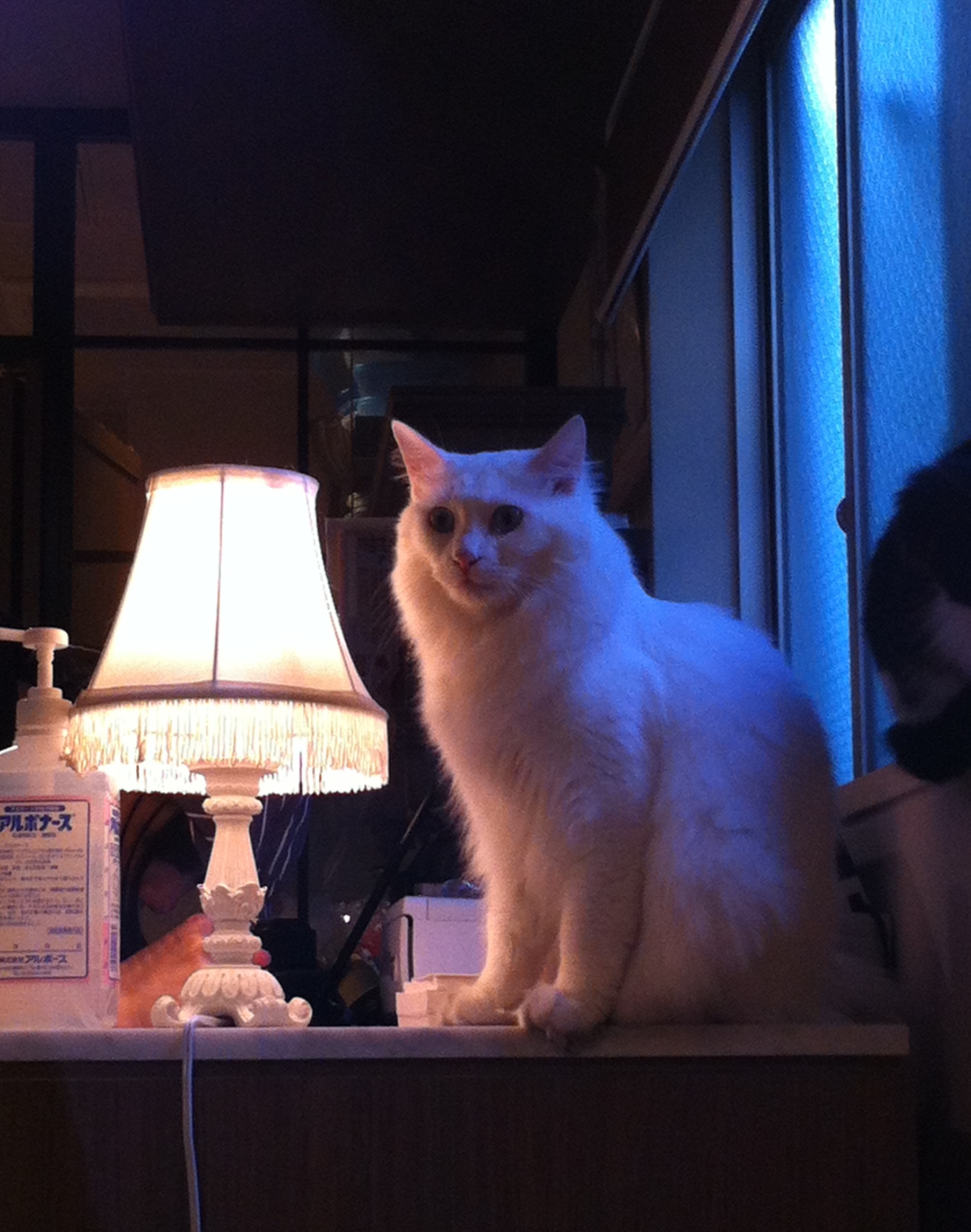
Unfortunately, just about everybody decided to go to the same cat cafe that day (I wished I had found a less popular cafe, this one being on the internet with English and all just makes it too known). One middle-age man chased the cats around relentlessly. (He wanted their attention just as much as I did. I feel you, man.) Then after he was about to leave, a couple came in and the girl took over the chasing duty. >__> All of the cats retreated under chairs and onto inaccessible window sills. My phone sucks at taking their pictures. One cat semi-approached me, but somebody (either the middle-age man or the girl) inched to him and he left. Me devastated.

cafe-calaugh-affogato-ice
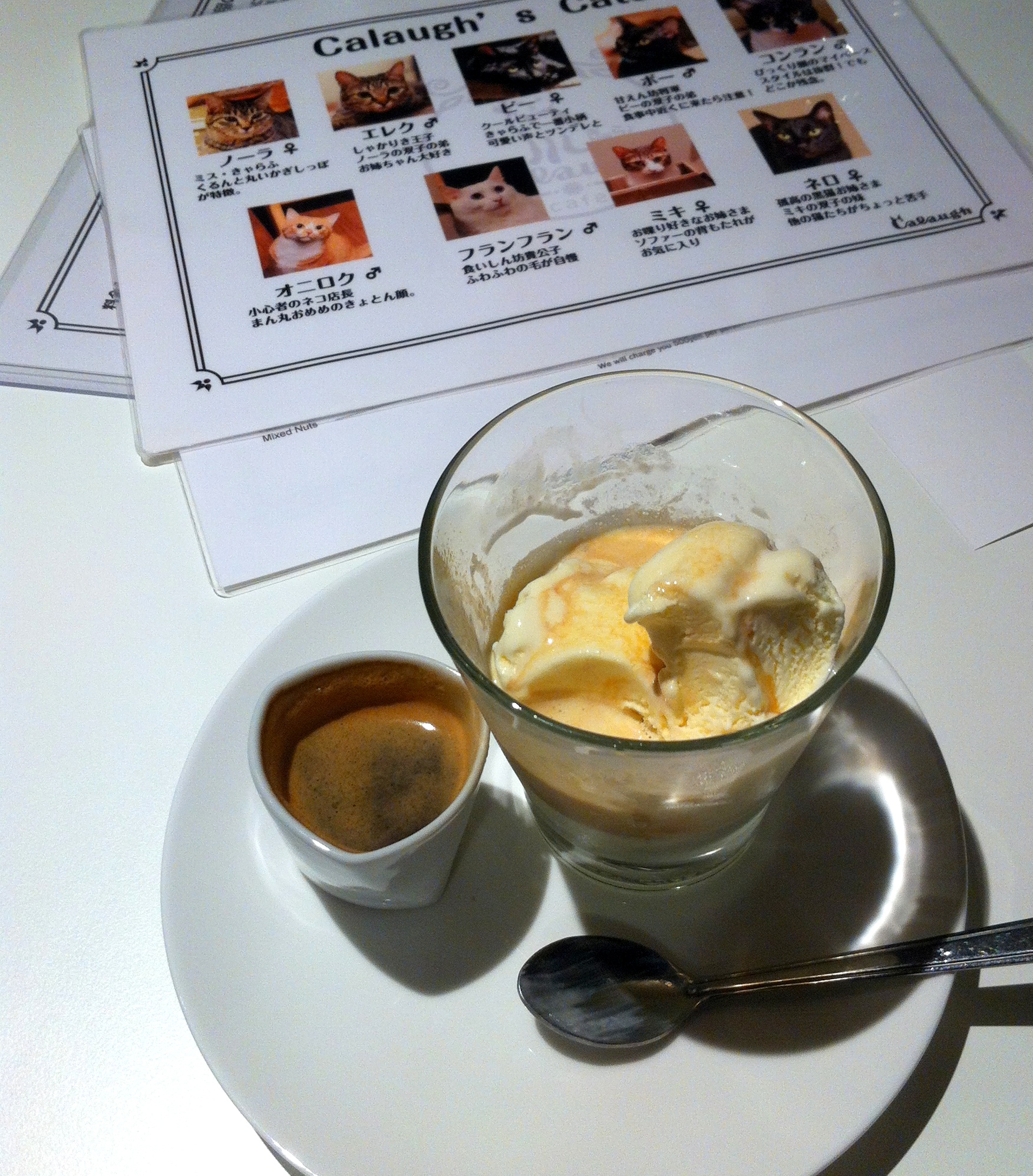
I spent an hour there reading, trying to hide my misery, but I was too heart-broken to even get through 2 pages. At least the affogato ice cream (800 yen) was good.

tokyo_shrine_cat
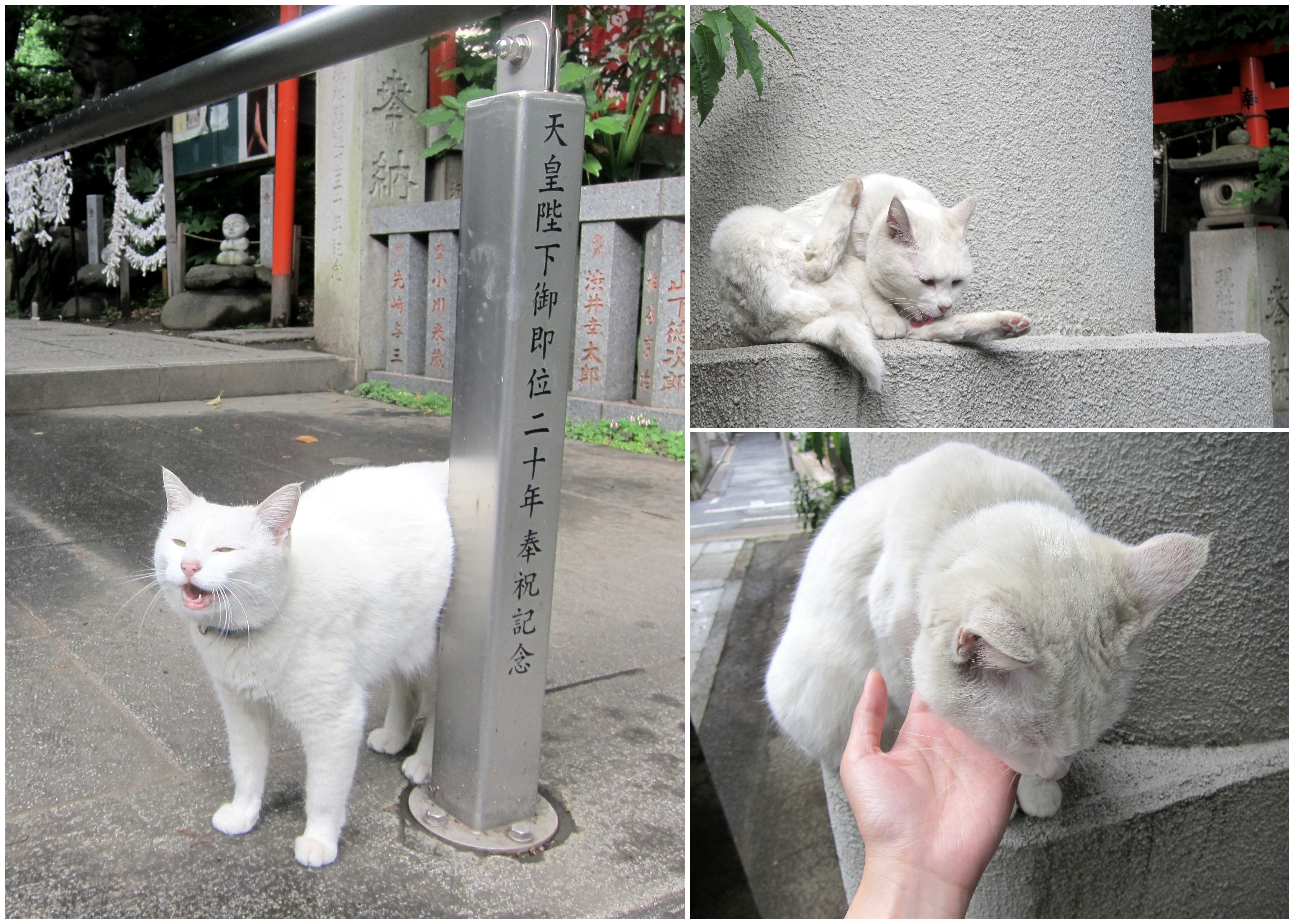
To end on a bright note though, look at this sweet cotton ball I found at a small shrine near Kameido Tenjin shrine (亀戸天神社). He let me pet him! HE LET ME PET HIM!!! I was in tears.

Address: Cafe Calaugh
Asakusaekimae Bld. 2F, 2-19-13,
Kaminarimon, Taito-ku, Tokyo
calaugh.com

——————————————————————————————-
Guest blogged by C. from Katsushika.

Flavor Japan: best Japanese fastfood

August 26, 2014 By: Mai Truong Category: Flavor Japan, Japanese, savory snacks, Travel

There’s a Mister Donut near our apartment, but I still haven’t walked into it once (*). As much as I like Mos Burger (which is better than McDonalds Japan, which in turns is inarguably better than McDonalds US, of course 😉 ), I prefer the fastfoods that we don’t have.

1. Takoyaki

gindako-takoyaki
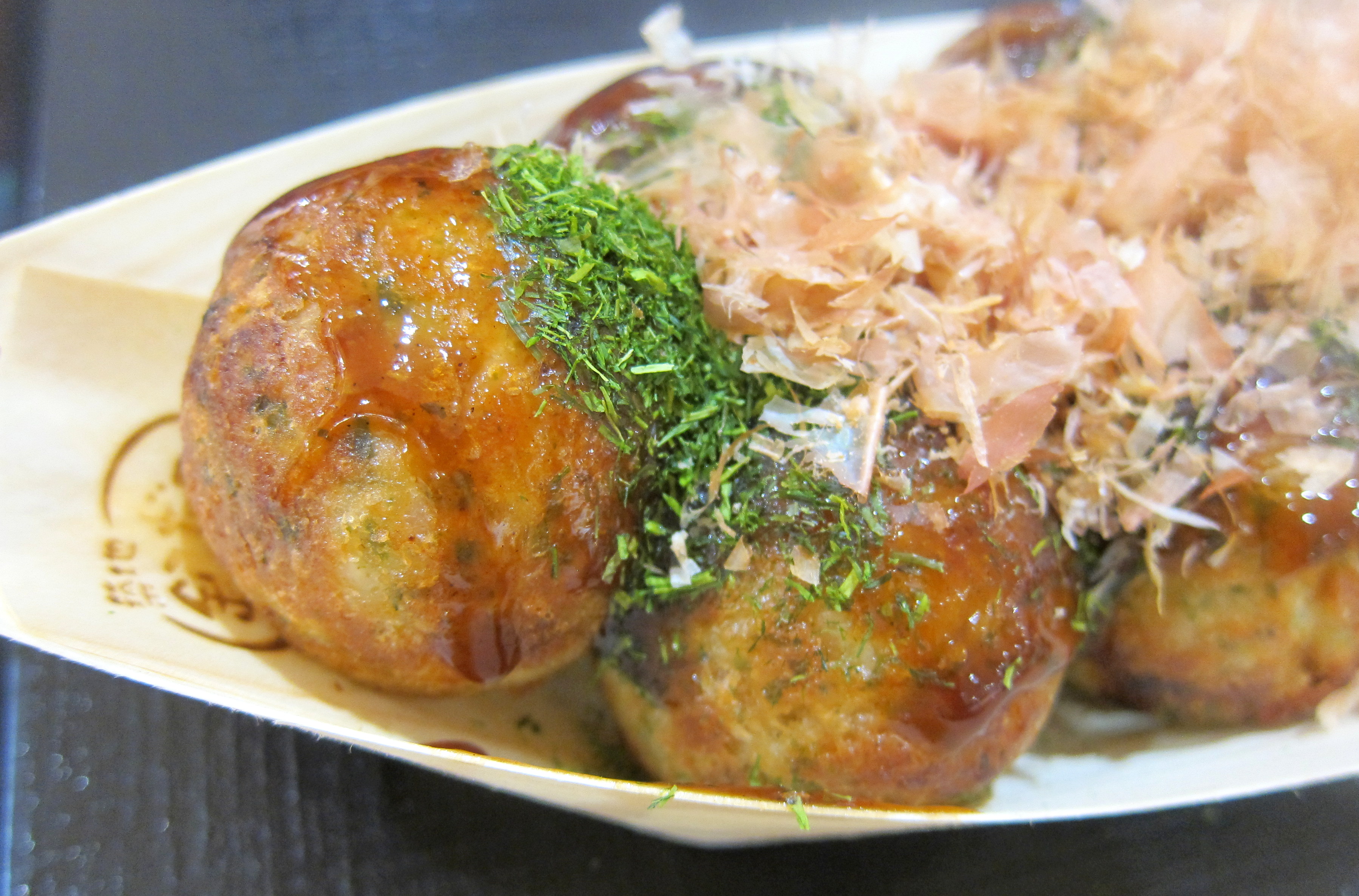
Fluffy and bouncy. Inside each of these shining orbs is a piece of real octopus. When I die, I want to be buried with takoyaki (which is also the name of my phone, by the way)…

2. Taiyaki

gindako-taiyaki
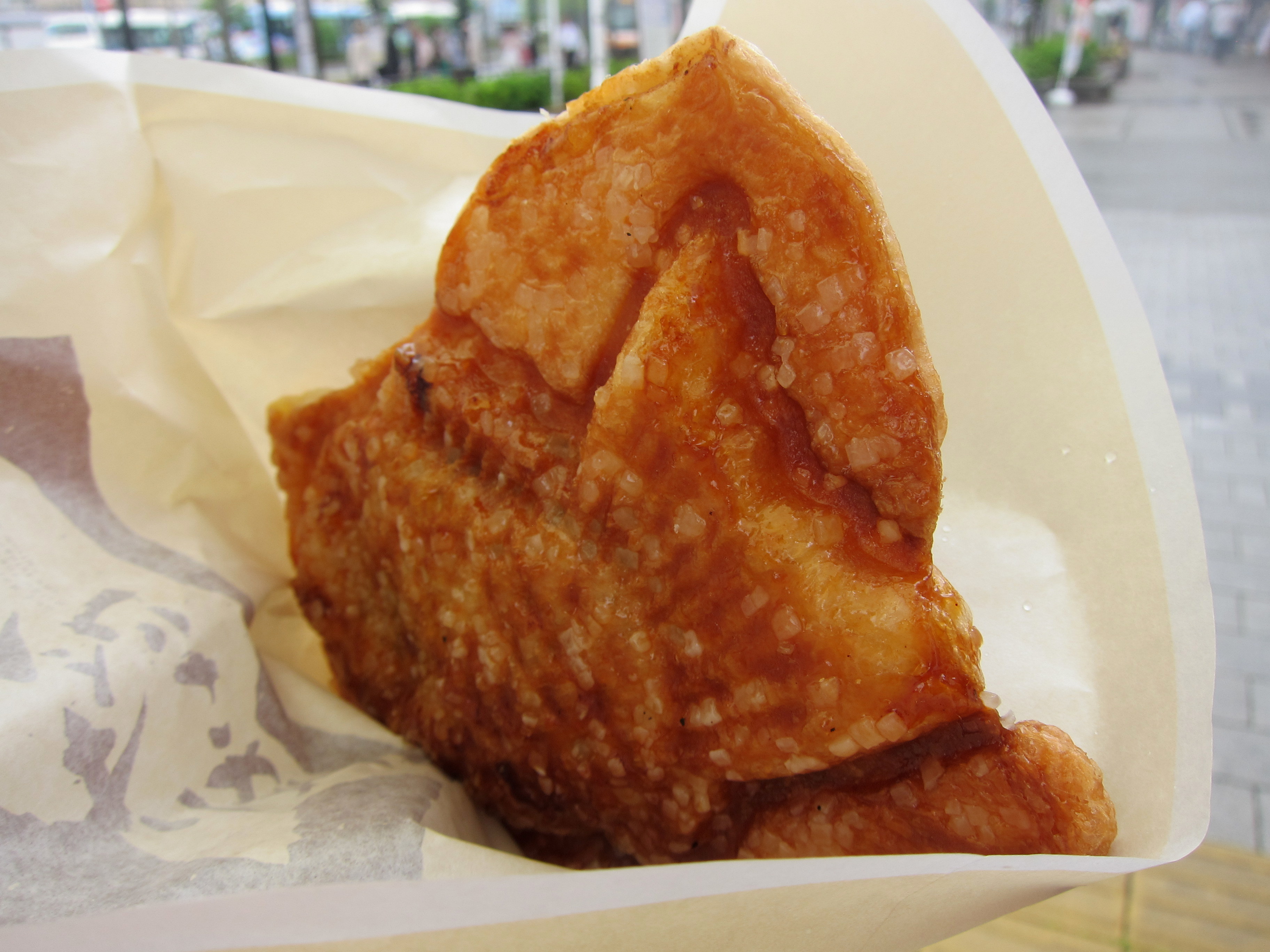
Normal taiyaki is a-okay (I’m not THAT into red bean paste, but I like the doughy part outside). Nonetheless, Gindako makes these croissant-crust taiyaki (210 yen) with croissant dough instead of pancake batter for the outside, and they sprinkle sugar crystals on it. Oh man….

3. Sushi

Kaitenzushi near Kashiwa eki
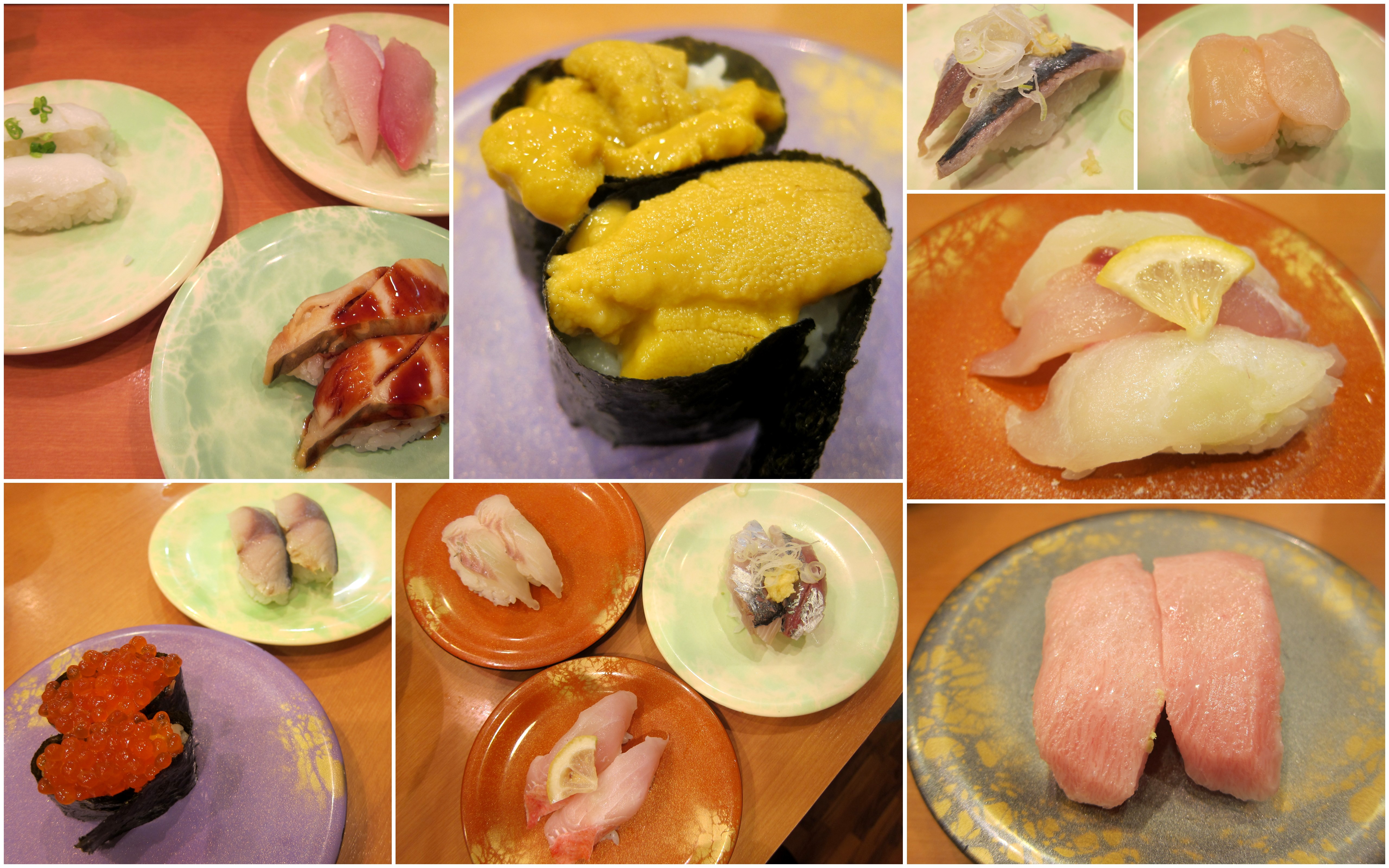
Few things can be faster than sitting down at a conveyor belt and picking up plates of food floating by you. This kaienzushi (conveyor-belt sushi) is rather more intimate (less fastfood-y) than other kaitenzushi’s because the chef is right there, and you can ask him to prepare specific nigiri to order.

kaitenzushi-pudding
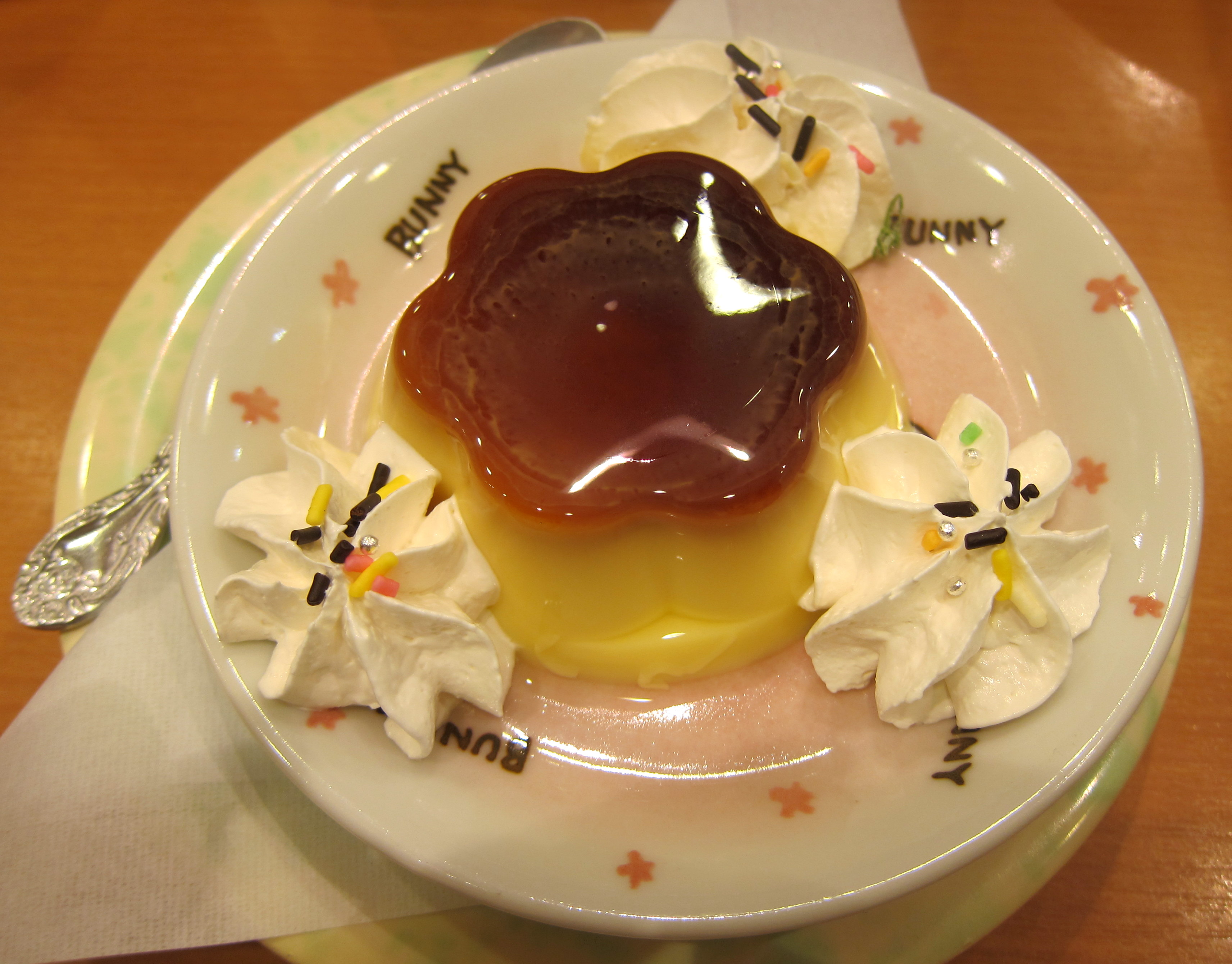
The most rewarding plate that I look forward to all night was after the fish, though. My friend said that I can buy loads of these puddings at the store. Well, what does that matter? Little Kana in Papadol! likes the pudding at kaitenzushi, and we can’t get it at a traditional sushi-ya, that makes it plenty special!

——————————————————————————————-
Guest blogged by C. from Katsushika.

Foodnotes:
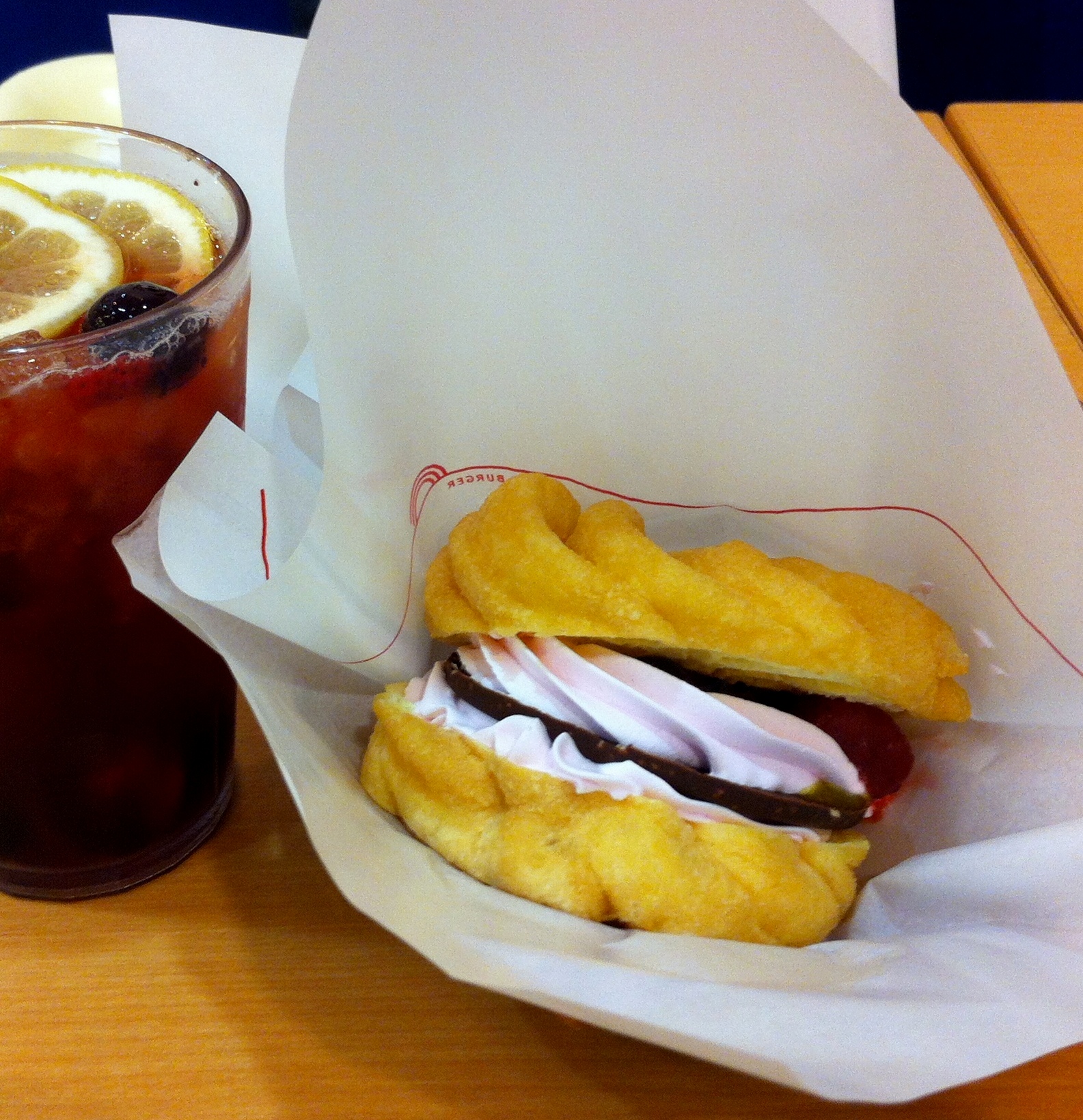
(*) I have had a Mister Donut donut, however, in the form of a dessert Mos “burger” with strawberry sauce, chocolate with rice puffs, strawberry whip cream and fresh fruits (290 yen):

mos-dessert-burger
More Mos Burger + Mister Donut creations here. (I want the French Cruller so bad!)

Flavor Japan: Summer eating in Tokyo

August 19, 2014 By: Mai Truong Category: Festivals, Flavor Japan, Japanese, sweet snacks and desserts, Travel

When I saw GaijinPot published 2 pieces on summer food and summer festival food in Japan, I wanted to write a piece on the same topic, but I got skewered like a dango stick in work. Now that summer is on its way out, here’s an account of what we can (and should) eat in summer in Tokyo – for next year, that is 😉 .
THE SAVORY:

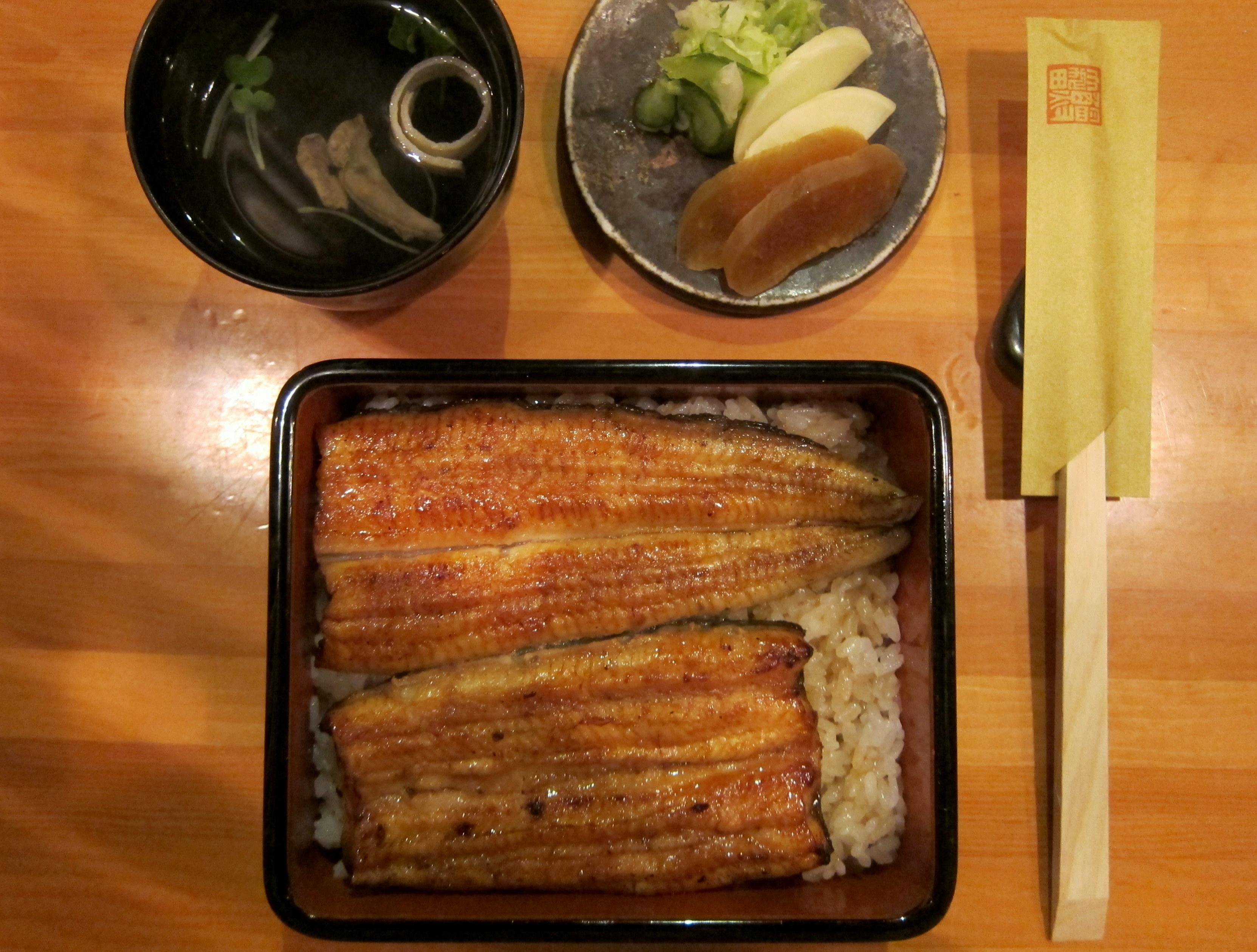
Unaju at Oodawa (~ $20 per set)

Unaju at Oodawa (~ $20 per set)

1. Eel: this is THE summer food. We Asians believe that eels help cooling the body. Do I feel bad helping to decrease the dwindling number of eels? Yes. Do I get scarred for life by the horrific eel massacre scene in “Jiro: Dreams of Sushi”? Yes. I can proudly say that I had not eaten any eel this summer except this one unaju because my friend’s boss recommended my friend to recommend me of this Oodawa shop near Kashiwa station.
(Gotta say though, most Japanese dishes are naturally 548 times better in Japan than in the States, BUT unaju is not one of them.)

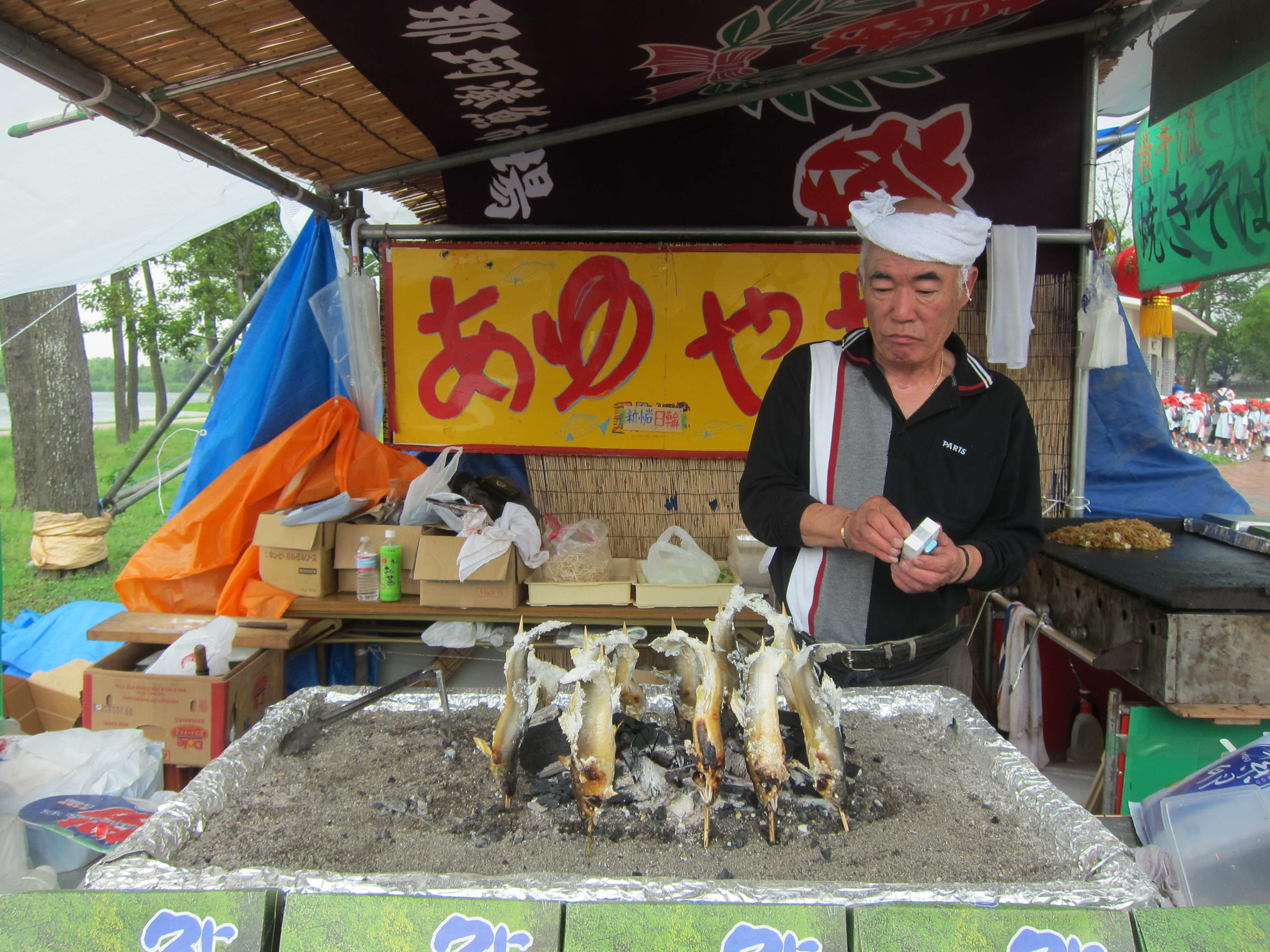
ayuyaki
2. Grilled ayu on a stick: basically you should eat anything on a stick. This “sweet fish” is grilled on coal, coated with enough salt to pickle your stomach, and full of tiny bones. You eat it for the spirit of festivals, mostly.

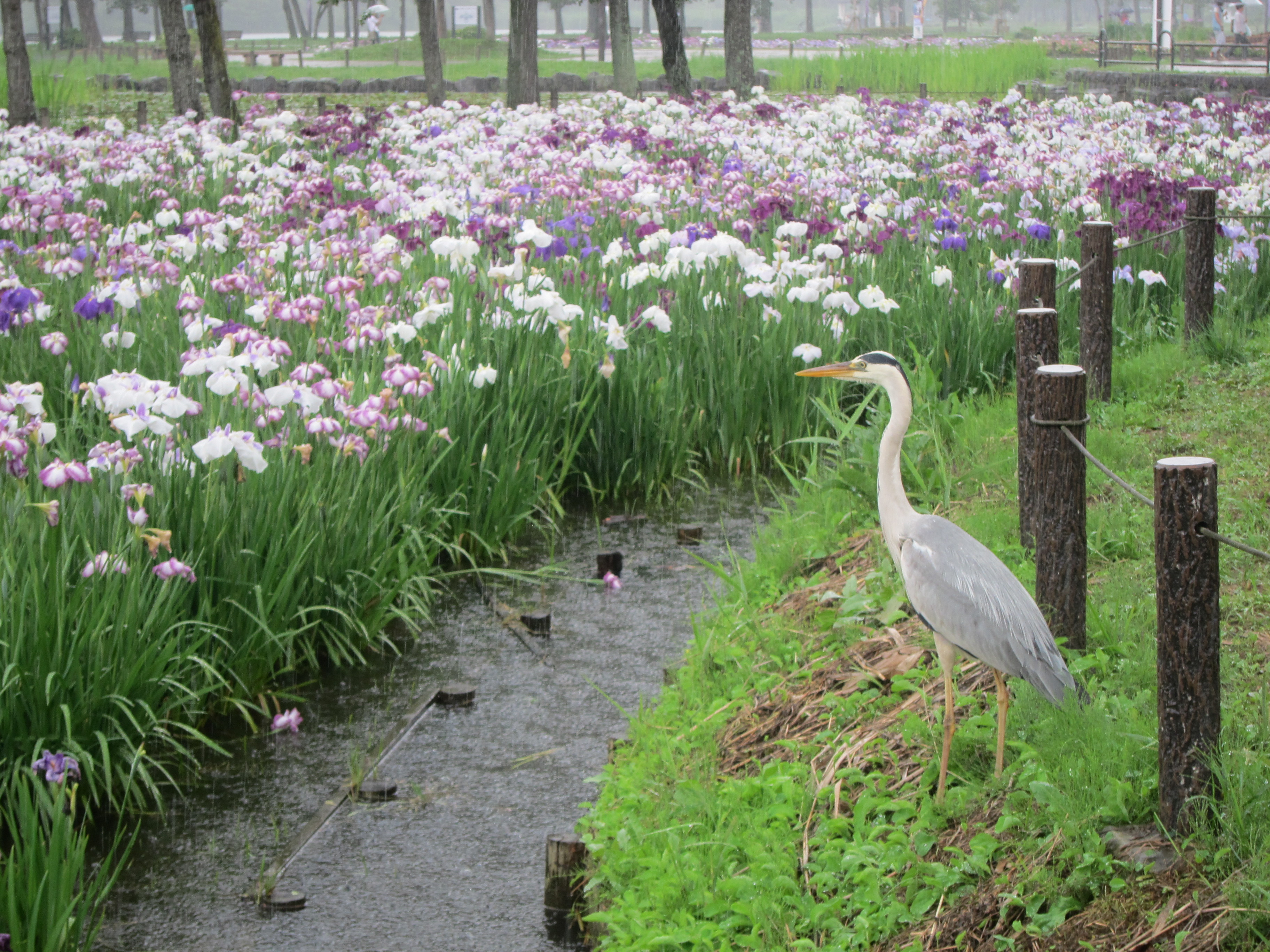
Katsushika Iris Festival in Katsushika Park - a rainy Sunday in June

Katsushika Iris Festival in Katsushika Park – a rainy Sunday in June

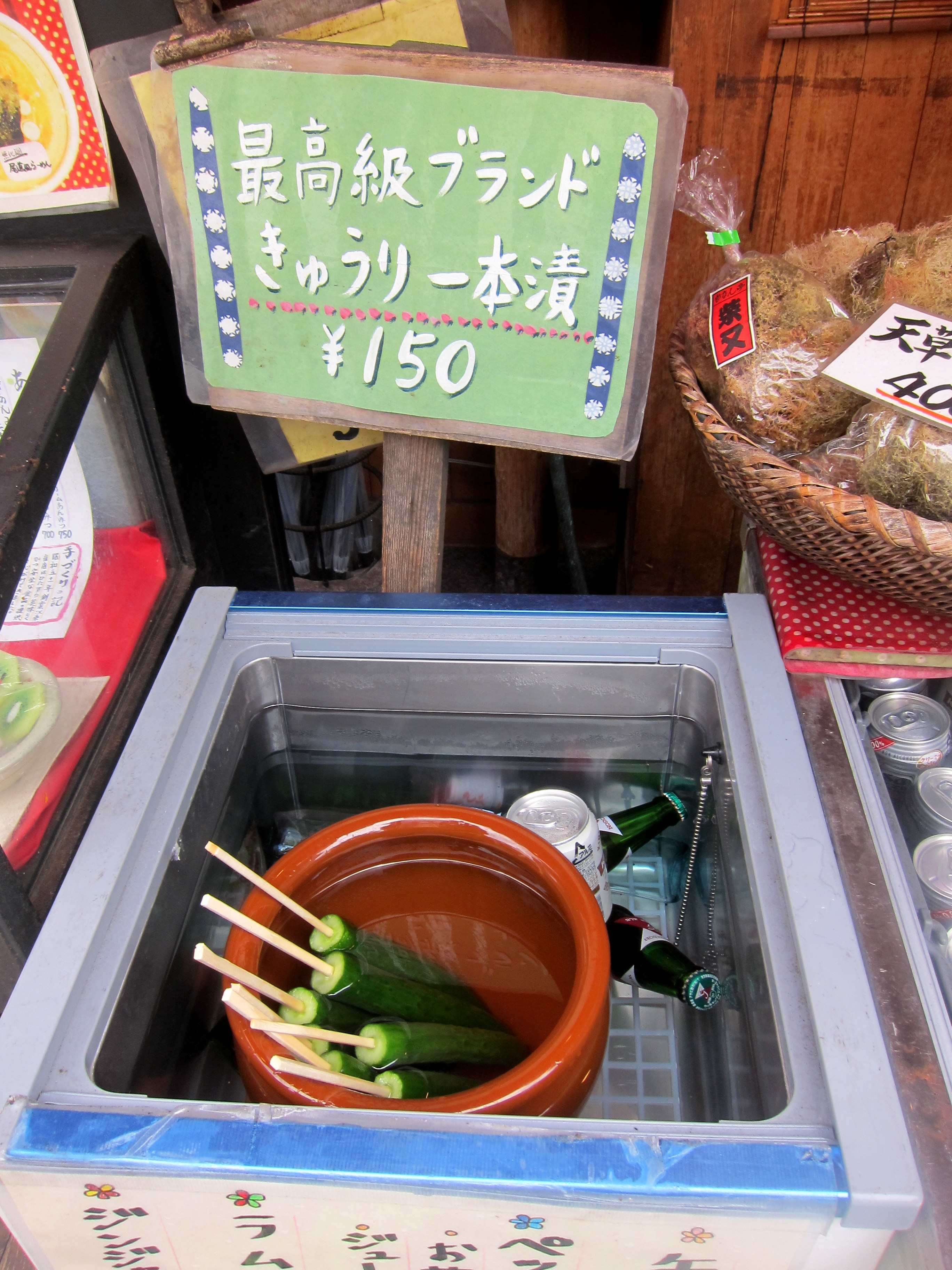
cucumber-stick
3. Cucumber on a stick: can’t get any more heat-combatant than this.

somen-set
4. Cold noodles: soba, somen, cold pasta with boiled anchovies. They’re MUCH better than they sound to our hot-soup-acquainted ears.

highschoolfest-okonomiyaki
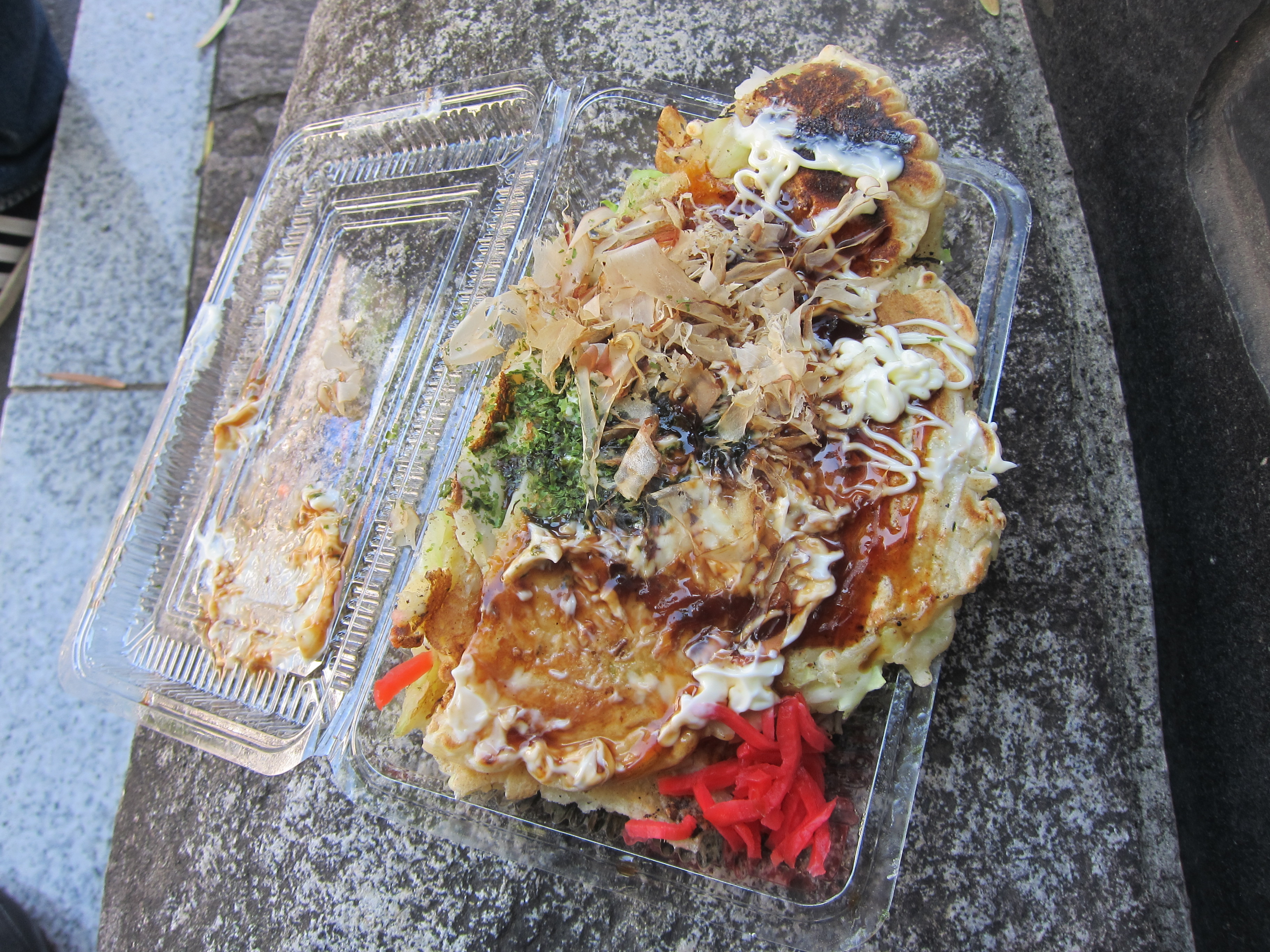
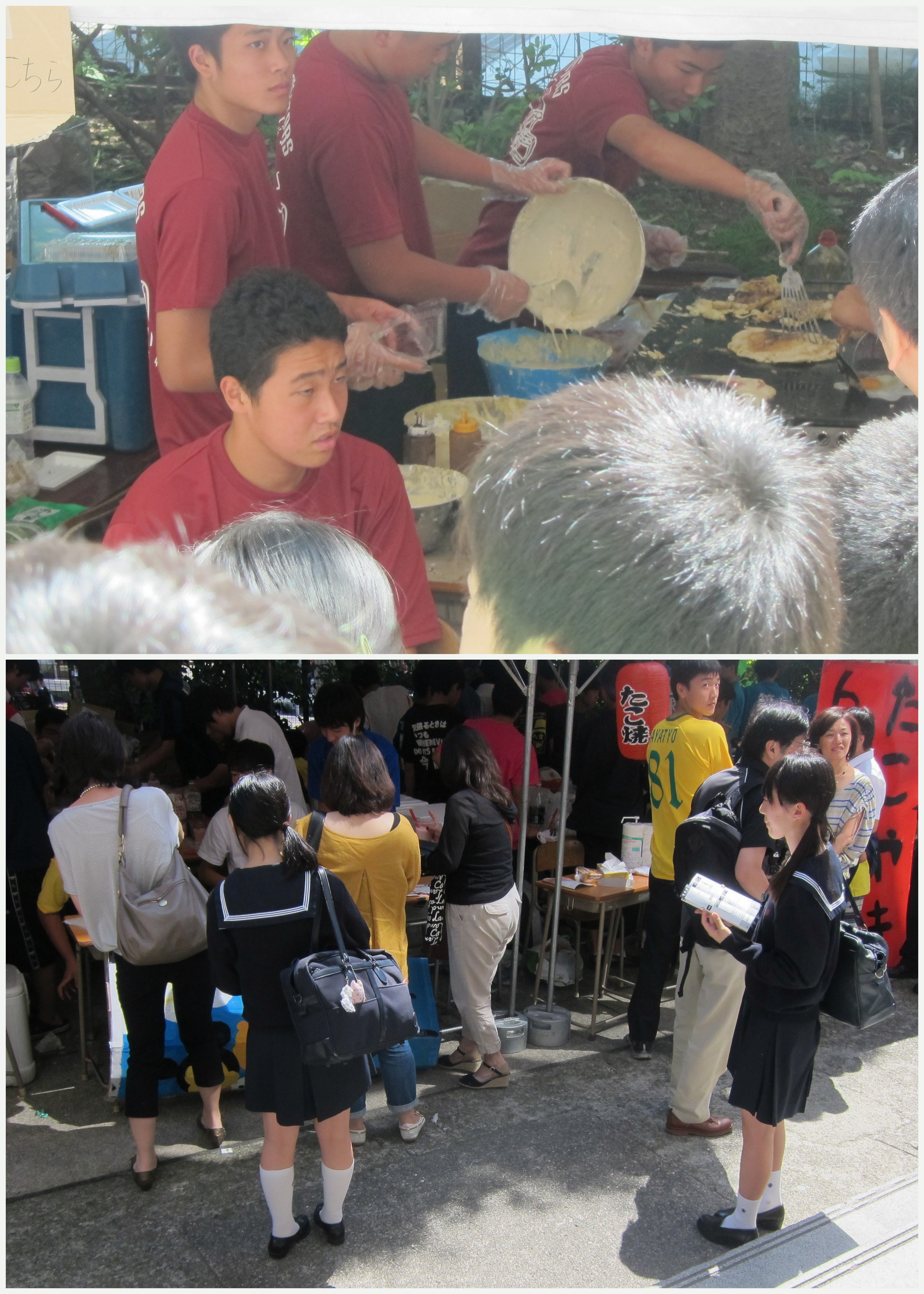
5. Okonomiyaki: not the ones in okonomiyaki shops, but the ones highschoolers make at their school festivals. We chanced upon one of them right next to Kencho-ji when we were exhausted by heat and humans in Kamakura. It was cheap and delicious.

highschool-festival-next-to-Kencho-ji
Standing in line with all those kids in uniforms, I felt as if I were in an anime.

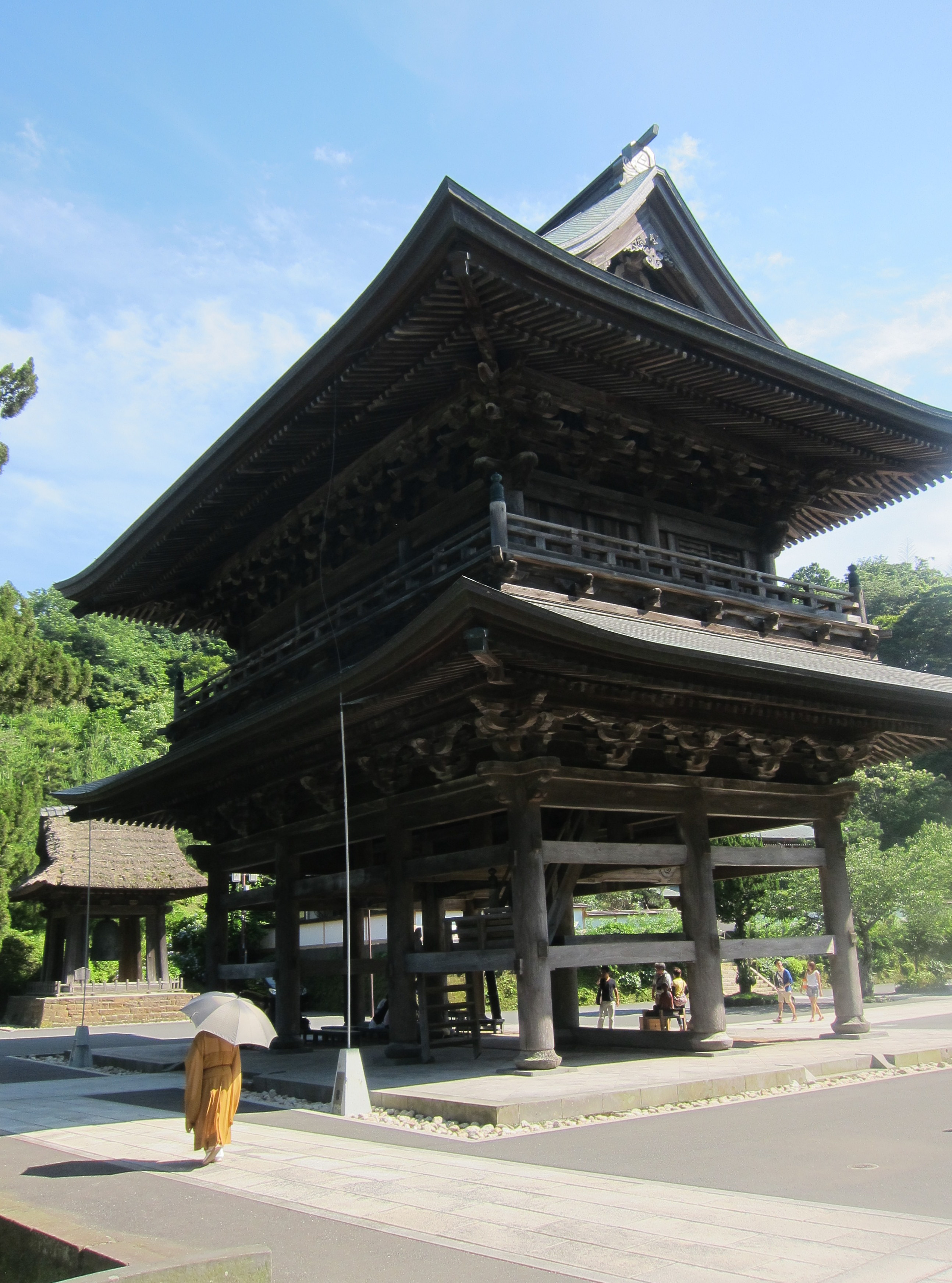
One of many temple structures in Kencho-ji, the oldest Zen temple in Kamakura.

One of many temple structures in Kencho-ji, the oldest Zen temple in Kamakura.

THE SWEET:

mitsumame
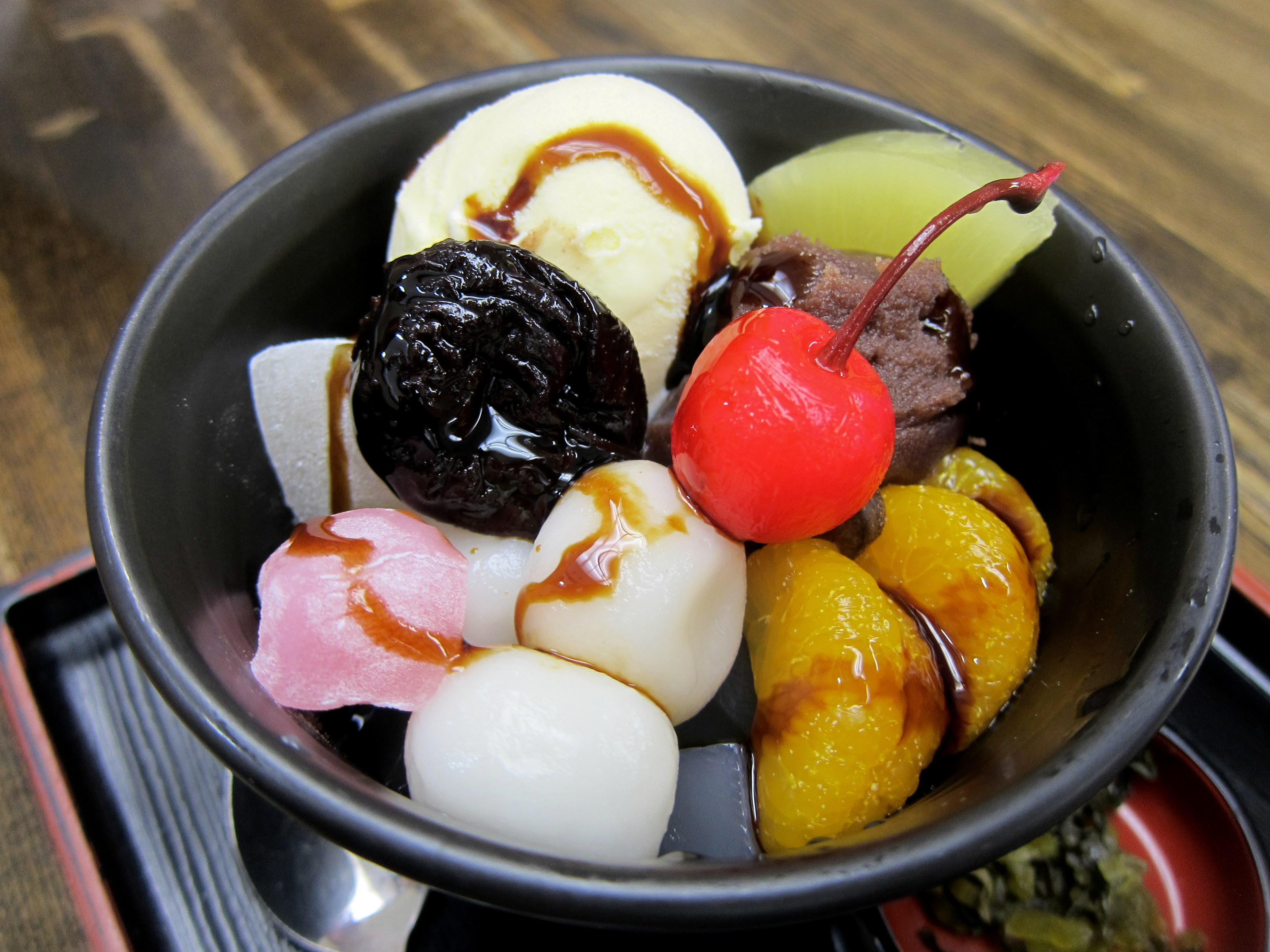
1. Mitsumame: I know some people would MUCH prefer kakigori, but thirst-quenching as it is, I have a morbid fear of eating shaved ice because in some distant past, my mom said kids who chew on ice would soon lose their teeth. So I seek shelter in ice cream. Mitsumame has ice cream, and mochi, and fruits, and syrup.

Two types of warabi mochi on the far left - at a mochi shop in the Sky Tree center.

Two types of warabi mochi on the far left – at a mochi shop in the Sky Tree center.

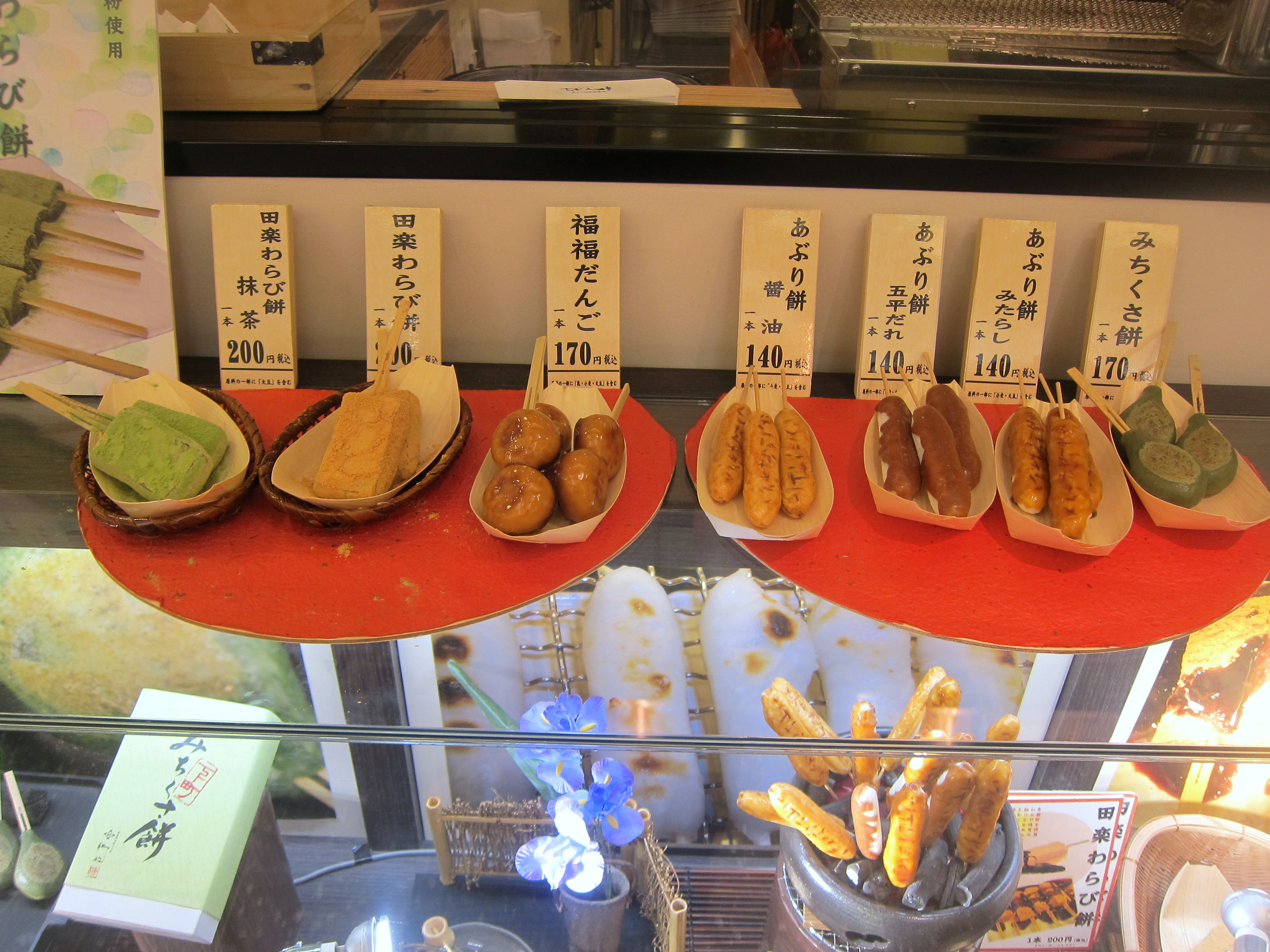
2. Warabi mochi: of all types of mochi, dango, and daifuku, warabi mochi is the lightest, mildest, and coolest. It just soothes your throat. Green helps too, I felt like I was eating something healthy.

supermarket-fruits
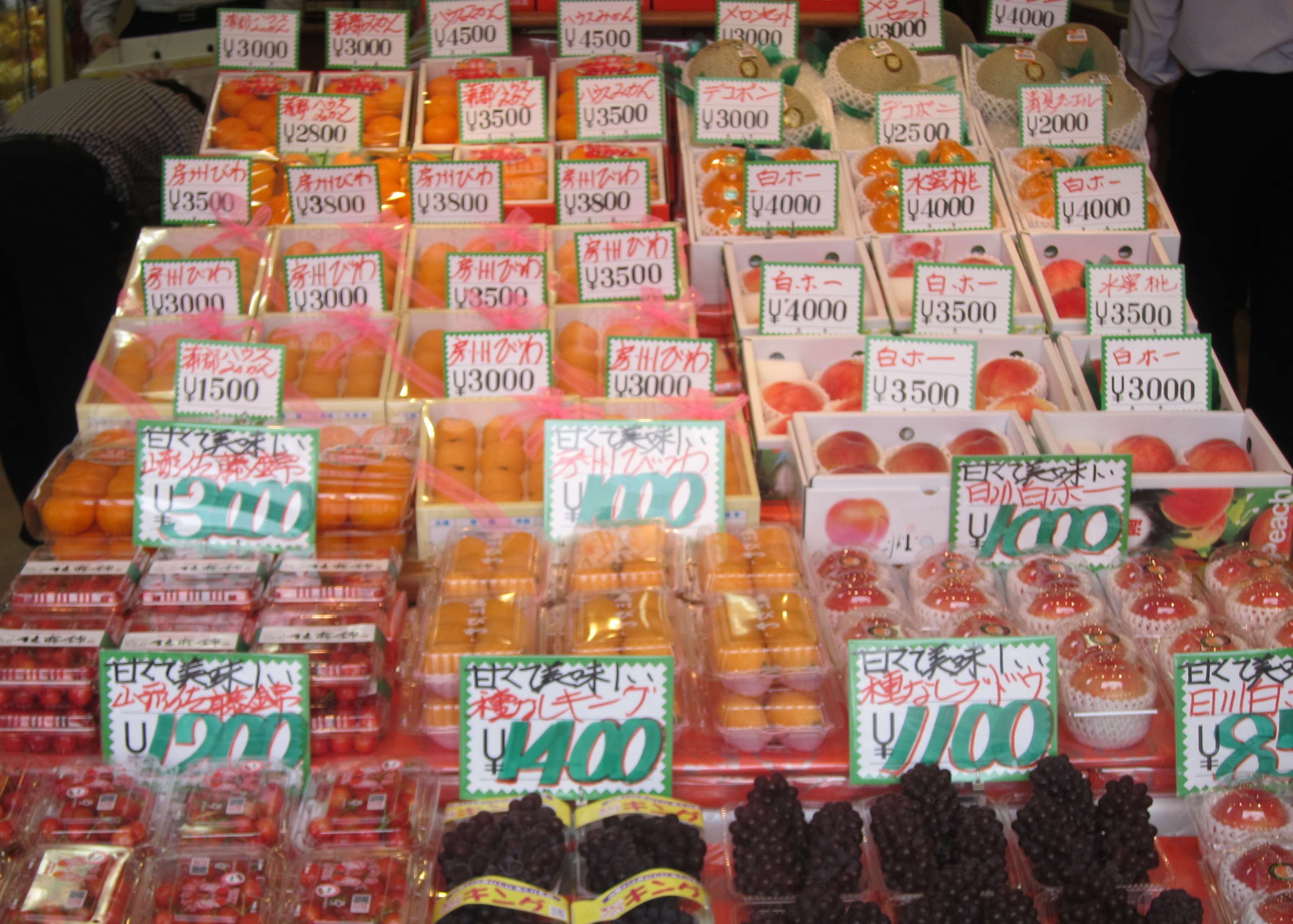
3. Fruits: eat fruits if you have no more windows to throw your money out of. Remove 2 zeros from the price tags and you get the price in USD. $14 for a pound of grapes and $35 for a few peaches?! This is one of those times when I don’t like Japan.

—————————————————————————————————————————————————-

Guest blogged by C. from Katsushika, Tokyo.

Flavor Japan – Somen

August 06, 2014 By: Mai Truong Category: Flavor Japan, Japanese, Travel

somen-set
The third installment of the “Flavor Japan – Noodles” series: somen, i.e., Noodles Part 3. Somen is thin white wheat noodle, much thinner than udon and much lighter than soba (buckwheat noodle). Why have I not seen any somen in The States?!! It most closely resembles the Vietnamese bún in bún thịt nướng (grilled pork with rice vermicelli). Is that why I love it the most now, more than ramen, udon or soba? Maybe. This noodle is such a beauty.

IMG_2192
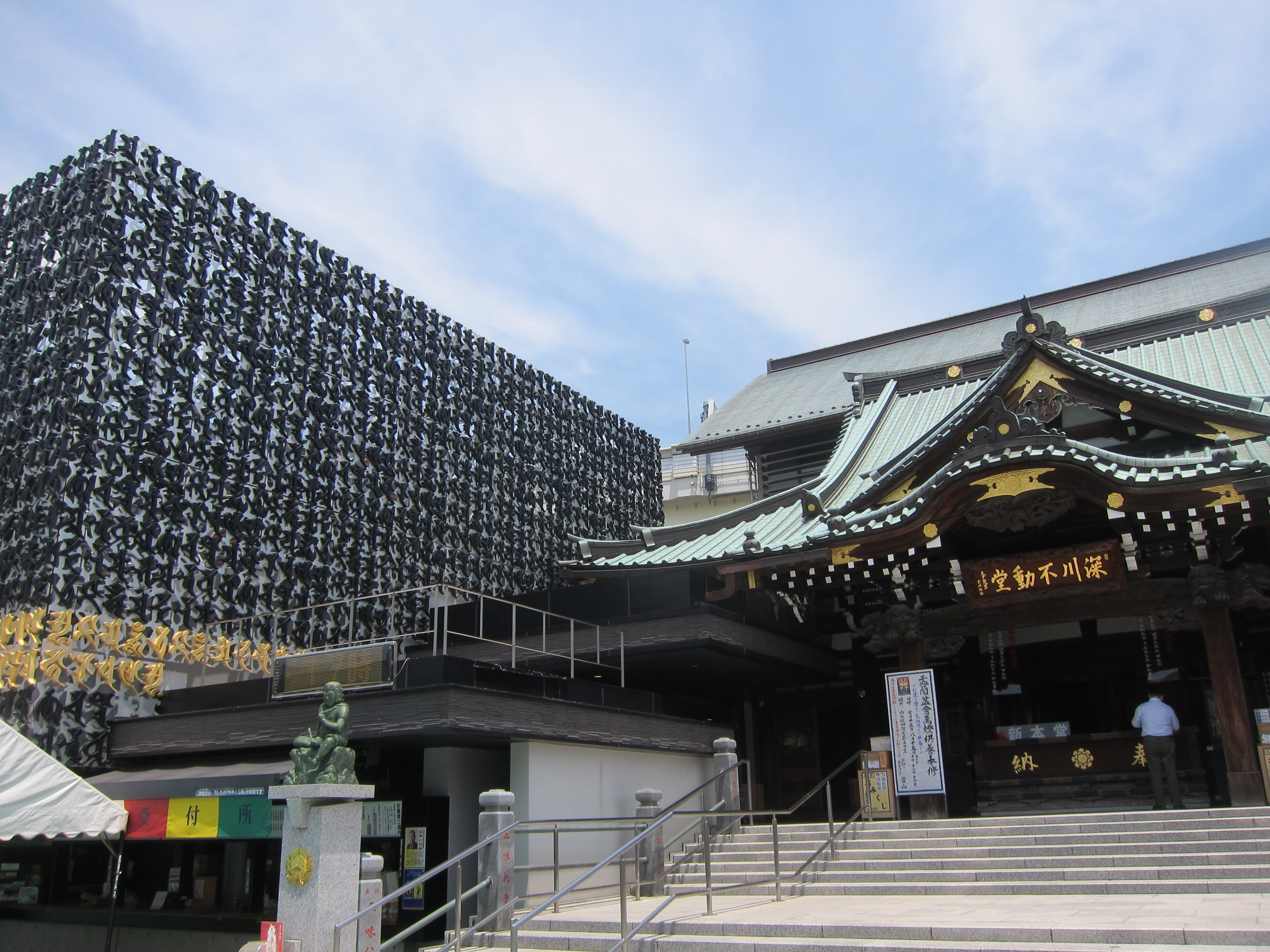
The day we had it was also a beauty. We were wandering around Fukagawa at 10:45 or so and no restaurant that we wanted to try was open. Then I heard drumming and chanting, so I dragged Mutsumi toward the sound and ended up in Naritasan Fukagawa Fudoudou. Two imageries of this big temple will stay forever in my head: 1. a modern hall whose white outer walls are covered with a Sanskrit mantra in black, and 2. the fire ceremony with powerful drums, beautiful garments of the monks, and exceedingly warm and mellow chanting. We came in the middle of the ceremony, and it went on for at least another 30 minutes. The experience was so serene and so efficacious that I felt blessed being there. (Actually, the monks perform this ceremony daily, but chancing upon it without knowing about neither the temple nor the time of the ceremony beforehand is pretty miraculous already, don’t you think?). Photos were not allowed, and the atmosphere made me too obliged to be sneaky.

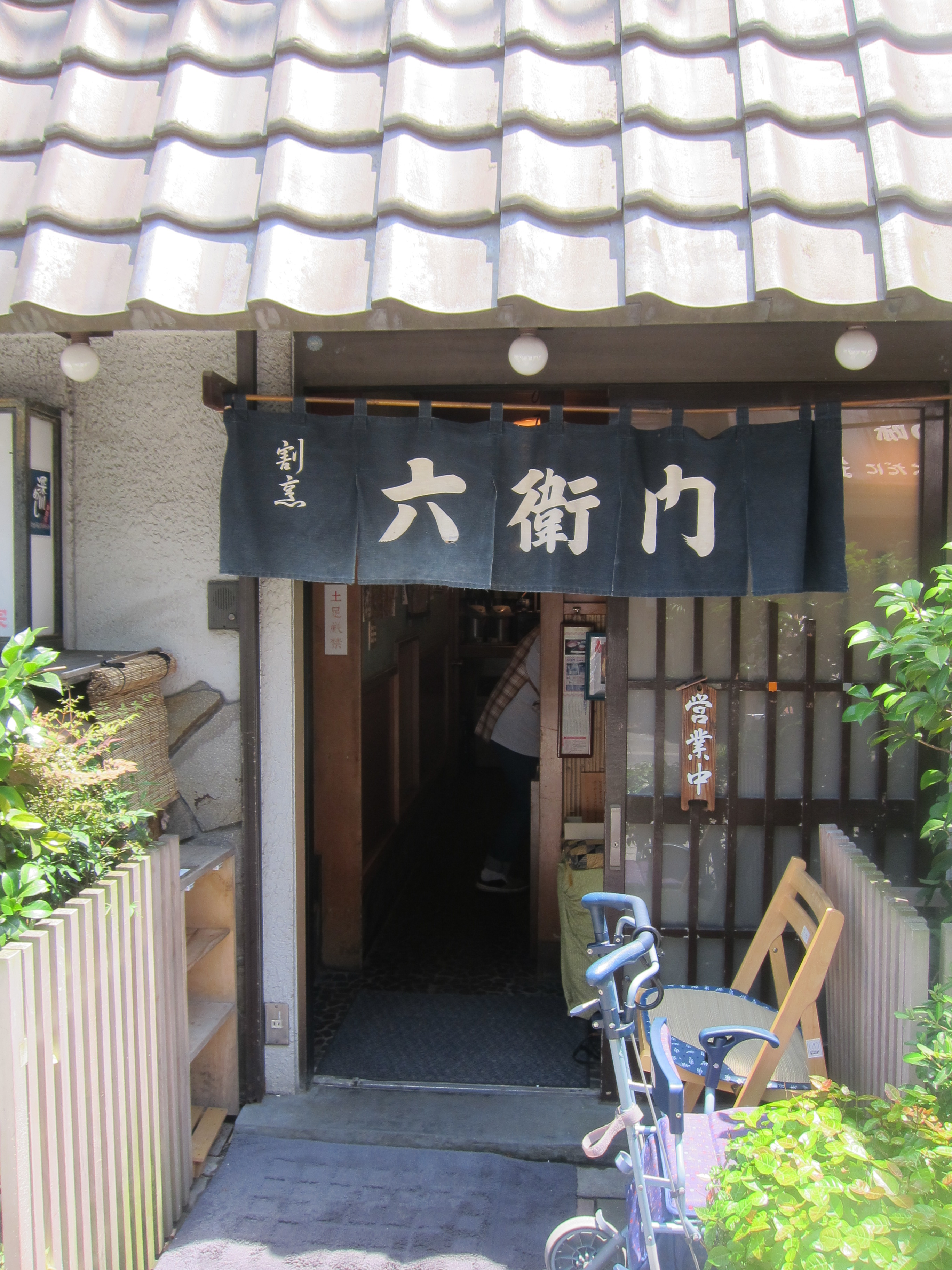
fukagawa-rice-noodle-shop
Our luck improved after the ceremony: restaurants had finally opened. By myself, I probably wouldn’t have wandered into this unassuming little shop though, because I wasn’t in the mood for noodles (!!!), but Mutsumi was, and how wise she was!

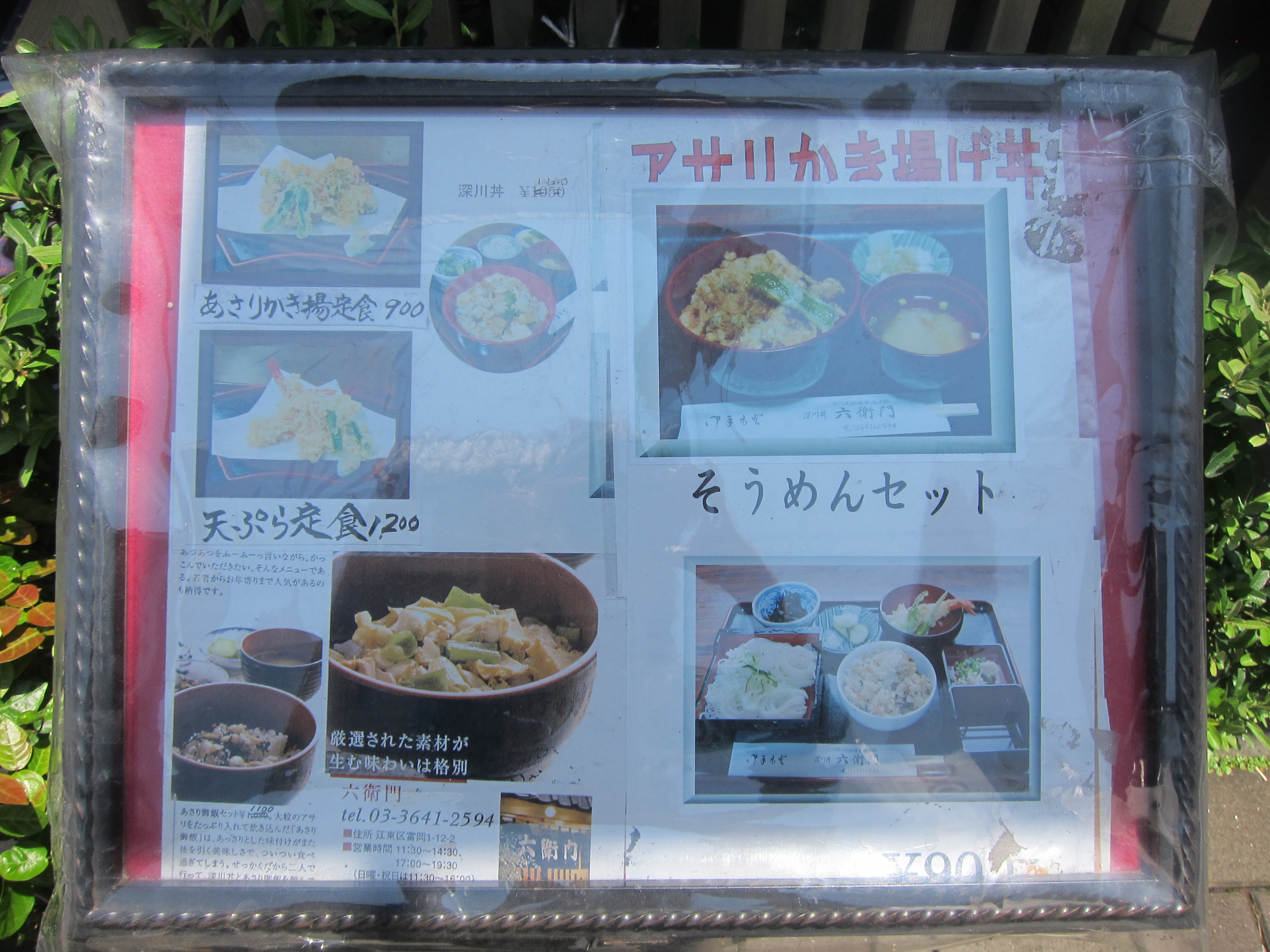
fkgw-shopmenu
The menu outside.

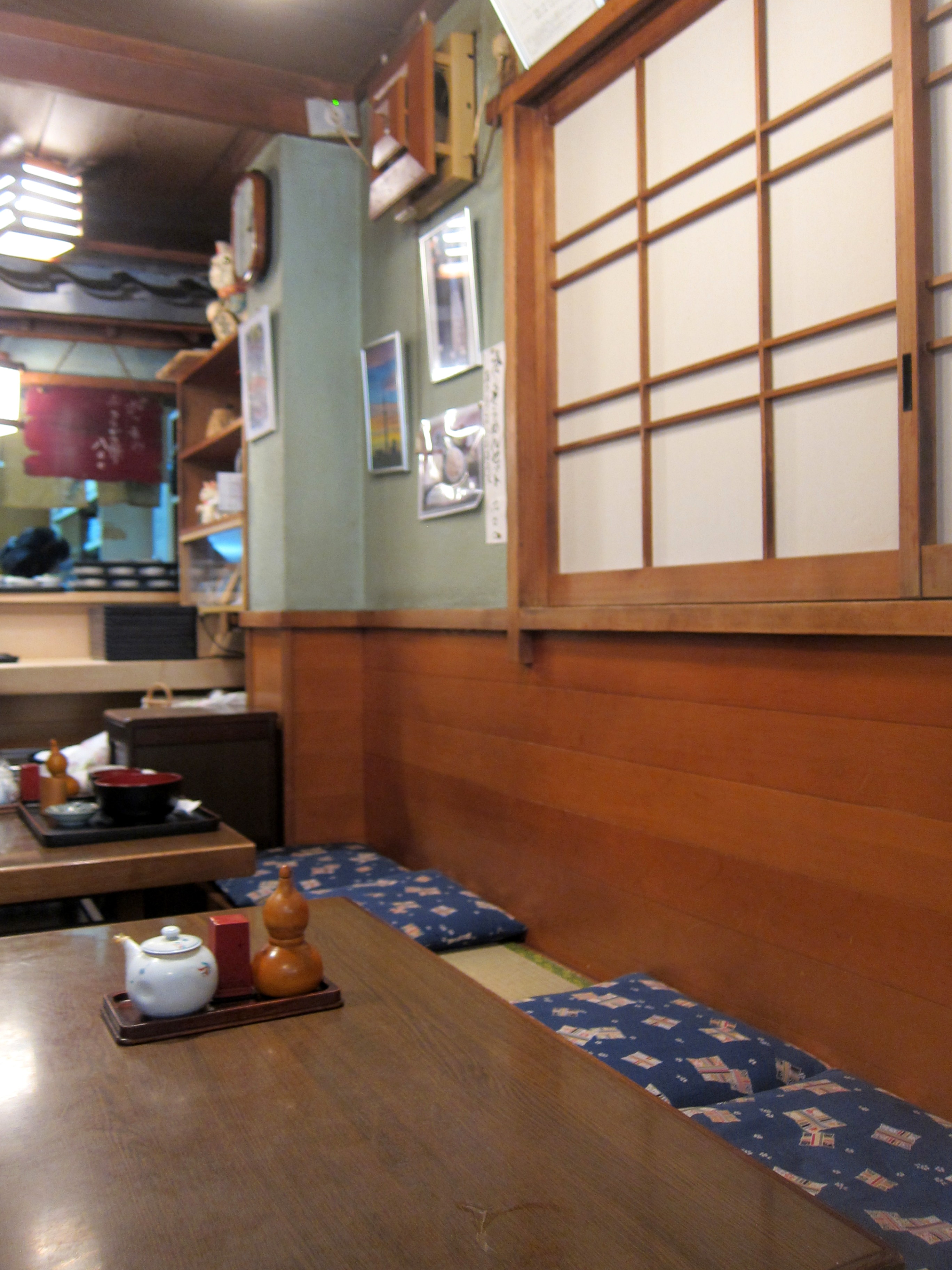
fkgw-inside-shop
The inside. Just enough room to seat 10 people downstairs, and if I’m not mistaken, there’s some seating upstairs too, for Mutsumi recognized a famous comedian walking upstairs to lunch.

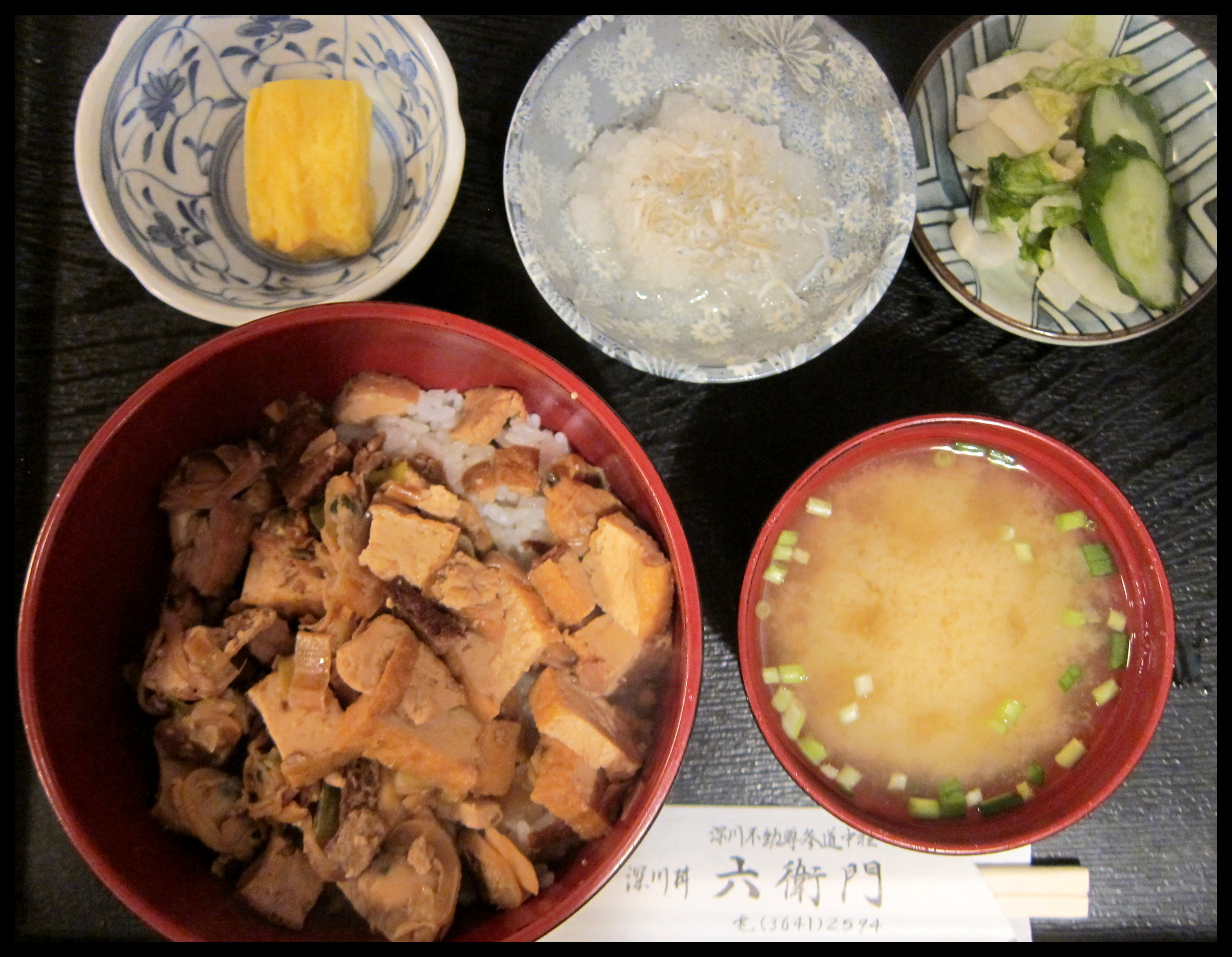
fukagawadon
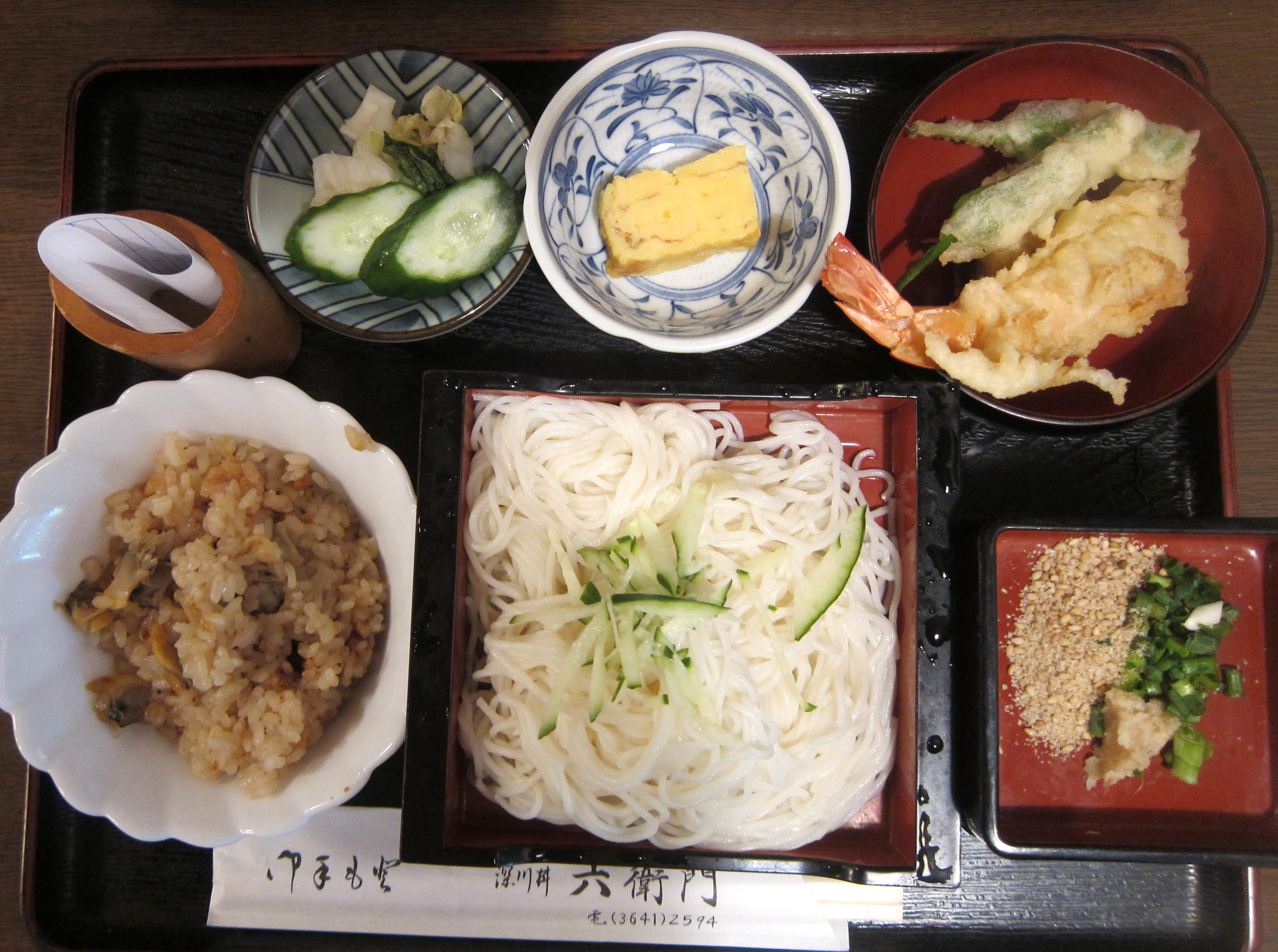
Mutsumi got the regional specialty: fukagawa don – rice bowl topped with clam and tofu. The clam and tofu are simmered in some miso-based sauce just sweet and savory enough to contrast the refreshing quick-pickle and grated daikon on the side. Story (from Mutsumi) has it that the geisha of this district liked fukagawa don, and I’m inclined to believe that the geishas were connoisseurs.

somen-set-angle
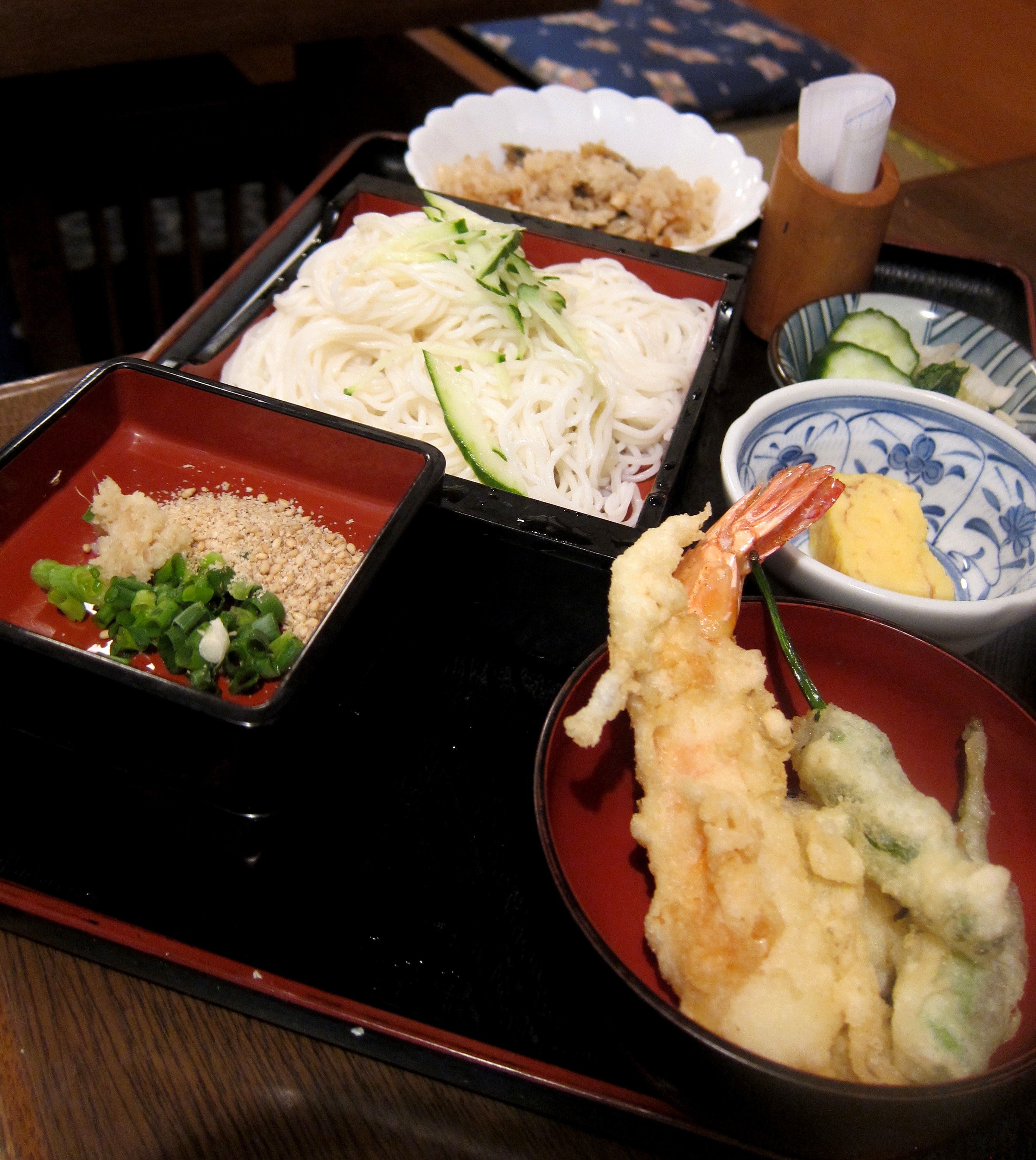
My lunch set was more captivating than I expected: a small bowl of fukagawa don, tsukemono, the most pillowy piece of fried egg I ever had, tempura, SOMEN, and its accompanying dipping sauce. The somen went down so easily I had to refrain from finishing too fast. Little did I know, my eating was a spectacle to Mutsumi. She thought to herself at first that there was no way I would finish everything, and to her amazement not only did I finish it, I had room for dessert a few minutes later. (^_^)

I can’t read the name of the shop, but if you’re ever in the vicinity, visit Naritasan Fudoudou and walk a few steps to this shop. A lunch set like mine will set you back for only 900 yen (~ $9), but you’ll feel so elated that you can eat a whole street of desserts, too.

———————————————————————————————————————–———————–——————

Guest blogged by C. from Katsushika, Tokyo.

Flavor Japan – Noodles Part 2

July 24, 2014 By: Mai Truong Category: Flavor Japan, Japanese, Travel

somen-set-angle
Ramen is all hip now and if I were that into ramen, I probably would try a ramen shop everyday until I exhaust all options in Tokyo (it will take only a few lifetimes). But honestly, there’s SO MUCH MORE about noodles in Japan that I’m glad I didn’t spend all my time with ramen. I don’t regret one bit that I had only ONE bowl of ramen in Tokyo the entire stay. When I think about the spaghetti with boiled anchovy (you can also have it raw) or somen and rice with clam(*), I’m filled with joy. (I really am!)

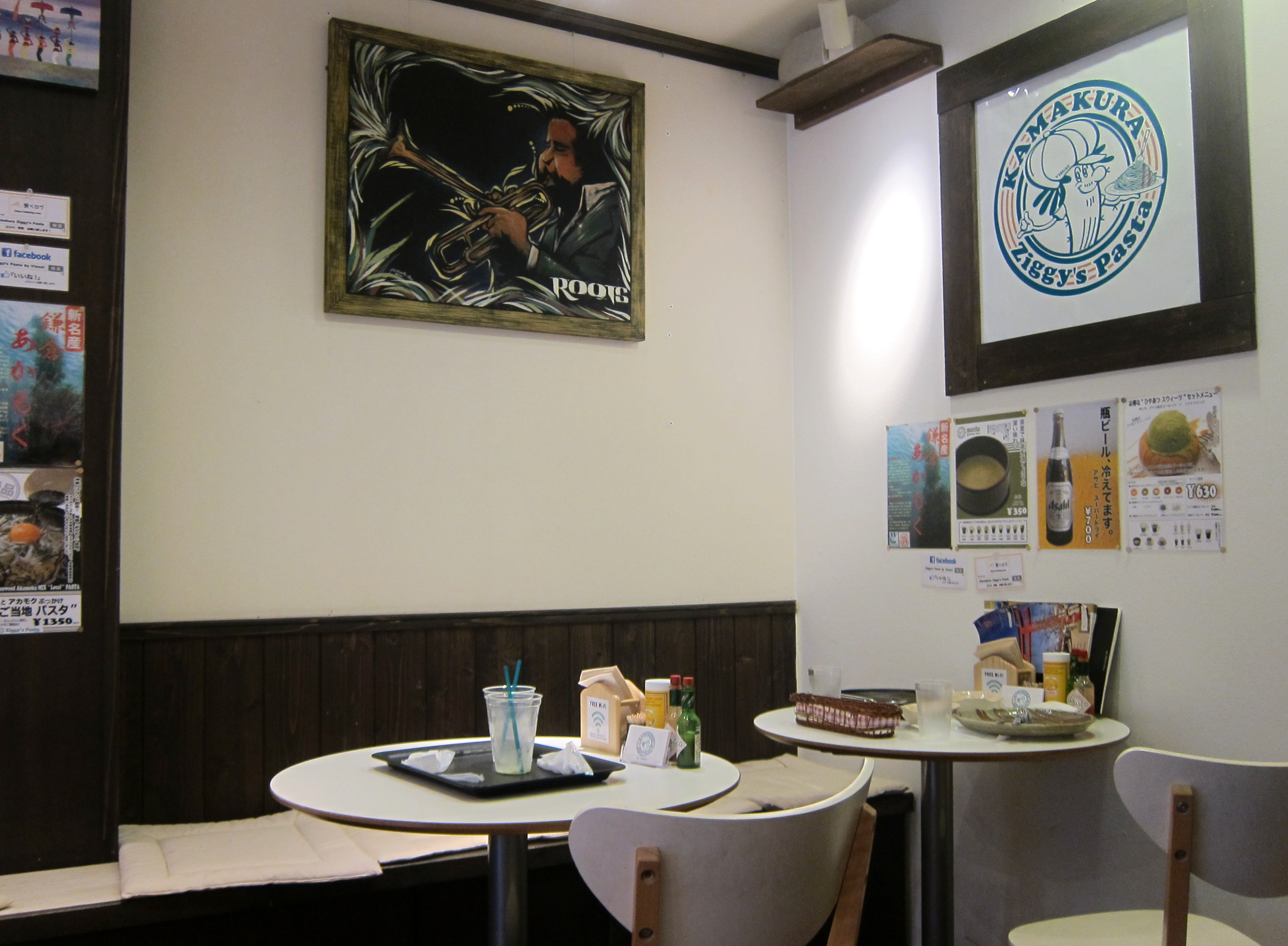
ziggys-pasta
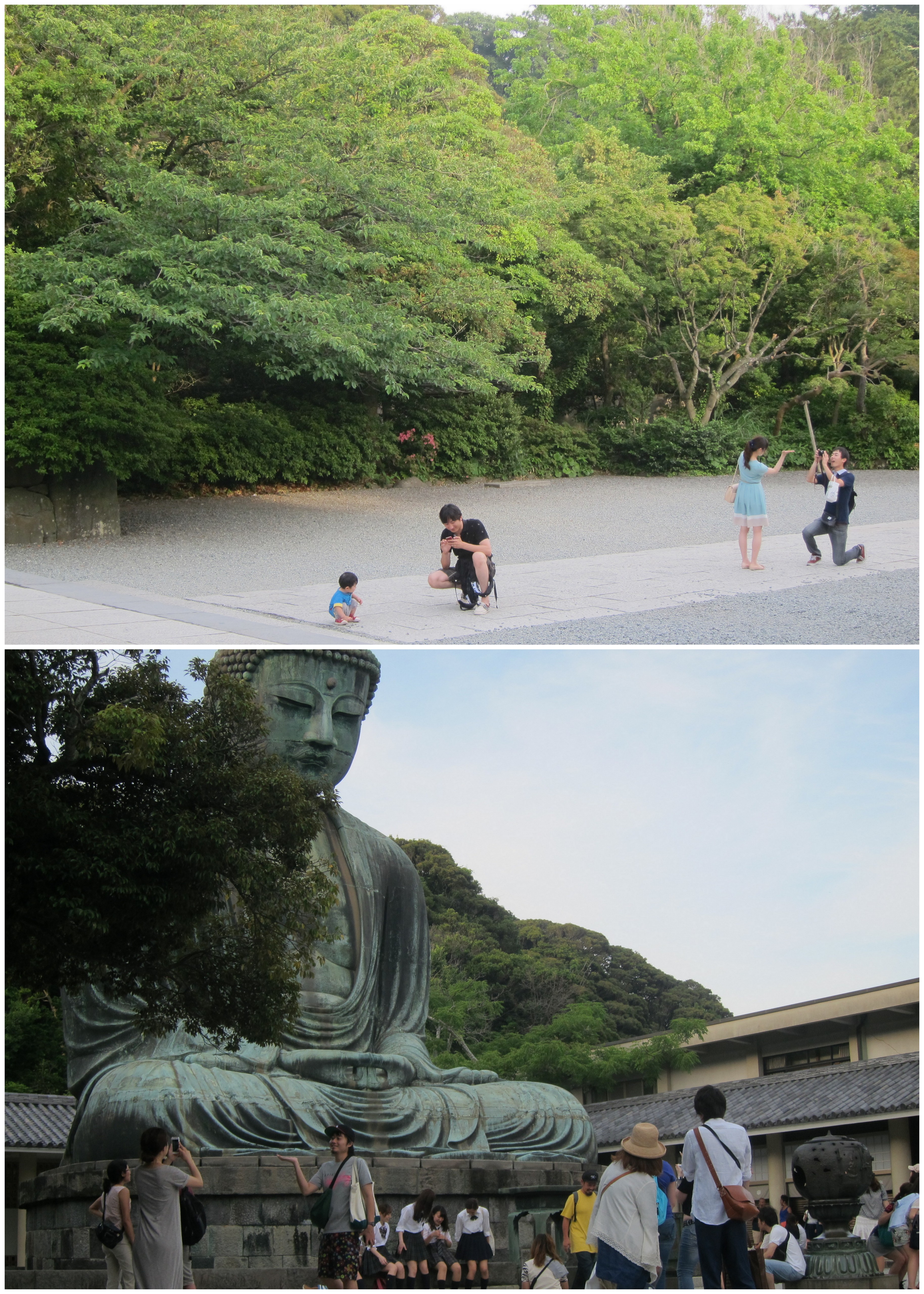
Ziggy’s Pasta is an unassuming shop a stone’s throw away from Koutoku-in in Kamakura – the temple with the great copper statue of Buddha, where 60% of the tourists stick their hands out for a statue-carrying pose.

Kotokuin Temple - Daibutsu
When we visited in Kamakura, my life goal was too eat shoujin ryouri (精進料理) – traditional Buddhist vegetarian meal, but that goal was quickly quenched because everybody and their grandma were lining up outside every restaurant during lunch time, and no shoujin ryouri restaurant was opened for dinner. So we walked along the street in dejection, and suddenly I saw Ziggy’s Pasta. If I can’t have what I want, I might as well eat the first thing I see – pasta.

ziggys-pasta-menu
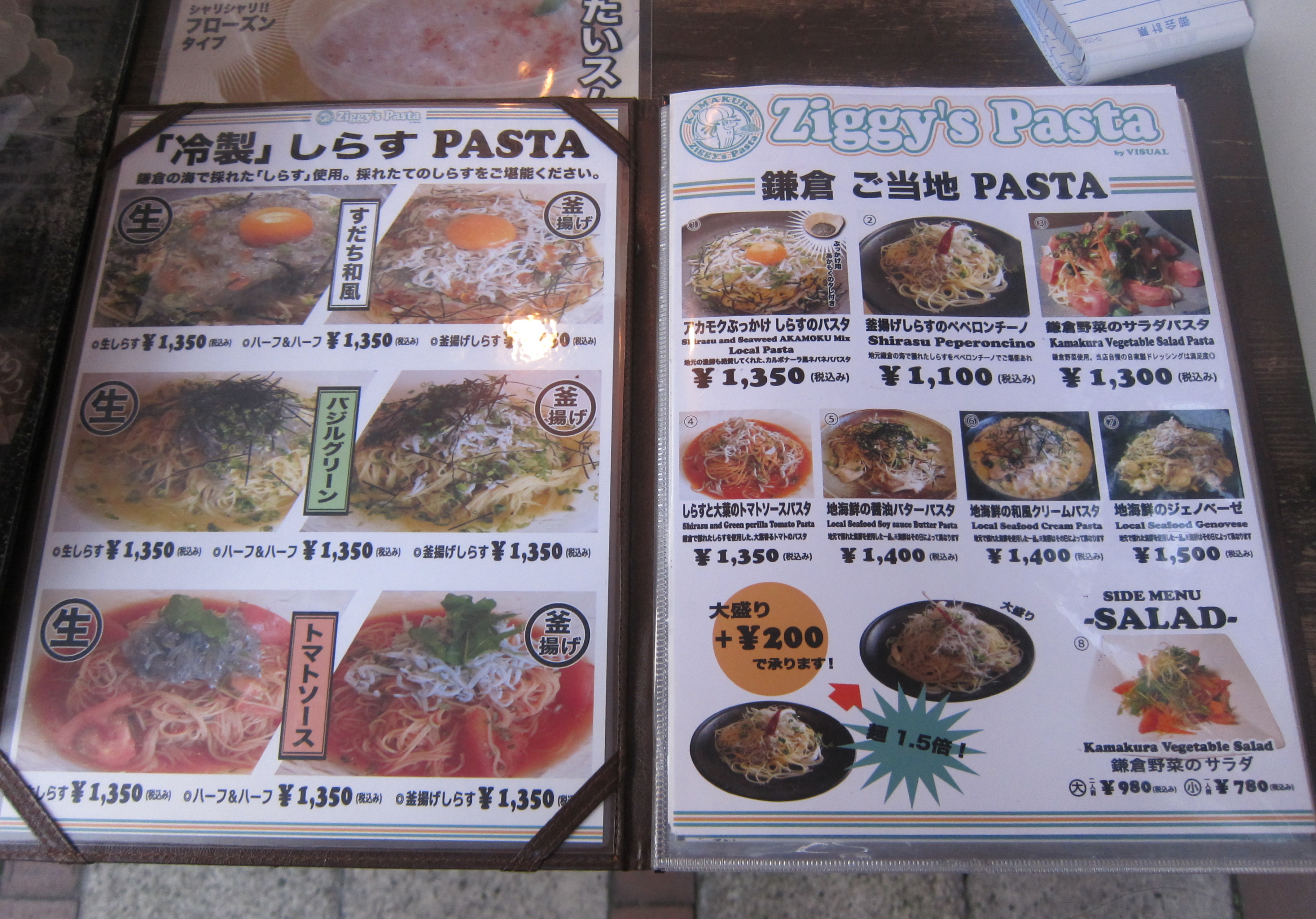
This is their menu. The guy recommended the left page as their specialty: cold spaghetti in 3 different types of sauce topped with shirasu (which I didn’t understand but was in for the thrill anyway), which can be served either raw or boiled. I’m not into tomato sauce and I didn’t know what “sudachi” was (the first category), so that’s that. With “bajiru”, I just felt a chance of knowing what it meant, so I asked him what “bajiru” was. He thought and thought, and tilted his head, “bajiru desu ne…? sorewa, italy no …” (loosely mean “bajiru huh? It’s an Italian …”) and tilted his head some more. I tilted my head too, to search for an Italian thing that is green and starts with “b”. It took me a good minute. Can you guess?

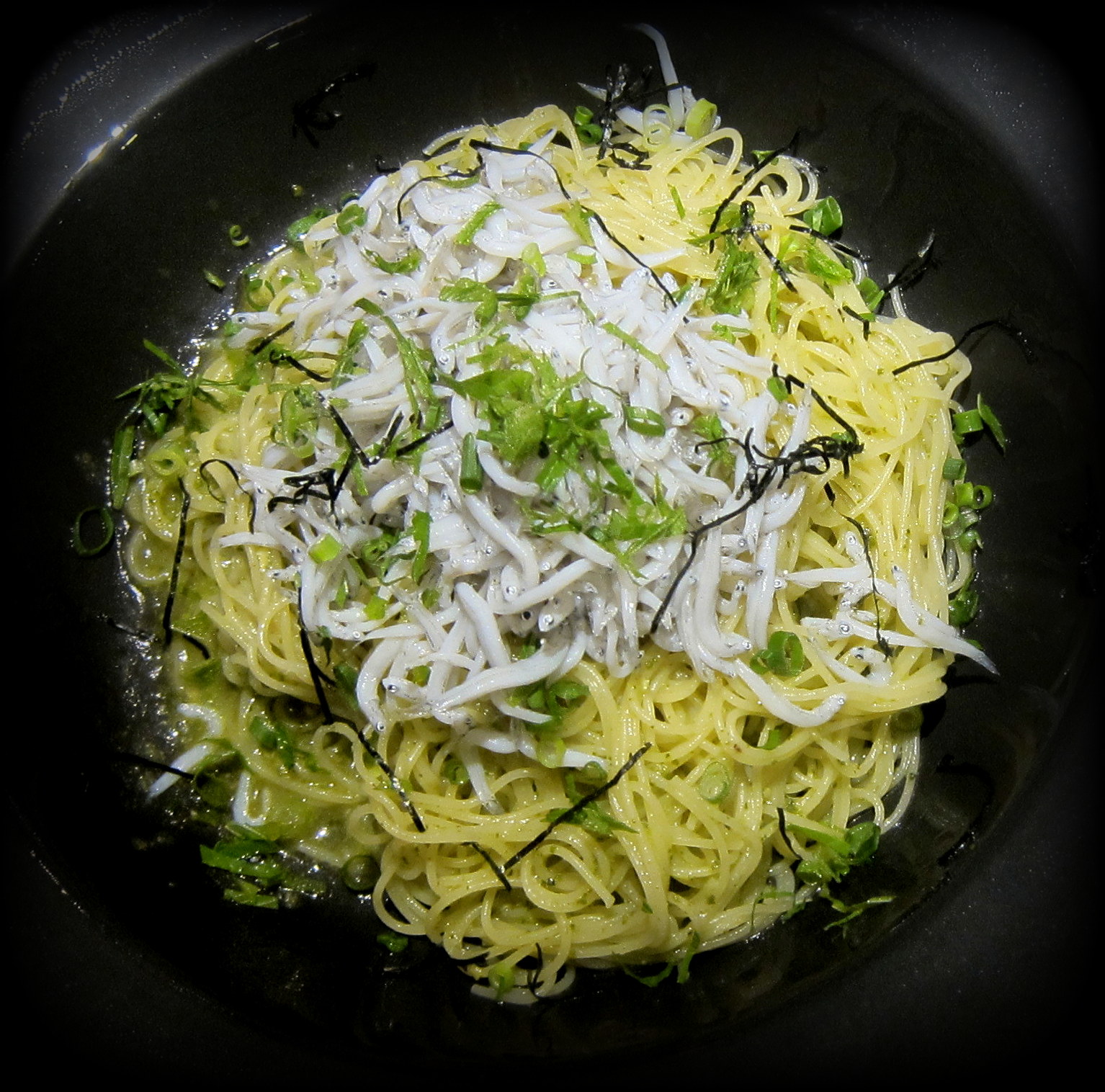
ziggys-basil-pasta-shirasu
Here is spaghetti with boiled shirasu (anchovy) in bajiru sauce. Admittedly it neither sounds nor looks too heart-warming – I had never had cold pasta with fish before, much less boiled fish, but this dish confirms that the Japanese knows how to work their fish into everything. The fish is not at all fishy, just a tiny bit salty, the pasta and the sauce work together splendidly, and the coolness from the plate to the silverware to the pasta lifts you up from the afternoon summer heat like no other. I was revived.

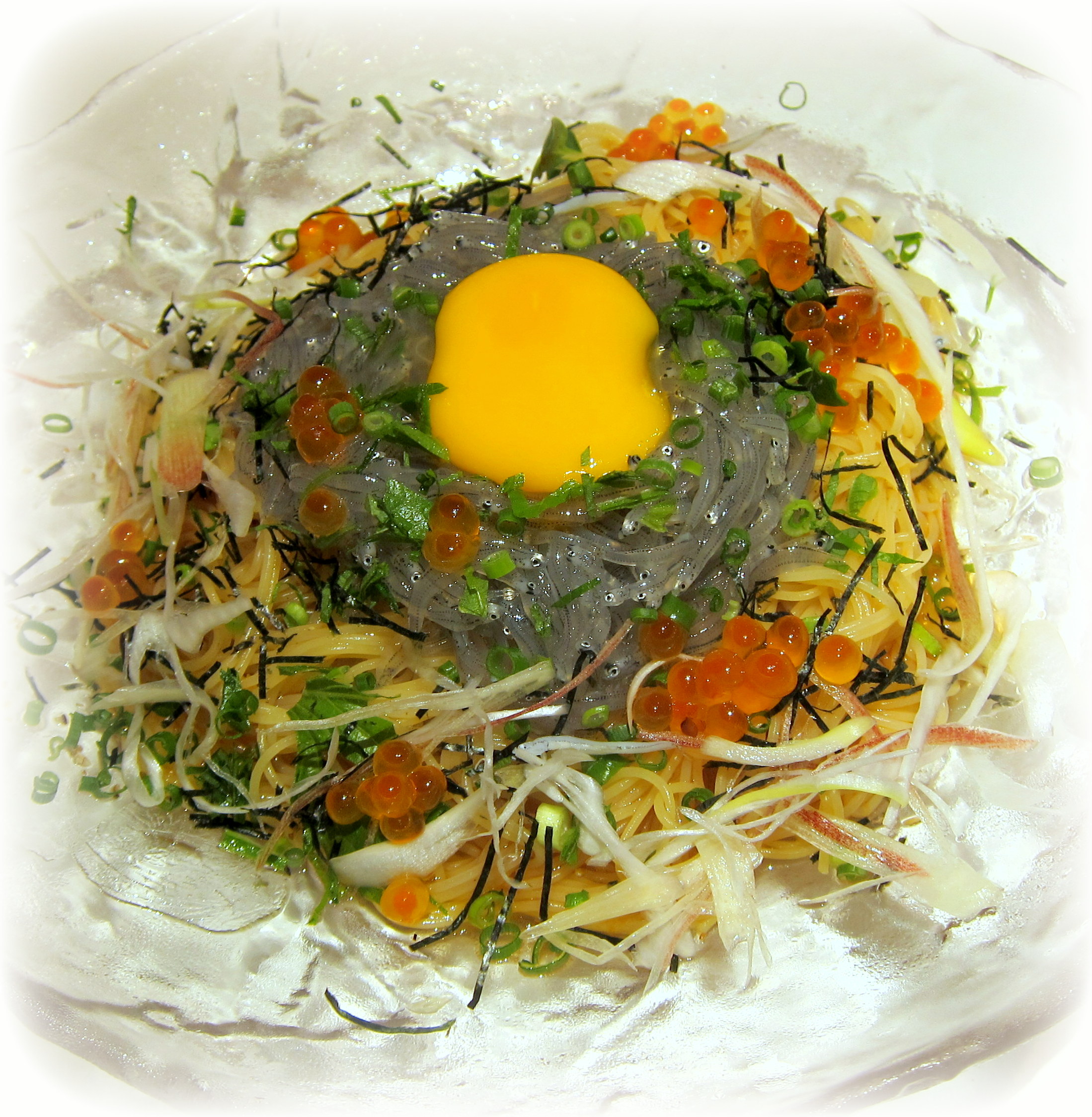
ziggys-sudachi-pasta-shirasu
The sudachi option with raw anchovy has more zest, but I think I’m not quite there with the raw fish, they go down a little too… smooth? This dish was definitely going for the slimy smooth theme, considering the raw egg and ikura (salmon roe). The myoga (Japanese ginger flower buds) adds a much appreciated crunch, though.

Thinking back, the evening at Ziggy’s Pasta was one of the more memorable meals I had in Japan. It’s worth missing out on the traditional Buddhist meal. Sure, spaghetti is much less Japanese than shoujin ryouri, but where can you find spaghetti like this but in Japan?

Address: Kamakura Ziggy’s Pasta
神奈川県鎌倉市長谷1-16-25
Kamakura, Japan

(To be continued)

Foodnote:
(*) Somen and rice with clam will have to wait until Noodles Part 3. Originally I intended to do them with cold spaghetti, but as I wrote on, I realized that cold spaghetti deserves it own post, and so does somen. 🙂

———————————————————————————————————————–

Guest blogged by C. from Katsushika, Tokyo.

Flavor Japan – Noodles

July 10, 2014 By: Mai Truong Category: Flavor Japan, Japanese, noodle soup, Travel

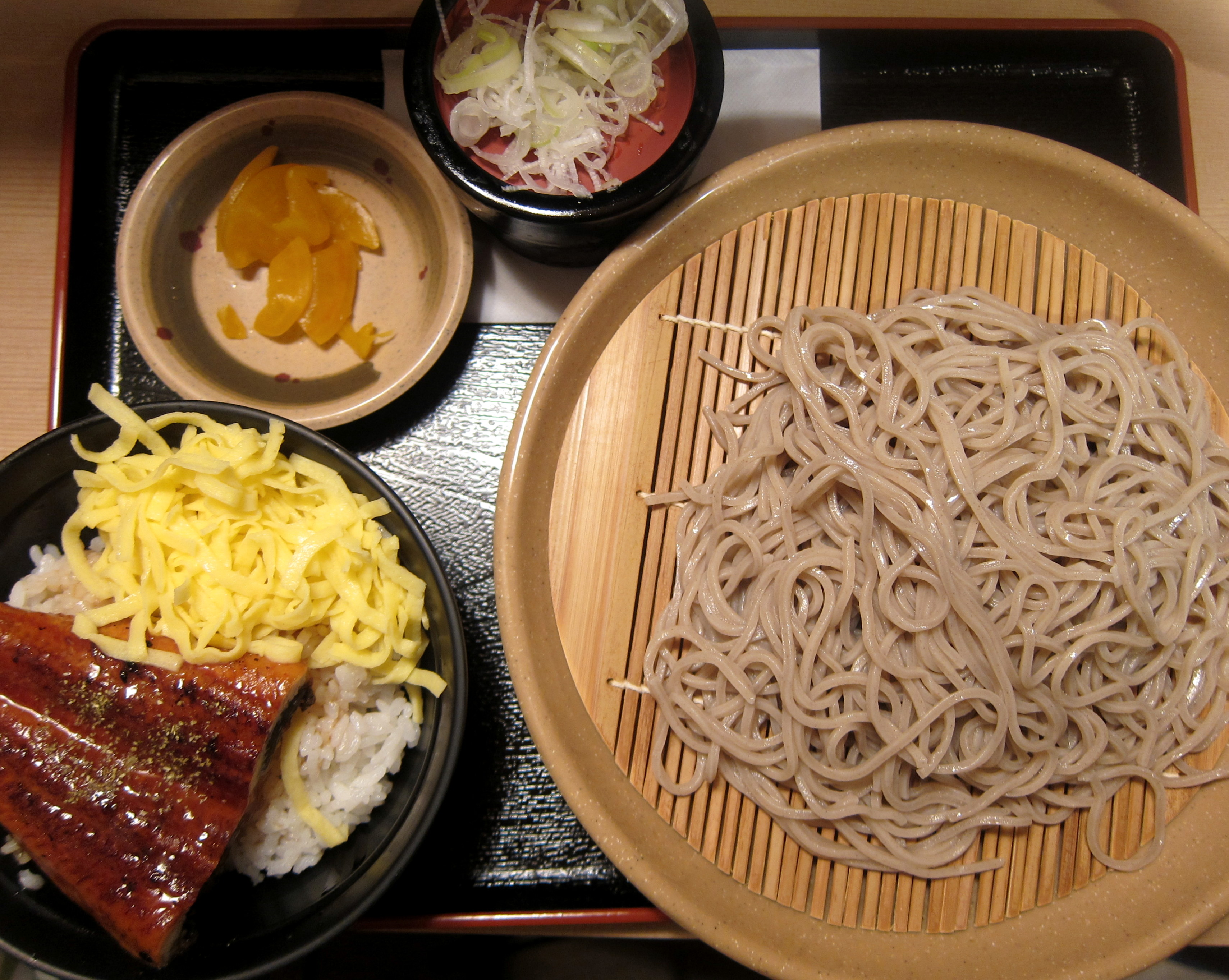
Unagi rice with cold soba (680 yen) at some noodle shop on Waseda Dori, Chiyoda.

Unagi rice with cold soba (680 yen) at some noodle shop on Waseda Dori, Chiyoda.

When I was slurping ramen with Mai at The Ramen Shop, I vowed to drown myself in ramen when I get to Japan. When I’m in Japan, I get so overwhelmed that I resign to konbini foods. It is too easy to find a soba, udon or ramen joint in Tokyo, the former two often together. Every 20 meter is likely to pack a few shops, and any shop we see likely serves superior fares to the places we’ve tried in the States. June air in Tokyo is as heavy as the steam from the bowl, but it never stops our appetite.

One minor setback: the order machine. It’s simple enough: you decide what you want, insert the money, push a few buttons (or one, if you don’t want to add anything to your order). The problem is reading the all-Japanese labels. I always feel like an idiot when I stare it down for minutes when everyone just punches away. Granted I’ve never taken less than 2 minutes with a candy vending machine in the States either.

soba-shop-machine

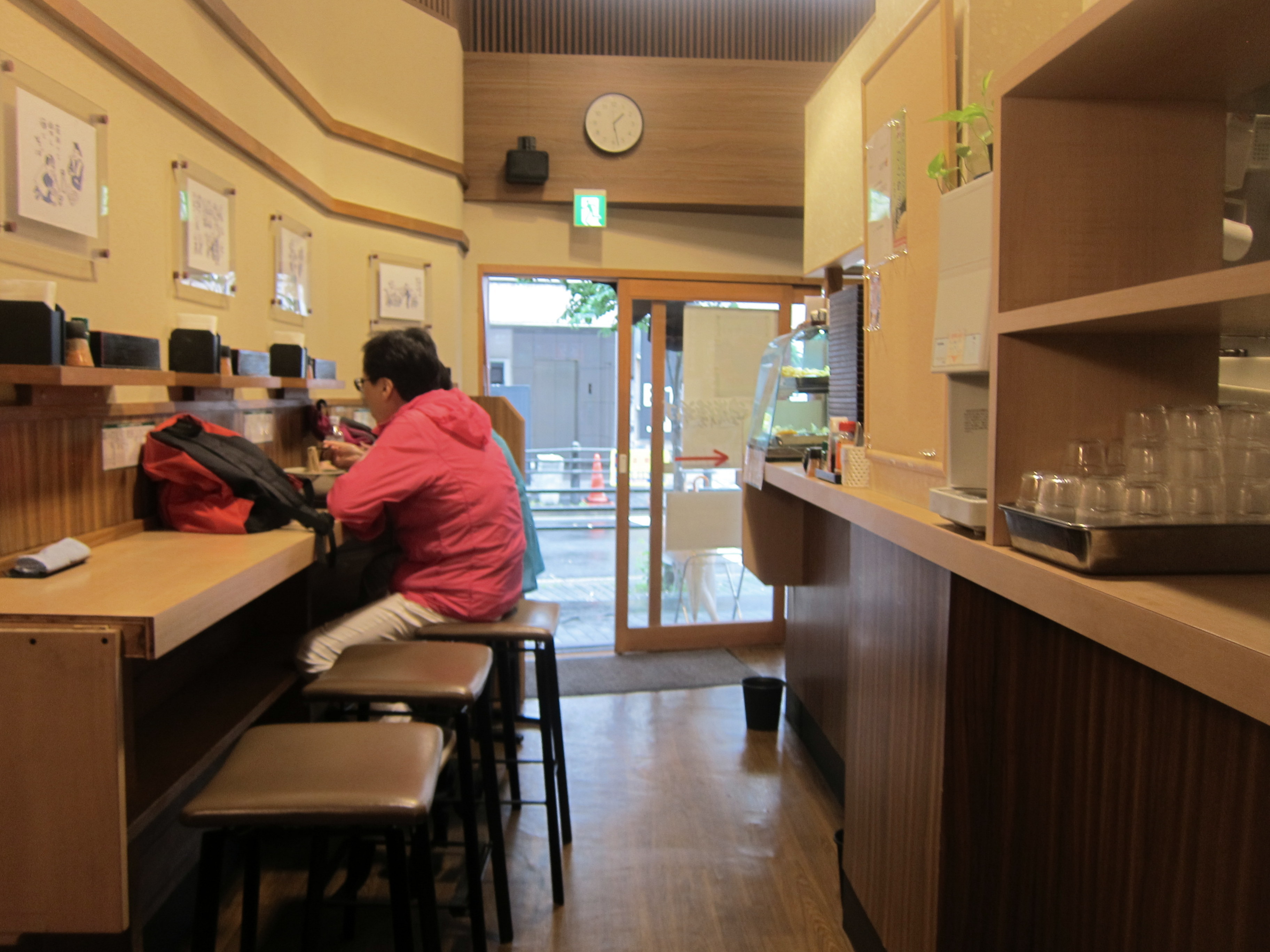
Inside a soba and udon shop on Waseda street:

soba-shop-on-waseda-dori
We didn’t pick this place for any reason other than it being on our way to Yasukuni shrine, but I had the best soba here.

wakame-soba
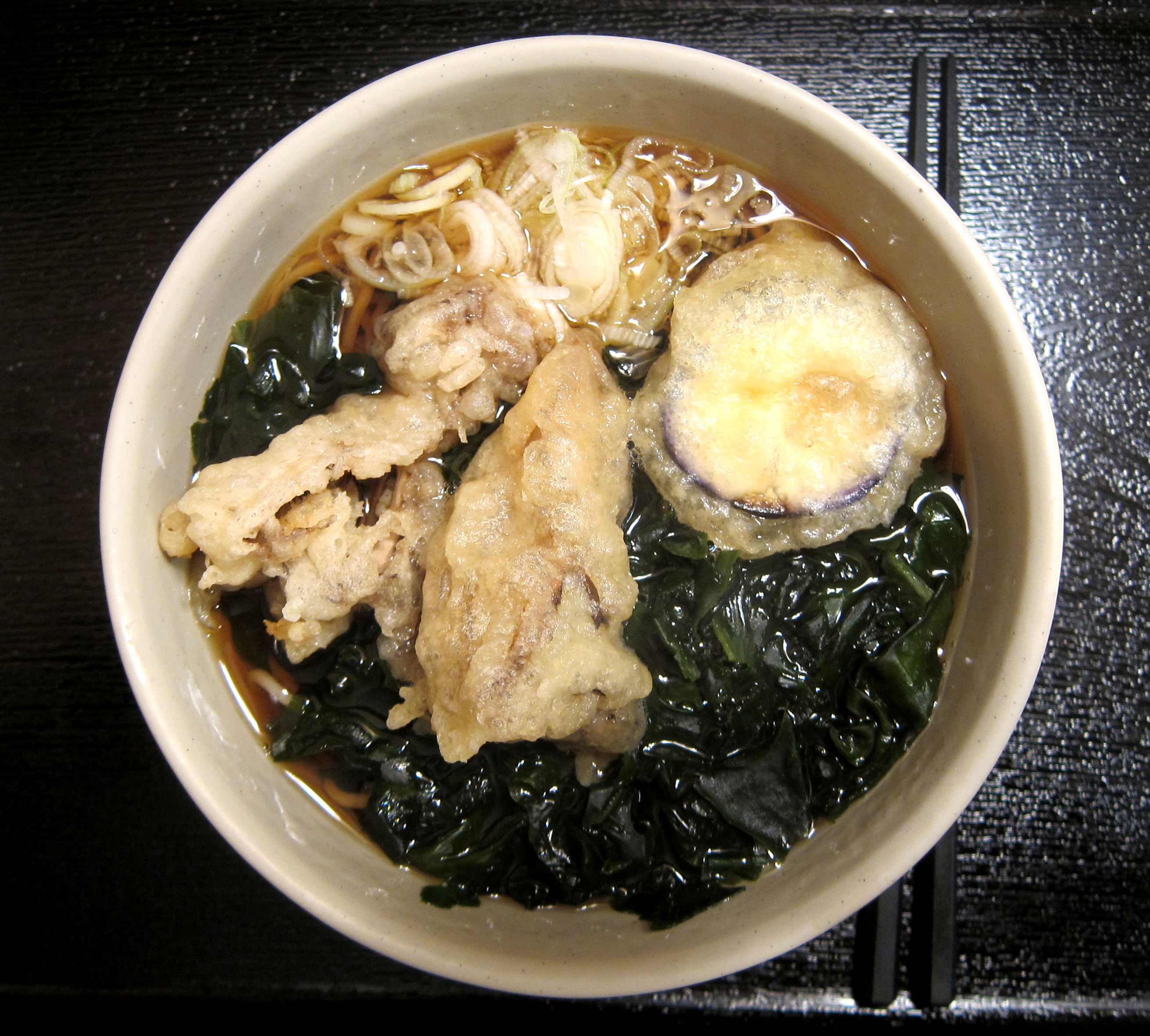
A simple hot soba with wakame (sheets of seaweed – the dark green stuff) and tempura mushroom. You can have the tempura on the side or in the soup, I opted for in the soup because I just love the crunchy texture on the verge of turning soggy. The wakame soba by itself would have been 400 yen, tempura boosted it to 470 yen.

The much shorter wait helps: you place the order and get your noodle in hardly 2 minutes. Not because this place was relatively empty. Jangara in Akihabara had a line of tens of salarymen out the door, and my noodles came out before I could even take a picture of the menu.

jangara-cute
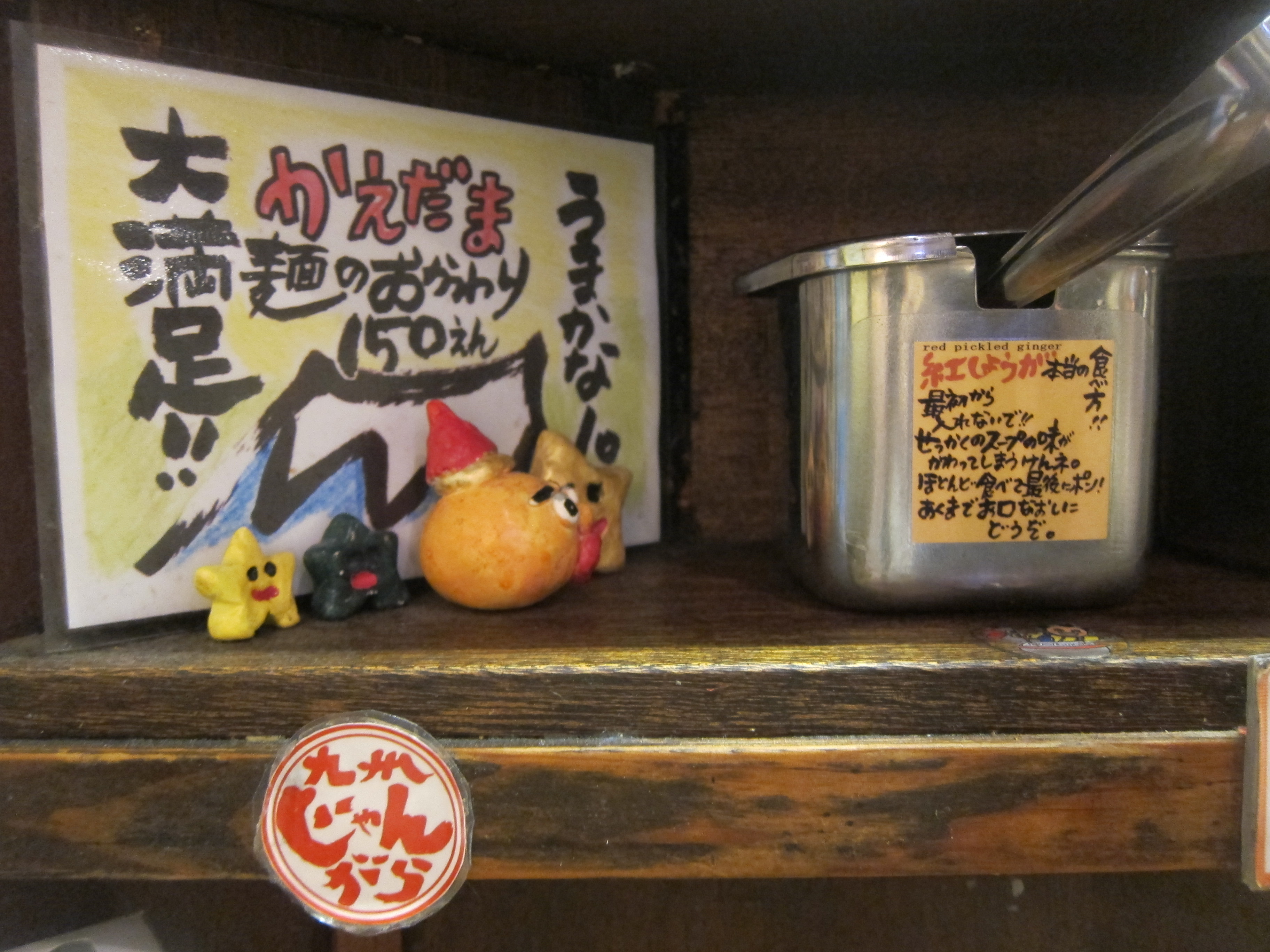
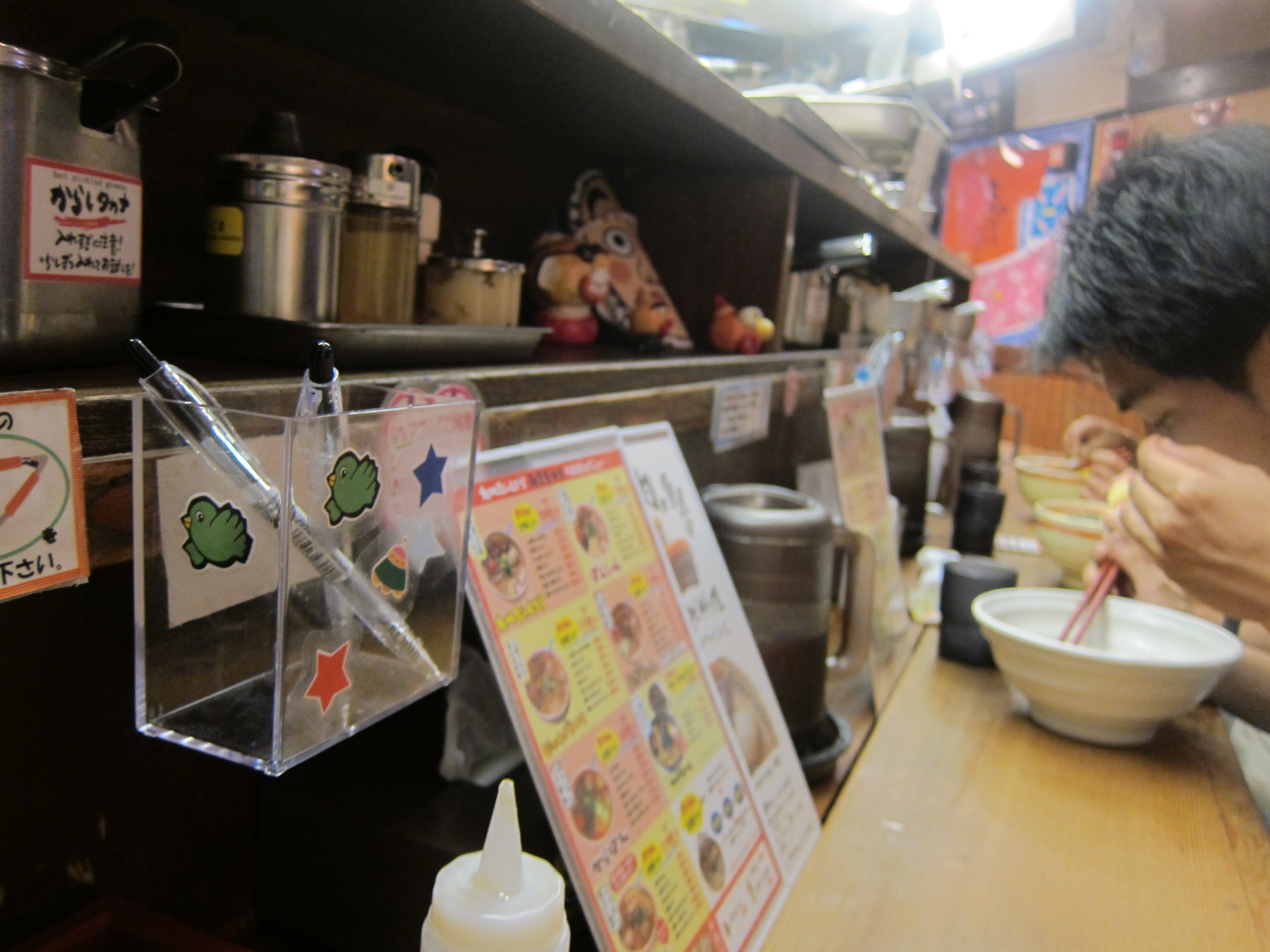
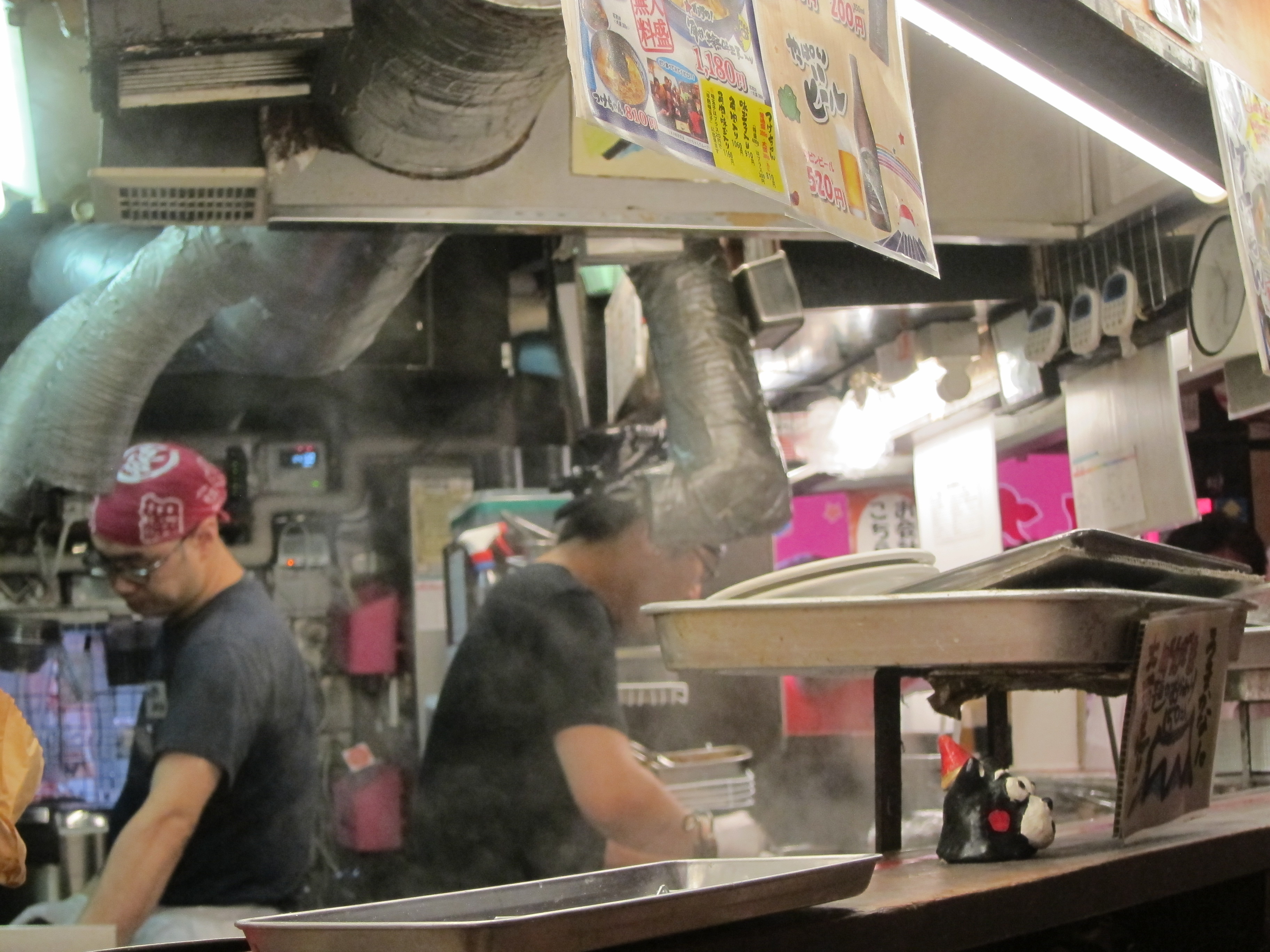
The Jangara I visisted is a tiny ramen shop in a sidestreet in Akihabara and known for its Kyushu-style ramen (fatty rich broth from pork bones). An acquaintance recommended this place as his childhood favorite and a contributor to propel the status of Kyushu ramen and shape the modern ramen scene in Tokyo. There’s a Jangara in Harajuku with English menu. This one doesn’t (or they didn’t give me one). I was ushered into the very last counter seat (thank god! I was worried that I’d be put between two serious-looking Japanese men and be judged for taking pictures and eating slowly) and given an all-Japanese menu. (Much preferable to the buttons and machines though!)

jangara-ramen-cooks
I sticked to the top few choices that had “Jangara” in the name, and managed to make out “meat” in the sea of kanjis. That was the most important thing, so I thought.

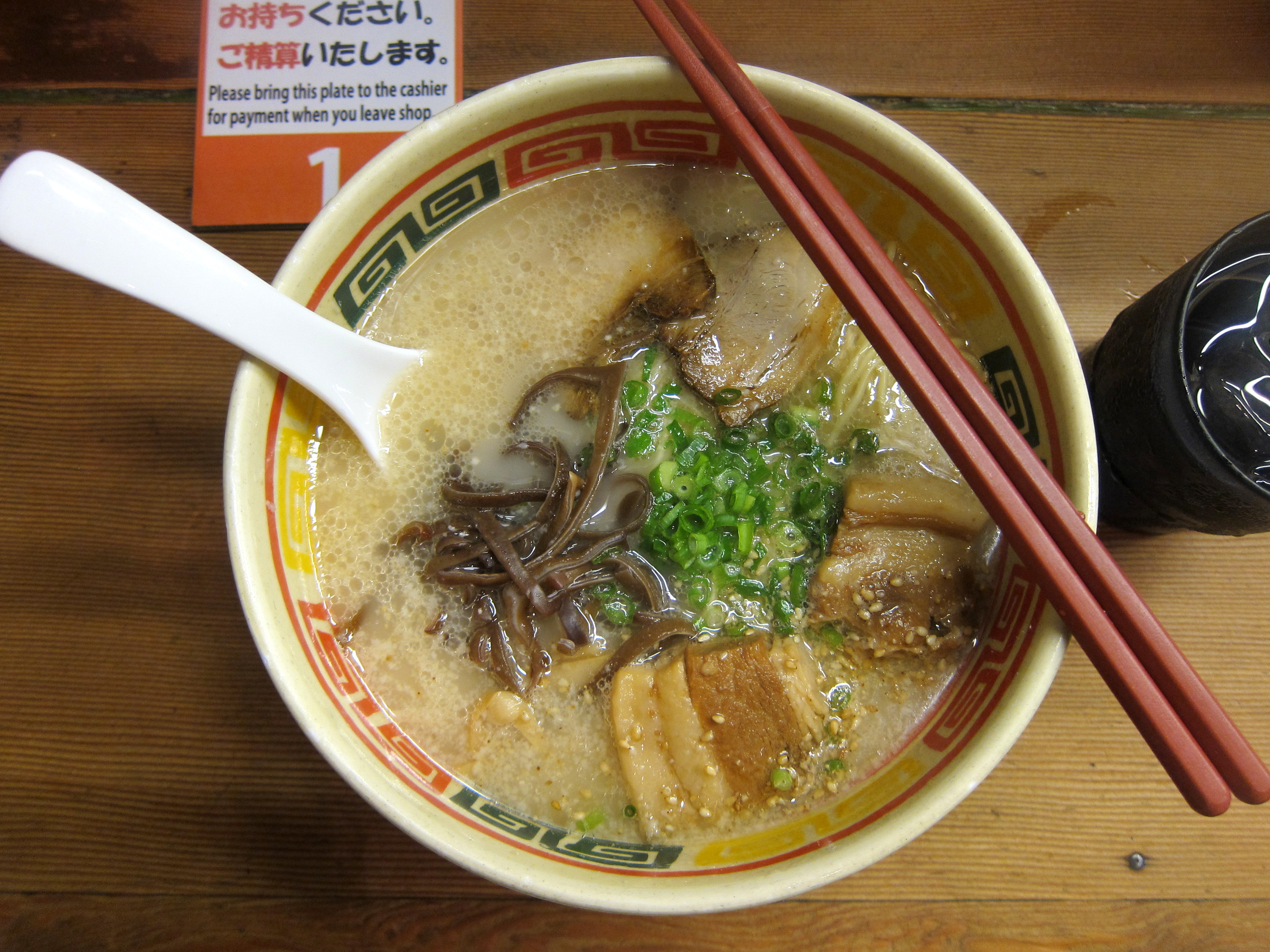
jangara-ramen
However, I should have studied harder and remembered the character for “egg”, because my ramen did not have a soft-boiled egg. The customer next to me (a few of them actually, they came and went so fast while I was there that I lost count) all had eggs. 🙁 Regardless, this is the best ramen I’ve ever had. Yes, the broth is superior (rich and hot like melted garlic butter), but the noodle won me over. It was round and thin, very slightly curled, and just the right amount of chewiness. The pork belly was a nice accessory but far from necessary.

jangara-customers
I still wonder how the salarymen could eat so fast (and drank the whole bowl of broth too!). It made me feel bad that I took about 10 minutes total and couldn’t finish my broth (I didn’t want to burst). I tried very hard to sink into my corner and weaseled my way out as quietly as possible. Hopefully nobody noticed the only girl in the flow of customers.

Address: Kyushu Jangara (九州じゃんがら)
Sotokanda 3-11-6, Chiyoda-ku, TOKYO
(West of Akihabara station)
Jangara ramen with pork: 800 yen

(To be continued)
————————————————————————————

Guest blogged by C. from Katsushika, Tokyo
C. is Asian, female, something of a frivolous nature that wishes to go only by C. and so kindly agrees to blog while Mai is head-deep in work and Kristen is away in Seoul.

Tags: , ,

Flavor Japan – Konbini foods

June 29, 2014 By: Mai Truong Category: Flavor Japan, Japanese, Travel

Guest blogged by C. from Katsushika, Tokyo.

Knowing enough Japanese to converse is an advantage but it can also hurt your wallet. I keep getting drawn into clothing stores everywhere I go, and the staffs keep sweet talking me into trying on stuff. (It doesn’t happen if you’re with a friend though!) As if that wasn’t bad enough, why does everything always fit so perfectly? Damn Asian one-size-fits-all. I feel too guilty to just walk out without an adequate reason, so there goes my college savings. The answer is, of course, konbini foods.

There are 3 convenient stores on the way from Kameari station to our apartment, including a Family Mart 2 minute walk away and a Lawson 1 minute from the Family Mart. Konbini food is so good and so cheap that I keep spending more on clothes!

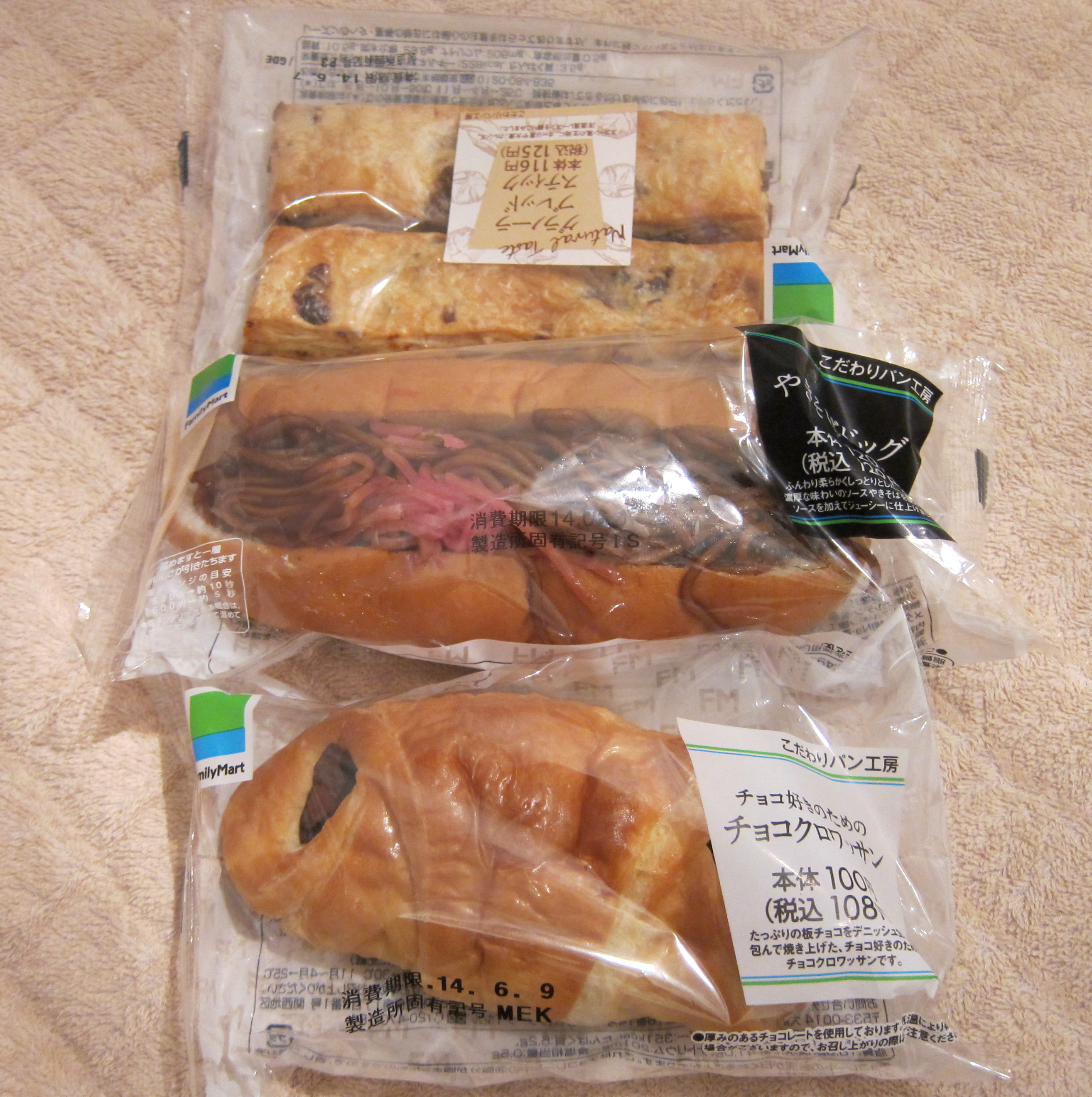
konbini-food
Pictured, from top:
1. Some pastry – I don’t know what I just ate but it’s good.
2. Yakisoba pan – stirfried noodles on bread with some pickle ginger (the pink stuff)
3. Some chocolate pastry – Look at that bar of chocolate in the middle! It’s so thick it’s literally a BAR. Peet’s “chocolate croissants” (and any kind of chocolate pastry anywhere in America), SHAME ON YOU!

On some days if time permits for breakfast, Michiko san fixed me toast and egg. The bread is just normal white bread from the convenient store, but Japanese white bread is A WORLD OF DIFFERENCE from American white bread. Half-inch thick. Big (ACTUALLY a square, not a puny slice of sadness with 4 squished corners like an abused textbook in a rain-soaked backpack). Fluffy (and stays that way!). ABSOLUTELY AMAZING however you look at it and however you eat it. You know those quiz questions “What will you take  if you’re going to a deserted island or something equally ridiculous?” From now on I will say “A truck load of Japanese white bread”. American bread, good bye.

————————————————————————————
C. is Asian, female, something of a frivolous nature that wishes to go only by C. and so kindly agrees to blog while Mai is head-deep in work (and classic novels) and Kristen is away in Seoul.

Tags: ,

Pretty Good Number One bucket list

January 12, 2014 By: Mai Truong Category: Book, Japanese, The more interesting

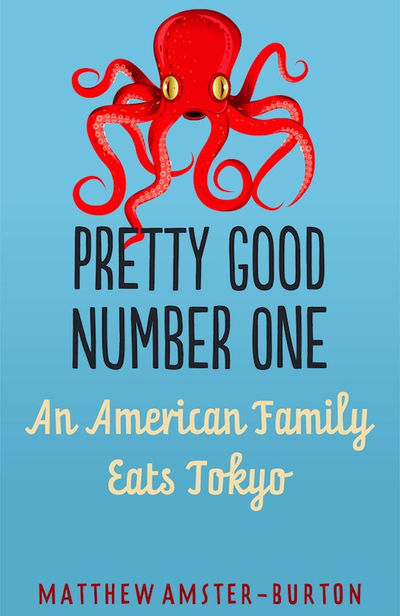
pgno
Go to Tokyo. Visit the Odaiba Takoyaki Museum. Practise using chopsticks correctly and buy a (few) pairs at Kappabashi. Eat shave ice and watch fireworks (and people) on the Sumida river bank in July. Eat pan-fried soup dumplings in a neighborhood dumpling restaurant in Nakano. Eat “hone” (pronounced |hoh-nay|, meaning: deep-fried sea eel backbone). Stop eating eel because they’re in the red on the Seafood Watch list.

Thanks to Matthew Amster-Burton’s book, I’ve had the first 7 items on my bucket list figured out (it’s a bucket list, not a to-do list because of the stop-eating-eel thing). I can’t wait to do them (except the stop-eating-eel thing). If a few months ago I was complacent with imaginatively traveling through booksPretty Good Number One throws one delicious, chuckle-inducing paragraph after another to my face and say “go to Tokyo, you lazy donkey”. Just about the most expensive place to visit in the world, thanks, Mr. Amster-Burton. 😉

Except for the part where he describes Chinese green tea as having “a hint of smoky barbecue” and how red bean paste is an acquired taste for Westerners (because beans are supposed to show up in savory foods, not sweets – hello, pumpkin pie?), Pretty Good Number One is enjoyable every minute of reading.

The book is short (only 227 pages) in relatively big clear font. It took me a few 10-minute bus rides and one Christmas Eve to finish. It is a good guide for Westerners (and anyone who hasn’t been to Tokyo) and a respectful and honest glimpse into a city in the East. Andrea Nguyen of Viet World Kitchen posted a long wonderful talk with Amster-Burton about the book last year.

Pictures are available on prettygoodnumberone.com, but I’m not looking at them too closely in fear of sleepwalkingly booking a Tokyo-bound flight tomorrow. Amster-Burton’s writing is so witty and the stories about his little “hungry monkey” Iris are cheezburger-cat level of adorable!

Amster-Burton also includes a long list of his recommended readings at the end (some of which he mentions intermittently throughout the book), and I’ve made my first Amazon’s wish list (so many first lists because of Pretty Good Number One!). It is against my traditional Vietnamese culture to outright ask for gifts (man I feel so shameless!), but JUST IN CASE you ever think about supporting Flavor Boulevard… 😉