Flavor Boulevard

We Asians like to talk food.
Subscribe

Flavor Japan: Summer eating in Tokyo

August 19, 2014 By: Mai Truong Category: Festivals, Flavor Japan, Japanese, sweet snacks and desserts, Travel

When I sawΒ GaijinPot published 2 pieces on summer food and summer festival food in Japan, I wanted to write a piece on the same topic, but I got skewered like a dango stick in work. Now that summer is on its way out, here’s an account of what we can (and should) eat in summer in Tokyo – for next year, that is πŸ˜‰ .

THE SAVORY:

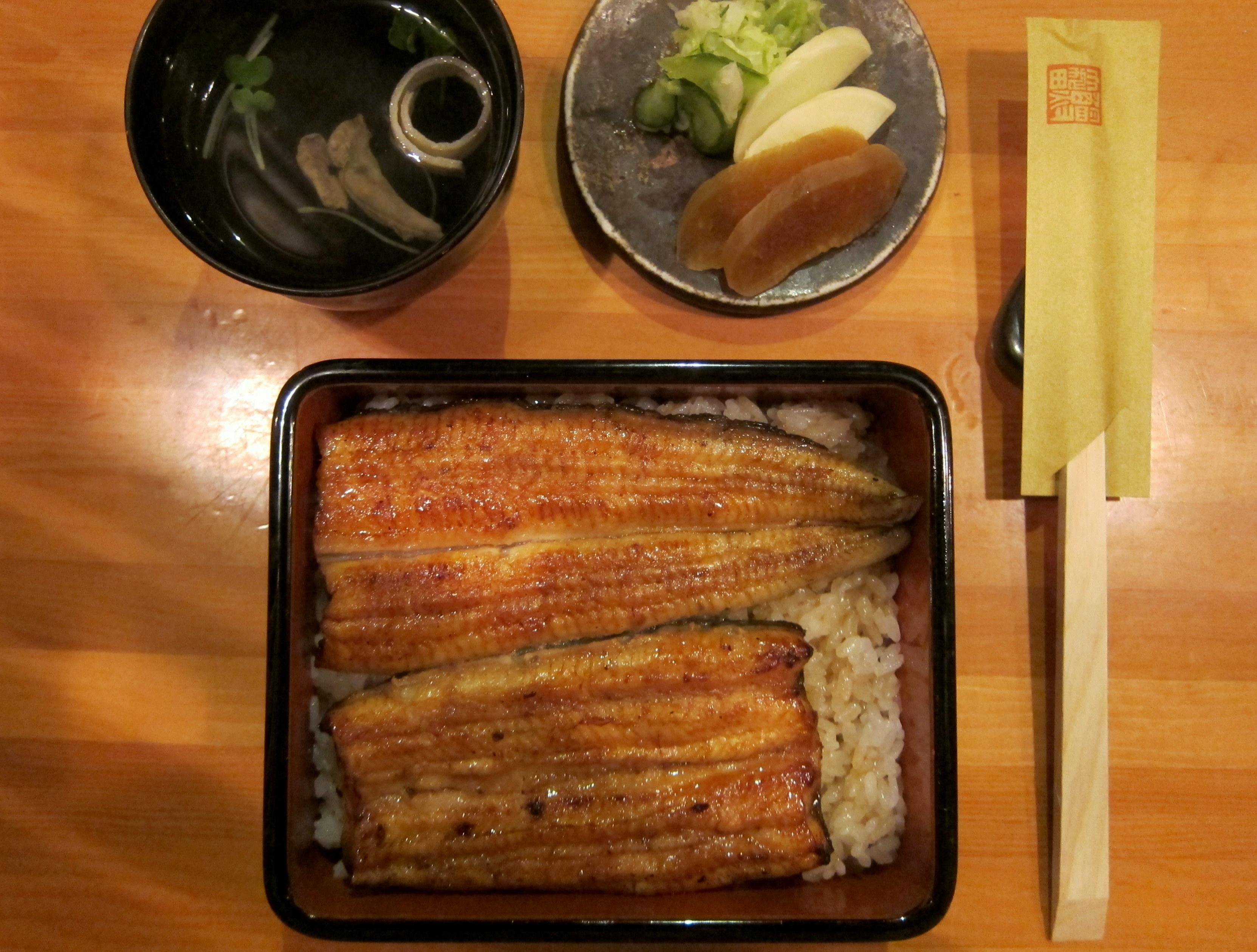
Unaju at Oodawa (~ $20 per set)

Unaju at Oodawa (~ $20 per set)

1. Eel: this is THE summer food. We Asians believe that eels help cooling the body. Do I feel bad helping to decrease the dwindling number of eels? Yes. Do I get scarred for life by the horrific eel massacre scene in “Jiro: Dreams of Sushi”? Yes. I can proudly say that I had not eaten any eel this summer except this one unaju because my friend’s boss recommended my friend to recommend me of this Oodawa shop near Kashiwa station.
(Gotta say though, most Japanese dishes are naturally 548 times better in Japan than in the States, BUT unaju is not one of them.)
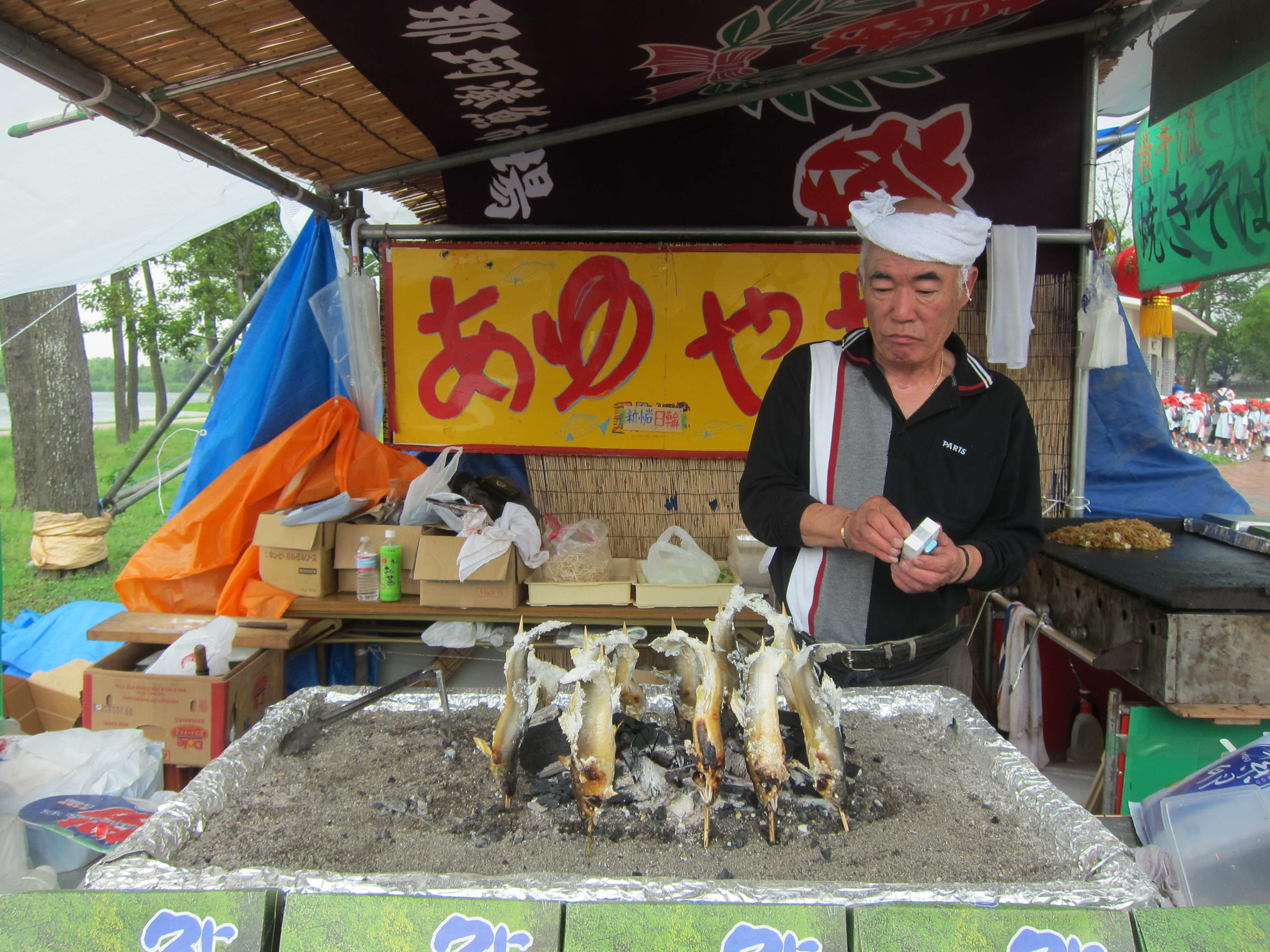
ayuyaki
2. Grilled ayu on a stick: basically you should eat anything on a stick. This “sweet fish” is grilled on coal, coated with enough salt to pickle your stomach, and full of tiny bones. You eat it for the spirit of festivals, mostly.
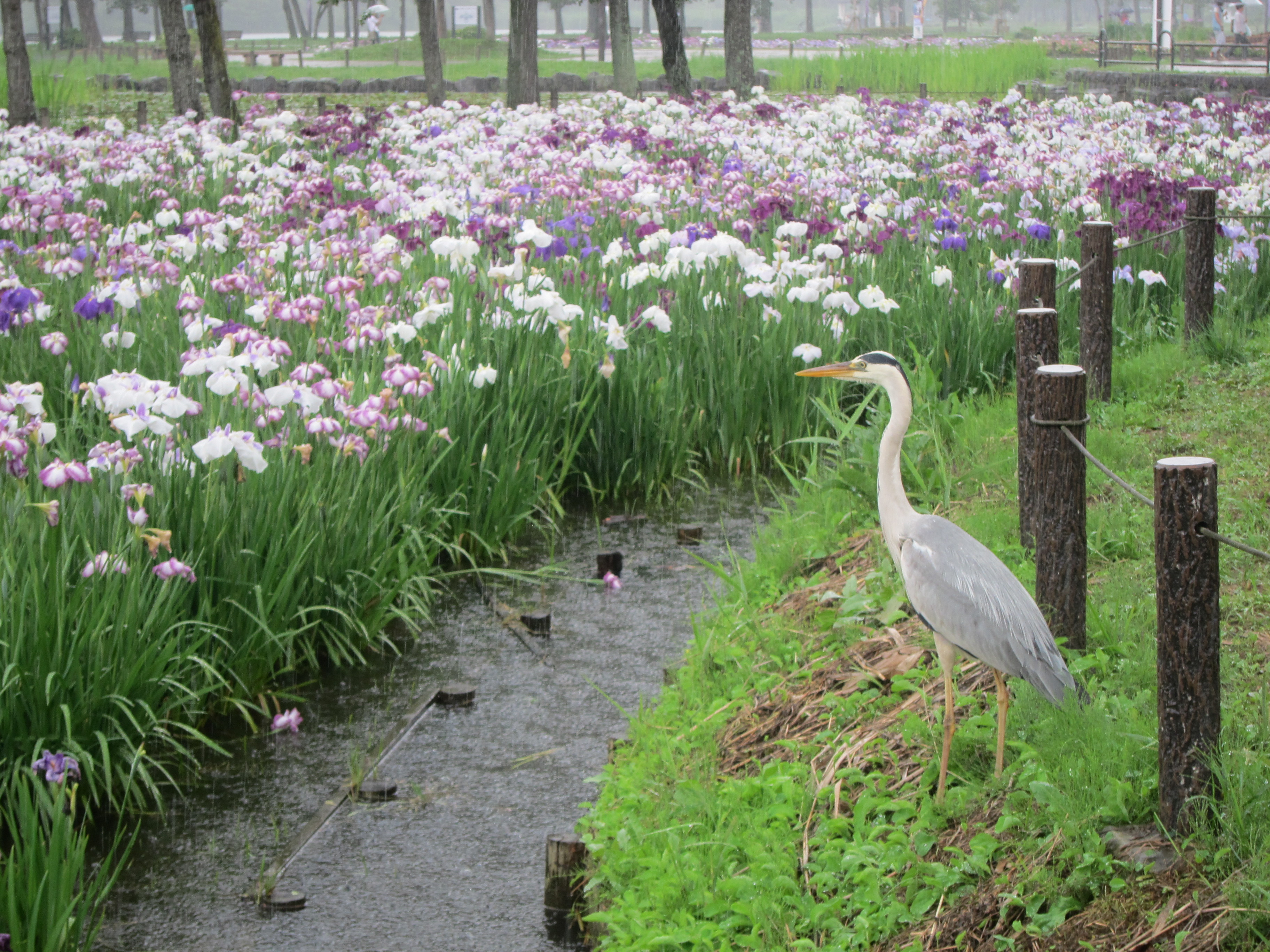
Katsushika Iris Festival in Katsushika Park - a rainy Sunday in June

Katsushika Iris Festival in Katsushika Park – a rainy Sunday in June
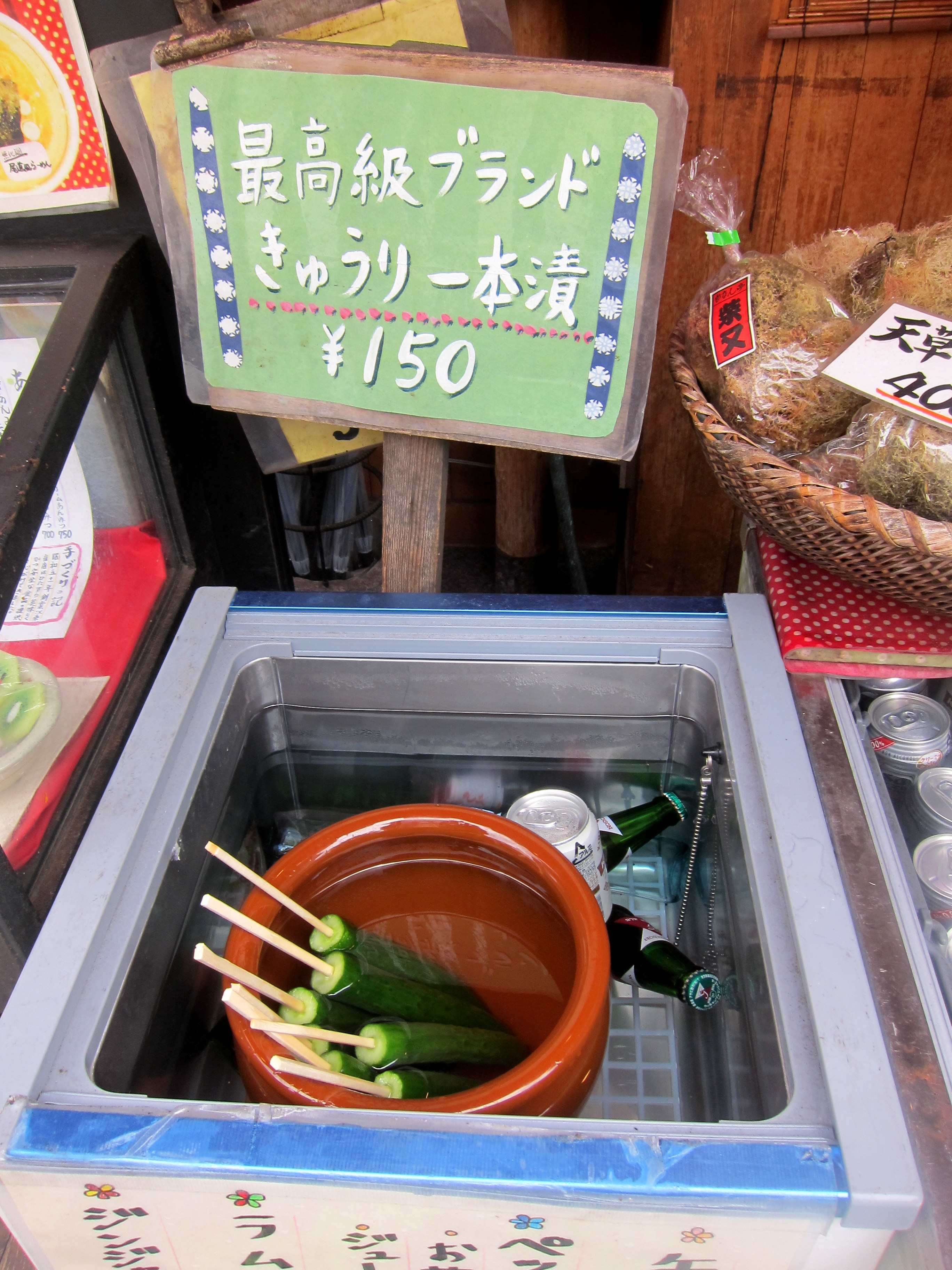
cucumber-stick
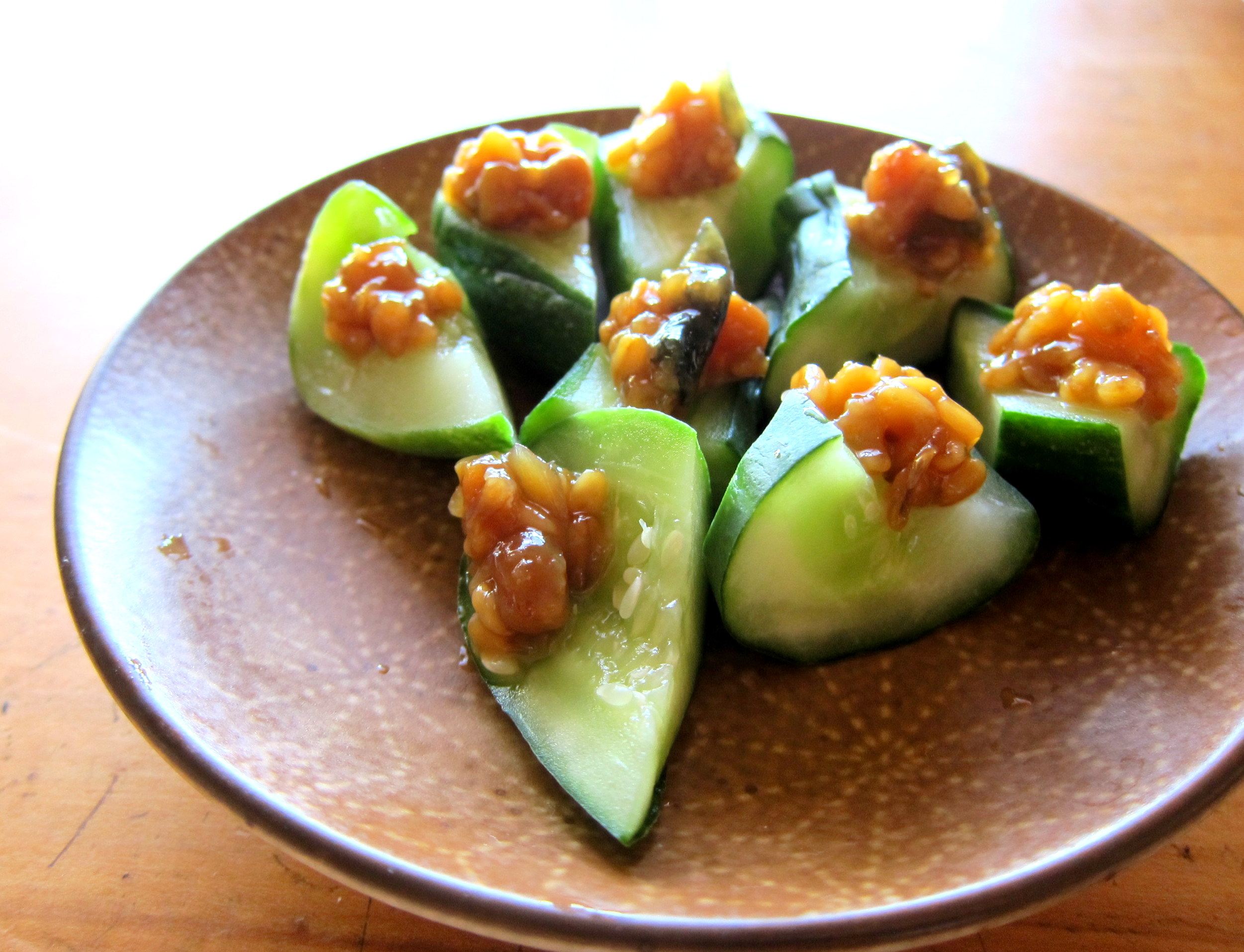
3. Cucumber on a stick: can’t get any more heat-combatant than this.
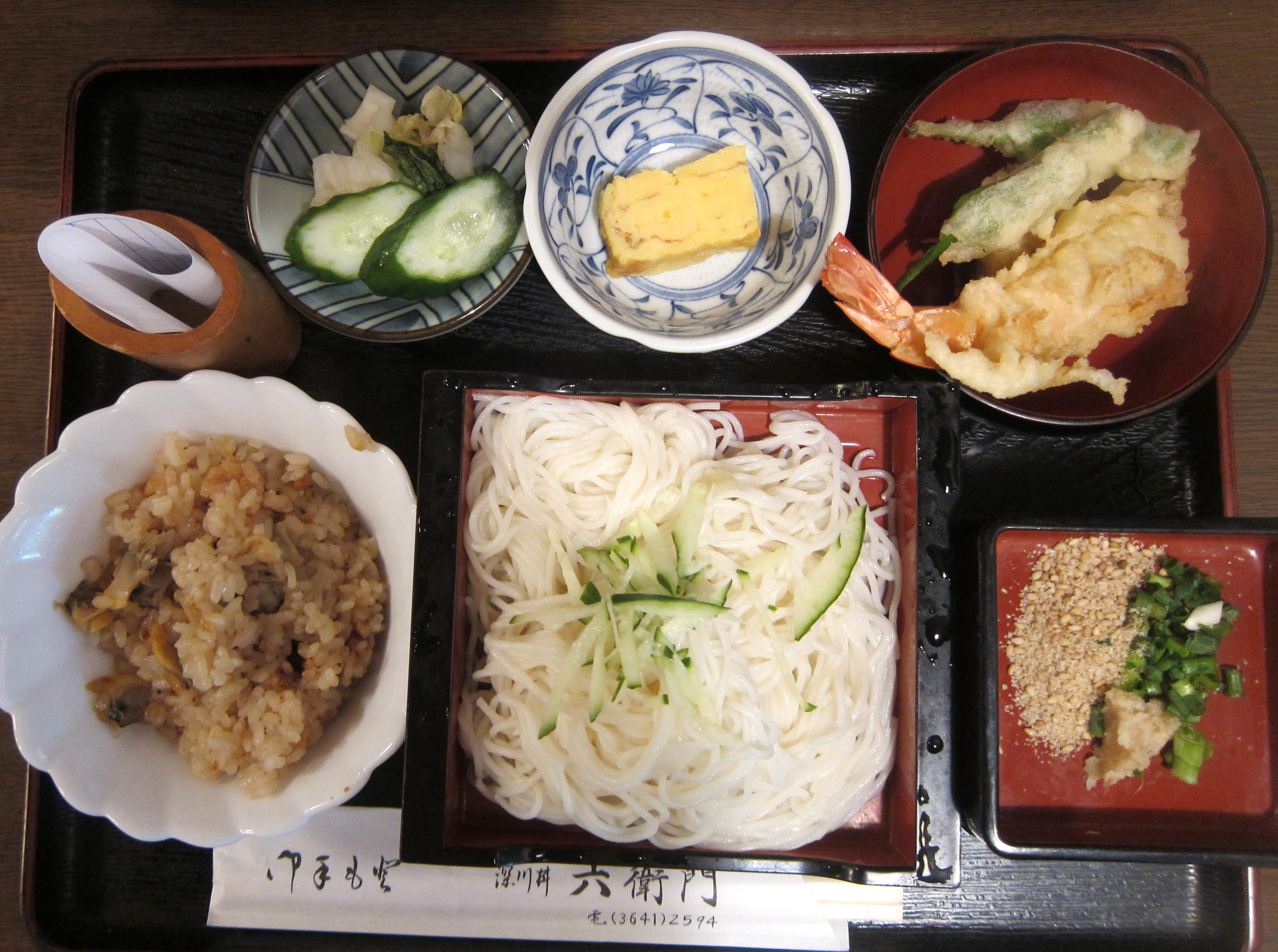
somen-set
4. Cold noodles: soba, somen, cold pasta with boiled anchovies. They’re MUCH better than they sound to our hot-soup-acquainted ears.
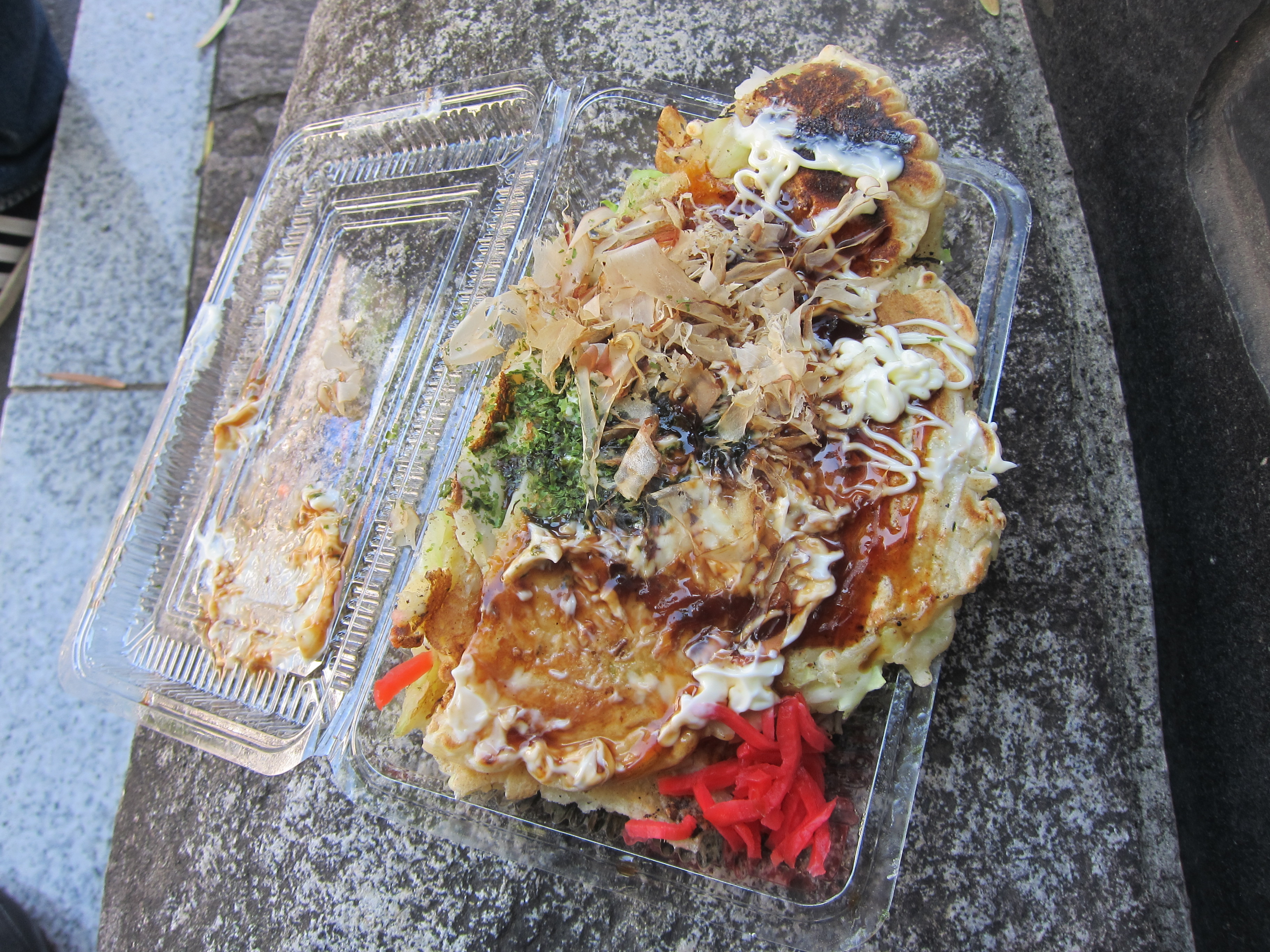
highschoolfest-okonomiyaki
5. Okonomiyaki: not the ones in okonomiyaki shops, but the ones highschoolers make at their school festivals. We chanced upon one of them right next to Kencho-ji when we were exhausted by heat and humans in Kamakura. It was cheap and delicious.
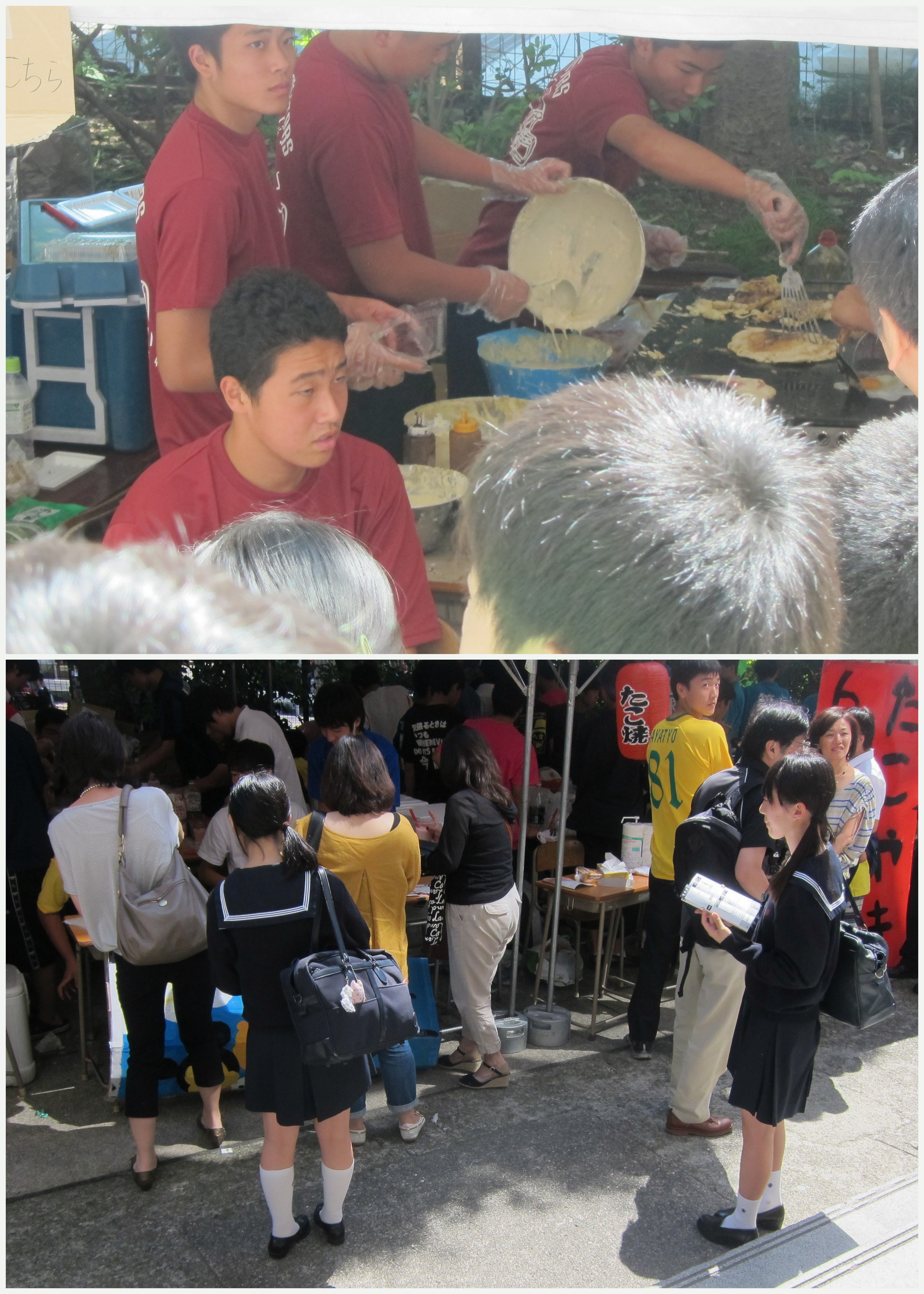
highschool-festival-next-to-Kencho-ji
Standing in line with all those kids in uniforms, I felt as if I were in an anime.
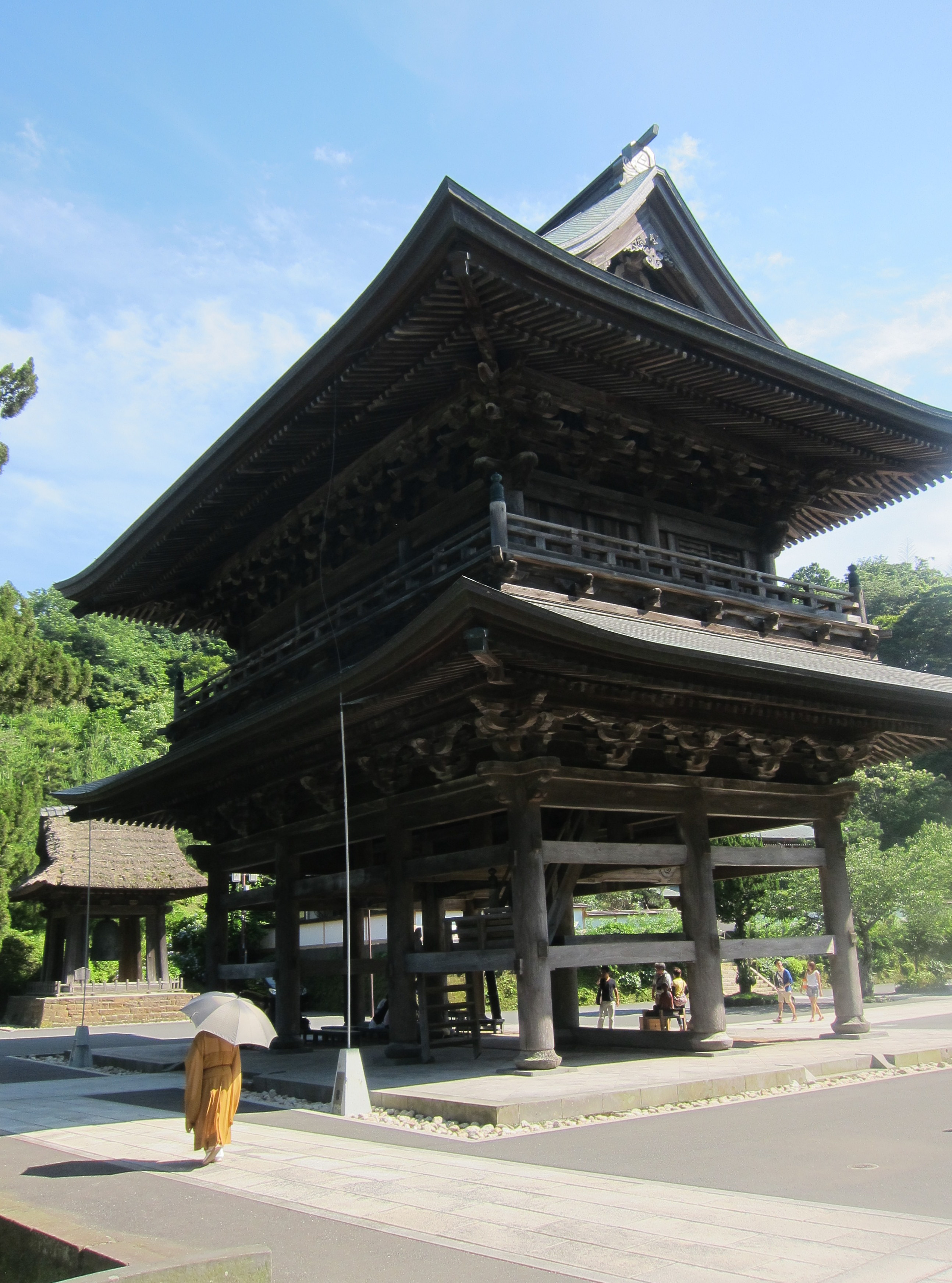
One of many temple structures in Kencho-ji, the oldest Zen temple in Kamakura.

One of many temple structures in Kencho-ji, the oldest Zen temple in Kamakura.

THE SWEET:
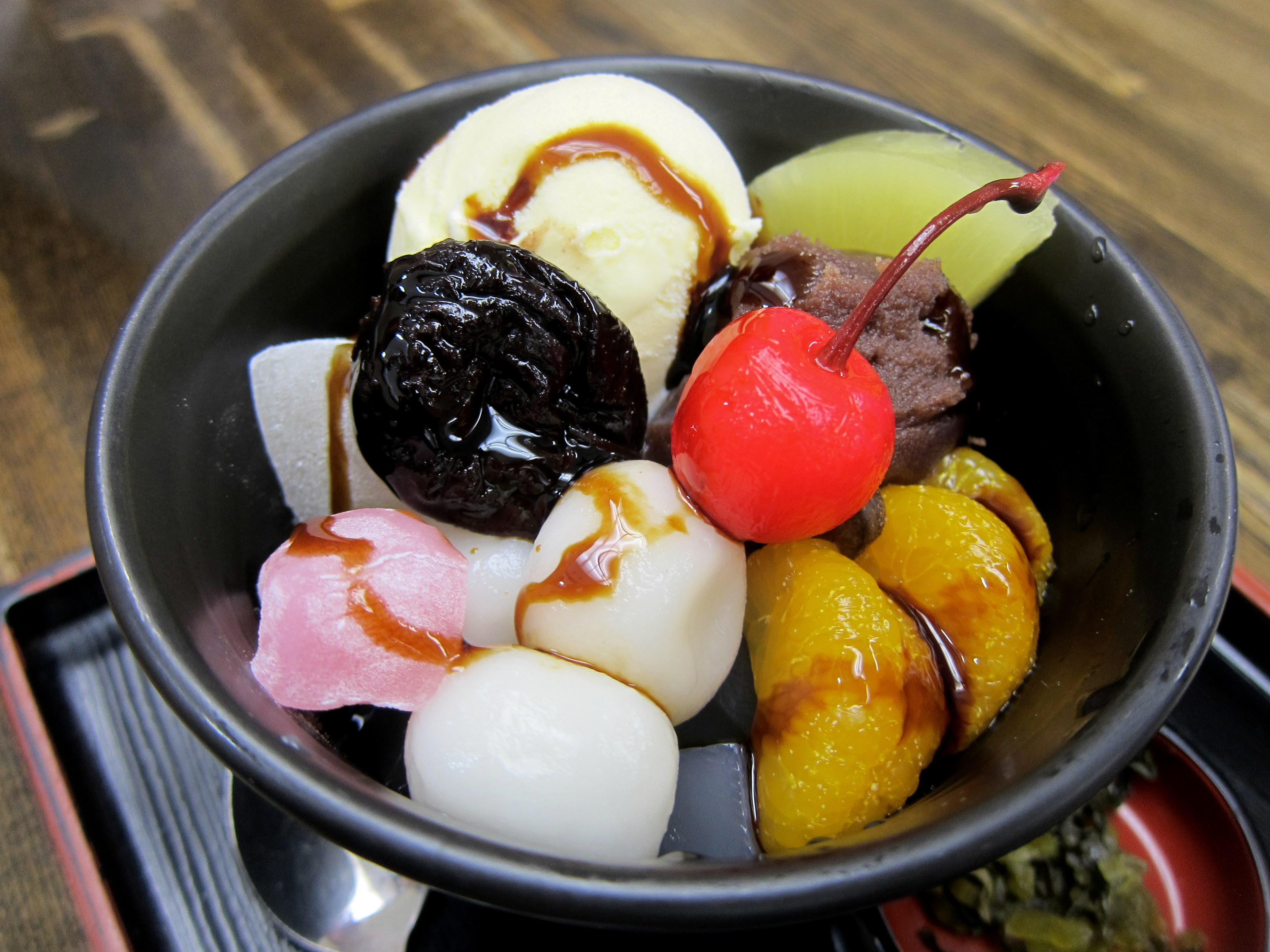
mitsumame
1. Mitsumame: I know some people would MUCH prefer kakigori, but thirst-quenching as it is, I have a morbid fear of eating shaved ice because in some distant past, my mom said kids who chew on ice would soon lose their teeth. So I seek shelter in ice cream. Mitsumame has ice cream, and mochi, and fruits, and syrup.
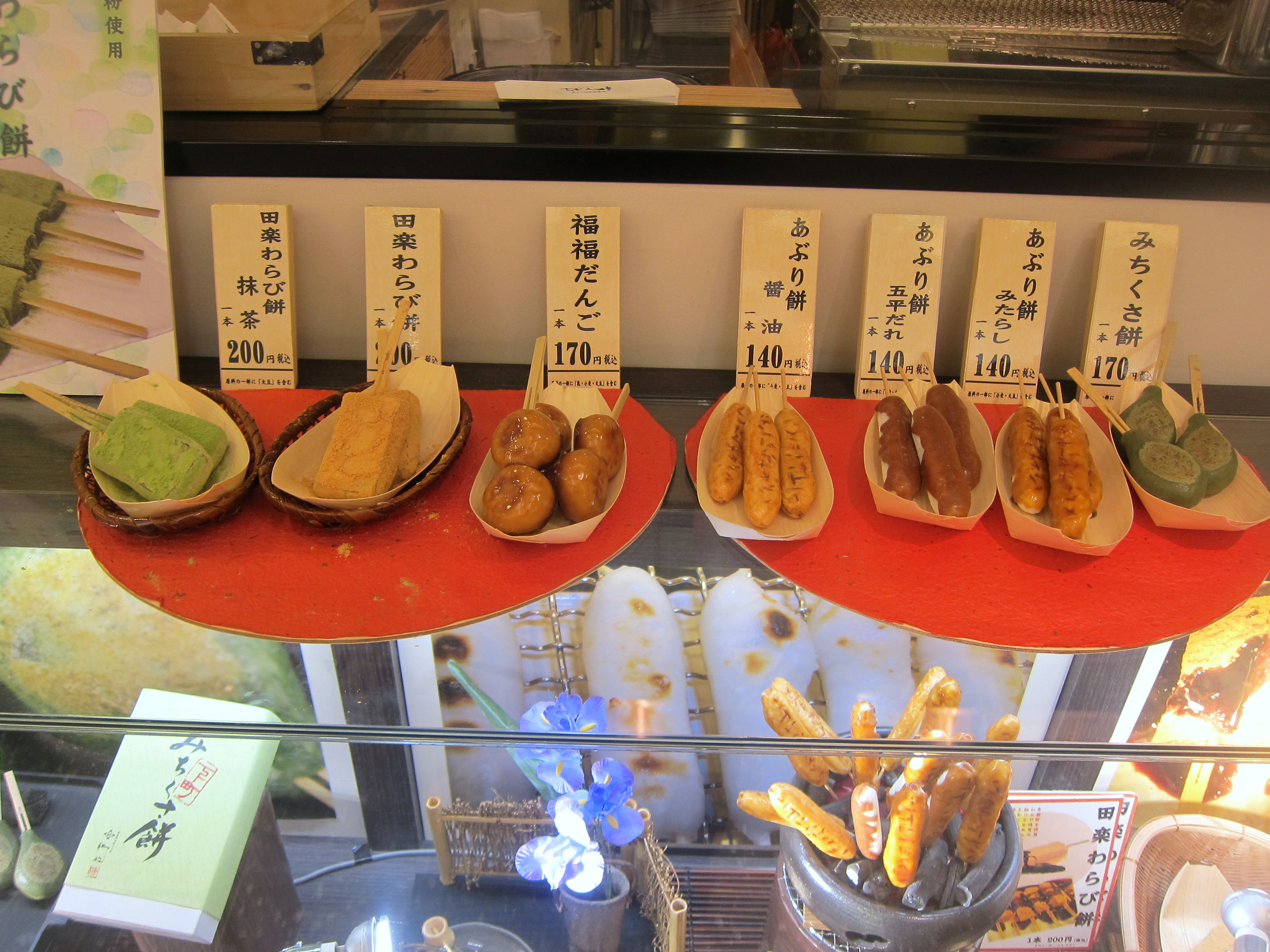
Two types of warabi mochi on the far left - at a mochi shop in the Sky Tree center.

Two types of warabi mochi on the far left – at a mochi shop in the Sky Tree center.

2. Warabi mochi: of all types of mochi, dango, and daifuku, warabi mochi is the lightest, mildest, and coolest. It just soothes your throat. Green helps too, I felt like I was eating something healthy.
supermarket-fruits
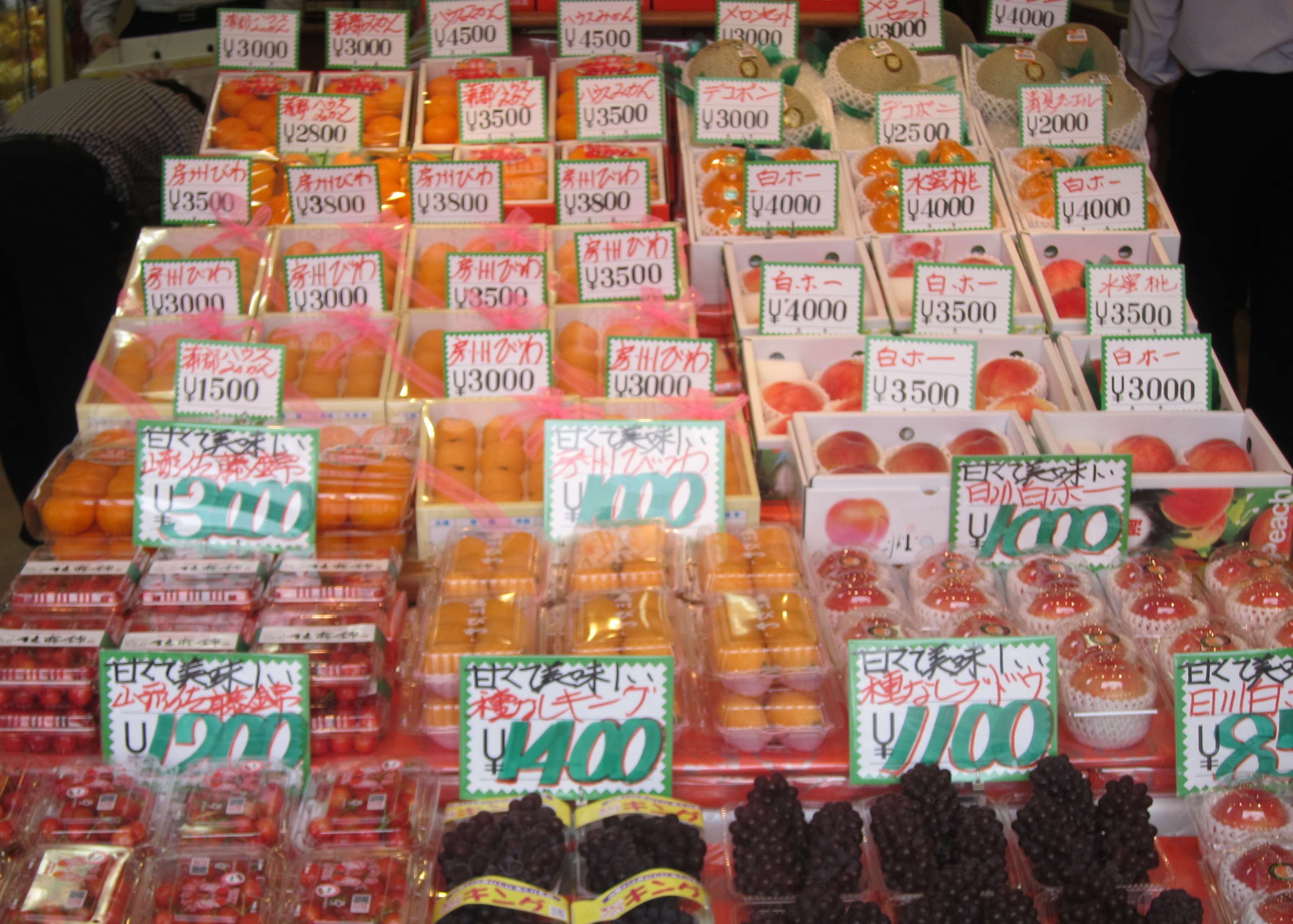
3. Fruits: eat fruits if you have no more windows to throw your money out of. Remove 2 zeros from the price tags and you get the price in USD. $14 for a pound of grapes and $35 for a few peaches?! This is one of those times when I don’t like Japan.

β€”β€”β€”β€”β€”β€”β€”β€”β€”β€”β€”β€”β€”β€”β€”β€”β€”β€”β€”β€”β€”β€”β€”β€”β€”β€”β€”β€”β€”β€”β€”β€”β€”β€”β€”β€”β€”β€”β€”——————————-

Guest blogged by C. from Katsushika, Tokyo.
Kaneyama and mixed feelings

January 15, 2013 By: Mai Truong Category: Houston, Japanese

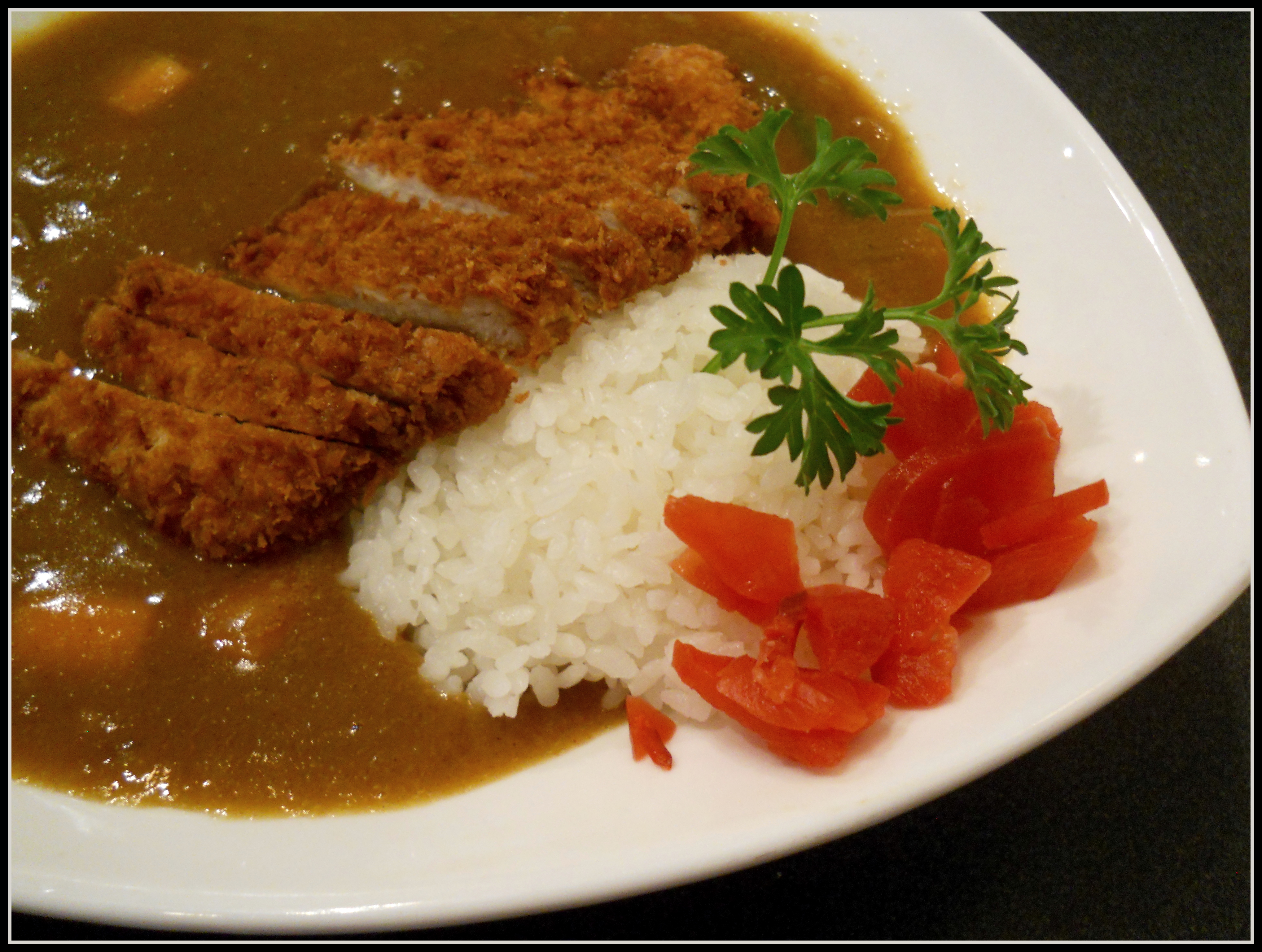
Curry rice with tonkatsu - $10.95 - a bit more peppery than the curry rice at Musashi in Berkeley, but still mild enough to my taste, pretty good.

Curry rice with tonkatsu – $10.95 – a bit more peppery than the curry rice at Musashi in Berkeley, but still mild enough to my taste, pretty good.

On the western edge of Yosemite National Park is a little town called Sonora. In Sonora there is Koto, the only Japanese restaurant in a 38-mile radius. In Koto, I had saba shio for the first time. It’s a grilled mackerel seasoned with salt, squeeze on some lemon juice if you like. I love homey things like that, especially when it’s so good I wanted it again the next day, but Koto was closed on Sundays. We left on Monday, with a hole in my heart.

Now before I go to any Japanese restaurant, I check if it has saba shio.

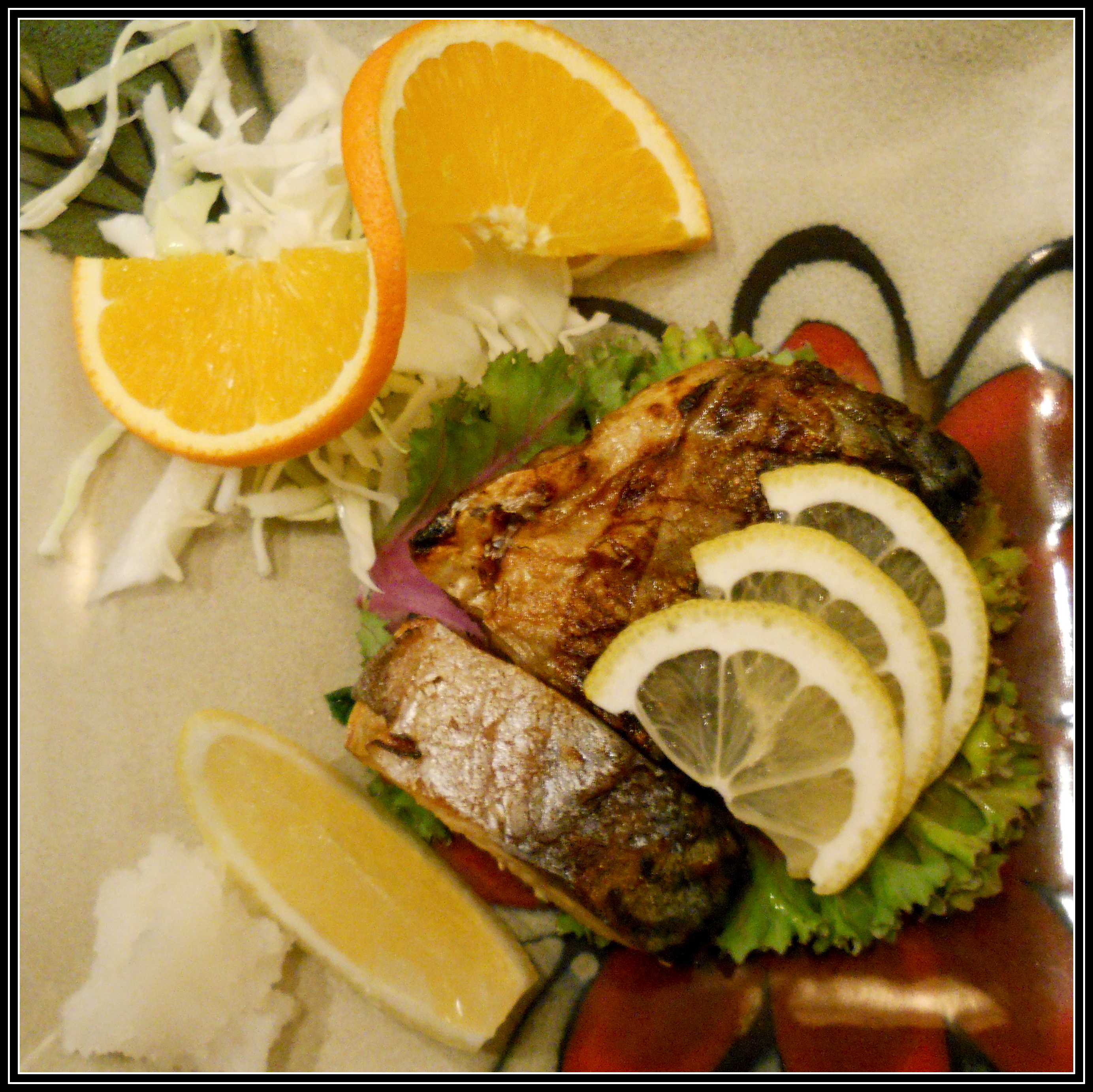
Not many do, but Kaneyama does. Only as an appetizer (which means half a mackerel instead of the whole fish) but better than nothing. A delicious crunching sound broke the air as Little Mom broke the skin with her chopsticks. We knew at that instant that the saba shio was the best dish of the day.

Saba shio - $6.25 - Grilled mackerel with salt. So simple and the best of the bunch.

Saba shio – $6.25 – Grilled mackerel with salt. So simple and the best of the bunch.

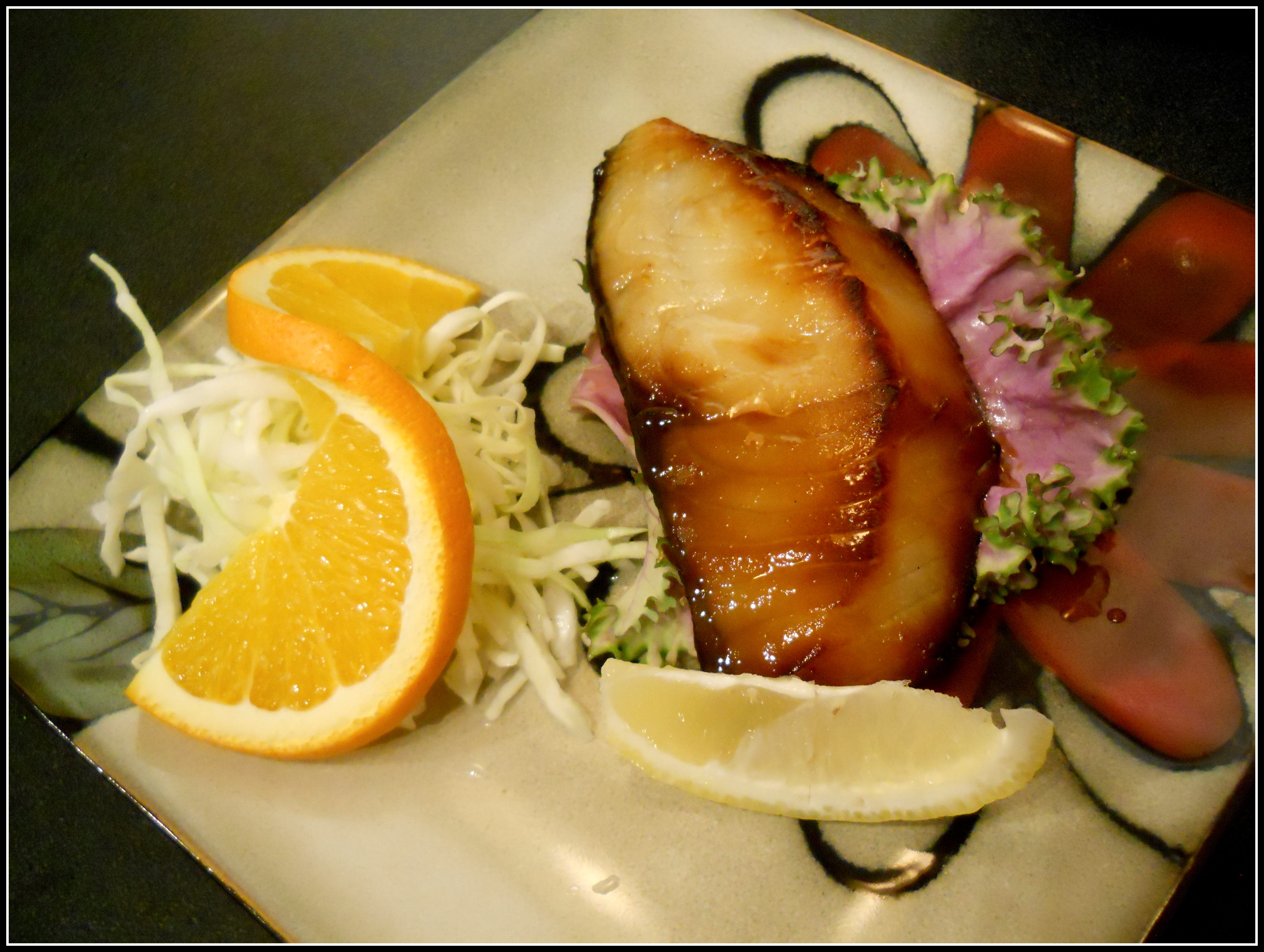
Gindala - $10.95 - Black cod marinated in sweet miso sauce, and they weren't kidding, it was really sweet. Nice and plump.

Gindala – $10.95 – Black cod marinated in sweet miso glaze, and they weren’t kidding, it was really sweet. Nice and plump.

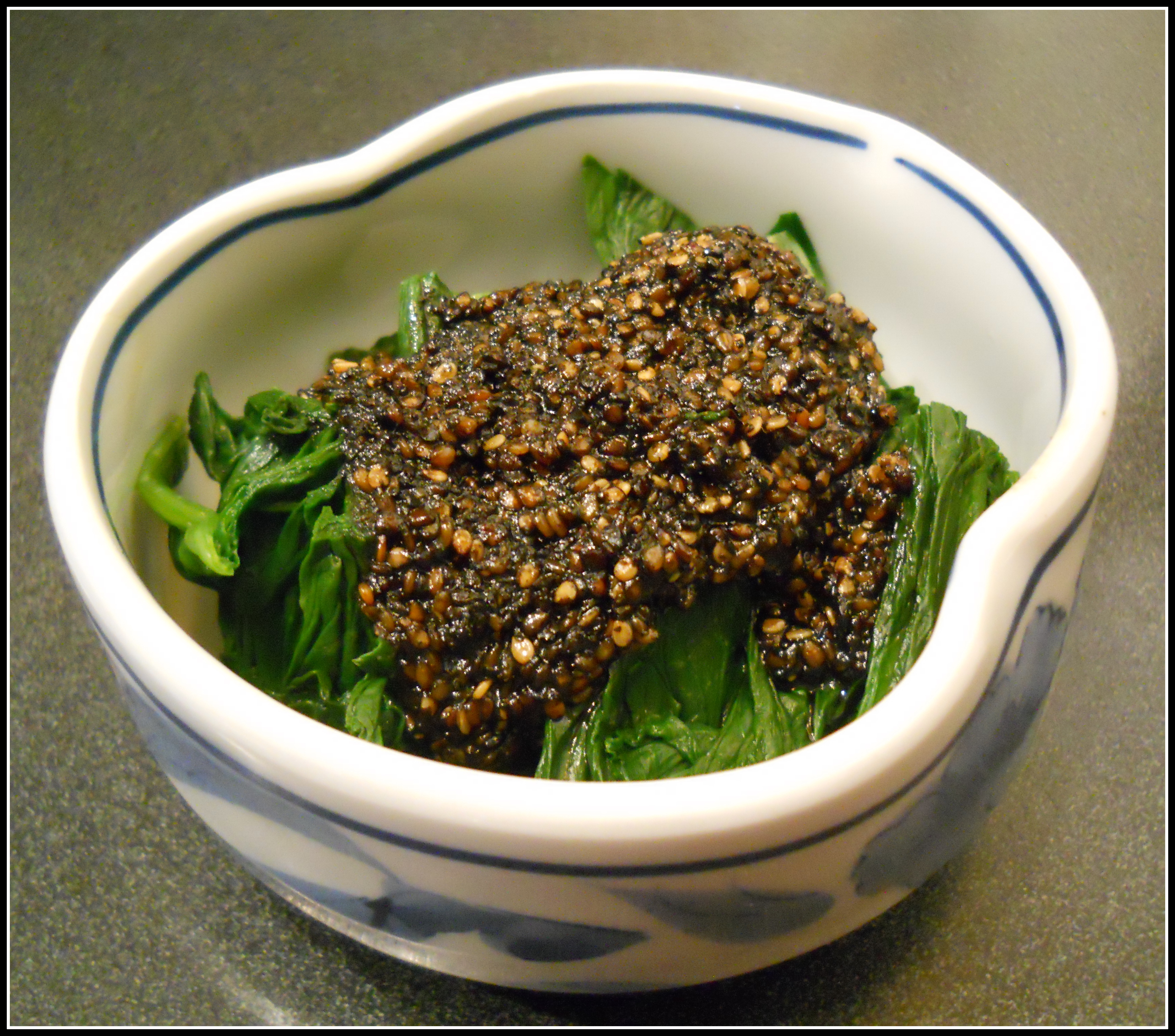
The gindala appeared fancier, took longer time to prepare, and I liked the moist, dense, almost doughy flesh of the black cod, but the miso glaze was too sweet. The spinach goma ae, another common Japanese sidedish that I was only recently introduced to and was eager to show Little Mom, didn’t impress her too much because the sesame sauce could also use more salt and less sugar.

Spinach goma ae - $5.50 - a bit expensive for some boiled spinach with black sesame sauce, and not as good as expected. The sesame sauce could use less sugar and more salt.

Spinach goma ae – $5.50 – a bit expensive for some boiled spinach with black sesame sauce, and not as good as expected. The sesame sauce could use less sugar and more salt.

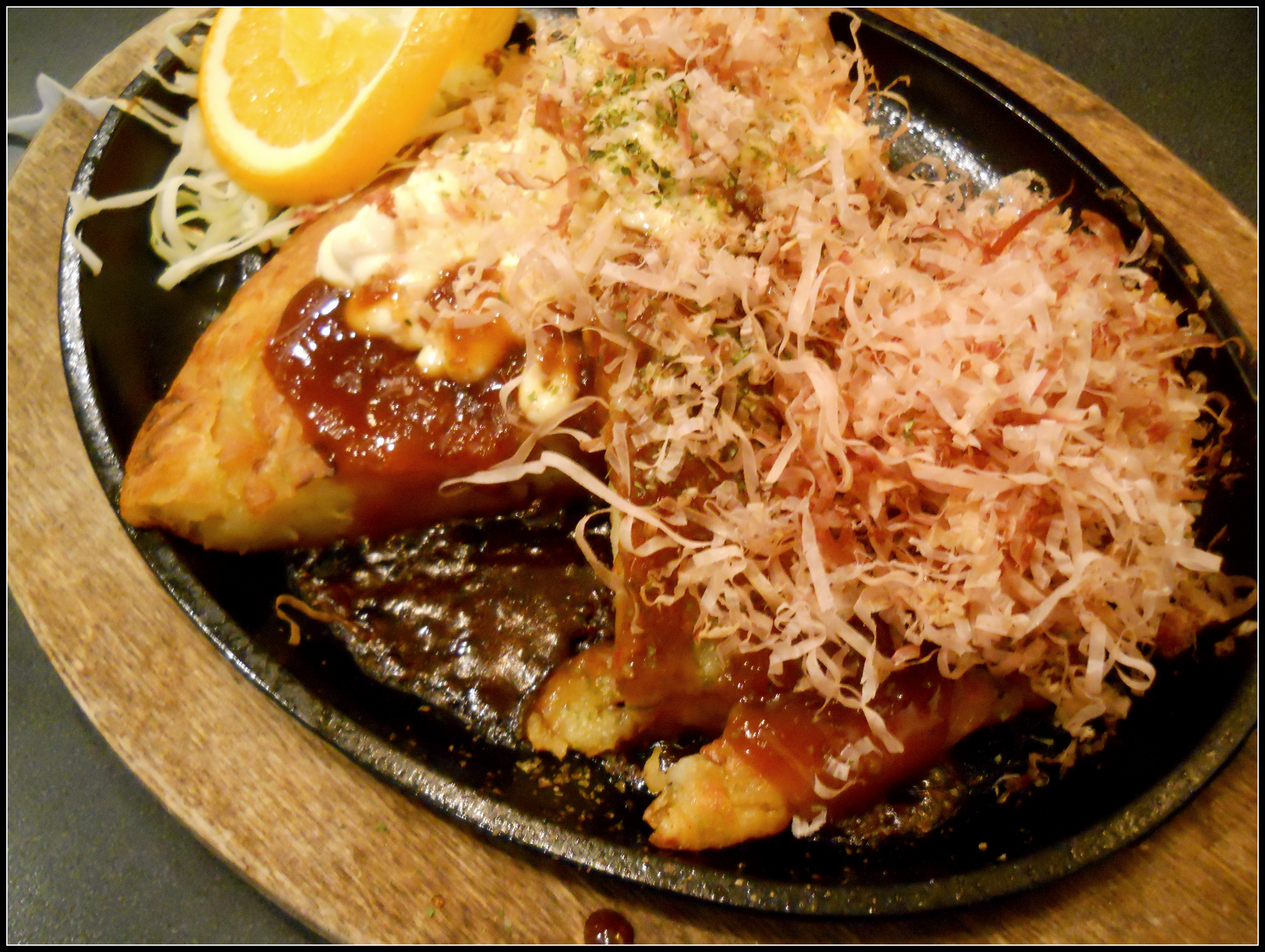
I was surprised to see okonomiyaki on the menu, however described as a seafood pancake. Feeling demanding for no good reason, I asked the waitress if they could add pork belly, but no luck. πŸ™ I was even more surprised when the okonomiyaki was brought to me: instead of the usual round shape I’m used to, this one is two quarters of dough on an oval hot plate, the kind you see with dak bokkeum at Korean restaurants, with copious amount of mayonnaise and katsuobushi (at least this part is familiar). I don’t know where the seafood in “seafood pancake” was. Even the cabbage was scarce. Final verdict: I make better okonomiyaki. πŸ˜‰

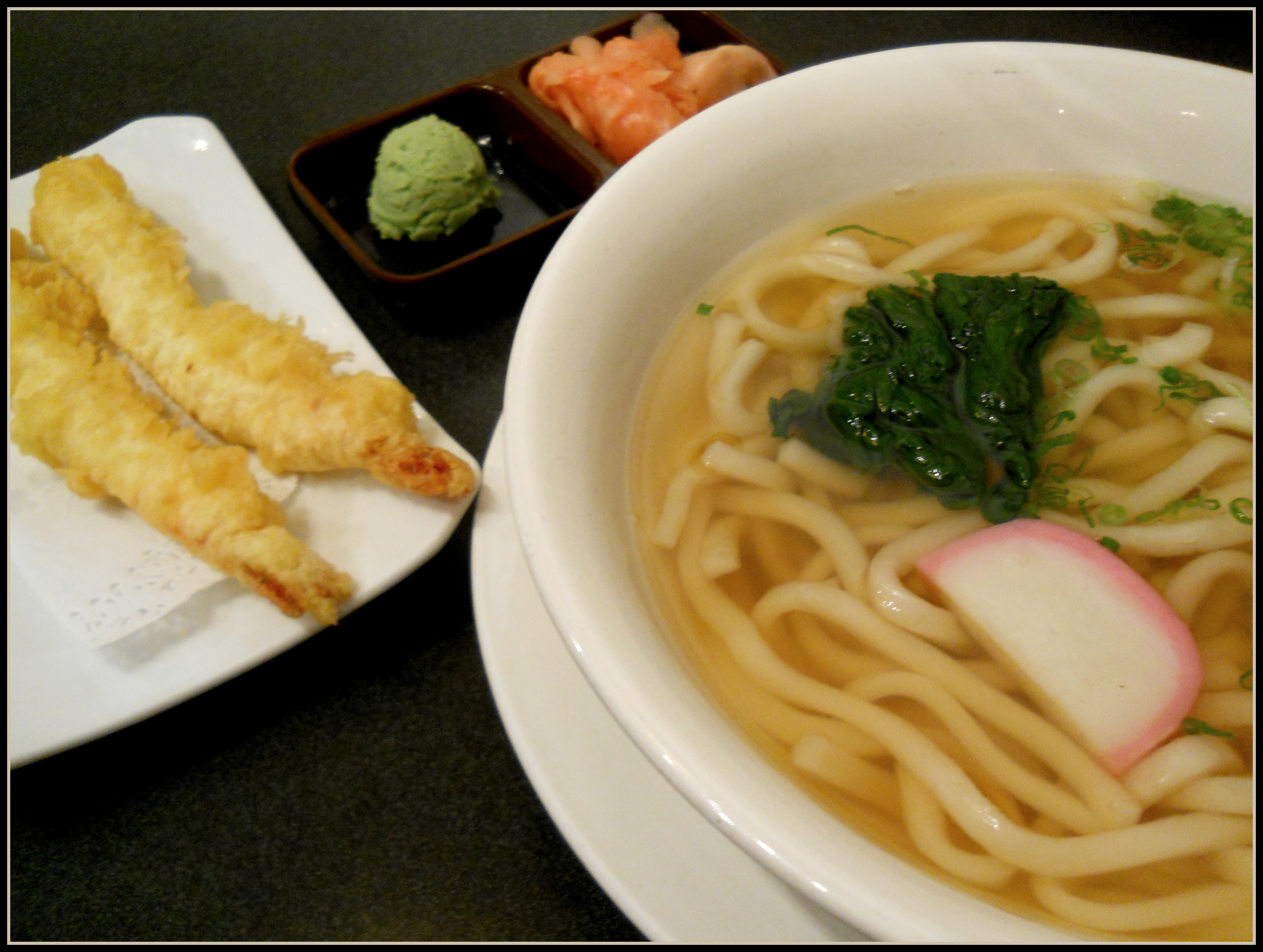
Luckily, Little Mom’s udon with shrimp tempura and Dad’s curry rice with tonkatsu, looking unassuming as they were, actually tasted good. I’m glad, you know, cuz I actually wanted to like this restaurant. Sure, its food needed some fixing to live up to its posh setting, and the saba shio was not as good as the one I had at Koto in that little town Sonora. But I did order things off the beaten path (should have gotten sushi maybe?), and the waitress was cute.

For dessert, I tried my luck again and asked for black sesame ice cream, although it’s not listed on the menu. But Kaneyama is no In ‘n Out with a hidden menu, the manager said no, adding “That was the first time I got this question. Not many people know about it.” Guys, next time you’re at a Japanese restaurant, ask for sesame ice cream.

Okonomiyaki - $8.95 - strange looking and too doughy. I make better.

Okonomiyaki – $8.95 – strange looking and too doughy. I make better.

Udon with shrimp tempura - $10.50 - The noodle soup looks pretty barren but the broth is good. The tempura is also good, not oily is always a plus in my book.

Udon with shrimp tempura – $10.50 – The noodle soup looks pretty barren (seriously, just kamaboko and spinach?), but the broth is good. The tempura is also good, “not oily” always scores in my book.

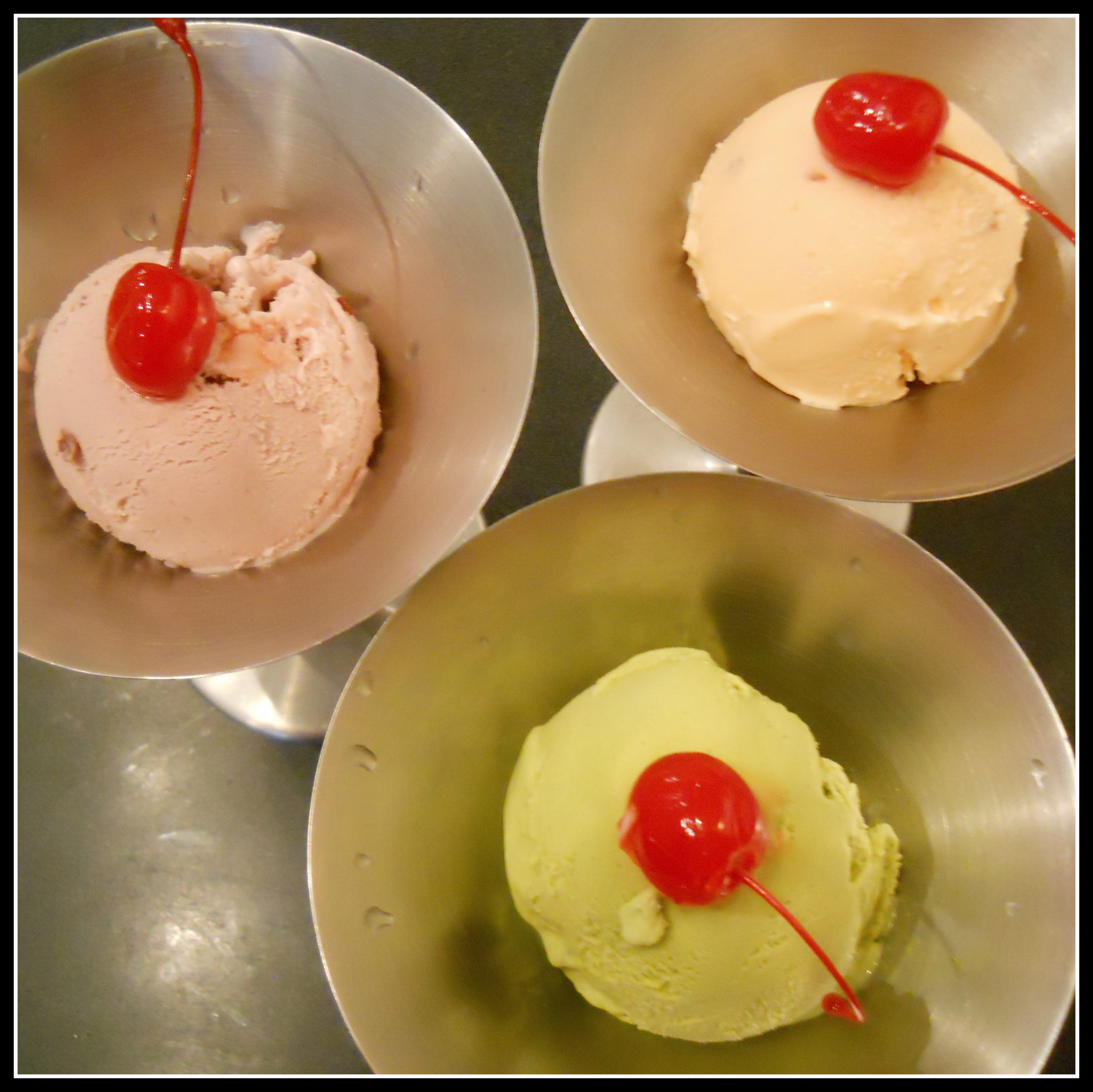
Red bean, plum and green tea ice cream - $2.50 each scoop - Too expensive, not good enough, casual pho restaurants have better green tea ice cream than this, but the plum ice cream is good.

Red bean, plum and green tea ice cream – $2.50 each scoop – Too expensive, not good enough, casual pho restaurants have better green tea ice cream than this, but the plum ice cream is good.

Speaking of ice cream, today I realized that I have become a sea urchin of a customer. I asked questions, and returned the wrong scoop of ice cream to the kitchen, although Little Mom said it was fine. (The right scoop turned out to be her favorite and the best flavor. I did something right, Mom πŸ˜‰ ) In another year will I be sending back a medium well steak when I had asked for medium? (On a few occasions, I thought of sending back pork sausages that weren’t properly defrosted and still a bit pink inside. But I just didn’t eat the sausage.) What will I be then… a durian?

Address: Kaneyama
9527 Westheimer Suite D
Houston, TX 77063
(713) 784-5168
www.kaneyama-houston.us

Lunch for three: $67.76

Cook with Yuri Vaughn

August 20, 2012 By: Mai Truong Category: Comfort food, Japanese, Opinions


She’s the person behind the mochi at Teance. She pounds the cooked sticky rice instead of using mochiko, chops up whole yomogi for the actual grassy freshness, grow her own wild blueberries because they’re denser in flavor than the bigger highbush cultivars at the stores, and makes fancy mochi fillings with seldom fewer than 4 ingredients. Every time I nibble one of her soft little piece of art, each costs a whopping 4 dollars, I wonder what she doesn’t make at home from scratch and how much more work it takes.

Turns out, Yuri doesn’t make katsuobushi from scratch, that is, she doesn’t behead, gut, fillet, smoke and sun-dry the bonito fish herself, instead she buys the wood-block-looking karebushi and shaves it to top her okomiyaki, which goes without saying is made with grated nagaimo and dashi instead of premixed flour like when I did it.


We made Hiroshima-style okonomiyaki, which doesn’t have egg in the batter, but we later added egg to brown the pancake more. Yuri told me to choose the fluffier cabbage instead of those with the leaves tightly packed together, and she added a squeeze of lemon juice on the finished pancake to brighten it up, exactly the little things that I can learn only from a home kitchen.


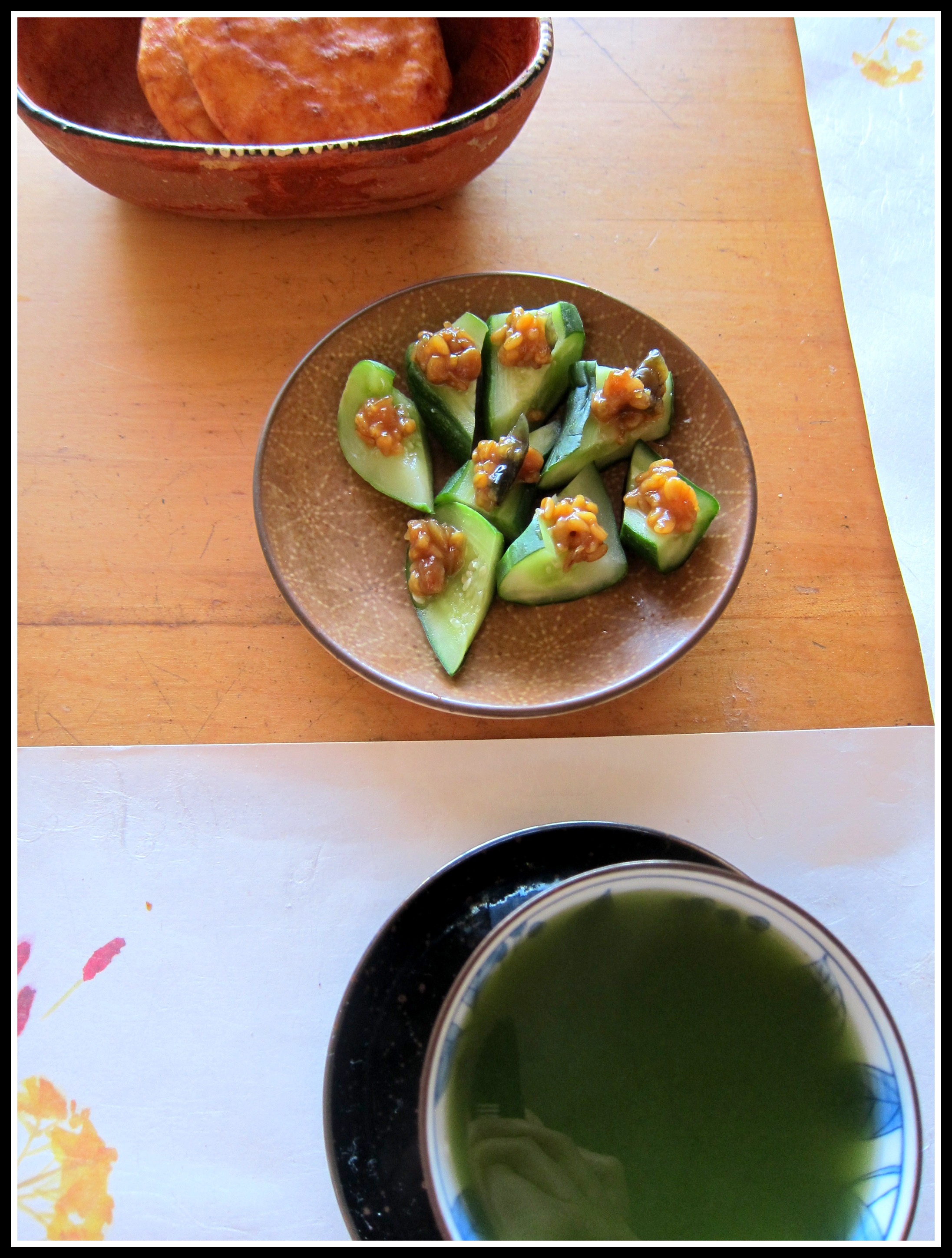
After two okonomiyaki, we had genmaicha with pickle cucumber and shiromiso, both homemade of course. Then a plain koshihikari senbei (rice cracker), as the sun set generous rays from the window.

Kitchen hour: quasi-Osaka Okonomiyaki

July 13, 2012 By: Mai Truong Category: Comfort food, Japanese, RECIPES, savory snacks


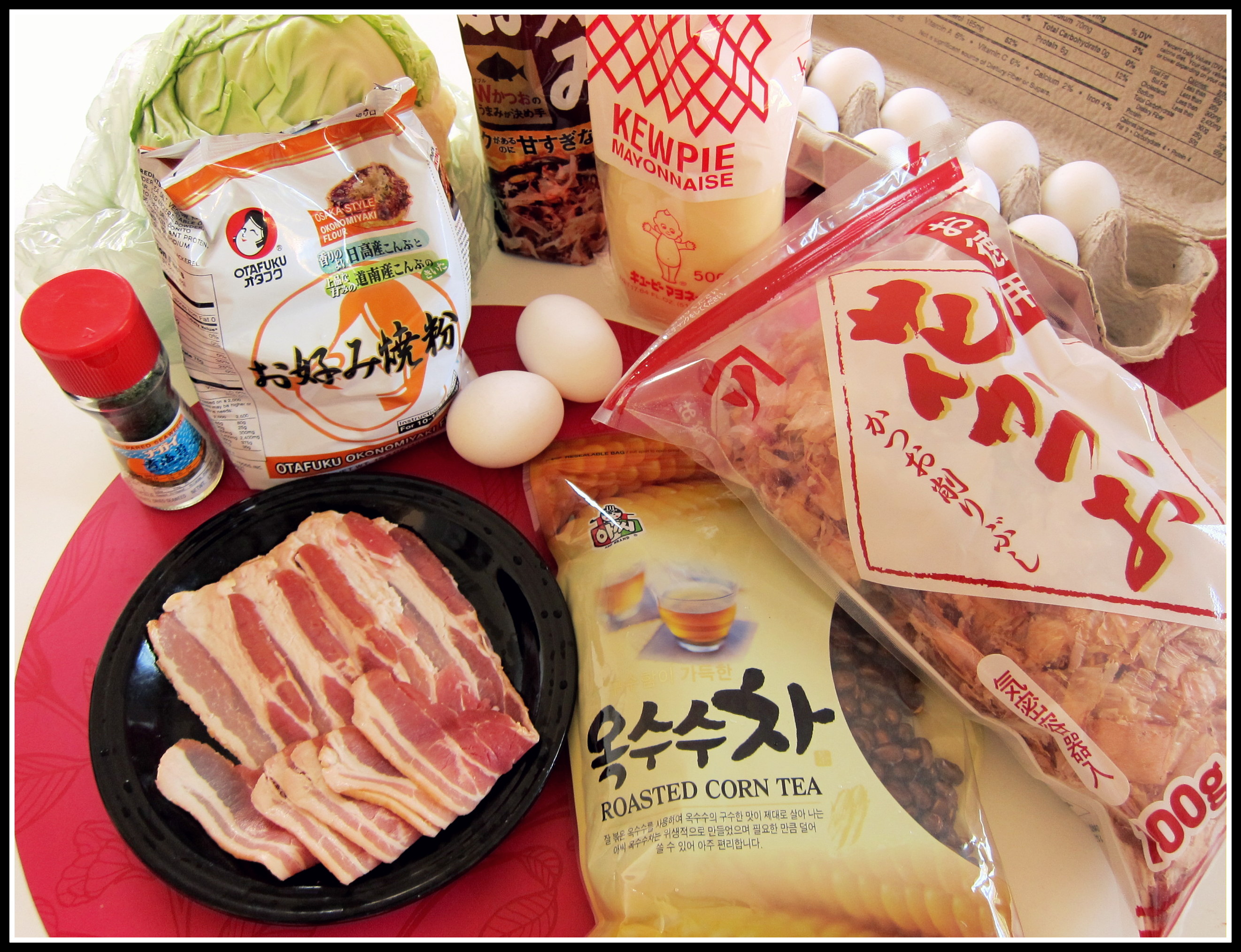
When I walked down that aisle, I beamed with pride. In my hand, a bag of okonomiyaki flour, a bag of katsuobushi, bottles of sauces and aonori. Kristen took care of the cabbage and meats. Pancake day. Osaka style. At least that was the plan.

We didn’t plan on being authentic. We couldn’t. An American-born Taiwanese and a Vietnamese who haven’t lived in Japan at all are not gonna make an “authentic okonomiyaki” on first try. That’s why we chose premixed okonomiyaki flour instead of grating a nagaimo, bottled mayonnaise instead of whipping up eggs and oil ourselves. But just the thought of making our own okonomiyaki in whatever shape we want and however we want it, not having to go anywhere and regretting over soggy, over-salted mashes called okonomiyaki, generated the we-can-own-this attitude that guaranteed pride no matter what the outcome. It’s a sort of defiance after too many letdowns. Instead of mixing flour with water, we boiled roasted corn and mixed flour with corn tea.

Apart from that and the avoidance of green onion (I’d add green onion if I’m making pajeon – green onion pancake, but not okonomiyaki), and impatience – pouring more corn tea than I should, then the batter was too thin and I added some more flour and the batter went too thick, eventually I got double what I intended for, which also helped because we had a lot of cabbage – we followed the Best Okonomiyaki recipe pretty closely until the next-to-last step. Once I made too big a pancake, so when I flipped it, only half got flipped. I got omelet instead of okonomiyaki, but shape doesn’t matter, right? Ah, there was also a time when I forgot to layer the bacon on top of the pancake before flipping it, so the bacon was added to the bottom instead of the top, but that’s just a matter of perspective. πŸ˜‰


Quasi-Osaka Okonomiyaki (serving 2)
[adapted from Best Okonomiyaki recipe]

1 cup okonomiyaki flour (100 g)
2/3 cup corn tea
2 eggs
1/5 head of cabbage, sliced into 2-mm-thick strips
9 strips of fresh bacon, cut into 3-inch-long (8 cm) pieces or however you like
100g raw shrimp, peeled and diced
Kewpie mayonnaise
Okonomiyaki sauce
Aonori (seaweed flake)
Katsuobushi (bonito flakes)


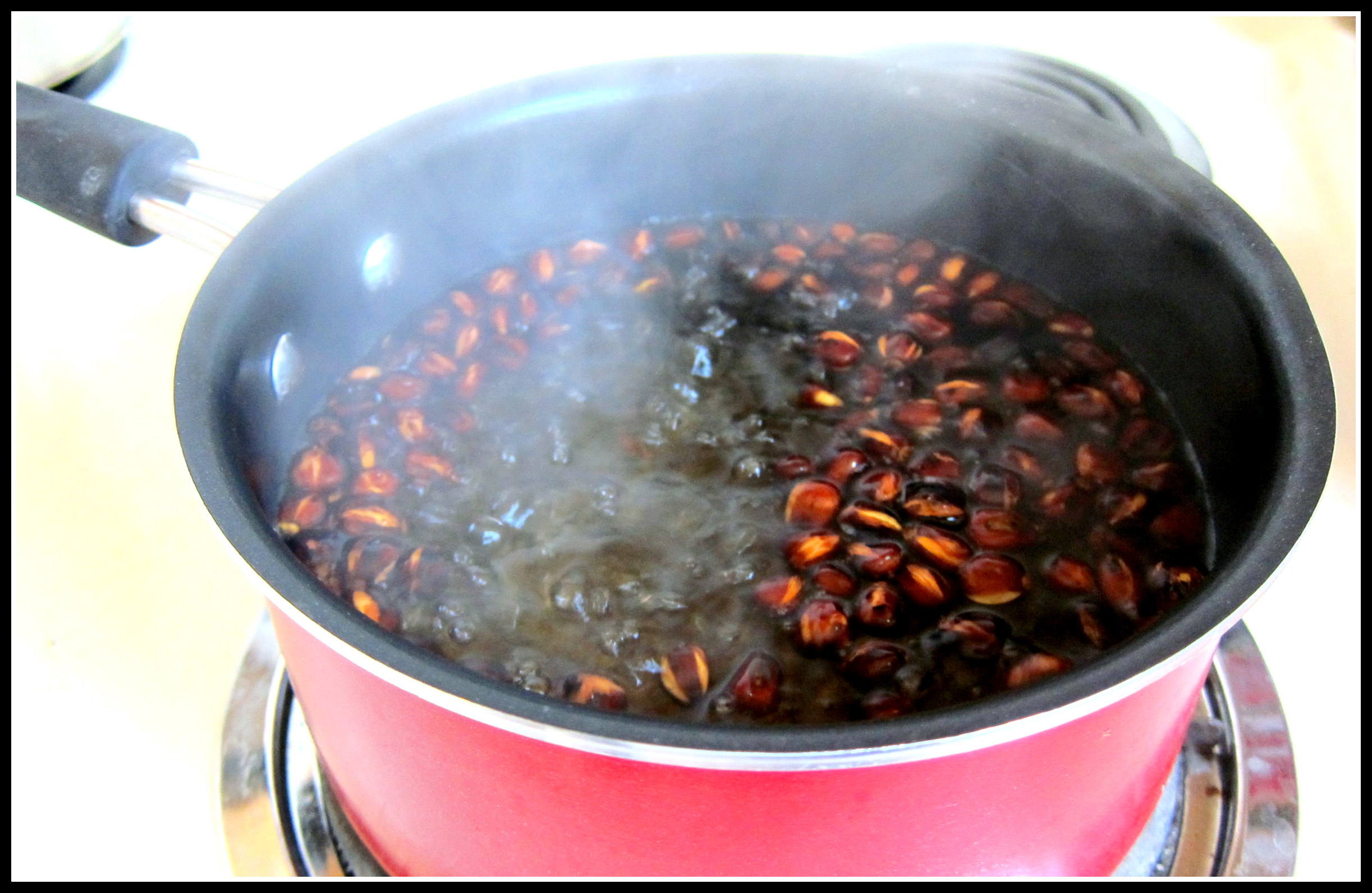
Boil the roasted corn kernels to make corn tea (μ˜₯수수 μ°¨ oksusu cha). I just take a handful and throw in a pot of water, you should rather go heavy than light on the kernel, it makes the tea sweeter. Let the tea cool.


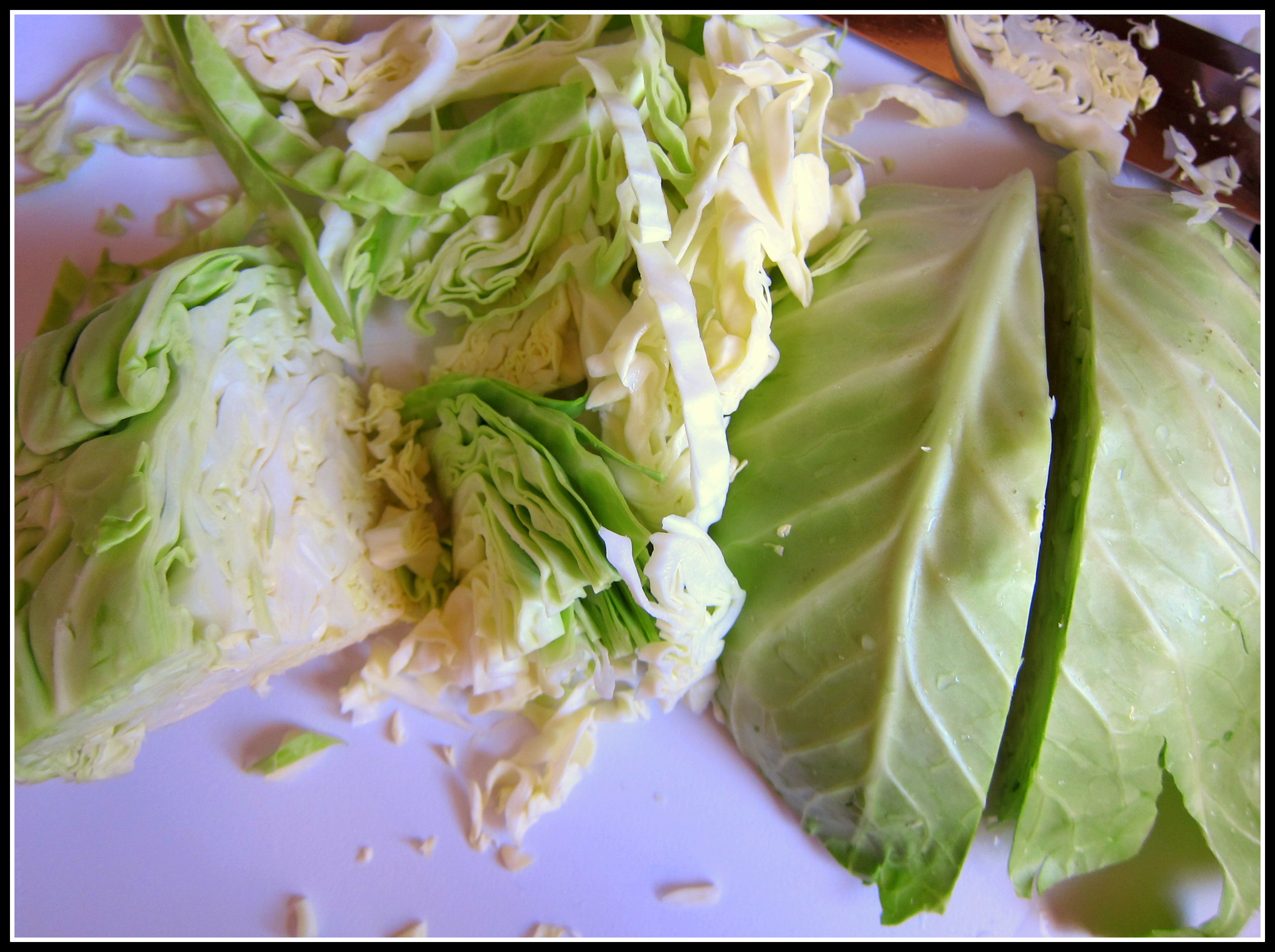
Chop the cabbage. Time to show your prowess of chopping without looking, which I can’t do. You’d end up with a LOT of cabbage. Make cabbage salad with kimchi.


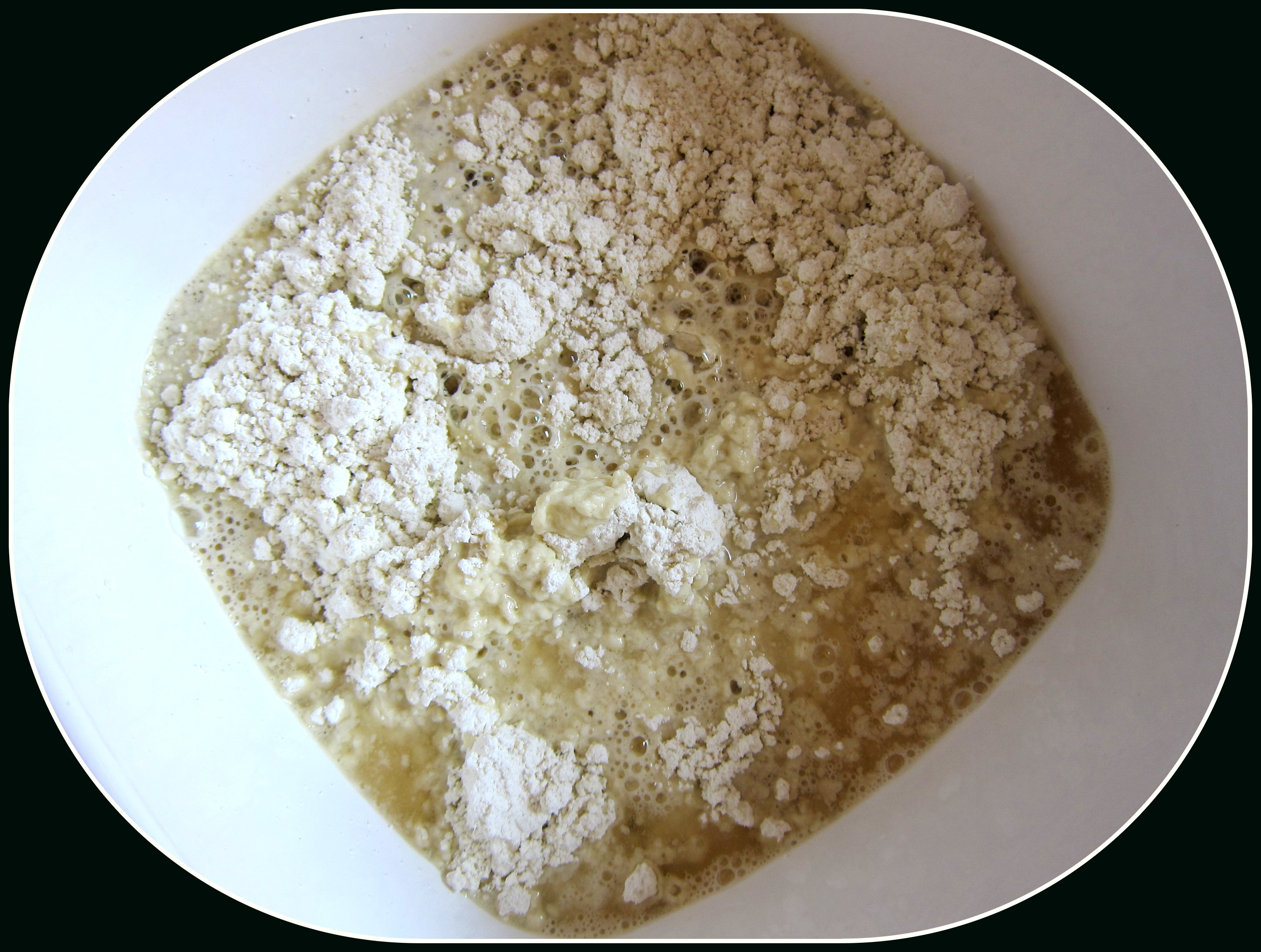
Mix flour with corn tea.


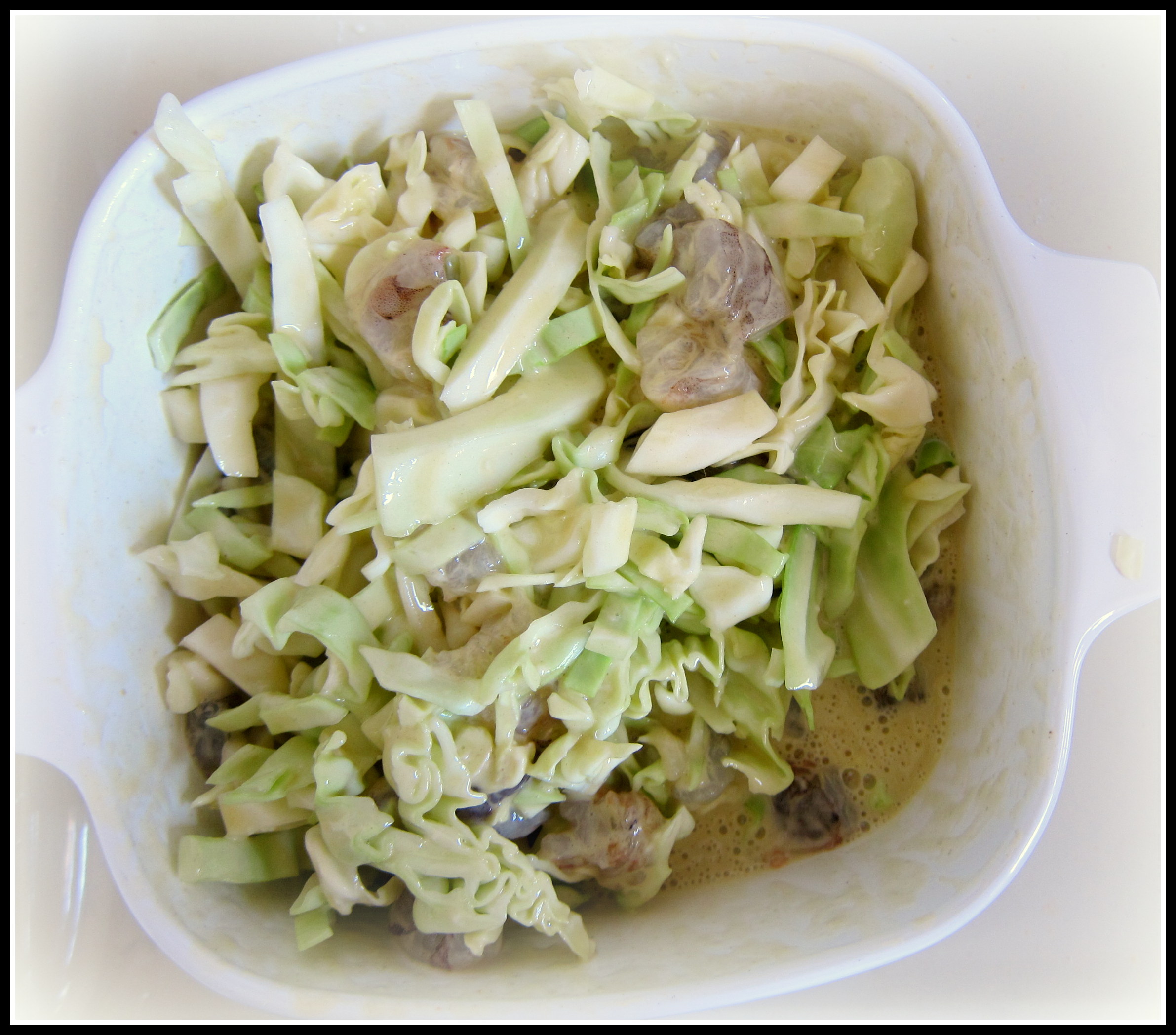
Add cabbage, diced shrimp and eggs into the flour. Mix like you never mix before.


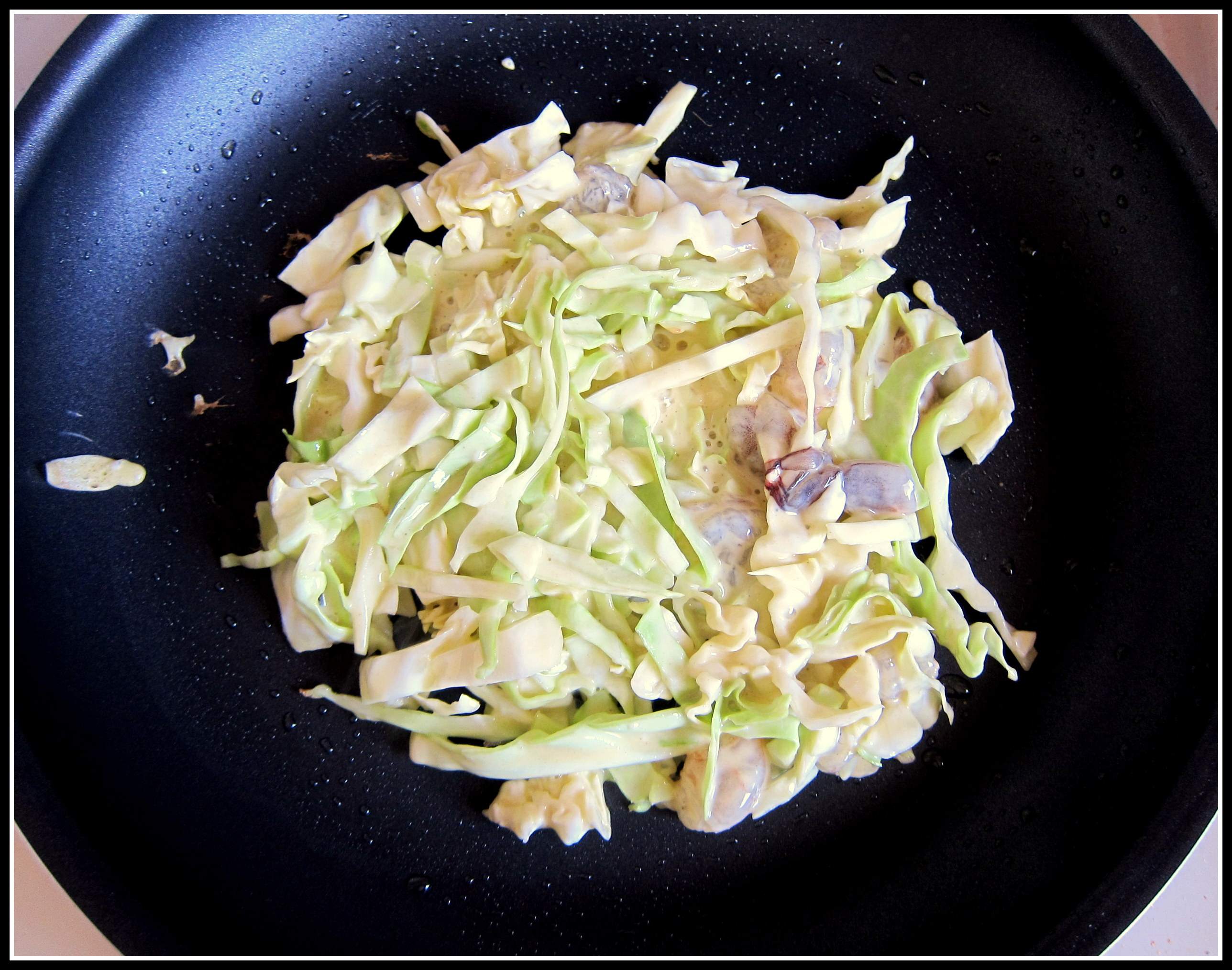
Plop some of the mix onto a hot, lightly oiled skillet and spread it into whatever shape, canonically a disk. Four inches across will make it easiest to flip and big enough to be a meal.


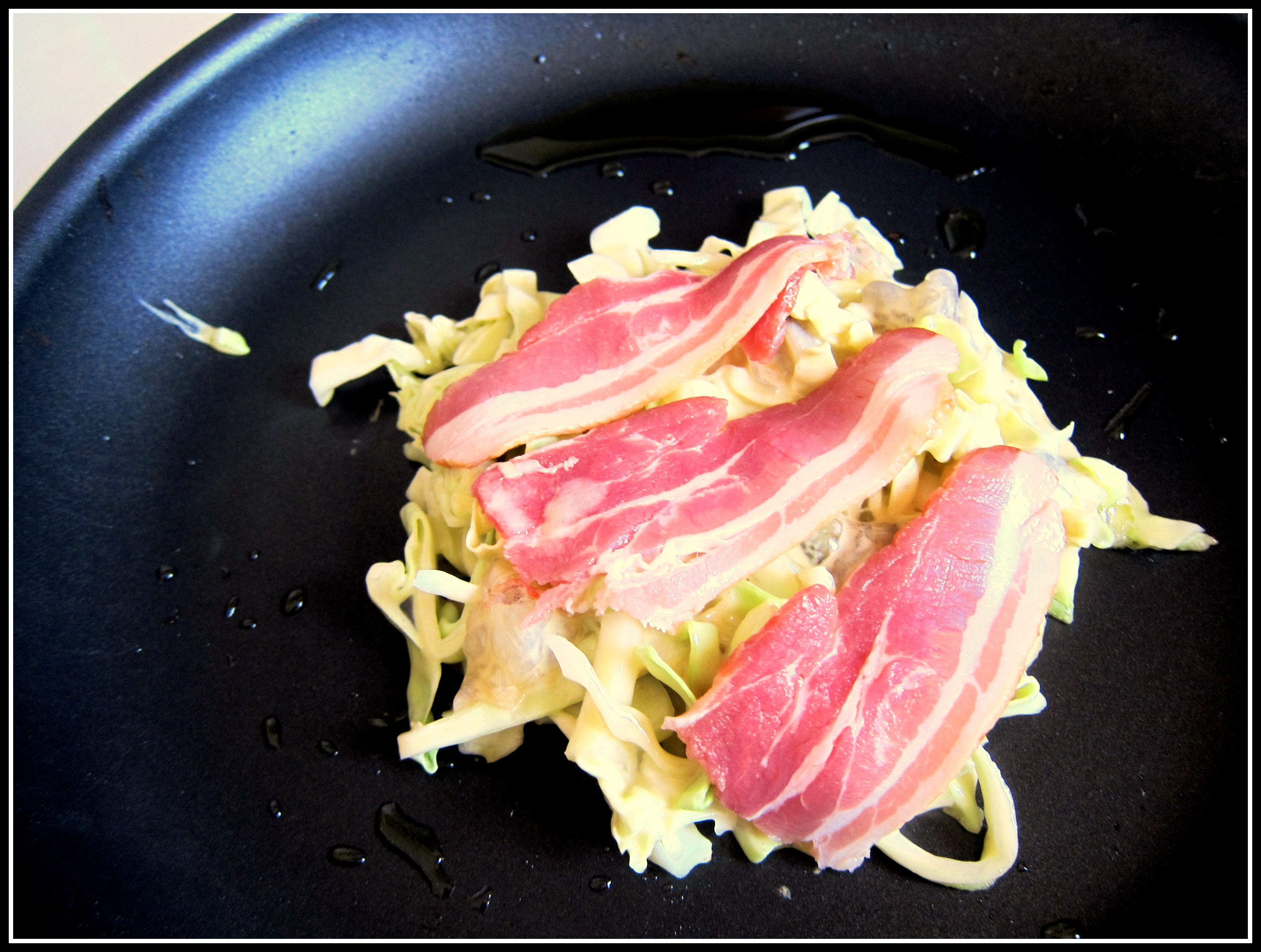
Layer bacon strips on top. Let it sit for 3-4 minutes on medium-high heat.


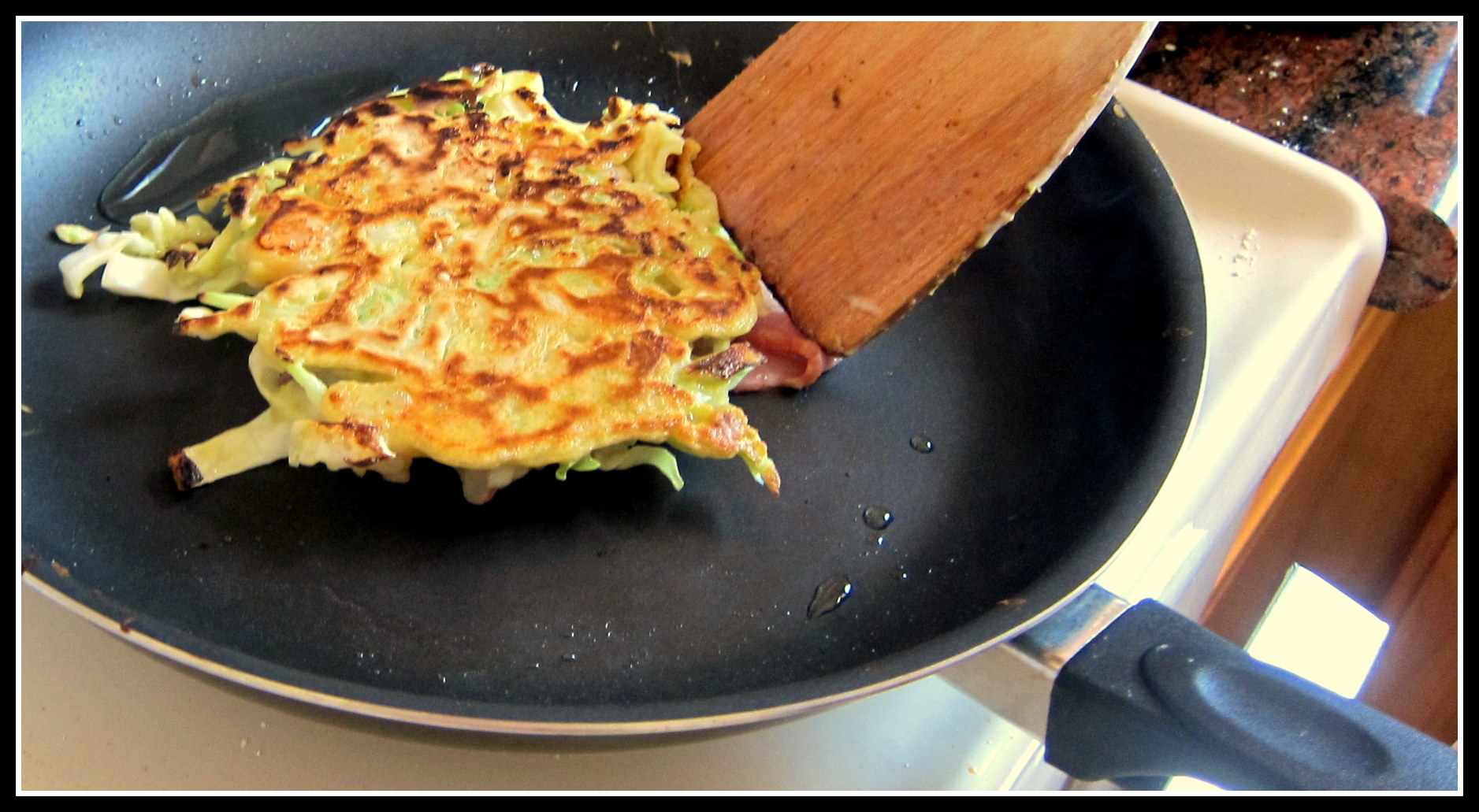
Flip. And DO NOT PRESS it down. You want the air in there for crunch. Let it cook for another 2-3 minutes.


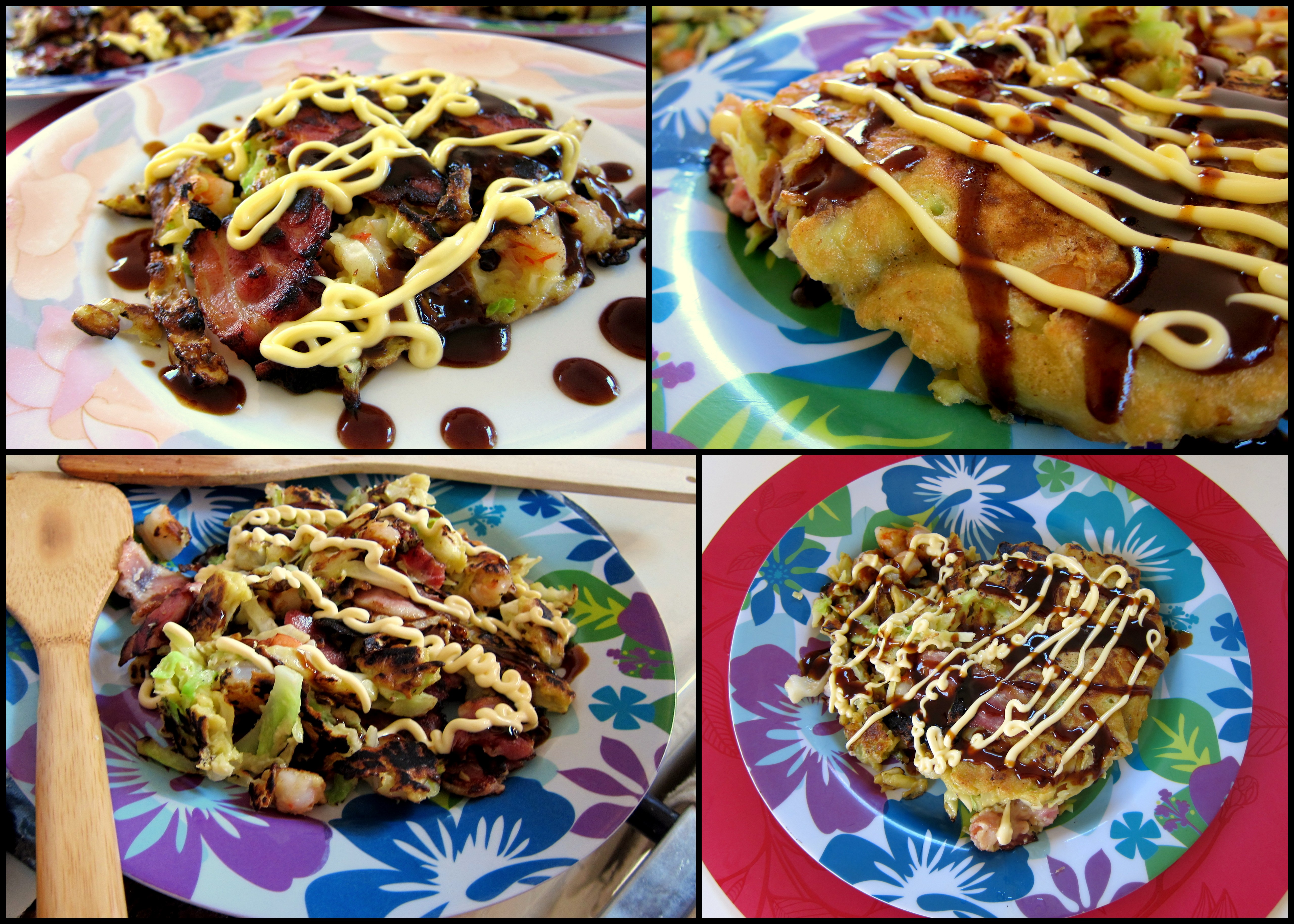
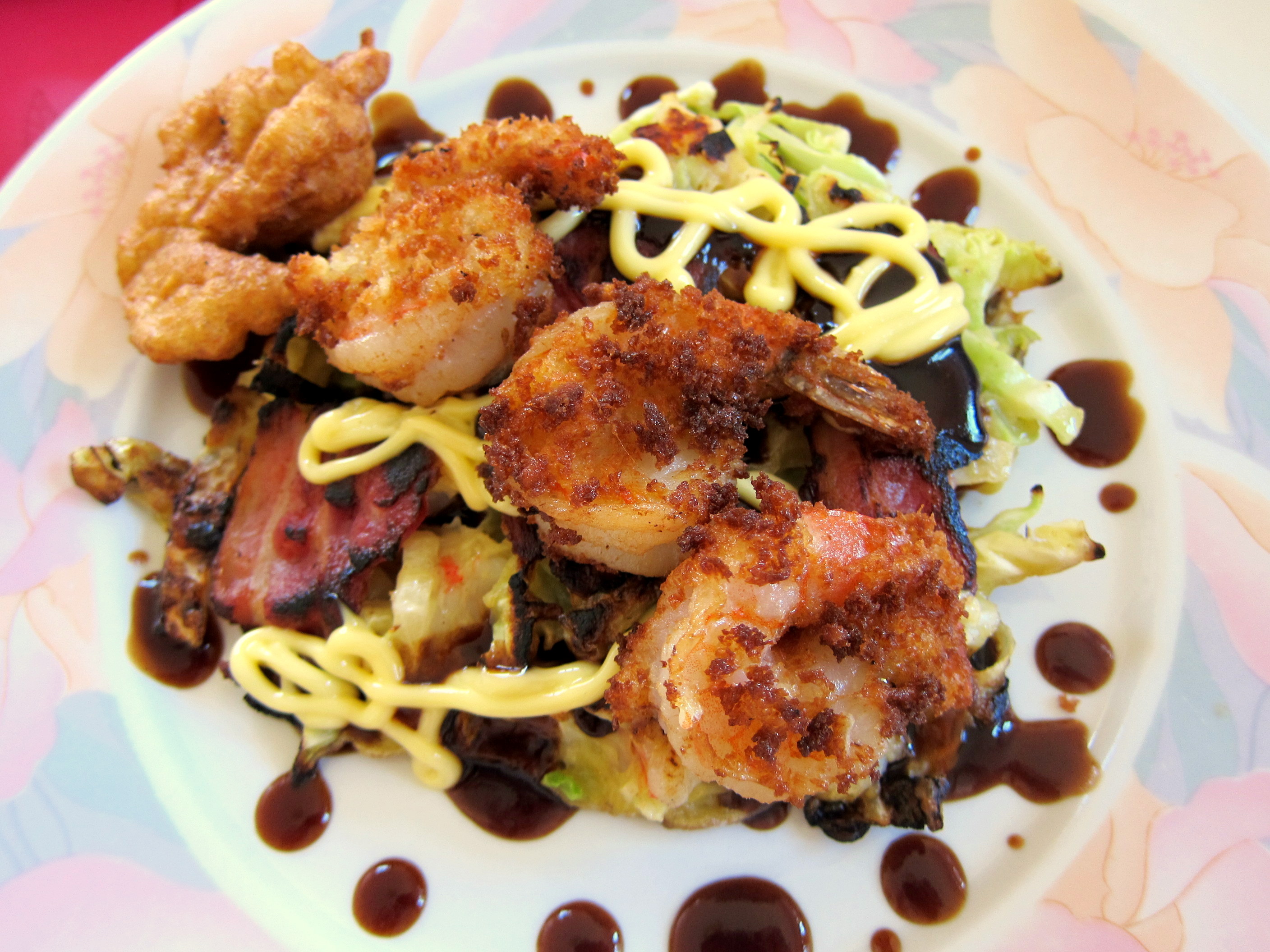
Spatula it out onto a plate. Sprinkle copious amount of aonori and katsuobushi (which we forgot to do! But we used tempura shrimp to make up for that later). Squeeze mayonnaise and okonomi-sauce into your desired pattern. Or make a heart-shaped pancake, like Kristen.

Here, a lesser writer would put something cliche like “this is the best okonomiyaki I’ve ever gulfed down”.

This is the best okonomiyaki I’ve ever gulfed down.


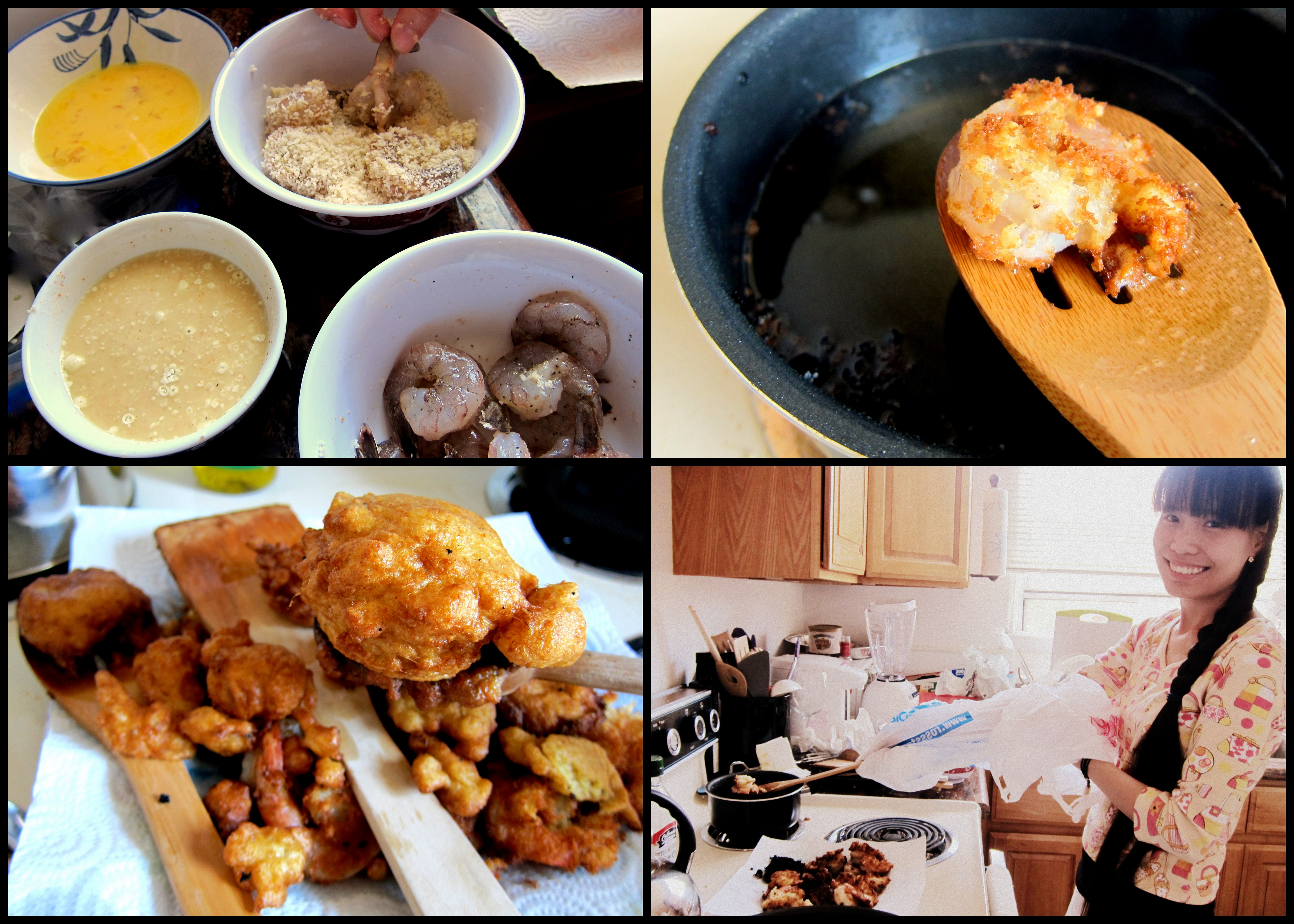
If you bought extra shrimp, make shrimp tempura. We decided this on a wimp and protected ourselves from flying oil with plastic bags. Recommended for entertainment. πŸ˜‰


With leftover batter after deep frying the shrimps, make fried dough. Drizzle syrup and eat them as dessert. Can you see the shrimp imposter? πŸ˜‰

Future prospects: grating nagaimo, making our own sauce, other styles of okonomiyaki.

Namu and Authenticity

September 04, 2011 By: Mai Truong Category: California - The Bay Area, Korean, Opinions, Won't go out of my way to revisit


My Lucky Peach finally made it home. It took only one month from the time I placed the order, and just when school started and me getting buried beneath ten miles of homework. But I’ve taken a peek every now and then at its colorful albeit tiny pictures of ramen (this first issue is all about ramen) and gorged in the fourth article while waiting for the bus. This is the bad thing about food magazines (or anything serial and food related, except cookbooks): it’s so easy to read it’s addictive, I can’t even fall asleep reading it, then I get sleep deprived. So I never buy them. But Lucky Peach is different: it’s recommended by a friend, subsequently ordered by two other friends, all of whom have highly experienced and respectable tastes; what I can do? I haven’t finished the entire thing, but the fourth article is a good one. Good enough to console myself for surrendering to peer pressure. In hindsight, it’s one of the highlights of the lunch we shared at Namu. (Not that the magazine is in any way related to Namu, Rob just showed it to us while we were eating at Namu.)

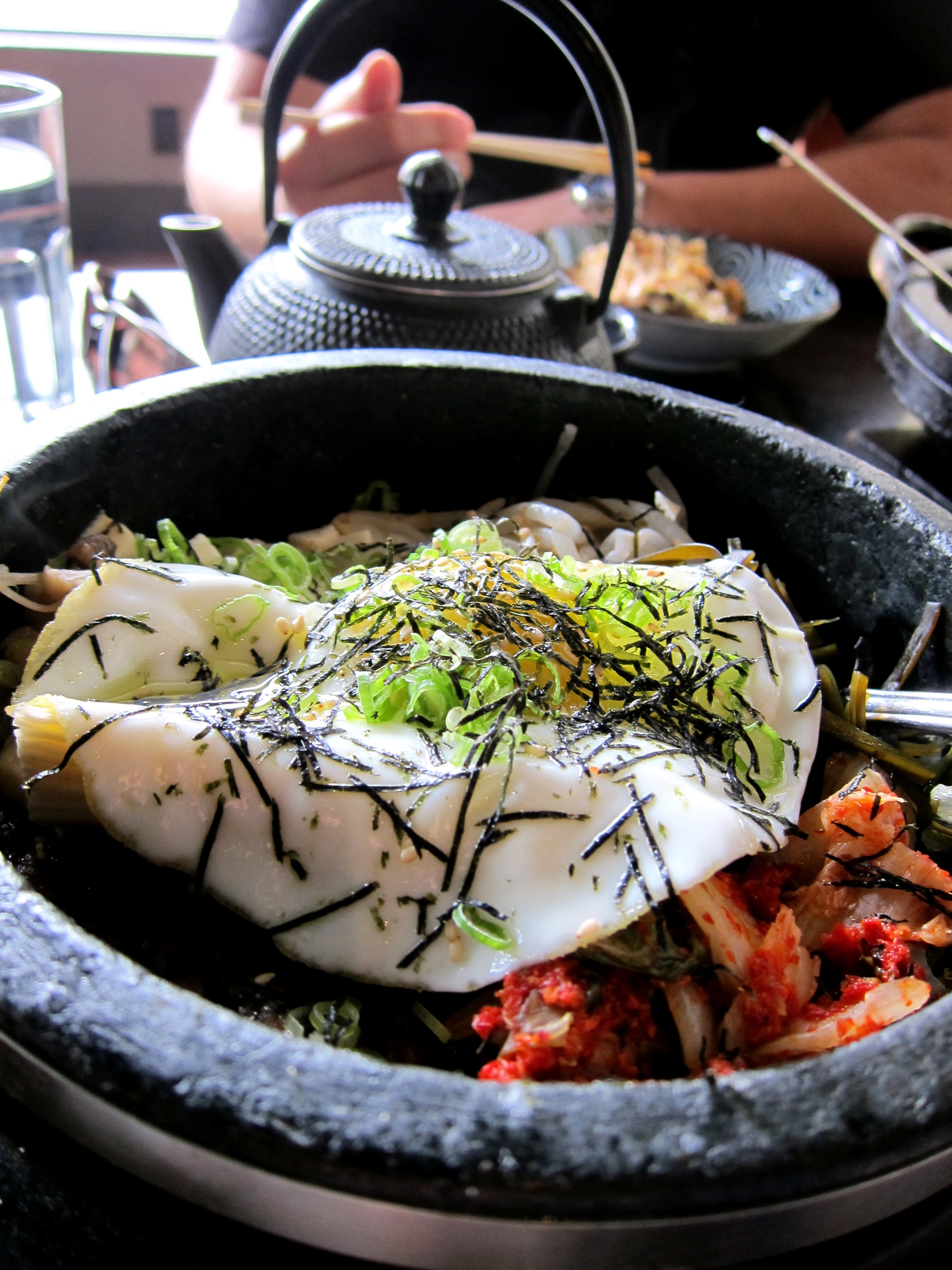
The other two highlights were some kind of pickled onion and the gochujang (κ³ μΆ”μž₯) for the bibimbap. The pickled onion, the best of the four kimchi/pickle varieties, tasted crisp, thorough, and to the point; the gochujang was nutty with a light fruity hint. Namu also had the presentation going for it: from the sparsely spaced tables tucked along the walls to the petite tea cups and blue-and-white serving bowls, the whole place uttered cuteness. The main courses, however, sparked more discussion than compliments among us four, mainly surrounding authenticity.

Of course, Namu is not about “authentic”. It is Chef Dennis Lee’s “cutting edge new California” interpretation with a Korean influence, evident by the appearance of english muffins and tortilla alongside kimchi relish. Depending on your definition of authenticity, authentic Korean food may be hard to come by 8000 miles from Korea, but the authentics can evolve (as they have always been), and I’m all for fusing ingredients to spread the scope of an ethnic cuisine. In fact, I wish Namu had fused more ingredients together. It’s not the english muffin, the tortilla or the chorizo that made me skeptical looking at the menu, it’s the lonely and repetitive incorporation of kimchi in almost every single dish.

There is a whole lot more to Korean food than kimchi, and baechu kimchi at that. Simply adding the fermented cabbage on a hamburger bun or laying it next to the steak doesn’t give the dish any more Korean background than adding sausage making it German. Namu would be more accurately described as “cutting edge new California with kimchi”.


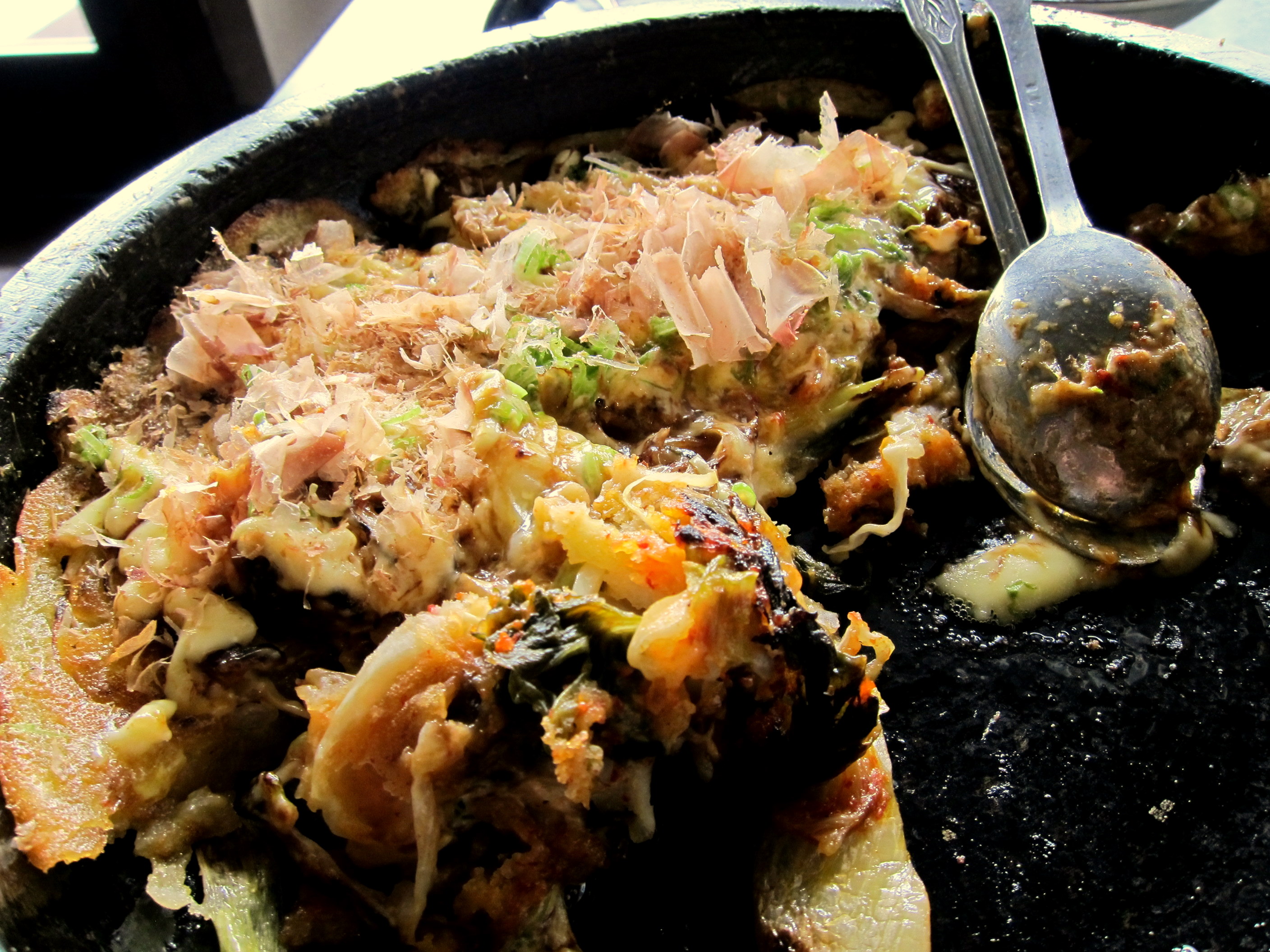
The other unsettling point for me was the available choices. We went as Korean as we could, which was easy because there were only two Korean dishes on the menu, and got kimchi fried rice, dolsot bibimbap and two sizzling okonomiyaki, not because it sounded the most interesting but because Japan is right next to Korea. Now, bibimbap, although loved by many non-Koreans and as representative of Korean menus in America as McDonalds representative of America outside America, seems a bit lackluster as a “restaurant” item. It’s not wild enough to be “California”, and it’s not complicated enough to be “Korean”. Not to mention that our hostess mixed the rice so much for so long that there was barely any time left for the rice crust to form, or perhaps the dolsot wasn’t hot enough. The kimchi fried rice didn’t convince me. The okonomiyaki, made Korean by the kimchi touch, erred on the salty side but was arguably the best piece of the three.

Would we have had more excitement had we tossed the Korean concept and gotten the loco moco or the egg sandwich? But without the Korean concept, what makes the Namu brunch different from the other hundreds one could get in the Inner Richmond? I’m not sure.

Izumiya – Get busy and get yaki

March 06, 2010 By: Mai Truong Category: California - The Bay Area, Japanese

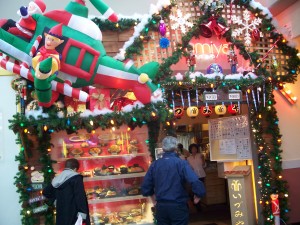
If you go to Nihonmachi Mall during Christmas season, visit the Kinokuniya bookstore for some soothingly aesthetic greeting cards and folding snow globes, then walk around the bench and feed your gaze on the delicious window display of Sophie’s Crepes. Then glance to your right, oh… what is this? Winter Toy Land? No, it’s this teeny beehive resto called Izumiya with their frontal lit up like a runway for Santa’s helicopter, reminding me of Prep and Landing.

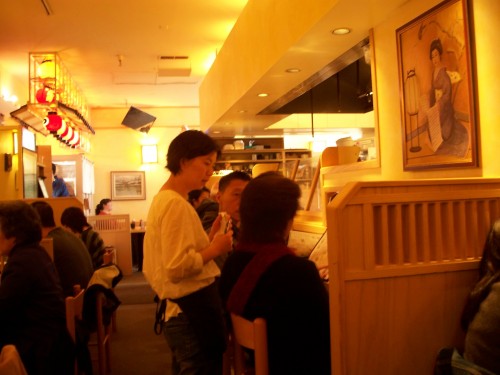
Intrigued, we snugged in. Believe me, even if the weather outside were in the negatives, it couldn’t get any warmer in this packed place. The waitresses skillfully whizzed back and forth and sidestepped through single-person-wide aisles, heat radiated from the grill, the platters and the chatters, faces glowed under the reddish hue of dim light. Paper signs on the sliding door said “Karaoke 9 pm – 2 am”. How would they arrange enough room? Where did they hide the screen? I couldn’t imagine a larger crowd within those walls. Ever since college days I usually feel a bit tighten up if I have to practice my munching three feet away from some strangers, but what the heck, if it’s busy it must be good, the flies wouldn’t call people here otherwise (*).


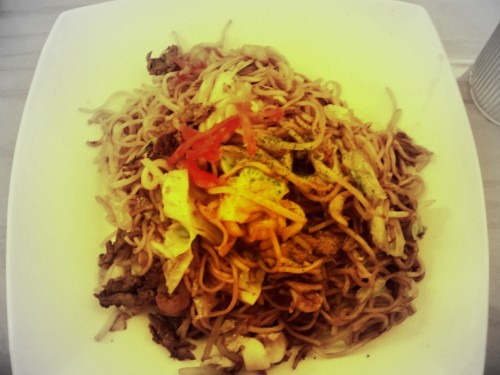
There were the bentos and the sushis like usual, but the house focus was strings and strands. Yakisoba (fried noodle – $8.50) with squid, beef, shrimp, egg, and a pinch of ruby pickled radish (that I’ve had at Anzu but have no idea what it’s called or what it is. Help, anyone?). There was hardly any remnant of oil. Tonkatsu sauce lent the bundle a sour and salty whiff, which subtly forced you to take one small twirl at a time to fully savor its hidden strength.


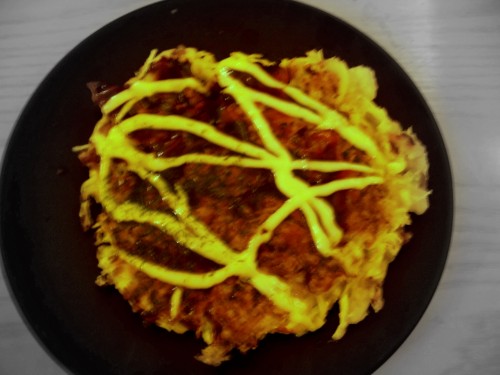
Yaki ($8.25), short for okonomiyaki, or “cooked [pancake] with anything you want”. It’s been a while and I can’t remember what I wanted then, but that scrumptious mixture of buttery batter, crunchy crust and cabbage, soft sweet potato, and lush squirts of mayonnaise is unforgettable.


The pancake looked small, I wanted two, but a second one would doom me unfit to sidestep through the body-wide aisle. At the end we left the table with content, a fairly healthy lunch, and twenty dollars fewer in our wallet.

I know I’m such a turtle for delaying this post nearly three months after chowing, but the food is seasonless, and does seasonal look matter after all? Surely Izumiya has long taken down their Christmas decor, butΒ  theΒ  attraction doesn’t come from flashing light bulbs and puffy toys. Now the name sign stands out, and the colorful plastic yet realistic plates behind the window look more splendid than ever.

Address: Izumiya (inside Nihonmachi Mall, Japan Town)
1581 Webster Street
San Francisco, CA 94115
(415) 441-6867

* Vietnamese people would jokingly say someone is “called by the flies” if they somehow show up just in time for food without planning ahead. It’s not a demeaning, belittling, or any kind of negative remark.