Flavor Boulevard

We Asians like to talk food.
Subscribe

Vegan out at Cha-Ya

September 15, 2012 By: Mai Truong Category: California - The Bay Area, Japanese, sweet snacks and desserts, Vegan

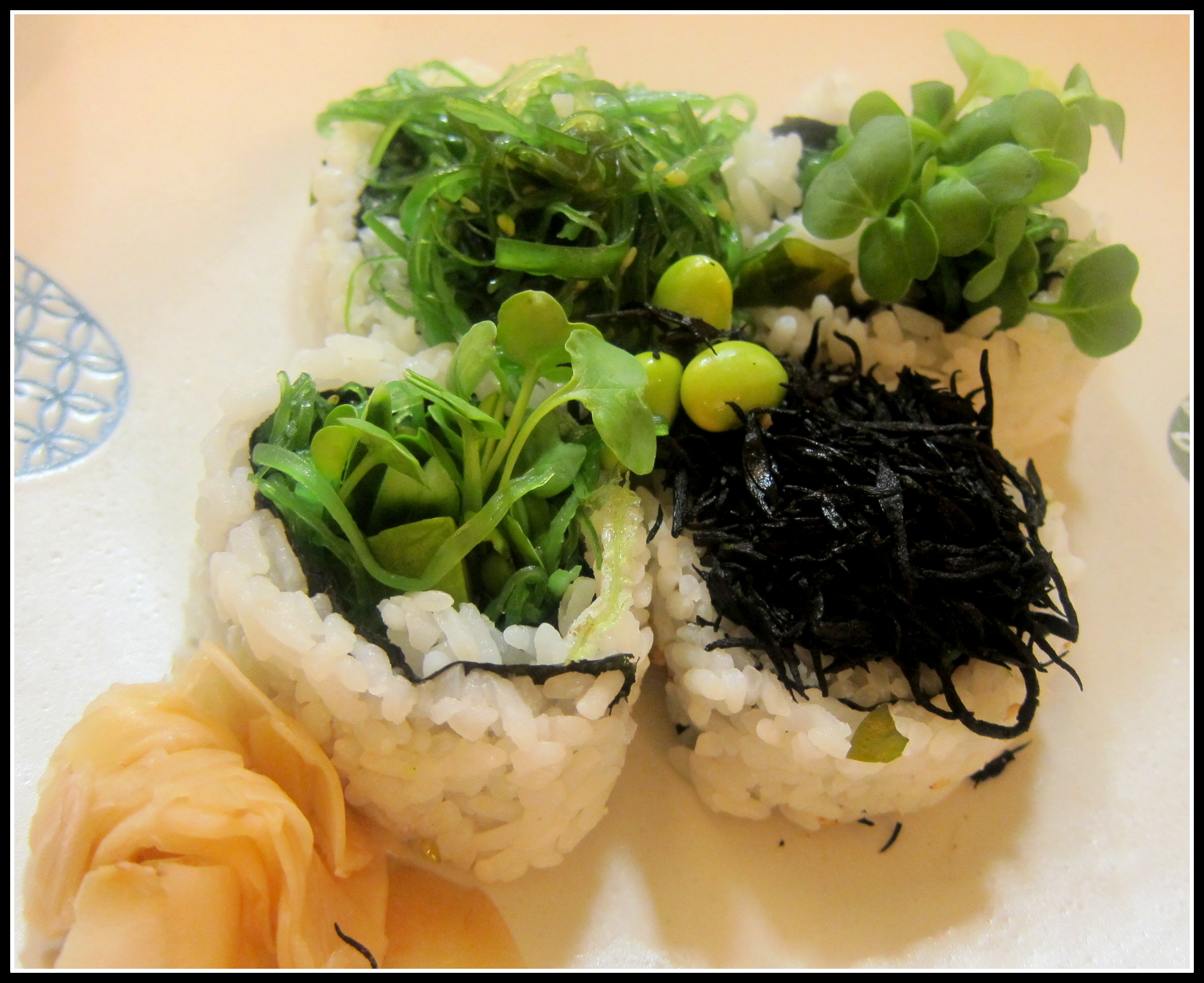
Summer Green Roll – avocado, cucumber, kaiware sprout, wakame and hijiki. Alissa scooped wasabi like it was green tea ice cream, but I like this one just as it is: plain, fresh and light.

It’s been a long time since I last either wrote about food or ate anything that I could write about. The occasional rainfalls during the drought of takeout Chinese are so-so hu tieu and com suon somewhere in the Ranch 99 complex, and homemade soups, lovely but no hot news. Vegetable intake has been limited to shibazuke from Berkeley Bowl, homemade kimchi, and toasted seaweed (seaweed counts, doesn’t it?). Before leaving for her trip, Cheryl fed me her black chicken soup, brown rice, tau yew bak (similar to thit kho but with soy sauce instead of fish sauce) and, like a loving sister, concerned looks and advice on how I should feed myself healthy meals. I agree with her one hundred percent, but all planned menus for the next day fluttered their wings away as I run from class to class and get home only wishing to relax. Cheryl is married. I entertain the idea that I live like a single guy. A single guy that could not have looked more forward to a vegan dinner with some old friends.

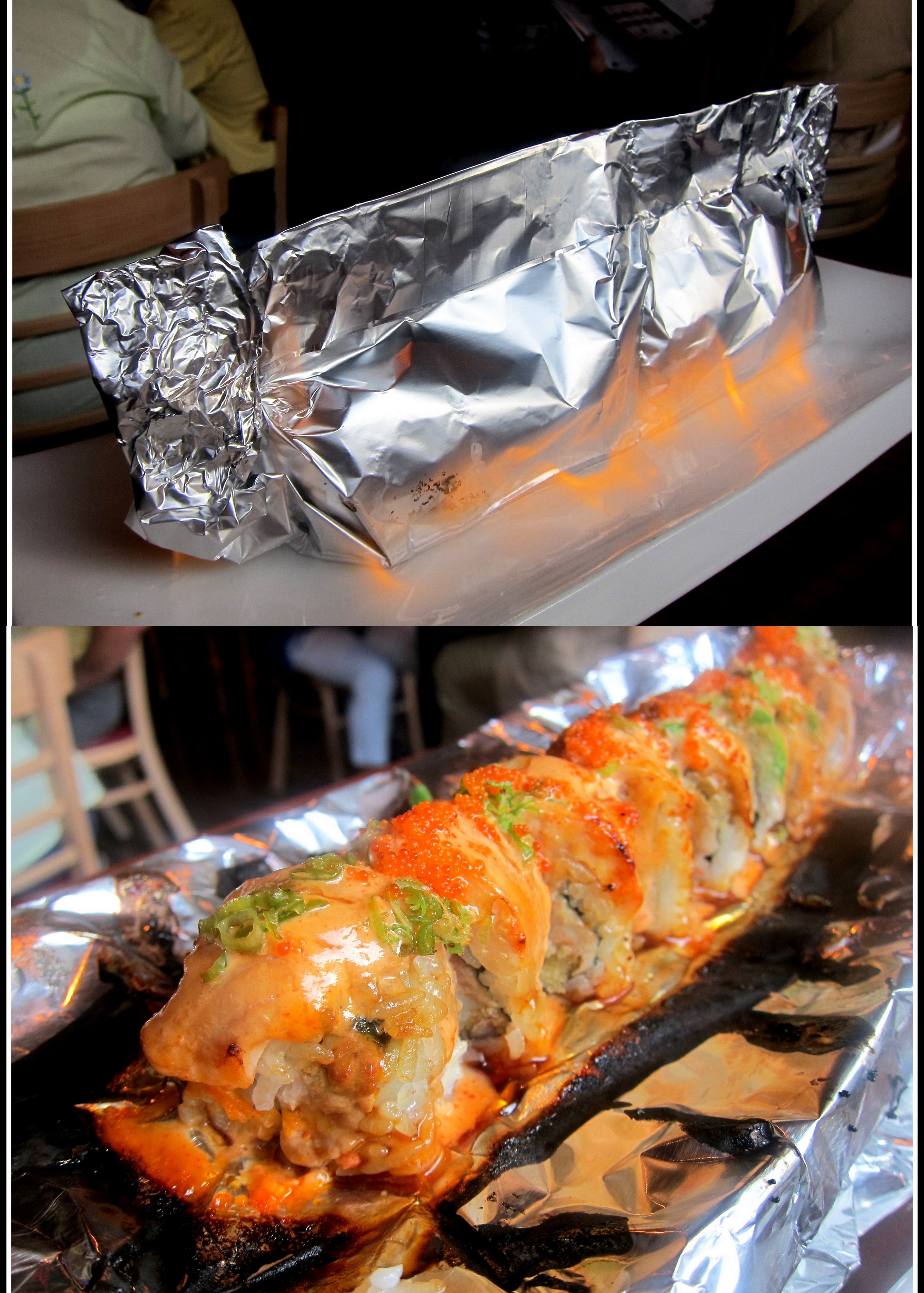
After much debate we decided on a simple kampyo roll, a big fluffy summer green roll (that we each stuffed into our mouth in one bite to prove our manliness(*)), a Cha-Ya roll, a tempura stuffed eggplant, a gyoza and vegetable soup, and three desserts.
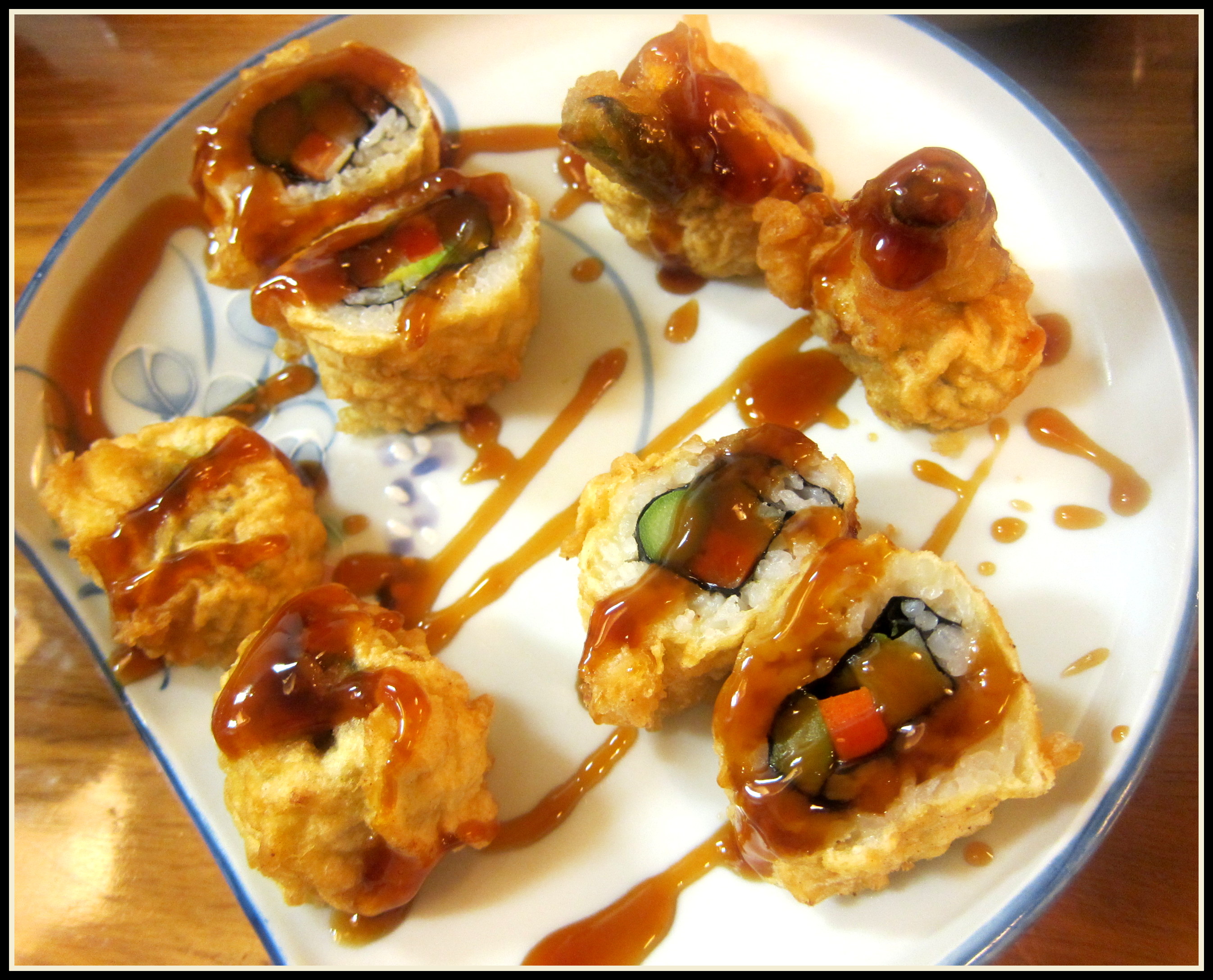
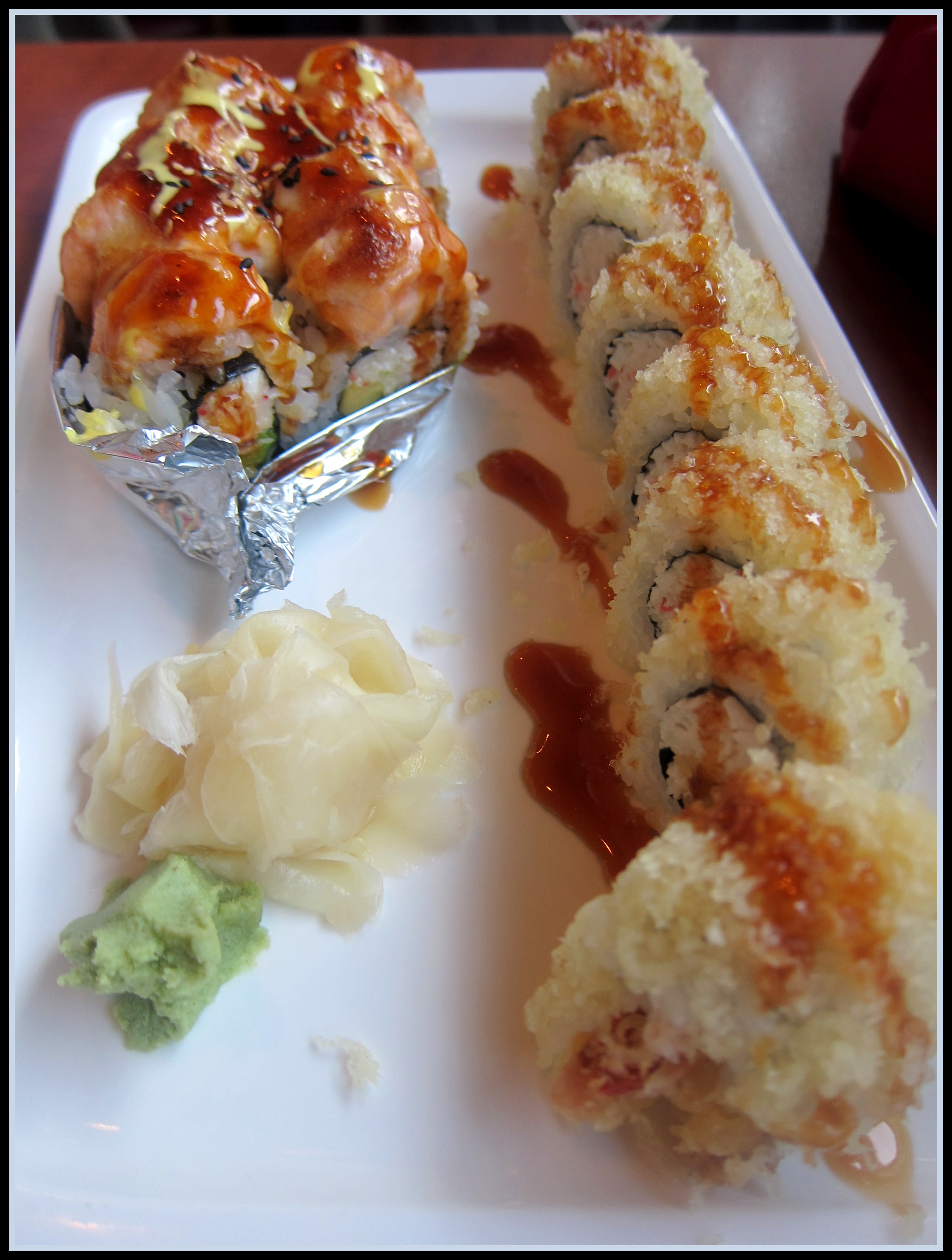
Cha-Ya Roll – avocado, yam and carrots, tempura roll with sweet soy sauce.
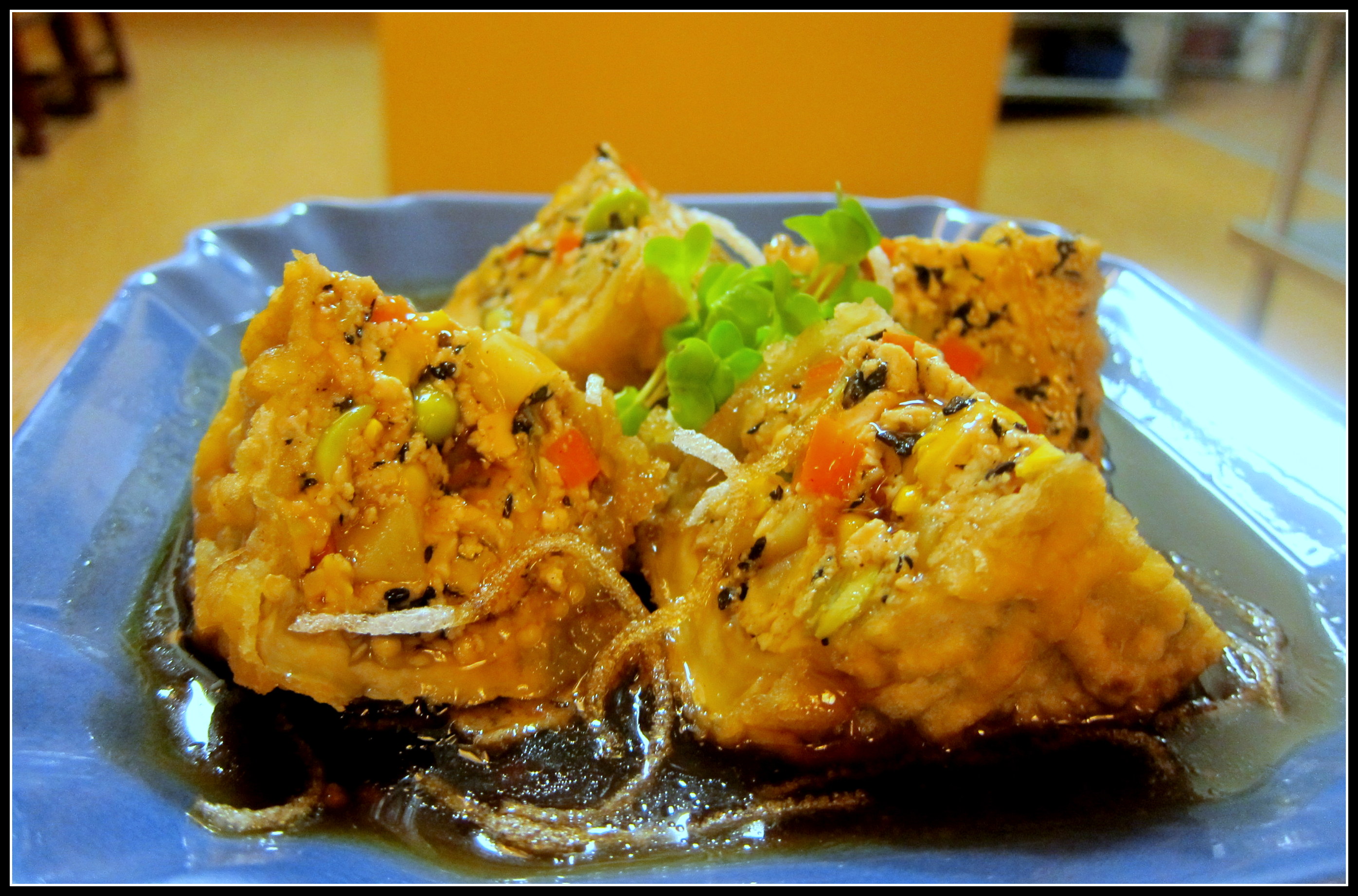
Tonchi Nasu – tempura stuffed eggplant with setsuma potato, corn, tofu, hijiki, soybean and carrot
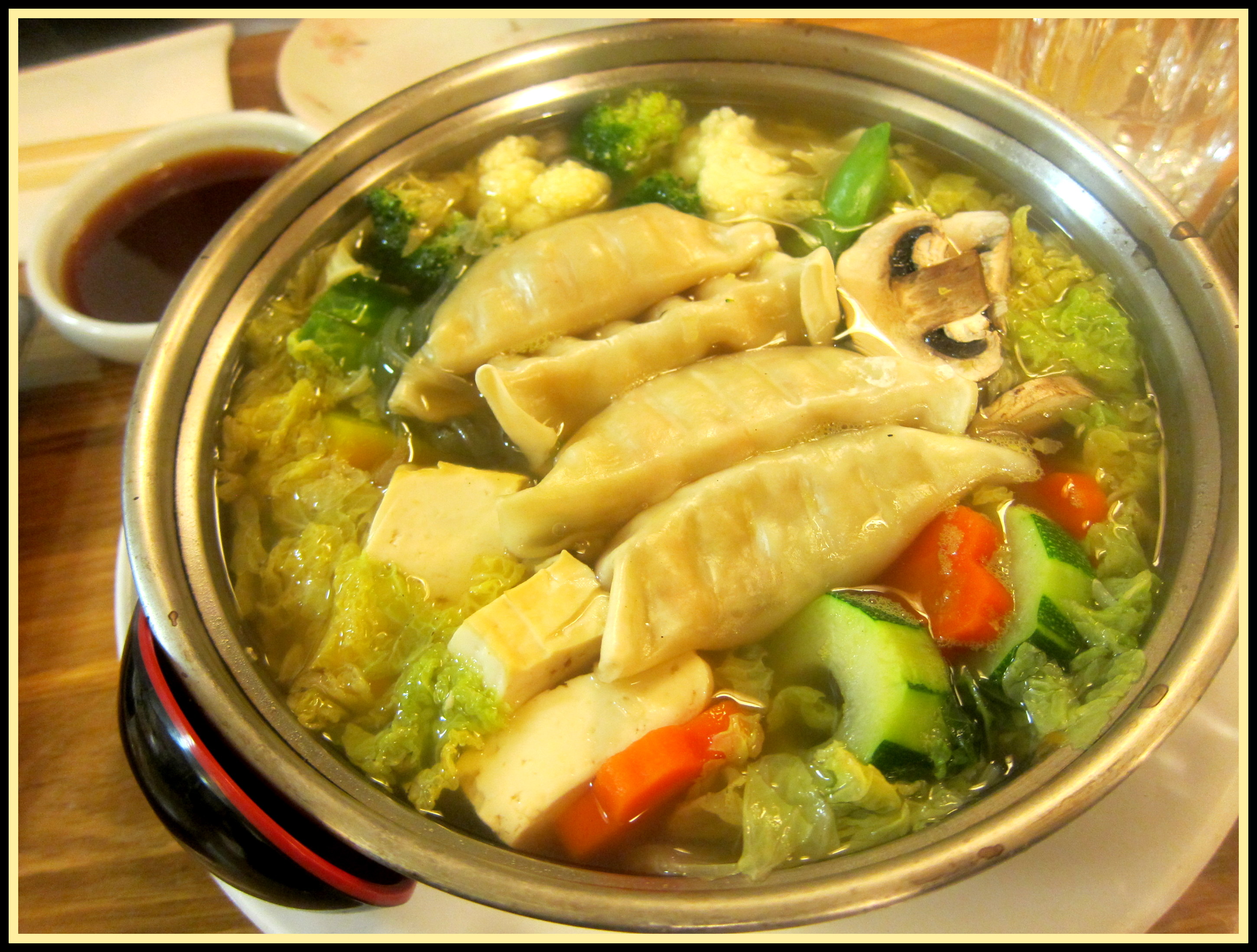
Taku Sui – gyoza soup with tofu, broccoli, zucchini, napa cabbage, snap peas, asparagus, cauliflower, silver noodles and mushrooms in a light broth – I like this a lot!
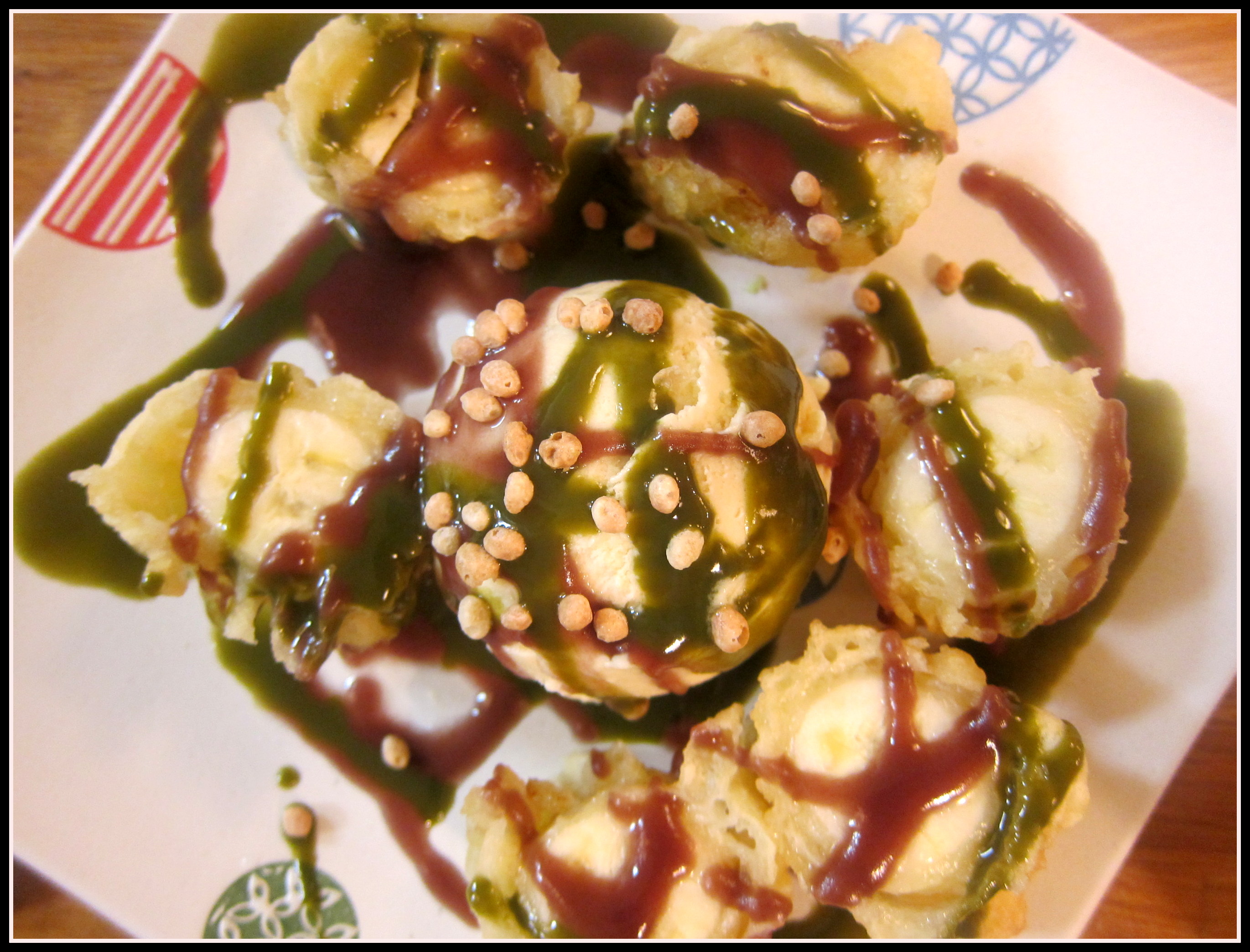
Yellow Moon – tempura banana with a scoop of soy ice cream, drizzled with green tea sauce and red bean sauce

The Yellow Moon is just the tempura banana, the soy ice cream is listed as a separate dessert, but we shameless girls requested a scoop of ice cream with the banana. The Cha-Ya staff is so nice. 😉 This tempura banana is not oily like the deep fried banana desserts at Thai restaurants, the batter is light and plain. It gives you the impression of healthy foods.
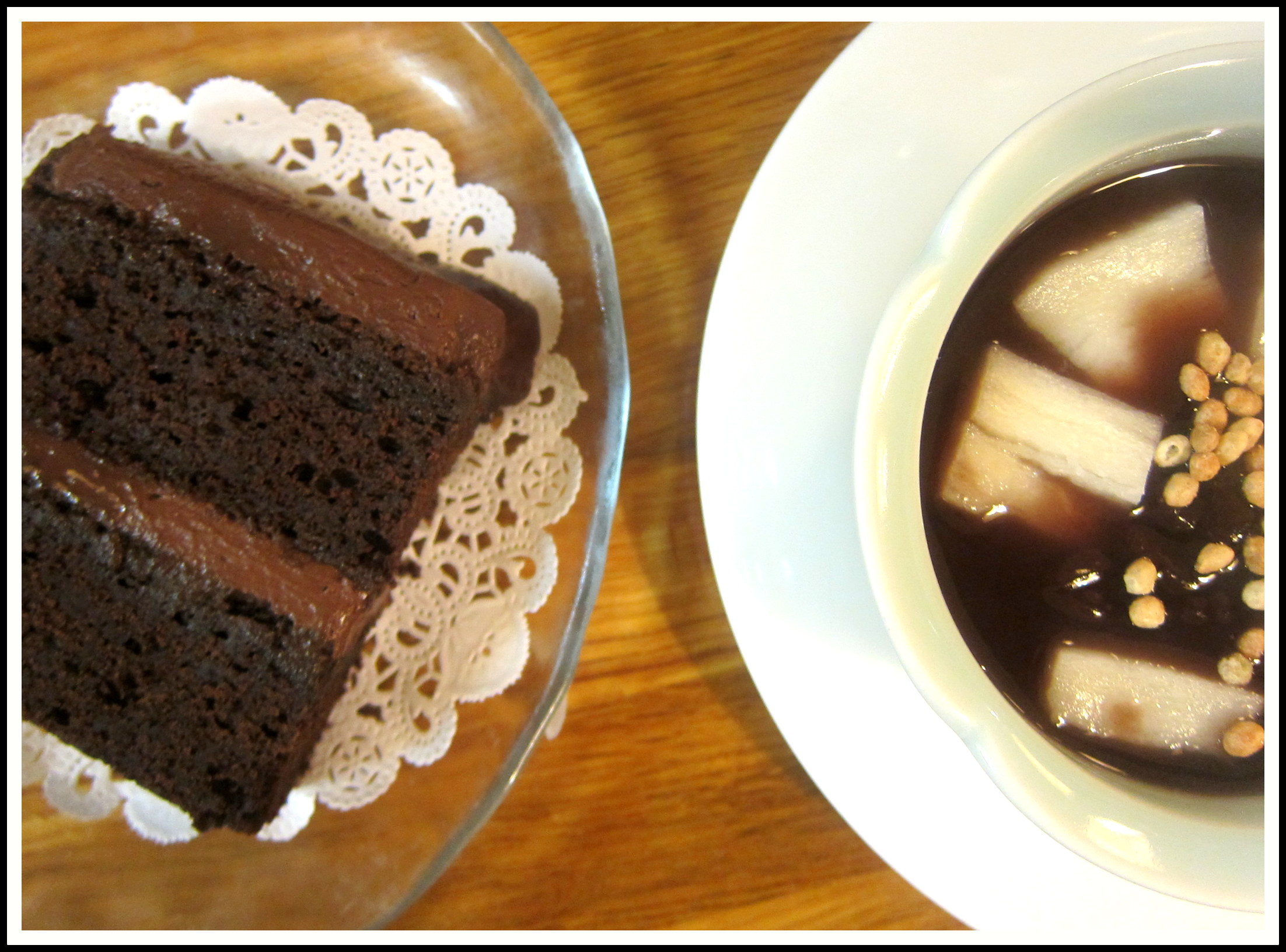
Vegan chocolate cake (left) and Oshikuro (right) – plain white mochi in gooey red bean sauce. The red bean is a bit too sweet, but I like it still. The cake is like a soft brownie, not at all dry and lifeless like normal vegan cakes.
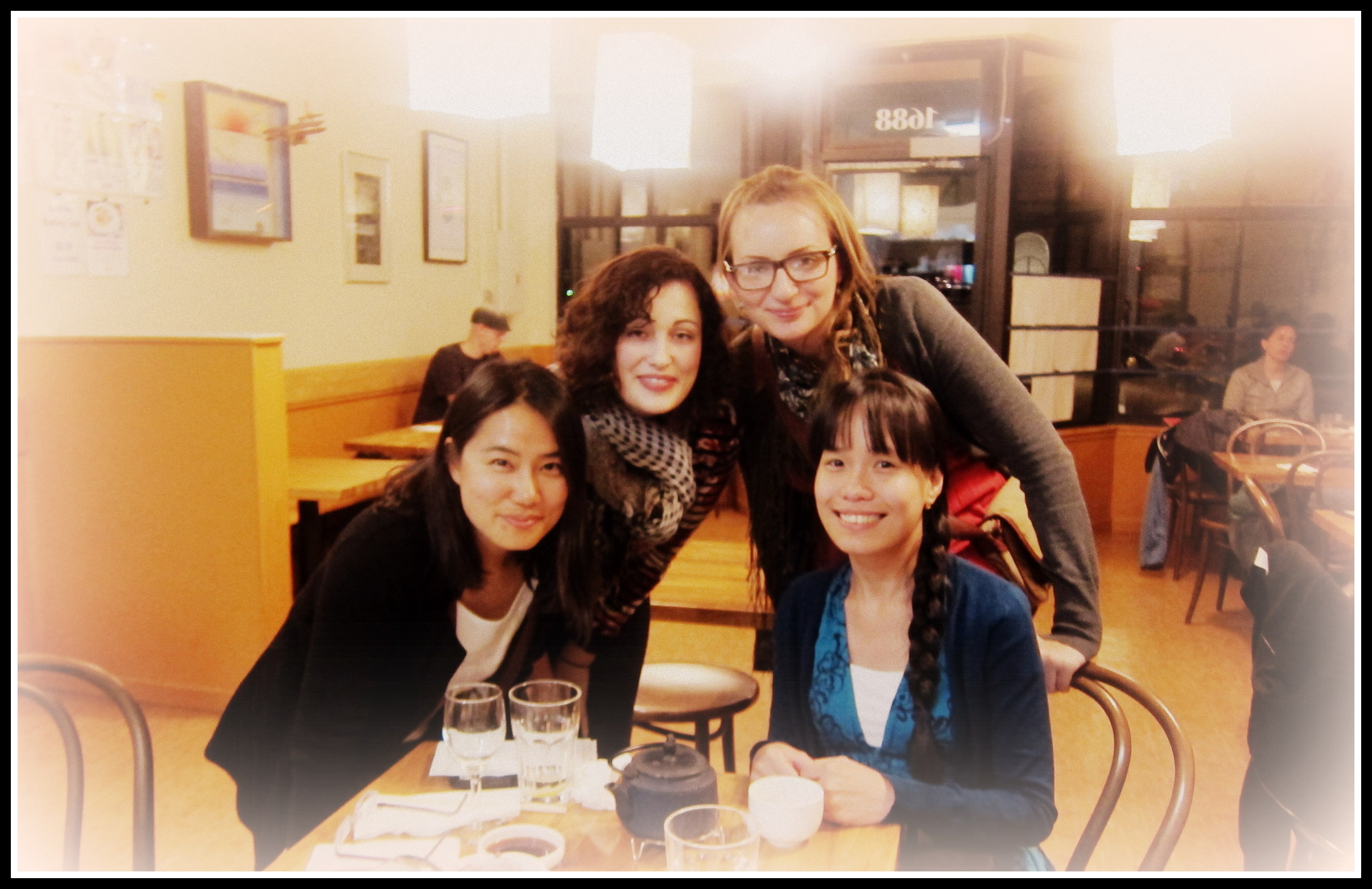
(*) In case you wonder, a picture of us is to the right.

Address: Cha-Ya Vegetarian Japanese Cuisine
(North Berkeley)
1686 Shattuck Avenue
Berkeley CA 94709
(510) 981-1213
Dinner for four: roughly $90 – Kinda expensive now that I think about it…
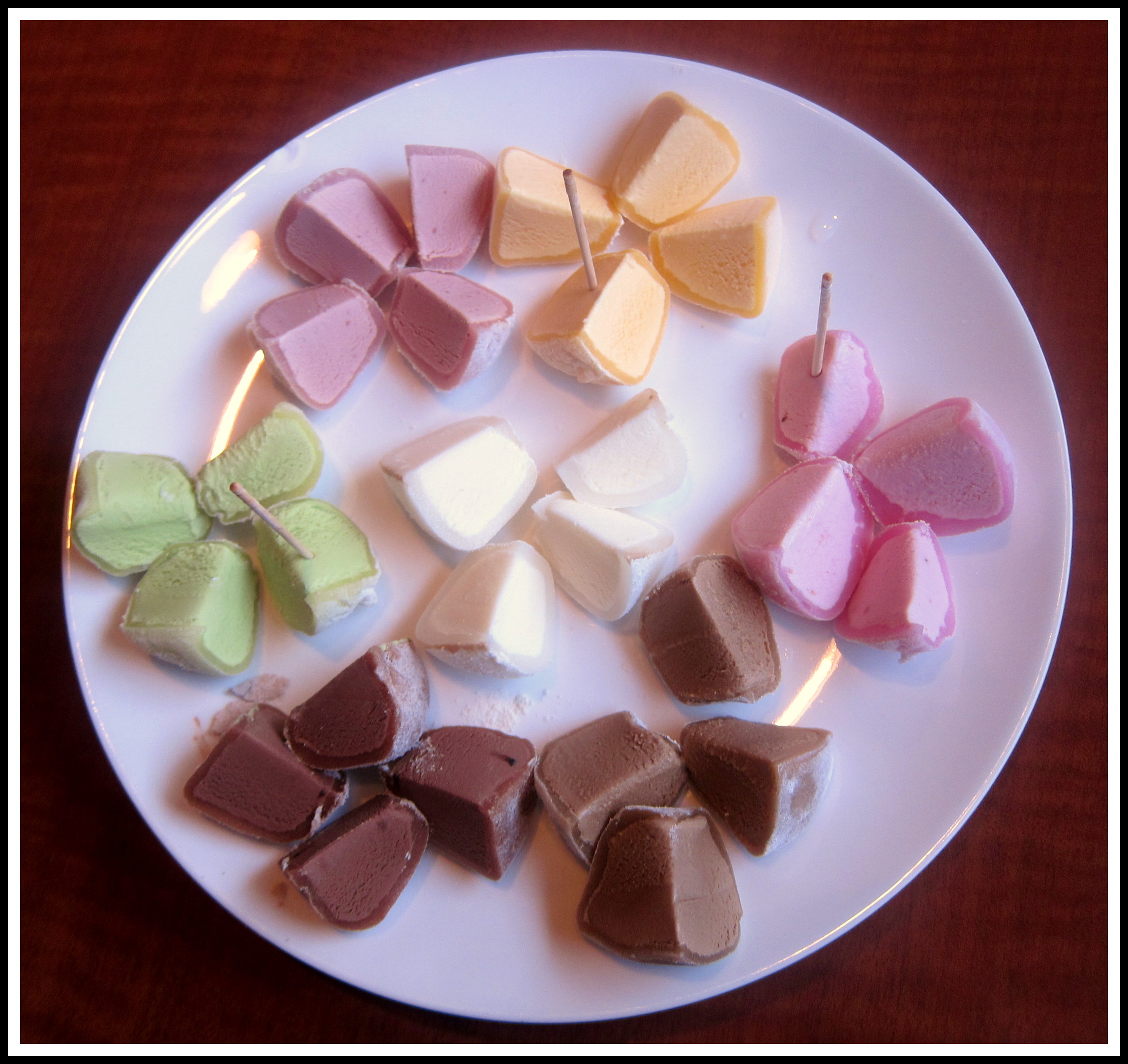
Seven flavors of mochi ice cream

September 07, 2012 By: Mai Truong Category: California - The Bay Area, Japanese, sweet snacks and desserts


One very cold Saturday afternoon in Oakland.

Darren: Normally I don’t like fruit flavored stuff, like watermelon candies you know?
Mai: Yeah, like cherry candies…
Darren: But this mango ice cream is really good!
Mai: It is! I like the green tea the most though, it’s so refreshing. What about you, Kristen?
Kristen: I usually don’t like strawberry flavors, but this strawberry one is so good…

Good thing we each had a different favorite.

When the girl took up our empty sushi plates and asked if we wanted dessert, we were already stuffed, which is a given every time Kristen and I go out together. But we asked the girl what’s on anyway, and she listed, if I remember correctly in my post-food stupor, “tempura ice cream, green tea ice cream, red bean ice cream, green tea cheesecake, seven flavors of mochi ice cream, which includes mango, vanilla, strawberry, green tea, red bean, coffee and chocolate”. We looked at each other for two seconds then at her.

– Can we have the seven flavors, please?
– You want all seven?!
*Looks exchanged*
– Uh… it’s not a thing of seven mochis?
– Well we can make a platter of that too. You want that?
– Yes please. *sheepish grin*

Never turn down ice cream.


Zero complaints on the tempura and the rolls too, they’re Americanized of course and we didn’t do any nigiri nor any of us Japanese. But if you’re American, happen to be near the intersection of Piedmont and Echo in Oakland while hungry for sushi, Shimizu is a sure bet.

Address: Shimizu Japanese Cuisine
4290 Piedmont Avenue
Oakland, CA 94611
(510) 653-7672
shimizucuisine.com

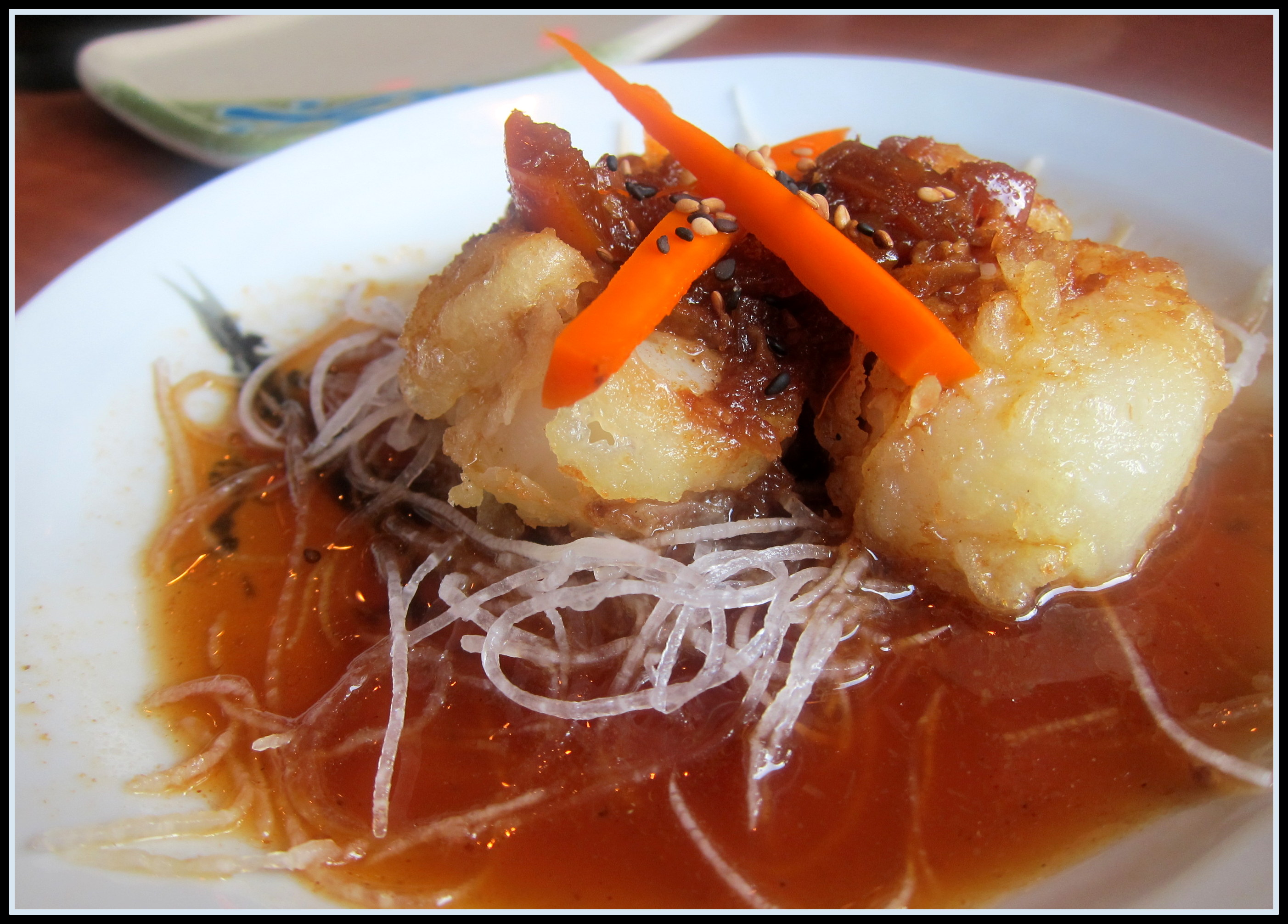
Volcano Scallop ($7.95) – Battered and deep fried scallops with sweet soy sauce

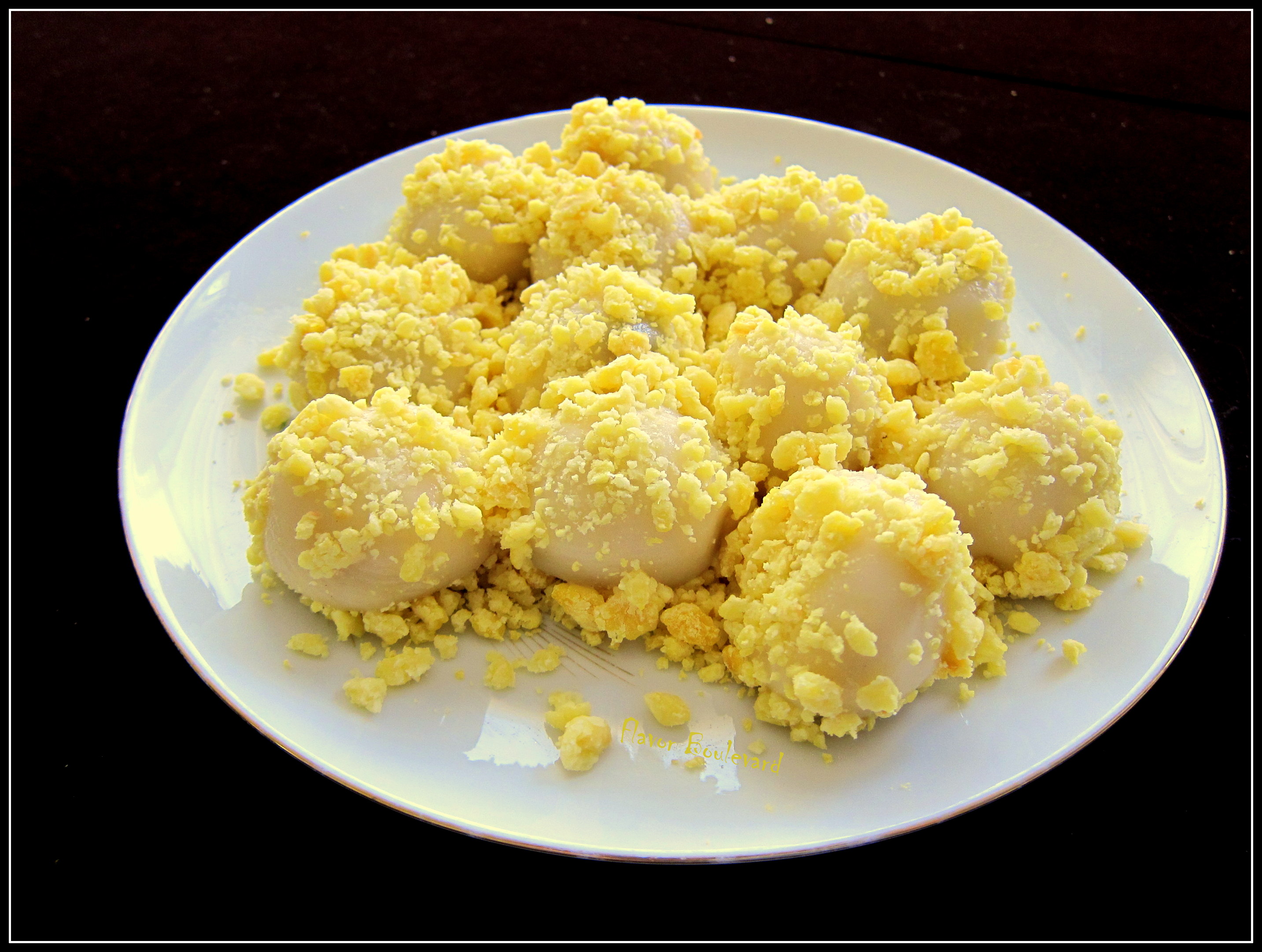
Recipe for bánh dầy đậu – Vietnamese mung bean mochi

July 23, 2012 By: Mai Truong Category: Northern Vietnamese, RECIPES, sticky rice concoctions, sweet snacks and desserts, Vegan


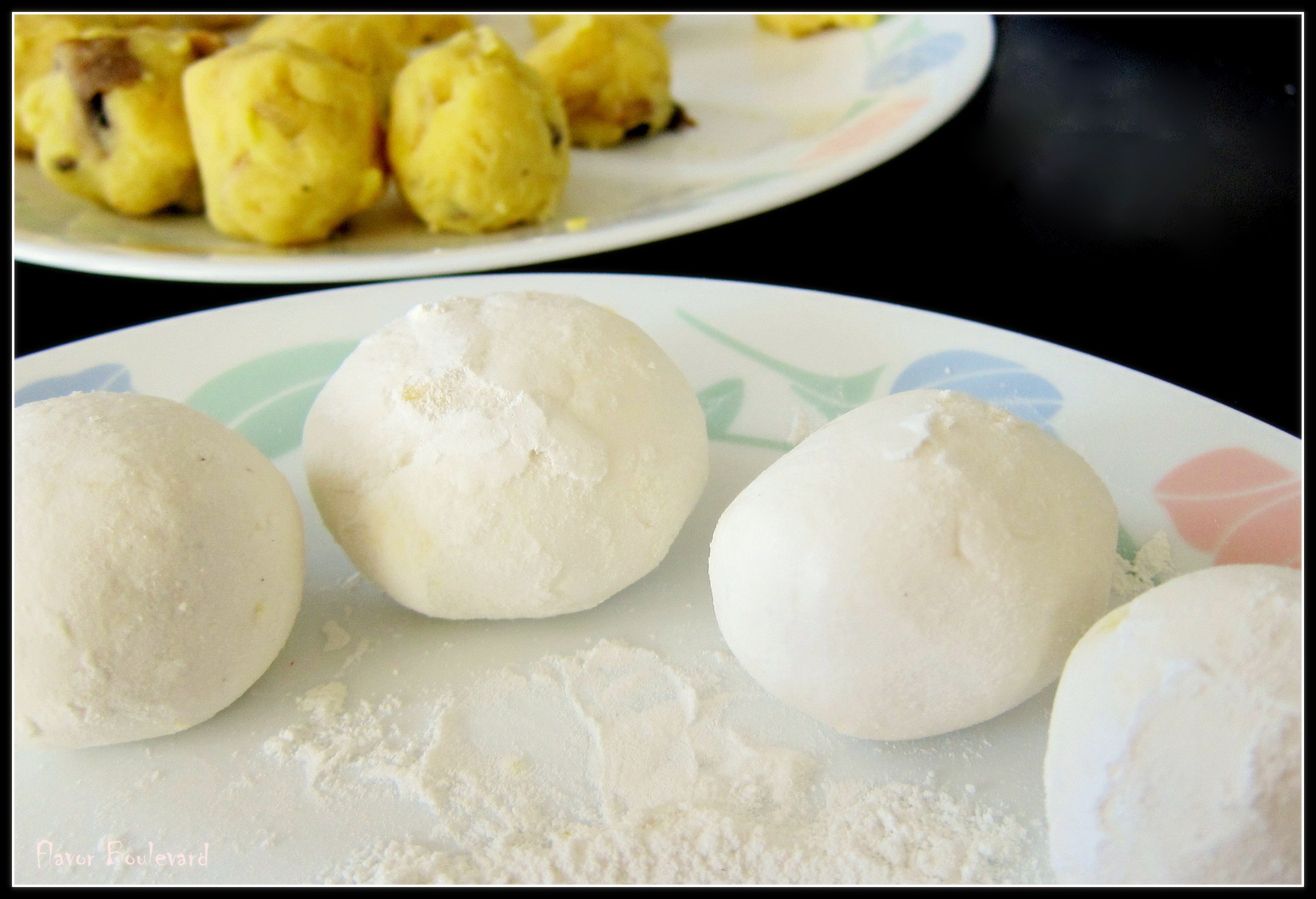
When I’m home, Little Mom pampers me with her food and sweeps me out of her kitchen, except when I open the fridge to snack, because her mind fixes on the idea that if she lets me touch the stove, I only make a mess. She’s right. Not to toot my own horn but when I’m home, I’m a lazy mess. So when I said Mom, let’s make bánh dầy đậu, she threw her hands up, said oh my sky there’s no more room in the fridge, made the bean paste herself, and only let me play with the dough. 😉

The mung bean paste filling is really the most important part of the Vietnamese mochi (similar to the Japanese mochi, but it’s 100% Vietnamese): you want it slightly savory, slightly sweet, and mashed. Little Mom is the queen of seasoning, so that part was flawless. My job was to knead the dough and roll up them balls. At least I didn’t have to pound steamed sticky rice into oblivion. I was kneading while watching TV with Mom. I was kneading when she sectioned her bánh bao dough into balls. I was still kneading when she wrapped the pork and egg inside the bánh bao dough. More kneading makes the mochi skin softer. After kneading, the rest was a breeze.


Bánh dầy đậu (pronounced kinda like |beng yay dou|) – Vietnamese mung bean mochi:

(Make 12 mochi)
– 250 g dried split mung bean (~ 2 cups), soaked overnight and deshelled
– 2 cup sticky rice flour
– 1 cup warm water
– 1 cup sliced mushroom
– salt and sugar to taste

The filling:
After soaking the mung bean overnight, wash away the green peel outside, we only want the yellow seed. Boil the mung bean until it’s tender. Mash the cooked bean.
Set aside 2 cup of mashed bean, let it dry and crumble to make mung bean powder.
Sautee mushroom, add the remaining mashed bean while sauteeing, add salt and sugar to taste. Let cool.
Make 12 small balls.

The mochi skin:
Pour water into the the rice flour while mixing with your hand. You should stop when the mix feels smooth but not liquidy. Add more water if the dough breaks.
Knead for at least 30 minutes.
Divide into 12 balls, flatten each into a small disk.

The complete mochi:
Put the mung bean ball into the middle of the skin, wrap it up, make sure that no bean leaks out. Drop the mochi in boiling water and cook until they float to the surface. Cook for another 2 minutes just to make sure.
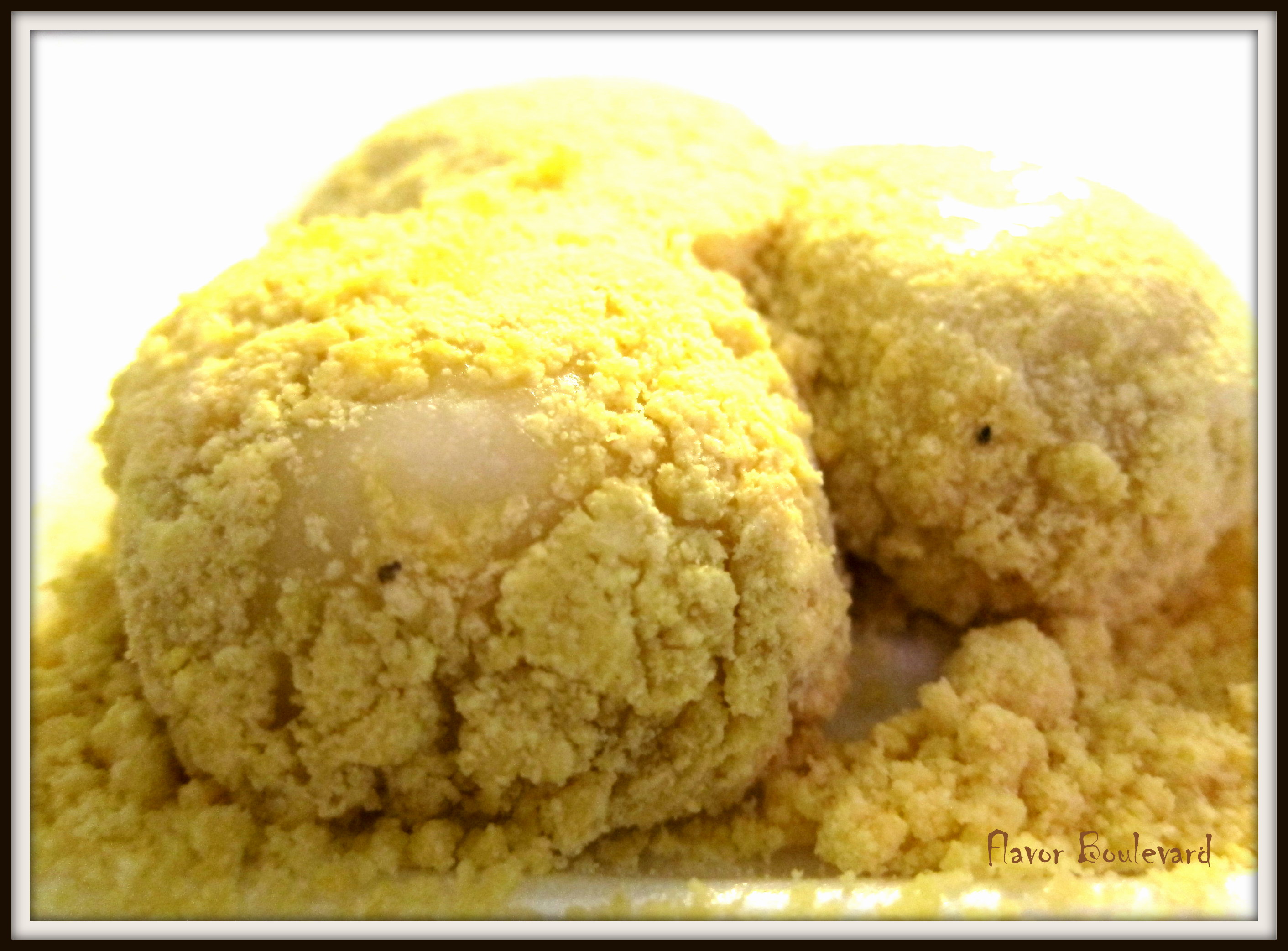
Roll the still hot mochi balls in mung bean powder. Let them cool.

Enjoy with a cup of Buddha’s Hand oolong. 🙂

Sandwich Shop Goodies 21 – Bánh dầy đậu (Vietnamese mung bean mochi)

July 11, 2012 By: Mai Truong Category: Houston, Northern Vietnamese, One shot, sticky rice concoctions, Vegan


Legend said the first ever bánh dầy (pronounced |beng yay|) was a flat thick bun of cooked-and-pounded sticky rice, white and chewy and not recommended for dentures. The prince, taught by a Bodhisattva in his dream, made it to represent the sky, and bánh chưng to represent the earth. I don’t think the sky is chewy, but I really like it when it’s white. I also like banh day with silk sausage a lot. But somewhere along the history of Vietnam, somebody gave banh day a mung bean filling, softened the dough (which means more pounding for the sticky rice), rolled it into the size of a pingpong ball, and coated it with mung bean powder. I can NEVER get enough of this thing.

$2 for 3. Found at: Alpha Bakery & Deli (inside Hong Kong City Mall)
11209 Bellaire Blvd # C-02
Houston, TX 77072-2548
(281) 988-5222

Unfortunately, I love them so much that the store-bought version just doesn’t do it for me. With Little Mom’s help, a batch has been made. A recipe is on the way. (UPDATE: the recipe is here.)

Previously on Sandwich Shop Goodies: cudweed sticky rice (xôi khúc)

Sencha and yomogi mochi

April 16, 2012 By: Mai Truong Category: California - The Bay Area, Drinks, Japanese, sticky rice concoctions, sweet snacks and desserts, Vegan

The third pairing of mochi and Japanese green tea. Perfect!


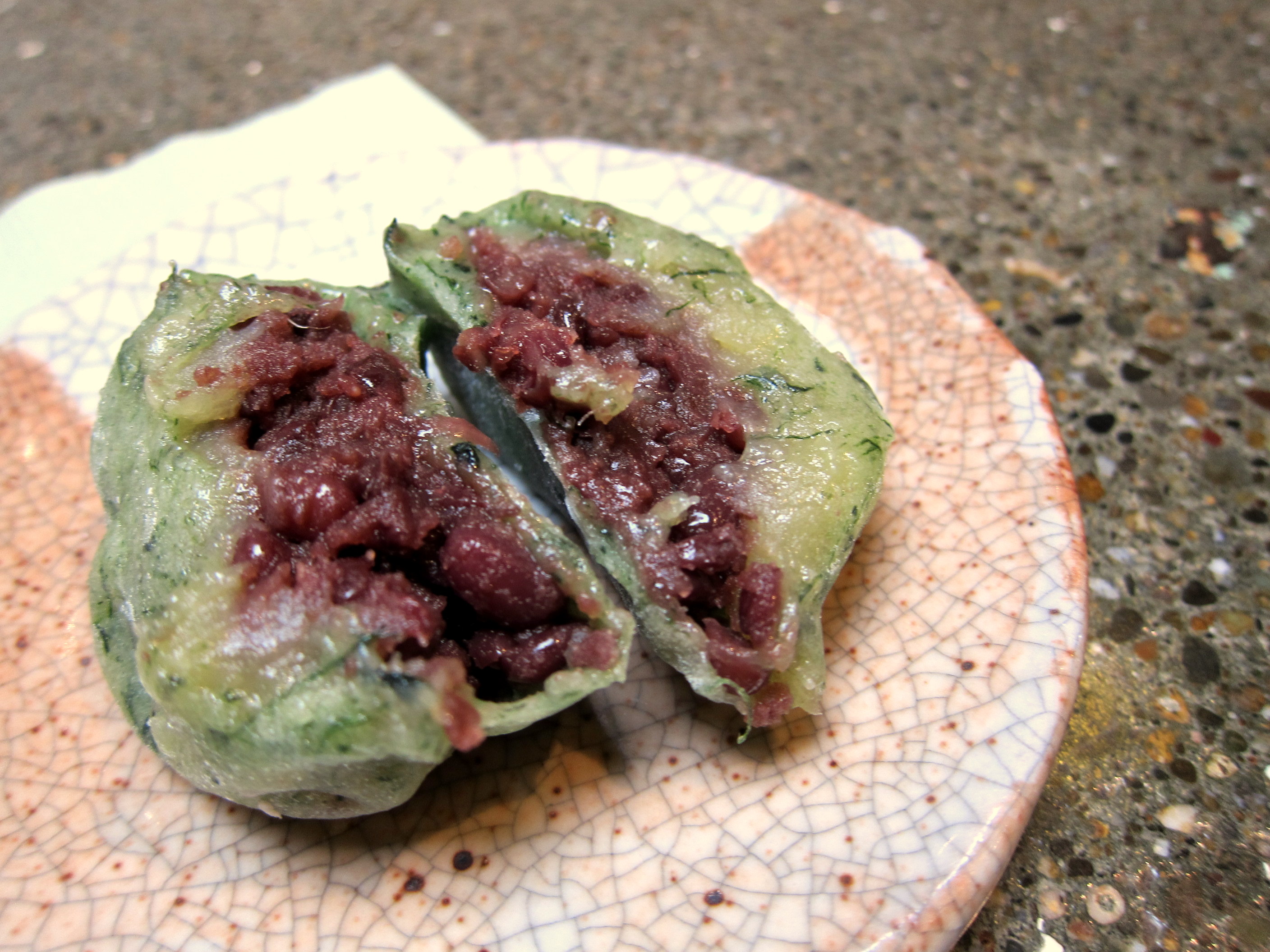
Yes, finally a mochi that goes perfectly with sencha. Yomogi (Japanese mugwort), julienned into tiny strings and mixed with the mochi dough, gives the mochi a clean, refreshing taste, which reminds me of the tip of a Vietnamese bánh ít or a bánh ít gai (*).

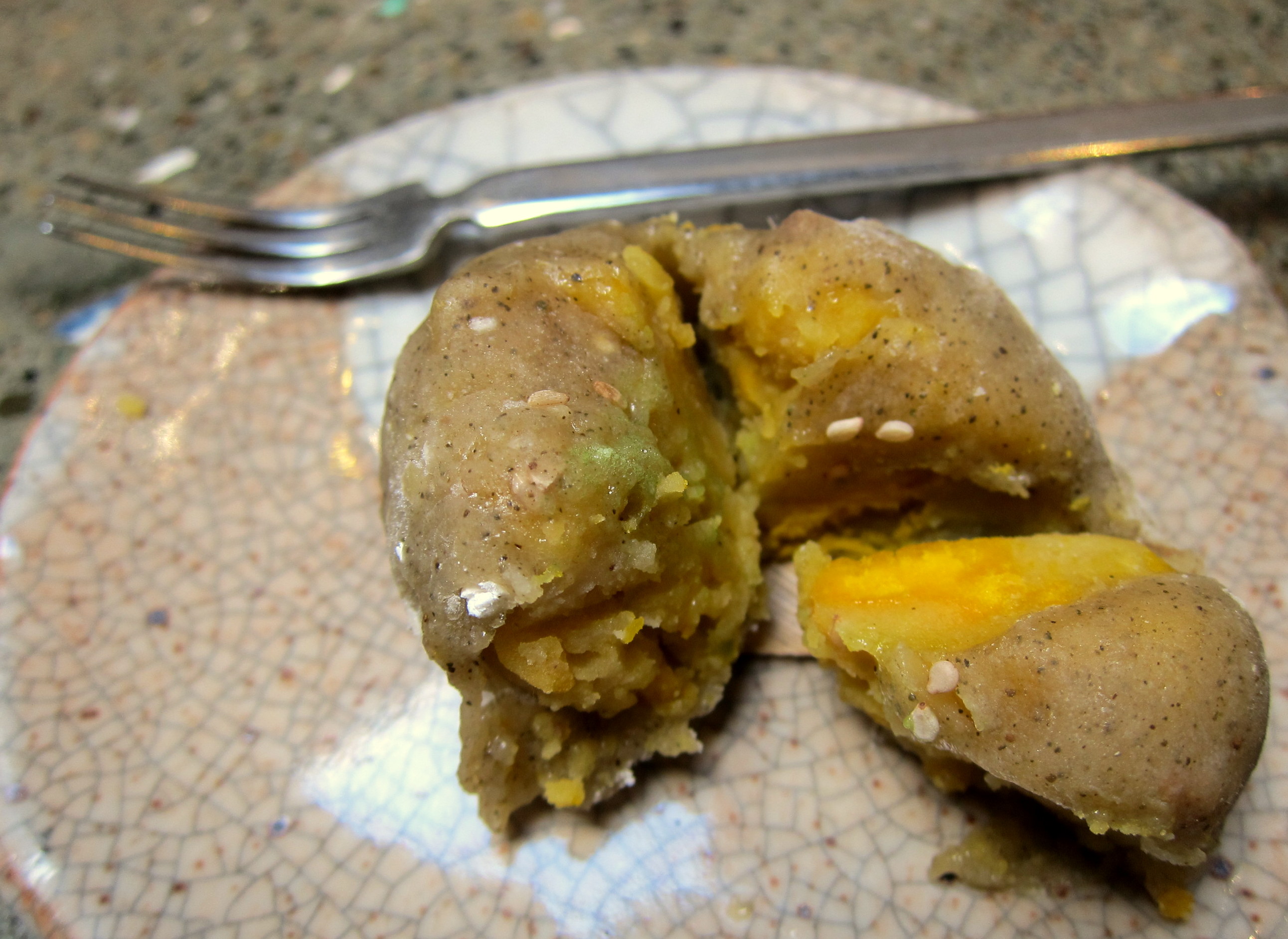
However, what struck me was the filling: red bean and sweet potato paste. The red bean is the main factor, the sweet potato is only at the top, closest to the doughy coat. The azuki sweetness subdues the fishiness (umami) of sencha, and the sencha bitterness subdues the sweetness. Is this why the Japanese use azuki for their desserts so often?

Why didn’t the sencha – matcha-mochi pair work as well? The matcha mochi also has azuki paste, but I think the orange juice and the walnuts distracted me. The yomogi clarifies the taste in a more floral and less bitter way than the matcha; and like saffron, sometimes a spice’s presence isn’t noticeable, but its absence would be. Anyways, this pair also shows that a simpler mochi can be a better mochi.

(*) Like mochi, bánh ít has a sticky rice dough with fillings, which can be sweet (coconut) or salty-sweet (mung bean paste). Unlike mochi, it’s all wrapped up in leaves, and it’s about 4 times bigger than a mochi. Shape-wise, mochi is most similar to bánh quy, whose green color (should) comes from pandan leaf. Similarly, the black color of bánh ít gai comes from the thorn leaf (ramie leaf), but the other ingredients are the same.

This post also appears on Tea and Mai

P.S. Sencha is interesting. It’s bitter at first and gets nutty later. It tastes odd at first because it’s not what you would expect from a drink, but the more you drink it, the more you’re attracted to it.

P.P.S. Yomogi mochi is also called “kusa mochi” (grass mochi). So Ms. Yuri Vaughn the mochi artist for Teance calls it “yomogi grass mochi”, which made me think that yomogi was a grass.

Matcha and kabocha mochi

April 06, 2012 By: Mai Truong Category: California - The Bay Area, Drinks, Japanese, sweet snacks and desserts, Vegan

Another pairing of Japanese tea and Japanese snack. A bowl of matcha is supposed to suffice your daily vegetable need because you’re actually consuming the leaves themselves, in powder form.


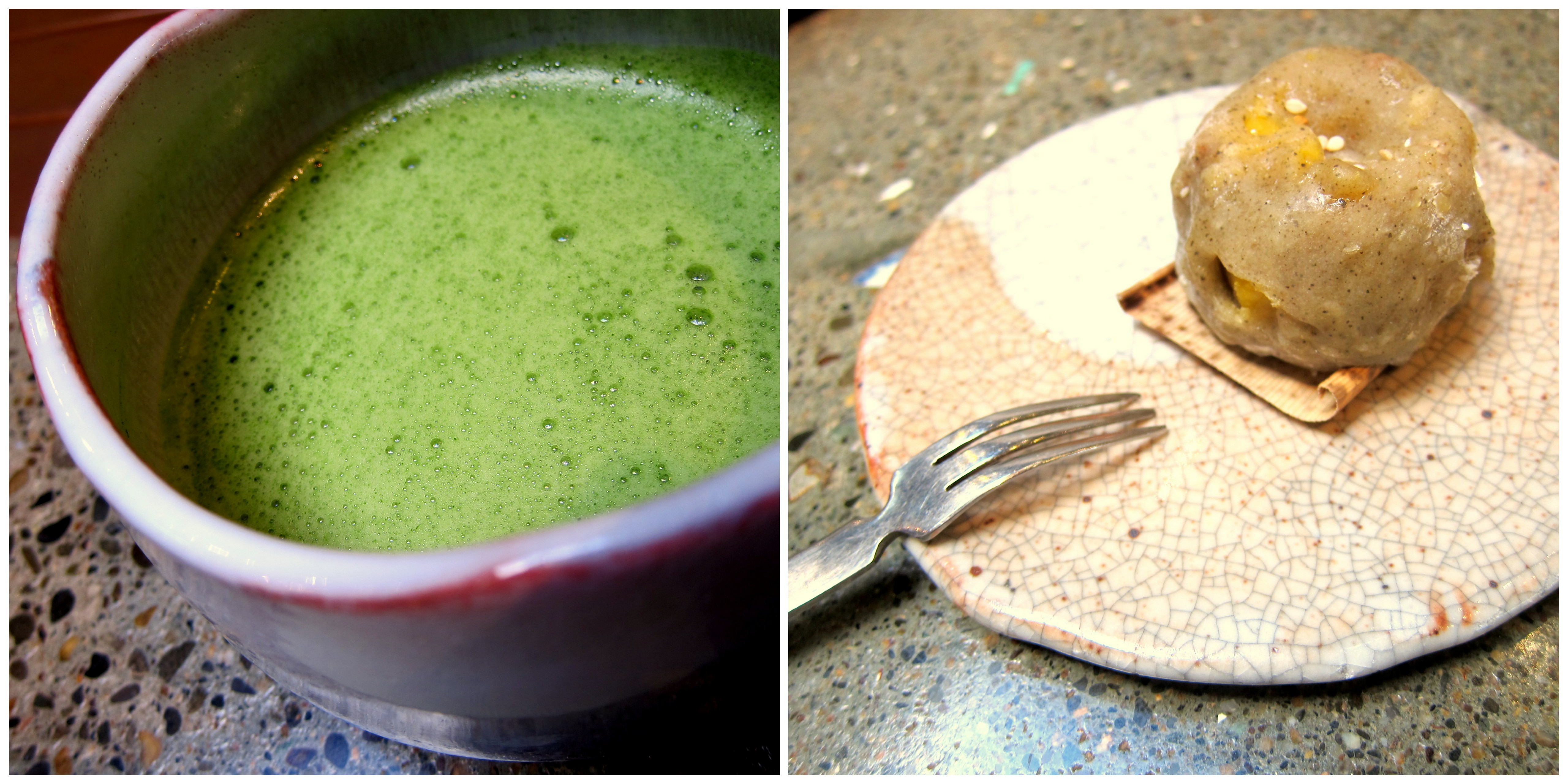
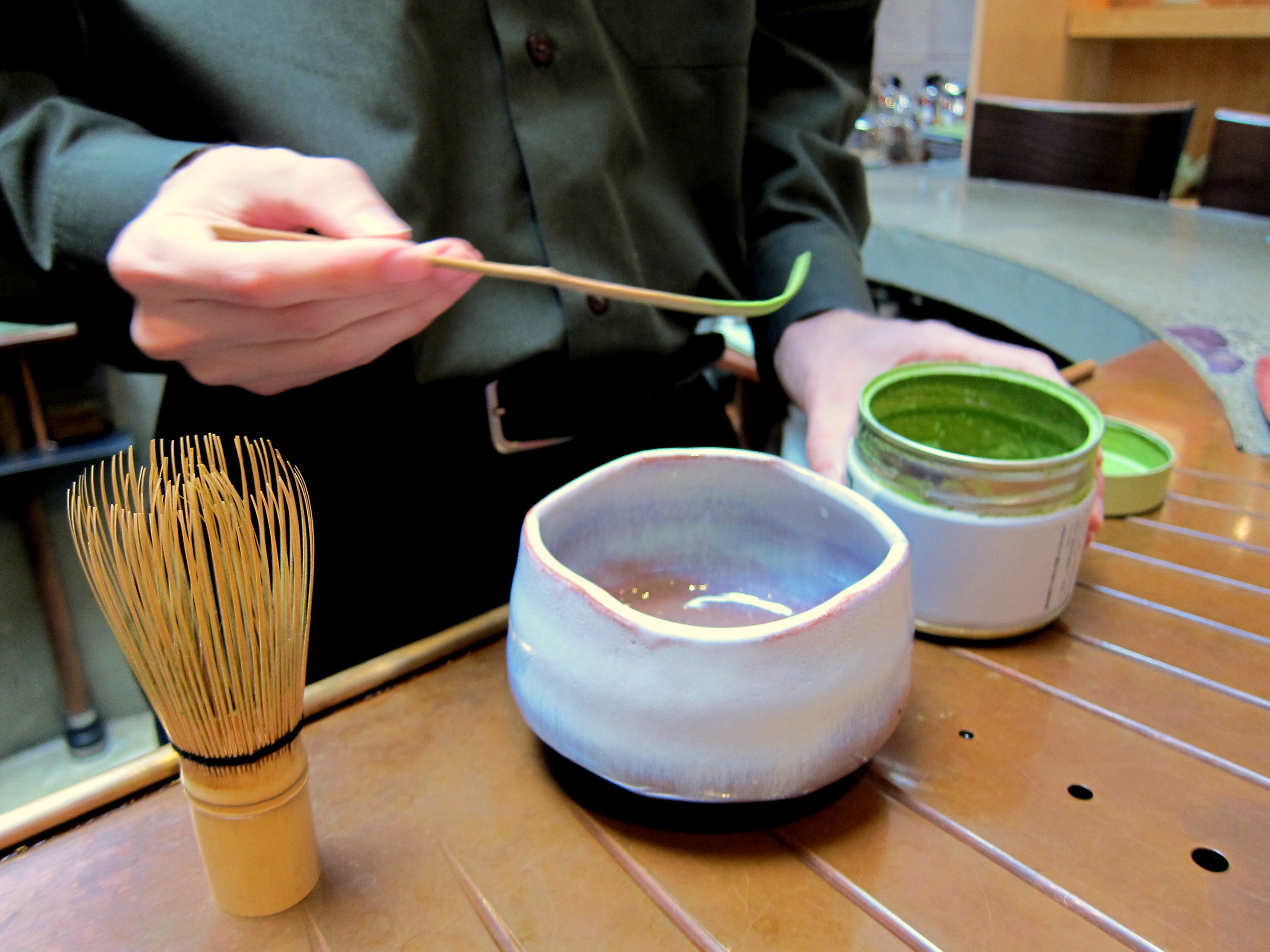
Matcha is served in a bowl. Mix water (205 F) with the matcha powder using a whisk, whose look reminds me of a yard broom in Vietnam, and there is no steeping time to watch out for, which I like. The whisk makes the tea foam up. The lady sitting next to me said that the foam turns her off visually, but actually the foam adds an interesting dimension to the tea. For one, it abates the seaweed taste because the foam is a cushion layer between the tea and the palate, preventing the palate to fully experience the tea. Secondly, together with the powder, it enhances the nuttiness of the tea. Near the end of the bowl, when there is more powder, the tea is extra nutty, akin to mungbean milk.


Unfortunately, this nuttiness does not enhance the nuttiness of the kabocha mochi but competes with it. The mochi this time has a hojicha-flavored coat and a filling of cinnamon, walnut and kabocha (a kind of winter squash, also known as the Japanese pumpkin). Contrary to my hesitance, the cinnamon was too faint to be detected (no, I don’t like cinnamon), and the mochi is mild overall. It is not too sweet.


Instead of being steamed-dried like other Japanese teas, hojicha is roasted in porcelain over charcoal, so the green tea becomes much milder than sencha. The kabocha is similar to a plain, grainy, white sweet potato in both taste and texture. (The red mushy sweet potato is sweeter than the white kind.) Because both the tea and the snack are grainy, matcha-kabocha mochi is not a good match together, although I really like them both separately.

A better pairing would be matcha with matcha mochi, and sencha with hojicha-kabocha mochi, because you want something sweet tempered by something a tad bitter, and something clear with something nutty. Nonetheless, I still think that sencha is an entree tea, not a dessert tea. So the hojicha-kabocha mochi would be better enhanced by something strong in fragrance like jasmine green tea.

This post also appears on Tea and Mai

Sencha and Mochi

March 19, 2012 By: Mai Truong Category: California - The Bay Area, Drinks, Japanese, sweet snacks and desserts, Vegan


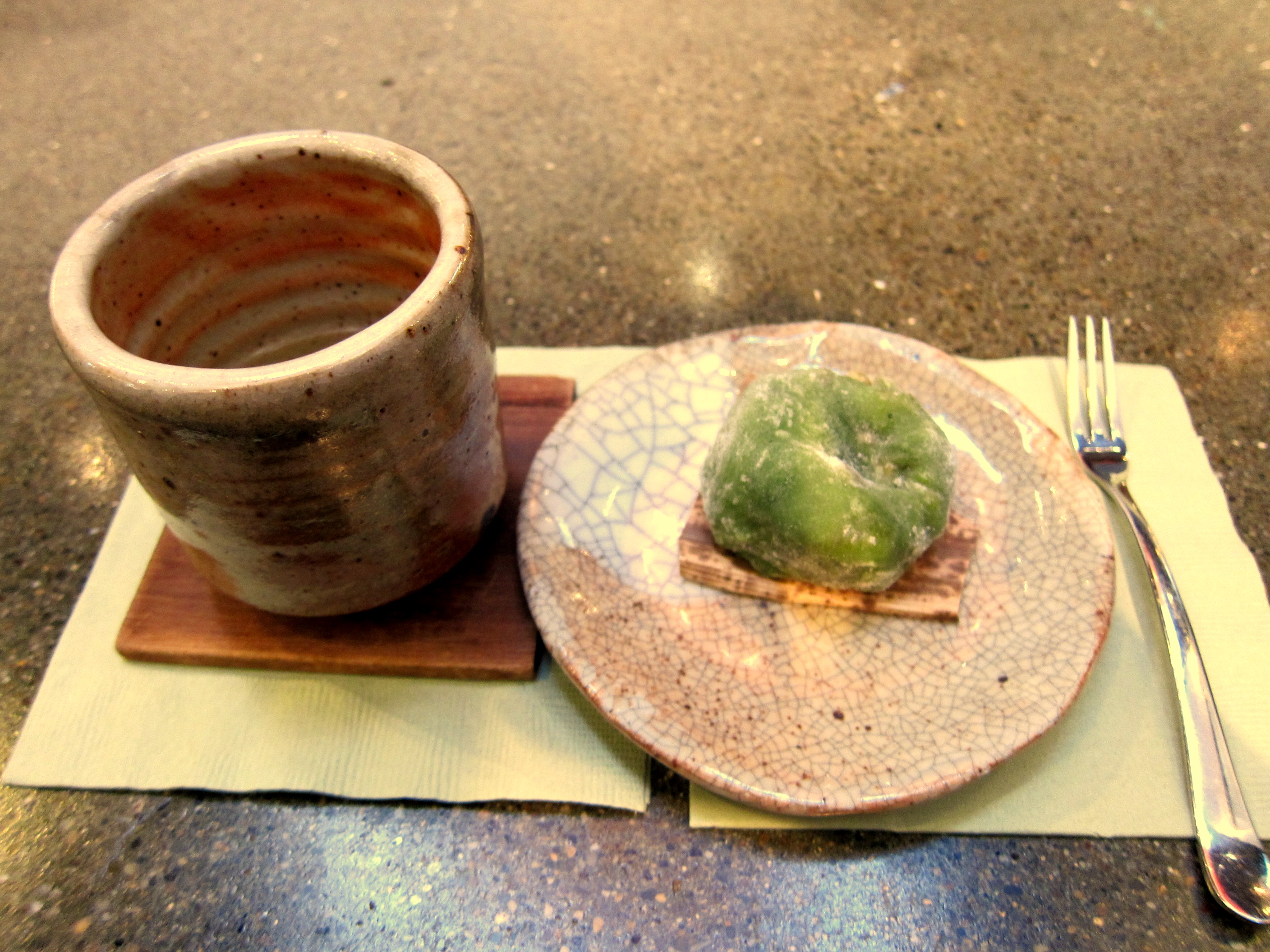
Sencha in yunomi, a typical Japanese thick, tall teacup, whose name I’ve yet to find out, accompanied by a matcha mochi, whose fillings include: satsuma sweet potato, red bean paste, orange juice and walnuts. (Thanks Masaaki for telling me the name of the cup in Japanese.)

The mochi, handmade and delivered by a mochi lady every week to Teance, is refreshing both in look and in taste. The green tea flavored chewy coat is cool and light. The filling, although dominated by red bean, is not too sweet. I opted for one with less nuts because I didn’t think that I would want such contrast in texture. The mochi lady is a small, timid Asian lady, who smiled so happily when I described her mochi as “refreshing”, and who showed me that I should dip my fork into tea or water before cutting the mochi so that it would not be sticky. Yes, it worked, the fork went straight through with such ease. Now it makes sense why we can chew without the mochi sticking to the teeth.

This is my second time having sencha, if we don’t count the time I had genmaicha at Ippuku (genmaicha is lower-grade sencha with roasted rice), and the seaweed taste of sencha has grown on me. However, I am not convinced that the sencha is a good match for the mochi. Both are good by themselves, but I think the sencha should be an entree tea, not a dessert tea. Its seaweed taste would enhance something savory. A mochi would fare much better with a light, floral tea that isn’t too dry, like Yellow Gold, Royal Courtesan, or Darjeeling First Flush.

Sidenote: this sencha at Teance is the hand-picked Yakichi sencha, named after the farm “founded by Mr. Shimooka[…]. Yakichi sencha is an eight-time Ministry of Agriculture award winner, and also the winner of the highest agricultural award, the Imperial Prize. […] This traditional Japanese tea is shade grown (kabuse) in the mountains above Uji.” (description from Teance webpage)

Meghan explained to me that shade grown leaves are of higher quality because when the plant is shaded, it has to produce more chlorophyll to balance the lack of sunlight, resulting in a greener leaf (or maybe a darker green leaf?). According to The Tea Detective, “the increased green chlorophyll pigment changes the natural balance of caffeine, sugars, and flavanols in the leaf. It also increases L-theanine, an amino acid found naturally in tea, that adds a unique vegetal quality to the flavor, and helps counteract some of the stimulant effects of caffeine, thus having a relaxing effect on the body, yet an alert state of mind. Photosynthesis reduces L-theanine and increases tannins, the compounds responsible for teas astringency.” Basically, kabuse (shade grown tea) is sweeter, less bitter, and less dry.

Address: Teance Fine Teas Store
1780 Fourth Street
Berkeley, CA 94710
510-524-2832
Money matter: the mochi is $4 each. A little pricey, but somehow it seems reasonable to me.

This post also appears in Tea and Mai