Flavor Boulevard

We Asians like to talk food.
Subscribe

Beautiful meals at Iyasare
December 23, 2013 By: Mai Truong Category: California - The Bay Area, Japanese

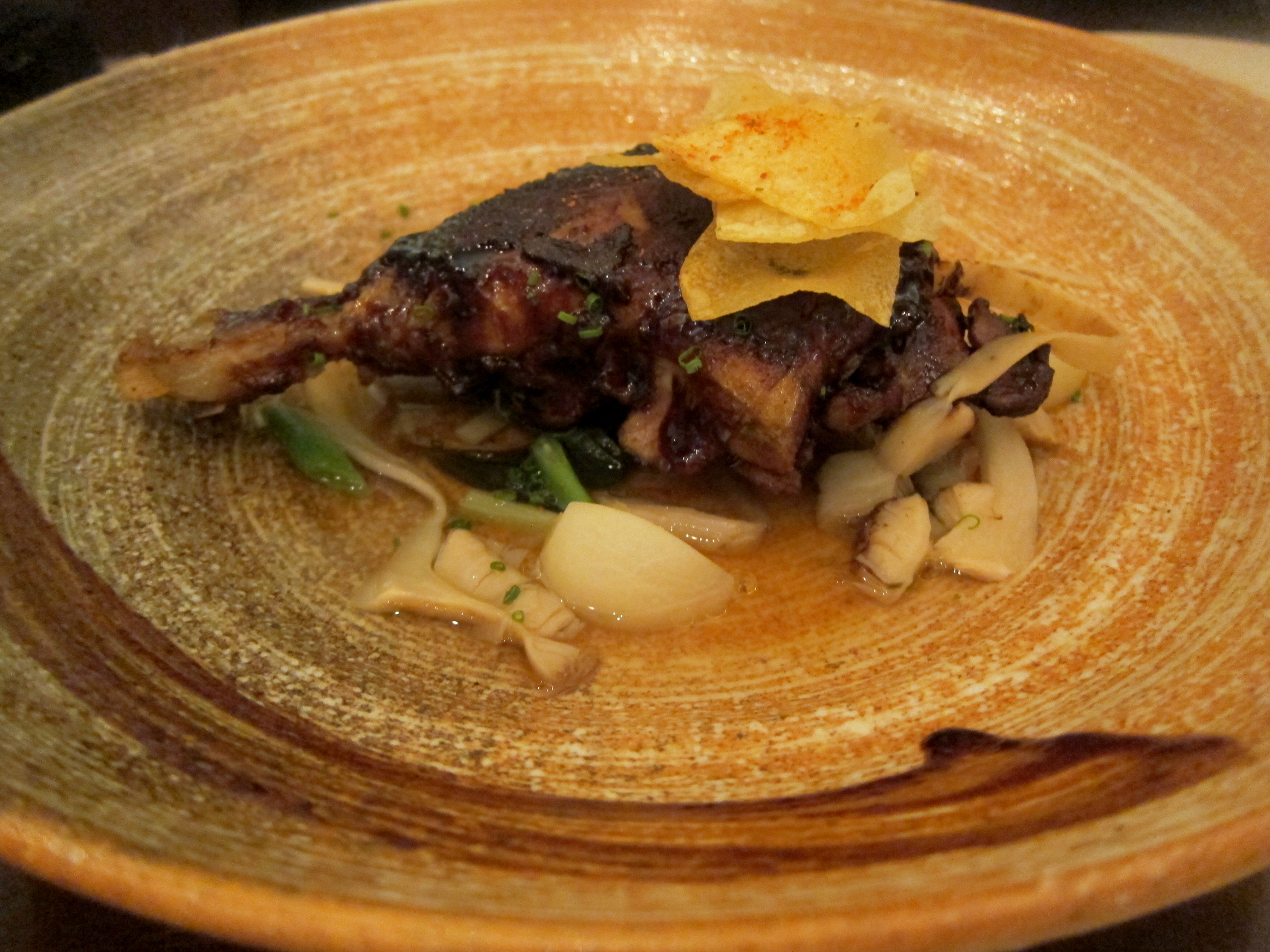
iayasare-miso-glazed-duck
In less than a month since its opening, everybody I know on 4th Street has been to Iyasare, from the regular shoppers to the shop owners, and everybody praises it. The restaurant, operated by former Yoshi’s executive chef Shotaro Kamio, replaces the equally cute and also Japanese O Chame. The two restaurants have different concepts, of course, and experiencing both in the same space – reminiscing on O Chame’s menu and atmosphere while savoring Iyasare’s – was like tasting the fleeting grandeur of ukiyo-e aesthetics in the most delicious way possible.
iyasare-sashimi
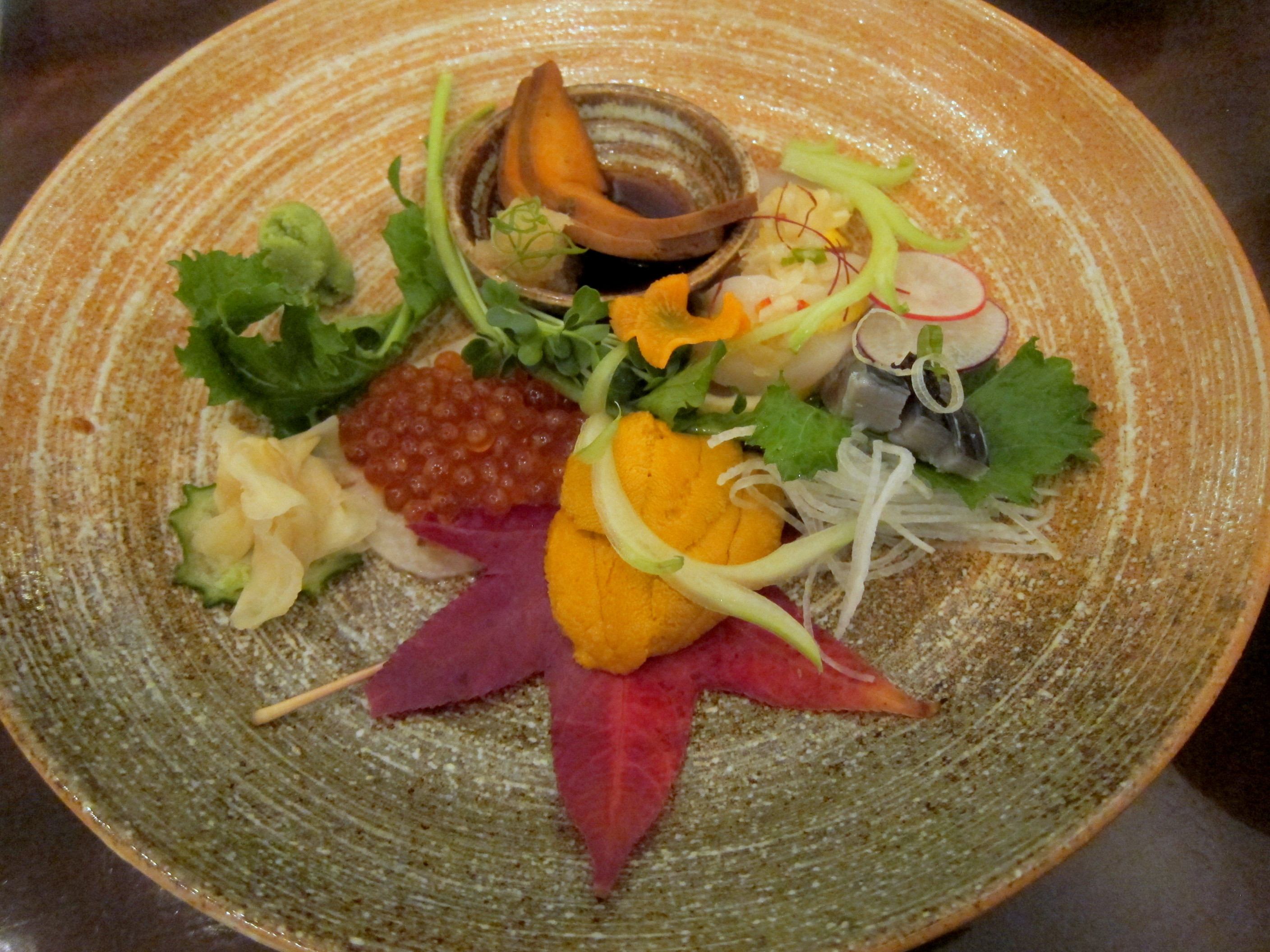
A beautiful arrangement: ikura (salmon roe), ankimo (monkfish liver), hotate (scallop, the white thing that is barely visible next to razor-thin slices of radish), mackerel (silvery grey, also almost invisible under the radish), and 4 beautiful sweet lobes of uni (sea urchin roe, on the maple leaf) ($22). The ankimo has a thick and dried rind, its flavors were a tad salty and smokey for my taste.(*) The uni was extra-creamy but a little too soft. The ikura was some lovely bubbles.

You can order a side of sushi rice with the sashimi. Or just sushi rice. Actually, I ate every single last grain of rice in that bowl, and I’d be happy to skip the sashimi.
iyasare-apple-seaweed-salad
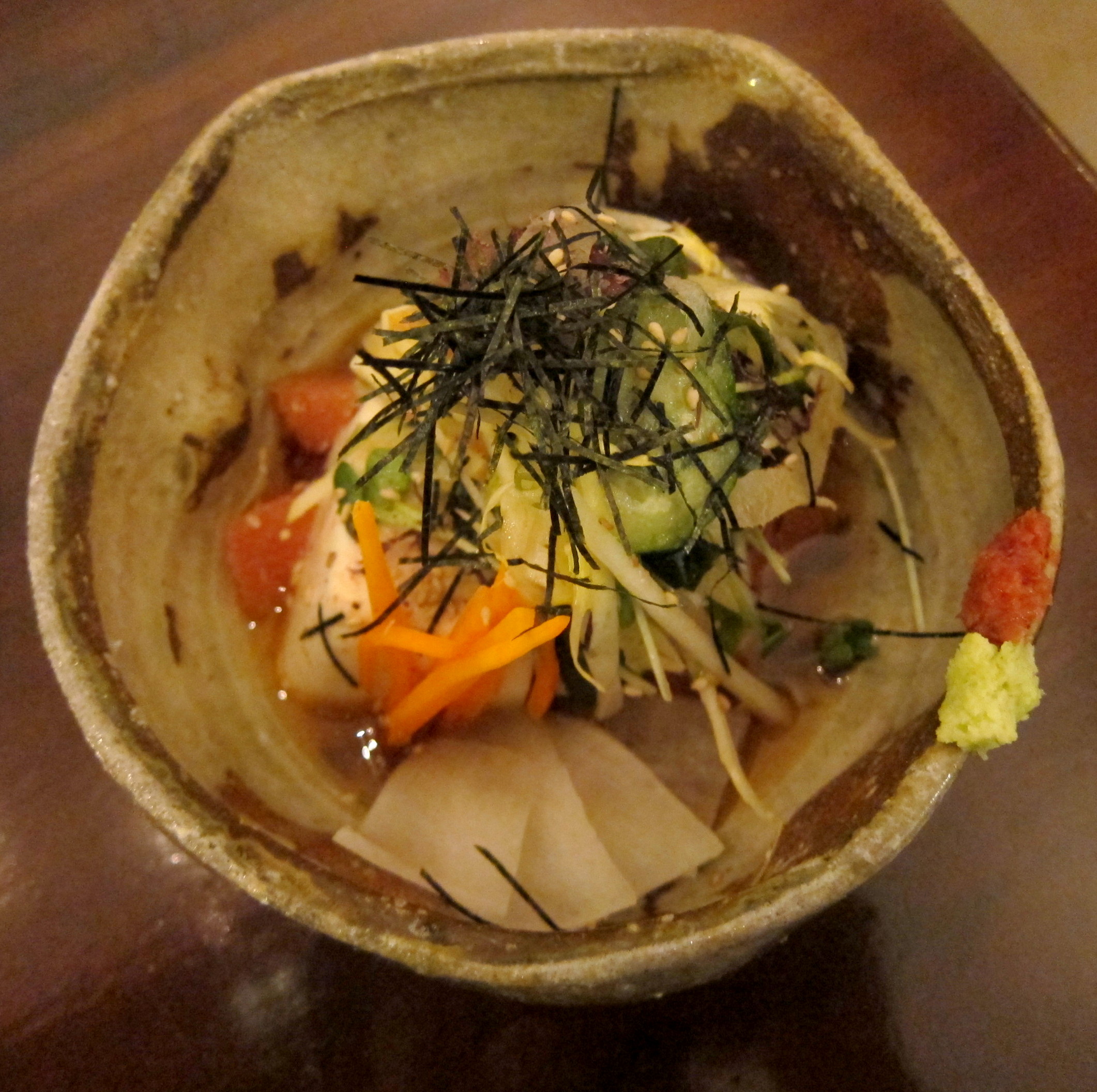
Apple seaweed salad with fennel, pickled daikon and carrots, shaved bonito, citrus brown rice vinaigrette with fresh bits of blood orange, and two silken tofu cubes ($9). Nothing to complain here.
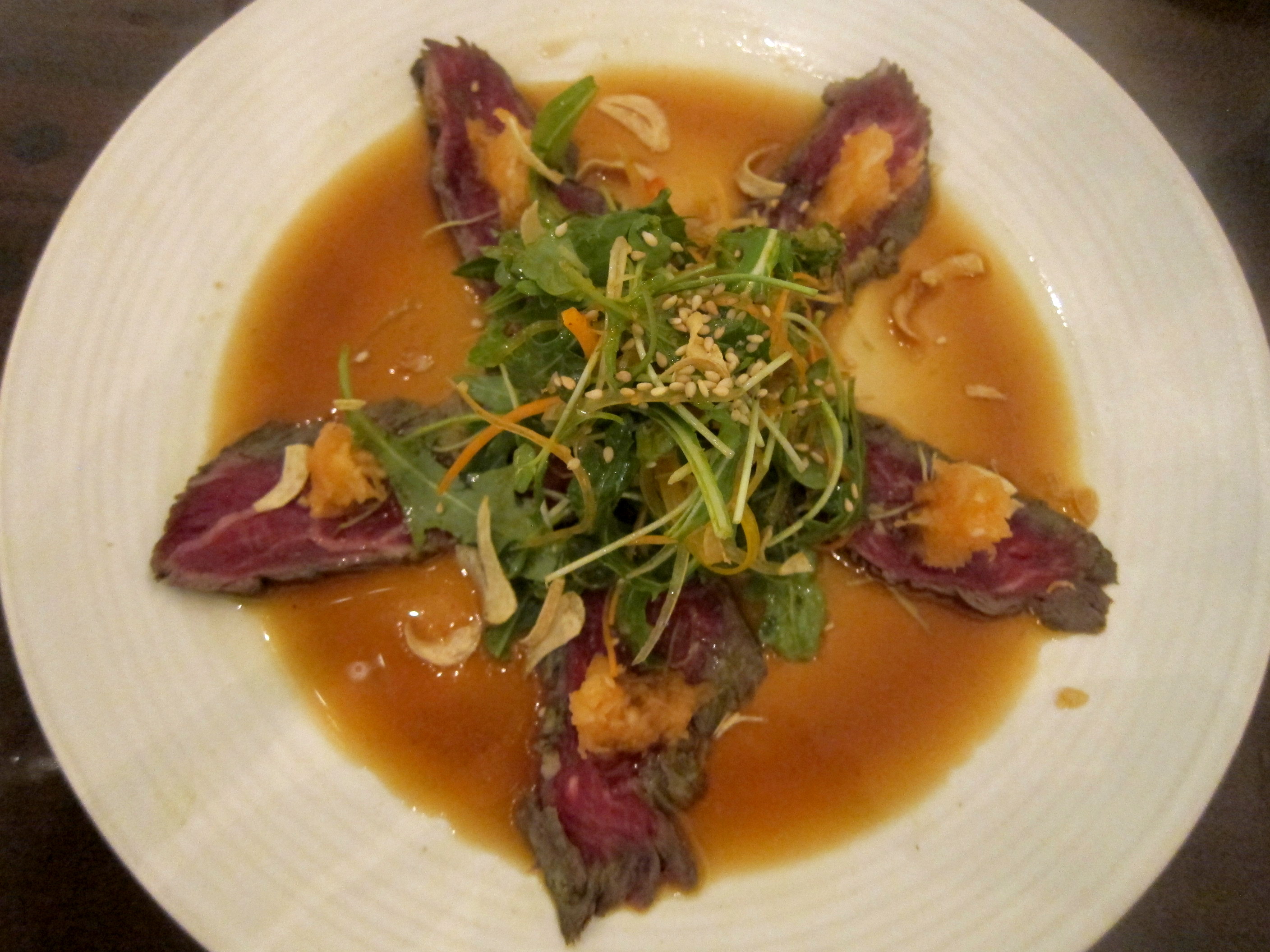
iyasare-beef-tataki
Wagyu beef tataki ($13), slightly seared; the best way to eat them, we found, is:
1. Place a tuft of green stringy stuff (julienned wasabi leaves, wasabi sprout, chicory, whatever leafy things) and a sliver of crispy garlic on a slice of beef,
2. Daintily use your chopsticks to roll the beef to enclose the greens and the tangerine bits,
3. Still using the chopsticks, turn the beef roll 2 times around to soak in the ponzu (the brown sauce).
4. Stuff it in your mouth (if you manage to keep it together this far). Delicious.
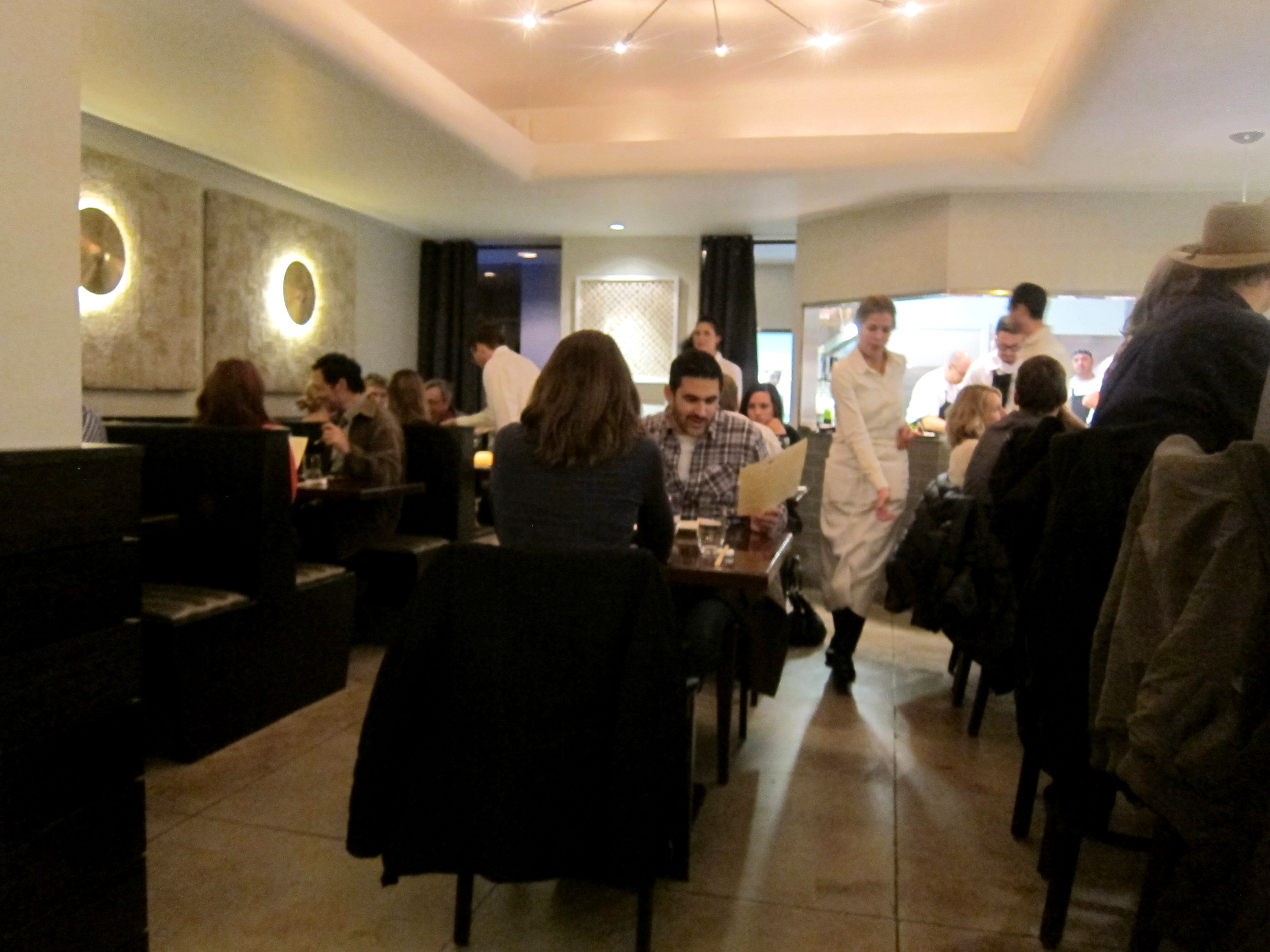
Our waitress weaving back and forth through the dinner rush hour.

Our waitress weaving back and forth through the dinner rush hour.

It was a Wednesday night, Iyasare was pretty peaceful and devoid of people, but only until about 7. Then, everybody in town poured in, the waitresses started to lose track of things, brought us things we didn’t order and simply couldn’t see us anymore.
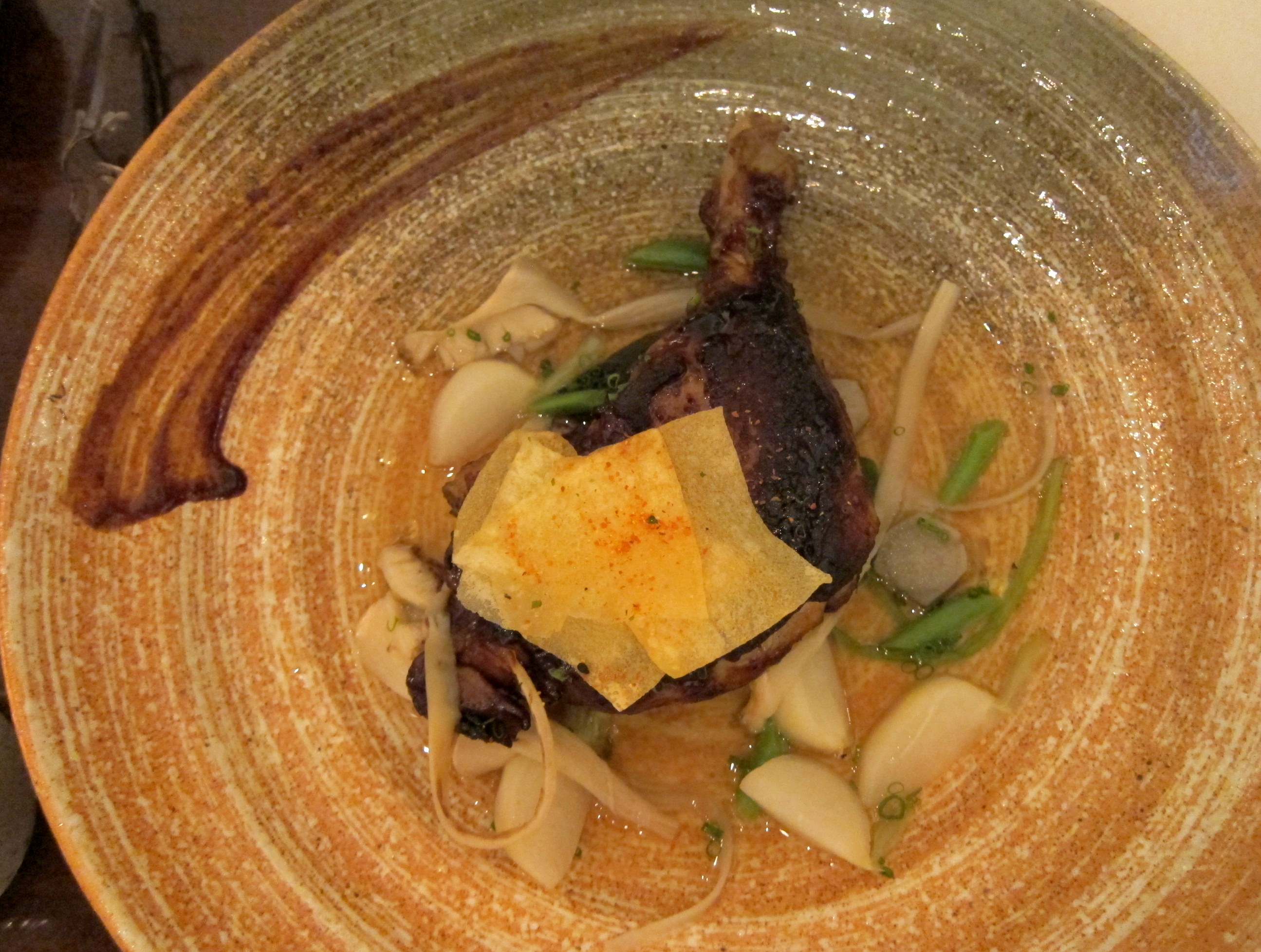
iyasare-duck
Miso-glazed Maple Leaf duck confit ($20). Embarassingly, we thought the “Maple Leaf” was part of the dish (but no, it’s the name of the duck farm). In our defense, the maple leaf in the sashimi plate led us astray. 😛

I wasn’t too thrilled by the Tokyo turnip, the green beans and the gobo (burdock) in this dish. A length-wise-cut gobo would have been crunchier, and the turnip was cooked a hair too long. On the bright side, very rarely does a duck dish go wrong, and when it’s glazed with miso like this? Heavenly.
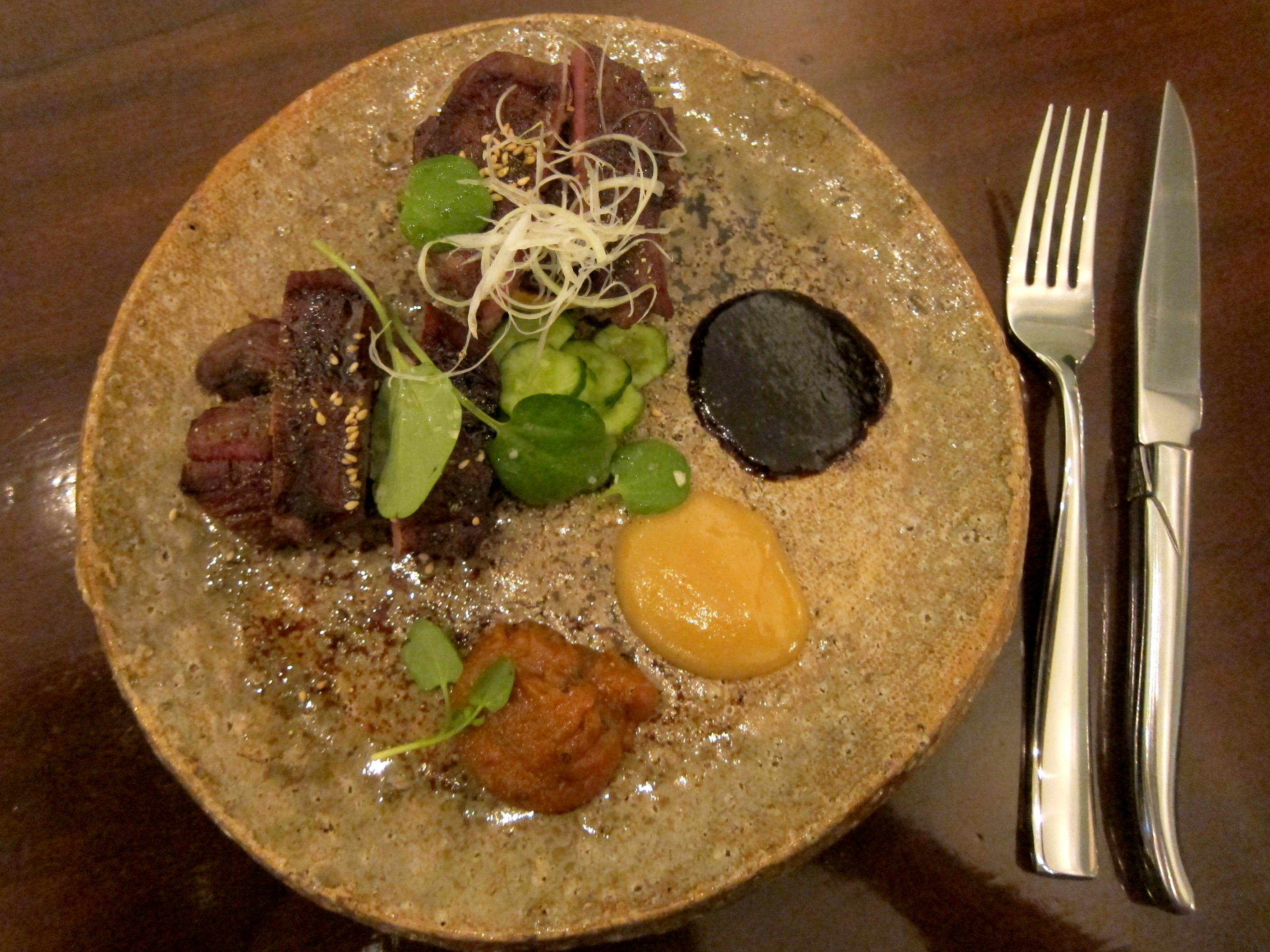
iyasare-gyutan
The BEST of the night: gyutan (grilled beef tongue) ($17). Well, I always love beef tongue, so I’m biased. Maybe the duck was better. But this beef tongue dish was perfect as a whole, from the quick-pickled cucumber to the trio of miso (the black akamiso had the deepest, richest flavor among the three). When you cut into a slice of gyutan, you could feel through your knife how tender it was. I even ate a fourth of the grilled lemon (under the right piles of gyutan).
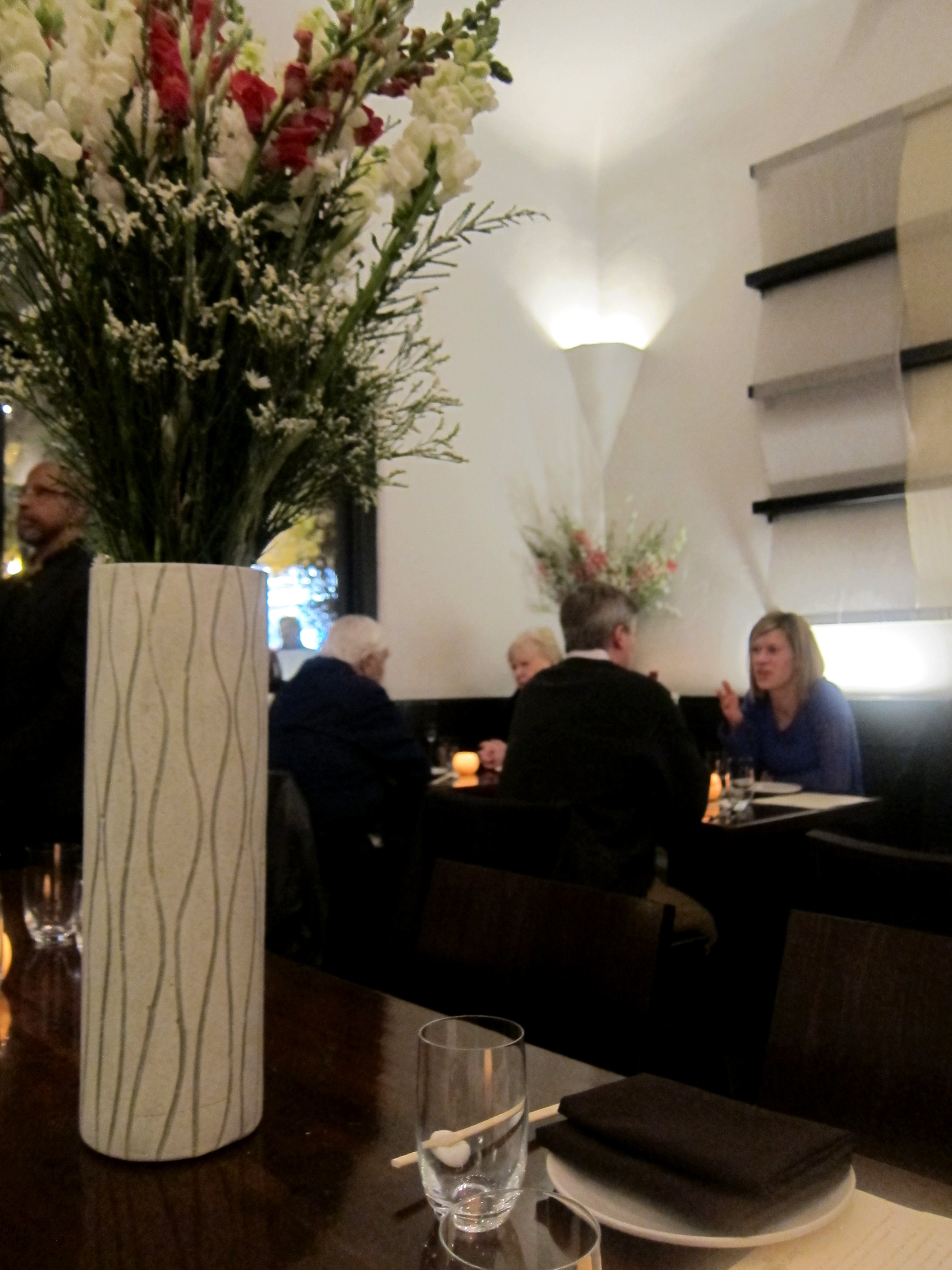
iyasare
We skipped desserts.

Address: Iyasare
1830 Fourth Street
Berkeley, CA 94710
(510) 845-8100

FOODNOTE:
(*) For comparison, B-dama’s ankimo is still the champion on the East Bay, and Musashi’s ankimo is surprisingly satisfactory for its price mark.

A more comprehensive “map” of what we shared is on Ponga.
Cook with Yuri Vaughn

August 20, 2012 By: Mai Truong Category: Comfort food, Japanese, Opinions


She’s the person behind the mochi at Teance. She pounds the cooked sticky rice instead of using mochiko, chops up whole yomogi for the actual grassy freshness, grow her own wild blueberries because they’re denser in flavor than the bigger highbush cultivars at the stores, and makes fancy mochi fillings with seldom fewer than 4 ingredients. Every time I nibble one of her soft little piece of art, each costs a whopping 4 dollars, I wonder what she doesn’t make at home from scratch and how much more work it takes.

Turns out, Yuri doesn’t make katsuobushi from scratch, that is, she doesn’t behead, gut, fillet, smoke and sun-dry the bonito fish herself, instead she buys the wood-block-looking karebushi and shaves it to top her okomiyaki, which goes without saying is made with grated nagaimo and dashi instead of premixed flour like when I did it.


We made Hiroshima-style okonomiyaki, which doesn’t have egg in the batter, but we later added egg to brown the pancake more. Yuri told me to choose the fluffier cabbage instead of those with the leaves tightly packed together, and she added a squeeze of lemon juice on the finished pancake to brighten it up, exactly the little things that I can learn only from a home kitchen.


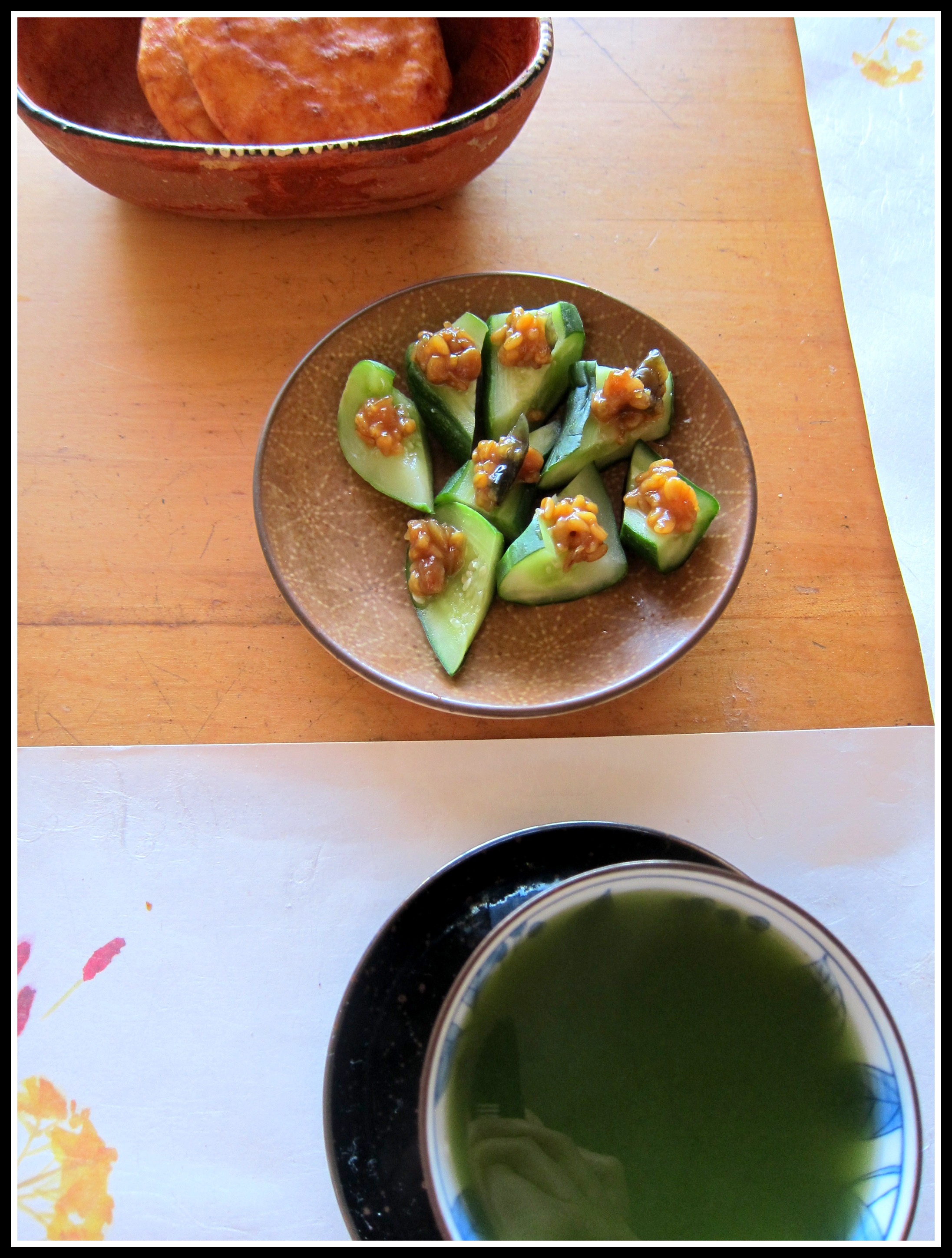
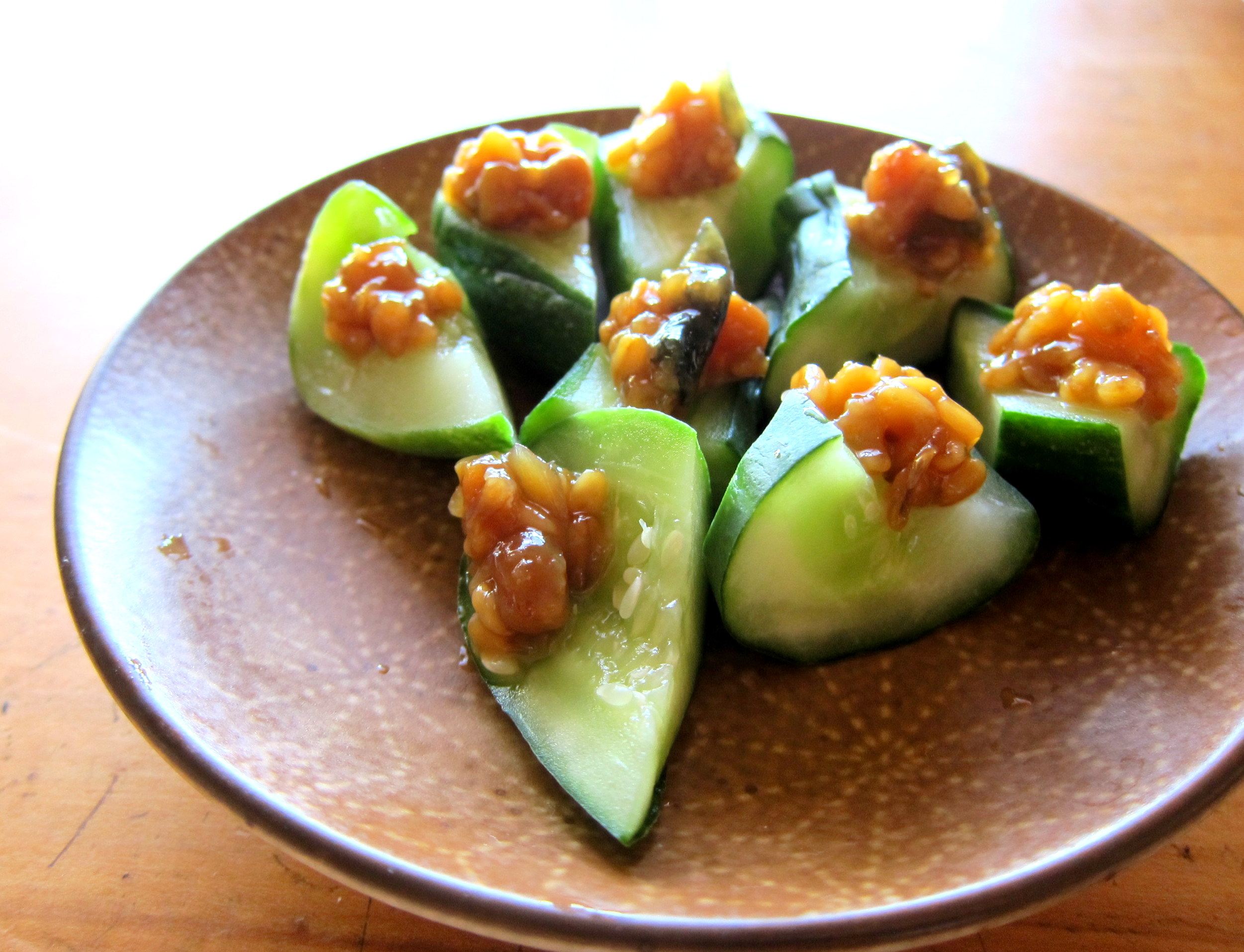
After two okonomiyaki, we had genmaicha with pickle cucumber and shiromiso, both homemade of course. Then a plain koshihikari senbei (rice cracker), as the sun set generous rays from the window.

Miso Omakase at Nojo

July 15, 2012 By: Mai Truong Category: California - The Bay Area, Japanese, The more interesting


Is it miso season? (Miso has a season?) Berkeley Bowl puts out about 10 different kinds of miso in their “international” aisle, and Nojo advertises a seasonal 5-course miso omakase menu on Black Board Eats. Usually the Black Board Eats emails go straight into the trash, which I kinda feel bad about because I signed up for their newsletter after all, but thank goodness I did read it that morning. That night I got the code, called my friend, and we went to Nojo.

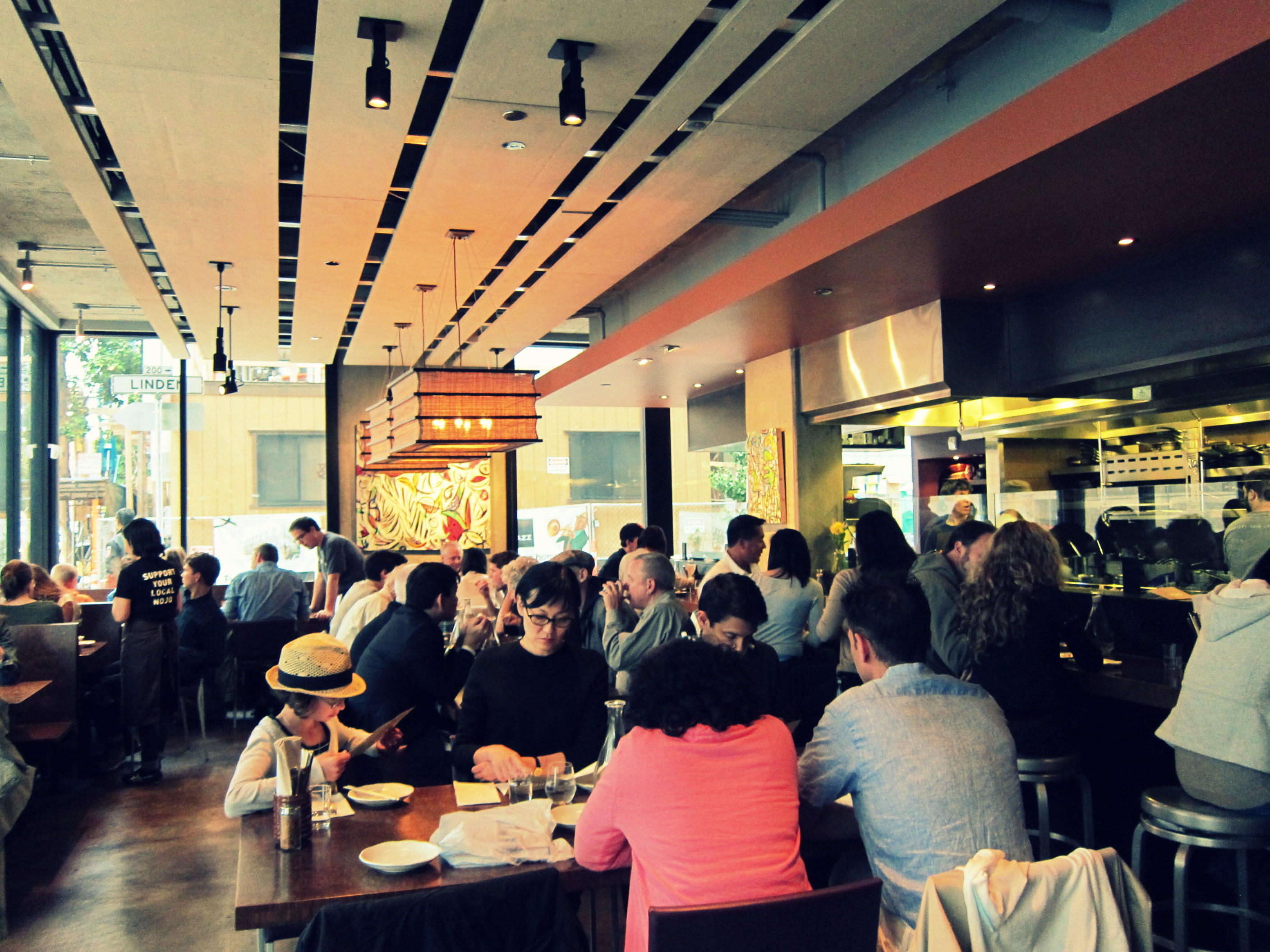
We were seated at the counter, but not the one facing the chefs, that would have been nice, this was a small counter facing the wall near the door. The wall looks pretty cool but we felt kinda weird at first, what with the other customers crowding the tables and here the three of us facing a wall next to a middle-aged man. We felt outcast. But Nojo doesn’t take reservation for party under 6, only a phone call an hour before you arrive to put your name on the waiting list, guess I should have called more than an hour earlier, what was I thinking following the rules? But the servers, inked and all, are really nice, the water was clear and sweet, the sunflowers smelled good, and the middle-aged man left minutes after we sat down.

And the food.


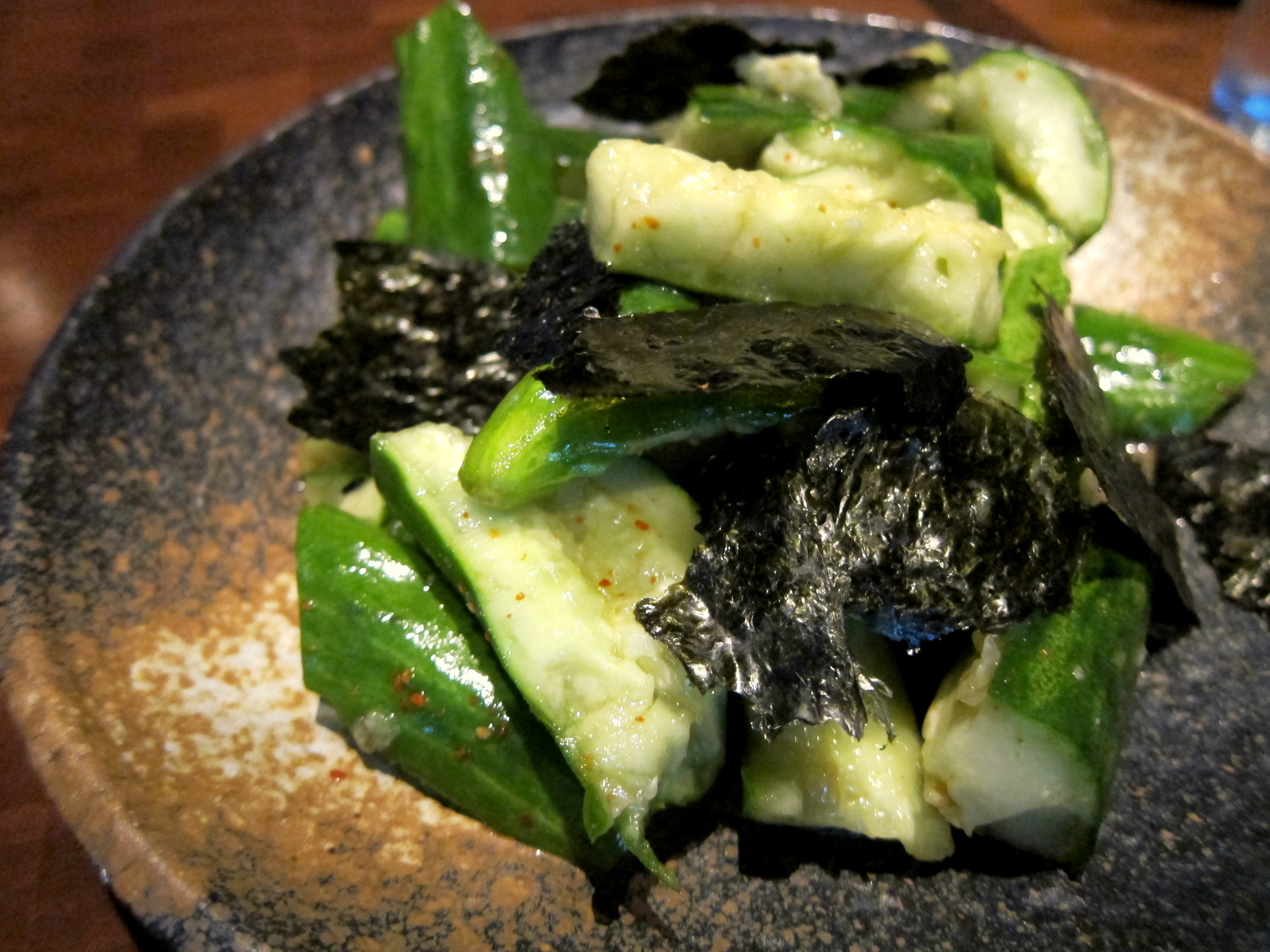
Cucumber salad with shichimi and nori. Shichimi is a chili pepper mix with (supposedly) 6 other spices, but they sprinkled just enough to give the cold thing a kick, not spicy. There’s more shichimi on the counter for the duller tongues people who like spicy food.


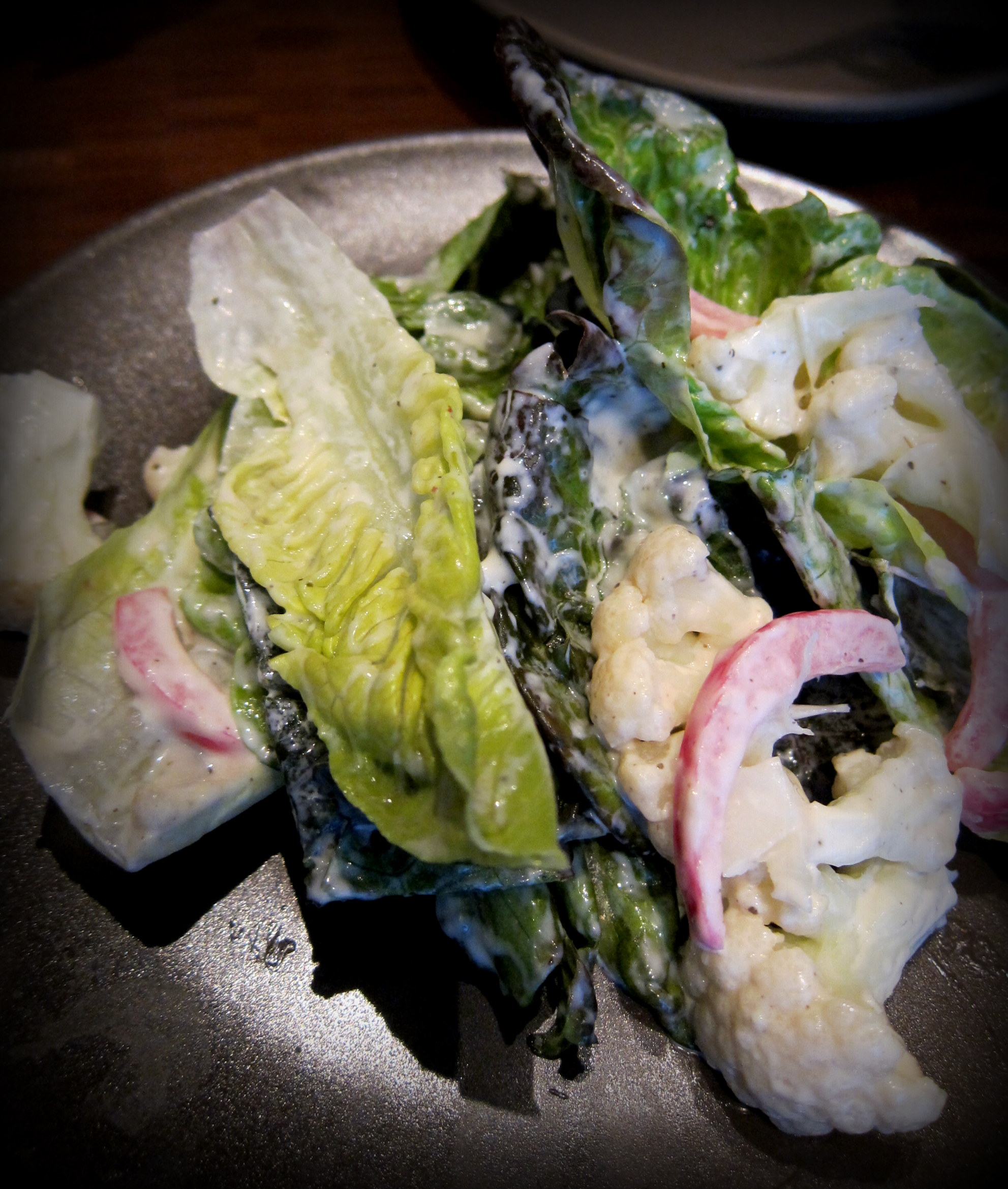
Miso Omakase Course 1: a simple salad of Little Gem lettuce and cauliflower with shiromiso (white miso) dressing. The pickled red onion was the real little gem.


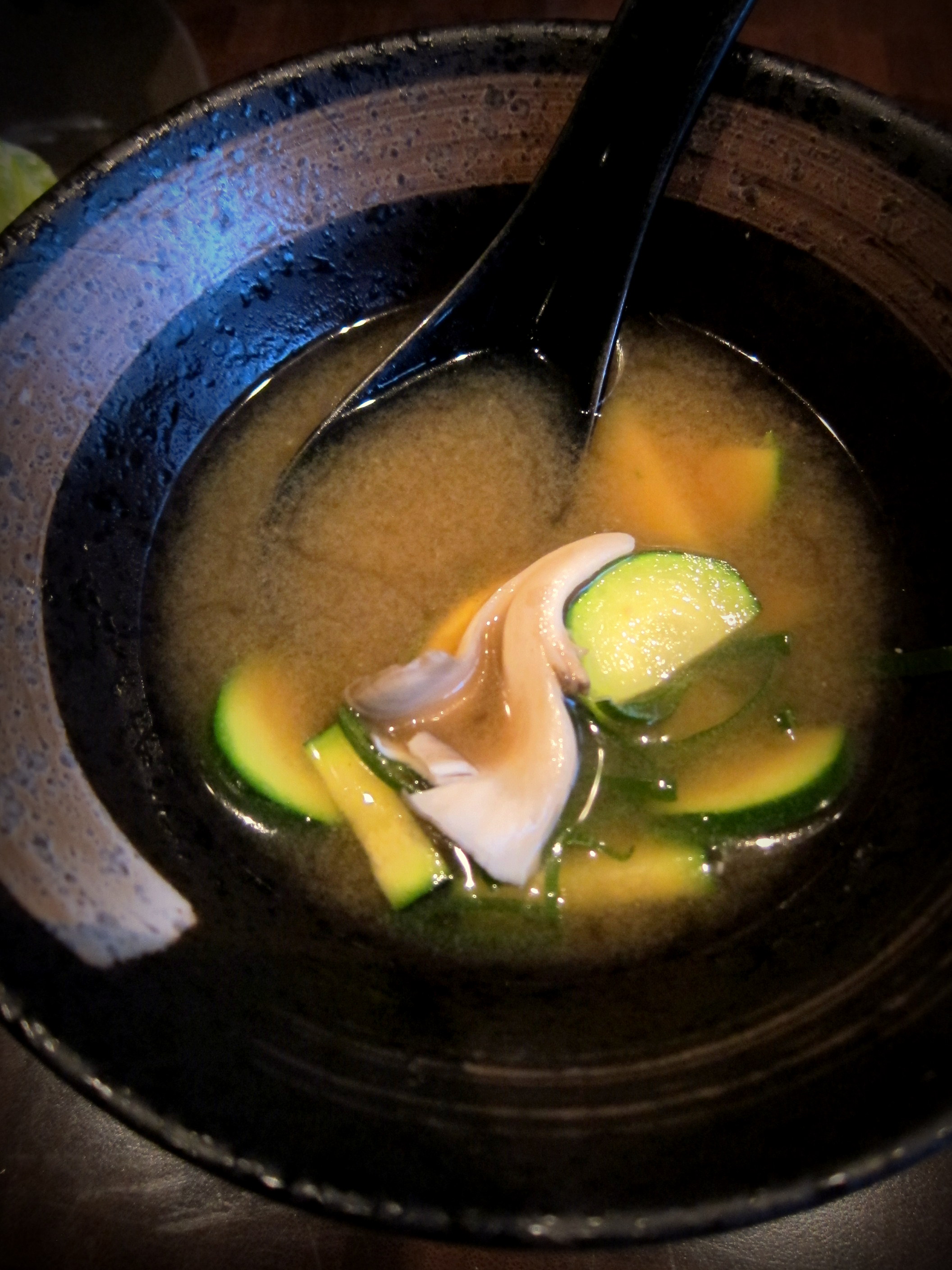
Miso Omakase Course 2: miso soup with oyster mushroom and butternut squash. Hearty. San Francisco gets cold at night, so this helps.


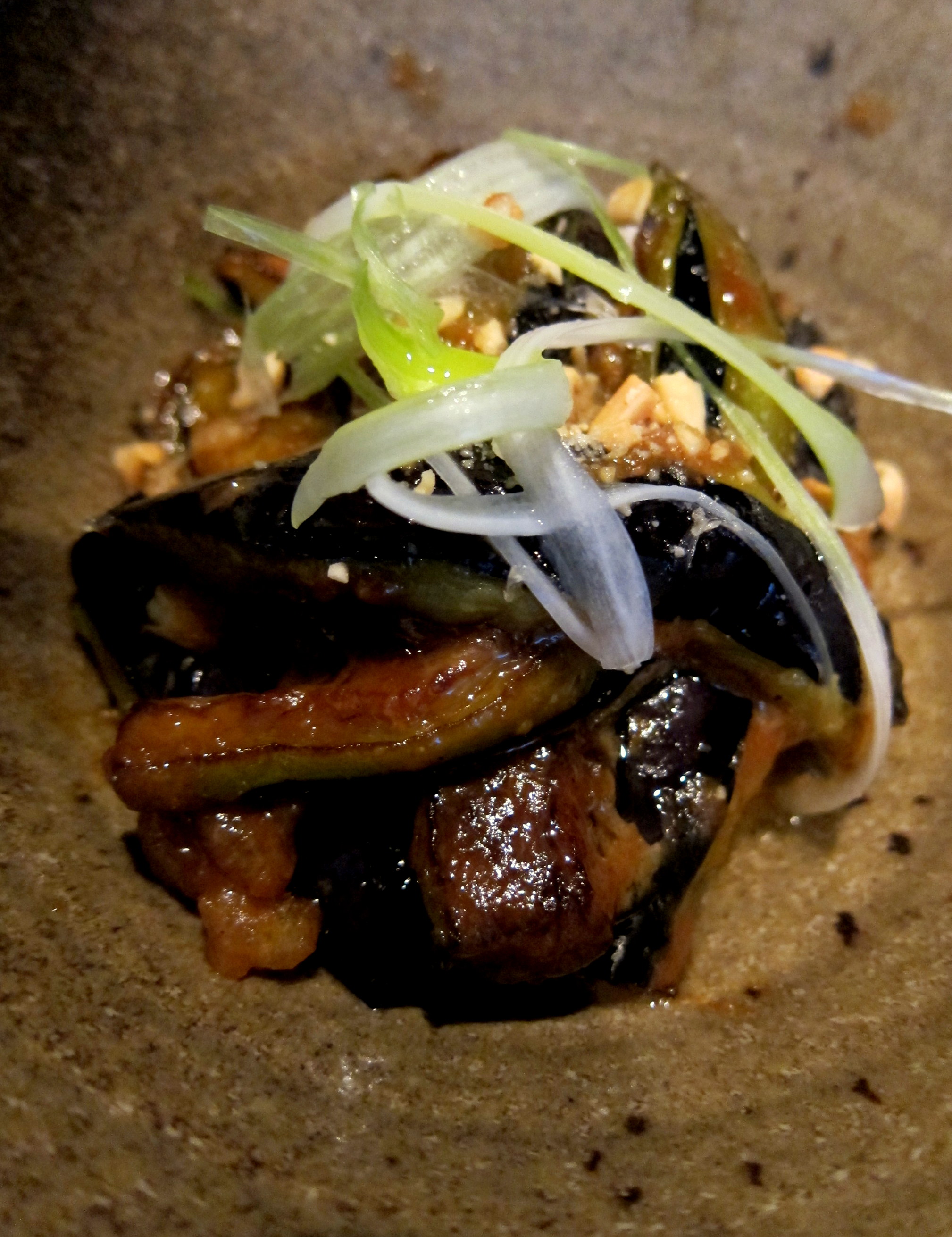
Fried eggplant with akamiso (red miso) and peanut sauce, topped with julienned leek. Eggplants have never been my favorite fruit and will never be even if I go vegan, but this miso eggplant was better than the grilled pork jowl and the garlic-barley miso butter chicken (Miso Omakase Course 3), both of which tip-toed on the salty side.


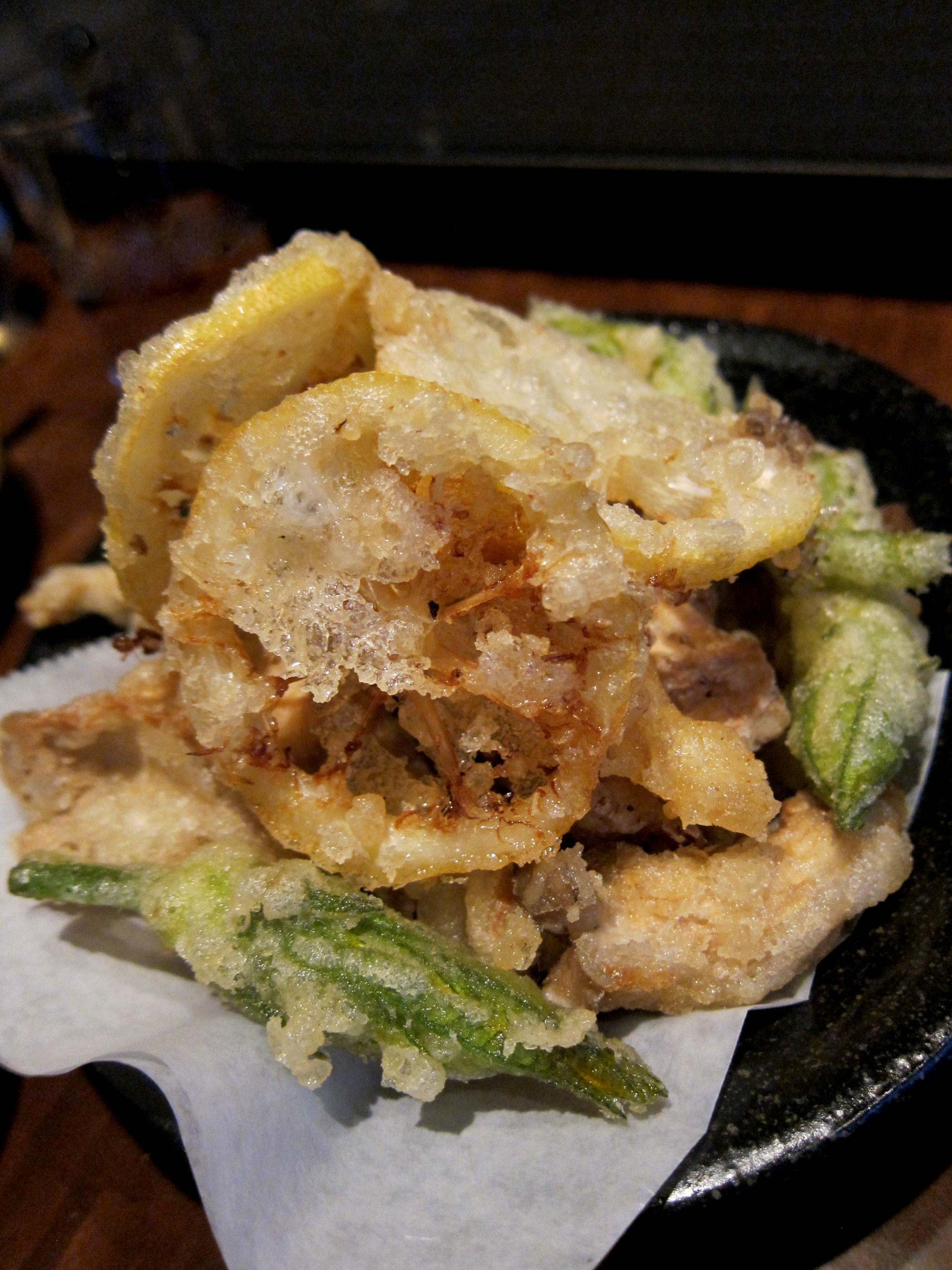
Tempura tree oyster mushroom, squash blossom and lemon, to be dipped in a zesty ponzu mayonnaise.


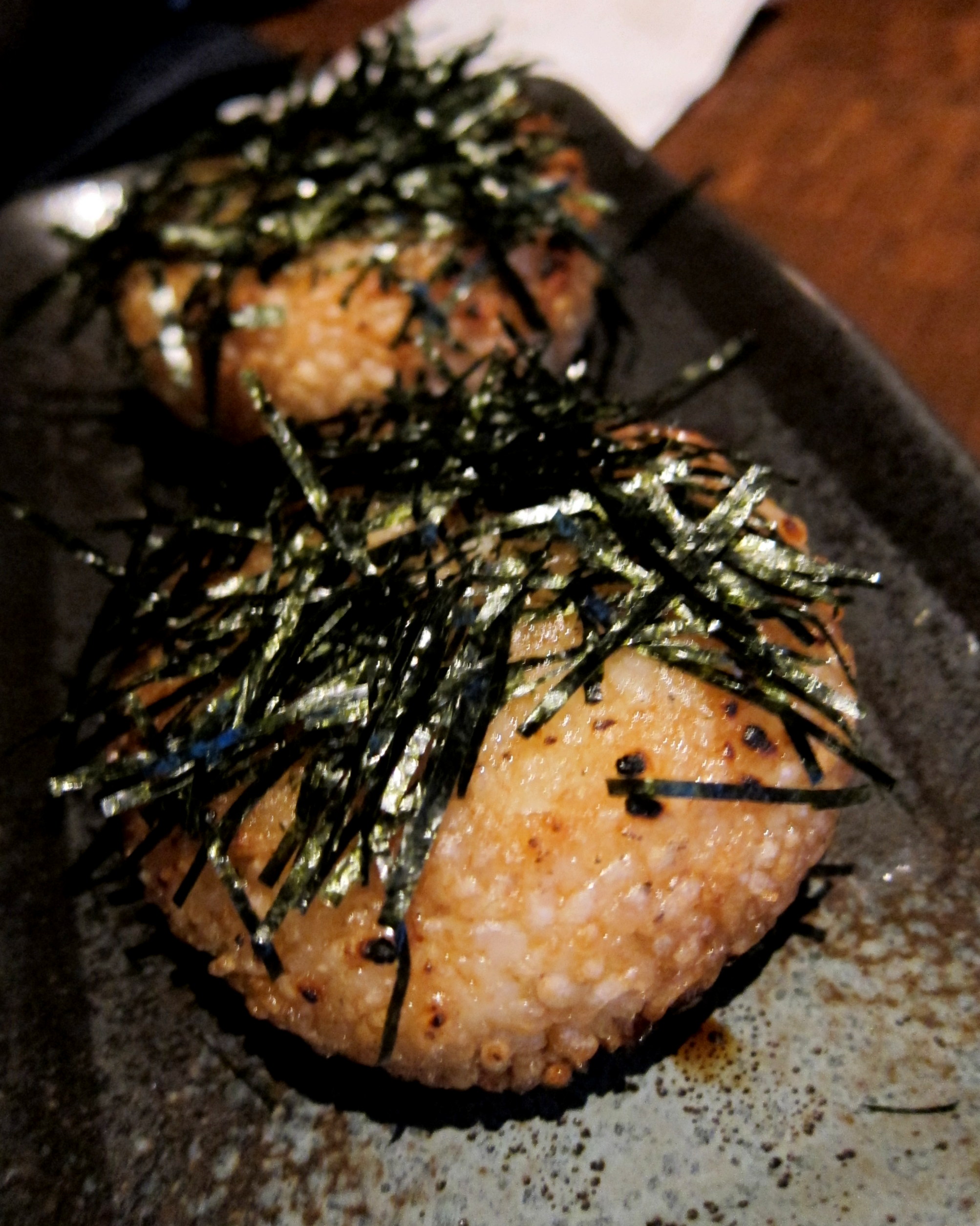
We didn’t expect a fried thing when we ordered the rice balls with tare and nori, but the surprise was welcome.


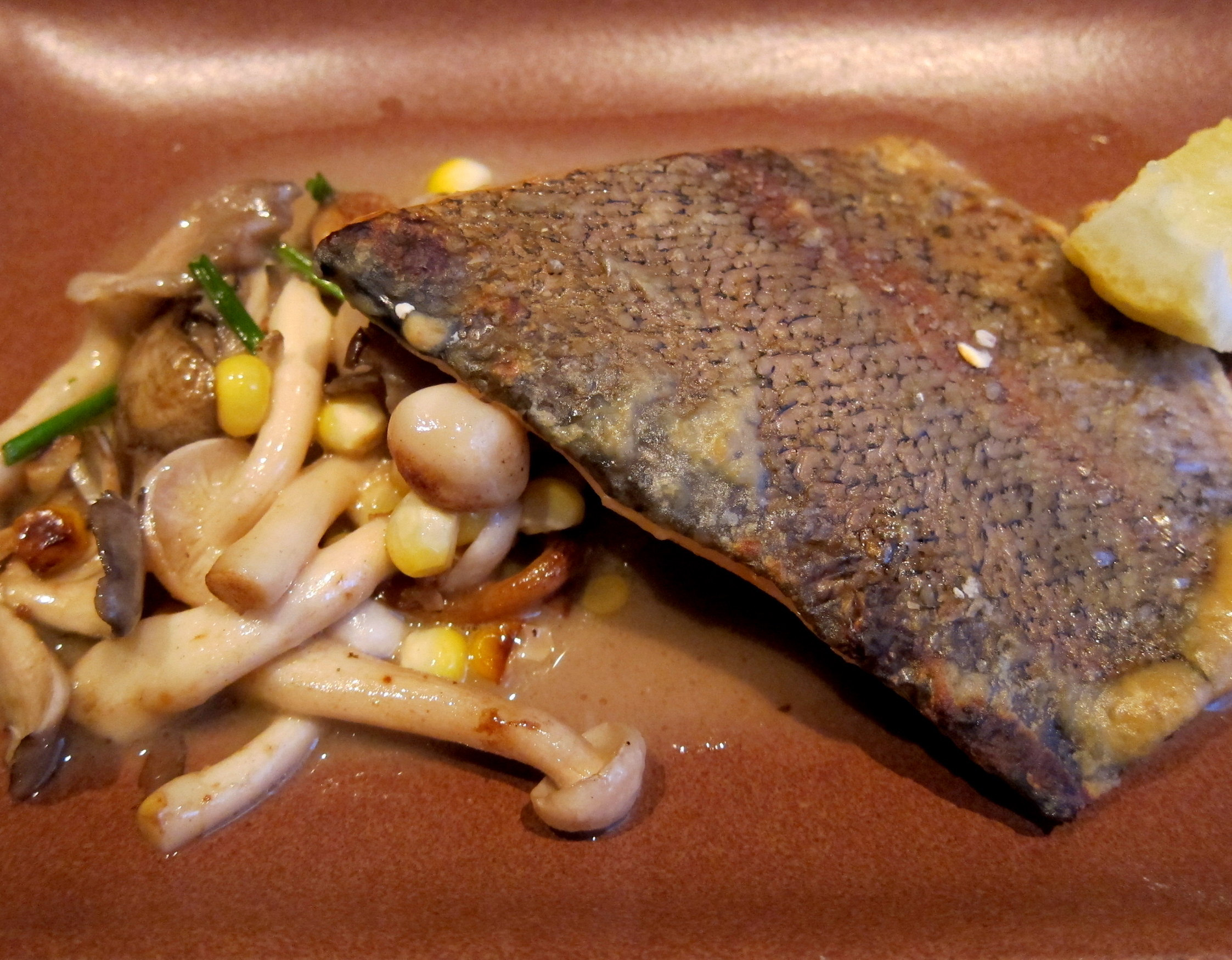
If I was skeptical about anything in the Miso Omakase menu, it was the shiromiso-glazed trout. But its sweet creamy sauce blew my doubt away, the rice ball was great for sweeping up every last drop.


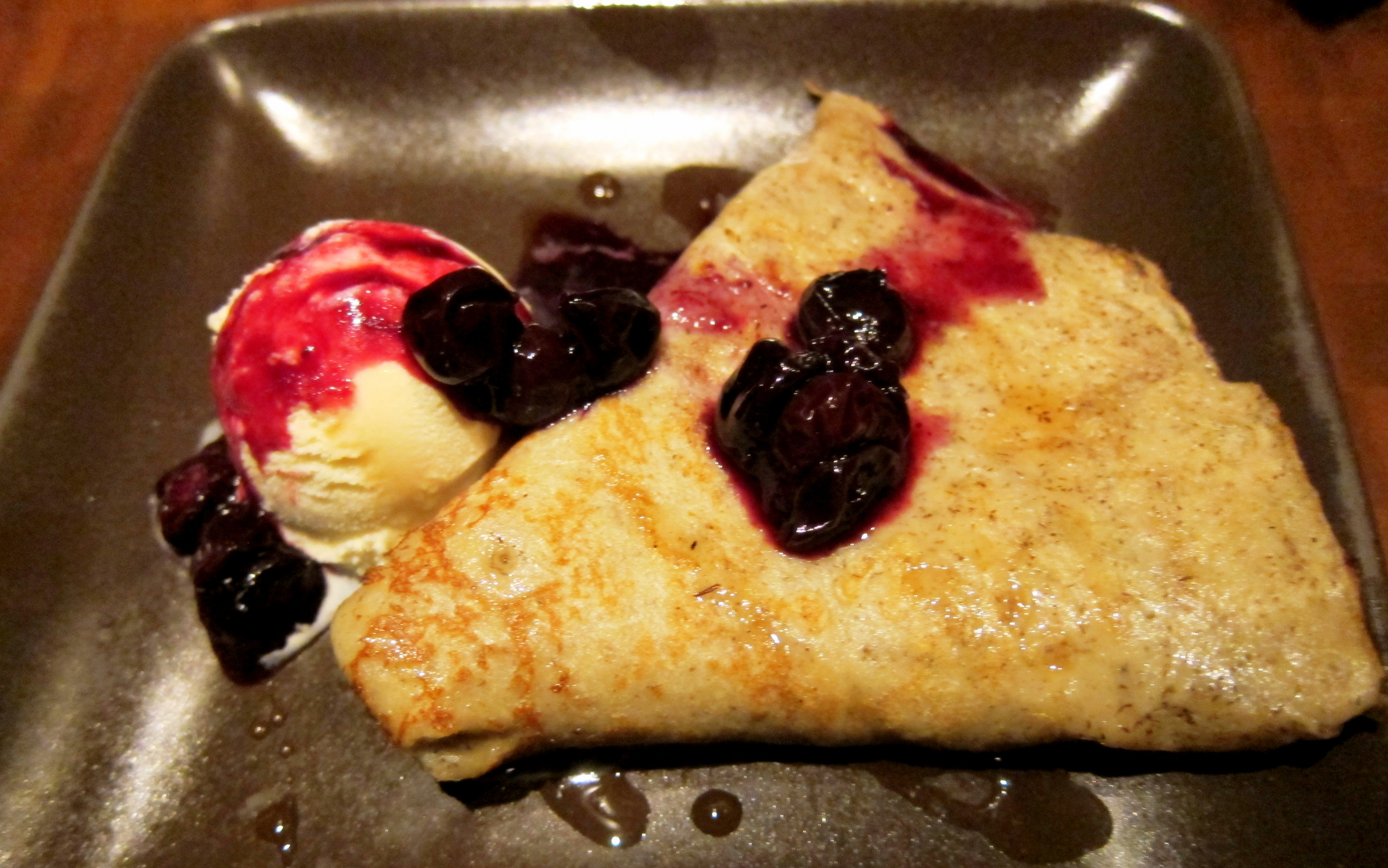
Miso Omakase Course 5: buckwheat & beer crepe, a drizzle of ginger-muscovado syrup, blueberry compote on top and shiromiso ice cream. We thought muscovado was a cross between muscat the grape and avocado (weird, I know, but possible, right?), but we asked, it’s a brown sugar.


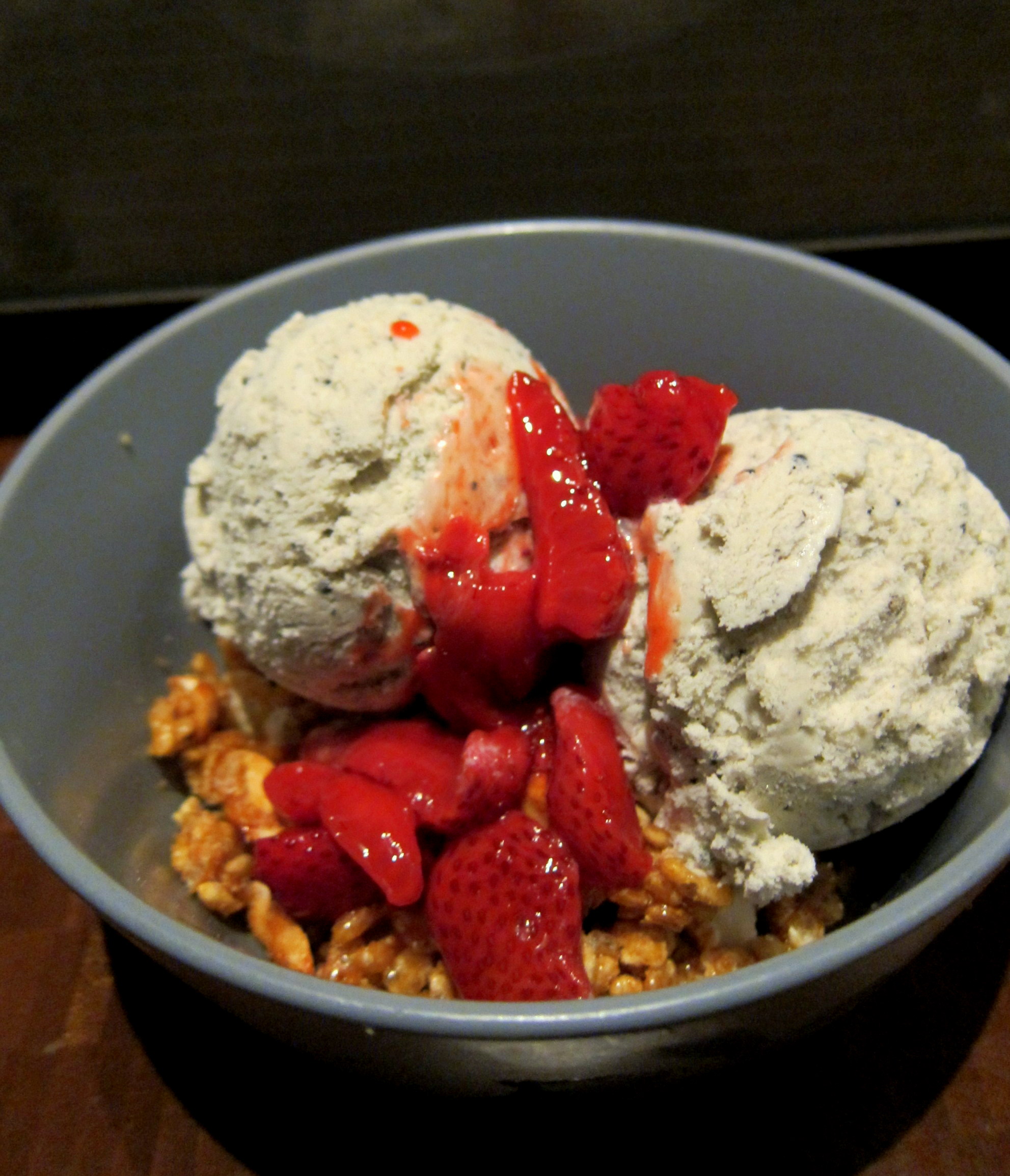
And of course, kurogoma (black sesame) ice cream with roasted strawberries on a bed of “peanut thunder crackers”, which is like peanut brittle and caramel popcorn intertwined, multiplied the goodness by 85.


You know how people can just tell that something’s good when they see it, for no reason at all? That’s how it was with Nojo for me. Every izakaya in the Bay has the same kind of yakitori on the stick, the same expensive price, the same raves on Yelp, and I don’t know why I wanted to go to Nojo, but now I’m recommending it to everyone I talk to. Was it the kikubari exuding from the friendly staff, inked and all and warmly smiling as they strode between tables? Was it the simple but flawless food? But I didn’t know any of that before I came.

Somewhere in me, I just knew. Miso is in.

Address: Nojo (which means “farm” in Japanese)
231 Franklin St.
San Francisco, CA
(415) 896-4587

Dinner for three: $99.82