Flavor Boulevard

We Asians like to talk food.
Subscribe

Why I Love Fried Rice

November 03, 2013 By: Kristen Category: Comfort food, Korean, RECIPES

Yangzhou fried rice, kimchi fried rice, chicken and salt cod fried rice, whatever-that’s-in-your-refrigerator fried rice…I love it all. Fried rice is the ultimate comfort food – it’s filling, healthy-ish (if you put in a lot of vegetables), and just hits the spot every time. Perhaps the best thing about fried rice is how easy it is to make at home!

As someone who is still really learning how to cook, trying out a new recipe usually means that I’ll be spending anywhere from 30min – 2 hours in the kitchen (actually sometimes it takes me 30min just to prep everything because of my lack of knife skills). So for me, when I want a quick meal because I need to get back to reading or studying, or just because I don’t feel like devoting that much time to cooking, my go-to is always making fried rice. It usually takes me 15-20 minutes to cook fried rice at the most and while it probably is not the healthiest meal to eat every day, I usually end up making some kind of stir fry or fried rice at least 3-4 times a week because of how easy it is. Also, since fried rice is by nature something that requires the usage of pantry ingredients, I never have to worry about buying fancy ingredients.
1004545_10151924810260733_669571591_n

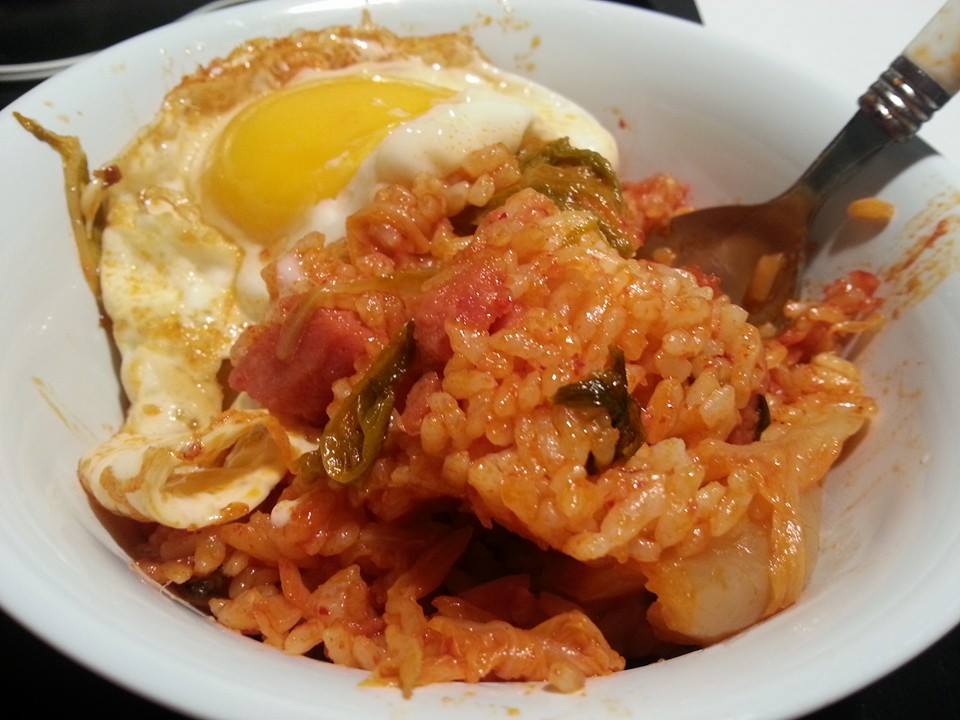
Here’s my very simple kimchi and spam fried rice recipe! It’s spicy, sweet, and salty and takes about 20 minutes altogether to make from prep to cooking (and probably 10 minutes for washing up afterwards or less if you eat straight from the pan, which I do sometimes when I’m lazy).

Spam and Kimchi Fried Rice Recipe – serves 2

I’ve made this recipe countless times and I’ve gotten to the point where I can probably do it in my sleep. I don’t have a source for this recipe since I’ve based the taste off of the kimchi fried rice from Kimchi Garden and then the more I made it the more I changed it to suit my taste. I tend to not follow recipes very well and work mostly from look and taste, so my measurements may not be entirely accurate and may not suit everyone’s taste, so some adjusting may be needed depending on how spicy, sweet, sesame oily, kimchi-y, etc. tasting you want it.

Ingredients:

  • Rice: 1 cup (My rice cooker makes 2 cups and I usually take half of that for 2 people. Also, I tend to use fresh rice more than refrigerated rice and never really noticed that much of a difference, but maybe it’s because I prefer my fried rice to still be a little sticky.)
  • Kimchi: About 2 cups roughly chopped kimchi or enough to suit your taste.
  • Spam: 1/3 of a block of Spam, diced
  • 2 teaspoons toasted (or regular) sesame oil (1 for initial stir-frying, 1 for finishing)
  • 1 teaspoon brown sugar or regular sugar (use less or more depending how much kimchi you use)
  • 1 tablespoon gochujang (more or less depending on how spicy you like it – 1 tablespoon makes for a *pretty* spicy fried rice)
  • 2 eggs
  • 1 teaspoon olive oil (or any kind of oil, including sesame) for the eggs

Instructions:

  1. Heat up 1 teaspoon of sesame oil over medium high in a relatively large frying pan or wok. I always prefer woks instead of pans because when I flip over the rice with my spatula, it doesn’t fall over the sides.
  2. When oil starts to crackle a little, put 2 cups of kimchi and diced Spam into wok. Stir-fry, making sure that nothing is burning (adjust heat if necessary to medium).
  3. When the kimchi begins to release some liquid and starts turning a little translucent, add in a teaspoon of brown sugar. A caramel-y thick sauce should start forming with the kimchi liquid. Stir-fry a bit longer (about 3-5 min) until Spam starts browning a bit.
  4. When the kimchi and Spam look like they’re cooked enough to eat on its own, add the rice in. Break  up clumps of rice with spatula and mix thoroughly. Leave some of the rice at the button to get it a little burned or crispy if you like it (it’s my favorite!). If not, keep on stirring!
  5. Add in tablespoon of gochujang and mix thoroughly so that it distributes evenly. It’s a thick sauce so it may take quite a bit of stirring before it’s fully incorporated. (Usually this process from when you add the rice to fully incorporating the gochujang takes about 5-7 min.)
  6. The mixture will probably be looking a little dry, so add another teaspoon of sesame oil and mix thoroughly. Set burner to “warm” or remove from heat.
  7. In another pan, add a teaspoon of sesame oil or regular olive oil. Crack 1 or 2 eggs and cook like you would normally to whatever level of doneness you prefer. (I make sunny-side-up fried eggs by cooking for about ~2 minutes on medium high heat and then ~2-3 minutes on medium low with a lid.)
  8. Place egg on top of fried rice and you’re ready to eat!
581935_10151498636045733_927445069_n

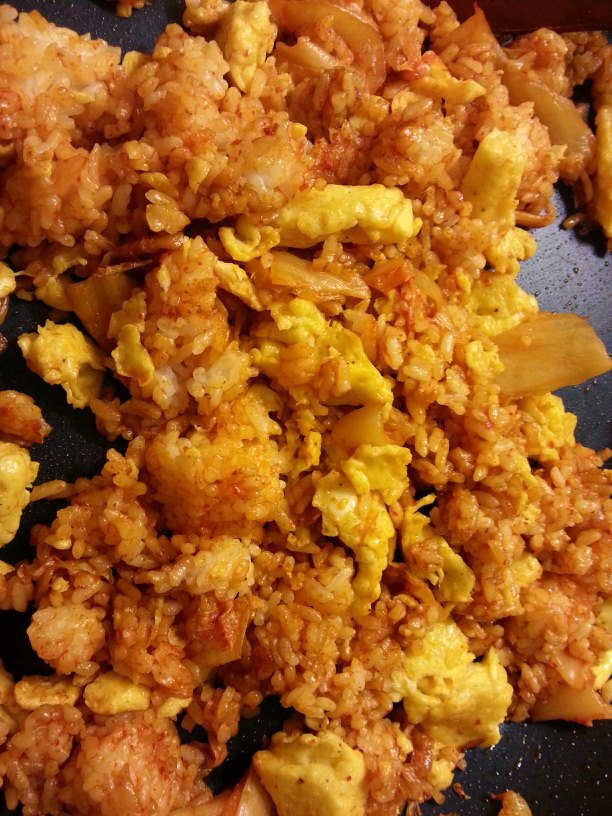
Kimchi fried rice is the best~
Eating in Seoul: Spotlighting 4 Hongdae Restaurants

August 25, 2013 By: Kristen Category: Korean, Travel

Since Hongdae is where I stayed in Seoul, this is where I had most of my meals. In this post I’ll spotlight 4 restaurants that stood out to me mostly because of the dishes that I had there. These include: Korean-style onigiri (rice balls), kimchi mandu (dumplings), vegetable and meat pancake, and gamjatang (potato soup) without the gamja (potato).

#1 Kong’s Riceball

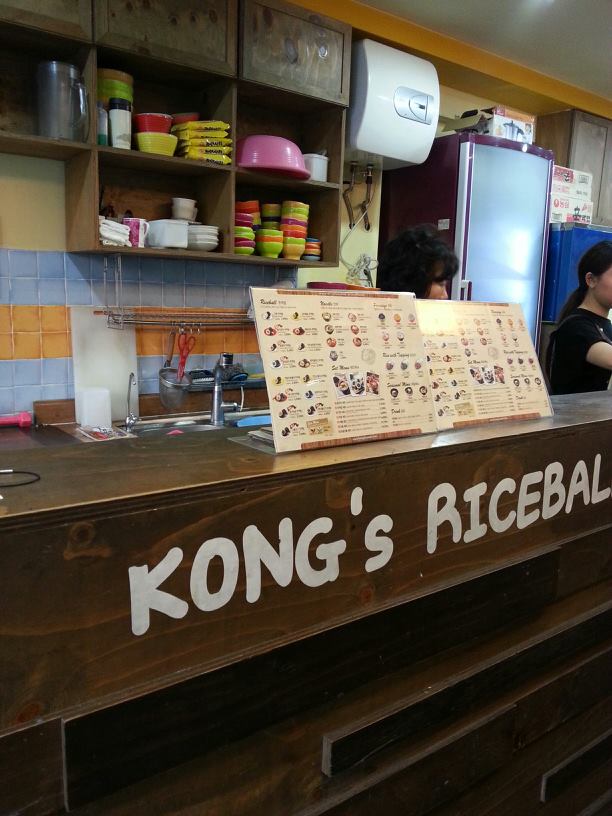
It was my second day in Seoul and I was still very overwhelmed with being in South Korea. I had a pretty big lunch at the museum cafe in the War Memorial of Korea and on my way back to my hostel, I wanted dinner but just a small dinner. I remembered passing by this restaurant the day before when my friend was showing me around the area and figured today will be the perfect day to try it!

1011901_10151676537820733_1737277647_n

The interesting name, the brightly colored bowls, and the nice ahjumma who stuck her head out of the window to call out orders all drew my attention right away! Plus it was right next to Hongik University on the main road in Hongdae AND it offered take-out, so convenience and shyness made this the perfect stop (at this point I was still too scared to order or dine alone in a restaurant, but that was quickly overcome once I couldn’t resist the food).

954748_10151676538105733_766857282_n

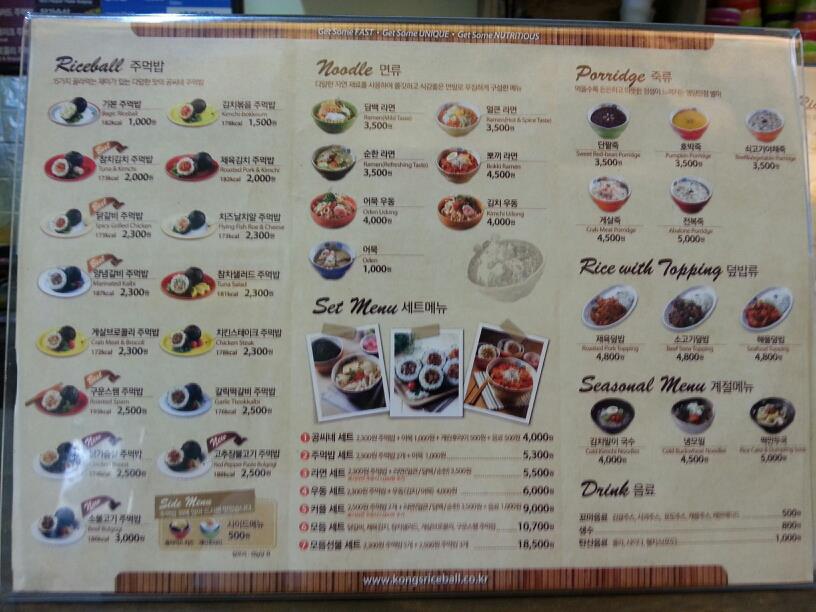
An onigiri would be the perfect meal since I wasn’t too hungry. After looking, I decided to go with two of what looked the most delicious: spicy marinated chicken thighs (닭갈비, dalk kalbi) and stir-fried kimchi (김치볶음, kimchibokkeum).

971445_10151676539265733_258093571_n

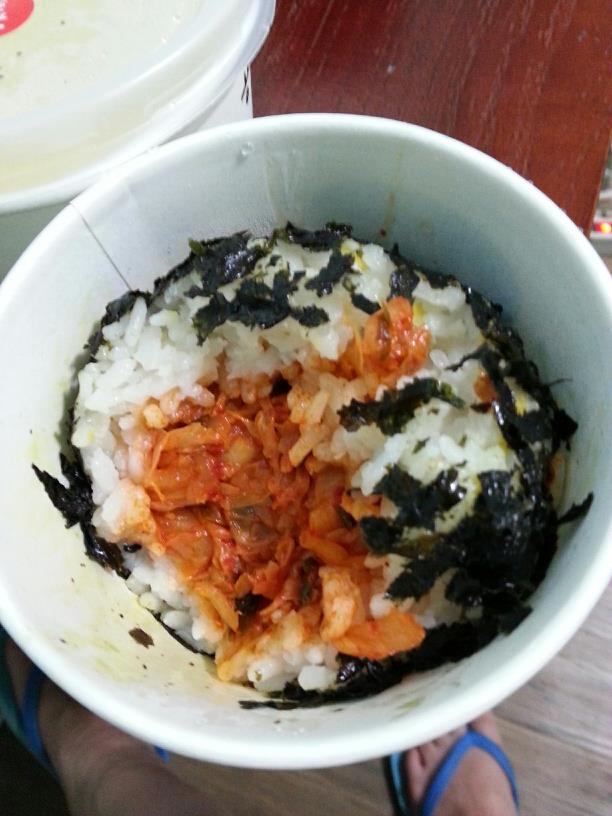
Stir-fried kimchi rice ball

970865_10151676538865733_1961888760_n

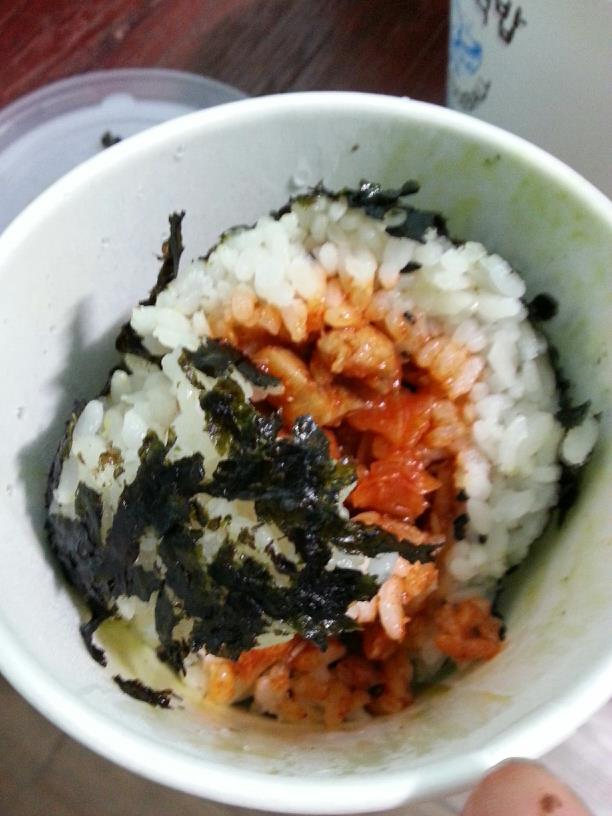
Marinated chicken riceball

Little did I know – these are giant-sized riceballs! They took up an entire cup each! They were so delicious though that I ate both of them in the comfort of my hostel room. I expected something hand-held, but I had to use a fork with this one – luckily my hostel had utensils because when I tried taking the rice ball out of the cup with my hands, I ended up making a mess. The flavors were delicious and so comforting: both the chicken and kimchi were really spicy but I loved it since the rice and seaweed balanced out the spice. If I were a college student at Hongik University, there would be no doubt about it, I would be eating these rice balls all day long. With the most expensive one costing 3,000 won (less than $3 US) and the stir-fried kimchi one costing 1,500 won (less than $1.50 US), these are great!

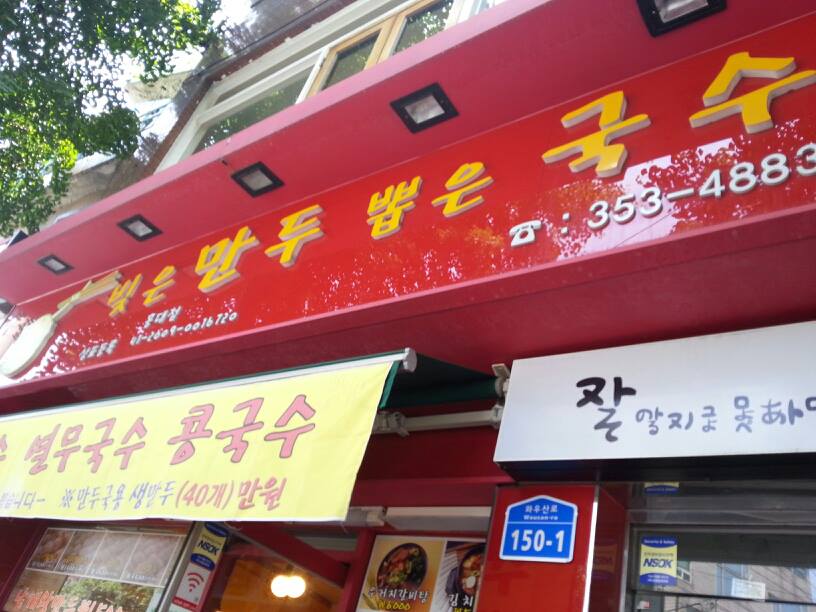
#2: 빚은 만두 뽑은 국수

1002231_10151676557475733_191584978_n

I wish I knew the translation for this restaurant name, but I don’t…the only character I recognize is 만두 (mandu), which means dumplings. As far as I’m concerned, that’s the only word that I need to know! My friend and I met up here specifically for their kimchi dumplings…she’s on a quest to find the best kimchi dumplings in the area, so we came here to test out this restaurant. It’s on the main stretch of road bordering Hongik University (the same street as Kong’s Riceball and Cafe Berlin); if you keep on walking down this road, you will eventually end up in the popular Sinchon area, which also has a ton of universities.

311625_10151676557035733_332828821_n

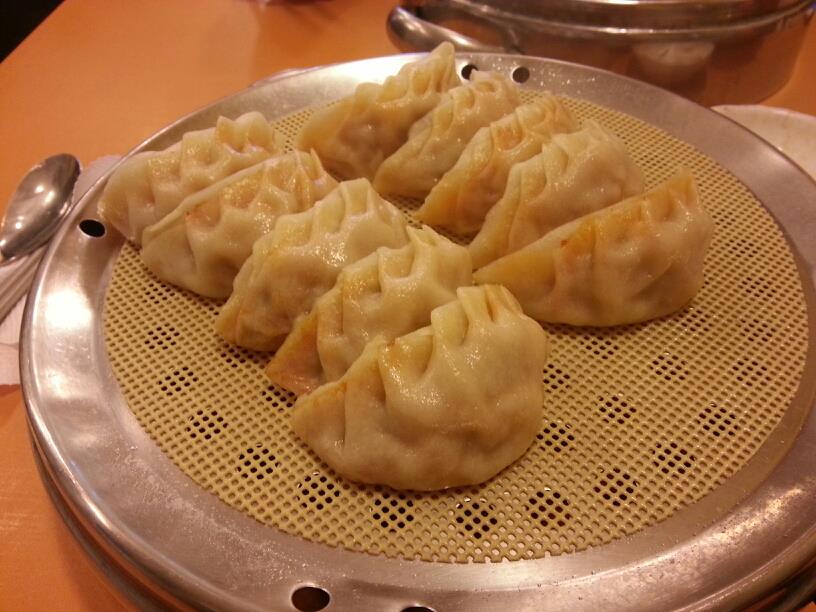
I should probably admit something embarrassing at this point…I have never had fresh kimchi mandu before. I’ve only ever had the frozen packs that I buy at Koreana Plaza in Oakland. When I say that this is the best kimchi mandu I’ve ever had, it’s probably not saying much, but these were the best kimchi mandu I’ve ever had! The filling was extremely fresh (which stood out to me since I’ve only had the artificial tasting dumplings) and deceptively spicy – I found myself drinking more and more water as I ate! The steamer that comes with the dumpling is so cute too. I don’t remember the price right now, but I think it was around 3,000 won (less than $3). I loved how well I can eat in Seoul without spending a lot of money! The dumplings also come with banchan that included pickled yellow radish and a clear soup that tastes like the kind that are served in Japanese restaurants in the U.S. Overall I was super impressed with this place, but I don’t know how it stacks up with other kimchi mandu restaurants.

#3 The Pancake Restaurant

This actually isn’t the name of the restaurant, but I don’t remember what it was called. All I remembered was that it was a rainy day in Seoul and I had just finished touring the War and Women’s Human Rights Museum (commonly referred to as the “Comfort Women Museum”), which addresses the history of the women who were drafted into sexual slavery under the Japanese Imperial Army during WWII (an issue that many Japanese politicians and textbooks deny) as well as their ongoing legacy and attempts to fight for justice and reparations. Needless to say, it was a very difficult museum to walk through and combined with the rain, I was definitely looking for some comfort food. I happen to walk right past this restaurant on the way back to my hostel, and could not resist the smells. This is some perfect rainy day food.

7810_10151676734400733_559940819_n

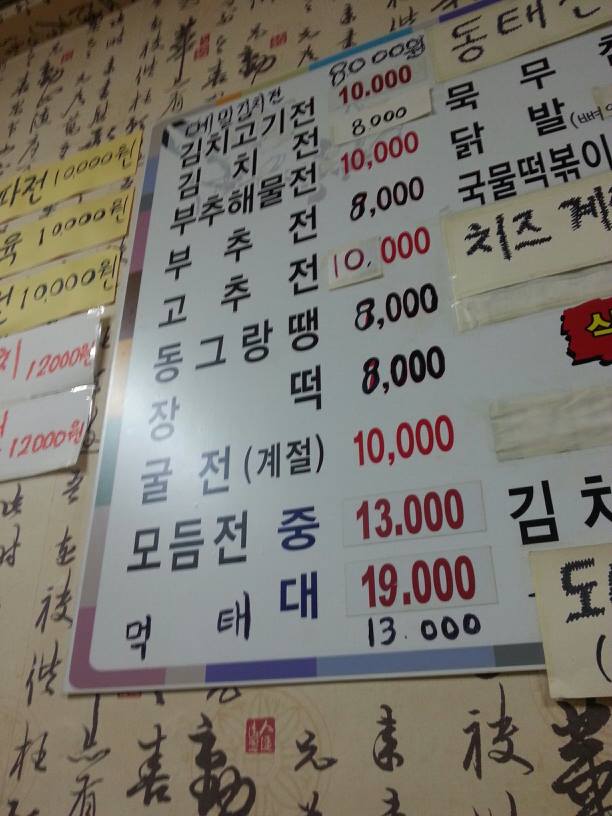
This restaurant is pretty much the definition of a hole-in-the-wall restaurant. I think they probably serve more take-out than sit-in diners and I was the only one there that day. The prices looked pretty expensive compared to other food that I’ve eaten in Seoul so far, but that didn’t deter me from ordering the meat and kimchi pancake (김치고기전, kimchi gogi jeon) for 10,000 won (a little less than $10 USD).

1006171_10151676734790733_1493218215_n

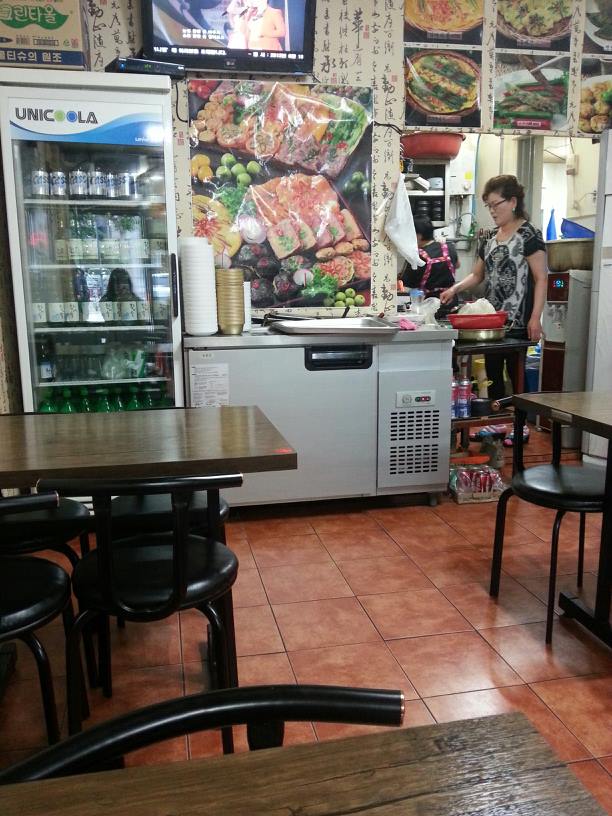
The owner of the restaurant (the woman with the glasses) was super friendly and I think she felt a little bad for me when she asked if I was eating alone and I said “yes.” I didn’t mind though, particularly as she started to cook my pancake on the little electric stove and the smells came wafting towards me. This is definitely made-to-order food!

1013681_10151676735025733_612229656_n

Pictured here is the pancake (I didn’t take a picture of it but I got some banchan as well). It was a little greasy, but it definitely hit the spot. The meat was a little flavorless on its own; I couldn’t tell if it was pork of beef – it tasted like burger meat to me. The kimchi though was full of flavor – this was the most pungent and sour kimchi I have ever eaten and I loved it. The overall flavor of this pancake rings “sour” more than anything else, but I love some fried kimchi pancake and even though after my first few slices I was wishing for a little more sweetness or spicyness to balance out the sourness, I definitely had my craving for kimchi pancake satisfied. I was able to end up eating half of it before I was full, but I took the rest of it back to my hostel.

The owner was so incredibly sweet also; she kept on talking to me and made sure that everything was to my liking. She also complimented me on my Korean, which was really affirming for me to hear since I am super unconfident with my Korean language skills. However, I was actually able to have a conversation with her (even if it was a little bit awkward and I didn’t quite use full sentences all the time), but it is definitely a good confidence boost to actually almost understand someone completely in Korean! Not only was the food excellent here, but the service is quite good as well!

#4 The Gamjatang Restaurant

This is another restaurant that I forget the name of; I think it is a chain restaurant since I saw one in Myeondong as well (the one that I ate at is in Hongdae). The logo consists of an animated potato head. Actually, here is a blog post on the restaurant; it is called Onedang Gamjatang. Fun fact: the hostel that I stayed at is right above the Plan B bar pictured in that post.

Actually, one of the first things that I did before leaving for Korea was to Google Maps (can I use this as a verb?) my hostel location. To my delight, I saw that it was right next door to a restaurant that read “gamjatang.” I was super excited because I love  gamjatang and this place is literally two steps away from my residence.

What I failed to realize though is that the entire area surrounding my hostel is full of restaurants and shops, but I still made it to the gamjatang restaurant on this trip despite the numerous options.

1010949_10151676602405733_861114530_n

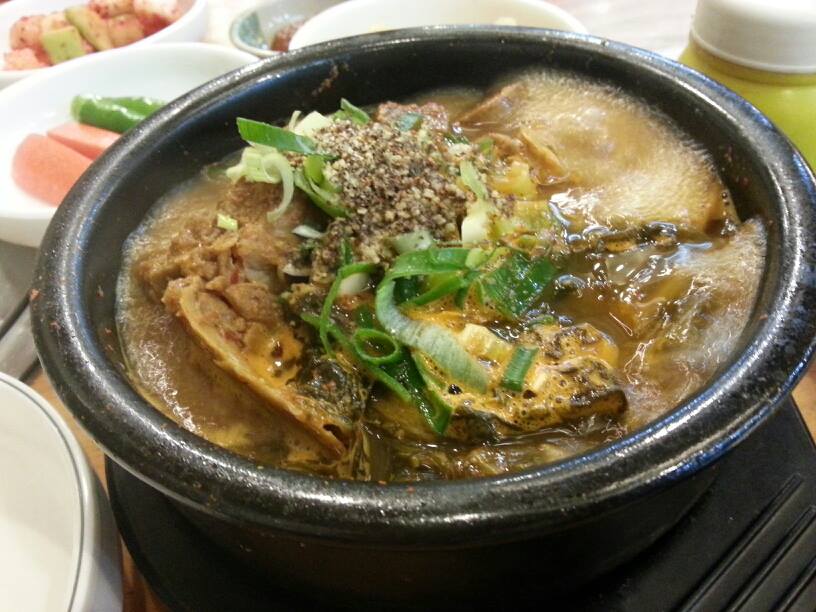
One of the first things that I noticed about this gamjatang is that it did not include any gamja – or potatoes – in it. While I had read on Wikipedia that gamjatang actually commonly comes without potatoes, the logo of this restaurant features a potato head so that was a little weird. However, once I tasted the soup, I couldn’t care less about not having potatoes. For only 6,000 won (a little less than $6 USD), I got a massive amount of food – I fished out 3 giant pork bones. The soup was so rich and full of flavor and the pork just melted off the bone. I ended up eating all of the banchan as well – it included kimchi, raw onions, and some pickled carrots and spicy peppers. I also polished off an order of rice and all of the pork AND the soup. I love how for 6,000 won I could eat so well. And it was perfect that my hostel was just a step away – just in time for me to collapse in bed with a massive food coma!

White Kimchi for amateurs and Kimchi Cabbage Salad

July 08, 2012 By: Mai Truong Category: Korean, RECIPES

A week we waited. Today had the moment of truth arrived.


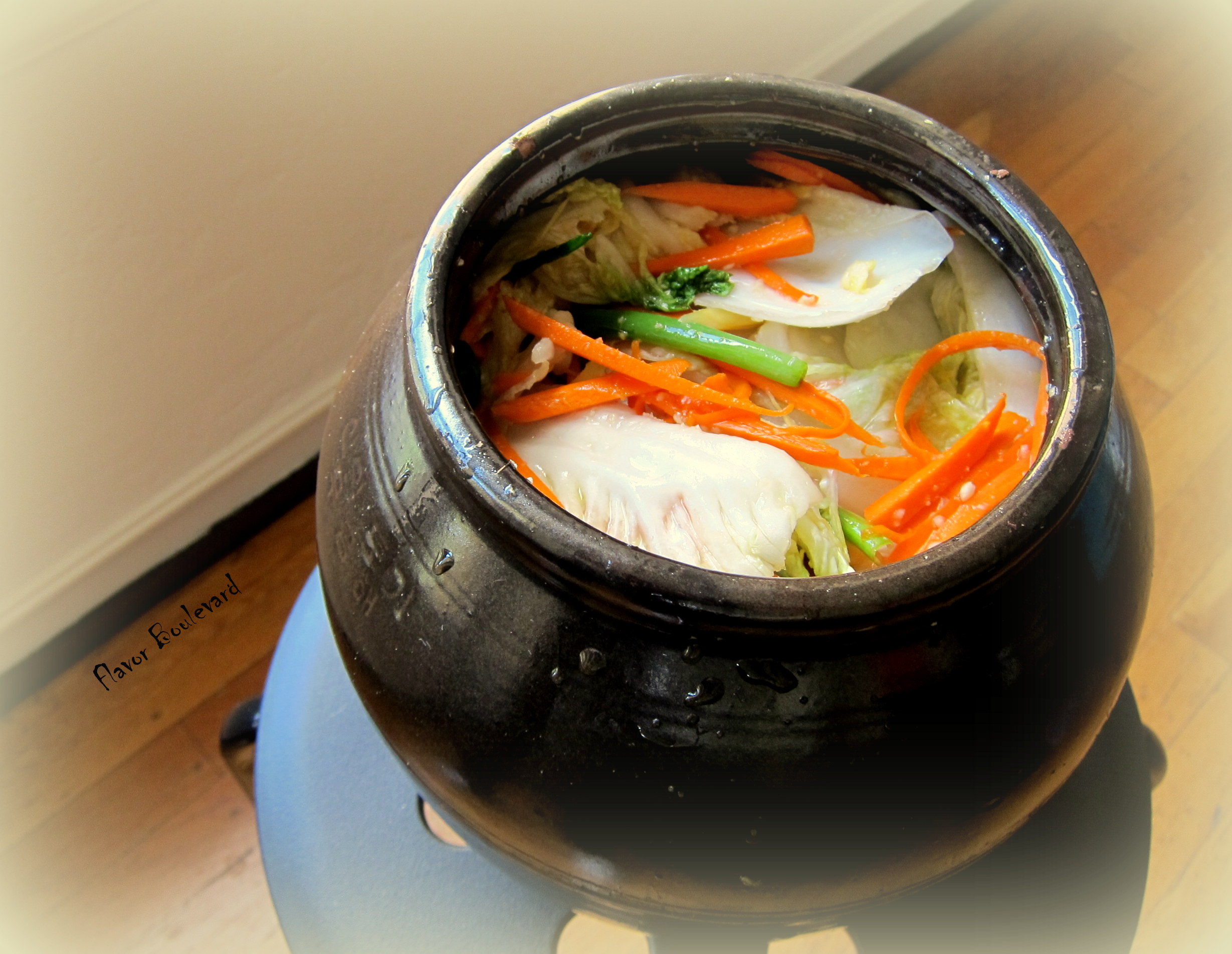
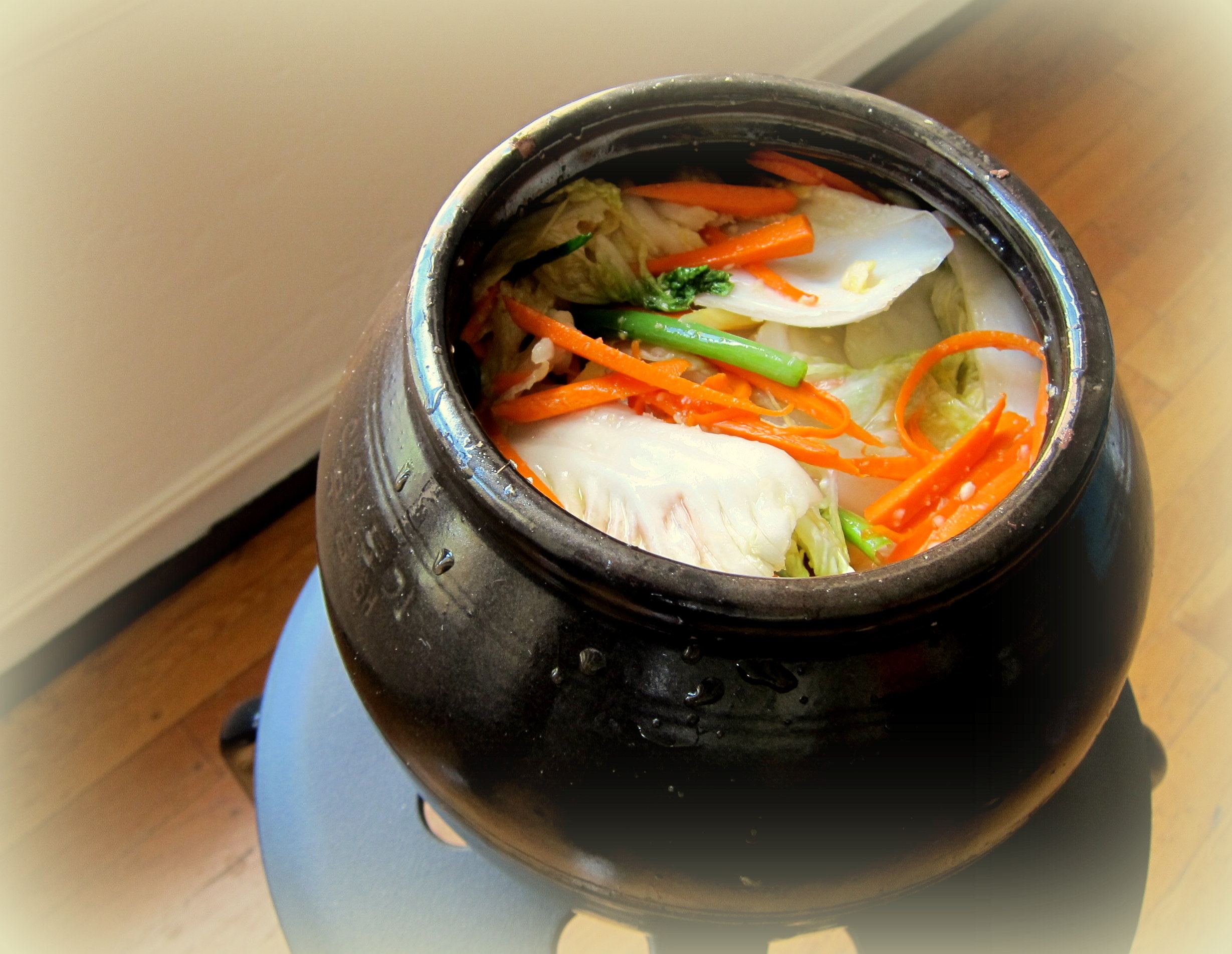
Open the jar we did. Saw some white stuff on the top layer that initially worried us but turned out to be just bits of ground garlic. Off we scraped them anyway, and to check the pickle juice that heavy jar we tilted. Little Mom, who more than anyone I know carrots and bean sprouts and bokchoy pickled has, to me revealed that if the juice is cloudy, the smell “sour in a bad way” and the cabbage disintegrating, into the trash go the kimchi must. But clear is the juice, garlicky and sour in a good way the smell, and crunchy the cabbage. Few moments in life there are when I feel so happy that I get quiet for fear of having mistaken. This is one of those. Followed by a high five and a hug with Kristen.

And yes, being someone who hardly ever cooks then succeeding at making kimchi on first try will make you speak like Yoda. On our side the Force is today.


Okay, so we tried to follow Dave Chang’s recipe in Lucky Peach #2, but we bought a head of napa cabbage big enough to hatch a T-Rex, so we scaled things up a tad (although Chang didn’t specify how heavy “a head” of cabbage weighed).

White Napa Cabbage (Baechu) Kimchi (white because it’s not red – no chili massacre)

– 1 head of napa cabbage (our receipt said 1 lb, but I could’ve sworn it really didn’t feel like 1 lb, more like 3)
– 1 bulb of garlic (~15 cloves)
– 2-inch piece peeled ginger (to puree)
– Another 2-inch piece peeled ginger – julienne this one
– 3/2 cups corn syrup
– 4 tbs salt
– 3 tbs sugar
– 1/2 cup soy sauce
– 1/2 cup rice vinegar
– 2 carrots, julienned
– 6 scallions, cut into 2-inch pieces

Follow our 9 steps to a jar of crunchy, sour, fresh kimchi-like napa cabbage! 😉


Bonus Recipe: KIMCHI CABBAGE SALAD
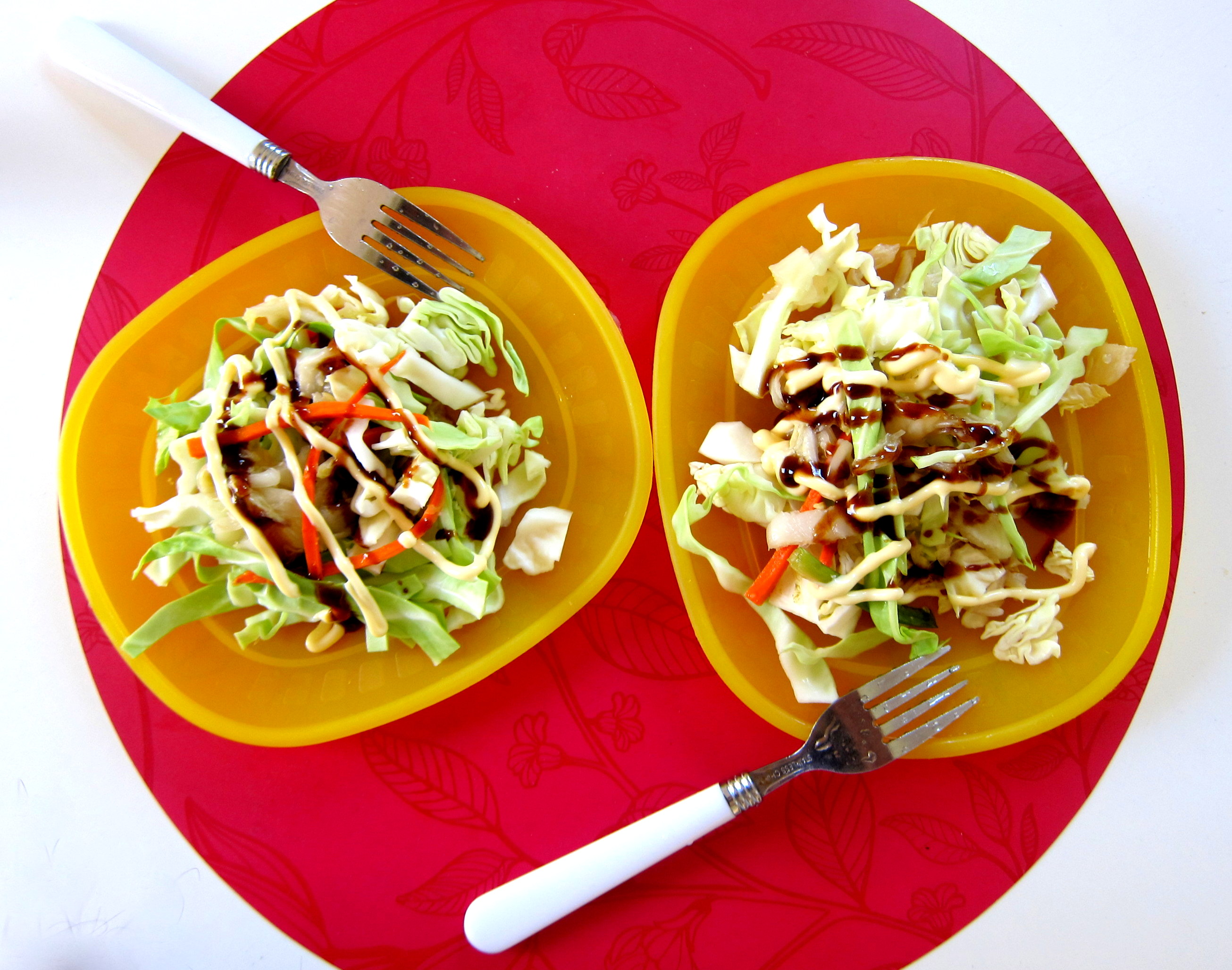
Julienne cabbage. Slice up baechu kimchi. Mix. Garnish with Kewpie Mayonnaise, salt and okonomiyaki sauce. Nom.

Why okonomiyaki sauce? More on that later.

Tags:

Kitchen hour: Make White Baechu Kimchi

July 01, 2012 By: Mai Truong Category: Korean, RECIPES, Vegan


Yesterday is momentous. Here we are, making kimchi. Is that a big deal? Yes. There’s a joke that if you’re gonna get married into a Korean family you’d better learn how to make kimchi. It’s just pickled vegetables, but it has an entire nation behind its back (and a pretty proud one at that), so you can’t mess with it and expect something good to happen. So here we are, jotting down the recipe from Lucky Peach Issue 2, going to Koreana, buying a clay jar to show that we mean business. Glass jars are so… see-through? (And no, there’s no Korean wedding that I know of… for now. Maybe Kristen will shoot me an invitation to her big day next month with Park Hyunbae and now she’s just using the delicious drama Kimchi Family as an excuse, and I’m her Guinea pig. :-D)

But yeah, for now, Kimchi Family is the main reason to our story. It’s a Korean food drama, and it’s delicious. Not only do they show tasty pictures of kimchi glistering and steaming under the sun beam, they make food making seem peaceful! It’s not like Food Network competition stuff where all you see are burly husky men (and unfortunately, women) with glowing red face running like mad in the kitchen with a clock ticking to death, a host rushing out 300 words per minute, knives and flames flaring up everywhere. Nah, Kimchi Family shows two sisters gently mixing and stuffing kimchi into jars, telling stories in their gentle voice and ending their scene always with a gentle smile. Between them and the competition chefs, we think they look cooler. So we bought a clay jar to make kimchi.

DAY 1
Step 1: Wash the clay jar with salt and water, wipe dry. Actually, we didn’t do Step 1 until after we finished Step 6, but anyway.


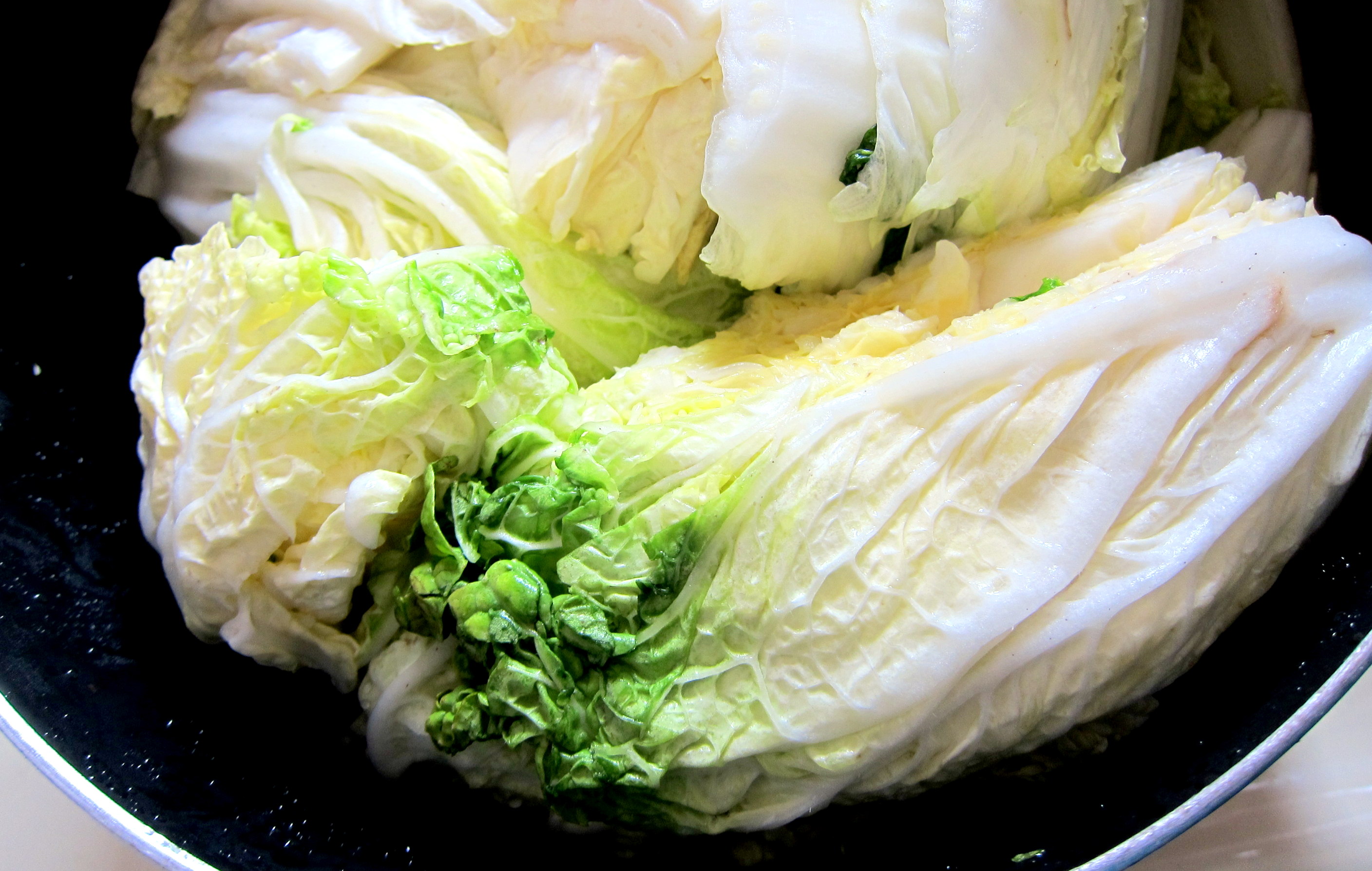
Step 2: Wash, peel off funny-looking leaves from the napa cabbage. Cut it up and mix the parts with salt and sugar. Let the bundle sleep in the fridge overnight. (How should you cut it up? Dave Chang said in his Lucky Peach recipe to cut into 4 quarters length-wise, then into 2-inch pieces, but his recipe calls for the oh-so-American glass jar. The movies usually show grandmas stuffing chili sauce in between the leaves of the whole cabbage, so romantically we guess we shouldn’t even cut it up, but we chose the mid-ground: 4 quarters length-wise, then halve them, so 8 pieces total.)

DAY 2


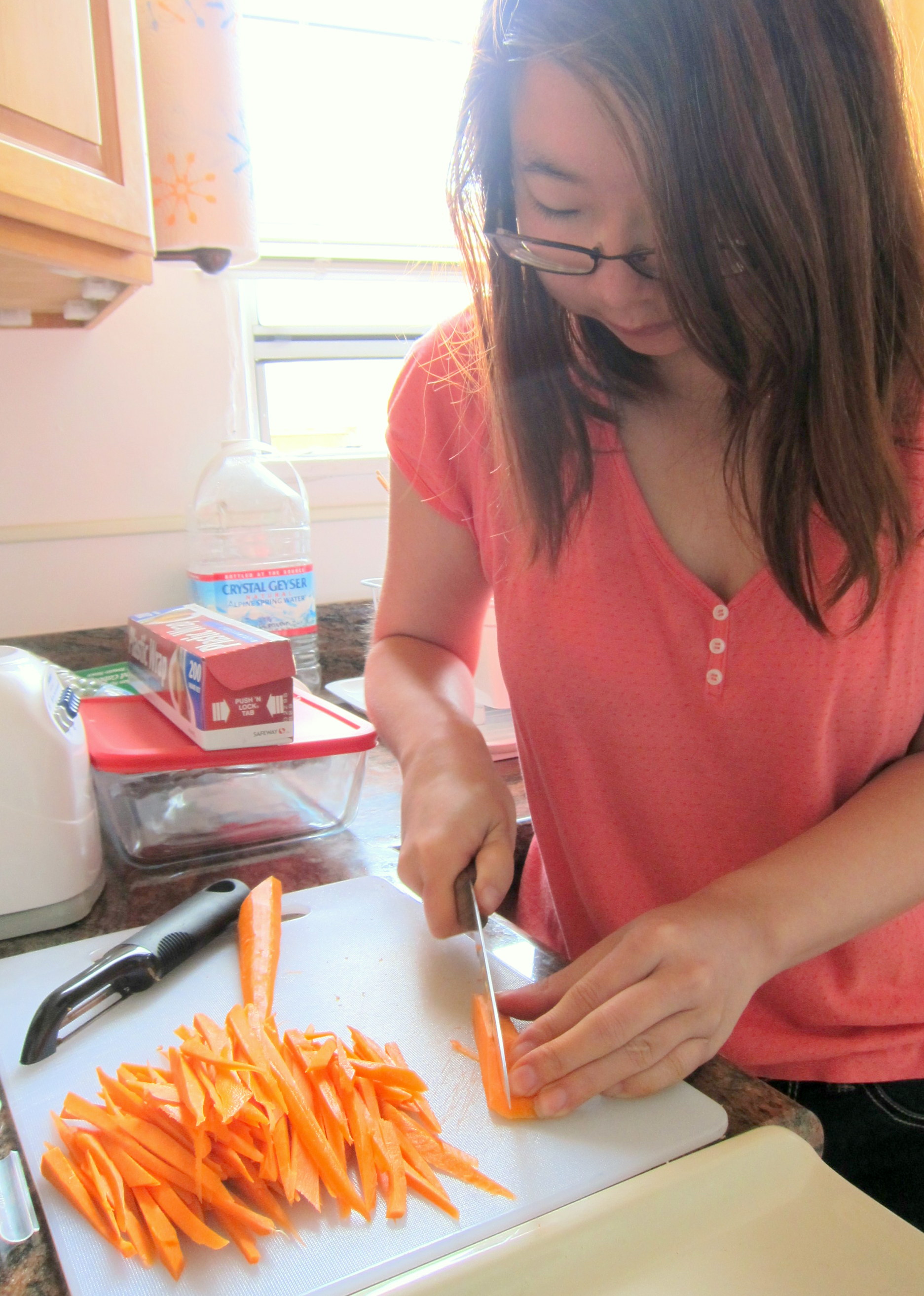
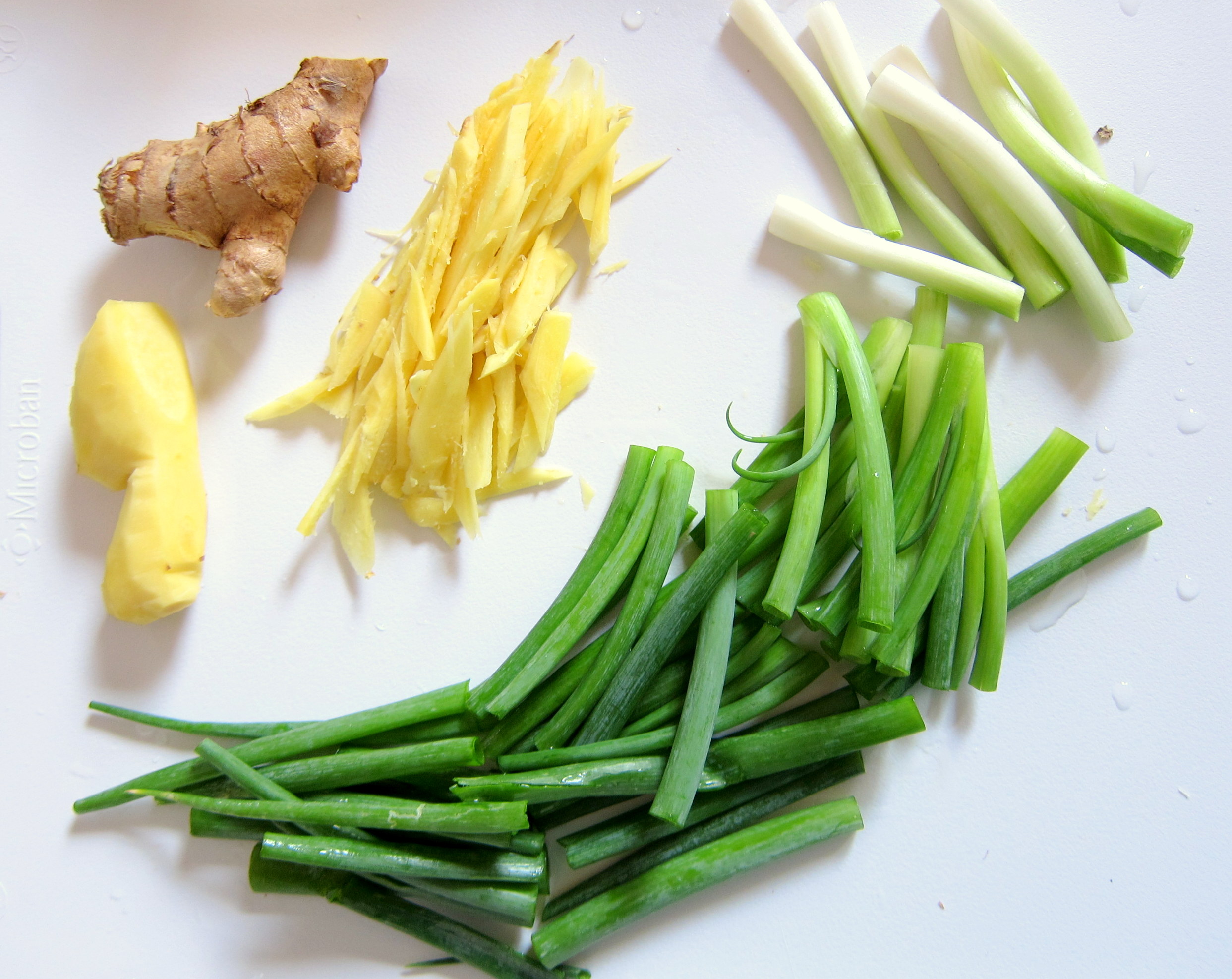
Step 3: Julienne carrots, julienne ginger, cut green onion into 2-inch-long sticks.
Step 4: In a juicer, blend together garlic, ginger, and corn syrup.
Step 5: Mix garlic-ginger-syrup sauce with soy sauce and vinegar.
Step 6: Drain the napa cabbage from its salty water.


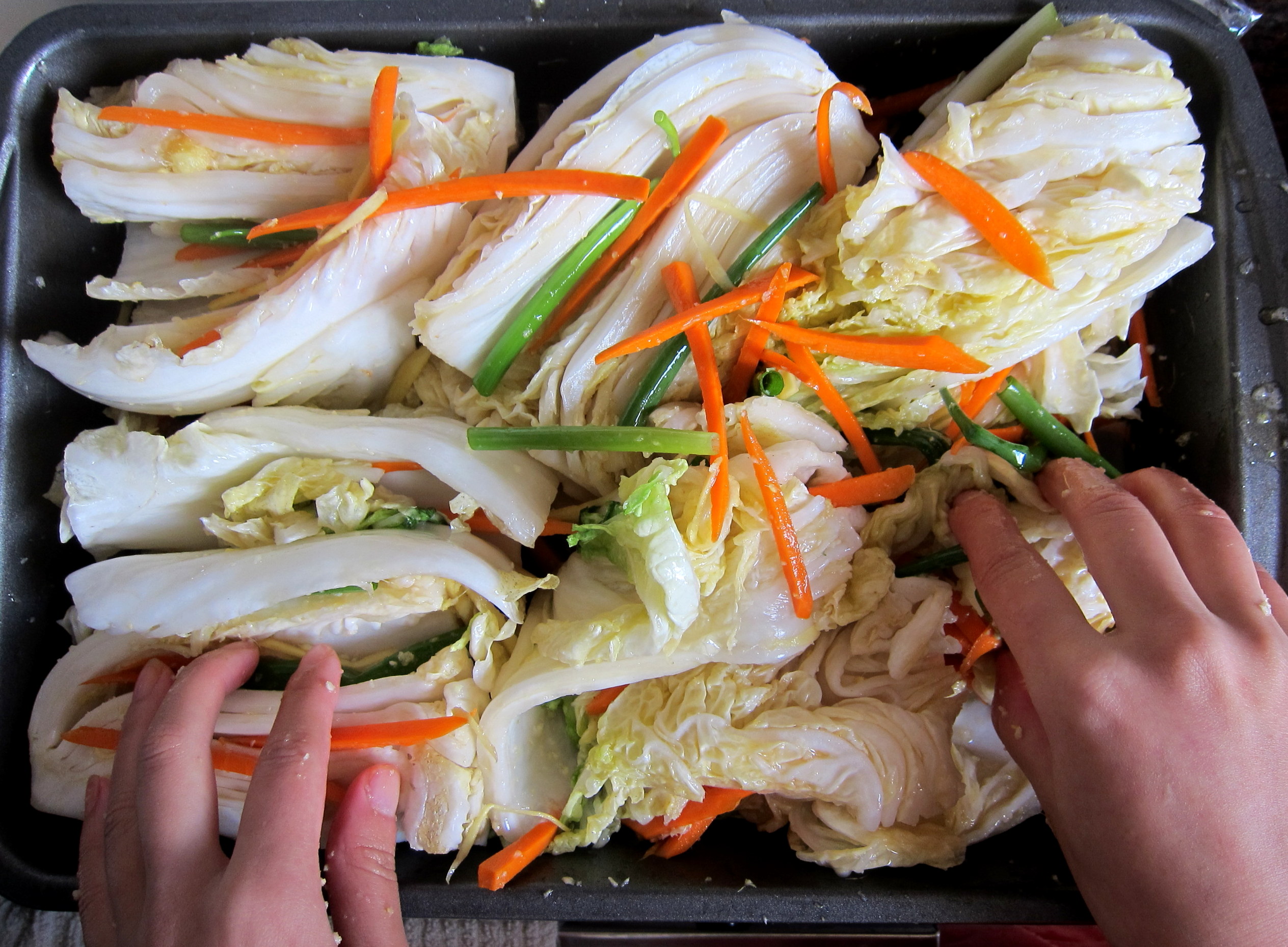
Step 7: Rub the sauce in Step 5 into every crevice of the brined cabbage, mix green onion and carrots for colors.


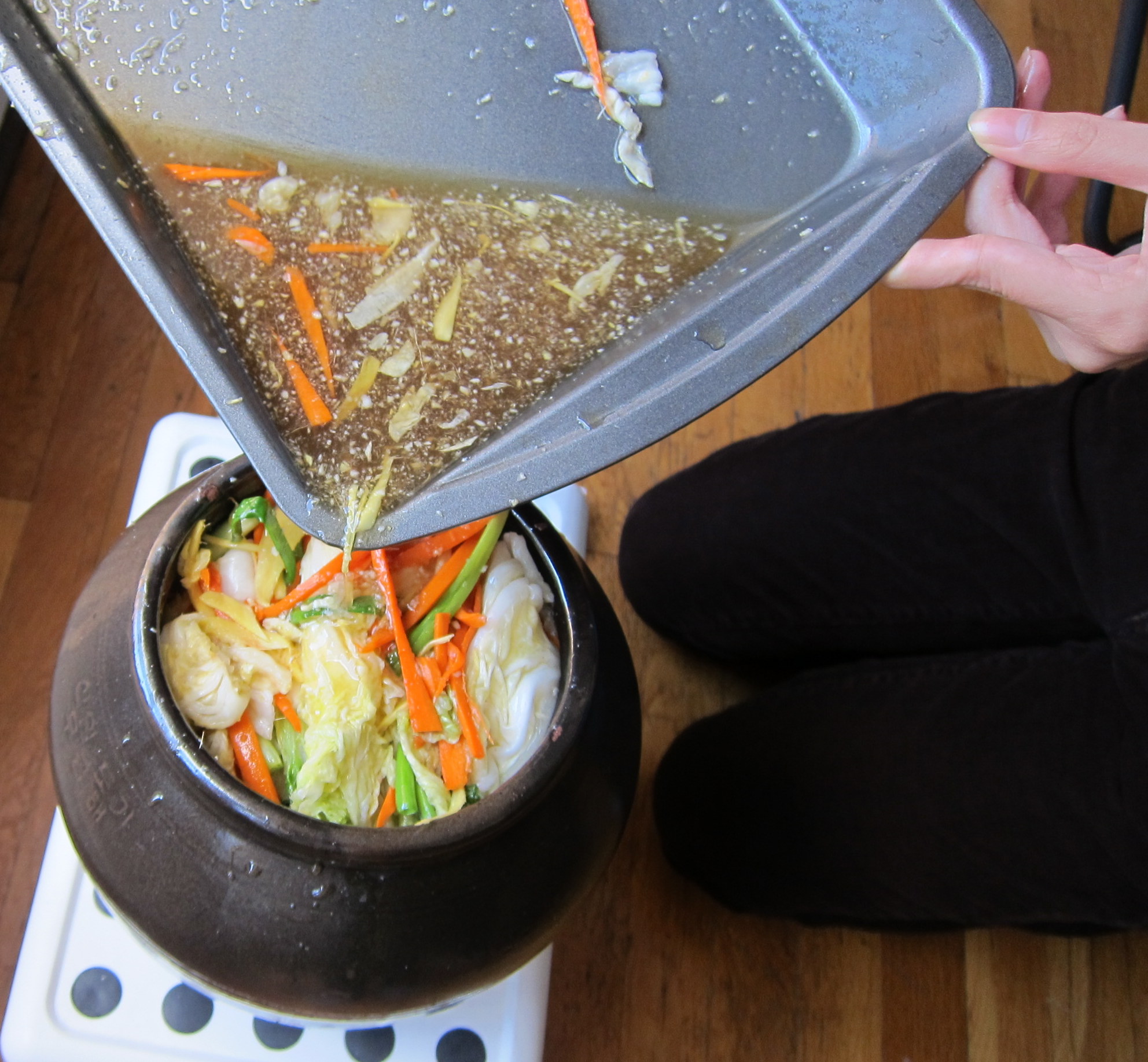
Step 8: Stuff the vegetables into the jar and pour the sauce on top.


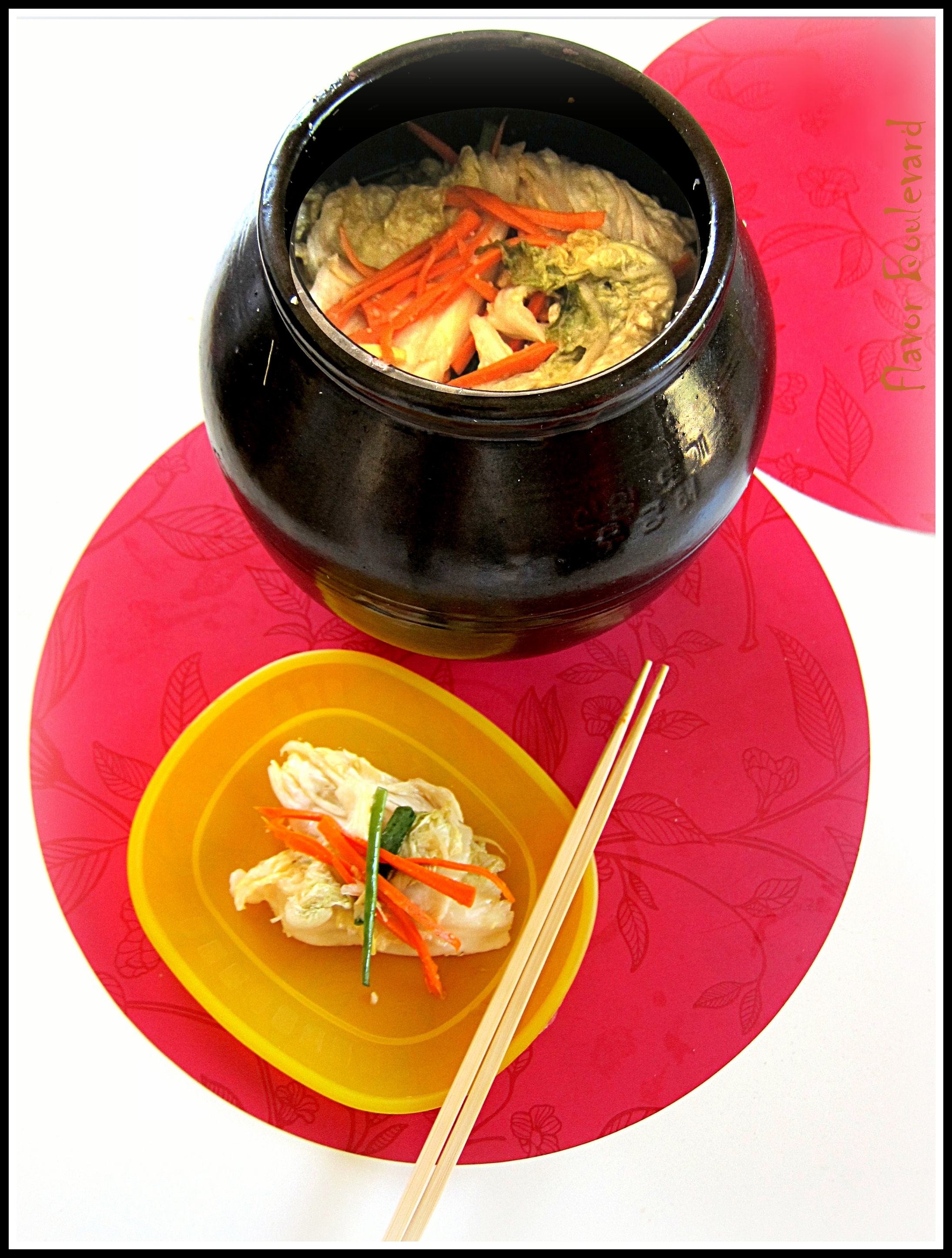
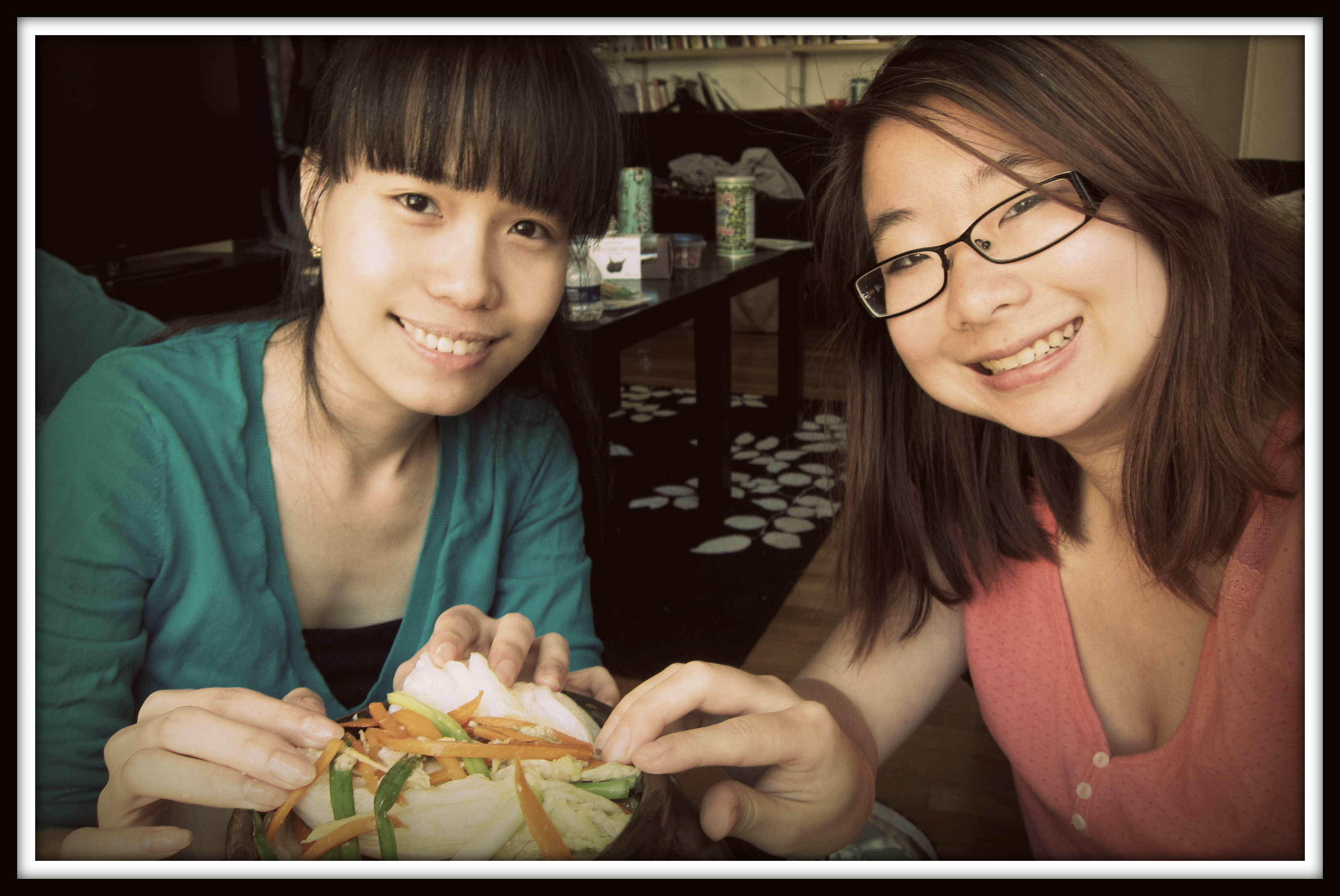
Step 9: Smile and take a picture.

Now let’s wait 7 days and hope that the kimchi will turn out well. If it does, the ingredient list with all precise measurements will be updated. If not, there’ll be some massive cleaning up to do, but you won’t hear about it.

Tags:

Food and film: Bread of Happiness and Kimchi Family

June 14, 2012 By: Mai Truong Category: Film/TV, Japanese, Korean, Opinions, Review of anything not restaurant


Movies are food for the eye (and ears, and brain, or whatever else you like). I watched Bread of Happiness on the plane ride from Houston back to SFO, and it made me happy that whole day. It also strengthened my resolve to study Japanese. The breads shown in this movie don’t seem particularly complicated, their presentation doesn’t sparkle, but they perfectly suit the gentle atmosphere that flows through the plot: looking at the steam rising as you break a fresh loaf in half, you can smell a sincere love.

Something that I learned from the main guy, a baker, in Bread of Happiness: do you know the literal meaning of “compagnon”?

Also designed to make you feel all warm and fuzzy inside, the Korean drama Kimchi Family hits the spot on days when I feel down (and also when I’m eating my cup noodles). It’s another string of small stories of how food made with heart can touch people’s lives in positive ways. If you don’t watch it for the plot, watch it for the kimchi! So many kinds of kimchi that I haven’t thought of being possible before. You can watch it on Hulu.com.

Kimchi Family has a lovely song that I can’t find the lyrics anywhere: “Take a drink. This drink is not alcohol, this drink is our mother’s tears, this drink is our father’s sweat…” UPDATE: Thanks to the author of Following KPop, I now have the lyrics of the drinking song, printed below.

Tonight I actually cried watching its 8th episode. But at least I was at home. For Bread of Happiness, aish, I had to sink into my seat so that the guy sitting next to me didn’t see my eyes turning all red…

발효가족 권주가 가사 (Fermentation Family – Drink Offering song lyrics from Daum Music)
Listen to the song on YouTube and sing along 🙂

Hangeul잡수시오~ 잡수시오~
이 술 한잔 잡수시오
이 술은 술이 아니라
우리 모친 눈물이오
우리 부친 땀이오니
쓰다 달다 탓말고
마음으로~ 잡수시오 명사십리~해당화야
꽃~진다고 서러마라
명년 삼월 봄이 오면
너는 다시 피려니와

가련한 우리 인생
뿌리없는 부평초라

잡수시오~잡수시오
이~술 한~잔 잡수시오

오동추야 밝은 달에
님 생각이 새로워라
님도 나를 생각하나
나만 홀로 이러한지

새벽서리 찬바람에
울고가는 기러기야

님에 소식 알았더니
창만한 구름 속에
빈소리 뿐이로다

Romanizationjabsushio jabsushio
i sul hanjan jabsushio
i sulreun sulri anira
uri mochin nunmulrio
uri buchin ttamioni
seuda talda tatmalko
maeumeuro jabsushio
myeong sasibri haetanghoaya
kkot jindago seoreomara
myeong nyeon samwueol
bomi omyeon
neoneun tasi piryeoniwakaryeonhan uri inseng
bburiobneun bupyeongchora

jabsushio jabsushio
isul hanjan jabsushio

otongchuya balkeun tarae
nim senggaki saelowuora
nimdo nareul senggakhanda
naman hollo ireohanji

saebyeokseori chanbaramae
ulgokaneun kireokiya

nimae soshik aratteoni
changmanhan kureum sokae
binsori bbuniroda

TranslationHave some, have some
Have a cup of this wine
This wine is not wine
This wine is our mother’s tears
This wine is our father’s sweat
Don’t say it’s bitter or sweet
Have a taste with your heart
Don’t be sad
The myeongsasibri rose buds fall
When spring arrives next year
you will bloom once againOur pitiful life
is like a floating rootless weed

Have some, have some
Have a cup of this wine

The paulownia tree
in the bright fall moon
reminds me of my wife
and saddens me
Does my wife think of me?
Or am I alone in this thought?
In the morning’s cold frost,
the wild goose cries and leaves

I hope for news of my wife
The overflowing clouds
are empty of noise