… with English subtitles. It’s no secret that I’ve been into tea recently, and the interest is going to last for a while. Just in time for my mini-presentation in the Korean class, the topic was open, and I chose tea. Vietnamese tea, to be precise. Neither my Korean is good enough nor my tea knowledge is broad enough to give a more detailed slideshow, but it’s a start. Both will come, in time. 🙂
The title of the slideshow is “Vietnamese Tea”. I have no idea how bad my Korean pronunciation is, so I’ll just pretend that I don’t sound all *that* bad. 😉 I can understand myself, with the subtitles. 😉
Korean script: (thanks to Yookyung unni for her major help with the translation)
차를 좋아합니까?
베트남 문화에는 일본과 같은 다도 문화는 없지만, 차를 마시는 것은 음악 연주, 체스 놀이, 시 쓰기, 그림 그리기와 같은 일종의 취미 생활이다.
아침이나 저녁에 혼자 차를 마시는 것은 마음을 순화시키고 자신의 본성을 받아들이는 데 도움이 된다. 이러한 점에서 베트남 사람들이 차를 마시는 것은 한국의 선비다례와 유사하다.
친구들과 편안한 대화를 나눌 때에도, 차를 마시면 좋다.
베트남에서는 손님께 존중하는 마음을 표시하기 위해 (항상) 차를 대접한다.
베트남 차 문화에서는 차를 마시는 부분보다는 차를 만드는 것에 중점을 둔다. 보통 베트남 사람들은 평이한 맛의 차보다는 꽃이 첨가된 차를 선호하고, 녹차와 같은 가벼운 맛의 차보다는 홍차와 같은 강한 맛의 차를 선호한다. 보통 녹차에는 향을 위해 쟈스민이나 국화를 첨가하지만, 가장 귀한 차는 연꽃을 첨가한 차이다. 이 연꽃차는 오직 베트남에만 있다.
연꽃차는 연꽃의 수술을 녹차에 섞어 향을 내고, 이미 향이 우러난 수술을 제거한 후 다시 새로운 수술을 섞는 과정을 다섯 번에서 일곱 번 반복함으로써 만들어진다. 킬로그램의 연꽃차를 만들기 위해서는 약 2000송이의 연꽃이 필요하고, 이 연꽃들은 해 뜨기 전에 수확해야한다. 이 과정을 끝내는 데는 2주정도의 시간이 걸리기 때문에(걸릴 수 있기 때문에), 이 차는 매우 비싸고 희소하다.
연꽃차의 향은 쟈스민 차의 향처럼 직접적이고 강하지 않지만, 달콤하며 은은하게 지속된다. 연꽃은 진흙탕에서 자라지만, 그 향때문에 순수함을 상징한다. 그래서 사람들은 연꽃차를 마시면 좀 더 순수해지고 정직해질 수 있다고 믿는다.
차를 마실 때에는 “믙”하고 연꽃의 씨 하고 가벼운 과자 (페이스트리)를 곁들여 먹는다.
보통 한국다기도 일본다기도 오찯잔이 있지만 베트남다기는 사찯잔이나 육찯잔이 있다.
베트남 사람들에게 다기는 존경심과 사랑을 표현하기 위한 선물로 좋다. 우리(나의) 할아버지께서 돌아가시고, 가족이 미국으로 건너올 때, 우리(나의) 어머니는 할아버지의 다기만을 가져오셨다.
나는 베트남의 차에 대해 더 배우고 싶다. 당신은 어떤가? 당신은 어떤 종류의 차를 좋아하는가?
Between 4 and 6 PM today was the most interesting 2 hours I’ve had this week, and also the most effortless educational experience I’ve had in a long time. That’s how the Korean tea ceremony is meant to be, as I’ve learned: formal but relaxing, and ceremonious but natural. The rules are rather simple to get acquainted to, the movements make sense, and just watching made my mind feel nothing but calmly pleasant. The kind of pleasant feeling one would get gazing off into space alone, on a grassy hillside, on a cloudy day.
Now for the logistics. Inje University‘s Traditional Korean Tea Society (TKTS) gave a 2-hour presentation at Berkeley today as part of the “Dew of Wisdom” tour, Stanford and California State University got their tea before us. During the first 40 minutes, the students of TKTS demonstrated two types of tea ceremonies, both accompanied by the slow, deep, hardy rhythm of a 6-string zither 거문고 (geomungo).
The first type, 들차회 (deulchahue), is to be enjoyed with friends and relatives outdoor during spring and autumn. The setting is lighthearted, the purpose is to relax and to appreciate nature, the gathering comprises both men and women, and both hands are used during the preparation, serving, and tasting of tea.
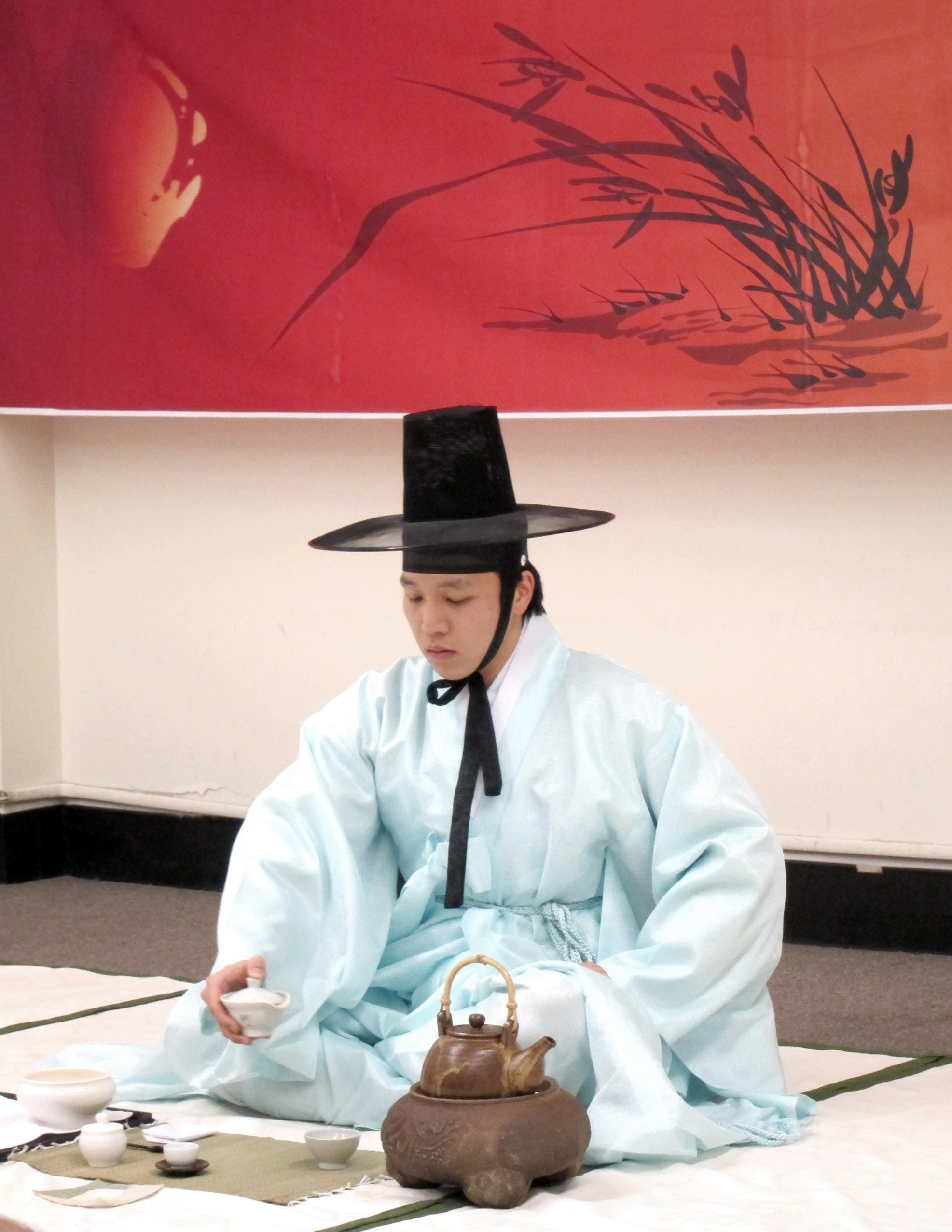
The second type, 선비다례 (seonbi darye), or “Scholar’s tea ceremony”, is practiced by noblemen to clear their mind and heighten their wisdom. The setting is dignified, and the man uses only his right hand to prepare and serve, signifying a more profound status than that in deulchahue. In both cases, the movements are fluid, slow, and steady.
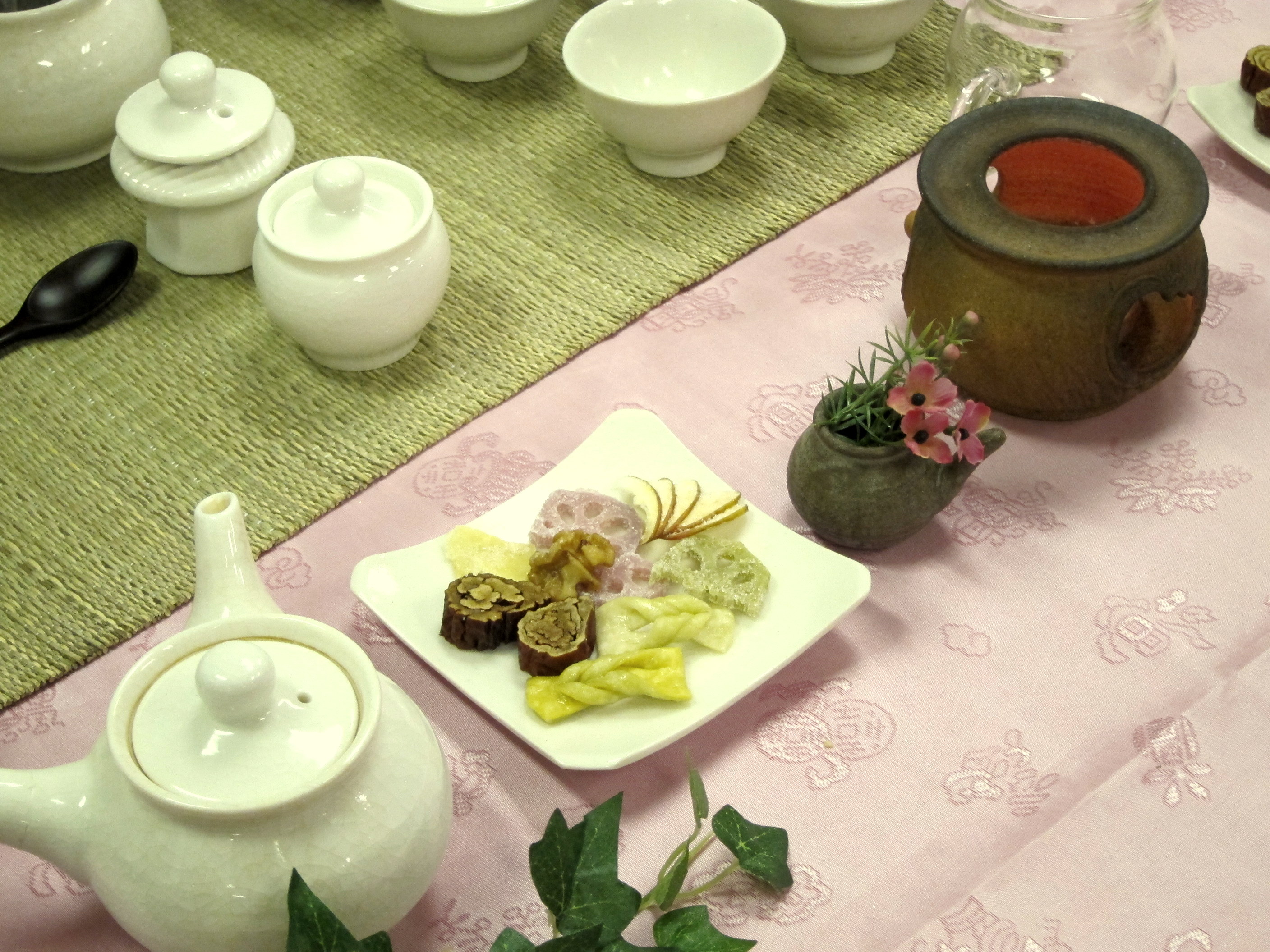
During the next 20 minutes, the guests were invited to taste green tea and yellow tea with a variety of 다식 (dasik), tea snack: candied lotus root, dried apple, dried jujube, and a kind of fried chips that I’d only seen in the drama Sungkyungkwan Scandal (성균관 스캔들). The green tea, unoxidized, looks and tastes clear with a very light herbal hint, like a white tea. The yellow tea, about 50% oxidized, similar to Tieguanyin, has an upfront sweetness and a deep citrine hue. Each batch of tea is brewed for about 2 minutes in 60-70°C water, as boiling water would induce a bitter taste.
After ample tea had been served, the guests came back to their seats for a brief presentation from Prof. Jaesup Pak, President of TKTS, on Korean tea production and ceremonial methods. I scribbled like mad, and here’s what little knowledge I’ve gained:
There are 3 major tea plantation regions in Korea: Boseong, Hadong, and Jeju. Boseong is the largest and most respected tea plantation, producing roughly 40% of Korean tea in 5.3 million square meter of hillside. Hadong, second in line, has produced wild tea for over 1200 years, and from its neighboring town Hwagae originated the Korean green tea culture. The tea here is grown completely natural on rocky 400-500 meter high mountainsides and harvested by hand. In contrast, Jeju‘s tea is grown with chemicals and fertilizers on rich volcanic island soil, plucked and chopped by machines, and heated and dried with steam.
Regardless of regions, tea leaves are plucked young between April and May because fully developed leaves are too coarse to use. Different grades of green tea are categorized based on their youngness. Ujeon (우전), the first grade, comes from the first harvest, which means it is picked by hand before April 20 for a delicate flavor. Sejak (새작), the second grade and the most popular type, is picked early May. Sejak means “Sparrow’s Tongue”, referring to the pointed shape of the young leaves at this stage. And finally, Jungjak (중작), the third grade, is picked mid May. The tea offered to the guests at the colloquium today was Sejak from Hadong.
The production process involves 6 steps: plucking, withering, parching, rolling, separating, and drying. Hand plucking tea is meticulous, even the most skilled women can pick only 2 kg per day. Within 24 hours after plucking, the leaves are left to wither in open air. Then they are tossed and stirred constantly in an iron cauldron over wood (traditionally) or gas fire at 200°C to soften. Rolling comes afterwards to intensify the taste, where the leaves are rubbed and rolled for 3-4 times on straw mats. This process makes the leaves stick together, thus separating must be done to help moisture evaporate from the leaves. Finally, the leaves are spread out and dried naturally on paper on a heated floor for 4-5 hours or overnight.
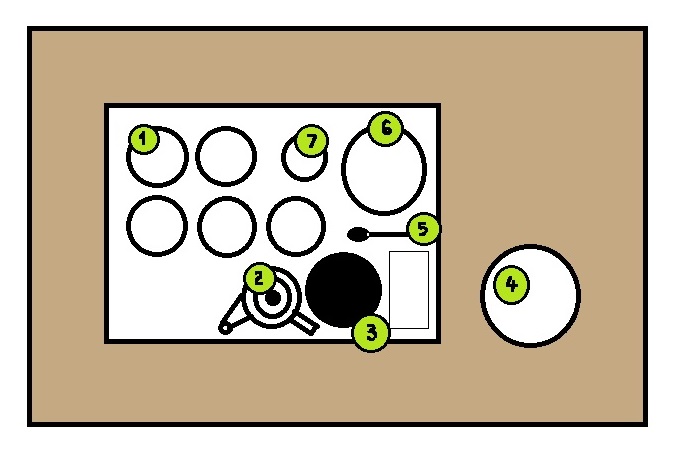
The teaware, or chagi (차기), are typically arranged as shown in the diagram above:
(1) Tea cups: usually 3 or 5 cups per set
(2) Tea pot for brewing. The teapot and kettle should be on the right side and closer to the host.
(3) Tea cup saucer, on which the filled tea cup is placed and received.
(4) Large bowl, into which the water used for warming the pot and cups is discarded.
(5) Tea spoon for taking tea leaves
(6) Smaller bowl for cooling the water and the tea, and for pouring the tea into the cups
(7) Tea caddy, which contains the tea leaves.
The small rectangle represents a napkin for tidiness.
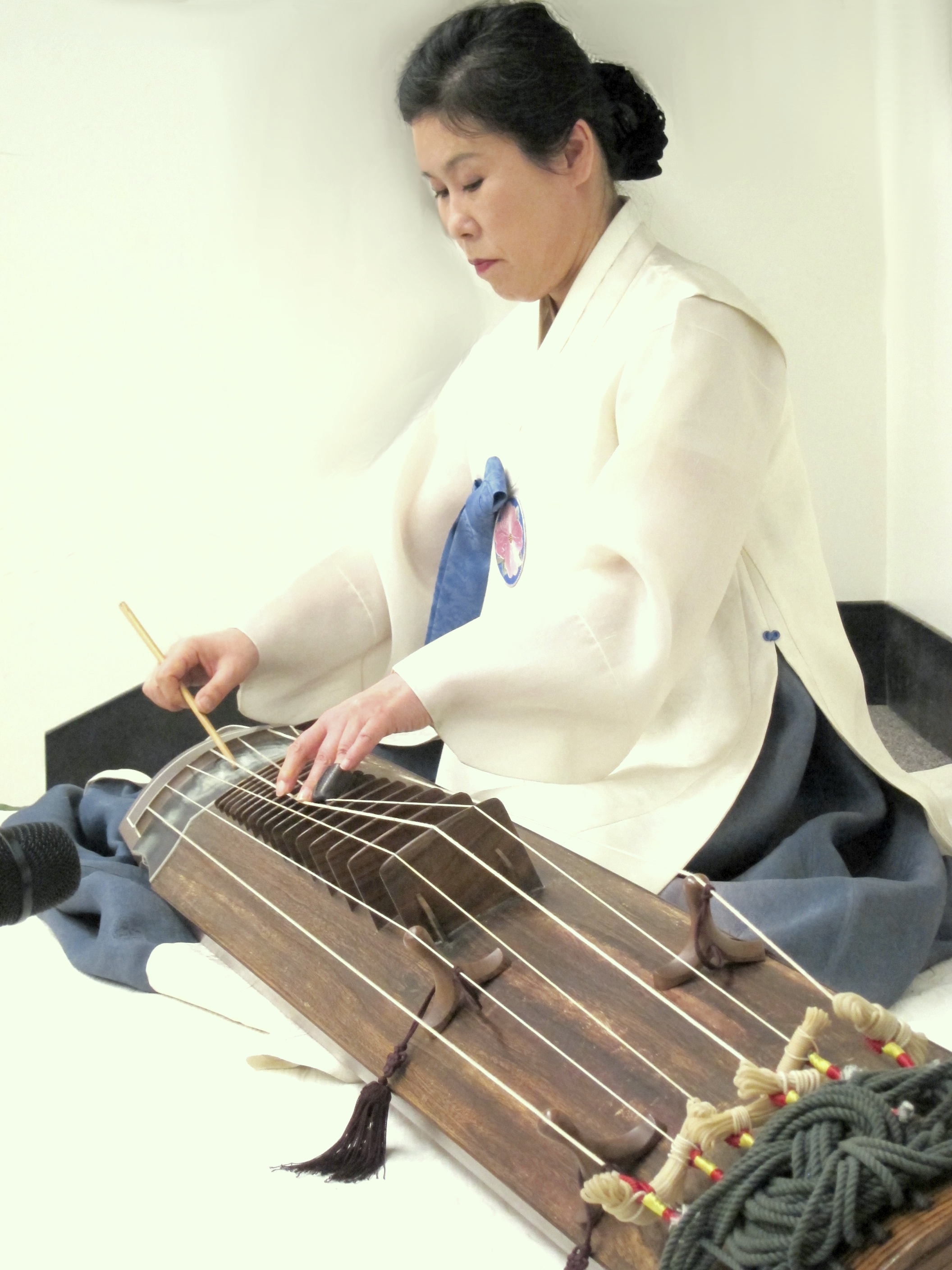
Professor Hyeyoung Shin (Chuncheon National University of Education) performing da-ak (다악, tea music) on a geomungo at the colloquium
The preparation after the arrangement begins with pouring hot water into the cooling bowl and letting it cool for under 2 minutes. Then the teapot, ready with 1-2 spoons of leaves, receives the cooled water; the lid is closed, and the leaves are brewed for a few minutes. While serving, the tea is poured into warmed cups from a high distance to create bubbles in the tea, which are believed to confer good luck. The receiver should hold the cup with the right hand and support it with the left hand, inhale the aroma, take a sip that is about one third of the cup, and drink 3 times from each cup served. I think I did it in more than 3 times… I was savoring the flavor a little too carefully.
At the end, we got to take our cups home as a souvenir. A cute little white tea cup to commemorate a sweet, delicate two-hour lesson. 🙂
Today I discovered that St. John’s cafeteria lets you have take-outs. As many boxes as your heart’s content. I know, right? What school cafeteria does this? Their food is not out of this world or anything, but for us student conference attendees, who pay only $50 per week for a room and 2 meals a day, I’d say it’s pretty sweet.
And here I thought we’ve been sneaky after every meal, before walking out of the dining hall, we wrapped up one banana or a piece of brownie to save for breakfast the next day (‘cuz breakfast isn’t included in the 50 bucks). Oih, St. John’s, you crashed my smuggling dreams.
– Guest post byPaul Simeon – “My trip to England for a summer school in plasma physics” – Read Part I
Week 2 – Monday 19th
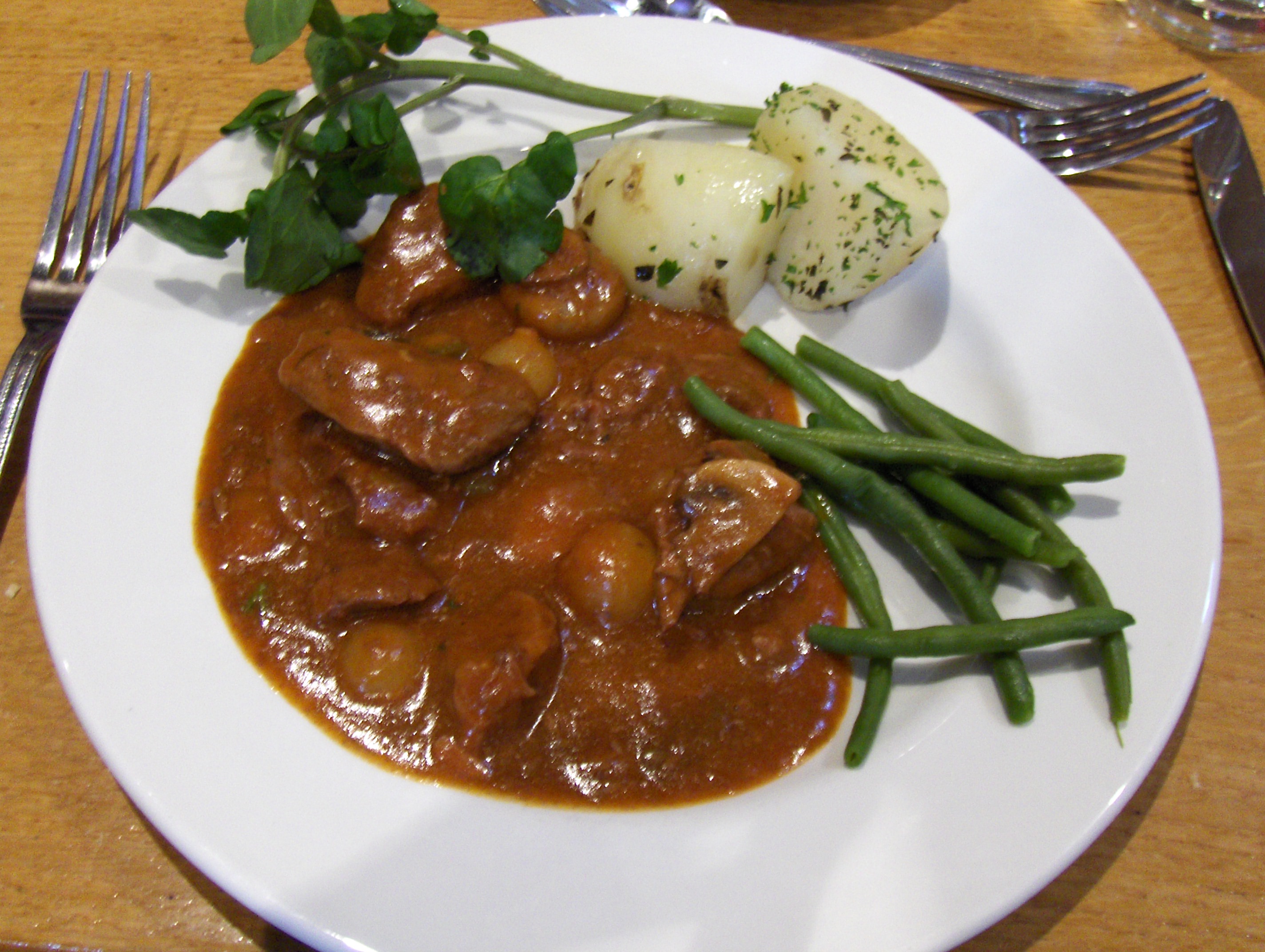
Starter was the melon boat we had last week. Same thing. Some people were expecting the meals to start repeating themselves, but when we saw the main course come out, we were pleased that we would still have new dishes to come. The main course was medallions of meat (beef, I think) drowned in a gravy with mushrooms and pearl onions. I liked this dish, even though I was tiring of all the gravy on everything. The potatoes and green beans were nothing special.
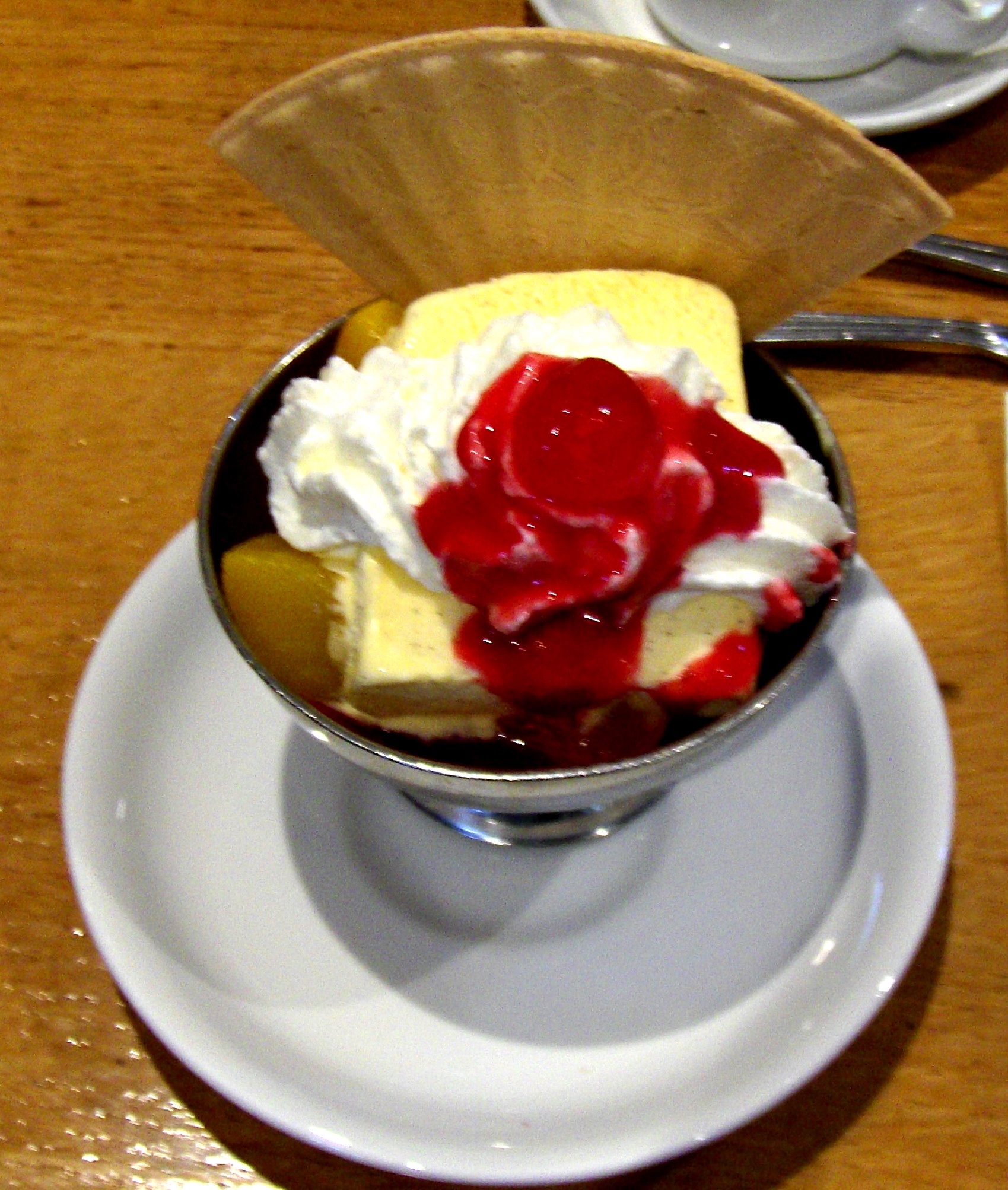
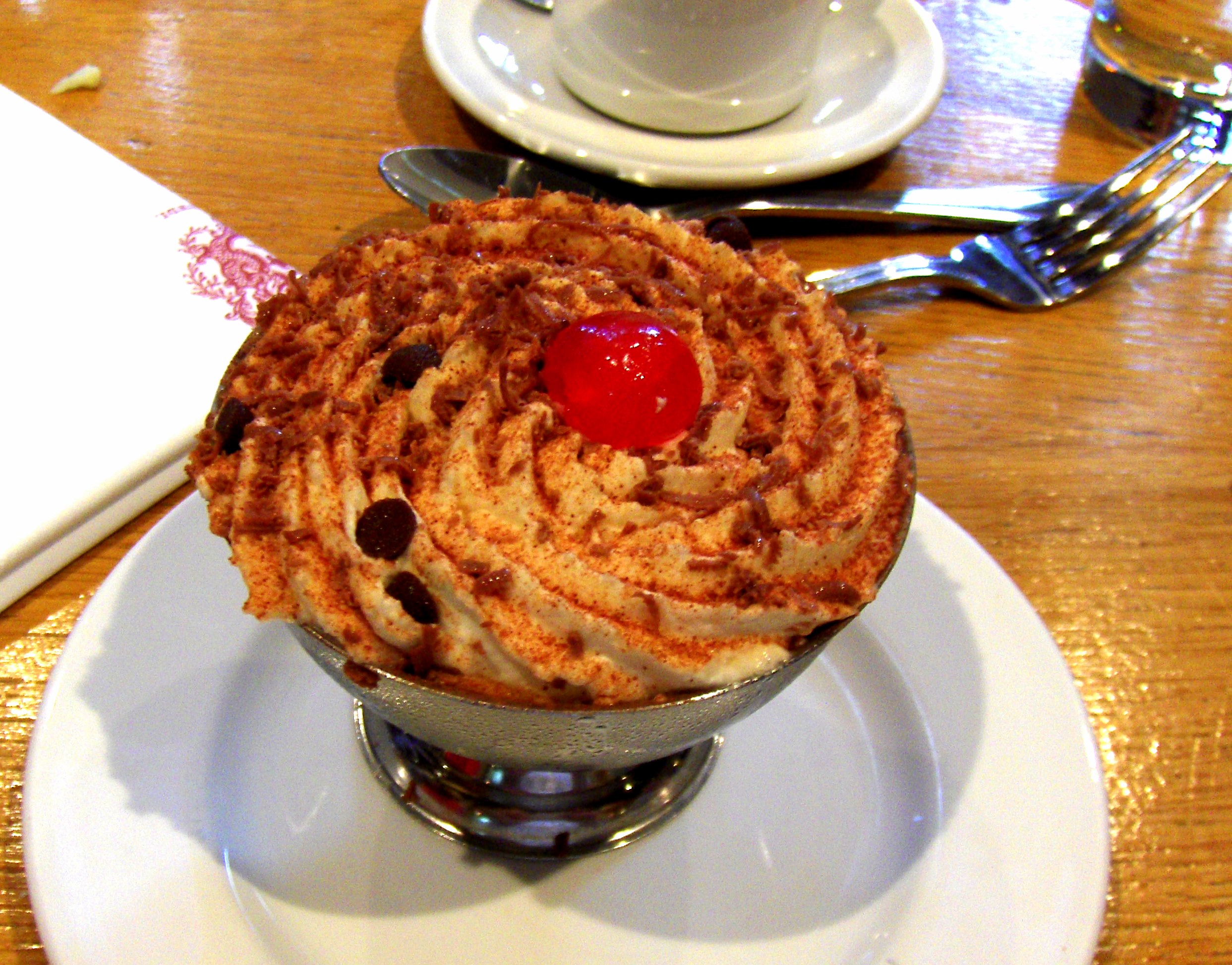
Dessert was peaches in some kind of alcohol-based sauce (liqueur?), topped with a square of ice cream, whipped cream, one of those infamous super-sweet cherries, and a crisp cookie to make it look like a turkey. I think most people stopped eating that cherry, as we had had it twice before already.
Tuesday 20th
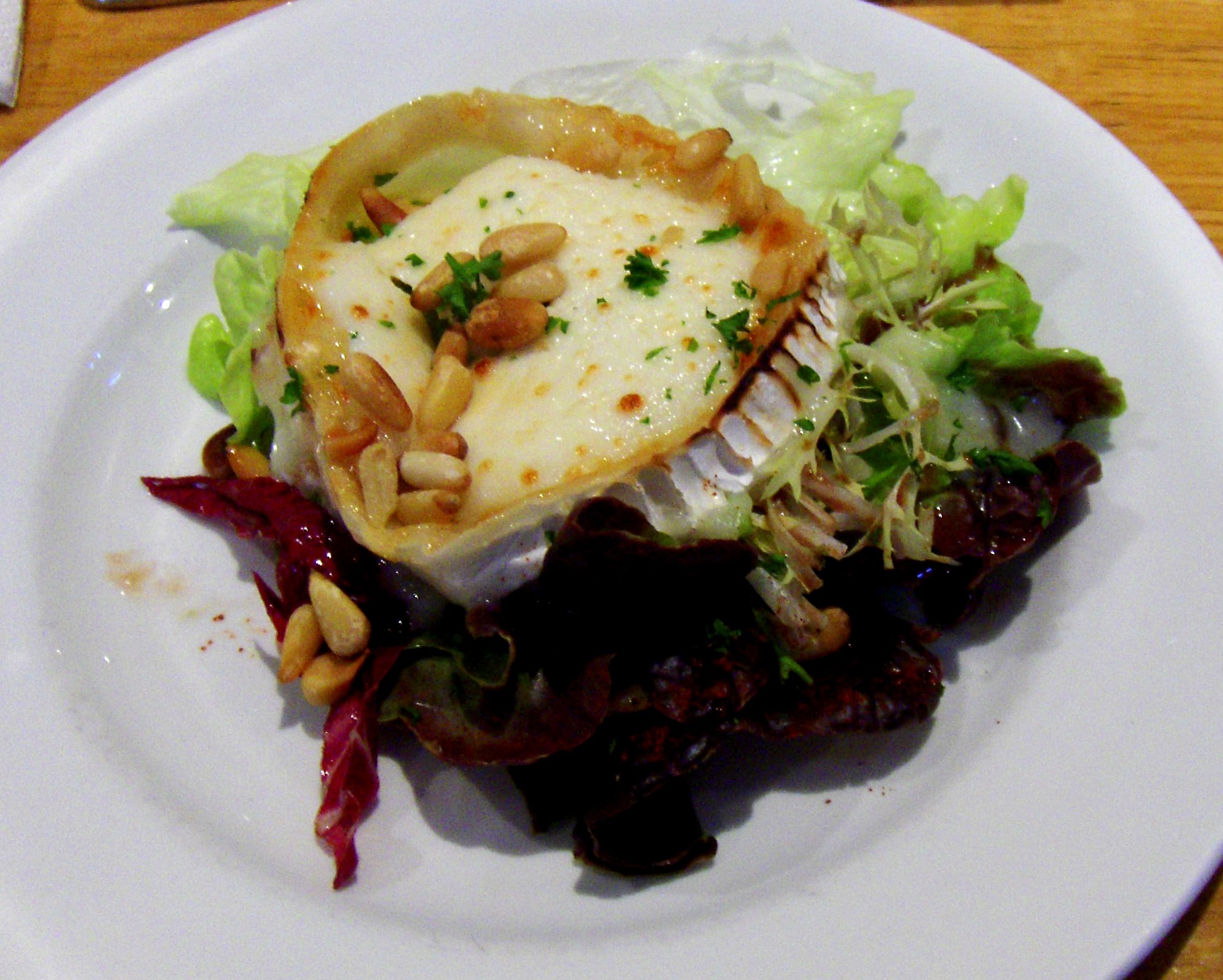
The first course was a salad with what I think is a big pie of melted Brie with pine nuts on top, or something close to it. It was quite good but very rich. The salad was just for show. The cheese was the main part.
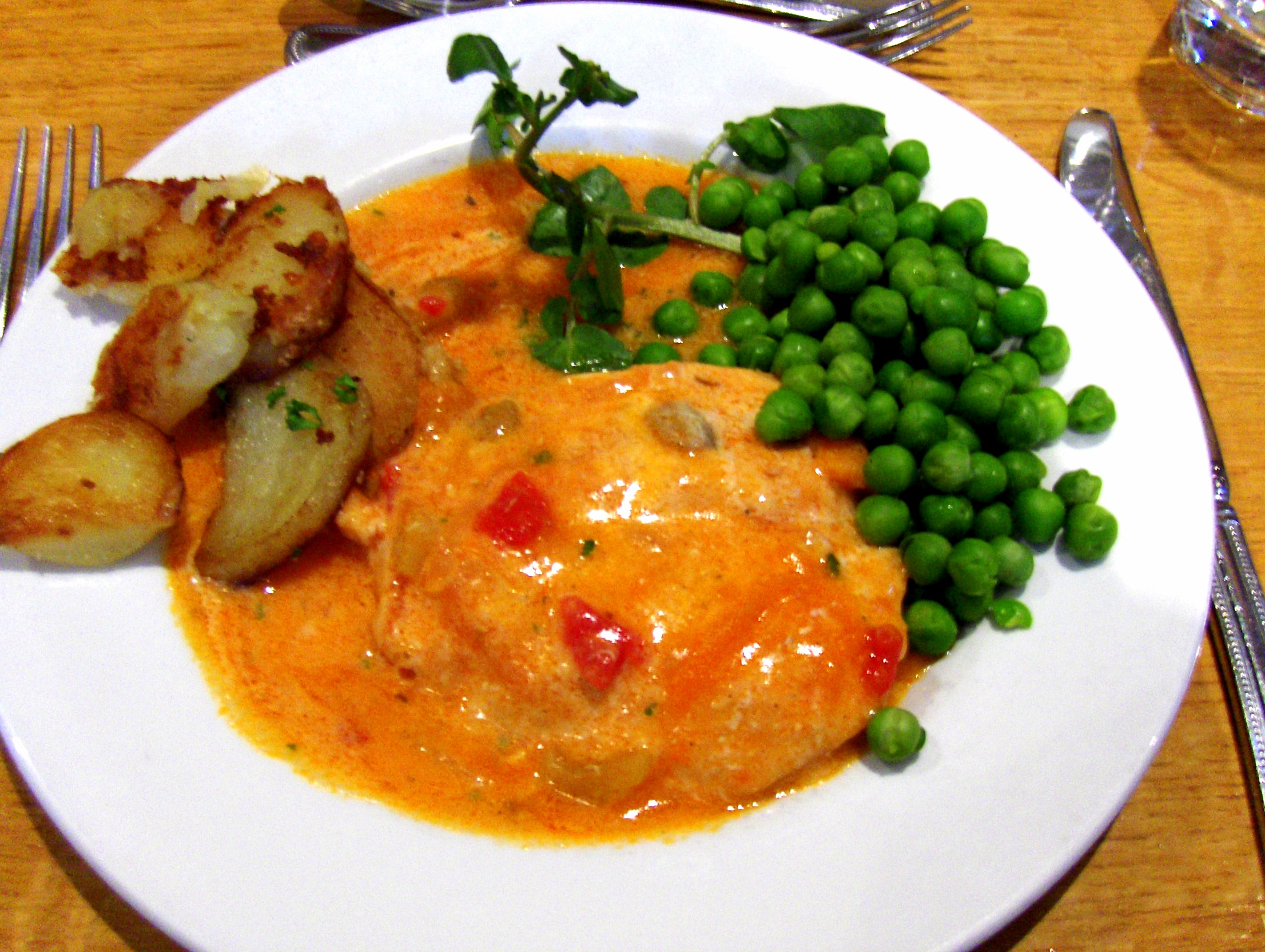
Then came chicken with a light gravy on top. The peas were nothing to write about, but the potatoes were quite good. They were grilled or baked to make them brown on the edges. This was my favorite style of potatoes they served.
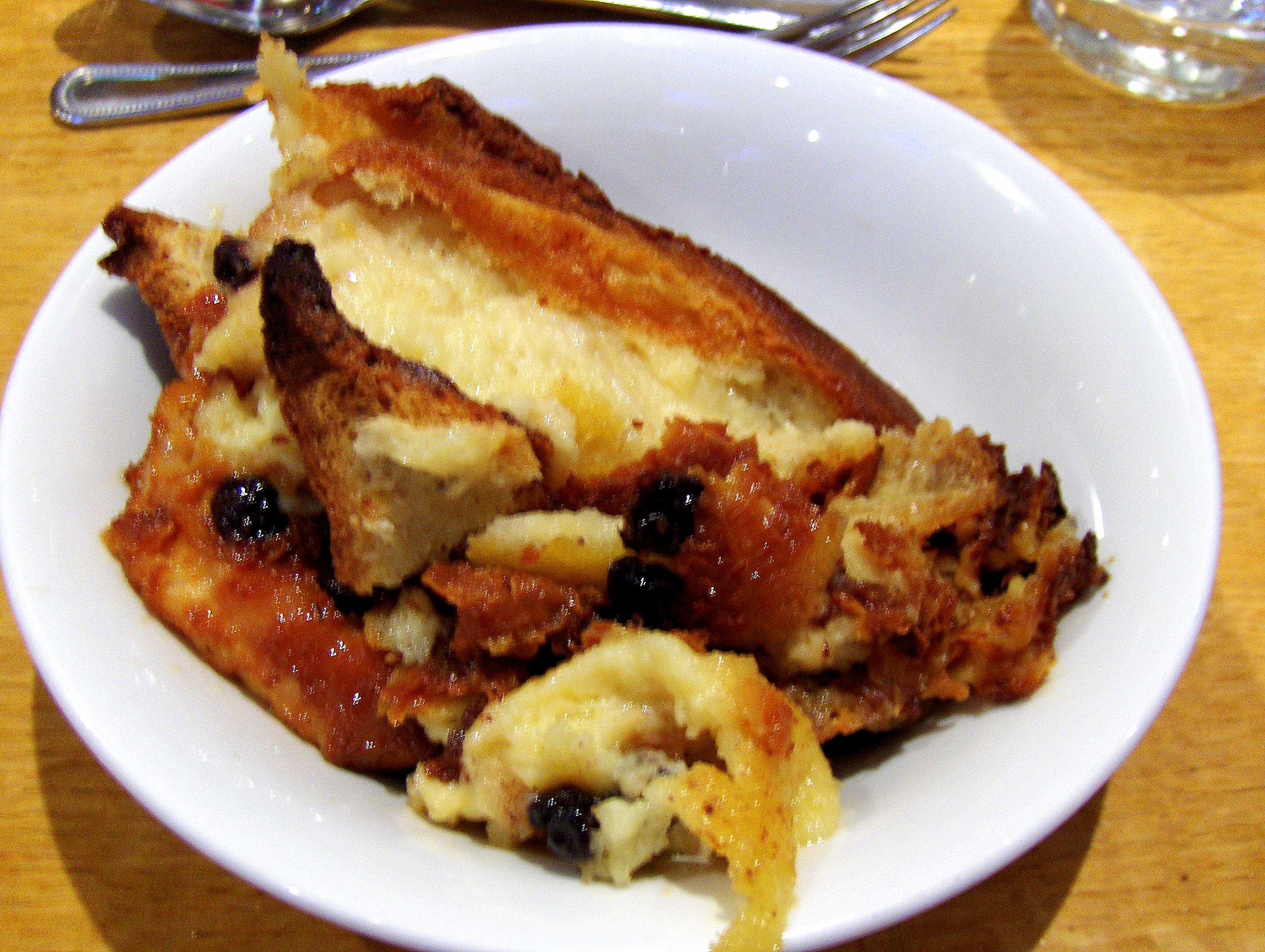
The dessert was the heaviest of the whole trip. Bread pudding, with raisins and black currants. (We don’t have currants in America. I don’t know why.) They had a saucière of heavy cream to pour on top. Most of us were cautious not to pour too much, because there was already a small pool of butter at the bottom of the bowl of bread pudding. It was very good, but very heavy. It was probably the most filling of the desserts as well.
Wednesday 21st
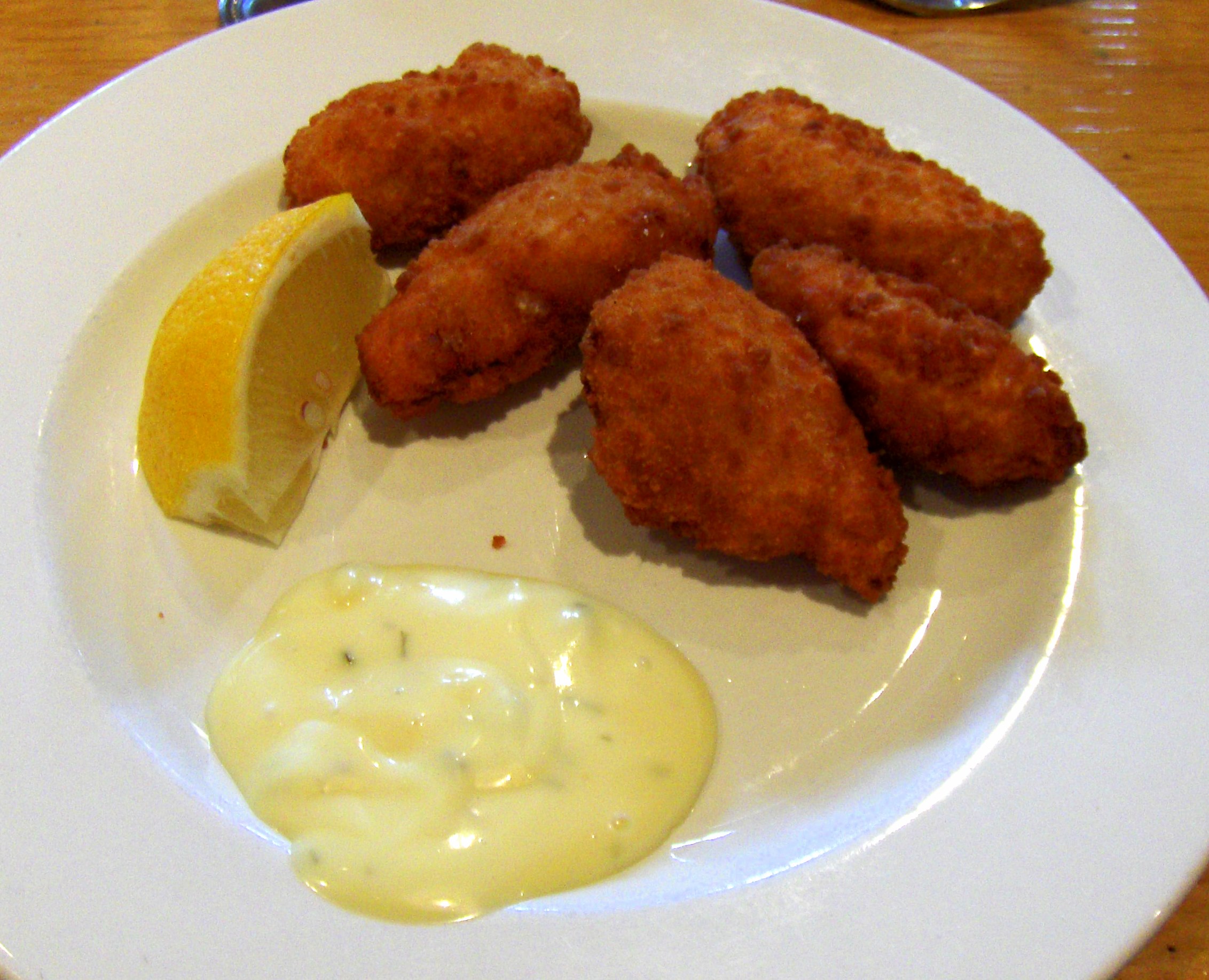
Shrimp scampi for the appetizer. We also had this on Sunday the 11th, but I didn’t have my camera then.
Previously during this trip, I sadly found out that the American and British definitions of shrimp scampi are wildly different. To Americans, they are shrimp sauteed in garlic butter and wine, and served on pasta or rice. To the British, they’re fried balls of small shrimp mixed with batter or something. It’s definitely not one big shrimp in there, but a pressed ball of stuff. They serve it with something like tartar sauce, which I’m not too fond of.
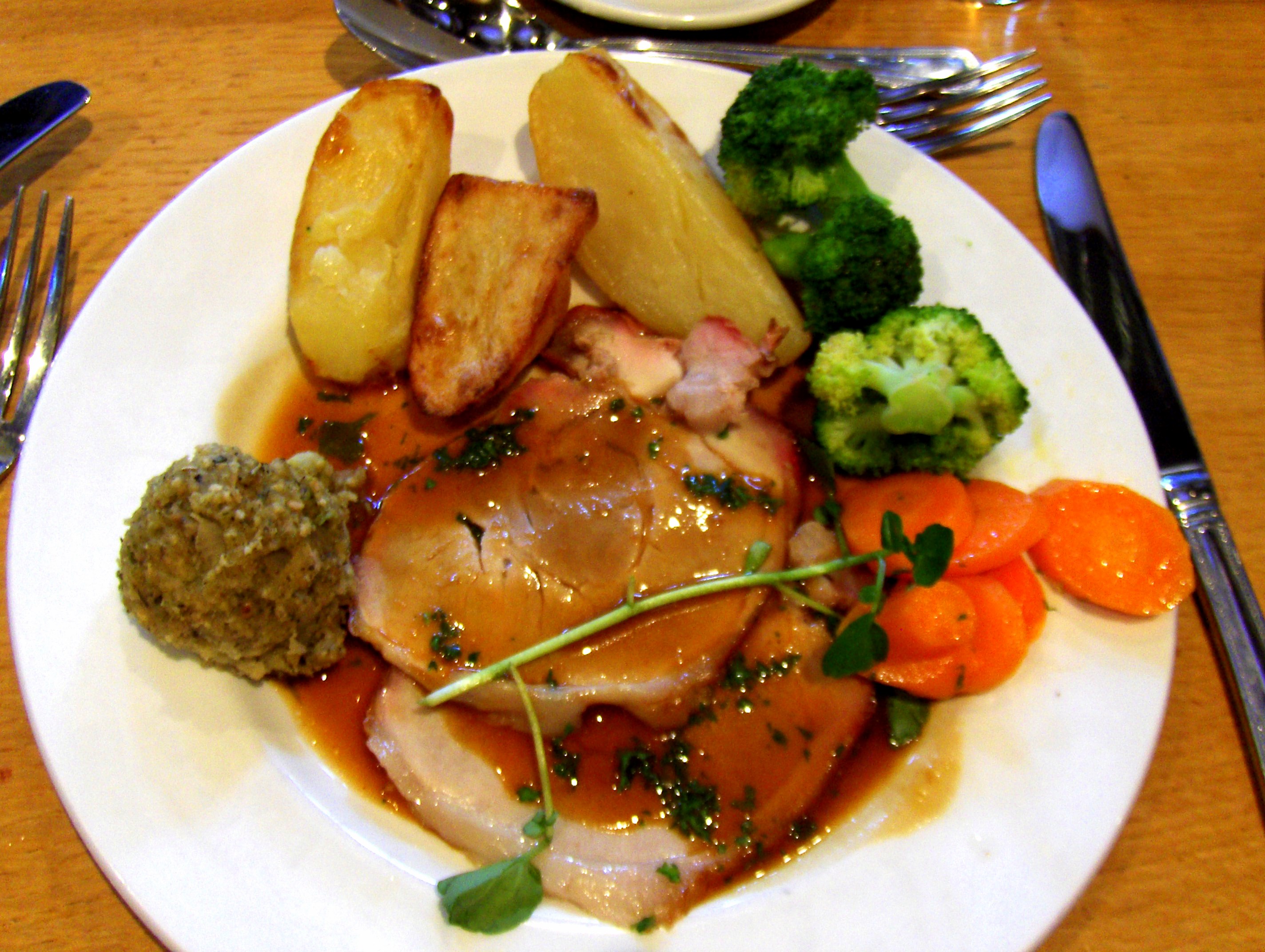
The main course was roast pork with a scoop of stuffing (it probably has a better name). It went well with it, but I also like apple sauce with my pork. See Danish place. The potatoes were pretty good. The higher the temperature (and hence the darker color of the potato), the better tasting the potato, in my opinion.
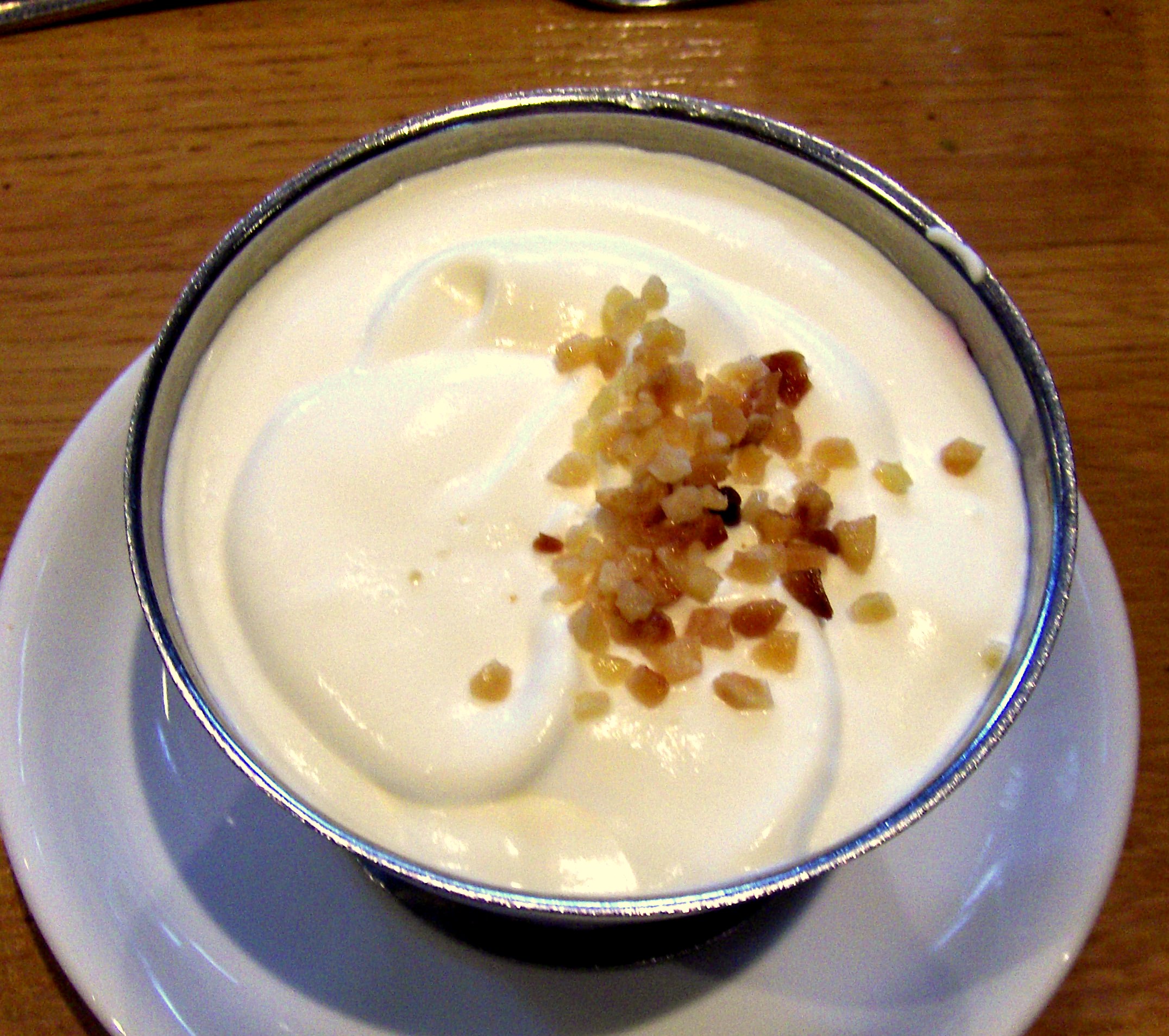
The endnote was a raspberry something covered in thick yogurt. Fresh and healthy.
Thursday 22nd – The banquet(*)
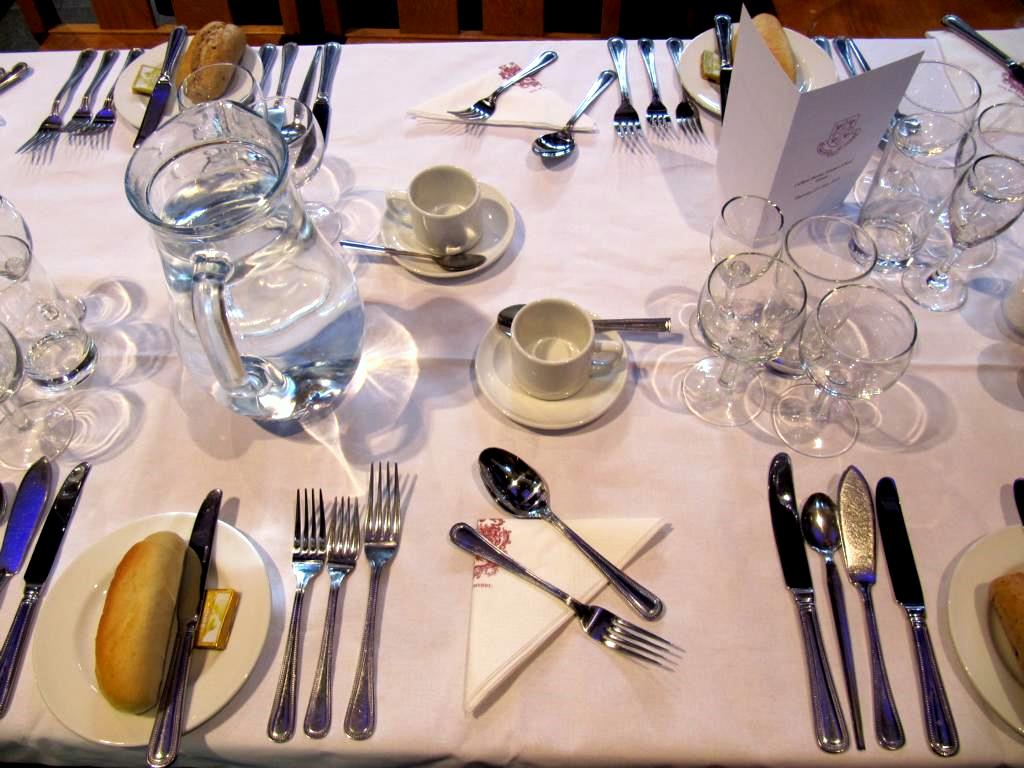
Six-course meal. Tons of utensils. Overall, there were 4 knives, 4 forks, 3 spoons, 4 glasses, and a tea cup.
Set of utensils for the banquet at St. Edmund Hall, Oxford University - Picture taken by Tobias Hartmann
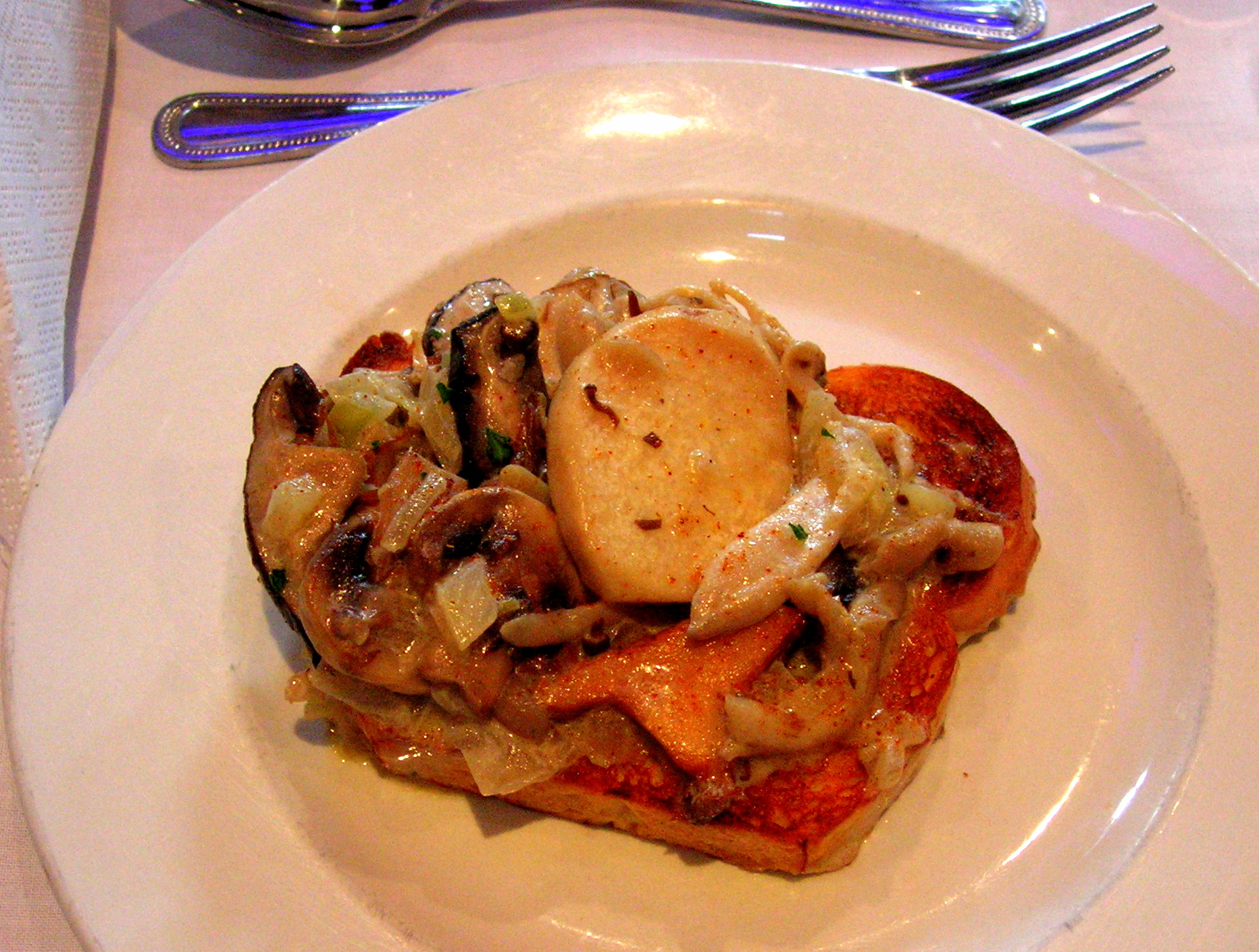
Course 1- Fricassee of Wild Mushrooms on toasted bread, maybe French bread or a loaf like that. There was quite a large heap of mushrooms, with at least 3 or 4 types. Savory and good.
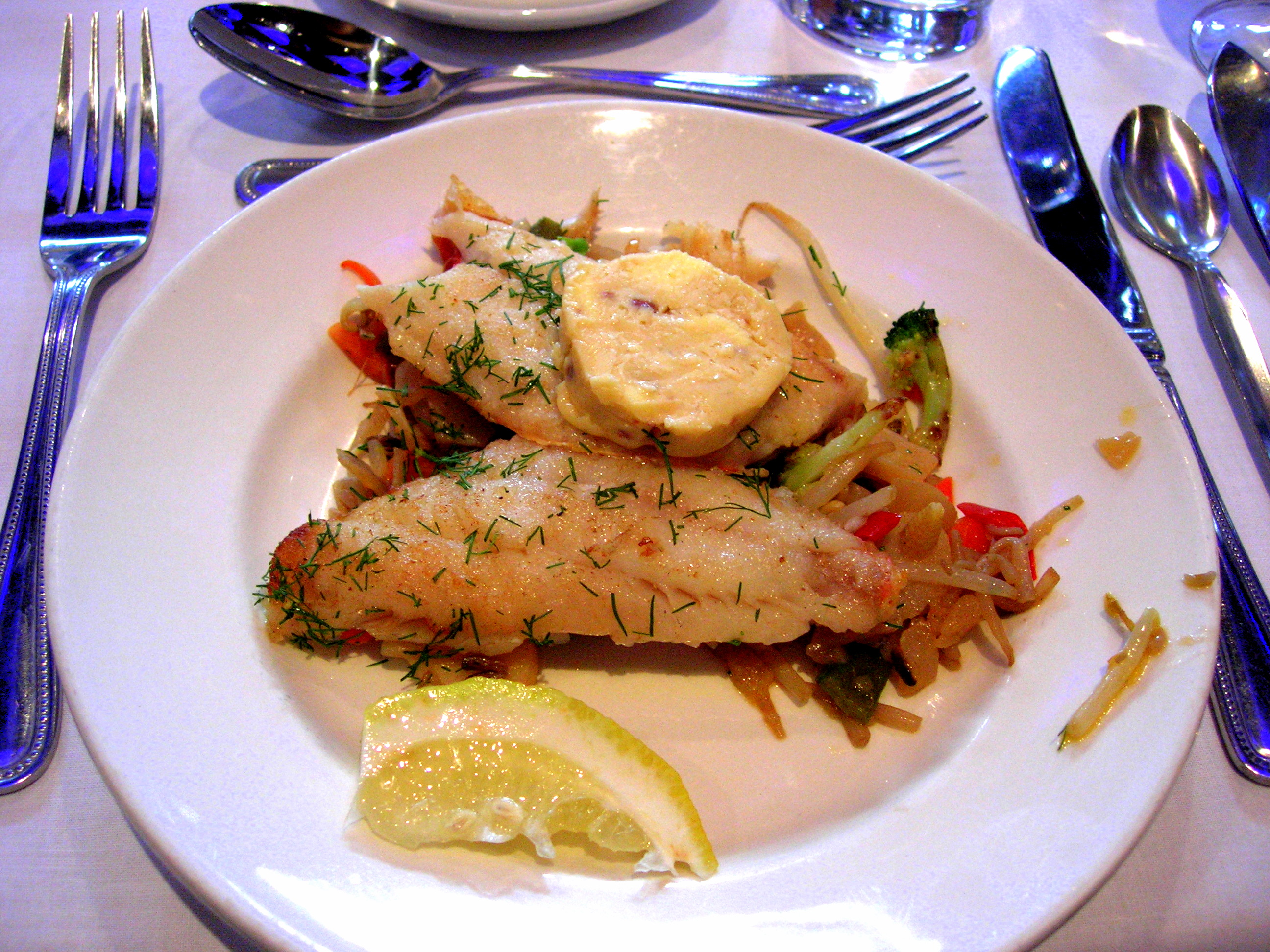
Course 2- Pan-fried mullet on stir-fried vegetables. Two filets of fish with mixed veggies around. Everyone seemed to get different proportions of vegetables, and the fish varied in its brownness. It was very rich and covered in a thick slab of some type of butter. It tasted and spread like butter, but it looked like it was made from something else.
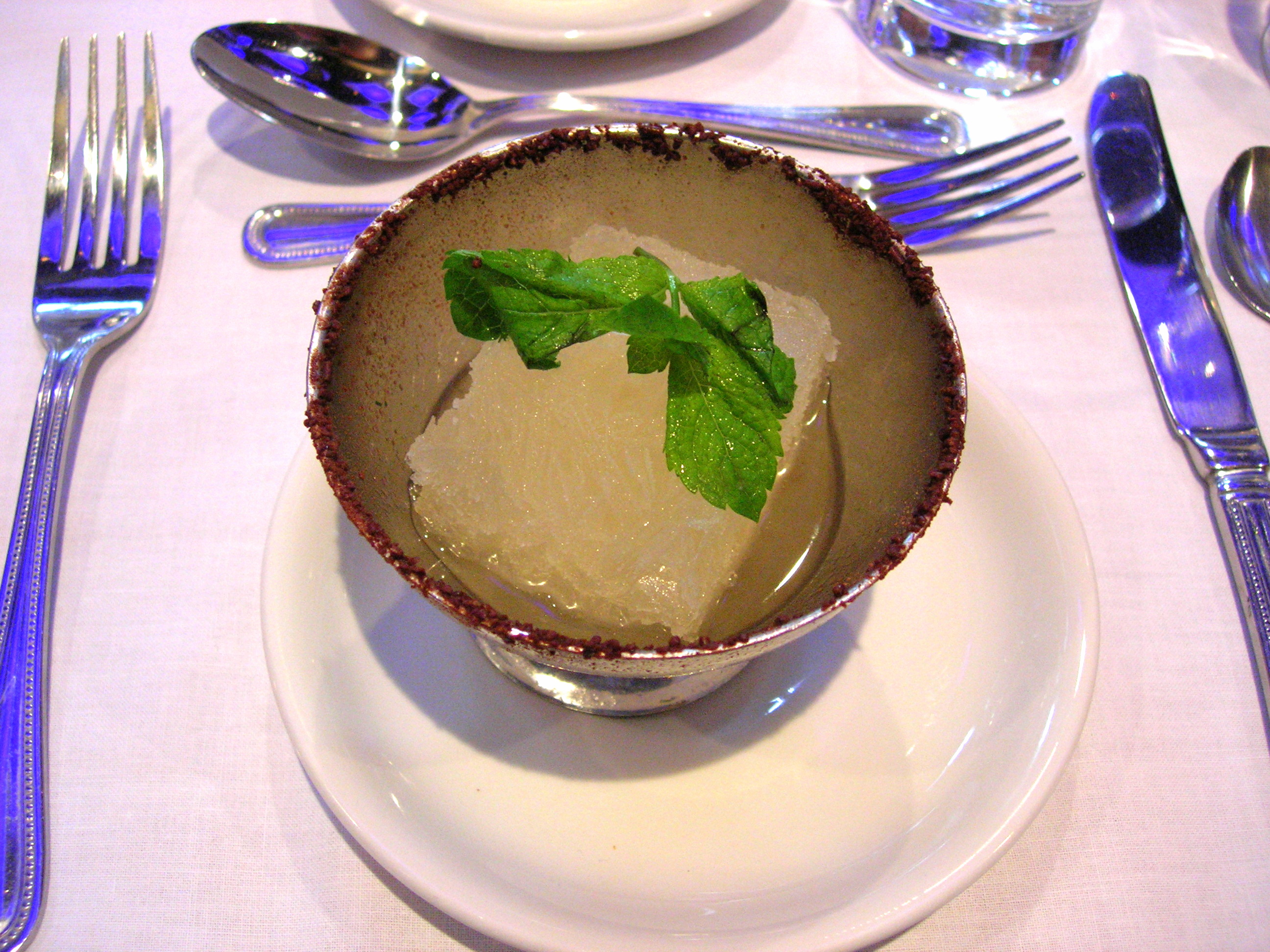
Course 3- Champagne sorbet. I think they just froze champagne in blocks and put mint leaves on top. It splintered like slushy ice that barely froze, probably on account of the alcohol. I didn’t like it. The melted pool of champagne on the bottom grew until one was just drinking iced champagne with a spoon.
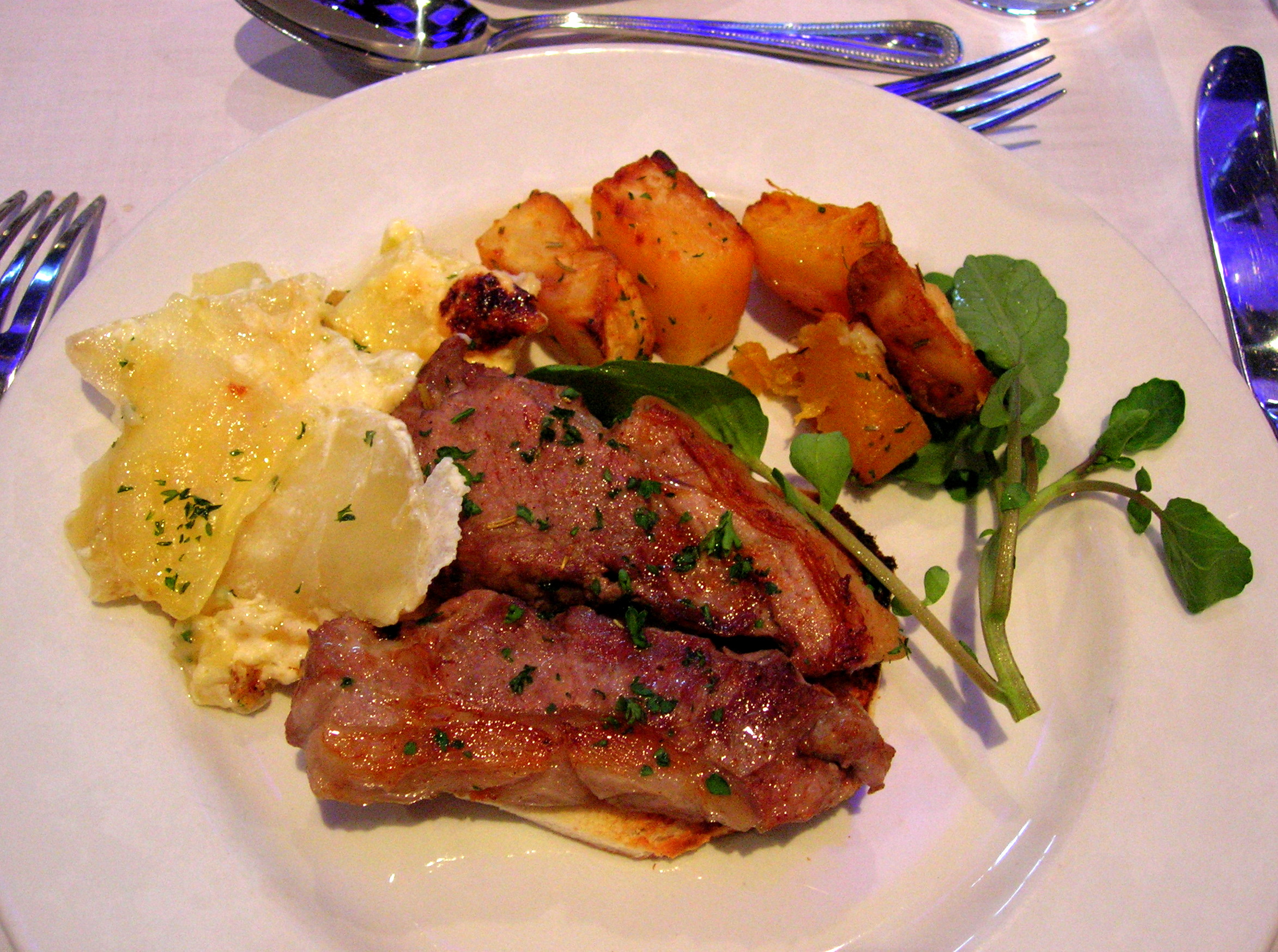
Course 4- Lamb noisettes with roasted mediterranean vegetables with dauphinoise potatoes. The lamb was pretty tender as far as lamb goes, and a little fatty. It was good, though. The gravy was similar to the gravies they served before at this dining hall. The potato gratin dauphinois was like lasagna made out of potatoes as it had cheese mixed in and was baked until brown. It was nice.
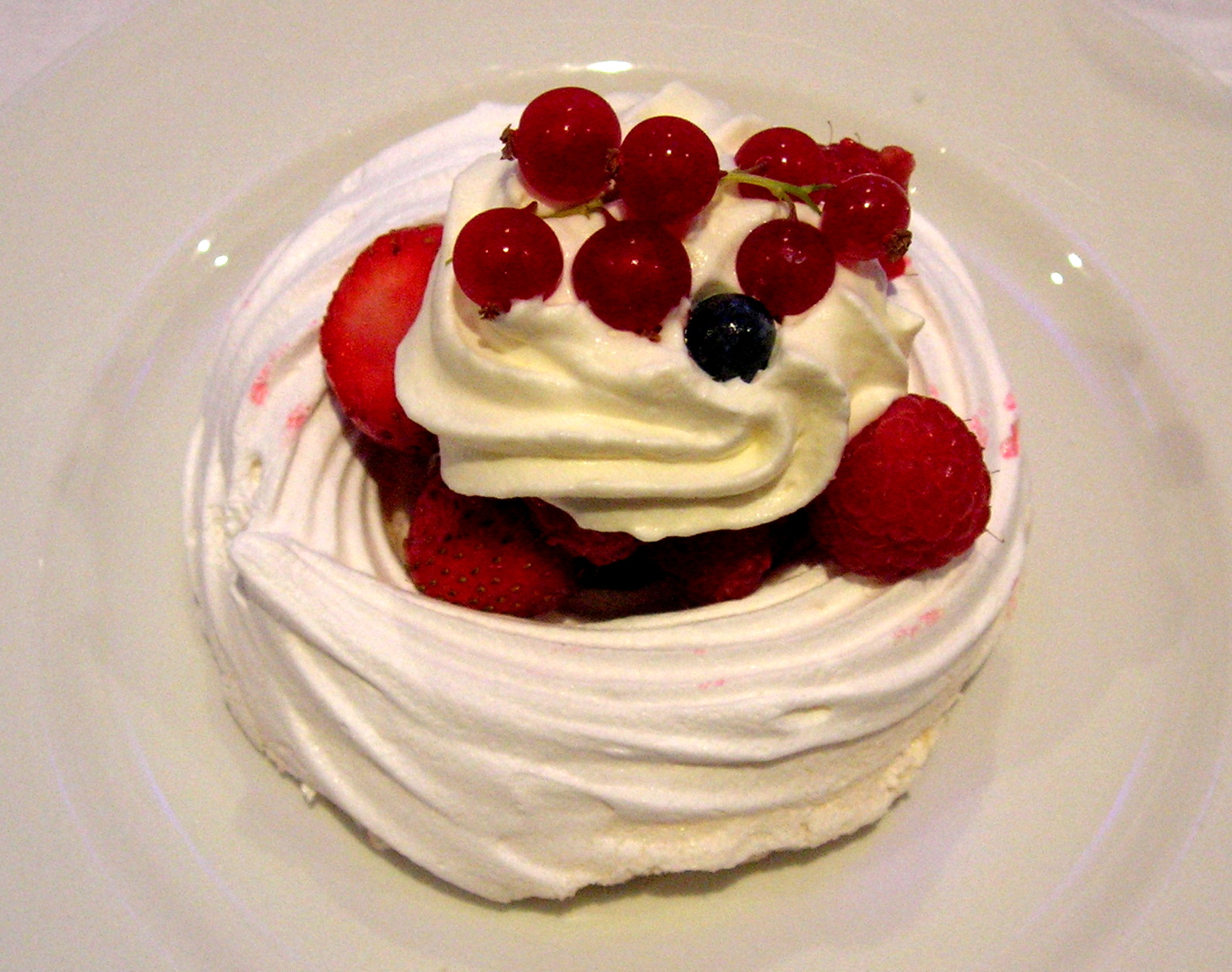
Course 5- Summer fruit pavlova. Strawberries, red currants, and raspberries mixed in a whipped cream and sugar cake structure. The base was hardened sugar.
Course 6- Coffee and Chocolates. They had a plate of different chocolates. Two types that were minty, and one with crispy rice in it. Nothing special. They snuck coffee in my cup when I turned around listening to a speech.
(*) Pictures from the banquet were taken by Wouter Devulder
– Guest post byPaul Simeon – “My trip to England for a summer school in plasma physics”
It’s nice to try out another school or another country. I did both when I spent the last two weeks of July at the University of Oxford, eating and sleeping in St. Edmund Hall, the oldest place still teaching undergraduates in the world. Arriving with few expectations about the food, we were all pleasantly surprised at the dining hall. Each night for two weeks, the staff served up a different three-course meal at 7 pm sharp. When some people showed up late the first day or two, the servers lightly scolded them. The chefs needed to know how many dishes to prepare. They had a vegetarian option if you told them ahead of time, but otherwise everyone got the same thing. And it wasn’t the average stuff dished out at a standard American college cafeteria.
Week 1- Monday 12th
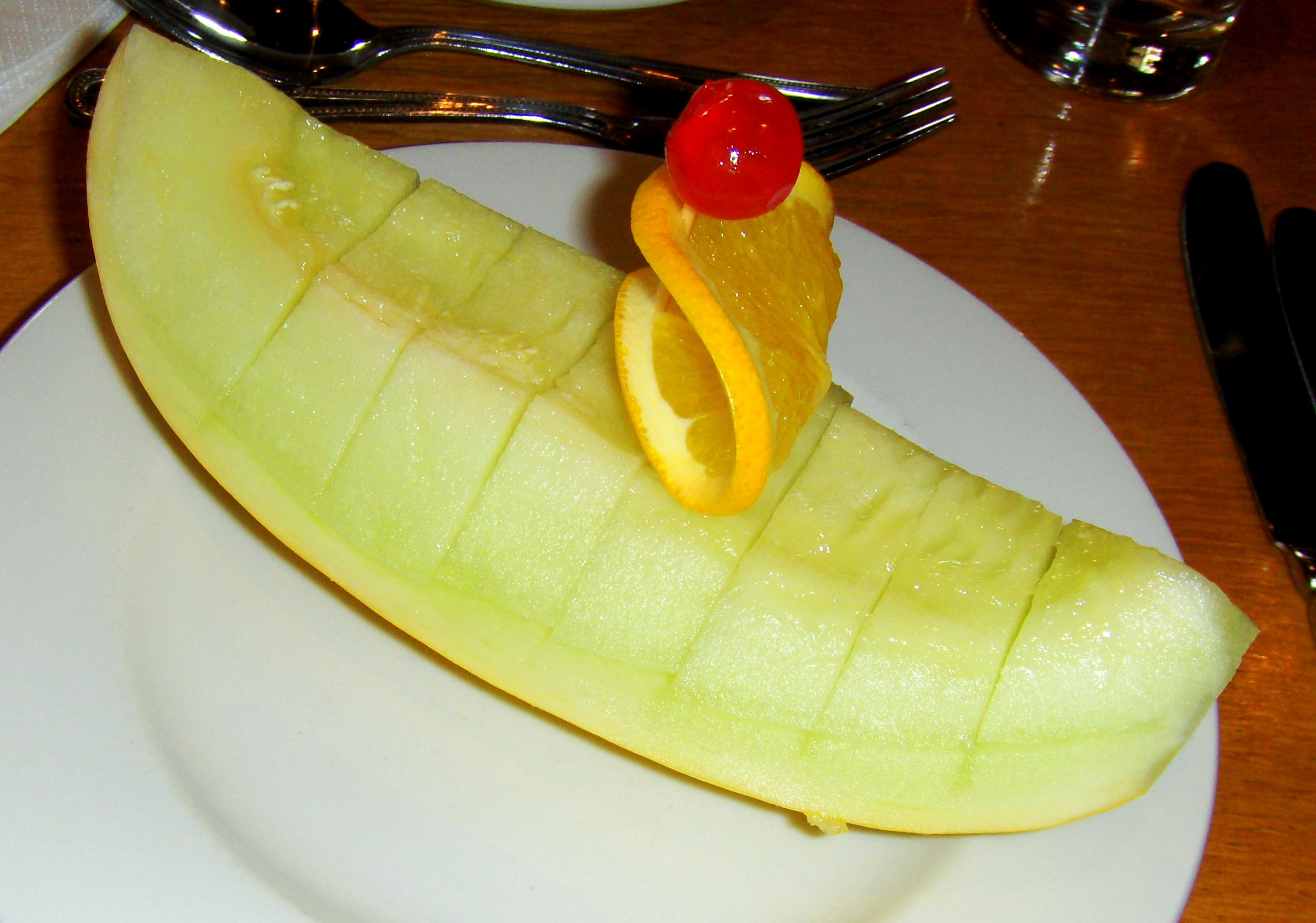
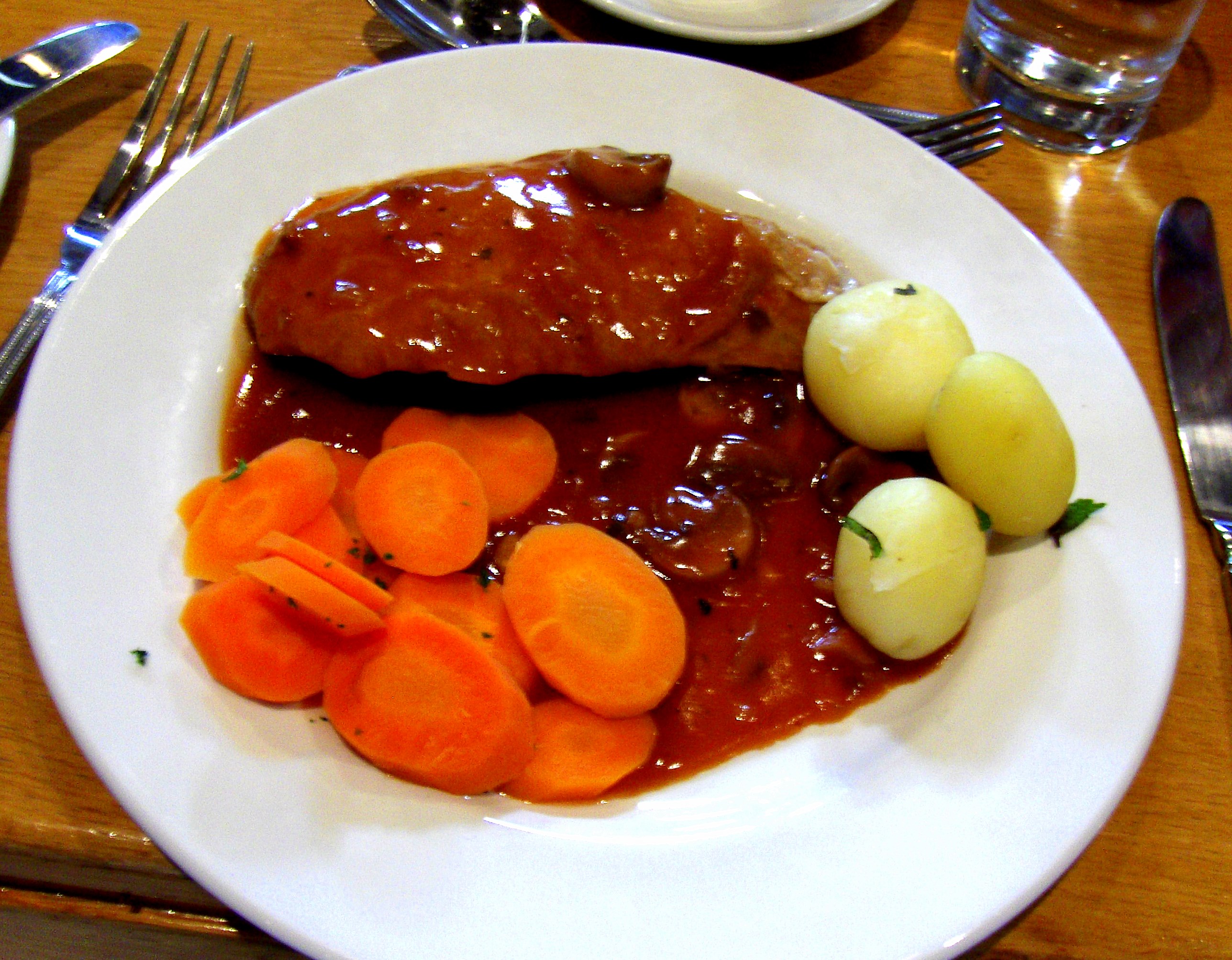
The starter was a big wedge of honey dew melon on the rind, presliced to make it easy, and garnished with a lemon slice and one (too) sweetened cherry. The main course was roasted duck with mushroom sauce, accompanied by boiled carrots and small potatoes on the side.
Dessert was an amazing raspberry meringue.
Tuesday 13th
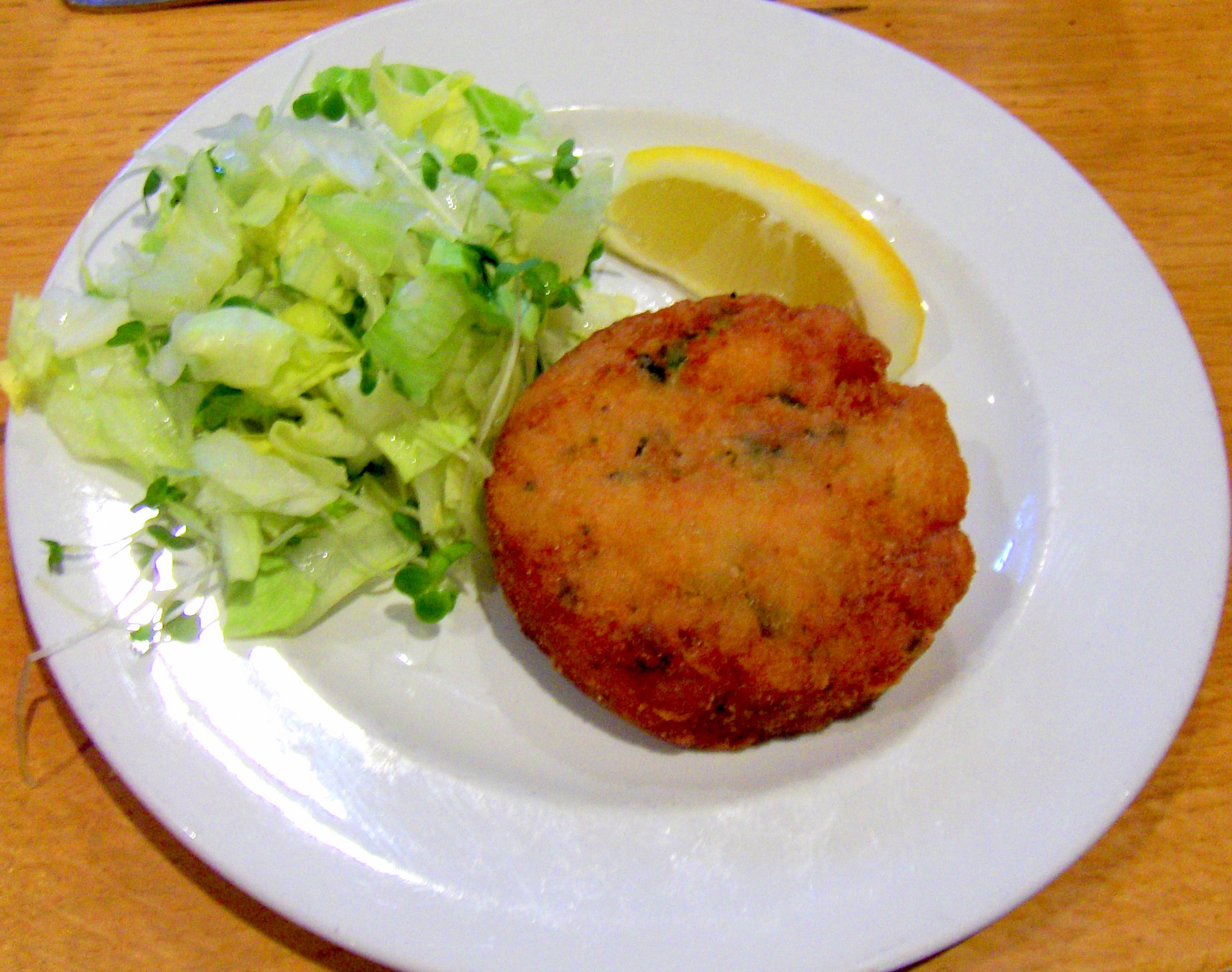
Fish cake with small salad (lettuce and watercress sprouts), which came with a red sweet and sour sauce.
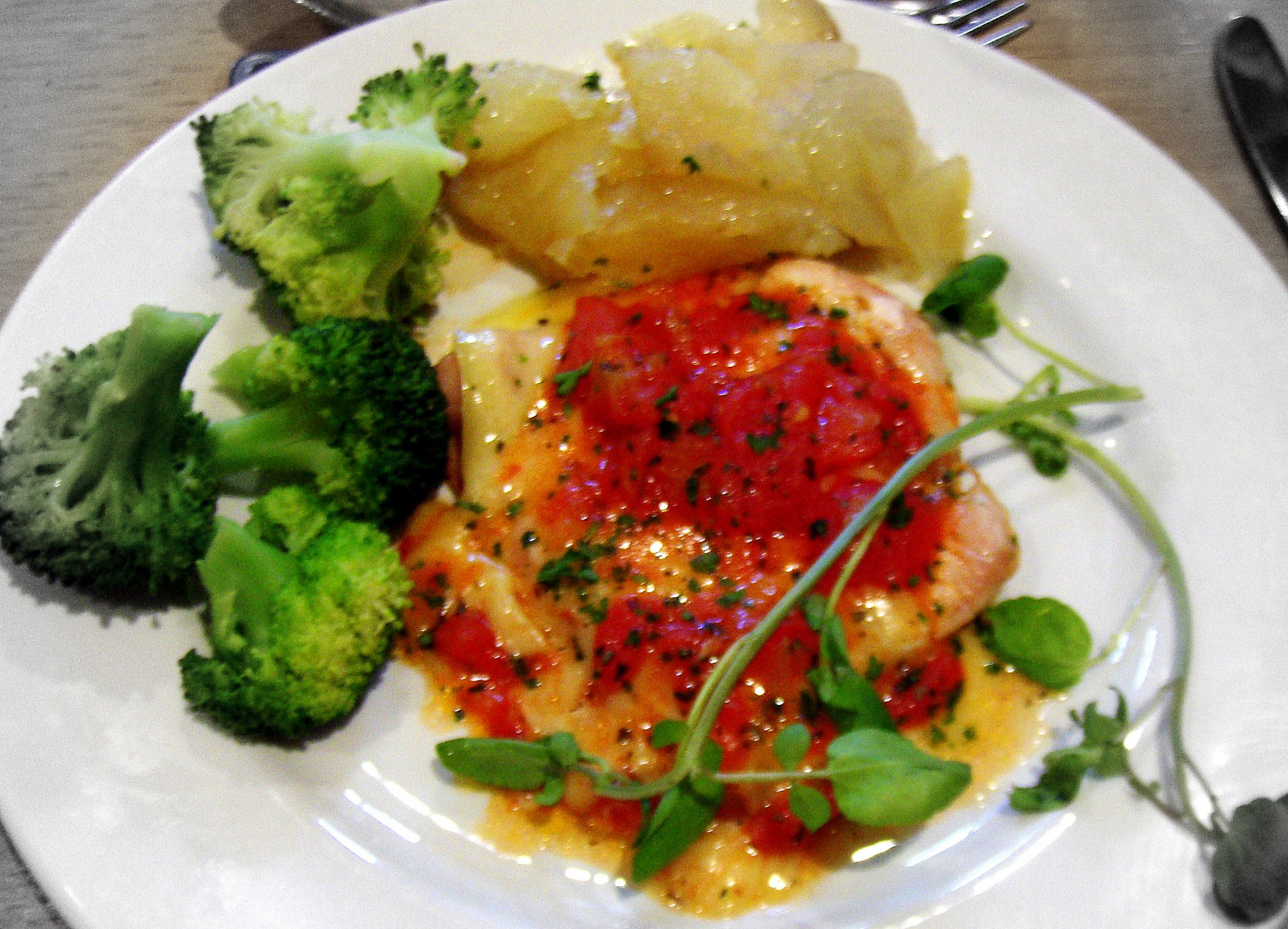
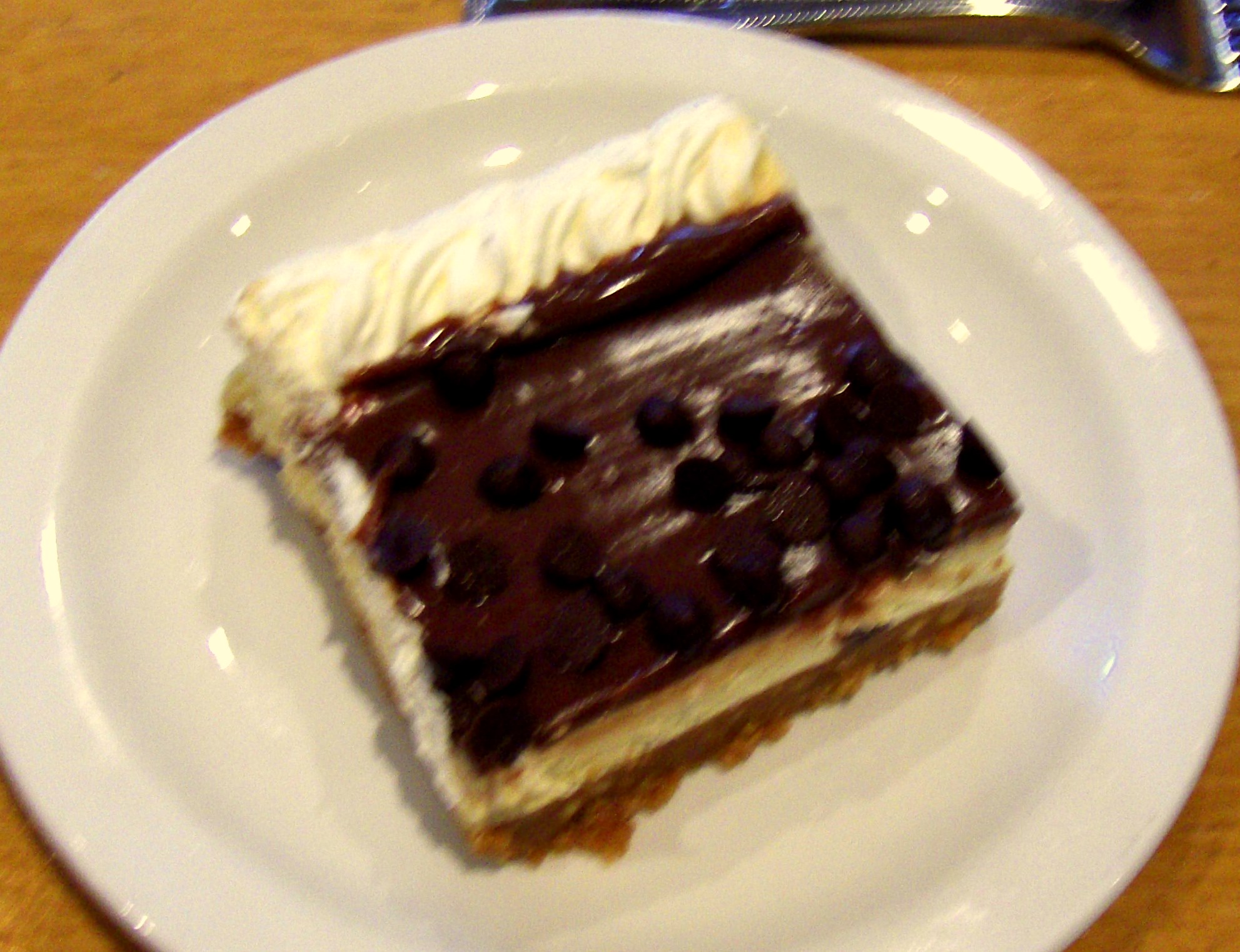
For the main course we had a turkey breast (or just the part that we use for chicken fingers) with a slice of baby Swiss cheese (I guess) and diced tomatoes on top. Dessert was something that might be called banana cream pie. It had a thick layer of cream like coconut cream pie, a layer of pureed bananas near the bottom, with a graham cracker crust and a thin layer of chocolate on top (with chocolate chips). It was very good.
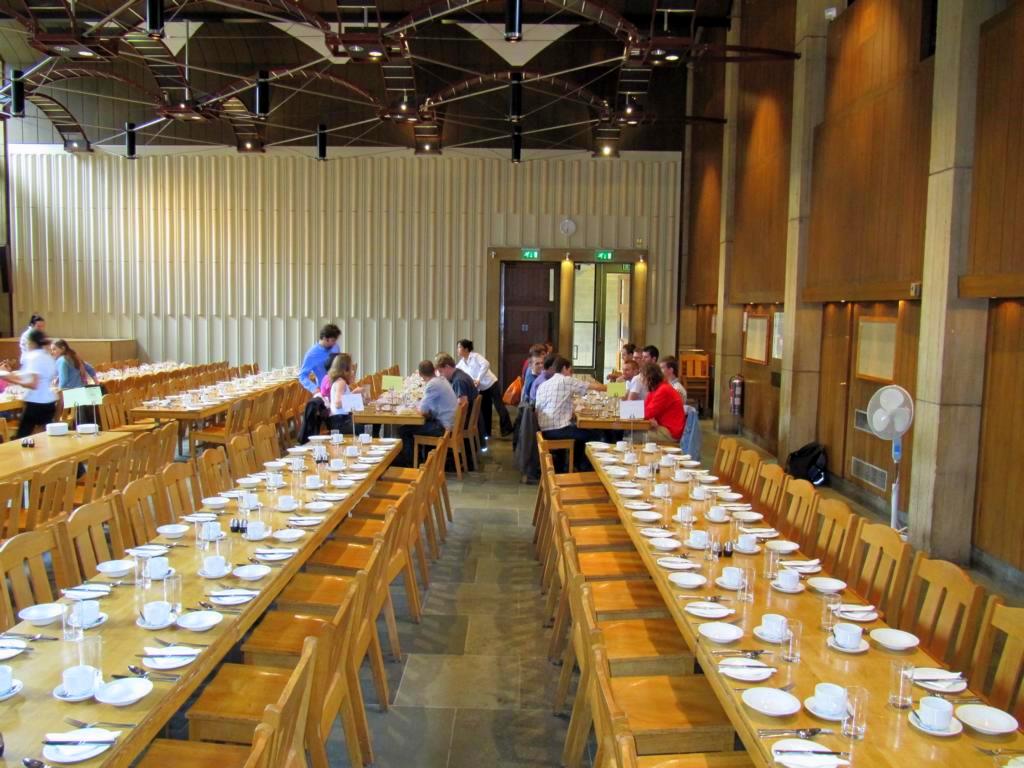
The dining room of St. Edmund Hall, Oxford University. Picture taken by Tobias Hartmann.
Wedesnday 14th
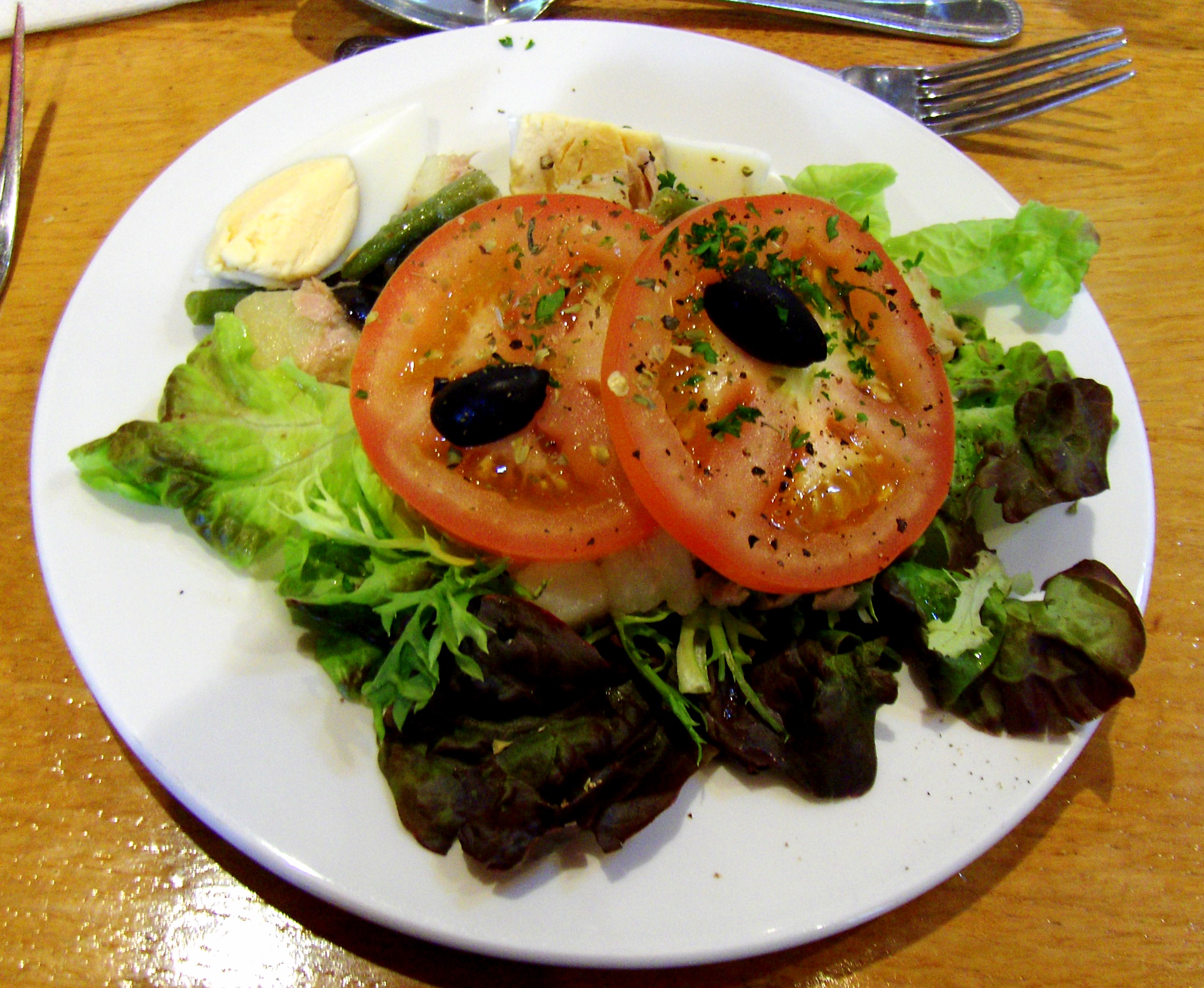
Salad with chopped up tuna fish (in oil and vinegar, thankfully!) with tomatoes, olives, and potatoes to start.
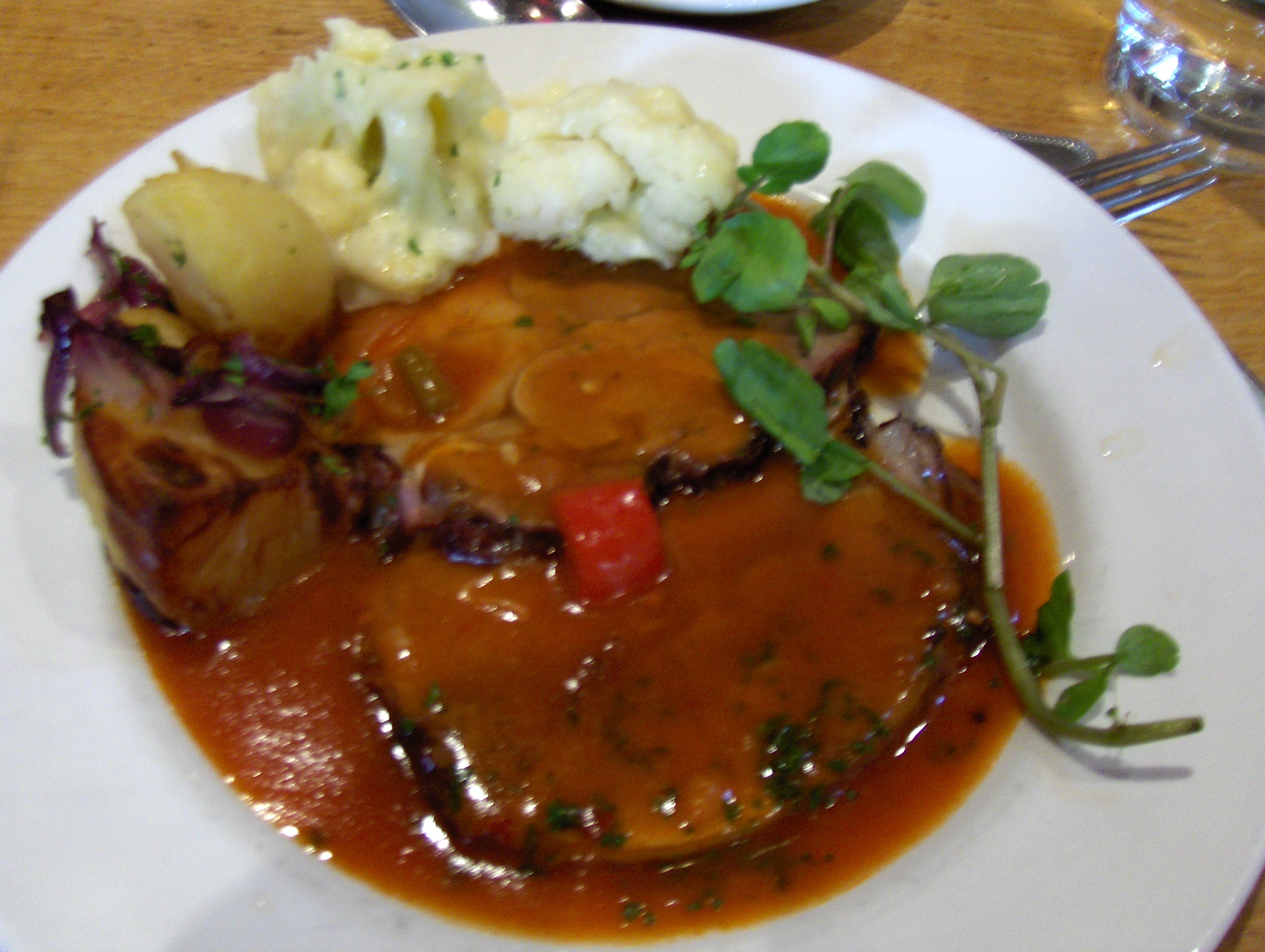
It was alright, but I wasn’t in the mood for fish, especially pink tuna instead of albacore. The entree was roasted lamb slices in a thick red sauce.
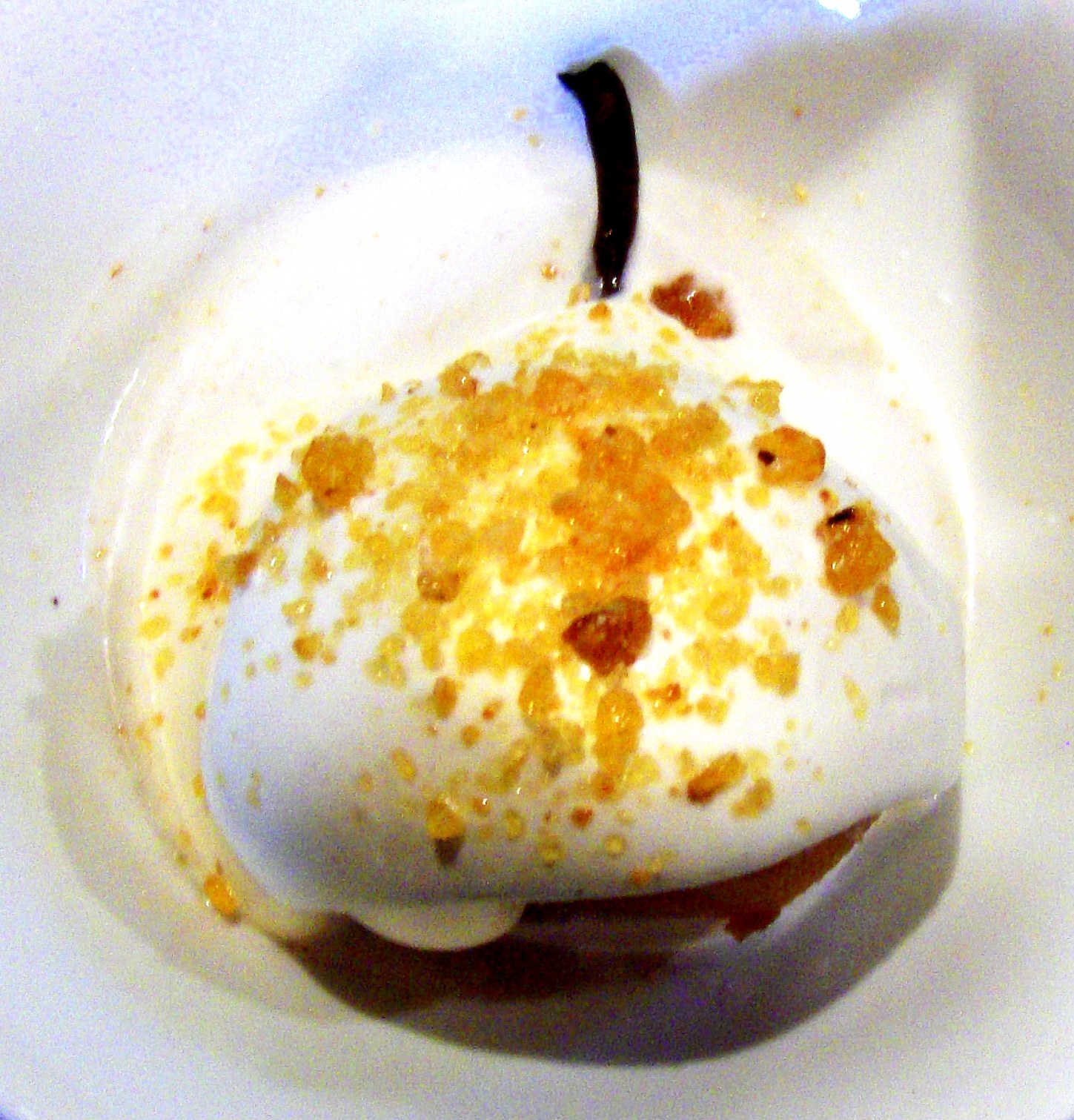
The lamb was pretty tough, and the sauce was too strong. The sides were good though: roasted potato chunks with onions and cauliflower au gratin. Dessert was a pear soaked in some sweet liquid, that tasted like liqueur or rum, and sprinkled with giant yellow glazed crystals.
Wikipedia suggests amaretto liqueur. This was my least favorite dinner, and each of the dishes was my least favorite so far.
Thursday 15th
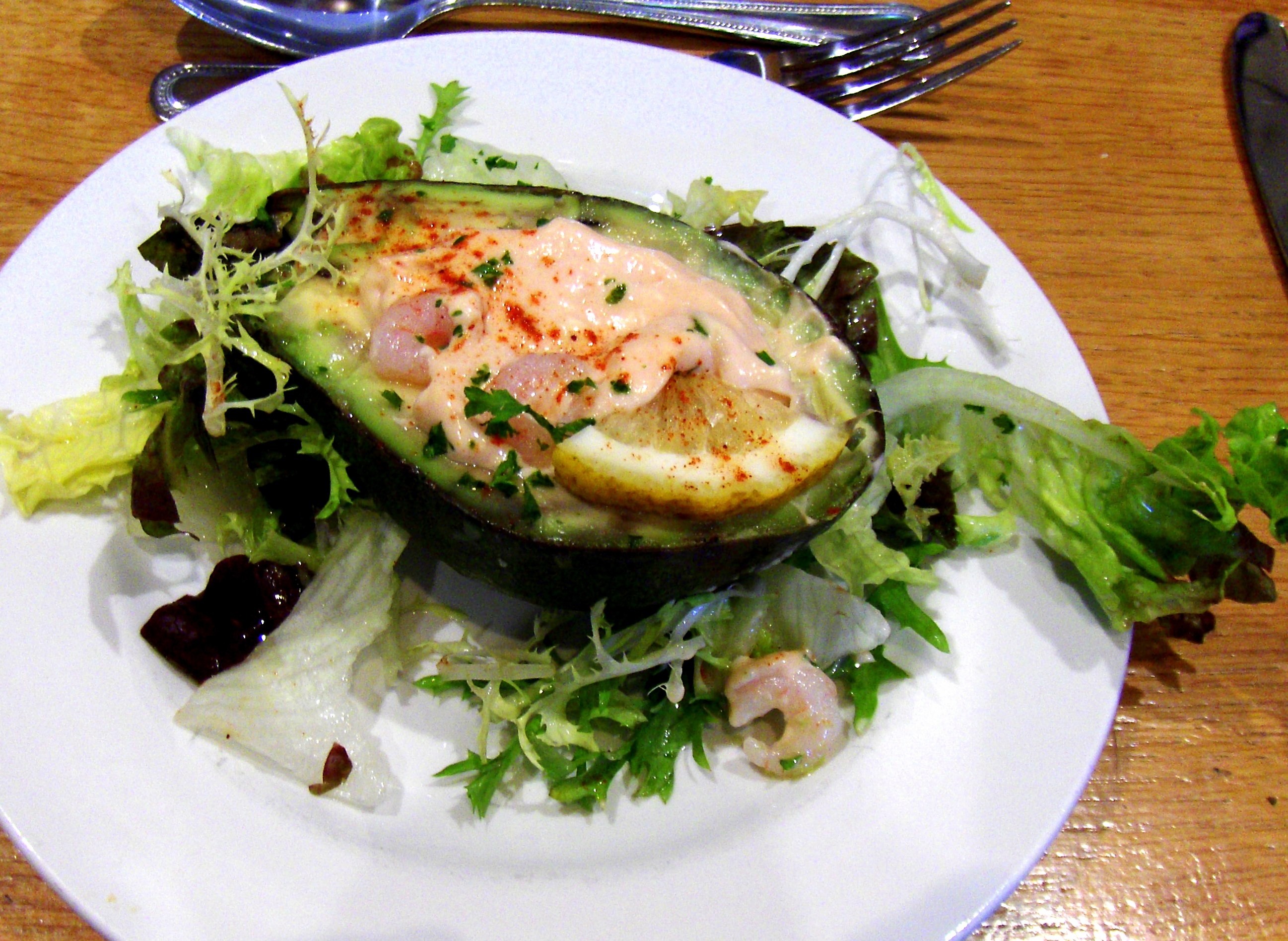
Half an avocado with small shrimp in a sauce. Sauce wasn’t that great, but the avocado was good.
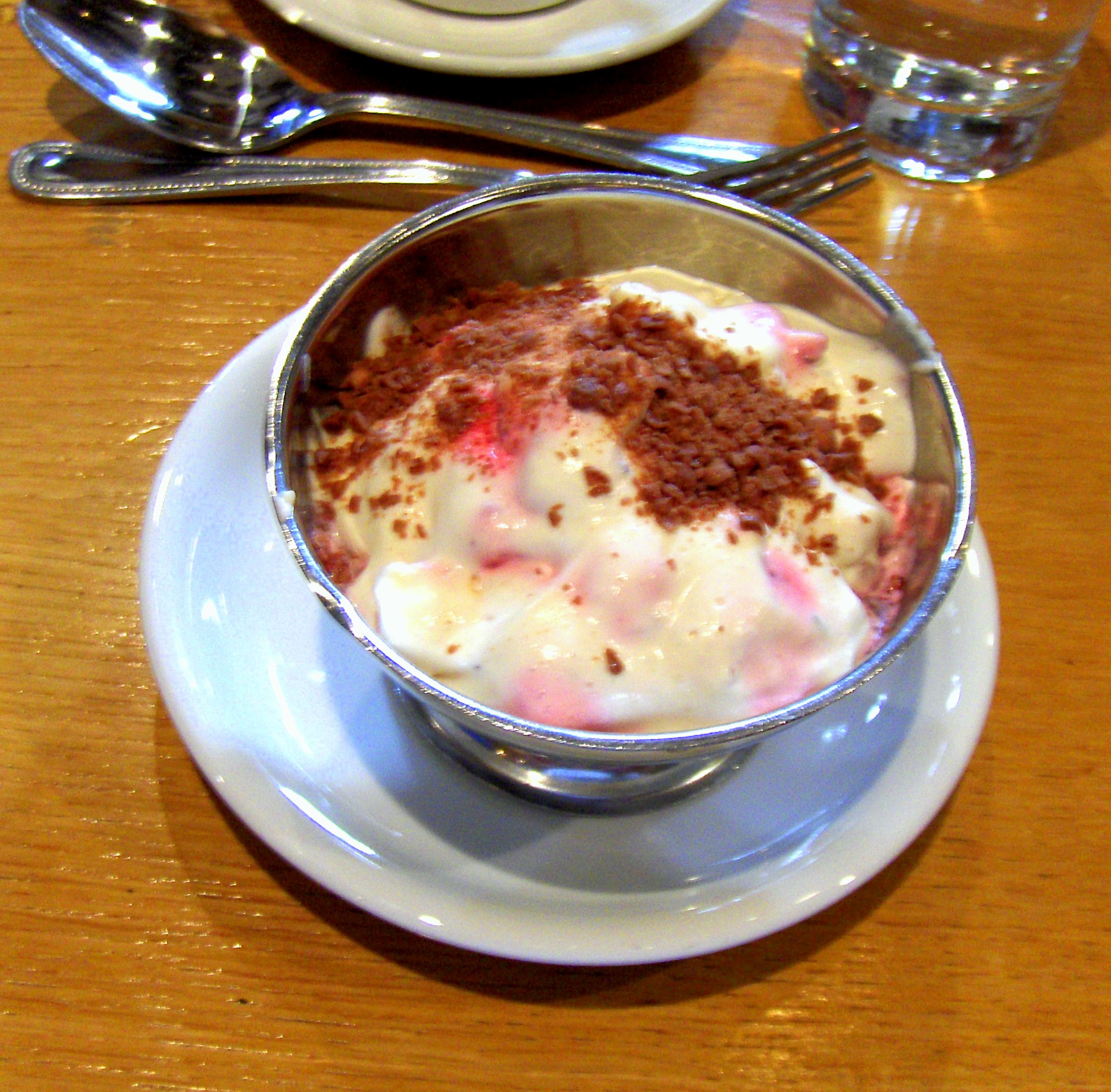
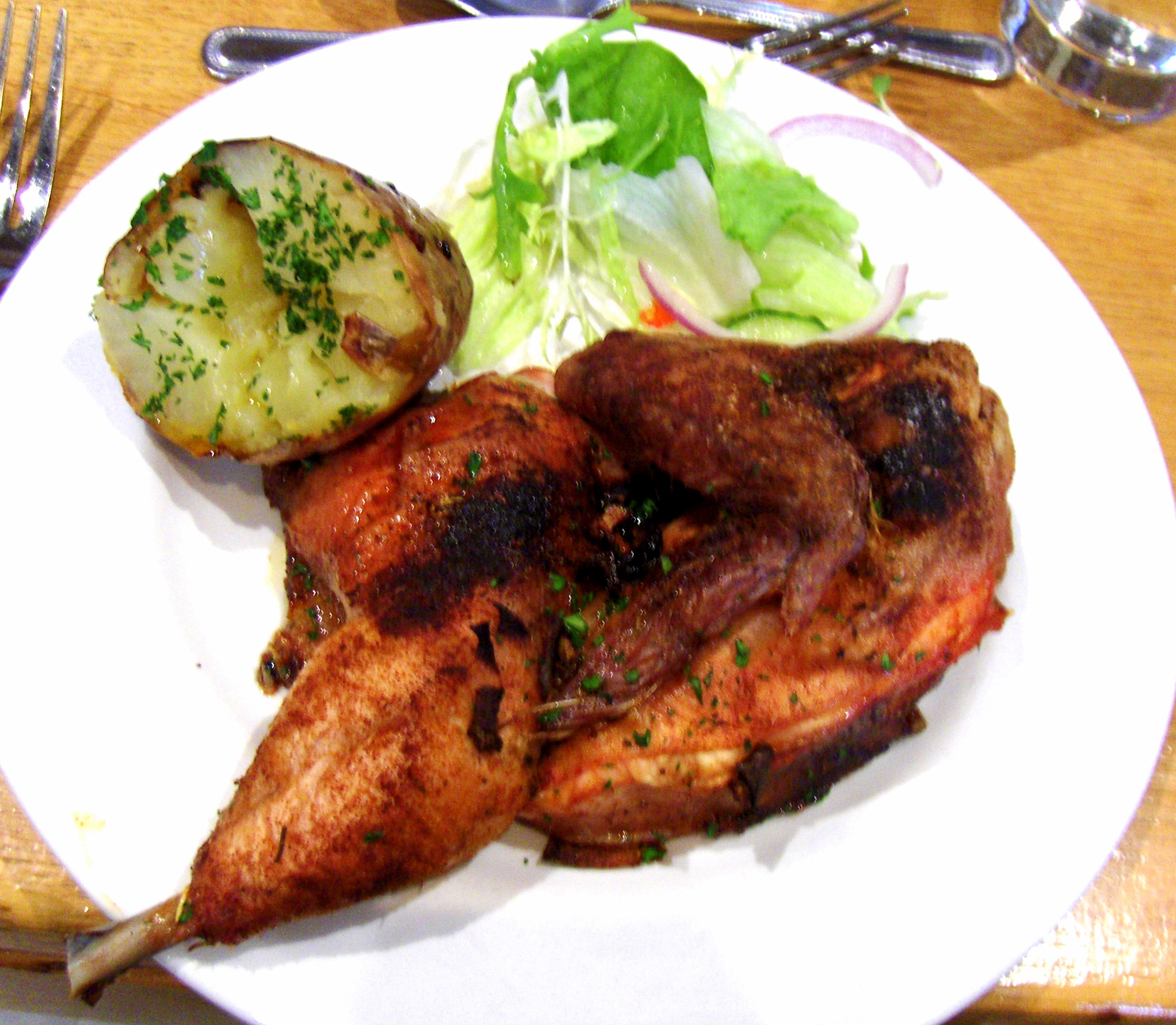
Followed by one half of a roasted chicken, one of each piece on the bone and baked potato that was covered in oil or butter. Very moist and tasty. The ending was two ladyfinger cookies in a strawberry-flavored mix between whipped cream and the British style of yogurt. Someone said it was meringue.
Friday 16th
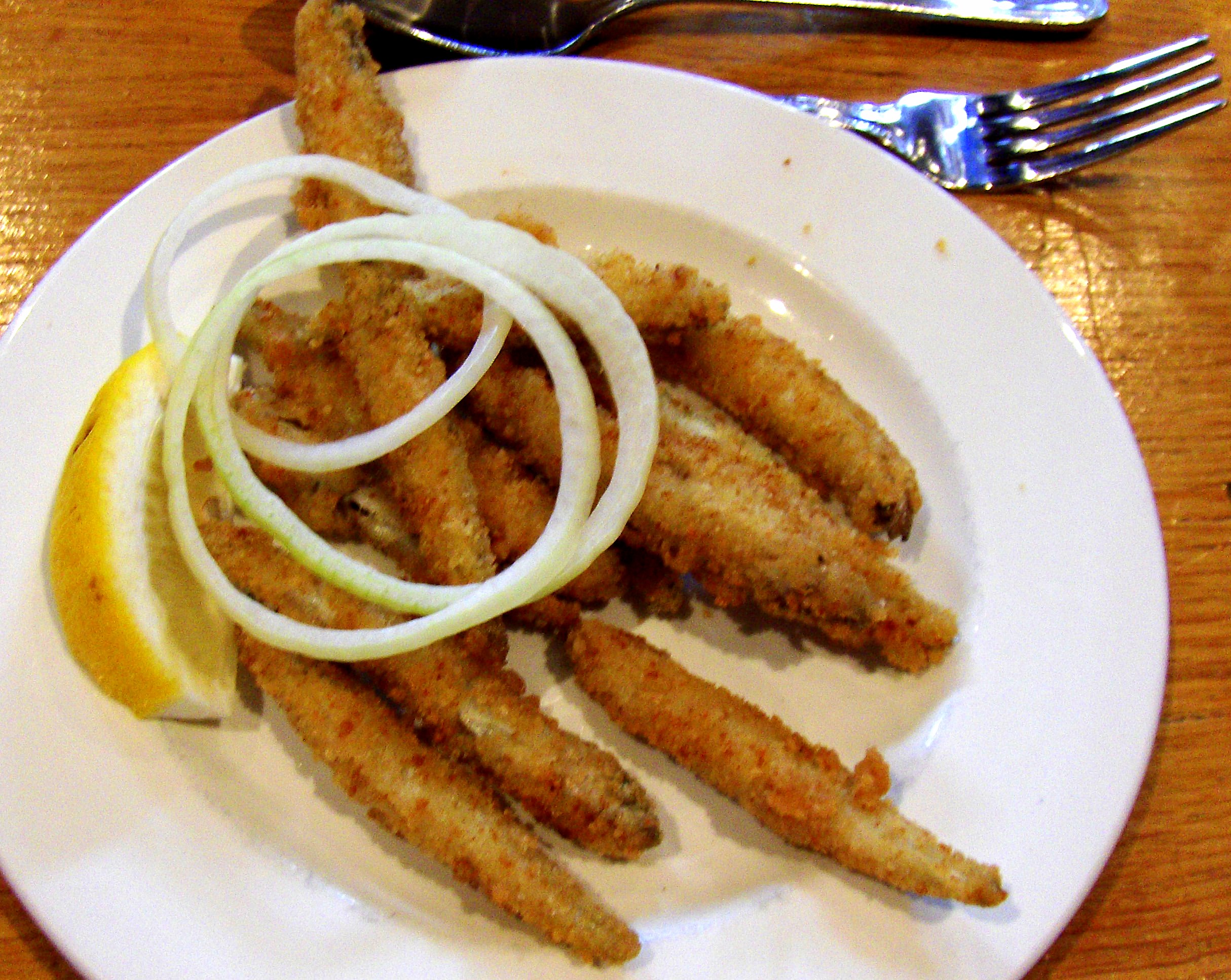
Starter was skinny fish with heads on, fried. It was like anchovy. The French and Spanish people at the table knew what it was, but I didn’t recognize or remember the names they said.
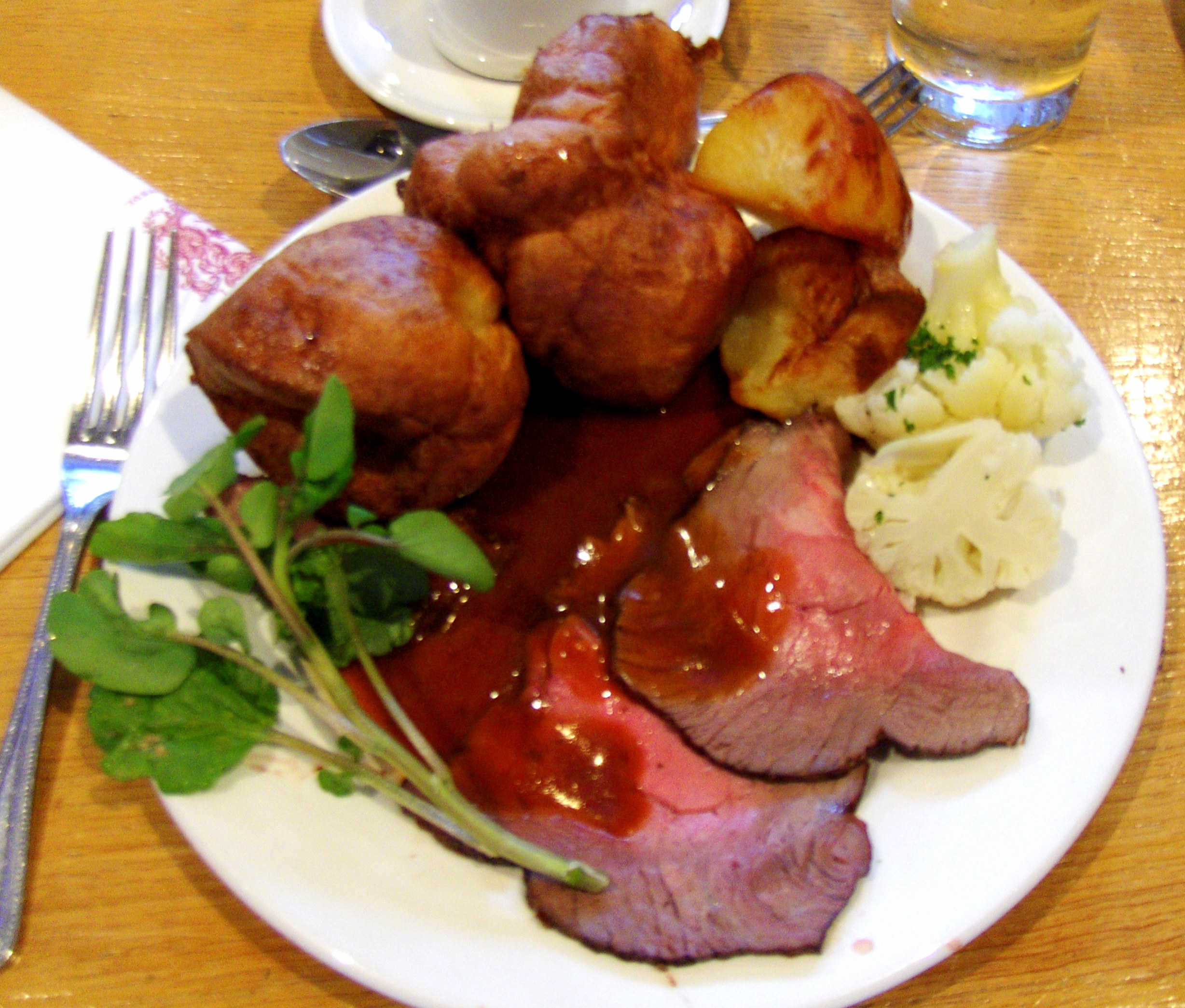
The main course was thin slices of tough, red beef smothered in gravy, with sides of cauliflower, potatoes, and fluffy rolls. Dessert was mixed chopped fruit in a sauce with whipped cream on top.
Sunday 18th
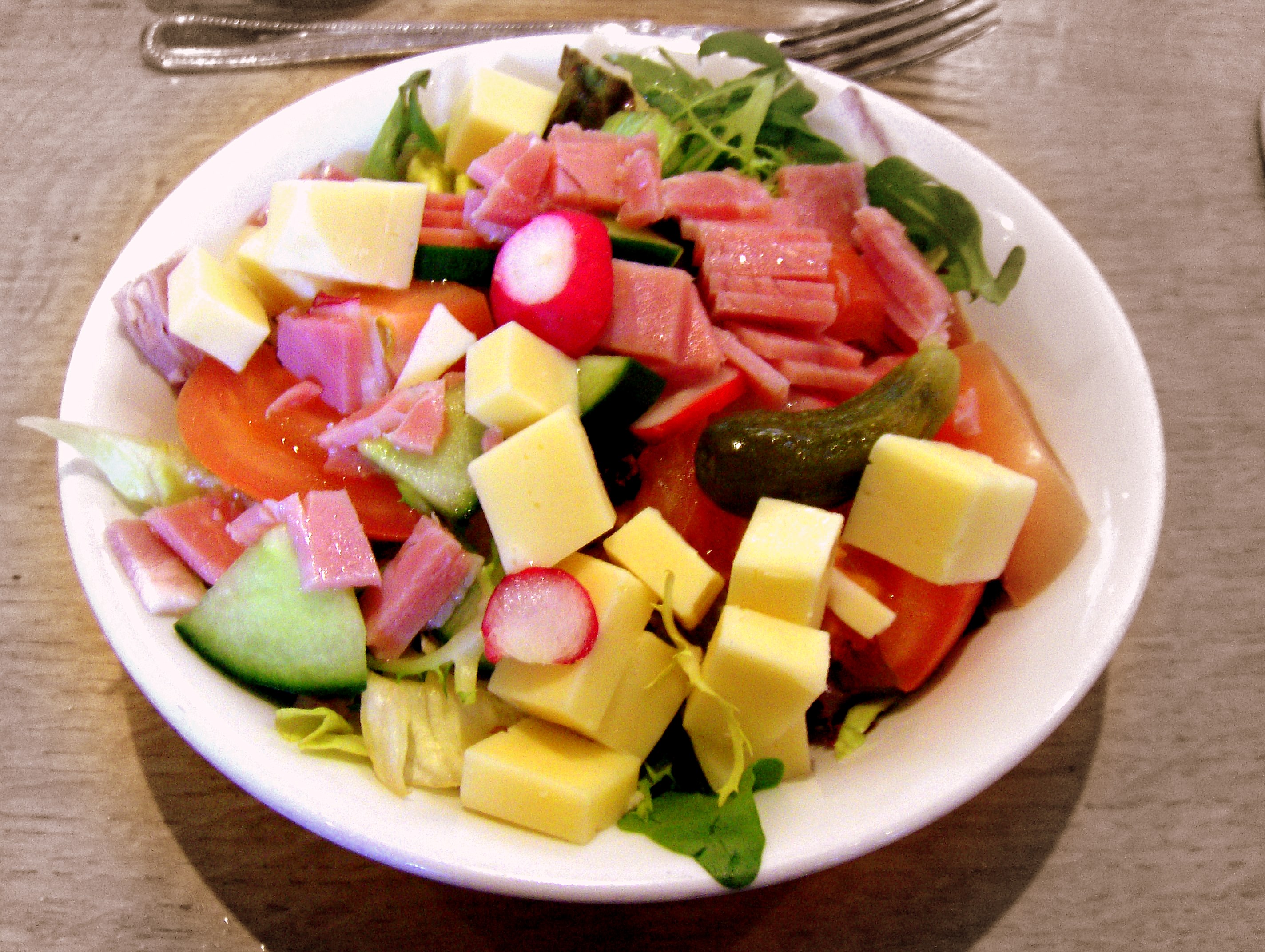
Salad with lots of stuff in it. Ham, cheese, tomato, radish, cucumber, lettuce, gherkin. It was good. It was almost less like a salad and more like a bowl of random cold things. On the side was a gravy boat with a light salad dressing that was most likely vinaigrette.
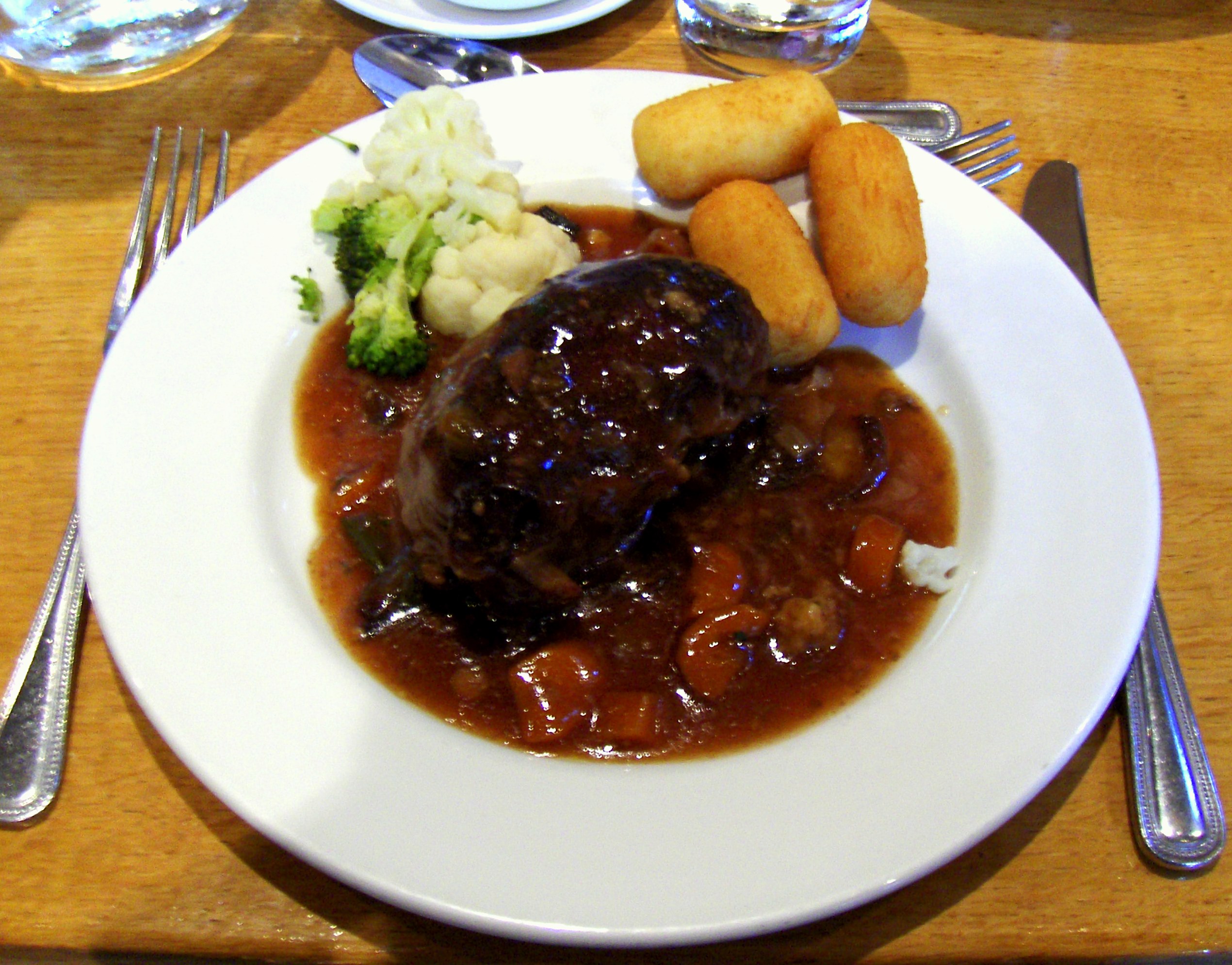
The main dish was interesting, and pretty good. It looked like a big lump of roast, but it was actually a thin slice of beef that was rolled up with bread crumbs or stuffing in the middle.
And, of course, they put gravy all over it like every other dish. The Germans at the table knew this dish quite well. The sides were broccoli, cauliflower, and croquettes – fried cylinders of mashed potatoes. Dessert was a simple bowl of assorted berries and grapes with a dollop of whipped cream (actual whipped cream, not the fluffy stuff in tubs or spray cans). Nothing too fancy, but it was good. I’d say this was one of the better meals of the two weeks.
Just a few months ago, only certain people could go inside to inspect the construction, and everyone permitted had to wear hard hats. Now, driving on University, it would be hard to miss the gigantic banner leisurely hung to announce a brand new presence, that was much awaited and is worth every minute of effort put into it. The two physics buildings at A&M are a charm, and doesn’t one of them (left picture) remind you of some famous structure? (Hint: something in New York).
Seven stories high (including the basement for laboratories), the newborn Mitchell Institute now houses the high energy theorists and the astrophysicists, as well as a brass Foucault pendulum complete with a full electronic protractor. Marking a crimson comet tail along its path, the pendulum pridefully swings across the floor, its movement sparks gratification in the eyes of Prof. Edward Fry, the department head. (For comparison, the pendulum at the Houston science museum is tracked by knocking down wooden pegs, much less chance for malfunction and more eco-friendly, I guess?). And just to entertain your scientific mind, every step you make on the first floor is a step on a mathematical pattern, known as Penrose tiling (pictured below). If one tile is misplaced, the whole pattern is destroyed. I wonder if the architect, Michael Graves, had drawn the floor precisely to each tile, to make sure that the construction workers got it right. But I do know that Prof. Glenn Agnolet, the main supervisor of the project, had at least once caught a mistake before it was too late, and that was just among many nameless incidents occurring and overcome in the four-year span of the construction. Each such incident cast an extra amount onto the total cost in this skimming economy, and the generosity of George P. Mitchell alone would not have been able to bring the buildings to completion. Thus, the two buildings bear proofs that Texas A&M physics professors are not only experts in their fields but also charismatic businessmen, proficient managers, and visionary designers.
Fresh and spacious, the interior has an unscathed beauty, with unadorned walls, long hall ways, tall glass windows, offering a full view to my most favorite part: the rooftop garden, which is accessible from the third floor. Give it a few more months, and the now barren poles will be embraced with vines, forming a green canopy. The small trees will grow, the flower beds will thicken. Young birds will make this garden their new homes…
… and young Physics students will aggregate here, with wholesome pride.
After all I happen to stay in school longer than the average person, and if all goes well I will die a member of some academic body, so I figured school cafeterias might as well be another source of food and blabbing inspiration. Previously I blogged about the dining facility at Texas A&M, here comes Nexus at Stanford, where I ate last August. The price of course has changed with the economy, but hopefully the taste remains the same. Nexus has a few different sections of food, the menu also changes weekly it seems, but the Texan in me often has no difficulty picking out lunch – to the grill I went.
The sign said it all. Burger with blue cheese and sauteed balsamic onion, and the food came out exactly that, with some lettuce, tomato, pickle, and more onion. I really had some doubt about the blue cheese, its presence neither enhanced nor diminish the taste of a good beef patty, its lack of texture didn’t make the burger any more or less juicy. It was a third wheel, unnoticed. The burger was good.
But the more memorable thing I had there was the grilled artichoke. Nexus has a good deal of vegetable choices for salads (with extra cost, though). The grilled artichoke (bottom left of the plate) tastes a bit nutty, unexpectedly munchilicious! Grilled (or baked?) sweet potato follows suit with a sweet little chewiness worth forfeiting all cookies in the world. To my regret I only took a sample of each, since you couldn’t go back for second after you pay. Ah, it’s not Sbisa here, it’s California.
This is it. My last day at TAMU, at least for a while.
Also my last meal at Sbisa for a while. I’ve eaten here almost every Sunday and used to eat here every dinner my freshman year (I was naïve and got a meal plan then).
They’ve raised the price since then too, so that if you don’t have a meal plan you have to pay about 25-30% more than those who do, but it’s an all-you-can-eat buffet, hence cheap for those with big appetite. With 8.25 you can make your own salad, make your own burger, wait in line for crepes, or do what I usually do: go straight to the main arrays of meats, veggie, rice, potato, rolls, etc. then head to the dessert and grab a cookie or two. Sbisa’s chocolate chip cookies are unrivaled.
They usually have someone cutting barbecued brisket or ribs too, poor guy cuts and cuts, so many students always stand around waiting for him with hawk hungry eyes.
The selection varies every day, but that’s a typical tray I get. You wouldn’t be able to tell, but I try to eat a balanced meal when I can. At least color-balanced: green broccoli and Brussel sprouts soaked with cheese, orangish yellow hush-puppies, red tomato, see? The fried chicken lady handed me 2 pieces when I asked for only 1. The rolls are usually good. It’s nice to make your own salad, I discovered that tomatoes and raisins make a good blend. On the tissue are pumpkin bread and some other bread (I want to say banana, but I’m not so sure). They’re ok. Sweet and mild, a tad gooey, not something I would seek for at a store, but not bad.
Read their blog. I’ll miss the meat abundance here in Texas. Well, really the abundance of everything.
(*): Sbisa, however, doesn’t have buffoons and drunken Germans as far as I’ve seen; some students who act like those, maybe.
Some people like to be scared, some like to sunbathe, some others enjoy getting up early. Morning persons, they say. One of the kids at New Student Conference today chooses to have 8 am classes all 5 days of the week, except one of them, a running class, starts at 7. He assured me he’s a morning person; now I’ve heard that before, and I’ll be eager to hear what he’ll say at the end of the semester. There’s just something about being in academia. After a while you can’t go to bed when you should/want to, and can’t stay up when you should/want to either. I digress…
So, yeah, everyone has something they enjoy doing. Something that makes them breathe in a refreshing thought, something that gives them the chill and the comfort at the same time. Well, I don’t know if I should quite breathe in physically while I’m at it, but I like to sit between the high book shelves of a library. Dusty you may say. The smell of old paper longing to be touched since decades ago.
I feel surrounded by knowledge, hoping it would just dissipate into the vacuum me, and I could then walk around with 100lbs of letters in my head, and play scrabble. Luckily it doesn’t happen that way, or I’d be obese. Old texts have a charm. Looky that arrow, Cupid left it there for silly students who enjoy hiding in the dark alley between two rows of old books, wondering how they can understand any of this in less than 3 weeks.
Yes, that was my lunch in its entirety (minus a bite).
Name: I have no idea what kind of muffin it is, although it reminds me of Thanksgiving, with pecan, pumpkin color, and raisins, and some red thing I can’t make out. Pleasing to the eye: Hmm… Nice color, I’d say. Taste: First bite: not bad. Second bite: like Thanksgiving, October-November-ish, when all the leaves fall and, well, dry. See what I’m getting at? It tastes like sun-dried leaves. Now where did my water go? Filling: Yes. After I drank a lot of water. Satisfaction: Com’on, Pie Are Square, where did your good meals go? Price: $1.49.
On the other hand, here’s lunch yesterday, at home. And made in home (by little mom, actually):
Name: goi cuon (salad roll). Pleasing to the eye: what do you expect me to say? Taste: crunchy lettuce, tender chicken, firm shrimp, soft rice vermicelli, thin and moist rice paper. But really, the taste of a goi cuon comes from the dipping sauce in the little bowl. Meat sauce, in this case, flavoured with garlic, sugar, salt, and onion. Hard to explain, you just have to take a taste for youself. But no worries, you can’t find this sauce anywhere but my mom’s kitchen and my fridge. And you’ll have to step over my dead body to get this out of my fridge.
Not the best shot, but try to take a picture with one hand that isn’t your right hand, when the button is on the right hand side of the camera. Bon appetit!
Is it filling? What do you think? Satisfaction: Hold on, let me lick my fingers… Ok… Hey, I’m trying to be objective here, please don’t make it any harder. Price: being a good and obedient child.