Flavor Boulevard

We Asians like to talk food.
Subscribe

Archive for the ‘savory snacks’

Sunrise, Fresh Wasabi, and 7-11 Guardians: Visiting Alishan (阿里山) in Taiwan

May 23, 2017 By: Kristen Category: Flavor Abroad, Flavor Taiwan, savory snacks, The more interesting, Travel

It’s been such a long long long time since posting anything, but I’ve really wanted to get back into blogging… For some stress release, for some connection, and to practice writing. Also, with Mai’s graduation and return home, I hope that this would be a great way for us to stay connected to each other besides social media! Plus, I have a backlog of Taiwan photos that I would love to give some more backstory to — I’m not going to approach them in any particular order but will just write about the ones that most stand out to me, and hope would be interesting to share with people — so here goes!


Apparently, a must-do thing when visiting Alishan (阿里山), one of the most famous and scenic mountains in Taiwan, is to wake up extremely early and take a train to the peak-area of the mountain to see the sunrise. It surprised me that this is an almost-daily tourist event because the only time that I ever purposefully woke up extremely early to climb up a mountain and view the sunrise was on New Year’s Day in South Korea in 2015. Feeling the first rays of the sun on the first day of the year was a time for wishing and for new beginnings.

New Year’s Day on Deokdongsan (덕동산) in Pyeongtaek, South Korea. January 1st, 2015.

As for my mom and me, this time was a less momentous occasion, but still I was excited. The person who worked in our hostel mentioned that he could usually tell if the sunrise would be visible by looking up at the stars at night, and he gave the all-clear. (Staying in a hostel that is also a tea farm is definitely something I will be blogging about in the future – it made me almost want to move to the mountains!) So, after a little bit of sleep, we woke up at 3am and headed to the Forest Railway Alishan Station (阿里山車站) along with our taxi driver Mr. Fang.

According to the website, the Alishan Forest Railways was first constructed in 1906 to facilitate the logging industry during the Japanese colonial era (1895-1945). The trains were primarily used to transfer logs of the cypress and Taiwania wood trees. (Interestingly enough, a few weeks before this trip, I came across a shrine gate made of the Taiwania wood at the Meiji Jingu, a shrine in Tokyo, Japan.)
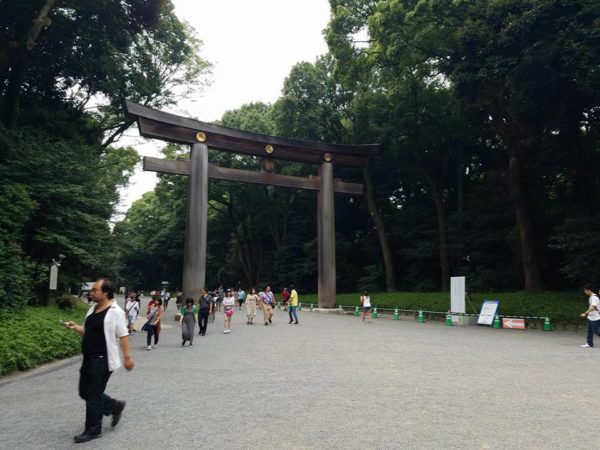
The entrance to the Meiji Jingu. According to the plaque, this is the largest torii in Japan, made of Taiwania wood.

Now, the trains are primarily used for tourism. According to a map of the entire Alishan Forest Railway, it looks like the train begins in Chiayi (嘉義) (at 30m elevation) and ascends all the way to Chushan (祝山) (at 2451m elevation).
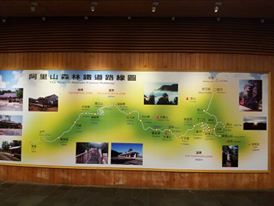
Map at Alishan Station.

We took the train from Alishan stop (阿里山), which is marked as being at 2216m elevation. The map also points out the elevations at which the climate changes, from tropical to subtropical (at 800m) to temperate (at 1800m). I could definitely feel the change physically – it went from insanely hot and humid (coming from Hsinchu 新竹; this was mid-July) to quite chilly and cold (around 50 degrees Fahrenheit, although in the early morning before sunrise it dropped to around 40 degrees on the mountain).

Even though we arrived early (at around 4:30am~5:00am, I cannot remember the exact time), there were already trains that departed carrying passengers and the line waiting to board was also already long. (The website mentions that the first train leaves at 4:00am in summer, while during winter months, the first train departs closer to 6:00am to adjust with the time of sunrise.) I wasn’t able to sang a seat on the way up to the mountain, and I wasn’t quite able to take photos out the window since it was still too dark to see anything, but the inside of the train was quite pretty as it was decorated with pink flowers. I think it was about a 20 minute ride to the top, but I was pretty sleepy.
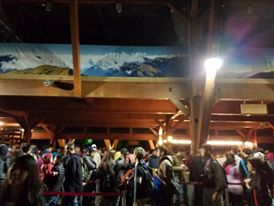
The line was already so long!

Waiting for the train to arrive…
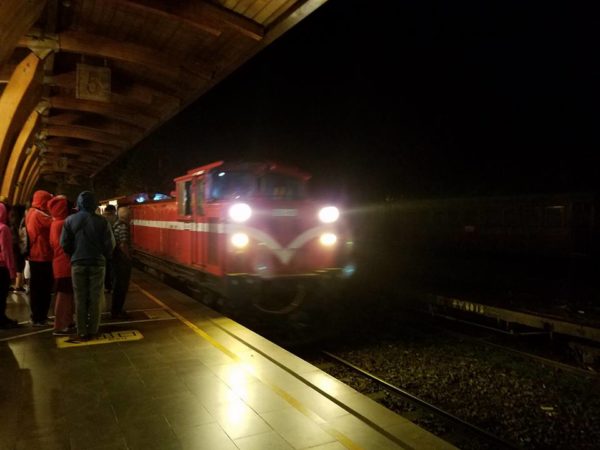
…here it comes!
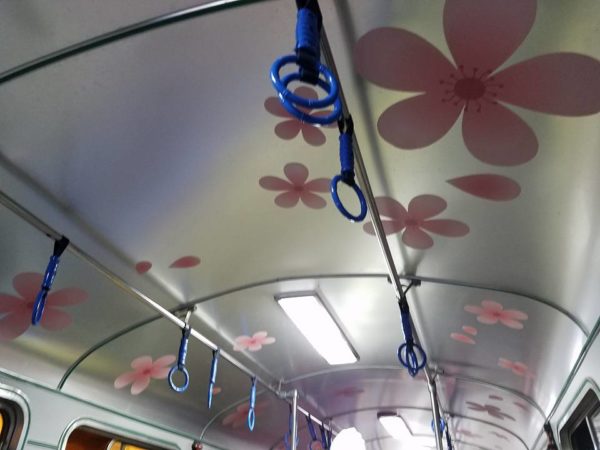
In lieu of scenery, pretty flowers inside the train car!

Arriving at the peak of the mountain, I was not really anticipating much visibility because the area was crowded with tourists – some traveling on their own with family members and some people in large tourist groups. For a while, while waiting for the sun to rise, I amused myself by not only admiring the gorgeous morning colors in the sky, but also the sheer amount of screens emanating from the crowd. Smartphones, cameras, video recorders, but mostly cellphones of course – it was definitely a little stressful and slightly off-putting to be in such a large crowd, but that could definitely speak to my own antisocial nature.
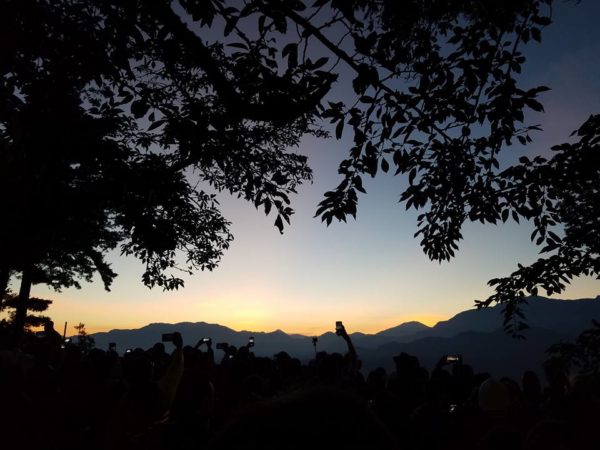
A sea of cellphones and selfie sticks.

Luckily, I had done some quick online research the night before and read that there was another path further up the mountain that also allowed for some visibility. Since we were with Mr. Fang, he very graciously decided to do some investigating for us and was able to find and follow the path to the slightly higher peak, which ultimately led to an out-of-use helicopter pad. There was only one small tour group at the higher peak (about 10 people I think) from Mainland China, so visibility was much better. It was a good idea to split from the increasingly larger and larger crowds at the lower observation platforms.

The small tour group leader was really funny and kept on cracking jokes while we waited for the sun to rise. He kept on telling his group that the sun would make a popping noise, that it would literally “pop” up over the distant mountain peaks. I kept on thinking of the “sunrise song” too that always accompanied the cartoon sunrises.

I can just imagine a cartoon sun popping up anytime now!

When the sun finally did rise (unfortunately no sudden popping or sound effects), it was definitely beautiful and I would say that it was worth waking up early for. That the location we were in was relatively quiet and way less crowded definitely made the experience way more pleasant, and with the sunrise also meant warmer temperatures (I was pretty much frozen at this point). Since I imagine each sunrise to be unique, despite the tourist traffic, I would actually want to return again and re-experience the sunrise. Maybe next time we would have more time to do a little bit of hiking or exploration on the trails around he mountain and to check out the other stops on the train.


Since the trains to the peak only run for the sunrise, the last train scheduled to leave the peak was at 6:45am, which left us a little bit of time to grab some quick snacks before leaving. Turns out there is nothing more satisfying than a warm can of soy milk after waiting in the cold for so long (on an empty stomach).

Sunrise view from the lower viewing area.

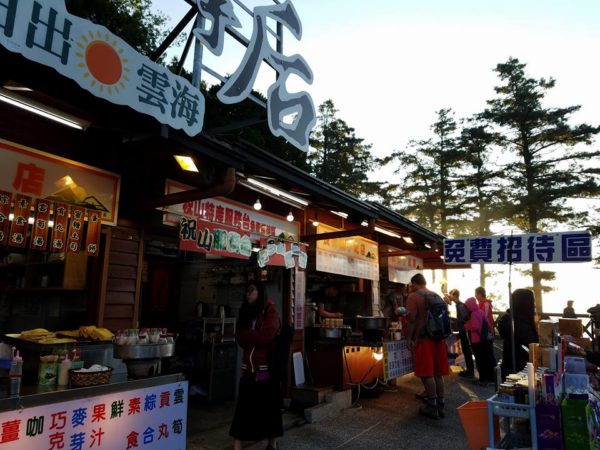
Souvenir and snack shops.
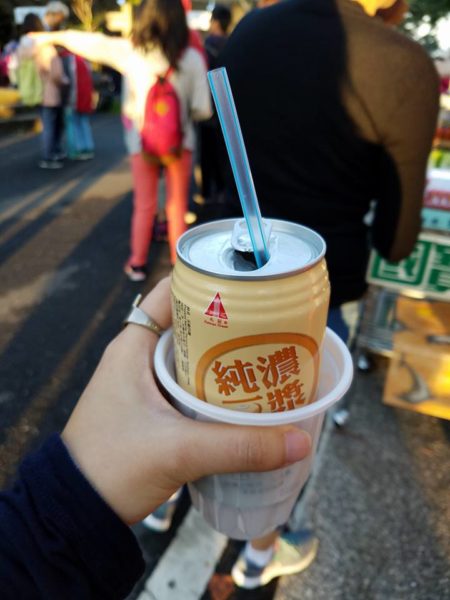
Warm soy milk~

I also experienced another unique food experience at the peak. There was a stall selling fresh wasabi root among other wasabi products.
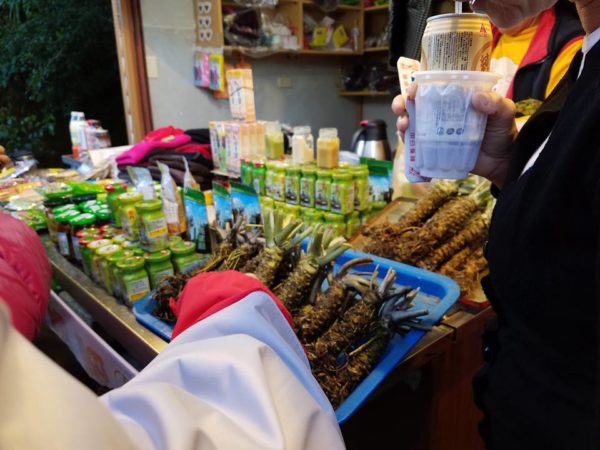
Array of fresh wasabi and other wasabi-related products.

While I had known that Alishan was famous for producing tea, I had no idea that wasabi was another one of the famous products harvested here (here is a typical tourist website listing some of the “Alishan specials”). All I really know about wasabi is that the green gloop served with sushi in the U.S. is not real wasabi but a mixture of mustard paste and horseradish that is dyed green. I also know that I really hate “wasabi” because I cannot handle sinus-clearing spicy flavors very well. I was a little hesitant about what fresh wasabi would taste like, but of course I couldn’t pass up the opportunity to try it, especially if the auntie working at the stall was going to give us a small sample of the freshly grated root.
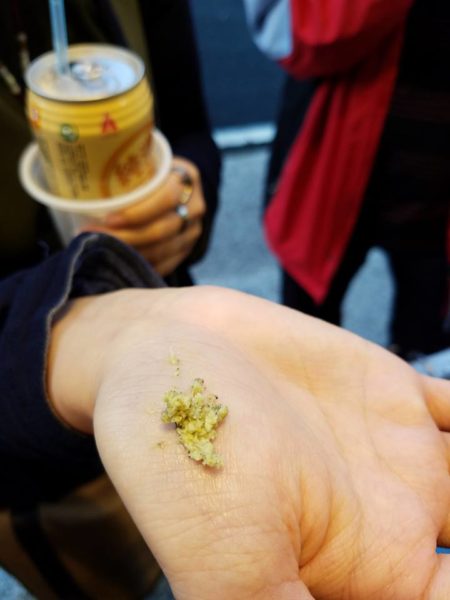
Freshly grated wasabi root.

After cleaning the root, she grated a generous amount onto my hand. I loved how beautiful the color looked – it wasn’t bright green like the wasabi that I’ve had before, but the look of the texture and color on my hand was almost like the inside of a falafel. Upon tasting, however, the texture was completely different from a falafel – a little crunchy and crumbling before dissolving. The horseradish/sinus-spicy taste was so subtle, just arriving a little bit at the end. The first taste was that of almost grassy freshness. There is no way I would ever eat this much wasabi in the U.S., but the generous grating was just enough to get a strong taste of the much more subtle flavor of the fresh wasabi. There was still a strong kick after eating the entire amount on my hand, but the freshness also meant that it wasn’t just sinus-clearing spicy, but that there were other layers of flavor as well. While I wouldn’t go out of my way to find fresh wasabi now that I have tried it (or pay top dollar for it), I can definitely say for sure that I did enjoy it and would be interested to see how this would taste on sushi and raw fish, or paired with other foods.

I wasn’t left wondering for too long – turns out the woman in the next stall (who is the wasabi stall owner’s daughter) was selling mountain pig sausages, which supposedly pairs perfectly well with fresh wasabi. As it was almost time to board the train at this point, we bought the sausages and the woman at the wasabi stand loaded a generous shaving of fresh wasabi on our sausages as well. While on the train ride back down the mountain, I ate the sausage.
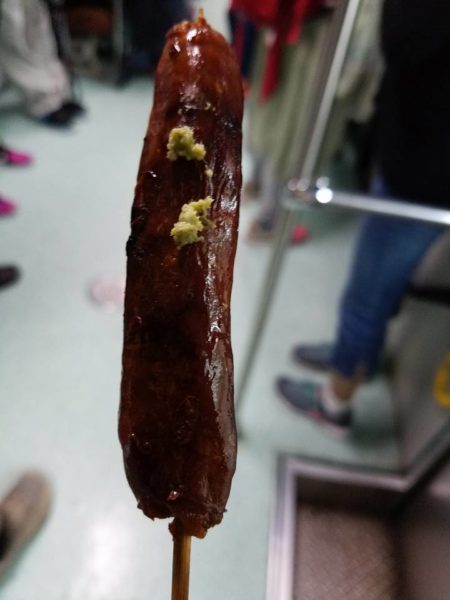
Mountain pig sausage with freshly grated wasabi.

I honestly cannot really differentiate between regular pork sausage and mountain pig sausage, so the sausage tasted to like typical Taiwanese sausage – meaty, almost a little dry wth a slight jerky quality, sweet, and savory with a bit of char. The wasabi added a little bit of extra spice to the sausage and was a perfect complement – I ended up getting quite a bit of wasabi in one of my bites and felt the nasal burn, but it wasn’t overwhelming. The grassy notes of the freshly grated wasabi complemented the meaty sausage perfectly. (I wonder if wild pigs eat wasabi too?) This was definitely the perfect snack and it was enjoyable watching the forest and sunrise while taking the train back to Alishan Station and snacking too.

I’ll leave the post with some images of the scenery in the daytime, as well as the walking trail, which I hope to try next time.
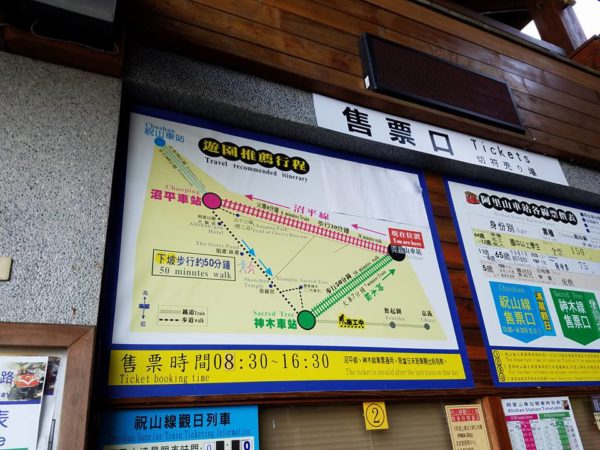
Map of different walking trails and ways to ascend the mountain.
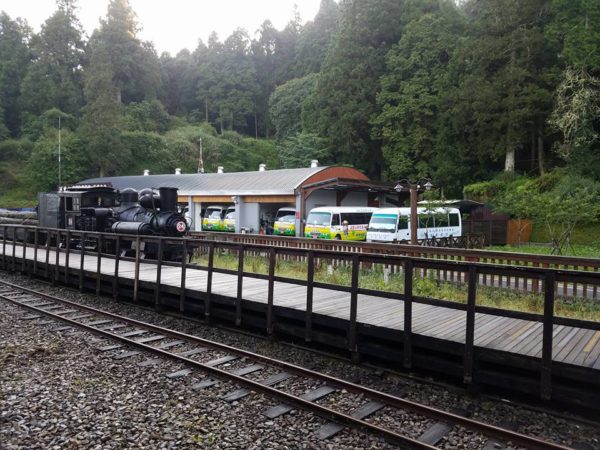
View of the train platform.
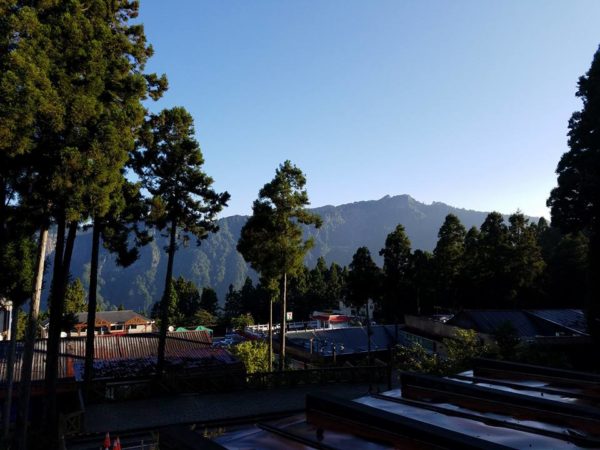
View from the station.
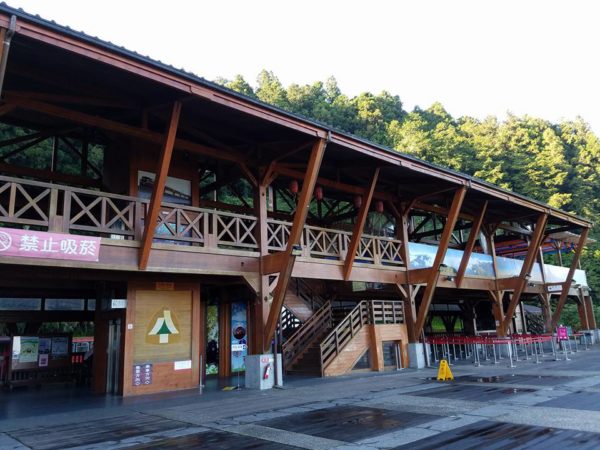
View of the station.

Before heading back to our hostel for a quick nap, we stopped by the 7-11 in the train station, which is itself housed in an interesting traditional-style building, for some quick snacks and drinks.
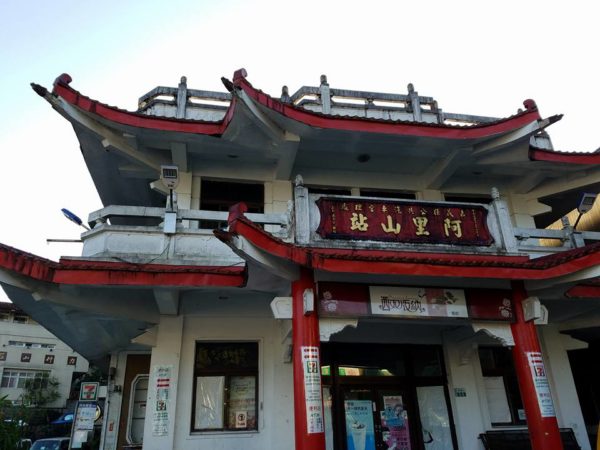
7-11 housed in an interesting looking building. The characters read “Alishan Station.”

There was a very pretty dog at the entrance, who looked like it was doing quite a diligent job of “guarding” the entrance. I wished it the best of luck before we headed back out and onto our next adventure.
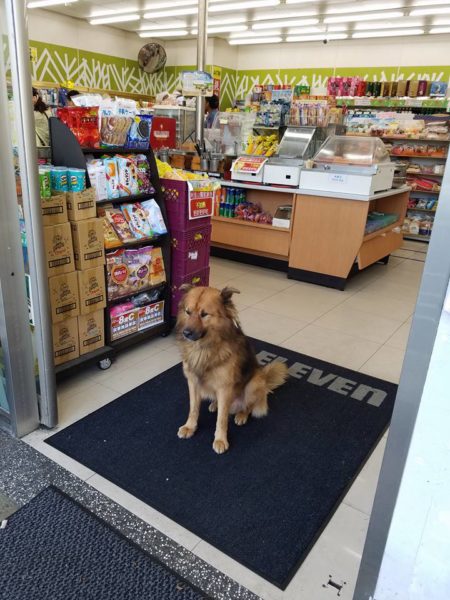
The guardian animal of the convenience store?
Flavor Japan: best Japanese fastfood

August 26, 2014 By: Mai Truong Category: Flavor Japan, Japanese, savory snacks, Travel

There’s a Mister Donut near our apartment, but I still haven’t walked into it once (*). As much as I like Mos Burger (which is better than McDonalds Japan, which in turns is inarguably better than McDonalds US, of course 😉 ), I prefer the fastfoods that we don’t have.

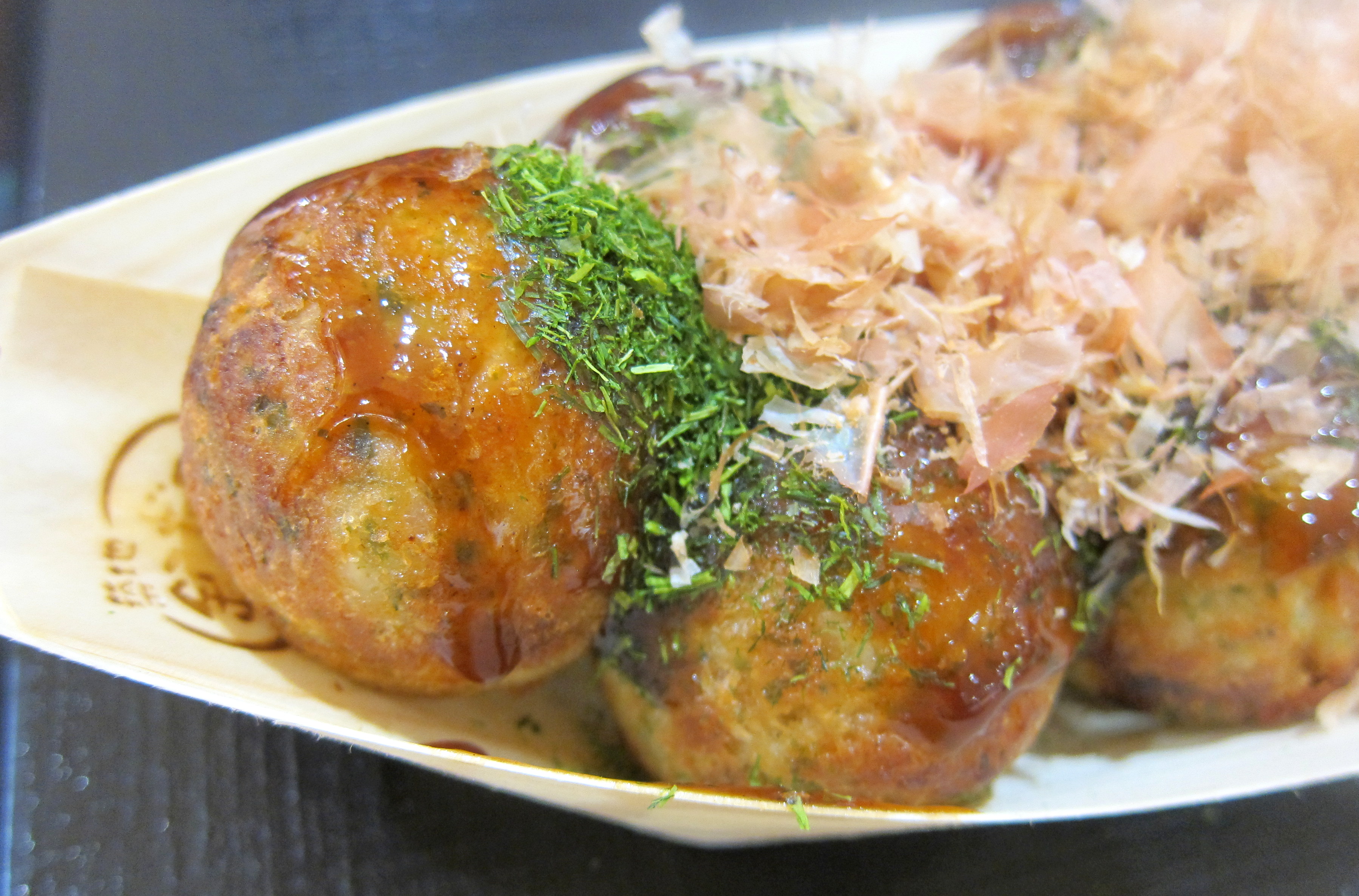
1. Takoyaki

gindako-takoyaki
Fluffy and bouncy. Inside each of these shining orbs is a piece of real octopus. When I die, I want to be buried with takoyaki (which is also the name of my phone, by the way)…

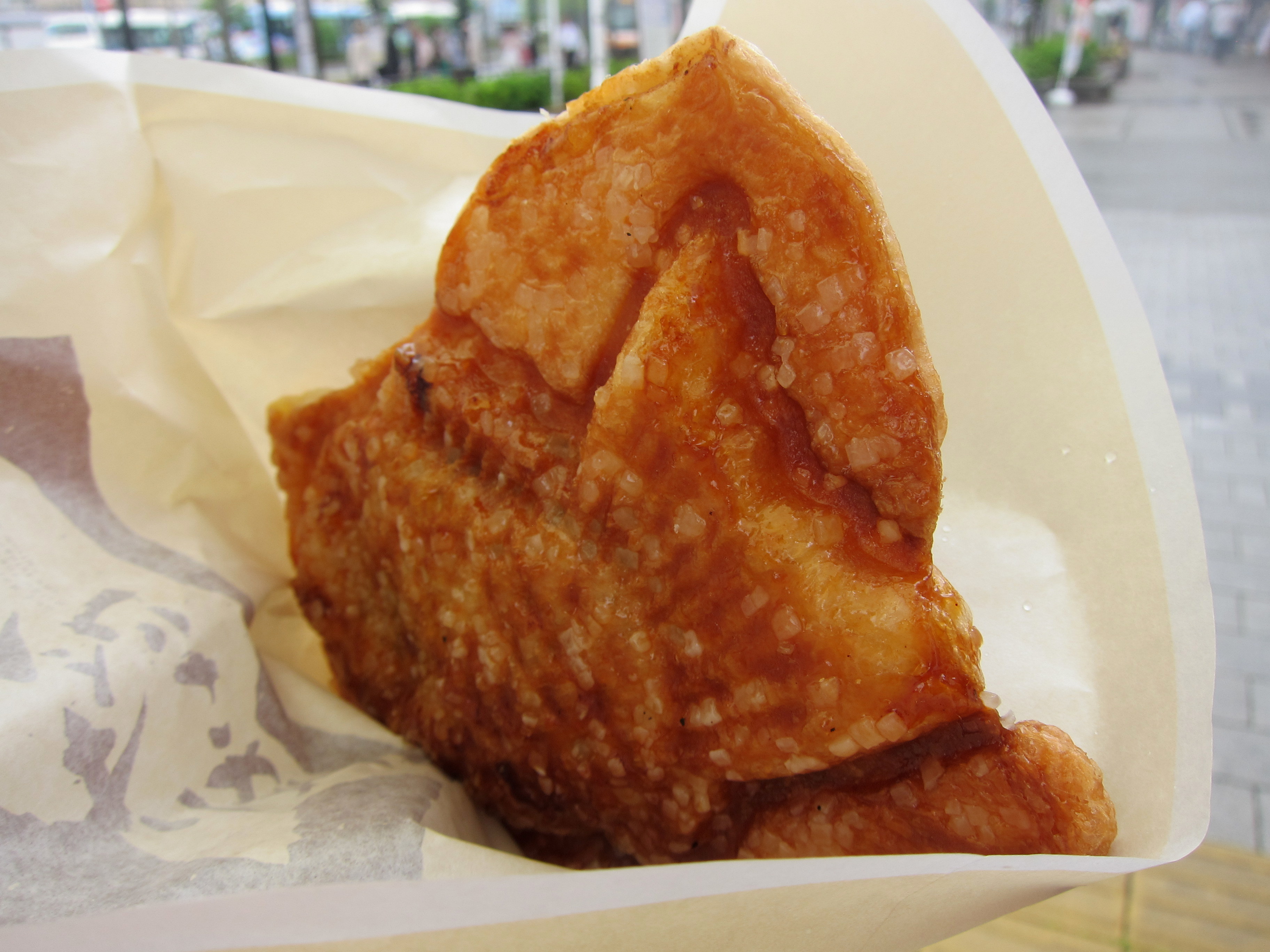
2. Taiyaki

gindako-taiyaki
Normal taiyaki is a-okay (I’m not THAT into red bean paste, but I like the doughy part outside). Nonetheless, Gindako makes these croissant-crust taiyaki (210 yen) with croissant dough instead of pancake batter for the outside, and they sprinkle sugar crystals on it. Oh man….

3. Sushi

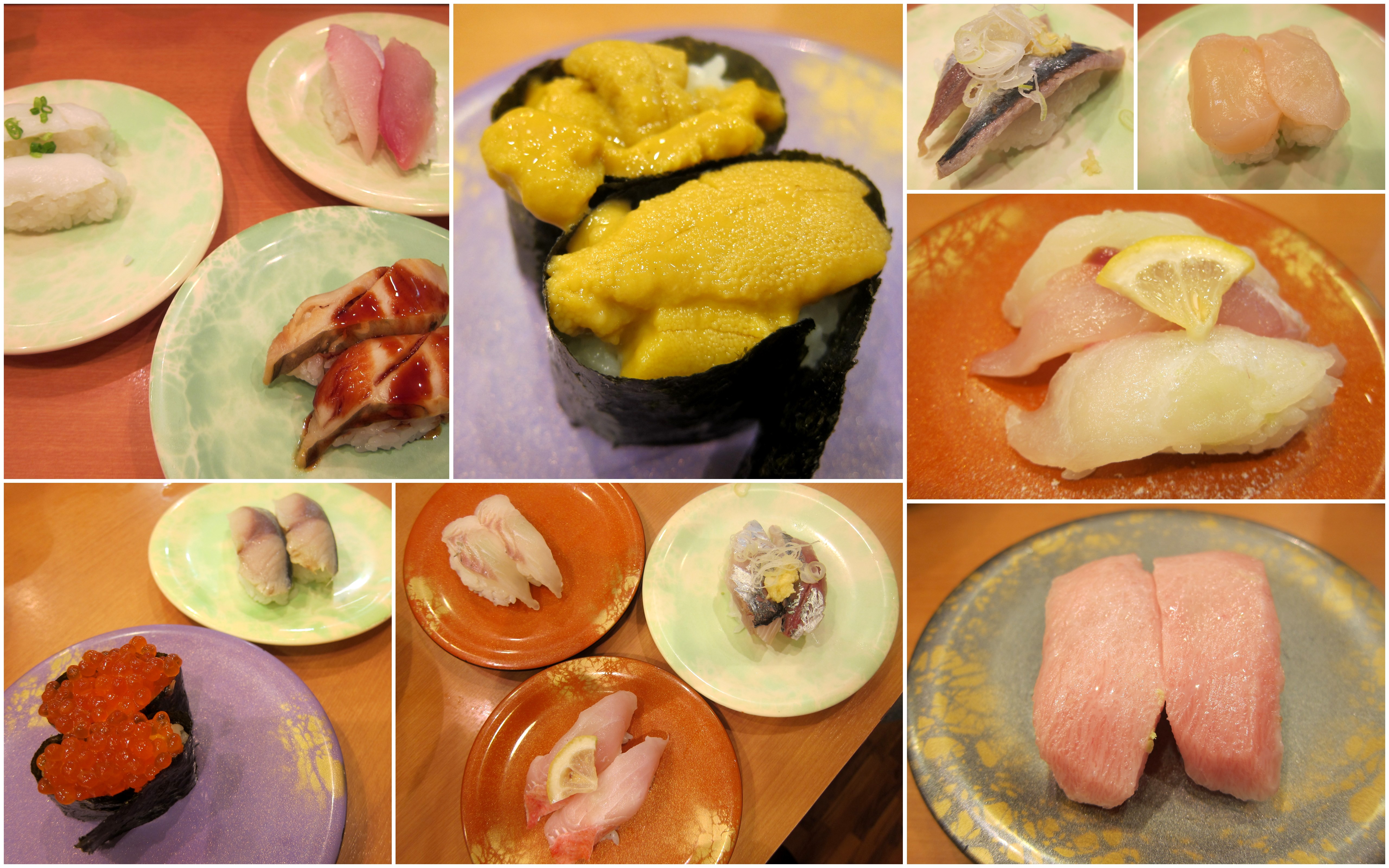
Kaitenzushi near Kashiwa eki
Few things can be faster than sitting down at a conveyor belt and picking up plates of food floating by you. This kaienzushi (conveyor-belt sushi) is rather more intimate (less fastfood-y) than other kaitenzushi’s because the chef is right there, and you can ask him to prepare specific nigiri to order.

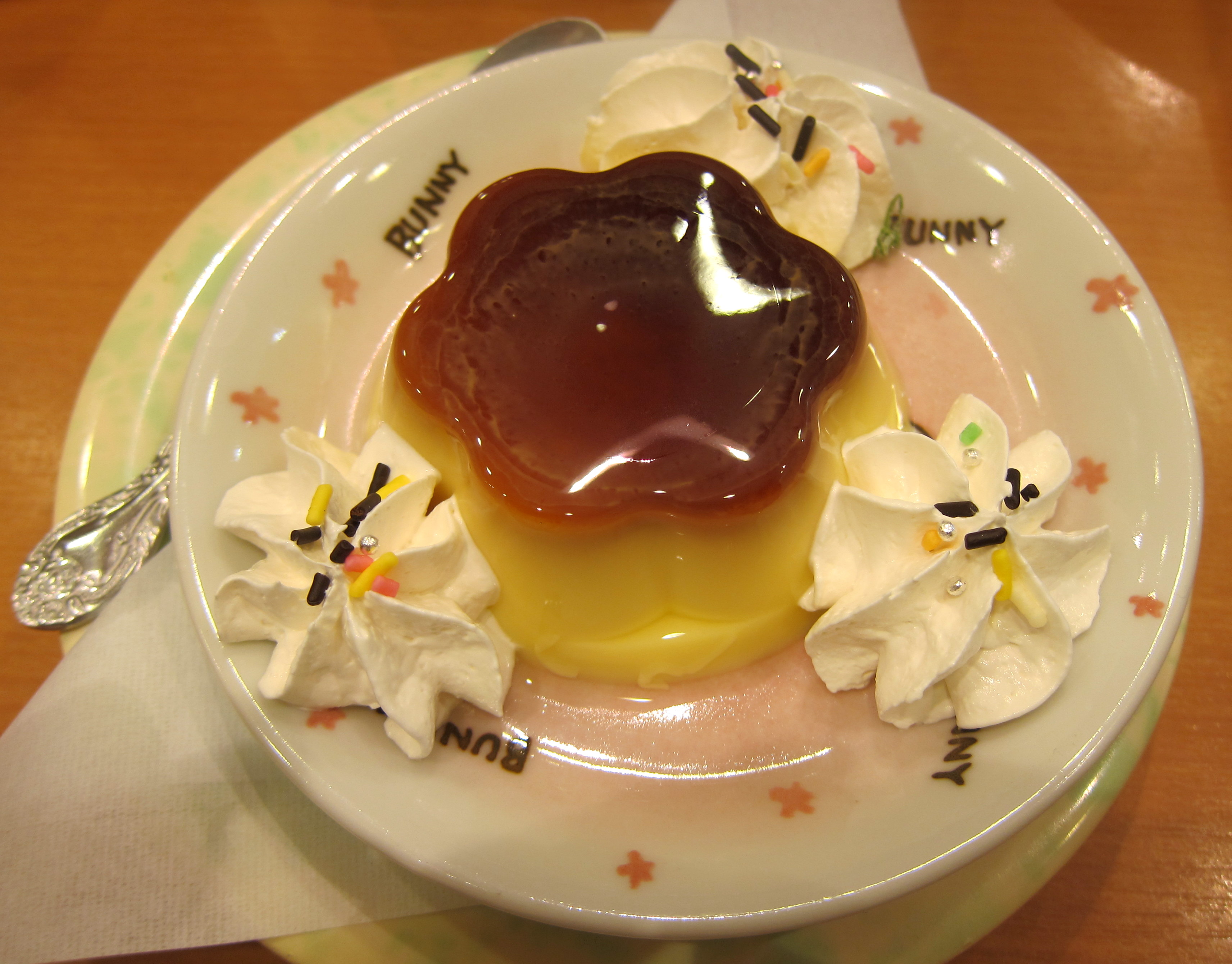
kaitenzushi-pudding
The most rewarding plate that I look forward to all night was after the fish, though. My friend said that I can buy loads of these puddings at the store. Well, what does that matter? Little Kana in Papadol! likes the pudding at kaitenzushi, and we can’t get it at a traditional sushi-ya, that makes it plenty special!
——————————————————————————————-
Guest blogged by C. from Katsushika.

Foodnotes:
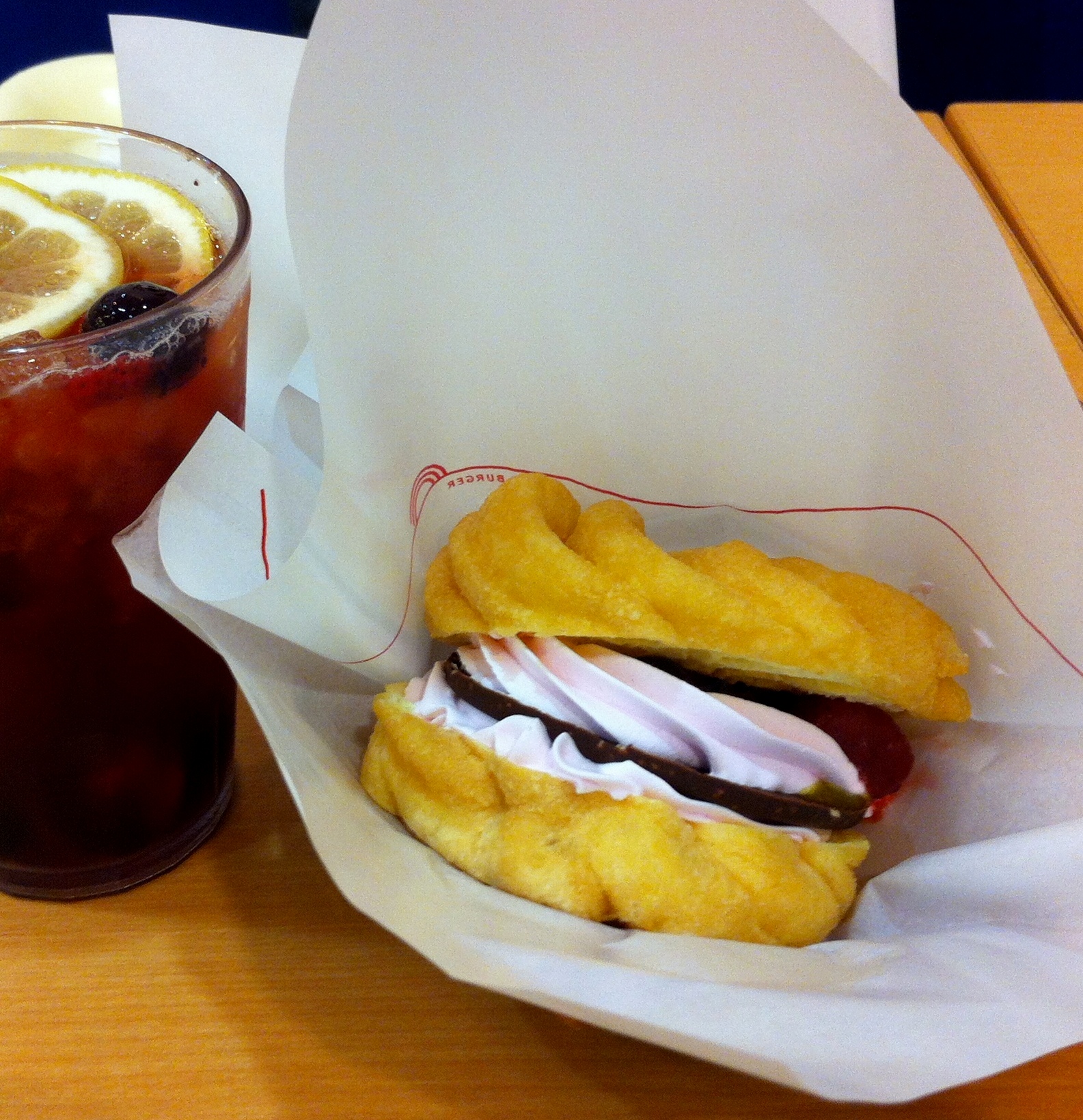
(*) I have had a Mister Donut donut, however, in the form of a dessert Mos “burger” with strawberry sauce, chocolate with rice puffs, strawberry whip cream and fresh fruits (290 yen):

mos-dessert-burger
More Mos Burger + Mister Donut creations here. (I want the French Cruller so bad!)

One bite: patechaud at UCafe

March 27, 2013 By: Mai Truong Category: California - The Bay Area, One shot, savory snacks, Vietnamese

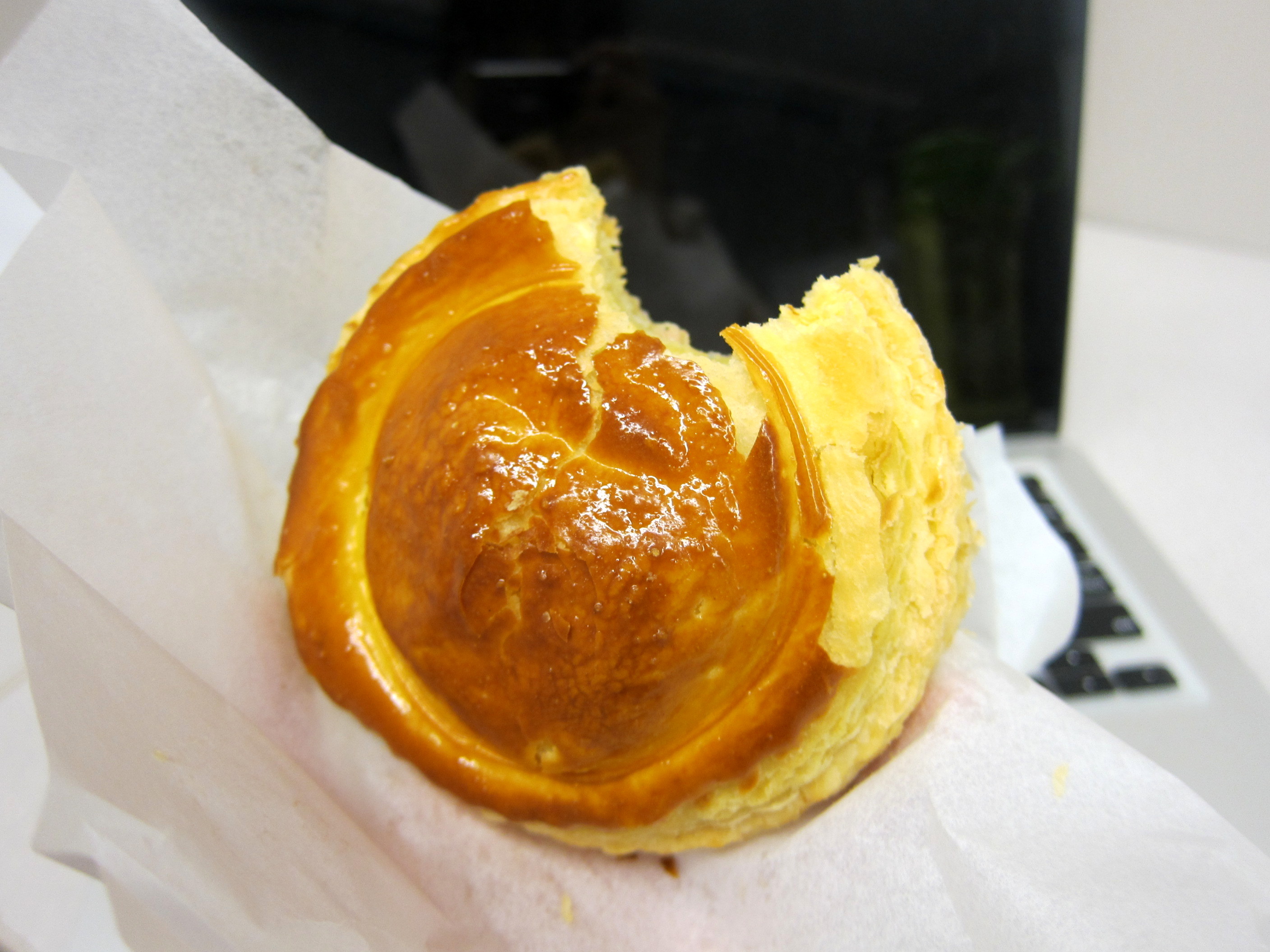
patechaud-ucafe-berkeley
In 2008, nobody knew what I talked about when I said “pate chaud (pronounced |pah-teh-sho|), unless that person was Vietnamese. Not even Wikipedia. But it’s French, how can wikipedia not know about a french pastry, I felt desperate. Now Wikipedia has a page for it, first created on Nov 3, 2011. So it came from an obsolete French word for hot (chaud) meat pie (pâté), but the pastry itself is far from obsolete.

Until now, the only place where I can get patechaud has been Vietnamese sandwich shops, which Berkeley doesn’t have. Then UCafe opened, and one day, I saw the patechauds at the counter. UCafe also has banh mi. Although I’ve been to the new Sheng Kee Bakery on Telegraph that everybody raves about, although Sheng Kee does have an artificial-tasting but really satisfying taro bubble tea, and although UCafe doesn’t have taro bubble tea (yet), I’ll be loyal to UCafe.

The nitty gritty: UCafe labels it “puff chicken” on the receipt. I don’t know what they call it per se because they’re not Vietnamese and I do the classic point-and-get thing. The filling: pretty different from the normal Vietnamese ground pork meatball filling, this one has chicken, woodear mushroom and some kind of fatty yellow mush that my best guest is something of plant origin (potato or bean paste?) soaked in gravy, or maybe it’s just gravy. But it’s satisfying, like all things with salt and fat. Worth its $1.50 and I don’t remember getting sick last time I ate it, so I got it again today. 😉

Eat Real Festival – 6-sentence Recap

September 26, 2012 By: Mai Truong Category: California - The Bay Area, Festivals, Korean, savory snacks


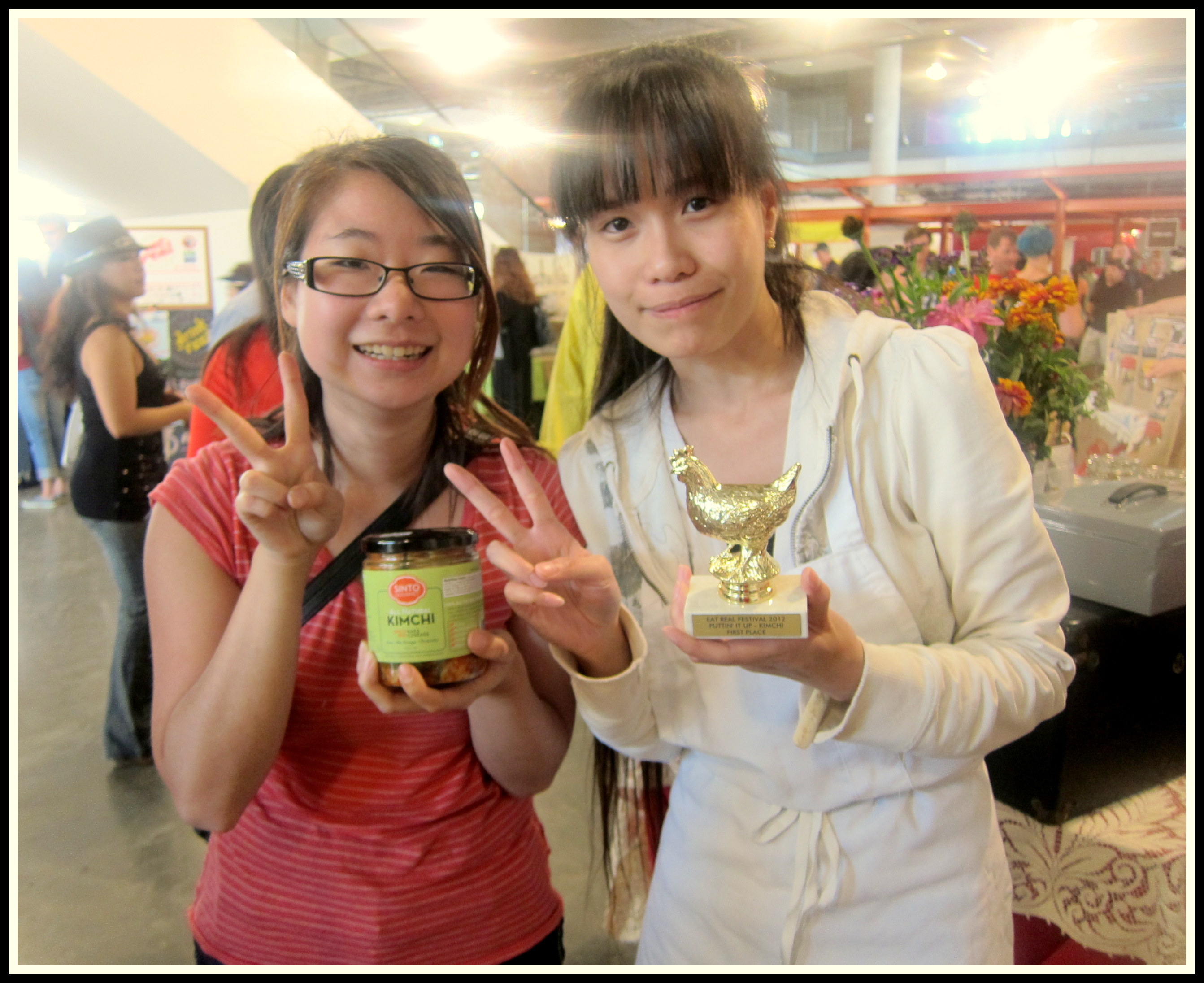
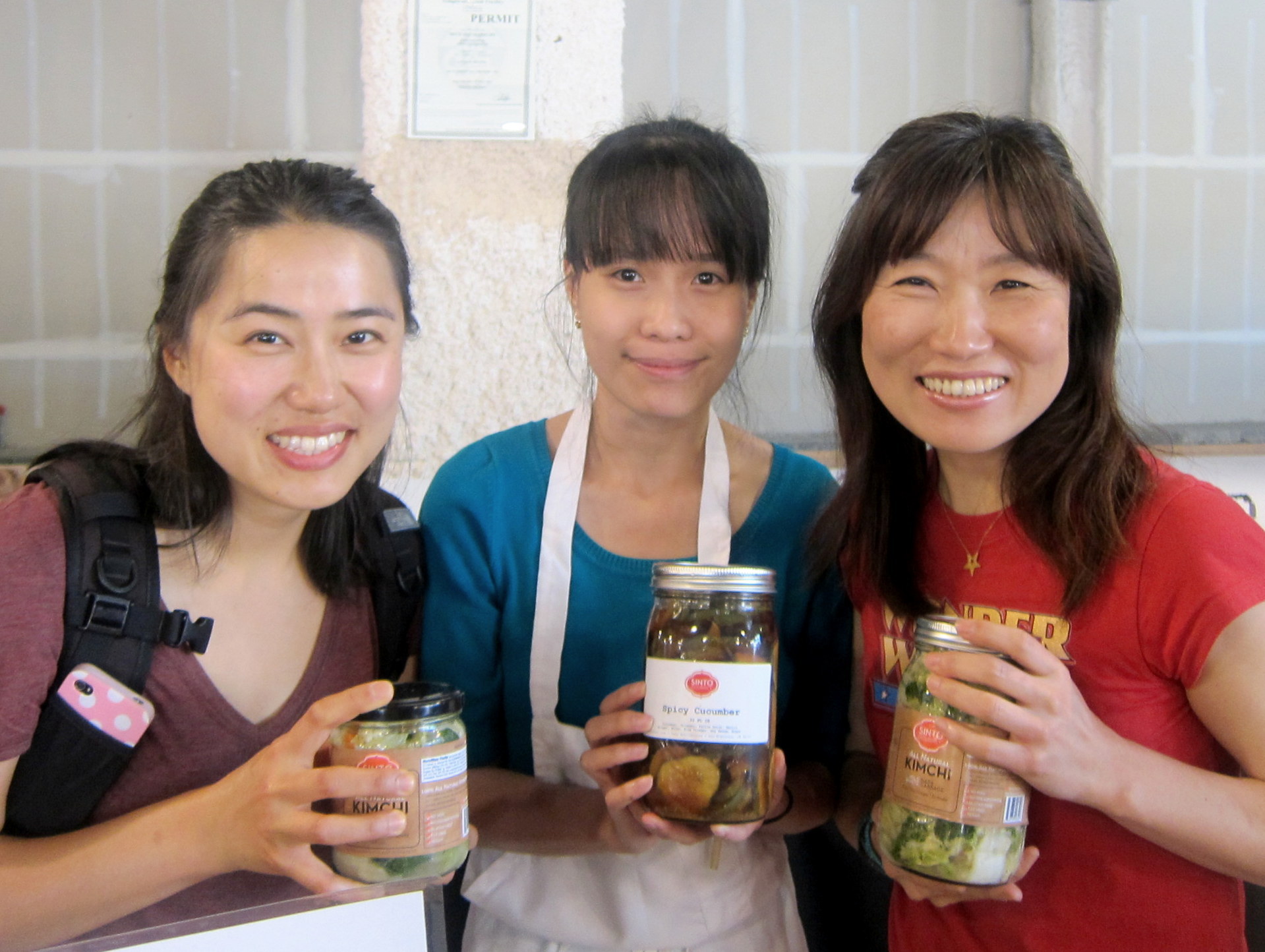
1. The kimchi I made with Kristen won First Place in the Kimchi category of the Puttin’ It Up contest. (Yes, the Korean fingers in the picture were intentional. No, that’s Sinto kimchi, not ours in the picture, but we didn’t get back our kimchi at the time this picture was taken.)


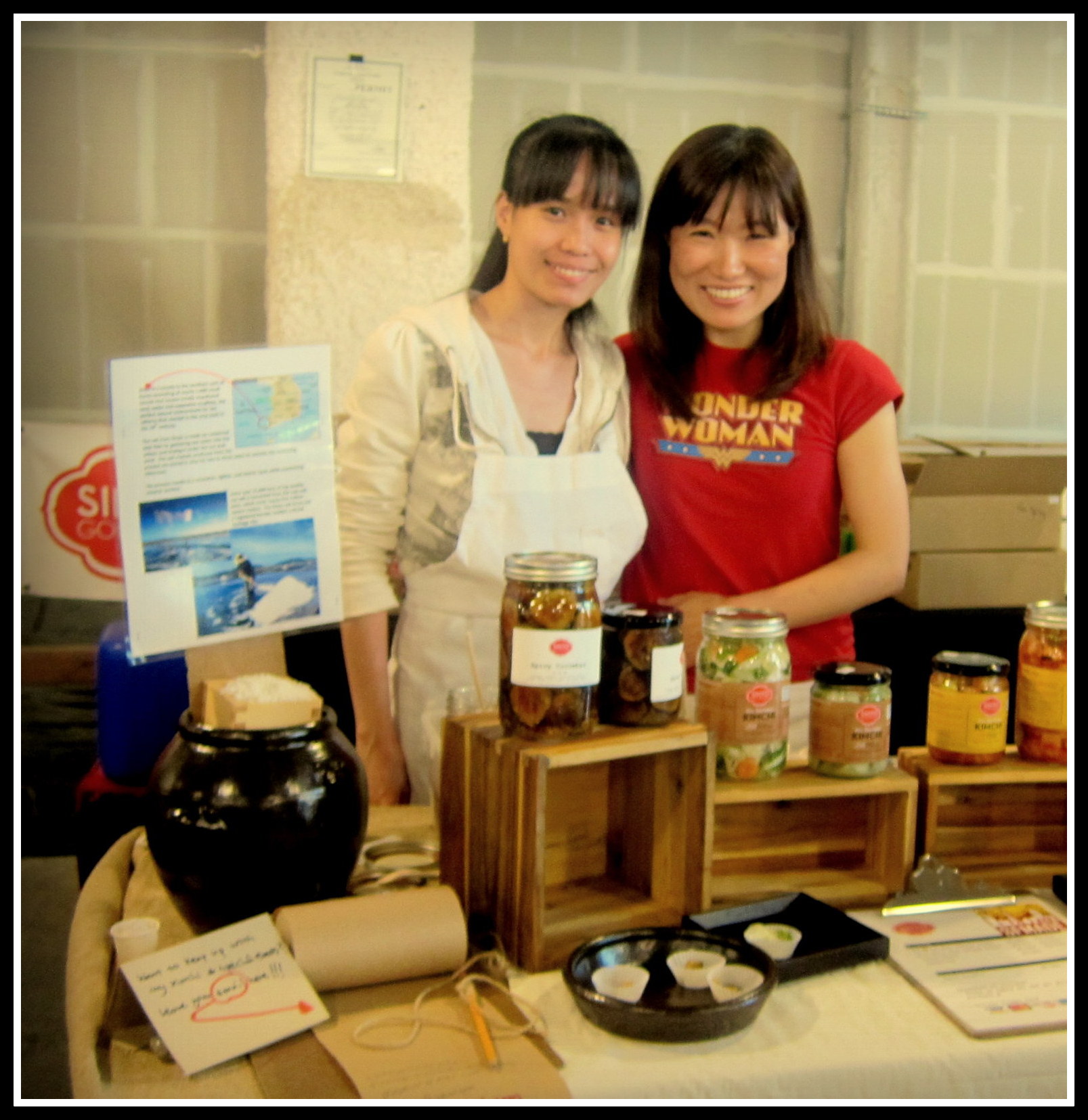
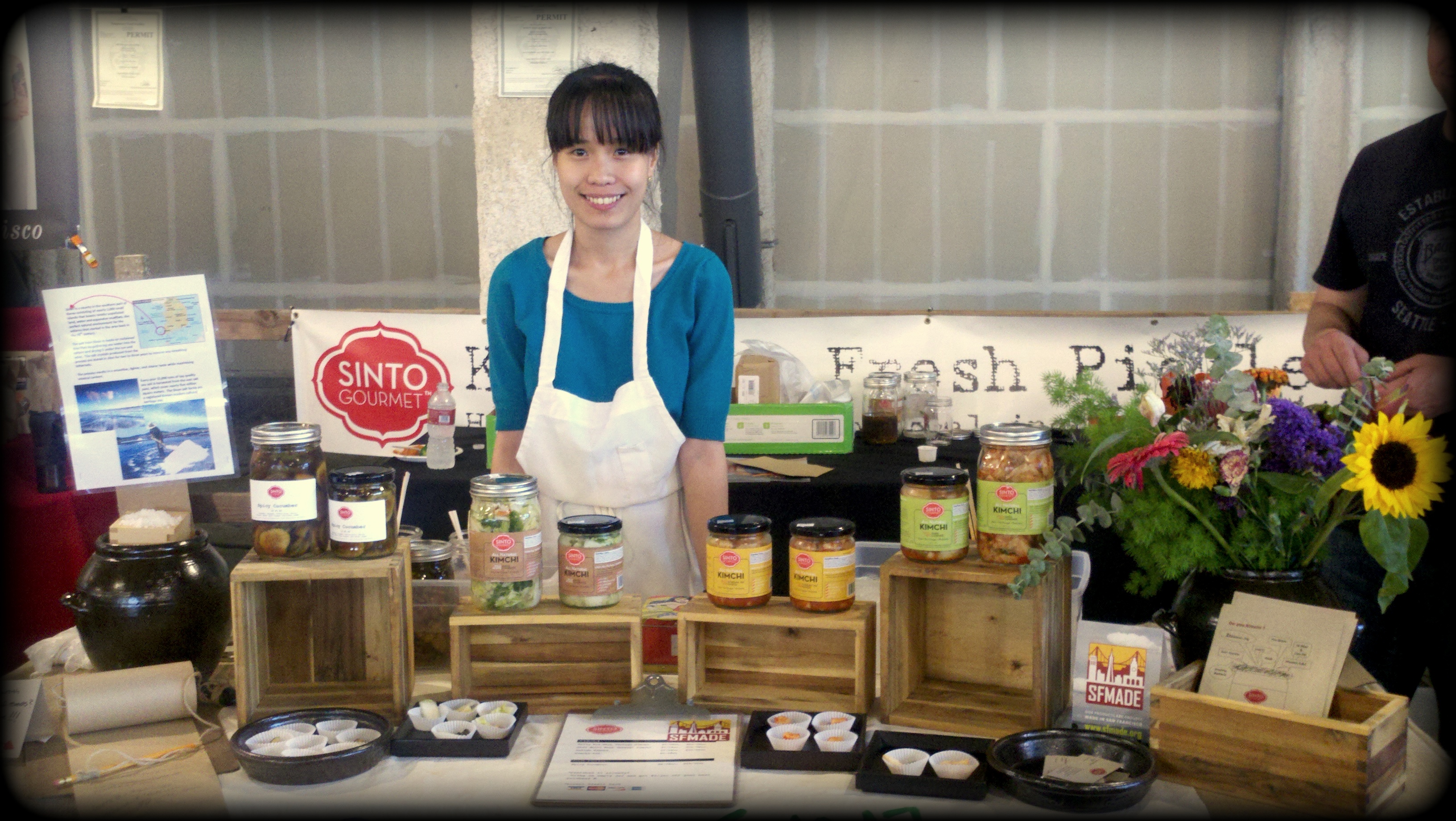
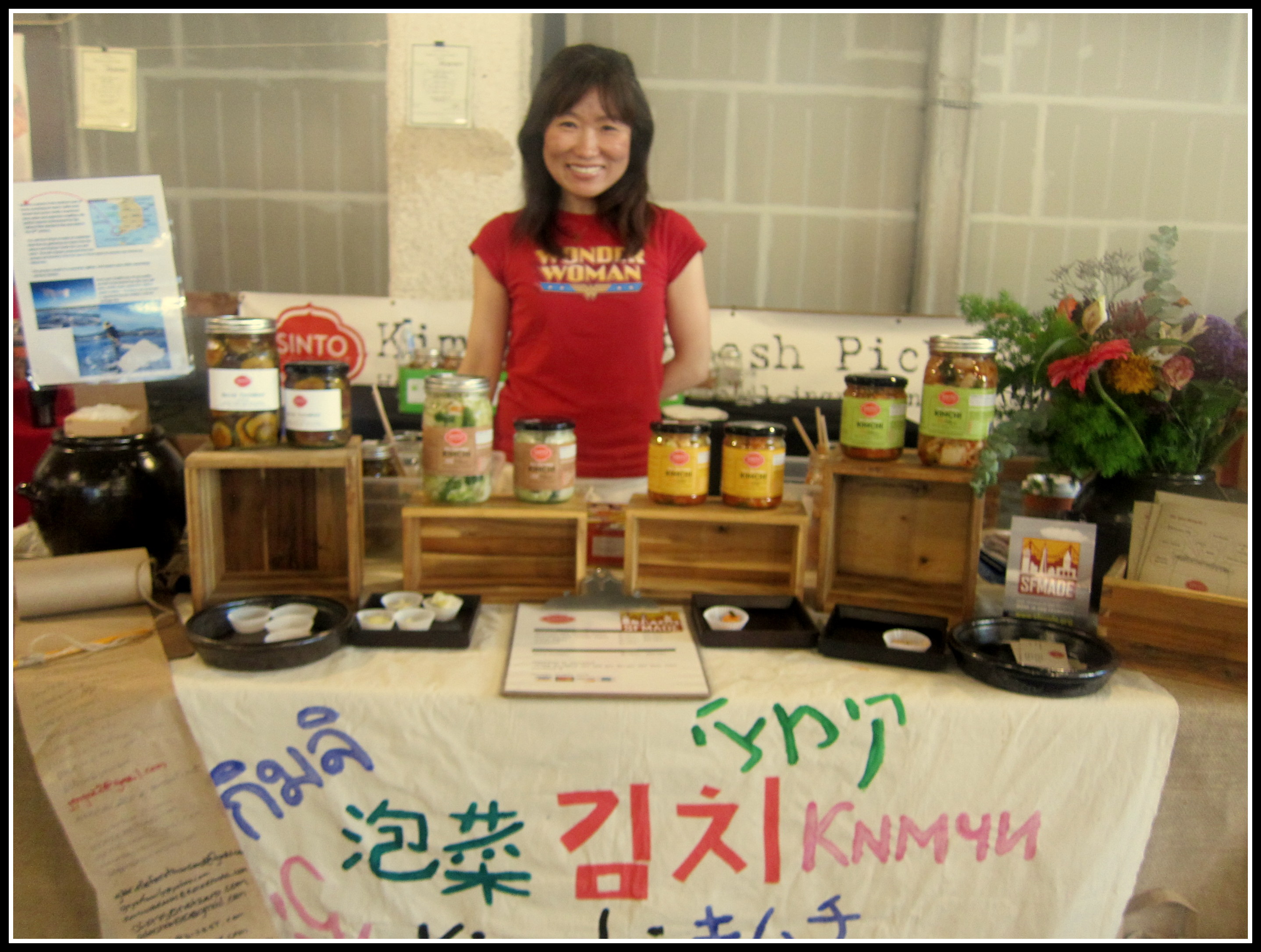
2. Via friend’s introduction (고마워요, 유경 언니 :-)), I ended up as a helper for Hyunjoo Albrecht at her Sinto Gourmet kimchi table on Saturday and Sunday.


3. Saturday was crazy, no spare second between chopsticking kimchi into sample cups for the festival visitors from 11 am to 6 pm.
4. Sunday was a bit more relaxing but we still sold out the big jars of kkakdugi (spicy radish kimchi) and the small jars of spicy pickled cucumber.


5. Thanks to Hyunjoo’s husband who got food for us while we stood our ground behind the table, I got to try from the other vendors: shoyu ramen from Youki, kalbi with steamed rice from Seoul on Wheels, Brown Cow vanilla yogurt, rose chai from The Chai Cart, and some pretty good mac ‘n cheese followed by a couple of dimsum dumplings.


6. Hyunjoo’s kimchi is delicious.

Read more: Eat Real 2 years ago, Eat Real 2011

Tags:

One Bite: Tteok bokki at Crunch

August 09, 2012 By: Mai Truong Category: California - The Bay Area, Comfort food, Korean, One shot, savory snacks, sticky rice concoctions


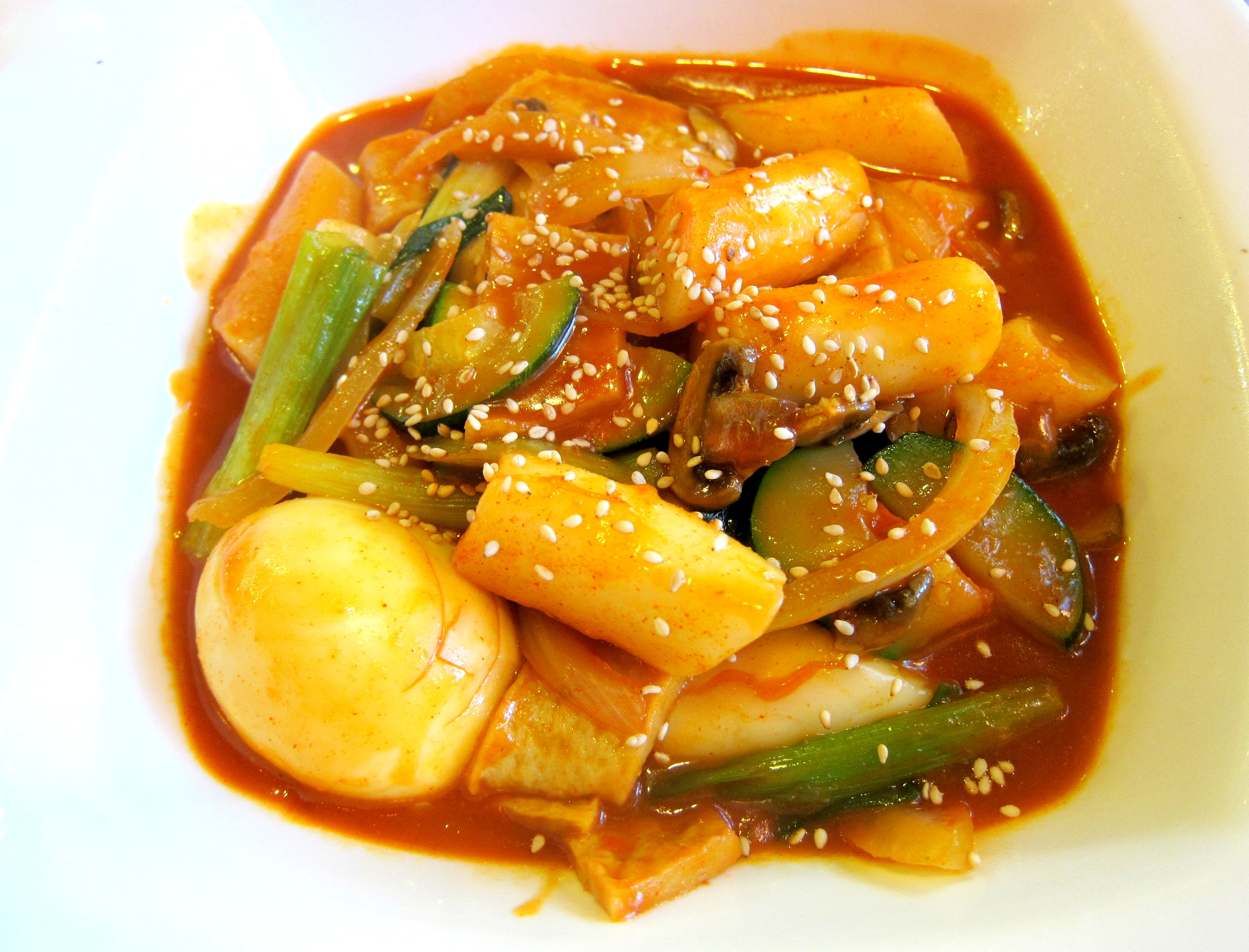
Thick sweet & spicy sauce. Soft chewy sticks of sticky rice. This is one heckuva tteok bokki. I can see myself going here for a tteok bokki takeout on movie weekends, and it’s only $7.

Address: Crunch
2144 Center St
Berkeley, CA 94704
(Downtown Berkeley)
(510) 704-1101

This place used to be a sushi joint. I ate there once. I’m glad it has changed into something much better.
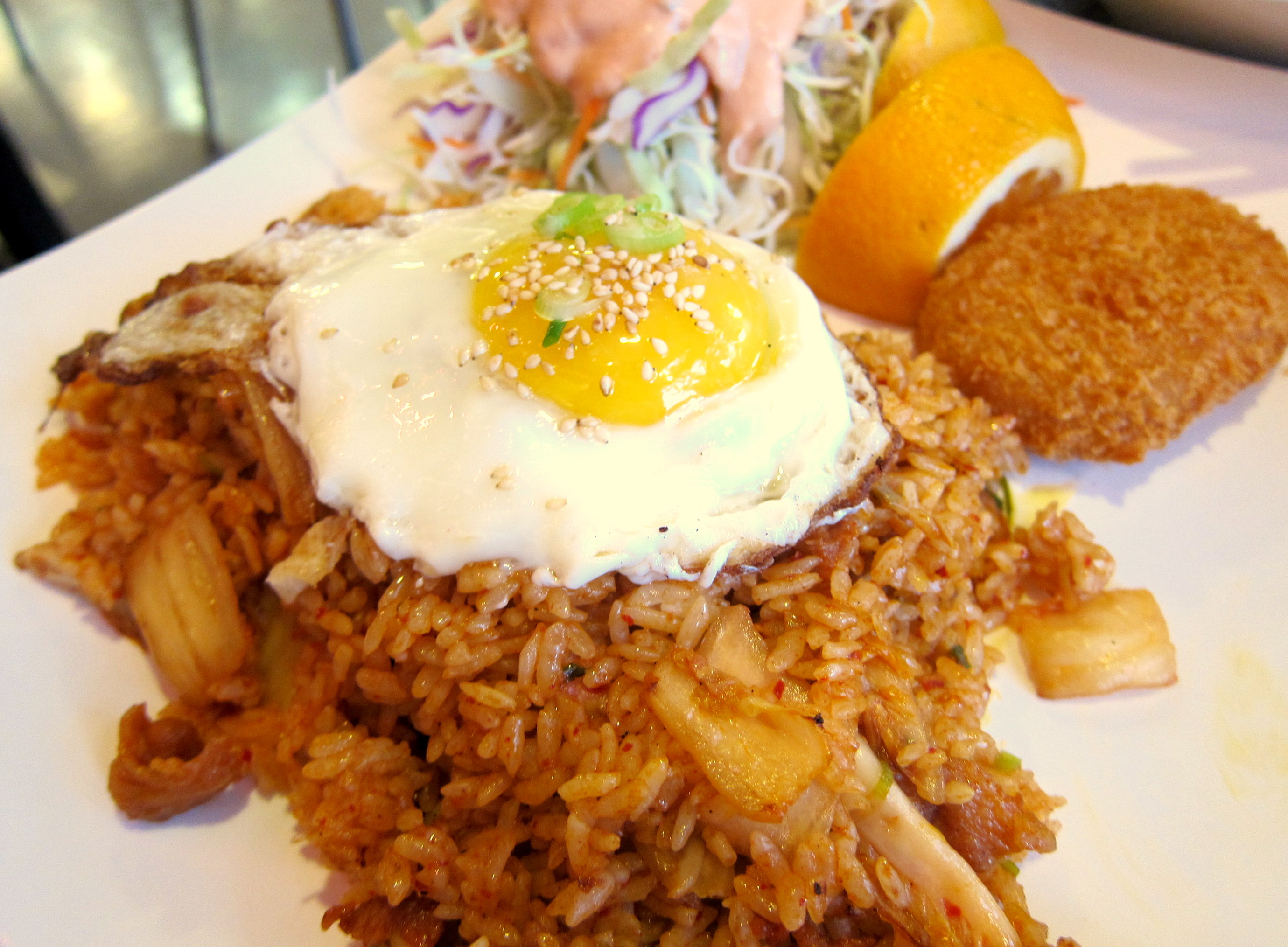
Also, Crunch gave me a humongous plate of kimchi pork fried rice that was just three spoons above my limit and not enough to take home. What should I do? Cut down or increase my limit?

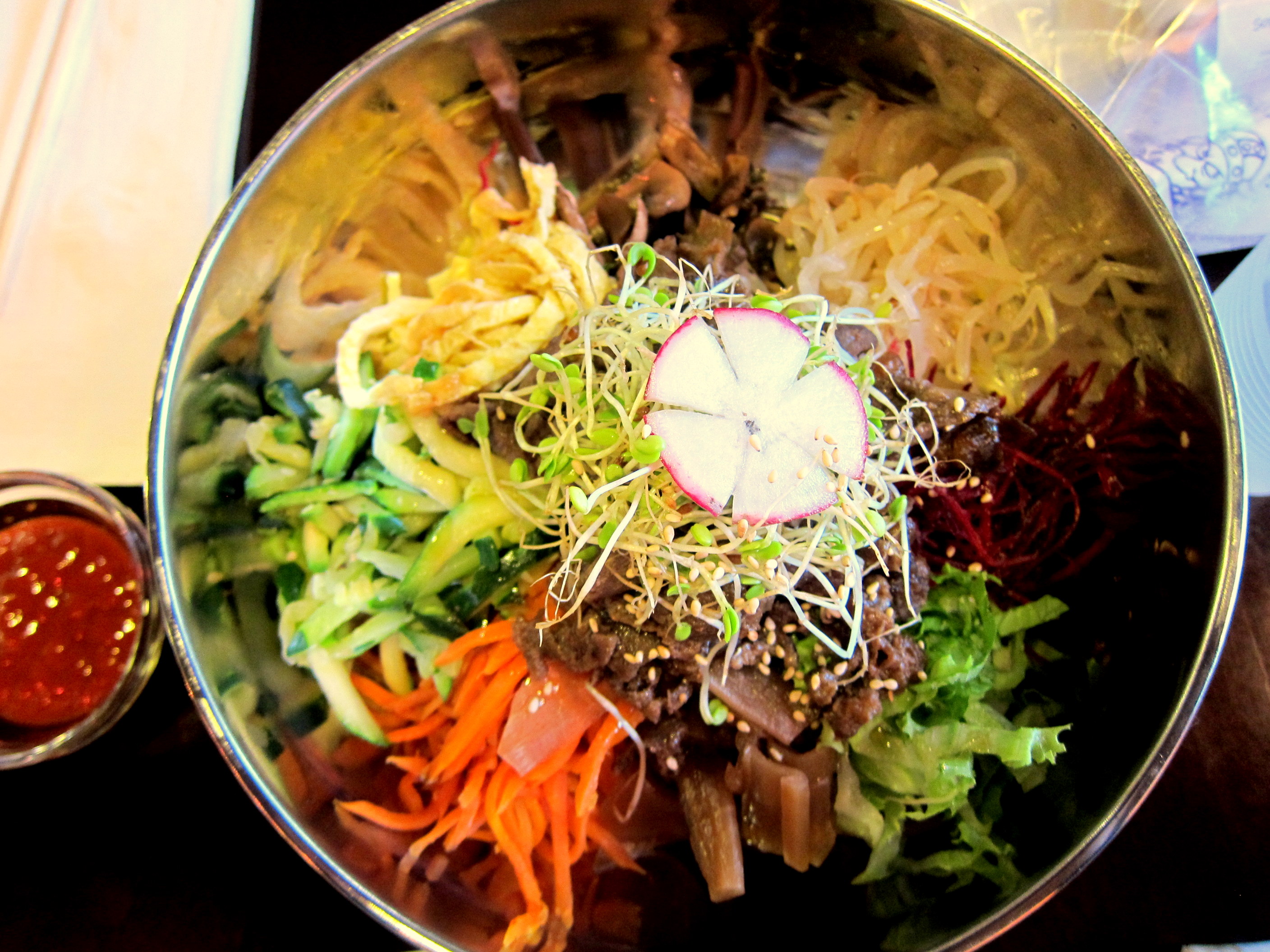
Beef bibimbap ($8)- julienned cucumber, carrots, bean sprouts, egg, lettuce and sauteed beef to be mixed with rice

Kimchi fried rice with pork ($8).

For the Summer: Gyoza with Fruits and Flowers

August 03, 2012 By: Mai Truong Category: Fruits, RECIPES, savory snacks, Vegan, Vietnamese


What can you do with 24 squash blossoms?

Twenty-four is too few for squash blossom canh, a clear soup that Mom used to make when I was little. The flower is the only thing of a pumpkin plant (squash blossom in Vietnam is pumpkin blossom) that I didn’t mind eating (I hate pumpkin). The flowers perish too quickly that American grocery stores almost never carry them(*). That scarcity, I can only guess, also raises them to the exotic level that makes the modern American restaurants include the word in their menu around this time of the year (summer squash blossom season) and feature a mere 3-5 flowers on a plate amidst the more common vegetables like zucchini and cauliflower. The craze has been around for at least a decade, Carolyn Jung said, and I don’t see it wilt away anytime soon.

Although I dislike the place at first because it’s always too crowded, Berkeley Bowl gradually grew on me. It started when I realized, after many years away from Vietnam and living just a bit inconveniently far from the Asian markets, that I haven’t seen certain grocery items for ever, for example, woodear mushroom (nấm mộc nhĩ) and straw mushroom (nấm rơm). Then one day I ran into them at Berkeley Bowl. I was like, oh? they have that here?! It’s a great moment. One where you reunite with old friends, and if we should speak in grand terms, it reminds me to appreciate growing up in Vietnam and in my family, the lack of either component would have resulted in a much, much poorer experience with food.

Sometimes that great feeling clouds my better judgment. You know, when people dig out a picture of their middle school gang from a notebook, buck teeth and silly hair or whatever, they feel compelled to put it on Facebook. When I saw the squash blossoms at Berkeley Bowl, I felt compelled to get them home. Not that I knew what to do with them or had time to cook them.


Mom suggested stuffing them with ground pork. I’ve had them stuffed with cheese and batter-fried. But it’s summer. Peaches are in season. This something I make with squash blossoms should taste light and fresh like the flowers it bears.

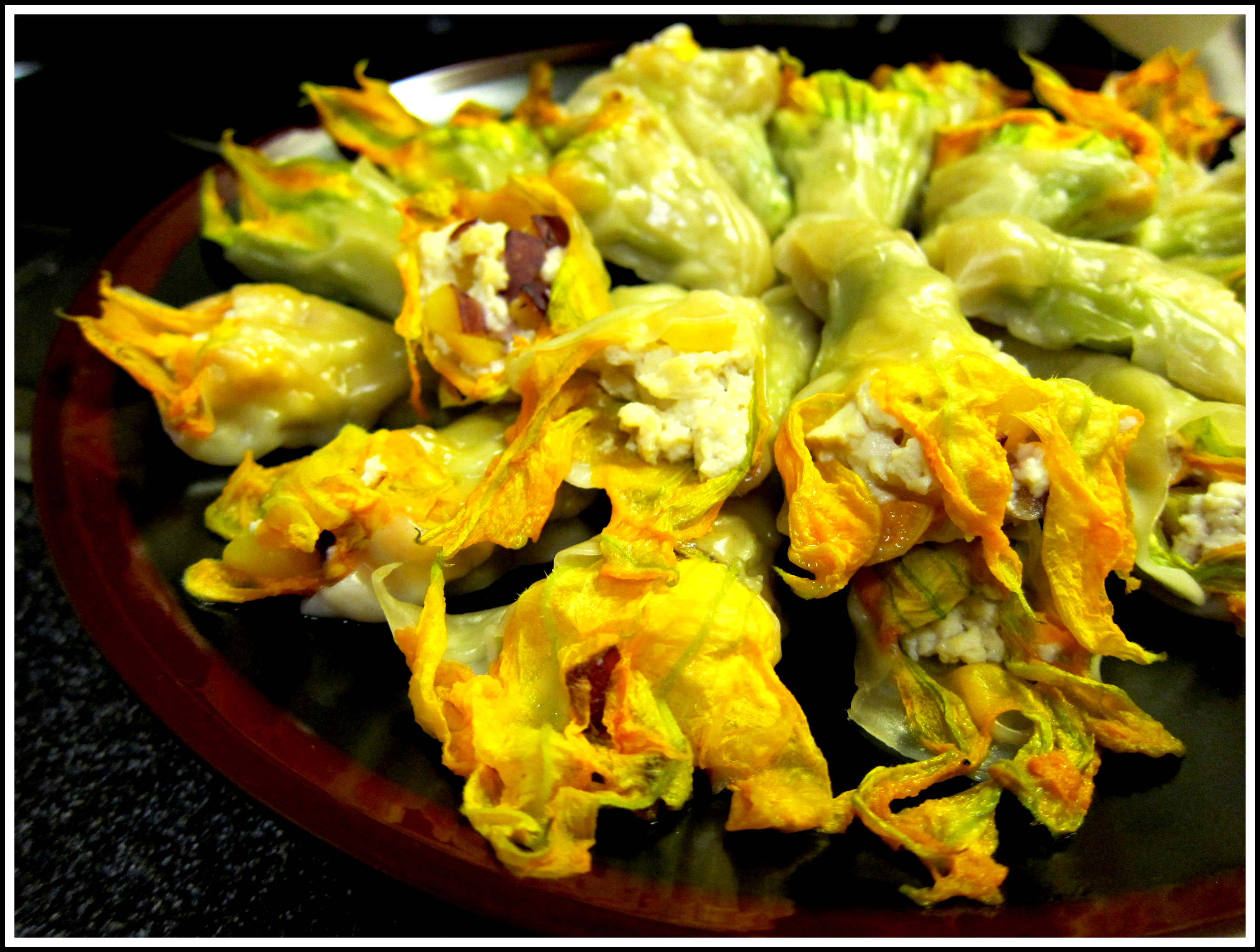
Bouquet Nectarine Gyoza
– Squash blossoms (the male blossoms, because they’re big enough to stuff)
– medium firm white tofu
– gyoza skin (wrappers)
– 1 yellow nectarine, diced (If you use peach, peel off the skin because peach has fuzz)
– sugar, salt, pepper to taste
– a steamer

Rinse the squash blossoms under cold water, peel off the dark green spikes at the base. Also break off the stem, if there’s any.
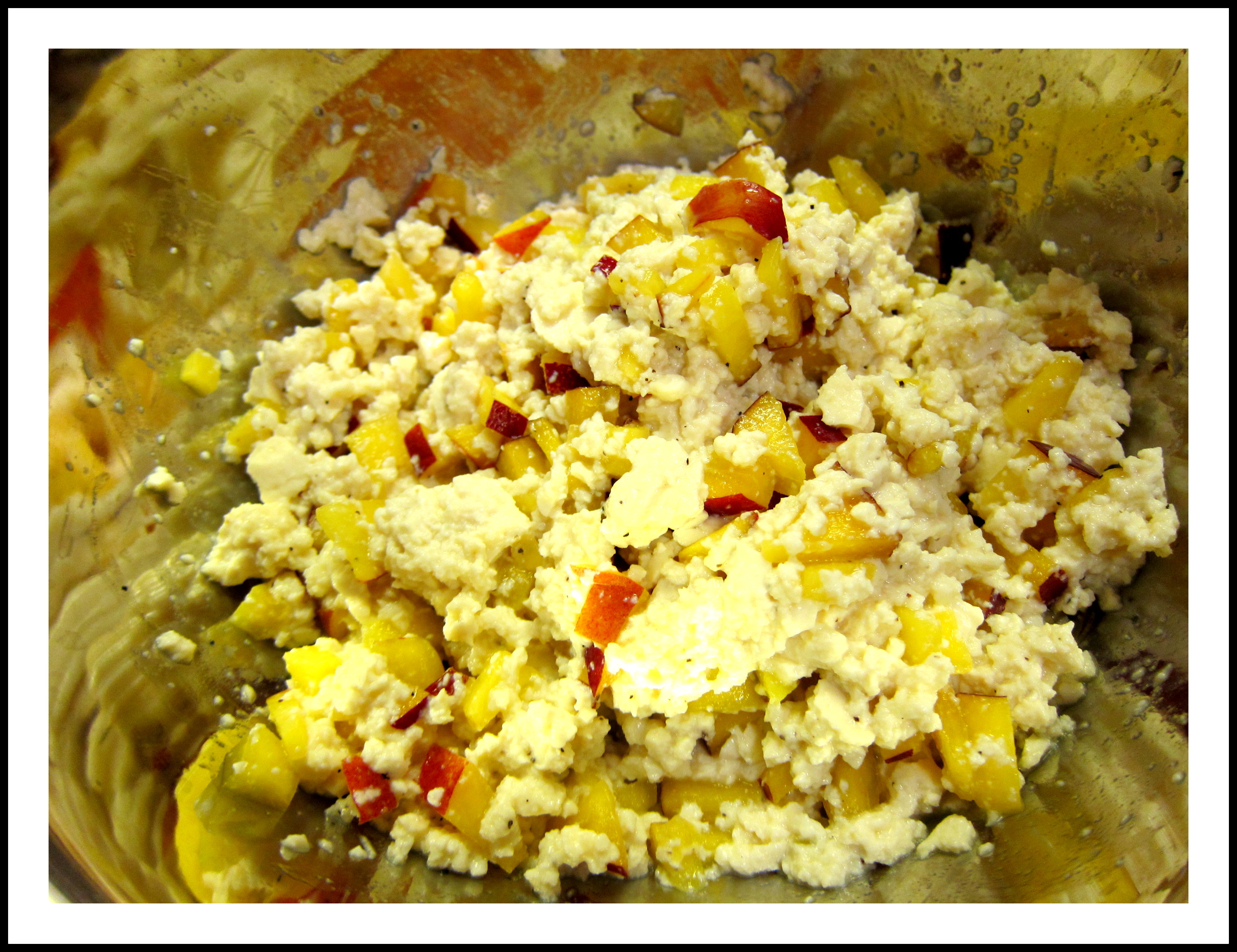
Mash the tofu by hand while mixing it with the diced nectarine. Add salt, sugar and pepper to taste.
Gently stuff the nectarine-tofu mix into the squash blossom.
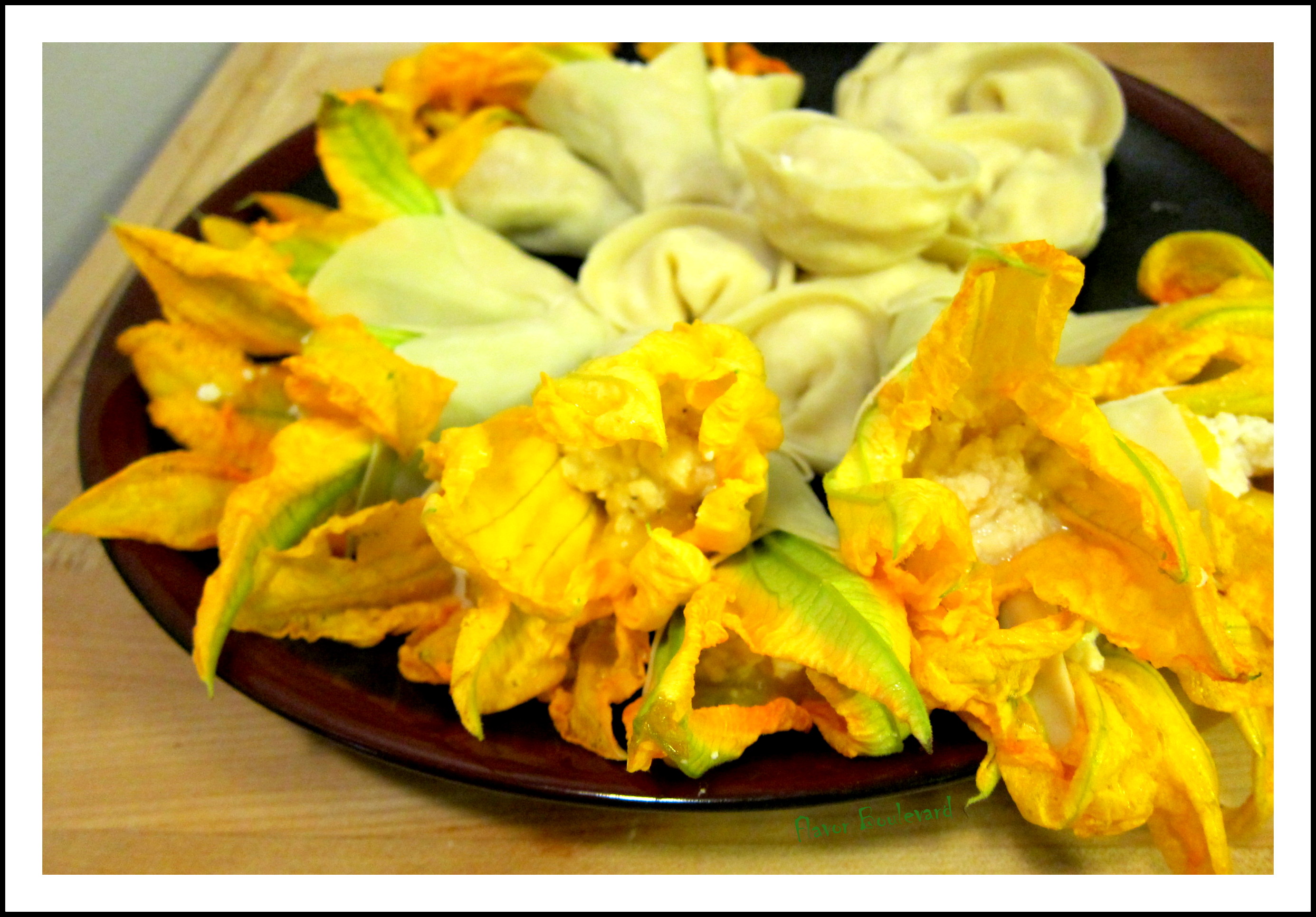
Wrap a gyoza skin outside the blossom, leaving at least the top half of the petals exposed.
Steam until the gyoza skin turns translucent (5-10 minutes). The flower petals will wilt but still retain their color and the bottom half should still be a tad crunchy.
Take out and let cool.

UPDATE: pan-fried these to make them taste better (albeit less healthy  :-D)


(*) Every website I’ve looked claims that squash blossoms can only stay fresh in the fridge up to 2 days under precise condition. Well, what you see in the picture “pre-steamed gyoza” are squash blossoms after 8 days in the fridge.

Kitchen hour: quasi-Osaka Okonomiyaki

July 13, 2012 By: Mai Truong Category: Comfort food, Japanese, RECIPES, savory snacks


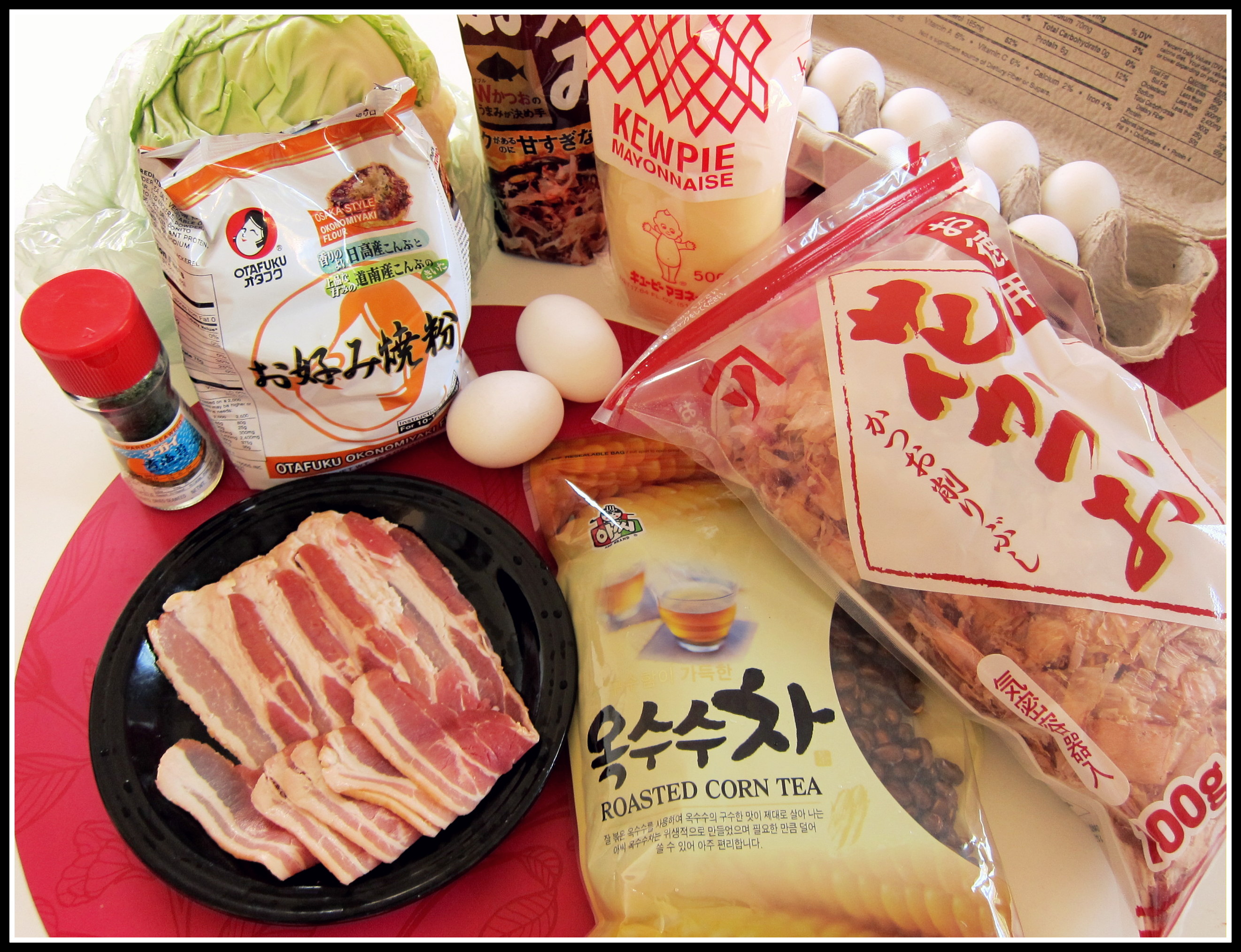
When I walked down that aisle, I beamed with pride. In my hand, a bag of okonomiyaki flour, a bag of katsuobushi, bottles of sauces and aonori. Kristen took care of the cabbage and meats. Pancake day. Osaka style. At least that was the plan.

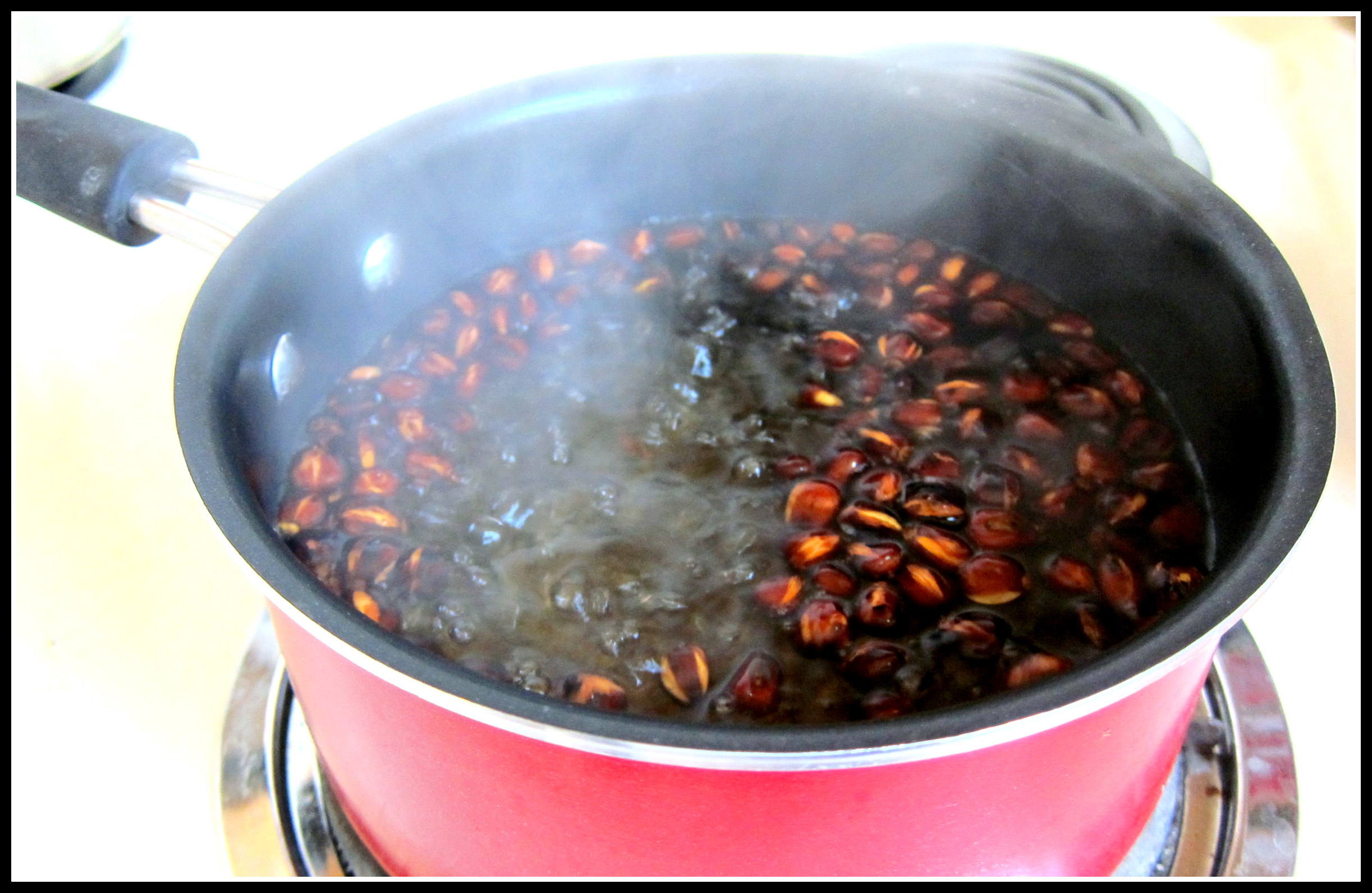
We didn’t plan on being authentic. We couldn’t. An American-born Taiwanese and a Vietnamese who haven’t lived in Japan at all are not gonna make an “authentic okonomiyaki” on first try. That’s why we chose premixed okonomiyaki flour instead of grating a nagaimo, bottled mayonnaise instead of whipping up eggs and oil ourselves. But just the thought of making our own okonomiyaki in whatever shape we want and however we want it, not having to go anywhere and regretting over soggy, over-salted mashes called okonomiyaki, generated the we-can-own-this attitude that guaranteed pride no matter what the outcome. It’s a sort of defiance after too many letdowns. Instead of mixing flour with water, we boiled roasted corn and mixed flour with corn tea.

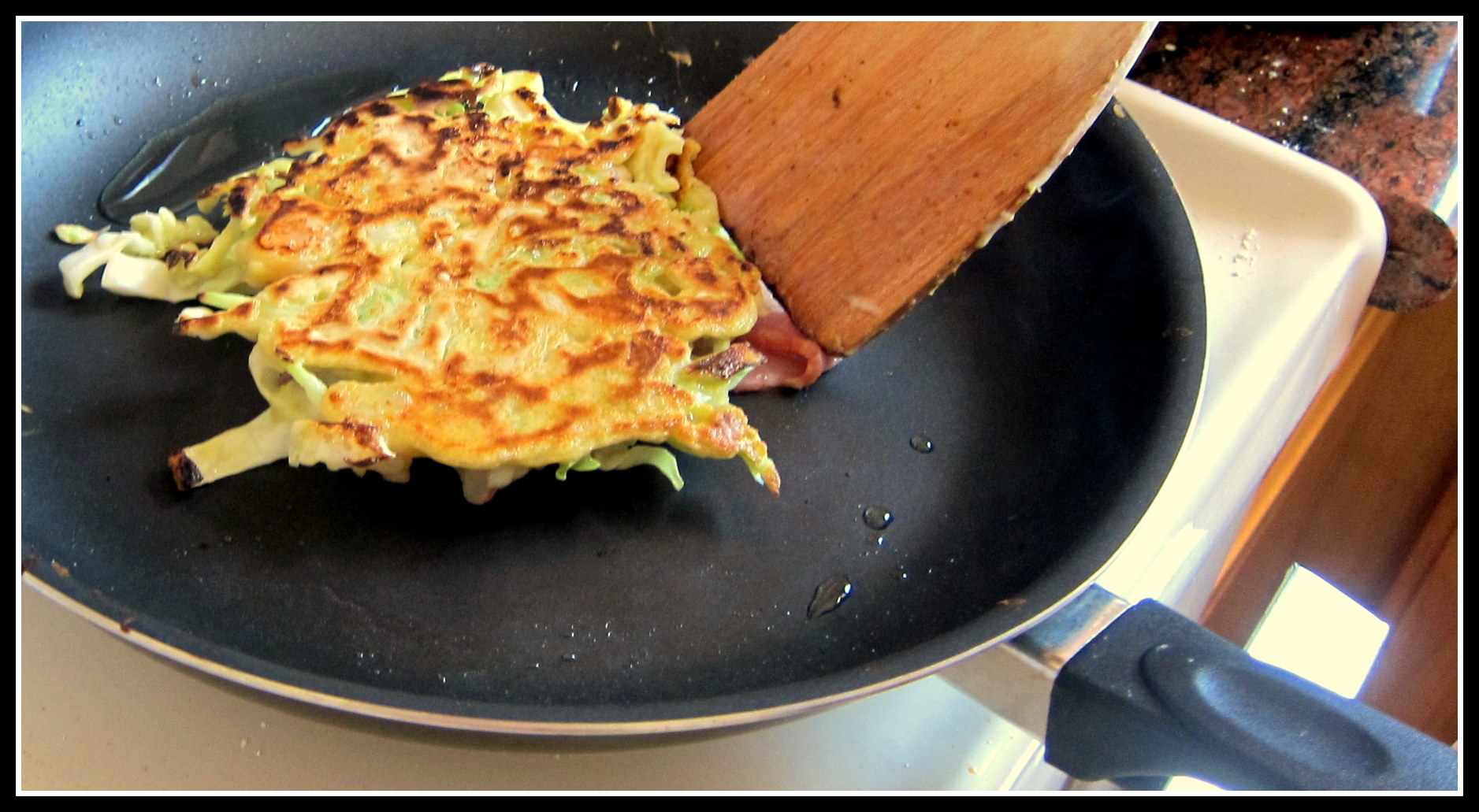
Apart from that and the avoidance of green onion (I’d add green onion if I’m making pajeon – green onion pancake, but not okonomiyaki), and impatience – pouring more corn tea than I should, then the batter was too thin and I added some more flour and the batter went too thick, eventually I got double what I intended for, which also helped because we had a lot of cabbage – we followed the Best Okonomiyaki recipe pretty closely until the next-to-last step. Once I made too big a pancake, so when I flipped it, only half got flipped. I got omelet instead of okonomiyaki, but shape doesn’t matter, right? Ah, there was also a time when I forgot to layer the bacon on top of the pancake before flipping it, so the bacon was added to the bottom instead of the top, but that’s just a matter of perspective. 😉


Quasi-Osaka Okonomiyaki (serving 2)
[adapted from Best Okonomiyaki recipe]

1 cup okonomiyaki flour (100 g)
2/3 cup corn tea
2 eggs
1/5 head of cabbage, sliced into 2-mm-thick strips
9 strips of fresh bacon, cut into 3-inch-long (8 cm) pieces or however you like
100g raw shrimp, peeled and diced
Kewpie mayonnaise
Okonomiyaki sauce
Aonori (seaweed flake)
Katsuobushi (bonito flakes)


Boil the roasted corn kernels to make corn tea (옥수수 차 oksusu cha). I just take a handful and throw in a pot of water, you should rather go heavy than light on the kernel, it makes the tea sweeter. Let the tea cool.


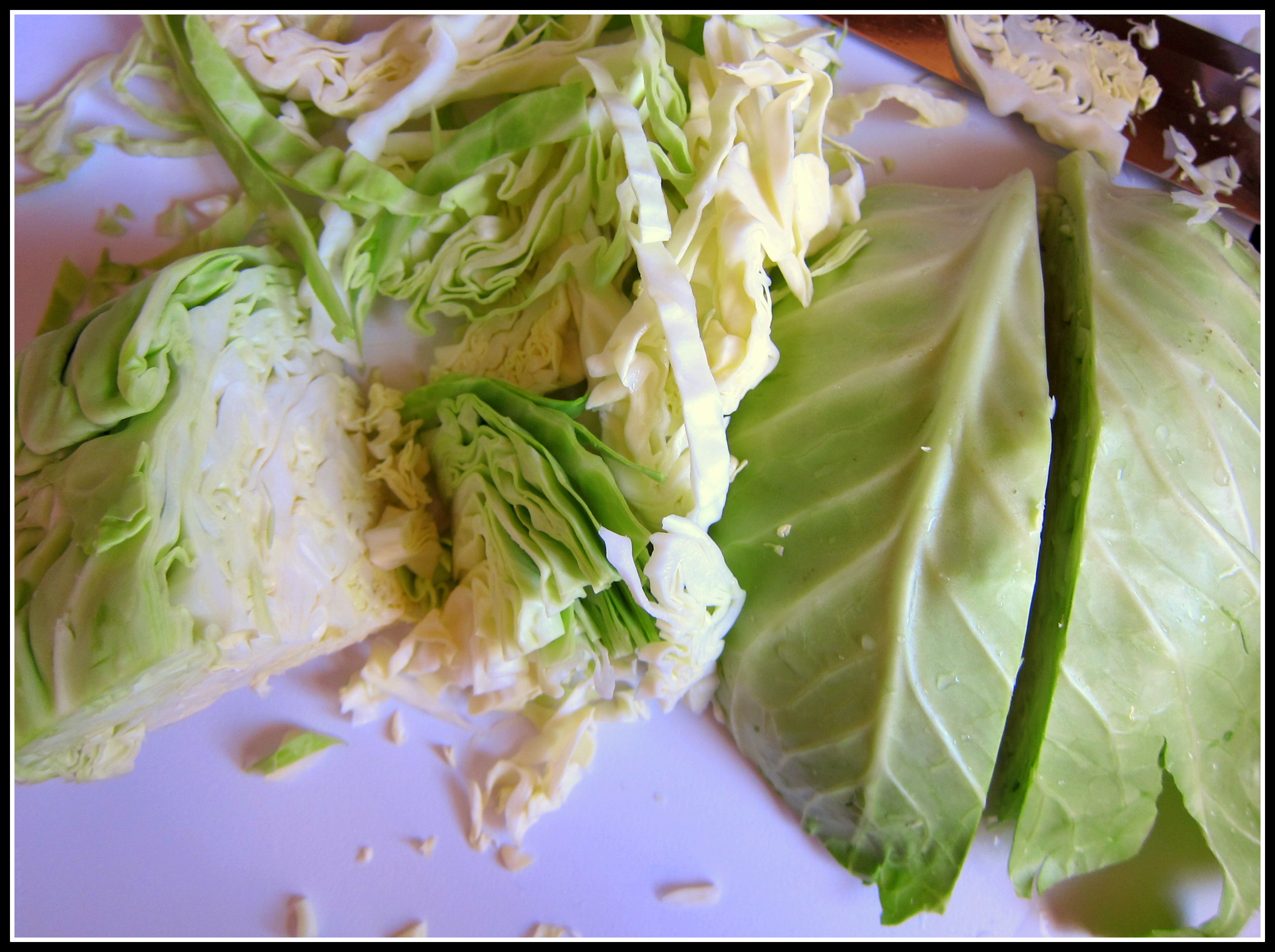
Chop the cabbage. Time to show your prowess of chopping without looking, which I can’t do. You’d end up with a LOT of cabbage. Make cabbage salad with kimchi.


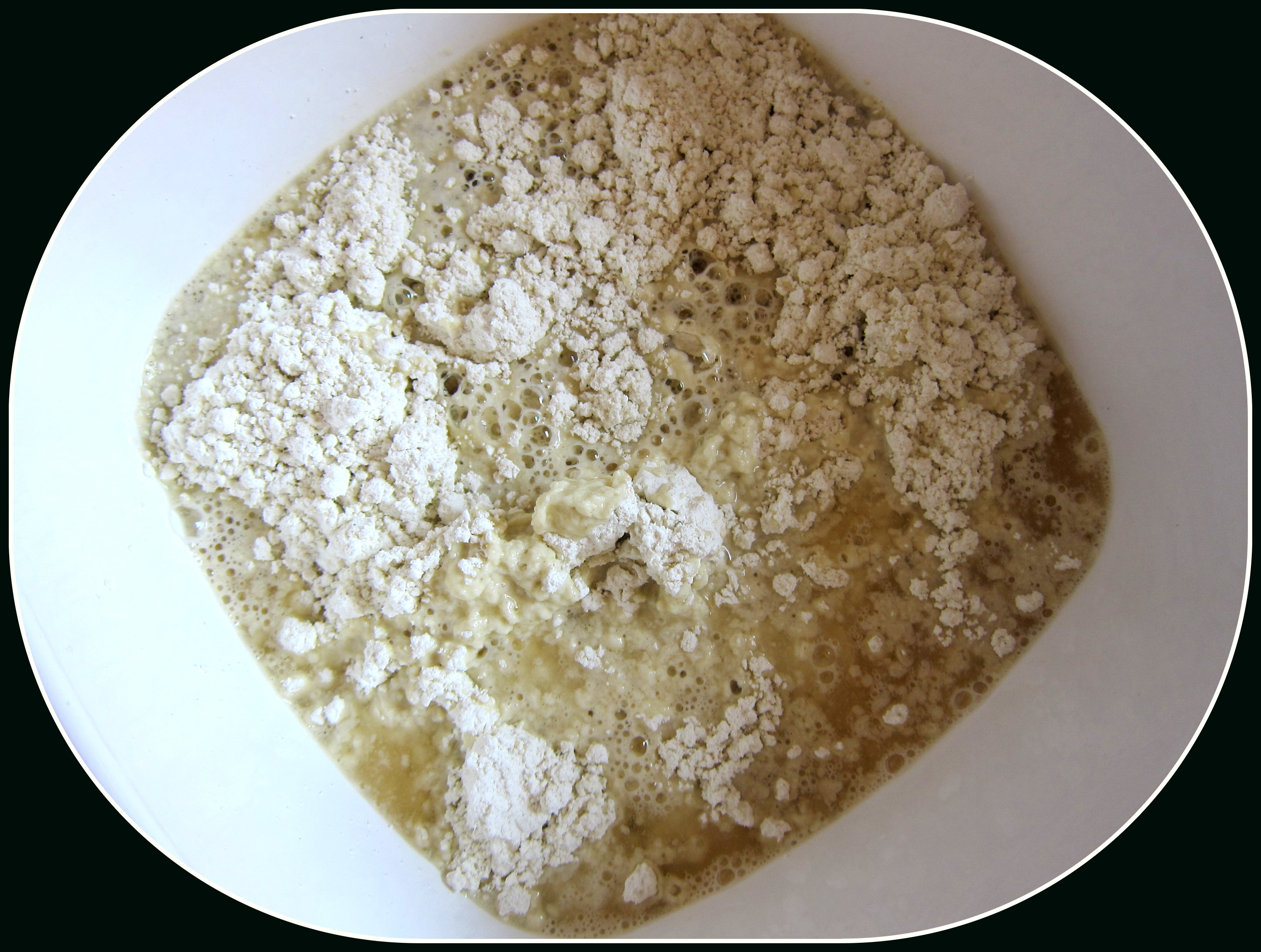
Mix flour with corn tea.


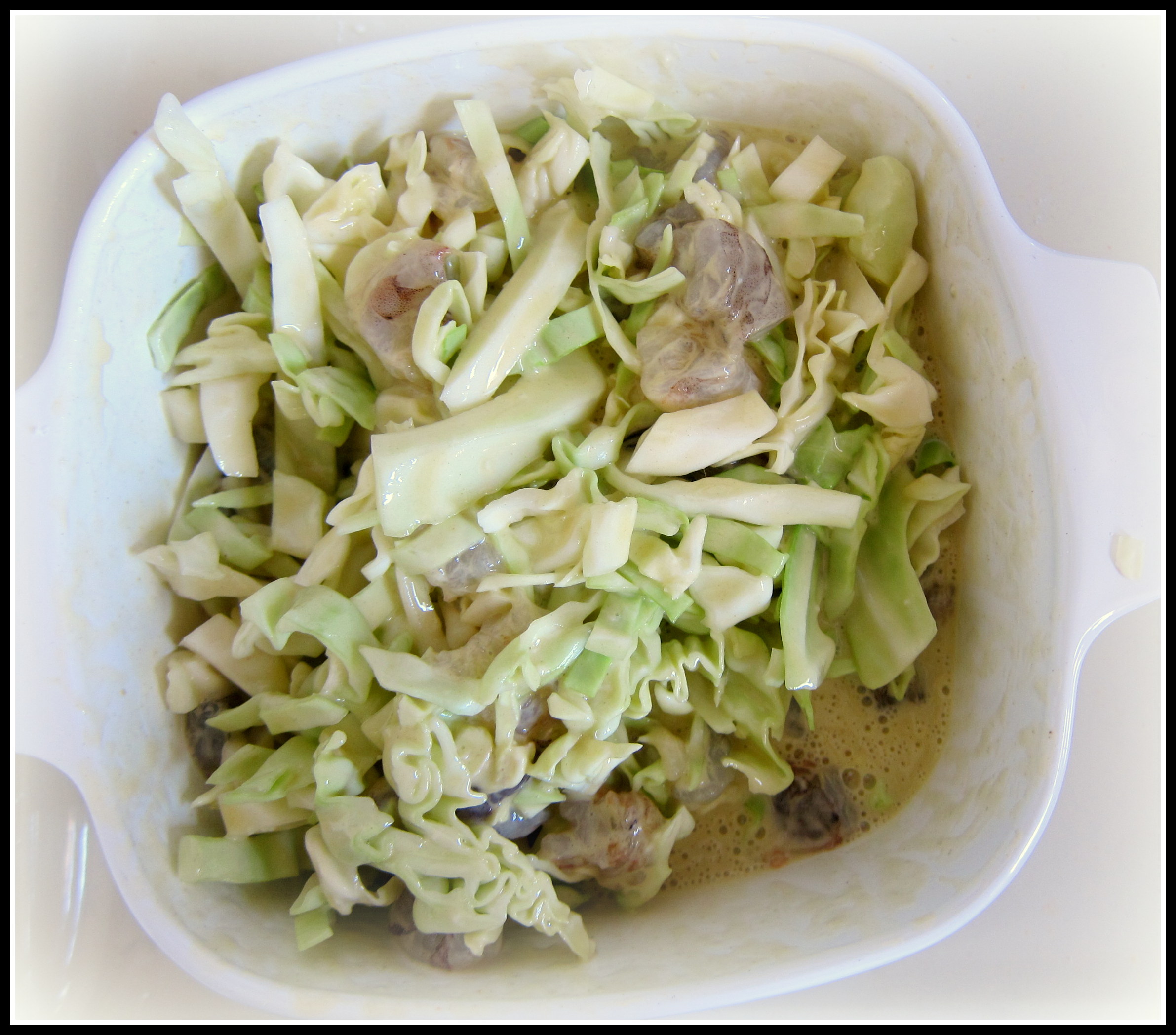
Add cabbage, diced shrimp and eggs into the flour. Mix like you never mix before.


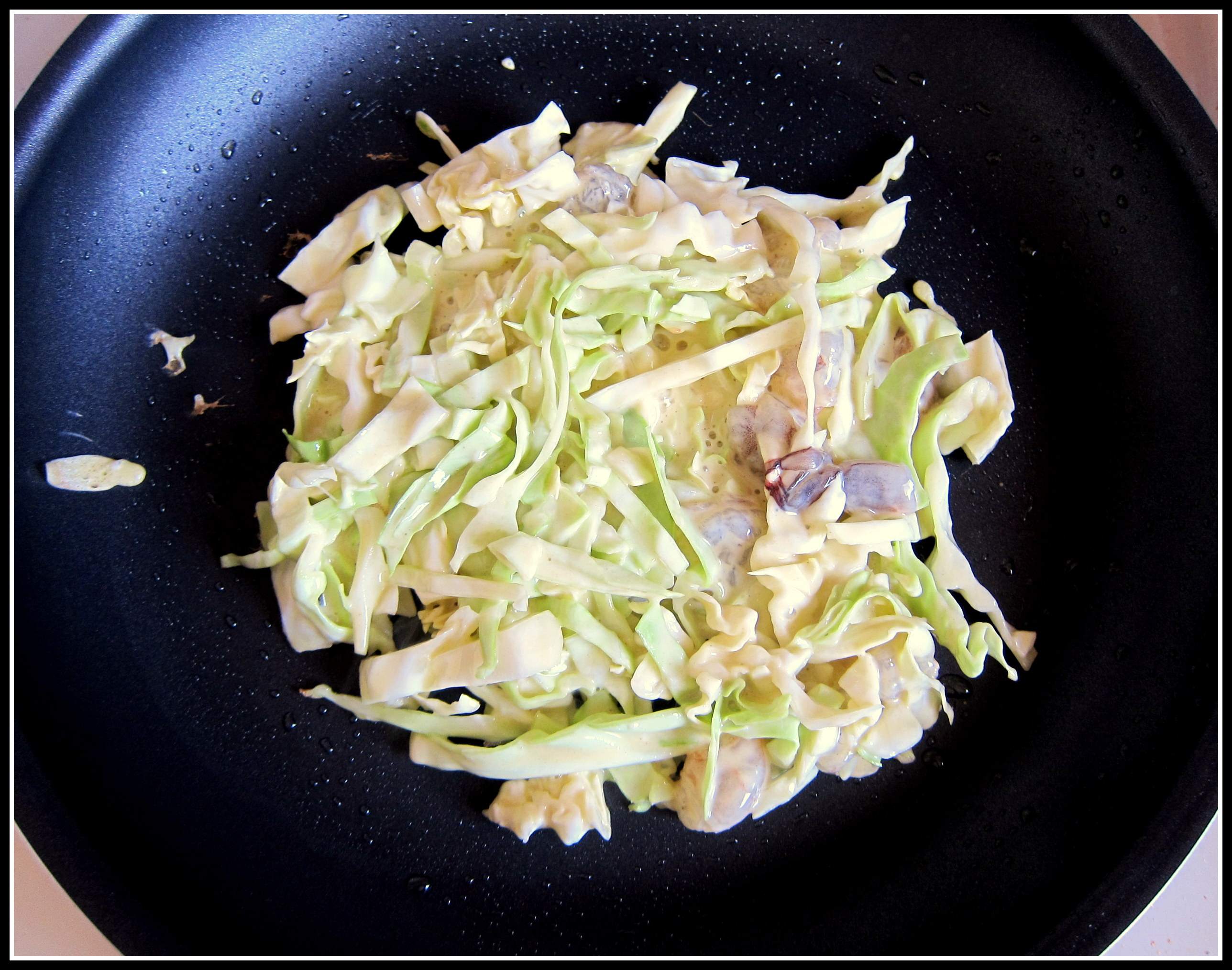
Plop some of the mix onto a hot, lightly oiled skillet and spread it into whatever shape, canonically a disk. Four inches across will make it easiest to flip and big enough to be a meal.


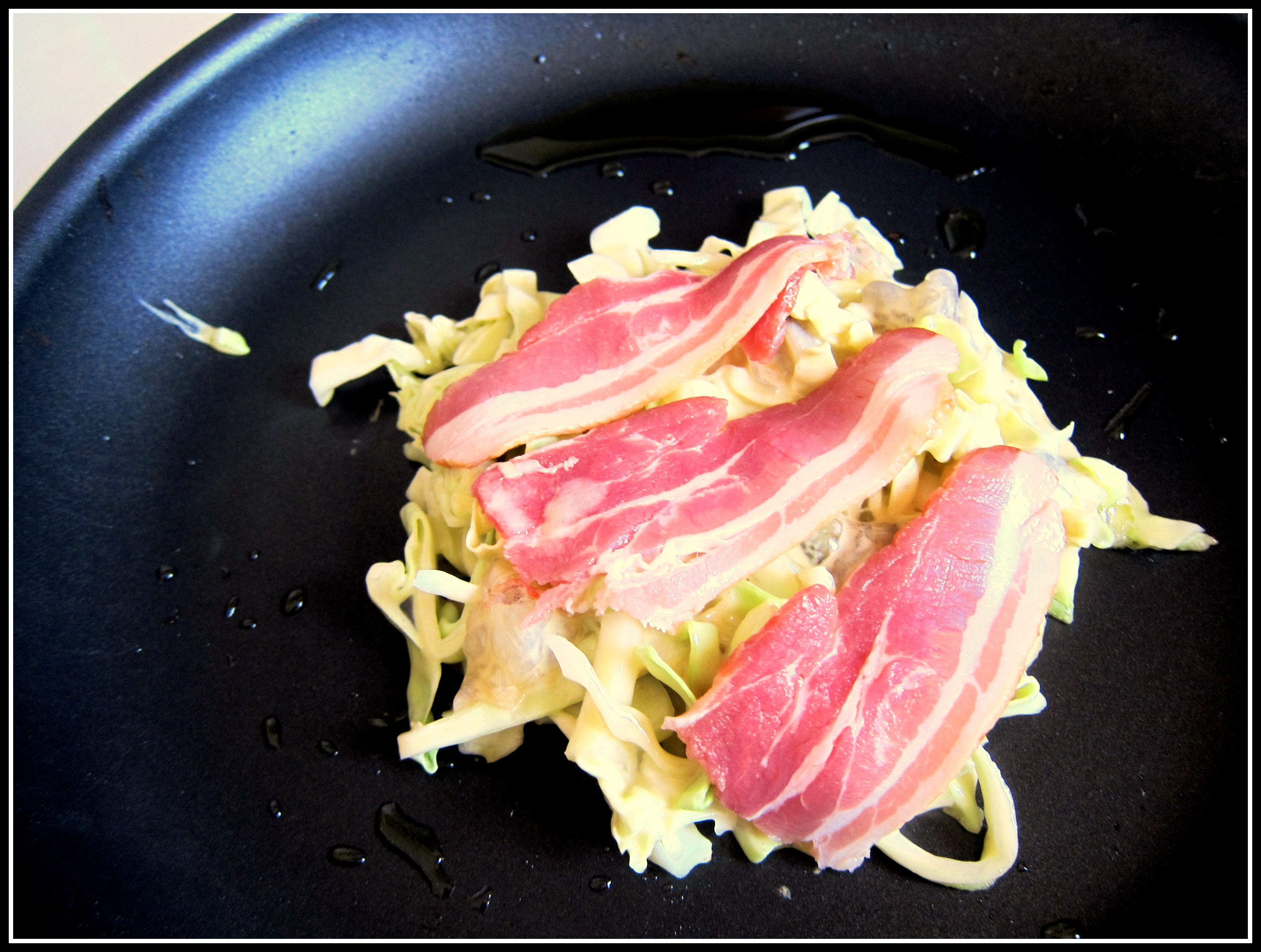
Layer bacon strips on top. Let it sit for 3-4 minutes on medium-high heat.


Flip. And DO NOT PRESS it down. You want the air in there for crunch. Let it cook for another 2-3 minutes.


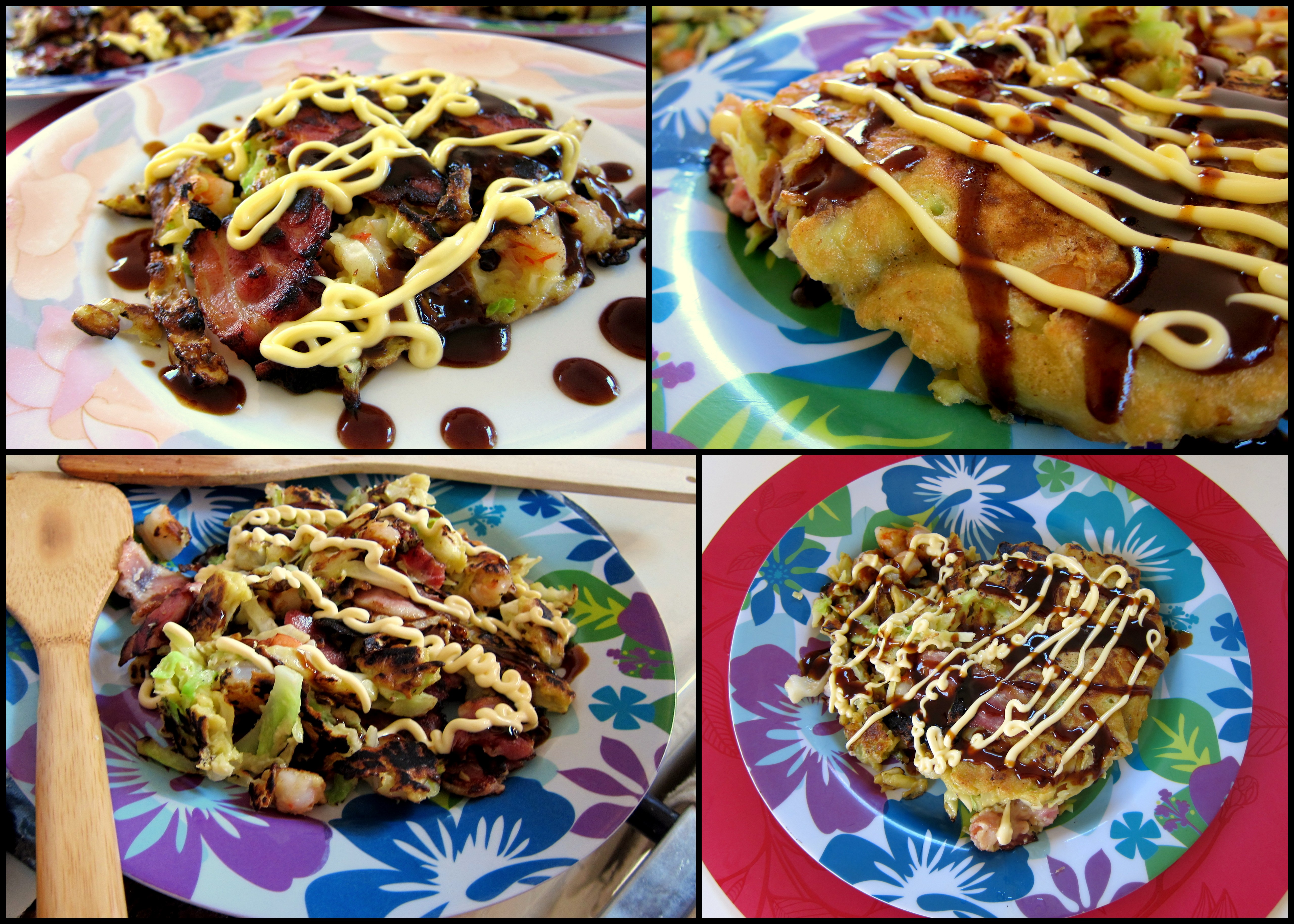
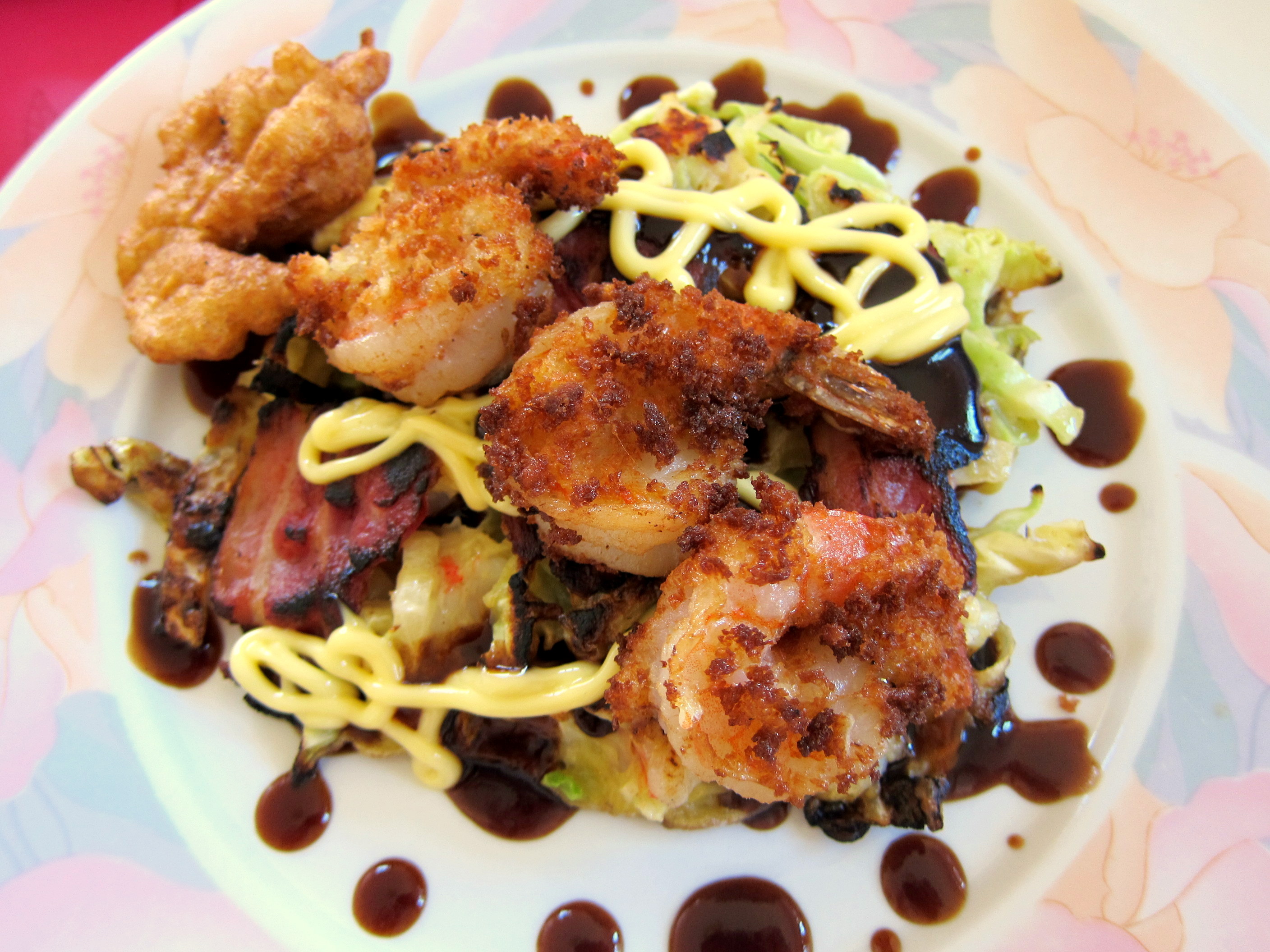
Spatula it out onto a plate. Sprinkle copious amount of aonori and katsuobushi (which we forgot to do! But we used tempura shrimp to make up for that later). Squeeze mayonnaise and okonomi-sauce into your desired pattern. Or make a heart-shaped pancake, like Kristen.

Here, a lesser writer would put something cliche like “this is the best okonomiyaki I’ve ever gulfed down”.

This is the best okonomiyaki I’ve ever gulfed down.


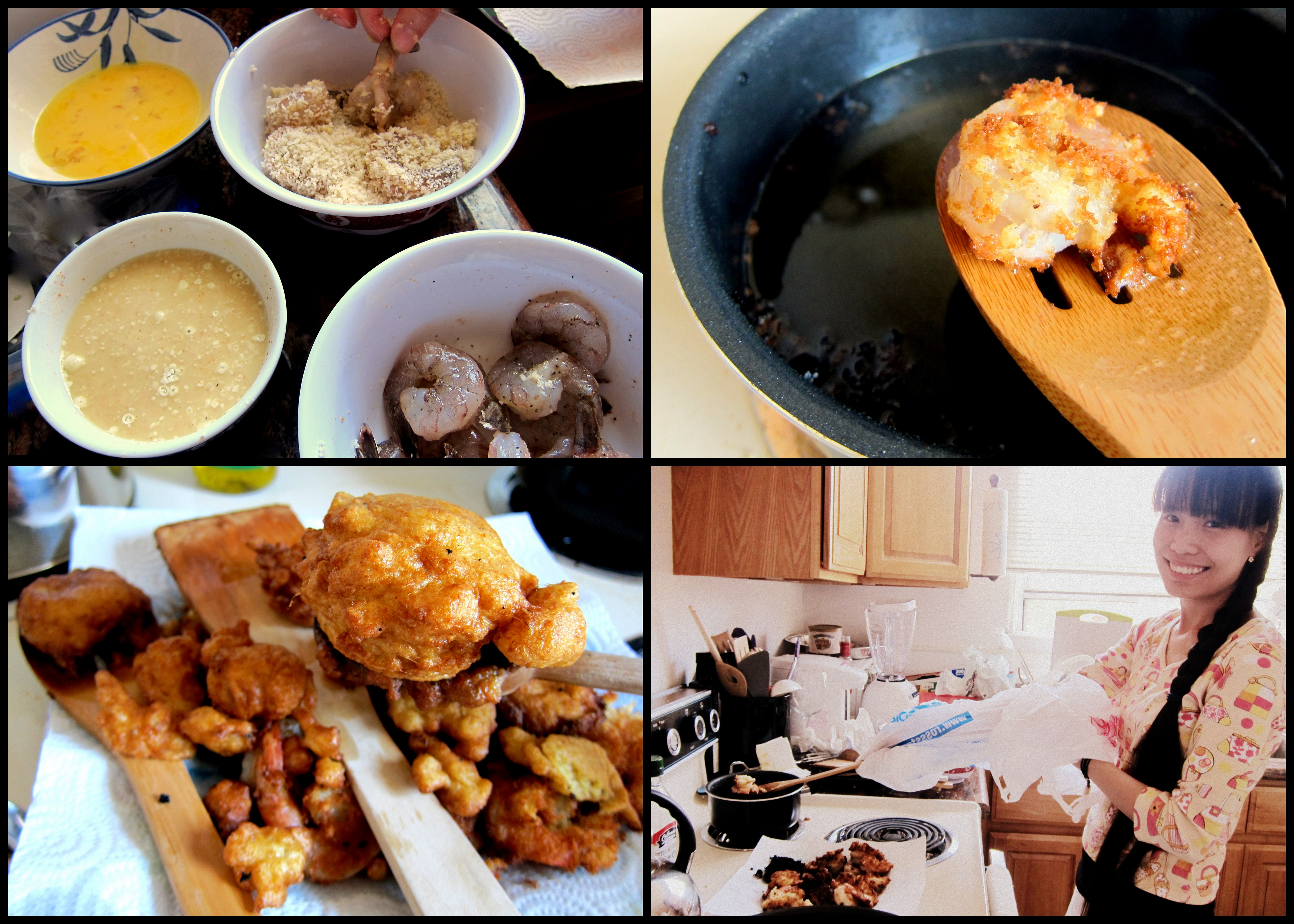
If you bought extra shrimp, make shrimp tempura. We decided this on a wimp and protected ourselves from flying oil with plastic bags. Recommended for entertainment. 😉


With leftover batter after deep frying the shrimps, make fried dough. Drizzle syrup and eat them as dessert. Can you see the shrimp imposter? 😉

Future prospects: grating nagaimo, making our own sauce, other styles of okonomiyaki.

Cheap eats at Koreana

July 05, 2012 By: Mai Truong Category: California - The Bay Area, Comfort food, Korean, savory snacks


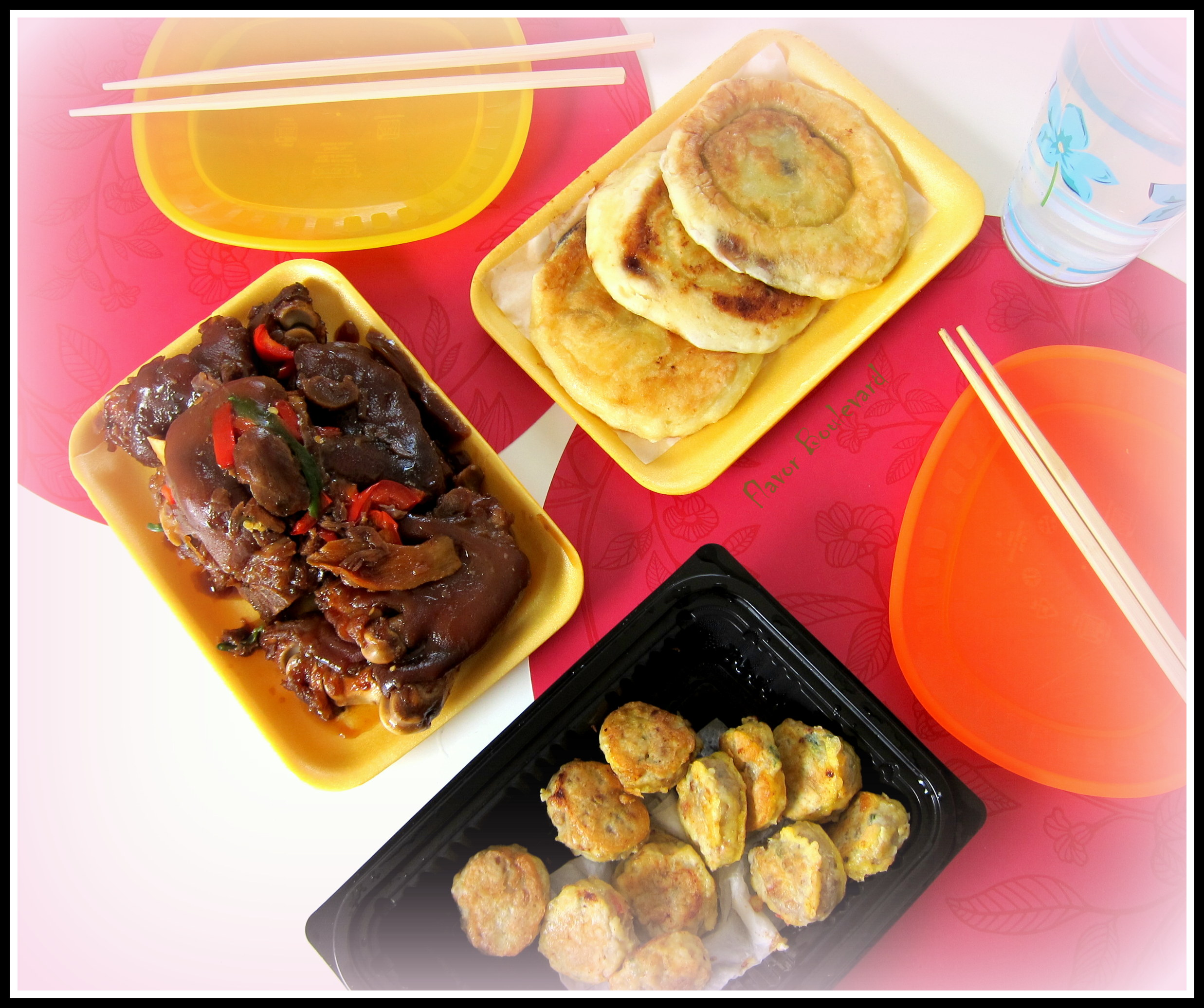
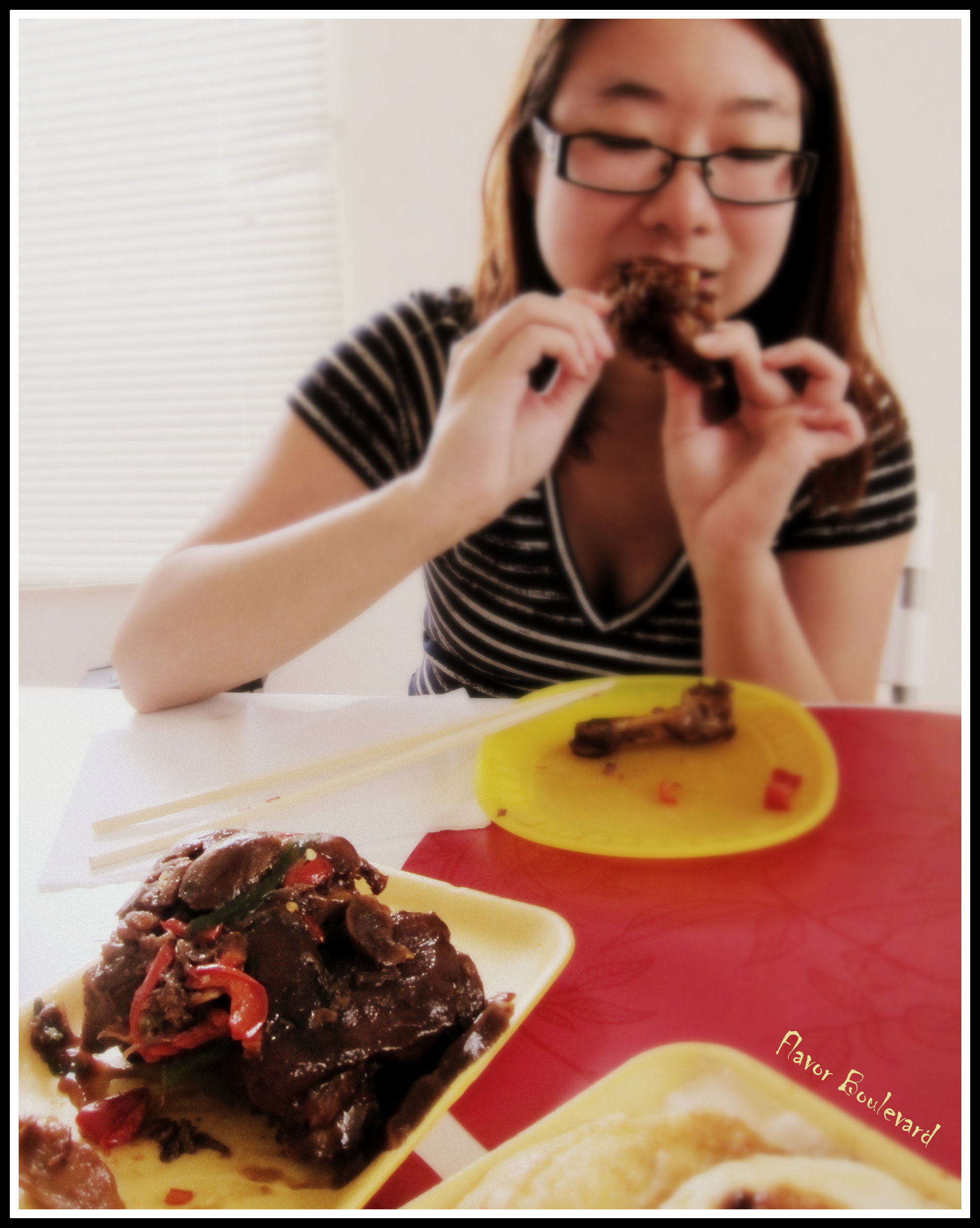
Put me next to a pig foot and I turn into a total nut case. But boy, these chunkies, sweet, salty, chewy, just a little spicy… I cleaned the bones until they were white.


A feeble attempt at including some starch to our lunch: ground beef and pork coins covered in batter and fried.

Dessert: ho tteok (호떡) – chewy sweet pancake with some kind of syrup or melted brown sugar filling, and the best part? They’re not too sweet!

Ready-to-go lunch for two: ~$15
Address: Koreana Plaza
2370 Telegraph Avenue
Oakland, CA 94612
(510) 986-1234

Sandwich Shop Goodies 19 – Bánh tiêu (Chinese sesame beignet)

April 03, 2012 By: Mai Truong Category: California - The Bay Area, Chinese, One shot, savory snacks, Southern Vietnamese


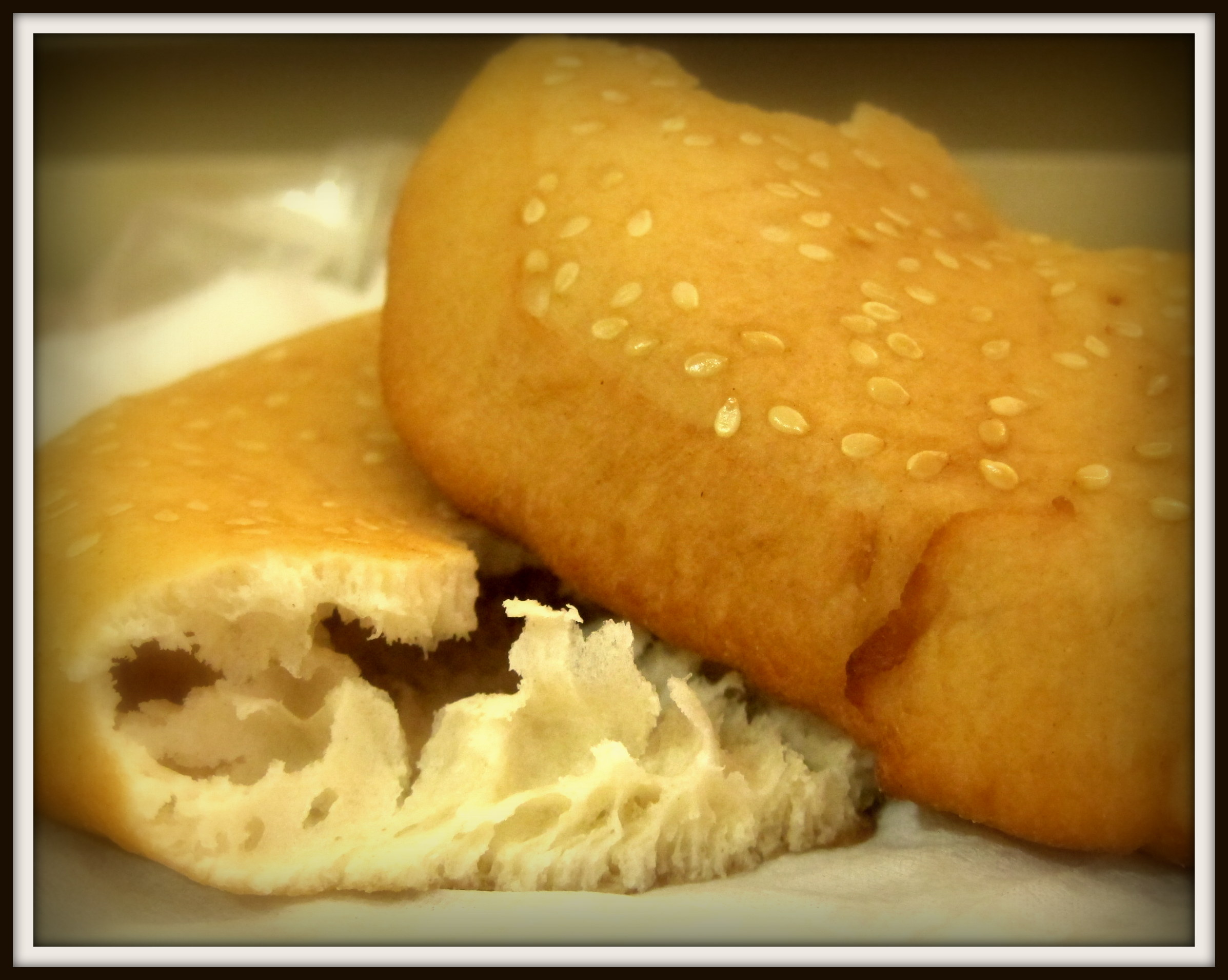
Little Mom and I… we just have different tastes. She likes seafood. She prefers crunchy to soft. She doesn’t like sticky rice (!) She thinks the mini sponge muffins (bánh bò bông, the Vietnamese kind) are sourer than the white chewy honeycombs (bánh bò, the Chinese kind). I beg to differ. The mini sponges can be eaten alone; the honeycombs are almost always stuffed inside a hollow fried doughnut that is more savory than sweet: their sourness needs to be suppressed by the natural saltiness of oil and the airy crunch of fried batter. That doughnut, brought to us by the Chinese and called by us “bánh tiêu“, saves the honeycombs.

The honeycombs could go hang out with the dodo for all I care, but this Saigonese would always appreciate a well-fried bánh tiêu. At any time of the day, one would be able to spot a street cart with the signature double-shelf glass box next to a vat of dark yellow oil. The oil gets darkened from frying too many doughnuts too many times. Sure, it isn’t healthy. But should you really care about health when you eat fried dough?

“Fried dough has appeared in different forms – round, square, triangular, twisted – under many different names. The Dutch settlers had olykoeks (oily cakes); the French in Louisiana had beignets; the Spanish from Mexico made puchas de canela; and the Pennsylvania Germans made fastnachts around Lent.” (Jill MacNeice, “Doughnuts“, in the Roadside Food collection) Now I may add that the Vietnamese in California and Texas have bánh tiêu. One quality of bánh tiêu to make it superior over the other fried doughs: it isn’t coated in powder sugar. Studded with white sesame on one side, it tastes subtly salty of dough, fat, and roasted grain.

An excerpt about Vietnamese vendors making dầu cháo quẩy and bánh tiêu:

Vốc một nhúm bột khô rải đều trên bề mặt miếng gỗ đã trơn bóng – cốt để bột nhồi không bị dính – tiếp tục ngắt một cục bột đã ủ cho lên men, nhẹ nhàng vuốt dọc rồi dùng cây lăn cán qua, miếng bột đã được kéo ra thành một dây bột dài mỏng đều. Người bán lại tiếp tục dùng một thanh tre cật mỏng, xắn bột thành từng miếng đều nhau. Xếp chồng hai miếng bột lên rồi dùng một chiếc đũa ấn mạnh ở giữa, thế là đã được miếng bột “chuẩn” để làm bánh quẩy. Còn bánh tiêu thì phải qua công đoạn vốc một nắm mè vất ra giữa miếng gỗ để mè tự rải đều, sau đó mới dùng bột đã ủ đã nhồi cán thành miếng tròn dẹp, một mặt dính mè, một mặt không.
[…]
Bánh quẩy và bánh tiêu thường bán chung, có lẽ chủ yếu là vì hai loại bột làm bánh này không khác nhau là mấy. Cũng bột mì nhồi với bột khai là chính. Nhưng với bánh quẩy, người ta cho thêm chút muối, chỉ một chút thôi đủ để bánh không lạt lẽo, nhưng vẫn còn giữ được độ ngọt nguyên thủy của bột mì.
Còn với bánh tiêu, người ta lại cho thêm ít đường, cũng rất ít, đủ để làm dậy hơn vị ngọt của bột. Vị ngọt của bánh tiêu vì thế rất nhẹ, không như những loại bánh ngọt khác. Với bánh tiêu, người mua cũng không đòi hỏi phải giòn đến như bánh quẩy. Cái hấp dẫn ở bánh tiêu lại là ở những hạt mè thơm ngậy. Những hạt mè trắng li ti sau khi chiên trở nên căng mẩy, quyện với mùi thơm của bột mì chiên giòn trở nên hấp dẫn kỳ lạ. Nếu như bánh quẩy thường được cho vào dùng chung với cháo, với phở thì bánh tiêu thường được dùng kèm với bánh bò. Xẻ đôi chiếc bánh tiêu, kẹp vào giữa miếng bánh bò nữa là được một loại hương vị khác hẳn. Cái mềm xốp của bánh bò khiến bánh tiêu – vốn hơi khô – trở nên dễ ăn hơn, đỡ ngán hơn. Các loại nhân ăn kèm bánh tiêu cũng khá phong phú, tùy sở thích mỗi người. Có người mách nhau kẹp xôi vào giữa, ăn cũng rất ngon, lại có thể thay quà sáng. Có người lại thích nhân “cadé”, là loại nhân làm bằng trứng gà có vị béo ngầy ngậy, rất hợp với bánh tiêu.

Translated and abridged:

[The vendor] scoops up some flour and sprinkles them on the shining flat wooden board, to keep the dough from sticking, then he pinches off a ball of fermented dough, gently pulls it and runs the rolling pin once over to stretch the ball into a thin strip. Then he grabs a sharp bamboo stick, swiftly cuts the strip into smaller, even strips. Putting two strips on top of each other, pressing a chopstick down in the middle, and he gets a “standard” piece of bánh quẩy ready to fry. For bánh tiêu, he would need to sprinkle a pinch of sesame seeds on the board, then flatten the dough into disks, one side studded with seeds, the other side having none.
[…]
Bánh quẩy and bánh tiêu are often sold together because they have similar dough. Mainly, flour and baking soda. For bánh quẩy, they add some salt to make it savory, but not too much that it would diminish the flour’s natural sweetness. But for bánh tiêu, they would add a pinch of sugar to boost that sweetness. Bánh tiêu doesn’t have to be as crunchy as bánh quẩy either. Its goodness lies in the sesames’ fragrant nuttiness. As bánh quẩy is often eaten with rice porridge or noodle soup, bánh tiêu goes with bánh bò. Slit the bánh tiêu open, stuff in a piece of the soft white honeycomb bánh bò, and you get a whole new snack. Some people substitute bánh bò with sweet sticky rice or with egg custard, that really fattens it up.

In Saigon, Vietnam: 1000 VND each.
At Bánh Mì Ba Lẹ, Oakland: 1 USD each. (1 USD ~ 20000 VND)

Address: Bánh Mì Ba Lẹ (East Oakland)
1909 International Blvd
Oakland, CA 94606
(510) 261-9800

Previously on Sandwich Shop Goodiessteamed taro cake (bánh khoai môn hấp)
Next on Sandwich Shop Goodies: Xôi khúc (cudweed sticky rice)

La Boca – 80 Percent Good

October 08, 2011 By: Mai Truong Category: savory snacks, Won't go out of my way to revisit


Bob’s and Dang’s comments on my Kiraku post prompted me to wiki “octopus”. In a way, I needed to remind myself that computers are wonderful creatures that don’t always give me incomprehensible error messages. Then I got reminded of my most memorable experience with octopus on a plate. It was in Santa Fe this past summer.

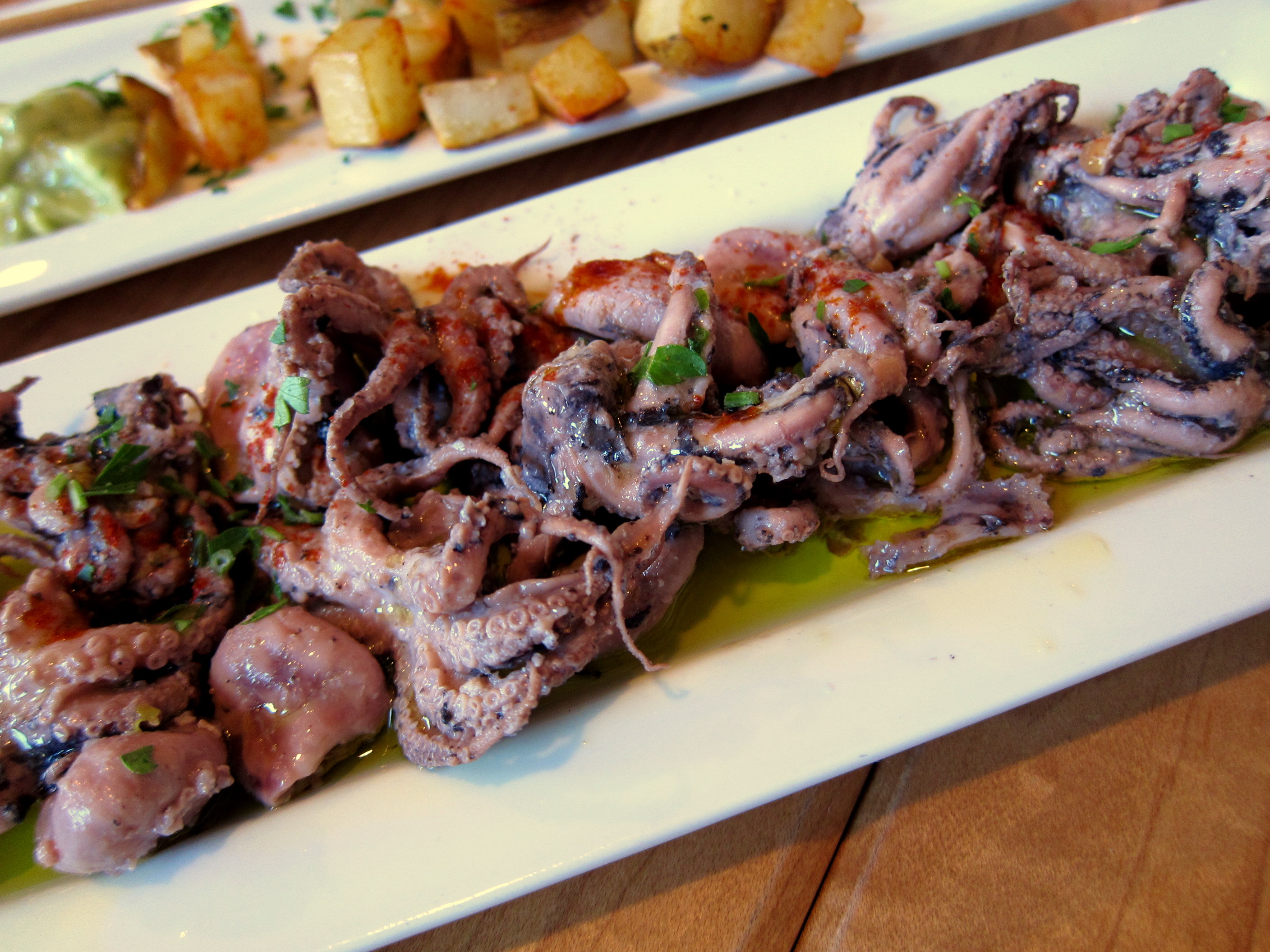
When there are good news and bad news, I prefer to hear the bad news first, so that’s how I’ll start describing La Boca. Their octopus was terrible. Octopuses are chewy things, and I have never had any octopus as opposite from chewy as this one. Pulpo, as called on the menu, sliced and dressed in pimenton, olive oil, lemon juice and seasalt, sounds like a wonderful refreshment after touring Santa Fe under the flamboyant sun. Well, if you give this octopus to a green octopus-looking alien who hasn’t the slightest preconception of what octopus tastes like, he would most likely go home defining octopus as beans. Yes, it was dense and grainy like bean.

Blame no one but ourselves for ordering raw seafood in the middle of the desert. The rest of the meal, here comes the good news, was tasty.


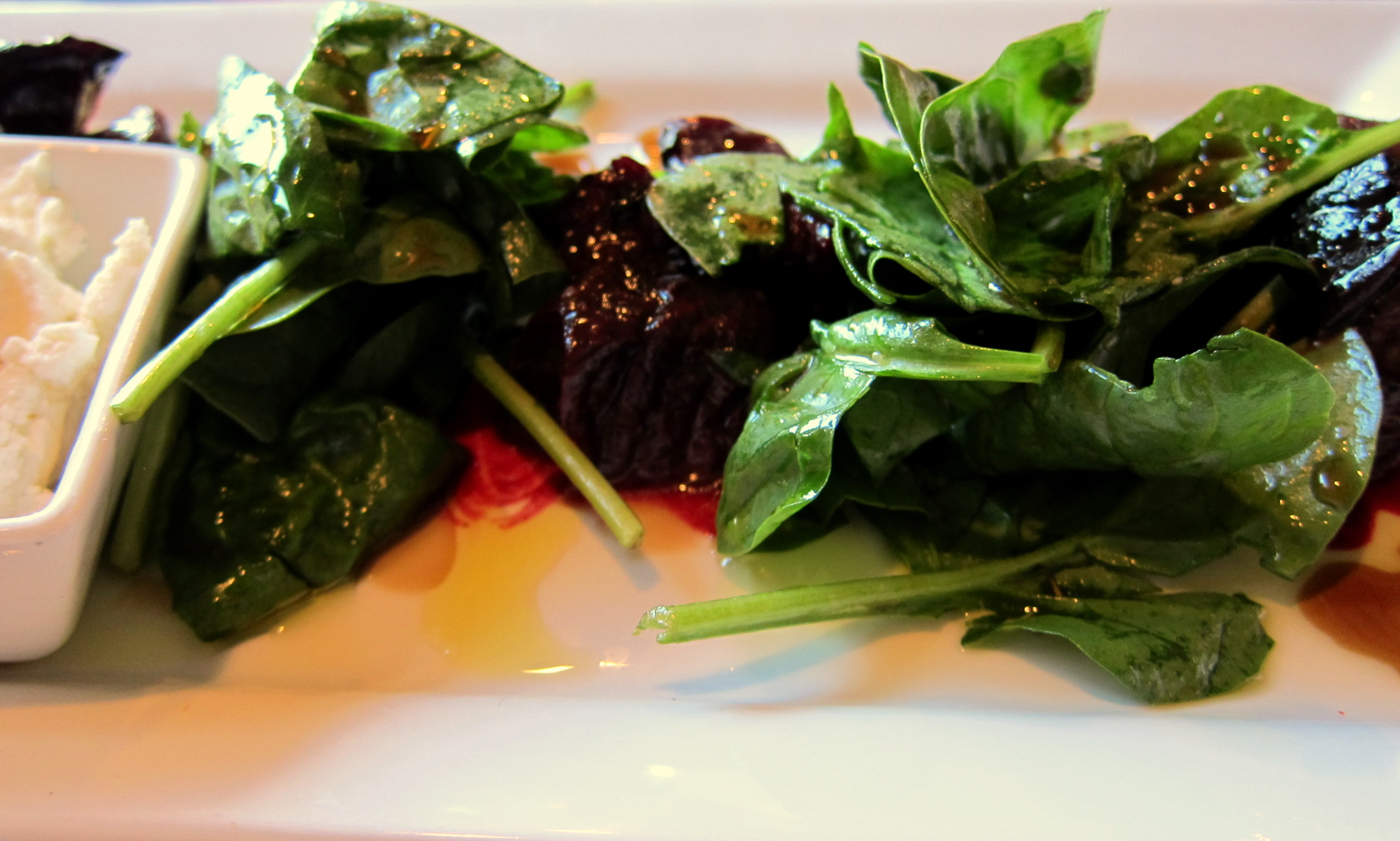
Spinach salad with roasted beets, goat cheese, red onion, pomegranate vinaigrette. I’ve never had bad roasted beets (I would say the same thing for octopus prior to this day), and pomegranate vinaigrette sounds just right.


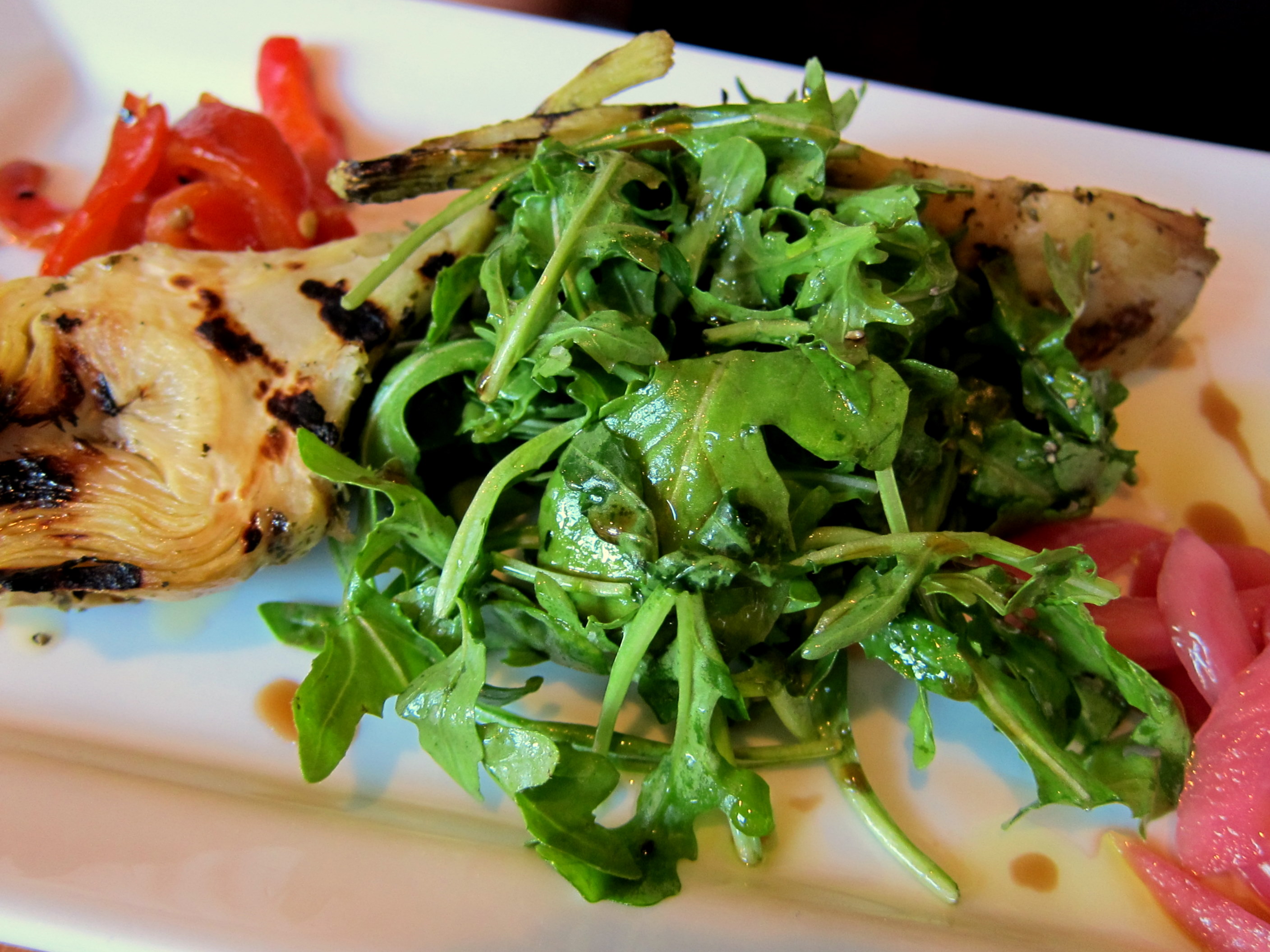
Grilled artichoke salad with jamon Serrano, arugula and aged cherry vinaigrette. Grilled artichoke is nutty, the right kind of nutty. And again, how I like fruity vinaigrettes!


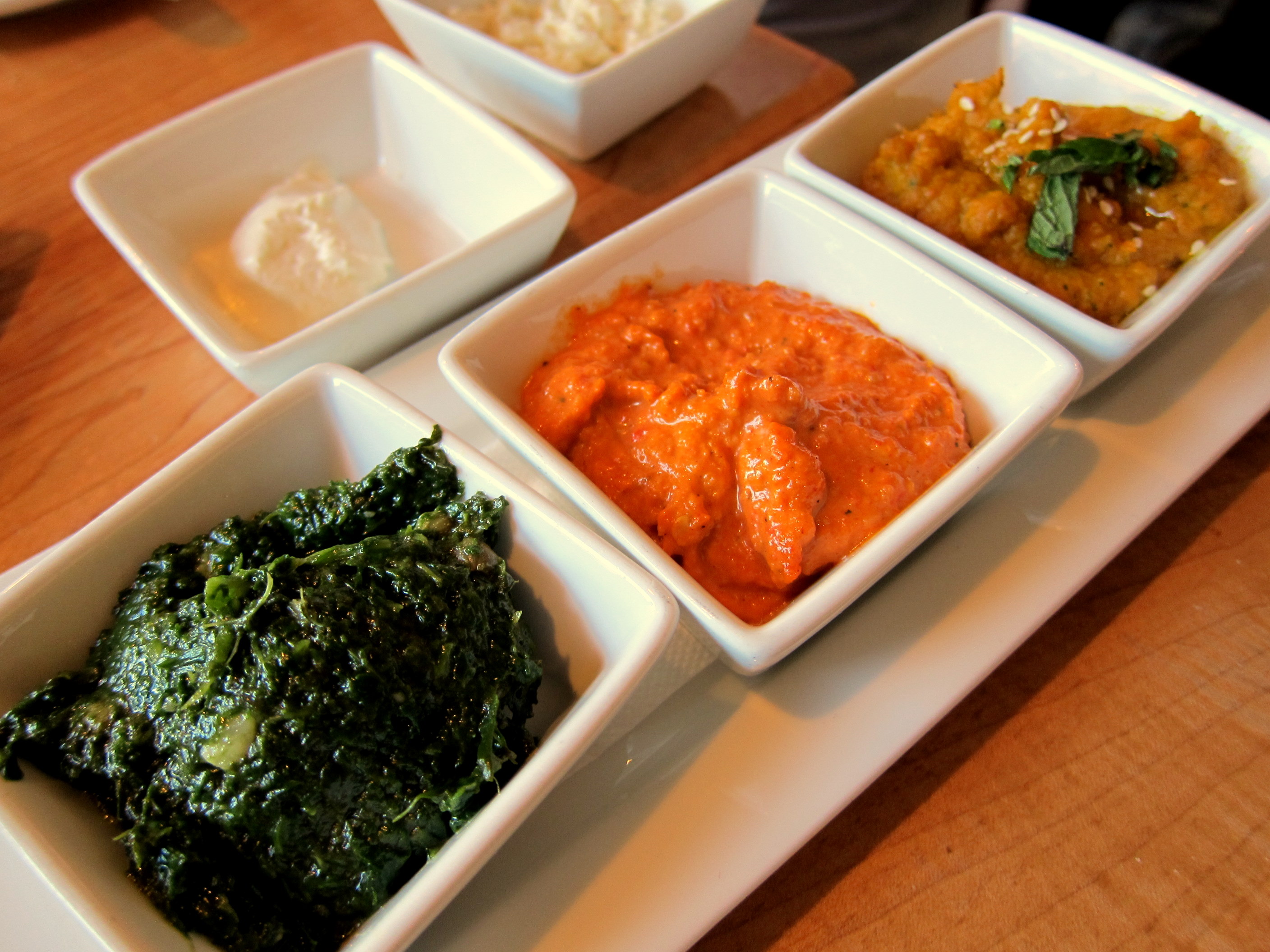
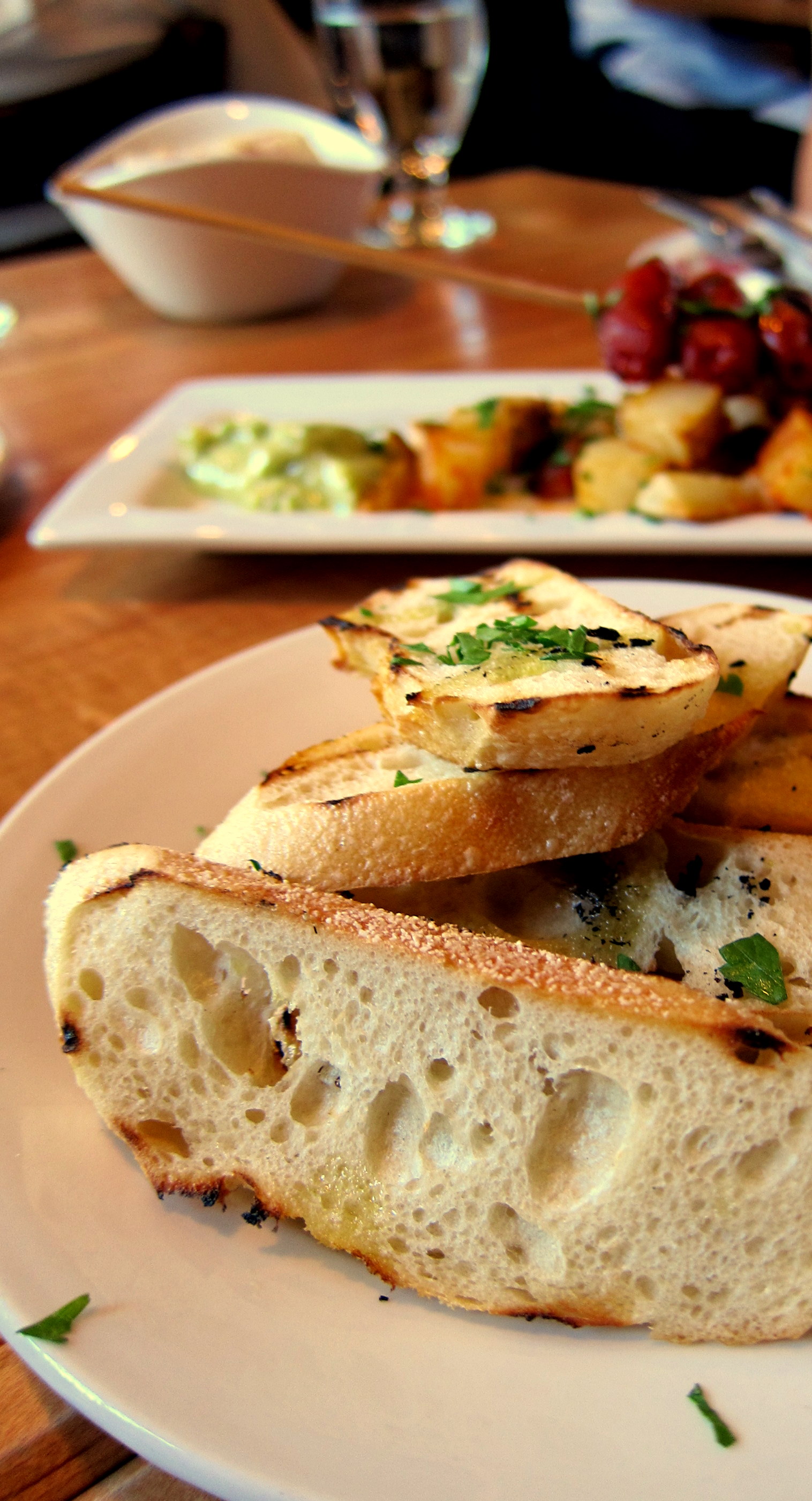
Tapas trio: hummus, red pepper-almond spread, goat cheese, spinach, raisin, capers, and flatbread to scoop. Me most impressed with the spinach dip while the girl friends fell for the spicy almond spread.


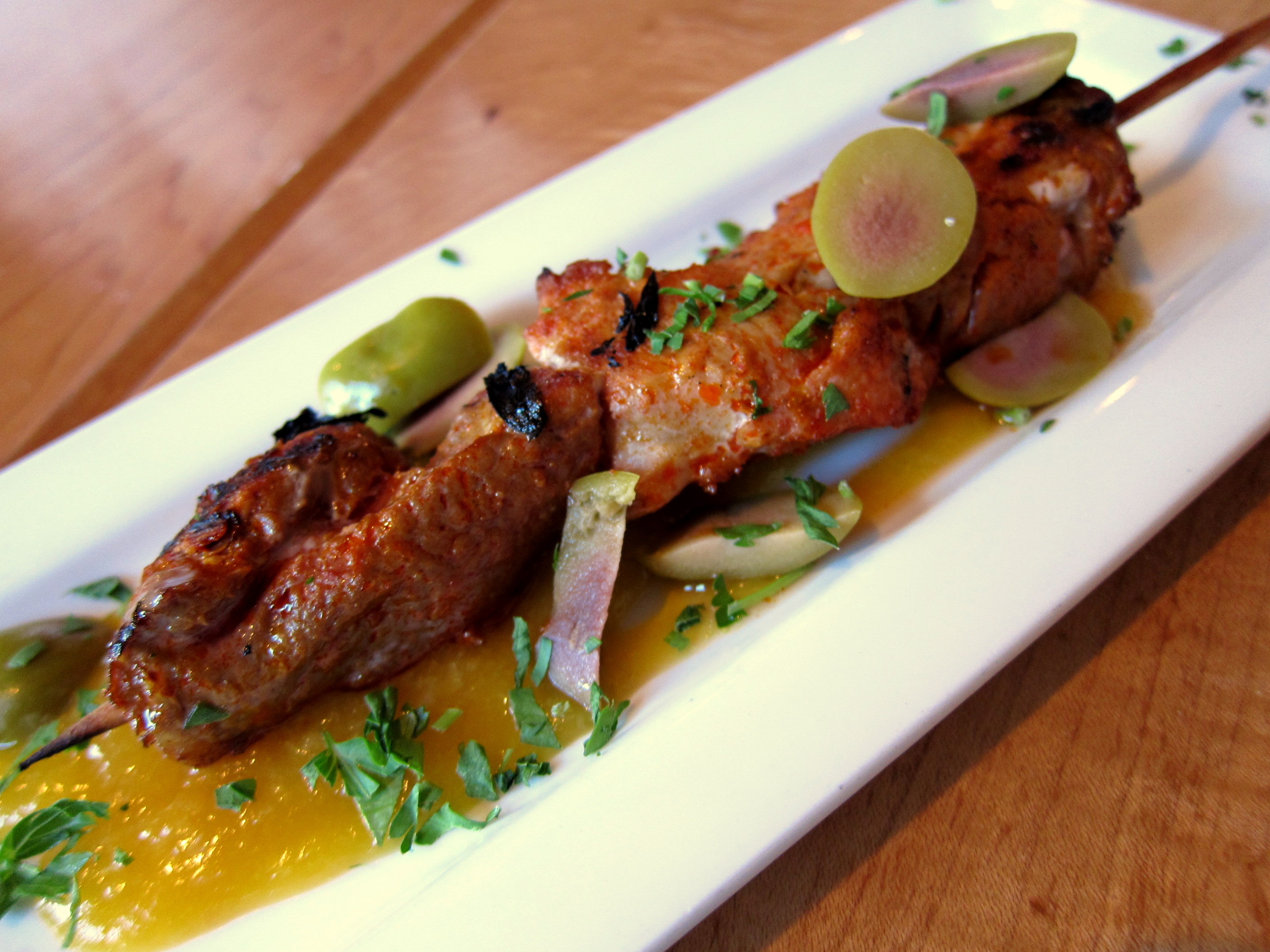
Pincho de puerco: free range pork skewer with apricot honey and green olives. It would have been a great one had the pork not been so chewy. The wrong kind of chewy.


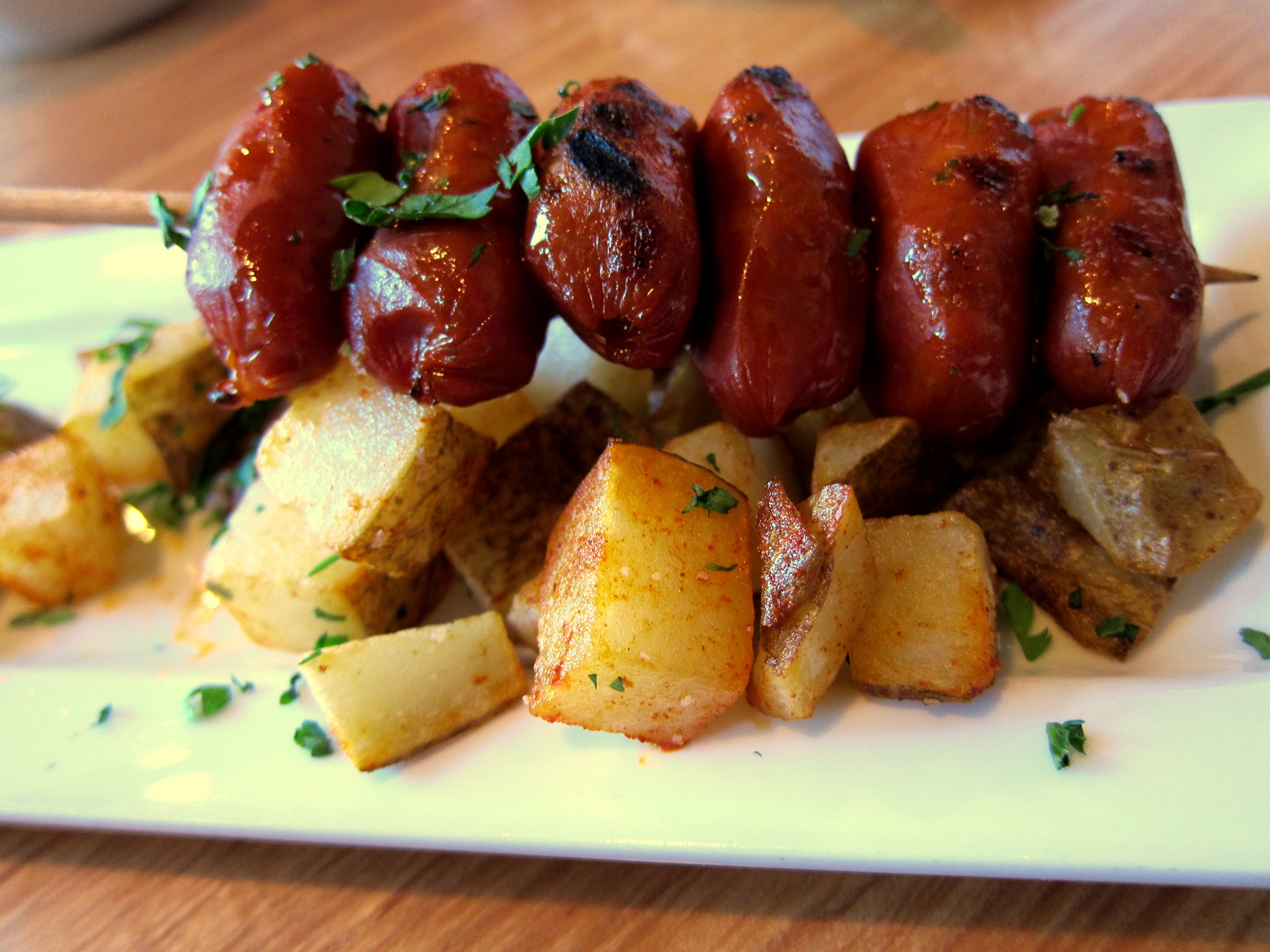
Cantimpalitos: grilled mini chorizos, garlic aioli, and potatoes. Hyunmi liked the potatoes, and that’s all that matters. 🙂


It’s one of those meals that makes me consider going vegan: the pasture was indeed greener there.

Dinner for four: ~$70 (We had to run for the last bus so we couldn’t even wait for the check…)
Address: La Boca
72 W Marcy St
Santa Fe, NM 87503
(505) 982-3433