Flavor Boulevard

We Asians like to talk food.
Subscribe

Archive for the ‘Snacks’

Down the Aisles 0 – Happy Thanksgiving

November 26, 2009 By: Mai Truong Category: sweet snacks and desserts, Vietnamese

Appetizer: green waffle
The batter is flavored with pandan leaf (lá dứa) extract and coconut milk. Mudpie first discovered them at Century Bakery in Little Saigon, San Jose, and that’s where we’ve been getting them since, in increasing amount. The most recent deal is buy 10 get 1 free, warm and prepackaged in a nice paper box. Then I had green waffle for breakfast for 3 days straight. Each waffle is about $1-1.50, rather costly if you think about how a banh mi costs only 2.50. But it’s delicious, fluffy and sweet.

Main course: Mo’s Bacon bar

You can have bacon with breakfast pancakes, and in BLT (bacon-lettuce-tomato) sandwich for lunch, so might as well stuff it into your chocolate for a late night snack, right? The lady who discovered the magic of bacon-chocolate combo had 6 years of culinary study, and she got it right: chocolate goes with everything, and so does salt. The bar isn’t a slab of bacon coated with chocolate (which is kinda what I hoped for). There are only tiny bits of bacon, even more scarce than in a simple salad. An unhealthy dose of smoked salt gives a boost to the milky sweet taste. This chocolate is not extraordinary, but it might be a good gift for those unadventurous eaters (to prove that “crazy” food can be good). Take a look at the list of Vosges’ exotic chocolate bars. Perhaps I’ll tackle them when I see them at Whole Foods, although they are not that exotic except for the names.

Dessert: hibiscus sorbet

After the wonderful engagement with cardamom-rose ice cream, I became a bee with fantasies about flower flavors. The petals are always delicate, their taste swift and light, a safe choice if you want to avoid extremes. So I grabbed this as soon as I saw it at the store. Well, being a sorbet, it lacked the creamy texture of ice cream, and the taste was a bit rusty. I felt a chemically enhanced sweetness in the throat as it passed down. We can never expect too highly of mass production, but again, I haven’t chewed on a hibiscus flower to know what it really tastes like. The sorbet was worth a chat, and I shall not retract my tongue from other floral attractions.

Next on Down the Aisles: Yeast Cookies

Ice-queue at Ici

November 03, 2009 By: Mai Truong Category: California - The Bay Area, sweet snacks and desserts

There is this little ice cream store on College Avenue. Somehow everyone knows about it, and forms a line from the cashier inside all the way out to 30 feet of sidewalk from the door. On a Thursday night, at 9:30 sharp, an employee went out and stood at the end of the line, kindly preventing more customers from queuing up. We felt guilty sitting on the bench nibbling at our treats while people patiently hunched their neck into layers of scarves and collars, ignored the chilly wind, waited for their turn to get into the store. Life’s rough to some.

The menu changes daily to whatever the chefs’ hearts desire. That day’s popular affairs seem to be orange-almond-nutmeg and cardamom-rose, which we got. We also couldn’t resist those little crème-fraiche-Amarena-cherry-and-chocolate at the bottom shelf. (The innocent employee later revealed that those 5 cute things had sit idly there all day, and that he’s glad someone finally got one. Guess we did the chefs a favor.) The cherry flavor was oddly artificial. The chocolate shell was a major challenge for a plastic spoon. The best part was the chewy chocolate cake layer at the bottom. Perhaps it wasn’t quite worth $5.25, but sometimes it’s just cool to eat something with a fancy name.

Now, the fancy ice creams… Orange peel, nutmeg, and candied almond made a combination resembling Cinderella in her pumpkin carriage. It’s girly sweet, and peasantly genuine. It’s safe and natural. What about the cardamom-rose? It’s a cavalier’s hand-kiss, genteel and reserved. It tastes and feels like herbal tea, each spoon lifts you up a step of contentment. But like all good things, one scoop went fast.


2 “Kid’s scoops” (2@2.85): 5.70; Cone single: 0.75; Individual bombe: 5.25. Total: $11.70
(for comparison: Dinner for 2 at Berkel Berkel: $14.71)

Address: Ici
2948 College Avenue
Berkeley, CA 94705

Mid autumn and the moon cake

October 04, 2009 By: Mai Truong Category: California - The Bay Area, Chinese, Opinions, savory snacks, sweet snacks and desserts, Vietnamese


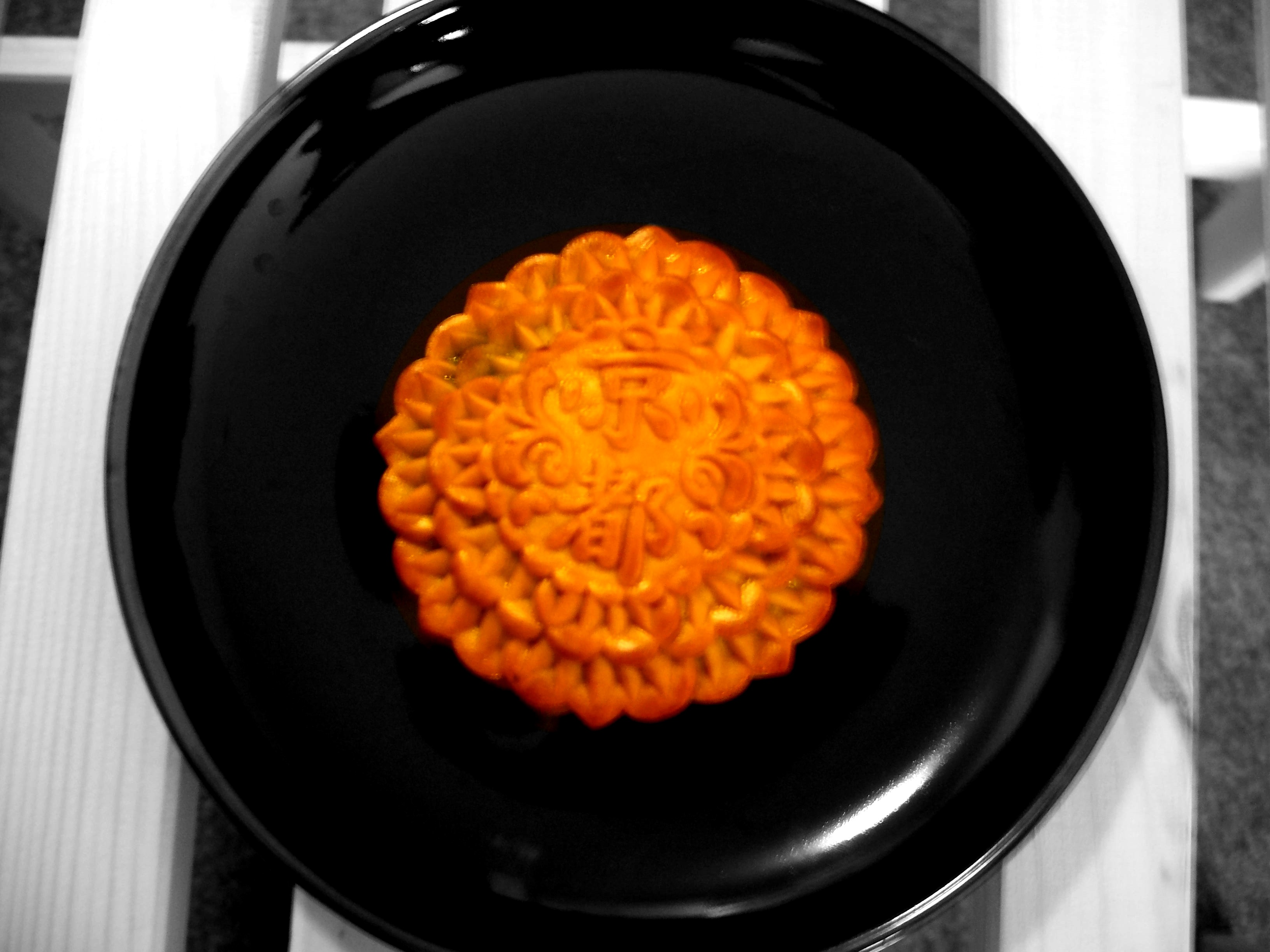
That time of the year has come. Time for the first midterm exam of the undergraduates, and the first exam-grading party of the graduate students. Time for looking back and asking what have I been doing since school started, beside avoiding my advisor for fear of his question “how is the research going?”. Time for kids to buy lanterns, if you’re in Vietnam, and for adults to return home, if you’re in Korea. Time for Walmart, Michael’s, Kroger and the gang to pull out a full display of Halloween and Thanksgiving colors. Time for Asian expats to savour their mooncakes.


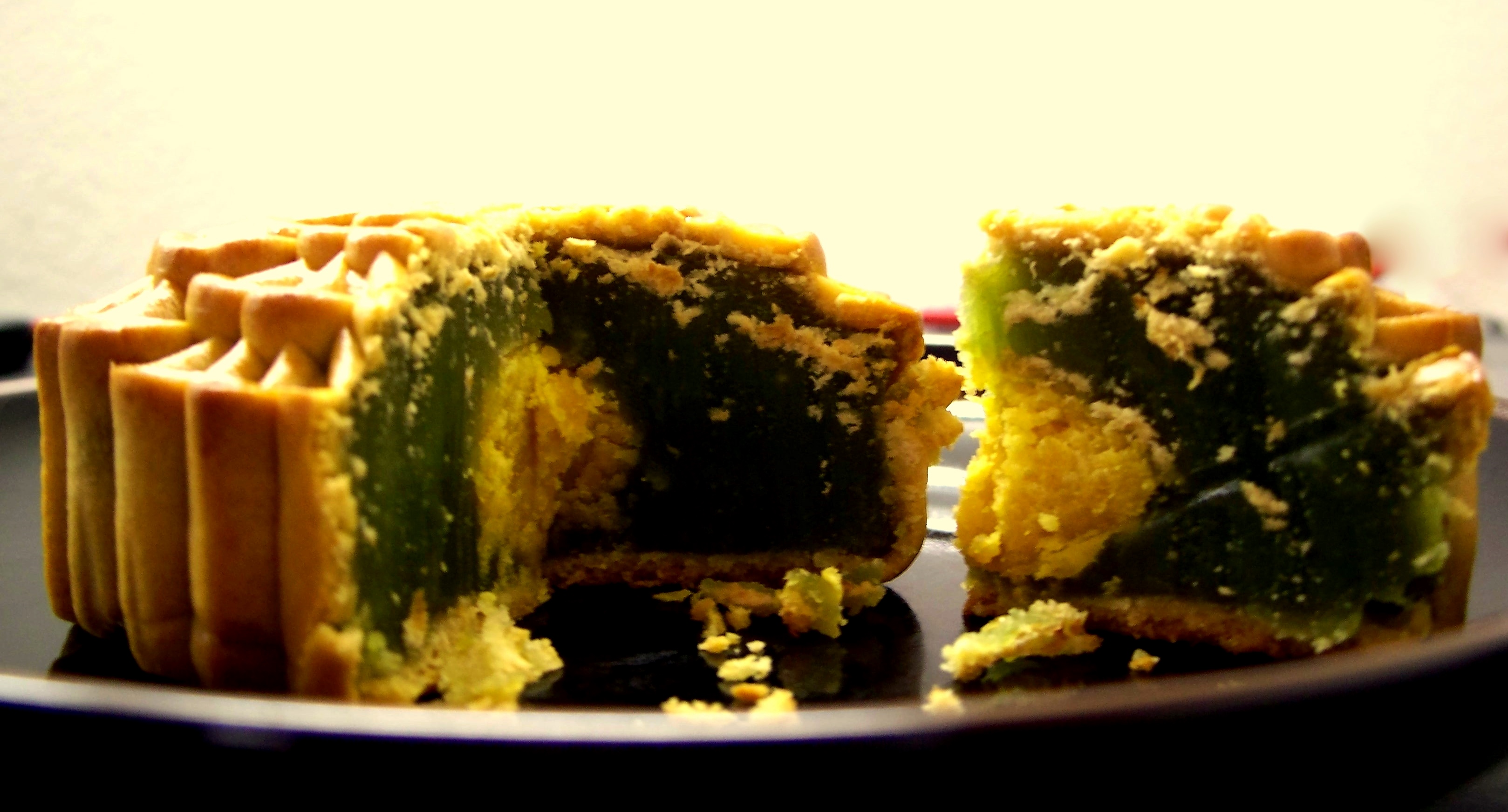
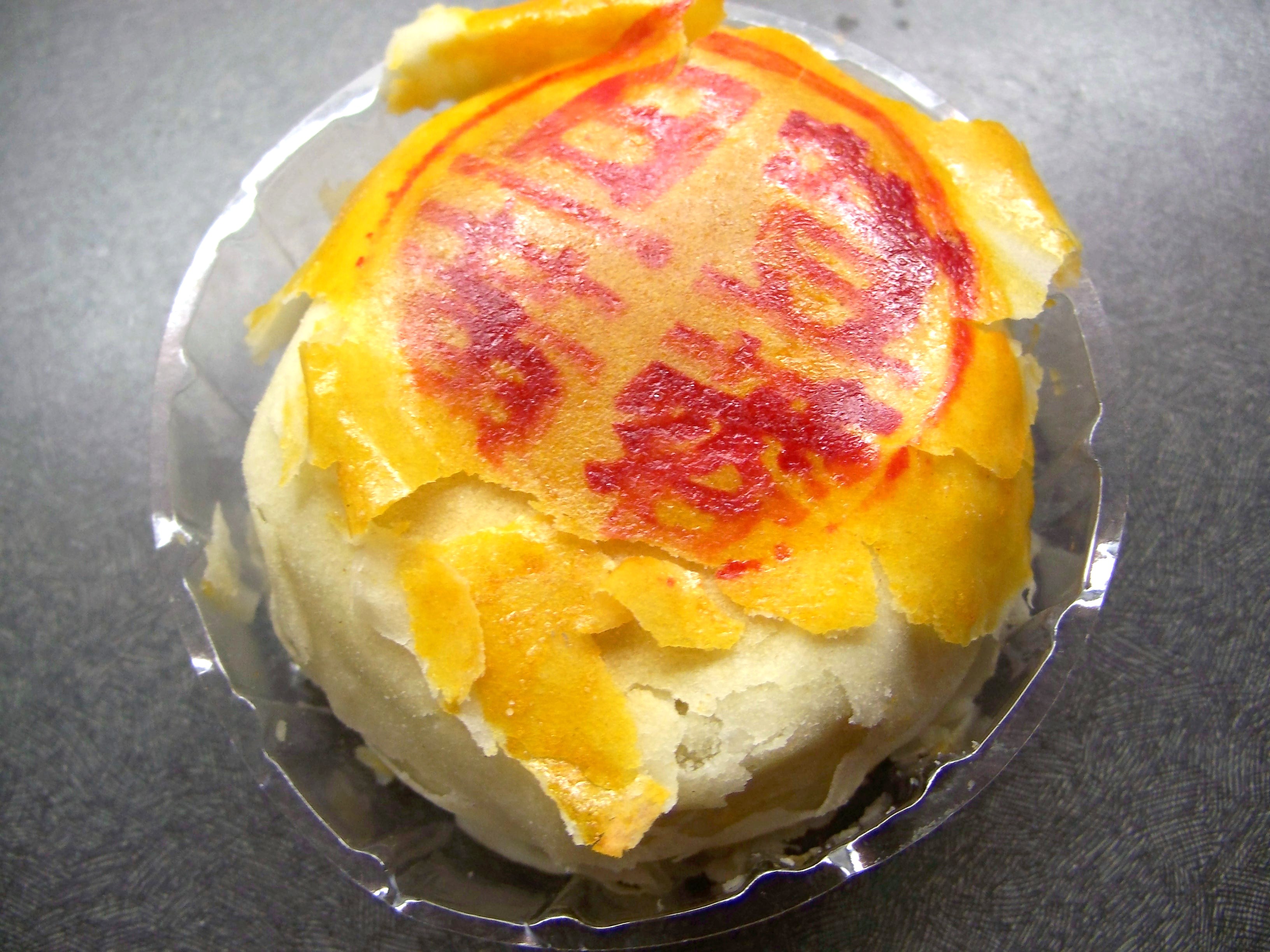
It isn’t called “mooncake” for no reason. There’s a moon inside the cake. A bright deep yellow egg yolk, salted to perfection. I always eat this last, putting the whole ball in my mouth and slowly eroding it away. The background of the “moon” can be anything, from assorted nuts and lap cheong to sweetened bean paste. Kinh Do churned out the green tea version (nonexistent in Saigon when I was there 5 years ago). Talk about 2-in-1 convenience, now you don’t have to drink tea while eating mooncakes anymore.

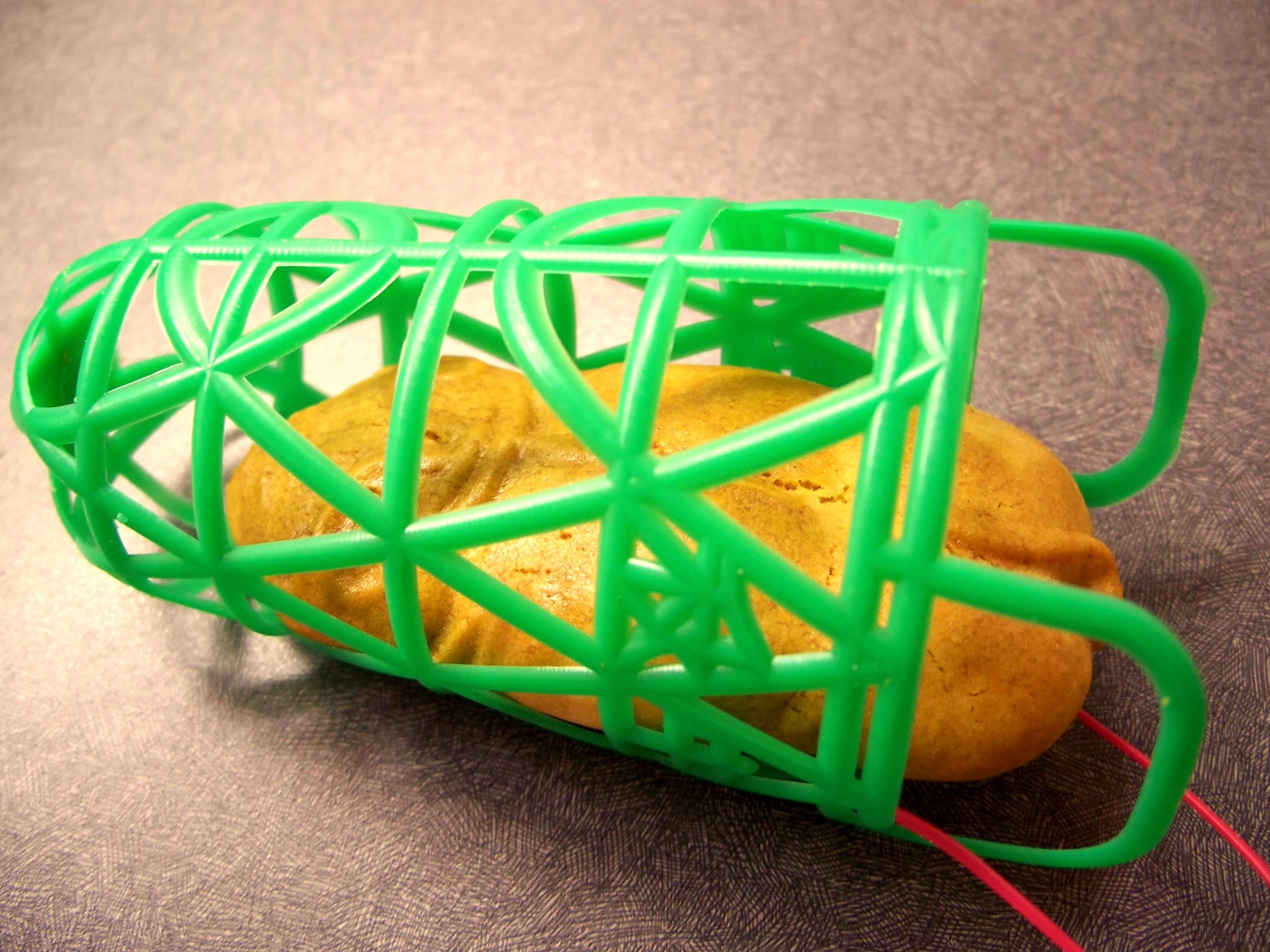
Some prefer the crust to the ubersugary filling. I’m one of them. So they make the dough into shapes of little piglets. My officemate and I laughed so hard the other day when we found out that both the Singaporeans and the Vietnamese do that, although in different ways. Vietnamese people have the baby pigs surrounding a mommy pig, herself a big mooncake with all the stuffing and egg yolks inside. The Singaporeans make it easy for kids to take their piggy around:


I always find it hard to eat the piggy. It’s like eating a gummy bear, you know, should you decapitate him first, or attack from below?
Do other Asian countries have piggy mooncake too?

Recipe for bánh chuối nướng (Vietnamese banana bread pudding)

August 25, 2009 By: Mai Truong Category: RECIPES, sweet snacks and desserts, Vietnamese


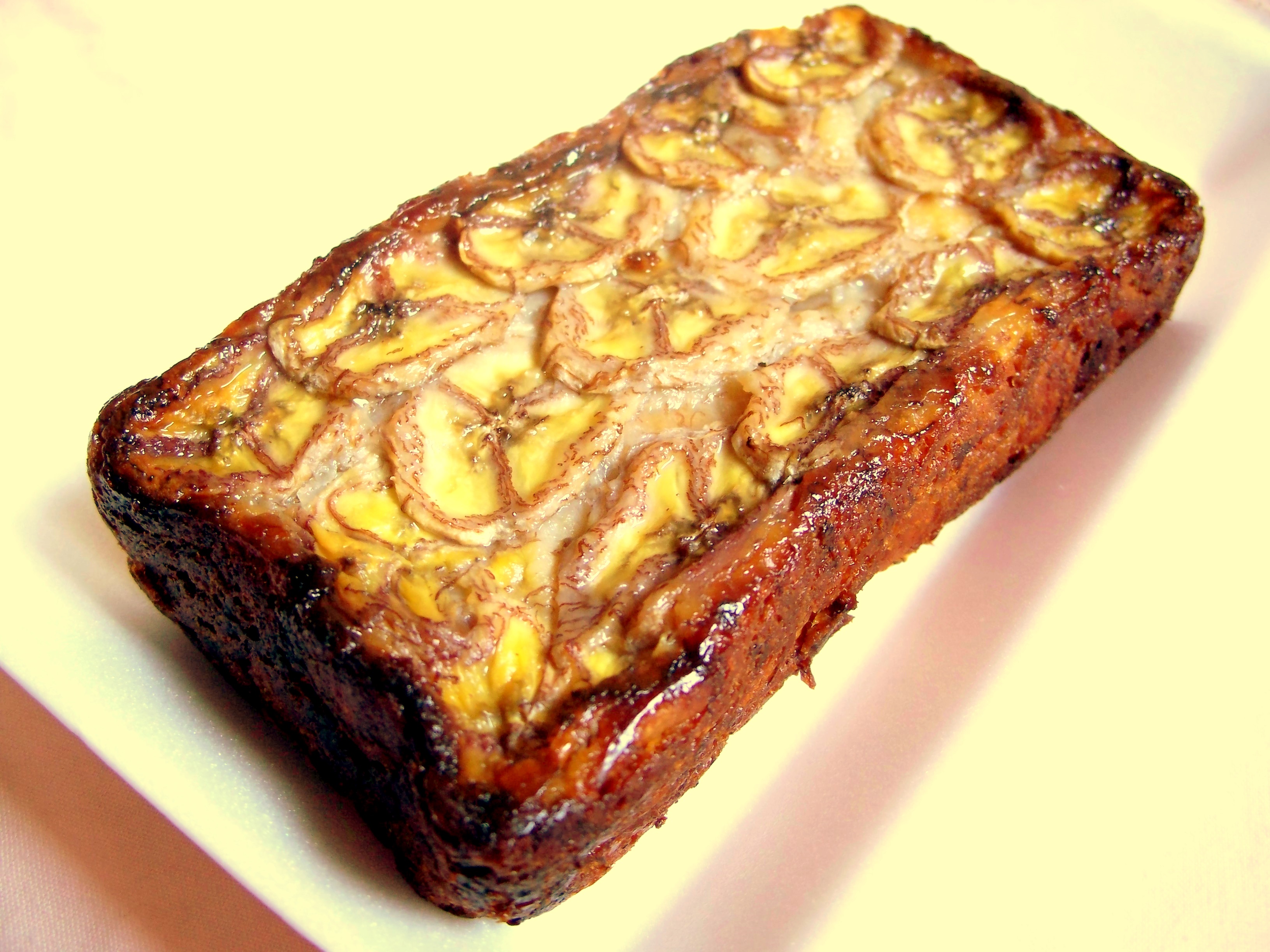
Compared to other Vietnamese sandwich shop goodies, banana bread pudding is relatively easy to make at home, perhaps because of its strong connection with Western desserts. The ingredients contain bread, milk, rum, and vanilla, but at the end of the day, the tropical note of banana plays the key role.

Ingredients:
– 1 bunch of banana ~ 7-8 fingers, preferably Chuoi Su cultivar (also known as Chuoi Xiem, Pisang Siem, Siusok, Kluai Namwa Daeng)
– 1.5 loaves of old stale bread (the pullman loaf to make sandwiches)
– Rum (1 tbs for every 300g of banana) (optional)
– 2 cups milk
– 2 cups coconut milk
– 2 eggs
– 1 1/4 cups sugar
– 4 tbs melted butter
– 1 tbs vanilla (optional)

Use an 8-inch (20-25 cm) cake pan, at least 2 inches (5 cm) thick so that the bread pudding has enough room to rise. Grease the pan.

Slice bananas (in any direction) and mix lightly with rum. Powder the banana with a little bit of sugar if you want the banana to turn red after baking. If you don’t like rum, just slice the banana.

The bread: you can keep or trim off the bread rind, which would slightly change your bread pudding’s firmness. Either way, dip the bread slices into a mixture of milk, coconut milk, beaten eggs, sugar and vanilla. Squeeze the bread enough to rid it of too much liquid. This is an important step, the cake would be dry if it’s too squeezed, and fall apart if it’s too wet.

Layering:
Method 1: alternate 1 layer of bread (~1.5 cm/half inch thick), 1 layer of banana, another layer of bread, etc. until reaching the rim of the pan. Try to have room for a layer of banana on top. Firmly and evenly press the layers down so that the baked cake won’t be too spongy or crumbly.
Method 2: mix banana with soaked bread, fill up the pan with the mixture and have 1 layer of sliced banana on top. The result will be a finer texture.

Bake at 175C (350F) or until golden. Quick check: stick a small chopstick/toothpick deep into the bread pudding and pull it out, if the chopstick/toothpick is dry, the banh is done. It usually takes 25-30 minutes.

References:
Playing With My Food
Liên (Tú, Đăng’s Mommy)’s blog
vietbao.vn

Banh mi run

July 05, 2009 By: Mai Truong Category: California - The Bay Area, sandwiches, sticky rice concoctions, Vietnamese

You know how school kids don’t get tired of peanut butter sandwich even if they eat it every day for lunch? Well, every time I catch the BART down to Fremont, it’s hard to pass up the chance to stop by Huong Lan Sandwich in Milpitas for a fresh crusty loaf, or many of those banh mi’s – a week’s supply for lunch.

When in California, be liberal. The store has diversity. Above is packages of bánh bèo (white) and most likely bánh bột lọc (leaf-wrapped). Many kinds of cookies, crackers, shrimp chips, and other snacks unknown to ubercmuc. Below is the real goodies: nice warm bánh bao (steamed pork bun), bánh cốm (the bright green flat thing), bánh giò (leaf-wrapped pyramid), and mini bánh chưng (the squares).

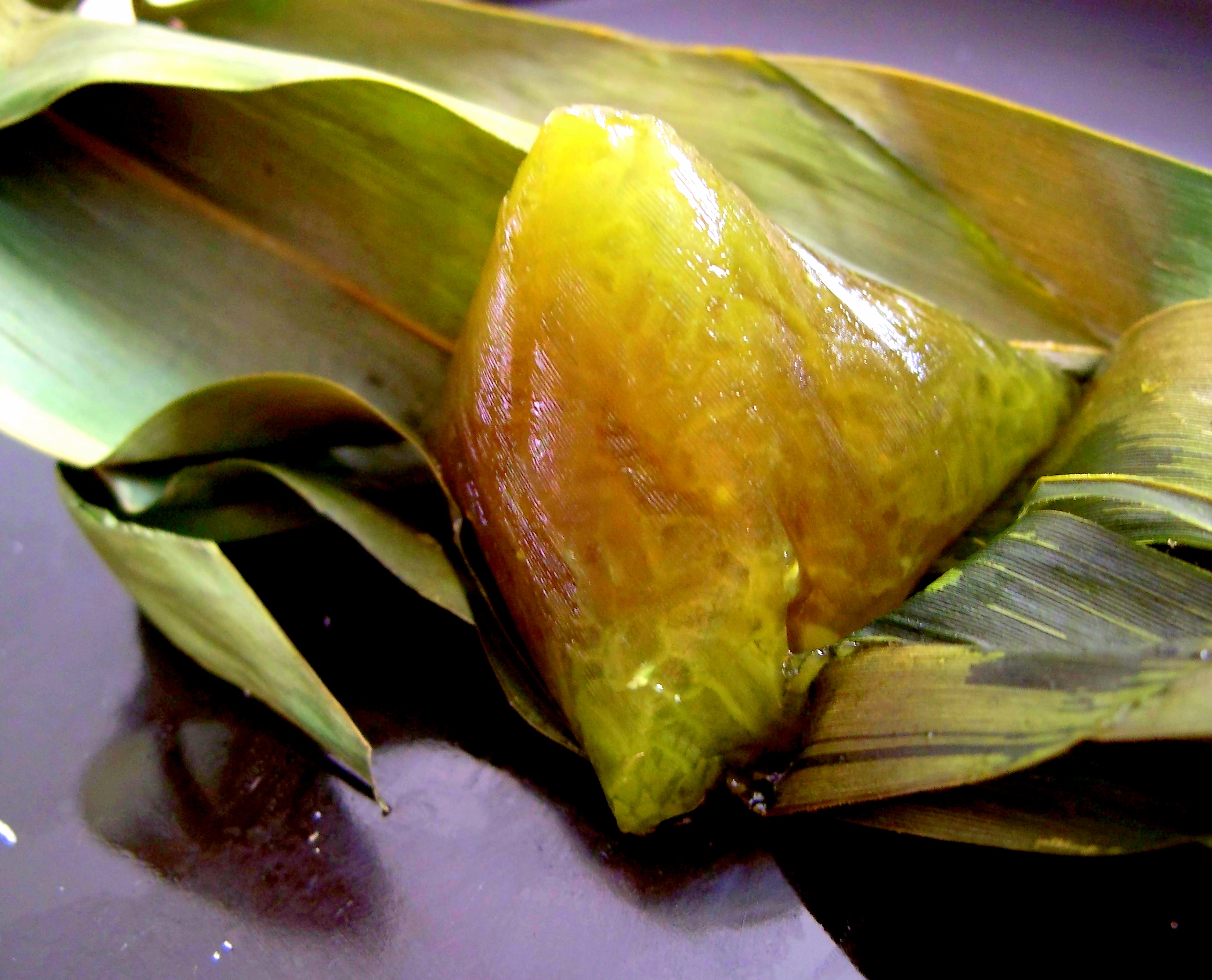
Here’s the square unwrapped and cut in four. The pork is fatty, which is not quite right, but nonetheless it’s well done. So the story goes as follows: in a competition among the princes in ancient Vietnam, the king asked all the princes to find an exceptionally good food. The youngest prince, having no money and little power, couldn’t afford fancy stuff like ginseng and who knows what in the woods, so with the advice of a god in his dream, he took sticky rice, meat, and mung bean to make a bánh, wrapped in lá dong (Phrynium placentarium), and boiled for hours. The bánh is a green square, symbolizing the square Earth, pork – the animal, and mung bean – the plants. So I suppose fatty or lean pork doesn’t really matter to the story. After all, we have some really chubby animal, not just skinny ones. Mung bean seems to be Vietnamese’s favorite legume, just like red bean is to the Japanese. Perhaps because it’s good as a paste (in both sweet and savory bánh), a powder (on xôi), whole beans (in sweet deserts like chè), and as an ice cream flavor.

Don’t let size tricks you. Half of this mini bánh chưng definitely made a filling breakfast, the whole thing would be too filling. And if you’re too full you wouldn’t be able to eat a nice crusty bánh mì for lunch… uhm hmm…

Look at all that pickled carrots and radish. It’s a balanced meal. I usually get bánh mì thịt nướng (grilled pork), but that is proven quality, so this time gà nướng (grilled chicken) is up for test. I should stress that no matter what the filling is, a banh mi can never go wrong. You can put just soy sauce and a banana in it, and it would still be yummy. Something about the crusty, flaky bread that makes everything better. Back to the chicken. Well, it’s not dark meat, and it’d take some serious brining to make white meat flavorful. So let’s put it gently, I’ll be loyal to grilled pork.

Hương Lan must be a chain, or it’s just a name sandwich-makers like. They’re everywhere in this area, but I believe every store has a different touch to it. Here they put peanuts and nước mắm in the grilled pork bánh mì. The more flavors the merrier. Address: 41 Serra Way #108, Milpitas.

Oh, the end of the story is, the youngest prince, proved to be the wisest, was chosen for the crown. 🙂

Cha lua kimbap

June 30, 2009 By: Mai Truong Category: Korean, RECIPES, savory snacks

3 cups of rice, 3/4 lbs cha lua, 1.25 cucumbers, 3 avocados. Made 10 fat rolls of kimbap. We used long grained rice because we didn’t want to bother buying short grains, giving the rice a little more water than what the cooker says, and it’s sticky, but gotta roll quickly or the rice would dry out, perhaps in hindsight short grain would do the job better? Seasoning the rice calls for sugar, salt, and vinegar, but ubercmuc detests the taste of vinegar, hence water substituted. Inadvertently, my rolls deviate from Maangchi’s by a great distance.

Cha lua (also labelled giò lụa) was bought at a local Vietnamese shop in Little Saigon, hot and fresh from the steamer. Don’t buy those frozen things at the Asian supermarkets, who knows how long they’ve been there. I cut up the cha lua and boiled the slices to lessen the nuoc-mam flavor (which is only a wisp to begin with). It is a much better meaty core than crab stick.

We weren’t sure if we got nori or kim, the sheets are green instead of black, salty, and have a noticable taste of the sea. A 27cm x 27cm sushi mat was well sufficient. We have yet to master the art of slicing a roll of rice, stuffing, and seaweed without breaking them apart, but I found that a cling-wrapped, refrigerated roll, microwaved for 2 minutes, then cut with a wet knife, turned out to be much more beautiful than those cut fresh or cold. Microwaved kimbap also tastes as good as new, at least to a foreign mouth.

Recipe for Bánh ú tro (Vietnamese-adapted jianshui zong)

June 30, 2009 By: Mai Truong Category: Chinese, RECIPES, sticky rice concoctions, sweet snacks and desserts, Vietnamese

The recipe calls for a lot of prep time (up to a year!), and the products are little triangular pyramids sold for $3.75 a bunch at sandwich shops. But hey, if you can make bánh ú tro, you can enjoy it any time of the year without having to wait until the Fifth of Lunar May.

1. Ash water

Use the fine, soft ash from burnt coal, dissolve in water. The common ratio is 50 grams of ash for every liter of water, but it varies depend on how strong the ash is and how strong you want your banh to be. Let the ash collect at the bottom, leaving a clear solution. Sift the solution to get rid of dirt and coal bits.
You can use lime powder instead of ash. White lime gives bánh ú tro the natural green hues of wrapping leaves, red lime gives them reddish amber hues. The mixing ratio is 20 grams/liter for lime powder.

2. Sticky rice

– Use 1-year-old sticky rice. Such grains are more powdery than new sticky rice. Wash sticky rice with cold water, then soak in ash water overnight or until the grains break easily when you press them between two fingers. Soaking time varies with different ash types and grain types, but beware that grains soaked for too long can make the banh smell like ash.
– After the grains are done soaking, rewash them thoroughly with water and let dry.

3. Sweet filling

Traditional bánh ú tro doesn’t have filling and is eaten with honey or sugar. But bánh ú tro with fillings are arguably tastier than their plain counterparts, and here are a few filling ideas:
Mung bean paste: split and peeled mung beans are washed and cooked until tender, mashed while it’s still hot and mixed with sugar. The bean-sugar ratio varies to your likings.
Red bean paste: soak red beans in water overnight to soften them. Wash, cook until tender, mash. In a skillet, add 1 tbs oil and 200g brown sugar for every 500g red bean, stir on low heat until all sugar dissolves. Let cool.
Grated coconut: boil water and sugar with ratio 1:1 on low heat , stir frequently until all sugar dissolves. Pour the syrup into grated coconut and mix until it becomes a soft sticky ball.

4. Wrapping bánh ú tro

– Use bamboo leaves (about 5-6 cm wide and 30 cm long) or banana leaves cut into similar size. Wash the leaves clean and let dry.
– Bend one end of a leaf into cone shape. Use 2-3 leaves to increase the banh size.
– Put in 2-3 teaspoons of sticky rice for the plain kind. Or 1 tsp sticky rice, followed by 1 tsp filling, then 1 tsp sticky rice on top for the sweet kind.
– Wrap the remainder of the leaf tightly around and over the cone until all faces are covered.
– Tie it up with a nylon string. Then tie every ten banh into a bunch with a long string to easily pull in and out of boiling water.

5. Boiling bánh ú tro

– Cover the bottom of a large pot with banana leaves or bamboo leaves to keep banh from sticking to the metal.
– Arrange banh in the pot. Pour water. Water level should be at least 4 inches above the banh. Make sure banh stay submerged the whole time, you can cover banh with a big sieve and a weight on top to keep banh from floating up.
– Boil banh for 45 minutes to an hour (after the water starts boiling). Add more water if the level gets too low.

Submerge cooked banh in cold water for 10 minutes to aid cooling, then hang them dry. Well made ones can last 2-3 weeks at room temperature.

Recipe translated from source.

Down the Aisles -1: Endangered species chocolate

June 25, 2009 By: Mai Truong Category: sweet snacks and desserts

Follow up on my previous chocolate review, this time in a much better mood as I’ve settled at the new school. New city, getting further behind in blogging.

Deep forest mint: dark with mint (72%): what do you expect, well… it’s like eating your toothpaste, only more unyielding. It’s not bad, but a little sweetness would be nice. You know how you picture a humid, colorful setting damped with flavors and warmth when you hear “deep forest”? This chocolate doesn’t taste at all tropical. It’s cold, harsh, dry, it flushes your sinus with strength. I prefer mint chocolate ice cream. I shouldn’t score this one.

Wolf: dark with cranberries and almonds: crunchy, crunchy, little bar, almond, chocolate, there you are… no trace of cranberries though. What else is there? Have I lost taste for dark chocolate? Perhaps. It is 70% in any meaning you can think of. Pass.

Sea otter: smooth milk (48%): little sweet treat. My new favorite. 48% seems to be the best medium, not too bitter, not too sugary, not too hard, not too soft. I can eat it all day long. What is it like? Sleeping in on a rainy day – you just keep wanting more. 9/10.

Grizzly bear: dark with raspberries (70%): it’s really not that that much different from the wolf, if you forget about almonds for a moment. Good for passing time. 7/10.

Bat: I didn’t know that bat was among the endangered species. Anyways, the bat tastes like the grizzly bear, 70% is 70% everywhere, regardless of species. Points? 7/10 (surprise!)

For 2.79 I can either get an animal or 3 bars of IKEA chocolate with 30 cents left over, which taste (and sound) delicious. The animal bars will make you feel like you’ve done something good for the world. IKEA choklad will make you feel like you’ve done something good for yourself. Take your pick.

Next on Down the Aisles: Mo’s Bacon Bar and Hibiscus sorbet

Recipe for bánh bía (Vietnamese-adapted Suzhou mooncake)

June 14, 2009 By: Mai Truong Category: Chinese, RECIPES, sweet snacks and desserts, Vietnamese

If you just want to enjoy a piece of sweet flaky mooncake, Vietnamese sandwich stores and bakeries are the place to go. If you have plenty of time at hand and little trust for unknown kitchens, then hit the market to find these ingredients for a batch of 12 bánh bía:

1. The skin dough

– 375g all purpose flour (Pillsbury preferred)
– 110g confectioner sugar
– 80g corn/canola oil
– 100ml coconut milk (Chef’ Choice preferred)
– 50ml water.

Add flour, sugar, oil and coconut into a mixing bowl, then slowly add water while kneading until the dough is smooth. Don’t need over 2 minutes or the dough would be too hard to flatten later. Cover with cling wrap and let the dough sit for 1 hour. Divide into 12 balls afterwards.

2. The inner layer dough

– 125g tapioca flour
– 95g wheat flour
– 110g corn/canola oil

Mix the flours and oil together. Do not knead. Let sit for 1 hour, then divide into 12 balls.

3. Bean paste filling with durian flavor and salted egg yolk

– 400g mung bean (peeled and split)
– 300g sugar
– 1 cup oil
– 1 tbs maltose sugar
– 1 tsp baking soda
– 1/4 cup wheat starch (the type used for potsticker)
– 200g durian flesh (ground up in a food processor)
– 12 salted eggs
– 1 slice of ginger
– rice wine

Separate the egg yolks from the whites, wash with cold water, then soak the yolks in rice wine and finely chopped ginger for about 30 minutes. Take the yolks out the wine mixture and quickly soak them in vegetable oil. Finally, bake the yolks on aluminum foil in 300F for 10 minutes.

Soak the mung beans in water and baking soda until they soften. Rinse them with cold water, steam, wait until the beans cool to make a fine paste with the food processor.
In a non-stick pan, simmer the bean paste with 200g sugar, 2 tbs maltose, and 1/4 cup oil over low heat. In another pan, mix 1/2 cup oil with 100g sugar to make caramel on low heat. It should be golden brown, or the pastry filling would be bitter.
When the sugar has caramelized, pour the bean paste into it and mix until there is no visible sugar. Add 1/4 cup of oil and wheat starch and continue simmering. Lastly, add durian paste and stir until the bean mixture no longer sticks to the utensil. Let the paste cool and divide it up to 12 portions.

4. The egg wash

– 1 egg, room temperature
– a pinch of salt (kosher salt preferred)
– 1 tbsp water
– 1 tsp sesame oil
– 1 tsp cashew oil
– 1 tsp dark corn syrup

Mix all ingredients into a blend.

5. Make the cake
– Flatten each ball of skin dough, then use it to wrap the ball of inner layer dough (like a dumpling). Keep the dumplings moist until all 24 balls of skin dough and inner layer dough are paired up.
– Gently flatten each dumpling into oval shape about 2mm thick, roll the sheets into Swiss-rolls.
– Repeat the flattening process with the Swiss rolls, then let the dough balls rest for 15 minutes. Make sure that during this process the skin dough always covers the inner layer dough, or the pastry will have a rough surface after baking. If the dough is too tough, let it sit for 5-10 minutes. Do not exert too much force while flattening.
– Flatten the dough balls again into disks, and use them to wrap up the balls of bean paste (each with an egg yolk inside).
– Preheat oven to 400F
– Bake the pastries for 15 minutes, then take them out to brush egg wash on one side, and continue baking for another 10 minutes.
– Let the pastries cool and oil release for a few days.

6. Eat the cake
(Caution: it may be too fatty and sweet to eat whole, one quarter at a time is the usual safe quota)

Recipe translated from source.

Tags:

Down the Aisles -2: Bittersweet

February 26, 2009 By: Mai Truong Category: Opinions, sweet snacks and desserts

Ten weeks after sending off the application to grad school, including 2 weeks of anxious waiting and roller-coaster cycling of hopefulness and hopelessness, the first result I got back is a rejection. How to handle a rejection? You don’t, you just ignore it. It wasn’t a bad moment, to be honest. In some way it was relieving, no more waiting from that school. It’s been restless for the last two weeks. I’ve heard friends getting acceptance and rejection, I’ve thought about the embarrassment, and the choices I have in the worst scenario. Switching to med school would take at least one year to study for the MCAT, another to apply and hang around worthlessly, another 4 in grad school (in the case of acceptance), perhaps 2-3 years of residency (if graduated), which totals to 8-9 years, about the same time length to professorship (if everything goes well). Or I could be a bum, but Chris had assured me that I wouldn’t make it. Judging from my GRE scores, I have little belief that my MCAT score would be impressive, multiple choice tests and I aren’t buddies.

But, those were just negative thoughts in the dark hours. I still have classes, movies, and chocolate for self-indulgence. And all the cheesy appreciation for the support from parents and professors, which I consider quite personal(ly valuable) and would spare you from. However, I will disclose my other personal stuff, which has to do with chocolate. Thanks to Mudpie, I’m now racing with time in consuming 9 bars of chocolate, or 22.7 oz (645 g) of chocolate liquor, water-filtered beet sugar, cocoa butter, soy lecithin, vanilla, and flavors. It will help you overcome any depression initiated by academics. So here goes.

Zebra (70% cocoa, dark chocolate with orange): feel smooth, aromatic right after opening the wrapper, a little bitter, easily melt in hand, not as orange as expected, the bitterness is not noticeable when let melt in mouth. No orange peel pieces visible like Valrhona’s dark with orange. Score: 7/10.

Koala (70%, smooth dark with cherry): same bitterness with subtle sweet from cherry, almost unnoticeable taste of cherry except for the smell, pleasant, like lying on the grass at night, a very genteel experience suitable for those who don’t like dark but have to eat it anyway. Score: 7.5/10. On second thought, it’s like talking to an old man, there’s some grumpy bitterness, but there is definitely something sweet and cute.

Lion (35%, smooth milk chocolate): definitely a little too sweet, better to let melt on your tongue than to chew, as the sugar splash is intense. Maybe I’m just too accustomed to dark chocolate. The silky feel makes it reside a level above Hershey’s. Score:6/10 for perfect achievement in ordinary. Suitable for unadventurous nibblers.

Dolphin (48%, milk chocolate with cherry): pieces of cherries inside, do not melt on hand, firm, confident, lingering, suave, take a bite and you’d feel like you’re bathed in milk and wrapped in velvet. Very sensational, yet very assertive. Perfect touch. Score: 9/10.

The Endangered Species chocolate producers donate 10% of the net profits to help species and habitat, so their taste is moved up a notch for me. My ambition is to try all of their collection, to collect for myself the wrappers with animals and their story inside. I’ve also mastered the skill of rewrapping the bars. They look like new.

Next on Down the Aisles: more Endangered Species Chocolate

DISCLAIMER: I received no free product or monetary gift in exchange for this review.