Flavor Boulevard

We Asians like to talk food.
Subscribe

Archive for the ‘RECIPES’

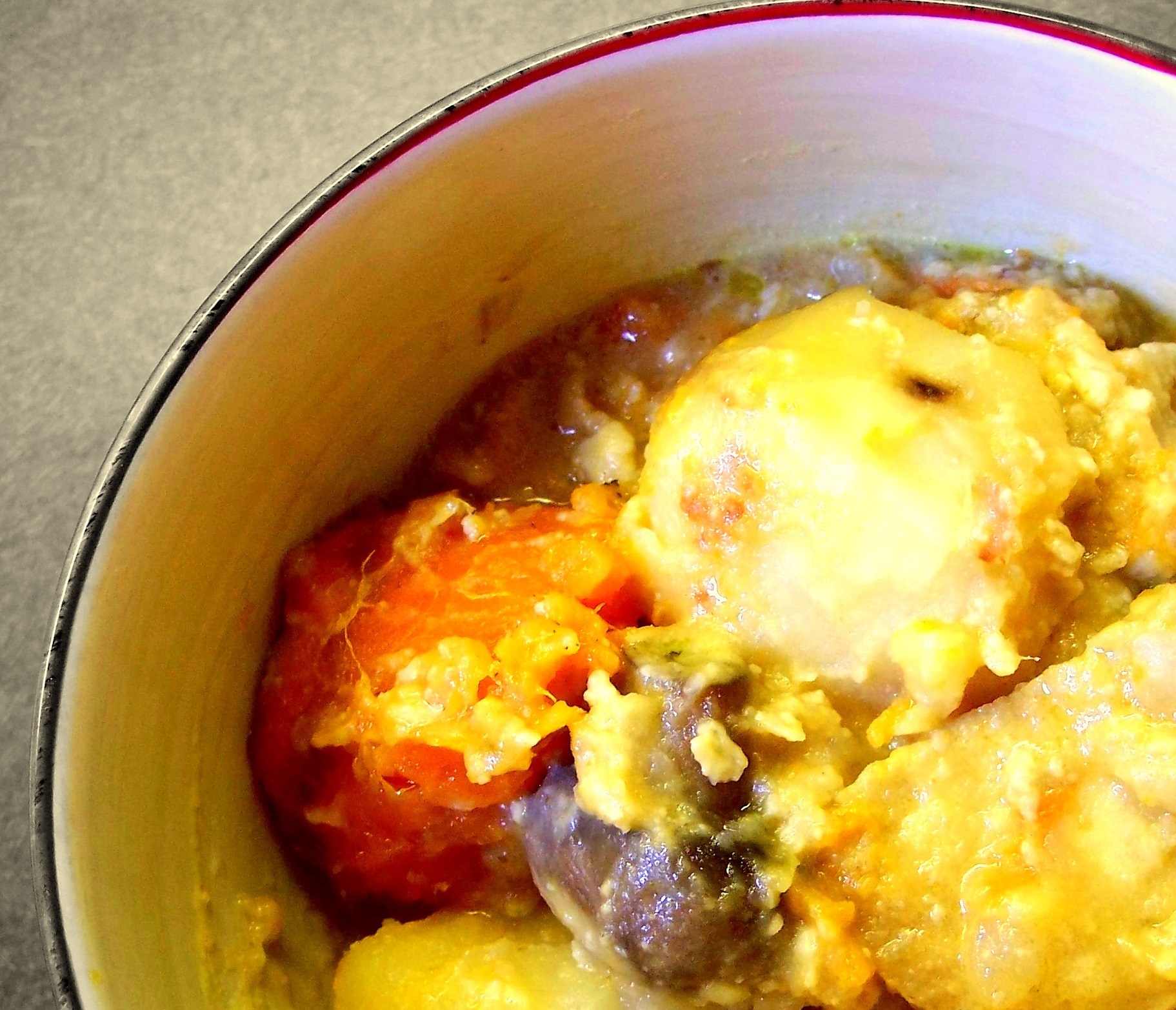
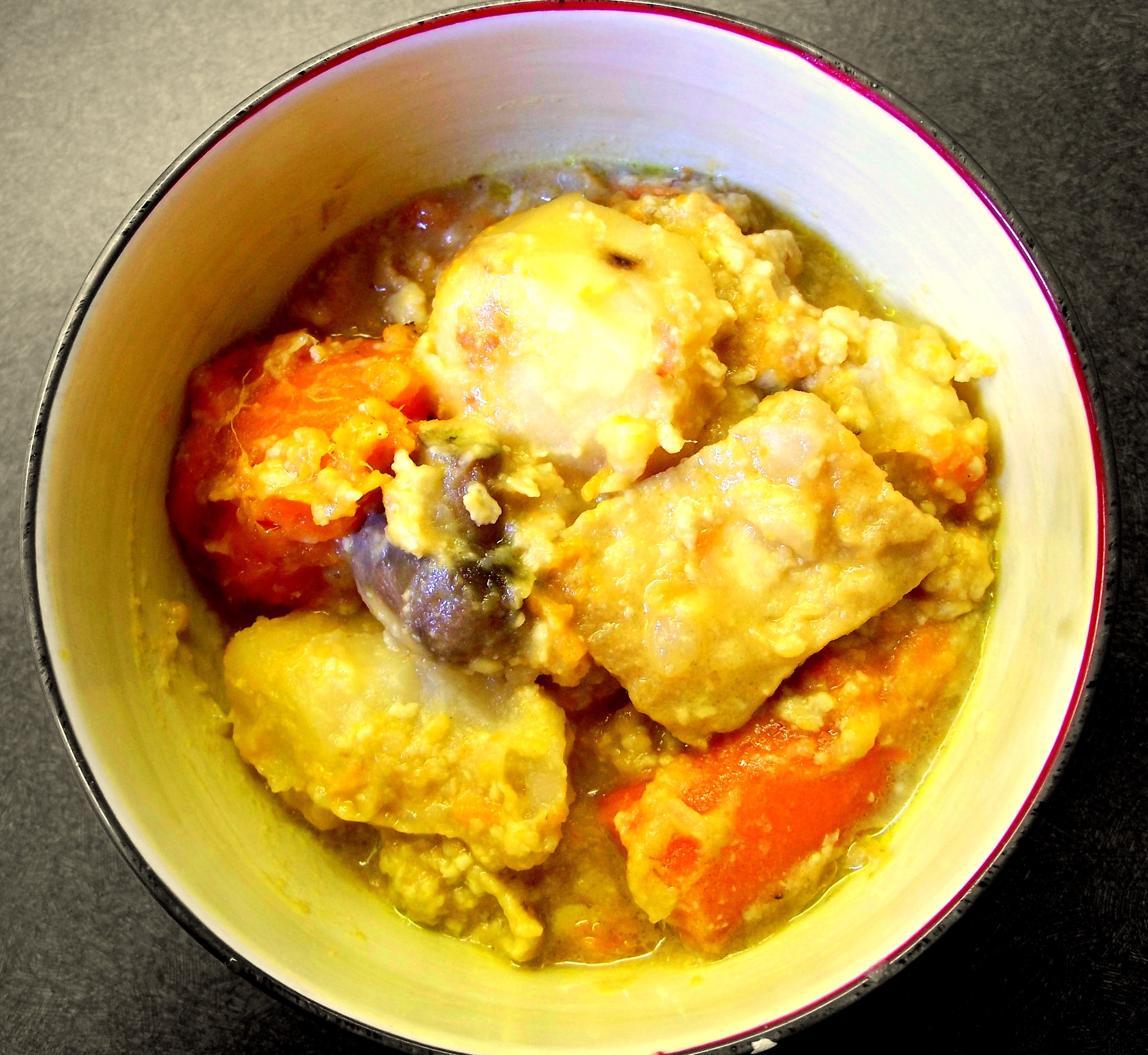
Got time? Make vegan curry.

September 07, 2010 By: Mai Truong Category: RECIPES, Vegan

CAUTION: Don’t make this curry when you’re in a hurry. If you’ve got half a day to kill, then a trip to to the groceries and a couple of hours in the kitchen might be fun.


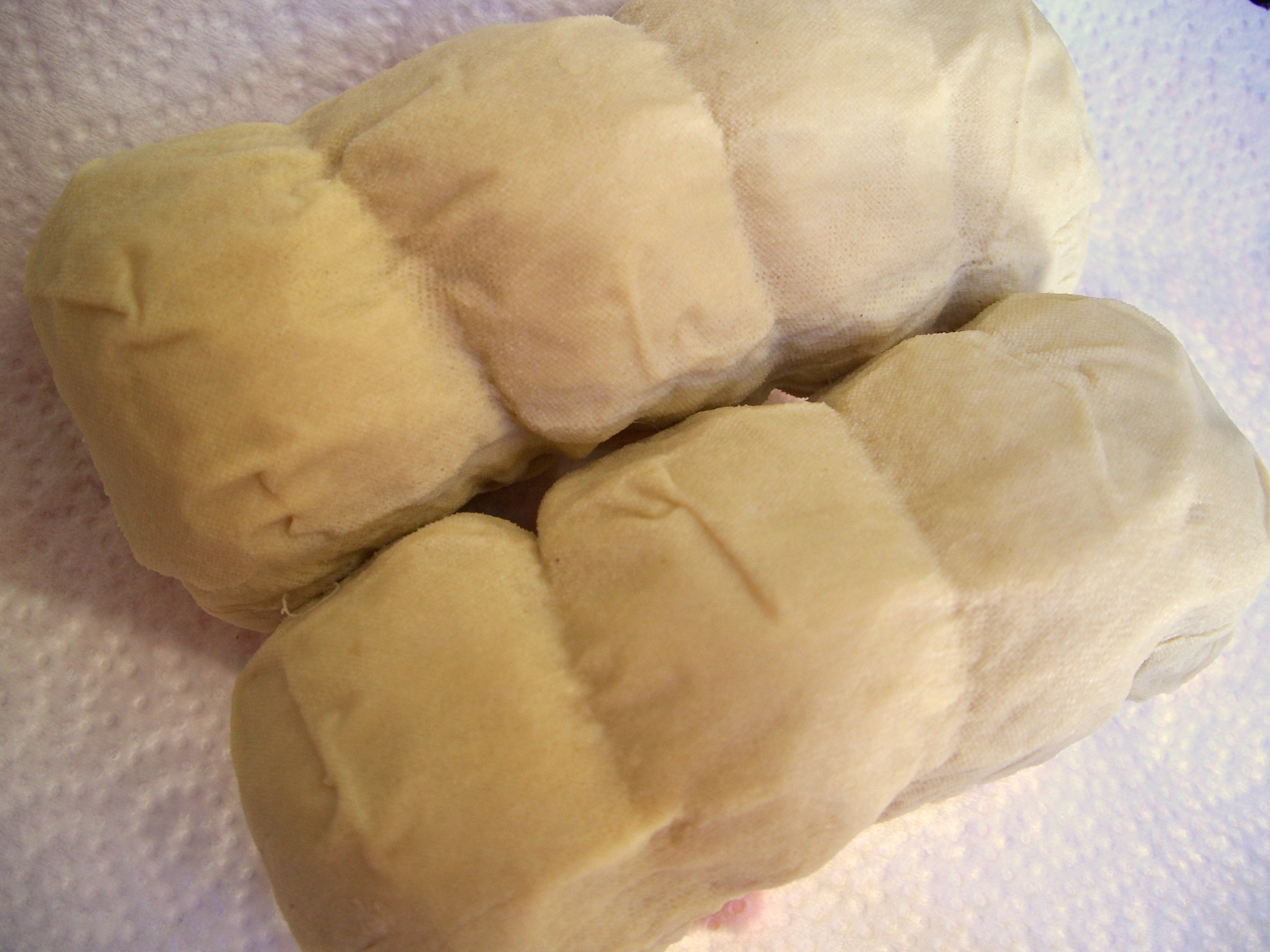
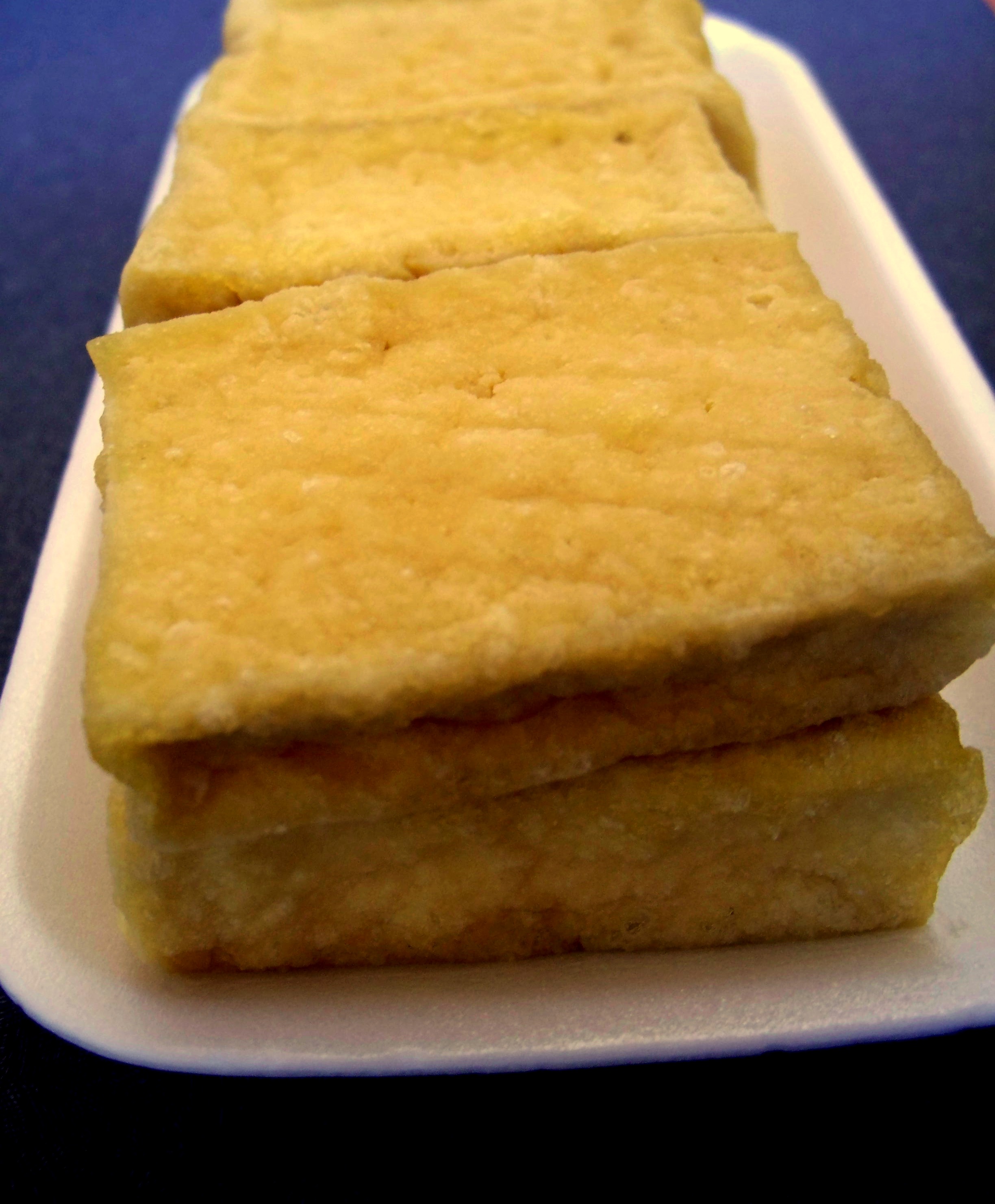
At the groceries: grab 3-4 plump potatoes, 2-3 red yams/sweet potatoes, carrots, mushroom, yellow fried tofu, fresh gluten meat, 1 can of coconut milk. The fresh gluten meat is white, slightly layered, with a wet, bouncy texture, usually sold in packages of 2-4 blocks. Do not get the canned kind, or the kind that looks like bread. If fresh gluten meat is nowhere to be found (as happened to me at 99 Ranch Market), “vegan chicken” might substitute.


At the sink: peel all potatoes, sweet potatoes, and carrots. Cut them into big chunks (at least a finger digit thick) so that they won’t just dissolve in the curry later. Cut the fried tofu and gluten meat into similarly thick chunks.


At the stove:

STEP 1: Fry everything (except the mushroom) separately. This is the time consuming part, since you have to oil the pan, heat the pan, fry the potatoes until one side is brownish golden, flip to the other side and do the same, take out the potato, and do it again for 4 more ingredients. Frying helps firming the surface of the chunks (again, to prevent dissolving) and adds flavor to the curry. Remember to use vegetable oil only, since this is vegan.


STEP 2: Sauté diced garlic in a pot until golden. Turn off the heat. Put the fried ingredients and mushroom into a big pot. And I mean a really big pot. It’s amazing how just a few tuberous roots, chunks of tofu, and a small box of mushroom can fill up the whole pot.

STEP 3: Seasoning. Add sugar, salt, and curry powder into the pot. My mom’s recipe calls for the salt:sugar ratio of 1tsp:4tbs, that means for a pot like this you’ll need about 2.5 teaspoons of salt and 10 tablespoons of sugar. Add curry powder to your liking, 1 tsp is enough for coloring, 3 tsp should be enough for flavoring. I used the curry powder that has garlic, ginger, clove, fennel, and cumin.
Side note: you don’t need to get the exact seasoning formula at this stage. You can always add more salt, sugar, and curry when it’s done cooking. It’s easier to taste everything then.

STEP 4: Add 1 can of coconut milk into the pot. Yes, the whole can. Add water until everything is just submerged in liquid.

STEP 5: Cook uncovered on medium heat until boil. Then keep cooking for another 15 minutes. Check to see if the potatoes are cooked by inserting a chopstick (or anything similar) into a chunk of potato, if the chopstick goes through easily, then it’s done.
Side note: Stirring is not necessary while cooking. You can stir if you want, but then you’d risk turning the sweet potatoes and/or the “vegan chicken” into mush (like me :P). Fresh gluten meat wouldn’t turn mushy, so if you can get it you’re in good shape.

Finally


At the table: serve warm with bread or rice.

Tags:

Down the Aisles 3: Ink stamper or potato?

June 18, 2010 By: Mai Truong Category: California - The Bay Area, RECIPES, Vegan

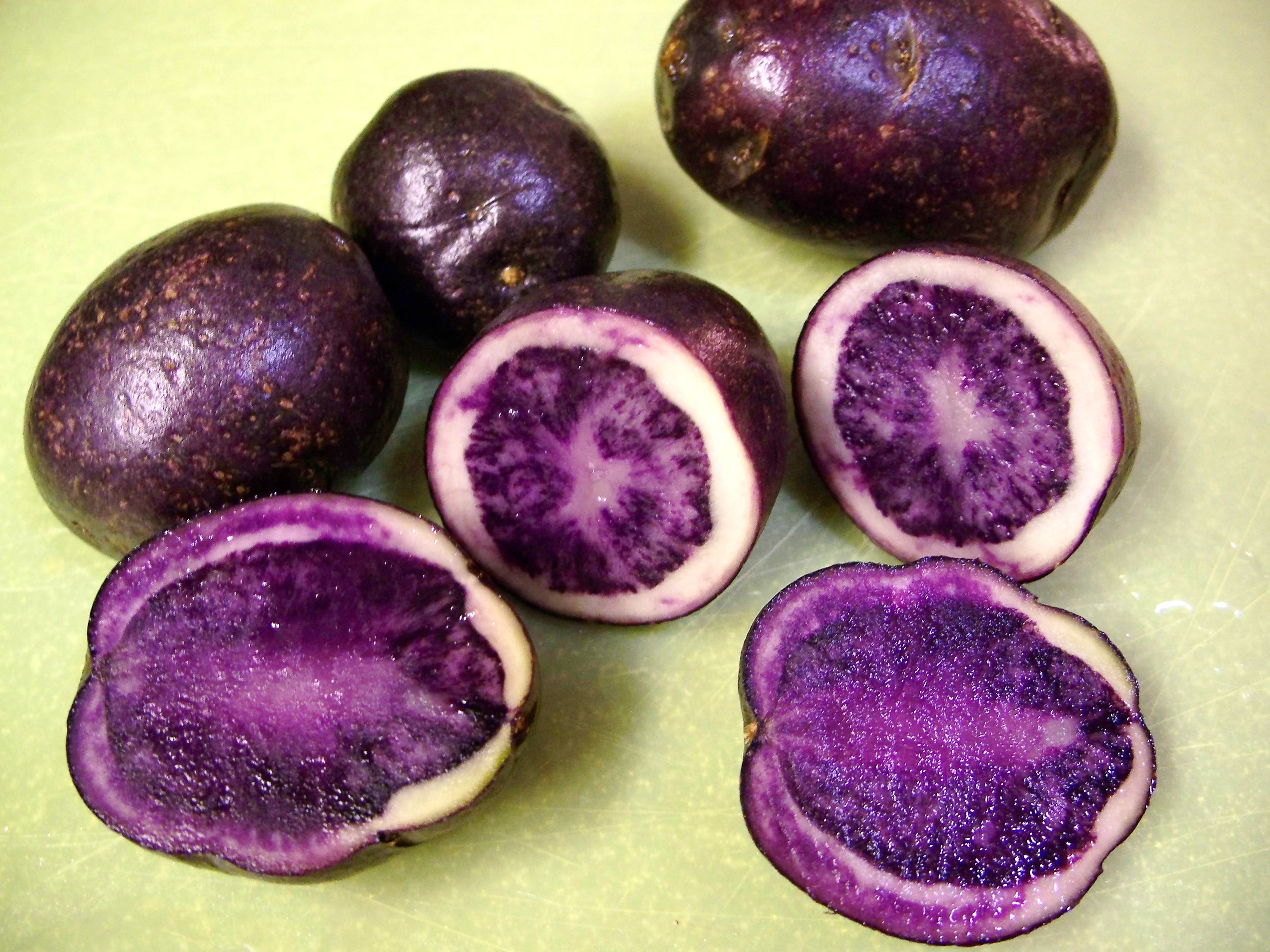
If you walk into my house you’re not gonna see many purple things. Truth is, I think purple is a picky color, even more so than pink. The wrong purple is tacky, the right purple rarely happens. But somehow all purple foods taste good (except eggplant). Purple cabbage, purple lettuce, beet, taro (mmm, taro ice cream), blueberry, purple spinach. Then I ran into purple potatoes at Lucky.


I bet you can carve your initials and use it as a stamper. At first I thought they are some cross between normal potato and beet, with the beet’s juicy crunch apparent whatever way you slice. Turns out it’s a mutation that causes production of the antioxidant anthocyanin, giving it the ink-stain color. So it’s all potato.


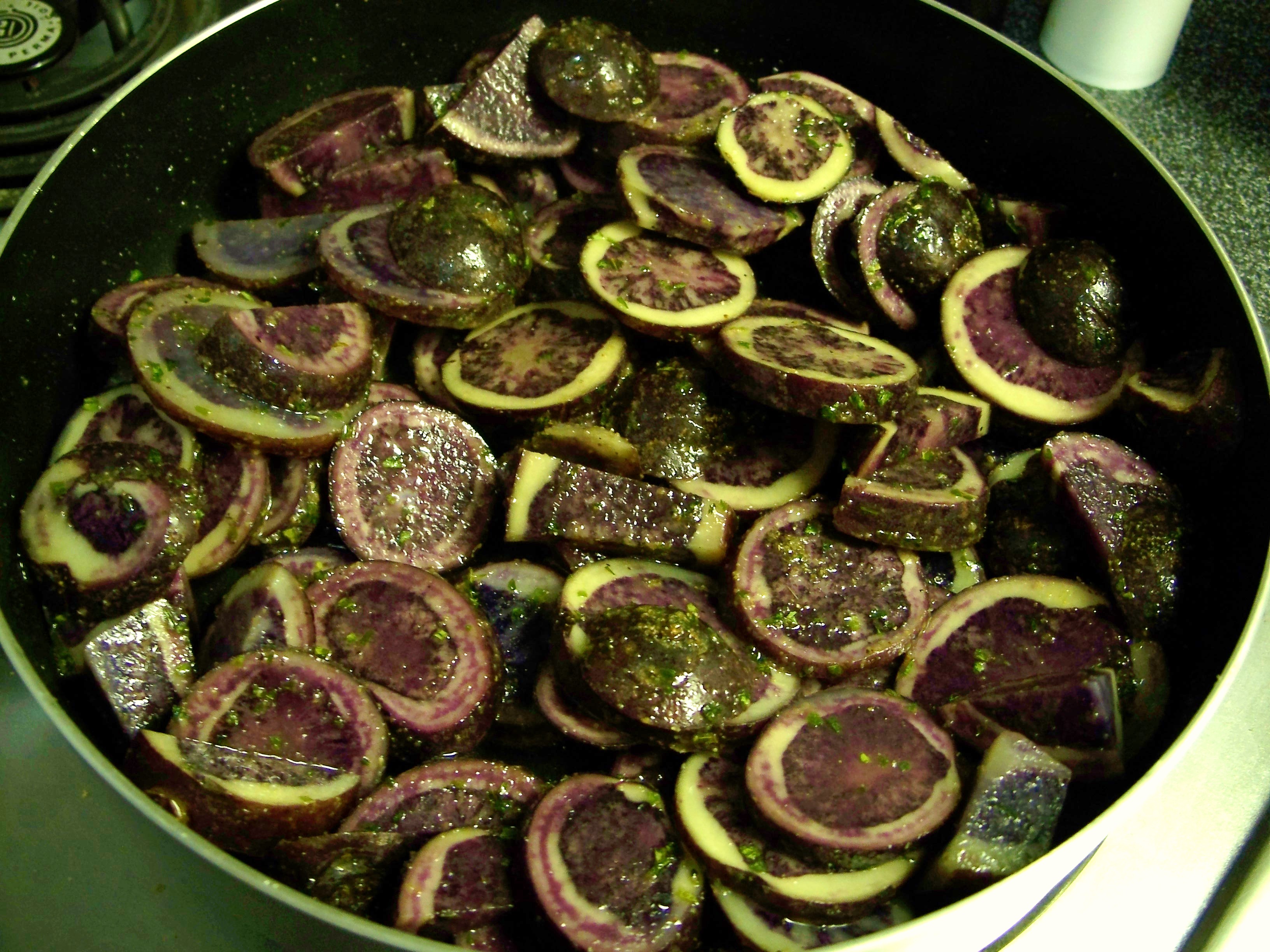
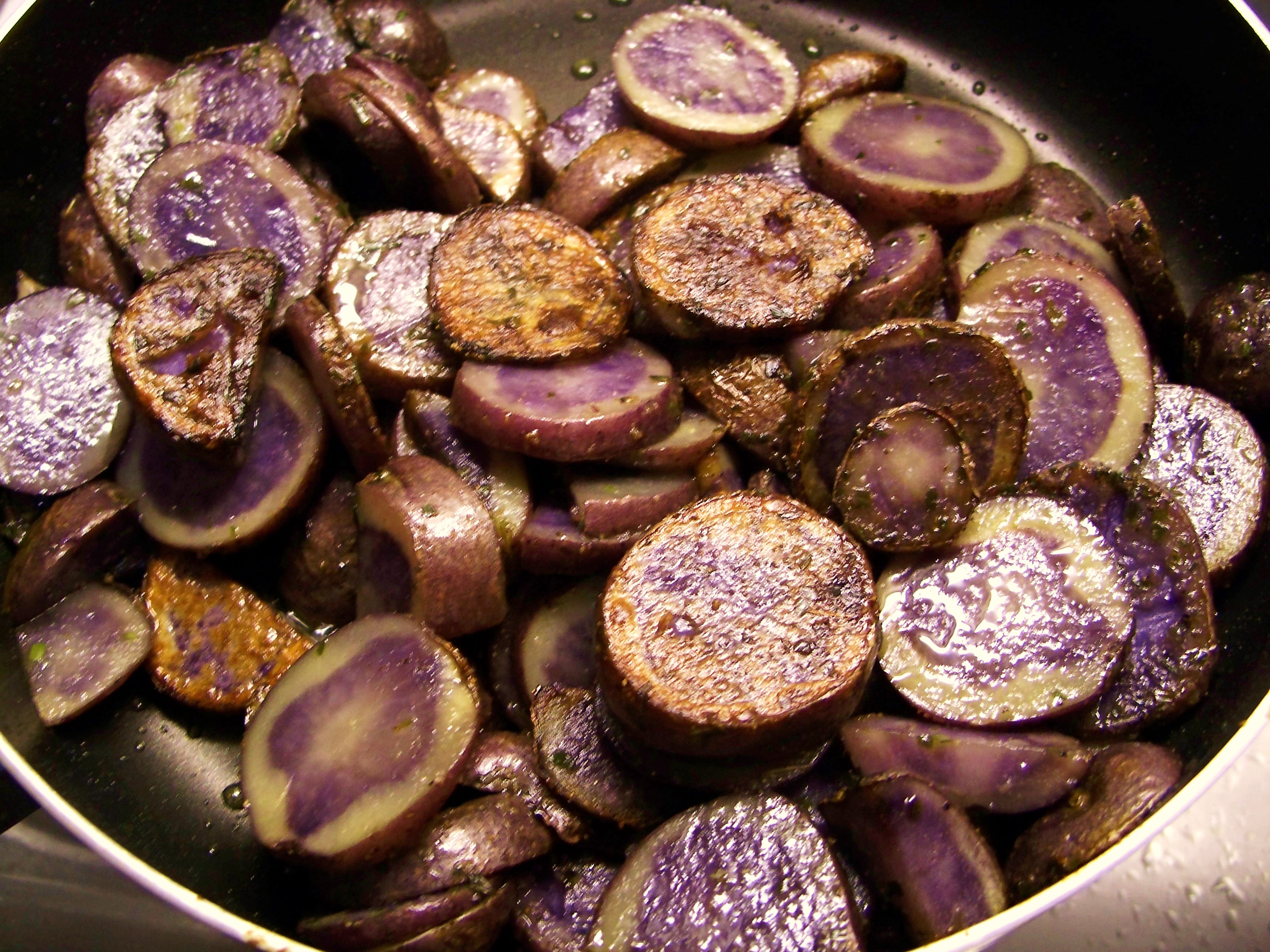
Mudpie the chef sliced them. Stir fry with salt, pepper, garlic powder, tarragon until golden.


Good stuff.

I couldn’t care less about sports, and the World Cup teams I root for aren’t wearing purple. But if you take a peek into my fridge, lotsa purple are there.

Previously on Down the Aisles: Magnolia’s Taro Ice Cream

Tags:

Little red riding seeds

May 15, 2010 By: Mai Truong Category: RECIPES, Vegan


It has the texture of corn germs (the flat yellow seed inside each corn kernel). With the tiny mahogany peel cracked open just a little, each quinoa seed spills out its soft white flesh, the combination gets amusing. It’s like broken rice but more vigorous and inhomogeneous, or sesame but more fleshy. It goes well with walnuts either mixed in at the beginning or added at the end. If you think hard about it, it even tastes like clariid catfish eggs.

Several ideas spring up: quinoa chè? quinoa xôi (sticky rice with quinoa or quinoa with mung bean)? quinoa bread, quinoa pie?

Have you cooked with quinoa before? What is your experience with it?

Mudpie’s Red Quinoa with crushed walnuts
(recipe adapted from Suzy’s special red quinoa)

Ingredients

  • 2 cups water
  • 1 1/2 teaspoons butter
  • 1 tablespoon Chinese five-spice powder
  • 1/4 teaspoon ground ginger
  • 1/4 teaspoon black pepper
  • 1 cube beef bouillon (or more if you like)
  • 1 cup red quinoa, rinsed and drained

Mudpie notes that you shouldn’t go light on the seasonings, especially the beef bouillon. And if you’re not a fan of cinnamon like me, then star anise, cloves, and a tad of pepper powder can kick the Chinese five-spice powder out of the pot.

Directions

Rinse the quinoa grains carefully before cooking, as the saponin coating on the seeds can give an unpleasant bitter taste.

Place the water, butter, five-spice powder, ginger, black pepper, and beef bouillon cube into a saucepan over medium heat, and bring to a boil. Stir the mixture to dissolve the bouillon cube, then add the quinoa and crushed walnuts. Reduce heat to a simmer, cover, and cook until all the water is absorbed, about 20 minutes.

The avocado’s sweet side

April 09, 2010 By: Mai Truong Category: Comfort food, Opinions, RECIPES, sweet snacks and desserts, Vietnamese


Who do you think is more confused about his identity, the penguin or the avocado? The penguin is the prime example of a bird that can’t fly. The avocado is the most commonly known fruit that doesn’t taste like a fruit. It lacks the citric hint of berries and oranges, the crunch of apples, the pulpiness of peaches and plums. If I were an avocado I’d ask myself several times a day, why did mom and dad make me taste like butter and different from every other fruitie at the market?

A good avocado mom tree, like all good moms, would say “Av, being different is a good thing!”.
– But I don’t get to hang out with the other fruits, they say I’m fat.
– The other fruits can’t make Ice Cream by themselves. They’re only side flavors. You can become Ice Cream all by yourself.
– If Sugar helps me.
– Sugar is nice, but you also have what it takes to be a good Ice Cream. And think about what you can do for others if you learn from Butter and Cheese, you have their smoothness too.

If I were an avocado, that’s the story I’d tell when people ask why I decide to join the Sushi corporation and partner with Tortilla Chips. But just between you and me, I actually prefer my alone times with Sugar in the fridge.

3-minute dessert: Avocado “ice cream”:
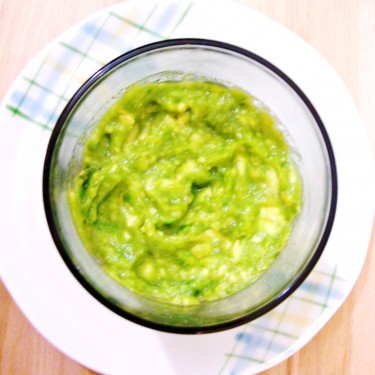
Scoop the avocados out of their peels and into a glass. Add sugar sporadically between layers of avocado, if possible. If not, add sugar on top at the end of the scooping process, but before mashing up the avocado. Mash, taste, add more sugar to liking, taste again.
Refrigerate.
Spoon.
Lick spoon.

13 recipes with cha lua

March 11, 2010 By: Mai Truong Category: Comfort food, RECIPES, Vietnamese

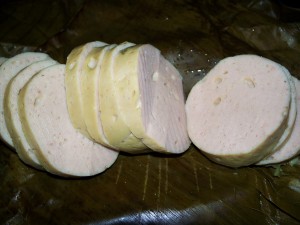
Cha lua (silk sausage) - picture from flavorboulevard.com

Not to be biased but I think cha lua (silk sausage, also known as lean pork sausage) is the best and most versatile sausage out there. Ok, of course I’m biased, but who isn’t when it comes to their motherland’s cuisine. So can we make cha lua? There are scores of recipes, from Ravenous Couple‘s  touch of familiarity to the indifferent instruction on VietnameseRecipes.com… There are also scores of recipes labeled as “cha lua” but are actually giò thủ (head cheese), industriously copied from one another, I’m not sure who started first, but yum-recipes.com, recipehound.com, keyingredient.com just to list a few, all share the same formula with 8 oz of meat from a small pig head.

For those with not much more than a skillet and a spatula in a kitchenette (hello, grad students!), it’s best just to buy a loaf from your nearest Vietnamese sandwich shop or Asian market.

Now what? Here’s a list of 13 dishes with cha lua to churn out at your castle (in no particular order), requiring no special cooking hoopla or obscure ingredients (unless silk sausage is considered an obscure ingredient).

1. CƠM ÂM PHỦ (Hades Rice):
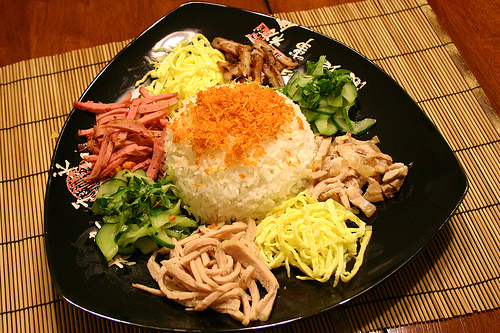
Hades rice - picture from Viet World Net (www.vietwn.com)

Among the Huế creations, this one has kind of a freakish name. But the only thing, if any, that can freak you out would be how much shredding and slicing you need to do. The ingredients are flexible: some kind of meat (chicken, pork, beef, squid, elephant, etc.), cha lua, cucumber, omelet, some good nuoc mam with sugar, salt and chili pepper. The orange powder atop the rice is shrimp powder (tôm chấy), but it’s just makeup, not essential. For a detailed recipe, visit Kiki Rice.

There are two stories behind this intriguing name. In the more fairy tale-like version, a king one day decided to go around town by himself to see how his people lived. In the late evening, he got hungry and knocked on some door, asking for a meal. Living in the small straw house was a poor old lady, who did not recognize the king dressed in common clothes, nonetheless she kindly took everything she had in the kitchen to prepare a rice dish. Despite its simplicity and lack of spectacular ingredients, the hungry king thought it was quite good, and he was so touched by her hospitality that  he invited her to be his chef in the royal palace. Because the house was built on lowland, it was dark outside, there was no electricity and the poor lady wasn’t lighting candles everywhere, the king’s dinner had some underworld feel to it, so he called the dish Hades Rice. Moral of the story? The best way to a king’s kitchen is via his stomach.

In the more modern, unromantic version, there once was a small dining hut, where only one dish was served: rice with thinly sliced meat and vegetable. It was opened at night, mostly for poor workers, rickshaw pullers, and people on their way home from a late theatrical show. Again, because of the low light, the quiet and somewhat rusty, rugged ambience, the dining hut was known as Âm Phủ (Hades), and its only dish the Hades Rice.

So which story do you prefer?

2. CHA LUA KIMBAP
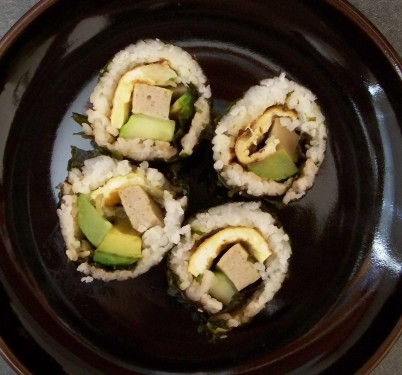
cha lua kimbap - picture from FlavorBoulevard

Cha lua makes a great substitution for crab stick in kimbap. It has the sleek, chewy texture, and it has flavors. I wrote a post on this feeble attempt a while back, if you’re interested in recipes.

3. XÔI MẶN or XÔI GẤC:
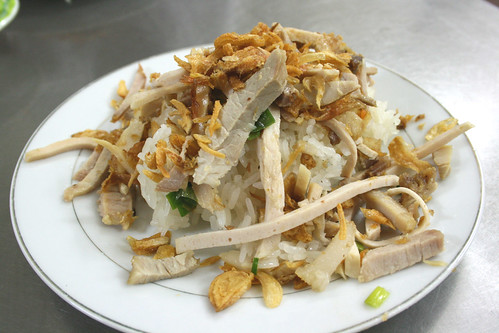
Savory rice - picture from PiloPia-BCmem

Xôi mặn (savory sticky rice) with Chinese sausage, chicken, pork floss (rousong) and of course, cha lua (recipe from Ravenous Couple). Xôi gấc is sticky rice colored with the gac fruit, fairly simple to make if you can find the fruit. I haven’t seen any in either Houston or San Jose, but maybe you can steal some from Ravenous Couple’s aunts’ garden, or just raid their kitchen.

Simply put, cha lua goes well with sticky rice, whether the sticky rice is sweet or savory, red or white, steamed and clumpy or boiled in shape (bánh chưng bánh tét).

4. Breakfast English muffin sandwich, with a slice of cha lua and a fried egg.
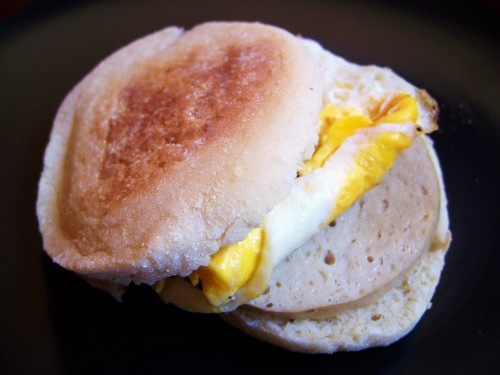
English muffin with cha lua and egg - picture from FlavorBoulevard

No need to toast it or butter it, the juicy silk sausage can savorize the sandwich all by itself. You can see how I try to minimize cooking.

5. BANH MI CHA LUA
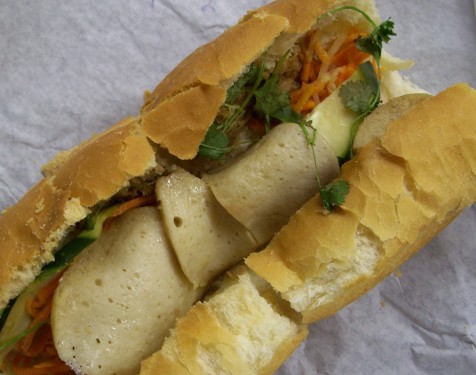
Banh mi cha lua from Saigon Express, Berkeley - picture from FlavorBoulevard

There’s no need to describe the tasty harmonious symphony in a banh mi. It’s cheap ($2-3 from the sandwich shops), but it’d be fun to whack this out at home. Buy a few crisp baguettes, follow Wandering Chopsticks’ instruction for pickled carrot and daikon, and your imagination for the rest.

Pepper braised cha lua - picture from afamily.vn

6. CHẢ KHO (braised silk sausage)

Two words: salty and sweet. The key is nuoc mam (fish sauce). Here’s my adaptation from Hang’s Fooood Experiment‘s recipe of tomato braised sausage: Start with 3 tablespoons of sugar and coconut water to make the caramel sauce, then add the sliced sausage, 3 teaspoons of nuoc mam, a little bit of water (just so you can stir), a pinch of pepper, and diced tomato if you feel like it. Simmer on low heat, stir when most of the liquid has evaporated and serve it dry; or you can add more water in the beginning to have a nice brown sauce over rice. Gastronomy has cha kho with porridge. Mmm… salty, sweet, and bland innocence.

7. CHA LUA FRESH ROLL (goi cuon): wrapped in rice paper (bánh tráng) with herbs and blanched shiitake, dipped in nuoc mam. Without shiitake, this is a Nha Trang style snack. I got the mushroom inspiration from the food column of VnExpress.net, where they suggest an appetizer with cha lua, shiitake, carrot, and green bean tied together with scallion, worth a try as well.

8. CHA LUA SOUR SOUP: tomato, sweet onion, egg, and diced cha lua. Also native to Nha Trang.

9. CHA LUA and CRAB SOUP:
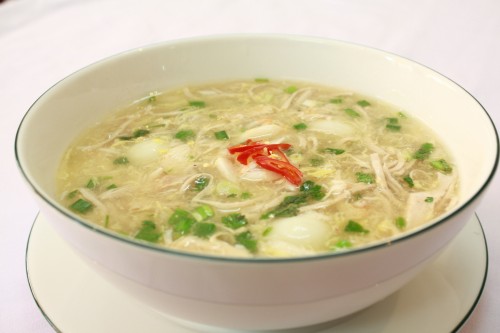
cha lua and crab soup

Cha lua and crab soup - picture from bepgiadinh.com.vn

Shredded chicken breast, diced cha lua, boiled quail eggs, crab meat, sweet corn, and diced onion cooked in boiling bone stock for 10 minutes. Pour in some corn starch (mixed with water) and crack an egg. Serve hot with a dash of cilantro and a big bowl, because it’s light and you’re hungry :-). (Recipe translated from bepgiadinh.com.vn)

Papaya, orange and cha lua salad - picture from tintuconline.vietnamnet.vn

10. PAPAYA, ORANGE, and CHA LUA SALAD:

The stuff: shredded green papaya (the type that goes in Wandering Chopsticks’ green papaya salad), diced orange, bean sprout, and sliced cha lua.

The sauce: nuoc mam, olive oil, vinegar, sugar, water combined in ratio 1:1:1:2:2 (tablespoon), throw in chopped garlic and chili paste for kicks.

Mix’em all up.

————————————————————————————————————————————————-

And that was 10 amateur-friendly recipes. But Mai, you said 13! Yeah well call me a cheater. Here are three cha lua affairs that I utterly love but will never make at home because I’m afraid to screw them up. So here for the professionals who can never fail and the kitchen masochists who want to spend half of their day by the stove (just kidding, cooks are my heroes :-D):
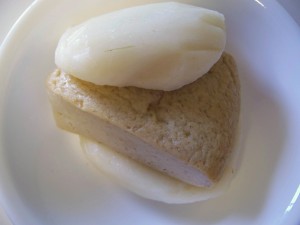
Banh day gio from Gio Cha Duc Huong, Houston - picture from FlavorBoulevard

11. BÁNH DẦY GIÒ: sticky rice bun with cha lua. The chewiest bun of all buns. The sticky rice is bland, the sausage is juicy and savory. You’d either hate it or love it. My dad hates it, I love it. I bought it and wrote about it. Ravenous Couple made it.
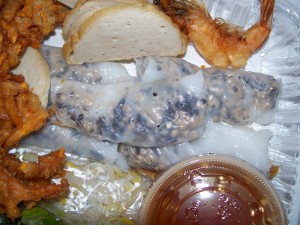
Banh cuon at Tay Ho Restaurant, Houston - picture from FlavorBoulevard

12. BÁNH CUỐN: another old timey, steamed rice roll stuffed with pork and mushroom. If one day I live far away from the Vietnamese community, this would be my most frequently missed favorite, so I have to blogged up on them as a way of savoring memories. Ravenous Couple don’t have to worry about that, because they can make their own.

13. BÚN MỘC
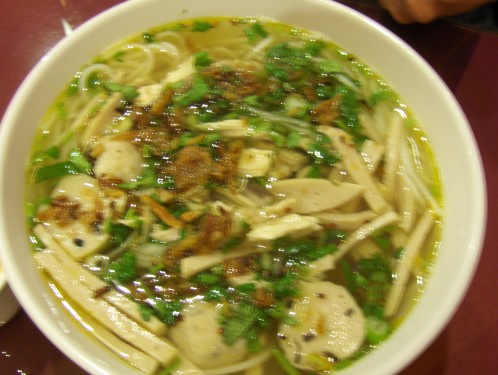
Bun moc at Tay Ho Restaurant, Oakland - picture from FlavorBoulevard

A soup laden with meat, yet the stock is so fresh and light. I feel at home at Tay Ho in Oakland, so I’ll keep going there for my soups. But maybe, just maybe, one day when the right planets align I will gain enough courage to make a pot. Guess whose instruction I will follow?

Seriously, is there anything that these guys haven’t made?

Tags:

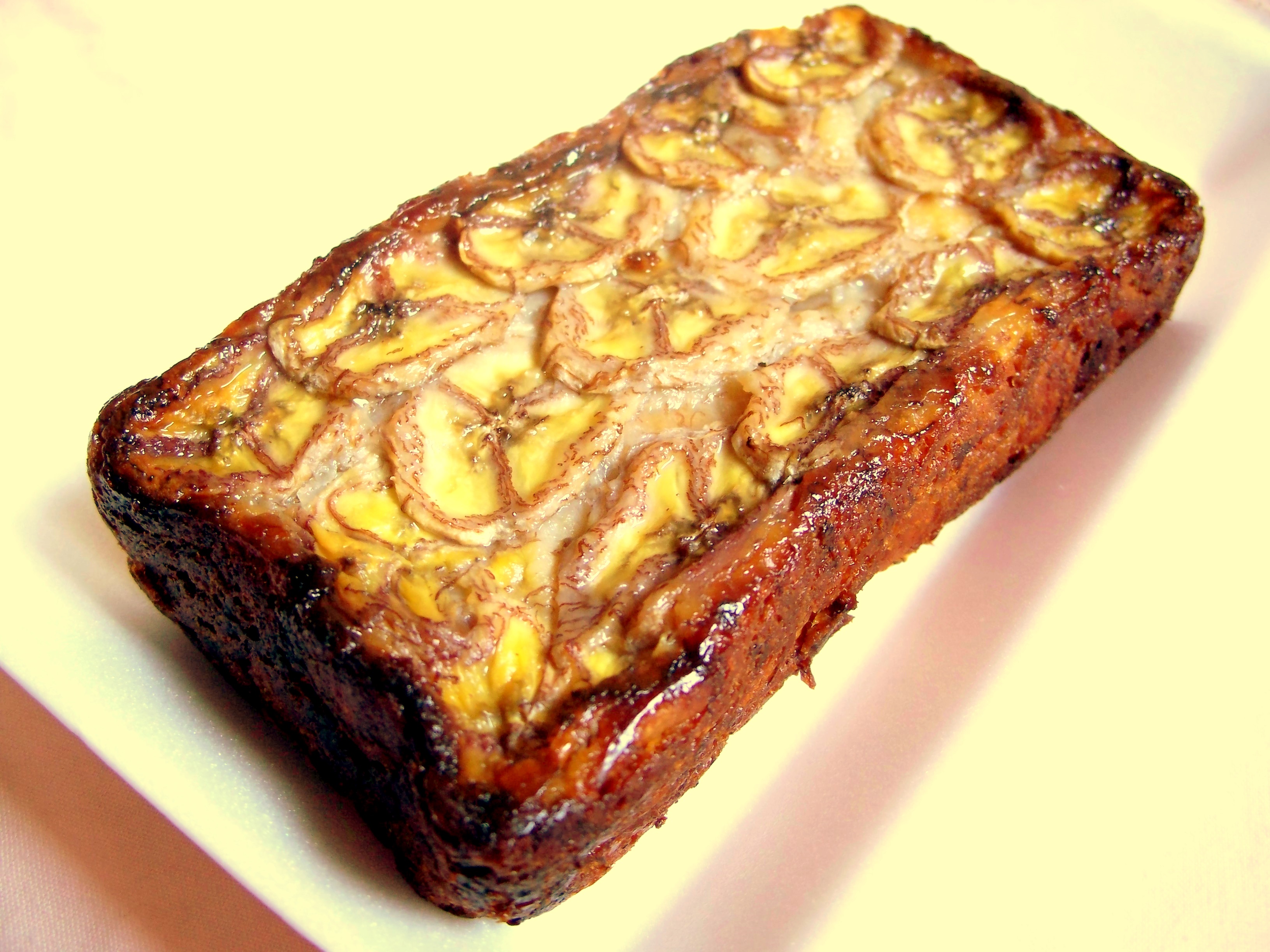
Recipe for bánh chuối nướng (Vietnamese banana bread pudding)

August 25, 2009 By: Mai Truong Category: RECIPES, sweet snacks and desserts, Vietnamese


Compared to other Vietnamese sandwich shop goodies, banana bread pudding is relatively easy to make at home, perhaps because of its strong connection with Western desserts. The ingredients contain bread, milk, rum, and vanilla, but at the end of the day, the tropical note of banana plays the key role.

Ingredients:
– 1 bunch of banana ~ 7-8 fingers, preferably Chuoi Su cultivar (also known as Chuoi Xiem, Pisang Siem, Siusok, Kluai Namwa Daeng)
– 1.5 loaves of old stale bread (the pullman loaf to make sandwiches)
– Rum (1 tbs for every 300g of banana) (optional)
– 2 cups milk
– 2 cups coconut milk
– 2 eggs
– 1 1/4 cups sugar
– 4 tbs melted butter
– 1 tbs vanilla (optional)

Use an 8-inch (20-25 cm) cake pan, at least 2 inches (5 cm) thick so that the bread pudding has enough room to rise. Grease the pan.

Slice bananas (in any direction) and mix lightly with rum. Powder the banana with a little bit of sugar if you want the banana to turn red after baking. If you don’t like rum, just slice the banana.

The bread: you can keep or trim off the bread rind, which would slightly change your bread pudding’s firmness. Either way, dip the bread slices into a mixture of milk, coconut milk, beaten eggs, sugar and vanilla. Squeeze the bread enough to rid it of too much liquid. This is an important step, the cake would be dry if it’s too squeezed, and fall apart if it’s too wet.

Layering:
Method 1: alternate 1 layer of bread (~1.5 cm/half inch thick), 1 layer of banana, another layer of bread, etc. until reaching the rim of the pan. Try to have room for a layer of banana on top. Firmly and evenly press the layers down so that the baked cake won’t be too spongy or crumbly.
Method 2: mix banana with soaked bread, fill up the pan with the mixture and have 1 layer of sliced banana on top. The result will be a finer texture.

Bake at 175C (350F) or until golden. Quick check: stick a small chopstick/toothpick deep into the bread pudding and pull it out, if the chopstick/toothpick is dry, the banh is done. It usually takes 25-30 minutes.

References:
Playing With My Food
Liên (Tú, Đăng’s Mommy)’s blog
vietbao.vn

Cha lua kimbap

June 30, 2009 By: Mai Truong Category: Korean, RECIPES, savory snacks

3 cups of rice, 3/4 lbs cha lua, 1.25 cucumbers, 3 avocados. Made 10 fat rolls of kimbap. We used long grained rice because we didn’t want to bother buying short grains, giving the rice a little more water than what the cooker says, and it’s sticky, but gotta roll quickly or the rice would dry out, perhaps in hindsight short grain would do the job better? Seasoning the rice calls for sugar, salt, and vinegar, but ubercmuc detests the taste of vinegar, hence water substituted. Inadvertently, my rolls deviate from Maangchi’s by a great distance.

Cha lua (also labelled giò lụa) was bought at a local Vietnamese shop in Little Saigon, hot and fresh from the steamer. Don’t buy those frozen things at the Asian supermarkets, who knows how long they’ve been there. I cut up the cha lua and boiled the slices to lessen the nuoc-mam flavor (which is only a wisp to begin with). It is a much better meaty core than crab stick.

We weren’t sure if we got nori or kim, the sheets are green instead of black, salty, and have a noticable taste of the sea. A 27cm x 27cm sushi mat was well sufficient. We have yet to master the art of slicing a roll of rice, stuffing, and seaweed without breaking them apart, but I found that a cling-wrapped, refrigerated roll, microwaved for 2 minutes, then cut with a wet knife, turned out to be much more beautiful than those cut fresh or cold. Microwaved kimbap also tastes as good as new, at least to a foreign mouth.

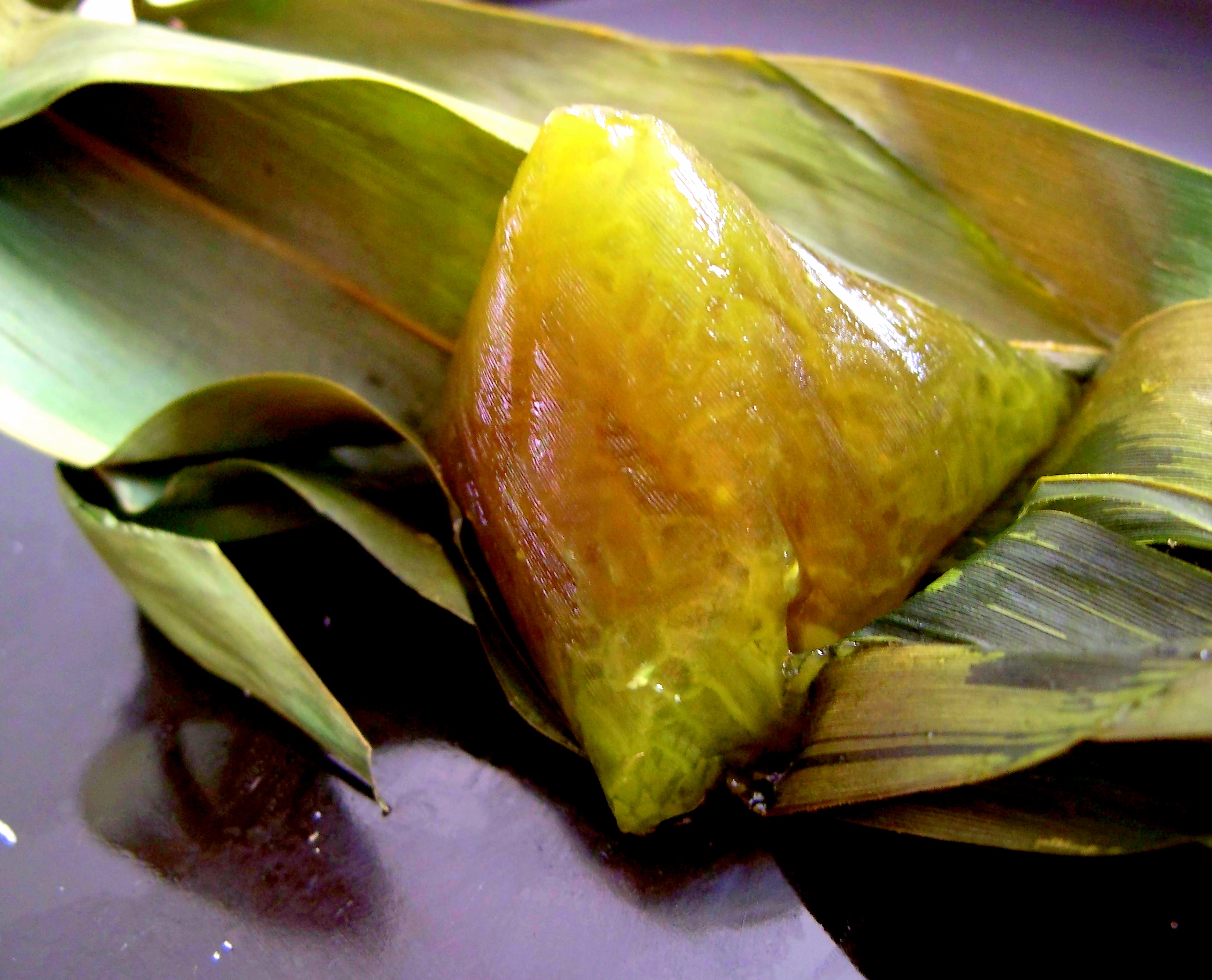
Recipe for Bánh ú tro (Vietnamese-adapted jianshui zong)

June 30, 2009 By: Mai Truong Category: Chinese, RECIPES, sticky rice concoctions, sweet snacks and desserts, Vietnamese

The recipe calls for a lot of prep time (up to a year!), and the products are little triangular pyramids sold for $3.75 a bunch at sandwich shops. But hey, if you can make bánh ú tro, you can enjoy it any time of the year without having to wait until the Fifth of Lunar May.

1. Ash water

Use the fine, soft ash from burnt coal, dissolve in water. The common ratio is 50 grams of ash for every liter of water, but it varies depend on how strong the ash is and how strong you want your banh to be. Let the ash collect at the bottom, leaving a clear solution. Sift the solution to get rid of dirt and coal bits.
You can use lime powder instead of ash. White lime gives bánh ú tro the natural green hues of wrapping leaves, red lime gives them reddish amber hues. The mixing ratio is 20 grams/liter for lime powder.

2. Sticky rice

– Use 1-year-old sticky rice. Such grains are more powdery than new sticky rice. Wash sticky rice with cold water, then soak in ash water overnight or until the grains break easily when you press them between two fingers. Soaking time varies with different ash types and grain types, but beware that grains soaked for too long can make the banh smell like ash.
– After the grains are done soaking, rewash them thoroughly with water and let dry.

3. Sweet filling

Traditional bánh ú tro doesn’t have filling and is eaten with honey or sugar. But bánh ú tro with fillings are arguably tastier than their plain counterparts, and here are a few filling ideas:
Mung bean paste: split and peeled mung beans are washed and cooked until tender, mashed while it’s still hot and mixed with sugar. The bean-sugar ratio varies to your likings.
Red bean paste: soak red beans in water overnight to soften them. Wash, cook until tender, mash. In a skillet, add 1 tbs oil and 200g brown sugar for every 500g red bean, stir on low heat until all sugar dissolves. Let cool.
Grated coconut: boil water and sugar with ratio 1:1 on low heat , stir frequently until all sugar dissolves. Pour the syrup into grated coconut and mix until it becomes a soft sticky ball.

4. Wrapping bánh ú tro

– Use bamboo leaves (about 5-6 cm wide and 30 cm long) or banana leaves cut into similar size. Wash the leaves clean and let dry.
– Bend one end of a leaf into cone shape. Use 2-3 leaves to increase the banh size.
– Put in 2-3 teaspoons of sticky rice for the plain kind. Or 1 tsp sticky rice, followed by 1 tsp filling, then 1 tsp sticky rice on top for the sweet kind.
– Wrap the remainder of the leaf tightly around and over the cone until all faces are covered.
– Tie it up with a nylon string. Then tie every ten banh into a bunch with a long string to easily pull in and out of boiling water.

5. Boiling bánh ú tro

– Cover the bottom of a large pot with banana leaves or bamboo leaves to keep banh from sticking to the metal.
– Arrange banh in the pot. Pour water. Water level should be at least 4 inches above the banh. Make sure banh stay submerged the whole time, you can cover banh with a big sieve and a weight on top to keep banh from floating up.
– Boil banh for 45 minutes to an hour (after the water starts boiling). Add more water if the level gets too low.

Submerge cooked banh in cold water for 10 minutes to aid cooling, then hang them dry. Well made ones can last 2-3 weeks at room temperature.

Recipe translated from source.

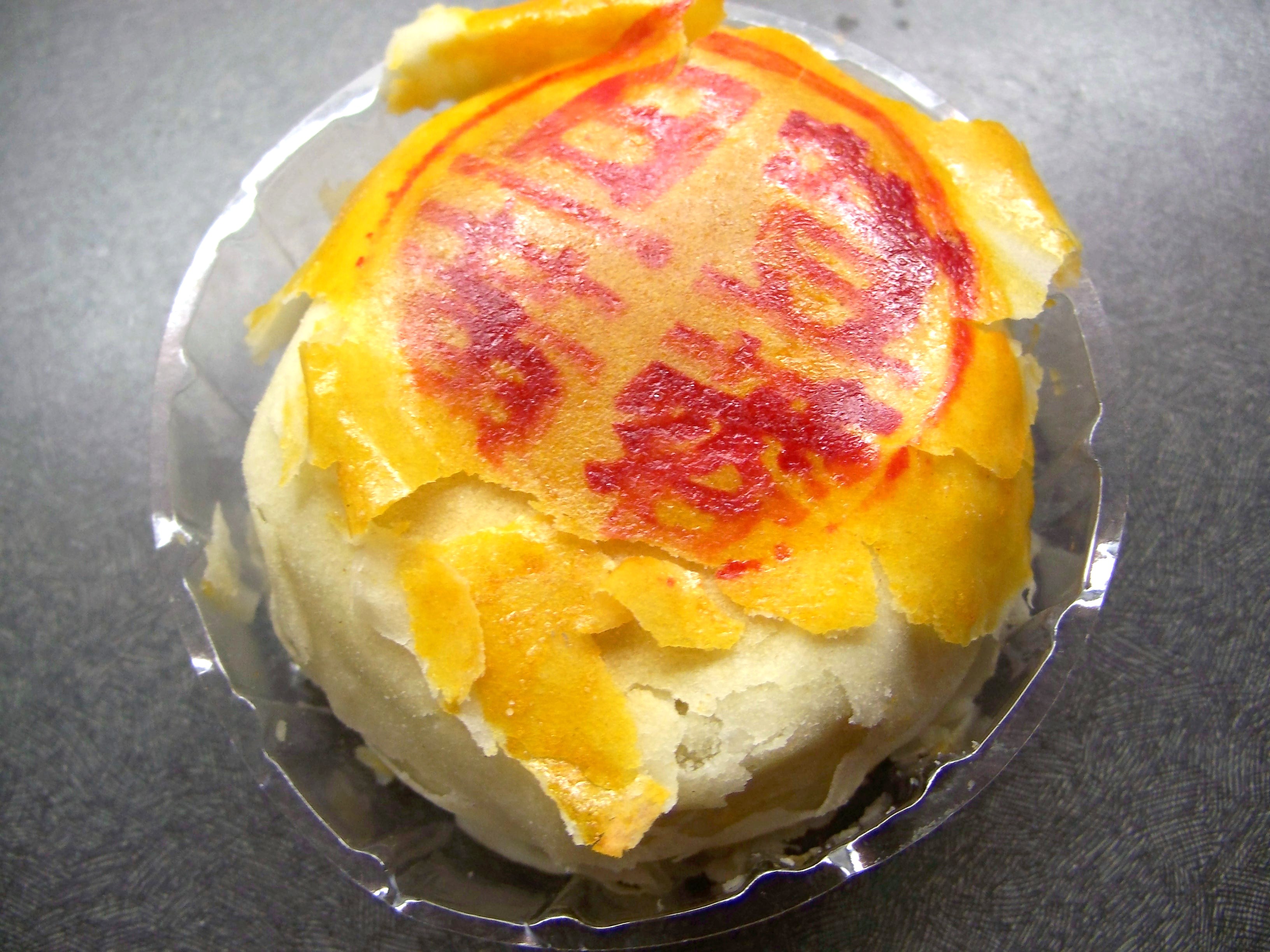
Recipe for bánh bía (Vietnamese-adapted Suzhou mooncake)

June 14, 2009 By: Mai Truong Category: Chinese, RECIPES, sweet snacks and desserts, Vietnamese

If you just want to enjoy a piece of sweet flaky mooncake, Vietnamese sandwich stores and bakeries are the place to go. If you have plenty of time at hand and little trust for unknown kitchens, then hit the market to find these ingredients for a batch of 12 bánh bía:

1. The skin dough

– 375g all purpose flour (Pillsbury preferred)
– 110g confectioner sugar
– 80g corn/canola oil
– 100ml coconut milk (Chef’ Choice preferred)
– 50ml water.

Add flour, sugar, oil and coconut into a mixing bowl, then slowly add water while kneading until the dough is smooth. Don’t need over 2 minutes or the dough would be too hard to flatten later. Cover with cling wrap and let the dough sit for 1 hour. Divide into 12 balls afterwards.

2. The inner layer dough

– 125g tapioca flour
– 95g wheat flour
– 110g corn/canola oil

Mix the flours and oil together. Do not knead. Let sit for 1 hour, then divide into 12 balls.

3. Bean paste filling with durian flavor and salted egg yolk

– 400g mung bean (peeled and split)
– 300g sugar
– 1 cup oil
– 1 tbs maltose sugar
– 1 tsp baking soda
– 1/4 cup wheat starch (the type used for potsticker)
– 200g durian flesh (ground up in a food processor)
– 12 salted eggs
– 1 slice of ginger
– rice wine

Separate the egg yolks from the whites, wash with cold water, then soak the yolks in rice wine and finely chopped ginger for about 30 minutes. Take the yolks out the wine mixture and quickly soak them in vegetable oil. Finally, bake the yolks on aluminum foil in 300F for 10 minutes.

Soak the mung beans in water and baking soda until they soften. Rinse them with cold water, steam, wait until the beans cool to make a fine paste with the food processor.
In a non-stick pan, simmer the bean paste with 200g sugar, 2 tbs maltose, and 1/4 cup oil over low heat. In another pan, mix 1/2 cup oil with 100g sugar to make caramel on low heat. It should be golden brown, or the pastry filling would be bitter.
When the sugar has caramelized, pour the bean paste into it and mix until there is no visible sugar. Add 1/4 cup of oil and wheat starch and continue simmering. Lastly, add durian paste and stir until the bean mixture no longer sticks to the utensil. Let the paste cool and divide it up to 12 portions.

4. The egg wash

– 1 egg, room temperature
– a pinch of salt (kosher salt preferred)
– 1 tbsp water
– 1 tsp sesame oil
– 1 tsp cashew oil
– 1 tsp dark corn syrup

Mix all ingredients into a blend.

5. Make the cake
– Flatten each ball of skin dough, then use it to wrap the ball of inner layer dough (like a dumpling). Keep the dumplings moist until all 24 balls of skin dough and inner layer dough are paired up.
– Gently flatten each dumpling into oval shape about 2mm thick, roll the sheets into Swiss-rolls.
– Repeat the flattening process with the Swiss rolls, then let the dough balls rest for 15 minutes. Make sure that during this process the skin dough always covers the inner layer dough, or the pastry will have a rough surface after baking. If the dough is too tough, let it sit for 5-10 minutes. Do not exert too much force while flattening.
– Flatten the dough balls again into disks, and use them to wrap up the balls of bean paste (each with an egg yolk inside).
– Preheat oven to 400F
– Bake the pastries for 15 minutes, then take them out to brush egg wash on one side, and continue baking for another 10 minutes.
– Let the pastries cool and oil release for a few days.

6. Eat the cake
(Caution: it may be too fatty and sweet to eat whole, one quarter at a time is the usual safe quota)

Recipe translated from source.

Tags: