Flavor Boulevard

We Asians like to talk food.
Subscribe

Archive for the ‘Opinions’

What you should eat when you’re in Texas

September 02, 2010 By: Mai Truong Category: American, Comfort food, One shot, Opinions, Texas

Not barbecue.

That stuff is everywhere in the South. I’m talking about something that only Texas has. Something a little sweet, a little pillowy, a little chewy, a little cheesy, a little meaty. Something that after you eat one, you just have to get another. Something that 99.91% of the time is chosen over donuts (I made up the stats, but I’ve never met anyone who picks a donut when they’re given this). My Texas friends, I miss the kolaches.


If you haven’t had it, you’re gonna say “That’s a pig-in-the-blanket, Whole Foods has loads.” No, it is far from a pig-in-the-blanket. I repeat, kolaches is NOT pig-in-the-blanket (PitB).

The difference is in the bread. PitB bread is plain, flare it up with poppy seeds and oily butter or not, it’s plain and must not be eaten without the sausage. Kolaches bread is sweet, like a Hawaiian roll*. PitB bread is dry and flaky. Kolaches bread is pillowy, slightly chewy and moist. The sausage is there for protein surplus and does not really add fireworks to the flavor. If you insist on an either-or, I’d choose the bread and toss the sausage every time. Donut shops in Houston would ask if you want the kind with cheese, say yes. The very thin inner lining of cheese makes its salty-sweet.

Then you’re gonna laugh at me and try to crumble my Texan pride, “It’s a Czech thing, not a Texas thing” and tell me to read Wikipedia.  Well, look again, the Czech kolache (pronounced |koh-lash|) is a sweet pastry with fruit jam on top. The Texan kolaches (pronounced |koh-lah-chee|) is savory with a little sausage link inside. The Texas kolaches isn’t any more Czech than the hamburger is from Hamburg.

Originally, it is a variety of the Czech kolache, referred to as “klobasnek” or “klobasnik,” which comes from “klobasek,” Czech for “sausage,” similar to “kielbasa“. But the Czechs consider the Texas kolaches a joke too far removed from their fruit-topped dessert pastries, for it has cheap cocktail sausage links instead of the huge Polish dogs. The misnomer “kolache” is perhaps due to the Houstonian Kolache Factory‘s successful advertisement of this savory breakfast on the go.

Black sheep to the Czechs or not, the Texas kolaches are extremely popular in Texas. Most donut shops have them, usually twice or three times more expensive than donuts, and all are sold out before noon. Sometimes 9 am. No kolaches left behind.

But you won’t be able to find it outside the Lone Star State. You probably will not even hear about it outside the Lone Star State. People just will not know what you’re talking about when you say “kolaches” (pronounced |koh-lah-chee|), unless they’re from Texas. Believe me, I asked my students here, in Berkeley-San Francisco, they gave me the confused eyes and directed me to Whole Foods for pigs-in-the-blanket. I’ve searched every donut shop in town, no luck. I’ve used Google Maps, AM Kolaches in Hayward is the only hit, but it’s the Czech version with fruits and cream cheese.

O Texas Kolaches, how I miss thee!

*Notes on the Hawaiian rolls: Get them! They make awesome sandwiches. Or spread pâté in the middle.

Think twice before you say ew

June 02, 2010 By: Mai Truong Category: French, Opinions

When I was little, I built this little toy settlement with animal figurines that I collected over the years. One of my ladies, an inch-tall cat with apron and yellow dress, was a baker, and I would  gather water droplets on the garden leaves each morning so that she could bake cakes for the village. Apparently the best thing my imagination could come up with was a “soil cake”. Yep, I said my baker would collect the best dirt in her backyard, wash and knead it with morning dew, then make pastry out of it. Crazy, you say? Well, apparently a group of Indonesian villagers agree with my cat patisseur. Have you heard of ampo cake? I did just last night.

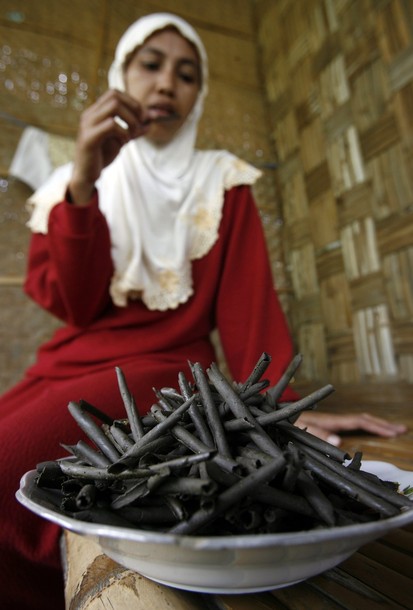
ampo snack at Tuban village, East Java Province, Indonesia - Image courtesy of OddityCentral.com

The ampo snack, made entirely of clean, gravel-free earth from paddy fields, can be eaten like crème roulée. I’m not sure what they mean by “clean” in the context of dirt. Regardless, Tuban villagers also believe that these supposedly cool, creamy baked rolls of soil are an effective pain-killer and skin-nourishing product. (From Reuters)

Why do the Tuban villagers eat soil? Some of us may quickly reason that they are poor, uneducated, or have malnutrition. Fair enough, since this ancient town of East Java preserves its land and culture rather than going industrialized, even if it hosts Indonesia’s largest cement factory, a petrochemical plant, two universities, and frequent Western tourists.

But what about Pearls of the Undergrowth (la Perle des sous-bois) from De Jaeger snail farm? If simple soil snacks are sold for cheap among villagers of the Far East, snail eggs are considered a delicacy with black truffle and fine wine among new French restaurateurs. Each 30 grams costs a whopping $109 base value.

“It has a sensation of fresh dew, beaming pearls. Your mouth will experience the sensation of a walk in the forest after the rain, mushrooms and oak leaf flavours, a journey through autumn aromas.”

Quote from The Snail Caviar Company, London, UK

Though I don’t understand French, the lady’s expression in this video confirms it all.

Think about it, the snail eggs are slimy babies of slimy parents. Go ahead, say ew. My mom did. She has a morbid fear of land snails and slimy things. Of course, snail caviar is pasteurized and no longer slimy, just like the ampo snack is baked and no longer muddy. But somehow we instinctively slip out an “ew” or two upon hearing of some food we have not yet associated with food.

I’ve heard people say “ew” to food items many times, especially in America. Liver? Ew. Chicken gizzard? Ew. Bone marrow? Ew. Rabbit? Ew. Duck egg? Ew. Soy milk? Ew. Then I’ve heard sympathetic comments such as “I guess it’s good not to waste anything”. I’m afraid to disappoint you, but the point isn’t to waste or not to waste. Soup stock doesn’t taste good without the sweetness from the bones, unless you add MSG. Offals have unique textures and flavors irreplaceable  by meat, just like cheese cannot be replaced by bread. How is soy milk gross when peanut butter is yummy? We eat mushroom, sometimes raw, without thinking about it as fungus, and yogurt without thinking about the bacterial fermentation, so why do we think about the slime when we are offered escargot?

The answer is simple: we are content with the taste we’ve grown up with, and believe that the other things must be gross. The first part is understandable, the latter is a huge mistake. Matthew Amster-Burton, author of Hungry Monkey, talks about his toddler daughter’s pickiness with food and how all children would say “ew” to food even before trying them, just because they’ve formed some preconception of that food in mind. Then one day the kids see their friends eat those things, and come home to question their parents about not feeding them those things earlier. Toddlers’ eating preferences are inexplicable, and we sometimes have reverted to the toddler stage when presented with new food.

So I’m not going to touch the subject of respecting cultures and whatnot, because we all (should) know how you make someone feel when you express disgust about their food to their face. But Everything deserves at least one try before you say ew, or, like a toddler I know who refused meatball when she had spaghetti, you’d miss out on some serious good eats.

Satsuki Bazaar on Channing Way

May 25, 2010 By: Mai Truong Category: California - The Bay Area, Festivals, Japanese, Opinions, savory snacks, sticky rice concoctions, sweet snacks and desserts


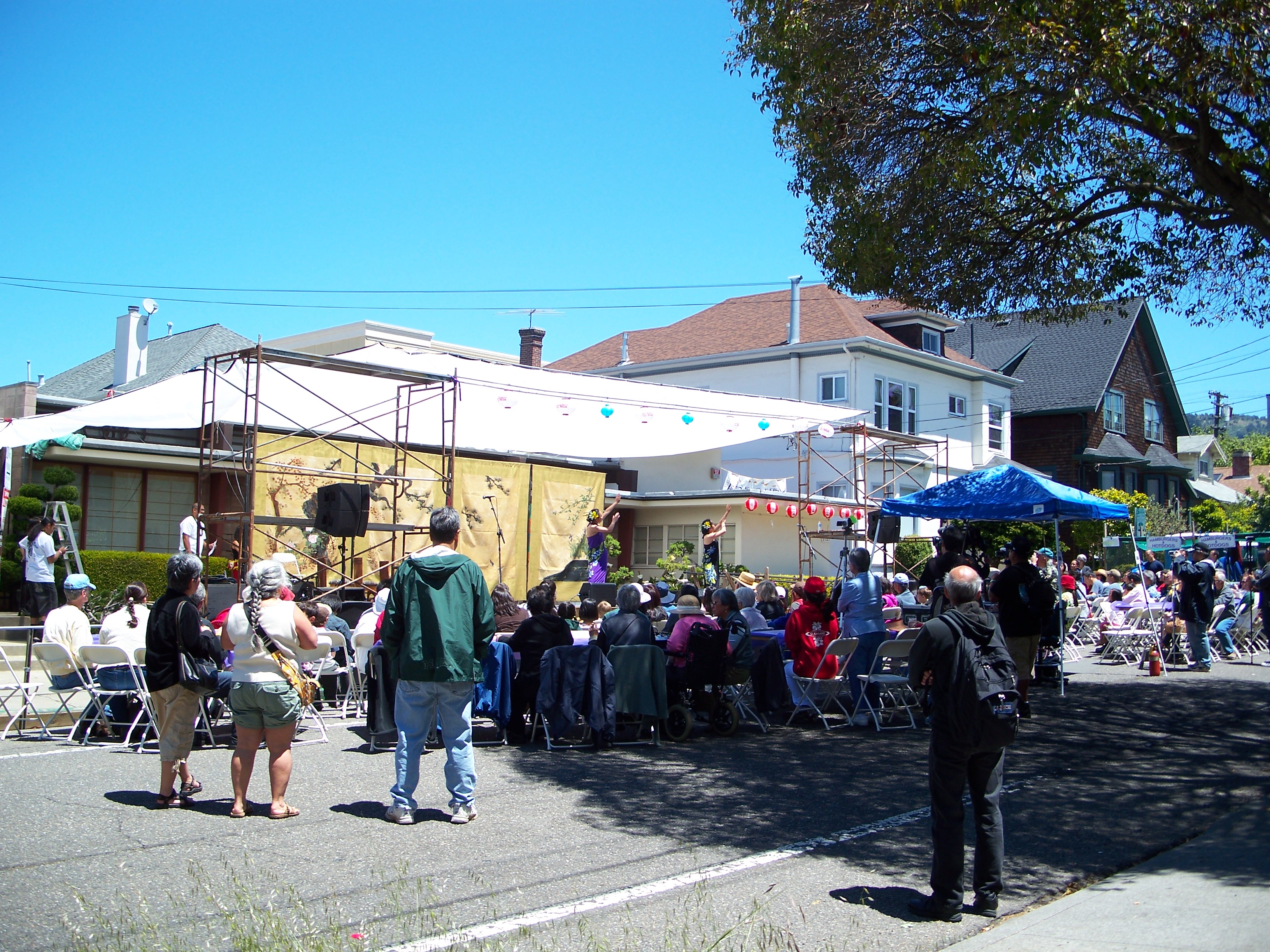
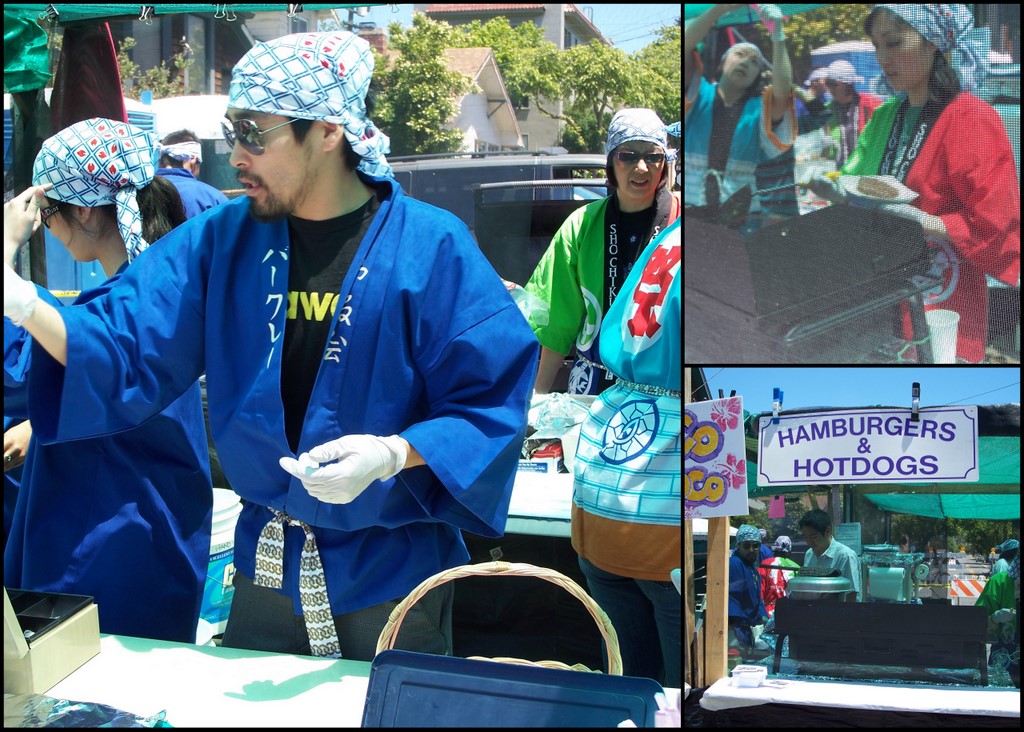
One blue-sky Sunday in May. A section of Channing Way, between Shattuck and Fulton, was blocked. Two girls draped in summery garments danced to joyous Hawaiian tunes on a sunlit wooden stage, surrounded by a small crowd of both familiar spectators and curious passing pedestrians. The seductive smell of grill beef got caught in the wind here and there.


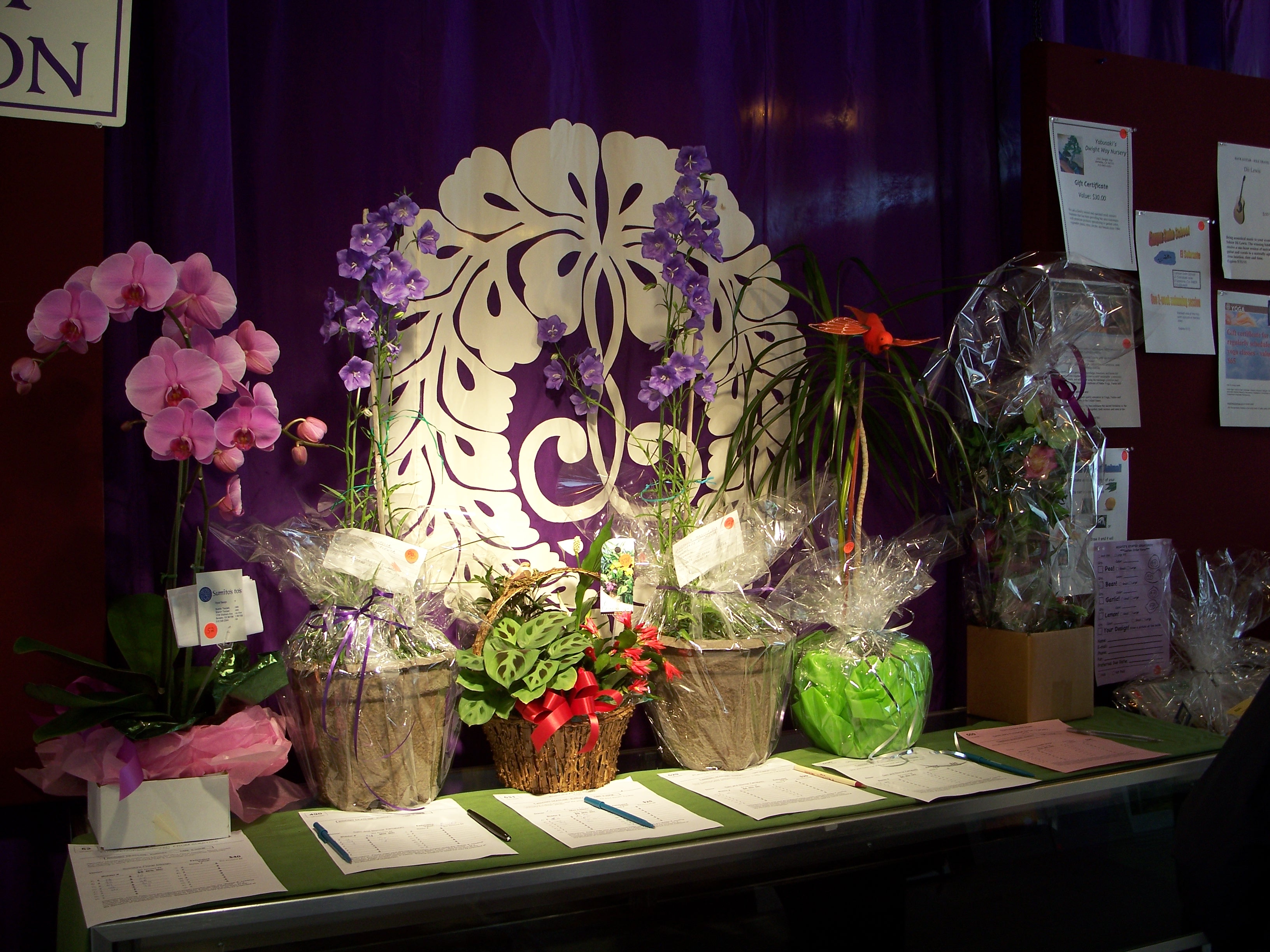
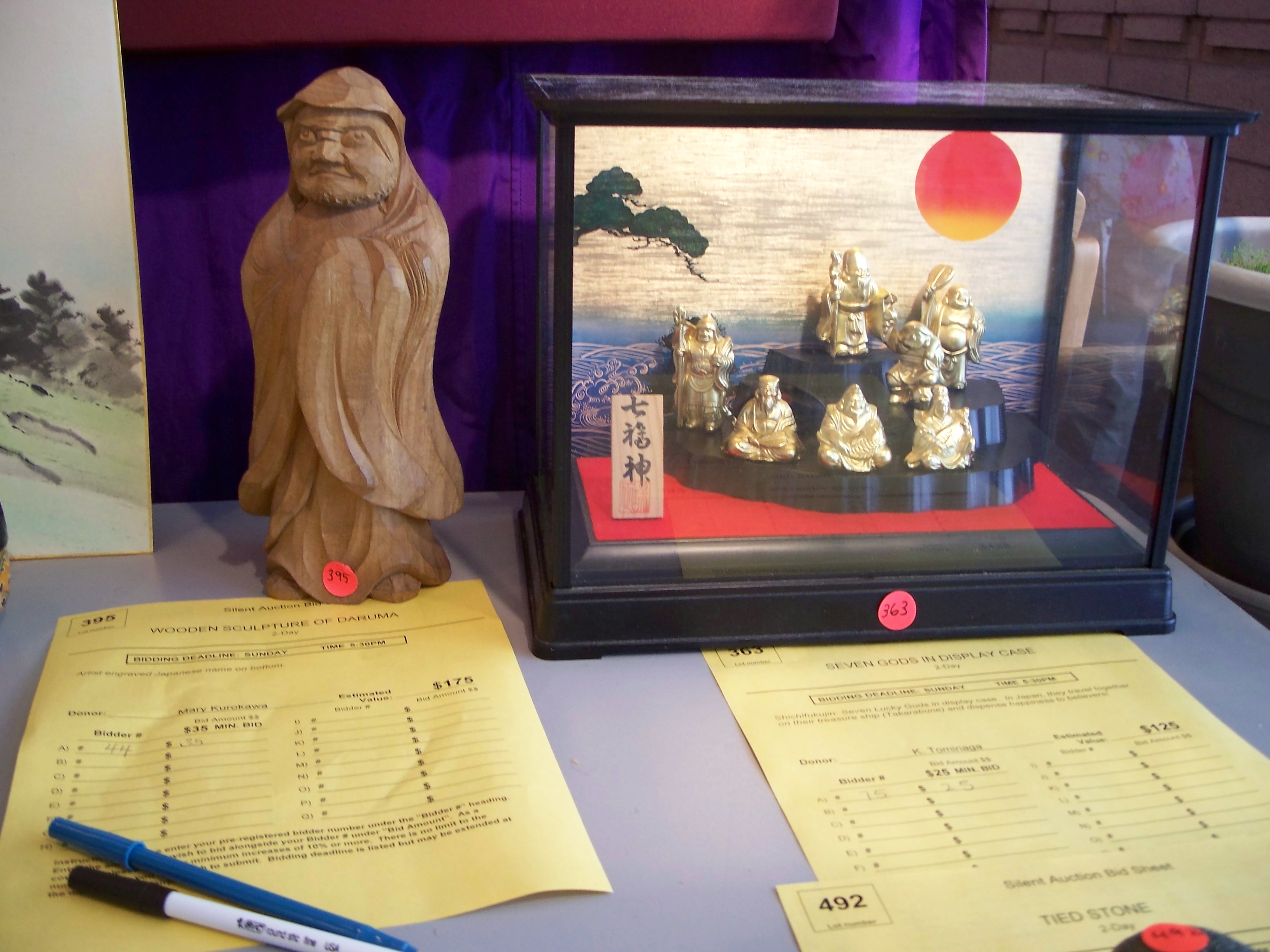
So it was the street front of the 61st annual Satsuki Bazaar and Arts Festival at the Berkeley Jodo Shinshu Buddhist Temple on Channing Way. Inside the temple, a multitude of items displayed for silent auction held visitors’ footsteps, starting with orchids, matted photos and paintings, gift cards to sushi bars and diving lessons…


…to porcelain sets, stuffed toys, a wooden sculpture of Daruma, and Shichi Fukujin in a glass box.


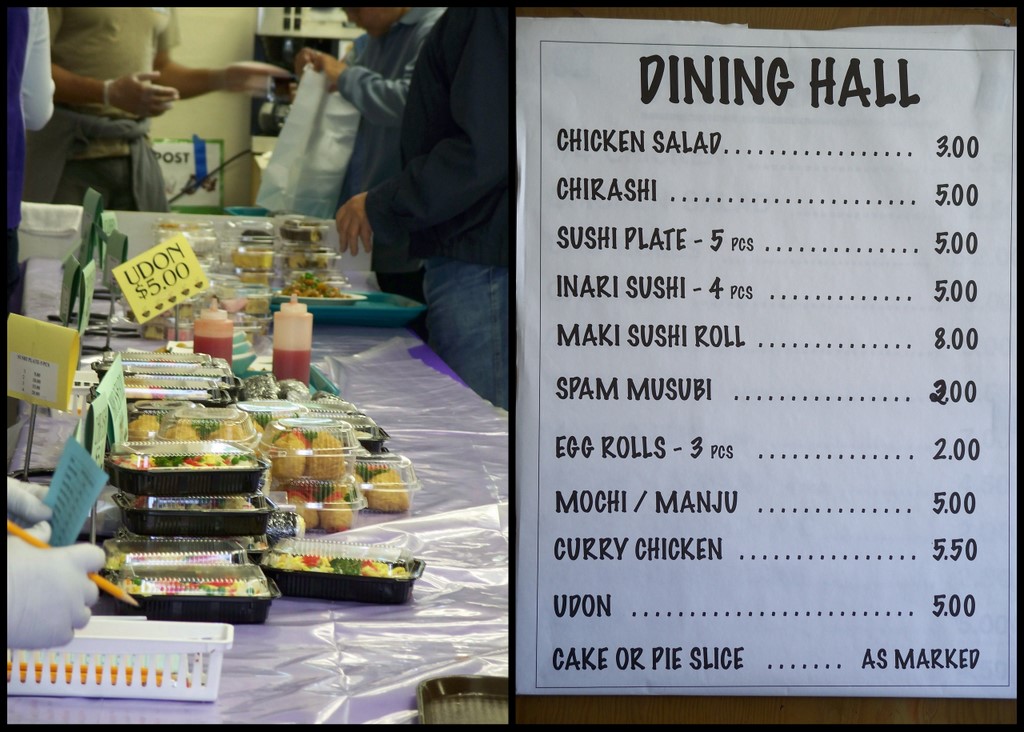
But few things can attract everybody like food. The “dining hall” was packed to the door like a beehive overflowed with nectar.


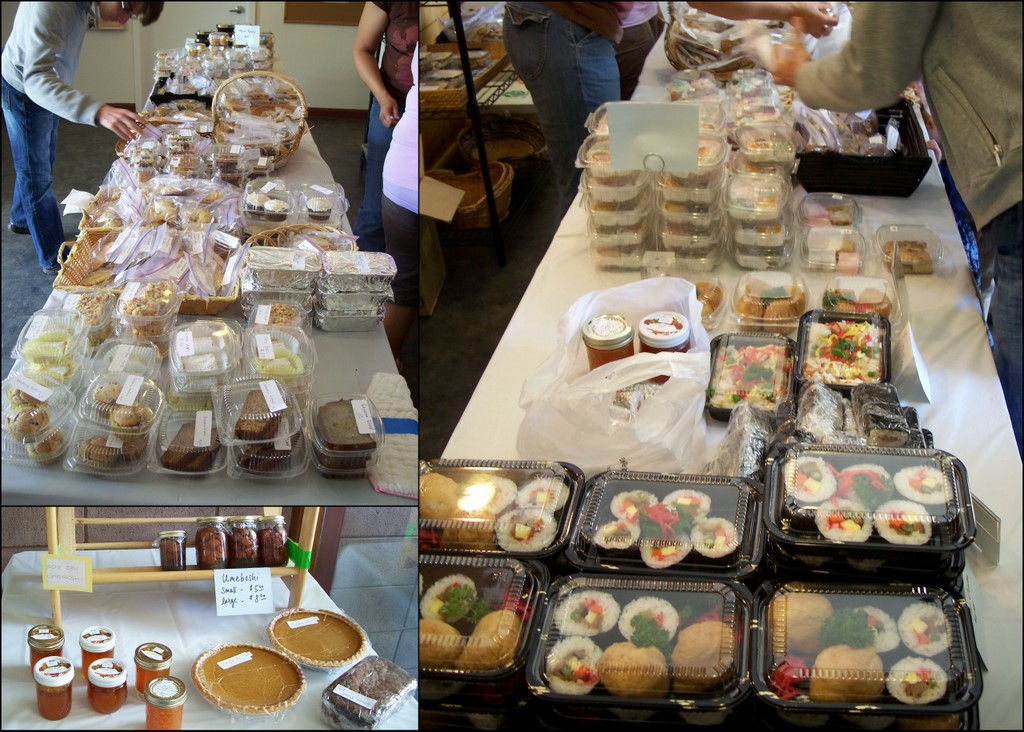
Every few minutes there were tiny old ladies weaving among the crowd with big trays of musubi and sweets from the dining hall to the “bakery”, a front desk covered with homemade edible goods, baked, rolled, fried, pickled, and jarred.


We just couldn’t help it. The umeboshi (pickled plum) was going fast at $5 per small jar and $8 per big one. Mudpie hungrily grabbed onto two jelly jars, kumquat ($4) and persimmon-pineapple-apricot ($5), which have the exact same color. Then we started loading pastries into our bag…


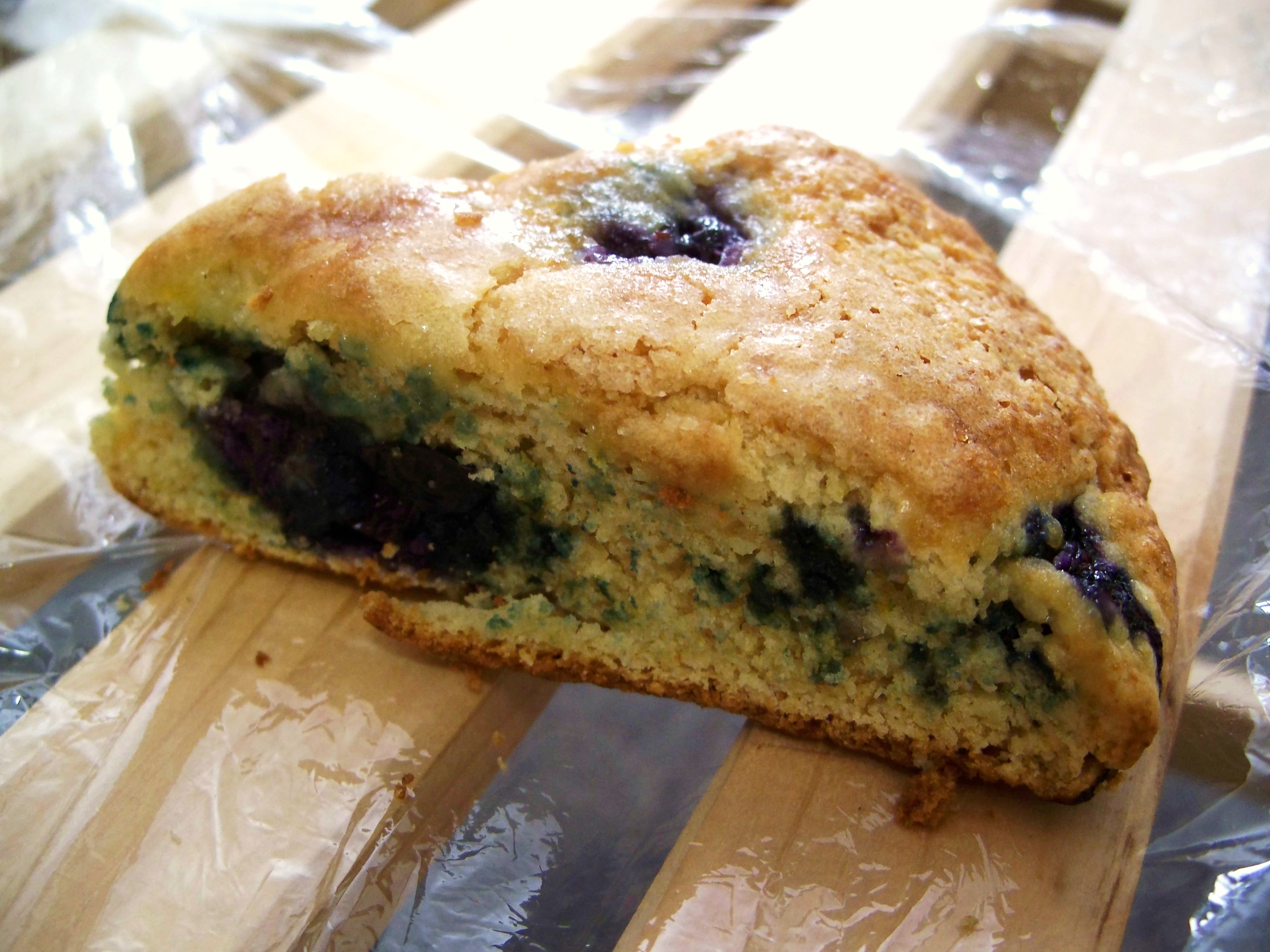
First came the blueberry scone, which tasted like wet sand, but we paid only one buck for it, can’t complain.


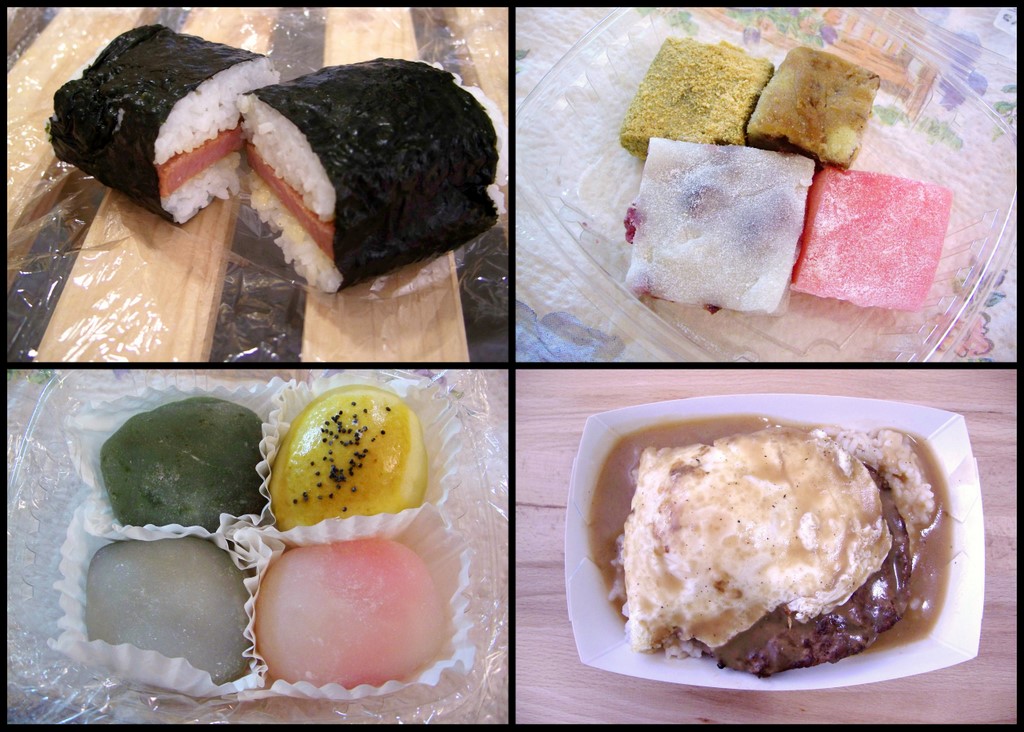
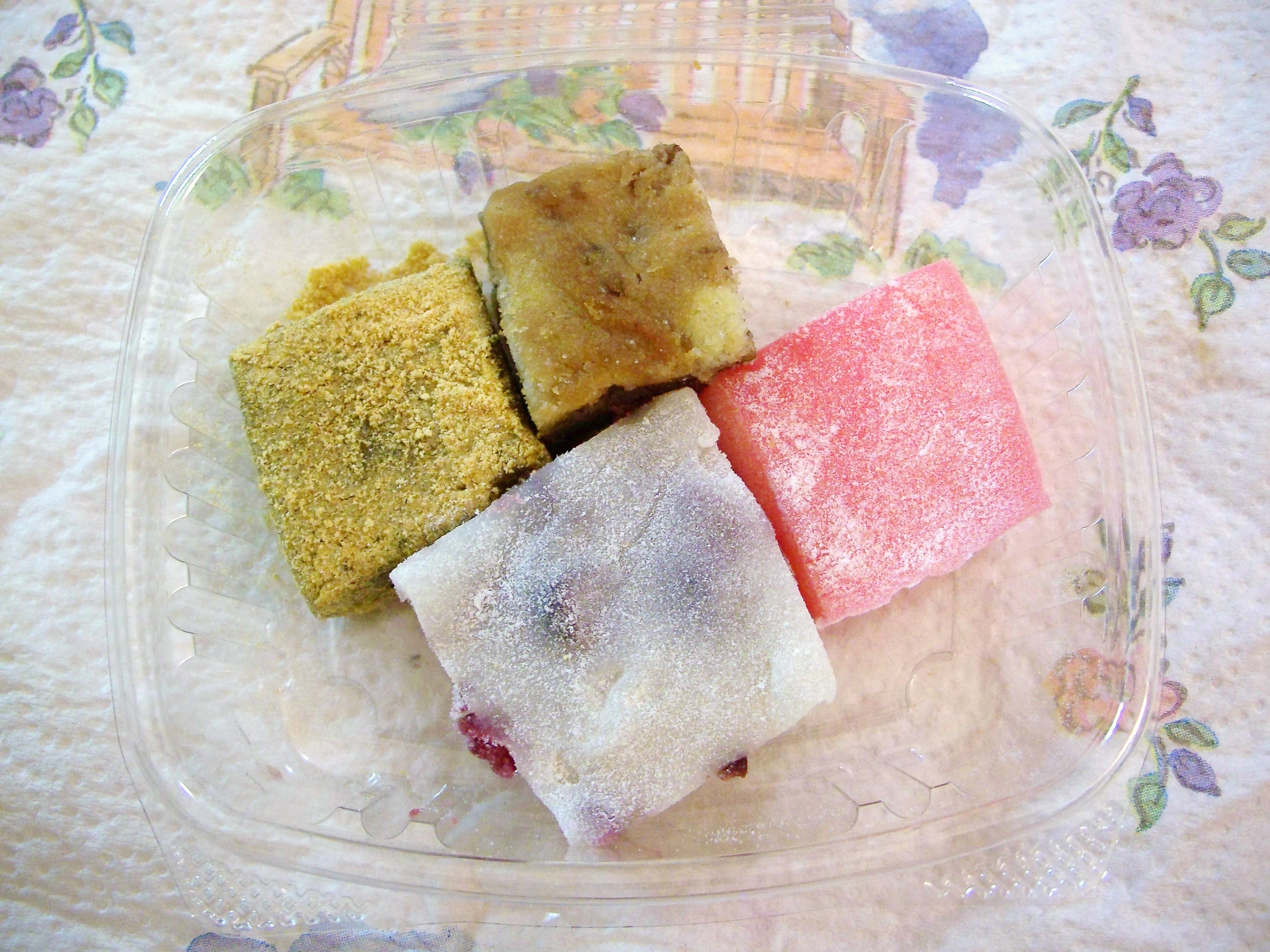
Then there were little squares of mochi (and a lonely piece of brown banana cake). Each square cost a buck too (and they are about 20 times smaller than the scone), but none was as good as the mochi cubes in front of Cafe Hana. Pretty scrumptious lonely piece of brown banana cake though.


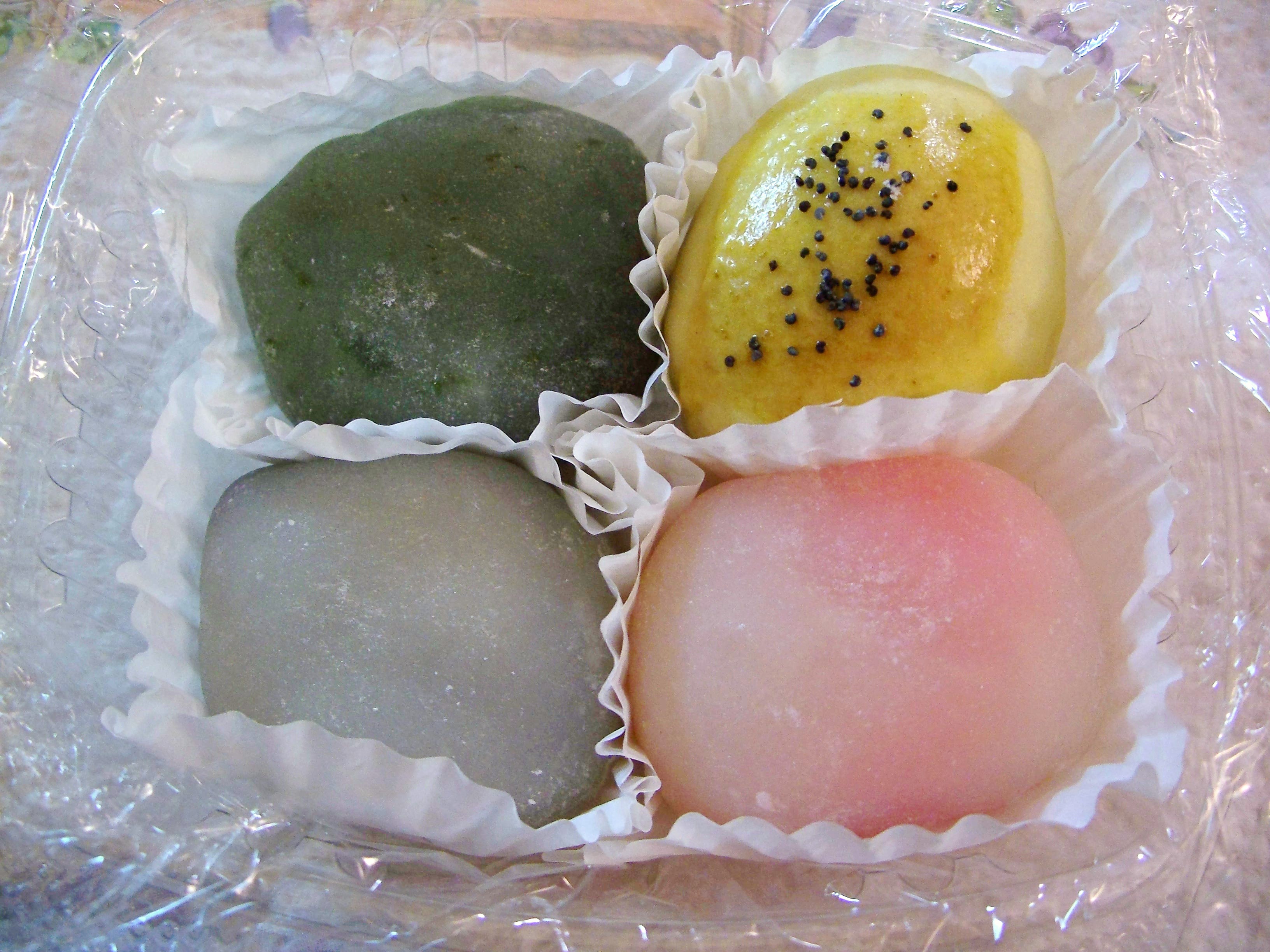
Now these are the real disappointment. The manju, mochi balls with red bean paste, looked so much better than they tasted. Is the yellow egg-shaped pastry dotted with poppy seed and filled with sweetened taro paste also a manju? Guess how much they were. $1.25 each. Sugar excess.


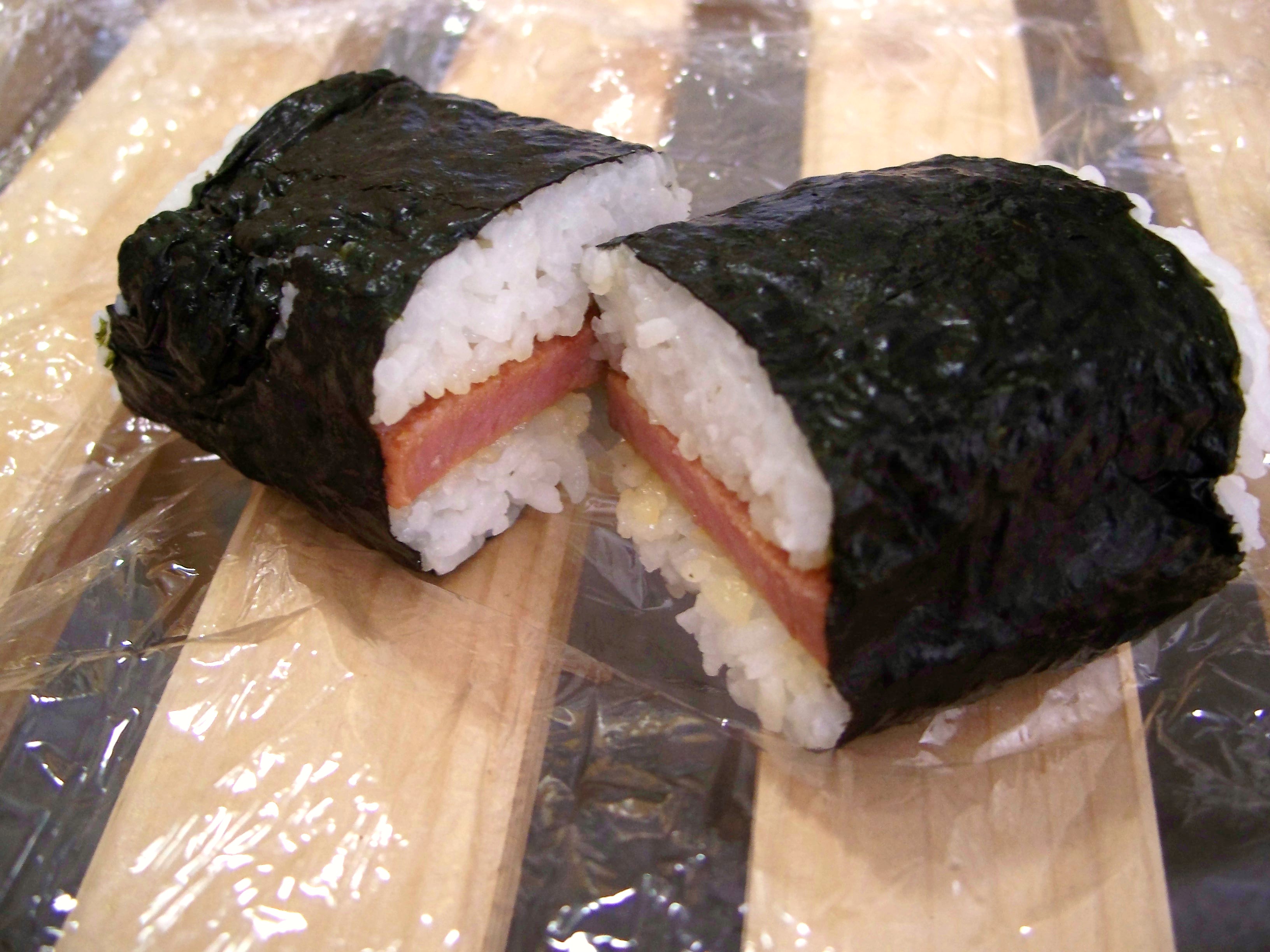
Fortunately the savory side is a greener pasture. The 2-dollar spam musubi hit the spot just right (processed meat always tastes so good after you reprocess it with sugar and soy sauce). The nori was mild, thick, and moist.


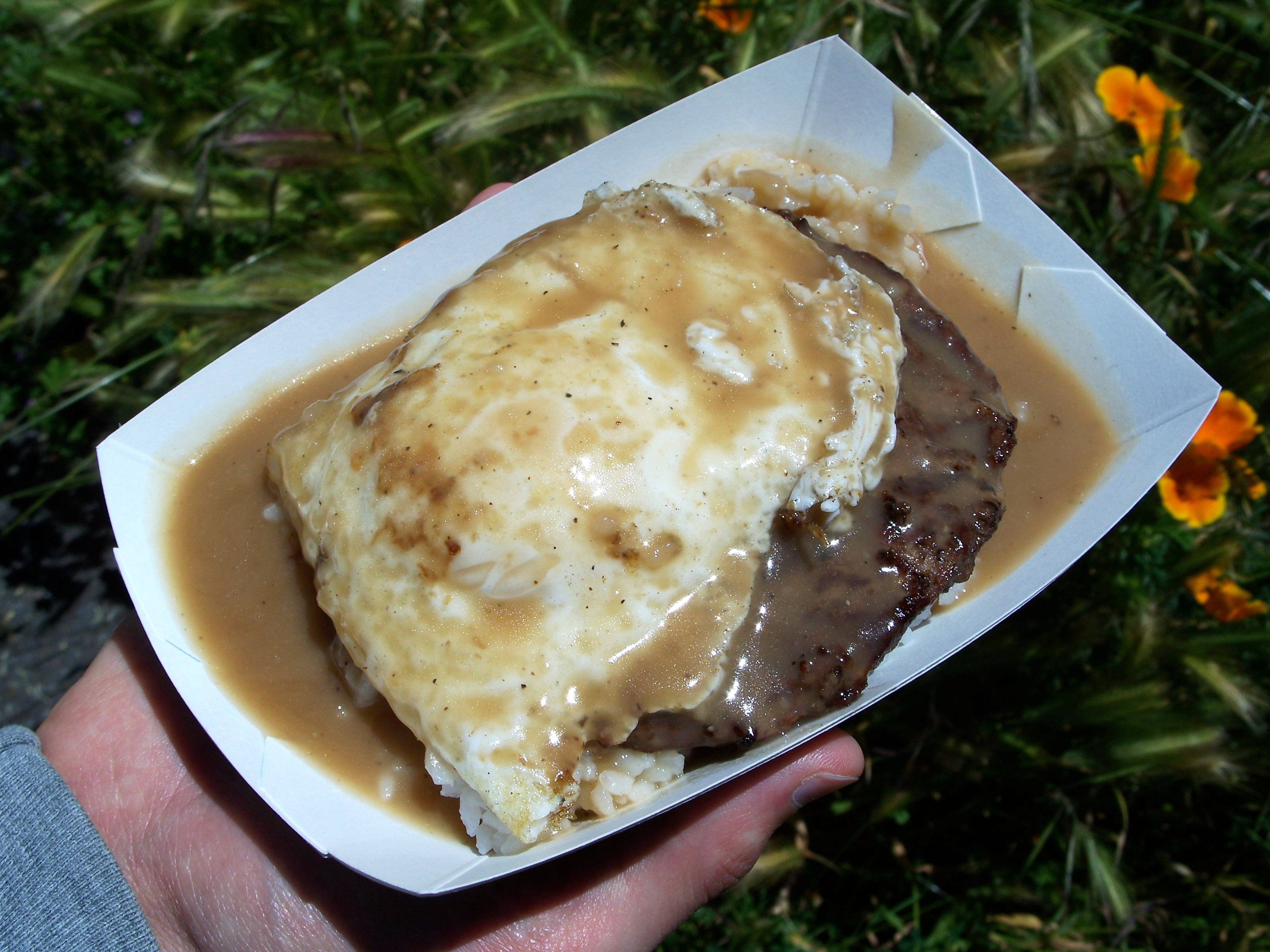
We top things off with a lustrous loco moco, a burger patty squatted on a bed of extremely moist short-grained rice, covered with a runny egg and a ladle of beef gravy. After one spoonful, Mudpie couldn’t stop thinking about it for the rest of the afternoon. The whole thing was like a peppery, creamy, rich butter boat. All for $5, and honestly it would be just as spoon-licking without the grilled meat.


And so I learned something new. At Vietnamese Buddhist pagodas, you can find only vegan food regardless of festive occasions or normal days. Here at a Jodo Shinshu Buddhist temple, there is plenty of meat, crackling and sizzling on one blue-sky Sunday in May.

61st Annual Satsuki Bazaar and Arts Festival, May 22-23, 2009
Berkeley Buddhist Temple
2121 Channing Way
Berkeley, CA 94704
(510) 841-1356

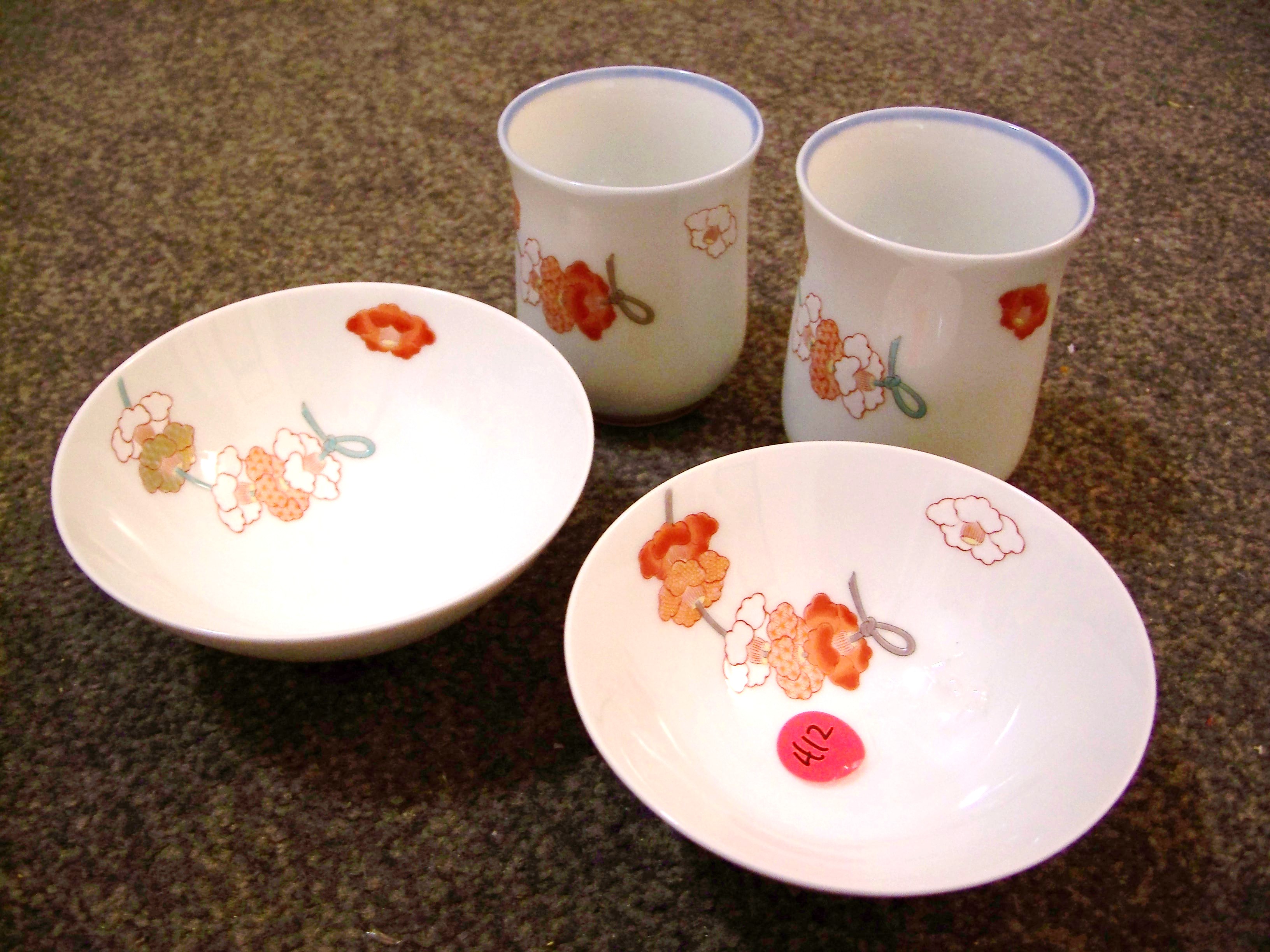
Update: I WON something in the silent auction: an adorable set of tea cups and tea bowls, notice the matching pairs with one tea cup slightly taller than the other. The visit was a success!

When the blossoms bloom

April 15, 2010 By: Mai Truong Category: California - The Bay Area, Festivals, Japanese, Opinions, savory snacks, sticky rice concoctions, sweet snacks and desserts


One Saturday we shove our homework into a corner and make a dash for San Francisco before another spring storm takes over the bay. Parking is as easy as hiking with a twisted ankle, but all that matters is we find a spot, then stroll a mile to the food bazaar on Webster street, Japan Town, arriving just a little bit before noon. Up from the steep sidewalk we see rows of white tents and white chairs, smoke rolling above the grills covered with beef and pork riblets, a line getting long on one side of the conglomeration. It is still early in the first morning of the Cherry Blossom Festival.
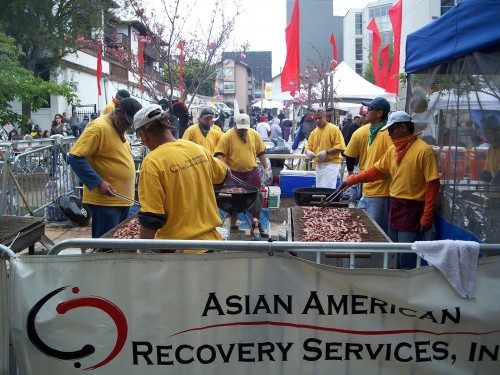

The carnivore instinct leads me right to the grill. It’s never too early to eat meat. The first booth whips out rice bowls with either ribs or unagi, braised eel cut into palm long chunks. We don’t feel like filling up with a rice bowl just yet, so we walk further down the row eying signs, then back track to the Nihonmachi Little Friends’ booth for three skewers of grilled beef at a mere five bucks.
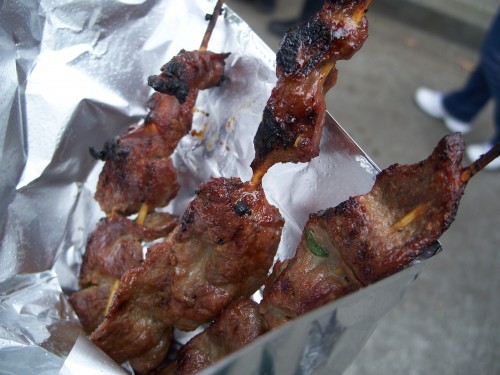

Crispy-charred-edge marinated beef, though erring a little on the chewy side, delight my feet after that hike from our parking spot. The downright old school meatiness would have well enhanced the kiddie dollar snack omusubi, wedges of plain white rice mixed with nori bits, which Mudpie buys way after we finished the skewers. Waste not want not, the musubi will find its place in my lunch this week, after I wrap it up in nori sheets and maybe with a slice of fried spam. My idea sprouts from seeing at least three booths selling spam musubi and dozens of family walking around with golden brown sauce at the corner of their mouths. I, however, fall victim to the facile yakisoba, soft stir fry noodle with crunchy cabbage dressed only with soy sauce and seaweed sprinkles. The noodle tastes flatter than it looks, and certainly flatter than the wad of six dollar bills we pay for it, but it is a good pacifier for the empty stomach.

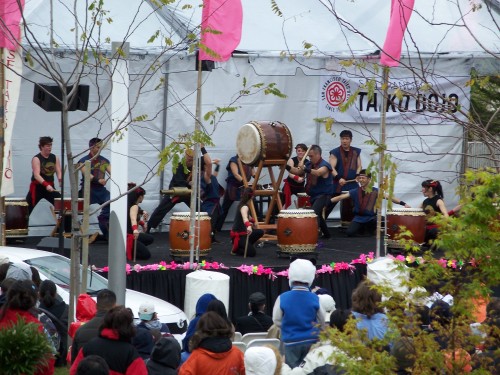
One block east of the food tents, the San Francisco Taiko Dojo artists are pounding their drums on stage. Their vigorous sincerity pumps rhythmic waves of festive air into the onwatchers’ lungs. To the hundreds of Japanese gathering there, I wonder if the drums have the same effect as the firecrackers we set off on Lunar New Year’s Eve, a simple string of sound that brings both excitement and quietude. The drums do halt my hungry thoughts for a moment, until I see some kids weaving about the crowd holding teriyaki burgers and shaved ice.

We’re back to Webster. The teriburger line wraps around one end of the food square, and Mudpie refuses to take one for the team. The fried fish ball line is no better, but I want to find out what the frenzy is all about, whether Mudpie does or not.
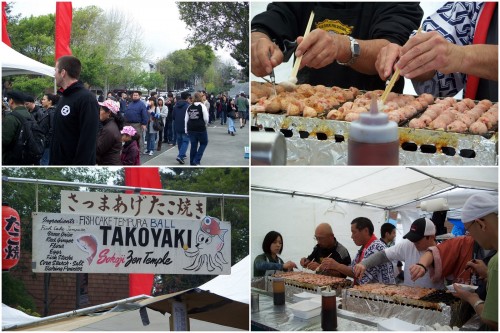
Just as we get in line, a lady asks us if we know the fish balls are any good. We don’t. So during the twenty-five minute wait the lady and Mudpie go over what is up with the LHC in Geneva, current status of the string theory job market, Berkeley Bowl, the beautiful harmony between Eastern religions and sciences, Francis Collins, and which patisserie is the best in San Fran. Meanwhile I can’t take my eyes off her unagi rice bowl, the eel skin shines gloriously in its rich brown sauce. Slowly but solidly we get to the tent where all the pouring, flipping, and toothpicking take place. The cast iron molds are just as busy as the deft hands hovering over them.
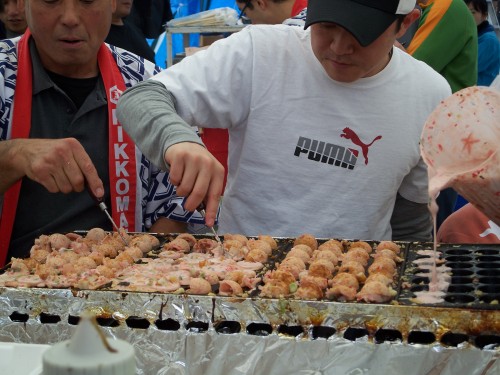
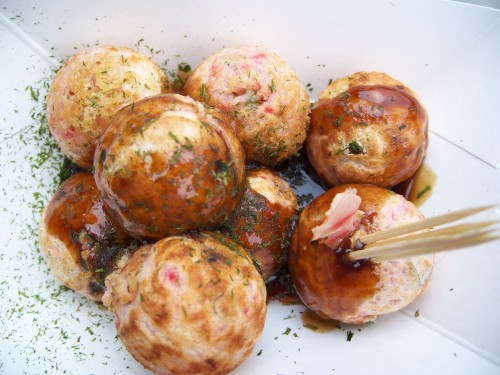
Although the man jokingly says it’s a secret recipe from Japan while he collects orders, this fish ball booth is the only booth with a crystal clear ingredient list on the banner. Although it is called takoyaki (“fried octopus”), it’s a simple ball of batter, fish stock, egg, and seasonings. (Still, it resembles an octopus head, intentionally or not.) Although it looks perfectly solid, it has an air pocket inside, resulting from the flipping of the hemisphere while the batter is still runny. Although it is fried, it is soft. Although the long line suggests that it is amazingly worth the wait, it is not. The seaweed sprinkles, red ginger and green onion do little more than cosmetics, the okonomiyaki sauce is rather too tart. Its goodness lies solely in the warmth to battle those crisp wind blows. In hindsight we probably should have stood in the teriburger line.

As the tongue craves for some sweets, we walk around to the grilled beef and yakisoba side, this time to stand in line for a red bean pancake, imagawa yaki.
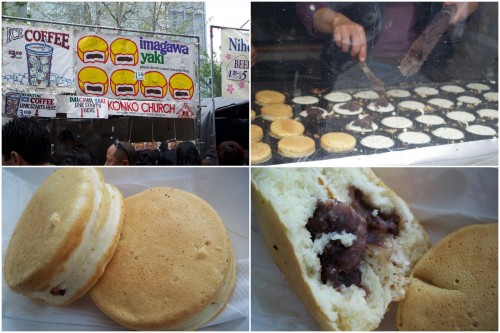
imagawa-yaki (pancake with red bean paste)
The fluffy dough is just like any pancake our mothers make for breakfast on special days. The making process, like those fish balls, is fun to watch. They pour the batter into rows of circular iron molds, wait a few minutes for the batter to semi-solidify, then comes this semi-circular trough, looking  like a cracked-open bone filled with marrow, from which they spoon some red bean paste onto half of the cooking pancakes. The other half are flipped over to make the pancake tops. The batter turns solid, the division between two halves is sealed, three bucks are handed over for exchange of two blowing hot cakes. Mudpie loves the bean stuff. So much that he insists on looking for more inside the Kintetsu mall. I feel more inclined to sitting down, and those benches near the Kinokuniya bookstore and Izumiya have never sounded better. So into the mall we go.

But boy am I a fool. On days like this benches are a luxury, and it’s just rude to fight over a seat with the petite ladies in colorful kimonos and huge wooden zōri, or families with babies. The mall is packed. The human flow is like a school of salmon. My tiny stature serves me well in whizzing through elbows and shoulders, but I would have missed the best catch of the day had Mudpie not spotted the nameless but busy tables in front of Cafe Hana.
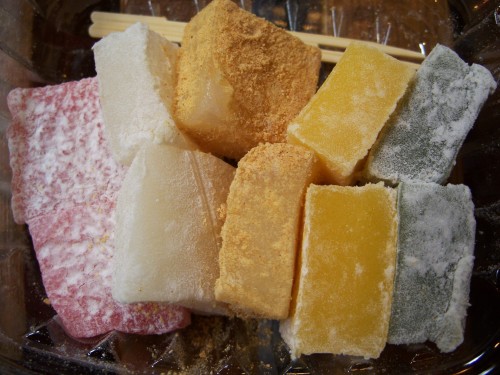

Ten bite sized cubes of cold mochi, five different flavors. From right to left: 1. yomogi (mugwort) – tastes as grassy as its alternate name kusa mochi – “grass mochi”, 2. mango – tastes more like jackfruit or longan, 3. kinako – actually this is warabimochi (jelly-like sweet made of bracken starch instead of sticky rice), covered in soybean flour (kinako) which tastes like peanut butter, 4. lychee – the second tastiest, and 5. strawberry – the tastiest. Chewy, refreshing, gently sweet like a rose petal, I would eat these all day. The best part: it is assembled upon request. The confectionery magistrates, who may be part of Cafe Hana’s team, cut and roll these slabs of sweets in powder and into the plastic boxes, each containing only one flavor. But if you kindly ask, they’ll throw together a mixed box for you at the same price. Top it off with a three dollar scoop of lychee ice cream, as we do, and you’ll feel ten or fifteen years younger. You know, those days of hustling about the school cafeteria, eating cheap treats, feeling fresh and complete. If there’s anything I don’t regret buying at this fair, it’s the lychee ice cream and the mochi at those tables in front of Cafe Hana.

If there’s anything Mudpie doesn’t regret buying at this fair, I think it’s the daifuku, also from those tables in front of Cafe Hana. That red bean addiction is strong.
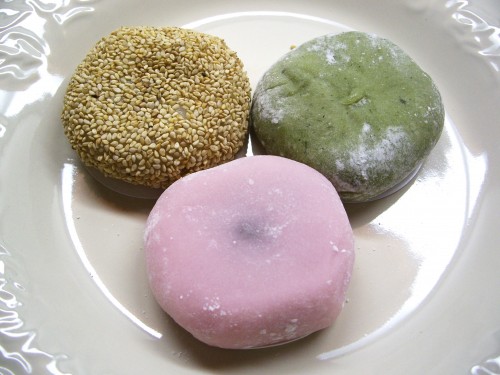

Pink or green, smooth or sesame coated, the daifukus are good companions for chrysanthemum tea. The plain, chewy sticky rice outer layer damps the sweetness of inner red bean paste. The cold confection enhances the warm drink.
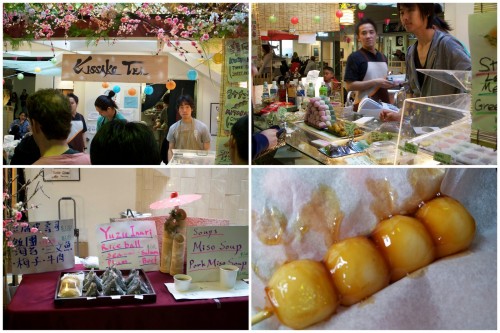
mitarashi dango
On our way out of the mall, we sidestep in line for one last treat at the flowery booth Kissako Tea. They have the little mochi balls in pink, green, and white with red bean paste filling, and they also have the mitarashi dango, which I’ve always been curious about since I read Sugar Bar Diva’s toothsome post. Four simple sticky rice balls on a skewer sounds like a boring snack, but the chewiness dressed in a rich syrup of soy sauce, sugar, and starch is everything but plain. Its taste and texture amazingly resemble malt sugar. It marks a triumphant incorporation of savory condiments into the sweet realm.

At four something in the afternoon, the food bazaar is still going strong. All booths, not just the fish ball and the teriburger, now have a long line. The kids are still with wide open eyes, Hello Kitty headbands, spam musubi and cups of shaved ice. The dogs are still obediently looking at their humans eating beef skewers. The girls in black and white kimonos are still taking pictures between giggles.

And so we march our full tummies a mile back to the parking spot. The sky is blue. The streets are quiet. The wind has ceased its dry cold swirls. The car stands there, with a ticket.


The avocado’s sweet side

April 09, 2010 By: Mai Truong Category: Comfort food, Opinions, RECIPES, sweet snacks and desserts, Vietnamese


Who do you think is more confused about his identity, the penguin or the avocado? The penguin is the prime example of a bird that can’t fly. The avocado is the most commonly known fruit that doesn’t taste like a fruit. It lacks the citric hint of berries and oranges, the crunch of apples, the pulpiness of peaches and plums. If I were an avocado I’d ask myself several times a day, why did mom and dad make me taste like butter and different from every other fruitie at the market?

A good avocado mom tree, like all good moms, would say “Av, being different is a good thing!”.
– But I don’t get to hang out with the other fruits, they say I’m fat.
– The other fruits can’t make Ice Cream by themselves. They’re only side flavors. You can become Ice Cream all by yourself.
– If Sugar helps me.
– Sugar is nice, but you also have what it takes to be a good Ice Cream. And think about what you can do for others if you learn from Butter and Cheese, you have their smoothness too.

If I were an avocado, that’s the story I’d tell when people ask why I decide to join the Sushi corporation and partner with Tortilla Chips. But just between you and me, I actually prefer my alone times with Sugar in the fridge.

3-minute dessert: Avocado “ice cream”:
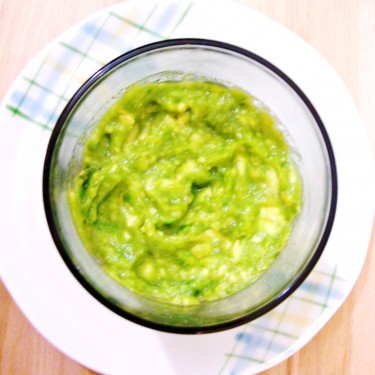
Scoop the avocados out of their peels and into a glass. Add sugar sporadically between layers of avocado, if possible. If not, add sugar on top at the end of the scooping process, but before mashing up the avocado. Mash, taste, add more sugar to liking, taste again.
Refrigerate.
Spoon.
Lick spoon.

North Berkeley Gourmet Marathon

March 25, 2010 By: Mai Truong Category: California - The Bay Area, Opinions


I’d never thought I would walk an over-two-mile round trip just for food. But Carolyn Jung at Food Gal convinced me that A Taste of North Berkeley’s Gourmet Ghetto just sounded too good to ignore, and with a mere $25 ticket it was well worth the ankle exercise. Granted the weather turned its cold back on us, we couldn’t drag our feet to all 27 locations, nor were we enticed by the smell of wine, we felt good at the end of the day knowing that our tummy was full, a beggar’s tummy was appeased (with a cup of Greek soup from Soop, a lime-chipotle drumstick from Poulet, and a square of brownie from Andronico’s), and we found a new favorite.

The marathon started off creamily with Bistro Liaison‘s Quenelle souffle – salmon and scallop mousse in a lustrious shrimp sauce. Captivating from the very first bite. Oh, guess what? It’s not on the menu.

Taste of HimalayasMost Generous Tasting “Sample” ever. We were allowed full freedom to load our plate with whatever our eyes desired.

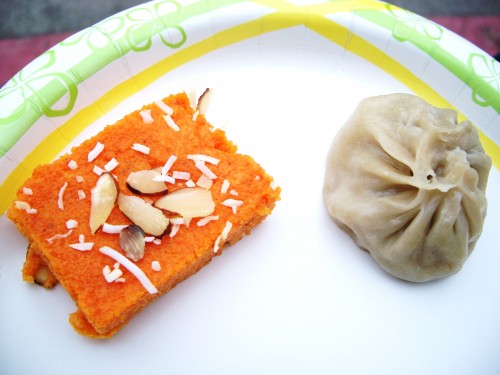
Taste of Himalayas - Lamb momo and orange dessert

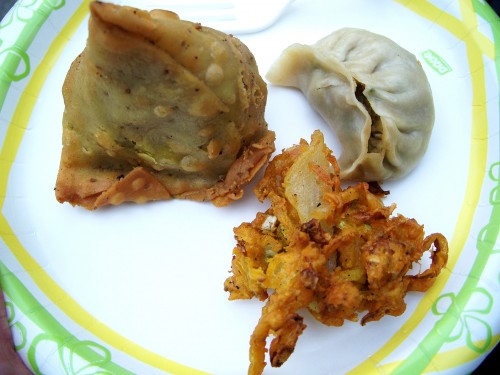
Taste of Himalayas - vegetable samosa, momo, and pakora

Both the lamb and the vegetable momos (dumpling) are adorable pockets of goodness. The pakora (deep fried vegetable) hits the grease spot. The samosa is utterly beany. The unidentifiable bright orange dessert feels like fish roe.

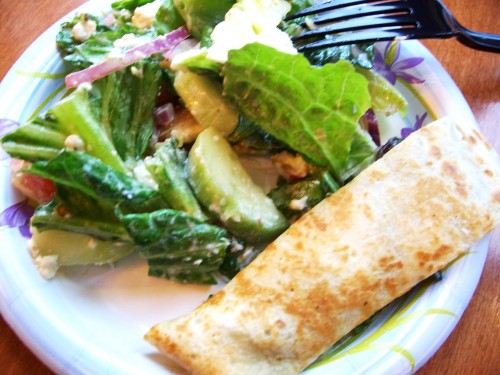
Crepevine – The Least Expectable Taste. Its cute facade sugarcoats a trendy menu with international crepes that fare more or less like Subway sandwiches: edible, not bloggable.

Crepevine - Salad and Greek crepe with feta cheese, roasted almond, spinach, and calamata olives in tsatziki sauce

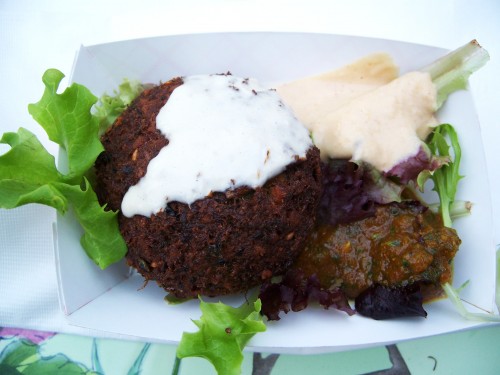
Chick-O-Pea’s (in Barney’s) – The Nicest Service. We arrived just as they ran out of falafels, and the owner offered Mudpie a beer while waiting for the new batch.

Chick-O-Pea's/Barney's - Falafel with hummus, tahini, and zachuq

(We didn’t take the offer.)

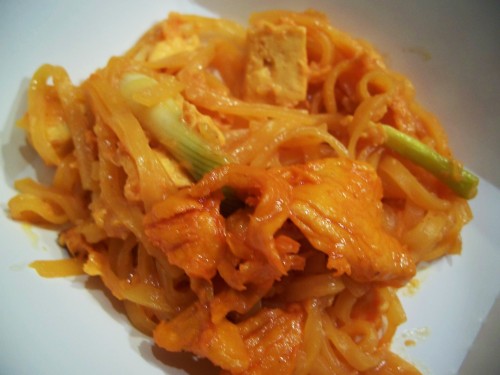
Cha-Am – what can I say, Thai food is comforting.

Cha-Am - chicken pad thai

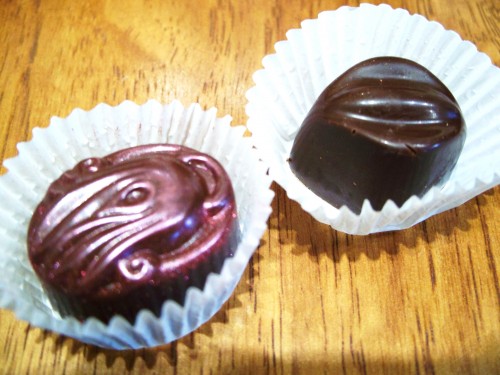
Chocolate Tasting at M. Lowe & Co. JewelersMost Beautiful Sample.

Chocolate tasting at M.Lowe & Co. Jewelers

The taste? See’s Candies‘ truffles are better.

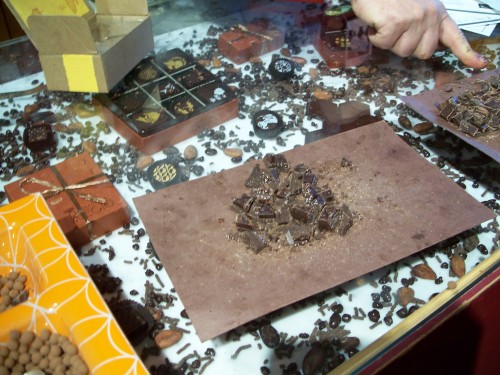
Alegio ChocolatéMost Educational Tasting. Also our first try of whole Chile finest chocolate bean, bitter just like a roasted coffee bean. The enthusiastic host is a man of hand and mouth, as we Vietnamese would say: chopping and crushing chocolate bars into bits, speaking expeditiously about each kind’s origin and composition, grabbing onlookers’ quizzical attention with the busiest, most irresistibly chaotic display of the brownish hues.

Alegio Chocolaté - chili pepper dark chocolate

The 80% dark chocolate flavored with chili pepper pictured above is only for the bravest. We took the challenge. Then Mudpie sheepishly tasted a darling chocolate covered peppercorn and felt sick for the rest of the journey. Lesson learned: sometimes cute looking things can kill you.

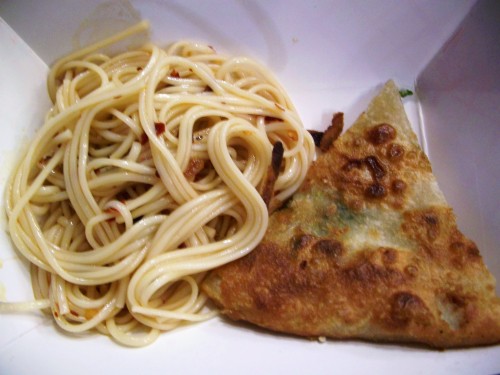
Also snuggled in the Epicurious Garden with Alegio Chocolaté are the aesthetic Chinese Imperial Tea Court, where we had a taste of puerh tea and some uberspicy hand-pulled noodle…

Imperial Tea Court - cold noodle and onion pancake

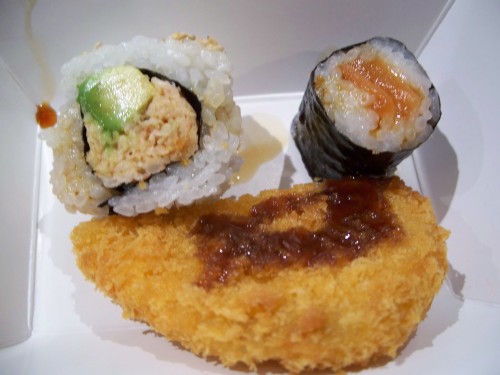
…and the beautiful takeout Kirala 2, with a sample of sake maki (tuna) roll, Californian (crab and avocado) roll, and potato croquette.

Kirala 2 - California roll, sake maki roll, and potato croquette

Soop – housing the Most Expensive Banh Mi’s.

How about Soop with banh mi?

Unfortunately the banh mi wasn’t on the tasting menu. Instead, the 4oz greeting of Avgolemono soup is undeniably proper: Greek soup with shredded chicken and long grain rice in enticing lemon flavored chicken stock thickened with egg.

GregoireBest Dessert of the whole event. Possibly the best dessert I’ve had in a long time.
Gregoire - Clemetine mousse with chocolate sauce
It’s just a takeout, but it’s not just a takeout. Despite the chilly breeze, people queue up for its delicious fine tastes, changing seasonally, and perhaps for a friendly joke or two with the chefs to warm up your mood.

“So Mai, just what is your new favorite?”, you may ask. The pork belly sandwich at Trattoria Corso. Look out for a post on this Florentine exquisite in the near future.

Claypot fish is now upscale

February 11, 2010 By: Mai Truong Category: California - The Bay Area, Comfort food, One shot, Opinions, Southern Vietnamese, Vietnamese

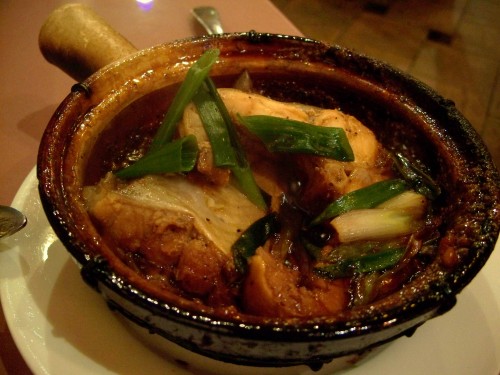
ca_kho_to_claypot_fish
You know how some dishes just instantly come up when you think of certain places? Those are the dishes that always get served when you go on tours to the region they’re associated with, like barbecue in Texas, crawfish in Louisiana, crab in Maryland, clam in the little island Nantucket of Massachusetts. Well, in the deep south Mekong delta of Vietnam, where there are more rivers and canals than Venice, freshwater fish multiply like crazy and the countryside inhabitants make fish dishes like crazy. But for some reason, the name “Mekong Delta” is always linked with “cá kho tộ” (fish simmered in claypot). Why?

The fish (usually catfish) is cut up into thick sections across the body, skin and bone intact (scales off, though), simmered in fish sauce and caramel sauce until it turns beautifully brown inside and out. The mixed sauce is thick and savory, it’s sweet, it’s salty, it can spike up your senses if you add a fillip of chili pepper. Some might argue that fish can taste good by themselves, but this sauce alone would make every mouth water. I’d take the sauce and the sauce-soaked skin anytime over the flesh.

Then again, I had never thought about eating it when I was in Vietnam. Footless animals don’t appeal to me, footless animals with stinky needle bones ready to get stuck in my esophagus appeal to me even less. Footless animals with stinky needle bones were also too abundant, too cheap, and too easy to get when I was there, that boredom won over appreciation of taste. Pick any little food shack for workers on the streets of Saigon, any family-owned eatery by the side of the highway, any book about Southern Vietnamese cuisine, you’re bound to find two things: cá kho tộ and canh chua. It became trite. Little did I know that one day I’d only find it  again in an expensive restaurant in Berkeley.

A few restaurants in Bellaire advertise claypot fish in their menus, but usually say they’re out when you order. It could just be because the dish takes quite some time to make, and scrubbing away those little clay pots with caramelized sauce and fish isn’t really a desirable job. So I was ecstatic when they actually had it at Le Regal (just one good meal after another). The pot came out hot and sizzling, two slabs of fish steaks snuggled in the bubbling golden brown addiction. Fish had never smelled so good. The order does not come with rice, but plain white rice is a must, unless you want to slowly take in nibbles and licks overpacked with flavors.  Be sure to save a bit of rice to clean the pot after all the fish is gone.

Price: about $12-13. (This menu is completely out of date on the price, and does not have all the dishes currently served, but nonetheless it can give you an idea of what they have.)

Address: Le Regal
2126 Center Street, Berkeley, CA 94704
(510) 845-4020

Click here to read Holy Basil‘s recipe of ca kho to.

Frosting all the way – La buche de Noel

December 24, 2009 By: Mai Truong Category: French, Houston, One shot, Opinions, sweet snacks and desserts, Texas, Vietnamese

The French colonizers brought many things to Vietnam – Catholic churches, potatoes, veston, coffee and rubber tree plantations, to name a few – but perhaps their baking recipes have left the sweetest memories. Some of those recipes were modified, like the baguette with extra leavening became the crisp and light banh mi, or the croissant with extra butter which is crisp at the two horns (to match its Vietnamese name – “water buffalo’s horn”), golden and shiny at the bottom, more substantial inside, subtly salty, and smells delicious from several feet away. Some names have mysteriously disappeared from the world wide web of delicacies and can only be found in Vietnamese conversations, Vietnamese bakeries, and Vietnamese food blogsthe pâte chaud falls into this category. But many stay true to their origin, like the choux à la crème, the gâteau, and the buche de Noel.

There’s the frosting. It can be white chocolate, coffee, hazelnut, even durian flavor, but the traditional dark chocolate ganache is best in my opinion. There’s the middle layer to resemble tree rings, chocolate again is great but pineapple jam if you like it fruity but not too sweet. There’s the layer of spongy génoise, soft, light, plain, a levee to keep the palates from a sugar flood. As for decoration, powder sugar would make a good snow, meringue mushroom to look more botanical, a couple of icing roses, branches, or pine trees to be Christmasy, some fresh raspberries for a little tart.

The Vietnamese keep the tradition of a strictly European réveillon even after the French left, no member of spring rolls, rice noodle, sticky rice, sweet bean paste and the gang are allowed, but goose is extremely welcome and buche de Noel is a must. Then we crossed the sea and here in America although Christmas desserts are overwhelming – fruitcakes, gingerbread, pumpkin pies, mince pies, banana bread, candies and cookies – la buche de Noel doesn’t exist. Why is that? We brought over the turkey, the ham, the Christmas tree, even the actual Yule log to be burnt in the fireplace, why is the edible and delicious Yule log left behind?

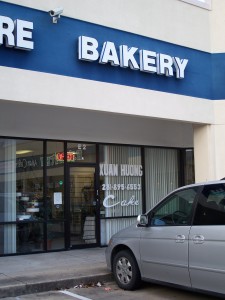
Xuan_Huong_Bakery Anyway, our little homesick craving has been found in a Vietnamese bakery northwest of Houston. Made by preorder, each log costs $29 at Xuan Huong.

Address: Xuân Hương Bakery
13480 Veterans Memorial Dr. Suite D
(in the same shopping center with Hong Kong Market #3)
Houston, TX 77014

(281) 895-6553

TAMU Physics building: Beauty and Brain

December 07, 2009 By: Mai Truong Category: Opinions, Texas, University & Cafeteria

Just a few months ago, only certain people could go inside to inspect the construction, and everyone permitted had to wear hard hats. Now, driving on University, it would be hard to miss the gigantic banner leisurely hung to announce a brand new presence, that was much awaited and is worth every minute of effort put into it. The two physics buildings at A&M are a charm, and doesn’t one of them (left picture) remind you of some famous structure? (Hint: something in New York).

Seven stories high (including the basement for laboratories), the newborn Mitchell Institute now houses the high energy theorists and the astrophysicists, as well as a brass Foucault pendulum complete with a full electronic protractor. Marking a crimson comet tail along its path, the pendulum pridefully swings across the floor, its movement sparks gratification in the eyes of Prof. Edward Fry, the department head. (For comparison, the pendulum at the Houston science museum is tracked by knocking down wooden pegs, much less chance for malfunction and more eco-friendly, I guess?). And just to entertain your scientific mind, every step you make on the first floor is a step on a mathematical pattern, known as Penrose tiling (pictured below). If one tile is misplaced, the whole pattern is destroyed. I wonder if the architect, Michael Graves, had drawn the floor precisely to each tile, to make sure that the construction workers got it right. But I do know that Prof. Glenn Agnolet, the main supervisor of the project, had at least once caught a mistake before it was too late, and that was just among many nameless incidents occurring and overcome in the four-year span of the construction. Each such incident cast an extra amount onto the total cost in this skimming economy, and the generosity of George P. Mitchell alone would not have been able to bring the buildings to completion. Thus, the two buildings bear proofs that Texas A&M physics professors are not only experts in their fields but also charismatic businessmen, proficient managers, and visionary designers.

Fresh and spacious, the interior has an unscathed beauty, with unadorned walls, long hall ways, tall glass windows, offering a full view to my most favorite part: the rooftop garden, which is accessible from the third floor. Give it a few more months, and the now barren poles will be embraced with vines, forming a green canopy. The small trees will grow, the flower beds will thicken. Young birds will make this garden their new homes…

… and young Physics students will aggregate here, with wholesome pride.

Mid autumn and the moon cake

October 04, 2009 By: Mai Truong Category: California - The Bay Area, Chinese, Opinions, savory snacks, sweet snacks and desserts, Vietnamese


That time of the year has come. Time for the first midterm exam of the undergraduates, and the first exam-grading party of the graduate students. Time for looking back and asking what have I been doing since school started, beside avoiding my advisor for fear of his question “how is the research going?”. Time for kids to buy lanterns, if you’re in Vietnam, and for adults to return home, if you’re in Korea. Time for Walmart, Michael’s, Kroger and the gang to pull out a full display of Halloween and Thanksgiving colors. Time for Asian expats to savour their mooncakes.


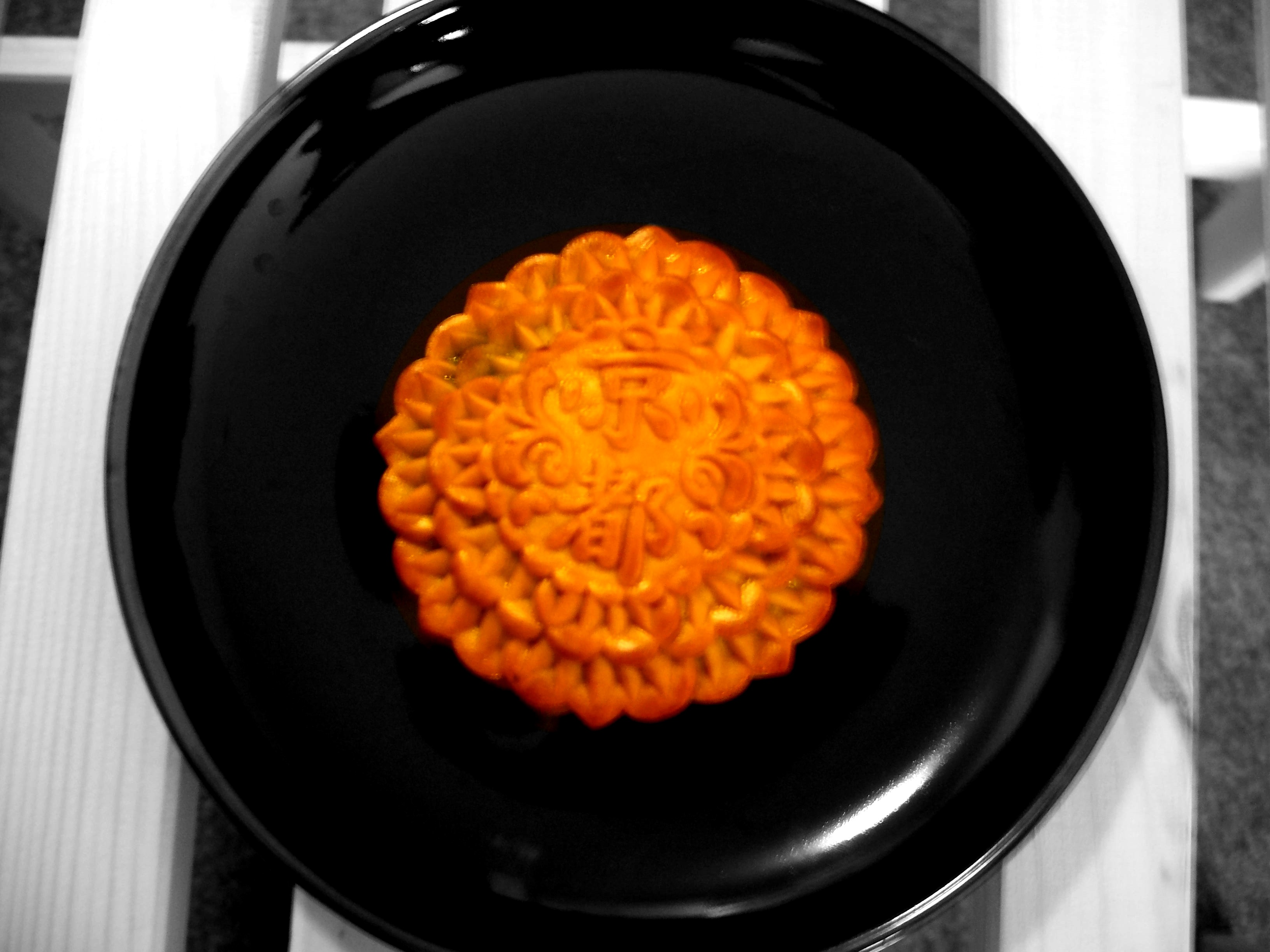
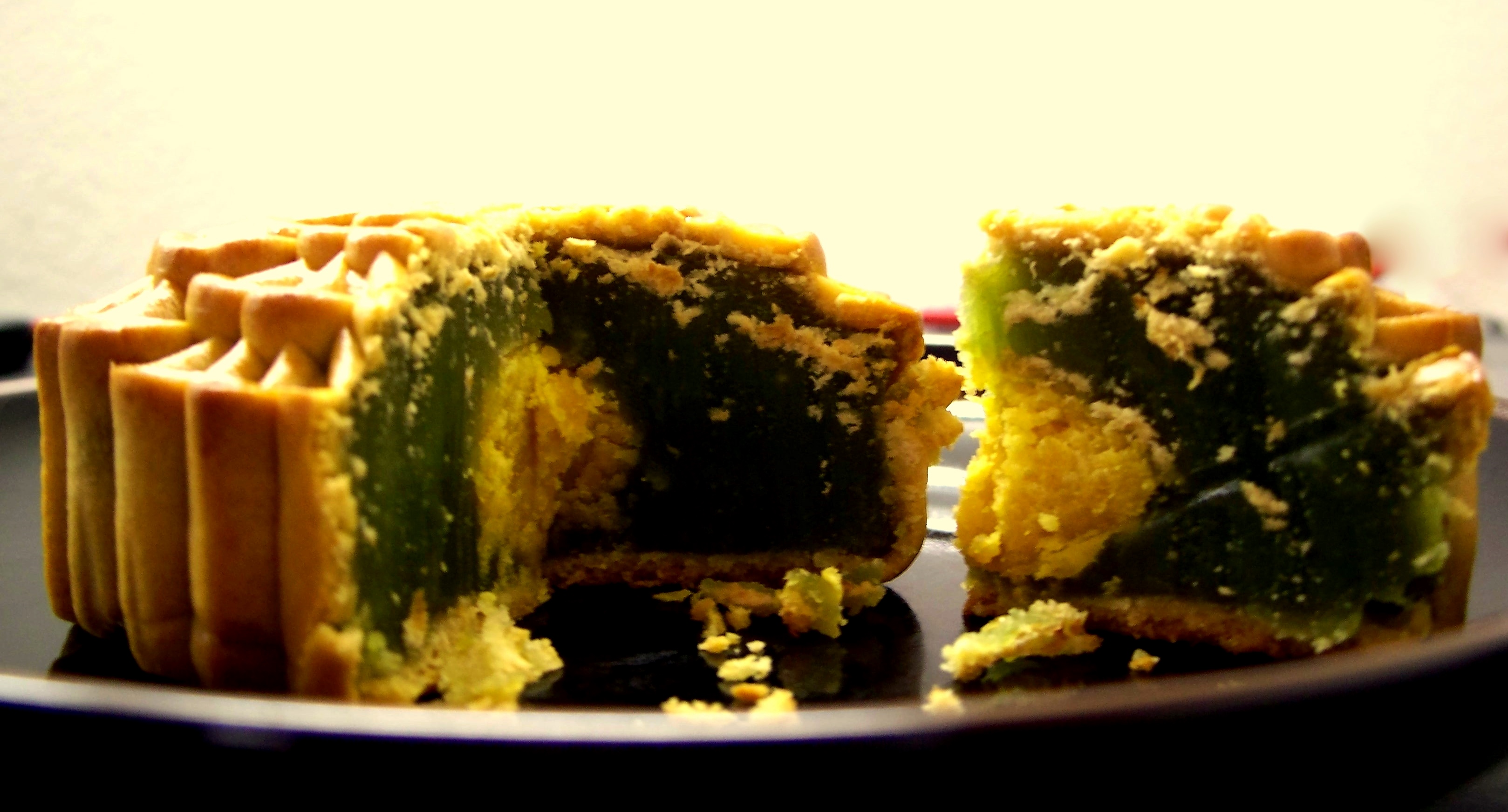
It isn’t called “mooncake” for no reason. There’s a moon inside the cake. A bright deep yellow egg yolk, salted to perfection. I always eat this last, putting the whole ball in my mouth and slowly eroding it away. The background of the “moon” can be anything, from assorted nuts and lap cheong to sweetened bean paste. Kinh Do churned out the green tea version (nonexistent in Saigon when I was there 5 years ago). Talk about 2-in-1 convenience, now you don’t have to drink tea while eating mooncakes anymore.

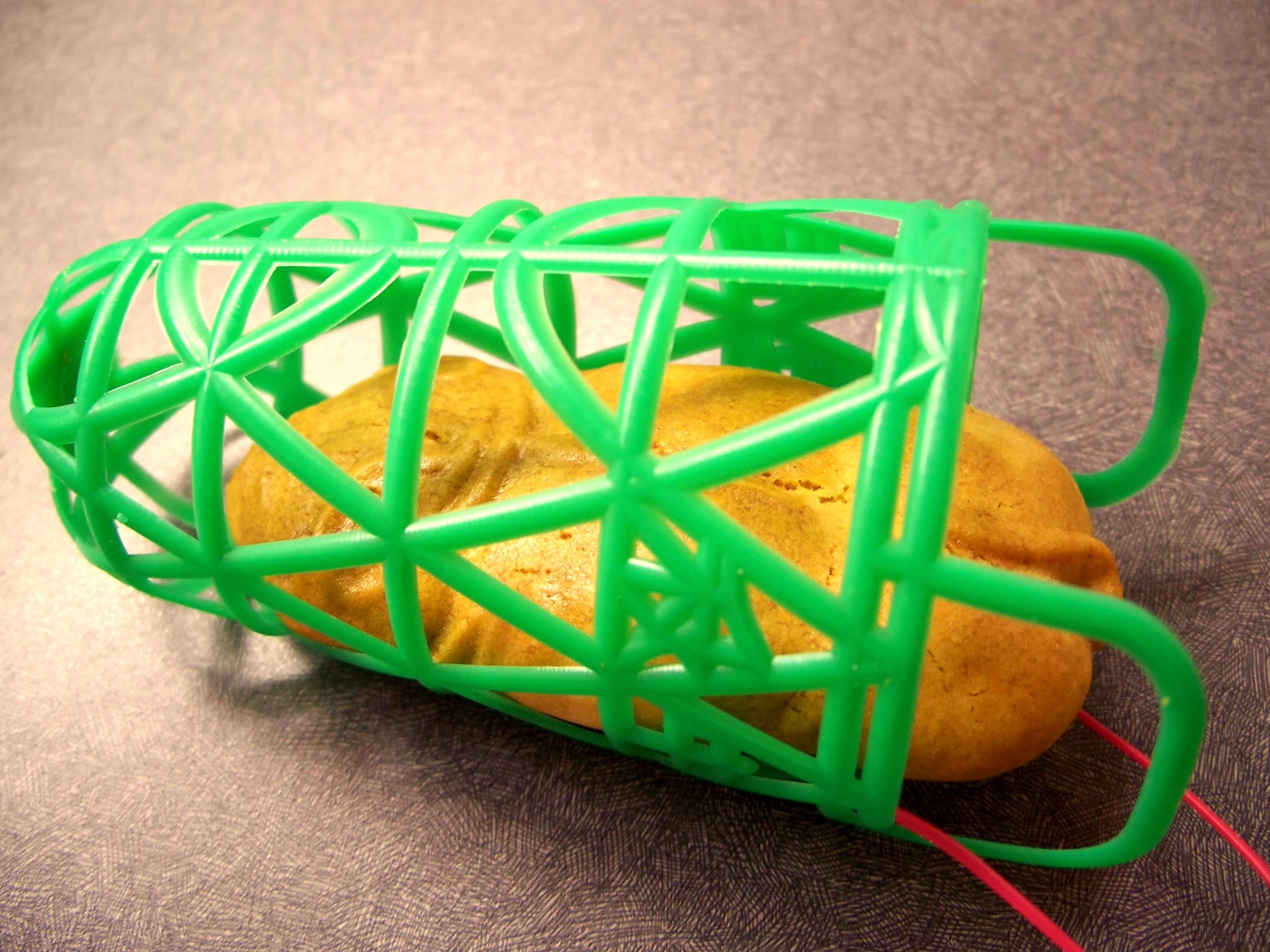
Some prefer the crust to the ubersugary filling. I’m one of them. So they make the dough into shapes of little piglets. My officemate and I laughed so hard the other day when we found out that both the Singaporeans and the Vietnamese do that, although in different ways. Vietnamese people have the baby pigs surrounding a mommy pig, herself a big mooncake with all the stuffing and egg yolks inside. The Singaporeans make it easy for kids to take their piggy around:


I always find it hard to eat the piggy. It’s like eating a gummy bear, you know, should you decapitate him first, or attack from below?
Do other Asian countries have piggy mooncake too?