Flavor Boulevard

We Asians like to talk food.
Subscribe

Archive for the ‘Korean’

So Gong Dong Tofu House

October 29, 2010 By: Mai Truong Category: California - The Bay Area, Korean


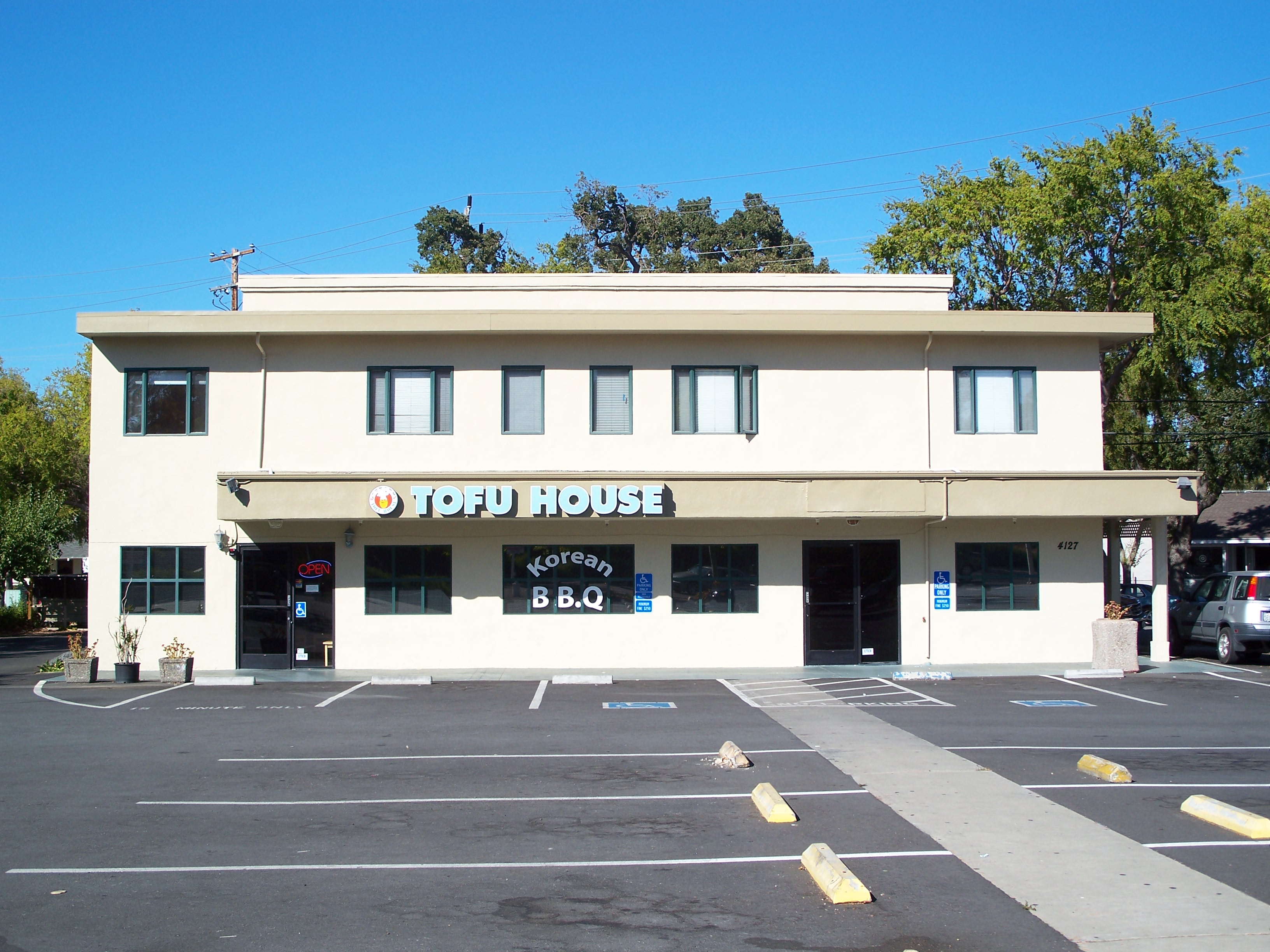
Five minutes drive from Stanford. More commonly referred to as Tofu House…


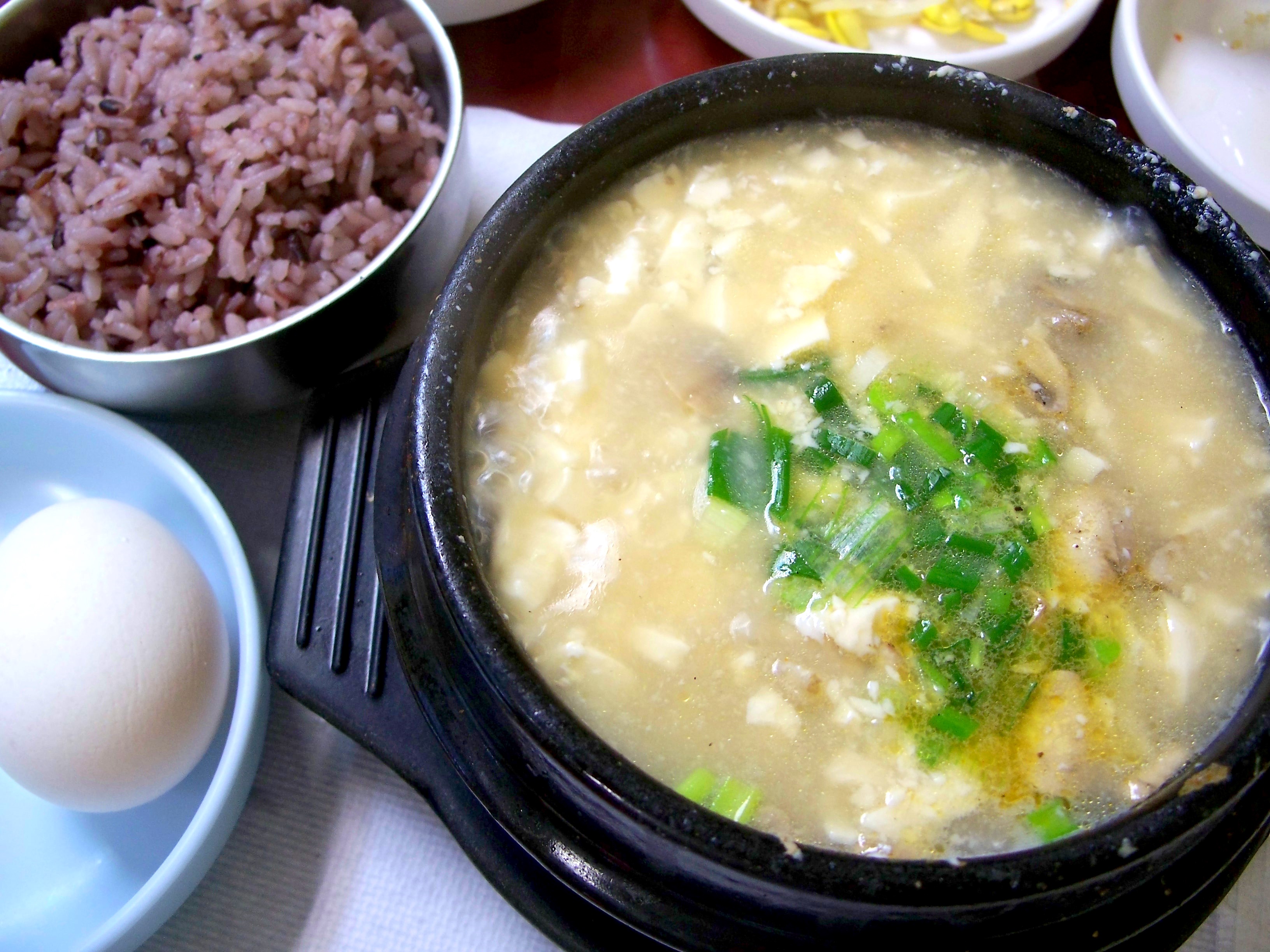
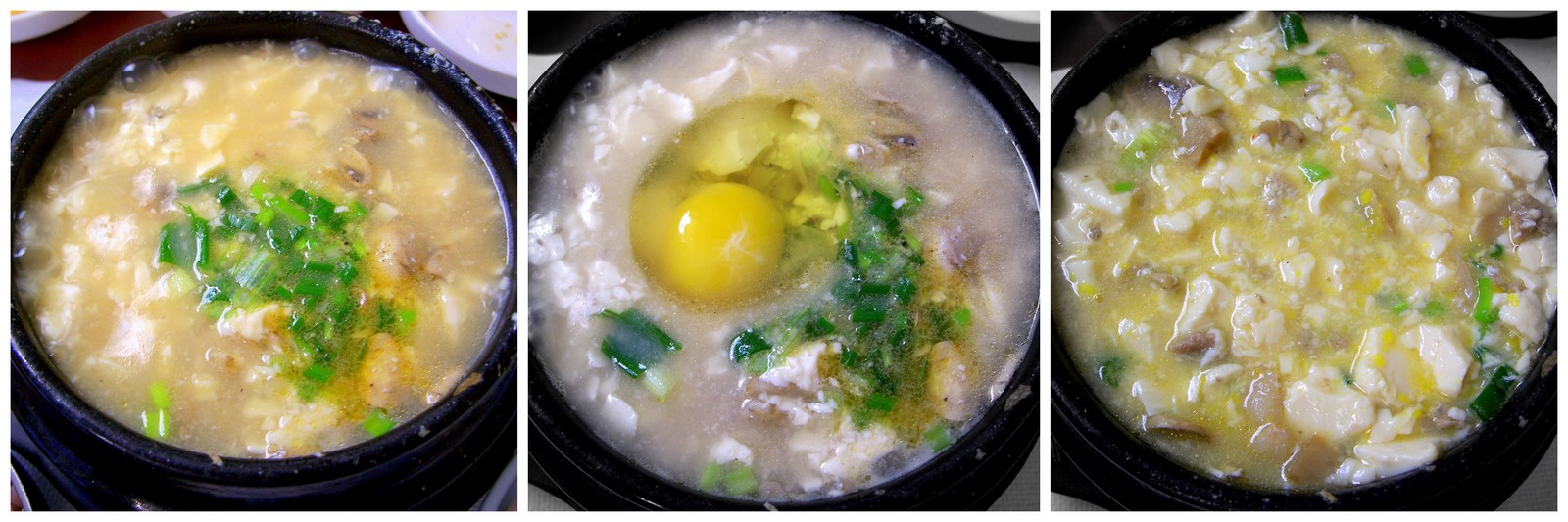
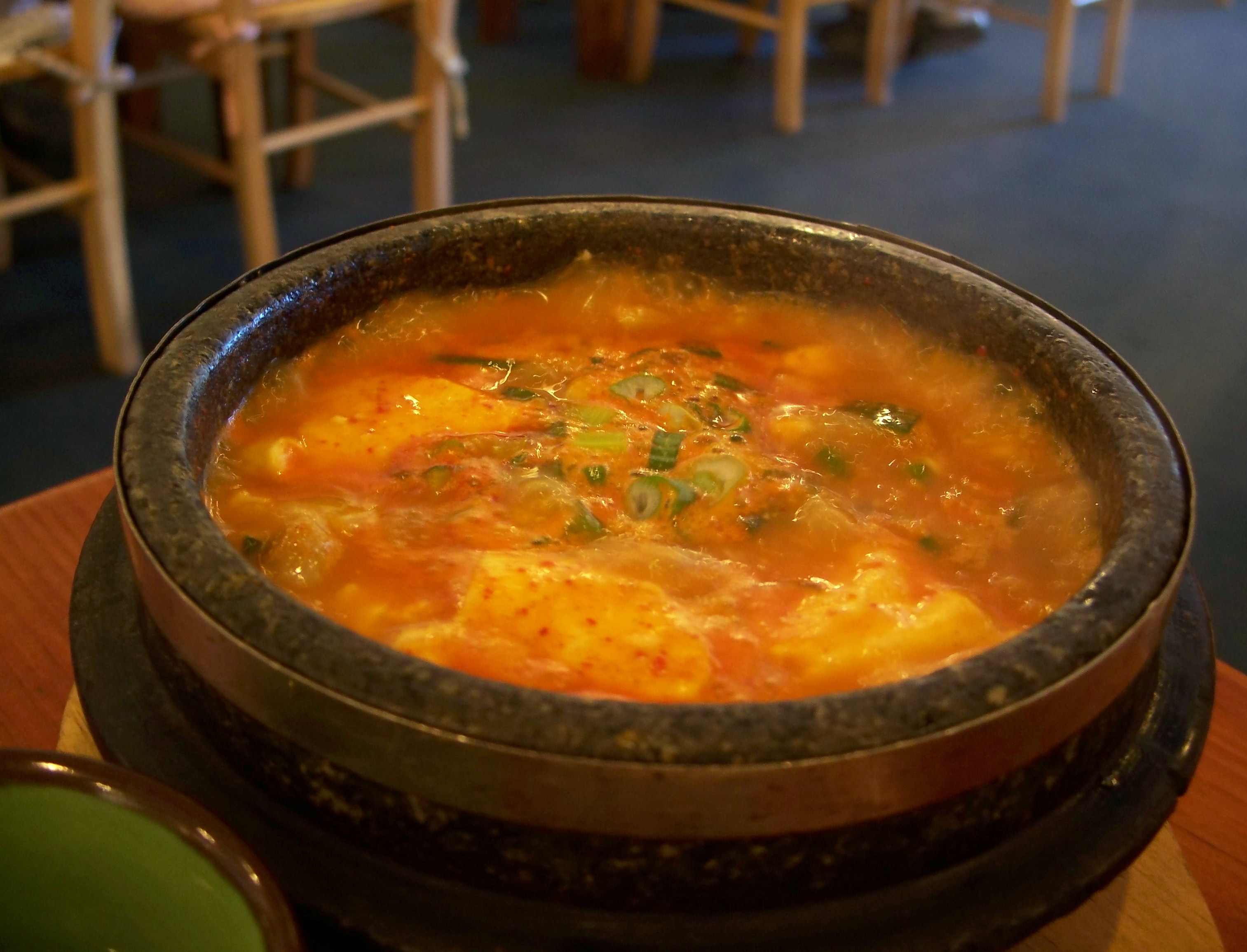
Because of the variety of soondubu (순두부 soft tofu soup) here. Served with a raw egg and brown (purple) rice with red beans.


You crack that egg into the boiling stone bowl, and stir it up. Pieces of soft tofu break. Steam. Taste. Slurp. And perspire a little. This soup works wonder when you’re feeling sick.


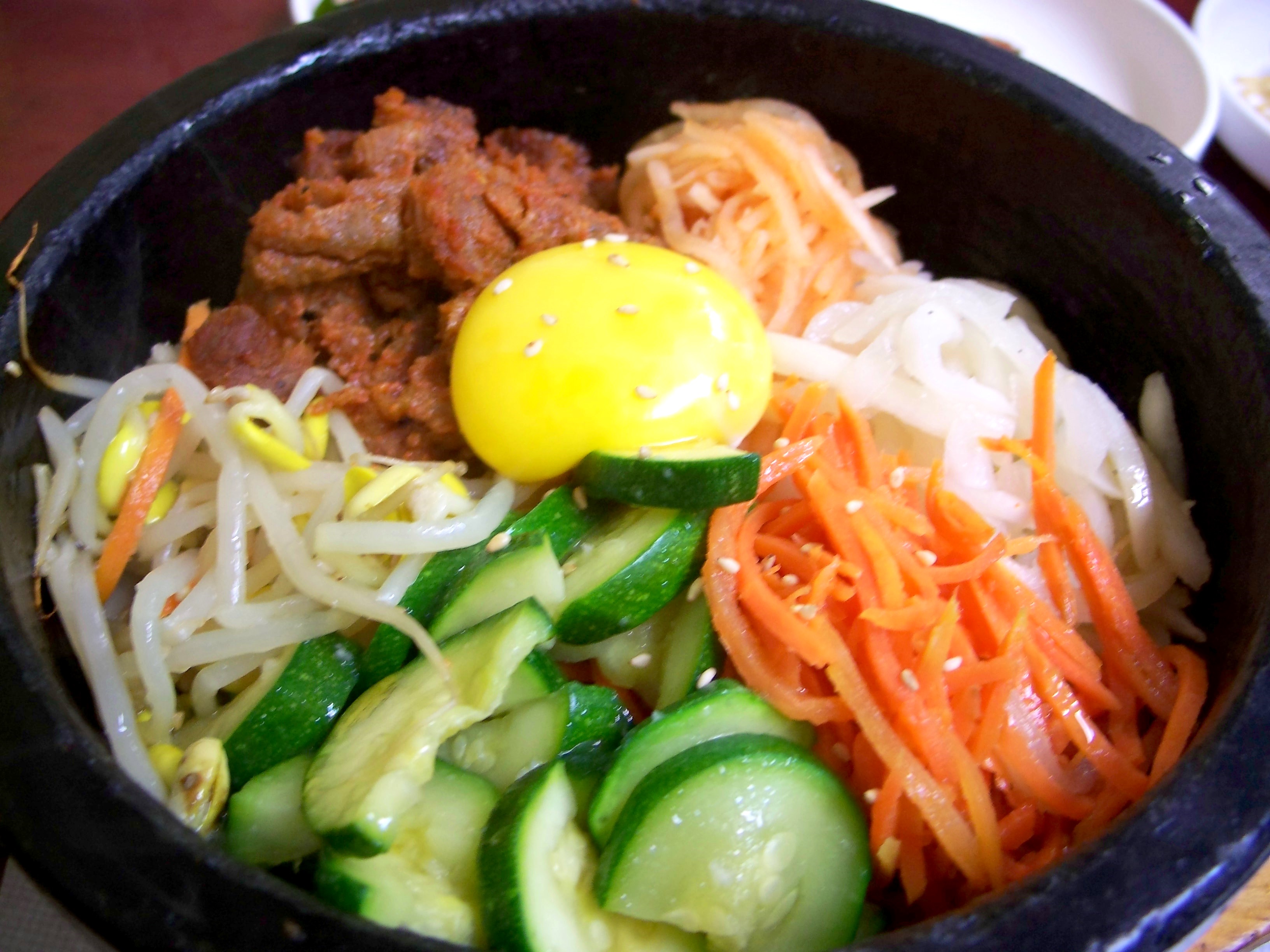
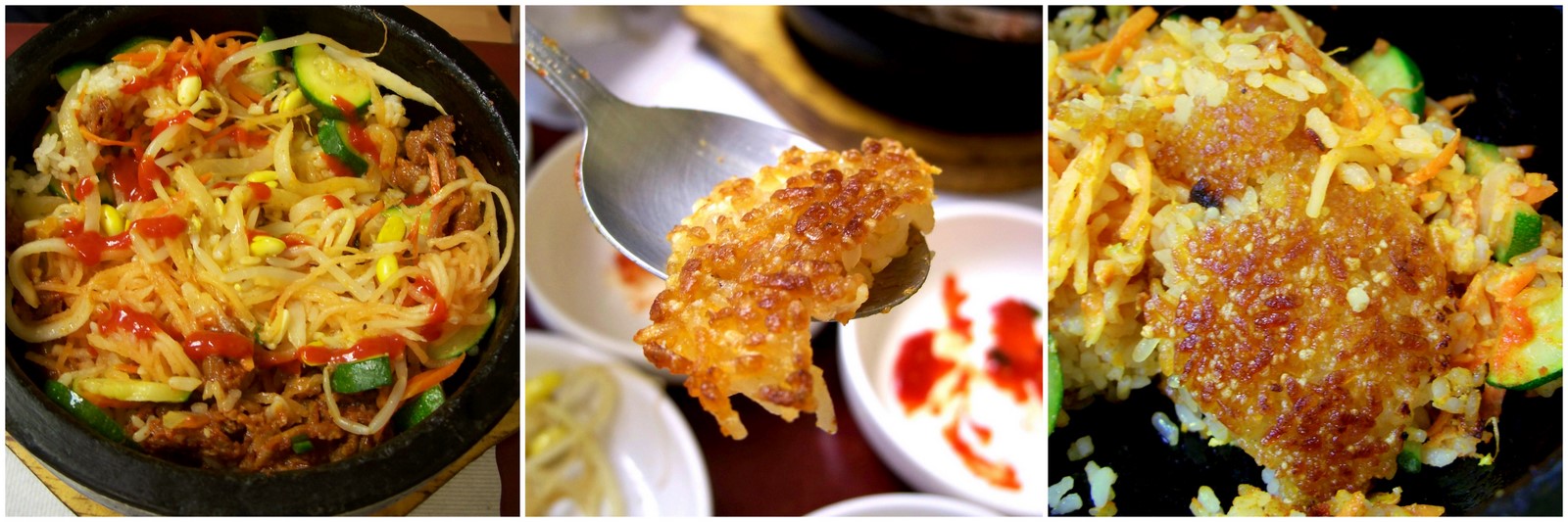
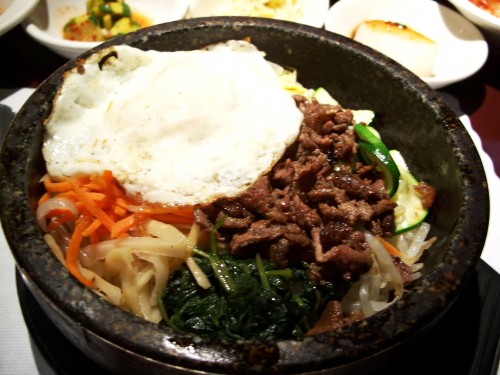
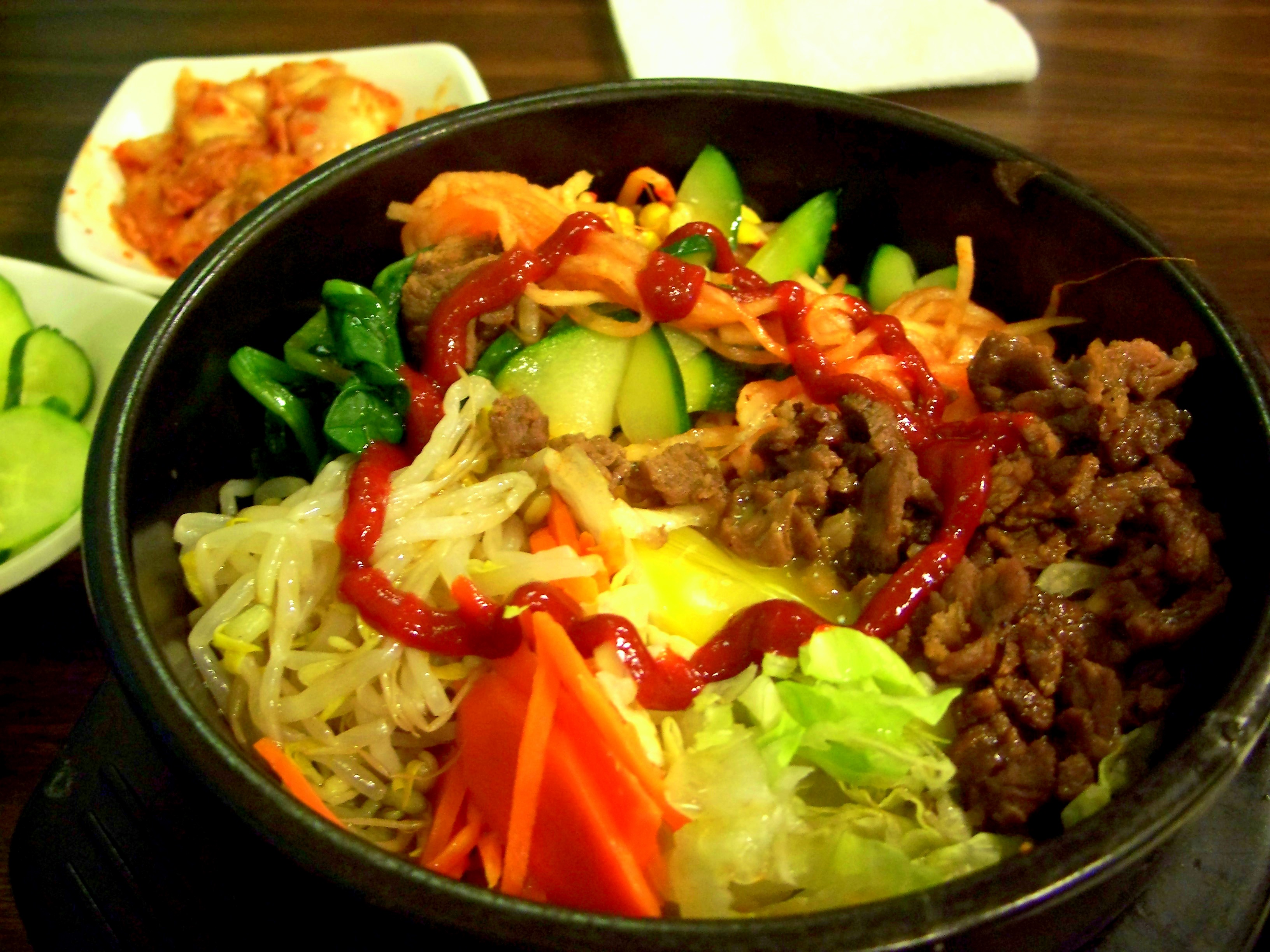
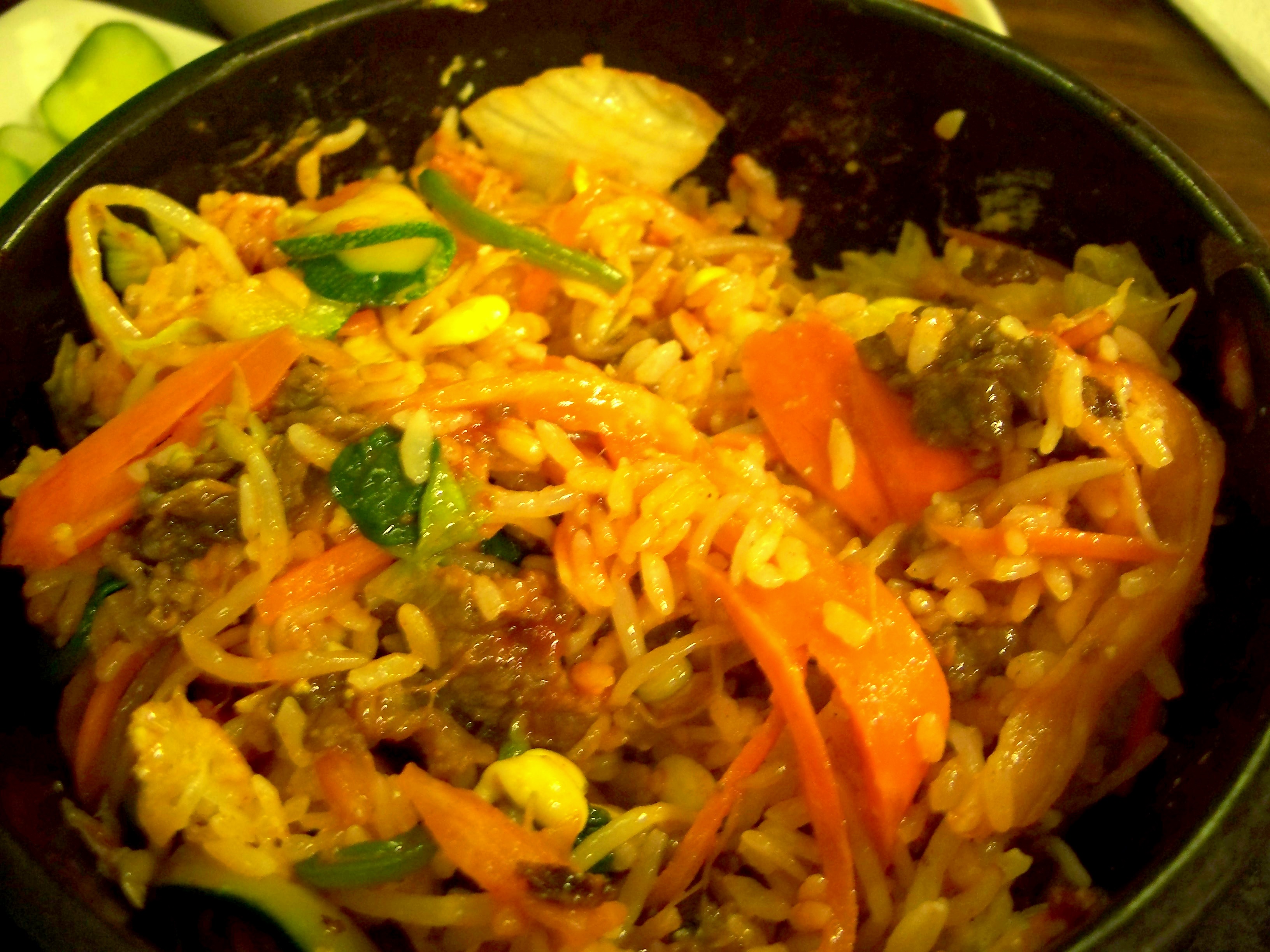
For textural contrast, this place has the crustiest bibimbap. And I measure bibimbap’s goodness by its crunchy rice crust at the bottom. Came off easily too. 😀


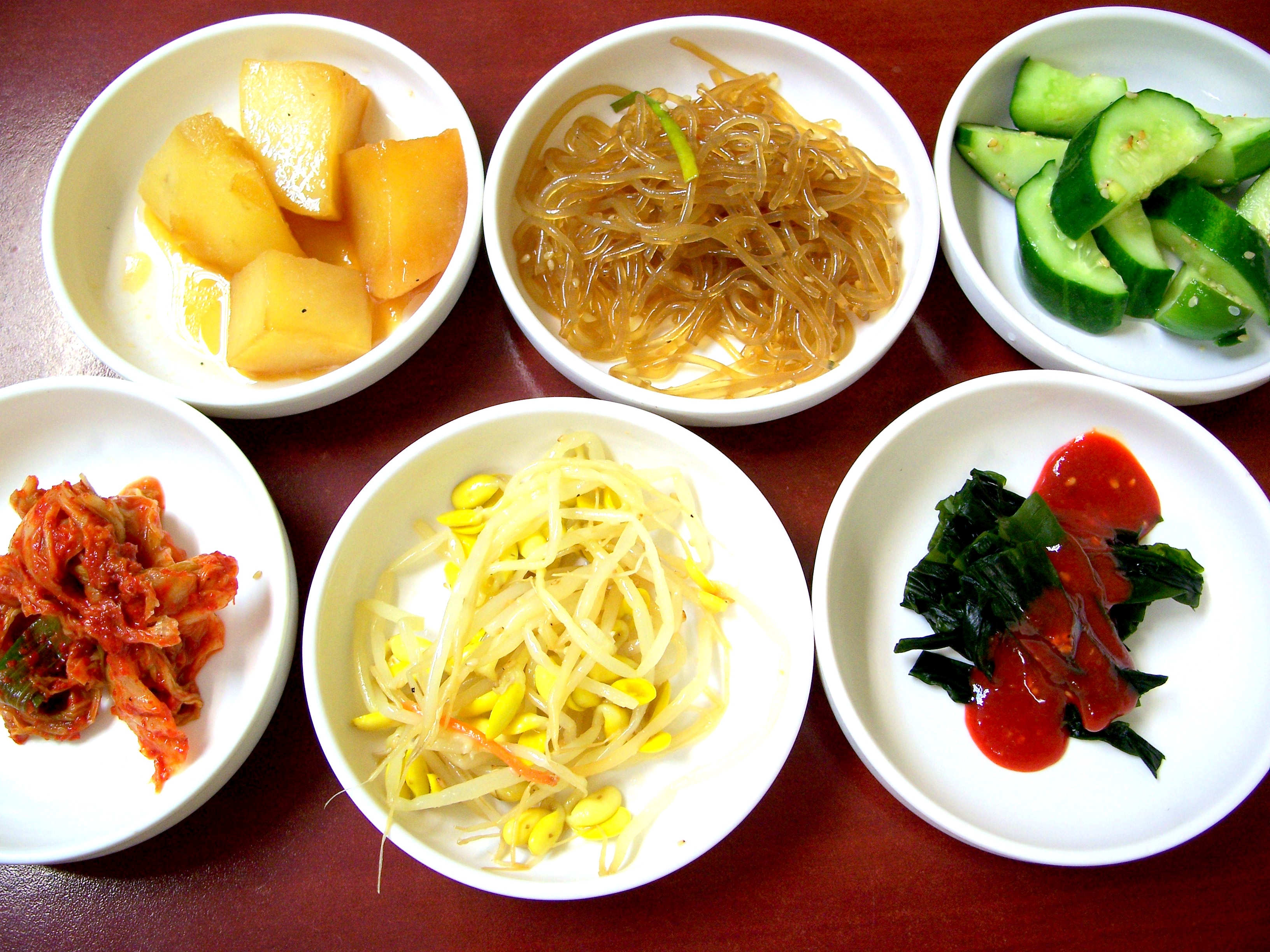
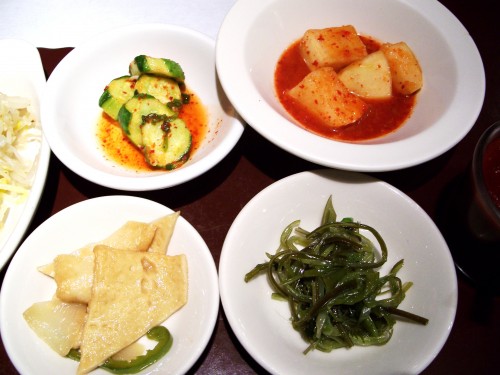
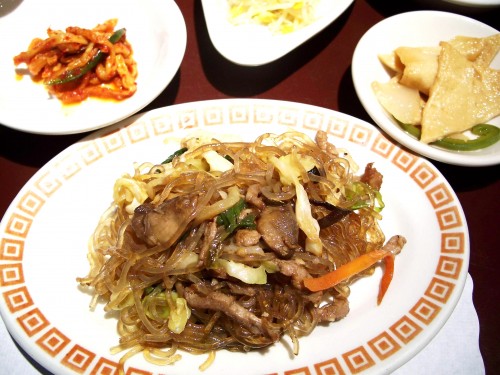
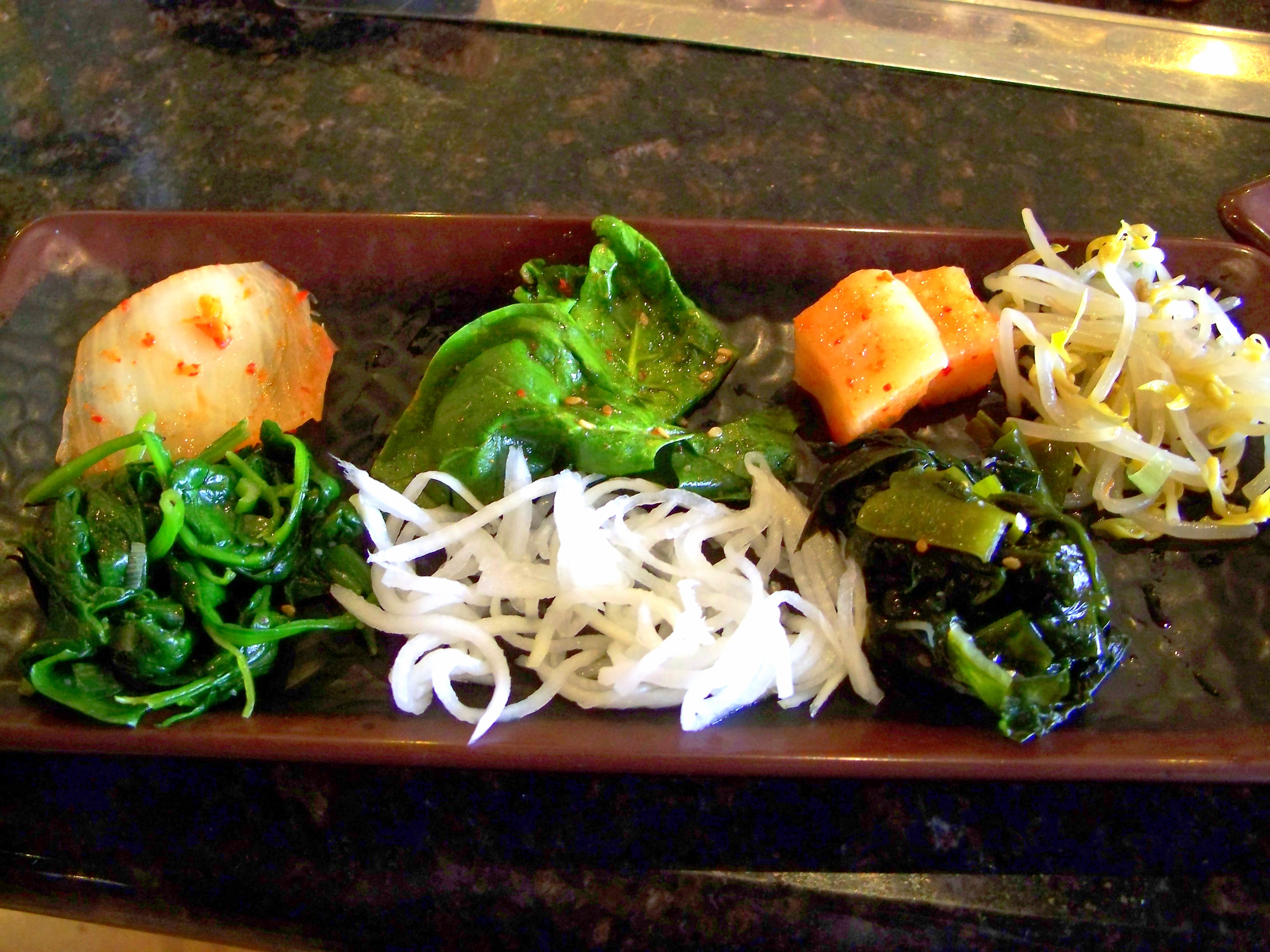
There are only six side dishes, nothing out of the ordinaries. All good. The potato is the star.


And how I wish the Korean restaurants on Telegraph could have the same parking lot as this place.

Address: So Gong Dong Tofu House
4127 El Camino Real
Palo Alto, CA 94306
(650) 424-8805

Lunch for two: $25.00

Down the Aisles 6: Asian markets’ hits and misses

October 08, 2010 By: Mai Truong Category: California - The Bay Area, Chinese, Korean, savory snacks, sweet snacks and desserts


I’ve been lying low on the blogging front for the past couple of weeks, because the school front is under serious bombarding. Having classes is one thing; having to teach, applying for stuff, looking to join a research group on top of classes is a whole different level of war. Not that I lose my appetite, but when twenty deadlines are approaching like a flock of Luftwaffe‘s Bf 109, quick filling meals trump elaborate dishes. Loco moco is a winner, but even I know that I can rely solely on gravy, egg, and hamburger patty for so long before a heart attack. Hence the deli section in supermarkets gain appeals.

But if you’re gonna buy cheap store-made food, you gotta do it in style. Apple pies, rotisserie chicken, turkey sandwiches, or those mushy bean-and-pasta salads are so 2009 (I used to buy a rotisserie chicken every week last year :-P). This year we hit up the delis in Koreana Plaza and 99 Ranch Market.


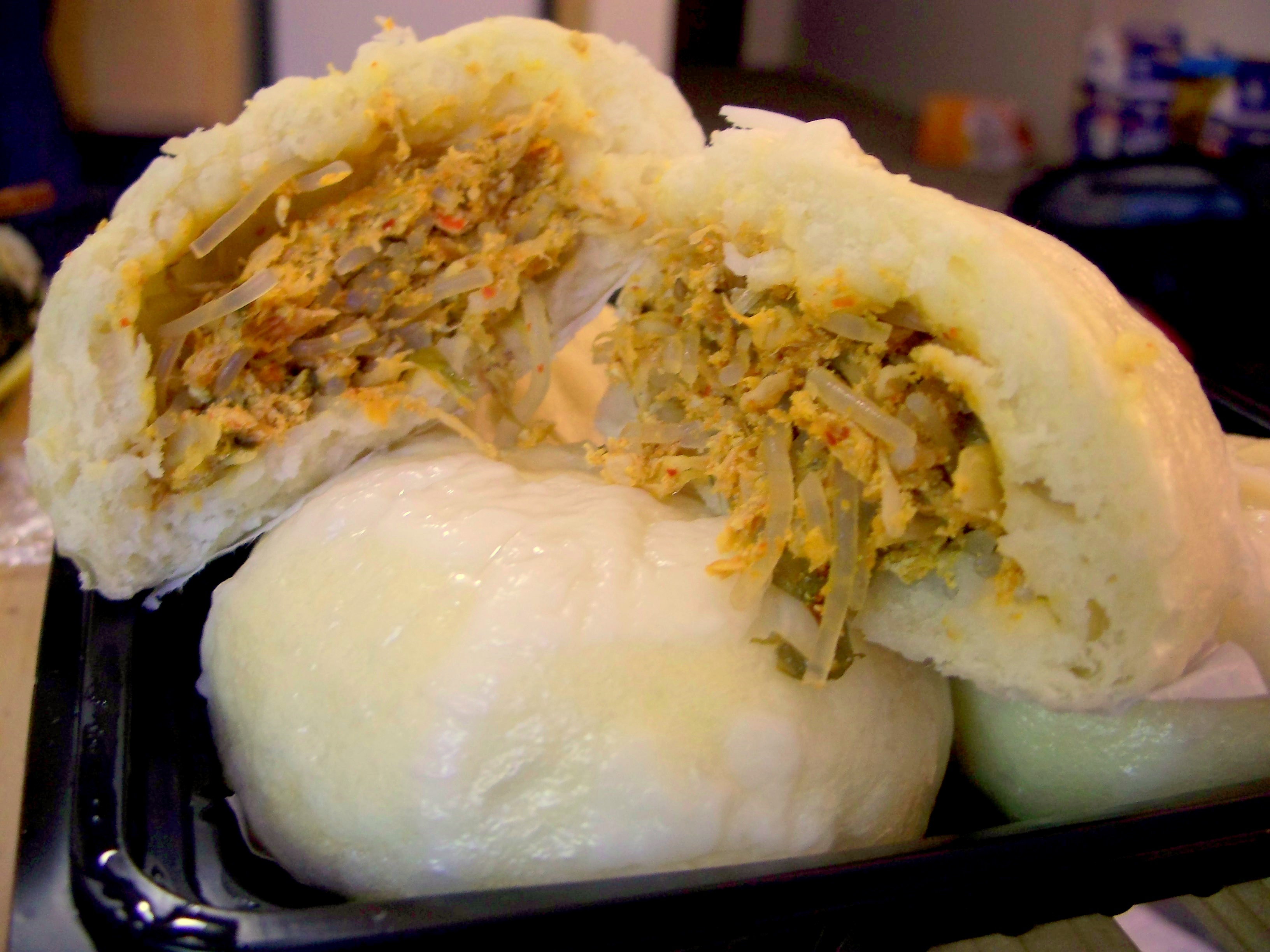
Entree 1 – kimchi big dumpling ($3.99 for 4) from Koreana. Each is as big as my fist, the dough is springy and leathery with a sour hint, the innard is not kimchi but a mixture of glass noodle with some egg/shrimp/tofu-like paste. Overall it’s rather bland.


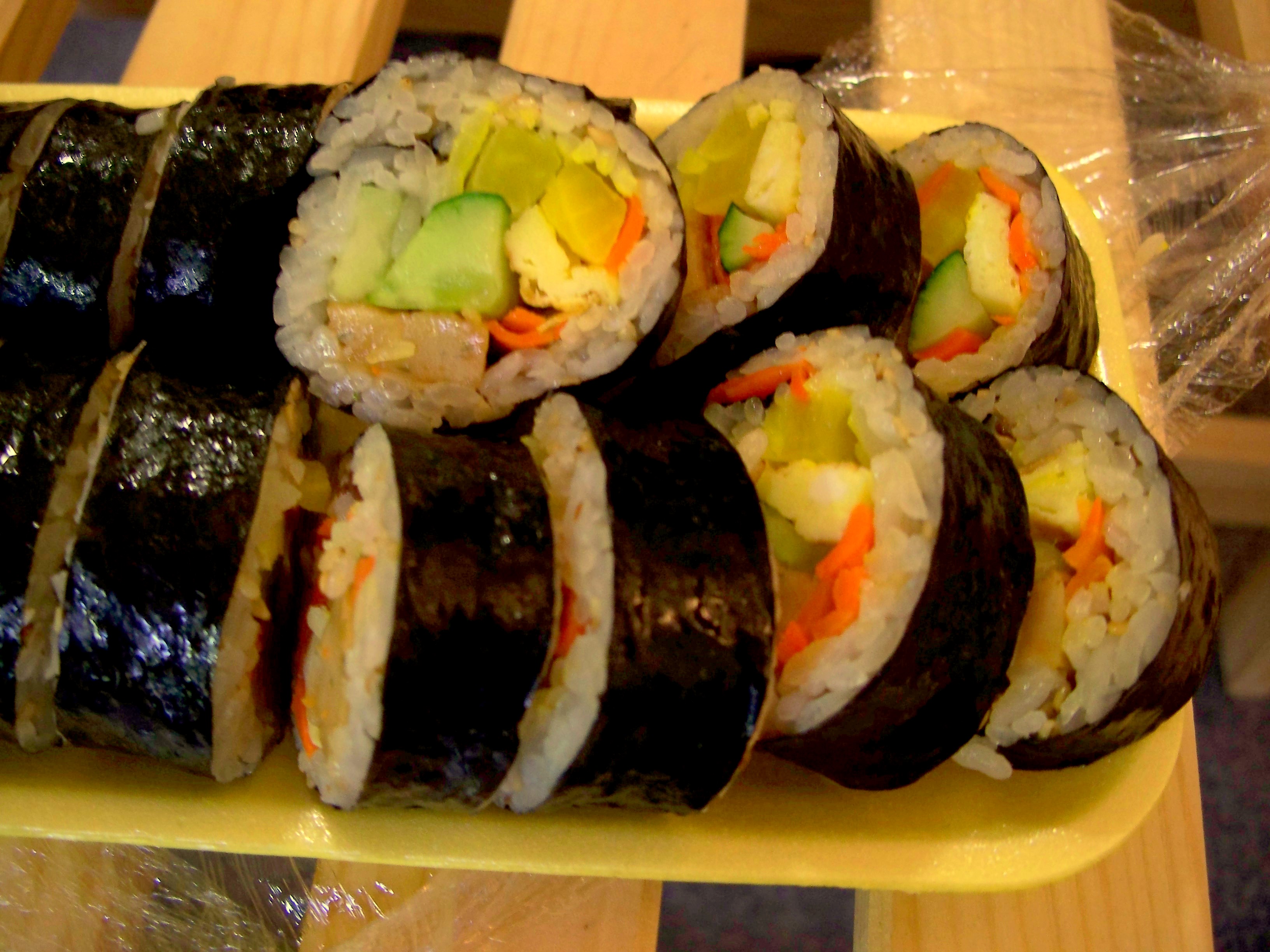
Entree 2 – kimbab ($3.99 for 2 rolls – 20 pieces) from Koreana. The kim (seaweed) always smells like the sea, but it adds an unparalleled savoriness to rice. Love it. 🙂


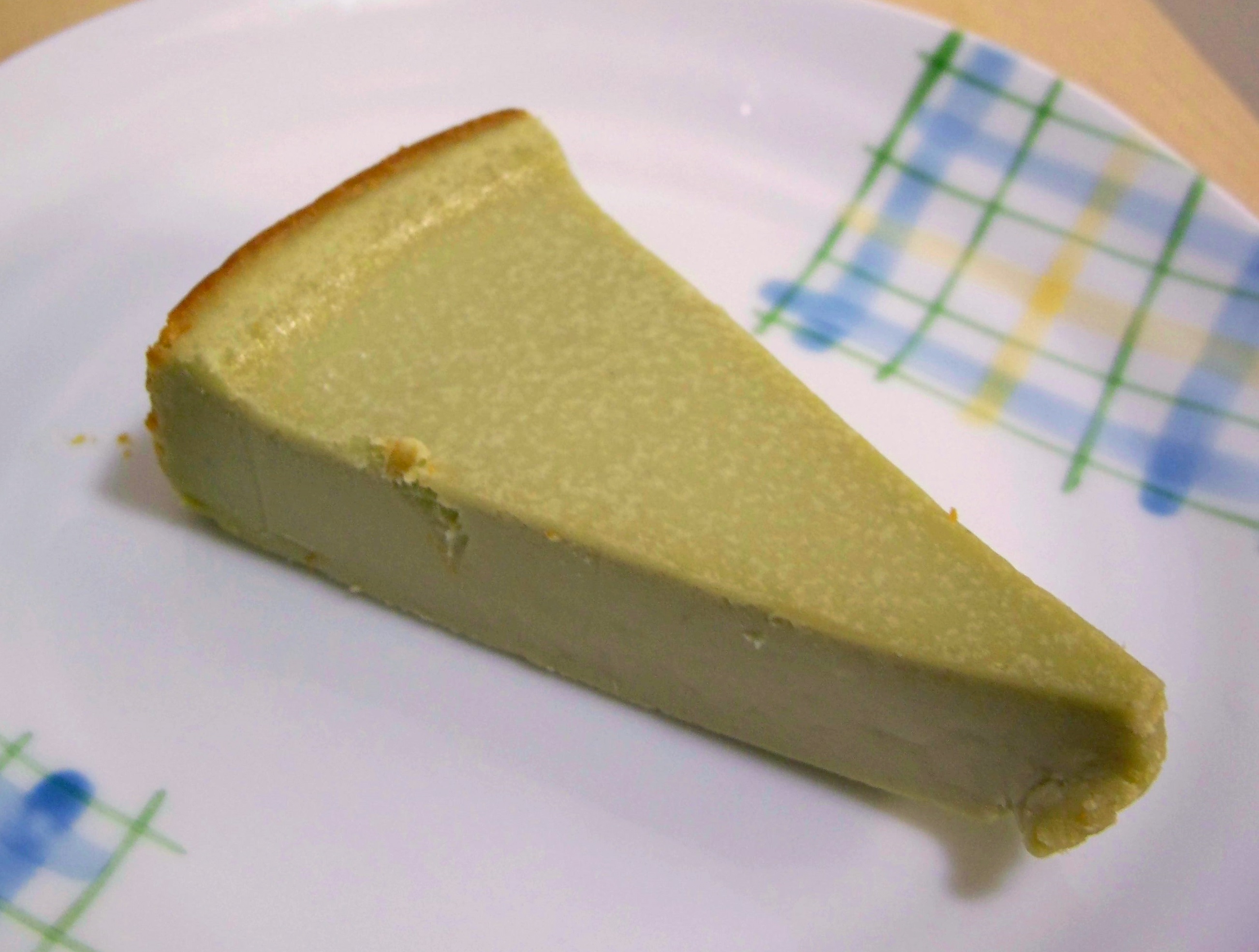
Dessert 1 – green tea cheesecake ($1.50/slice) from 99RM. The slice is only three fingers at its widest but solid as a butter stick. It’s really just like eating a wedge of gouda with some distant herbal call.


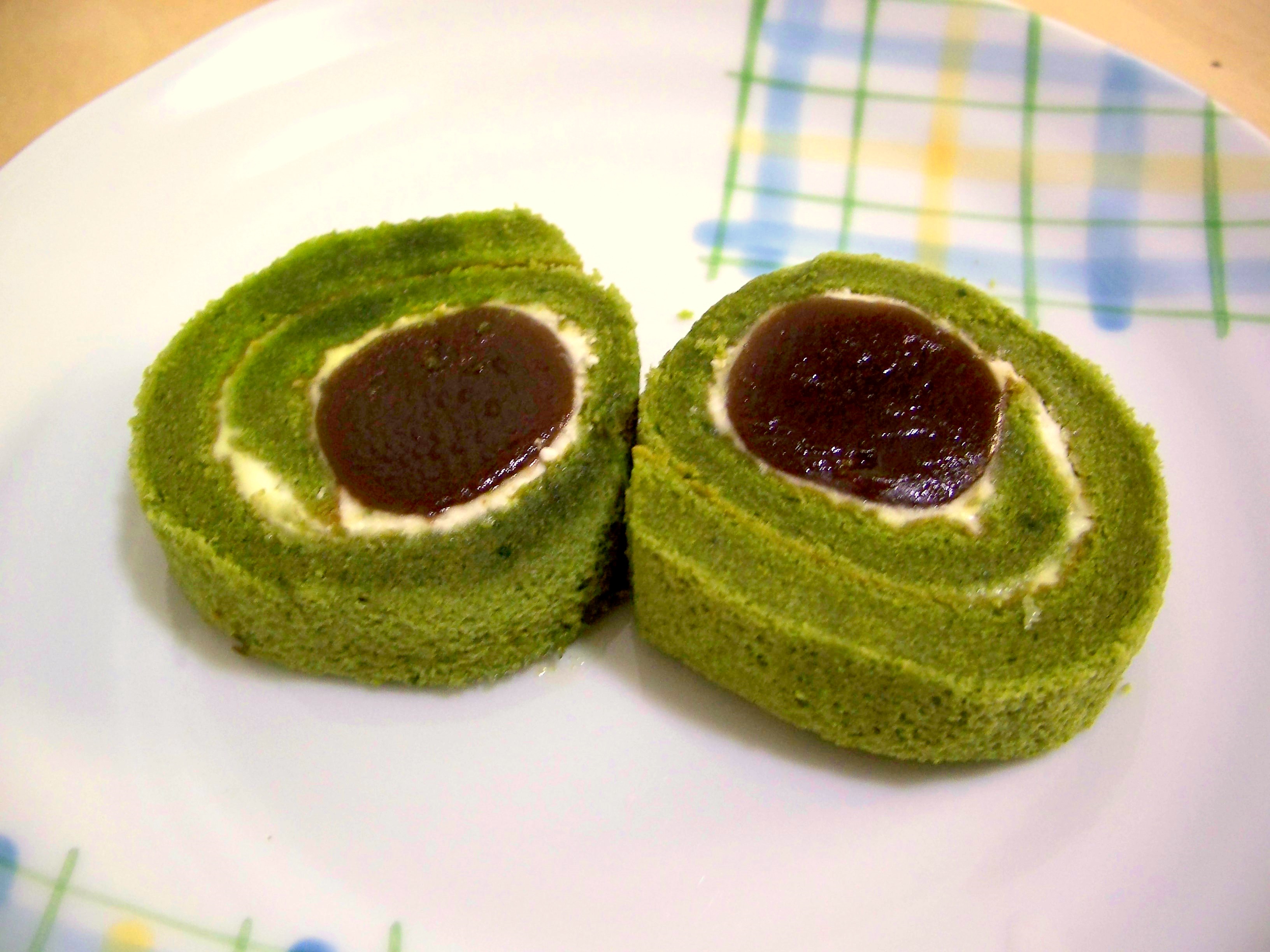
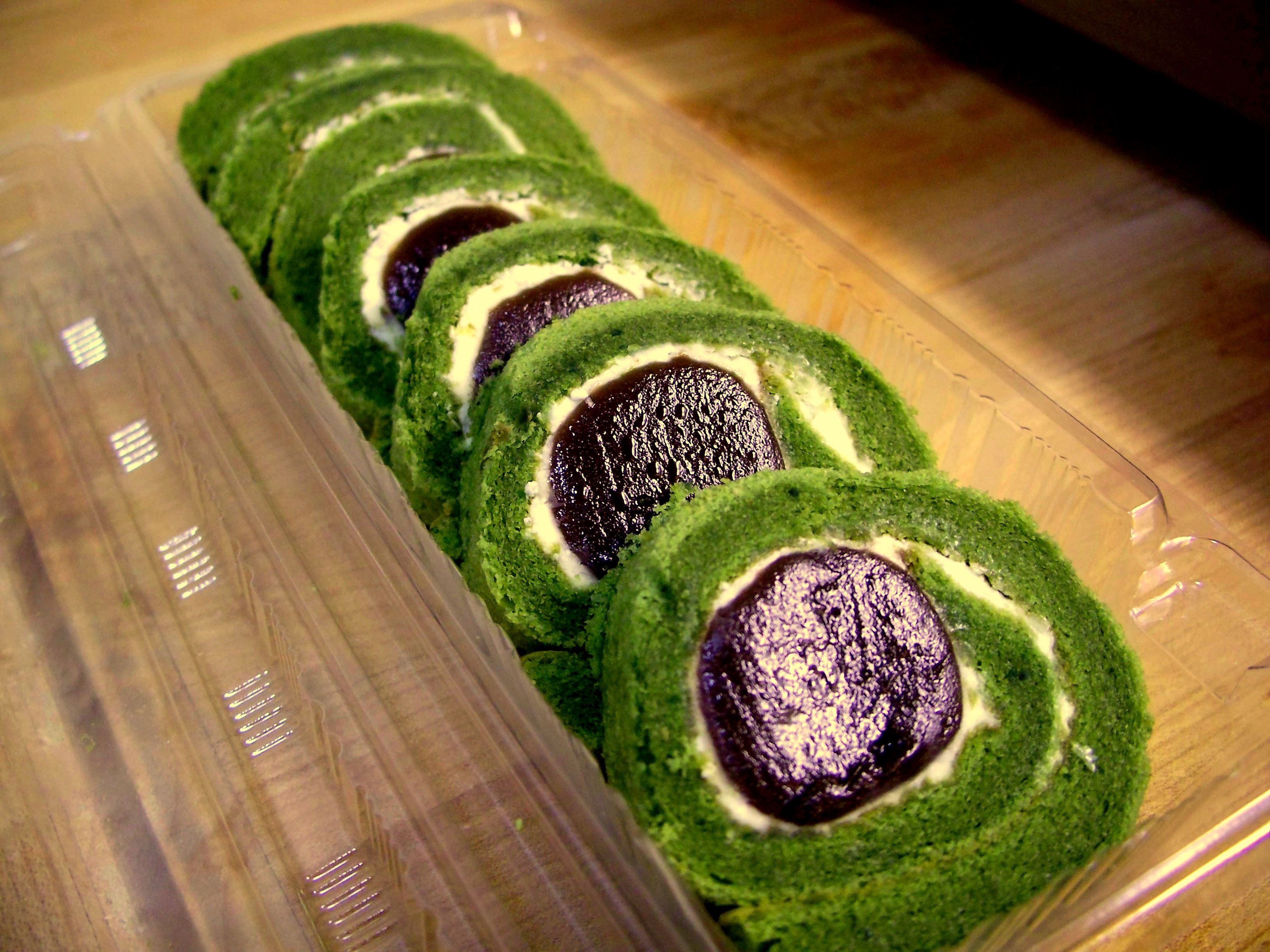
Dessert 2 – green tea red bean roll from 99RM. Sweet and chewy red bean paste, grassy plain and pillowy green tea dough, with a hair thin layer of milky cream. Petite and adorable. 🙂

Side comment, I was cheap so I was contented with drooling at the sight of the 99RM cakes. Don’t know about tastes, but the 99 Ranch’s bakery got some cake decorating skillz that make all American supermarket bakeries look like child plays.

Koreana Plaza (Oakland)
2370 Telegraph Ave (between 23rd St & 24th St)
Oakland, CA 94612
(510) 986-1234

99 Ranch Market (Richmond)
3288 Pierce St # 99
Richmond, CA 94804
(510) 558-2120

Previously on Down the Aisles: It’s It

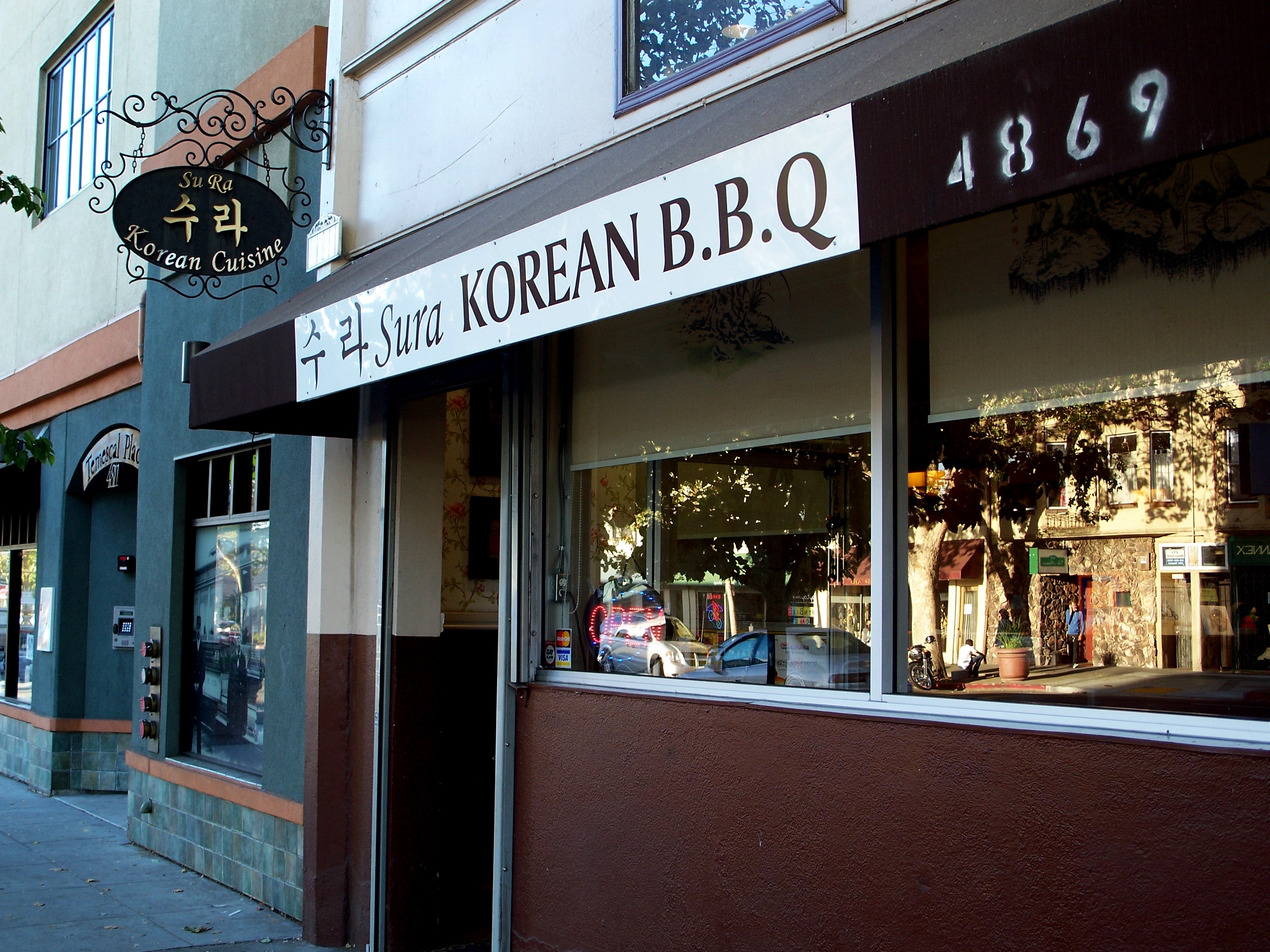
Sura in Oakland – A banchan chapter

September 10, 2010 By: Mai Truong Category: California - The Bay Area, Comfort food, Korean


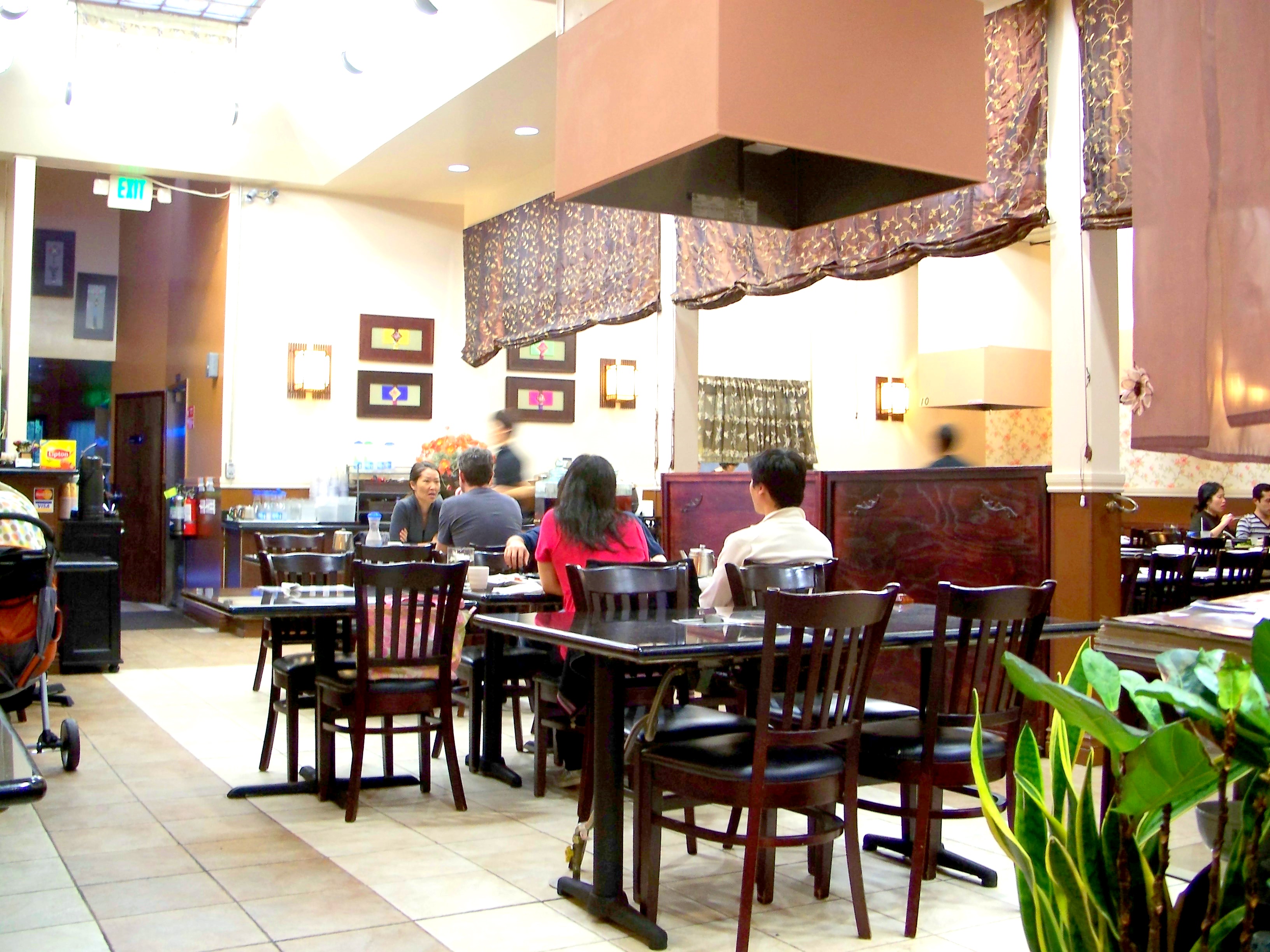
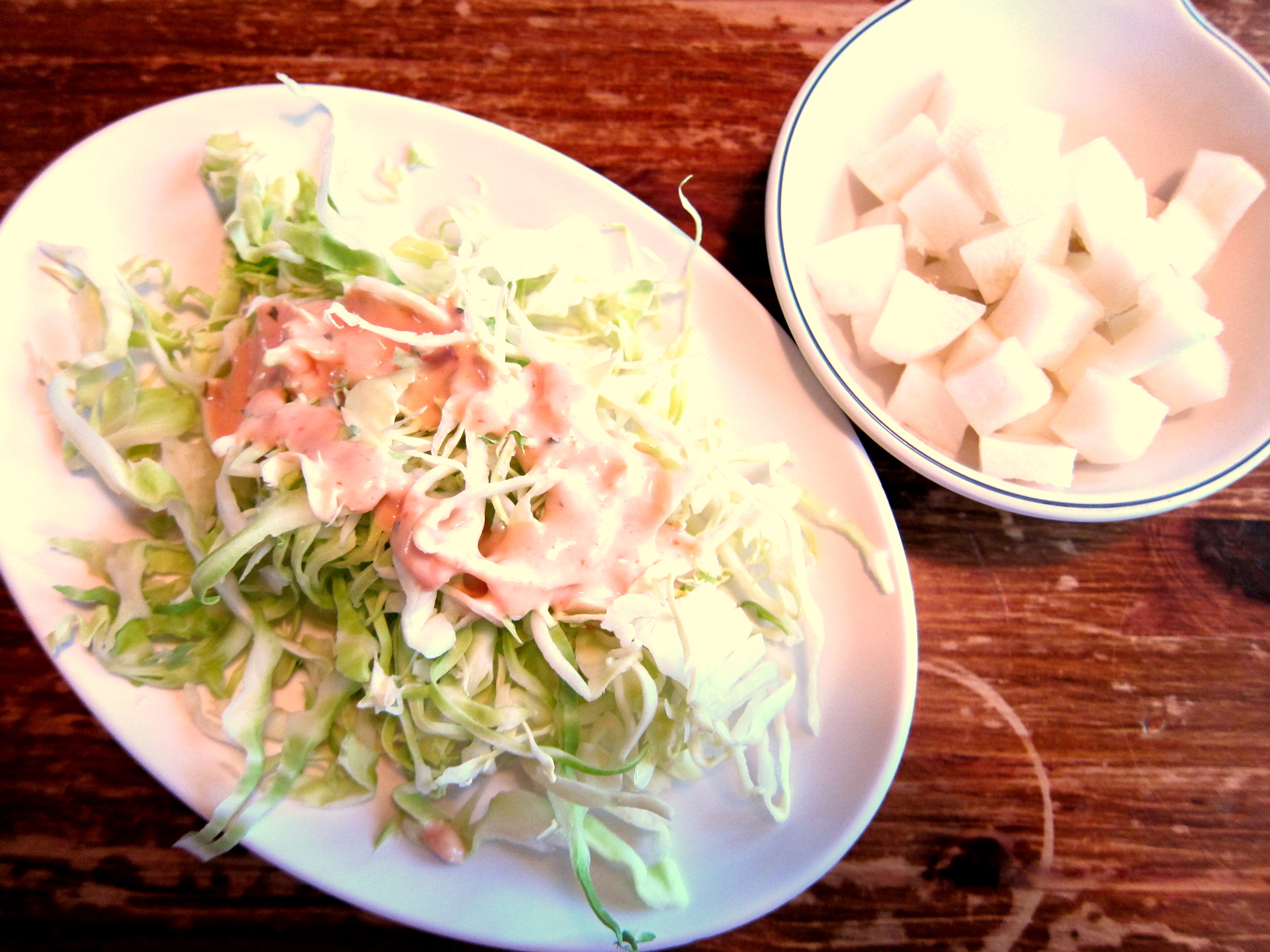
The one thing you can be certain about when you go to Korean restaurants, regardless of their size and price and menu, is that you will always get full. I’ve never been to a Korean restaurant where I think “hmm, maybe I have room for some more” when I leave. Korean restaurants always give you big portions, and on top of that, there is the banchan (반찬).  When you sit down all starving because of the steaming broth or the grilled meat smoke from nearby tables, the banchan is the first thing to nibble on and ebb the hunger. You can either get a lot of coleslaw and dongchimi (동치미, pickled white radish in this case), or an array of little bitty plates that look too colorfully appetizing to disturb. Naturally, the size of your bill corresponds to the variety you can sample. And the biggest sample of banchan I’ve had so far is at Sura.
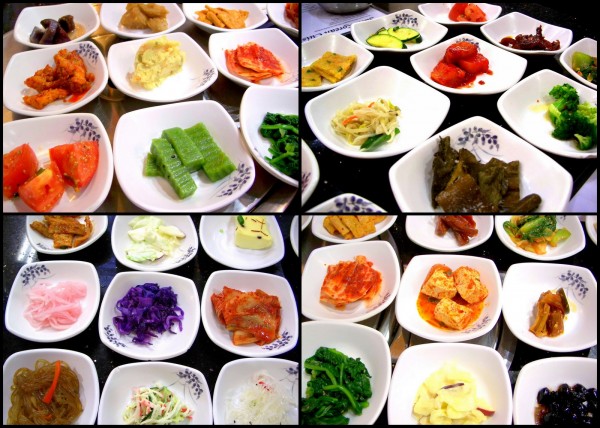

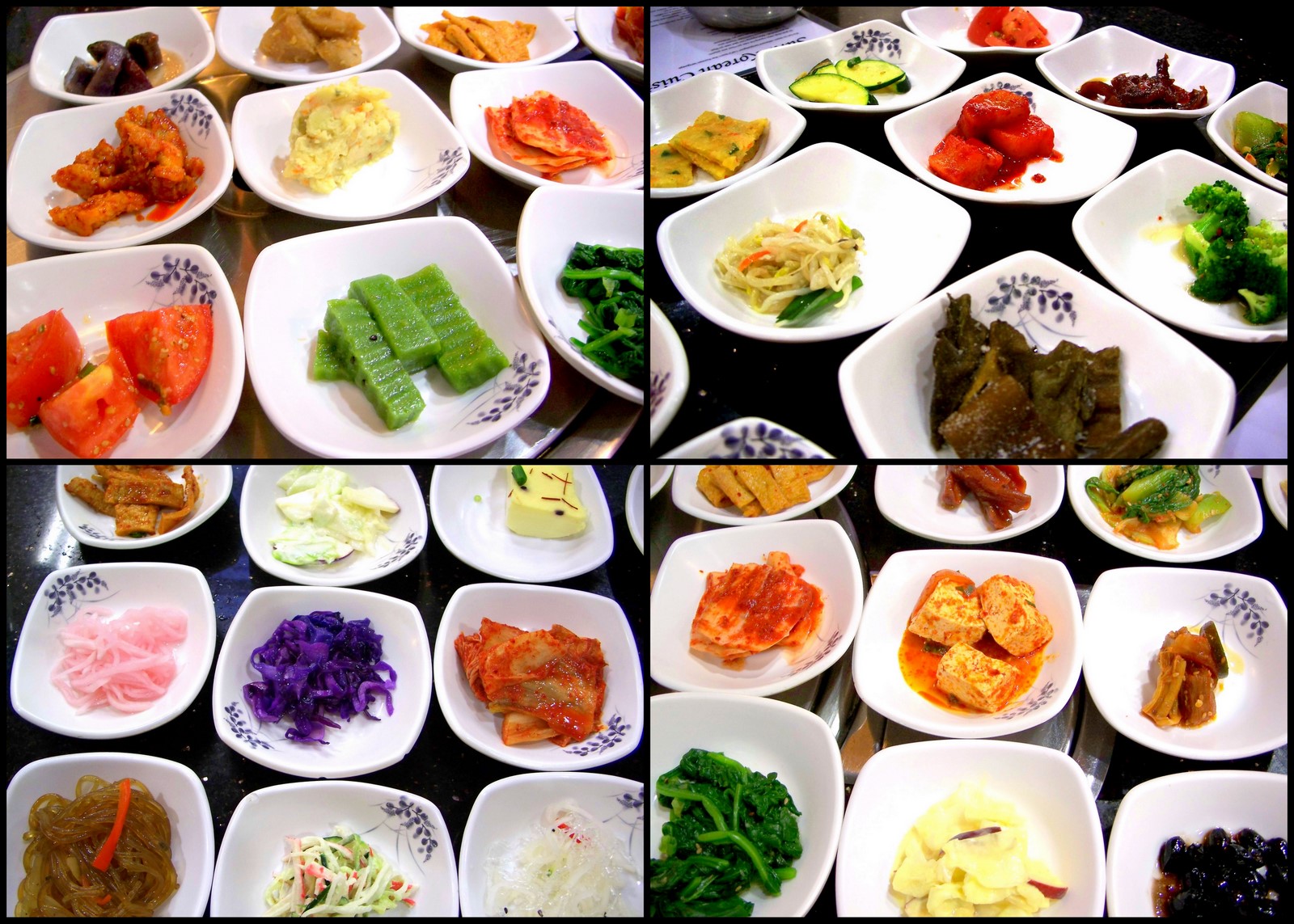
Here’s what to prepare your tummy for when you’re at Sura: 1 starter, 18 side dishes,  whatever you actually order (which comes with either brown rice or white rice), 1 dessert. If you order gogi gui (고기구 이barbecue), then you also get a heap of lettuce to wrap. If that’s not enough, you can ask for more side dishes. So let us begin.
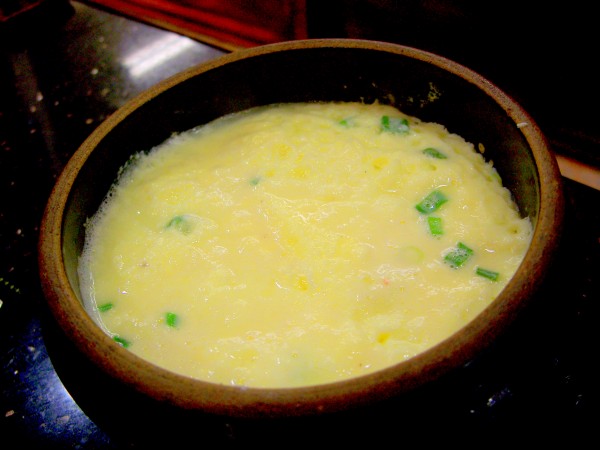

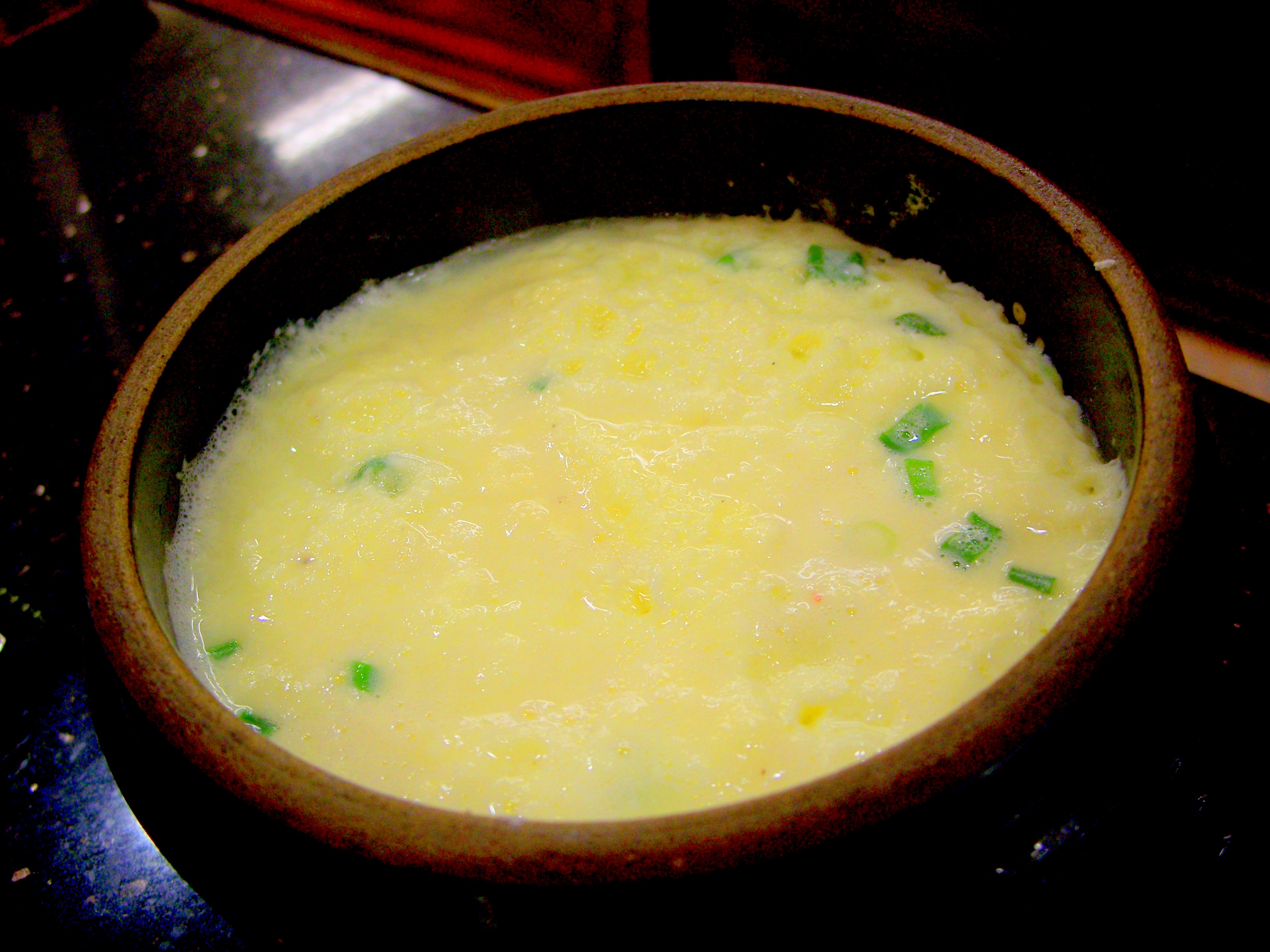
Starter: gaeran jim (계란찜 steamed egg) in a dolsot (돌솥), still bubbly when brought out. It’s really mild, bland even, with dots of green onions and an airy texture.
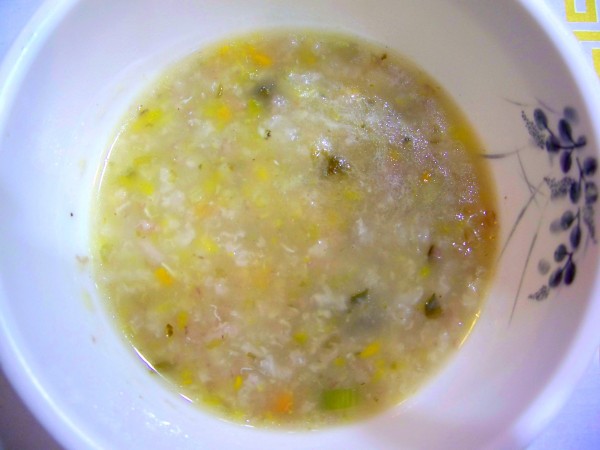

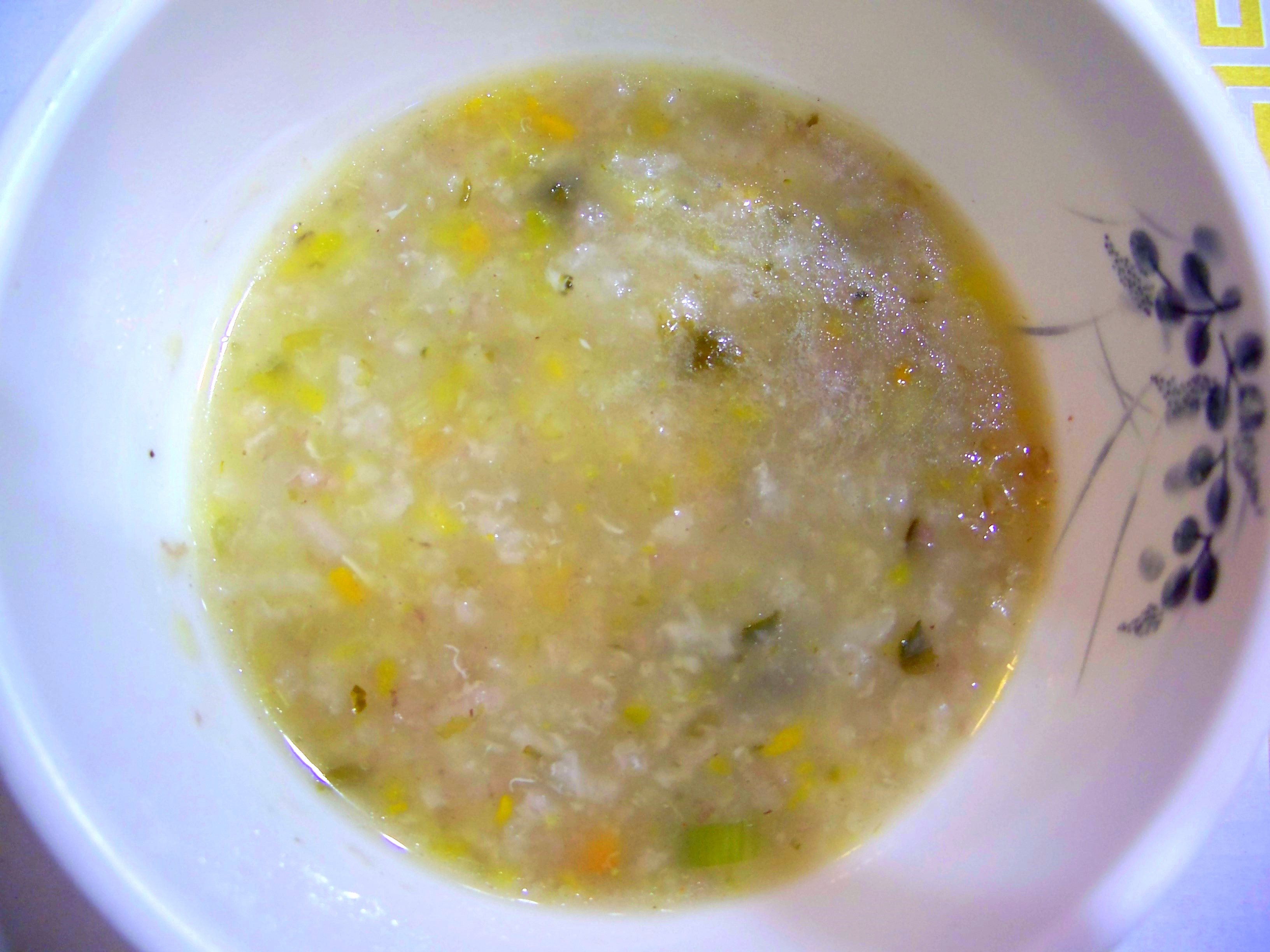
Starter: a small ladle of thin juk (죽 rice porridge) with vegetable bits. Also very mild.
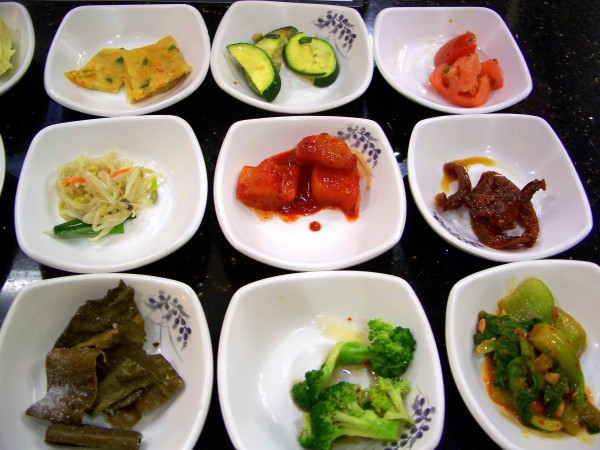

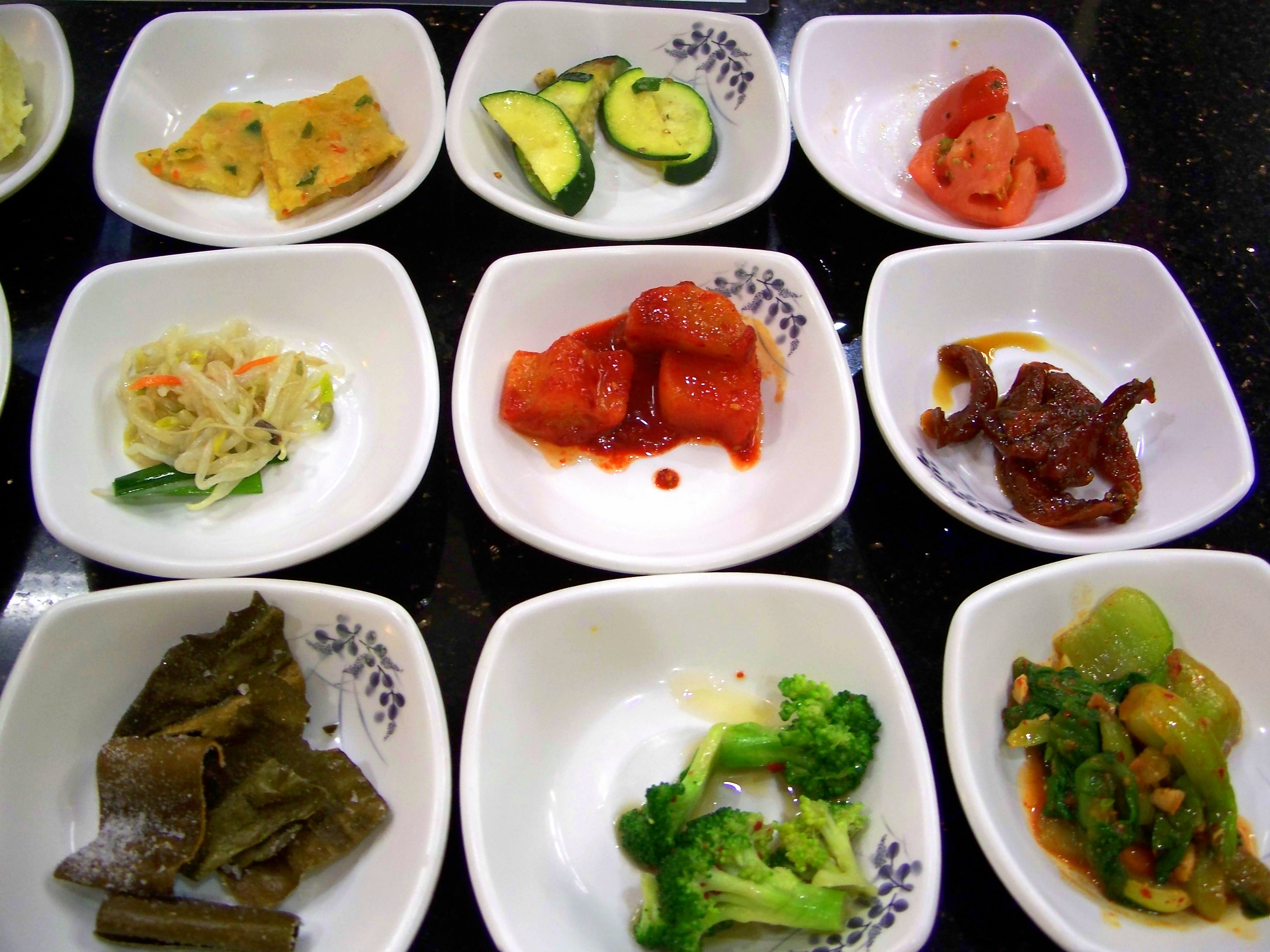
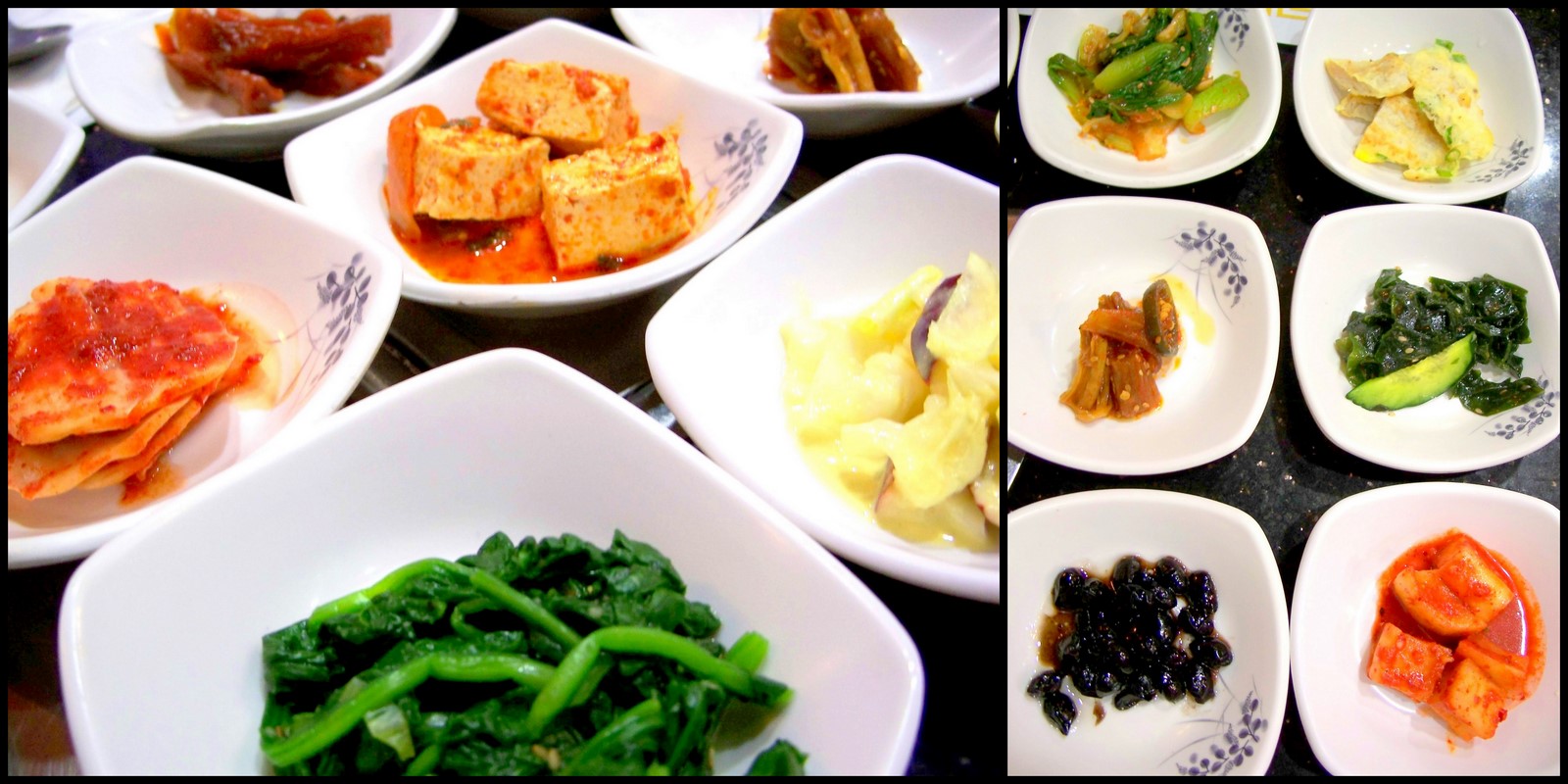
And here comes the banchan. There’s the usual stuff: tomato, broccoli, bok choy kimchi, oisobakki (오이소빅이 cucumber kimchi), ggakdugi (깍두기 radish kimchi), kongnamul (콩나물 boiled and seasoned soybean sprouts), pajeon (바전green onion pancake)…
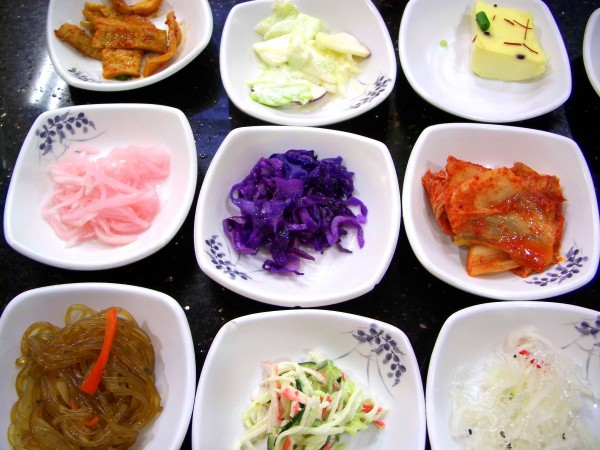

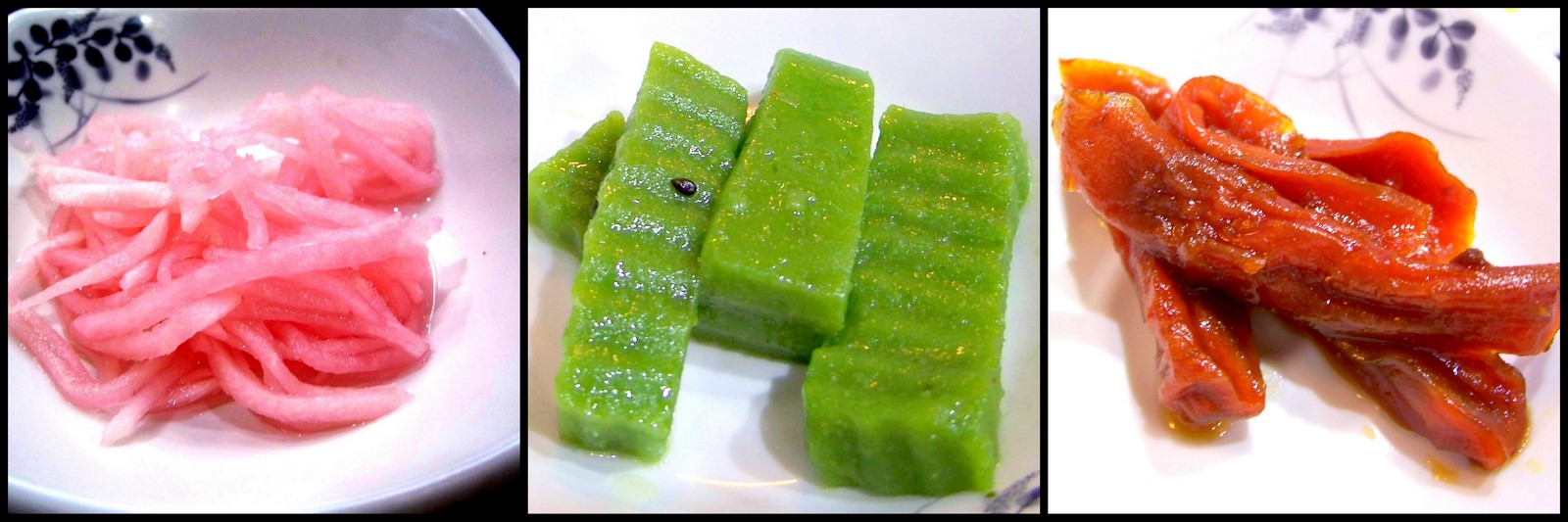
odaeng (오뎅 stir fried sweet fish cake), japchae (삽채 stir fried cellophane noodles), baechu kimchi (napa cabbage), sliced kohlrabi (the pink thing) and cabbage (the purple thing)…
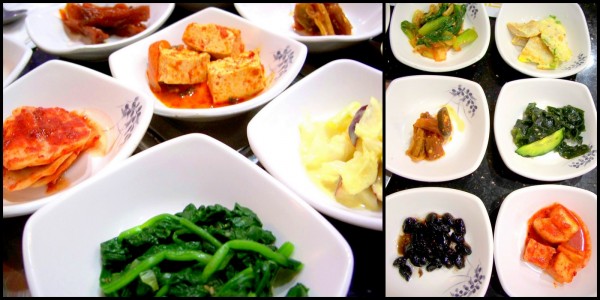

… tofu, cauliflower, spinach, kongjaban (콩자반 sweet black beans), kaji kimchi (가지 김치 eggplant kimchi), and chwinamul (취나물 a crunchy stir fried leaf vegetable)…
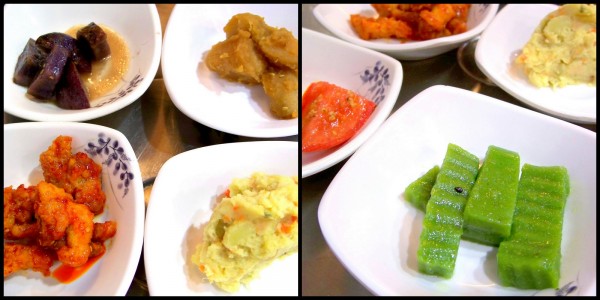

… potato,  sweet potato, fried chicken bits, and muk (묵 jelly). (Mudpie *really* liked the chicken and the potatoes.) Now, most of these side dishes didn’t set off any fireworks for me, the japchae was even a bit dull, but there were some BIG exceptions:
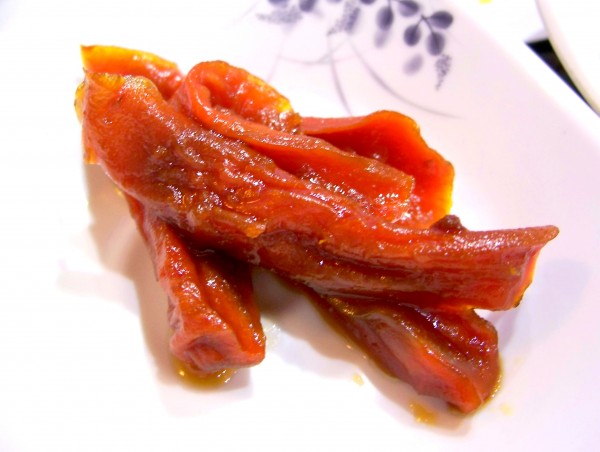

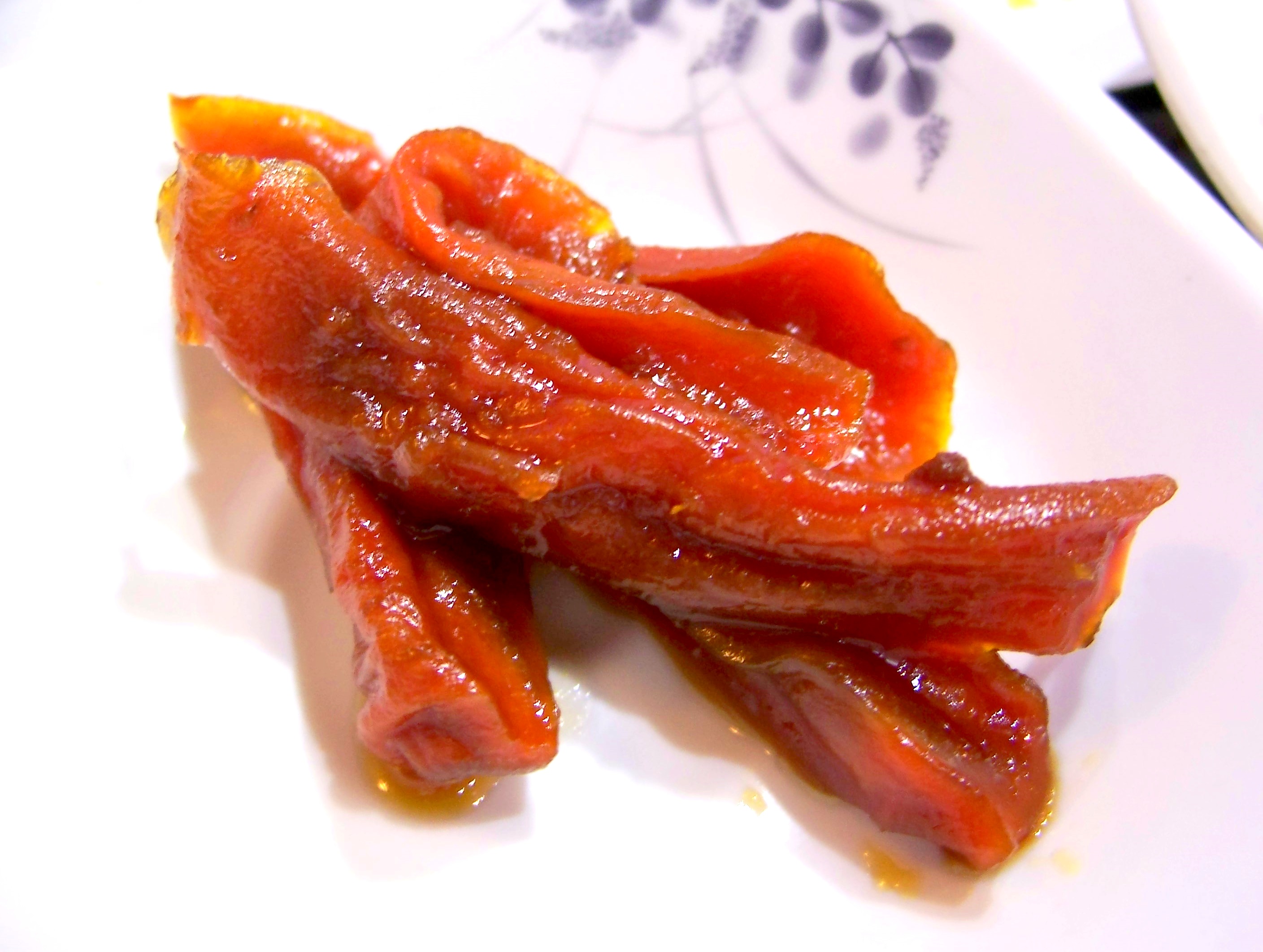
This is Carrot. AMAZING. AMAZING. AMAZING. Somehow it is sweet like honey and chewy like dried apricot. If I could have carrots like this everyday, I’d love carrots a lot more than I do now.
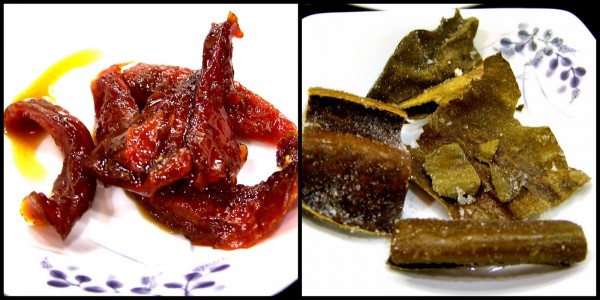

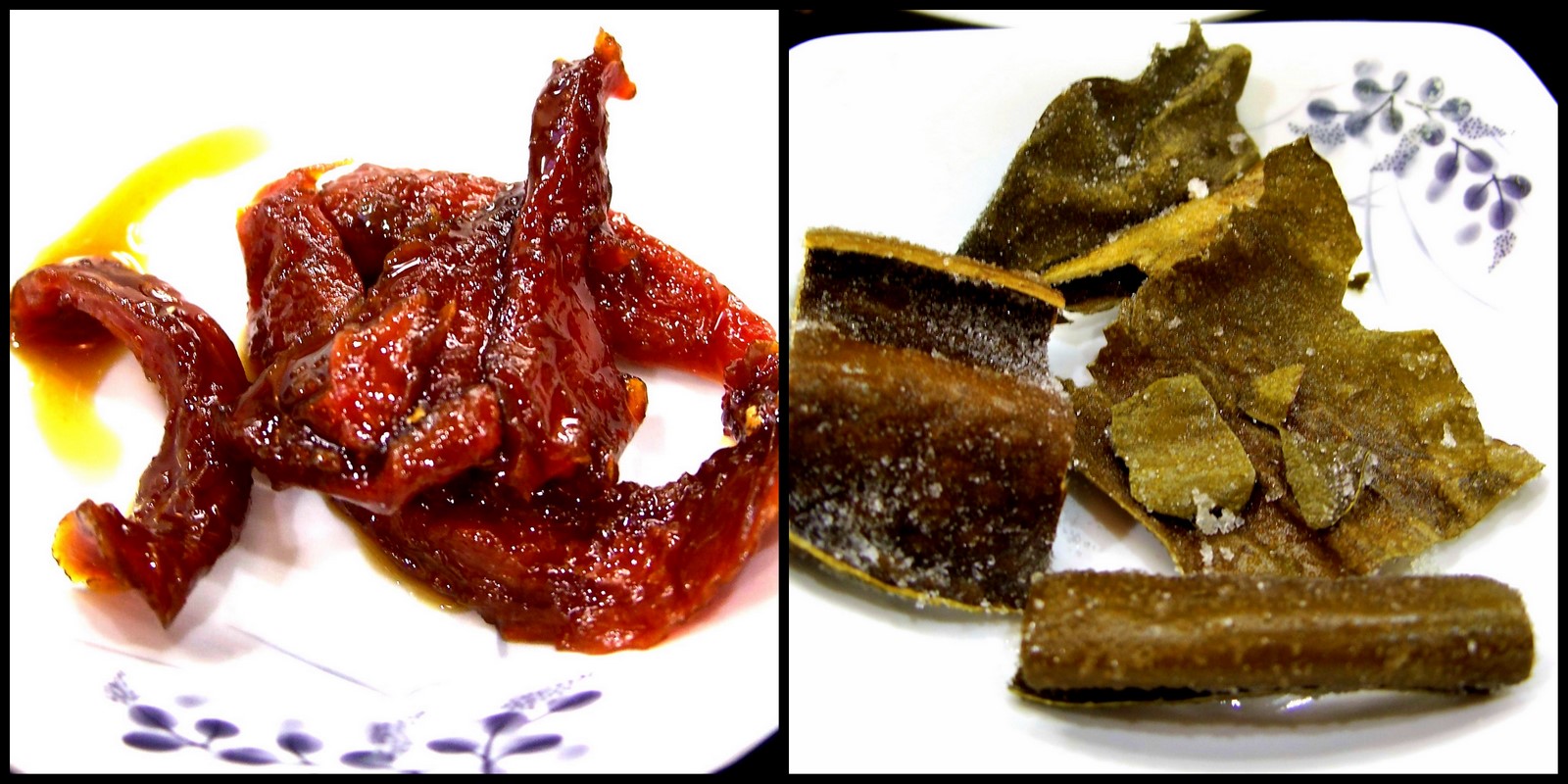
This is Clueless. On the left is something similar to the carrots, but a lot more dried-fruity, like a dried persimmon. The texture is denser and crispier, but it could just have been an older batch of carrots, who knows. On the right is some dried leafy thing dried kelp (dashima (다시마) in Korean, or kombu in Japanese), which was crunchy like Pringle’s chips, dusted with crystals of sugar and salt. When microwaved, it gets soggy and similar to chwinamul but I have no idea what kind of leaf it is.

Get on with the main course.
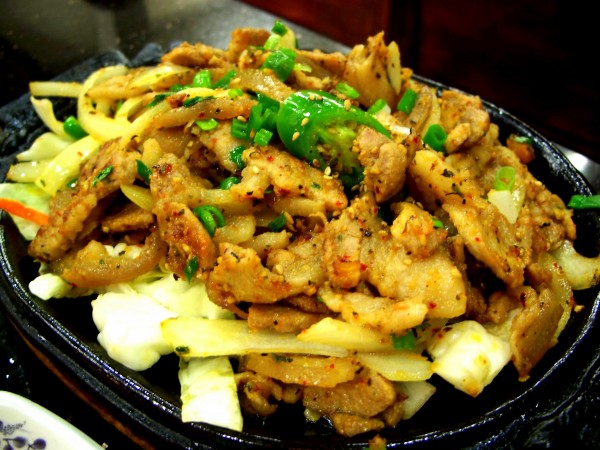

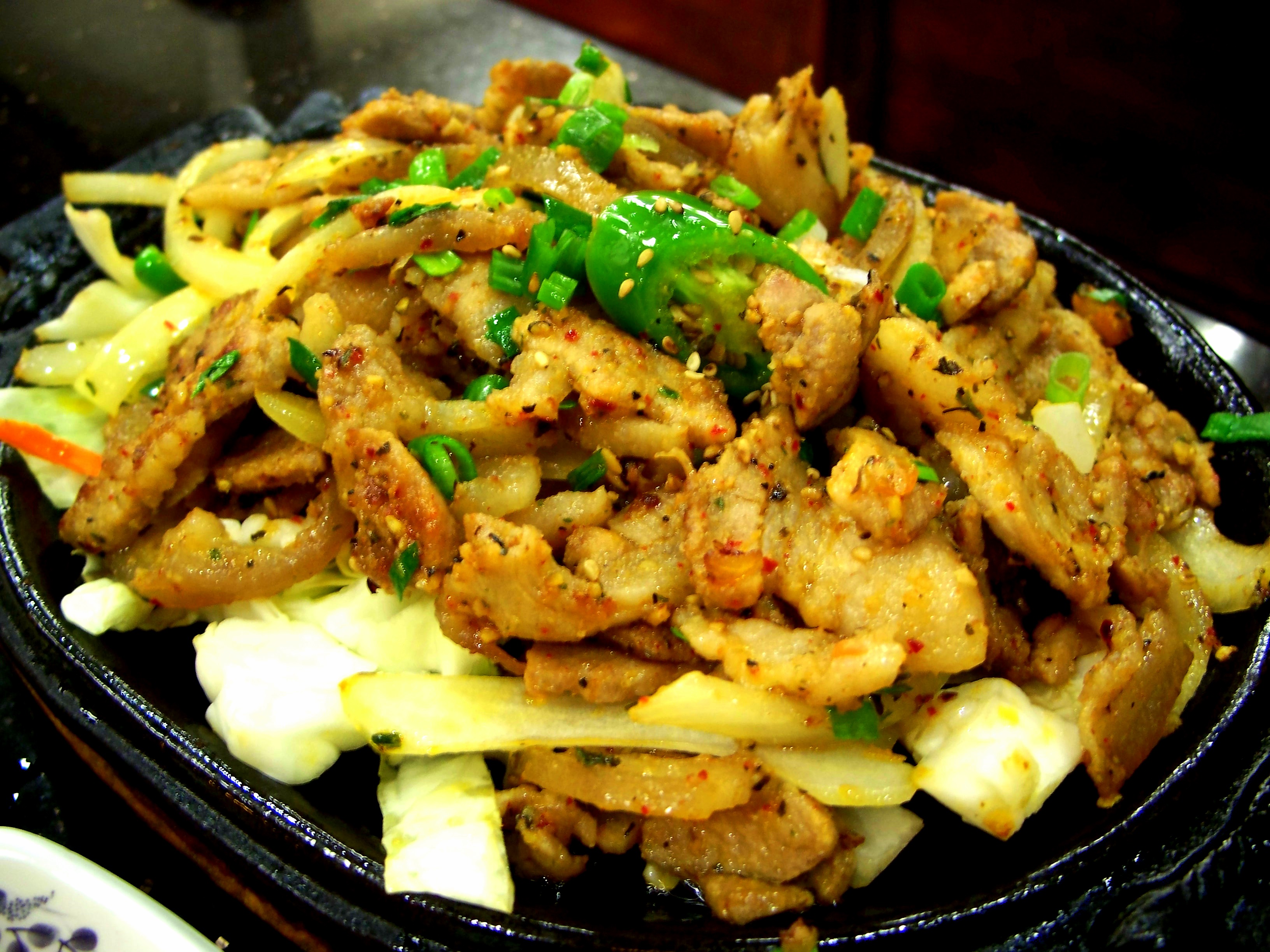
Doenjang samgyeopsal (삼겹살) – grilled pork belly with soybean paste ~ $18. Mudpie felt uneasy with the fatty layer, but really it wasn’t fatty fat, it’s crunchy fat, just like skin. The doenjang (된장 fermented soybean paste) has a distinctive flavor, and is most like the Vietnamese chao.
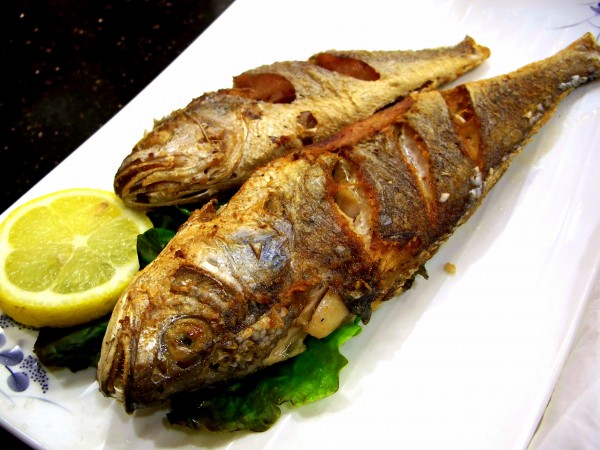

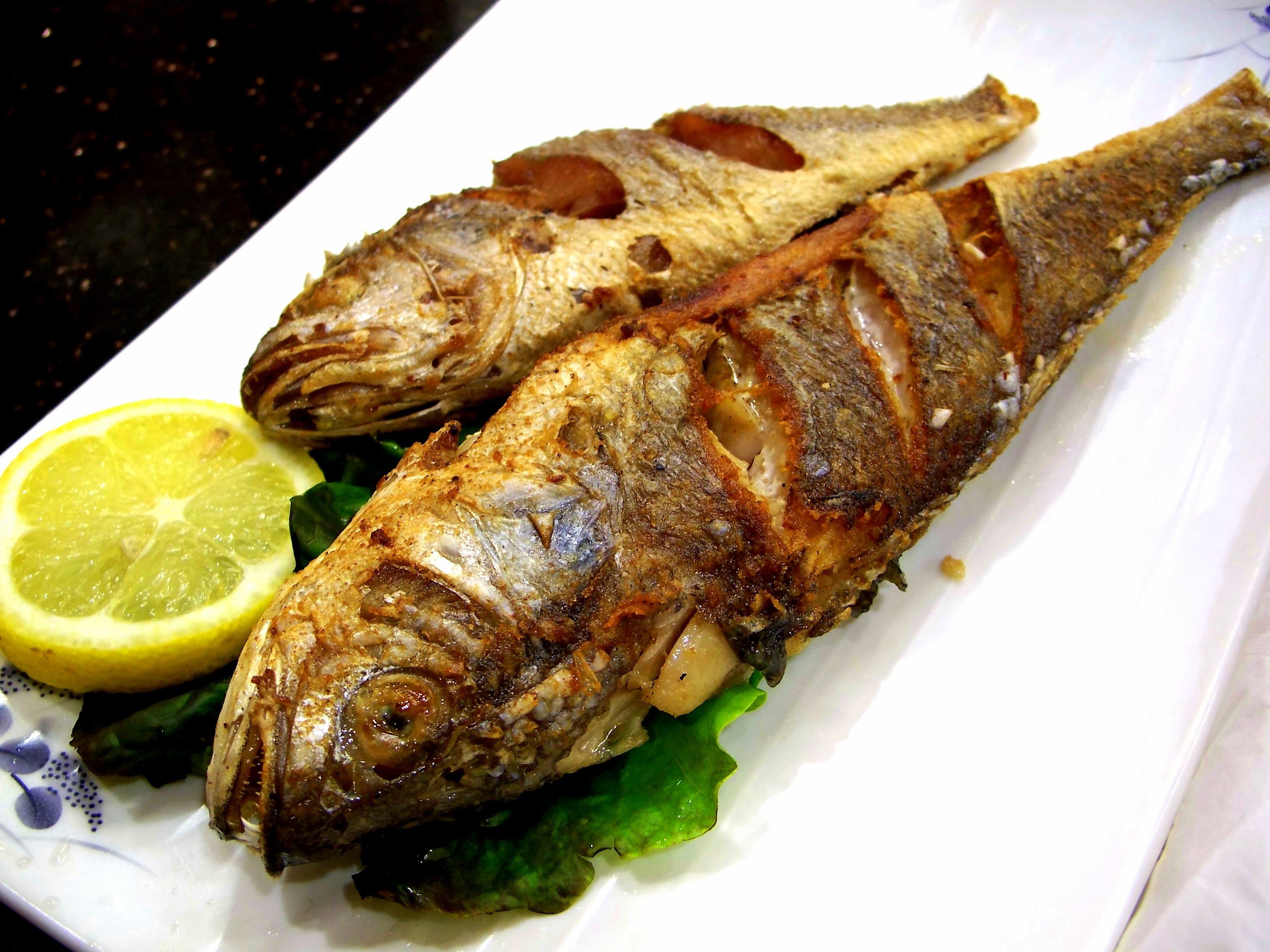
Jogi gui (조기구이) – grilled “king fish” on the menu ~ $18, Google says it can be either yellow corvina or yellow croaker, and I’m no ichthyologist to tell the difference. Look at those teeth. The head was hard and not so fun to eat (very little brain, and I suppose grilling drained all the liquid away), but the body was well seasoned and perfectly crisp. Have fun picking out the bones.
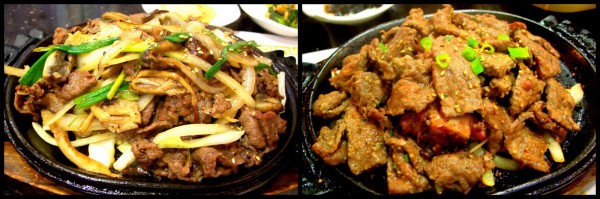

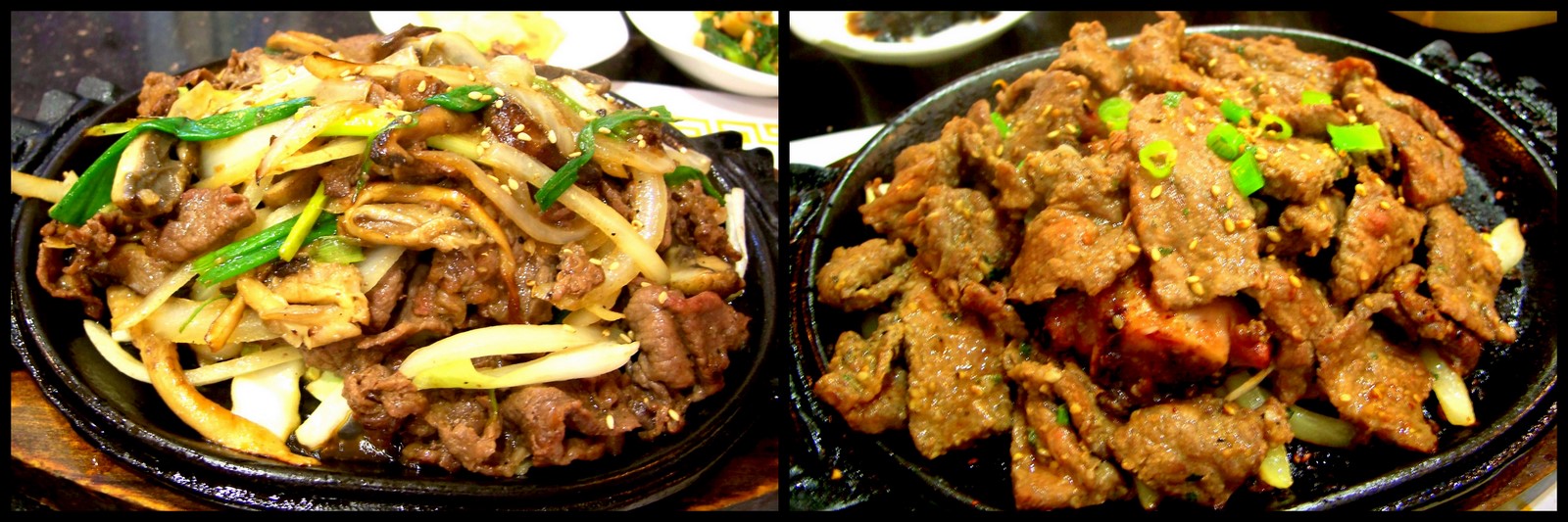
Bulgogi (불고기) – good old barbecue ~ $25 each. The one on the left is marinated in a sweet mushroom-onion sauce, while that on the right is green tea bulgogi with, naturally, a delicate herbal, grassy taste. The meat came with doenjang, chilipepper, and garlic, but I didn’t include any of those in my lettuce wraps.

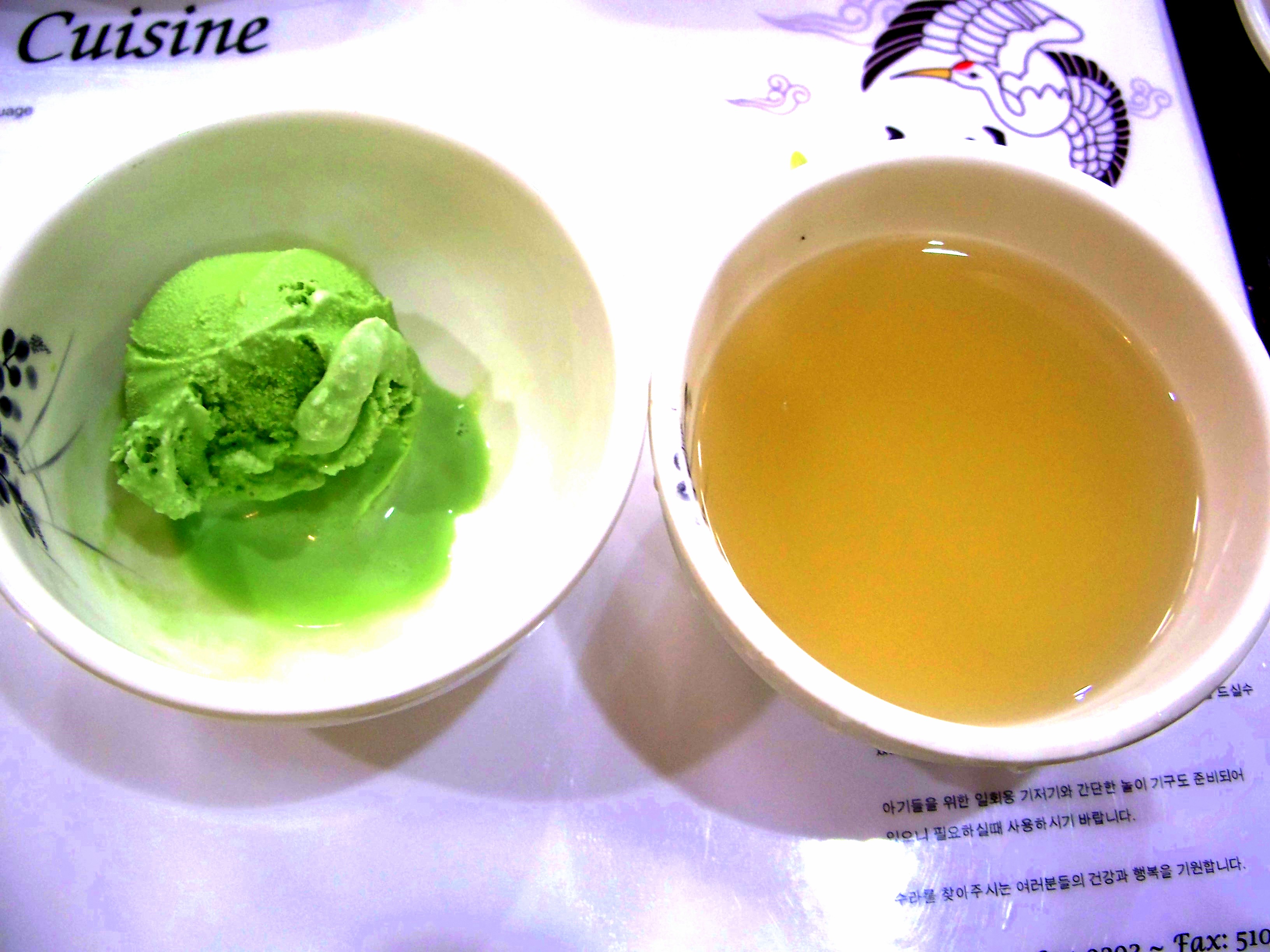
And finally, complimentary dessert of the house is either green tea ice cream or shikhye (식혜) (sweet rice punch):
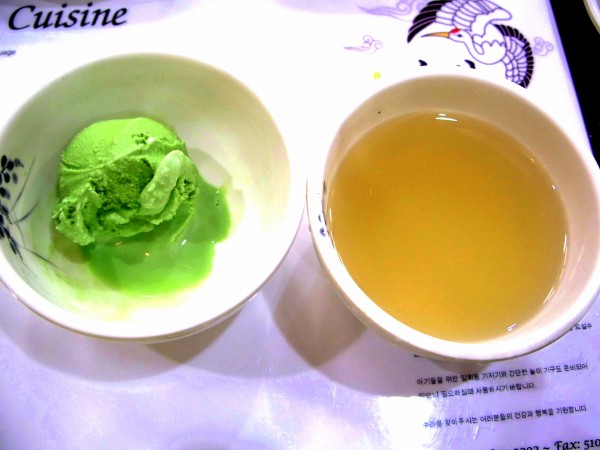

Lovely both.

I should add that this place has a huge menu, with inviting names like ginseng chicken soup (samgyetang (삼계탕)) and crab stew (kkotge jiggae (꽃계찌개)). The bill is wholesome too, of course, but it feels all better when the friendly staff smiles at you with the most soothing, genuine smile in their single-lidded eyes.
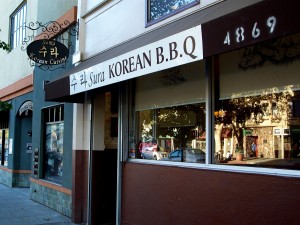

Address: Sura (Nulbom Korean Cuisine) (수라)
4869 Telegraph Ave.
Oakland, CA 94609
(510) 654-9292

At the Mountain Top (Sahn Maru)

May 15, 2010 By: Mai Truong Category: California - The Bay Area, Comfort food, Korean


Nothing beats mom’s cooking. Things may come close, or they may be enchantingly as good as mom’s cooking albeit in some different way, but nothing can top a familiar taste that you grew up with, when you’re fed with love. Remember how Ego dropped his pen and dived into Remy’s ratatouille dish upon recalling the aromatic smell of his mother’s boiling pot? In episode 5 of Gourmet, tears of joy wet the eyes of a renowned food critic as he savored a bowl of  boodae jjigae (부대 찌개), the kind his mother used to make for all poor children in the village and the taste he has longed for in several decades. The concept is universal: mom’s cooking is the best. Lately I’ve been steering away from Vietnamese restaurants, not because they aren’t good, but because  my mom makes better. So I seek out to the food my mom has never made, yet a part in me still wants a sense of home.  And what’s more home-like than the thin, ruffled floral cotton cushion pads loosely tied to some wooden chairs?


Korean food always makes me feel warm and fuzzy inside. I’m not talking about the chili heat and the bubbling sizzling dolsot and the oksusu cha (옥수수 차), even if that’s part of the reason. If you take off the tongue-torching taste, Korean food is actually very similar to some Northern Vietnamese food, especially the soups and the stir fries. Neither cuisines go down the slippery slope of lard overdose or drown the plates in curry sauces and coconut milk, and both embrace a sweet-savory harmony topping a lot of rice.

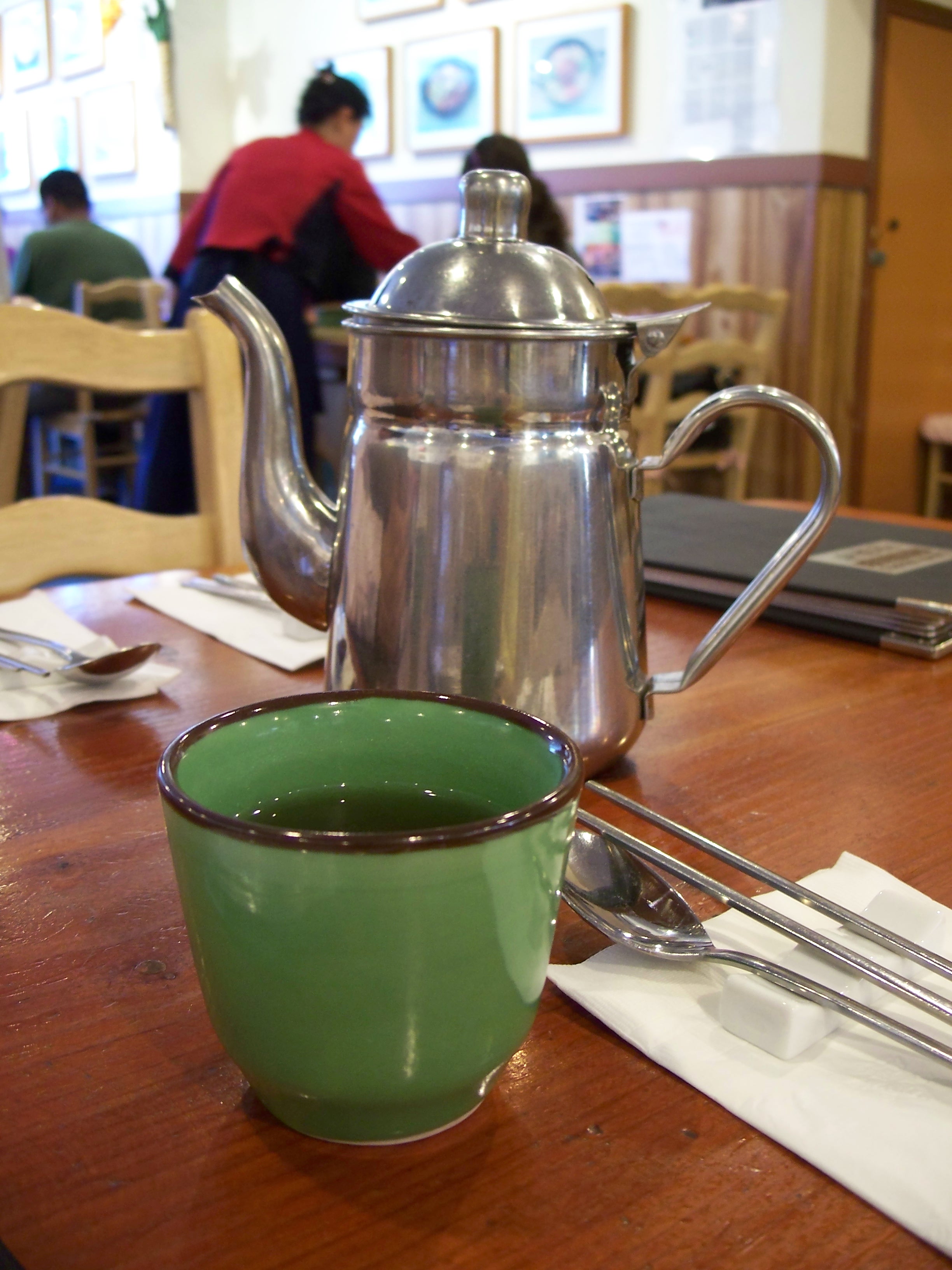
But above all, it’s the feel of a Korean restaurant that charms me. It always feels slow. Even if it’s like OB Chicken Town, where the lone waiter has to rush between tables, love songs blast all around, basketball players run across the big TV screen, time still goes by slowly at that wooden table where you’re sitting.  Time swirls around in the tea cup. Time lingers like the steam above your dark stone bowl. Time precipitates in each little morsel of banchan that you get served a few minutes after placing your order. Maybe it feels slow because you don’t have to rush shoving food into your mouth, or clearing the table so that the later course can come. It feels slow just like eating at home, when each dinner would take hours because I talked to my mom instead of eating.


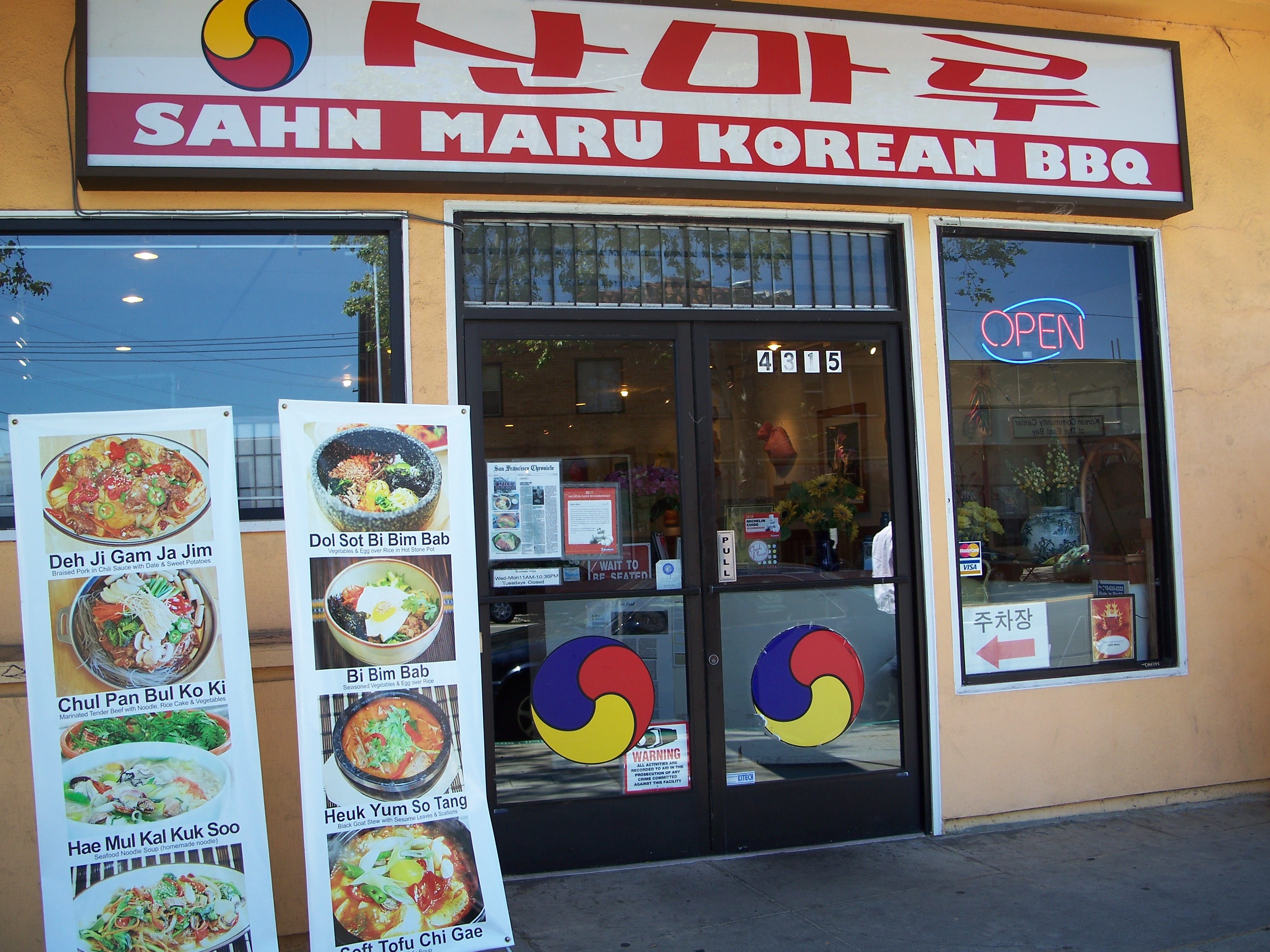
So I feel happy at every Korean restaurant I’ve been to, with every Korean dish I’ve tried. I feel happy at Sahn Maru (산 마루) in Oakland. This chulpan bulgogi (출판 불고기) is another pleasant find. I like my choice of mild sauce because the lack of chili paste lets other flavors flourish, but you can choose spicy. The ddeokbokki (떡볶기) is a playful texture that could be done without, while the cellophane noodle buried under a mountain of beef and soaked in marinade is just too great.


On the hot side we have bubbling soondubu jjigae (순도부 찌개). The soft tofu is creamy like scrambled eggs. Pour a few spoons on top of rice, mix it up. You won’t notice the meat, and the meat is totally dispensable. This stew is good because of the fish sauce, the heat, and the creamy tofu.

At the end, the bill gets served with a cup of  cold sujeonggwa (수정과). I’m not a fan of  cinnamon, but anything sweet and cold just cleanses the throat so nicely. There was no dried persimmon, though.

And I would have said that Sahn Maru was another pleasant experience. But something among the banchan (반찬) makes me change my mind.


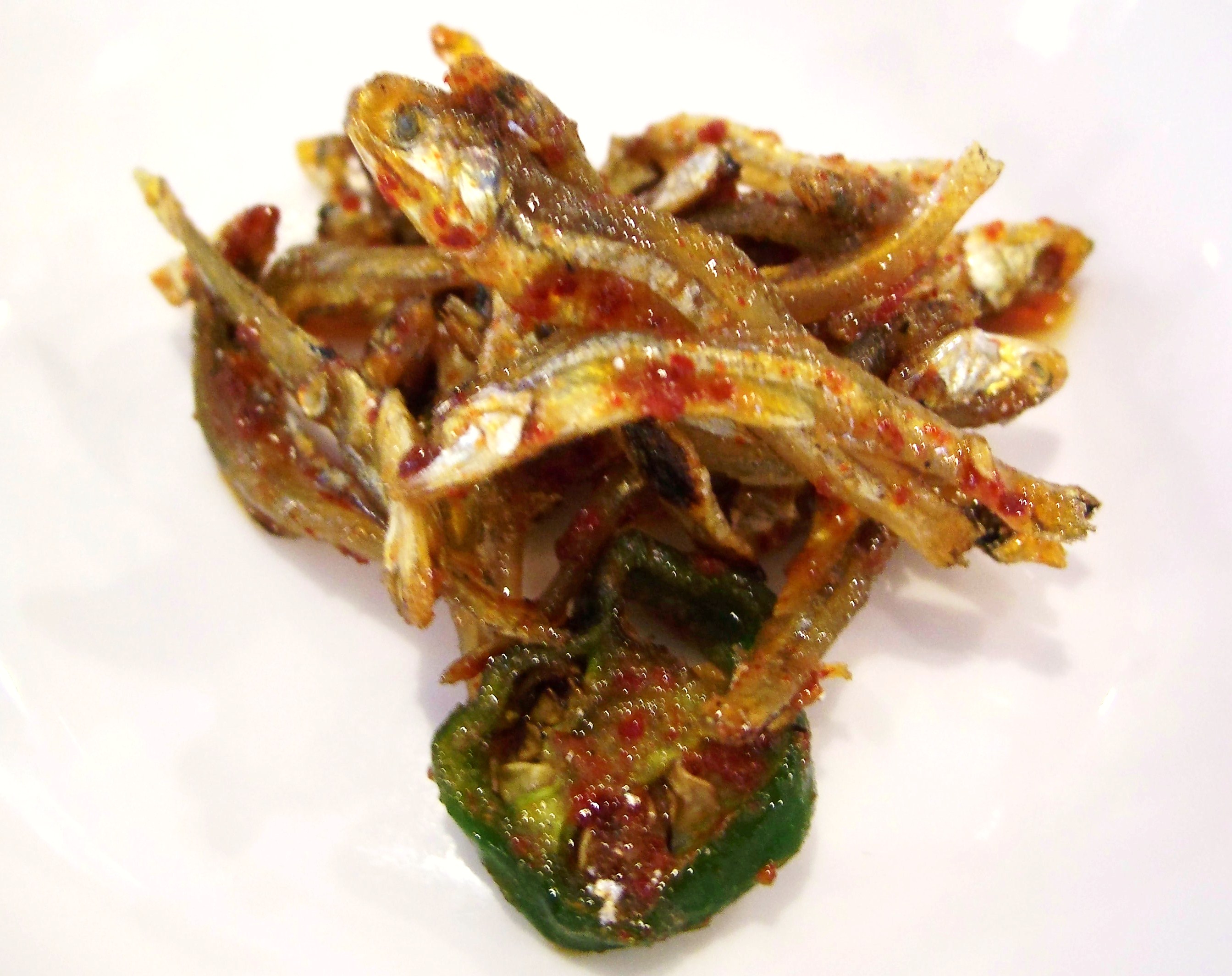
The dried anchovies. I’ve had the other things before, odeng bokkeum (오뎅볶음 fried fish cake), buchu jeon (부추전 chive pancake), kimchis, nokdumuk (녹두묵 mungbean jelly), but this is the first time I have myulchi bokkeum (멸치 볶음), stir fried dried anchovies with heads intact. Whatever little flesh the fish used to have has crystallized into tiny perfections of salty sweetness. The fish taste like candied orange peel. I just can’t get enough of it.

Because of the anchovies, Sahn Maru is not just another pleasant experience. Sahn Maru is a place I will visit and revisit, even if it costs a notch above all other Korean diners I’ve come to like.

Those little fish provoke memories of my mom’s ca kho tieu.

See more pictures of Sahn Maru’s dishes at my web album Photon Flavors.
Address: Sahn Maru Korean BBQ
4315 Telegraph Avenue
Oakland, CA 94609
(510) 653-3366

Dining dollars: chulpan bulgogi ($20.95) + soft tofu soup ($11.95) + tax = $36.10
UPDATE: We have also tried a variety of other dishes here, from the usual dolsot bibimbap, japchae, seafood pancake and kalbi tang to the less-known bibimnaengmyun (비빔 냉면, cold buckwheat noodle), joki gui (조기 구이, fried king fish), and duehji kamjajim (돼지 감자찜, braised pork in mild chili sauce with dates and sweet potato). So far, all of them are the best of their kind. 🙂

The Korean Secret Garden in Santa Clara – Bi Won Restaurant

May 04, 2010 By: Mai Truong Category: California - The Bay Area, Comfort food, Korean


It’s late April and the wind still blows cold. The tiny coffee plant I got last winter is still grudgingly hiding in my room for warmth, while I desperately crave a big hot soup with kimchi. Since coffee leaves wouldn’t make either great broth or pickle, we set out to Sunnyvale.

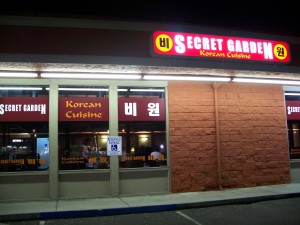
But driving in Sunnyvale on an empty stomach is no fun. The signs and loops are out to get you, and your tummy makes you rush running around. It was supposed to take less than thirty minutes, yet we’ve been driving for over an hour. After lots of wrong turns and backtracking eastward and westward, we thought we wouldn’t make it before closing time. Then as Hope faints, we see it. Secret Garden timidly stands at the end of a strip mall’s parking lot.


The restaurant may not have a snazzy outlook, but its spacious interior is quite nice. I’m a fan of booth seating and its privacy, but it’s a luxury in Berkeley. Here, the mahogany tables and thick cushion benches fit snuggly in enclosing of wooden planks, so that conversations can be spilled out somewhat comfortably and elbows do not touch. But the loveliness of food on neighboring diners’ plates is still in sight. It’s torturous to look at others eating merrily while you’re hungry, you know. Thank goodness the banchan is served quickly. Within minutes after placing our orders, plates after plates come out that I barely have enough time to snap a picture of them all. As light shines directly onto the crisp white melamine, the color contrast is so brilliant I suddenly don’t want to disturb any plate with my clumsy chopsticks.


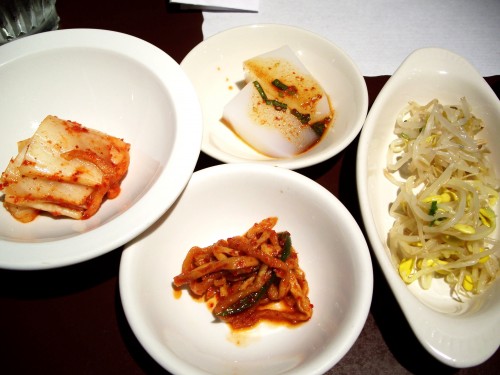
From left to right: napa cabbage kimchi, nokdumuk (녹두묵 mungbean jello), kongnamul (콩나물 boiled and seasoned soybean sprout), and very tasty firm red strips (name help, please? is it eomuk strips in chili sauce?) nakji bokkeum (낙지볶음 fried octopus). The soybean sprouts are bigger, fatter, and nuttier than the usual mungbean sprouts, which means they’re more satisfying. The nokdumuk tastes as translucent as it looks, a refreshing heal congealed and coated in soy sauce that playfully wobbles on the tongue.


To the right of the kongnamul are cucumber kimchi, radish kimchi, eomuk (fish cake), and crunchy green strings (again, I love it, but I don’t know its name. My guess is sliced seaweed?) seaweed with gogumajulki (고구마줄기 dried sweet potato stem). Something about rings of jalapeno in banchan bugs me, just like jalapeno in banh-mi. Not that I have anything against Mexican peppers, but the taste doesn’t belong.


Just as I thought the banchan list ended at eight, a generous plate of japchae (잡채) fuming sweetness comes…


… with two stylish inox cups of miyuk gook (미역국). Whether or not it can enhance my brain function, it well enhances the sizzling goodness of the dolsot bibimbap (돌솥비빔밥).


White rice mixed with veggies, beef strips, egg, and gochujang (고추장) until crimson has been Mudpie’s No.1 favorite for a while now. He treasures every spoonful and guards the forming crust at the bottom against any careless scooping. At the end he then scrapes and eats the well seasoned crust with the joy of children eating s’mores. He orders it almost every time we go to a Korean restaurant, I feel like he should have a bibimbap blog much like Adam Kuban with Slice. And he claims this dolsot bibimbap is the best he’s had.

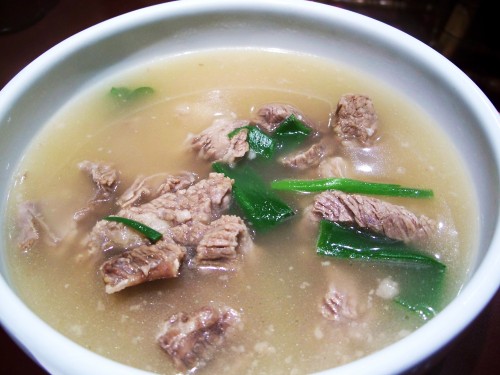
Meanwhile I am busy slurping what I have dreamed of for days: a hearty beef soup. A bowl of wet steamed rice comes with the galbi tang (갈비탕), but I wish they had given me more. The rice goes quickly as I pour the mild yet sensuous broth over it, with a piece of meltingly soft short rib, and maybe a bit of kimchi. I even eat the shiny green chives, since they now taste so sweet.


When I get near the end of the big soup bowl, a pleasant surprise surfaces: a small bundle of dangmyeon (당면 cellophane noodle) has been there all along, soft, clear, quietly soaking up flavors from the darling broth. I have rarely felt more gluttonously satisfied after a meal dined out.


Address: Secret Garden (Bi Won Restaurant)
3430 El Camino Real
Santa Clara, CA 95051
(408) 244-5020

Money matters: $26.11 – dinner and happiness for two.

Another lovely meal at Berkel Berkel

March 01, 2010 By: Mai Truong Category: California - The Bay Area, Comfort food, Korean


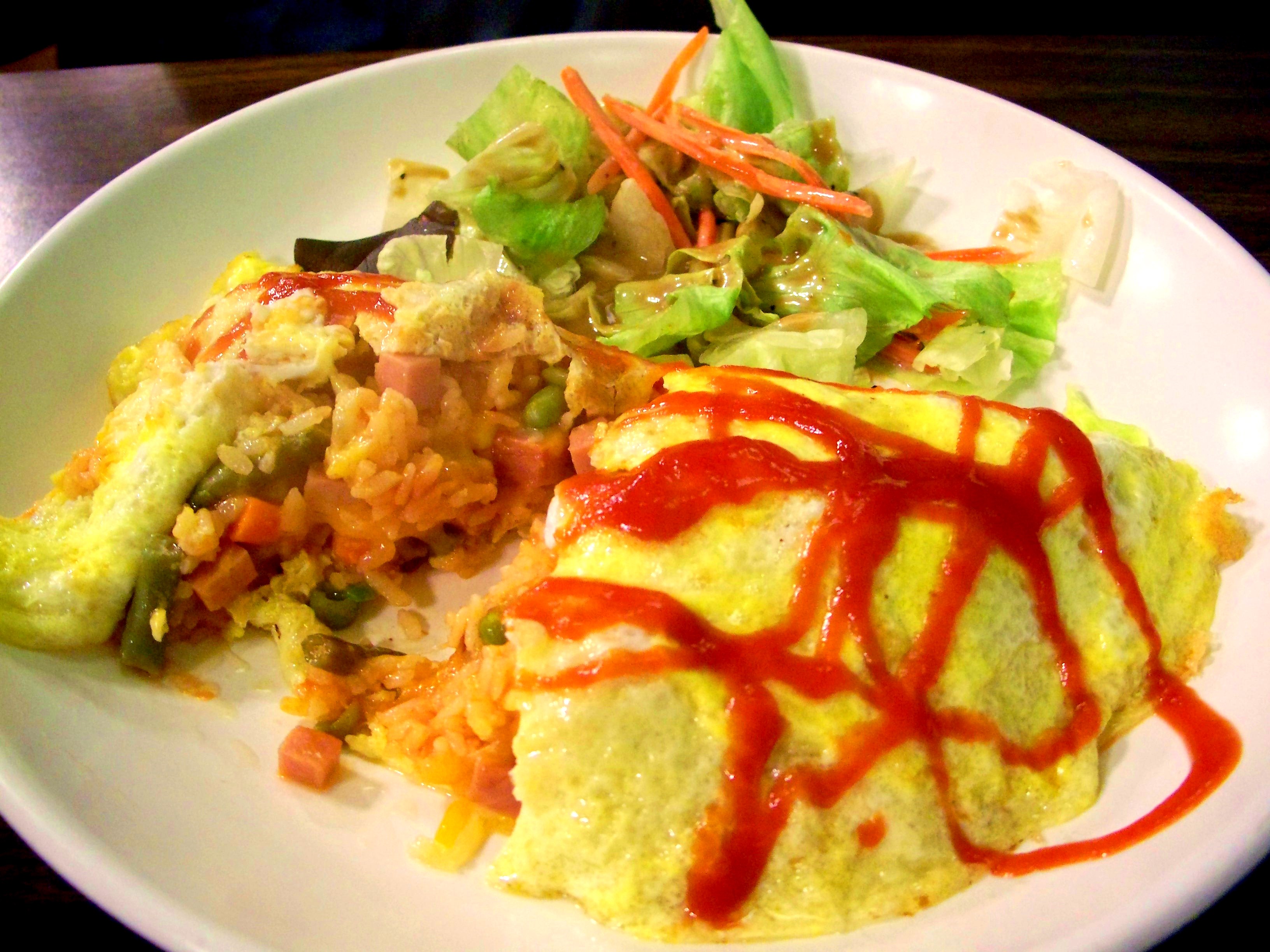
In Vietnam, the first month-old birthday of a baby marks an important celebration. So today is the day, Flavor Boulevard is a month old! Considering FB‘s birth month is also the month of passion and chilly winter, what’s better than a hot plate of “Omu-rice – Perfect for sharing between a couple in love,” said the menu at our local Korean fave on Telegraph Avenue?

So I ate it, and here I share it with my FB. Fried rice with ham, green beans, and peas wouldn’t normally rank high on my list, but the saucy, creamy running egg yolk does wonders. The omelet tasted unseasoned, but its natural plainness was a great base for the rice. Given the fact that I always prefer my French fries sans ketchup, I didn’t find ketchup a well-matched condiment here, perhaps something more buttery would be nice. But perhaps a sour brush was a healthy contrast. Omu-rice is lovely still.


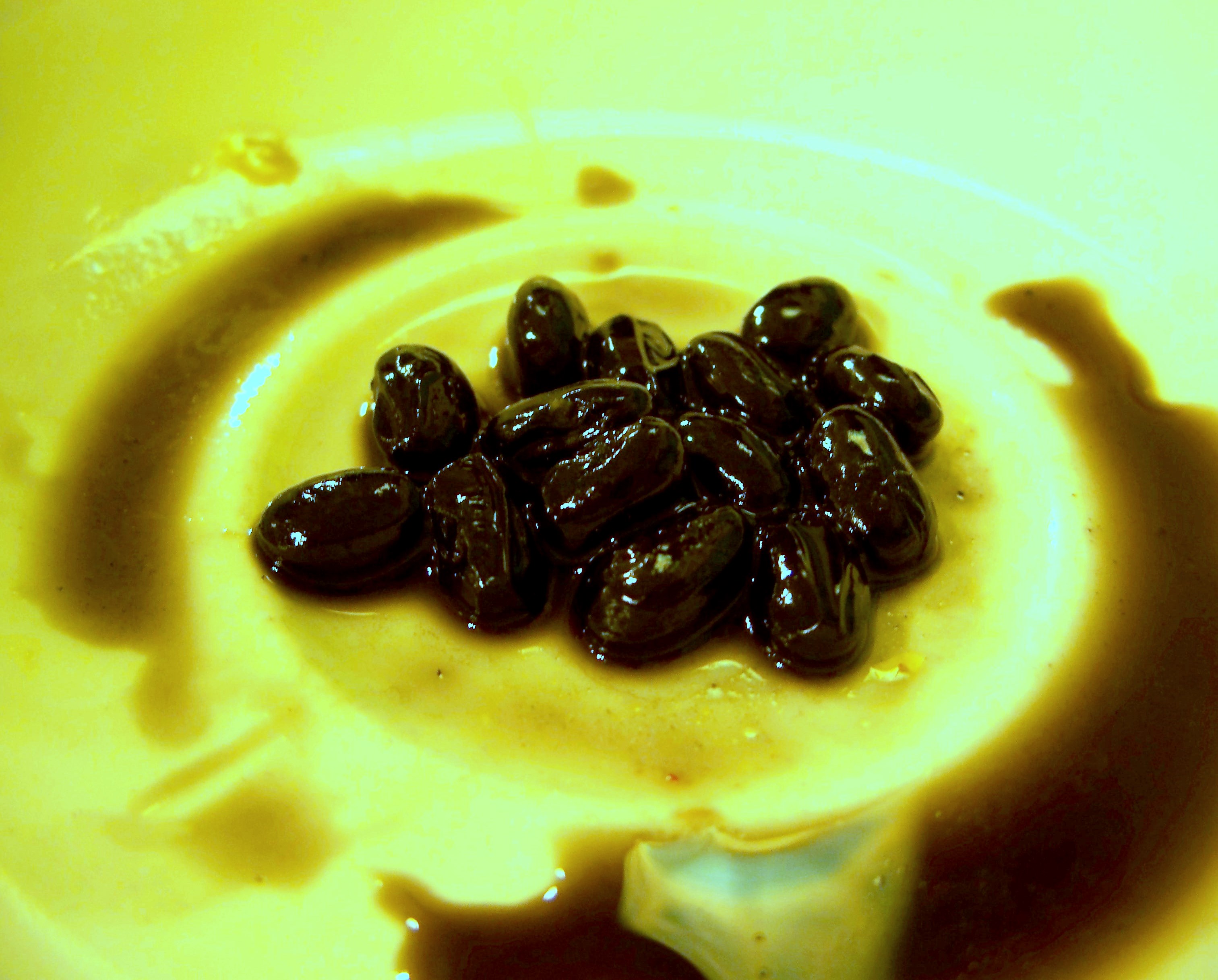
As usual, Berkel Berkel has unlimited spicy kimchi, nonspicy pickled cucumber, and sweet black beans to accompany your main course. Firm and nutty, the black beans (kongjaban) are a pleasant delectable if eaten individually. Of course it’s not easy to eat one by one with chopsticks, but it may be well worth the effort: black bean sweetened with honey and soy sauce “is good for your head,” so I was told by the kind-hearted host of Berkel Berkel. I’ll sure take any chance I get to be smarter, so I ate a bunch of these.

japchae_Berkel-Berkel

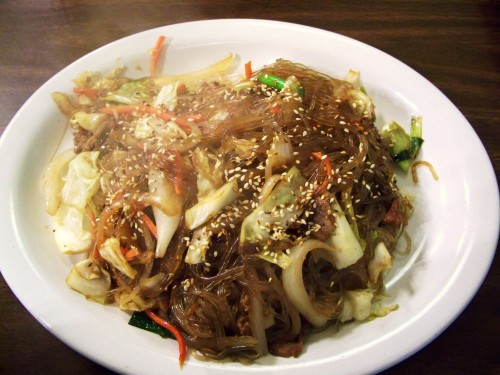
Being in the starchy mood, we also went for a steaming plate of japchae (glass noodle) on rice. I never thought about noodle on rice as a real meal, although as a kid I did find ramen a savory substitution for meat when it came to rice’s aids. The lustrous sesame oil is profound, but there’s a whole package of sweet and salty in every chewy bite of glass noodle.  Once again the chefs show that texture harmony and flavoring are more essential than substance, I’d be a vegetarian everyday if I could eat this japchae and rice everyday.

Although we haven’t tried the whole menu (*glance over other tables* the soups look smoking good), I have faith that everything at this joint scores at least 8 out 10 points for Korean comfort food. The atmosphere helps.

Want to know a little more about Berkel Berkel? Take a look at our first visit.  The place usually gets crowded around 8pm. Do Korean folks tend to eat dinner late?

Address: Berkel Berkel
2428 Telegraph Ave, Berkeley, CA 94704

For those who like to play in the kitchen: a recipe of kongjaban from Simply Senz and Steamy Kitchen’s personal touch on japchae.

Spice it up at OB Chicken Town

February 23, 2010 By: Mai Truong Category: California - The Bay Area, Comfort food, Korean


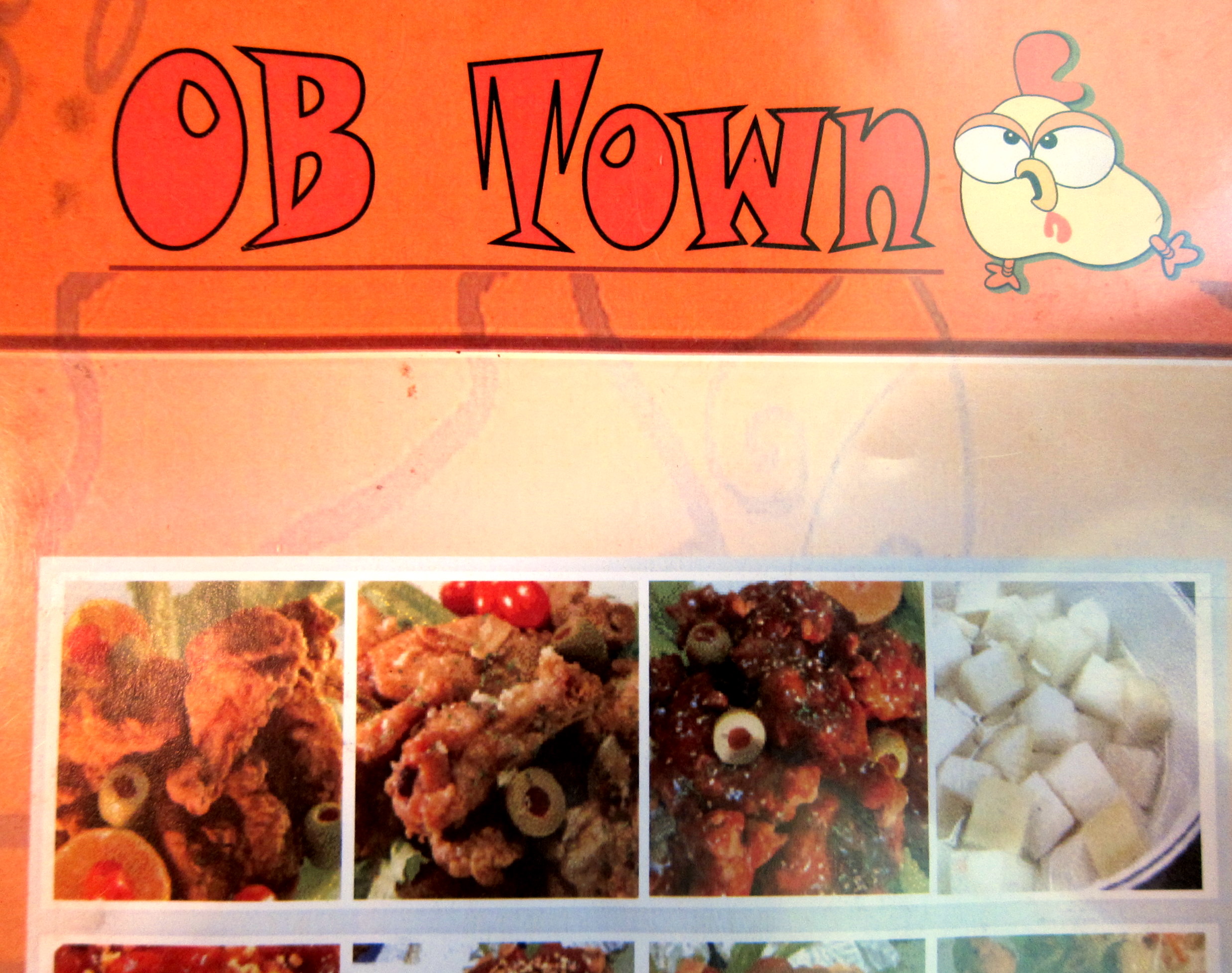
There are two things that I secretly wished for when I went to this Korean fried chicken joint in North Oakland: a better camera to take picture in the dark and a better tolerance for chili powder. [UPDATE: better camera obtained] I mean, just look at the jumping chickie on their menu, isn’t he all fired up?


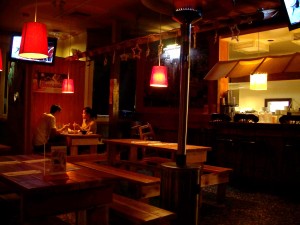
OB-interiorLate February, at 7pm. The moment we stepped in from the cold damp parking lot outback, I fell enamored with the ambiance. Dim light, warm air, seats divided up into small sections with straw thatched roofs overhead and modest curtains to ensure privacy and a sense of lonesomeness amidst the crowd. The fire post watched over quiet customers, most of whom are Korean. I’m saying this because it feels oddly heartwarming to listen to conversations that I don’t understand, and if you’re like me, then OB Town is the place to go when you’re in the mood for nostalgia.


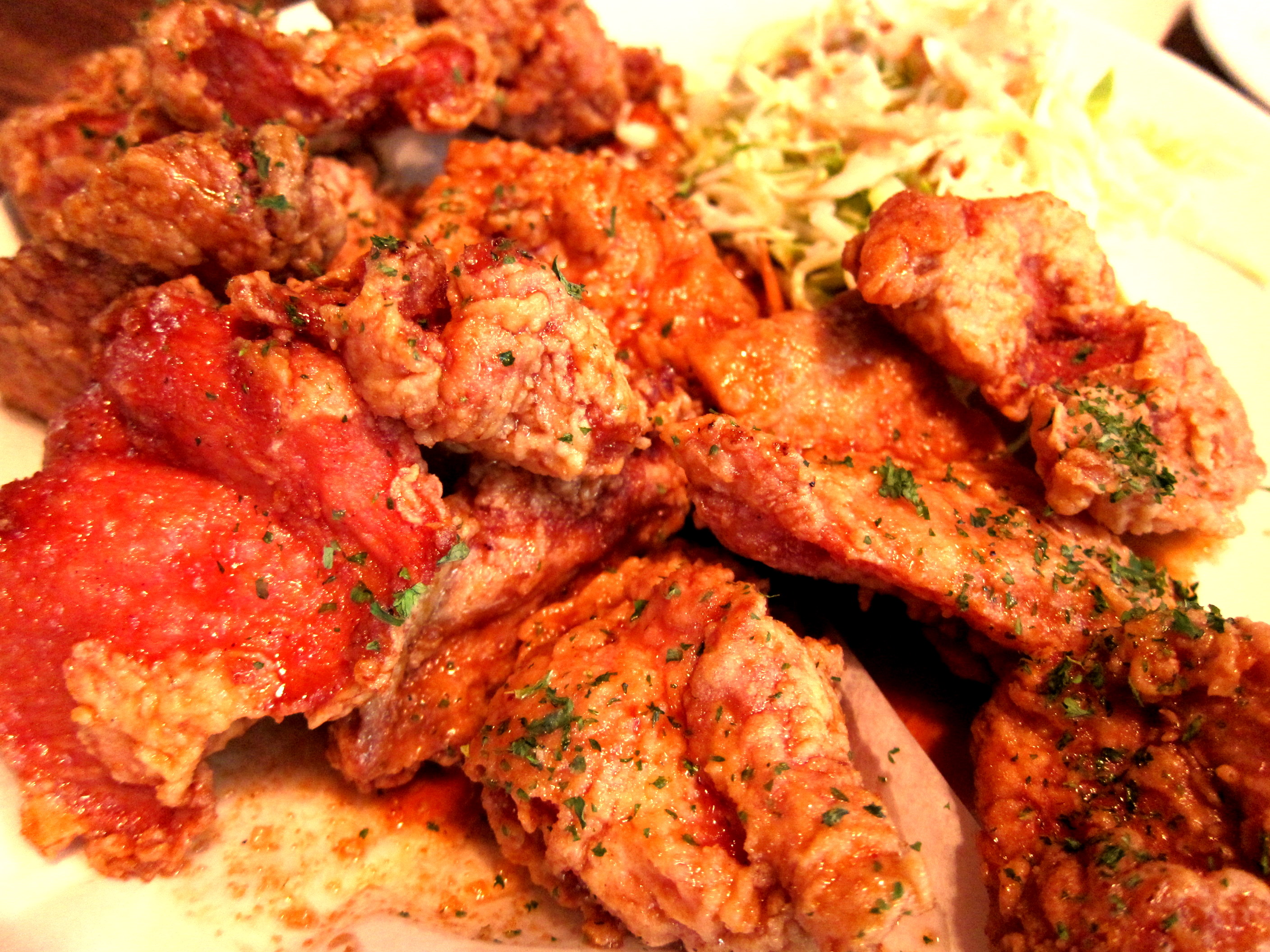
And fried chicken too, of course. A plate of garlic and soy sauce fried chicken (gan jang chicken) is more than enough for one, maybe two if neither is too hungry. The sweetness was addictive. I don’t know how many things were added to the mixing bowl, but no single flavor was too blatant, everything blended together to make a perfect package. The crispy coating was great, but what’s inside was so much better. Juicy, tender, flavorful strips of meat, and yes, even the white meat was great. I savored every bite.

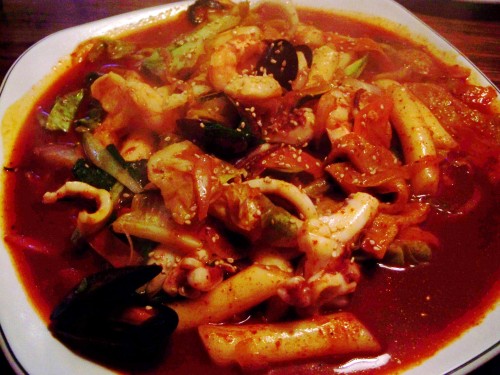
Which is not something I could do with the ddeok bokki (spelled “dduck bog i” on the menu), at least with the first few bites. I learned about the “spicy rice cakes” from Korean movies, and was prepared for the fiery blunder. What I wasn’t prepared for, and blame no one but my imagination, is the lack of a sweet taste. Chili powder, gochu jang, jalapeno, whatever it was, was on full strike with no masking flavor. Was it because I ordered seafood ddeok bokki? Are all ddeok bokki this spicy?

seafood_ddeokbukki
Wimpy as I am though, I like the dish. The smooth and chewy texture of garaeddeok (rice cake) hooked me, and I dug in. The mussels, shrimps, and squids were definitely for good change of texture, but those oversize noodle tubes fare best with the thinly sliced carrots and sauce soaked cabbage. Burning outside, soft and plain inside, the garaeddeok was pure pleasure. And although the sauce was quite strong, its scorching touch faded quickly with a sip of water and a few nibbles of cole slaw, allowing us to sample every visible piece of ingredient: rubbery sleeves of eomuk (fish cake), bitter herbs, mushy onions, gummy mushroom. The plate was a textural party. One tiny mismatch: the pungent jalapeno doesn’t belong there (just as it doesn’t belong in bánh mì and phở).

bacon-wrapped-asparagus-kebob
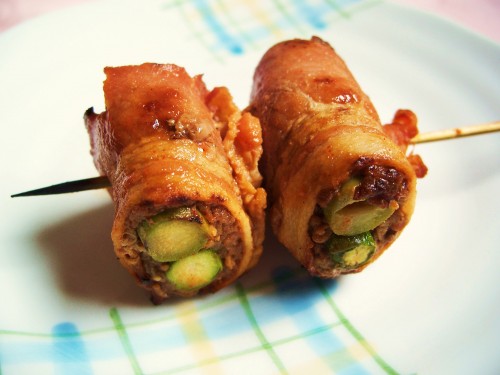
We washed the spice down with two awesome skewers of bacon wrapped asparagus kebob. It’s cute how they made the asparagus look like bones, and they were actually crunchy like cartilage too. (I’m suddenly reminded of pig feet, cooked and uncooked.) A savory high note to end the night.

Was my tongue dead because of the chili? Yes, I made a funeral for it with lots of milk chocolate. Will I go back to OB Town? You bet. The chicken feet are calling me.

OB-chicken-town

Wallet thinning: 1 gan jang chicken (15.50) + 1 seafood ddeokbokki + 1 kebob (<3.00)+ tax = $34.35

Address: Oriental BBQ Chicken Town
6101 Telegraph Ave.
(across the street from KFC)
Oakland, CA 94609
(510) 595-5338

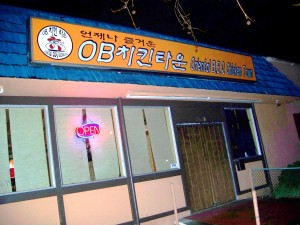
It looks a bit shady outside, but that’s just another indication of how tempting the food is inside.

Oriental BBQ Chicken Town in San Francisco on Fooddigger

Berkel Berkel when Berkeley’s cold

October 10, 2009 By: Mai Truong Category: California - The Bay Area, Korean

The cold weather kicked in. When wind and rain hit your window panes, jackets start dominating your closet, and colorful scarves make their presence at every clothing store, what is the first thing in your mind? A cozy snug-up with a book, maybe dreamy smoke rising up from a mug of hot chocolate, or early Christmas shopping? Ever since a friend took me to this Korean dine-in, it has become the Call of the Wild Tummy on wintry days.

Telegraph avenue is a busy street. Tents set up on both sides with multitudes of youngster jewelries, flashy windows with vintage clothes, beggars with voice stronger than a football coach… But there is one wooden door that looks so humble it stood out amidst the restless noise.

I like Berkel Berkel because of its wooden doors, its dimly lit interior, its young customers gathering quietly around small tables, the unadorned facileness, and the affable host (dressed in white in the picture below). No matter how cold it is outside, once you’re in here, you’re warmed up by the familiarity. Wrapping my hands around a cup of oksusu cha, I felt at home.

The menu is simple and basic. Barbecue meat (bulgogi), rice with eggs and mixed veggies (bibimbap), soups; if my memory serves me right, everything comes with a choice of beef, pork, chicken, or vegetarian. I’ve only tried bulgogi and dolsot bibimbap here. (It was the first dolsot bibimbap I had since reading about it in Noodlepie. The other two Korean restaurants near campus don’t serve bibimbap in a sizzling stone bowl, a dolsot, hence deprive both the rice and the rice eater half the fun.)

Although I’m not a big fan of veggies, their beautiful assortment makes a dainty remark on my prejudice, and thankfully the pickled sourness and gochujang’s subtle triggering were anything but plain. Gochujang (chili paste), except for being crimson red and spicy, tastes a lot like the Vietnamese chao; naturally, since they are both made from aged fermented soybean paste, or tofu.

An all-mixed-up bowl looks like this. Spinach, bean sprout, carrots, cucumber, lettuce, egg, sesame oil, stir-fried beef, chili paste, my mouth is watering as I’m writing this. Korean spiciness goes with a piquant sourness, distinguishing itself from Mexican’s forward plainness, Thai’s fruity sweetness, or Indian’s peppery pungency.

Forget about manners, I made a tower consisting of a square of beef, a piece of baechu (Chinese cabbage) kimchi, and a slice of pickled cucumber on a spoonful of rice. Korean rice is noticeably moister than Vietnamese rice, so stuffing that monstrous pile into my mouth wasn’t too hard, the rice didn’t fall apart. The hand can only write of so many poetic remarks before the brain is flooded with images and tastes relived, too fast to be organized, so I will now simply list other good things here: excellent salad dressing, lingering corn tea, free unlimited banchan (kimchi, cucumber, and sweet black beans), and most importantly, student’s-pocket-friendly price (under $10/dish, confirmed by my students).

AddressBerkel Berkel
2428 Telegraph Ave, Berkeley, CA 94704

Also read: Second visit at Berkel Berkel

Note to self: next time grocery shopping, look for corn tea. Do they sell those at stores, though?

Berkel Berkel in San Francisco on Fooddigger

Cha lua kimbap

June 30, 2009 By: Mai Truong Category: Korean, RECIPES, savory snacks

3 cups of rice, 3/4 lbs cha lua, 1.25 cucumbers, 3 avocados. Made 10 fat rolls of kimbap. We used long grained rice because we didn’t want to bother buying short grains, giving the rice a little more water than what the cooker says, and it’s sticky, but gotta roll quickly or the rice would dry out, perhaps in hindsight short grain would do the job better? Seasoning the rice calls for sugar, salt, and vinegar, but ubercmuc detests the taste of vinegar, hence water substituted. Inadvertently, my rolls deviate from Maangchi’s by a great distance.

Cha lua (also labelled giò lụa) was bought at a local Vietnamese shop in Little Saigon, hot and fresh from the steamer. Don’t buy those frozen things at the Asian supermarkets, who knows how long they’ve been there. I cut up the cha lua and boiled the slices to lessen the nuoc-mam flavor (which is only a wisp to begin with). It is a much better meaty core than crab stick.

We weren’t sure if we got nori or kim, the sheets are green instead of black, salty, and have a noticable taste of the sea. A 27cm x 27cm sushi mat was well sufficient. We have yet to master the art of slicing a roll of rice, stuffing, and seaweed without breaking them apart, but I found that a cling-wrapped, refrigerated roll, microwaved for 2 minutes, then cut with a wet knife, turned out to be much more beautiful than those cut fresh or cold. Microwaved kimbap also tastes as good as new, at least to a foreign mouth.
Korean Garden Grille

June 01, 2009 By: Mai Truong Category: Houston, Korean, Texas

Korean movie series are my soju. It’s for celebration, depression, even seeking motivation. I got motivated to learn Korean and to try Korean food. I made a couple of attempts in College Station, but it’s not a good idea to judge Korean cuisine from a local Chinese restaurant. The urge to understand why their food looks so appealing in movies overtook the resistance against chili pepper. So we went to Bellaire the first weekend I got home, to a Korean buffet.

Korean Garden Grille has a spacious feel (again, something of Texas that I will miss). I made a point to sample everything, and I almost accomplished my goal. I tried “beef seaweed soup” (no beef was visible, so I assume it was beef flavored seaweed soup?), 11 kinds of kimchi (not knowing most of the Korean names nor the veggie names), bulgogi, japchae (stirfried cellophane noodle), 7 kinds of fried egg/veggie (again, not knowing either the Korean names or the veggie names). The kimchi was mostly sour (a little more sour than pickled daikon and carrots, not as salty as pickles, much less aggressive on the back of the throat than the French pickled cornichon).


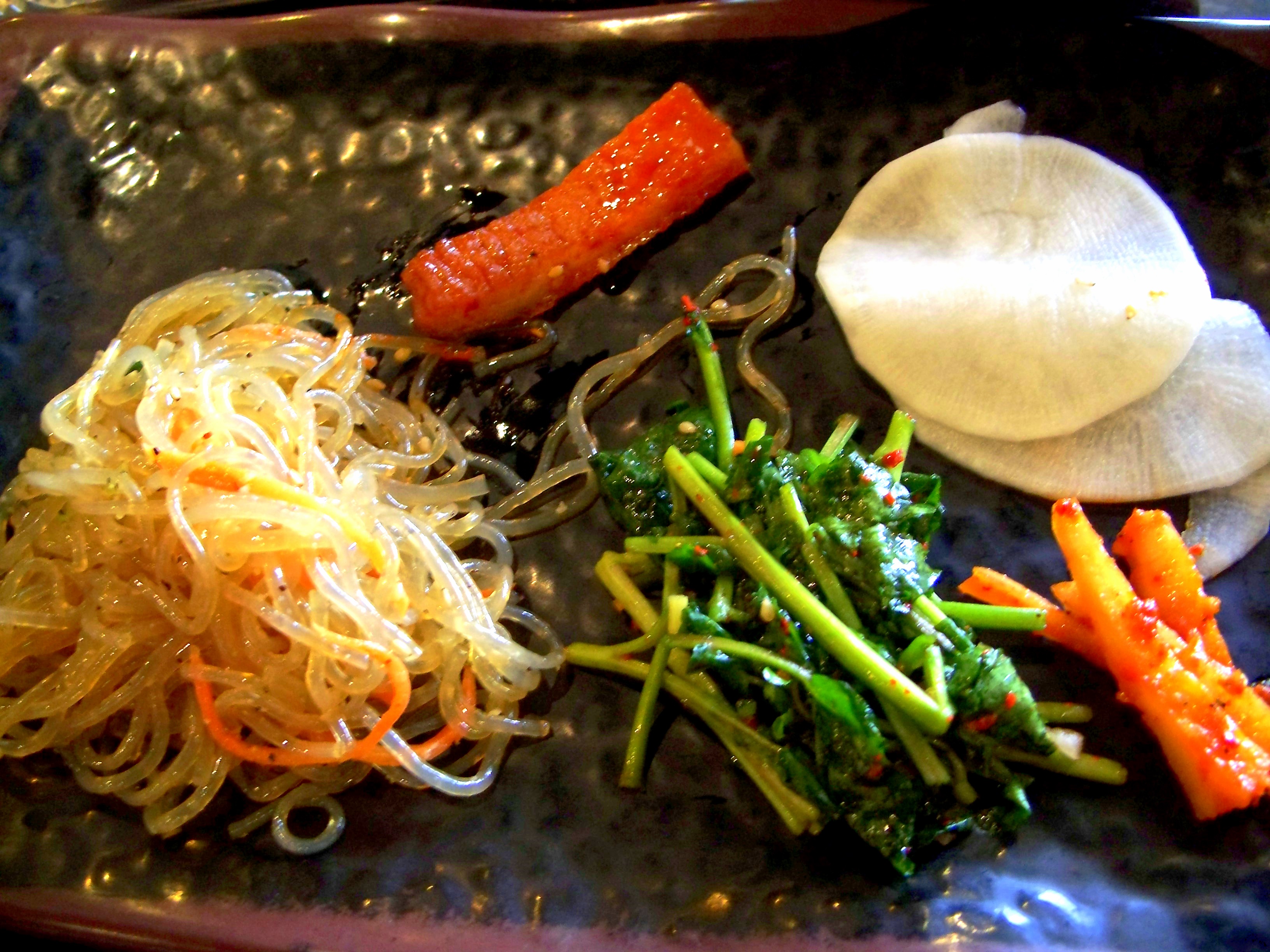
Above image: From left to right, first row: napa cabbage (wombok/baechu/cải bách thảo), don’t-know, don’t-know radish, bean sprouts; second row: not-sure seaweed, daikon-maybe? kohlrabi, no-idea. I tried a couple of angry-looking-red-peppered kimchi the angry-looking red-peppered odeng (first thing in the image below), but they weren’t too spicy (well, at least not in small quantities), the fried octopus (red, bottom right) was quite tongue-catching actually.


I finished a half mini-bowl of rice with just one piece of those. Now I’ve never been to a Korean restaurant before nor have I any Korean friends, so I’m just judging from the Korean movies I’ve watched: this place is typical Korean, rice is plentiful and brought out at the beginning (just like water), since (again, movie trivia) Koreans consider good eats cannot be without rice.

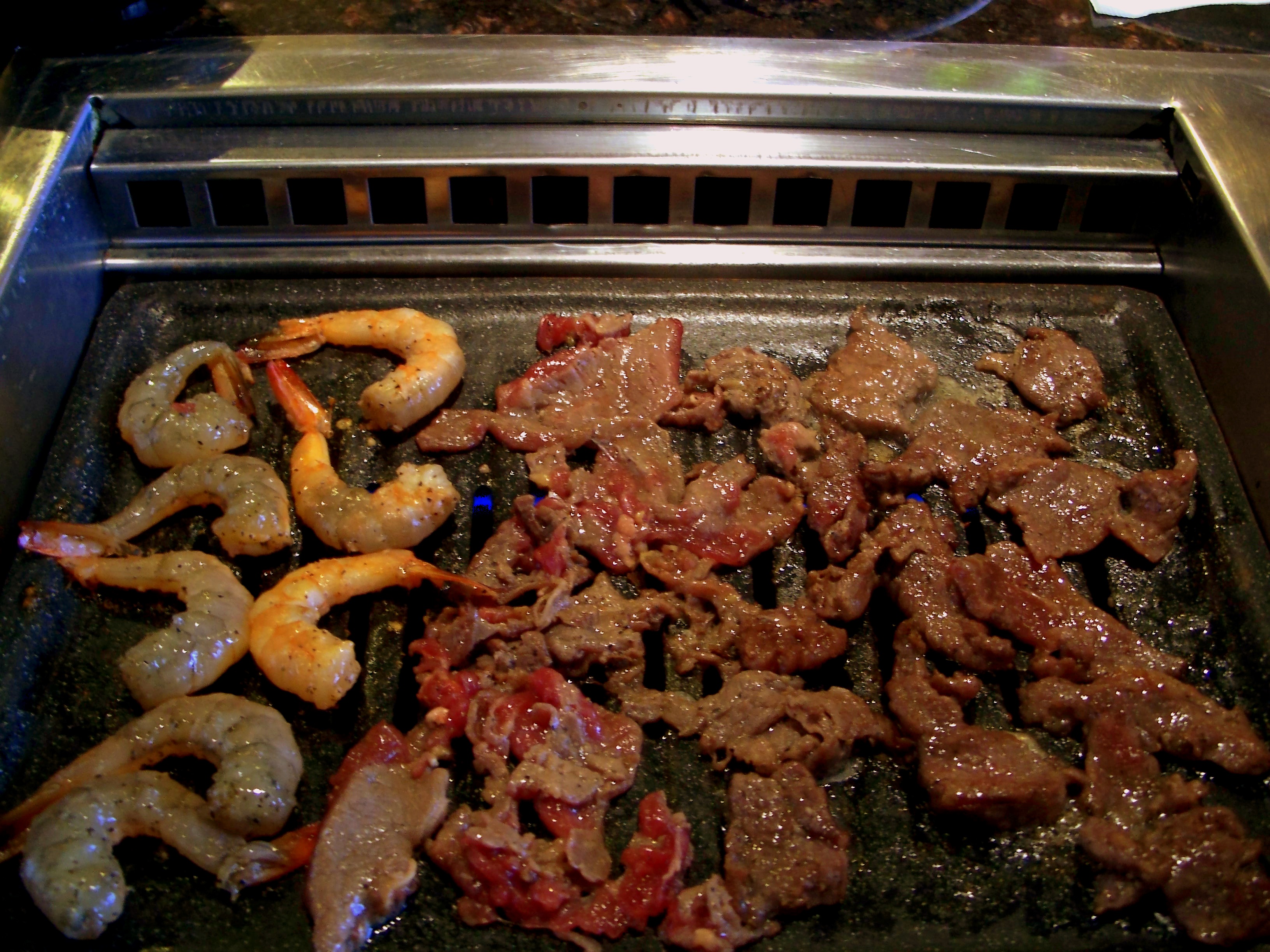
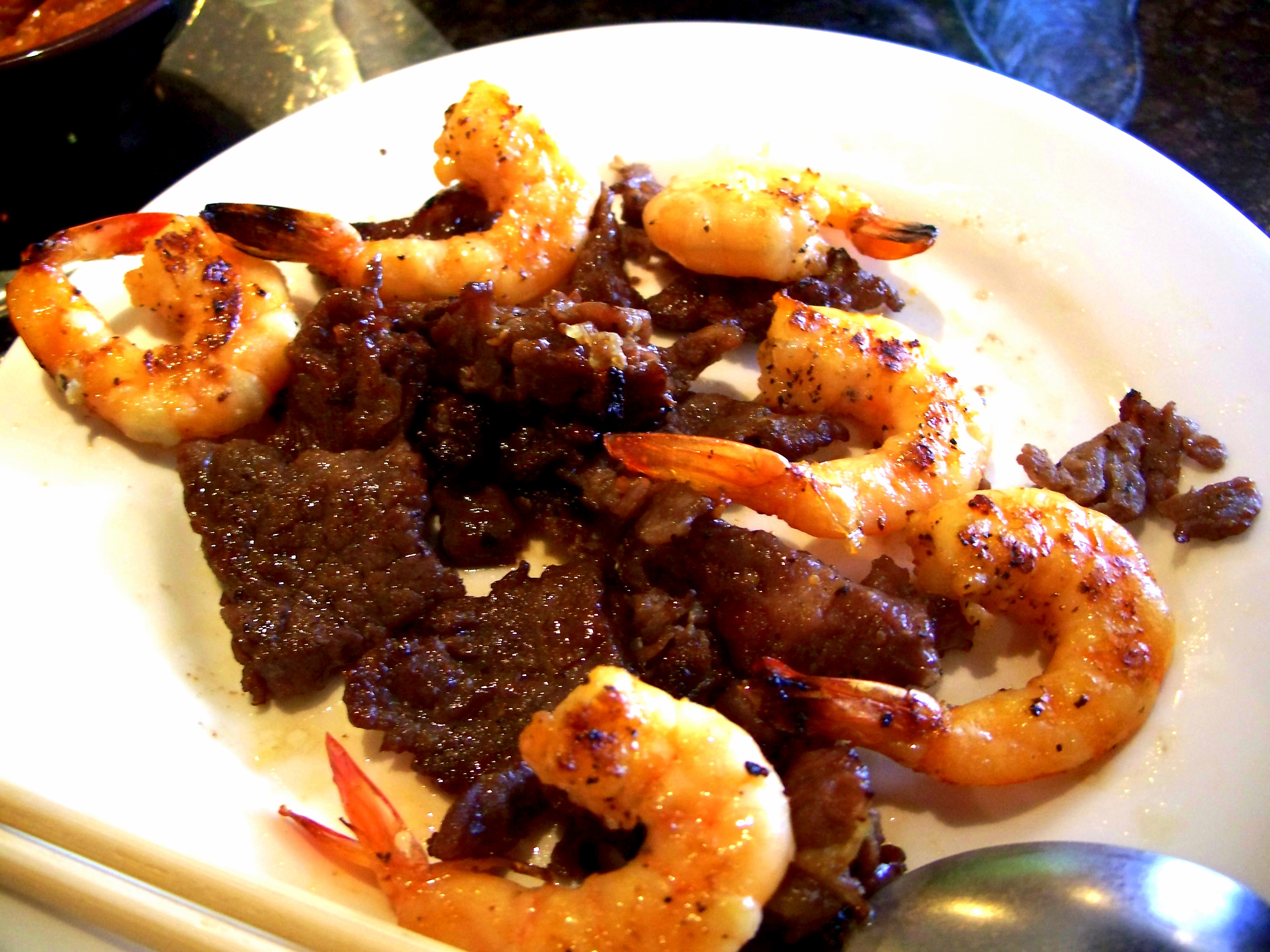
It’s also nice that the place has a grill at the table, and we can sizzle as much meat and shrimp as we want. Spicy smoke, fatty sound, savory emanation. Right next to a plate of fresh green-leaf lettuce (that’s right, not iceberg lettuce).


The meat is a little sweet, which is perfect. I am never a fan of eating uncooked veggie with cooked food. I think putting fresh bean sprouts into a bowl of hot phở is hideous, the textures just don’t cooperate. But nothing beats a lettuce wrap with beautifully-browned, well-cooked, well-seasoned meat inside. It’s marvelous. Although busy gorging I was, I also watched the Korean hostess got herself a plate: she wrapped a spoonful of rice and a piece of meat inside a lettuce leaf, making it the size of a tennis ball, and put the whole thing in her mouth at once. Now that is skill.


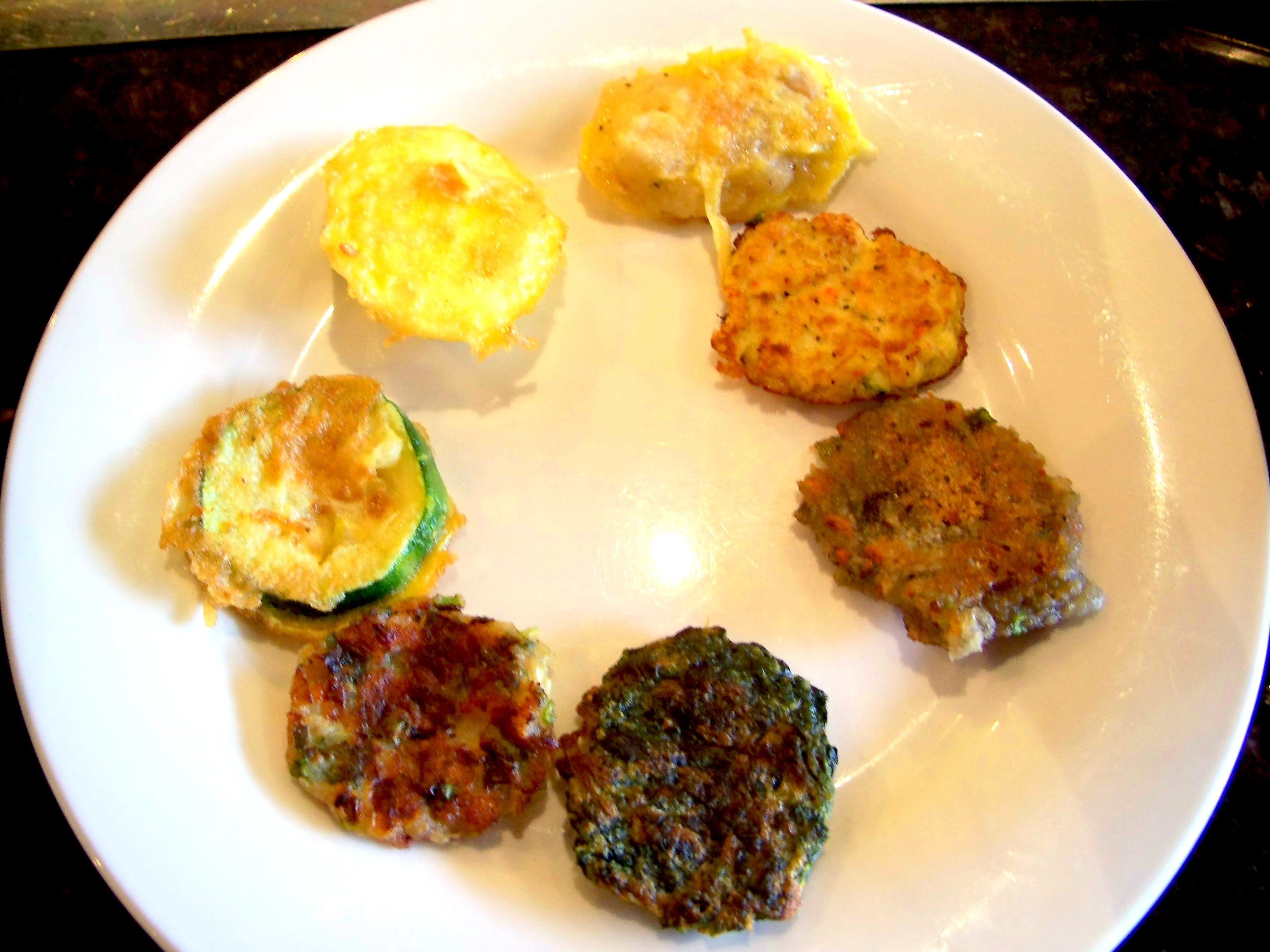
Fried veggie and egg. Beside the obviously must-be egg, I could pick out squash, but that was about it. Barely seasoned. No oil streaming out as I took a bite. They were all tasty appetizers.

The seaweed soup is warm and slender, almost like refreshment. Little mom preferred the daikon soup. Many thumbs up. I will definitely try more Korean food. Now, for spice-inclined diners, the taste might be a little too plain (except the kimchi) compared to other Asian cuisines, and it seems like not much salt was used. Cost: about $60 for 3 people. Sure, this is much higher than Chinese buffet, a notch above Kim Son Vietnamese buffet, but the quality is well worth it. I have proof.

UPDATE (July 2010): This restaurant is now closed, replaced by Saigon Buffet (opened May 2011).