Flavor Boulevard

We Asians like to talk food.
Subscribe

Archive for March, 2012

Friday afternoon, Bistro 1491

March 30, 2012 By: Mai Truong Category: American, California - The Bay Area, Comfort food, One shot

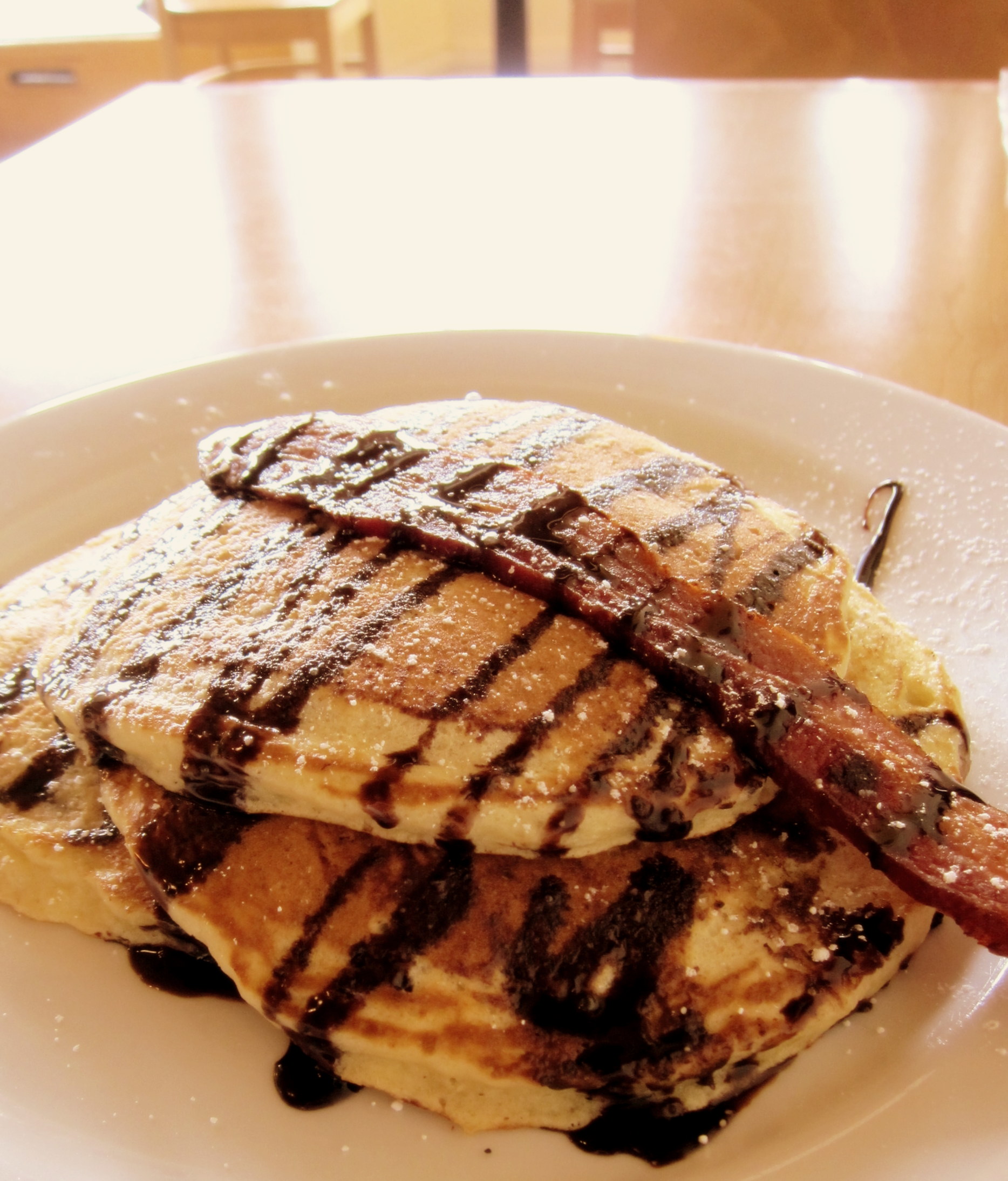
The sky is grey. The ipod plays Gustav Mahler’s piano quartet in A minor. One hand turns the page to Der Prokurator. The other hand maneuvers the fork into a stack of three pancakes. Oozing chocolate chips and a thick strip of bacon.


Bistro 1491 sits, in fact, at 1491 Solano Avenue. Somehow I keep thinking that the name is 1941. It feels so. The burn orange walls, the abstract paintings, the white-haired ladies by the window.

The pancakes are fluffy, soft, good at first, the bacon is at the right saltiness. The maple syrup errs on the watery side, or maybe it’s just overwhelmed by what’s supposed to be dark chocolate but turns out too sweet. About 60% dark. A heavy feel sets in after the pancakes are gone, what’s left on the plate are messy streaks of brown chocolate and faint yellow syrup. It could almost make a hasty painting. But hasty does not suit this scene.

Address: Bistro 1491
1491 Solano Ave
(between Santa Fe Ave & Curtis St)
Albany, CA 94706
(510) 526-9601
Breakfast at noon: dark chocolate & bacon pancakes – $8.65

Bánh bèo tips from Mrs. Tự

March 28, 2012 By: Mai Truong Category: Central Vietnamese, Houston, Opinions, RECIPES, Vietnamese


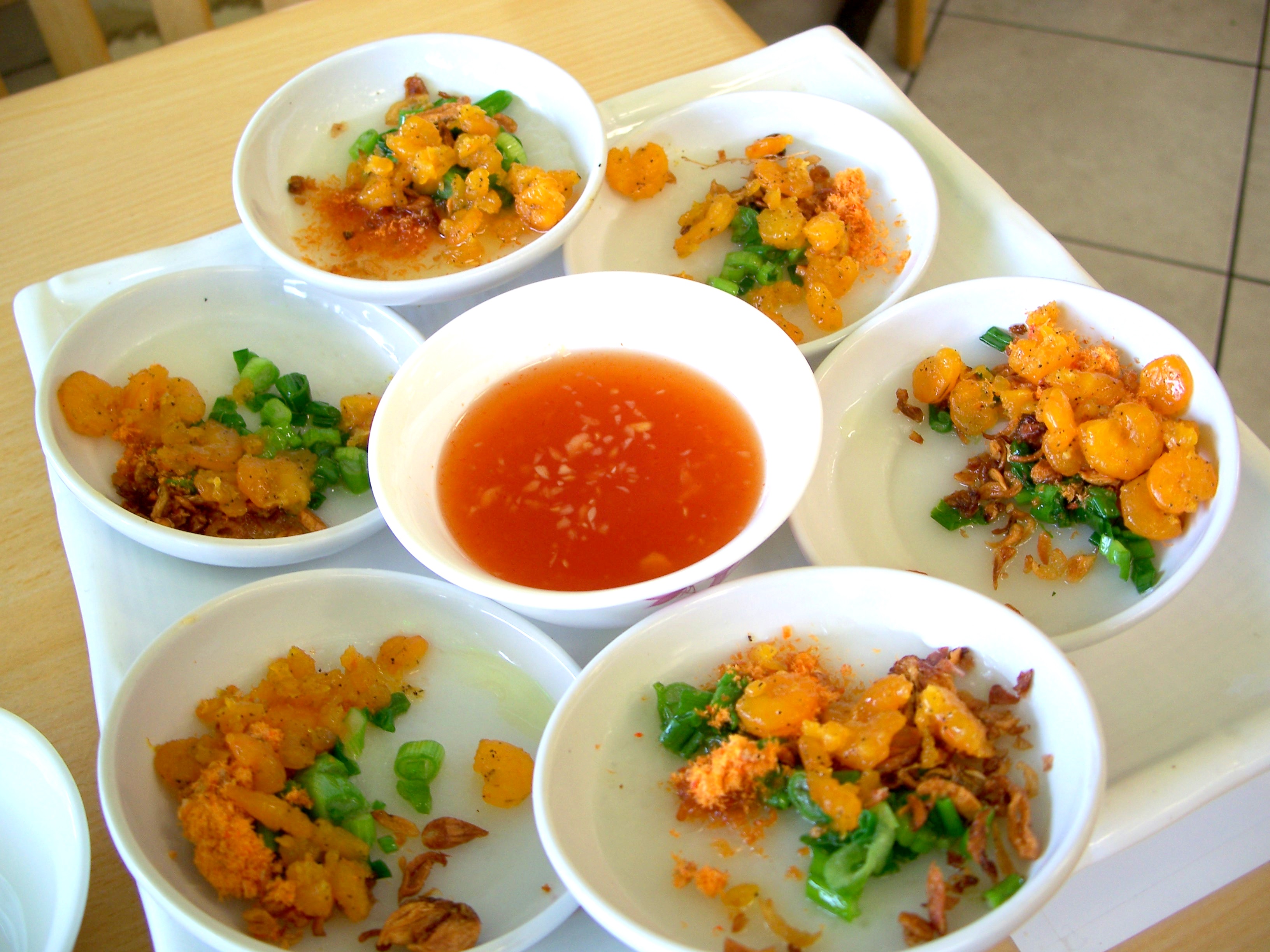
A couple of millimeters thin, chewy, savory, bánh bèo, the waterfern-shaped appetizer, is as familiar to the Vietnamese dining tables as crab cakes to Americans. But not everyone makes it at home because it takes more time than its worth: make the rice flour batter, steam the banh, make the toppings, mix the fish sauce. In fact, I’ve had homemade bánh bèo only once, and it was at my friend’s family restaurant. That said, there are skilled and dedicated grandmas who insist on making everything from scratch for the best bánh bèo. One of them is Mrs. Tự, and Little Mom happened to see one episode of her cooking show on TV last week.

So below are some tips on bánh bèo from Mrs Tự, collected from the show Nghệ Thuật Nấu Ăn Bà Tự (The Cooking Arts of Mrs Tự) on Global TV Houston.

1. Texture:
The thinner bánh bèo is the better bánh bèo. Of course, resilience is a must, it should not be as chewy as a mochi, but it should have enough strength to hold itself together as the eater picks it up with chopsticks. How to make a thin but resilient bánh bèo? Heat the bánh bèo plates (or molds)* in the steamer before pouring in the batter and steaming the bánh. I suspect that this preheating helps cook the batter evenly in all directions, instead of having the bottom cold and cooking it with steam from only the top surface during the first few moments.

2. Toppings:
Bánh bèo of the South has savory mung bean paste for topping, and bánh bèo Huế usually has pan-dried shrimp (tôm chấy), which blogger Tran Ngoc Kha translated as cotton shrimp for its fluffy texture. Fresh shrimp** (with head, legs, shell, everything) goes without saying: while peeling off the shell, you can keep the gạch, a substance located in the head of the shrimp that becomes reddish orange when cooked, to sweeten and fatten the toppings***. How to make the shrimps dry and fluffy? Microwave the peeled shrimps so that the meat is red, plump, and has a spring to it. Then pound the shrimps to break up the bodies, but not to a paste. And fry it on high heat with constant shuffling.

But bánh bèo can also be topped with pork rind. To make the pork rind, Mrs. Tự would slice the skin off the pork belly, boil it, cut into thin strips, refrigerate them, and finally deep fry them. The refrigerating step prevents the fat from shooting everywhere while frying. How to tell when the skin is refrigerated long enough? If you bend the strip and it gives a loud, clean snap, it’s done.

Then there is also topping made with bean paste, meat and tapioca, seen on bánh bèo in Quảng Nam Đà Nẵng. The better tapioca flour (bột năng) is not the white powder straight from the bag, but that which is pan-dried to really rid of moisture. How to know when the flour is dry enough? Mrs. Tự puts either a pandan leaf or a piece of a banana leaf into the wok as she constantly stirs the flour, the heat from the flour vaporizes the moisture in the leaf, when the leaf dries up and becomes crunchy, the flour is done.

(*) Bánh bèo should be made in mini shallow cups (like sauce cups) made of porcelain. The molds are convenient but render a metallic taste, the bánh bèo would be too thick and oily because the molds have to be greased before steaming.
(**) Some places serve up bánh bèo tôm chấy with packaged dried shrimp (tôm khô). Never go there.
(***) Crabs have more gạch than shrimps, so gạch cua (gạch from crabs) is more well-known in Vietnamese cooking. In Japanese, gạch cua is indeed kanimiso, the brownish grey substance that is a mix of the crab’s internal organs (brain, liver, pancreas, intestine, eggs, etc.). Good stuff. 🙂

Tags:

Slice of Happiness and Houston food truck events

March 22, 2012 By: Mai Truong Category: American, Houston


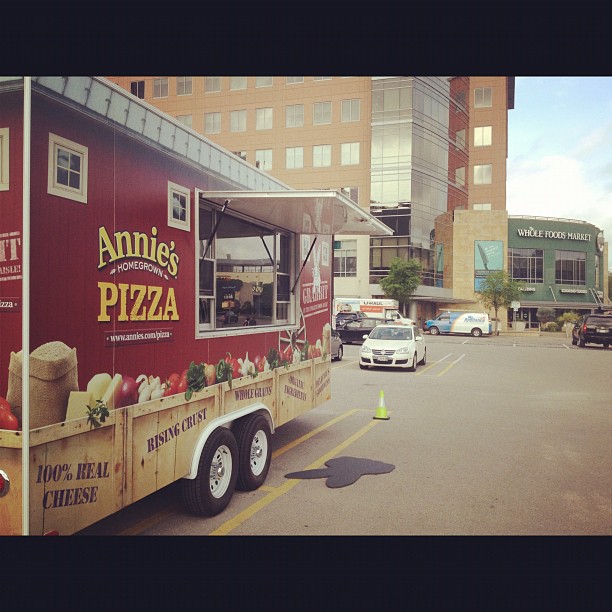
If you’re a student, you know the significance of frozen pizza. It comes only second to instant noodles, i.e., packaged ramen, and on some days I might even argue that it’s better than instant noodles in terms of efficiency. There are three sections that I always check when I go to the groceries: the noodles, the ice cream, and the frozen pizza. Yesterday when I first learned of Annie’s, I went to their website and found out that Berkeley Bowl carries their product, so I’ll be looking for it, but if you’re in Houston and got some time to kill this weekend, why not beat me to a slice of “the first-ever-certified organic rising crust frozen pizza”?

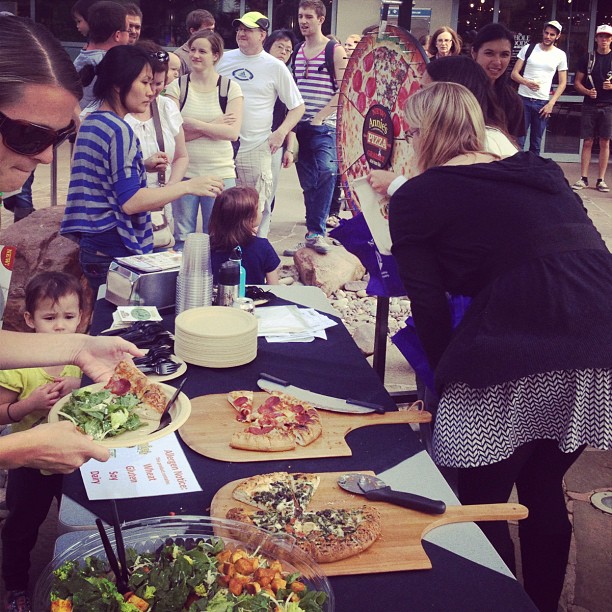
Annie’s will hold their “Slice of Happiness” tour during lunch hours at four Whole Food locations from this Friday to next Monday: 4004 Bellaire Blvd – Friday, March 23 (11 am – 2 pm), 11145 Westheimer Road – Saturday, March 24 (10 am – 1 pm), 701 Waugh Drive – Sunday, March 25 (10 am – 1 pm), and 2955 Kirby Drive – Monday, March 26 (11 am – 2 pm).

The tour will feature their recent February-launched pizzas in four flavors.


The most interesting thing of the tour, though, is the Truck Farm, an herb garden in the bed of a pickup truck. Finally, a good use of the space that’s hardly ever used but consumes a lot of energy. It actually seems quite feasible to implement in every household if the garden could be set on a removable platform, so you can leave it in your garage for a day in case you actually need the truck bed to move furniture or your garden hose.


Anyway, that got me thinking about the food truck trend in my neck of the wood, Houston. This May 12-13 will see the second annual Haute Wheels. From the list of participating trucks, it appears to have, as expected, a fair amount of mixing between Asian and Southern cooking, with lotsa meat (of course, that’s how Houston rolls), but pretty much everything is comfort food. Nothing too out there. I wouldn’t expect vanilla ice cream topped with mealworm. But that’s actually good: food trucks weren’t created to carry crazy foods or culinary inventions, they were meant for specific comfort food mastered by vendors to satiate the common people’s palate. They shouldn’t be strange. They just have to taste excellent.

Tags:

FIVE and a Flavor Giveaway

March 21, 2012 By: Mai Truong Category: American, California - The Bay Area, Comfort food, The more interesting


Dressed in black and white patterns from walls to chairs, FIVE spots a slightly older, more refined atmosphere for casual hotel dining just above the Berkeley BART station. I meant to go here after someone said that he finally understood the rave behind “chicken and waffle” after he had it during FIVE’s After Hour Happy Hour. If that dry white meat and cake-like bread at FIVE was that good, then surely the other things wouldn’t disappoint. Now nothing on the regular dinner menu costs 5 bucks like the Happy Hour (7-9 pm) nosh, but I got hungry before 7 pm, so I dashed in on what seemed to be a busy night. The hotel is hosting some conference. Nobody wanted to eat with me today, but one beauty of going alone is that you can always get a table.

That said, if you have a party of 4 or less and would like to raid FIVE, which you should, I have a FIVE Vip Card “valid for a 20% discount in FIVE” to give you. Here’s how to get it:

Leave me a comment below by midnight March 31, and if the number of comments is more than 1, which would make me ecstatic :D, then the winner will be chosen by a random number generator. The card is valid until July 31st, 2012. The winner will receive the card by mail or in person.

Here’s why you should eat at FIVE:

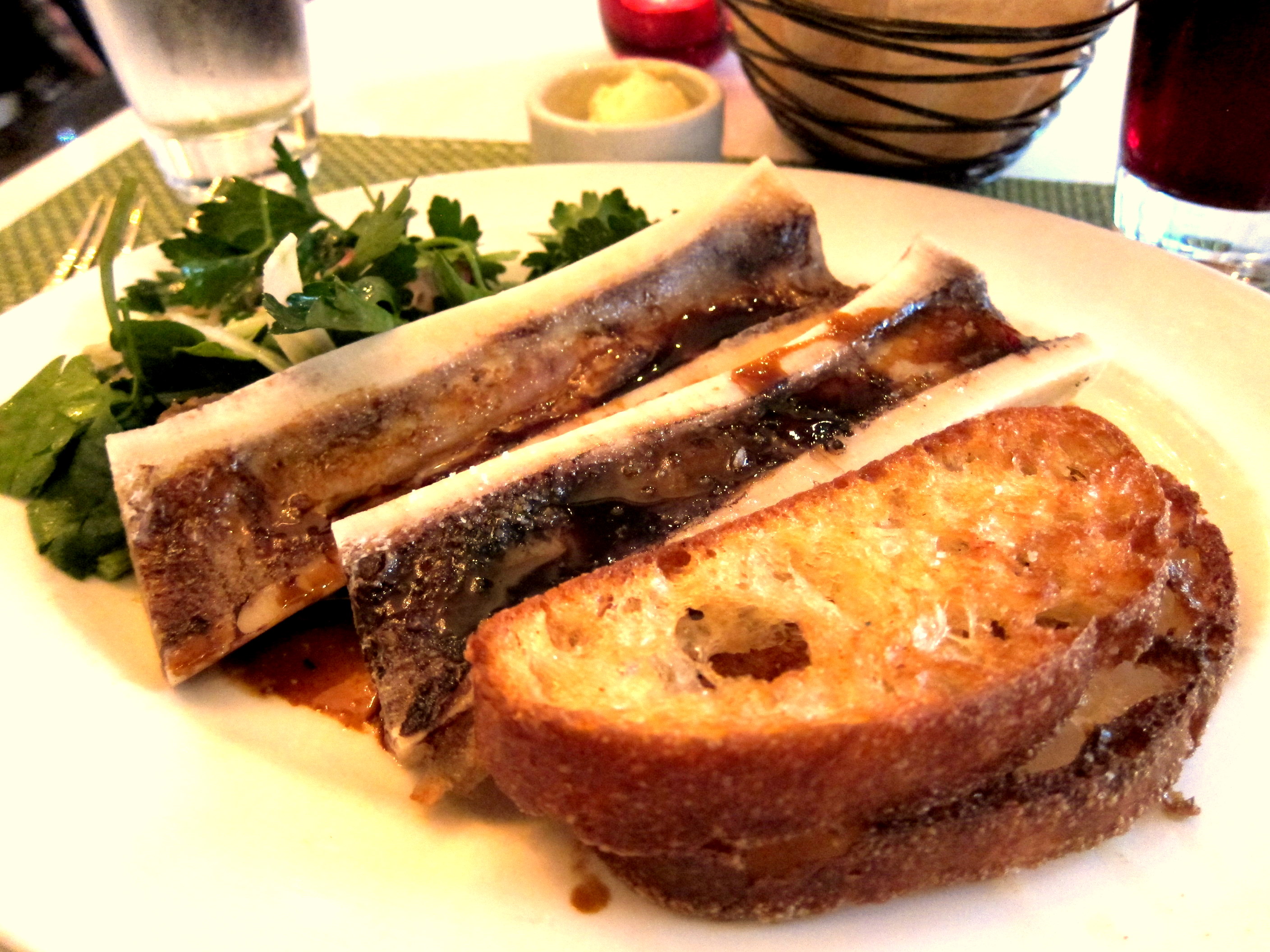
Appetizer: roasted bone marrow on crunchy fried bread with parsley and pickled shallot salad ($9). The bone marrow is rich and fatty, as expected from a cow leg bone. The salad is dressed in a light bordelaise, sweet, taut, and feisty. The fried toast is a guilty pleasure.


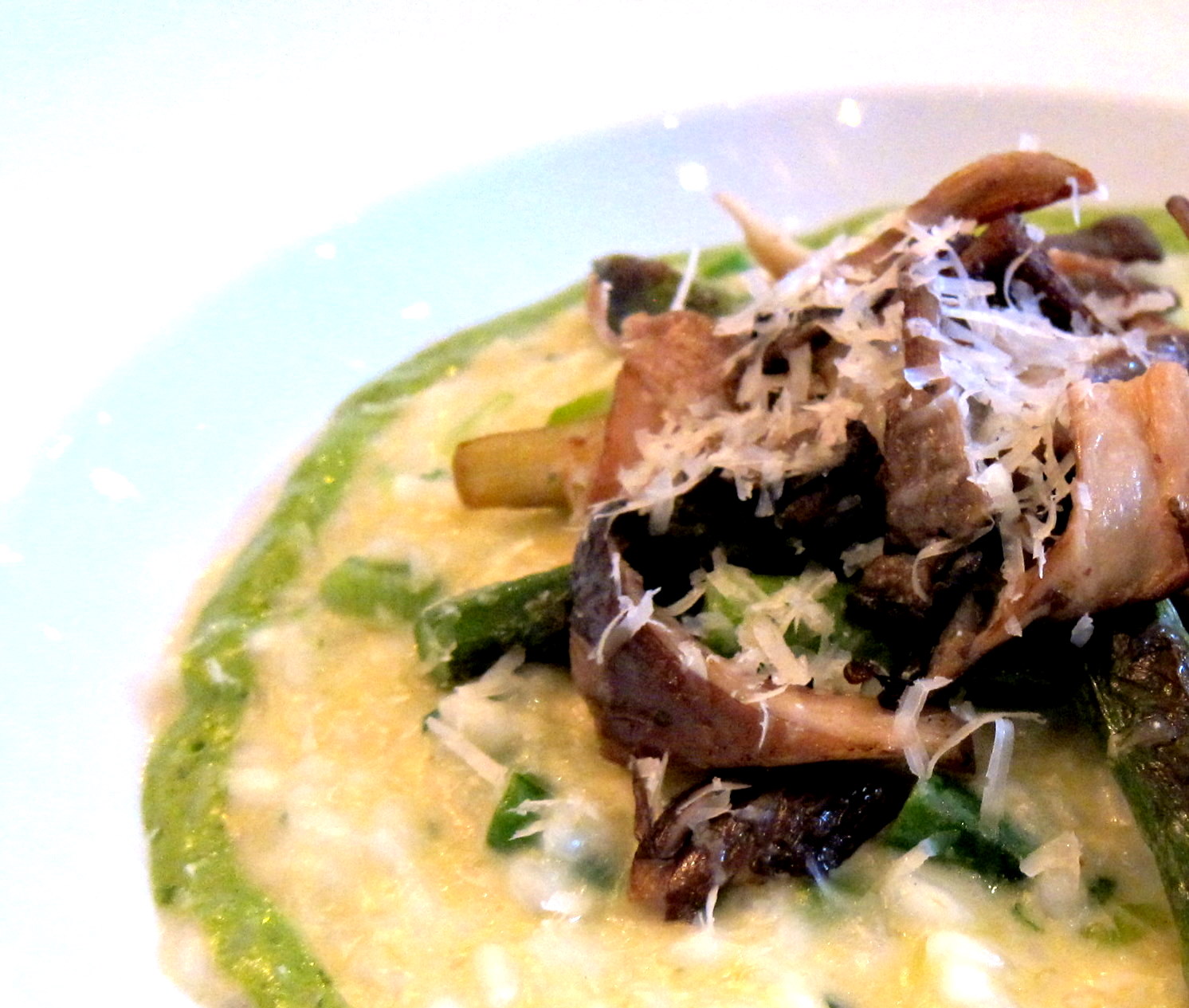
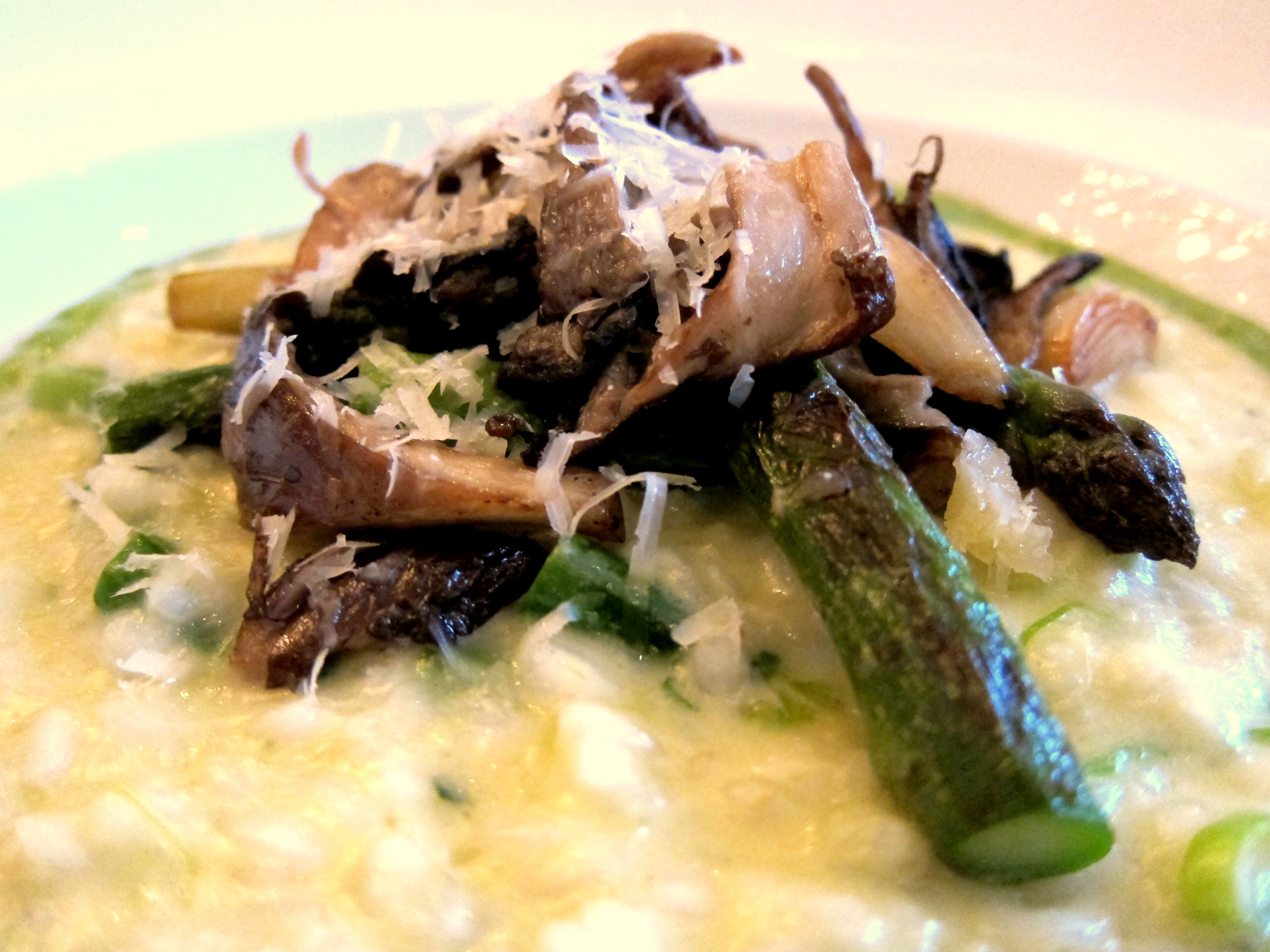
Main: creamy green garlic risotto with grilled asparagus, oyster mushroom, shallot, and pesto aioli ($16). The ladies next to me got the prix fixe, which also featured this risotto with shrimp, and they kept complimenting how good it was. The charred, salted touch of the vegetables is the highlight.


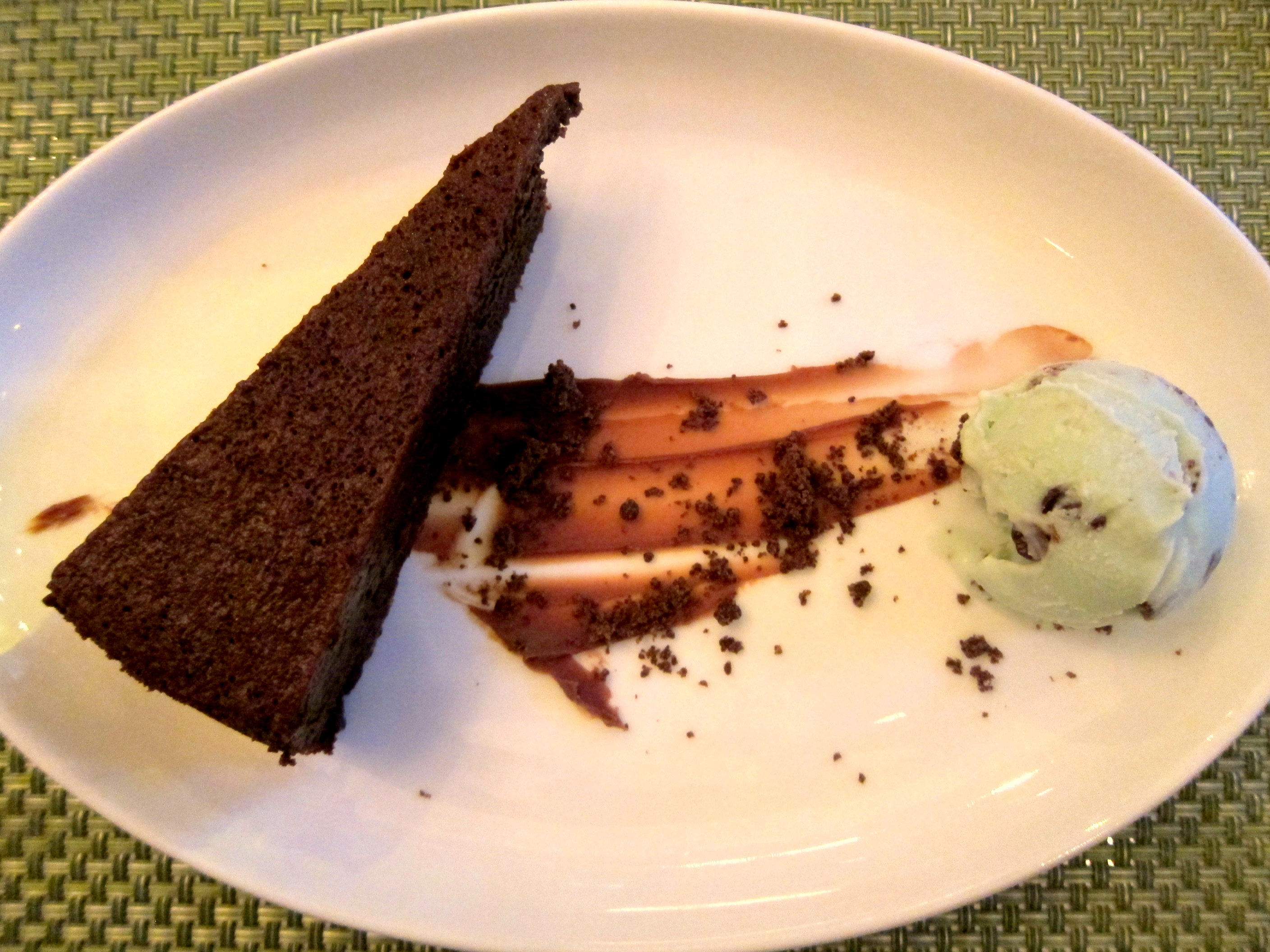
Dessert: dark chocolate torte with a milk chocolate ganache and mint chocolate chip ice cream ($8). I asked my server what was the least sweet desserts tonight (the other choices were butterscotch pudding, walnut carrot cake, and coconut cream pie), and he suggested this torte. It is rich, but it is indeed not too sweet. My only complaint is that the ice cream scoop is too far away from the cake, making it difficult to get both cake and ice cream in one bite. At the end, I had a puddle on my plate.


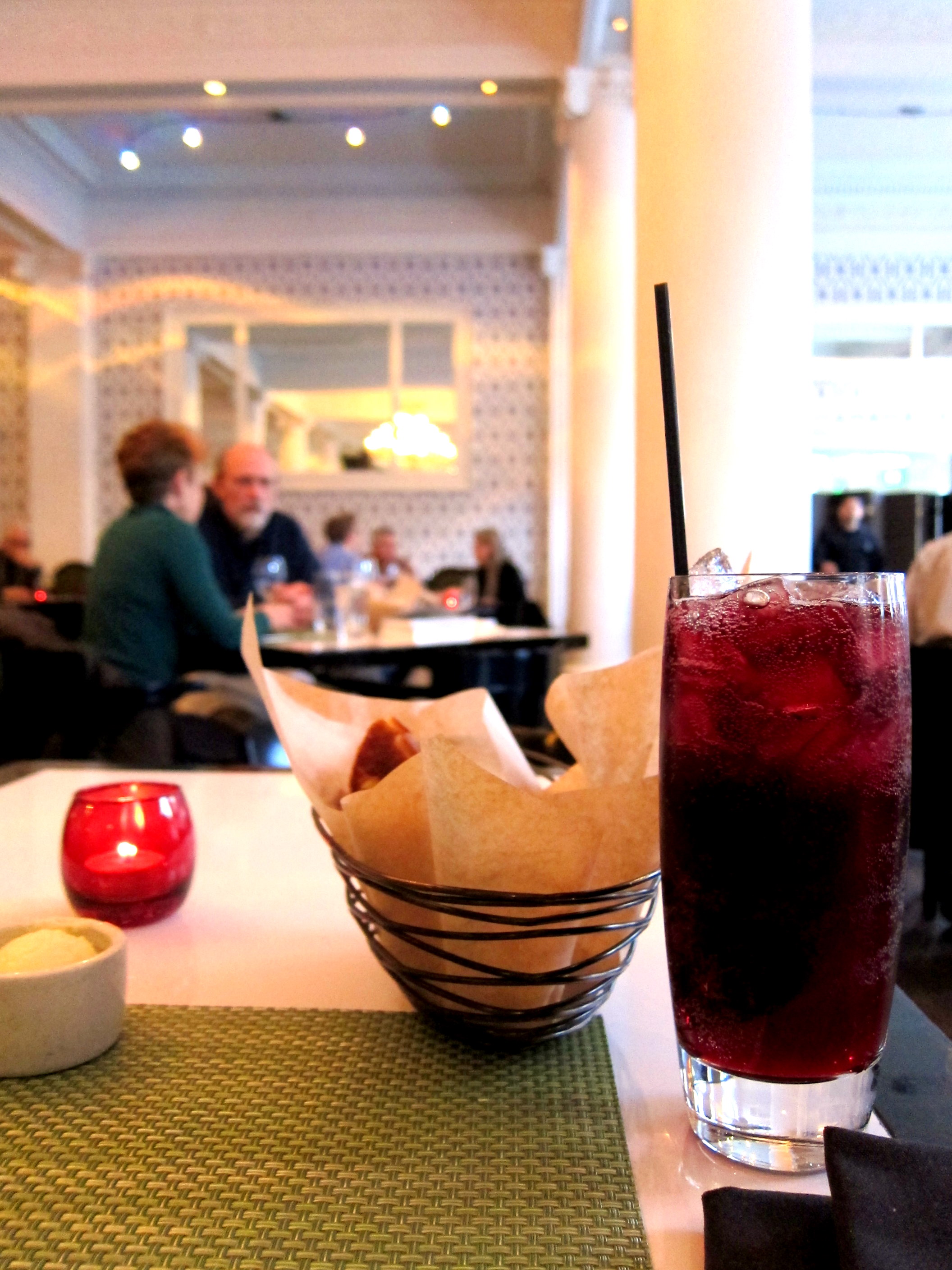
The starter bread is crunchy on the outside, soft and airy on the inside, and perfect without butter. Now that I think about it, FIVE must be quite good with breads: waffle, starter bread, and the fried toast with bone marrow are proof. Because the restaurant had run out of pear sparkle, I might have made a mistake ordering the blood orange sparkle instead of the apple kind; I also chose the pretty simple stuff, nonetheless, it was a pleasing meal. So the more interesting things like monkfish wrapped in prosciutto or herb roasted pork loin might be even better. 😉

Address: FIVE Restaurant and Bar
2086 Allston Way,
Berkeley, CA
(510) 225-6055

Money matter: 3-course dinner for one – $40.28

Sencha and Mochi

March 19, 2012 By: Mai Truong Category: California - The Bay Area, Drinks, Japanese, sweet snacks and desserts, Vegan


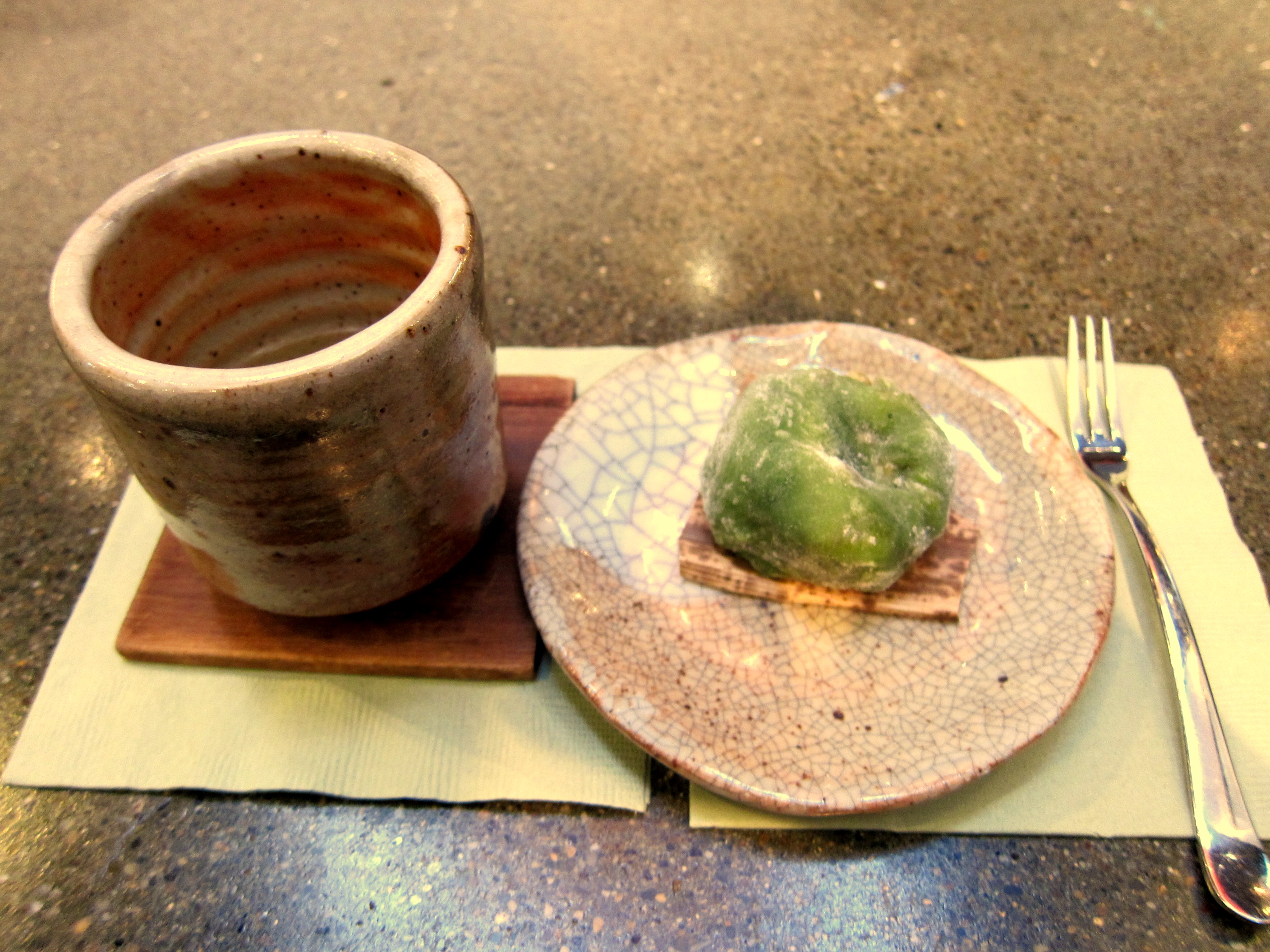
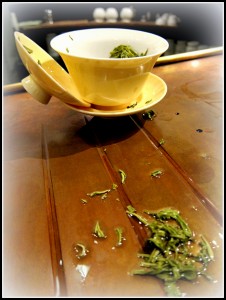
Sencha in yunomi, a typical Japanese thick, tall teacup, whose name I’ve yet to find out, accompanied by a matcha mochi, whose fillings include: satsuma sweet potato, red bean paste, orange juice and walnuts. (Thanks Masaaki for telling me the name of the cup in Japanese.)

The mochi, handmade and delivered by a mochi lady every week to Teance, is refreshing both in look and in taste. The green tea flavored chewy coat is cool and light. The filling, although dominated by red bean, is not too sweet. I opted for one with less nuts because I didn’t think that I would want such contrast in texture. The mochi lady is a small, timid Asian lady, who smiled so happily when I described her mochi as “refreshing”, and who showed me that I should dip my fork into tea or water before cutting the mochi so that it would not be sticky. Yes, it worked, the fork went straight through with such ease. Now it makes sense why we can chew without the mochi sticking to the teeth.

This is my second time having sencha, if we don’t count the time I had genmaicha at Ippuku (genmaicha is lower-grade sencha with roasted rice), and the seaweed taste of sencha has grown on me. However, I am not convinced that the sencha is a good match for the mochi. Both are good by themselves, but I think the sencha should be an entree tea, not a dessert tea. Its seaweed taste would enhance something savory. A mochi would fare much better with a light, floral tea that isn’t too dry, like Yellow Gold, Royal Courtesan, or Darjeeling First Flush.

Sidenote: this sencha at Teance is the hand-picked Yakichi sencha, named after the farm “founded by Mr. Shimooka[…]. Yakichi sencha is an eight-time Ministry of Agriculture award winner, and also the winner of the highest agricultural award, the Imperial Prize. […] This traditional Japanese tea is shade grown (kabuse) in the mountains above Uji.” (description from Teance webpage)

Meghan explained to me that shade grown leaves are of higher quality because when the plant is shaded, it has to produce more chlorophyll to balance the lack of sunlight, resulting in a greener leaf (or maybe a darker green leaf?). According to The Tea Detective, “the increased green chlorophyll pigment changes the natural balance of caffeine, sugars, and flavanols in the leaf. It also increases L-theanine, an amino acid found naturally in tea, that adds a unique vegetal quality to the flavor, and helps counteract some of the stimulant effects of caffeine, thus having a relaxing effect on the body, yet an alert state of mind. Photosynthesis reduces L-theanine and increases tannins, the compounds responsible for teas astringency.” Basically, kabuse (shade grown tea) is sweeter, less bitter, and less dry.

Address: Teance Fine Teas Store
1780 Fourth Street
Berkeley, CA 94710
510-524-2832
Money matter: the mochi is $4 each. A little pricey, but somehow it seems reasonable to me.

This post also appears in Tea and Mai

The spiciest soup I’ve ever eaten

March 17, 2012 By: Mai Truong Category: Houston, Korean, One shot


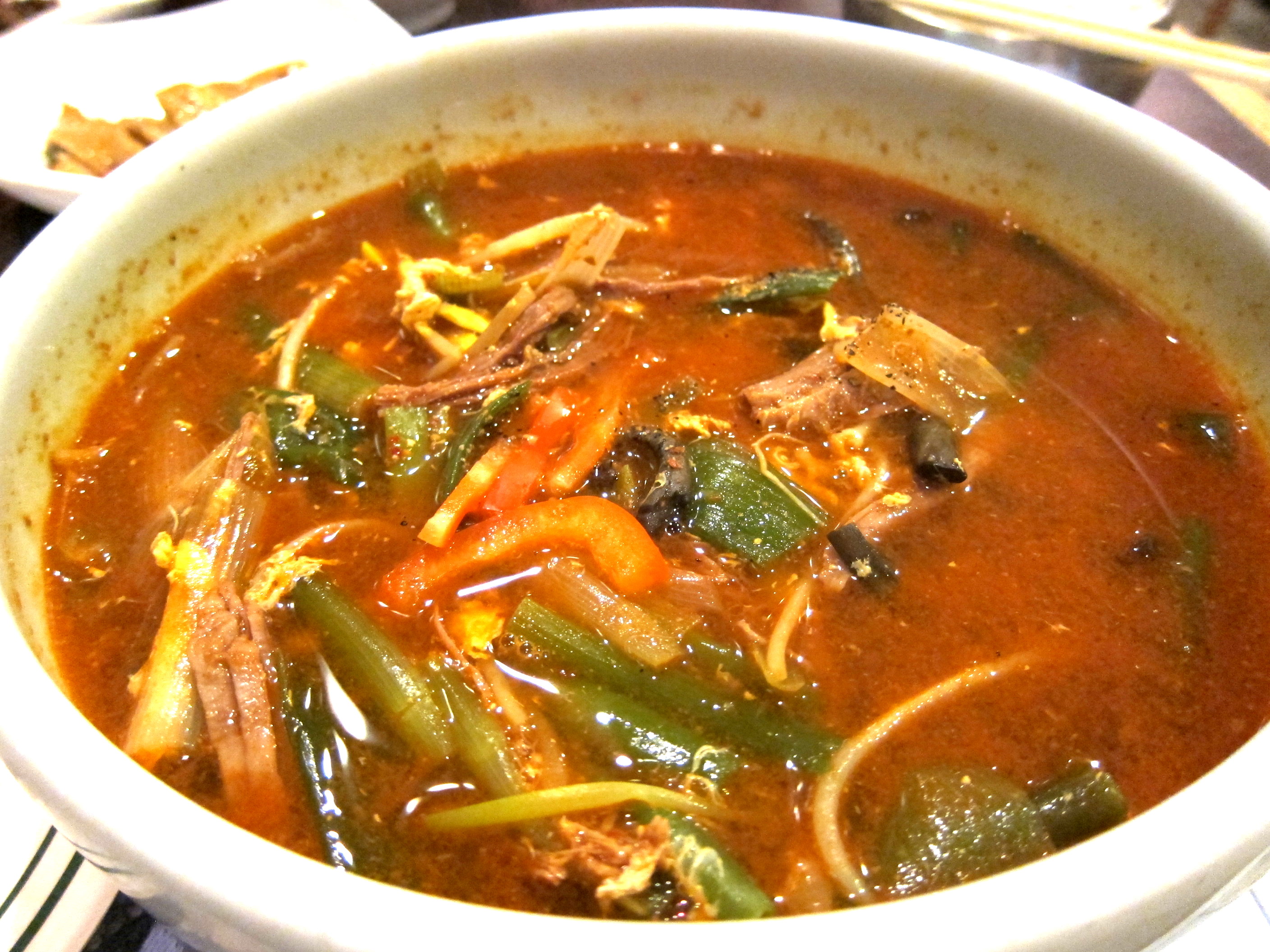
A while ago, I was fairly convinced that of all the different types of spiciness, I can handle the Korean spiciness. Take kimchi for instance, it usually looks scarier than it tastes, and the scorching can be quickly washed away with corn tea. Not an eye was bat when I saw the garnet broth of Il Me Jeong‘s specialty. It’s just loads of shredded beef, sesame leaf, glass noodle, green onions, etc., in a thin soup. Then tears rained down.

No more yuk gae jang (육개장) for Mai. Ever.

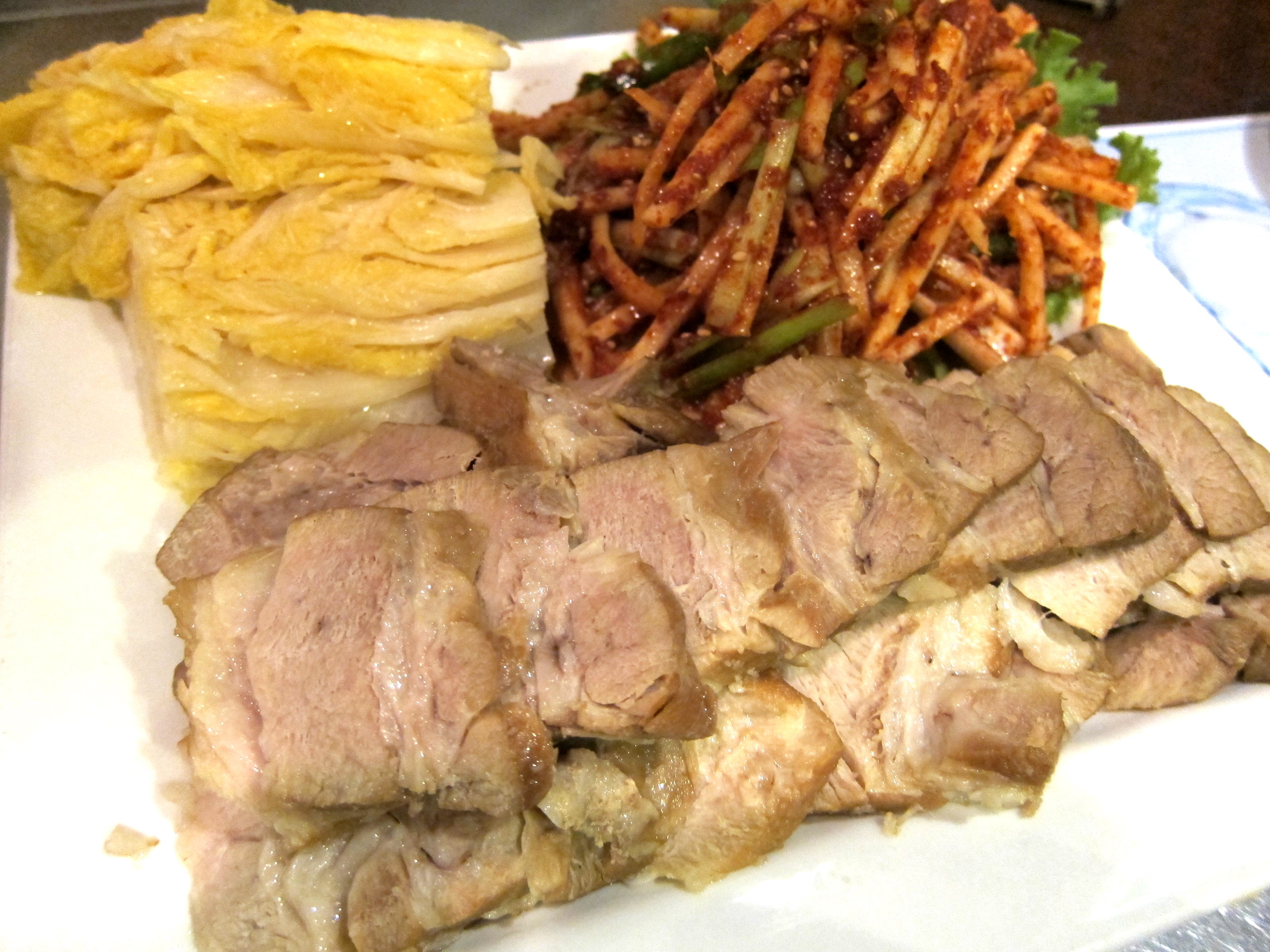
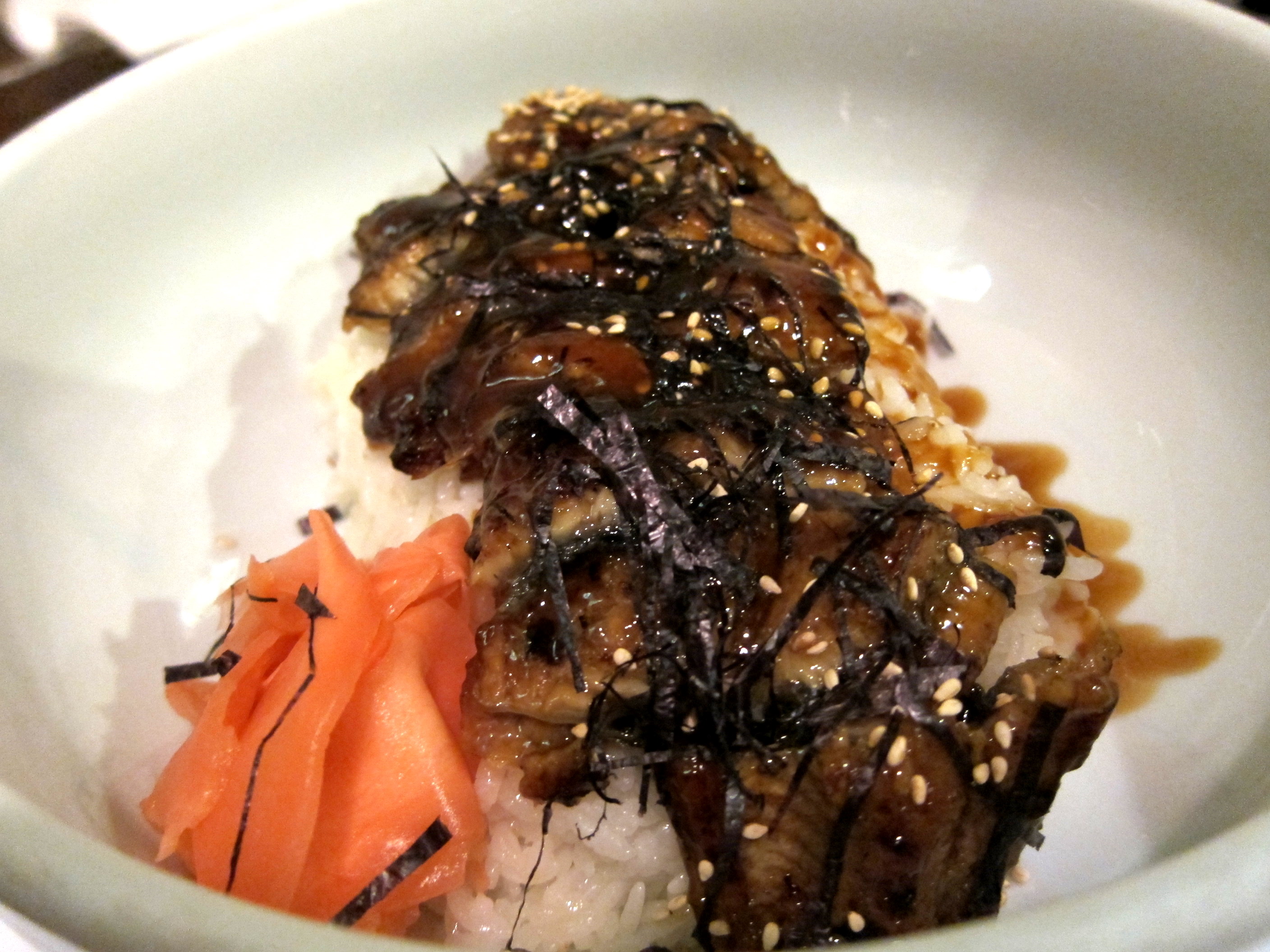
Il Mi Jeong has good unagi don and bossam though. 😉 Go for those instead.

Address: Il Mi Jeong (or Il Mi Jung)
10017 Long Point Road
Houston, TX 77055
(713) 827-8808


Time well spent at Ippuku

March 01, 2012 By: Mai Truong Category: California - The Bay Area, Japanese


“Ippuku” means “break” or “to take a break”. It doesn’t surprise me that this place made it into the Top 100 of the San Francisco Chronicle last spring, I surprised myself that I had’t taken a break here all this time. How can I call myself a Berkeley food blogger without eating at Ippuku?
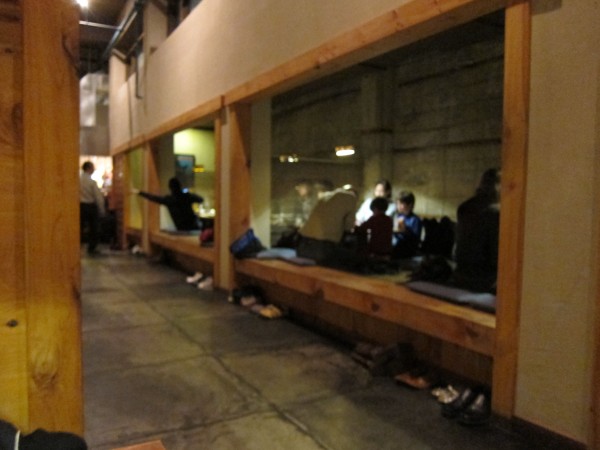

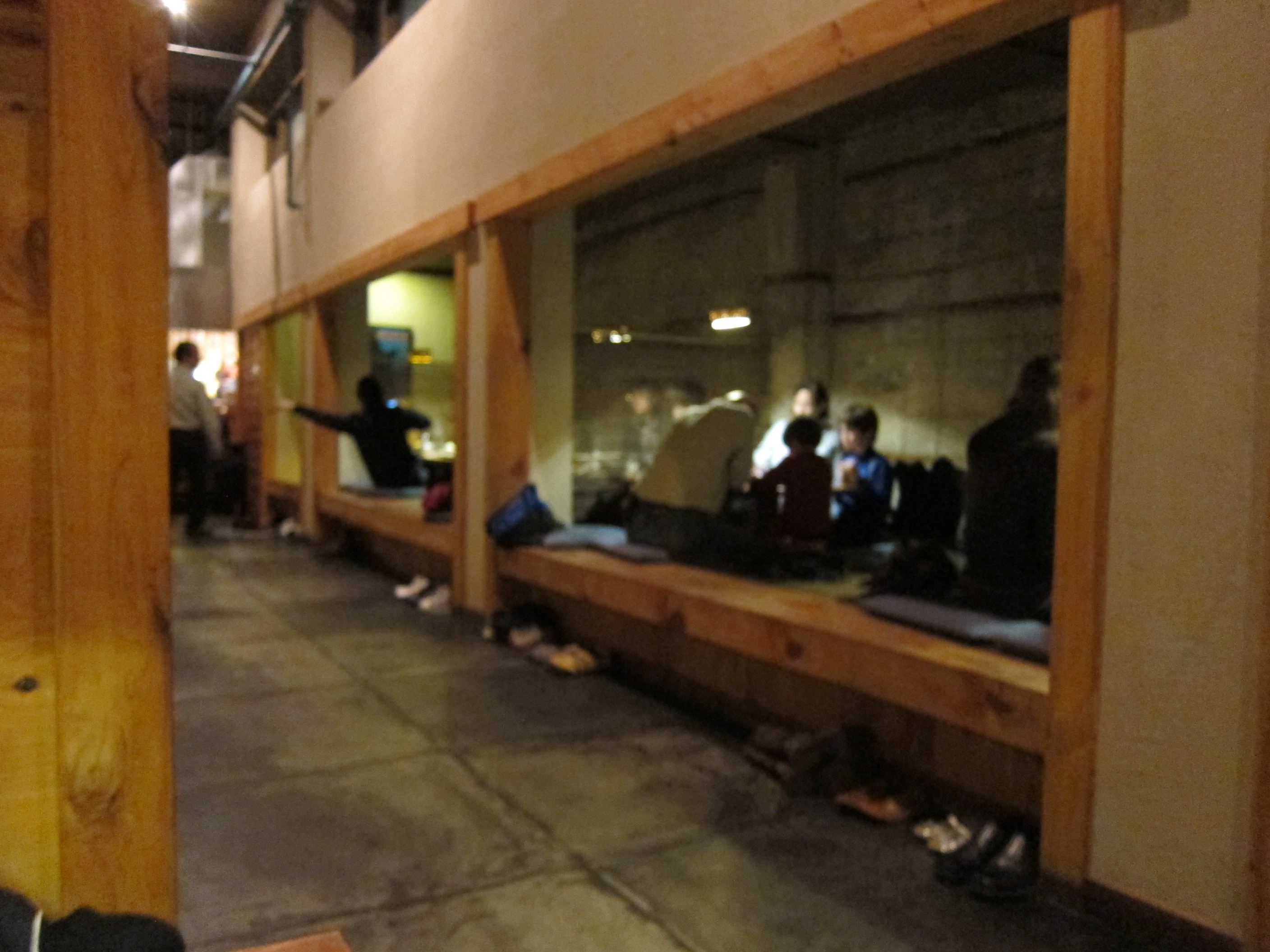
Maybe it’s the signless entrance that camouflages the izakaya in the dark, minus the dimly lit sake bottles on the side and the closed door, which I can never open correctly from the inside. Maybe it’s my distrust of Yelp reviews. But I brushed through the cotton curtains to enter that long, dark, narrow, stark simple structure, saw the half-shadowed faces immersed in quiet enjoyment, and the wooden platform, on which you can sit seiza style (flat kneeling) or dangle your feet under the table like a true Westerner; from that moment, I decided that it’s a lovely place, no matter how the food was. Of course, the food was good.
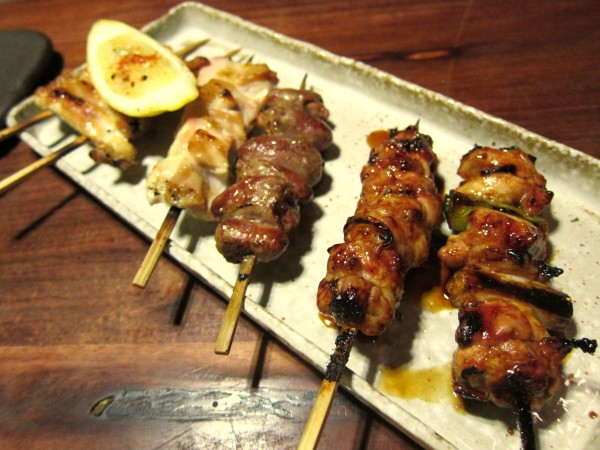

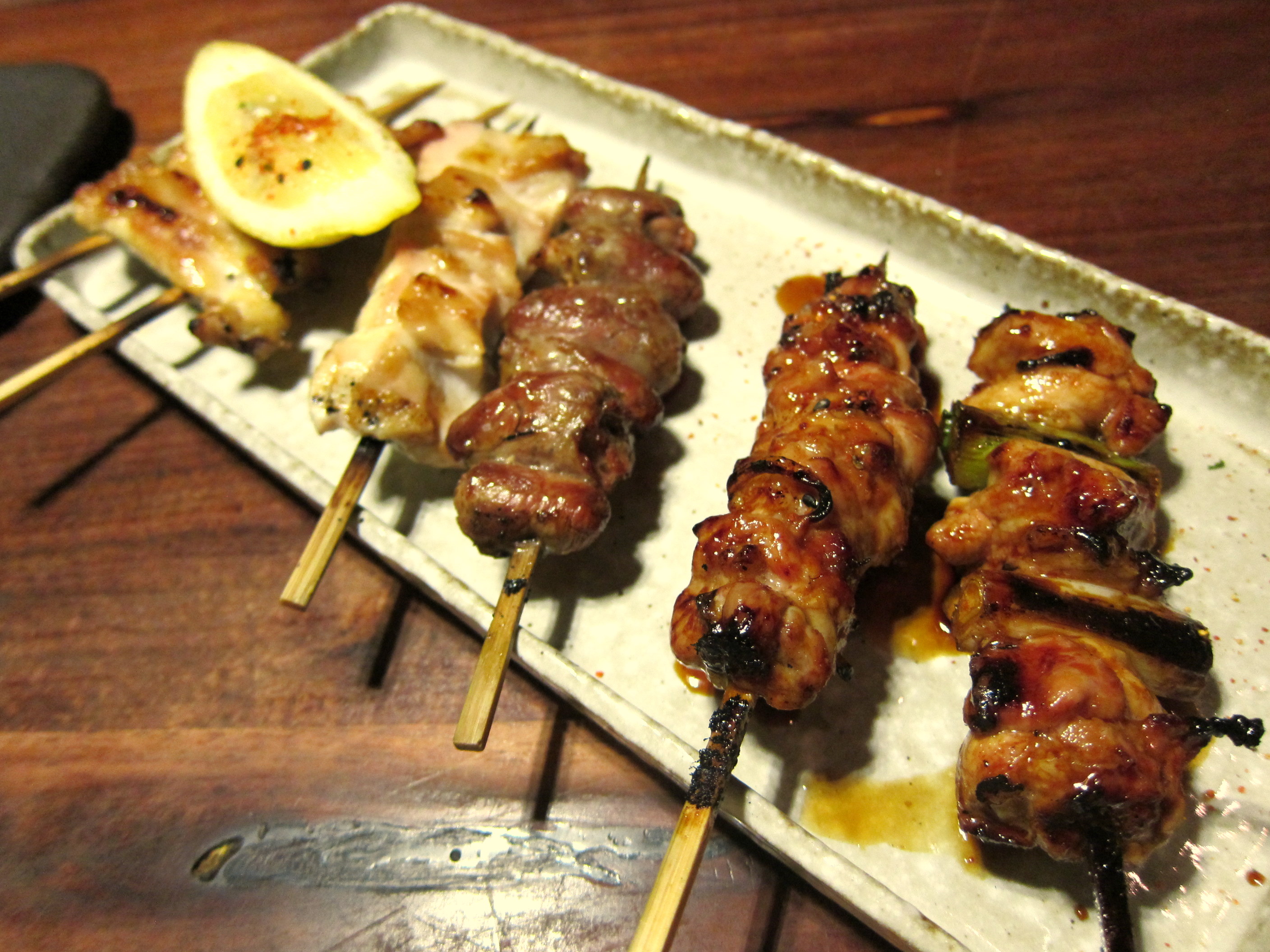
The most written thing about Ippuku must be the collection of all-part chicken edibles. Every single blog and its best buddies have something to say about (and a picture of) the omakase gushi ($14, 5 chef-choice skewers), which might include gizzards ($6.50), hearts ($6.50), shoulders ($6), necks ($6.50), breasts ($6), wings ($6.50), thighs ($6), tails ($7), varying throughout the night. They also have knee cartilage ($7) and breast cartilage ($7), which gets sold out before 6 pm. Growing up, I’ve had my shares
of chicken from head to toe to bone marrow, and I still clean the chicken bones to its dryest whenever possible, so this is old game. It’s not that “Ippuku uses every part of the chicken to its best effect”, Ippuku simply uses every part of the chicken and (hopefully) convinces the Western palate that white meat isn’t everything (if it is anything). The chewy crunchy gizzards and hearts made me feel at home.
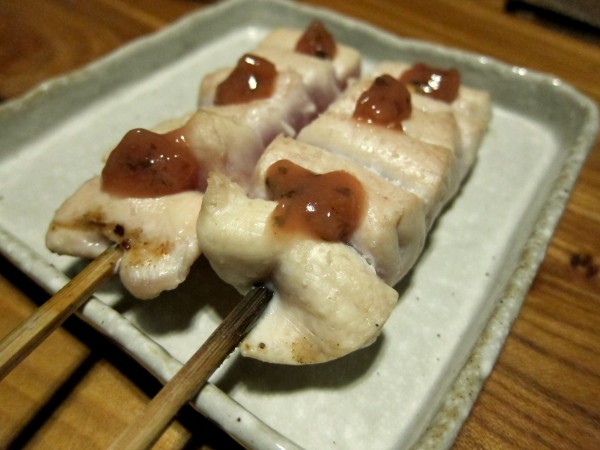

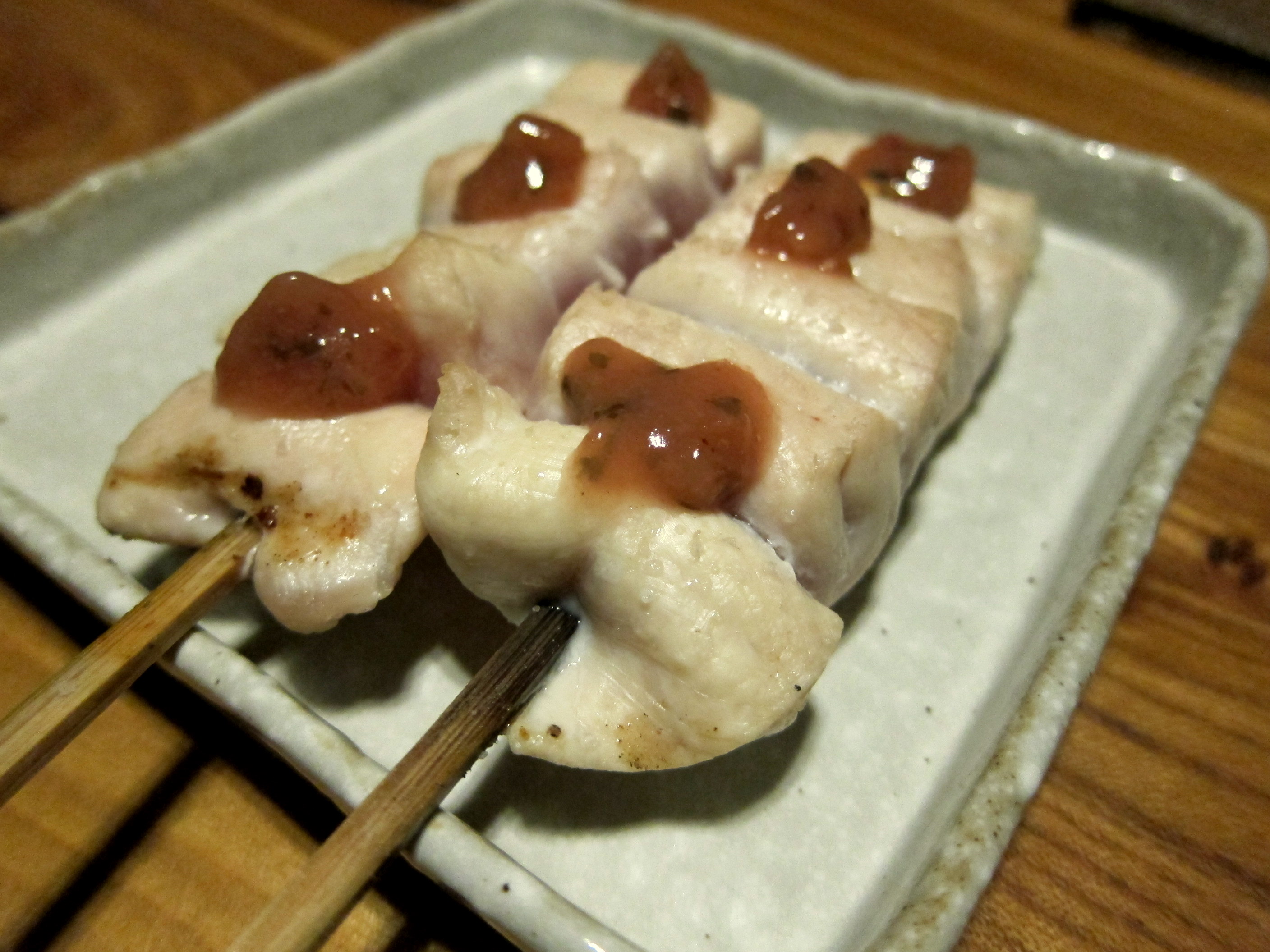
New to me was the lightly seared chicken breast, raw inside, dappled with ume ($8, sasami ume). Its rawness saves the white meat from being all dried up, the salty plum tickles the tongue. I like it more than I expected.
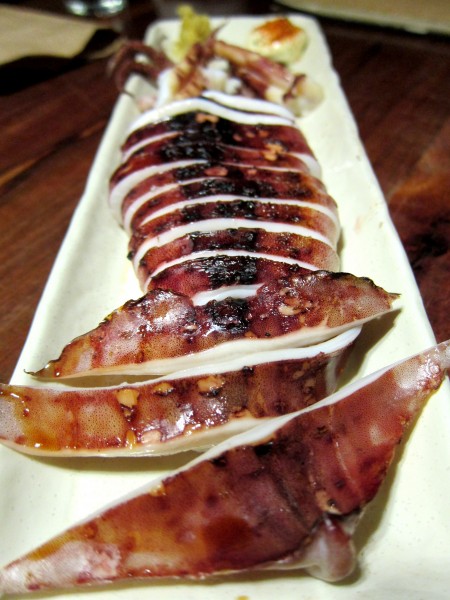

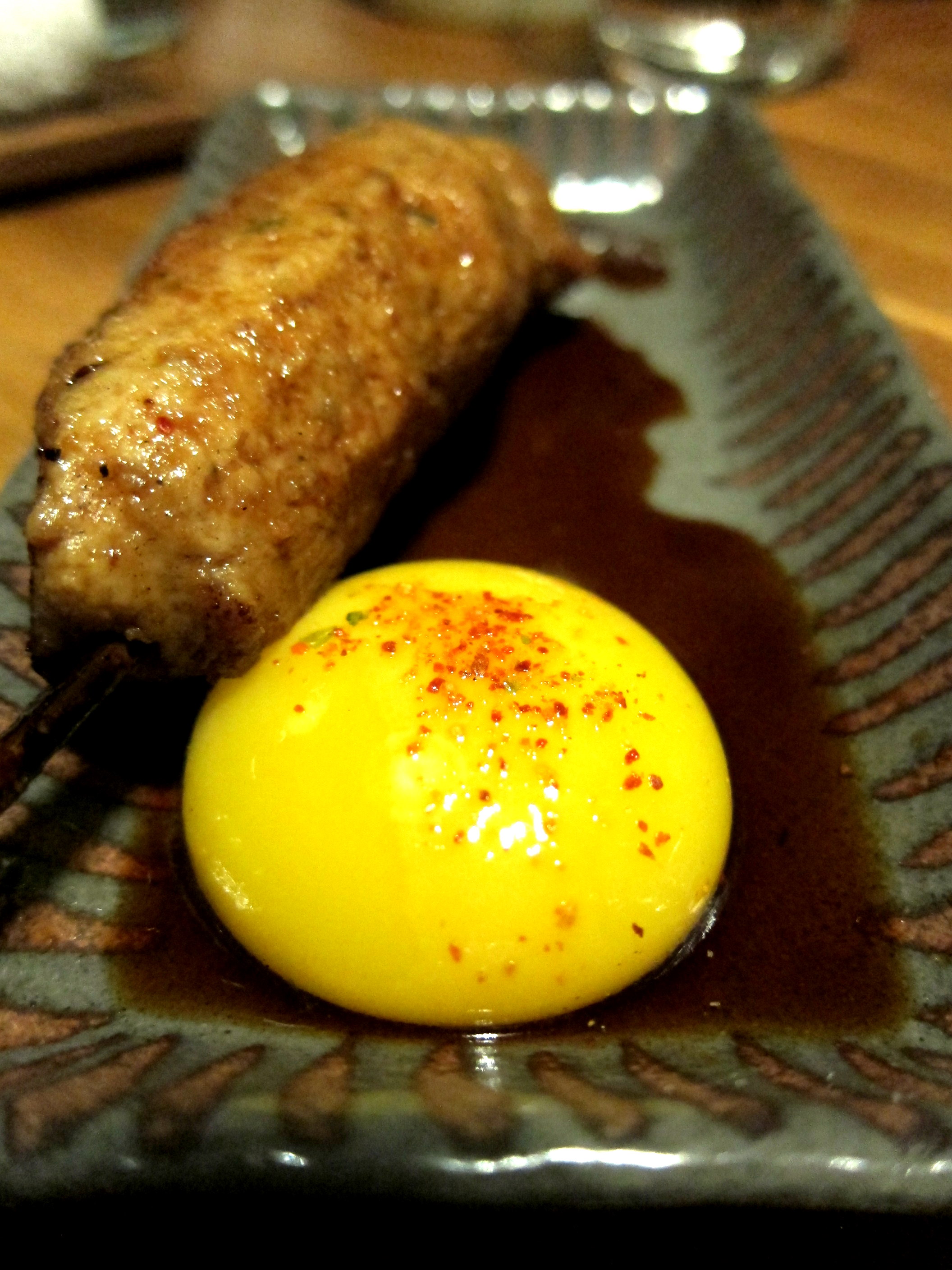
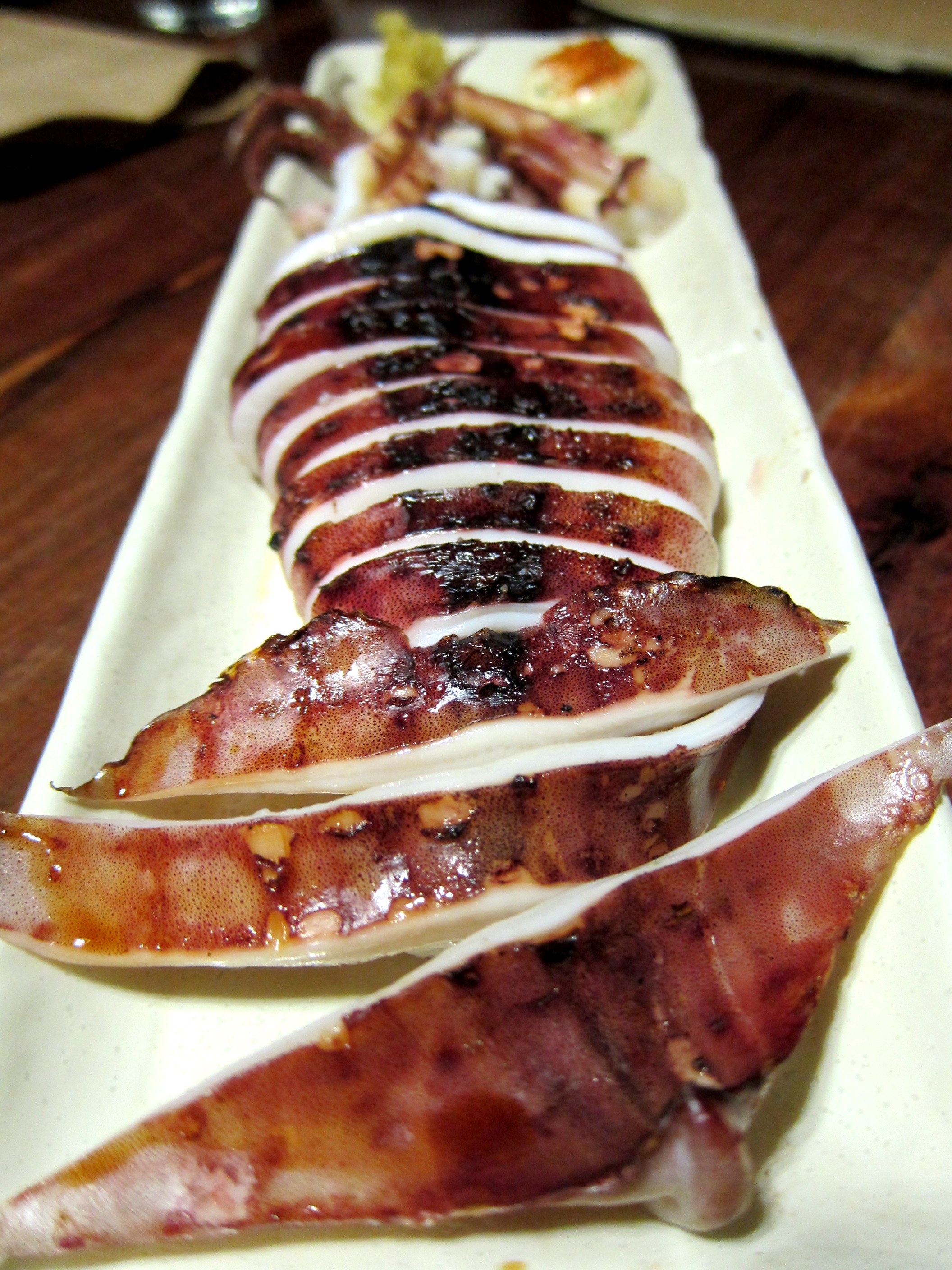
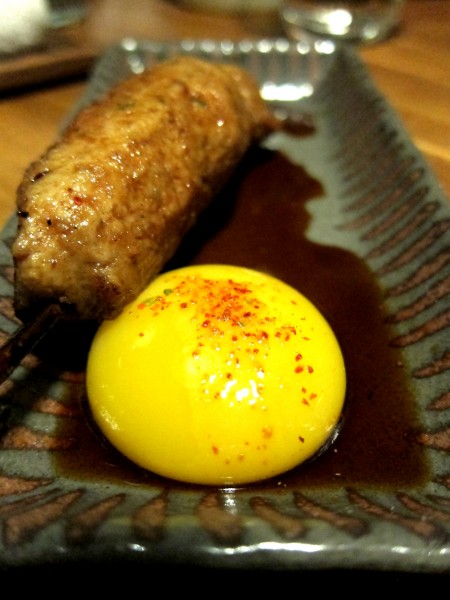
There are some good-but-not-brilliant things, such as the tsukutama ($7, minced chicken with an egg yolk), the negima ($6.50, chicken thigh with leeks), the aosa tenpura ($7, Okinawa styled seaweed tenpura), and the giant grilled Eastern Pacific squid ($10, ikayaki) (ok, so it was giant for 2 girls).
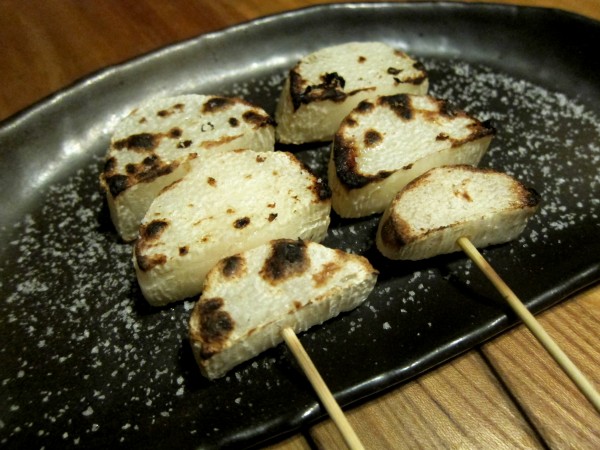

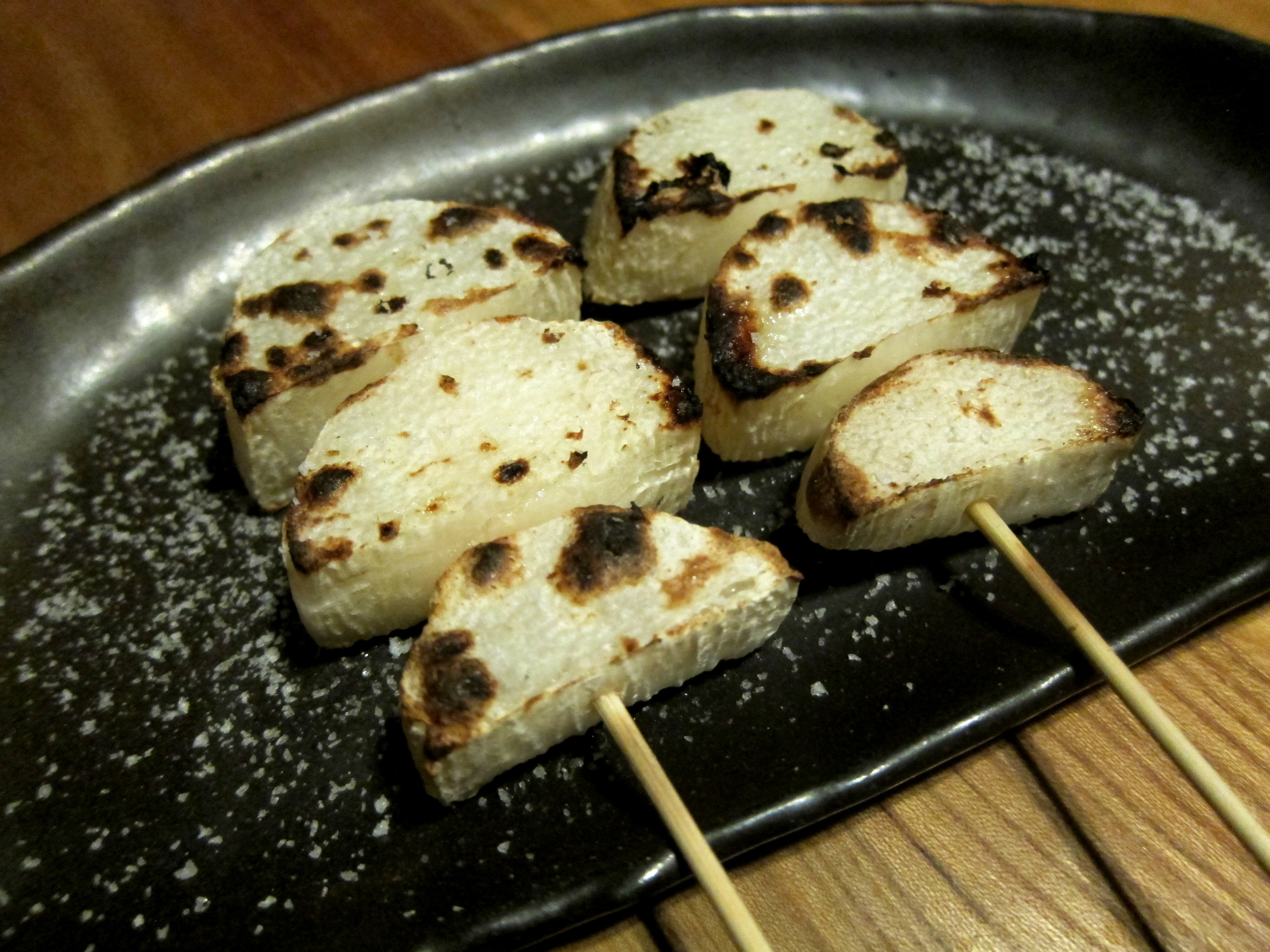
Granted that izakayas in the States are always expensive, there are also the blatant rip-offs: ikada ($5, grilled leeks), which is negi, and none of us knew what “negi” was at the time, or grilled yamaimo ($6), a white yam that is crunchy outside and sorta slimy inside (củ mài in Vietnamese). Oanh said that they’ve had it raw at another izakaya, and I think I would prefer this grilled version dusted with sea salt.
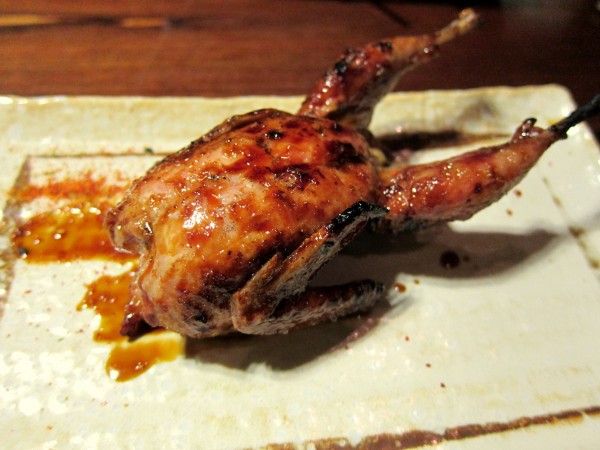

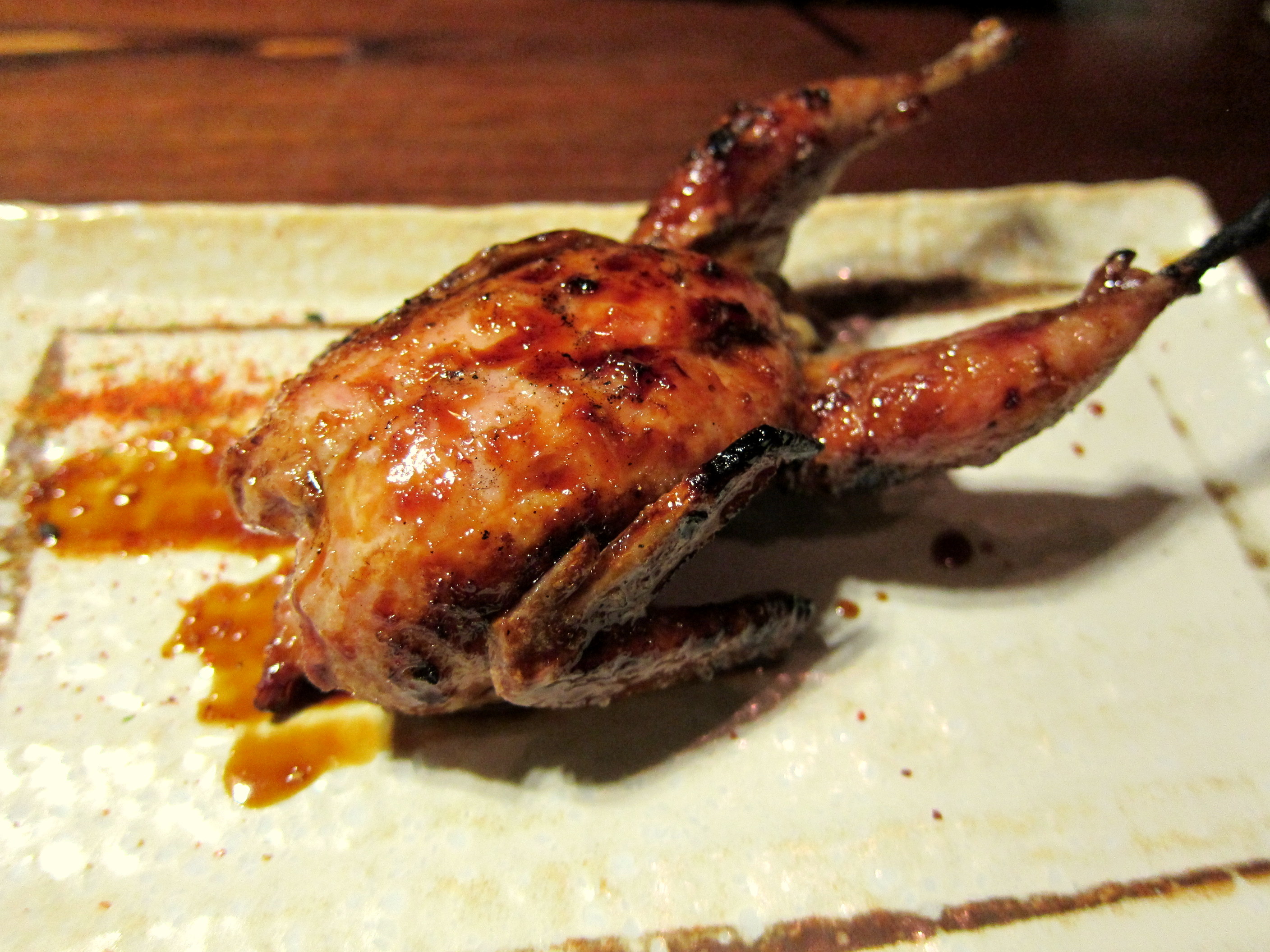
Then there are the oversalted ones: a juicy deboned and grilled quail ($10, uzura maruyaki), which Kristen and I split by each pulling a wing and a leg, and 2 pieces of pork belly ($8, kurobuta bara). But these are best tempered with a sip of genmaicha, whose seaweed flavor might seem strange at first.
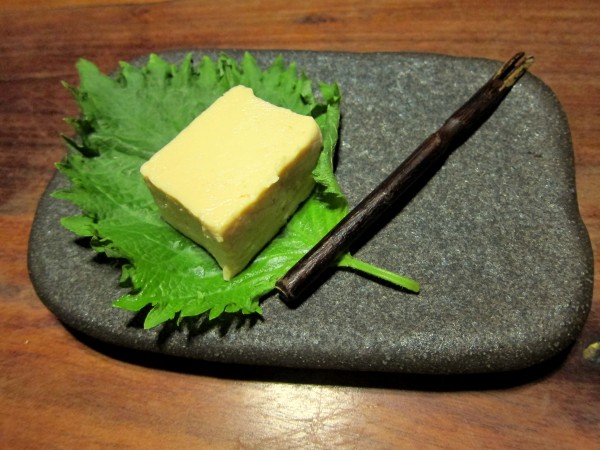

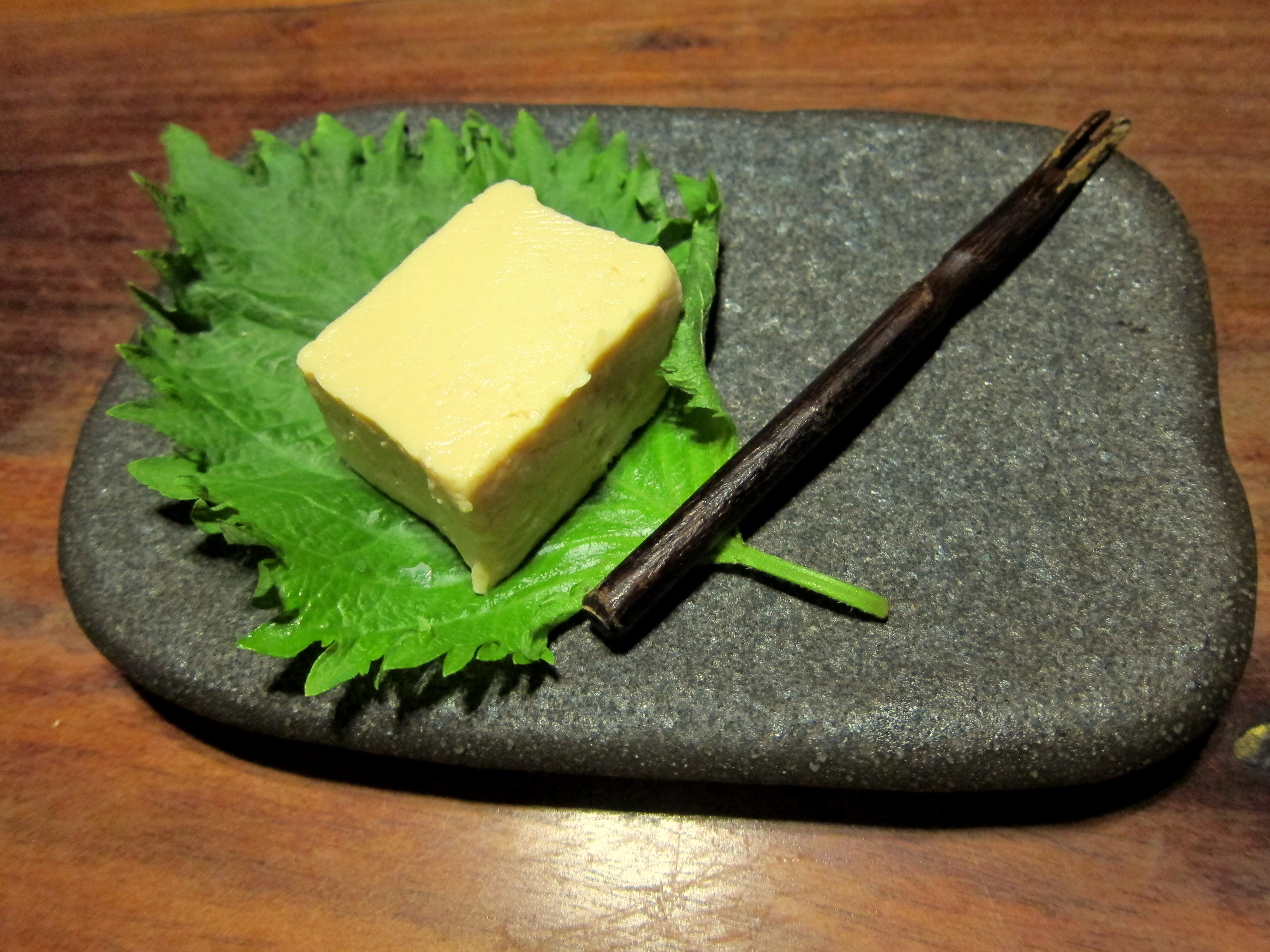
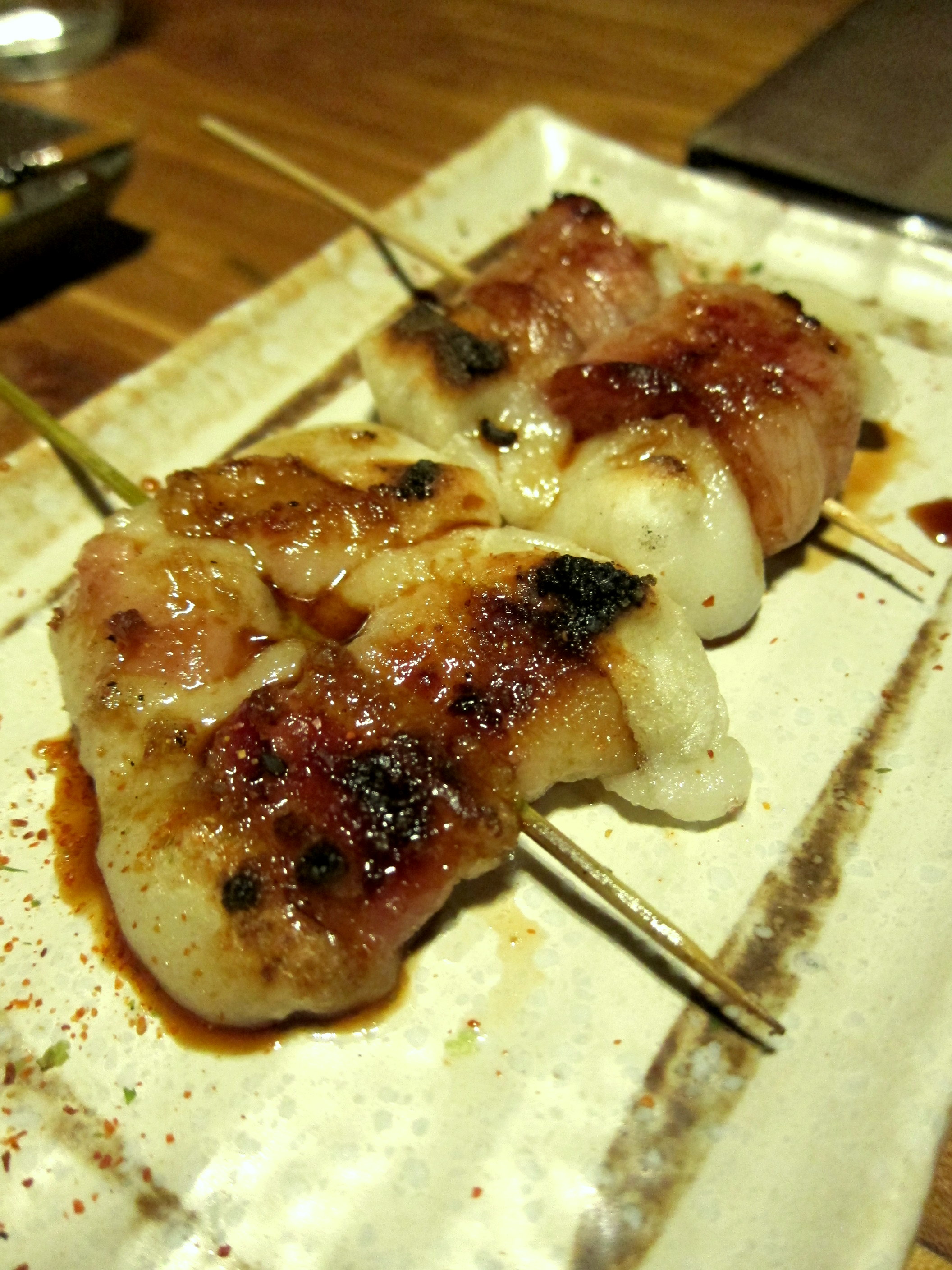
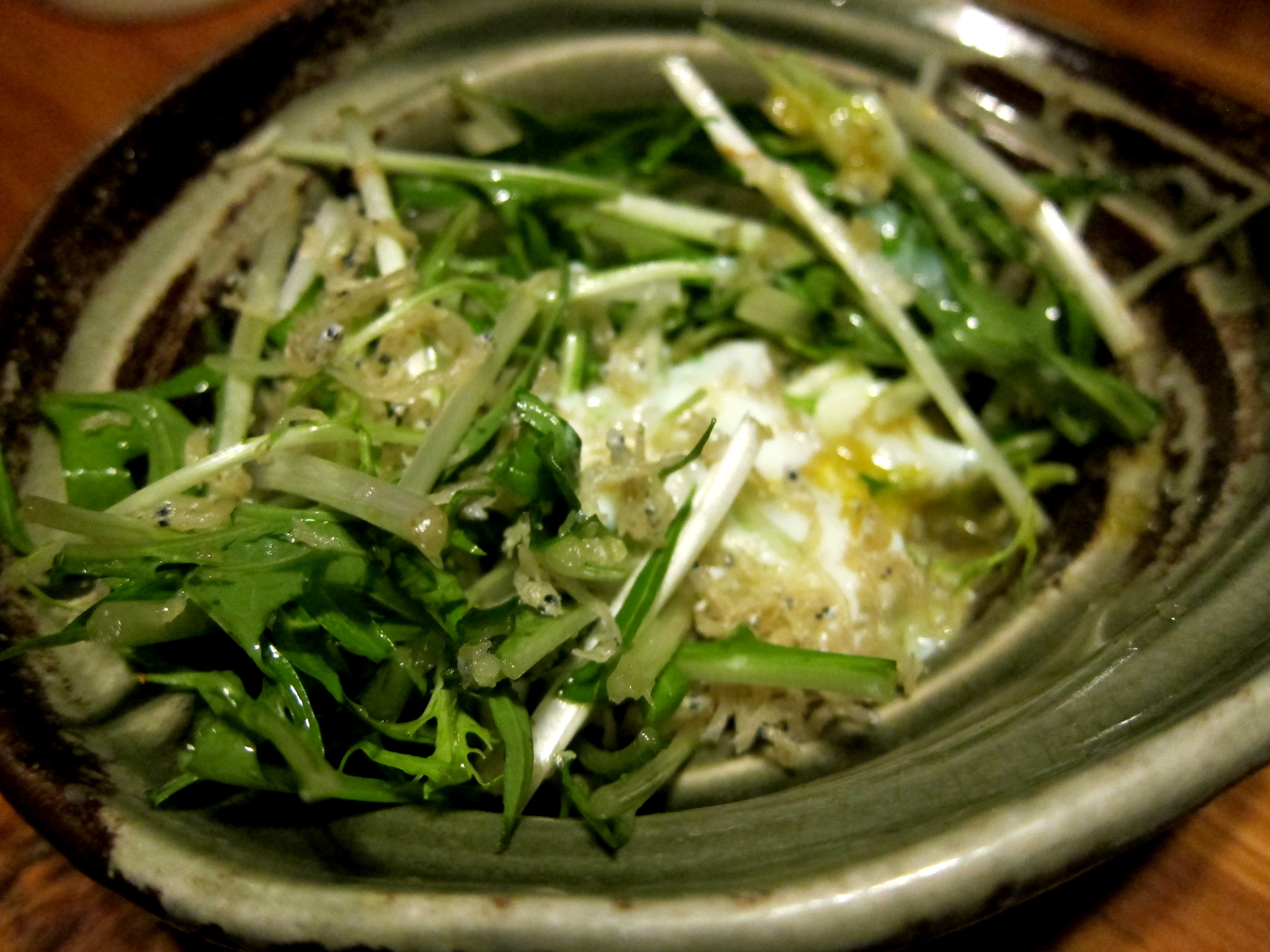
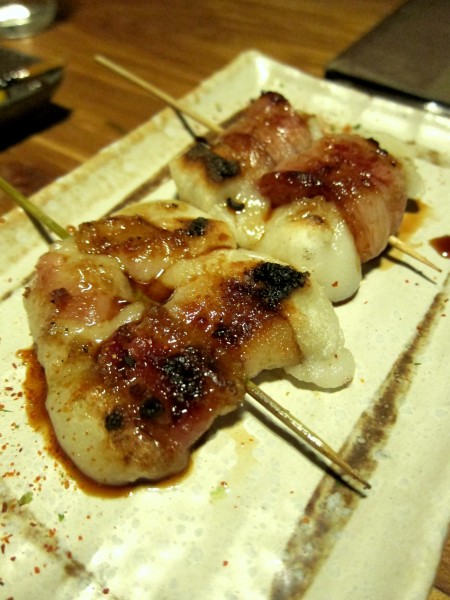
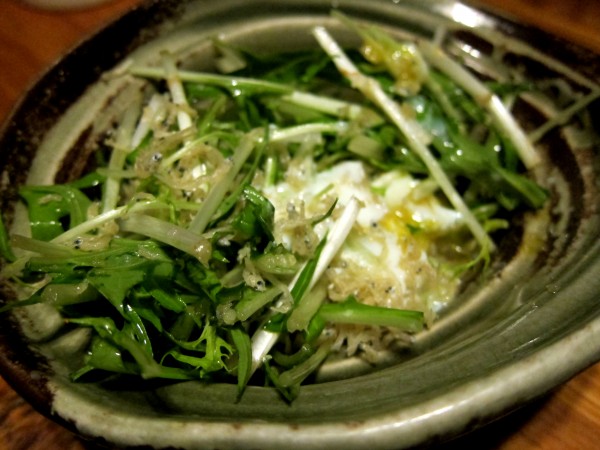
Among my favorites must be the mushy jaga bata ($5, mini potato with butter), which I combined with Rau Om‘s tofu misozuke for a briny but creamy note. The simple but refreshing kyo-salada ($6, “mizuna with onsen egg and crunchy jako“, or water greens with poached egg and crunchy dried anchovy). And the chewy, glistening, charred bekonmochi ($5, bacon-wrapped plain mochi) was magnificent.

The shushoku (post-drinking dishes) are richer than ever: a fatty, sweet, brownish yellow chicken broth for the tori udon ($7) and chunks of beef in the niku jaga ($12, a thick stew of meat and potato).
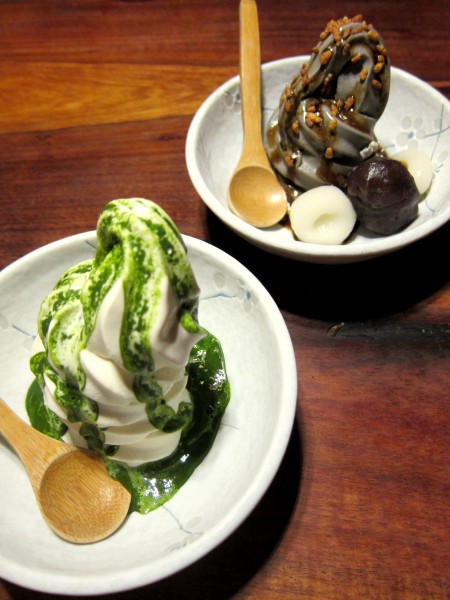

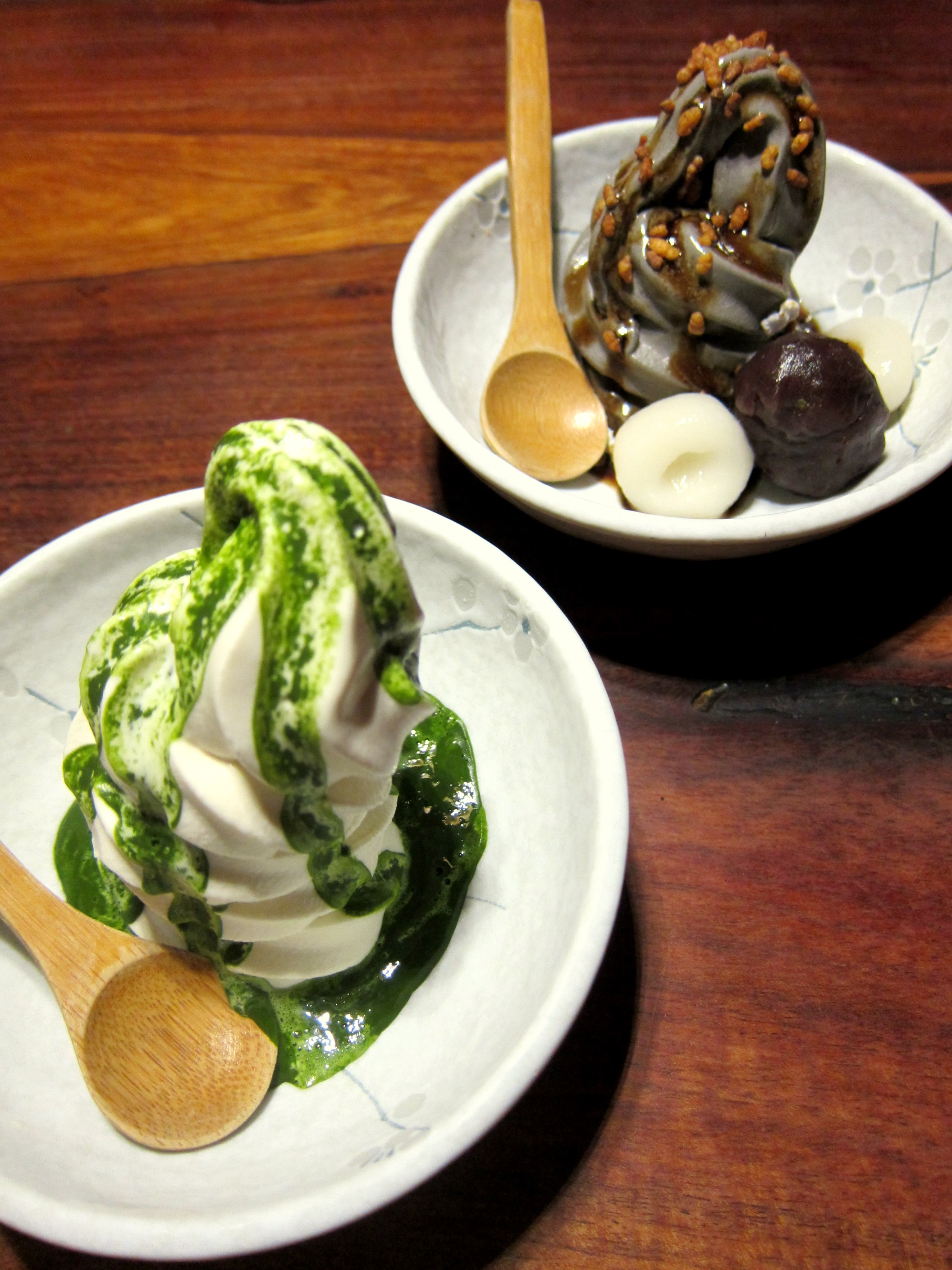
These stomach cementers demand a sweet ending, which we couldn’t afford the first time due to a time constraint, but I made up for it the second time by ordering two desserts ($7 each): a matcha affogato (green tea soft serve), cleansing and herbal, and a kuro goma sundae (black sesame soft serve), gentle and nutty. The kurogoma ice cream came with 2 white mochis and a scoop of anko (red bean paste). I love black sesame ice cream no matter what it comes with.

Photography used to not be allowed? I was taking pictures like crazy. Smoke issue after 7 pm because of the grill? I have been here until 10 pm. Undertrained staff? Our hostesses were helpful both times. Ippuku seems to have ironed out any technical problem it might have had 2 years ago, and although its food isn’t flawless, it is perfect as a whole.

Click to see the whole album of 20 Ippuku dishes, uploaded at Photon Flavors.

Address: Ippuku
2130 Center Street #101
Berkeley, CA 94704
(510) 665-1969 (reservation is recommended, you never know which night is booked)