Flavor Boulevard

We Asians like to talk food.
Subscribe

Archive for the ‘The more interesting’

Miso Omakase at Nojo

July 15, 2012 By: Mai Truong Category: California - The Bay Area, Japanese, The more interesting


Is it miso season? (Miso has a season?) Berkeley Bowl puts out about 10 different kinds of miso in their “international” aisle, and Nojo advertises a seasonal 5-course miso omakase menu on Black Board Eats. Usually the Black Board Eats emails go straight into the trash, which I kinda feel bad about because I signed up for their newsletter after all, but thank goodness I did read it that morning. That night I got the code, called my friend, and we went to Nojo.

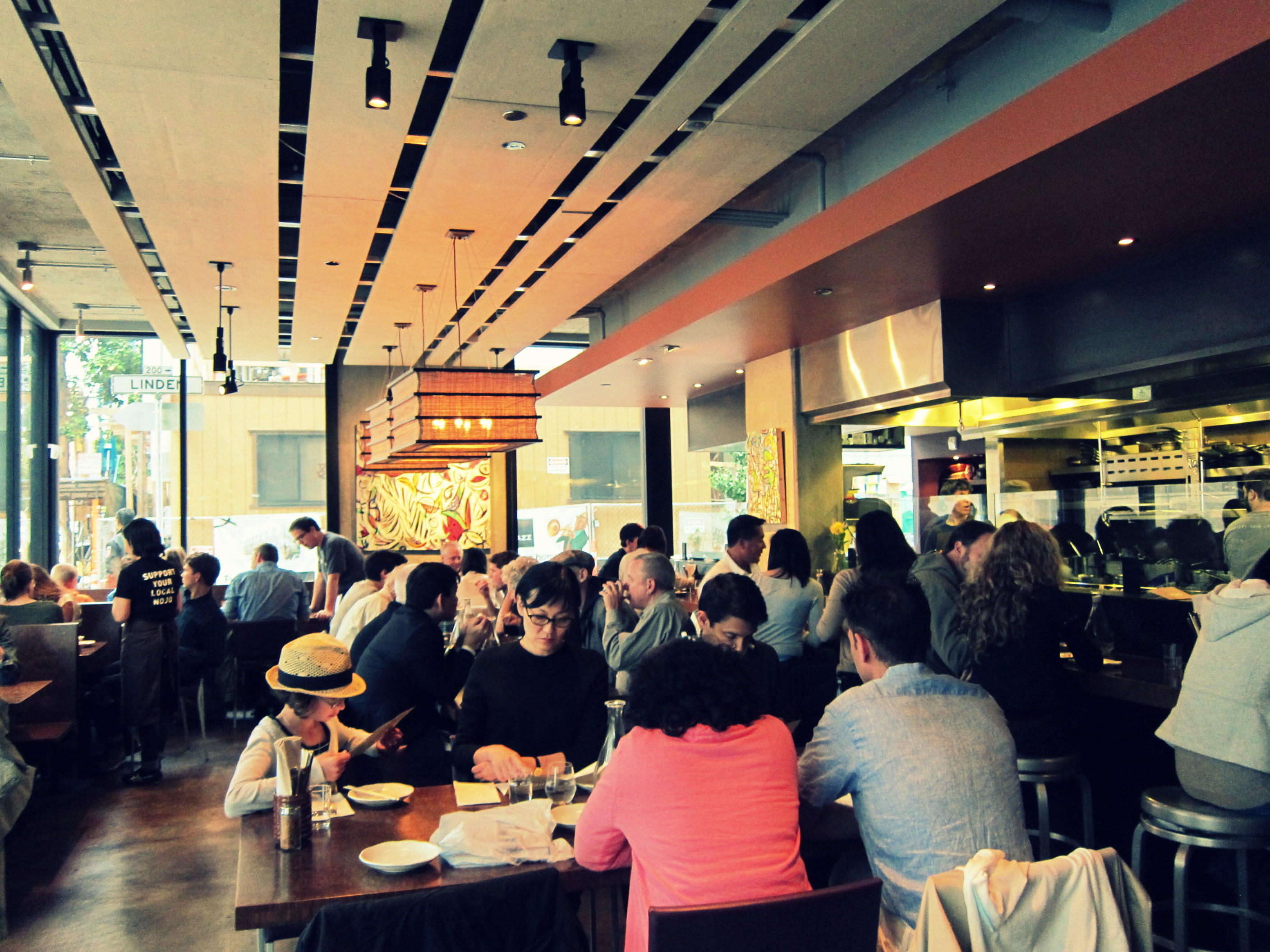
We were seated at the counter, but not the one facing the chefs, that would have been nice, this was a small counter facing the wall near the door. The wall looks pretty cool but we felt kinda weird at first, what with the other customers crowding the tables and here the three of us facing a wall next to a middle-aged man. We felt outcast. But Nojo doesn’t take reservation for party under 6, only a phone call an hour before you arrive to put your name on the waiting list, guess I should have called more than an hour earlier, what was I thinking following the rules? But the servers, inked and all, are really nice, the water was clear and sweet, the sunflowers smelled good, and the middle-aged man left minutes after we sat down.

And the food.


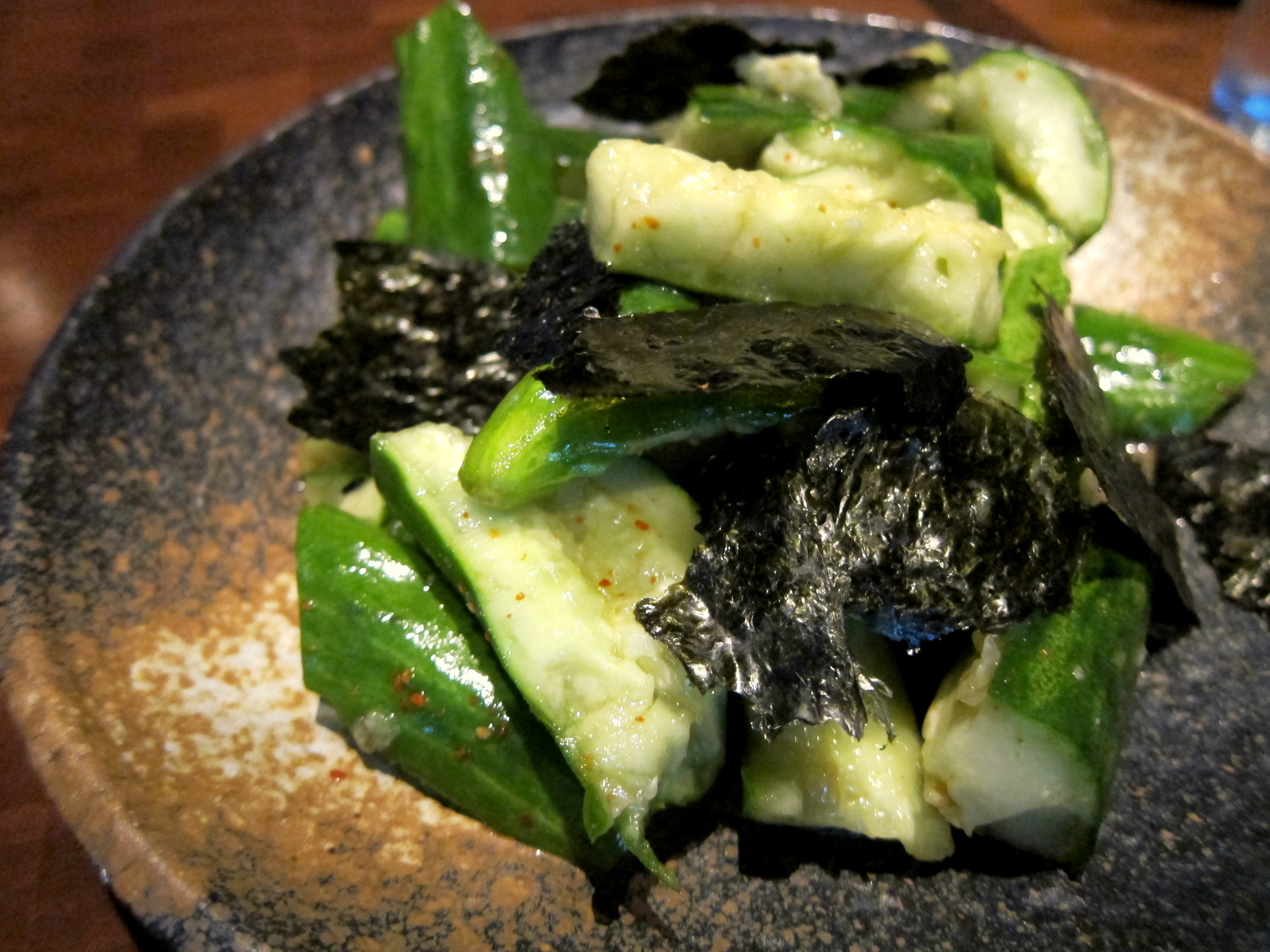
Cucumber salad with shichimi and nori. Shichimi is a chili pepper mix with (supposedly) 6 other spices, but they sprinkled just enough to give the cold thing a kick, not spicy. There’s more shichimi on the counter for the duller tongues people who like spicy food.


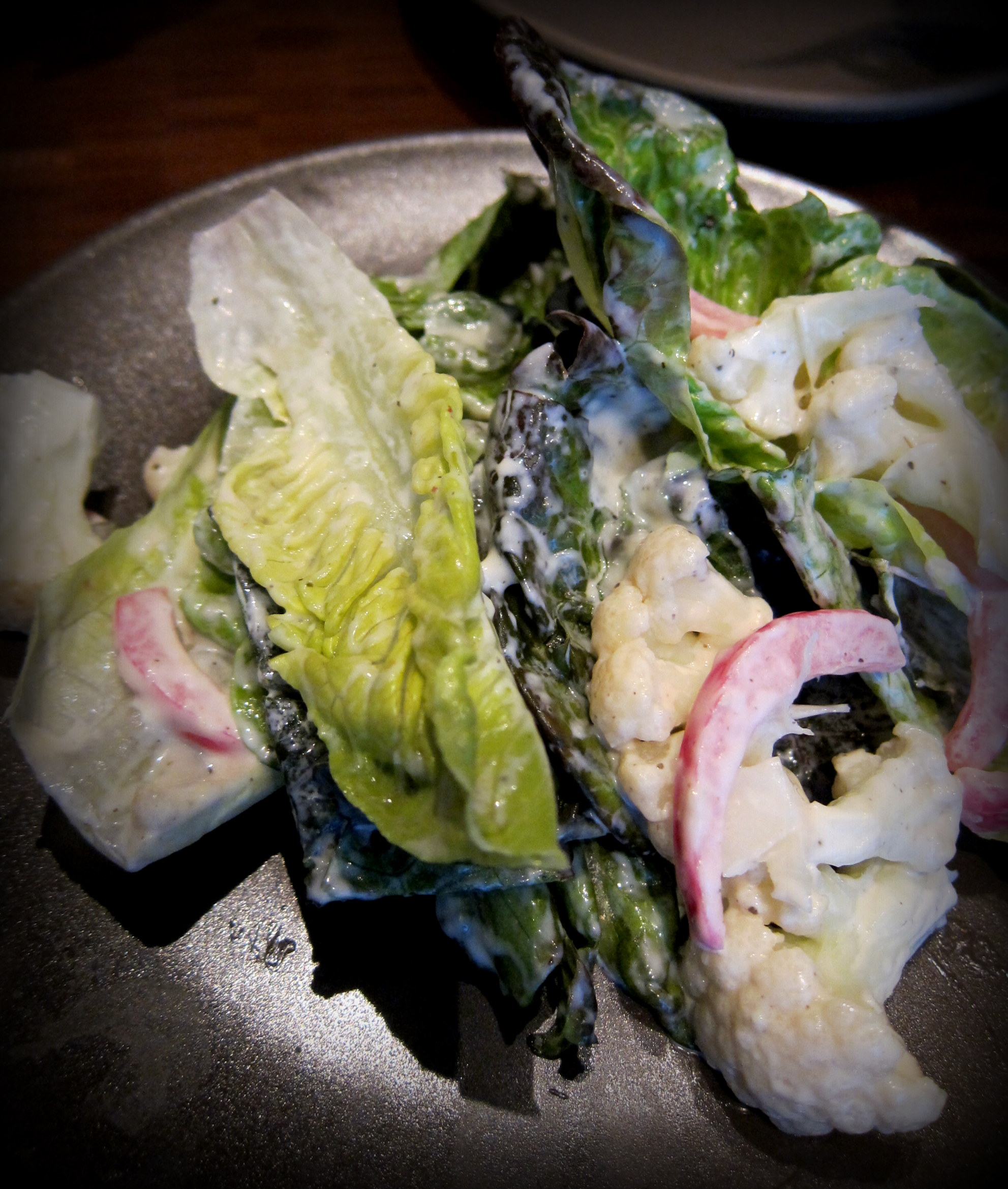
Miso Omakase Course 1: a simple salad of Little Gem lettuce and cauliflower with shiromiso (white miso) dressing. The pickled red onion was the real little gem.


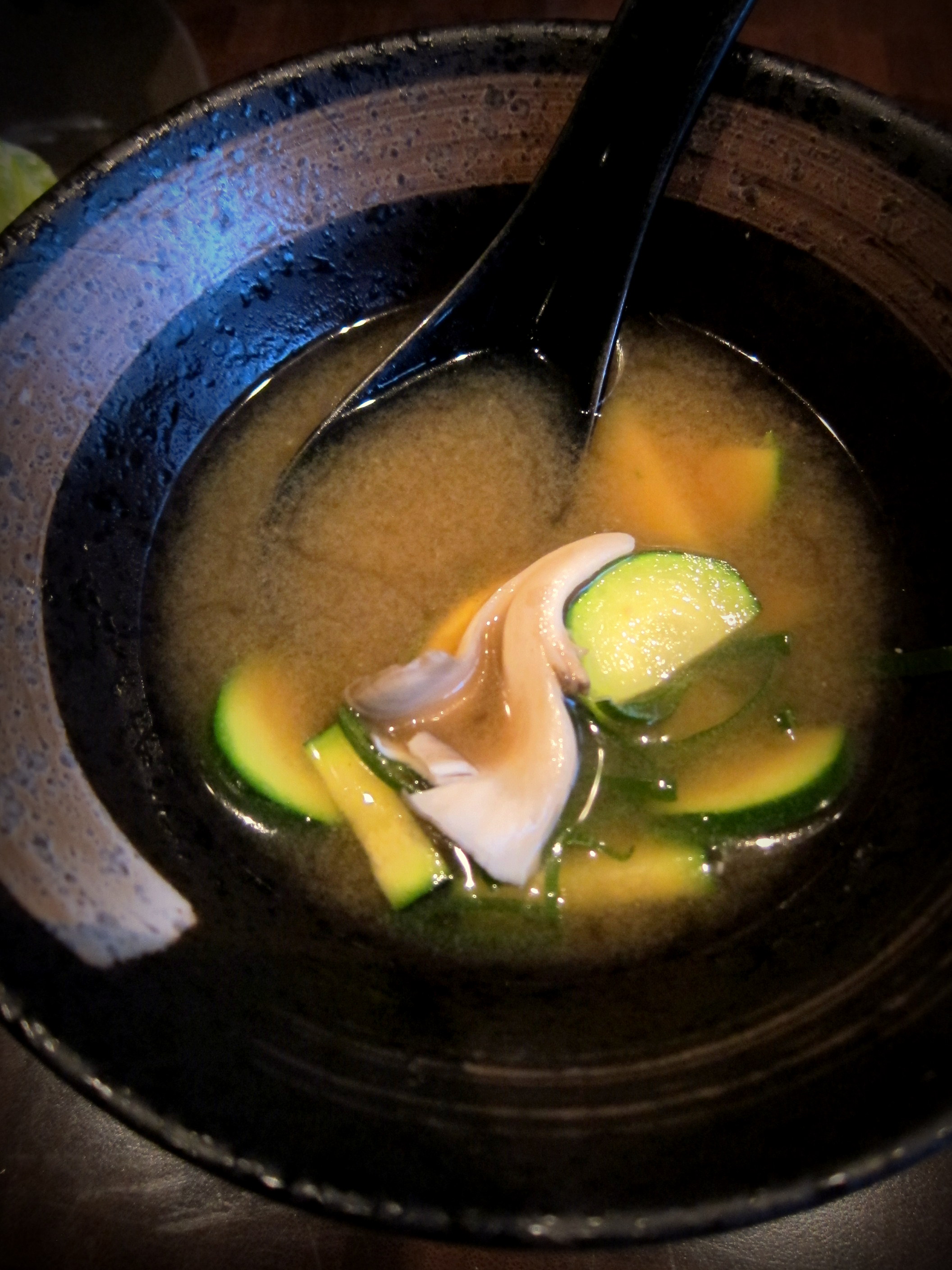
Miso Omakase Course 2: miso soup with oyster mushroom and butternut squash. Hearty. San Francisco gets cold at night, so this helps.


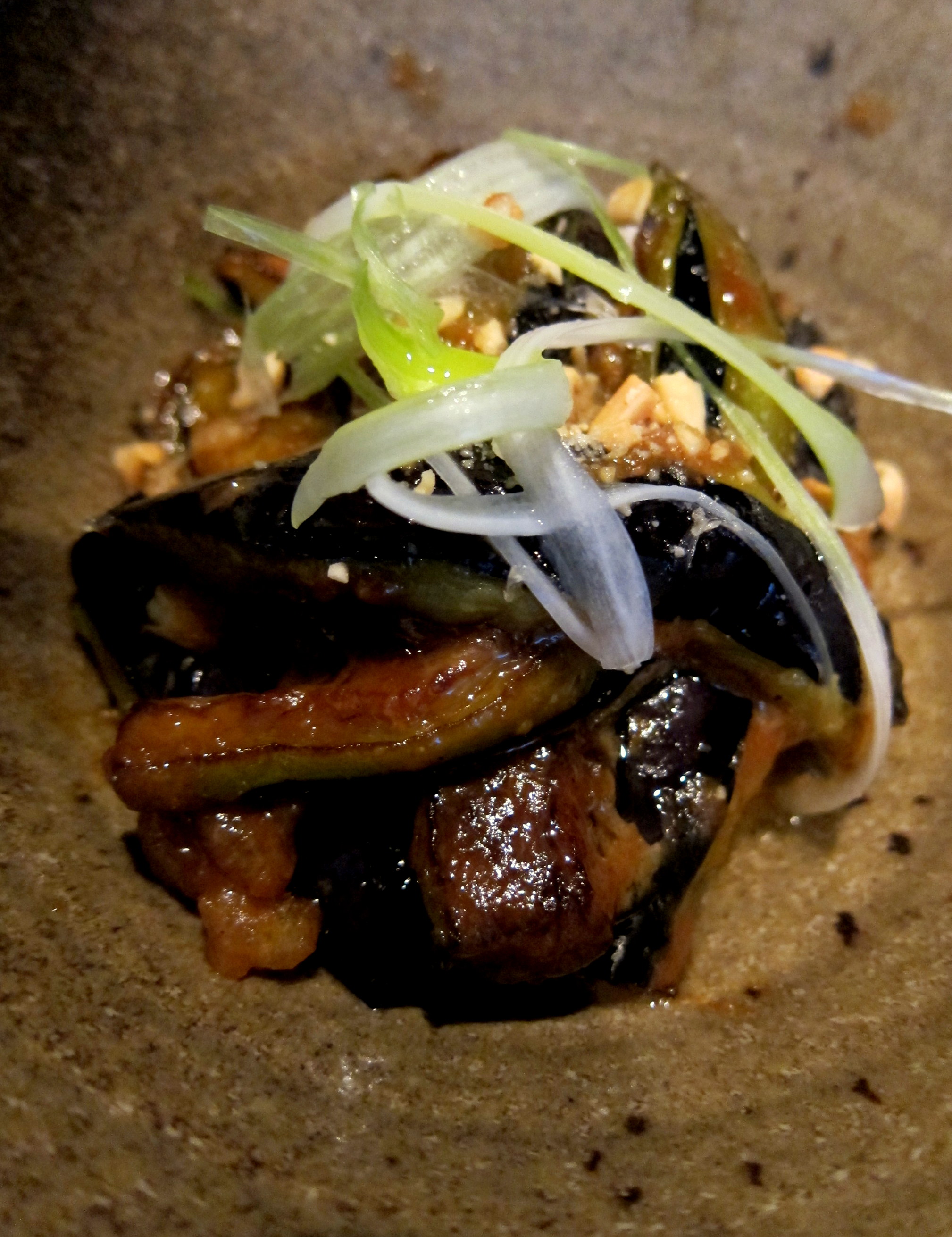
Fried eggplant with akamiso (red miso) and peanut sauce, topped with julienned leek. Eggplants have never been my favorite fruit and will never be even if I go vegan, but this miso eggplant was better than the grilled pork jowl and the garlic-barley miso butter chicken (Miso Omakase Course 3), both of which tip-toed on the salty side.


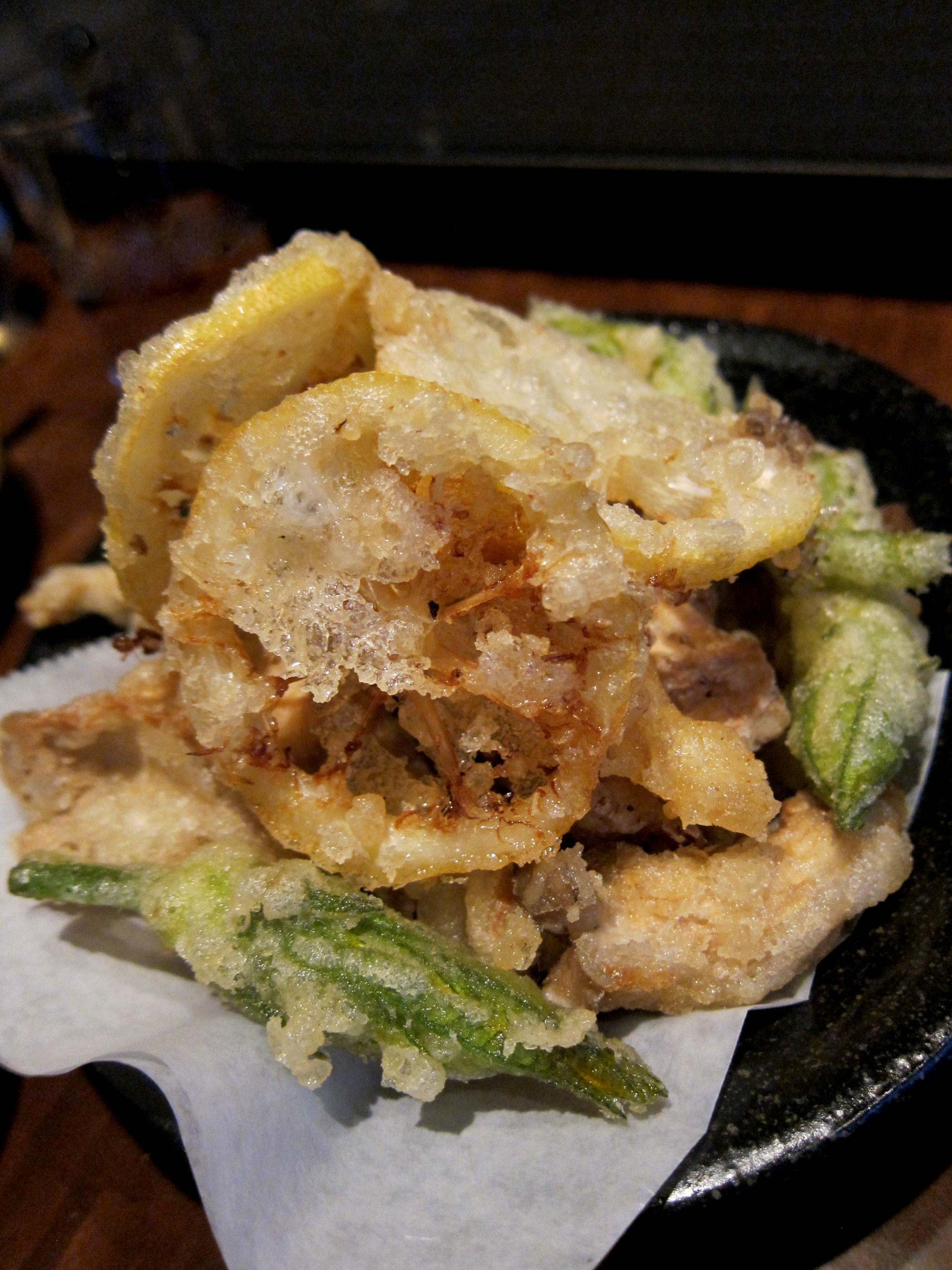
Tempura tree oyster mushroom, squash blossom and lemon, to be dipped in a zesty ponzu mayonnaise.


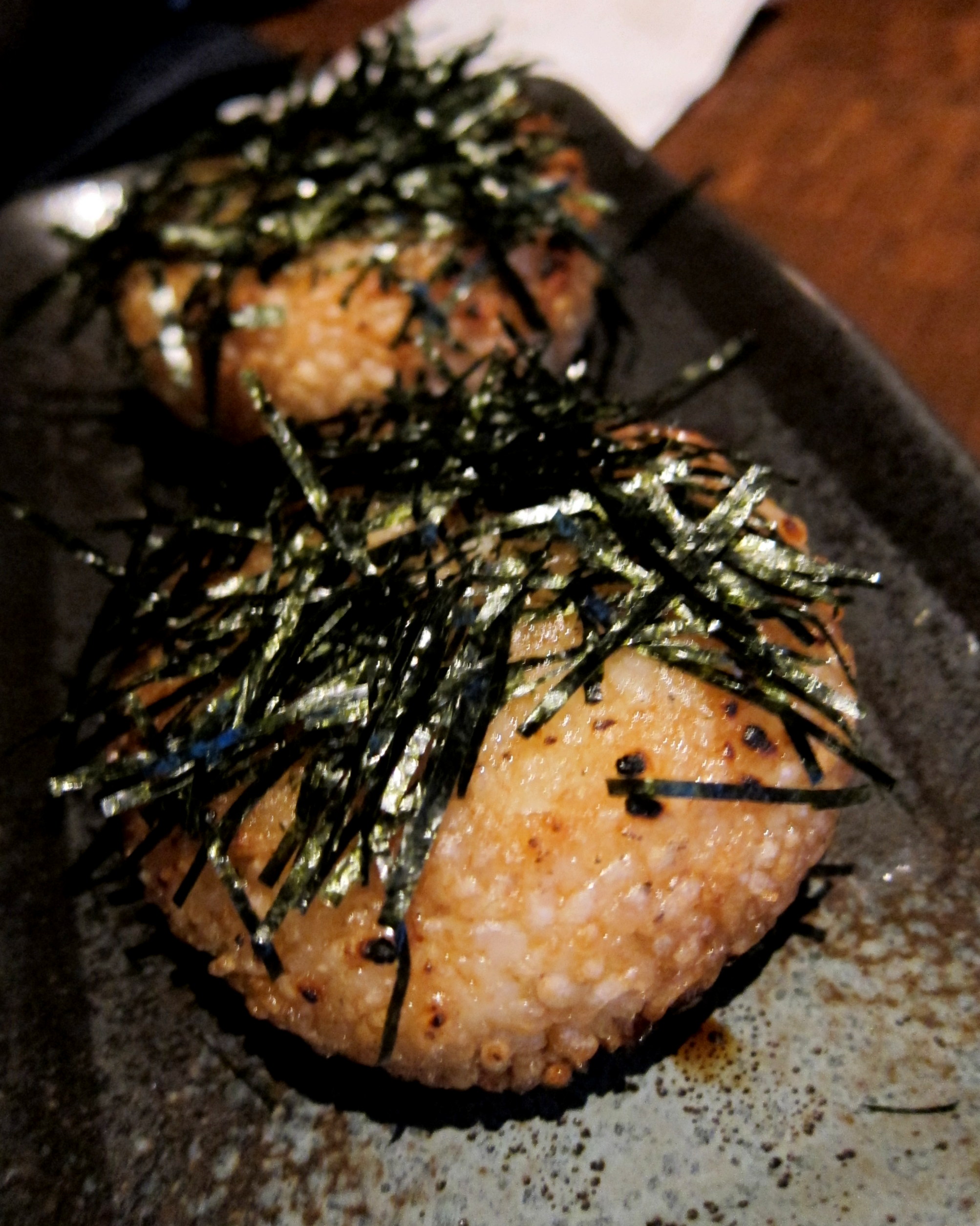
We didn’t expect a fried thing when we ordered the rice balls with tare and nori, but the surprise was welcome.


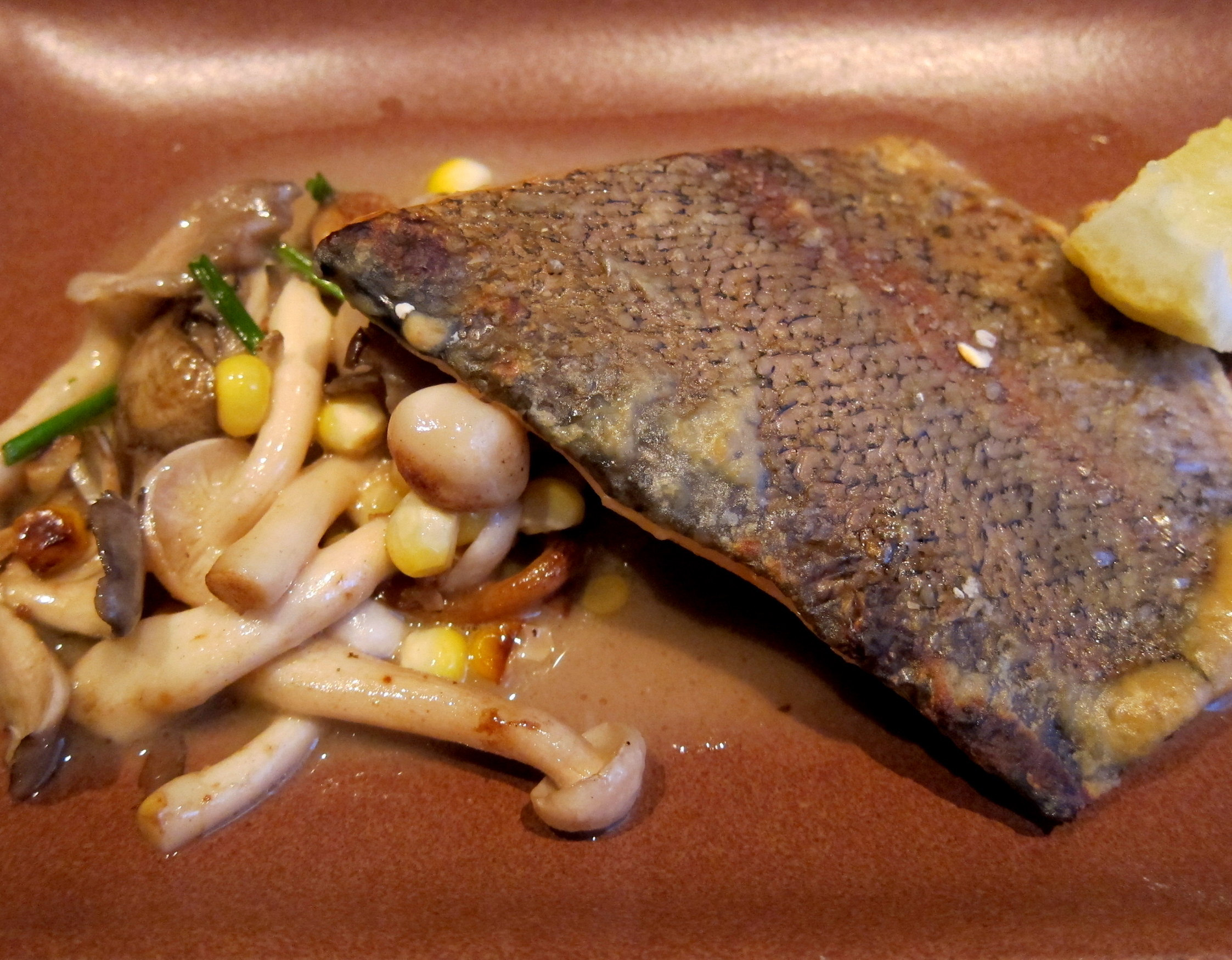
If I was skeptical about anything in the Miso Omakase menu, it was the shiromiso-glazed trout. But its sweet creamy sauce blew my doubt away, the rice ball was great for sweeping up every last drop.


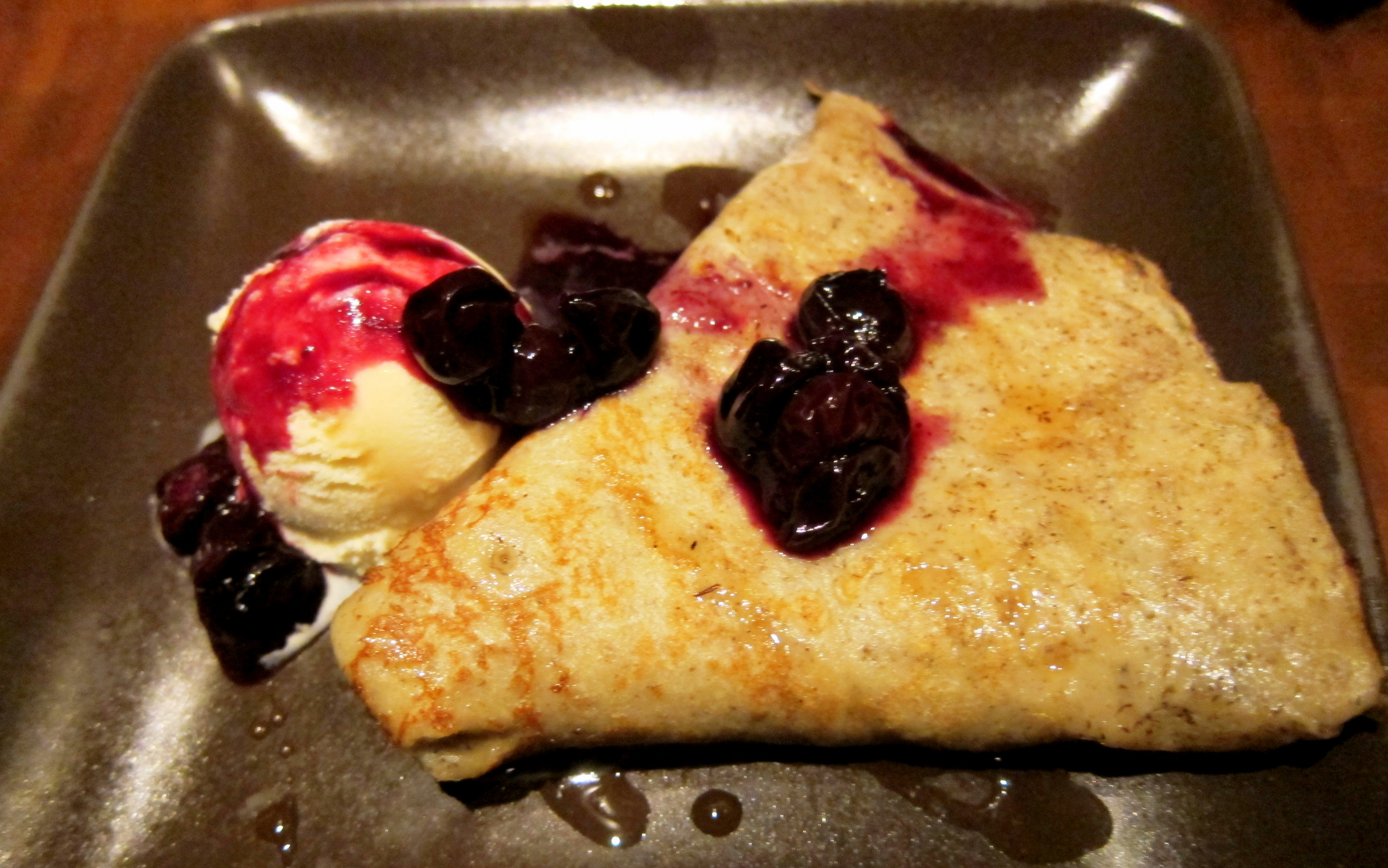
Miso Omakase Course 5: buckwheat & beer crepe, a drizzle of ginger-muscovado syrup, blueberry compote on top and shiromiso ice cream. We thought muscovado was a cross between muscat the grape and avocado (weird, I know, but possible, right?), but we asked, it’s a brown sugar.


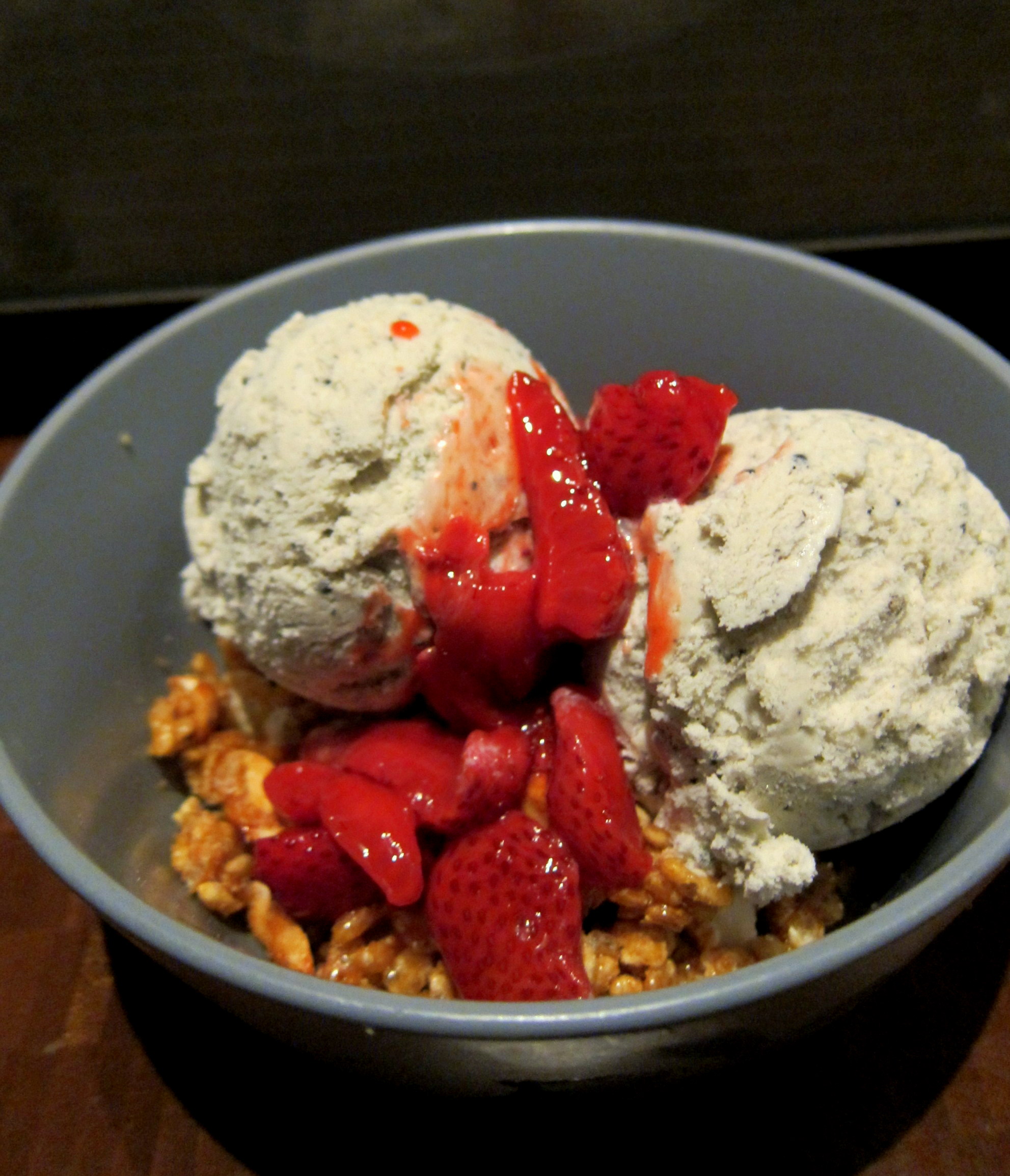
And of course, kurogoma (black sesame) ice cream with roasted strawberries on a bed of “peanut thunder crackers”, which is like peanut brittle and caramel popcorn intertwined, multiplied the goodness by 85.


You know how people can just tell that something’s good when they see it, for no reason at all? That’s how it was with Nojo for me. Every izakaya in the Bay has the same kind of yakitori on the stick, the same expensive price, the same raves on Yelp, and I don’t know why I wanted to go to Nojo, but now I’m recommending it to everyone I talk to. Was it the kikubari exuding from the friendly staff, inked and all and warmly smiling as they strode between tables? Was it the simple but flawless food? But I didn’t know any of that before I came.

Somewhere in me, I just knew. Miso is in.

Address: Nojo (which means “farm” in Japanese)
231 Franklin St.
San Francisco, CA
(415) 896-4587

Dinner for three: $99.82

FIVE and a Flavor Giveaway

March 21, 2012 By: Mai Truong Category: American, California - The Bay Area, Comfort food, The more interesting


Dressed in black and white patterns from walls to chairs, FIVE spots a slightly older, more refined atmosphere for casual hotel dining just above the Berkeley BART station. I meant to go here after someone said that he finally understood the rave behind “chicken and waffle” after he had it during FIVE’s After Hour Happy Hour. If that dry white meat and cake-like bread at FIVE was that good, then surely the other things wouldn’t disappoint. Now nothing on the regular dinner menu costs 5 bucks like the Happy Hour (7-9 pm) nosh, but I got hungry before 7 pm, so I dashed in on what seemed to be a busy night. The hotel is hosting some conference. Nobody wanted to eat with me today, but one beauty of going alone is that you can always get a table.

That said, if you have a party of 4 or less and would like to raid FIVE, which you should, I have a FIVE Vip Card “valid for a 20% discount in FIVE” to give you. Here’s how to get it:

Leave me a comment below by midnight March 31, and if the number of comments is more than 1, which would make me ecstatic :D, then the winner will be chosen by a random number generator. The card is valid until July 31st, 2012. The winner will receive the card by mail or in person.

Here’s why you should eat at FIVE:

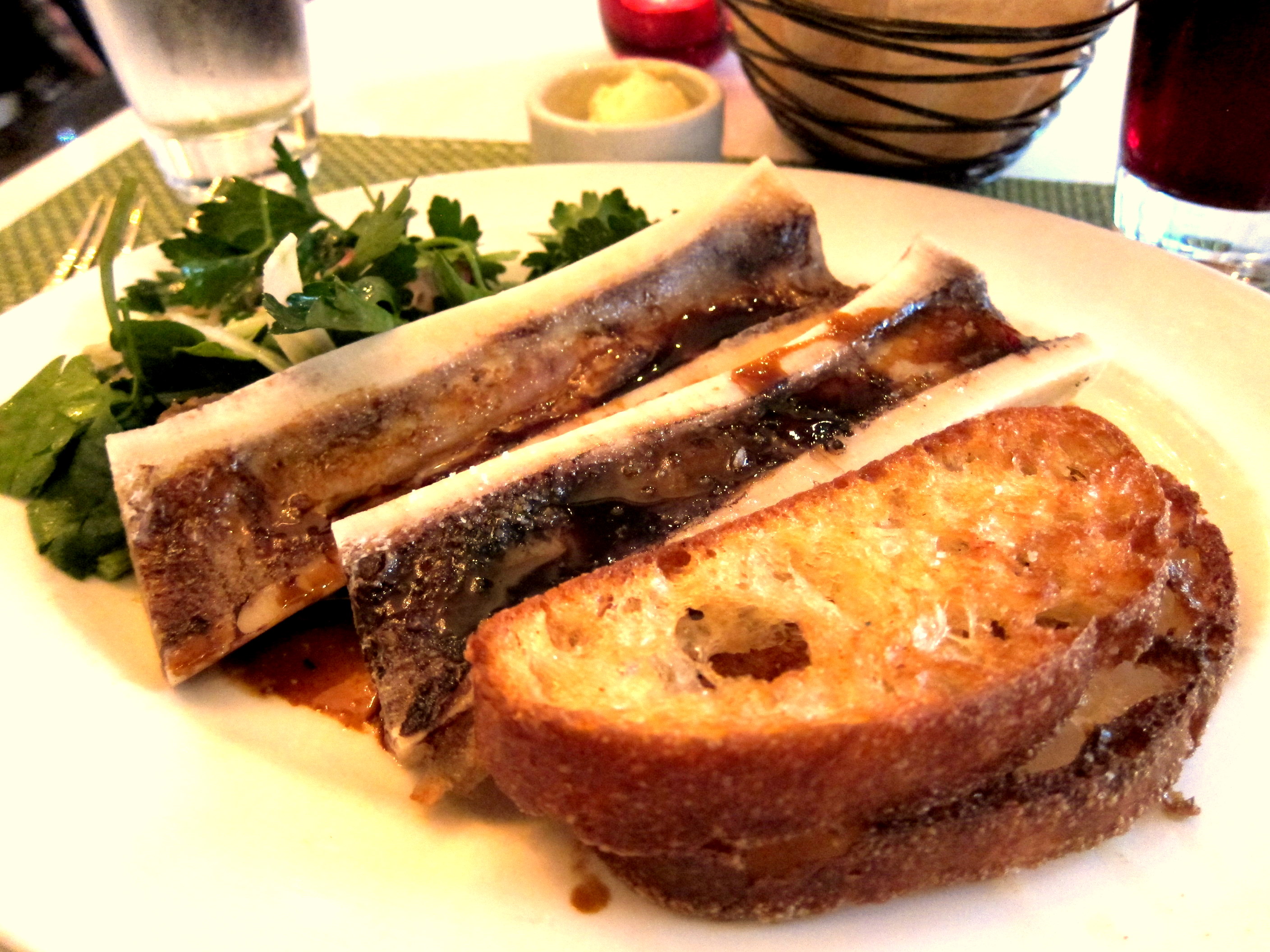
Appetizer: roasted bone marrow on crunchy fried bread with parsley and pickled shallot salad ($9). The bone marrow is rich and fatty, as expected from a cow leg bone. The salad is dressed in a light bordelaise, sweet, taut, and feisty. The fried toast is a guilty pleasure.


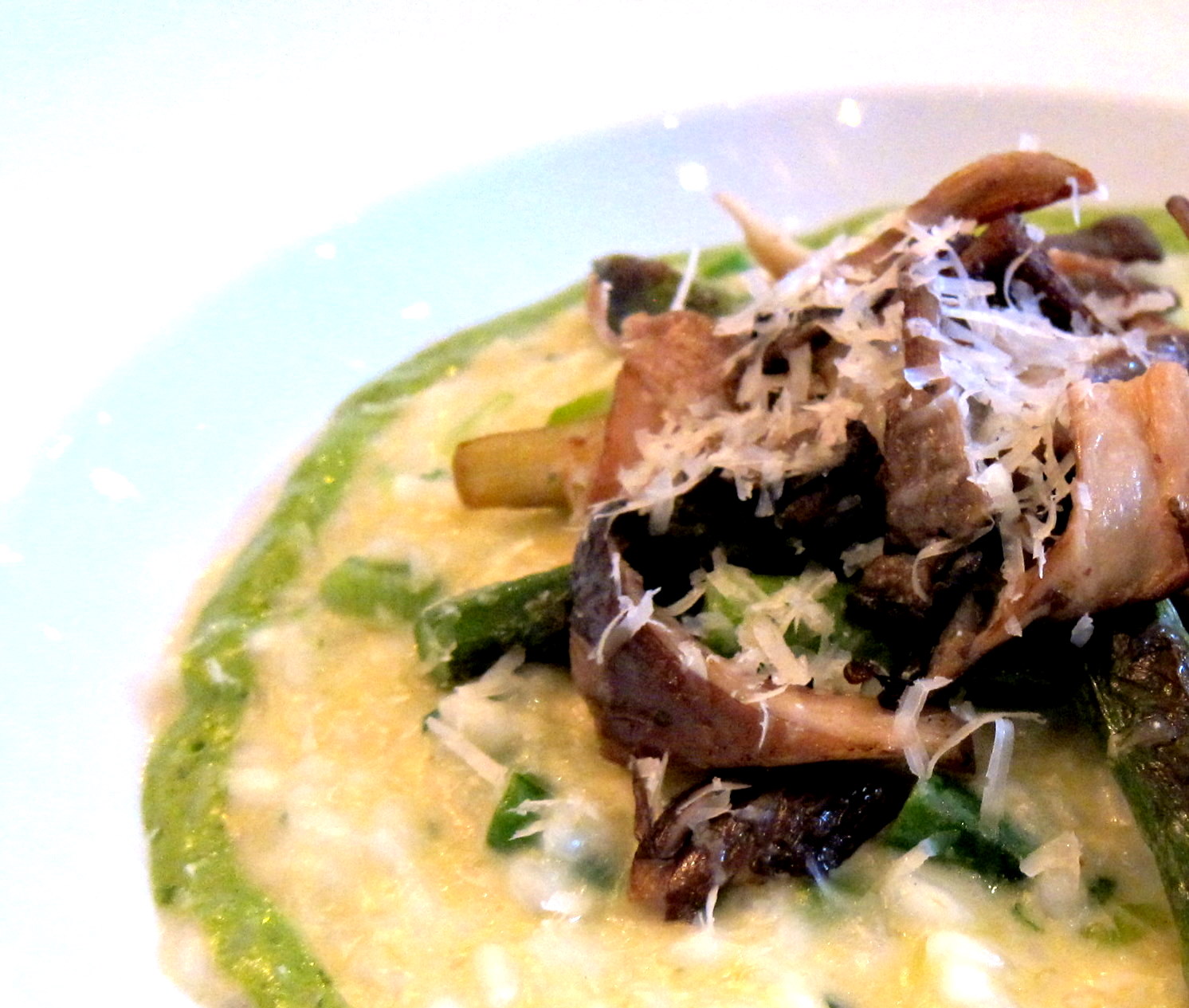
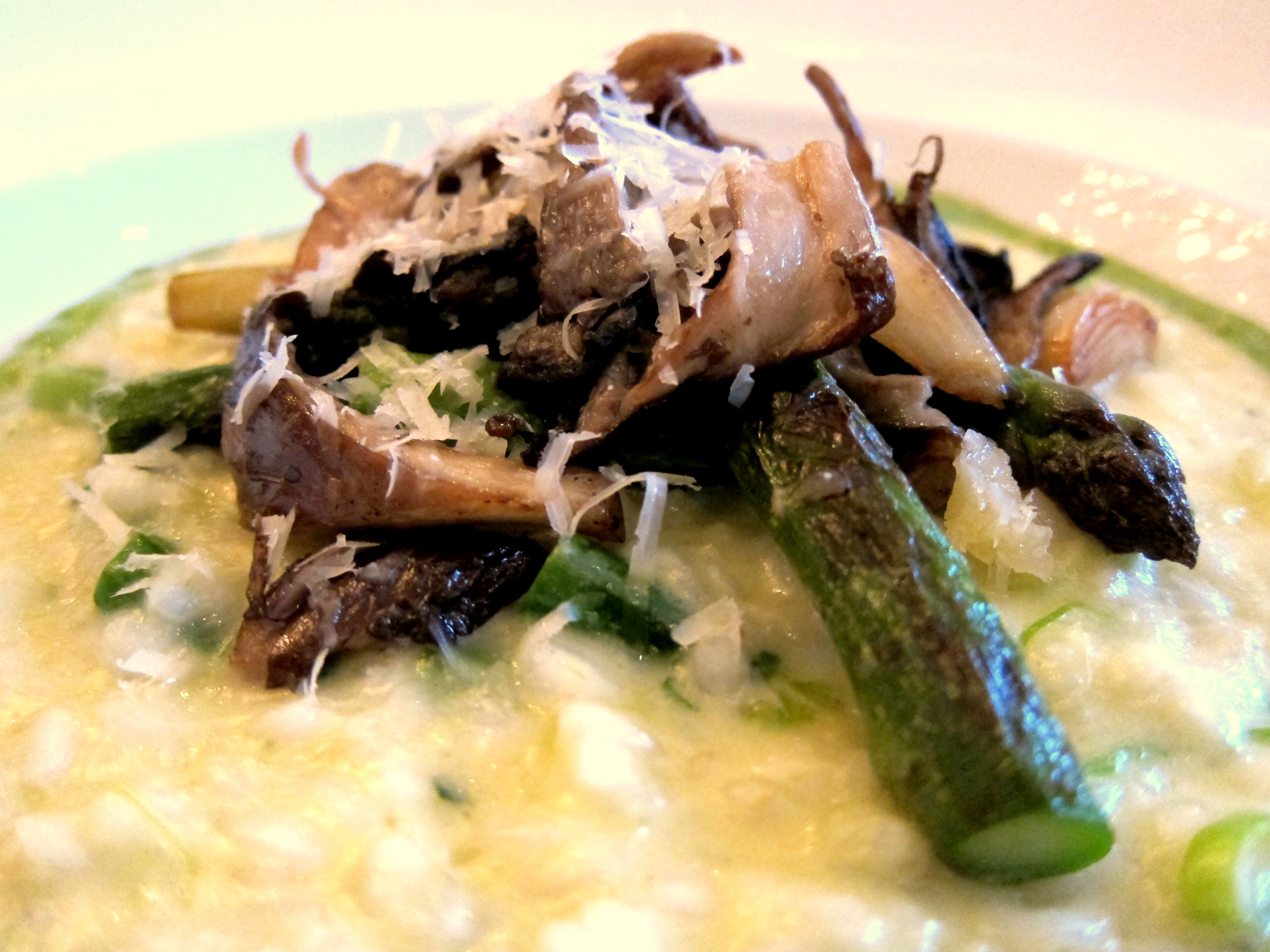
Main: creamy green garlic risotto with grilled asparagus, oyster mushroom, shallot, and pesto aioli ($16). The ladies next to me got the prix fixe, which also featured this risotto with shrimp, and they kept complimenting how good it was. The charred, salted touch of the vegetables is the highlight.


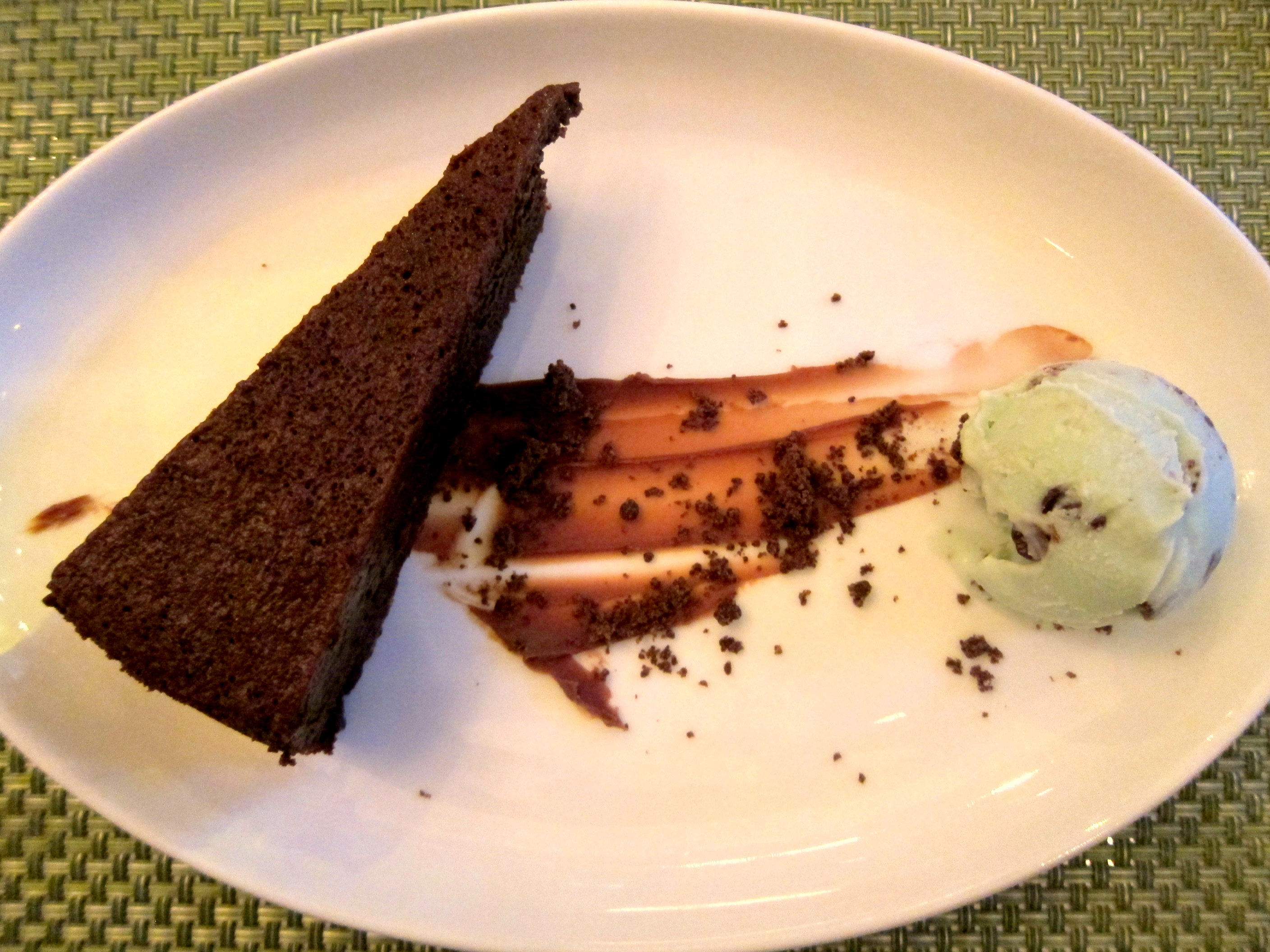
Dessert: dark chocolate torte with a milk chocolate ganache and mint chocolate chip ice cream ($8). I asked my server what was the least sweet desserts tonight (the other choices were butterscotch pudding, walnut carrot cake, and coconut cream pie), and he suggested this torte. It is rich, but it is indeed not too sweet. My only complaint is that the ice cream scoop is too far away from the cake, making it difficult to get both cake and ice cream in one bite. At the end, I had a puddle on my plate.


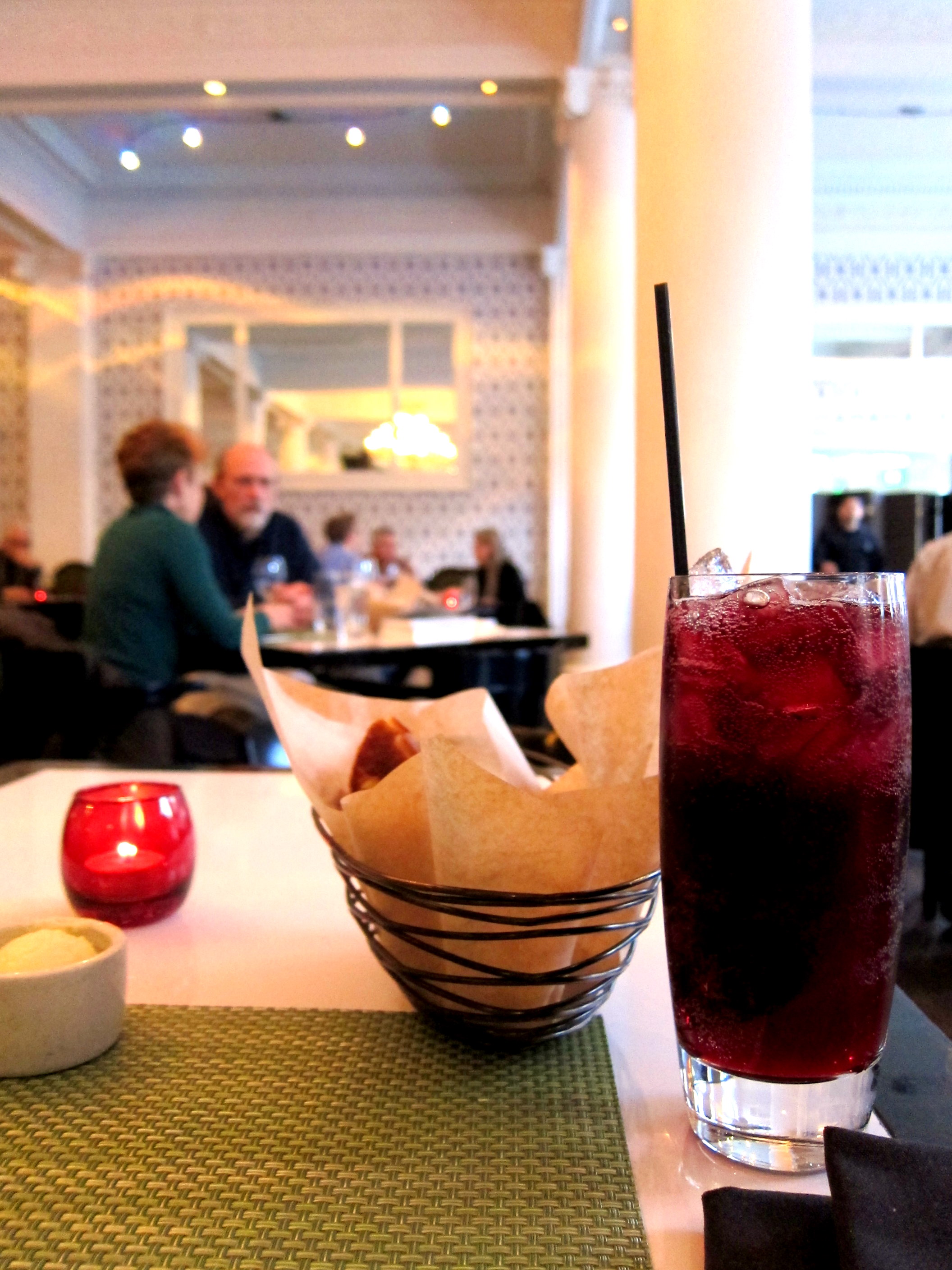
The starter bread is crunchy on the outside, soft and airy on the inside, and perfect without butter. Now that I think about it, FIVE must be quite good with breads: waffle, starter bread, and the fried toast with bone marrow are proof. Because the restaurant had run out of pear sparkle, I might have made a mistake ordering the blood orange sparkle instead of the apple kind; I also chose the pretty simple stuff, nonetheless, it was a pleasing meal. So the more interesting things like monkfish wrapped in prosciutto or herb roasted pork loin might be even better. 😉

Address: FIVE Restaurant and Bar
2086 Allston Way,
Berkeley, CA
(510) 225-6055

Money matter: 3-course dinner for one – $40.28

The night before Christmas at Kata Robata

December 25, 2011 By: Mai Truong Category: Houston, Japanese, The more interesting


Last night I was reading this manga, Oishii Kankei (“Delicious Relationship”), and two things there reminded me of my family: a family of three who love to eat out and explore new restaurants, and the girl who can’t cook (but she has a better sense of taste than me, it’s a story after all ;-)). I also got reminded of a ton of Japanese food, although the main plot revolves around French cuisine and a fictional restaurant in Tokyo called Petit Lapin (“Little Rabbit”). I’ve been in the mood for something comforting, and Little Mom wants to have some Japanese food that isn’t sushi, so we decided on Kata Robata for our Christmas Eve. Actually Oanh recommended this place to me just before my flight to Houston, and I trust her when it comes to the Land of the Rising Sun. My dad’s opinion today? He had to come whether he wanted to or not. That’s Beauty #27 of a family of three: odd number makes decisions come easy. 😉

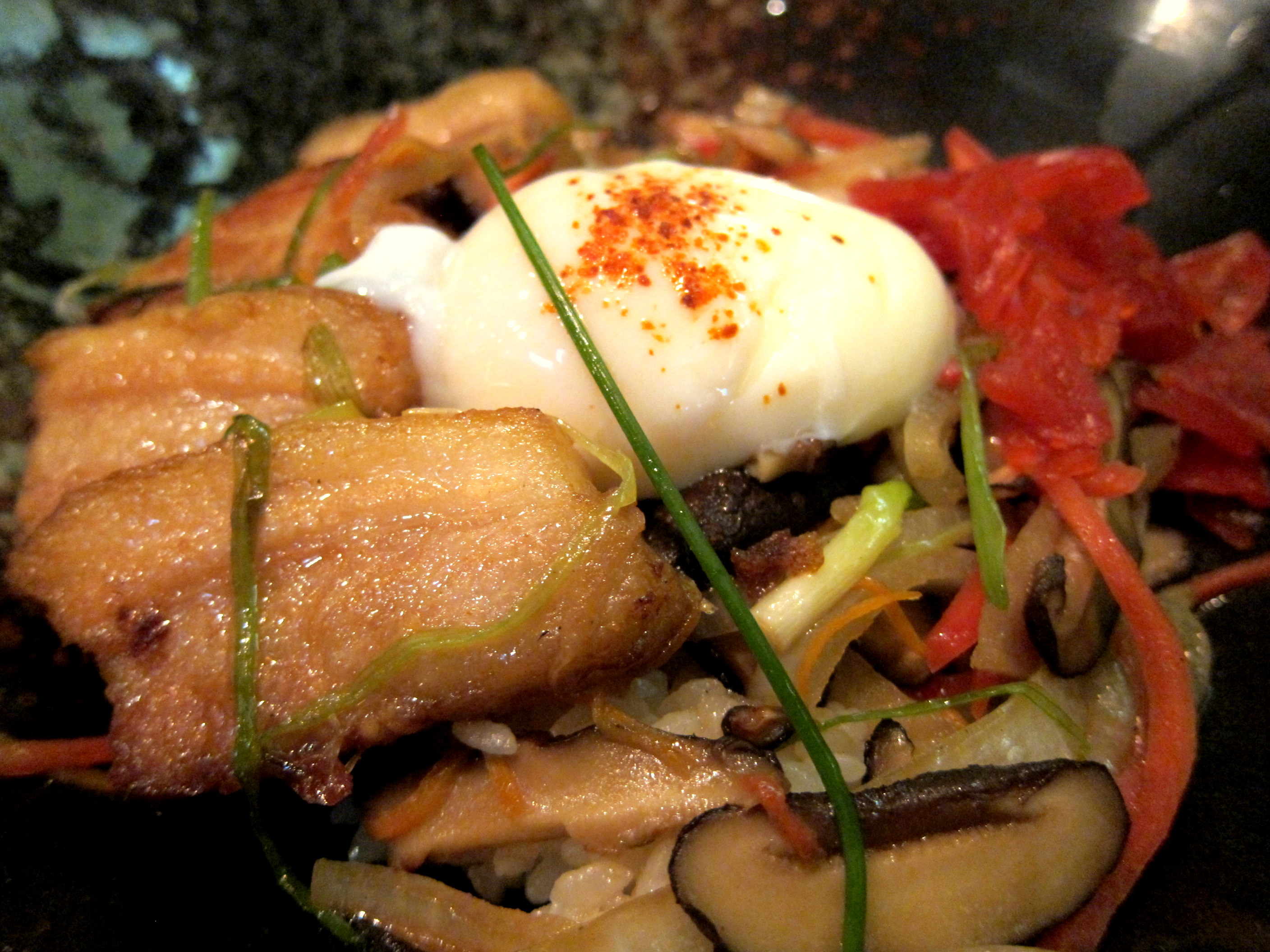
Thank goodness, he liked it here. Or should I say, he *loved* the kakuni don.


The rice, wet with the runny yolk of a 60-degree soft-boiled, was aptly seasoned by the rich sauce of the sweetly soy-braised slow-cooked pork belly (kakuni). The kakuni was a tad too fatty, but the seasoning strikes home just right. Little Mom fancied the juicy shiitake, and Mai the crunchy pickled radish. A little something for everyone makes the don truly comfort food.


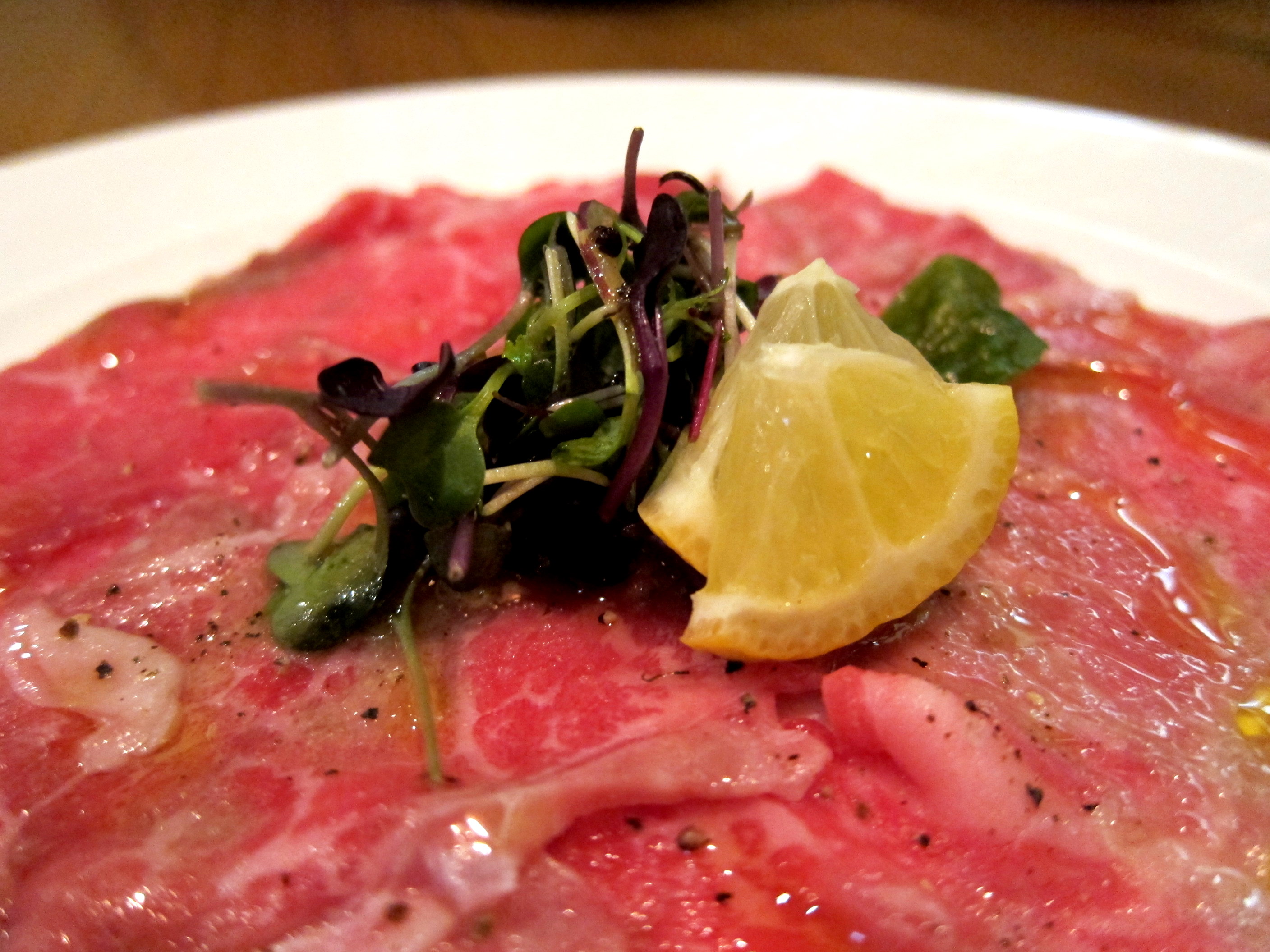
The cold plate. At first they hesitated (Vietnamese don’t like things raw), but the American Kobe beef carpaccio charmed The Parents at first bite. They said it’s the thinness of the slices, whose texture reminded me of salmon sashimi, but I think it’s the olive oil dressing and the yuzu juice.


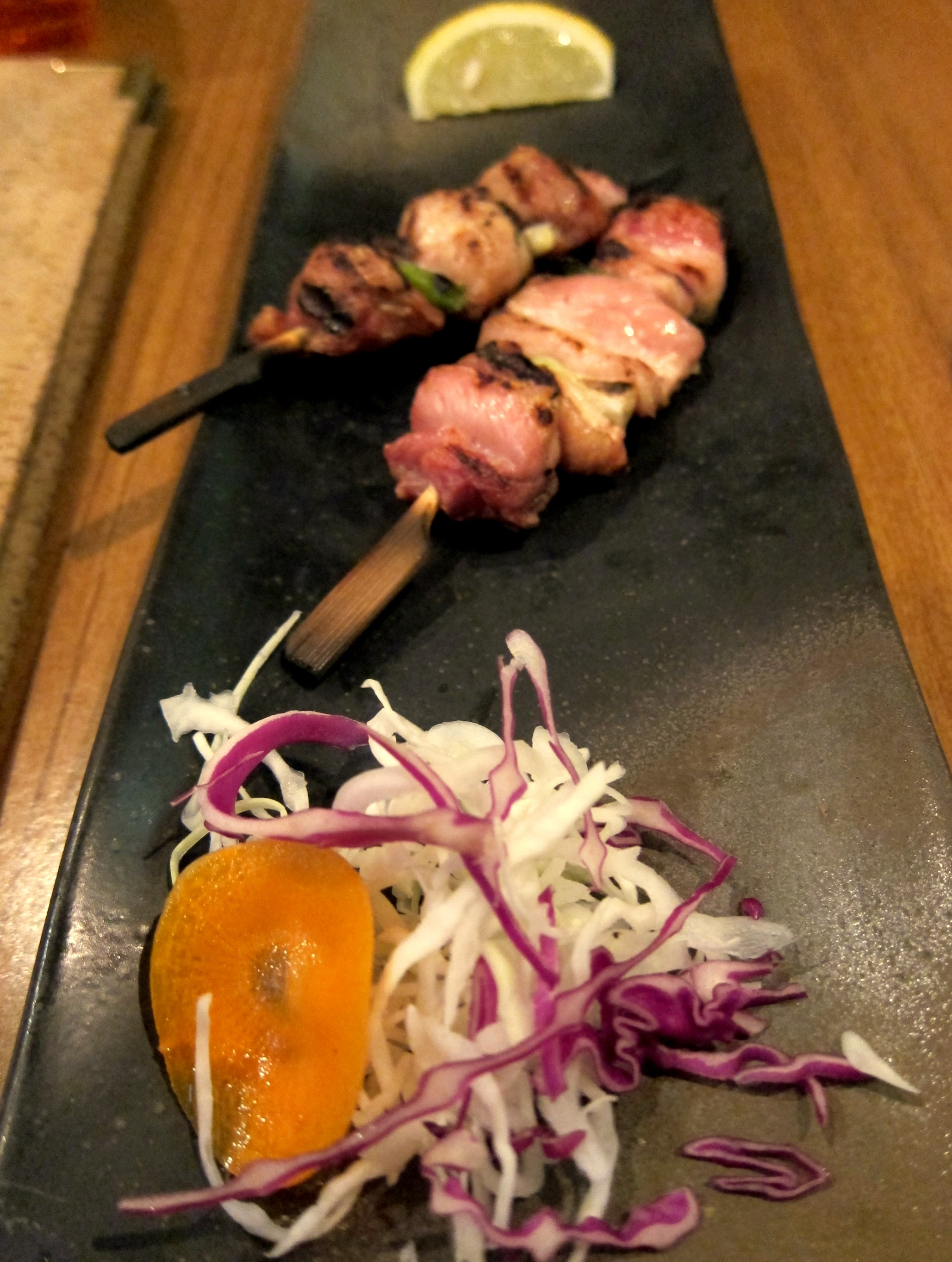
The yakitori, too, was surprisingly fish-like in texture. But yakitori is yakitori, nothing you can’t make at home.


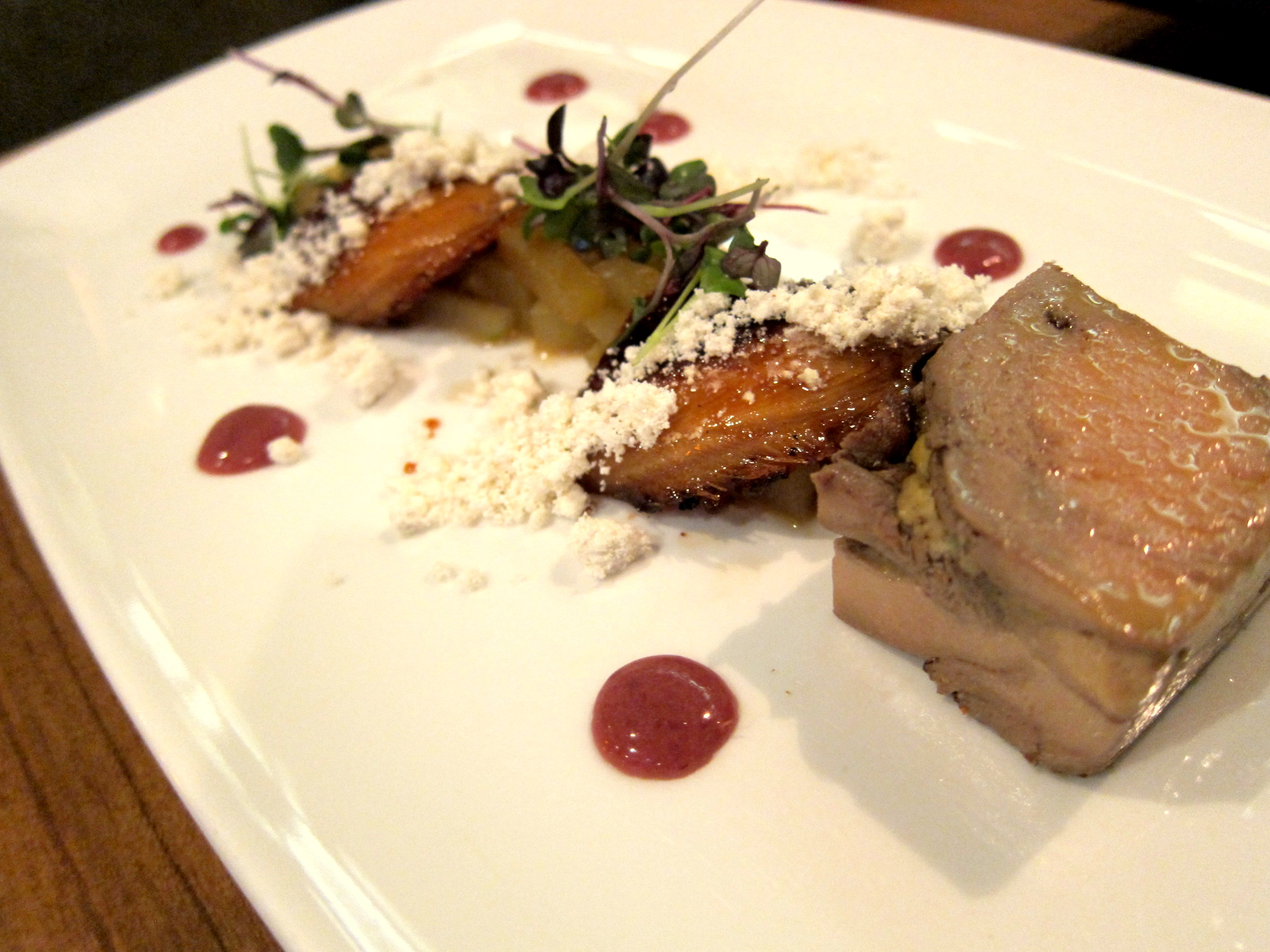
Brought forth at the same time with the yakitori was the fois gras and unagi. At first I was debating between this and the miso-crusted bone marrow, but Little Mom, an eel fan, cast her vote on the former, which also has bone marrow, in powder form. The accompanying pickled apple and the huckleberry sauce were more high school cheerleaders than Broadway stars. That big fat slab of foie gras needed some searing and slicing to pair with the delicate unagi. But the bone marrow powder was rather perfect: it had the salty richness of katsuobushi, the creamy innocence of feta cheese, and the fluffy, melting texture of snow.


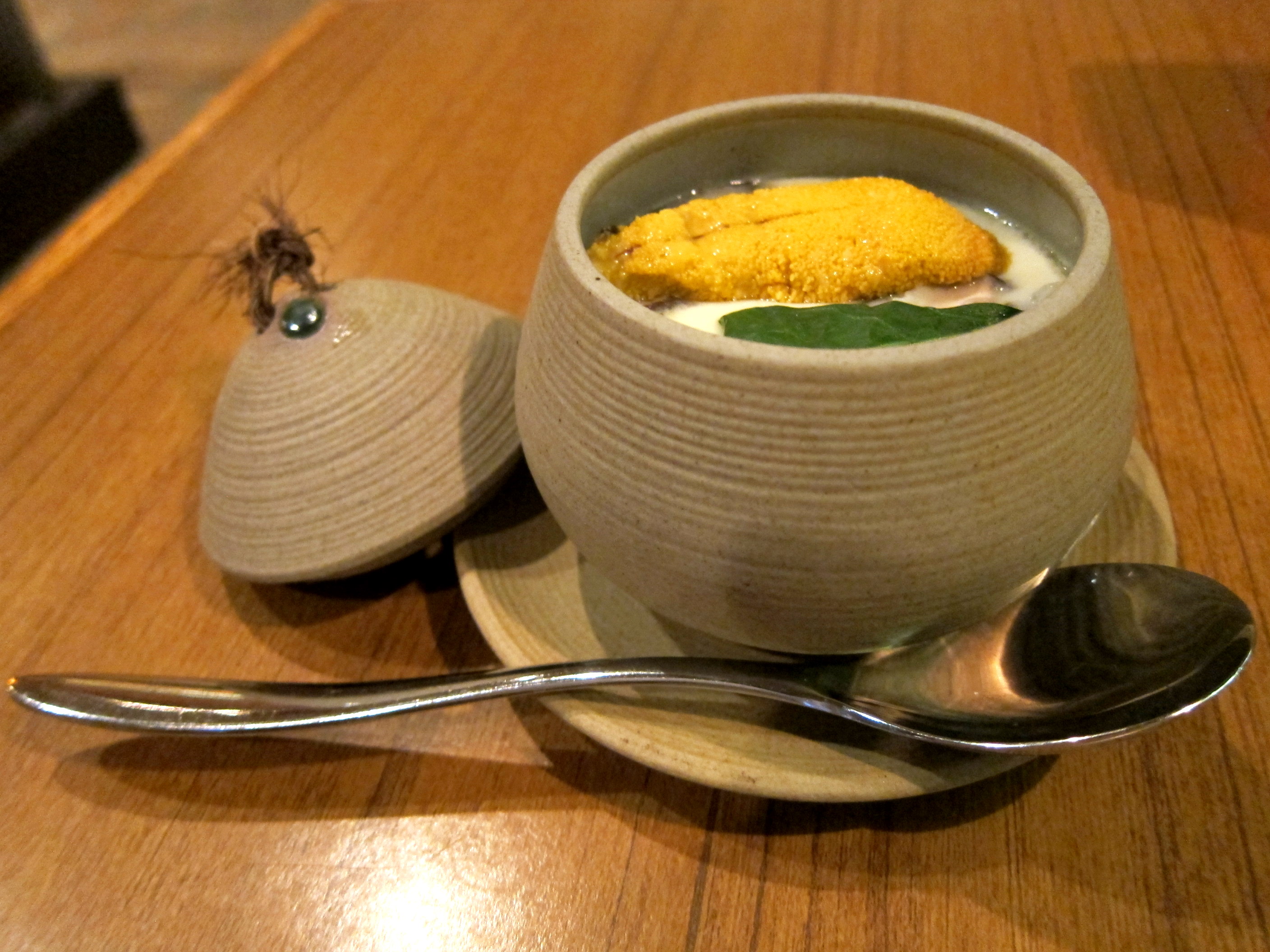
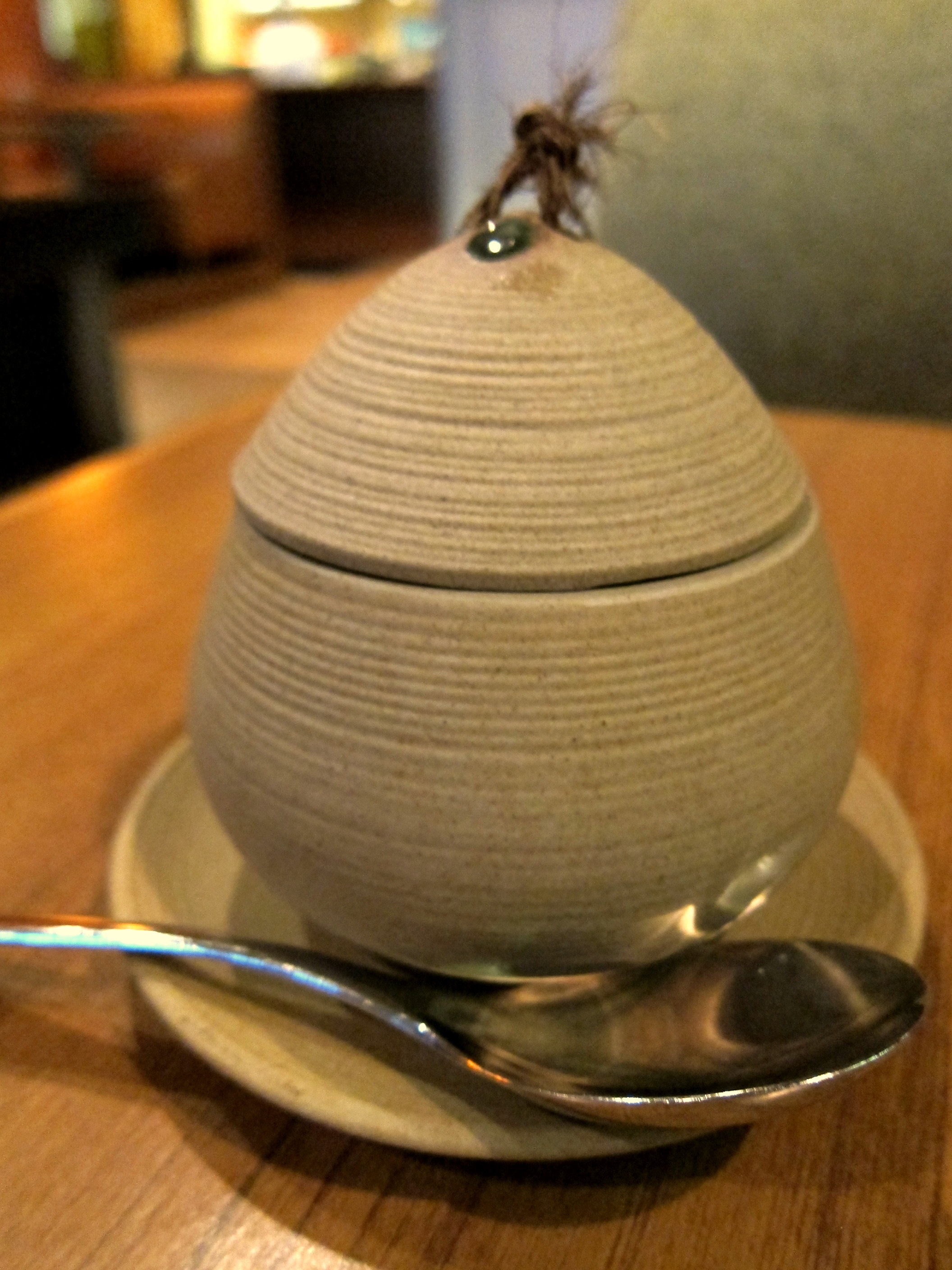
The starter didn’t arrive until almost the end (it would have been the end if we didn’t also order a shoyu ramen). But it was well worth the wait. Little Mom placed this uni chawanmushi top of tonight’s dinner mainly for its yuzu egg custard and ginkgo nuts. The chicken and shrimp bits were not too necessary, but the uni was fresh.


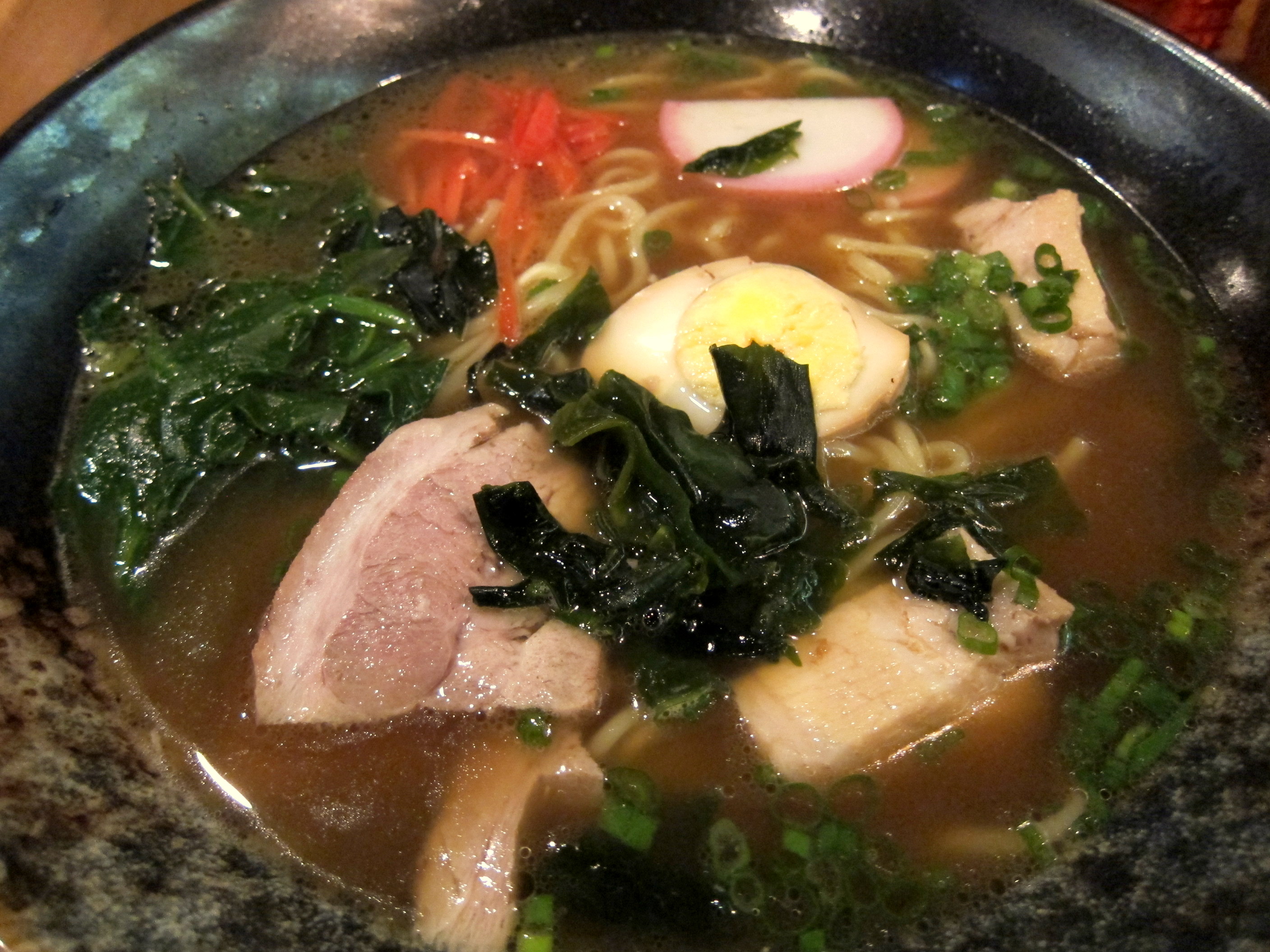
And a bowl of noodle soup to wash everything down. The broth erred on the salty side but the charsiu pork was perfect. No menma (bamboo shoot), and the noodles were more straight than curly. It’s a hearty bowl and just fatty enough to make Dad happy. 😉


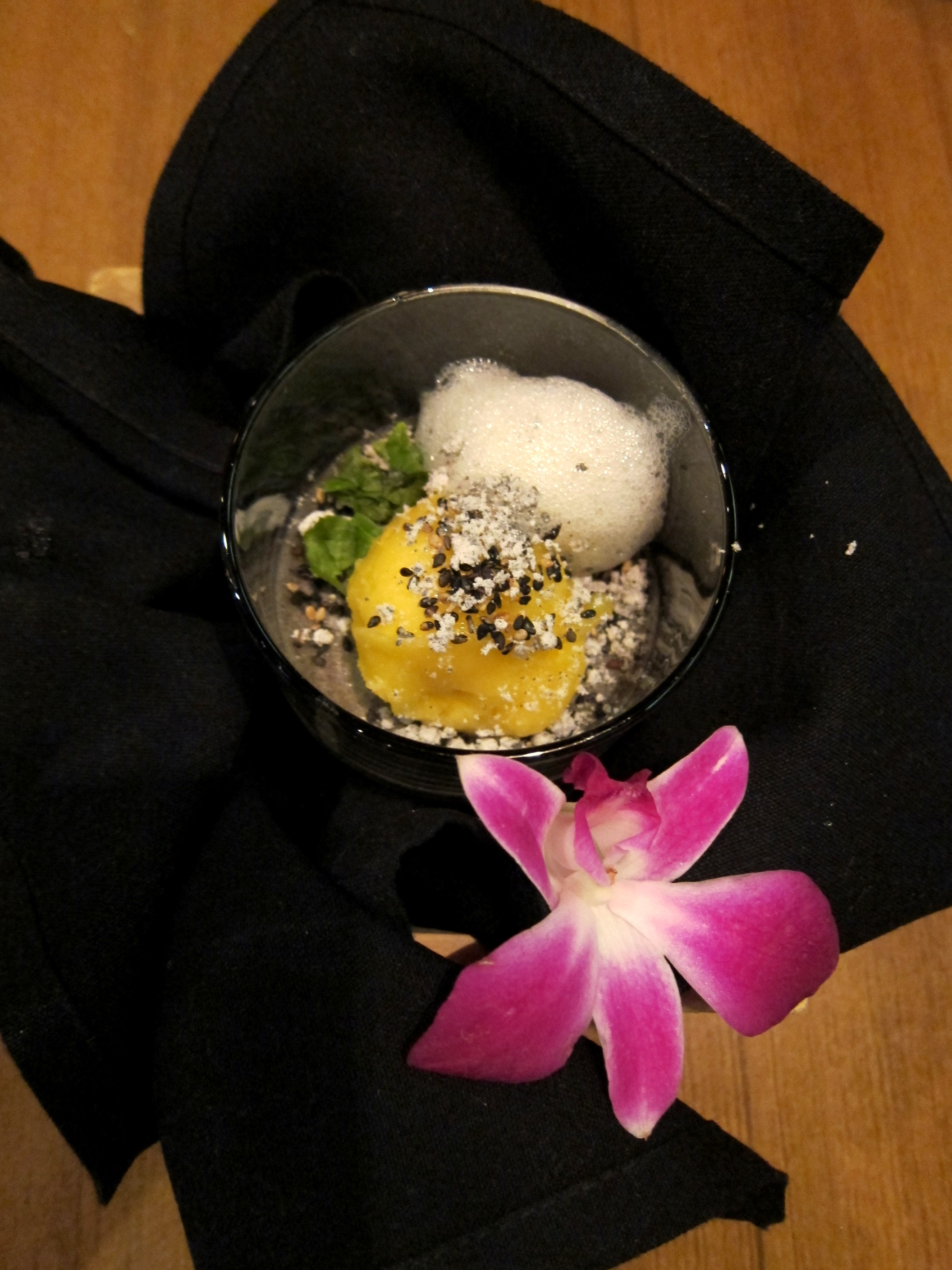
For dessert, our host tried to lure us into either a fancy chocolate roll (with coffee cream, red bean puree and lemon gel) or a liquid-nitrogened white chocolate namelaka (with green tea streusel and huckleberry curd), but I insisted on the December 24 special: black sesame panna cotta, topped with mango sorbet, candied sesame, sesame soil, and ginger foam. I’ve never had any bad sesame treats, and this springy, fragrant, sweet but mild one is another triumph. The mango sorbet is bit tart like a puffy porcupine: it’s from a real fresh mango (yes, as opposed to a fake one).

I think we’ve done pretty well covering all bases: rice, noodle, seafood, chicken, pork, beef, from street to posh, from East to West. What does this dinner have to do with Oishii Kankei? Nothing. I just wanted to mention a manga worth reading for food fans.
How many stars for this restaurant? Like Imamura-san said about Petit Lapin: One. The food is good. 🙂

Address: Kata Robata
3600 Kirby Dr. Suite H
Houston, TX 77098
(713) 526-8858

The damage: dinner for 3 – $84.44

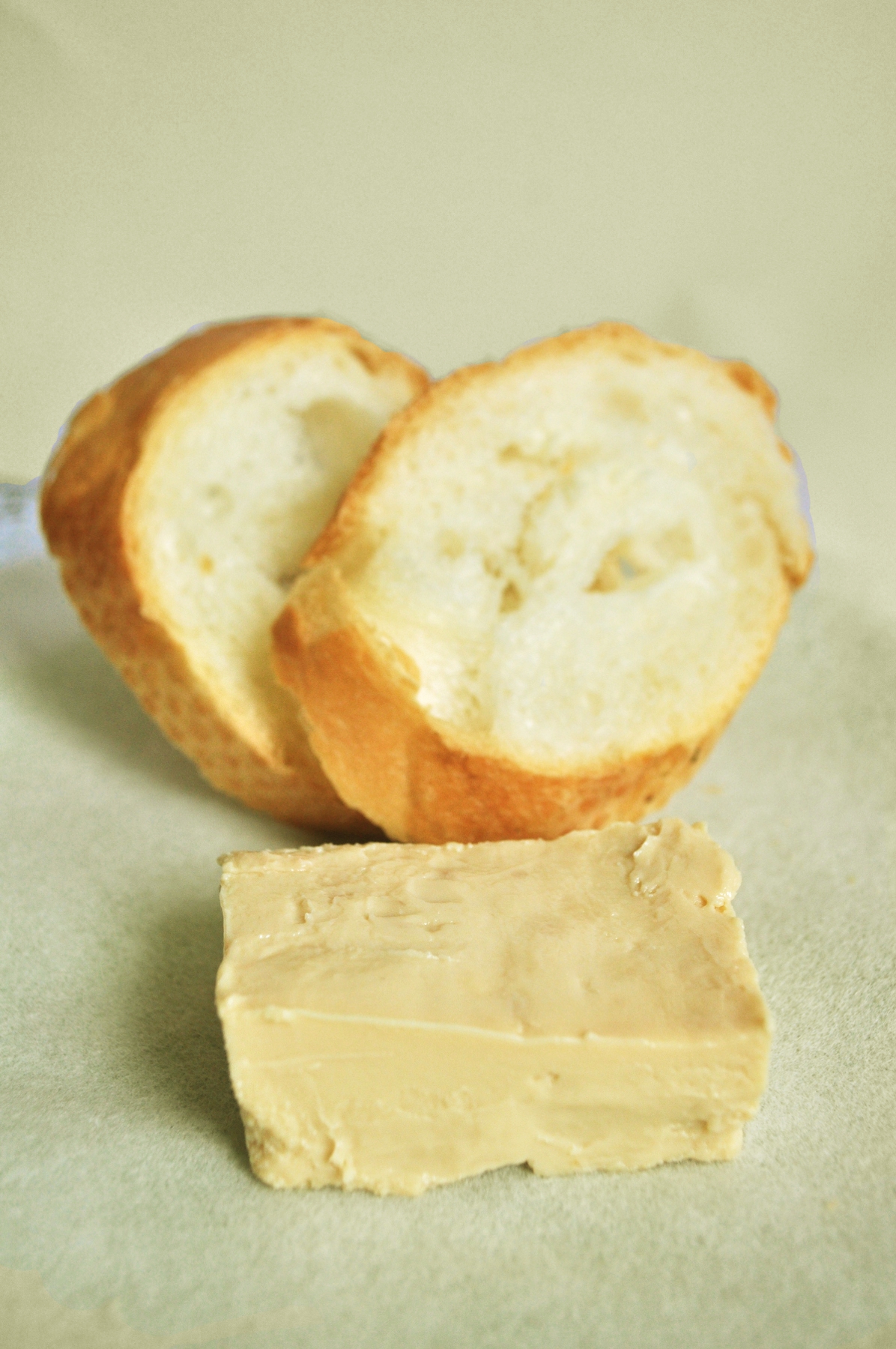
Tofu misozuke – the vegan cheese

November 25, 2011 By: Mai Truong Category: Japanese, Review of anything not restaurant, The more interesting, Vegan

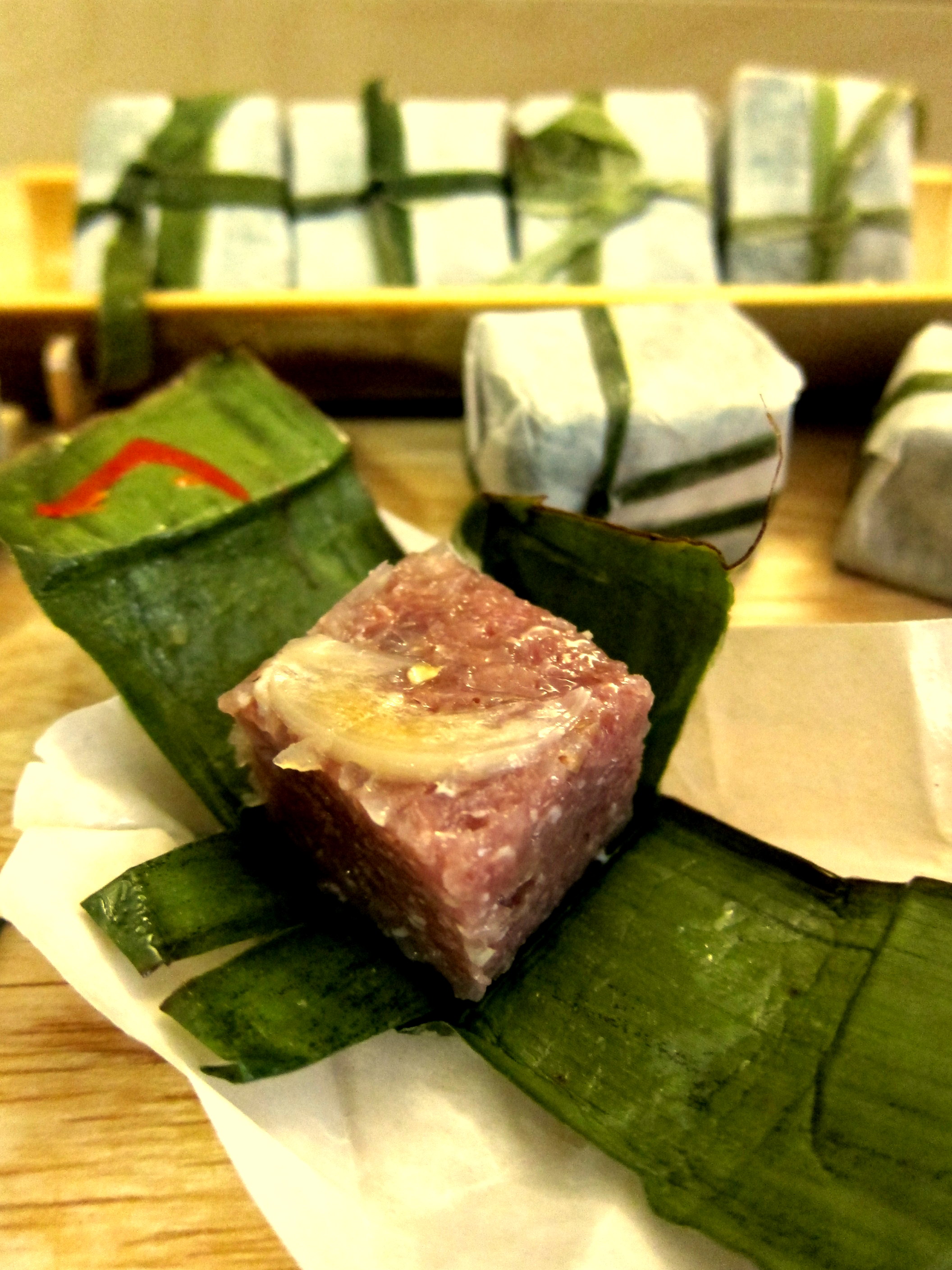
Tofu misozuke. Image courtesy of Rau Om

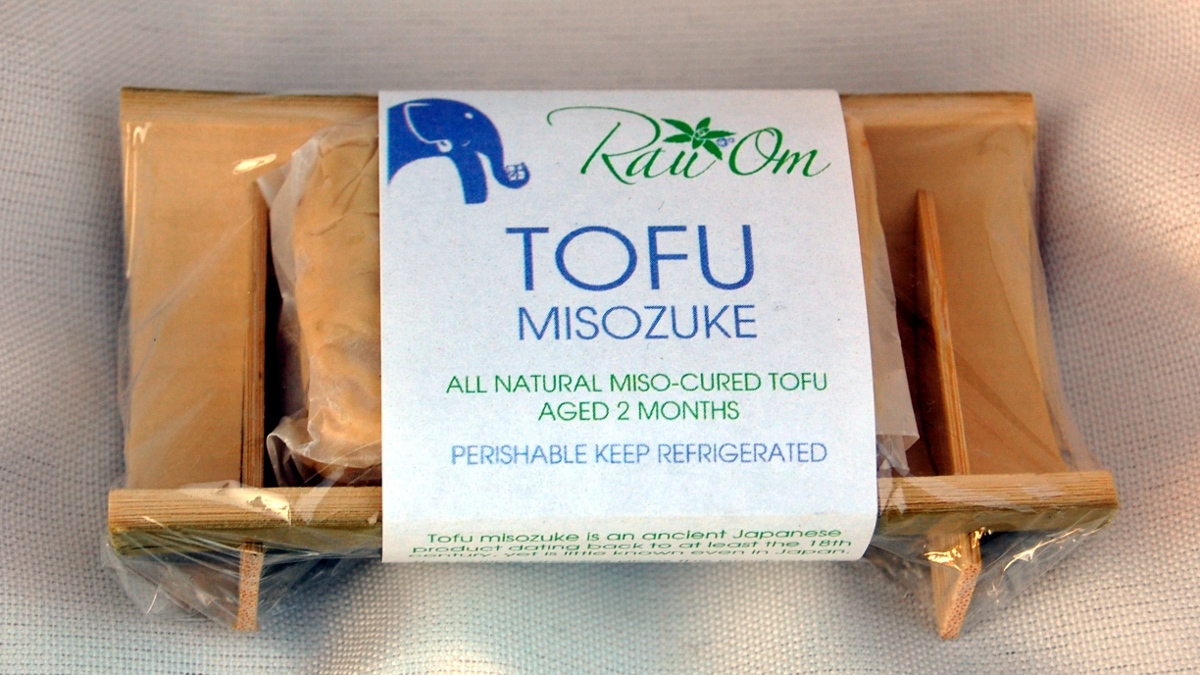
Every Saturday in Sunnyvale and every Sunday in Palo Alto, Oanh sets up the tables. She hangs a white banner with a simplified lavender elephant and the word “Rau Om” in calligraphic green, and a poster featuring a little mouse prancing with a block of tofu on his back, with the word “Mice eat Rau Om’s Tofu Misozuke” below. Then she arranges dozens of little bamboo and plastic wrap packets on the table, each containing a block of tofu in beige paper, about as big as a match box. Then she’s ready for the Farmers Market. And the tofu is ready to be sold out, every last one of them.

Over two years of experimenting, Oanh says, including lots of PubMed searching, an 18th century manuscript in old Japanese, and who knows how many pounds of firm tofu. It all started with an accidental find in Tokyo’s night food scene in 2009, and here they are, at a Californian Farmers Market, offering a Japanese elder a taste that brings her decades back home. It’s like the tofu has achieved its American dream.

When I first had my tongue on Rau Om’s tofu misozuke at one of Oanh’s dinners, I thought wow, this stuff feels like La Vache qui Rit. It’s exactly that texture, that kind of tender springiness of a creamy cheese that bounces when you touch and has no resistance when you cut, the kind of softness on the verge of melting, like that of a 64°C slow-poached egg yolk. When the taste starts to register, like a tenth of a second later, it’s a whole different affair. There’s some brininess, some tingling sensation, but there’s no fat. It’s a creamy cheese that isn’t at all fatty, naturally, because it’s a vegan cheese. The brininess comes from the miso, and the tingling sensation comes from the sake. A few seconds deeper is the soothing sweetness of soy and sugar.

I fell for it. I know I’m going to sound like a tofu freak now, one that might as well protest for the civil right of the tofu and occupy the supermarket because soy is the 99%, but this meat lover is gonna say it: tofu is a really freaking awesome invention in food history. If people say it tastes plain with a frown, I say they don’t know how to appreciate the “plain” taste. That’s the taste of water and steamed rice, the flat tone in music, and the white space in photography. It’s better than good, it’s a necessity. When I’m tired, I crave exactly that taste. Then there are a hundred ways to make tofu depart from plaindom. And the Rau Om couple succeeded splendidly in one of them: make tofu into tofu cheese (tofeese? :D).

Oanh and Dang also let me try a wedge of kombu-wrapped tofu. The kombu attenuates the miso saltiness and promotes the aged sweetness. The kombu tofu misozuke is one level deeper than the tofu misozuke. I was hoping to buy it last time, but:

FlavorBoulevard: Did you wrap this new batch of tofu misozuke in kombu?
Oanh: No. We’ll roll out the kombu-wrapped tofu misozuke in a few months, and it’ll be clearly labeled as such.

FB: What kind of tofu do you use? In your blog, you wrote “firm tofu”, but would you like to elaborate?
Oanh: We are buying regular tofu from the supermarkets. A to do item for us is to look for a local source for tofu.

FB: What about the miso?
Oanh: One of the first recipes we found specified white or yellow miso. We did some experiments with other types of miso and found the results less than satisfactory, with all the caveats that come with a negative result.

FB: How long does each batch take?
Oanh: The miso flavor permeates the tofu almost immediately, but to get to the right creamy texture, it takes at least 2 months.

FB: How long can the tofu stay good (refrigerated) after packaging?
Oanh: About a month.

FB: Currently the tofu misozuke is marked at $7/packet (2.5-3.0 oz). Based on what standard did you set the price? Are you worried that it might be a bit high for the general market?
Oanh: The price is as affordable as we can make it given the production costs and is at a comparable level to other artisanal hand-made cheeses. Like fine cheeses, the process of making tofu misozuke is labor intensive, both during the initial production and regularly during the aging process which lasts at least 2 months. That’s not even counting our research cost, which we figured was just part of our food budget, the price of our food obsession.

FB: Can it be used in cooking, like in soup or pizza? Or salad? Would the flavor diminish in the process?
Oanh: Yes, it’s definitely can be used in cooking. The flavor is intense enough to stand up to the cooking process. We once used it in a squash blossom & beef dish. We definitely can see it work in salad. We had a post a while back about some of the uses of tofu misozuke. We’ve also used it in place of chao (Vietnamese fermented tofu) to make duck hot pot, and we recently found out that it worked very well with prosciutto.

Tofu misozuke package. Image courtesy of Rau Om

In the States, you can’t find this kind of vegan cheese anywhere but the Rau Om online store and their Farmers Market tents. Or you can spend 2 months making it at home, following Rau Om’s recipe, assuming that you succeed on the first try. I wouldn’t. Rau Om’s tofu misozuke, in its offwhite color and handmade packaging, is very Hollywood-girl-next-door from appearance to content: her hairdo doesn’t sparkle, but once you know her, you fall helplessly in love, especially if you are any of the followings: tofu aficionado, cheese aficionado, vegan, and foodie.

Basically, tofu misozuke can be used anywhere cheese and soybean paste can be used, but as my friend Masaaki Yamato says, that would be like using caviar to make soup. A wise man would enjoy tofu misozuke alone with an ochoko of sake, and let his senses fly.

(UPDATE: I enjoy it with genmaicha, or a sweet oolong ;-))

DISCLAIMER: I received no free product or monetary gift in exchange for this review.

Tags:

All-natural nem by Rau Om – Rediscovering the Vietnamese meat curing art

August 28, 2011 By: Mai Truong Category: Food product, The more interesting, Vietnamese


My most vivid memory nem happened one summer afternoon at a fishing park in the suburbs of Saigon. Nem is one of those more favored snacks to accompany conversations among friends, and while the adults were toasting away the sunlit hours grilling their freshly caught fish, the ten-year-old Mai made friends with this tiny black-haired guy with her share of nem. He enjoyed the nem so very much that he kept reaching out to her and holding her finger. Oh it was such joy watching him nimbly bite into the succulent pink pieces of meat, smiling innocuously. It’s been fifteen years. I wonder how that little pet monkey is doing now. His hair is probably all white, if he’s alive.

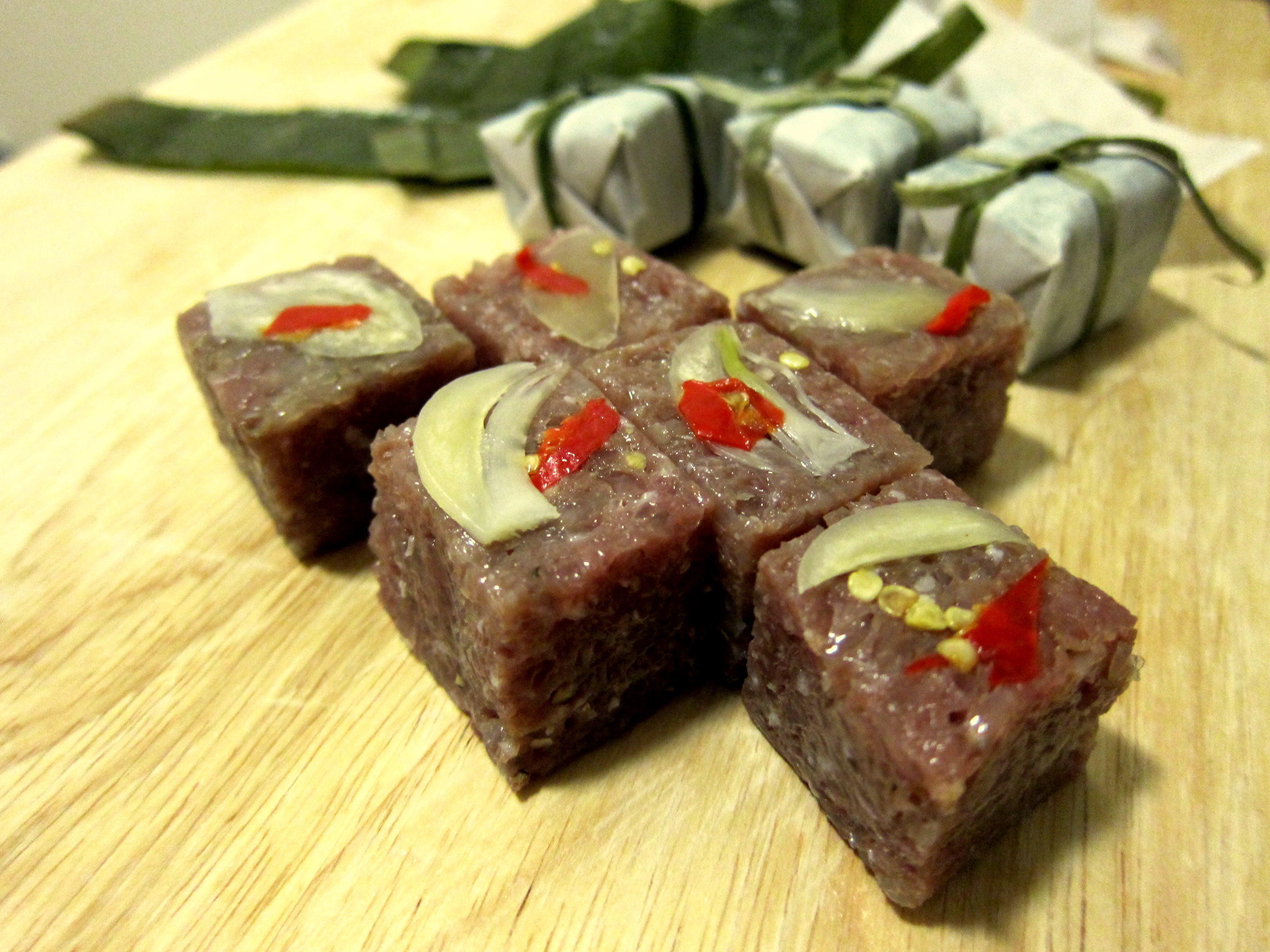
I didn’t have much nem to give him, maybe two or three pieces, each the size of half a thumb. Little Mom had no idea that I was giving them to the monkey, she probably would have given me more if she did, because she’s very hesitant to let me eat nem. First, it’s uncooked meat. Second, ambiguous chemicals are involved in the curing process to make nem. So aside from that happy memory of nem and monkey, Mai grew up indifferent toward those pink meat snacks wrapped in banana leaves. But one day, the twenty-five-year-old Mai, while reading Rau Om, saw that her blogger friends have discovered an all-natural, chemical-free way to make the meat snacks, and the interest arose.
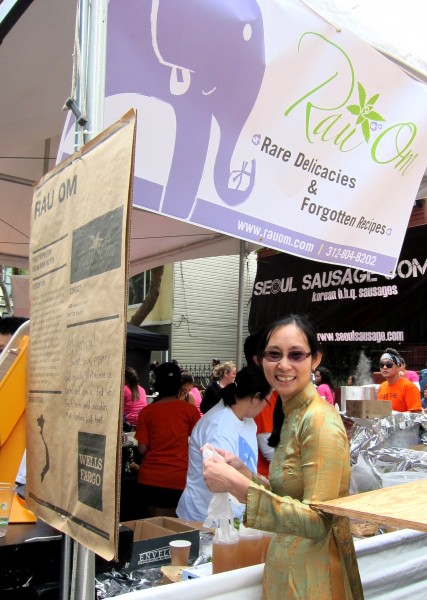
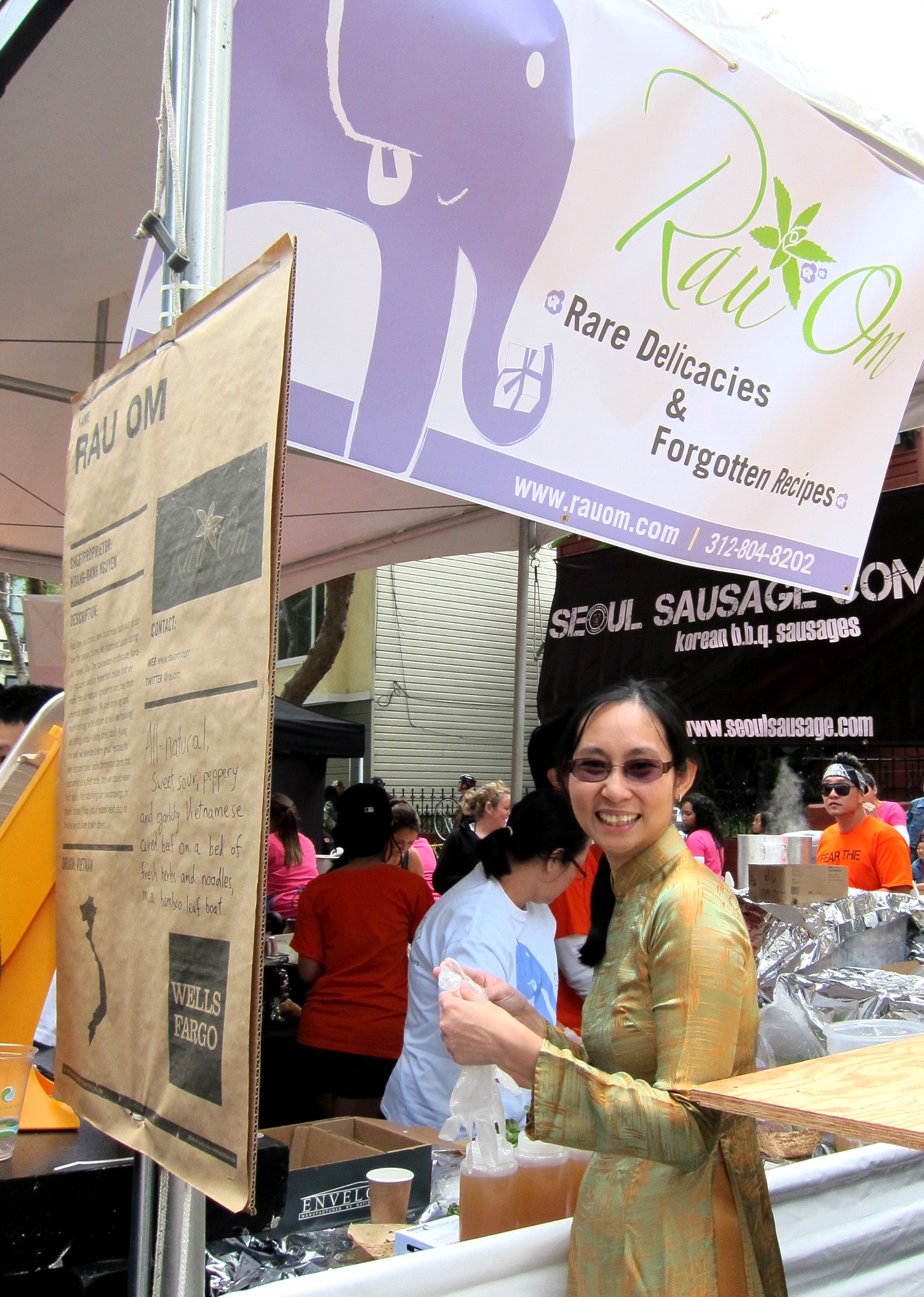
Oanh of RauOm.com at San Francisco Street Food Fest, August 2011

In my previous post, which was a hundred years ago due to web hosting issue, I mentioned that Rau Om‘s nem was the main reason I joined the San Fran Street Food crowd this August. If there’s anything I regret not doing that day, it would be not eating the nem the way Oanh and Dang prepared it at the festival: on bánh hỏi, with rau răm and a dash of mixed fish sauce, in a bamboo leaf boat. I didn’t have bánh hỏi and rau răm at home, so I just ate nem solo out of the leaf. I was surprised by how good it was.

Eaten soon after the curing time finished, Rau Om‘s nem has merely a quick hint of sourness, one paper thin slice of garlic and another of cayenne pepper still smell crisp, and the grease from the pork skin and the beef keep all of those flavors linger on the tongue. It’s intriguing to say the least. But most importantly, Oanh and Dang did not use any random “nem/nam seasoning package” in Asian grocers, which has always been known as the crucial ingredient to make nem. They are scientists, and they do experiments to replace the black box with natural ingredients. As it turns out, there’s only one special ingredient.
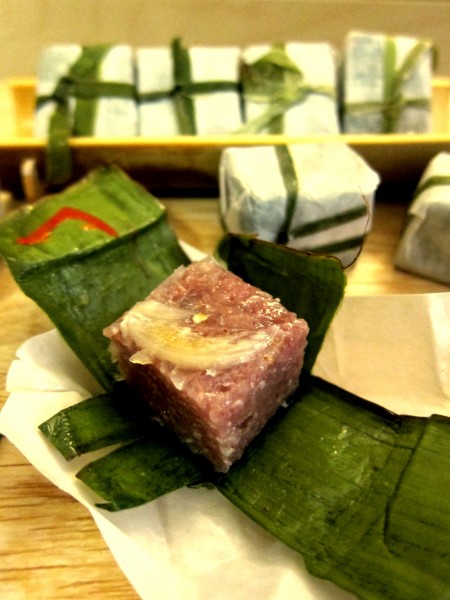

Oanh’s answers to my questions about Rau Om’s all-natural nem:

FB: What ingredients did you put in your nem? I know there’s ground beef, pork skin, garlic, chili pepper, salt, sugar, but is there anything else?
Oanh: The only other ingredient we add is celery juice powder (which is exactly what the name indicates, powder made from celery juice), which helps cure the meat and also prevents spoilage. Otherwise, there’s absolutely nothing else. That was the whole point of all our research into making nem the traditional, all natural way.
Also, the ground beef isn’t the regular ground beef. We actually bought whole lean eye round and ground it finely (twice or three times). This is where nem is different from regular sausages: nem can’t be made with regular store-bought ground beef because there’s just too much fat and connective tissues, it messes up the nem texture. With high quality lean meat, nem is more like ground ham than sausage.

FB: How long is the fermentation/curing process?
Oanh: 2-3 days

FB: How long can nem stay good after cured?
Oanh: If you put it in the freezer right away, it could keep for 2-3 months. Thawing should be done in the fridge and nem consumed within 3-5 days.

FB: How would things be different if you use pork instead of beef? Can chicken be made into nem?
Oanh: Pork and beef are neutral tasting enough that it doesn’t make a tangible difference in nem. We also make lamb nem, where we can taste the difference because lamb is a pretty assertive meat (grill lamb nem is really fragrant and yummy). Good question about chicken – I don’t think it’ll work, Dang thinks there’s only one way to find out. Also, now he wants to try duck nem.

FB: Usually, nem has a bright reddish hue, but Rau Om’s nem is more brown with a pink tint. Is this because you didn’t use the seasoning package?
Oanh: We are still tinkering with the process to get the color to be more pink. Most recent batches got a bit little bit more of the pink hue. I don’t think we can ever match the color of nem made with the nem powder, though. The amount of nitrate in that powder package is probably really high…too high for us to feel comfortable matching.

FB: Why does nem have to be individually wrapped in small packages like that? Is it to aid the curing process or just to make them easy to eat?
Oanh: I think just easy and convenient to eat on the go as a street snack. There are also bigger rolls of nem (just like we have bigger blocks) for eating at home, so the smaller packages aren’t necessary for curing.

FB: Does the banana leaf help enhancing the flavor/curing? Would it be okay to wrap it with foil or something beside banana leaf?
Oanh: In fact, most of the nem you find in Vietnamese delis in San Jose would be wrapped in foil and/or saran wrap. Even the banana leaf wrapped ones have the leaf itself wrapped in saran wrap. What we found was that direct contact between the leaf and the nem does give nem a distinctive flavor.
Nem also used to be wrapped with lá vông (tiger claw leaf), lá chùm ruột (star gooseberry leaf), or lá ổi (guava leaf). We haven’t been able to get lá vông, but we have experimented with lá ổi and cherry leaves. Speculation: these leaves don’t impact the flavor as much as provide the ingredients and enzymes that helps with curing, playing the same functional roles as the celery juice powder.

Honestly, I’m still not sure what celery juice powder means, so I’ll bug her to show me next time I see her. And how did she even think of celery juice powder? Lots of admiration sent her way. 🙂
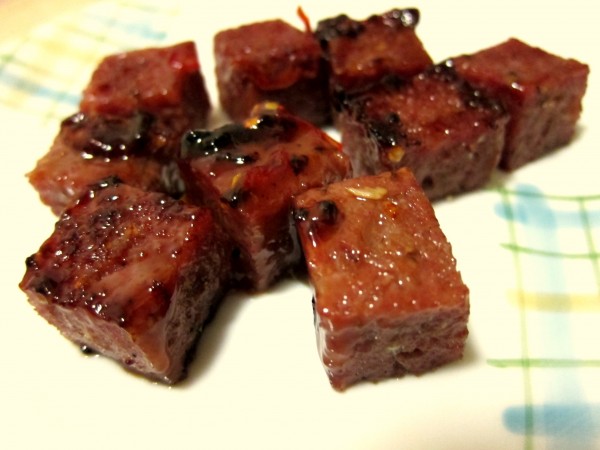

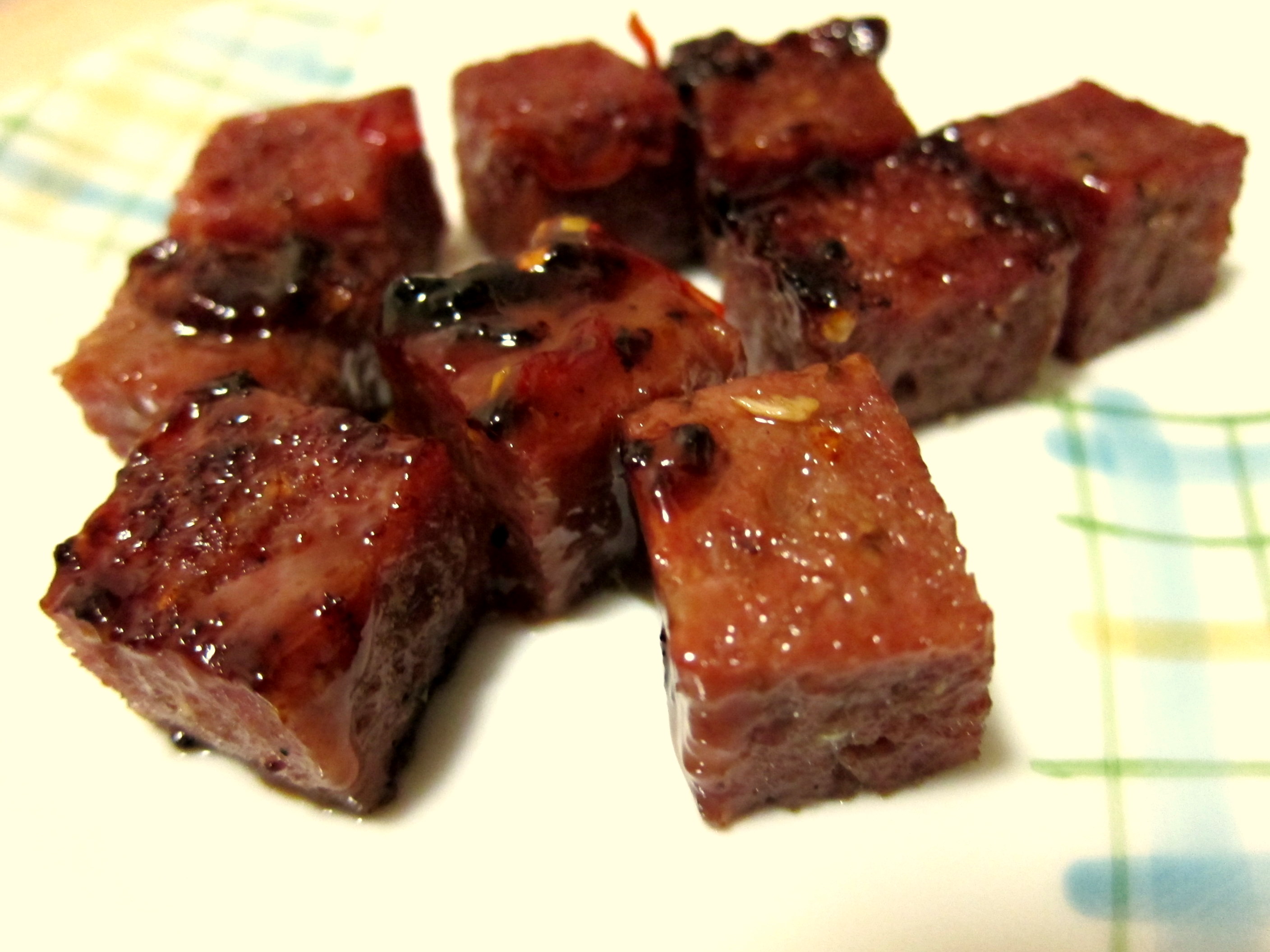
I did my share of nem experimenting. Not having a grill or any appropriate grilling facility, I threw a handful of nem onto a skillet smeared with hot oil. Little Mom did warn me about pork skin and oil in the past, so I wore long sleeve shirt, wrapped both hands in plastic bags, stood three feet away from the burner, and used long chopsticks to flip the nem. Midway through the frying session, I also had to use a chopping board as a shield between me and the skillet. The aftermath was a stove with as many oil dots as stars in the Milky Way. I’m not kidding, frying nem was like lighting fireworks. But they go great with white rice and kimchi. 🙂

My clumsiness aside, making nem is not easy, and making nem without chemicals has been unheard of, but Oanh and Dang have succeeded in reviving the lost art of all-natural Vietnamese meat curing. I felt excited just being one of the many tasters of Rau Om‘s nem. The same kind of excitement I had playing with that pet monkey in the fishing park. If you’ve held hands with a monkey, you know it’s like a human hand, but it’s not, isn’t it the strangest feeling? Well, nem is raw meat, but it’s not, isn’t it an interesting food? 🙂

Disclaimer: The author of this post did not receive any monetary profit for writing about the product, so if you decide to trust her taste, you can buy Rau Om‘s nem online at rauom.com. $20 for a package of ten nem. 🙂

DISCLAIMER: I received no free product or monetary gift in exchange for this review.

Taro and I

July 10, 2011 By: Mai Truong Category: sweet snacks and desserts, The more interesting, Vegan, Vietnamese

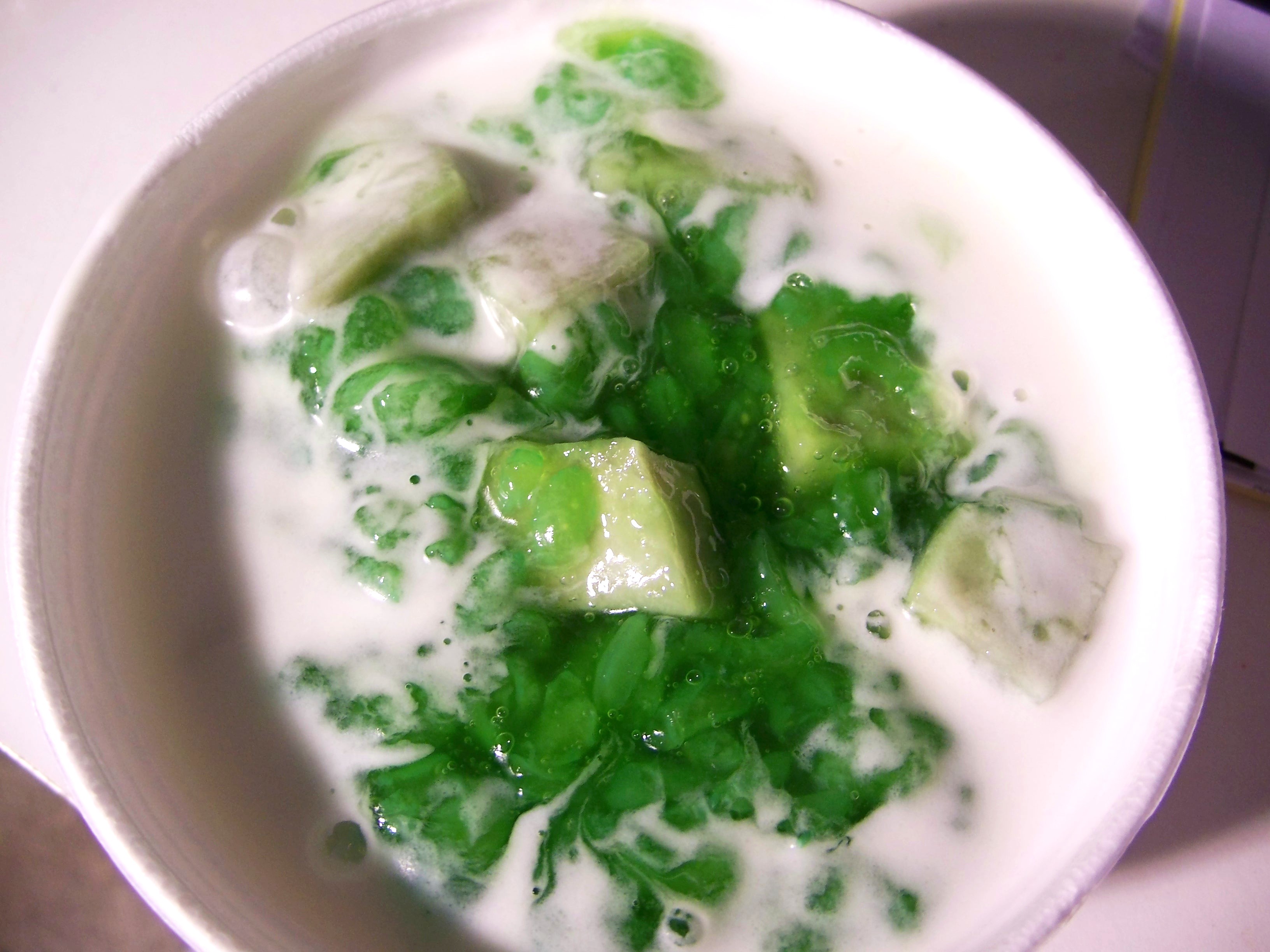
Taro and sticky rice pudding with coconut milk

If you don’t like taro, I don’t know if we can be friends.
I used to be aghast when people asked me what taro was. It’s a root, like potato, you know? Then slowly I realized that I was the obnoxious one for not realizing that not everyone is Vietnamese. But when you grew up with something so abundant, don’t you get the feeling that everyone else must have grown up with it too? Next time someone says “What, you haven’t seen Star Trek?!”, I’m gonna ask “have you eaten taro?”. (Just my luck, they’d say yes and I’d have to go to Blockbusters. :D)

To be fair, Vietnam is not the only country that has taro in its kitchens, the roots are also in China, India, Korea, Japan, Cameroon, you name it. But to this Vietnamese taro-fan, it’s Vietnamese heart and soul. It’s not recognized everywhere, but its growth spreads everywhere. It adapts easily in both sweet and savory dishes. Its sweetness lies somewhere between the red sweet potato and the usual potato. It’s nutty like boiled peanuts in some parts, dense and moist like cassava in others.


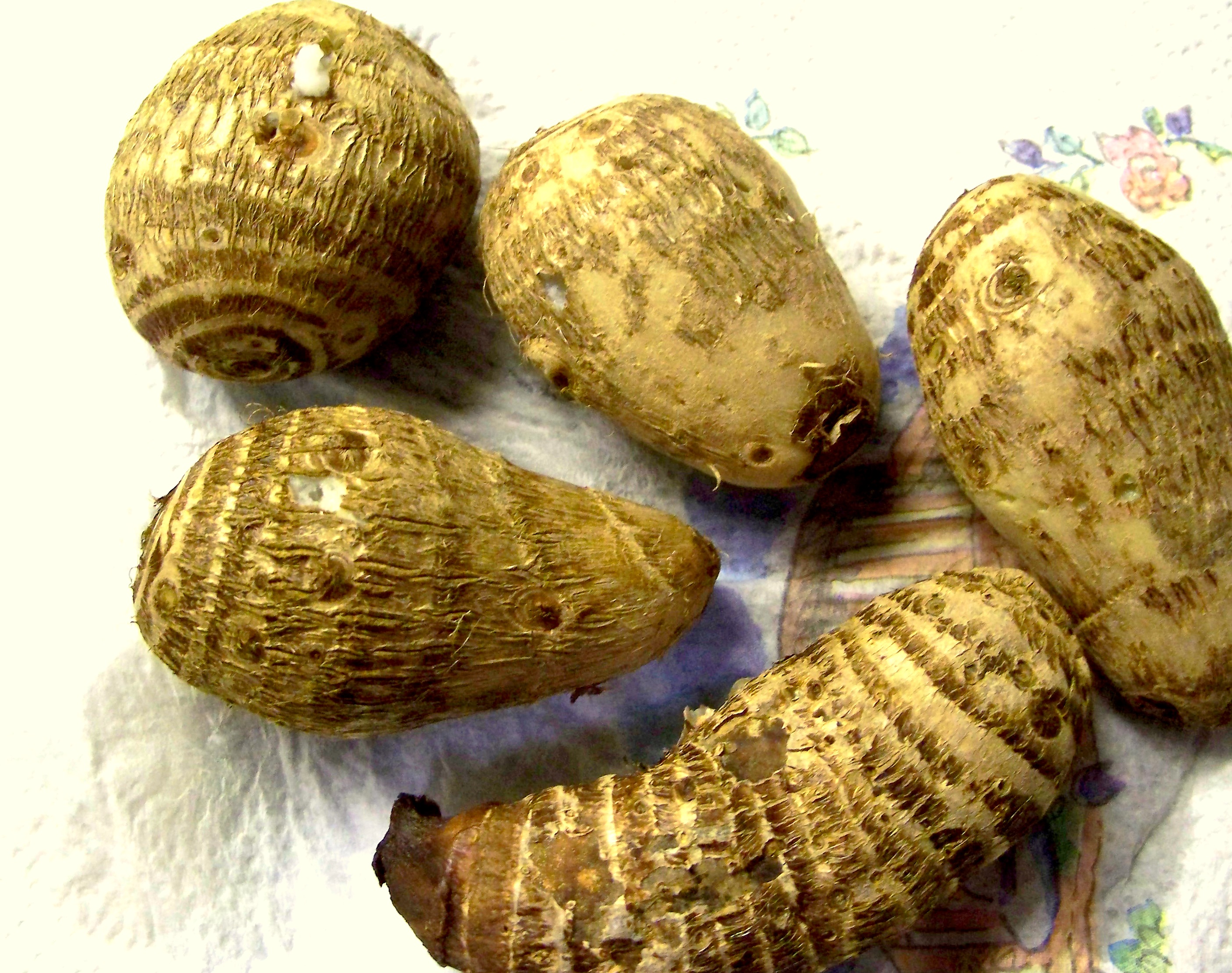
It’s not pretty (are roots ever pretty?). It’s hairy, brown, with several nodes and spots. It can cause a slight itch if washed with bare hands. Most small taros are just a tad bigger than a chicken egg. The only thing I know how to do with them is to boil them, like eggs, for roughly 30 minutes (from cold water). Then I peel them while they’re still warm, dip them into sugar, and savor their nuttiness.

Magnolia's taro ice cream from 99 Ranch Market

Actually, the taro here doesn’t taste that great. It’s too bland, too mushy, too dense, and it barely tastes like taro. Back home, Little Mom used to make taro soup (canh khoai môn): chunky slices of taro, chopped green onion, pork, dried shrimp (tôm khô), water, salt and sugar to taste. There might have been a teaspoon or two of fish sauce and fish sauce to taste. It’s my favorite canh, and my grandfather’s too. But Little Mom doesn’t make it anymore because 1. she doesn’t like taro in its root form, and 2. she doesn’t like taro in the States.

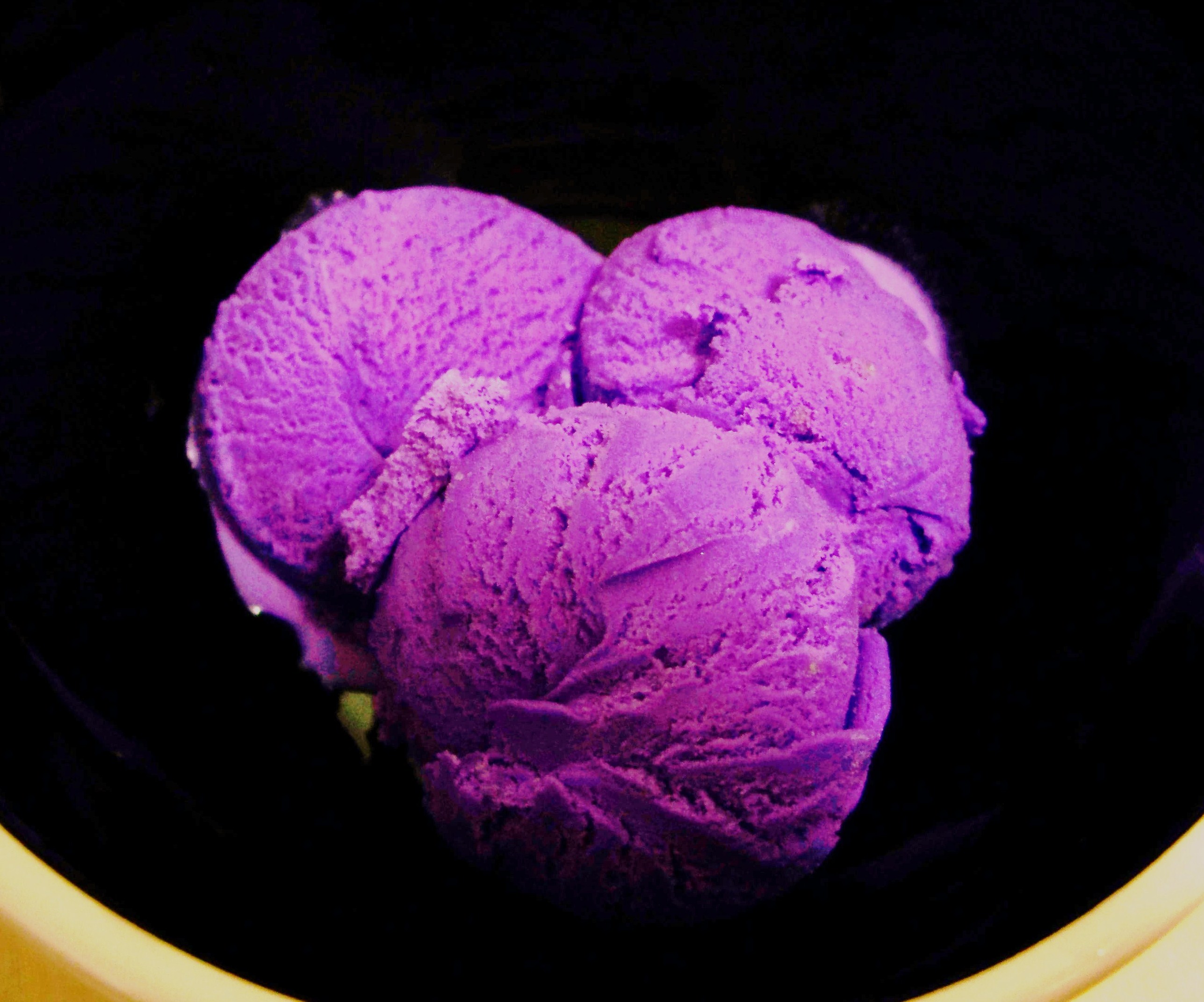
She does like taro as a flavor in sweets, though. Once a week, we used to get a half-kilo tub of Wall’s taro ice cream, its soft lavender color was as sweet and alluring as its taste. How I long for the day when Häagen-Dazs churns out the magic purple so that I don’t have to settle with the ink-dyed Magnolia’s or wait at the mercy of Yogurt Land‘s customers. Apparently, taro frozen yogurt tops the worst-seller list in downtown Berkeley and only gets served when the other flavors are out. And I thought Berkeleyans were the adventurous type. FYI, taro pairs best with coconut.


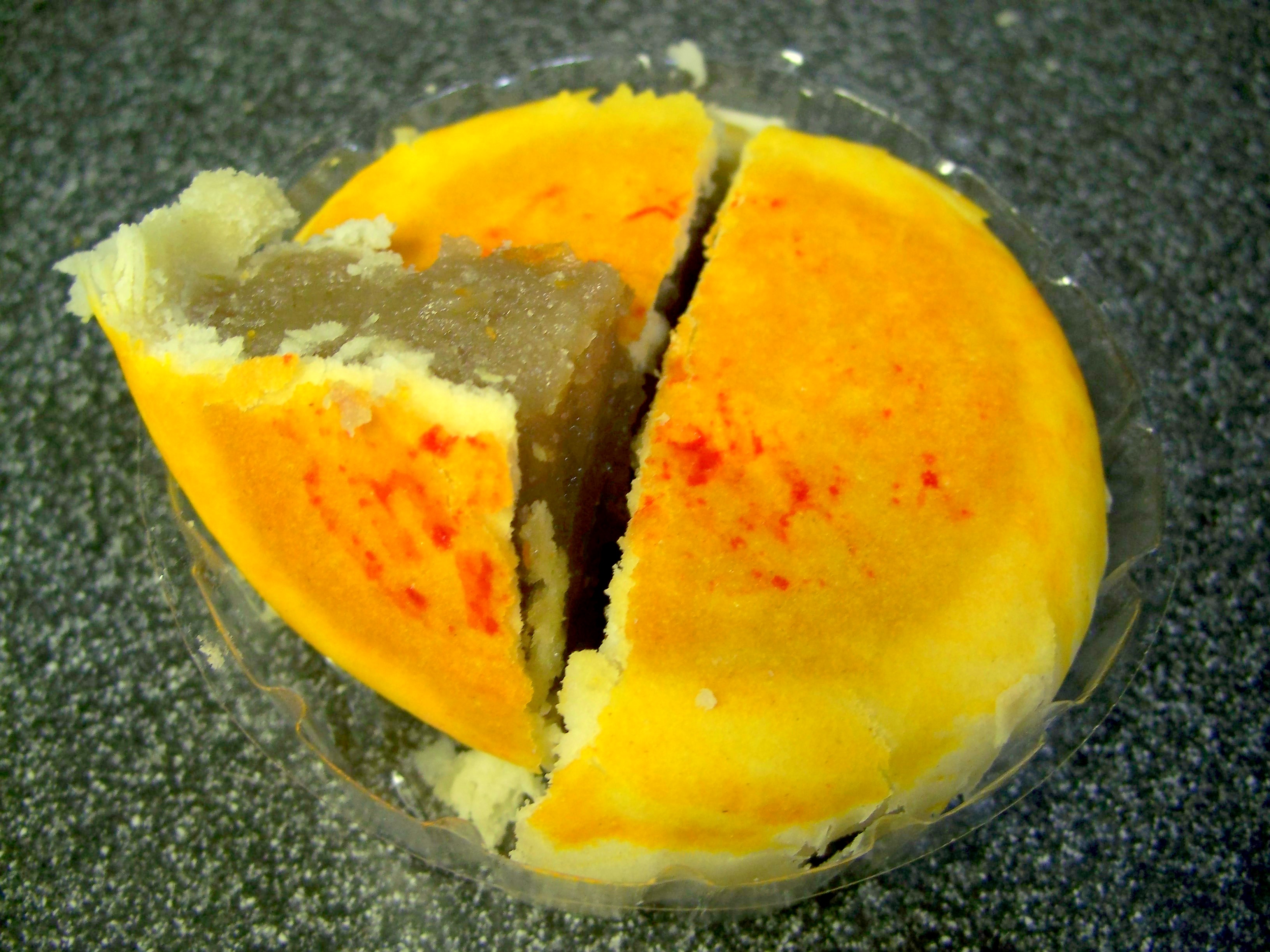
When taro is added into plain things, like yogurt, it adds flavors. When it’s added into sweet things, like mooncake and pudding (chè), it moderates the sugar and adds texture. Bánh bía khoai môn (Suzhou mooncake with taro filling) is less sweet than its common mung bean counterpart (bánh bía đậu xanh). Chè khoai môn (taro in sticky rice pudding) is a harmonious mix of chunky and soft, of nutty and chewy, of plain, salty and sweet.


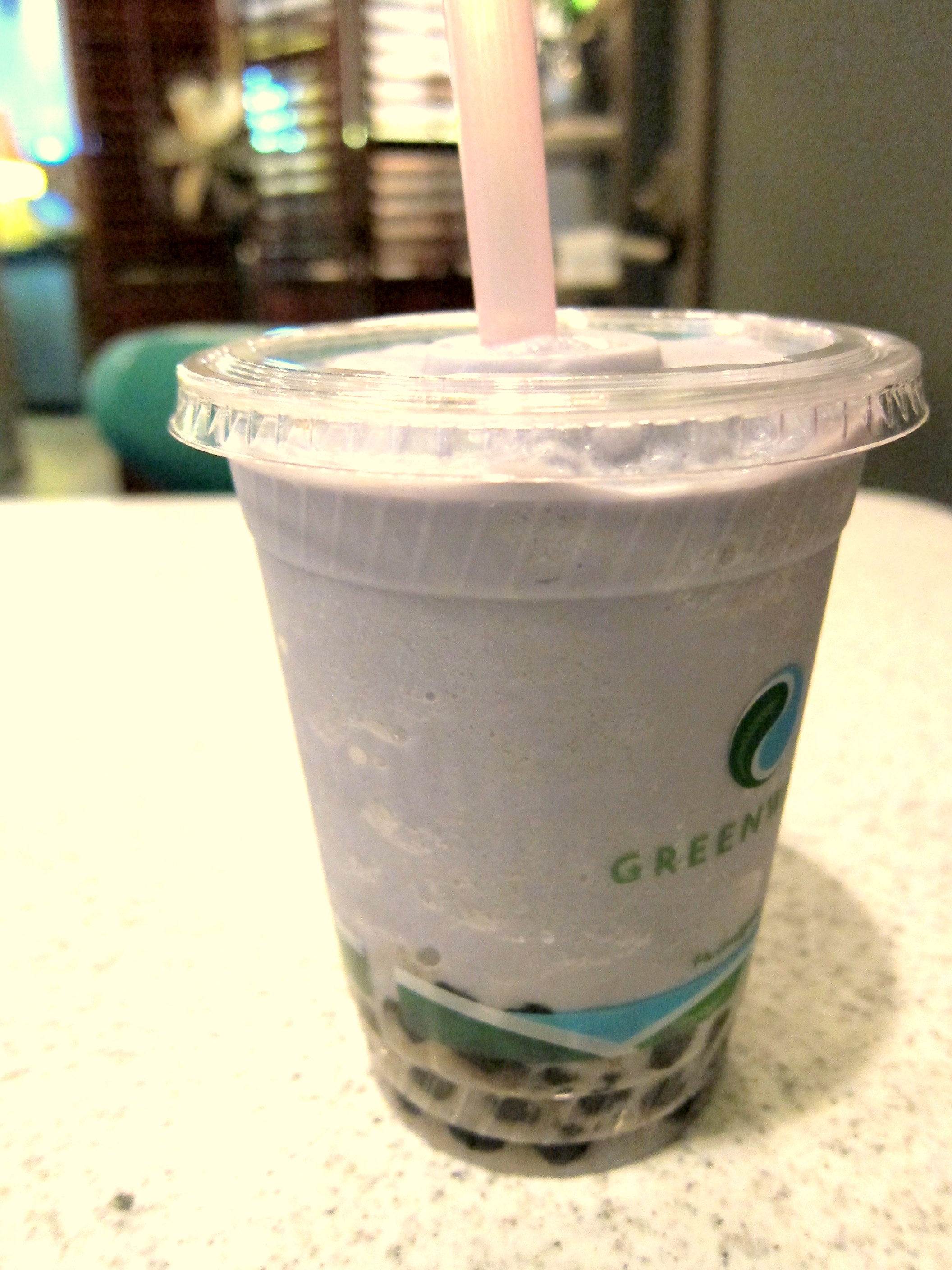
Through the internet grapevines, I’ve also heard of bánh da lợn khoai môn (taro pig-skin pie), bánh đúc khoai môn (taro rice jelly cake) with meat and dried shrimp, fried rice with taro, taro hushpuppies dipped into sweet and sour fish sauce. But if I ever get a real kitchen, the first thing I make with taro will be a bowl of soft, milky steamed taro cake (bánh khoai môn hấp), and I’ll get a cuppa taro bubble tea to complete my love.

Will they make taro milk one day?

More taro-ness: Taiwanese taro pastry

This post is submitted to Delicious Vietnam #15, July edition, hosted by Lan from Angry Asian Creations.

Steamed taro cake from Alpha Bakery & Deli

Hương Giang – Savour Huế in Houston

March 23, 2011 By: Mai Truong Category: Central Vietnamese, Houston, noodle soup, sticky rice concoctions, The more interesting


I lost my memory card. If you’re a food blogger too you’d know how devastated I felt: the first advice to a food blogger these days is “good pictures”. Well, the pictures I took at Hương Giang are amazing, they just no longer exist. But, pictures or not, as my professor Lawrence Hall would say in his British tongue, “you can’t stop me,” or in this case, I can’t stop myself from blogging about the restaurant.

Is their food that good? Hương Giang takes a shy, small square in the parking lot at the corner of Bellaire and Boone. If you drive westward on Bellaire Blvd, you’ll see its sign on the left before you reach Hong Kong Market. It’s really a tucked-away place for scoffers, the outlook unimpressive, the sign blue and white like a tired worker shirt. The inside is similar to any average pho joints you’ve seen, wiped clean and plastic cheap. I knew my mom wouldn’t come here if not for blogging’s sake, but in this city it’d be hard to get a menu more Huế than this one.

There are pictures in the menu and printouts taped to the wall to tell you what the specials are. For us it’s a matter of getting what we’ve heard of but not had: gỏi mít tôm thịt, bánh ít ram, cơm hến, and bún suông.

Gỏi mít tôm thịt is jackfruit salad with boiled shrimp and pork, and like other Vietnamese gỏi, it’s served cold with rice cracker (bánh tráng nướng) for shoveling and scooping. The airy blandness of a coal-toasted sesame rice paper elevates the lime juice, the pepper, the cilantro in a gỏi. The kitchen makes a slight mistake by bringing out a plate of gỏi mít hến instead, where the boiled pork and shrimp are replaced by handfuls of tiny basket clams (hến). These freshwater bivalves are connected to Huế like McDonald’s to Americanization. As small as a finger nail, each hến constitutes a second of chewing. As a stir-fried bunch mixed with young jackfruit flesh, the collection feels grainy and humble like a fisherman’s kitchen by the riverside. The color, too, is earthy: blackish-lined ivory hến,  pale brown jackfruit, and a bit of green cilantro.

Cơm hến offers more or less the same atmosphere as the salad, except the rice amplifies the grainy texture in place of the jackfruit’s fleshy blend, no rice cracker presents to break the unanimity, and the hến‘s natural sweetness here isn’t damped by any lime juice. When there isn’t just a few, but at least a hundred of these quiet lives in a bowl of cơm hến, you can’t help but feel the responsibility to treasure each spoonful. It’s the least you can do for the dignity of those tiny freshwater basket clams.

If cơm hến were hamburger, then bánh ít ram would be mac ‘n cheese. It’s not super well known, but anyone who knows Hue food knows this sticky (rice) business. I first learned of bánh ít ram from noodlepie, Ravenous Couple call them fried mochi dumpling (and you really can’t get a better looking picture of bánh ít ram than what the couple styled on their site). Each ping-pong-sized dumpling carries a marvelously inviting look: a plump, shiny round ball on a golden base, cut in half and there snuggle rosy bits of shrimp and char siu pork. Each bite is a step into a river: first soft, then sinking, then hitting the crusty bottom. With or without the mixed fish sauce, savory bánh ít ram, also called bánh ram ít by the natives, is a fair partnership between the steamed bánh ít and the deep fried bánh ram, with each component designed to excite the other. So why is it not as popular as bánh bèo? Because it’s hard to go down the second time. One bánh ít ram is good, two are too many. Ten on a plate, like what we get at Hương Giang, becomes a bloody battlefield.

Thankfully we are a team of three, and we rotates plates to share both the good and the challenging. And thankfully we get bún suông. This noodle soup draws a fine but successful line between being too meaty and being too thin, as it contains both. Ample cuts of chả cá (fish cake, similar to eomuk), chả lụa (silk sausage), and juicy shrimps weave among the angel hair rice vermicelli, all soaked in a slim sweet broth. Bún suông at Hương Giang tastes pure like bún mộc, quite a contrast from the definitions I’ve found online, whose broth is as thick as a deep South accent of the cooks said to invent the noodle soup.

If there are indeed two types of bún suông, the southern style and the Hương Giang style, then I’d choose the latter any day. If the southern style is really the only traditional style, then I’d go to Hương Giang just for their bún suông. You know you can trust a chef who has created something so delicate, so heart-warming, so balanced, and so very Huế.

Address: Hue Huong Giang (near Hong Kong Market)
11113 Bellaire Boulevard
Houston, TX 77072-2607
(832) 328-1308

Money matter:
gỏi mít hến (6.25) + bánh ít ram (6.50) + bún suông (6.50) + cơm hến (8.50)
= $27.25 a big lunch for three

Candied cà-na (white canarium or Chinese olive)

March 12, 2011 By: Mai Truong Category: California - The Bay Area, Fruits, One shot, Southern Vietnamese, sweet snacks and desserts, The more interesting


It’s not the black stuff they throw on your pizzas or the green thing they toothpick on your sandwich. How many of us city kids have tasted the tartness with a tiny sweet afterpunch of this Mekong delta fruit? It’s addictive like fresh squeezed orange juice on a summer day. Speaking street tongue, it’s nature’s crack in oblong shape.

Eat ’em fresh with chilipepper salt, or candy them with sugar and heat, it’s how kids down South do it with the cà na they shake off from bushes on the riverbanks. And argue if you may, kids know tasty food. The shape is really the only link cà na has with the Western olive (Olea europaea), though it’s at least two times bigger. Does the name “cà na” mean anything?

“Cà” is tomato, and “na” is the northern word for sweetsop, two totally unrelated species to this ovoid fruit. So “cà na” is not a compound noun. I’m no etymologist but here’s my best guess: “cà na” |kah nah| is a shortened vietnamization of the Thai word “kanachai”, from which cultigen taxonomists derive the the scientific name “canarium”, a genus with about 75 species native to the tropics. The cà na we eat and love from those riverbank bushes belongs to the species Canarium nigrum (black canarium) and Canarium album (white canarium), or “trám đen” and “trám trắng” in pure Vietnamese. Another delta variety is Canarium subulatum, pointy at both ends and sappy like green bananas.

Words on the net claim that cà na‘s acidity is good when you have a cold, drink too much, or wants to lower your weight, thus not so recommended for skinny sticks like me. I’ve never popped a fresh one myself, but this is the most (and only) mouth-watering description I could find on the net (translated from the Vietnamese original):

Every year, in roughly August or September, when the Mekong flushes the paddy fields, the cà na trees bear their first fruits. What could be better than rowing a canoe downstream, then tying it to a cà na trunk base by the riverbank to cast your fishing net, and while waiting, dip a bursting green ripen fruit into chilipepper salt to soak your soul with its wild and clean sweetness?


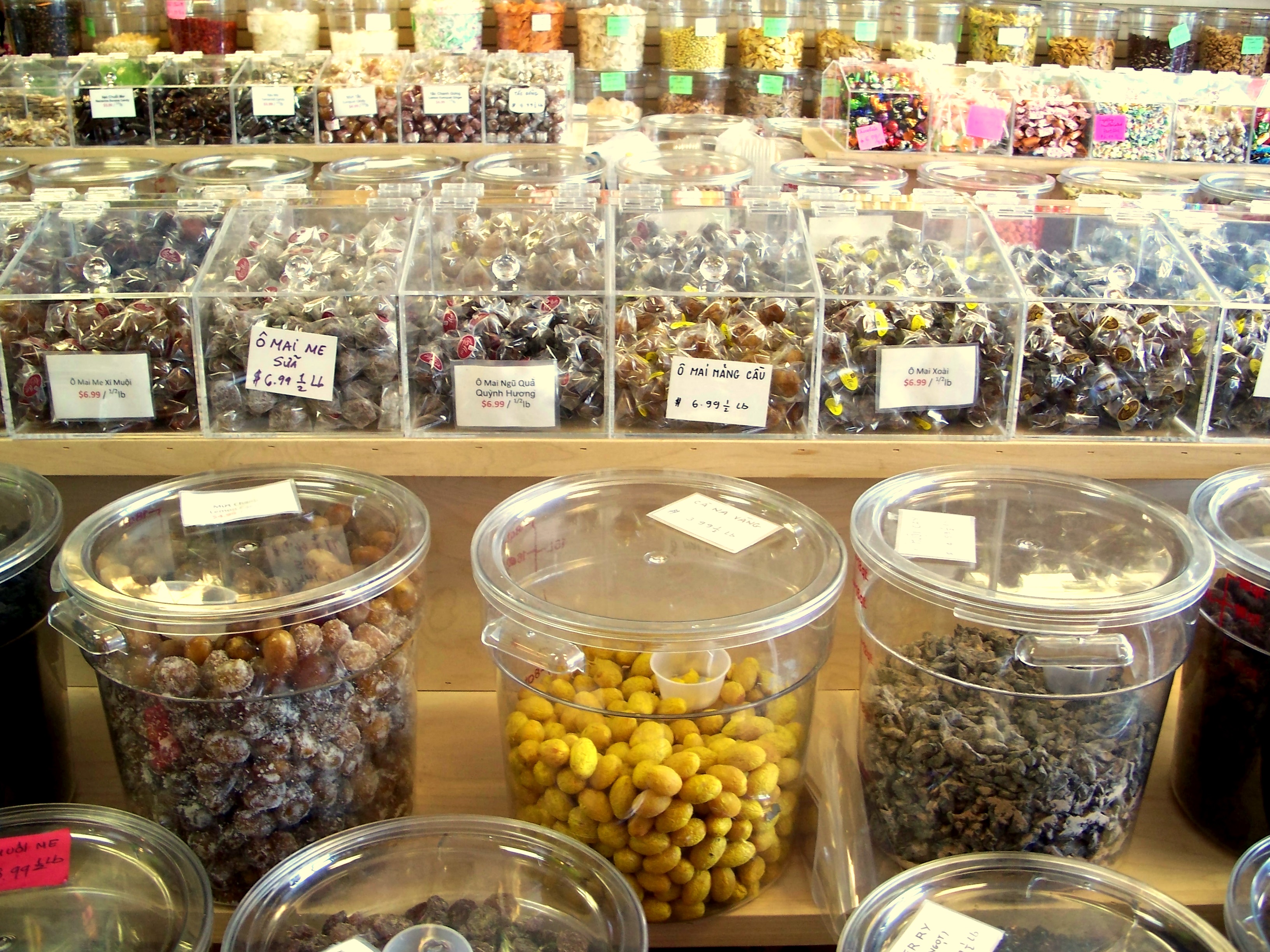
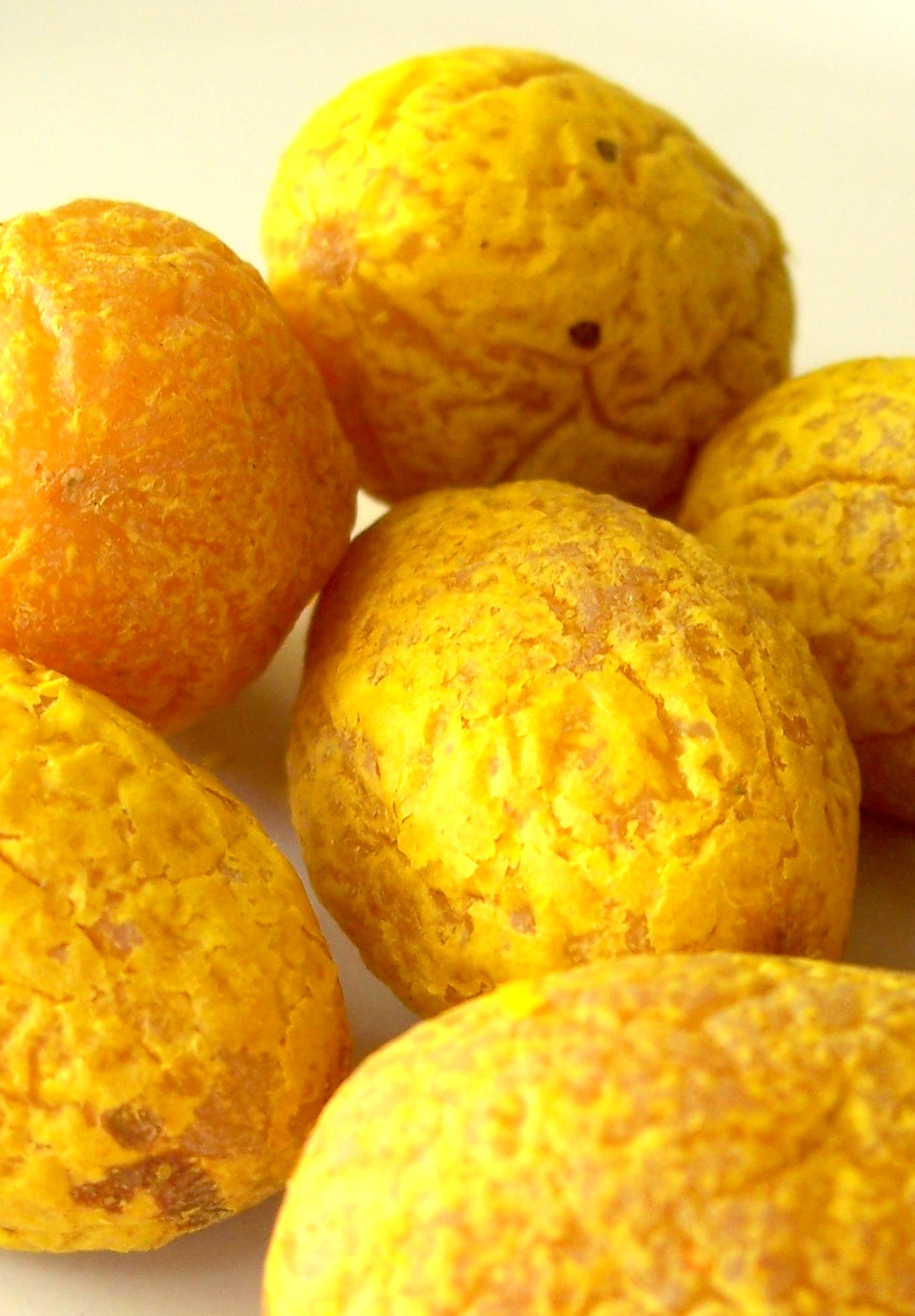
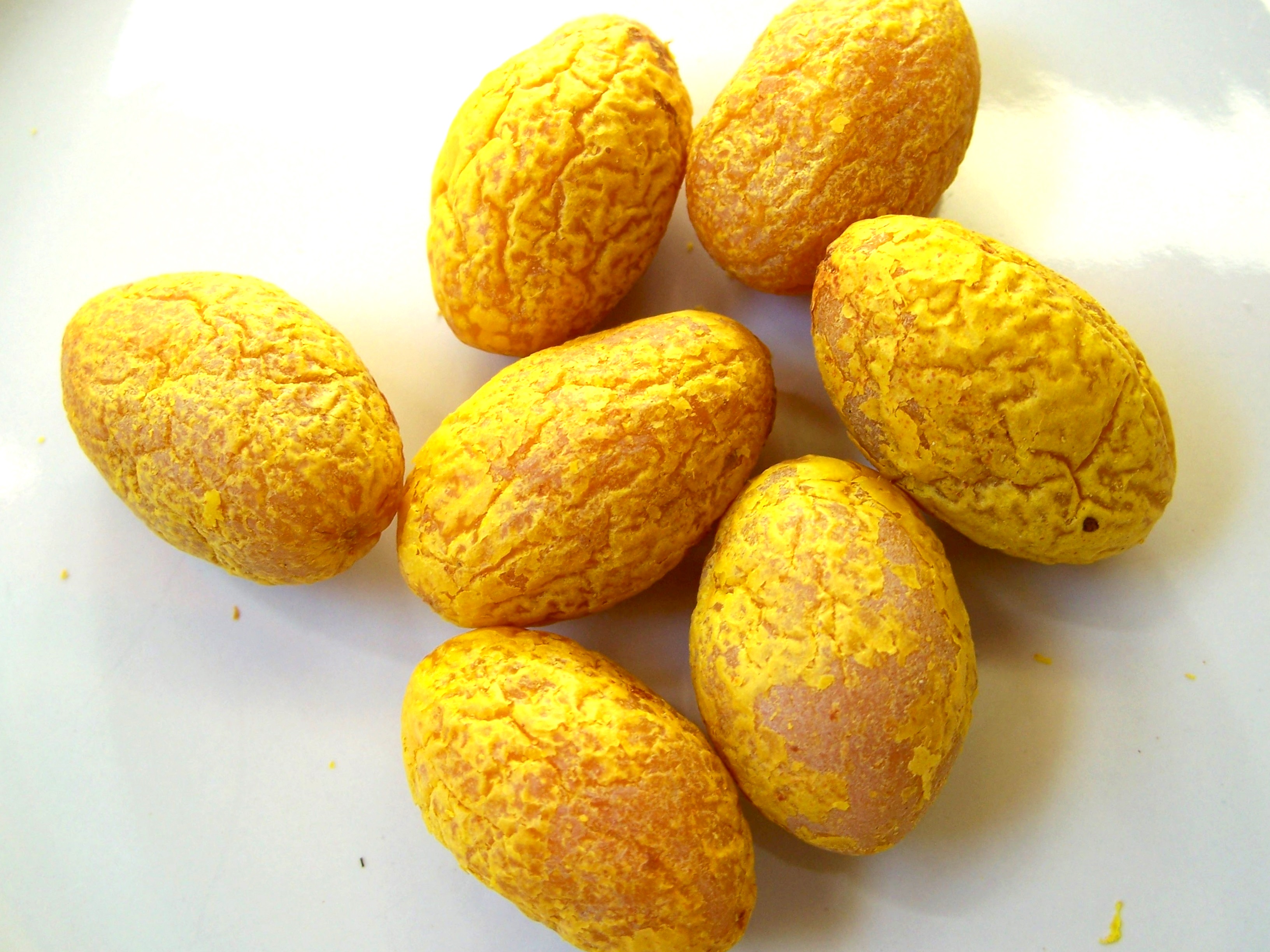
The first cà na‘s I’ve had are bright yellow with cracked skin, as big as a big green grape, resembling petrified dinosaur eggs, sold in glass jar among the ô mai and the salted plums.


The first nibble must be executed with caution. It’s firm and sound, with one big hard seed. No wonder the folks at home call the American football the cà na ball: they look and feel the same, only smaller. The flesh is dense like an old coconut’s meat, sour like lemon leaves, yet sweet like licorice blended with a dash of sea salt. How they’re made is a mystery to me.

Address: Vua Khô Bò & Ô Mai
2549 S King Rd #A-B
San Jose, CA 95121
(408) 531-8845

Also from here, also fruitilicious:
1. banana tootsie roll
2. ô mai (spiced fruit ball)

Other informative links on the Chinese olives:
a list of different cultivars in China
Autumn olive


This post is submitted to Delicious Vietnam #11, March edition, hosted by The Culinary Chronicles. I’ll head to her blog for more yummy posts on Vietnamese food this month, and many thanks to the Ravenous Couple and Anh for creating this event!

Dreams & Conference – Day 5, Portofino at last

January 21, 2011 By: Mai Truong Category: Opinions, The more interesting


“Have you been to the Italian place?”, I keep hearing from the other conference attendees. I once tried to look for Portofino but the confusing arrows led me to the livelihood of El Patio instead. Another time I managed to find the door, which was locked, and two hotel workers tried to tell me in lightning fast Spanish that behind those glass panels was indeed Portofino and that I should just pull them open, or at least that’s what I gathered. The simple truth is they don’t open for lunch.

Undeterred, I returned to those doors to get my last Dreams dinner that evening. The place was dark, my heart sank thinking of unborn pictures with blurry details, when I ran into three other conference attendees from CINVESTAV and the National University of Mexico. It became the most memorable dinner I had the entire trip.


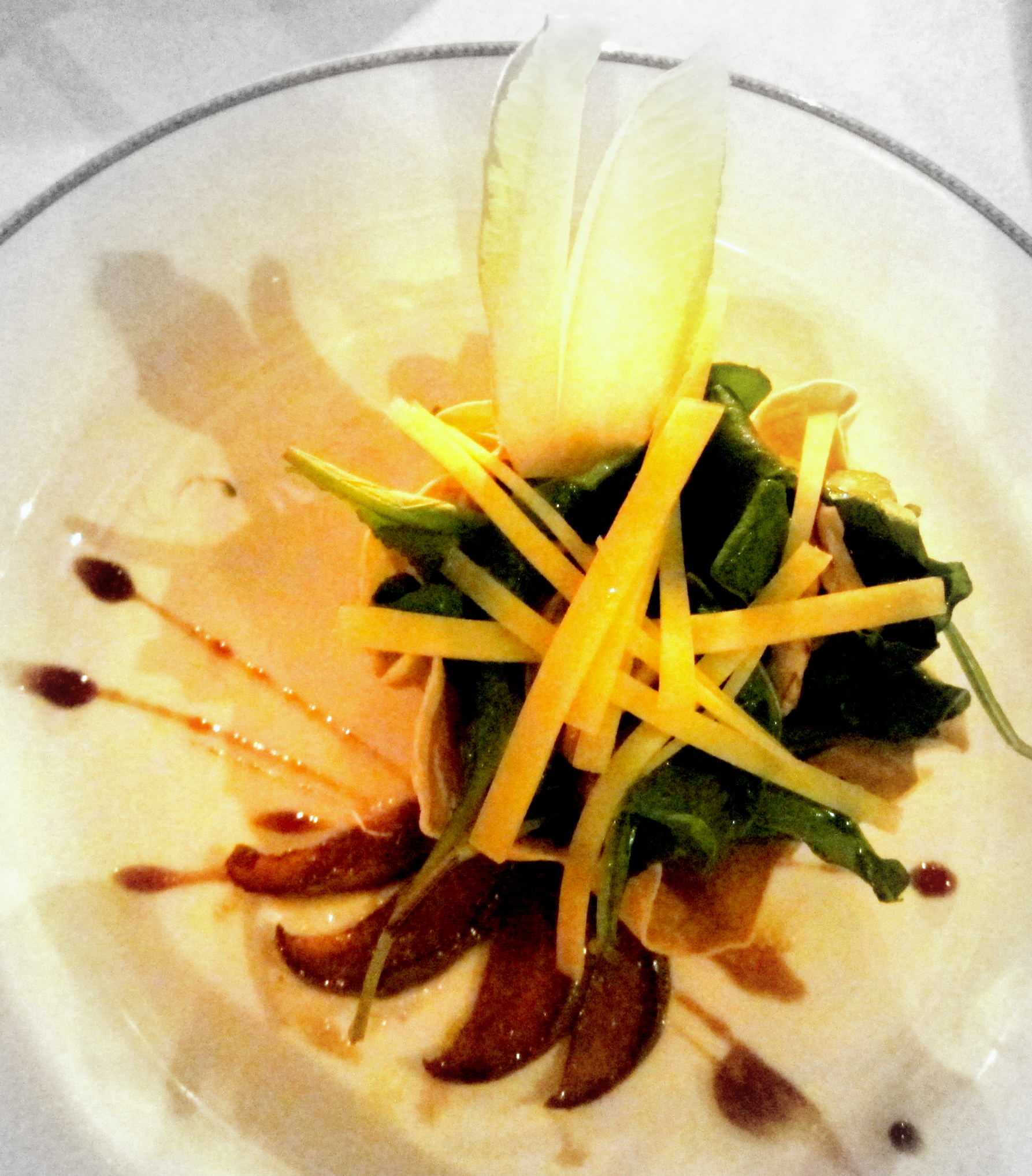
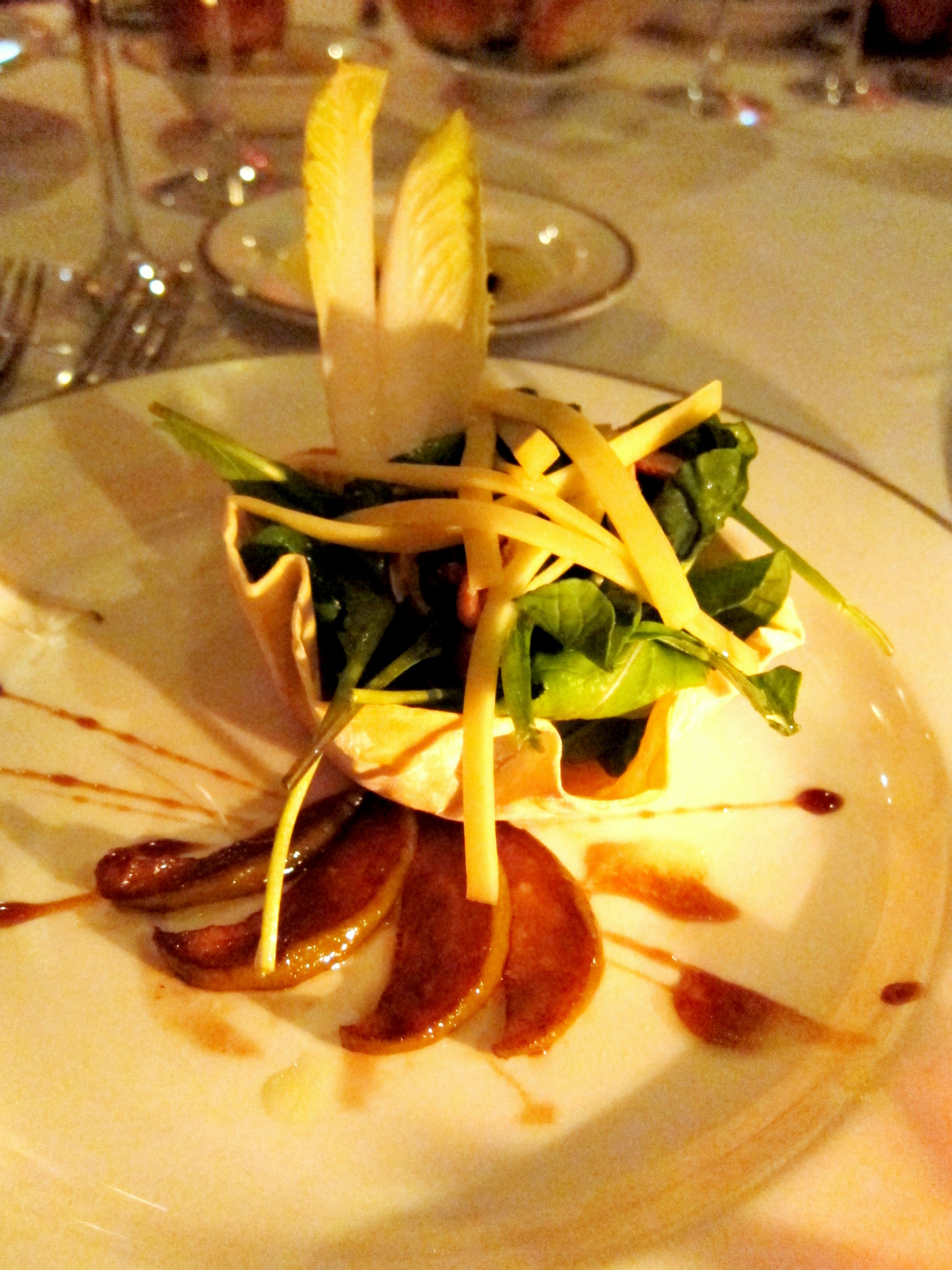
The menu came in two versions, English for me and Spanish for my new acquaintances, both with long fancy Italian names and description in the according language. I was hungry for some vegetables, so after Abril translated to me the waiter’s explanation of a few words on the list, the appetizer was an easy pick: a small endive and arugula salad dressed in a fruity vinaigrette, accompanied by four paper-thin slices of sweetened pear that tasted most like chewy brown sugar.


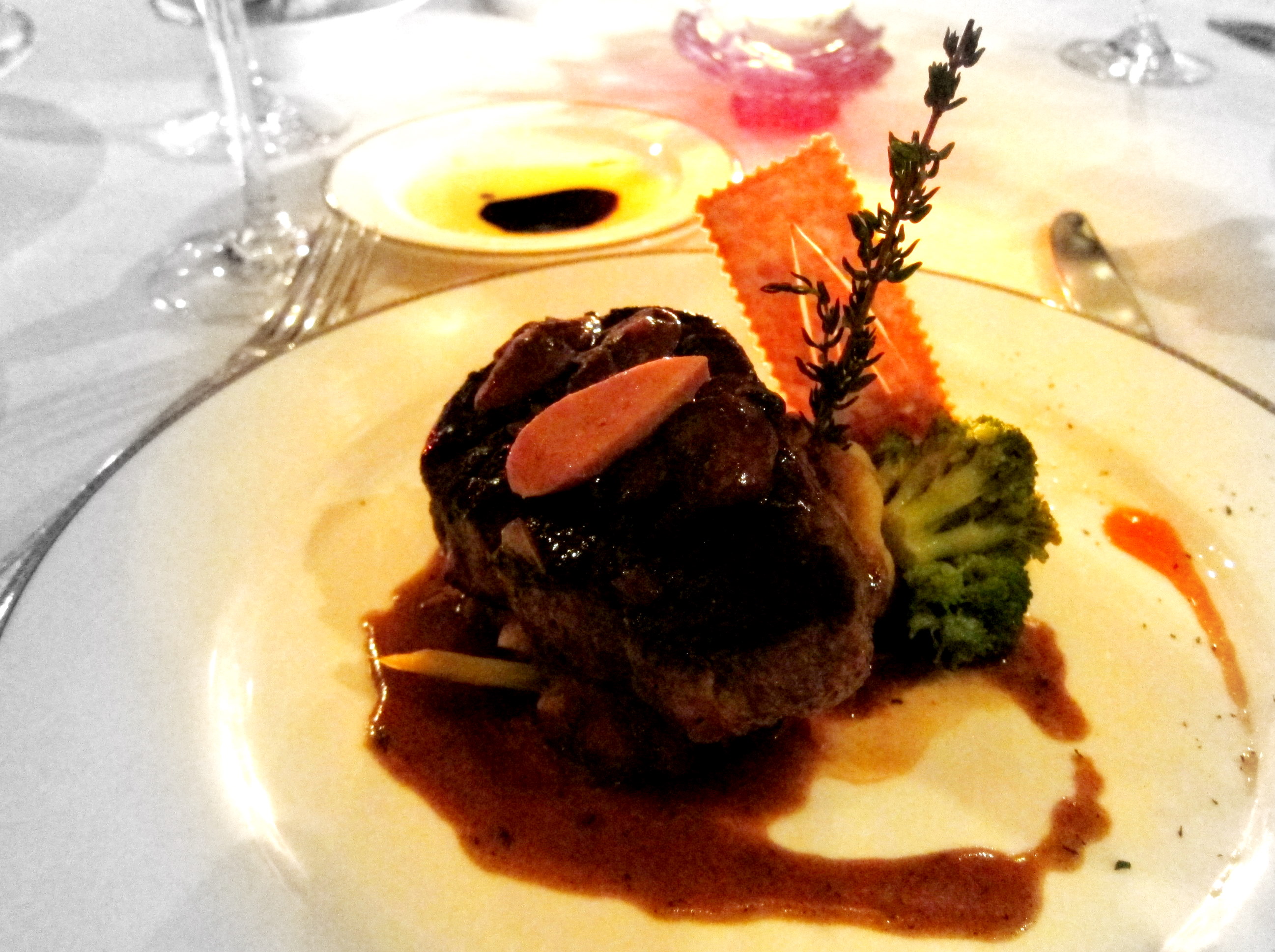
It boiled down to two choices for entrée: linguine with quail or beef with foie gras. I asked the waiter for advice and he chose the beef in less than one hundredth of a second. The filet mignon, itself topping a mash potato bed, was topped with mushroom sauce and a sliver of foie gras the size of my pinky’s top digit. Everything was soft, lustrous, soothing, and melting into one another. You bet I cleaned the plate.


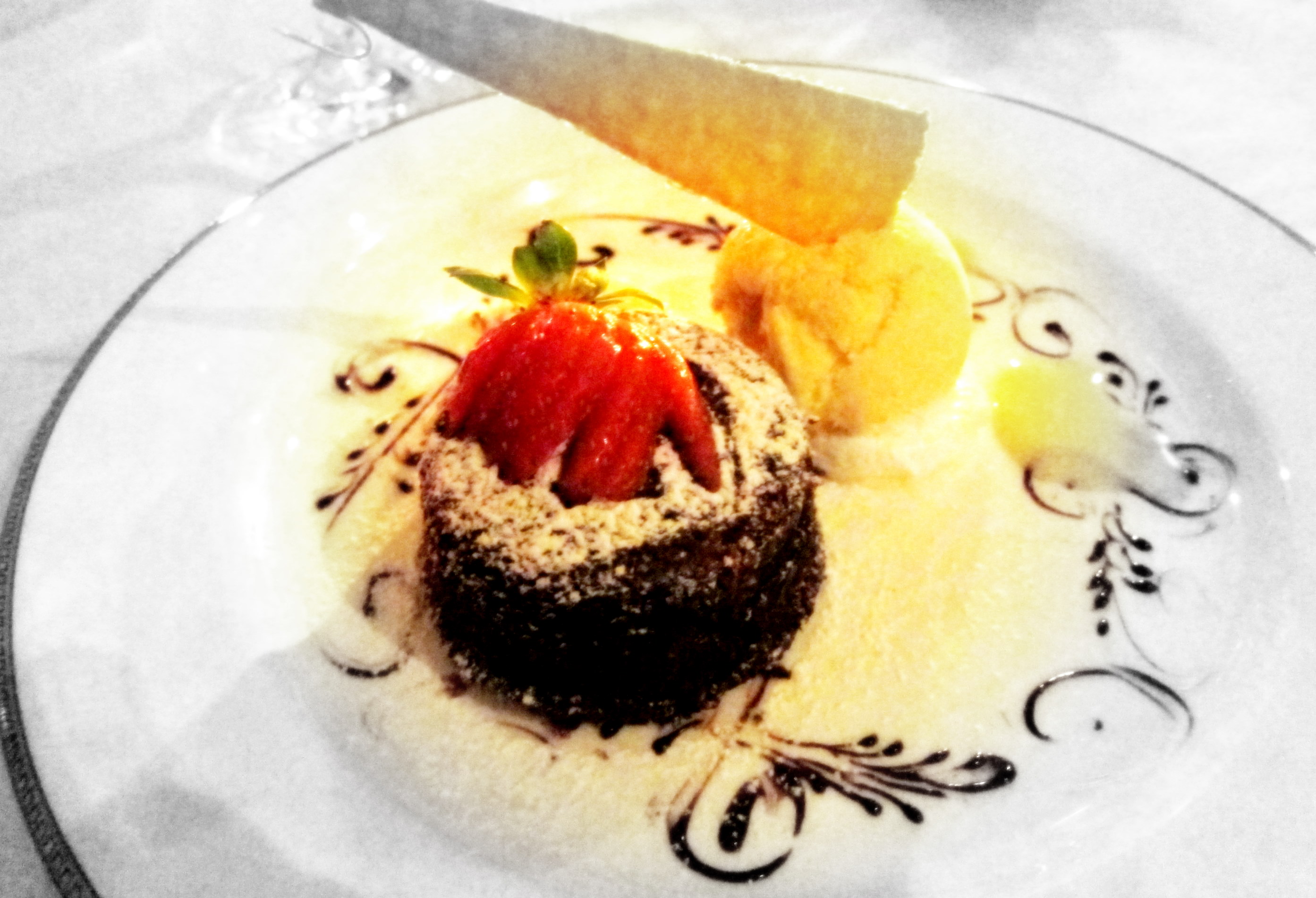
Dessert, too, was nothing short of an allurement. More precisely, it was a lava cake nostalgia, harmoniously paired with a lime sorbet and coyly tarted up by a sliced strawberry. Under the magenta candle light and our reflections from the glass ceiling, three Mexicans and a Vietnamese talked the night away about the American education system, the economy, the train from Mexico City to Puerto Vallarta, about esquites, tamarind, and mango. It was the first time I’d felt like a foreigner at a dinner table, not being able to understand the others’ conversation in their mother tongue. But strangely, I also felt very much included in this courteous town, among these courteous people.

More Puerto Vallarta:
Dreams & Conference – Day 1, dinner at Oceana
Dreams & Conference – Day 2, World Cafe and El Patio
Dreams & Conference – Day 3, Seaside Grill and Room service
Crepa y Esquites

From popadom to Bombay pizza

August 10, 2010 By: Mai Truong Category: Comfort food, The more interesting

Guest post by Paul Simeon – The Indian meals following Cous Cous Cafe‘s takeouts and dinners at Oxford during his two weeks in England.


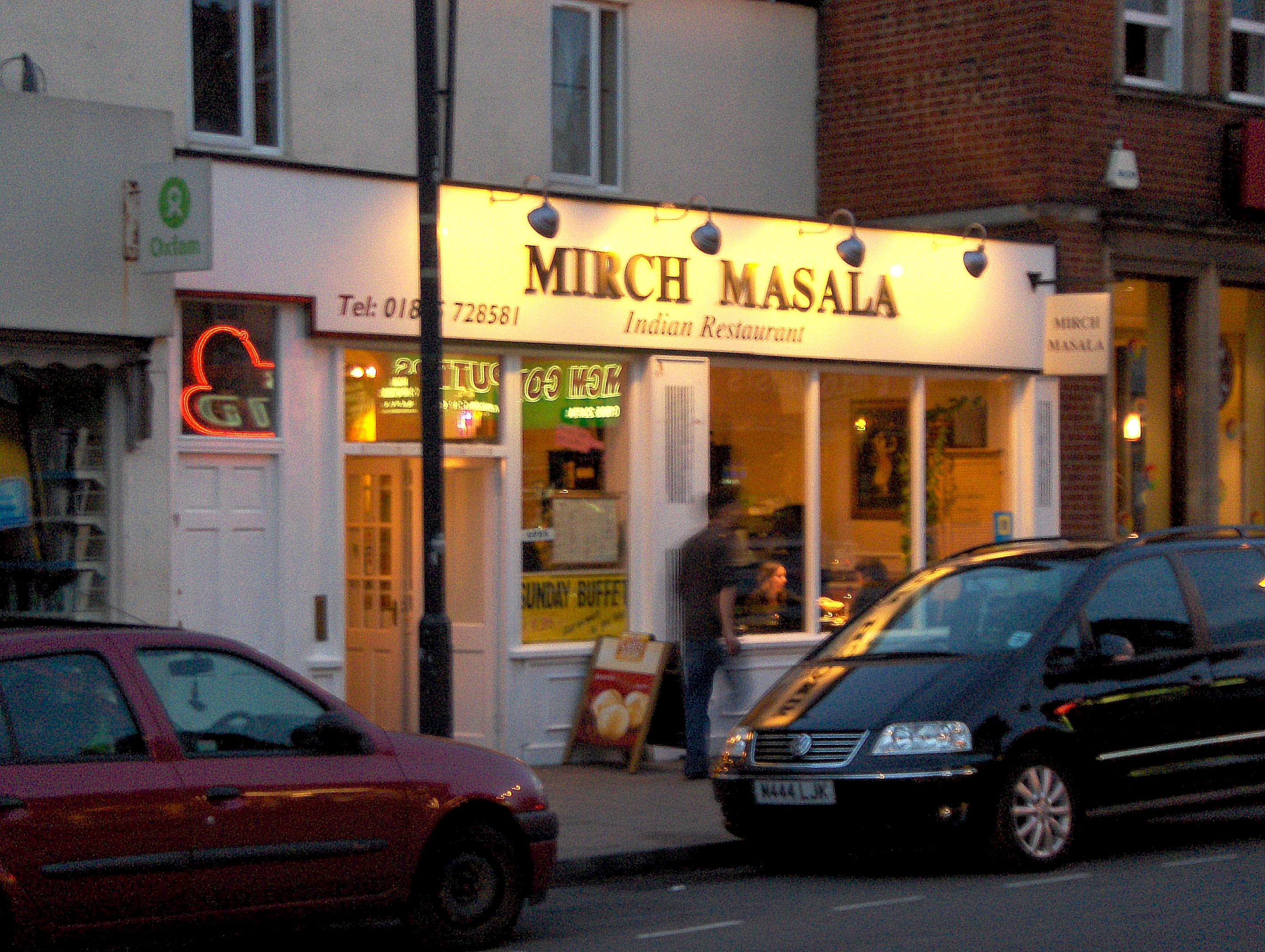
Saturday night I went to Mirch Masala. It was an Indian/Pakistani place. I later found out from the servers that the owner was from Pakistan, and the wife was from India. While I was waiting, alone, the server offered to get me some popadom (it has multiple spellings, but this is how their menu says it).


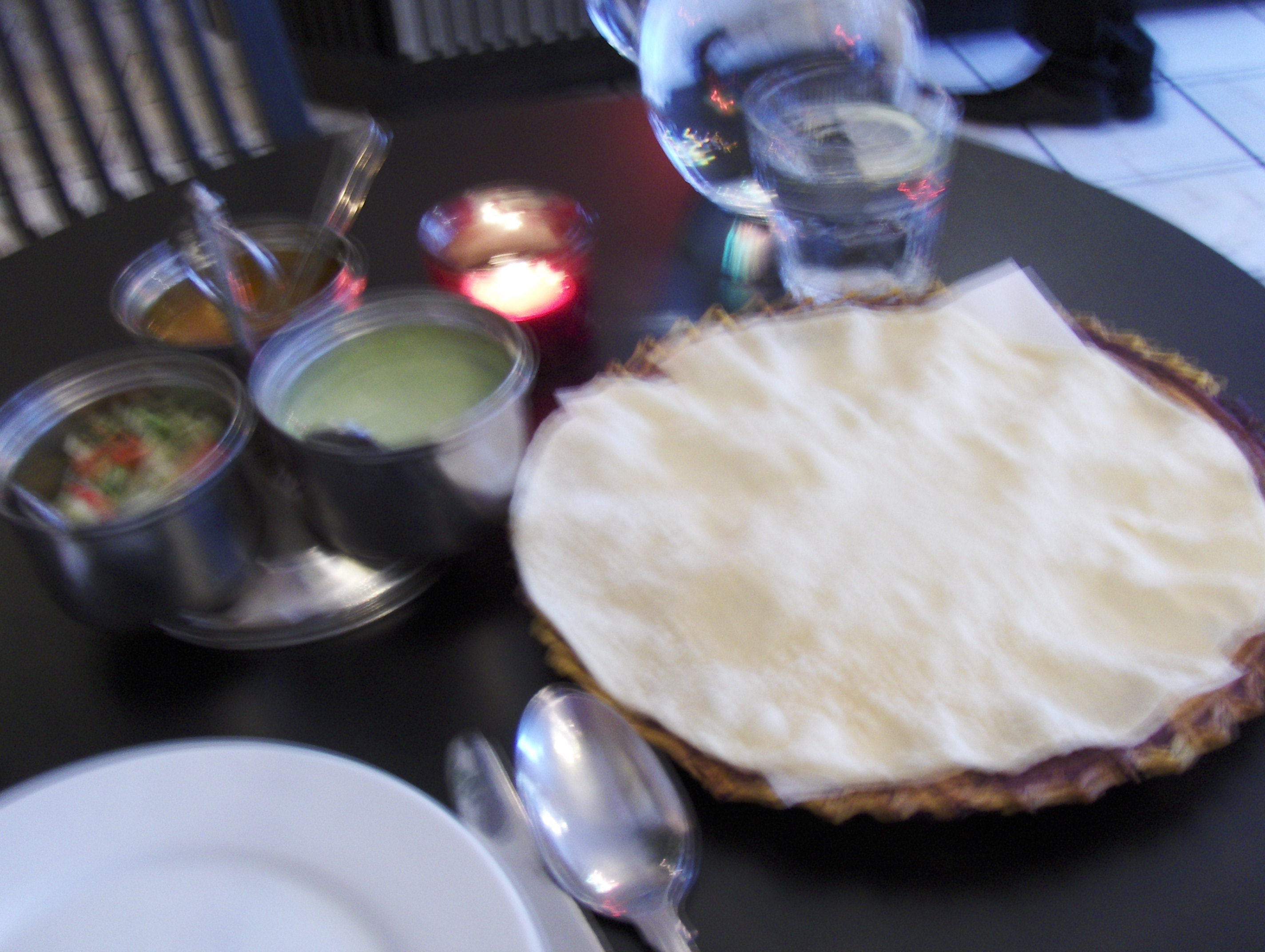
I didn’t know what it was or if it were complimentary, so I just said, “no, that’s alright.”  He brought it anyway, and it was quite nice.  It was a thin, crisp flatbread, like a cracker, and it had three toppings for it: chutney, chopped onions and coriander, and some green mint sauce.  The chutney was quite good.

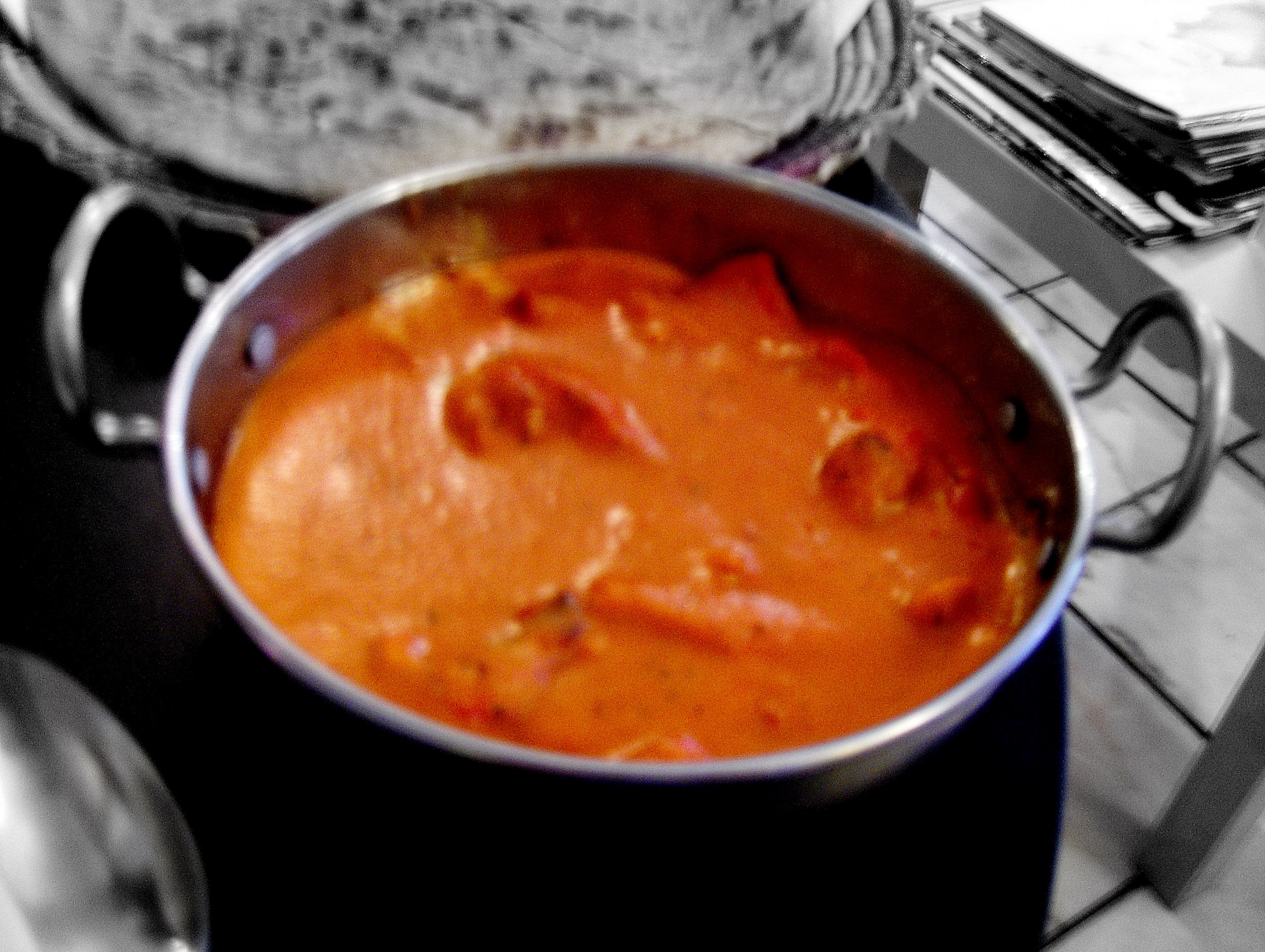
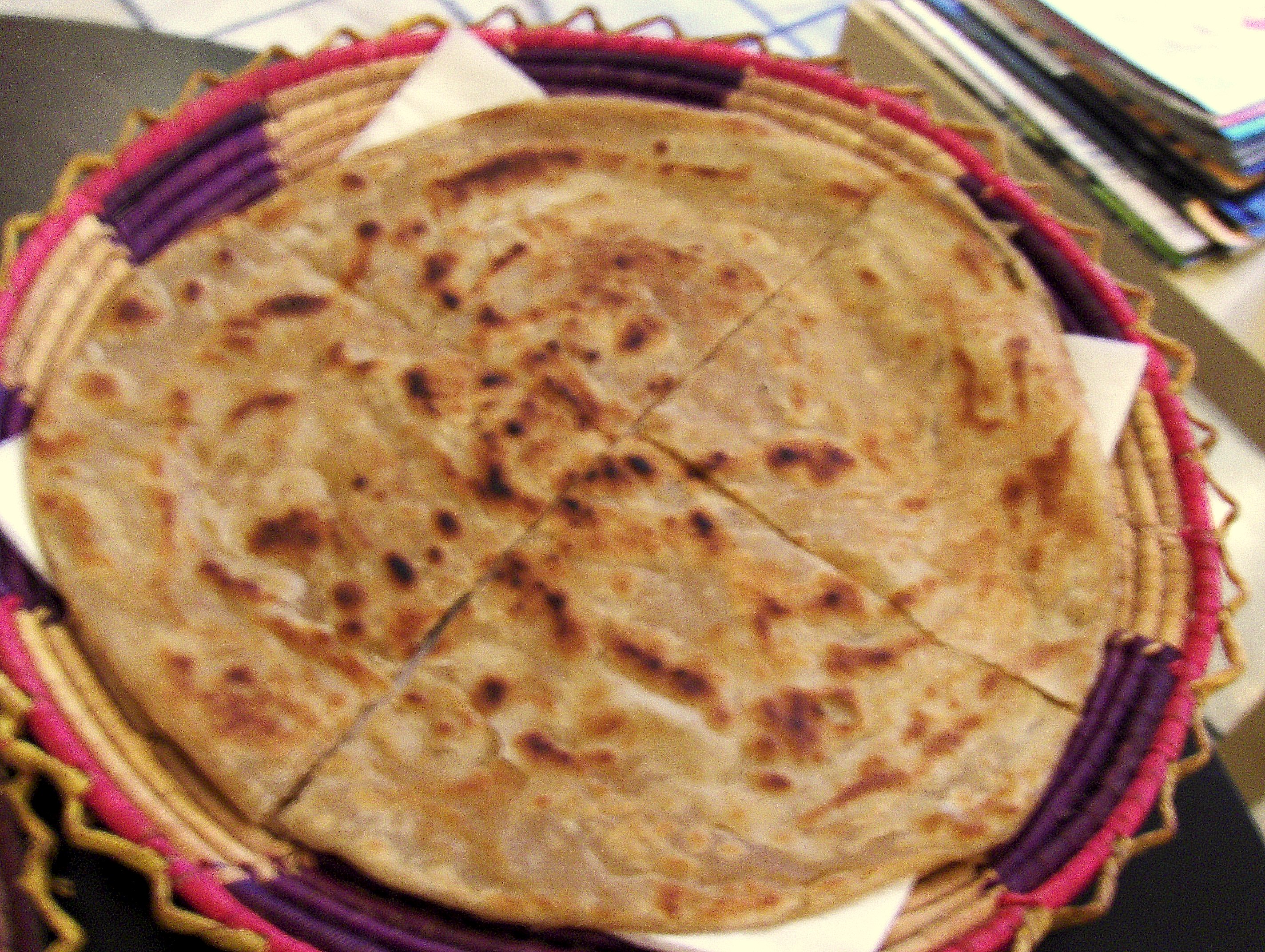
I didn’t finish all of the popadom by the time the main dish came, Murgh Makhani (Tandoori chicken off the bone cooked in butter, yoghurt, cream, cashew nuts, powder and masala sauces) with a side of paratha (rolled out Indian bread made on tawa, spread with ghee) to eat it with.

Murgh Makhani was the first on the list of house specialties, and I’m inclined to pick from the house special list.  I decided to try paratha instead of the more familiar naan.  They’re both good.  Paratha is just grilled in a skillet rather than baked like naan.  It works just as well as the naan at scooping up the main dish, and they are both better than the popadom.

The highlight of the night was the main dish, though.  It was simply perfect.  It was sweet, spicy, savory all at once, and just the right level of spice (for me) where one doesn’t notice it.  It had lots of grilled chicken pieces in it.  It was good quality chicken with little charred bits on it.

I barely had enough room to finish it all, except a little bit of popadom. The bill was 9 pounds, and the popadom was indeed complimentary, but perhaps just in my case. Tax is already included in the bill in England, which makes it easier to split the bill with multiple people. The servers noticed I was taking pictures of my food and suggested I should take a picture of the murals on two walls in the place. He said they were specially painted for them.  I thought the lights that had shining on them would mess up the picture, but it turned out to be the best picture of the night.  The lighting was too low for good pictures with my camera.

My last day in Oxford was spent in the Oxford University Museum of Natural History.  It was a pretty good museum, with the first dinosaur bones ever identified as a prehistoric reptile.  It was also the site of the famous 1860 evolution debate between Huxley and Wilberforce.  When it closed at 5, I roamed the tourist-filled streets of Oxford for a place to eat.  There wasn’t much by the museum, but I eventually found an area with some more options.

I settled on a place called Fire & Stone. Its theme was international pizza, with their menu divided by continent and filled with bizarre pizzas made from the cuisines of the continent. For example, Africa offers the Marrakech (£8.95 cumin spiced ground lamb, mozzarella, mint yoghurt sauce, green olives, raisins & sliced red onion drizzled with chilli oil) and the Cairo (£7.95 (v) Fire roasted red & yellow peppers, courgettes, aubergines, balsamic roasted red onions, mozzarella and Fire & Stone’s tomato sauce topped with crumbled goat’s cheese & pine nuts).  In some cases, it was pretty much insert-your-cuisine fusion food baked onto a pizza. They had a few vegetarian options, but I just got the impression that they didn’t offer as many vegetarian options in England as in the Bay Area, not surprisingly, and there was never a mention of vegan options.

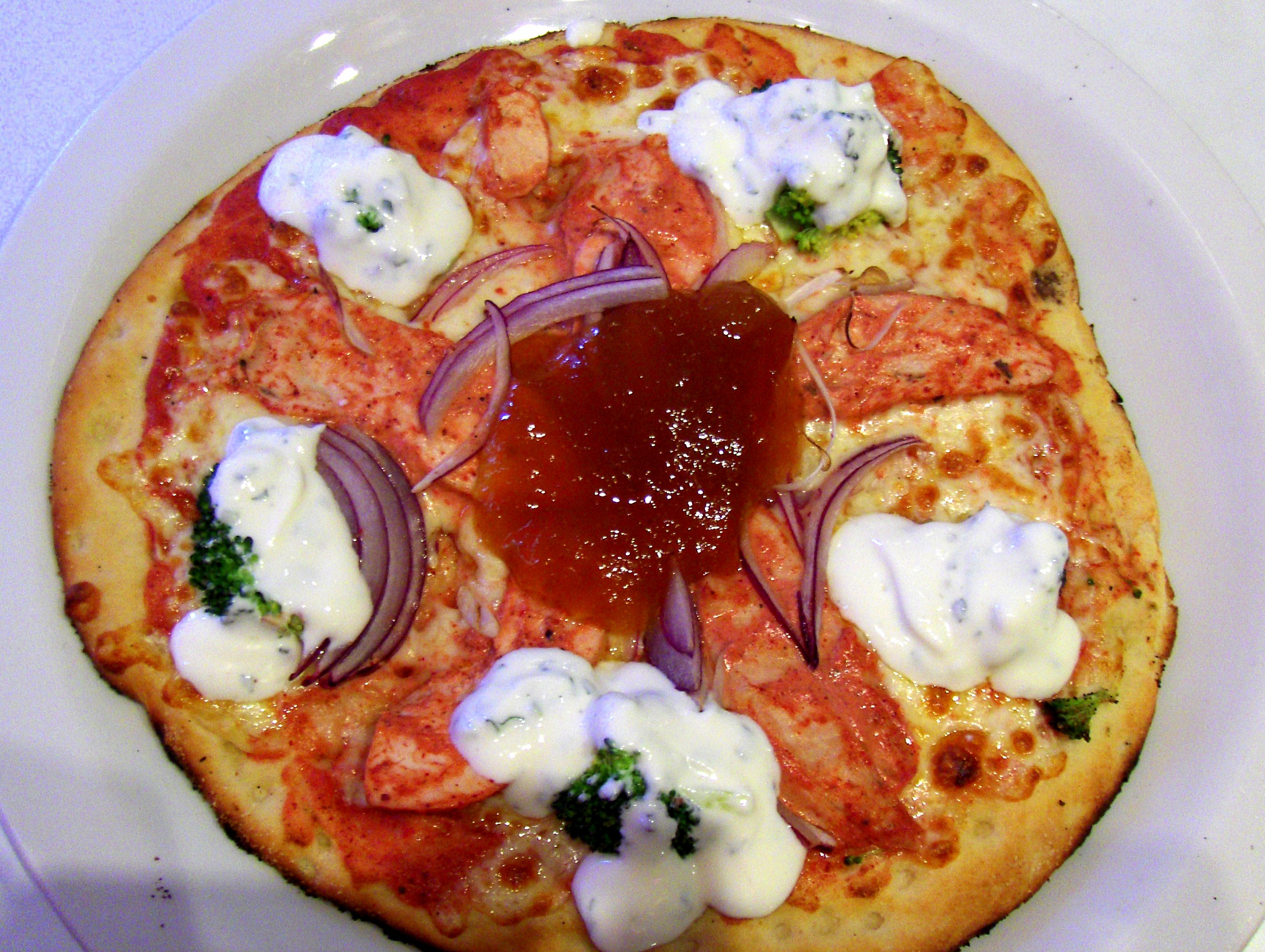
I chose the Bombay (£8.95 Roast tandoori marinated chicken breast, spiced tandoori yoghurt base, broccoli, sliced red onion, mozzarella, spiced mango chutney and cucumber & mint yoghurt) since Indian food is rare on this blog. This was good, but it would be a let-down if you’re expecting good Indian food, especially after eating at Mirch Masala. The chicken was not grilled or very flavorful, and the yoghurt and broccoli didn’t seem to go well with the rest. It was a nice change to have a tandoori base instead of normal pizza sauce. The pizza was 9 inches wide, a decent portion. I ate the whole thing without feeling too stuffed, which is just the right amount, I think. American restaurants tend to give a lot more food, which is good if you want to take home leftovers, but it often causes people to overeat or waste food. 9 pounds (roughly $14) is a little high, but I guess it’s normal (or even reasonable) for eating out in the middle of Oxford. They didn’t cut the pizza. Why not?

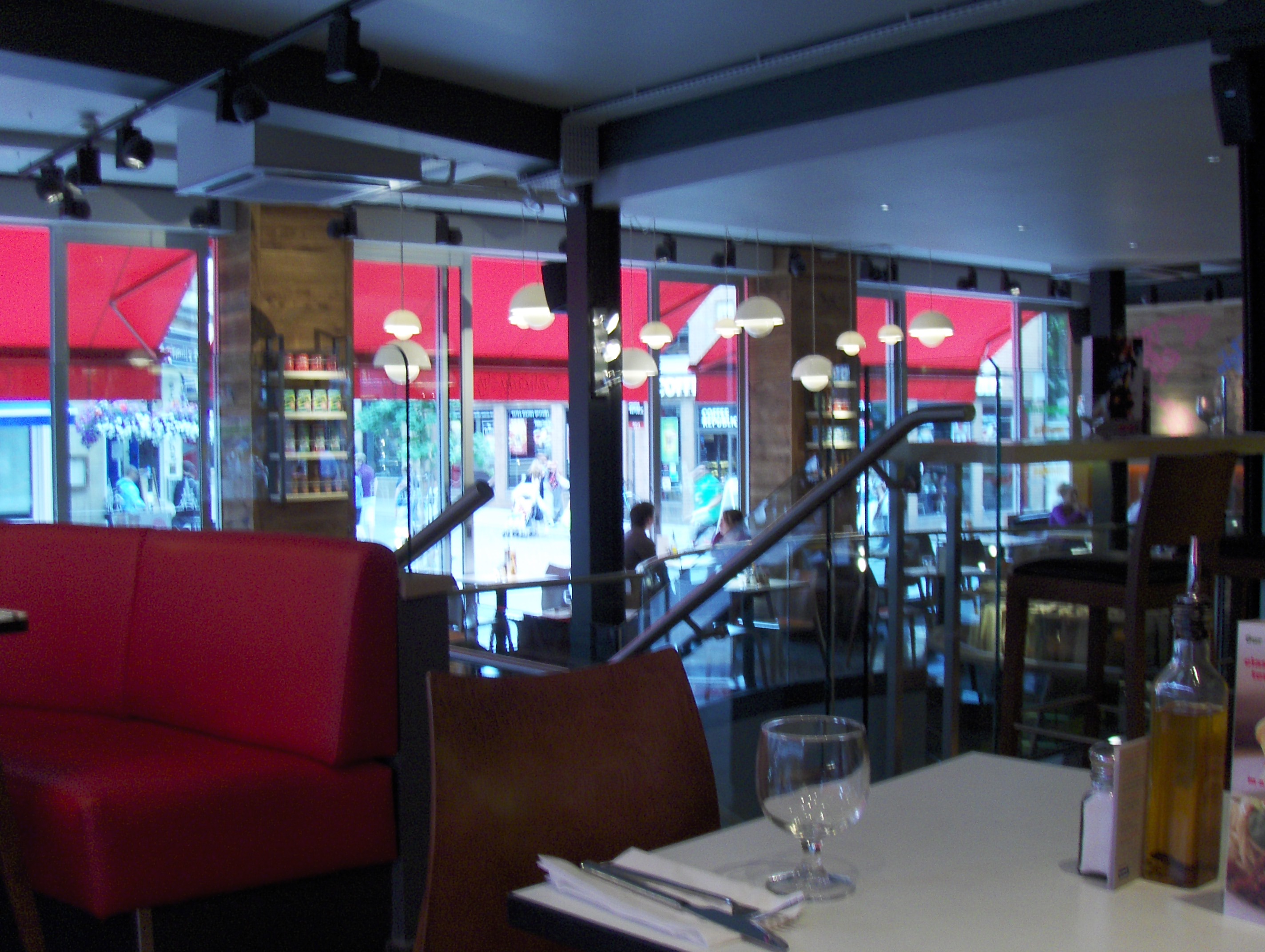
The restaurant was pretty big. It was a little early for the dinner crowd, so it was a bit empty. They had many big sliding windows open to air the place out. They also offer pasta, but I saw at least one table leave when the server informed them that the oven just broke, and they wouldn’t have pasta for about 30 minutes.

They had a hand-held credit card reader (as many places in England did) so that she could scan my card right at my table. Then she passed it to me to enter the percentage to add on as tip. I thought it was convenient compared to estimating it by hand, but I could see how some might find that awkward.

Addresses:
Mirch Masala
137-139, Cowley Rd
Oxford, Oxfordshire OX4 1HU
Telephone: 01865 728581

Fire & Stone Pizza Restaurant
Threeways House, 28-38 George Street
Oxford OX1 2BJ

Other bites in England:
Oxford dinners – part I and II
Cous Cous Cafe in Oxford
– Pie and mash at the Ship Inn Upavon and Pieminister
– England’s healthy fastfood chain: Pret A Manger