Flavor Boulevard

We Asians like to talk food.
Subscribe

Archive for the ‘The more interesting’

Sunrise, Fresh Wasabi, and 7-11 Guardians: Visiting Alishan (阿里山) in Taiwan

May 23, 2017 By: Kristen Category: Flavor Abroad, Flavor Taiwan, savory snacks, The more interesting, Travel

It’s been such a long long long time since posting anything, but I’ve really wanted to get back into blogging… For some stress release, for some connection, and to practice writing. Also, with Mai’s graduation and return home, I hope that this would be a great way for us to stay connected to each other besides social media! Plus, I have a backlog of Taiwan photos that I would love to give some more backstory to — I’m not going to approach them in any particular order but will just write about the ones that most stand out to me, and hope would be interesting to share with people — so here goes!


Apparently, a must-do thing when visiting Alishan (阿里山), one of the most famous and scenic mountains in Taiwan, is to wake up extremely early and take a train to the peak-area of the mountain to see the sunrise. It surprised me that this is an almost-daily tourist event because the only time that I ever purposefully woke up extremely early to climb up a mountain and view the sunrise was on New Year’s Day in South Korea in 2015. Feeling the first rays of the sun on the first day of the year was a time for wishing and for new beginnings.

New Year’s Day on Deokdongsan (덕동산) in Pyeongtaek, South Korea. January 1st, 2015.

As for my mom and me, this time was a less momentous occasion, but still I was excited. The person who worked in our hostel mentioned that he could usually tell if the sunrise would be visible by looking up at the stars at night, and he gave the all-clear. (Staying in a hostel that is also a tea farm is definitely something I will be blogging about in the future – it made me almost want to move to the mountains!) So, after a little bit of sleep, we woke up at 3am and headed to the Forest Railway Alishan Station (阿里山車站) along with our taxi driver Mr. Fang.

According to the website, the Alishan Forest Railways was first constructed in 1906 to facilitate the logging industry during the Japanese colonial era (1895-1945). The trains were primarily used to transfer logs of the cypress and Taiwania wood trees. (Interestingly enough, a few weeks before this trip, I came across a shrine gate made of the Taiwania wood at the Meiji Jingu, a shrine in Tokyo, Japan.)
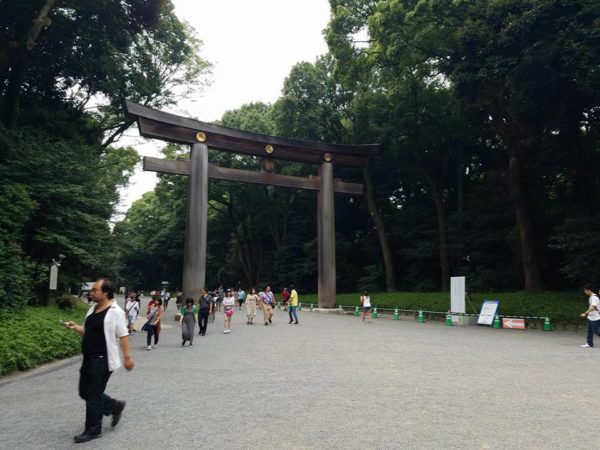
The entrance to the Meiji Jingu. According to the plaque, this is the largest torii in Japan, made of Taiwania wood.

Now, the trains are primarily used for tourism. According to a map of the entire Alishan Forest Railway, it looks like the train begins in Chiayi (嘉義) (at 30m elevation) and ascends all the way to Chushan (祝山) (at 2451m elevation).
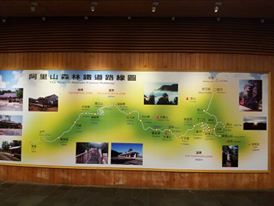
Map at Alishan Station.

We took the train from Alishan stop (阿里山), which is marked as being at 2216m elevation. The map also points out the elevations at which the climate changes, from tropical to subtropical (at 800m) to temperate (at 1800m). I could definitely feel the change physically – it went from insanely hot and humid (coming from Hsinchu 新竹; this was mid-July) to quite chilly and cold (around 50 degrees Fahrenheit, although in the early morning before sunrise it dropped to around 40 degrees on the mountain).

Even though we arrived early (at around 4:30am~5:00am, I cannot remember the exact time), there were already trains that departed carrying passengers and the line waiting to board was also already long. (The website mentions that the first train leaves at 4:00am in summer, while during winter months, the first train departs closer to 6:00am to adjust with the time of sunrise.) I wasn’t able to sang a seat on the way up to the mountain, and I wasn’t quite able to take photos out the window since it was still too dark to see anything, but the inside of the train was quite pretty as it was decorated with pink flowers. I think it was about a 20 minute ride to the top, but I was pretty sleepy.

The line was already so long!

Waiting for the train to arrive…

…here it comes!

In lieu of scenery, pretty flowers inside the train car!

Arriving at the peak of the mountain, I was not really anticipating much visibility because the area was crowded with tourists – some traveling on their own with family members and some people in large tourist groups. For a while, while waiting for the sun to rise, I amused myself by not only admiring the gorgeous morning colors in the sky, but also the sheer amount of screens emanating from the crowd. Smartphones, cameras, video recorders, but mostly cellphones of course – it was definitely a little stressful and slightly off-putting to be in such a large crowd, but that could definitely speak to my own antisocial nature.
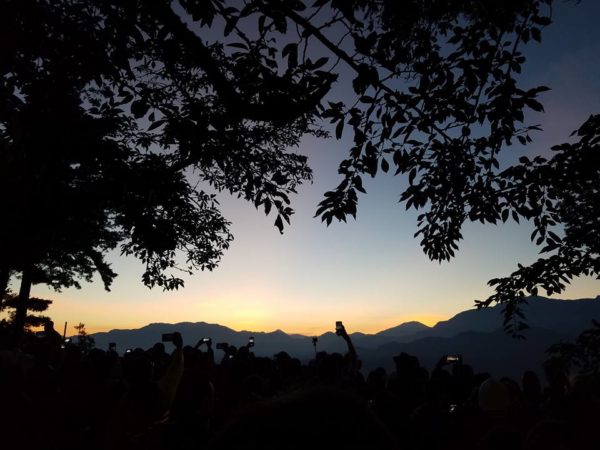
A sea of cellphones and selfie sticks.

Luckily, I had done some quick online research the night before and read that there was another path further up the mountain that also allowed for some visibility. Since we were with Mr. Fang, he very graciously decided to do some investigating for us and was able to find and follow the path to the slightly higher peak, which ultimately led to an out-of-use helicopter pad. There was only one small tour group at the higher peak (about 10 people I think) from Mainland China, so visibility was much better. It was a good idea to split from the increasingly larger and larger crowds at the lower observation platforms.

The small tour group leader was really funny and kept on cracking jokes while we waited for the sun to rise. He kept on telling his group that the sun would make a popping noise, that it would literally “pop” up over the distant mountain peaks. I kept on thinking of the “sunrise song” too that always accompanied the cartoon sunrises.

I can just imagine a cartoon sun popping up anytime now!

When the sun finally did rise (unfortunately no sudden popping or sound effects), it was definitely beautiful and I would say that it was worth waking up early for. That the location we were in was relatively quiet and way less crowded definitely made the experience way more pleasant, and with the sunrise also meant warmer temperatures (I was pretty much frozen at this point). Since I imagine each sunrise to be unique, despite the tourist traffic, I would actually want to return again and re-experience the sunrise. Maybe next time we would have more time to do a little bit of hiking or exploration on the trails around he mountain and to check out the other stops on the train.


Since the trains to the peak only run for the sunrise, the last train scheduled to leave the peak was at 6:45am, which left us a little bit of time to grab some quick snacks before leaving. Turns out there is nothing more satisfying than a warm can of soy milk after waiting in the cold for so long (on an empty stomach).

Sunrise view from the lower viewing area.

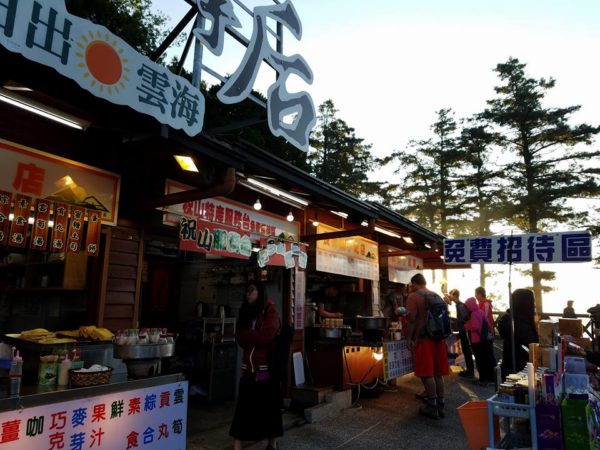
Souvenir and snack shops.
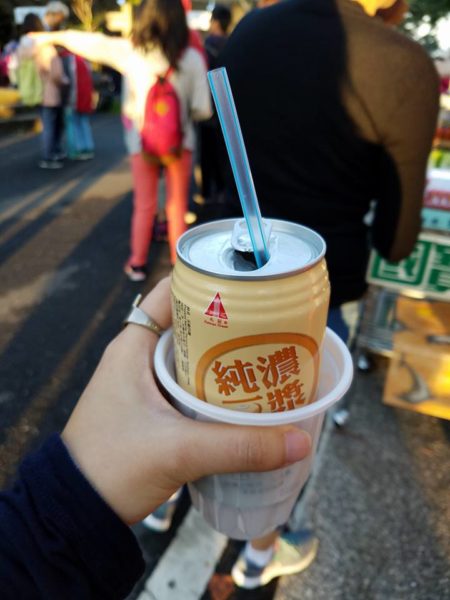
Warm soy milk~

I also experienced another unique food experience at the peak. There was a stall selling fresh wasabi root among other wasabi products.
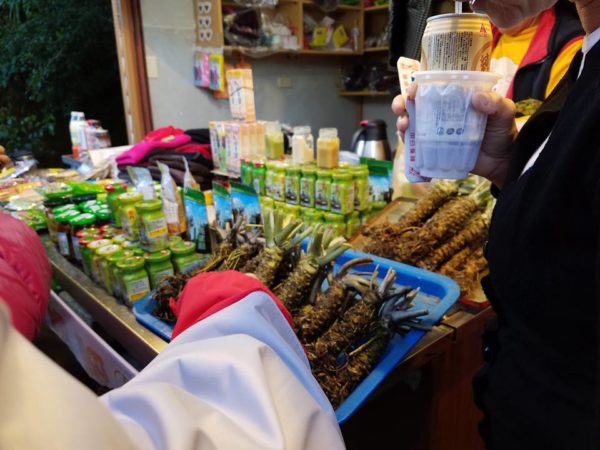
Array of fresh wasabi and other wasabi-related products.

While I had known that Alishan was famous for producing tea, I had no idea that wasabi was another one of the famous products harvested here (here is a typical tourist website listing some of the “Alishan specials”). All I really know about wasabi is that the green gloop served with sushi in the U.S. is not real wasabi but a mixture of mustard paste and horseradish that is dyed green. I also know that I really hate “wasabi” because I cannot handle sinus-clearing spicy flavors very well. I was a little hesitant about what fresh wasabi would taste like, but of course I couldn’t pass up the opportunity to try it, especially if the auntie working at the stall was going to give us a small sample of the freshly grated root.
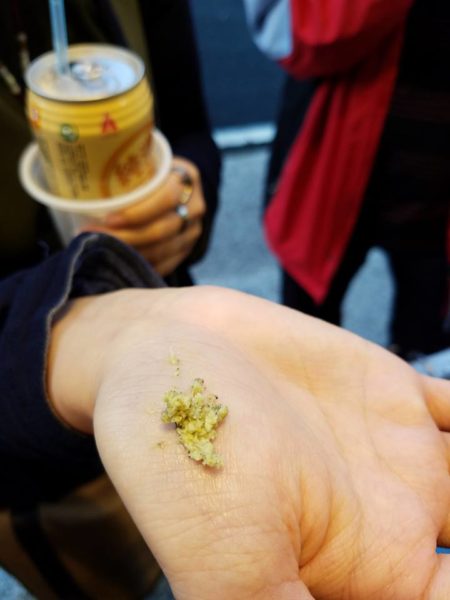
Freshly grated wasabi root.

After cleaning the root, she grated a generous amount onto my hand. I loved how beautiful the color looked – it wasn’t bright green like the wasabi that I’ve had before, but the look of the texture and color on my hand was almost like the inside of a falafel. Upon tasting, however, the texture was completely different from a falafel – a little crunchy and crumbling before dissolving. The horseradish/sinus-spicy taste was so subtle, just arriving a little bit at the end. The first taste was that of almost grassy freshness. There is no way I would ever eat this much wasabi in the U.S., but the generous grating was just enough to get a strong taste of the much more subtle flavor of the fresh wasabi. There was still a strong kick after eating the entire amount on my hand, but the freshness also meant that it wasn’t just sinus-clearing spicy, but that there were other layers of flavor as well. While I wouldn’t go out of my way to find fresh wasabi now that I have tried it (or pay top dollar for it), I can definitely say for sure that I did enjoy it and would be interested to see how this would taste on sushi and raw fish, or paired with other foods.

I wasn’t left wondering for too long – turns out the woman in the next stall (who is the wasabi stall owner’s daughter) was selling mountain pig sausages, which supposedly pairs perfectly well with fresh wasabi. As it was almost time to board the train at this point, we bought the sausages and the woman at the wasabi stand loaded a generous shaving of fresh wasabi on our sausages as well. While on the train ride back down the mountain, I ate the sausage.
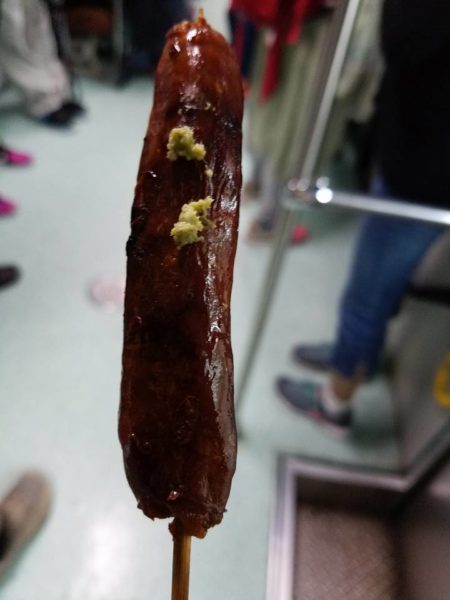
Mountain pig sausage with freshly grated wasabi.

I honestly cannot really differentiate between regular pork sausage and mountain pig sausage, so the sausage tasted to like typical Taiwanese sausage – meaty, almost a little dry wth a slight jerky quality, sweet, and savory with a bit of char. The wasabi added a little bit of extra spice to the sausage and was a perfect complement – I ended up getting quite a bit of wasabi in one of my bites and felt the nasal burn, but it wasn’t overwhelming. The grassy notes of the freshly grated wasabi complemented the meaty sausage perfectly. (I wonder if wild pigs eat wasabi too?) This was definitely the perfect snack and it was enjoyable watching the forest and sunrise while taking the train back to Alishan Station and snacking too.

I’ll leave the post with some images of the scenery in the daytime, as well as the walking trail, which I hope to try next time.
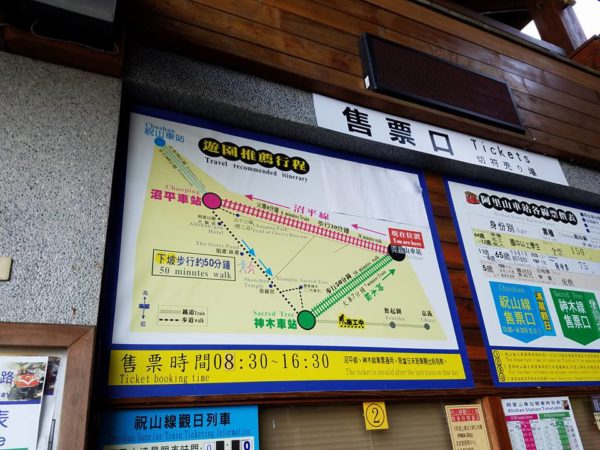
Map of different walking trails and ways to ascend the mountain.
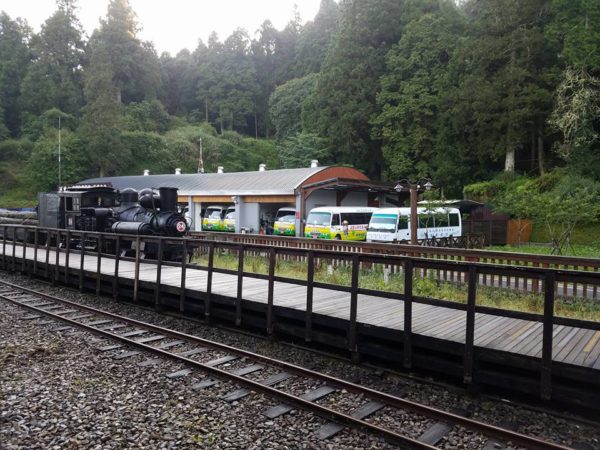
View of the train platform.
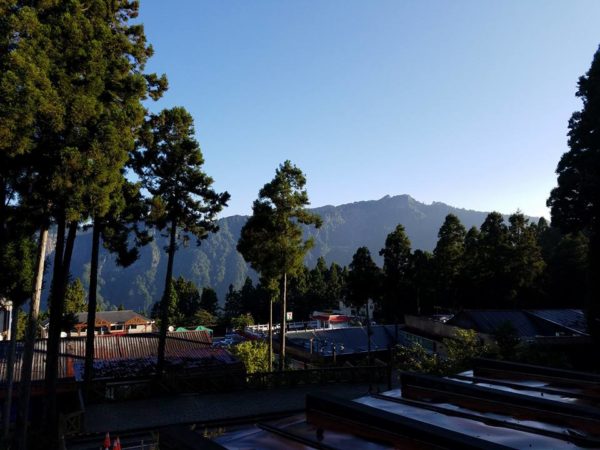
View from the station.
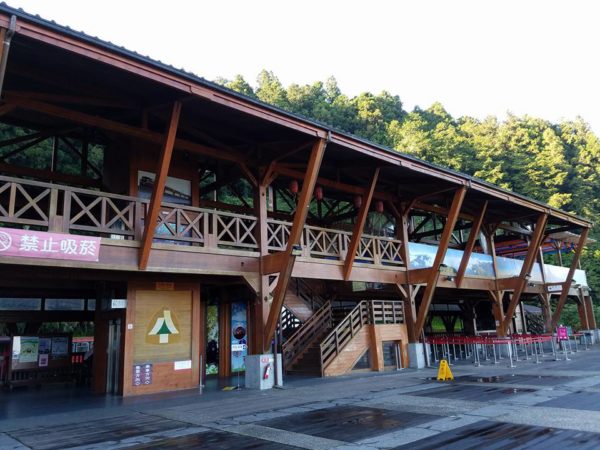
View of the station.

Before heading back to our hostel for a quick nap, we stopped by the 7-11 in the train station, which is itself housed in an interesting traditional-style building, for some quick snacks and drinks.
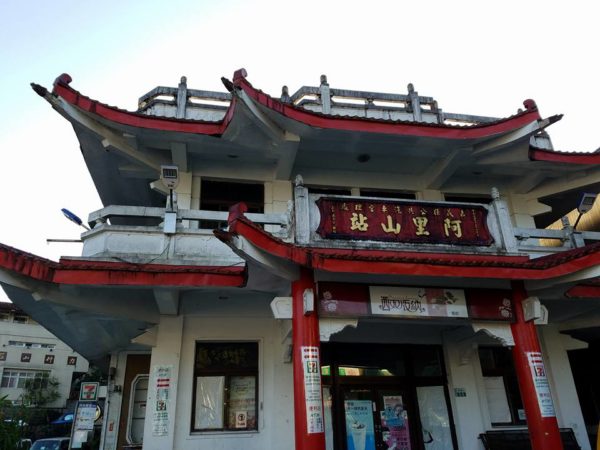
7-11 housed in an interesting looking building. The characters read “Alishan Station.”

There was a very pretty dog at the entrance, who looked like it was doing quite a diligent job of “guarding” the entrance. I wished it the best of luck before we headed back out and onto our next adventure.

The guardian animal of the convenience store?
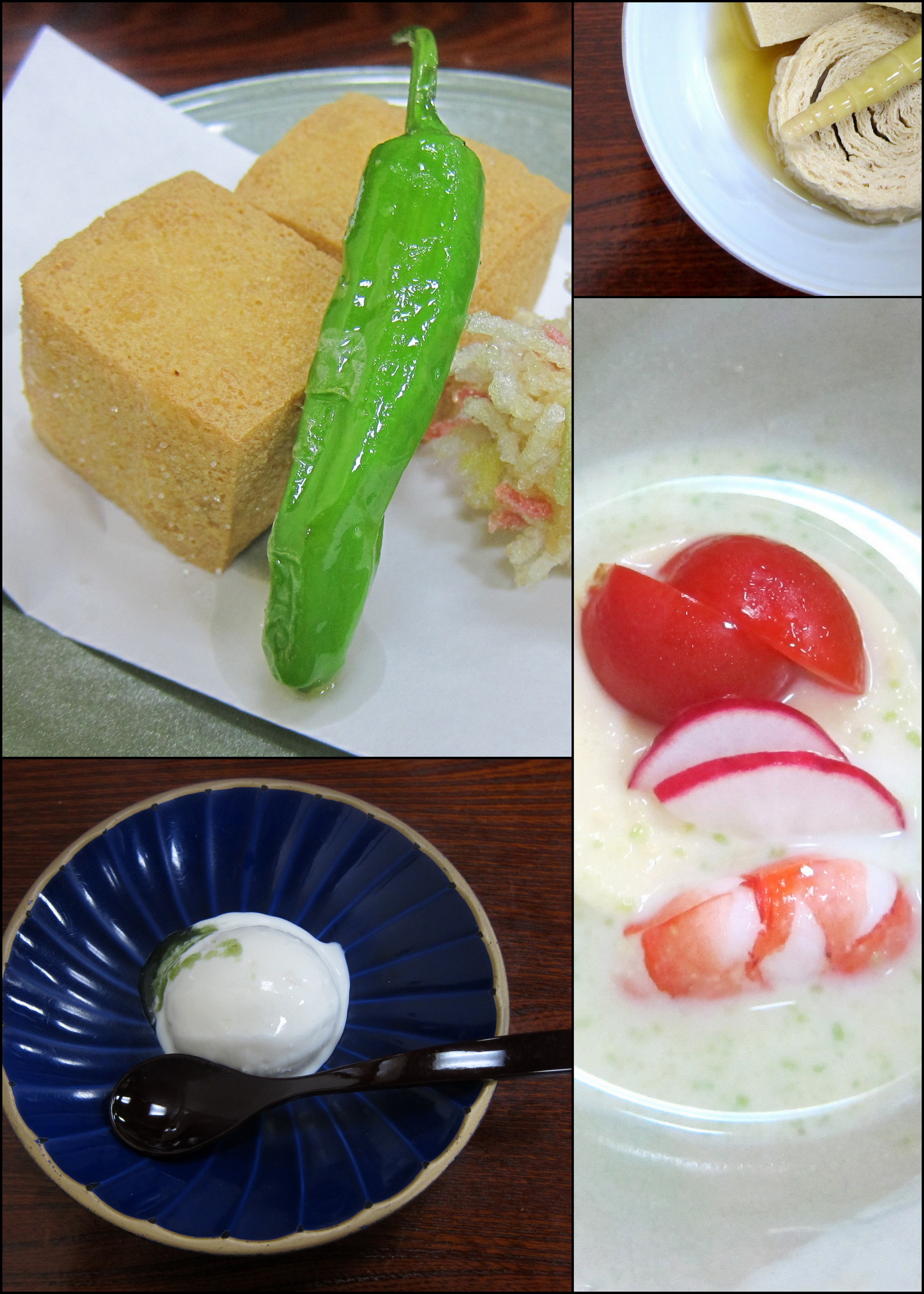
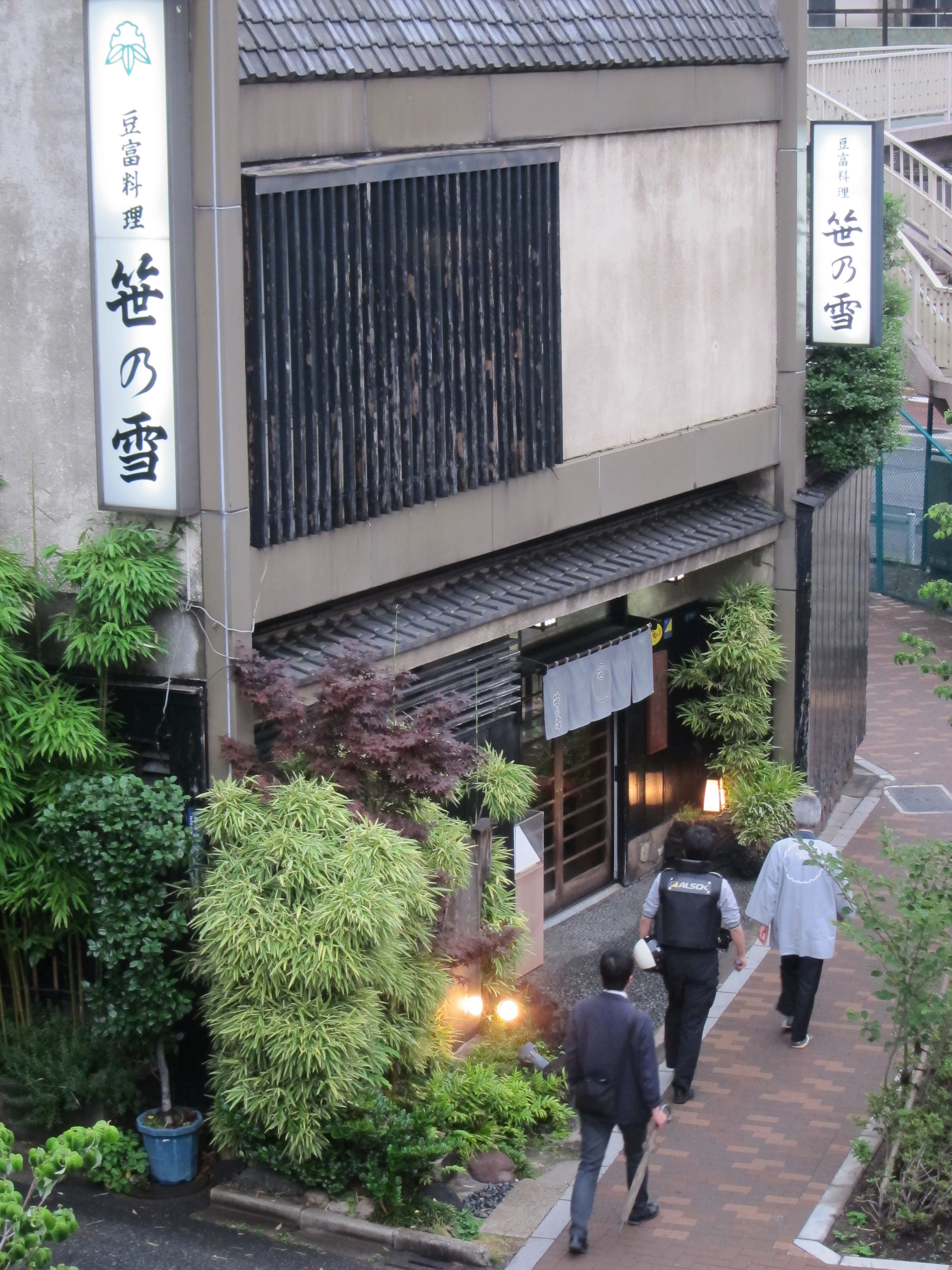
Sasa no Yuki – Ten courses of tofu

June 25, 2015 By: Mai Truong Category: Flavor Japan, Japanese, The more interesting, Travel, Vegan

Sasa-no-Yuki-tokyo-collage
sasanoyuki-menu-jun2014
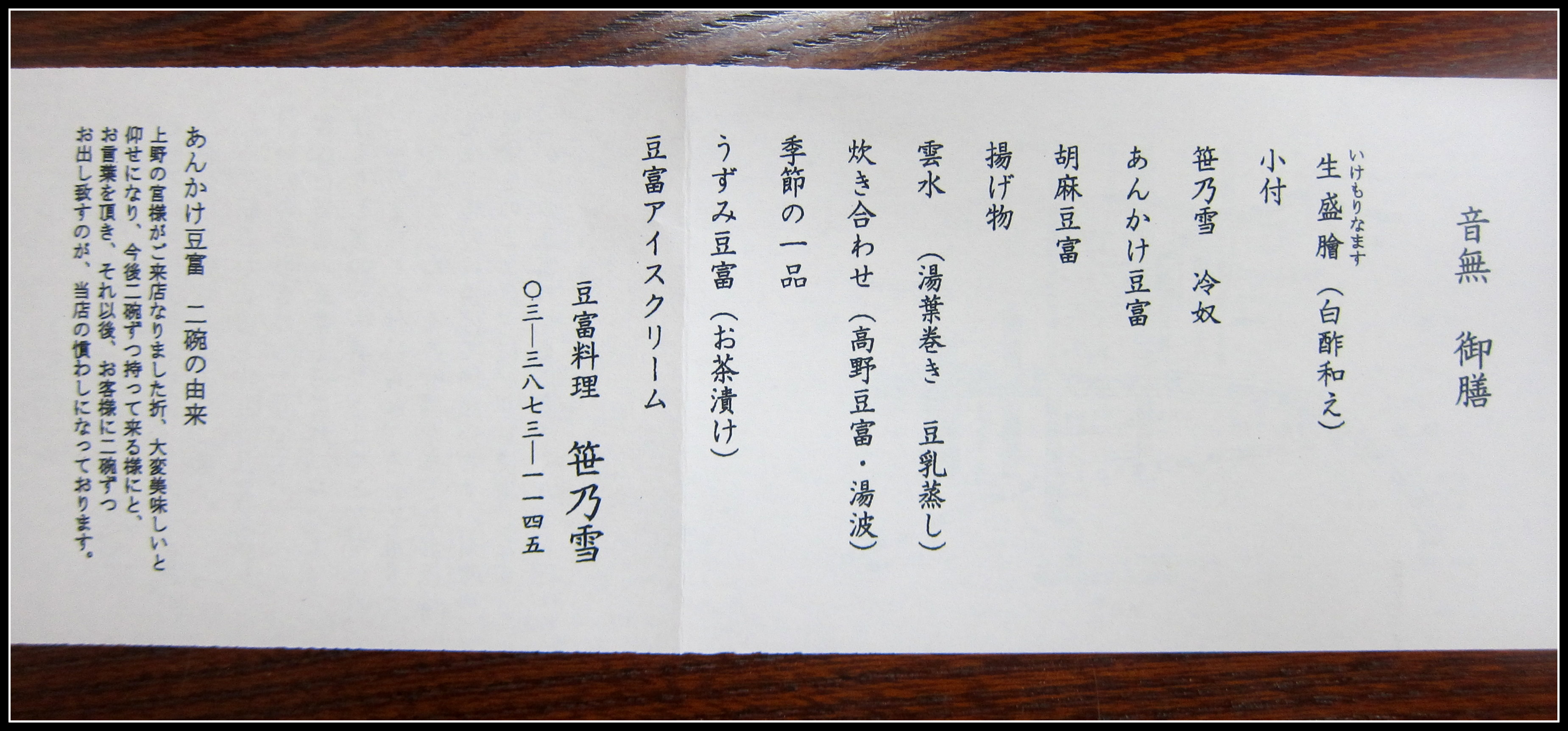
This is ten courses of tofu. Without jisho.org(*), I can’t read half of it, the hostess speaks only a minimal amount of English to me and mostly just smiles, my company simply tells me that this is the menu. There’s little necessity to go further anyway, they probably think, the joy is in eating the courses and not in knowing what it is, since I’m just a foreigner who most likely eats here only once.

sasa-no-yuki-tokyo
And they’re right… This stylish restaurant, Sasa no Yuki, is not quite for a student’s everyday dining, the cheapest lunch course (Uguisugozen, 6 dishes) is 2200 yen (~$22). But I keep the slip of paper, and I will remember what everything is called!

sny-ikemorinamasu
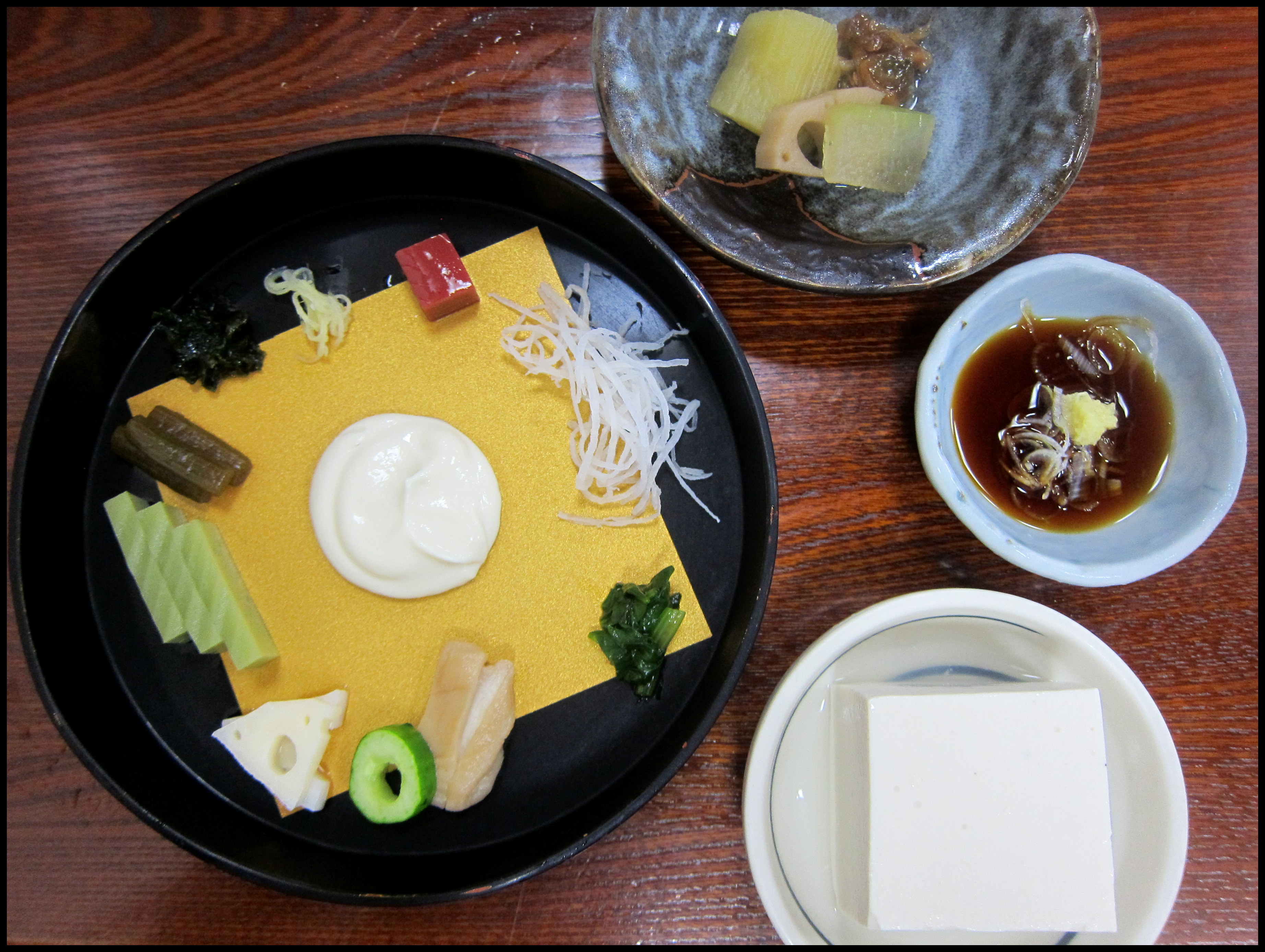
First 2 courses: ike mori namasu (生盛膾) – vegetable (and jelly) assortment with a tofu dipping sauce, and sasanoyuki (笹乃雪) – a block of cold white tofu. Don’t underestimate the tofu block, it’s uncooked, extremely pure and actually tastes like soybean.

sny-ankaketofu-gomatofu
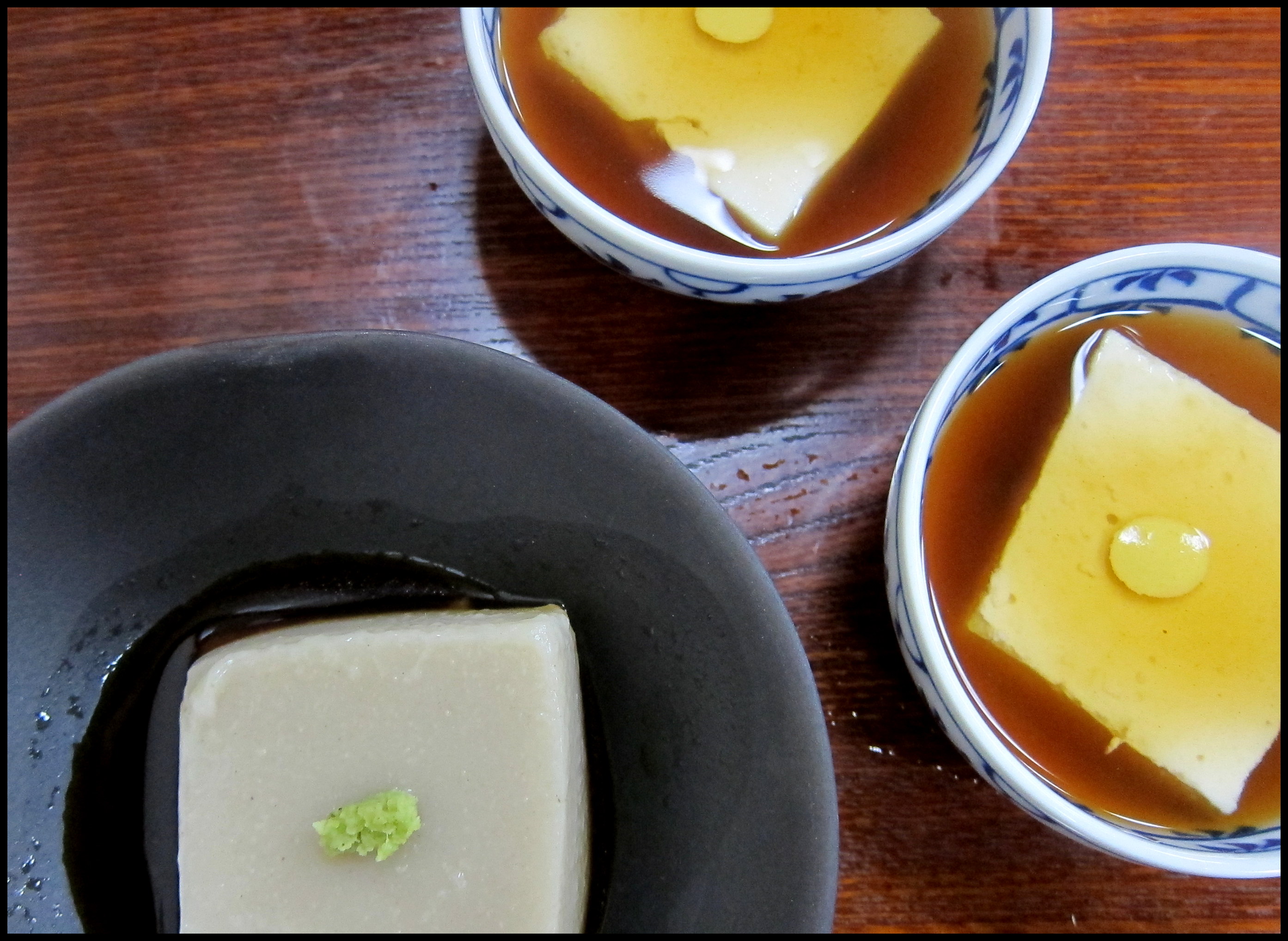
Third and fourth courses: ankake tofu (あんかけ豆富)* – tofu in a slightly sweetened soy-flavored sauce with a dash of mustard, and goma tofu (胡麻豆富) – tofu made with sesame and arrowroot.
Ankake tofu is said to be Sasa no Yuki’s signature dish, originated more than 300 years ago. Unfortunately, it is also my least favorite.

sny-agemono
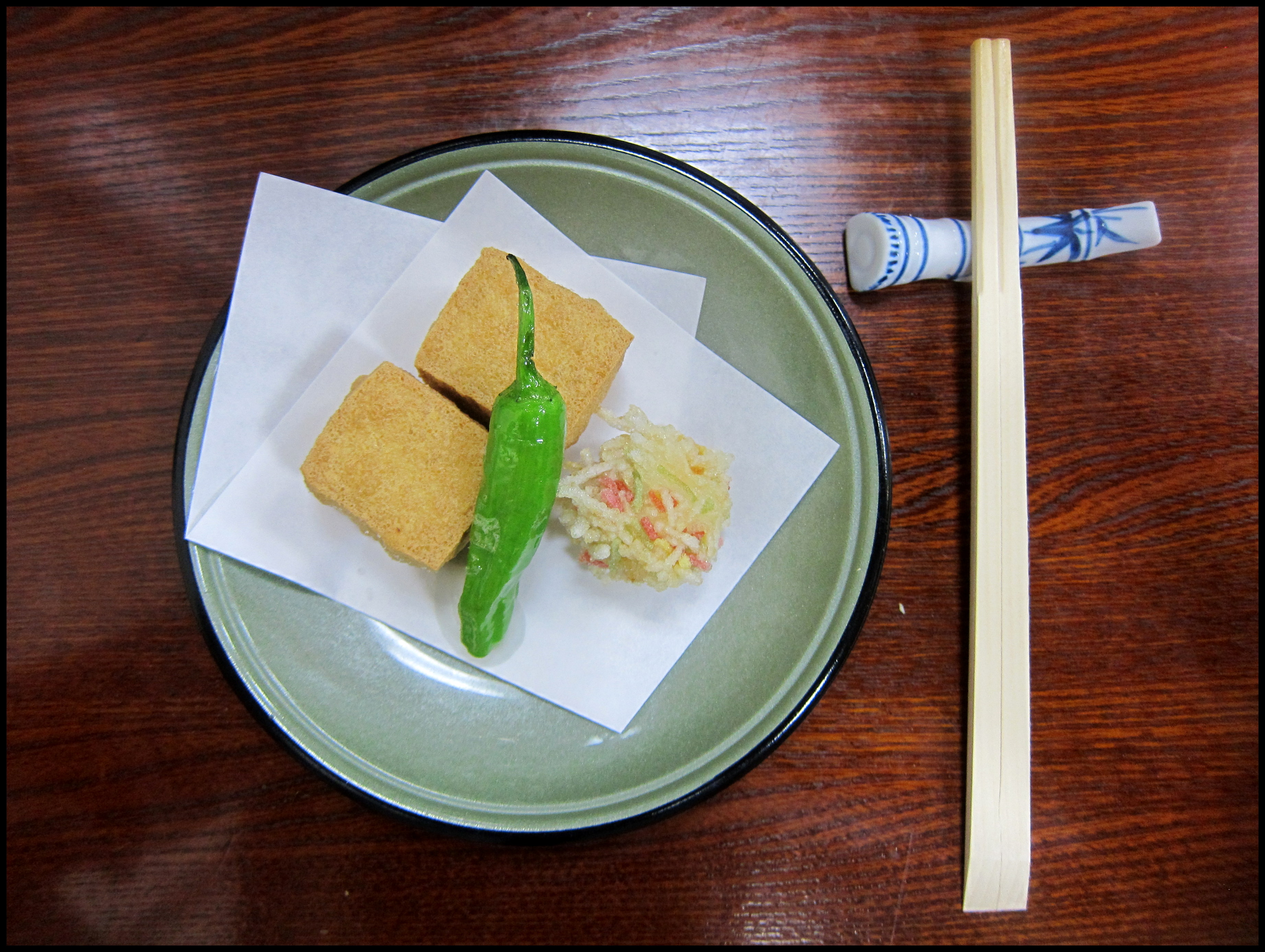
Fifth course: agemono (揚げ物), which means fried food in general. In this case, it’s deep-fried tofu and a ball of deep-fried rice cracker or something. A satisfying contrast after all the cold, homogenous blocks.

sny-takiawase-kouyatofu-yuba
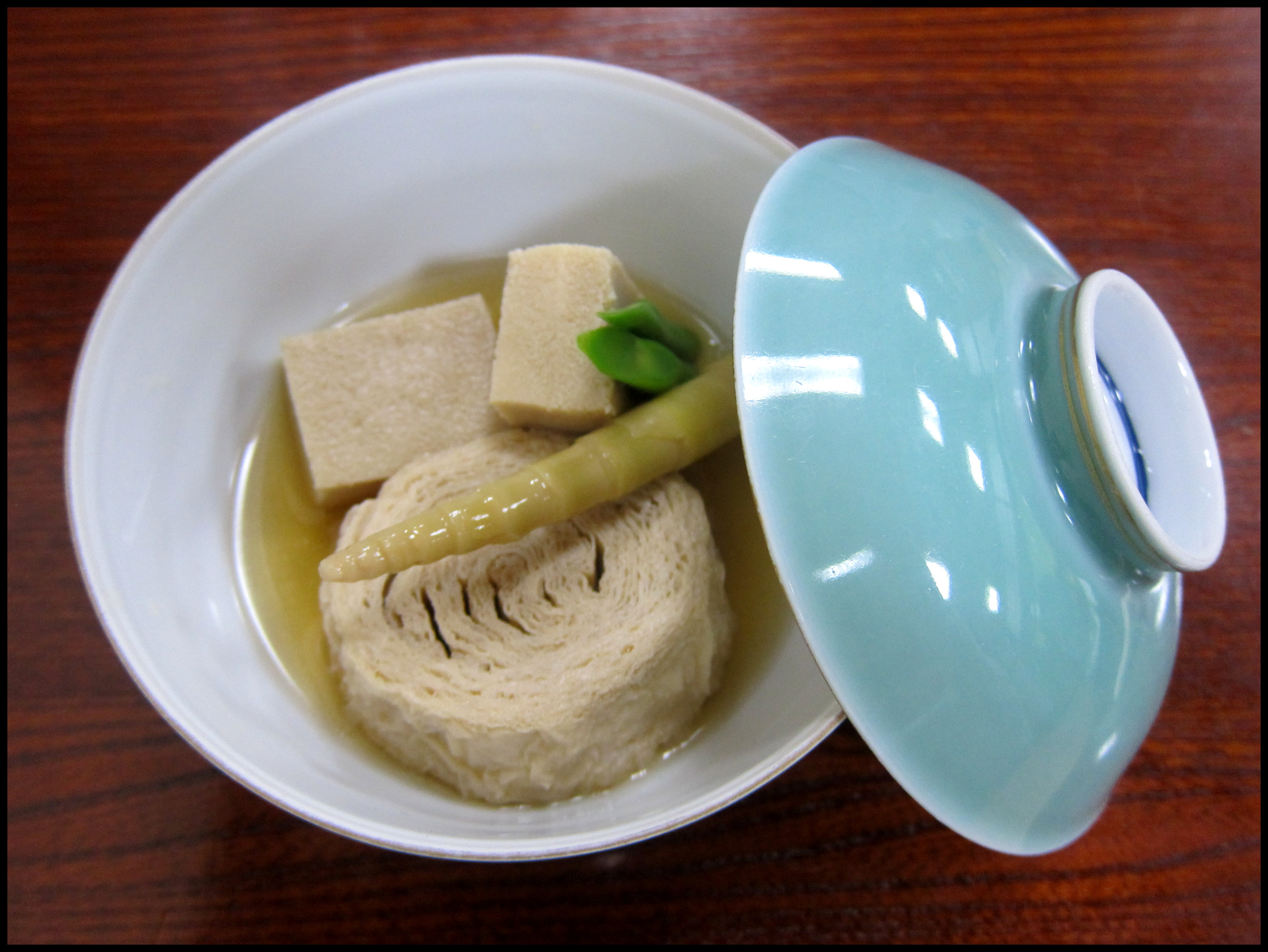
Sixth course: yuba (湯波) – tofu skin, and kouya tofu (高野豆富) – freeze-dried tofu. Both taste airy and a little sandy.

sny-unsui
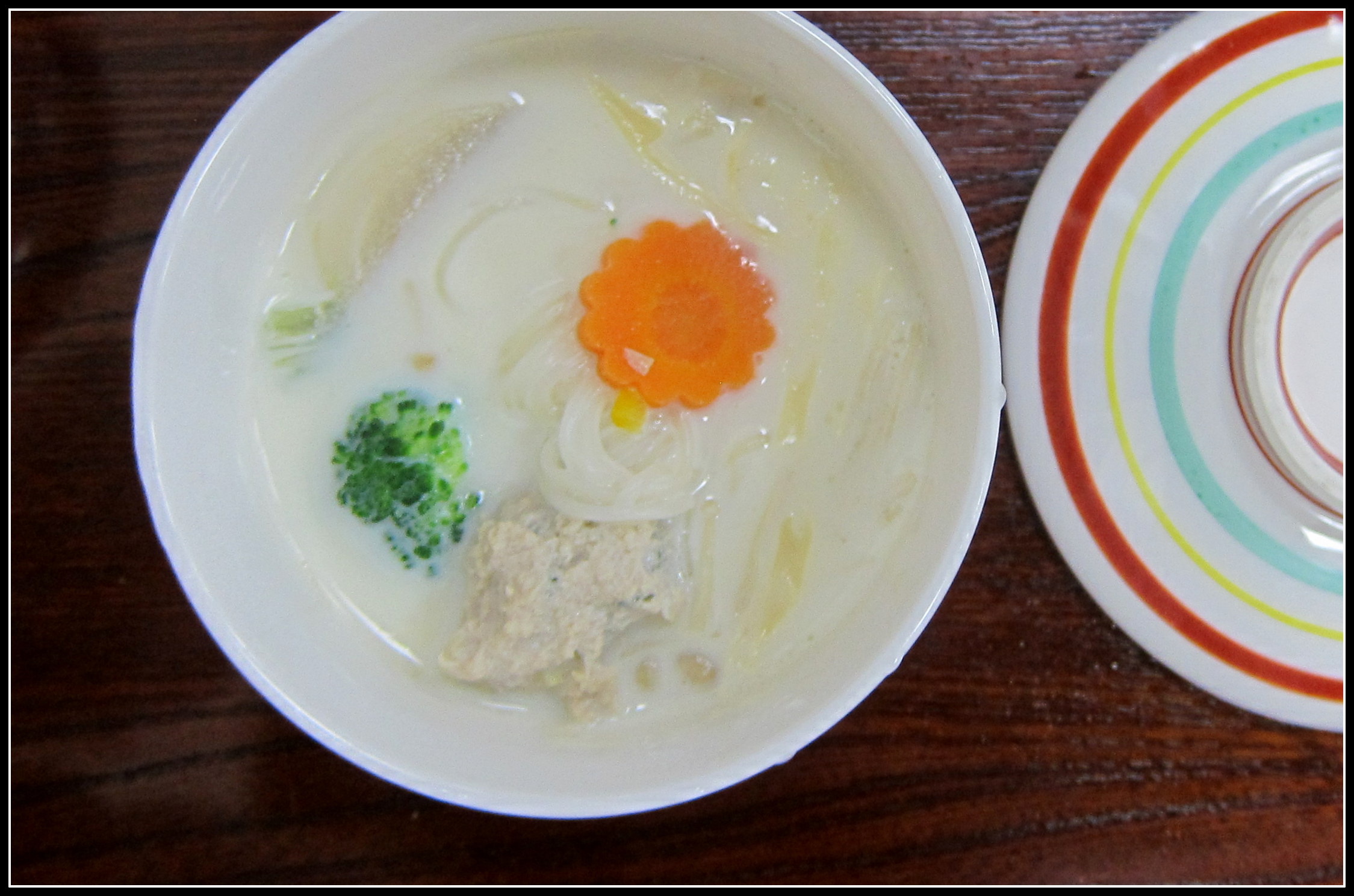
Seventh course: unsui (雲水)** – a noodle soup, but entangled in the noodle are yuba strips, and the broth is lightly seasoned soy milk. It’s served warm. Extremely satisfying, light but flavorful, full of varieties but harmonious. This soup costs 700 yen by itself. Highly recommended.

sny-kisetsu-no-ippin
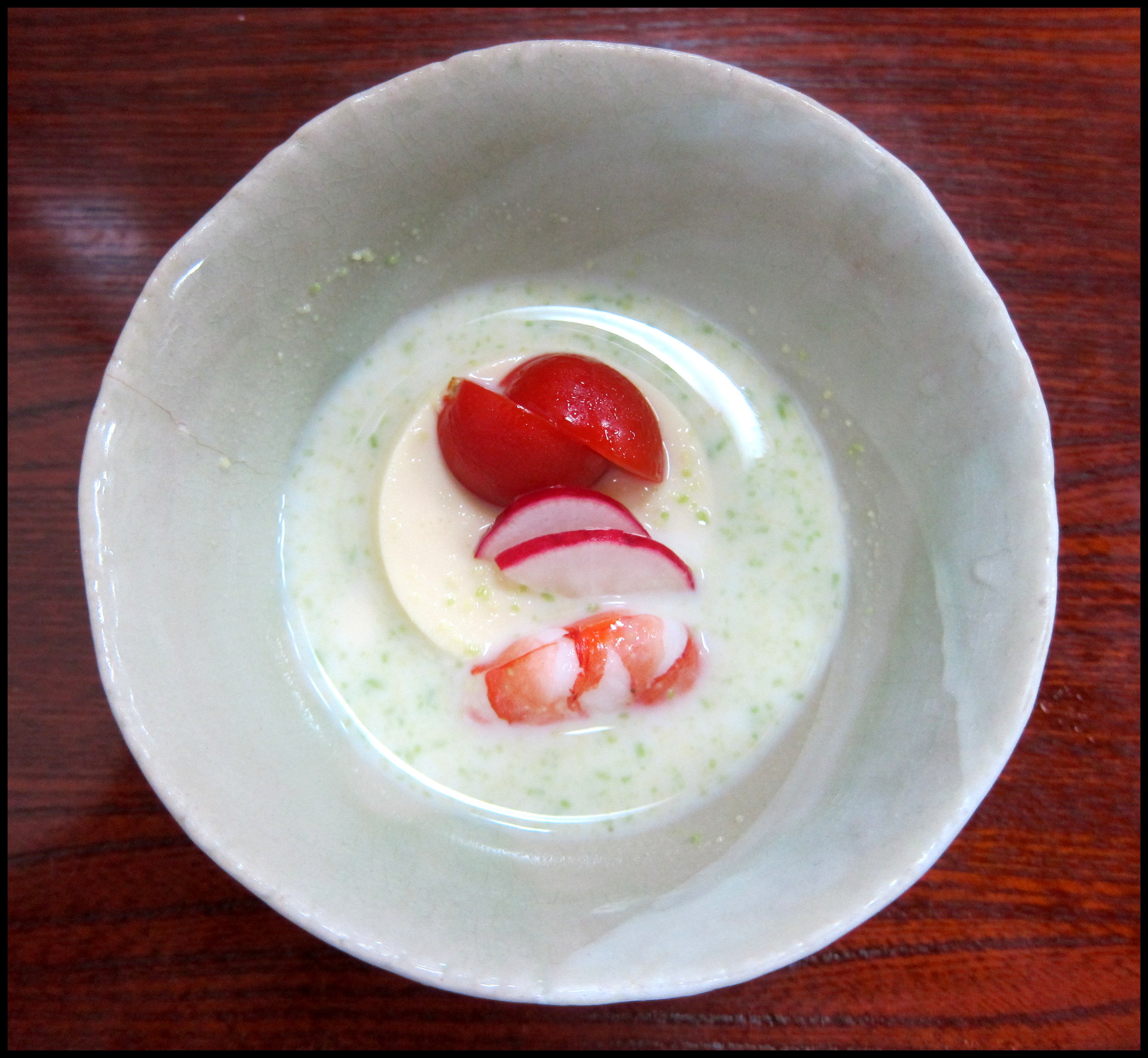
Eighth course: soft tofu in a cold broth, shrimp and veggie. On the menu, it’s known as “kisetsu no ippin” (季節の一品), which means “a product of the season”. Also one of my favorites.

sny-uzumitofu-ochazuke
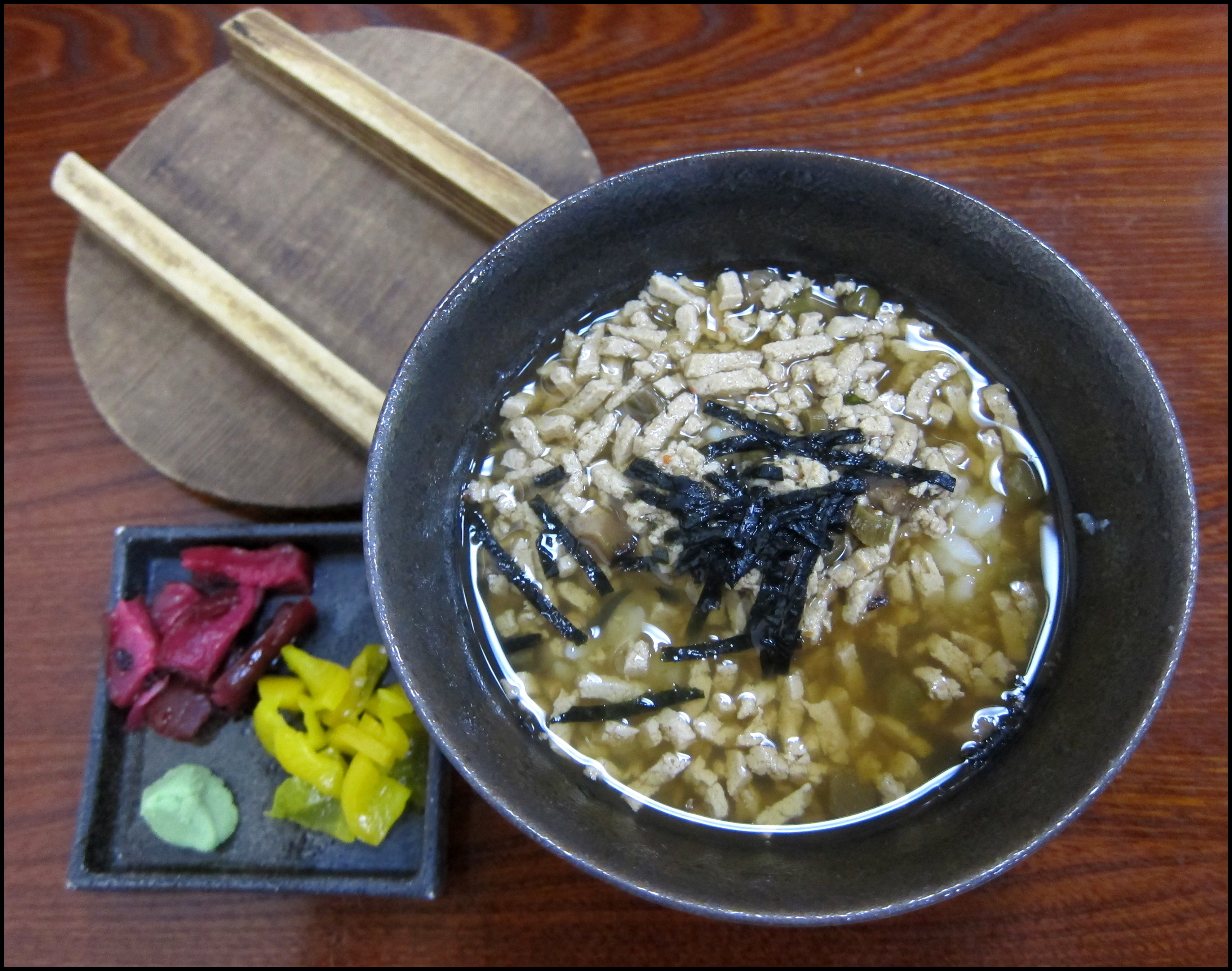
Ninth course: uzumi tofu (うずみ豆腐) or also called ochadzuke (お茶漬け) – rice with seasoned tofu in hot broth.

sny-tofu-icecream
Dessert: tofu ice cream. Can it go wrong? Never.

sasa-no-yuki-interior
The 10-course meal, otonashigozen, costs 5000 yen. It is perfect for the hot, wet Tokyo summer. It makes you feel light and clean. It’s a lesson about the aesthetics of simple things. It also teaches you that this comforting life is ephemeral, because moments later, you will exit the restaurant into the pouring rain. Everything is fleeting, including your dry, happy self.

Address: Sasa no Yuki – somewhere near Uguisudani station, Tokyo.
This restaurant is featured everywhere on the internet, you wouldn’t have any problem finding it. Japan Times has an in-depth review about the restaurant (which started in the Edo period!):

“If you really want to know the taste of tofu, put a piece on freshly cooked rice and eat it. Then you can tell,” says Okumura [Sasa no Yuki’s president and tofu master], who usually enjoys tofu with no toppings while drinking wine or beer. “The taste of soy protein is strong enough to blend beautifully with a simple bowl of rice.”

Okumura also observed, it has become a rather luxurious experience these days — because there is so little tofu fit to be eaten this way.

Though so simple in principle — relying merely on high-quality soy beans, good water in which to soak and boil them, and nigari (bittern) to cause coagulation — tofu has now mostly fallen foul of profit-oriented mass production to the point that many people may never have tasted the authentic stuff, Okumura says. “Nowadays, we are one of only a few shops still making tofu in the traditional way.”

A Japanese friend of mine once lamented the exact same thing while eating tofu straight from its plastic-film-covered white plastic minitub, which he bought from a nearby market.

———————————————————————————————-
Guest post by C. from Katsushika.

Foodnote:
(*) Even with a dictionary, Sasa no Yuki’s menu is difficult to read. They use different writings for some of the words, such as 豆富 instead of 豆腐 for tofu, and 湯波 instead of 湯葉 for yuba.
(**) “Unsui” is cloud (un) and water (sui), which also means a wandering monk.

Tags: ,

One Shot: Flower Bibimbap (꽃비빔밥)

April 29, 2015 By: Kristen Category: Flavor Abroad: Boulevard-ing in Seoul, Korean, One shot, The more interesting

It is finally spring in South Korea and the weather is beautiful – not too chilly and not too hot, just perfectly warm the way I like it. In other words, the weather is like Berkeley weather! After a long and cold winter, I definitely feel like I just awoke from hibernation.

So when I was watching TV with my partner’s family and we saw a spotlight on 꽃비빔밥 (flower bibimbap), my eyes lit up. On TV was a beautiful bowlful of flowers that looked so beautiful! Right away I turned to my partner and asked him to go together. So off we headed to the city of Asan to the Asan Botanical Garden (아산 세계 꼭식물관), a 40 minute drive from my partner’s home in Pyeongtaek.

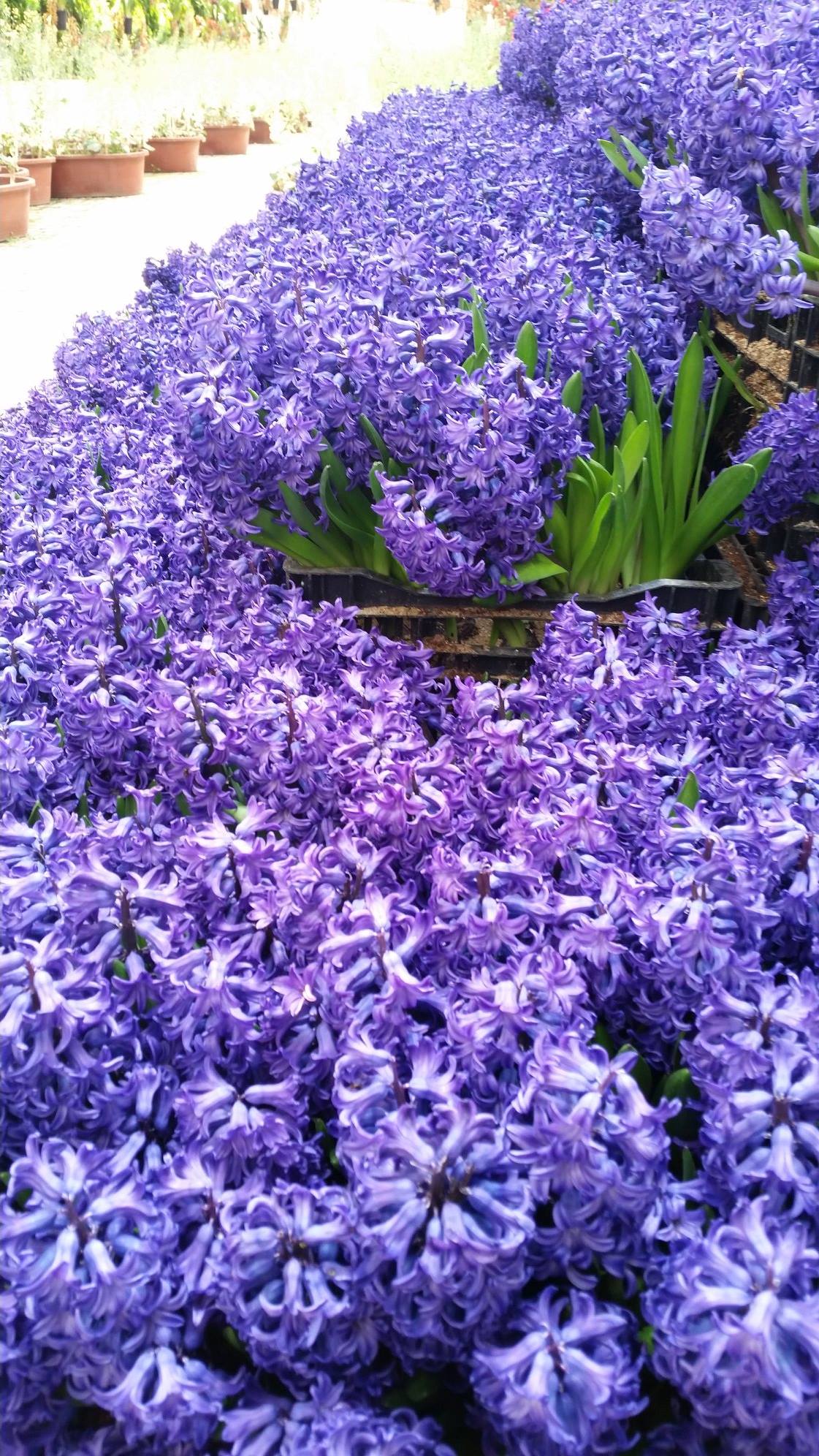
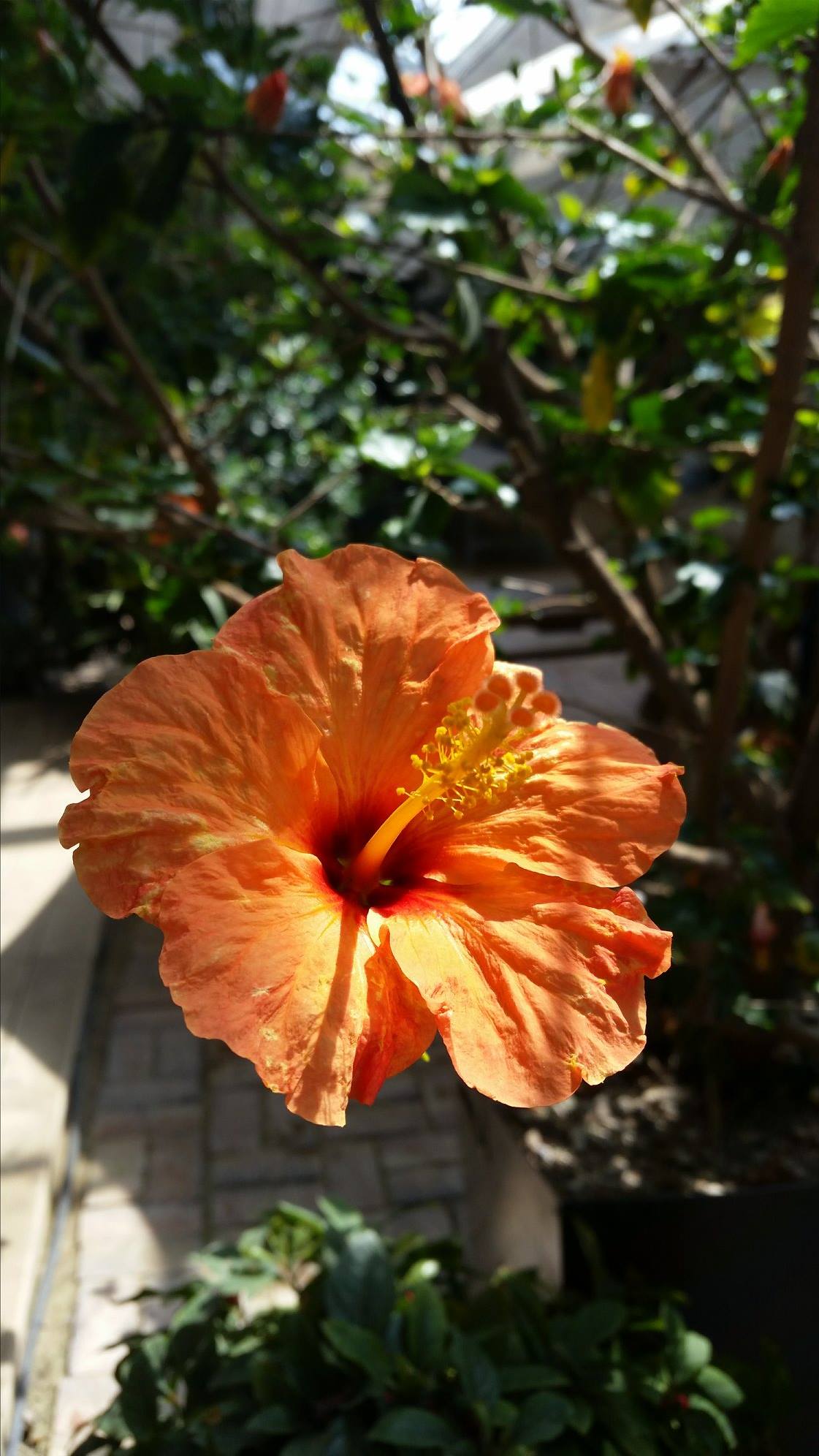
Turns out the restaurant that was featured is part of a botanical garden, so we enjoyed the beautiful display of flowers on the way to our final destination: FOOD.

11194861_10153165987870733_210382163_o

11167300_10153166025950733_175417722_o

11181445_10153166031895733_1680362148_o

11194668_10153165993380733_1883864611_o

11196514_10153166000380733_1185500457_o

11171920_10153166045365733_727635523_o

11171843_10153166020725733_772704838_o

11163669_10153166030990733_1418127176_o

11187483_10153166068850733_1785027530_o

Is it weird to feel so hungry while looking at flowers? We were very hungry when we arrived, so while looking at the beautiful flowers and enjoying the sights and smells, I was also simultaneously thinking about the flowers that I would get to munch on at the end of the garden!

Well…after about 5 greenhouses of lovely flowers, we finally reached our destination.

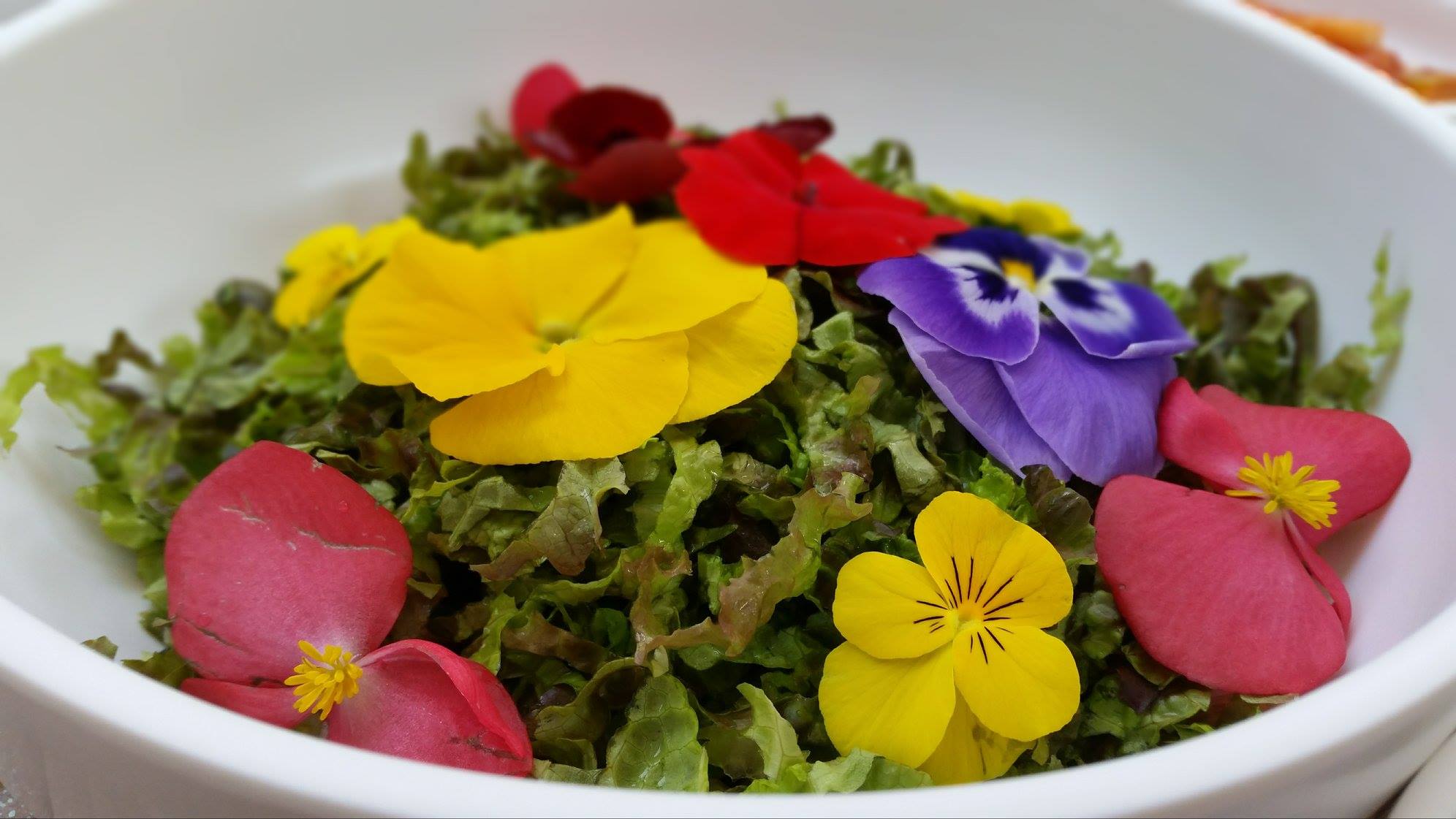
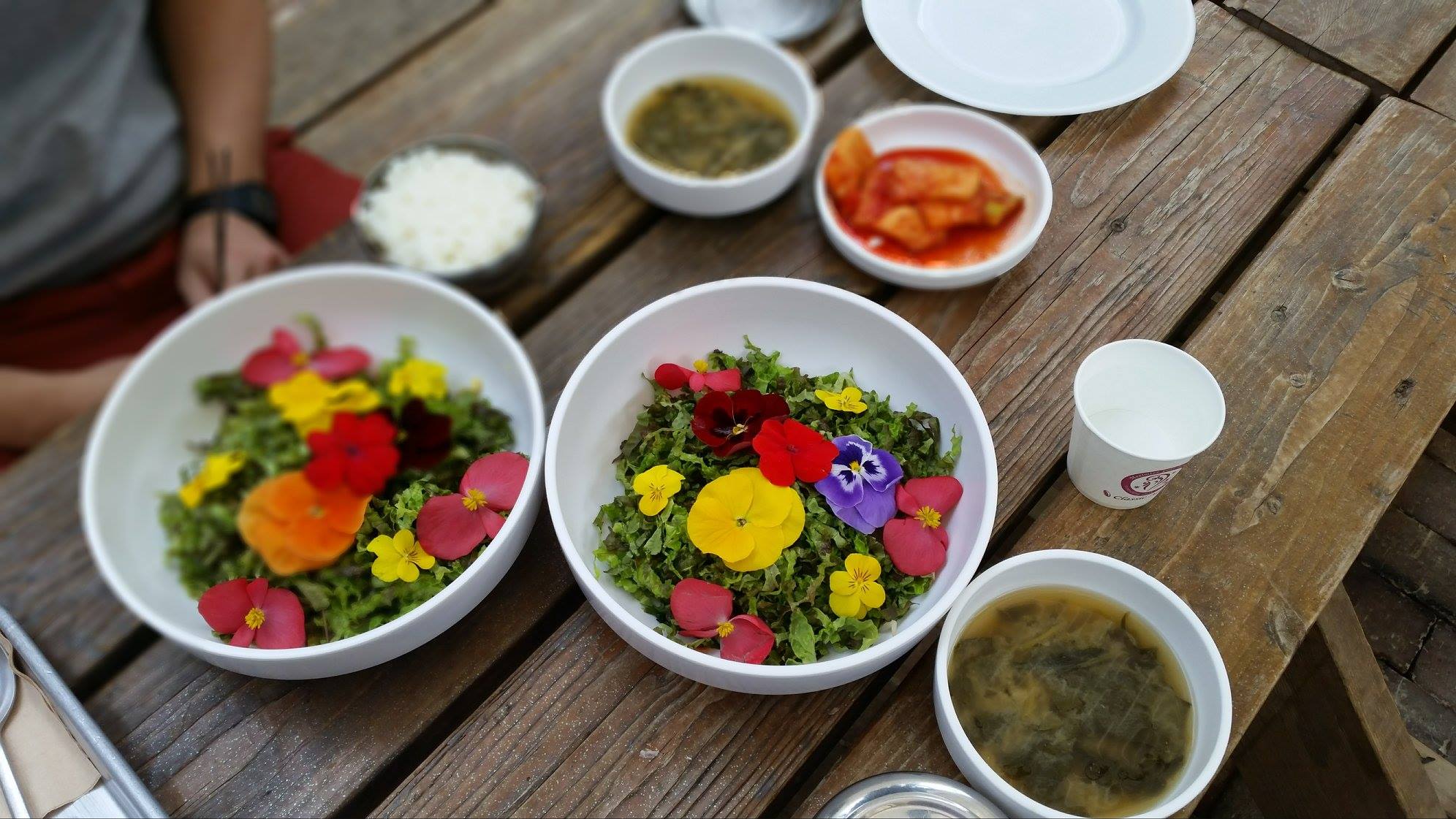
Behold…flower bibimbap (꽃비빔밥), priced at 8,000W (about ~$8).

11167582_10153166037010733_2092362696_o

The flowers were so pretty, but I thought that there would be more (the TV program that we watched showed what seemed to be an opposite ratio of flowers to lettuce). Underneath the flowers are typical bibimbap ingredients: lettuce, seasoned spinach, mushrooms, and roots. The rice came on the side as well as seaweed soup (미역국 miyeok guk) and radish kimchi (깍두기 kkakdugi). Gochujang (고추장) also came in the typical squeeze bottle.

Overall, the dish was delicious but tasted a bit too much like ordinary bibimbap. The flowers, on their own, however had a very unique taste. Citrusy, bitter, a little sweet, and crunchy, they were super delightful to eat on their own. However, when mixed with all of the other bibimbap ingredients, they were lost and it was difficult to really distinguish this dish from a bibimbap without flowers. Maybe because we weren’t TV hosts, we didn’t get the special treatment of having a ton of flowers! I think this dish would have been more unique and balanced if the amount of lettuce had been reduced by 50% and the amount of flowers increased by 50% so that the unique taste of the flowers would stand out a lot more, especially next to such assertive (and other deliciously crunchy) ingredients as spinach, roots, mushrooms, and of course, the spicy gochujang.

It was a great experience though trying flower bibimbap! The beautiful flowers and sitting and eating inside the greenhouse with all of the wonderful smells really marked the opening of spring for me.

And of course, the visual beauty of the bibimbap was worth the trip for me!

11194814_10153166036550733_1701760684_o

More information about the greenhouse can be found here.


Danh’s Garden – Vietnamese pub foods

April 09, 2014 By: Mai Truong Category: California - The Bay Area, The more interesting, Vietnamese

dg-dipping-sauces
Pub foods for Vietnamese are pretty diverse (**). The menu at Danh’s Garden in San Jose is basically a book, plus some handwritten ones on the wall. I single-handedly narrowed down our choices by a page when I refused anything goat or lamb (I often wonder why my friends can be so kind and still go to eat with this oddball).

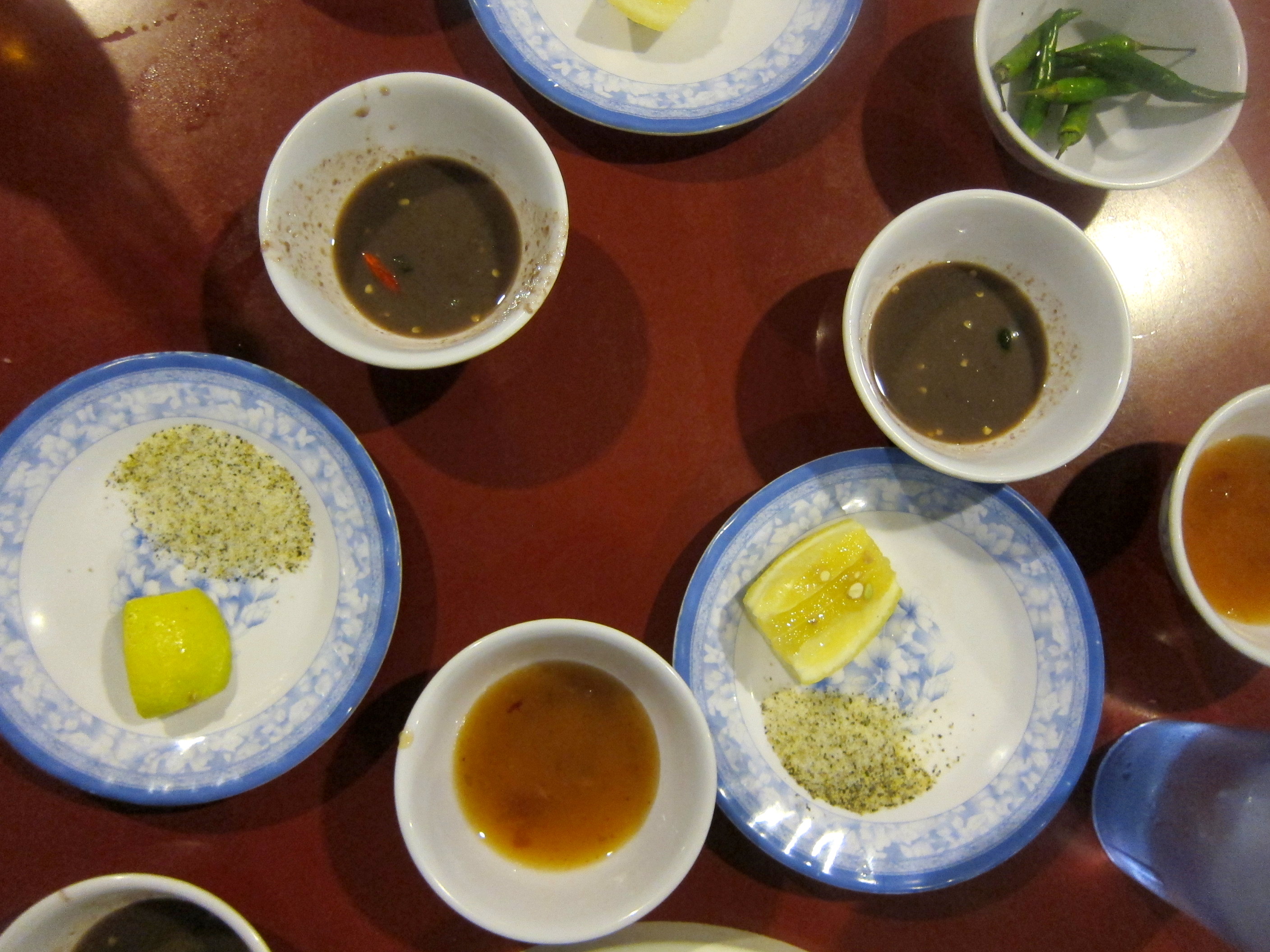
We picked 5 dishes at first, thinking it should be enough for a party of 5 – Vietnamese pub foods are no tapas or izakaya, things are not served in dainty palm-sized saucers, they’re entree-portion. With them come a plethora of dipping sauces and salt-and-pepper mix for who knows what. Honestly I don’t think we even used all of those sauces. The food were plenty seasoned already.

dg-muc-don-chao-tom
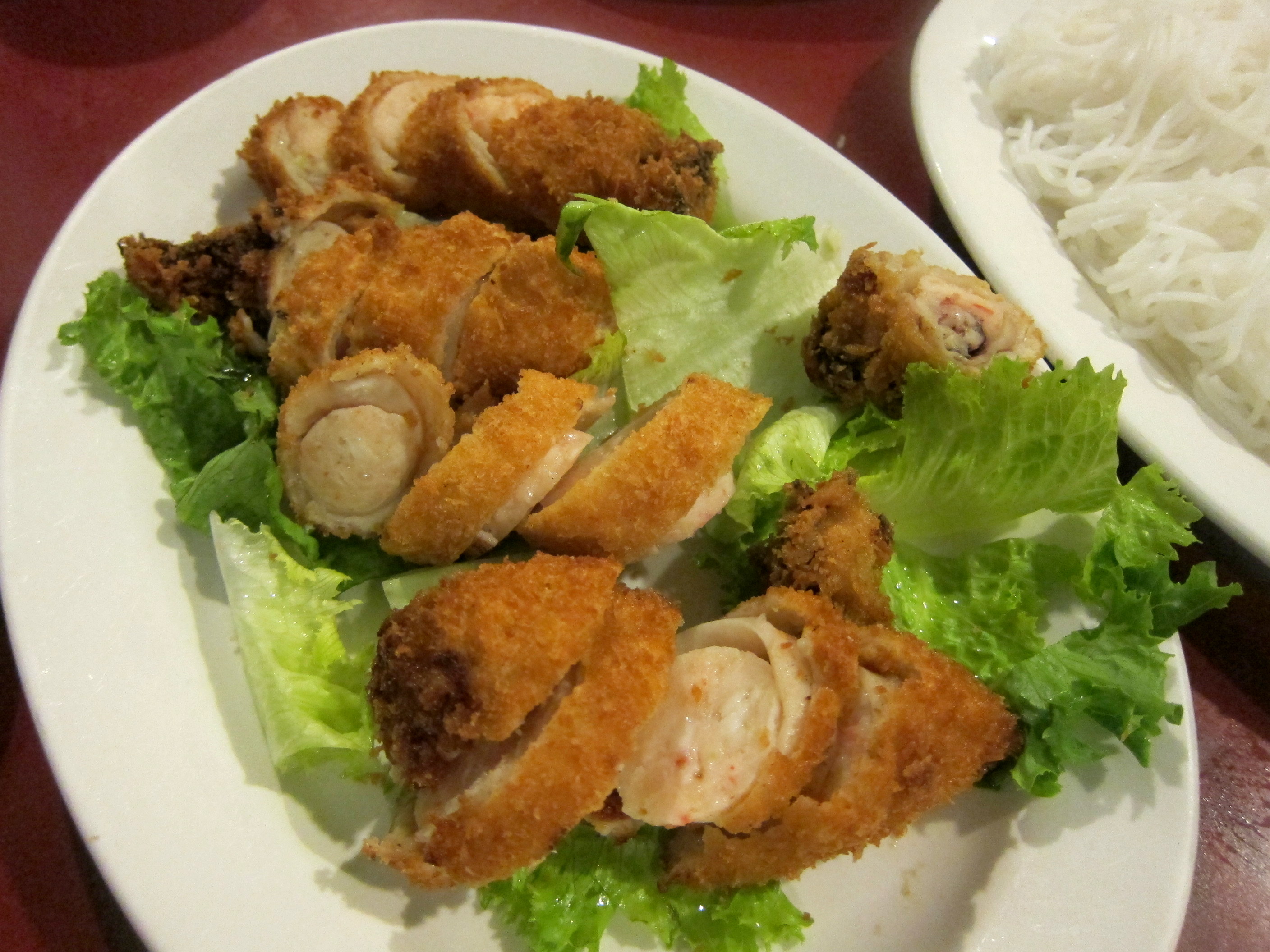
Mực dồn chạo tôm – squid stuffed with shrimp paste. Light on the seasoning. Rating: 8/10. (It’s tasty and I can’t think of any flaw, but will I crave it? Probably not.)

dg-oc
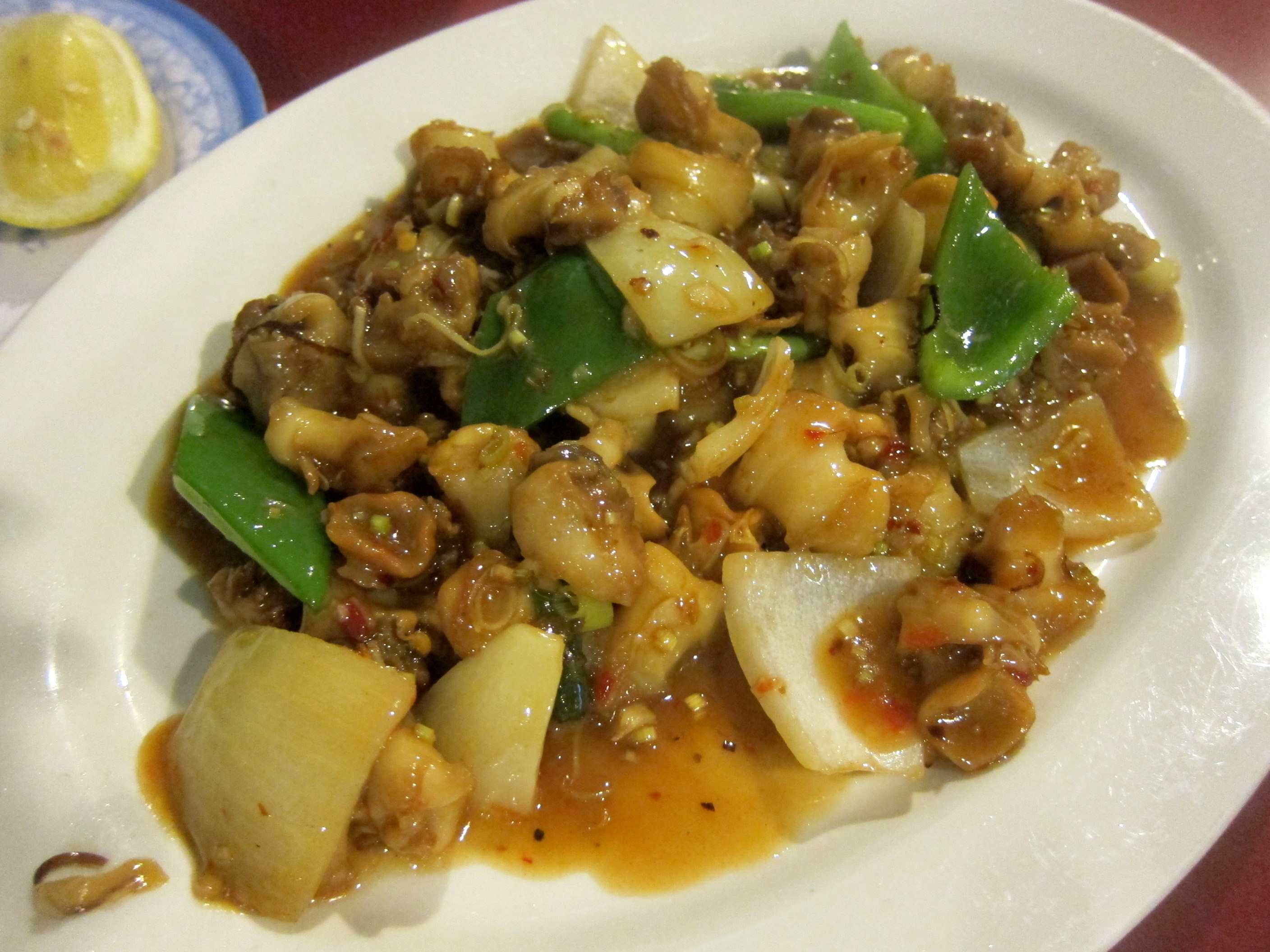
A dish of freshwater snails that I can’t for the life of me remember the ingredients. I’m so embarrassed. And I didn’t even have a drop of beer for an excuse of braincell loss. It’s sweet and savory, lemongrassy, a tidbit spicy, the snails are crunchy-chewy, small, addicting. Rating: 7/10. (Again, no apparent flaw, but snails are something I can live without. Also, for some time now I just feel bad eating little creatures, shrimp included…)

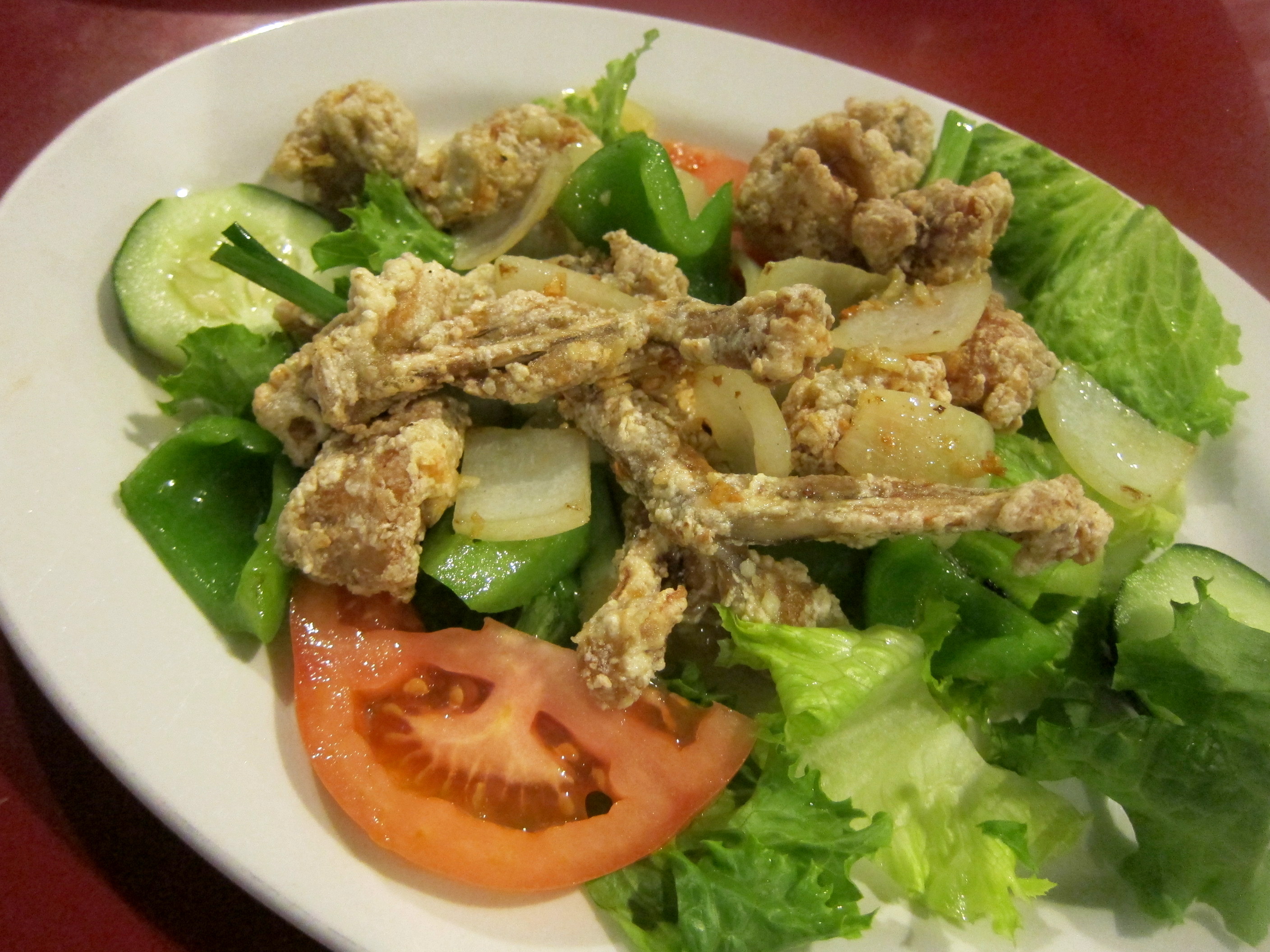
dg-ech-chien-bo
Ếch chiên bơ – butter-fried frog leg. Bland. Too dry. 2/10.

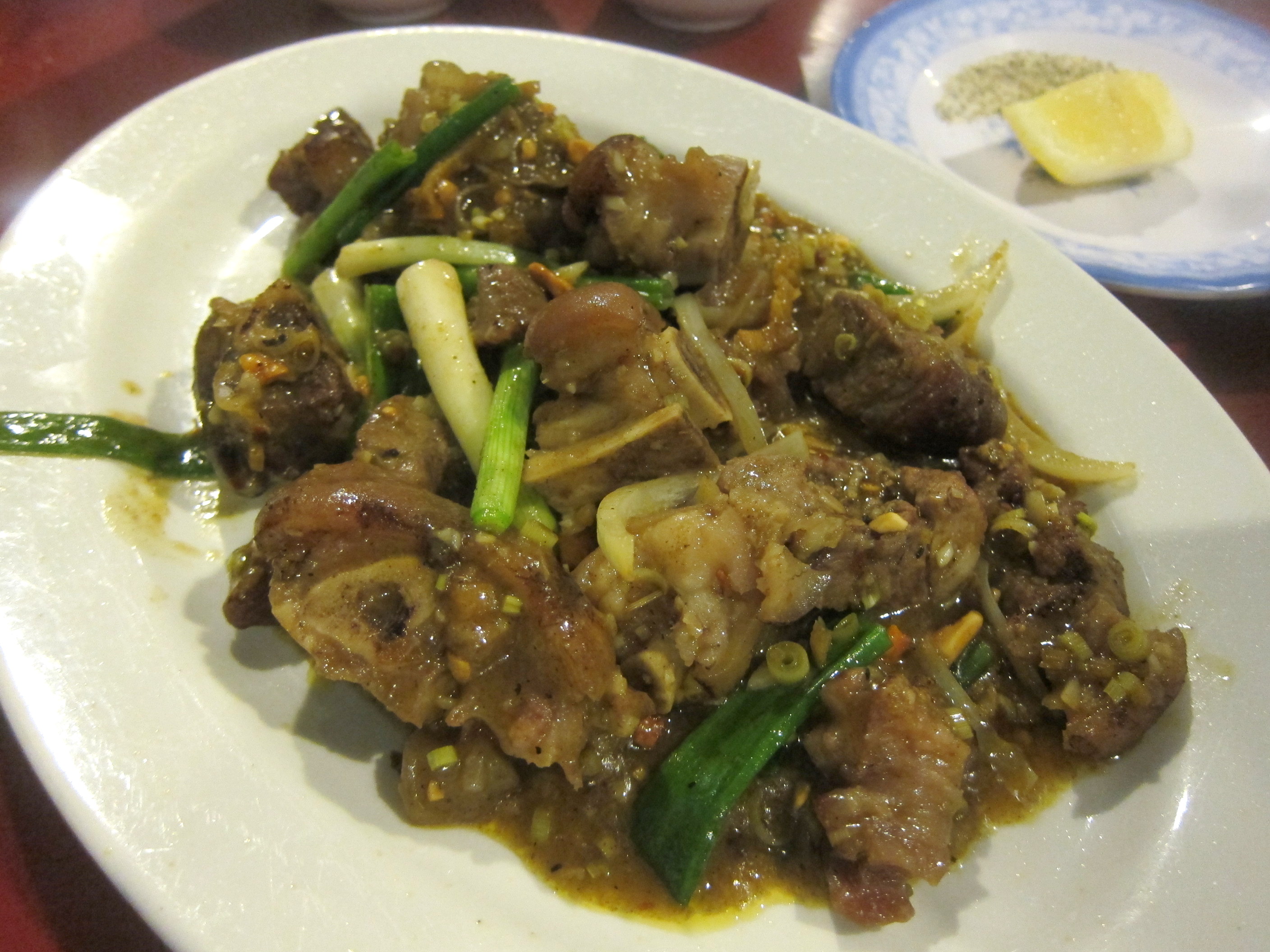
dg-gio-heo-gia-cay
Giò heo giả cầy – braised pig trotters with galangal. The meat is doused in a tad curry-like sauce, some steamy white rice would be perfect. 9/10.

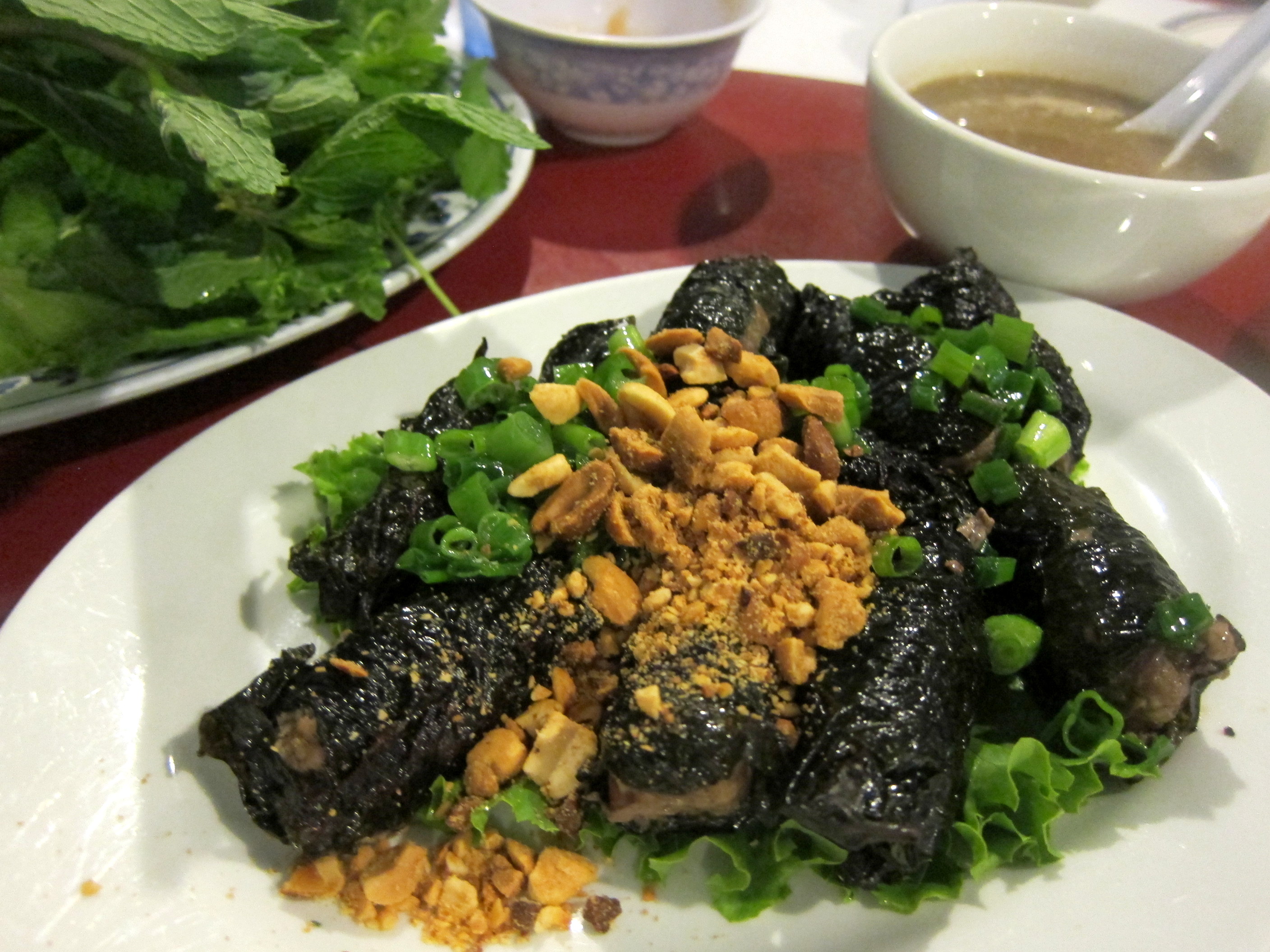
dg-bo-la-lot
Bò lá lốt – grilled beef sausage wrapped in piper lolot. Served with rice paper with bún (rice noodles) and fresh herbs to make into little rolls that are dipped into a pineapple-anchovy dipping sauce (mắm nêm). My mouth is watering. 9/10. (We ordered this beef midway through the meal because we felt the previous four were just appetizers and I was dying for some starch.)

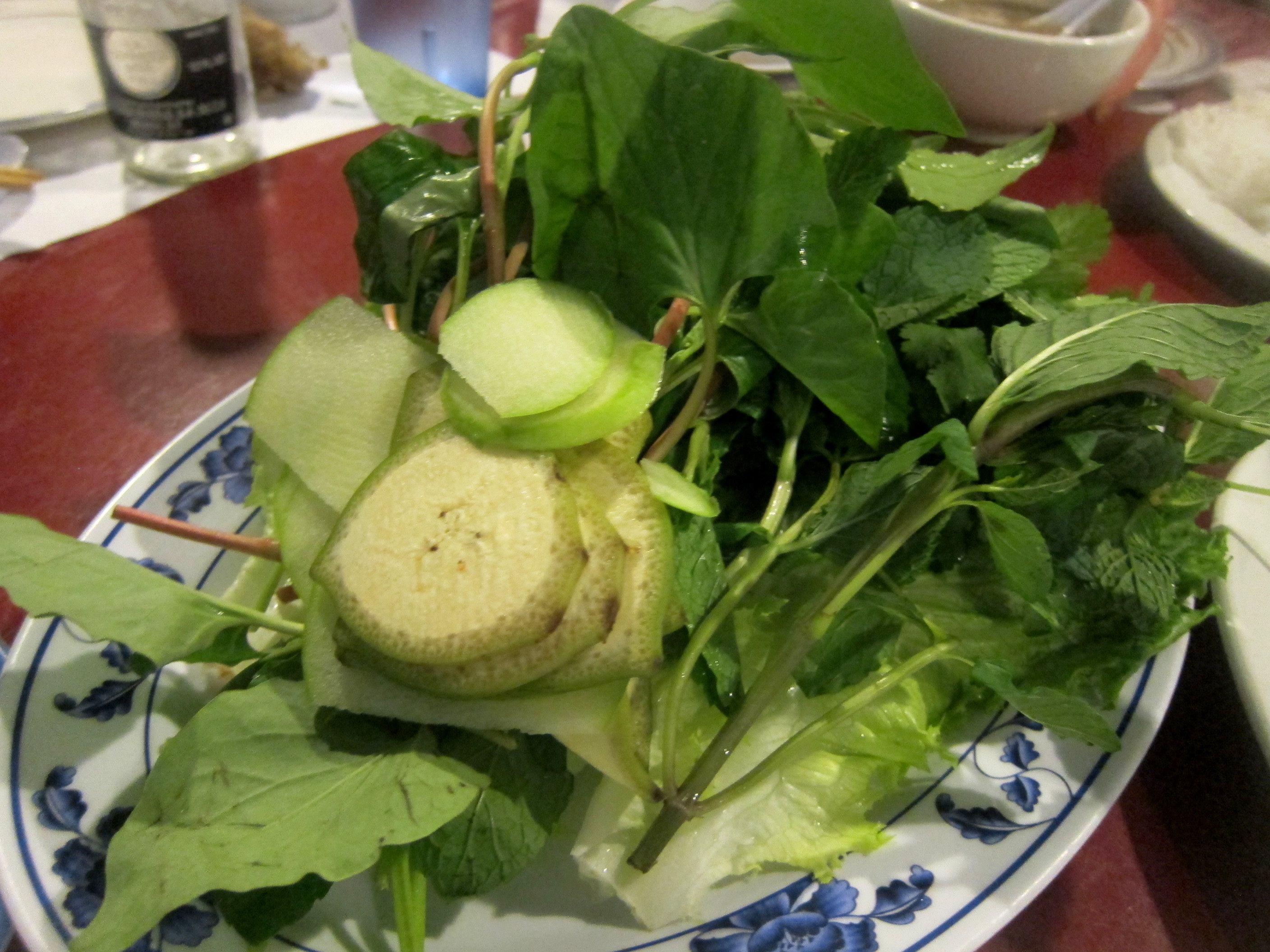
dg-greens-for-the-wraps
The greens to go with the bò lá lốt. Most of us were thrilled to see slices of green bananas and good old homey herbs of the motherland that I can’t name… I was thrilled too, but my general enthusiasm for herbs is about the amount of homework a normal student is eager to do everyday.

dg-lau-luon-bap-chuoi
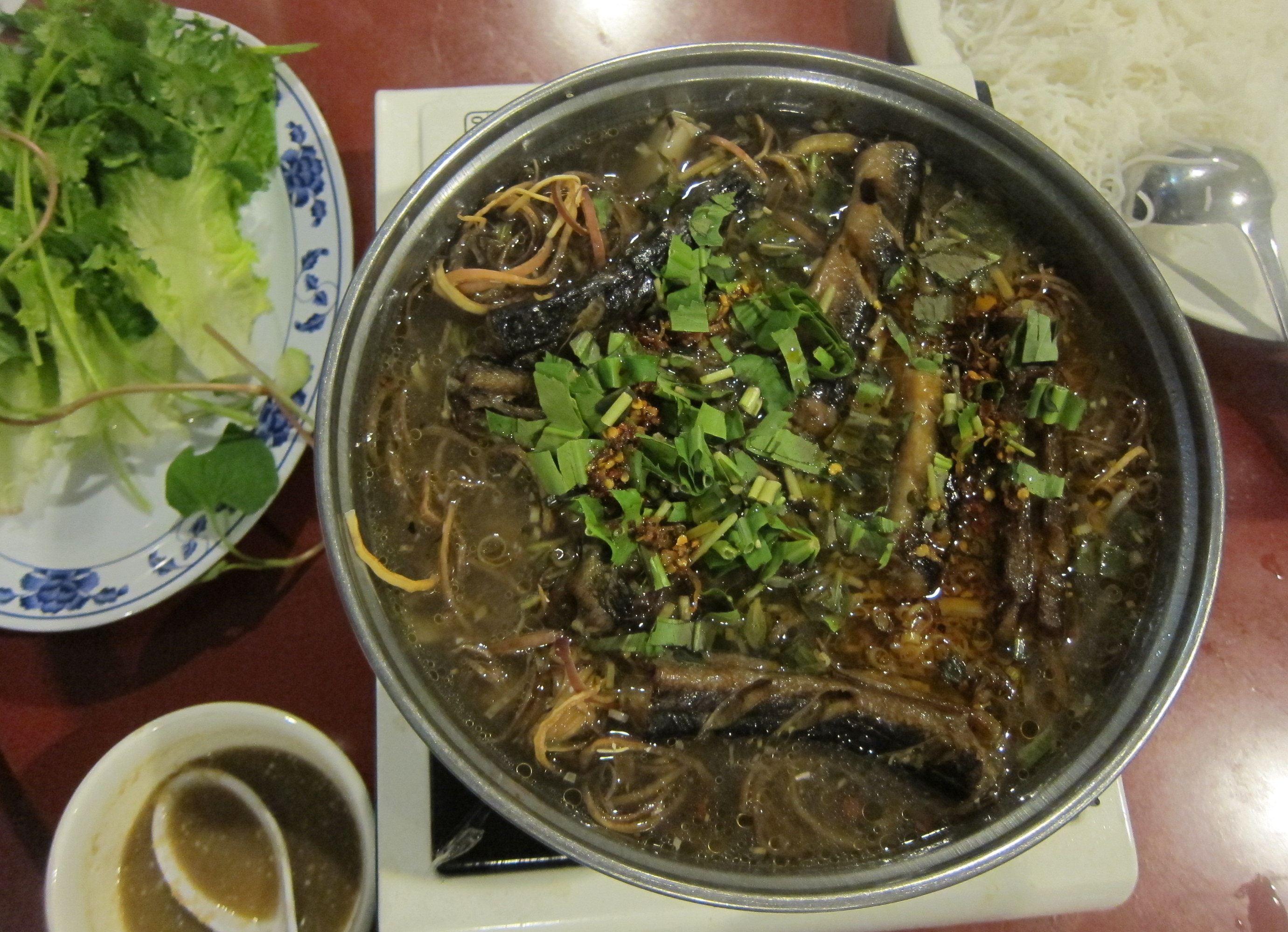
Lẩu lươn bắp chuối – hot pot with eel and banana flower. Also served with rice noodle. I only started to like eel because of Japanese food (unagi don… I might want it for my last meal…). I used to hate eel after the first time I ever had eel: I eagerly bit into a plump round of meat and nearly broke the roof of my mouth with the hidden eel bone. Well. This eel hot pot is perfectly seasoned, the julienned banana flower has a nice crunch, the eel is fine but kinda… unnecessary? 7/10.

dg-che-desserts
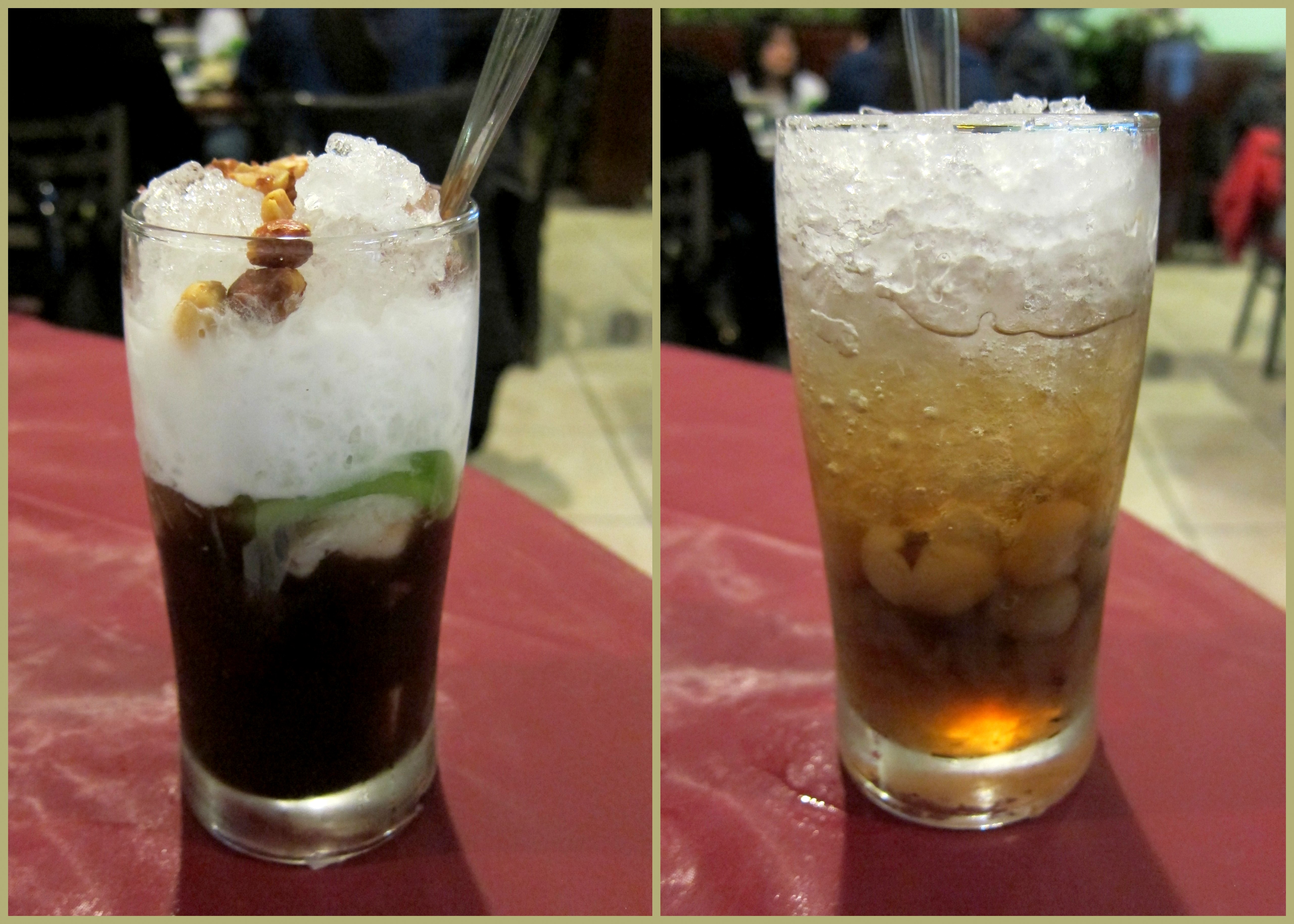
Desserts. Chè thập cẩm đậu – mixed bean chè (left) and chè long nhãn hạt sen – longan and lotus seed chè (right). The mixed bean one has coconut milk topped with peanuts, looks pretty filling and interesting. Mine (longan and lotus) is more of a sweet drink with longan and lotus seeds, which I like, but it was too loaded with ice to do anything. :-/ 5/10.

Most online reviews complain about the rudeness of the waitressed at Danh’s Garden. To be honest, they weren’t the friendliest people I’ve met, but they weren’t rude. They were just cold. Their responses were terse and they didn’t refill my water because they were busy tending the full house. Now, they were laughing and joking with some of the regulars, but that’s just a perk of being regulars. Who goes to a pub and expects bistro service? Yelp dummies who classified this place under “Chinese”, that’s who.
Address: Danh’s Garden
2635 Senter Rd
San Jose, CA 95111
(408) 293-3990
(No reservation)
Dinner for 5: roughly $150. Average score: 6.7/10 (the frog legs’ fault).

** FOODNOTE: I used the word “pub” to loosely describe the type of food here – food to eat while downing alcohol – but Danh’s Garden and all Vietnamese pub food establishments are not pubs, they’re just restaurants that make that kind of food and cater to middle-aged men going out for drinks.

Pretty Good Number One bucket list

January 12, 2014 By: Mai Truong Category: Book, Japanese, The more interesting

pgno
Go to Tokyo. Visit the Odaiba Takoyaki Museum. Practise using chopsticks correctly and buy a (few) pairs at Kappabashi. Eat shave ice and watch fireworks (and people) on the Sumida river bank in July. Eat pan-fried soup dumplings in a neighborhood dumpling restaurant in Nakano. Eat “hone” (pronounced |hoh-nay|, meaning: deep-fried sea eel backbone). Stop eating eel because they’re in the red on the Seafood Watch list.

Thanks to Matthew Amster-Burton’s book, I’ve had the first 7 items on my bucket list figured out (it’s a bucket list, not a to-do list because of the stop-eating-eel thing). I can’t wait to do them (except the stop-eating-eel thing). If a few months ago I was complacent with imaginatively traveling through booksPretty Good Number One throws one delicious, chuckle-inducing paragraph after another to my face and say “go to Tokyo, you lazy donkey”. Just about the most expensive place to visit in the world, thanks, Mr. Amster-Burton. 😉

Except for the part where he describes Chinese green tea as having “a hint of smoky barbecue” and how red bean paste is an acquired taste for Westerners (because beans are supposed to show up in savory foods, not sweets – hello, pumpkin pie?), Pretty Good Number One is enjoyable every minute of reading.

The book is short (only 227 pages) in relatively big clear font. It took me a few 10-minute bus rides and one Christmas Eve to finish. It is a good guide for Westerners (and anyone who hasn’t been to Tokyo) and a respectful and honest glimpse into a city in the East. Andrea Nguyen of Viet World Kitchen posted a long wonderful talk with Amster-Burton about the book last year.

Pictures are available on prettygoodnumberone.com, but I’m not looking at them too closely in fear of sleepwalkingly booking a Tokyo-bound flight tomorrow. Amster-Burton’s writing is so witty and the stories about his little “hungry monkey” Iris are cheezburger-cat level of adorable!

Amster-Burton also includes a long list of his recommended readings at the end (some of which he mentions intermittently throughout the book), and I’ve made my first Amazon’s wish list (so many first lists because of Pretty Good Number One!). It is against my traditional Vietnamese culture to outright ask for gifts (man I feel so shameless!), but JUST IN CASE you ever think about supporting Flavor Boulevard… 😉

Two scientists take on all Indian restaurants in Berkeley

May 09, 2013 By: Mai Truong Category: California - The Bay Area, The more interesting

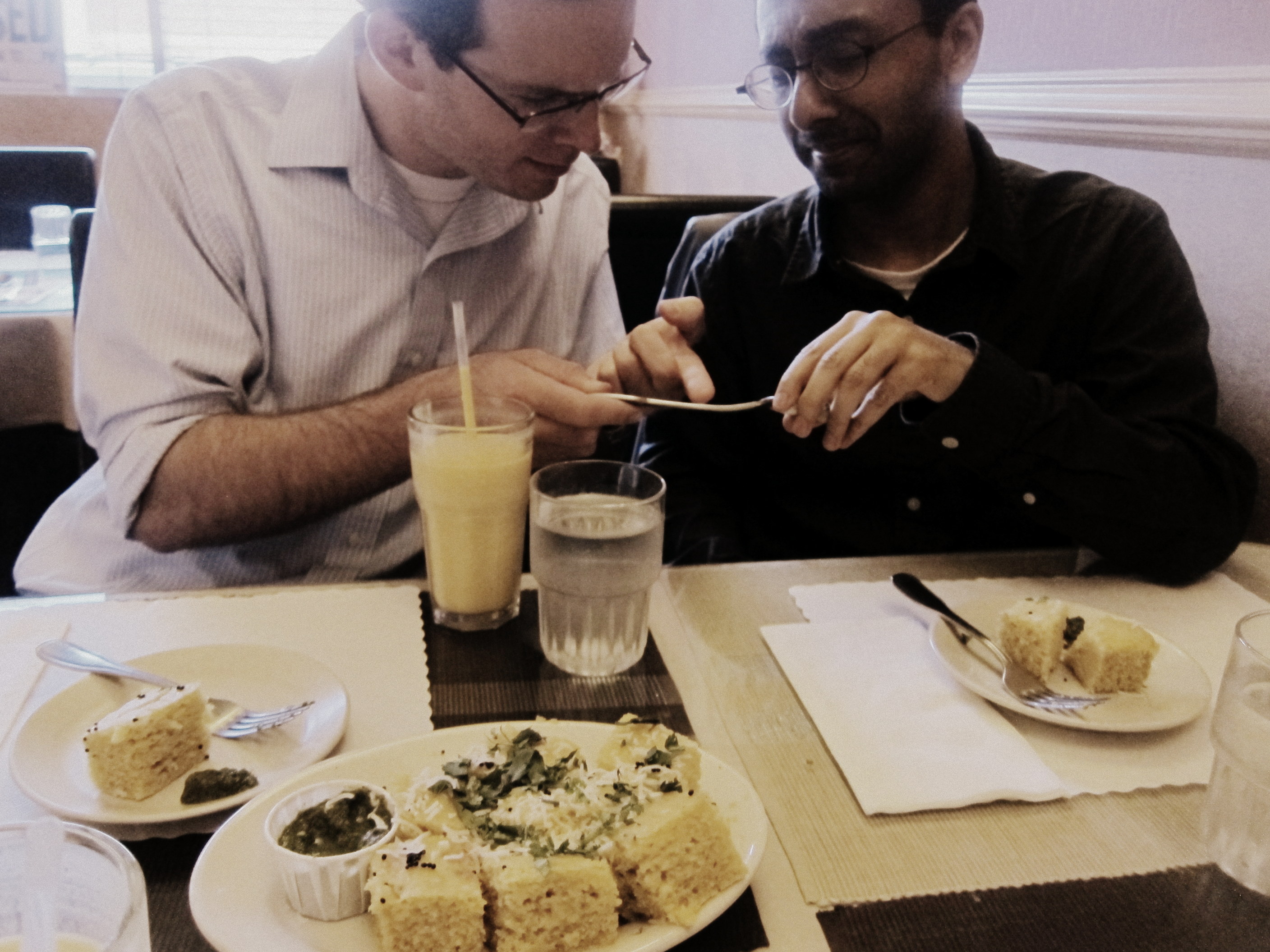
Hull and Surendranath examine the inscription on a spoon at Bombay Cuisine.

Hull and Surendranath examine the inscription on a spoon at Bombay Cuisine.

What do grad students do? Some of us write, some of us teach, most of us don’t sleep, all of us eat. For Astronomy PhD student Chat Hull and his friend Yogesh Surendranath, a Chemistry postdoctoral fellow, eating at every single Indian restaurant in Berkeley and writing about it is high on the priority list.
Berkeley has no shortage of Indian restaurants for the duo to review. “We stay within the city limit”, said Surendranath. Their blog, Masala Chaat, has been regularly updated for roughly a year. When I meet them in the office, they seem like the normal physicists: friendly, calm and full of physics. When I joined them in a trip to Bombay Cuisine, the restaurant-reviewing mode was turned on full-force. The inner comedians were revealed.

In their blog posts about each dining experience, they take notes from the smallest detail in the surroundings, such as the film of grease on the wall mirrors, to the viscosity of the mango lassi. They have a couple of “eigendishes”, items that they always order after reaching the conclusion that these dishes best reflect the skill of the chef. They tell stories of glass shards in their food and how the owner reacted “with little remorse”.

When asked “why Indian restaurants?”, Hull and Surendranath looked at each other, “Did we ever have anything non-Indian together?” The answer was “Maybe a coffee?”. They’ve been friends since college. During the lifetime of the blog Masala Chaat, some restaurants were closed down and others opened, and Hull made sure to update Google on those listings.

Now nearing the end of their quest, with fewer than 5 restaurants remain, Hull and Surendranath are considering expanding the scope to the East Coast, as Surendranath will soon start his professorship at MIT.

Andy Warhol, kokeshi dolls, and oden

February 19, 2013 By: Mai Truong Category: Drinks, Japanese, Opinions, sweet snacks and desserts, The more interesting

Togamis-dinner-portion-for-one

In Europe the royalty and the aristocracy used to eat a lot better than the peasants – they weren’t eating the same things at all. It was either partridge or porridge, and each class stuck to its own food. But when Queen Elizabeth came here and President Eisenhower bought her a hot dog I’m sure he felt confident that she couldn’t have had delivered to Buckingham Palace a better hot dog than that one he bought for her for maybe twenty cents at the ballpark. Because there is no better hot dog than a ballpark hot dog. Not for a dollar, not for ten dollars, not for a hundred thousand dollars could she get a better hot dog. She could get one for twenty cents and so could anybody else.
– Andy Warhol

Why is that ballpark hot dog the best hot dog? Because the ballpark hot dog seller sells nothing but hot dogs. You can’t beat someone who does it day in and day out, a thousand times and another thousand times more often than you.

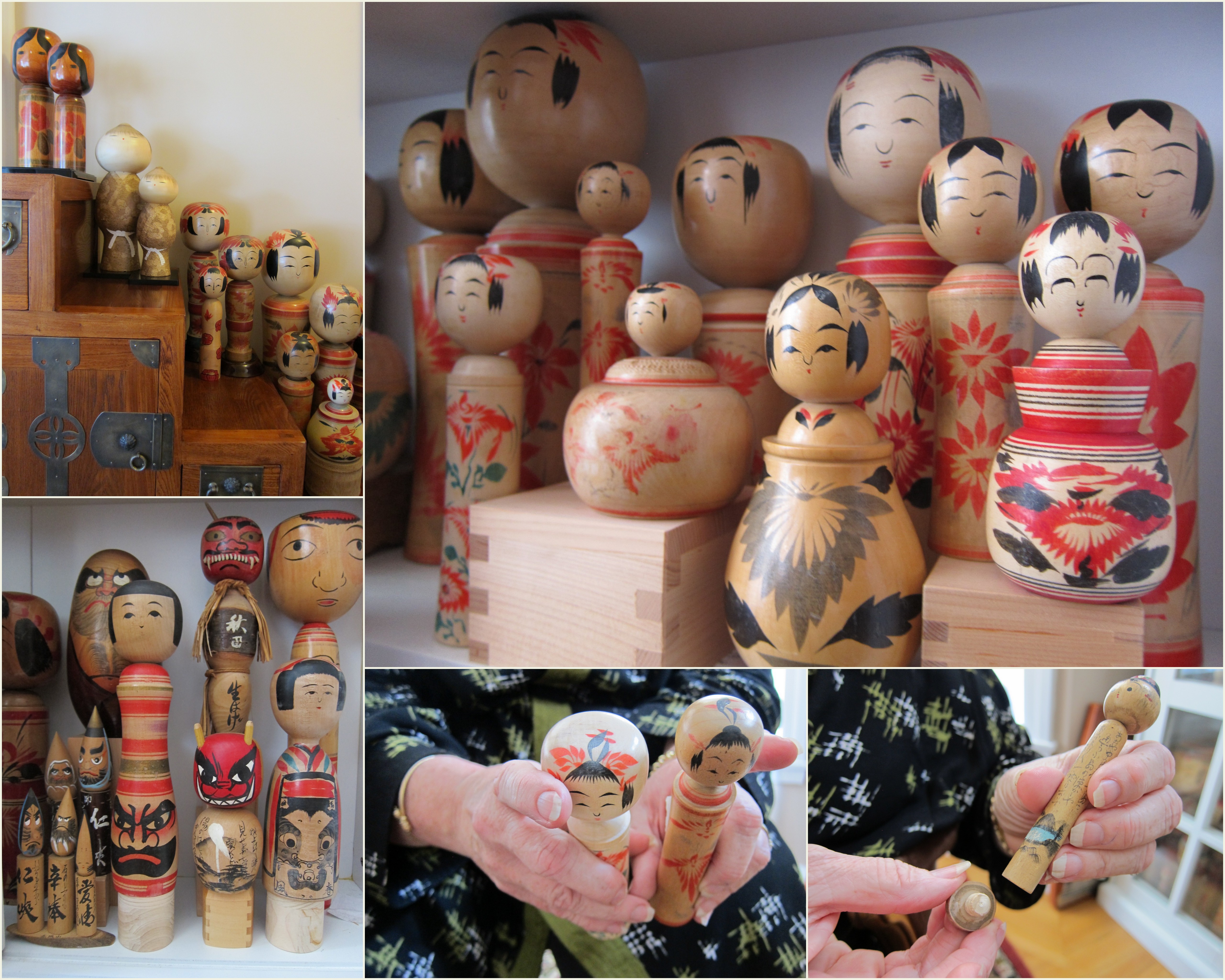
Every time I look at Nancy Togami’s collection of hundreds of kokeshi, I’m reminded of this championship of experience. Each kokeshi artist carves the same shape, paints the same eyebrows, creates the same facial expression for one doll after another. After each doll, he’s one step closer to perfecting it.

After each oden, Nancy is one step closer to perfecting her oden. And umeboshi. And seared tuna with avocado, frisée, enoki, daikon and tobiko.

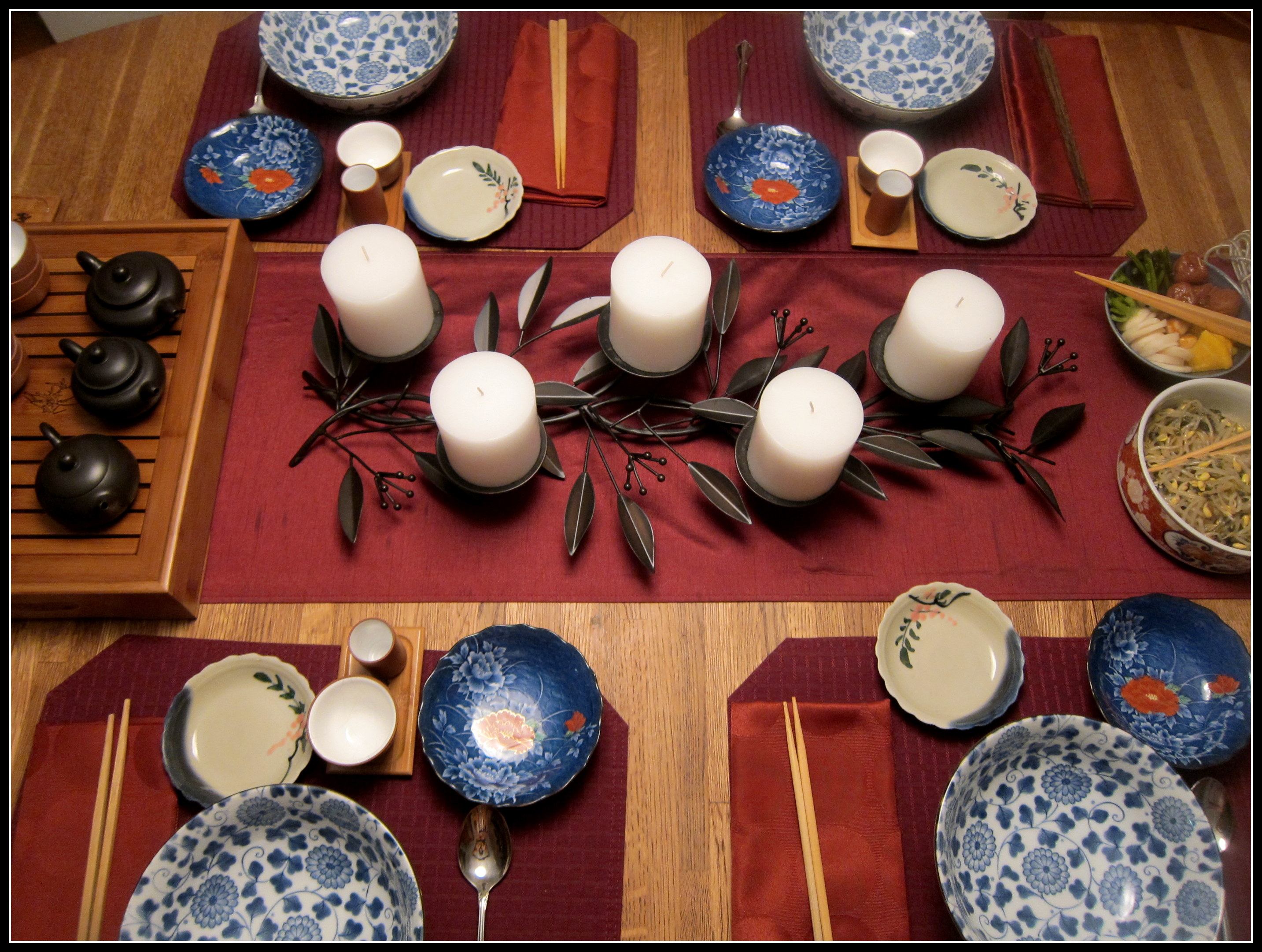
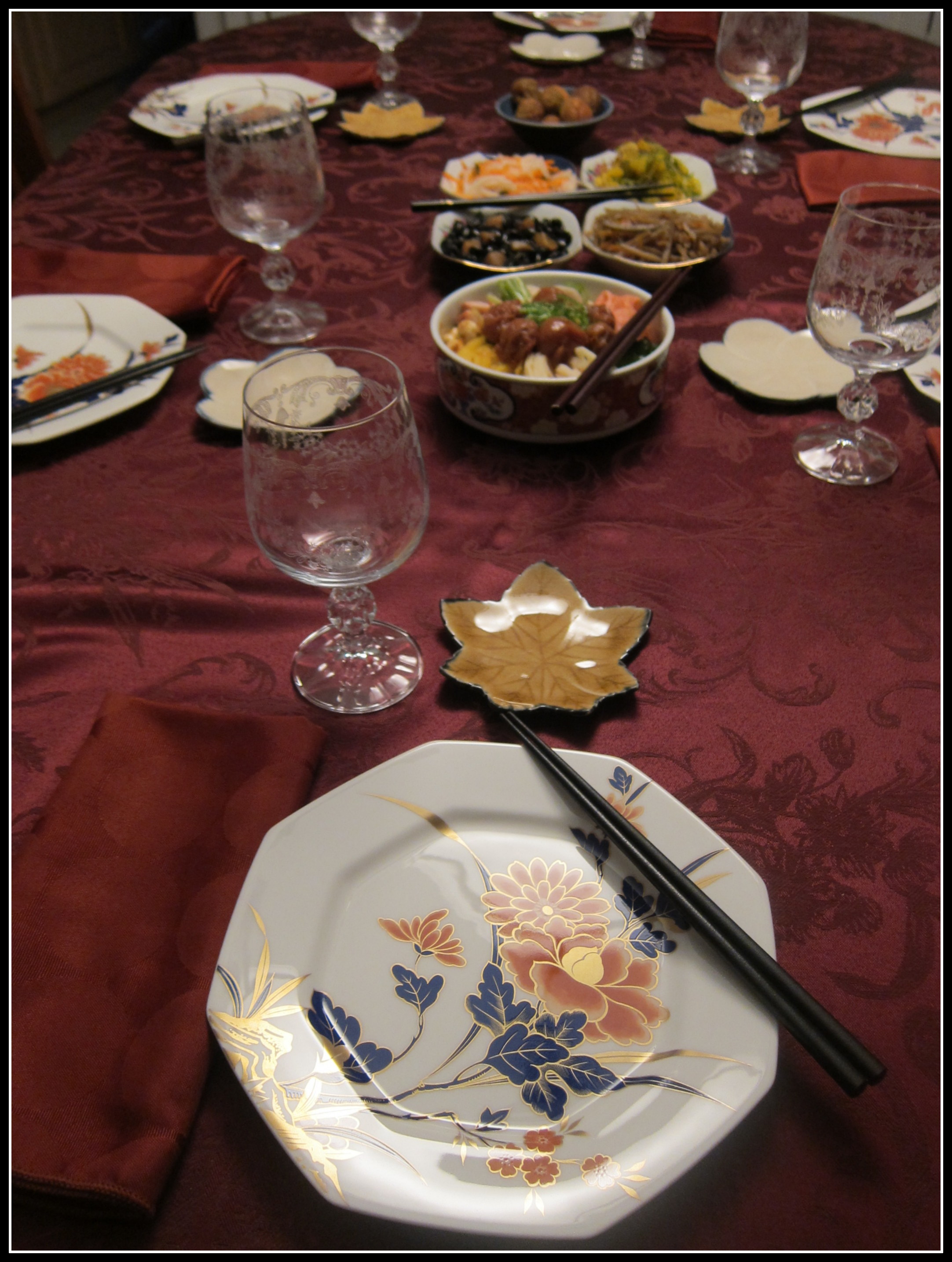
Togamis-dinner-table-is-set
Togamis-dinner-table-is-set-2

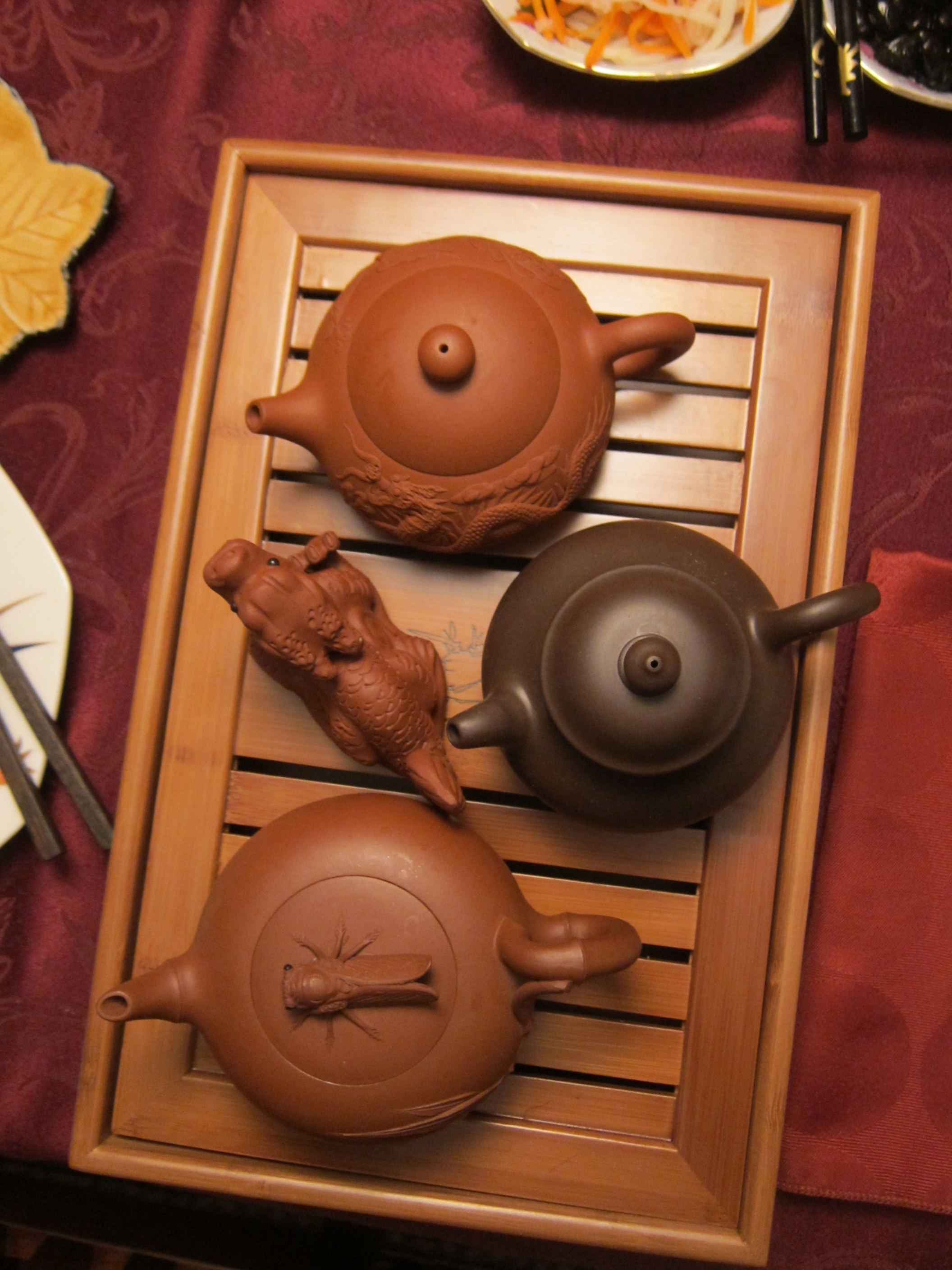
Three yixing teapots for three kinds of tea.  We started off with Buddha's Hand and Tung Ting Cold Summit, then finished with Medium Roast Tieguanyin. The Tung Ting was surprisingly long-lasting even after the fifth infusion.

Three yixing teapots for three kinds of tea.
We started off with Buddha’s Hand and Tung Ting Cold Summit, then finished with Medium Roast Tieguanyin. The Tung Ting was surprisingly long-lasting even after the fifth infusion.

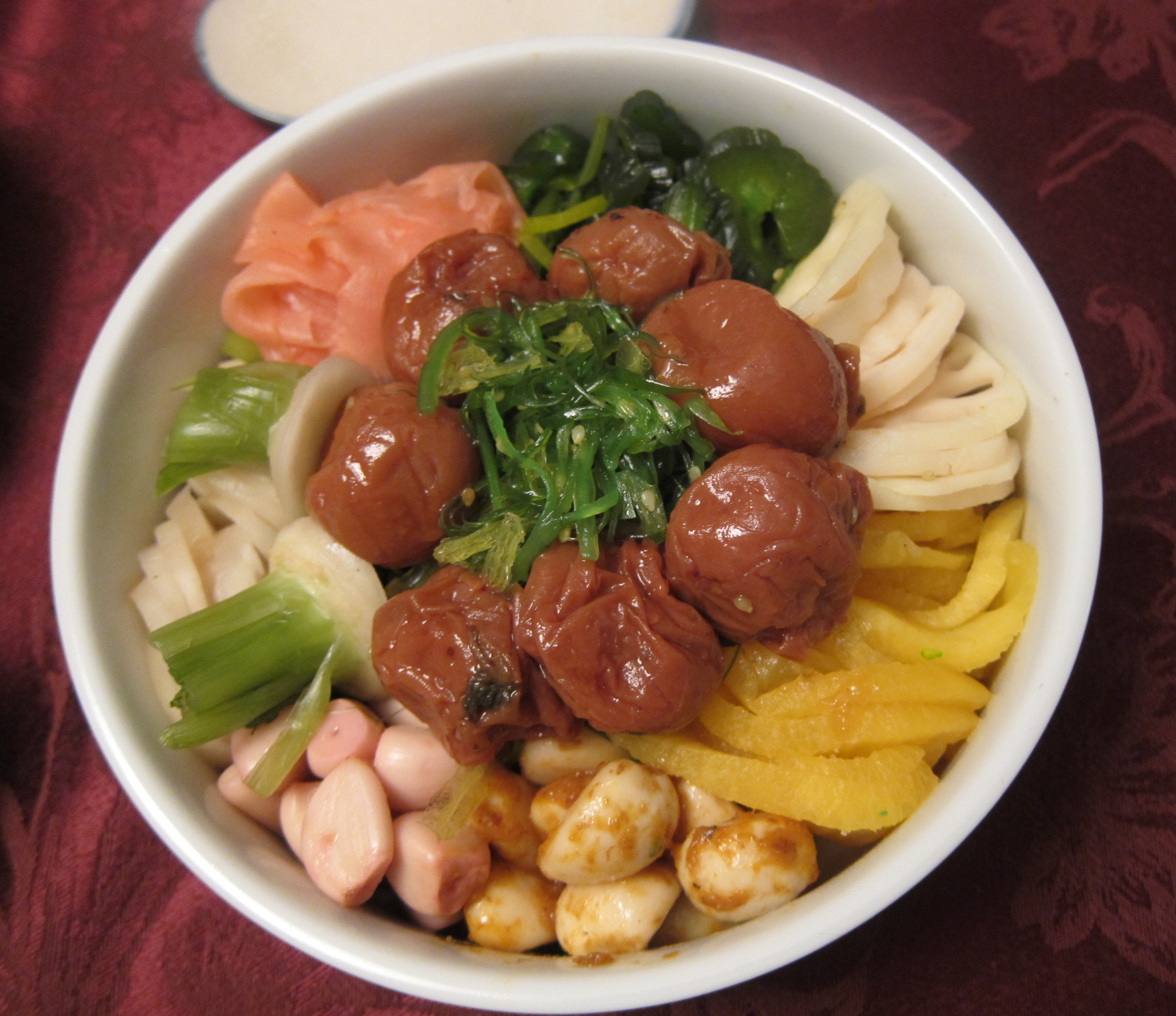
Seaweed salad and Nancy's homemade umeboshi in the middle. Tsukemono (clockwise from the pink ginger): pickled ginger, pickled cucumber, lotus root, takuan, miso-pickled garlic, and cured garlic (also pink). " src="https://flavorboulevard.com/wp-content/uploads/2013/02/Togamis-dinner-umeboshi-and-other-tsukemono-600x450.jpg" width="600" height="450" /> Seaweed salad and Nancy's homemade umeboshi in the middle. Tsukemono (clockwise from the pink ginger): pickled ginger, pickled cucumber, lotus root, takuan, miso-pickled garlic, and cured garlic (also pink)

Seaweed salad and Nancy’s homemade umeboshi in the middle. Tsukemono (clockwise from the pink ginger): pickled ginger, pickled cucumber, lotus root, takuan, miso-pickled garlic, and salt-cured garlic (also pink).

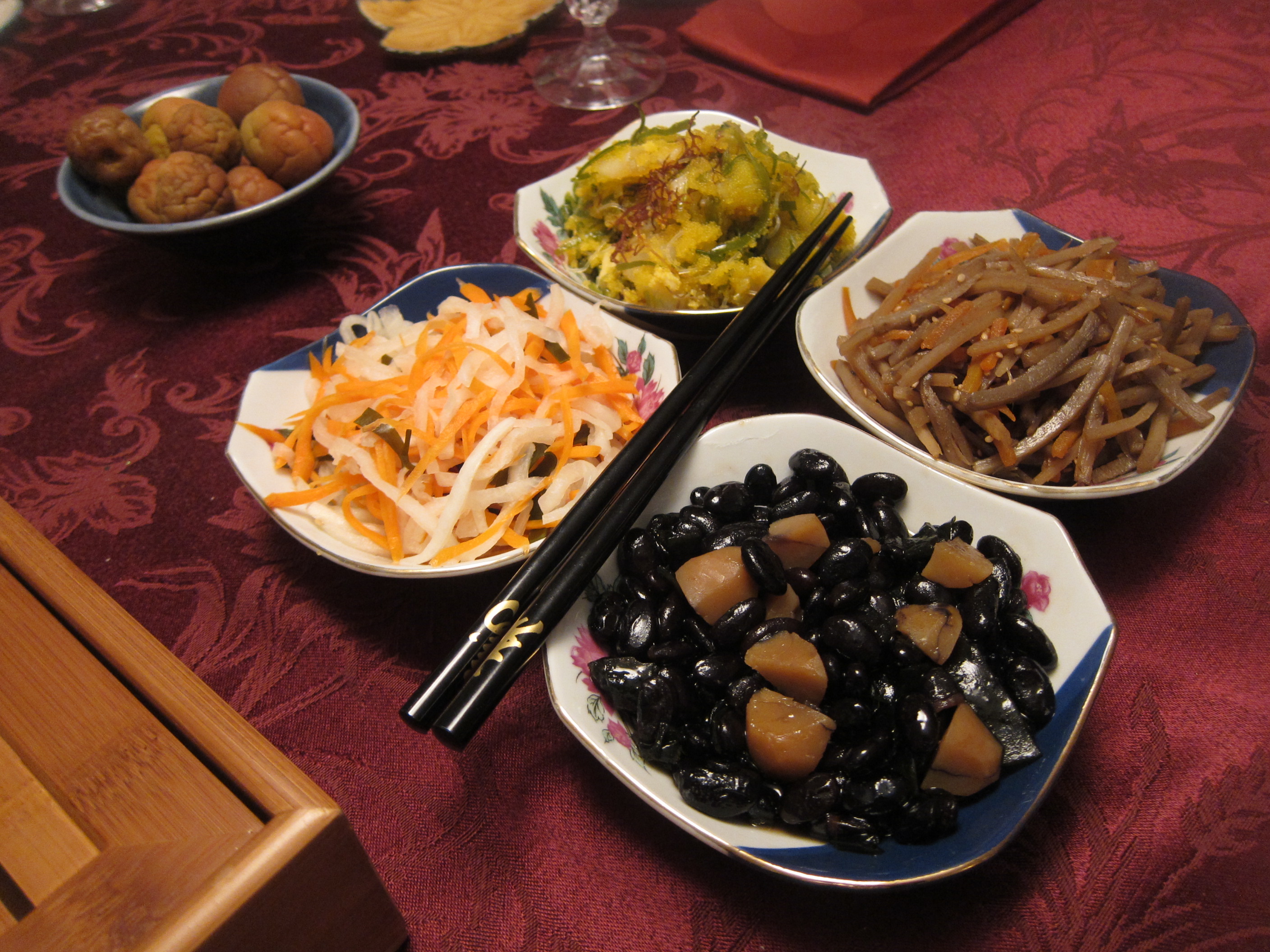
More side dishes. "Red and White" carrot and daikon (salted and seasoned with sweet rice vinegar), abalone salad with tobiko, burdock root and carrot kimpira, and black beans.

More side dishes. “Red and White” carrot and daikon (salted and seasoned with sweet rice vinegar), abalone salad with tobiko, burdock root and carrot kimpira, and black beans.
The Buddha’s Hand oolong made a nice pairing with the pickled vegetables, as it emphasizes the vegetal freshness and floralized the aroma.

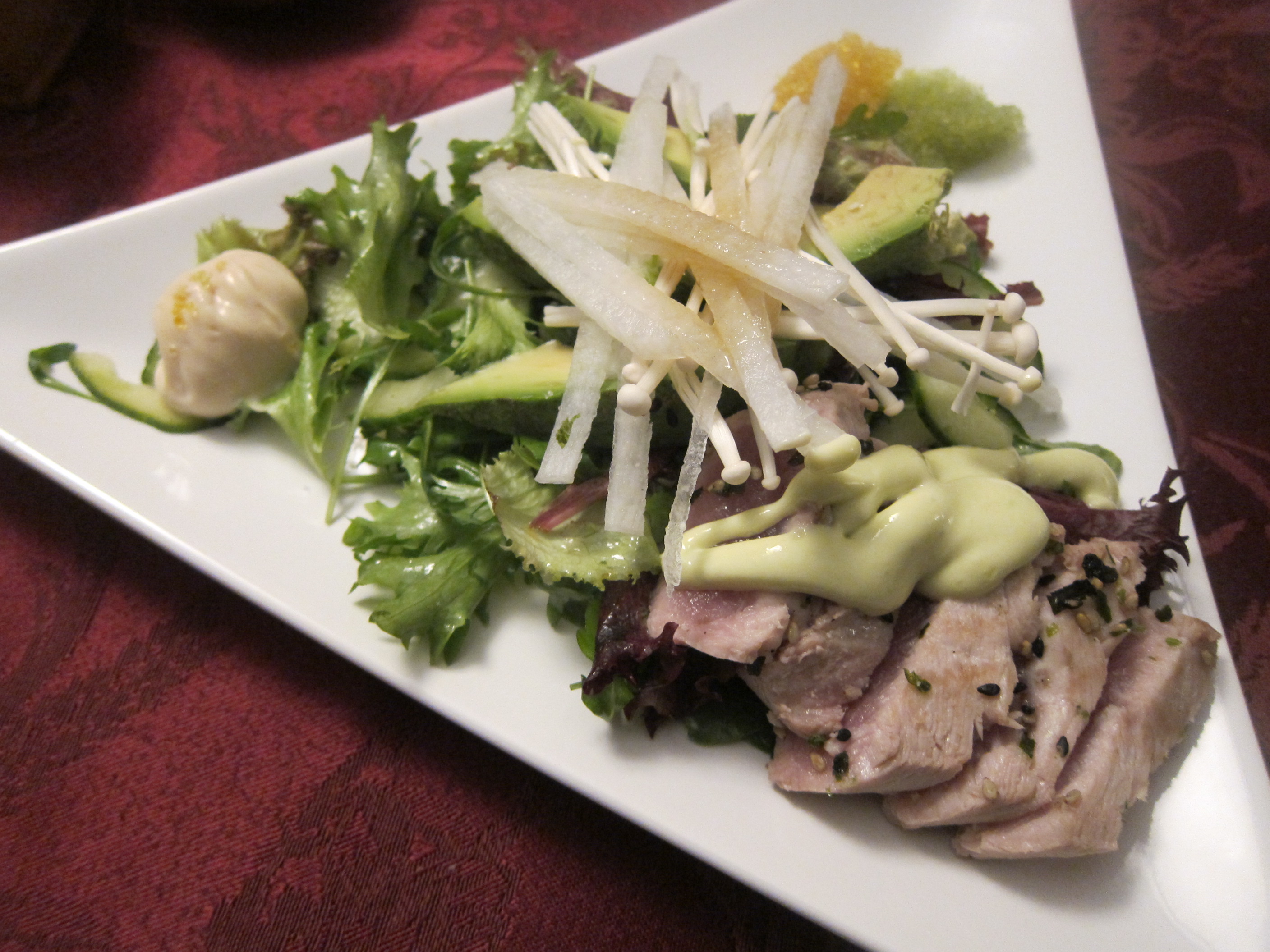
Seared tuna salad, with frisee, enoki, avocado, yuzu tobiko (yellow) and wasabi tobiko (green)

Seared tuna salad, with frisee, enoki, avocado, daikon, yuzu tobiko (yellow) and wasabi tobiko (green)

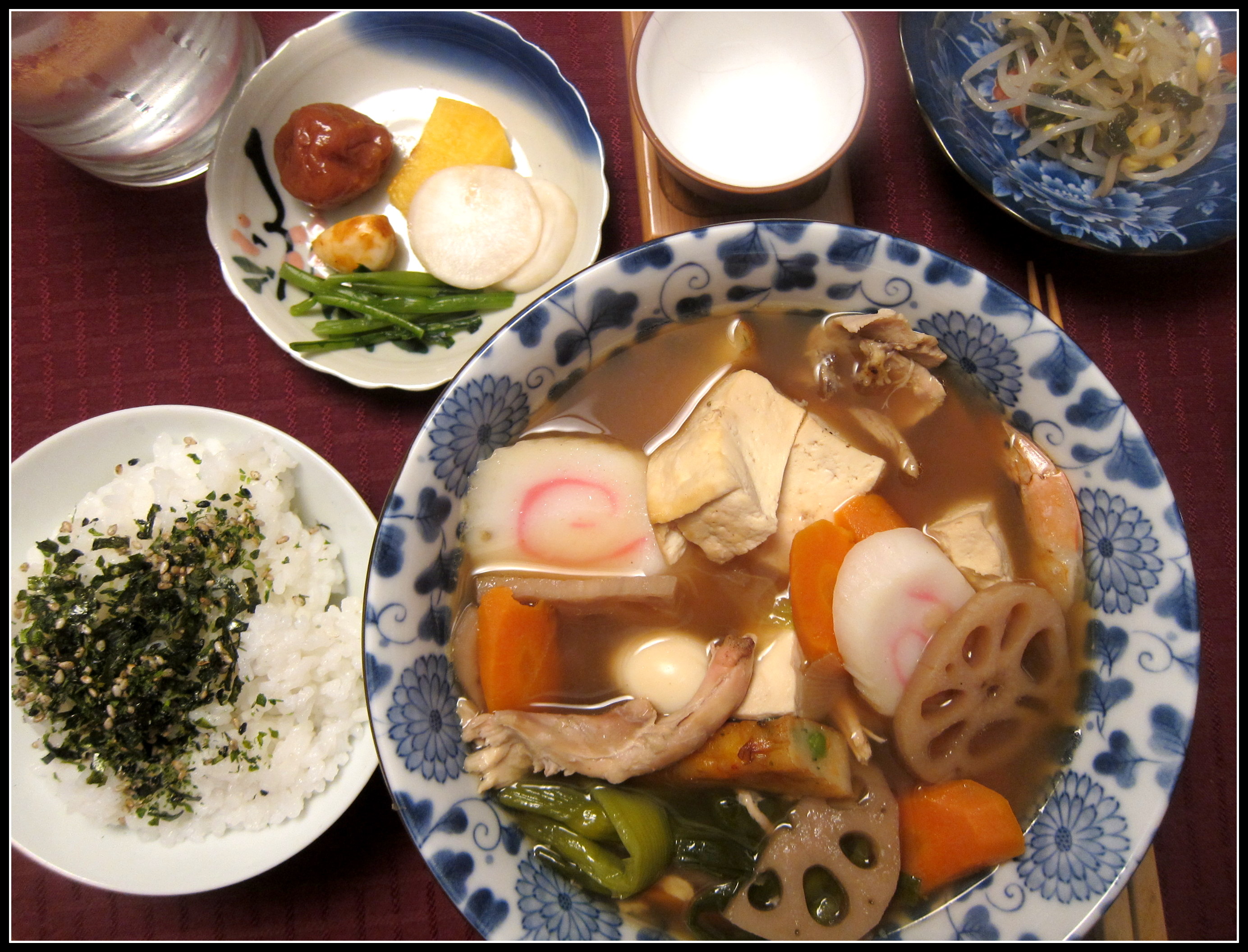
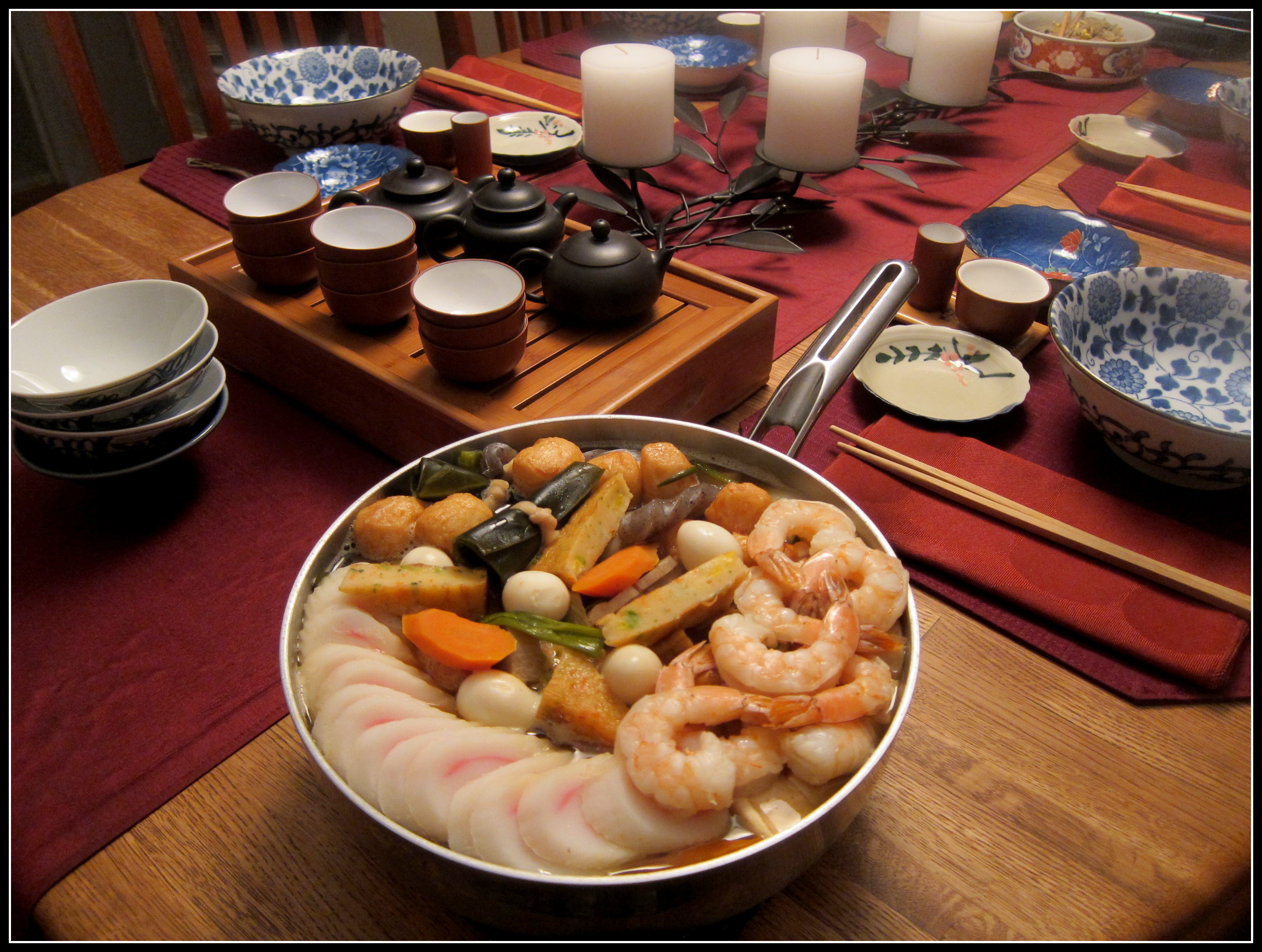
Oden - with spiral kamaboko and satsuma age (balls and rectangles), shrimp, chicken thighs, quail eggs, lotus root, carrot, kombu, tofu, and Nancy's years of making oden.

Oden – with spiral kamaboko and satsuma age (balls and rectangles), shrimp, chicken thighs, quail eggs, lotus roots, green onions, carrots, kombu, tofu, konnyaku, and Nancy’s years of making oden.
Among the three teas that we tried, Tung Ting was the best match with this soup. “Comforting” sums up everything.

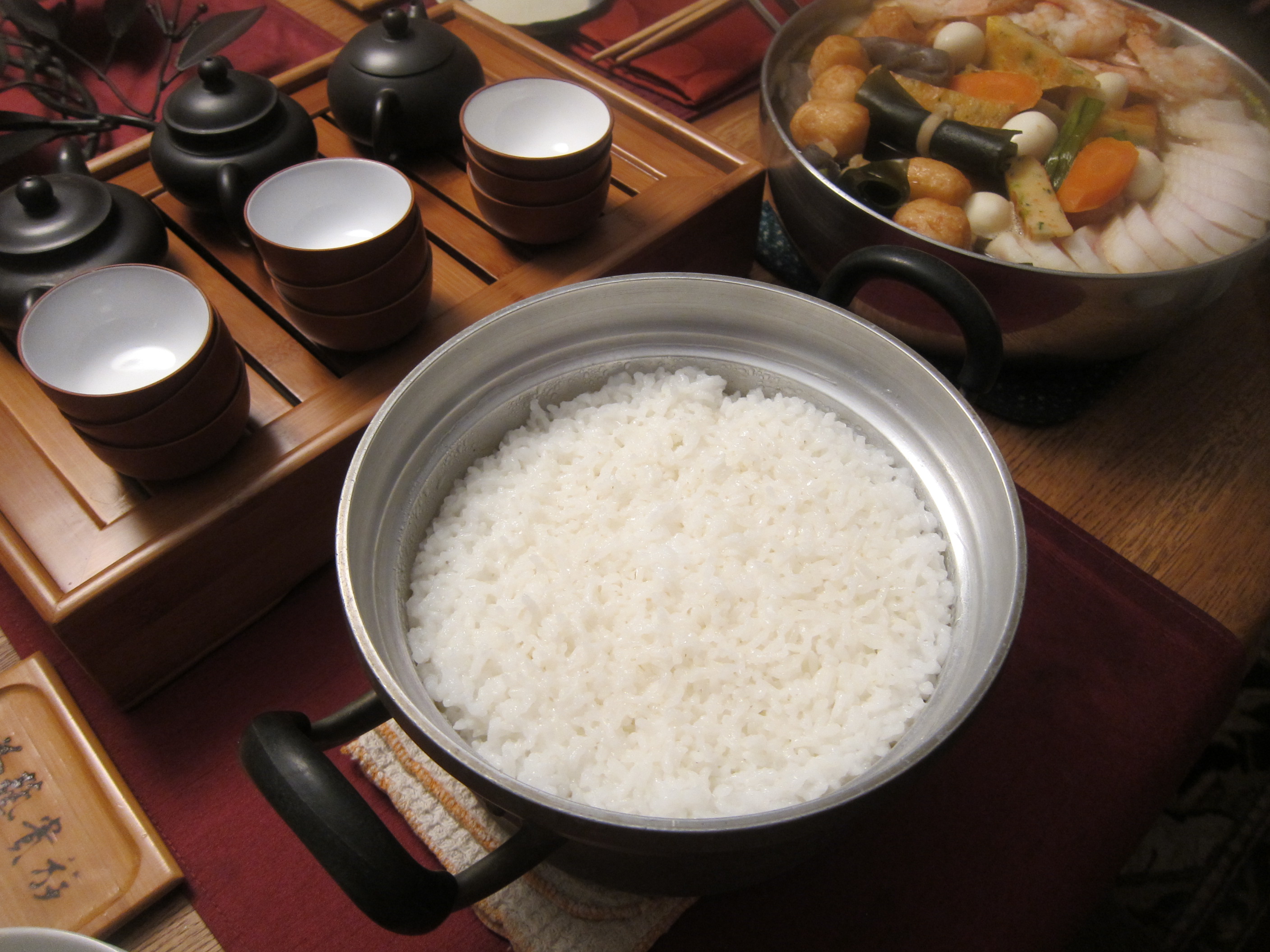
Rice by Kenji san, i.e. Mr. Togami.

Rice by Kenji san, i.e., Mr. Togami. Perfect with a sprinkle of furikake.

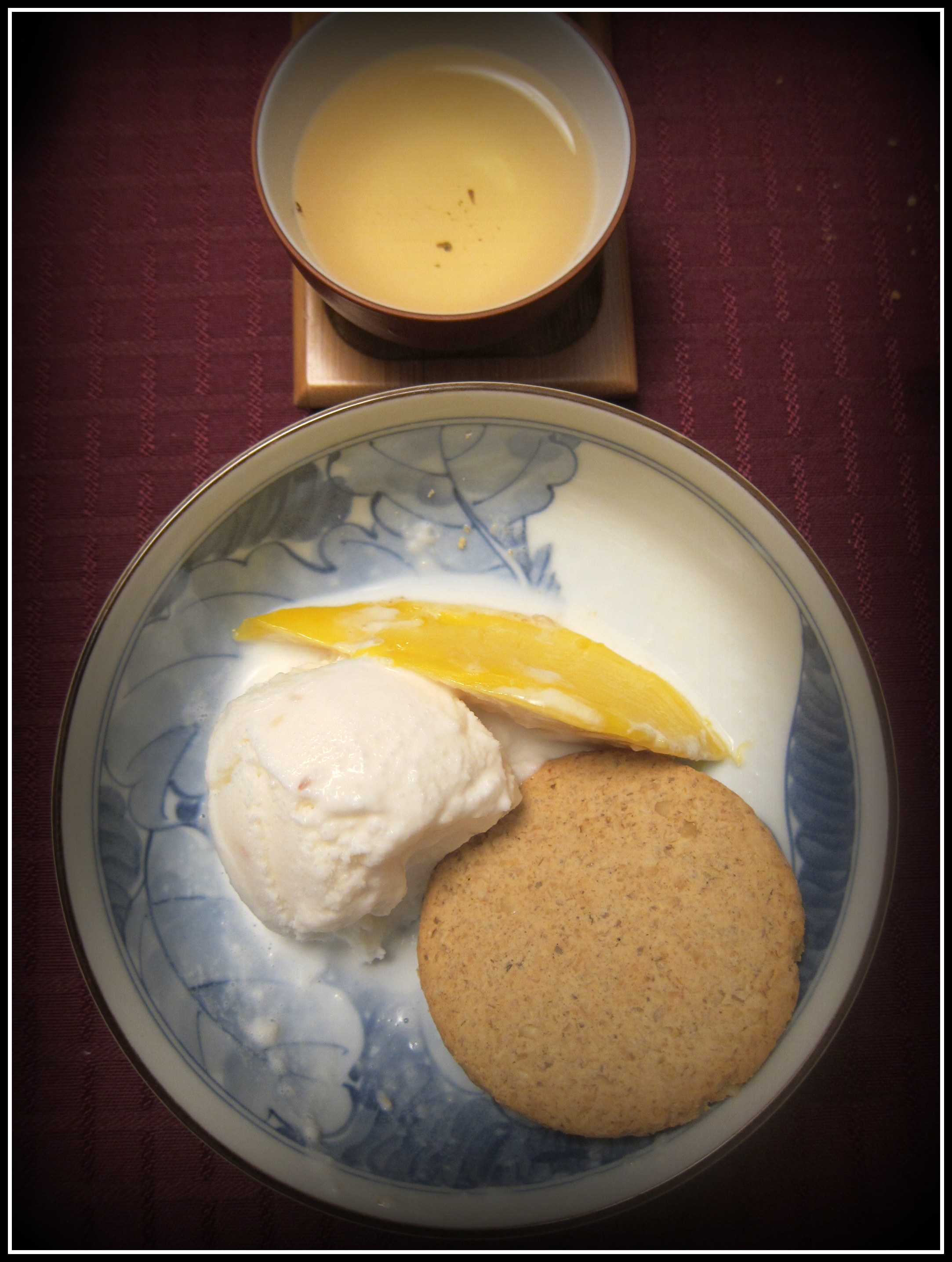
Ice cream, mango and cookie to pair with unknown but delicious oolong.

Lychee gelato, mango and ginger cookie to pair with anonymous but delicious oolong.

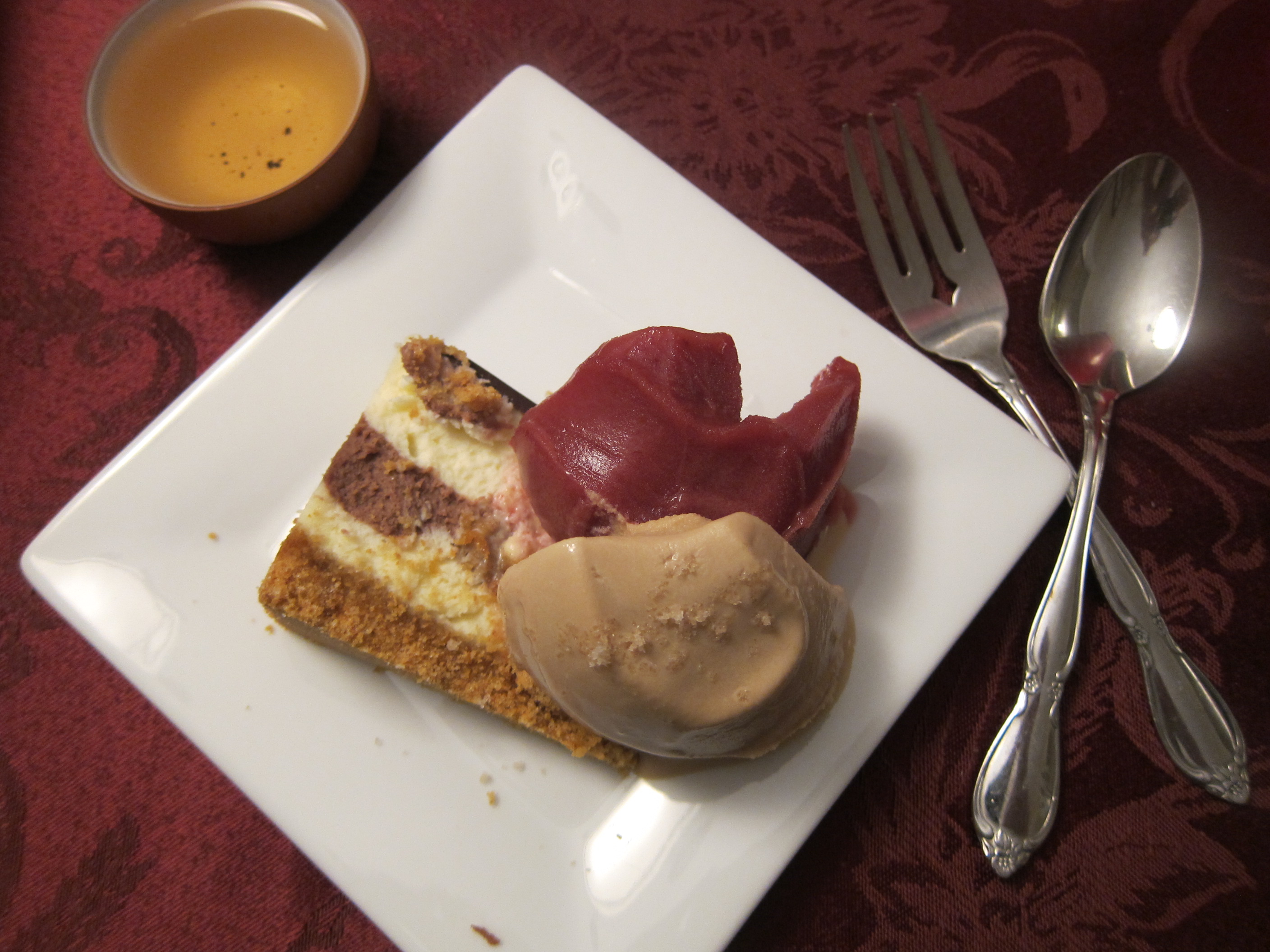
Cheesecake from La Farine, Fiorello's raspberry gelato and balsamic caramel ice cream.  Per Nancy's advice, we sprinkled our balsamic caramel ice cream with some Iburi Jyo cherry-wood-smoked sea salt from Oga Peninsula of the Akita Prefecture, Japan.  The salt's aroma is smoky yet sweet. It tastes as expensive as it costs.

Cheesecake from La Farine, Fiorello’s raspberry gelato and balsamic caramel ice cream. Paired with the dry Medium Roast Tieguanyin, this dessert combination gives an intense finish that Nancy describes as citrus like grapefruit, while I find it more nutty and cocoa-y. 
Per Nancy’s advice, we sprinkled our balsamic caramel ice cream with some Iburi Jyo cherry-wood-smoked sea salt from Oga Peninsula of the Akita Prefecture, Japan.
The salt’s aroma is smoky yet sweet. It tastes as expensive as it costs.

The pictures speak for themselves better than I can. This American lady embraces Japanese tradition, cuisine and visual art and incorporates them into her daily lifestyle with so much fine details that humble my experience at any Japanese restaurant I have tried in America. Because they are restaurants. Nancy’s homemade oden is the ballpark hot dog that triumphs over any other hot dog, in the same way that our mothers’ homemade dinners are the best ballpark hot dogs, except they’re the hot dogs that only a handful of lucky people can get. 😉

The meal was so inspiring I felt like I could speak Japanese afterwards.

A very small part of Nancy's kokeshi collection. Click on the image to see better details.

A very small part of Nancy’s kokeshi collection. Click on the image to see better details.

Duck for Thanksgiving! (Stealing ideas from Double Duck Dinner at Bay Wolf)

November 22, 2012 By: Mai Truong Category: American, California - The Bay Area, Drinks, The more interesting


Today. Big glistening birds. Crimson cranberry sauce. Mashed sweet potato with a crusty marshmallow top. Green bean casseroles. Gravies. The all-American classic holiday dinner table that every grocery store has a picture of on their website. Once upon a time I was enticed by such beauty, much like how I engulfed a chunk of ham the first time I saw real ham after years of seeing ham in old American cartoons (Tom and Jerry I think?). To be fair, save for the turkey, I do like the marshmallow sweet potato, the green bean casserole, and sometimes the stuffing if the gravies’ done right. But the turkey… I don’t get it. In a bird, the best part is the brown meat: legs, thighs, wings, that’s all. (Ah yes, I love the offals too, but today I’ll speak from the American perspective for a change.) Yet, the turkey leg is a monstrosity of toughness that my weak 20-some-year-old bone-gnawing cartilage-grinding gizzard-and-heart-loving teeth have trouble handling. Were all the turkeys I sunk into Olympic weightlifters or something? Well they have to lift their 30lb+ body every minute anyway, so no wonder. Conclusion: I don’t like turkey(*).

I like duck.


And you know what drink duck goes well with? I can’t speak for Pinot Noir, Merlot or Rosé, but some oolong teas make great companies! The long awaited double duck dinner at Bay Wolf arrived (2 months ago) before I could really get in tune with this semester, but I still remember how the Tung Ting made the duck dumpling soup and duck gizzard bloom.

Although I started out drinking tea for the sole purpose of matching tea with food, most of my pairing experiments were at home with more sweet than savory stuff. I blame the busy schedule but in reality I just don’t buy the thermal bottles to store hot water nor do I grab anything but my wallet and camera when I go fooding. (I used to forget my wallet.) My friend Nancy Togami, on the other hand, pursues her hobbies with much more heart than I. When we embark on a tea date, she brings teapots, hot water, teas and a thermostat to check the water temperature. I love her.


Duck liver flan, rillettes, gizzards and grapes. The liver flan (basically, pâté): paired with Tung Ting for a light and floral whisper in the mouth, paired with High Mountain for depth. Neither Tung Ting nor High Mountain did anything good to the rillettes. Tung Ting with gizzards and grapes was better than High Mountain with gizzards and grapes, as the grapes amplified the floral note of the Tung Ting.


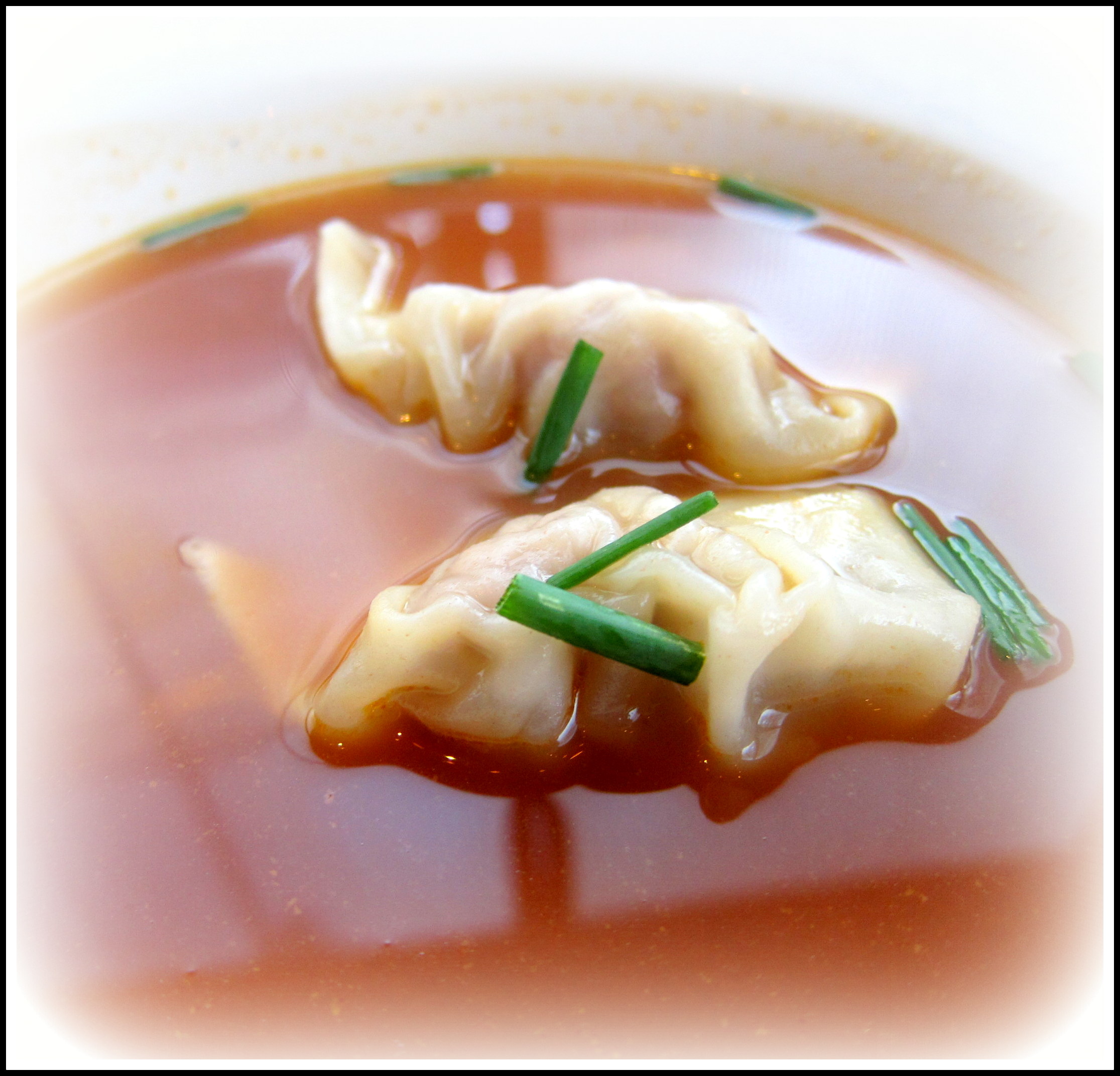
Head-to-feet duck soup with savory duck dumplings. Again, the Tung Ting is a good match, it brightened but not intensified the tomato in the broth. (Surprisingly, the only tea that doesn’t go well with any of these courses was the Royal Courtesan: a little plumy, a little sour, even after we steeped it for 2 minutes, it refused to give an impression on the food.)


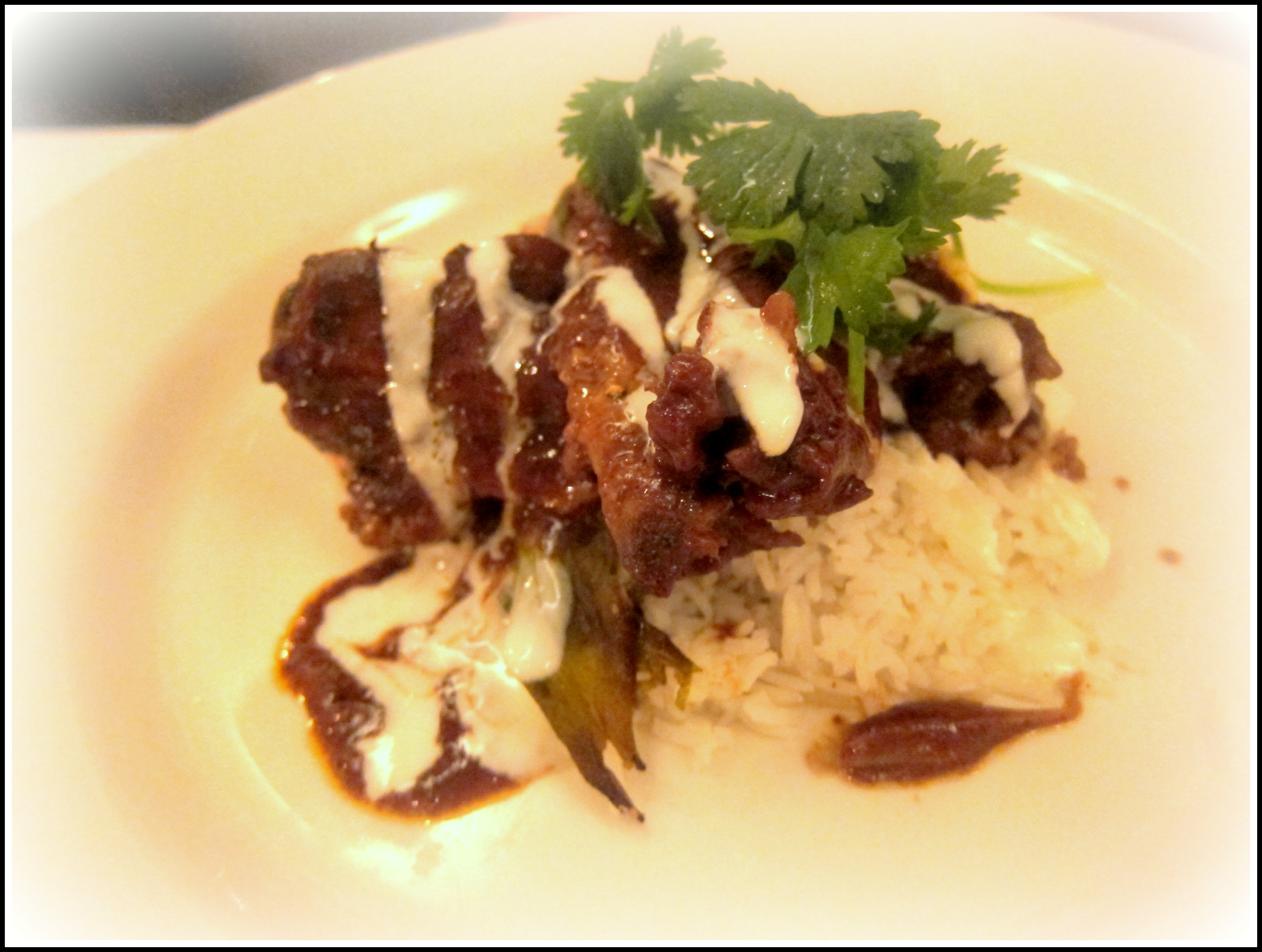
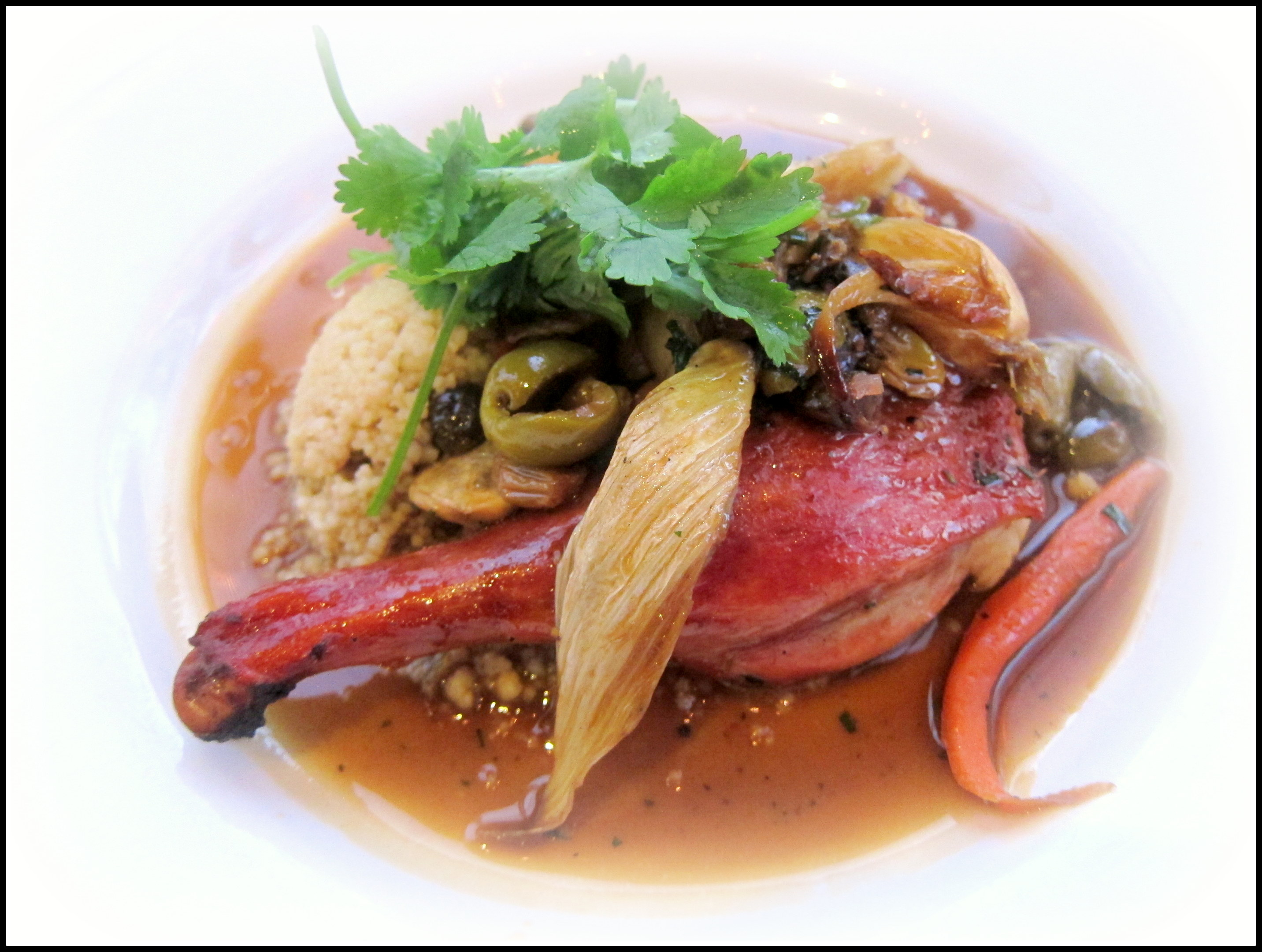
Duck tagine with spiced couscous, preserved lemon, olives and coriander. Tung Ting and High Mountain with duck tagine and steak: all 4 pairings are good. With High Mountain, although the fatty part of the steak does not go too well, the duck fat sauce shines through. The Tung Ting and the duck tagine is best with the lemon sauce in the tagine, otherwise the meat dried out and became too fibrous.


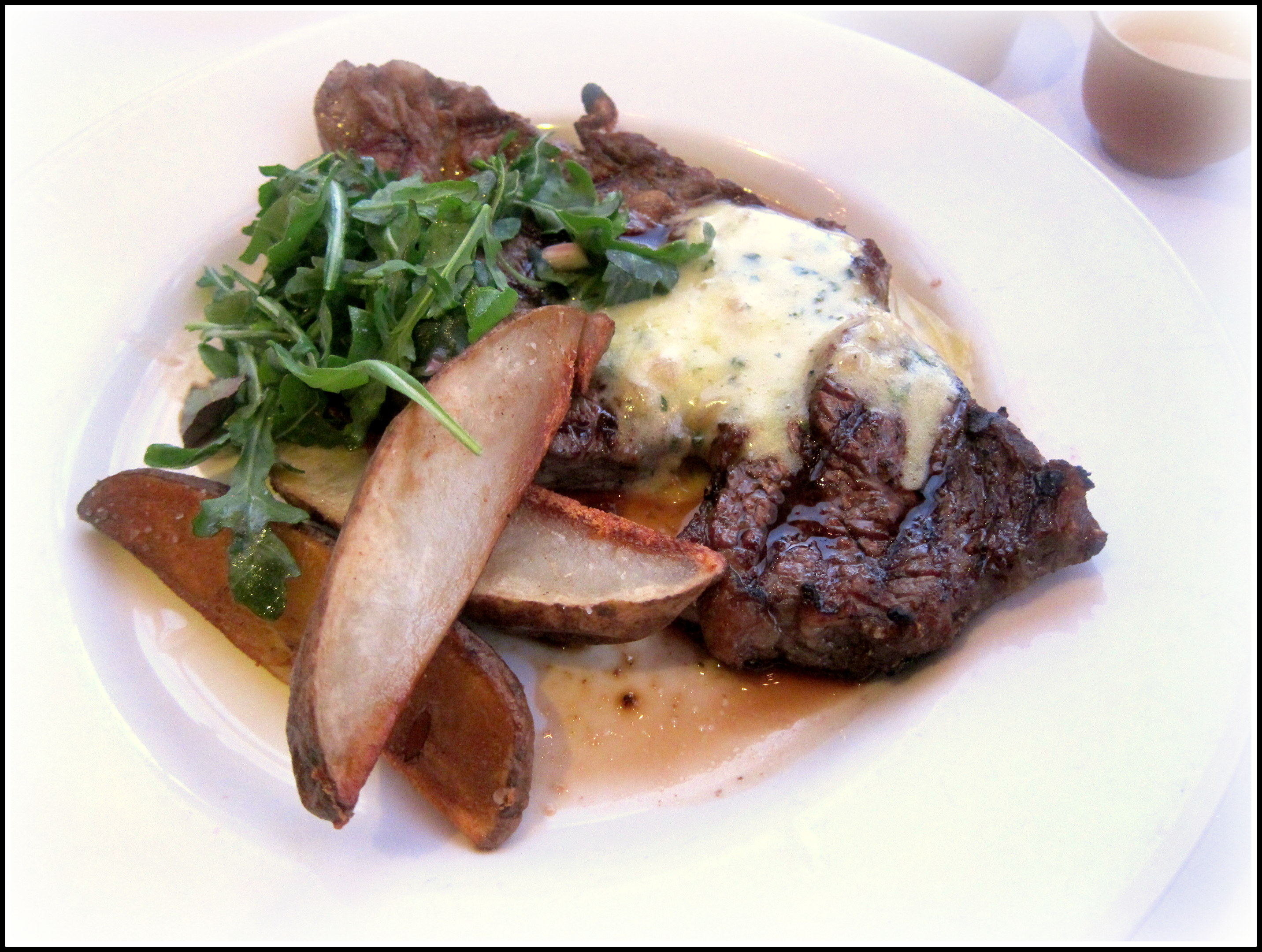
Grilled rib eye steak with duck fat fried and Béarnaise sauce. Nancy also had an excellent pairing of a Merlot with the steak and the duck. The Merlot smells tangier but tastes softer (more berry-like) than the Pinot Noir, it also has a smooth finish that made the steak more “unctuous”, and several times she went from meat to merlot and finish with High Mountain, which seemed to make things really shine.


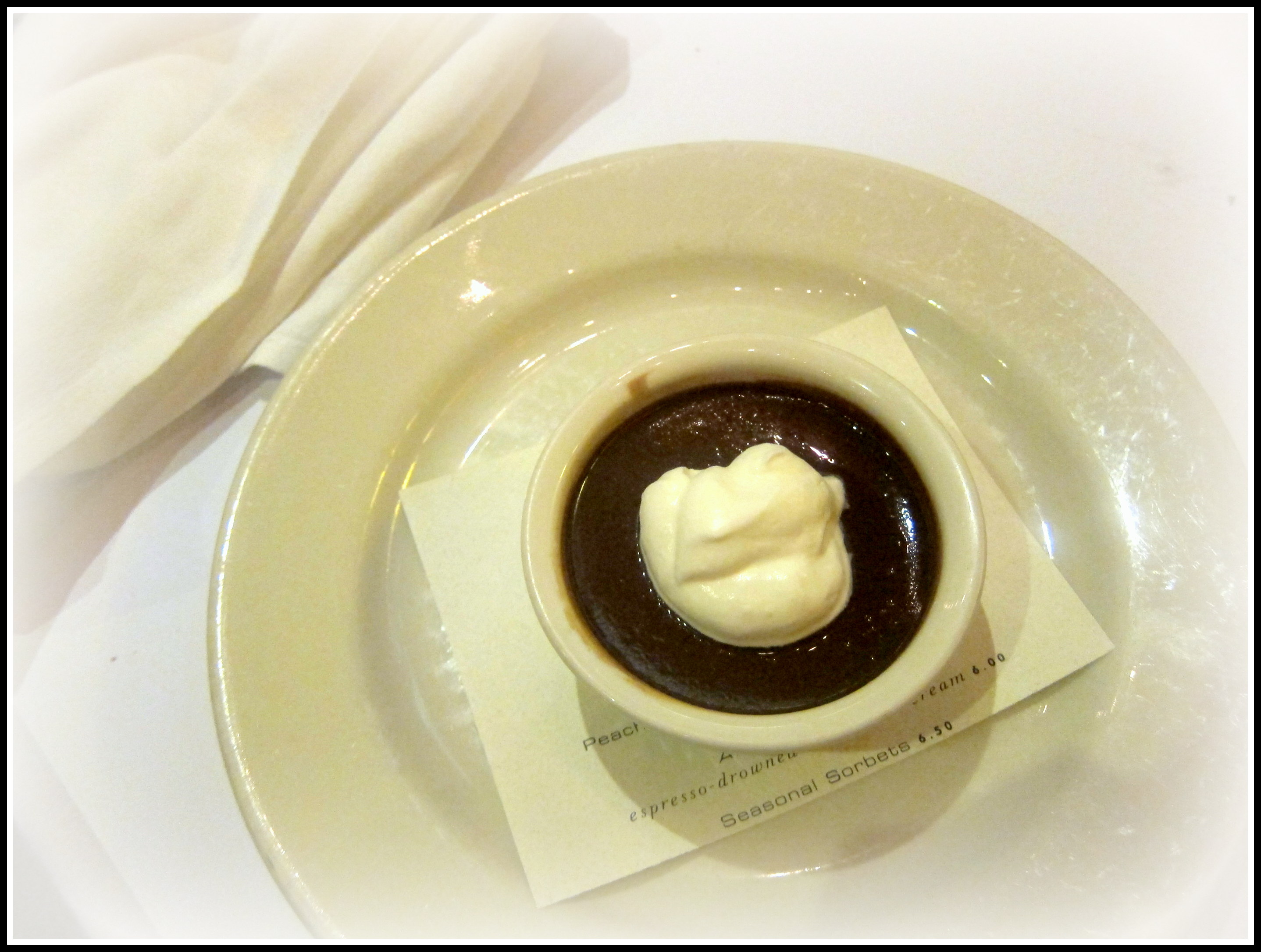
Duck egg mocha pot de crème. Both Phoenix Honey and Tieguanyin Medium Roast go exceedingly nicely with this dessert: the Phoenix adds a lychee flavor to it, the Tieguanyin complimented the mocha flavor and at the same time makes it more perfumy. Both lightens an otherwise too rich ending.

So for this Thanksgiving (and maybe the next), ditch the turkey. Dish the duck. With some tea. 😉

(*) I love the living turkeys as much as I love any other animals. 😉 Since their meat doesn’t taste that great, why don’t we make them pets like dogs and cats, and give turkey-eaters “the look“?(**)

(**) In case you’re wondering: No. I don’t eat dogs and cats. I also don’t eat ham. For different reasons, though…


P.S.: First time I was at Bay Wolf.

Summer Festival in Concord

August 17, 2012 By: Mai Truong Category: Japanese, Opinions, The more interesting

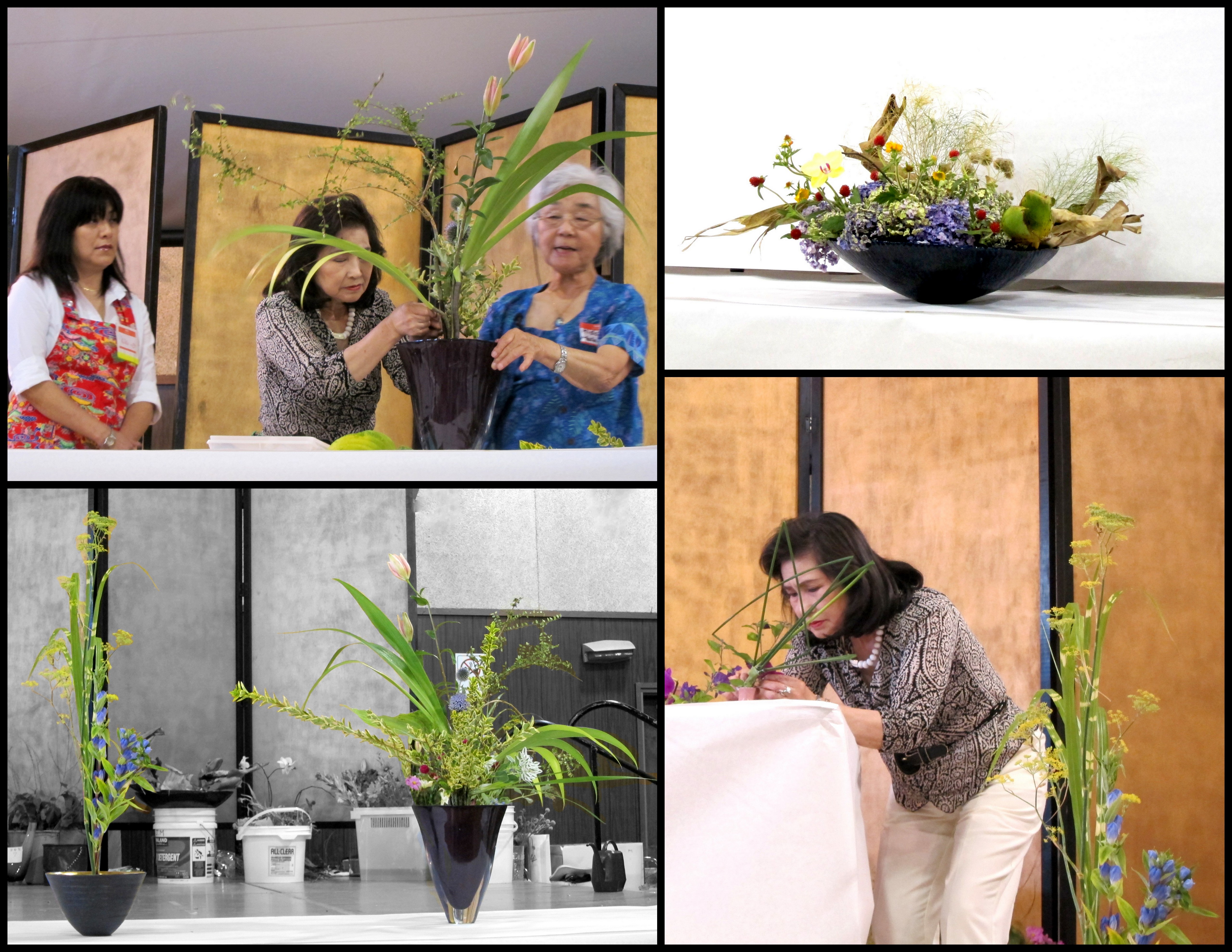
Clockwise from top left: Master Hideko Metaxas (in blue) and two assistants arranging an example of Rikka Shofutai; a free-style arrangement in honor of the victims and the philanthropists in the Tohoku Tsunami 2011; an Ikenobo sensei arranging a free-style display; Shoka (left) versus Rikka (right)

Learn something new everyday. At the Japanese American Summer Festival in Concord this year, I absorbed an hour of Ikenobo ikebana art, which is really, really, really rudimentary, but at least now I know that the Rikka style involves nine elements, and the Shoka style three elements (heaven, earth and man).

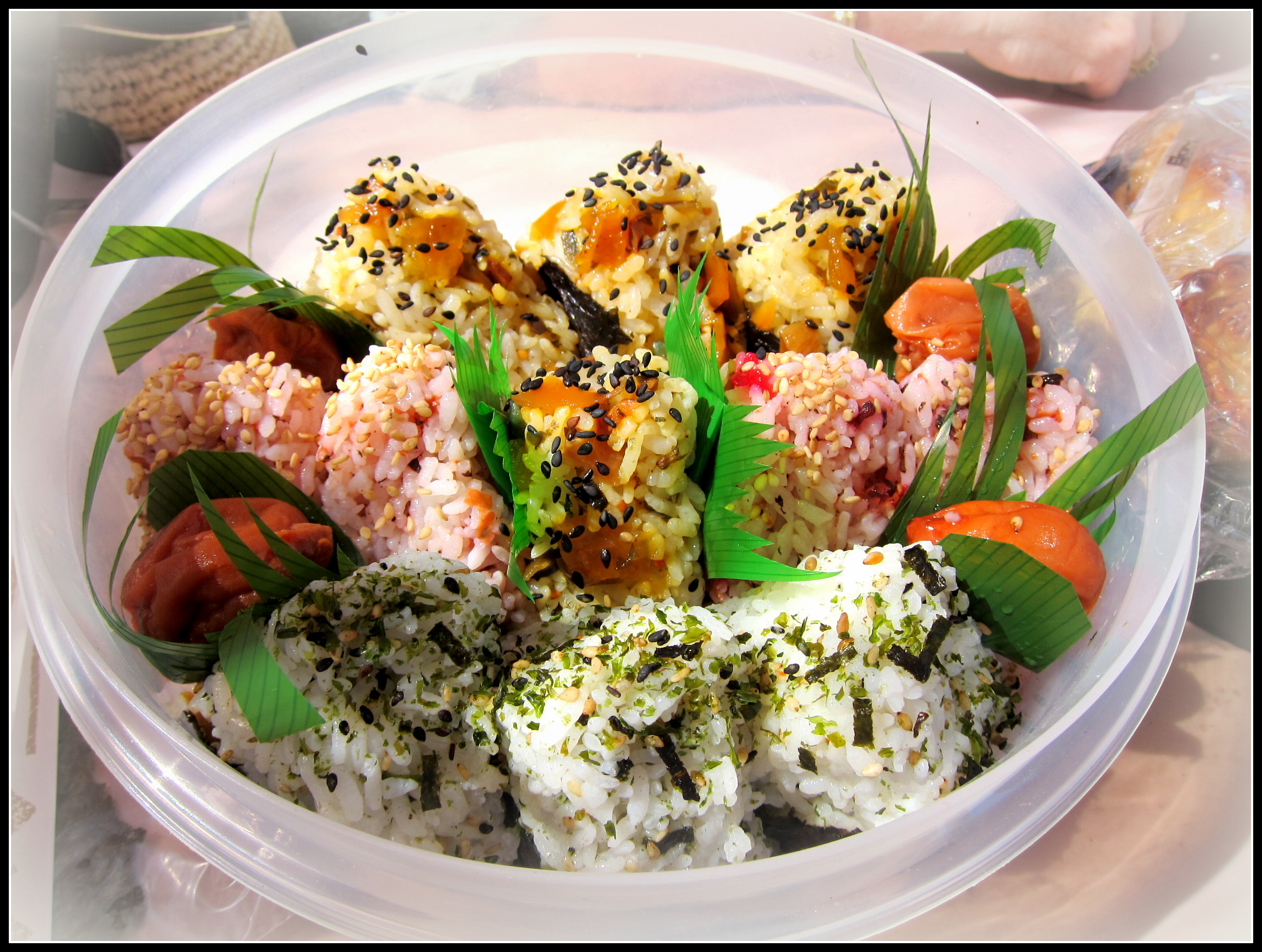
That day was also the first I’ve heard of the “Three Friends of Winter” sho chiku bai (pine, bamboo and plum), and this astonished me because 1. I’d never encountered any old Chinese things that my mom hasn’t told me about, and 2. it involves plum blossom, which is my name. There’s no way I wouldn’t know that my name is part of a trio that appears in Asian arts and folklores at lunar new year time. My memories must have been failing. 🙁 Anyhow, Nancy made a beautiful onigiri box that follows the sho chiku bai theme:

Homemade sho chiku bai onigiri by Nancy Togami: white onigiri with aonori and sesame (sho), yellow onigiri with fukujinzuke (chiku), and pink umeboshi onigiri (bai)

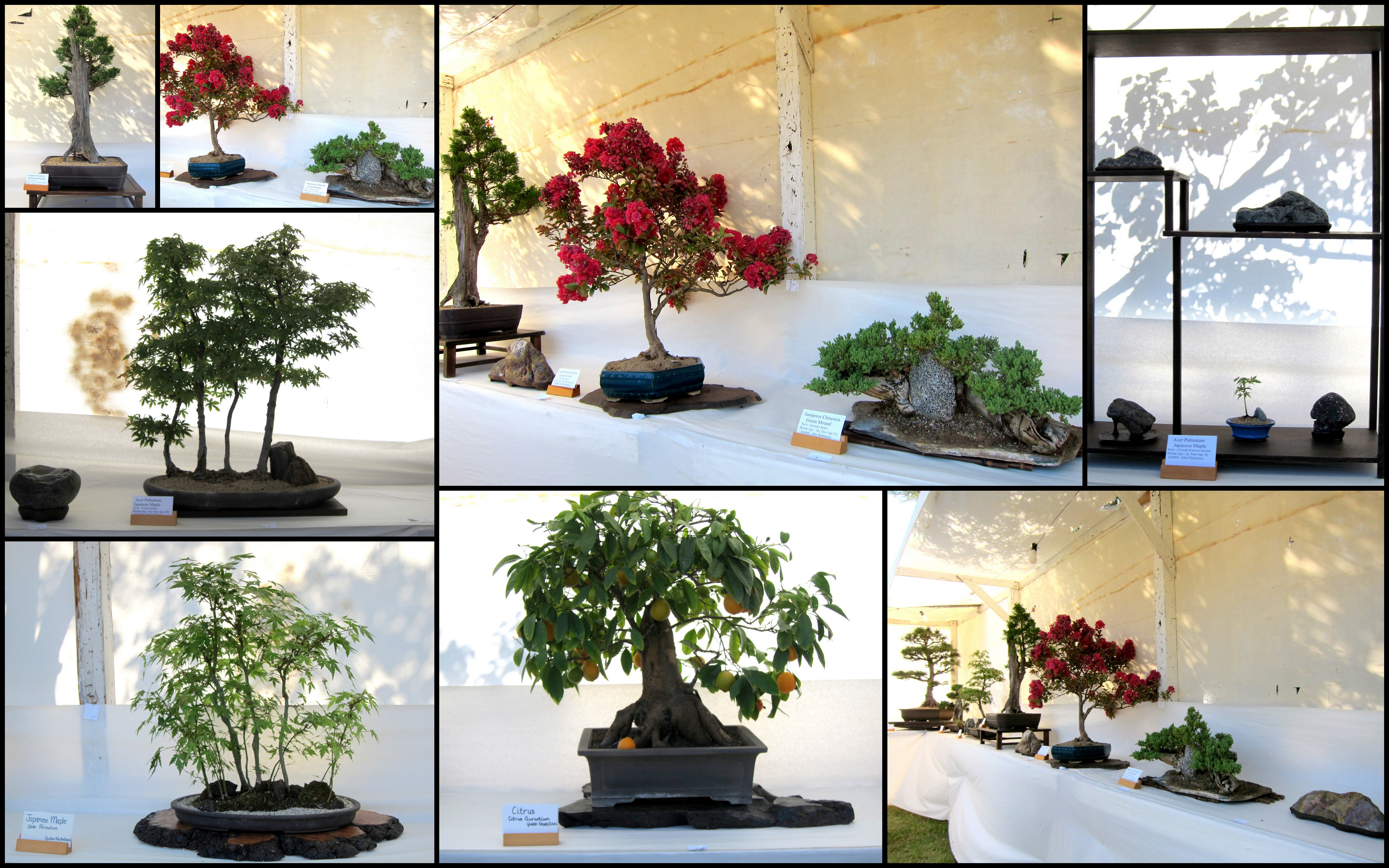
The rice balls, particularly the fukujinzuke ones (soy sauce pickles), go oh so well with the teriyaki chicken sold at the festival. For $5 you get a quarter of a chicken, either white or dark meat. I chose dark meat of course, a big juicy leg and thigh, but the white meat that Nancy picked also looked gleaming. Kenji-san went with 8 skewers of beef teriyaki for $8. We noshed while listening to the taiko drum performance. In the 110-degree heat, I tried not to stare at the kids swooshing their shaved ice, diverted my thoughts instead to the juniper and Japanese maple bonsai.


Mom is an avid believer against potted plants and caged birds, and I don’t even support cutting grass. But these miniature trees are undeniably works of art.

That said, if Mom and I were given one of these, first thing we do is removing the tree from the pot and digging it a nice warm hole in our front yard. 😉

The Duck Restaurant in Piedmont

August 11, 2012 By: Mai Truong Category: American, California - The Bay Area, The more interesting


Ever since the steamed duck at Shanghai Dumpling King, I’ve been haunted by the juiciness of a duck done right.

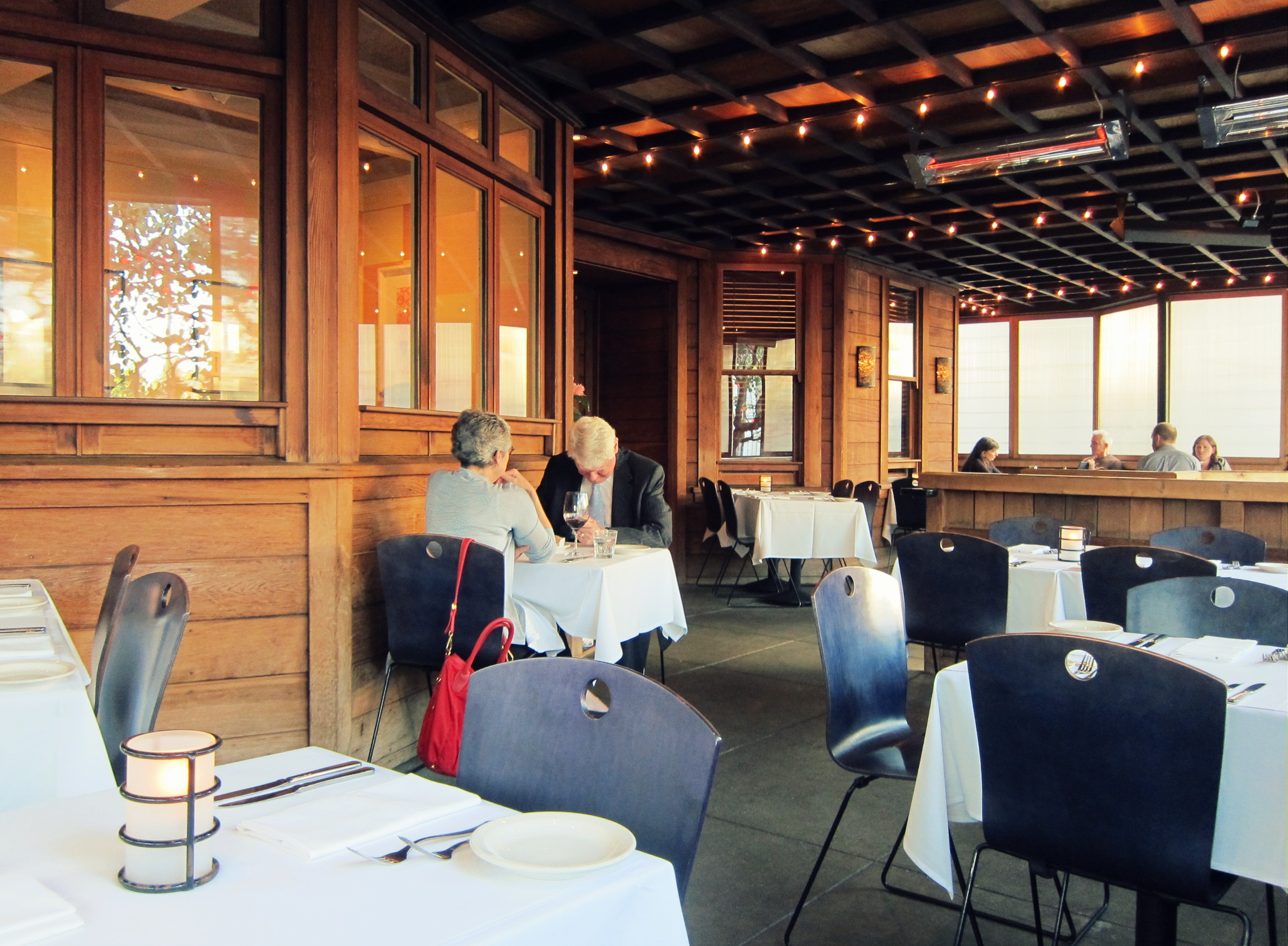
When my friend Kristen and I walked down Piedmont looking for dinner, we passed several doors but like shopping for clothes, as Kristen pointed out, none “jumped out” to us. There was one sign that we read “Pork Avenue” and crossed the street all excited for, but it was “Park Avenue“. On the way was also the curiously crowded Fenton Creamery, to me their selections aren’t that interesting. When the street started to look devoid of both restaurants and humans and hope had dwindled from a tteok in tteok bokki to a strand of angel hair, we found Bay Wolf. The duck liver flan and roasted duck with polenta sold us.

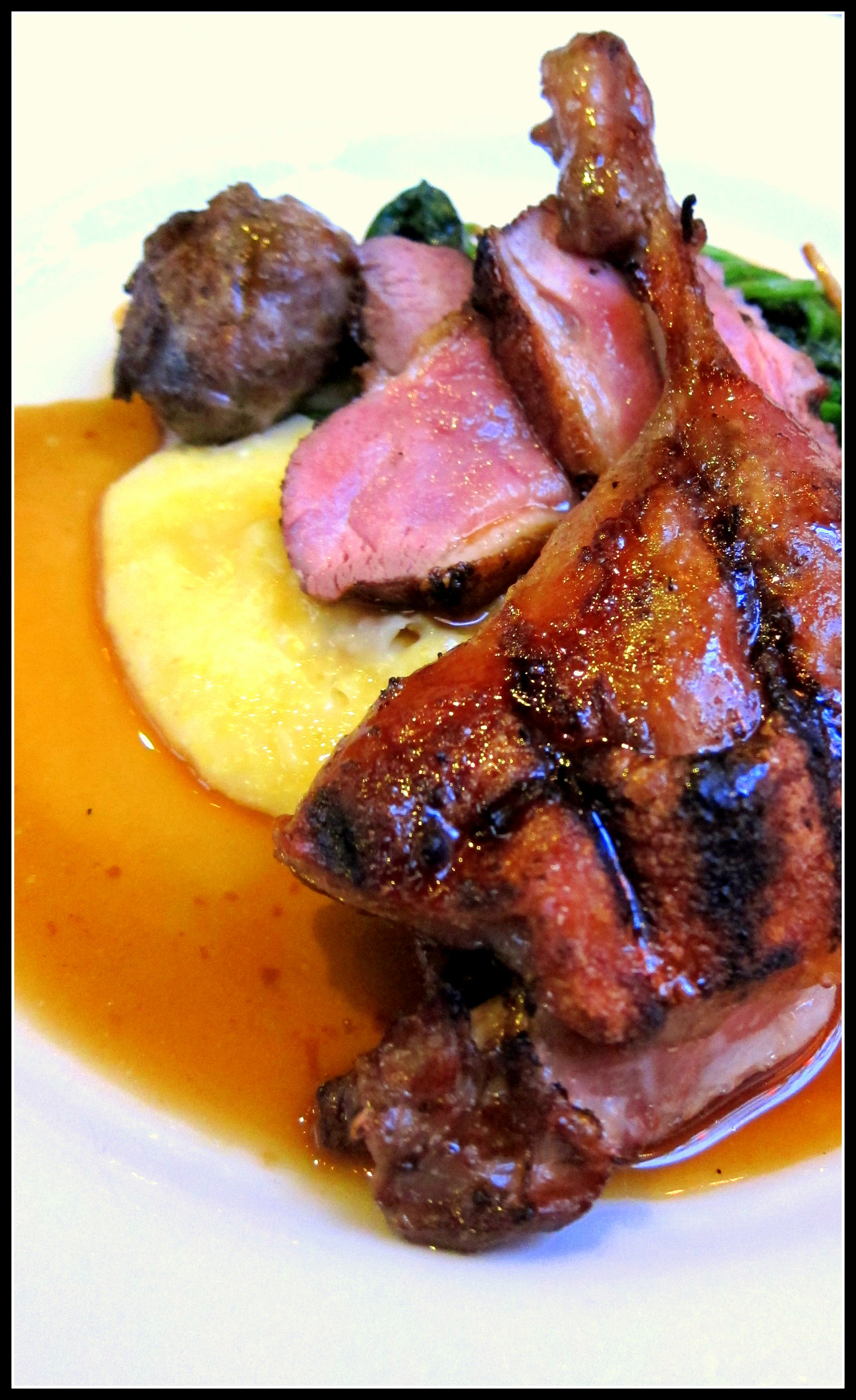
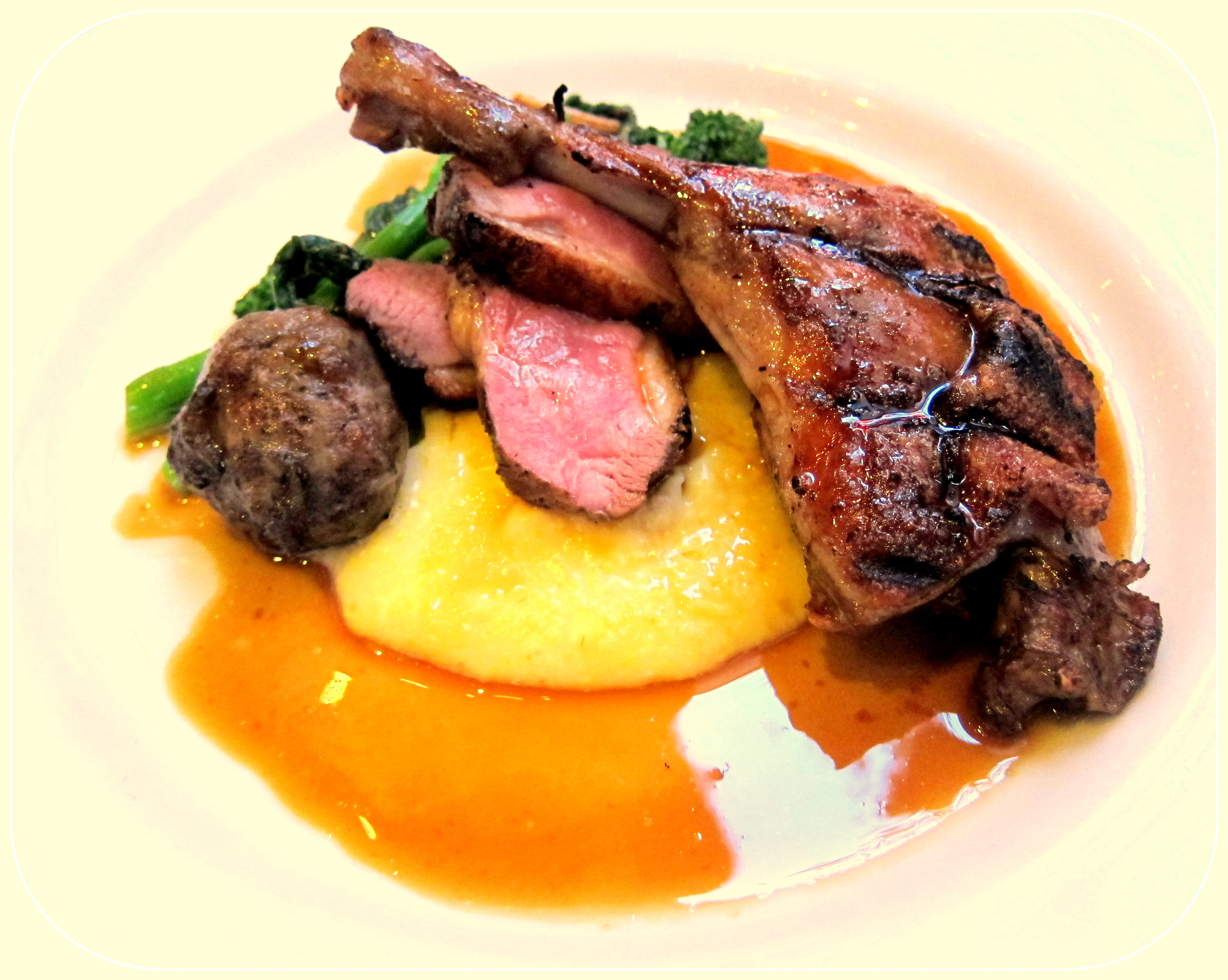
Bay Wolf specializes in duck. Their menu changes weekly but they always have two duck dishes, one appetizer and one entree. Both sing. Even the polenta was good, must be that honey-lavender gastrique that we had to wipe clean with bread after we ate the duck leg to the bone. 😉

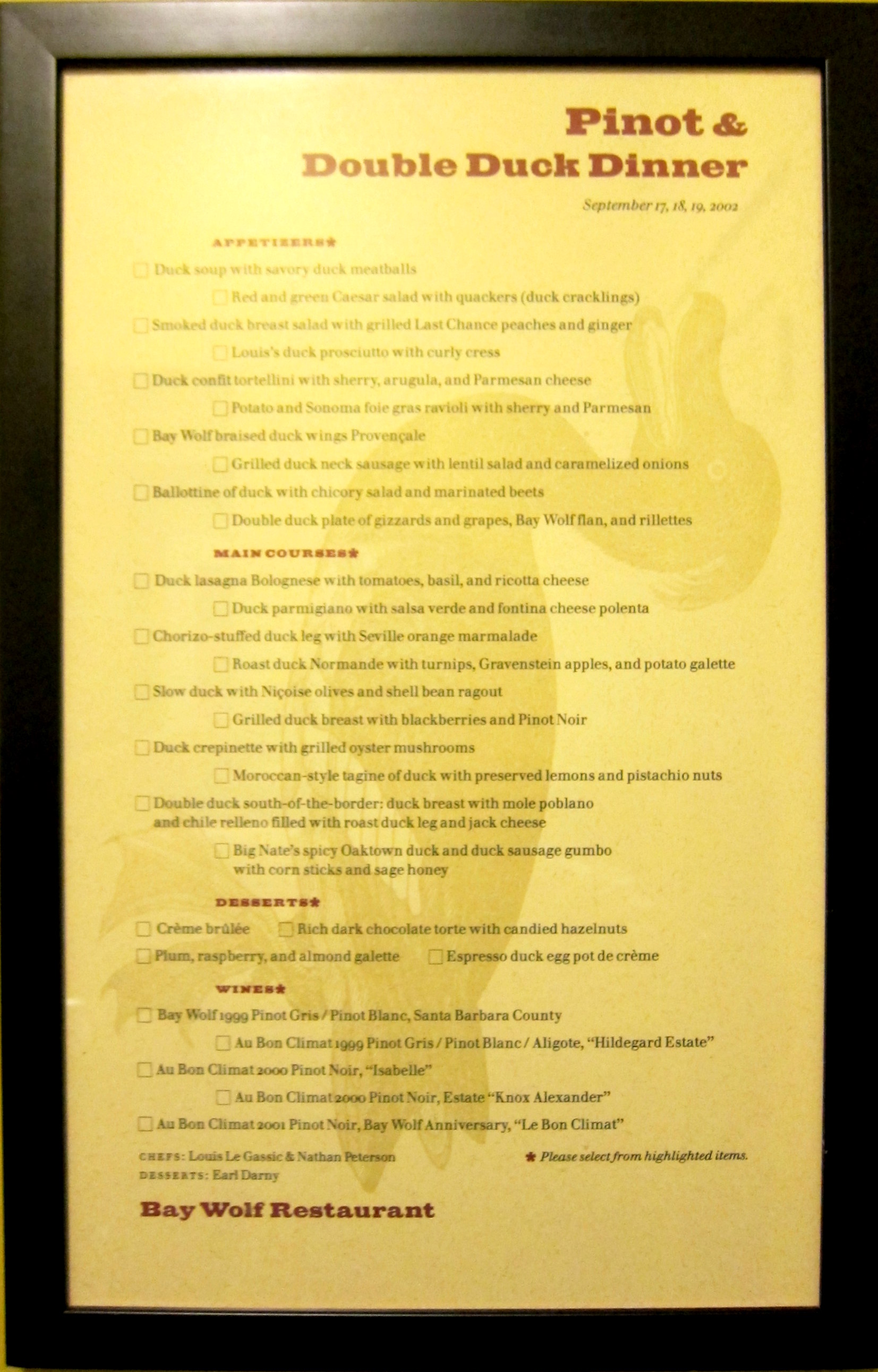
After dessert, some unknown force compelled me into the washroom, where I saw the Pinot & Double Duck Dinner dated September 17, 18, 19, 2002. Every dish was a duck dish: duck prosciutto with curly cress, grilled duck neck sausage with caramelized onion, duck lasagna Bolognese; even dessert: Espresso duck egg pot de crème.


So I did what I’ve never done (because I’m a foreigner and still feel nervous talking on the phone in English): I called the restaurant three days after my meal, thanking them, and asking if Bay Wolf will have another Double Duck Dinner like that in the future. Mark your calendar, pals, September 16-18 this year.

Address: Bay Wolf
3853 Piedmont Avenue
Oakland, CA 94611
(510) 655-6004
www.baywolf.com

Dinner for 2: $77.76

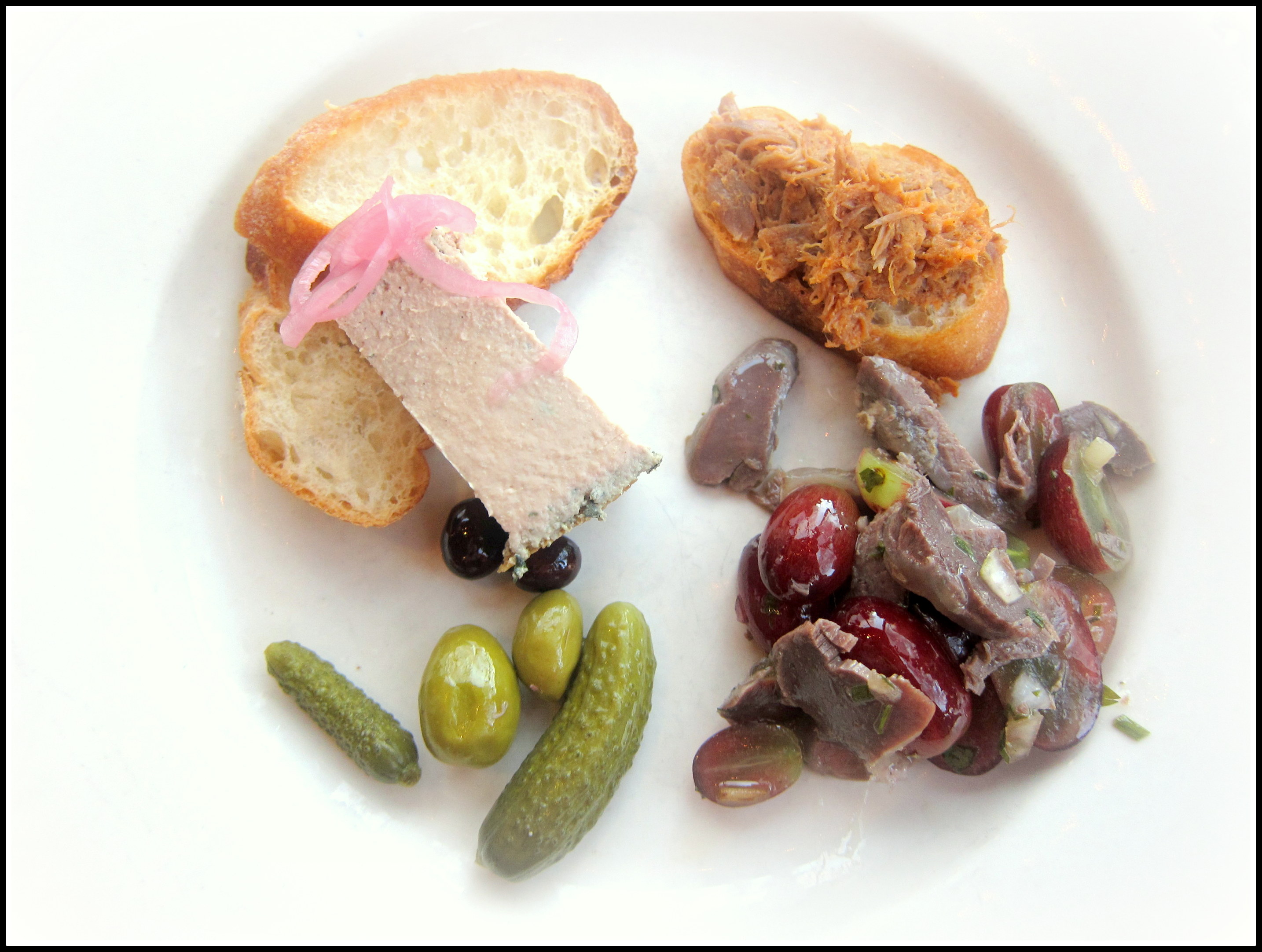
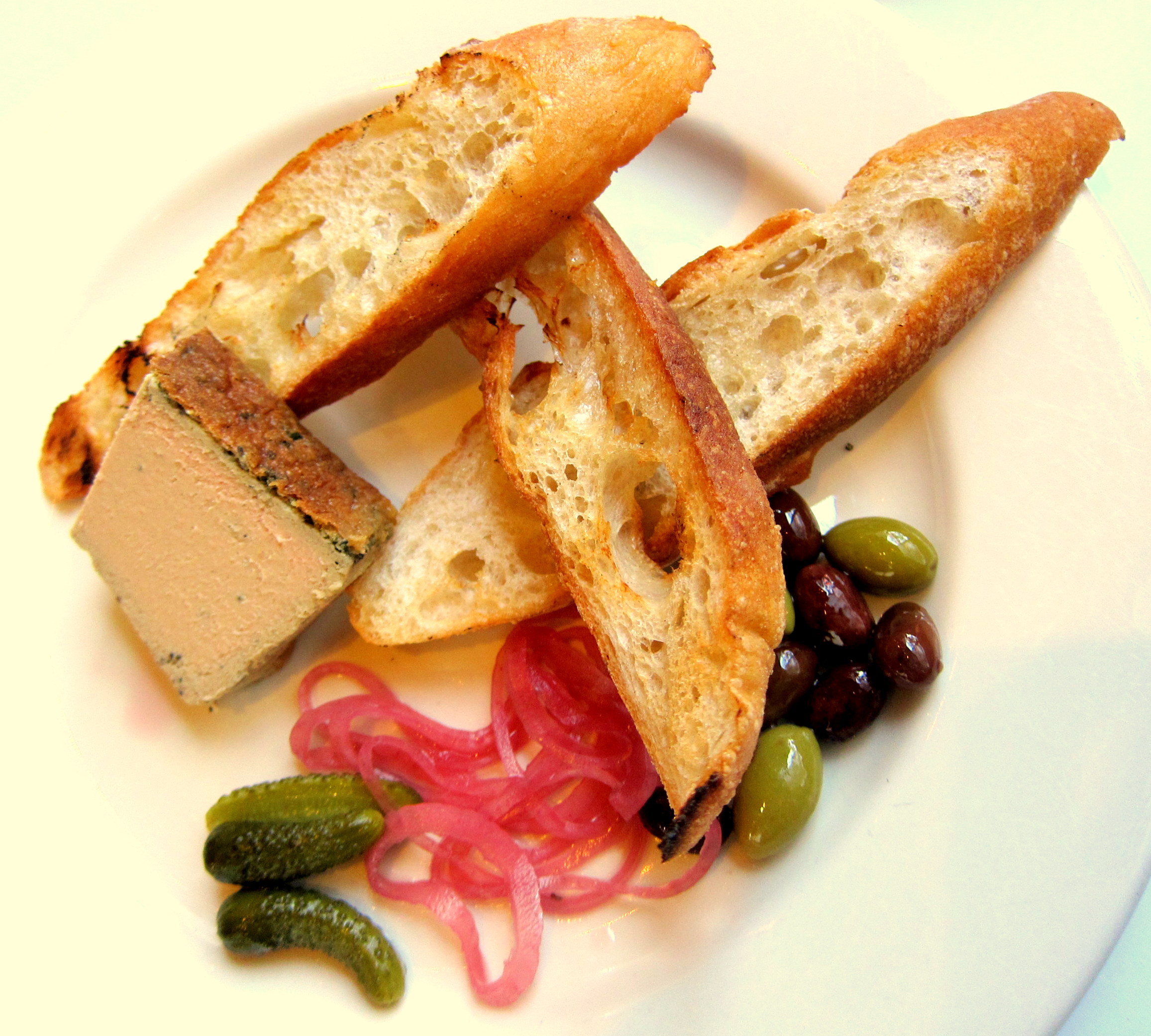
Duck liver flan with grilled Acme bread, pickled onion, cornichon and olives ($8.50). The pate is smooth and rich. The pickles add just the right zing.

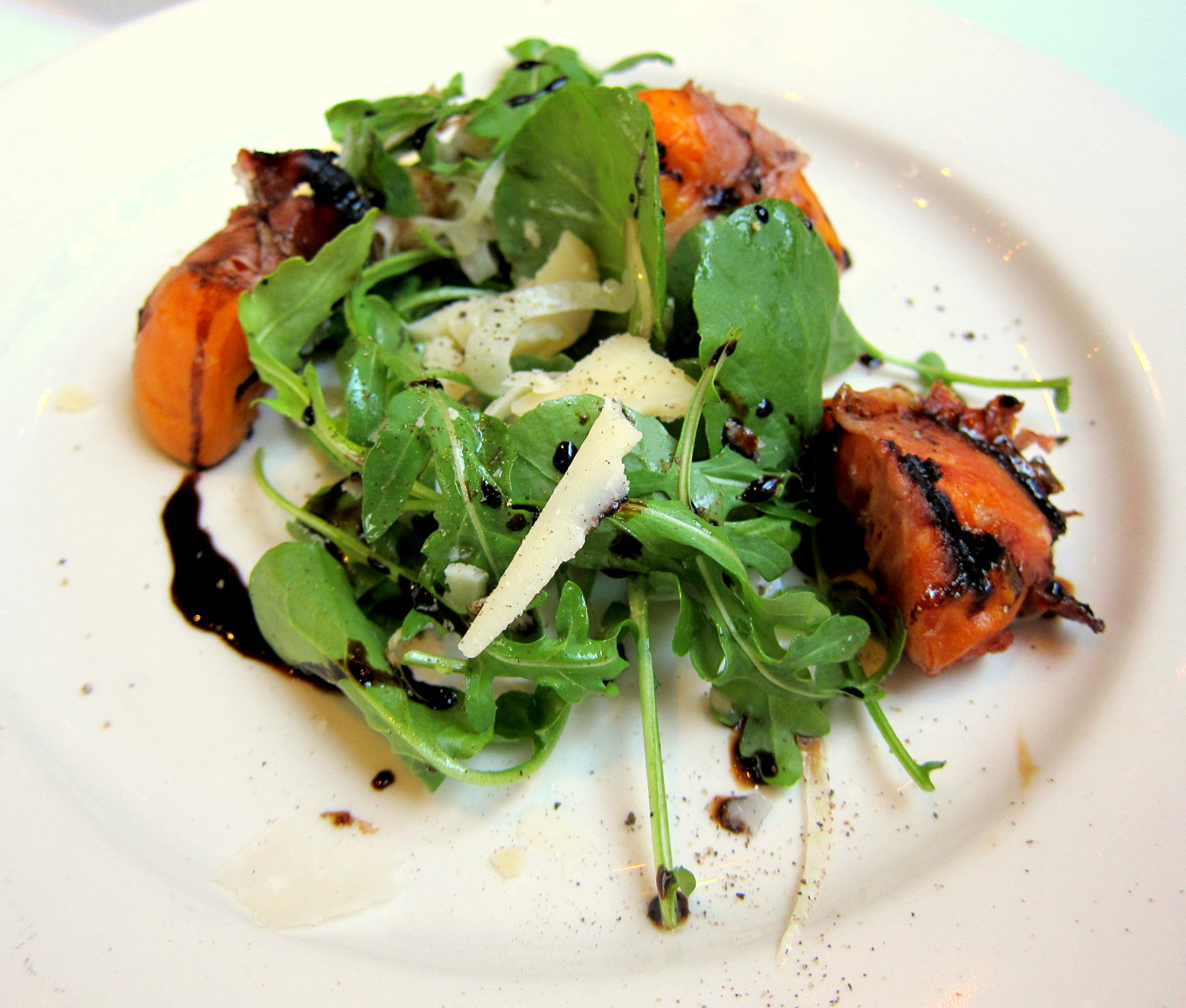
Grilled prosciutto-wrapped apricots with ancho cress and parmesan ($9.50). The apricots were a bit too tart, another two layers of proscitto would have balanced it out.

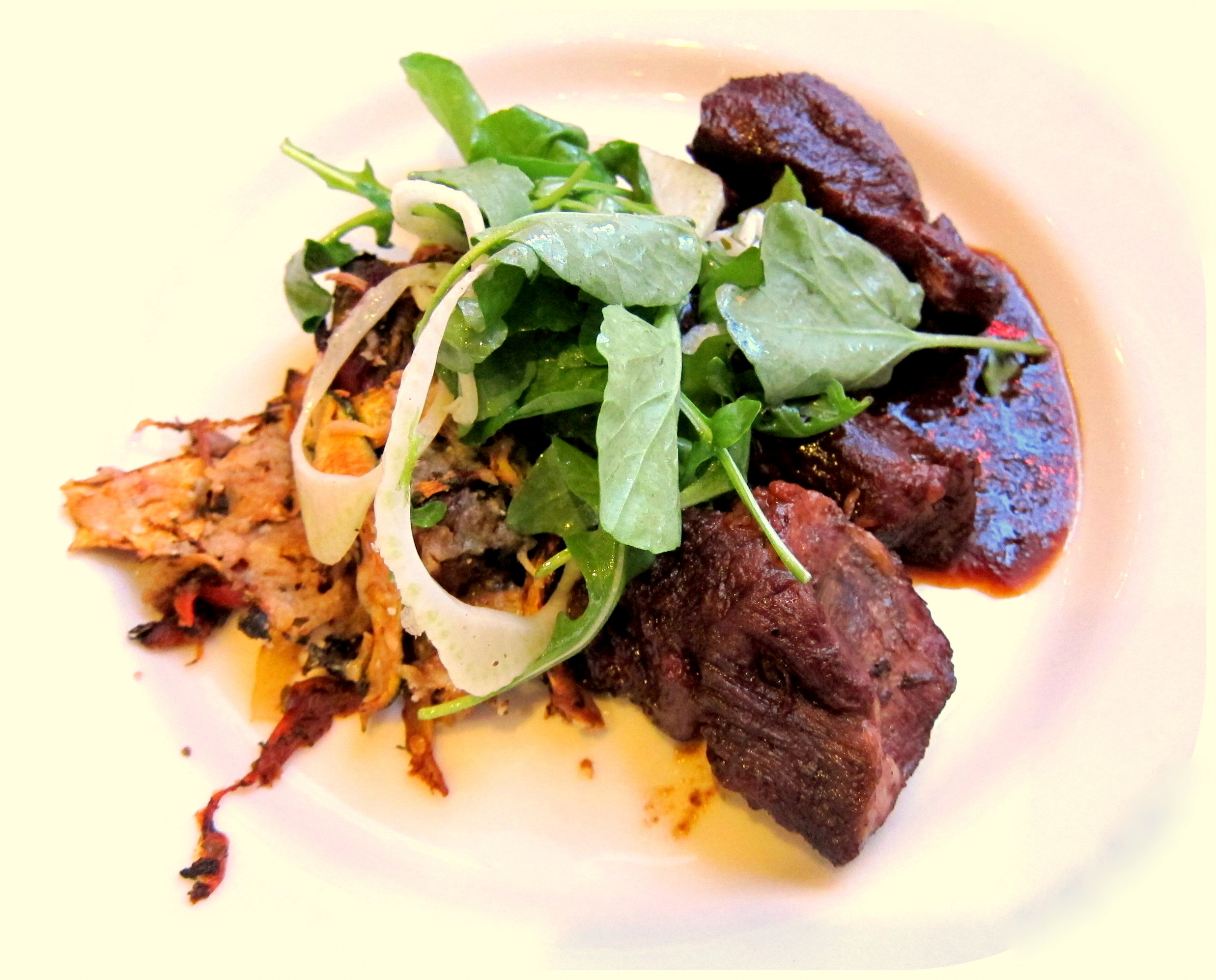
Slow-cooked lamb shoulder with vegetable tian and red wine reduction ($23). The tian consists of zucchini, tomato and eggplant. The lamb was a little stringy.

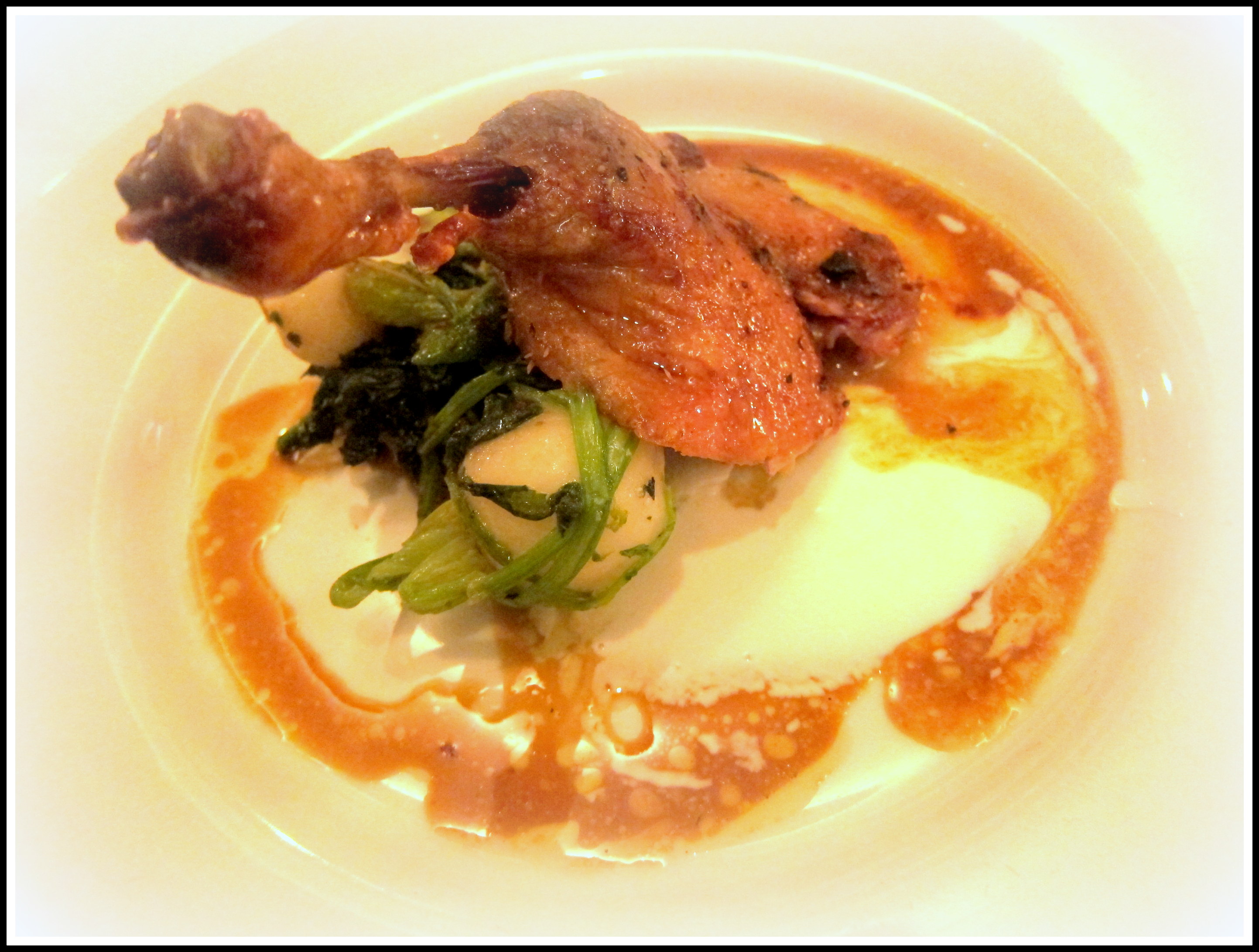
Liberty Ranch duck with polenta, rapini and honey-lavender gastrique ($24). A truly flawless delight.

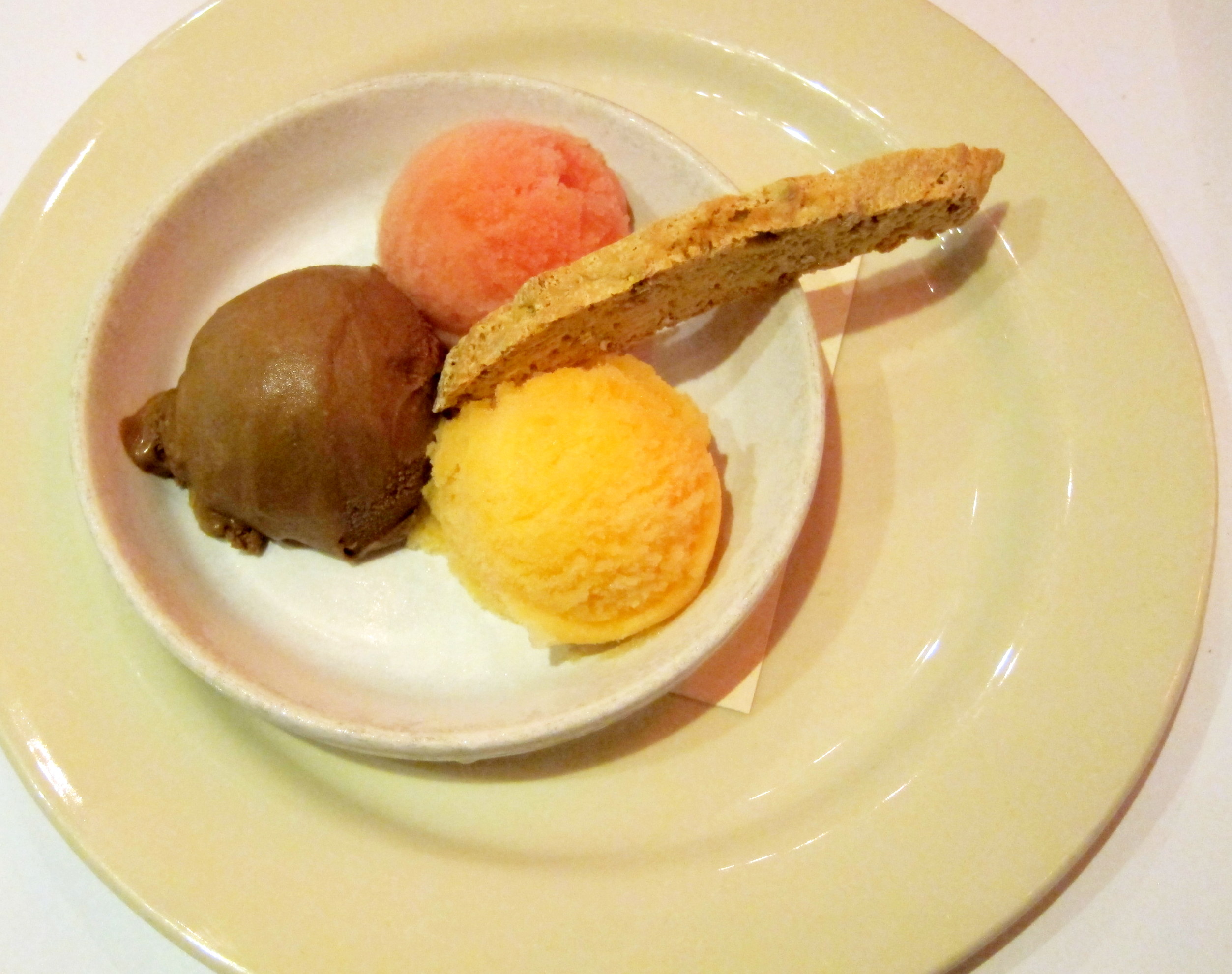
Seasonal sorbet: chocolate-coconut, ambrosia white melon, and watermelon-mint ($6.50). The two melon scoops have a faint taste of melon seeds. Combining all three in one bite is the way to go.