Flavor Boulevard

We Asians like to talk food.
Subscribe

Archive for the ‘Review of anything not restaurant’

Face the omnivore’s dilemma

June 12, 2013 By: Mai Truong Category: Book, Opinions, Review of anything not restaurant

Did you know that the koala, the pickiest eater on Earth, has a brain so small that “doesn’t even begin to fill up its skull”? The variety of one’s diet correlates with the size of one’s brain. Whether the reason might be the low nutrition (which makes it more economical to shrink your brain and conserve energy) or the simplicity of a diet that requires no thinking (when you see the food world as eucalyptus and non-eucalyptus, what to have for lunch is not a very big question), the koala’s brain would have been a lot more developed had it been an omnivore. (Whether being smart is better than sleeping 20 hours a day is a different question.)
omnivore
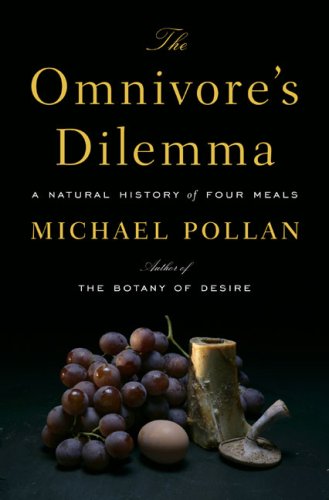
The Omnivore’s Dilemma is about choice. This theme I did not quite grasp when I read the first part (Industrial – Corn) a year ago (or maybe longer, when you grow old everything seems like just yesterday). I was on the plane flying back to San Francisco, reading this monumental Michael Pollan book and discussing with a Chilean guy across the aisle about negligent governments, undereducated denizens and public apathy. What does that have to do with food? It actually has everything to do with food. The meat, eggs, cereals and virtually anything you buy from a grocery store are produced with corn in one form or another, thanks to government subsidies, big corporations, our desire for “cheap” abundance, and sadly, overzealous science.

The humans, omnivores with brain circuitry so complex to devise ways to modify corn into everything, have managed to reduce themselves to monoculture eaters, which, if you look at it objectively enough, is not all that different from the koala. The depressing part about it is that for a city dweller, you actually have very little choice in what you eat. You can’t escape from eating something that is detrimental to both your body and the whole ecosystem, or at least that’s what the first part of the book, Industrial – Corn, led me to think.

The first part was just painful to read, which is probably why I dropped it after that flight. In few words, we followed steer numbered 534 from his mother’s side into the feedlot where he would never see another blade of grass. He would be given corn that his rumens were not biologically structured to process, and lots of drugs to keep him from falling ill from the corn and the waste in which he stands knee deep.

Recently, I gave myself a day off when I was determined not trying to produce anything, so I picked up the book again. As I chugged past the corn part, thankfully, things got brighter. Humankind hasn’t completely destroyed the earth yet. There are alternatives to industrial corn-fed beef and fossil fuel fertilized vegetables. The sad part though, is that every choice of an omnivore in this modern age comes with a different moral cost:

– Buy foods from the grocery store? You’re supporting big corporations and destroying the land. Even if you buy “organic” products from Whole Foods, those organic products come from large-scale industrial farms that damage the earth with excessive irrigation instead of pesticides.

– Avoid meat to reduce carbon footprints and protect the environment? Your vegetable, if comes from grocery stores, take tremendous amount of petroleum to produce and transport across the country.

– Avoid meat to avoid killing animals? Chapter 17 (The Ethics of Eating Animals) goes into great lengths about this. If you eat only vegetables, you are still damaging other life forms: “the grain that the vegan eats is harvested with a combine that shreds field mice, while the farmer’s tractor wheel crushes woodchucks in their burrows and his pesticides drop songbirds from the sky; after harvest whatever animals that would eat our crops we exterminate”. If you eat seafood, think of how many shrimps or crabs you eat in one meal, why would you value the life of a shrimp less than that of a cow? If you eat dairy and eggs, read pages 317-318 for a brief description of the life of egg-laying hens and the cruelty “required to produce eggs that can be sold for 79 cents a dozen”. (It’s so cruel I could barely read it, let alone paraphrasing it here.)

– Buy foods from local farmers market? This choice is the best to the environment, the plants and the animals, but it is neither practical nor available to everyone. If I walk home with a bag full of artisanal products from farmers market and not give some money to the old man handing out 1-dollar newspapers at the street corner, I feel awful. And there’s about one homeless man per street corner in downtown Berkeley. Then there’s the poor neighborhoods to the south and west parts of the city. Then I think about the people who live in “food deserts” with virtually no fresh produce to buy. To preach about the necessity of choosing a good food source seems somewhat inconsiderate, if not inhumane, to others who can’t afford to be picky.

– Eat chemicals? This option was not listed in the book. But a few months ago I read about this man who invented “soylent”, a mixure of “vitamins, minerals, macronutrients, oligosaccharide, olive and fish oil, antioxidants and probiotics”. At first I thought that was the worst food invention ever. But taste and nutrition aside, could it be the best option to be environmentally friendly and humane to animals (except to fish)? After all, we have for too many years tried to feed the soil and the plants with chemicals that we think are sufficient, in the form of phosphor, nitrogen and potassium fertilizers, so why don’t we do the same to our bodies?

– Grow, hunt and gather your own food? Michael Pollan went as far into the food spectrum as making a meal from only things that he hunted, foraged from the woods, or grew in his garden, noting that of course this option is the most impractical and improbable of all for the modern omnivore, but also the most rewarding.

I’ve always opposed the idea of hunting, but not too much now after I read the book. When at one end of the spectrum you’re pressed against the cruelty of industrial animal farming, where neither the producer nor the consumer spare any thought at all for the animals, much less mercy, and at the other you’re absorbed into a wealth of appreciation from the hunter toward his prey, hunting is no longer pure evil. The beauty of this book, beside the plethora of facts and theories, is its linear structure, which clearly shows where in the choice spectrum (from McDonald’s chicken McNuggets to self-foraged morels) an omnivore should stay without saying it explicitly. The Omnivore’s Dilemma was written in 2006, and here I am, 7 years later, still facing the same spectrum. Taking inflation into account, industrial food is still cheap all the same (which means the production still sucks all the same), and buying from farmers markets is still considered a “foodie” activity far from being mainstream.

So I thought about what I should eat. After thinking of all of the animals and plants I have indirectly killed, I wanted to get myself out of the killing, if only just for a little. I decided to try a fruit-and-grain-only diet. We’ll see how that goes.

The macaron that keeps you wanting for more

June 05, 2013 By: Mai Truong Category: French, Houston, Review of anything not restaurant, sweet snacks and desserts

DSC_0557
What defines a good macaron?

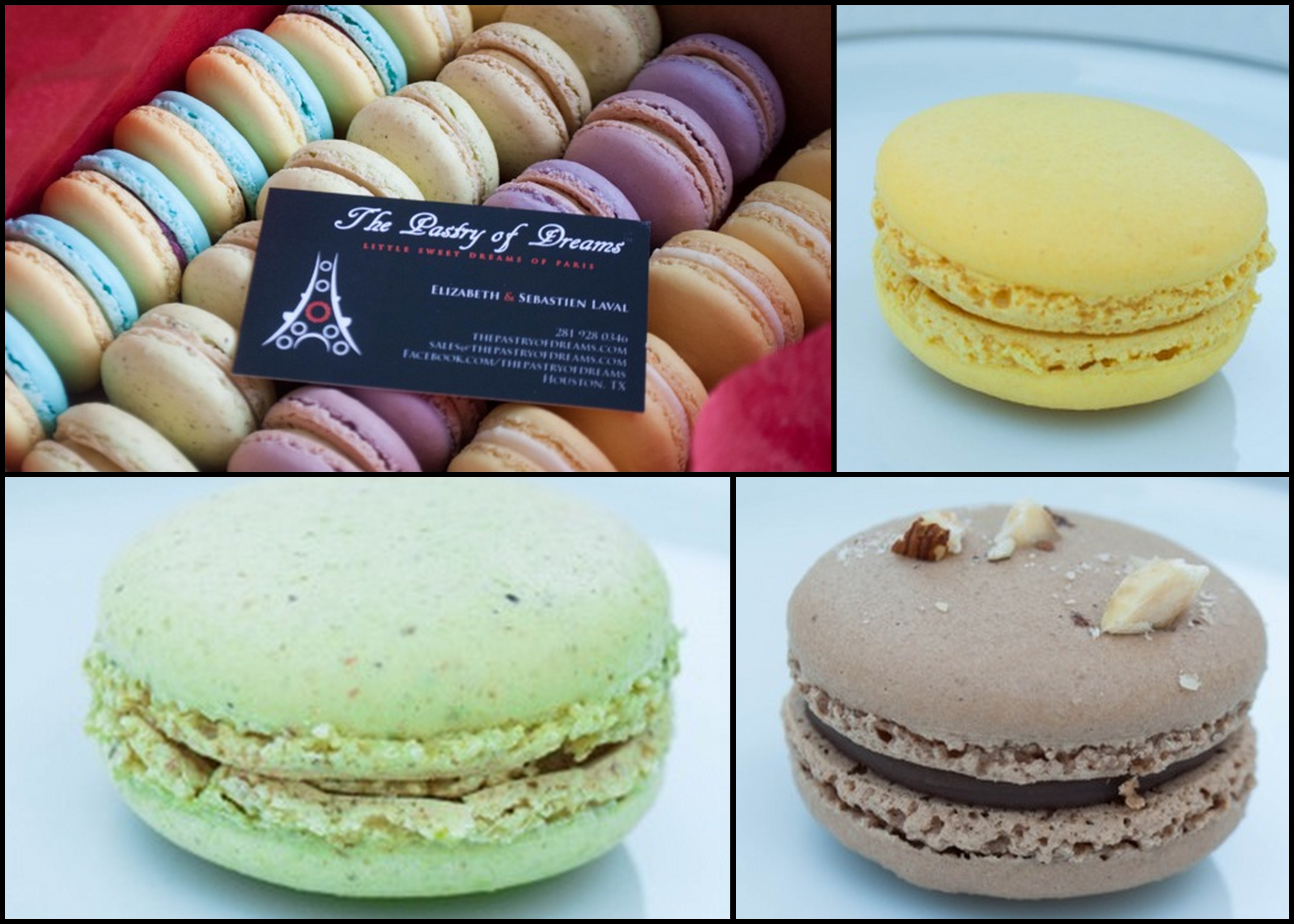
I googled, but found only “10 signs of a bad macaron“. My pâtissière friend Hanna Lim told me a few criteria: a good macaron should look smooth on the surface, crunchy (but not crumbly) on the outside and a little chewy(*) inside, it should not fall apart when you take a bite, it should be a clean bite – no crumbs, no cream spewing out on the side. Looking through the Facebook page of The Pastry of Dreams, I see gliding smooth macarons and beautiful cookie-to-cream ratio. Visually, they are perfect.

But what impresses me most is their taste. These almond cookies reflect what real fruits and nuts taste like in a cookie. Instead of being masked by sugar, the flavors that each cookie is supposed to contain shine through. “There are no shortcuts in our pastries,” says Liz Laval, the chemist-turn-pastry-chef who started The Pastry of Dreams. For something as simple as vanilla, she uses special vanilla beans imported from Madagascar to France and shipped to her by family living in France. “The one from here and the one that people import here is useless, you have to use 2 vanilla beans to get the amount that one of mine would produce,” she explained as I took a bite.

It’s true. Her vanilla butter cream has the richest and sweetest aroma of any vanilla-flavored things I’ve ever eaten, and there was the nuttiness of vanilla beans that the extract simply cannot have. It was more vanilla-y.

The same principle applies for other flavors too, lemon zest and juice for lemon macarons, real lavenders in the cream and cookie shell of lavender macarons… Except for the chocolate macarons, Liz goes as far as avoiding using ganache as a shortcut to stabilize the cream, relying instead on a technique she learned from France which she asked me not to reveal. Of course, I have no intention of making macaron myself either. After tasting Liz’s macarons and learning about her 3 years of studying, including macaron classes at Le Notre and l’Ecole de Cuisine Alain Ducasse in Paris, and her 6 months experimenting in the kitchen, I figure it’s best to simply enjoy the work of the professional.

Pastry of Dreams
After all, it would be difficult to match her skill, which is repeatedly recognized by chefs and consumers alike. One of Liz’s favorite stories is the macaron match against the pastry chef at Hôtel Cloitre Saint Louis à Avignon, which she won. Another was the Saint Honoré, a puff pastry with rose chantilly, lychee cream and raspberry compote, which was made specifically for the Valentine’s Day menu at La Colombe d’Or, Houston this year, and it was the most ordered dessert that day. As I’m writing this post, she just got home from Le Grand Concours Macaron, a macaron contest hosted by the Texan-French Alliance for the Arts, bringing with her two awards. Her white-and-dark-chocolate Phantom of the Opera macaron won 2nd place for People’s Choice and Best Macaron by the judges.

During our dinner at her apartment in Houston, we talked about how desserts can be so overwhelming with sweetness that you can’t take more than a few bites. The dainty size of the macaron and its light texture, if done right, help alleviating the problem. “Making a macaron is about making art, you want it to be the last thing the person remembers from their entire meal. At the end of the meal, I want you to have the feeling of wanting more.” That’s her motivation. But as I watch her lively two-year-old son Liam playing with his lego crocodile and listen to her husband Sébastien telling stories of the crazy hurdles that are American immigration, I suddenly realize what it is that makes her pastry taste so good. The happiness of her family. A beautiful son, a supportive husband, a dedicated young lady – it’s a little family that makes onlookers want to have family or are reminded of their own familial love, the picture-perfect family. Liz is a happy chef. Intentionally or not, she lets that happiness seep into her pastries. We eat them, and get infected with a smile.

——————
The Pastry of Dreams is based in Houston, Texas.
Photo courtesy of Elizabeth Laval
——————

(*) In macaron language, as Liz told me, “chewy” is like tootsie roll chewy, which is of course not what I mean here at all. Because macaron are meringue-based sweets, macaron chefs want the macarons to be melt-in-your-mouth. As you bite into the macaron though, “melt in your mouth” is not how I would describe the sensation, in fact, you go from something dry to something moist, and that moistness is what I call chewy. 😉

Tags:

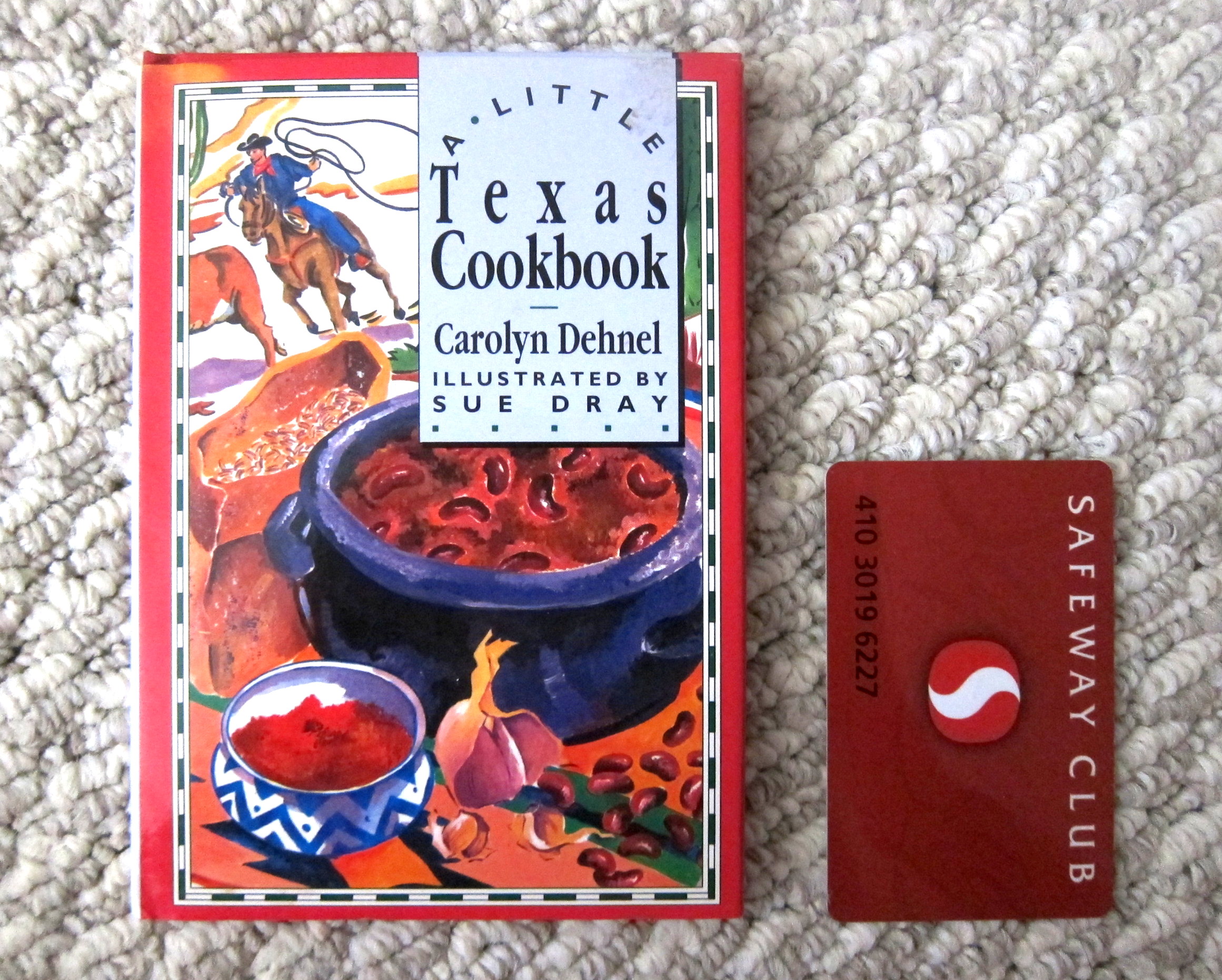
Little Texas Cookbook

May 29, 2013 By: Mai Truong Category: Book, Review of anything not restaurant, Texas

little-texas-cookbook
Found this little guy on a bookshelf at home. I couldn’t sleep last night and was browsing the shelves for something to read (which is obviously a great idea to cure insomnia – the more I read the more awake I am, unless it’s a physics book). As a pâtissière friend says, recipe books are only for ideas, so I never read them (I hardly even look at them at bookstores). My mother, like all Vietnamese mothers, never uses recipes either, so I was confused for a second of where this came from.

Then I found my host mom’s writing on the inner cover – it was a new year gift from her and my host dad. I lived with them in Texas during my year of exchange study. That year was filled with corn bread, lima bean soup, baked beans and sausage for dinner, pecan pie and Blue Bell ice cream for desserts, and my host dad’s cheese balls for snacks. When I opened the first page of this Little Texas Cookbook, there it was, a recipe for Spicy Cheese Balls.

This recipe is completely different from my host dad’s recipe (if he uses a recipe at all) because his contains ground meat and flour, where this one asks for cheese, Worcestershire sauce, chili powder and chopped walnuts. Needless to say, his is better. But the little book has four things to keep me reading:

1. Memories. I’m a sucker for nostalgic stuff. I love baked beans, I used to put baked beans on white bread to make sandwiches for lunch at school and snack at home. The Barbecue Beans on page 11 brings back that brown-sugar-sweet memory (we call it “baked beans” but they’re really barbecued/stewed beans). I don’t like chili, so that’s a different sort of memories.

2. It’s short. It has only 60 pages, half of them are pictures. The perfect midnight-snack size before I go to bed.

3. The mini fun facts. Stuff like “the Encyclopedia Larousse suggests that okra should be soaked in water before use, but no Texas cook would dream of using anything but the fresh unsoaked pod”.

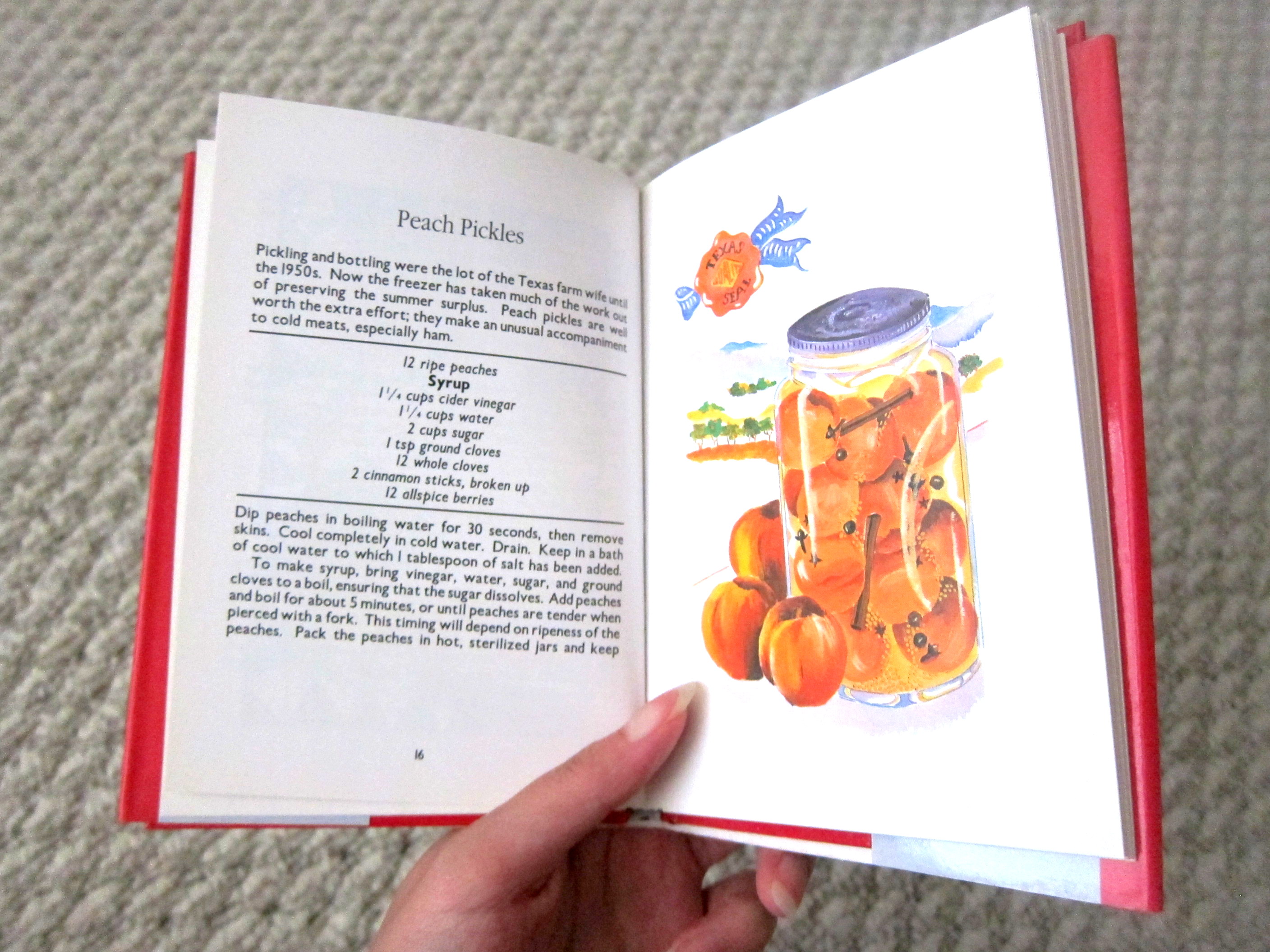
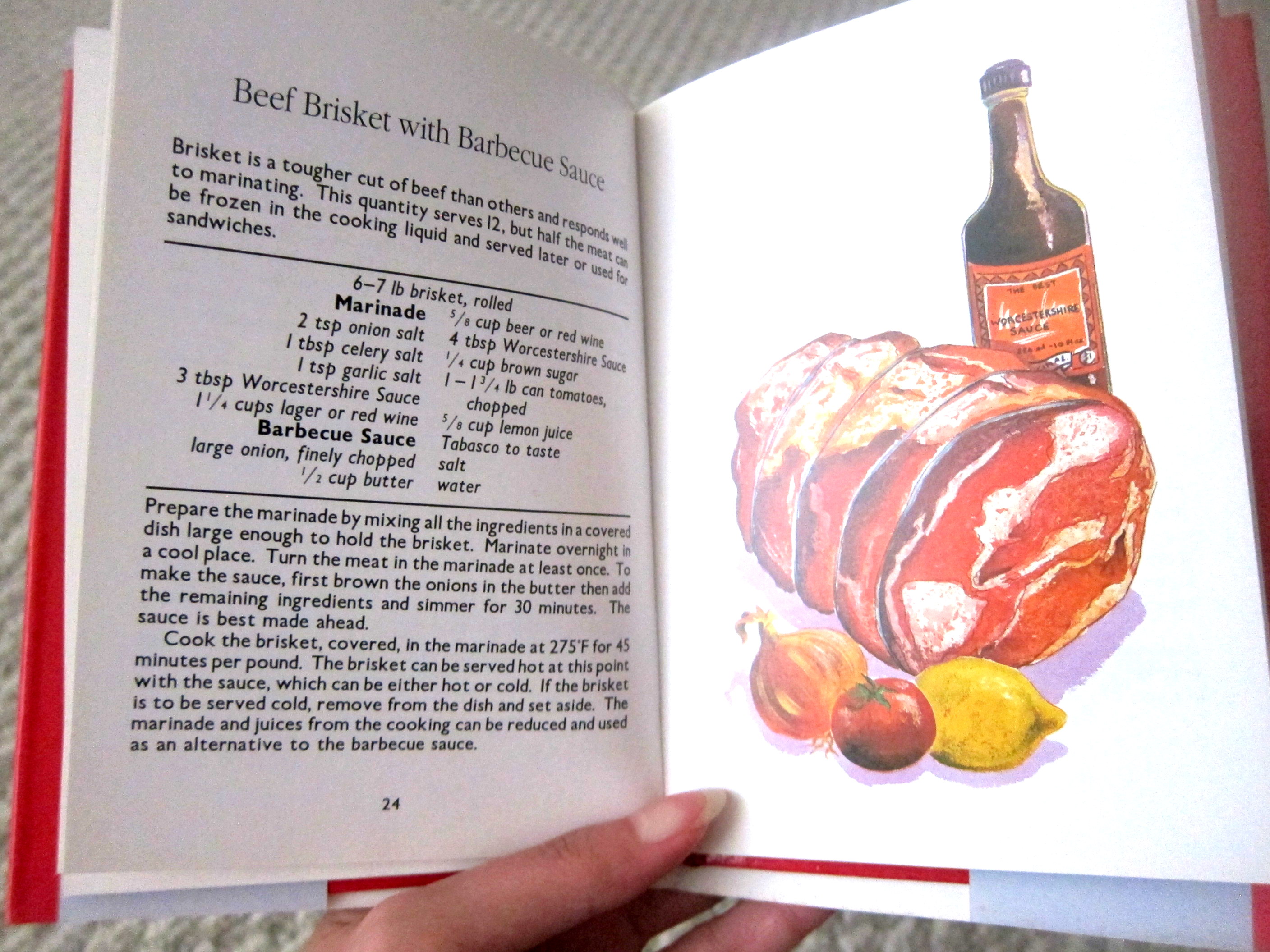
4. The illustrations Glamorous food photography is all good, but I love mini drawings. There’s something so vintage about it.

ltc-peach-pickle

ltc-brisket

Chronicle Books have other Little Cookbooks too: Brazilian, English, English Teas, Florida, Greek, Jewish, Northwest, Scottish, San Francisco (eh?!?!), Welsh, etc. Would make fun reads.

Tuesday mind-wandering: food blogging is weight watching?

January 08, 2013 By: Mai Truong Category: Chinese, Opinions, Review of anything not restaurant, Southern Vietnamese

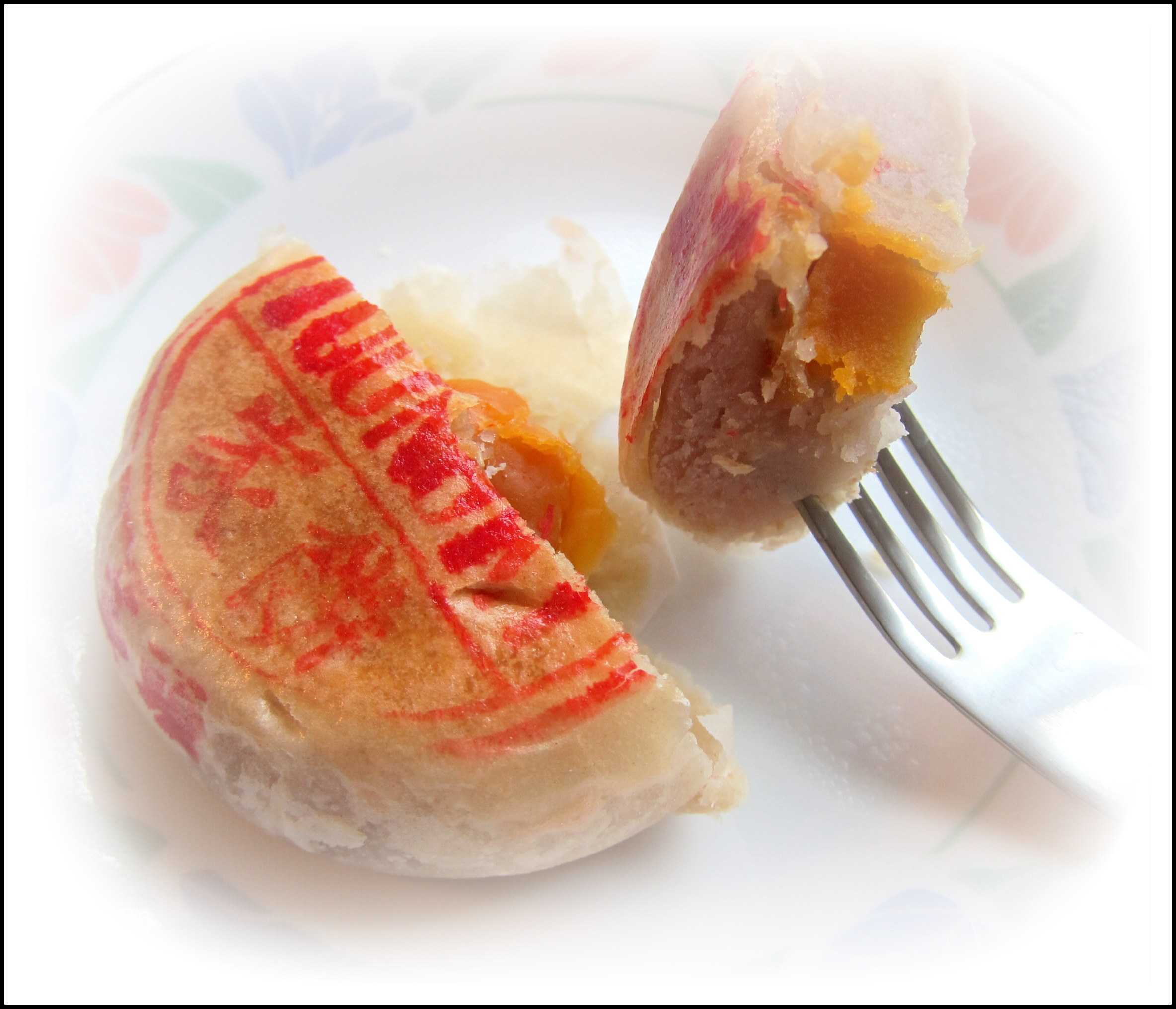
Bánh bía from Tường Ký Fast Food. Filling: taro paste with salted egg yolk, would have been perfect without bits of candied winter melon.  $13 per box of 4.

Bánh bía from Tường Ký Fast Food. Filling: taro paste with salted egg yolk, would have been perfect without bits of candied winter melon. $13 per box of 4.

I’m having writer’s block. Don’t know if that’s true (I once met an Ivy League law school professor who said, as diplomatically as she could, that scientists can’t write), but that’s how my friend put it when I told him that I’ve been sitting around all day producing nothing worth mentioning and munching Vietnamese snacks. As incredibly lazy as that sounds, I think of myself as savoring the cultural assets of my people. (Somehow that sounds even worse…) There’s this Taiwanese movie, Eat Drink Man Woman, I found it a little indelicate and got weirded out (the food looks great though!), but one line from the second sister in the movie stuck in my head: “Dad said that for a person who lives up to 80, he would have consumed 80 tons of food. People who enjoy food and people who eat without savoring it don’t experience the same level of happiness.”

I used to think for sure that what he meant was the people who enjoy food experience more happiness than people who eat without savoring it. But today I thought again.

I’m eating this bánh bía from Tường Ký Fast Food. I can’t help but notice the tiny tiny bits of candied winter melon (mứt bí) in my bánh bía, and I know I like my bánh bía with only taro paste and salted egg yolk, so I’m a bit turned off. When I don’t update Flavor Blvd, I’m happy with teriyaki pork chops from the Chinese family downstairs for weeks. More examples of “ignorance is bliss”: I can’t tell the difference between HDTV and normal TV, so I enjoy any TV with colors. I don’t know shrimps about music, so my friends may think that the drum work of some musician I like is a total fluke, but I still like it all the same. Then again, knowing teas makes me appreciate high-quality teas on a whole different level, and I can still enjoy tea bags with the right company. So I don’t know. The two types of people may not experience the same level of happiness, but that doesn’t mean one level is higher than the other.

Physically speaking, the two types of people probably don’t obtain the same level of energy either. Savoring food means analyzing food. Before I really buckled down and recorded everything I ate, I just ate. Now I think about ingredients. What did they put in there? How did they make it? What could be changed? Why do I prefer my mom’s bánh bao (and Vietnamese bánh bao in general) to jibaozi, family relation aside?

So, food savoring is a brain workout(*), unlikely on the same level as debugging my code, but I think now I have a reply to my mom’s question: “Why can everyone gain weight but you? Eat more!” 😀

Address: Tường Ký Fast Food
8200 Wilcrest Dr., Suite 14
Houston, TX 77072
(281) 988-4888

(*) I typed “how much energy does thinking require” into Google, and the answers seem inconclusive at best, but at least computer work burns 41 calories in 30 minutes for a 125-lb person, and blogging requires computer. Surely more thinking wouldn’t make you gain weight. 😉

Tags: ,

Back from the dead

November 06, 2012 By: Mai Truong Category: Opinions, Review of anything not restaurant, Won't go out of my way to revisit

So Flavor Boulevard went out of existence for about 10 days. It just disappeared. First of all (it wasn’t my fault but I will apologize because that’s how my culture works), my apologies to anyone who tried to visit Flavor Boulevard (and thank you for checking back to read this now 🙂 ). Secondly, I’ll explain. Thirdly, I’ll complain. And finally (I haven’t decided between devil Mai and angelic Mai yet, so maybe there’s no “finally”), I’ll make a voodoo doll of whoever caused this to happen.

My site got DDoS.

That sounds like a disease, doesn’t it? It happened like that too. One beautiful night after work I decided to update my blog, and dah dee dee dee dah I typed in the url and “Oops Google could not find flavorboulevard.com”. This had happened from time to time and usually it came back on within the hour, so I waited a bit… nothing changed… I started to worry… I emailed Web Hosting Pad (WHP) who was my webhost at the time and they said, in so many words about violation of terms and whatnot, that my account has been suspended. That explained why my primary site pmaitruong.com and the two subdomains disappeared too. I said okay why and what can I do to get the suspension off. They said your site has DDoS (Distributed Denial of Service) attack and I’m forever suspended.

What?!

It’s like you went for a regular checkup and bam you’re told that you got Pneumonoultramicroscopicsilicovolcanoconiosis, and the doctor basically kicked you and your confused face and your whatever-name disease out of his office with a Wikipedia link to your whatever-name disease. (That’s exactly what the tech support person at WHP did by the way, they gave me the Wikipedia link to DDoS when I asked them what to do…)

I scrambled. Then from a couple of panic and confused hours searching the internet and message exchanging with friends (thank you for all of the messages! They were helpful in many ways! 😉 ), I gathered two things:

  1. DDoS is caused by blockheads who weren’t love by the parents and simply take it out on other people for absolutely no good reason. Bullies. Sites that get DDoS get floods of fake traffic that exceeds the limit your webhost gives you, this is damaging to the host because it slows down their whole system, so their solution is to block your account. Nobody benefits from this, not even the attacker. Only the site gets hurt.
  2. There’s no simple solution once you get DDoS and your site is on a shared server (which is what most amateur blogs like mine are on). The only solution is to change host.

So I did. As my friend Tyler put it, the problem was cyber-bullying, and the solution was to move your house to a better, hopefully more gated neighborhood and hope for the best. Pretty passive I know, but there was nothing else I could do on my end when I couldn’t access my cpanel, and WHP tech support insisted on upgrading to VPS hosting (which is for e-business: dedicated IP address, more bandwidth, all that jazz that costs a lot).

With that we move on to Part III: The Complaint

Switching host is a pain.

There are companies that will do it for $160/site, and I can understand why after 9 days doing it myself. Getting the files from WHP was the first problem: the guy said that I have 4GB of files so I’d need to delete either my gt-cache or my uploads in the content if I want the backup to be generated without problem. Another “what!” moment. Deleting gt-cache will cause 404 errors. Deleting uploads means no more pictures on Flavor Boulevard. Yeah.. I don’t think so 😐 . I insisted on giving me the full backup. He said you might get corrupted file. I said whatev, just do the backup please. I got the backup. It’s fine.

Then I spent 4 days uploading the files to the new host. FTP-ing was SO SLOW. But there was a very nice tech support guy at the new host that made things a bit more pleasant.

I asked specifically for his help every time I went to chat support. Unfortunately the guy’s weekend started just as my files finished uploading, so I went through the rest of the process with other people. Some were friendlier than others, but in general I got what I needed. I’ll spare you the details here (yeah like I haven’t said enough jargons already, thank you for reading this far down by the way! 😉 ).

Part IV: The Voodoo Doll

Devil Mai wants to say many nasty things here but Little Mom has taught me to be nice and proper and not to wish bad things to people, so I’ll refrain.

To be honest I’m not that angry actually. Mishaps happen. I doubt anybody targeted me specifically. (I don’t think I made enemies with any tech-savvy people, did I 😛 ). I was first scared of losing my blogs. They mean a lot to me. They hold memories and made me friendships. Well, mostly memories because I have a pretty poor memory, I need this space to store the feelings and names and bits of culture I’ve encountered in the past 4 years.

Somewhat exaggerated, but I felt at a loss like a parent with a sick child. I now somewhat understand why my mom didn’t sleep for 10 days to watch me when I had a bad fever.

And then I learned A LOT from this. All those web jargons. The proper procedure to host switching. Things that webhosts don’t always tell you unless you ask. The different places that have a hand on your domains. Tech support is much nicer when you transfer to them than when you leave them (of course!).

So… you DDoS attacker:  I’ll make you a voodoo doll and smear THICK GOOEY WARM DARK chocolate sauce ALL OVER its face and wish you bon appetit.

Dear Flavor Boulevard, I’ll take more proper care of you from now on. Don’t get sick again. Love, Mai.

Alone in the Kitchen with an Onion

July 20, 2012 By: Mai Truong Category: Book, Opinions, RECIPES, Review of anything not restaurant


One of my onions grew a plump white sprout.

So plump that I couldn’t bring myself to throw it out. I left it alone for a week.

Then two weeks.

Then three weeks.

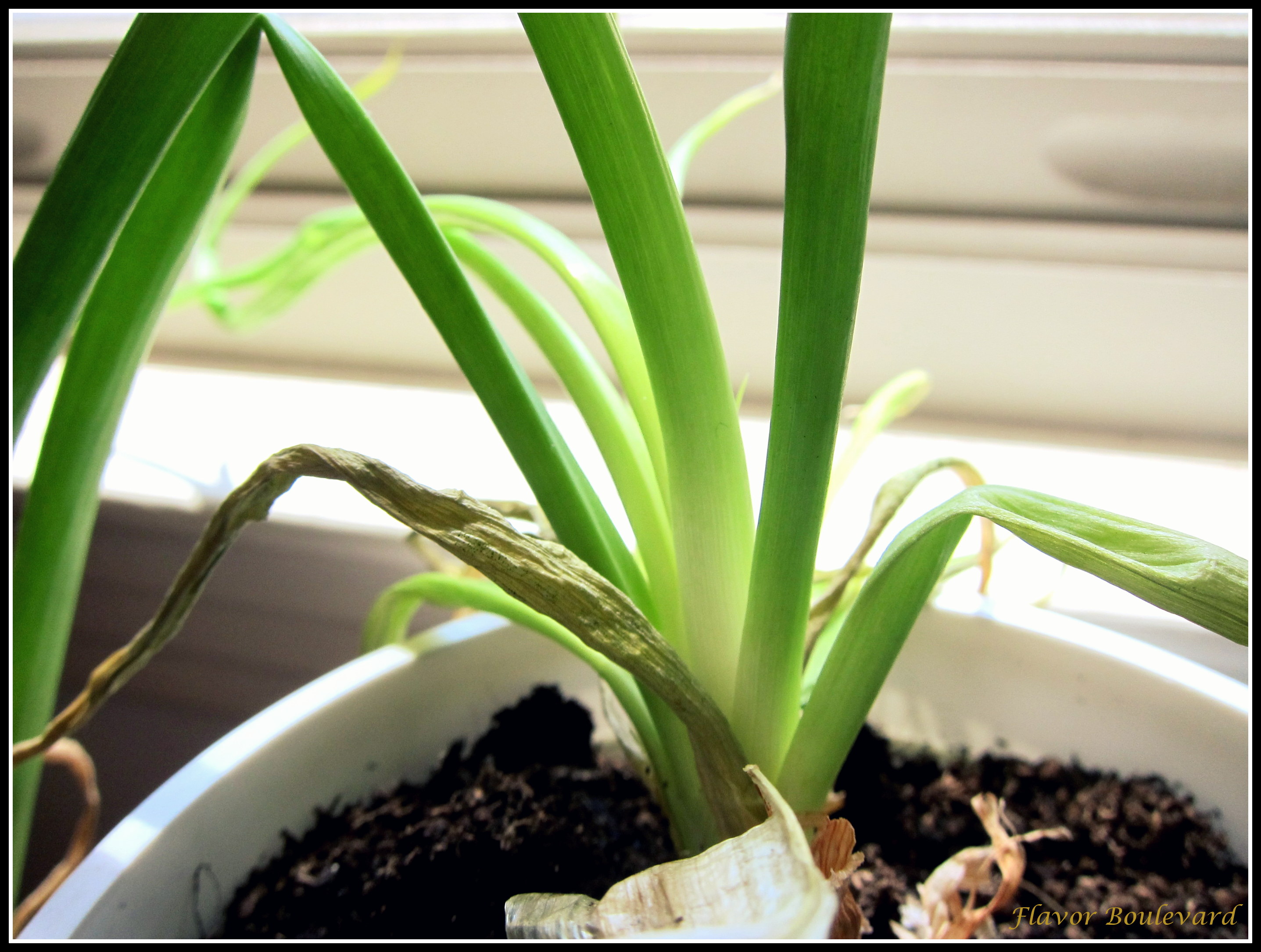
It kept getting taller and plumper. At some point the unthinkable thought of throwing it out became the unthinkable thought of letting it die. For a thing trying so hard to live on nothing, what kind of creature am I to thwart its life? So I placed it in a clean container that used to contain prunes, put in some soil leftover from another plant that I’ve long transfered the custody to my mom for its better chance of survival, and poured in water. I told my mom about it, but she said don’t have high hope. I wasn’t hoping for anything, I just wanted to give it what it wants: soil and water. I placed the pot outside during the day and took it in at night so that it doesn’t get cold. The sprout grew, turned green, and another leaf came out. Then I took a trip home for two weeks, thinking that the onion, having a watery body, should be okay without watering for two weeks.

When I came back, I saw the prettiest thing I’ve ever seen of an onion: several skinny green long stalks sprouting out, tall and cheerful. Thank you for surviving, Onion. You make the apartment alive.

I’m not complaining that I’m living alone. I chose this studio apartment instead of sharing because I was looking forward to living alone all my college years. My college roommates were nice people, I don’t dislike them. One girl was there for maybe 2 weeks total the entire year we shared the dorm room, I liked her. There are just songs I want to turn the volume up to for hours on end, meals I wanted to eat while watching a movie on the computer, times to laugh or cry without explaining to two quizzical and not necessarily empathetic eyes. Times to do crazy dance. Times to burn stuff in the microwave and send the alarm screaming. I was tired of asking for and giving explanations. The best thing about living alone is that you can do whatever you want.

The worst thing about living alone is that you can do whatever you want. The only thing I’ve cooked for myself since February is garlic scrambled egg and rice. I skip lunch everyday. I thought I was bad. But Ann Patchett stuck to her Saltine diet for months: “I ate slices of white cheese on Saltines with a dollop of salsa, then smoothly transitioned to Saltines spread with butter and jam for dessert. I would eat as many as were required to no longer be hungry and then I would stop. […] Day after day, month after month, I stuck to my routines like a chorus girl in the back row.” Actually, maybe her diet has more variations than mine. But you get the point. Dining alone means dining with the person who you want to hide and to expose to the world at the same time, the person that only you know.

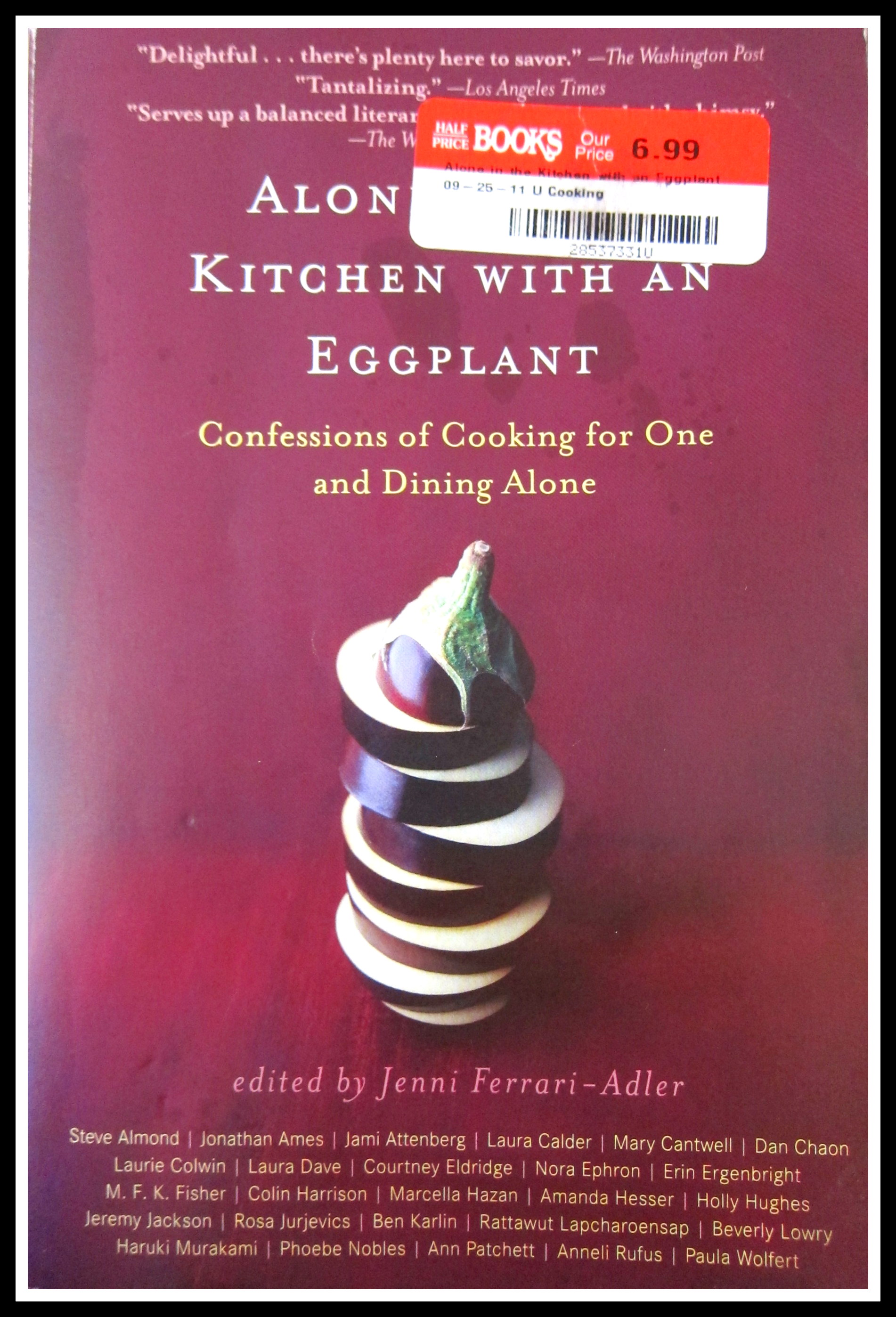
That person takes many forms, and that person goes through many phases, some pleasant, some weird, most are captured in the collection Alone in the Kitchen with an Eggplant. The beans and cornbread phase (Jeremy Jackson), the asparagus phase (Phoebe Nobles), the chili phase (Dan Chaon), the instant noodle phase (Rattawut Lapcharoensap) (I’ve gone through this phase my self – Sapporo Ichiban, original flavor – until Berkeley Bowl rearranged their aisles and I couldn’t find the packages for weeks, I contemplated boycotting Berkeley Bowl). There’s eating alone with glory, enthusiasm (Mary Cantwell, Dining Alone), a sense of self-declaration, independence, defiance (Jami Attenberg, Protective Measures), most often for a lady at a restaurant, and usually in the first days of eating alone. There’s eating alone to observe (Colin Harrison, Out to Lunch), to indulge (Anneli Rufus, White-on-White Lunch for When No One is Looking), to be relentlessly particular about your food and give no room for compromise (Erin Ergenbright, Table for One). These things happen when one has been eating alone for a long time, and accept it.

There’s happy eating alone because of a desperate need to escape the everyday hustle (Holly Hughes, Luxury), the joy is temporary like fireworks. There’s sad eating alone with a boiling thirst for companions (Laura Calder, The Lonely Palate). Then there’s the mellow eating alone because of permanent solitude, and although feeling lonely to the bones, in some way the lone diner religiously ties himself to that loneliness as if he couldn’t live without it, his repetitive meal is his only and last company. “What does an introvert do when he’s left alone? He stays alone.” (Jeremy Jackson, Beans and Me)

The person with whom I dine the most, me, has taken all of these forms. I found that amusing and sad, but to make things worse, I saw my friend in Haruki Murakami’s The Year of Spaghetti, “[tossing one handful of spaghetti after another into the pot] like a lonely, jilted girl throwing old love letters into the fireplace”. Eating alone is like dressing yourself when you’re invisible, you know you should make it good, but you wonder if it’s worth the hassle. Is that why the masked superheroes never change their outfit?

I noticed my onion doesn’t like direct sunlight, and it needed more soil, so today I went to a garden store begging for a plastic bag of soil. (I thought about digging up a cup from the neighborhood at night, but that wouldn’t sit right.) On the bus, I sat across from a boy, 12 years old he said, just far enough that he didn’t notice me watching him eat and close enough to see that it was gomiti in a loose broth with bits of carrots and green bellpeppers. Then I realized the book forgot one kind of eating alone: eating alone among a lot of people who aren’t eating. What do you feel then?


Garlic Scrambled Eggs over Rice (serves one for 3 meals)
– 4 cups rice
– 8 eggs
– 1/2 clove garlic, thinly sliced
– 1 tsp salt
– 2 tbs sugar
– 1 tsp oil

Cook rice. Oil the pan. Brown the garlic(*). Break and scramble the eggs. Add sugar and salt. Serve on or mix with rice.

(*) I used to add onion too, until Onion sprouted into a friend.

Food and film: Bread of Happiness and Kimchi Family

June 14, 2012 By: Mai Truong Category: Film/TV, Japanese, Korean, Opinions, Review of anything not restaurant


Movies are food for the eye (and ears, and brain, or whatever else you like). I watched Bread of Happiness on the plane ride from Houston back to SFO, and it made me happy that whole day. It also strengthened my resolve to study Japanese. The breads shown in this movie don’t seem particularly complicated, their presentation doesn’t sparkle, but they perfectly suit the gentle atmosphere that flows through the plot: looking at the steam rising as you break a fresh loaf in half, you can smell a sincere love.

Something that I learned from the main guy, a baker, in Bread of Happiness: do you know the literal meaning of “compagnon”?

Also designed to make you feel all warm and fuzzy inside, the Korean drama Kimchi Family hits the spot on days when I feel down (and also when I’m eating my cup noodles). It’s another string of small stories of how food made with heart can touch people’s lives in positive ways. If you don’t watch it for the plot, watch it for the kimchi! So many kinds of kimchi that I haven’t thought of being possible before. You can watch it on Hulu.com.

Kimchi Family has a lovely song that I can’t find the lyrics anywhere: “Take a drink. This drink is not alcohol, this drink is our mother’s tears, this drink is our father’s sweat…” UPDATE: Thanks to the author of Following KPop, I now have the lyrics of the drinking song, printed below.

Tonight I actually cried watching its 8th episode. But at least I was at home. For Bread of Happiness, aish, I had to sink into my seat so that the guy sitting next to me didn’t see my eyes turning all red…

발효가족 권주가 가사 (Fermentation Family – Drink Offering song lyrics from Daum Music)
Listen to the song on YouTube and sing along 🙂

Hangeul잡수시오~ 잡수시오~
이 술 한잔 잡수시오
이 술은 술이 아니라
우리 모친 눈물이오
우리 부친 땀이오니
쓰다 달다 탓말고
마음으로~ 잡수시오 명사십리~해당화야
꽃~진다고 서러마라
명년 삼월 봄이 오면
너는 다시 피려니와

가련한 우리 인생
뿌리없는 부평초라

잡수시오~잡수시오
이~술 한~잔 잡수시오

오동추야 밝은 달에
님 생각이 새로워라
님도 나를 생각하나
나만 홀로 이러한지

새벽서리 찬바람에
울고가는 기러기야

님에 소식 알았더니
창만한 구름 속에
빈소리 뿐이로다

Romanizationjabsushio jabsushio
i sul hanjan jabsushio
i sulreun sulri anira
uri mochin nunmulrio
uri buchin ttamioni
seuda talda tatmalko
maeumeuro jabsushio
myeong sasibri haetanghoaya
kkot jindago seoreomara
myeong nyeon samwueol
bomi omyeon
neoneun tasi piryeoniwakaryeonhan uri inseng
bburiobneun bupyeongchora

jabsushio jabsushio
isul hanjan jabsushio

otongchuya balkeun tarae
nim senggaki saelowuora
nimdo nareul senggakhanda
naman hollo ireohanji

saebyeokseori chanbaramae
ulgokaneun kireokiya

nimae soshik aratteoni
changmanhan kureum sokae
binsori bbuniroda

TranslationHave some, have some
Have a cup of this wine
This wine is not wine
This wine is our mother’s tears
This wine is our father’s sweat
Don’t say it’s bitter or sweet
Have a taste with your heart
Don’t be sad
The myeongsasibri rose buds fall
When spring arrives next year
you will bloom once againOur pitiful life
is like a floating rootless weed

Have some, have some
Have a cup of this wine

The paulownia tree
in the bright fall moon
reminds me of my wife
and saddens me
Does my wife think of me?
Or am I alone in this thought?
In the morning’s cold frost,
the wild goose cries and leaves

I hope for news of my wife
The overflowing clouds
are empty of noise

Tofu misozuke – the vegan cheese

November 25, 2011 By: Mai Truong Category: Japanese, Review of anything not restaurant, The more interesting, Vegan

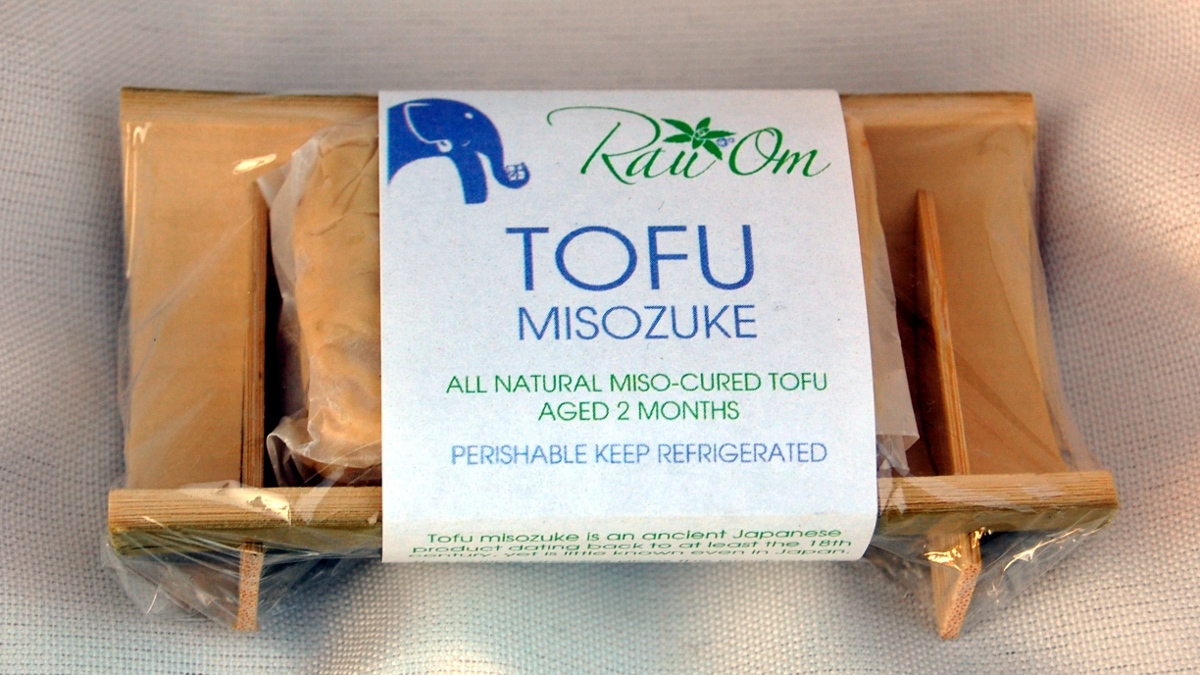
Tofu misozuke. Image courtesy of Rau Om

Every Saturday in Sunnyvale and every Sunday in Palo Alto, Oanh sets up the tables. She hangs a white banner with a simplified lavender elephant and the word “Rau Om” in calligraphic green, and a poster featuring a little mouse prancing with a block of tofu on his back, with the word “Mice eat Rau Om’s Tofu Misozuke” below. Then she arranges dozens of little bamboo and plastic wrap packets on the table, each containing a block of tofu in beige paper, about as big as a match box. Then she’s ready for the Farmers Market. And the tofu is ready to be sold out, every last one of them.

Over two years of experimenting, Oanh says, including lots of PubMed searching, an 18th century manuscript in old Japanese, and who knows how many pounds of firm tofu. It all started with an accidental find in Tokyo’s night food scene in 2009, and here they are, at a Californian Farmers Market, offering a Japanese elder a taste that brings her decades back home. It’s like the tofu has achieved its American dream.

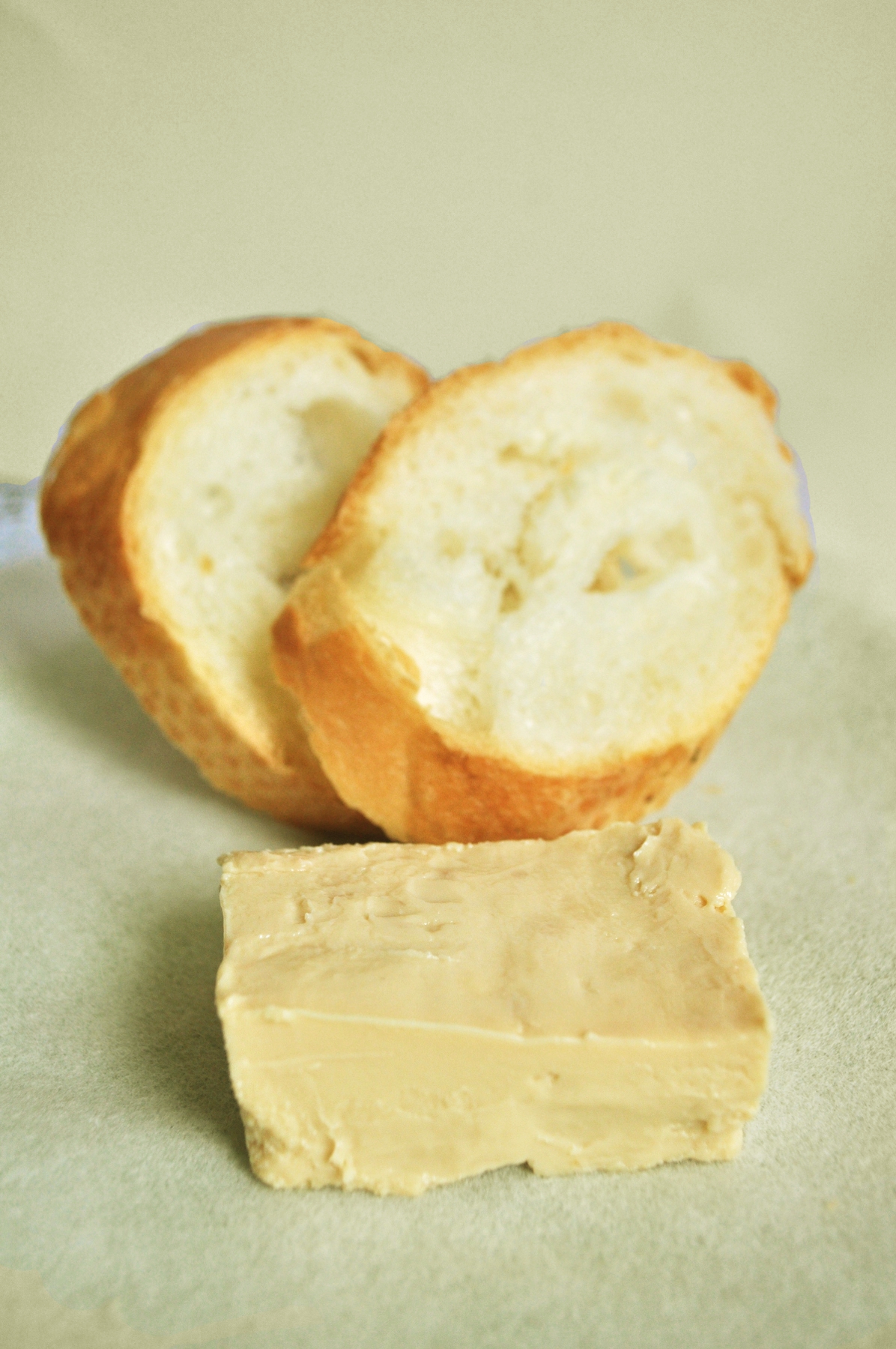
When I first had my tongue on Rau Om’s tofu misozuke at one of Oanh’s dinners, I thought wow, this stuff feels like La Vache qui Rit. It’s exactly that texture, that kind of tender springiness of a creamy cheese that bounces when you touch and has no resistance when you cut, the kind of softness on the verge of melting, like that of a 64°C slow-poached egg yolk. When the taste starts to register, like a tenth of a second later, it’s a whole different affair. There’s some brininess, some tingling sensation, but there’s no fat. It’s a creamy cheese that isn’t at all fatty, naturally, because it’s a vegan cheese. The brininess comes from the miso, and the tingling sensation comes from the sake. A few seconds deeper is the soothing sweetness of soy and sugar.

I fell for it. I know I’m going to sound like a tofu freak now, one that might as well protest for the civil right of the tofu and occupy the supermarket because soy is the 99%, but this meat lover is gonna say it: tofu is a really freaking awesome invention in food history. If people say it tastes plain with a frown, I say they don’t know how to appreciate the “plain” taste. That’s the taste of water and steamed rice, the flat tone in music, and the white space in photography. It’s better than good, it’s a necessity. When I’m tired, I crave exactly that taste. Then there are a hundred ways to make tofu depart from plaindom. And the Rau Om couple succeeded splendidly in one of them: make tofu into tofu cheese (tofeese? :D).

Oanh and Dang also let me try a wedge of kombu-wrapped tofu. The kombu attenuates the miso saltiness and promotes the aged sweetness. The kombu tofu misozuke is one level deeper than the tofu misozuke. I was hoping to buy it last time, but:

FlavorBoulevard: Did you wrap this new batch of tofu misozuke in kombu?
Oanh: No. We’ll roll out the kombu-wrapped tofu misozuke in a few months, and it’ll be clearly labeled as such.

FB: What kind of tofu do you use? In your blog, you wrote “firm tofu”, but would you like to elaborate?
Oanh: We are buying regular tofu from the supermarkets. A to do item for us is to look for a local source for tofu.

FB: What about the miso?
Oanh: One of the first recipes we found specified white or yellow miso. We did some experiments with other types of miso and found the results less than satisfactory, with all the caveats that come with a negative result.

FB: How long does each batch take?
Oanh: The miso flavor permeates the tofu almost immediately, but to get to the right creamy texture, it takes at least 2 months.

FB: How long can the tofu stay good (refrigerated) after packaging?
Oanh: About a month.

FB: Currently the tofu misozuke is marked at $7/packet (2.5-3.0 oz). Based on what standard did you set the price? Are you worried that it might be a bit high for the general market?
Oanh: The price is as affordable as we can make it given the production costs and is at a comparable level to other artisanal hand-made cheeses. Like fine cheeses, the process of making tofu misozuke is labor intensive, both during the initial production and regularly during the aging process which lasts at least 2 months. That’s not even counting our research cost, which we figured was just part of our food budget, the price of our food obsession.

FB: Can it be used in cooking, like in soup or pizza? Or salad? Would the flavor diminish in the process?
Oanh: Yes, it’s definitely can be used in cooking. The flavor is intense enough to stand up to the cooking process. We once used it in a squash blossom & beef dish. We definitely can see it work in salad. We had a post a while back about some of the uses of tofu misozuke. We’ve also used it in place of chao (Vietnamese fermented tofu) to make duck hot pot, and we recently found out that it worked very well with prosciutto.

Tofu misozuke package. Image courtesy of Rau Om

In the States, you can’t find this kind of vegan cheese anywhere but the Rau Om online store and their Farmers Market tents. Or you can spend 2 months making it at home, following Rau Om’s recipe, assuming that you succeed on the first try. I wouldn’t. Rau Om’s tofu misozuke, in its offwhite color and handmade packaging, is very Hollywood-girl-next-door from appearance to content: her hairdo doesn’t sparkle, but once you know her, you fall helplessly in love, especially if you are any of the followings: tofu aficionado, cheese aficionado, vegan, and foodie.

Basically, tofu misozuke can be used anywhere cheese and soybean paste can be used, but as my friend Masaaki Yamato says, that would be like using caviar to make soup. A wise man would enjoy tofu misozuke alone with an ochoko of sake, and let his senses fly.

(UPDATE: I enjoy it with genmaicha, or a sweet oolong ;-))

DISCLAIMER: I received no free product or monetary gift in exchange for this review.

Tags:

All-natural nem by Rau Om – Rediscovering the Vietnamese meat curing art

August 28, 2011 By: Mai Truong Category: Food product, The more interesting, Vietnamese


My most vivid memory nem happened one summer afternoon at a fishing park in the suburbs of Saigon. Nem is one of those more favored snacks to accompany conversations among friends, and while the adults were toasting away the sunlit hours grilling their freshly caught fish, the ten-year-old Mai made friends with this tiny black-haired guy with her share of nem. He enjoyed the nem so very much that he kept reaching out to her and holding her finger. Oh it was such joy watching him nimbly bite into the succulent pink pieces of meat, smiling innocuously. It’s been fifteen years. I wonder how that little pet monkey is doing now. His hair is probably all white, if he’s alive.

I didn’t have much nem to give him, maybe two or three pieces, each the size of half a thumb. Little Mom had no idea that I was giving them to the monkey, she probably would have given me more if she did, because she’s very hesitant to let me eat nem. First, it’s uncooked meat. Second, ambiguous chemicals are involved in the curing process to make nem. So aside from that happy memory of nem and monkey, Mai grew up indifferent toward those pink meat snacks wrapped in banana leaves. But one day, the twenty-five-year-old Mai, while reading Rau Om, saw that her blogger friends have discovered an all-natural, chemical-free way to make the meat snacks, and the interest arose.

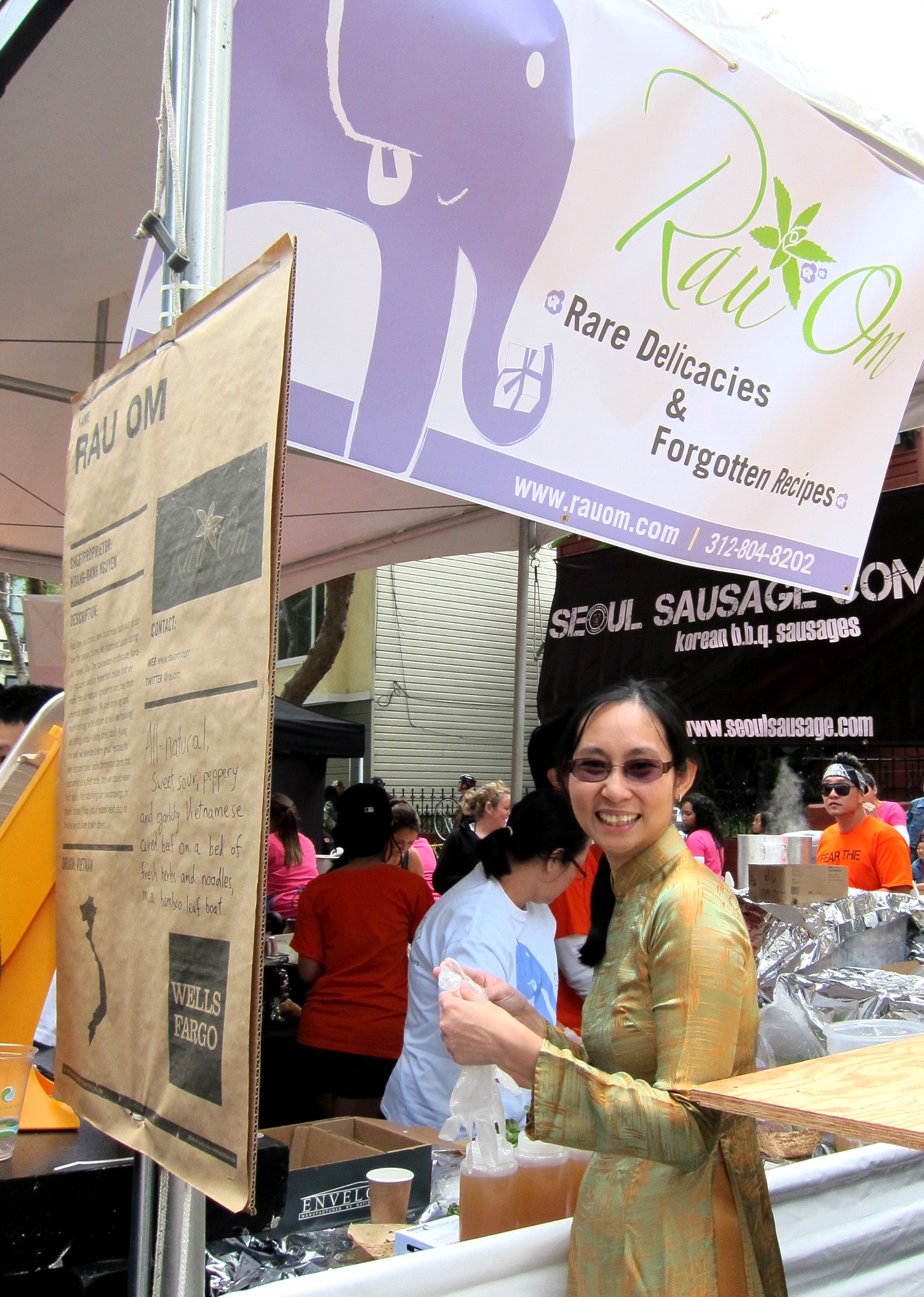
Oanh of RauOm.com at San Francisco Street Food Fest, August 2011

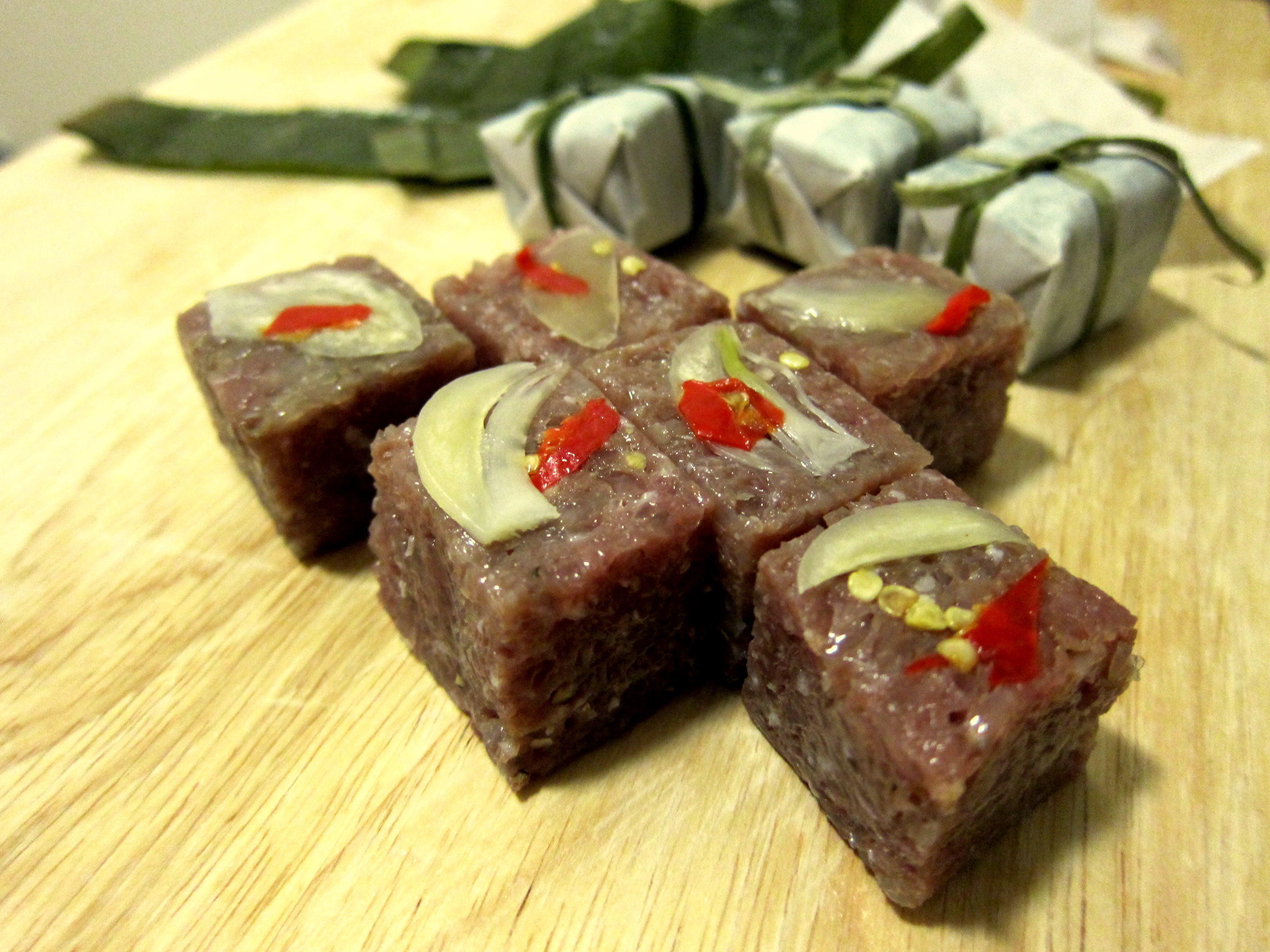
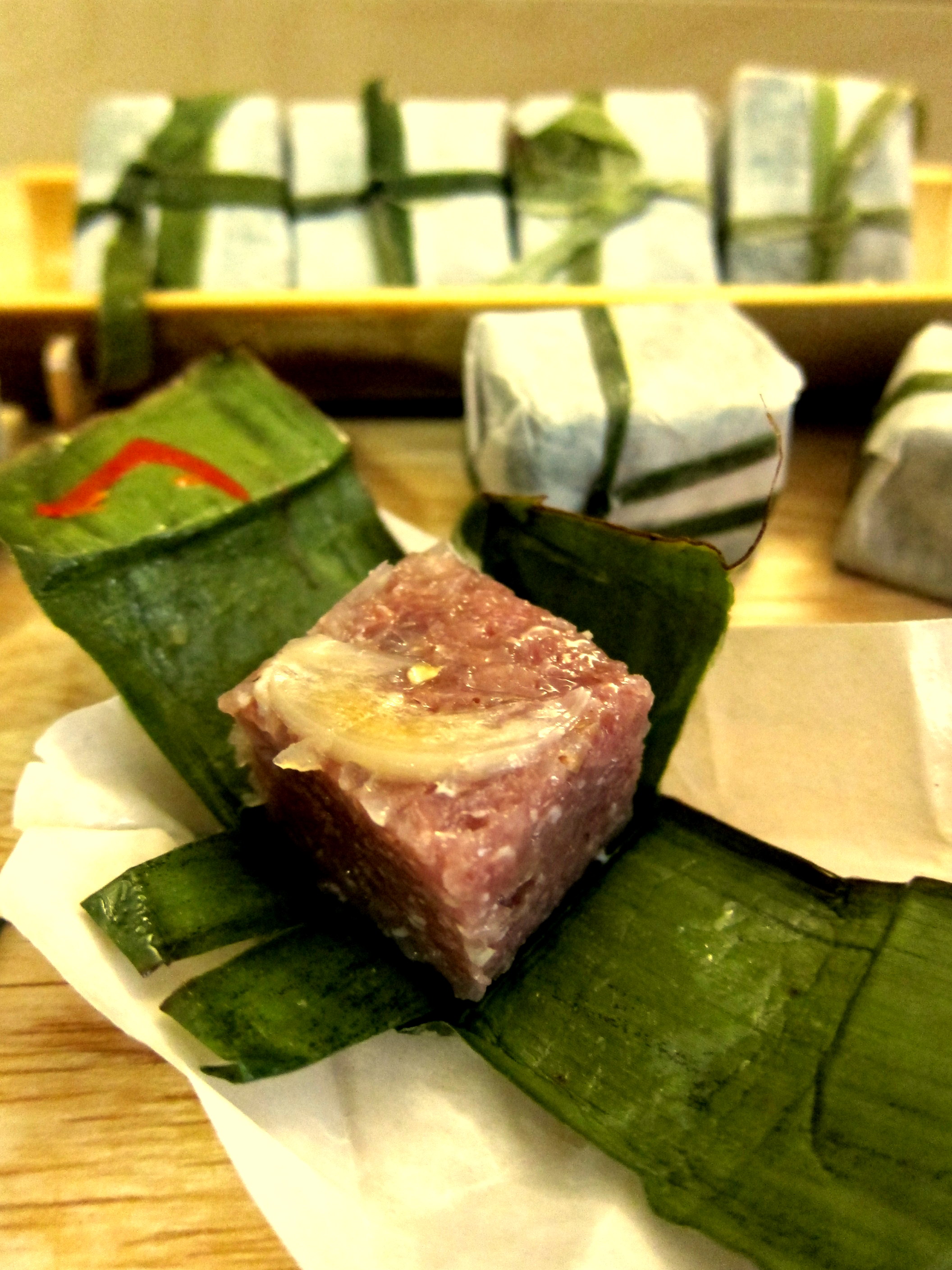
In my previous post, which was a hundred years ago due to web hosting issue, I mentioned that Rau Om‘s nem was the main reason I joined the San Fran Street Food crowd this August. If there’s anything I regret not doing that day, it would be not eating the nem the way Oanh and Dang prepared it at the festival: on bánh hỏi, with rau răm and a dash of mixed fish sauce, in a bamboo leaf boat. I didn’t have bánh hỏi and rau răm at home, so I just ate nem solo out of the leaf. I was surprised by how good it was.

Eaten soon after the curing time finished, Rau Om‘s nem has merely a quick hint of sourness, one paper thin slice of garlic and another of cayenne pepper still smell crisp, and the grease from the pork skin and the beef keep all of those flavors linger on the tongue. It’s intriguing to say the least. But most importantly, Oanh and Dang did not use any random “nem/nam seasoning package” in Asian grocers, which has always been known as the crucial ingredient to make nem. They are scientists, and they do experiments to replace the black box with natural ingredients. As it turns out, there’s only one special ingredient.


Oanh’s answers to my questions about Rau Om’s all-natural nem:

FB: What ingredients did you put in your nem? I know there’s ground beef, pork skin, garlic, chili pepper, salt, sugar, but is there anything else?
Oanh: The only other ingredient we add is celery juice powder (which is exactly what the name indicates, powder made from celery juice), which helps cure the meat and also prevents spoilage. Otherwise, there’s absolutely nothing else. That was the whole point of all our research into making nem the traditional, all natural way.
Also, the ground beef isn’t the regular ground beef. We actually bought whole lean eye round and ground it finely (twice or three times). This is where nem is different from regular sausages: nem can’t be made with regular store-bought ground beef because there’s just too much fat and connective tissues, it messes up the nem texture. With high quality lean meat, nem is more like ground ham than sausage.

FB: How long is the fermentation/curing process?
Oanh: 2-3 days

FB: How long can nem stay good after cured?
Oanh: If you put it in the freezer right away, it could keep for 2-3 months. Thawing should be done in the fridge and nem consumed within 3-5 days.

FB: How would things be different if you use pork instead of beef? Can chicken be made into nem?
Oanh: Pork and beef are neutral tasting enough that it doesn’t make a tangible difference in nem. We also make lamb nem, where we can taste the difference because lamb is a pretty assertive meat (grill lamb nem is really fragrant and yummy). Good question about chicken – I don’t think it’ll work, Dang thinks there’s only one way to find out. Also, now he wants to try duck nem.

FB: Usually, nem has a bright reddish hue, but Rau Om’s nem is more brown with a pink tint. Is this because you didn’t use the seasoning package?
Oanh: We are still tinkering with the process to get the color to be more pink. Most recent batches got a bit little bit more of the pink hue. I don’t think we can ever match the color of nem made with the nem powder, though. The amount of nitrate in that powder package is probably really high…too high for us to feel comfortable matching.

FB: Why does nem have to be individually wrapped in small packages like that? Is it to aid the curing process or just to make them easy to eat?
Oanh: I think just easy and convenient to eat on the go as a street snack. There are also bigger rolls of nem (just like we have bigger blocks) for eating at home, so the smaller packages aren’t necessary for curing.

FB: Does the banana leaf help enhancing the flavor/curing? Would it be okay to wrap it with foil or something beside banana leaf?
Oanh: In fact, most of the nem you find in Vietnamese delis in San Jose would be wrapped in foil and/or saran wrap. Even the banana leaf wrapped ones have the leaf itself wrapped in saran wrap. What we found was that direct contact between the leaf and the nem does give nem a distinctive flavor.
Nem also used to be wrapped with lá vông (tiger claw leaf), lá chùm ruột (star gooseberry leaf), or lá ổi (guava leaf). We haven’t been able to get lá vông, but we have experimented with lá ổi and cherry leaves. Speculation: these leaves don’t impact the flavor as much as provide the ingredients and enzymes that helps with curing, playing the same functional roles as the celery juice powder.

Honestly, I’m still not sure what celery juice powder means, so I’ll bug her to show me next time I see her. And how did she even think of celery juice powder? Lots of admiration sent her way. 🙂


I did my share of nem experimenting. Not having a grill or any appropriate grilling facility, I threw a handful of nem onto a skillet smeared with hot oil. Little Mom did warn me about pork skin and oil in the past, so I wore long sleeve shirt, wrapped both hands in plastic bags, stood three feet away from the burner, and used long chopsticks to flip the nem. Midway through the frying session, I also had to use a chopping board as a shield between me and the skillet. The aftermath was a stove with as many oil dots as stars in the Milky Way. I’m not kidding, frying nem was like lighting fireworks. But they go great with white rice and kimchi. 🙂

My clumsiness aside, making nem is not easy, and making nem without chemicals has been unheard of, but Oanh and Dang have succeeded in reviving the lost art of all-natural Vietnamese meat curing. I felt excited just being one of the many tasters of Rau Om‘s nem. The same kind of excitement I had playing with that pet monkey in the fishing park. If you’ve held hands with a monkey, you know it’s like a human hand, but it’s not, isn’t it the strangest feeling? Well, nem is raw meat, but it’s not, isn’t it an interesting food? 🙂

Disclaimer: The author of this post did not receive any monetary profit for writing about the product, so if you decide to trust her taste, you can buy Rau Om‘s nem online at rauom.com. $20 for a package of ten nem. 🙂

DISCLAIMER: I received no free product or monetary gift in exchange for this review.

Red Boat fish sauce – Good enough to sprout crazy ideas

August 04, 2011 By: Mai Truong Category: Food product, Southern Vietnamese


“It’s sweet, and it shines like honey,” my mom recalls. She was in fifth grade, her teacher, whose family also owns a fish sauce plant, gave each student in the class a sample of the condiment in a mini plastic pouch. When my mom took it home, it took her mom no time to see that this was the Ninth Symphony of fish sauce. It didn’t take the Vietnamese grandmothers in the Bay Area very long either, Rob Bergstrom said, and I quote, to “limp out of the store carrying a full case” of Red Boat’s.

I met Rob because of a half-a-month-late comment that I left on Ravenous Couple’s glowing review. Rob is a man who goes around grocery stores and the world to taste fish sauce straight out of the bottle by the spoonfuls (I don’t recommend doing it at home if you’re under 18). And Rob was moved by my mom’s fifth grade experience, which, he said, is similar to a few sparse stories among the older Vietnamese about an excellent-quality fish sauce that some have once tasted in their lifetime and never again. Especially not in the States, where a “Nước Mắm Phú Quốc” bottle, in big font Vietnamese, reads “Product of Thailand” in the small prints.

For those who know fish sauce, skip the rest of this paragraph. For those who don’t know fish sauce, yes I agree, “fish sauce” does not sound candle-light-and-roses to the ear. It’s a lose translation of “nước mắm“, whose literal translation isn’t any more poetic either (I’d translate it if you ask). The sauce itself is actually subjected to many chuckles and jokes among Vietnamese. But it’s the backbone of Vietnamese seasonings. It’s used to marinate meat, to caramelize claypot dishes, to flavor-ize broths, to make dipping sauce for a myriad of wraps and rolls. Fish sauce to Vietnamese food is like soy sauce and sesame oil to Korean food, curry to Indian food, and BBQ sauce to Texas barbecued brisket. (Savory Vietnamese food, unless made by my mom, needs fish sauce to taste good.) What is the sauce made of? Fish and salt. In a barrel lie layers of fish and layers of salt for months, by osmosis and high salt concentration on the outside, the juice inside the fish is sucked out, the flesh collapses and degrades, the mixture ferments (don’t cringe, wine is fermented stuff too, and old country ham grows mold on the crust). At the end of several months, you open the spout at the bottom, and out comes an amber liquid. That’s the first press of fish sauce. Then water and salt are added to the now mostly, if not all, disintegrated fish, more fermentation takes place, out comes the second press. Then the third, and might as well the fourth. By this time, it’s practically salt water.

The bottles in the markets, even in Vietnam, do not contain pure fish sauce (fish and salt) but also water, fructose, and “hydrolyzed wheat protein”, a more sophisticated name of MSG. The producers have to add those things to boost the taste because the base sauce is not the (first) concentrated extract that comes out of the spout, but what comes after. You might think that there would be a big lucrative market for premium sauce such as this in Vietnam, but sadly, much of it is used by large companies for blending with other additives to produce large volumes of second grade sauce, which is often mislabeled as first quality. Because of this, authentic first pressing Phu Quoc fish sauce is very hard to come by, even in Saigon.

So Cường Phạm brought his family’s first press to the States. Obviously a good move. An even better move is when he shook hand with Rob Bergstrom, who helped him expanding the American market, and last I heard, the New Zealand market too. You gotta hear Rob talk to see how he much adores it. Here’s a few things I learned about Red Boat from him (that Ravenous Couple haven’t covered already):

M: What is the ratio between anchovy and salt in Red Boat fish sauce?
— Rob: The ratio depends on the leanness of any given catch of anchovy, but roughly somewhere between and 4:1 and 2.5:1 fish to salt (by weight).

M: What about the barrel construction?
— Rob: Red Boat uses hand made wood barrels, in the unique traditional Phu Quoc style, instead of concrete or clay ones. The barrels are kept indoors but some sunlight is let in and fresh coastal air is circulated through the building. The wood imparts a unique character on the sauce.

M: How long is the fermentation process?
— Rob: It usually takes 12-16 months to make the sauce, the longer fermentation yields greater protein concentrations and associated richness and depth.

M: What is the market spread of Red Boat now? Where can I find it around Berkeley?
— Rob: Red Boat has been very well received by Asian cooks and chefs. Often when Vietnamese folks try it they remember it as the flavor of the best fish sauce from home and will pick up a whole case. It has also become a “secret” ingredient used by chefs at many high end restaurants and it can currently be found at some of the best specialty food shops on the West Coast. Geographically, we get shipping orders from all over the country and hope to be in Asian and specialty markets nationwide by the end of the year. The enthusiastic reception by people using this in all types of cuisines has been fantastic.
(UPDATE: I met Rob 3 weeks later, when Berkeley’s Monterey Market and The Pasta Shop, among others, are now under the Red Boat spell.)

M: Is it sold in Vietnam?
— Rob: Not currently, but the sample tastings in Vietnam have been extremely well received so it is something that we are considering.

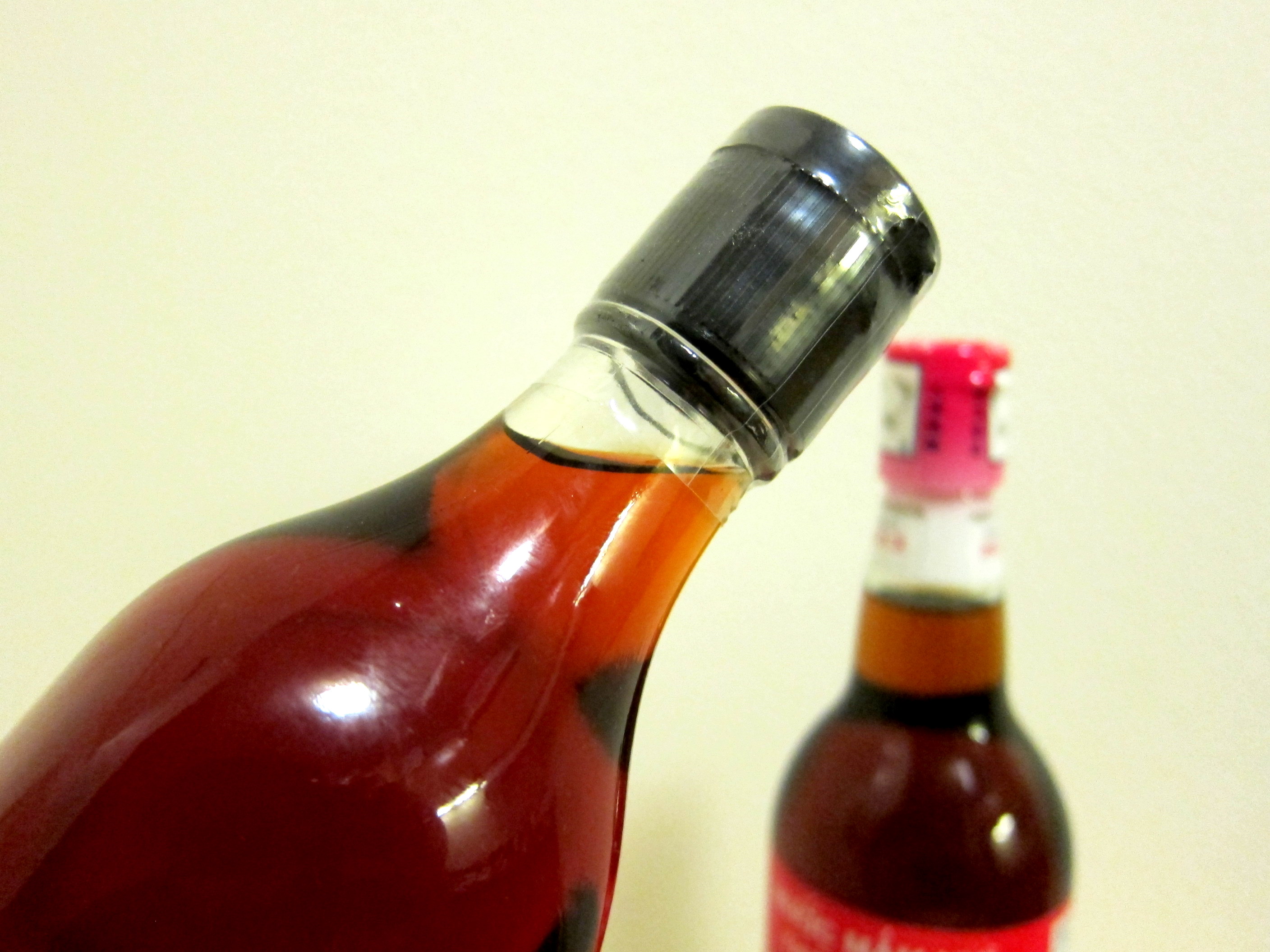
My interest was piqued. The glass bottle is stylishly shaped, the label has a clean design. Is this really the wonder liquid that my mom still remembers for years after tasting it once?

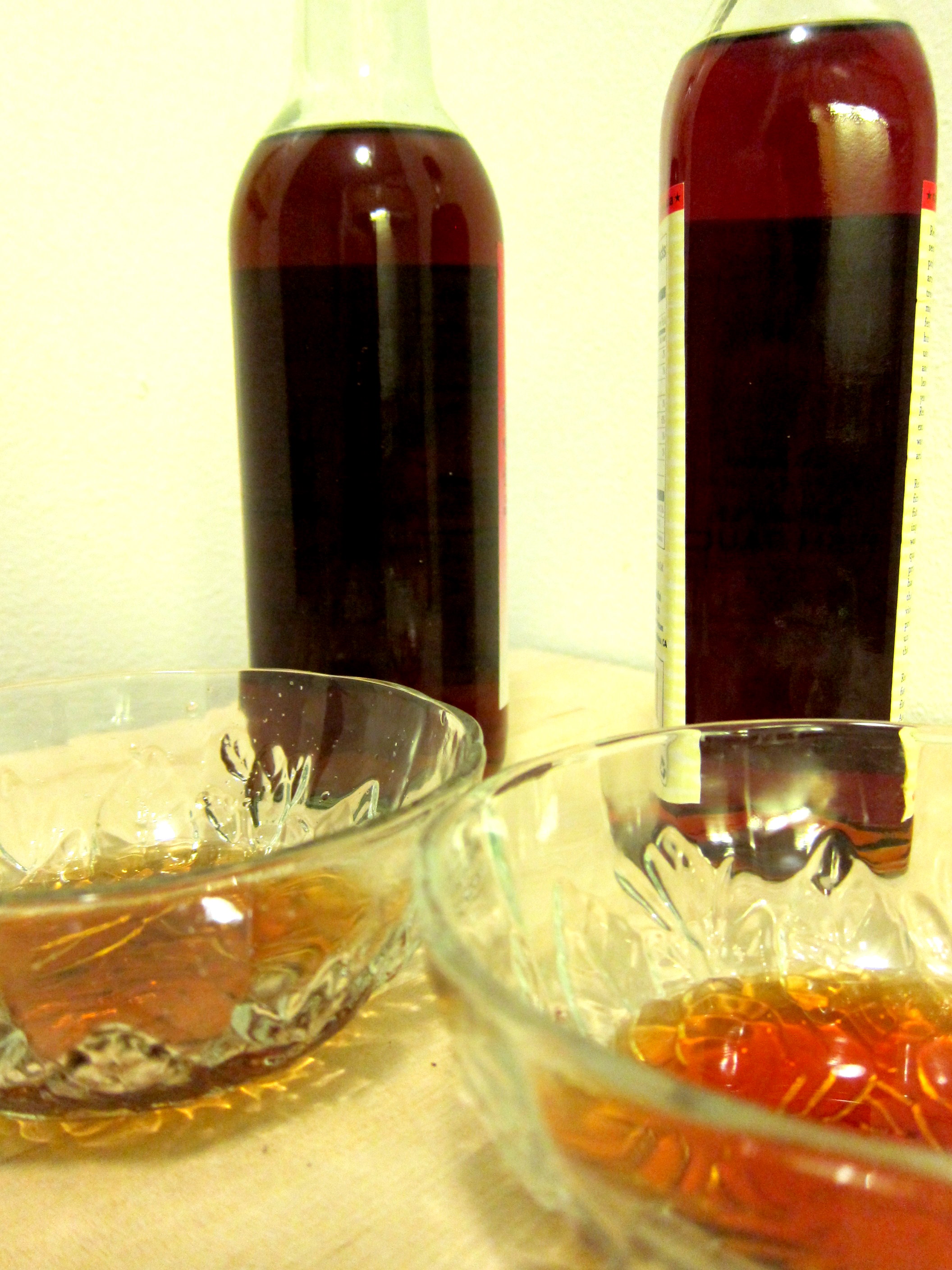
My pantry has a bottle of “Shrimp & Crab Brand – Premium Quality Fish Sauce” (Product of Thailand) that I bought some time ago on a whim. Now it comes in handy. First, a visual check.


Red Boat: light brown with a red glow; S&C: dark brown with a dead yellow hue. I usually like yellow, but red wins this time.

– Viscosity check: S&C joyously streams out of the bottle like first graders out of school, while RB takes its time forming droplets at the hole. The discrepancy is slight but noticeable, especially if you check with a spoon.

– Smell check: RB is more solid but more pleasant than S&C.

– Taste check: [this is proof of my dedication to blogging. A lot of Vietnamese, my grandfather for example, put fish sauce (out of the bottle) on rice like people put butter on bread. I can’t. But this time, I taste a teaspoon of S&C, drink some water, and taste another teaspoon of RB. Then I repeat.] S&C: tastes like salt water with a stinging residual, RB: the immense saltiness dissipates after a few seconds, giving way to a faint but lasting sweetness at the back of the throat. This fish sauce is actually pleasant in its pure form!


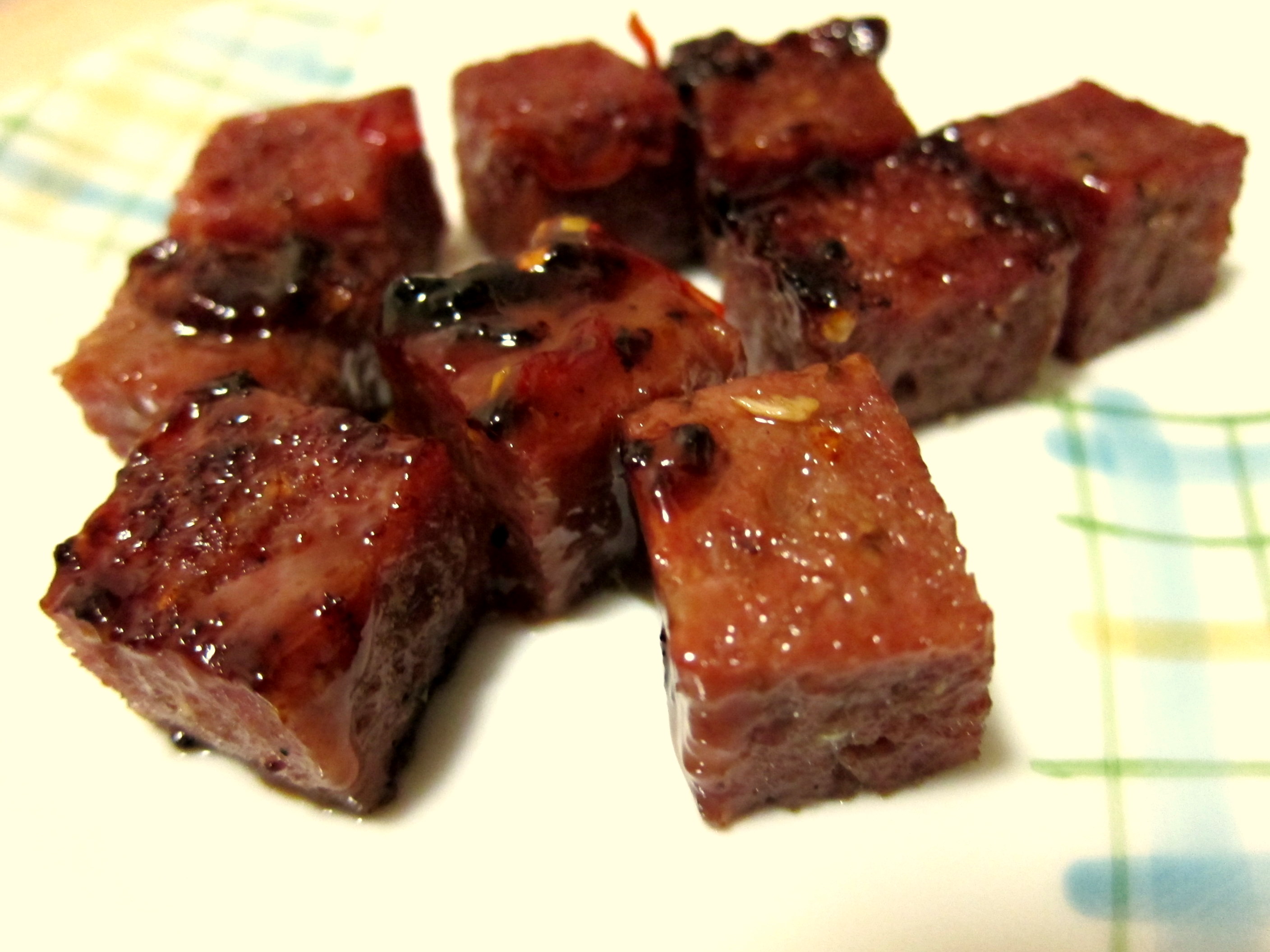
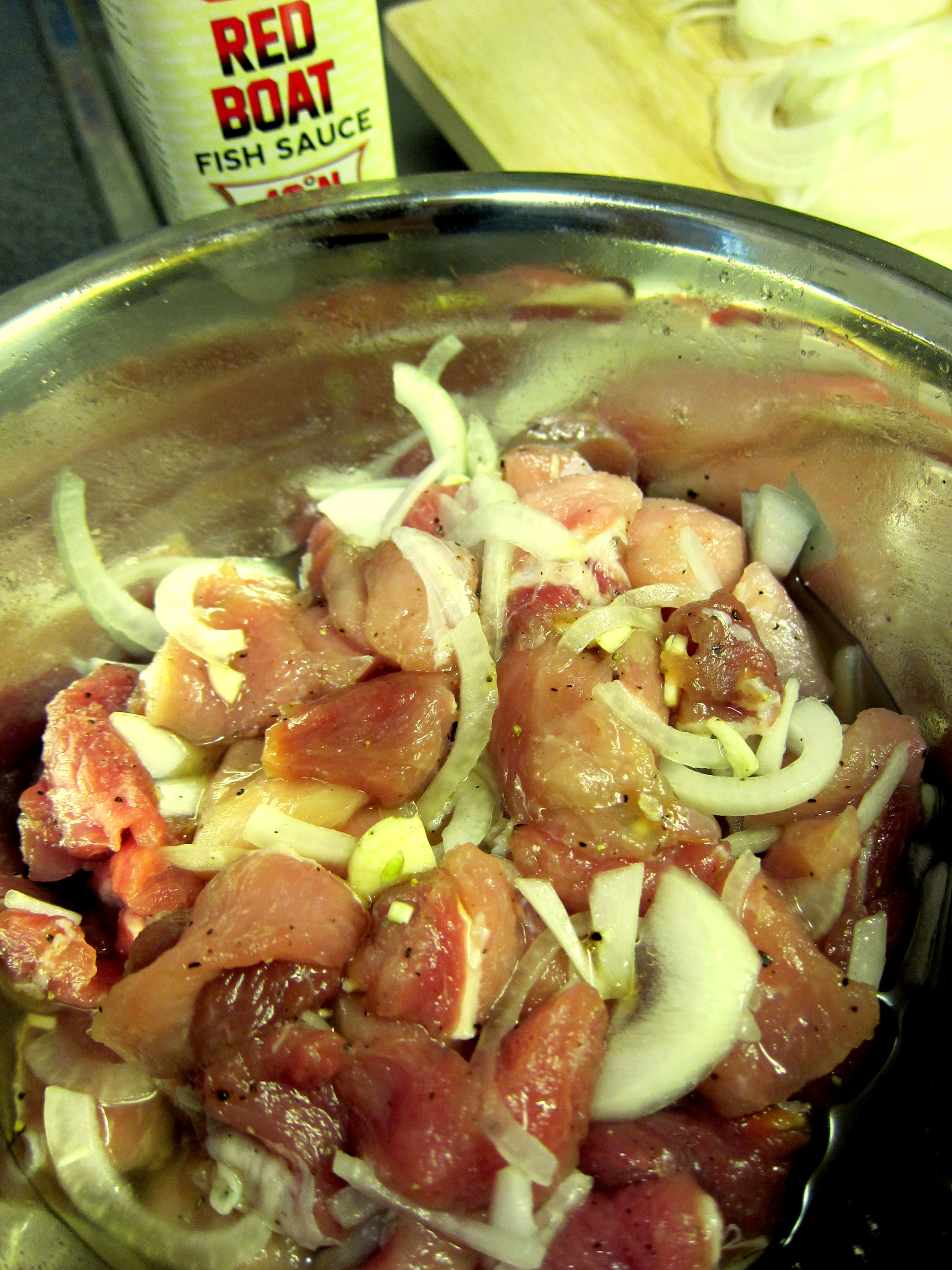
I marinate my pork with it. Bob has used it in every one of his inventions with meat. Rob has tried it in a Bloody Mary. All of them are great. Bob jokes about incorporating it into ice cream, which can be quite reasonable if it’s to balance out a caramel-laden scoop. How about a simple lemonade with Red Boat instead of the common salted lemon drink (chanh muối)? How about Red Boat in sugarcane juice? Red Boat cupcakes? Red Boat mousse? Red Boat truffle? Red Boat key lime meringue? Okay I’ll stop.

DISCLAIMER: Beside one free bottle of Red Boat, I made no profit in exchange for this review. This review was written completely out of my own interest for the product.