Flavor Boulevard

We Asians like to talk food.
Subscribe

Archive for the ‘Book’

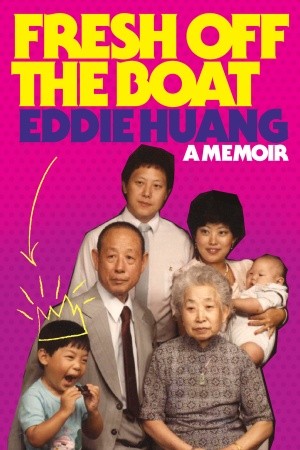
An FOB feeling happy after reading Eddie Huang’s Fresh Off the Boat
November 03, 2016 By: Mai Truong Category: Book, Opinions

fresh_off_the_boat_-_a_memoir_book_cover
It starts with the food bullying that I feel I can relate to Eddie Huang‘s story. Cleverly, he begins the book with dimsum, so that got my interest, but he talked about dimsum for less than 2 pages. The food bullying though, where his classmates said that his food smelled bad, that he wanted the white kid lunches, that’s where my memories came back. The bully for me wasn’t in school and wasn’t by the kids. Comments, always by adults and mostly white females, that the food my mom made made the house smell bad, or the stuff I eat or drink that they haven’t heard of, much less tried, is “gross”, are this pet peeve of mine that I can’t forgive. Sure, they may not be intended to hurt me or anyone specifically, but they’re never well-meaning. They are too minute to confront the speaker about, so I have no way to tell the speaker that she’s disrespecting my whole culture. They are the papercut stings that you feel every time you wash your hands.

Eddie Huang and I don’t have anything in common, except we both being born to Asian parents. He grew up liking basketball, seeing himself in hip hop lyrics, doing drugs (and selling them), working in restaurant kitchens, getting in fights and juvenile in high school and probation in college. I grew up doing literature, math and science competitions. He lives in the East Coast. I live in Texas and the Bay Area. He is a celebrity. I am one of many of the model minority. Unlike him, I didn’t have classmates bully me for being Asian, because lucky for me, I wasn’t in America until late high school. In Vietnam, at least in those days, when you make good grades, your classmates don’t hate you, the cool kids are not the ones that play football or are in the cheerleader team (there’s no such thing as cheerleading in Vietnamese schools), and there’s no nerd that talks only about science or Star Trek in an annoying, obsessive way that makes a bad name for everyone who actually likes to study and get good grades. So at Humble High, I joined a group of class-loving friends at lunch, we sat by the library, then I went to college wanting to be a Physics professor. In American terms, I’m a big nerd. But I can’t feel one bit related to or represented by Sheldon in the Big Bang Theory. That show is a cheap attempt of boxing all science students and scientists into this inaccurate, overblown stereotype of what a scientist looks and acts like. Not a single real physicist that I know fits into the Sheldon box. However, a few students that I’ve taught, who make themselves fit into that box because they want to be scientists, fit the box like a cat. Shows like BBT make teenagers mold themselves into erroneous molds without ever knowing the correct mold, if there’s even one.

So yes, we shouldn’t fit ourselves into molds, and I’m a bit afraid of trying to fit myself into the Asian mold right here by relating to Edie Huang’s story simply on the ground that we’re Asians.

I feel worried every time there’s an Asian in the news, because most of the time only bad news make it into the news. When my mom saw the news about a drug dealer who happens to be Vietnamese American, she felt ashamed. When news about the Virginia Tech shooting and more recently, the UCLA shooting, came out with just the vague description of the shooter being Asian, I felt ashamed. Then I felt relieved that they weren’t Vietnamese, but still ashamed that they’re Asian. When Asian girls act promiscuously as if they’re trying to prove a point that they’re not the Asian-good-girl type, I feel ashamed. I feel ashamed for every Vietnamese who eats dogs or cats. Just fitting into the model minority image isn’t enough, I feel responsible for every action made by every Asian that doesn’t fit into that image. Why? Because I’m afraid that if we don’t fit into the model minority mold, they’ll make up another mold, a stinky-food-eater K-drama-watcher hip-hop-dancer-wannabe Tinder-hookuper mold, throw us all in, box us up and never let us out. I shouldn’t be ashamed though. Those people with actions that I don’t agree with don’t represent Asians (they don’t intend to represent anyone but themselves), they’re no more Asian than me, and certainly no less American than our presidents.

Yet, why do I feel such familiarity when Eddie Huang said that he felt at home at his friend’s house because he’s Filipino, that the American Thanksgiving dish that he liked the most to bring home to convince his mom of American food was green bean casserole (I think this is a pure coincidence, what culture influence can there be?). I see Kristen’s pen mark underlining every sentence that I feel related to, they must have resonated with her too, and that brings me comfort. Why do I like it when I take off my shoes at the door at Rashmi’s house (not because I enjoy the act of taking off shoes, but because Rashmi’s family is Indian, and we do the same at home)? Why do I like grocery shopping in Oakland Chinatown, just to look at the sauces, dried squid, rambutan, bok choy, sea cucumber, unidentifiable roots, Asian pears in styrofoam nets, when I don’t buy anything? The thing is, I feel comfortable seeing, eating, doing, thinking the stereotypical things that we see, eat, do, and think. Stereotypes are based on truths. Sure, one or two hundred people may deviate from the stereotype in one form or another, but 99% fit the stereotype for that form, and the 1% that deviate may actually fit the stereotype in another form. I’m not studying to be an engineer or a medical doctor, but I’m good at math. My parents don’t work in the restaurant business, but I love food (and still want to run a restaurant at some point). The stereotypes and our experiences with them, good and bad, connect us.

Publishers Weekly say “Huang reconfigures the popular foodie memoir into something worthwhile and very memorable”, and it makes me think they didn’t read past 20 pages of the first chapter. Labeling the book a foodie memoir is wrong. It’s not about food, Huang is not a foodie, and it’s not about him being a foodie. He’s a restauranteur, a popular food personality, a chef, but his memoir is not about his life in any of those jobs. It’s about him growing up in America and becoming successful as an Asian kid who didn’t fit (and didn’t want to fit) into the stereotypical image of Asian kids in America. It wasn’t like he was thinking the whole time, “oh I gotta be different, non-stereotypical”, either. He was just a kid growing up. Fresh Of The Boat is a coming-of-age nonfiction. He tells it as it was, real, unpolished, neither grammatically nor politically correct. He’s good at food, and he’s Asian, but neither is the whole picture. The point of the book is that he, just like everyone else, went through many experiences that a lot of us happen to be able to relate to. (The laughs are on you too, though, Eddie. You tried so hard to figure out what you were and you didn’t want to just take the easy path, conform and be typical, but you actually did everything a typical Asian does: you did your homework, you helped out at your family business, you cared about being a good student, you want your parents to approve of you, you went to law school, and as you pointed out in the book: you succeed by going into the restaurant business. Like you said, “You can take a Chinaman out the paddies, but he will still put MSG in all your food.” The difference is you’ve done other things too.)

You don’t have to be an American-born kid from Taiwanese immigrant parents to relate to the narrative. A lot of people can relate: immigrants, people whose parents used to argue a lot, kids who get bullied in school, smart kids, basketball lovers, hip-hop fans, kids who get into troubles, kids who have to stand up for themselves and their brothers, youngsters who sell drugs, people who work in the restaurant business, people who don’t care for pretentious labels, food, diplomatic talk, etc., college students who don’t see the point of fraternities. Fresh Off The Boat is so awfully relatable, that’s why it’s so good.

That’s not to say you’d be disappointed if you dive into this book looking for some yummy time. The food is the cornstarch in the sauce to bind his book together, as expected from an Asian, we tell stories and discuss business while we share foods. Huang shares his recipe on some meat, and there’s abundant talk of the night market in Taiwan and the shops to hit in New York. The food stuff doesn’t really start until page 190 though, and every sentence rings home: “… that summer in Taipei, I looked around and saw myself everywhere I went. Pieces of me scattered all over the country like I had lived, died, burned, and been spread throughout the country in a past life. Here I was coming home to find myself again in street stalls, KTV rooms, and bowls of beef noodle soup. All the things instilled in me from a young age by my family and home, rehydrated and brought to life like instant noodles. They never left, they just needed attention.” This is how I feel when I am in Chinatown in Oakland, the strip malls near the Lion Supermarket, the food courts in San Jose, and Japan.

It’s not all melancholy either. There are *many* funny comments, here are just a few:

[…] Chinese people don’t believe in psychologists. We just drink more tea when things go bad.

[…] Initially, my recipe was for Chairman Mao’s red cooked skirt steak over rice, but the network asked for something handheld. I didn’t get it and said that rice usually goes in a bowl. I mean, that’s pretty fucking handheld, but they didn’t go for it. So… I did what every culture does when Americans can’t understand something: I put it on bread. From banh mi to baos to arepas to Jamaican beef patties, it takes a little coco bread to make the medicine go down.

[…] Asians don’t use the oven for anything but holding Jordans.

And a few more that represent Huang’s current voice as he’s known for and what Kristen, I, and others who genuinely love food and not the Food Network or I-go-to-culinary-school-and-I’m-here-to-redefine/reconstruct/revolutionize-your-palate hipster version of food want to say but don’t have a voice to say:

There’s a difference between bastardizing an item and giving it the room to breathe, grow, and change with the times. When Chinese people cook Chinese food or Jamaicans cook Jamaican, there’s no question what’s going on. Just make it taste good. When foreigners cook our food, they want to infuse their identity into the dish, they have a need to be part of the story and take it over.

[…] The most infuriating thing is the idea that ethnic food isn’t already good enough because it goddamn is. We were fine before you came to visit and we’ll be fine after. If you like our food, great, but don’t come and tell me you’re gonna clean it up, refine it, or elevate it because it’s not necessary or possible.

White American chefs, if you had just got to “elevate” something, if you stay up at night thinking about what to “refine”, take it out on your food. Burgers, hot dogs, funnel cakes, apple pies, pumpkin pies, steaks, barbecue, baked potatoes, you’ve got tons to work with. If you say that your food is good as it is, which is fair, then what gives you the right to say that our food needs to be refined?

I love America. I really do. It’s my home now. When I’m out of the country, I miss it. I’m infuriated by the Vietnamese way a lot of times, and I like the independent, confident, I-do-what-I-do-and-don’t-you-dare-lecture-me American ways. I’m American, Vietnamese, both, neither, generic Asian, etc., the identities switch around so often, sometimes by choice, most of the time that’s just how things go with the first- and second-generation immigrants. I don’t have one fixed identity, and that’s fine, nobody does. I want to be American sometimes and I’m mad at America sometimes, but most of the time, I love the country, the way you can be yourself here, a lot of the people I met. Maybe I’m making a gross assumption here, but seeing that I agree with 60% of the book (the other 40% I don’t have a clue because it’s about basketball and hip hop), I think Huang the Book Writer does too (maybe not the other personas of Huang’s, but this one does). He gets it. Then he says it loud and clear. That makes me happy. So, American or not, FOB or not, you should get the book, not that the mad famous Eddie Huang could care less about you or I would get make a profit from this post, but chances are you’ll see your thoughts voiced out in there too.
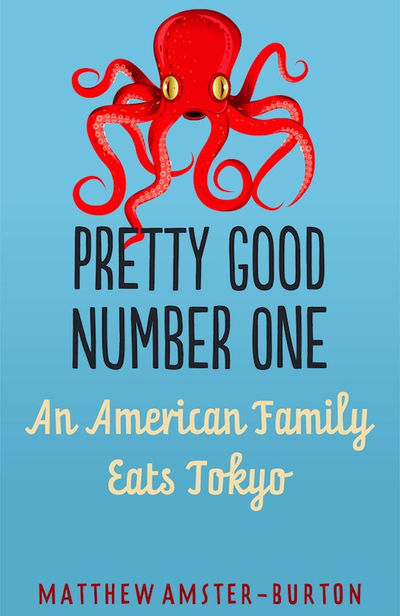
Pretty Good Number One bucket list

January 12, 2014 By: Mai Truong Category: Book, Japanese, The more interesting

pgno
Go to Tokyo. Visit the Odaiba Takoyaki Museum. Practise using chopsticks correctly and buy a (few) pairs at Kappabashi. Eat shave ice and watch fireworks (and people) on the Sumida river bank in July. Eat pan-fried soup dumplings in a neighborhood dumpling restaurant in Nakano. Eat “hone” (pronounced |hoh-nay|, meaning: deep-fried sea eel backbone). Stop eating eel because they’re in the red on the Seafood Watch list.

Thanks to Matthew Amster-Burton’s book, I’ve had the first 7 items on my bucket list figured out (it’s a bucket list, not a to-do list because of the stop-eating-eel thing). I can’t wait to do them (except the stop-eating-eel thing). If a few months ago I was complacent with imaginatively traveling through booksPretty Good Number One throws one delicious, chuckle-inducing paragraph after another to my face and say “go to Tokyo, you lazy donkey”. Just about the most expensive place to visit in the world, thanks, Mr. Amster-Burton. 😉

Except for the part where he describes Chinese green tea as having “a hint of smoky barbecue” and how red bean paste is an acquired taste for Westerners (because beans are supposed to show up in savory foods, not sweets – hello, pumpkin pie?), Pretty Good Number One is enjoyable every minute of reading.

The book is short (only 227 pages) in relatively big clear font. It took me a few 10-minute bus rides and one Christmas Eve to finish. It is a good guide for Westerners (and anyone who hasn’t been to Tokyo) and a respectful and honest glimpse into a city in the East. Andrea Nguyen of Viet World Kitchen posted a long wonderful talk with Amster-Burton about the book last year.

Pictures are available on prettygoodnumberone.com, but I’m not looking at them too closely in fear of sleepwalkingly booking a Tokyo-bound flight tomorrow. Amster-Burton’s writing is so witty and the stories about his little “hungry monkey” Iris are cheezburger-cat level of adorable!

Amster-Burton also includes a long list of his recommended readings at the end (some of which he mentions intermittently throughout the book), and I’ve made my first Amazon’s wish list (so many first lists because of Pretty Good Number One!). It is against my traditional Vietnamese culture to outright ask for gifts (man I feel so shameless!), but JUST IN CASE you ever think about supporting Flavor Boulevard… 😉

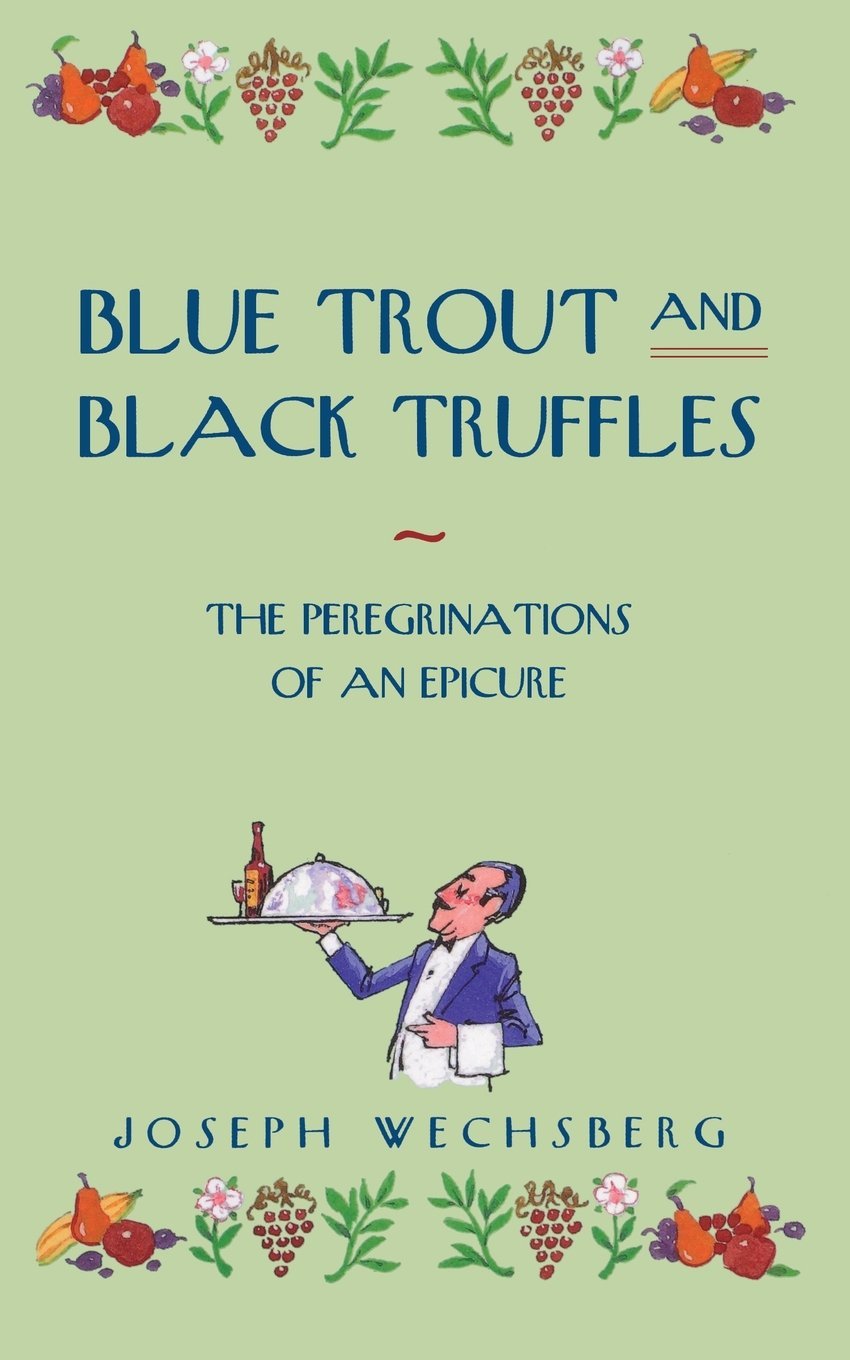
Blue Trout and Black Truffles – a journey through Europe in 300 pages

November 06, 2013 By: Mai Truong Category: Book

Blue Trout and Black Truffles by J. Wechsberg (Academy Chicago Publishers, Second printing 2001), but the book seems to have been published in German as well (Forelle blau und schwarze Trüffeln (1964)), as Wechsberg also wrote in French, German and Czech (although a majority of his works is in English).

Blue Trout and Black Truffles by J. Wechsberg (Academy Chicago Publishers, Second printing 2001), but the book seems to have been published in German as well (Forelle blau und schwarze Trüffeln (1964)), as Wechsberg also wrote in French, German and Czech (although a majority of his works is in English).

When I was little, and even now, my mom would tell me about the regional specialties of provinces in Vietnam and even other countries. She’s not a traveller, those were places that she has never been to, but she read about them in books and she has the uncanny memory to remember every detail of what she reads and recite it with such enthusiasm and emotion that makes you feel like you’re reading the book yourself. So I never felt the need to travel. (The only thing you can’t really experience from reading is the smell – it’s often the hardest sense to put into words, and any word description is always an understatement of the actual smell.)

Good writers can make you want to travel to the place they describe, taste the food they praise, meet the people they talked to. And then there are the really good writers who pull you into the story. When you read their books, you’re already at that place, eating what they’re eating, listening into their conversation.

When I read “Blue Trout and Black Truffles” by Joseph Wechsberg, I was in Vienna eating Tafelspitz (you have to capitalize the word because it’s German, and did you know that there are 24 different varieties of boiled beef, only one of which is Tafelspitz? [I admire the precision but I’m not convinced of the taste…]), then I was in Prague stuffing down knedlíky (dumplings that contain small cubes of fried bread, dumplings filled with whole plums, cherries, sweet cabbage [?!] or nuts, dumplings made of butter, egg yolk, dry cottage cheese, salted and “almost as light as a soufflé” [!]). I was strolling through the woodlands of Périgord, following a little pig named Mignon in search for black truffles (and almost got convinced that truffle tasted good). Wechsberg, with his gentle, objective humor and a hidden whiff of discerning aloofness, took me from Ostrava before World War I to Budapest in 1946 (when Hungary was still inside the Iron Curtain), then south to Genoa, “where the skies were blue and the people still knew how to laugh” (and made supposedly phenomenal ravioli), then northwest to Paris and Bordeaux and Lyon. I don’t know French and could only silently mumble through the included menus as I read, I’m not even that much into European cuisines, but like an old Roman chapel near L’Oustau de Baumanière in Les Baux-de-Provence, where “even the unbelieving feel the urge to kneel down”, this book makes even the non-drinker feel the urge to hold a champagne flute by the base (and never at the stem!) [I actually can’t picture how that works (-_-‘)].

At 8 am, I finished the last page. I took a shower until 8:45, then went out to lunch with Cheryl at 11. We had soba at Ippuku. I felt like reciting the old Hungarian proverb, “We are poor, but we live well.”

–.–.–.–.–

A few favorite tidbits:

  • “Prague’s women had great charm and vivacity, but they were rarely slim and long-stemmed. Dumplings were the national indoor amusement; to eat twenty or thirty dumplings at one sitting was considered a feat of virility.” (84)
  • “… as they say in Bordeaux, people take on the color of the wine that they ‘work’ and drink. M. Landèche’s face had the reddish color of the grapes of Château Lafite-Rothschild. And M. Henriot’s hue reflected the golden glow of the wines of Château d’Yquem.” (190)
  • “[La Tour d’Argent] was an immediate success and always jammed, but there was always a way of getting a table. A cavalier who had neglected to make his reservation would pull up his horse, walk in, challenge one of the guests to a duel, kill him with sword or lance, and take his place.” (227)
  • Wild goose with plum sauce at La Tour d’Argent was Cardinal Richelieu’s favorite. (228) [To encourage me to eat, my mom would tell me “The Three Musketeers” story (by Alexandre Dumas) while spoon-feeding me. After that story finished, we continued to (and consequentially finished) its two sequel novels, also by Dumas. Ah the good old days…]
  • “You can export all the ingredients, and even the cook, but you cannot seal in a can the shining of the Sun or the blue of the sky and the sea, and pour it into the saucepan.” (127) <– EXACTLY why I would only consider food made by Japanese in Japan truly authentic Japanese food, and likewise with other cuisines.
  • “A Balatoni Fogas to Start with” really resonated with me, perhaps because I’m from Vietnam and know first- (and second-) hand the detrimental effects of communism on Culture [yes, capitalized Culture].
  • “One Moment in Heaven”, “Afternoon at Château d’Yquem” and “Provence without Garlic” are lovely pieces on wine and France [I think… as if I knew anything about wine].

A little bit about the author:

Joseph Wechsberg worked as the European correspondent of The New Yorker from 1949 to 1983. He studied Law and Economics in Prague, Vienna and Paris, then he studied violin at the Wiener Konservatorium, played music in Parisian nightclubs and later on cruise ships to New York and the Far East. His well-travelled experience gave him great advantage in becoming a journalist and a writer. “Blue Trout and Black Truffles” is a collection of essays, some of which originally appeared in The Atlantic, Cosmopolitan, Gourmet, Holiday, and The New Yorker. [I feel incredibly inspired, but that means I need to start traveling and collecting some world(ly) experience soon. (-_-‘)]

Andy Warhol’s quotes on food

September 25, 2013 By: Mai Truong Category: Book, Opinions

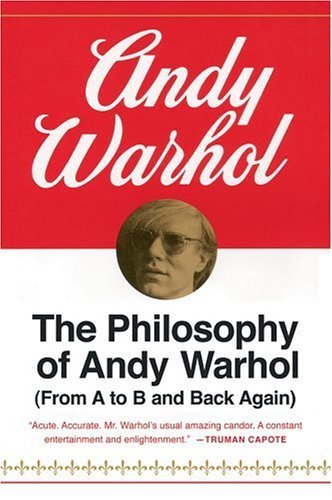
PhilosophyofAndyWarholBookcover
Around spring of 2012, I discovered The Philosophy of Andy Warhol. I’m not a fan of his art works. (I like traditional arts, he’s the most prominent figure in American pop arts, which I actually find weirdly fascinating, though.) His life was the exact opposite of mine. (To start, he’s somebody, I’m nobody.) But I find his view on life strangely resonating and, thus, comforting.

Andy Warhol was also big on food. Very American, very industrial food, but still food. A nice portion of his art works features Campbell’s tomato juice and soups, ice cream, hamburgers and bananas [which I can’t show here because it would entail paying fees ($40 per image) to the Andy Warhol Museum and many legal steps to obtain permission from the Artist Rights Society (I checked). As much as I want to support arts, my humble blog is in no condition for such extravagance. Besides, Google Images does a great job]. Back to food, in the third “Men in Black” movie, when Agent J (Will Smith) goes back in time to stop alien crime stuff, he and Agent K (Tommy Lee Jones) went to a rowdy party looking for Agent W (Bill Hader), whose alias was “Andy Warhol”. While they were discussing alien business, someone called for Andy Warhol, to which Agent W replied “tell her that I’m filming a man eating a hamburger. It’s… uh… transcendent.” That’s my favorite scene in the entire movie.

So here’s 14 food-related quotes from Andy Warhol:

1.

And New York restaurants now have a new thing — they don’t sell their food, they sell their atmosphere. They say, “How dare you say we don’t have good food, when we never said we had good food. We have good atmosphere.” They caught on that what people really care about is changing their atmosphere for a couple of hours. That’s why they can get away with just selling their atmosphere with a minimum of actual food. Pretty soon when food prices go really up, they’ll be selling only atmosphere. If people are really all that hungry, they can bring food with them when they go out to dinner, but otherwise, instead of “going out to dinner” they’ll just be “going out to atmosphere.”

That’s just restaurants everywhere. Not the mom-and-pop shops. Not the actual street vendors. But the classy restaurants.

2.

My favorite restaurant atmosphere has always been the atmosphere of the good, plain, American lunchroom or even the good plain American lunchcounter. The old-style Schrafft’s and the old-style Chock Full O’ Nuts are absolutely the only things in the world that I’m truly nostalgic for. The days were carefree in the 1940s and 1950s when I could go into a Chocks for my cream cheese sandwich with nuts on date-nut bread and not worry about a thing. No matter what changes or how fast, the one thing we all always need is real good food so we can know what the changes are and how fast they’re coming. Progress is very important and exciting in everything except food. When you say you want an orange, you don’t want someone asking you, “An orange what?”

I’m not into progress in food either. I just want traditional food. Good old comfort food.

3.

I really like to eat alone. I want to start a chain of restaurants for other people who are like me called ANDY-MATS—”The Restaurant for the Lonely Person.” You get your food and then you take your tray into a booth and watch television.

Warhol had a fascination for television and diners. He also had a fascination for emptiness, most likely because everything felt empty for him.

4.

But if you do watch your weight, try the Andy Warhol New York City Diet: when I order in a restaurant, I order everything that I don’t want, so I have a lot to play around with while everyone else eats. Then, no matter how chic the restaurant is, I insist that the waiter wrap the entire plate up like a to-go order, and after we leave the restaurant I find a little corner outside in the street to leave the plate in, because there are so many people in New York who live in the streets, with everything they own in shopping bags.
So I lose weight and stay trim, and I think that maybe one of those people will find a Grenouille dinner on the window ledge. But then, you never know, maybe they wouldn’t like what I ordered as much as I didn’t like it, and maybe they’d turn up their noses and look through the garbage for some half-eaten rye bread. You just never know with people. You just never know what they’ll like, what you should do for them.
So that’s the Andy Warhol New York City Diet.

One time I saw someone gave a banana to a homeless guy in Berkeley. The homeless guy took one bite and threw the banana away. Sometimes I give my restaurant leftovers to homeless people, I don’t know if they eat them though. Maybe I should hide in a corner and watch if they eat them.

5.

I know good cooks who’ll spend days finding fresh garlic and fresh basil and fresh tarragon, etc., and then use canned tomatoes for the sauce, saying it doesn’t matter. But I know it does matter.

It does. Warhol lived in the industrial era, I guess he would be pleased now with the revival of farm-to-table foods. Then again, he hardly found happiness in anything, so I don’t know.

6.

I also have to admit that I can’t tolerate eating leftovers. Food is my great extravagance. I really spoil myself, but then I try to compensate by scrupulously saving all of my food leftovers and bringing them into the office or leaving them in the street and recycling them there. My conscience won’t let me throw anything out, even when I don’t want it for myself. As I said, I really spoil myself in the food area, so my leftovers are often grand — my hairdresser’s cat eats pate at least twice a week. The leftovers usually turn out to be meat because I’ll buy a huge piece of meat, cook it up for dinner, and then right before it’s done I’ll break down and have what I wanted for dinner in the first place — bread and jam. I’m only kidding myself when I go through the motions of cooking protein: all I ever really want is sugar. The rest is strictly for appearances, i.e., you can’t take a princess to dinner and order a cookie for starters, no matter how much you crave one. People expect you to eat protein and you do so they won’t talk. (If you decided to be stubborn and ordered the cookie, you’d wind up having to talk about why you want it and your philosophy of eating a cookie for dinner. And that would be too much trouble, so you order lamb and forget about what you really want.)

This is where I’m different, but also the same. Food is indeed my great extravagance, but I like leftovers (if I like what I order in the first place). And the only thing I ever truly want is carb. I would steam some squash blossoms or braise some pork, and after I’m done, I break down and go to the diner downtown and get pancakes. Or I microwave some ramen.

7.

What’s great about this country is that America started the tradition where the richest consumers buy essentially the same things as the poorest. You can be watching TV and see Coca-Cola, and you can know that the President drinks Coke, Liz Taylor drinks Coke, and just think, you can drink Coke, too. A Coke is a Coke and no amount of money can get you a better Coke than the one the bum on the corner is drinking. AM the Cokes are the same and all the Cokes are good. Liz Taylor knows it, the President knows it, the bum knows it, and you know it.
In Europe the royalty and the aristocracy used to eat a lot better than the peasants—they weren’t eating the same things at all. It was either partridge or porridge, and each class stuck to its own food. But when Queen Elizabeth came here and President Eisenhower bought her a hot dog I’m sure he felt confident that she couldn’t have had delivered to Buckingham Palace a better hot dog than that one he bought her for maybe twenty cents at the ballpark. Because there is no better hot dog than a ballpark hot dog. Not for a dollar, not for ten dollars, not for a hundred thousand dollars could she get a better hot dog. She could get one for twenty cents and so could anybody else.

Again, the common diner theme. I quoted this quote before.

8.

When I was a child I never had a fantasy about having a maid, what I had a fantasy about having was candy. As I matured that fantasy translated itself into “make money to have candy,” because as you get older, of course, you get more realistic. Then, after my third nervous breakdown and I still didn’t have that extra candy, my career started to pick up, and I started getting more and more candy, and now I have a roomful of candy all in shopping bags. So, as I’m thinking about it now, my success got me a candy room instead of a maid’s room. As I said, it all depends on what your fantasies as a kid were, whether you’re able to look at a maid or not. Because of what my fantasies were, I’m now a lot more comfortable looking at a Hershey Bar.

9.

It’s strange the way having money isn’t much. You take three people to a restaurant and you pay three hundred dollars. Okay. Then you take those same three people to a corner shop — shoppe — and get everything there. You got just as filled at the corner shoppe as at the grand restaurant — more, actually — and it cost you only fifteen or twenty dollars, and you had basically the same food.

Yet again, the common diner theme.

10.

Of the five senses, smell has the closest thing to the full power of the past. Smell really is transporting. Seeing, hearing, touching, tasting are just not as powerful as smelling if you want your whole being to go back for a second to something. Usually I don’t want to, but by having smells stopped up in bottles, I can be in control and can only smell the smells I want to, when I want to, to get the memories I’m in the mood to have. Just for a second. The good thing about a smell-memory is that the feeling of being transported stops the instant you stop smelling, so there are no aftereffects. It’s a neat way to reminisce.
[…]
When I’m walking around New York I’m always aware of the smells around me: the rubber mats in office buildings; upholstered seats in movie theaters; pizza; Orange Julius; espresso-garlic-oregano; burgers; dry cotton tee-shirts; neighborhood grocery stores; chic grocery stores; the hot dogs and sauerkraut carts; hardware store smell; stationery store smell; souvlaki; the leather and rugs at Dunhill, Mark Cross, Gucci; the Moroccan-tanned leather on the streetracks; new magazines, back-issue magazines; typewriter stores; Chinese import stores (the mildew from the freighter); India import stores; Japanese import stores; record stores; health food stores; soda-fountain drugstores; cut-rate drugstores; barber shops; beauty parlors; delicatessens; lumber yards; the wood chairs and tables in the N.Y. Public Library; the donuts, pretzels, gum, and grape soda in the subways; kitchen appliance departments; photo labs; shoe stores; bicycle stores; the paper and printing inks in Scribner’s, Bren-tano’s, Doubleday’s, Rizzoli, Marboro, Bookmasters, Barnes & Noble; shoe-shine stands; grease-batter; hair pomade; the good cheap candy smell in the front of Woolworth’s and the dry-goods smell in the back; the horses by the Plaza Hotel; bus and truck exhaust; architects’ blueprints; cumin, fenugreek, soy sauce, cinnamon; fried platanos; the train tracks in Grand Central Station; the banana smell of dry cleaners; exhausts from apartment house laundry rooms; East Side bars (creams); West Side bars (sweat); newspaper stands; record stores; fruit stands in all the different seasons — strawberry, watermelon, plum, peach, kiwi, cherry, Concord grape, tangerine, murcot, pineapple, apple — and I love the way the smell of each fruit gets into the rough wood of the crates and into the tissue-paper wrappings.

My mom always says she doesn’t like Berkeley, but Berkeley is growing on me, and I feel like a traitor for letting it grow on me. One big thing about Berkeley is that I can walk here. I used to hate walking because it’s inefficient and especially when it’s sunny. But when I started learning about tea, I started rubbing my fingers on whatever leaf or flower along the road to train my nose. At some point, I didn’t have to rub anymore and could still smell the leaves walking by. I began to like walking then.

11.

I put my napkin over the bowl of cherry pits so I wouldn’t have to look at how many I’d eaten. That’s the hard part of overdosing on cherries—you have all the pits to tell you exactly how many you ate. Not more or less. Exactly. One-seed fruits really bother me for that reason. That’s why I’d always rather eat raisins than prunes. Prune pits are even more imposing than cherry pits.

12.

You take some chocolate . . . and you take two pieces of bread . . . and you put the candy in the middle and you make a sandwich of it. And that would be cake.

13.

My favorite simultaneous action is talking while eating. I think it’s a sign of class[…,] knowing how to talk and eat at the same time. […] It’s very important if you go out to dinner a lot. At dinner you’re expected to eat—because if you don’t it’s an insult to the hostess — and you’re expected to talk — because if you don’t it’s an insult to the other guests. The rich somehow manage to work it out but I just can’t do it. They are never caught with an open mouth full of food but that’s what happens to me. It’s always my turn to talk just when I’ve filled my mouth with mashed potatoes.

Is that why he liked to eat alone? I was telling Kristen how I went to this Korean restaurant in Oakland Chinatown when I had jury duty. I was very tired and just wanted some comfort food. When the owner ladies brought me my samgetang (chicken and ginseng soup), they also started talking to me. A lot. Not only was I by myself, I was also the only customer at that time (it was past lunch time). Between smiling and responding to them, I had no time to eat. I really, really just wanted to eat my soup.

14.

In high-class stores they sell through “display,” in low-class ones they sell through “smell.”

Warhol was talking about clothing stores here. But I think it’s true for food business too.

Face the omnivore’s dilemma

June 12, 2013 By: Mai Truong Category: Book, Opinions, Review of anything not restaurant

Did you know that the koala, the pickiest eater on Earth, has a brain so small that “doesn’t even begin to fill up its skull”? The variety of one’s diet correlates with the size of one’s brain. Whether the reason might be the low nutrition (which makes it more economical to shrink your brain and conserve energy) or the simplicity of a diet that requires no thinking (when you see the food world as eucalyptus and non-eucalyptus, what to have for lunch is not a very big question), the koala’s brain would have been a lot more developed had it been an omnivore. (Whether being smart is better than sleeping 20 hours a day is a different question.)

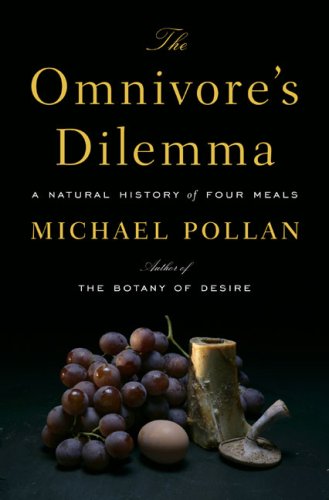
omnivore
The Omnivore’s Dilemma is about choice. This theme I did not quite grasp when I read the first part (Industrial – Corn) a year ago (or maybe longer, when you grow old everything seems like just yesterday). I was on the plane flying back to San Francisco, reading this monumental Michael Pollan book and discussing with a Chilean guy across the aisle about negligent governments, undereducated denizens and public apathy. What does that have to do with food? It actually has everything to do with food. The meat, eggs, cereals and virtually anything you buy from a grocery store are produced with corn in one form or another, thanks to government subsidies, big corporations, our desire for “cheap” abundance, and sadly, overzealous science.

The humans, omnivores with brain circuitry so complex to devise ways to modify corn into everything, have managed to reduce themselves to monoculture eaters, which, if you look at it objectively enough, is not all that different from the koala. The depressing part about it is that for a city dweller, you actually have very little choice in what you eat. You can’t escape from eating something that is detrimental to both your body and the whole ecosystem, or at least that’s what the first part of the book, Industrial – Corn, led me to think.

The first part was just painful to read, which is probably why I dropped it after that flight. In few words, we followed steer numbered 534 from his mother’s side into the feedlot where he would never see another blade of grass. He would be given corn that his rumens were not biologically structured to process, and lots of drugs to keep him from falling ill from the corn and the waste in which he stands knee deep.

Recently, I gave myself a day off when I was determined not trying to produce anything, so I picked up the book again. As I chugged past the corn part, thankfully, things got brighter. Humankind hasn’t completely destroyed the earth yet. There are alternatives to industrial corn-fed beef and fossil fuel fertilized vegetables. The sad part though, is that every choice of an omnivore in this modern age comes with a different moral cost:

– Buy foods from the grocery store? You’re supporting big corporations and destroying the land. Even if you buy “organic” products from Whole Foods, those organic products come from large-scale industrial farms that damage the earth with excessive irrigation instead of pesticides.

– Avoid meat to reduce carbon footprints and protect the environment? Your vegetable, if comes from grocery stores, take tremendous amount of petroleum to produce and transport across the country.

– Avoid meat to avoid killing animals? Chapter 17 (The Ethics of Eating Animals) goes into great lengths about this. If you eat only vegetables, you are still damaging other life forms: “the grain that the vegan eats is harvested with a combine that shreds field mice, while the farmer’s tractor wheel crushes woodchucks in their burrows and his pesticides drop songbirds from the sky; after harvest whatever animals that would eat our crops we exterminate”. If you eat seafood, think of how many shrimps or crabs you eat in one meal, why would you value the life of a shrimp less than that of a cow? If you eat dairy and eggs, read pages 317-318 for a brief description of the life of egg-laying hens and the cruelty “required to produce eggs that can be sold for 79 cents a dozen”. (It’s so cruel I could barely read it, let alone paraphrasing it here.)

– Buy foods from local farmers market? This choice is the best to the environment, the plants and the animals, but it is neither practical nor available to everyone. If I walk home with a bag full of artisanal products from farmers market and not give some money to the old man handing out 1-dollar newspapers at the street corner, I feel awful. And there’s about one homeless man per street corner in downtown Berkeley. Then there’s the poor neighborhoods to the south and west parts of the city. Then I think about the people who live in “food deserts” with virtually no fresh produce to buy. To preach about the necessity of choosing a good food source seems somewhat inconsiderate, if not inhumane, to others who can’t afford to be picky.

– Eat chemicals? This option was not listed in the book. But a few months ago I read about this man who invented “soylent”, a mixure of “vitamins, minerals, macronutrients, oligosaccharide, olive and fish oil, antioxidants and probiotics”. At first I thought that was the worst food invention ever. But taste and nutrition aside, could it be the best option to be environmentally friendly and humane to animals (except to fish)? After all, we have for too many years tried to feed the soil and the plants with chemicals that we think are sufficient, in the form of phosphor, nitrogen and potassium fertilizers, so why don’t we do the same to our bodies?

– Grow, hunt and gather your own food? Michael Pollan went as far into the food spectrum as making a meal from only things that he hunted, foraged from the woods, or grew in his garden, noting that of course this option is the most impractical and improbable of all for the modern omnivore, but also the most rewarding.

I’ve always opposed the idea of hunting, but not too much now after I read the book. When at one end of the spectrum you’re pressed against the cruelty of industrial animal farming, where neither the producer nor the consumer spare any thought at all for the animals, much less mercy, and at the other you’re absorbed into a wealth of appreciation from the hunter toward his prey, hunting is no longer pure evil. The beauty of this book, beside the plethora of facts and theories, is its linear structure, which clearly shows where in the choice spectrum (from McDonald’s chicken McNuggets to self-foraged morels) an omnivore should stay without saying it explicitly. The Omnivore’s Dilemma was written in 2006, and here I am, 7 years later, still facing the same spectrum. Taking inflation into account, industrial food is still cheap all the same (which means the production still sucks all the same), and buying from farmers markets is still considered a “foodie” activity far from being mainstream.

So I thought about what I should eat. After thinking of all of the animals and plants I have indirectly killed, I wanted to get myself out of the killing, if only just for a little. I decided to try a fruit-and-grain-only diet. We’ll see how that goes.

Little Texas Cookbook

May 29, 2013 By: Mai Truong Category: Book, Review of anything not restaurant, Texas

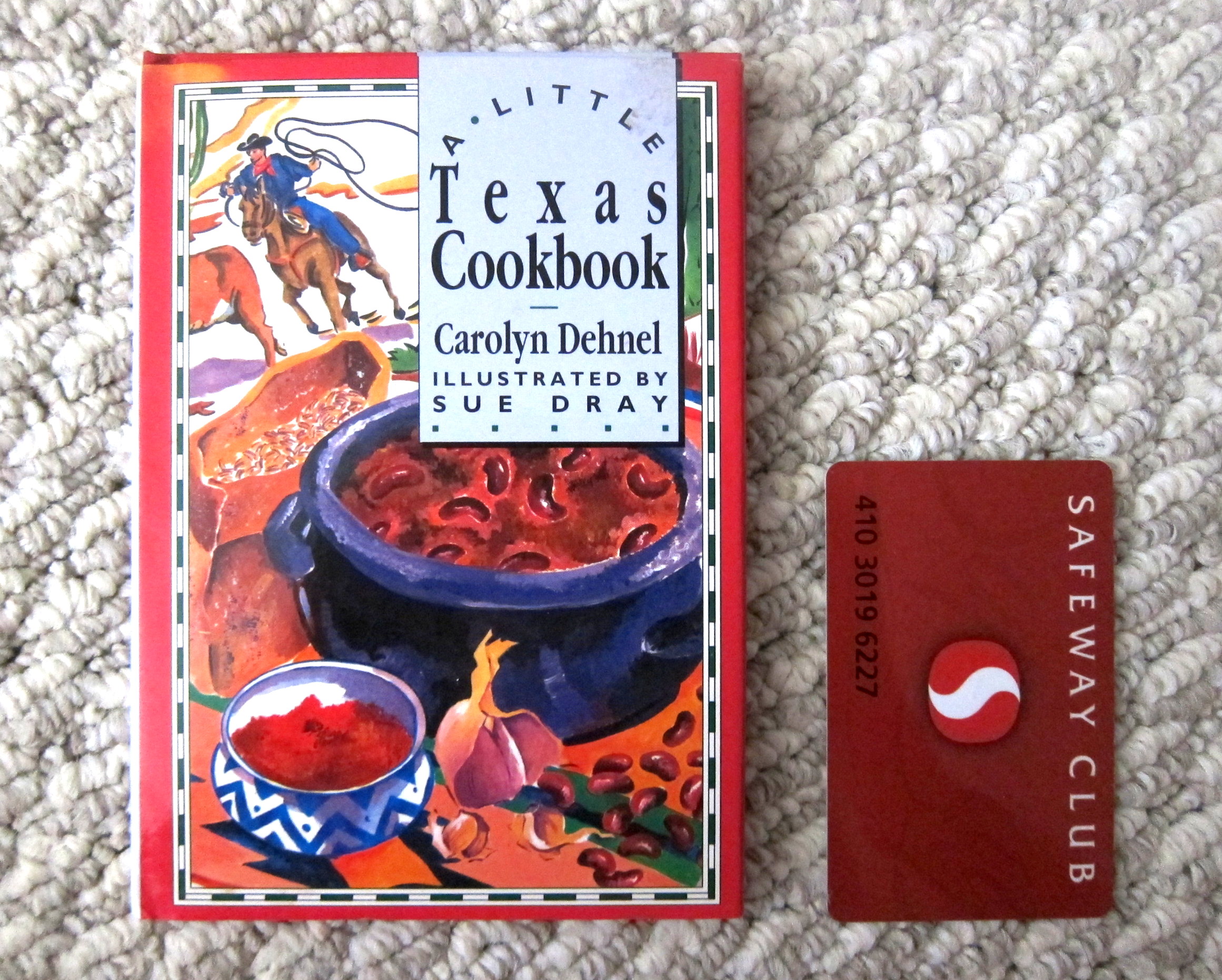
little-texas-cookbook
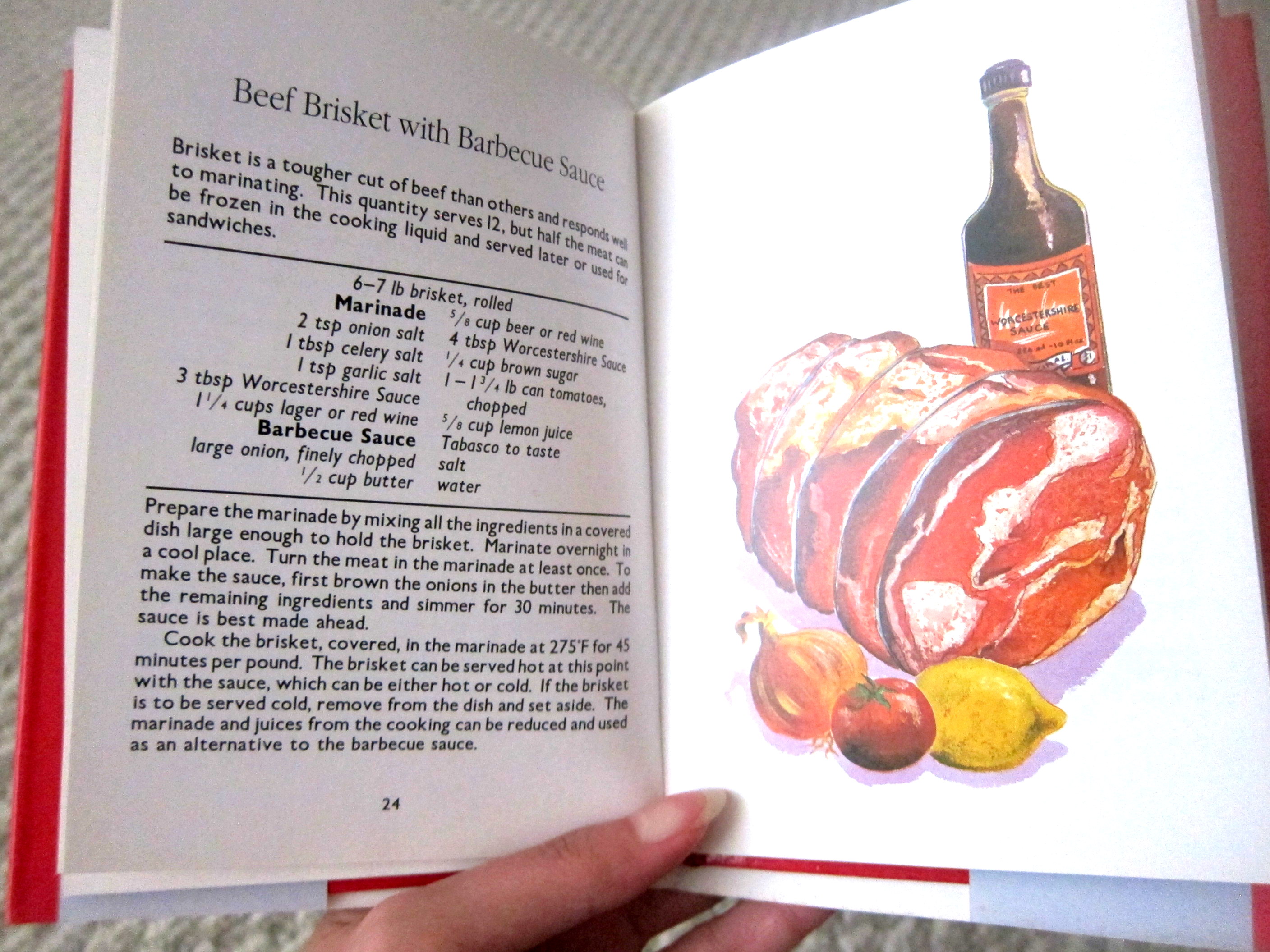
Found this little guy on a bookshelf at home. I couldn’t sleep last night and was browsing the shelves for something to read (which is obviously a great idea to cure insomnia – the more I read the more awake I am, unless it’s a physics book). As a pâtissière friend says, recipe books are only for ideas, so I never read them (I hardly even look at them at bookstores). My mother, like all Vietnamese mothers, never uses recipes either, so I was confused for a second of where this came from.

Then I found my host mom’s writing on the inner cover – it was a new year gift from her and my host dad. I lived with them in Texas during my year of exchange study. That year was filled with corn bread, lima bean soup, baked beans and sausage for dinner, pecan pie and Blue Bell ice cream for desserts, and my host dad’s cheese balls for snacks. When I opened the first page of this Little Texas Cookbook, there it was, a recipe for Spicy Cheese Balls.

This recipe is completely different from my host dad’s recipe (if he uses a recipe at all) because his contains ground meat and flour, where this one asks for cheese, Worcestershire sauce, chili powder and chopped walnuts. Needless to say, his is better. But the little book has four things to keep me reading:

1. Memories. I’m a sucker for nostalgic stuff. I love baked beans, I used to put baked beans on white bread to make sandwiches for lunch at school and snack at home. The Barbecue Beans on page 11 brings back that brown-sugar-sweet memory (we call it “baked beans” but they’re really barbecued/stewed beans). I don’t like chili, so that’s a different sort of memories.

2. It’s short. It has only 60 pages, half of them are pictures. The perfect midnight-snack size before I go to bed.

3. The mini fun facts. Stuff like “the Encyclopedia Larousse suggests that okra should be soaked in water before use, but no Texas cook would dream of using anything but the fresh unsoaked pod”.

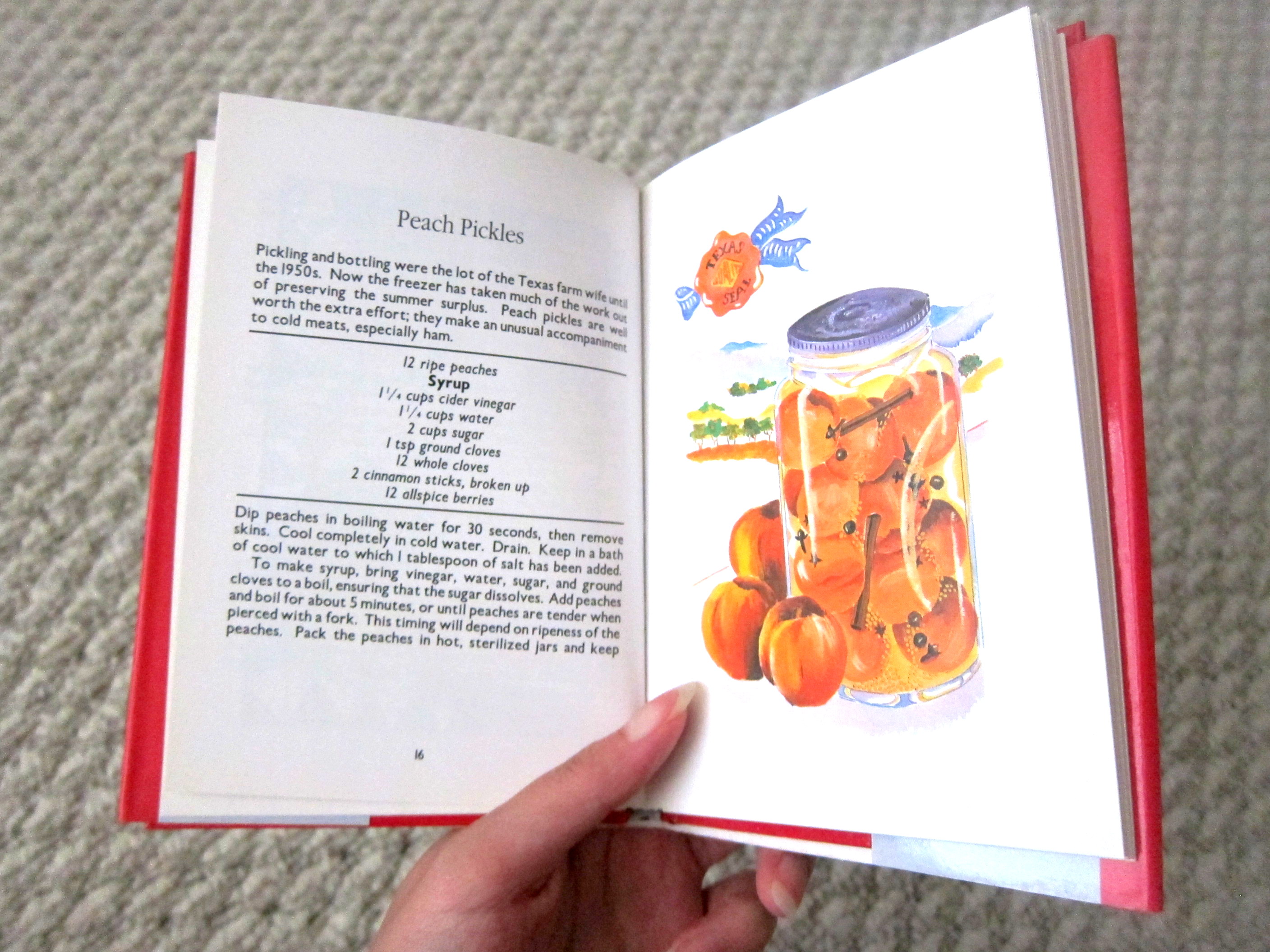
4. The illustrations Glamorous food photography is all good, but I love mini drawings. There’s something so vintage about it.

ltc-peach-pickle

ltc-brisket

Chronicle Books have other Little Cookbooks too: Brazilian, English, English Teas, Florida, Greek, Jewish, Northwest, Scottish, San Francisco (eh?!?!), Welsh, etc. Would make fun reads.

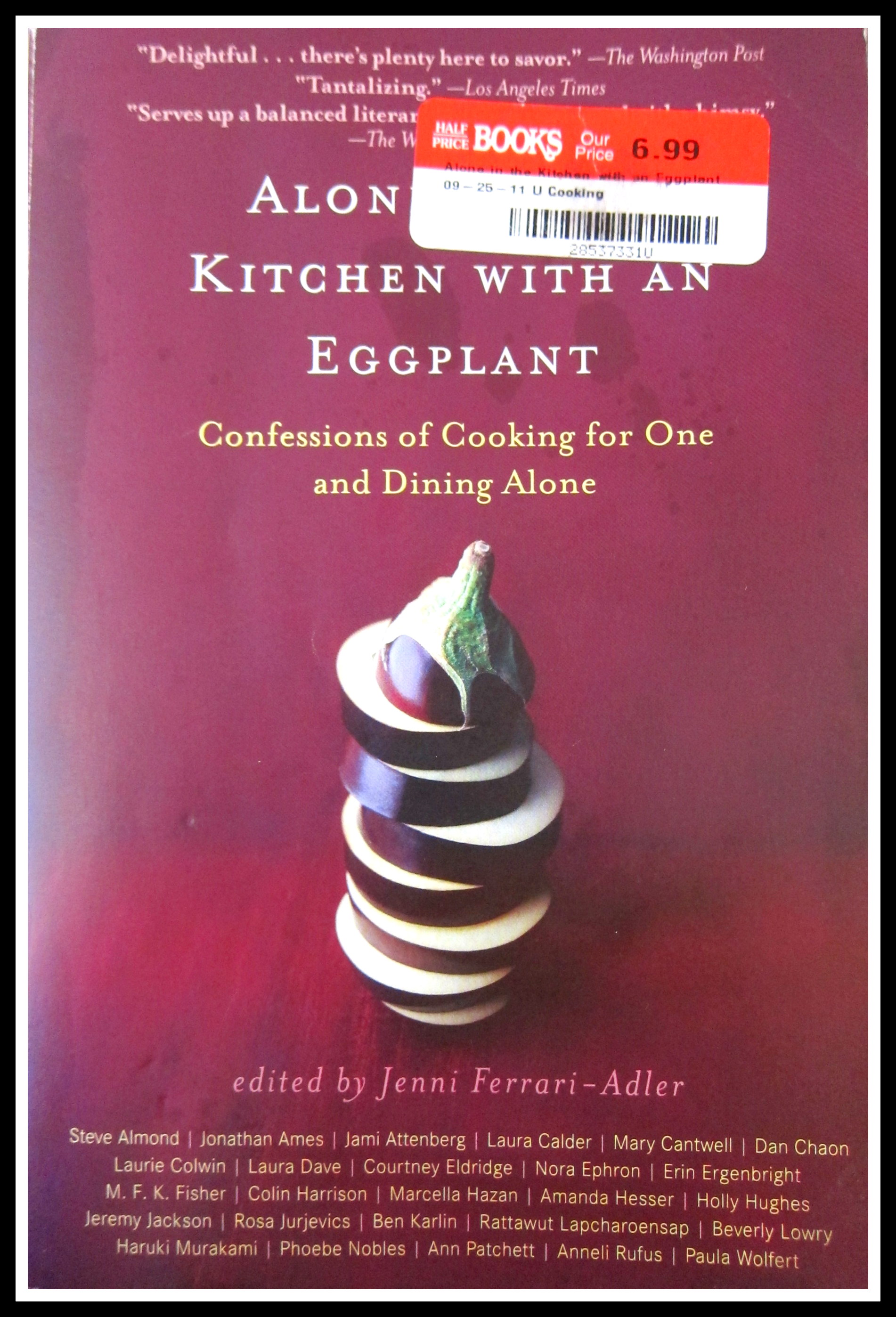
Alone in the Kitchen with an Onion

July 20, 2012 By: Mai Truong Category: Book, Opinions, RECIPES, Review of anything not restaurant


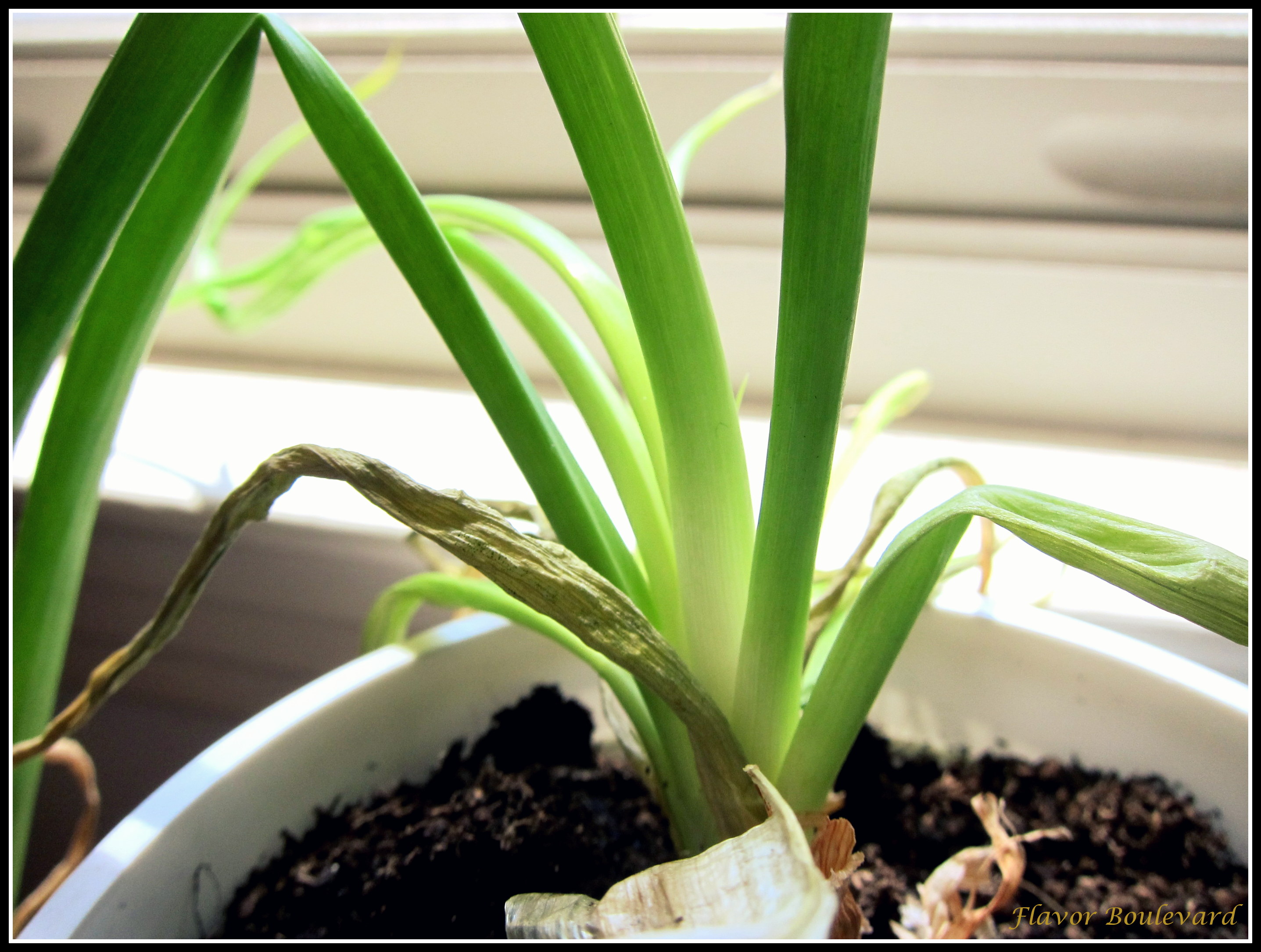
One of my onions grew a plump white sprout.

So plump that I couldn’t bring myself to throw it out. I left it alone for a week.

Then two weeks.

Then three weeks.

It kept getting taller and plumper. At some point the unthinkable thought of throwing it out became the unthinkable thought of letting it die. For a thing trying so hard to live on nothing, what kind of creature am I to thwart its life? So I placed it in a clean container that used to contain prunes, put in some soil leftover from another plant that I’ve long transfered the custody to my mom for its better chance of survival, and poured in water. I told my mom about it, but she said don’t have high hope. I wasn’t hoping for anything, I just wanted to give it what it wants: soil and water. I placed the pot outside during the day and took it in at night so that it doesn’t get cold. The sprout grew, turned green, and another leaf came out. Then I took a trip home for two weeks, thinking that the onion, having a watery body, should be okay without watering for two weeks.

When I came back, I saw the prettiest thing I’ve ever seen of an onion: several skinny green long stalks sprouting out, tall and cheerful. Thank you for surviving, Onion. You make the apartment alive.

I’m not complaining that I’m living alone. I chose this studio apartment instead of sharing because I was looking forward to living alone all my college years. My college roommates were nice people, I don’t dislike them. One girl was there for maybe 2 weeks total the entire year we shared the dorm room, I liked her. There are just songs I want to turn the volume up to for hours on end, meals I wanted to eat while watching a movie on the computer, times to laugh or cry without explaining to two quizzical and not necessarily empathetic eyes. Times to do crazy dance. Times to burn stuff in the microwave and send the alarm screaming. I was tired of asking for and giving explanations. The best thing about living alone is that you can do whatever you want.

The worst thing about living alone is that you can do whatever you want. The only thing I’ve cooked for myself since February is garlic scrambled egg and rice. I skip lunch everyday. I thought I was bad. But Ann Patchett stuck to her Saltine diet for months: “I ate slices of white cheese on Saltines with a dollop of salsa, then smoothly transitioned to Saltines spread with butter and jam for dessert. I would eat as many as were required to no longer be hungry and then I would stop. […] Day after day, month after month, I stuck to my routines like a chorus girl in the back row.” Actually, maybe her diet has more variations than mine. But you get the point. Dining alone means dining with the person who you want to hide and to expose to the world at the same time, the person that only you know.

That person takes many forms, and that person goes through many phases, some pleasant, some weird, most are captured in the collection Alone in the Kitchen with an Eggplant. The beans and cornbread phase (Jeremy Jackson), the asparagus phase (Phoebe Nobles), the chili phase (Dan Chaon), the instant noodle phase (Rattawut Lapcharoensap) (I’ve gone through this phase my self – Sapporo Ichiban, original flavor – until Berkeley Bowl rearranged their aisles and I couldn’t find the packages for weeks, I contemplated boycotting Berkeley Bowl). There’s eating alone with glory, enthusiasm (Mary Cantwell, Dining Alone), a sense of self-declaration, independence, defiance (Jami Attenberg, Protective Measures), most often for a lady at a restaurant, and usually in the first days of eating alone. There’s eating alone to observe (Colin Harrison, Out to Lunch), to indulge (Anneli Rufus, White-on-White Lunch for When No One is Looking), to be relentlessly particular about your food and give no room for compromise (Erin Ergenbright, Table for One). These things happen when one has been eating alone for a long time, and accept it.

There’s happy eating alone because of a desperate need to escape the everyday hustle (Holly Hughes, Luxury), the joy is temporary like fireworks. There’s sad eating alone with a boiling thirst for companions (Laura Calder, The Lonely Palate). Then there’s the mellow eating alone because of permanent solitude, and although feeling lonely to the bones, in some way the lone diner religiously ties himself to that loneliness as if he couldn’t live without it, his repetitive meal is his only and last company. “What does an introvert do when he’s left alone? He stays alone.” (Jeremy Jackson, Beans and Me)

The person with whom I dine the most, me, has taken all of these forms. I found that amusing and sad, but to make things worse, I saw my friend in Haruki Murakami’s The Year of Spaghetti, “[tossing one handful of spaghetti after another into the pot] like a lonely, jilted girl throwing old love letters into the fireplace”. Eating alone is like dressing yourself when you’re invisible, you know you should make it good, but you wonder if it’s worth the hassle. Is that why the masked superheroes never change their outfit?

I noticed my onion doesn’t like direct sunlight, and it needed more soil, so today I went to a garden store begging for a plastic bag of soil. (I thought about digging up a cup from the neighborhood at night, but that wouldn’t sit right.) On the bus, I sat across from a boy, 12 years old he said, just far enough that he didn’t notice me watching him eat and close enough to see that it was gomiti in a loose broth with bits of carrots and green bellpeppers. Then I realized the book forgot one kind of eating alone: eating alone among a lot of people who aren’t eating. What do you feel then?


Garlic Scrambled Eggs over Rice (serves one for 3 meals)
– 4 cups rice
– 8 eggs
– 1/2 clove garlic, thinly sliced
– 1 tsp salt
– 2 tbs sugar
– 1 tsp oil

Cook rice. Oil the pan. Brown the garlic(*). Break and scramble the eggs. Add sugar and salt. Serve on or mix with rice.

(*) I used to add onion too, until Onion sprouted into a friend.