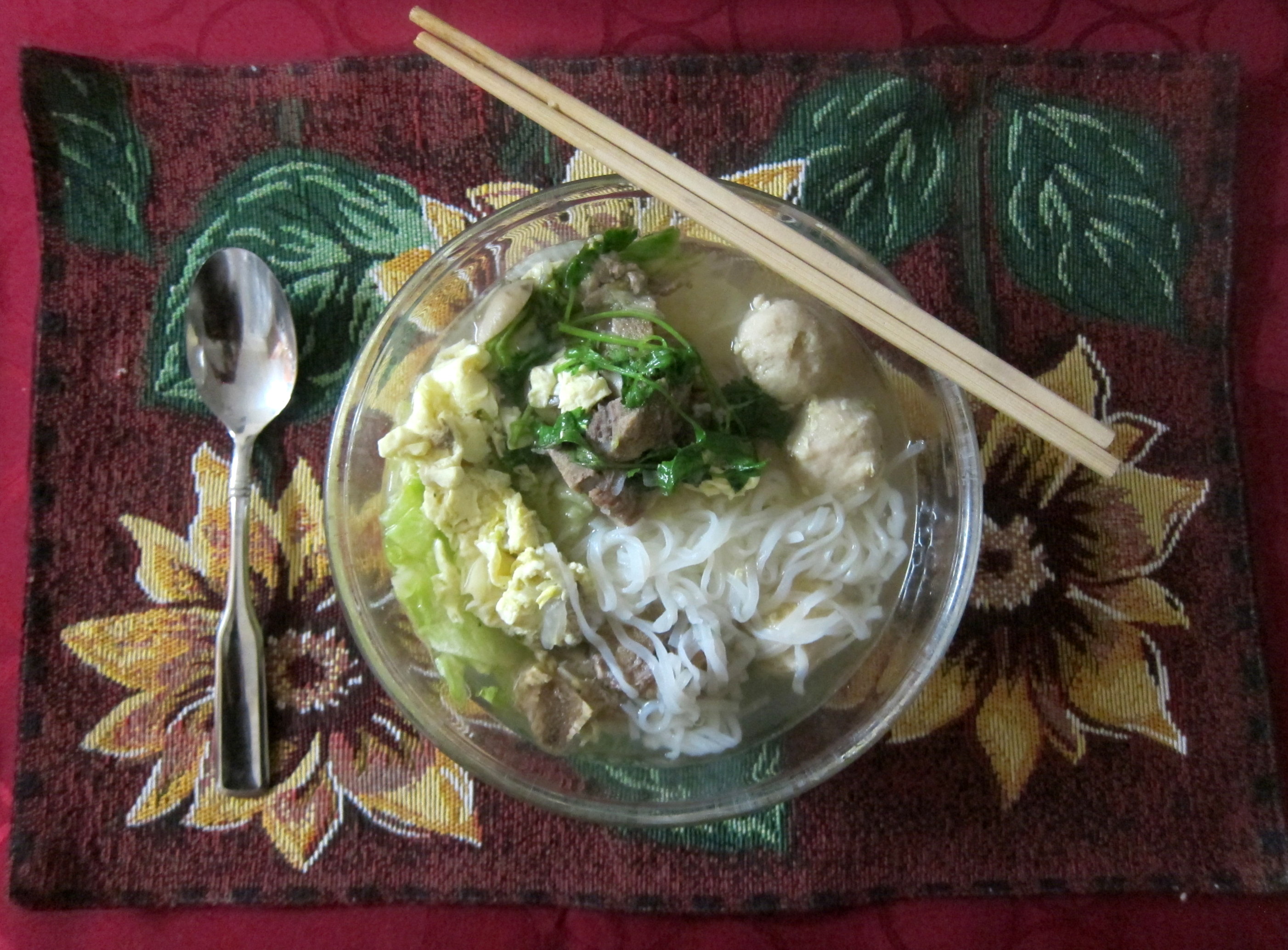
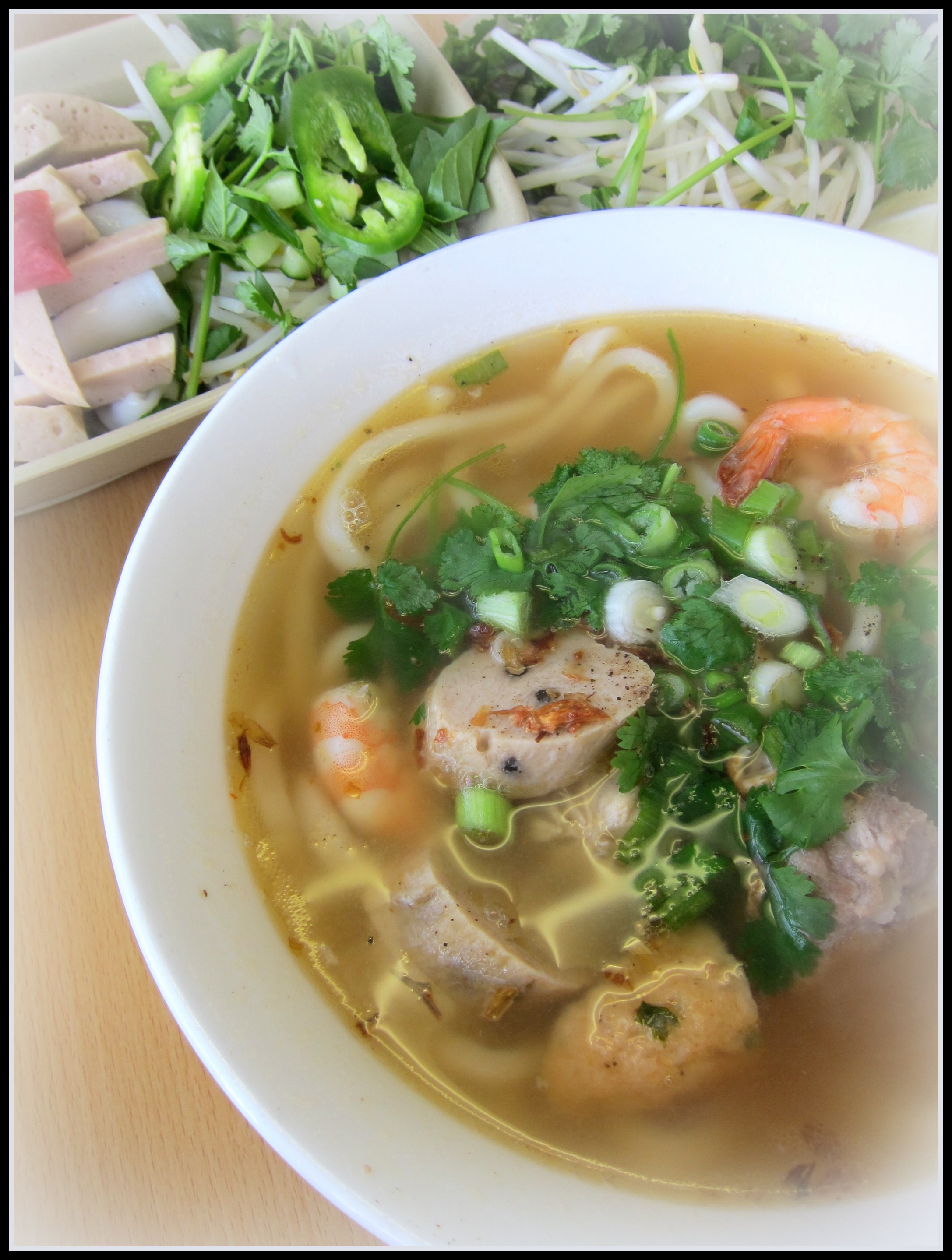
Hu tiu is a common type of rice noodle in Southern Vietnam, often served in noodle-soup form, the noodle soup dish is of course also called “hu tiu“. The usual hu tiu noodle is characterized by its thin shape and chewy texture. Vietnamese love chewy noodles just as much if not more than any other country, so people began using various methods to make hu tiu (*) chewier (the soaking time before grinding, the grinding, washing the rice flour, the mixing ratio with water and other types of starch, the thickness to spread the mixture into a film, the temperature and time to steam it). Bánh bột lọc(**), a type of savory snack, is made with tapioca starch (cassava flour), so I guess hủ tíu bột lọc also contains tapioca starch.
I spent an hour googling but expectedly found little and contradicting information about hu tiu bot loc – nobody in the business would reveal their secret. What I found online is hu tiu bot loc originated from Cần Thơ, and what I found in my bowl are fat (and flat) strings, whose color is clearer and texture is chewier than both the normal (and thin) hu tiu and hu tiu dai (“chewy hu tiu”).
Mom’s hu tiu bot loc: (good luck getting a more detailed recipe than this one from Vietnamese moms!)
– boil dry hu tiu (sold at stores), immediately wash in cold water to preserve chewiness and prevent them from sticking together, set aside
– simmer pork bones to make broth, add salt to taste
– eventually, add pork, beef balls and eggs
– finally, add hu tiu and cilantro
Foodnote:
(*) – That link is written in Vietnamese but the pictures are instructive enough to get an idea of the hu-tiu making process.
(**) – What does “bột lọc” mean? Literally, “bột” is flour, and “lọc” is to distill, so “bột lọc” means “clear flour”.
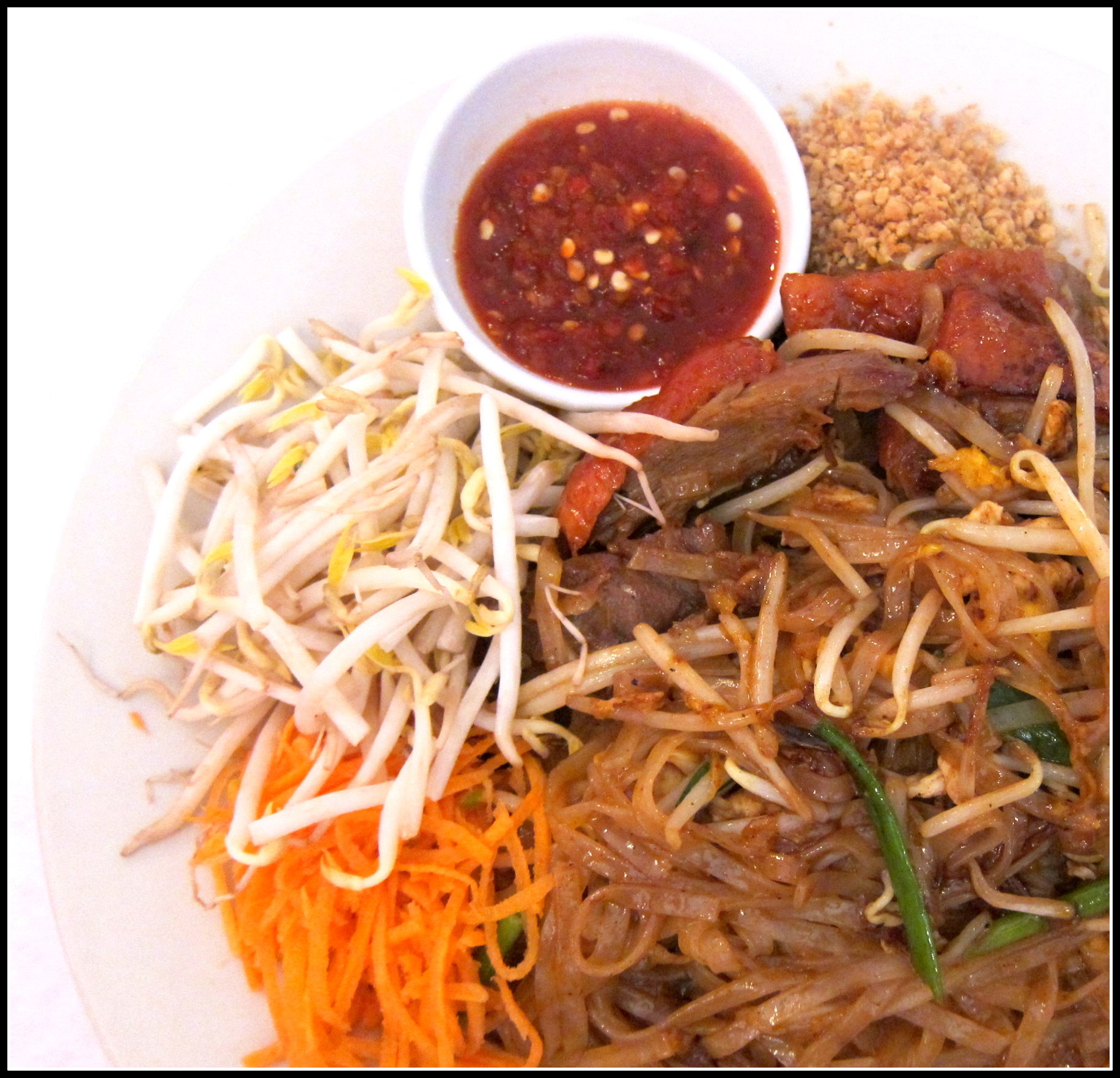
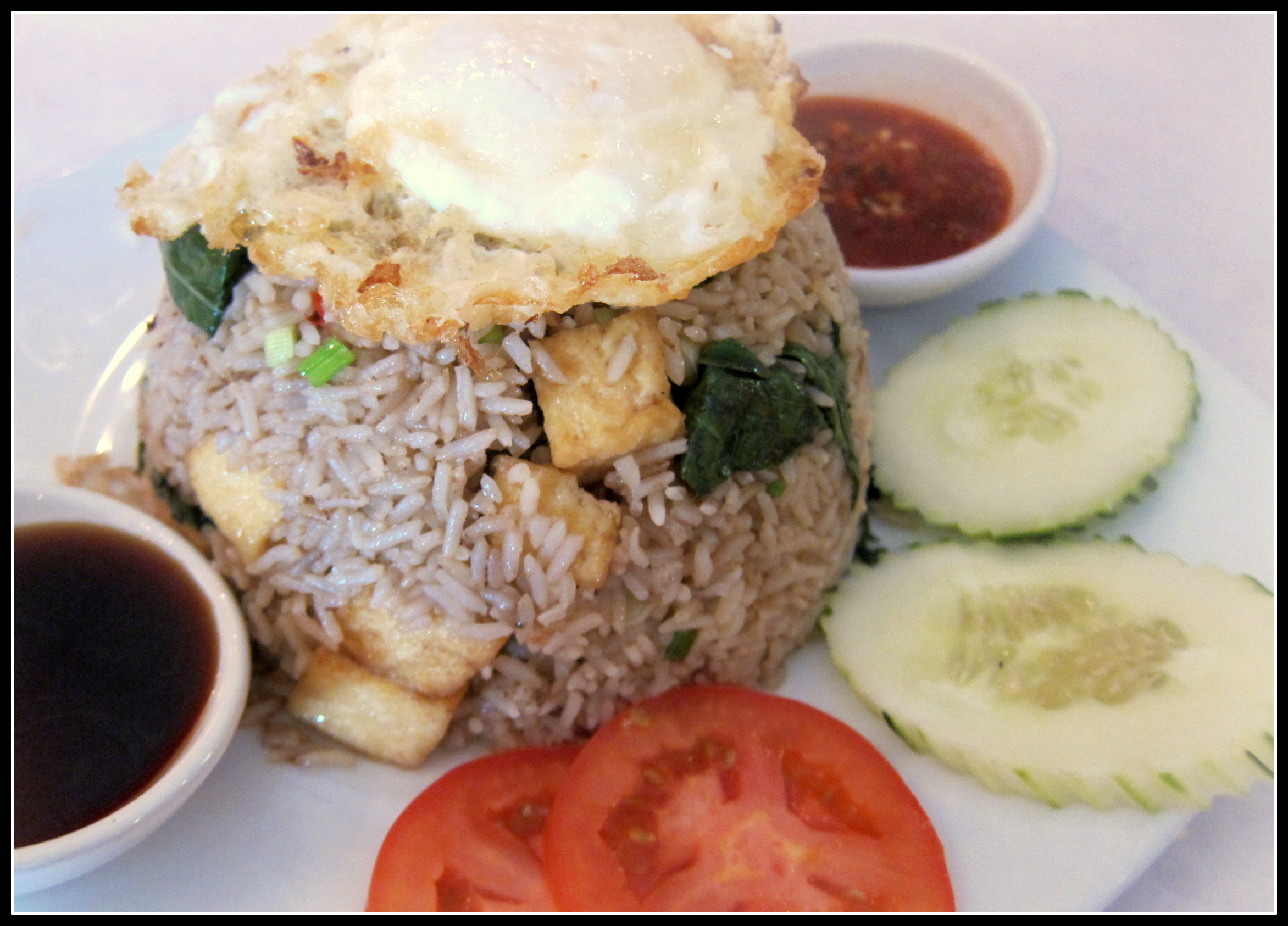
Juicy, tender duck packed with sweet-savory marinade, you know, the typical red roasted duck that you see hanging by the neck at cleanliness-questionable Chinese eateries in Chinatown. But in this case, we don’t see the hanging ducks, the restaurant is Thai, and at least from where we’re sitting, everything looks clean(*).
The noodle, too, is flavorful. The same sweet-savory vibe. Chewy and not soaking wet.
I was doing well until the last maybe 3-4 bites and I could feel the part under my diaphragm harden, like a water balloon. I can’t ask for a box for 3-4 bites, so I stuffed it in. To the very last noodle.
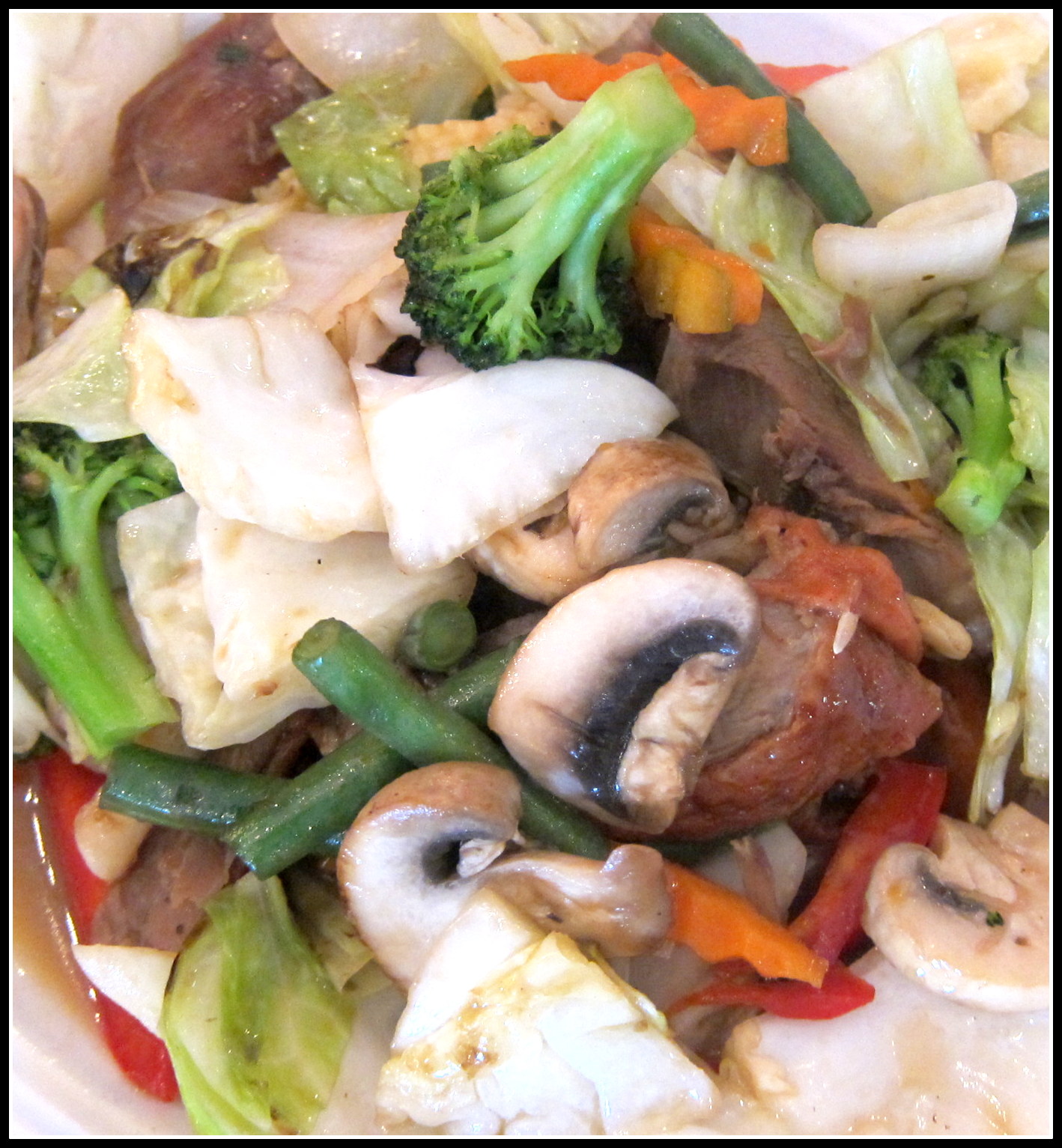
The nice thing about this restaurant: you can get roasted duck (or mock duck, which is made with seitan) with pretty much every dish. So my friend asked for Veggie Delight with roasted duck. I asked her if it was delightful, she said yes. 🙂
Address: Nara Thai Dining
18445 W Lake Houston Pkwy
Humble, TX 77346
(281) 812-0291 www.narathaidining.com
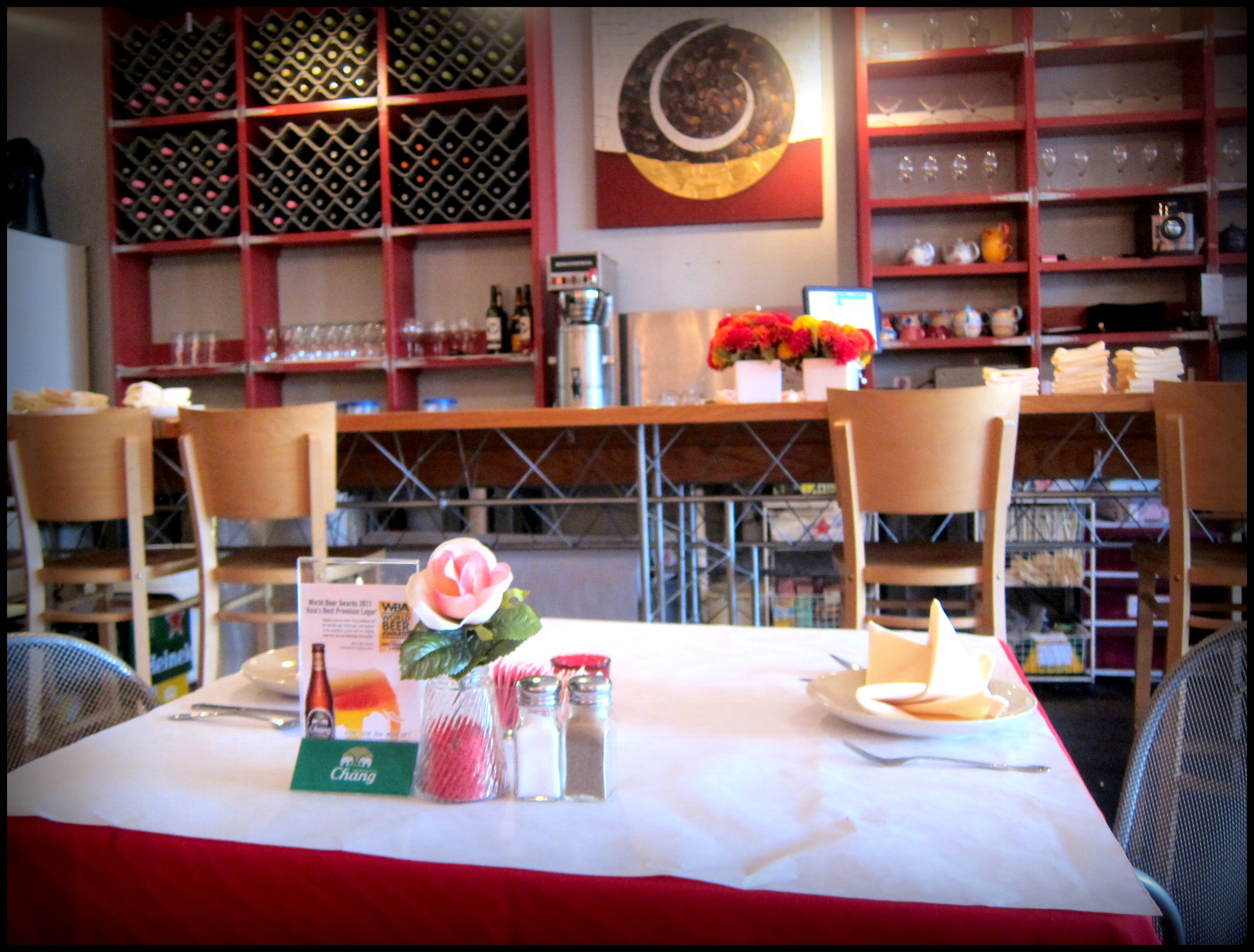
(*) The restroom is also clean and flavorful. Raspberry air freshener with black-raspberry-and-vanilla hand soap. As soon as we walked in, we could smell the overflowing raspberry. However, the floor of the hallway leading to the restroom is sticky, so I guess they only keep it clean where it matters?
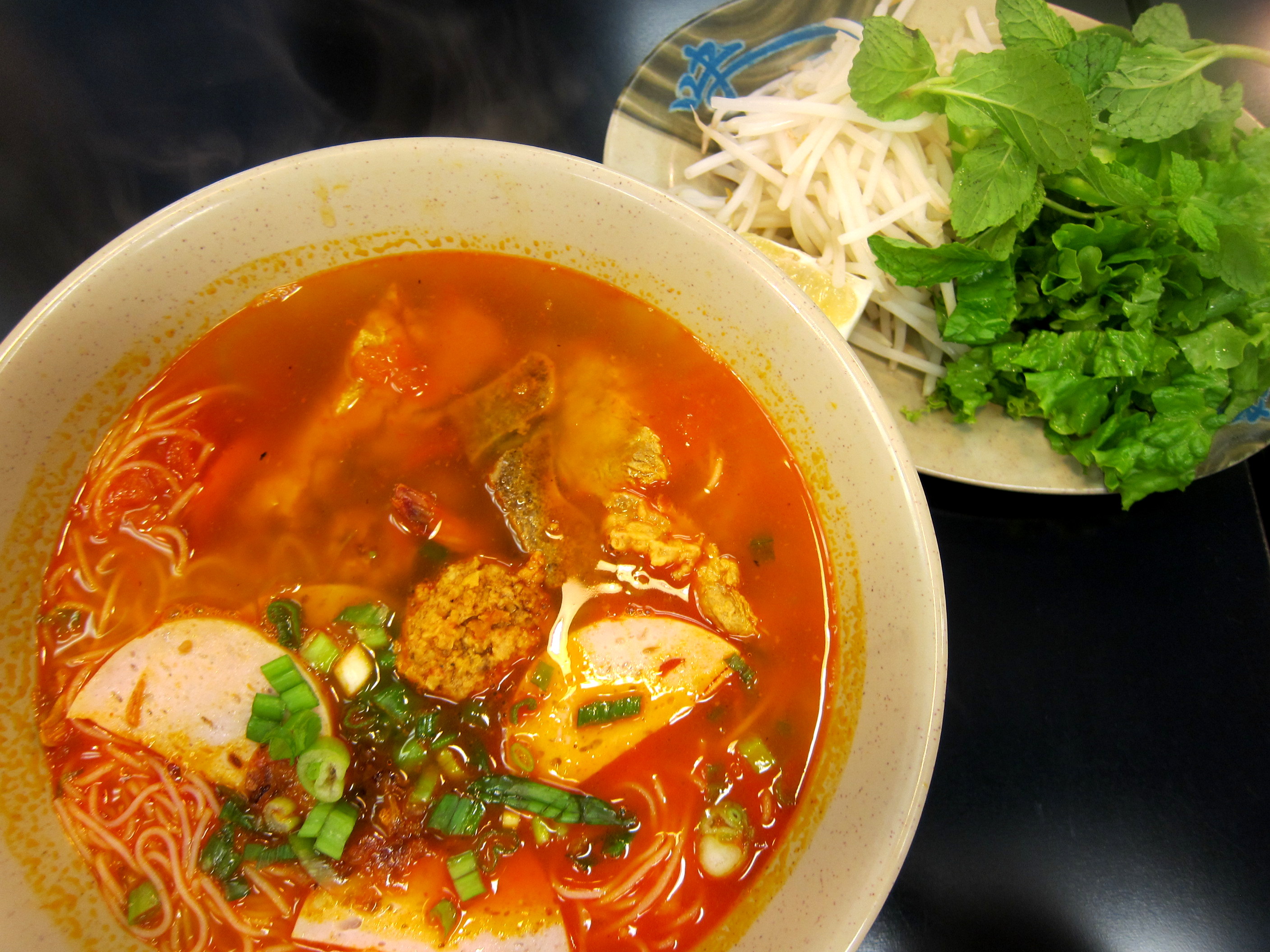
Good ol’ tomato and crab noodle soup from Southern Vietnam: bún riêu (pronounced |boon rhee-oo|). The broth looks alarmingly spicy but this soup is actually never spicy. The orange red color comes from tomato and annatto seeds, and if you’re lucky, crab roe (if fresh crabs are used for the soup).
The sweetness of the broth comes from freshwater paddy crabs, where the whole crab (meat and shell) is ground to a paste and strained for the juice. It’s a delicate, distinctive sweetness that can’t be reproduced with dashi no moto, meat bones or mushroom. To deepen the flavor, the cook adds some mắm ruốc, fermented krill paste, to the broth.
Traditionally, bun rieu has crab meat and tofu for the protein part, but bun rieu at Ba Le Sandwich is ladened with cha lua, pork and shrimp.
Traditionally, it’s one of those commoner’s noodle soups that every other street stall sells in Vietnam, nutritious, filling, unrefined, a richness of everyday life and earthy pleasures. Somehow I grew up not thinking much of it and was never impressed by it. In the bustle of North Cali, bun rieu is still nothing more than a commoner’s noodle soup, never elevated to the level of party food, but the more I think about it, the more I find it romantic. In one bowl, I was tasting the unctuous harmony of wetland and freshwater, of simple vegetables and grains and crustaceans that grow up together in one environment and end up together in one pot, or at least that’s how the noodle soup was originally designed. Do things taste best in the company of what they grow up with? I’m inclined to think so.
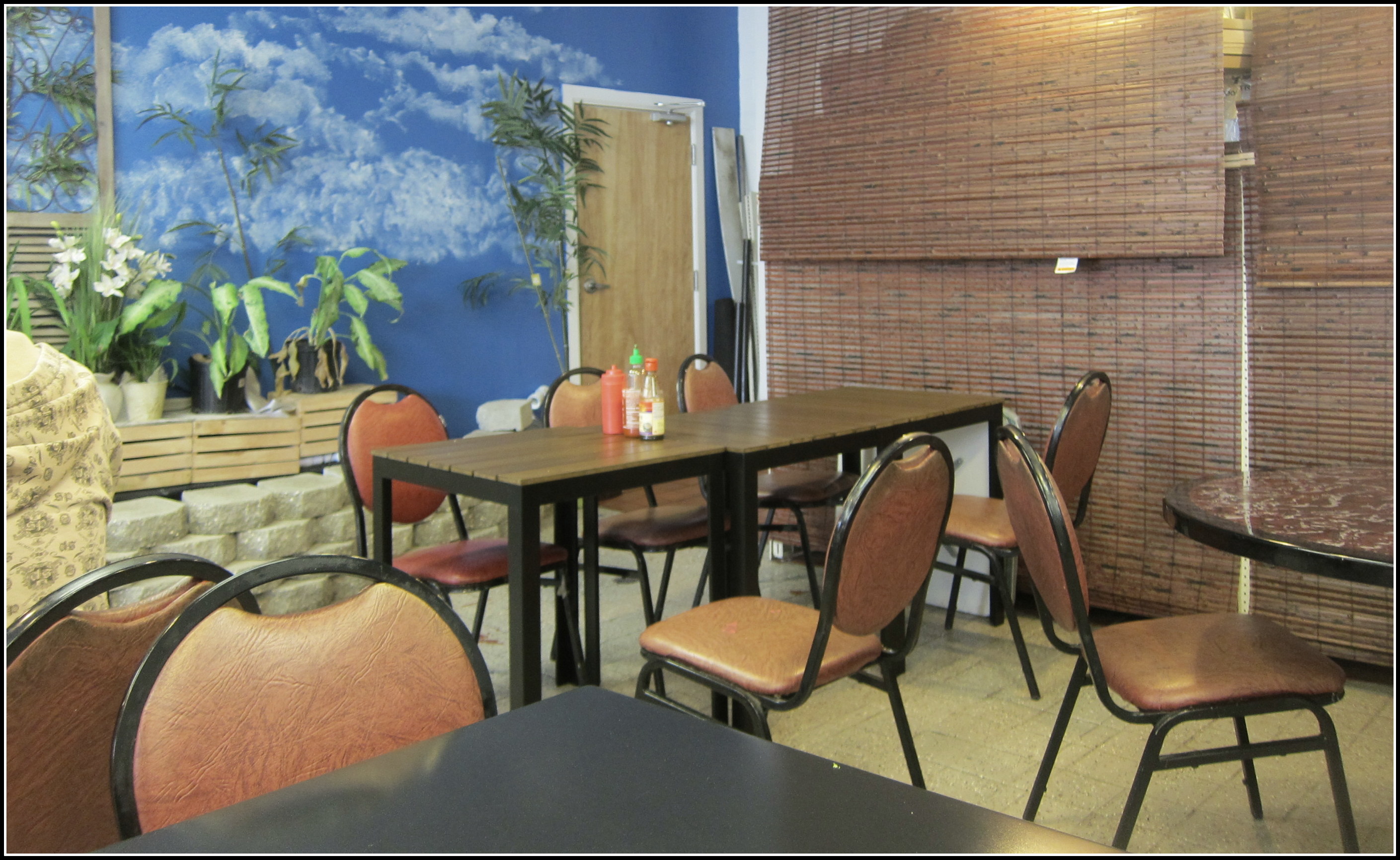
Back to a matter-of-fact viewpoint, the inside of Ba Le Sandwich in East Oakland, has been renovated earlier this year into a neat little diner enough to sit 12-14 people, since most customers come for to-go banh mi and on-the-counter goodies such as mungbean milk and sesame beignet. They have hand down the best banh mi in the East Bay north, but everything else tastes good because they know how to season things.
Address: Banh Mi Ba Le (Ba Le Sandwich)
1909 International Blvd
Oakland, CA 94606
(510) 261-9800
One bowl of delta romanticism: $6.50. Another awesome thing about this place: they open at 6:30 am.
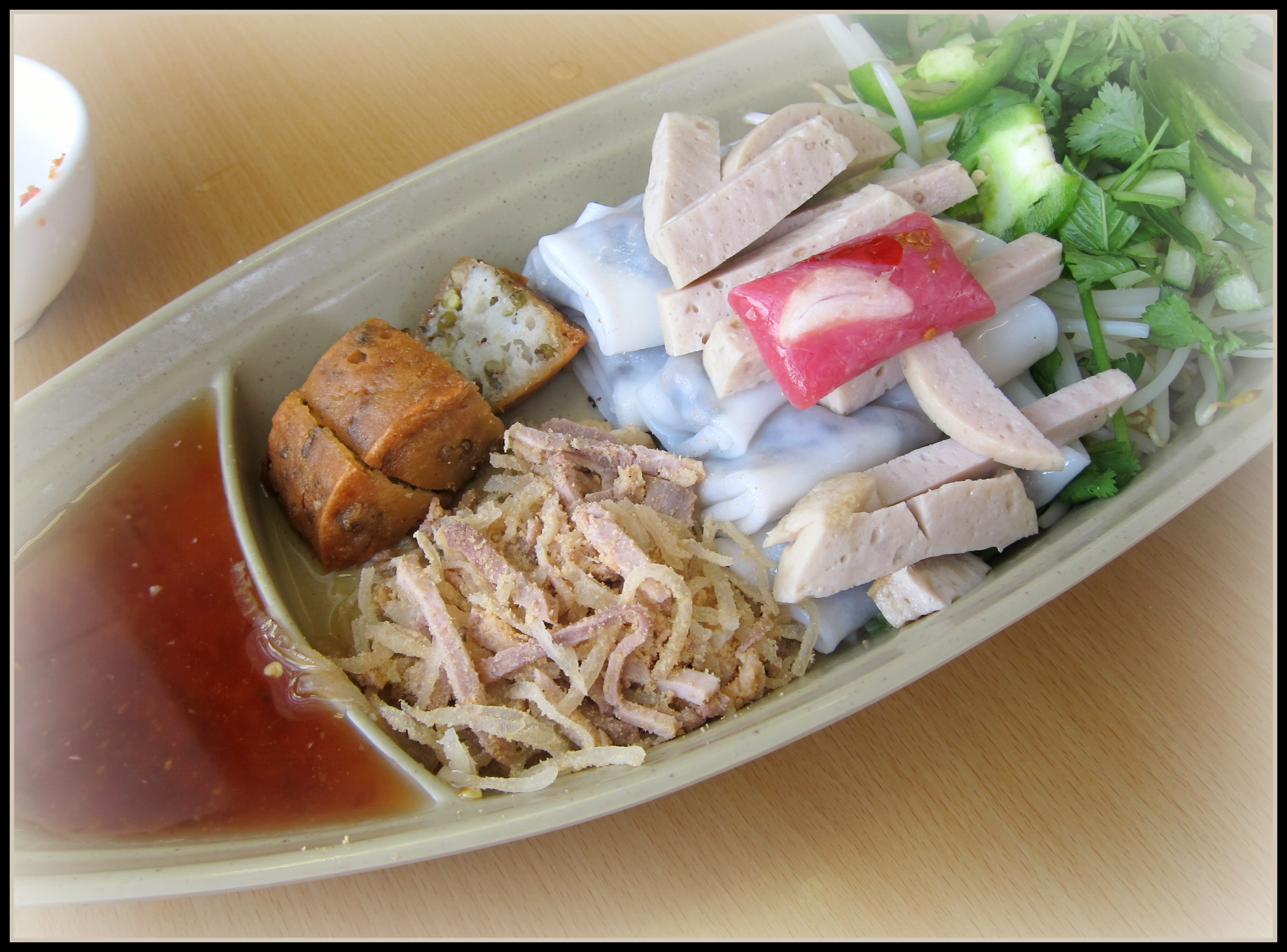
Banh cuon – steamed rice rolls stuffed with pork and mushroom (the white things), and accessories.
Banh canh – It’s supposed to be tapioca noodle soup with short fat noodle made from tapioca and rice flour, but Ba Le uses Japanese udon instead. The broth is kept original, though.
It was 1 AM Wednesday night when I saw the text message from Chris, “hey Mai, do you expect you’ll have another review ready by tomorrow?” “Yeah I think so.” “Oh good. When can you have it in? It’ll have to be sort of early if we want to get it in Friday’s paper.” Chris is the editor of Eating Berkeley, and all of my publications with them so far are online, so it’d be pretty exciting to see my name in print. The problem: it was 1 AM and I had to finish a few scripts for my research the next day. The good thing: I just had dinner at Burma Superstar (the Oakland one) earlier that evening, followed by a LOT of puer, so my eyes were opening as wide as the Pacific Ocean and ready for no sleep. I started typing away about Burma Superstar.
This morning I picked up a copy of the Daily Cal at the bus stop. It IS good to see my piece in print, although it’s on a B&W page and I don’t feel like they chose the best photo there. Later in the day I checked the online section, where it’s also published. Below is what I wrote:
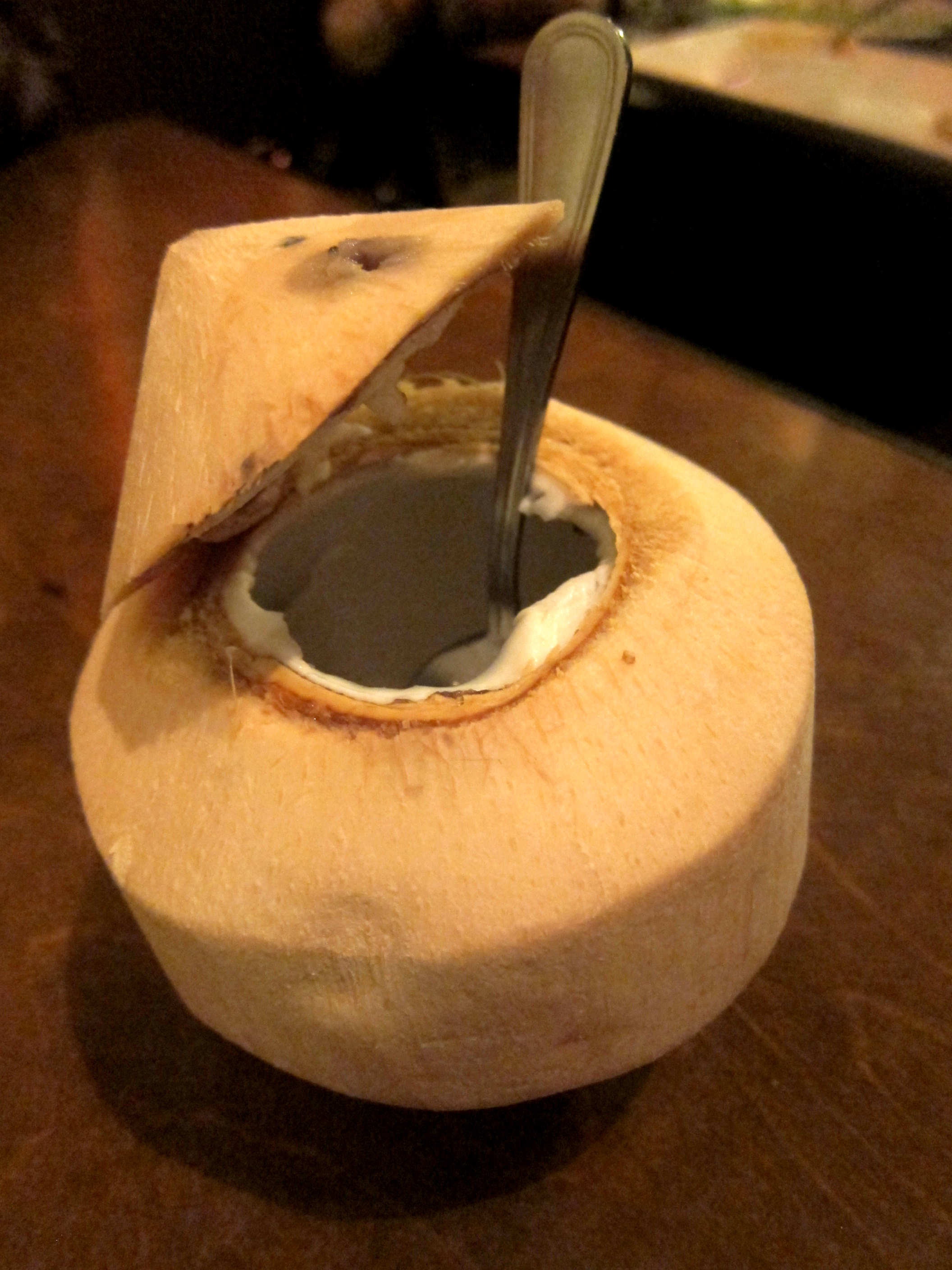
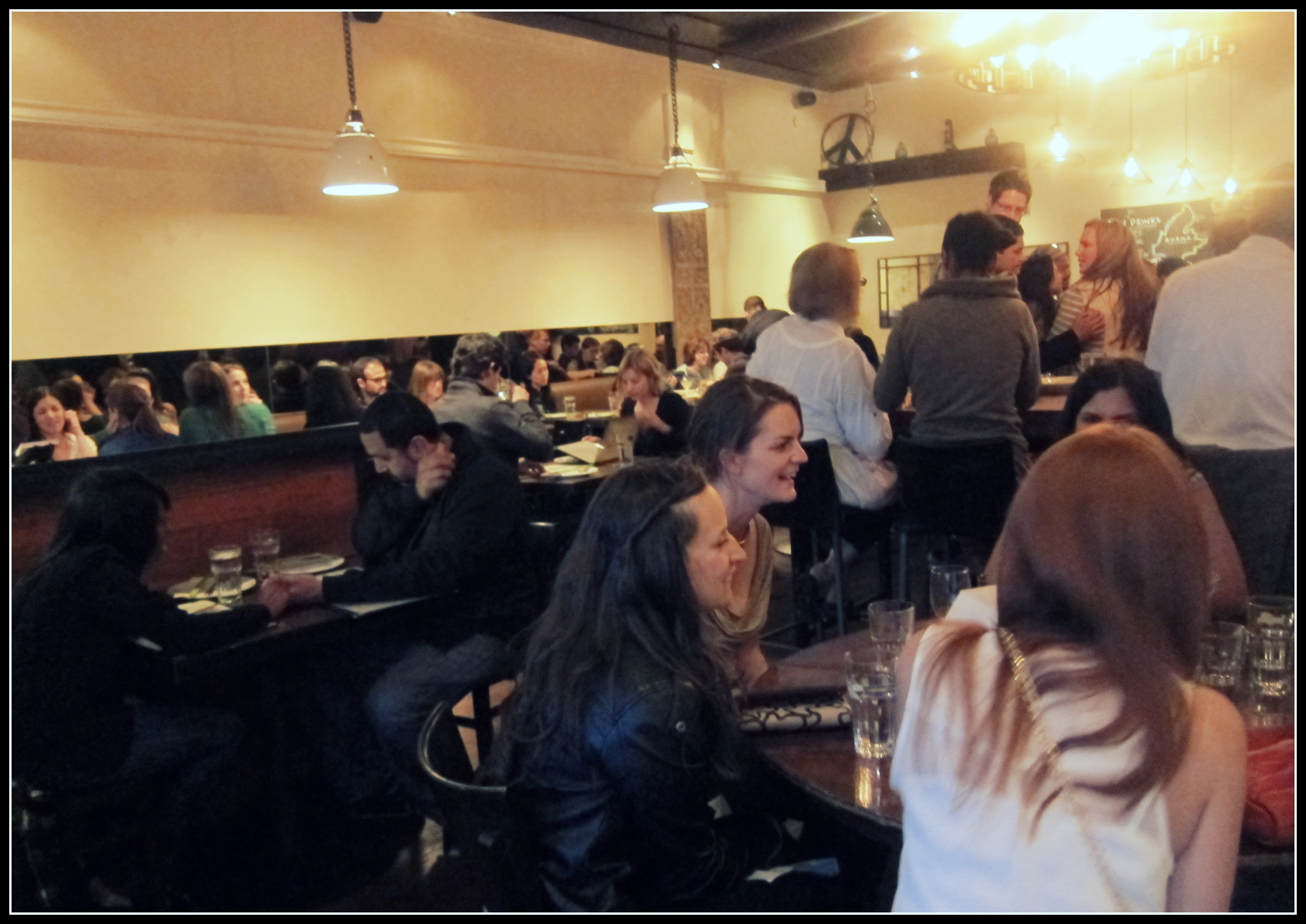
A full bar and a wildly successful sister establishment in San Francisco could be the reason for the huge line outside Burma Superstar in Oakland’s Temescal District on a Wednesday night. But for me, the restaurant’s main draw is its fresh coconut, for which they charge a whopping $5. It brings back childhood flavors from the tropics, though, and that justifies everything.
It wasn’t a young coconut, and I didn’t expect it to be given that we can’t grow coconuts in most of this country. But this middle-aged coconut had such rich water and a sweet fragrant from the husk that I thought I was drinking sugar cane juice, so it was doubly nostalgic. The rest of my meal at Burma Superstar followed smoothly through every sip of that coconut water.
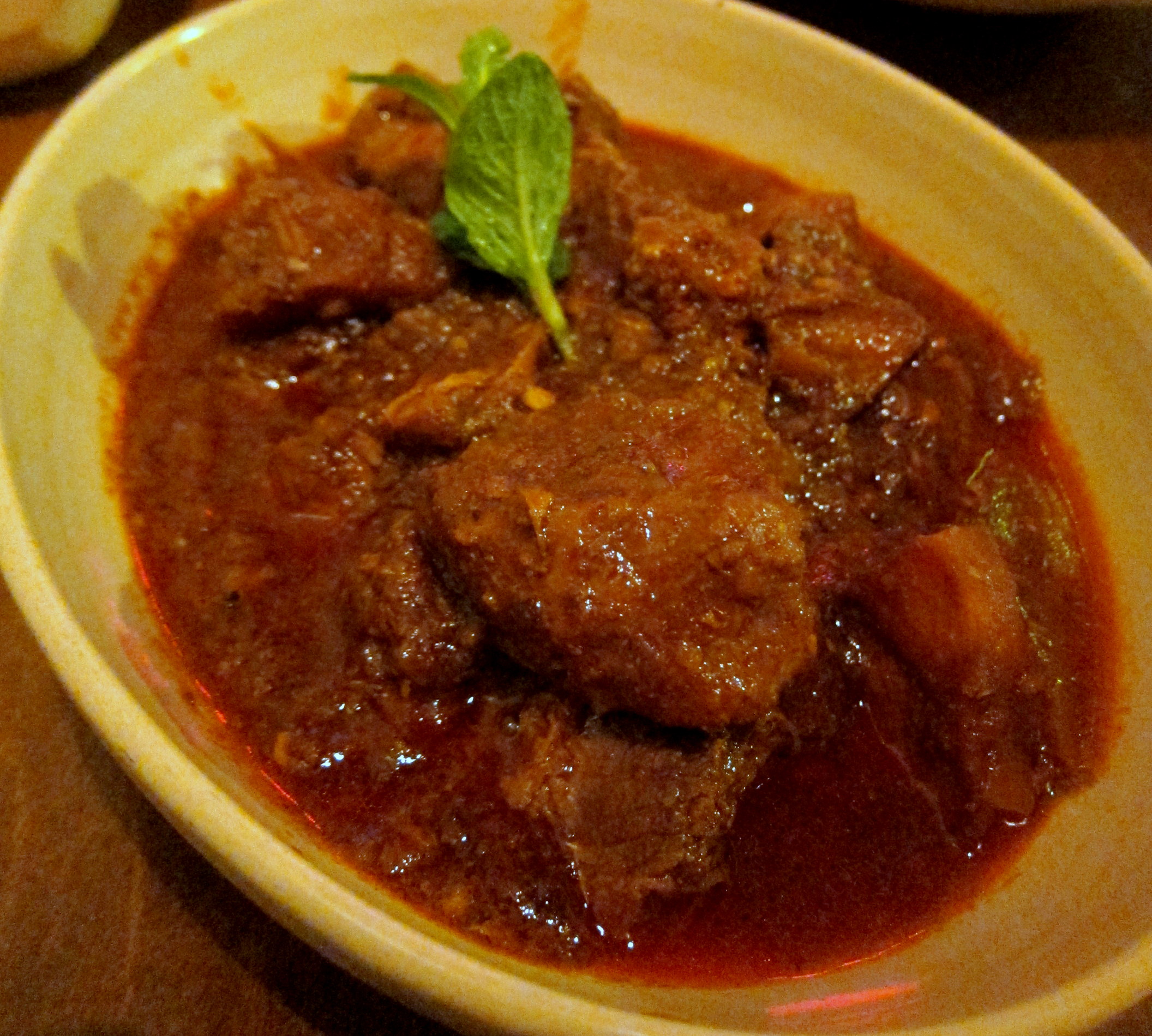
Burmese food is a cross between Chinese, Thai and Indian cuisines, with some dishes showing the influence of one culture more than the others. For example, the curry pork with potato has a strong Indian touch of cumin and shines with chili oil like Szechuan mapo tofu, but it isn’t sweetened by coconut milk like other Southeast Asian curries. Thus, its perfect match is the sweetened coconut rice topped with fried shallots. In fact, the coconut rice is so fluffy and flavorful that it stands well on its own and it enhances everything. In hindsight, the curry pork was the weakest link in the meal for several reasons. The description said that there was pickled mango, but we detected neither mango nor pickle. It had too little potato and too much pork, and the big chunks of pork could have used some more cooking time or fared better in smaller pieces to reduce the fibrousness of the cut.
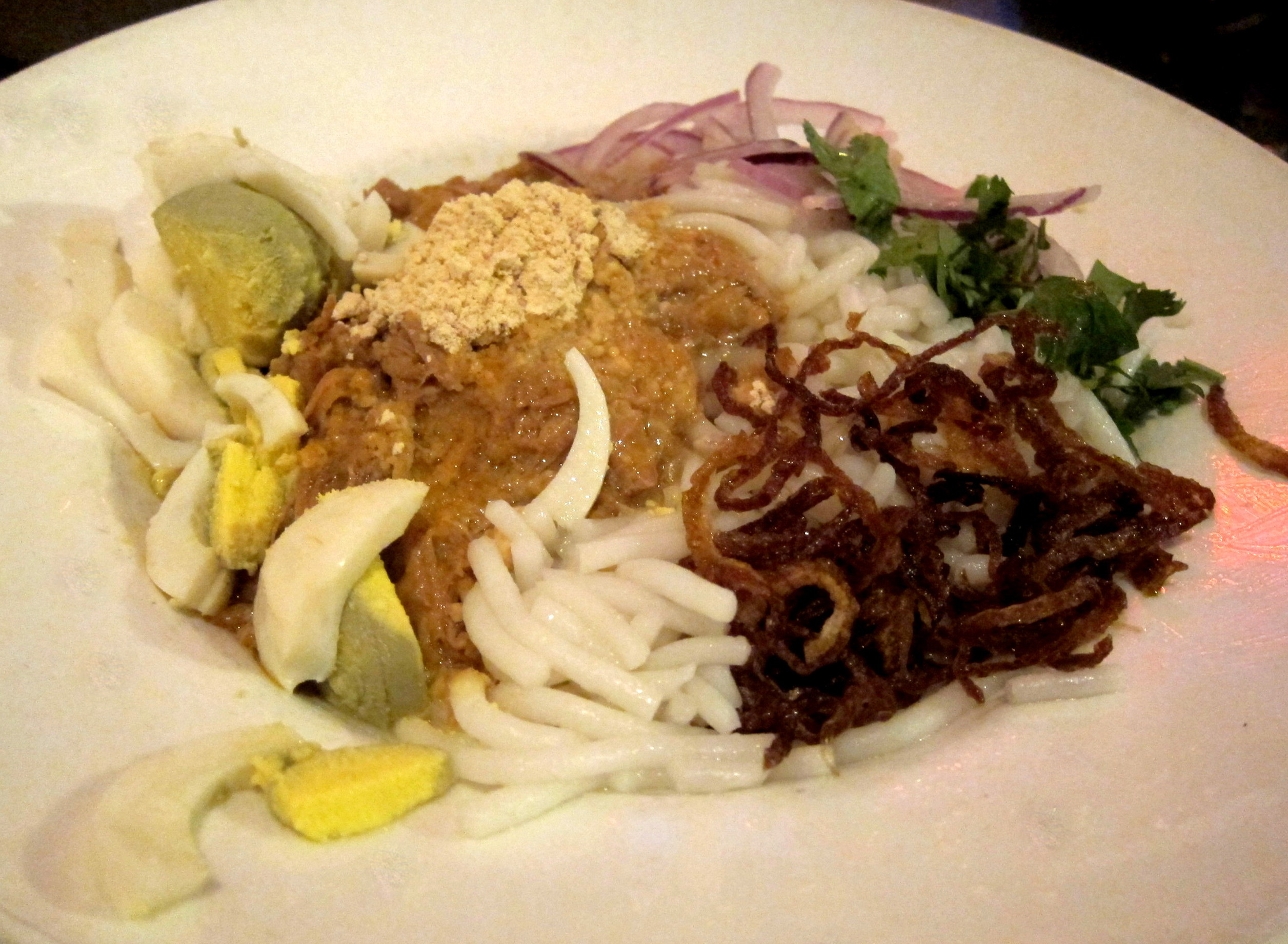
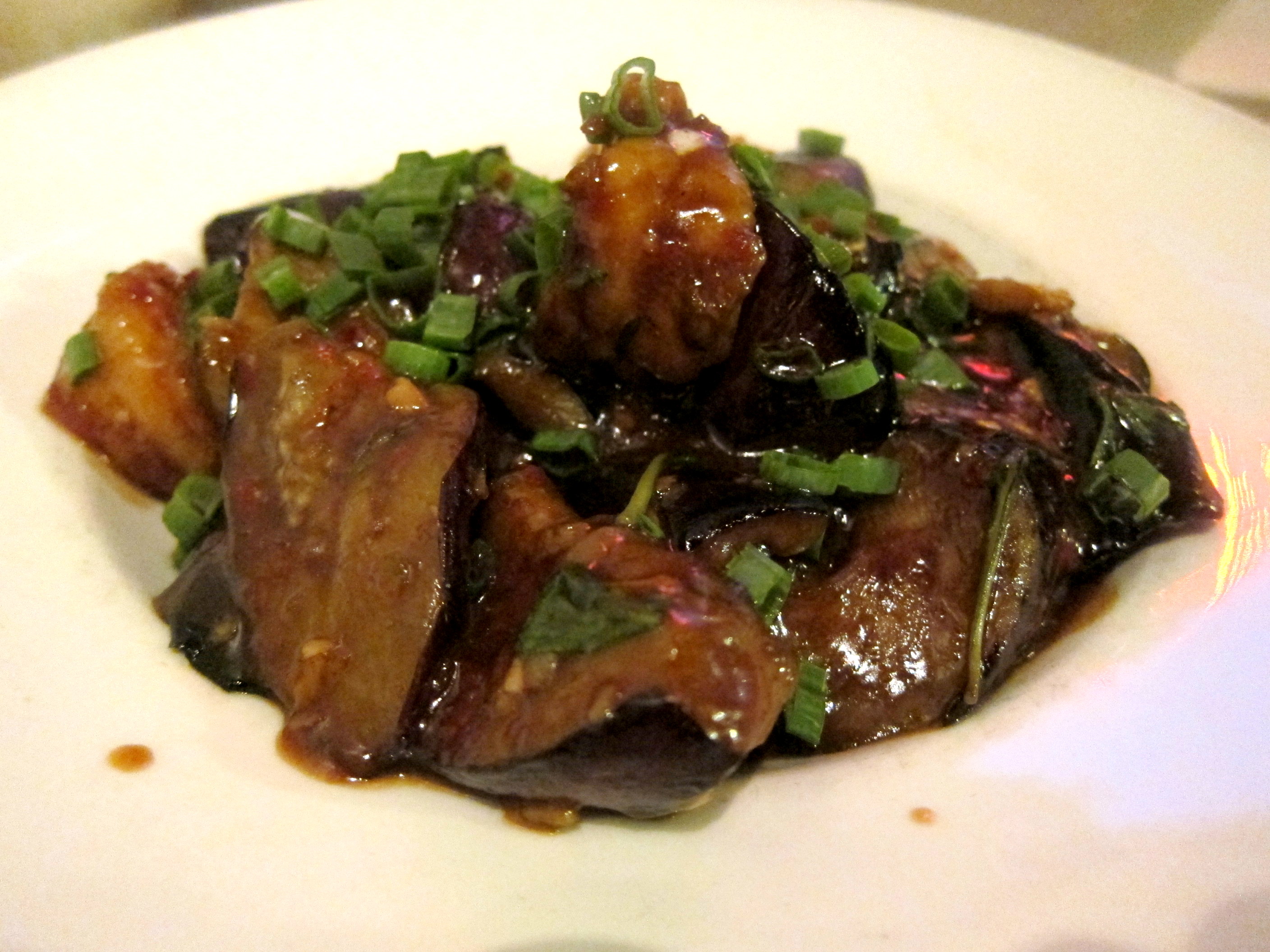
But whatever slight disappointment we had with the curry was quickly drowned in the dense, confident garlic and chili sauce of the sauteed eggplant. The shrimp served their purpose of keeping the name of the dish not so simple as “sauteed eggplant”, but they were hardly noticeable next to the perfect eggplant — tender but not mushy, and firm but not rubbery. The nan gyi dok was a pleasant surprise. I expected thin rice noodle like in pho, served warm, but Burmese rice noodle is thick, smooth and so fragile. It was also served cold as a noodle salad with fried shallots, boiled egg, cilantro, chickpea flour and coconut chicken curry, tossed together at the table after a squeeze of fresh lemon.
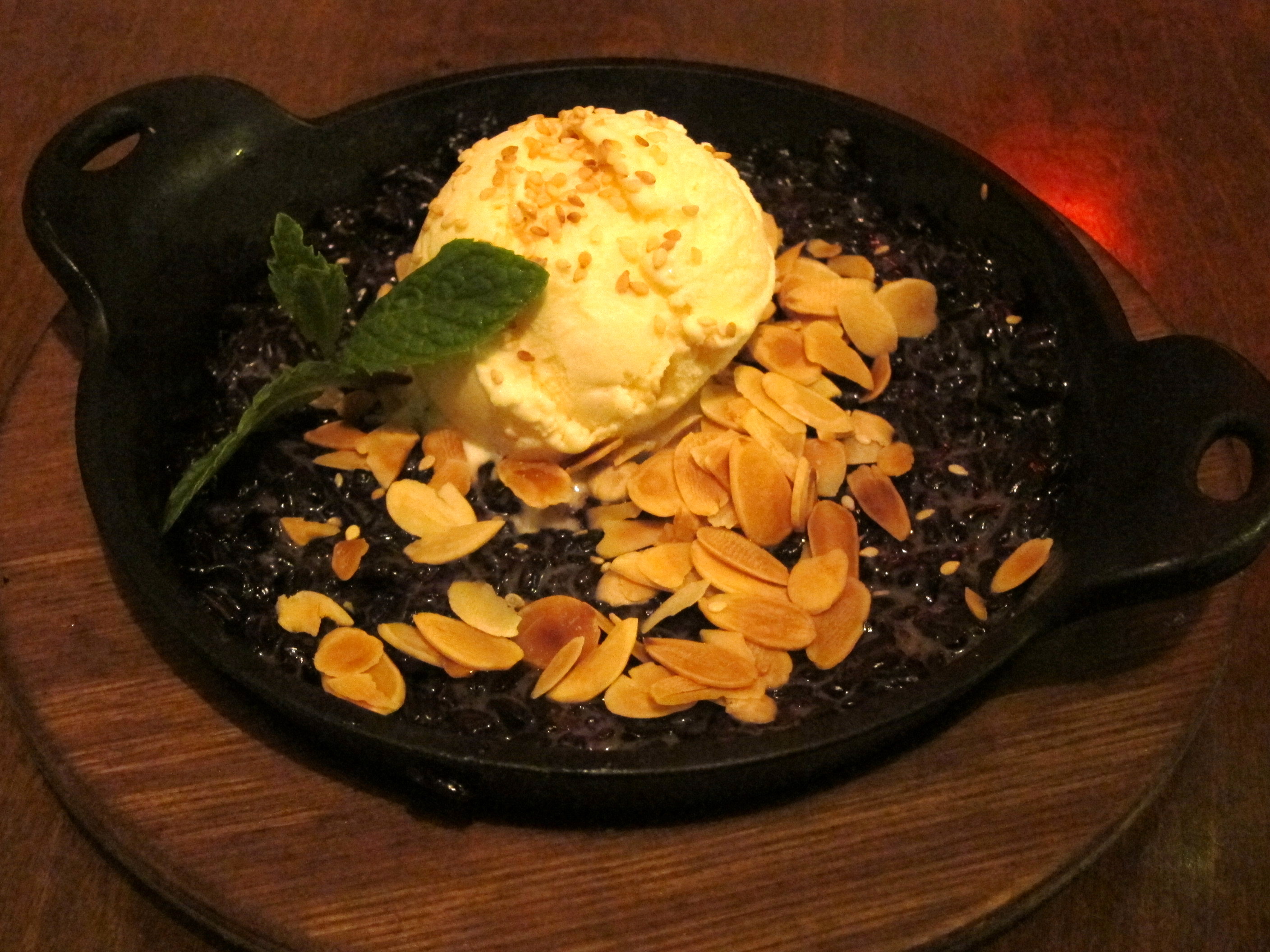
As if to reward the customers for the long wait, the kitchen turns out dishes very quickly and in big enough portions that my friend and I had to ask for three to-go boxes at the end. However, that did not deter us from dessert. We hurriedly drank up the coconut water and asked the server to chop off the tops so that we could scrape off the coconut meat inside, a joy I hadn’t had for years. Meanwhile, we ordered another nostalgic comfort food — warm black rice pudding with coconut ice cream. Well, sliced almond isn’t exactly authentic Southeast Asian, but its toasty crunch earns it a home with the creamy ice cream and the gooey rice.
In the end, I wouldn’t say that Burma Superstar shines as bright as its name suggests, but the food was just as pleasant as the staff. We were full and happy when we walked out, a little slowly so not to burst. Our jackets also smelled like sauteed onion for the rest of the night, but that’s never a bad thing.
EDIT: to adhere to the Daily Cal policy, I’ve removed the quote of the commenter on Eating Berkeley. This post is not a respond to the commenter, but a reflection on my style.
When I reread my review though, I realize the depth of reviewing ethnic restaurants that I should explore. It’s not as simple as saying whether a dish is good or bad because each dish has a complex culture behind it. That makes reviewing ethnic restaurants more challenging but more enjoyable. Burma Superstar was only my second time trying Burmese cuisine, and the first time barely left any impression. Of course, my review needs a lot more research if I was reviewing Burmese cuisine as a whole, but for now, as a single restaurant review, did I do it justice?
Curry pork with potato ($13.95) – description on menu: “specialty curry cooked with pickled mango, potatoes and tender pork”. I think I’ve said enough about this pork in my review…
Nan gyi dok ($9.95) – Burmese rice noodle salad with coconut chicken curry, boiled egg, fried shallots, cilantro, onion, chickpea flour and lemon juice. Complex in flavors and satisfying.
Eggplant and shrimp in garlic sauce ($13.95) – well, it’s eggplant and shrimp in garlic sauce. We asked for mild, so although there was chili in the sauce, it was actually mild. Really good. The shrimp doesn’t need to be there, though.
Black rice pudding with coconut ice cream and sliced almond ($9) – Worth the money. Besides, I always LOVE coconut ice cream.
“Are you giving Thanks?”, asks Der Miller. I should. It is my first independent Thanksgiving. There will be no turkey, not because they’re not that tender but because it’s cruel to take their lives on the day that everyone else celebrates. There will be no green bean casserole or sweet potato with marshmallow, not because I’m lazy but because I have no oven. There will be no cranberry sauce or stuffing, for no shining reason. I’ll just make the one thing that is both simple and not ramen: bún xêu.
Over 2000 years ago lived a king in a foreign land, who ordered his royal kitchen staff to prepare a party to welcome his future son-in-law from another foreign land. Naturally the king wanted a feast with national specialties, which included a type of rice flour pastry with sweetened mung bean paste. The flour had to be made in the morning of the same day to avoid it turning sour, and one young kitchen helper, who probably liked to get up early as much as I do, was in charge of preparing the batter.
Instead of mixing rice flour and water in a bowl, the half-closed-eye boy happened to use a strainer instead, which, fortunately, was placed on a pot of boiling water. When he realized what was going on, the needed pastry batter had long turned into fine strings of rice noodle. The chef caught the boy’s mistake, but sympathizing with his weariness, told him to pick some herbs in the garden and use fried lard pebbles to make stir fried noodle for the kitchen staff’s breakfast. In that season, only water celery was in abundance.
A servant of the king dropped by the kitchen to check on the preparation process, and was charmed by the aroma of water celery and lard. He asked for the dish’s name. The chef, panicked by the boy’s mistake, intended to say “xào” (|xao|, “stir fry”) but mispronounced it into “xêu” (|seh-oo|). The servant took a taste, liked it, and ran off to tell the king about a new creation named xêu, then the king went to the kitchen to try it himself. This is when matters really got out of Kitchen Boy’s hands: xêu was ordered to be served at the party that day.
Over 2000 years later, bún xêu, however so simple, is still considered a historically valued specialty of the Cổ Loa Citadel region, just 20km north of Hanoi today. The creation of rice vermicelli (“bún”) would not have happened in Northern Vietnam then, had the kitchen boy not been drowsy, the chef not sympathetic and creative, the servant not curious, and the king not open-minded. And so it goes the story of bún xêu. 🙂
The main ingredients:
– Rice Vermicelli (sold at Asian markets with the label “Bún Khô“)
– Celery (good luck finding water celery im Supermarkt, so the normal chubby stalks are quite alright), sliced into finger long sticks.
– Lard, or Cooking Oil
– Salt, Pepper, Sugar
The supporting roles: Onion, Garlic, Mushroom, Green Onion, Coriander, Egg, Soy Sauce or Fish Sauce.
Blanch the bun and set aside. Make a thin omelet, set aside till cool, slice into strips. Sautee the garlic, onion, sliced mushroom, celery, and green onion (in that order), add a little bit of water, season to taste.
Now you have two choices:
1. Add the bun into the veggie skillet and spatula it like mad until everything entangles together. Re-add seasonings to taste. Pro: stuff mixes well. Con: your bun can get mushy, stick together, and be shortened to the size of rice grains. It all depends on how mad your spatula skill is.
2. Put a wad of bun on a plate, scoop some mixed veggie and sauce onto the bun, and mix while you eat. Pro: long noodle strands preserved, chewiness preserved. Con: it’s not really “bún xào” if the “bún” wasn’t “xào” (stir fried).