Flavor Boulevard

We Asians like to talk food.
Subscribe

Two scientists take on all Indian restaurants in Berkeley

May 09, 2013 By: Mai Truong Category: California - The Bay Area, The more interesting

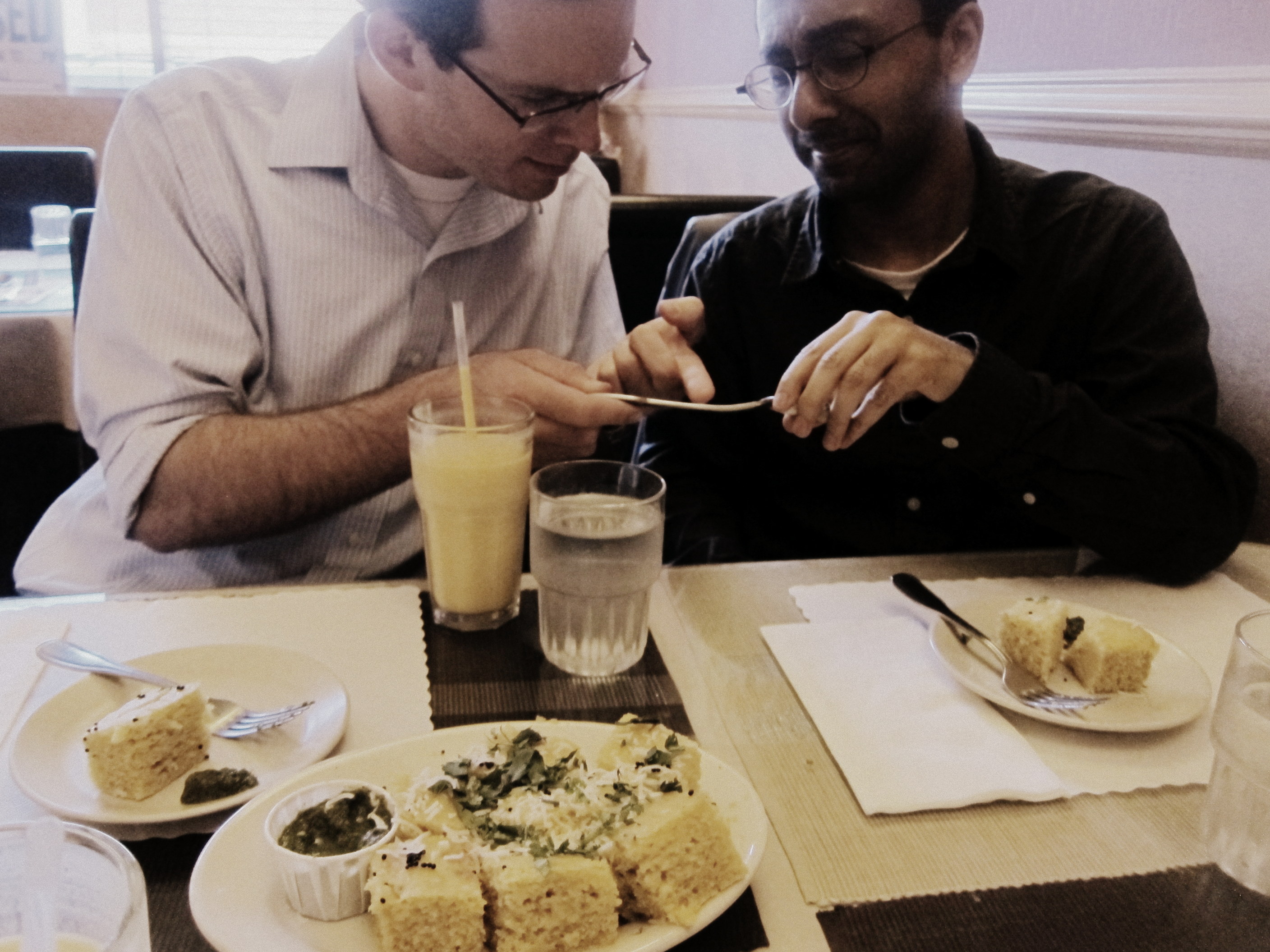
Hull and Surendranath examine the inscription on a spoon at Bombay Cuisine.

Hull and Surendranath examine the inscription on a spoon at Bombay Cuisine.

What do grad students do? Some of us write, some of us teach, most of us don’t sleep, all of us eat. For Astronomy PhD student Chat Hull and his friend Yogesh Surendranath, a Chemistry postdoctoral fellow, eating at every single Indian restaurant in Berkeley and writing about it is high on the priority list.

Berkeley has no shortage of Indian restaurants for the duo to review. “We stay within the city limit”, said Surendranath. Their blog, Masala Chaat, has been regularly updated for roughly a year. When I meet them in the office, they seem like the normal physicists: friendly, calm and full of physics. When I joined them in a trip to Bombay Cuisine, the restaurant-reviewing mode was turned on full-force. The inner comedians were revealed.

In their blog posts about each dining experience, they take notes from the smallest detail in the surroundings, such as the film of grease on the wall mirrors, to the viscosity of the mango lassi. They have a couple of “eigendishes”, items that they always order after reaching the conclusion that these dishes best reflect the skill of the chef. They tell stories of glass shards in their food and how the owner reacted “with little remorse”.

When asked “why Indian restaurants?”, Hull and Surendranath looked at each other, “Did we ever have anything non-Indian together?” The answer was “Maybe a coffee?”. They’ve been friends since college. During the lifetime of the blog Masala Chaat, some restaurants were closed down and others opened, and Hull made sure to update Google on those listings.

Now nearing the end of their quest, with fewer than 5 restaurants remain, Hull and Surendranath are considering expanding the scope to the East Coast, as Surendranath will soon start his professorship at MIT.

9 tips to make your food post interesting

April 29, 2012 By: Mai Truong Category: Opinions

Recently I’ve received an increasing number of requests to guest-post on my site, which makes me ecstatic, but it also sets me in a difficult position to evaluate what is interesting. Of the millions of food blogs out there, what makes yours interesting? It’s you. Your voice, your emotions and your own experience with the food can set your post miles above a recipe that I can find just 0.2 seconds after I google its name. I’m no professional blogger, but I’ve read a fair share of food blogs, and from the ones that I keep returning to, I’ve learned and formed my own set of guidelines on how to write a post (which I try to follow, sometimes more successful than others).

In general, recipe posts have more room for personal stories, and they also comprise the most common type of food blogs (small sample: of the top 50 food blogs on Delish, 43 are recipes), so these guidelines are more geared toward recipe blogging than reviews. I’m gonna skip the photos, although they’re important, they’re the varnish and the writing is the wood.

1. Write statements with specific details, geographically and historically. Let’s say you want to write about grilled catfish. You need an opening sentence. Your first thought is “When it comes to catfish, there are many American dishes. They are mouthwatering and delicious.” These two sentences sound choppy and unimpressive, so you can remodel them into “Our American cuisine has no shortage of mouth-watering dishes with catfish, such as Catfish Tuscany and Catfish Gumbo.” Then you give more background details to it: in which regions in America are these dishes most common, who usually like them; or give a more personal touch: do you have a childhood story related to one of these catfish dishes, how did you come to like catfish or fish in general, etc.

2. Be confident with your opinions, but respect your readers. You’re not trying to give a lecture, you’re just telling a story. Sometimes a confident statement may sound a little bit too direct and confrontational. For example, “you should eat catfish because it is healthy” sounds like an order, but softening it to “my mother always tells me to eat catfish because it is healthy” offers not only consideration but also a personal story and a third opinion (your mom’s), which gently boosts the credibility of your statement. The use of “you” should be minimal, unless you want to make it sound like a conversation, which you should.

3. Give reasons. Why is catfish good for health? Include scientific facts if possible. Include your grandmother’s experience is even better: 1. It’s personal; 2. It’s most likely universal, somehow all grandmothers think the same; 3. It’s proven with time.

4. Tell a story. How did you come up with this recipe? How is your recipe different from other recipes of grilled catfish? Basically, what makes your recipe unique? What have you discovered while making this recipe, using this product, or eating this dish? James Boo and his co-writers on The Eaten Path tell some of the best stories.

5. How flexible is your recipe? Can I use brown rice instead of basmati rice, pork bone instead of beef bone, or blueberries instead of raisins? For a review, how adaptable is the dish or the product? Can it be eaten any time of the day, any season of the year? What kind of beverage would it go well with? What changes can/should be made if I want to make it for my grandmother’s cousin who has dentures and is fond of duck tongue?

6. Tell us about the result. What do you think about your recipe after you eat it? Is it perfect? Did it give you a split second of enlightenment? Is there anything you should have done differently or is there anything you would like to experiment next time you make it? Will you make it again? Did your best invention give you the worst stomachache the following day? Did anyone beside you eat it, if so, what did they think? The answers to these questions add personality to your post and complete your story.

7. Google is your best friend. And like with your best human friend, you should prepare to spend a lot of time with Google. There are already a lot of information out there, simply reciting the first link you find is not going to make your post any better than that link. What the reader needs is all of that information in one place, so that they can quickly go back and look up for it as needed. I spent 2 days browsing through 50 pages of articles on the ash sticky rice dumpling (bánh ú tro), most are copies of one another, to get enough information for my post. The more inclusive your post is, the more useful it is for the reader. Your reader is spending their valuable time to read your post, so you have to invest your time to research before you write.
Also make sure to cite your sources. Citation doesn’t take away your expertise, it proves it.

8. Be funny. This point is always mentioned in every blogging to-do list, and it’s the hardest point to follow. How can you be funny? I try, but I don’t know if I’ve ever succeeded because nobody has ever told me that I’m funny. But here’s a trick I’ve learned from noodlepie: you can be funny by referencing funny things. Use the built-in links to your advantage. Those who bother to click on them, get the hidden jokes.

9. Be open about yourself. Be personal. If you don’t want the world to know about you, maybe you should set your blog private, or blog in your head. Besides, the world is not out to get you, unless you’re a serial killer on Interpol‘s wanted list who also enjoys seeking out the most authentic pad thai in the States, in which case you probably shouldn’t blog about where you just had lunch… (or maybe you should?)

To sum it up, a good blogging tone is confident, respectful and open. Content-wise, be informative. Ask yourself while writing: have I learned something new? If you don’t learn anything new while writing your post, that means you haven’t done enough research and your post is useless. Even if you think of the entire post all by yourself in one go, there are always numbers and statistics that you can add to bolster your arguments, or fun facts to make your baked potato not so trivial, or new words that you procure from thesaurus.com to avoid repeating yourself. If you learn something new while writing your post, chances are your readers will learn something new from your post, and that newly acquired knowledge will prompt them to think of your blog as a valuable source, and they will come back.

This post was written after an allnighter. Now the author has learned what her third alarm, which she always sleeps through, sounds like.

Recipe versus Review

April 26, 2012 By: Mai Truong Category: Opinions


Today I make a list to re-evaluate my blogging life.

Recipe posts:
Pros:

  • A lot of room for personal story
  • A lot of control with pictures: position, setting (decoration, utensil, plating), lighting, time (time of the day, amount of time for taking picture), camera equipment (unless you’re brazen and bring a tripod into the restaurant, some people do that, and I know some people who dislike people who do that)
  • Single product – cost efficiency
  • No partner necessary, although a helpless victim test subject friend might be useful
  • Almost always a good result
  • Experiment: you can do things a thousand times, talking about your experiments also makes a good story (example: tofu misozuke experiment by Oanh and Linh-Dang at Rau Om)
  • Relevance to readers: high – almost everyone can follow a recipe if they want to

Difficulties:

  • Finding the ingredients
  • Setting up and cleaning up: the nightmares untold tales
  • Making your recipe unique
  • Cooking – the kitchen is a battlefield

Review posts:
1. Restaurant reviews:
Pros:

  • Everything is set up and cleaned up, you don’t have to lift a finger except to eat.
  • Possible interview/friendship with the chefs – I’ve yet to attain this level, but professional food bloggers like the Food Gal Carolyn Jung do it all the time, and information from/about the chefs adds credibility to the post.
  • If the restaurant is just average, it’s good practice to hone your writing skill because you have to think of something to write out of nothing.


Difficulties:

  • You have to eat a lot, have a lot of friends who tolerate your behavior, or go to one restaurant multiple times.  It may upset your boss (due to the time you spend eating) and/or your bank account.
  • Less time for pictures: annoy inconvenience your dining partner(s), unless they’re also food bloggers.
  • Pictures can be either very good or very bad, depending on the plating and the lighting, which are totally out of your control.
  • You have the same pictures as everyone else who go to the same restaurant (or the same type of restaurant, because every bowl of grilled pork vermicelli looks just like the first google image you find)
  • Mental debate: how nice should you be? Too nice –> your reviews are no good, and you risk hyping up the restaurant, then someone goes there, they don’t like it and you lose your credentials. Too critical –> nobody likes you.
  • Availability/relevance to readers: very limited –> low traffic
  • Hard to think of a personal story when you review the 67th Korean restaurant, which has the same menu as the 43rd and the 66th.

2. Product reviews:
Pros:

  • Availability/relevance to readers: medium to high, a large number of people can buy the same thing you buy, thanks to globalization
  • Cost: pretty cheap, and you don’t produce anything –> no prep work, no cleanup, no time spent making it
  • Flexibility: high – pictures can be taken any time, anywhere, anyhow
  • Single product – no partner necessary
  • There’s room for personal story, e.g., how you run into this product. Although this is hard to come up with times after times when your objective is simply to eat every Ben and Jerry ice cream flavor there is.
  • Room for facts: show off your expertise (at the very least, in googling). This also greatly expands your knowledge in “related fields”. I learn more Chinese looking up the Suzhou mooncake than if I ever try to just sit down and learn Chinese.
  • Possible interview with the producers: always an eye-opening experience

Difficulties:

Conclusion: for these past 4 years I’ve chosen the worst possible kind of food blogging… And I shall not change.
Did I miss anything in the list?

The new kid in the block

February 22, 2012 By: Mai Truong Category: Drinks, Opinions


Introducing a new site I’m working on: Tea and Mai. 🙂

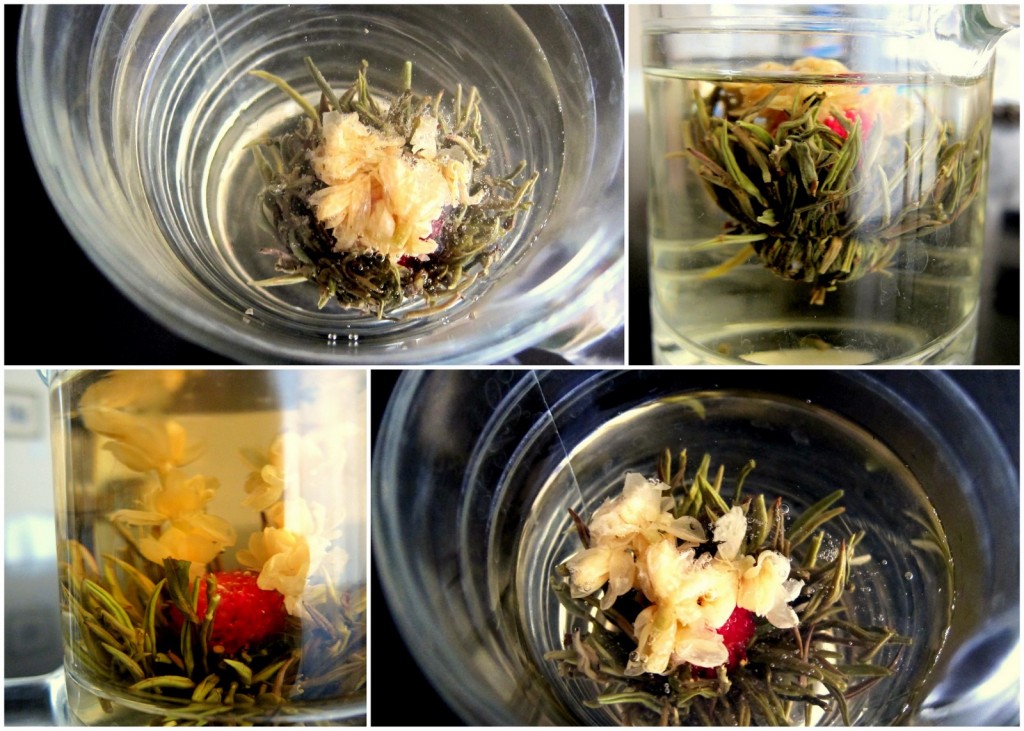
Now that I’m regularly attending a tea class and seriously inspired to learn about tea, I figure that I should write down what I learn instead of trying to memorize everything in vain. Consider it also my little contribution to the environment by going paperless. 😉 Why make a new site? Because I don’t want to turn Flavor Boulevard into chock-fulls of yellow-tinted drinks. On relevant occasions there will be posts shared on both sites though, such as this one in the picture above: a post on a few Blooming Teas.

Tags: ,

My twelve best meals in the Year of the Cat

January 20, 2012 By: Mai Truong Category: Opinions

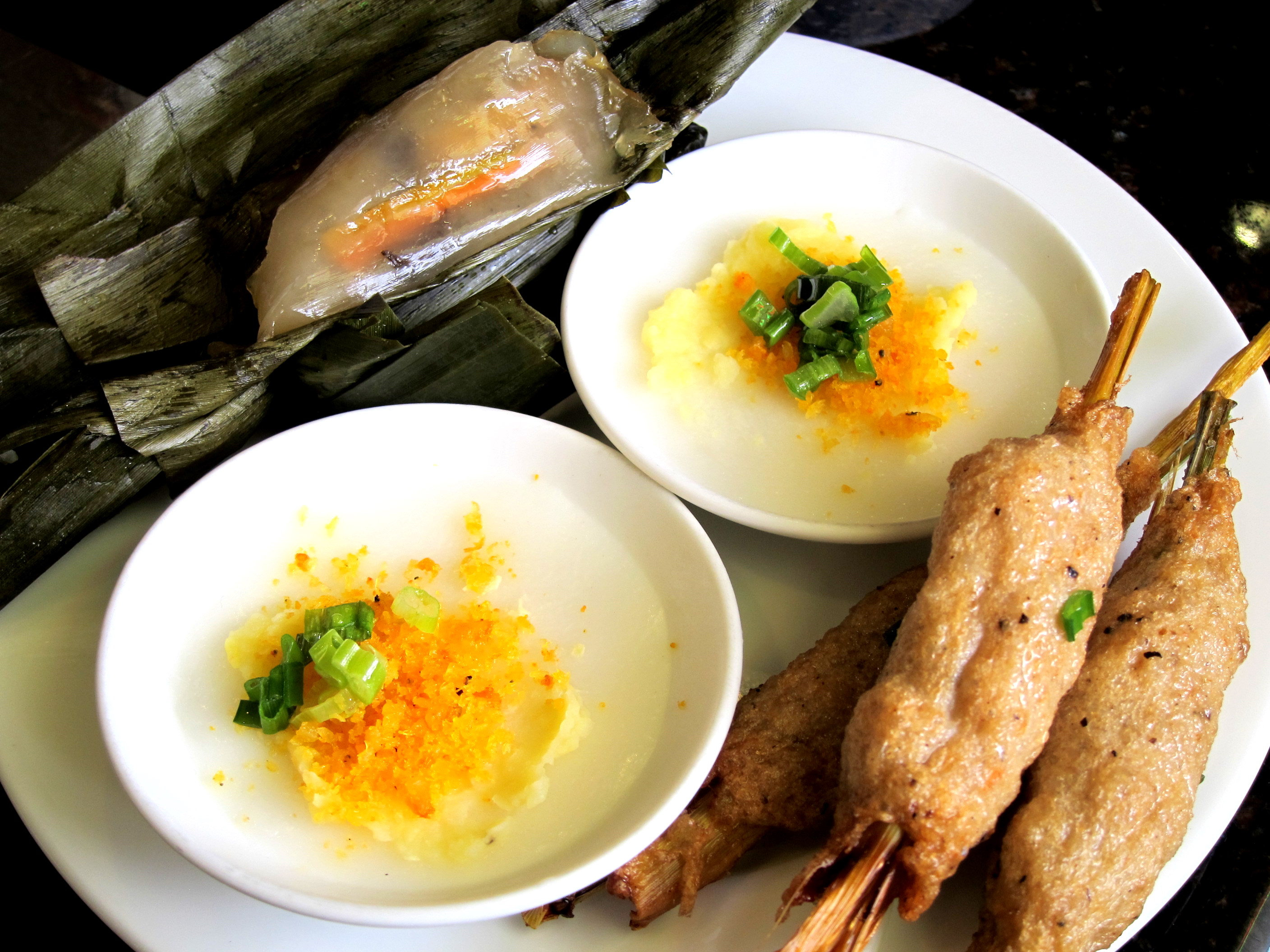
Appetizers from Saigon Buffet

Today marks the 28th day of the 12th month of the Year of the Cat, and it’s not the Year of the Rabbit because I’m Vietnamese. This year started with a piping jeongol at Casserole House and will be ended with a cup of Tieguanyin in bed. This year my luck has brought me new friendships with some admirable people and bolstered old friendships that have last almost a decade. I’ve eaten more, and I’ve disliked more. But there are meals that I truly like. In this list of no particular order, the setting and the price are secondary to the taste, and not all of the dishes are breathtaking (but they’re good). These meals are the best because each of them either has something that I remember (most often the dessert :D) or was shared with someone that I like. 🙂

It would be unfair to include Little Mom’s meals in this list, they’d take up the whole list. 🙂

1. My first (and still only) Cambodian dinner at Battambang, Oakland. I’m not sure if I should continue exploring the Cambodian front. If I do, it’d be more for linguistic purpose than culinary adventure because the tastes are too similar to the typical Vietnamese menus. Regardless, what makes this meal standout was the dessert: jackfruit in warm coconut milk, simple but so satisfying.

2. A less typical taste of Huế at Hương Giang, Houston. Most Vietnamese shops in the States feature Southern Vietnamese cuisine, the most Central Vietnamese things one can get are bánh bèo and bún bò Huế. Hương Giang doesn’t have a strong outlook, but its food is memorable.


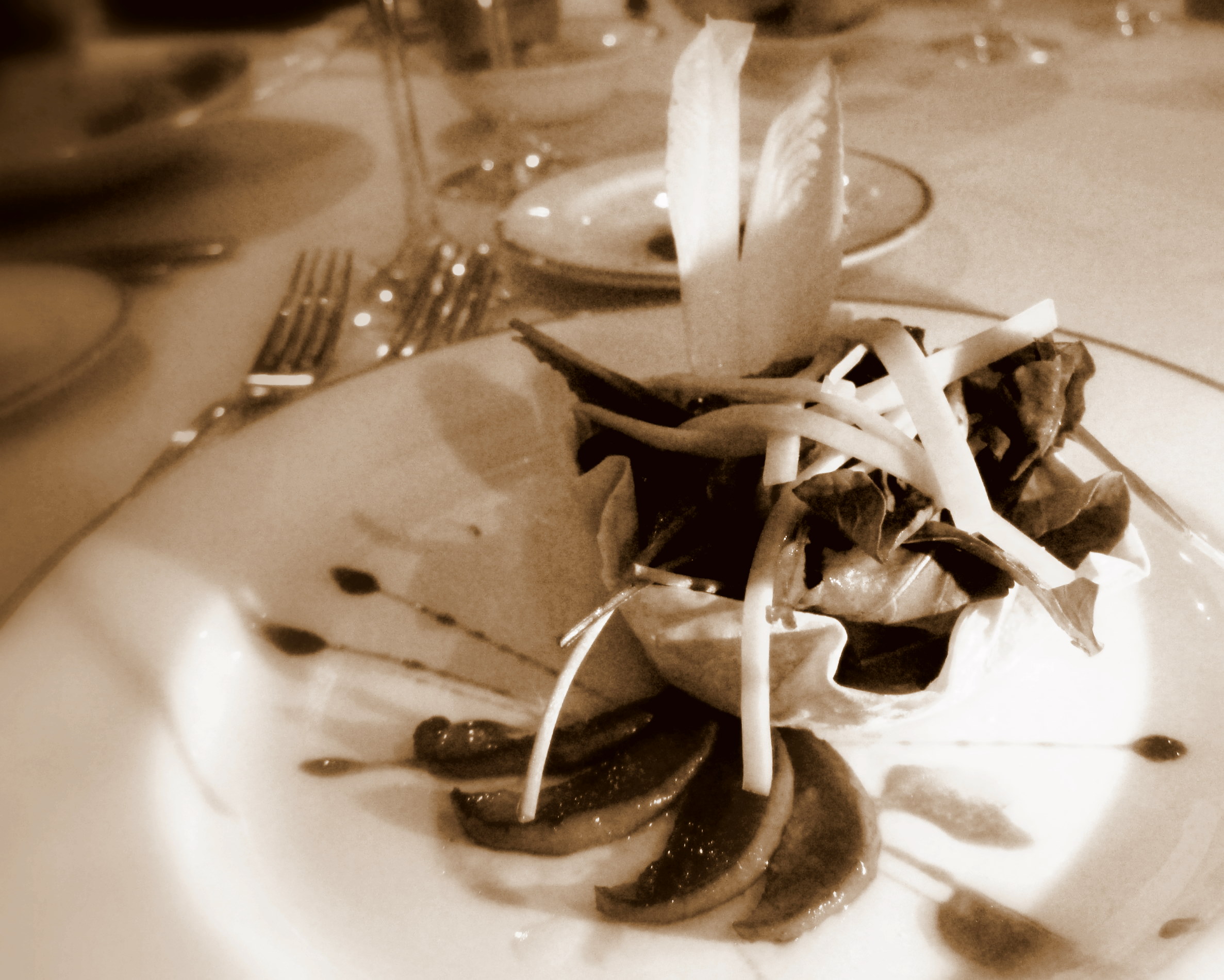
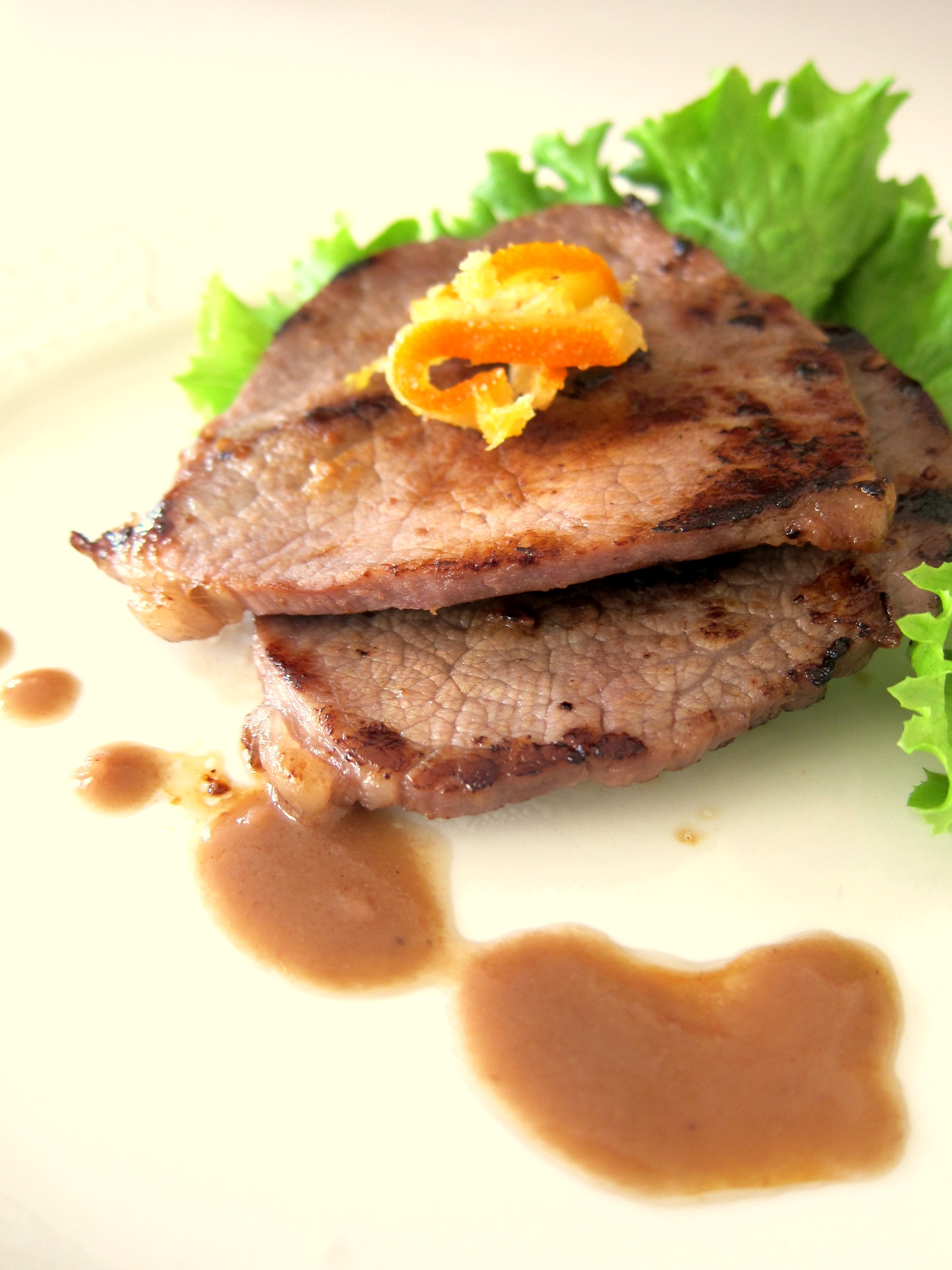
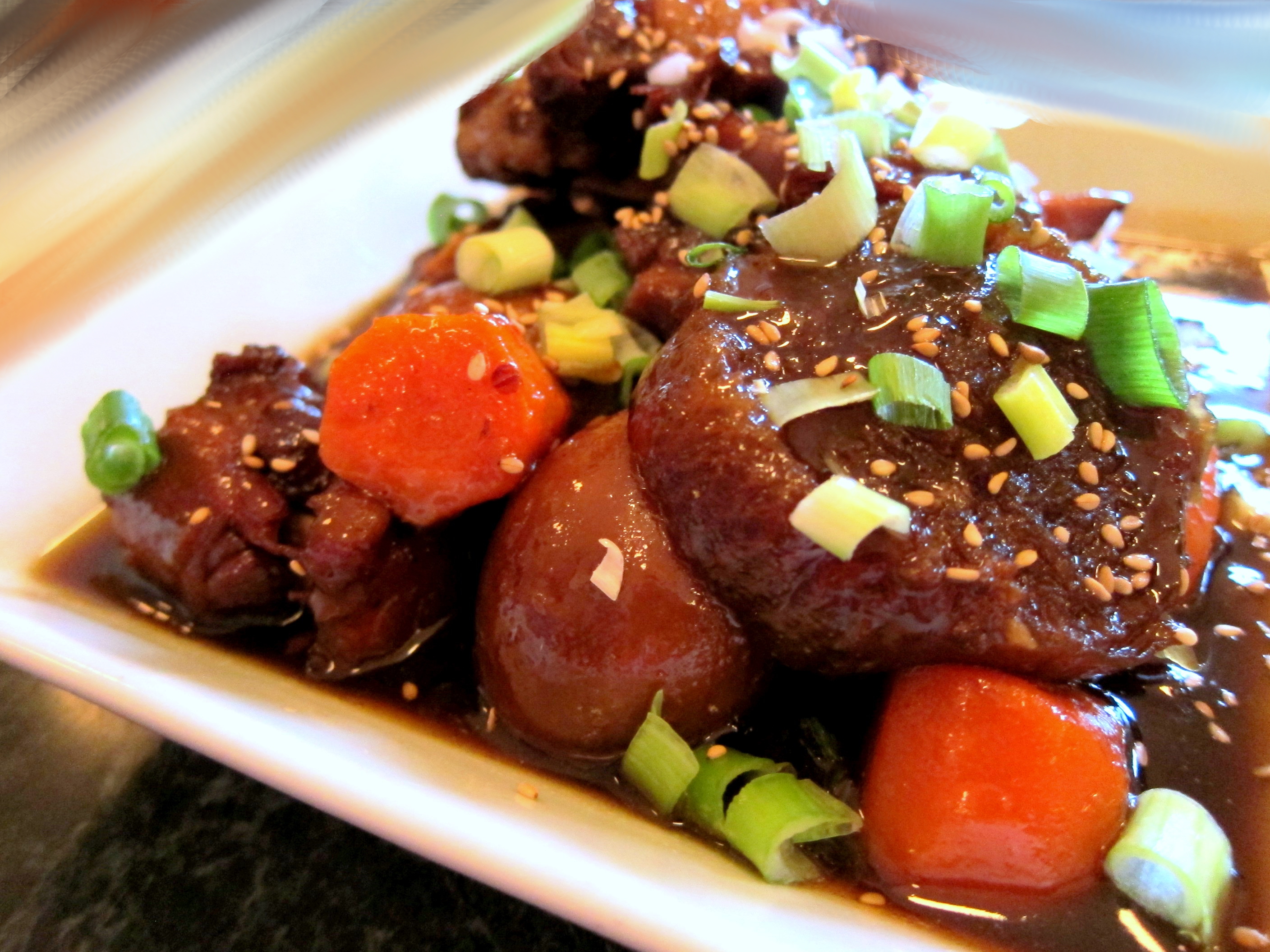
3. Dining with the culinary experts at To Hyang, San Francisco. I stayed quiet the entire night to listen to everyone’s stories and wondered when I’ll know as much as they do. An educational dinner with extra-rich braised oxtail and extra-fresh pork belly salad to boost.

4. Lunch at the Super H Mart food court, Houston. It’s fast and tasty. The jajangmyeon (Korean black bean sauce noddle) from Daddy & Daughter is the best jajangmyeon I’ve ever had. The food court doesn’t charge less than the restaurants, but you could say that the convenience makes up for the ambiance.

5. Lunch at Saigon Buffet, Houston. Sadly, this place has closed.

6. Dinner at the Belgian restaurant La Frite in San Antonio. The crowd was huge, the food was slow to come, but everything tasted as it should. Its expected perfection is memorable.

7. Probably the most cost-effective three-course lunch anywhere, at Il Piatto, Santa Fe. Another perfect meal where everything was delish. And the company was great. 😉 I would include in this list the windy afternoon when Yookyung, Jen, Hyunmi and I lazed out at the rooftop bar overlooking Santa Fe, but I don’t think margaritas and Coke count as a meal.

8. Dinner with Rau Om in Palo Alto. There’re too many memorable things here to list, so please just click on the link. Oh, and I would really like me some amazake now.


9. Dinner at the House of Prime Ribs, San Francisco. It was fun, the company was excellent, the food was hearty, the vegan bread stick was the best.

10. My first time at an izakaya: Kiraku in Berkeley. I can still feel the crunchy lotus root chips and corn fritters.

11. The gargantuan dinner at Myungdong Kalguksu, Houston. The atmosphere cannot get any more family-like. They don’t have a consistent opening hour, but they have the best pajeon (Korean pancake) in town.

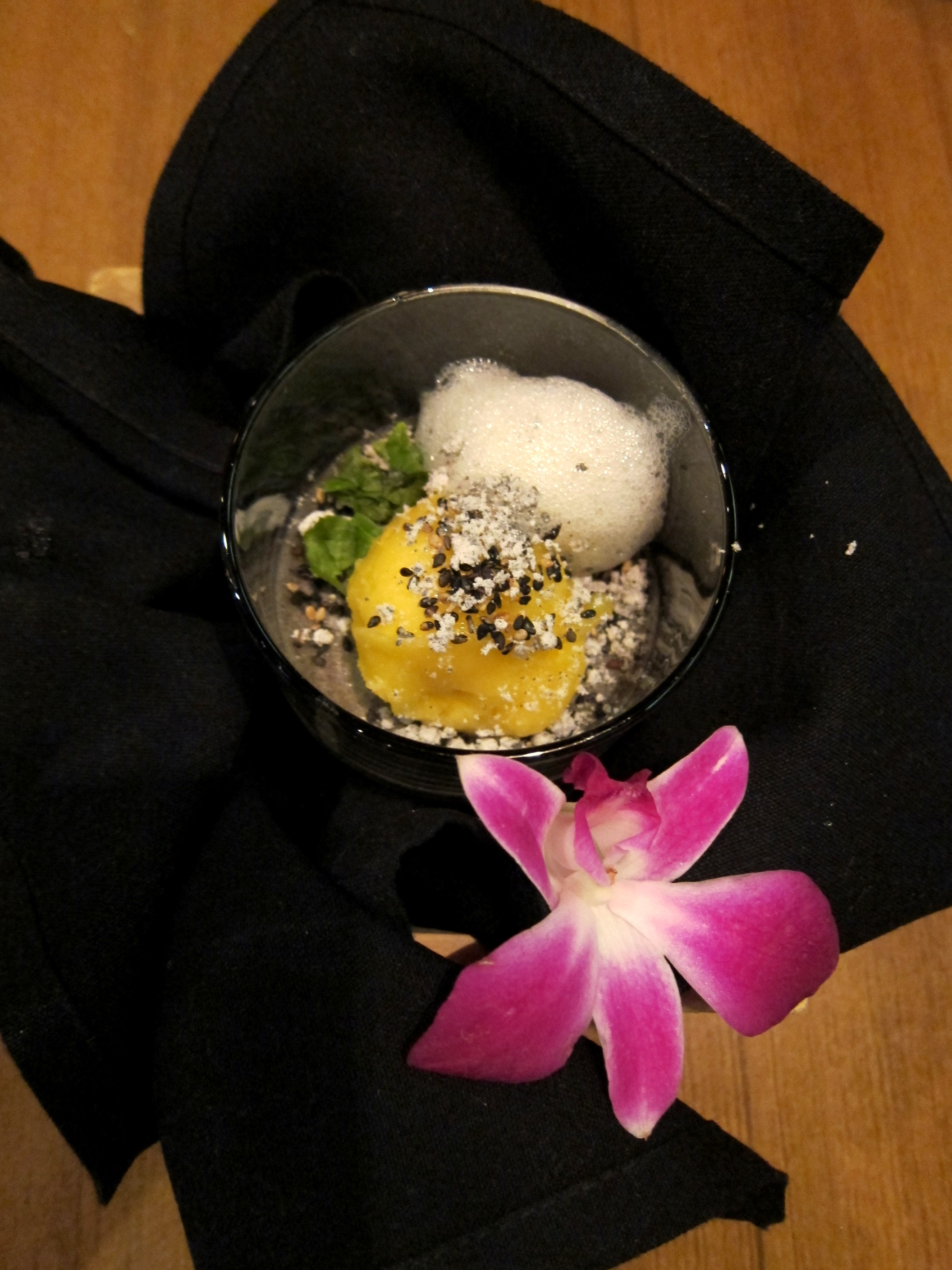
12. Christmas Eve dinner at Kata Robata, Houston. Everything is good, but the sesame panna cotta was the best dessert of the year. 🙂

Thank you, Cat! And welcome, Dragon!

Tags:

The zen in cooking

December 16, 2011 By: Mai Truong Category: Opinions

There’s nothing zen-like about cooking. It has fire, it involves knives and all sorts of dangerous weapons, it requires the death of plants and animals. It requires speed: bad timing means either a burnt cookie or lunch at 5 pm (if preparations started at 9). Its purpose is consumption. Cooking by nature is so active and outward that it’s the opposite of zen. But in today’s Western hemisphere, zen has become an attractive concept: something that every field could claim to have to romanticize itself: zen in skateboarding, zen in running, zen in pistol shooting (sure…), zen in the art of digital privacy (?!), and my personal favorite: zen of the alcohol stove. Naturally, why wouldn’t zen be in the culinary media?

Just as I don’t appreciate the all-too-casual usage of “Buddha” in naming vegetarian concoctions, I don’t appreciate this “zen-ization” of everything from stove to pistol. The word is simply exploited. It’s become an eye-catcher. It’s commercialized. Most of the things with the title “Zen in the Art of [insert gerund]” have nothing to do with zen, which their authors also explain in the text. But zenization has its good points:

1. It can reflect the people’s true attempt to seek their peace of mind in whatever they’re doing, which could be a good thing as long as they’re also trying to minimize their activity’s damage to the world. So zen in martial arts is sensible. Zen in shooting? Only if your target is a board and your mind has no intention of damaging the board.

2. It can induce a (small) number of people to actually learn about zen before throwing the word around.

3. It boosts creativity. (See examples above.)

Right now, I’m practicing zen in cosmology, or should I say, zen in doing cosmology research. If you sit in front of a computer everyday for over 8 hours, it’s pretty close to meditating. If you battle with computer programs everyday, you learn patience (cuz you probably shouldn’t beat the computers to death). You also learn the zen in Googling and the zen in asking your advisor for help. The moment you start dreaming about your code signifies your becoming one with the digital nature. When you fix that segmentation fault, you’ve reached Nirvana.

Unfortunately I’m only between the next-to-last step and the last step, so Flavor Boulevard will continue its winter sleep. Meanwhile, let’s watch some zen in cooking.

P.S.: It’s not a bad episode. It’s just a little forced. And Elizabeth Andoh reminds me of Alice Waters.

P.P.S.: Dear Blog: I shall return after I make peace with the computer program. If I don’t survive, remember that I love you.

Tags:

Domain fight?

October 25, 2011 By: Mai Truong Category: Chinese, Opinions

Okay so this is sort of interesting. Because it hasn’t happened to me before.

Oct 24: I received an email from YGNetWorldLTD.com informing me that company T (let’s call them T for now) in China has just registered “FlavorBoulevard” as their domain name in China and Asia (flavorboulevard.cn, flavorboulevard.com.cn, flavorboulevard.asia, etc.) and that I needed to contact them if I want to object this and secure my trademark. Okay.

Oct 25: Company T emailed me, saying “We hope your company will not object our application, because this name is very important for our products in Chinese and Asian market. We don’t want your company to use this name in China and Asia, we believe our company will become the legal owner of this name in China and Asia. Even though Mr. [YGNetWorldLTD.com Manager] advises us to change another name, we will persist in this name and permanent registration of this name.”

Now it’s not like my FlavorBoulevard has a huge Chinese market (for the time being? :-P), but:
1. I thought long and hard for this name too, and I’ve used it for 1 year 8 months and 25 days.
2. I don’t want my website to be associated with a Chinese company.
3. “We don’t want your company to use this name in China and Asia”. Doesn’t this sound kinda rude? Dear T Ltd., I don’t want you to steal my blog’s name in China and Asia.

Am I being absurdly greedy?

On second thought, would it be actually better for me and worse for T if they did have flavorboulevard.com.cn? I mean, all those people who forget to type the .cn part would end up on my page, right? So did they not think this through, or am I missing something?

UPDATE (Oct 26): Peter is right, they kindly suggest that I buy the .cn and .asia domains. You bet I won’t.

Tags: