Flavor Boulevard

We Asians like to talk food.
Subscribe

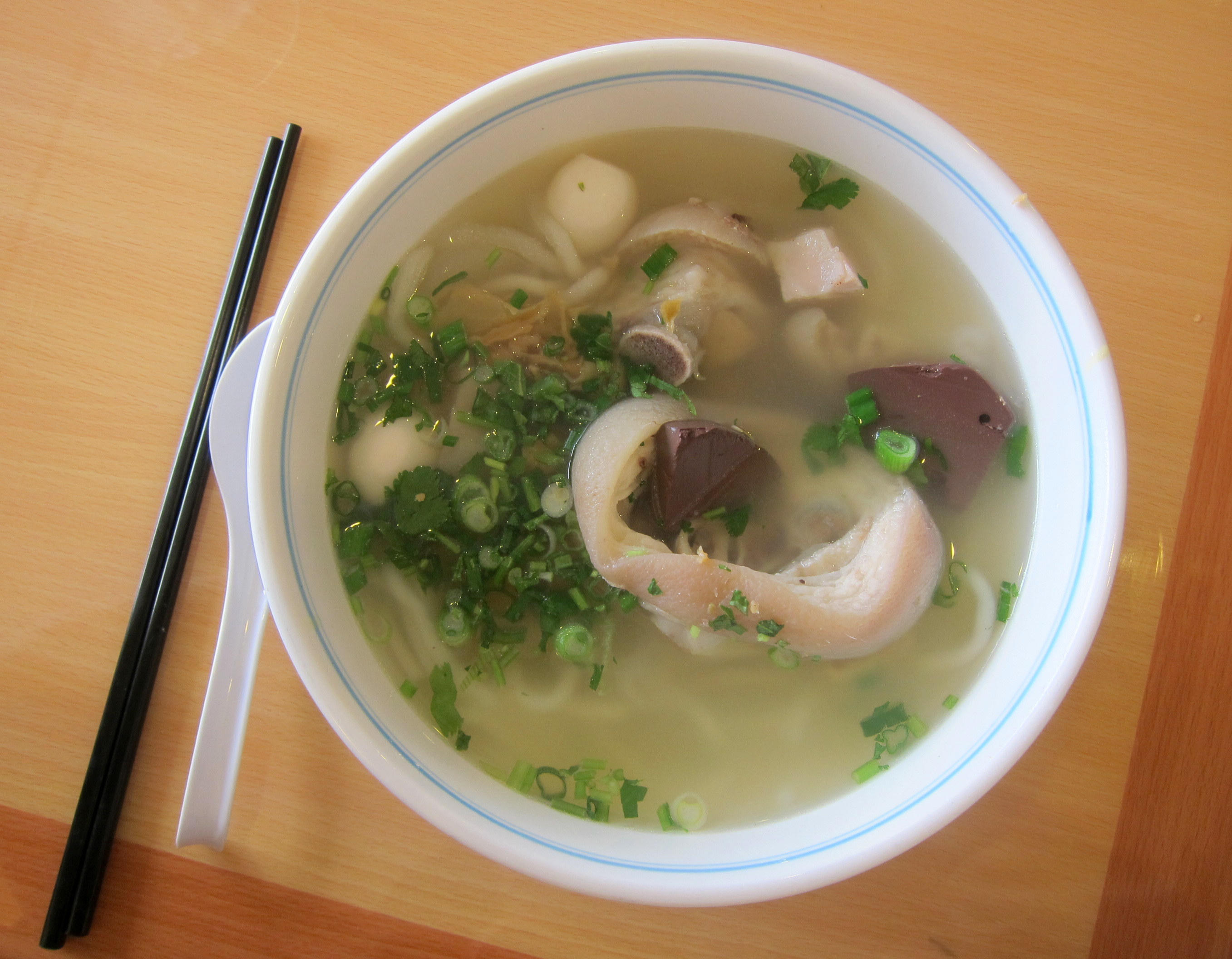
Noodle soup: Banh canh Que Anh & Que Em
April 23, 2014 By: Mai Truong Category: Central Vietnamese, Comfort food, Houston, noodle soup, Southern Vietnamese

qae-banh-canh-tra-vinh
Quite possibly the cheesiest name of a store I’ve ever seen: Bánh Canh Quê Anh & Quê Em – “bánh canh [from] your hometown and my hometown” (it doesn’t sound cheesy translated into English, but trust me, it’s like Twilight’s Edward Cullen in noodle soup form). Which is actually fitting, since banh canh is commoner’s grub, not a bourgeois lunch. You won’t find a classy madame dressing up just to go out for banh canh. The poor thing will never be elevated to the level of pho. I love it.

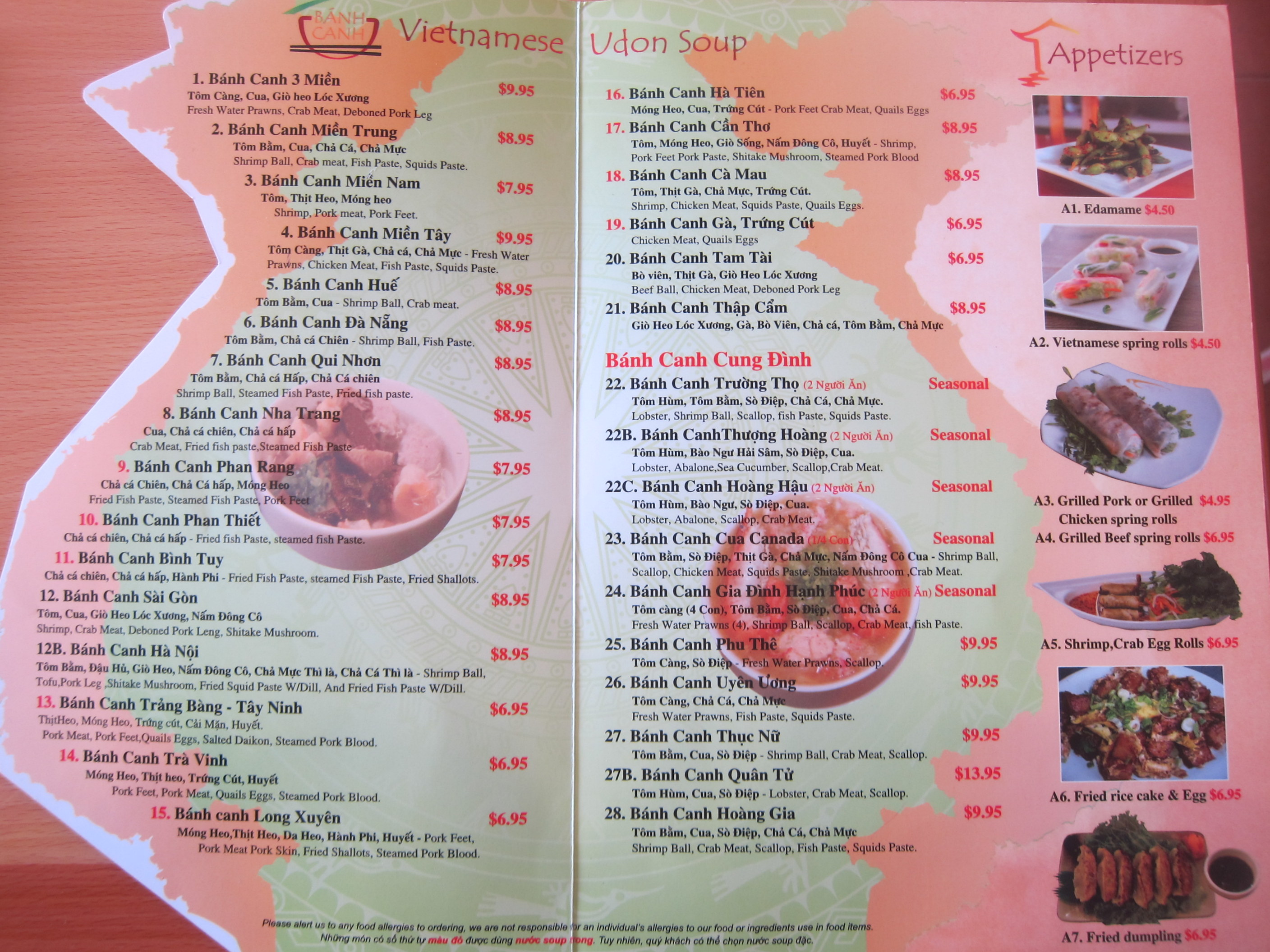
I grew up eating it before I was born (literally). Backstory can be told in person, but despite eating so many bowls, I never knew that there was so many types of banh canh. Que Anh & Que Em offered 30 types (see menu at the bottom), 14 of which are no more traditional than the Spider Roll, but the other 16 are attached to geographical regions in Vietnam, and thus, in this case, more meritable.

Banh canh is a thick, chewy, slippery rice noodle (with tapioca starch). It’s similar enough to udon in appearance and texture (as the shop aptly translates it to “Vietnamese udon”), but also entirely different (udon is made from wheat).
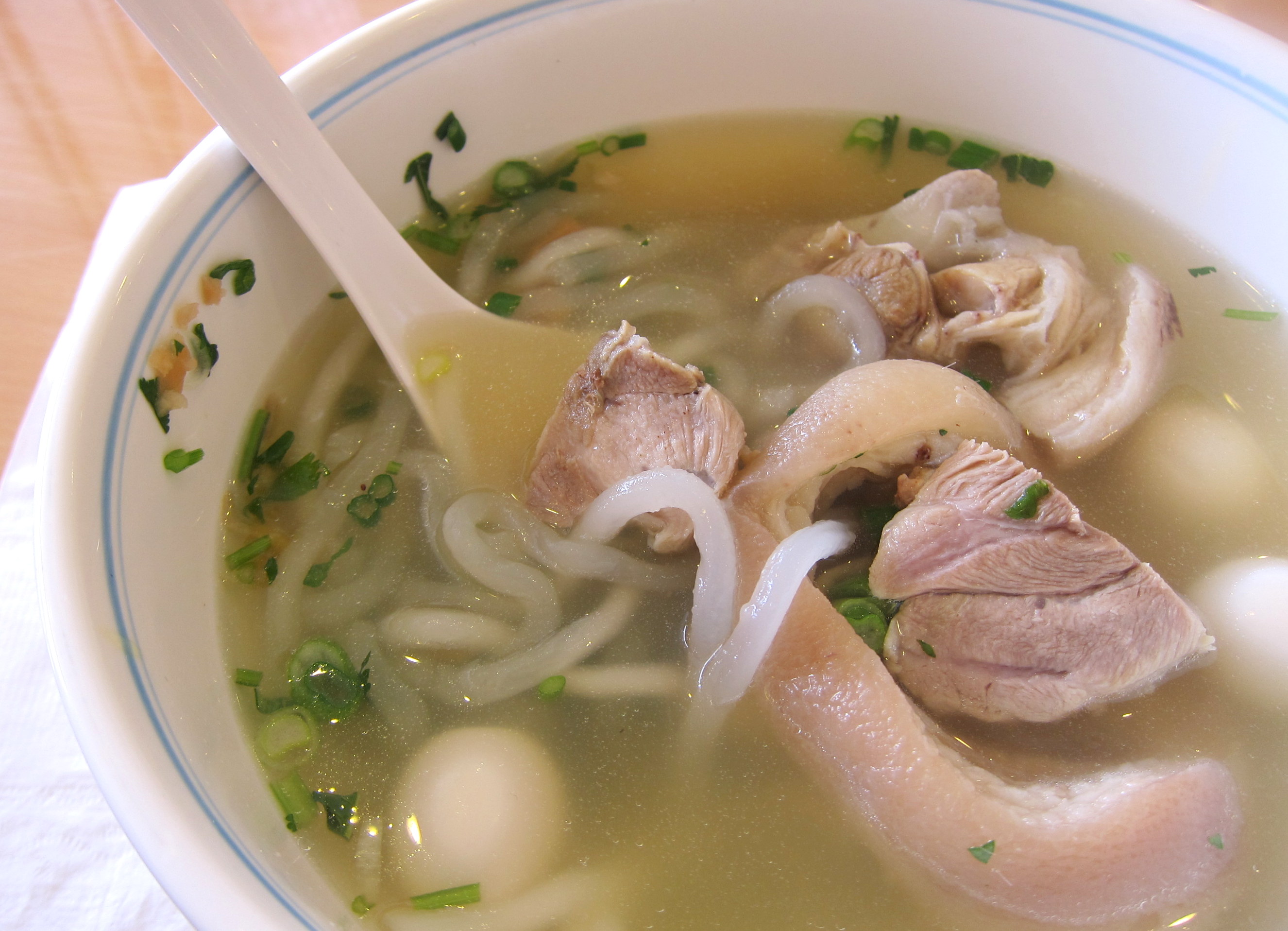
qae-banhcanh-closeup
Close-up of my order: banh canh Tra Vinh – pork, pig trotter, quail eggs, pig blood in a clear, light broth. The classic when people think of banh canh. I can do without pig blood, which I transferred to Dad’s bowl, and the quail eggs (fresh quail eggs are great, but these taste like the canned version). In fact, the noodle and the broth alone are sufficient.
qae-bc3mien-bchoanggia
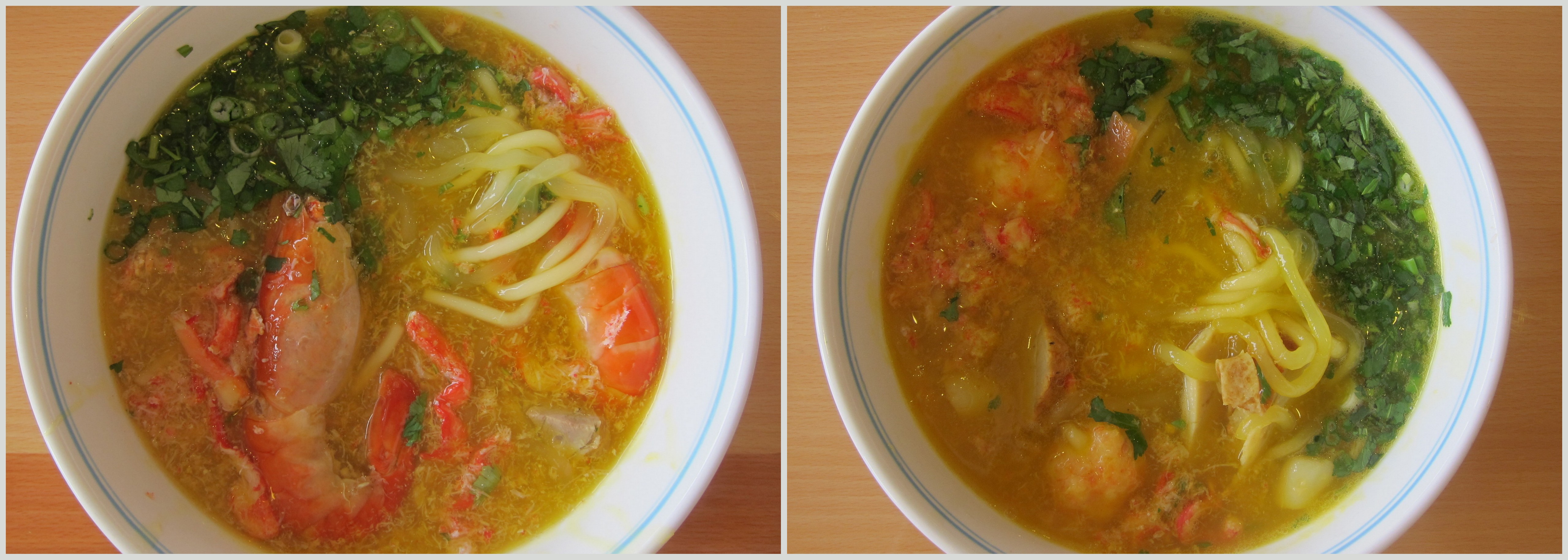
From left: Dad’s and Mom’s orders: banh canh 3 mien (“banh canh of all three regions”) and banh canh hoang gia (“royal banh canh”). Both names are only meant to illicit interest, the same way “Pho Dac Biet” is really not all that special. The broth of both bowls is thickened, yellow (with turmeric?) and taste richly of seafood, as both are loaded with crab meat and shrimps.
qae-che-longnhanhatsen
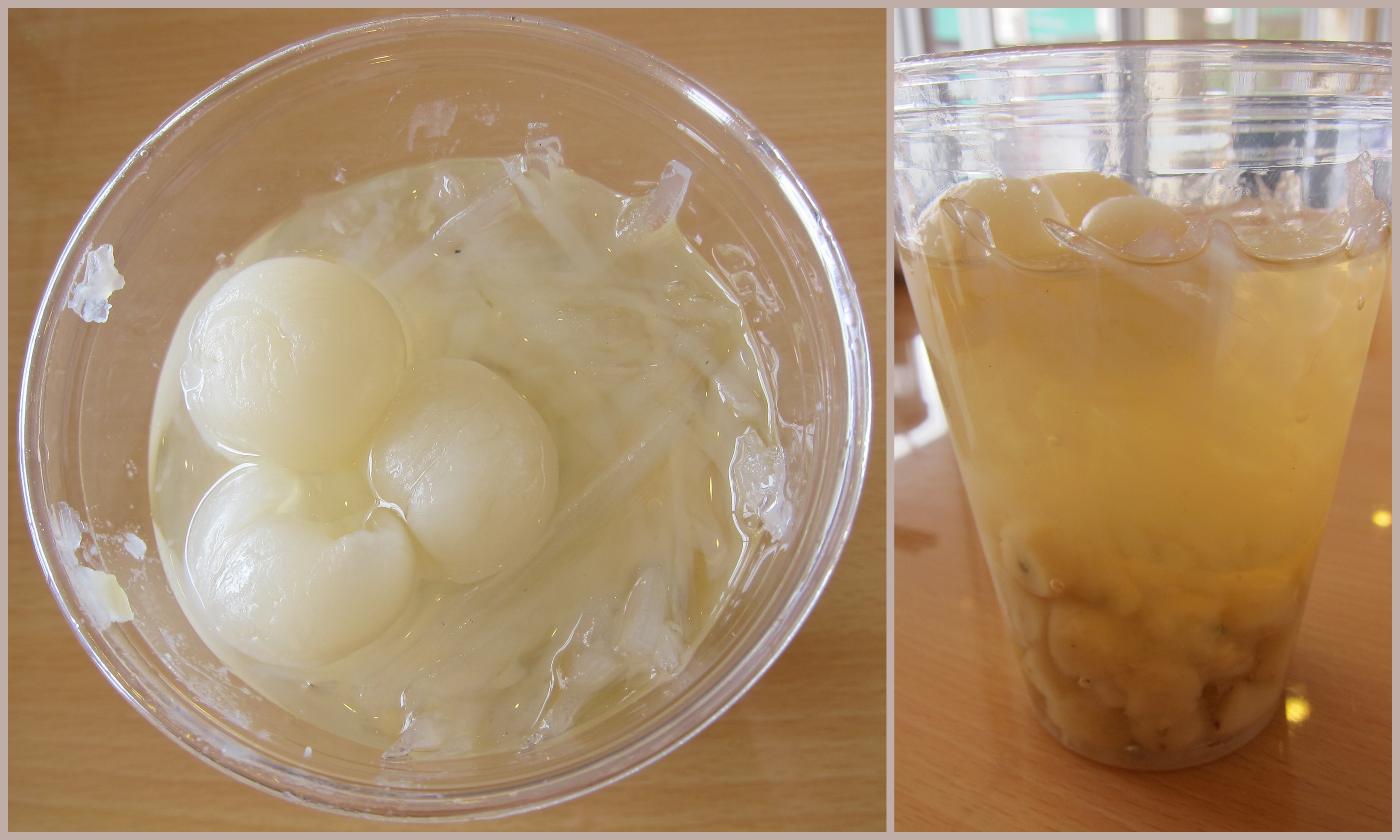
Desserts, of course. che long nhan hat sen – longan and lotus seed che… (I got the same thing at Danh’s Garden too, it’s gently sweet, fruity, and hard to get tired of.)
qae-chekhucbach
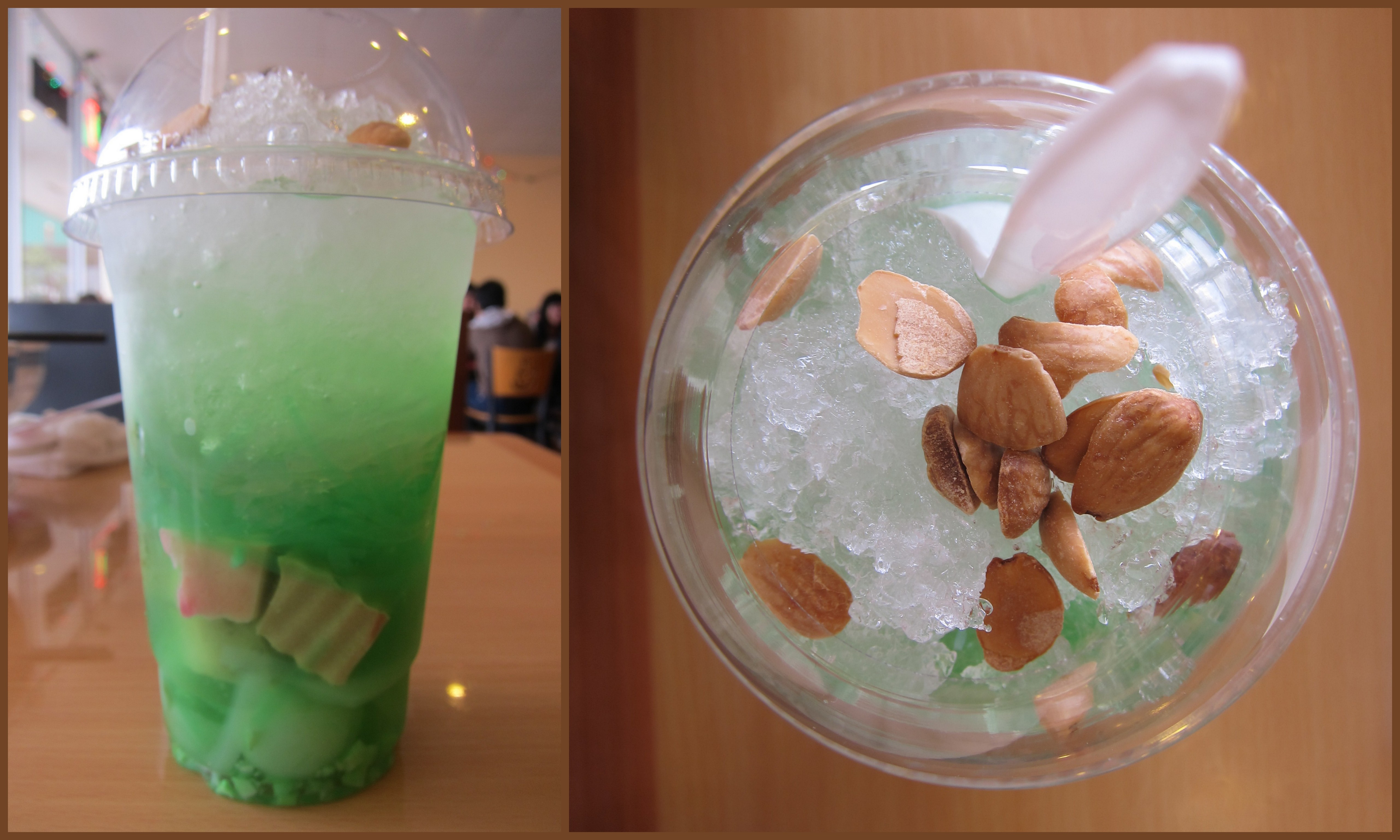
… and che khuc bach – lychee, some chewy tapioca thing, some chewy milky jello thing, and some nuts. A popular che in Vietnam these days.  Here’s a video to make che khuc bach, which the author loosely calls “almond panna cotta lychee dessert”.
qae-menu
I miss Vietnamese food. It’s been only three days since I left for the mountain on another observing run. Every time I’m in the mountain I’m reminded of what a privileged life I have. I miss being a stone’s throw away from darling nigiri, banh mi, mordin, etc. There’s no Asian restaurant in Big Pine, the nearest congregation of human from the observatory. Then again, it’s already a huge privilege to stay at CARMA, with a private bedroom and bathroom, eating juicy fresh apples and having nutritious meals hot and ready twice a day…

Address: Banh Canh Que Anh & Que Em
11210 Bellaire Blvd, Ste 133
Houston, TX 77072
(281) 416-5316
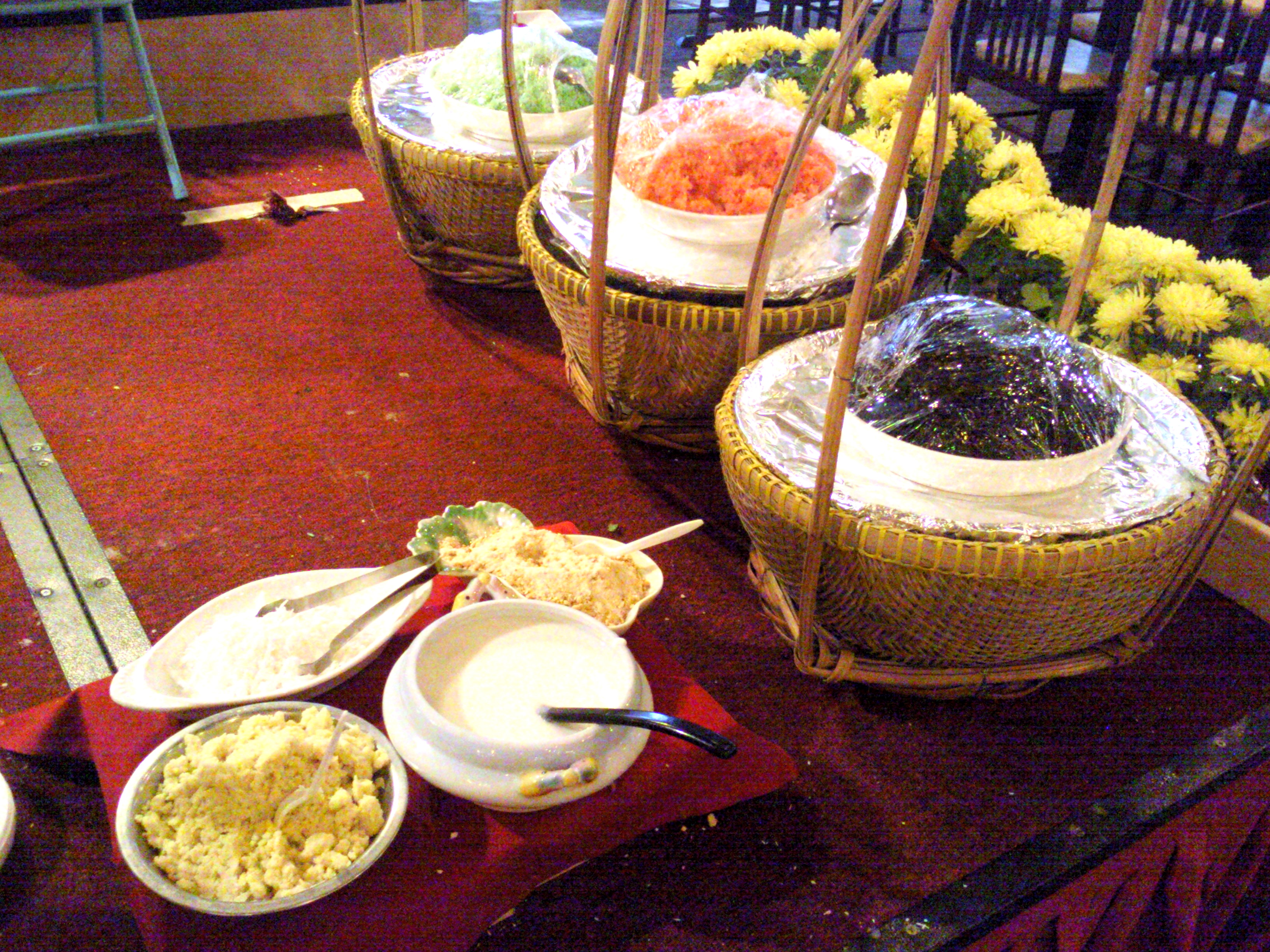
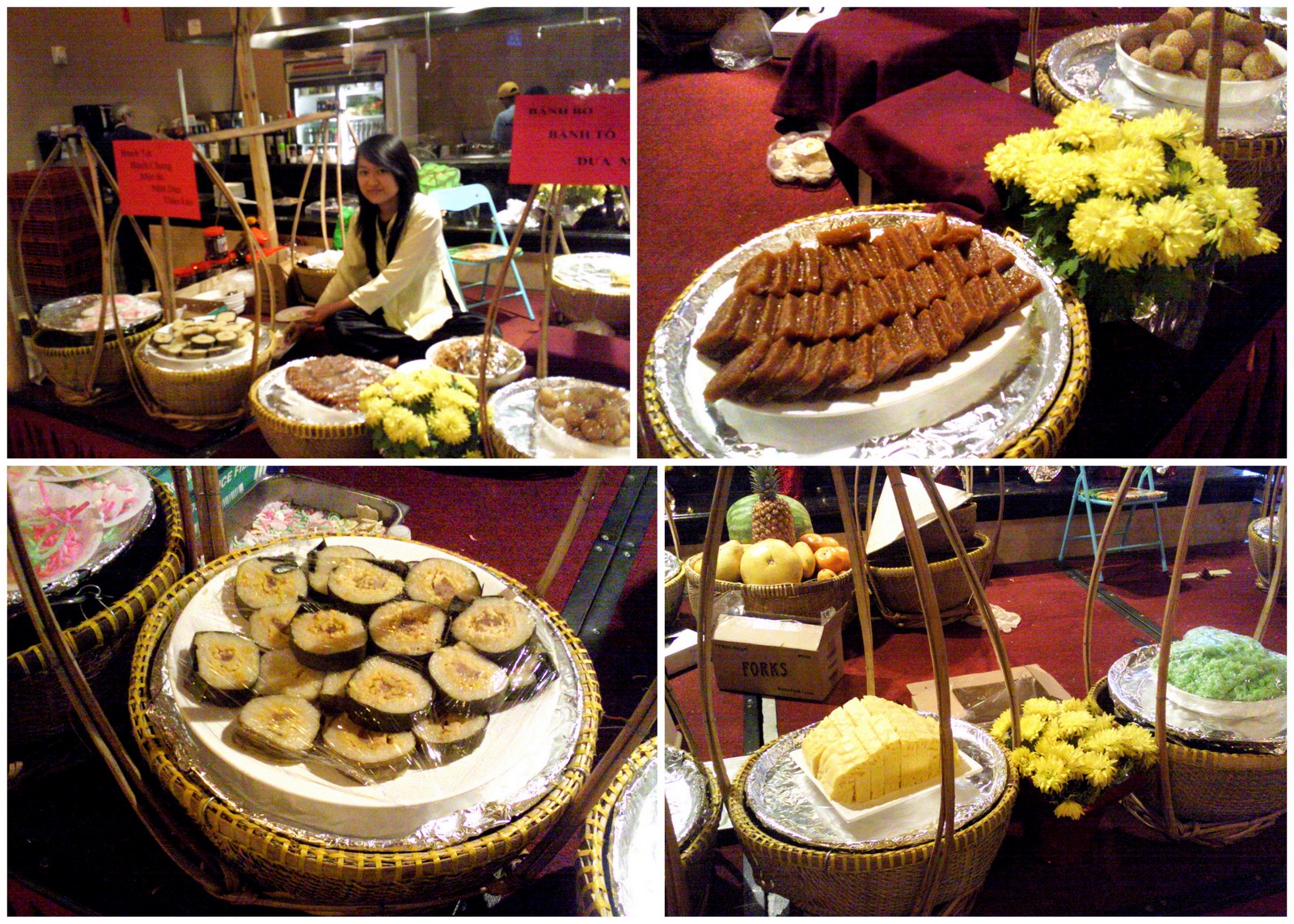
Kim Son’s Tet in woven baskets

February 09, 2011 By: Mai Truong Category: Festivals, Houston, noodle soup, Vietnamese

*Guest post in Vietnamese by my Mom, translated by me*


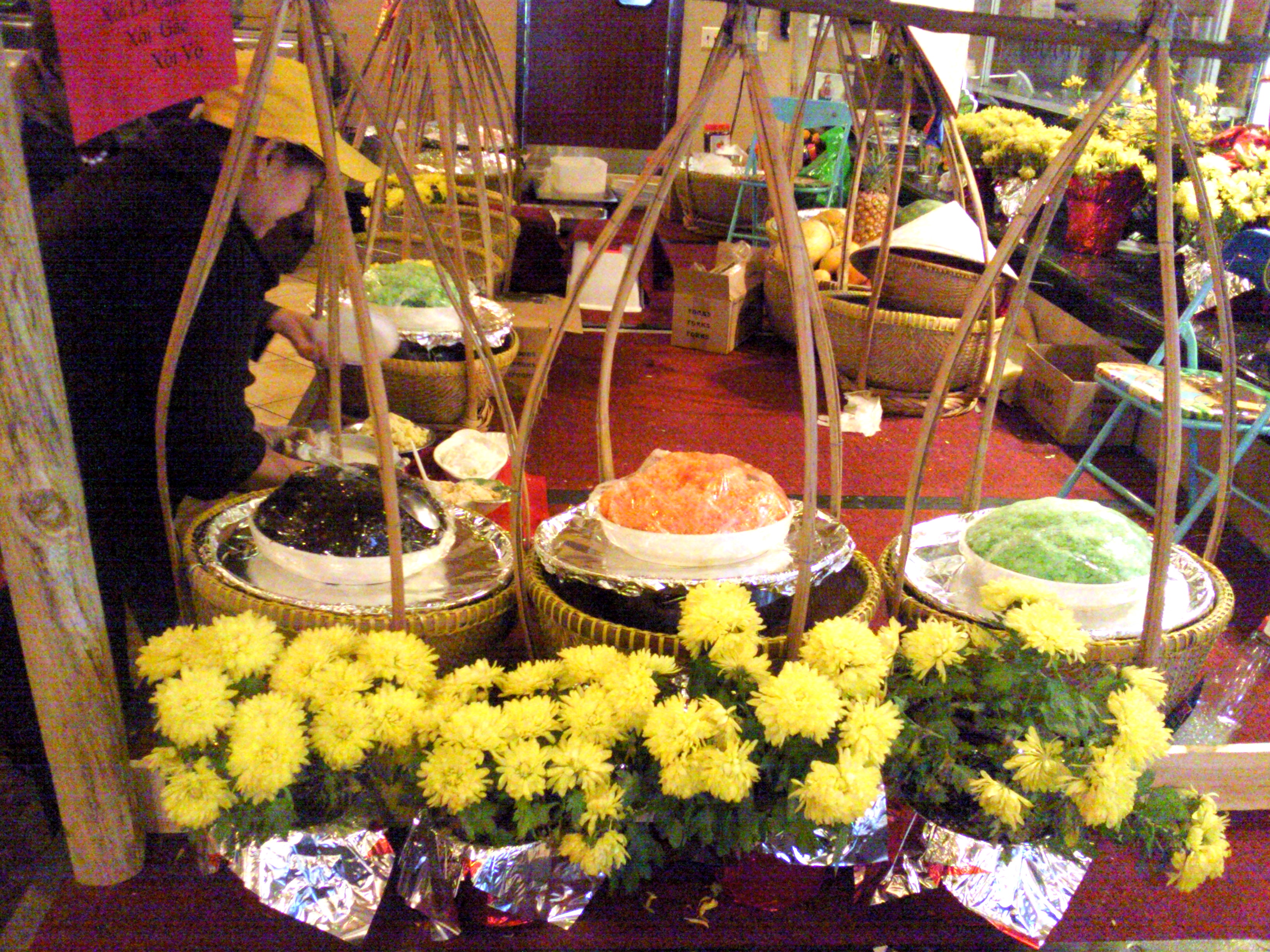
Back in the day, I seldom ate from street stalls or vendors’ baskets, my conscience imprinted with my mother’s unmovable doubt on the street food’s cleanliness. Nonetheless, I scurry with no hesitation to make it to Kim Son for lunch today, just because the TV news last night showed that Kim Son has a 9-day New Year food festival where the goodies are sold in baskets, mimicking the vendor stalls in Vietnam.


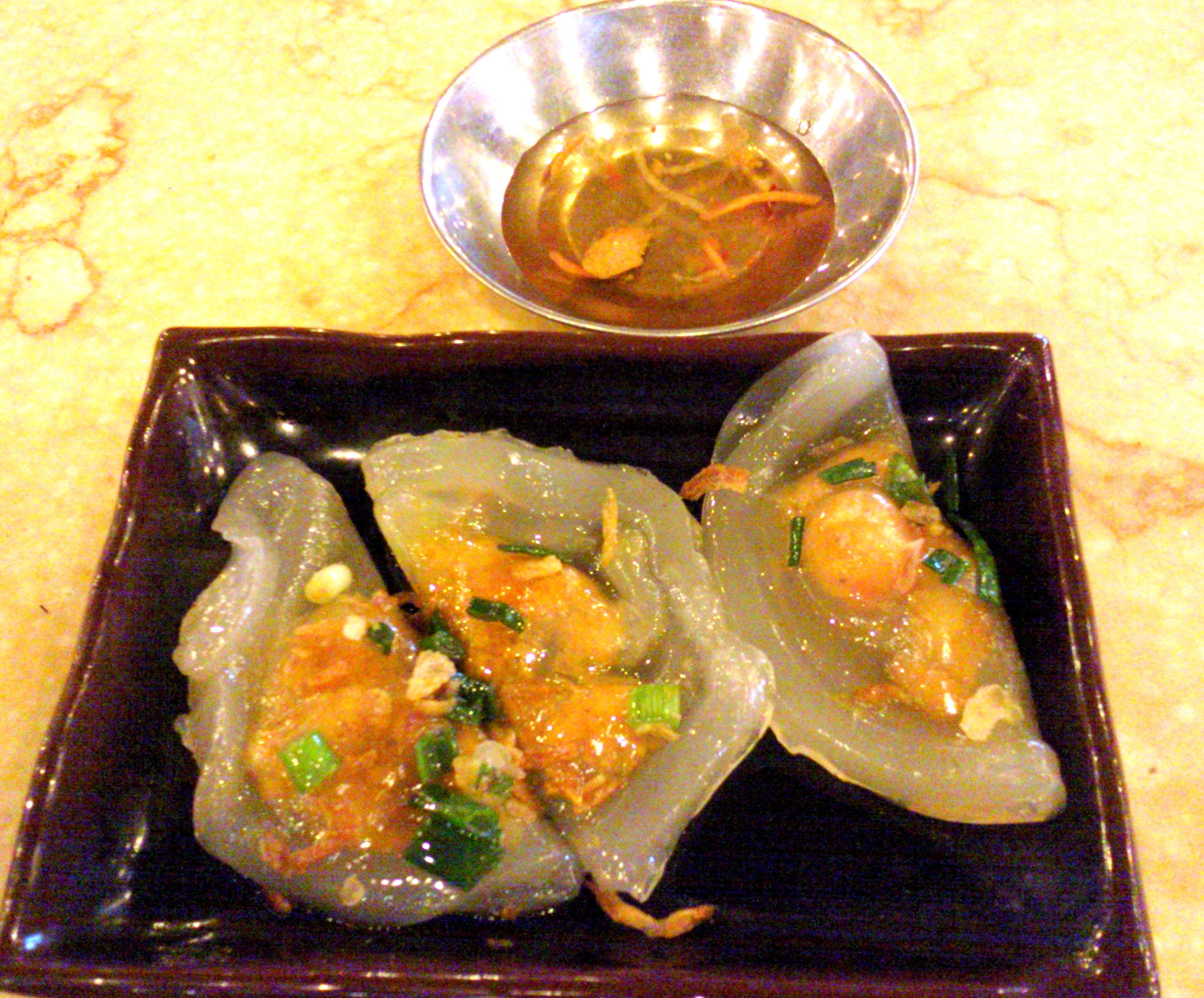
Like usual, the display is a buffet style, but this week the dining hall is decorated with flowers, fruits, and Tet greetings, the food selection is also larger and more interesting than normal days. I notice thịt kho and dưa giá (slow braised pork and pickled bean sprout, two traditional Tet savory dishes), bánh xèo (sizzling crepe), bánh bèo (water fern banh), bánh bột lọc (translucent banh) bánh cống (mung bean fried muffin).


In the baskets lie a few types of xôi, bánh tét, and mứt. A tightening mix of homesickness and joy rushes through me as I see woven baskets, bamboo shoulder poles, and the waxy green banana leaves holding and covering morsels of Tet.


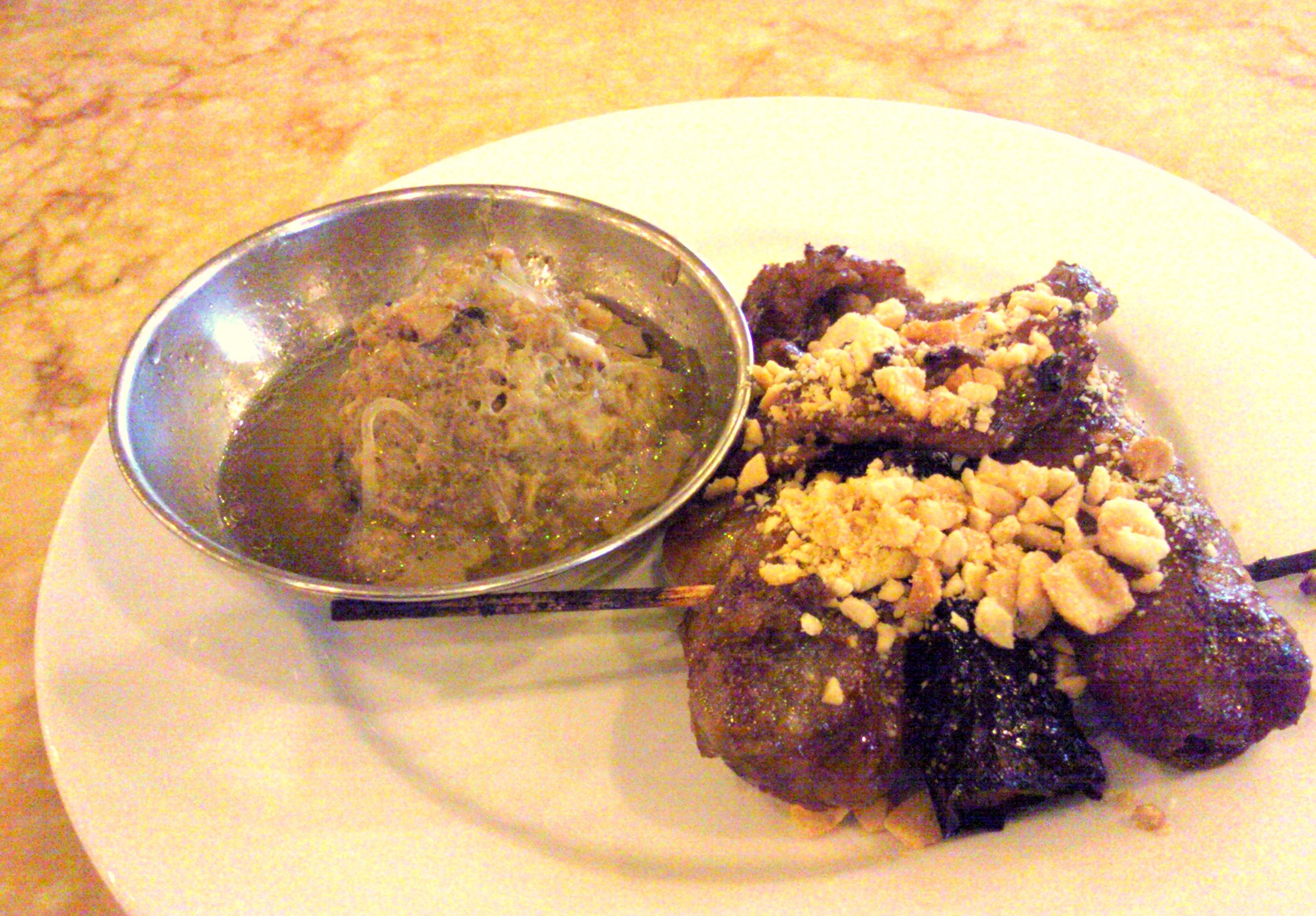
We load our first plate with seven-course beef, though the kitchen churns out only four: grilled beef (bò nướng vỉ), beef loaf (bò chả đùm), lolot beef (bò nướng lá lốt), and beef sausage in omental fat casing (bò mỡ chài). The little pinky-length fat beef sausages are extraordinarily tender, grilled on medium fire and so well seasoned they have the sweet smell of talents.


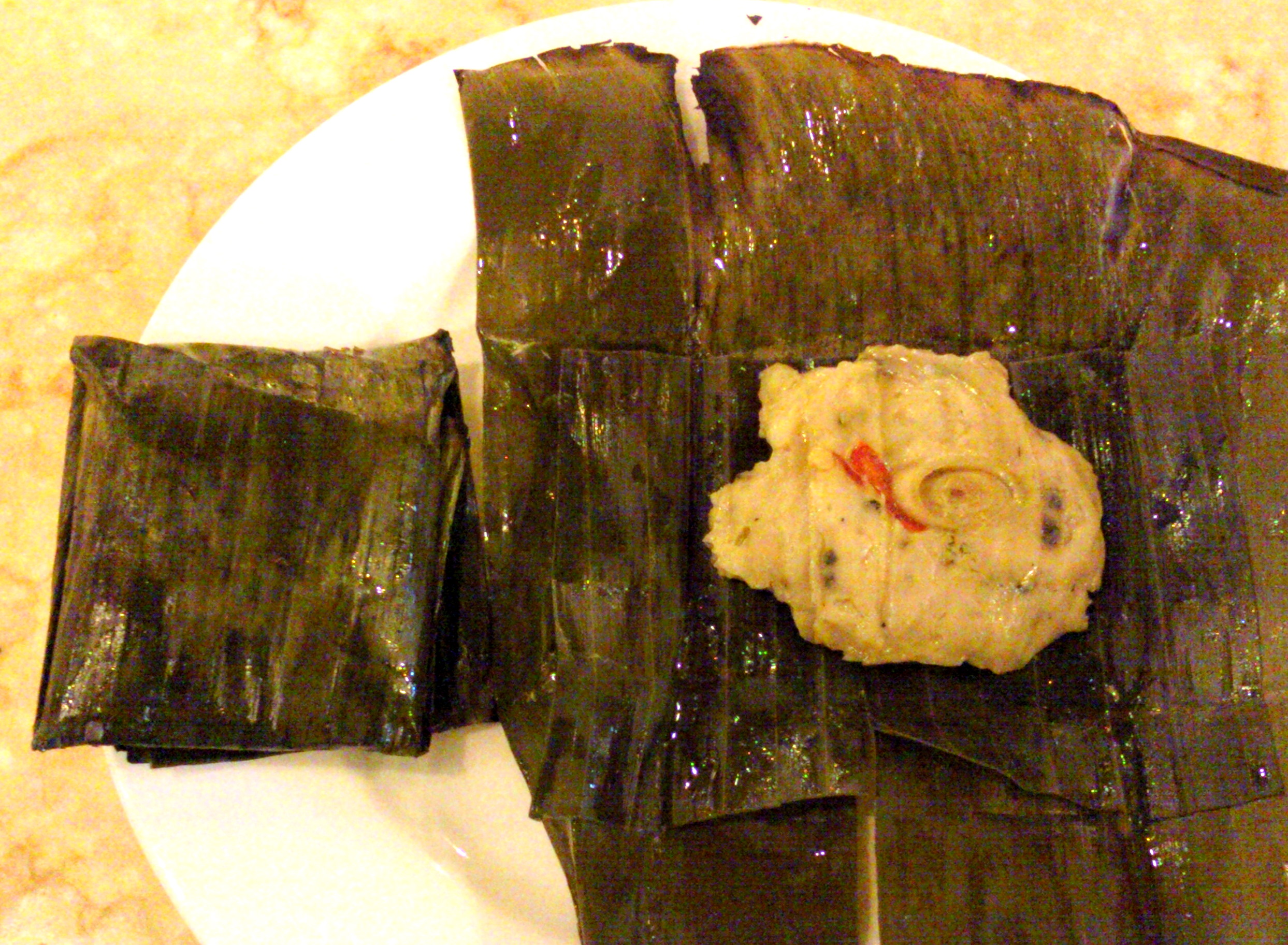
Meanwhile, my husband chooses the restaurant’s recommended special of the day: grilled snail sausage in banana leaves. I don’t like snails but have a taste anyway just out of curiosity. It is slightly spicy, but I get blown away. There is no hint of the wet and grassy snail scent that used to give me goosebumps when I was little. The banana leaf wrapping protects the velvety sausages from the burnt smell of open fire grilling, and gives it a sweet green aroma of summer breeze. As much as I like fish, I must admit these are better than the Indonesian fish sausages I’ve had a few months ago.


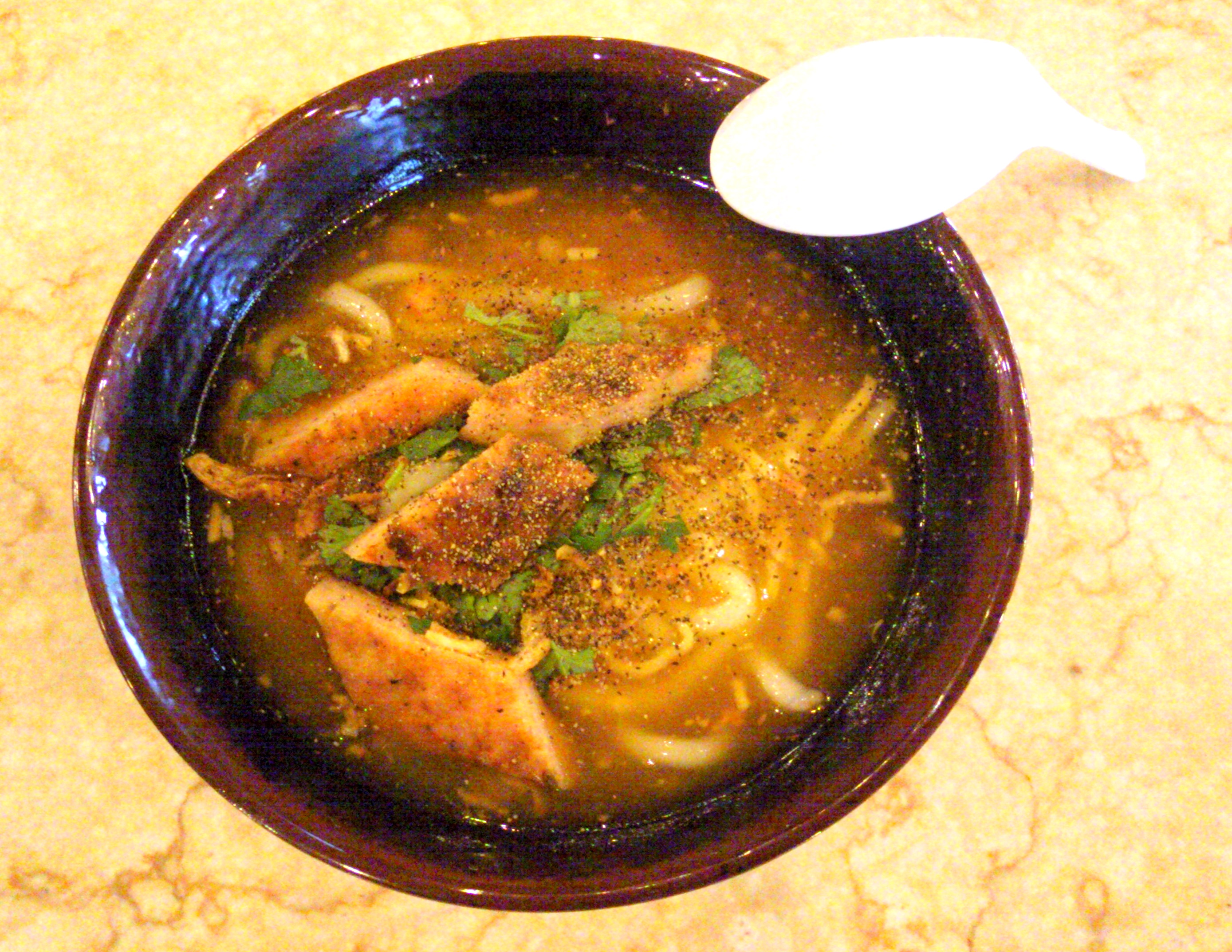
Another special is bánh canh cua Nam Phổ. I only learned about Nam Phổ, a village in central Vietnam, and its famous udon-like noodle soup from books, so I am overjoyed to see the real thing on the menu today. Bits of crab meat amidst chubby slick chunks of banh canh in a scarlet broth rich of crab sauce is the loveliest sight of all noodle soups. Banh canh Nam Pho, unlike banh canh of the South, doesn’t have loads of shrimp or pork, the broth isn’t starkly clear, yet its thickness delivers just a mellow natural sweetness. The first bite reveals little taste, but the second, the third, and a few sips of the broth in between start to sweep in waves of riverbank wind and meadow fragrance.


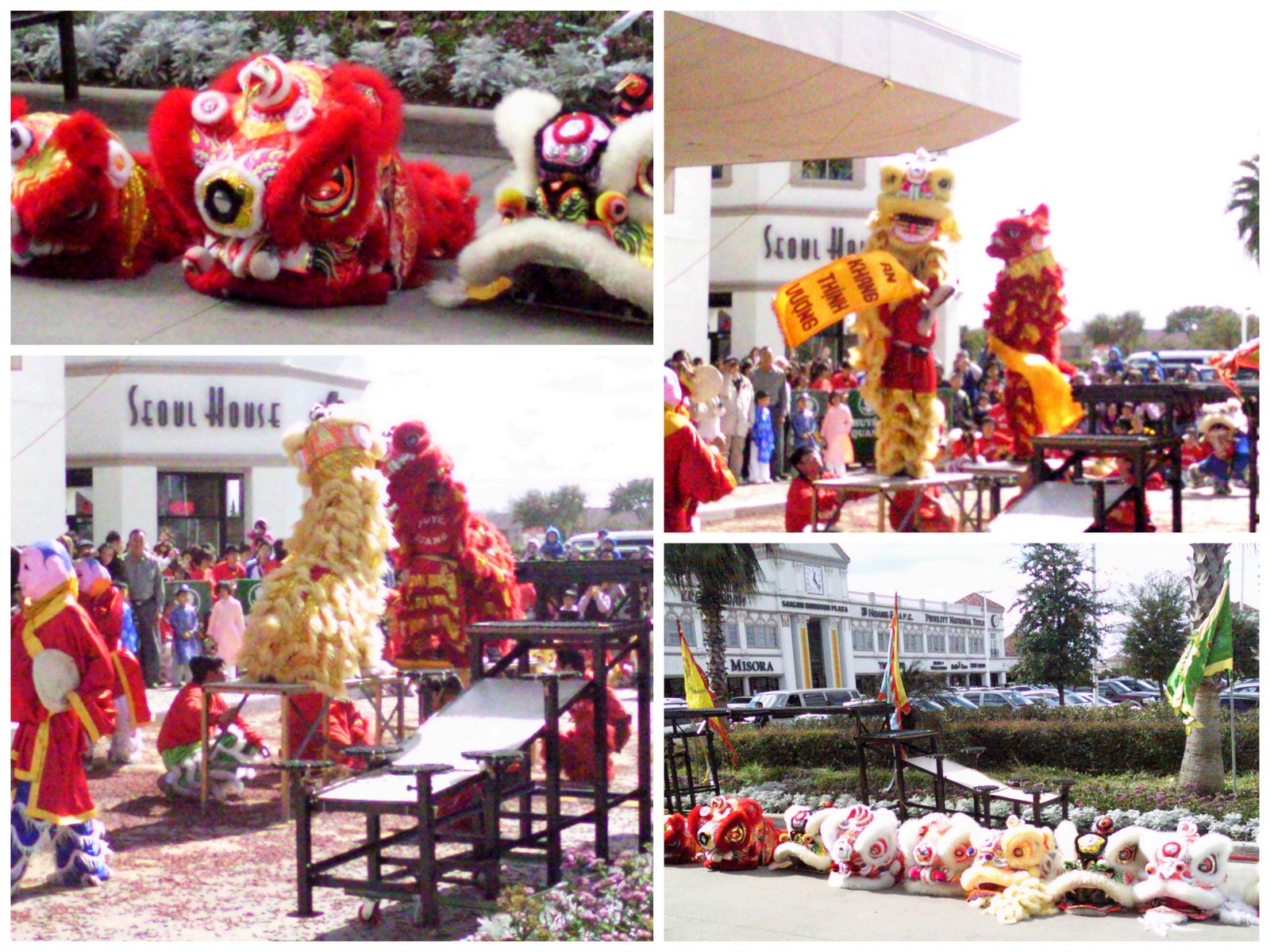
The country lunch sets us back $35.75 and 90 minutes. As we get ready to leave at 12:30, the parking lot gets ready for a massive lion dance and firecracker show. The sight of sixteen gaudy lions and hundred-meter long red squib strings and their boisterous sounds follow me all the way home, as I think of how we, the Asian expats, try to bring with us our lunar new year and our motherlands wherever we go.


Address: Kim Son Restaurant
10603 Bellaire Blvd
Houston, TX 77072
(281) 598-1777

This post is included in the February 2011 edition of Delicious Vietnam, a blogging event organized by Anh from A Food Lover’s Journey and Hong and Kim from Ravenous Couple.

Sleeky banh soup

January 09, 2009 By: Mai Truong Category: Central Vietnamese, Comfort food, Houston, noodle soup, Southern Vietnamese, Texas, Vietnamese


Almost every Sunday we make a trip to Bellaire to get the usual supply of patechaud, cha lua, banh gio, and the like. Almost every Sunday the question’s asked: where will we eat today? Well, there are two choices: the all-too-familiar Kim Son, and the more adventurous find which can be anything Little Mother saw in the local Vietnamese newspaper ads. We’ve had our handfuls of adventurous finds, all are good, but as usual smaller places don’t have a big selection, the menus are either common banh mi and pho, or grandiose names we don’t particularly care for. Mother is also easily shy away by the appearance of a restaurant: if the setting doesn’t look good, the food won’t taste good. So back we headed to Kim Son today…

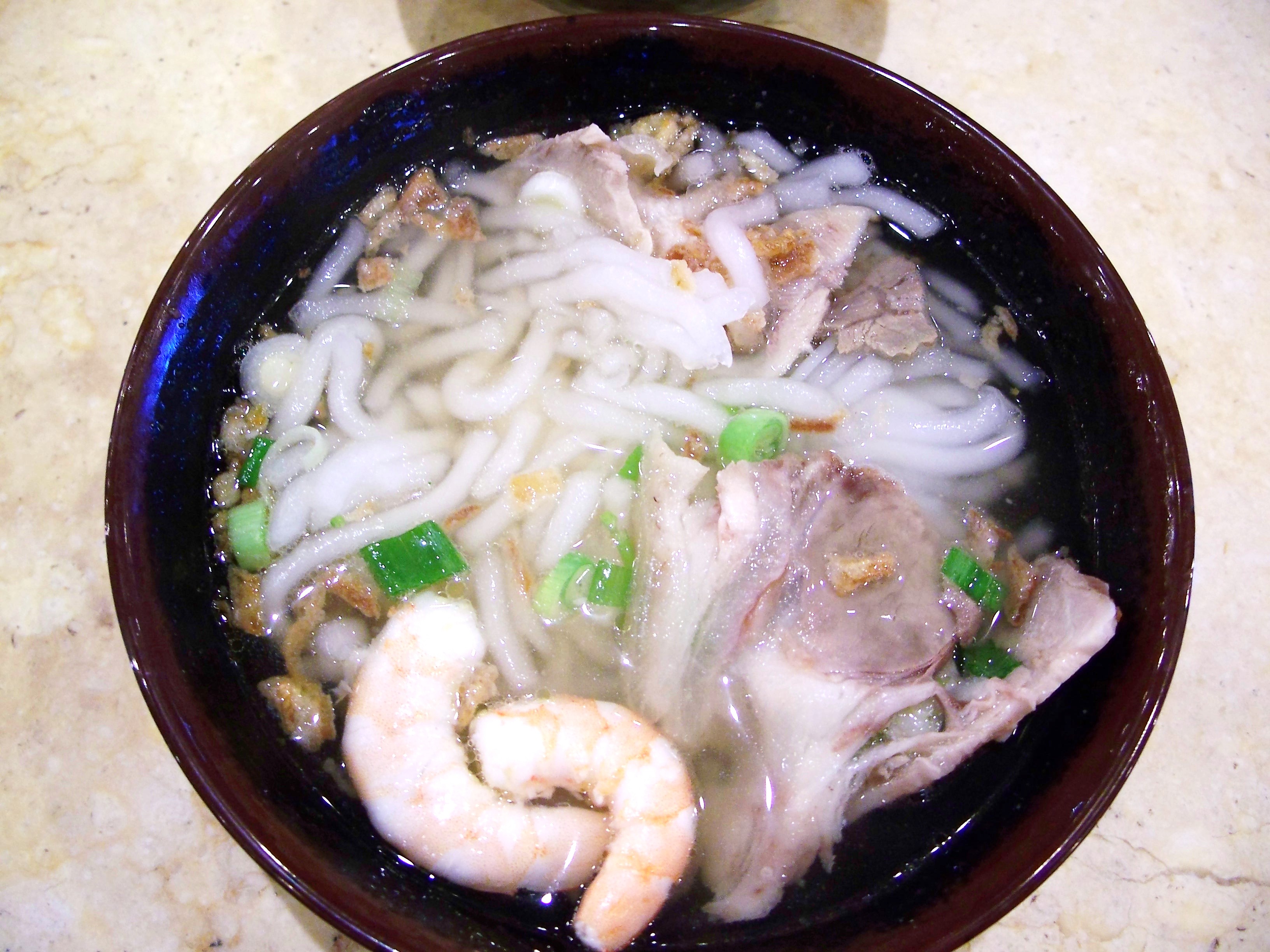
We opted for the popular choice of a lunch buffet. We got there early enough, meaning at 11, when it’s just opened and there was banh canh. 15 minutes later and it was all gone. Out of banh canh noodle they said. The soup is not left unattended like the rest of the food trays known and visited by many. No, that would have reduced the availability to 5 minutes. It’s hidden in the right corner of the diner, in something can appropriately be called a kitchen box, with fellow roasted ducks and another noodle soup of the day. You go over there, order, stand around watching the cook slap a bunch of noodle, shrimp and pork, and pour a couple ladles of steaming broth into your bowl, you go back to your seat and start slurping. It’s really slurping, even chopsticks have a hard time holding the noodles in place long enough, don’t even try spoon and fork. They’re quick, short, round, and annoyingly feeble. It’s too easy to break them, but it’s hard to put them in your mouth before you flick a drop of broth to somewhere it shouldn’t be. The taste is worth the sloppy embarrassment, though. Banh canh and hu tiu are somewhat similar, the final touch in each bowl is a dollop of mo hanh (chives stir fried in lard and fried shallots). It adds savoriness, enhances the mix of meaty and sweet. A very hearty soup. I even drank the broth. The small bowl is a perfect belly hit.


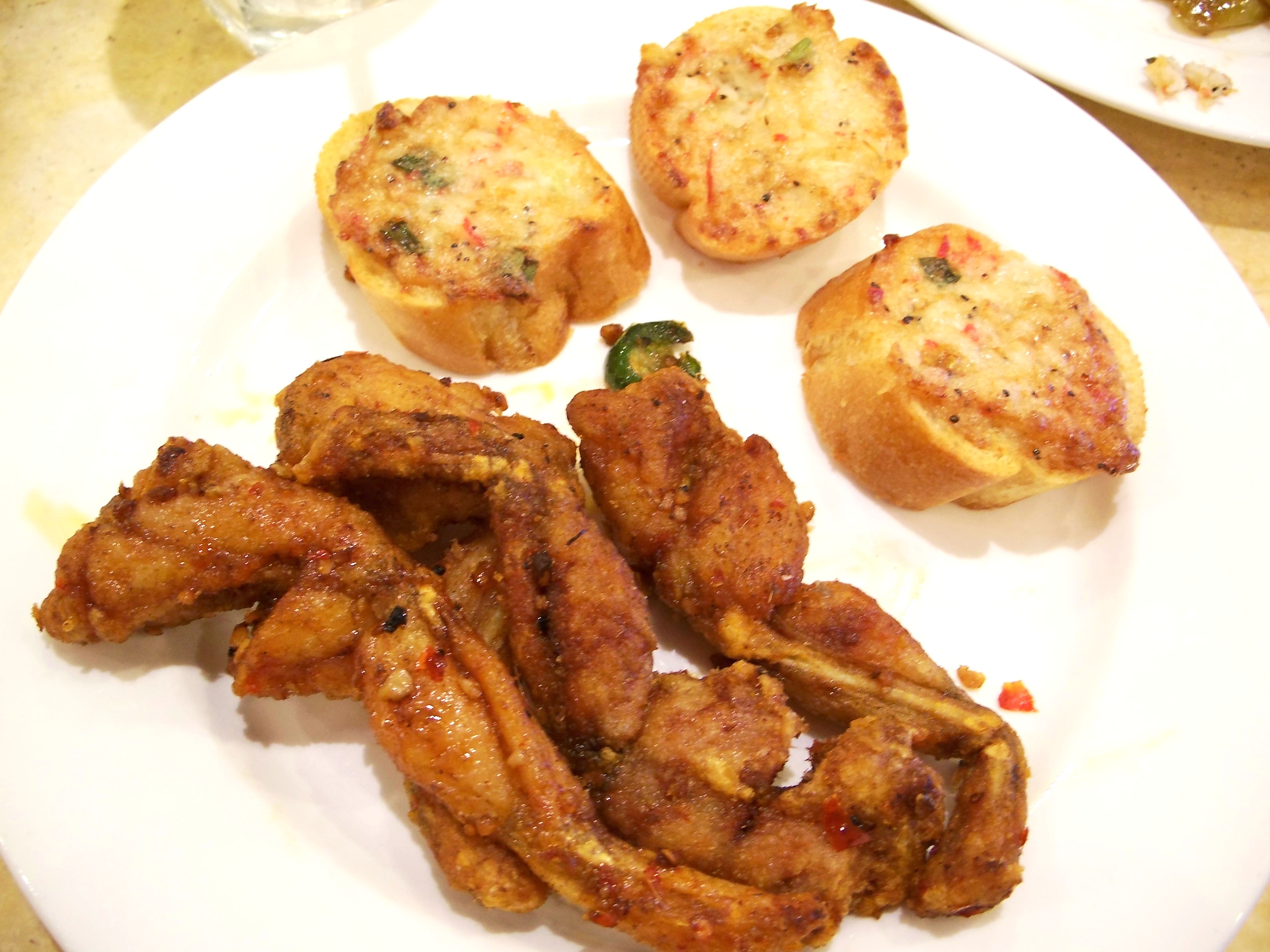
Not to be healthy I packed a few frog legs and fried shrimp-pasted toasts down my throat afterwards. Great baguette. Frog legs would have been great too if not for the irritatingly overloaded hot pepper. When something’s hot, it’s just hot. Hot overpowers everything. Can’t taste another daggum flavor, if there were any. Dunno about you but I find that boring. The meat is kinda dry (I would be too if I were covered in hot pepper) and sinewy. But they do look sporty, don’t they? 🙂


The other soup of the day was bun bo Hue, which we’ve had, and I’ve blogged, here. Looks good, eh? Spicy, too. It’d be good to have intermittent sips of water, given you have a full glass. Kim Son is usually crowded after 11:30, at which time there are too few waiters for too many tables, and it’s expected that you fend for yourself. Yes, that means no refill. Vietnamese scoffers are used to drinking only after the meal anyway. They believe that drinking during eating would result to feeling full immaturely, or making your belly bigger. Maybe that’s why my jeans feel tight…