Flavor Boulevard

We Asians like to talk food.
Subscribe

Archive for the ‘Japanese’

Roe, roe, roe your boat

May 08, 2011 By: Mai Truong Category: California - The Bay Area, Japanese


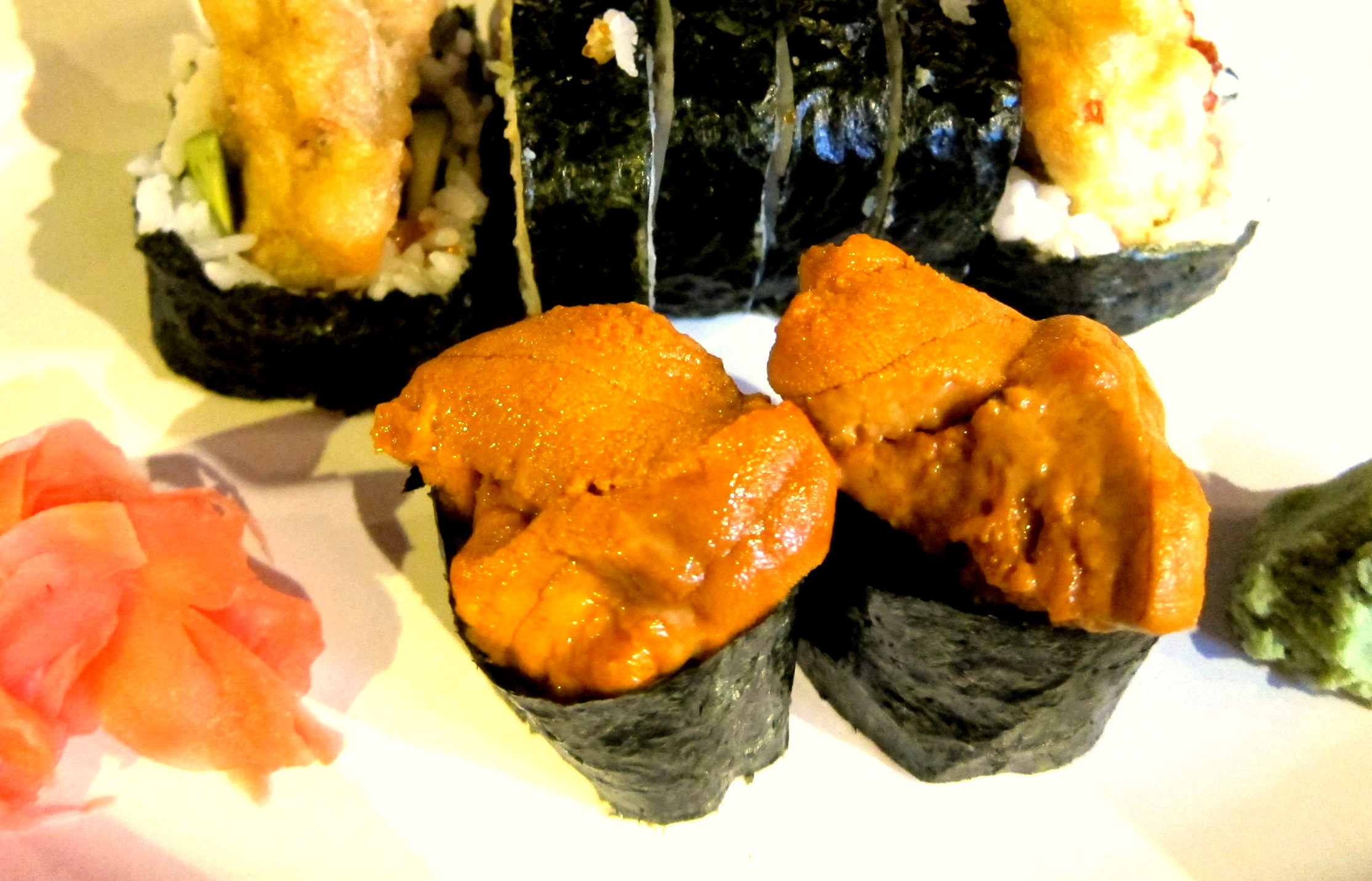
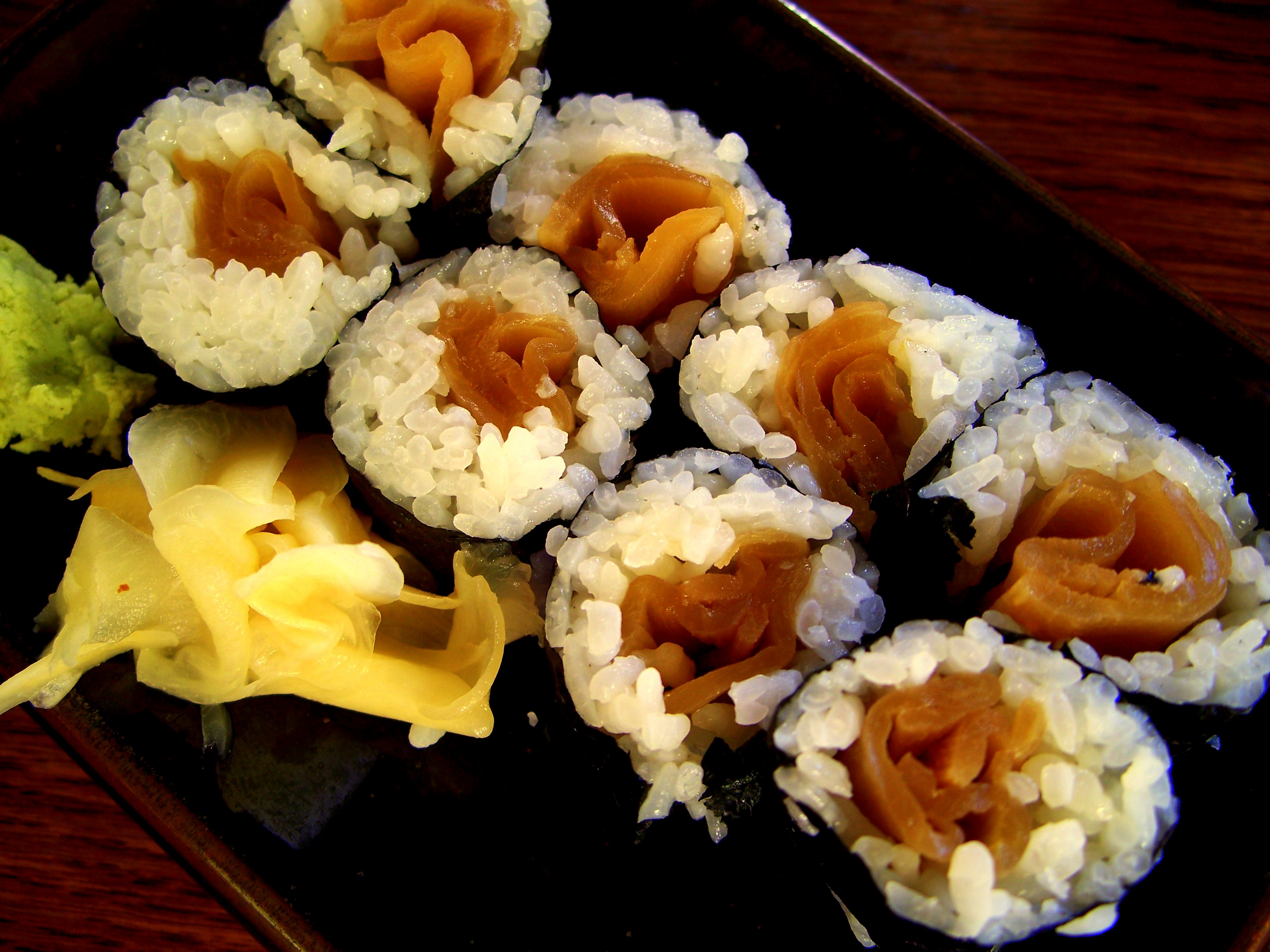
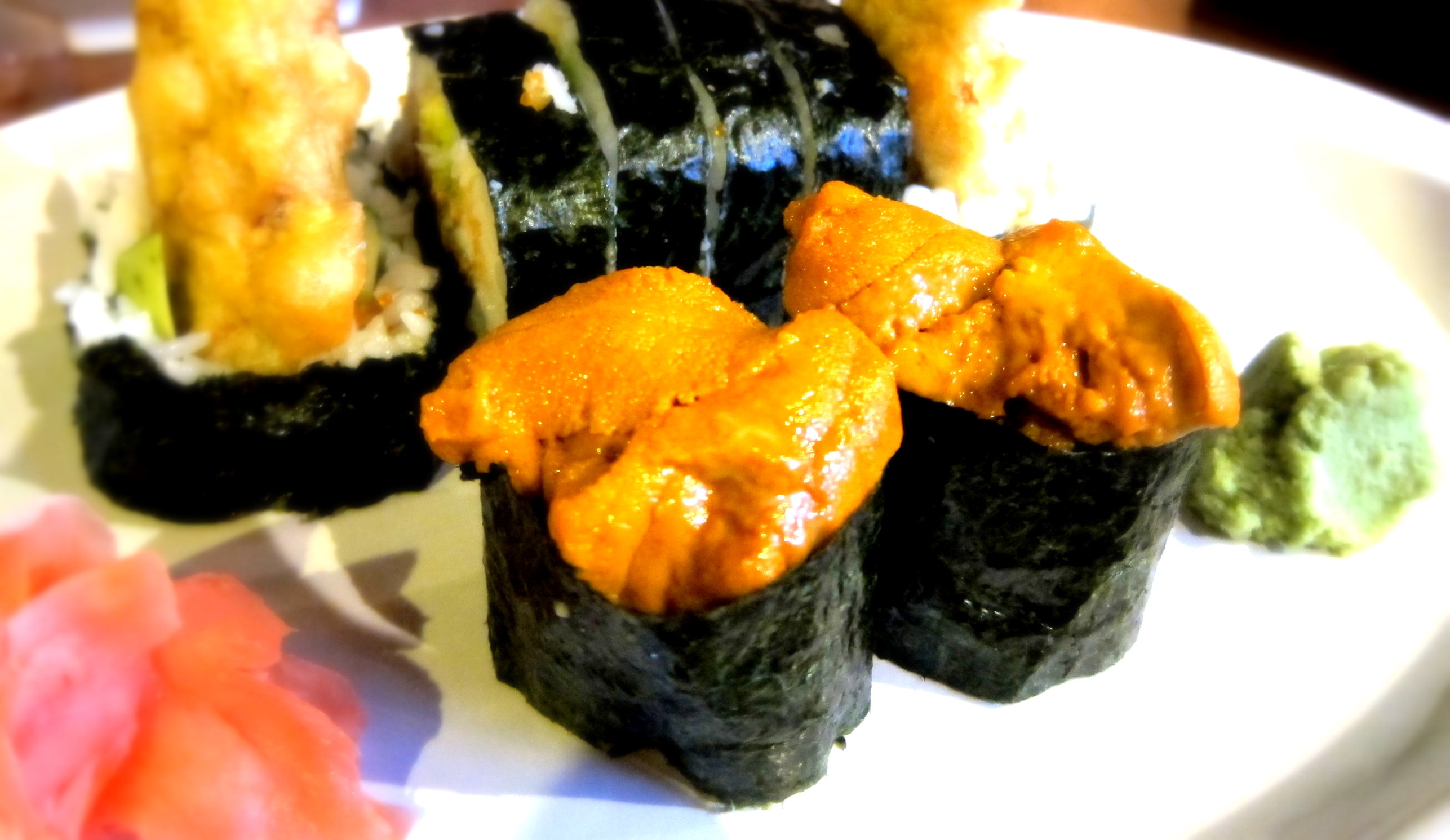
I’ve finally had it. Le pâté des mers. A sandy lustrous texture and a briny air of the ocean compactified in bright orange lobes.


It’s my first time, at a sushi house in Berkeley in early May, so I’m not gonna pretend like I had the faintest idea about uni. I’m not sure if it’s raw or cooked, but from the taste alone it’s too seashore-breeze-like to be cooked. It could be a paste from a tube for all I know. But now it’s decided. Sea urchin roe? Count me in.

Thanks to noodlepie for writing about it. Really helps if you know what to expect before you try, as always.

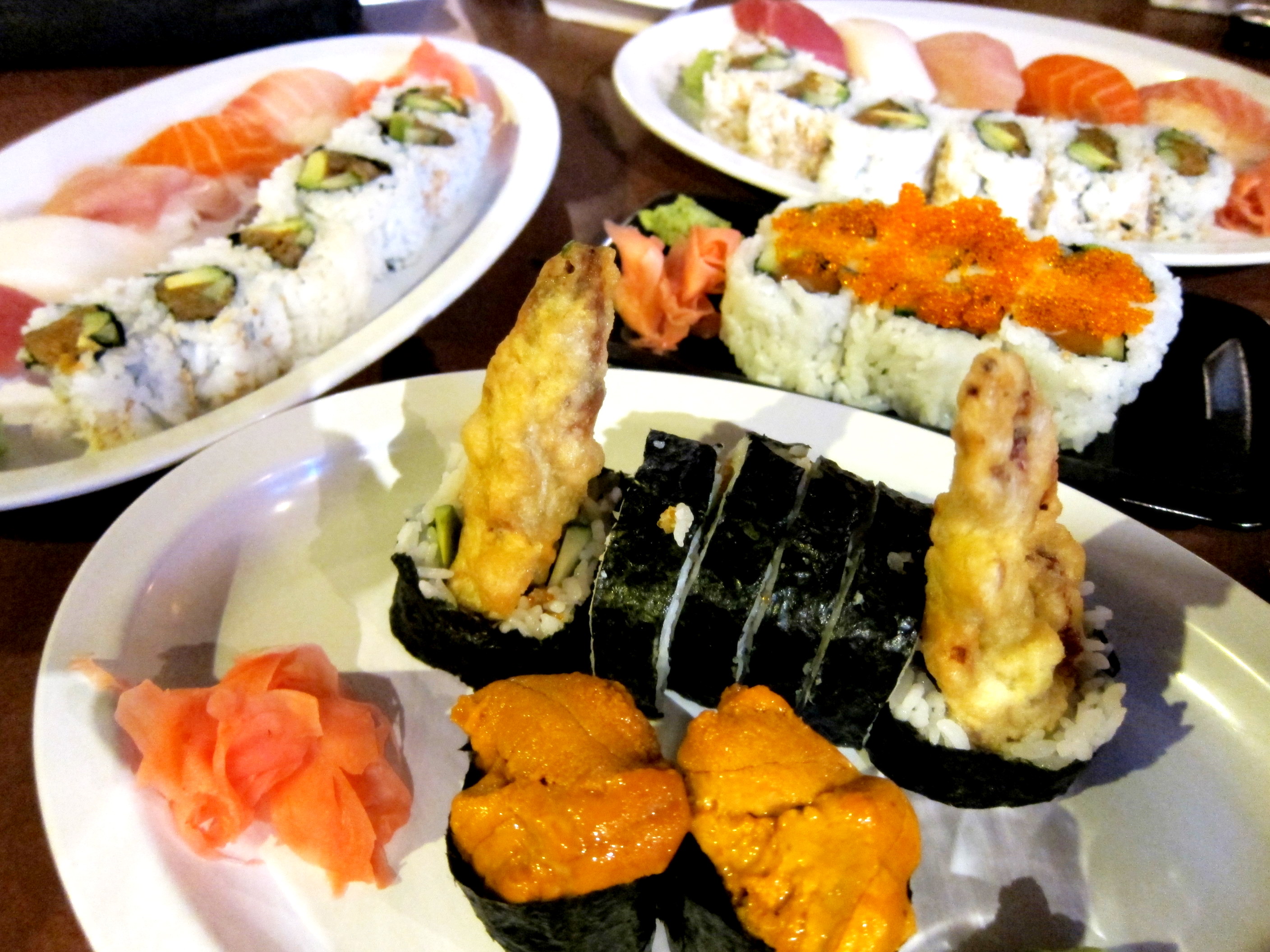
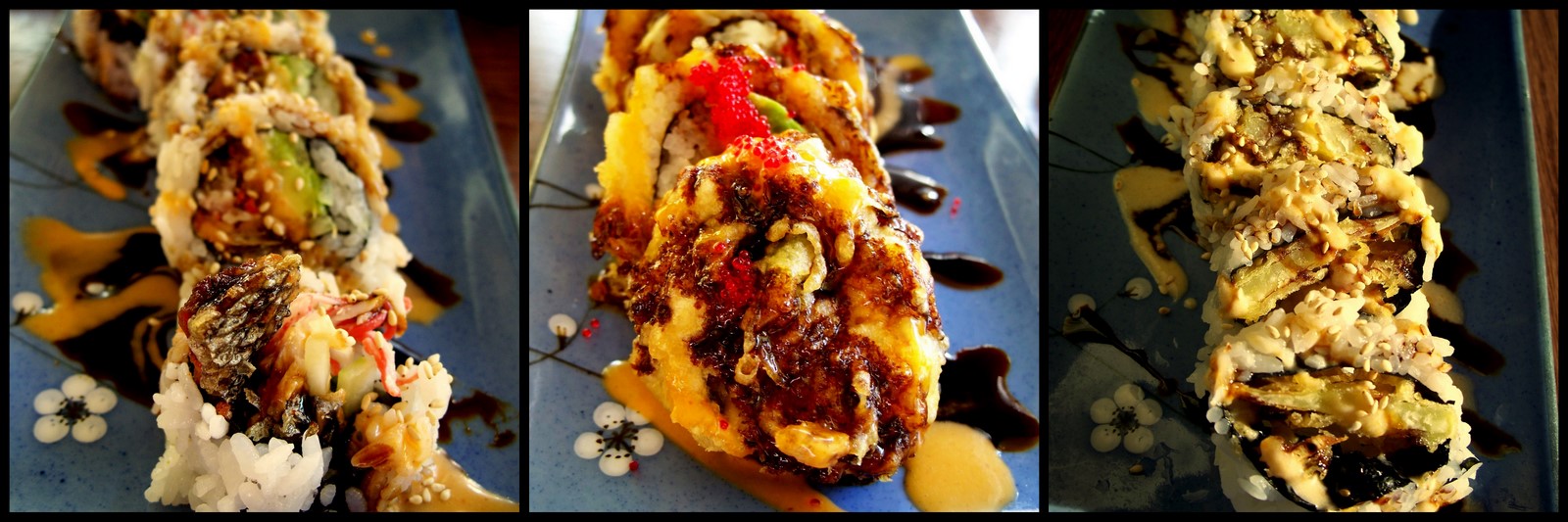
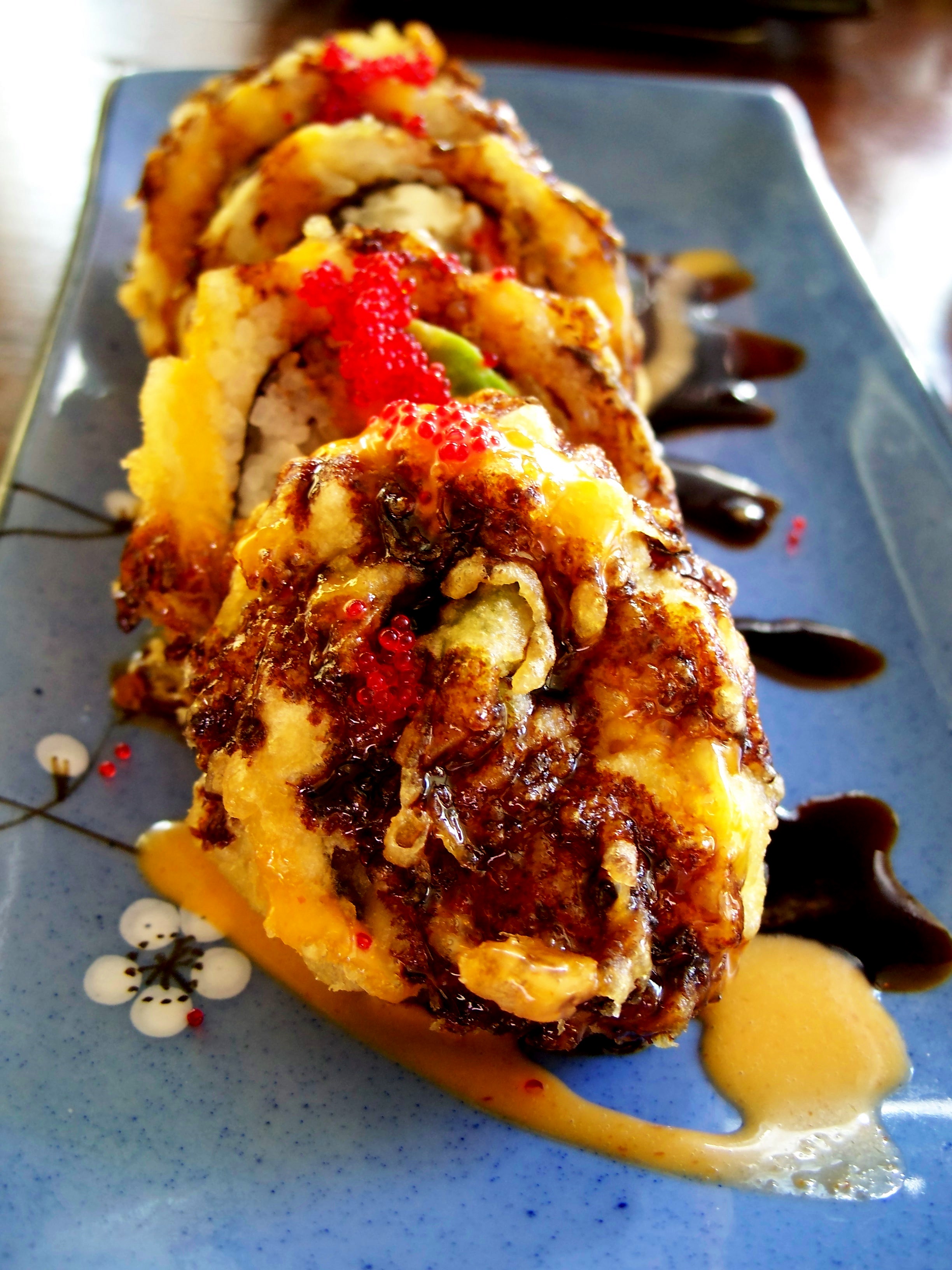
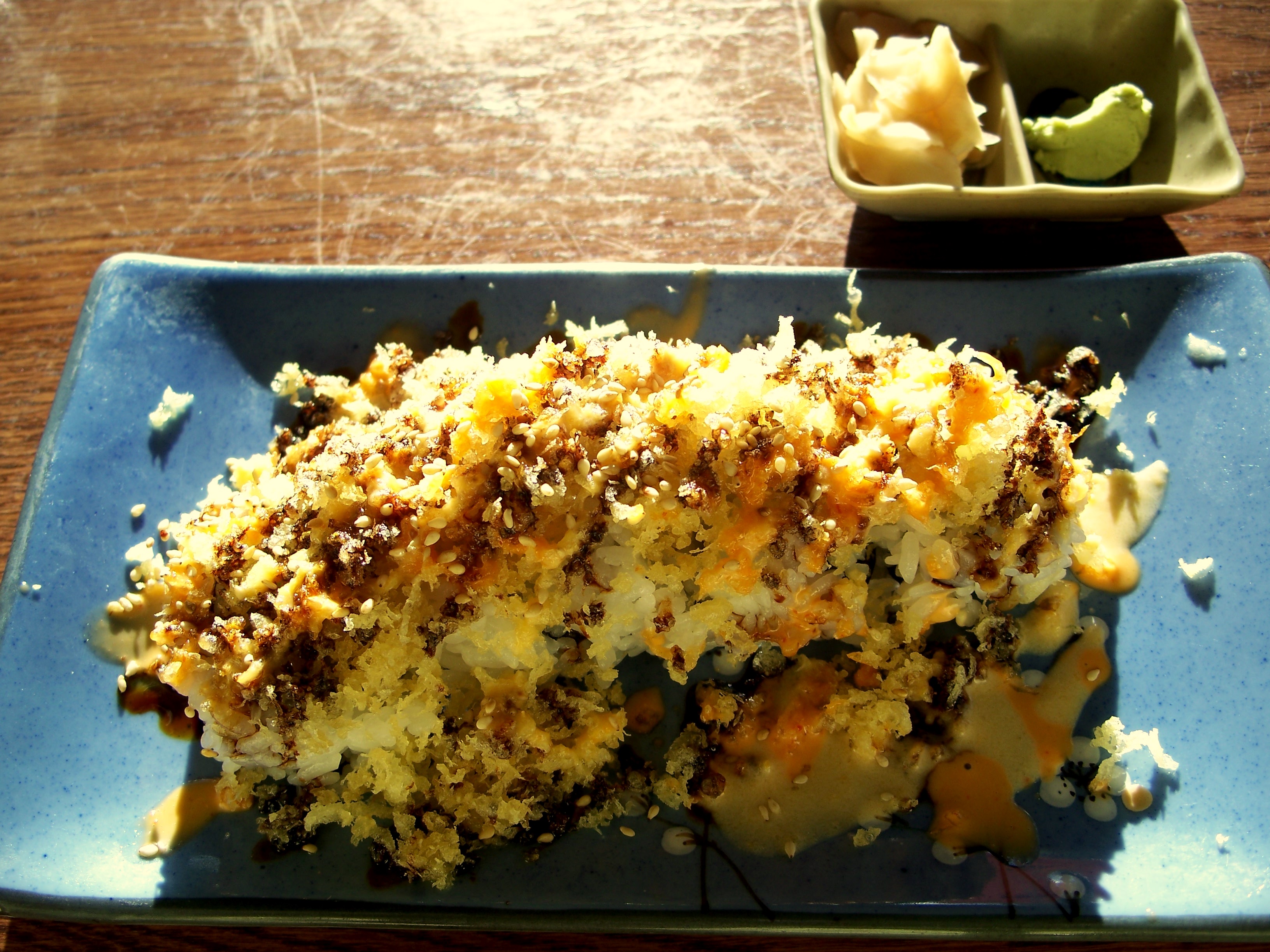
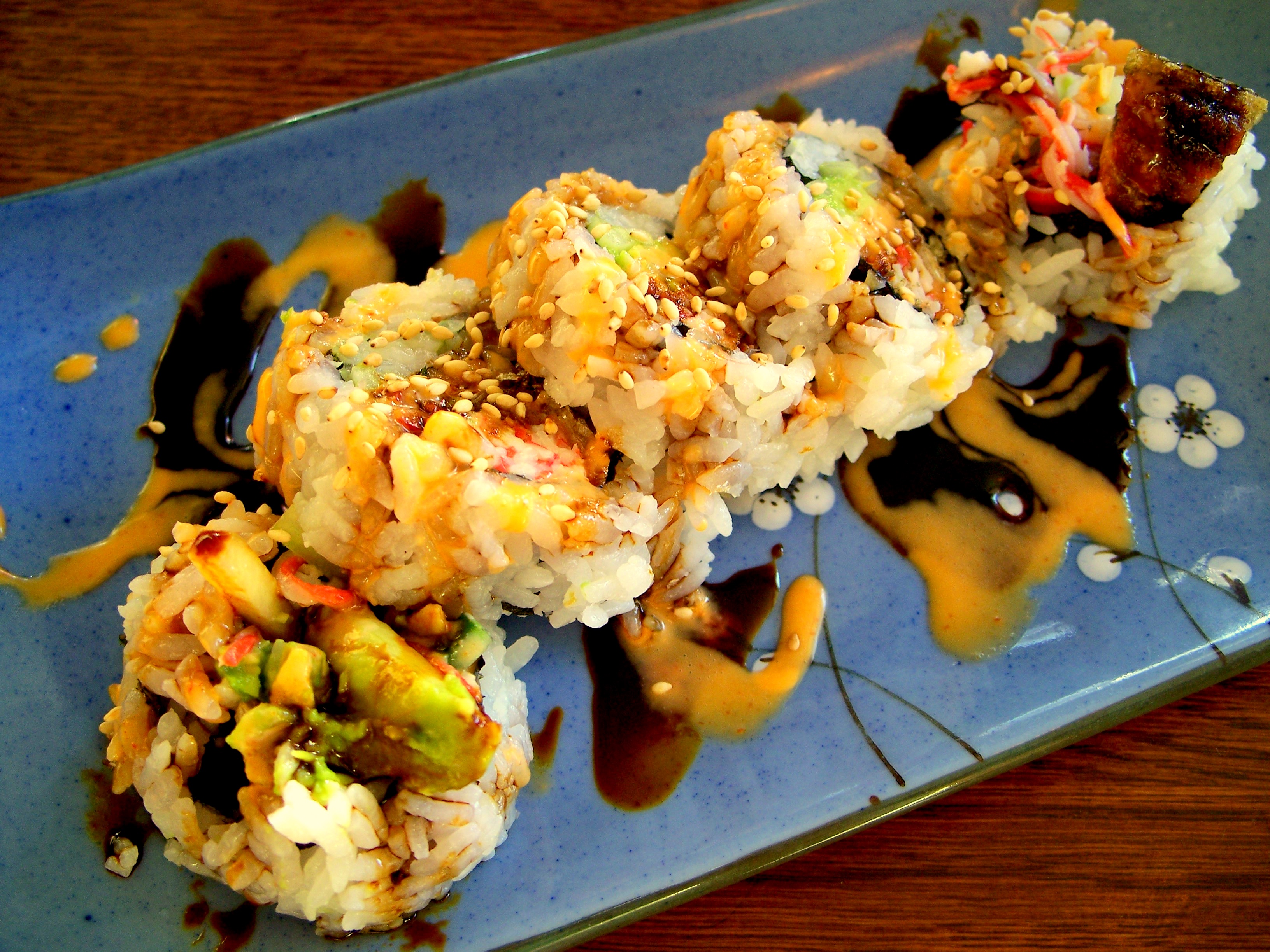
Because 2 rolls can only fill up a sparrow, here’s more sushi:

Address: Sushi Ko
64 Shattuck Square
Berkeley, California 94704
(510) 845-6601

Money matter: 1 uni (2 pieces) – $6.50 (not cheap, a normal 6-piece roll is $5.50-7.95)
We also had sashimi here before.

A Haiku in College Station

April 05, 2011 By: Mai Truong Category: Comfort food, Japanese, Korean, noodle soup

Afternoon leaves fall,
family of three gathers
by hot noodle soups.


How d’ya like my first ever haiku, inspired by a linner (lunch/dinner) at Haiku? 😀 5-7-5 syllables (not on, though), with kigo (seasonal reference) and kireji (cutting word) too… You can’t say I didn’t try.


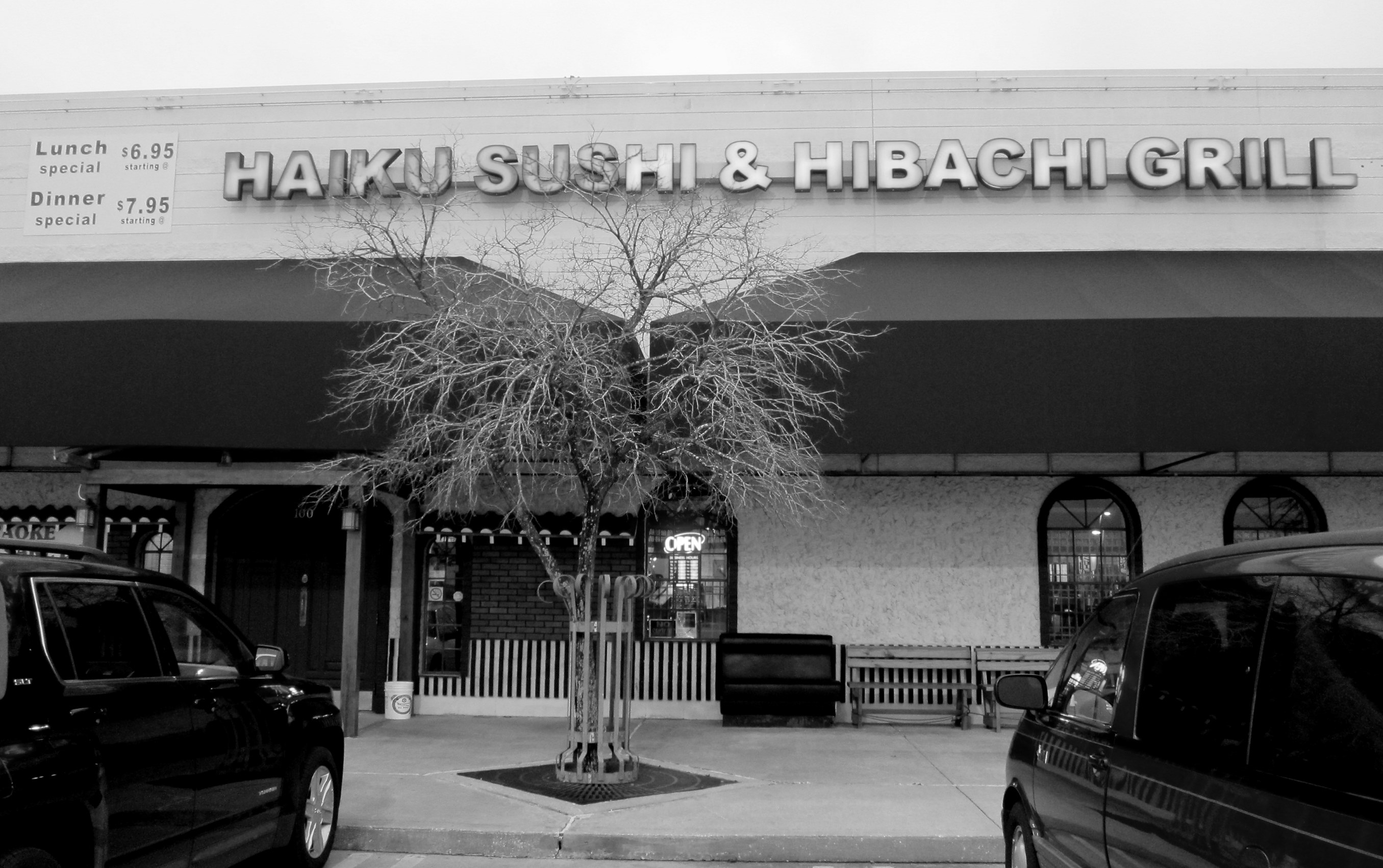
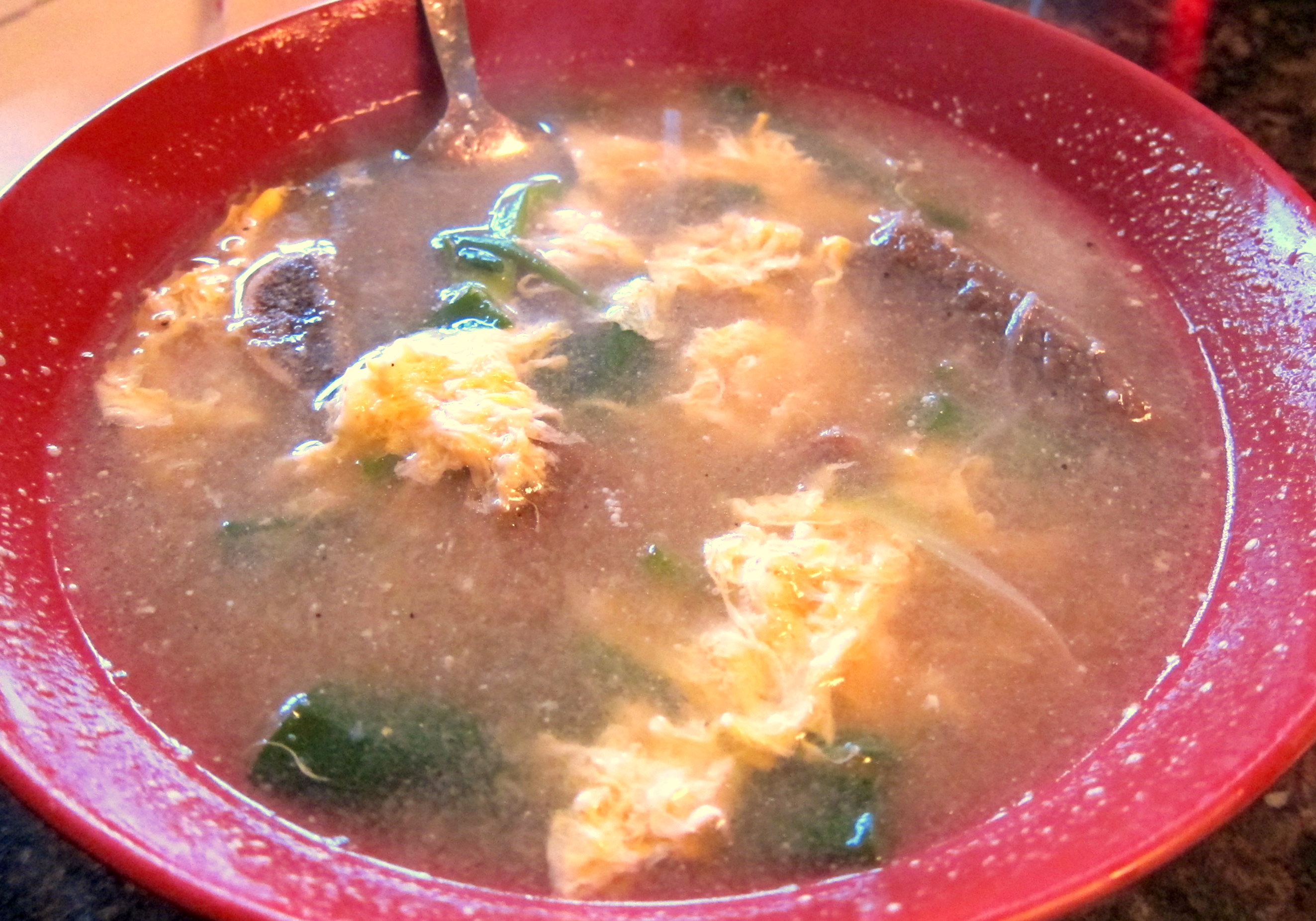
This was the easiest Japanese/Korean restaurant we could get to while driving on University. It’s more Japanese than Korean, evident from the short section of bibimbaps and whutnot among everything sushi. Seeing how this weather cries for soups, Mom decides on some piping kalbi tang (갈비탕). It’s not as oomphing good as the one I had at Bi Won in Santa Clara, just how many Koreans live in College station after all (*), but it sure is satisfying with loads of egg in a beef bone stock.


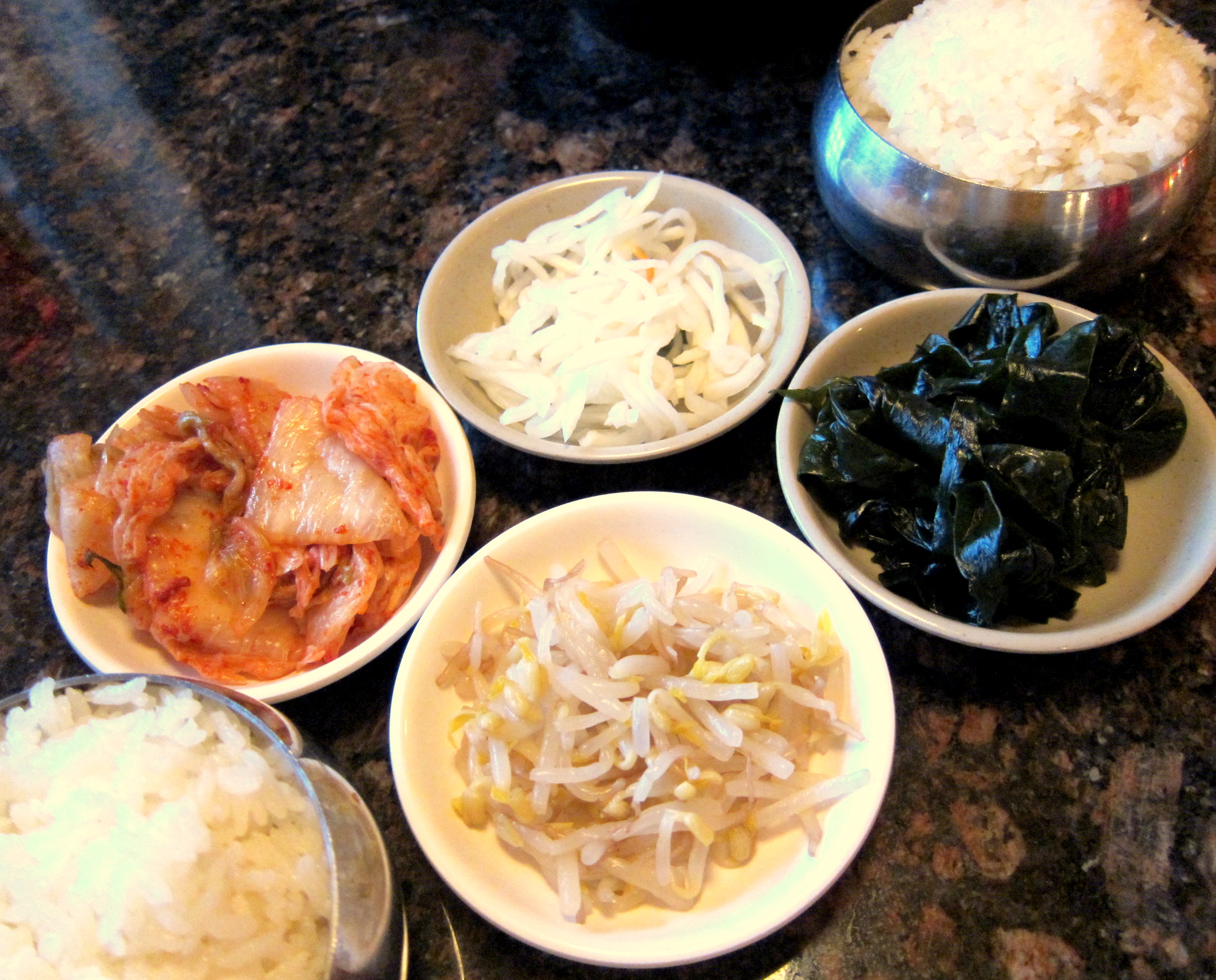
The basic banchan set (clockwise from left): baechu kimchi, shredded kohlrabi, sigeumchi namul (시금치 나물) (blanched spinach), and kongnamul (콩나물) (boiled soybean sprouts). Kimchi and rice go a long way.

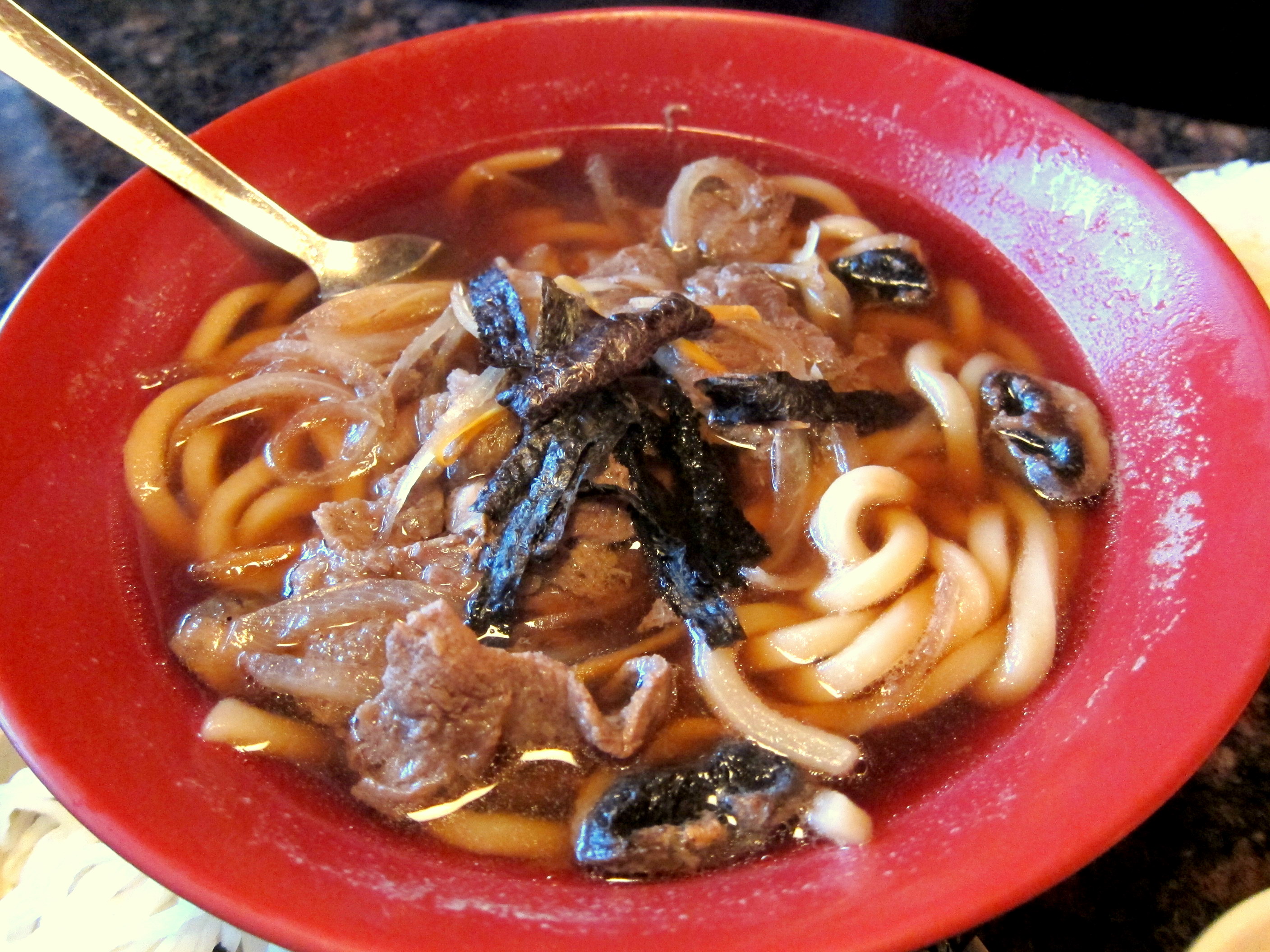
Dad and I side with more noodles than broth. Such as the chubby strings in the beef udon, where short strips of chewy black konbu (dried seaweed) and plump mushroom halves dominate the flavors.


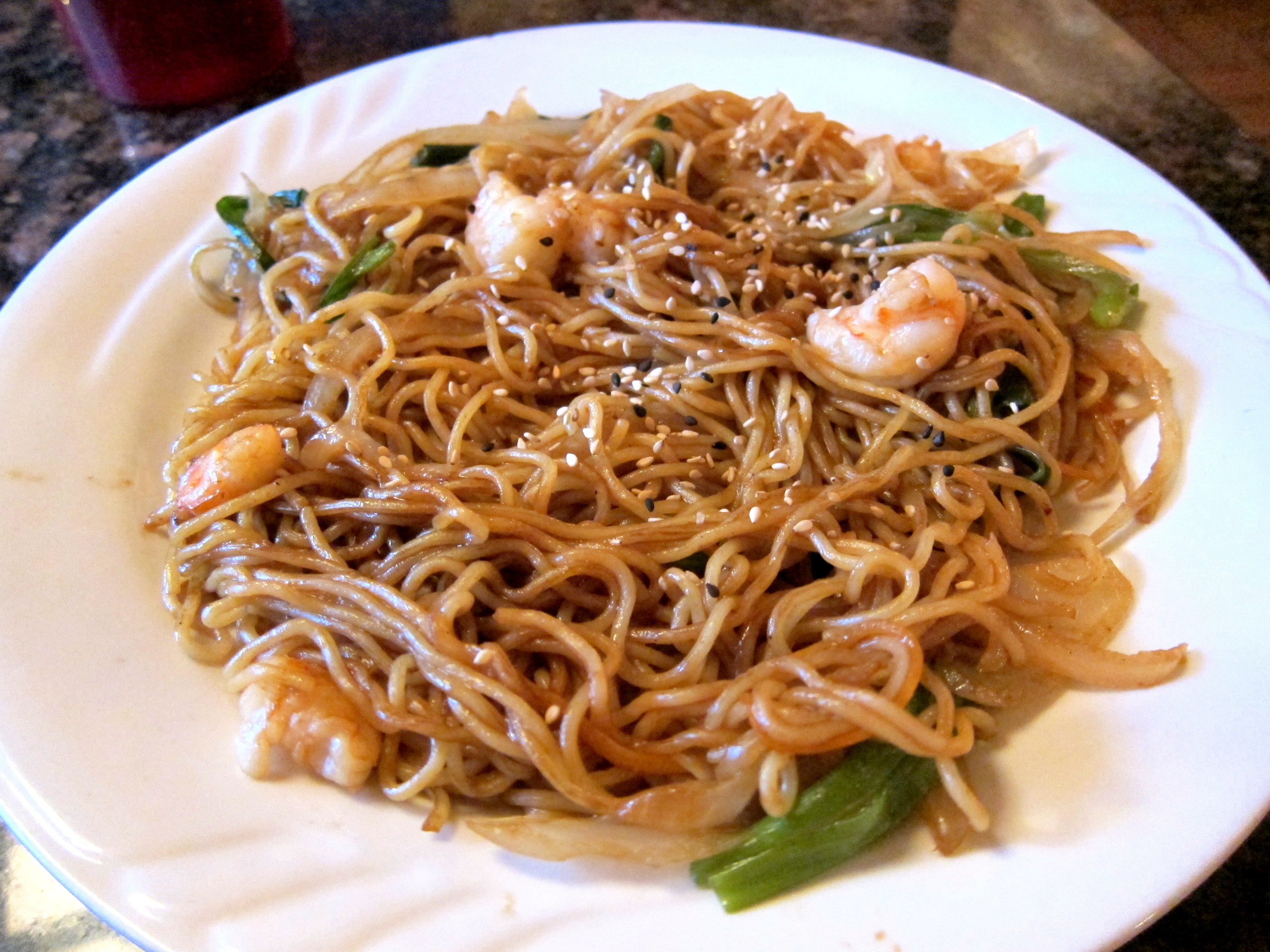
Or the al dente soba noodle stir-fried with shrimps and green onions, where sesame oil and tonkatsu sauce deliver a complete savory affair. Haiku’s yakisoba is as good as any yakisoba I’ve had, but it would have been even better if they’d tossed me double this portion. Maybe triple… I was hungry, ya know…


Address: Haiku Japanese Restaurant
607 E. University Drive, Suite 100
College Station, TX 77840
(979) 846-7900

Shrimp yakisoba: 9.99
Beef udon: 8.95
Kalbi tang: 11.99

Total: $33.48

(*) The answer is 1026, or 1.51% of the city population, according to the 2000 census. For comparison, the Korean population counts 1916, or 1.9% in Berkeley, and 1780, or 0.4% in Oakland, also in 2000.
Interestingly, Vietnamese counts only 274, or 0.4% in College Station, but the ratio of Korean to Vietnamese restaurants is 2:3. It’s awesome that people like pho, but yo Aggies, eat some kimchi and gogi too! Mkay?

Show me the meaning of sashimi

December 26, 2010 By: Mai Truong Category: California - The Bay Area, Japanese


I don’t like the Backstreet Boys but when an apt title comes you gotta grab it. Last Sunday we were out celebrating ZuChu‘s birthday with her favorite: sashimi. I was fully expecting a glamorous meal since I’ve come to like smoked salmon and figured all thinly sliced raw fish must have that silky springiness too. Besides, there are those pictures of translucent peony and phoenix made out of fugu sashimi. The Japanese get you by the eye.


This modest stop on Shattuck has the biggest selection of fishy cold cuts in South Berkeley, with 13 individual kinds and 2 combo plates. Word of mouth is it also slices up the freshest, gruesomest sashimi around.


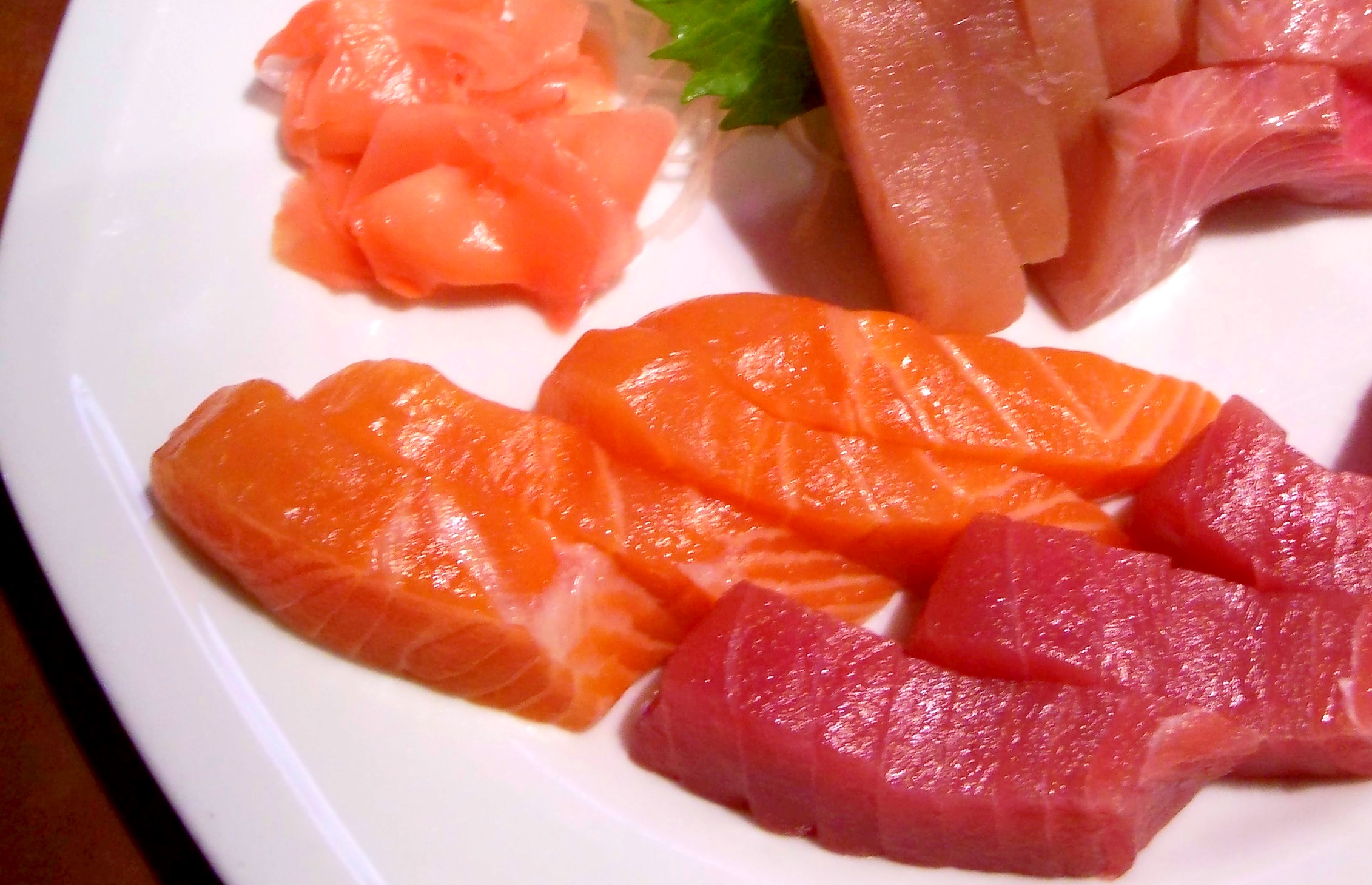
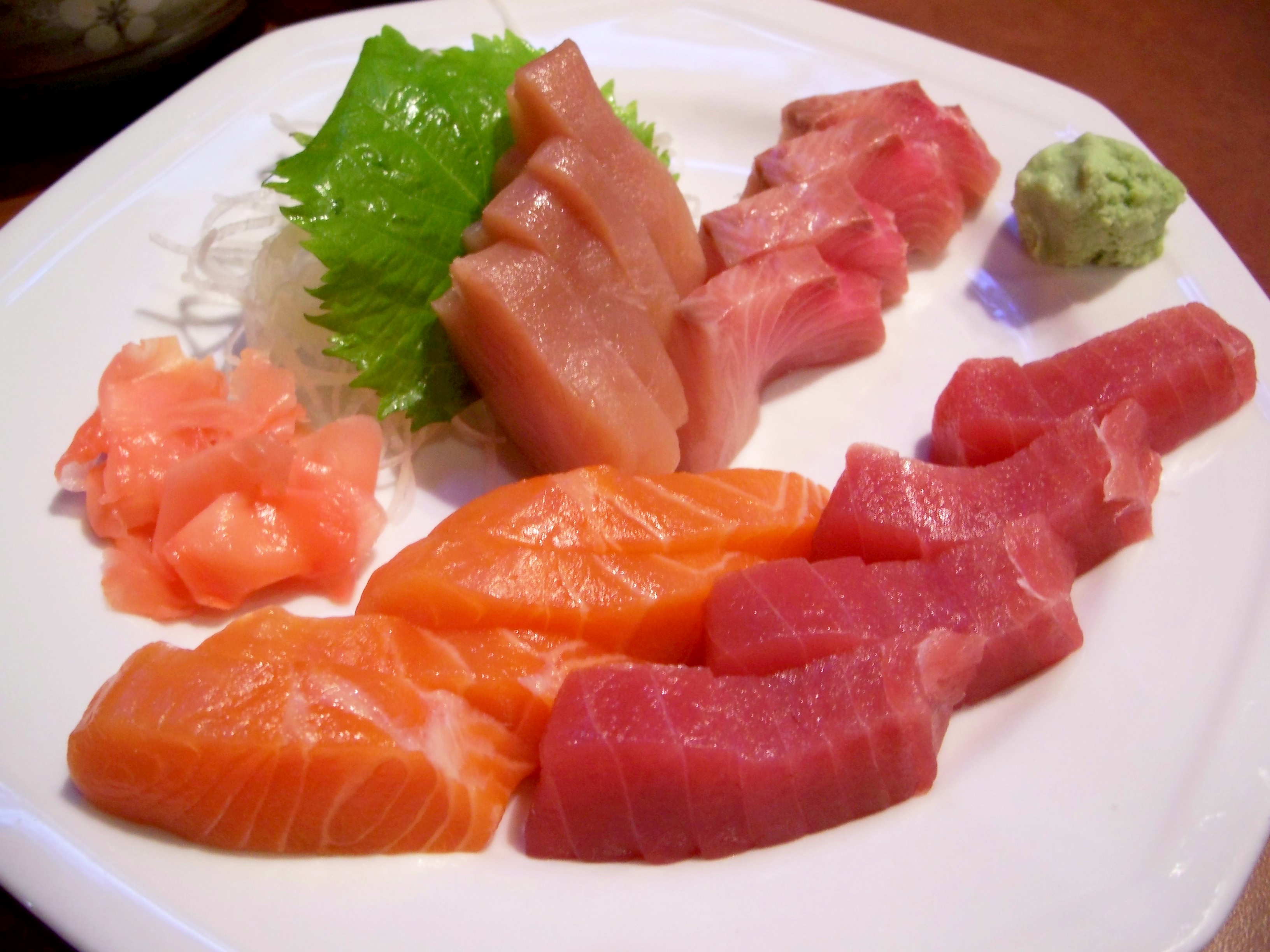
For $18.95 we preempt 16 chunks of maguro (tuna), shiro maguro (albacore, or “white tuna”), sake (salmon), and hamachi (yellowtail, but red meat). The salmon is best (just like La Bedaine’s smoked salmon, but thick). The tunas slide down my throat with some stickiness, as if stuff were crawling up… The hamachi fans apart into a string of cubes, each as bland and bare as the next. Suddenly I understand the presence of wasabi, but I don’t use it.
In the end, I don’t understand the thickness. It’s like eating a blob of gooey rubber, the more you chew the more you realize it’s not cooked, but once you try to swallow it it clings to your tongue. Soy sauce makes it twenty times better.


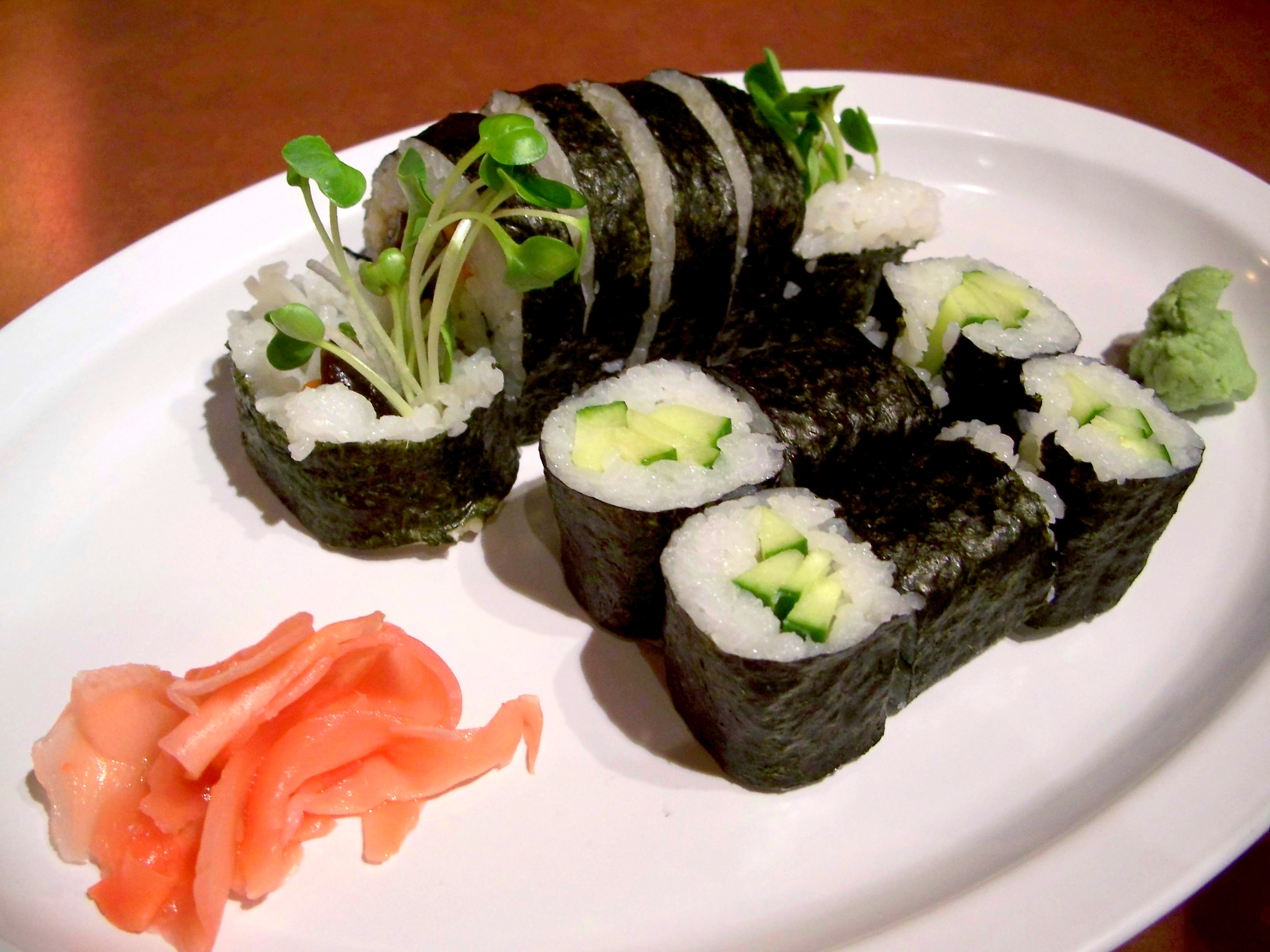
And I never felt happier eating veggie rolls. V8 (mushroom, cucumber, oshinko, gobo, kanpyo, avocado and daikon) – $4.95, and cucumber roll – $3.00.

Address: Sushi Ko Berkeley
64 Shattuck Square
Berkeley, CA 94704
(510) 845-6601

Anzu-shi

September 15, 2010 By: Mai Truong Category: California - The Bay Area, Comfort food, Japanese


I was first deceived by its genteel green color to taste a spoonful all at once. Ever since, the wasabi has been a turnoff. Ever since, I also scoff at sushi, “pieces of overpriced cold rice, cold veggie and tasteless seafood” I labeled them. Well, they’re still overpriced, still cold, but definitely not tasteless. Be it the oksusu cha, the small salad with Korean mayo dressing, the creative rolls, or my infatuation with anything Korean (even when it’s just Korean-made Japanese food), the sushi at Anzu taste wonderful to me.


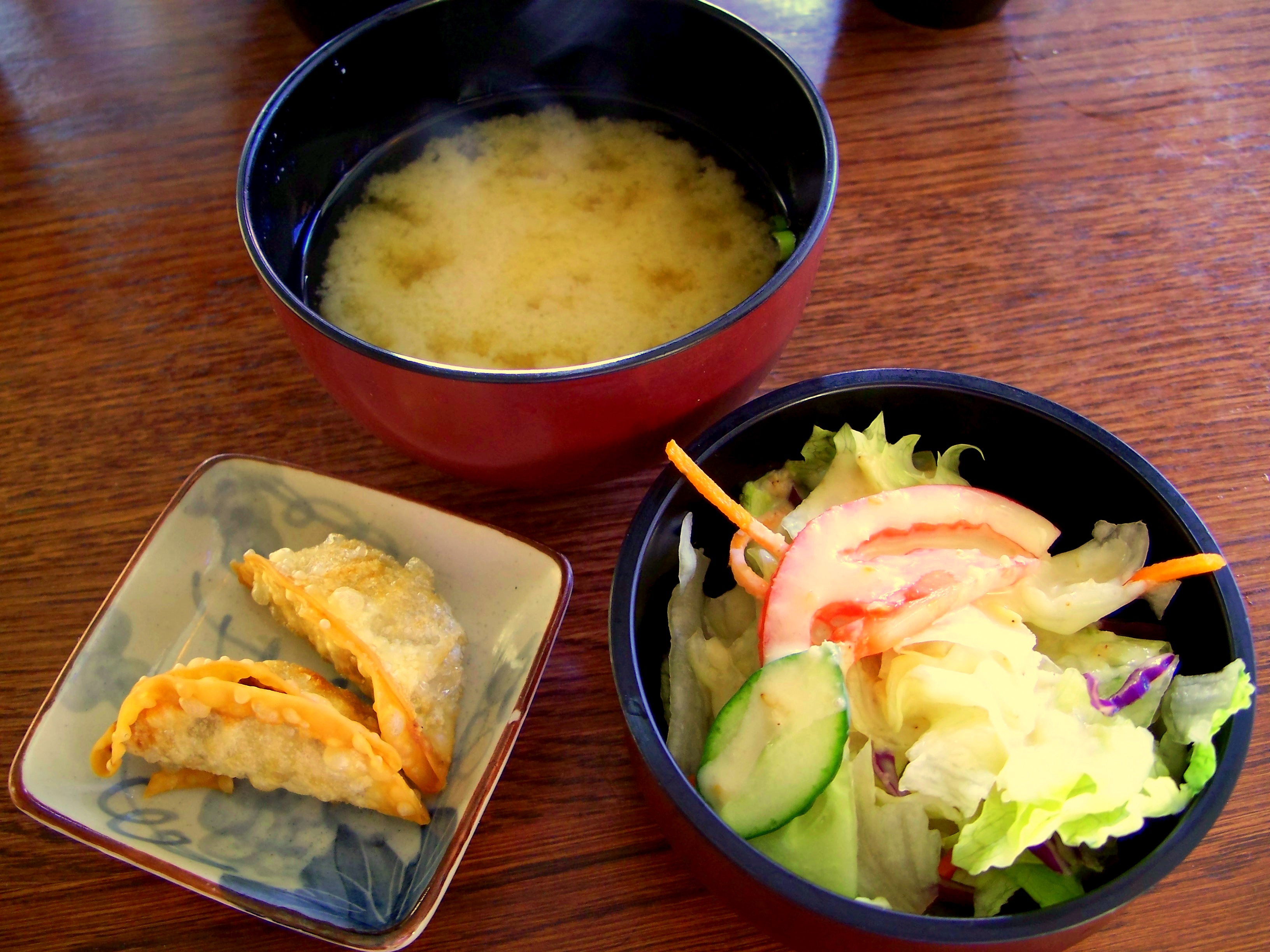
I’ve blogged about Anzu twice already, but it would be incomplete to talk about Anzu without talking about their sushi menu. The selection is countless: nigiri/maki, vegan/non-vegan, normal/fried/baked/crunchy, etc. Yah yah yah, this is uramaki (Westernized sushi) with the nori inside, avocado, cream cheese, names like Avatar and Golden Gate. But the point is they’re good. They also give you free soup, salad, and either edamame, fried tofu, or gyoza for appetizer. This would be one of the first places I’d take my little sister out to eat, had the US Embassy granted her a travel visa to enter the States (they wouldn’t do it unless she were married and had her husband stay in Vietnam). But since it’s so difficult to come here legally, guess we’ll have to celebrate Sou‘s birthday with pictures of sushi. 🙂


Calamari tempura roll ($4.99)- calamari, cucumber, avocado, kamaboko, roll over with spicy mayo and mango sauce.


California tempura Jr. roll ($5.25) – unagi (eel), cream cheese


Crunchy ebi roll ($4.25) – ebi (shrimp), unagi, cucumber roll over and looks like a catepillar. It’s fun to eat, but it also hurt the roof of my mouth a little bit.


Kanpyo roll ($2) – dried squash – I especially love this one for its simplicity yet addicting flavor.


N’jin roll ($4.95) – fried salmon skin, avocado, cucumber, kamaboko – The fried salmon skin is very crunchy, a little overpowering, but I like skin. 🙂


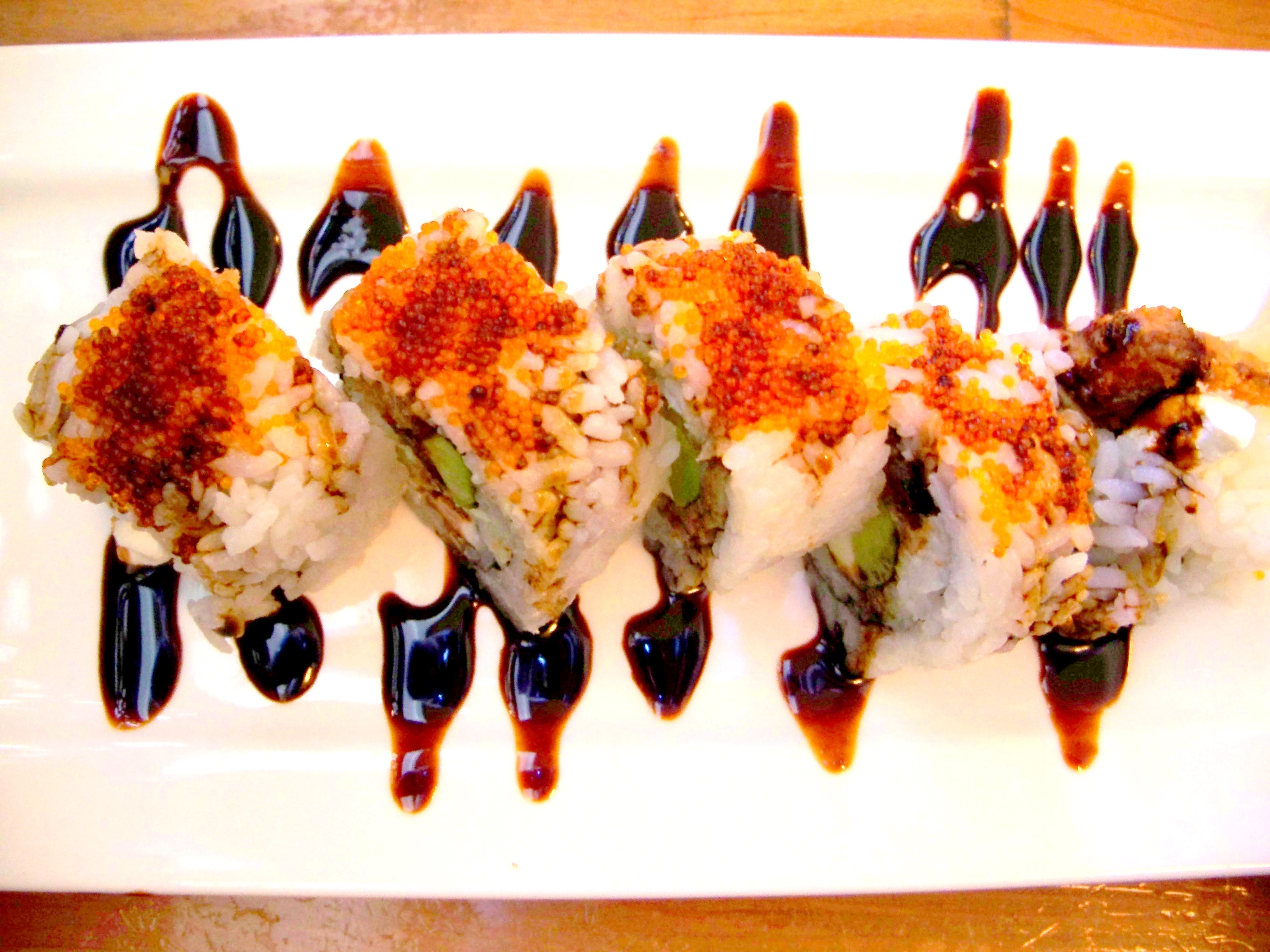
Spider king roll ($5.99) – soft shell crab, cream cheese, avocado, topped with tobiko (flying fish roe). This one is a bit salty and naturally it gets saltier as it sits longer in the soy sauce. The tobiko adds texture and little flavor.


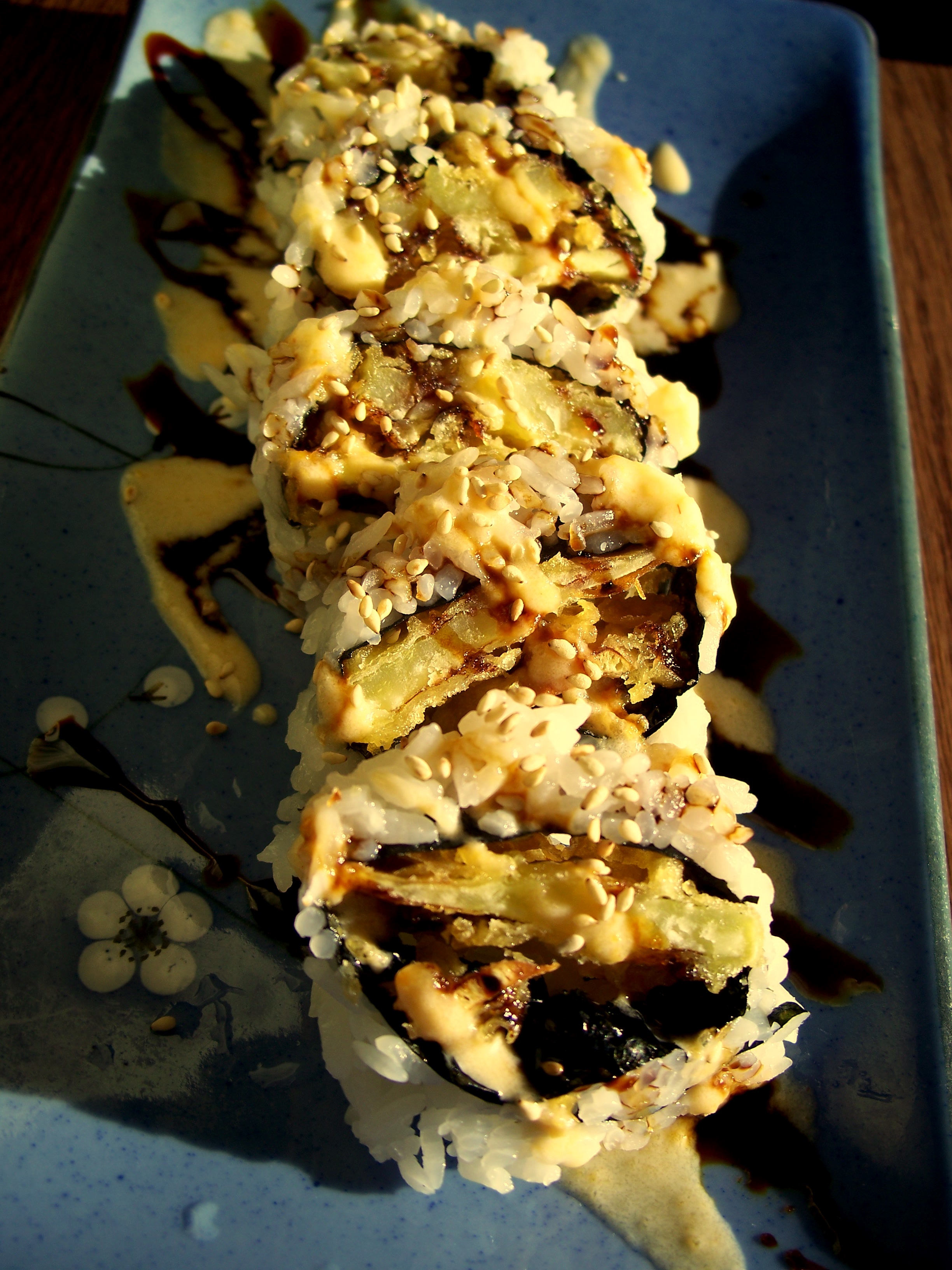
Sweet potato roll ($5.50) – deep fried sweet potato, topped with sesame, spicy mayo and soy sauce.


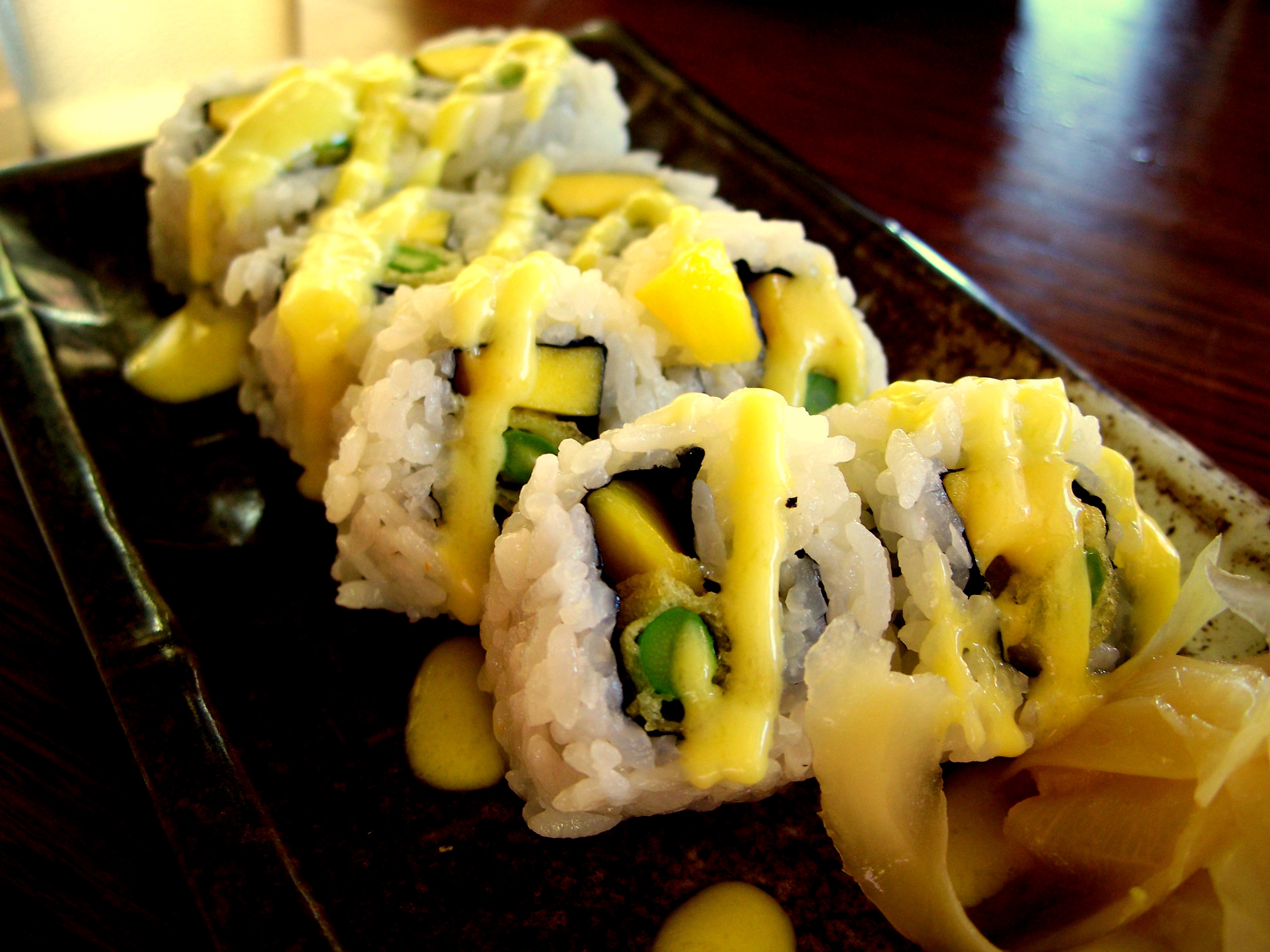
Tropical roll ($2.95) – batter-fried asparagus and fresh mango in mango sauce.


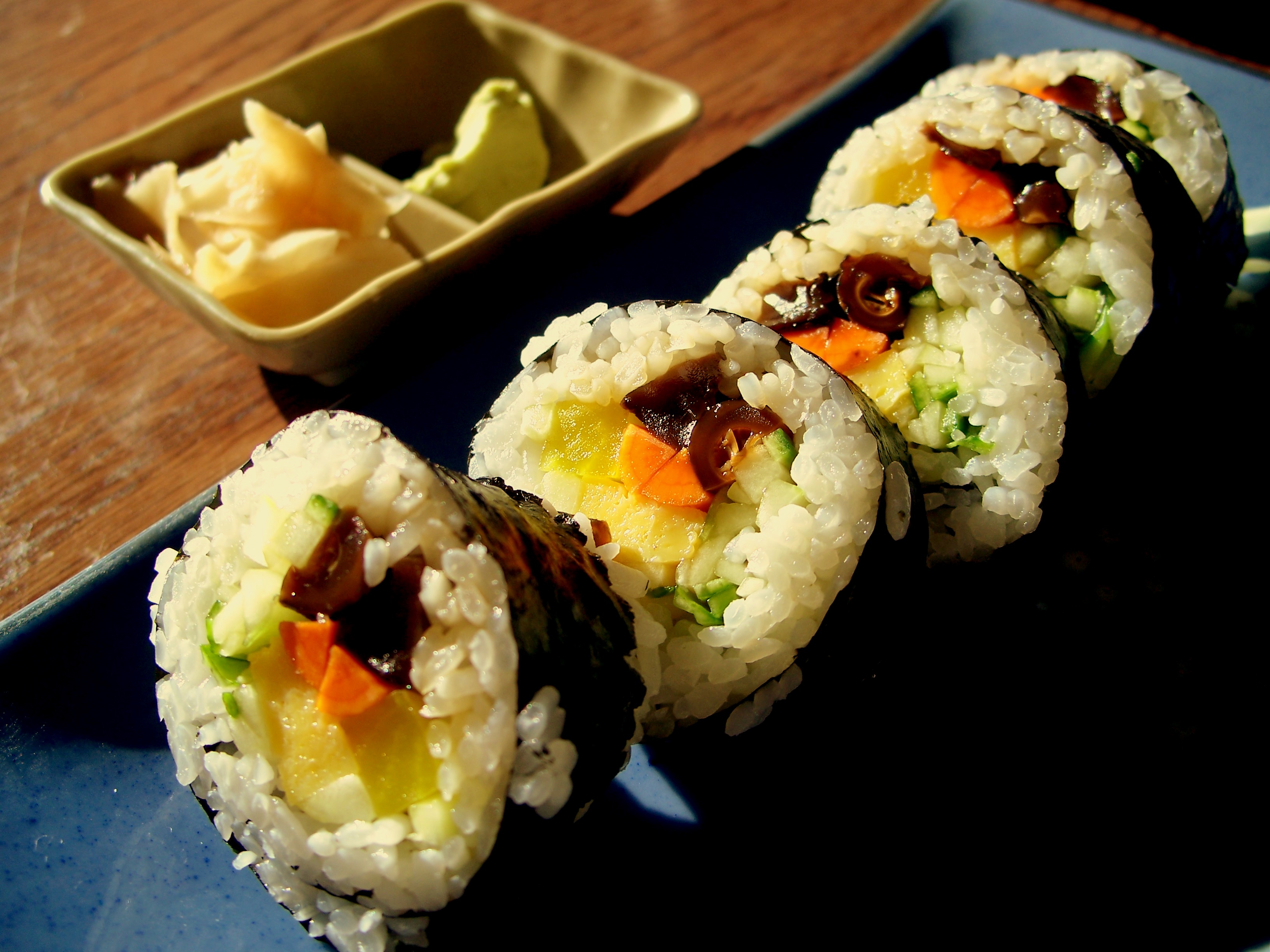
Good old Futomaki ($5.25) – mixed vegetables (carrot, cucumber, kanpyo, takuan, and something like pineapple (?))

I like them all.

Address: Anzu Japanese Cuisine
2433 Shattuck Avenue
Berkeley, CA 94704
(510) 843-9236

Satsuki Bazaar on Channing Way

May 25, 2010 By: Mai Truong Category: California - The Bay Area, Festivals, Japanese, Opinions, savory snacks, sticky rice concoctions, sweet snacks and desserts


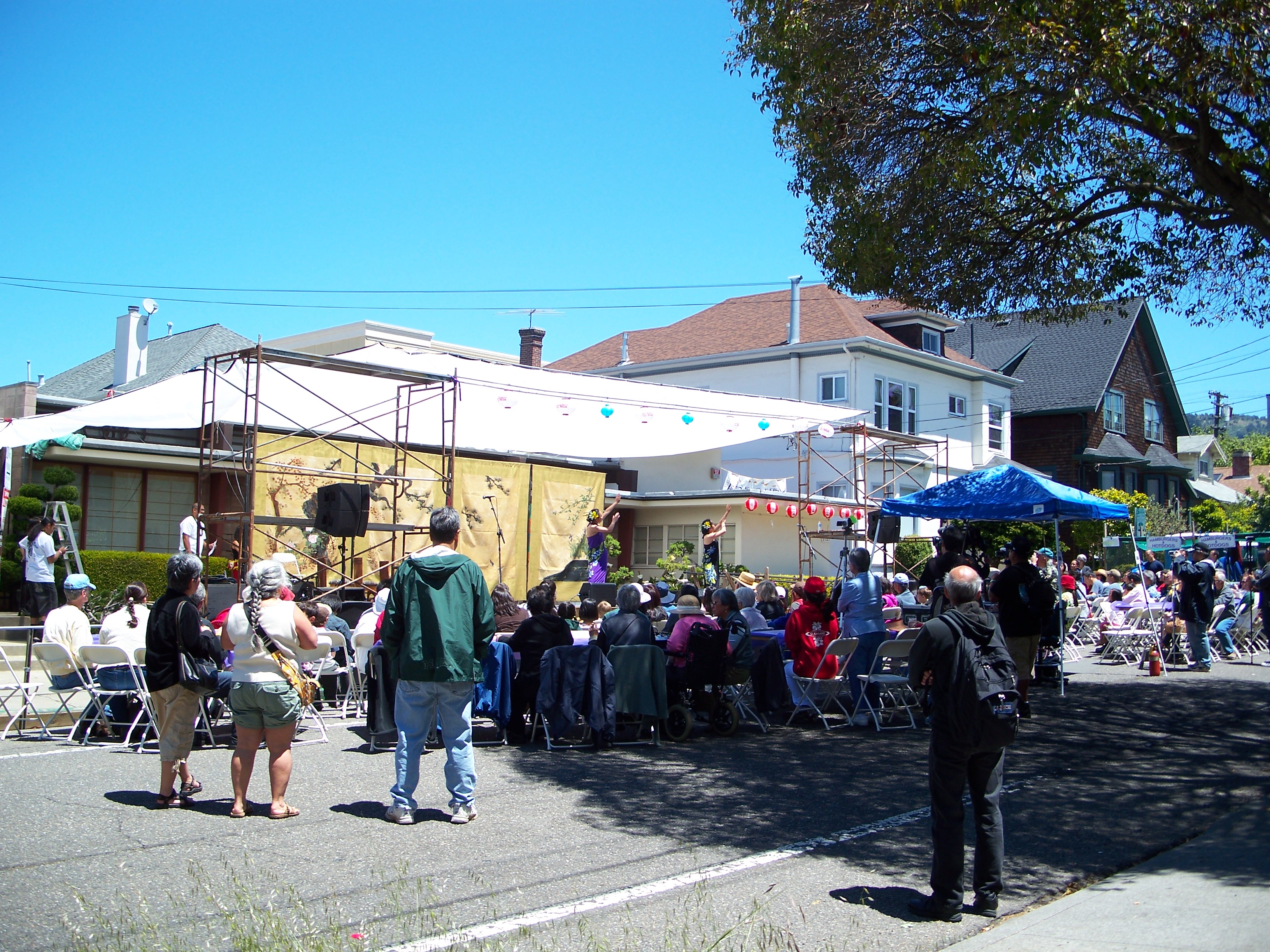
One blue-sky Sunday in May. A section of Channing Way, between Shattuck and Fulton, was blocked. Two girls draped in summery garments danced to joyous Hawaiian tunes on a sunlit wooden stage, surrounded by a small crowd of both familiar spectators and curious passing pedestrians. The seductive smell of grill beef got caught in the wind here and there.


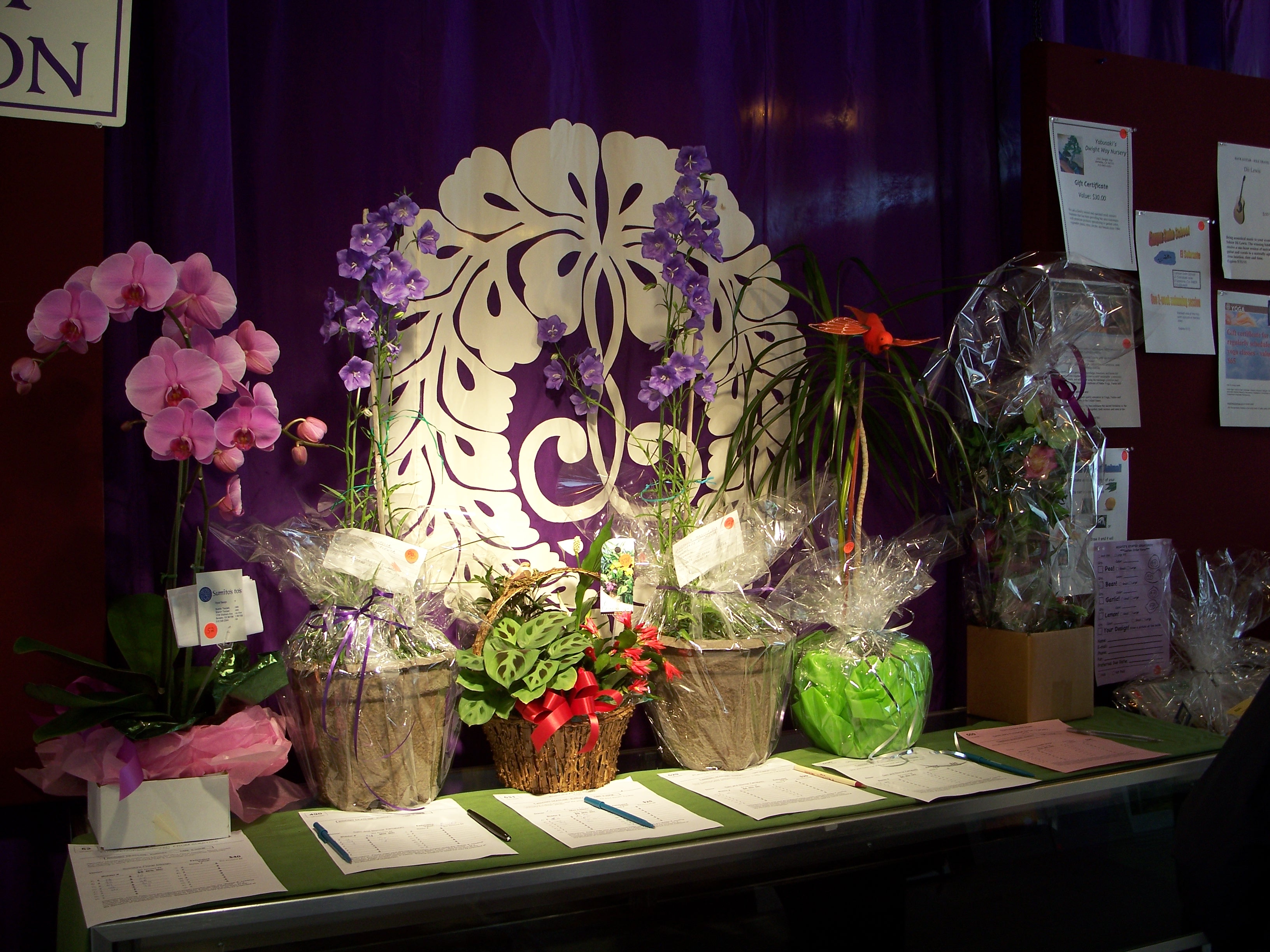
So it was the street front of the 61st annual Satsuki Bazaar and Arts Festival at the Berkeley Jodo Shinshu Buddhist Temple on Channing Way. Inside the temple, a multitude of items displayed for silent auction held visitors’ footsteps, starting with orchids, matted photos and paintings, gift cards to sushi bars and diving lessons…


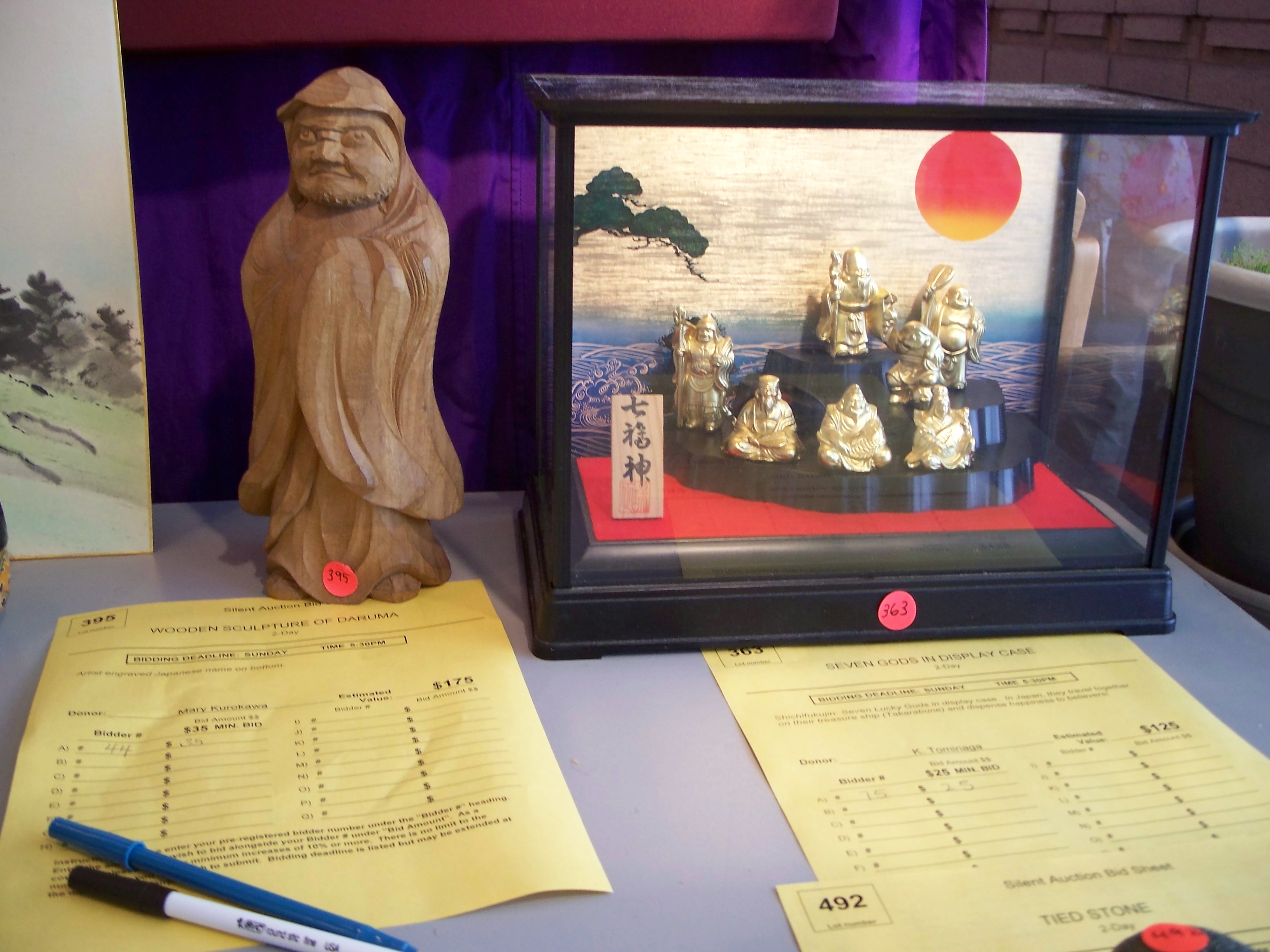
…to porcelain sets, stuffed toys, a wooden sculpture of Daruma, and Shichi Fukujin in a glass box.


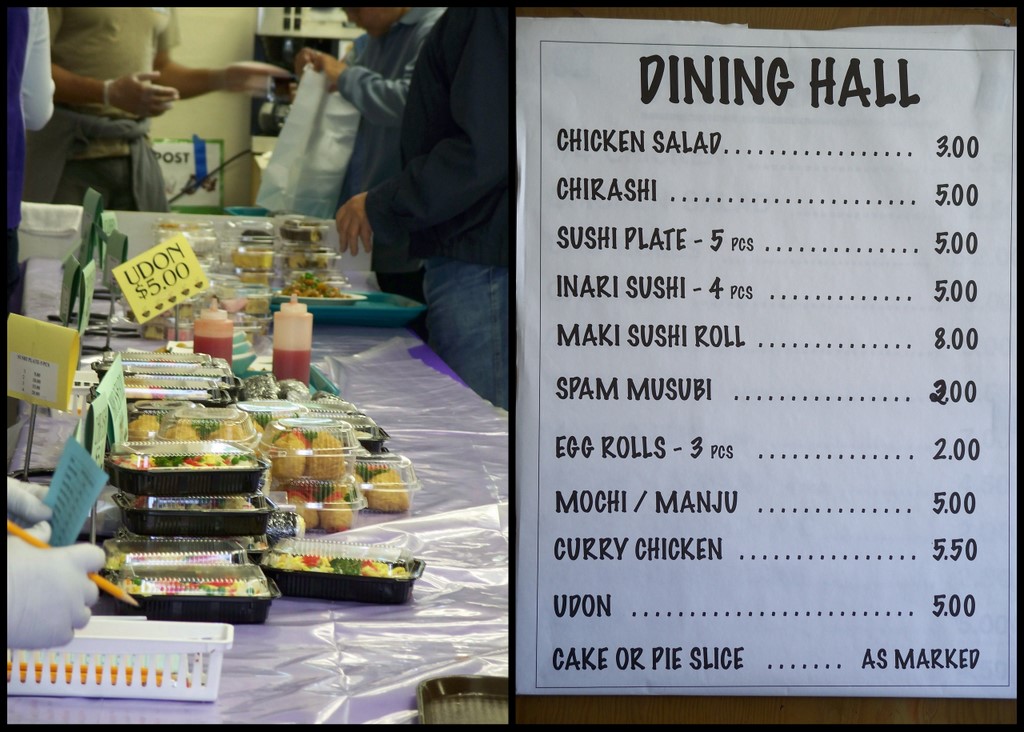
But few things can attract everybody like food. The “dining hall” was packed to the door like a beehive overflowed with nectar.


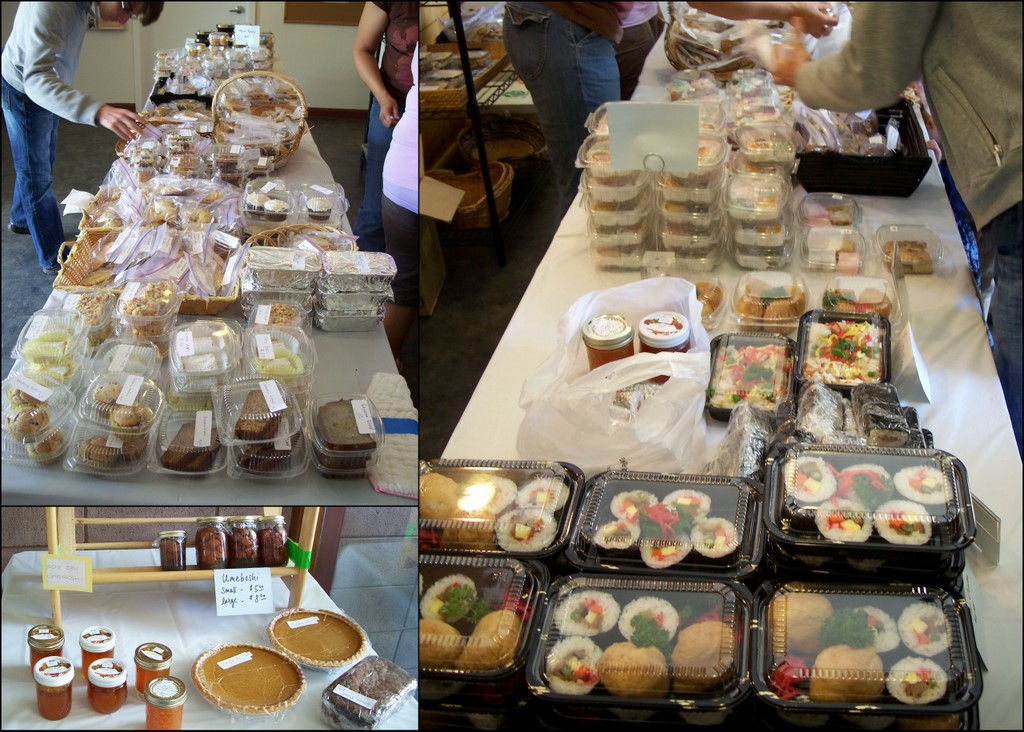
Every few minutes there were tiny old ladies weaving among the crowd with big trays of musubi and sweets from the dining hall to the “bakery”, a front desk covered with homemade edible goods, baked, rolled, fried, pickled, and jarred.


We just couldn’t help it. The umeboshi (pickled plum) was going fast at $5 per small jar and $8 per big one. Mudpie hungrily grabbed onto two jelly jars, kumquat ($4) and persimmon-pineapple-apricot ($5), which have the exact same color. Then we started loading pastries into our bag…


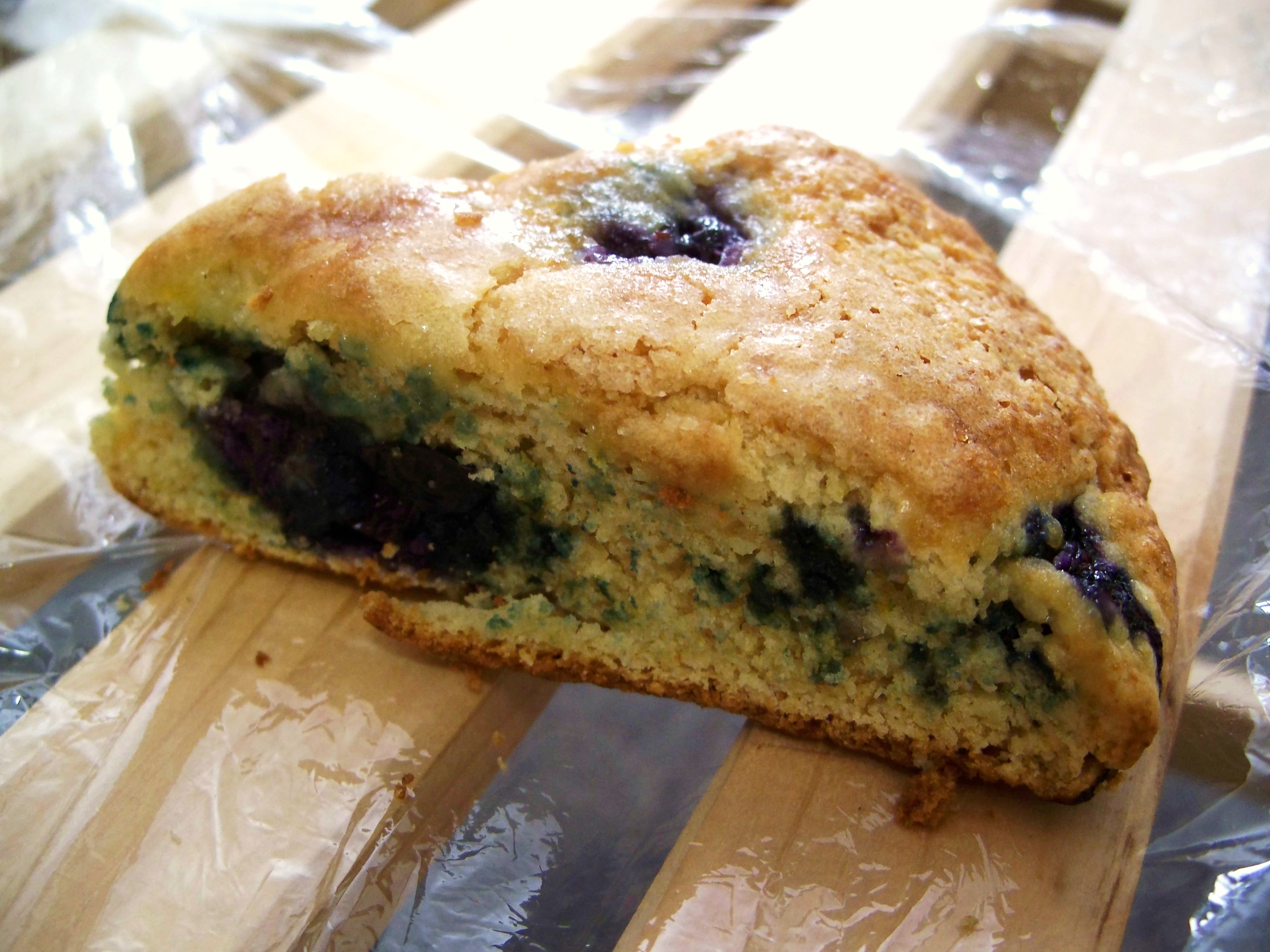
First came the blueberry scone, which tasted like wet sand, but we paid only one buck for it, can’t complain.


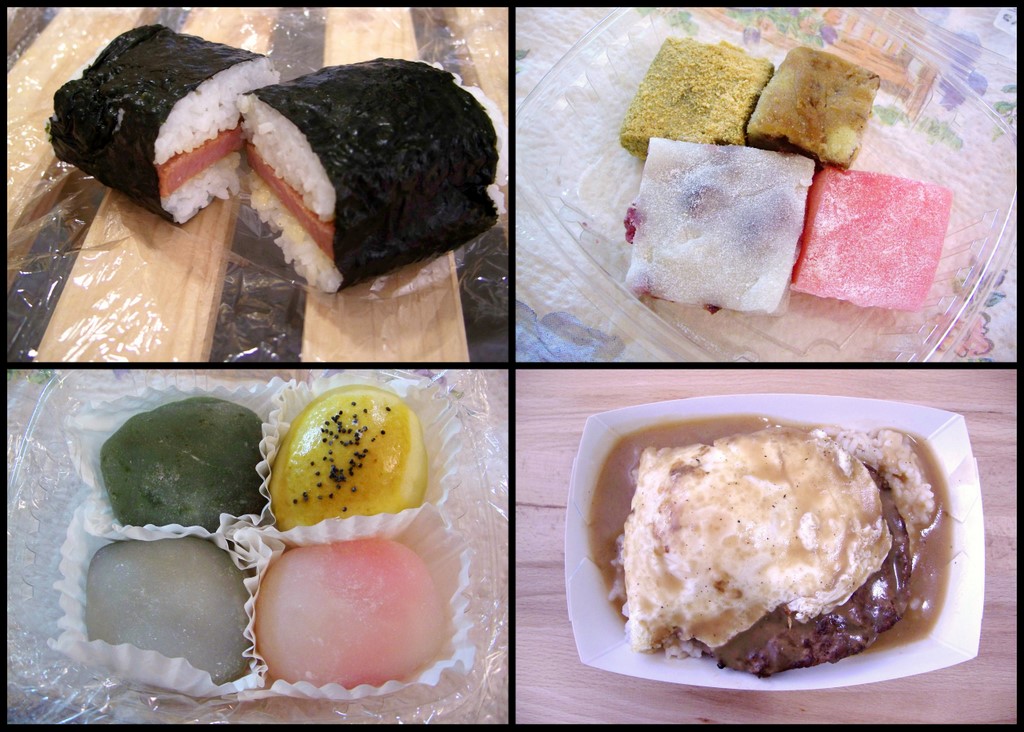
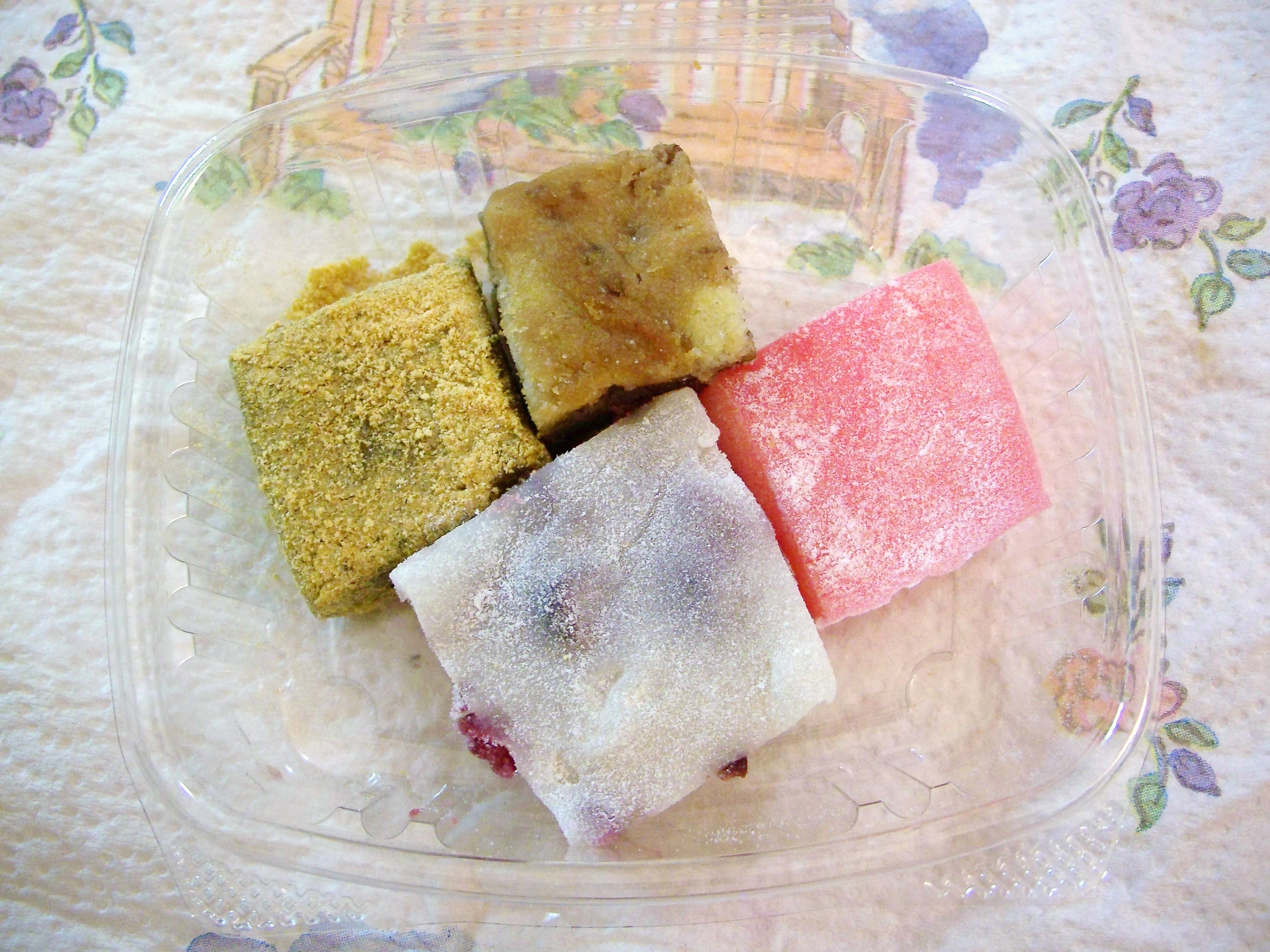
Then there were little squares of mochi (and a lonely piece of brown banana cake). Each square cost a buck too (and they are about 20 times smaller than the scone), but none was as good as the mochi cubes in front of Cafe Hana. Pretty scrumptious lonely piece of brown banana cake though.


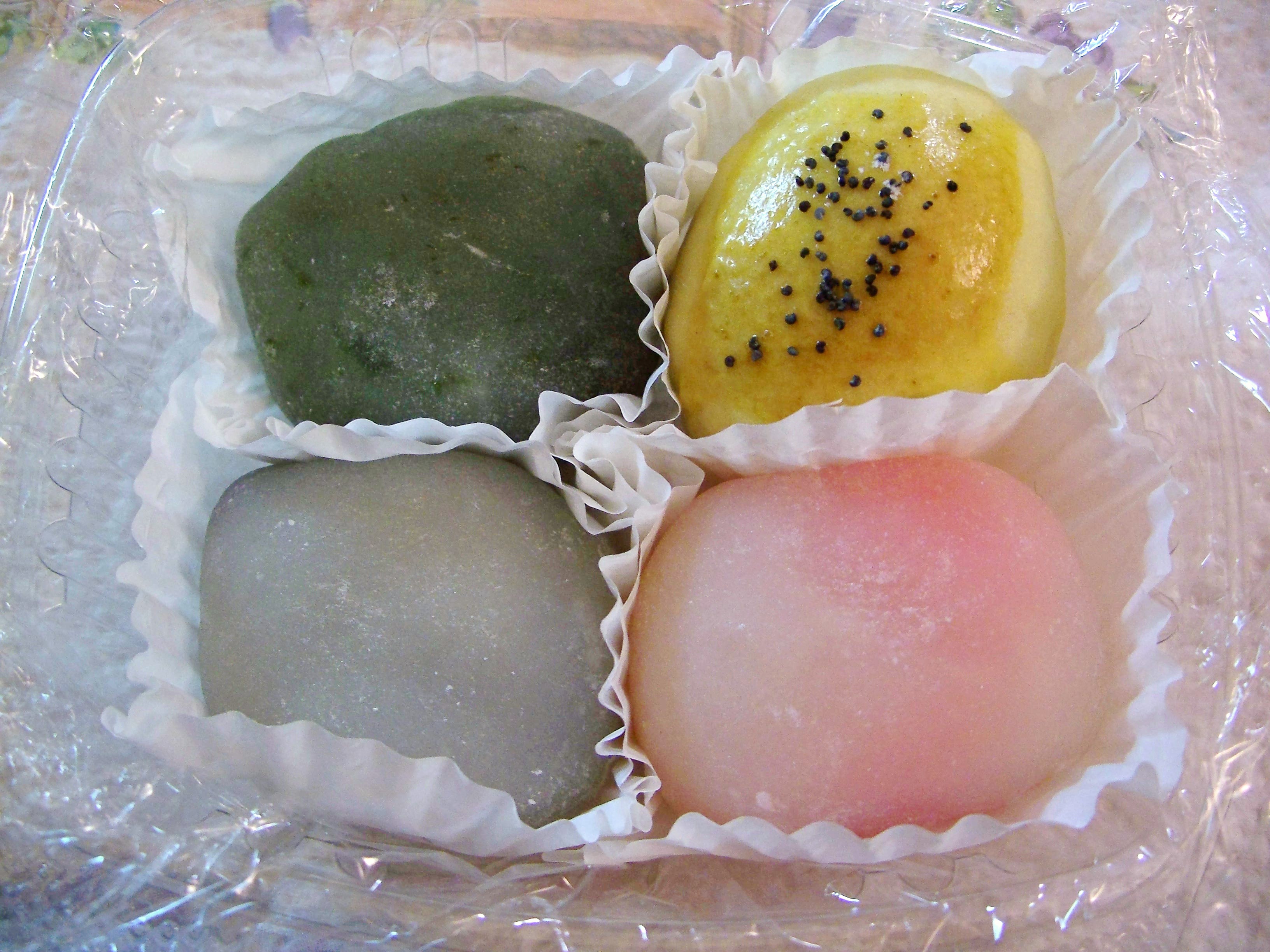
Now these are the real disappointment. The manju, mochi balls with red bean paste, looked so much better than they tasted. Is the yellow egg-shaped pastry dotted with poppy seed and filled with sweetened taro paste also a manju? Guess how much they were. $1.25 each. Sugar excess.


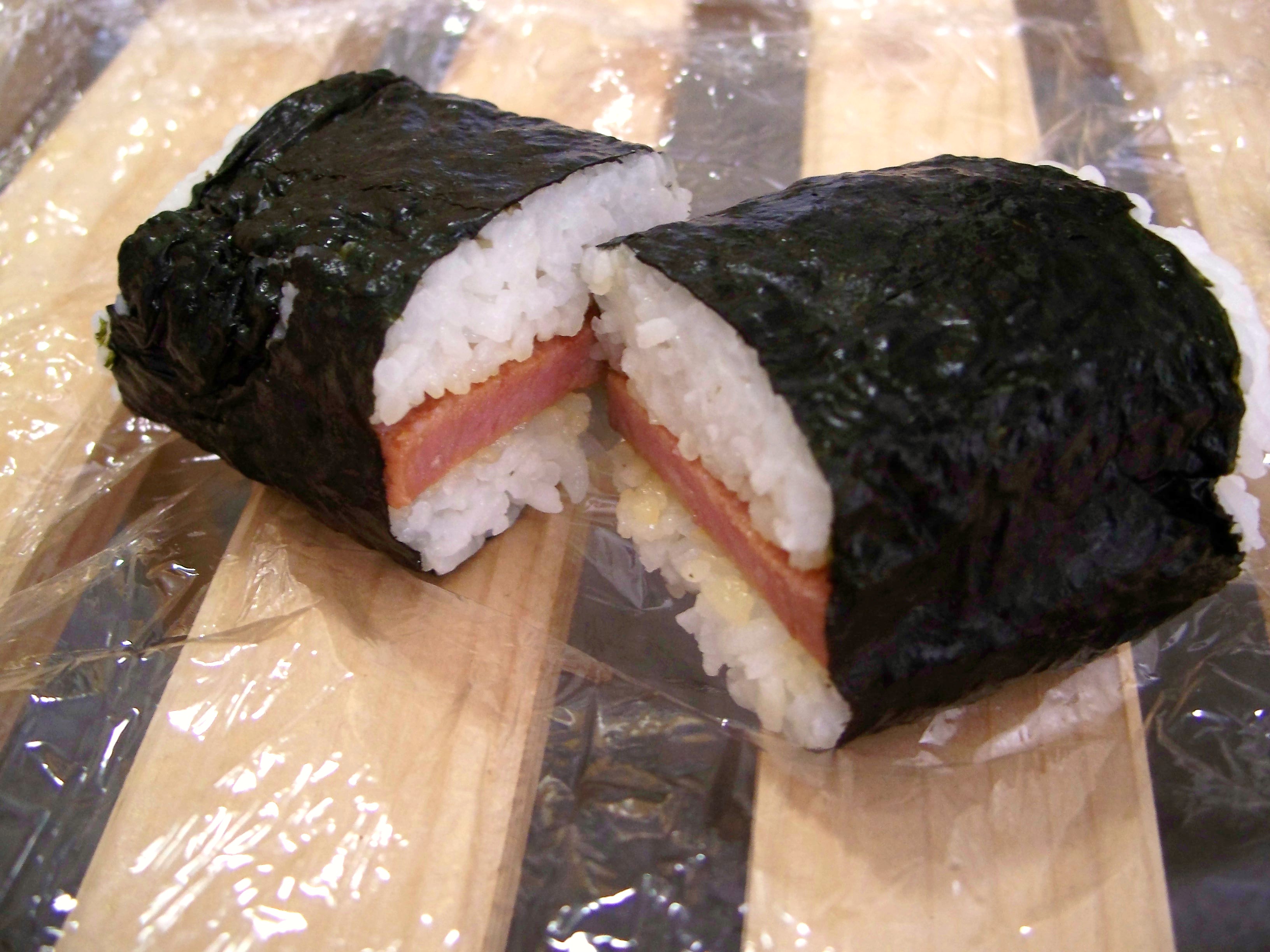
Fortunately the savory side is a greener pasture. The 2-dollar spam musubi hit the spot just right (processed meat always tastes so good after you reprocess it with sugar and soy sauce). The nori was mild, thick, and moist.


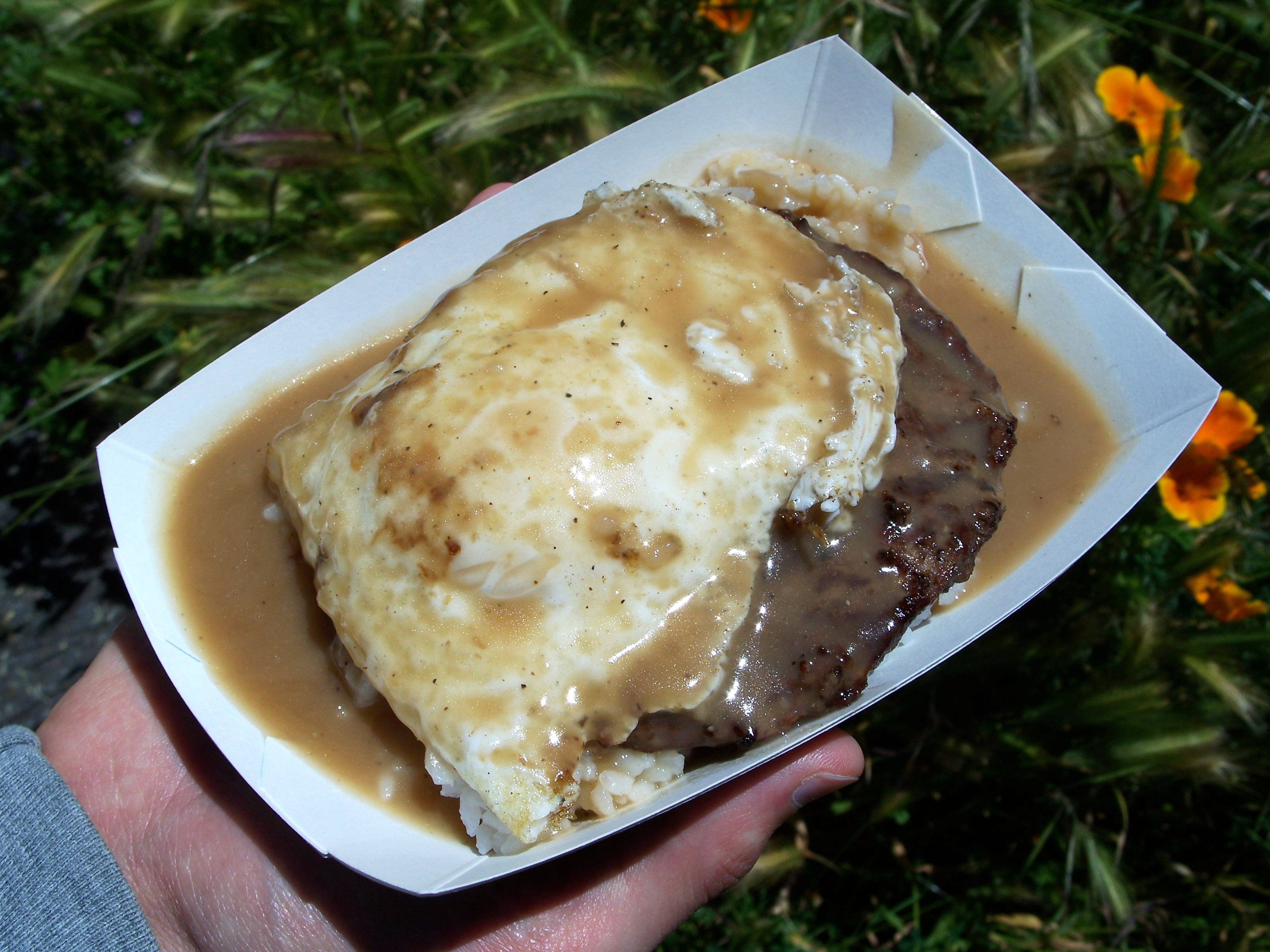
We top things off with a lustrous loco moco, a burger patty squatted on a bed of extremely moist short-grained rice, covered with a runny egg and a ladle of beef gravy. After one spoonful, Mudpie couldn’t stop thinking about it for the rest of the afternoon. The whole thing was like a peppery, creamy, rich butter boat. All for $5, and honestly it would be just as spoon-licking without the grilled meat.


And so I learned something new. At Vietnamese Buddhist pagodas, you can find only vegan food regardless of festive occasions or normal days. Here at a Jodo Shinshu Buddhist temple, there is plenty of meat, crackling and sizzling on one blue-sky Sunday in May.

61st Annual Satsuki Bazaar and Arts Festival, May 22-23, 2009
Berkeley Buddhist Temple
2121 Channing Way
Berkeley, CA 94704
(510) 841-1356

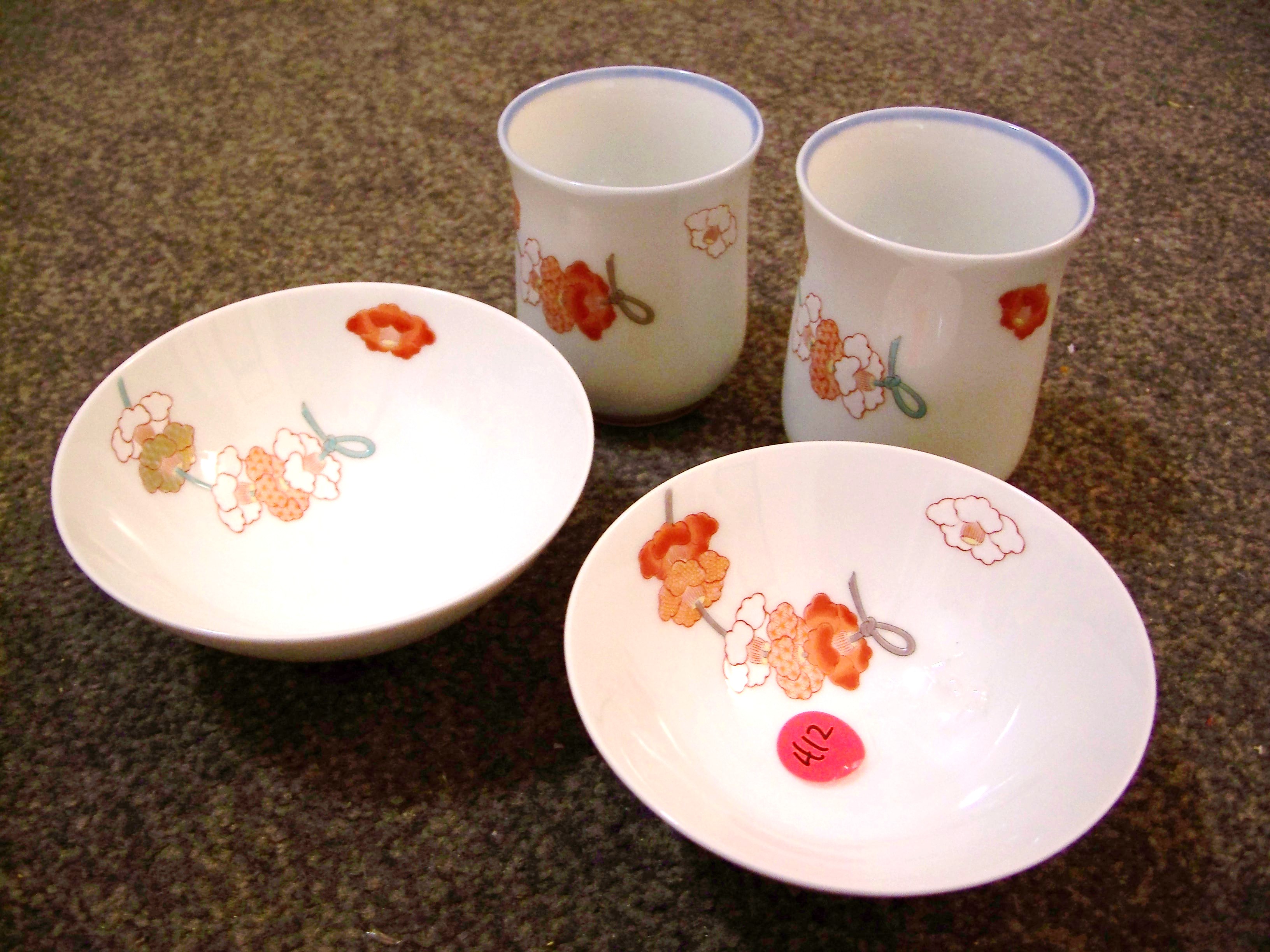
Update: I WON something in the silent auction: an adorable set of tea cups and tea bowls, notice the matching pairs with one tea cup slightly taller than the other. The visit was a success!

Nicky’s Week: RA Sushi’s fundraiser for St. Jude Children Research Hospital

May 18, 2010 By: Mai Truong Category: California - The Bay Area, Houston, Japanese, Texas

Tootsy Maki - RA Sushi's signature plate and guests' favorite, with crab mix, shrimp, and cucumber rolled and topped with crunchy tempura bits, and drizzled with sweet eel sauce

St. Jude Children’s Research Hospital is the only pediatric cancer research center where families never pay for treatment not covered by insurance.

In the first week of June, from May 30 to June 5, all 25 locations of RA Sushi in Southern California, Arizona, East Texas, Florida, and five other states will host a fundraiser for St. Jude. Diners can choose any item on the Nicky’s Week Special menu, such as Shrimp Nigiri, Chicken Yakitori, the signature plates Tuna Tataki and Tootsy Maki. All sale profits from the Nicky’s Week menu will be donated to St. Jude.

If you’re in Houston or planning on driving by Houston, RA Sushi is opened for lunch 11a.m.-3p.m. daily, and dinner from 3p.m. to midnight at the Highland Village location, and 3p.m.-11p.m. at the CityCentre location. Last year RA Sushi in Highland Village alone raised nearly $10,000 during the week long event. This year RA Sushi in CityCentre will participate in the event for the first time.

On the Southern California front, there are six locations in San Diego, Tustin, Corona, Torrance, Chino Hills, and Huntington Beach.

The fundraiser started in 2005, in memory of the 13-year-old Nicholas “Nicky” Mailliard, shortly after his unsuccessful battle with brain cancer. Mr. Rich Howland, Nicky’s uncle and one of RA Sushi’s original founders, started the annual Nicky’s Week fundraising event to help fulfilling Nicky’s wish of finding a cure for cancer. Since 2005, the event has raised nearly $500,000 for St. Jude, and the goal this year is to add another $125,000 to that sum.

The cost of cancer treatment is on the order of $10,000 per year on the low end, and hundreds of thousands can be spent on each additional year of treatment.

So if you’re going to spend money on food and drinks during the first week of June, why not make your dollar more meaningful as well?


The 6th Annual Nicky’s Week – May 30 to June 5
RA Sushi Texas

  • 3908 Westheimer, Houston, TX 77027 (at Highland Village above West Elm)
  • 12860 Queensbury, Houston, TX 77024 (in CityCentre)
  • 701 Lone Star Dr., Plano, TX 75024

RA Sushi California

  • 13925 City Center Dr., Chino Hills, CA 91709
  • 2785 Cabot Dr., St 101, Corona, CA 92883
  • 3525 Carson St., St 161, Torrance, CA 90503
  • 155 5th Sreet, St 183, Huntington Beach, CA 92648
  • 2401 Park Avenue, Tustin, CA 92782
  • 474 Broadway, San Diego, CA 92101

*All images are courtesy of RA Sushi Bar & Restaurant. With special thanks to RA Sushi’s PR & Marketing Coordinator Stacia Schacherer for providing me with all information to complete this post.


When the blossoms bloom

April 15, 2010 By: Mai Truong Category: California - The Bay Area, Festivals, Japanese, Opinions, savory snacks, sticky rice concoctions, sweet snacks and desserts


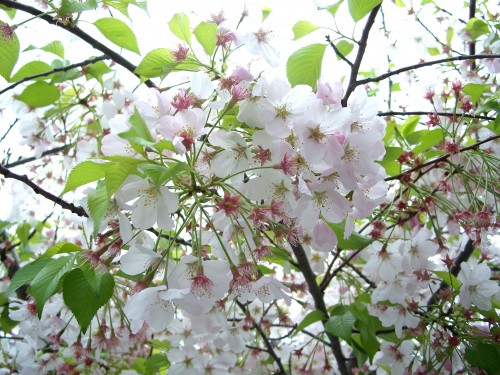
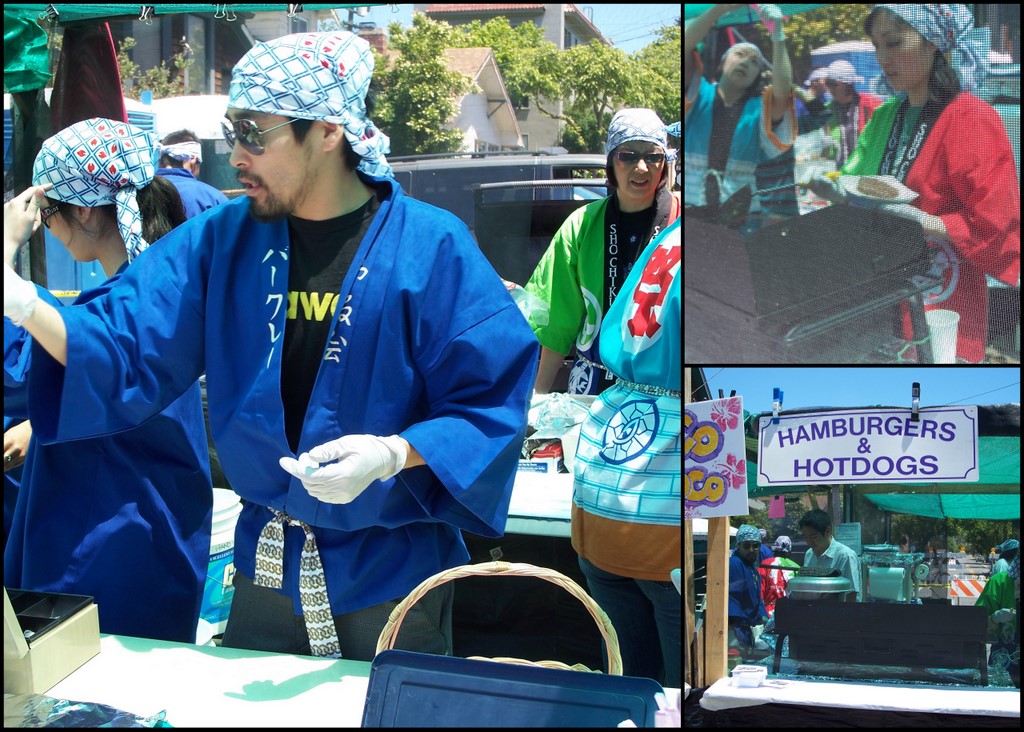
One Saturday we shove our homework into a corner and make a dash for San Francisco before another spring storm takes over the bay. Parking is as easy as hiking with a twisted ankle, but all that matters is we find a spot, then stroll a mile to the food bazaar on Webster street, Japan Town, arriving just a little bit before noon. Up from the steep sidewalk we see rows of white tents and white chairs, smoke rolling above the grills covered with beef and pork riblets, a line getting long on one side of the conglomeration. It is still early in the first morning of the Cherry Blossom Festival.
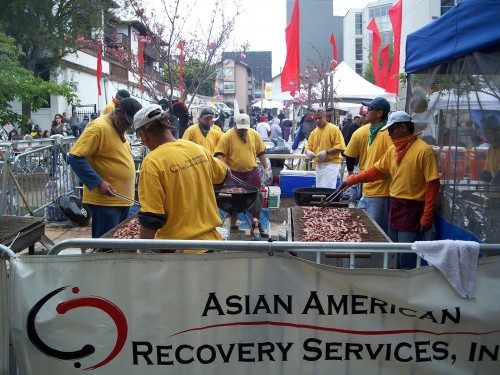

The carnivore instinct leads me right to the grill. It’s never too early to eat meat. The first booth whips out rice bowls with either ribs or unagi, braised eel cut into palm long chunks. We don’t feel like filling up with a rice bowl just yet, so we walk further down the row eying signs, then back track to the Nihonmachi Little Friends’ booth for three skewers of grilled beef at a mere five bucks.
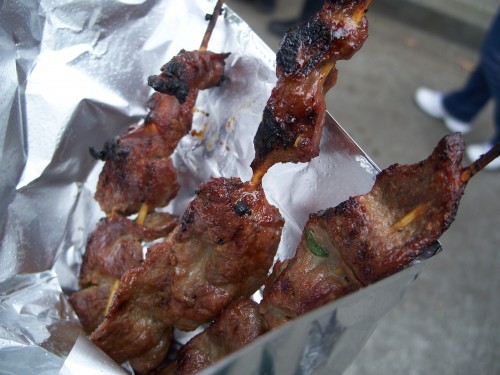

Crispy-charred-edge marinated beef, though erring a little on the chewy side, delight my feet after that hike from our parking spot. The downright old school meatiness would have well enhanced the kiddie dollar snack omusubi, wedges of plain white rice mixed with nori bits, which Mudpie buys way after we finished the skewers. Waste not want not, the musubi will find its place in my lunch this week, after I wrap it up in nori sheets and maybe with a slice of fried spam. My idea sprouts from seeing at least three booths selling spam musubi and dozens of family walking around with golden brown sauce at the corner of their mouths. I, however, fall victim to the facile yakisoba, soft stir fry noodle with crunchy cabbage dressed only with soy sauce and seaweed sprinkles. The noodle tastes flatter than it looks, and certainly flatter than the wad of six dollar bills we pay for it, but it is a good pacifier for the empty stomach.

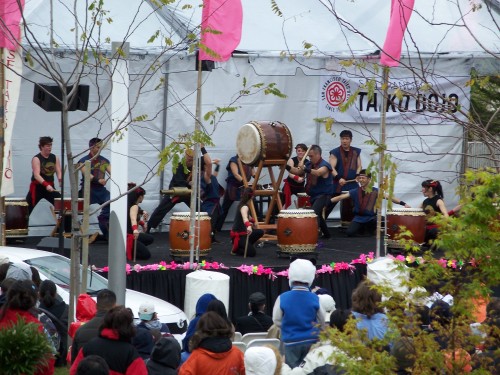
One block east of the food tents, the San Francisco Taiko Dojo artists are pounding their drums on stage. Their vigorous sincerity pumps rhythmic waves of festive air into the onwatchers’ lungs. To the hundreds of Japanese gathering there, I wonder if the drums have the same effect as the firecrackers we set off on Lunar New Year’s Eve, a simple string of sound that brings both excitement and quietude. The drums do halt my hungry thoughts for a moment, until I see some kids weaving about the crowd holding teriyaki burgers and shaved ice.

We’re back to Webster. The teriburger line wraps around one end of the food square, and Mudpie refuses to take one for the team. The fried fish ball line is no better, but I want to find out what the frenzy is all about, whether Mudpie does or not.
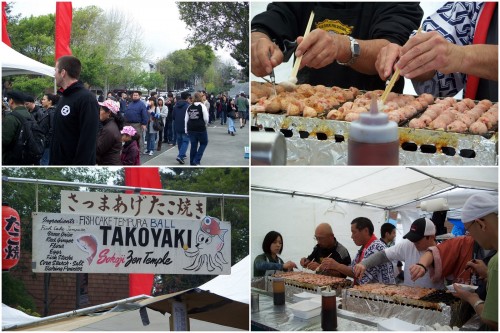
Just as we get in line, a lady asks us if we know the fish balls are any good. We don’t. So during the twenty-five minute wait the lady and Mudpie go over what is up with the LHC in Geneva, current status of the string theory job market, Berkeley Bowl, the beautiful harmony between Eastern religions and sciences, Francis Collins, and which patisserie is the best in San Fran. Meanwhile I can’t take my eyes off her unagi rice bowl, the eel skin shines gloriously in its rich brown sauce. Slowly but solidly we get to the tent where all the pouring, flipping, and toothpicking take place. The cast iron molds are just as busy as the deft hands hovering over them.
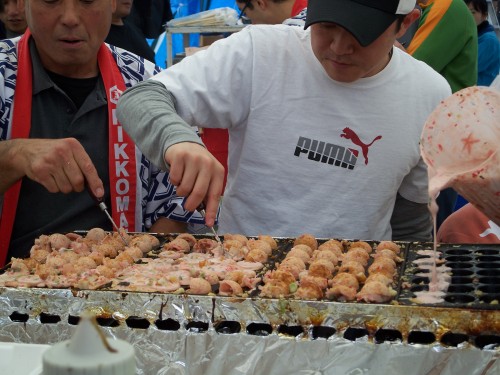
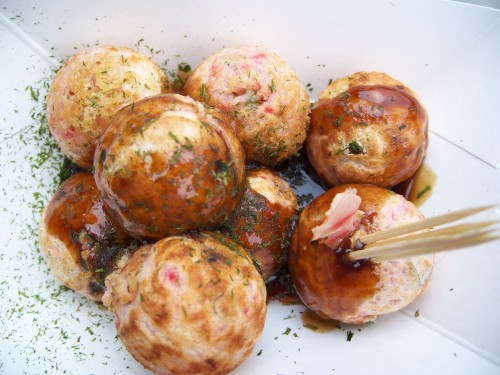
Although the man jokingly says it’s a secret recipe from Japan while he collects orders, this fish ball booth is the only booth with a crystal clear ingredient list on the banner. Although it is called takoyaki (“fried octopus”), it’s a simple ball of batter, fish stock, egg, and seasonings. (Still, it resembles an octopus head, intentionally or not.) Although it looks perfectly solid, it has an air pocket inside, resulting from the flipping of the hemisphere while the batter is still runny. Although it is fried, it is soft. Although the long line suggests that it is amazingly worth the wait, it is not. The seaweed sprinkles, red ginger and green onion do little more than cosmetics, the okonomiyaki sauce is rather too tart. Its goodness lies solely in the warmth to battle those crisp wind blows. In hindsight we probably should have stood in the teriburger line.

As the tongue craves for some sweets, we walk around to the grilled beef and yakisoba side, this time to stand in line for a red bean pancake, imagawa yaki.
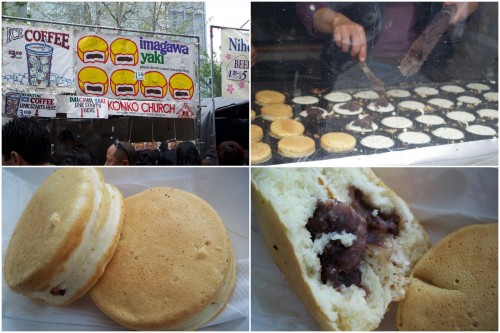
imagawa-yaki (pancake with red bean paste)
The fluffy dough is just like any pancake our mothers make for breakfast on special days. The making process, like those fish balls, is fun to watch. They pour the batter into rows of circular iron molds, wait a few minutes for the batter to semi-solidify, then comes this semi-circular trough, looking  like a cracked-open bone filled with marrow, from which they spoon some red bean paste onto half of the cooking pancakes. The other half are flipped over to make the pancake tops. The batter turns solid, the division between two halves is sealed, three bucks are handed over for exchange of two blowing hot cakes. Mudpie loves the bean stuff. So much that he insists on looking for more inside the Kintetsu mall. I feel more inclined to sitting down, and those benches near the Kinokuniya bookstore and Izumiya have never sounded better. So into the mall we go.

But boy am I a fool. On days like this benches are a luxury, and it’s just rude to fight over a seat with the petite ladies in colorful kimonos and huge wooden zōri, or families with babies. The mall is packed. The human flow is like a school of salmon. My tiny stature serves me well in whizzing through elbows and shoulders, but I would have missed the best catch of the day had Mudpie not spotted the nameless but busy tables in front of Cafe Hana.
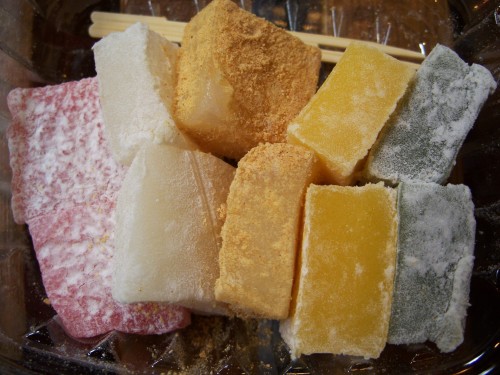

Ten bite sized cubes of cold mochi, five different flavors. From right to left: 1. yomogi (mugwort) – tastes as grassy as its alternate name kusa mochi – “grass mochi”, 2. mango – tastes more like jackfruit or longan, 3. kinako – actually this is warabimochi (jelly-like sweet made of bracken starch instead of sticky rice), covered in soybean flour (kinako) which tastes like peanut butter, 4. lychee – the second tastiest, and 5. strawberry – the tastiest. Chewy, refreshing, gently sweet like a rose petal, I would eat these all day. The best part: it is assembled upon request. The confectionery magistrates, who may be part of Cafe Hana’s team, cut and roll these slabs of sweets in powder and into the plastic boxes, each containing only one flavor. But if you kindly ask, they’ll throw together a mixed box for you at the same price. Top it off with a three dollar scoop of lychee ice cream, as we do, and you’ll feel ten or fifteen years younger. You know, those days of hustling about the school cafeteria, eating cheap treats, feeling fresh and complete. If there’s anything I don’t regret buying at this fair, it’s the lychee ice cream and the mochi at those tables in front of Cafe Hana.

If there’s anything Mudpie doesn’t regret buying at this fair, I think it’s the daifuku, also from those tables in front of Cafe Hana. That red bean addiction is strong.
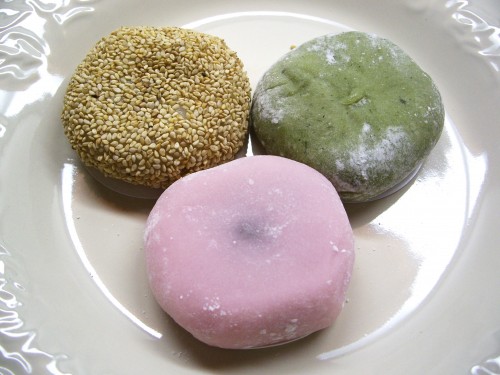

Pink or green, smooth or sesame coated, the daifukus are good companions for chrysanthemum tea. The plain, chewy sticky rice outer layer damps the sweetness of inner red bean paste. The cold confection enhances the warm drink.
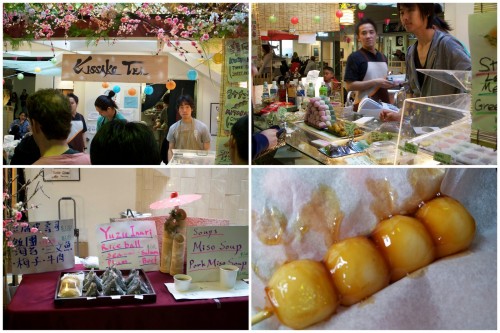
mitarashi dango
On our way out of the mall, we sidestep in line for one last treat at the flowery booth Kissako Tea. They have the little mochi balls in pink, green, and white with red bean paste filling, and they also have the mitarashi dango, which I’ve always been curious about since I read Sugar Bar Diva’s toothsome post. Four simple sticky rice balls on a skewer sounds like a boring snack, but the chewiness dressed in a rich syrup of soy sauce, sugar, and starch is everything but plain. Its taste and texture amazingly resemble malt sugar. It marks a triumphant incorporation of savory condiments into the sweet realm.

At four something in the afternoon, the food bazaar is still going strong. All booths, not just the fish ball and the teriburger, now have a long line. The kids are still with wide open eyes, Hello Kitty headbands, spam musubi and cups of shaved ice. The dogs are still obediently looking at their humans eating beef skewers. The girls in black and white kimonos are still taking pictures between giggles.

And so we march our full tummies a mile back to the parking spot. The sky is blue. The streets are quiet. The wind has ceased its dry cold swirls. The car stands there, with a ticket.

Izumiya – Get busy and get yaki

March 06, 2010 By: Mai Truong Category: California - The Bay Area, Japanese

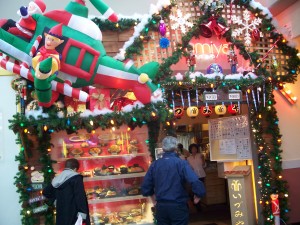
If you go to Nihonmachi Mall during Christmas season, visit the Kinokuniya bookstore for some soothingly aesthetic greeting cards and folding snow globes, then walk around the bench and feed your gaze on the delicious window display of Sophie’s Crepes. Then glance to your right, oh… what is this? Winter Toy Land? No, it’s this teeny beehive resto called Izumiya with their frontal lit up like a runway for Santa’s helicopter, reminding me of Prep and Landing.

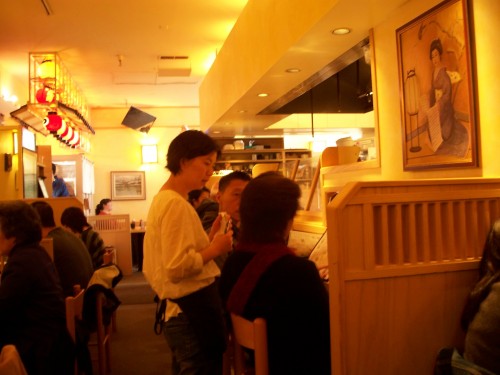
Intrigued, we snugged in. Believe me, even if the weather outside were in the negatives, it couldn’t get any warmer in this packed place. The waitresses skillfully whizzed back and forth and sidestepped through single-person-wide aisles, heat radiated from the grill, the platters and the chatters, faces glowed under the reddish hue of dim light. Paper signs on the sliding door said “Karaoke 9 pm – 2 am”. How would they arrange enough room? Where did they hide the screen? I couldn’t imagine a larger crowd within those walls. Ever since college days I usually feel a bit tighten up if I have to practice my munching three feet away from some strangers, but what the heck, if it’s busy it must be good, the flies wouldn’t call people here otherwise (*).


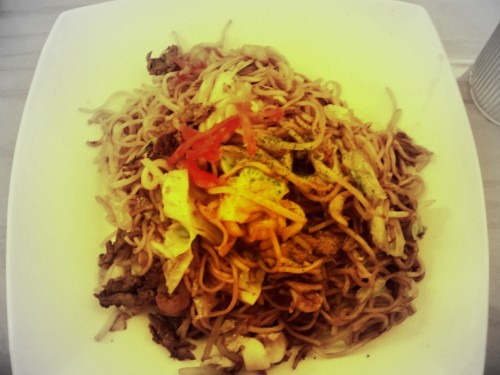
There were the bentos and the sushis like usual, but the house focus was strings and strands. Yakisoba (fried noodle – $8.50) with squid, beef, shrimp, egg, and a pinch of ruby pickled radish (that I’ve had at Anzu but have no idea what it’s called or what it is. Help, anyone?). There was hardly any remnant of oil. Tonkatsu sauce lent the bundle a sour and salty whiff, which subtly forced you to take one small twirl at a time to fully savor its hidden strength.


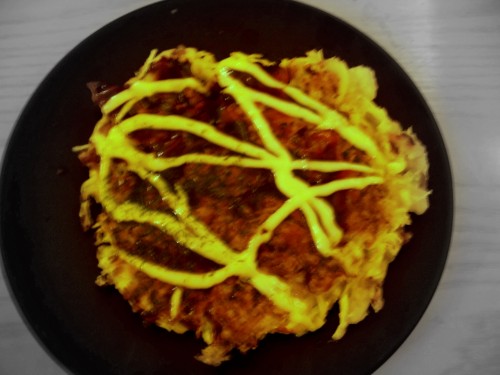
Yaki ($8.25), short for okonomiyaki, or “cooked [pancake] with anything you want”. It’s been a while and I can’t remember what I wanted then, but that scrumptious mixture of buttery batter, crunchy crust and cabbage, soft sweet potato, and lush squirts of mayonnaise is unforgettable.


The pancake looked small, I wanted two, but a second one would doom me unfit to sidestep through the body-wide aisle. At the end we left the table with content, a fairly healthy lunch, and twenty dollars fewer in our wallet.
I know I’m such a turtle for delaying this post nearly three months after chowing, but the food is seasonless, and does seasonal look matter after all? Surely Izumiya has long taken down their Christmas decor, but  the  attraction doesn’t come from flashing light bulbs and puffy toys. Now the name sign stands out, and the colorful plastic yet realistic plates behind the window look more splendid than ever.

Address: Izumiya (inside Nihonmachi Mall, Japan Town)
1581 Webster Street
San Francisco, CA 94115
(415) 441-6867

* Vietnamese people would jokingly say someone is “called by the flies” if they somehow show up just in time for food without planning ahead. It’s not a demeaning, belittling, or any kind of negative remark.

Anzu revisited

February 03, 2010 By: Mai Truong Category: California - The Bay Area, Japanese, noodle soup, savory snacks

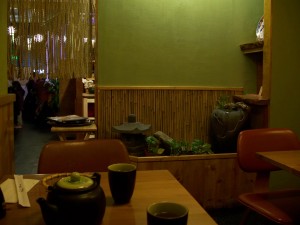
Anzu_Berkeley_interiorAlthough we try to be objective, numerous factors always manage to skew our view in one way or another. Surely there are objective facts, like the restaurant is small or the fries are spicy, but generally the taste can be affected by the conversation of a nearby dining couple, the window seats looking out to a blazing sun, an unusual day at work, or sometimes just the unwillingness to compliment. The mood makes the food. My mood wasn’t particularly bad last time I was at Anzu, but it was particularly good this time I was there, as we were seated in this half-hidden corner. The bamboo curtain half obscured the view, the brown and green room was half sedative. The oksusu cha was half surprising, but fully pleasant.
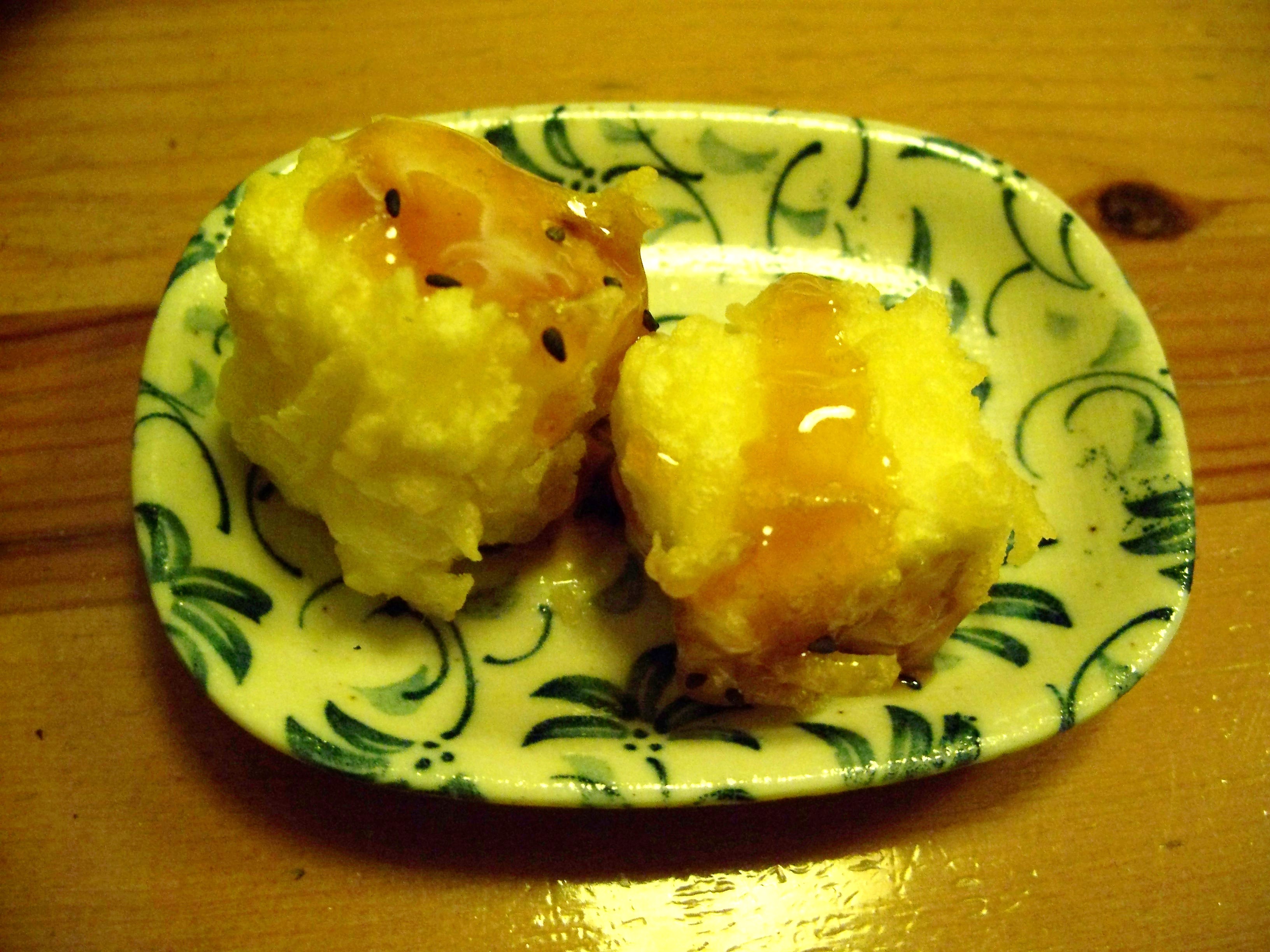

We didn’t expect to be seated in such nice seclusion, nor did we anticipate an appetizer. But now that it came, two small cubes of fried tofu with honey,we seemed to recall that last time they also gave us something small for taste opening – a couple of gyozas it was. The tofu beats the gyoza. A thin crunchy crust contrasts yet complements the soft-almost-to-creamy inside, same with the bean blandness and the honey sweetness. Tofu can really do wonders sometimes.


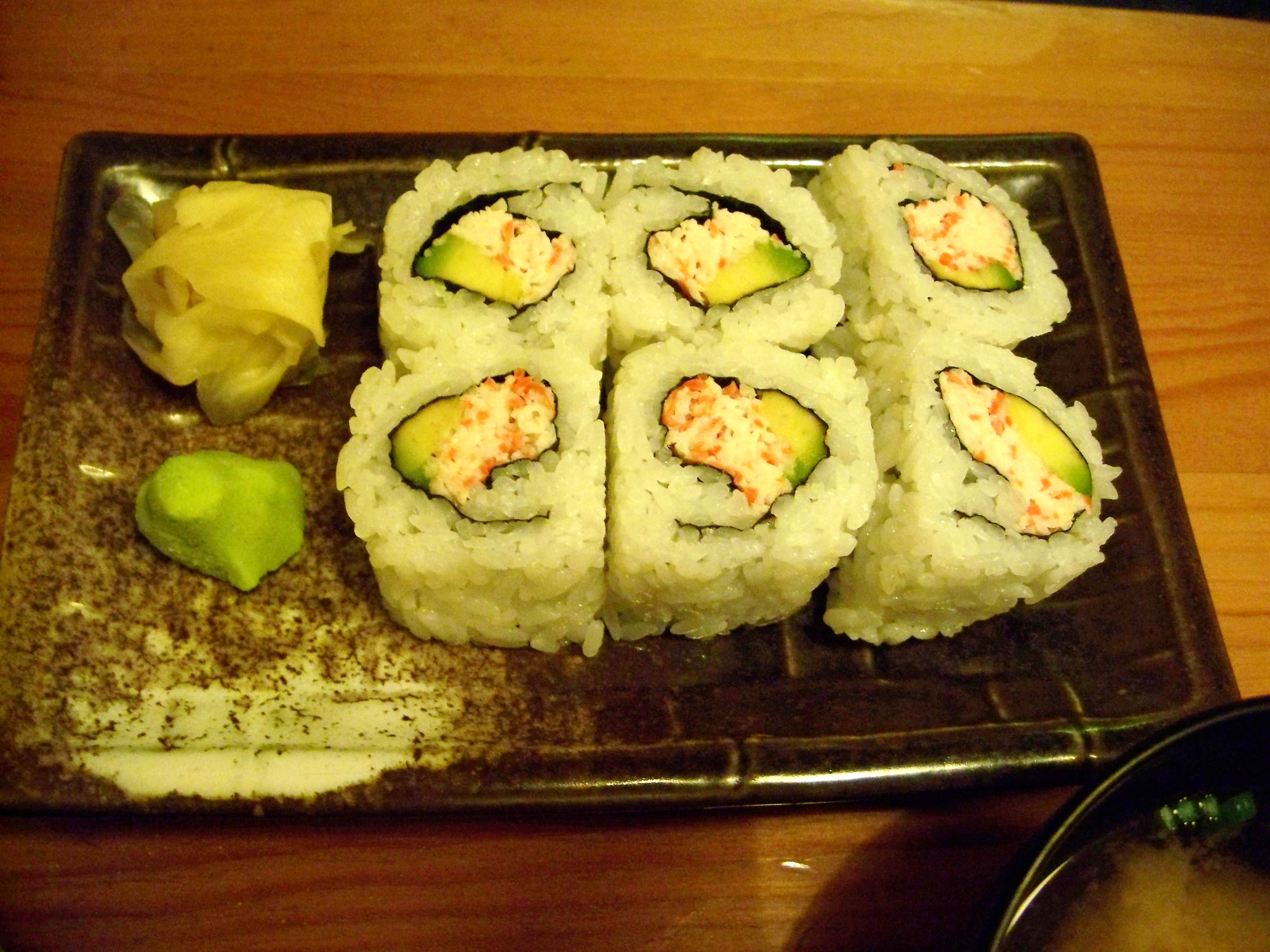
For the main course, Anzu offers some good deals with combinations, such as a bento-box meal – like what we ordered last time – or the sushi-udon pair which we got today. The sushi comes in a full roll (6 pieces), with thinly sliced ginger and wasabi for kicks. But really, you don’t need kicks with California rolls, the nori’s salty streaks and avocado’s buttery dollop suffice. I also believe that what we have here was real crab meat, not surimi, because it wasn’t rubbery. It was good.


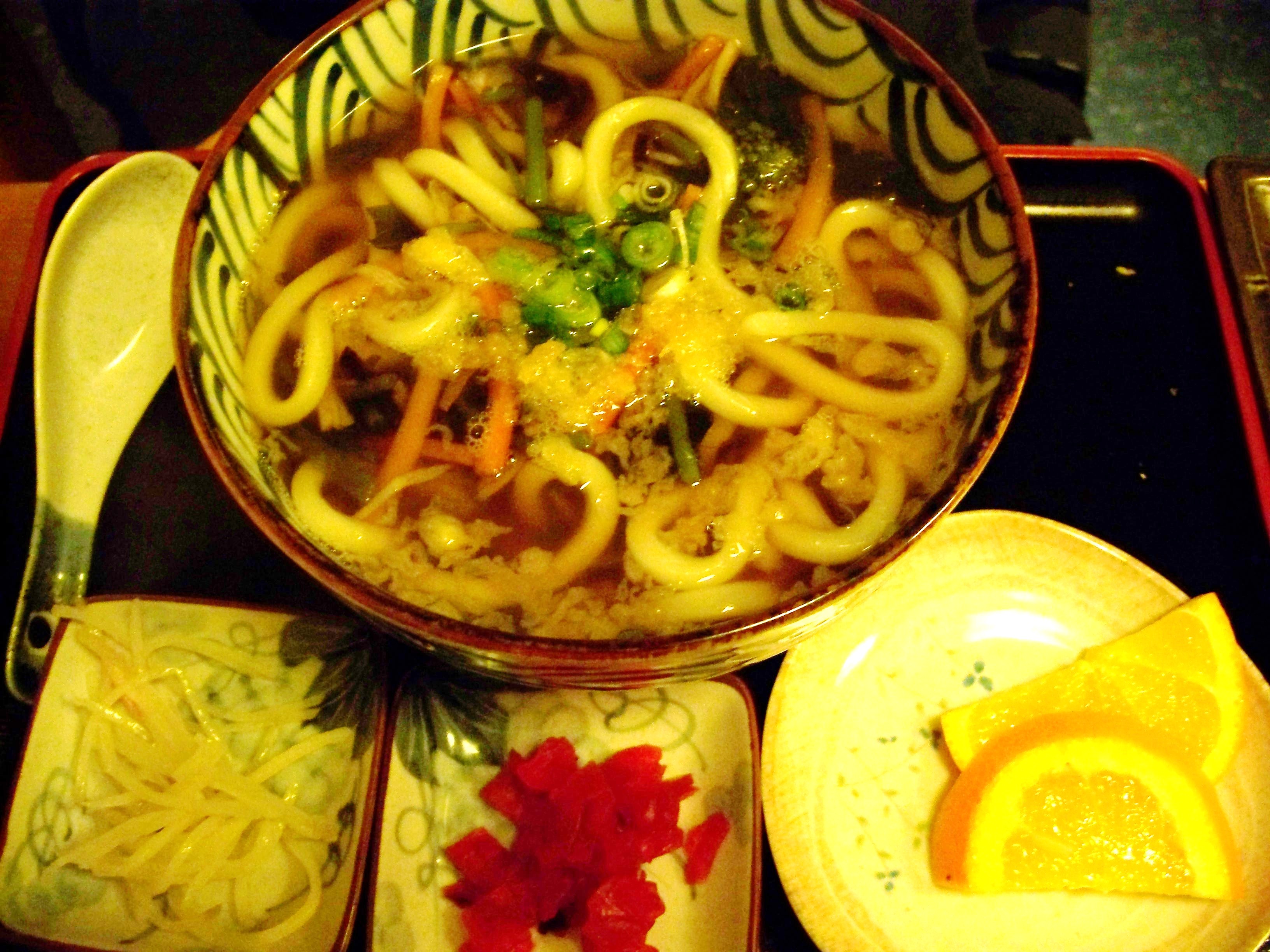
The sansai udon was also a delight. Thick wheat noodle in vegetable broth, it tastes far more interesting than it sounds. The stock is so pure and yet so relishing, with a profound taste of shungiku (Garland chrysanthemum, or rau tần ô). There was also an unsolved mystery: the pickled “bean sprouts” (translucent strands at the left corner). They look like bean sprouts, but only from a distance: close circumspection revealed rectangular cuts.  They also taste starchy like some kind of root. I incline to say turnip, as such texture is midway between the porous crunch of jicama and the granulous dense of potato. Whatever it was, it had a great companion – some kind of pickled radish in ruby color. It was like a sour candy, all different tangy levels sang a song in unison, the song is called “The Best Pickle I’ve ever Had”.

Yes, this visit was full of cute little surprises. What can I say, subjective factors aside, some restaurants are like a bunch of grapes, you wouldn’t stop eating the bunch just because the first grape you picked out happens to be a bit sour. Anzu at Berkeley is such a place, and this time, the grape was perfect.

Dinner for two (free appetizer, 1 California roll, 1 udon, 1 tonkatsu): $15.04

Anzu Japanese Cuisine at Berkeley
2433 Shattuck Ave, Berkeley, CA 94704
(510) 843-9236

P.S. Anzu also has an excellent salad dressing made of peanut sauce, mayonnaise, and a bit of seasoning. The salad comes with the entree, no extra fee.

Update: the “bean sprouts” are actually kohlrabi (German turnip, or su hào). Thanks to my mom who knows every ingredient upon hearing the description of the texture!

Anzu – Where food is plainfully natural

December 17, 2009 By: Mai Truong Category: California - The Bay Area, Japanese


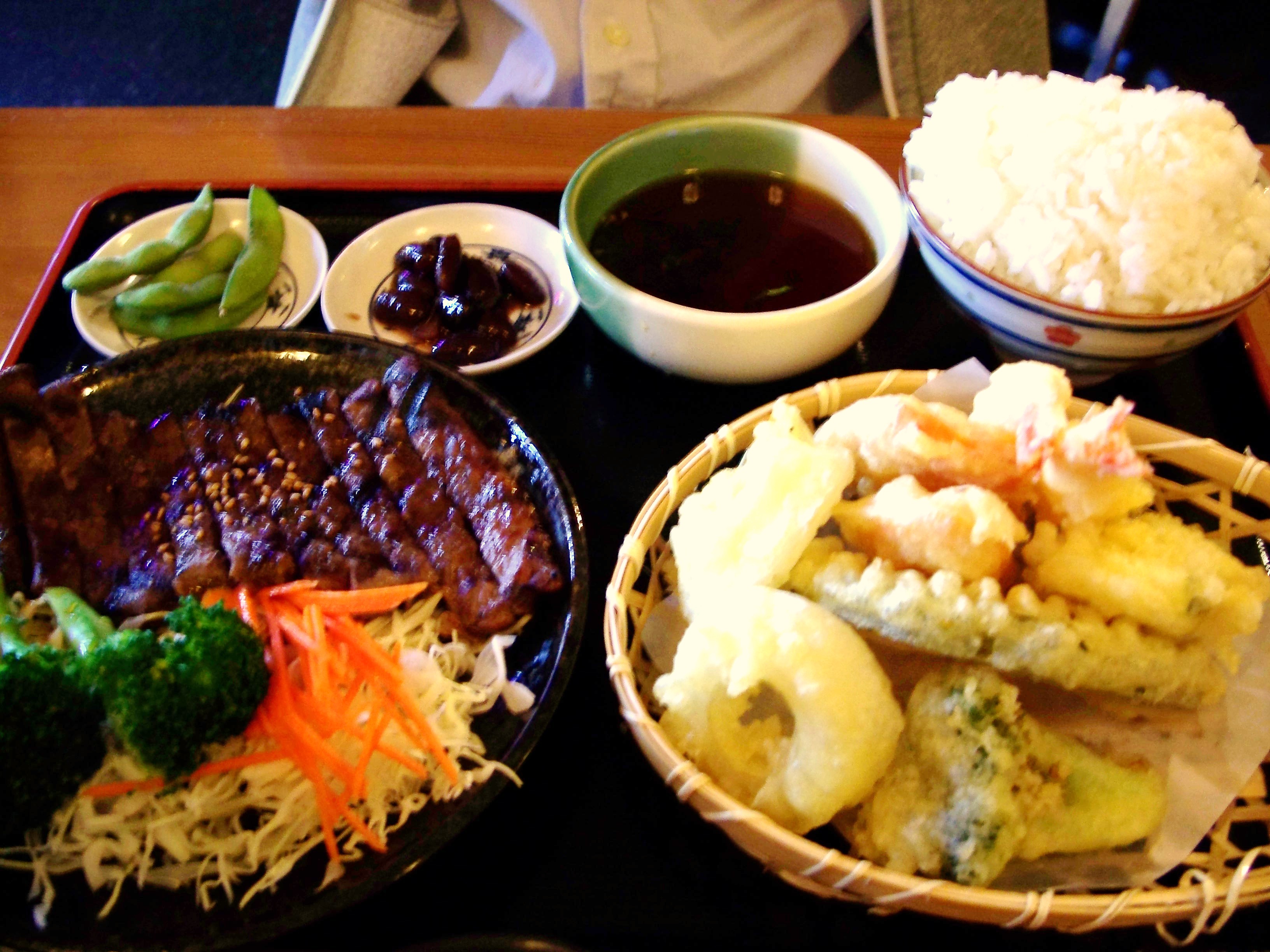
Back then we used to take a break from Fortran coding, cross the street from the old Physics building to McDonald’s to refuel at midnight. Now having moved up the ladder, we have little unpretentious Chinese and Japanese down the block, though certainly they don’t open 24/7. A vegetable tempura is much lighter and less savory than a chicken nugget, but many of them would do. The batter is a mere coat for earthy cuts of sweet potato, squash, onion rings, and broccoli. The flavor does not go beyond steam pockets eagerly exploding and crumbled flakes scattering like confetti. Like sushi, Japanese tempura standing alone sans sauce is food for the eye, not quite the taste buds.

The same thing holds for beef teriyaki. Dark red grilled complexion topped with sesame seeds beautifully masks a rather dry and sinewy texture. The clear, thin dipping sauce needs some more ingredients to balance its salty lonesomeness. If you order teriyaki at Anzu, don’t expect the commercialized, Americanized, sauce-logged beef and chicken teriyaki in a Subway sandwich, it’s simply not the same.


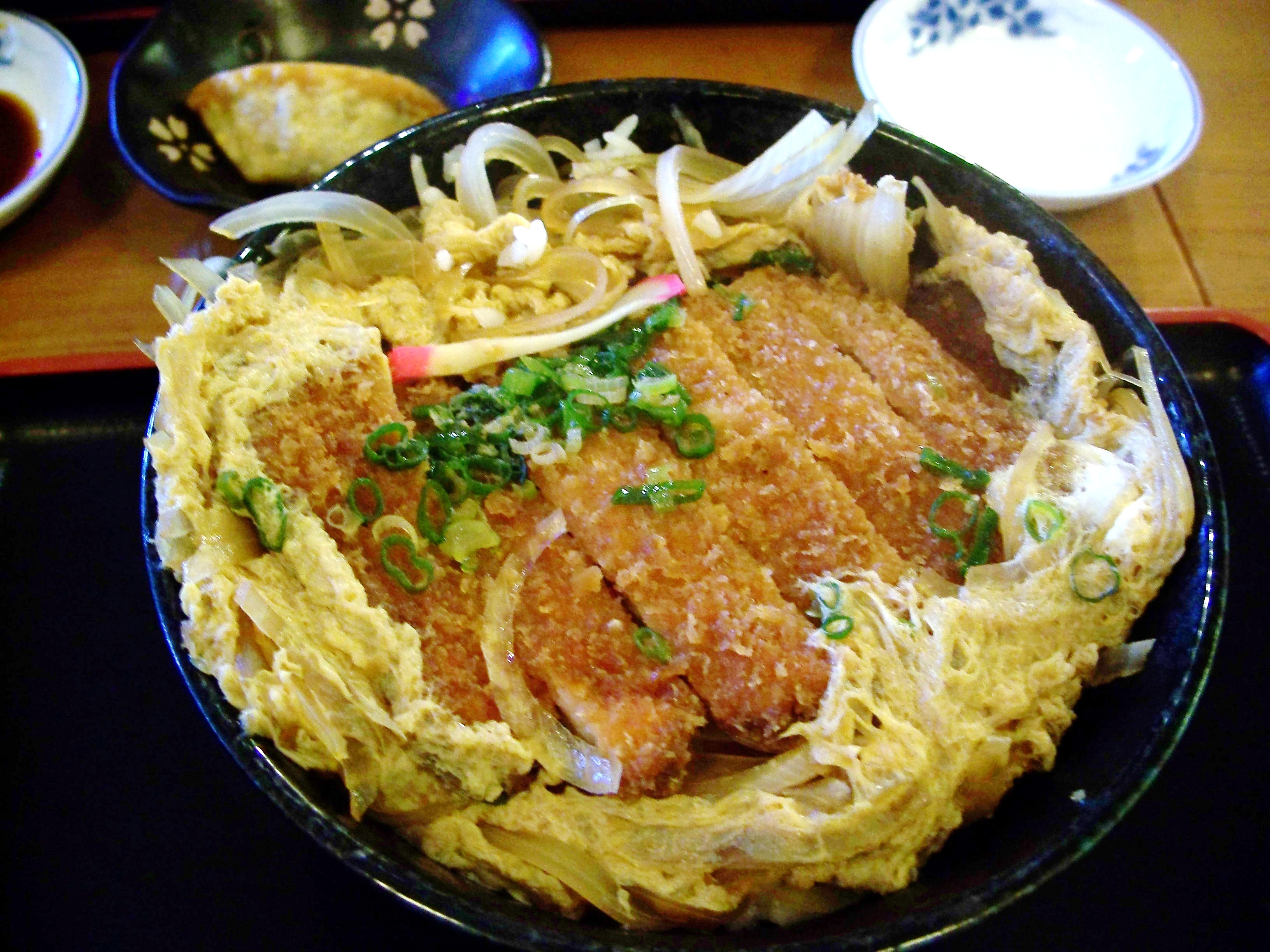
The katsudon saved the day. Short for tonkatsu donburi (deep fried pork cutlet rice bowl), the concoction has the sweetness of egg-coated onions, the tenderness of breaded lean pork, the moist of gooey white rice. Each spoon was filling and satisfactory. Maybe I’ll eat this again before my next exam.


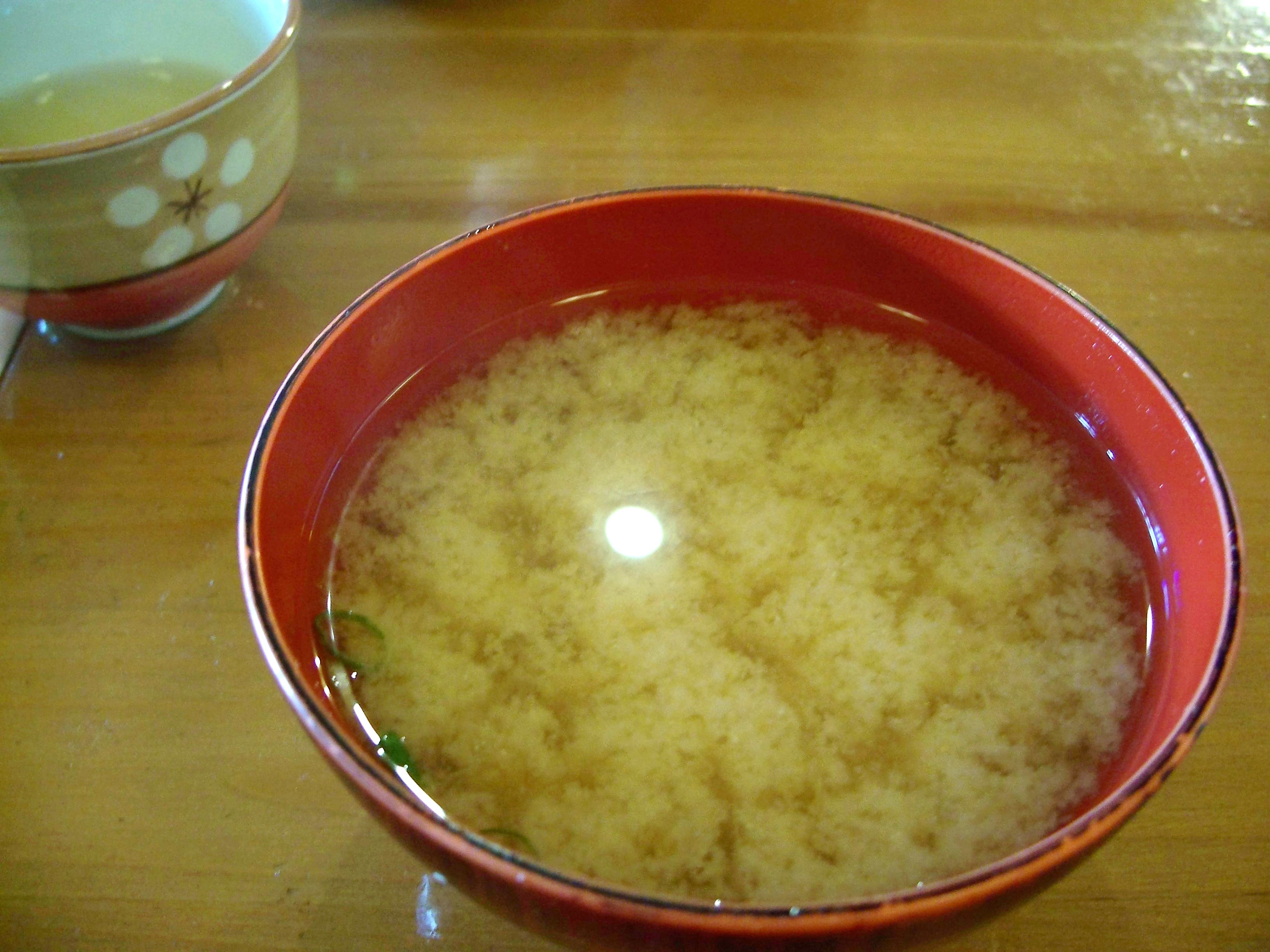
The trophy of Simplest Delicacy that day must belong to a tie among the miso soup (I suppose this is shiromiso (white miso)?), the edamame (boiled green soybeans in the pod), and the red beans which I have searched everywhere to no avail (but to find this colorful assessment on pickles in Secrets of the City). A miso soup this simple is more or less a salty version of herbal tea, you warm your hands with it, you gulp it down, no spoon, no vegetable, no meat, no chewing, just tiny white dusts of fermented legume forming vortices and clouds in a translucent dashi (vegetable and seafood stock). Then you squeezed a firm, crunchy soybean out of the pod, preferably with teeth and tongue, to taste a hint of salt on the fuzzy case. The red beans with their complimentary sweetness and a very, very quiet pickling sensation were just pure joy. We found these at Berkel Berkel too, any idea what they’re called?

Update: Anzu revisited

Anzu (in Berkeley, not to be confused with Anzu in San Francisco)
Dinner for 2: $24.58
Address:
2433 Shattuck Avenue
Berkeley, CA 94704
510-843-9236