Flavor Boulevard

We Asians like to talk food.
Subscribe

Sasa no Yuki – Ten courses of tofu
June 25, 2015 By: Mai Truong Category: Flavor Japan, Japanese, The more interesting, Travel, Vegan

Sasa-no-Yuki-tokyo-collage
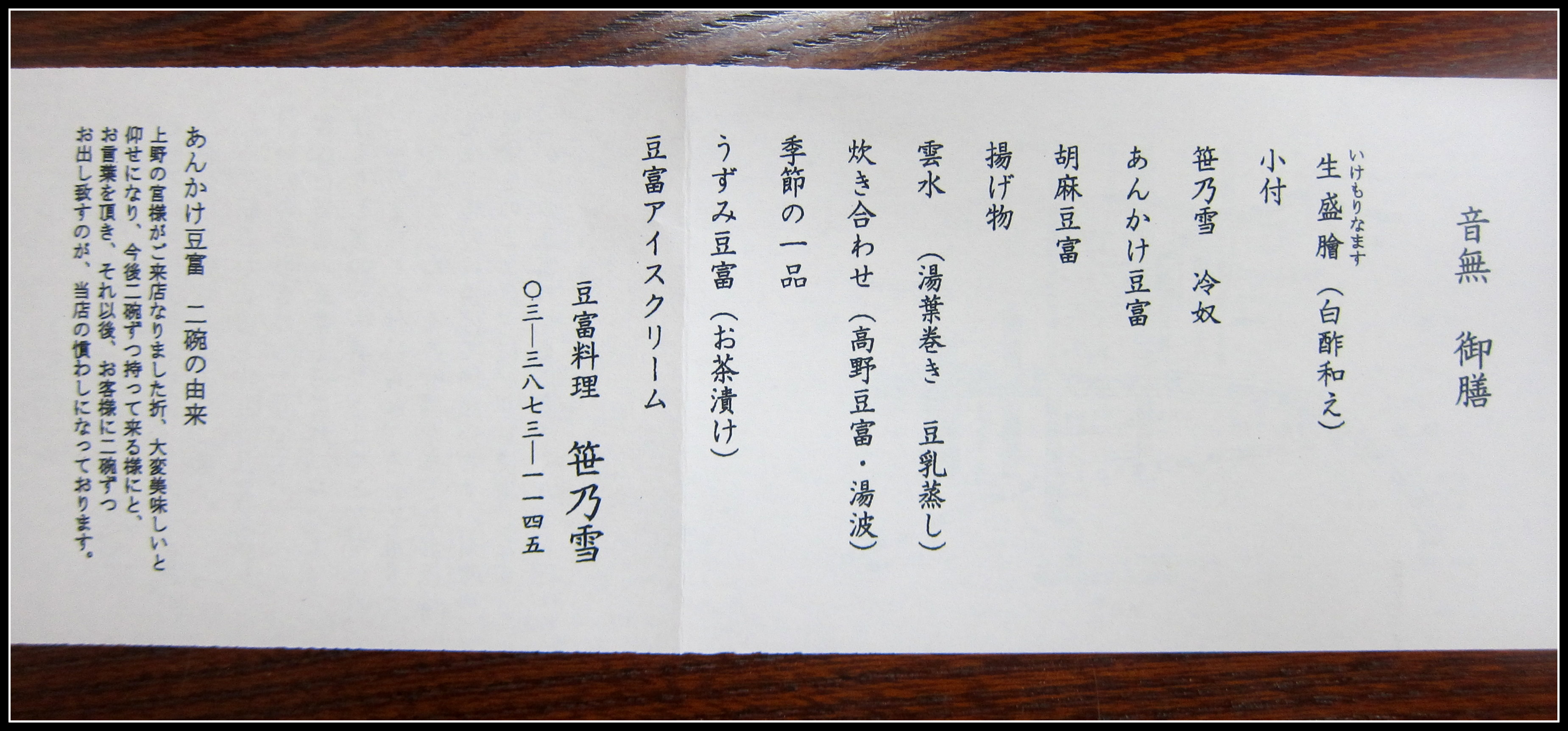
sasanoyuki-menu-jun2014
This is ten courses of tofu. Without jisho.org(*), I can’t read half of it, the hostess speaks only a minimal amount of English to me and mostly just smiles, my company simply tells me that this is the menu. There’s little necessity to go further anyway, they probably think, the joy is in eating the courses and not in knowing what it is, since I’m just a foreigner who most likely eats here only once.
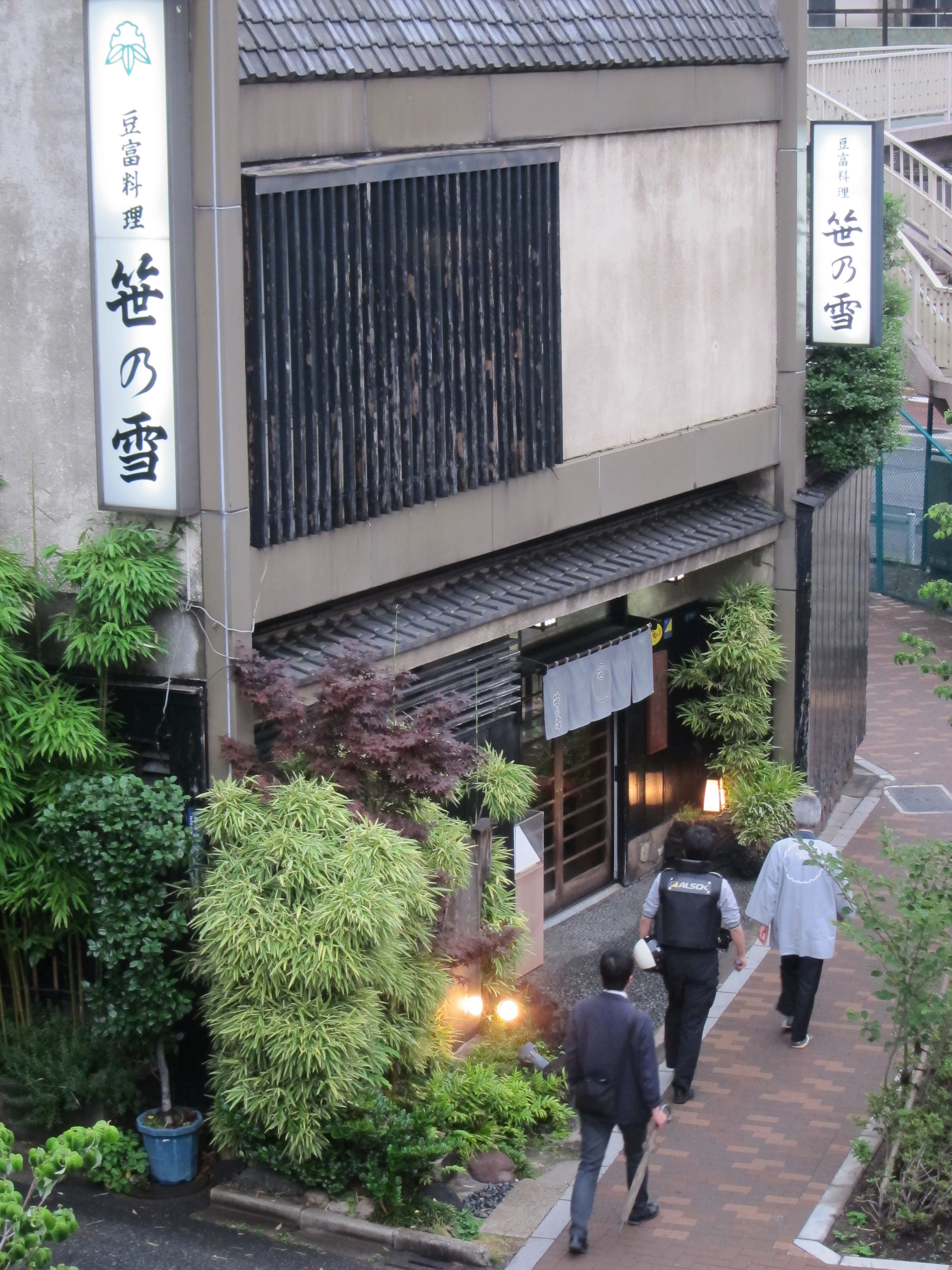
sasa-no-yuki-tokyo
And they’re right… This stylish restaurant, Sasa no Yuki, is not quite for a student’s everyday dining, the cheapest lunch course (Uguisugozen, 6 dishes) is 2200 yen (~$22). But I keep the slip of paper, and I will remember what everything is called!
sny-ikemorinamasu
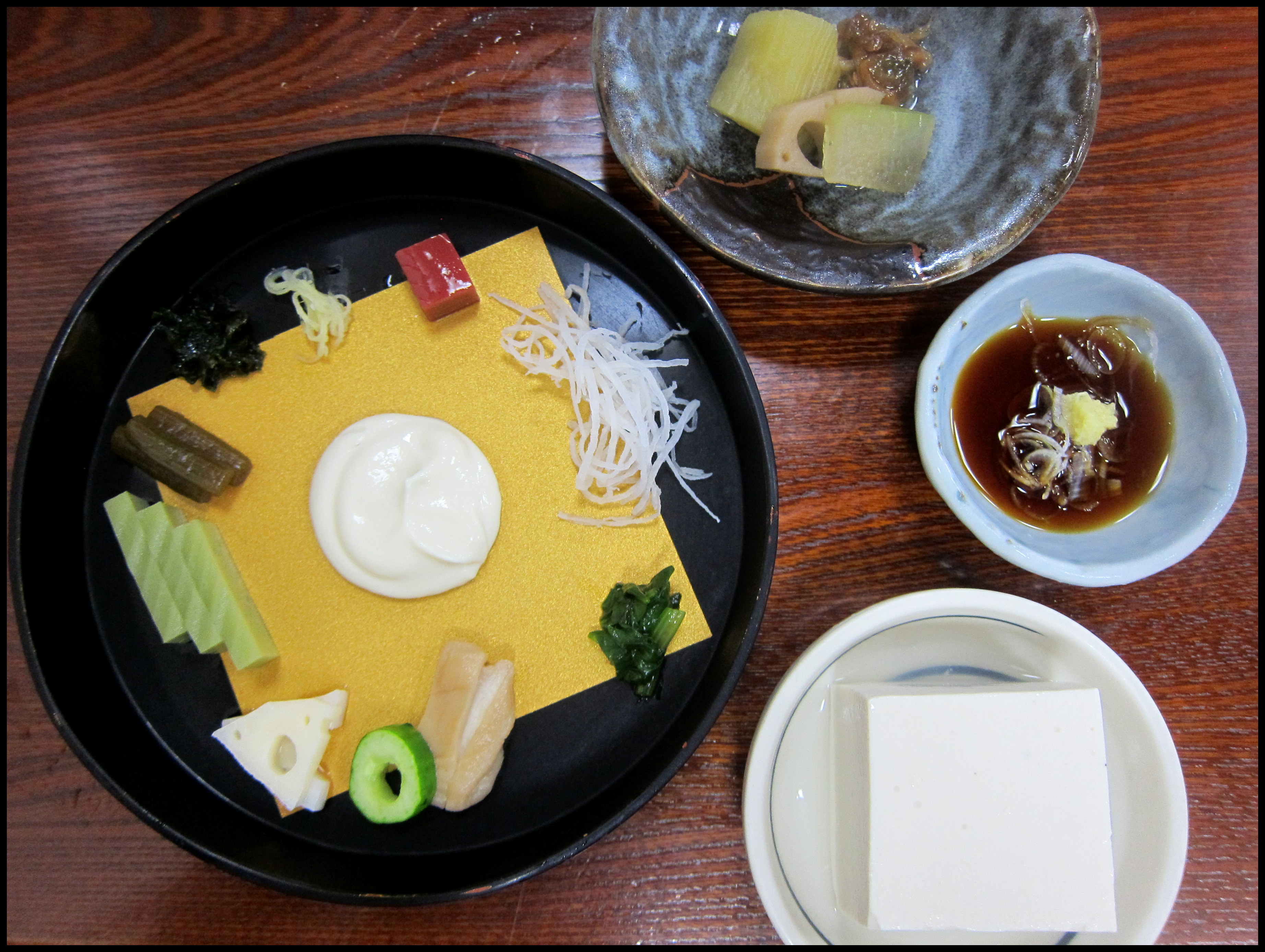
First 2 courses: ike mori namasu (生盛膾) – vegetable (and jelly) assortment with a tofu dipping sauce, and sasanoyuki (笹乃雪) – a block of cold white tofu. Don’t underestimate the tofu block, it’s uncooked, extremely pure and actually tastes like soybean.
sny-ankaketofu-gomatofu
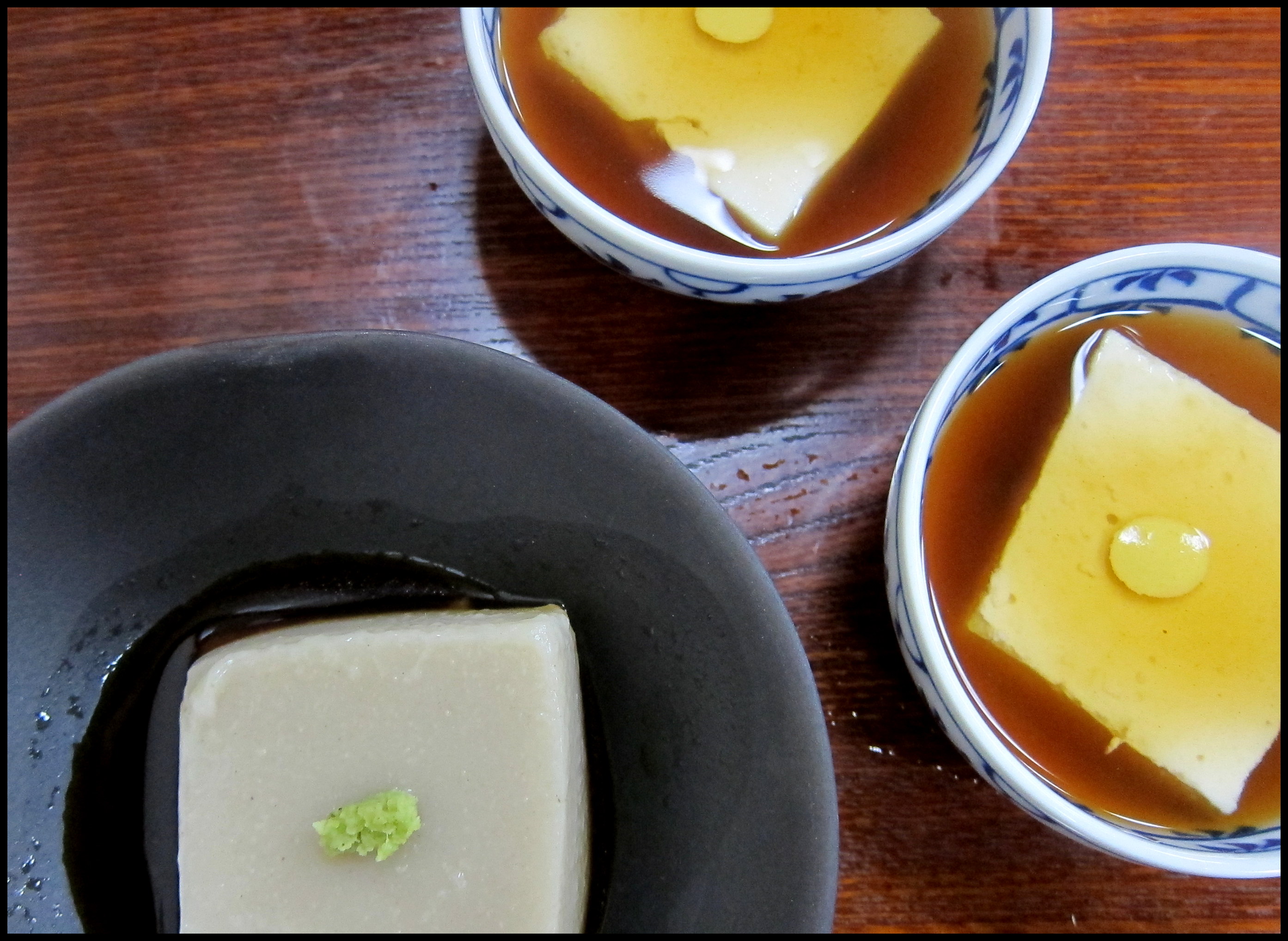
Third and fourth courses: ankake tofu (あんかけ豆富)* – tofu in a slightly sweetened soy-flavored sauce with a dash of mustard, and goma tofu (胡麻豆富) – tofu made with sesame and arrowroot.
Ankake tofu is said to be Sasa no Yuki’s signature dish, originated more than 300 years ago. Unfortunately, it is also my least favorite.
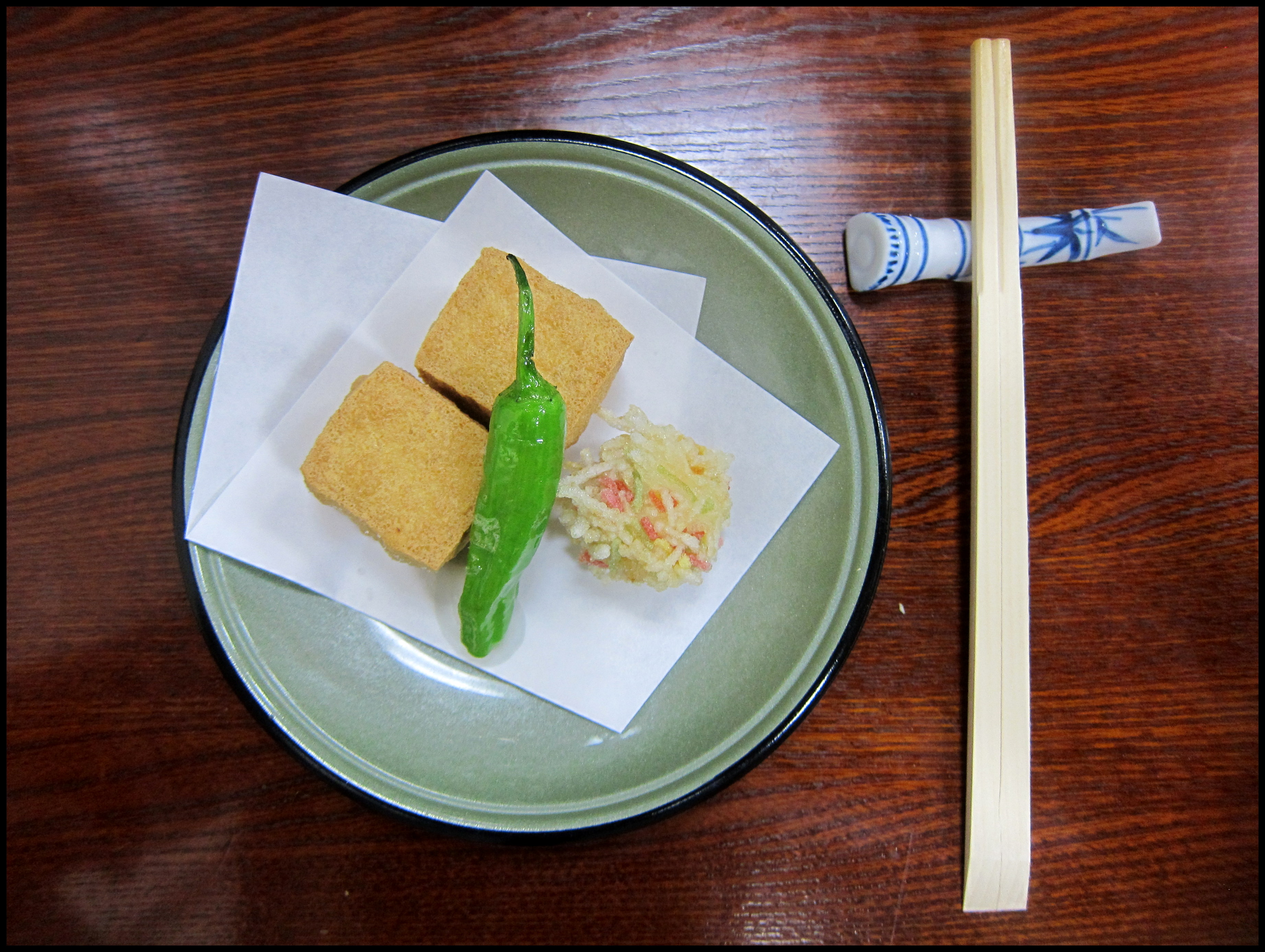
sny-agemono
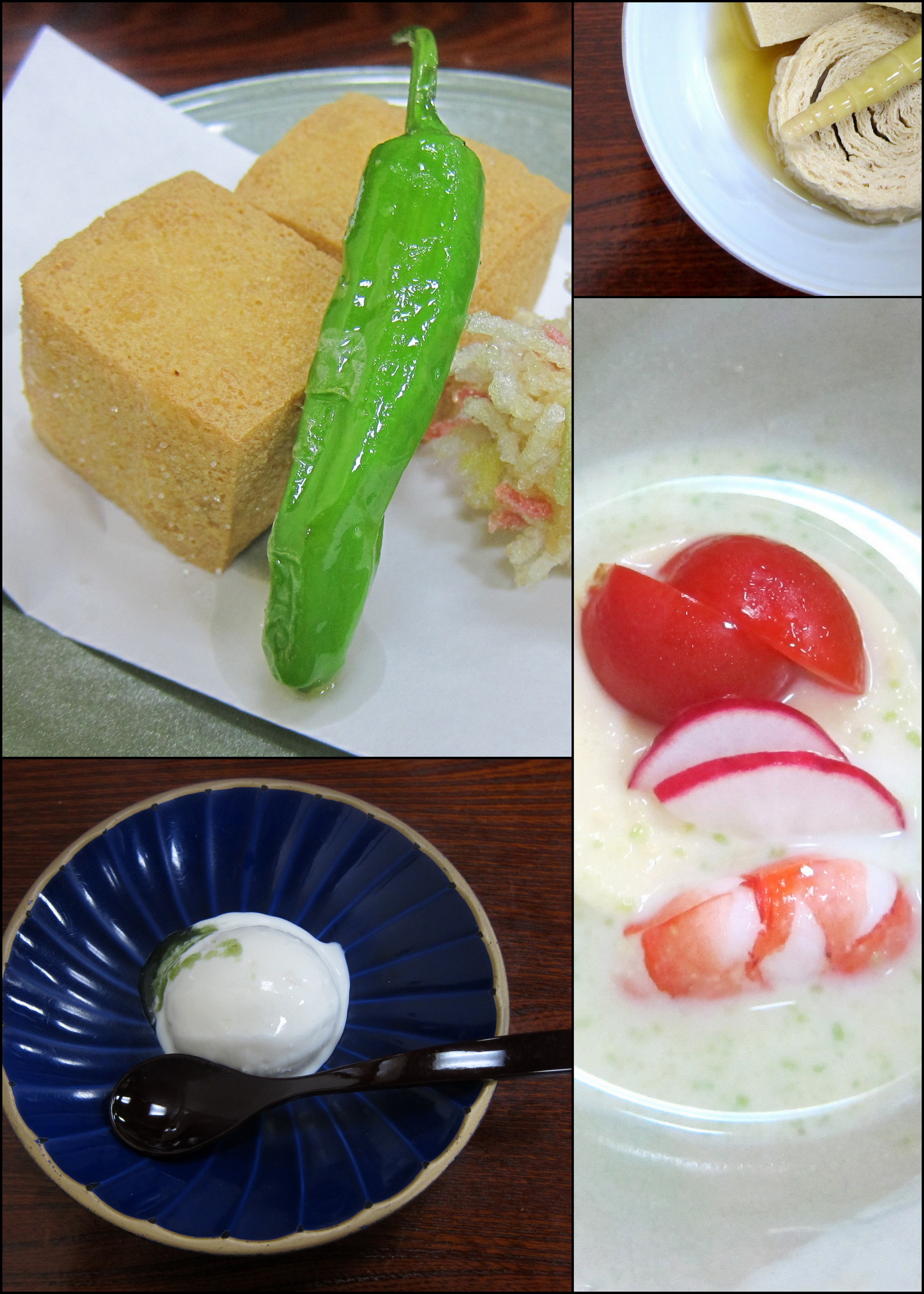
Fifth course: agemono (揚げ物), which means fried food in general. In this case, it’s deep-fried tofu and a ball of deep-fried rice cracker or something. A satisfying contrast after all the cold, homogenous blocks.
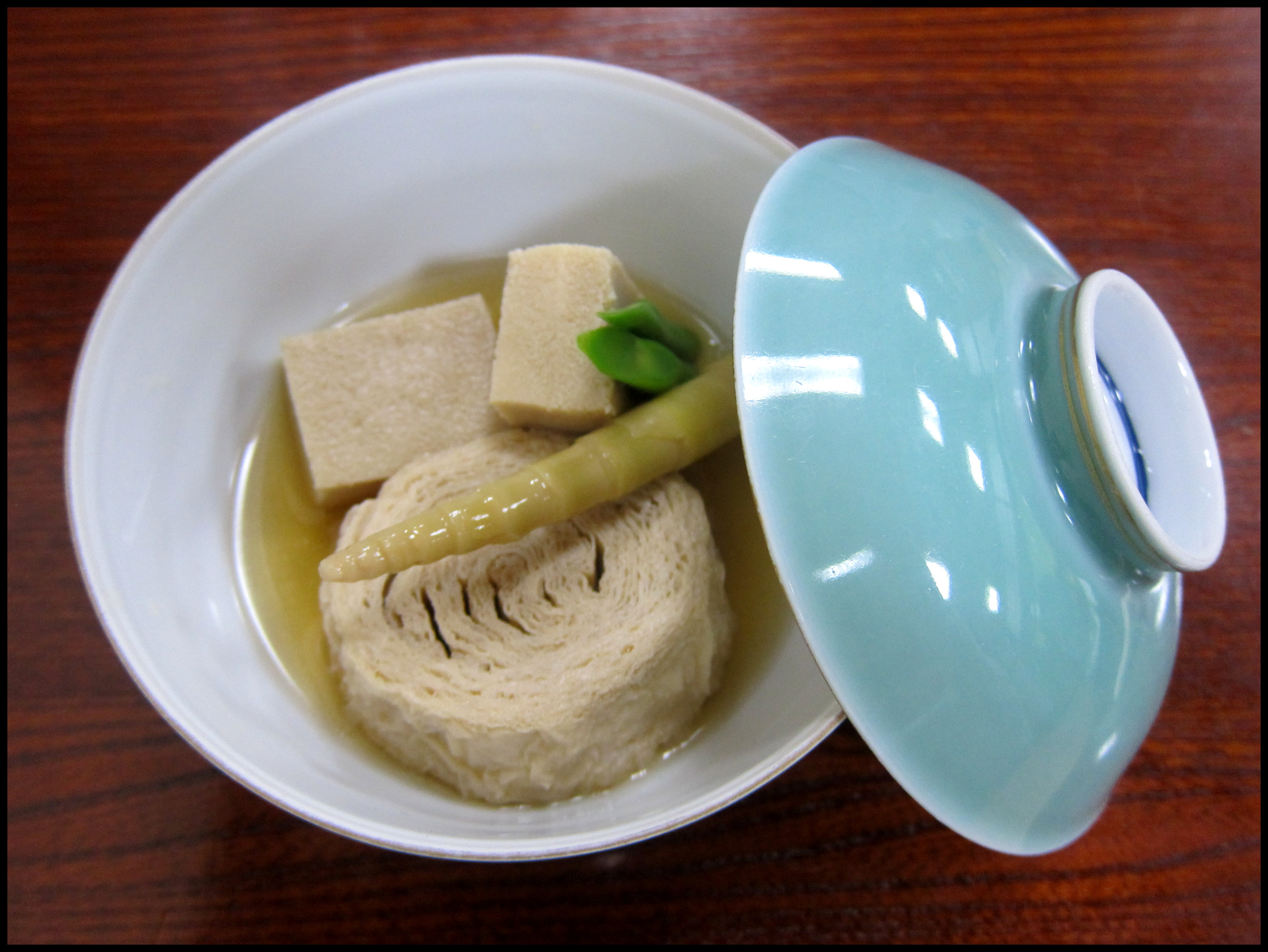
sny-takiawase-kouyatofu-yuba
Sixth course: yuba (湯波) – tofu skin, and kouya tofu (高野豆富) – freeze-dried tofu. Both taste airy and a little sandy.
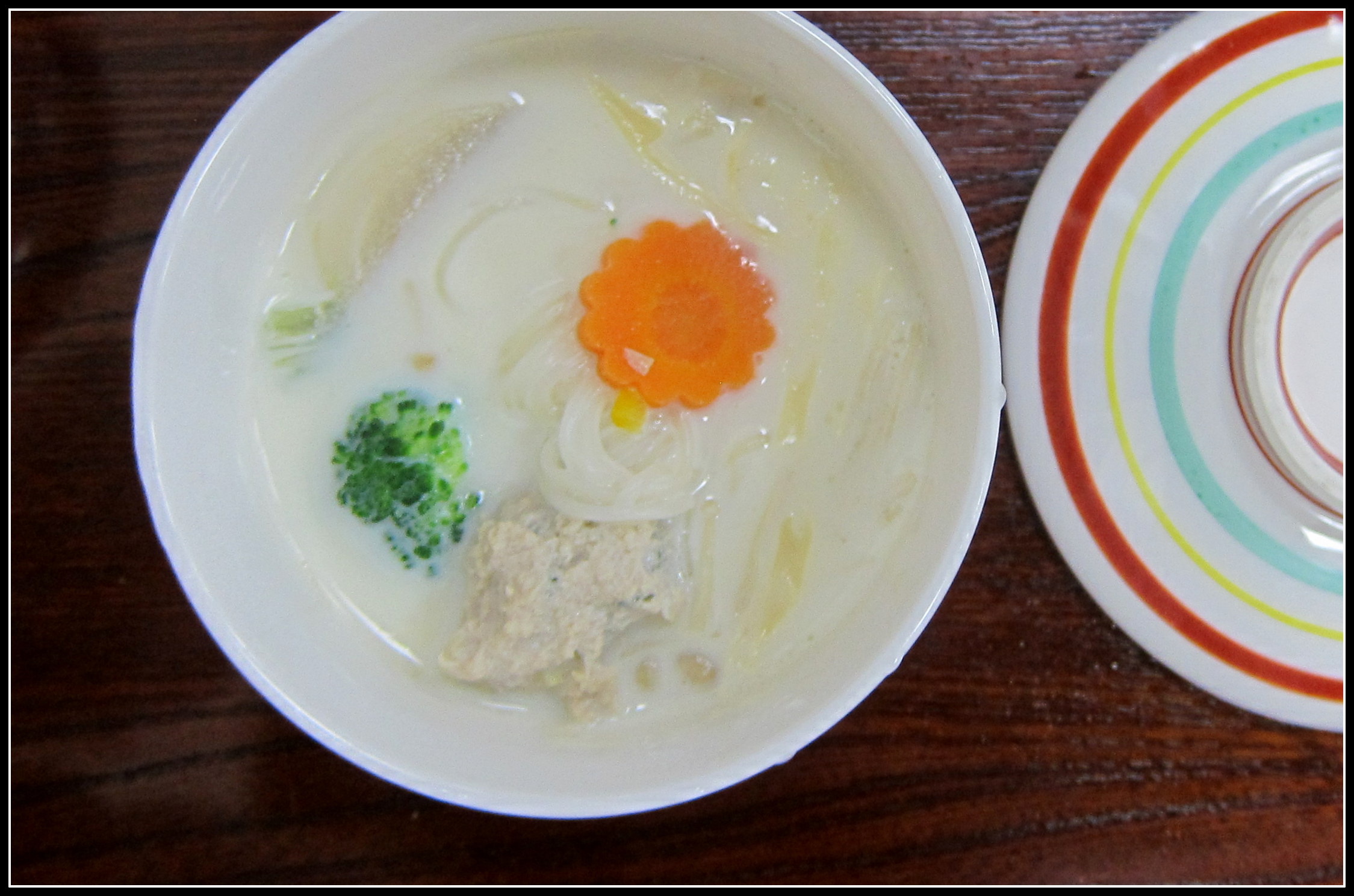
sny-unsui
Seventh course: unsui (雲水)** – a noodle soup, but entangled in the noodle are yuba strips, and the broth is lightly seasoned soy milk. It’s served warm. Extremely satisfying, light but flavorful, full of varieties but harmonious. This soup costs 700 yen by itself. Highly recommended.
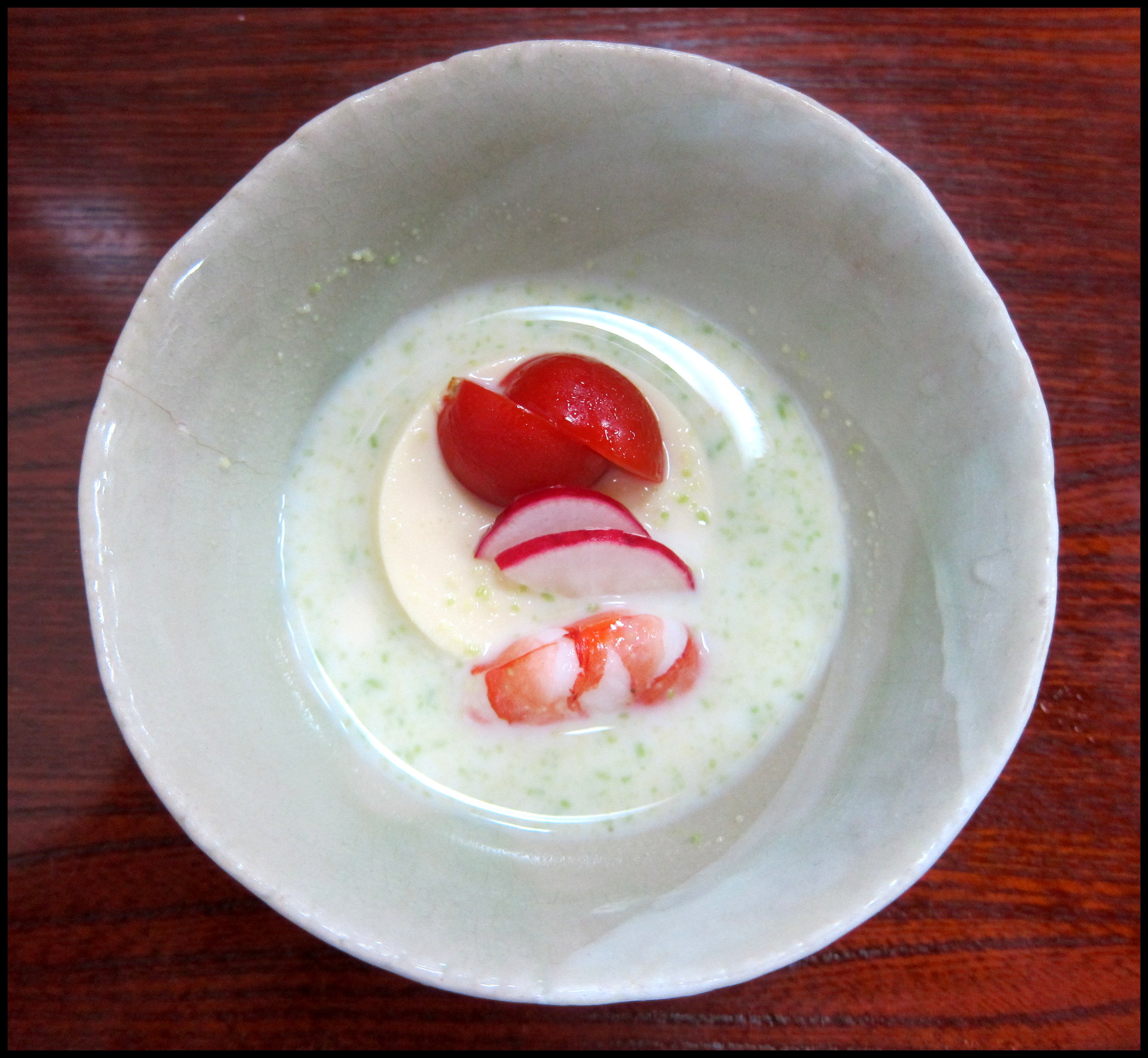
sny-kisetsu-no-ippin
Eighth course: soft tofu in a cold broth, shrimp and veggie. On the menu, it’s known as “kisetsu no ippin” (季節の一品), which means “a product of the season”. Also one of my favorites.
sny-uzumitofu-ochazuke
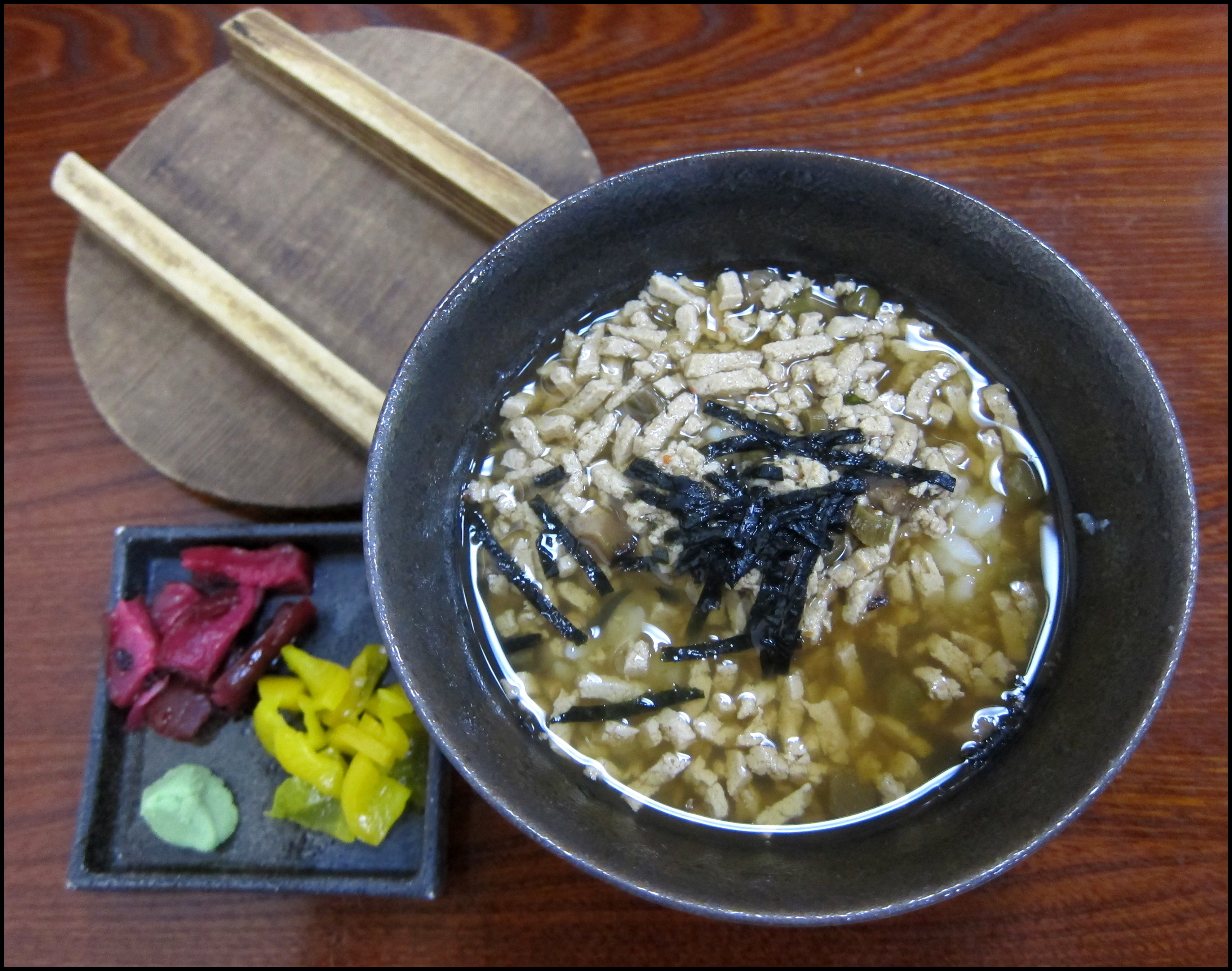
Ninth course: uzumi tofu (うずみ豆腐) or also called ochadzuke (お茶漬け) – rice with seasoned tofu in hot broth.
sny-tofu-icecream
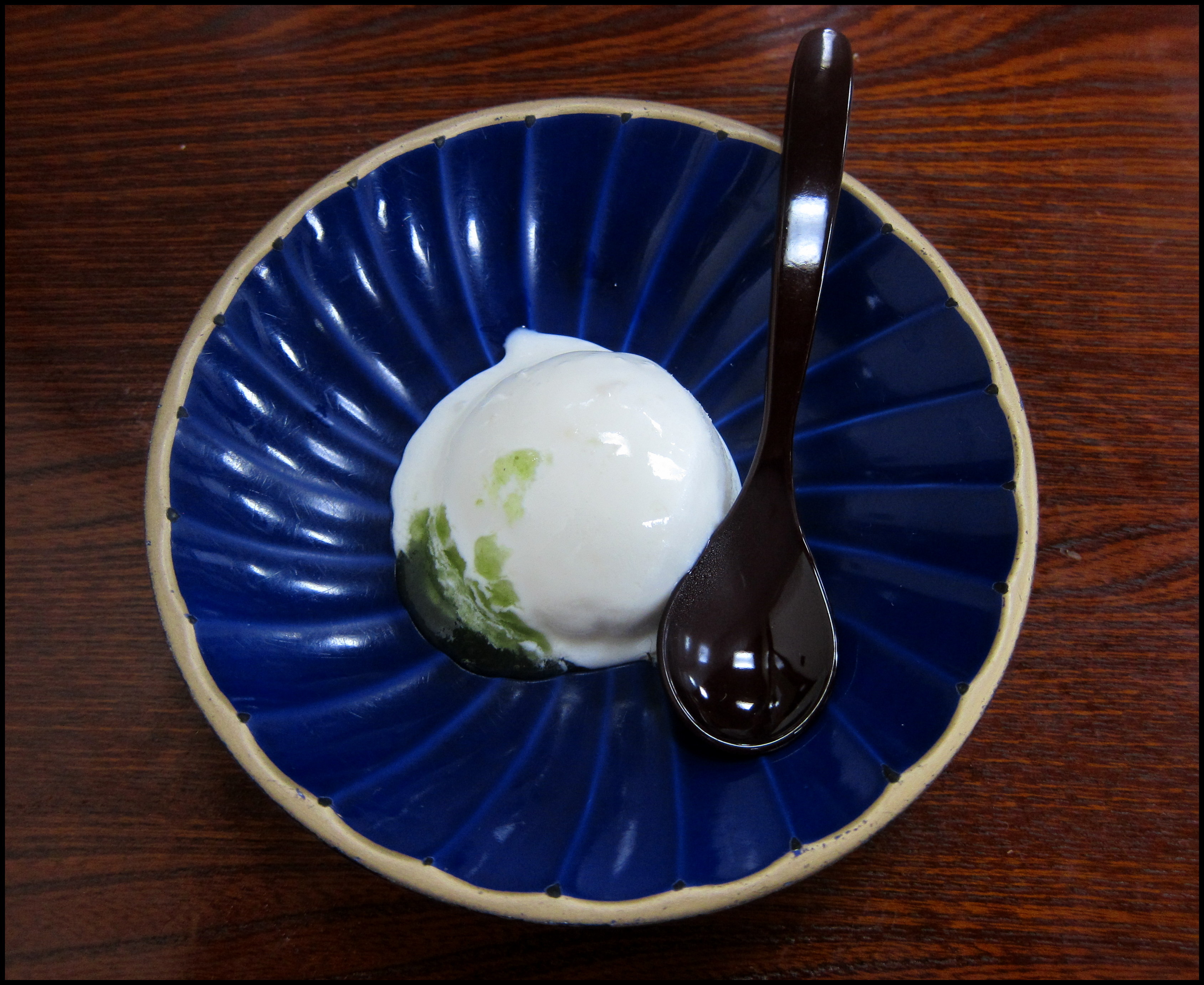
Dessert: tofu ice cream. Can it go wrong? Never.
sasa-no-yuki-interior
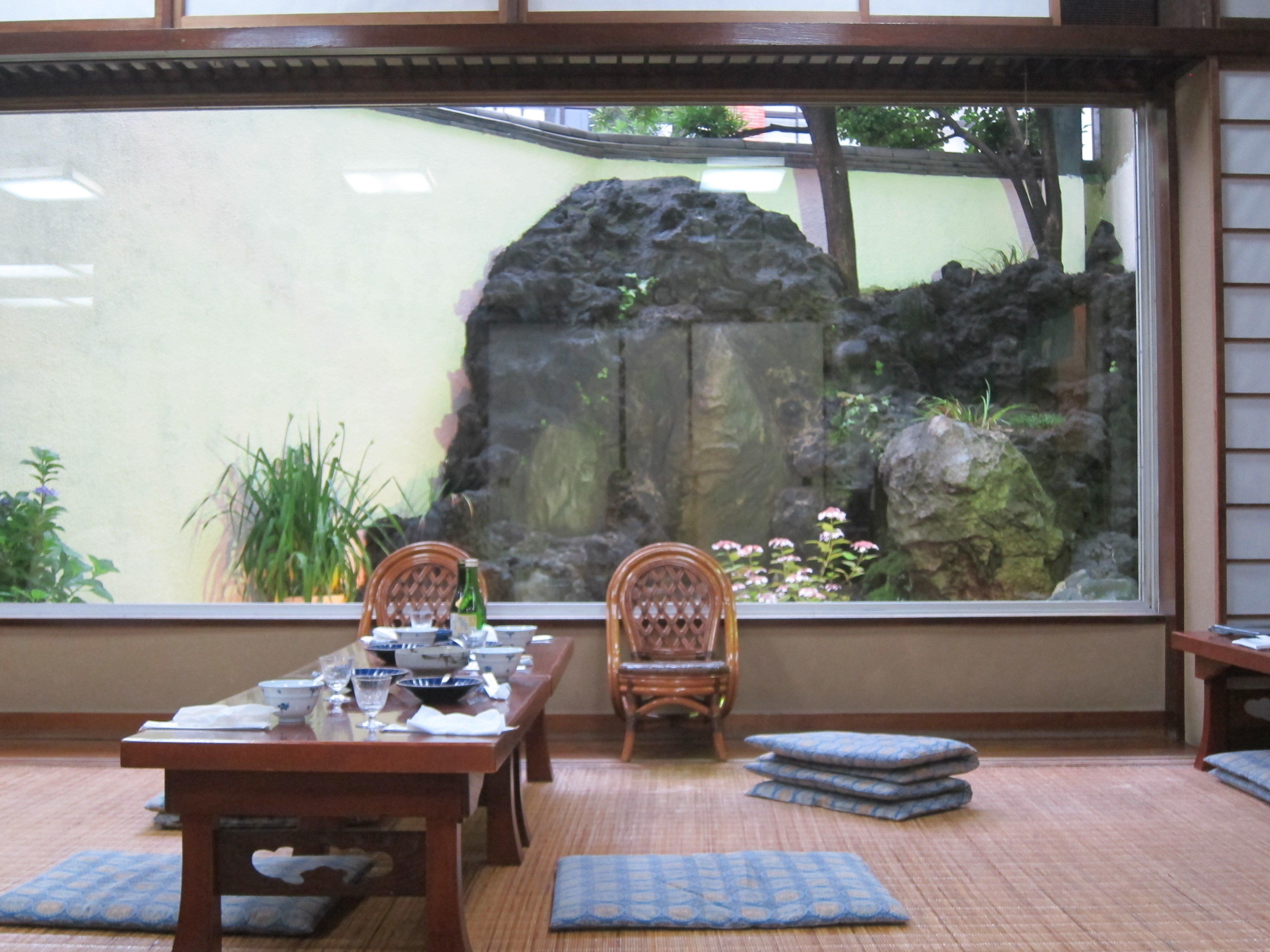
The 10-course meal, otonashigozen, costs 5000 yen. It is perfect for the hot, wet Tokyo summer. It makes you feel light and clean. It’s a lesson about the aesthetics of simple things. It also teaches you that this comforting life is ephemeral, because moments later, you will exit the restaurant into the pouring rain. Everything is fleeting, including your dry, happy self.

Address: Sasa no Yuki – somewhere near Uguisudani station, Tokyo.
This restaurant is featured everywhere on the internet, you wouldn’t have any problem finding it. Japan Times has an in-depth review about the restaurant (which started in the Edo period!):

“If you really want to know the taste of tofu, put a piece on freshly cooked rice and eat it. Then you can tell,” says Okumura [Sasa no Yuki’s president and tofu master], who usually enjoys tofu with no toppings while drinking wine or beer. “The taste of soy protein is strong enough to blend beautifully with a simple bowl of rice.”

Okumura also observed, it has become a rather luxurious experience these days — because there is so little tofu fit to be eaten this way.

Though so simple in principle — relying merely on high-quality soy beans, good water in which to soak and boil them, and nigari (bittern) to cause coagulation — tofu has now mostly fallen foul of profit-oriented mass production to the point that many people may never have tasted the authentic stuff, Okumura says. “Nowadays, we are one of only a few shops still making tofu in the traditional way.”

A Japanese friend of mine once lamented the exact same thing while eating tofu straight from its plastic-film-covered white plastic minitub, which he bought from a nearby market.

———————————————————————————————-
Guest post by C. from Katsushika.

Foodnote:
(*) Even with a dictionary, Sasa no Yuki’s menu is difficult to read. They use different writings for some of the words, such as 豆富 instead of 豆腐 for tofu, and 湯波 instead of 湯葉 for yuba.
(**) “Unsui” is cloud (un) and water (sui), which also means a wandering monk.
Tags: ,

For the Summer: Gyoza with Fruits and Flowers

August 03, 2012 By: Mai Truong Category: Fruits, RECIPES, savory snacks, Vegan, Vietnamese


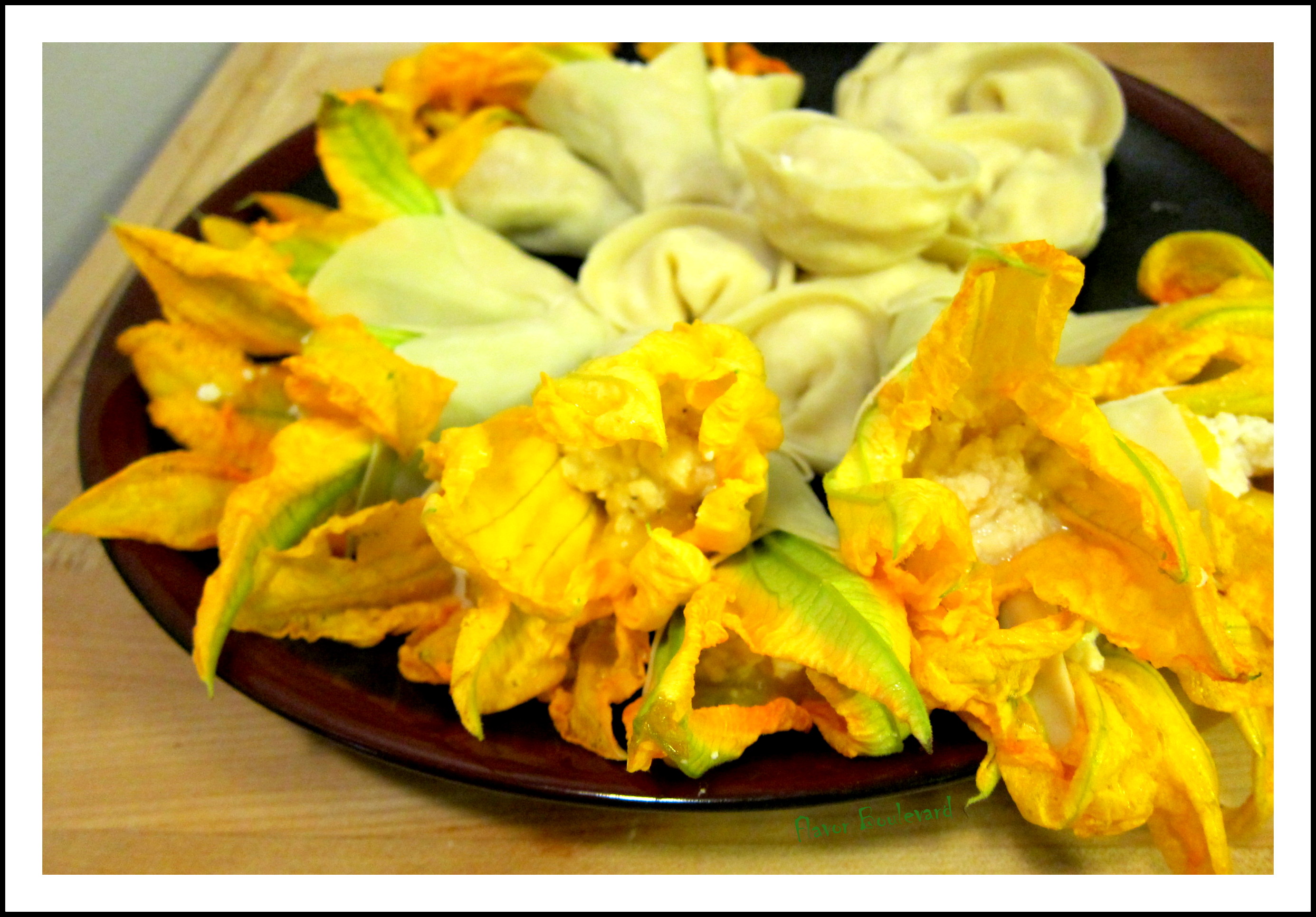
What can you do with 24 squash blossoms?

Twenty-four is too few for squash blossom canh, a clear soup that Mom used to make when I was little. The flower is the only thing of a pumpkin plant (squash blossom in Vietnam is pumpkin blossom) that I didn’t mind eating (I hate pumpkin). The flowers perish too quickly that American grocery stores almost never carry them(*). That scarcity, I can only guess, also raises them to the exotic level that makes the modern American restaurants include the word in their menu around this time of the year (summer squash blossom season) and feature a mere 3-5 flowers on a plate amidst the more common vegetables like zucchini and cauliflower. The craze has been around for at least a decade, Carolyn Jung said, and I don’t see it wilt away anytime soon.

Although I dislike the place at first because it’s always too crowded, Berkeley Bowl gradually grew on me. It started when I realized, after many years away from Vietnam and living just a bit inconveniently far from the Asian markets, that I haven’t seen certain grocery items for ever, for example, woodear mushroom (nấm mộc nhĩ) and straw mushroom (nấm rơm). Then one day I ran into them at Berkeley Bowl. I was like, oh? they have that here?! It’s a great moment. One where you reunite with old friends, and if we should speak in grand terms, it reminds me to appreciate growing up in Vietnam and in my family, the lack of either component would have resulted in a much, much poorer experience with food.

Sometimes that great feeling clouds my better judgment. You know, when people dig out a picture of their middle school gang from a notebook, buck teeth and silly hair or whatever, they feel compelled to put it on Facebook. When I saw the squash blossoms at Berkeley Bowl, I felt compelled to get them home. Not that I knew what to do with them or had time to cook them.


Mom suggested stuffing them with ground pork. I’ve had them stuffed with cheese and batter-fried. But it’s summer. Peaches are in season. This something I make with squash blossoms should taste light and fresh like the flowers it bears.

Bouquet Nectarine Gyoza
– Squash blossoms (the male blossoms, because they’re big enough to stuff)
– medium firm white tofu
– gyoza skin (wrappers)
– 1 yellow nectarine, diced (If you use peach, peel off the skin because peach has fuzz)
– sugar, salt, pepper to taste
– a steamer

Rinse the squash blossoms under cold water, peel off the dark green spikes at the base. Also break off the stem, if there’s any.
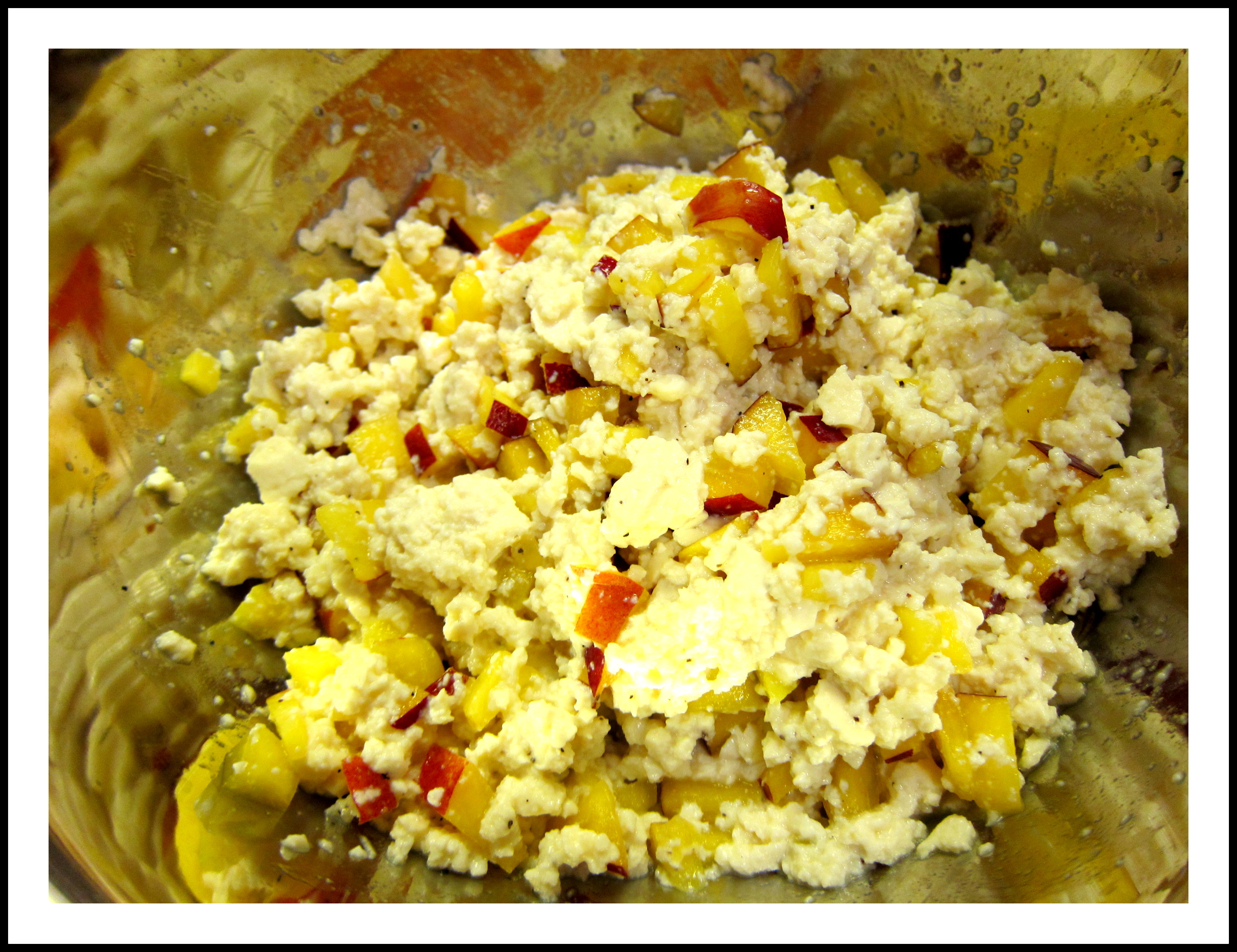
Mash the tofu by hand while mixing it with the diced nectarine. Add salt, sugar and pepper to taste.
Gently stuff the nectarine-tofu mix into the squash blossom.
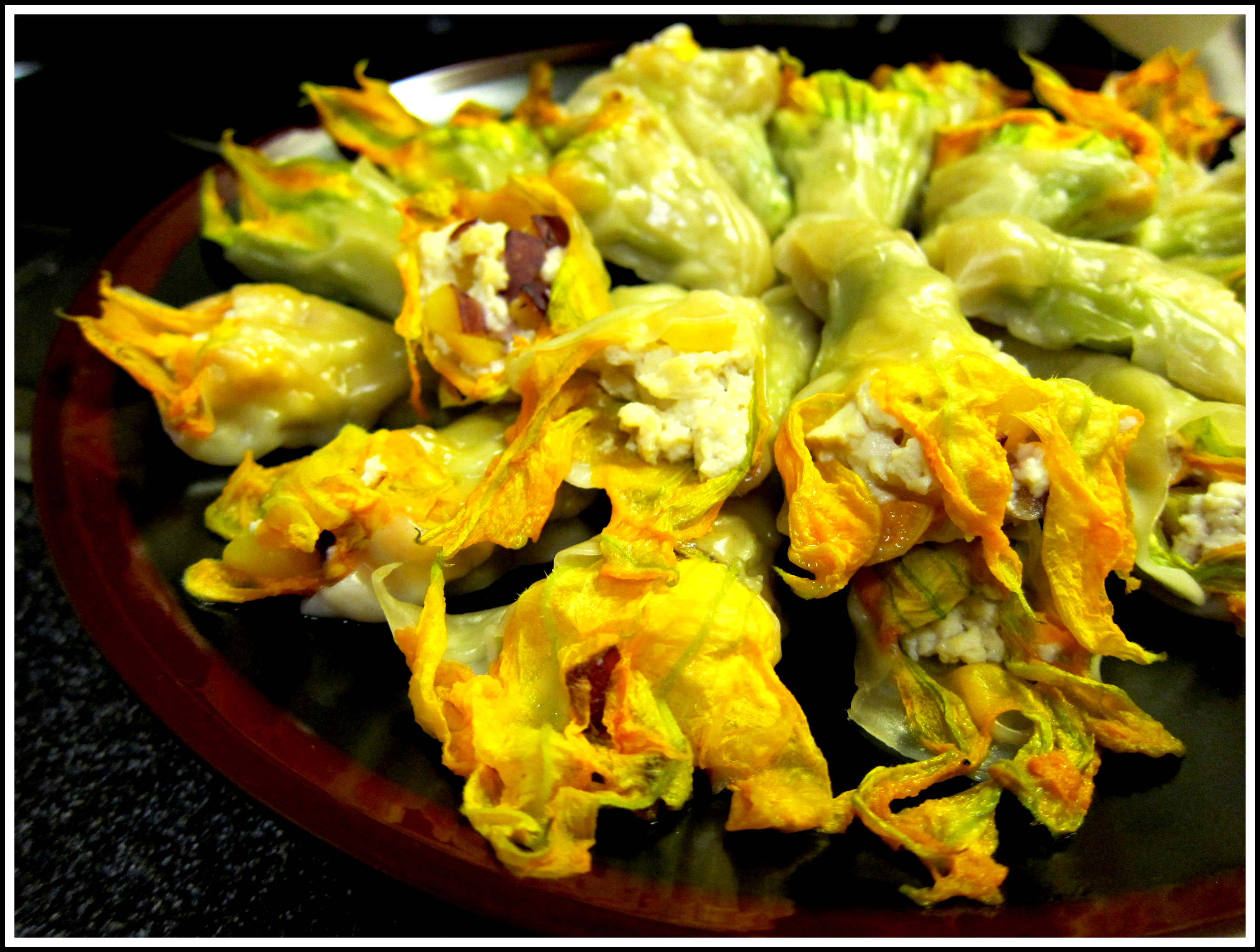
Wrap a gyoza skin outside the blossom, leaving at least the top half of the petals exposed.
Steam until the gyoza skin turns translucent (5-10 minutes). The flower petals will wilt but still retain their color and the bottom half should still be a tad crunchy.
Take out and let cool.

UPDATE: pan-fried these to make them taste better (albeit less healthy  :-D)


(*) Every website I’ve looked claims that squash blossoms can only stay fresh in the fridge up to 2 days under precise condition. Well, what you see in the picture “pre-steamed gyoza” are squash blossoms after 8 days in the fridge.

Tofu misozuke – the vegan cheese

November 25, 2011 By: Mai Truong Category: Japanese, Review of anything not restaurant, The more interesting, Vegan

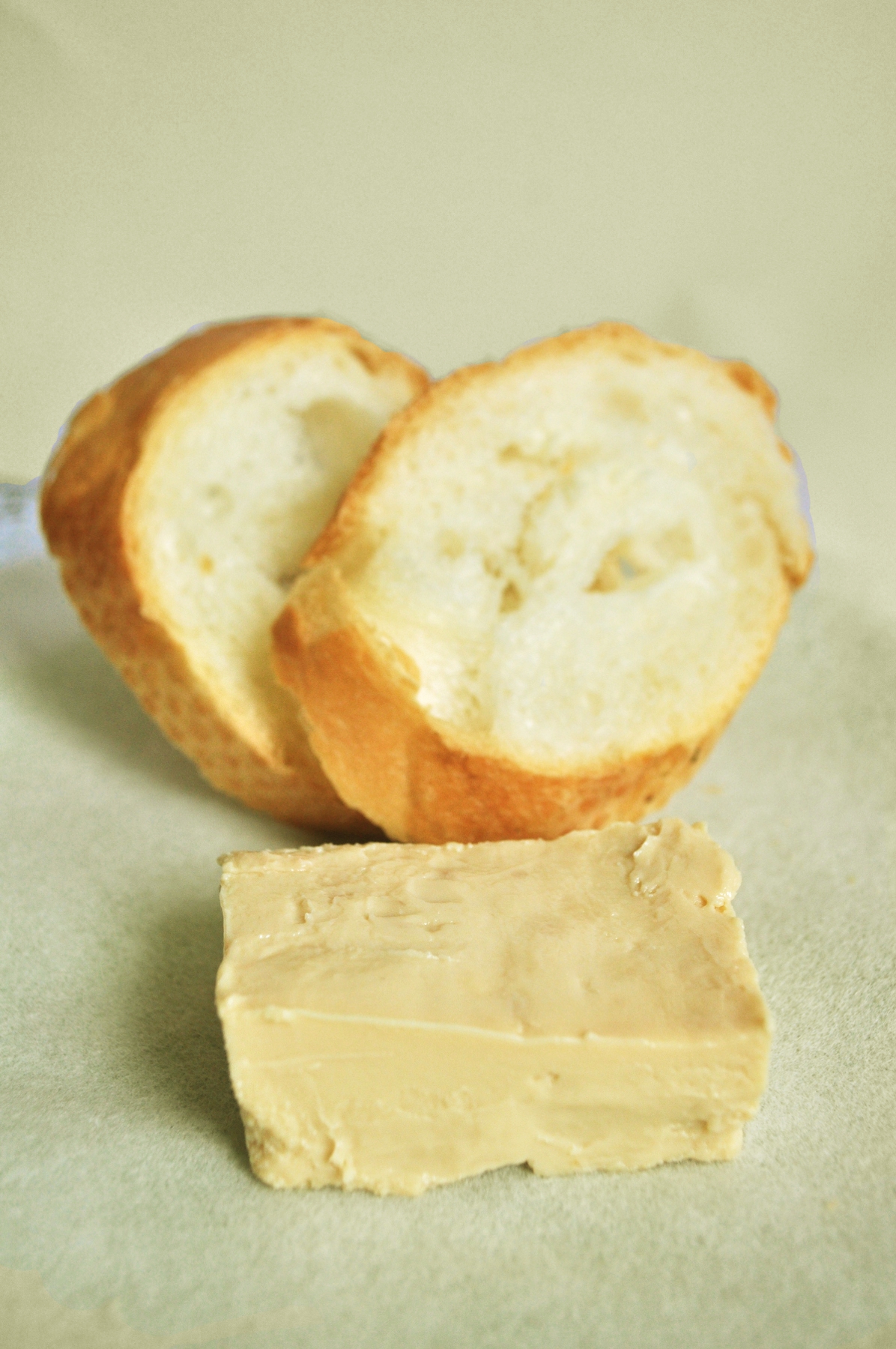
Tofu misozuke. Image courtesy of Rau Om

Every Saturday in Sunnyvale and every Sunday in Palo Alto, Oanh sets up the tables. She hangs a white banner with a simplified lavender elephant and the word “Rau Om” in calligraphic green, and a poster featuring a little mouse prancing with a block of tofu on his back, with the word “Mice eat Rau Om’s Tofu Misozuke” below. Then she arranges dozens of little bamboo and plastic wrap packets on the table, each containing a block of tofu in beige paper, about as big as a match box. Then she’s ready for the Farmers Market. And the tofu is ready to be sold out, every last one of them.

Over two years of experimenting, Oanh says, including lots of PubMed searching, an 18th century manuscript in old Japanese, and who knows how many pounds of firm tofu. It all started with an accidental find in Tokyo’s night food scene in 2009, and here they are, at a Californian Farmers Market, offering a Japanese elder a taste that brings her decades back home. It’s like the tofu has achieved its American dream.

When I first had my tongue on Rau Om’s tofu misozuke at one of Oanh’s dinners, I thought wow, this stuff feels like La Vache qui Rit. It’s exactly that texture, that kind of tender springiness of a creamy cheese that bounces when you touch and has no resistance when you cut, the kind of softness on the verge of melting, like that of a 64°C slow-poached egg yolk. When the taste starts to register, like a tenth of a second later, it’s a whole different affair. There’s some brininess, some tingling sensation, but there’s no fat. It’s a creamy cheese that isn’t at all fatty, naturally, because it’s a vegan cheese. The brininess comes from the miso, and the tingling sensation comes from the sake. A few seconds deeper is the soothing sweetness of soy and sugar.

I fell for it. I know I’m going to sound like a tofu freak now, one that might as well protest for the civil right of the tofu and occupy the supermarket because soy is the 99%, but this meat lover is gonna say it: tofu is a really freaking awesome invention in food history. If people say it tastes plain with a frown, I say they don’t know how to appreciate the “plain” taste. That’s the taste of water and steamed rice, the flat tone in music, and the white space in photography. It’s better than good, it’s a necessity. When I’m tired, I crave exactly that taste. Then there are a hundred ways to make tofu depart from plaindom. And the Rau Om couple succeeded splendidly in one of them: make tofu into tofu cheese (tofeese? :D).

Oanh and Dang also let me try a wedge of kombu-wrapped tofu. The kombu attenuates the miso saltiness and promotes the aged sweetness. The kombu tofu misozuke is one level deeper than the tofu misozuke. I was hoping to buy it last time, but:

FlavorBoulevard: Did you wrap this new batch of tofu misozuke in kombu?
Oanh: No. We’ll roll out the kombu-wrapped tofu misozuke in a few months, and it’ll be clearly labeled as such.

FB: What kind of tofu do you use? In your blog, you wrote “firm tofu”, but would you like to elaborate?
Oanh: We are buying regular tofu from the supermarkets. A to do item for us is to look for a local source for tofu.

FB: What about the miso?
Oanh: One of the first recipes we found specified white or yellow miso. We did some experiments with other types of miso and found the results less than satisfactory, with all the caveats that come with a negative result.

FB: How long does each batch take?
Oanh: The miso flavor permeates the tofu almost immediately, but to get to the right creamy texture, it takes at least 2 months.

FB: How long can the tofu stay good (refrigerated) after packaging?
Oanh: About a month.

FB: Currently the tofu misozuke is marked at $7/packet (2.5-3.0 oz). Based on what standard did you set the price? Are you worried that it might be a bit high for the general market?
Oanh: The price is as affordable as we can make it given the production costs and is at a comparable level to other artisanal hand-made cheeses. Like fine cheeses, the process of making tofu misozuke is labor intensive, both during the initial production and regularly during the aging process which lasts at least 2 months. That’s not even counting our research cost, which we figured was just part of our food budget, the price of our food obsession.

FB: Can it be used in cooking, like in soup or pizza? Or salad? Would the flavor diminish in the process?
Oanh: Yes, it’s definitely can be used in cooking. The flavor is intense enough to stand up to the cooking process. We once used it in a squash blossom & beef dish. We definitely can see it work in salad. We had a post a while back about some of the uses of tofu misozuke. We’ve also used it in place of chao (Vietnamese fermented tofu) to make duck hot pot, and we recently found out that it worked very well with prosciutto.

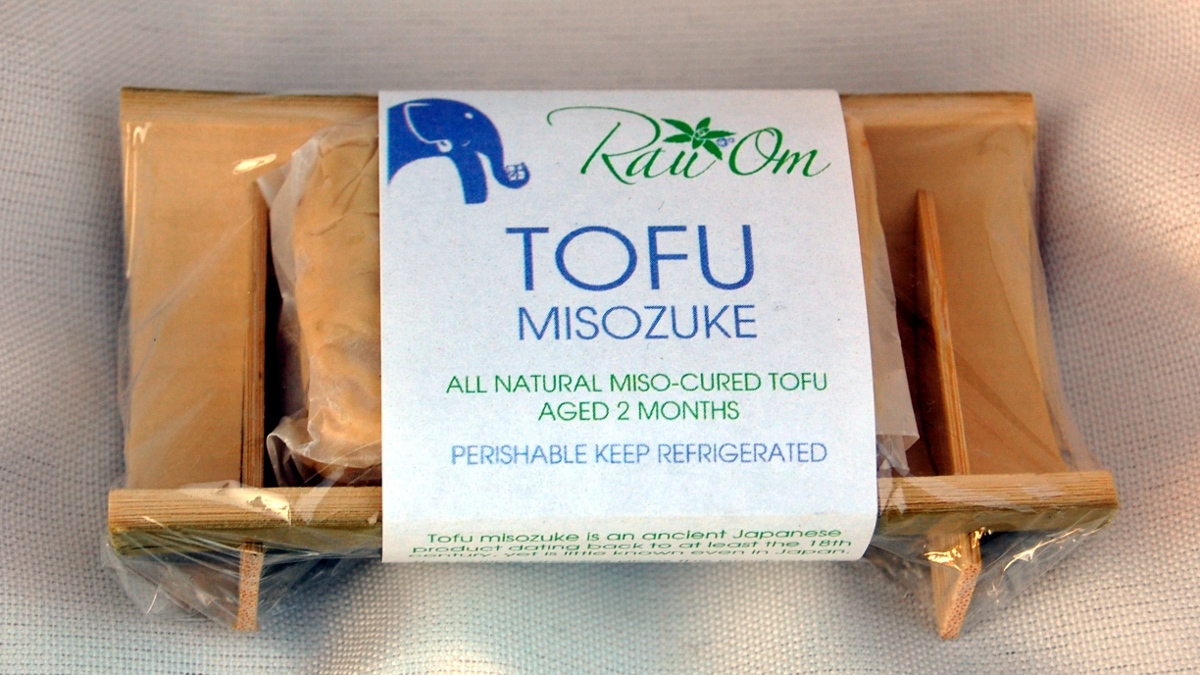
Tofu misozuke package. Image courtesy of Rau Om

In the States, you can’t find this kind of vegan cheese anywhere but the Rau Om online store and their Farmers Market tents. Or you can spend 2 months making it at home, following Rau Om’s recipe, assuming that you succeed on the first try. I wouldn’t. Rau Om’s tofu misozuke, in its offwhite color and handmade packaging, is very Hollywood-girl-next-door from appearance to content: her hairdo doesn’t sparkle, but once you know her, you fall helplessly in love, especially if you are any of the followings: tofu aficionado, cheese aficionado, vegan, and foodie.

Basically, tofu misozuke can be used anywhere cheese and soybean paste can be used, but as my friend Masaaki Yamato says, that would be like using caviar to make soup. A wise man would enjoy tofu misozuke alone with an ochoko of sake, and let his senses fly.

(UPDATE: I enjoy it with genmaicha, or a sweet oolong ;-))

DISCLAIMER: I received no free product or monetary gift in exchange for this review.

Tags:

Mom’s cooking #3 – Stuffed tofu in tomato sauce

March 28, 2011 By: Mai Truong Category: Comfort food, RECIPES, Vietnamese

Guest post by Mom, translated by me


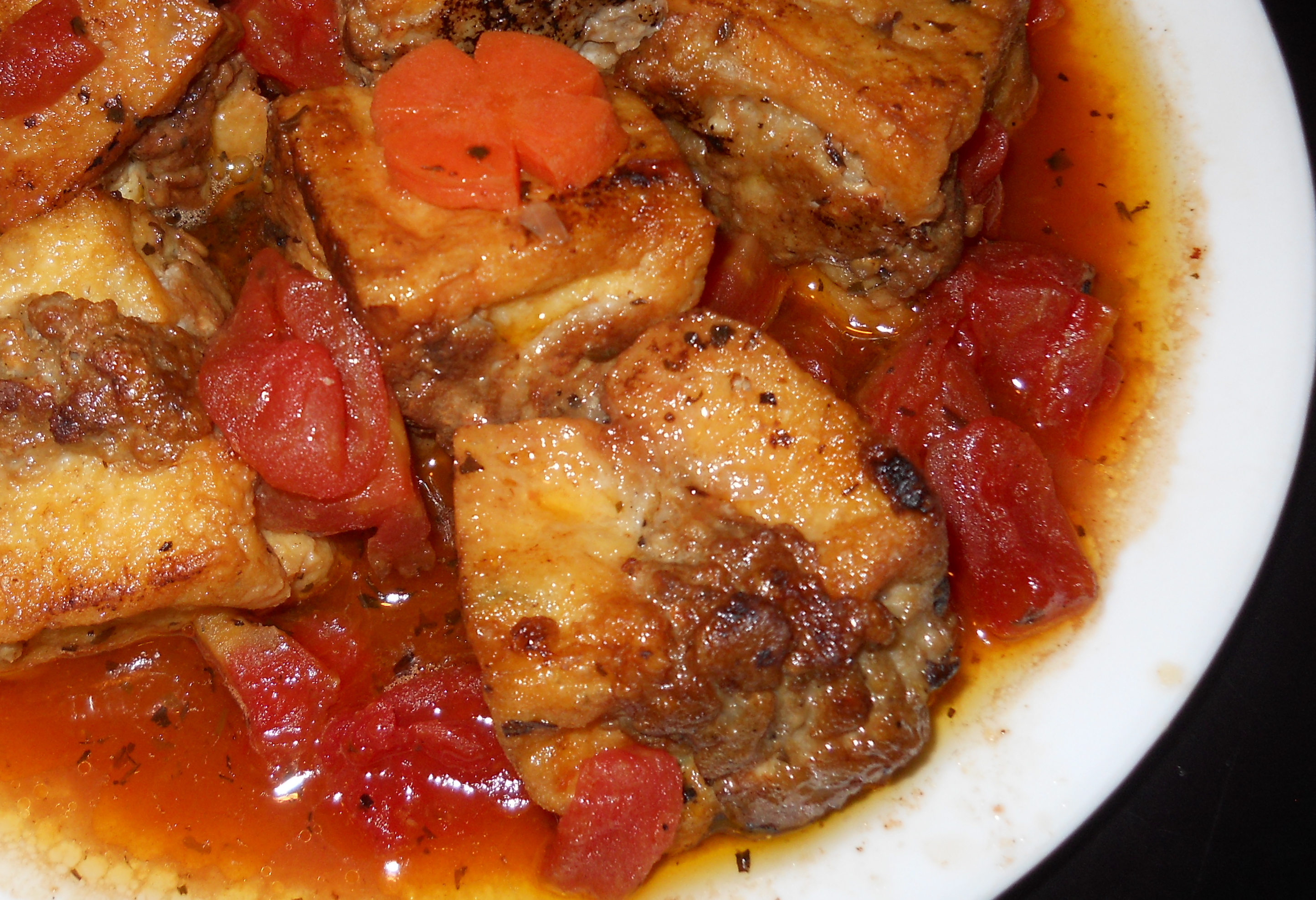
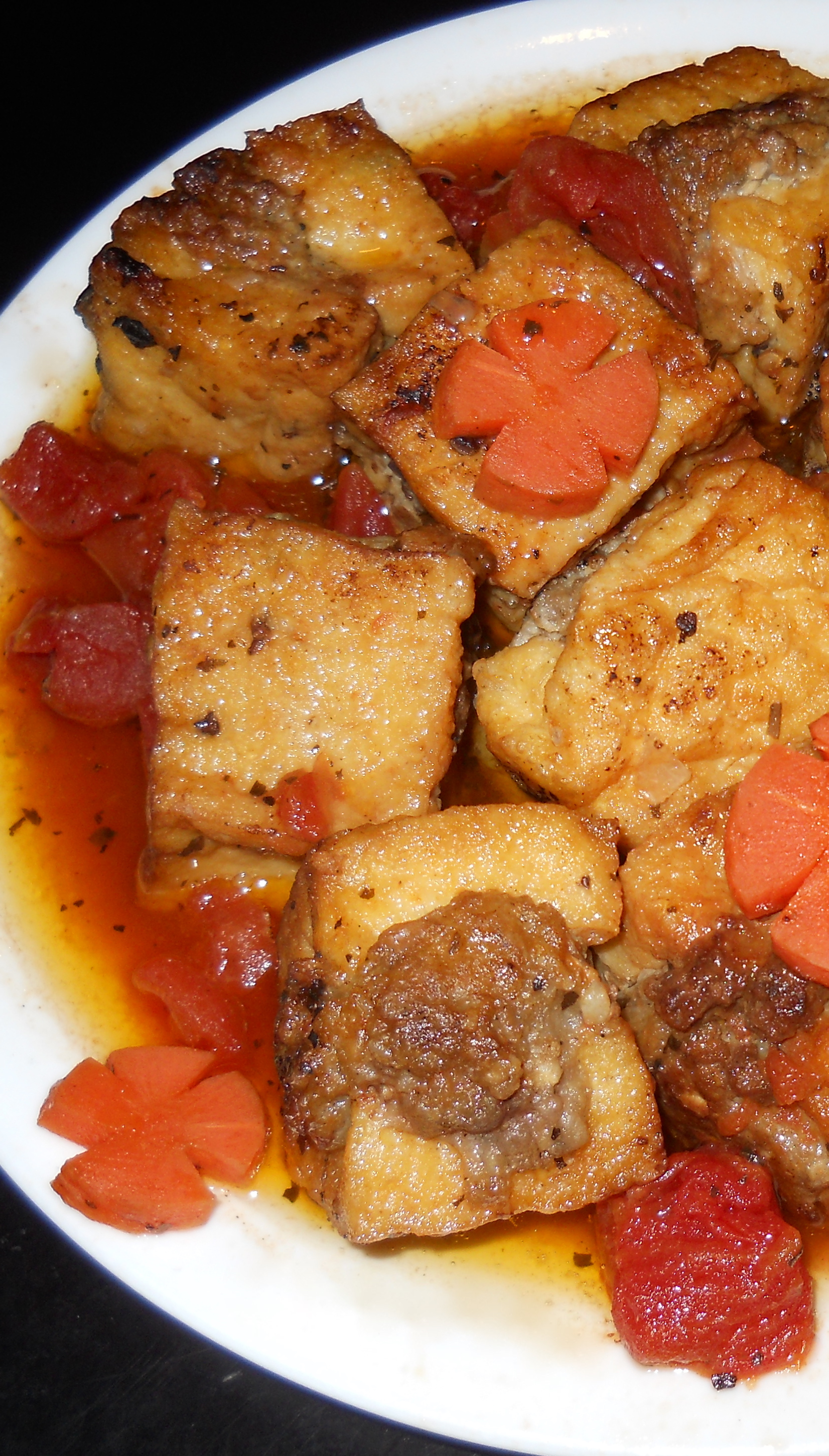
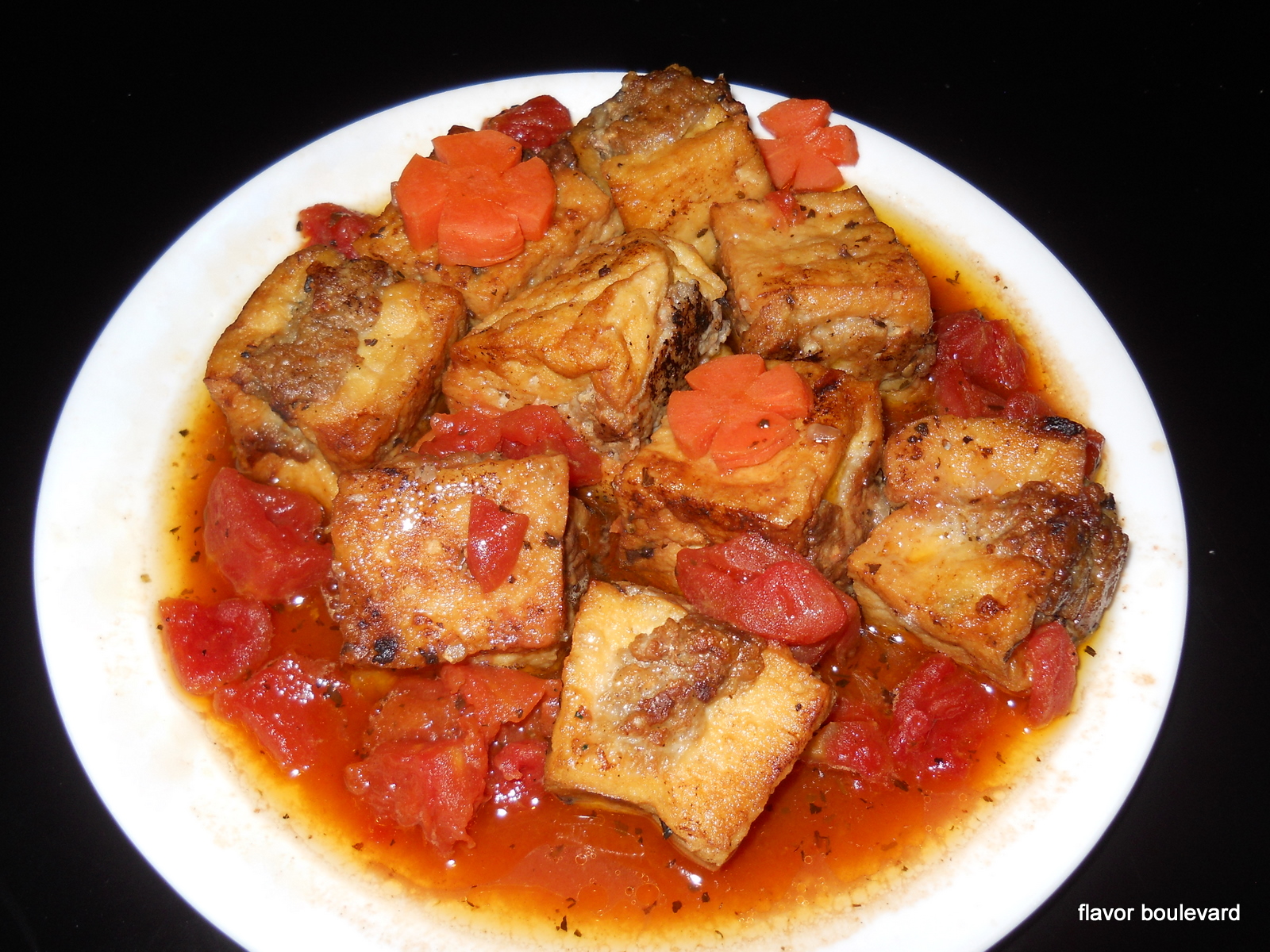
Tofu is a familiar face in the Asian kitchens, especially the Far East ones: Chinese, Vietnamese, Japanese, and Korean. In Korean dramas, the Koreans have tofu for every meal and some would give a block of white dobu to people who just get out of detention, perhaps to wish them a good, new start without impurities and no returning to jail? A cute, meaningful tradition I think. Up north Vietnam, đậu phụ used to be the main source of protein, despite having “phụ” (secondary) in its name. After all, the old Mr. Lê in Nhất Linh‘s New Bridge Ville dreamed of only a tofu wedge dipped in shrimp paste to satiate a drink at dinner time. Is it white tofu or golden fried tofu, and is it good eaten like that, I wonder? Down South, soft tofu is marvelously used to make warm tofu pudding in syrup (tàu hủ nước đường), an addictive dessert that I haven’t seen in the States, and unfortunately, was slowly fading away from even the Saigon food scene as it’s harder to make than it looks. Ah, all this tofu talk’s driven me to the stove and so comes my savory tofu entree: stuffed tofu in tomato sauce (đậu phụ nhồi thịt sốt cà).


Ingredients:
– 1 package of yellow fried tofu, pre-cut into 3-cm squares
– 1/4 lb ground pork
– 3 purple onions, or 1/2 sweet onion
– 1/2 tsp chopped garlic
– 1 tsp sugar
– 1/4 tsp salt
– pepper and olive oil
For the tomato sauce:
– 1/2 can diced tomato (I use Hunt’s or Del Monte pre-seasoned with basil, garlic & oregano)
– 3 garlic cloves, half smashed.
– 3 tbs sugar
– 1 tsp salt

Marinade the pork with onion, garlic, pepper, salt & sugar. Gently slit open (from the side) half the tofu squares to stuff the meat in, as you would slice an English muffin.
On medium heat, add enough oil to barely submerge the stuffed tofu pieces. Fry tofu until golden brown on all six sides to make sure the meat is thoroughly cooked. Set aside.
In another skillet, add 1 tbs oil and quickly sauté the smashed garlic cloves until golden as the wonderful smell fills your nose. Add diced tomatoes, salt & sugar to taste. If you like it a bit bland, add 1/2 cup water. Cook on high heat and let the sauce boil for roughly 3 minutes, then pour on top of the fried stuffed tofu.


Scoop a bowl of steamy hot white rice. If it rains, you’ve got yourself a homey happiness.

Tags: ,