Flavor Boulevard

We Asians like to talk food.
Subscribe

More Peach? Make Peach Sauce.
August 06, 2012 By: Mai Truong Category: American, Fruits, RECIPES, Vegan

[…] now the hand is coming back. And I think that has a lot to do with food. Farming is gonna be hip again and people are going to think about the things they’re contributing to society.
[…] Hopefully what this is leading to is people learning to shop like all good chefs do: We go and get all the best [stuff] and come home and figure out what we’re gonna make. Italy became cool in the gastronomic world in the ’70s because people went there and the what-the-[stuff] moments or the holy-[stuff] moments were never based on truffles or super-intense technique. It was more like, “God, this is spaghetti and zucchini, and it’s this good?” It was because there was no noise in it. It was spaghetti and garlic and zucchini in season.

– Mario Batali, Batali Beat, Lucky Peach Issue 3, 2012 –

No doubt Lucky Peach is not big on sensoring rough language (I’m old fashioned, so I bleeped them out myself), but the point is with all these new cooking shows, chefs have attained celebrity status (Now the Bay Area has its own cooking show: The Big Dish), and for a really brief moment, I had thought about becoming a chef. On the way to Teance I see this culinary school, and as if I hadn’t had enough on my plate already, I memorized the name and Googled it when I got home. I seriously thought about taking a class. Thank goodness it costs a little more than I expected.

Cooking school is not the best route to chef-dom, though, because “not a single chef I interviewed said that culinary school made any difference in either hiring decisions or an individual employee’s success,” said Mark Wilson (Should You Go to Culinary School? (Maybe, But Probably Not)).

As one chef put it, and I can’t remember who(!), it goes something like this: “if you want to be a chef, you got to ask yourself: do you truly love washing dishes?

I don’t.

So that’s that. Now I choose the easy route: I’m a chef in my own kitchen, and to follow the trend, I’ll attempt to cook with the season. How do I know what’s in season? I go to the grocery store and see what’s most abundant (not necessarily what’s cheapest, because the out-of-season may look so sad that they’re on ridic sale). For now, it’s peach.
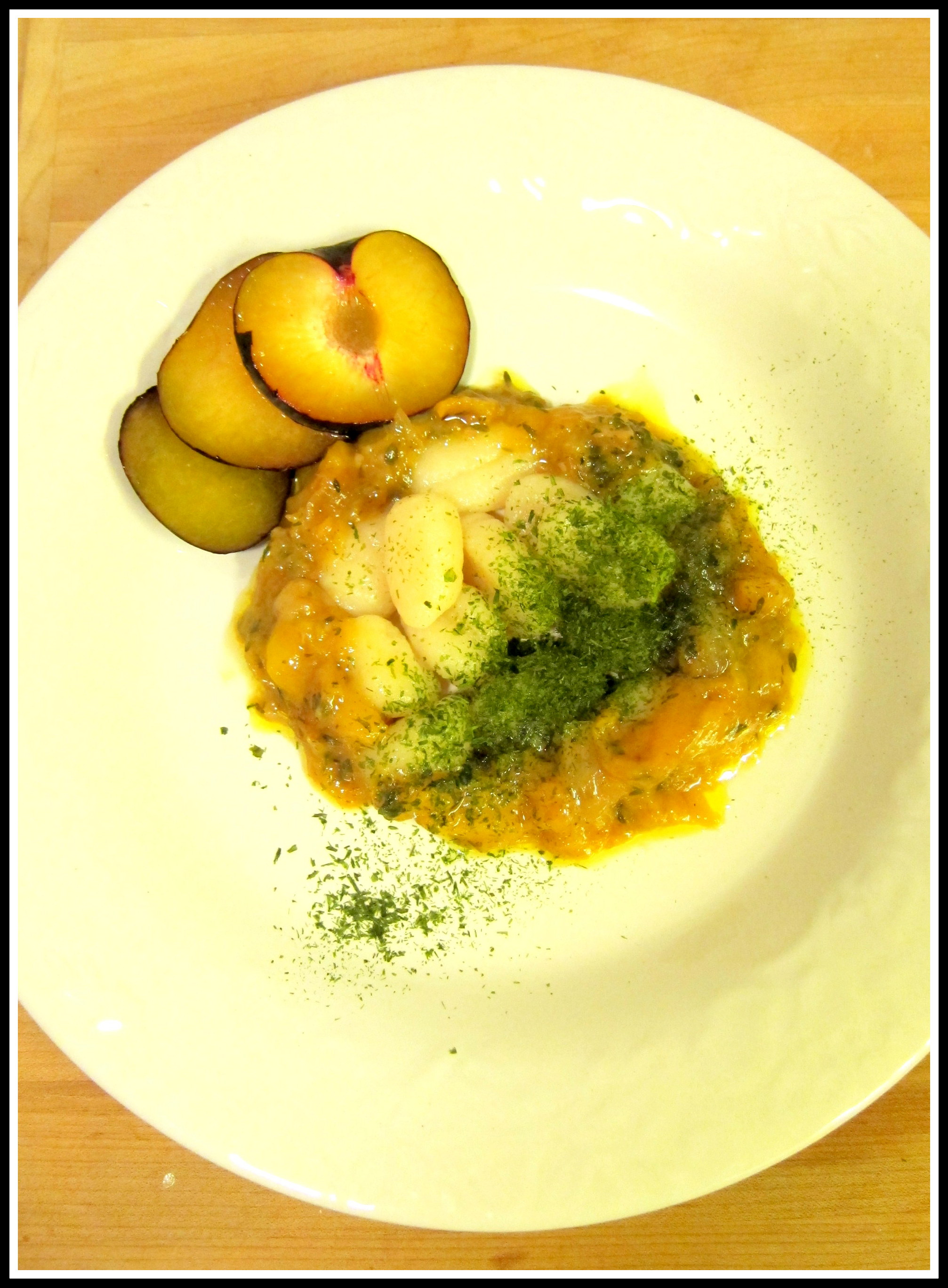

Basic Peach Sauce (adapted from Mario Batali’s Basic Tomato Sauce)
(make 2 cups)

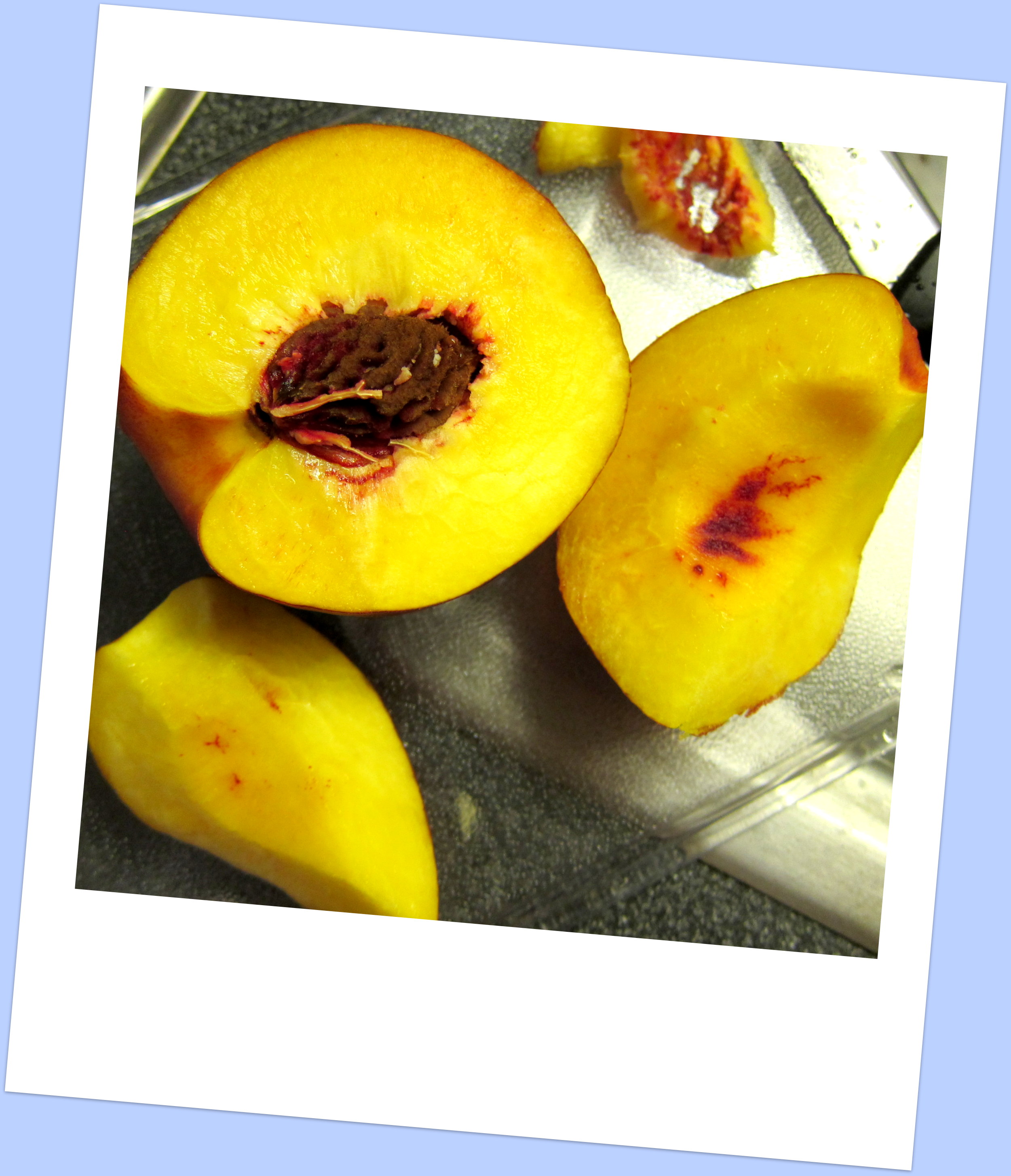
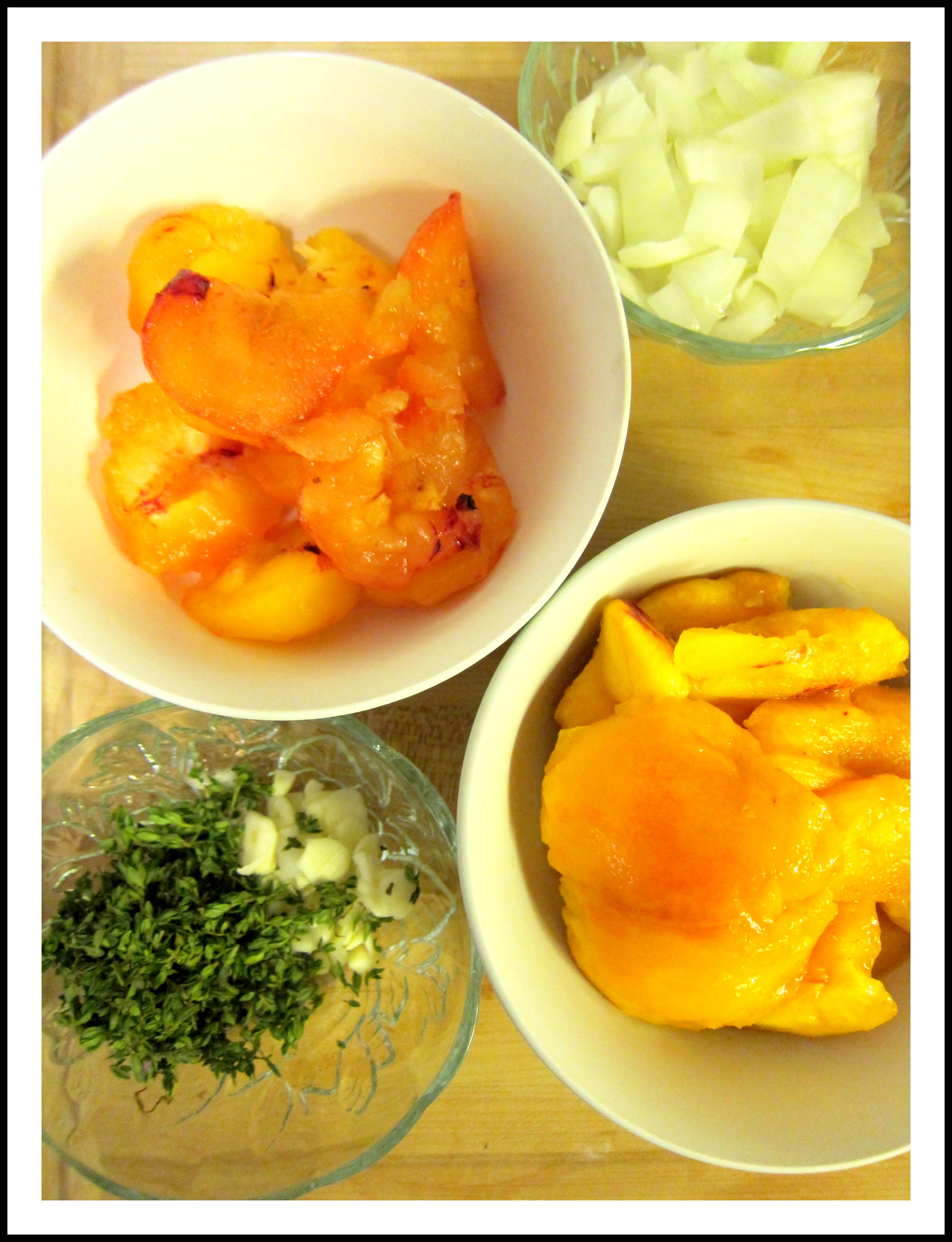
– 3 peaches (let it ripe until it’s a little mushy), peeled, pitted and mashed by hand
– 4 plums, peeled, pitted and mashed by hand
– 1 onion, diced
– 4 cloves of garlic, thinly sliced
– 1/4 cup olive oil
– 2 tbs chopped fresh thyme leaves (I use lemon thyme, it makes the whole room aromatic!), or 1 tbs dried thyme
– salt

In a 3-qt saucepan, heat the olive oil over medium heat, add garlic and onion, saute until soft and slightly brown. Add thyme.
Add peach and plum, bring it to a boil. Simmer for about 30 minutes, stir often (the peach likes to stick to the bottom). Season with salt and serve. (I use it with sweet potato gnocchi)
According to Batali: “this sauce holds for 1 week in the fridge or up to 6 months in the freezer“.

This is my third and last session with peach this season, the first two are Peach Mul Naengmyeon and Bouquet Peach Gyoza.
Tags: , ,

For the Summer: Gyoza with Fruits and Flowers

August 03, 2012 By: Mai Truong Category: Fruits, RECIPES, savory snacks, Vegan, Vietnamese


What can you do with 24 squash blossoms?

Twenty-four is too few for squash blossom canh, a clear soup that Mom used to make when I was little. The flower is the only thing of a pumpkin plant (squash blossom in Vietnam is pumpkin blossom) that I didn’t mind eating (I hate pumpkin). The flowers perish too quickly that American grocery stores almost never carry them(*). That scarcity, I can only guess, also raises them to the exotic level that makes the modern American restaurants include the word in their menu around this time of the year (summer squash blossom season) and feature a mere 3-5 flowers on a plate amidst the more common vegetables like zucchini and cauliflower. The craze has been around for at least a decade, Carolyn Jung said, and I don’t see it wilt away anytime soon.

Although I dislike the place at first because it’s always too crowded, Berkeley Bowl gradually grew on me. It started when I realized, after many years away from Vietnam and living just a bit inconveniently far from the Asian markets, that I haven’t seen certain grocery items for ever, for example, woodear mushroom (nấm mộc nhĩ) and straw mushroom (nấm rơm). Then one day I ran into them at Berkeley Bowl. I was like, oh? they have that here?! It’s a great moment. One where you reunite with old friends, and if we should speak in grand terms, it reminds me to appreciate growing up in Vietnam and in my family, the lack of either component would have resulted in a much, much poorer experience with food.

Sometimes that great feeling clouds my better judgment. You know, when people dig out a picture of their middle school gang from a notebook, buck teeth and silly hair or whatever, they feel compelled to put it on Facebook. When I saw the squash blossoms at Berkeley Bowl, I felt compelled to get them home. Not that I knew what to do with them or had time to cook them.


Mom suggested stuffing them with ground pork. I’ve had them stuffed with cheese and batter-fried. But it’s summer. Peaches are in season. This something I make with squash blossoms should taste light and fresh like the flowers it bears.

Bouquet Nectarine Gyoza
– Squash blossoms (the male blossoms, because they’re big enough to stuff)
– medium firm white tofu
– gyoza skin (wrappers)
– 1 yellow nectarine, diced (If you use peach, peel off the skin because peach has fuzz)
– sugar, salt, pepper to taste
– a steamer

Rinse the squash blossoms under cold water, peel off the dark green spikes at the base. Also break off the stem, if there’s any.
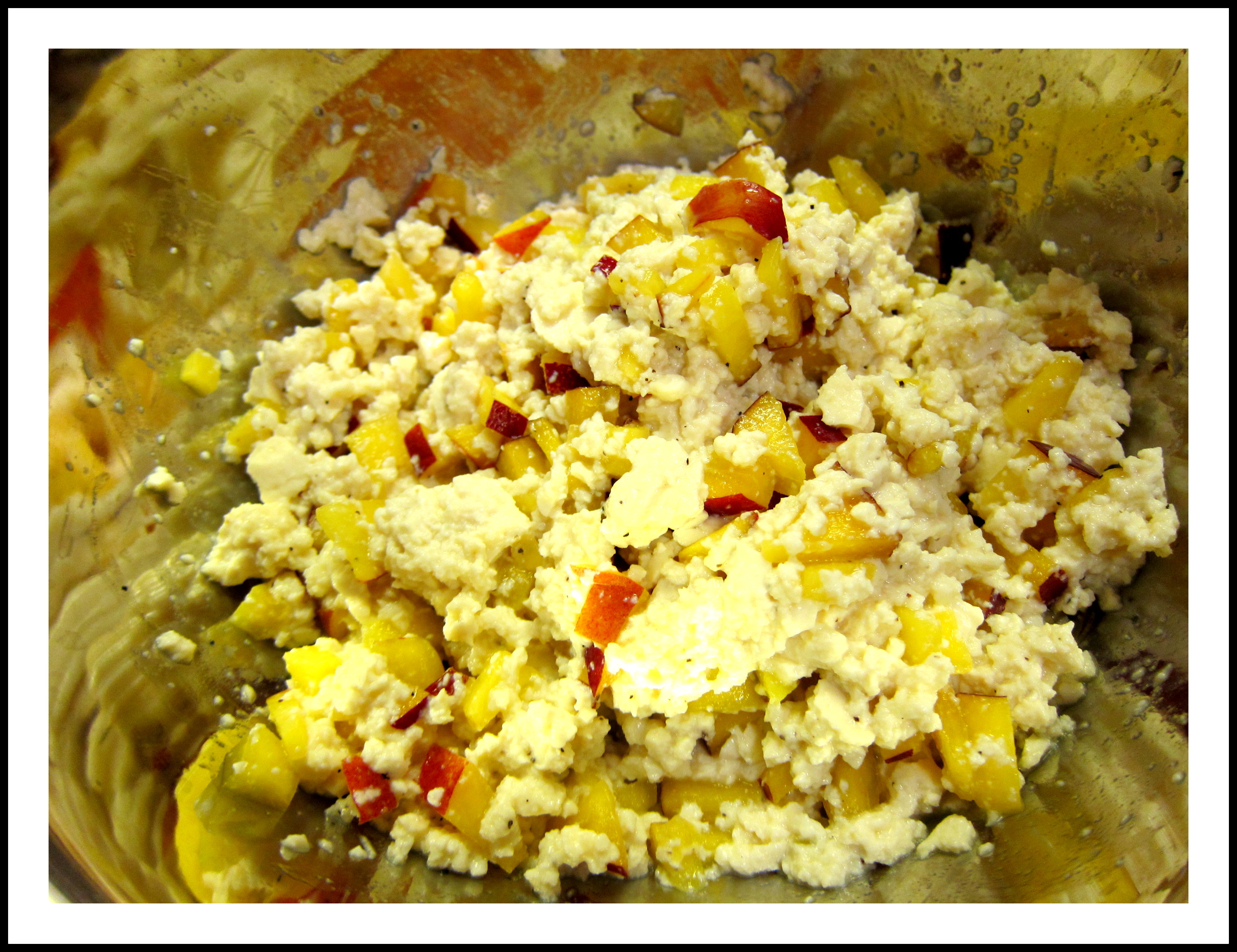
Mash the tofu by hand while mixing it with the diced nectarine. Add salt, sugar and pepper to taste.
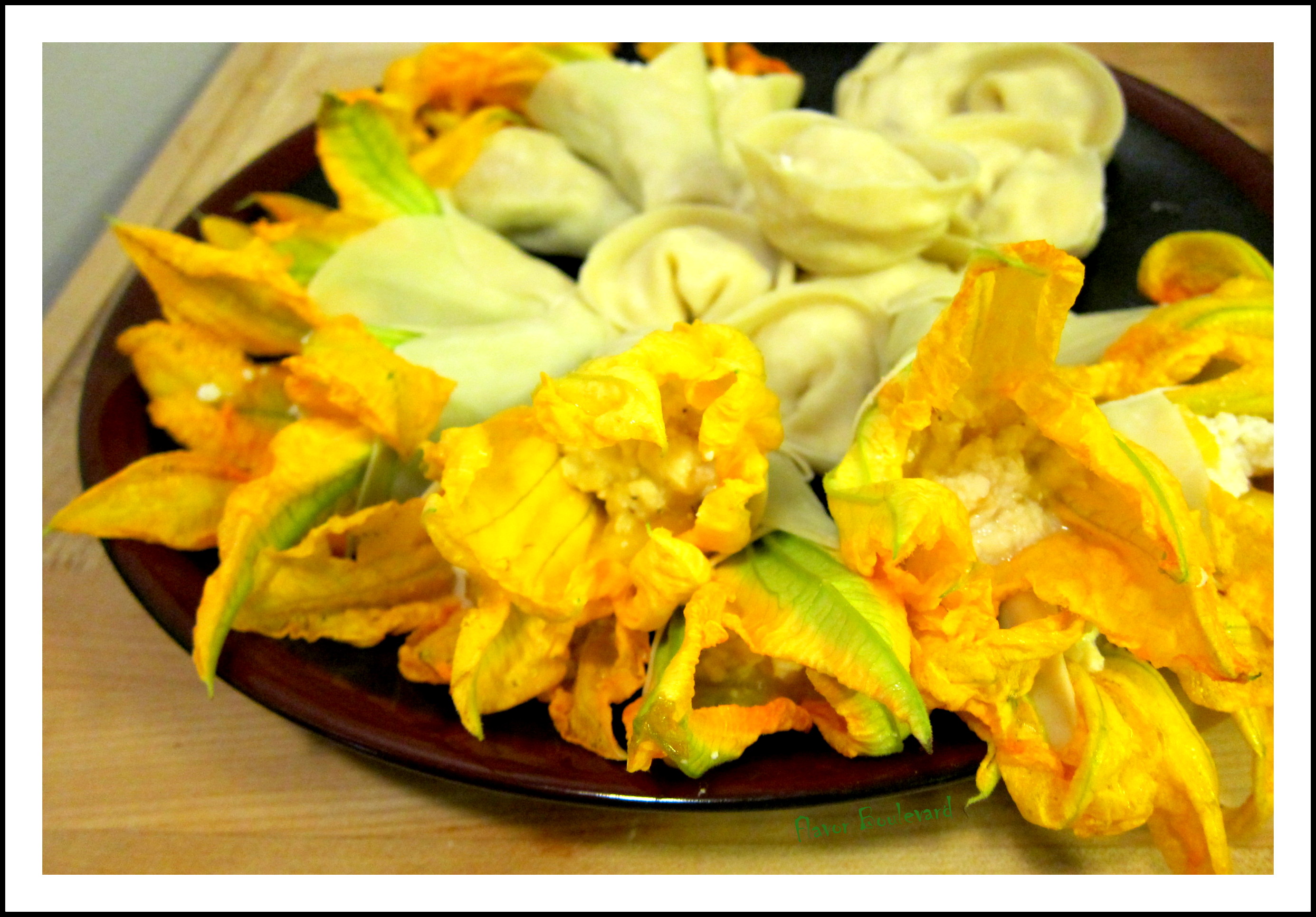
Gently stuff the nectarine-tofu mix into the squash blossom.
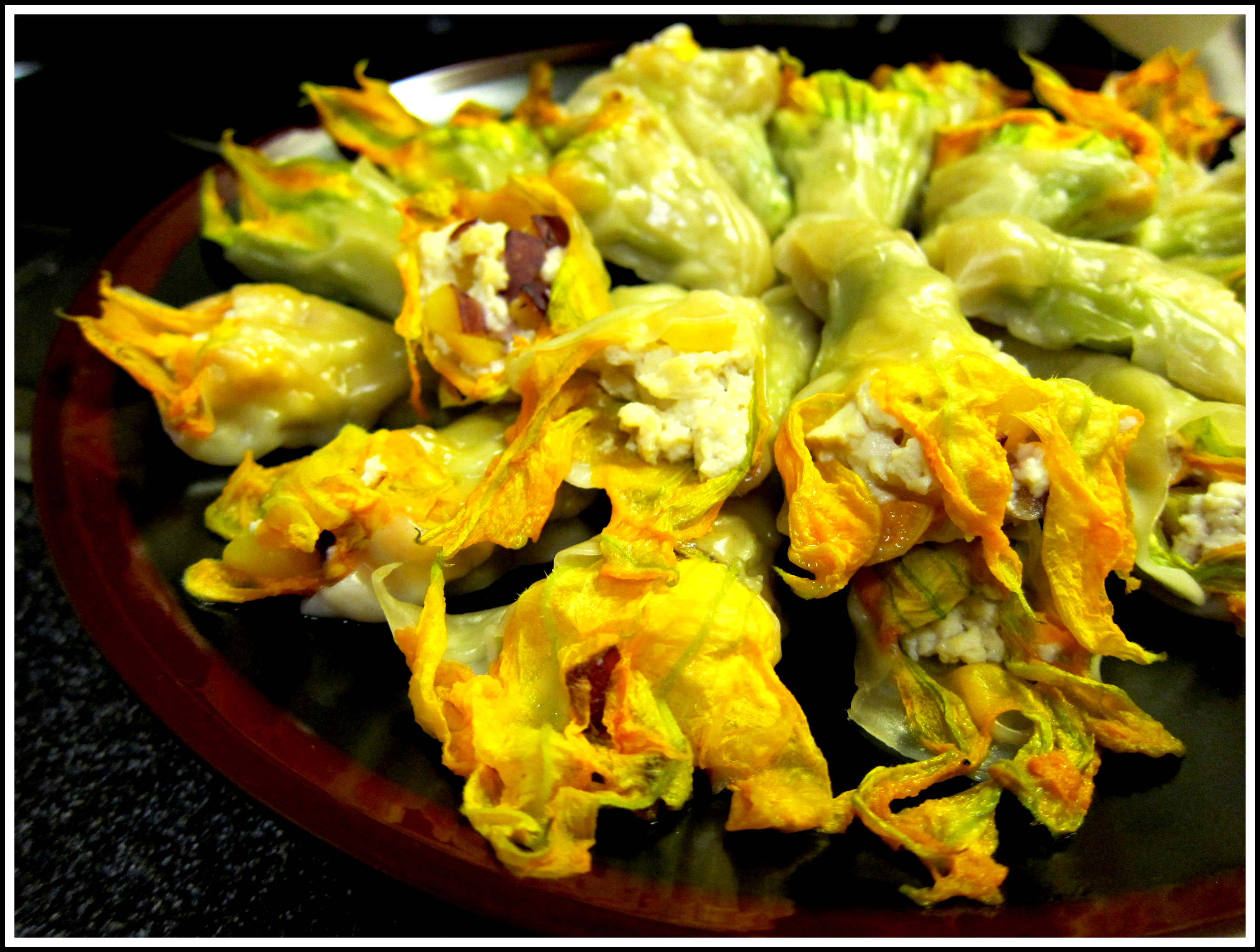
Wrap a gyoza skin outside the blossom, leaving at least the top half of the petals exposed.
Steam until the gyoza skin turns translucent (5-10 minutes). The flower petals will wilt but still retain their color and the bottom half should still be a tad crunchy.
Take out and let cool.

UPDATE: pan-fried these to make them taste better (albeit less healthy  :-D)


(*) Every website I’ve looked claims that squash blossoms can only stay fresh in the fridge up to 2 days under precise condition. Well, what you see in the picture “pre-steamed gyoza” are squash blossoms after 8 days in the fridge.

Ten-minute noodle and nectarine

August 01, 2012 By: Mai Truong Category: Korean, noodle soup, RECIPES


It’s summer. Time for cold noodle. Refrigerated, ice-cold noodle. And all it takes is 10 minutes (that includes water-boiling time).

Traditionally, the Koreans sweeten mul naeng myeon (물 냉면, “water cold noodle”) with sliced Asian pear and julienned cucumber. Asian pears are not yet in season (I don’t really know when its season is, but the tiny ones at Berkeley Bowl look too sad to slice), and when I want to cook my naeng myeon, like always, I never have what the recipe calls for, even if it’s just cucumber. So I did what everyone would.

I ignored the recipe.


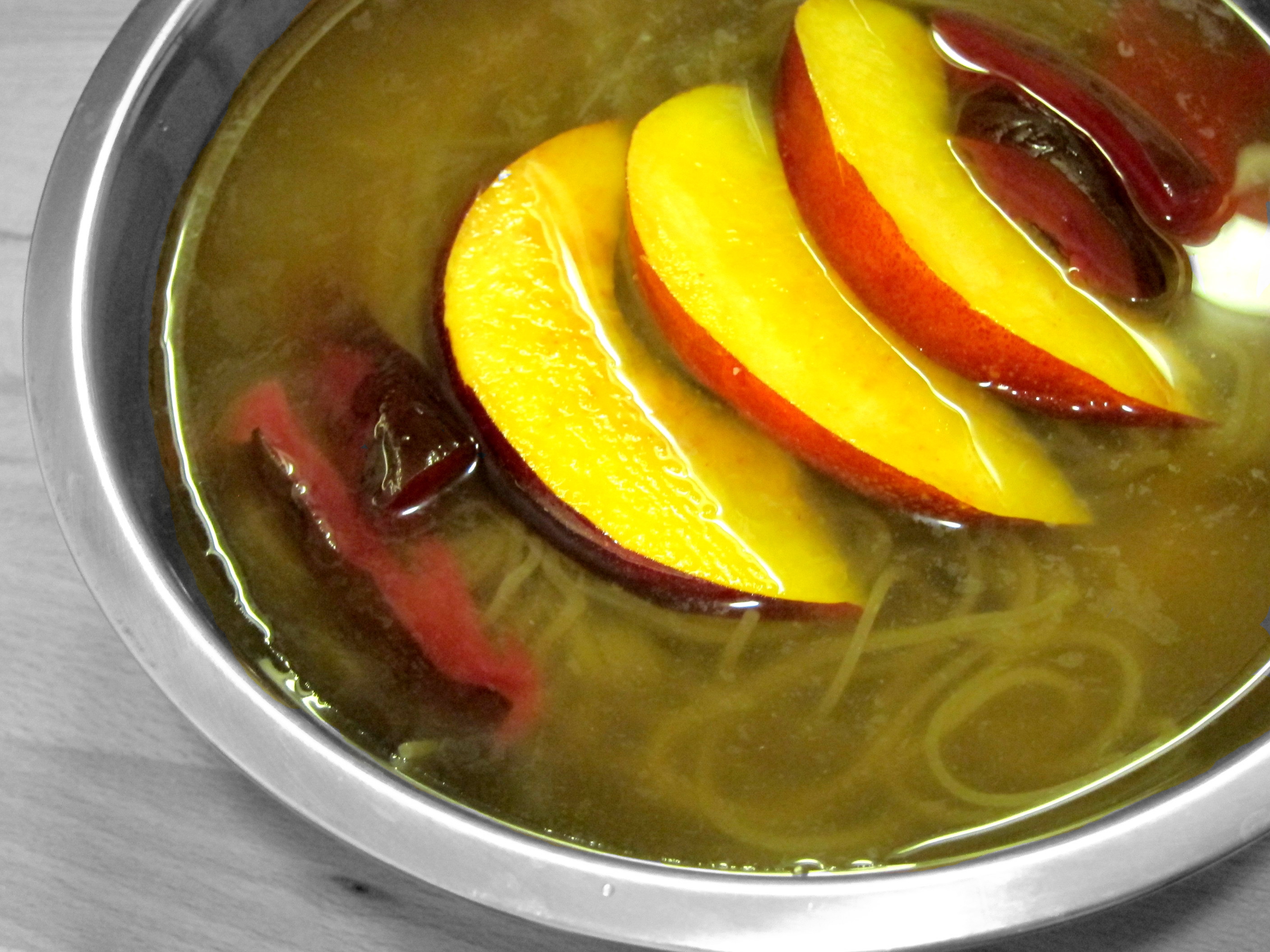
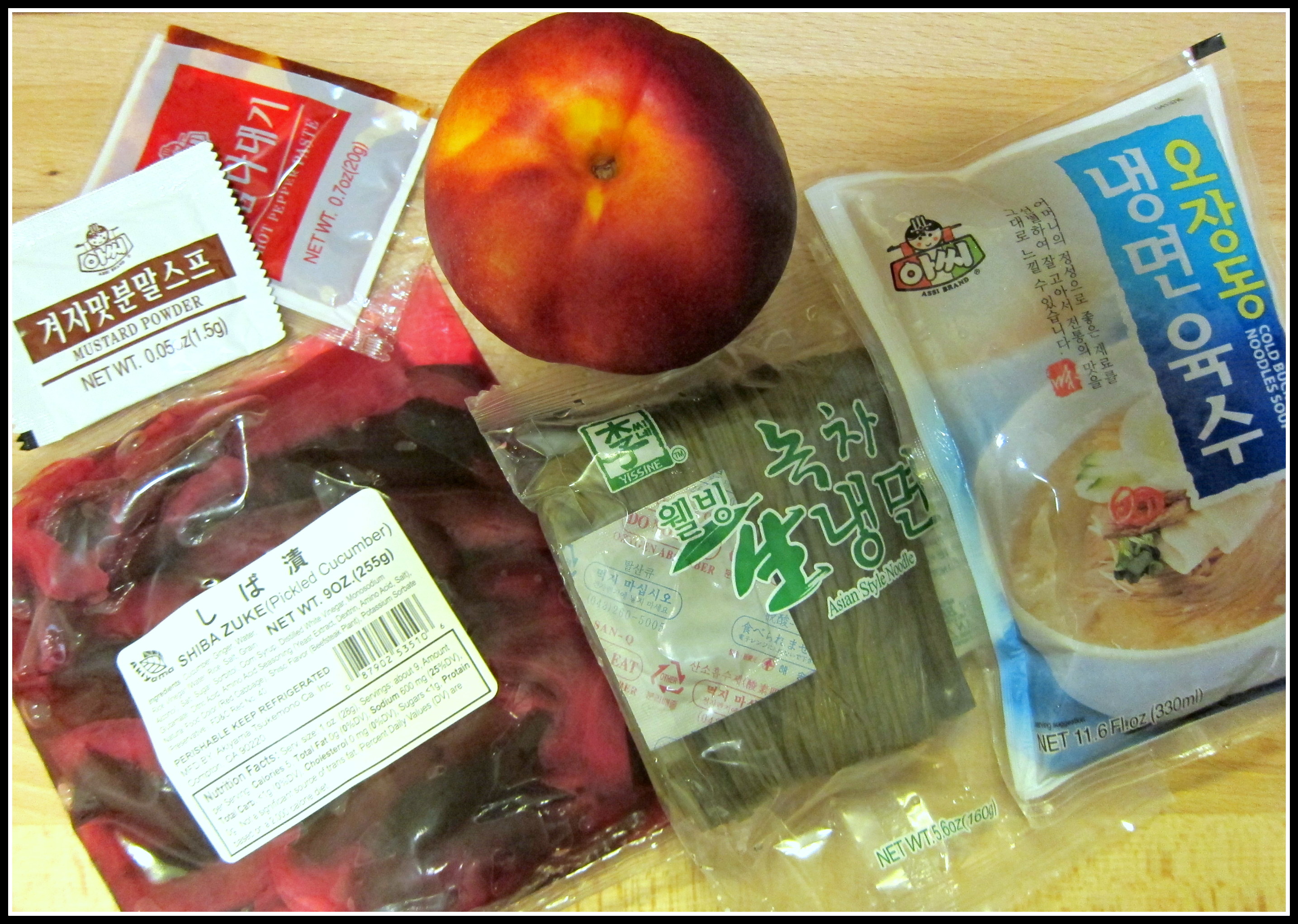
I used nectarine in place of pear and pickled cucumber (shiba zuke) for fresh cucumber. Works out great. Nectarine is sweeter than pear. 🙂


Almost-instant Korean Cold Noodle with Nectarine (make 1 serving)

– 1 bag of mul naeng myeon (물 냉면) (can be found at your local Korean market). This thing contains 2 packets of buckwheat noodle, 2 packets of cold broth, 2 packets of mustard seed, 2 packets of pepper paste (in case you just want naeng myeon without mul (water)). Just take 1 of each.
– 1/4 slightly unripe nectarine, sliced
– a few pieces of pickled cucumber (shiba zuke)
– water
– a pot

Boil water. Cook the noodle in 1 minute, then drain under running cold water. Let cool. Slice the nectarine.
In a bowl, place the noodle, top it with pickled cucumber and nectarine. Pour the chilled broth. Add the mustard seed if you like. Put the bowl back into the fridge to make it colder.
Quench your thirst.