Flavor Boulevard

We Asians like to talk food.
Subscribe

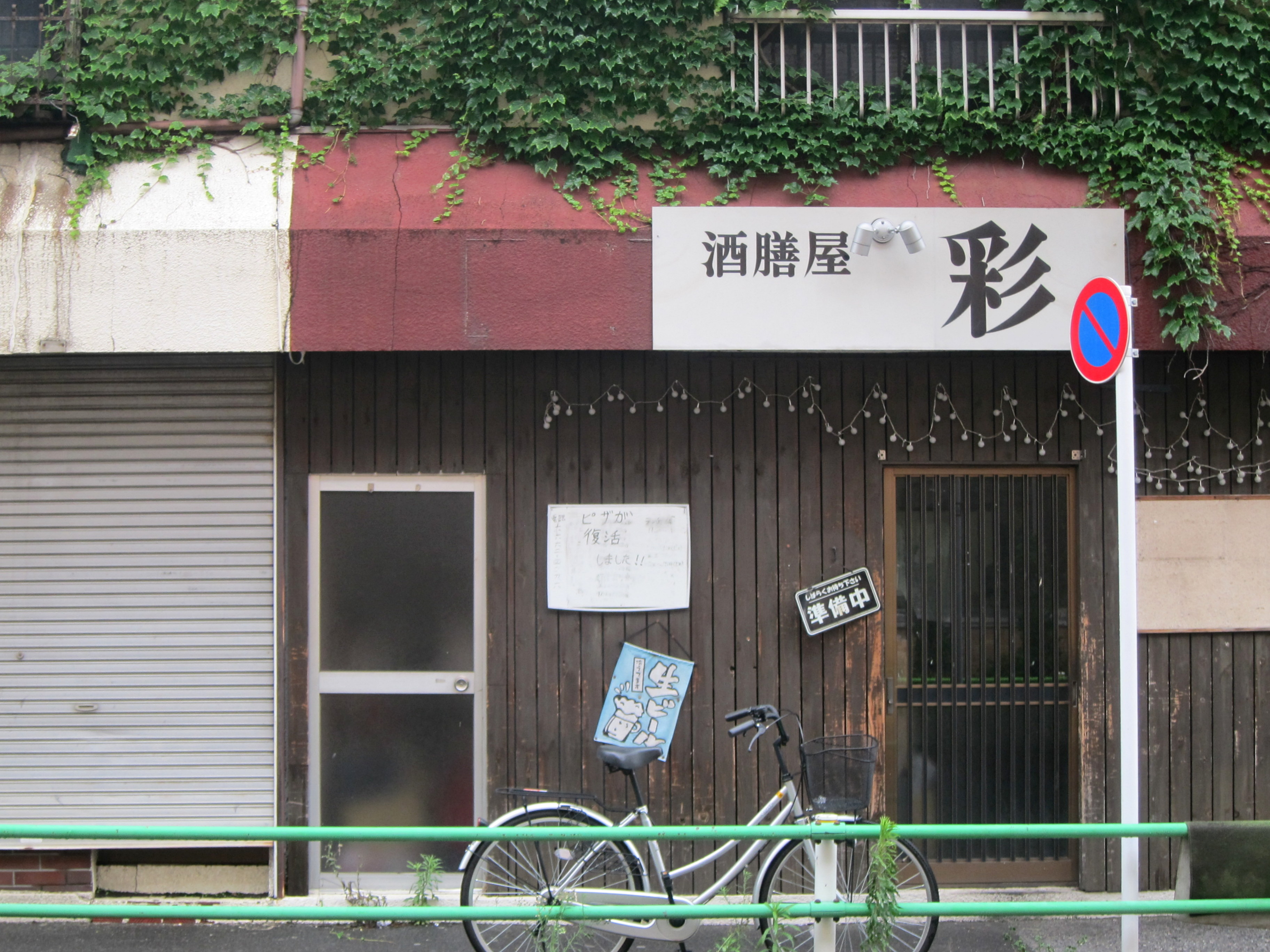
Sai the Izakaya

December 15, 2014 By: Mai Truong Category: Comfort food, Flavor Japan, Japanese, Travel

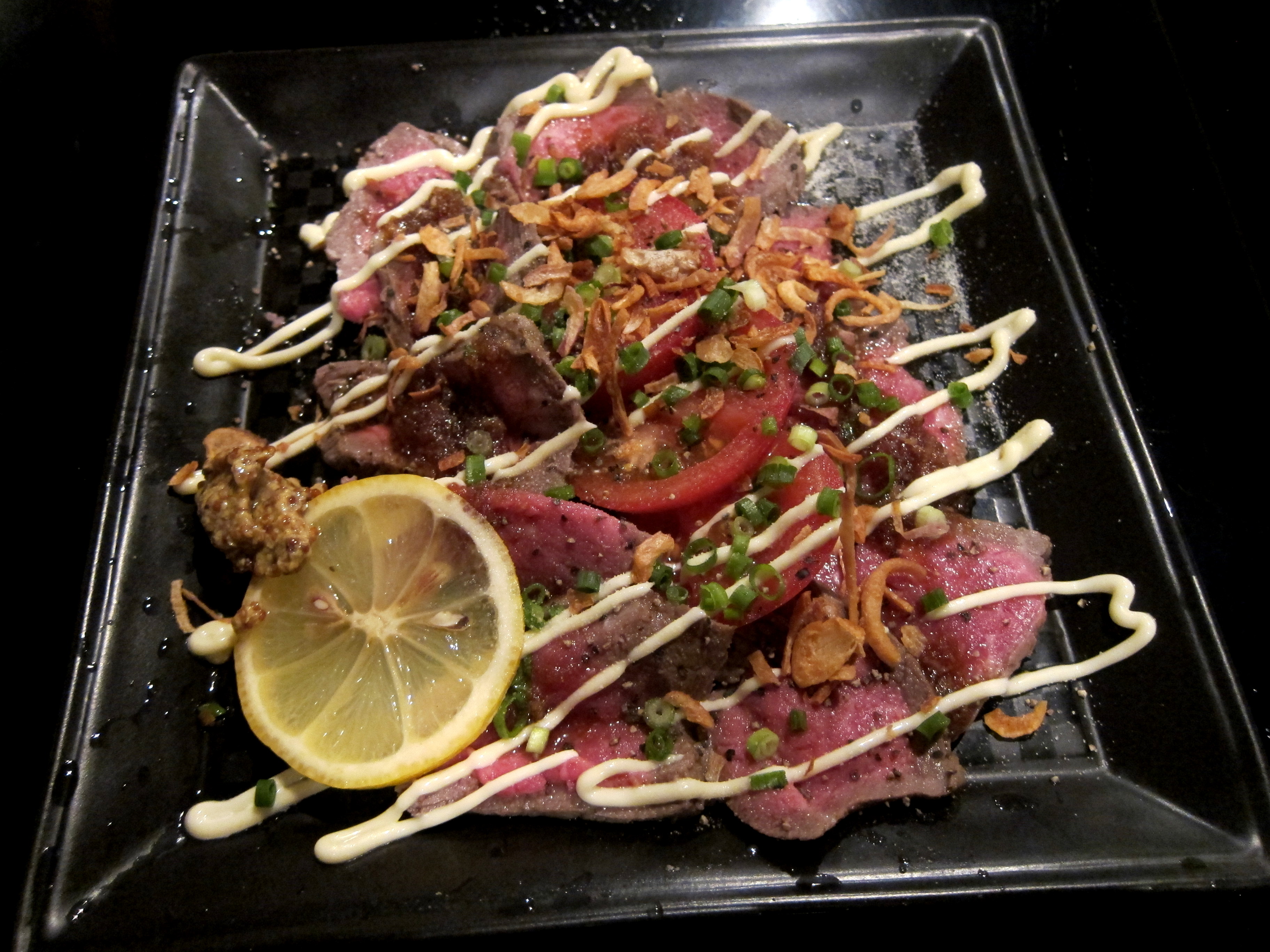
sai-beef
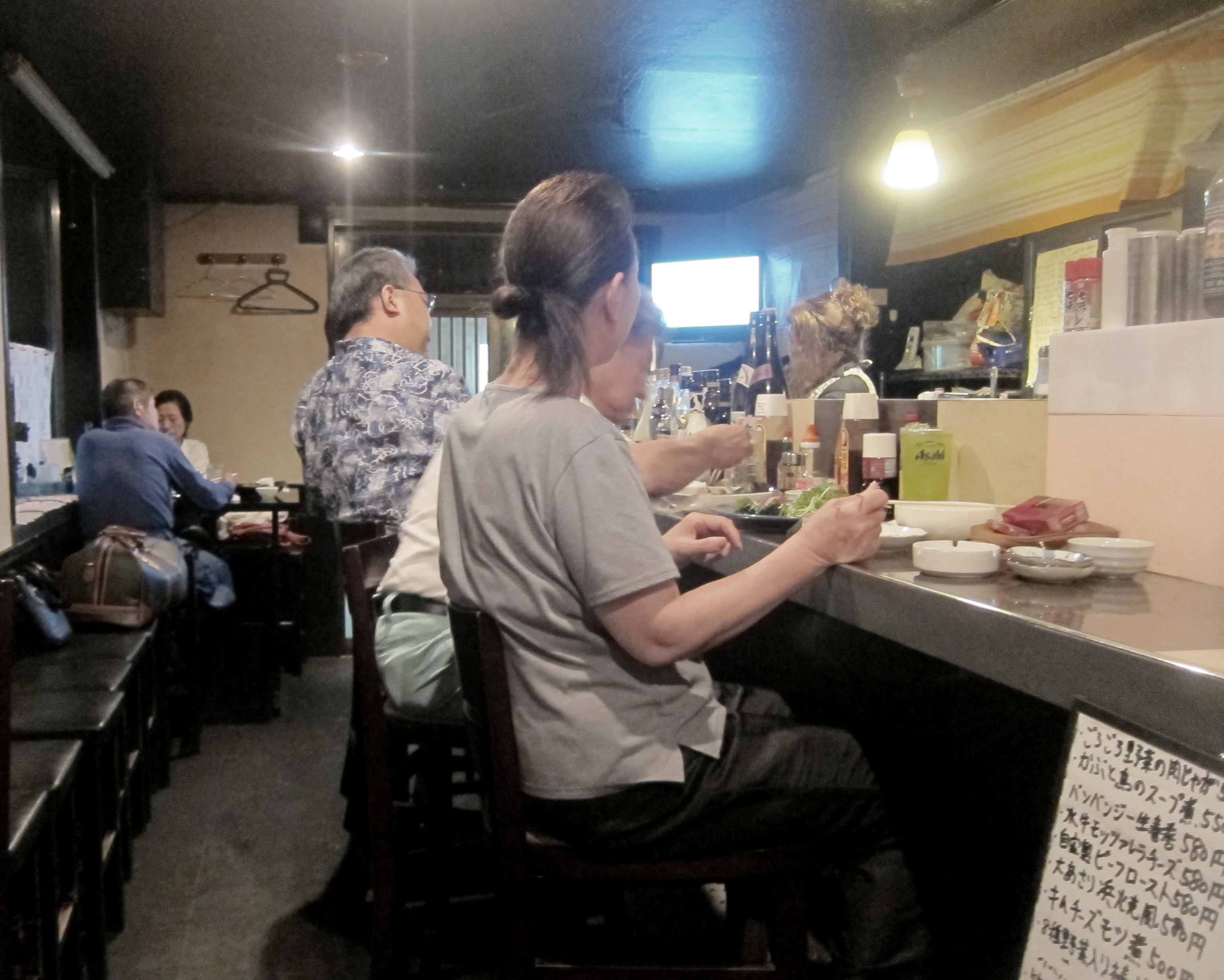
Izakayas in the Bay Area mostly target customers with a lot of money to spare (looking right at you, Ippuku!). Although there are merits to that (it costs to support local business and ethical ways of raising animals), a meal at these places is just not the same as sitting in a small neighborhood izakaya, talking to the chef who’s cooking 5 feet away from you, smelling the smoke from both the food and the tobacco of the nearby customer (who you may know by name), and inhaling your food, which comes in big bowls, to your heart’s content. I love neighborhood izakayas in Tokyo.

sai-near-kameari-eki sai-menu
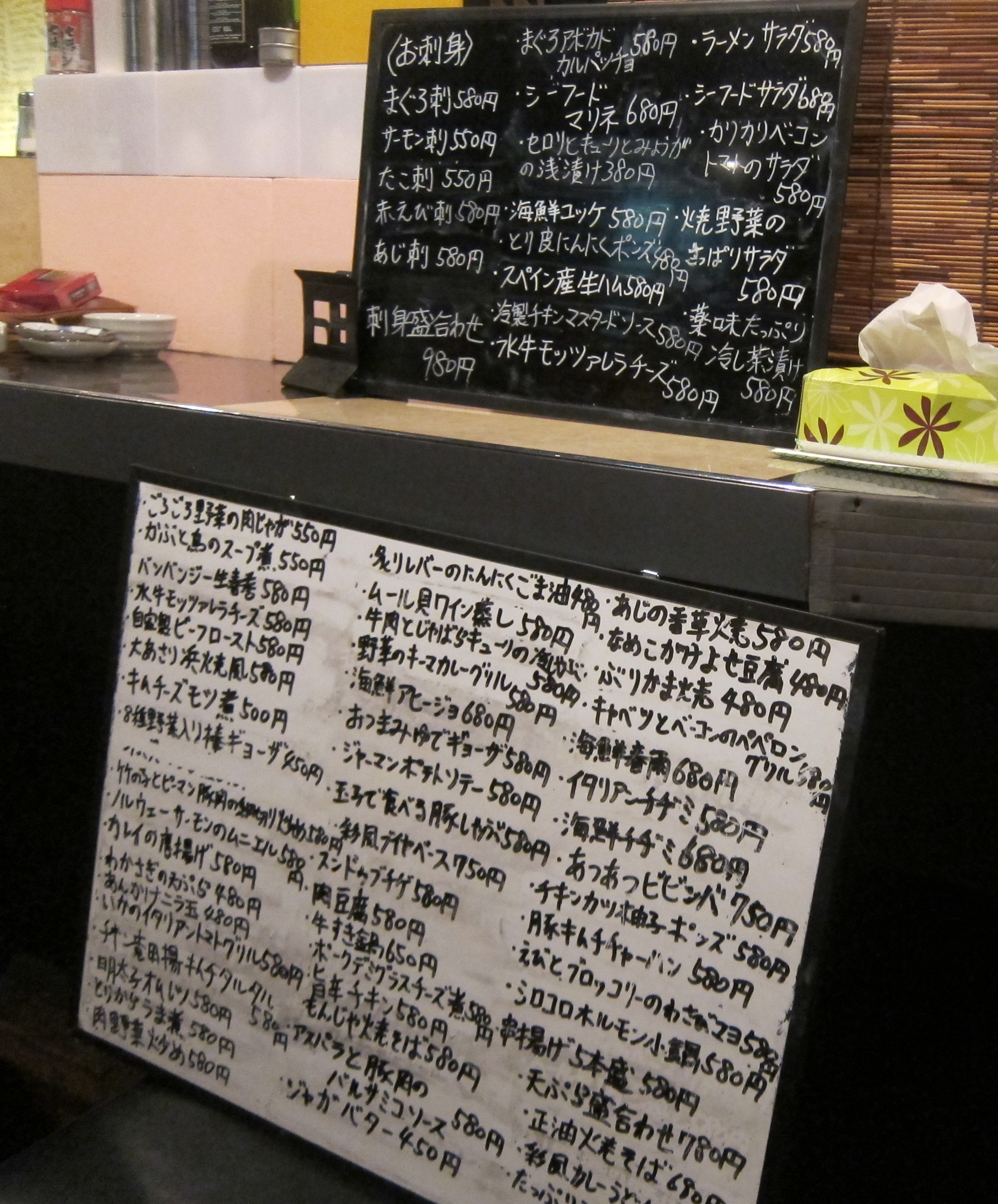
Sai is one of them. This place jumps to mind when I think of izakayas nowadays. One big reason is that when I had a homestay in Japan, my host family took me there one night and it was a perfect family experience. If I had discovered the place myself (which I’m not sure is possible), I wouldn’t know what to order (the menu is 90% kanji @_@), I wouldn’t have had two parental figures to share the meal with (traveling alone makes you want to spend time with your parents more, doesn’t it?), nobody would have introduced me to the chef, and the chef wouldn’t have encouragingly complimented my mediocre Japanese.

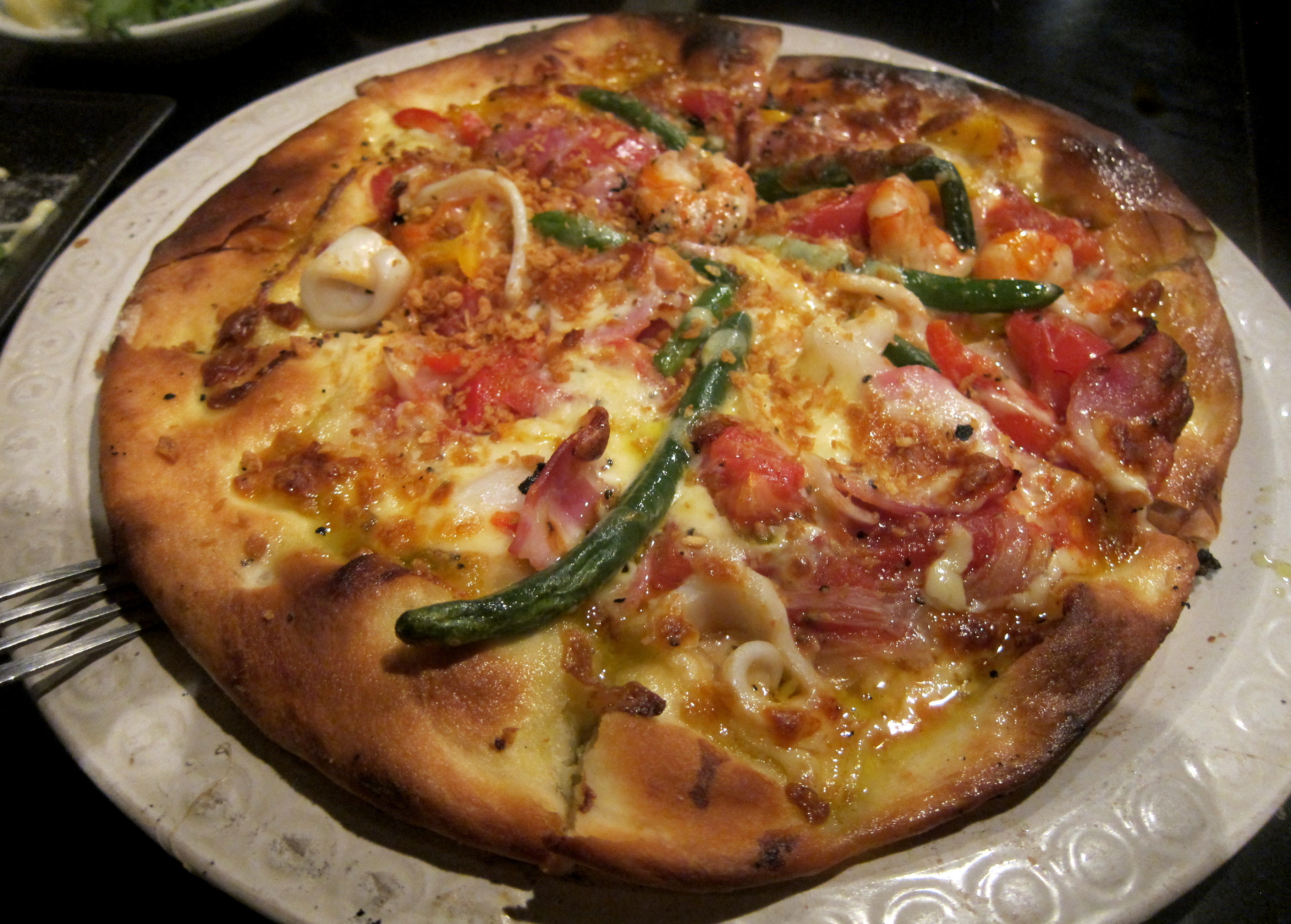
Another reason is that Sai has crazy good comfort foods, one of which is the chef’s homemade pizza.

sai-pizza
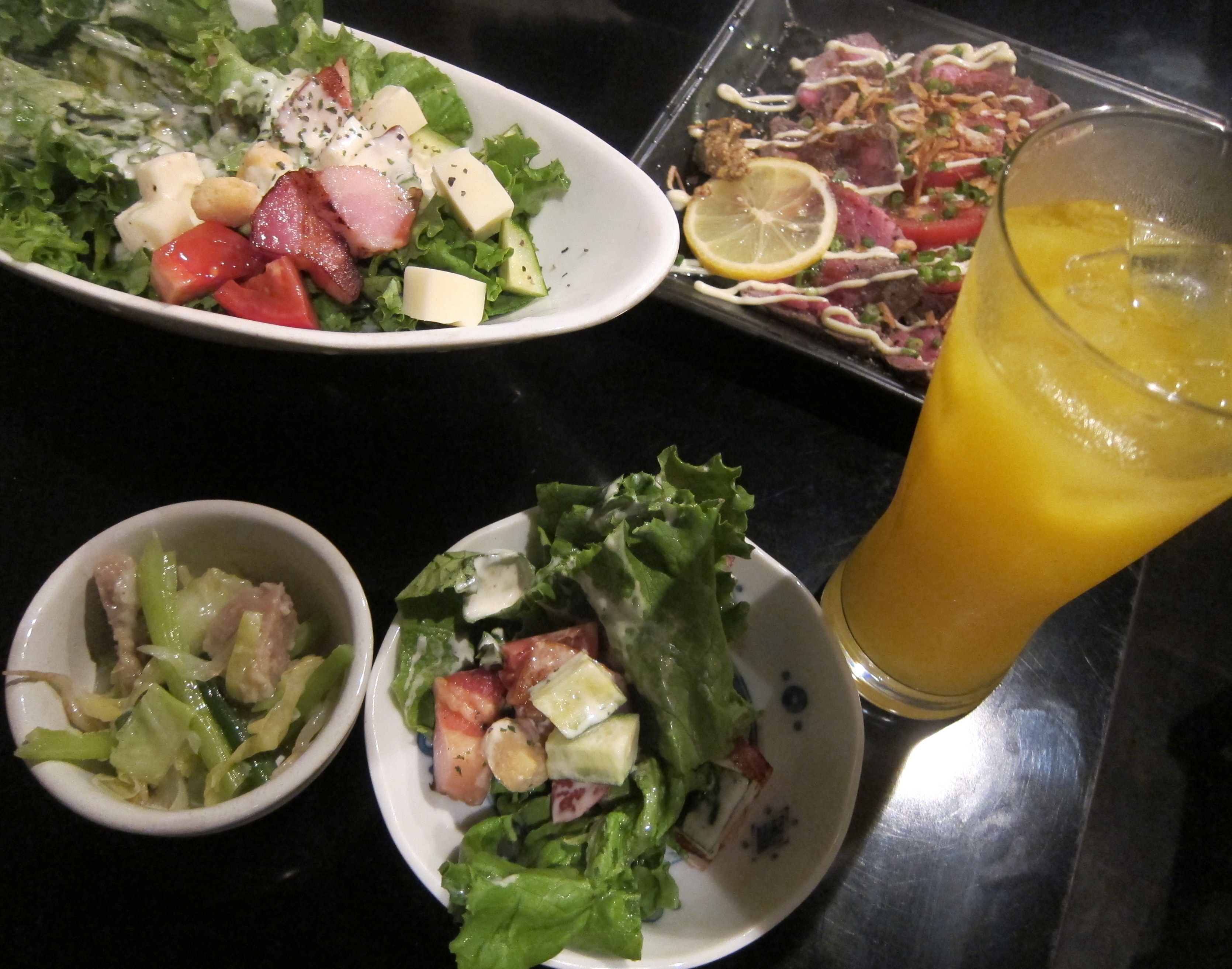
The salad with tomato, ham, cheese and a special dressing:

sai-salad
(Koichi san, my host dad, told me that at izakayas, you have to order a drink (non-alcoholic is okay), ordering water is rude because water is free and izakayas are drinking establishments. Hence the orange juice for me…)

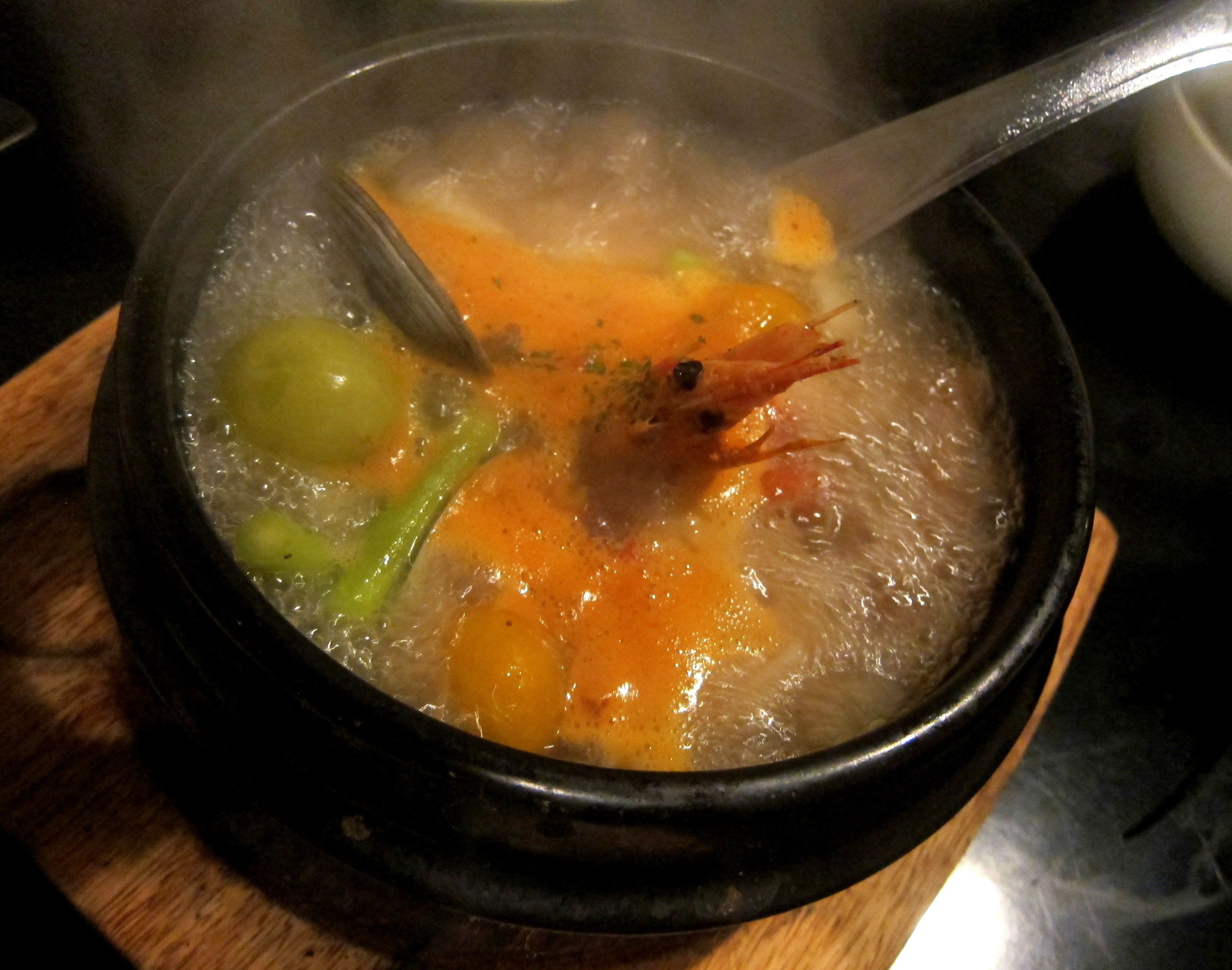
And the bubbling hot seafood soup with a cute big shrimp:

sai-seafood-soup
The soup is reddened with tomato, not chili pepper, which makes it fully enjoyable for cat-tongue people like me and perfect for all weather.

sai-inside
I don’t know what these dishes are called in Japanese (my best bet is the pizza, but there are different types), and no way am I going to read that kanji-full menu in a tolerable amount of time before the chef thinks I’m just there to read the menu (T__T). When I come back to Sai, they won’t be the same dishes, but as long as the chef is the same, a hearty feast is guaranteed.

Address: Sai (彩)
About 0.5 mile south of Kameari station (Katsushika), in 2 Chome, near Welcia Katsushika Kameari Shop

Sushi California – great sushi, even greater korokke

July 31, 2013 By: Mai Truong Category: California - The Bay Area, Comfort food, Japanese

sc-49'er-roll
For a while I knew nothing about Japanese food, then within less than one year, I’ve found three places in Berkeley to satisfy my Japanese cravings. To get yakitori, guaranteed quality and to impress friends, I go to Ippuku. For a homey meal at affordable price and convenient distance, I swing by Musashi. For sushi and croquette, Sushi California tops the list.

Its name is generic and its location rather hidden, had Kristen not shared a Berkeleyside review on my Facebook wall some time ago, I would never have noticed Sushi California, much less tried (I tend to stay away from generic names because they often imply generic food). Then Kristen totally forgot about the place. One day I asked her “wanna try Sushi California?”
– What’s that?
– The place you posted on my wall…
– …

The biggest reason that I remembered Sushi California before going there was this line in Anna Mindess’ review: “Chef Arakaki admits that he used to offer other Okinawan classics like goya champura (sautéed bitter melon) but they did not sell well.” I love bitter melon, and even more than that, I love ethnic restaurants that try to offer regional specialties, which often go unnoticed by foreign customers and are eventually taken off the menu. (This is why it’s so hard to find decent traditional food in America, regardless of what cuisine you’re looking for.) So, in some way, I liked Sushi California even before I went. I didn’t hope to see bitter melon there now, but what was there was more than enough to keep me coming back.

Black seaweed salad

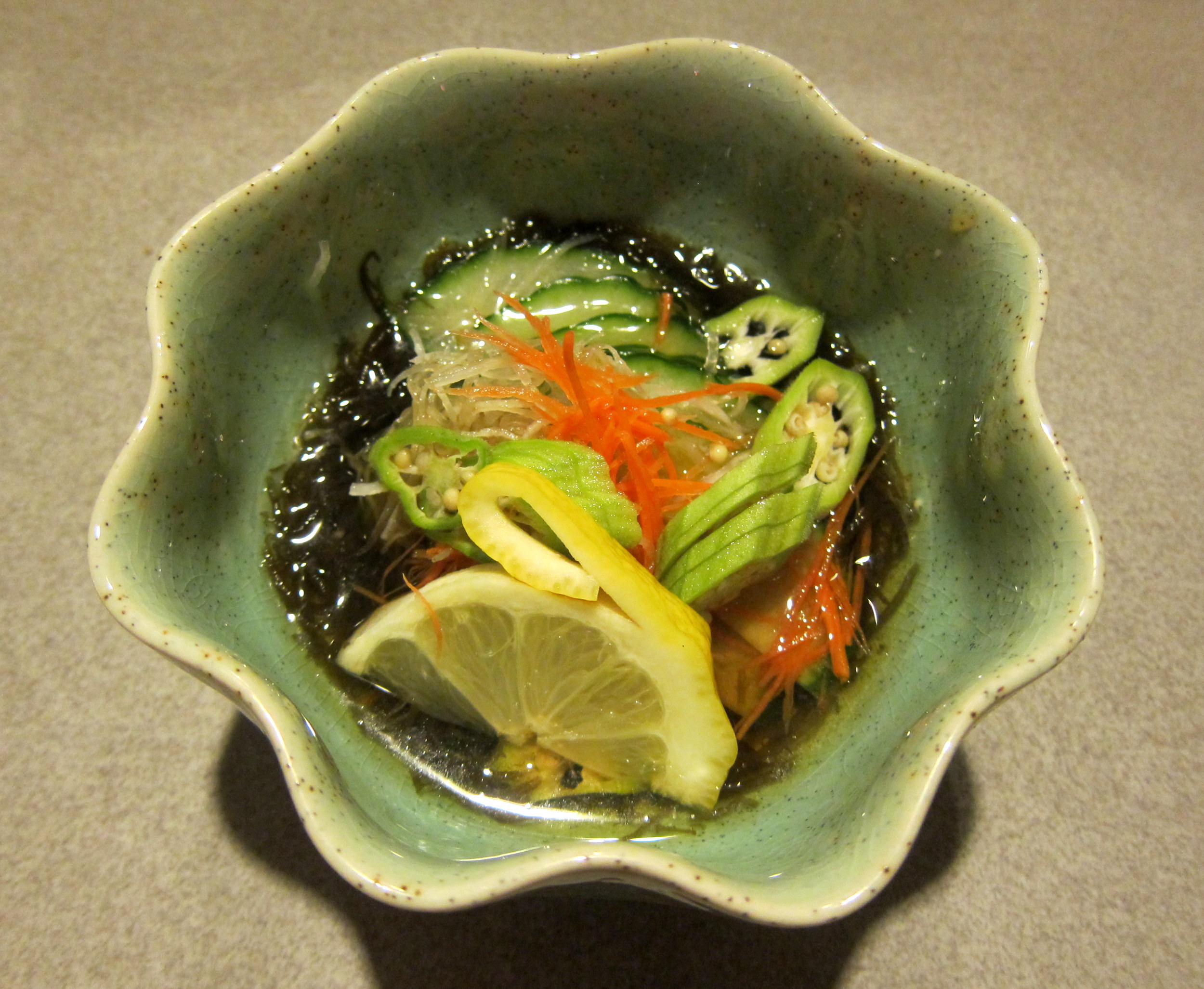
Black seaweed salad ($4.45) – mozuku seaweed, cucumber, raw okra and lemon – Slimy okra isn’t my thing but this salad was so cold, so refreshing. Perfect summer food.

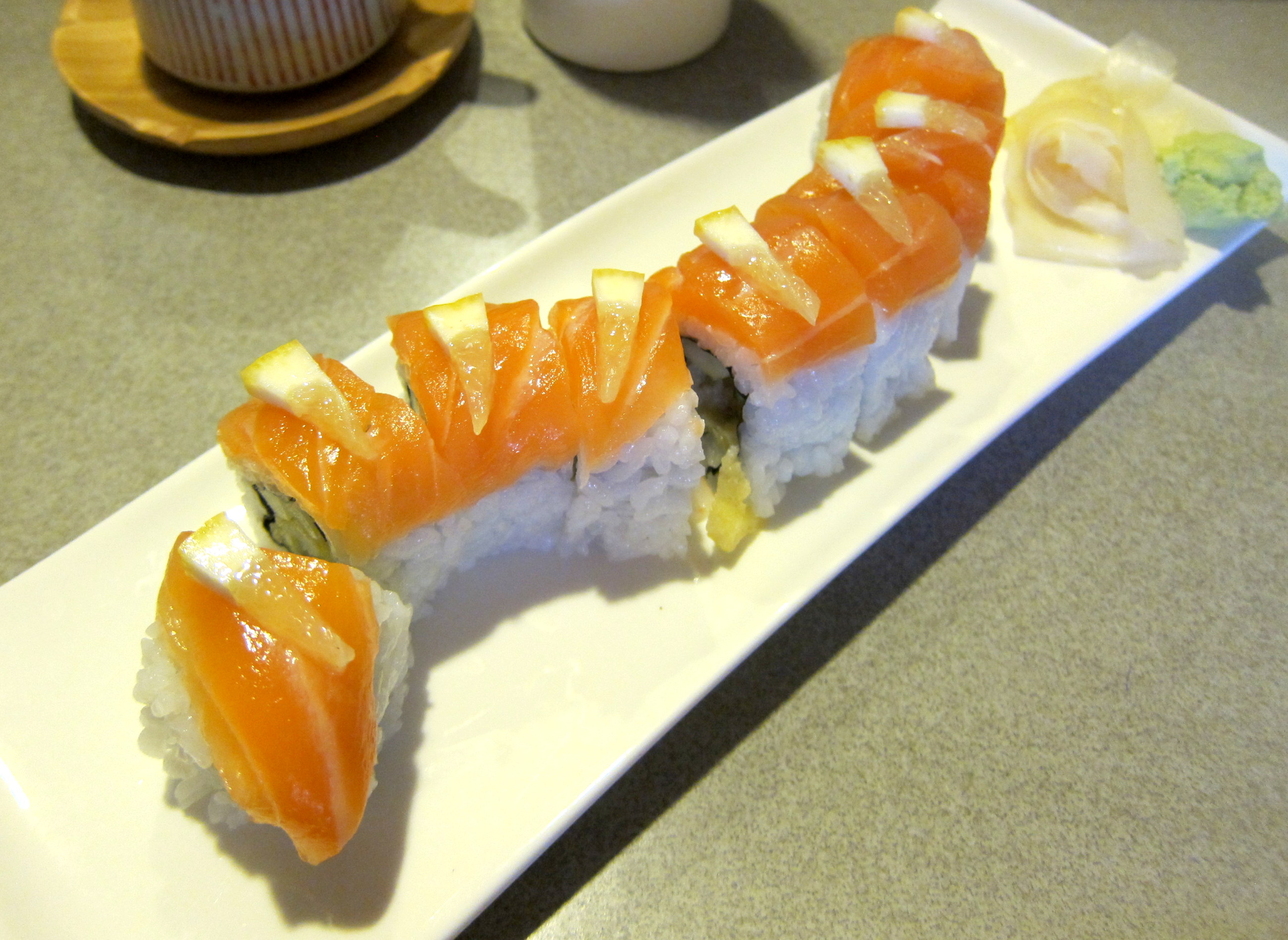
49'er roll - salmon

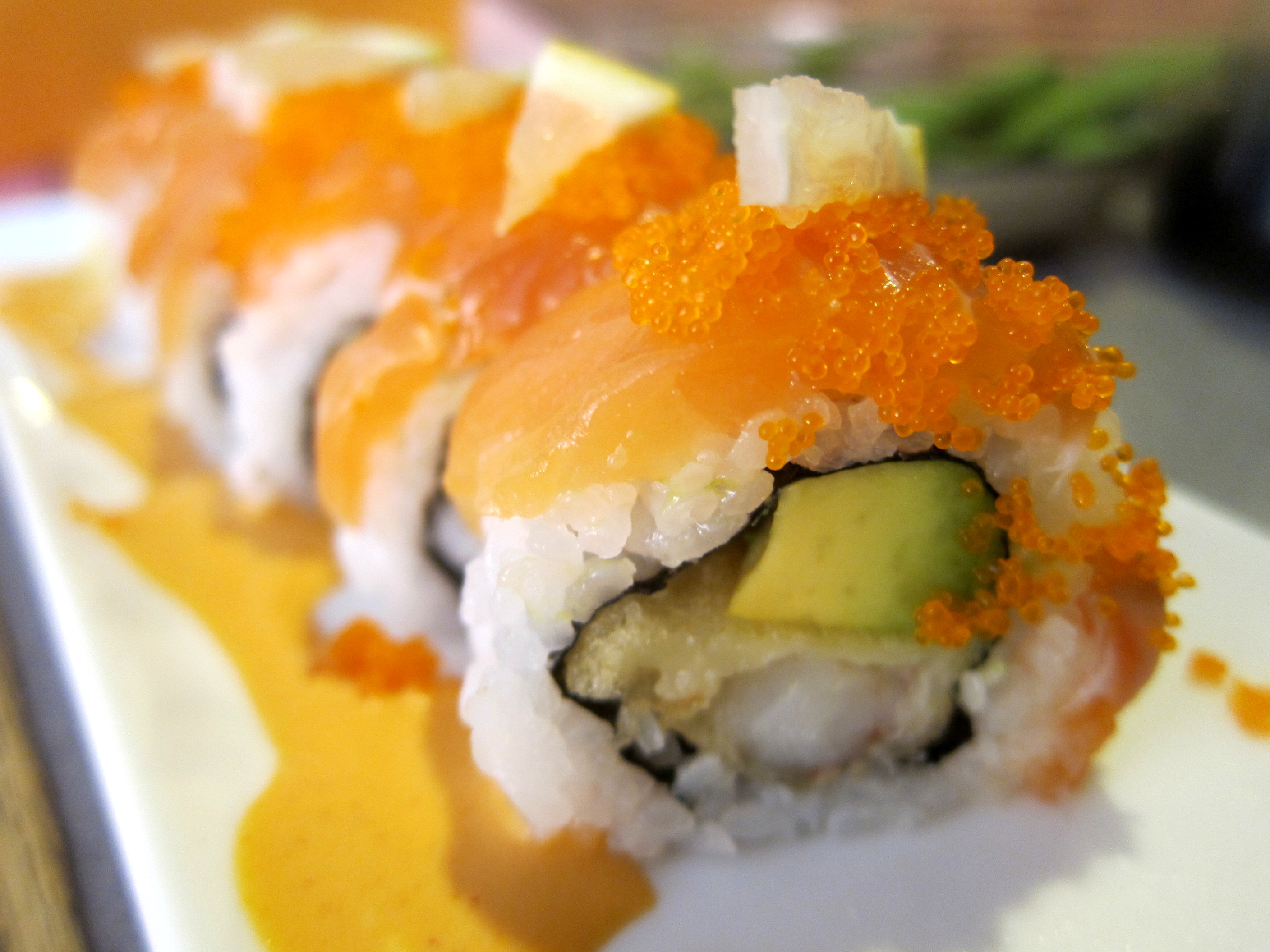
49’er roll ($9.95) – salmon and stuff. EXTREMELY refreshing. The lemon brightened up everything, the chewy salmon on top complemented the shrimp tempura inside. I was too busy inhaling it to notice any room for improvement, but I doubt there was any.

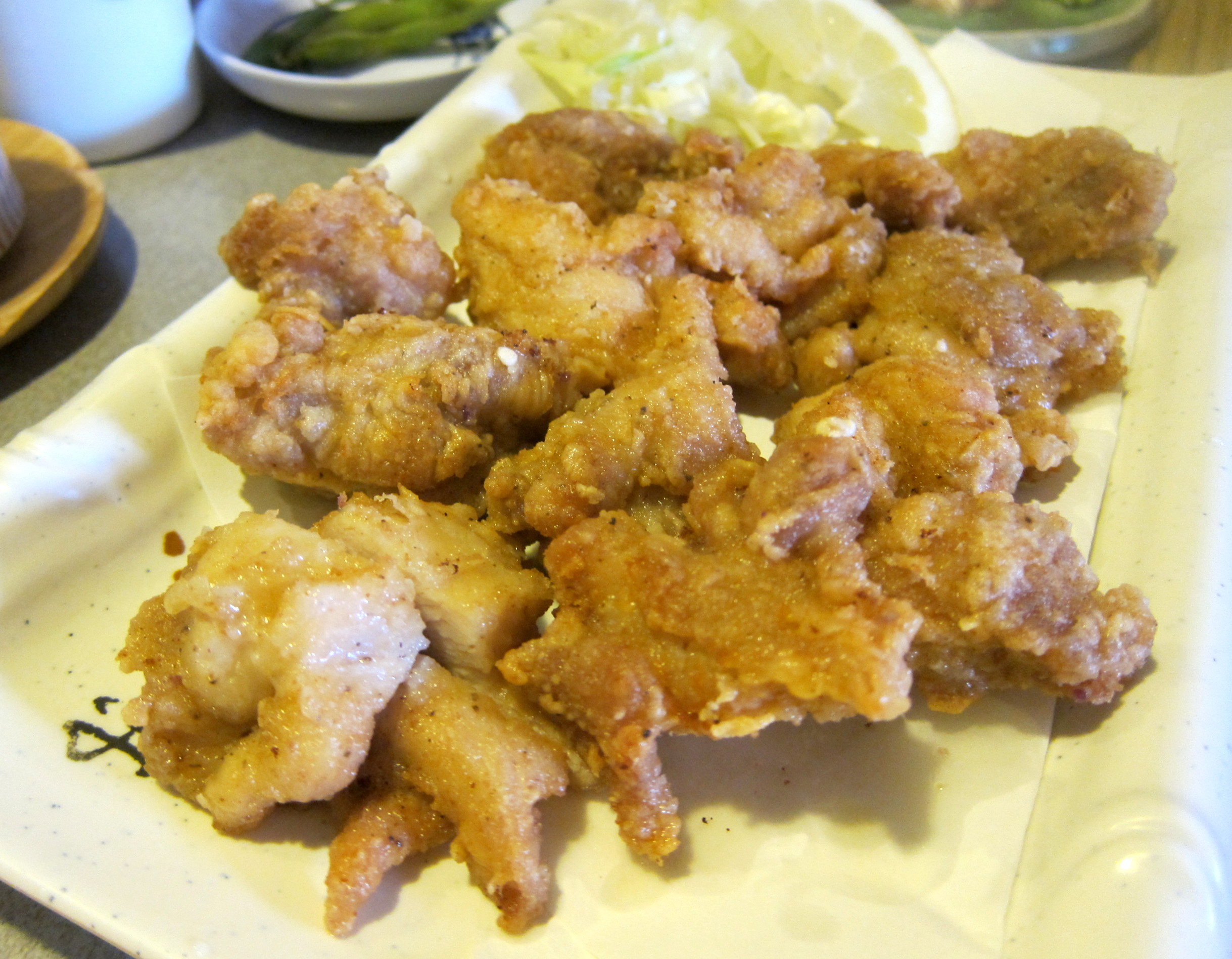
Karaage

Karaage ($6.95) – a bit too oily and soggy

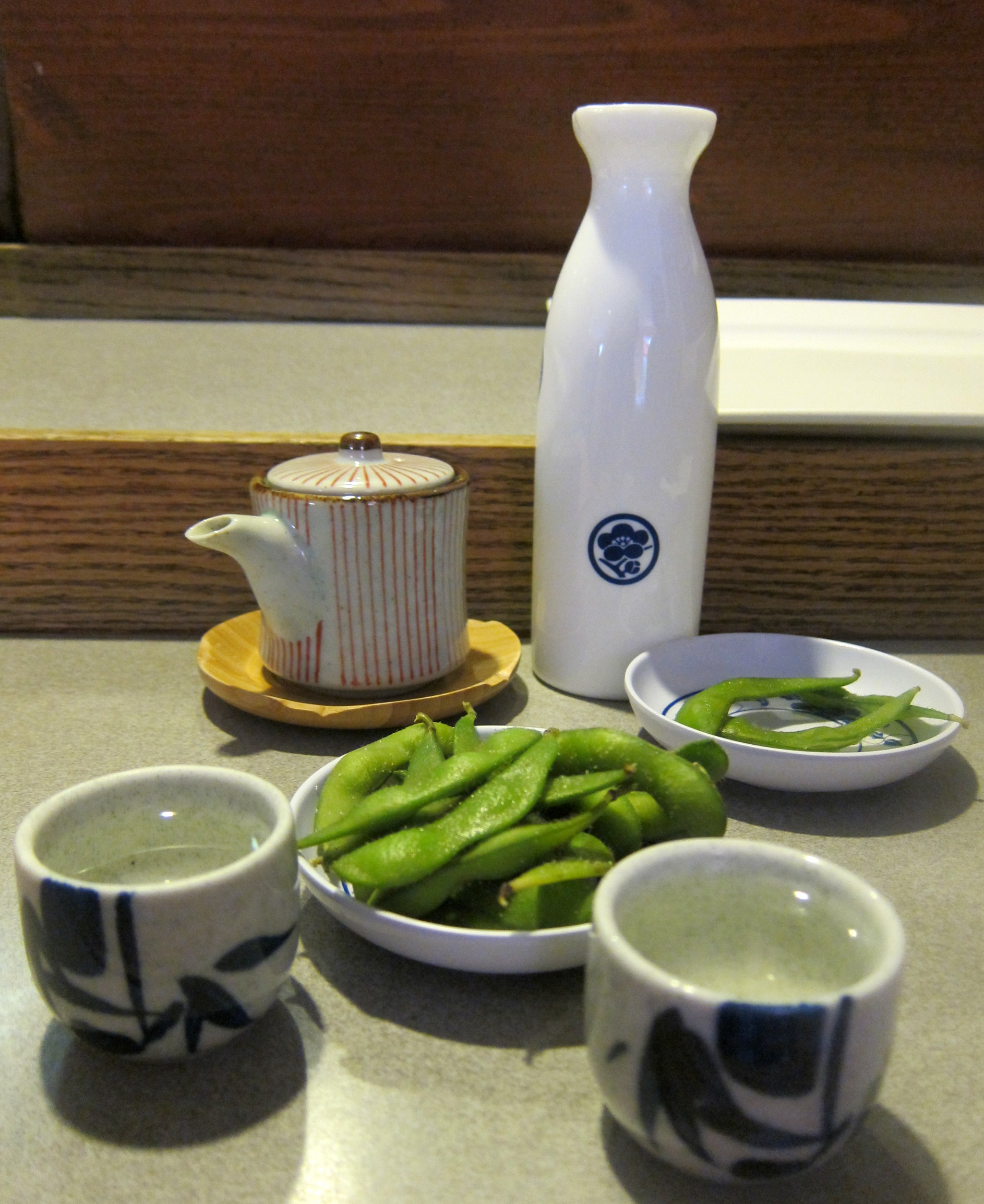
Hot sake and edamame

Hot sake and edamame

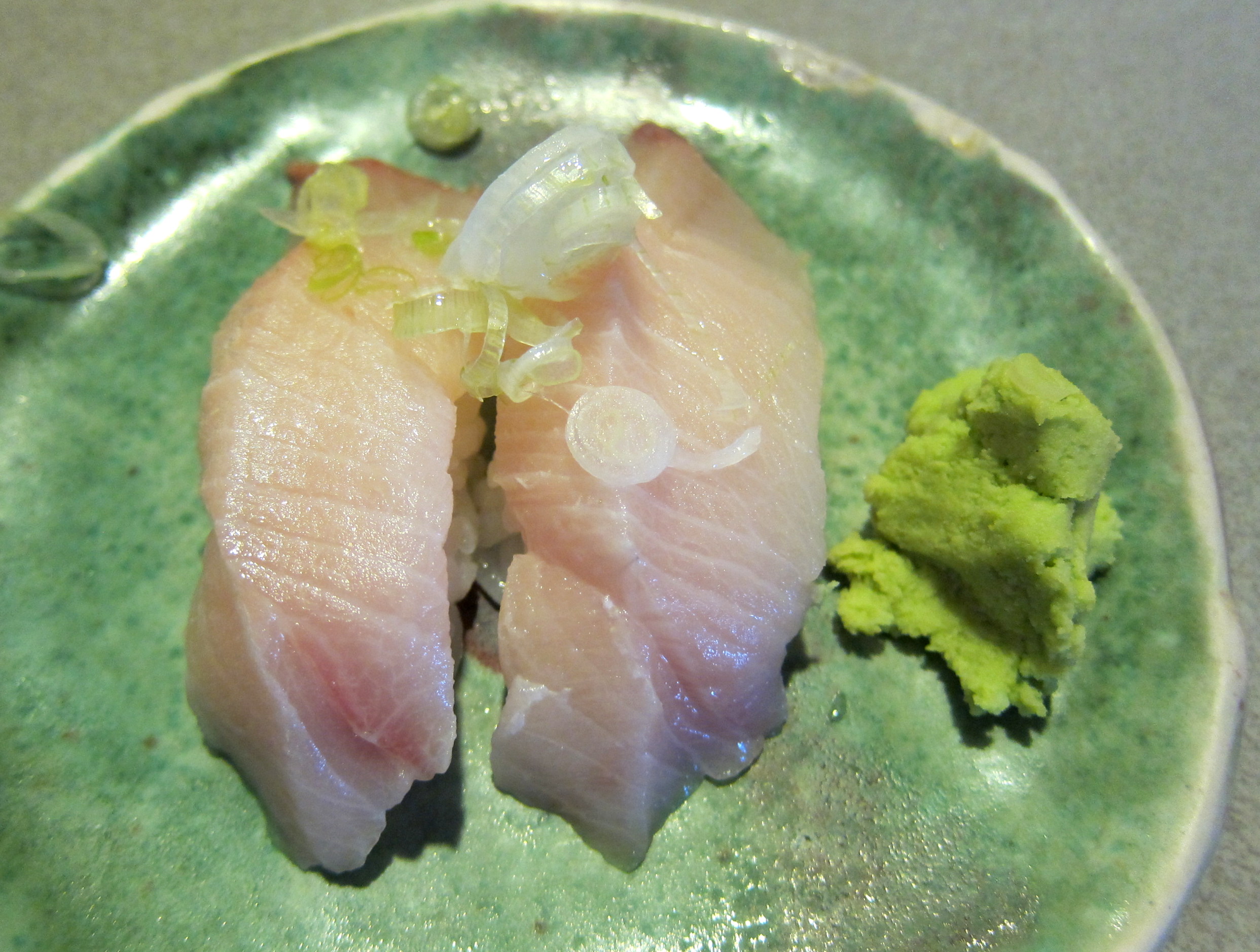
Hamachi nigiri

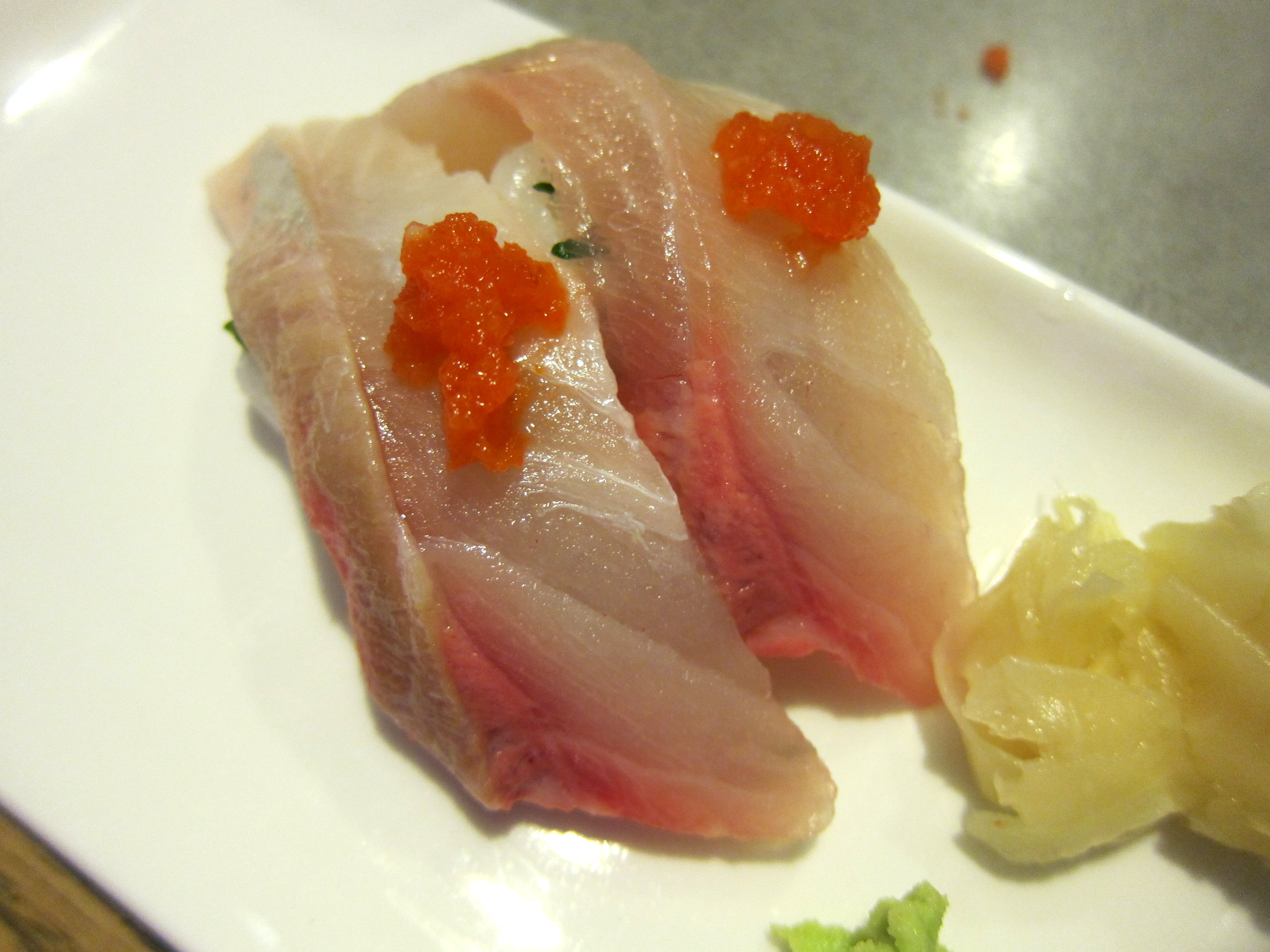
Hamachi nigiri – What I liked: no wasabi on the rice, the fish is buttery. What I slightly disliked: the fish is not chewy enough.

Okinawan soba

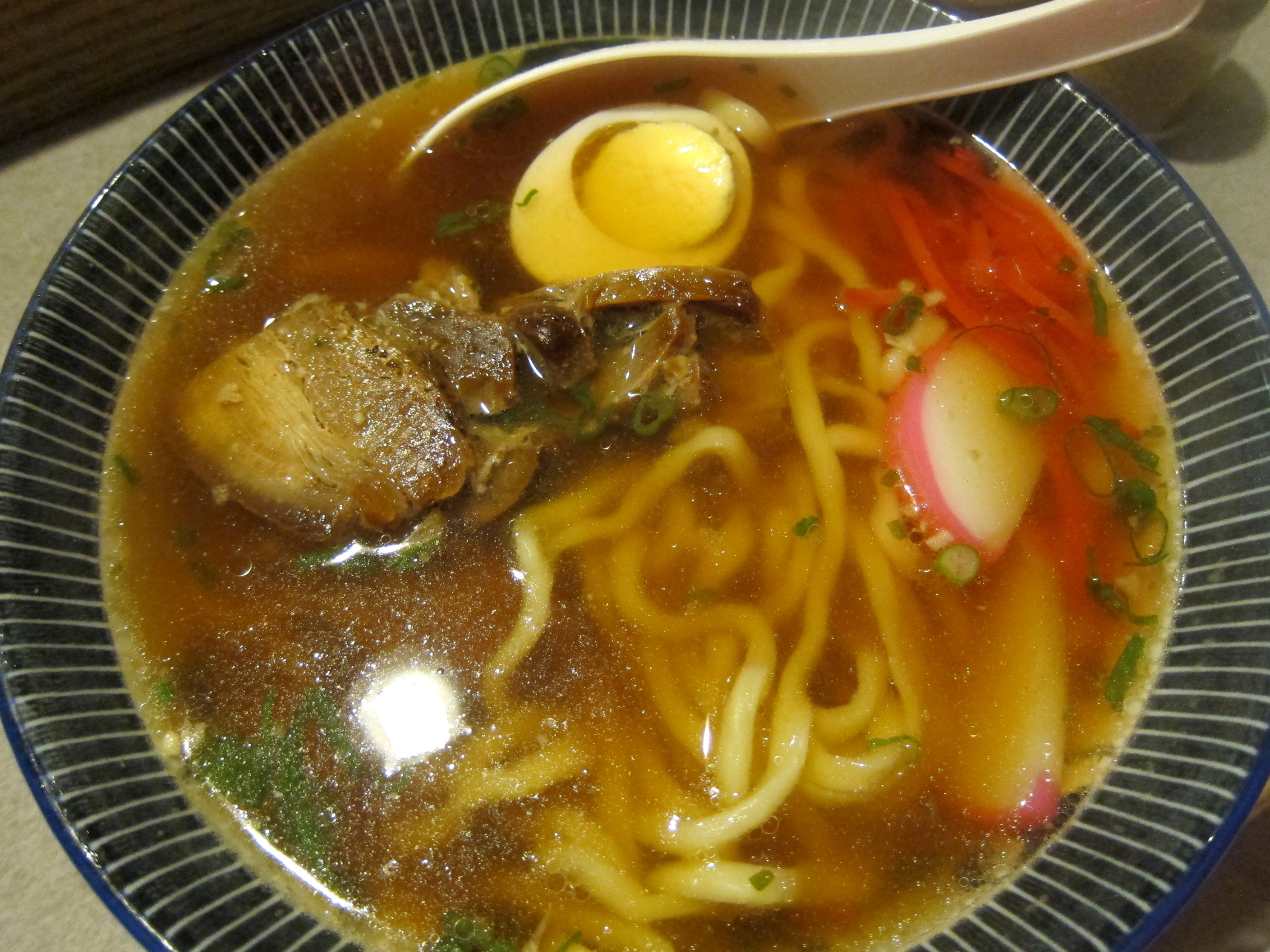
Okinawan soba ($9.95) – I was actually expecting the cold soba, but this version with pork belly, egg and kamaboko is nothing to complain about. As hearty as it looks.

Smelt

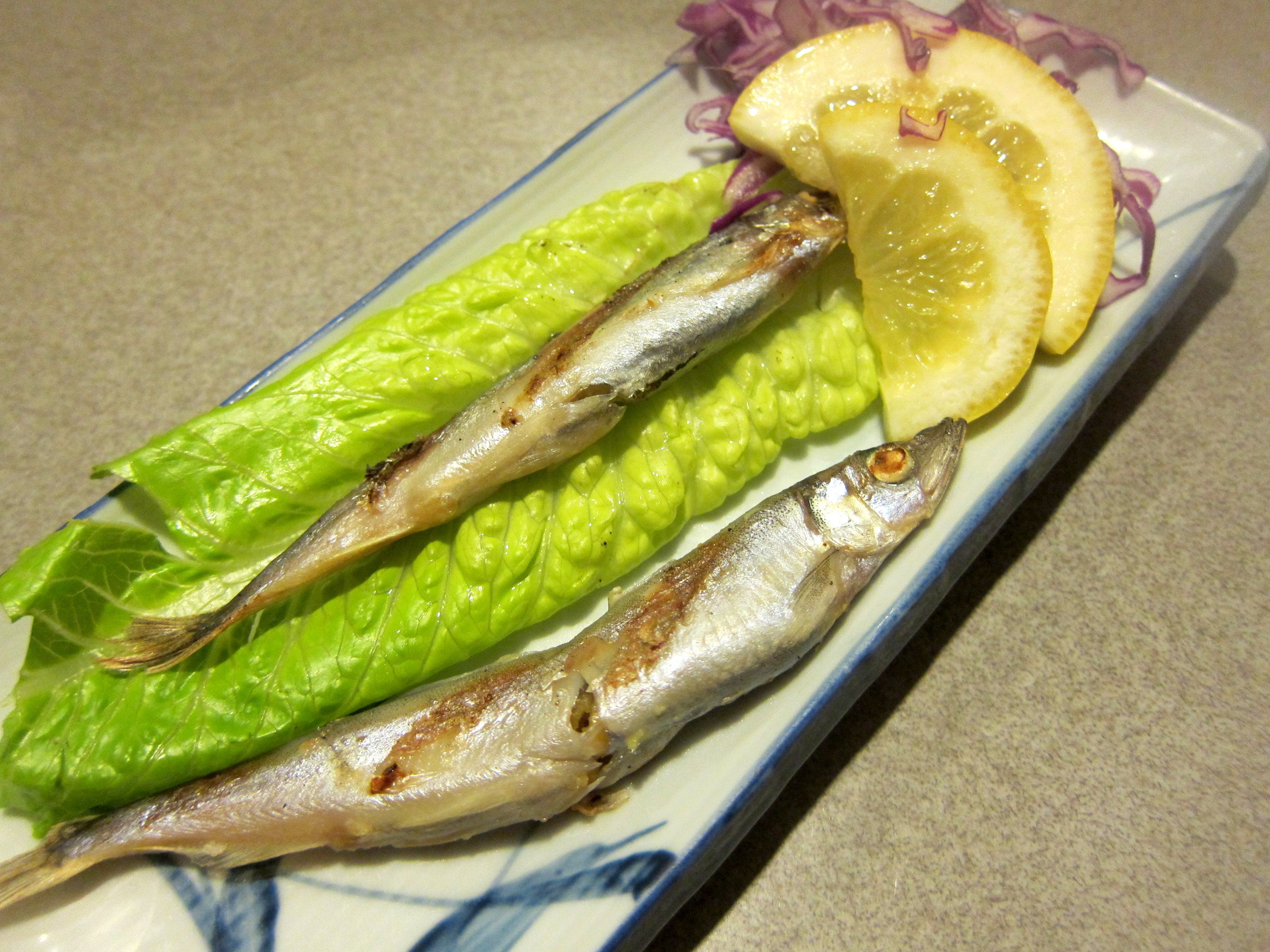
Shishamo ($3.95) – grilled smelt, on the wet side, a few minutes longer on the grill would have been nice.

Kanpachi nigiri

Kanpachi nigiri ($4.50) – Wonderful texture, but overall the taste pales in comparison to the aji. The aji was just too good.

Kurobuta sausage

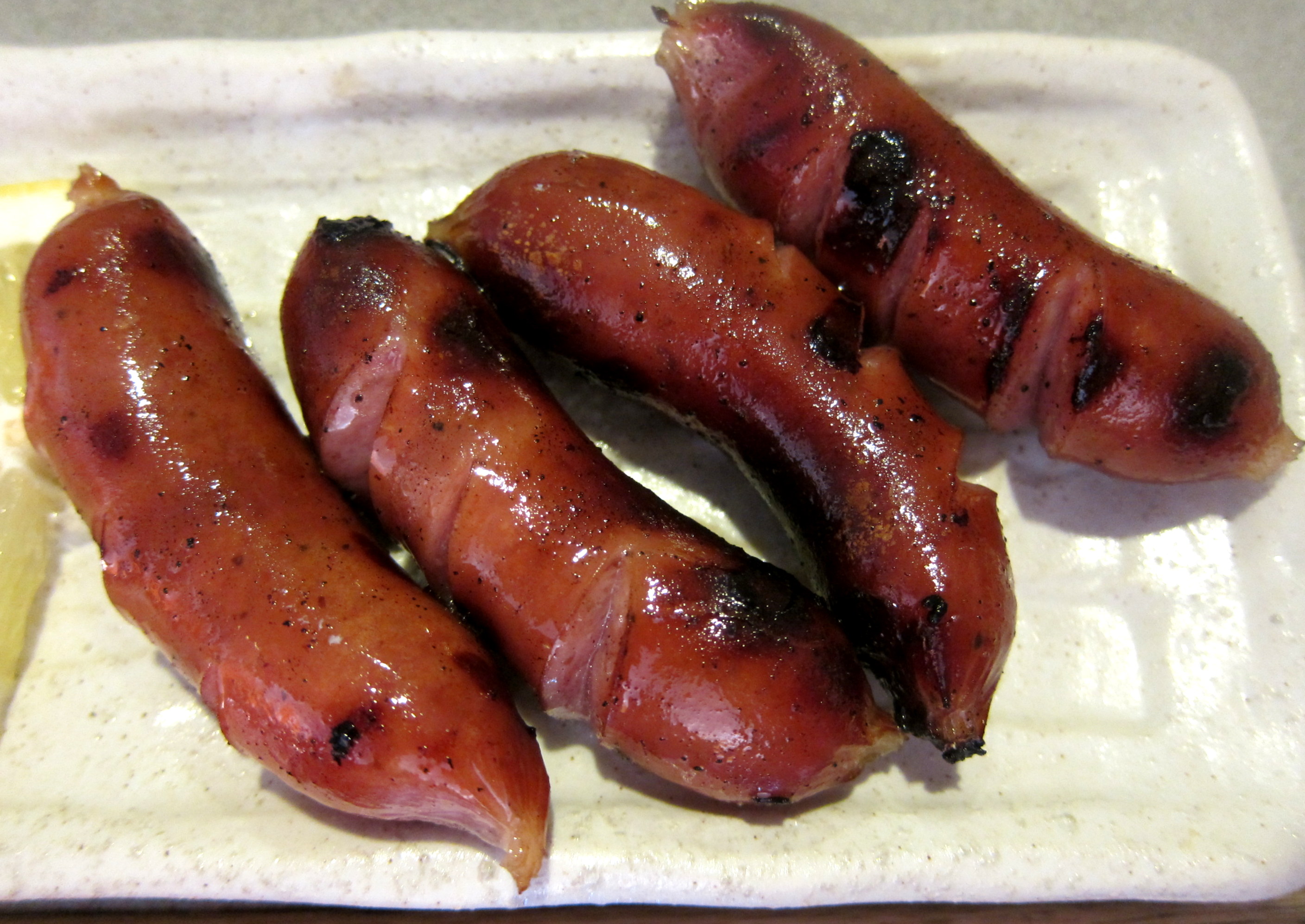
Kurobuta sausage ($3.95) – black pig sausage

Manhattan roll

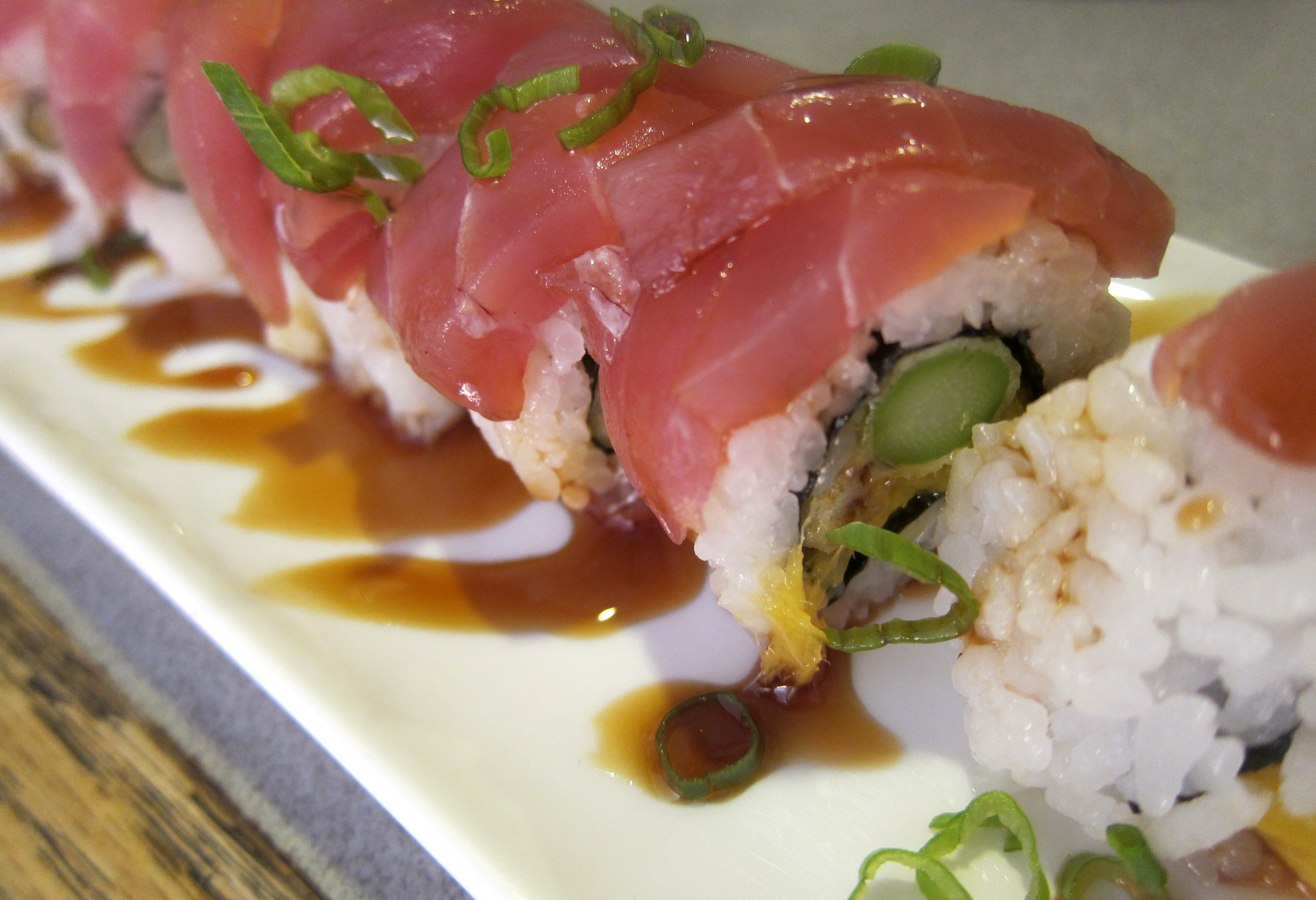
Manhattan roll ($8.95) – red tuna outside, tempura asparagus and mango inside – Tuna and mango don’t play well with each other though…

Wasabi tako

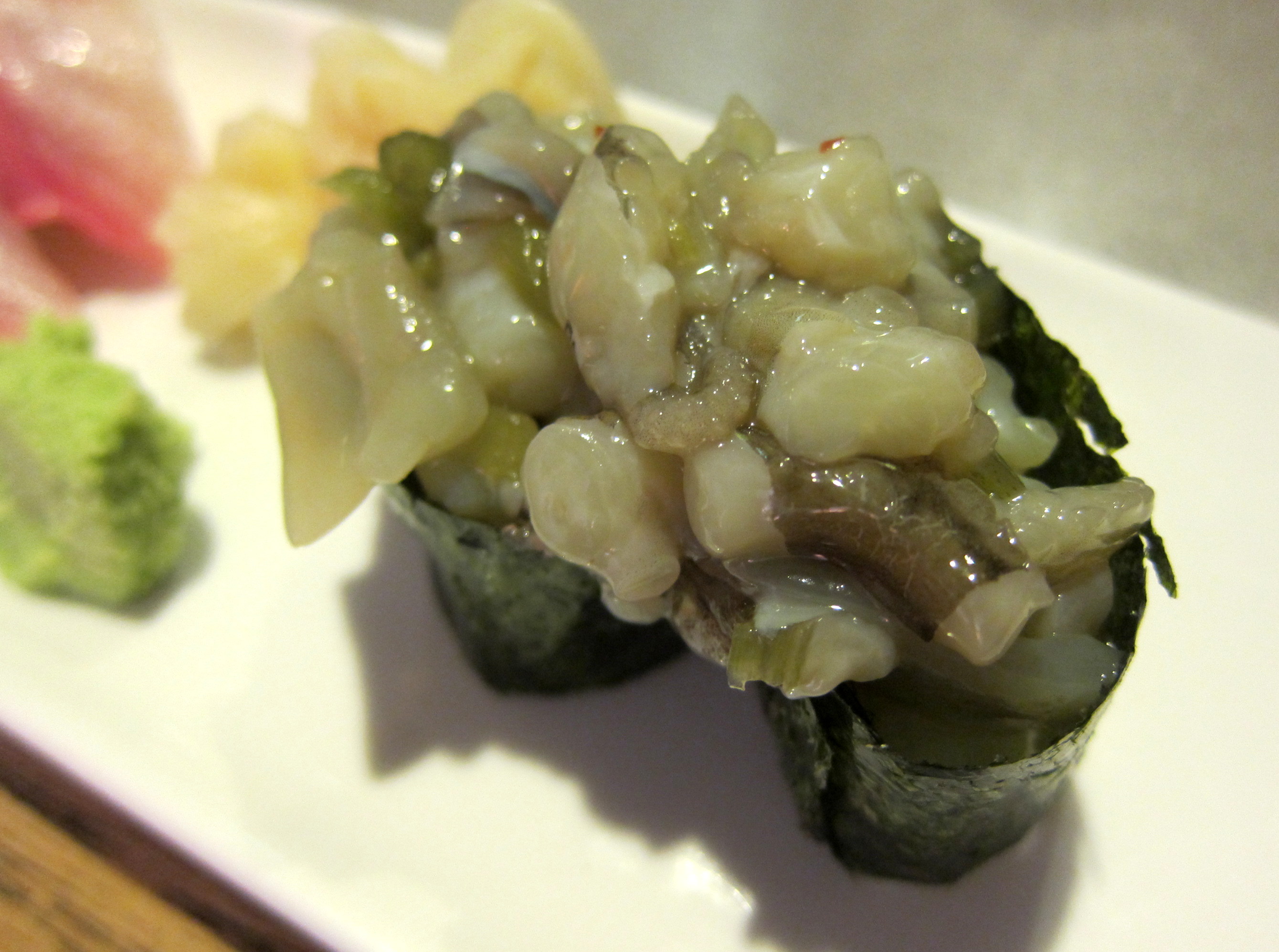
Wasabi tako ($4.25) – purely for the texture.

Aji nigiri

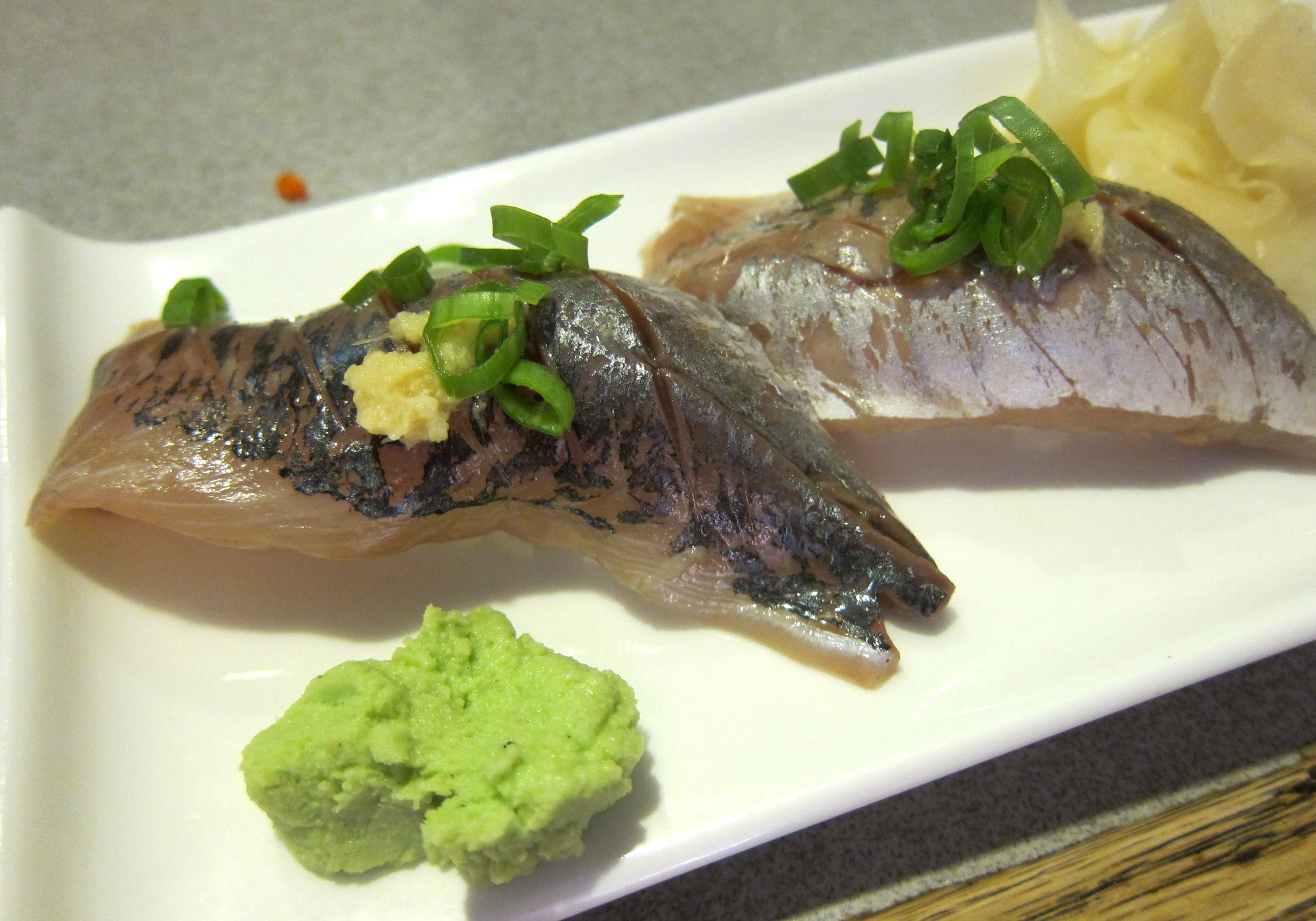
Aji nigiri ($4.95) – a seasonal special. This was the first time in months that I became vocal after taking a bite. I couldn’t contain myself, and immediately told chef Arakaki how good it was.

Anago nigiri

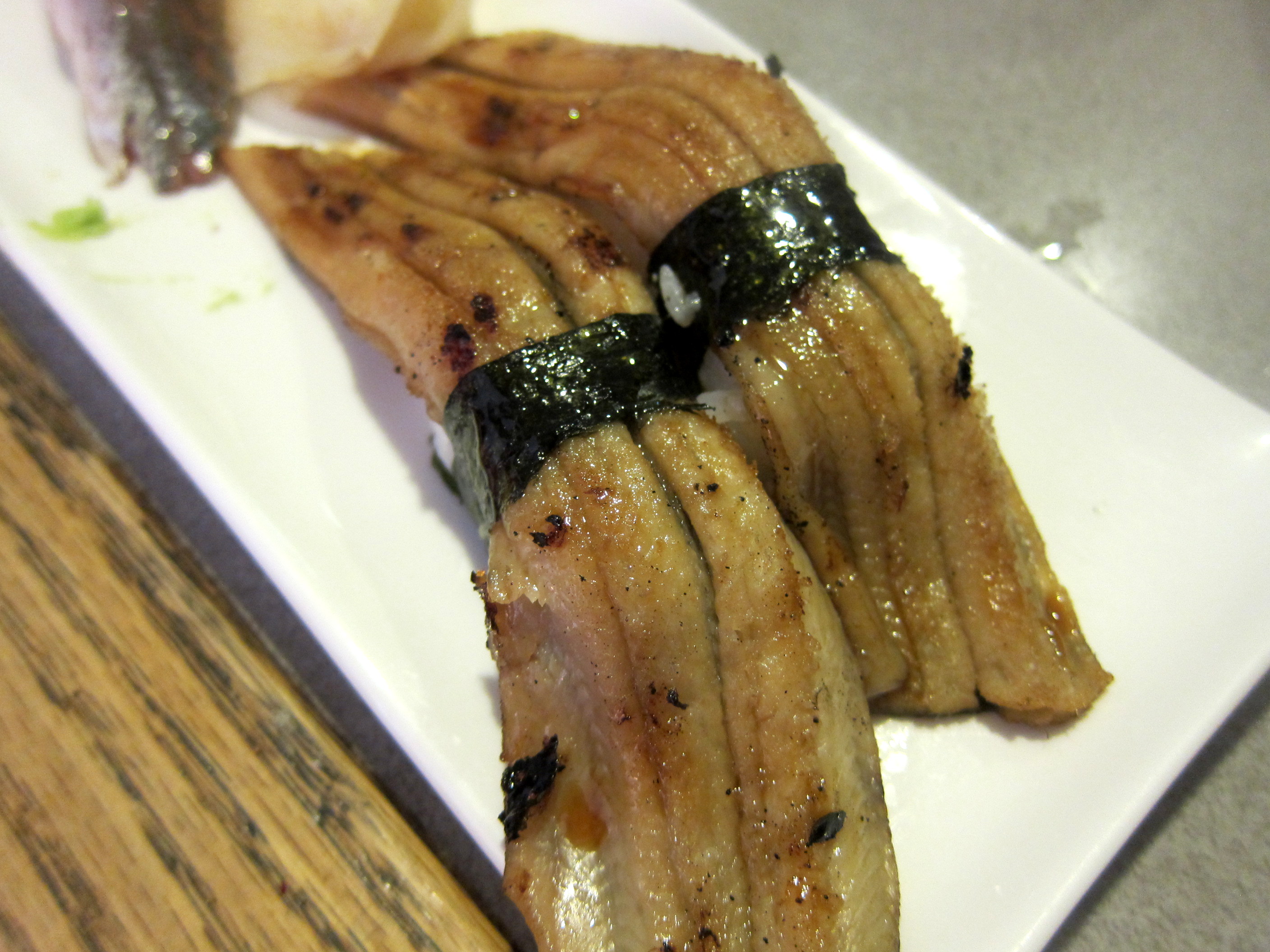
Anago nigiri ($4.95) – Salt-water eel. Another seasonal special. Again, I became vocal. Its deliciousness will linger in my head for another 20 years.

Sweet potato

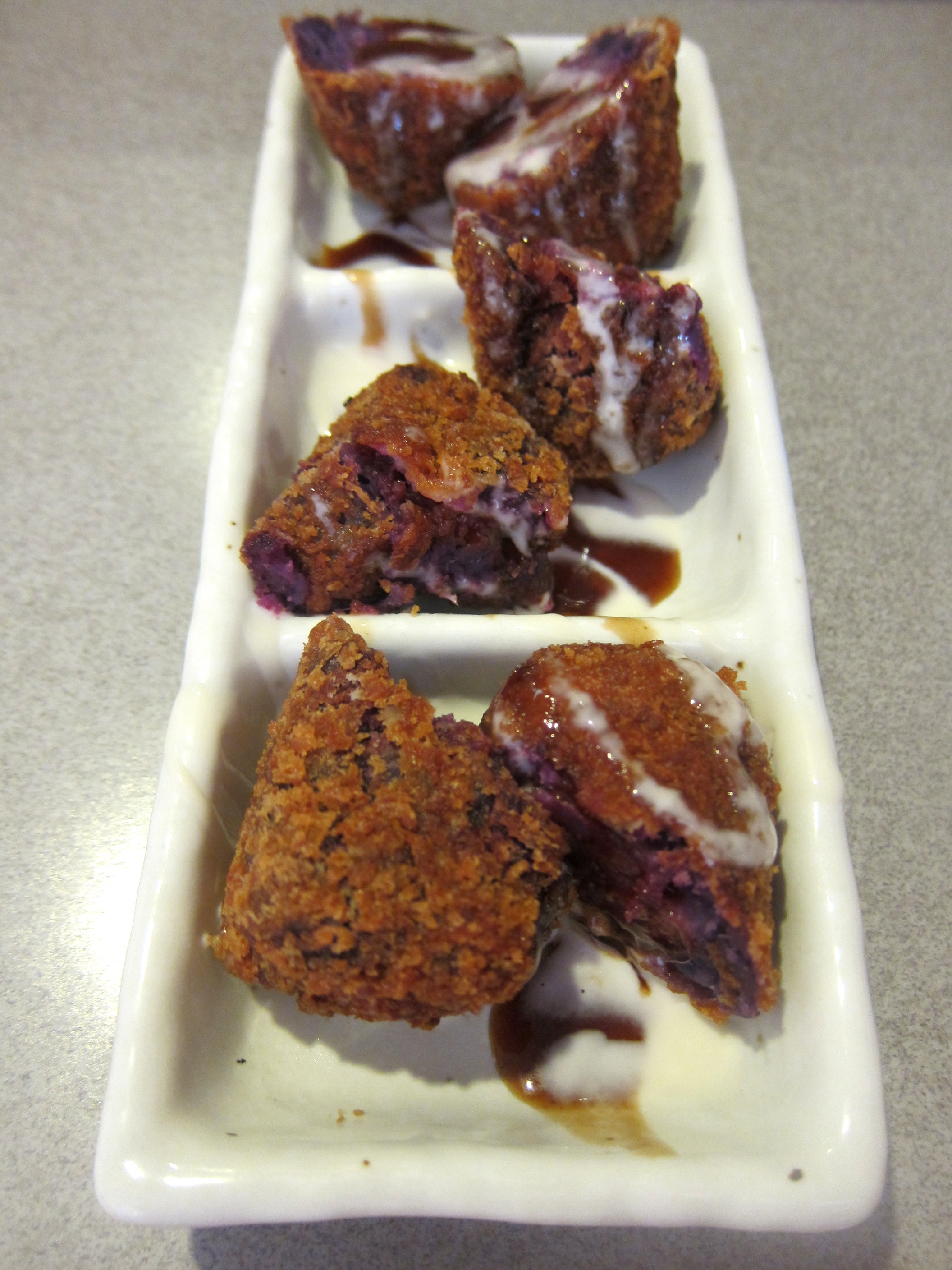
Purple sweet potato korokke ($3.95) – Slightly sweet, moist inside and crunchy outside, not milky, not too dry.

Finally, the PERFECT korokke. The size, the crunchiness, the moistness, the taste are all perfect. My love for these rivals Kristen’s love for Gregoire’s potato puffs, and that girl would sell you for Gregoire’s potato puffs if she could. 😉

Red bean and green tea ice cream

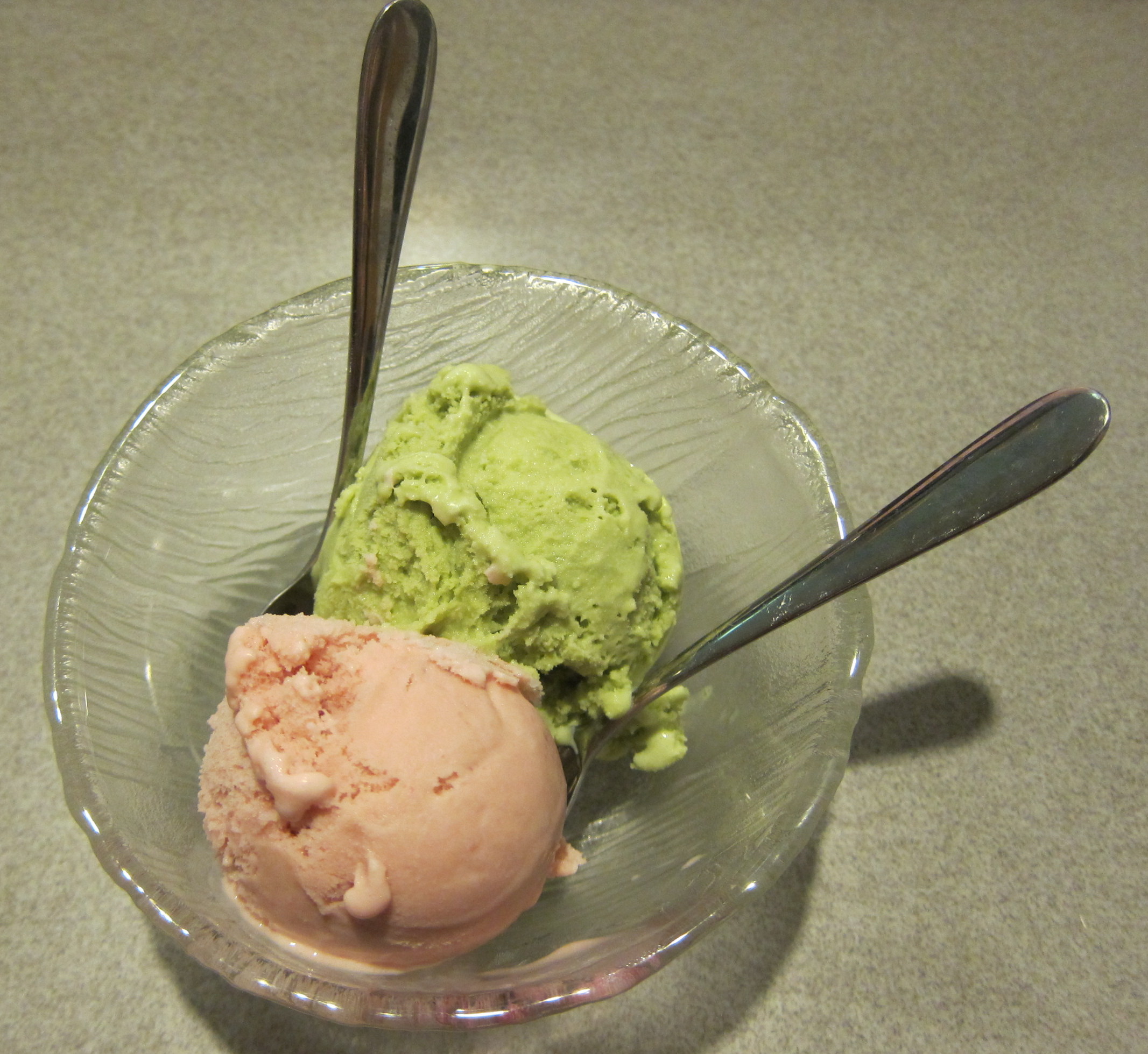
Red bean and green tea ice cream ($3) – the standard fare.

sushi-california-music
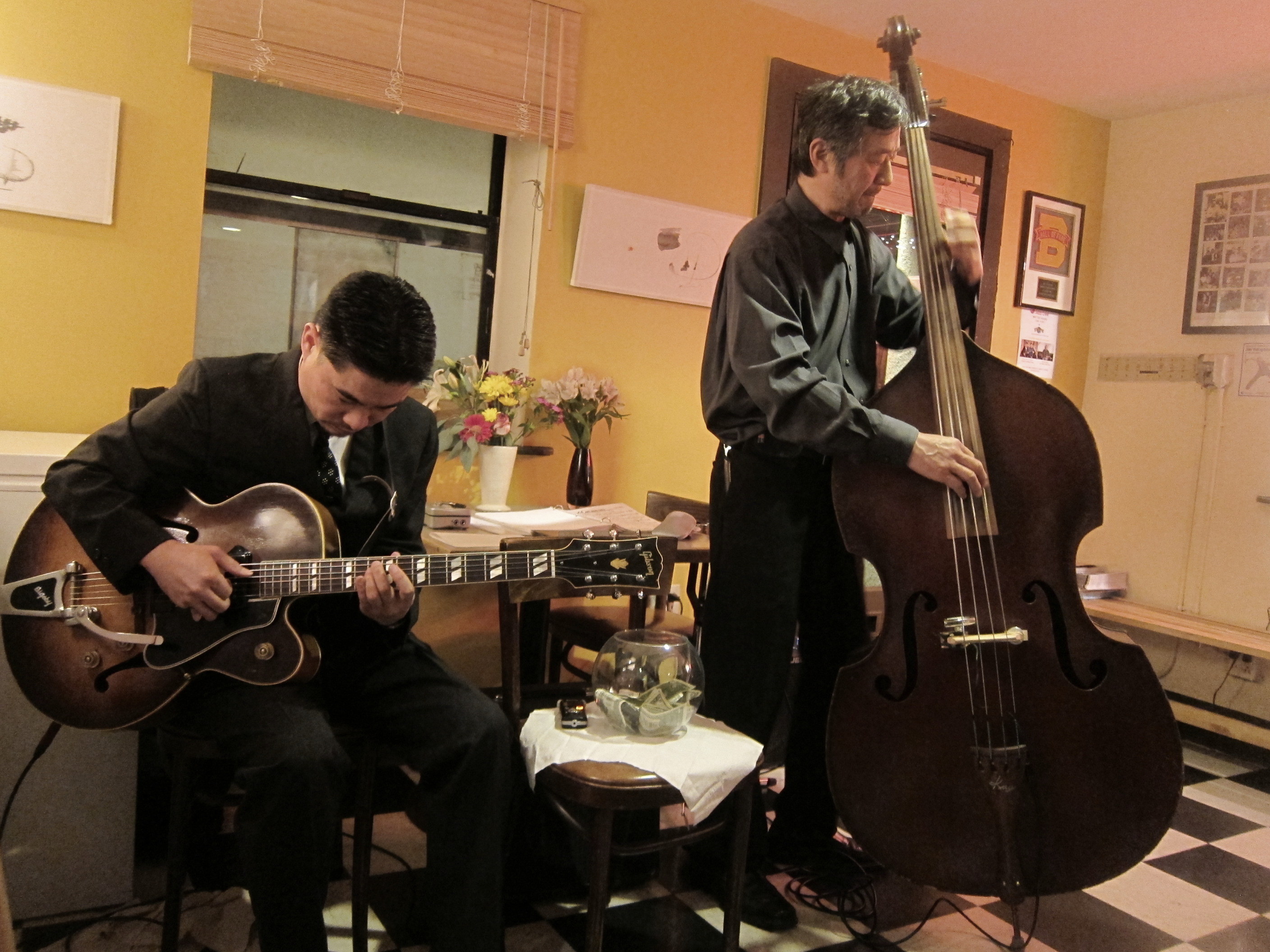
On Friday, the homey atmosphere is warmed up with live music: first a guitar, then a cello accompaniment later into the night. I like to sit at the bar to watch the chefs slicing and shaping their sushi, and to see which dishes get ordered. The chefs were so focused that I dared not interrupt, and I was happily immersed in such atmosphere anyway. Sushi California was first opened in 1986. Chef Arakaki told Mindess that originally he intended to expand it into a chain of restaurants, but it didn’t happen. I’m glad it didn’t happen. Chains can never feel the same, and Berkeley would have lost its most memorable sushi joint.

Address: Sushi California
2033 Martin Luther King Jr. Way
Berkeley, CA 94704
(510) 548-0703

B-Dama – Taste fresher than fresh

May 03, 2013 By: Mai Truong Category: California - The Bay Area, Japanese

b-dama-monkfish-liver
Why don’t I like spicy food? For the same reason I don’t like cupcakes, Chicago pizza or anything that has too much of something for me to taste anything else. For the same reason I shunned sushi for almost 10 years: the first time I had sushi I scooped a spoonful of the lovely green paste into my mouth.

Those were 10 years that I could have enjoyed so many hamachi nigiri. It’s sad. But that aside, for the same reason that I dislike spicy food, I like B-Dama so much more than I expected. It’s a tiny tiny Japanese restaurant in Piedmont. Its menu doesn’t boast anything particularly breath-taking to draw me out of the comfort of my home, except that I once saw Kristen post on Facebook a picture of the ankimo (monkfish liver) from B-Dama, and Kristen and I have had more than two failed attempts to eat there together just because the restaurant was either closed or too busy when we popped in. When you can’t have something, you want it more.

Then the day finally arrived. My friend and I tried the ridiculously popular Geta that serves possibly the cheapest sushi and fried chicken bits in the East Bay, were thoroughly impressed by how cheap it was ($35.30 for 7 items), and felt compelled to try its posher sister B-Dama. This time, we made reservation.

Let’s talk about the dish that implanted the name B-Dama in me from the very beginning: the monkfish liver.

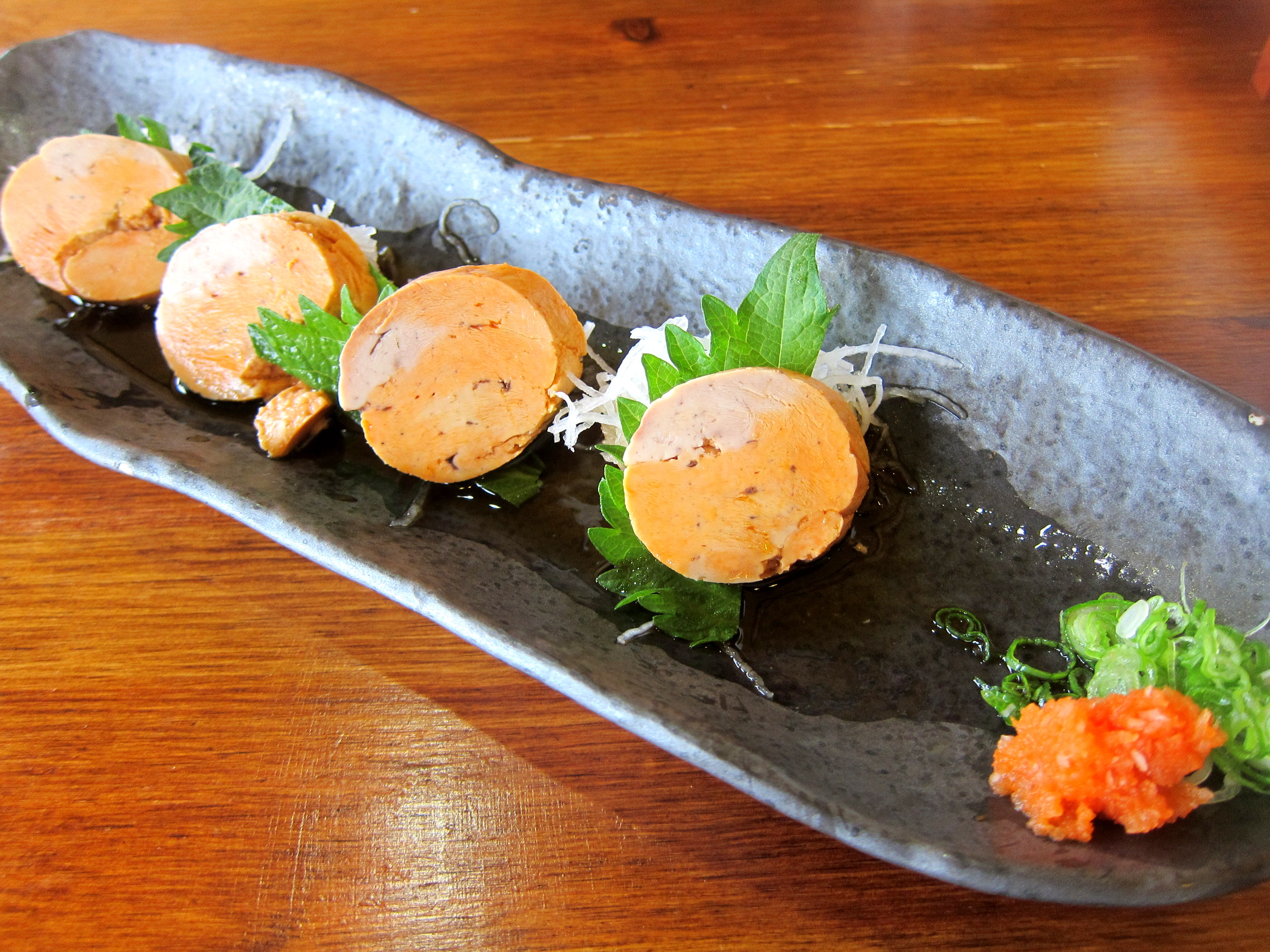
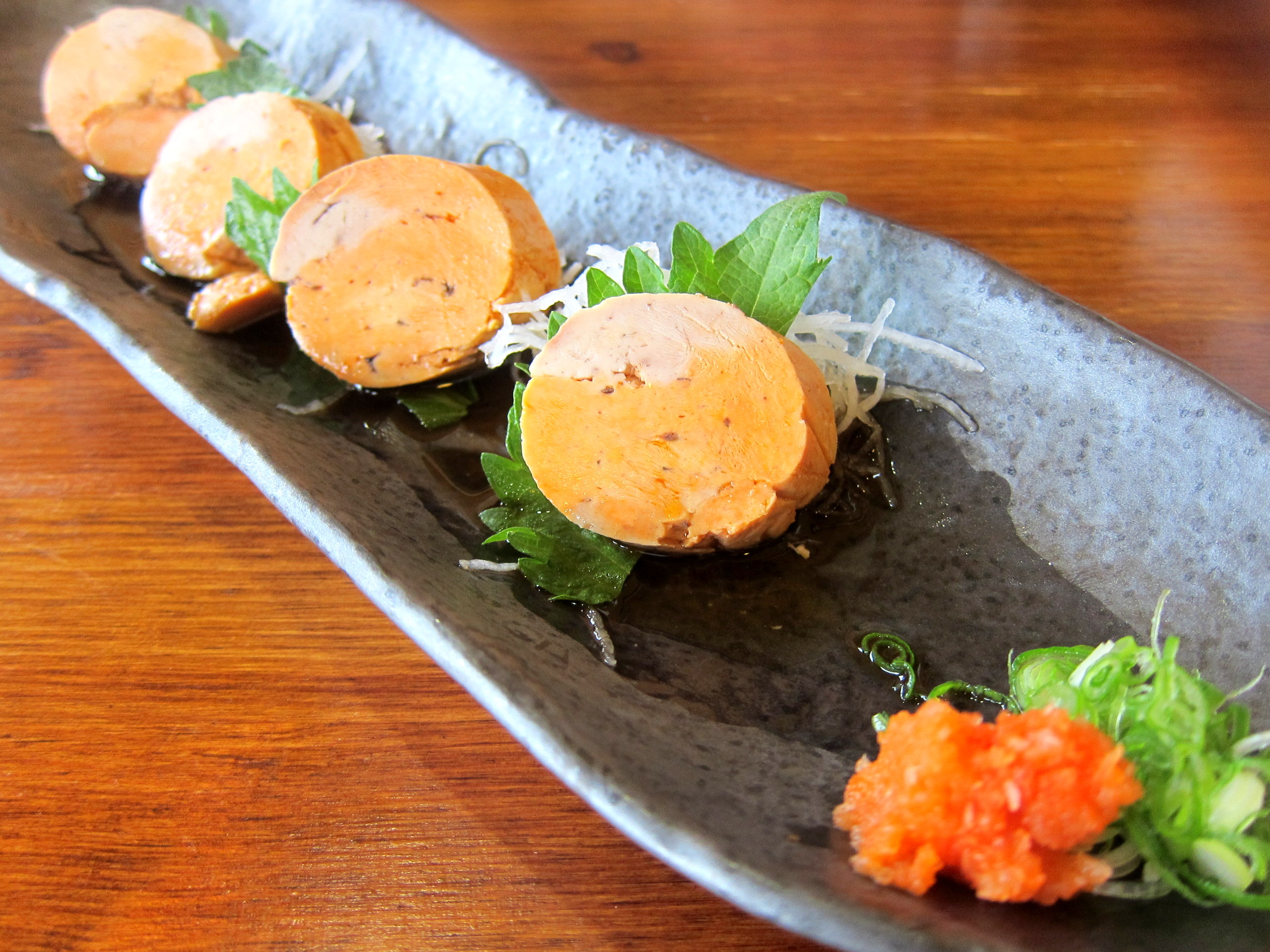
This wasn’t the first time I had monkfish liver, or liver, or monkfish. I’m neither a fan nor an antifan of monkfish, but I love livers, so it’s a make-or-break deal for me. At B-Dama, the liver was so creamy yet maintained the smooth, bouncy resilience of freshness, and above all, the taste was so clean! If I didn’t know that it came from a fish, I would think that it’s just soft tofu flavored with cream and a pinch of salt, slightly chilled to shape into such medallion-scallop size. Considering the steps to prepare ankimo (the liver must be rubbed with salt, then rinsed with sake, then de-veined, then rolled, steamed and served in ponzu sauce), this dish requires such precise treatment to rid of the ocean smell and preserve the creamy nature. I think steaming is the most unadulterated cooking method, and this ankimo is the most unadulterated, freshest ankimo I’ve ever had.

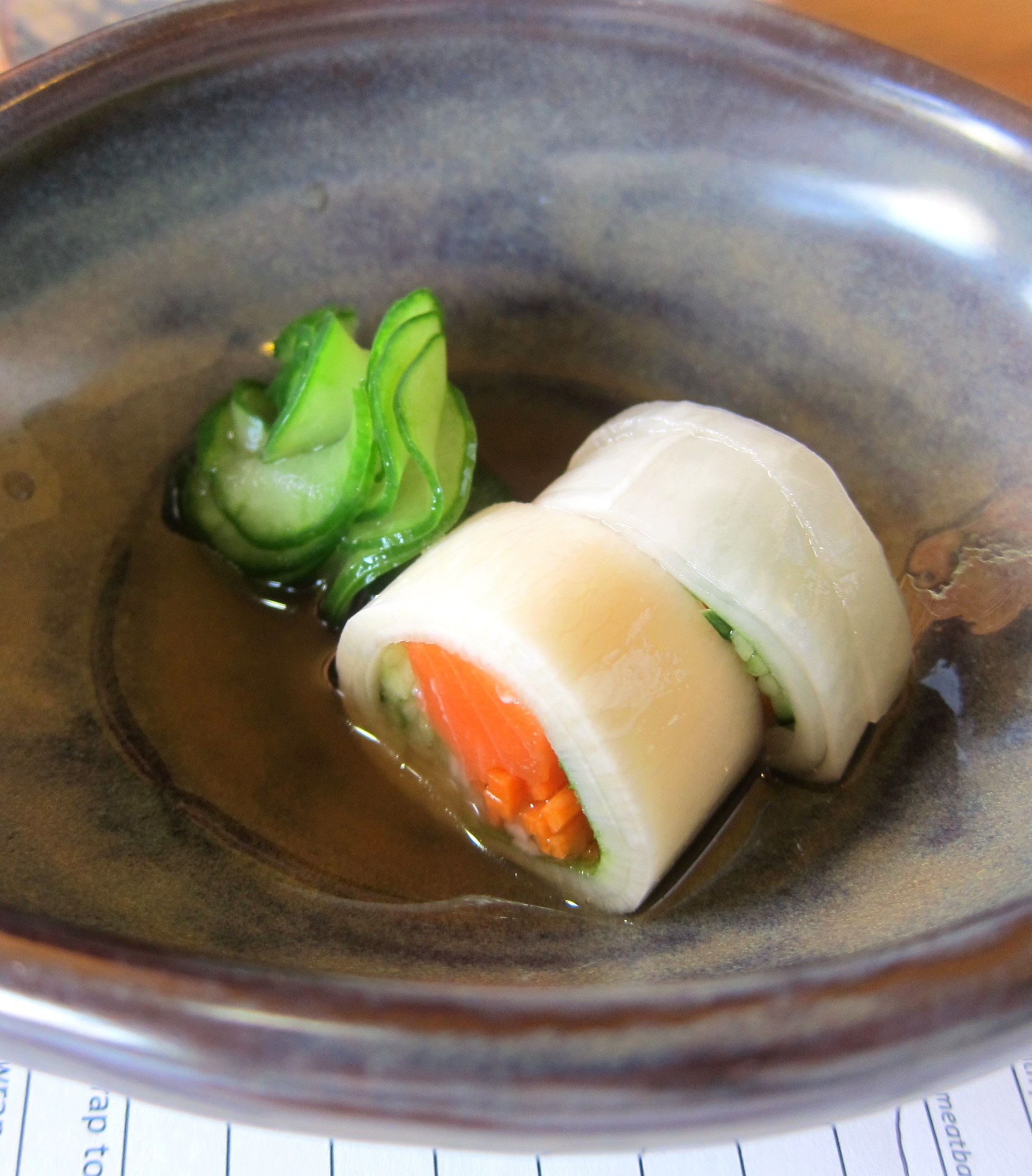
The same theme resonates throughout the rest of the meal. The housho maki (raw tuna and salmon with sliced cucumber wrapped in daikon), the hamachi nigiri and even the nabe taste crystal clear. Daikon naturally has the daikon taste (a bitter, somewhat piercing pungency that sometimes reminds me of sake), but the daikon at B-Dama, in whatever form it’s served from grated to sheet, does not have that daikon taste. Its crunchy texture and cooling freshness are well preserved, only the pungency is gone.

The cold openings:

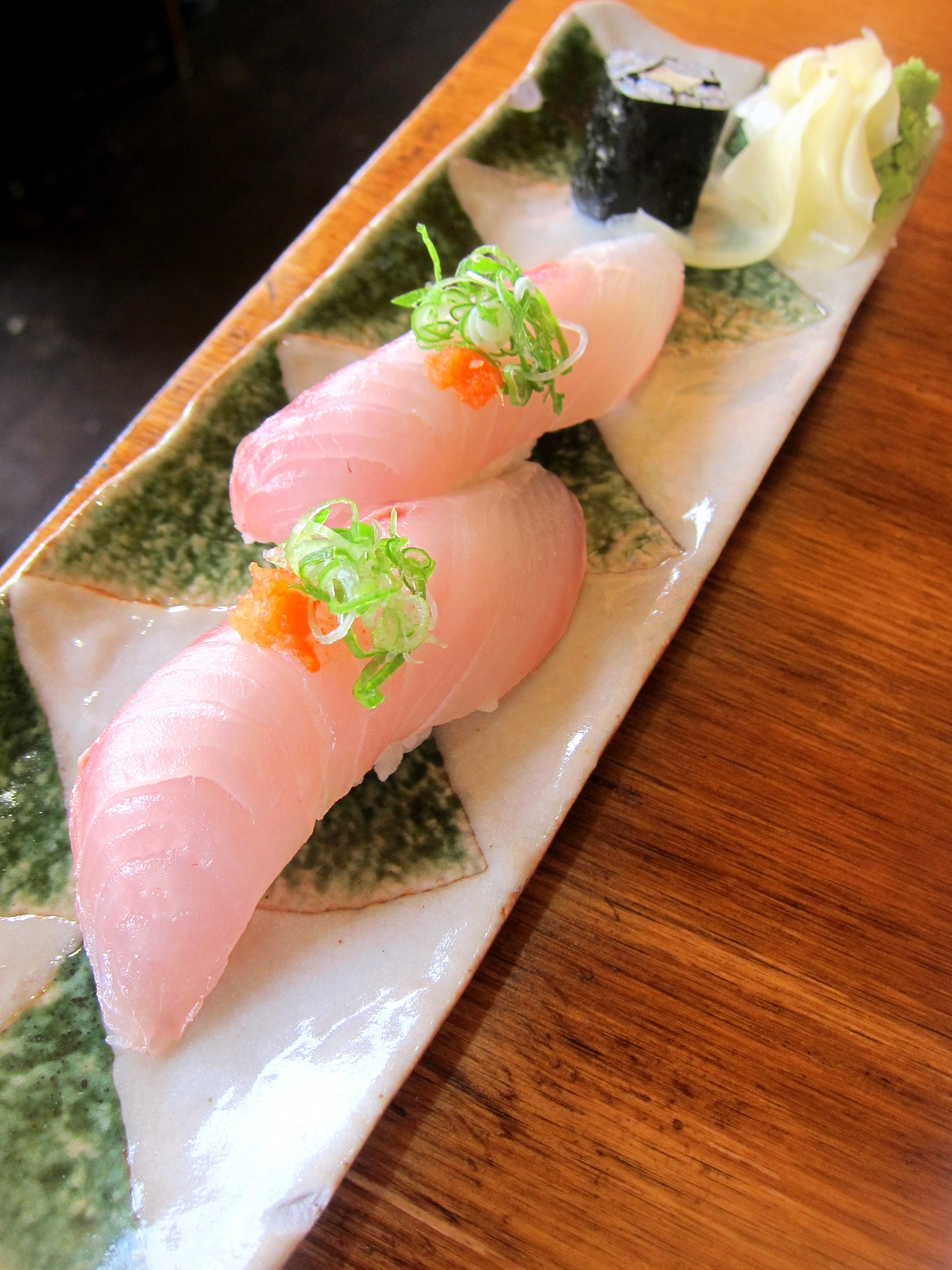
Hamachi nigiri sushi ($6.5)  My must-order item at every sushi restaurant. This version sets the highest bar so far.

Hamachi nigiri sushi ($6.5)
My must-order item at every sushi restaurant. This version sets the highest bar so far.

Housho maki ($6) - raw fish and cucumber wrapped in daikon.  So fresh, so suitable for spring.

Housho maki ($6) – raw fish and cucumber wrapped in daikon.
So fresh, so suitable for spring.

Ankimo ($8) - steamed monkfish liver served in ponzu sauce My most recent must-order. I find it offensive that I have to pay so little for something this good.

Ankimo ($8) – steamed monkfish liver served in ponzu sauce
My most recent must-order. I find it offensive that I have to pay so little for something this good.

The fried and grilled dishes:

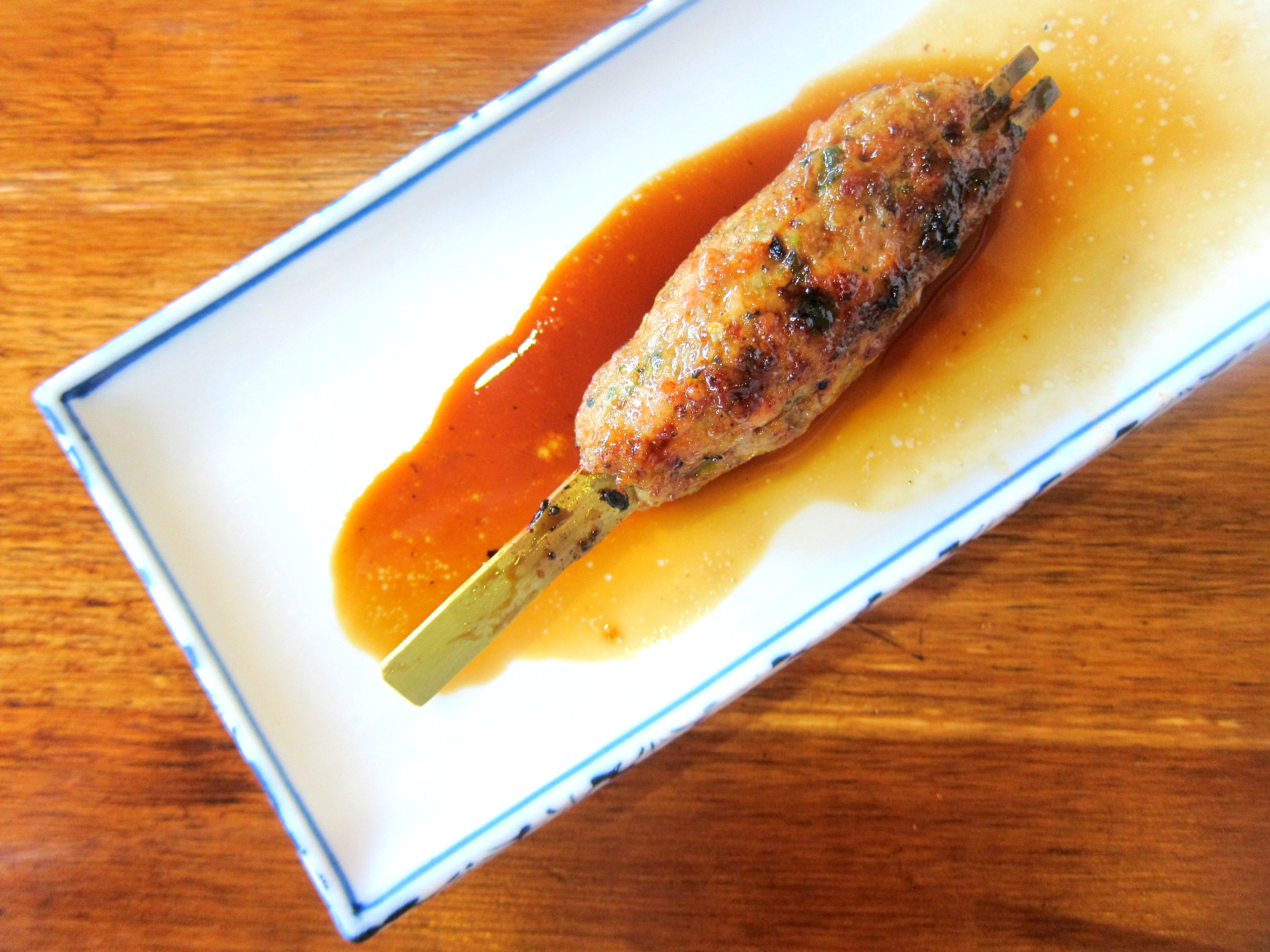
Tsukune - chicken "meatball"

Tsukune – chicken “meatball”

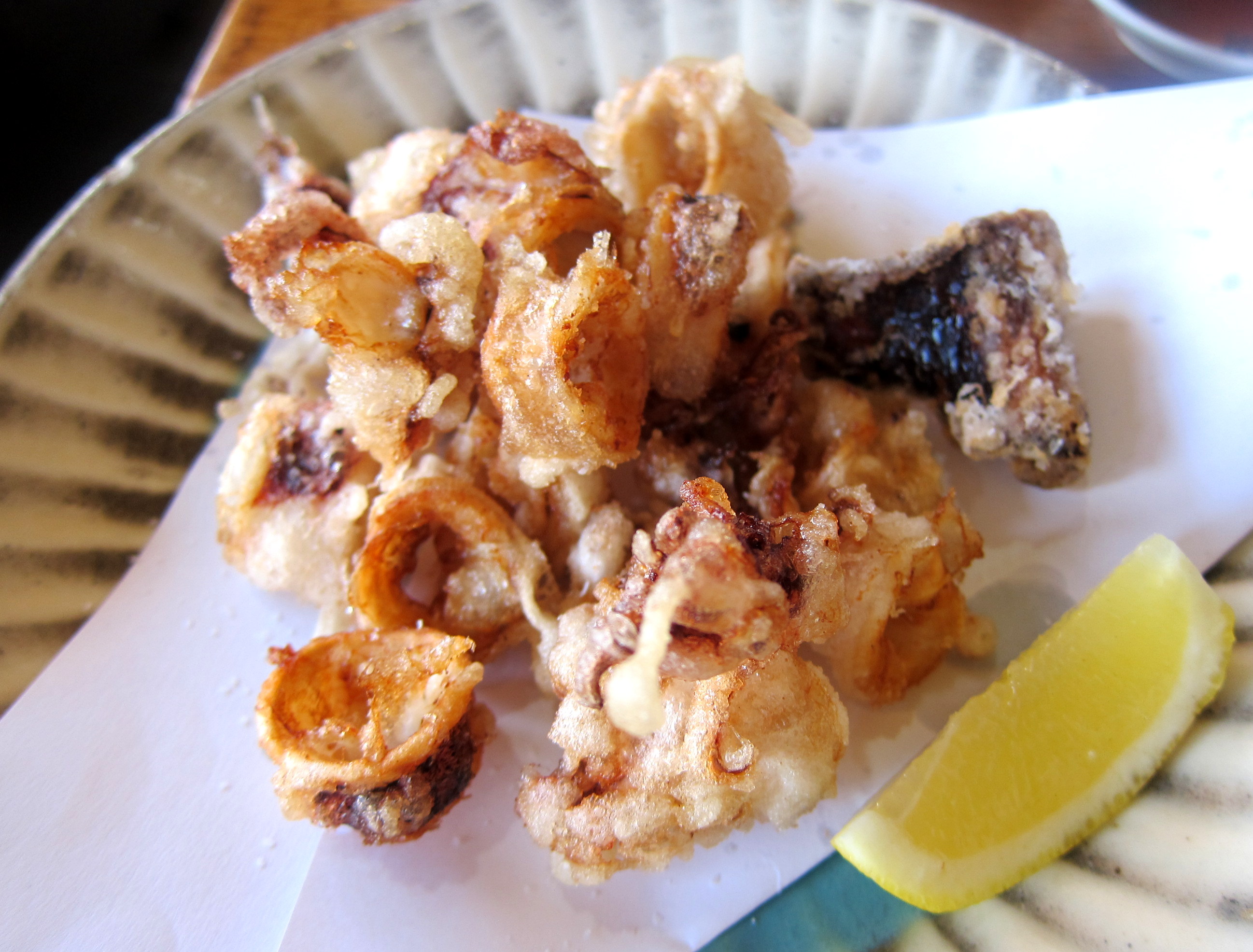
Ika karaage ($6) - deep-fried  squid. I like it. A lot.

Ika karaage ($6) – deep-fried squid.
I like it. A lot.

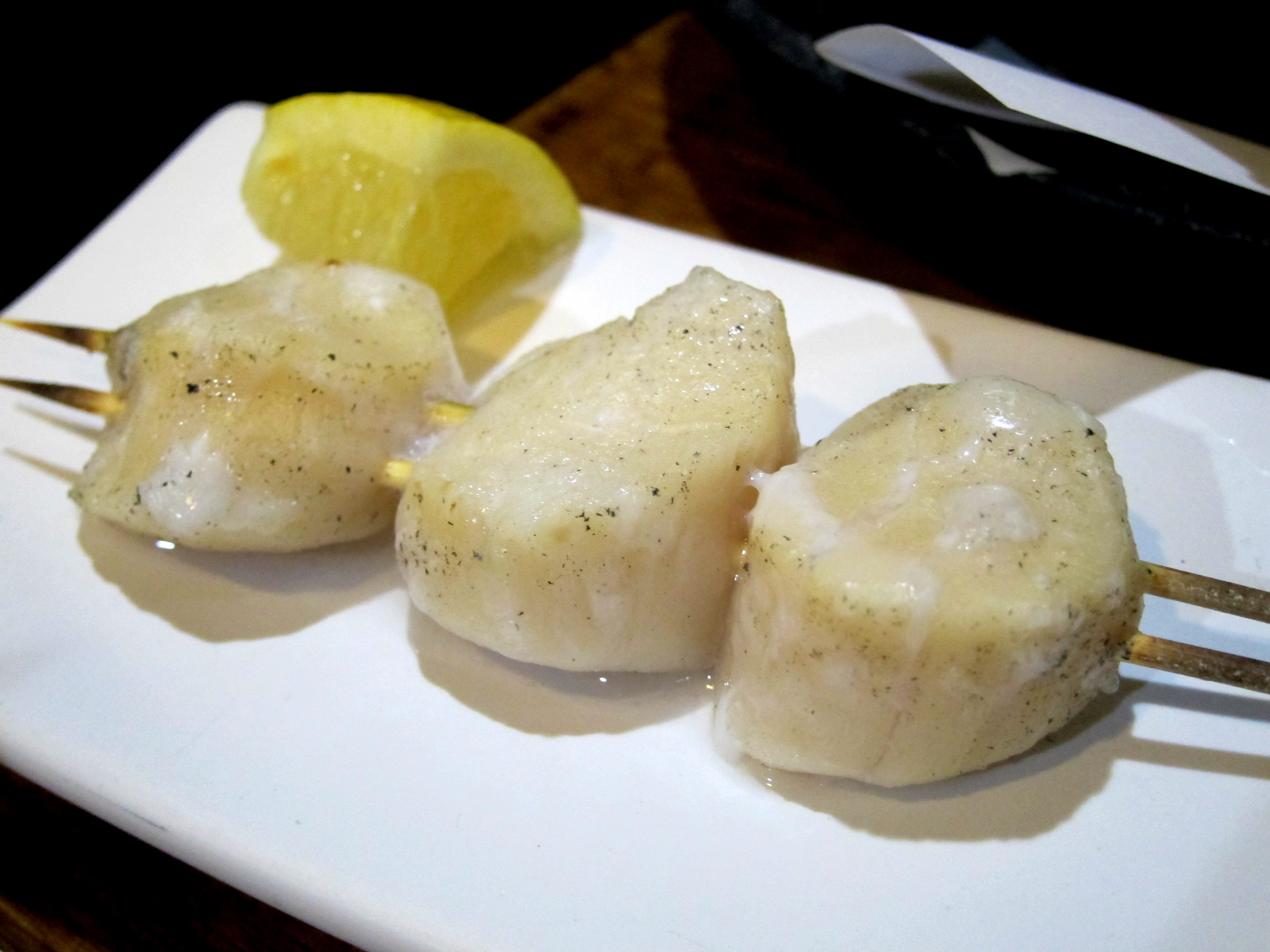
Hotate - scallop

Hotate – scallop

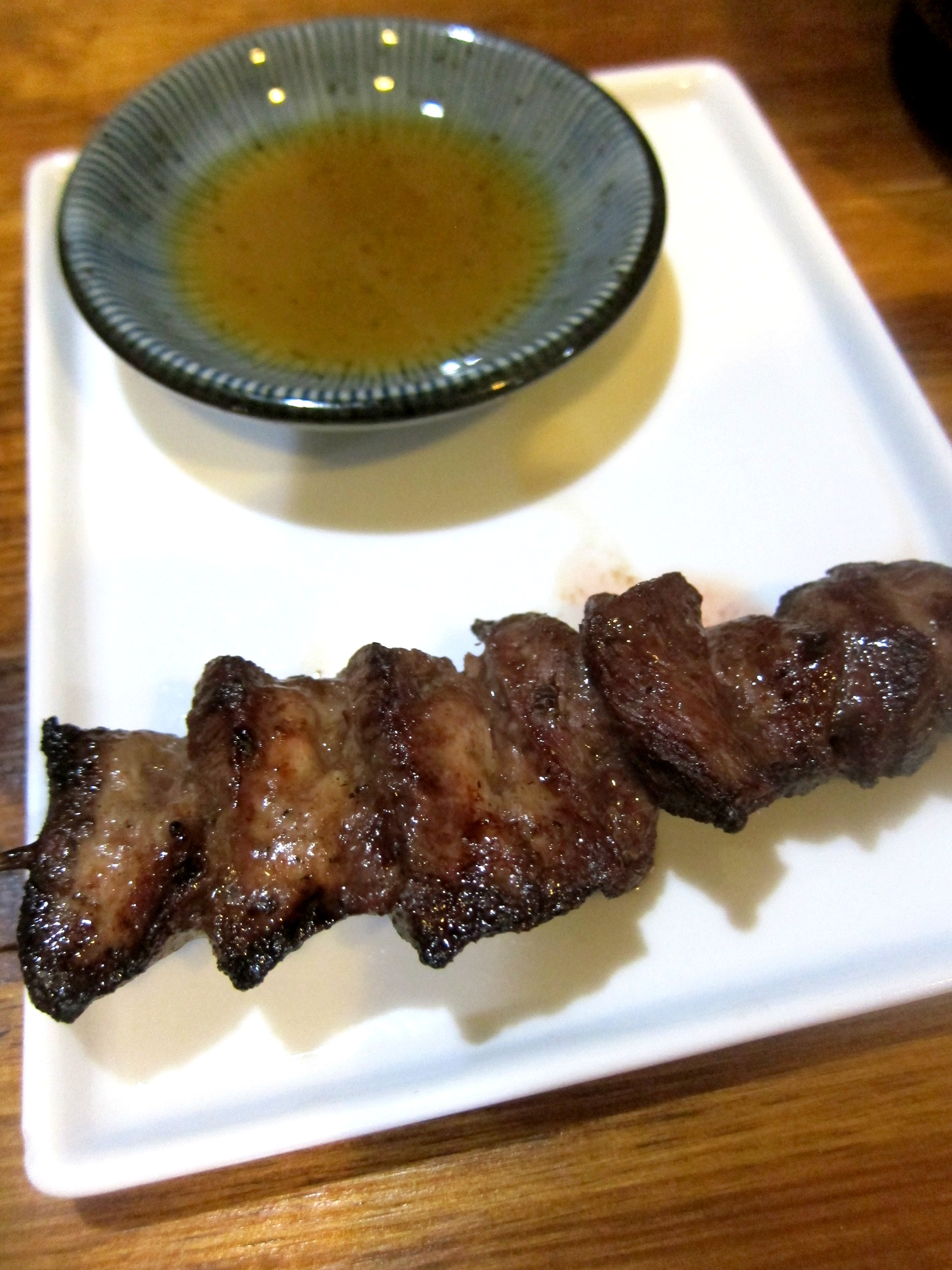
Gyutan - grilled beef tongue Another must-order of mine. A little bit too thick (and therefore, too chewy) for me, I still prefer Musashi's gyutan.

Gyutan – grilled beef tongue
Another must-order of mine. A little bit too thick (and therefore, too chewy) for me, I still prefer Musashi’s gyutan.

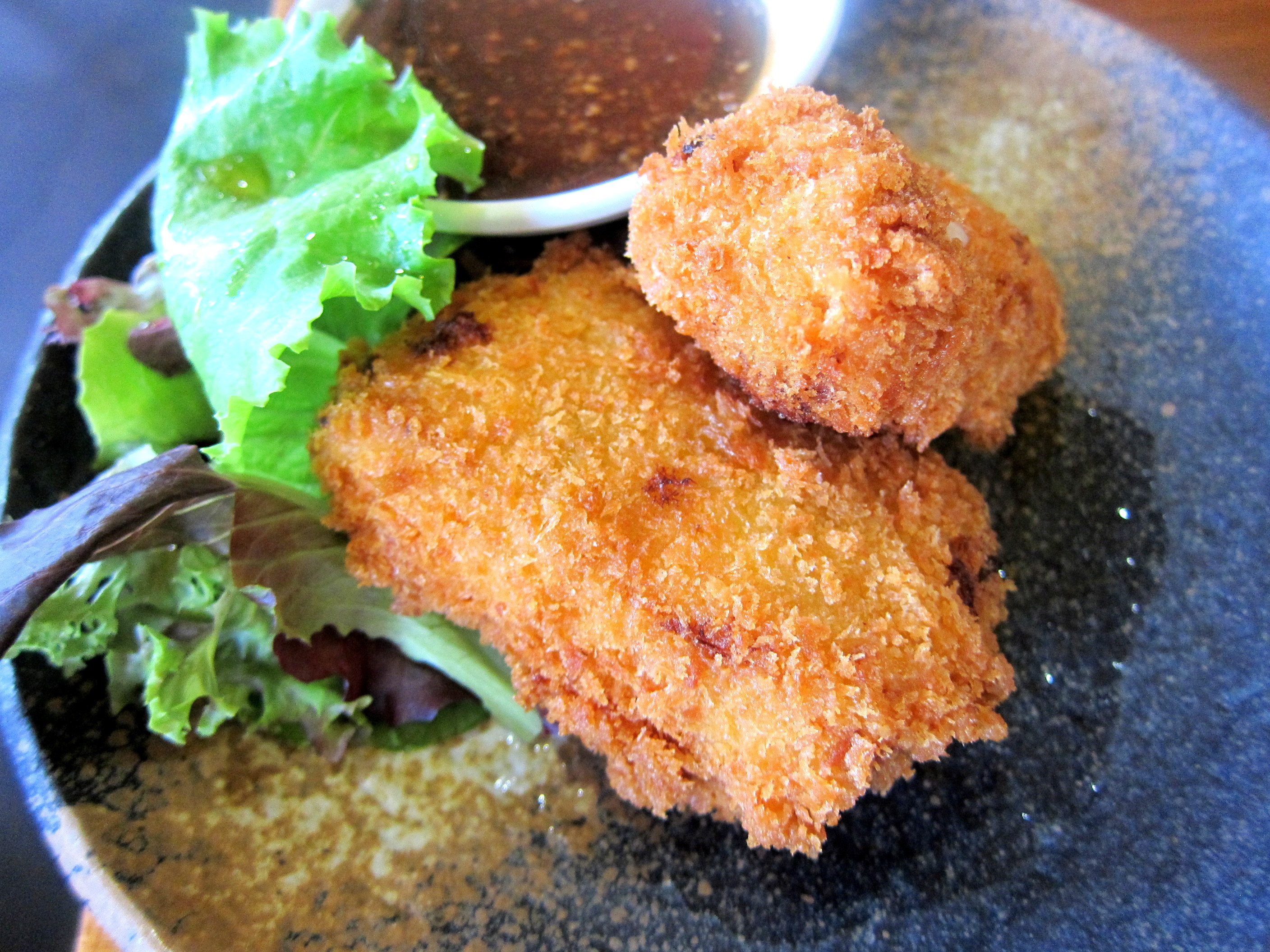
Kani korokke ($8.5) - crab croquette  Creamy inside, crunchy outside, not too overwhelming but yet to be the ideal croquette I'm looking for.

Kani korokke ($8.5) – crab croquette
Creamy inside, crunchy outside, not too overwhelming but yet to be the ideal croquette I’m looking for.

The finish:

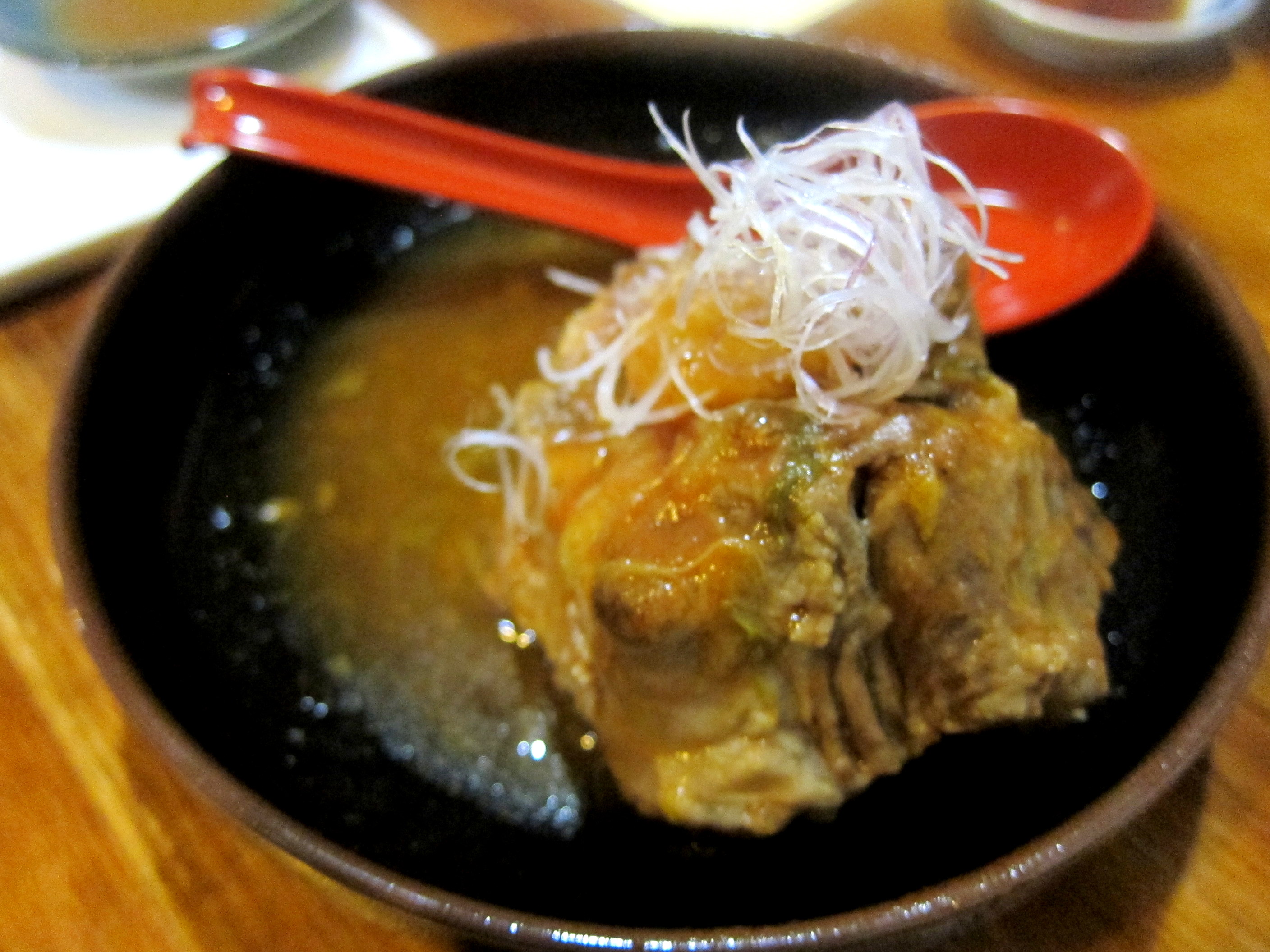
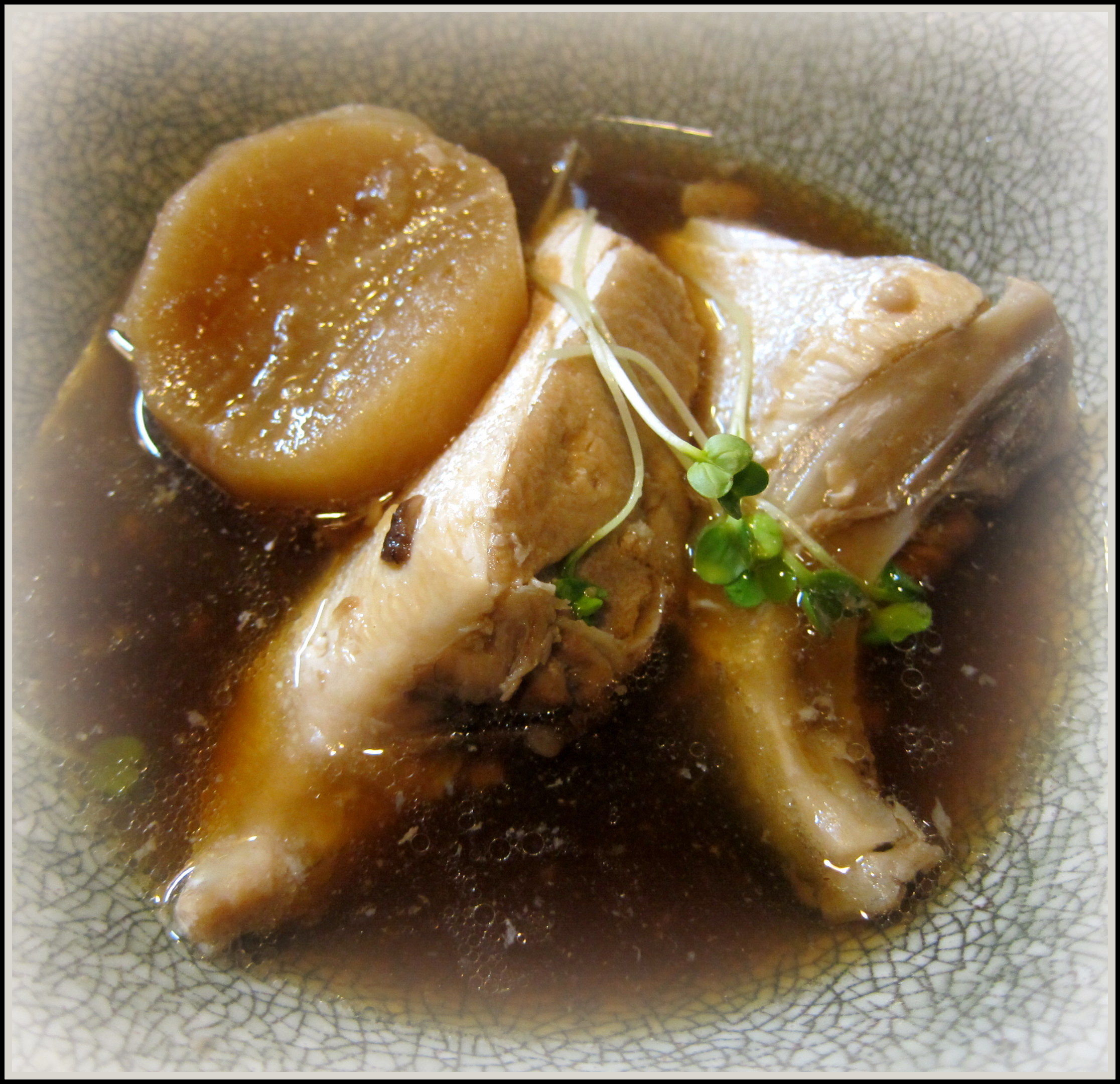
Oxtail stew ($10) in soy-based soup.  There's no way around ordering a serving of rice for this one, that sauce demands to be soaked up with rice.

Oxtail stew ($10) in soy-based soup.
There’s no way around ordering a serving of rice for this one, that sauce demands to be soaked up with rice.

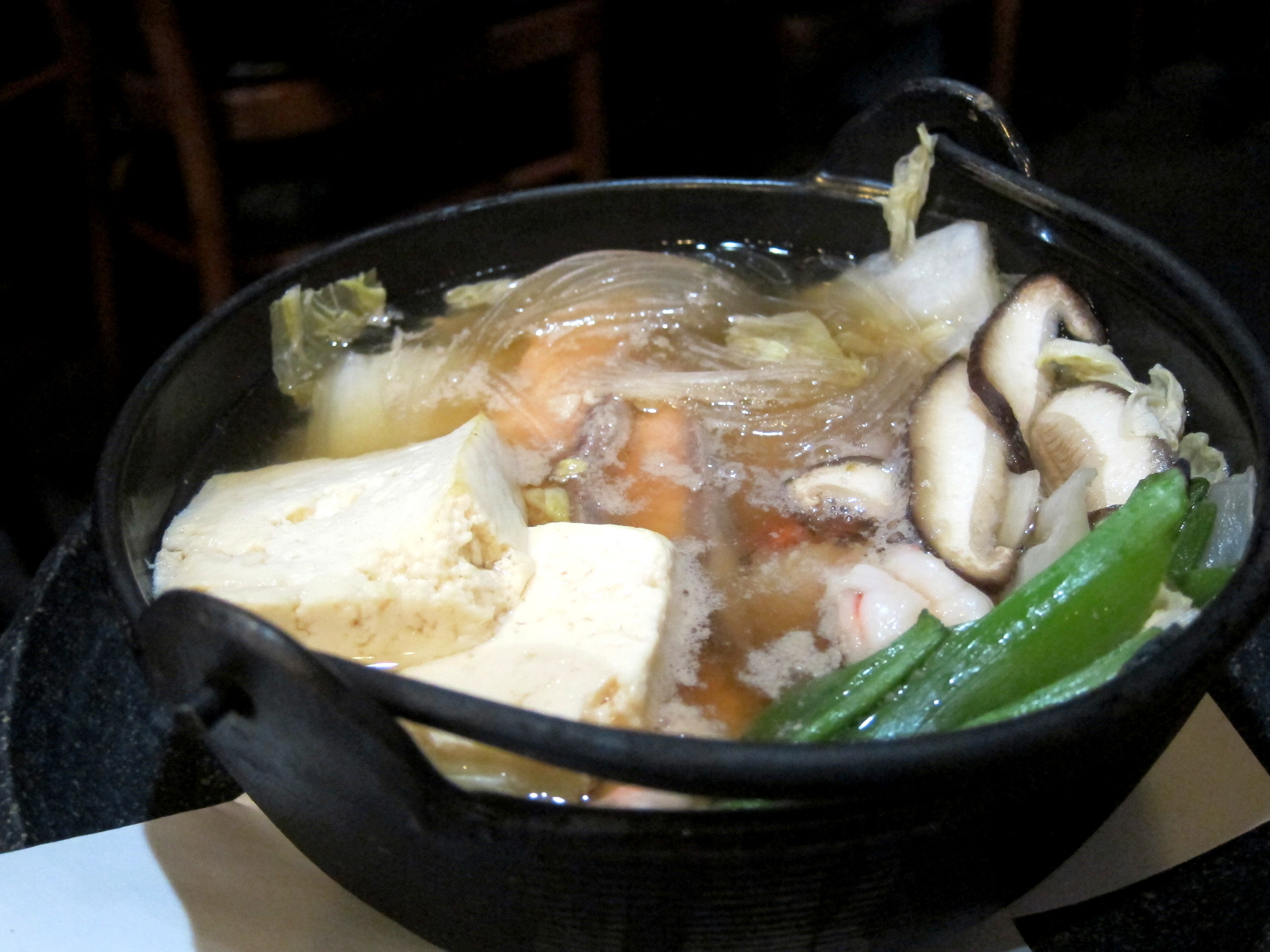
Yosenabe ($12) - seafood, tofu, and vegatable soup with glass noodle (harusame)

Yosenabe ($12) – seafood, tofu, and vegatable soup with glass noodle (harusame)

For reason unknown, the host gave us one of the specials of the day, the asari sakamushi – steamed clams cooked in butter and sake broth ($9.5). At this point, I was too busy chowing to remember taking pictures. I feel obliged to mention this because the host was so nice, but I should clarify offhand that the clams did not alter my perception of B-Dama.

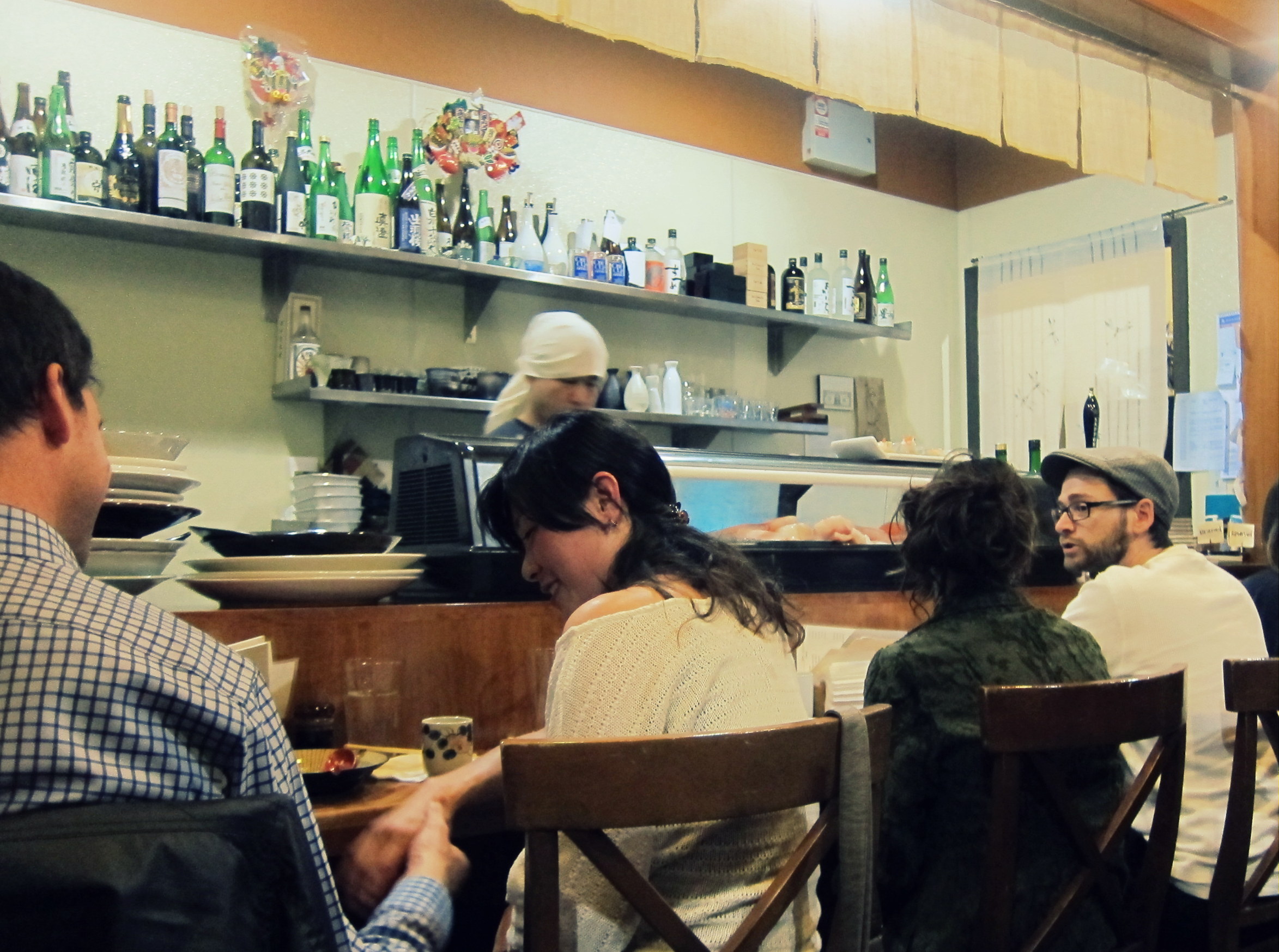
b-dama-at-the-bar
So, at the restaurant, we ran into my friend’s colleague, who also works at another great Japanese restaurant in the East Bay, and after the meal we briefly mentioned how good we thought B-Dama was. I said that I was surprised that the food here did not have any strong taste, and my friend’s colleague commented that Japanese food in principal are not supposed to be overwhelmed with spices anyway. I knew that before, and that’s why I like Japanese food, but my comment might have failed to explain my thoughts properly. B-Dama especially succeeds in delivering that clean-tasting aspect of Japanese food more than any other Japanese restaurant in the East Bay.

Address: B-Dama
4301A Piedmont Avenue
Oakland, CA 94611
(510) 420-1578
www.b-dama-geta.com

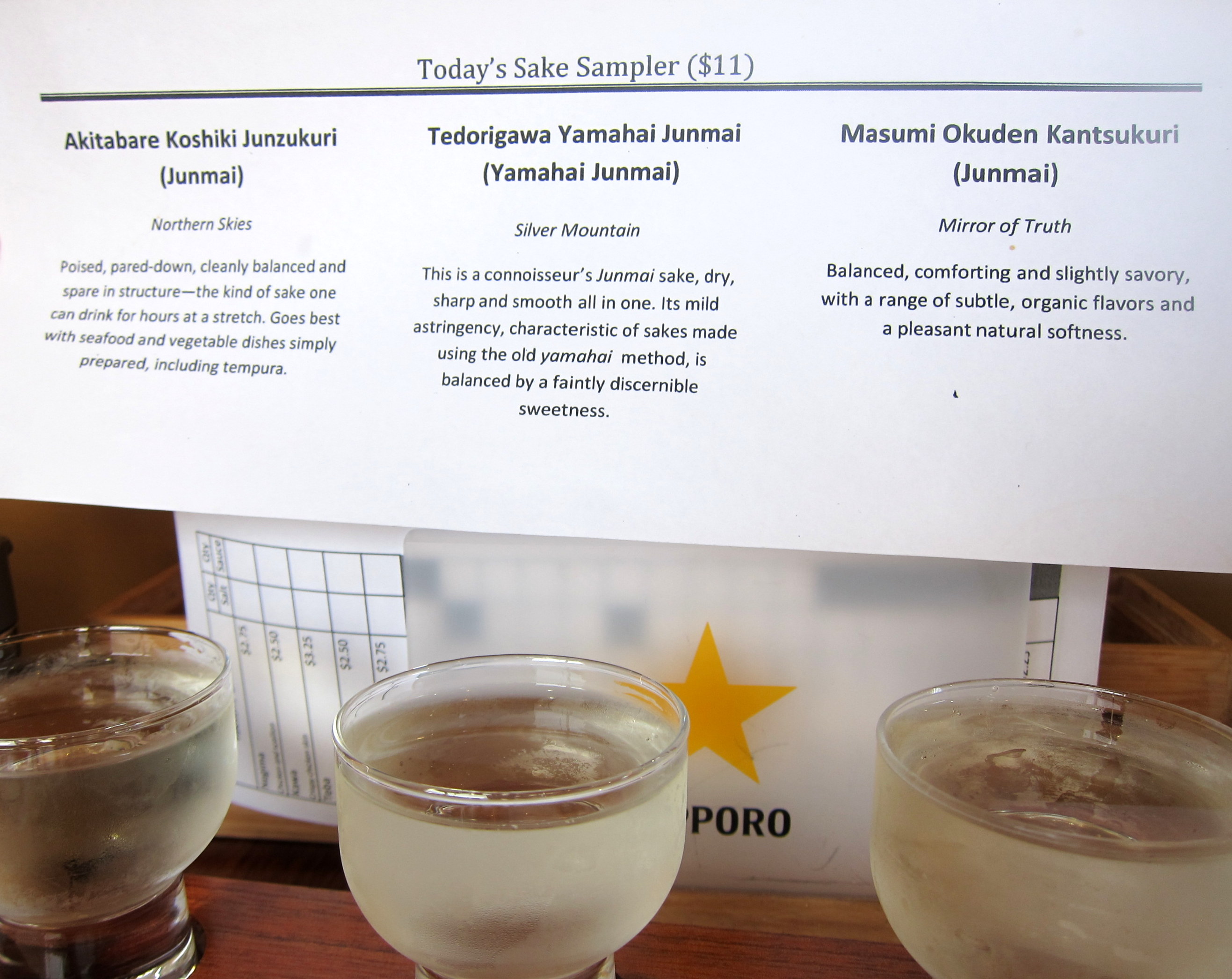
Sake sampler - ($11) The Yamahai Junmai is the sweetest, least stringent and best-tasting to me, and I'm not just saying that because it's listed as the "connoisseur's junmai". (I didn't the description when I tasted it.)

Sake sampler – ($11)
The Yamahai Junmai is the sweetest, least stringent and best-tasting to me, and I’m not just saying that because it’s listed as the “connoisseur’s junmai”. (I didn’t the description when I tasted it.)

Musashi the Izakaya

December 26, 2012 By: Mai Truong Category: California - The Bay Area, Comfort food, Japanese

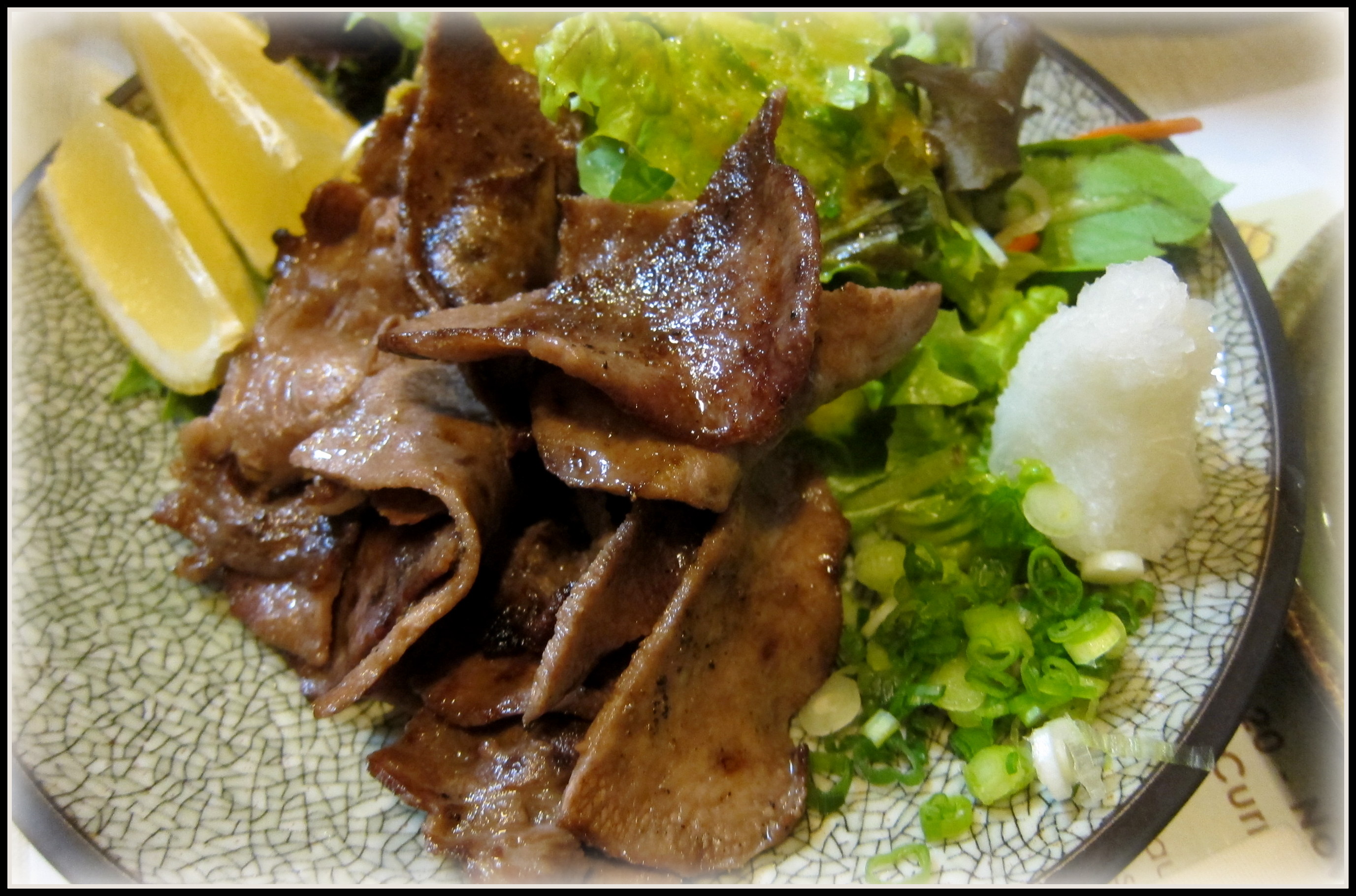
Gyuu tan – sliced and grilled beef tongue, brightened up with a touch of lemon and raw daikon.

So I was going to write a really scathing review on this Joshu-Ya Brasserie place in Berkeley, but midway through the draft I went to Yelp to read my friend Kristen’s review for that same dinner by which we were both gravely disappointed. Not only is her review already detailed and scathing enough, but she’s also been to Joshu-Ya several times. Me? I don’t give restaurants second chances, even first chances are rare. So I figured no way I’d know and write about Joshu-Ya better than Kristen. Also as we immerse in this holiday spirit and on our way to a brand new year, I’d rather be all cheery about a restaurant that I love. 😉 It’s so close to me yet so secluded from the flock of eateries downtown that I hadn’t tried it until last month. Tried it once, then I went nuts and suggested Musashi the izakaya(*) to myself and everyone every time somebody says Japanese. Beware though, this is one of those places that you need to go with someone in the know to get the real things. There’s no fake thing per se (well truth be told I’ve only been here with someone in the know), but the real things will make you that much happier blowing your wad. Even better, your wad gets blown a lot less here than at other izakayas in the block: Musashi is cheap.

What are the real things? Please, no California rolls. (**)

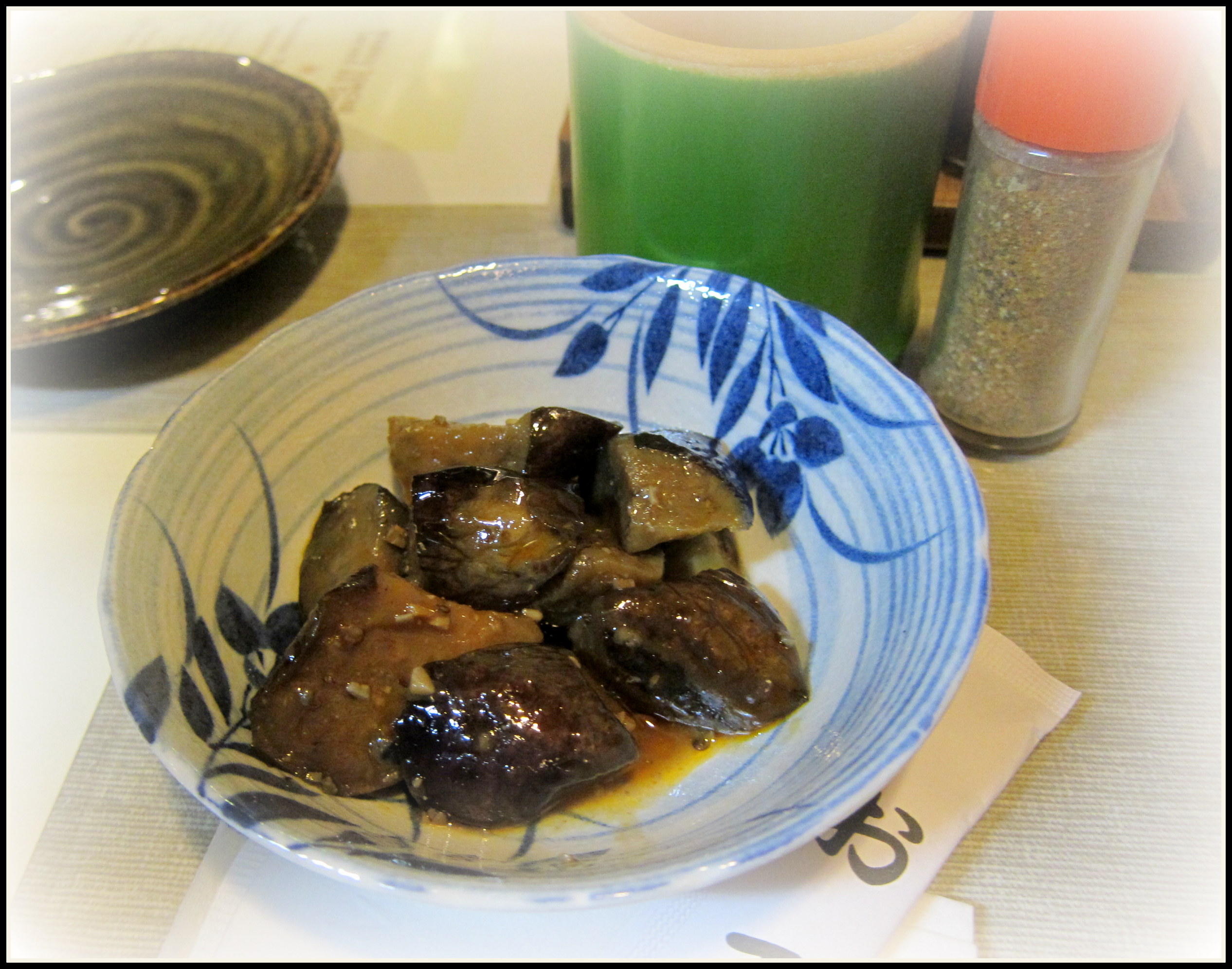
Eggplant tossed with sesame and sweet soy sauce (goma ae). Healthy, no frills, and strangely addictive.

A fresh start is the 3-piece nigiri sampler (salmon, tuna and hamachi), but Musashi first blew me away with their simple green beans tossed with sesame, miso and sweet soy sauce (さやいんげんのごまあえ|saya ingen no goma ae|?). A similar eggplant dish started the next dinner we had there, good but I’m no eggplant fan. Of course we have no say in the free side dish, but if the stars all line up right you might just get the green bean. 😉

They have all of the common izakaya food like karaage (fried chicken), sunagimo (chicken gizzard, mmmmm), teba (chicken wing) and every other chicken thing, but my staple go-to has been the gyuu tan: a heap of sliced beef tongue, so lightly grilled that it doesn’t turn rubber, for a measly $6! (UPDATE: Musashi has the BEST gyutan in Berkeley!)

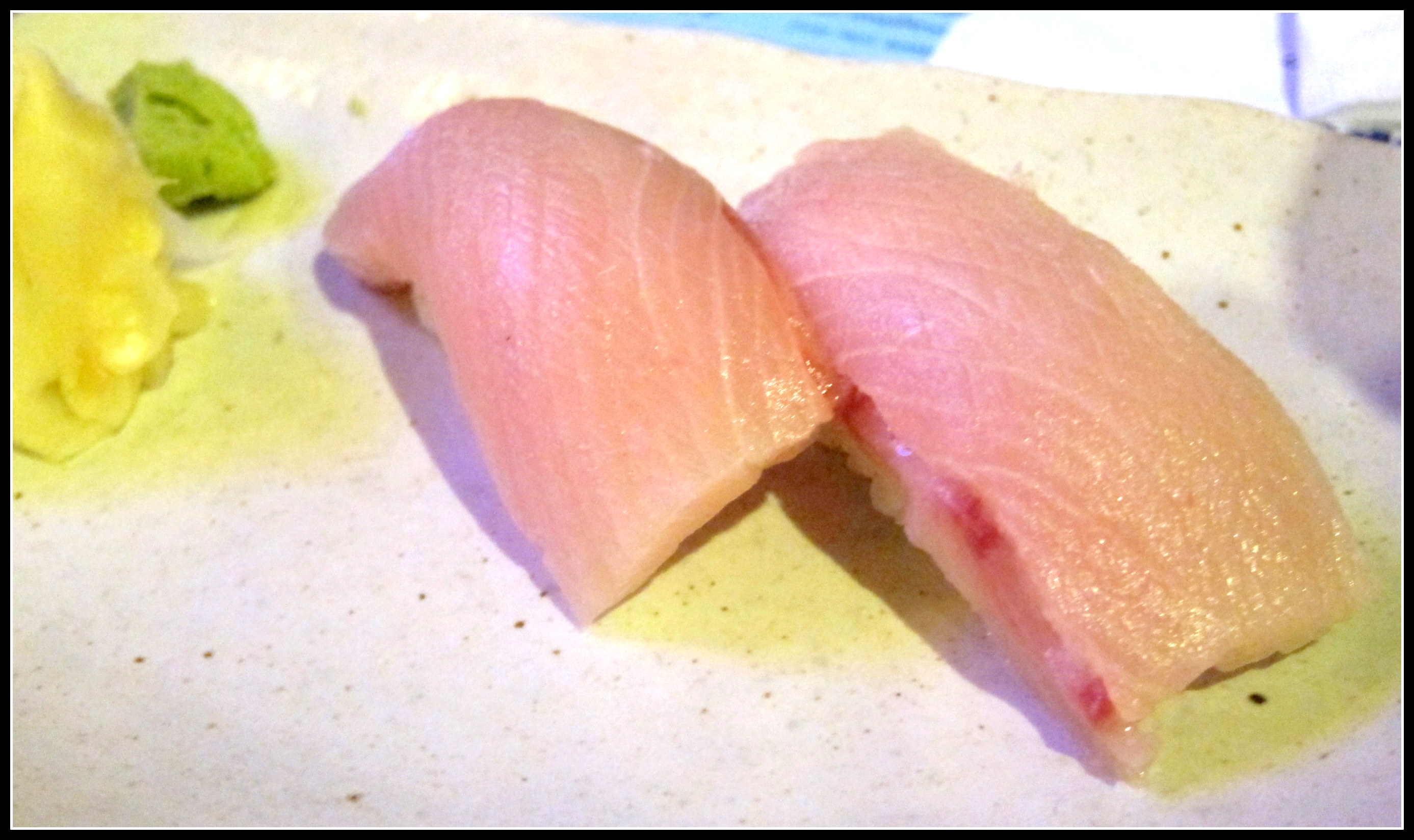
Hamachi nigiri - fresh and chewy as I like it

Hamachi nigiri – fresh and chewy as I like it

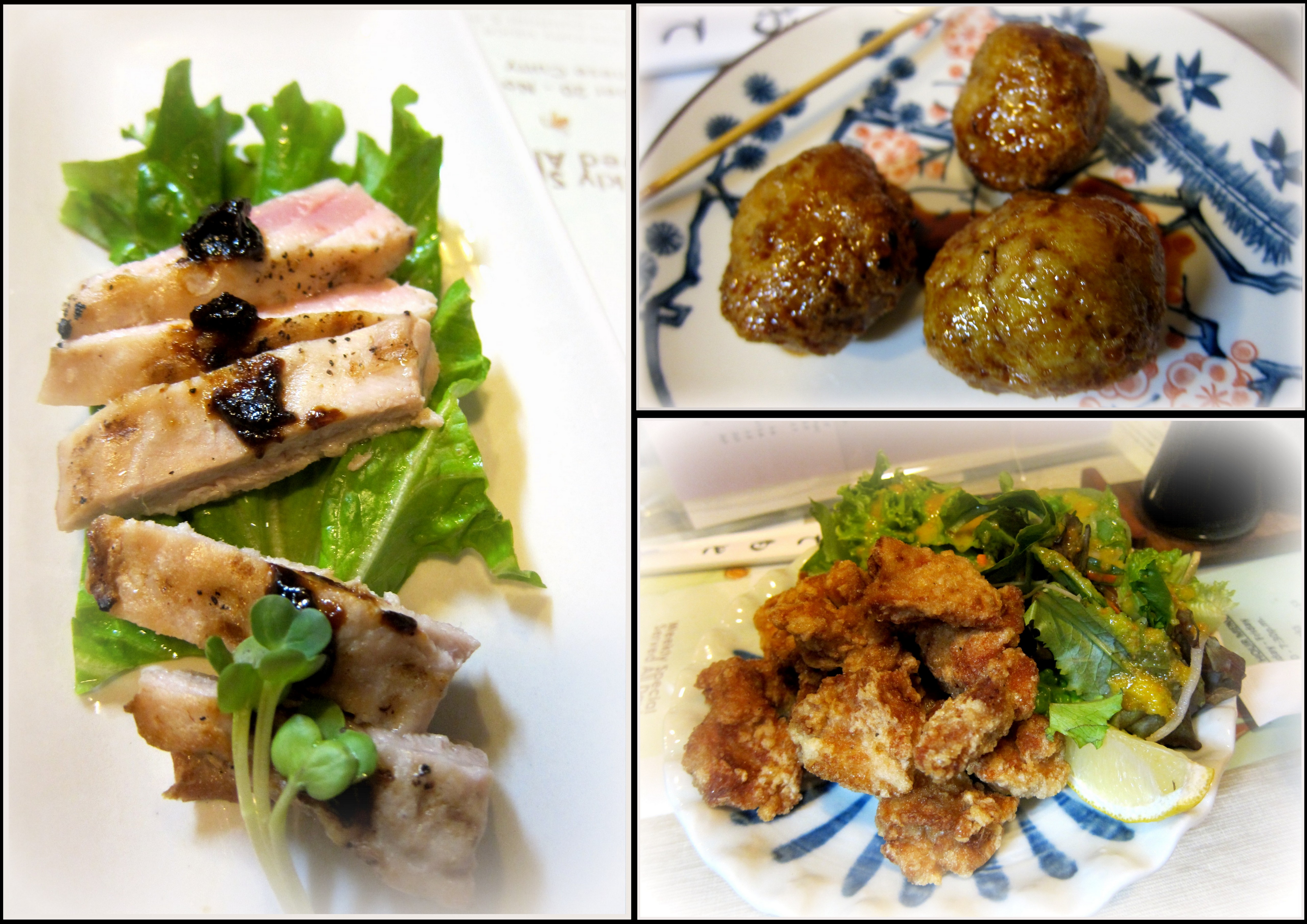
Clockwise from left: mune (chicken breast), tsukune (chicken meat ball) and karaage (fried chicken).


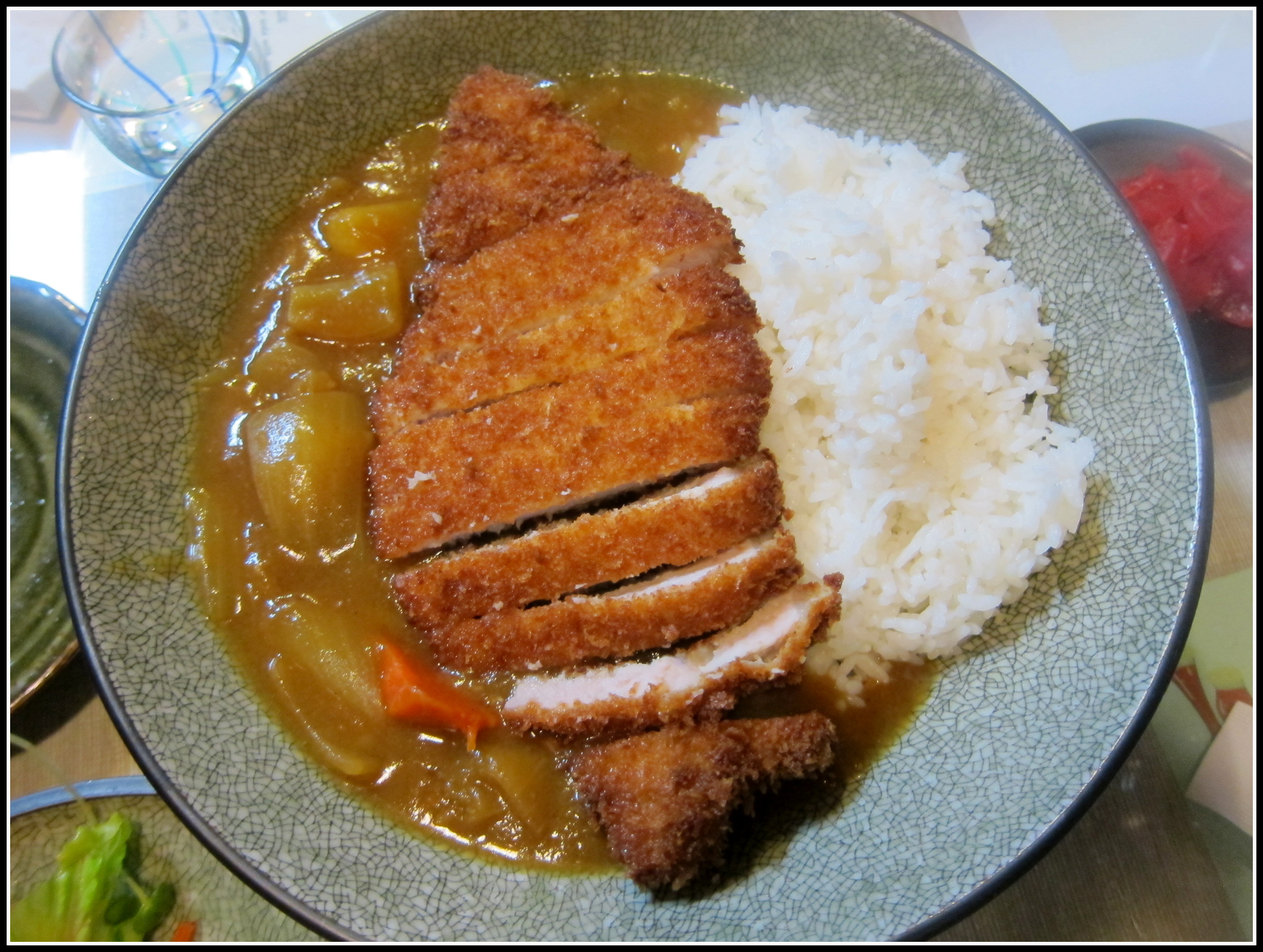
Although it’s possible to fill up on the skewers (I’ve done that at, of all places, Ippuku), it’s more economical and less confusing to fill up on something with rice. The nice thing about Musashi is they often have these few-day specials with ridiculous discount, such as this bowl of curry rice for $6 topped with a tonkatsu for another $1. The first time I had Japanese curry at a Korean-owned Japanese restaurant I was bored out of my mind, but Musashi’s sweet, slightly peppery curry works for me, with some tsukemono (pickled things). Unaju (rice with unagi) would also make a perfect choice any day.

That said, you can order all of these things without knowing Japanese, because they’re on the menu. The real deal isn’t, but somehow your Japanese friend knows it exist and asks the hostess, she nods welcomingly “hai! hai!” and you just enjoy the ride.

For example, buri daikon – fatty hamachi (yellowtail) and daikon simmered in soy sauce and mirin ($8.50), or  saba no misoni – saba (makerel) simmered in miso sauce, which, to my surprise, tastes almost identical to the Vietnamese cá kho despite the different ingredients. The sauces are watery and great over rice. If you’re afraid of (fish) bones like me, then ask her for buta no kakuni (braised pork belly), same concept.

Finish with black sesame ice cream.

One Monday evening I planned to meet a friend here, only to find out that they’re closed on Sunday and Monday. I was very sad.

Address: Musashi Japanese Restaurant
2126 Dwight Way
Berkeley, CA 94704
(510) 843-2017
www.musashiofberkeley.com

(*) There’s Musashi (宮本 武蔵) the famous samurai whose life stories inspired several works of fiction, such as the historical manga Vagabond by Takehiko Inoue. It’s bloody bloody, and bloody sad, nonetheless I’m at volume 34.

(**) I know. These American rolls can be good, and the place to get them would be Anzu.

Miso Omakase at Nojo

July 15, 2012 By: Mai Truong Category: California - The Bay Area, Japanese, The more interesting


Is it miso season? (Miso has a season?) Berkeley Bowl puts out about 10 different kinds of miso in their “international” aisle, and Nojo advertises a seasonal 5-course miso omakase menu on Black Board Eats. Usually the Black Board Eats emails go straight into the trash, which I kinda feel bad about because I signed up for their newsletter after all, but thank goodness I did read it that morning. That night I got the code, called my friend, and we went to Nojo.

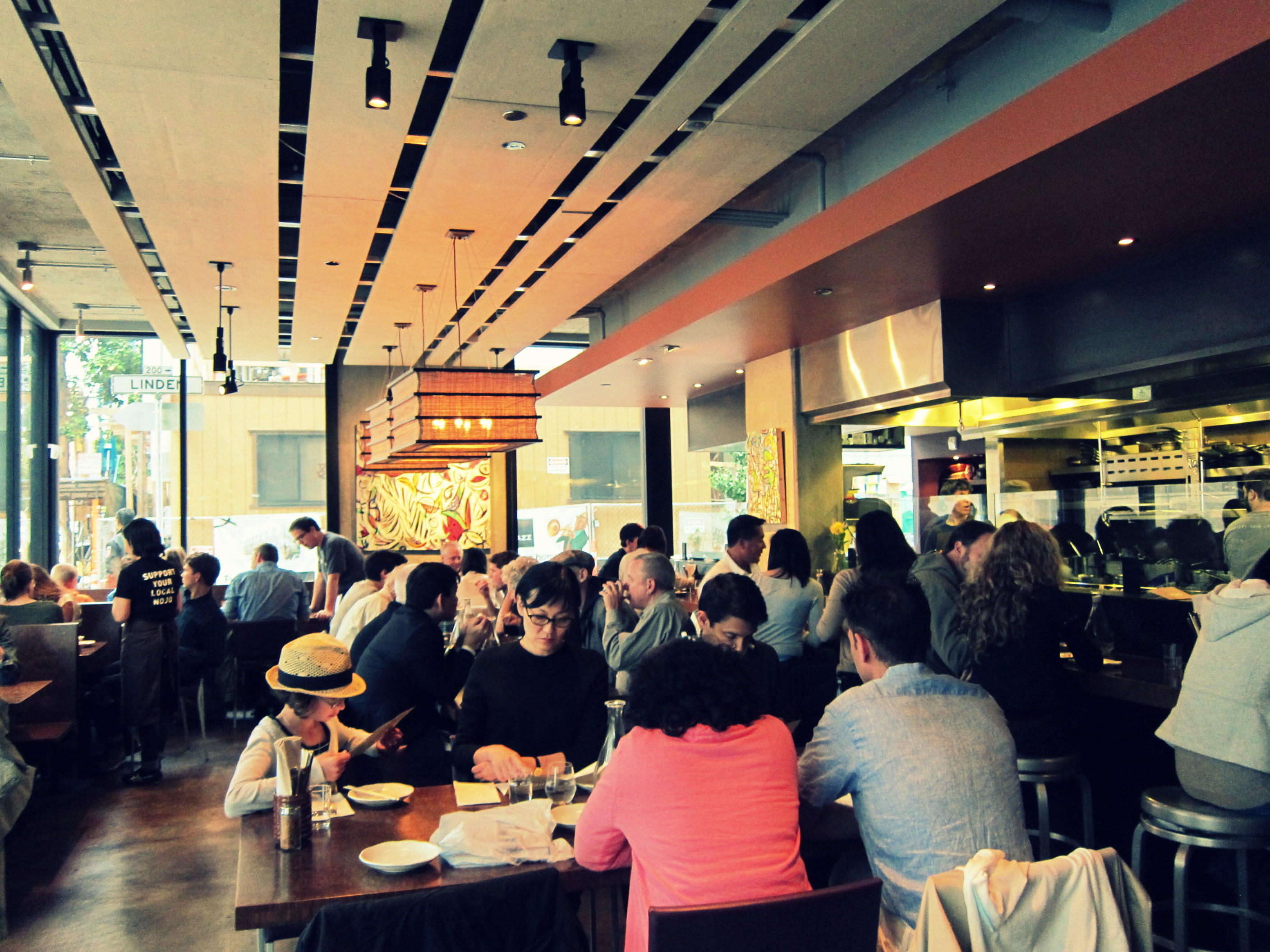
We were seated at the counter, but not the one facing the chefs, that would have been nice, this was a small counter facing the wall near the door. The wall looks pretty cool but we felt kinda weird at first, what with the other customers crowding the tables and here the three of us facing a wall next to a middle-aged man. We felt outcast. But Nojo doesn’t take reservation for party under 6, only a phone call an hour before you arrive to put your name on the waiting list, guess I should have called more than an hour earlier, what was I thinking following the rules? But the servers, inked and all, are really nice, the water was clear and sweet, the sunflowers smelled good, and the middle-aged man left minutes after we sat down.

And the food.


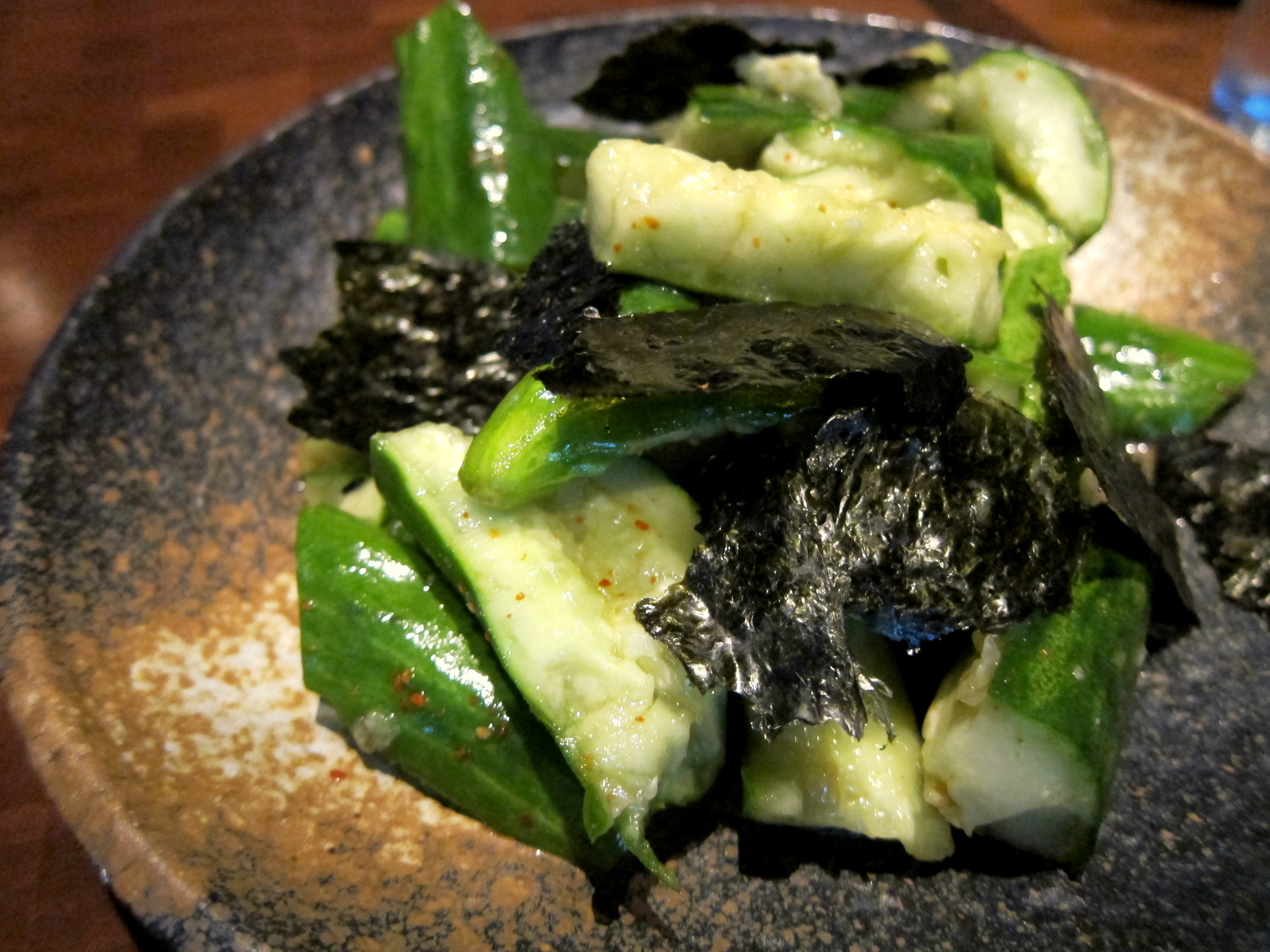
Cucumber salad with shichimi and nori. Shichimi is a chili pepper mix with (supposedly) 6 other spices, but they sprinkled just enough to give the cold thing a kick, not spicy. There’s more shichimi on the counter for the duller tongues people who like spicy food.


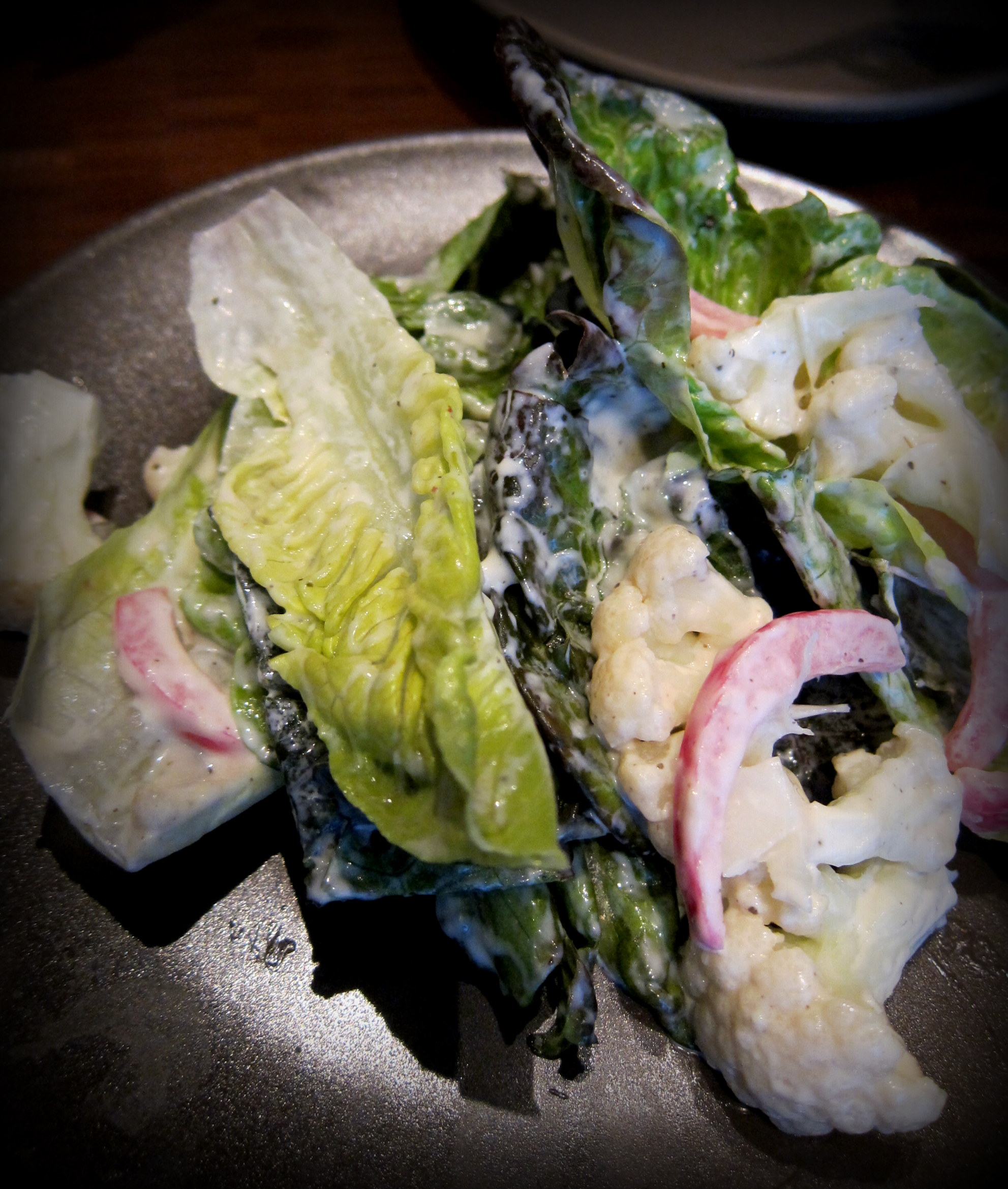
Miso Omakase Course 1: a simple salad of Little Gem lettuce and cauliflower with shiromiso (white miso) dressing. The pickled red onion was the real little gem.


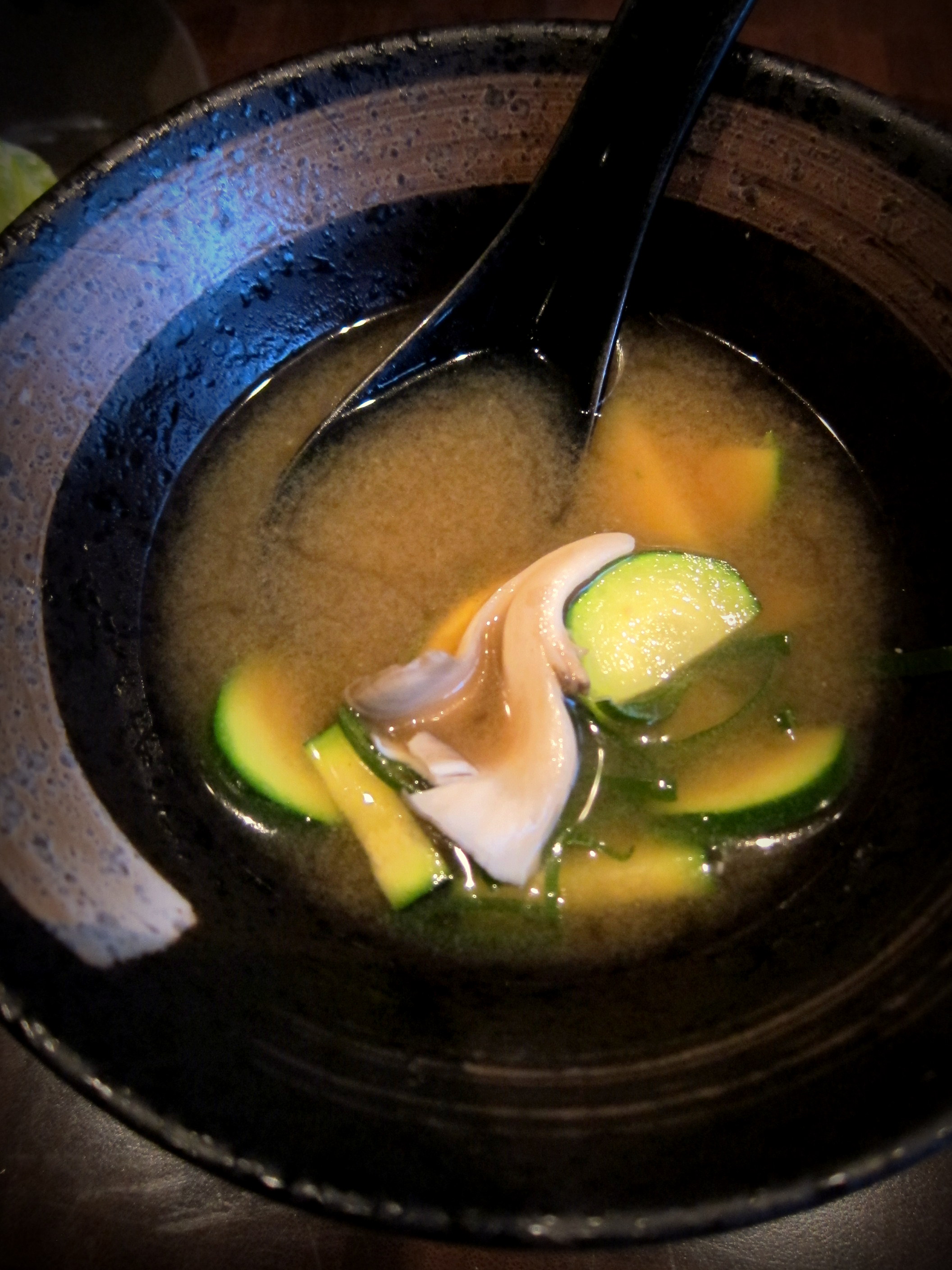
Miso Omakase Course 2: miso soup with oyster mushroom and butternut squash. Hearty. San Francisco gets cold at night, so this helps.


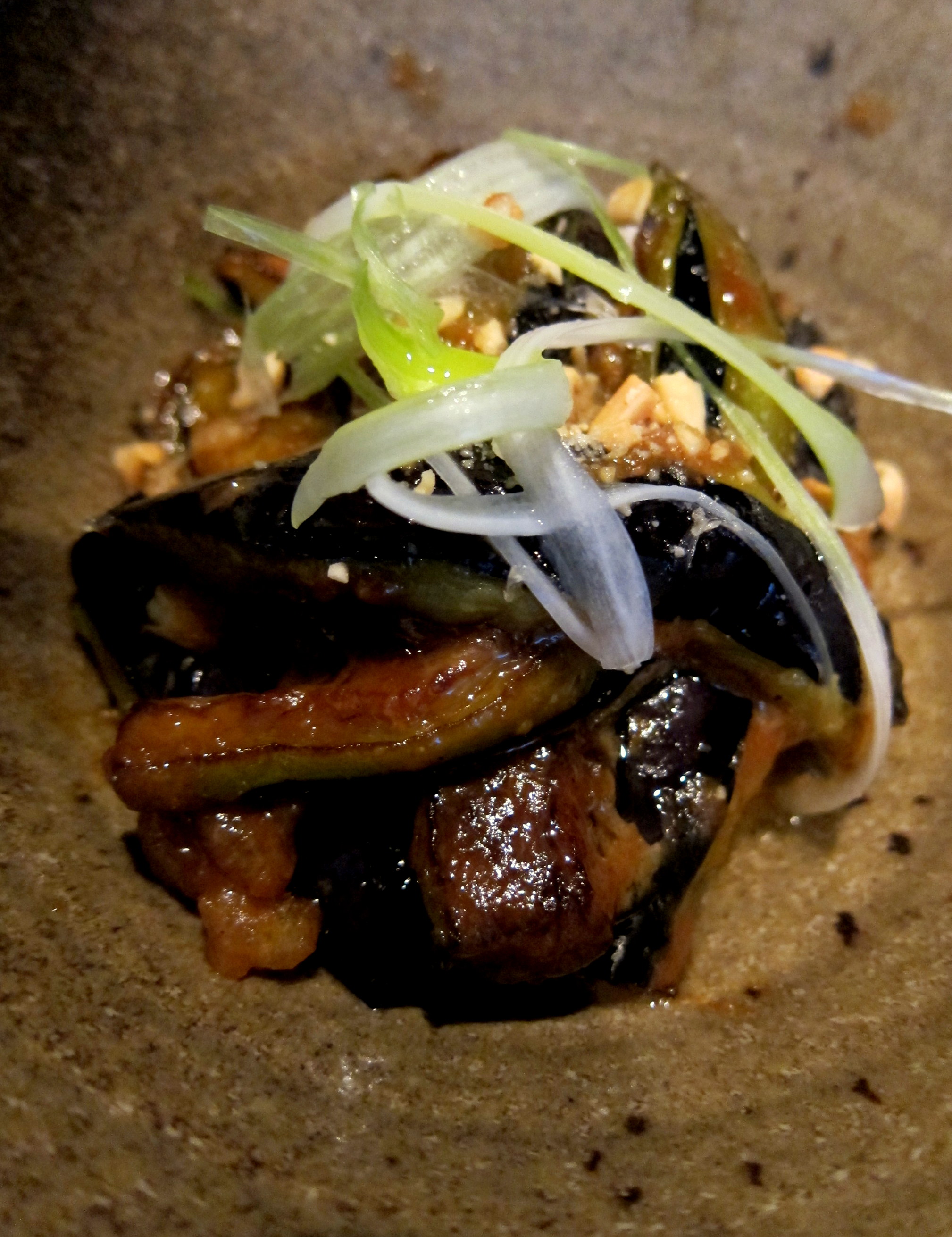
Fried eggplant with akamiso (red miso) and peanut sauce, topped with julienned leek. Eggplants have never been my favorite fruit and will never be even if I go vegan, but this miso eggplant was better than the grilled pork jowl and the garlic-barley miso butter chicken (Miso Omakase Course 3), both of which tip-toed on the salty side.


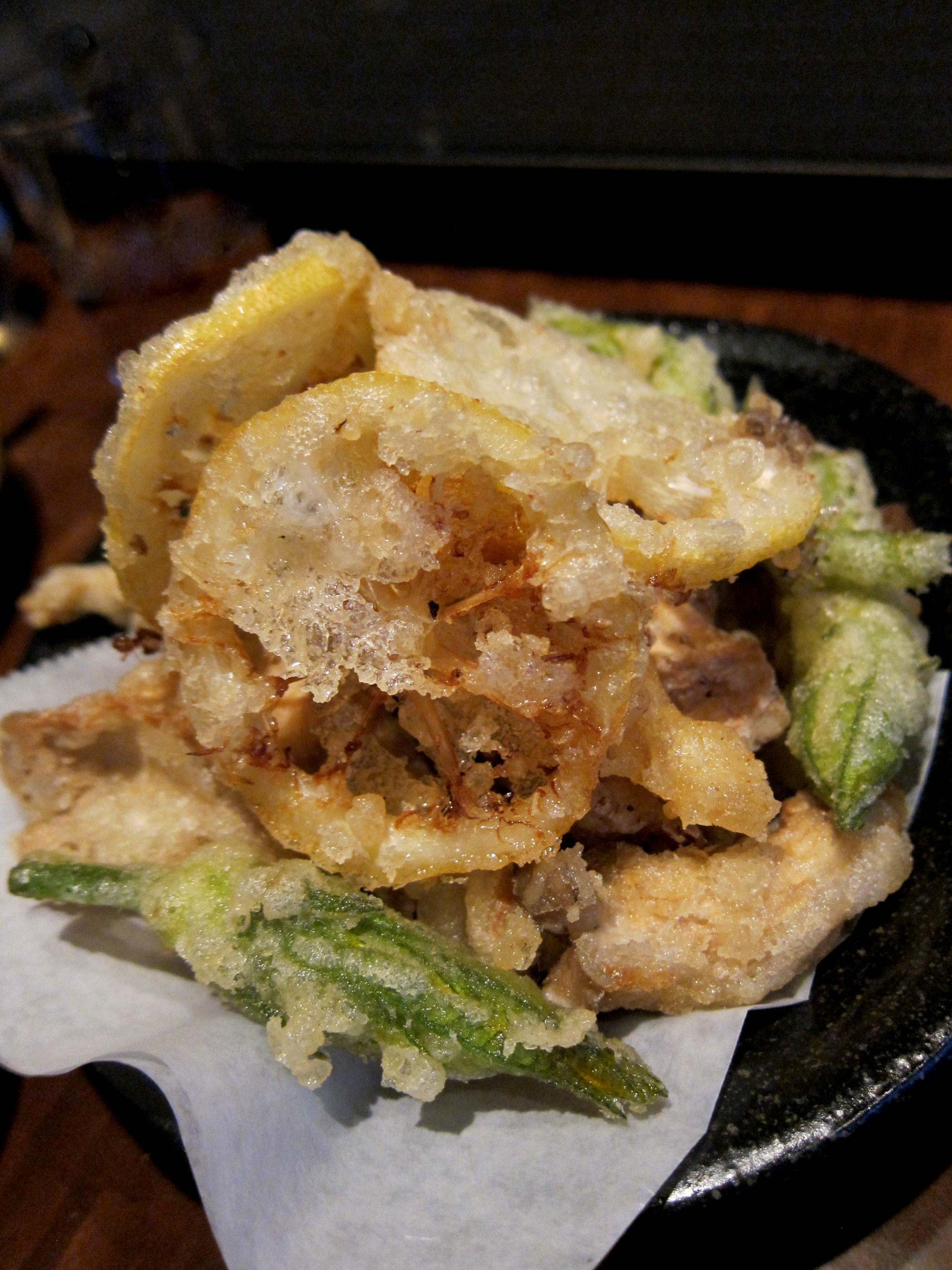
Tempura tree oyster mushroom, squash blossom and lemon, to be dipped in a zesty ponzu mayonnaise.


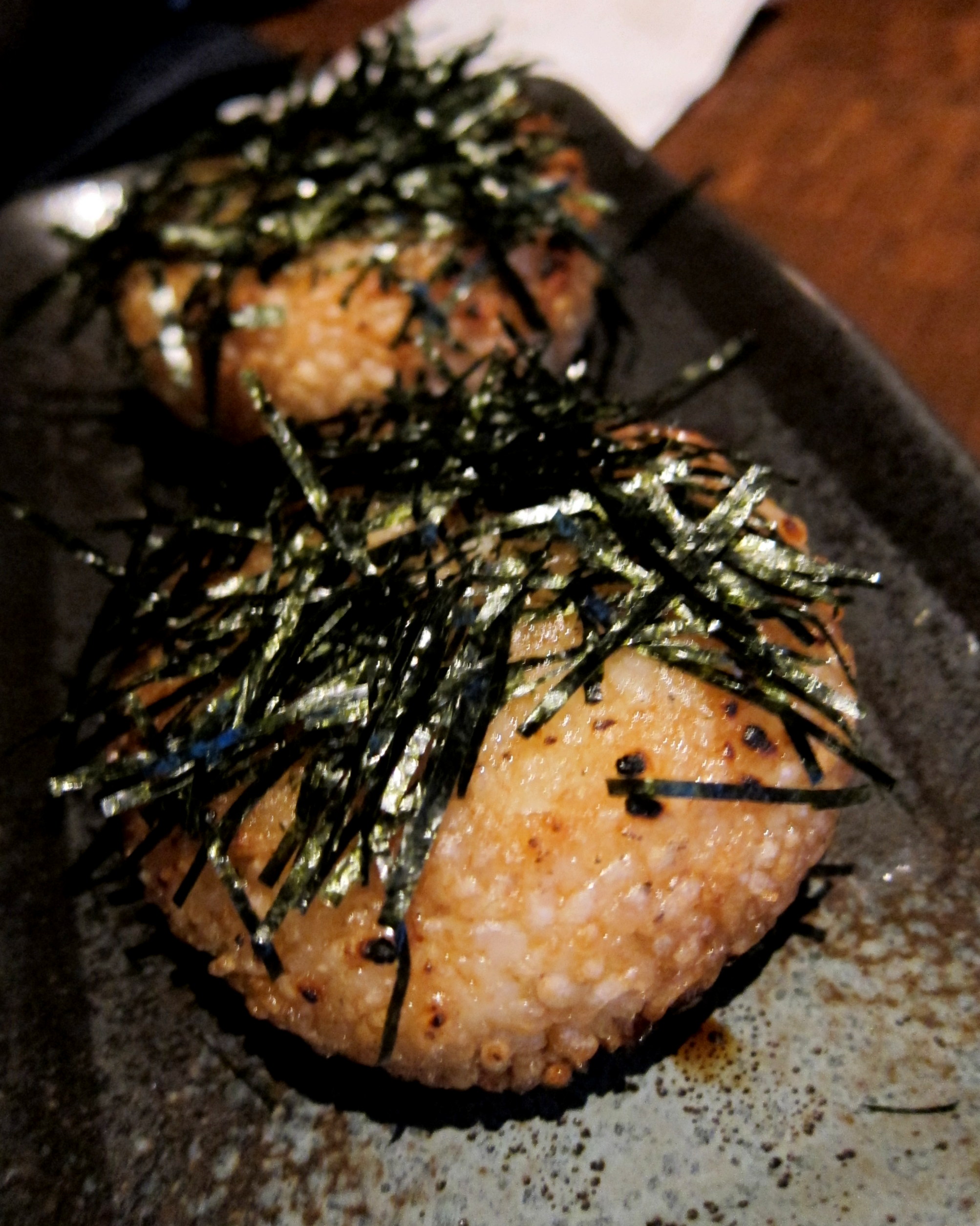
We didn’t expect a fried thing when we ordered the rice balls with tare and nori, but the surprise was welcome.


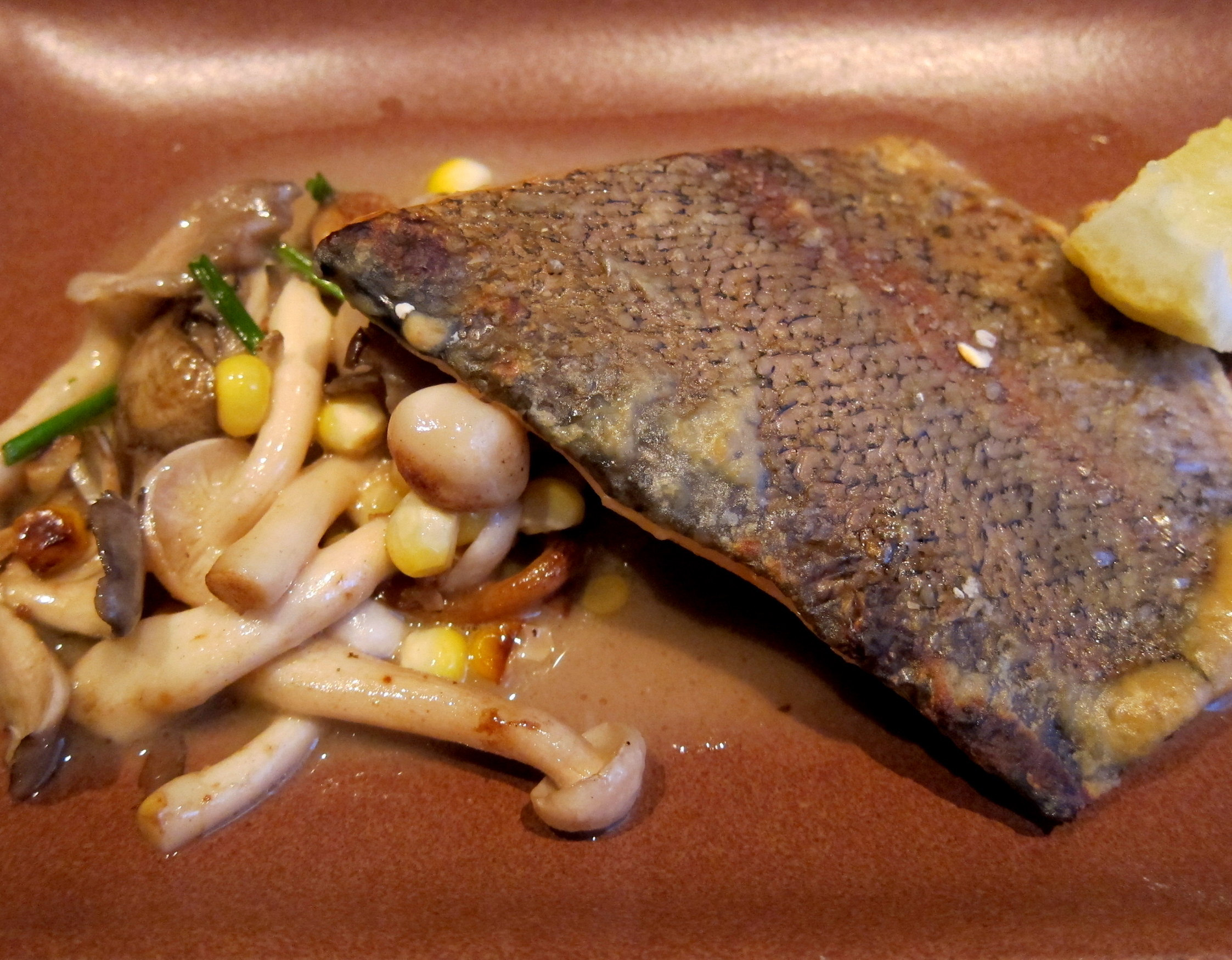
If I was skeptical about anything in the Miso Omakase menu, it was the shiromiso-glazed trout. But its sweet creamy sauce blew my doubt away, the rice ball was great for sweeping up every last drop.


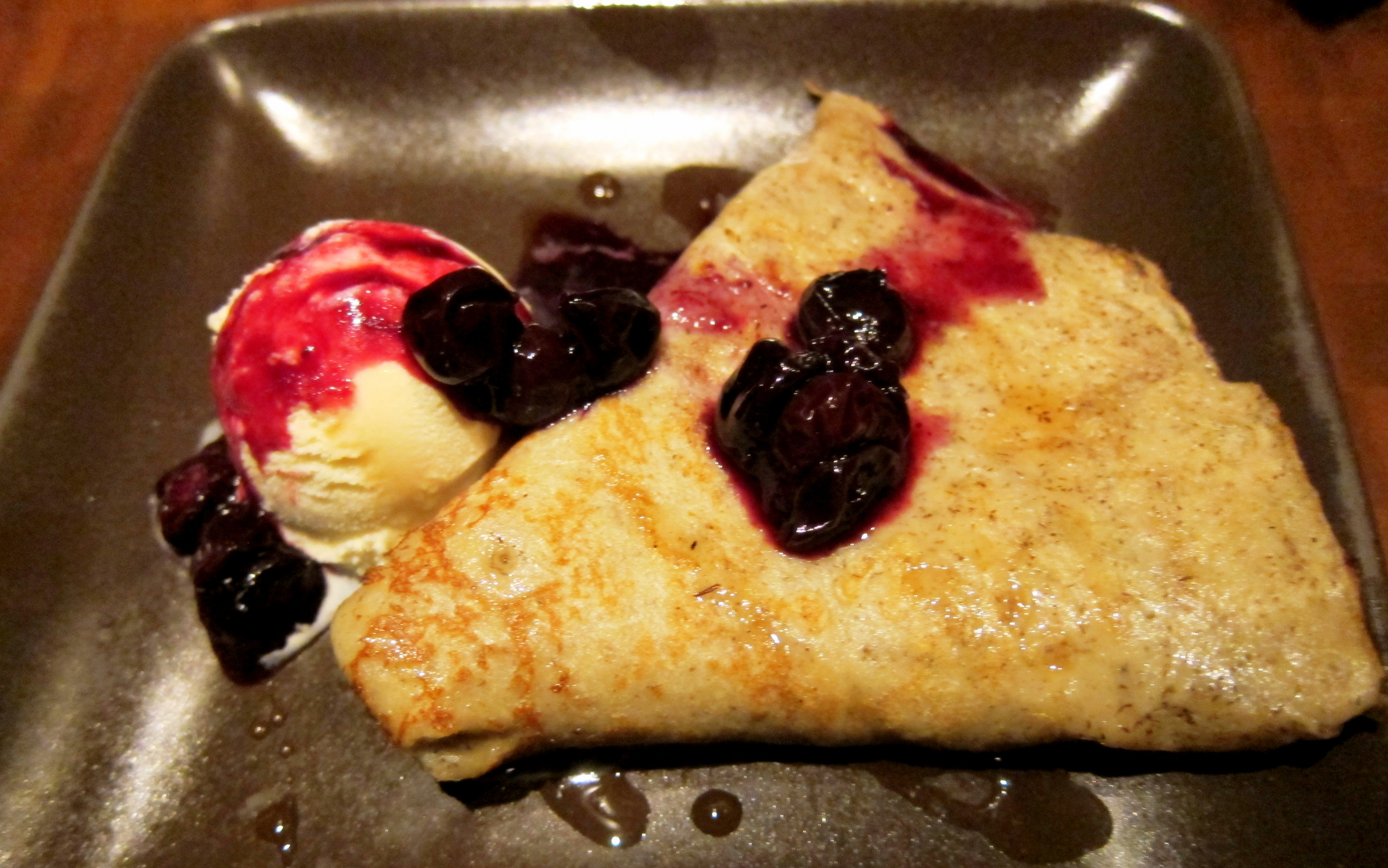
Miso Omakase Course 5: buckwheat & beer crepe, a drizzle of ginger-muscovado syrup, blueberry compote on top and shiromiso ice cream. We thought muscovado was a cross between muscat the grape and avocado (weird, I know, but possible, right?), but we asked, it’s a brown sugar.


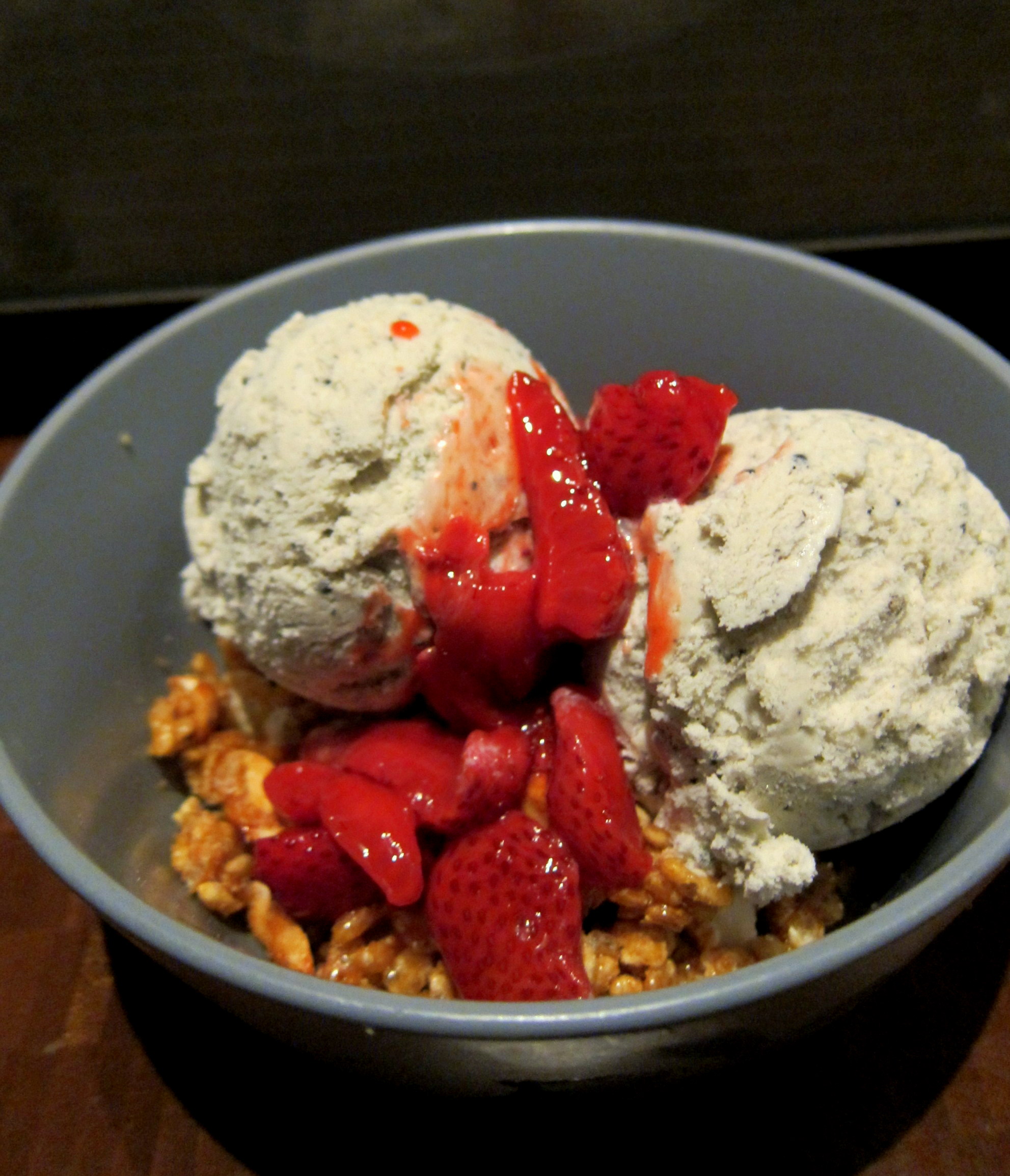
And of course, kurogoma (black sesame) ice cream with roasted strawberries on a bed of “peanut thunder crackers”, which is like peanut brittle and caramel popcorn intertwined, multiplied the goodness by 85.


You know how people can just tell that something’s good when they see it, for no reason at all? That’s how it was with Nojo for me. Every izakaya in the Bay has the same kind of yakitori on the stick, the same expensive price, the same raves on Yelp, and I don’t know why I wanted to go to Nojo, but now I’m recommending it to everyone I talk to. Was it the kikubari exuding from the friendly staff, inked and all and warmly smiling as they strode between tables? Was it the simple but flawless food? But I didn’t know any of that before I came.

Somewhere in me, I just knew. Miso is in.

Address: Nojo (which means “farm” in Japanese)
231 Franklin St.
San Francisco, CA
(415) 896-4587

Dinner for three: $99.82

Time well spent at Ippuku

March 01, 2012 By: Mai Truong Category: California - The Bay Area, Japanese


“Ippuku” means “break” or “to take a break”. It doesn’t surprise me that this place made it into the Top 100 of the San Francisco Chronicle last spring, I surprised myself that I had’t taken a break here all this time. How can I call myself a Berkeley food blogger without eating at Ippuku?
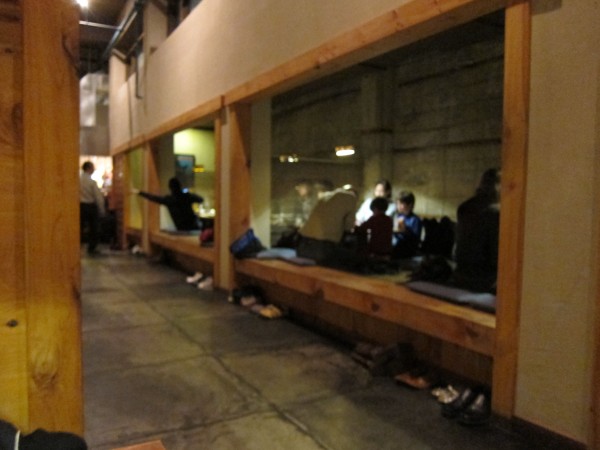

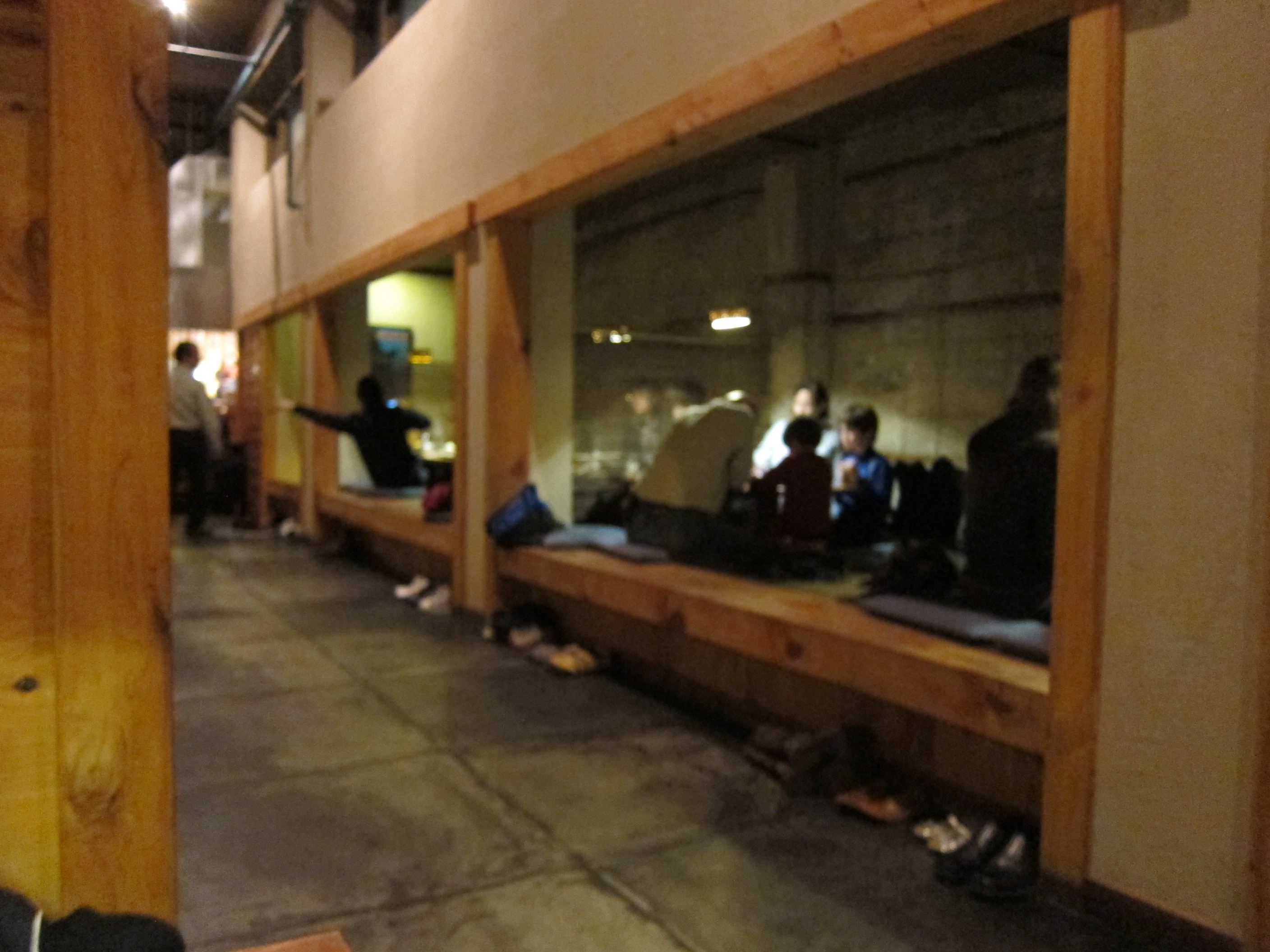
Maybe it’s the signless entrance that camouflages the izakaya in the dark, minus the dimly lit sake bottles on the side and the closed door, which I can never open correctly from the inside. Maybe it’s my distrust of Yelp reviews. But I brushed through the cotton curtains to enter that long, dark, narrow, stark simple structure, saw the half-shadowed faces immersed in quiet enjoyment, and the wooden platform, on which you can sit seiza style (flat kneeling) or dangle your feet under the table like a true Westerner; from that moment, I decided that it’s a lovely place, no matter how the food was. Of course, the food was good.
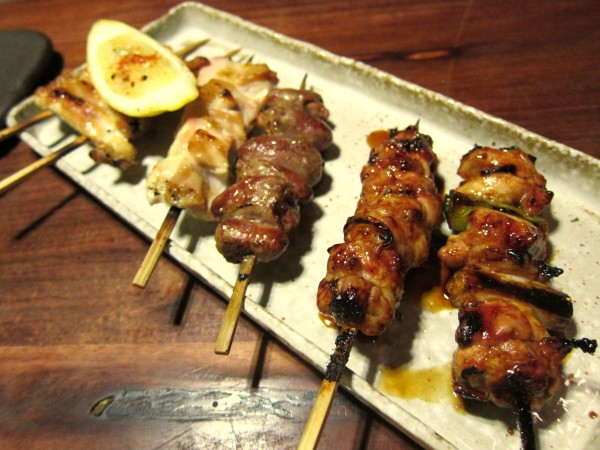

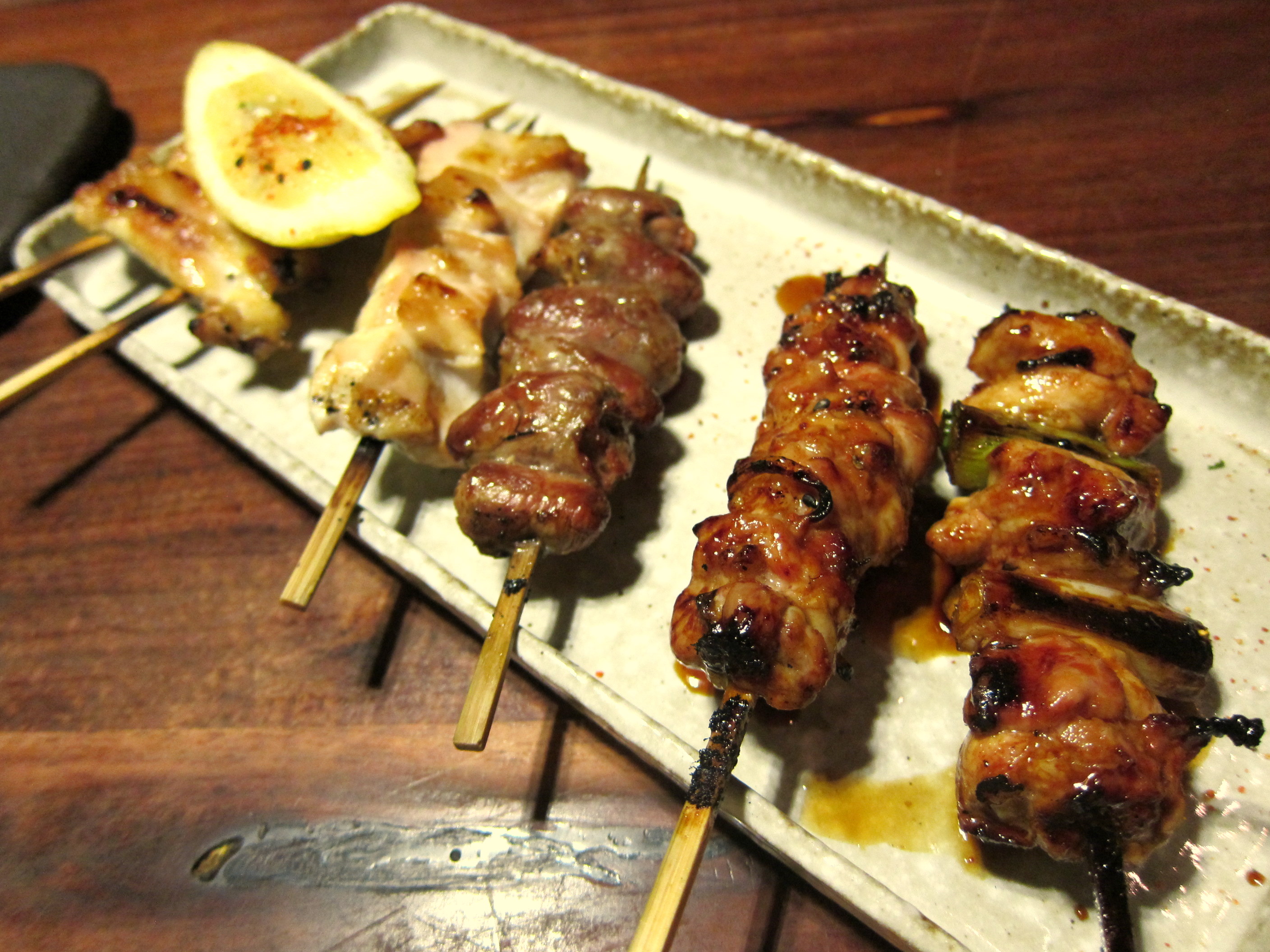
The most written thing about Ippuku must be the collection of all-part chicken edibles. Every single blog and its best buddies have something to say about (and a picture of) the omakase gushi ($14, 5 chef-choice skewers), which might include gizzards ($6.50), hearts ($6.50), shoulders ($6), necks ($6.50), breasts ($6), wings ($6.50), thighs ($6), tails ($7), varying throughout the night. They also have knee cartilage ($7) and breast cartilage ($7), which gets sold out before 6 pm. Growing up, I’ve had my shares
of chicken from head to toe to bone marrow, and I still clean the chicken bones to its dryest whenever possible, so this is old game. It’s not that “Ippuku uses every part of the chicken to its best effect”, Ippuku simply uses every part of the chicken and (hopefully) convinces the Western palate that white meat isn’t everything (if it is anything). The chewy crunchy gizzards and hearts made me feel at home.
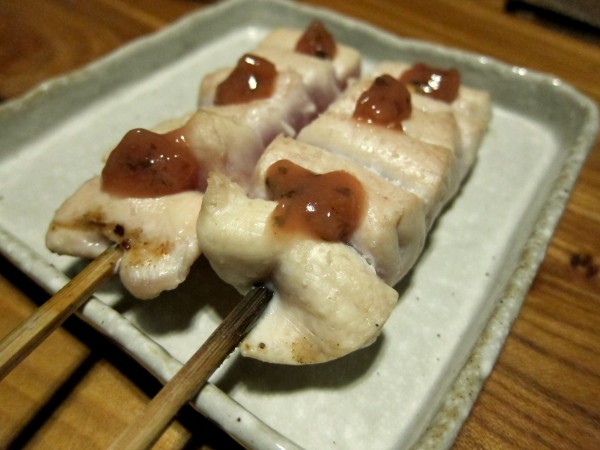

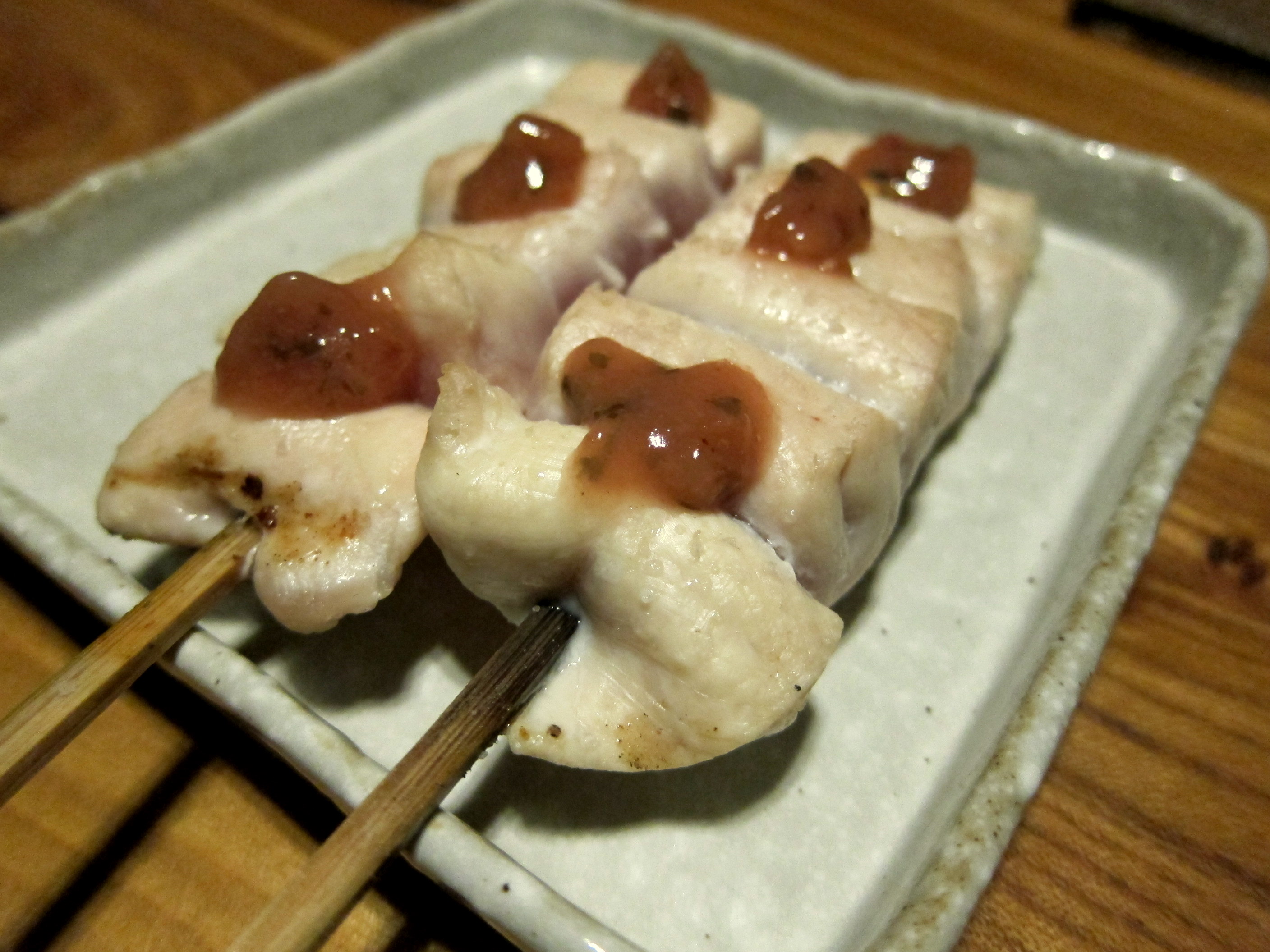
New to me was the lightly seared chicken breast, raw inside, dappled with ume ($8, sasami ume). Its rawness saves the white meat from being all dried up, the salty plum tickles the tongue. I like it more than I expected.
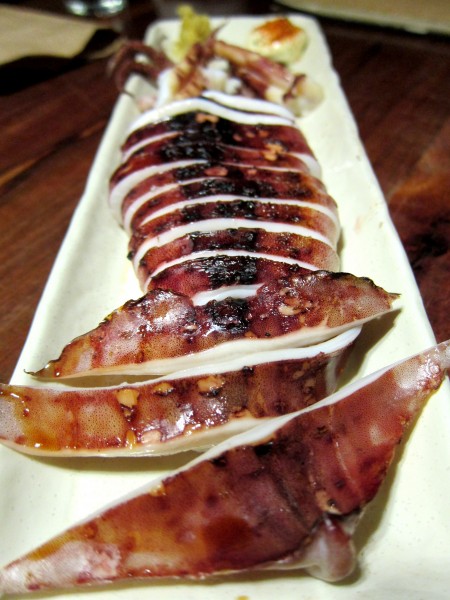

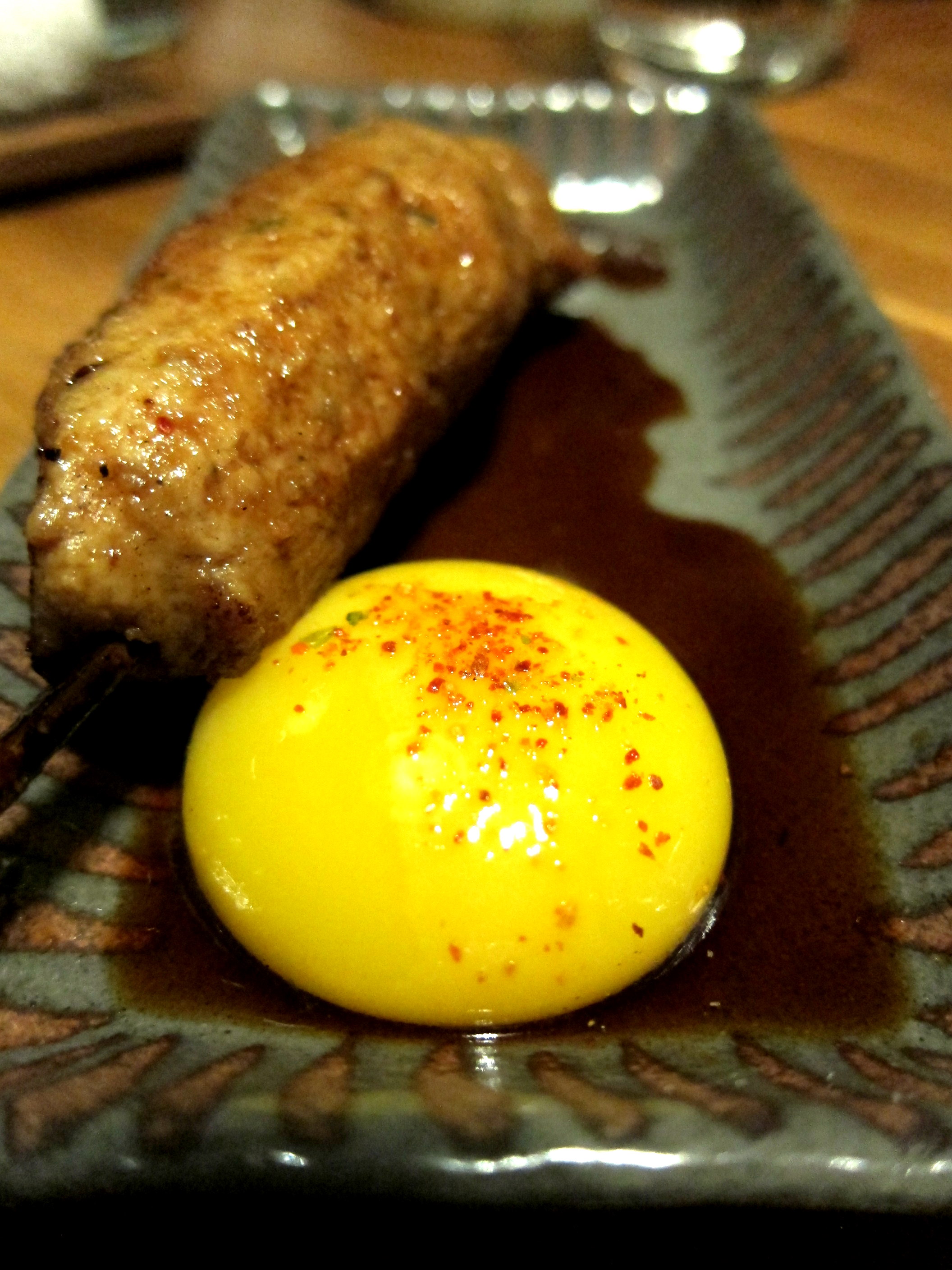
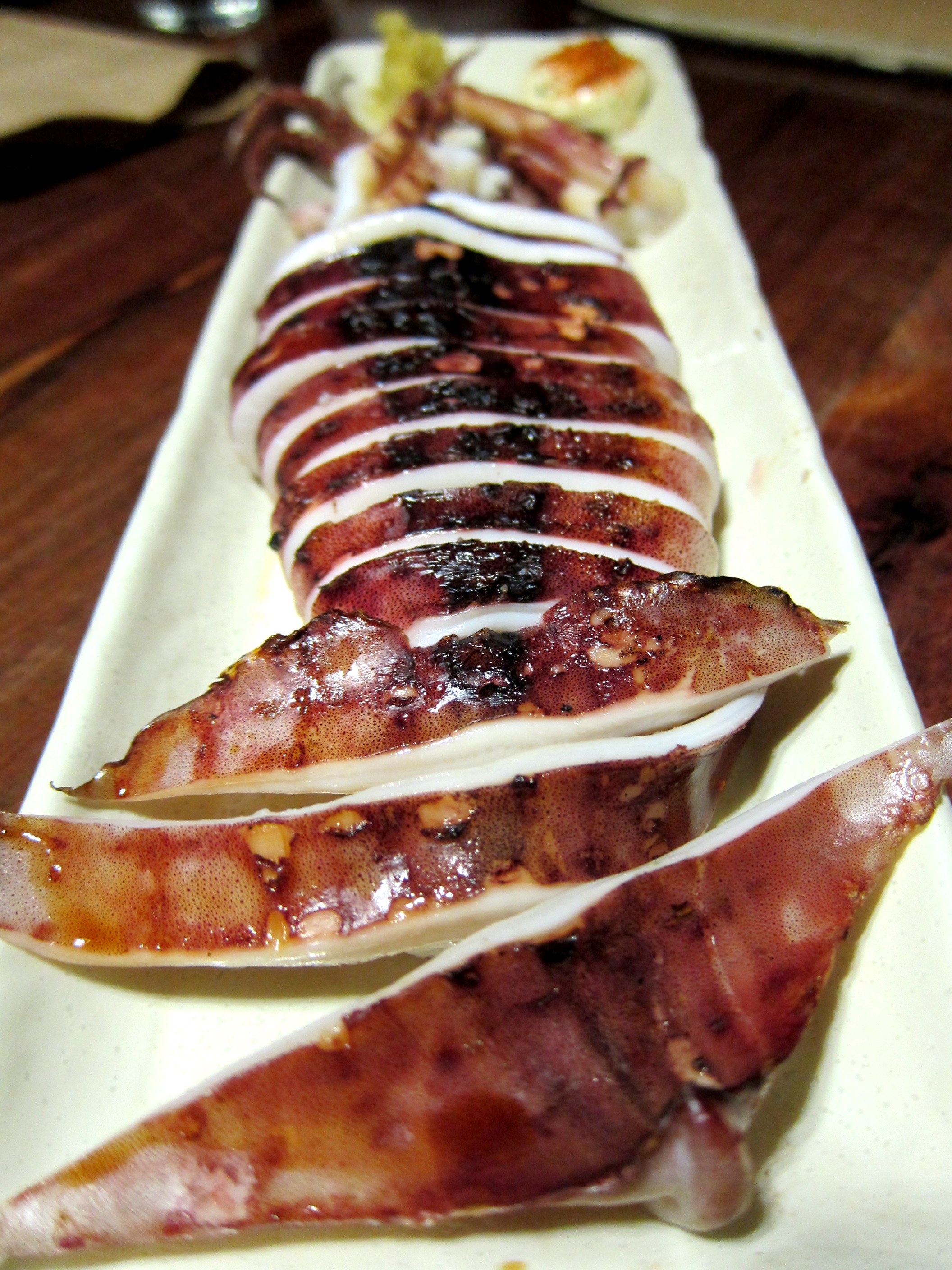
There are some good-but-not-brilliant things, such as the tsukutama ($7, minced chicken with an egg yolk), the negima ($6.50, chicken thigh with leeks), the aosa tenpura ($7, Okinawa styled seaweed tenpura), and the giant grilled Eastern Pacific squid ($10, ikayaki) (ok, so it was giant for 2 girls).
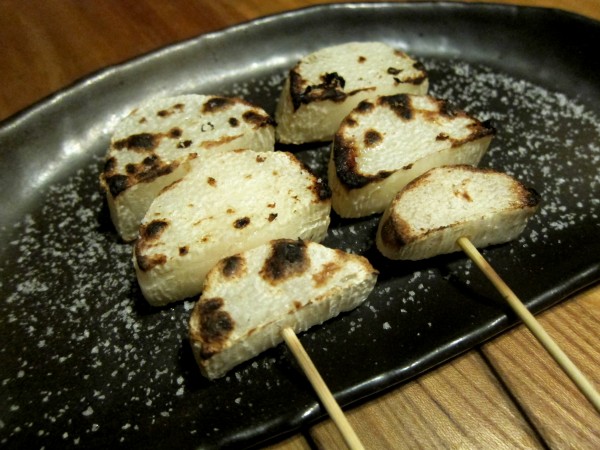

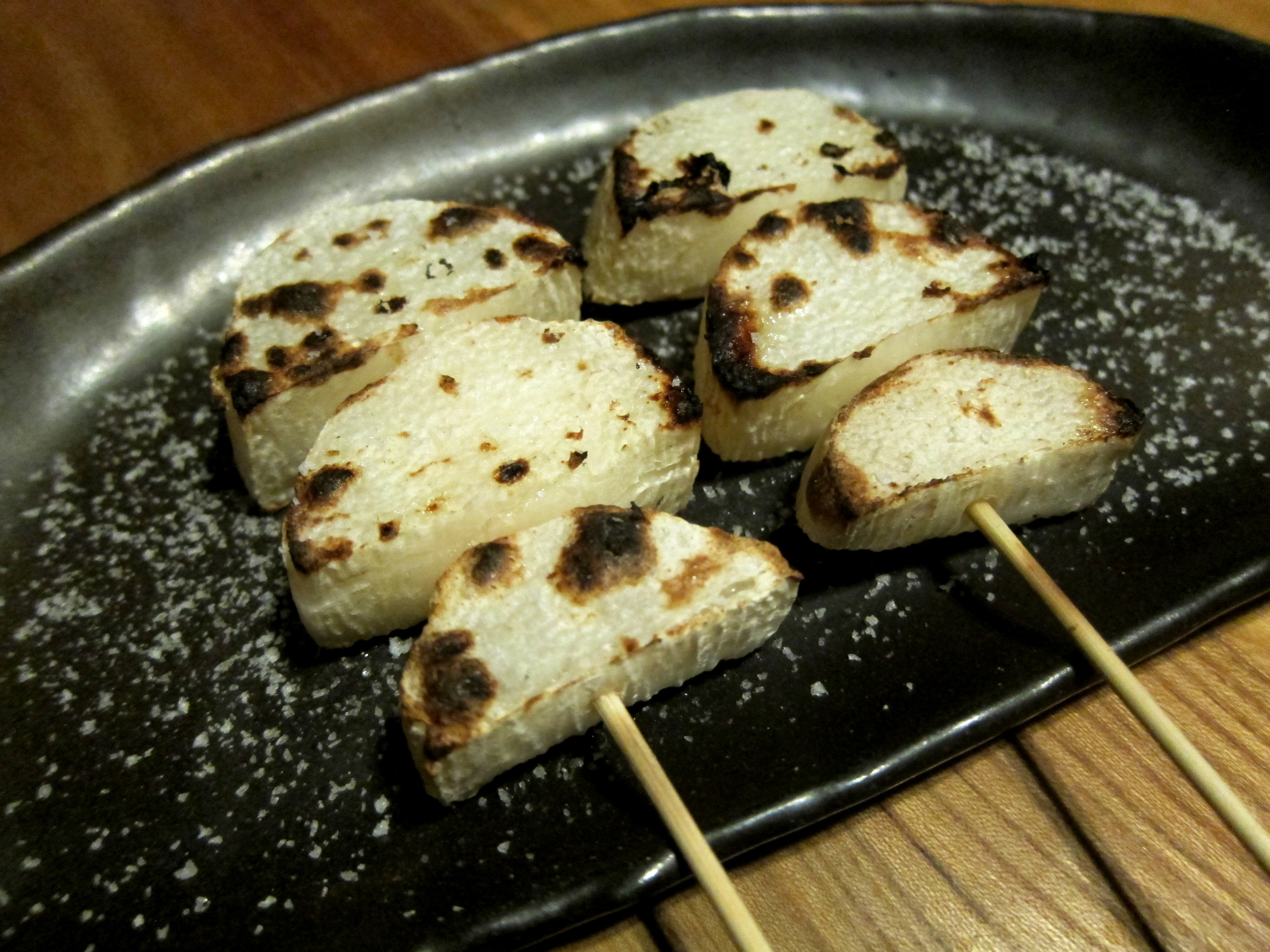
Granted that izakayas in the States are always expensive, there are also the blatant rip-offs: ikada ($5, grilled leeks), which is negi, and none of us knew what “negi” was at the time, or grilled yamaimo ($6), a white yam that is crunchy outside and sorta slimy inside (củ mài in Vietnamese). Oanh said that they’ve had it raw at another izakaya, and I think I would prefer this grilled version dusted with sea salt.
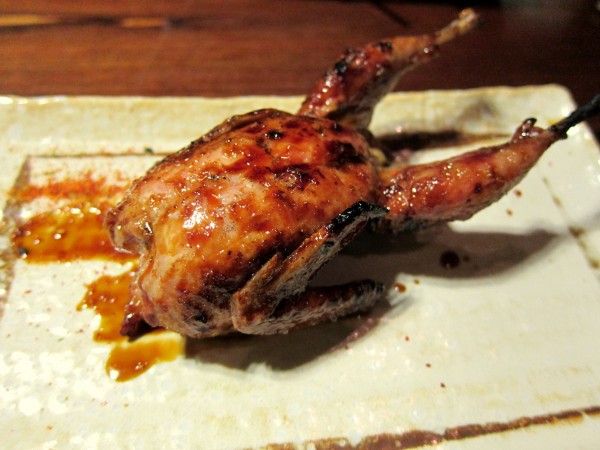

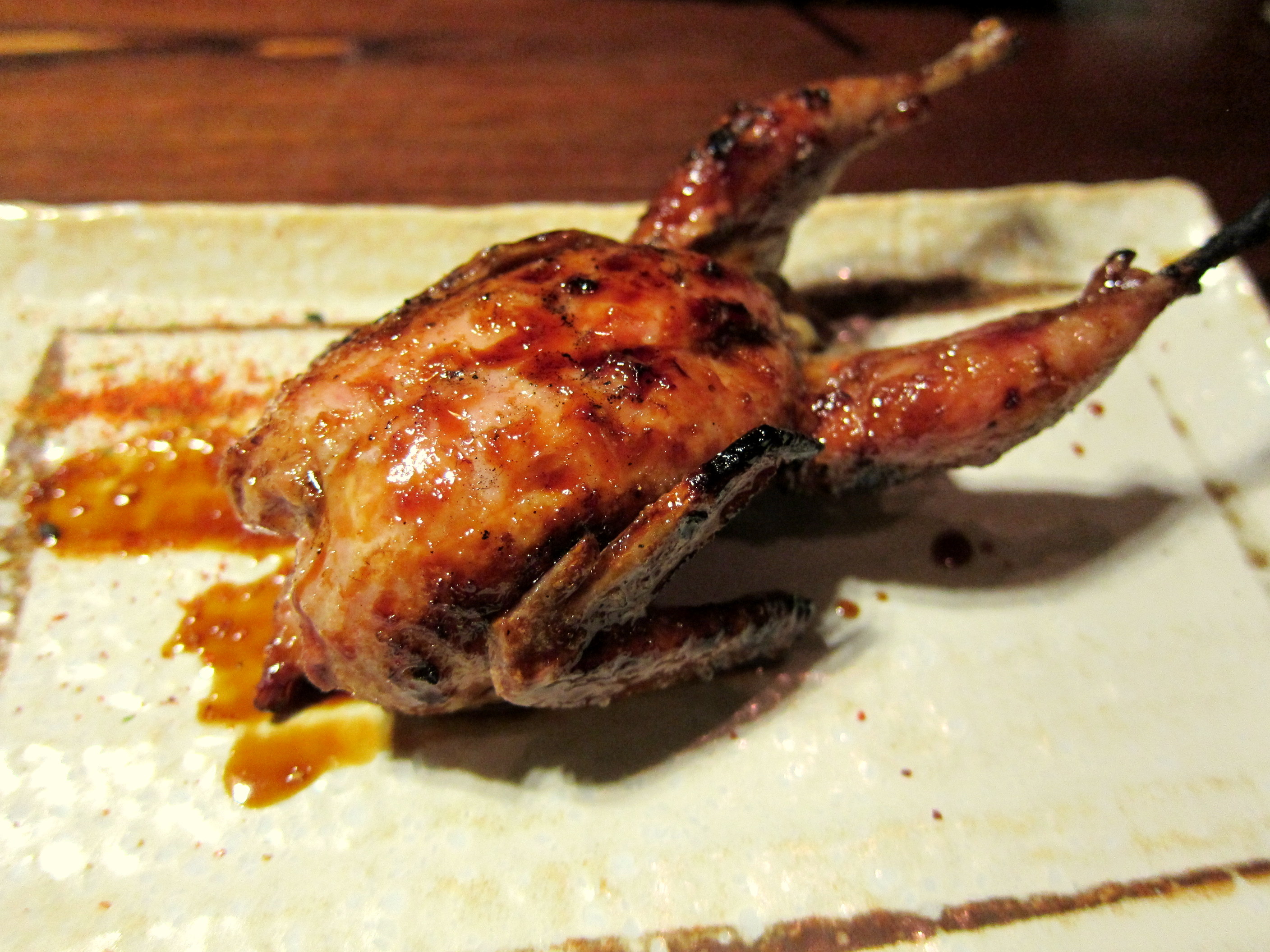
Then there are the oversalted ones: a juicy deboned and grilled quail ($10, uzura maruyaki), which Kristen and I split by each pulling a wing and a leg, and 2 pieces of pork belly ($8, kurobuta bara). But these are best tempered with a sip of genmaicha, whose seaweed flavor might seem strange at first.
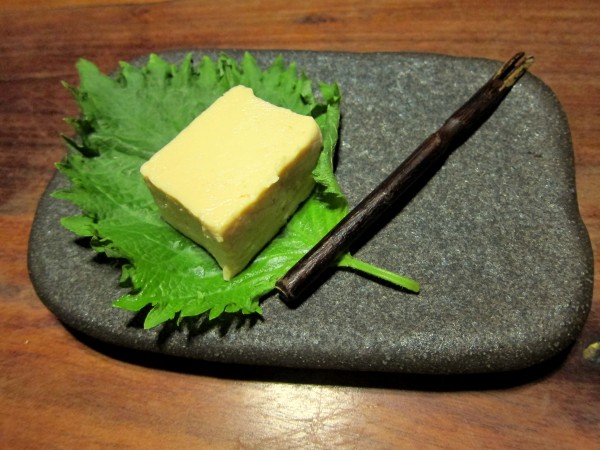

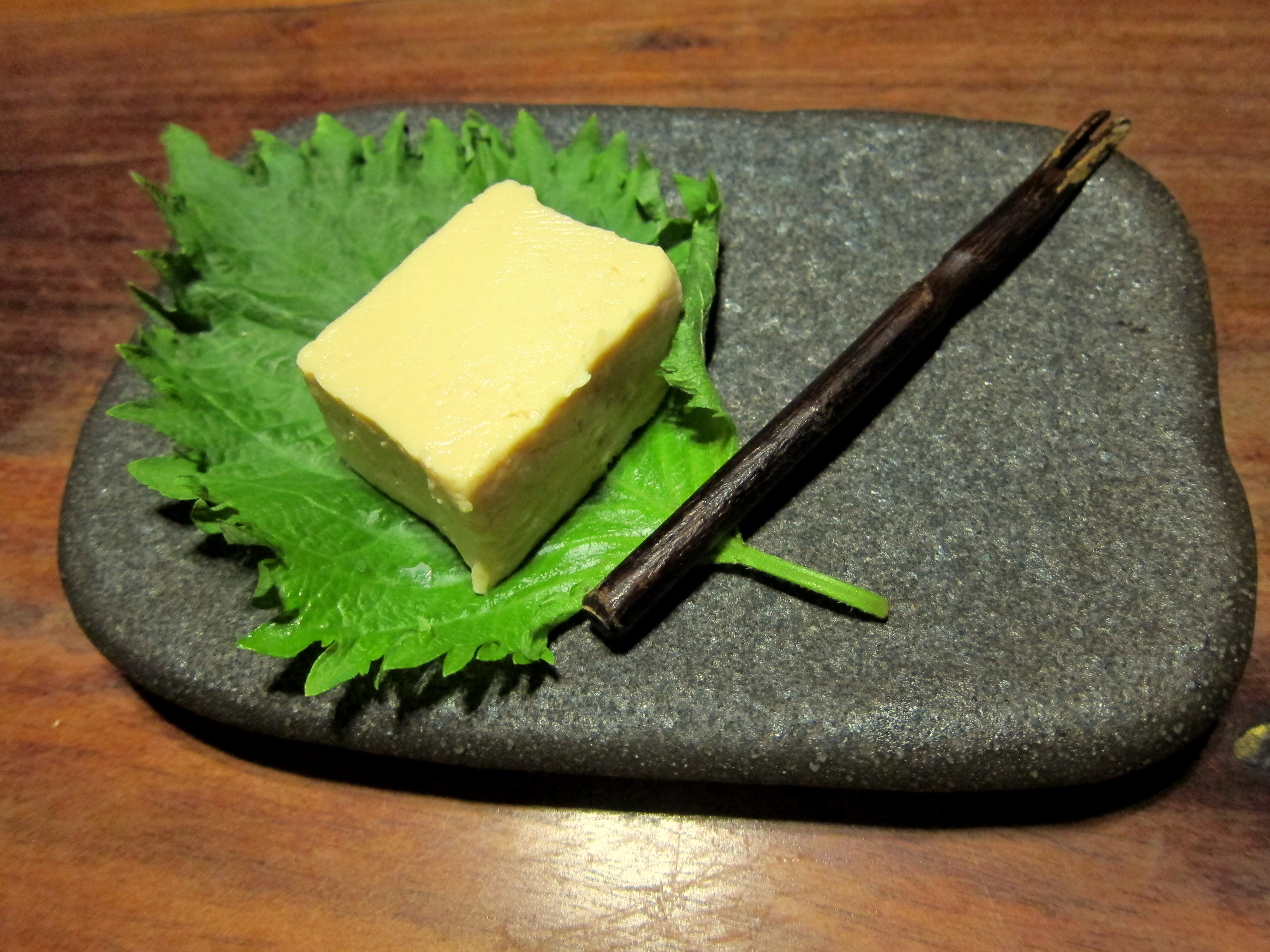
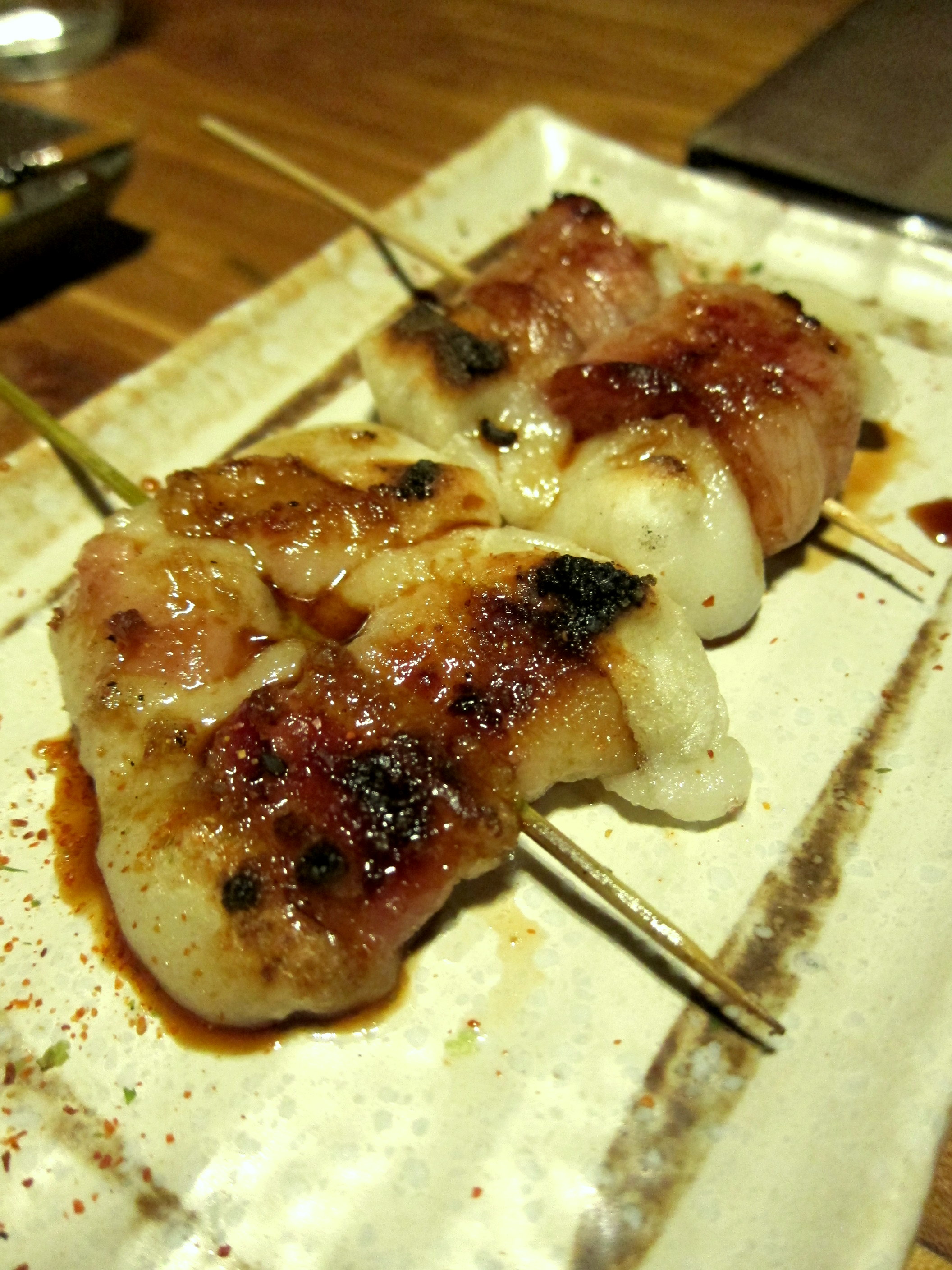
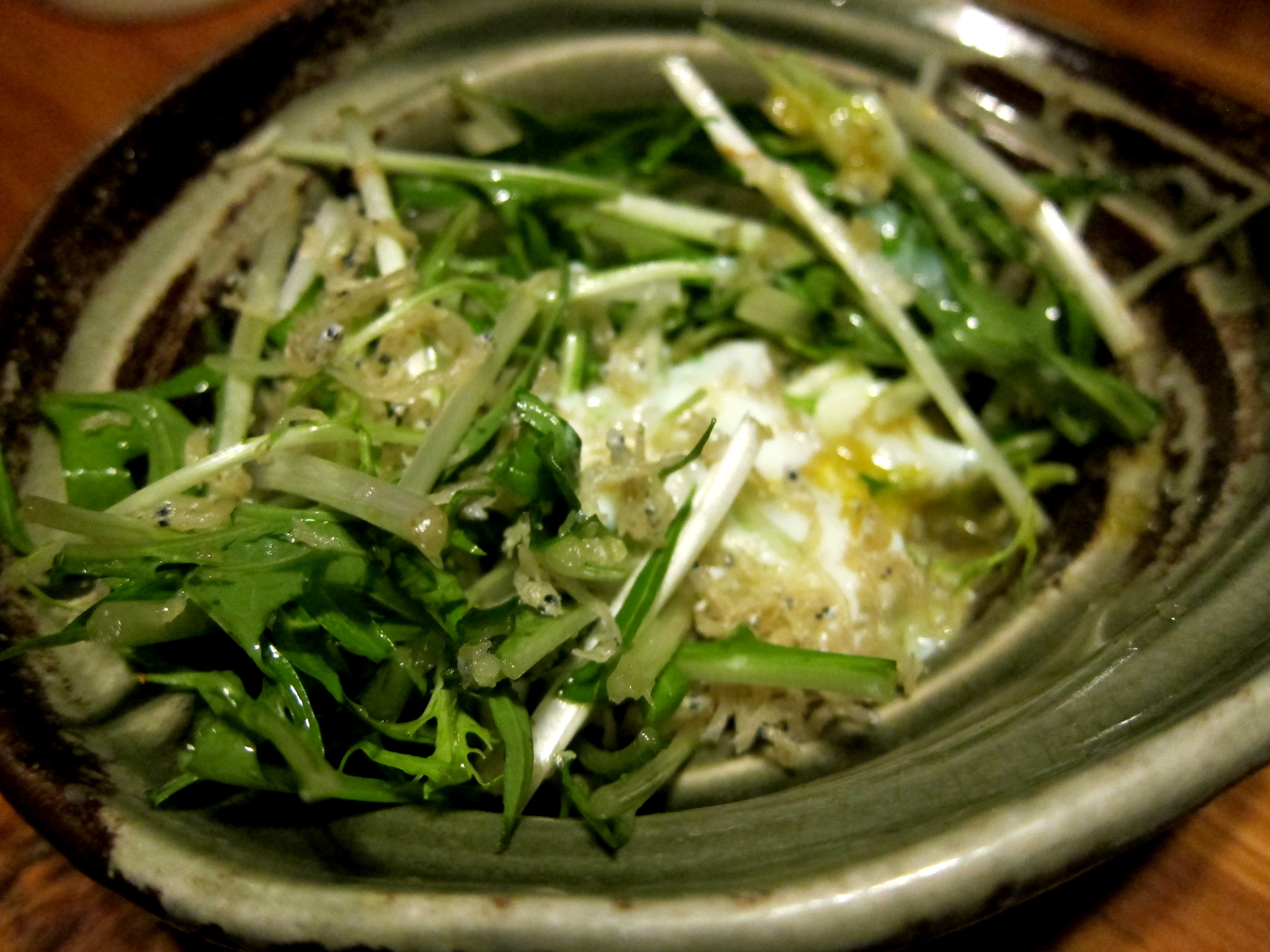
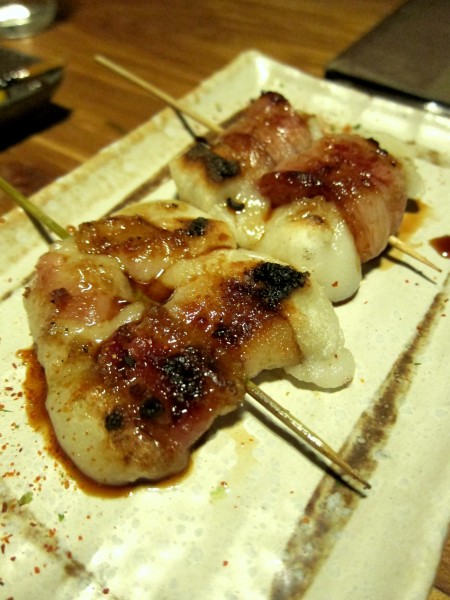
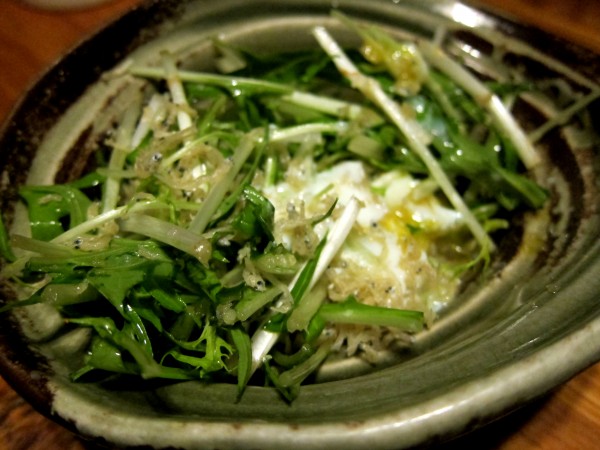
Among my favorites must be the mushy jaga bata ($5, mini potato with butter), which I combined with Rau Om‘s tofu misozuke for a briny but creamy note. The simple but refreshing kyo-salada ($6, “mizuna with onsen egg and crunchy jako“, or water greens with poached egg and crunchy dried anchovy). And the chewy, glistening, charred bekonmochi ($5, bacon-wrapped plain mochi) was magnificent.

The shushoku (post-drinking dishes) are richer than ever: a fatty, sweet, brownish yellow chicken broth for the tori udon ($7) and chunks of beef in the niku jaga ($12, a thick stew of meat and potato).
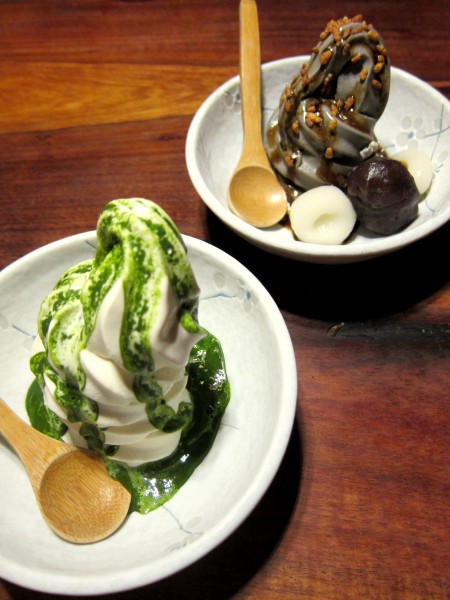

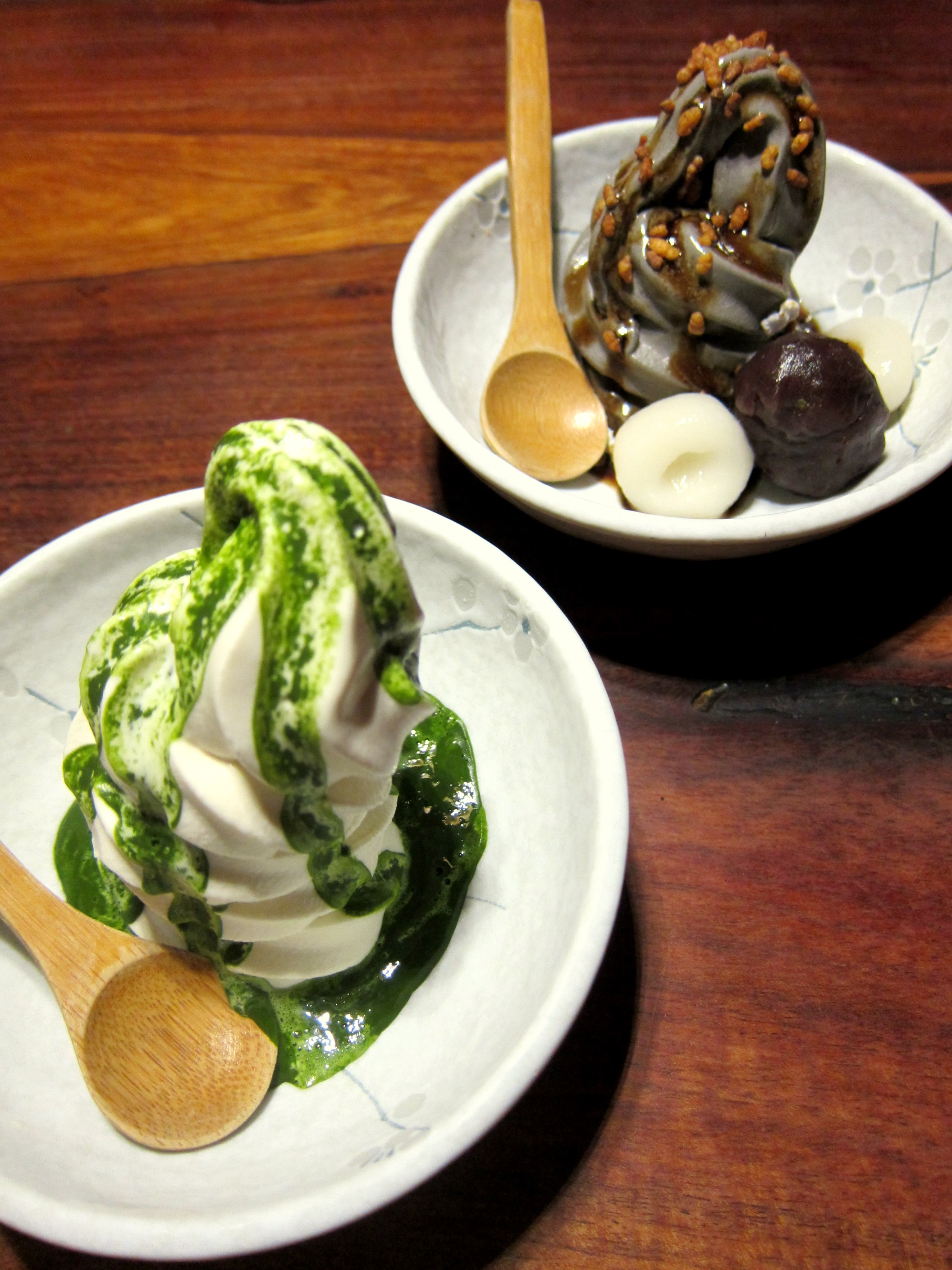
These stomach cementers demand a sweet ending, which we couldn’t afford the first time due to a time constraint, but I made up for it the second time by ordering two desserts ($7 each): a matcha affogato (green tea soft serve), cleansing and herbal, and a kuro goma sundae (black sesame soft serve), gentle and nutty. The kurogoma ice cream came with 2 white mochis and a scoop of anko (red bean paste). I love black sesame ice cream no matter what it comes with.

Photography used to not be allowed? I was taking pictures like crazy. Smoke issue after 7 pm because of the grill? I have been here until 10 pm. Undertrained staff? Our hostesses were helpful both times. Ippuku seems to have ironed out any technical problem it might have had 2 years ago, and although its food isn’t flawless, it is perfect as a whole.

Click to see the whole album of 20 Ippuku dishes, uploaded at Photon Flavors.

Address: Ippuku
2130 Center Street #101
Berkeley, CA 94704
(510) 665-1969 (reservation is recommended, you never know which night is booked)

Little Kiraku on Telegraph

September 25, 2011 By: Mai Truong Category: California - The Bay Area, Comfort food, Japanese


Not so long ago, I got chuckled at for not having tried every single restaurant in my vicinity. There are excuses I could make, but the bitter truth is I’m lazy. At school, I try to arrange my schedule to minimize the distance between buildings. I tend to eat at places either really nearby or a bus ride away. The things in between require walking. I can walk. I don’t mind eating alone. I love wandering into a restaurant unplanned. But when I wake up at 8 on Sunday, I don’t think “oh feet, let us take a stroll six blocks uphill to have lunch at who knows where”. I stay in, (try to) work, and blog. I would never have discovered Kiraku without Teppei-san: a number of us gathered there for a farewell dinner before he and Roland took off to Korea.
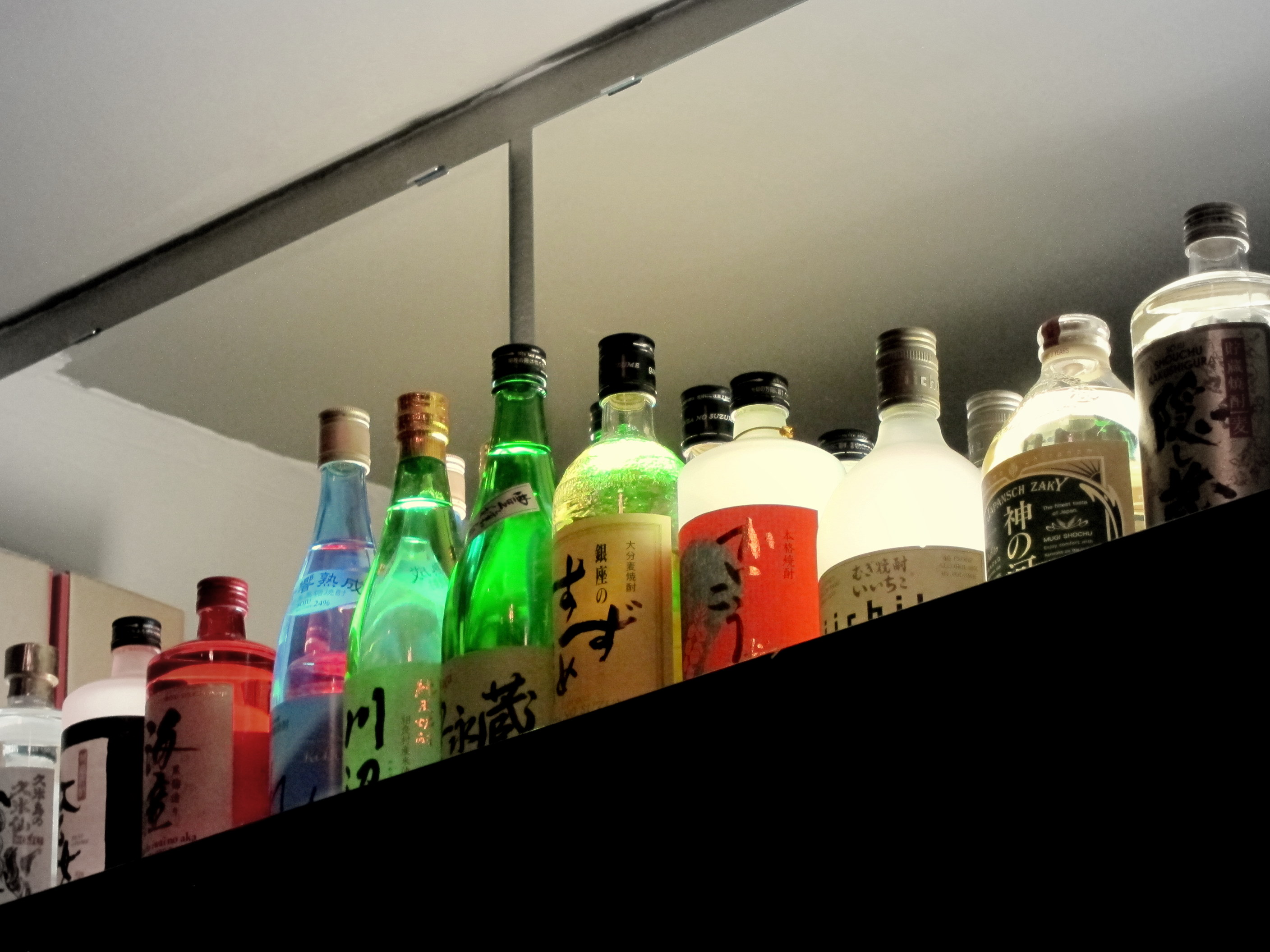
This izakaya kind of thing is more enjoyable with more people. It means more dishes. All in little bitty plates. With seven of them, we covered most bases, from tsumami (starter) to shushoku after the beer and shochu.


We also covered the immobiles (vegetables), the legless (octopus), the two-legged (chicken), and the four-legged (pork). Now that’s a balance meal. 😀 Jonathan’s all-time favorite (the only thing that he remembered getting from last time) was the takowasabi, chopped octopus marinated with a rather gentle wasabi sauce, which simply looked slimy and tasted clean. Similar bits of octopus later showed up in the yaki udon, with katsuobushi on a basil pesto twist.


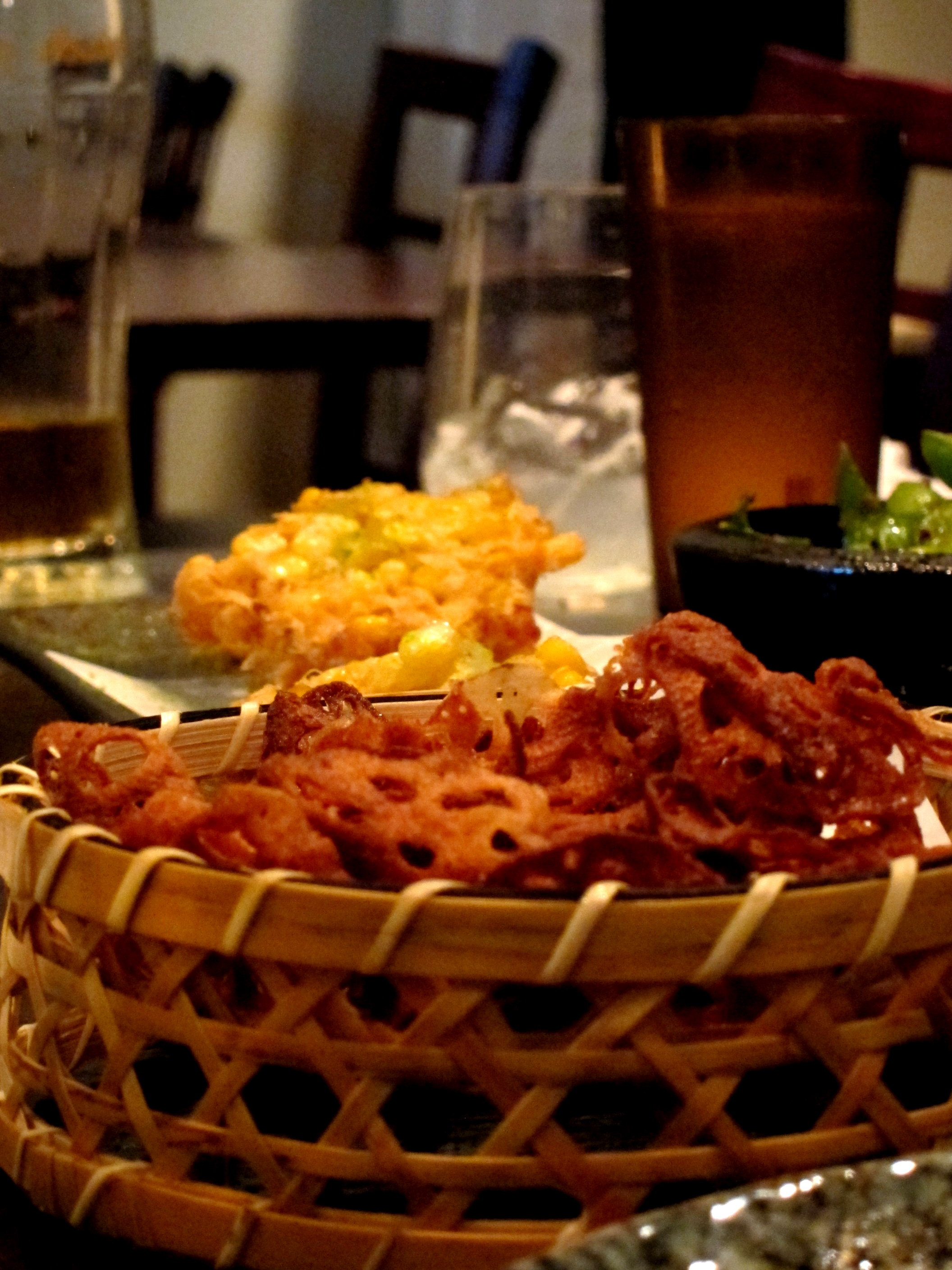
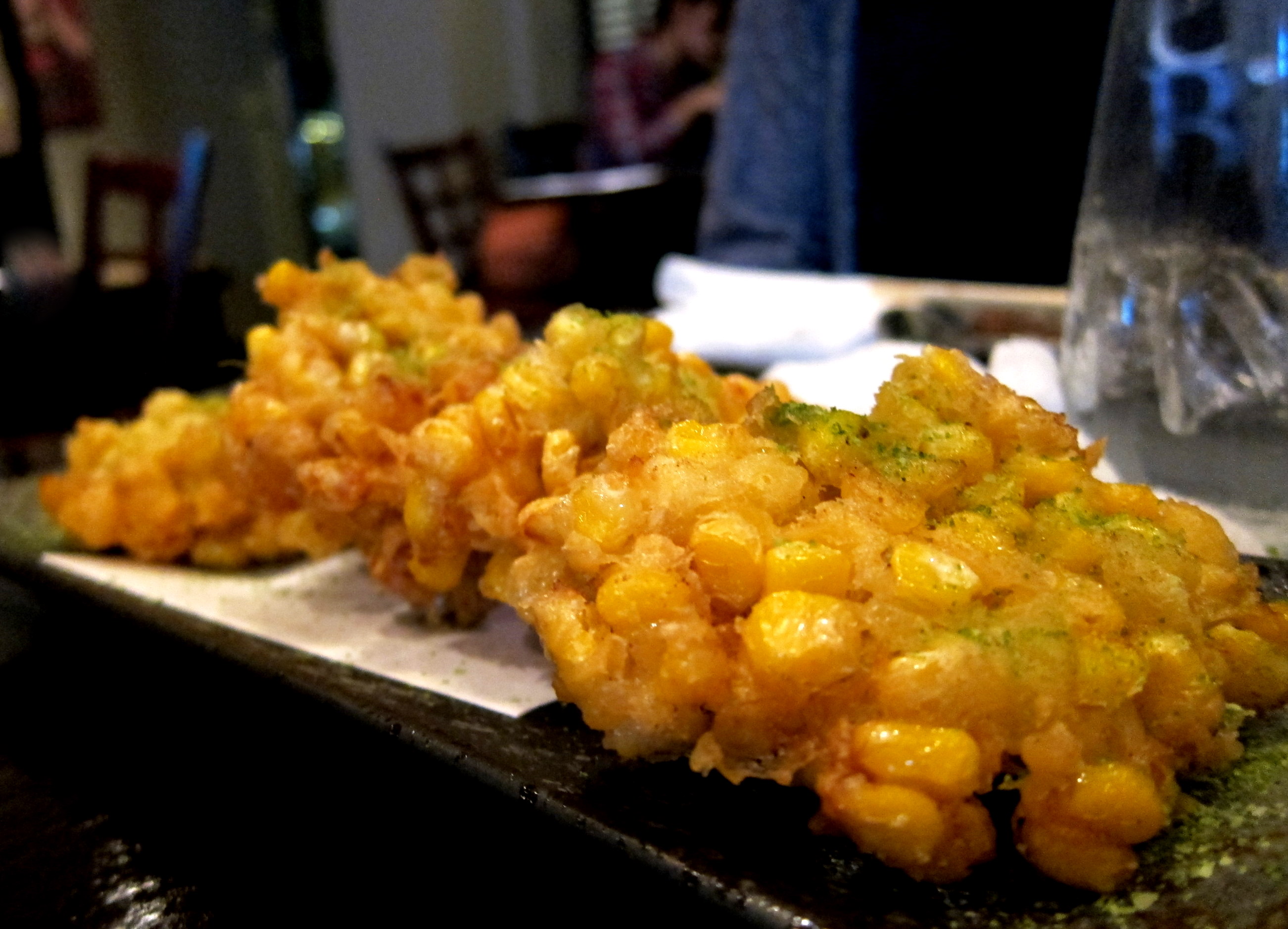
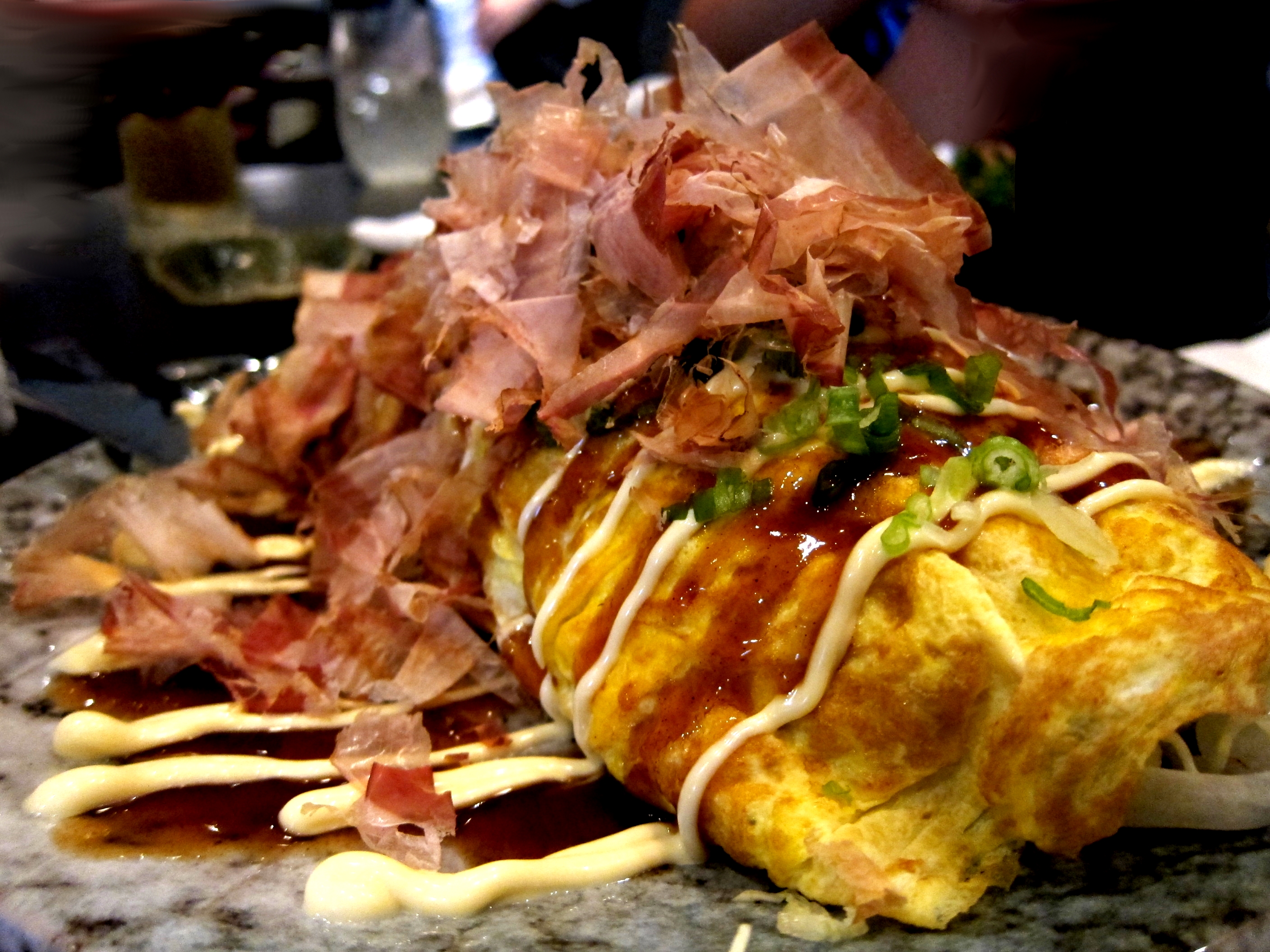
The chicken karaage (fried chicken) and the Kiraku ribs (pork spareribs with orange marmalade) settled the rumbly tummy splendidly. But my heart felt for the tomorokoshi no kakiage (corn fritters sprinkled with green tea salt) and the omelet salad served midway through the night. Its load of shredded cabbage , crunchy and pristine, freshened up the palates to welcome the occasional chunks of pork belly. Let me get some cereal real quick, I’m hungry writing about this thing.


Towards the end, my tongue only remembered the crackling sweetness of the renkon chipusu (lotus root chips) moderately coated in celery salt. Though Teppei warned me that izakayas are more enjoyable for drinkers (and rightfully so, seeing their forty-some choices of sake, shochu, chuhai, and beer), I had plenty of fun downing my ramune and trying to get the marble out at the end. Kiraku is no tabehodai (“all you can eat”), it’s pricey for how little food we got, but so what, it’s as cute as a button. 🙂

Address: Kiraku
2566B Telegraph Avenue
Berkeley, CA 94704
(510) 848-2758