Flavor Boulevard

We Asians like to talk food.
Subscribe

Pretty Good Number One bucket list

January 12, 2014 By: Mai Truong Category: Book, Japanese, The more interesting

pgno
Go to Tokyo. Visit the Odaiba Takoyaki Museum. Practise using chopsticks correctly and buy a (few) pairs at Kappabashi. Eat shave ice and watch fireworks (and people) on the Sumida river bank in July. Eat pan-fried soup dumplings in a neighborhood dumpling restaurant in Nakano. Eat “hone” (pronounced |hoh-nay|, meaning: deep-fried sea eel backbone). Stop eating eel because they’re in the red on the Seafood Watch list.

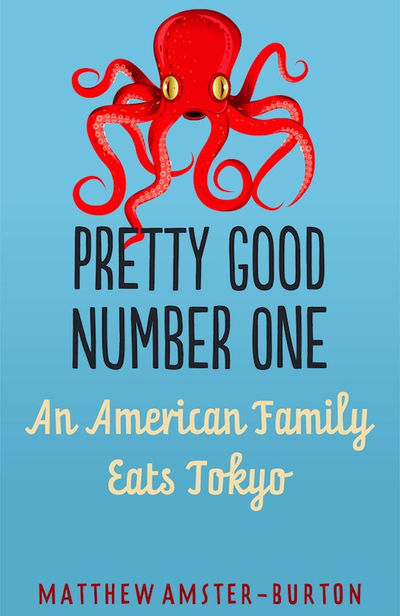
Thanks to Matthew Amster-Burton’s book, I’ve had the first 7 items on my bucket list figured out (it’s a bucket list, not a to-do list because of the stop-eating-eel thing). I can’t wait to do them (except the stop-eating-eel thing). If a few months ago I was complacent with imaginatively traveling through booksPretty Good Number One throws one delicious, chuckle-inducing paragraph after another to my face and say “go to Tokyo, you lazy donkey”. Just about the most expensive place to visit in the world, thanks, Mr. Amster-Burton. 😉

Except for the part where he describes Chinese green tea as having “a hint of smoky barbecue” and how red bean paste is an acquired taste for Westerners (because beans are supposed to show up in savory foods, not sweets – hello, pumpkin pie?), Pretty Good Number One is enjoyable every minute of reading.

The book is short (only 227 pages) in relatively big clear font. It took me a few 10-minute bus rides and one Christmas Eve to finish. It is a good guide for Westerners (and anyone who hasn’t been to Tokyo) and a respectful and honest glimpse into a city in the East. Andrea Nguyen of Viet World Kitchen posted a long wonderful talk with Amster-Burton about the book last year.

Pictures are available on prettygoodnumberone.com, but I’m not looking at them too closely in fear of sleepwalkingly booking a Tokyo-bound flight tomorrow. Amster-Burton’s writing is so witty and the stories about his little “hungry monkey” Iris are cheezburger-cat level of adorable!

Amster-Burton also includes a long list of his recommended readings at the end (some of which he mentions intermittently throughout the book), and I’ve made my first Amazon’s wish list (so many first lists because of Pretty Good Number One!). It is against my traditional Vietnamese culture to outright ask for gifts (man I feel so shameless!), but JUST IN CASE you ever think about supporting Flavor Boulevard… 😉

Blue Trout and Black Truffles – a journey through Europe in 300 pages

November 06, 2013 By: Mai Truong Category: Book

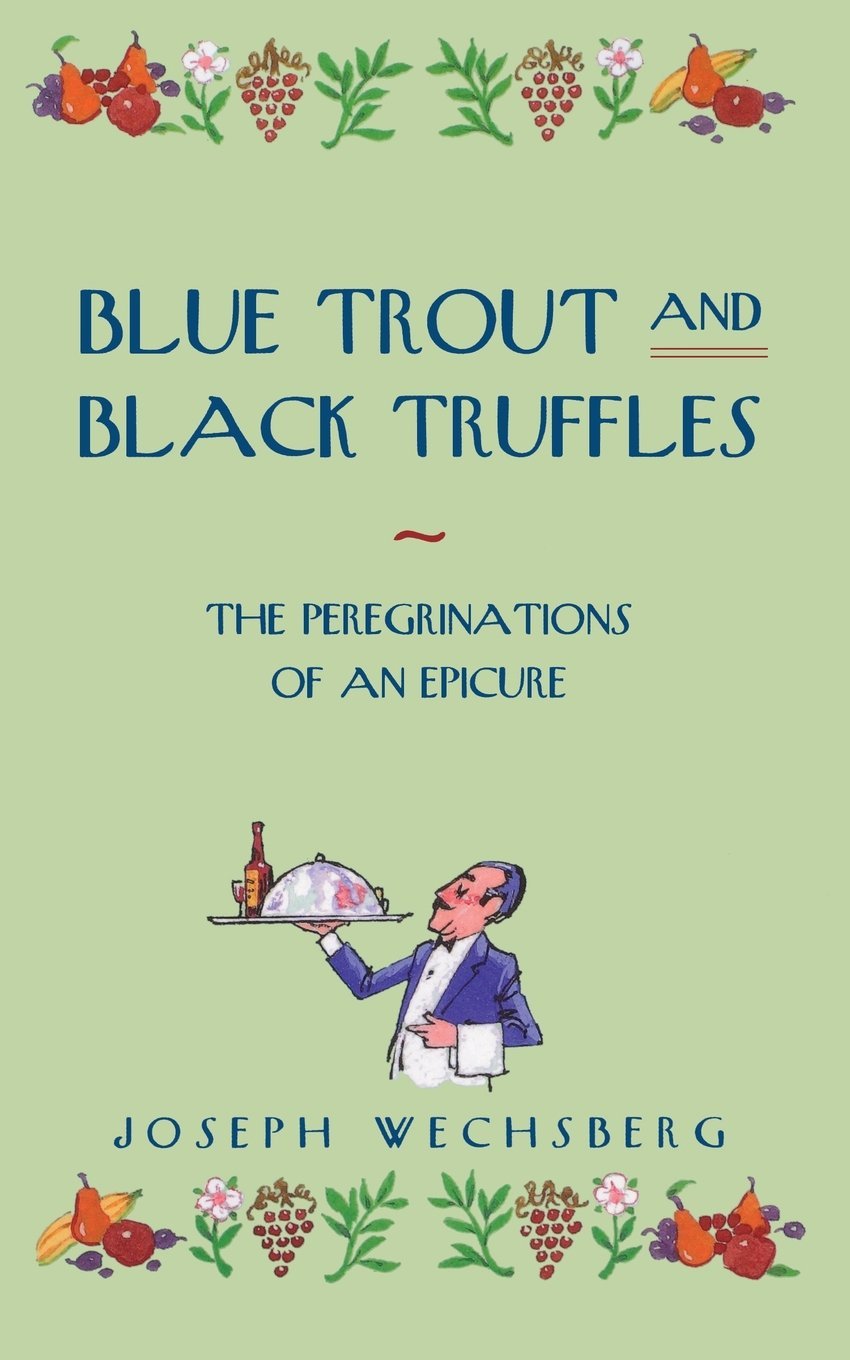
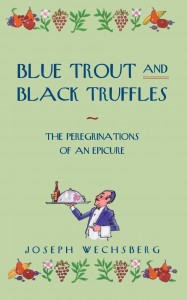
Blue Trout and Black Truffles by J. Wechsberg (Academy Chicago Publishers, Second printing 2001), but the book seems to have been published in German as well (Forelle blau und schwarze Trüffeln (1964)), as Wechsberg also wrote in French, German and Czech (although a majority of his works is in English).

Blue Trout and Black Truffles by J. Wechsberg (Academy Chicago Publishers, Second printing 2001), but the book seems to have been published in German as well (Forelle blau und schwarze Trüffeln (1964)), as Wechsberg also wrote in French, German and Czech (although a majority of his works is in English).

When I was little, and even now, my mom would tell me about the regional specialties of provinces in Vietnam and even other countries. She’s not a traveller, those were places that she has never been to, but she read about them in books and she has the uncanny memory to remember every detail of what she reads and recite it with such enthusiasm and emotion that makes you feel like you’re reading the book yourself. So I never felt the need to travel. (The only thing you can’t really experience from reading is the smell – it’s often the hardest sense to put into words, and any word description is always an understatement of the actual smell.)

Good writers can make you want to travel to the place they describe, taste the food they praise, meet the people they talked to. And then there are the really good writers who pull you into the story. When you read their books, you’re already at that place, eating what they’re eating, listening into their conversation.

When I read “Blue Trout and Black Truffles” by Joseph Wechsberg, I was in Vienna eating Tafelspitz (you have to capitalize the word because it’s German, and did you know that there are 24 different varieties of boiled beef, only one of which is Tafelspitz? [I admire the precision but I’m not convinced of the taste…]), then I was in Prague stuffing down knedlíky (dumplings that contain small cubes of fried bread, dumplings filled with whole plums, cherries, sweet cabbage [?!] or nuts, dumplings made of butter, egg yolk, dry cottage cheese, salted and “almost as light as a soufflé” [!]). I was strolling through the woodlands of Périgord, following a little pig named Mignon in search for black truffles (and almost got convinced that truffle tasted good). Wechsberg, with his gentle, objective humor and a hidden whiff of discerning aloofness, took me from Ostrava before World War I to Budapest in 1946 (when Hungary was still inside the Iron Curtain), then south to Genoa, “where the skies were blue and the people still knew how to laugh” (and made supposedly phenomenal ravioli), then northwest to Paris and Bordeaux and Lyon. I don’t know French and could only silently mumble through the included menus as I read, I’m not even that much into European cuisines, but like an old Roman chapel near L’Oustau de Baumanière in Les Baux-de-Provence, where “even the unbelieving feel the urge to kneel down”, this book makes even the non-drinker feel the urge to hold a champagne flute by the base (and never at the stem!) [I actually can’t picture how that works (-_-‘)].

At 8 am, I finished the last page. I took a shower until 8:45, then went out to lunch with Cheryl at 11. We had soba at Ippuku. I felt like reciting the old Hungarian proverb, “We are poor, but we live well.”

–.–.–.–.–

A few favorite tidbits:

  • “Prague’s women had great charm and vivacity, but they were rarely slim and long-stemmed. Dumplings were the national indoor amusement; to eat twenty or thirty dumplings at one sitting was considered a feat of virility.” (84)
  • “… as they say in Bordeaux, people take on the color of the wine that they ‘work’ and drink. M. Landèche’s face had the reddish color of the grapes of Château Lafite-Rothschild. And M. Henriot’s hue reflected the golden glow of the wines of Château d’Yquem.” (190)
  • “[La Tour d’Argent] was an immediate success and always jammed, but there was always a way of getting a table. A cavalier who had neglected to make his reservation would pull up his horse, walk in, challenge one of the guests to a duel, kill him with sword or lance, and take his place.” (227)
  • Wild goose with plum sauce at La Tour d’Argent was Cardinal Richelieu’s favorite. (228) [To encourage me to eat, my mom would tell me “The Three Musketeers” story (by Alexandre Dumas) while spoon-feeding me. After that story finished, we continued to (and consequentially finished) its two sequel novels, also by Dumas. Ah the good old days…]
  • “You can export all the ingredients, and even the cook, but you cannot seal in a can the shining of the Sun or the blue of the sky and the sea, and pour it into the saucepan.” (127) <– EXACTLY why I would only consider food made by Japanese in Japan truly authentic Japanese food, and likewise with other cuisines.
  • “A Balatoni Fogas to Start with” really resonated with me, perhaps because I’m from Vietnam and know first- (and second-) hand the detrimental effects of communism on Culture [yes, capitalized Culture].
  • “One Moment in Heaven”, “Afternoon at Château d’Yquem” and “Provence without Garlic” are lovely pieces on wine and France [I think… as if I knew anything about wine].

A little bit about the author:

Joseph Wechsberg worked as the European correspondent of The New Yorker from 1949 to 1983. He studied Law and Economics in Prague, Vienna and Paris, then he studied violin at the Wiener Konservatorium, played music in Parisian nightclubs and later on cruise ships to New York and the Far East. His well-travelled experience gave him great advantage in becoming a journalist and a writer. “Blue Trout and Black Truffles” is a collection of essays, some of which originally appeared in The Atlantic, Cosmopolitan, Gourmet, Holiday, and The New Yorker. [I feel incredibly inspired, but that means I need to start traveling and collecting some world(ly) experience soon. (-_-‘)]

M.Y. China, xiao long bao and food reviews

July 17, 2013 By: Mai Truong Category: California - The Bay Area, Chinese, Opinions

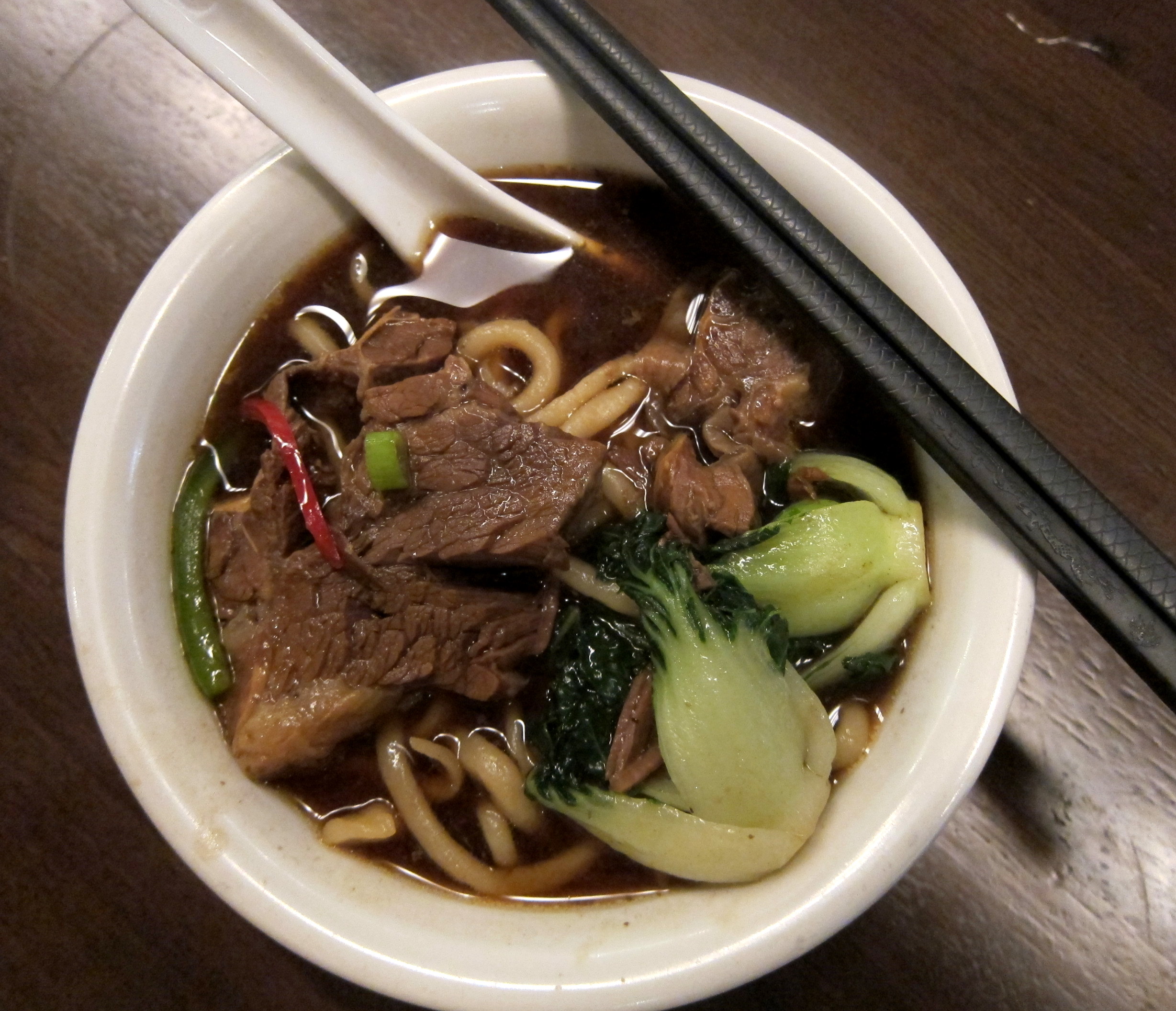
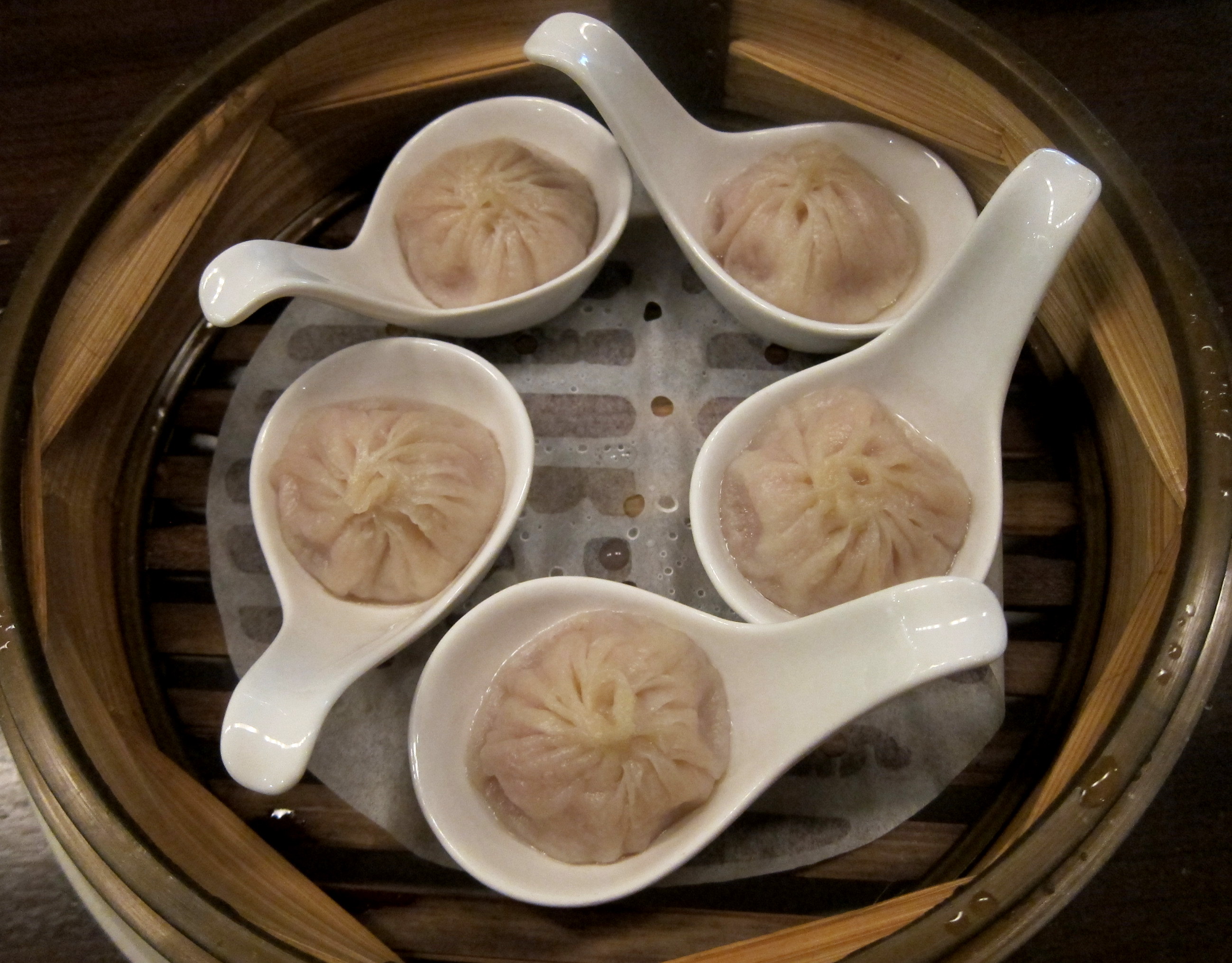
The restaurant is big, clean and convenient. It’s in Westfield San Francisco, a big chunk of the fourth floor of the shopping mall is restaurants, and M.Y. China is one of them. Sitting 50 feet from the kitchen and you can smell the intoxicating fumes of dumplings. We order two Chinese classics: xiao long bao (pork & crab juicy dumplings) and niu ro mien (beef hand-pulled egg noodle soup).

mychina-niu-ro-mien
The niu ro mien is good. Fourteen dollars. Melting tender beef, chewy noodle (not as chewy as I would like, but I’m not a fan of egg noodle anyway), dark, flavor-packed broth (which gets a bit too salty after a while and sends you drinking water like mad).

mychina-xiao-long-bao
The xiao long bao‘s are dry. Twelve dollars for five. There’s not enough broth in them. The dumpling skin is dried up on top, the carrot slice at the bottom, which supposedly helps preventing the dumpling from sticking to the spoon, disrupts the harmony in texture. The pork filling? This is where my friend and I disagree.

The filling has ginger. My friend insists that: 1. xiao long bao should have a lot of ginger (to mask the flavor of the pork); 2. she has eaten a lot of xiao long bao over the years to know that it should have a lot of ginger; 3. she doesn’t notice the ginger in these xiao long bao, in fact, she added extra ginger to the dumplings to make them taste gingery.

I insist that: 1. these xiao long bao are too gingery (the pork and the crab are completely masked); 2. even with the pre-equipped knowledge that xiao long bao are supposed to have a lot of ginger, I don’t like these xiao long bao because they have too much ginger.

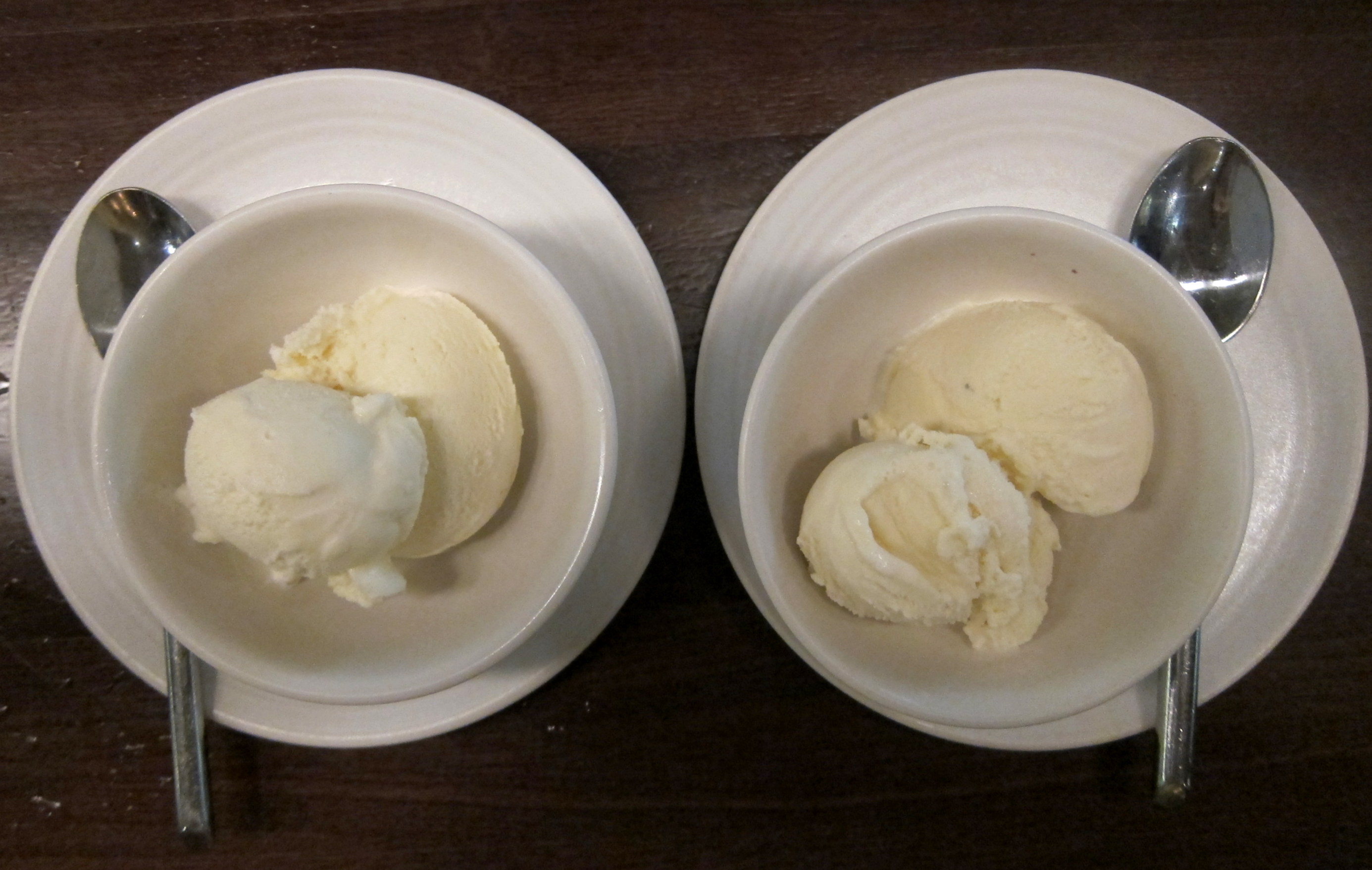
Ice cream ($4 each) - toasted rice (left) and chinese walnut (right) - both remind me of grocery rice milk and walnut milk, which are sweeter than I would have liked.

Ice cream ($4 each) – toasted rice (left) and chinese walnut (right) – both remind me of grocery rice milk and walnut milk, which are sweeter than I would have liked.

Of course, the natural question comes up: should you review food based on your knowledge of the food (how it should be) or based on your taste of the food (how it is)? Food reviews have both objective facts and subjective preferences, and as a reviewer, I don’t mix those two categories together. If I know with all certainty how it should be, I’ll include that statement in my review, otherwise, all of my reviews are about how it is (with respect to my taste buds). Is that too subjective? Sure. Are my preferences peculiar? Maybe. I don’t drink coffee and alcoholic beverages, and I don’t eat spicy foods. In general, I don’t like anything too strong. If a dish has one overwhelming flavor that masks everything else, I call it “one-dimensional”. I want to taste different flavor profiles in a dish, especially the natural flavors of the ingredients, which is why I’ve grown increasingly fond of raw seafood sushi and increasingly intolerating of cakes. So if you like strong flavors, the things that I like would be almost water to you, and the things that I say are too this or too that would taste just fine. 🙂

But surely, there must be others who share my preferences?

Logistics: M.Y. China is a new restaurant by Martin Yan and the owners of Koi Palace. It opened early this year, and it locates on the 4th floor of Westfield San Francisco Center, 845 Market St, San Francisco, CA 94103 – (415) 580-3001