Flavor Boulevard

We Asians like to talk food.
Subscribe

Dimsum lunch at Koi Palace
June 03, 2015 By: Mai Truong Category: California - The Bay Area, Chinese

koi-palace
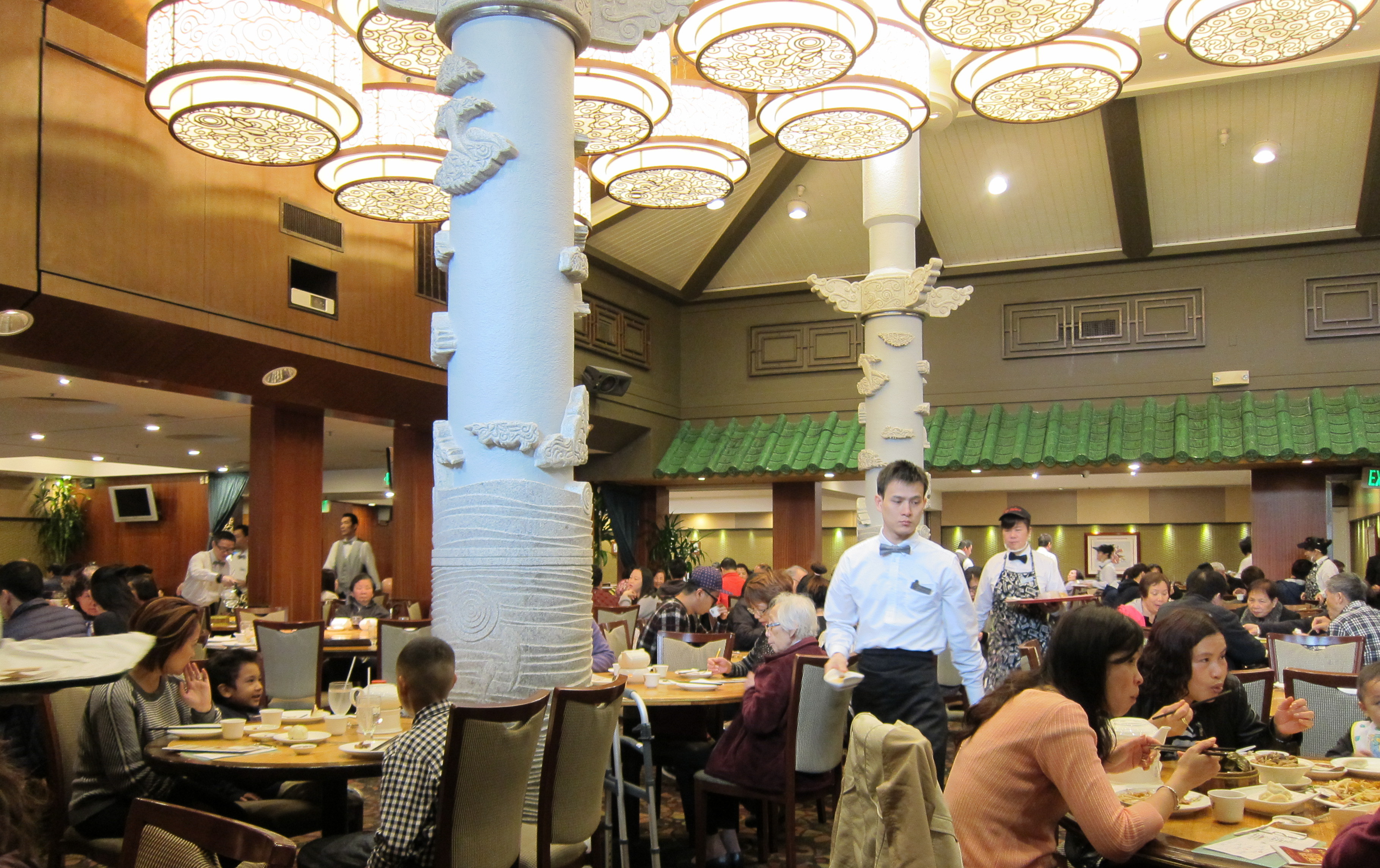
There are a few unexpected things for me about Koi Palace. I didn’t expect it to be in the middle of PetSmart, Ross, 24 Hour Fitness, Outback, and CVS. Nor could I fathom why it was completely full at noon time on a Wednesday. People in Daly City don’t have to work on weekdays? What about schools? (plenty of school-age glanced at me mid-bites when I tried to spy the food on their table…) Inexplicable.
kp-chive-shrimp-dumplings
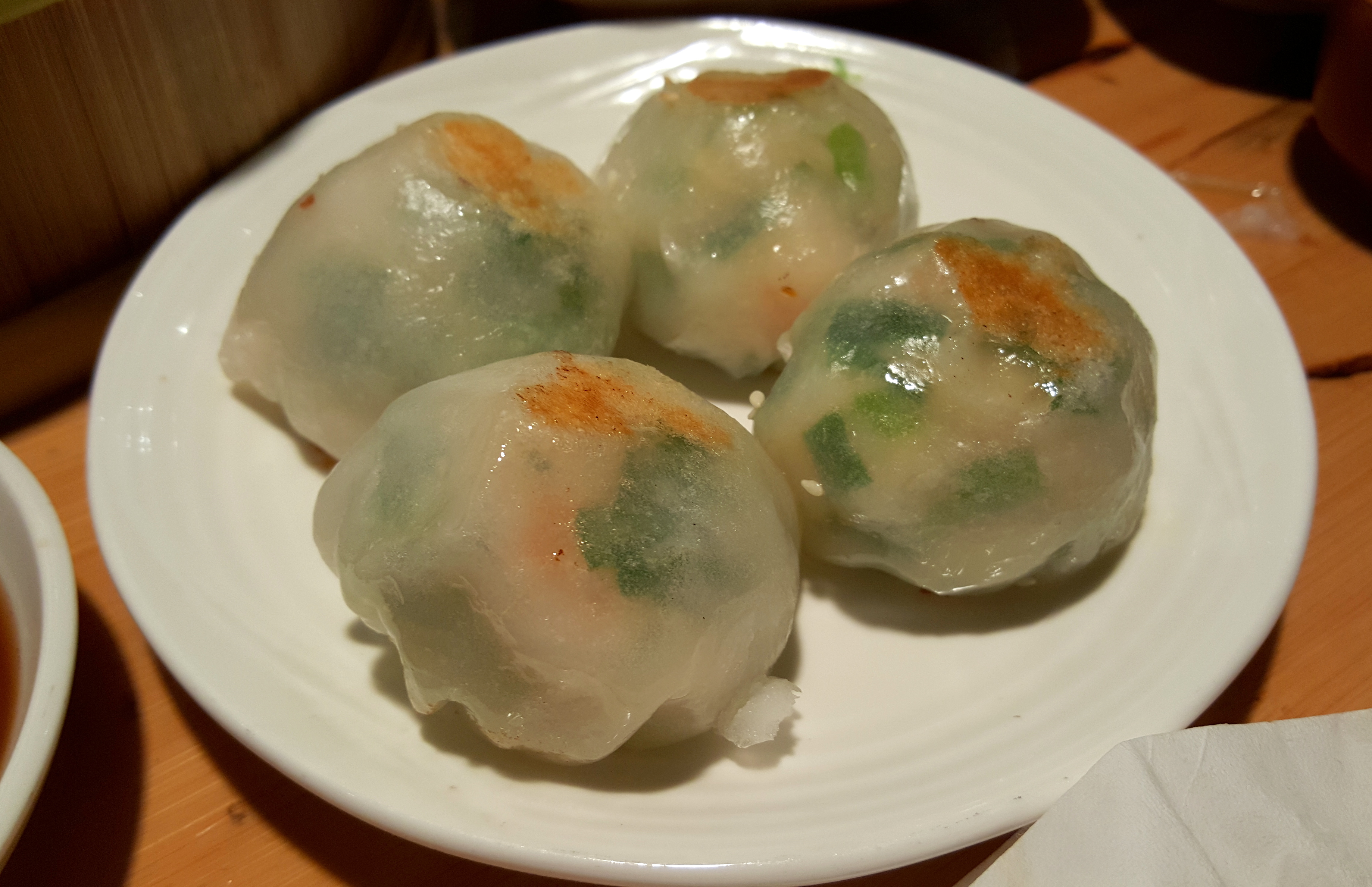
Perhaps the food here is really so good that work is meaningless without it? Among the things we got, a few really gave us that instant burst of satisfaction like when you pop a bubble-wrap bubble and made me forget work for a second. Such as the grilled chive and shrimp dumplings. Each ball plops into your mouth and fills the void so perfectly, you sink into a plump piece of shrimp every time you move your jaw. It takes some time to chew, and you kind of wish it would last even longer.
kp-coffeeribs
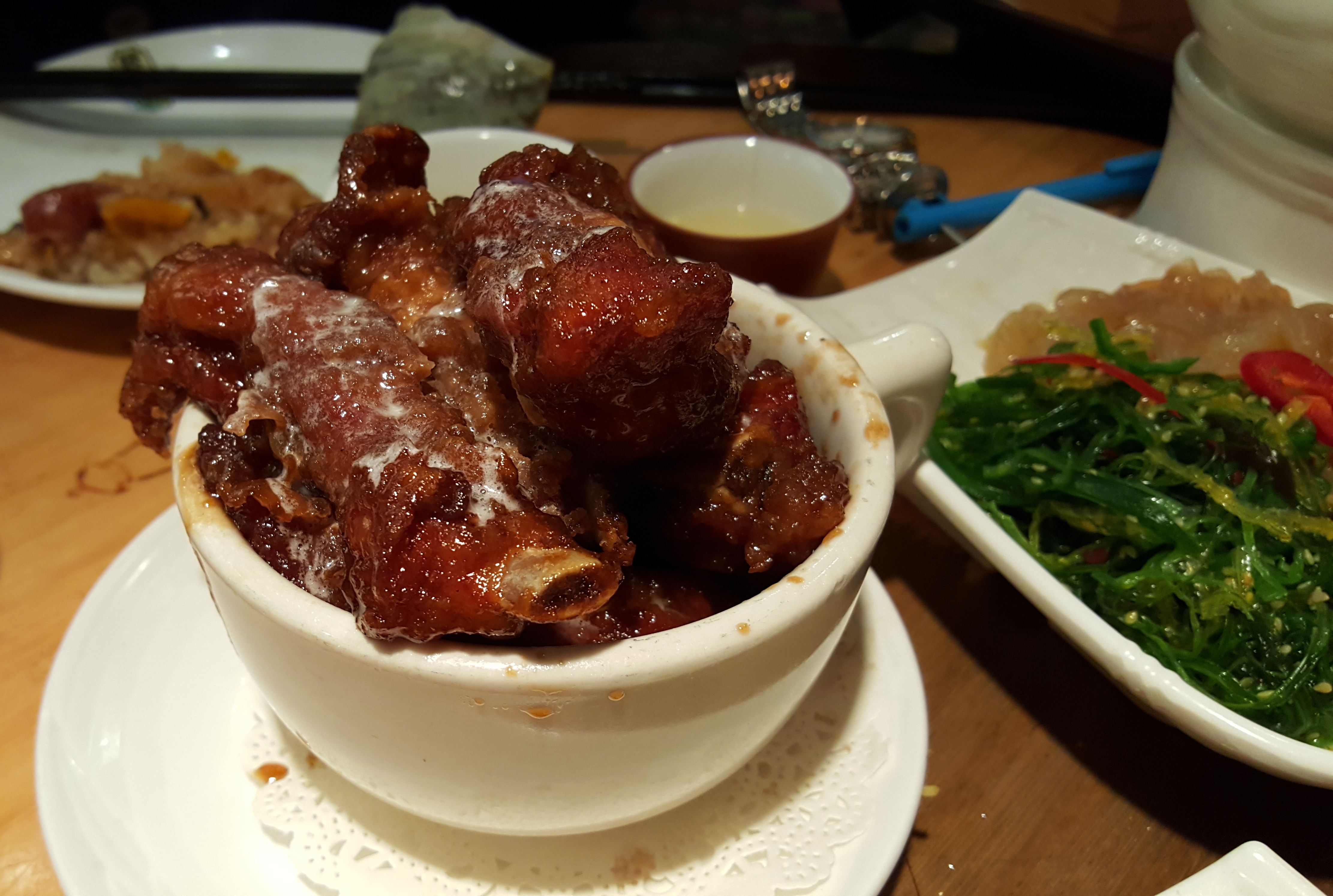
The espresso coffee ribs are another. You can definitely taste the coffee in that succulent, rich piece of meat. This is one of those examples of candied meat, an odd-sounding but undeniably addictive entanglements. If Koi Palace were a buffet, this would be what people pile on their plates.
kp-roast-duck
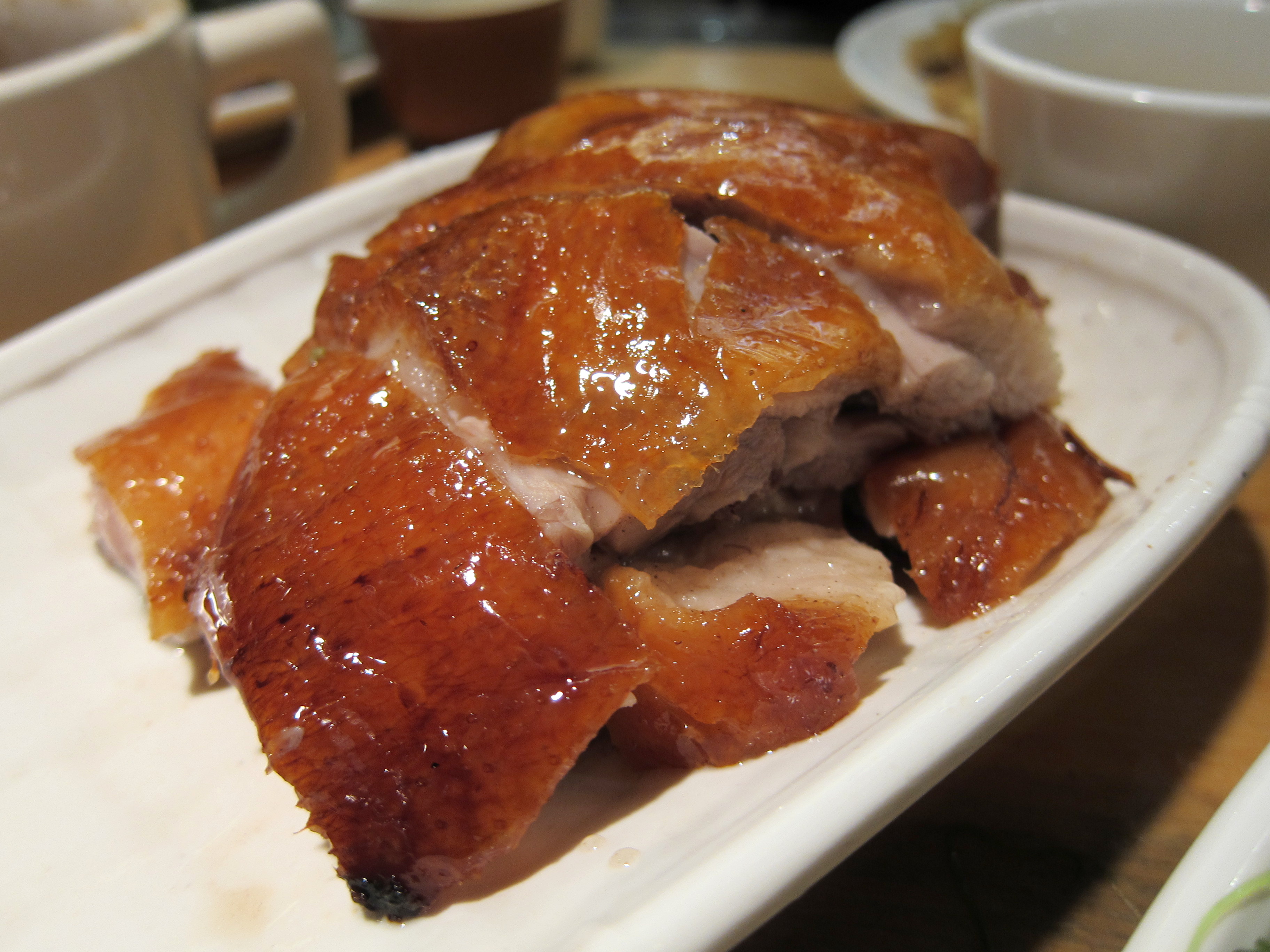
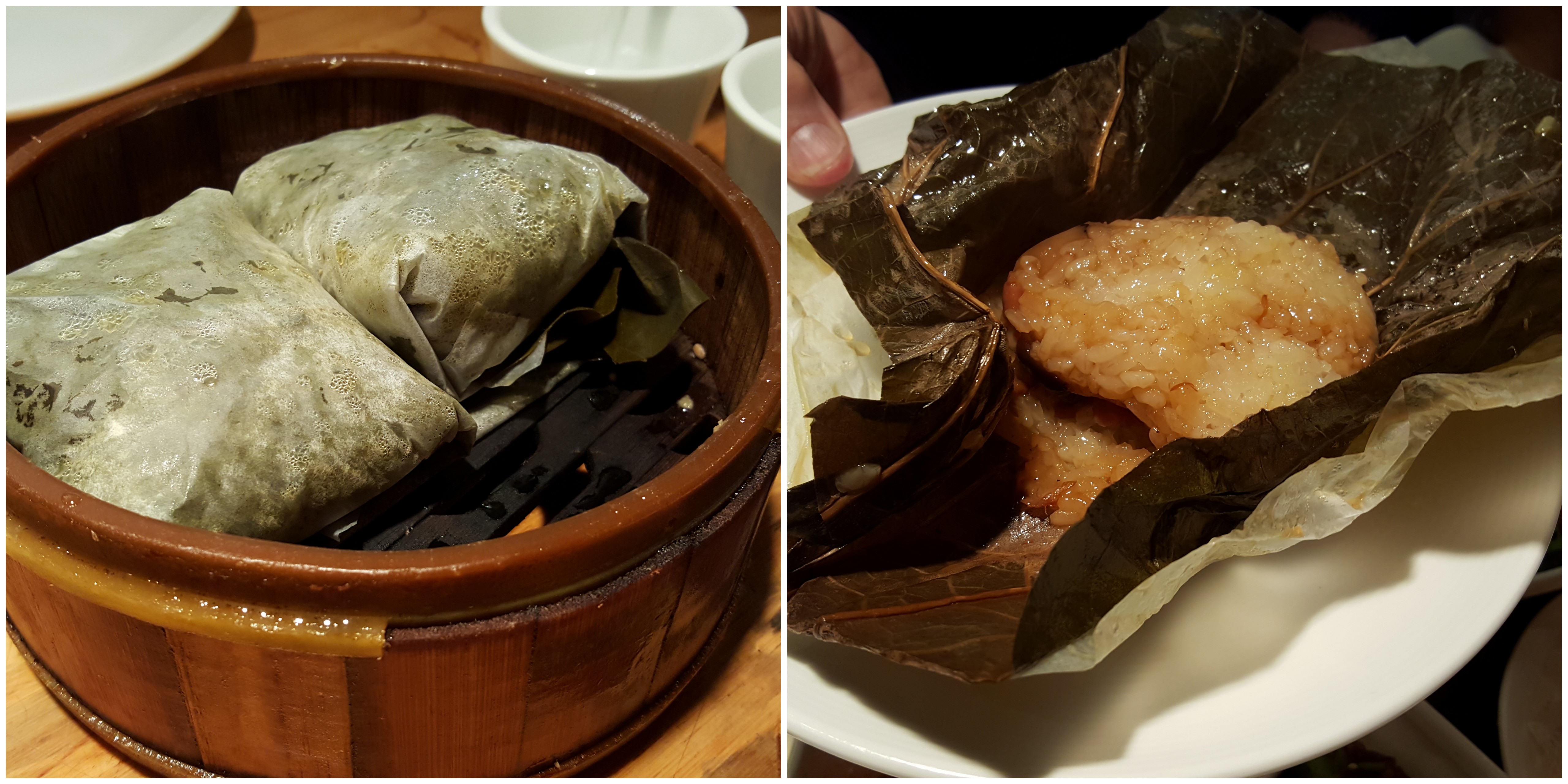
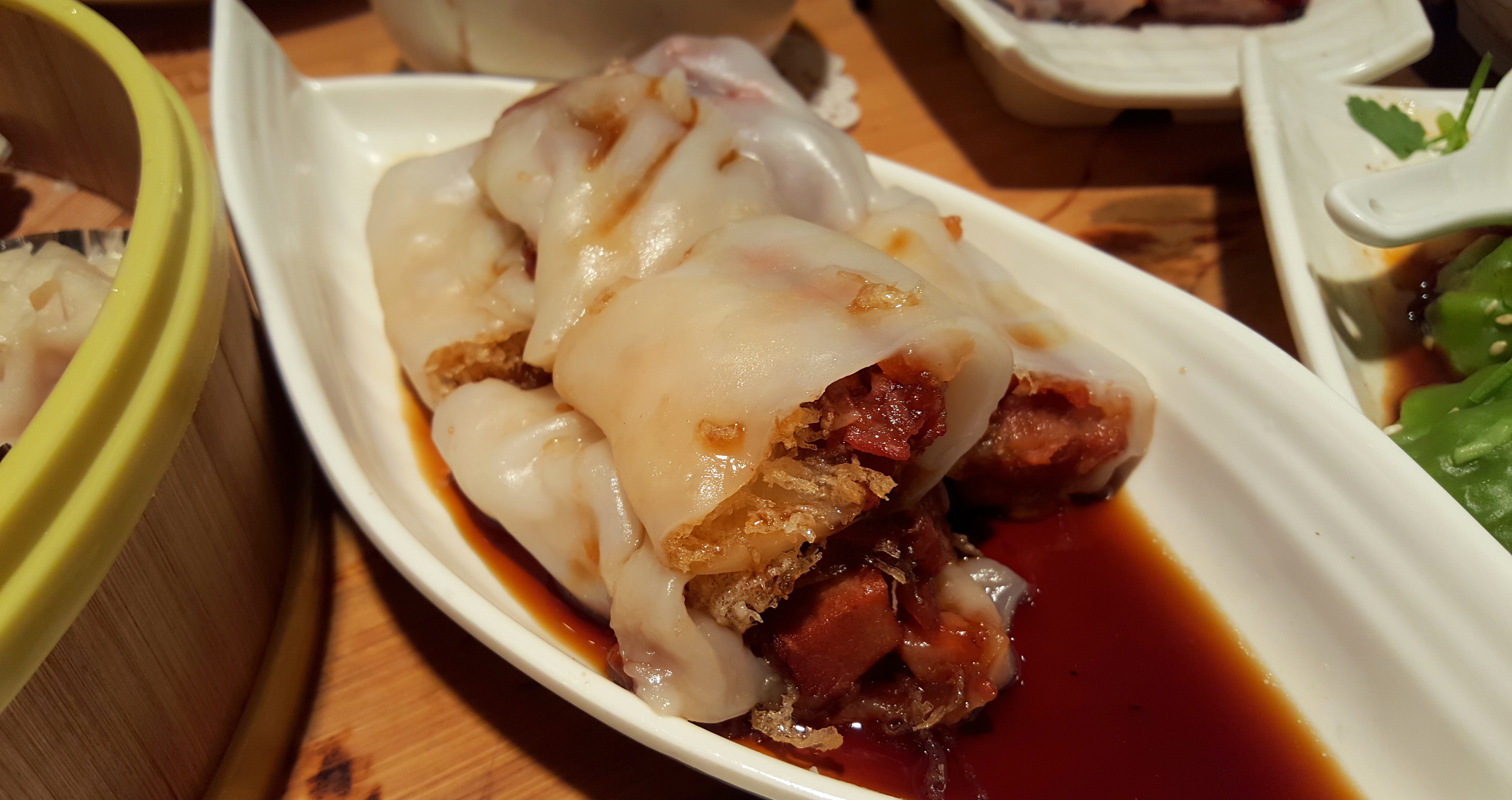
Not all items were unanimously favorites, however. Most were oily, regrettably but not unexpectedly, such as the roast duck with the perfect-looking burnt orange glaze, the lo mai gai (sticky rice with dried scallop and lap cheong wrapped in lotus leaves), and the cheong fun with BBQ pork and crispy rice.
kp-lotusrice

kp-riceroll
This cheong fun is interesting, though. The crispy rice part is some type of crispy rice noodle made into a mesh and deep-fried, then rolled next to typical Chinese red-and-sweet BBQ pork cubes inside thick sheets of rice noodle. Finally, the rolls are doused in a sweet soy sauce. We see that they’re trying to go for a soft-versus-crispy-versus-meaty (?) texture harmony thing, but the crispy rice couldn’t stay crispy very long. I like them still, but had I not been Vietnamese and a fan of the much-thinner-rice-roll banh cuon, I would have liked these more.
kp-xlb
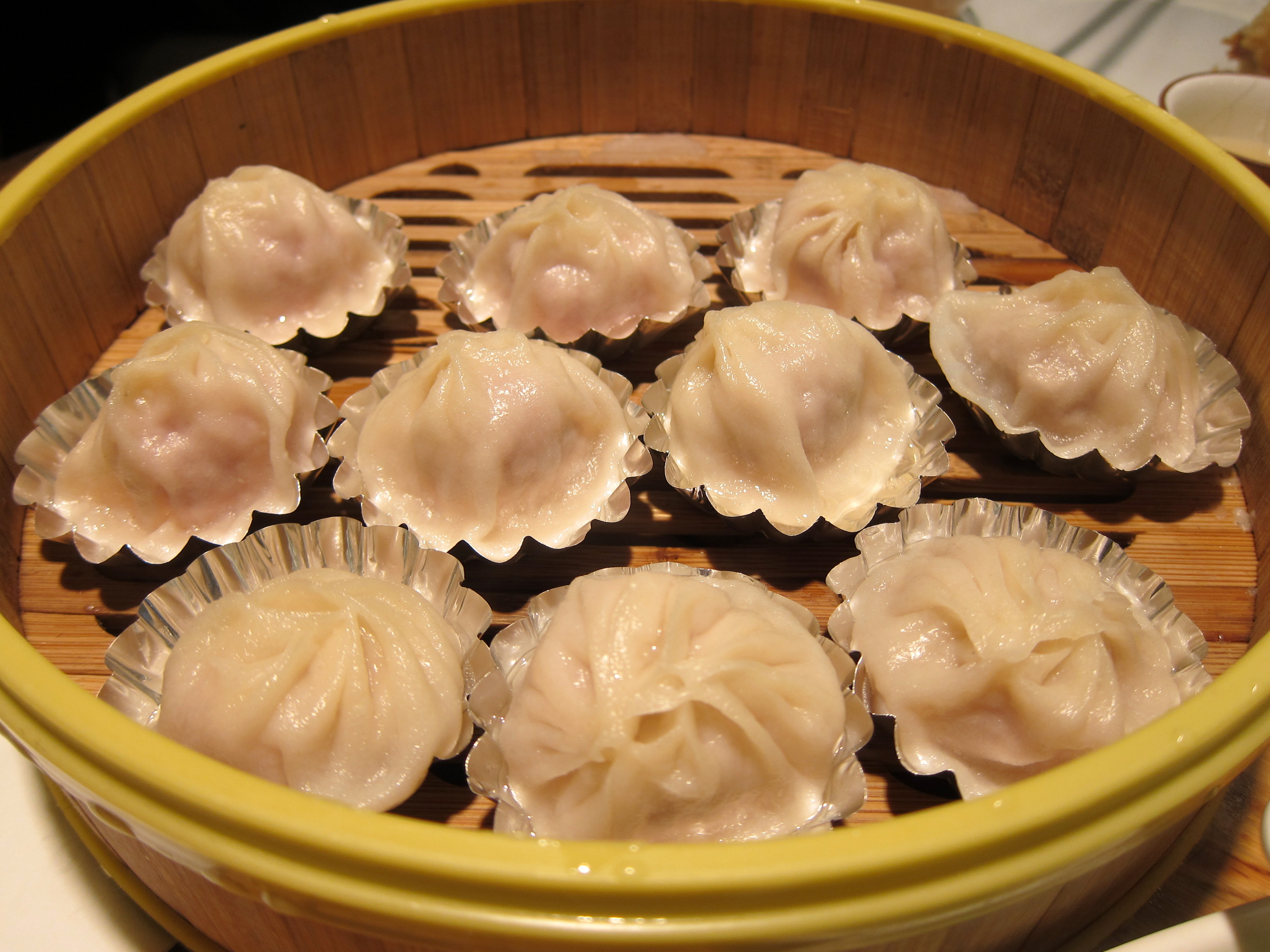
We always order xiao long bao as a standard measure of how good the dumplings are at dimsum houses. Unfortunately, the xiao long baos here are a bit of a disappointment compared to Shanghai Dumpling King’s (I’m convinced that Shanghai Dumpling King actually has the best Shanghai dumpling aka xiao long bao aka soup dumpling in the Bay Area). They’re not juicy enough. The stuffing is lackluster. They won’t be ordered again.
kp-steamed-chiveporkdumpling
kp-spicydumplings
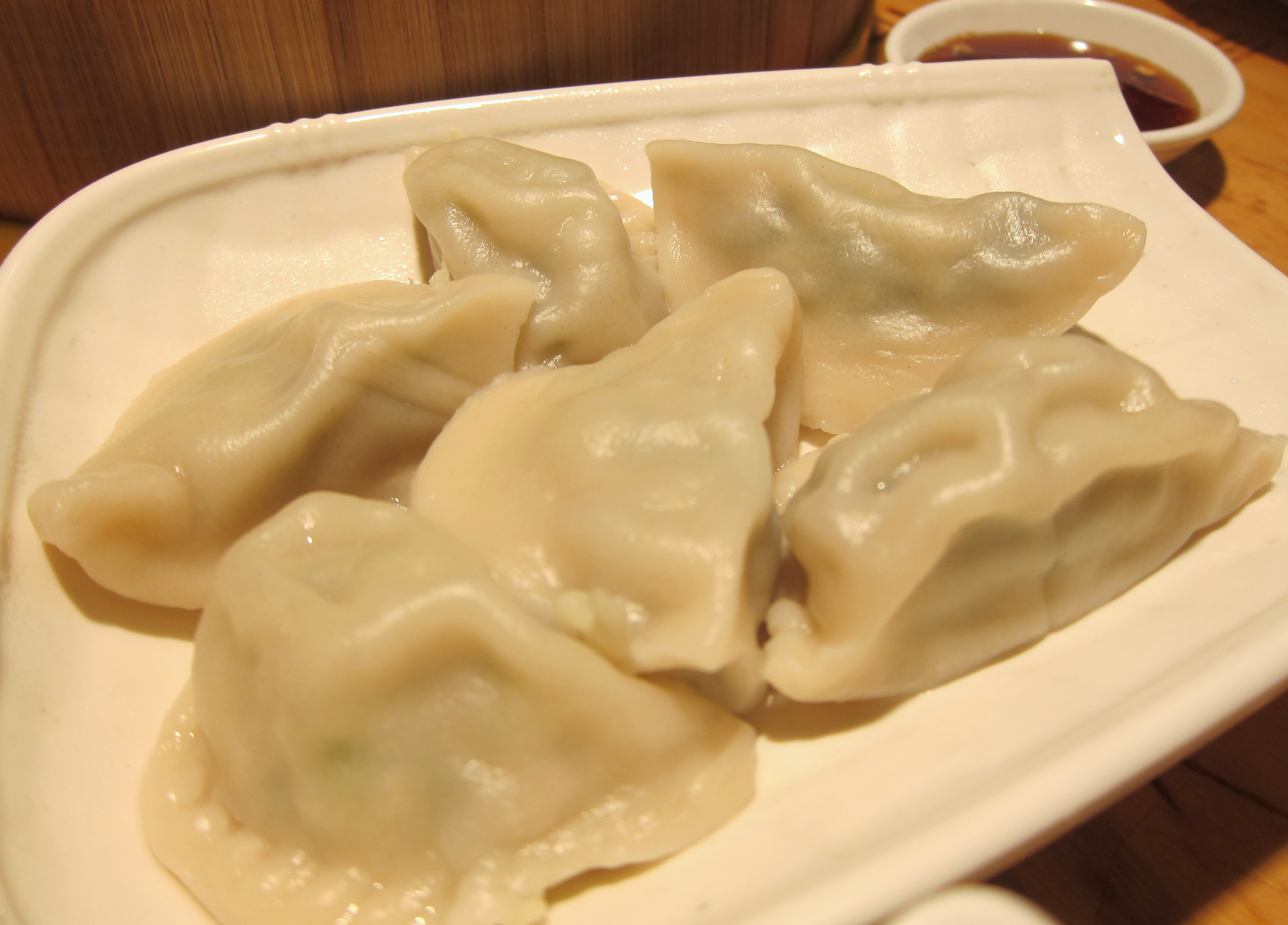
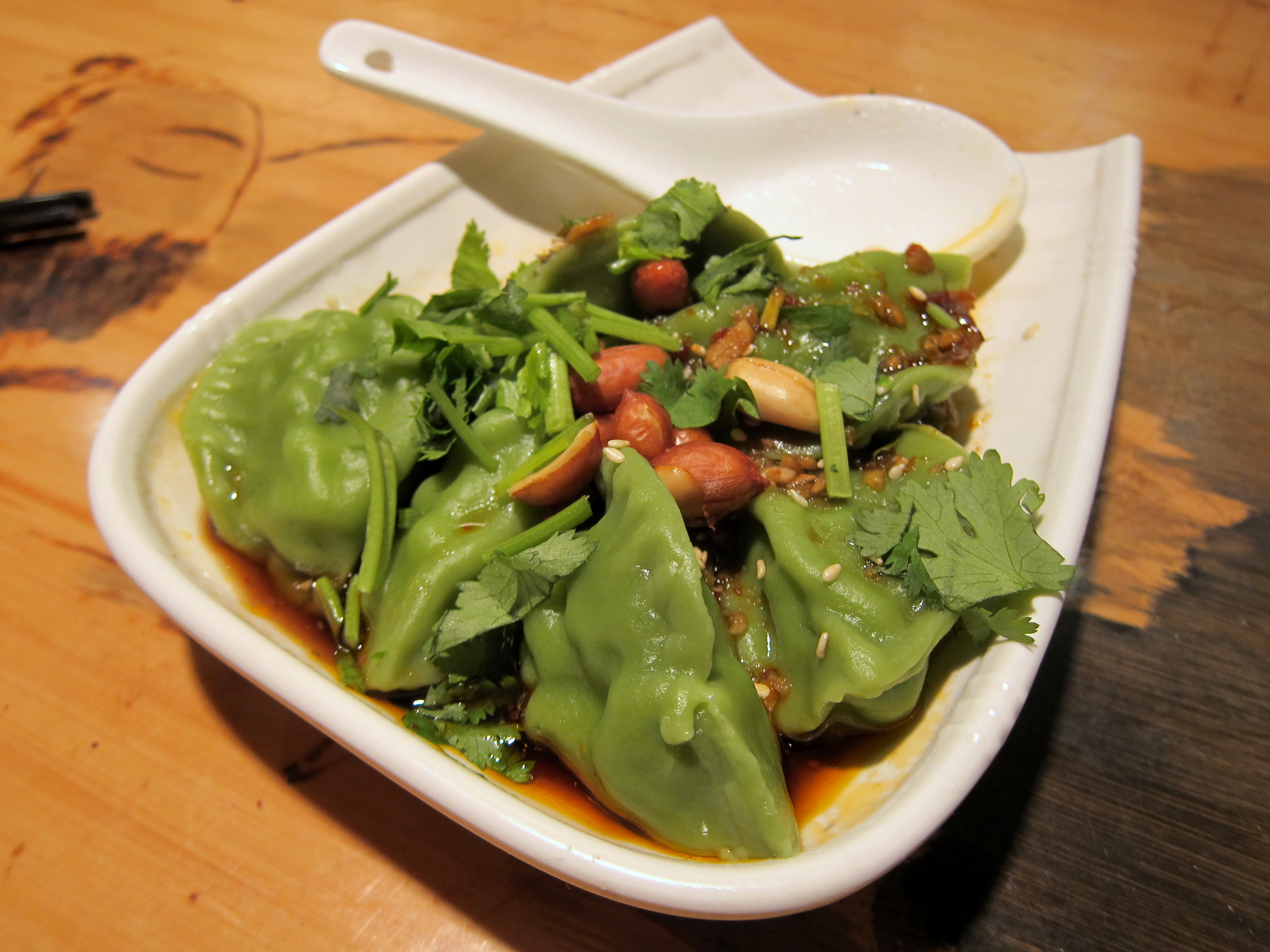
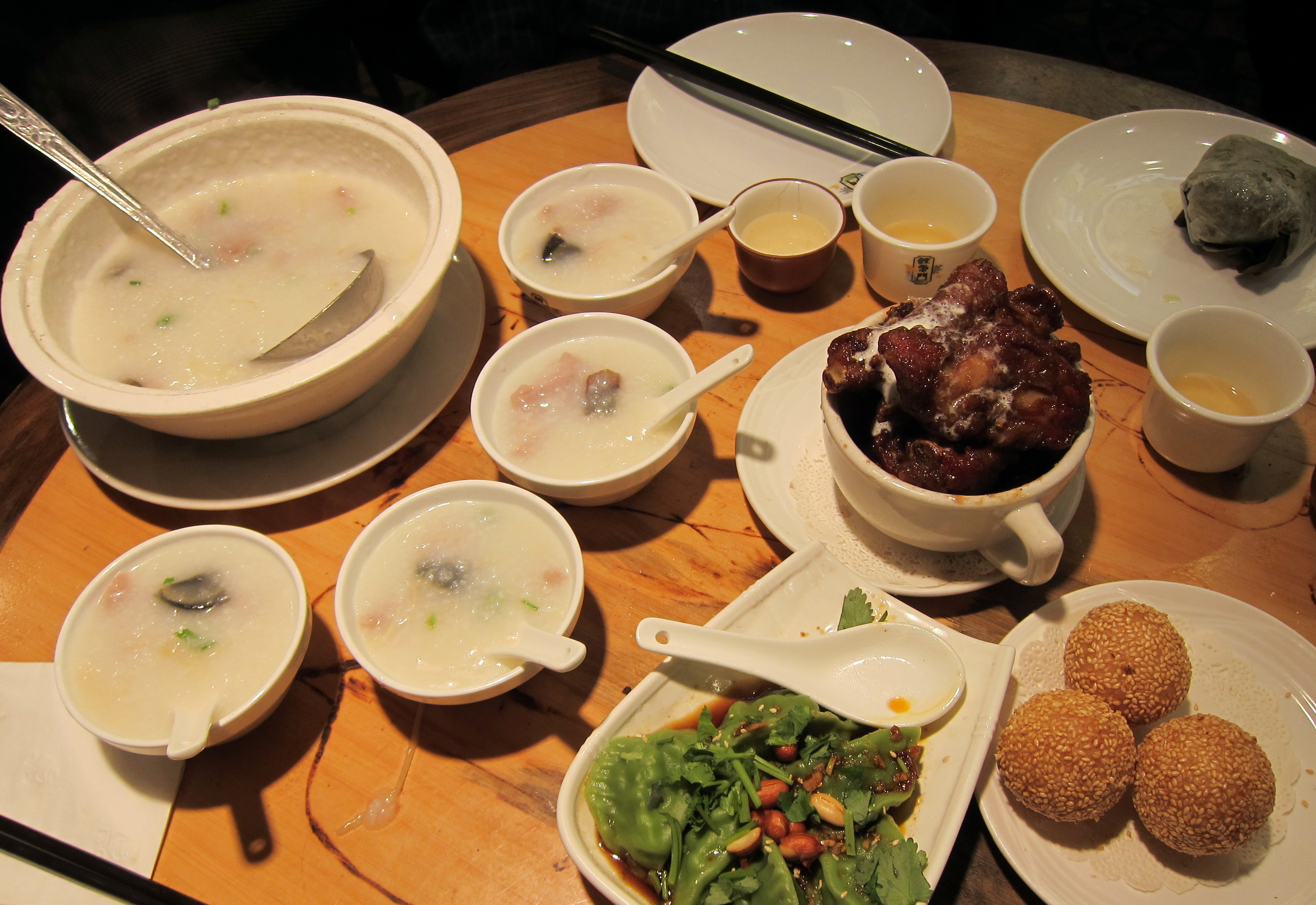
The remaining fares were neither dream nor embarrassment. There were the fairly commendable congee with pork and pidan, although I would prefer it 30% less thick, sliced jellyfish and green seaweed salad that got stuck in my teeth forever, really nutty gailan in oyster sauce, which was a nice break from all the meat, some Sichuan spicy seafood dumplings in red peanut sauce that looked like little green aliens but thankfully weren’t too spicy, and the unassuming but lovely Peking-style steamed chive and pork dumplings, which never go wrong.
kp-table1
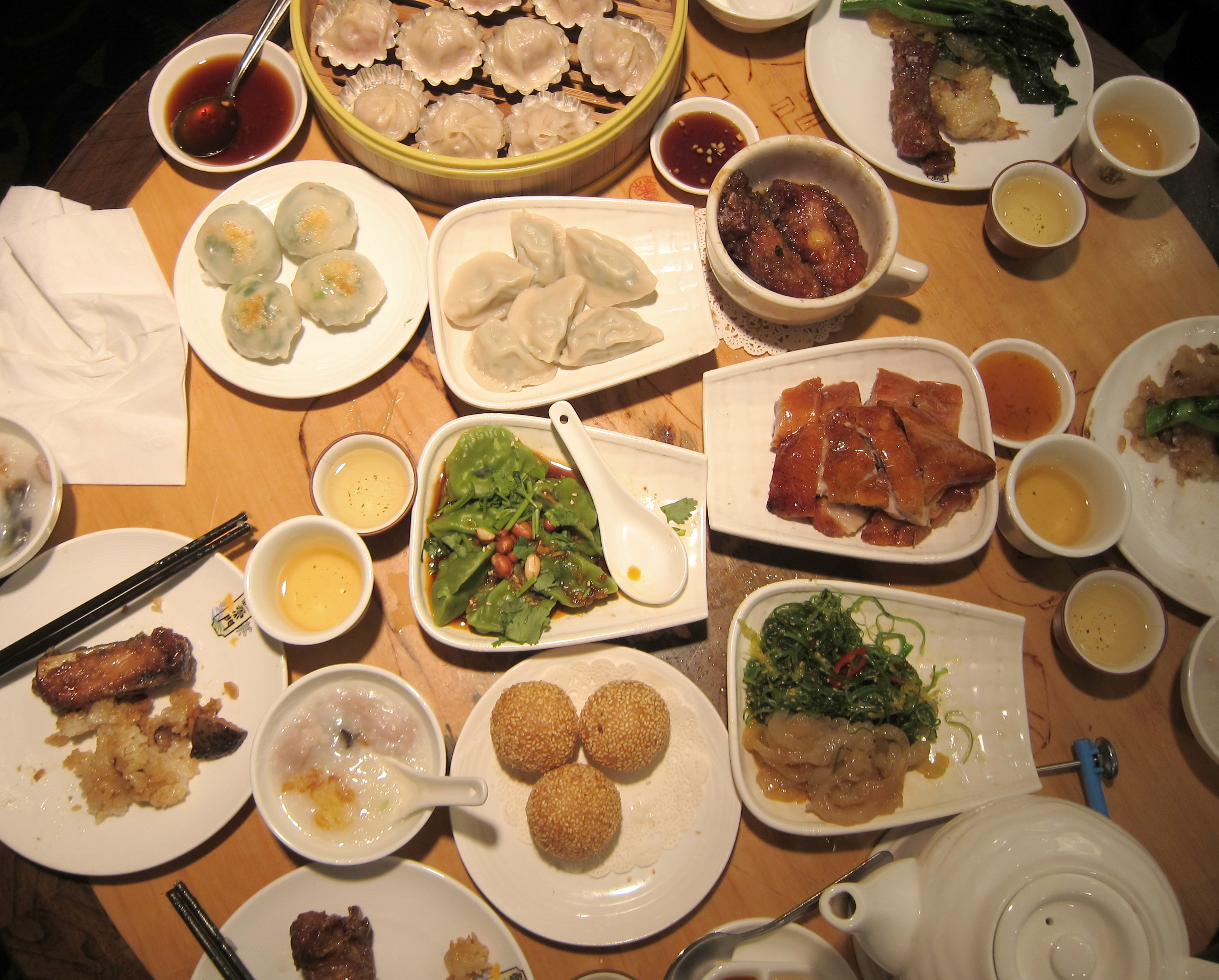
Although the porridge was brought out near the beginning as it should be, the rest of the food arrived in no predictable order. Lo mai gai came first. Deep-fried sesame balls for desserts came at the same time as the green aliens, then they kept pouring in and dangerously took over our table. I stopped taking pictures at one point to start eating so that we could get rid of the plates…
kp-table2
Speaking of desserts, if there is one thing you should never get at Koi Palace, it’s Number 501 under “Sweet Heart” – “Grilled Black Sesame Filled Glutinous Cake”. They are deceptively cute – each is a little squishy ball coated with sesame seeds and contains a gooey black sesame core, kinda like the Sno Balls(*). They are death. Not in a good way, because they are so oily that you are afraid of swallowing, so you have to chew them to death. The problem is that the core is too little and the skin is too thick. If you want black-sesame dessert balls, go to Shanghai Dumpling King, they serve it boiled and full of sesame. On the other hand, the deep-fried balls with lotus and bean paste inside are actually good.

The take-away message: when you’re at Koi Palace, order “espresso coffee ribs” and “grilled chive & shrimp dumpling”. Do NOT order “Grilled Black Sesame Filled Glutinous Cake”.

Address: Koi Palace in Serramonte Plaza
365 Gellert Blvd, Daly City, CA 94015
koipalace.com

Foodnote:
(*) Sno Balls are the best American sweets ever invented.
(**) Photo credit: some photos were taken by bnibroc.
Eating in Seoul: Spotlighting 4 Hongdae Restaurants

August 25, 2013 By: Kristen Category: Korean, Travel

Since Hongdae is where I stayed in Seoul, this is where I had most of my meals. In this post I’ll spotlight 4 restaurants that stood out to me mostly because of the dishes that I had there. These include: Korean-style onigiri (rice balls), kimchi mandu (dumplings), vegetable and meat pancake, and gamjatang (potato soup) without the gamja (potato).

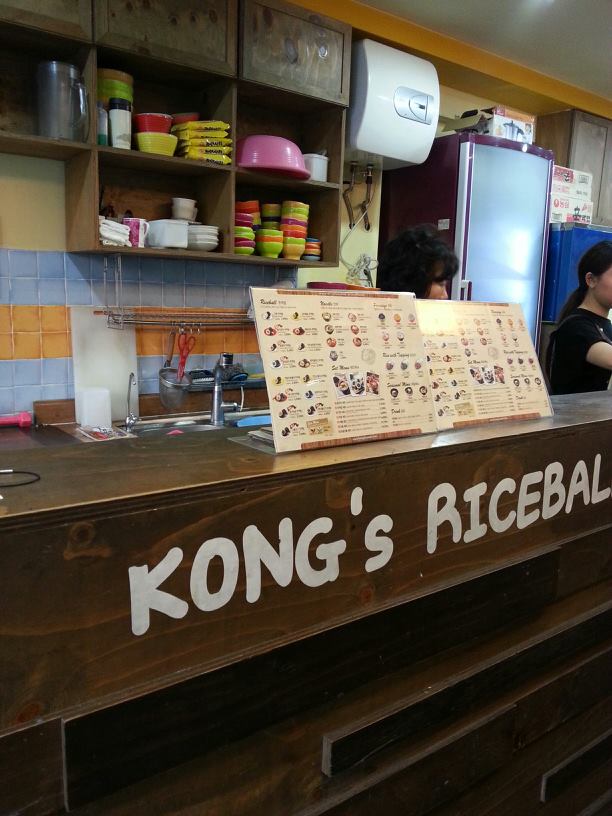
#1 Kong’s Riceball

It was my second day in Seoul and I was still very overwhelmed with being in South Korea. I had a pretty big lunch at the museum cafe in the War Memorial of Korea and on my way back to my hostel, I wanted dinner but just a small dinner. I remembered passing by this restaurant the day before when my friend was showing me around the area and figured today will be the perfect day to try it!

1011901_10151676537820733_1737277647_n

The interesting name, the brightly colored bowls, and the nice ahjumma who stuck her head out of the window to call out orders all drew my attention right away! Plus it was right next to Hongik University on the main road in Hongdae AND it offered take-out, so convenience and shyness made this the perfect stop (at this point I was still too scared to order or dine alone in a restaurant, but that was quickly overcome once I couldn’t resist the food).

954748_10151676538105733_766857282_n

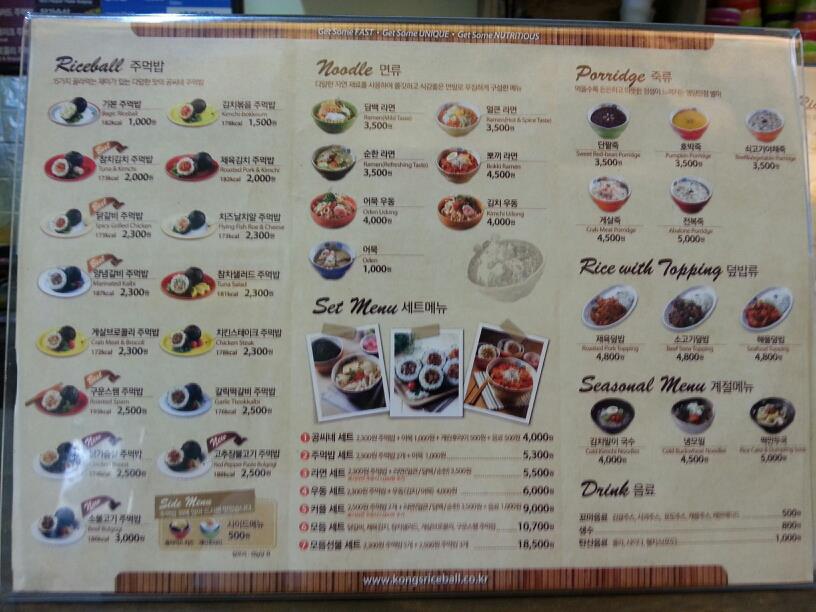
An onigiri would be the perfect meal since I wasn’t too hungry. After looking, I decided to go with two of what looked the most delicious: spicy marinated chicken thighs (닭갈비, dalk kalbi) and stir-fried kimchi (김치볶음, kimchibokkeum).

971445_10151676539265733_258093571_n

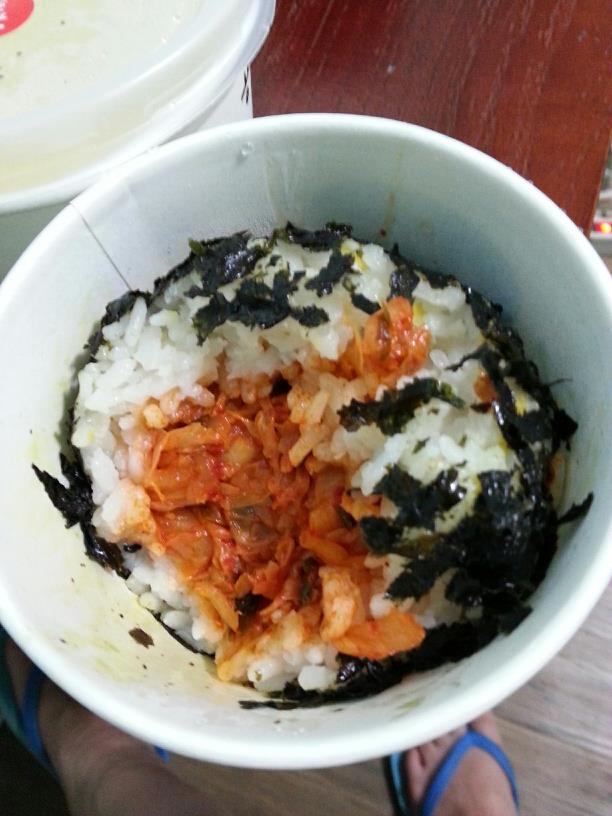
Stir-fried kimchi rice ball

970865_10151676538865733_1961888760_n

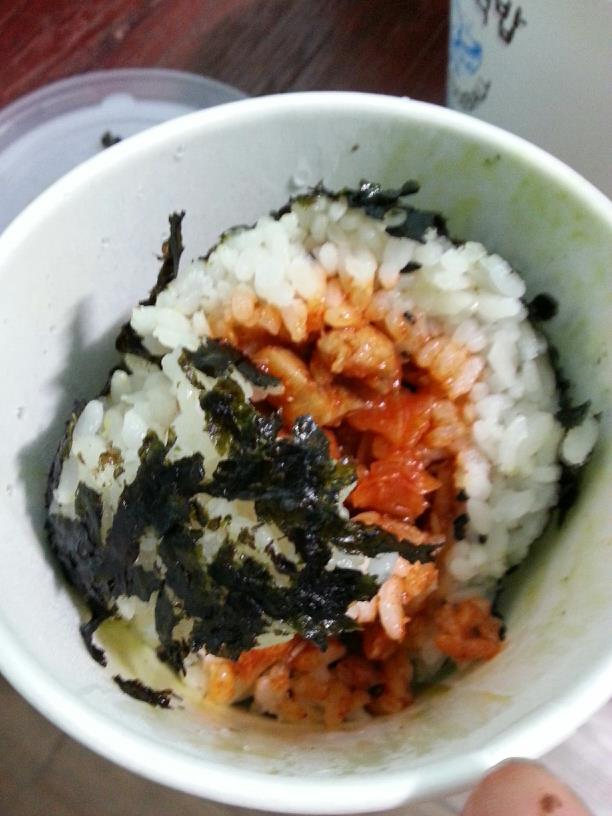
Marinated chicken riceball

Little did I know – these are giant-sized riceballs! They took up an entire cup each! They were so delicious though that I ate both of them in the comfort of my hostel room. I expected something hand-held, but I had to use a fork with this one – luckily my hostel had utensils because when I tried taking the rice ball out of the cup with my hands, I ended up making a mess. The flavors were delicious and so comforting: both the chicken and kimchi were really spicy but I loved it since the rice and seaweed balanced out the spice. If I were a college student at Hongik University, there would be no doubt about it, I would be eating these rice balls all day long. With the most expensive one costing 3,000 won (less than $3 US) and the stir-fried kimchi one costing 1,500 won (less than $1.50 US), these are great!

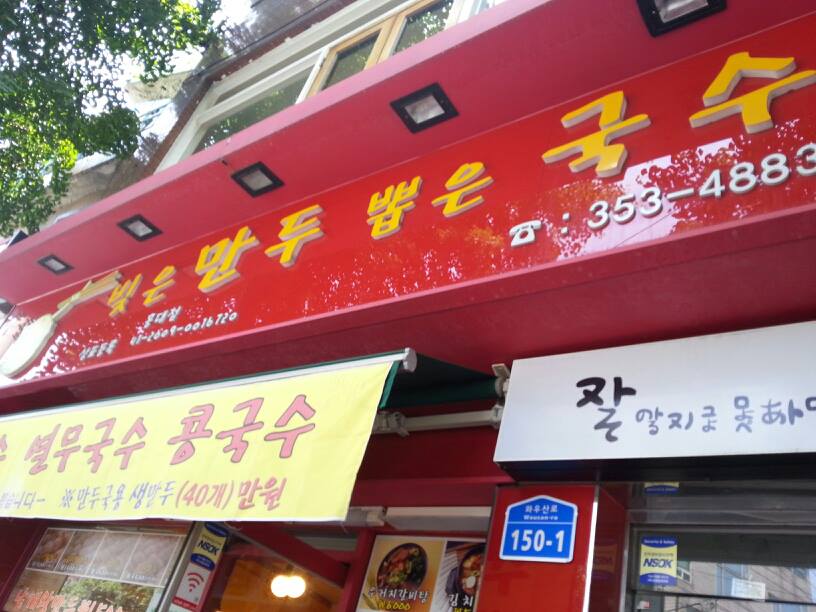
#2: 빚은 만두 뽑은 국수

1002231_10151676557475733_191584978_n

I wish I knew the translation for this restaurant name, but I don’t…the only character I recognize is 만두 (mandu), which means dumplings. As far as I’m concerned, that’s the only word that I need to know! My friend and I met up here specifically for their kimchi dumplings…she’s on a quest to find the best kimchi dumplings in the area, so we came here to test out this restaurant. It’s on the main stretch of road bordering Hongik University (the same street as Kong’s Riceball and Cafe Berlin); if you keep on walking down this road, you will eventually end up in the popular Sinchon area, which also has a ton of universities.

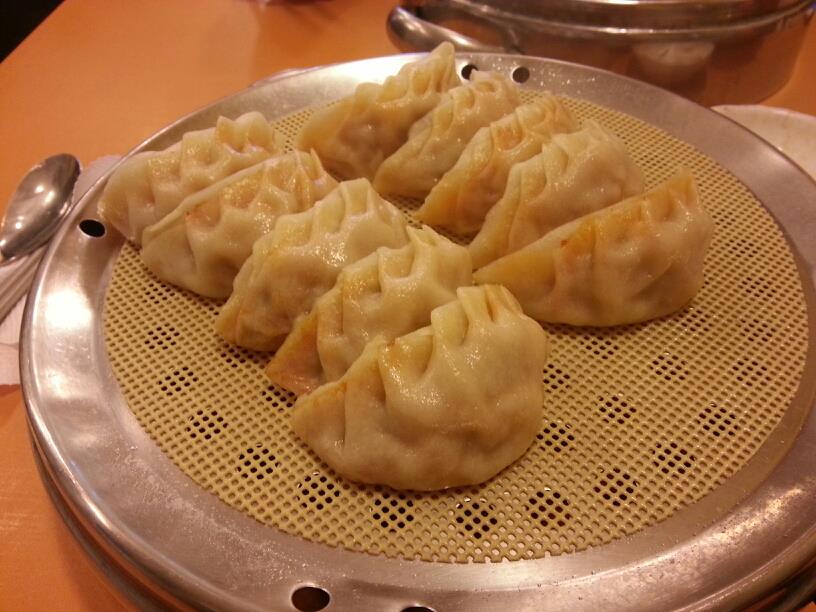
311625_10151676557035733_332828821_n

I should probably admit something embarrassing at this point…I have never had fresh kimchi mandu before. I’ve only ever had the frozen packs that I buy at Koreana Plaza in Oakland. When I say that this is the best kimchi mandu I’ve ever had, it’s probably not saying much, but these were the best kimchi mandu I’ve ever had! The filling was extremely fresh (which stood out to me since I’ve only had the artificial tasting dumplings) and deceptively spicy – I found myself drinking more and more water as I ate! The steamer that comes with the dumpling is so cute too. I don’t remember the price right now, but I think it was around 3,000 won (less than $3). I loved how well I can eat in Seoul without spending a lot of money! The dumplings also come with banchan that included pickled yellow radish and a clear soup that tastes like the kind that are served in Japanese restaurants in the U.S. Overall I was super impressed with this place, but I don’t know how it stacks up with other kimchi mandu restaurants.

#3 The Pancake Restaurant

This actually isn’t the name of the restaurant, but I don’t remember what it was called. All I remembered was that it was a rainy day in Seoul and I had just finished touring the War and Women’s Human Rights Museum (commonly referred to as the “Comfort Women Museum”), which addresses the history of the women who were drafted into sexual slavery under the Japanese Imperial Army during WWII (an issue that many Japanese politicians and textbooks deny) as well as their ongoing legacy and attempts to fight for justice and reparations. Needless to say, it was a very difficult museum to walk through and combined with the rain, I was definitely looking for some comfort food. I happen to walk right past this restaurant on the way back to my hostel, and could not resist the smells. This is some perfect rainy day food.

7810_10151676734400733_559940819_n

This restaurant is pretty much the definition of a hole-in-the-wall restaurant. I think they probably serve more take-out than sit-in diners and I was the only one there that day. The prices looked pretty expensive compared to other food that I’ve eaten in Seoul so far, but that didn’t deter me from ordering the meat and kimchi pancake (김치고기전, kimchi gogi jeon) for 10,000 won (a little less than $10 USD).

1006171_10151676734790733_1493218215_n

The owner of the restaurant (the woman with the glasses) was super friendly and I think she felt a little bad for me when she asked if I was eating alone and I said “yes.” I didn’t mind though, particularly as she started to cook my pancake on the little electric stove and the smells came wafting towards me. This is definitely made-to-order food!

1013681_10151676735025733_612229656_n

Pictured here is the pancake (I didn’t take a picture of it but I got some banchan as well). It was a little greasy, but it definitely hit the spot. The meat was a little flavorless on its own; I couldn’t tell if it was pork of beef – it tasted like burger meat to me. The kimchi though was full of flavor – this was the most pungent and sour kimchi I have ever eaten and I loved it. The overall flavor of this pancake rings “sour” more than anything else, but I love some fried kimchi pancake and even though after my first few slices I was wishing for a little more sweetness or spicyness to balance out the sourness, I definitely had my craving for kimchi pancake satisfied. I was able to end up eating half of it before I was full, but I took the rest of it back to my hostel.

The owner was so incredibly sweet also; she kept on talking to me and made sure that everything was to my liking. She also complimented me on my Korean, which was really affirming for me to hear since I am super unconfident with my Korean language skills. However, I was actually able to have a conversation with her (even if it was a little bit awkward and I didn’t quite use full sentences all the time), but it is definitely a good confidence boost to actually almost understand someone completely in Korean! Not only was the food excellent here, but the service is quite good as well!

#4 The Gamjatang Restaurant

This is another restaurant that I forget the name of; I think it is a chain restaurant since I saw one in Myeondong as well (the one that I ate at is in Hongdae). The logo consists of an animated potato head. Actually, here is a blog post on the restaurant; it is called Onedang Gamjatang. Fun fact: the hostel that I stayed at is right above the Plan B bar pictured in that post.

Actually, one of the first things that I did before leaving for Korea was to Google Maps (can I use this as a verb?) my hostel location. To my delight, I saw that it was right next door to a restaurant that read “gamjatang.” I was super excited because I love  gamjatang and this place is literally two steps away from my residence.

What I failed to realize though is that the entire area surrounding my hostel is full of restaurants and shops, but I still made it to the gamjatang restaurant on this trip despite the numerous options.

1010949_10151676602405733_861114530_n

One of the first things that I noticed about this gamjatang is that it did not include any gamja – or potatoes – in it. While I had read on Wikipedia that gamjatang actually commonly comes without potatoes, the logo of this restaurant features a potato head so that was a little weird. However, once I tasted the soup, I couldn’t care less about not having potatoes. For only 6,000 won (a little less than $6 USD), I got a massive amount of food – I fished out 3 giant pork bones. The soup was so rich and full of flavor and the pork just melted off the bone. I ended up eating all of the banchan as well – it included kimchi, raw onions, and some pickled carrots and spicy peppers. I also polished off an order of rice and all of the pork AND the soup. I love how for 6,000 won I could eat so well. And it was perfect that my hostel was just a step away – just in time for me to collapse in bed with a massive food coma!

For the Summer: Gyoza with Fruits and Flowers

August 03, 2012 By: Mai Truong Category: Fruits, RECIPES, savory snacks, Vegan, Vietnamese


What can you do with 24 squash blossoms?

Twenty-four is too few for squash blossom canh, a clear soup that Mom used to make when I was little. The flower is the only thing of a pumpkin plant (squash blossom in Vietnam is pumpkin blossom) that I didn’t mind eating (I hate pumpkin). The flowers perish too quickly that American grocery stores almost never carry them(*). That scarcity, I can only guess, also raises them to the exotic level that makes the modern American restaurants include the word in their menu around this time of the year (summer squash blossom season) and feature a mere 3-5 flowers on a plate amidst the more common vegetables like zucchini and cauliflower. The craze has been around for at least a decade, Carolyn Jung said, and I don’t see it wilt away anytime soon.

Although I dislike the place at first because it’s always too crowded, Berkeley Bowl gradually grew on me. It started when I realized, after many years away from Vietnam and living just a bit inconveniently far from the Asian markets, that I haven’t seen certain grocery items for ever, for example, woodear mushroom (nấm mộc nhĩ) and straw mushroom (nấm rơm). Then one day I ran into them at Berkeley Bowl. I was like, oh? they have that here?! It’s a great moment. One where you reunite with old friends, and if we should speak in grand terms, it reminds me to appreciate growing up in Vietnam and in my family, the lack of either component would have resulted in a much, much poorer experience with food.

Sometimes that great feeling clouds my better judgment. You know, when people dig out a picture of their middle school gang from a notebook, buck teeth and silly hair or whatever, they feel compelled to put it on Facebook. When I saw the squash blossoms at Berkeley Bowl, I felt compelled to get them home. Not that I knew what to do with them or had time to cook them.


Mom suggested stuffing them with ground pork. I’ve had them stuffed with cheese and batter-fried. But it’s summer. Peaches are in season. This something I make with squash blossoms should taste light and fresh like the flowers it bears.

Bouquet Nectarine Gyoza
– Squash blossoms (the male blossoms, because they’re big enough to stuff)
– medium firm white tofu
– gyoza skin (wrappers)
– 1 yellow nectarine, diced (If you use peach, peel off the skin because peach has fuzz)
– sugar, salt, pepper to taste
– a steamer

Rinse the squash blossoms under cold water, peel off the dark green spikes at the base. Also break off the stem, if there’s any.
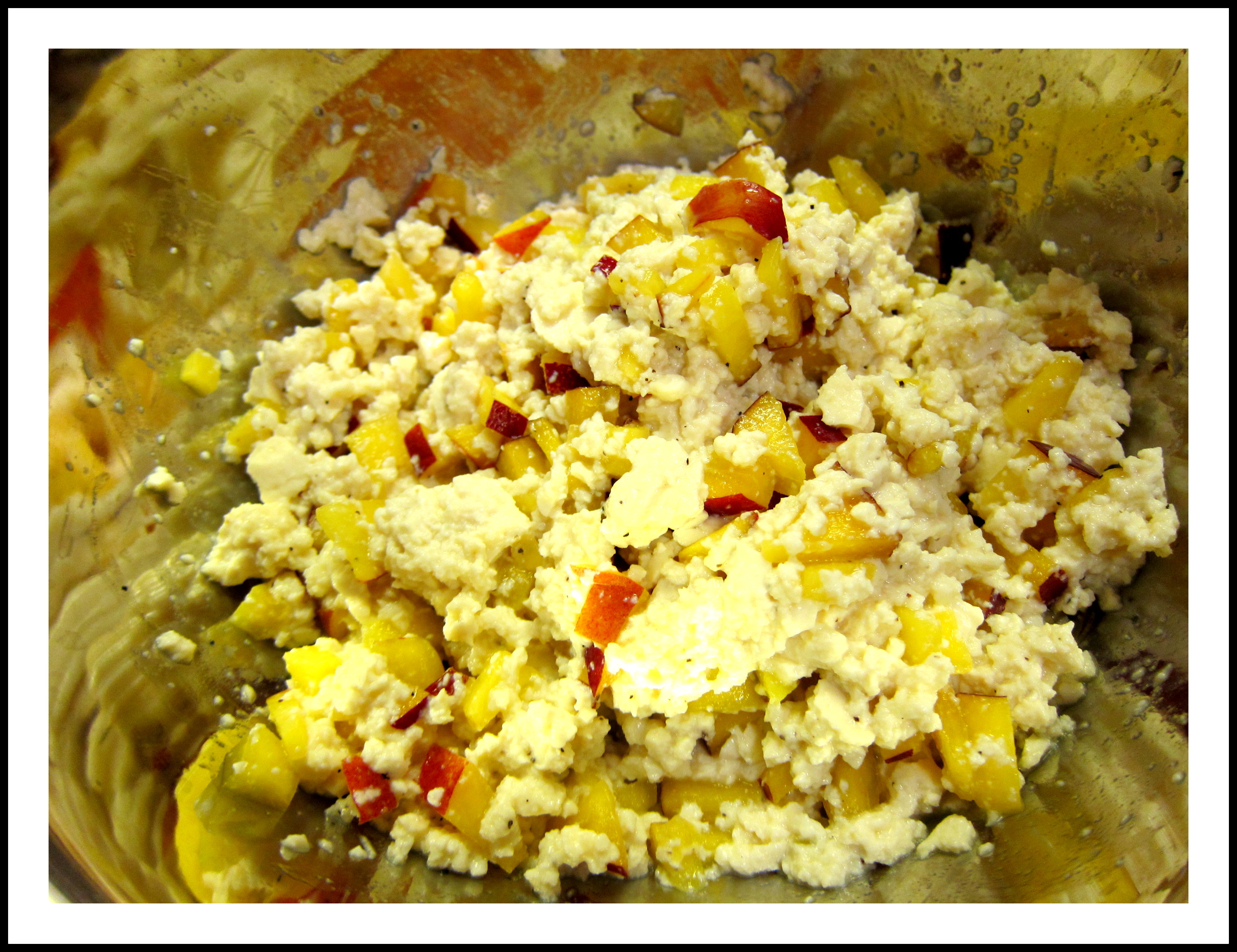
Mash the tofu by hand while mixing it with the diced nectarine. Add salt, sugar and pepper to taste.
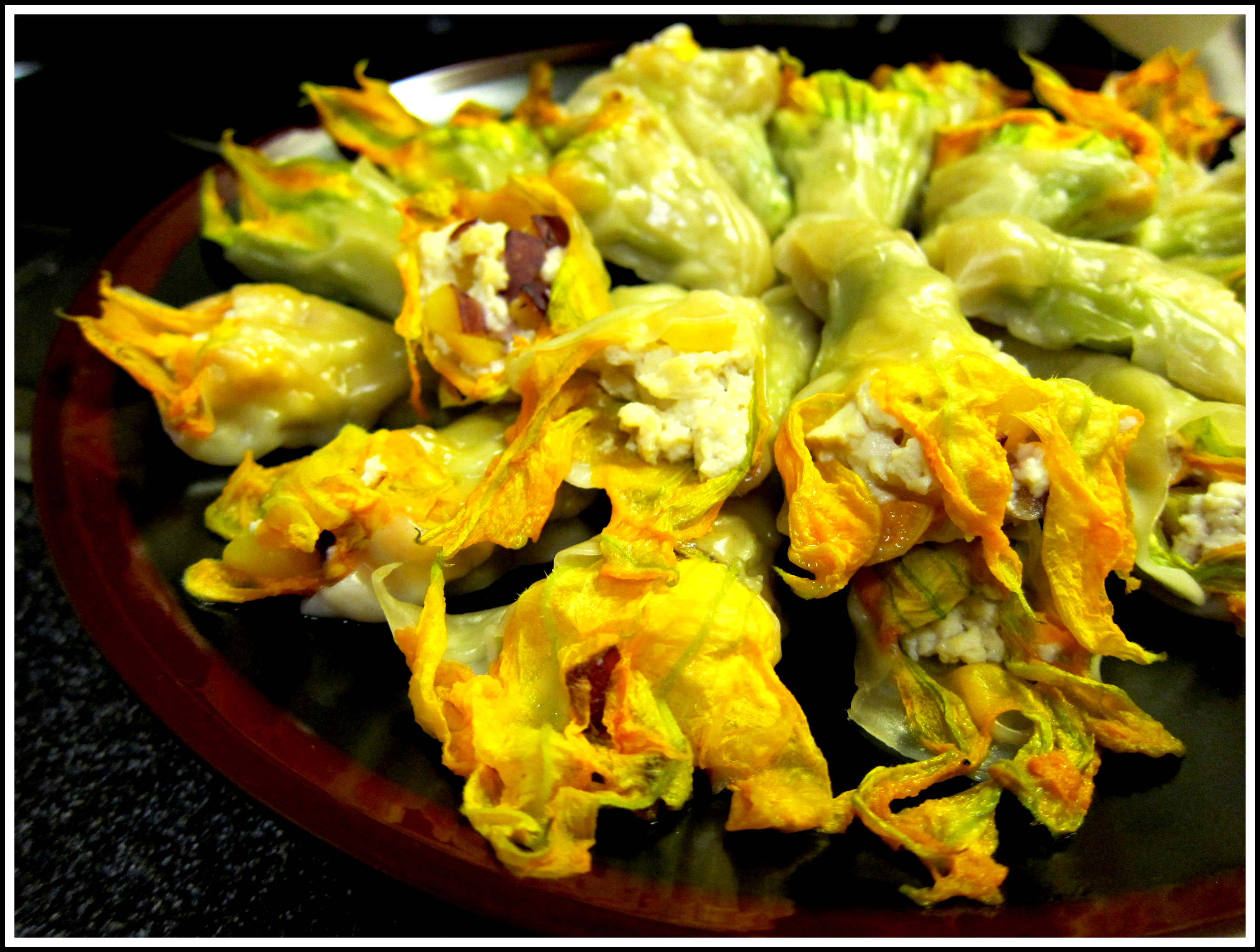
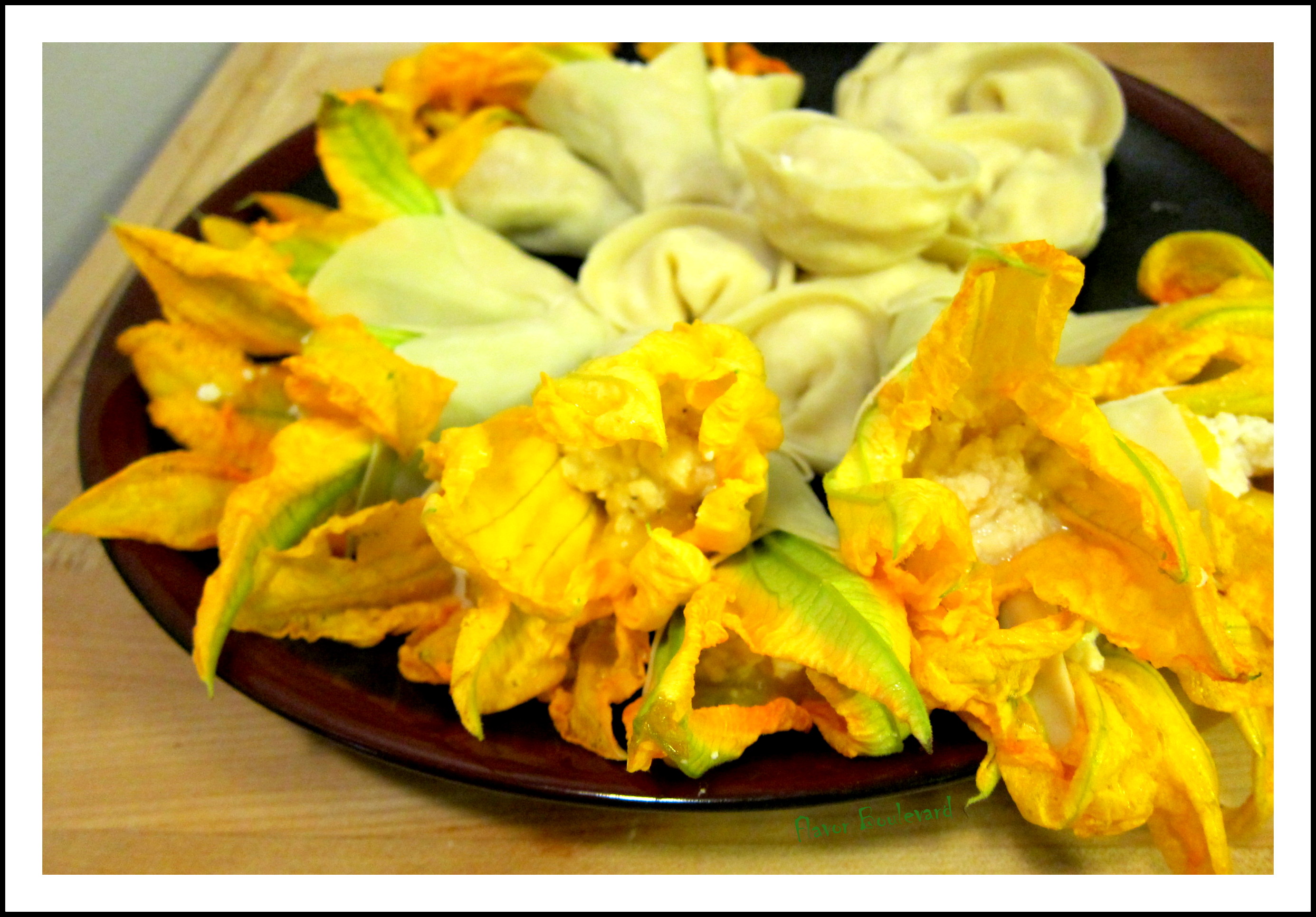
Gently stuff the nectarine-tofu mix into the squash blossom.
Wrap a gyoza skin outside the blossom, leaving at least the top half of the petals exposed.
Steam until the gyoza skin turns translucent (5-10 minutes). The flower petals will wilt but still retain their color and the bottom half should still be a tad crunchy.
Take out and let cool.

UPDATE: pan-fried these to make them taste better (albeit less healthy  :-D)


(*) Every website I’ve looked claims that squash blossoms can only stay fresh in the fridge up to 2 days under precise condition. Well, what you see in the picture “pre-steamed gyoza” are squash blossoms after 8 days in the fridge.