Flavor Boulevard

We Asians like to talk food.
Subscribe

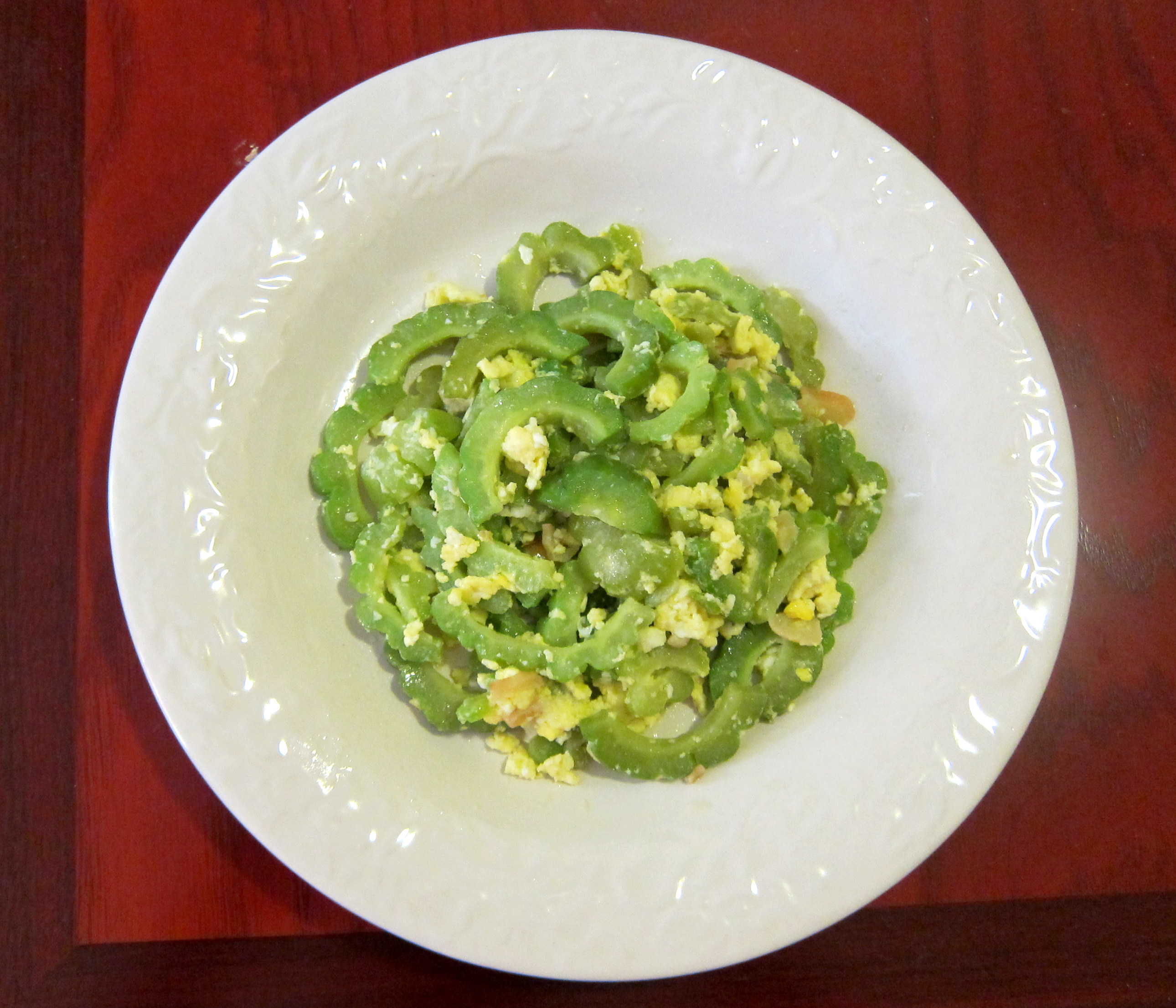
Recipe: Stir-fried bitter melon and egg (kho qua xao trung)
May 25, 2015 By: Mai Truong Category: RECIPES, Vietnamese

stirfried-bittermelon
Bitter melon is another thing that you either love or hate. Among my friends and relatives who have tried bitter melon, 42 percent(*) find it too bitter to try a second time. My mom is a special case. She used to shun it, then little me got a bad fever and had to eat it to help lowering my temperature (bitter melon has medicinal effects), mom was so worried that I wouldn’t eat it (like every toddler, I didn’t like food), but I chowed it down at first try, mom got curious, tried and started liking it too. That’s the story she told me, but I think she started liking it because she started making it, and everything she makes tastes great.
East-Asian-bittermelon
Even in the Bay Area, bitter melon is somewhat rare and expensive. The only restaurant I know of that has bitter melon is China Village on Solano, and a plate costs 10.95 with 70% egg and 30% bitter melon. Sushi California used to have it as an Okinawan specialty but had to cut it due to low demand. 🙁 Chinese and Vietnamese markets have them, but they can be far. Thankfully, today Berkeley Bowl has a small box of maybe 40 counts, so I grabbed a few.

Stir-fried bitter melon with eggs (in Vietnamese: Khổ qua xào trứng)

INGREDIENTS (8 servings):
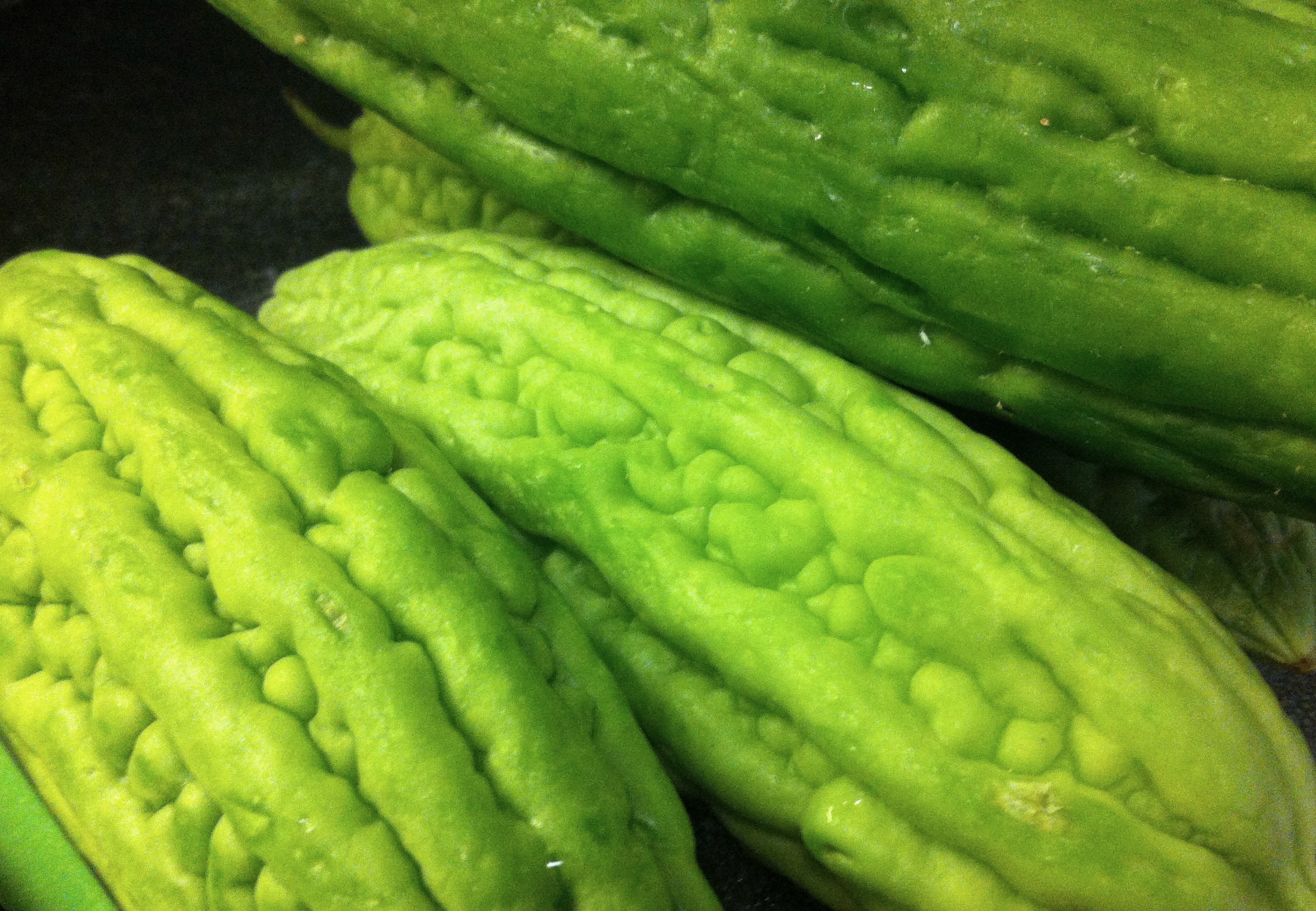
– 5 bitter melons (less green ones with fat stripes, i.e., the East Asian variety, are much less bitter than the skinny ridged subcontinent counterpart)
– 5 eggs (or however many you like)
– 12 cloves of garlic (I just happen to like garlic a lot)
– Salt
– 1/3 cups of olive oil

PREPARATION:
– Wash the bitter melons, cut off both ends of each fruit.
– Cut each fruit length-wise in half.
ripe-and-unripe-bittermelon
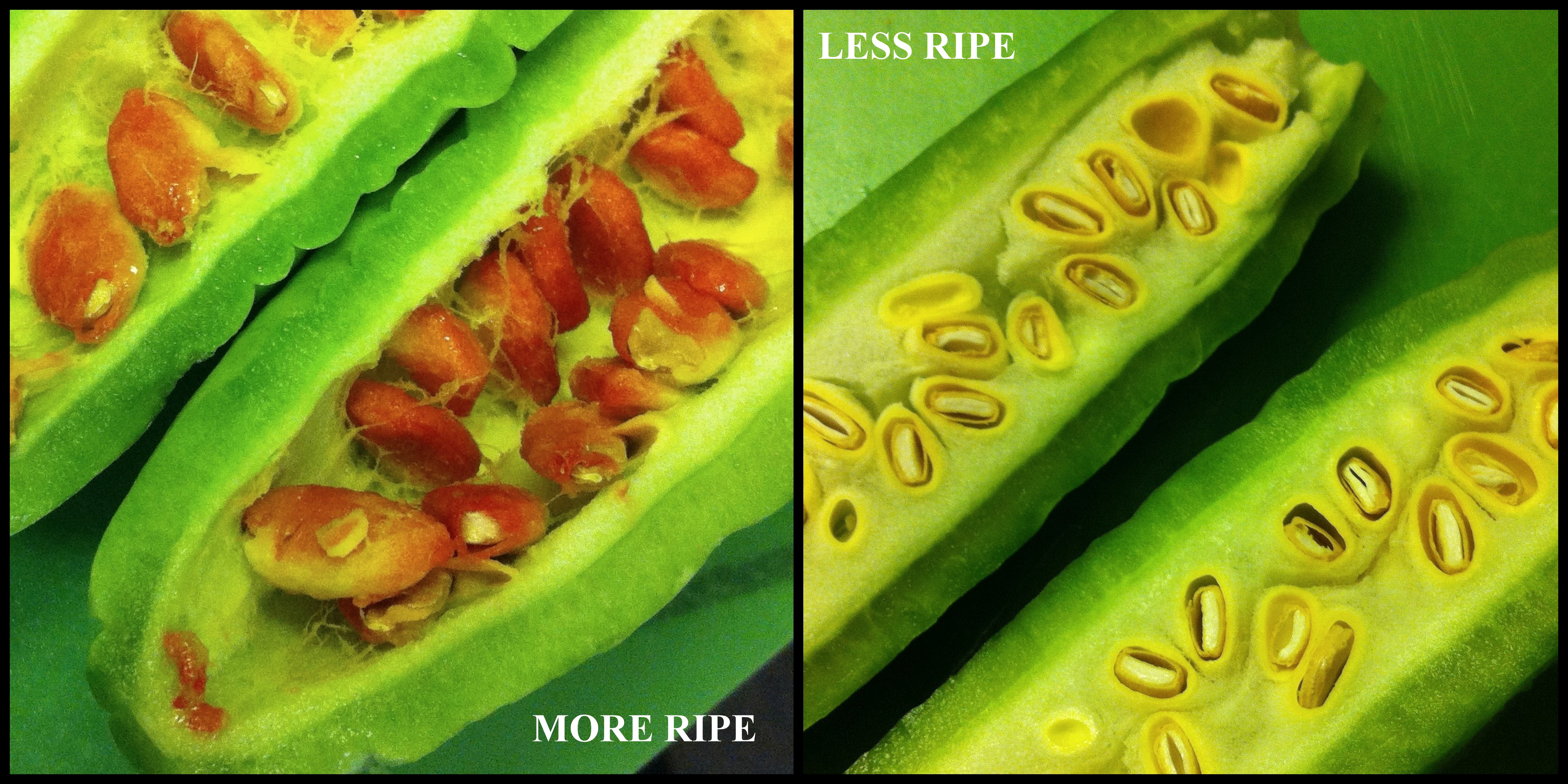
– Use a spoon to scoop out the seeds (along with the fluffy white part). Redder seeds mean riper and less bitter melons. The red film outside the seeds are edible (I’ve eaten them while prepping the melons), but their mildly sweet taste is not much to talk to about.
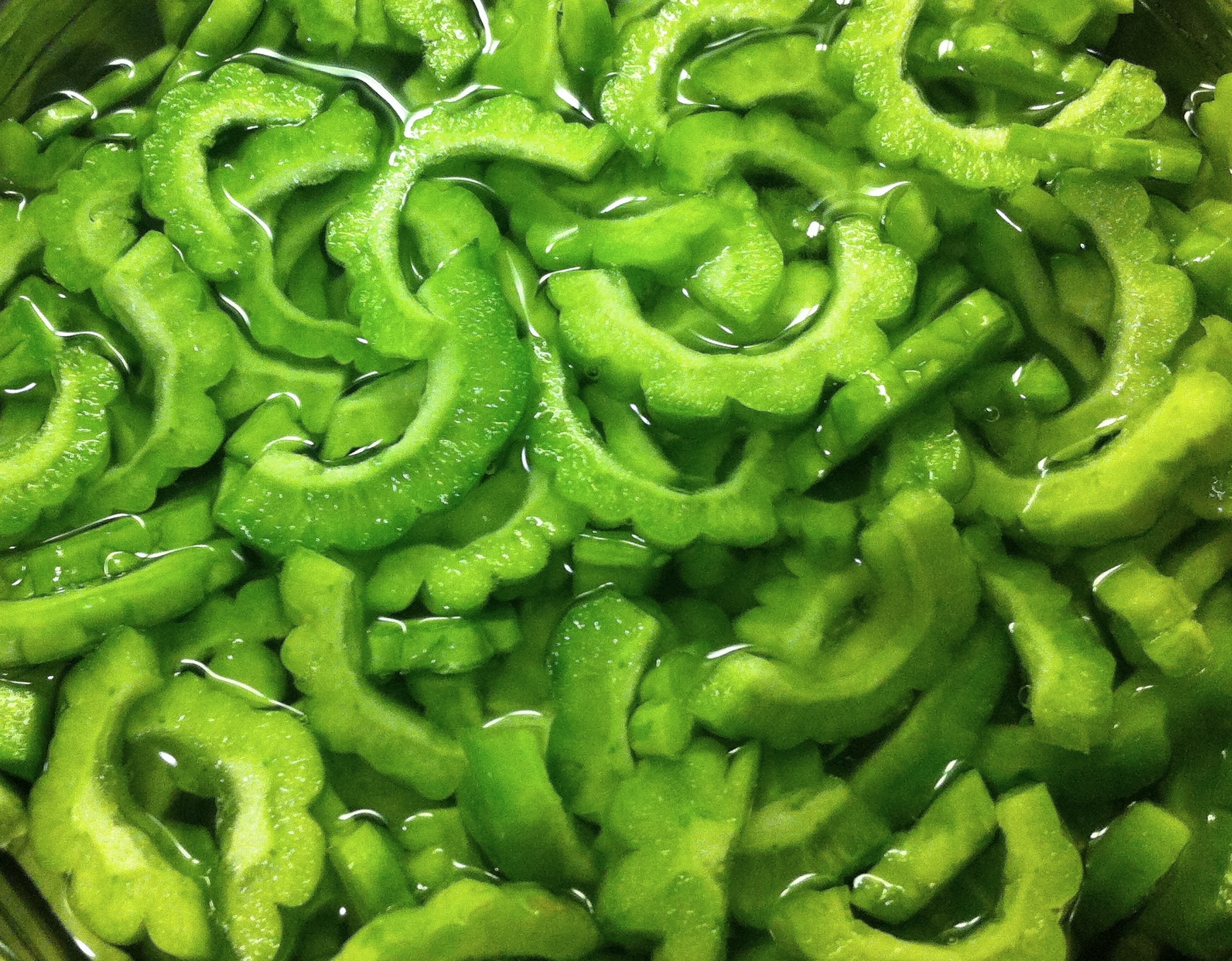
– Slice each half into crescents of ~ 3-4 mm (1/8 inch) thick
soaked-bittermelon
– Soak the slices in water (with a bit of salt) for ~ 30 minutes to partially remove the bitterness.
– Peel and slice garlic, set aside.

COOKING:
– Put oil in a skillet, medium heat, wait for oil to get hot and throw in the garlic to brown.
– Drain and add the bitter melon into the skillet.
– Lightly mix so that the melon slices at the bottom don’t just sit in oil while the top ones hang out.
– Cover and cook for ~ 5 minutes.
– Uncover, stir.
– Add 5 eggs as you would make scramble eggs.
– Scramble the eggs with the melons until the eggs are fully cooked.
– Sprinkle salt to taste.
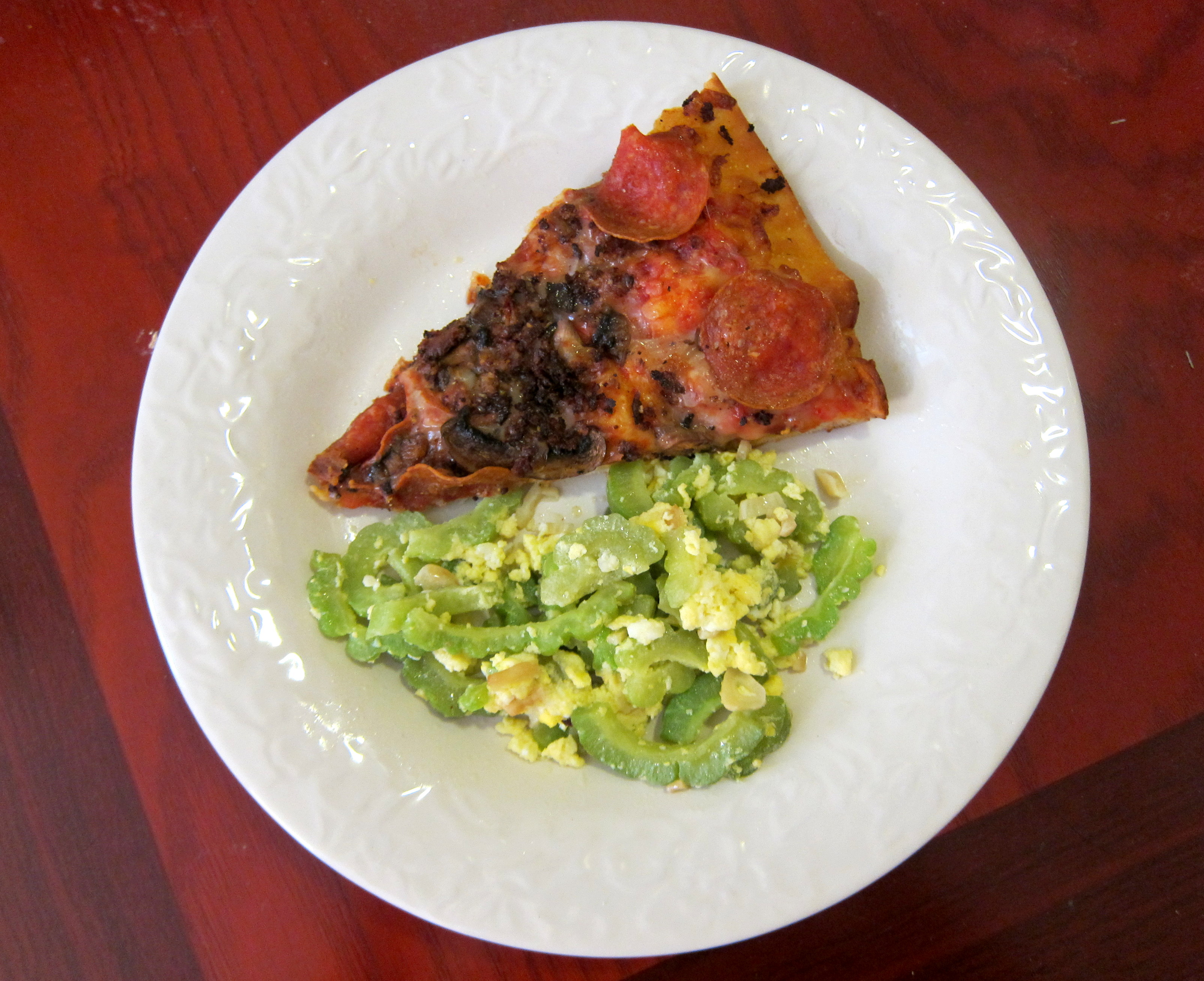
bittermelon-with-pizza
For colors, add pizza. 😉

Foodnote:
(*) This is not a fabricated statistics. I counted 12 people (excluding me) who have tried it and given me confirmed opinions on bitter melon. Five of them grimaced when the word was mentioned. If you’ve tried it and decided to be on either side, let me know so I can update my statistics.
(**) Total cost: bitter melons: 2.06 lb x $2.59/lb = $5.34; box of 12 cage-free large eggs: $3.19; prep time + waiting time: 40 minutes; cook time: 10 minutes; cleaning time: 10 minutes.
China Village on Solano

October 16, 2013 By: Mai Truong Category: California - The Bay Area, Chinese

china-village-albany
In summer 2011, I ate at China Village once per a friend’s recommendation and was not super impressed (like I ever). Then it burned down in early 2012 (so did Intermezzo and a few other restaurants on Telegraph which I also visited in summer 2011…) and I hardly missed it. A few days ago, Cheryl and Eric called me up, “We’re going to that restaurant on Solano I told you about, wanna come?” I thought Cheryl told me about some dimsum place in Albany… “Sure!” Turns out it was China Village. (Now I wonder if she ever mentioned a dimsum place at all…)

Although China Village does have dimsum, it’s not a place to order dimsum. It is known for Szechuan food – spicy, oily, rich and usually a combination of all three. The menu has a gazillion items, and your experience definitely depends on what you order. Not everything is a wow (as clearly indicated by my first visit, and by names such as “classic sweet and sour pork with pineapple”[*]). Ask the waiter for recommendation.

Usually, I ask the waiters just for kicks, because 9 times out of 10 their recommendations turn out disappointing (most memorable examples: here and here). But China Village does surprise me with its service – the restaurant is fully operated by family members, the waiters remember Cheryl and Eric from their previous visits, and the chef[**] personally came out to tell us to switch order because what we wanted would be too spicy. That’s sweet. 🙂

cv-beef-noodle-soup
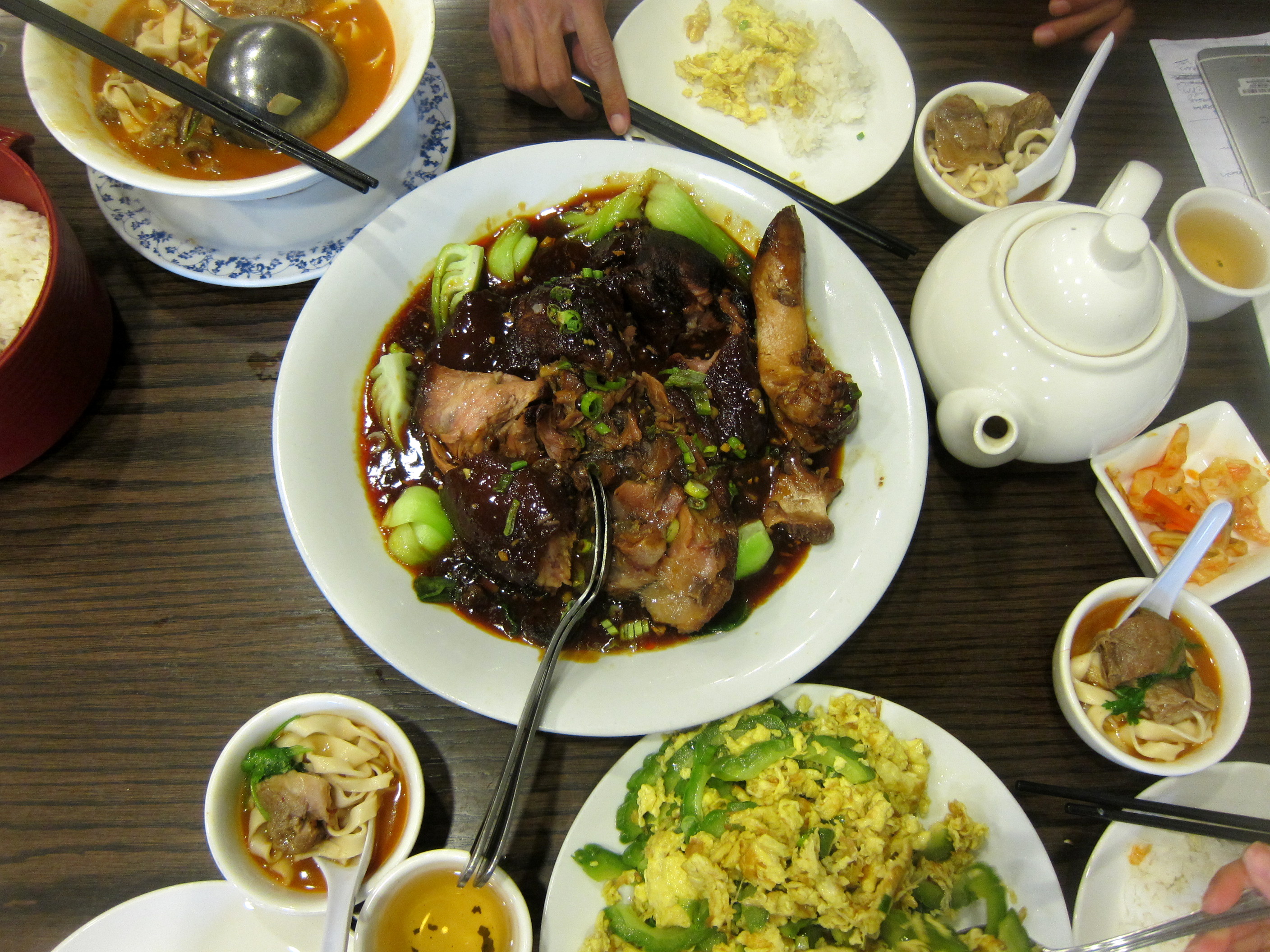
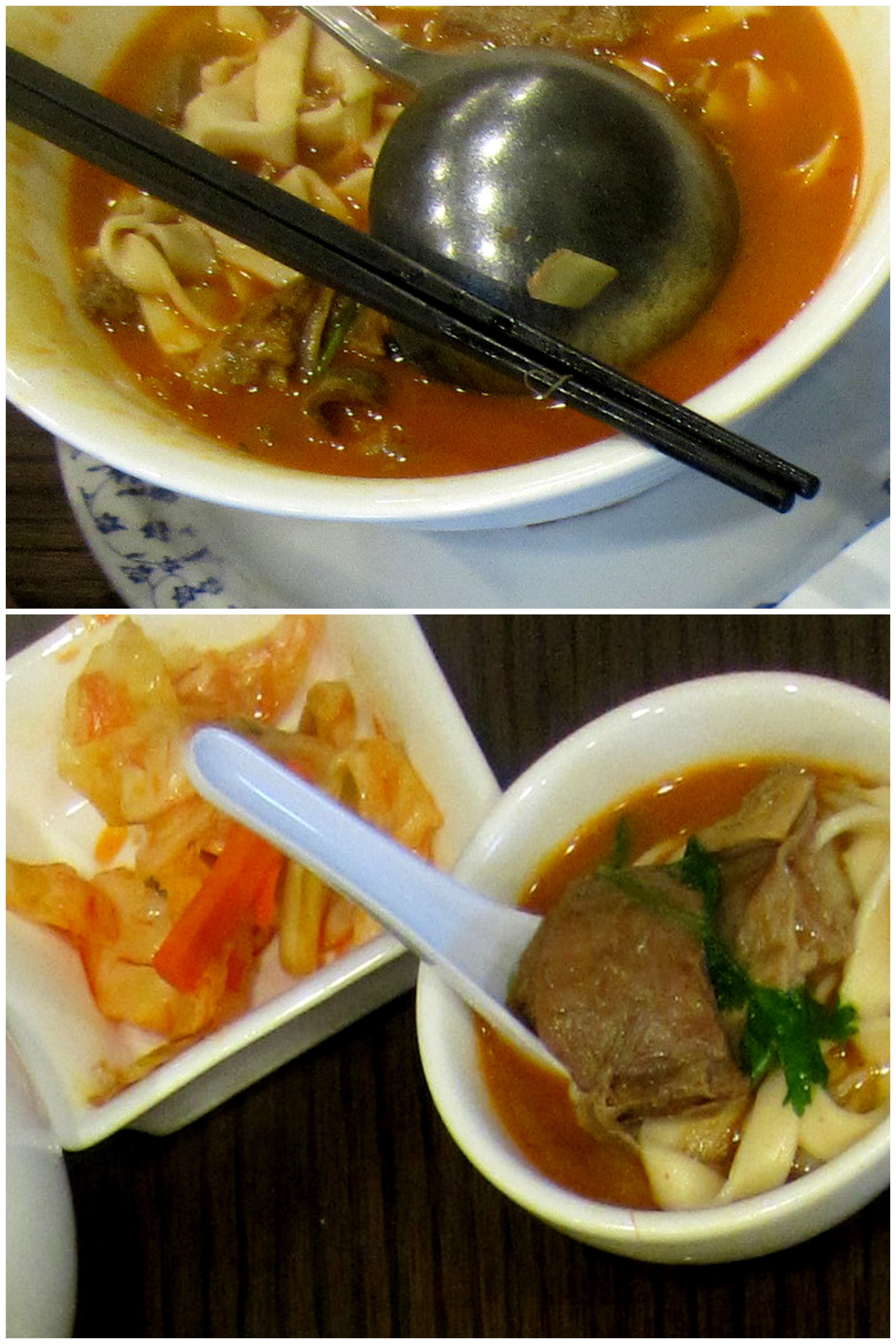
Item #206 – 川式牛腩面 Szechuan beef stew noodle soup ($8.95). The beef is similar to the beef in niu ro mien but the broth is spicy.

cv-dong-bo-duck
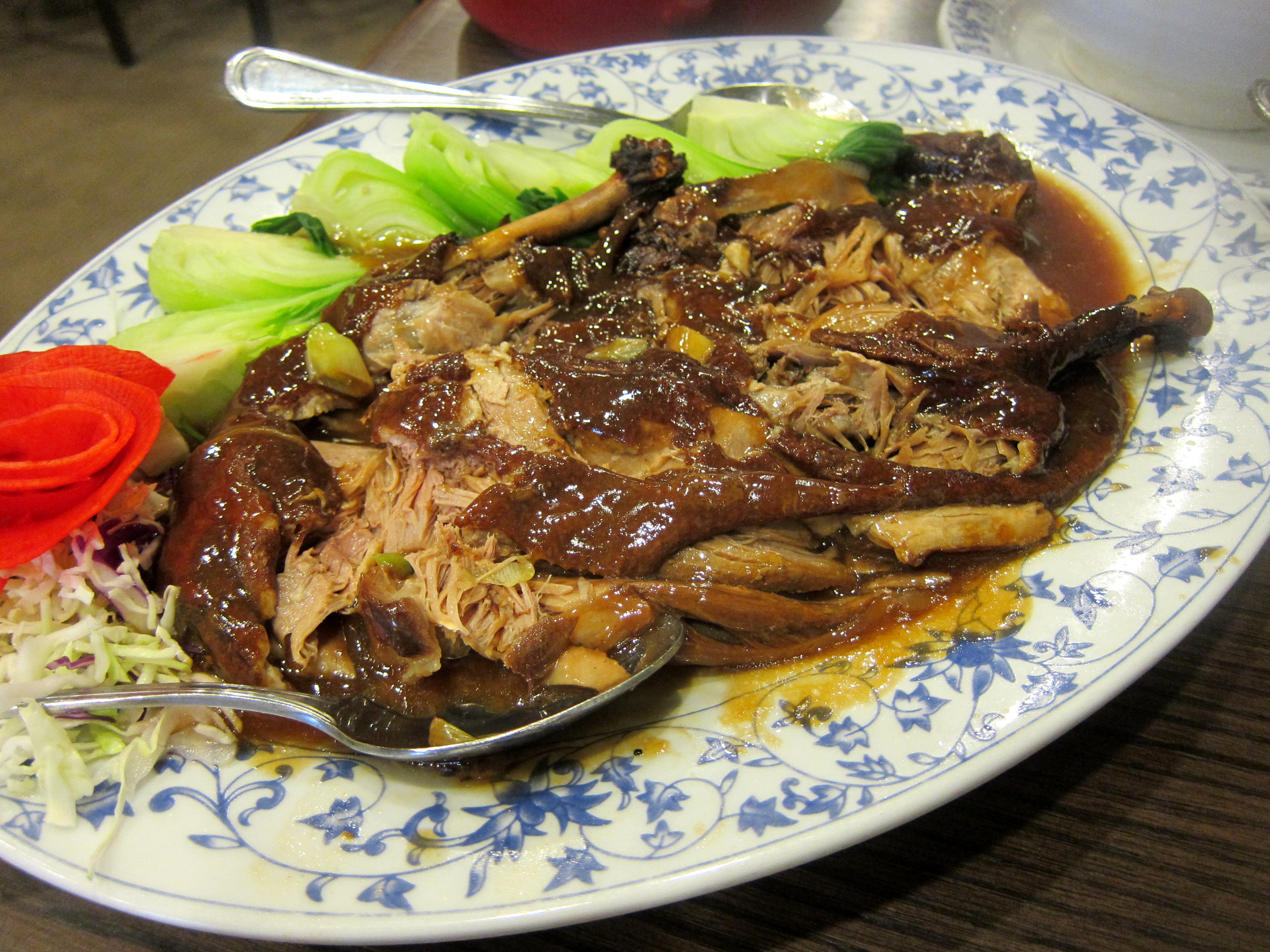
Item #71 – 东坡烧鸭 Dong Bo braised duck ($16.95). Not spicy, super tender. This is what we switched into per Chef John Yao’s warning. (At the beginning, we asked for a mild #69 – 砂锅啤酒鸭 clay pot duck with beer-infused sauce – but Chef Yao said it can’t be made mild.)

cv-goya
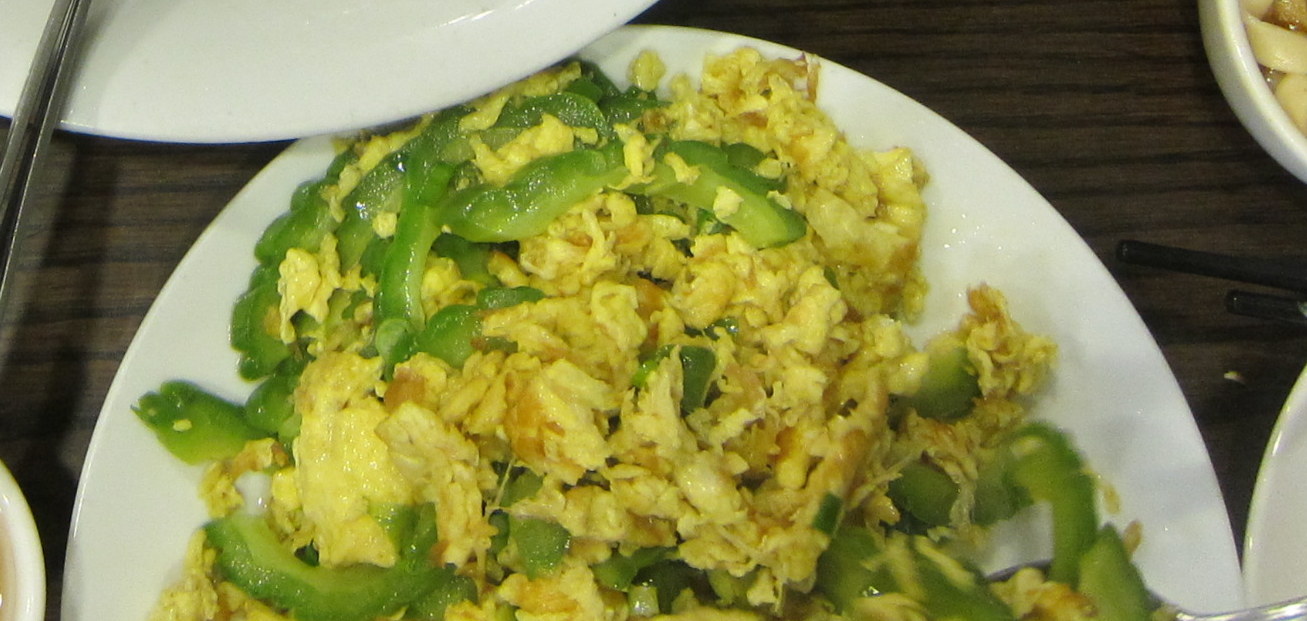
Item #175 – Sauteed bitter melon with eggs ($9.95). Definitely not “restaurant-worthy item” in Asia but it’s hard to find bitter melon here (except in Vietnamese and Chinese markets) and we love bitter melons too much to pass.

cv-pork-shoulder
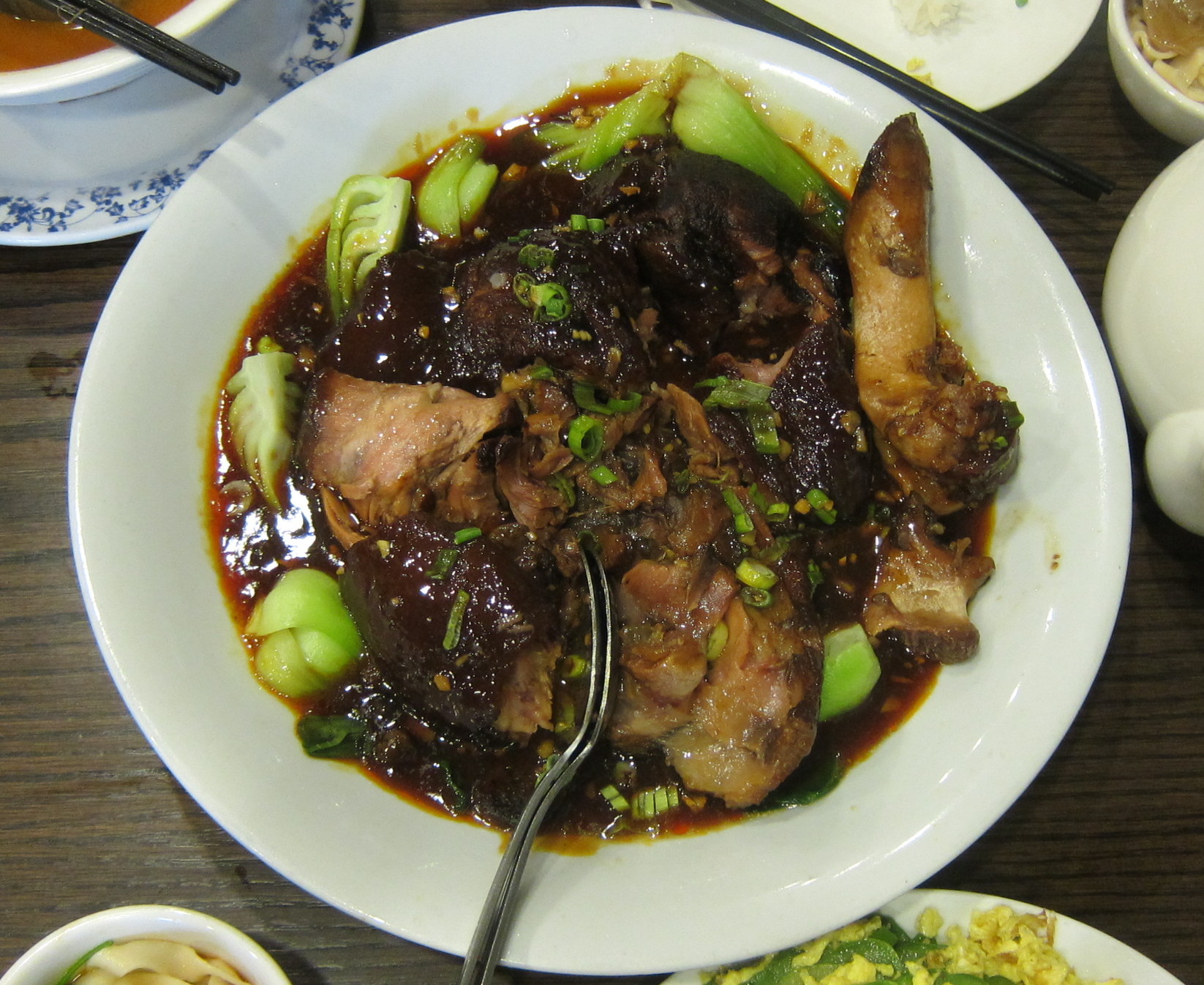
Item #72 – 家常肘子 Five spice hot and spicy pork shoulder ($18.95). This one can be made not spicy. And LOOK AT THAT SIZE!!!!! The three of us could barely make a dent! SUPER tender, SUPER flavorful. I can eat it for days (and I do, with the leftovers…)

With the bill, the restaurant also gave each of us a small bowl/cup of sweet red bean soup with tapioca pearls (not the tapioca in bubble teas. These are “bot bang” in Vietnamese, but what are they called in Chinese?). It was so simple and so soothing.

This time, I can see why my friends keep going back here.

Address: China Village
1335 Solano Avenue,
Albany, CA 94706
chinavillagealbany.com

Footnote:
[*] In Vietnam (and I suspect throughout Asia), not every eating establishment can be called a “restaurant”, and not every dish is worthy of being served as a restaurant item. Sweet and sour pork can be good, but it’s nowhere complex and luxurious enough to be in the same menu with, say, “five spice pork shoulder”. The chefs know that, the Chinese customers know that, and sweet and sour pork is just there for the people who don’t stray from what they have at Panda Express. So, if you go to a Chinese restaurant worthy of being called a restaurant, don’t order sweet and sour pork.

[**] The chef is quite established. I like that the “five spice” sauce for the pork shoulder actually has over 8 ingredients.

These pictures needed no editing at all, the shine and glory of the meat are their actual shine and glory. And I still can’t get over how tender that pork shoulder was. (T_T)