Flavor Boulevard

We Asians like to talk food.
Subscribe

Bánh bèo tips from Mrs. Tự
March 28, 2012 By: Mai Truong Category: Central Vietnamese, Houston, Opinions, RECIPES, Vietnamese


A couple of millimeters thin, chewy, savory, bánh bèo, the waterfern-shaped appetizer, is as familiar to the Vietnamese dining tables as crab cakes to Americans. But not everyone makes it at home because it takes more time than its worth: make the rice flour batter, steam the banh, make the toppings, mix the fish sauce. In fact, I’ve had homemade bánh bèo only once, and it was at my friend’s family restaurant. That said, there are skilled and dedicated grandmas who insist on making everything from scratch for the best bánh bèo. One of them is Mrs. Tự, and Little Mom happened to see one episode of her cooking show on TV last week.

So below are some tips on bánh bèo from Mrs Tự, collected from the show Nghệ Thuật Nấu Ăn Bà Tự (The Cooking Arts of Mrs Tự) on Global TV Houston.

1. Texture:
The thinner bánh bèo is the better bánh bèo. Of course, resilience is a must, it should not be as chewy as a mochi, but it should have enough strength to hold itself together as the eater picks it up with chopsticks. How to make a thin but resilient bánh bèo? Heat the bánh bèo plates (or molds)* in the steamer before pouring in the batter and steaming the bánh. I suspect that this preheating helps cook the batter evenly in all directions, instead of having the bottom cold and cooking it with steam from only the top surface during the first few moments.

2. Toppings:
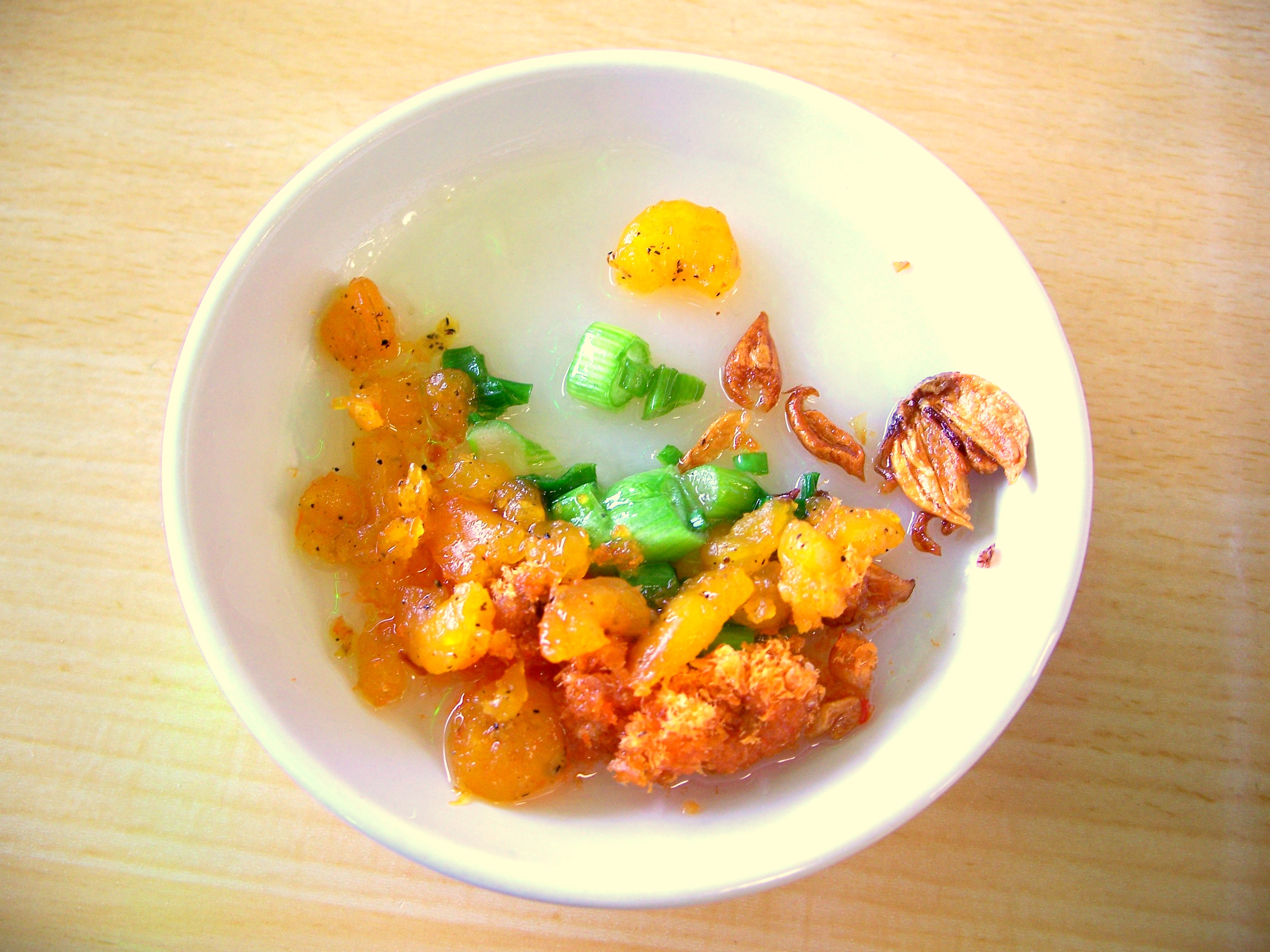
Bánh bèo of the South has savory mung bean paste for topping, and bánh bèo Huế usually has pan-dried shrimp (tôm chấy), which blogger Tran Ngoc Kha translated as cotton shrimp for its fluffy texture. Fresh shrimp** (with head, legs, shell, everything) goes without saying: while peeling off the shell, you can keep the gạch, a substance located in the head of the shrimp that becomes reddish orange when cooked, to sweeten and fatten the toppings***. How to make the shrimps dry and fluffy? Microwave the peeled shrimps so that the meat is red, plump, and has a spring to it. Then pound the shrimps to break up the bodies, but not to a paste. And fry it on high heat with constant shuffling.

But bánh bèo can also be topped with pork rind. To make the pork rind, Mrs. Tự would slice the skin off the pork belly, boil it, cut into thin strips, refrigerate them, and finally deep fry them. The refrigerating step prevents the fat from shooting everywhere while frying. How to tell when the skin is refrigerated long enough? If you bend the strip and it gives a loud, clean snap, it’s done.

Then there is also topping made with bean paste, meat and tapioca, seen on bánh bèo in Quảng Nam Đà Nẵng. The better tapioca flour (bột năng) is not the white powder straight from the bag, but that which is pan-dried to really rid of moisture. How to know when the flour is dry enough? Mrs. Tự puts either a pandan leaf or a piece of a banana leaf into the wok as she constantly stirs the flour, the heat from the flour vaporizes the moisture in the leaf, when the leaf dries up and becomes crunchy, the flour is done.

(*) Bánh bèo should be made in mini shallow cups (like sauce cups) made of porcelain. The molds are convenient but render a metallic taste, the bánh bèo would be too thick and oily because the molds have to be greased before steaming.
(**) Some places serve up bánh bèo tôm chấy with packaged dried shrimp (tôm khô). Never go there.
(***) Crabs have more gạch than shrimps, so gạch cua (gạch from crabs) is more well-known in Vietnamese cooking. In Japanese, gạch cua is indeed kanimiso, the brownish grey substance that is a mix of the crab’s internal organs (brain, liver, pancreas, intestine, eggs, etc.). Good stuff. 🙂
Tags:

Banh Cuon Hoa II in Bellaire

February 17, 2010 By: Mai Truong Category: Comfort food, Houston, noodle soup, savory snacks, Texas, Vietnamese


If I had to pick one Vietnamese dish made from rice flour and eat it everyday for the rest of my life (whole grain white rice doesn’t count), then bánh cuốn would be it. These rolls of thin rice sheet, filled with minced pork and woodear mushroom, gently dipped in nước mắm, make the perfect warm breakfast, light lunch, and quirky dinner. The question is where to find them. Bánh Cuốn Tây Hồ tops the chart everywhere from Texas to Cali, but does Bánh Cuốn Hoa II come close? Maybe rival? Miss by a long shot?

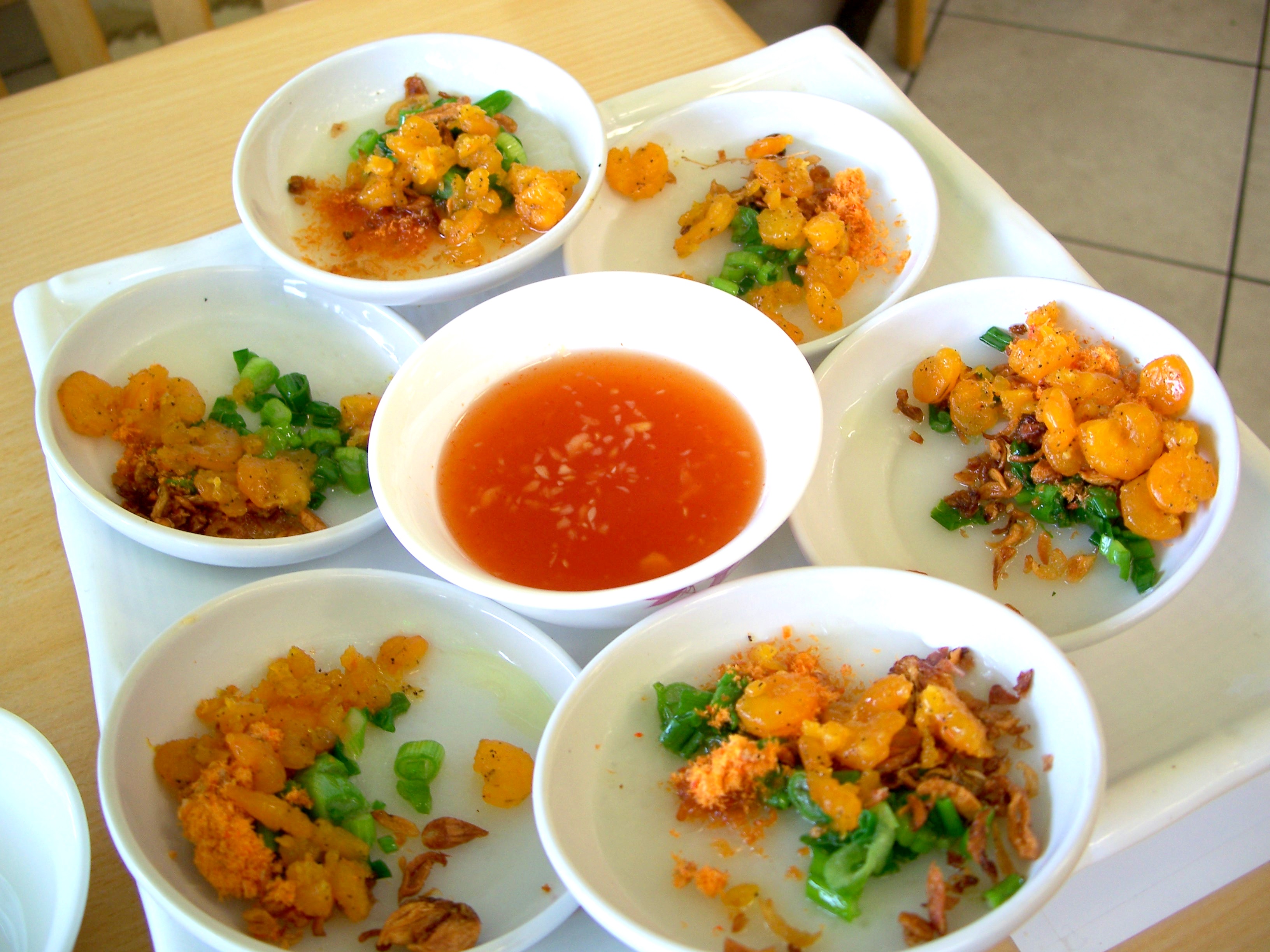
I cheated a bit at the beginning. The first picture isn’t bánh cuốn, but bánh bèo, a rice flour spinoff drafted in the shape and size of waterferns, hence its name. Flooded with nước mắm, they make great appetizers while we were waiting for bánh cuốn.


Bánh bèo comes with a few toppings: fried shallot, chopped green onions, and tôm chấy (dry fried shrimp). The tôm chấy I usually have are totally desiccant, ranging anywhere between flaky and powdery, but these (I’m guessing homemade) shrimps are still plump, and more sweet than salty. It’s not a bad twist from the usual though. The flour part is a bit tired, they broke easily into pieces the moment my chopsticks pinched them. Bánh Hỏi Châu Đốc does it better.


Because it is very hard to go wrong with grilled meat, it’s always safe to get bún thịt nướng on first try at a new restaurant, also a friendly choice for those who have not had Vietnamese cooking before, want to try, but are still cautious. There’s no weird stuff, just rice noodle, crushed peanuts, vegetable and honest grilled pork. Nước mắm seasoned with a tidbit chili paste, a lot of sugar, and a squeeze of lemon juice would spike the taste to infinite pleasure. Bánh Cuốn Hoa II nailed it with a supertender juicy marinated pork.


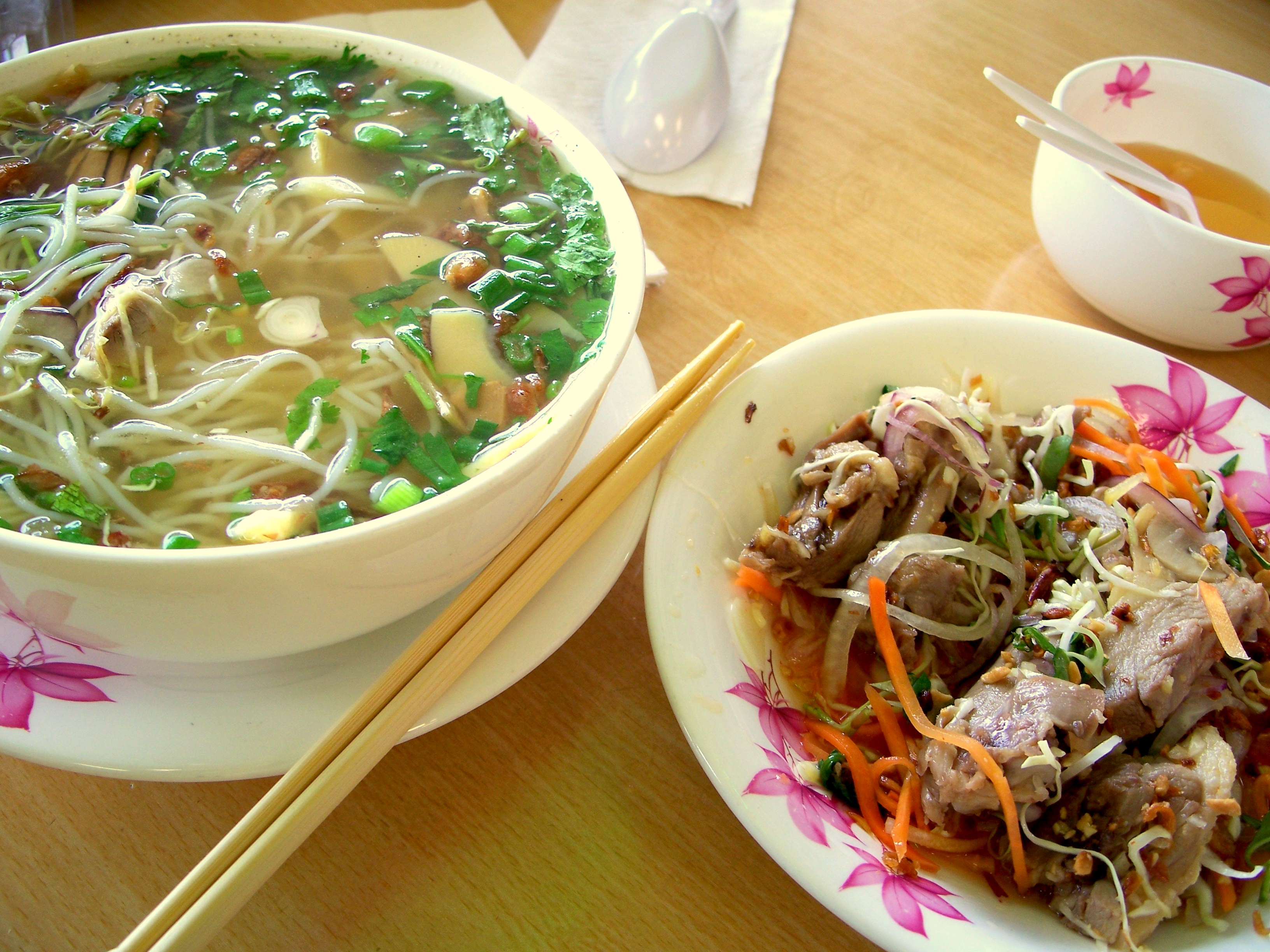
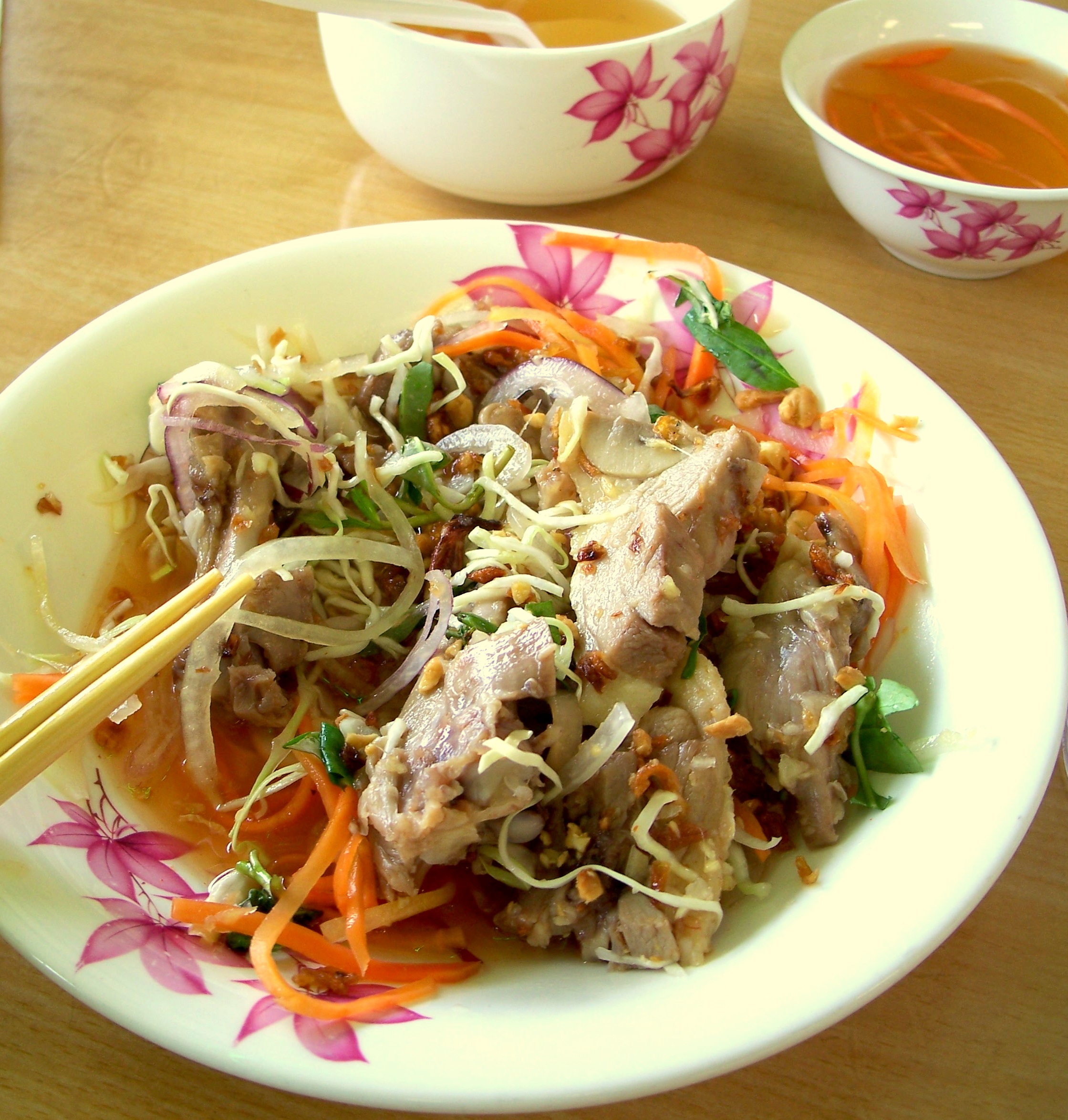
As much as my dad is a fan of grilled meat, my mom is loyal to noodle soups. She ordered bún măng vịt (vermicelli soup with duck and bamboo shoot), which actually comes in two parts: the duck salad (gỏi vịt) and the bamboo shoot soup (bún măng) with no duck. Dunk the duck into the soup and you get duck soup :-).


The broth is quite pure and slender, free of fatty bubbles floating on the surface, not as heavily seasoned as pho or hu tiu broth, simply refreshing. As for the bamboo shoots, there were both the fresh kind and the re-hydrated dried kind. The dried kind is a tad firmer and more squid-like than the fresh kind. A lovely texture. Boiled duck is also very tender and flavorful.


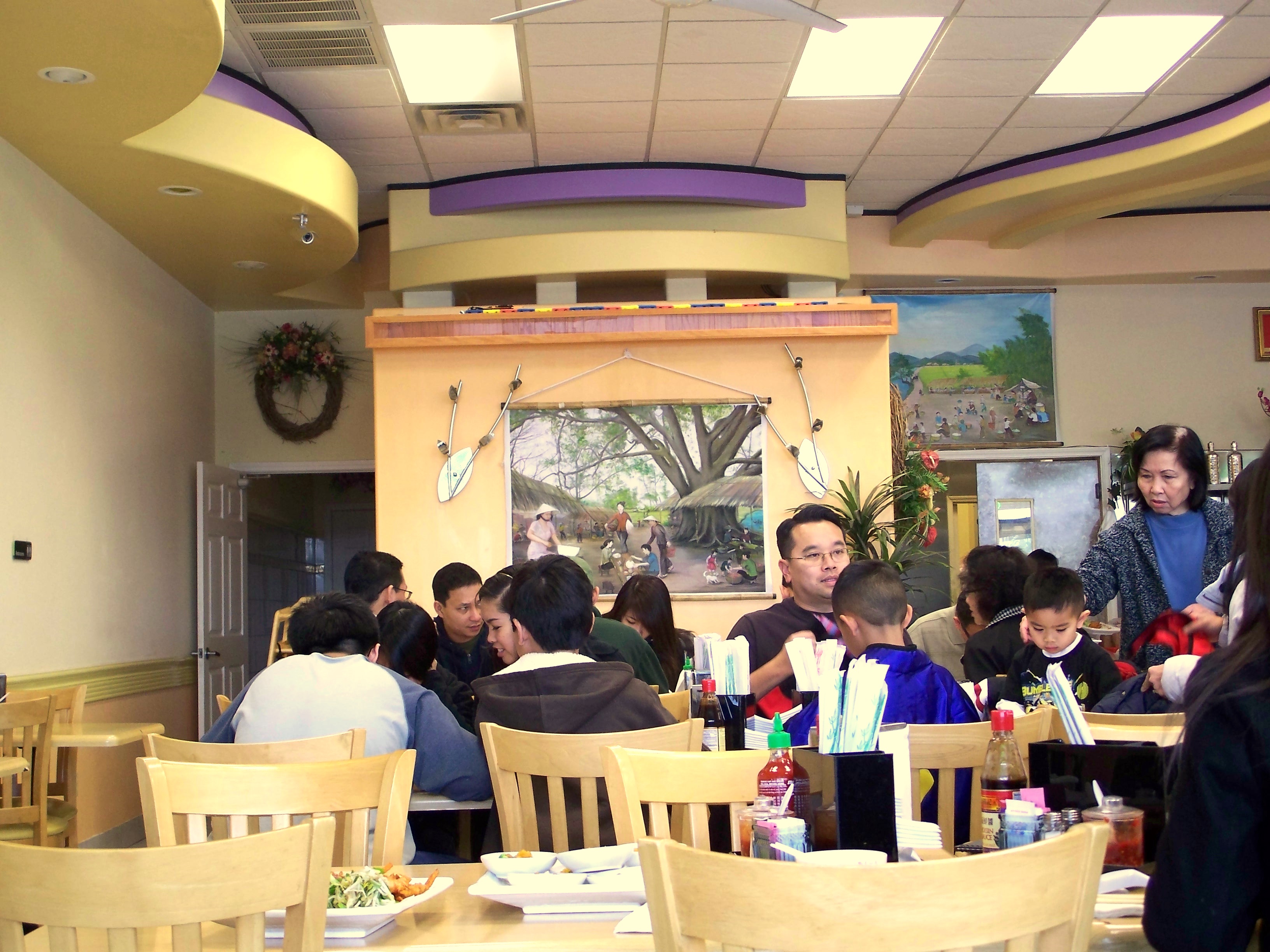
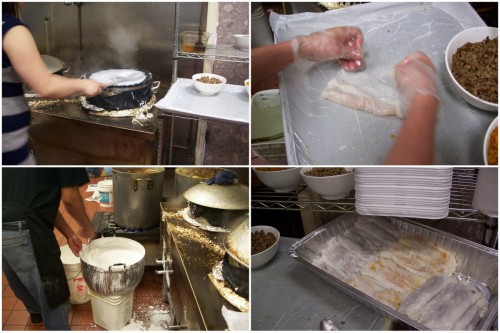
Bánh Cuốn Hoa II has a pretty clean look. Varnished wooden chairs and tables, high ceiling, humble paintings of Vietnamese countryside sceneries on the walls. I took a peek into their kitchen to capture the banh cuon production line.

Clockwise from bottom left: 1. stirring the liquid batter (rice flour with water); 2. spreading a laddle of batter on a hot flat surface; 3. making a roll; 4. 3 kinds of final products: normal bánh cuốn (with minced pork and mushroom), bánh cuốn tôm chấy (dry fried shrimp), and bánh cuốn thịt nướng (grilled pork).

Banh cuon Hoa II
The lady was just too fast for my camera, I missed capturing the crucial step where she gently used a long chopstick to take the thin rice veil off the cooking surface and whip it aside for the rolling chef.


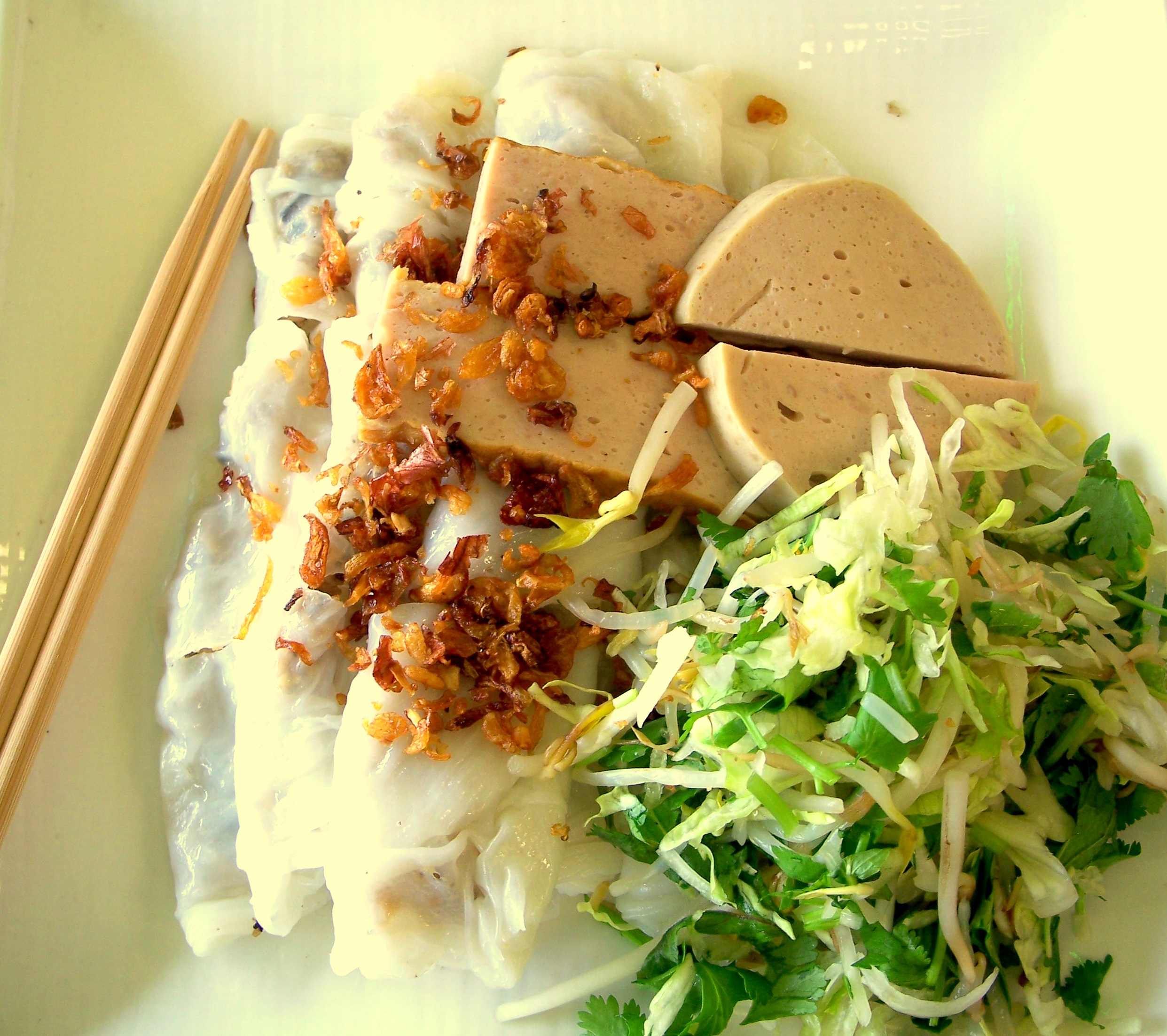
So here it is, the restaurant’s signature plate: bánh cuốn topped with cha lua, bean sprouts, greens, and fried shallots. The filling is good. The sheet is thin and not oily. But the flour has a sour hint. Bánh Cuốn Tây Hồ is still the champion of bánh cuốn.

Banh_Cuon_Hoa_II

Price: a very reasonable lunch for 3:
1 bánh bèo + 1 bún thịt nướng + 1 bún măng vịt + 1 bánh cuốn = $24.57

Address: Banh cuon Hoa II
11169 Beechnut St. #K
Houston, TX 77072

Take a look at RavenousCouple’s recipe for bún măng vịt, it’s my new fav noodle soup.

Update: the amazing pictures and recipe for homemade banh cuon, also from RavenousCouple.

Rice noodle day in Banh Hoi Chau Doc, Bellaire

July 06, 2009 By: Mai Truong Category: Houston, noodle soup, Southern Vietnamese, Texas, Vietnamese

Vietnamese places usually don’t appear on the web, why? Because they already paid for ads on Vietnamese newspapers and radio station. Of course the ads are in Vietnamese. There are a little over 30,000 Vietnamese in Houston. It’s amazing how such a small community can sustain its numerous restaurants, with customers primarily themselves. I think I’ve said the word “Vietnamese” enough times for the month. But let me say it one more. Vietnamese must really like to eat out.

So we found a new address in one of the newspapers. We arrived past lunch time, so it felt as if we rented out the whole place. The hostesses seem to be enjoying their leisurely afternoon snack as well, they sat at a nearby table watching TV with us. A flat screen on the wall with documentary films about Vietnam.

Anyway, let’s start with an appetizer.

This is for 3 people to share. Each bánh bèo (water fern bánh) is like a really thin mini rice-pancake, steamed instead of fried, topped with dried shrimp powder, scallions, and guess what, mung bean paste (once again, Mr. Mung Bean won the competition and became Paste of Choice). The final and most important touch is the nước mắm (fish extract sauce). Bánh bèo, like other Central Vietnamese dishes, cannot go without nước mắm. I’m not exactly sure what the coconut milk is doing there. The thinner the pancake is, the harder it is to eat with chopsticks, or any kind of utensils you can think of, because it’s slippery and fragile like jello. But only the thinnest kind is the best kind. Too thick, and all there is is a block of utmost boring rice pudding. So, I’d say these were above average. Onto the main course.

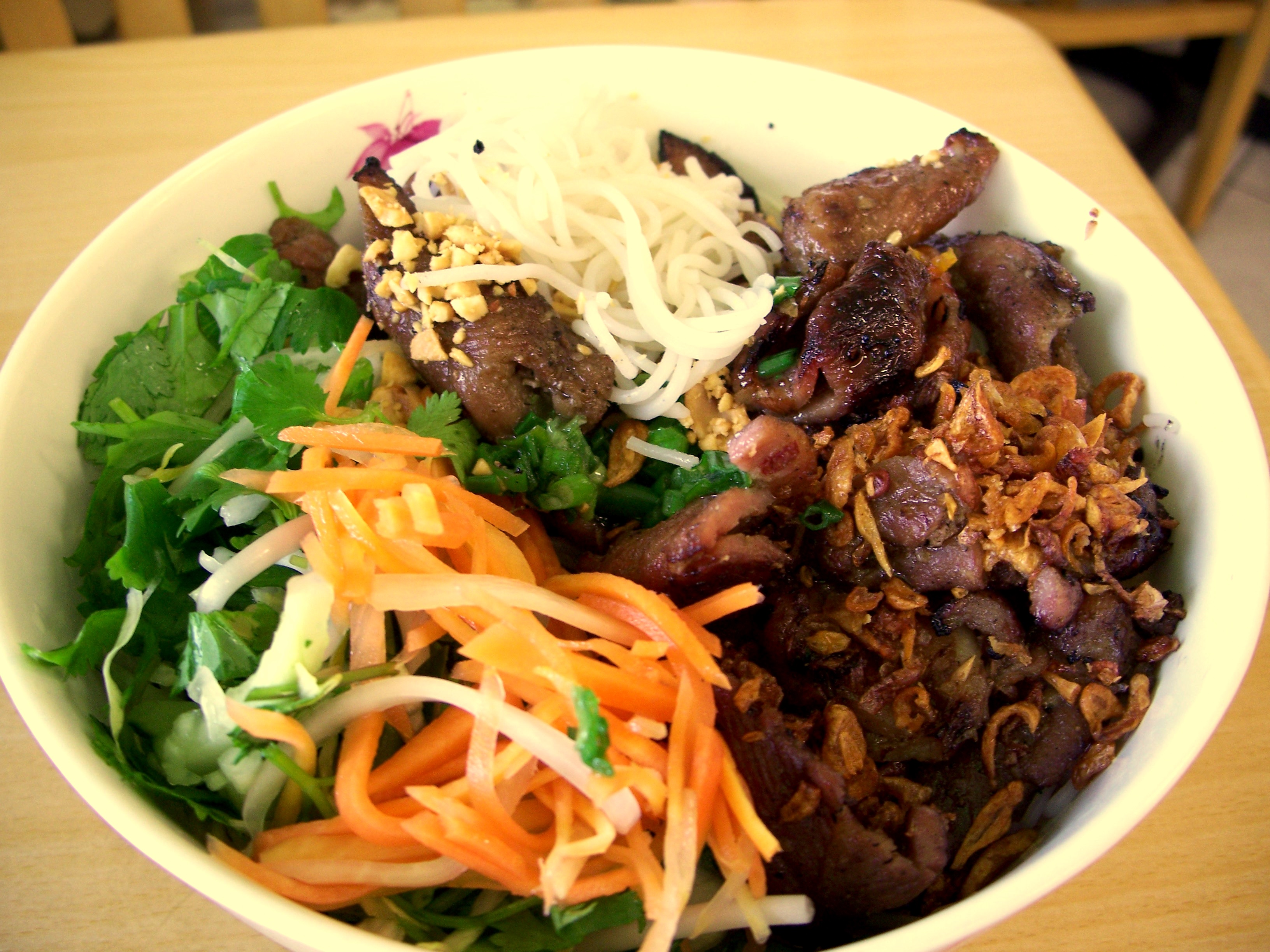
Bánh tầm bì thịt nướng (bánh tầm with shredded pork skin () and grilled pork). I’m confused by the Vietnamese naming system sometimes, there’s not much “bánh”-ness about this cold udon-like noodle. Authentically it should be shorter and fatter. They really gave us a behemoth bowl here, filled with noodle, peanuts, sliced pork skin (), and veggie, but only one skewer of pork! A little blackened. Good pork though. Can crispy-edge grilled pork ever not taste good?

Bánh canh cua (bánh canh with crab). Yet another rice noodle variation, strangely named “bánh”. I think this restaurant uses the same type of noodle for the soup and the grilled pork dish above. The orange color is from gạch cua (something under the crab shell whose English name I know not). The mysterious substance supposedly is stirred in frying pan until gooey and gives the broth a natural sweetness. I’m not big on sea crawlers. My mom likes it.

Bánh hỏi thịt nem nướng (bánh hỏi with grilled pork and grilled nem – a kind of pork sausage). It’s among the more expensive dishes in Saigon and the abroad, but cheap in the provinces where it was first made. The intricate nets of rice vermicelli gives the tongue a fun texture. Chopped scallions swiftly stir-fried with olive oil and a tad salt gives the sleek taste. Generous sum of sliced cucumber, bean sprout, pickled carrots and the backyard herbs counterbalances the carcinogenic charred and brined meat. Nước mắm is also a must. This plate rightfully makes the restaurant’s name.

Bánh hỏi Châu Đốc

Lunch for three: Bánh bèo tôm cháy: 4.95, bánh canh thịt cua: 6.95, bánh hỏi thịt nem nướng: 9.95, bánh tầm bì thịt nướng: 7.95. Total: $29.80.
Address: 10800 Bellaire Blvd, Houston, TX 77072.

If I recall correctly, the menu does have brief English descriptions, and the young waiter seemed more comfortable speaking English than Vietnamese.