Flavor Boulevard

We Asians like to talk food.
Subscribe

The unpredictable Myung Dong
October 16, 2011 By: Mai Truong Category: Comfort food, Houston, Korean, noodle soup


Unpredictability #1: “Are you opened today?”
Before you set your GPS to Myung Dong in Houston, make sure you call and ask that question in the clearest, simplest way possible. Aaron tried different versions, most were a bit too elaborately polite with a perfect American accent, and only succeeded in confusing the poor old man. I tried it once and got the answer “Yes, open.” We hopped en route.
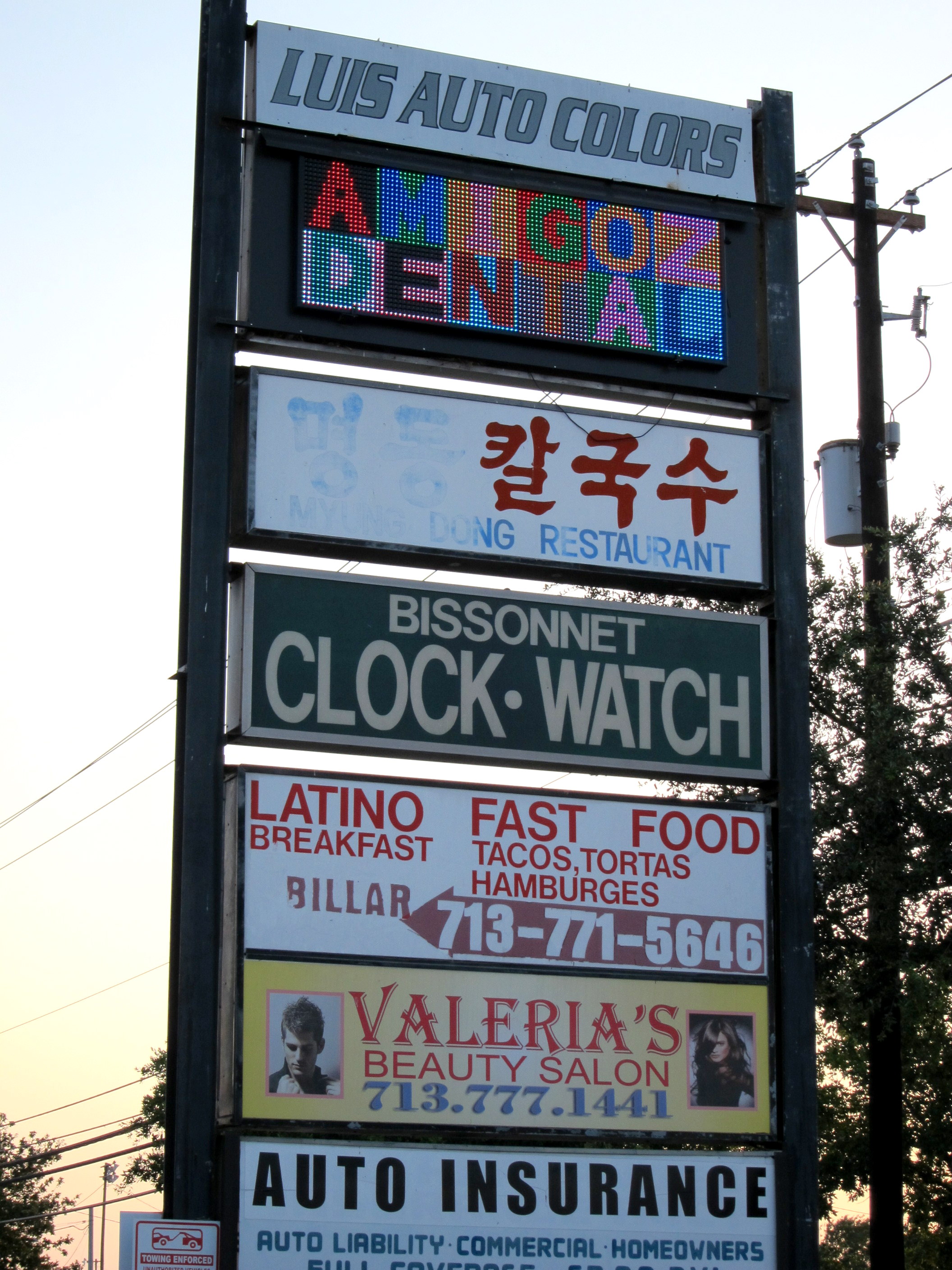

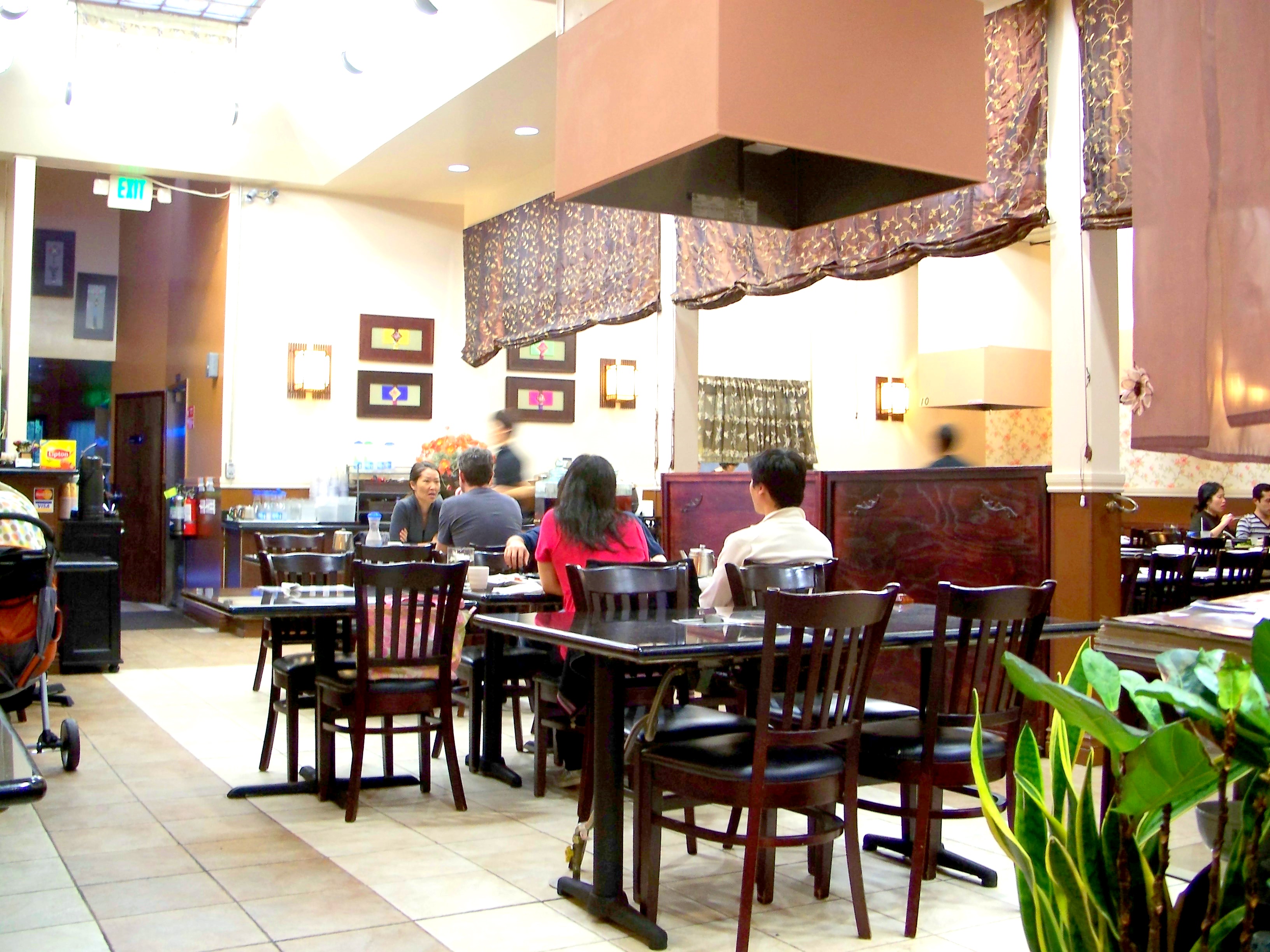
(If you don’t call, there’s a slim chance that your schedule will coincide with the owner couple’s schedule, which depends on the lady’s health, and she’s the only chef. That slim chance didn’t happen for me the first time I set out for Myung Dong.) The limited English conversation is nothing uncommon at Korean and Vietnamese mom-and-pop diners, but I have to mention it because it’s one of those things that make me classify Myung Dong as more “authentic” than the other Korean restaurants in Houston. The second thing is that its name doesn’t contain “Seoul” or “Korean”, they go more local: Myungdong (명동) is a part of Seoul (in Vietnam, its equivalent would be a phường). The third thing is that its name contains its specialty: kalguksu (칼국수). In fact, that’s the only part of the name still visible on the sign, the Myungdong part has faded completely, which explains why we couldn’t find it the first time (aside from the other fact that we couldn’t read Korean at the time)*.

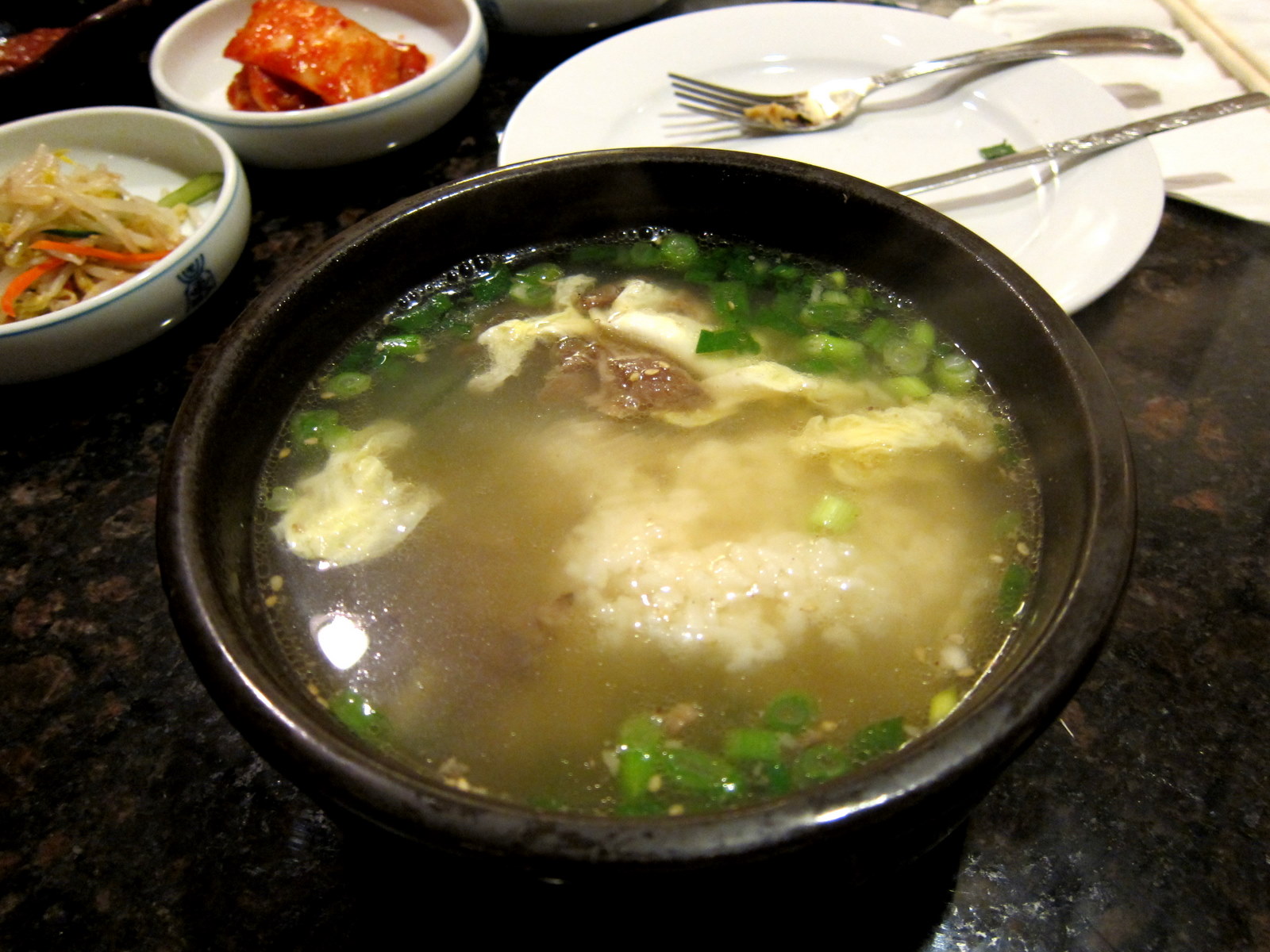
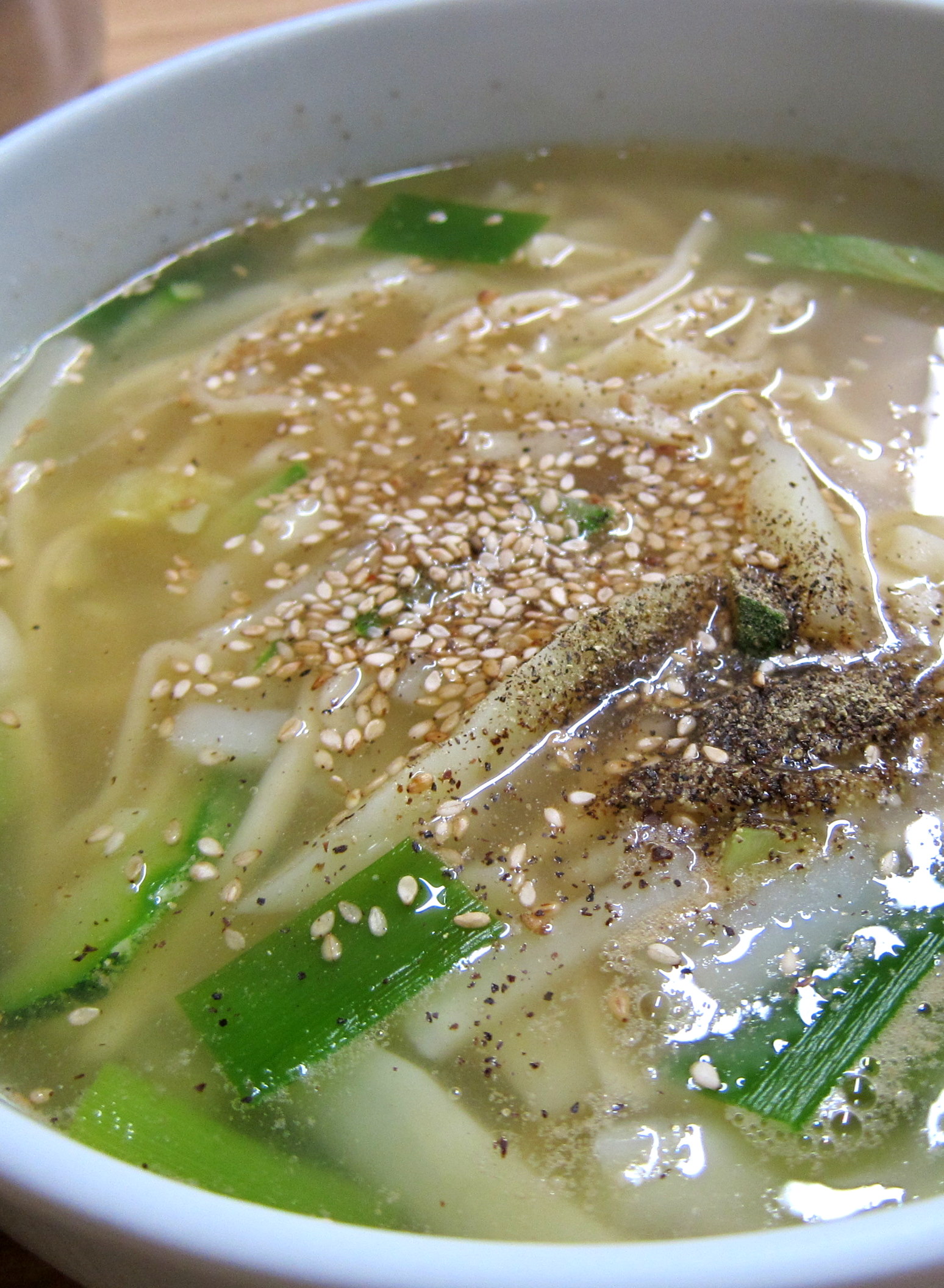
Of course we ordered it. It was the first kalguksu I’ve ever had. It’s a handmade, knife-cut noodle in soup, and this version has only noodle, broth, and vegetables. The broth was sweet and deep, the noodles were wonderfully chewy. But kalguksu is like fireworks, the first two minutes are great, then you ask yourself “just when is it gonna end?”. Now that I’ve had kalguksu, unless I get a two-minute-size bowl, I doubt I will gather enough curiosity for a second kalguksu in my life**.

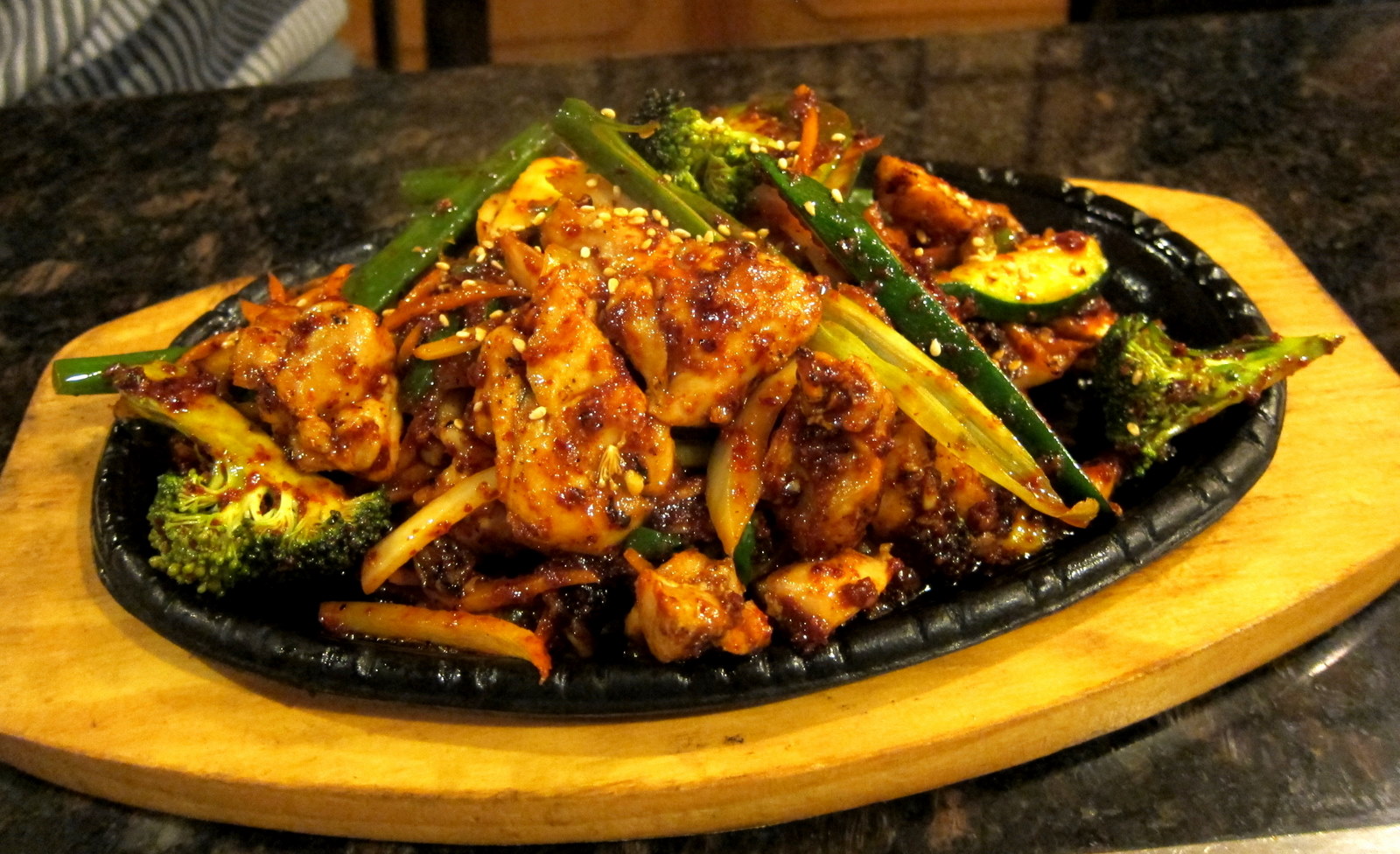
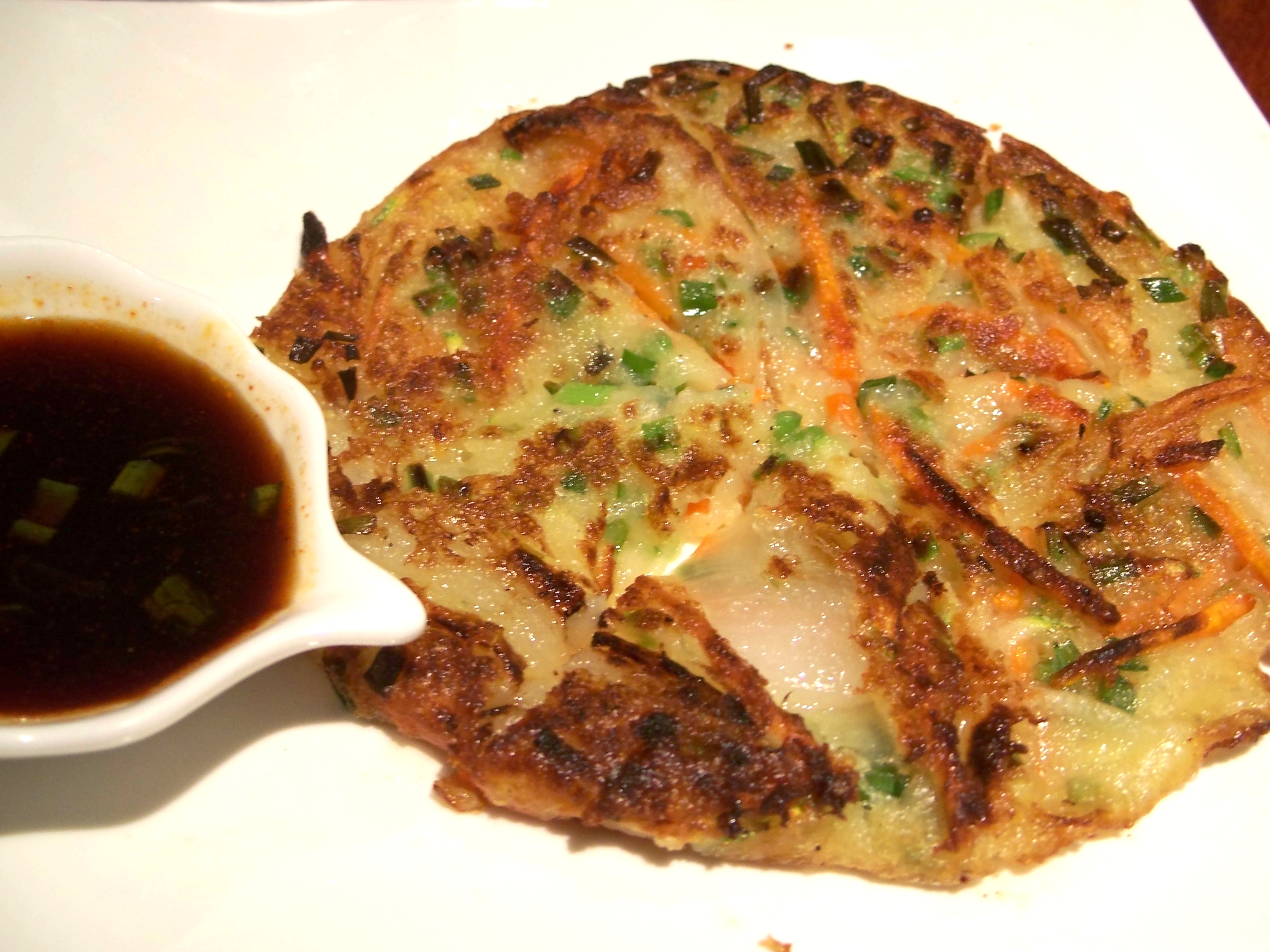
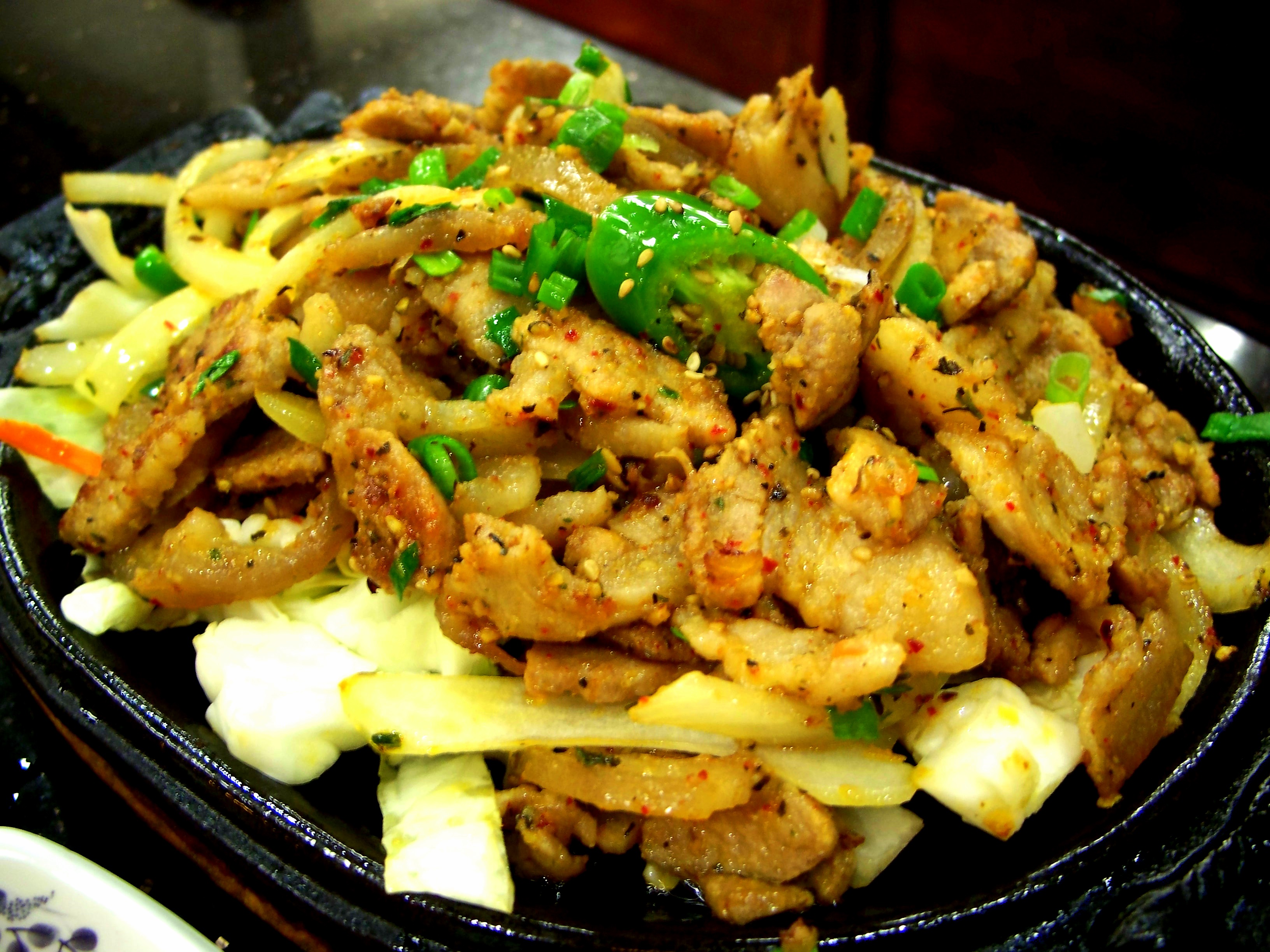
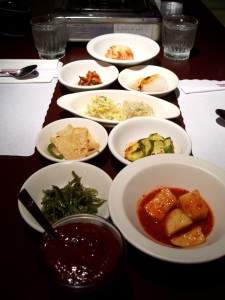
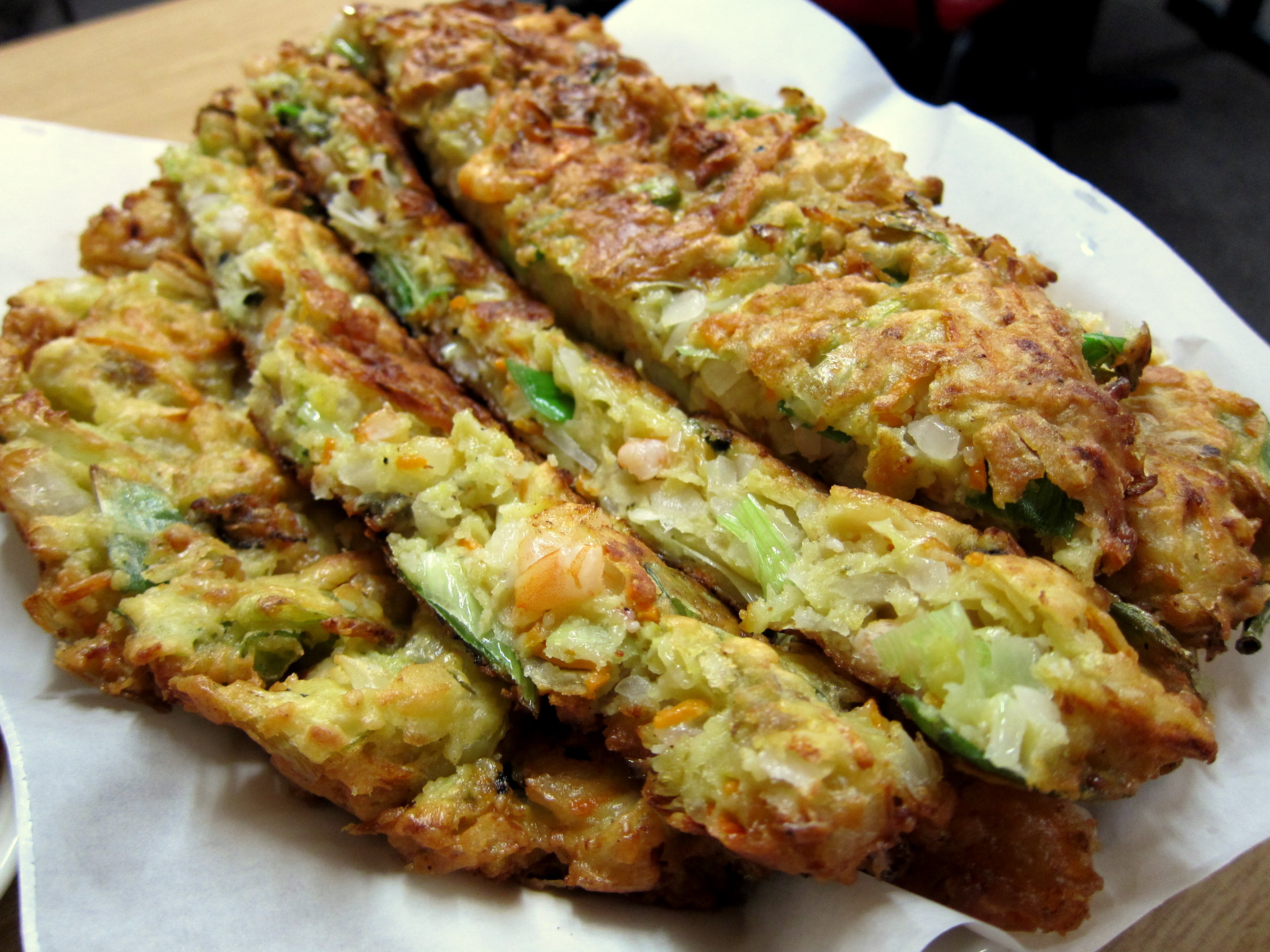
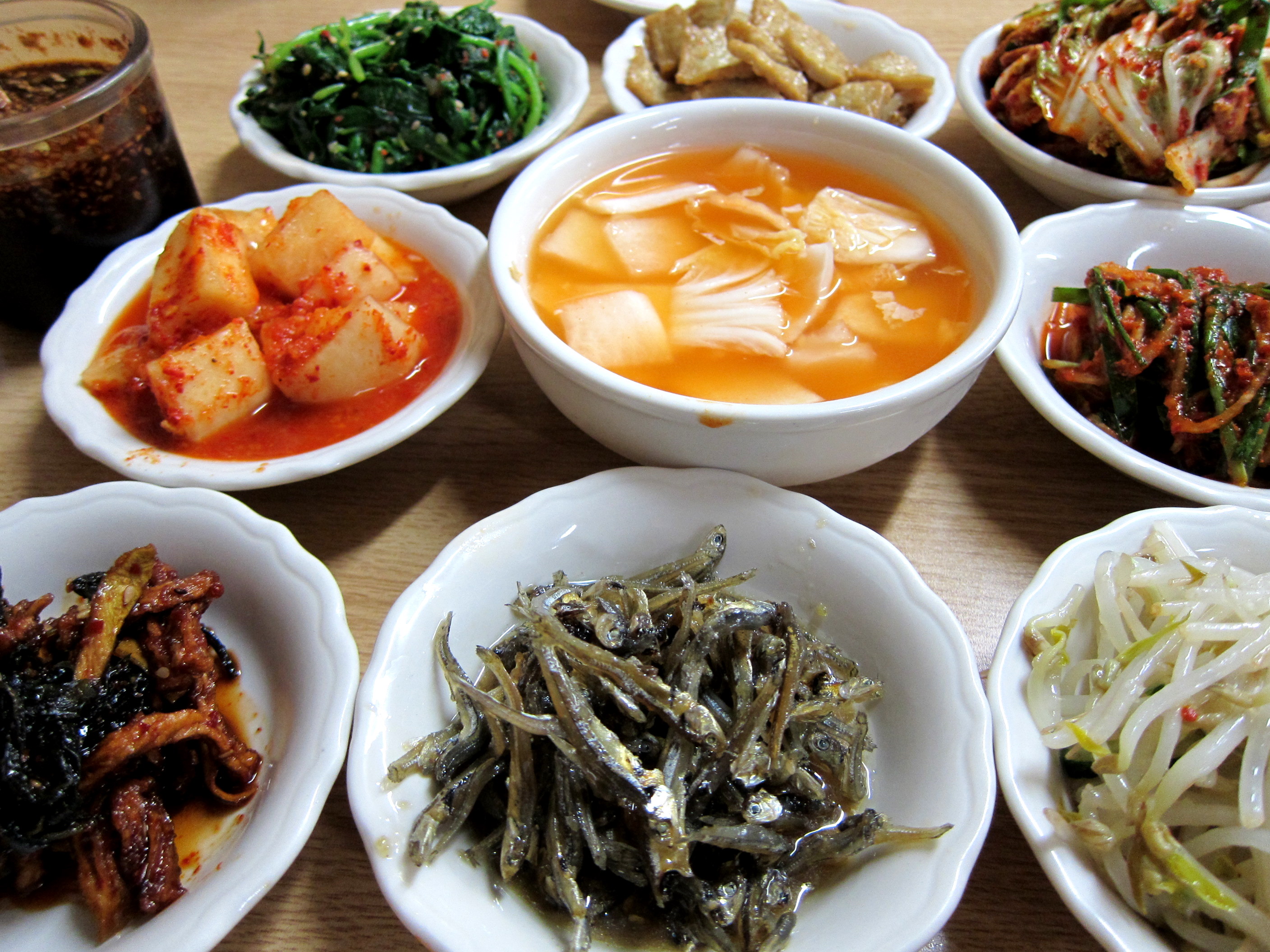
But kalguksu was still a memorable thing. In my Commis post I went off on the memorability of meals, and here I go again. Myungdong has something worth remembering: the portion (Unpredictability #2). Aaron and I each ordered a dish, him the kimchi duaeji bokkeum (김치 돼지 볶음, stir-fried pork with kimchi) and me the kalguksu, and we decided to share a pajeon (it was a really good pajeon too, thick, crispy, airy, and chewy, oh, and not oily). The usual banchans came. We were both starving like baby goats. Then the big stuff came, covering the whole table. A diligent hour later, in Aaron’s words, “it looks like we hadn’t eaten anything at all”. We looked at the old man with hopeful eyes, for boxes. Many boxes. Also in Aaron’s words, “he’s quietly laughing at us: gotcha, foreigners, didn’t know what you were getting into, did you”. He did laugh with us, a very congenial laugh of old men, as he poured the goods into the containers and loaded the containers into a cardboard box. Aaron had enough food for the next week. And Aaron is no timid diner.

Address: Myung Dong Kalguksu
6415 Bissonnet St
Houston, TX 77074
(713) 779-5530

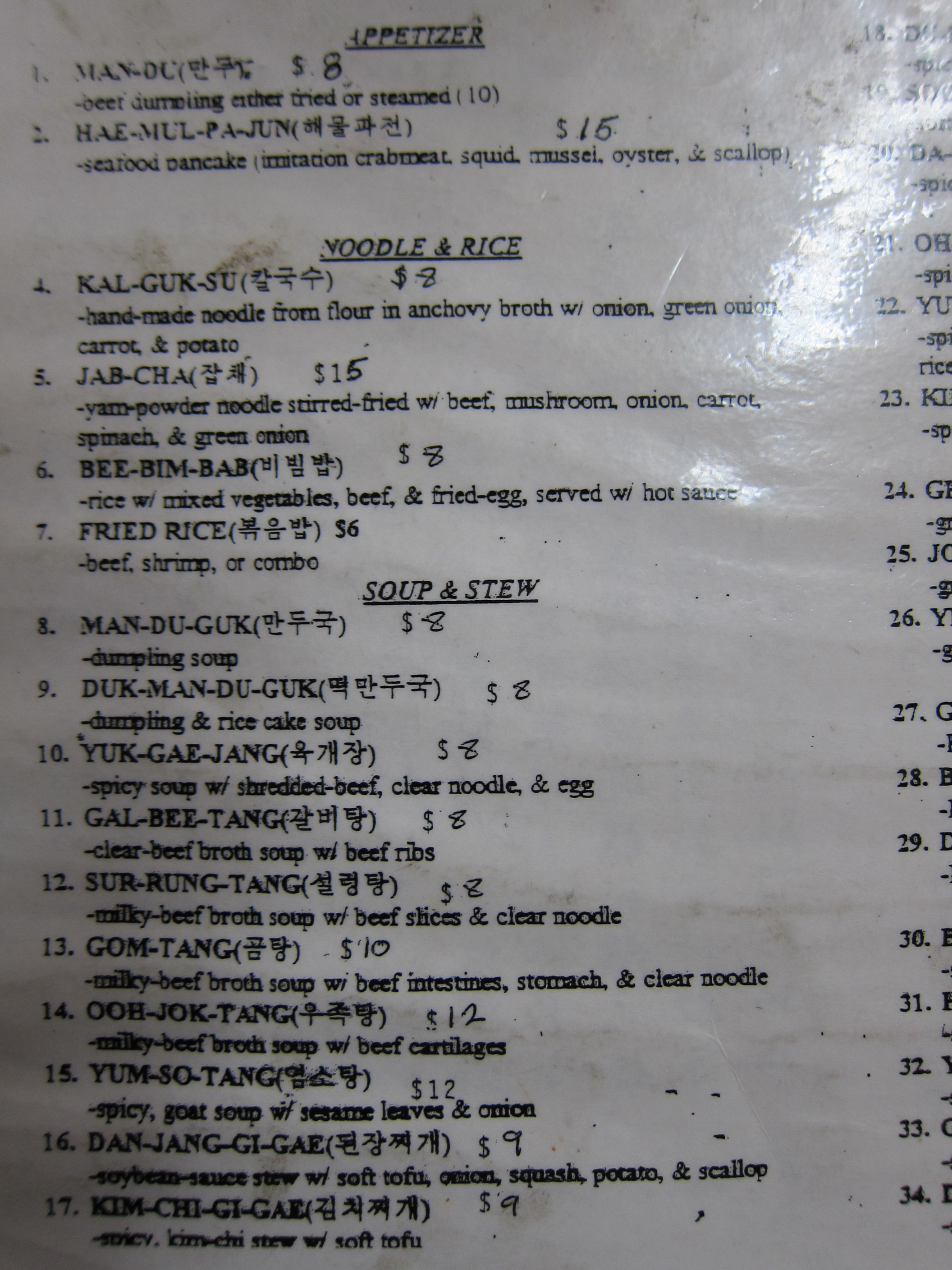
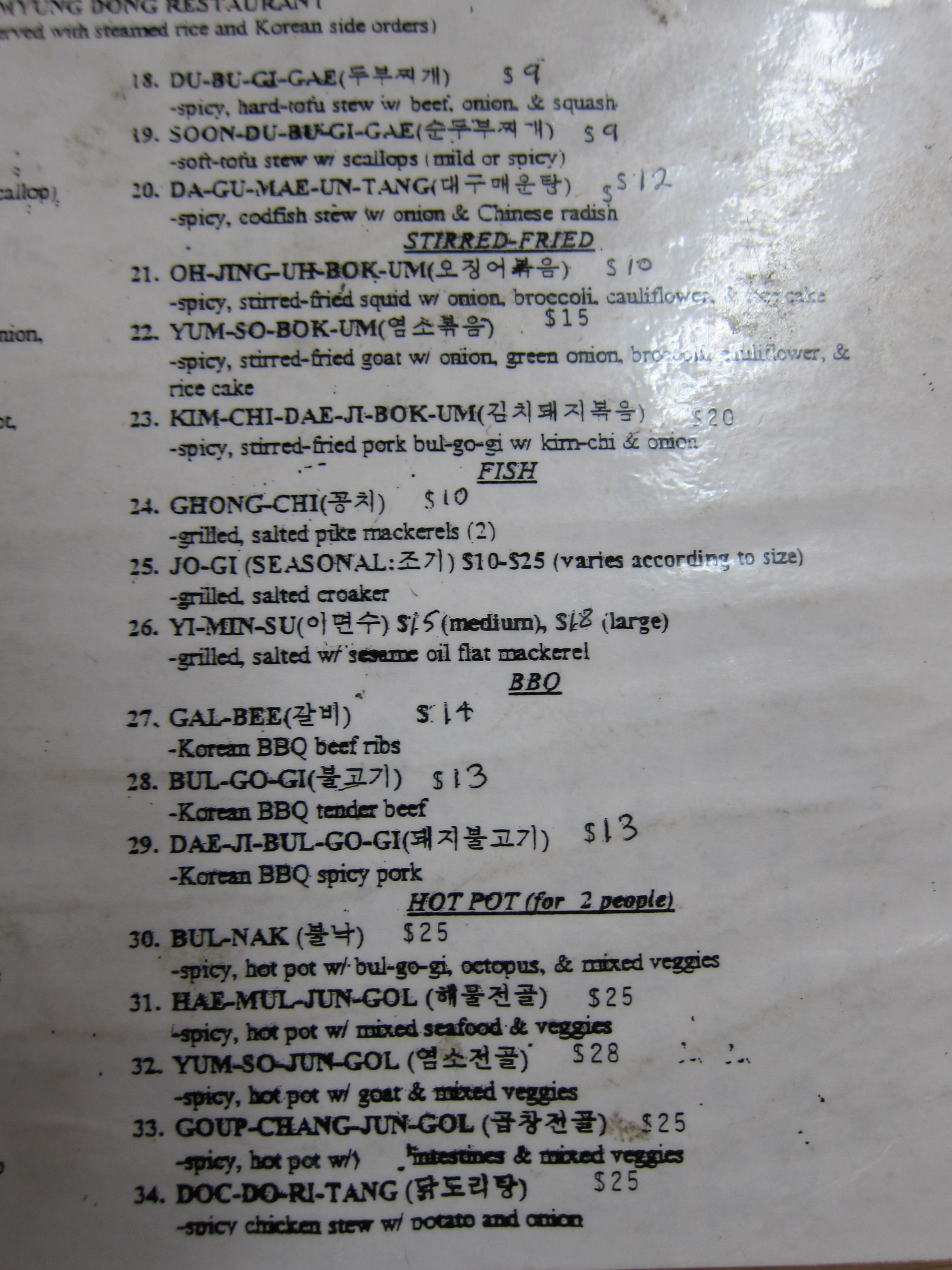
Dinner for so many more than two: $50. See Menu pages 1 and 2.

(*) It’s a neon green one-story house with no door sign. Very noticeable. If in doubt, ask the people in the same parking lot, they’ll confirm “The Chinese restaurant? Yes, that’s it there!”
(**) This is why I didn’t get kalguksu at To Hyang, although it’s one of their recommended’s. In a few ways, such as the homemade kimchis on the table, Myung Dong is similar to To Hyang. When my Korean is better, I’ll ask them if they grow herbs in the back too.
Korea Garden on Long Point Road

February 28, 2011 By: Mai Truong Category: Comfort food, Houston, Korean


We were looking for a get-together location on New Year’s Eve, when we decided that since both of our families like Korean food, it’d be good to let Ms Baker try it for the first time too. Houston’s West side houses many a place for a good bulgogi, concentrating on the section of Long Point that’s sandwiched between Gessner and Blalock, but we set our mind on Korea Garden. Half of us had been here several times, and we didn’t want any adventure on Ms Baker’s first impression, she’s a conservative. 🙂
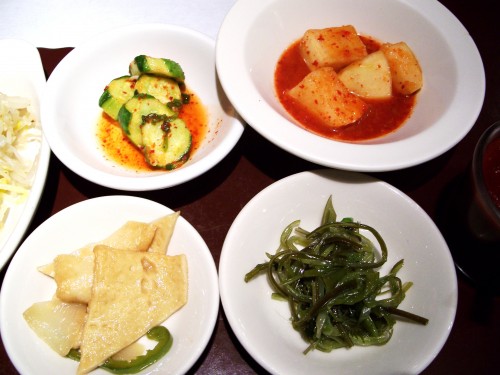

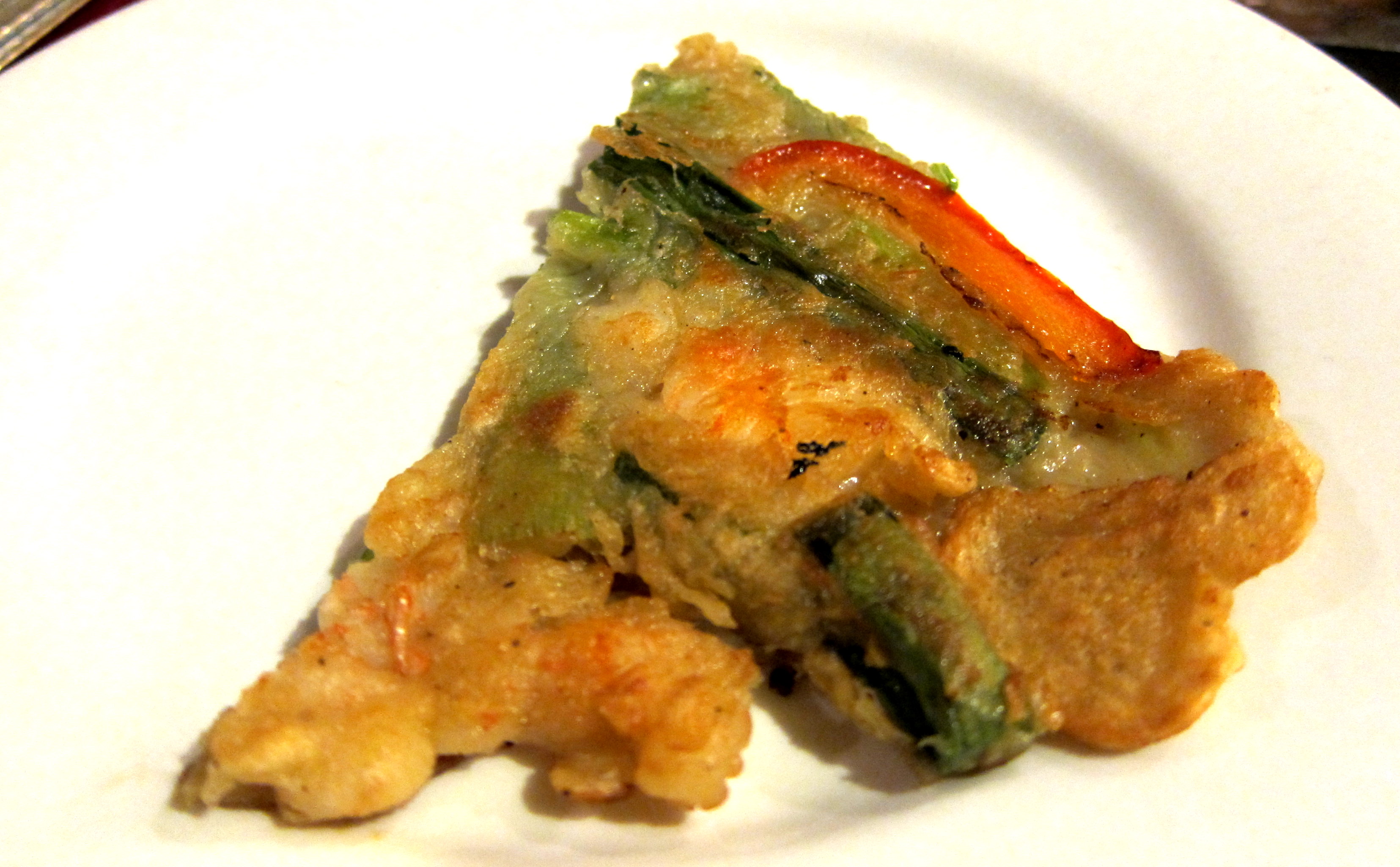
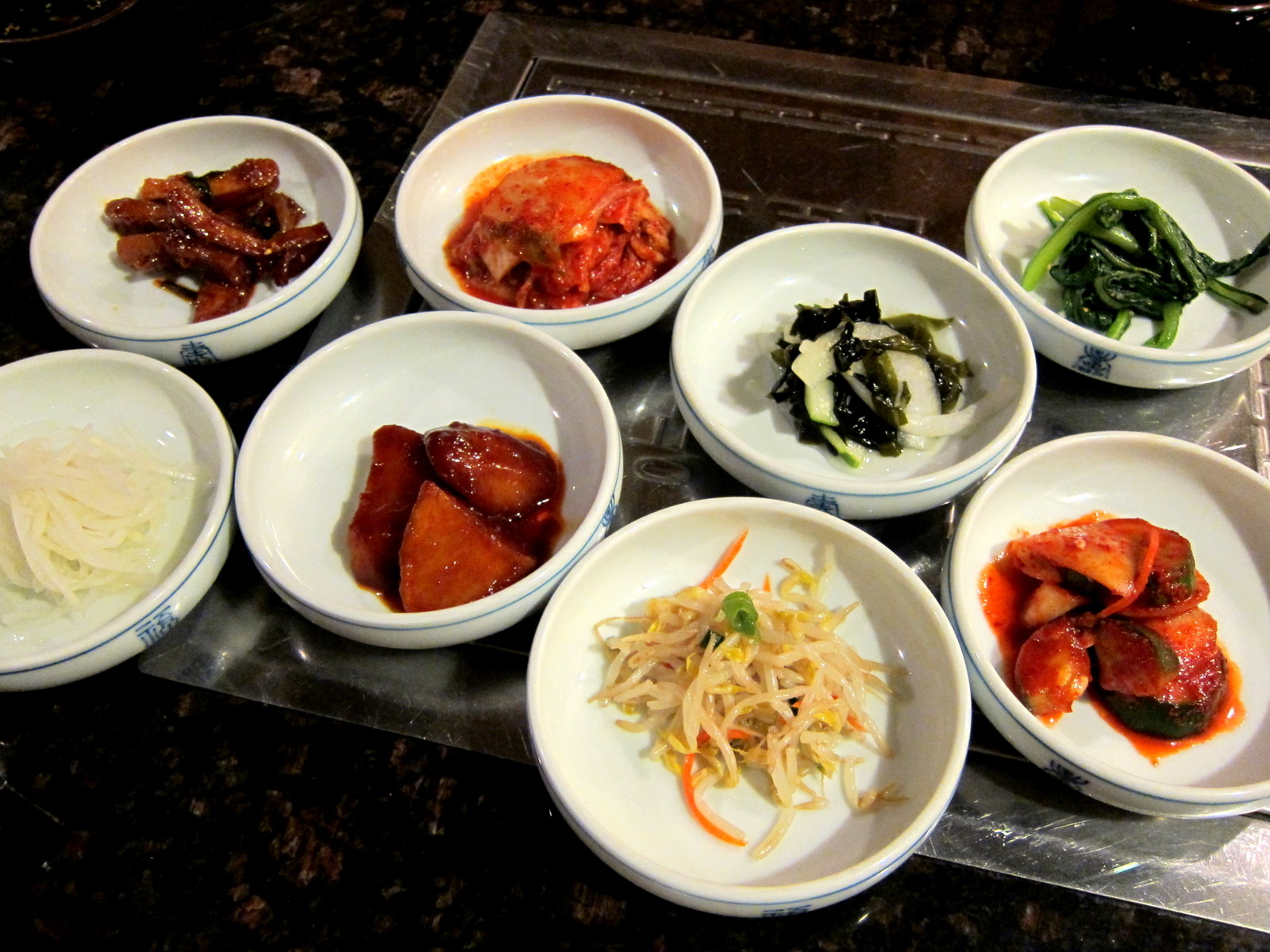
It turned out her very first impression was curiosity: how did they manage to section 7 equal slices of the haemul pajeon (해물 바전)? It was a good jeon, however lay on the soggy side if compared to pancakes at Secret Garden and Casserole House. The banchan selection included some of our favorites: potato, seaweed, and sliced eomuk (어묵), although none appealed to the Americans at the table. The kimchis had quite a bit of chili, though.


So did the dak bokgeum (닭 볶 음 stir-fried chicken) that my dad fell for. That sneaky heat wouldn’t hit you right away.  Only half way through the heap of bird and veggie did he  turn to my mom and me with a tilted smile and a slight head shake: too spicy.


My mom and I knew better than ordering something with a chili pepper sign. So for soups we went. Her a gook bab (국밥 rice and sliced beef in warm beef broth), that was almost too bland.


And me a mandoo gook (만두국 dumpling soup), sweet and delicate but not really a tongue catcher.


The other side of the table ordered their regular bulgogi (불고기) and bulgalbi (불갈비), something that would never go wrong,


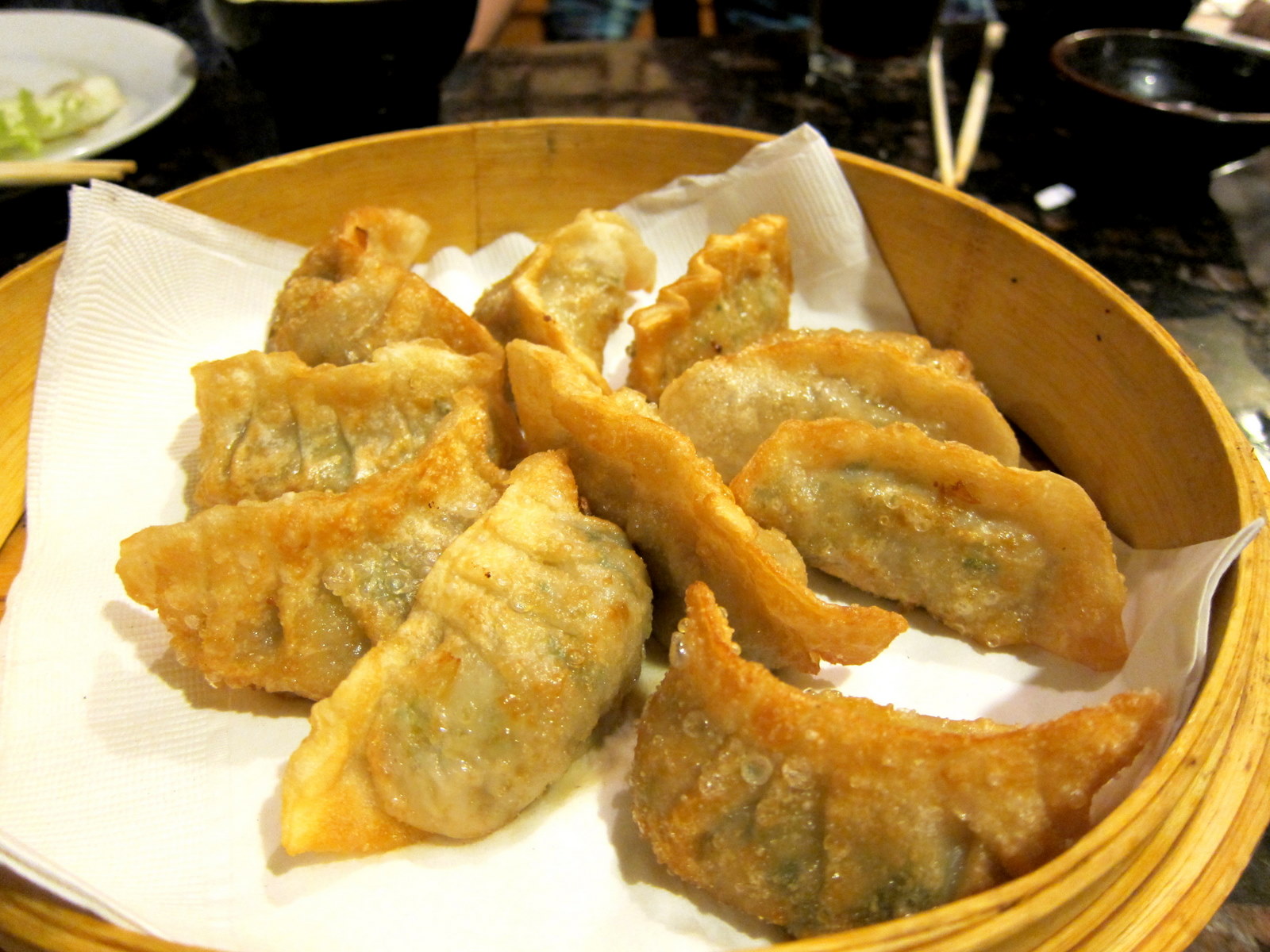
and a side of fried mandoo (만두), which looked irresistibly crunchy.


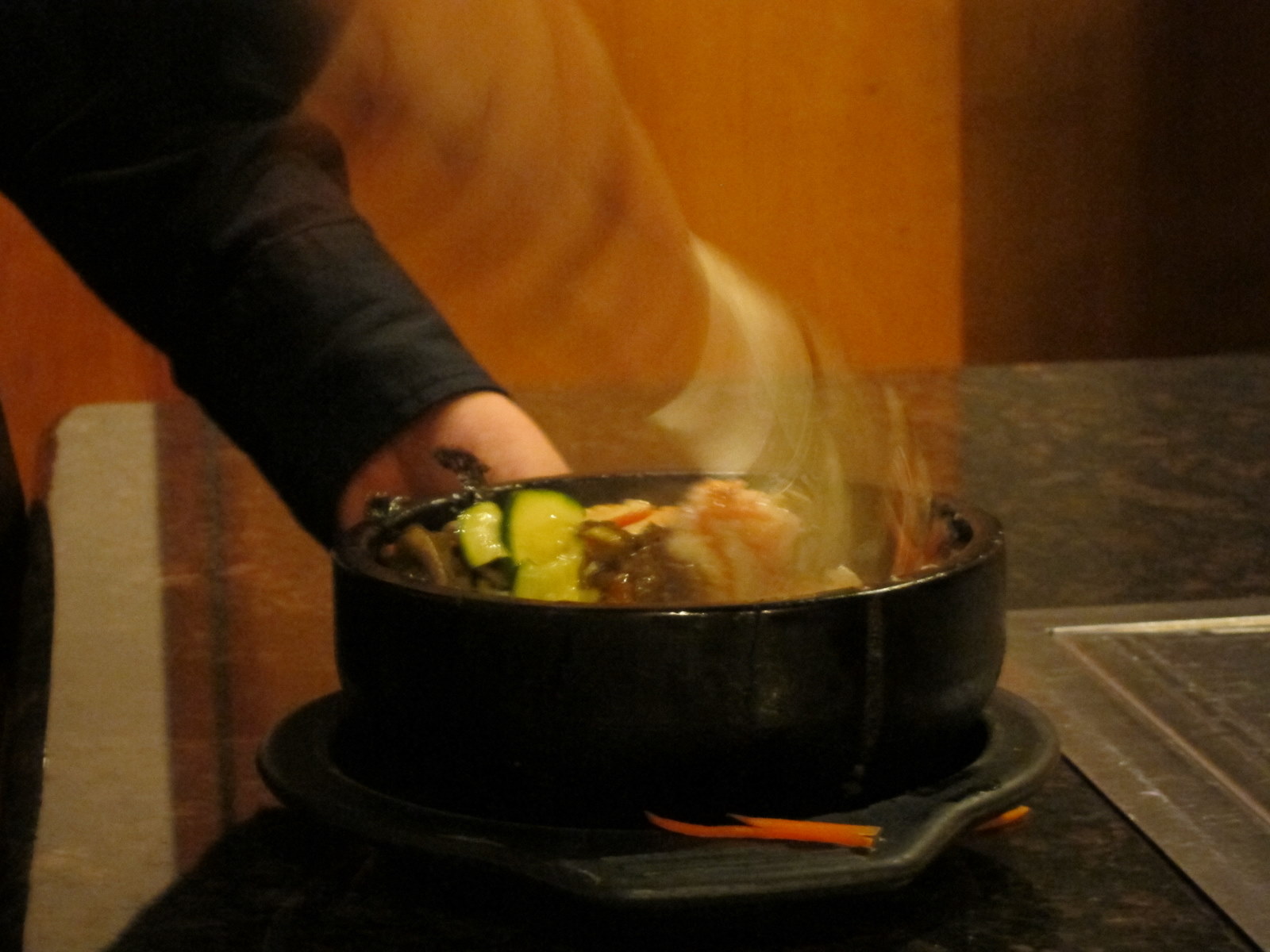
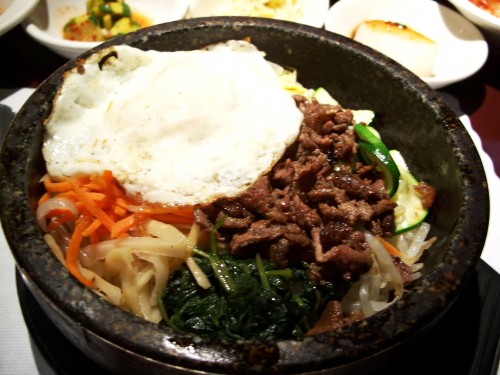
The staff was sweet, like this lady who mixed bibimbap (비빔밥) at amazing speed. Her wrist spun like a cotton candy machine. I don’t know how Ms Baker knew that dolsot bibimbap (돌솥 비뱜밥) is what a first timer should get, of if she knew, but I took it as a good sign that she scooped every last grain of rice.


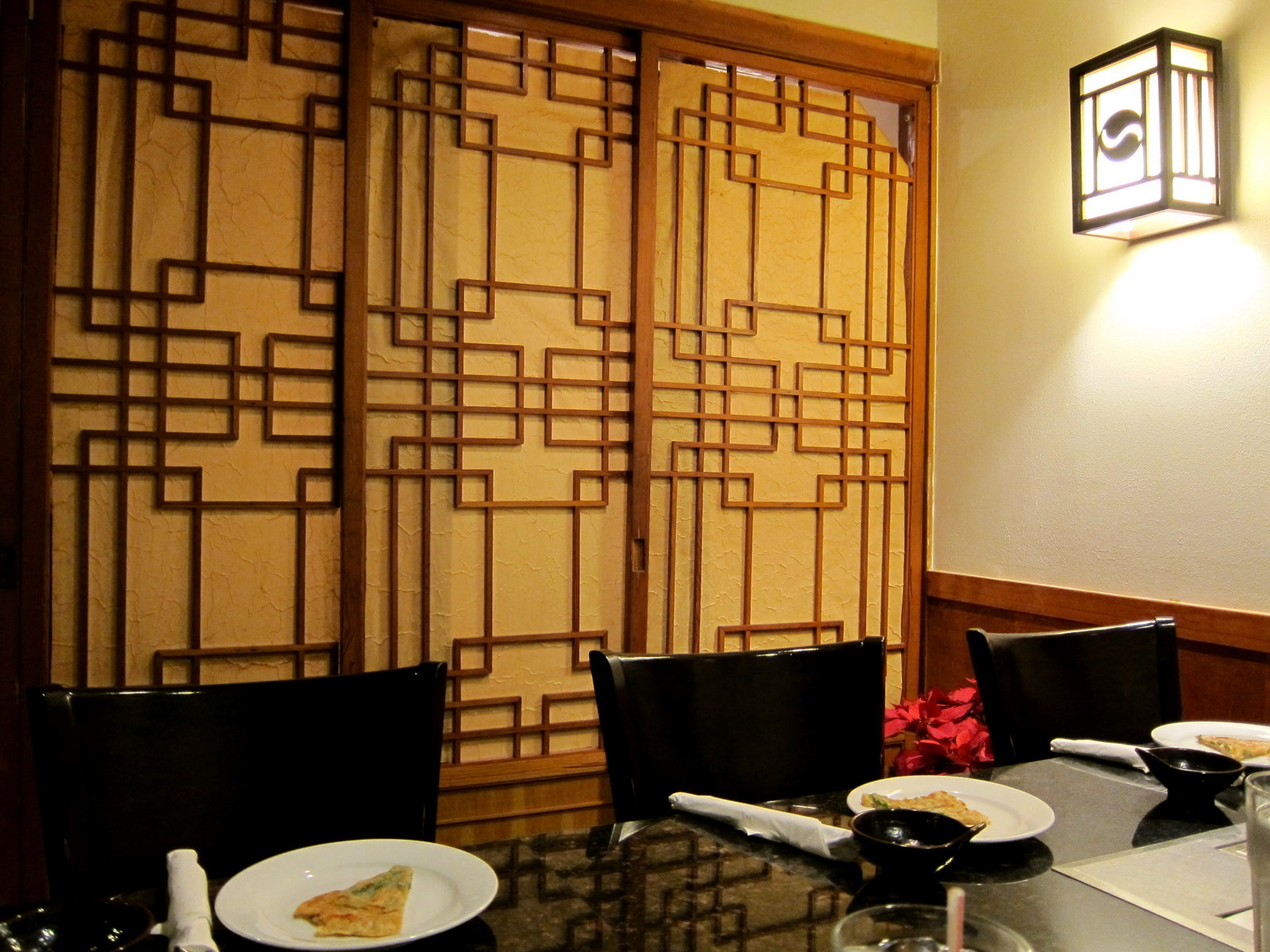
So here we sat in a room sectioned off from the others by shoji screens and chatted from 7:15 to 9:30 about all things from Jerry Brown to TiVo. We must have been the second to last to leave Korea Garden that night. Ms Baker’s first impression of Korean food was heartily filled with laughters. The price was hefty, as most Korean dinners are, but the family bonding between friends is priceless.

Address: Korea Garden Restaurant
9501 Long Point Rd, Ste. Z
Houston, TX 77055
(713) 468-2800
www.koreagardenhouston.com

Dinner for seven: $157.88

Casserole House – Jeongol in Oakland

February 18, 2011 By: Mai Truong Category: California - The Bay Area, Comfort food, Korean


If you’ve had Vietnamese hot pot and liked it, you’d like the Korean hot pot better. If you haven’t had Vietnamese hot pot, try it, and then try jeongol (전골 Korean hot pot), and then you’d like jeongol better. There goes my motherland loyalty, but Vietnam has bánh cuốn and gỏi cuốn, so I’m not too worried.

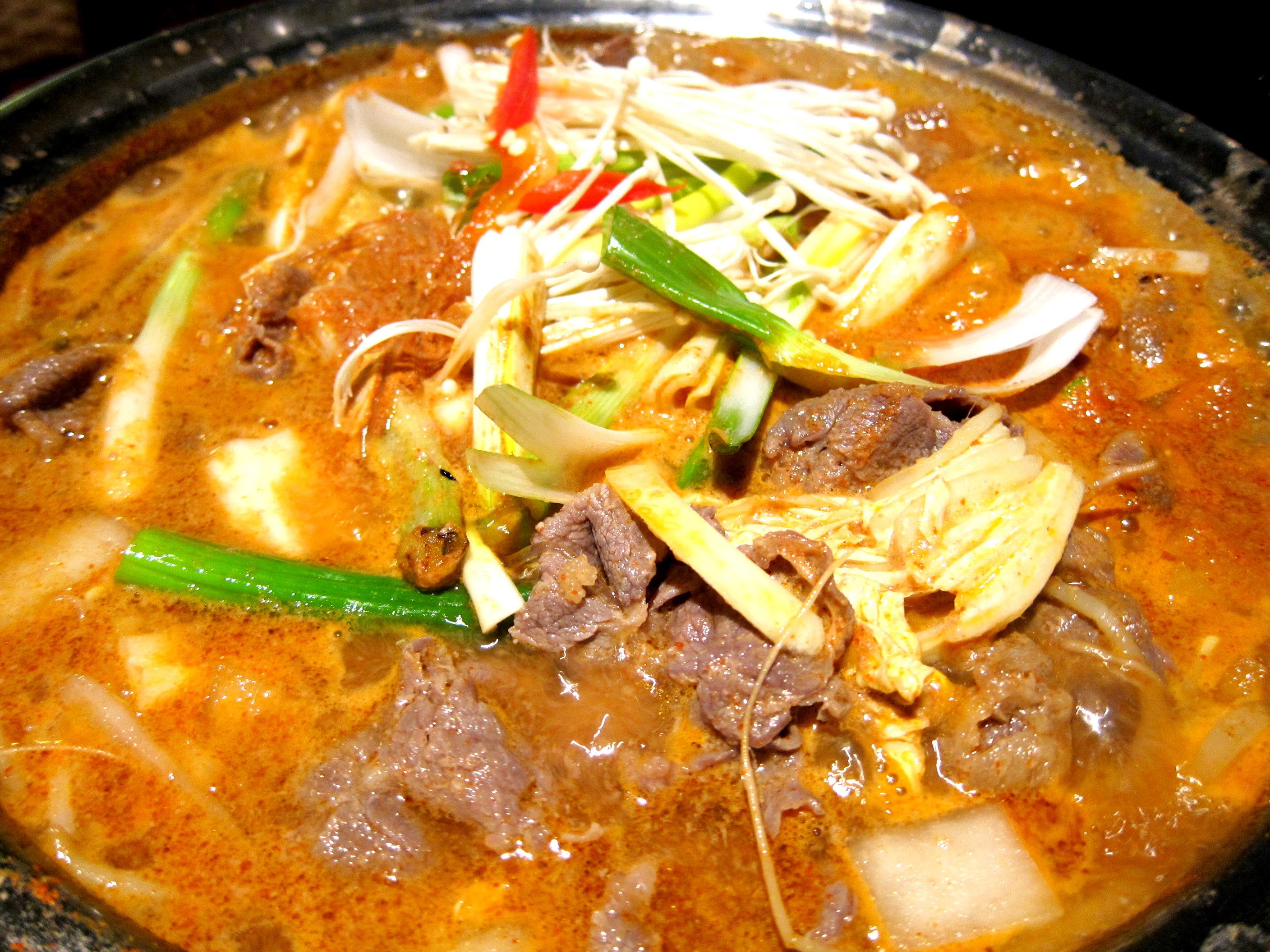
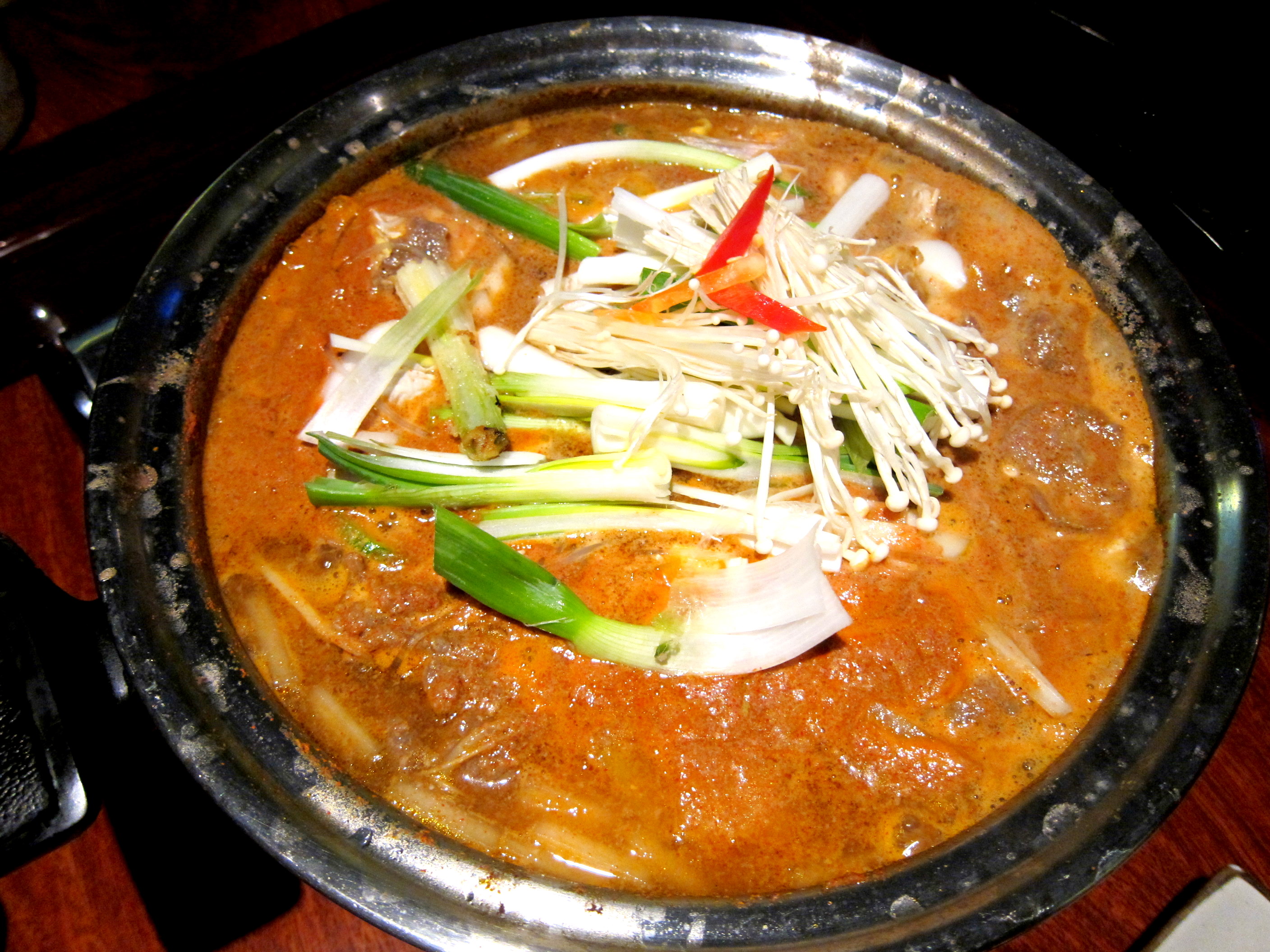
Lots of beef, lots of mushroom, green onion, bean sprout, tofu, cucumber, cabbage all snuggling in a pasty sunny broth. The pot is more like a deep tray on a gas stove, and the bubbling conglomeration is like a spoiled teenager threatening to run away from home. The bulgogi junggol comes to us wild and daring. We ladle right in.


Casserole House has these big bright pictures on the wall of beef, spam, vegetables, and seafood neatly arranged in a round dish or bobbing in broth. The real stuff in action also hides some tteokbokki (떡) for chew and dangmyeon (당면) for engtanglement with the enokitake that just wait to drip the broth between the plates or fling a fortunate dot onto your shirt. I don’t know why they would call jeongol “casserole”, the word brings to mind a square glass dish with crispy-top green beans swearing hot from the oven, which, as yummy as it is at Thanksgiving, is far less exciting than a hot pot. (As a guy said in a Super Bowl ad, “it’s where the action is”.)


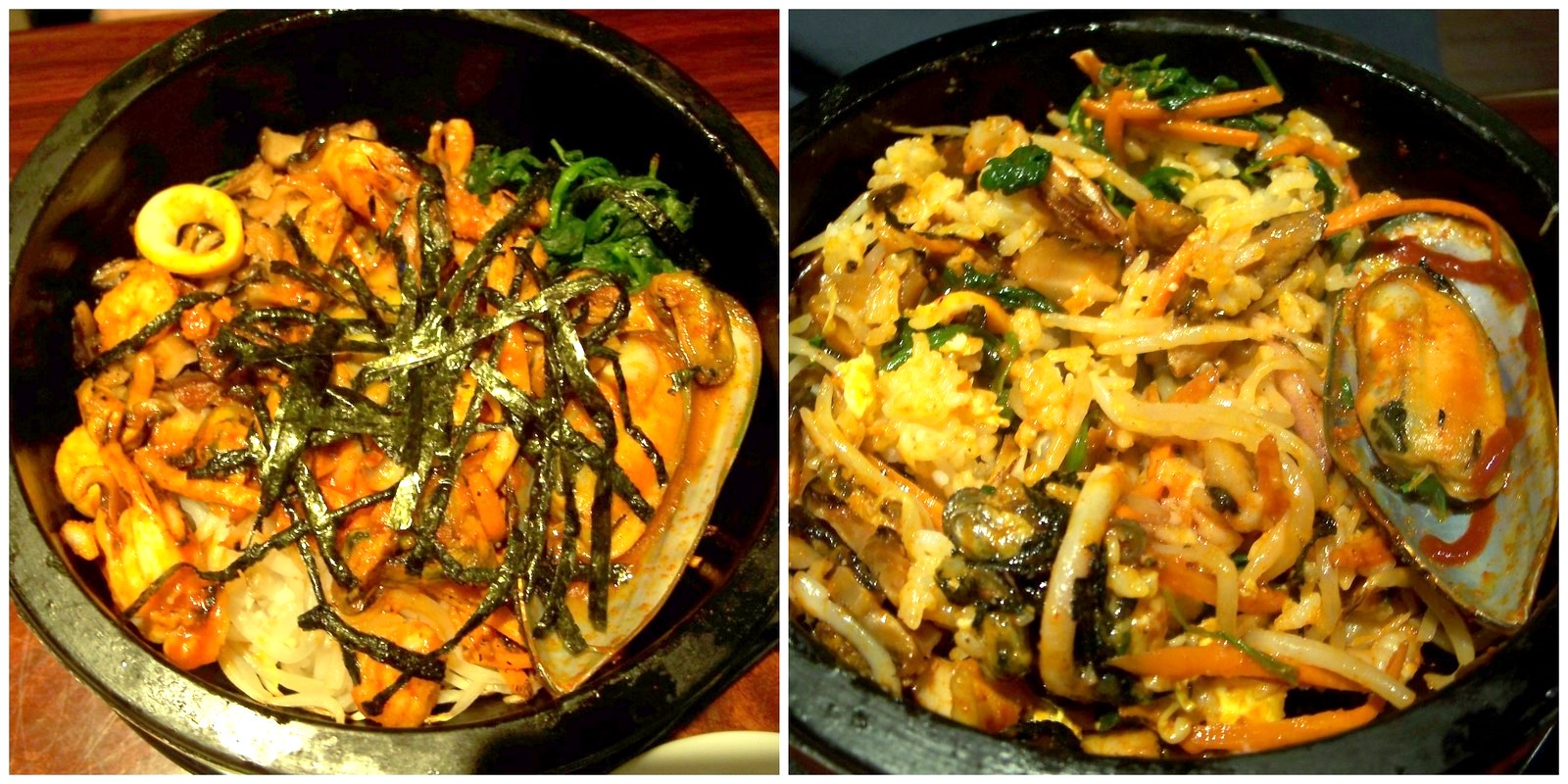
Like true Americans, we didn’t get jeongol the first time we ate at Casserole House. It’s not a mistake per se, because the seafood bibimbap had quite some scrumptious crust and chewy squid for kicks, and if you scan over my favorite post list, you’d know I have a soft spot for pig feet.


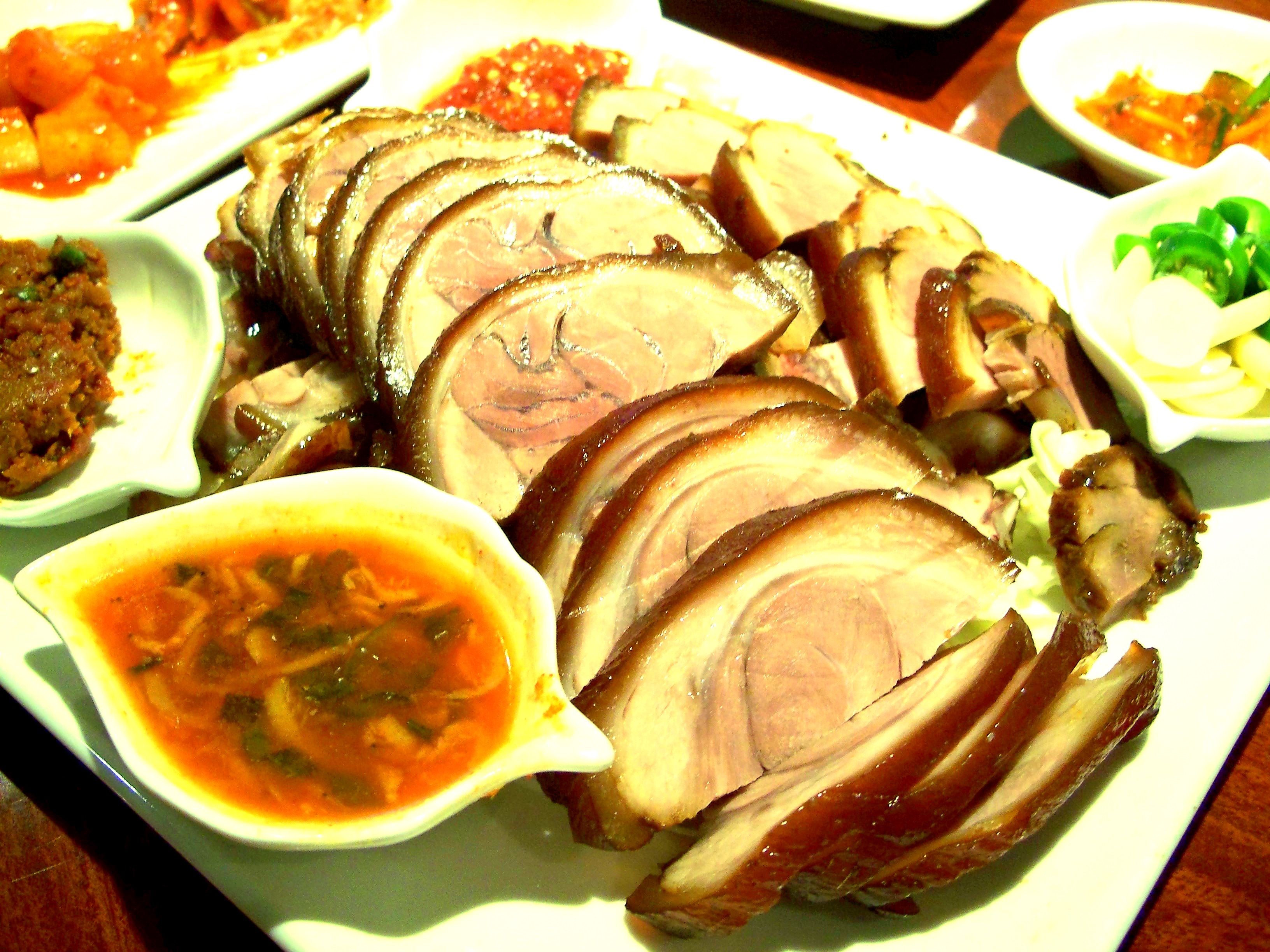
But the pig feet at Casserole House aren’t very soft. Jokbal (족발) is a cross between boiled and roasted, the skin is taut, hardened to nearly a crunch, the meat takes every chance to get stuck in your teeth. I like it. I wrap one or two slices in a lettuce leaf and smear on a chopstick’s tip of doenjang. I lick a taste of saeu jeotkal (새우 젓갈), but objectively speaking, Vietnamese nước chấm is better :-D. And seriously, for $17.95 the plate has enough meat to feed five people, if they also clean out the banchan and order an extra pajeon.


Speaking of money, I haven’t seen jokbal on any other menu, so it’s a must-get here. But there are three reasons to get out of the bibimbap comfort zone and get the jeongol while you’re at Casserole House: 1. it’s in the name, 2. despite it costing a scary $29.95 each scary pot, it’s enough for 3-4 people to share, 3. it’s metal-chopstick-licking good.


And when you’re there next year on Jan 22-25, make sure you wish the ladies a happy new year. They’re sweet, like the sikhye (식혜) they give us for dessert. I drank Mudpie’s cup, too.
Address: Casserole House (right next to Sahn Maru)
4301 Telegraph Ave
(between 43rd St & 44th St)
Oakland, CA 94609

Sura in Oakland – A banchan chapter

September 10, 2010 By: Mai Truong Category: California - The Bay Area, Comfort food, Korean


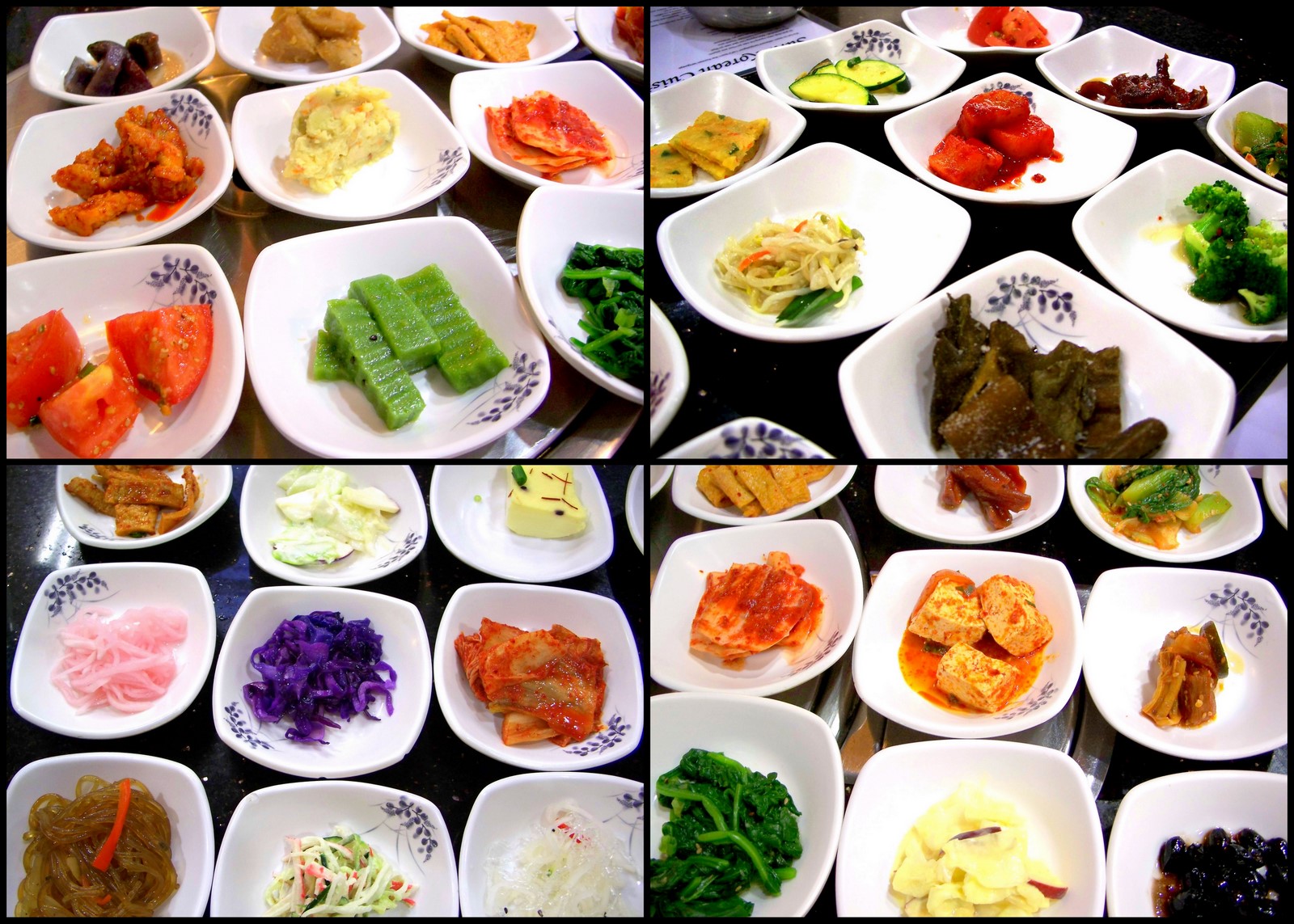
The one thing you can be certain about when you go to Korean restaurants, regardless of their size and price and menu, is that you will always get full. I’ve never been to a Korean restaurant where I think “hmm, maybe I have room for some more” when I leave. Korean restaurants always give you big portions, and on top of that, there is the banchan (반찬).  When you sit down all starving because of the steaming broth or the grilled meat smoke from nearby tables, the banchan is the first thing to nibble on and ebb the hunger. You can either get a lot of coleslaw and dongchimi (동치미, pickled white radish in this case), or an array of little bitty plates that look too colorfully appetizing to disturb. Naturally, the size of your bill corresponds to the variety you can sample. And the biggest sample of banchan I’ve had so far is at Sura.


Here’s what to prepare your tummy for when you’re at Sura: 1 starter, 18 side dishes,  whatever you actually order (which comes with either brown rice or white rice), 1 dessert. If you order gogi gui (고기구 이barbecue), then you also get a heap of lettuce to wrap. If that’s not enough, you can ask for more side dishes. So let us begin.


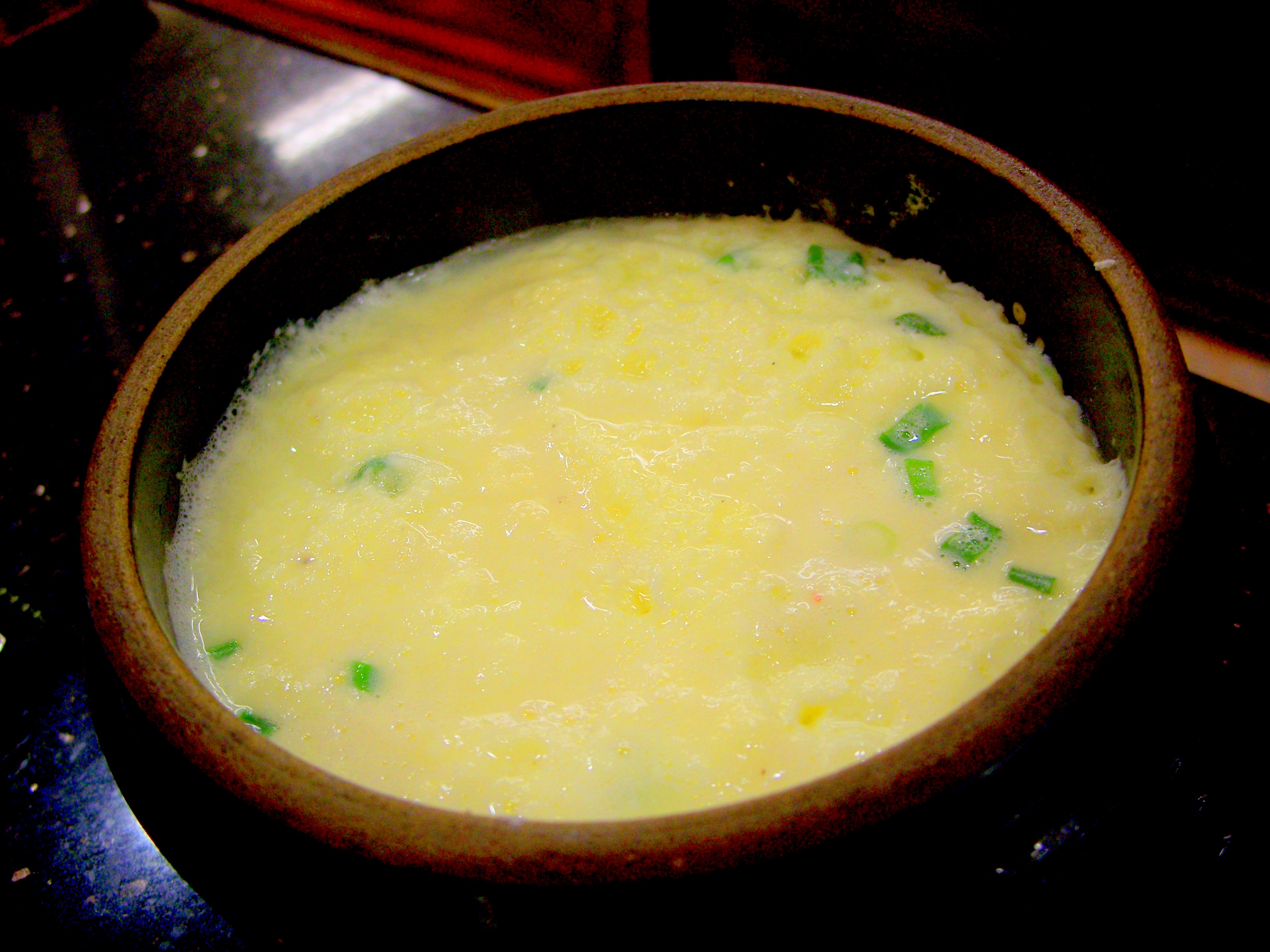
Starter: gaeran jim (계란찜 steamed egg) in a dolsot (돌솥), still bubbly when brought out. It’s really mild, bland even, with dots of green onions and an airy texture.


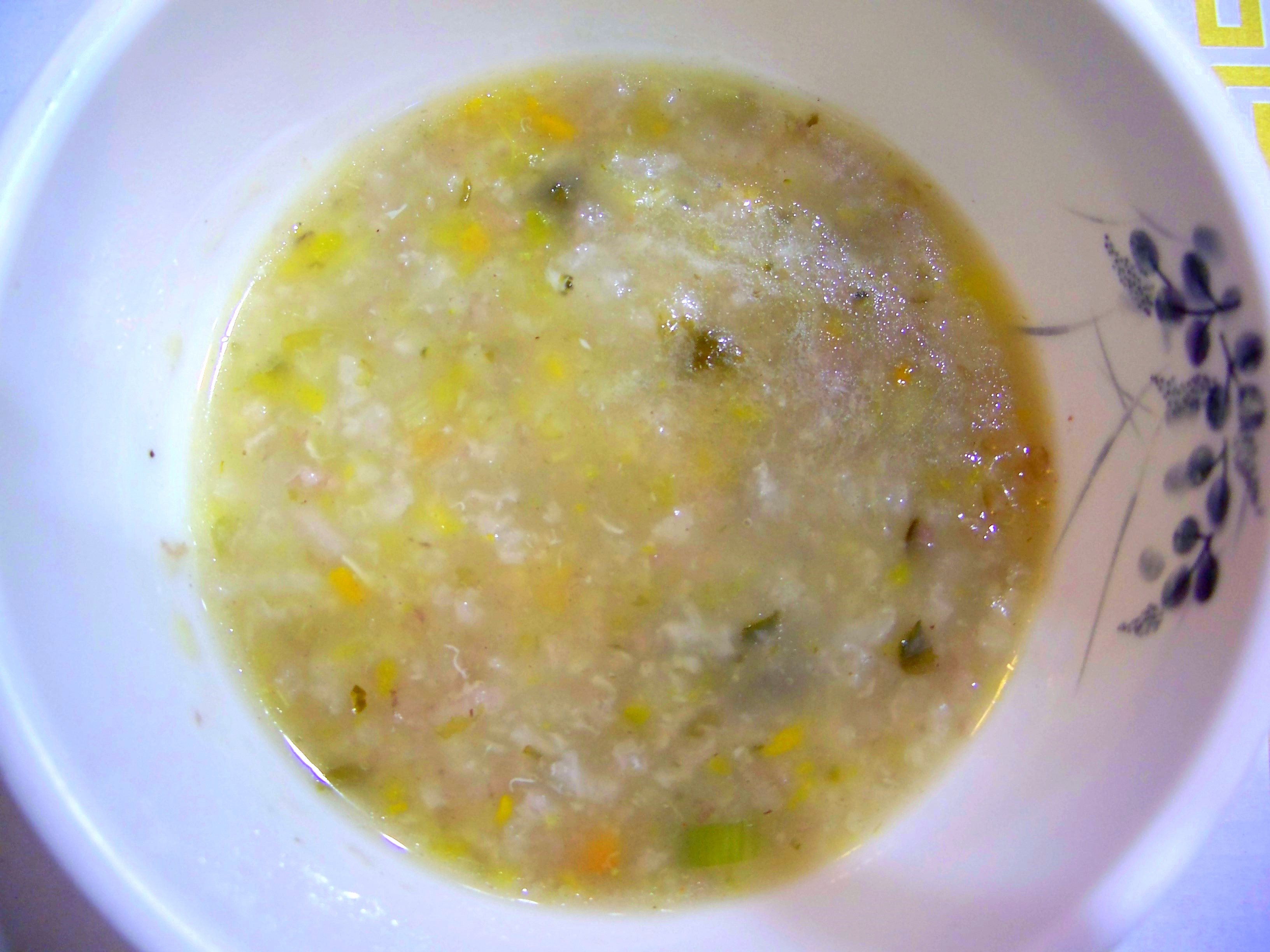
Starter: a small ladle of thin juk (죽 rice porridge) with vegetable bits. Also very mild.


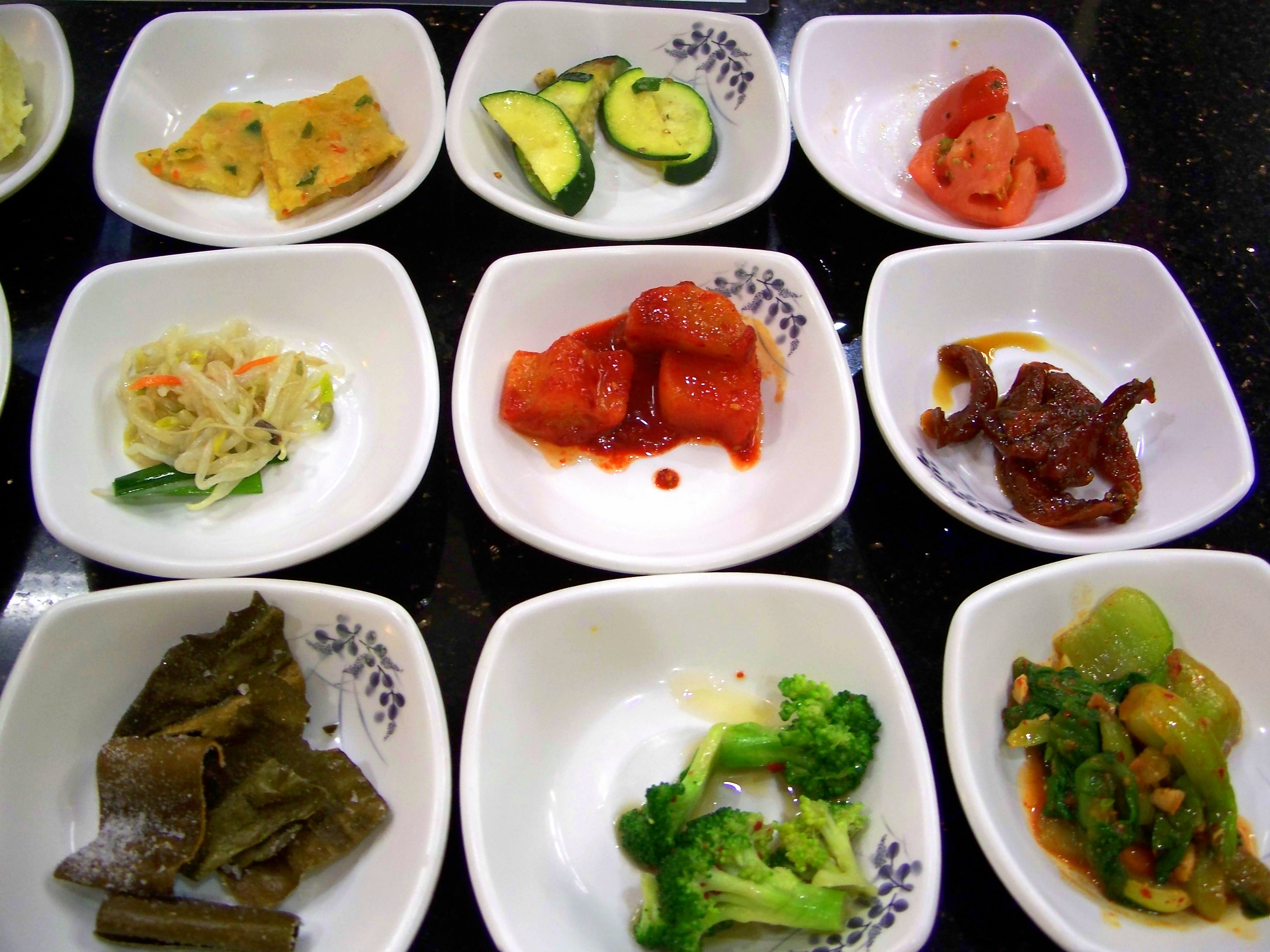
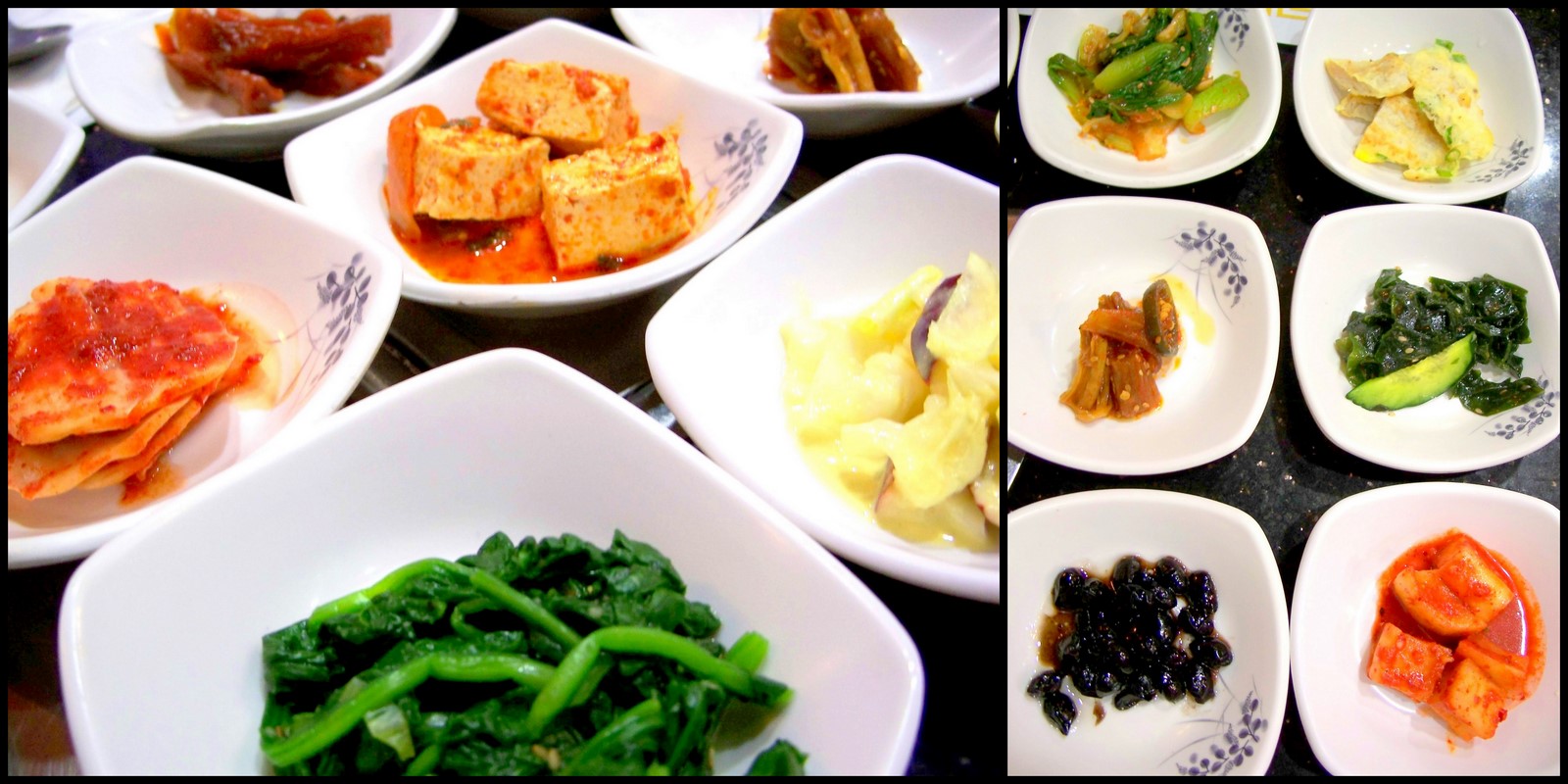
And here comes the banchan. There’s the usual stuff: tomato, broccoli, bok choy kimchi, oisobakki (오이소빅이 cucumber kimchi), ggakdugi (깍두기 radish kimchi), kongnamul (콩나물 boiled and seasoned soybean sprouts), pajeon (바전green onion pancake)…


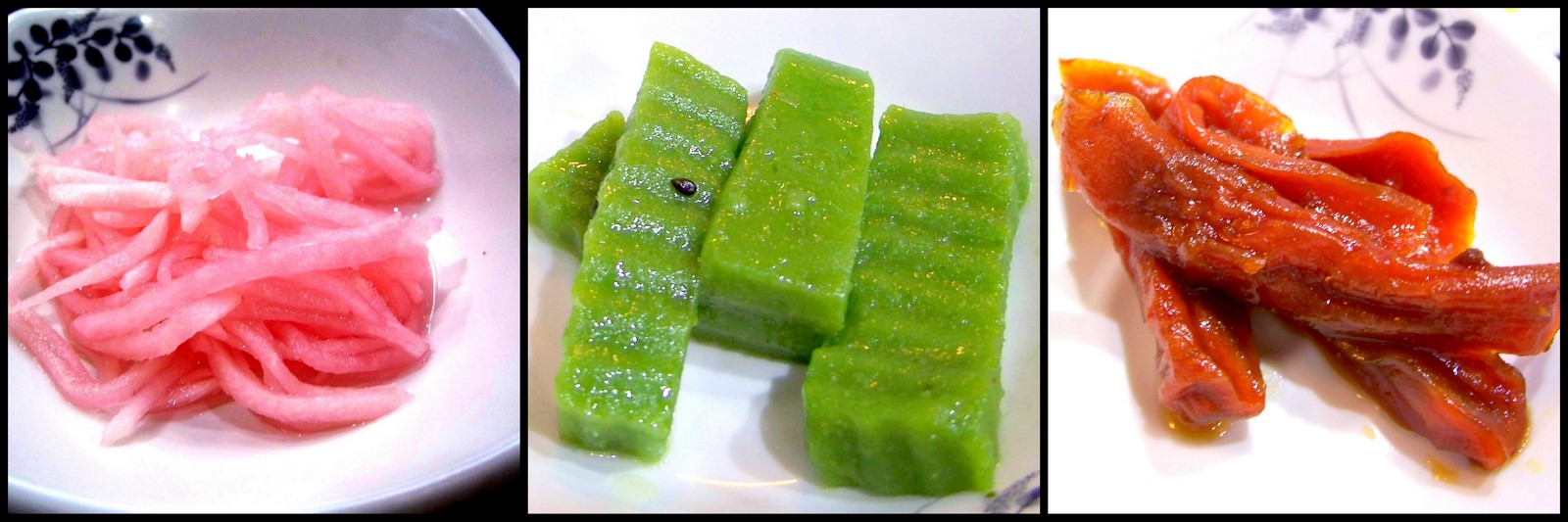
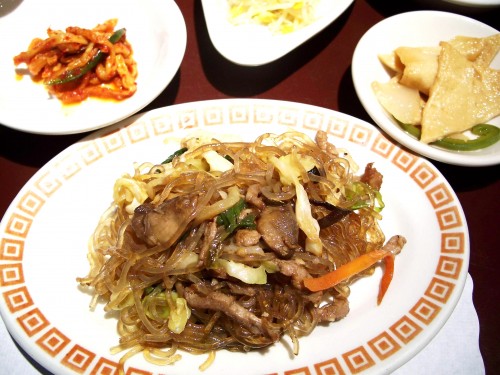
odaeng (오뎅 stir fried sweet fish cake), japchae (삽채 stir fried cellophane noodles), baechu kimchi (napa cabbage), sliced kohlrabi (the pink thing) and cabbage (the purple thing)…


… tofu, cauliflower, spinach, kongjaban (콩자반 sweet black beans), kaji kimchi (가지 김치 eggplant kimchi), and chwinamul (취나물 a crunchy stir fried leaf vegetable)…


… potato,  sweet potato, fried chicken bits, and muk (묵 jelly). (Mudpie *really* liked the chicken and the potatoes.) Now, most of these side dishes didn’t set off any fireworks for me, the japchae was even a bit dull, but there were some BIG exceptions:


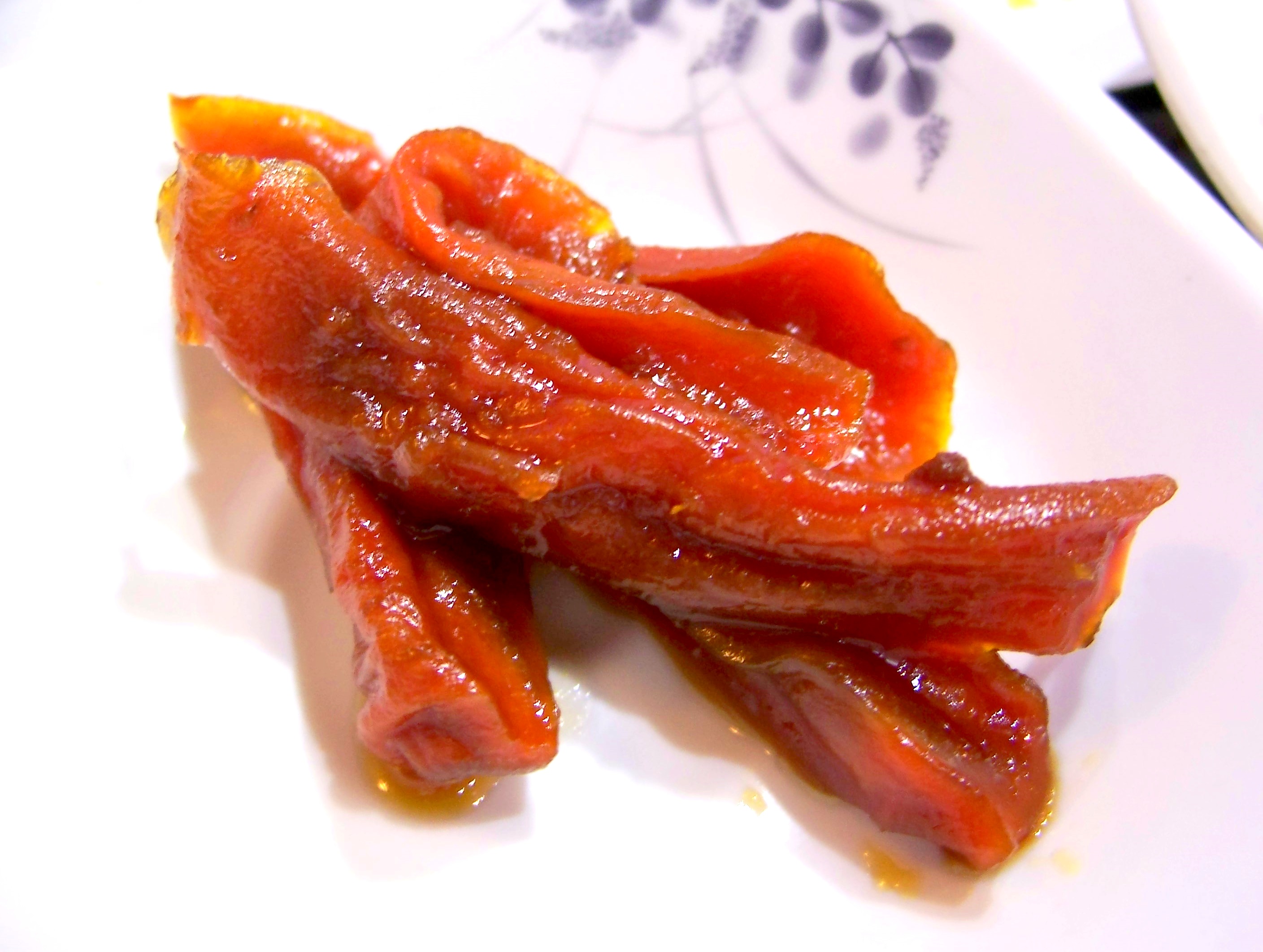
This is Carrot. AMAZING. AMAZING. AMAZING. Somehow it is sweet like honey and chewy like dried apricot. If I could have carrots like this everyday, I’d love carrots a lot more than I do now.


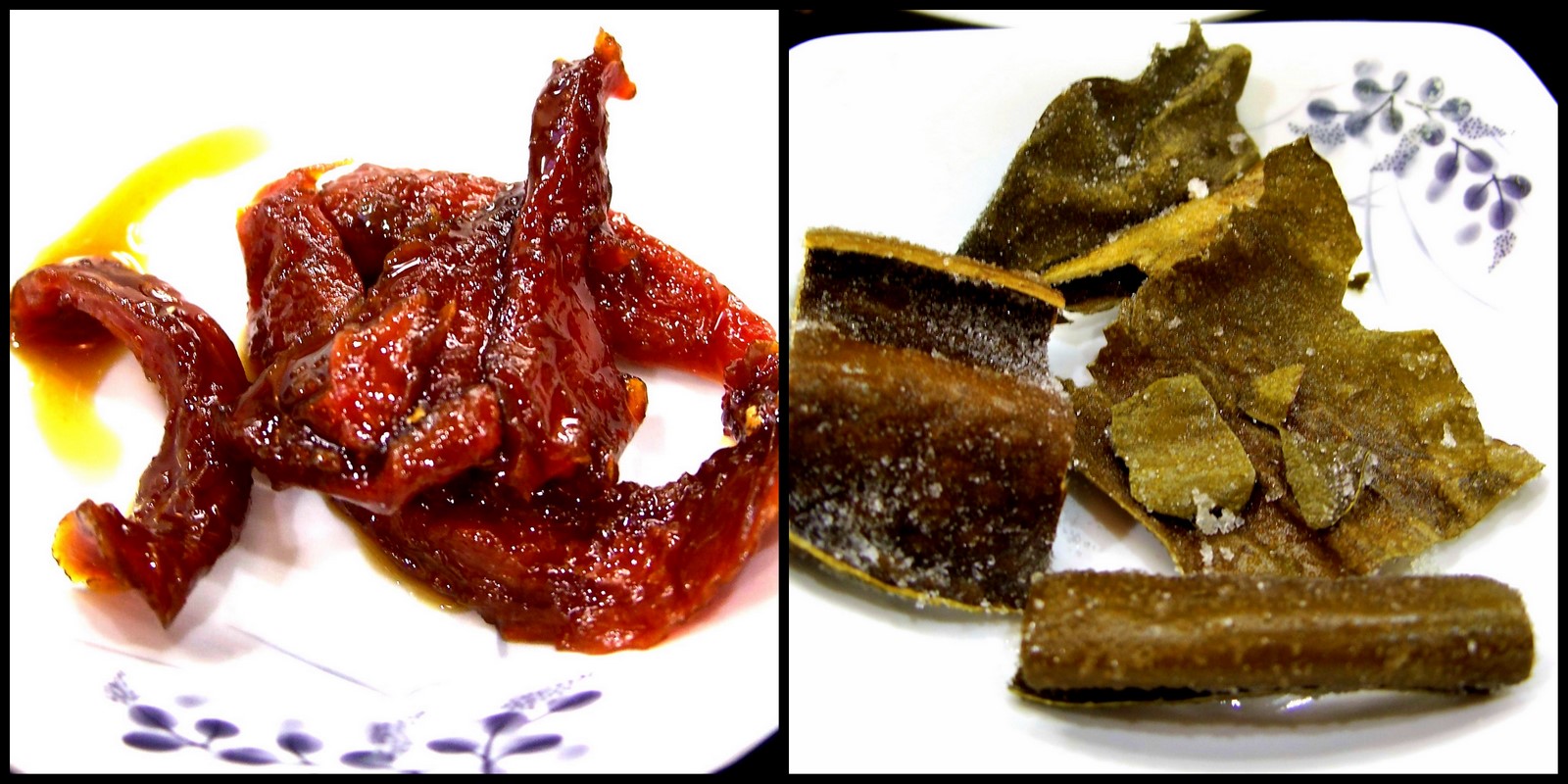
This is Clueless. On the left is something similar to the carrots, but a lot more dried-fruity, like a dried persimmon. The texture is denser and crispier, but it could just have been an older batch of carrots, who knows. On the right is some dried leafy thing dried kelp (dashima (다시마) in Korean, or kombu in Japanese), which was crunchy like Pringle’s chips, dusted with crystals of sugar and salt. When microwaved, it gets soggy and similar to chwinamul but I have no idea what kind of leaf it is.

Get on with the main course.


Doenjang samgyeopsal (삼겹살) – grilled pork belly with soybean paste ~ $18. Mudpie felt uneasy with the fatty layer, but really it wasn’t fatty fat, it’s crunchy fat, just like skin. The doenjang (된장 fermented soybean paste) has a distinctive flavor, and is most like the Vietnamese chao.

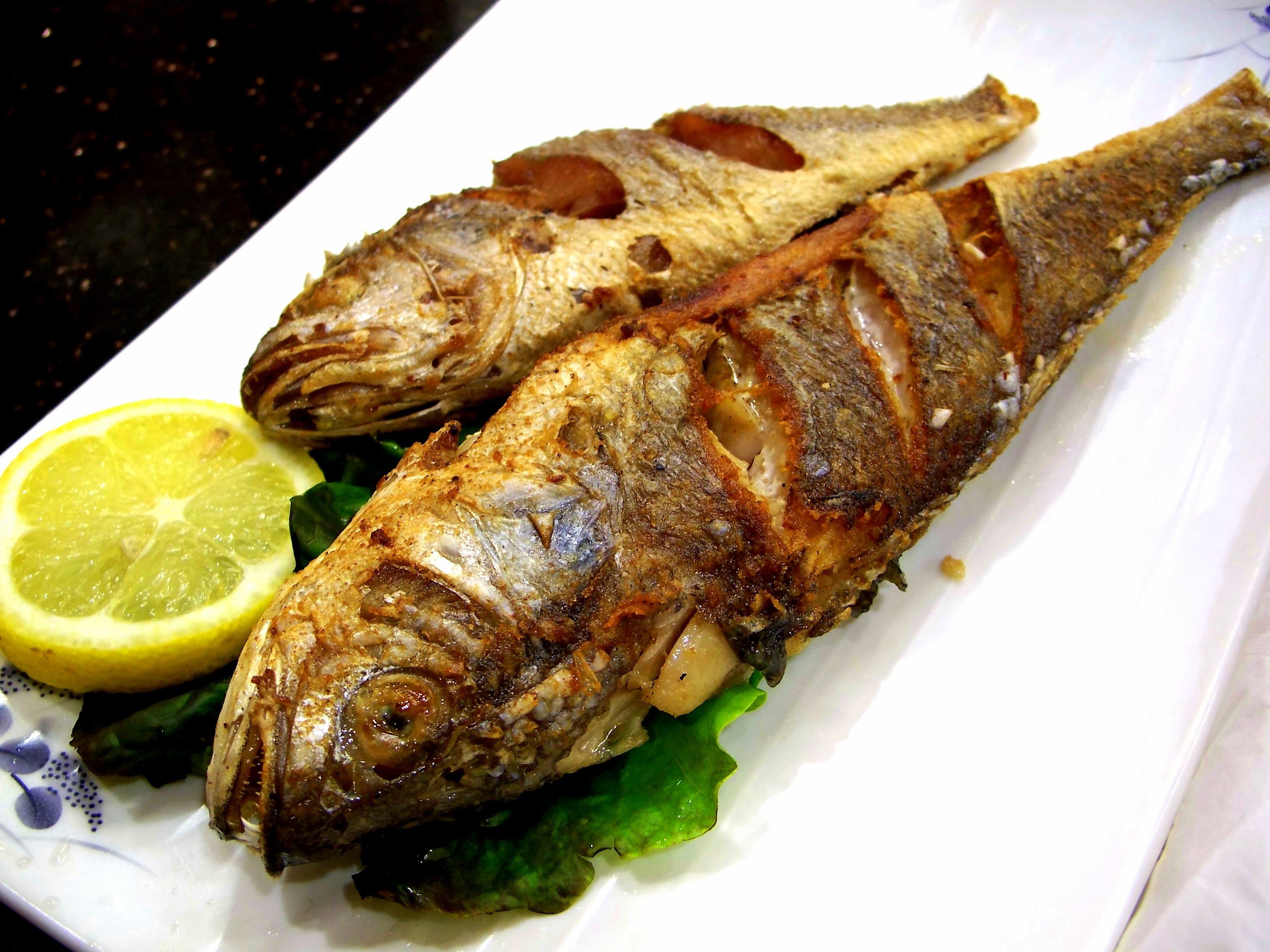
Jogi gui (조기구이) – grilled “king fish” on the menu ~ $18, Google says it can be either yellow corvina or yellow croaker, and I’m no ichthyologist to tell the difference. Look at those teeth. The head was hard and not so fun to eat (very little brain, and I suppose grilling drained all the liquid away), but the body was well seasoned and perfectly crisp. Have fun picking out the bones.

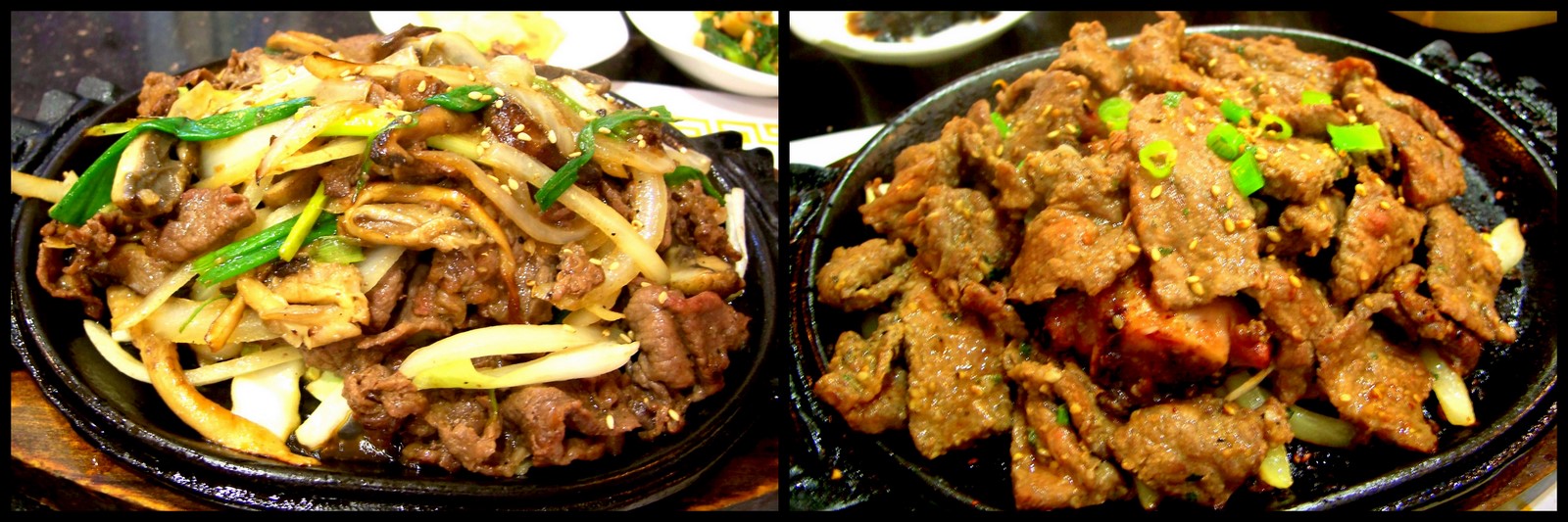
Bulgogi (불고기) – good old barbecue ~ $25 each. The one on the left is marinated in a sweet mushroom-onion sauce, while that on the right is green tea bulgogi with, naturally, a delicate herbal, grassy taste. The meat came with doenjang, chilipepper, and garlic, but I didn’t include any of those in my lettuce wraps.

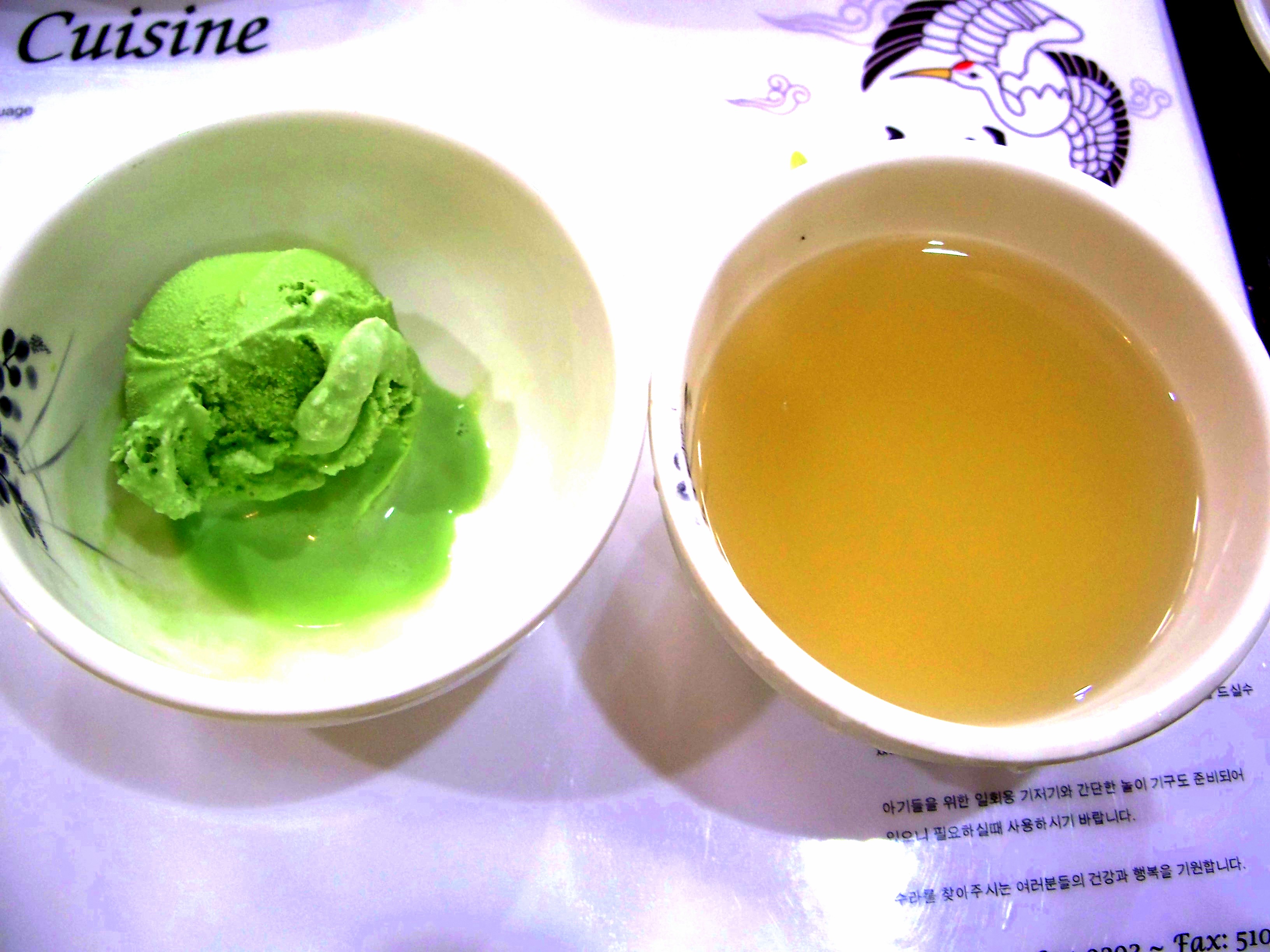
And finally, complimentary dessert of the house is either green tea ice cream or shikhye (식혜) (sweet rice punch):


Lovely both.

I should add that this place has a huge menu, with inviting names like ginseng chicken soup (samgyetang (삼계탕)) and crab stew (kkotge jiggae (꽃계찌개)). The bill is wholesome too, of course, but it feels all better when the friendly staff smiles at you with the most soothing, genuine smile in their single-lidded eyes.


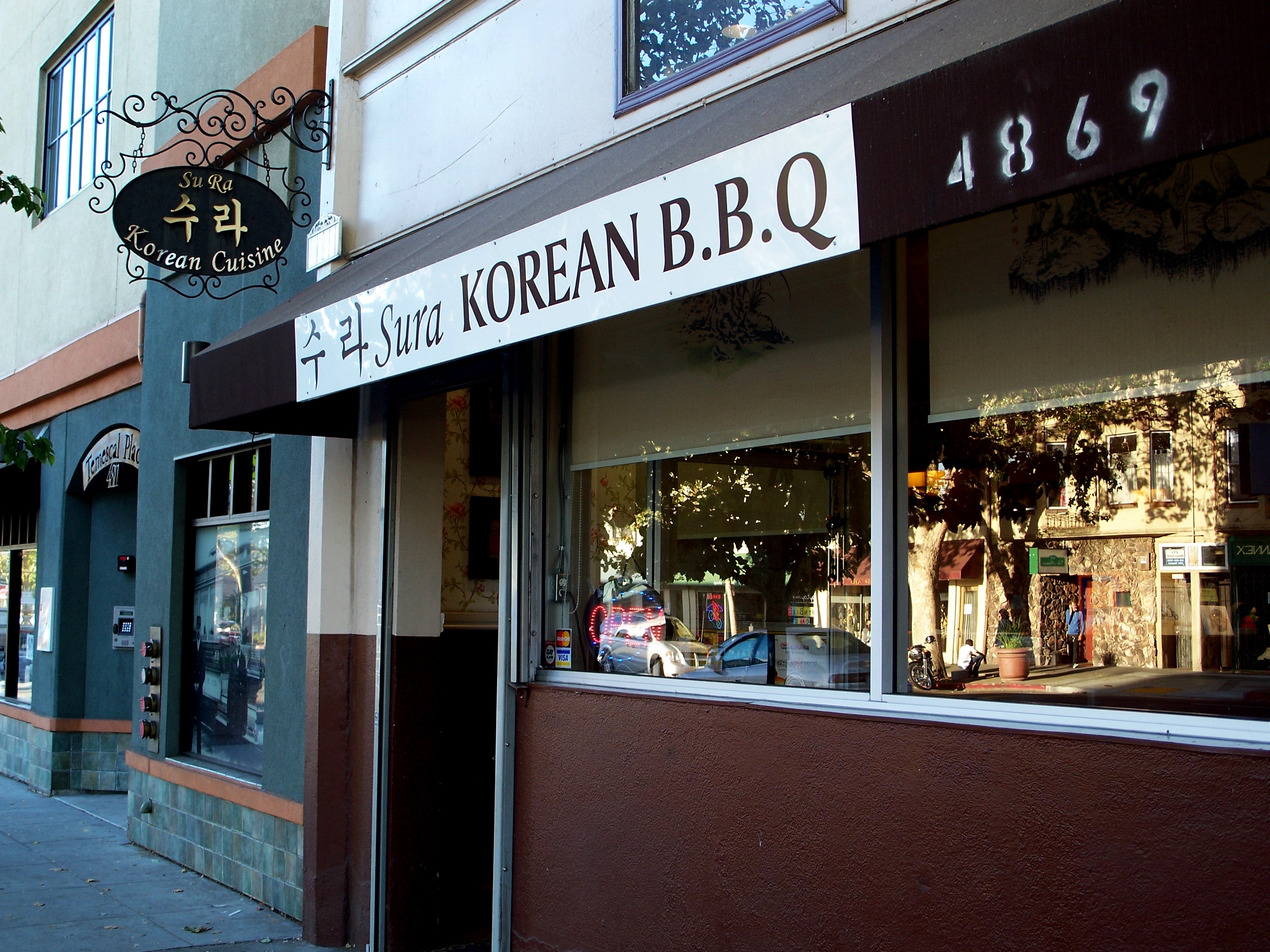
Address: Sura (Nulbom Korean Cuisine) (수라)
4869 Telegraph Ave.
Oakland, CA 94609
(510) 654-9292

The Korean Secret Garden in Santa Clara – Bi Won Restaurant

May 04, 2010 By: Mai Truong Category: California - The Bay Area, Comfort food, Korean


It’s late April and the wind still blows cold. The tiny coffee plant I got last winter is still grudgingly hiding in my room for warmth, while I desperately crave a big hot soup with kimchi. Since coffee leaves wouldn’t make either great broth or pickle, we set out to Sunnyvale.

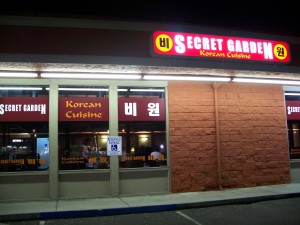
But driving in Sunnyvale on an empty stomach is no fun. The signs and loops are out to get you, and your tummy makes you rush running around. It was supposed to take less than thirty minutes, yet we’ve been driving for over an hour. After lots of wrong turns and backtracking eastward and westward, we thought we wouldn’t make it before closing time. Then as Hope faints, we see it. Secret Garden timidly stands at the end of a strip mall’s parking lot.


The restaurant may not have a snazzy outlook, but its spacious interior is quite nice. I’m a fan of booth seating and its privacy, but it’s a luxury in Berkeley. Here, the mahogany tables and thick cushion benches fit snuggly in enclosing of wooden planks, so that conversations can be spilled out somewhat comfortably and elbows do not touch. But the loveliness of food on neighboring diners’ plates is still in sight. It’s torturous to look at others eating merrily while you’re hungry, you know. Thank goodness the banchan is served quickly. Within minutes after placing our orders, plates after plates come out that I barely have enough time to snap a picture of them all. As light shines directly onto the crisp white melamine, the color contrast is so brilliant I suddenly don’t want to disturb any plate with my clumsy chopsticks.


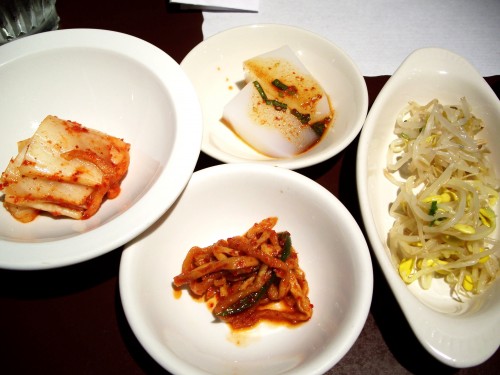
From left to right: napa cabbage kimchi, nokdumuk (녹두묵 mungbean jello), kongnamul (콩나물 boiled and seasoned soybean sprout), and very tasty firm red strips (name help, please? is it eomuk strips in chili sauce?) nakji bokkeum (낙지볶음 fried octopus). The soybean sprouts are bigger, fatter, and nuttier than the usual mungbean sprouts, which means they’re more satisfying. The nokdumuk tastes as translucent as it looks, a refreshing heal congealed and coated in soy sauce that playfully wobbles on the tongue.


To the right of the kongnamul are cucumber kimchi, radish kimchi, eomuk (fish cake), and crunchy green strings (again, I love it, but I don’t know its name. My guess is sliced seaweed?) seaweed with gogumajulki (고구마줄기 dried sweet potato stem). Something about rings of jalapeno in banchan bugs me, just like jalapeno in banh-mi. Not that I have anything against Mexican peppers, but the taste doesn’t belong.


Just as I thought the banchan list ended at eight, a generous plate of japchae (잡채) fuming sweetness comes…


… with two stylish inox cups of miyuk gook (미역국). Whether or not it can enhance my brain function, it well enhances the sizzling goodness of the dolsot bibimbap (돌솥비빔밥).


White rice mixed with veggies, beef strips, egg, and gochujang (고추장) until crimson has been Mudpie’s No.1 favorite for a while now. He treasures every spoonful and guards the forming crust at the bottom against any careless scooping. At the end he then scrapes and eats the well seasoned crust with the joy of children eating s’mores. He orders it almost every time we go to a Korean restaurant, I feel like he should have a bibimbap blog much like Adam Kuban with Slice. And he claims this dolsot bibimbap is the best he’s had.

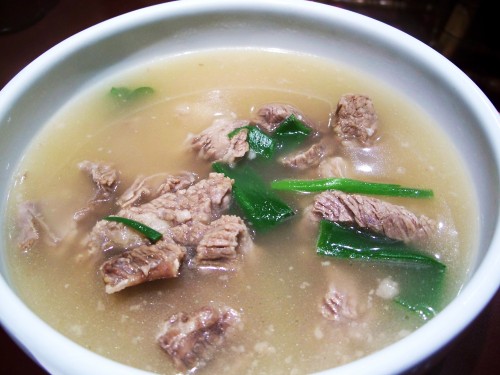
Meanwhile I am busy slurping what I have dreamed of for days: a hearty beef soup. A bowl of wet steamed rice comes with the galbi tang (갈비탕), but I wish they had given me more. The rice goes quickly as I pour the mild yet sensuous broth over it, with a piece of meltingly soft short rib, and maybe a bit of kimchi. I even eat the shiny green chives, since they now taste so sweet.


When I get near the end of the big soup bowl, a pleasant surprise surfaces: a small bundle of dangmyeon (당면 cellophane noodle) has been there all along, soft, clear, quietly soaking up flavors from the darling broth. I have rarely felt more gluttonously satisfied after a meal dined out.


Address: Secret Garden (Bi Won Restaurant)
3430 El Camino Real
Santa Clara, CA 95051
(408) 244-5020

Money matters: $26.11 – dinner and happiness for two.

Another lovely meal at Berkel Berkel

March 01, 2010 By: Mai Truong Category: California - The Bay Area, Comfort food, Korean


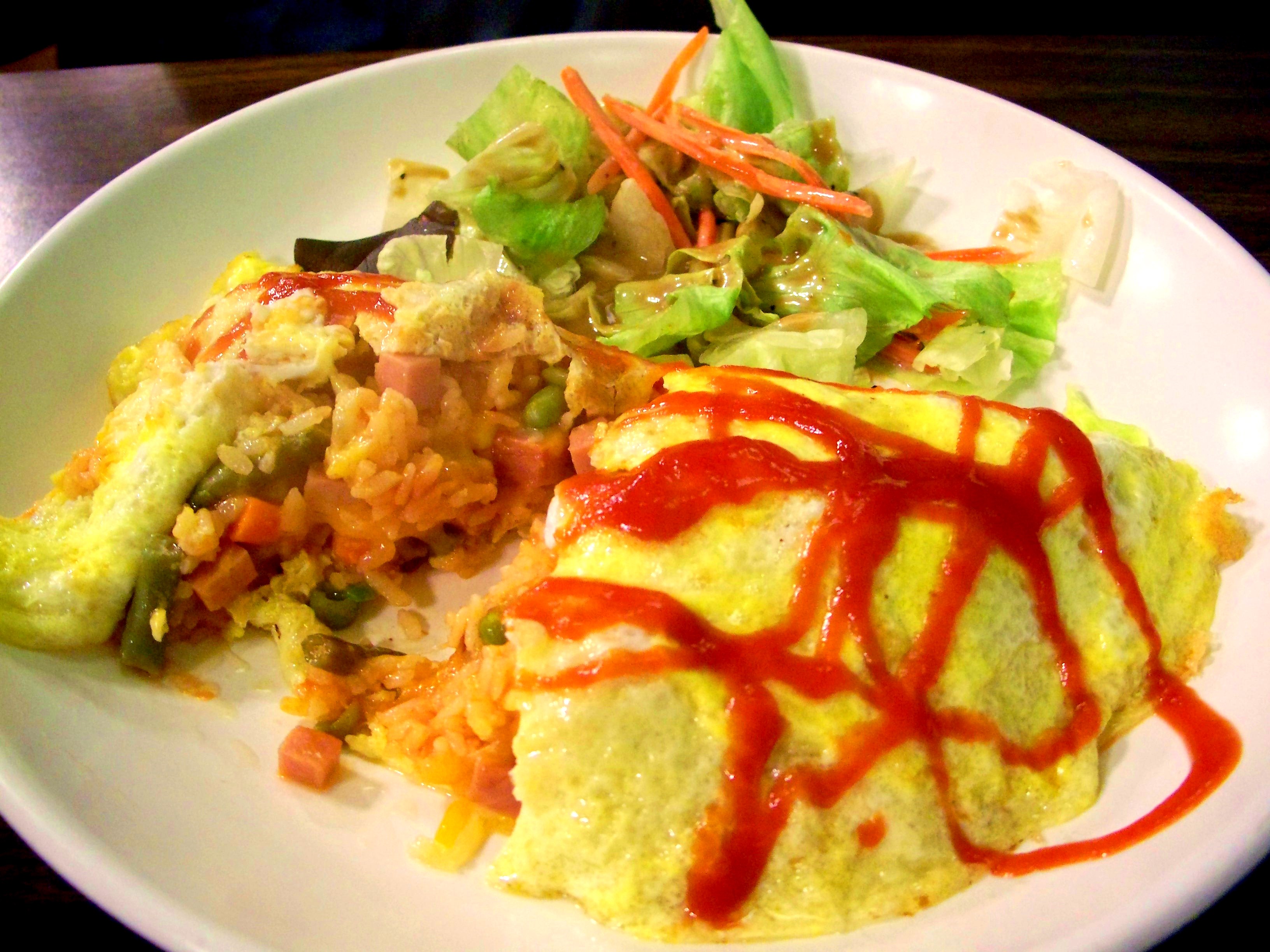
In Vietnam, the first month-old birthday of a baby marks an important celebration. So today is the day, Flavor Boulevard is a month old! Considering FB‘s birth month is also the month of passion and chilly winter, what’s better than a hot plate of “Omu-rice – Perfect for sharing between a couple in love,” said the menu at our local Korean fave on Telegraph Avenue?

So I ate it, and here I share it with my FB. Fried rice with ham, green beans, and peas wouldn’t normally rank high on my list, but the saucy, creamy running egg yolk does wonders. The omelet tasted unseasoned, but its natural plainness was a great base for the rice. Given the fact that I always prefer my French fries sans ketchup, I didn’t find ketchup a well-matched condiment here, perhaps something more buttery would be nice. But perhaps a sour brush was a healthy contrast. Omu-rice is lovely still.


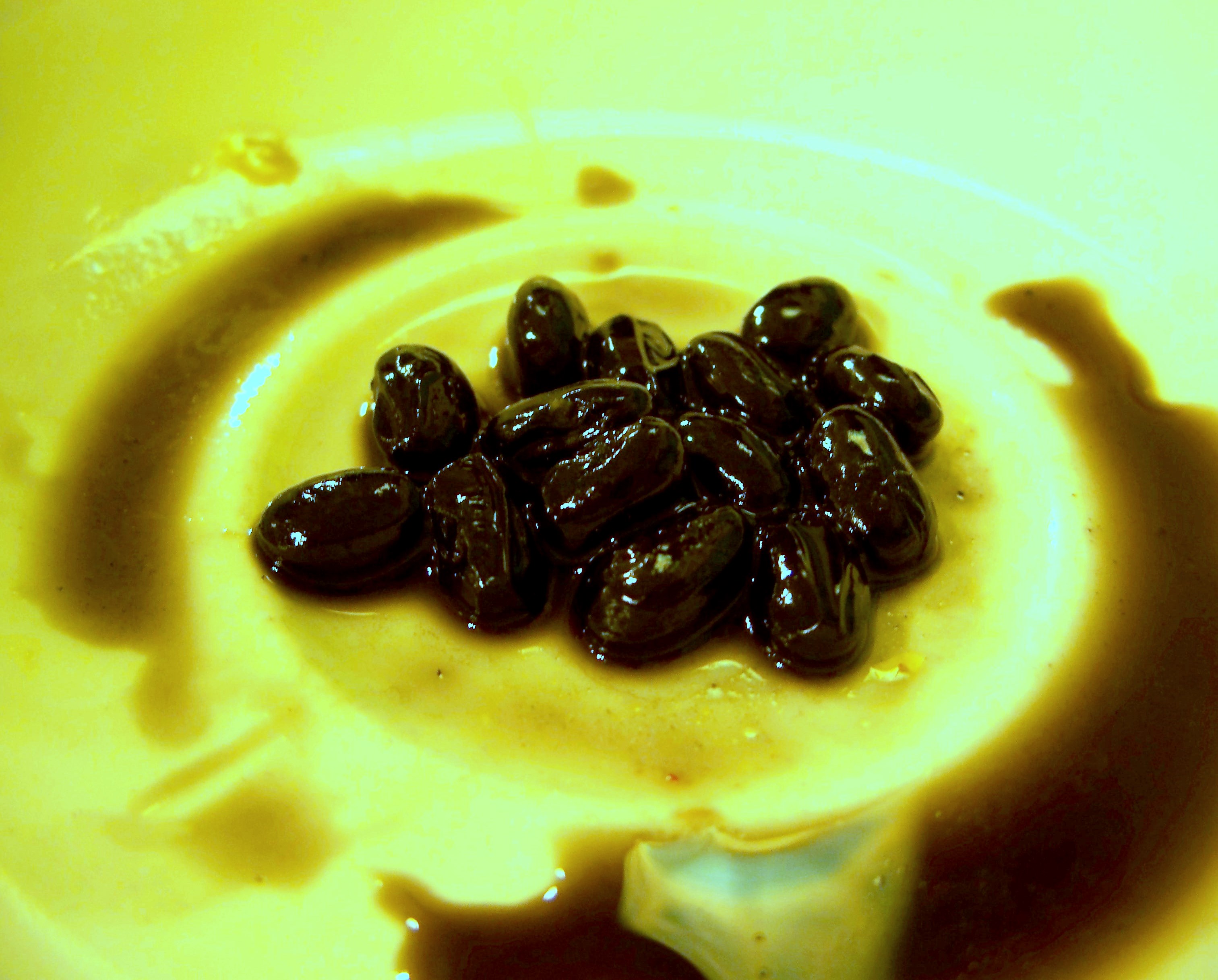
As usual, Berkel Berkel has unlimited spicy kimchi, nonspicy pickled cucumber, and sweet black beans to accompany your main course. Firm and nutty, the black beans (kongjaban) are a pleasant delectable if eaten individually. Of course it’s not easy to eat one by one with chopsticks, but it may be well worth the effort: black bean sweetened with honey and soy sauce “is good for your head,” so I was told by the kind-hearted host of Berkel Berkel. I’ll sure take any chance I get to be smarter, so I ate a bunch of these.

japchae_Berkel-Berkel

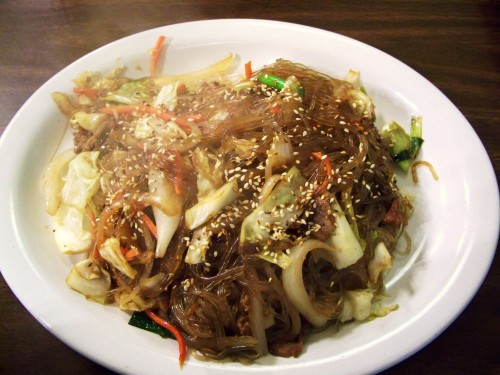
Being in the starchy mood, we also went for a steaming plate of japchae (glass noodle) on rice. I never thought about noodle on rice as a real meal, although as a kid I did find ramen a savory substitution for meat when it came to rice’s aids. The lustrous sesame oil is profound, but there’s a whole package of sweet and salty in every chewy bite of glass noodle.  Once again the chefs show that texture harmony and flavoring are more essential than substance, I’d be a vegetarian everyday if I could eat this japchae and rice everyday.

Although we haven’t tried the whole menu (*glance over other tables* the soups look smoking good), I have faith that everything at this joint scores at least 8 out 10 points for Korean comfort food. The atmosphere helps.

Want to know a little more about Berkel Berkel? Take a look at our first visit.  The place usually gets crowded around 8pm. Do Korean folks tend to eat dinner late?

Address: Berkel Berkel
2428 Telegraph Ave, Berkeley, CA 94704

For those who like to play in the kitchen: a recipe of kongjaban from Simply Senz and Steamy Kitchen’s personal touch on japchae.

Korean Garden Grille

June 01, 2009 By: Mai Truong Category: Houston, Korean, Texas

Korean movie series are my soju. It’s for celebration, depression, even seeking motivation. I got motivated to learn Korean and to try Korean food. I made a couple of attempts in College Station, but it’s not a good idea to judge Korean cuisine from a local Chinese restaurant. The urge to understand why their food looks so appealing in movies overtook the resistance against chili pepper. So we went to Bellaire the first weekend I got home, to a Korean buffet.

Korean Garden Grille has a spacious feel (again, something of Texas that I will miss). I made a point to sample everything, and I almost accomplished my goal. I tried “beef seaweed soup” (no beef was visible, so I assume it was beef flavored seaweed soup?), 11 kinds of kimchi (not knowing most of the Korean names nor the veggie names), bulgogi, japchae (stirfried cellophane noodle), 7 kinds of fried egg/veggie (again, not knowing either the Korean names or the veggie names). The kimchi was mostly sour (a little more sour than pickled daikon and carrots, not as salty as pickles, much less aggressive on the back of the throat than the French pickled cornichon).


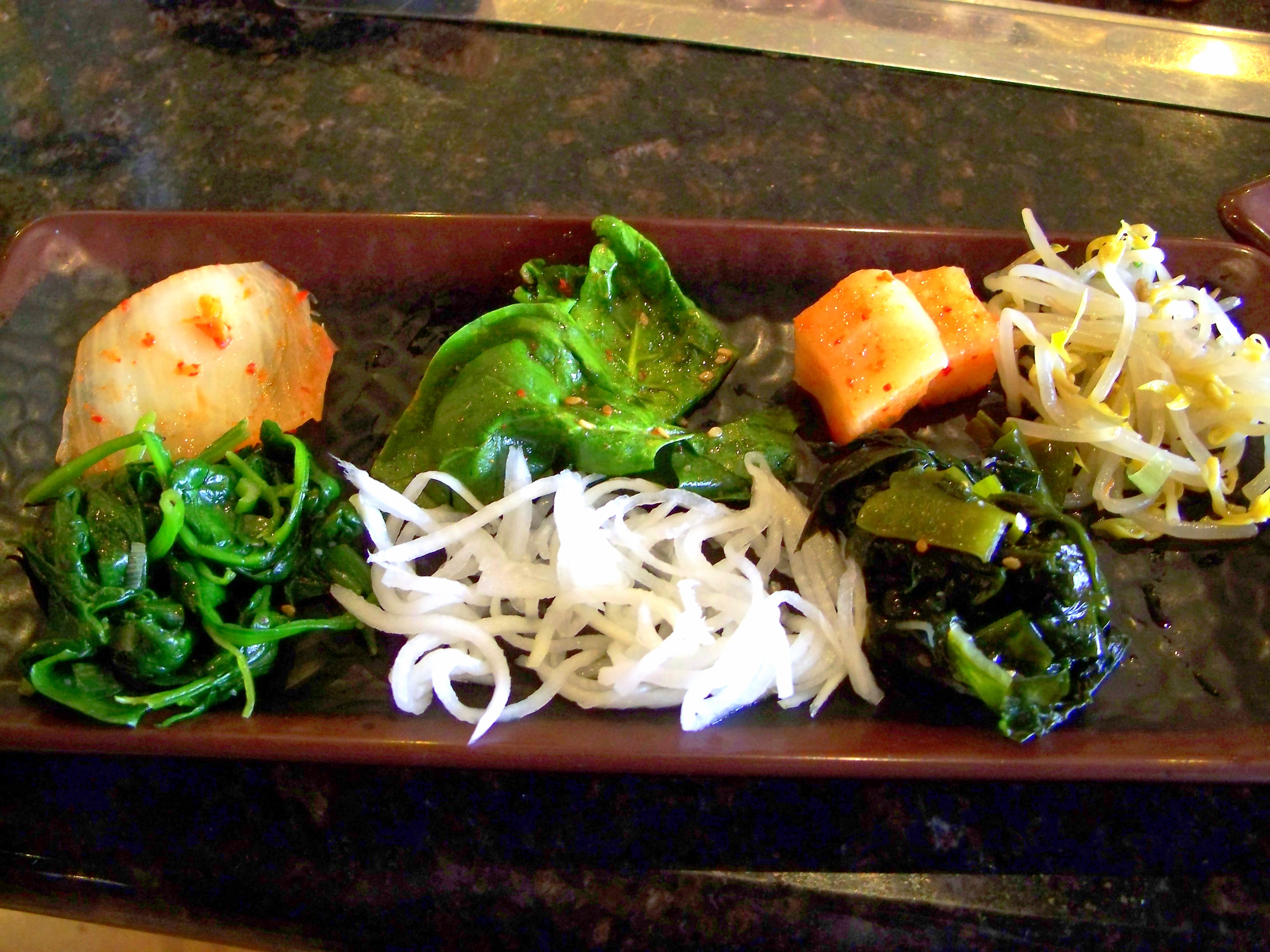
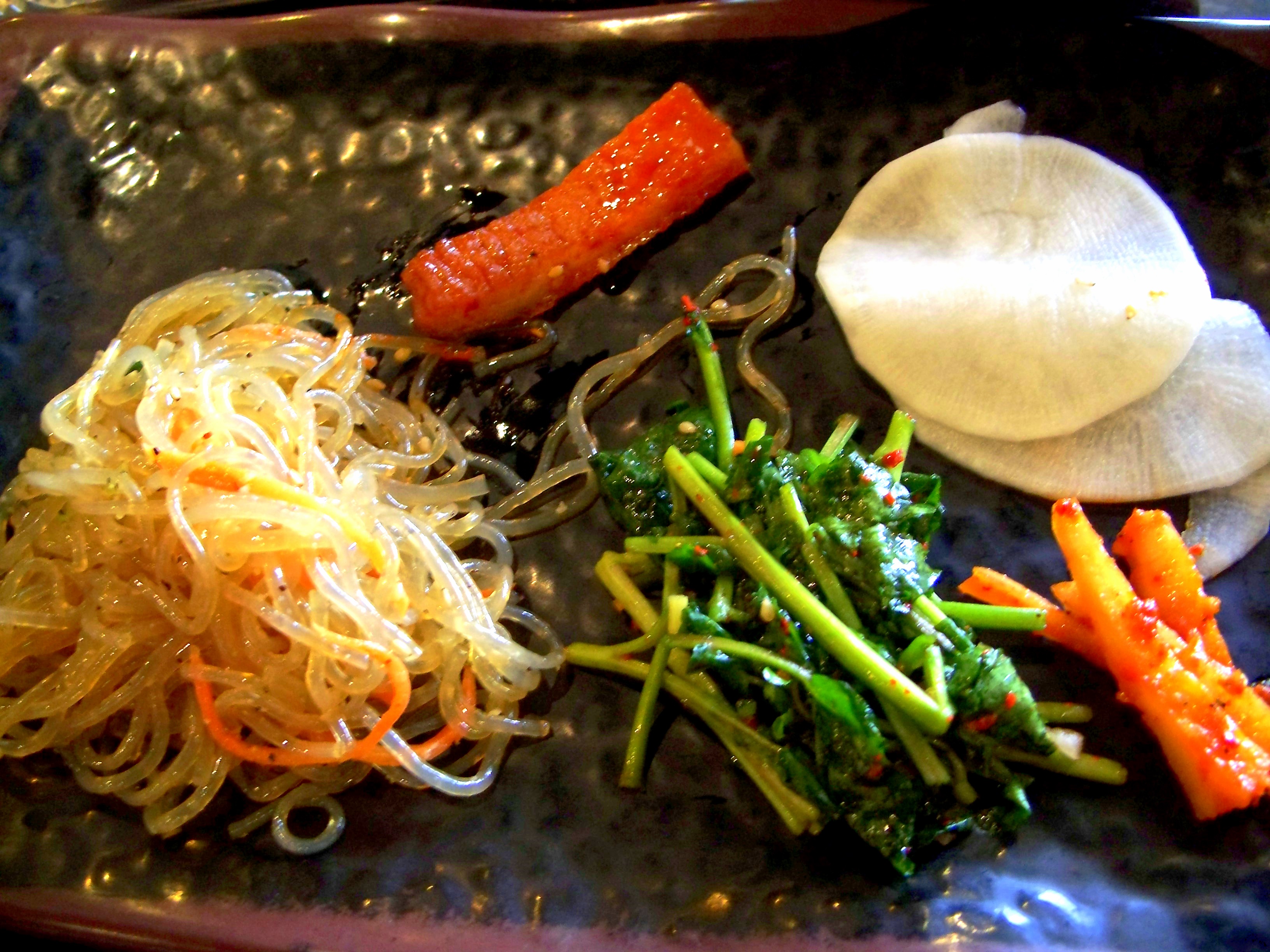
Above image: From left to right, first row: napa cabbage (wombok/baechu/cải bách thảo), don’t-know, don’t-know radish, bean sprouts; second row: not-sure seaweed, daikon-maybe? kohlrabi, no-idea. I tried a couple of angry-looking-red-peppered kimchi the angry-looking red-peppered odeng (first thing in the image below), but they weren’t too spicy (well, at least not in small quantities), the fried octopus (red, bottom right) was quite tongue-catching actually.


I finished a half mini-bowl of rice with just one piece of those. Now I’ve never been to a Korean restaurant before nor have I any Korean friends, so I’m just judging from the Korean movies I’ve watched: this place is typical Korean, rice is plentiful and brought out at the beginning (just like water), since (again, movie trivia) Koreans consider good eats cannot be without rice.

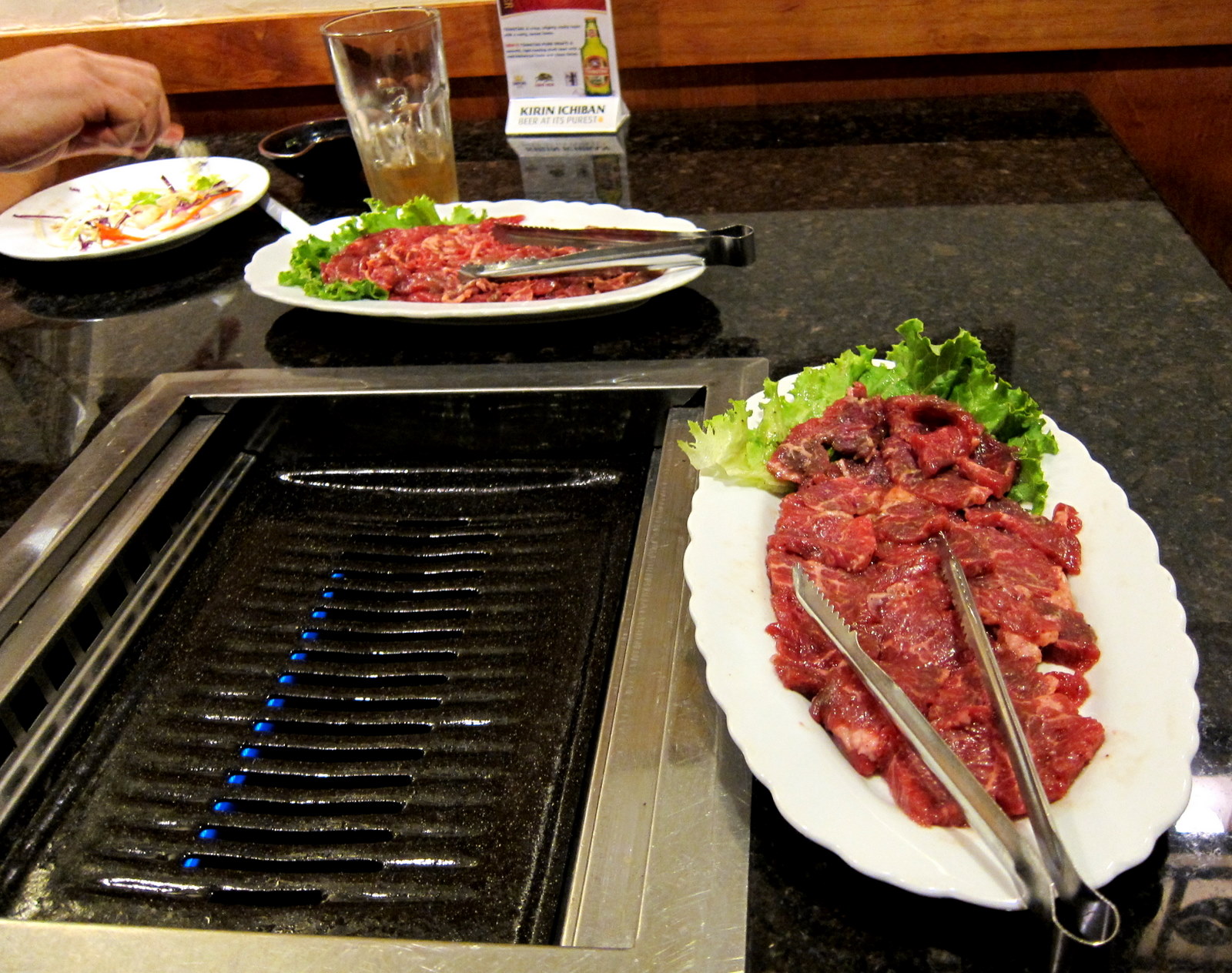
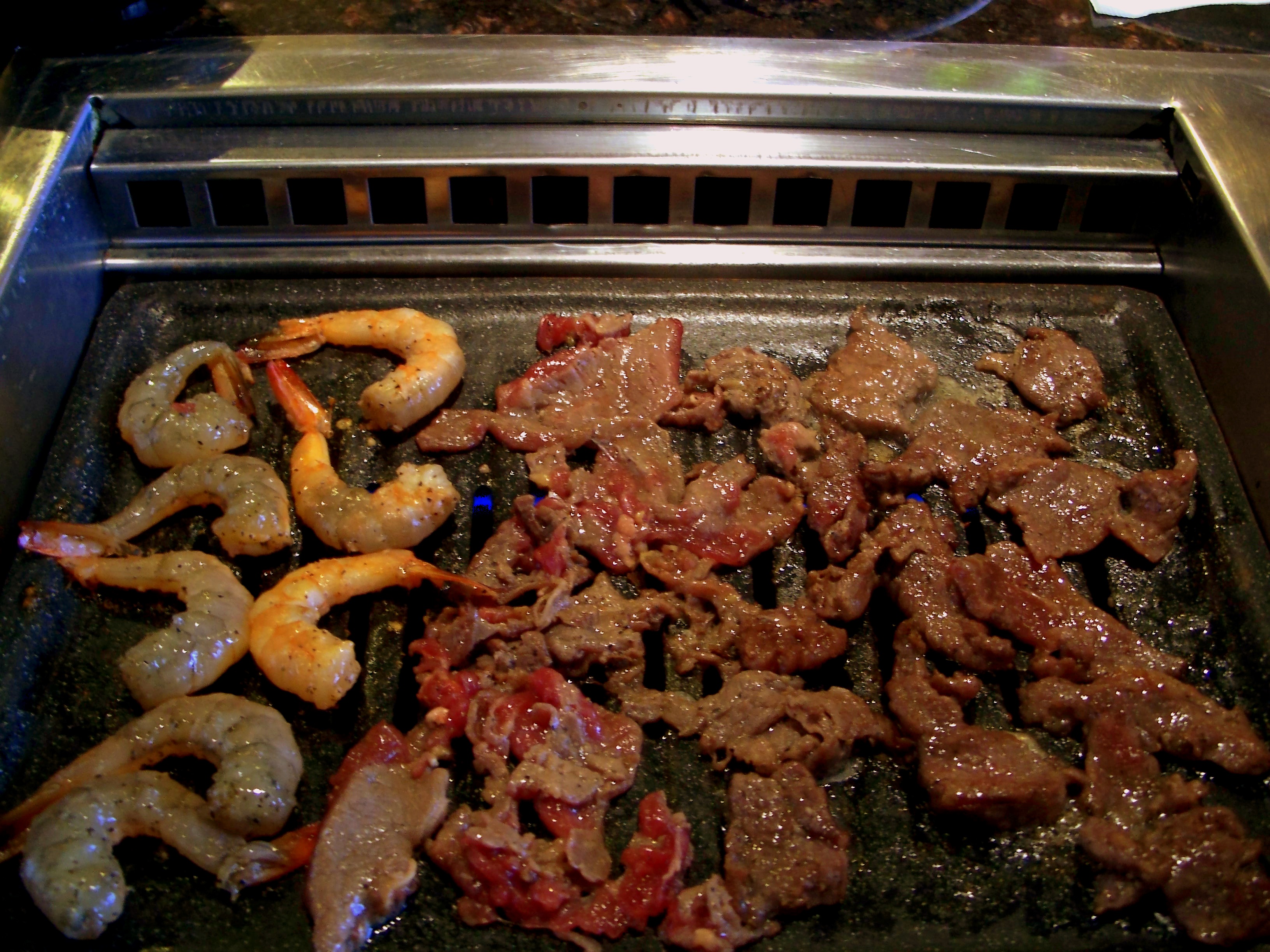
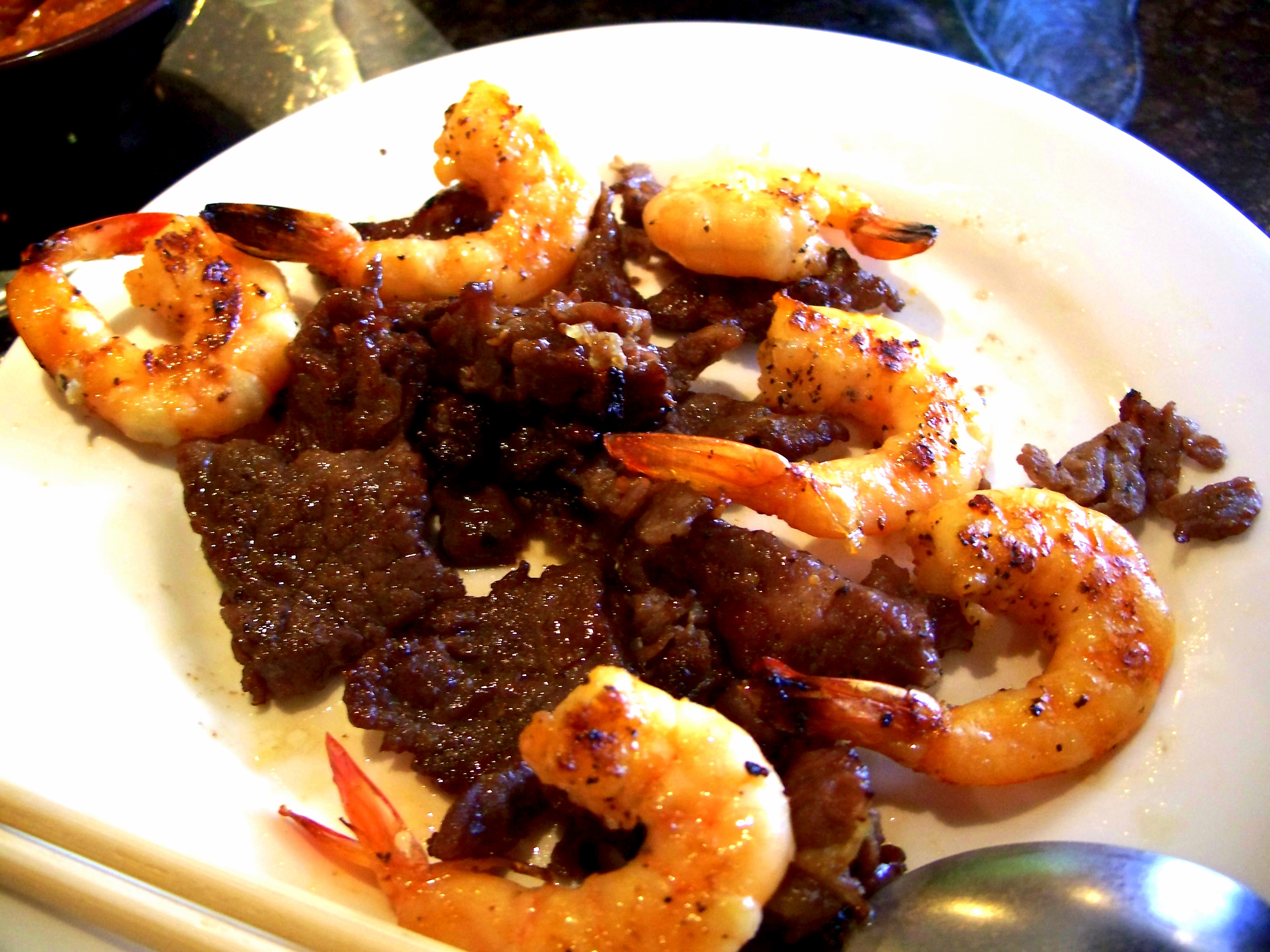
It’s also nice that the place has a grill at the table, and we can sizzle as much meat and shrimp as we want. Spicy smoke, fatty sound, savory emanation. Right next to a plate of fresh green-leaf lettuce (that’s right, not iceberg lettuce).


The meat is a little sweet, which is perfect. I am never a fan of eating uncooked veggie with cooked food. I think putting fresh bean sprouts into a bowl of hot phở is hideous, the textures just don’t cooperate. But nothing beats a lettuce wrap with beautifully-browned, well-cooked, well-seasoned meat inside. It’s marvelous. Although busy gorging I was, I also watched the Korean hostess got herself a plate: she wrapped a spoonful of rice and a piece of meat inside a lettuce leaf, making it the size of a tennis ball, and put the whole thing in her mouth at once. Now that is skill.


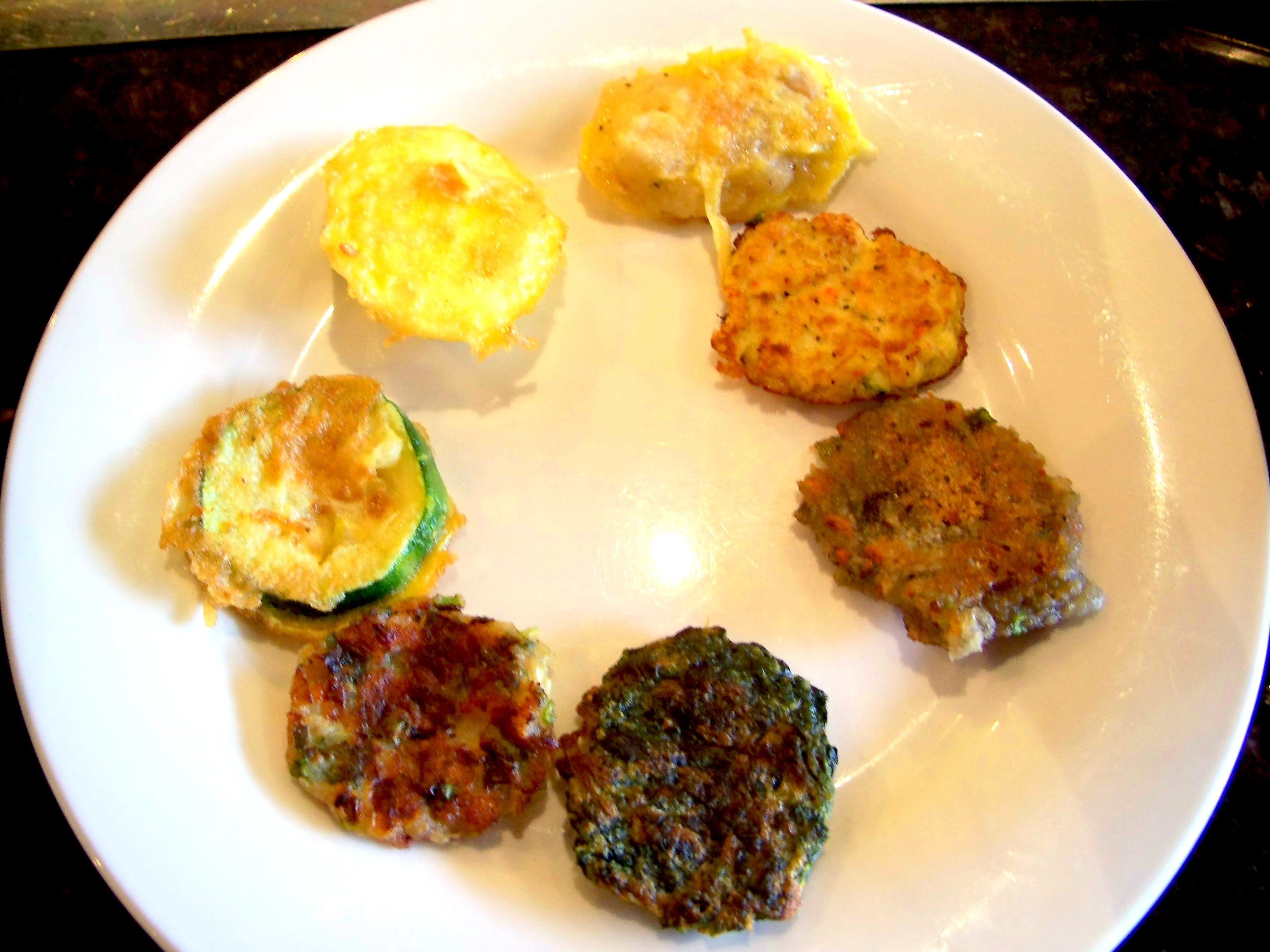
Fried veggie and egg. Beside the obviously must-be egg, I could pick out squash, but that was about it. Barely seasoned. No oil streaming out as I took a bite. They were all tasty appetizers.

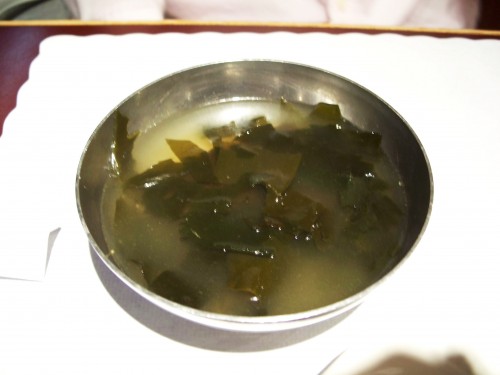
The seaweed soup is warm and slender, almost like refreshment. Little mom preferred the daikon soup. Many thumbs up. I will definitely try more Korean food. Now, for spice-inclined diners, the taste might be a little too plain (except the kimchi) compared to other Asian cuisines, and it seems like not much salt was used. Cost: about $60 for 3 people. Sure, this is much higher than Chinese buffet, a notch above Kim Son Vietnamese buffet, but the quality is well worth it. I have proof.

UPDATE (July 2010): This restaurant is now closed, replaced by Saigon Buffet (opened May 2011).