
Flavor Boulevard

We Asians like to talk food.
Subscribe

Non-baked avocado pie with nut crust
November 29, 2013 By: Mai Truong Category: Fruits, RECIPES, sweet snacks and desserts

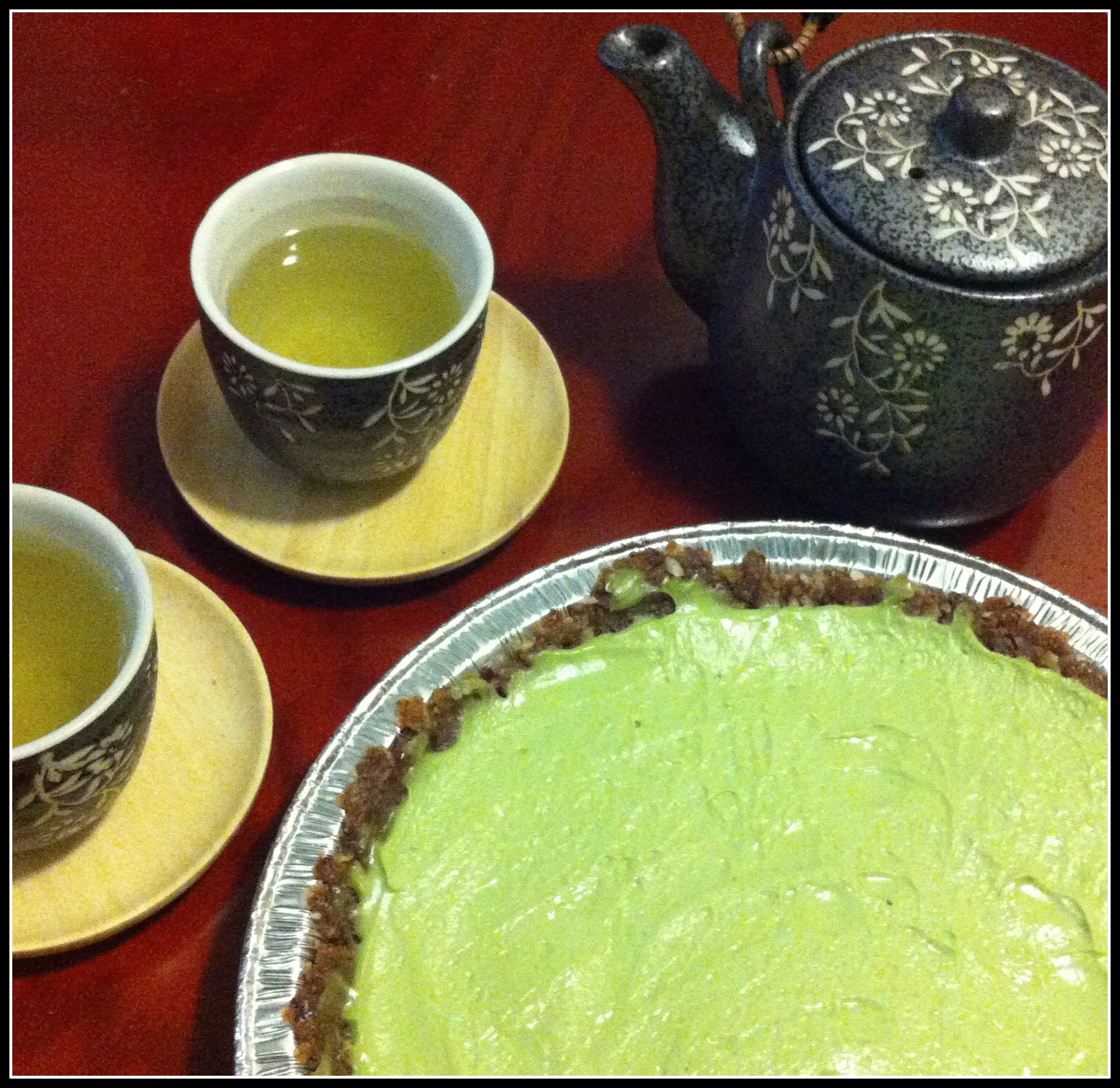
Avocado pie with gyokuro.

Avocado pie with gyokuro.

Thanksgiving. Gatherings. I was asked, “can you make dessert?” “Sure, I can make dessert.”

Yeah right. Five seconds later, “OH EM GEE. WhatcanImake!” It’s a Western party with Western people. I had never made a Western dessert before, not even chocolate chip cookies from dough that comes out of a tub (and then you just shape it into cookies and bake them, or not – one of the weirdest things about American people is that they love eating raw cookie dough like the Vietnamese like noodle soups. I don’t get it). So of course I did the same thing I do everyday at work – and also what I tell my students to do when they ask me homework questions: I googled.

The credit should go first to Cheryl. She once told me that a pastry chef at her previous job made an awesome avocado pie. Pie is common at Thanksgiving, and avocado is not too sweet and still around (the very tail end of the season, though), I figured at least I would like it.

Some part of me was wishing I could make a savory dish instead, one that I could taste and see the final product. (With pies, you can taste the components before you assemble them together, and then it’s in the hands of Fate.) The nice thing about dessert, though, is that I can make it the day before, and if I fall flat on my face, I’d still have a day to do it again. Thinking so at least helped me regain my composure to make it work.

Everyone at the party was quizzical about the green thing. I told everyone to try it to figure out what made it green (mainly I just wanted my pie to be eaten). A few people just went through a list of green things they could think of, including artificial colorings. It was fun. 😀 (And yes, they liked it too. 😉 )

Non-Baked Avocado Pie with Nut Crust
[to fill a 9-inch pie pan]

1. Brazil nut and date crust: (inspired by this Veggie Blackboard recipe)

  • 35 Brazil nuts
  • a handful of dried tart cherries
  • 45 pitted dates (it doesn’t have to be Medjool dates, I used Deglet dates, which is far cheaper per pound)

In a blender/food processor, grind the nuts into crumbs, blend in the dates and cherries until it becomes a sticky crumbly bunch. [You can substitute the dates with pitted prunes and cherries with raisins, dried blueberries, etc. or nothing. Basically, you need nuts and dried fruits.] Press the “dough” into the foil pie pan to shape the crust. Refrigerate while making the filling.

2. Filling: (inspired by this Kirbie’s Cravings recipe and one of the comments to that post)

  • 2 large Hass avocados
  • 2 lemons – to make 1/3 cup lemon juice
  • 1/2 can sweetened condensed milk

Blend them together into a smooth, thick paste. The lemon juice keeps the paste from discoloring (it stays green forever!). The avocado makes it luscious and not too sweet.
Fill the crust. Cover and refrigerate until serve.
One shot: Californian avocado vs. Peruvian avocado

September 04, 2013 By: Mai Truong Category: American, Fruits, One shot

peru-cali
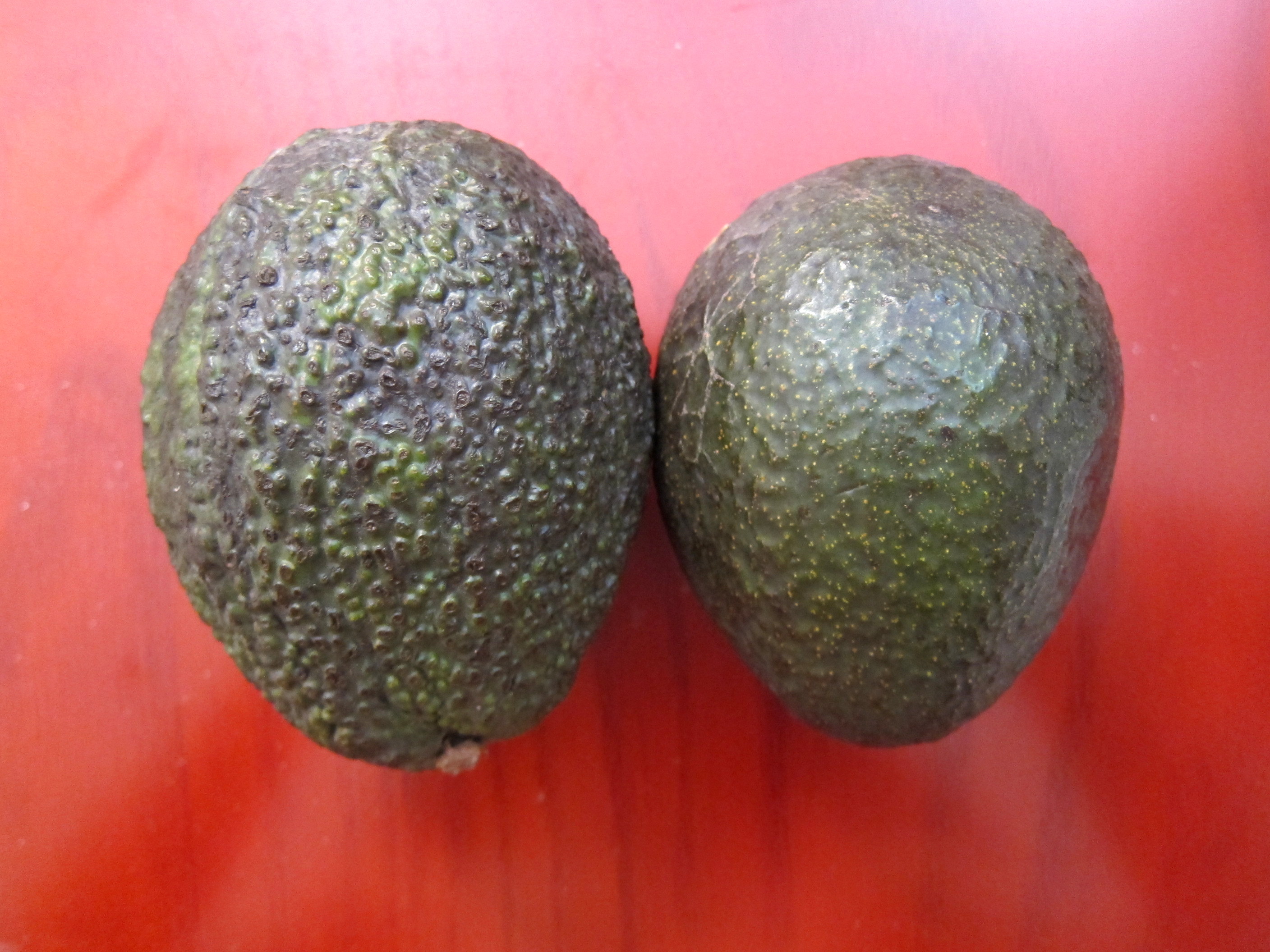
On the left is a Hass avocado from Peru, on the right is a Hass avocado from California.

Hass avocado is a cultivar of avocado, and it has a cute history. In 1925, Mr. Rudolph Hass, an amateur horticulturist, bought a small 1.5 acre avocado grove in La Habra Heights, Southern California. His plan was to graft old Fuerte avocado branches – at the time, Fuerte was the best avocado cultivar – with young saplings grown from some avocado seeds, which were sold at a local nursery. Those seeds were cross-pollinated many times by nature, and the grafting did not go well for one of the young trees [little stubborn sapling!], but per his grafter’s advice, Mr. Hass kept that sapling to see what would happen anyway. When the sapling was only over a foot tall (some time in 1926), it bore three fruits [d’awww!].

Normally, the Fuerte cultivar would take at least five years to produce fruits. Not only the odd stubborn young tree grew faster than the Fuerte, it also grew straight up and did not spread as wide, so it was more land-efficient (more trees per acre). Most importantly, its fruits tasted the same, if not better than the Fuerte. Hence, the Hass avocado became the most popular varietal, making up 95% of all today commercially grown avocados. [Moral of the story: don’t cut down your tree even if it refuses to do what you want at first. 🙂 ]

Back to California vs. Peru.

Both of these are Hass avocados, and they’re roughly the same size (the Peruvian ones are slightly bigger). At Berkeley Bowl, the Peruvian Hass avocados were sold for 89 cents each. This is insanely cheap, considering the Californian ones (labelled “XX Large Hass avocado”) go for 1.69 dollars each. [How can imported produce be so cheap? I feel bad for the Peruvian farmers!] While I’m loyal to the Cali ones, I also love cheap things to try new things. I bought four of each type.

Appearance: Cali: smooth skin, Peru: bumpy skin.
(Now I understand why avocados are also called “alligator pear” – although I’ve never heard anyone say that myself).

Convenience: Cali: knife easily cuts through the skin, Peru: I basically had to saw it open [same knife, in case you wonder]. So yes, the Peruvian skin is much thicker.

Taste: Cali: normal buttery, Peru: quite bland.
More concrete comparison: I always mash avocado, add some sugar and chill it in the fridge –> instant dessert (like ice cream). For the Cali avocado, 1 teaspoon of sugar is enough. For the Peru one, I add 2 teaspoons of sugar and it’s still bland (like a potato).

Texture: Cali: soft, Peru: hardy and stringy.
I couldn’t even mash the Peru one. Not because it’s not ripe. It was actually so ripe that the meat already darkened, but it was somewhat unyielding like a waxy potato. I also had to pull strings out of my “ice cream”, this avocado was so old a tree would grow out of it the next day.

I’m not going to preach locavorism or anything, but it’s clear which one is the better choice. (Supermarket fruits are always picked unripe to survive the transportation, so I have doubts that the Peruvian avocados are actually inferior to the Californian ones, it’s just that they were transported from much further away, it’s a wonder they managed to preserve any flavor at all.)

Tags: