Flavor Boulevard

We Asians like to talk food.
Subscribe

Author Archive

One shot: soba lunch at Ippuku

October 30, 2013 By: Mai Truong Category: California - The Bay Area, Japanese

ippuku-tenzaru-soba
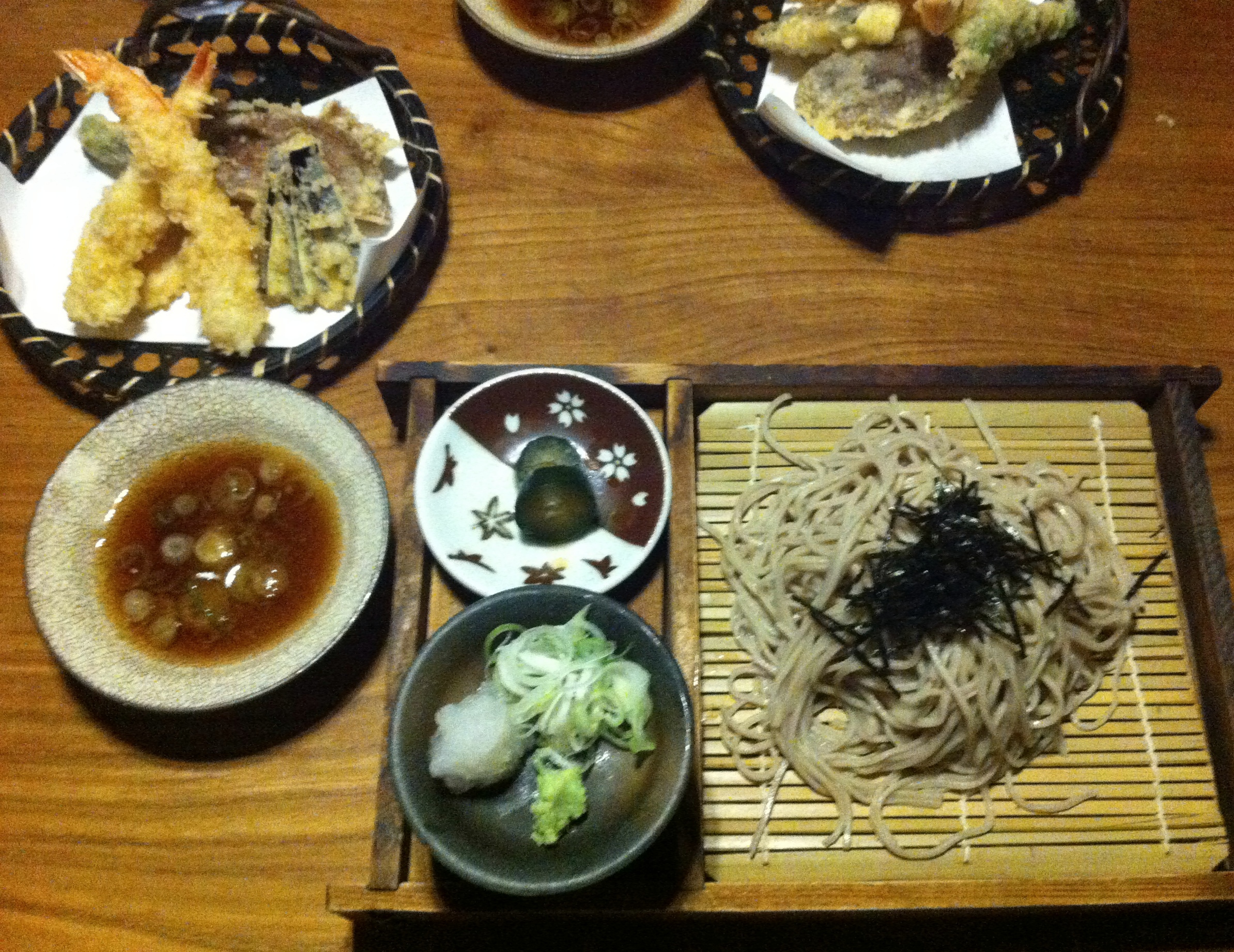
The luxury of cold noodles on colder days. Everything was perfect, from the taste of wasabi in the noodle dipping sauce to the tail end of those shrimps. So perfect that I couldn’t properly focus my camera phone.

Too bad Chef Koichi Ishii only makes the soba on Friday and Saturday from 11 am to 1 pm.

Pictured: Ten zaru soba (soba with tempura shrimps and vegetables) – $18. More details on what’s in the picture are here.

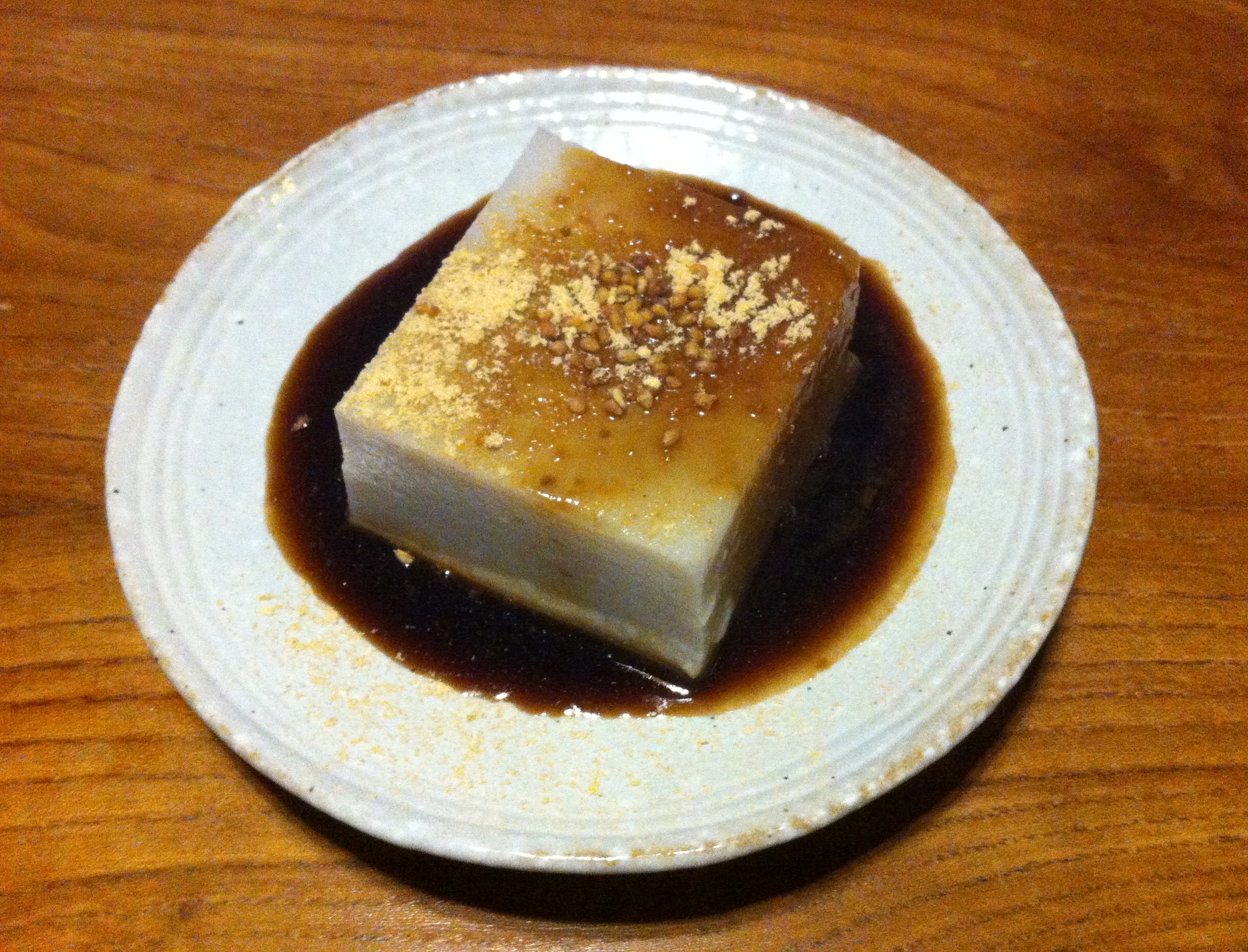
For dessert, we had soba tofu (tofu made from buckwheat instead of soy) with white sesame and kinako (roasted soybean flour), drenched in melted brown sugar. (^_^)

ippuku-soba-tofu

Shanghai Dumpling King revisit

October 27, 2013 By: Mai Truong Category: California - The Bay Area, Chinese

sdk dumplings and green beans
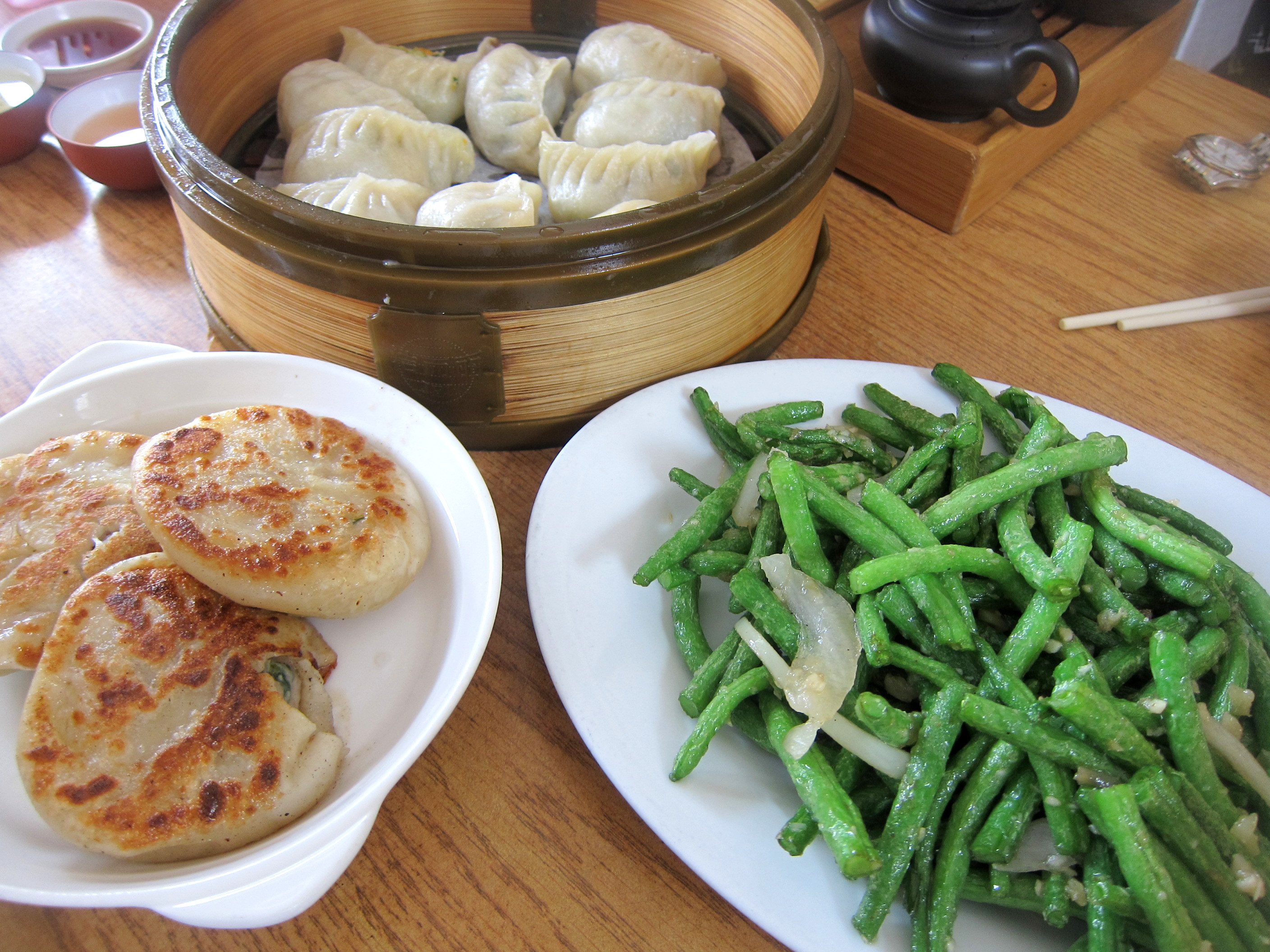
Shanghai Dumpling King is hands down the best value dimsum restaurant in the Bay Area – affordable price, great dumplings (especially the xiao long bao (Shanghai soup dumplings)), friendly staff (the man remembers me from over a year ago!). Click on the image below to see what we got this time around.


Not pictured is the Hung Zhou crab and pork dumplings, but we’ve covered them last time. (They are basically xiao long bao with crab meat, and this time they were even juicier than the xiao long bao. Mmmmmmm)

On a side note, I recently discovered Ponga, which is still in beta phase but has lots of potential to become a great tool to visually tell a story – every detail in the picture can be tagged, described, linked to more info, and further attached with an image or a video. This post is my first experiment to blog using Ponga. What do you think? Do you like it? Hate it? Find it cumbersome? Let me know your feedback in the comments!

Save one meal each month for moon bears

October 23, 2013 By: Mai Truong Category: Opinions, Website

wilfred
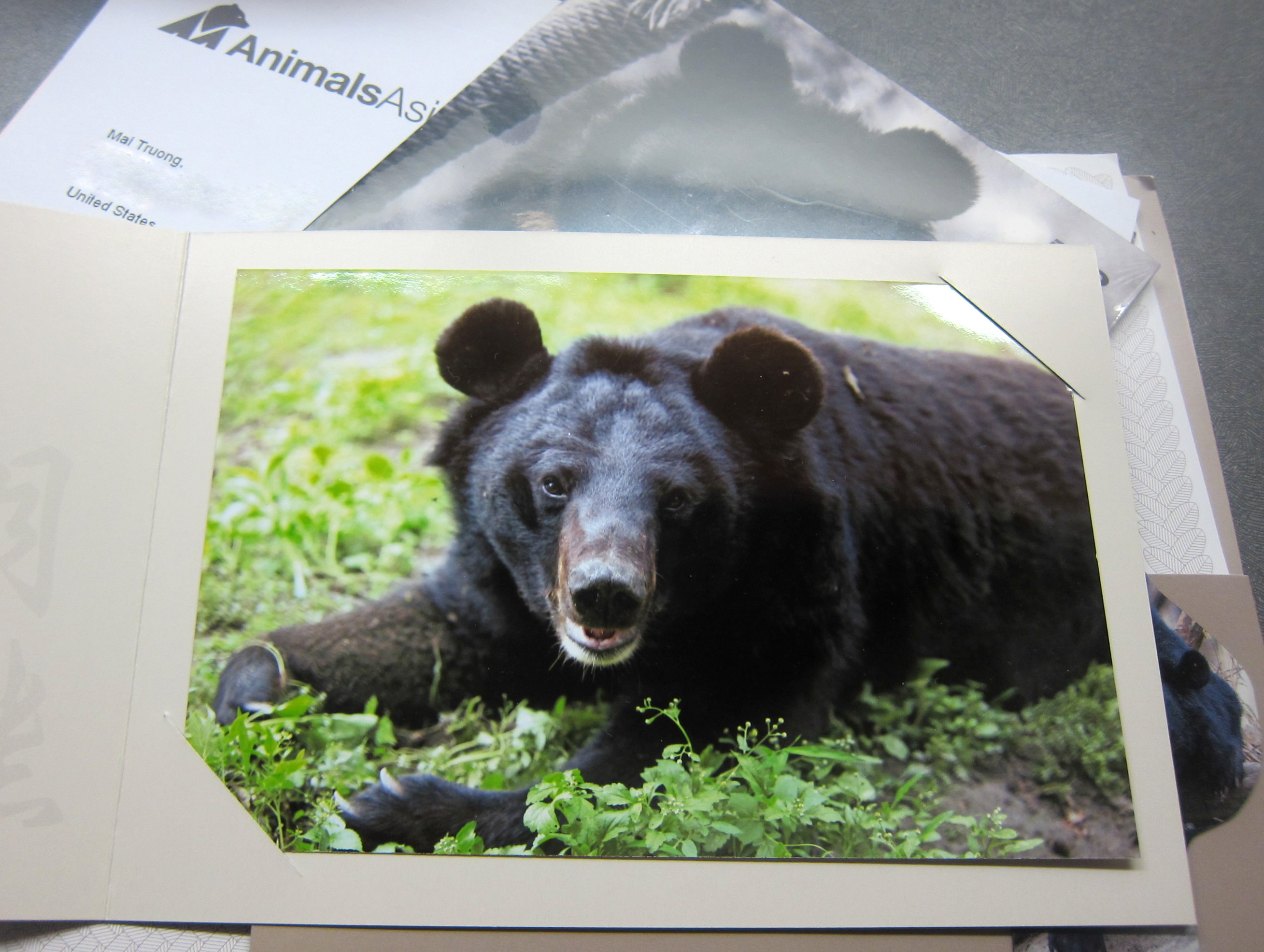
This is Wilfred. He lives in Chengdu, China. He’s an early-middle-age moon bear (not because he’s from the Moon but because like everyone in his species, he has a moon-shape patch of yellow fur on his chest). He likes watermelon and loves to climb. On paper, he’s my sponsored bear.

Wilfred is blind in both eyes, most likely a result of the poor treatment for bile-farmed bears. But at least he’s alive and now cared for in an animal shelter, something that thousands of his species can only dream of while being barred in iron cages, fed only gruel and extracted bile twice a day.

Bile farming   —   In Asia, there’s a belief that bear bile, a digestive juice produced from the liver and stored in the gall bladder, has medicinal effects. This belief originates from China, spreads to the neighboring countries, and results in the shameful practice of bile farming. Wild bears are hunted and kept captive in “bile farms”, where their abdomens are pierced to extract the bile from the gall bladders twice a day. Only rarely is there anesthesia, their abdomens are either stabbed repeatedly until the gall bladder is found, or the wound is kept perpetually open (not allowed to heal), which causes infection and so much pain that they would chew their own paws. The bears stay in cages designed for easy access to their abdomen, and the cages are too small for them to stand up or move around at all. They live for years in such condition until they no longer produce any bile, when they are killed for meat, fur, paws and gall bladders, or until they die from malnutrition and diseases.

Bear bile farming started in North Korea in the 1980s and spread to China, South Korea, Vietnam and most recently Laos (since 2005, when Vietnam banned bile farming). Today, bile trade is legal in China, Laos, Japan and South Korea, and illegal in Vietnam (however, due to loopholes and government negligence, bile farming still exists in Vietnam *sigh*).

Bear rescue   —   Organizations such as Animals Asia set out to negotiate with the governments and the farmers in these countries to rescue the bears and to provide them medical care (many bears need surgery after being rescued because of the years of damage) and food in bear sanctuaries. To date, Animals Asia has rescued a total of 400 bears. However, tens of thousands are still in bile farms, mainly in China. It’s an arduous process to convince the indifferent, money-hoarding governments and the farmers, who, for the benefit of the doubts, are presumably just trying to make a living. It’s also expensive to raise bears the humane way.

I had known about bile farming for many years, but I never looked up any information about it. As time passed, it became something like the thinning of the ozone layer – a problem that I feel so troubled by that I buried in the back of my head and avoided thinking about it altogether. Early August, my mom saw on TV that some organization was rescuing bears from Ha Long Bay (Vietnam), and she told me about it. That organization turned out to be Animals Asia. One of their programs is “sponsoring a bear,” a monthly donation program. You can sponsor a normal bear for $45, or a special care bear (one that is more severely damaged from bile farming, like Wilfred) for $55 a month.

It doesn’t take a whole lot to help   —   Forty five dollars was exactly how much I paid for one dinner at Belli (after my cousin took care of more than half the bill). That dinner wasn’t anything exceptional either, that’s just how much one would expect to spend on a decent meal made of good ingredients around Berkeley. In the past two years, I regularly spent this much or more per dinner, which is quite outrageous when you think about it. Even more outrageous is that rarely did those expensive meals leave me satisfied. So that just leaves a bad taste. But now, with the money I spend on one single meal, Wilfred can have enough food for a month, and I believe he enjoys his food a lot more than I enjoy mine.

Admittedly, it feels weird talking about my spending and donation. It sounds like I’m bragging about my non-existent wealth and puny generosity, and I apologize for that (._.). My intention, though, is to advertise for Animals Asia and hope to convince you to donate for the bears (._.). Animals Asia seems different from other wild life organizations – they don’t bombard us with letters, stationaries and calendars. The donated money at least doesn’t seem to be spent on advertising and “raising awareness”, but goes straight to the animals.

On my end, except for special occasions and work-related meals, you won’t see me stuffing my face at restaurants anymore [says the girl who just stuffed herself with pork shoulder last week!]. Wilfred (and his bear buddies) are holding down the fort for me. I only wish I could take a picture of them chowing.

P.S. Animals Asia’s website is not quite easily navigated at the moment [Update: Animals Asia tweeted me that they’re in the process of changing website], so here are some info links, if you’re interested in donating for the bears *wink wink nudge nudge*

China Village on Solano

October 16, 2013 By: Mai Truong Category: California - The Bay Area, Chinese

china-village-albany
In summer 2011, I ate at China Village once per a friend’s recommendation and was not super impressed (like I ever). Then it burned down in early 2012 (so did Intermezzo and a few other restaurants on Telegraph which I also visited in summer 2011…) and I hardly missed it. A few days ago, Cheryl and Eric called me up, “We’re going to that restaurant on Solano I told you about, wanna come?” I thought Cheryl told me about some dimsum place in Albany… “Sure!” Turns out it was China Village. (Now I wonder if she ever mentioned a dimsum place at all…)

Although China Village does have dimsum, it’s not a place to order dimsum. It is known for Szechuan food – spicy, oily, rich and usually a combination of all three. The menu has a gazillion items, and your experience definitely depends on what you order. Not everything is a wow (as clearly indicated by my first visit, and by names such as “classic sweet and sour pork with pineapple”[*]). Ask the waiter for recommendation.

Usually, I ask the waiters just for kicks, because 9 times out of 10 their recommendations turn out disappointing (most memorable examples: here and here). But China Village does surprise me with its service – the restaurant is fully operated by family members, the waiters remember Cheryl and Eric from their previous visits, and the chef[**] personally came out to tell us to switch order because what we wanted would be too spicy. That’s sweet. 🙂

cv-beef-noodle-soup
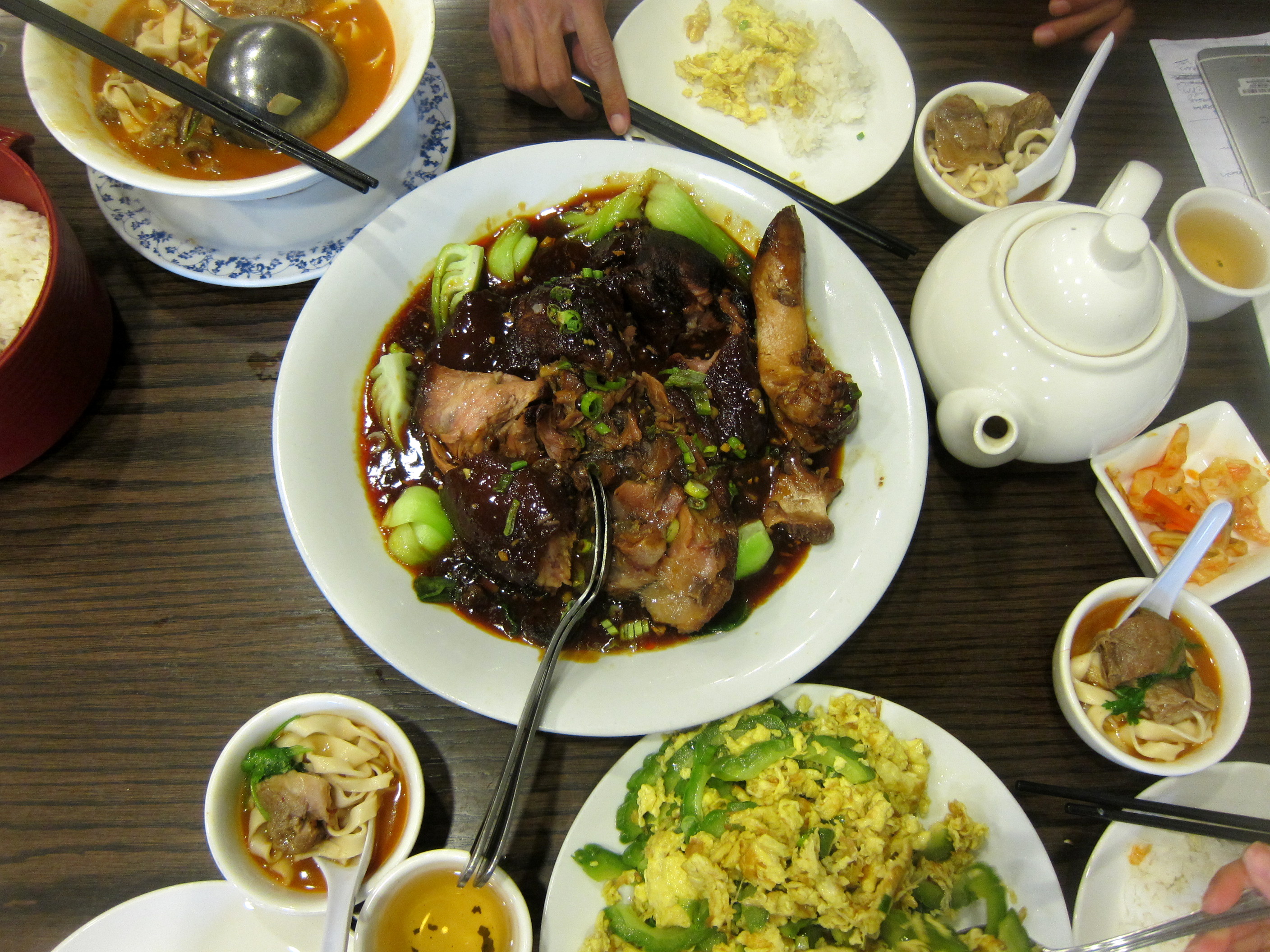
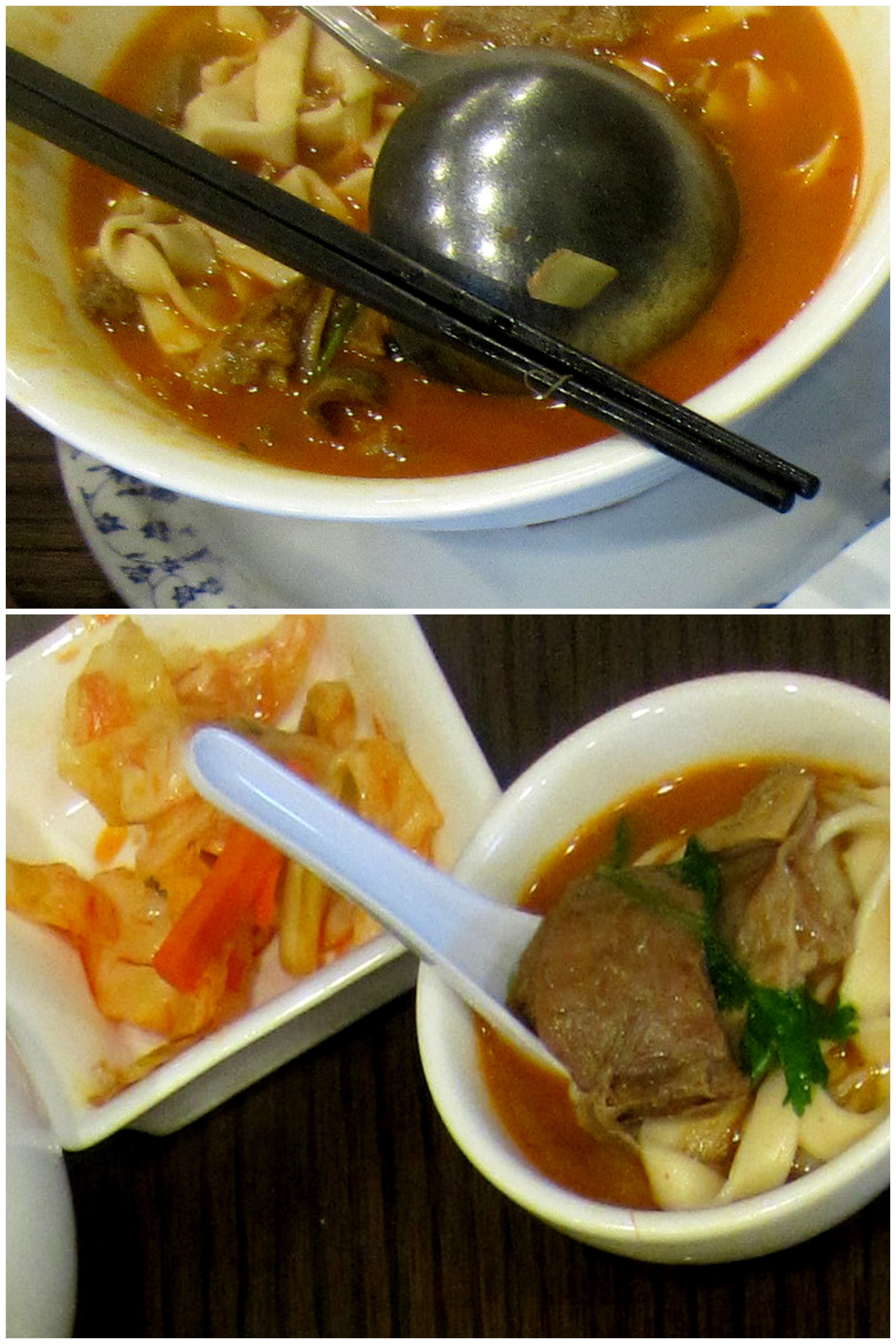
Item #206 – 川式牛腩面 Szechuan beef stew noodle soup ($8.95). The beef is similar to the beef in niu ro mien but the broth is spicy.

cv-dong-bo-duck
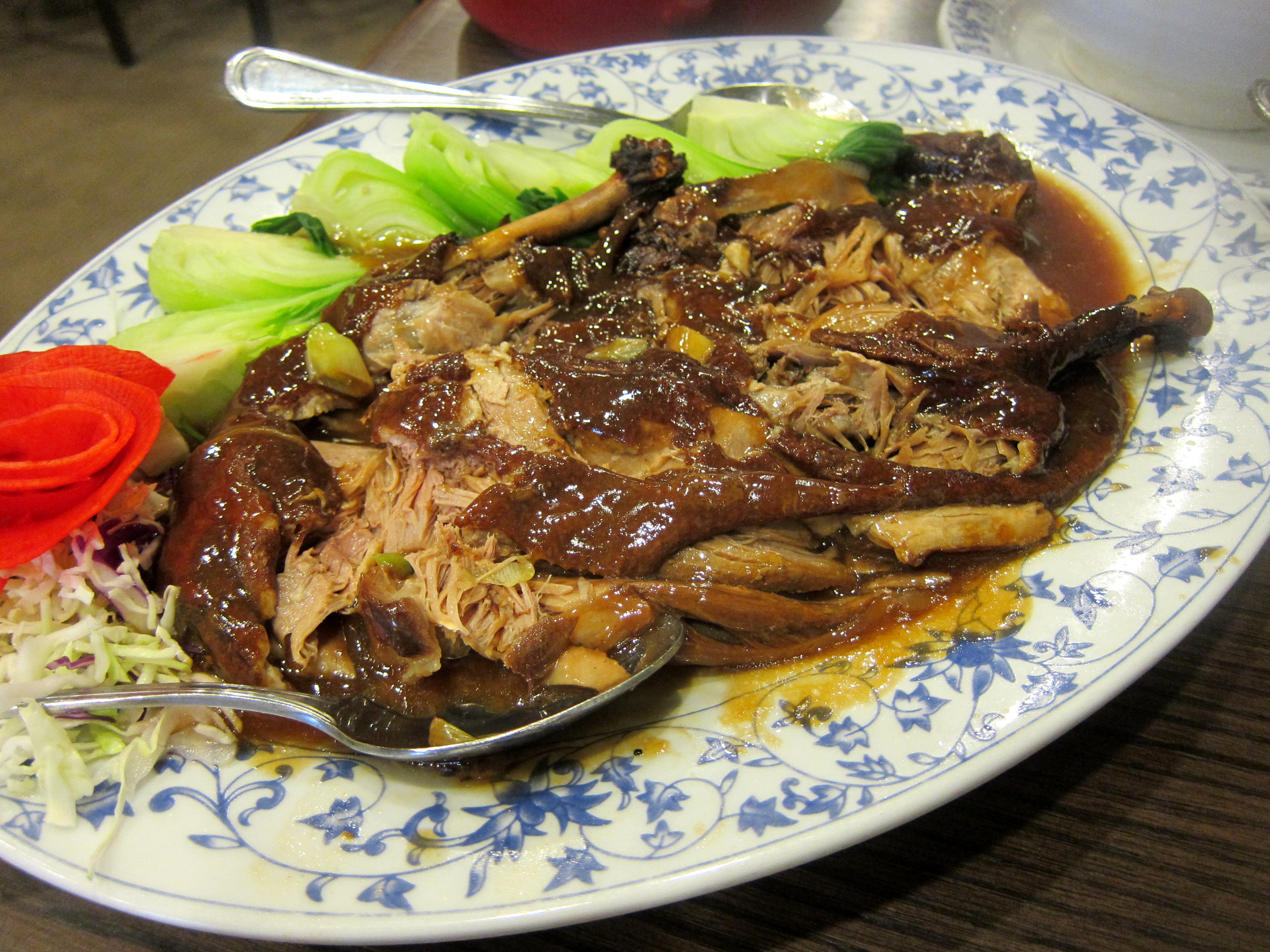
Item #71 – 东坡烧鸭 Dong Bo braised duck ($16.95). Not spicy, super tender. This is what we switched into per Chef John Yao’s warning. (At the beginning, we asked for a mild #69 – 砂锅啤酒鸭 clay pot duck with beer-infused sauce – but Chef Yao said it can’t be made mild.)

cv-goya
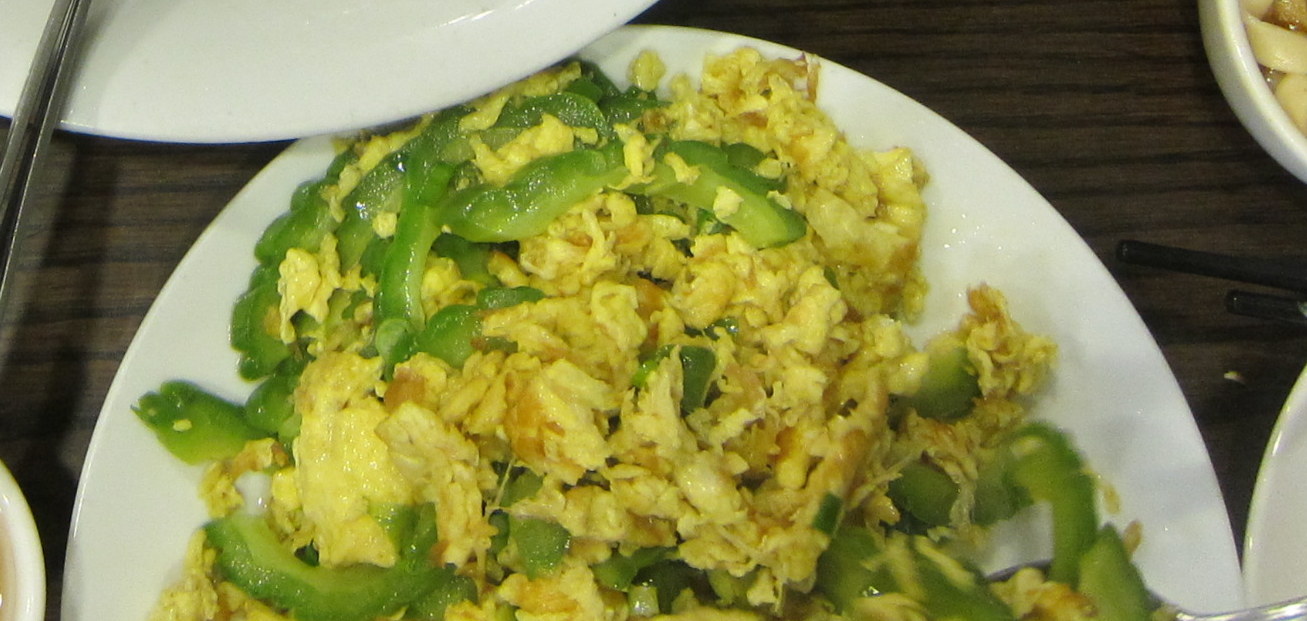
Item #175 – Sauteed bitter melon with eggs ($9.95). Definitely not “restaurant-worthy item” in Asia but it’s hard to find bitter melon here (except in Vietnamese and Chinese markets) and we love bitter melons too much to pass.

cv-pork-shoulder
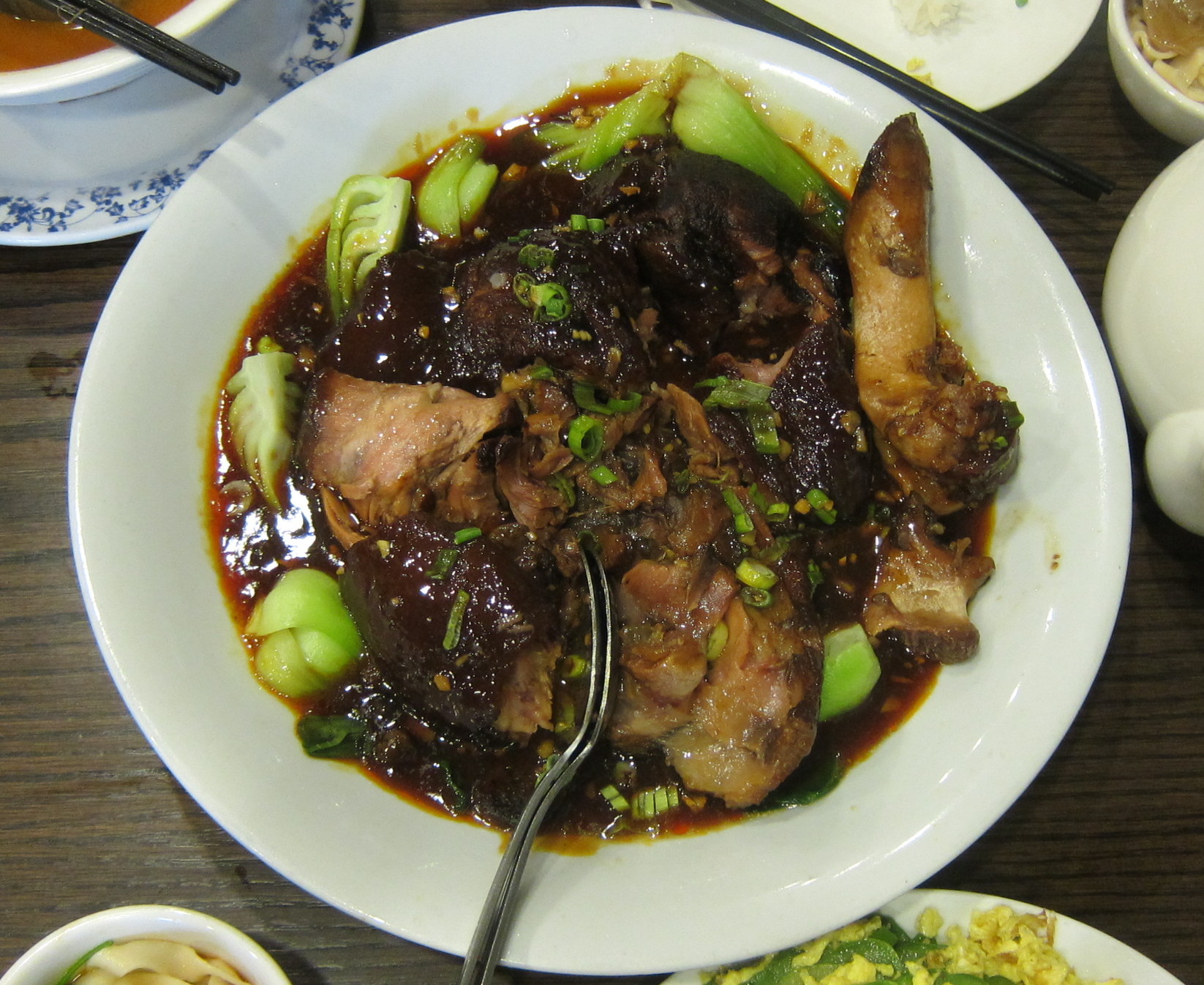
Item #72 – 家常肘子 Five spice hot and spicy pork shoulder ($18.95). This one can be made not spicy. And LOOK AT THAT SIZE!!!!! The three of us could barely make a dent! SUPER tender, SUPER flavorful. I can eat it for days (and I do, with the leftovers…)

With the bill, the restaurant also gave each of us a small bowl/cup of sweet red bean soup with tapioca pearls (not the tapioca in bubble teas. These are “bot bang” in Vietnamese, but what are they called in Chinese?). It was so simple and so soothing.

This time, I can see why my friends keep going back here.

Address: China Village
1335 Solano Avenue,
Albany, CA 94706
chinavillagealbany.com

Footnote:
[*] In Vietnam (and I suspect throughout Asia), not every eating establishment can be called a “restaurant”, and not every dish is worthy of being served as a restaurant item. Sweet and sour pork can be good, but it’s nowhere complex and luxurious enough to be in the same menu with, say, “five spice pork shoulder”. The chefs know that, the Chinese customers know that, and sweet and sour pork is just there for the people who don’t stray from what they have at Panda Express. So, if you go to a Chinese restaurant worthy of being called a restaurant, don’t order sweet and sour pork.

[**] The chef is quite established. I like that the “five spice” sauce for the pork shoulder actually has over 8 ingredients.

These pictures needed no editing at all, the shine and glory of the meat are their actual shine and glory. And I still can’t get over how tender that pork shoulder was. (T_T)

One shot: Ramen Underground ramen

October 09, 2013 By: Mai Truong Category: California - The Bay Area, Japanese, noodle soup, One shot

ramen-underground-sf
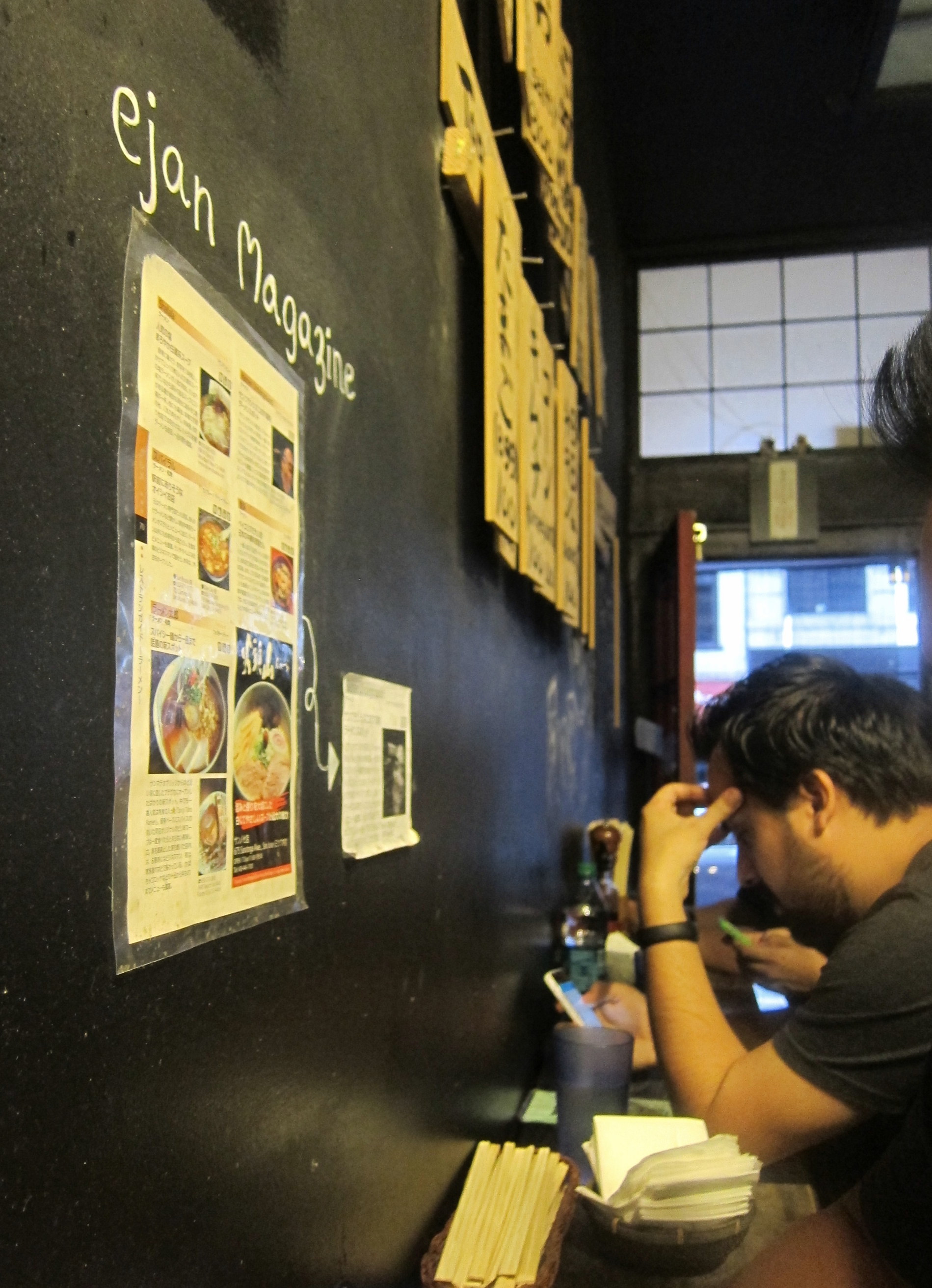
This ramen shop in the Financial district looks cute. Black walls with Japanese writings, a clock with numbers spelled out in hiragana, and a t-shirt that (I assume) sells for 3000 yen (~30 USD). The owners seem to try keeping it as hole-in-the-wall as possible (to make it appear authentic?). Of course, despite what the name might suggest, it’s not actually underground, nor do you need any special thing to get in.

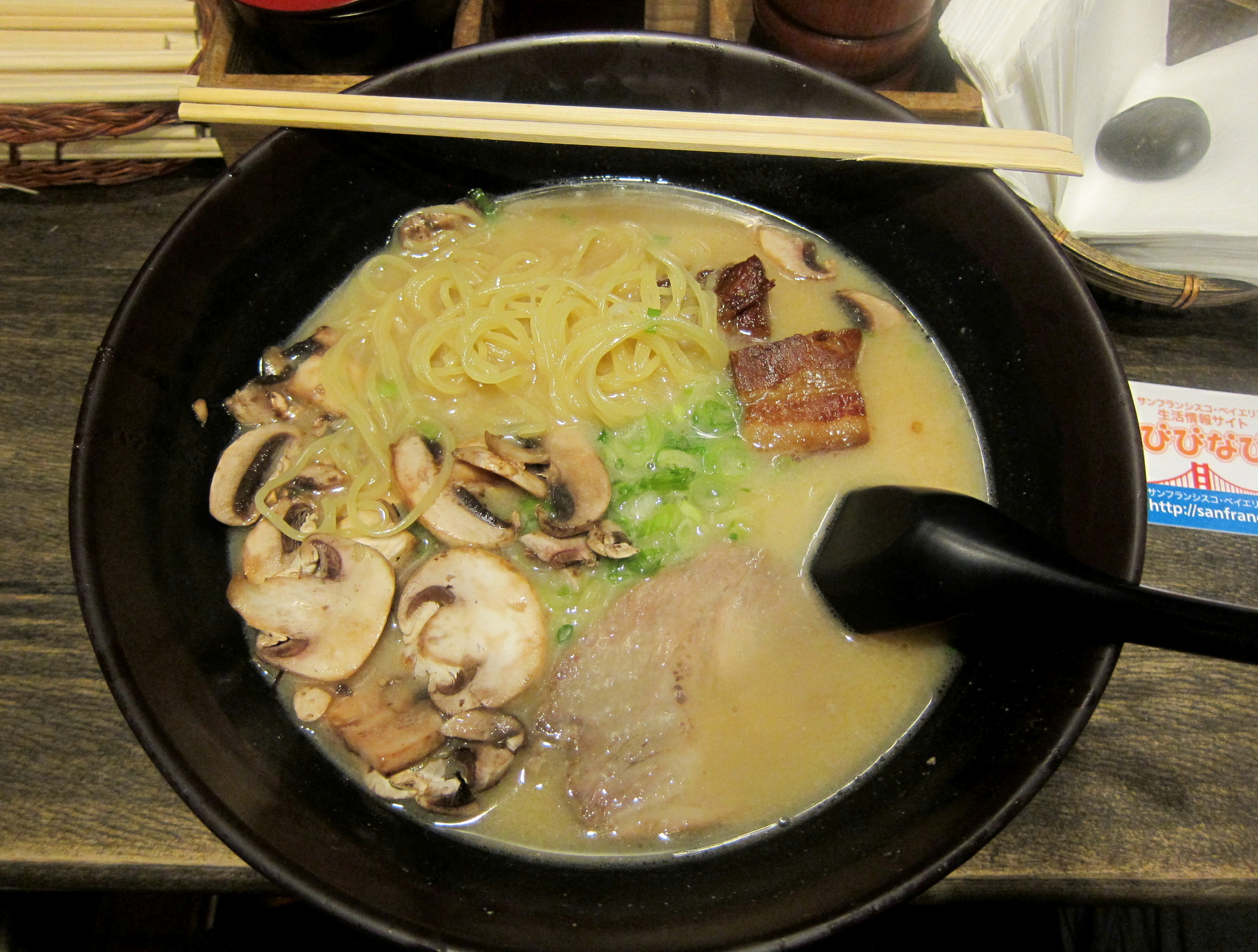
All basic ramens are $8 with $1 toppings. The basic ramen contains your choice of broth, pork (chashu), scallion and mushroom.

ramen-underground-ramen
My miso ramen with extra kakuni (braised pork belly). The mushroom is raw (not only is that just wrong – think about cold mushroom in a luke warm broth! bleh!, enoki would have made a MUCH better ramen companion than portobello T_T). There’s ONE puny slice of chashu. The broth is fine but it’s missing something… (more pork, probably!!!) At least the noodle is chewy.

If you’re curious, this is what disappointment tastes like.

(Actually we later realized that we should have asked for an egg, that’s what missing. But still, we could really use another slice of pork…)

Address: Ramen Underground
355 Kearny Street
San Francisco, CA 94108

It’s packed when we went for dinner and online reviews suggest that there’s always a line at lunch, but San Francisco, when will you stop hyping up every. single. thing!

Work at the Farmers’ Market

October 02, 2013 By: Mai Truong Category: California - The Bay Area, Festivals, Opinions

StonestownFarmersMarket
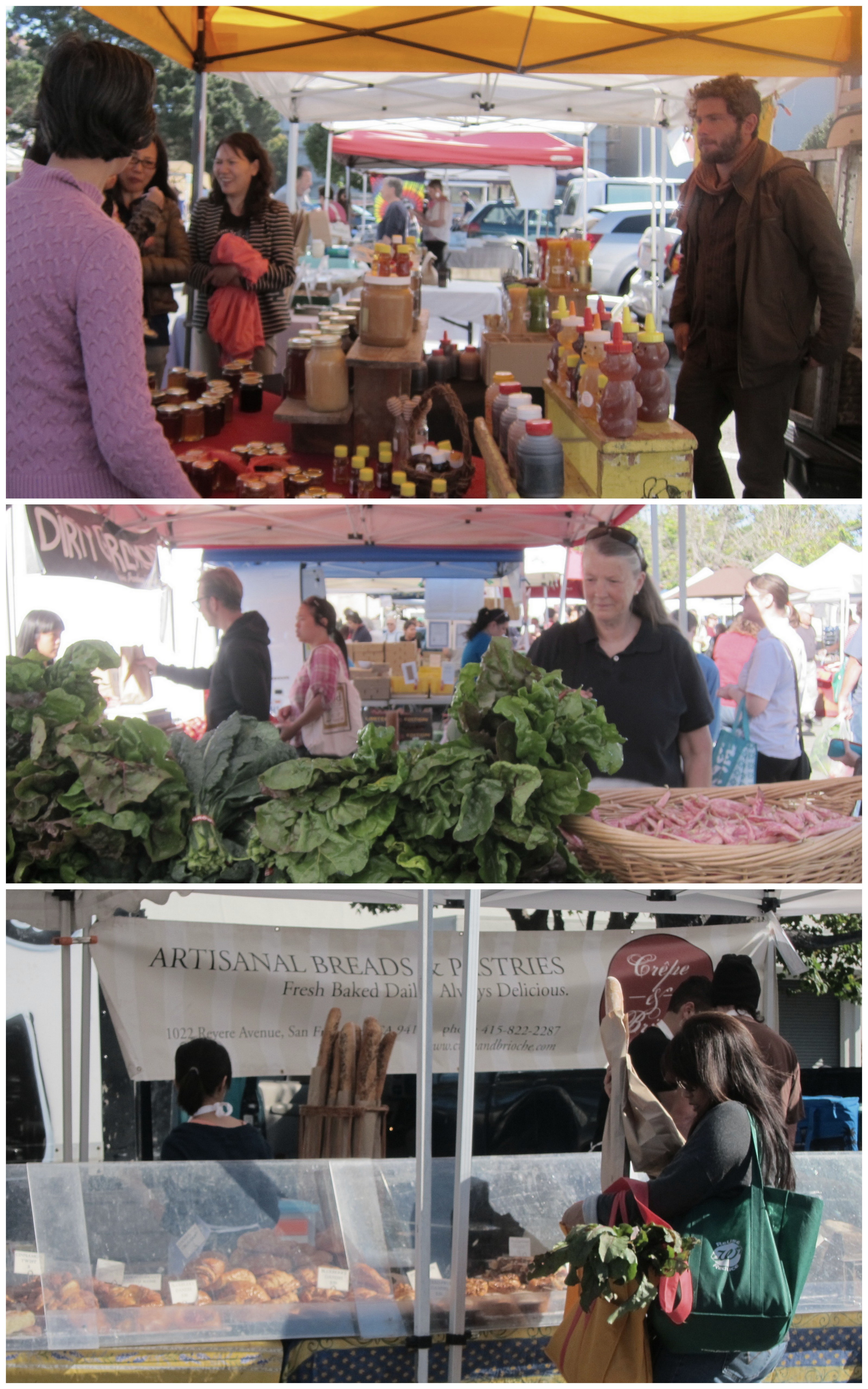
September was an extremely busy month. In addition to the usual school work, teaching, a part-time job and my editor job at the Daily Cal, I took on editing a special issue on Food (how could I resist?) and I worked for Sinto Gourmet for two weekends (again, it’s food work, I just couldn’t resist). The first weekend, Hyunjoo Albrecht, Sinto’s owner, asked me to be at the Stonestown Farmers’ Market at 7:30 am on a Sunday.

I told myself that waking up early is good for me, and that after the Farmers’ Market finished I would have the rest of the day to study. That was all good in theory, until I couldn’t sleep the night before and ended up working all night, then begrudgingly got dressed to leave at sunrise. (My friend Nancy was so unbelievably kind to drive me all the way from Berkeley to Stonestown, otherwise, I would have had to take the bus at 5:30 am and made a few transfers)

After leaving me with the kimchi, Hyunjoo rushed to another Farmers’ Market to set up her stall. Other vendors slowly arrived and filled up their space, but not the stall to my left. The wind blew fiercely from Lake Merced in the west, which is also on my left side. Of course, I didn’t dress warm enough, had no scarf, and had to mentally fight off the cold by reading about sushi. I hated the first two hours at the Farmers Market.

By 9:30, the sky got clearer and I stepped into the sun to warm up. Then customers started coming by, I started giving out samples, the vendors of the stall to my left finally came and rushed to set out their vegetables. I came back to life.

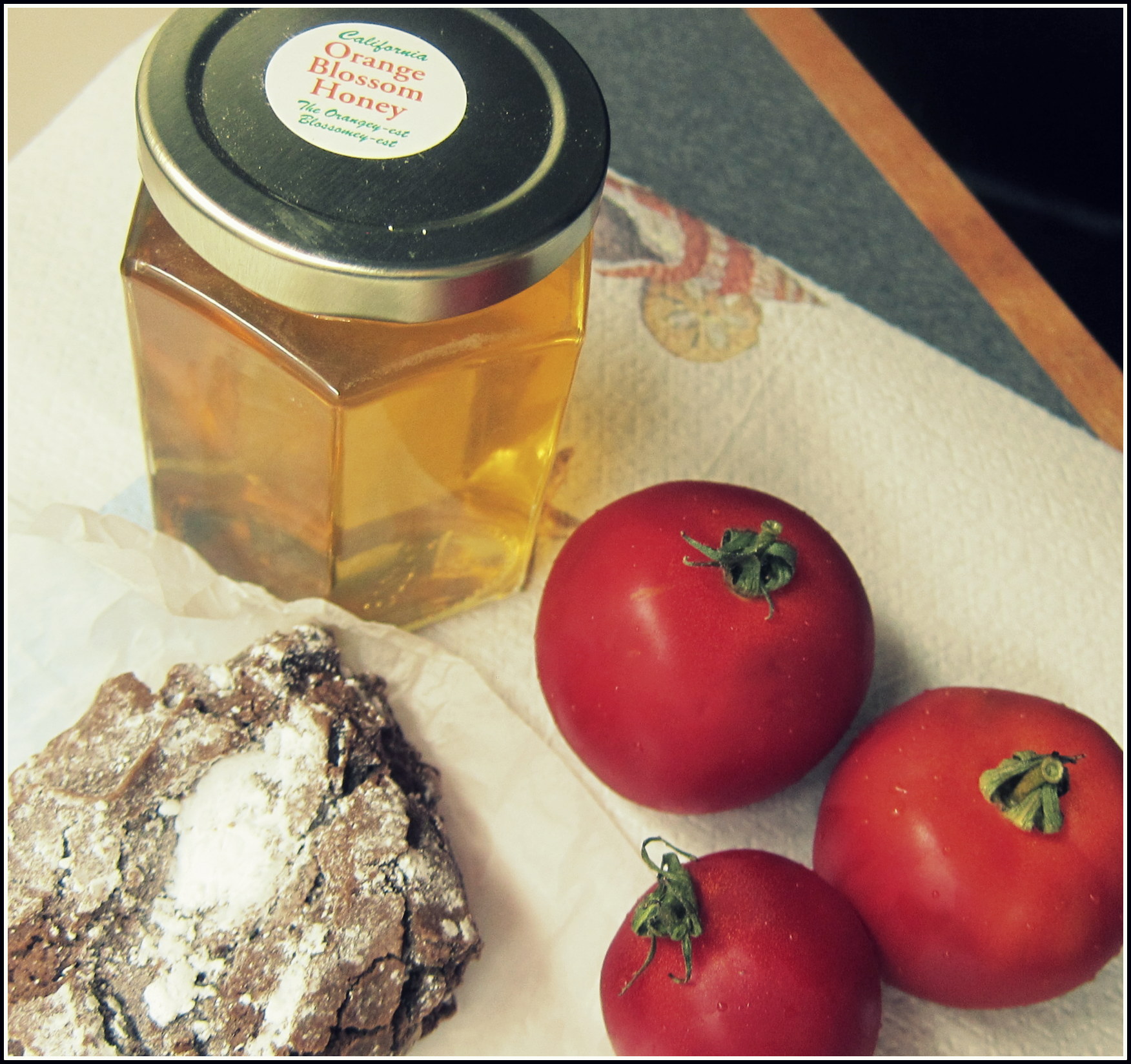
At the end of the day (which was about 1 pm), the vendors began packing up. I dropped by the neighboring stalls to say hi and see what they were selling. The Saint Benoit Yogurt lady gave me a strawberry yogurt, the Phoenix Pastificio guy gave me a chocolate macaroon (not macaron), the honey guy let me taste 5 (or 6?) different honeys and gave me an orange blossom honey jar, and the vegetable vendors to my left gave me some tomatoes (the girl even washed one for me to eat right there – I hadn’t tasted such an aromatic tomato for years!). The other vendors also traded stuff with one another, kale for honey, marinated tofu for pastries, and so often they just give them for free.

Orange blossom honey, tomatoes and chocolate macaroon.

Orange blossom honey, tomatoes and chocolate macaroon.

By the end of the day, I was exhausted from standing and talking and dragged my feet to the bus station without a care in the world, but I was happy. Not just because I got free food (that made me happy of course). Not just because the food was so divine (the yogurt was so creamy because it’s made with whole milk, the honeys actually tasted like the flowers that the bees used to make honey, and over all, these fresh, real foods have such pleasant floral smells to them that store products can never compare). I actually didn’t know why I felt so happy until two weeks later, when I worked at Eat Real Festival with Hyunjoo. I was happy at the end of each day at the festival too.

Sure, I had to wake up at the time I normally go to bed, walked half a mile each way (from the bus stop to Jack London Square, where the festival was held), stood for 8 hours each day and felt like my knees and heels were going to shatter. Neither Hyunjoo nor I had any time to eat or check out other stalls, no vendors did. On Saturday, we bought two pastries from the stall right in front of us and a few sad dimsum (that were tiny and tasted no difference from the frozen ones). On Sunday, we ate nothing. We were tired for sure, but like Oaktown Jerk’s Randall Hughes in the next stall said, I didn’t feel miserable. There’s something so real about working with products, holding them in your hand, handing them to your customers and watching their expression as they got surprised by its quality. It was motivating. The kimchi is not even my own product and I’m already this happy selling it, I can hardly imagine how happy Hyunjoo must feel, and how the other vendors feel about their own. I began to understand how my parents feel when they spend hours everyday tending the apple and plum trees and cucumber vines in the backyard (and others in the front yard too).

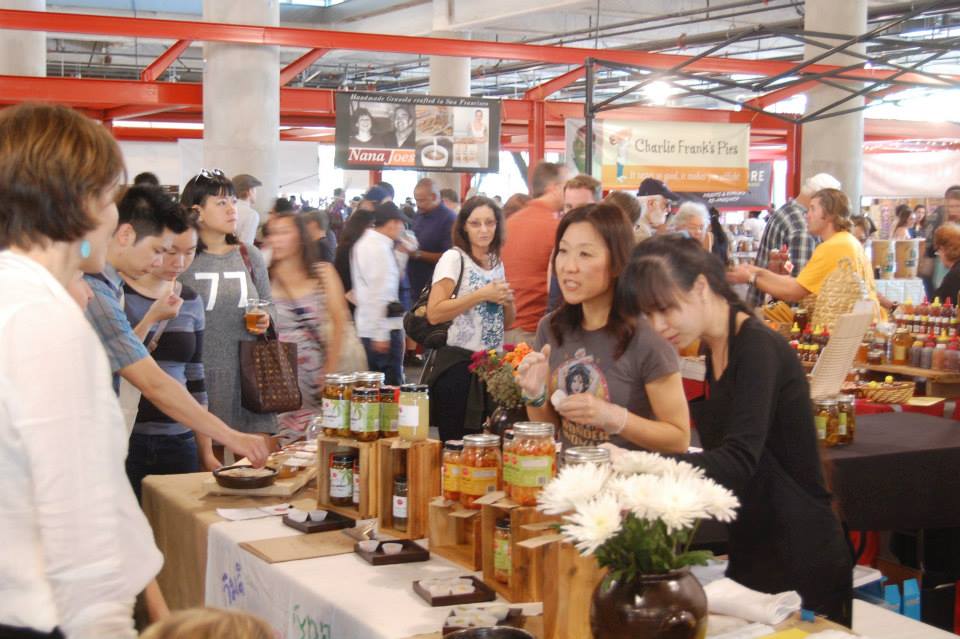
Sinto Gourmet booth at Eat Real Festival 2013. Image courtesy of Sinto Gourmet.

Sinto Gourmet booth at Eat Real Festival 2013. Image courtesy of Sinto Gourmet.

For someone who spends almost all of her time in front of the computer, the interaction with physical products and physical people was fresh air. There were some annoying customers and some crazy ones of course (literally crazy, as in something is off in their head), but it was all very real. The interaction among the vendors was even better. Everyone was kind and eager to share their knowledge, and I like how they buy from one another (for example, Hyunjoo buys apples from another vendor at Farmers’ Market to make apple juice in her white kimchi). There was hardly any competition. During those hours, my focus was on preparing samples fast enough while observing and talking to the customers; I didn’t have to think about what I should do for my future, how to write my resume, how to sound smart against everyone else in my field. During those hours, I could actually rest.

The day after, my calves felt as if they had shrunk and standing up to start walking was the most painful moment ever. But, I would gladly do it again. I’m sure I would hate myself when I try to get out of bed, but as soon as I leave the apartment, I would feel alive.

Andy Warhol’s quotes on food

September 25, 2013 By: Mai Truong Category: Book, Opinions

PhilosophyofAndyWarholBookcover
Around spring of 2012, I discovered The Philosophy of Andy Warhol. I’m not a fan of his art works. (I like traditional arts, he’s the most prominent figure in American pop arts, which I actually find weirdly fascinating, though.) His life was the exact opposite of mine. (To start, he’s somebody, I’m nobody.) But I find his view on life strangely resonating and, thus, comforting.

Andy Warhol was also big on food. Very American, very industrial food, but still food. A nice portion of his art works features Campbell’s tomato juice and soups, ice cream, hamburgers and bananas [which I can’t show here because it would entail paying fees ($40 per image) to the Andy Warhol Museum and many legal steps to obtain permission from the Artist Rights Society (I checked). As much as I want to support arts, my humble blog is in no condition for such extravagance. Besides, Google Images does a great job]. Back to food, in the third “Men in Black” movie, when Agent J (Will Smith) goes back in time to stop alien crime stuff, he and Agent K (Tommy Lee Jones) went to a rowdy party looking for Agent W (Bill Hader), whose alias was “Andy Warhol”. While they were discussing alien business, someone called for Andy Warhol, to which Agent W replied “tell her that I’m filming a man eating a hamburger. It’s… uh… transcendent.” That’s my favorite scene in the entire movie.

So here’s 14 food-related quotes from Andy Warhol:

1.

And New York restaurants now have a new thing — they don’t sell their food, they sell their atmosphere. They say, “How dare you say we don’t have good food, when we never said we had good food. We have good atmosphere.” They caught on that what people really care about is changing their atmosphere for a couple of hours. That’s why they can get away with just selling their atmosphere with a minimum of actual food. Pretty soon when food prices go really up, they’ll be selling only atmosphere. If people are really all that hungry, they can bring food with them when they go out to dinner, but otherwise, instead of “going out to dinner” they’ll just be “going out to atmosphere.”

That’s just restaurants everywhere. Not the mom-and-pop shops. Not the actual street vendors. But the classy restaurants.

2.

My favorite restaurant atmosphere has always been the atmosphere of the good, plain, American lunchroom or even the good plain American lunchcounter. The old-style Schrafft’s and the old-style Chock Full O’ Nuts are absolutely the only things in the world that I’m truly nostalgic for. The days were carefree in the 1940s and 1950s when I could go into a Chocks for my cream cheese sandwich with nuts on date-nut bread and not worry about a thing. No matter what changes or how fast, the one thing we all always need is real good food so we can know what the changes are and how fast they’re coming. Progress is very important and exciting in everything except food. When you say you want an orange, you don’t want someone asking you, “An orange what?”

I’m not into progress in food either. I just want traditional food. Good old comfort food.

3.

I really like to eat alone. I want to start a chain of restaurants for other people who are like me called ANDY-MATS—”The Restaurant for the Lonely Person.” You get your food and then you take your tray into a booth and watch television.

Warhol had a fascination for television and diners. He also had a fascination for emptiness, most likely because everything felt empty for him.

4.

But if you do watch your weight, try the Andy Warhol New York City Diet: when I order in a restaurant, I order everything that I don’t want, so I have a lot to play around with while everyone else eats. Then, no matter how chic the restaurant is, I insist that the waiter wrap the entire plate up like a to-go order, and after we leave the restaurant I find a little corner outside in the street to leave the plate in, because there are so many people in New York who live in the streets, with everything they own in shopping bags.
So I lose weight and stay trim, and I think that maybe one of those people will find a Grenouille dinner on the window ledge. But then, you never know, maybe they wouldn’t like what I ordered as much as I didn’t like it, and maybe they’d turn up their noses and look through the garbage for some half-eaten rye bread. You just never know with people. You just never know what they’ll like, what you should do for them.
So that’s the Andy Warhol New York City Diet.

One time I saw someone gave a banana to a homeless guy in Berkeley. The homeless guy took one bite and threw the banana away. Sometimes I give my restaurant leftovers to homeless people, I don’t know if they eat them though. Maybe I should hide in a corner and watch if they eat them.

5.

I know good cooks who’ll spend days finding fresh garlic and fresh basil and fresh tarragon, etc., and then use canned tomatoes for the sauce, saying it doesn’t matter. But I know it does matter.

It does. Warhol lived in the industrial era, I guess he would be pleased now with the revival of farm-to-table foods. Then again, he hardly found happiness in anything, so I don’t know.

6.

I also have to admit that I can’t tolerate eating leftovers. Food is my great extravagance. I really spoil myself, but then I try to compensate by scrupulously saving all of my food leftovers and bringing them into the office or leaving them in the street and recycling them there. My conscience won’t let me throw anything out, even when I don’t want it for myself. As I said, I really spoil myself in the food area, so my leftovers are often grand — my hairdresser’s cat eats pate at least twice a week. The leftovers usually turn out to be meat because I’ll buy a huge piece of meat, cook it up for dinner, and then right before it’s done I’ll break down and have what I wanted for dinner in the first place — bread and jam. I’m only kidding myself when I go through the motions of cooking protein: all I ever really want is sugar. The rest is strictly for appearances, i.e., you can’t take a princess to dinner and order a cookie for starters, no matter how much you crave one. People expect you to eat protein and you do so they won’t talk. (If you decided to be stubborn and ordered the cookie, you’d wind up having to talk about why you want it and your philosophy of eating a cookie for dinner. And that would be too much trouble, so you order lamb and forget about what you really want.)

This is where I’m different, but also the same. Food is indeed my great extravagance, but I like leftovers (if I like what I order in the first place). And the only thing I ever truly want is carb. I would steam some squash blossoms or braise some pork, and after I’m done, I break down and go to the diner downtown and get pancakes. Or I microwave some ramen.

7.

What’s great about this country is that America started the tradition where the richest consumers buy essentially the same things as the poorest. You can be watching TV and see Coca-Cola, and you can know that the President drinks Coke, Liz Taylor drinks Coke, and just think, you can drink Coke, too. A Coke is a Coke and no amount of money can get you a better Coke than the one the bum on the corner is drinking. AM the Cokes are the same and all the Cokes are good. Liz Taylor knows it, the President knows it, the bum knows it, and you know it.
In Europe the royalty and the aristocracy used to eat a lot better than the peasants—they weren’t eating the same things at all. It was either partridge or porridge, and each class stuck to its own food. But when Queen Elizabeth came here and President Eisenhower bought her a hot dog I’m sure he felt confident that she couldn’t have had delivered to Buckingham Palace a better hot dog than that one he bought her for maybe twenty cents at the ballpark. Because there is no better hot dog than a ballpark hot dog. Not for a dollar, not for ten dollars, not for a hundred thousand dollars could she get a better hot dog. She could get one for twenty cents and so could anybody else.

Again, the common diner theme. I quoted this quote before.

8.

When I was a child I never had a fantasy about having a maid, what I had a fantasy about having was candy. As I matured that fantasy translated itself into “make money to have candy,” because as you get older, of course, you get more realistic. Then, after my third nervous breakdown and I still didn’t have that extra candy, my career started to pick up, and I started getting more and more candy, and now I have a roomful of candy all in shopping bags. So, as I’m thinking about it now, my success got me a candy room instead of a maid’s room. As I said, it all depends on what your fantasies as a kid were, whether you’re able to look at a maid or not. Because of what my fantasies were, I’m now a lot more comfortable looking at a Hershey Bar.

9.

It’s strange the way having money isn’t much. You take three people to a restaurant and you pay three hundred dollars. Okay. Then you take those same three people to a corner shop — shoppe — and get everything there. You got just as filled at the corner shoppe as at the grand restaurant — more, actually — and it cost you only fifteen or twenty dollars, and you had basically the same food.

Yet again, the common diner theme.

10.

Of the five senses, smell has the closest thing to the full power of the past. Smell really is transporting. Seeing, hearing, touching, tasting are just not as powerful as smelling if you want your whole being to go back for a second to something. Usually I don’t want to, but by having smells stopped up in bottles, I can be in control and can only smell the smells I want to, when I want to, to get the memories I’m in the mood to have. Just for a second. The good thing about a smell-memory is that the feeling of being transported stops the instant you stop smelling, so there are no aftereffects. It’s a neat way to reminisce.
[…]
When I’m walking around New York I’m always aware of the smells around me: the rubber mats in office buildings; upholstered seats in movie theaters; pizza; Orange Julius; espresso-garlic-oregano; burgers; dry cotton tee-shirts; neighborhood grocery stores; chic grocery stores; the hot dogs and sauerkraut carts; hardware store smell; stationery store smell; souvlaki; the leather and rugs at Dunhill, Mark Cross, Gucci; the Moroccan-tanned leather on the streetracks; new magazines, back-issue magazines; typewriter stores; Chinese import stores (the mildew from the freighter); India import stores; Japanese import stores; record stores; health food stores; soda-fountain drugstores; cut-rate drugstores; barber shops; beauty parlors; delicatessens; lumber yards; the wood chairs and tables in the N.Y. Public Library; the donuts, pretzels, gum, and grape soda in the subways; kitchen appliance departments; photo labs; shoe stores; bicycle stores; the paper and printing inks in Scribner’s, Bren-tano’s, Doubleday’s, Rizzoli, Marboro, Bookmasters, Barnes & Noble; shoe-shine stands; grease-batter; hair pomade; the good cheap candy smell in the front of Woolworth’s and the dry-goods smell in the back; the horses by the Plaza Hotel; bus and truck exhaust; architects’ blueprints; cumin, fenugreek, soy sauce, cinnamon; fried platanos; the train tracks in Grand Central Station; the banana smell of dry cleaners; exhausts from apartment house laundry rooms; East Side bars (creams); West Side bars (sweat); newspaper stands; record stores; fruit stands in all the different seasons — strawberry, watermelon, plum, peach, kiwi, cherry, Concord grape, tangerine, murcot, pineapple, apple — and I love the way the smell of each fruit gets into the rough wood of the crates and into the tissue-paper wrappings.

My mom always says she doesn’t like Berkeley, but Berkeley is growing on me, and I feel like a traitor for letting it grow on me. One big thing about Berkeley is that I can walk here. I used to hate walking because it’s inefficient and especially when it’s sunny. But when I started learning about tea, I started rubbing my fingers on whatever leaf or flower along the road to train my nose. At some point, I didn’t have to rub anymore and could still smell the leaves walking by. I began to like walking then.

11.

I put my napkin over the bowl of cherry pits so I wouldn’t have to look at how many I’d eaten. That’s the hard part of overdosing on cherries—you have all the pits to tell you exactly how many you ate. Not more or less. Exactly. One-seed fruits really bother me for that reason. That’s why I’d always rather eat raisins than prunes. Prune pits are even more imposing than cherry pits.

12.

You take some chocolate . . . and you take two pieces of bread . . . and you put the candy in the middle and you make a sandwich of it. And that would be cake.

13.

My favorite simultaneous action is talking while eating. I think it’s a sign of class[…,] knowing how to talk and eat at the same time. […] It’s very important if you go out to dinner a lot. At dinner you’re expected to eat—because if you don’t it’s an insult to the hostess — and you’re expected to talk — because if you don’t it’s an insult to the other guests. The rich somehow manage to work it out but I just can’t do it. They are never caught with an open mouth full of food but that’s what happens to me. It’s always my turn to talk just when I’ve filled my mouth with mashed potatoes.

Is that why he liked to eat alone? I was telling Kristen how I went to this Korean restaurant in Oakland Chinatown when I had jury duty. I was very tired and just wanted some comfort food. When the owner ladies brought me my samgetang (chicken and ginseng soup), they also started talking to me. A lot. Not only was I by myself, I was also the only customer at that time (it was past lunch time). Between smiling and responding to them, I had no time to eat. I really, really just wanted to eat my soup.

14.

In high-class stores they sell through “display,” in low-class ones they sell through “smell.”

Warhol was talking about clothing stores here. But I think it’s true for food business too.

one shot: Salmon ramen at The Ramen Shop

September 18, 2013 By: Mai Truong Category: California - The Bay Area, Comfort food, Japanese, noodle soup, One shot

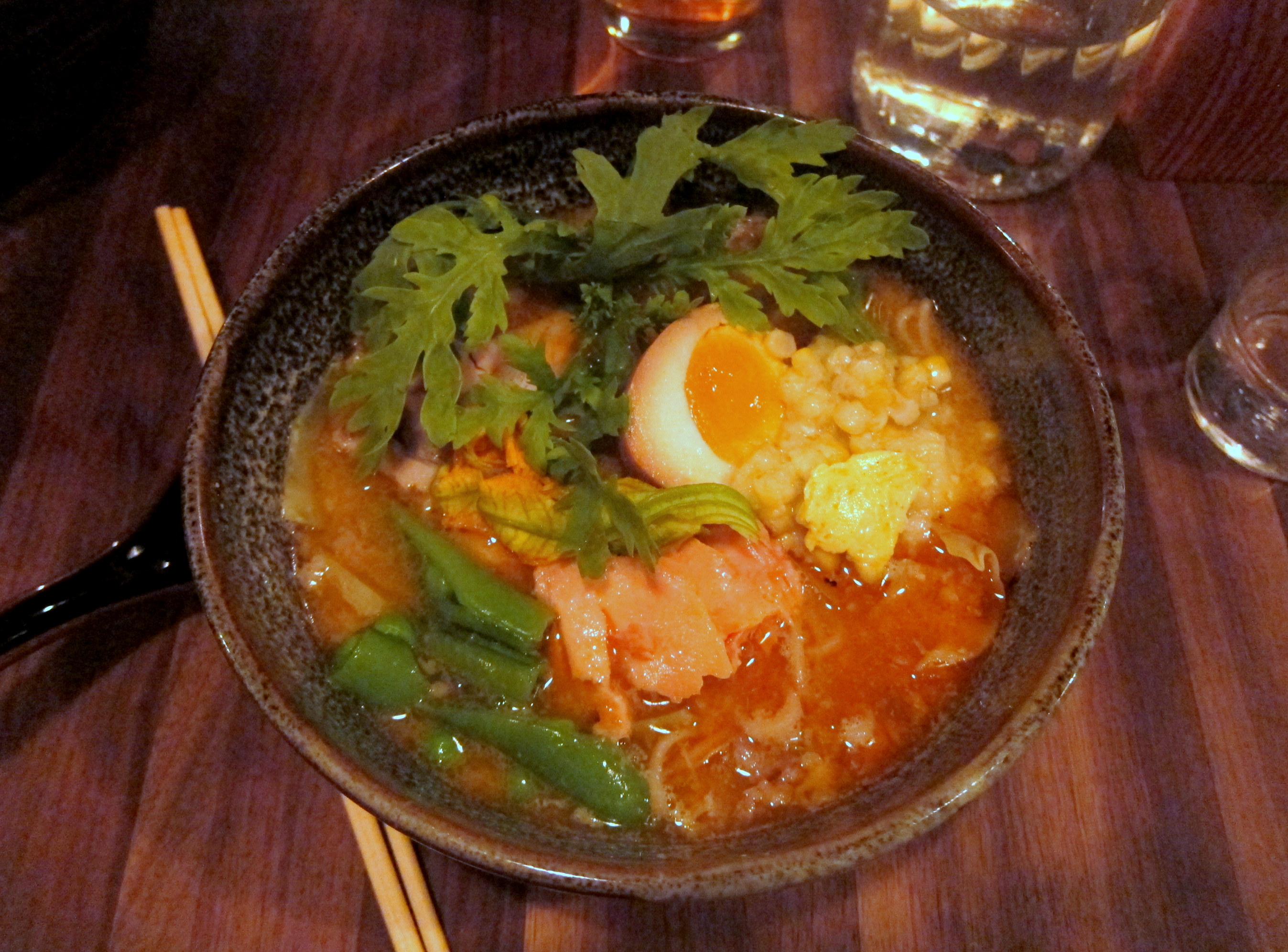
Hokkaido butter corn miso ramen with smoked king salmon, pork belly, soy-marinated egg, snap peas, chrysanthemum greens, and shiitake.

Hokkaido butter corn miso ramen with smoked king salmon, pork belly, soy-marinated egg, snap peas, chrysanthemum greens, and shiitake. ($16)

Okay so, The Ramen Shop is not a place I would go alone. I think eating there alone would be particularly wonderful because ramen is the type of food to be eaten alone, and although the lighting might be too low for reading, it’s hard to read while slurping noodles anyway. BUT, the wait is just too horrible. This place has been hyped up since its opening in January, and it stays hyped. No sensical lone diner should wait an hour for a bowl of ramen.

It’s good ramen, though. I didn’t expect too much, and I was satisfied.

The broth was rich, although not hot enough (maybe I remember more than I should from the movie Tampopo, but they say the ramen broth should be boiling hot when arriving at the table). By American standard though, this is fine. I like that they keep the menu simple: 3 kinds of ramen – shio ramen with manila clams, veggie shoyu ramen with mushroom and salt-cured egg (yeah, ramen ain’t no place for vegan 🙁 ), and miso ramen with salmon. The only complaint: why no simple ramen with just pork belly? I understand that you want to make the $15 price tag seems more reasonable by adding some extra stuff, but the salmon really doesn’t belong.

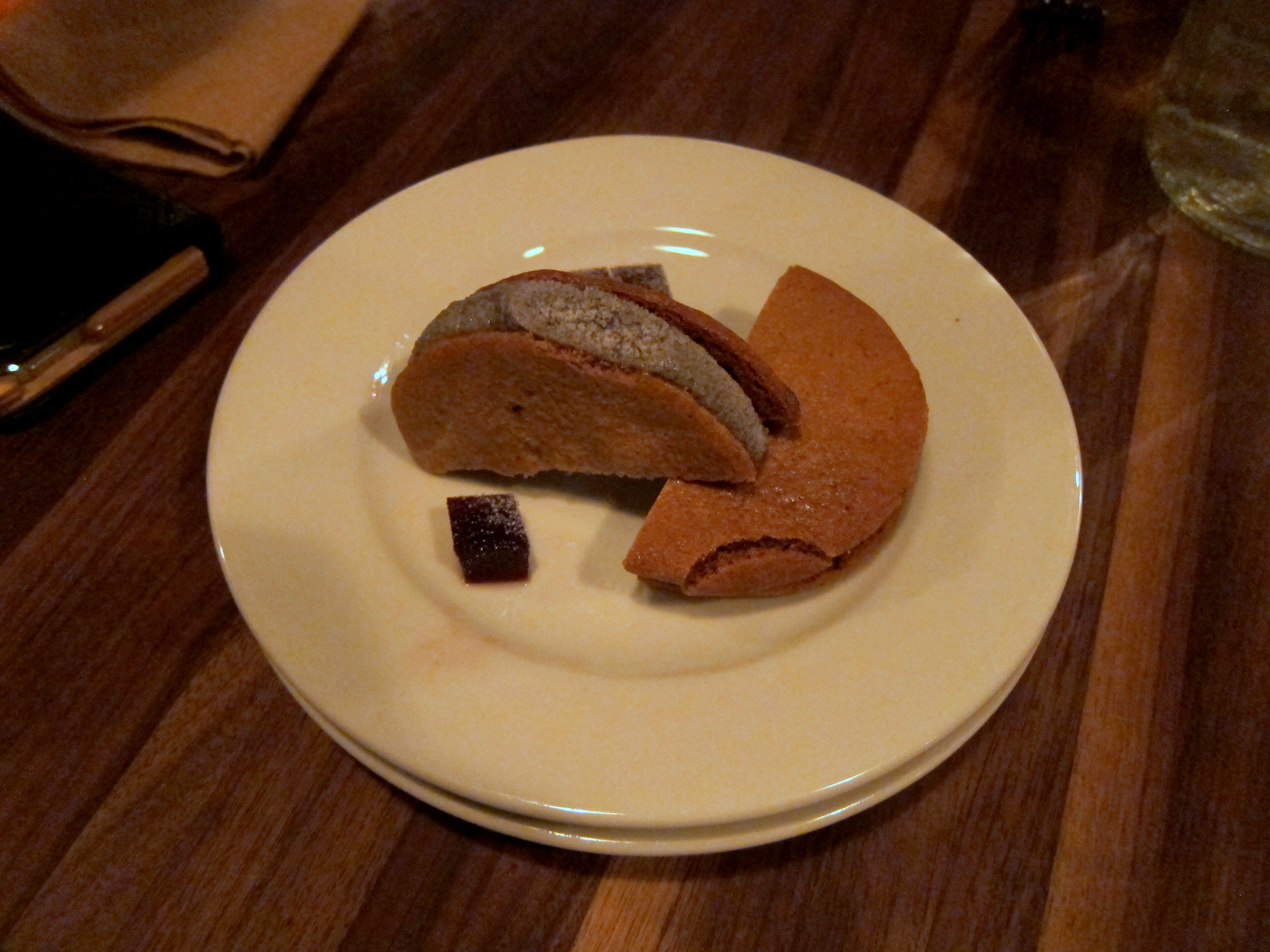
Black sesame ice cream sandwich ($6) - The ice cream part is okay, but I'm not a fan of the sugar cookie.

Black sesame ice cream sandwich ($6) – The ice cream part is okay, but I’m not a fan of the sugar cookie.

The Ramen Shop is at 5812 College Avenue, Oakland, CA 94618 – (510)788-6370.

Tags:

Interview with the owners of Homestead

September 11, 2013 By: Mai Truong Category: American, California - The Bay Area, Opinions

homestead-porkfishbeef
Early August, I had a great meal at Homestead, one of the newest additions in Oakland’s restoscape. The meal was a media invite – one benefit of working at the Daily Californian – and the owners were incredibly generous at letting us order everything we wanted at no charge, which turned out to be, as it always goes when Kristen and I dine together, everything on the menu. But that’s not the best part of a food writing job. The best part was the interview. The chefs are always busy of course, but they were willing to set aside an hour the next Monday morning to chat. Afterwards, I gained 48 minutes and 31 seconds of recording, part of which I transcribed into 6 full pages of typed notes, a load of information about opening and running a restaurant, and so much positive emotion.

Earlier last week, I struggled to choose which pieces of information and which quotes should make it into my article to fit the word limit for print – there were just too many valuable details. Unlike news reporting, a feature must also follows a theme, and someone’s life is a lot more diverse than one box of introduction-body-conclusion tied together by a theme. Editing was a pain, and for the sake of journalistic professionalism, I won’t go into details, but despite the frustration, the feature, which came out on Friday, is one of my favorites, because it’s a product of the understanding between the chefs and me.

I find interviews a lot more enriching than the meals themselves. The person tells you a story and lets you catch a glimpse of their world, from their perspective, something that you can’t get from simply eating a meal. This is particularly true with Homestead. The welcoming and homey vibe that Fred Sassen and Liz Hopkins want to create in their restaurant isn’t just a business theme, they were genuinely open people that can make you feel at home.

“If you ever think back about the best meals you ever had, nine times out of ten, it’s not the food that’s the memory, it’s the reason you went to eat that’s the memory,” said Sassen. “We sat down with [Hopkins’] family and had sunday supper and it was the best sunday supper I ever had. The ham was burnt, and the peas was overcooked to mush, but it was okay because it was fun. It was that interaction with the family and that communal atmosphere.”

That’s one of the stories I like that didn’t make it into the final draft. To be honest, I didn’t expect to find Homestead very homey – the food they serve is not what I grew up with, and the price is higher than what I can afford everyday. But that conversation with Sassen and Hopkins became the reason that I want to go back, and the memory that makes the meal there memorable.

Maybe I’m just a sucker for “home”. Maybe it’s because both Sassen and Hopkins are young and passionate about what they’re doing (Hopkins is only 26, I didn’t get to ask Sassen’s age), and something about young people branching out on their own to build something for themselves is the inspiration I need these days. For whichever reason, I like this restaurant.

How was the food, though? This part I reserved for this personal blog and not talked about it in the Daily Cal review, because as a rule, we only review the food when we’re anonymous diners.

The small plates

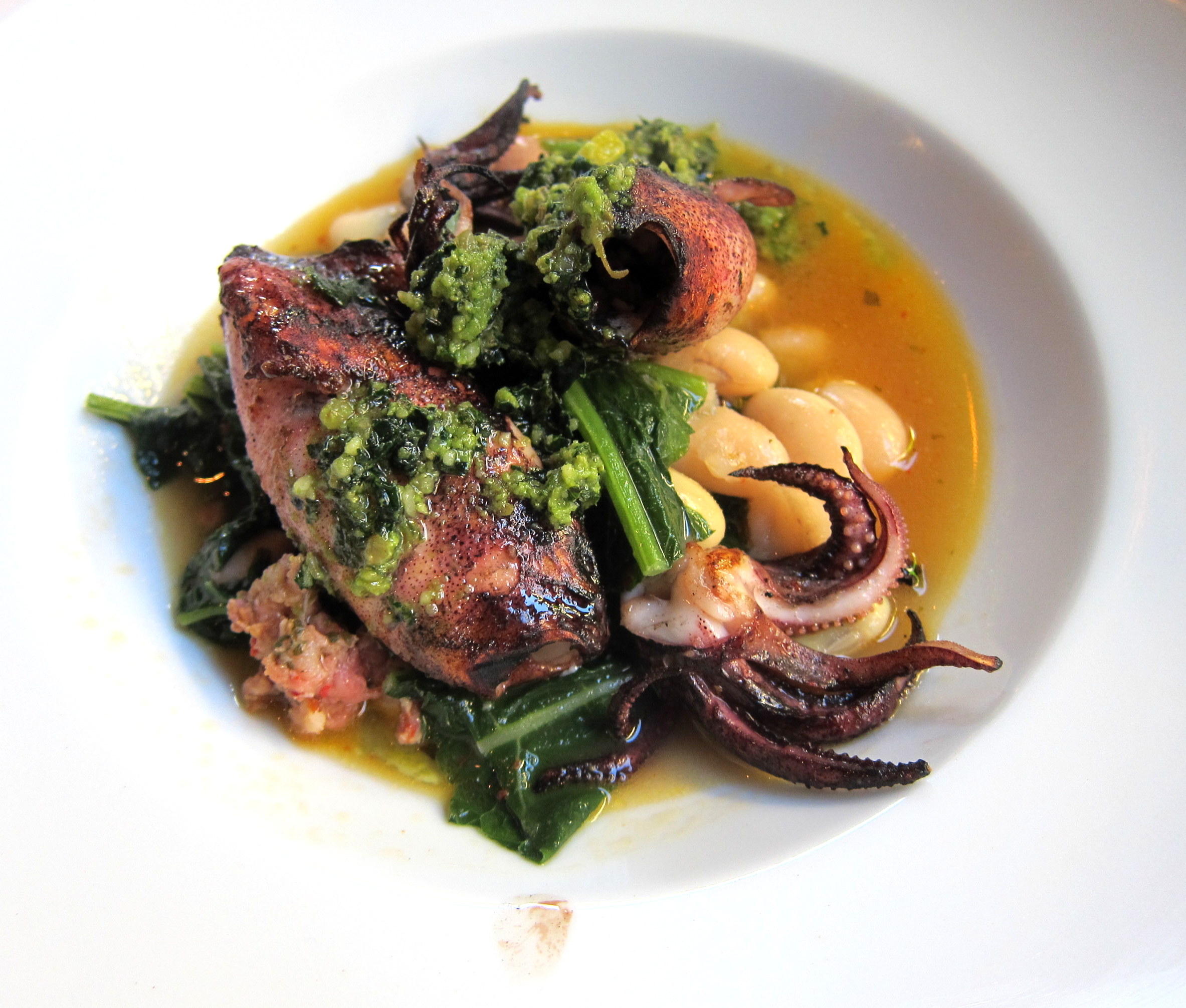
Squid with bean stew, sausage and pesto ($11) - We both like the bean stew, and Kristen doesn't like tentacles, so more tentacles for me. ;-)

Squid with bean stew, sausage and pesto ($11) – We both like the bean stew, and Kristen doesn’t like tentacles, so more tentacles for me. 😉

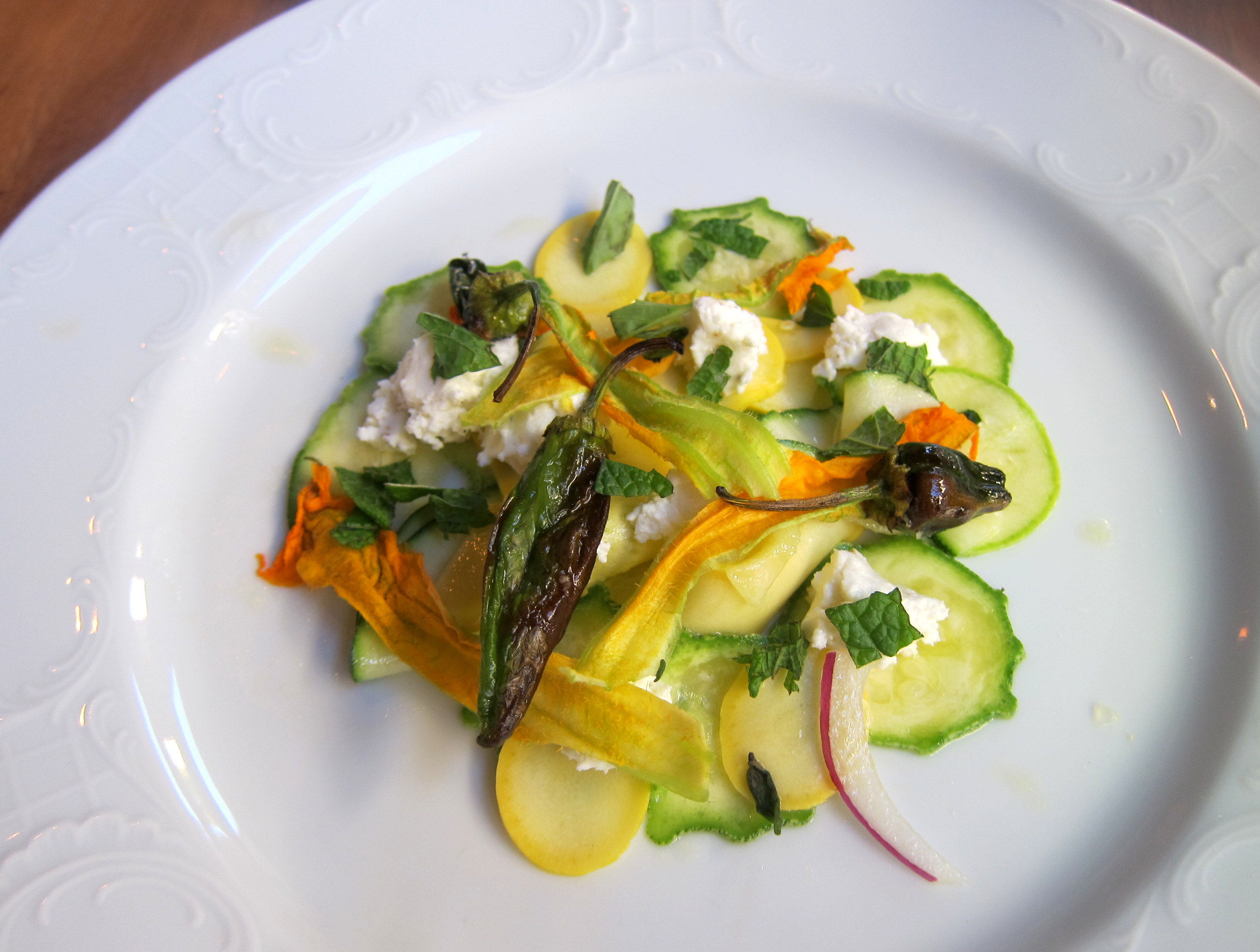
Summer squash salad with lemon, padrones and goat cheese ($10) - I detest goat cheese, but I could tolerate this goat cheese, so this salad was actually quite bright and lovely.

Summer squash salad with lemon, padrones and goat cheese ($10) – I detest goat cheese, but I could tolerate this goat cheese, so this salad was actually quite bright and lovely.

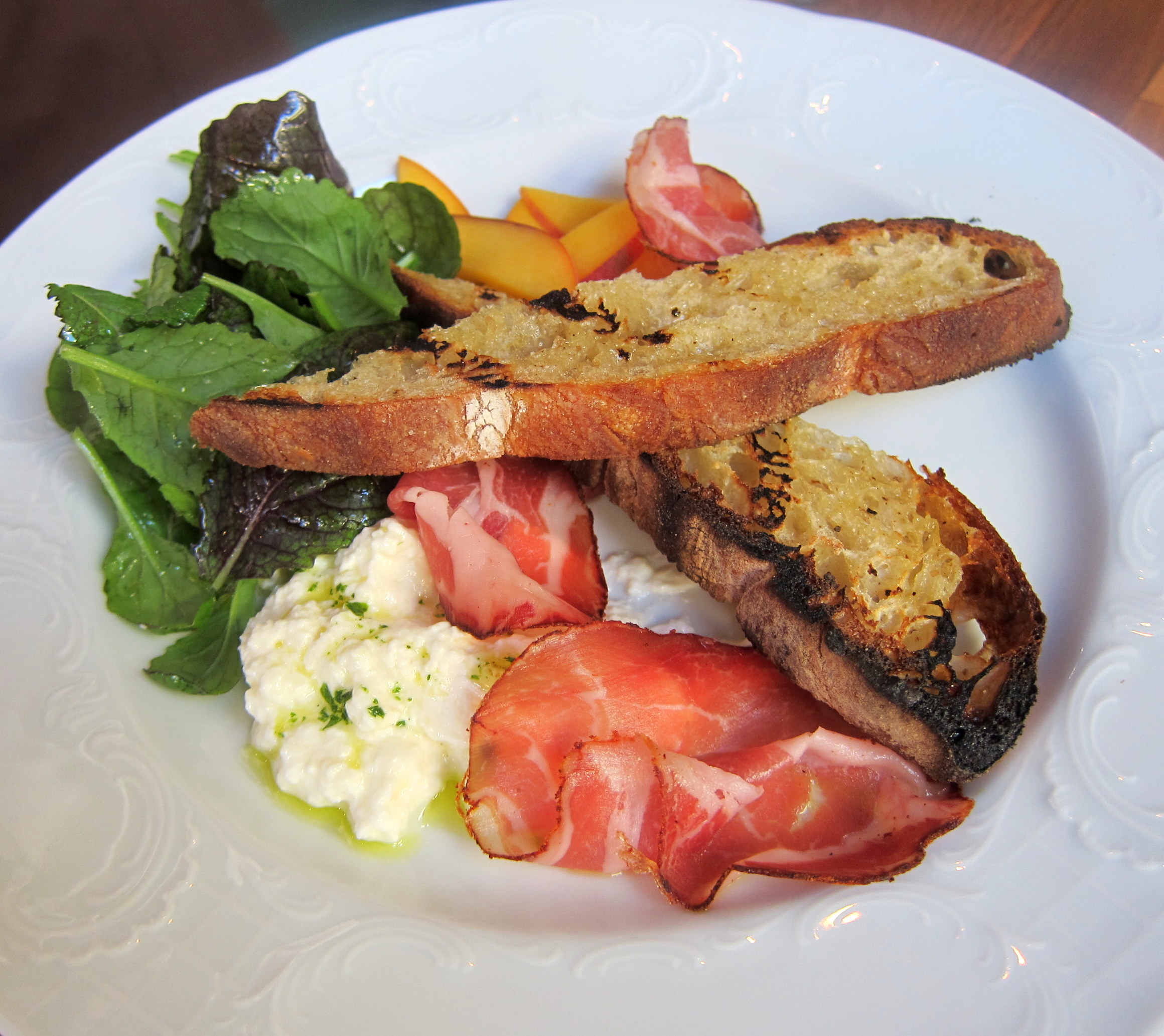
Housemade ricotta, peaches, housemade spicy coppa and grilled bread ($12) - Best ricotta I ever had.

Housemade ricotta, peaches, housemade spicy coppa and grilled bread ($12) – Best ricotta I ever had.

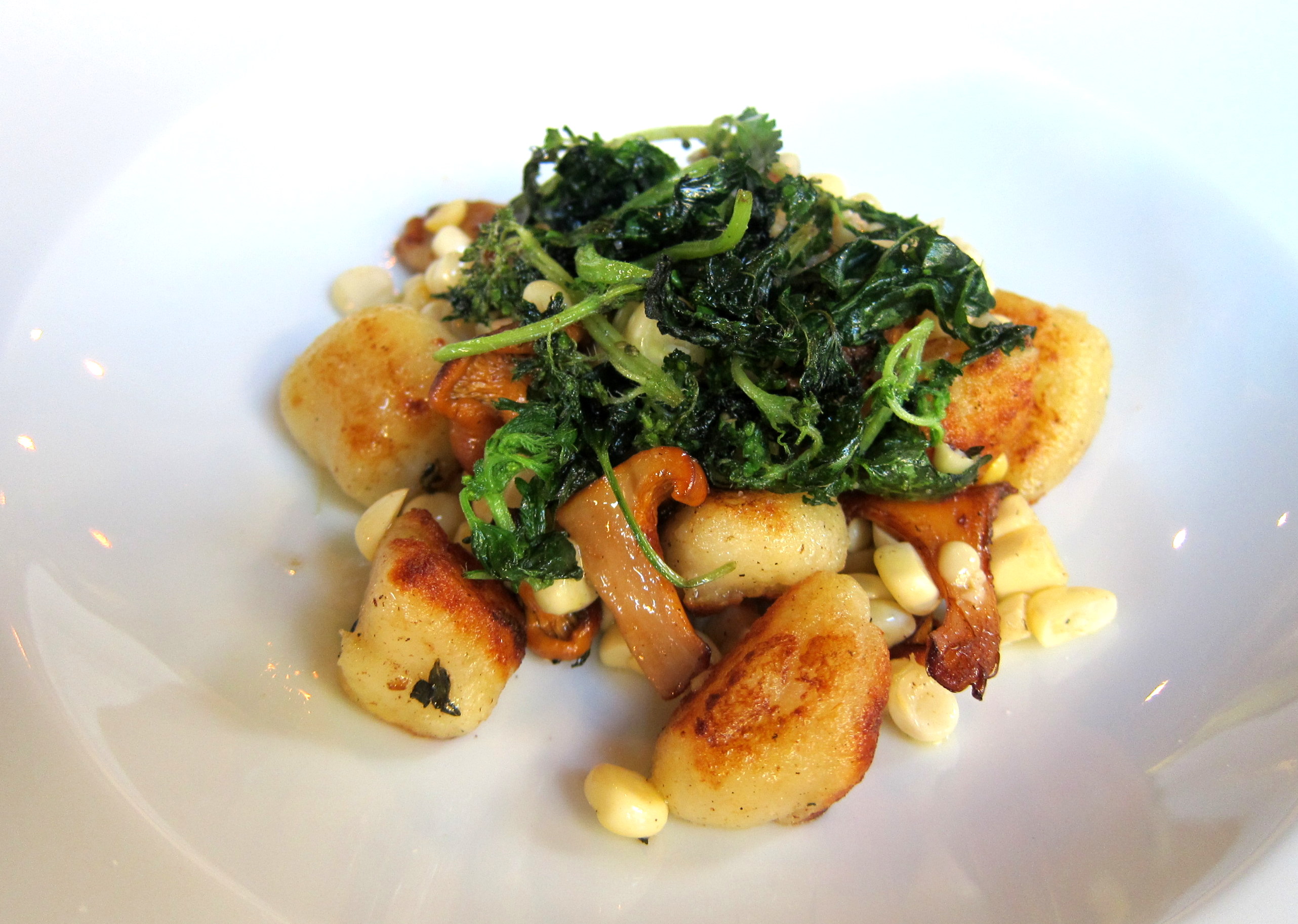
Pan-fried gnocchi, corn, chanterelle mushroom and wild nettles ($12) - I think I'll start pan-frying all of my gnocchi from now on.

Pan-fried gnocchi, corn, chanterelle mushroom and wild nettles ($12) – I think I’ll start pan-frying all of my gnocchi from now on.

The counterspace
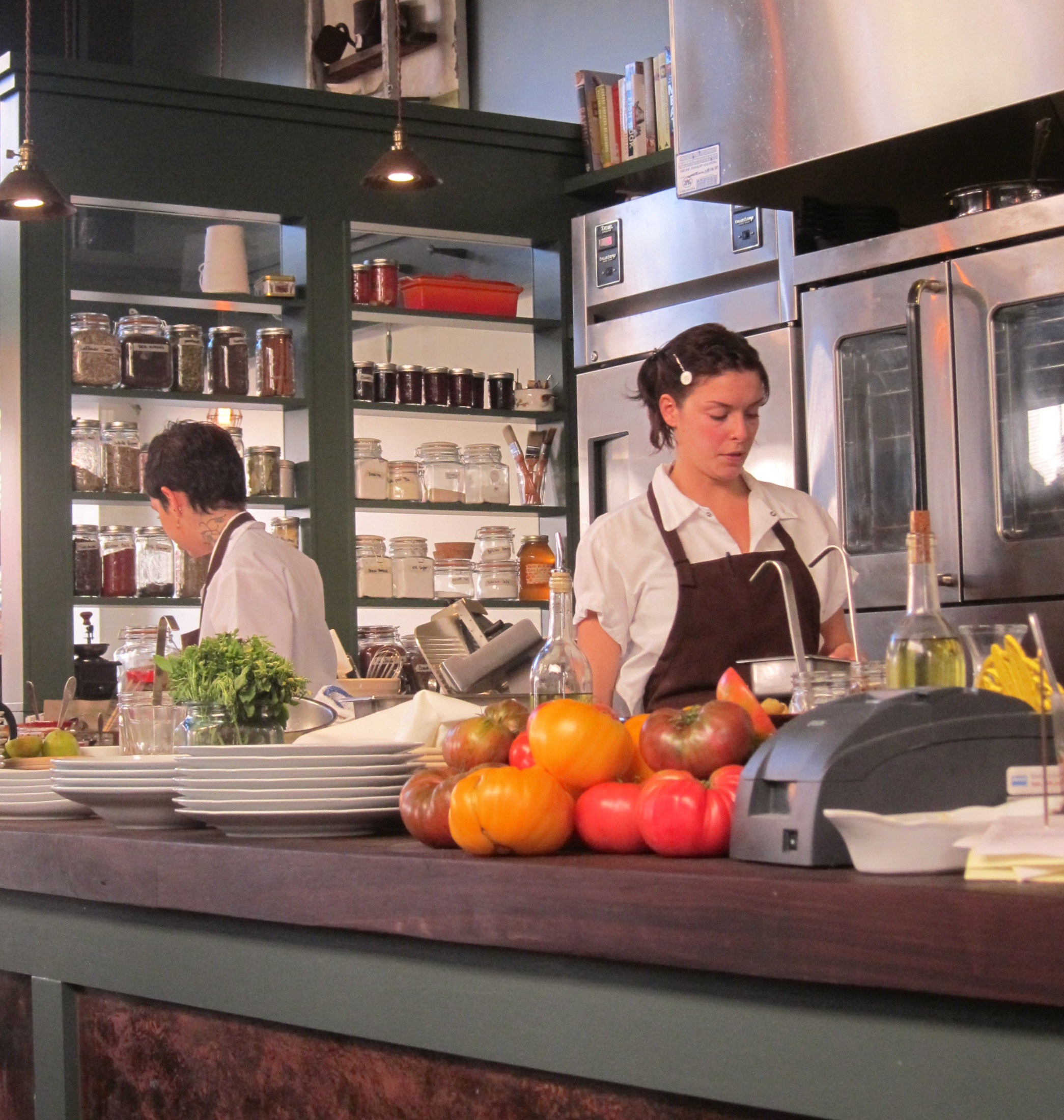
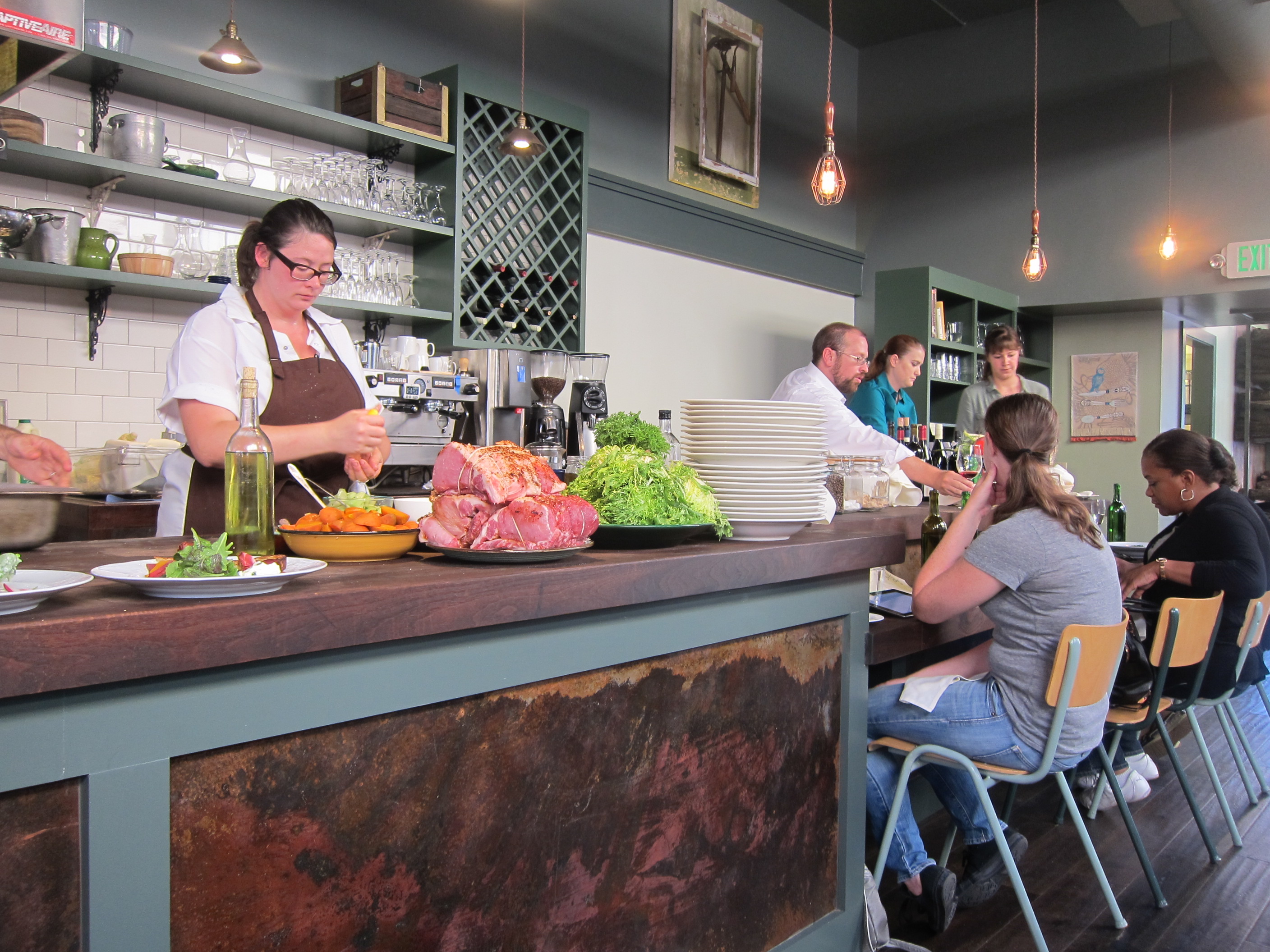
homstead-tomatoeshomestead-kitchencounter
While waiting for the food, we looked at the open kitchen attentively.

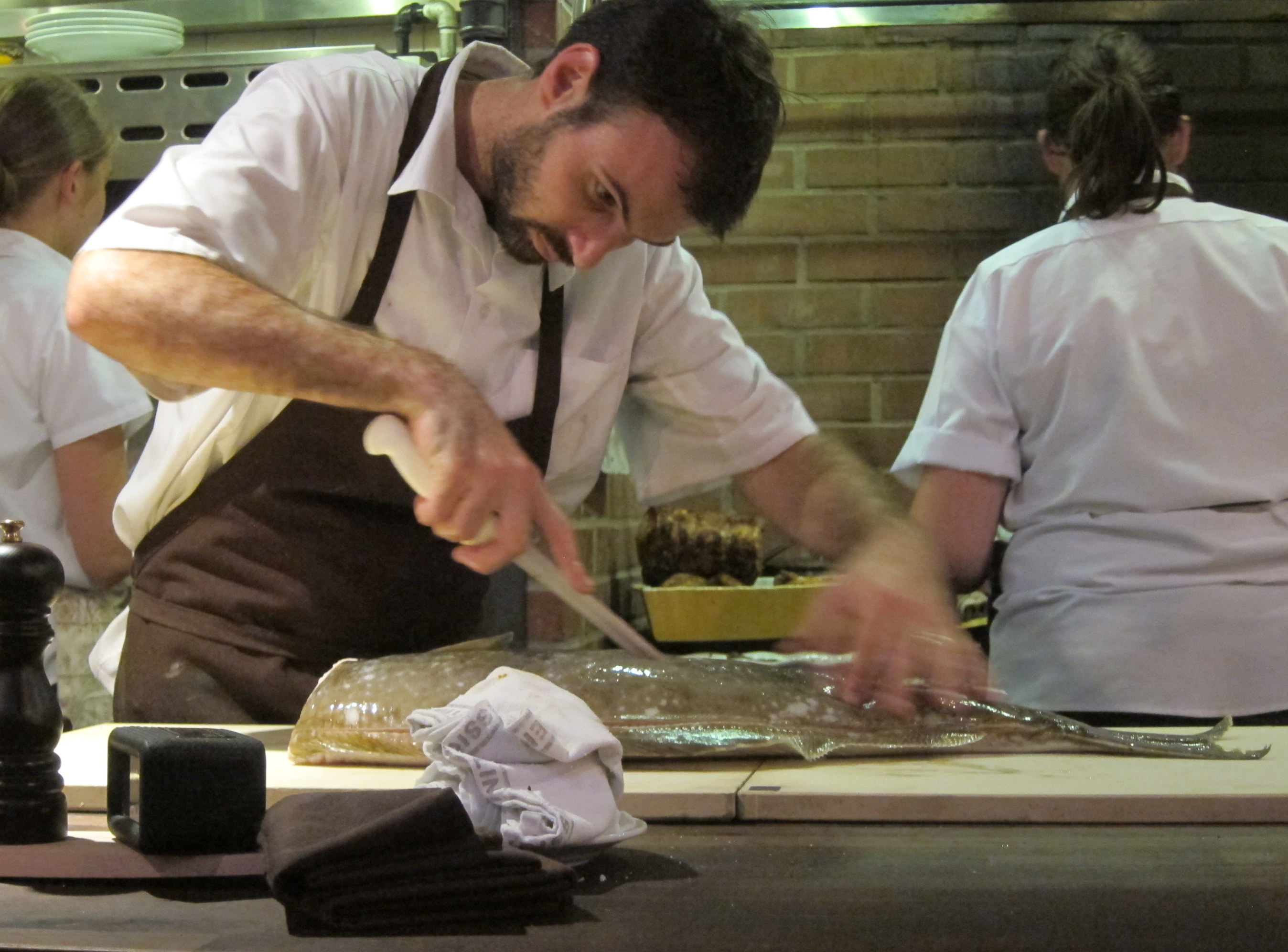
homestead-chef-sassenhomestead-brick-oven
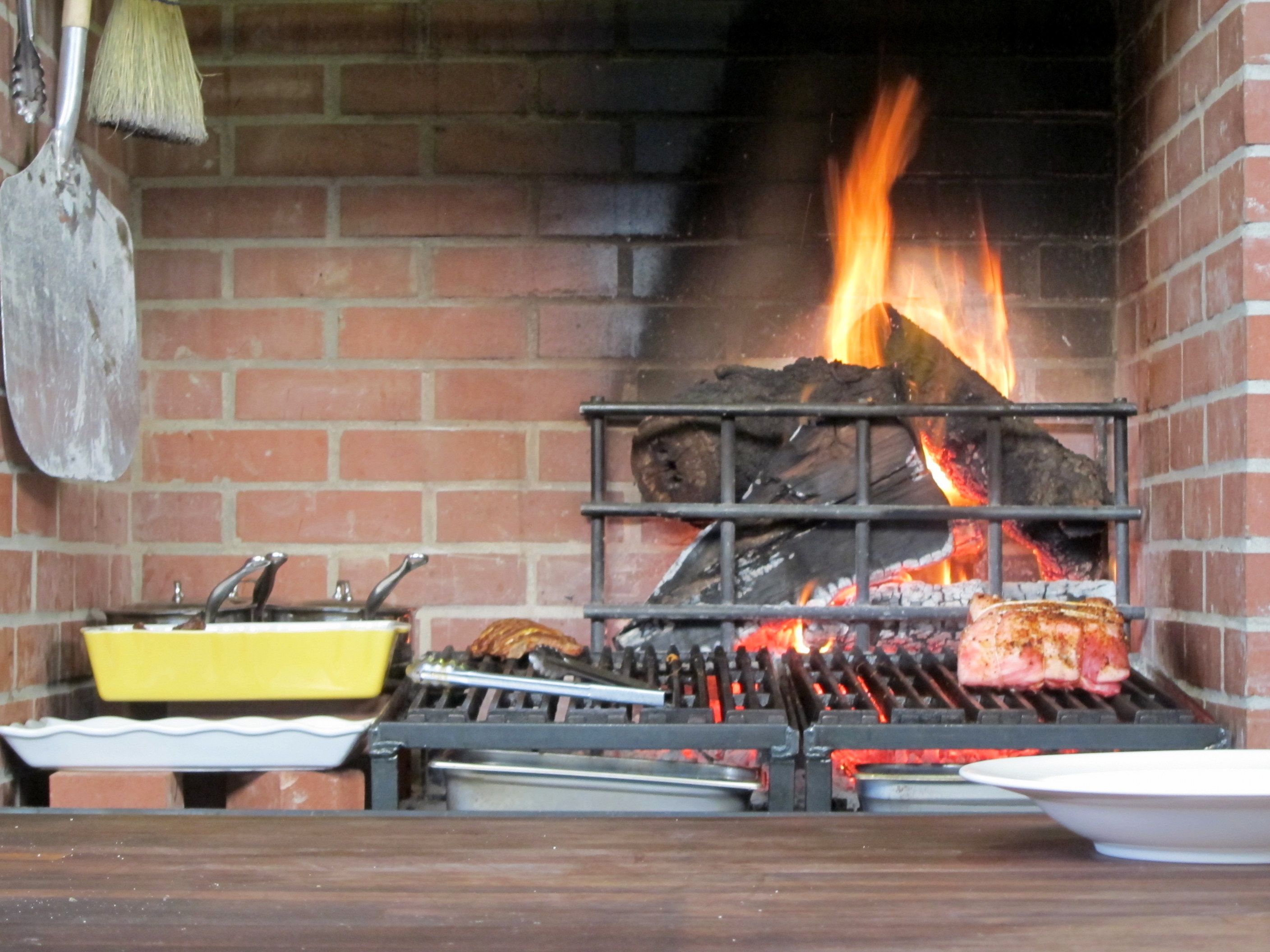
On the left is Sassen filleting a halibut. On the right is the multi-functional brick oven that he designed, taking inspirations from Camino’s, Waterbar’s and Boulevard’s brick ovens. The oven is fascinating but I’m afraid to get it wrong if I try to recite what Sassen described…

The main course

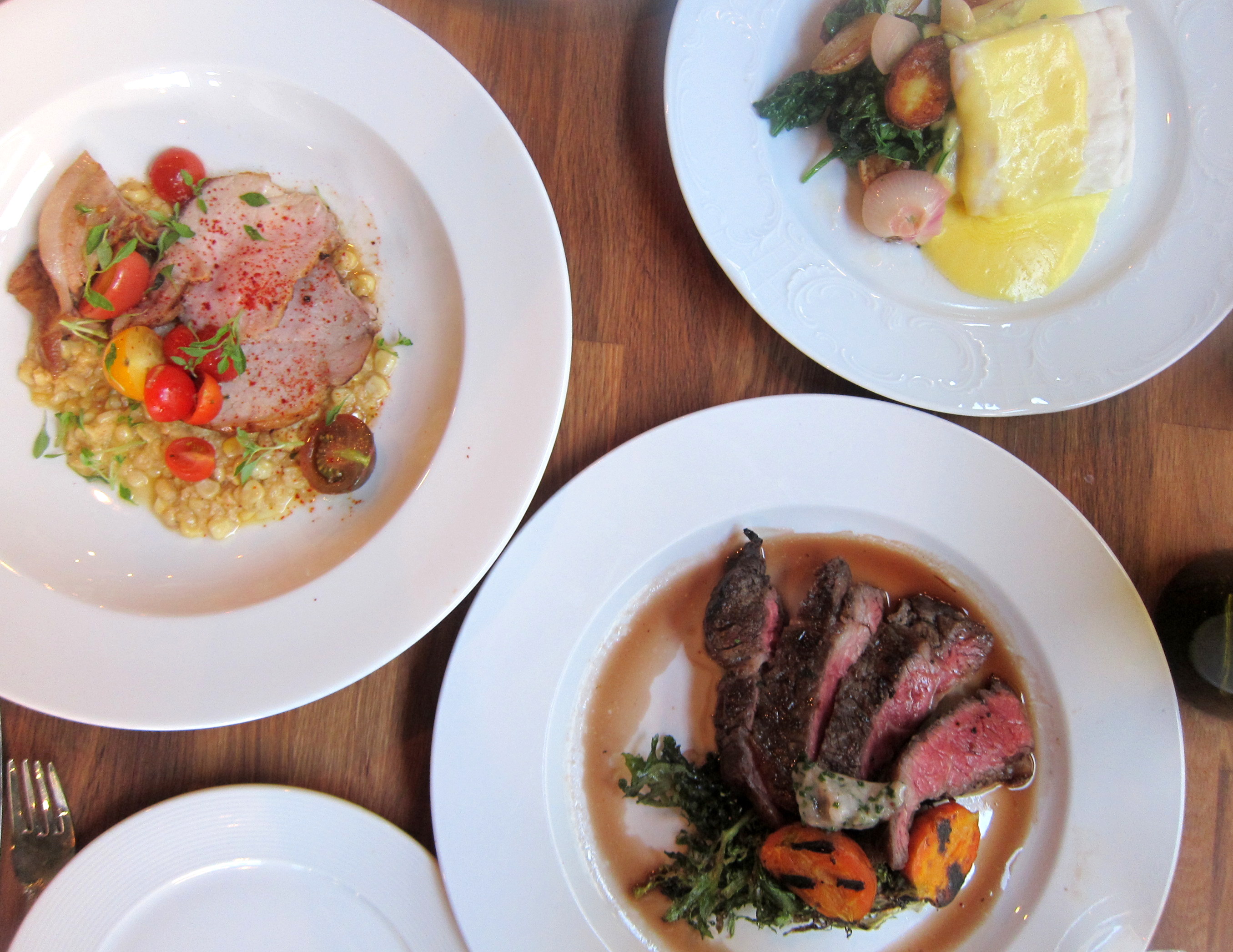
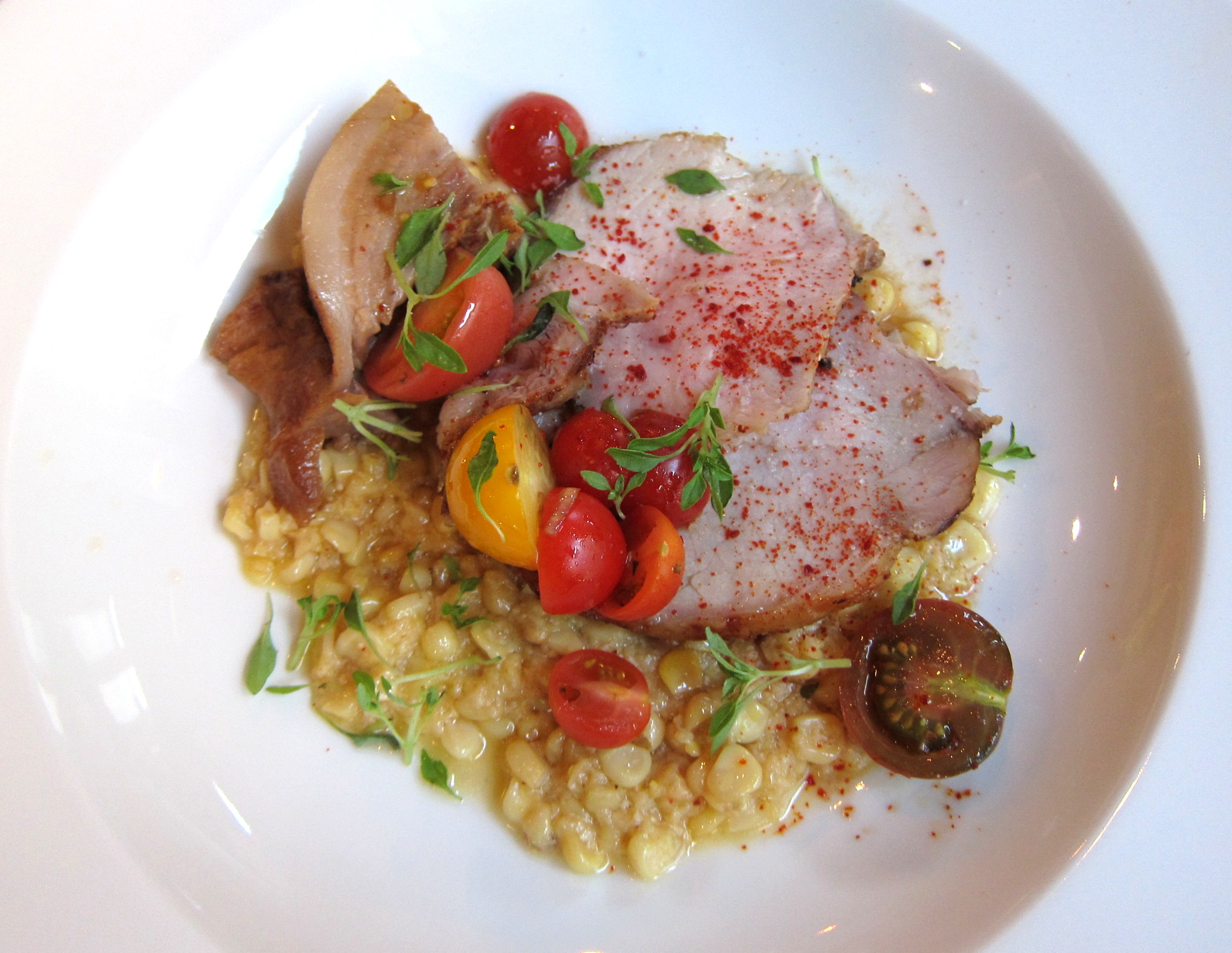
Slow-roasted pork with cream corn ($20) - We liked the cream corn, but the pork erred on the dry side.

Slow-roasted pork with cream corn ($20) – We liked the cream corn, but the pork erred on the dry side.

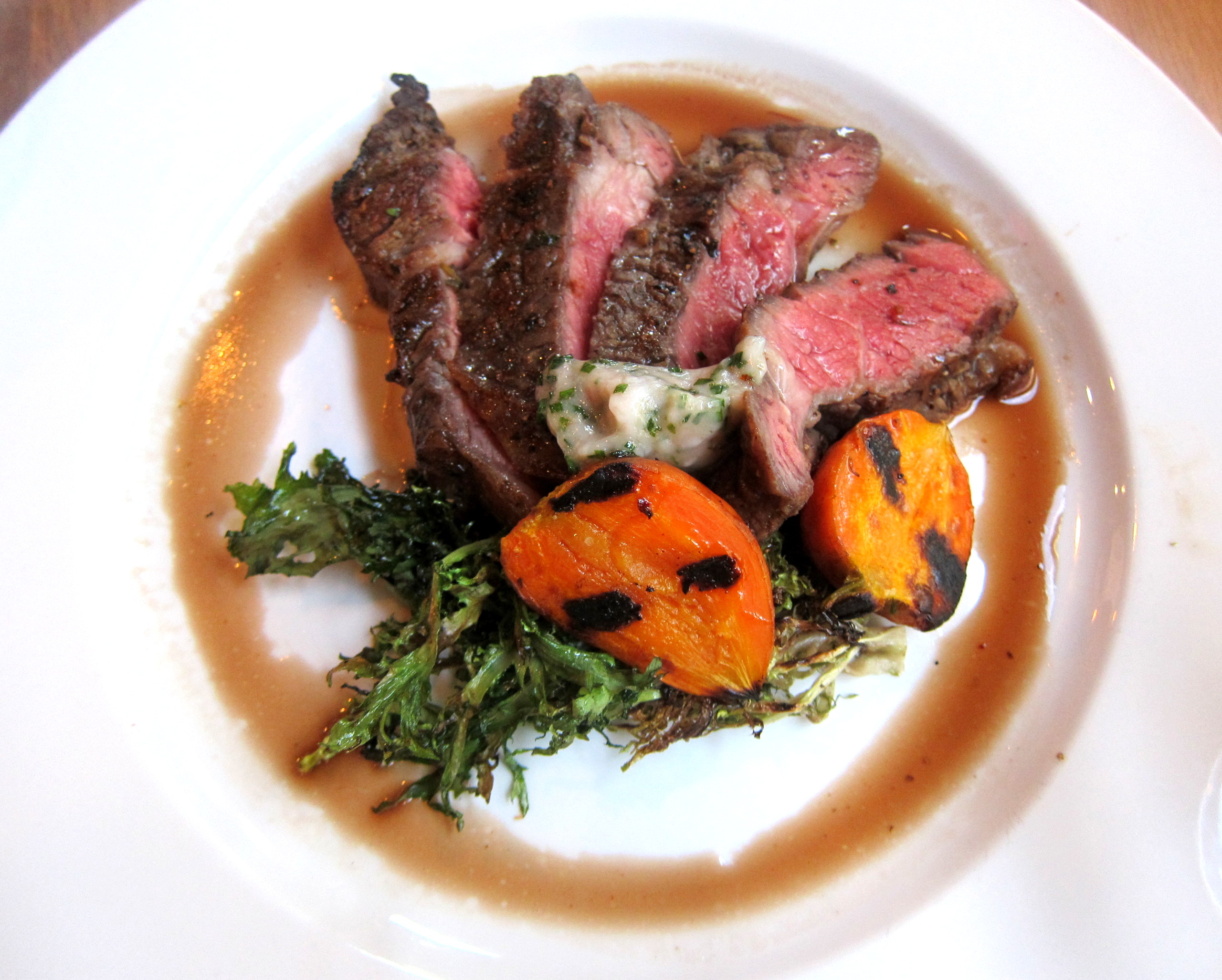
Grilled ribeye, grilled frisee, carrots and bone marrow ($24) - The picture speaks for itself.

Grilled ribeye, grilled frisee, carrots and bone marrow ($24) – The picture speaks for itself.

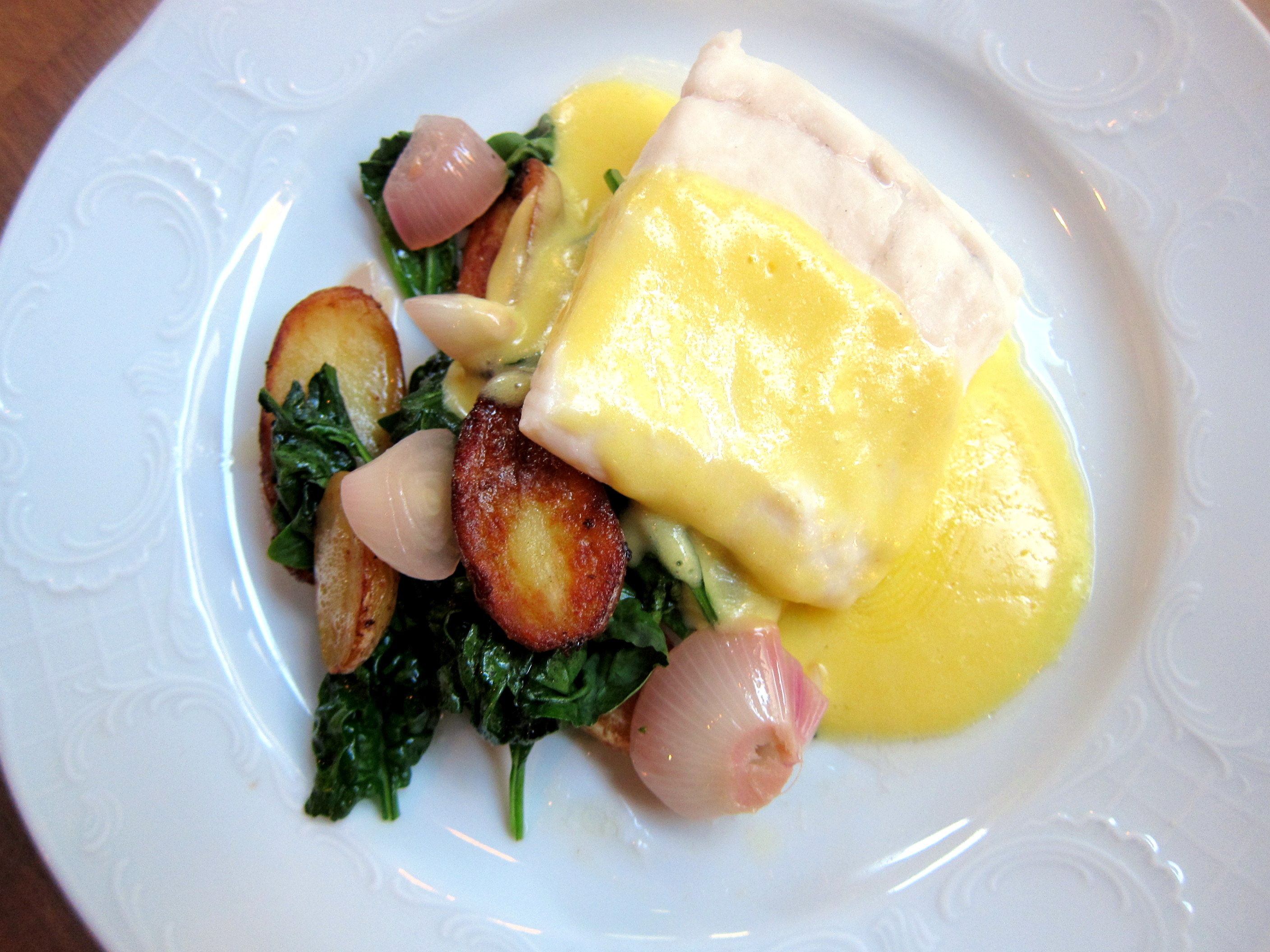
Salt-baked halibut, butter-roasted potato, pickled torpedo onion and hollandaise ($24) - Best halibut I ever had.

Salt-baked halibut, butter-roasted potato, pickled torpedo onion and hollandaise ($24) – Best halibut I ever had.

I’m no fish fanatic, but I’m still drooling for this halibut’s melting texture right now…

Desserts

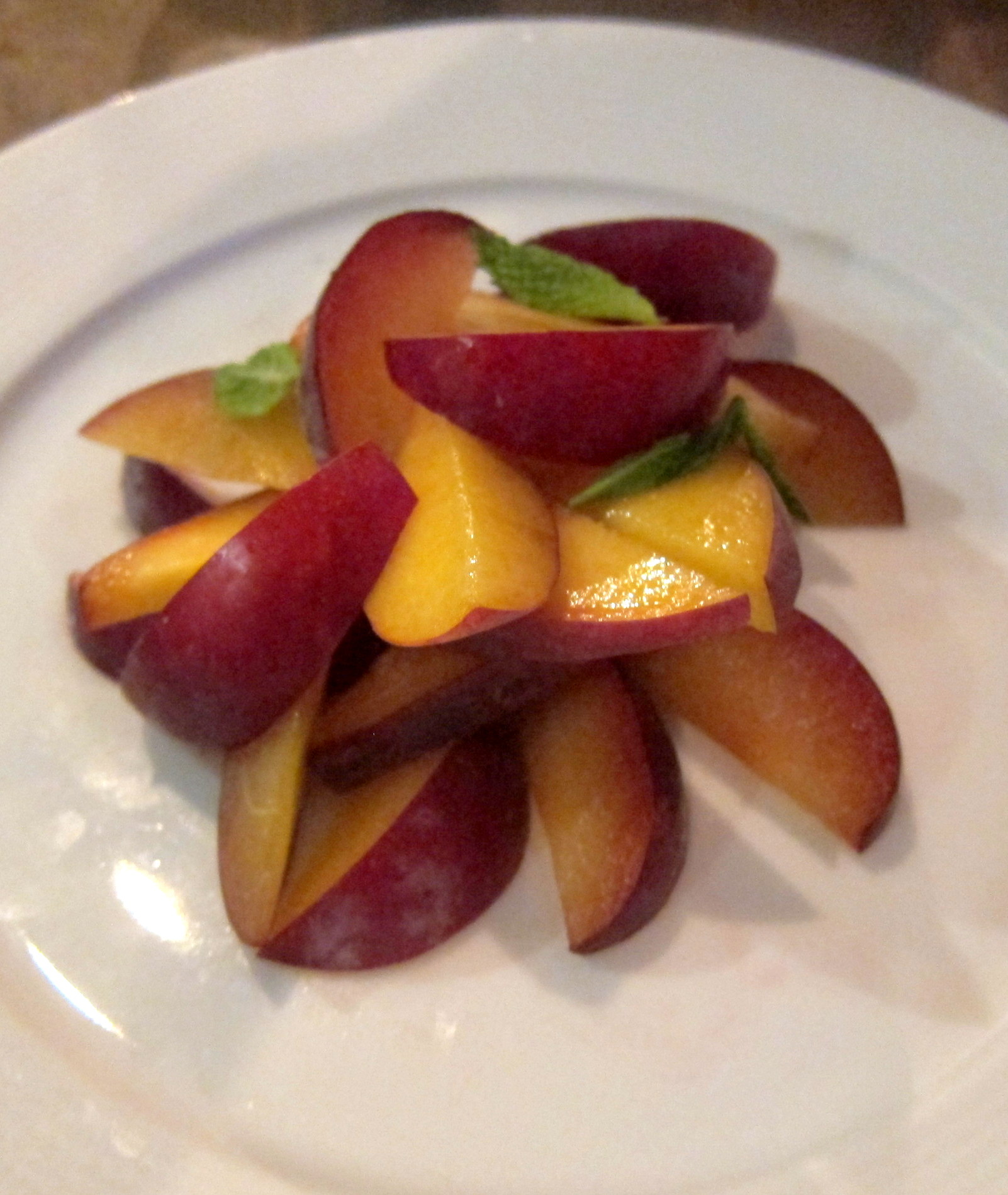
"Plate of fresh fruit" ($5) - They tasted sweet and fresh, but we were expecting something more elaborate...

“Plate of fresh fruit” ($5) – They tasted sweet and fresh, but we were expecting something more elaborate…

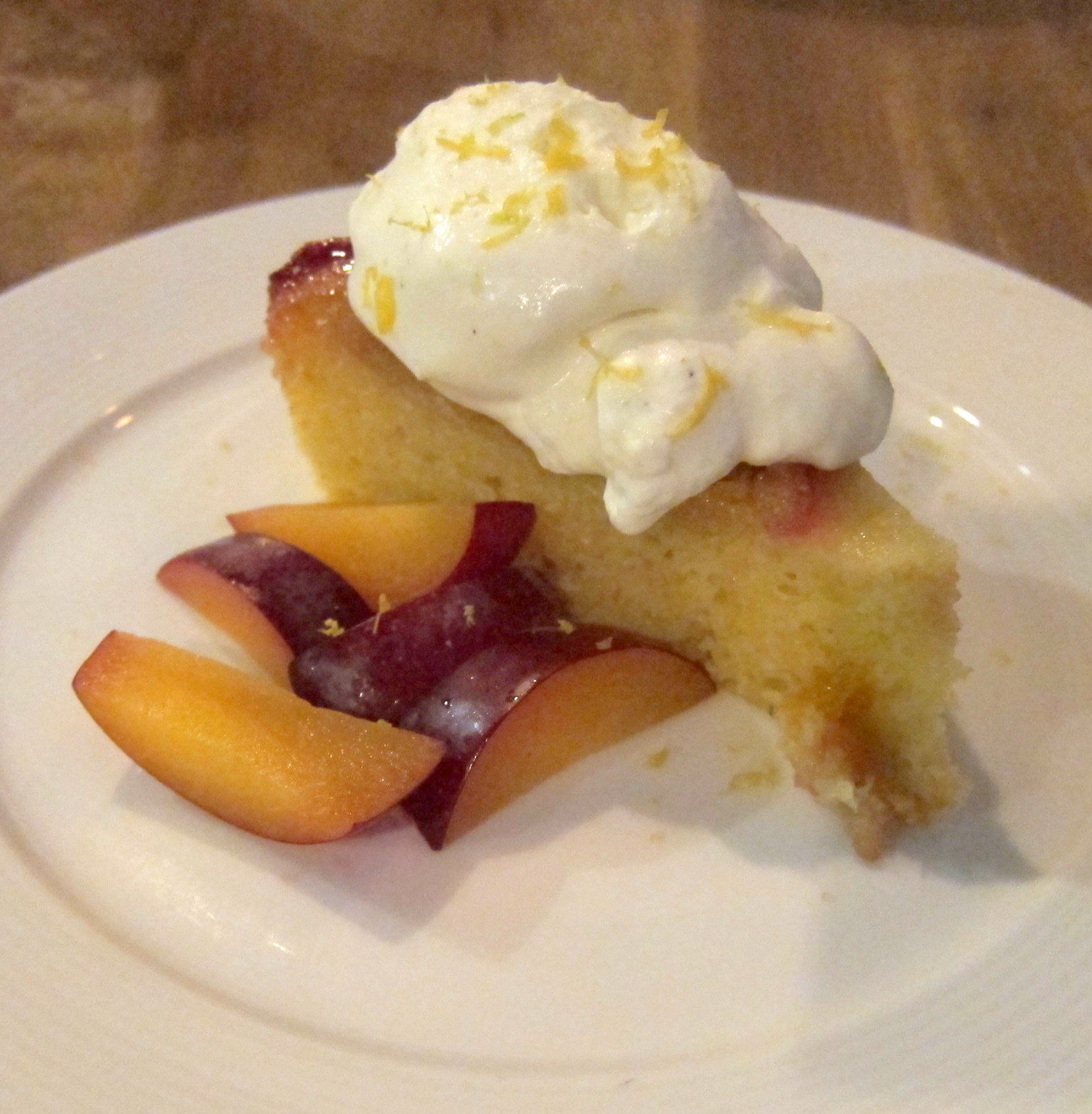
Plum upside-down corn cake with creme fraiche ($8) - I'm ashamed to say that I don't remember anything about this corn cake...

Plum upside-down corn cake with creme fraiche ($8) – I’m ashamed to say that I don’t remember anything about this corn cake…

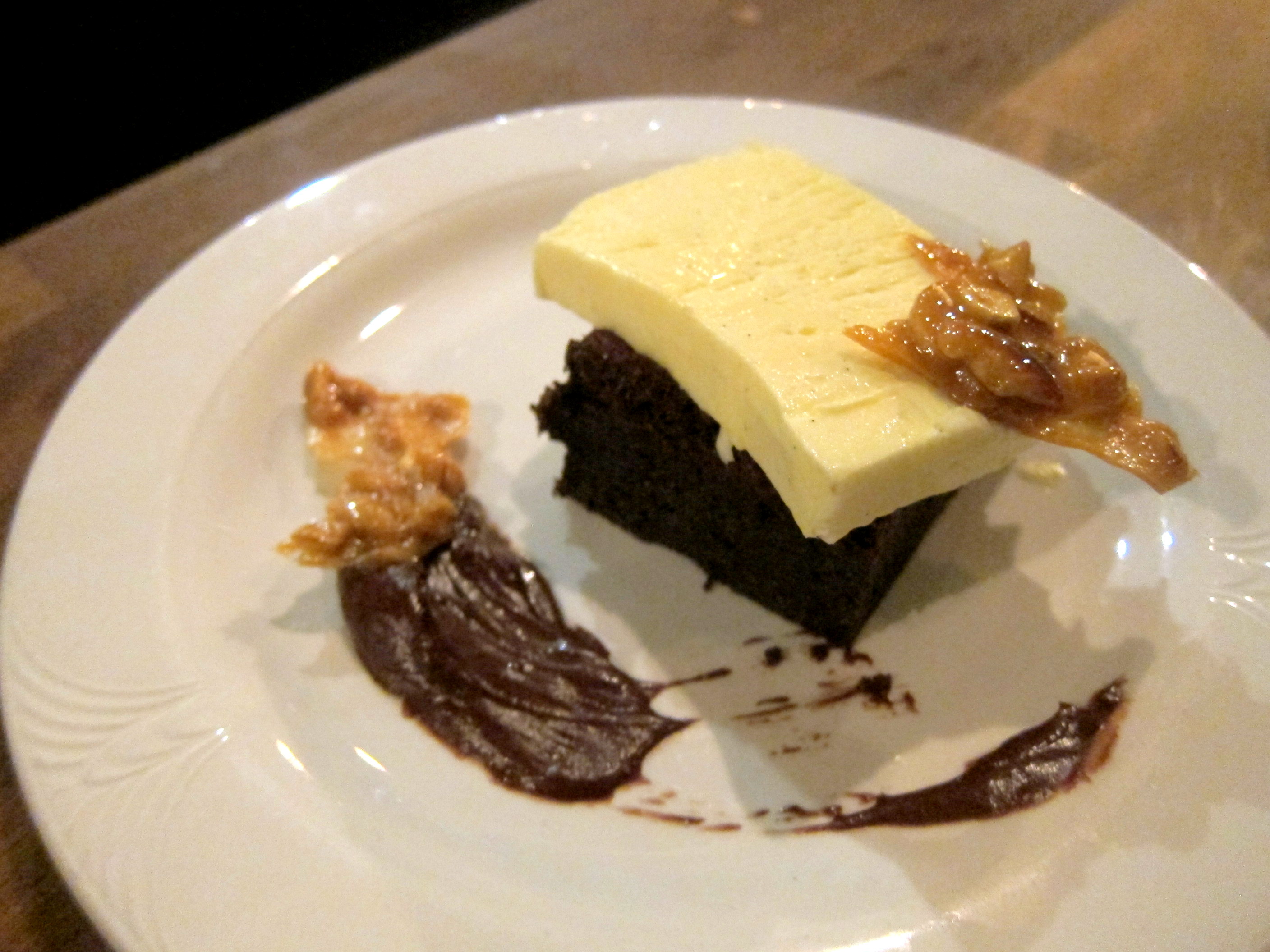
Hot fudge brownie with vanilla semifreddo and cashew brittle ($8) - It was as rich as you would expect.

Hot fudge brownie with vanilla semifreddo and cashew brittle ($8) – It was as rich as you would expect.

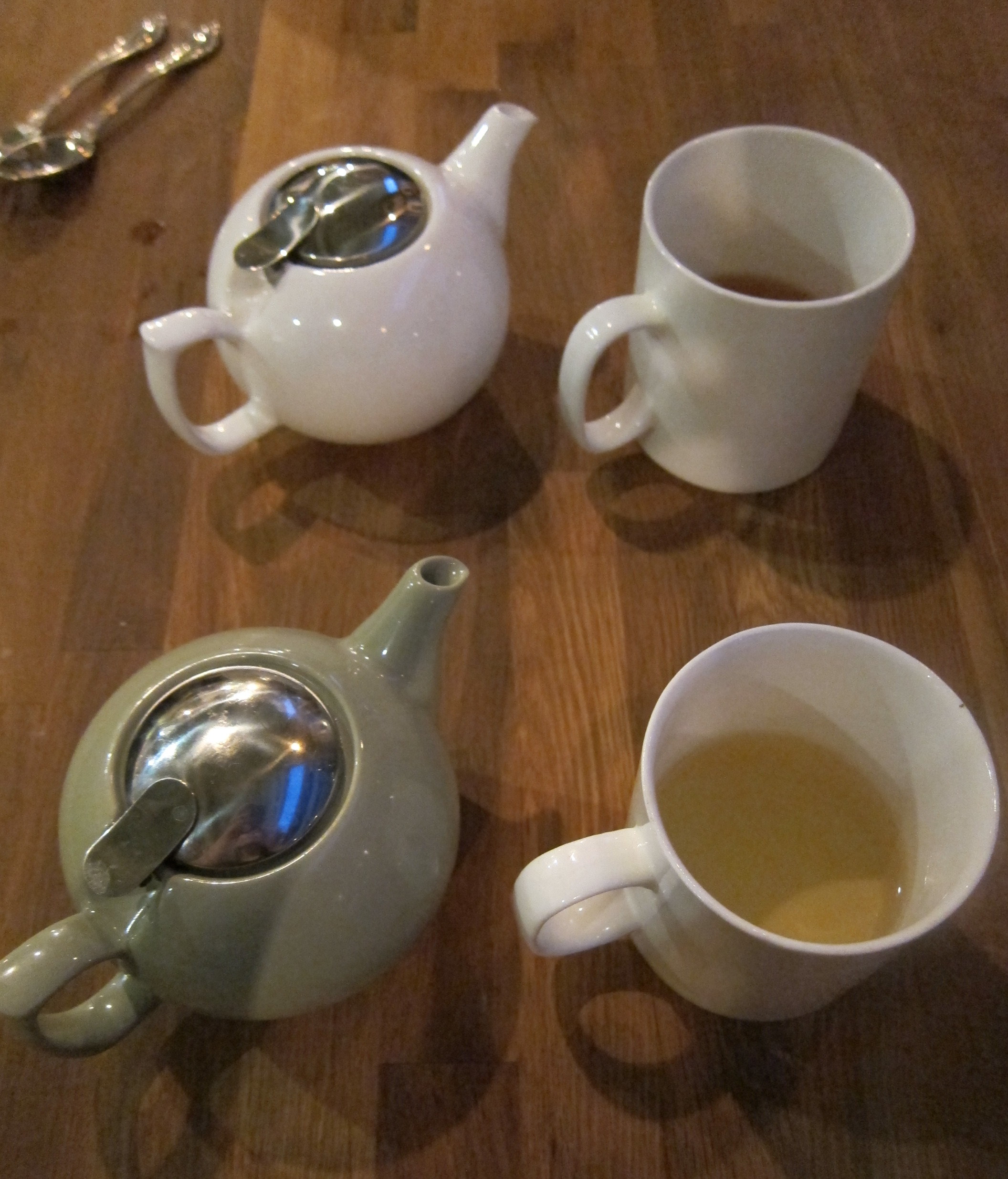
Teas ($3 each pot) - Lapsang Souchong (white pot) and Spring Jade (green pot). Although I appreciate the effort to include several kinds of tea (7 total) in the dessert drink menu, let's just say that, unfortunately - in general and Homestead is no exception - restaurants' knowledge of tea is still much less than that of wine.

Teas ($3 each pot) – Lapsang Souchong (white pot) and Spring Jade (green pot). Although I appreciate the effort to include several kinds of tea (7 total) in the dessert drink menu, let’s just say that, unfortunately – in America in general and Homestead is no exception – restaurants’ knowledge of tea is still far below that of wine. A tea aficionado can only hope for the future.

homestead-seating
Sometimes I’m amazed by Kristen’s and my own capability of consuming infinite dishes in one sitting. 😀 We unapologetically finished everything, too… Kristen said she was so ready for us to be kicked out of the restaurant. So was I.

Address: Homestead
4029 Piedmont Avenue
Oakland, CA 94611
(510) 420-6962

One shot: Californian avocado vs. Peruvian avocado

September 04, 2013 By: Mai Truong Category: American, Fruits, One shot

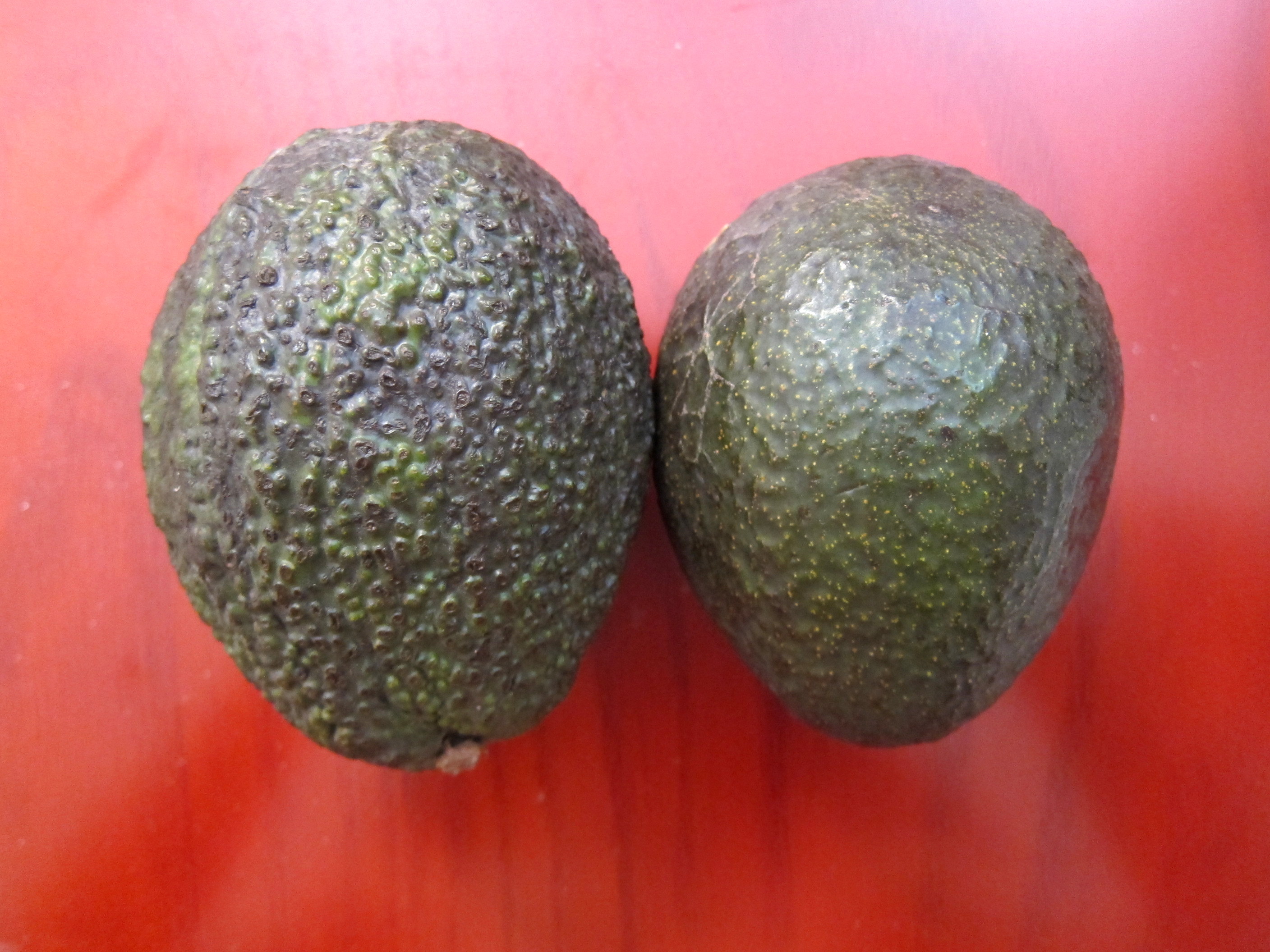
peru-cali
On the left is a Hass avocado from Peru, on the right is a Hass avocado from California.

Hass avocado is a cultivar of avocado, and it has a cute history. In 1925, Mr. Rudolph Hass, an amateur horticulturist, bought a small 1.5 acre avocado grove in La Habra Heights, Southern California. His plan was to graft old Fuerte avocado branches – at the time, Fuerte was the best avocado cultivar – with young saplings grown from some avocado seeds, which were sold at a local nursery. Those seeds were cross-pollinated many times by nature, and the grafting did not go well for one of the young trees [little stubborn sapling!], but per his grafter’s advice, Mr. Hass kept that sapling to see what would happen anyway. When the sapling was only over a foot tall (some time in 1926), it bore three fruits [d’awww!].

Normally, the Fuerte cultivar would take at least five years to produce fruits. Not only the odd stubborn young tree grew faster than the Fuerte, it also grew straight up and did not spread as wide, so it was more land-efficient (more trees per acre). Most importantly, its fruits tasted the same, if not better than the Fuerte. Hence, the Hass avocado became the most popular varietal, making up 95% of all today commercially grown avocados. [Moral of the story: don’t cut down your tree even if it refuses to do what you want at first. 🙂 ]

Back to California vs. Peru.

Both of these are Hass avocados, and they’re roughly the same size (the Peruvian ones are slightly bigger). At Berkeley Bowl, the Peruvian Hass avocados were sold for 89 cents each. This is insanely cheap, considering the Californian ones (labelled “XX Large Hass avocado”) go for 1.69 dollars each. [How can imported produce be so cheap? I feel bad for the Peruvian farmers!] While I’m loyal to the Cali ones, I also love cheap things to try new things. I bought four of each type.

Appearance: Cali: smooth skin, Peru: bumpy skin.
(Now I understand why avocados are also called “alligator pear” – although I’ve never heard anyone say that myself).

Convenience: Cali: knife easily cuts through the skin, Peru: I basically had to saw it open [same knife, in case you wonder]. So yes, the Peruvian skin is much thicker.

Taste: Cali: normal buttery, Peru: quite bland.
More concrete comparison: I always mash avocado, add some sugar and chill it in the fridge –> instant dessert (like ice cream). For the Cali avocado, 1 teaspoon of sugar is enough. For the Peru one, I add 2 teaspoons of sugar and it’s still bland (like a potato).

Texture: Cali: soft, Peru: hardy and stringy.
I couldn’t even mash the Peru one. Not because it’s not ripe. It was actually so ripe that the meat already darkened, but it was somewhat unyielding like a waxy potato. I also had to pull strings out of my “ice cream”, this avocado was so old a tree would grow out of it the next day.

I’m not going to preach locavorism or anything, but it’s clear which one is the better choice. (Supermarket fruits are always picked unripe to survive the transportation, so I have doubts that the Peruvian avocados are actually inferior to the Californian ones, it’s just that they were transported from much further away, it’s a wonder they managed to preserve any flavor at all.)

Tags: